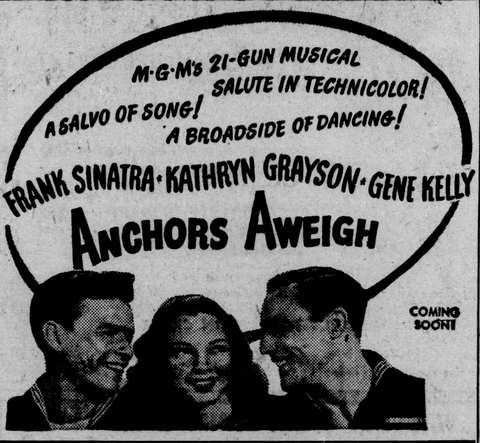
February 2, 1944
Radio
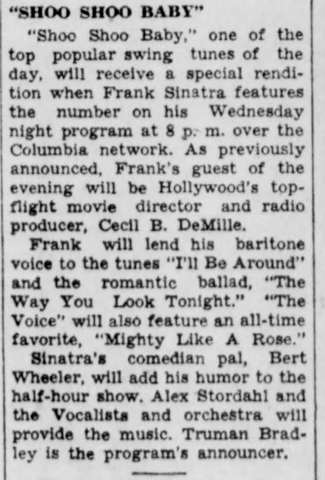
The Frank Sinatra Show
Network: CBS
Show #5
Sponsor: VIMMS Vitamins
Time: 9:00PM - 9:30PM (EST) Wednesday
Orchestra Conducted By: Axel Stordahl
Arrangements By: Axel Stordahl
Announcer: Truman Bradley
Performers: Bert Wheeler
Guest: Cecil B DeMille
Notes: Confirmed aired on WABC
Sinatra Songs:
--I'll Be Around
--Shoo Shoo baby
--The Way You Look Tonight
--Mighty Lak A Rose
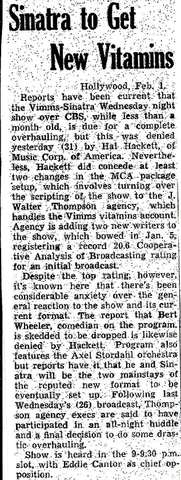
Note: Demille sang, according to Variety, an almost Noel Cowardish version of "Mairzy
Doats," which was a "solid click." Variety mentioned that different writers were now with the show and there was a gradual overhauling. And it was all to the good.
Ed
The Frank Sinatra Show
Network: CBS
Show #5
Sponsor: VIMMS Vitamins
Time: 9:00PM - 9:30PM (EST) Wednesday
Orchestra Conducted By: Axel Stordahl
Arrangements By: Axel Stordahl
Announcer: Truman Bradley
Performers: Bert Wheeler
Guest: Cecil B DeMille
Notes: Confirmed aired on WABC
Variety
2-2-44:
© 1997-2026 The Sinatra Archive
This calendar, or any parts thereof, may not be reproduced in any fashion whatsoever without the prior written permission of the publisher (The Sinatra Archive)
February 5, 1944
Radio
Your Hit Parade
Network: CBS
Program #455
Time: 9:00-9:45 P.M. (Rebroadcast: February 6, 1944 12:00-12:45 A.M.)
Sponsor: Lucky Strike
Script by: Robert Paul Smith
1. Oh What A Beautiful Morning (8) - Frank Sinatra
2. I Know That You Know - Orchestra
3. Paper Doll (6) - Hit Paraders
4. Mairzy Doats (7) - Joan Edwards & Group
5. commercial
6. Here Comes The Sun - Orchestra
7. My Ideal (5) - Frank Sinatra
8. When They Ask About You (9) - Joan Edwards
9. The Band Played On - Orchestra & Hit Paraders
10, station break
11. Besame Mucho (4) - Frank Sinatra
12. S'Wonderful - Orchestra
13. commercial
14. No Love, No Nothin' (3) - Hit Paraders
15. Shoo Shoo Baby (2) - Joan Edwards
16. commercial
17. My Heart Tells Me (1) - Frank Sinatra
Newark Advocate
2-5-44
February 8, 1944
[FBI's draft-fraud inquiry, in the Bureau's own words]
Assistant Director D. M. "Mickey" Ladd's aide G. C. Callan telephoned SAC Sam K. McKee of the Newark field office -- reputed to be one of the agents who had gunned down Pretty Boy Floyd a decade earlier -- to ask whether Sinatra's 4-F classification was legitimate, per a memo recorded at "Call 3:10 PM. Transcribed 3:25 PM." McKee's follow-up report two days later revealed for the first time that Sinatra had given draft doctors inconsistent statements about his mental and physical condition, including a claim of being "neurotic, afraid to be in crowds." A more detailed February 10 letter from McKee to Hoover found that Sinatra had denied any physical or mental defects on Selective Service questionnaires in 1940, 1941, and October 1943, only to be rejected in December 1943 for a perforated eardrum, chronic mastoiditis, and "emotional instability." McKee's inquiry also surfaced Sinatra's 1938 Bergen County arrests for seduction and adultery (both dismissed), triggering a second line of investigation. A follow-up February 24 letter from Newark quoted the induction station's Captain J. Weintrob, who had examined Sinatra and found the ear ailment genuine but noted the psychoneurosis diagnosis was downgraded on the paperwork to mere "emotional instability" "to avoid undue unpleasantness for both the selectee and the induction service." Hoover, in a handwritten notation on the February 15 follow-up memo, wrote: "We should be certain that there is nothing irregular in this case." The Bureau's February 26 summary to Ladd concluded that Sinatra "was properly rejected from military service" and that the $40,000 bribery allegation had no foundation; no further inquiry was conducted.
Source: Kuntz and Kuntz, The Sinatra Files, ch. 1 (memos of February 8, 10, 15, 17, 24, and 26, 1944).
February 9, 1944
Radio
The Frank Sinatra Show
Network: CBS
Show #6
Sponsor: VIMMS Vitamins
Time: 9:00PM - 9:30PM (EST) Wednesday
Orchestra Conducted By: Axel Stordahl
Arrangements By: Axel Stordahl
Announcer: Truman Bradley
Performers: Bert Wheeler
Guest: W. C. Fields
1. Falling In Love With Love
2. No Love, No Nothin'
3. Long Ago And Far Away
4. My Heart Stood Still
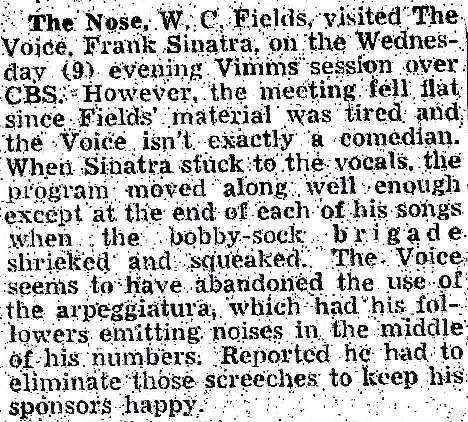
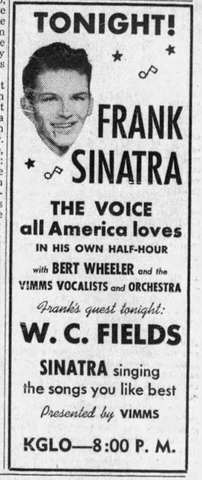
Notes: Ed O'Brien: "One of Frank's best Vimms shows. W.C. Fields had Frank in stitches throughout their sketch. Bert Wheeler, who was Frank's comedian in residence at the time, also had some funny exchanges with the Great W.C. Sinatra came in late on "No Love, No Nothin'" and did a funny little aside. Nice singing on the Kern/Gershwin and Rodgers and Hart tunes. The guitarist on the Vimms shows was Tony Mottola."
Confirmed aired on WABC. The CD The V-discs contains (Columbia) "Long Ago And Far Away"
[image referenced in source but could not be recovered]
The Frank Sinatra Show
Variety
2-16-44
------------------------------------------
February 9, 1949
-------------------------------------------------------
From Billboard 2-9-52
LATEST NEWS FROM HOLLYWOOD
Monica Lewis is up for the female lead in Frank Sinatra's new film for Universal-
International "Nothing But The Blues."
Ed O'Brien:
There were an awful lot of musicals
Frank was going to make that for one reason or another never happened.
The day after his draft board appearance, Frank told reporters he expected to be inducted. His confidence proved short-lived. (Source: Richard Havers, "Sinatra" (Dorling Kindersley, 2007).)
Sinatra was summoned to Selective Service headquarters in Newark for a re-examination, after having earlier been classified 4-F for a punctured eardrum.
Source: George Carpozi Jr., Frank Sinatra: Is This Man Mafia? (New York: Manor Books, 1979).
February 10, 1944
[Manie Sacks' letter on vocal backgrounds]
Manie Sacks: Columbia's Manie Sacks wrote Sinatra a hurt letter after learning secondhand that Frank refused to record any more songs with vocal-group backgrounds, reminding him such records had sold well and that he should have told Sacks directly rather than through rumor.
Source: James Kaplan, "Frank: The Voice" (2010).
February 11, 1944
Radio
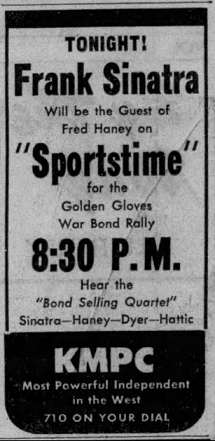
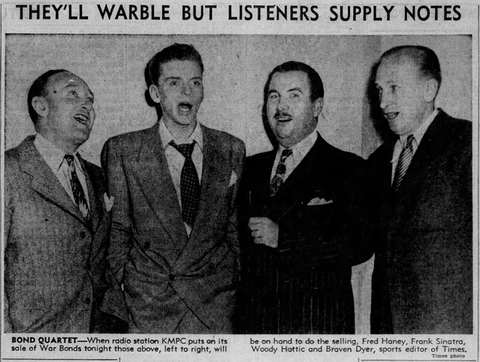
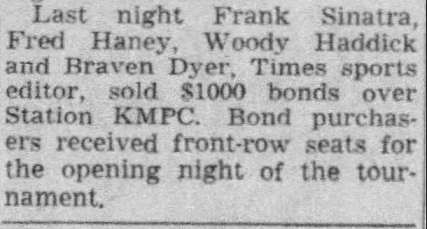
Sportstime for the Golden Gloves War Bond Rally
KMPC Los Angeles, 8:30-9:30
Sinatra was part of a quartet
Sportstime for the Golden Gloves War Bond Rally
KMPC Los Angeles, 8:30-9:30
Sinatra was part of a quartet
February 12, 1944
Radio
Your Hit Parade
Network: CBS
Program #456
Time: 9:00-9:45 P.M. (Rebroadcastà February 13, 1944 12:00-12:45 A.M.)
Sponsor: Lucky Strike
Script By: Robert Paul Smith
1. Speak Low (8) - Frank Sinatra
2. With Plenty Of Money And You - Orchestra
3.. My Ideal (6) - Joan Edwards
4. Paper Doll (9) - Hit Paraders
5. commercial
6. Dinah - Orchestra
7. No Love No Nothin' (5) - Frank Sinatra
8. Sometimes I'm Happpy - Orchestra & Joan Edwards
9. Star Eyes (7) - Hit Paraders
10. station break
11. Besame Mucho (4) - Frank Sinatra
12. Give My Regards To Broadway - Orchestra & Hit Parade
13. commercial
14. Mairzy Doats (3) - Joan Edwards & Group
15. My Heart Tells Me (2) - Hit Paraders
16. commercial
17. Shoo Shoo Baby (1) - Frank Sinatra
Three days after predicting induction, Frank was told he was classified 4-F and left for Hollywood, telling waiting newsmen "I'm dying." A press release quoted him saying he was "very unhappy" and would have preferred the Army or Marines. (Source: Richard Havers, "Sinatra" (Dorling Kindersley, 2007).)
February 16, 1944
Radio
The Frank Sinatra Show
Network: CBS
Show #7
Sponsor: VIMMS Vitamins
Time: 9:00PM - 9:30PM (EST) Wednesday
Orchestra Conducted By: Axel Stordahl
Arrangements By: Axel Stordahl
Announcer: Truman Bradley
Performers: Bert Wheeler
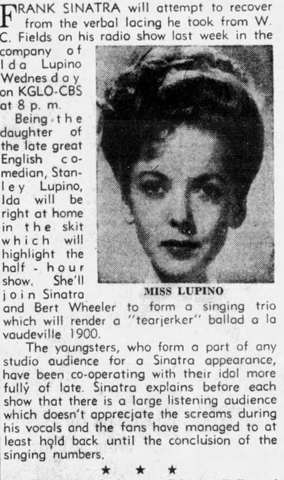
Guest: Ida Lupino
1. Dancing In The Dark - w/V.Vocalists
2. My Shining Hour
3. A Lovely Way To Spend An Evening
4. Brahms Lullaby
Notes: Confirmed aired on WABC
The Frank Sinatra Show
Network: CBS
Show #7
Sponsor: VIMMS Vitamins
Time: 9:00PM - 9:30PM (EST) Wednesday
Orchestra Conducted By: Axel Stordahl
Arrangements By: Axel Stordahl
Announcer: Truman Bradley
Performers: Bert Wheeler
Guest: Ida Lupino
1. Dancing In The Dark - w/V.Vocalists
2. My Shining Hour
3. A Lovely Way To Spend An Evening
4. Brahms Lullaby
February 17, 1944
Concerts
Earl Carroll Theatre, Los Angeles, CA
Seventeenth Annual Charity Ball of the Junior Auxiliary of the Home for the Aged Sinatra, Mary Pickford, Bob Hope, Shirley Temple and others
Earl Carroll Theatre, Los Angeles, CA
Seventeenth Annual Charity Ball of the Junior Auxiliary of the Home for the Aged Sinatra, Mary Pickford, Bob Hope, Shirley Temple and others
---------------------------------------
© 1997-2026 The Sinatra Archive
This calendar, or any parts thereof, may not be reproduced in any fashion whatsoever without the prior written permission of the publisher (The Sinatra Archive)
[image referenced in source but could not be recovered]
[image referenced in source but could not be recovered]
[image referenced in source but could not be recovered]
February 18, 1944
[Sinatra's reply to Manie Sacks]
Frank Sinatra: Sinatra sent a typewritten reply to Sacks, warm but firm: he denied outright refusing to record, said any comments were made impulsively, but maintained he was genuinely distressed at being artistically hamstrung by vocal backgrounds necessitated by the musicians' strike. He signed off affectionately to Sacks and Columbia executives Ted Wallerstein and Goddard Lieberson.
Source: James Kaplan, "Frank: The Voice" (2010).
February 19, 1944
Radio
Your Hit Parade
Network: CBS
Program #457
Time: 9:00-9:45 P.M. (Rebroadcast February 20, 1944 12:00-12:45 A.M.)
Sponsor: Lucky Strike
Script By: Robert Paul Smith
1. No Love No Nothin' (5) - Frank Sinatra
2. Just One Of Those Things - Orchestra
3. For The First Time (6) - Hit Paraders
4. Mairzy Doats (4) - Joan Edwards & Group
5. commercial
6. Wildflower - Orchestra
7. A Lovely Way To Spend An Evening (8) - Frank Sinatra
8. Bye Bye Blues - Orchestra & Hit Paraders
9. Oh What A Beautiful Morning (9) - Joan Edwards
10. station break
11. I Couldn't Sleep A Wink Last Night (7) - Frank Sinatra
12. I Can't Give You Anything But Love Baby - Orchestra
13. commercial
14. Besame Mucho (3) - Joan Edwards
15. My Heart Tells Me (2) - Hit Paraders
16. commercial
17. Shoo Shoo Baby (1) - Frank Sinatra
February 20, 1944
Concerts
Earl Carroll Theatre, Los Angeles, CA
Fifteenth Annual Charity Ball of the Junior Auxiliary of the Home for the Aged Sinatra, Ginny Simms, Edger Bergen, Spike Jones, Chico Marx and others
February 21, 1944
Studio
RKO, LOS ANGELES
Monday
STEP LIVELY (ORIGINAL TITLE MANHATTAN SERENADE)
Orchestra conducted by Constantin Bakaleinikoff
Arranged by Axel Stordahl
Where Does Love Begin?
w/ Anne Jeffreys
vocal runs 1:42
Radio
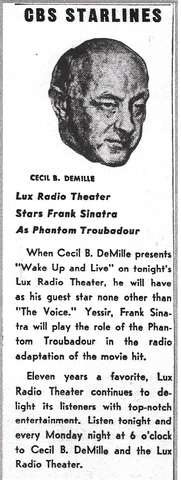
Lux Radio Theater
Network: CBS
Program #32 "Wake Up and Live".
Performers: Frank Sinatra, James Gleason, Bob Crosby, Marilyn Maxwell, Cecil B. DeMille, Alice Mock,
Arthur Q. Bryan, Bea Benaderet, Cathy Lewis, Charles Seel, Ed Emerson, Edward Marr, James Dunn, John McIntire, Leo Cleary, Marilyn Maxwell, Norman Field, Stanley Farrar, Truda Marson, Tyler McVey, Verna Felton
Announcer: John Milton Kennedy
Music Director: Louis Silvers
Commercials: Janet Russell, Paula Winslowe, Martha Wentworth
Writers: Harry Tugend, Dorothea Brande, Jack Yellen, Curtis Kenyon
Director: Fred MacKaye
Sound Effects: Charlie Forsyth
1. I Don't Want To Walk Without You
2. I've Heard That Song Before
3. Embraceable You
4. Dancing In The Dark
5. Wake Up And Live
Frank Sinatra was well cast Monday night (21) as the different crooner in "Wake Up And Live," the Lux Radio Theater play on CBS.The Voice made the most of his scattered singing opportunities, enhancing the rapid-tempo story that seemed curiously dated. The Dorothea Brande message ( "act as if it were impossible to fail" ) was given a fast gloss over as in the picture that starred Walter Winchell, Alice Faye and the late Ben Bernie. All in all, show was one of Cecil B, DeMille's lesser efforts.
Variety
February 23, 1944
Lux Radio Theater
Network: CBS
Program #32 "Wake Up and Live".
Performers: Frank Sinatra, James Gleason, Bob Crosby, Marilyn Maxwell, Cecil B. DeMille, Alice Mock,
Arthur Q. Bryan, Bea Benaderet, Cathy Lewis, Charles Seel, Ed Emerson, Edward Marr, James Dunn, John McIntire, Leo Cleary, Marilyn Maxwell, Norman Field, Stanley Farrar, Truda Marson, Tyler McVey, Verna Felton
Announcer: John Milton Kennedy
Music Director: Louis Silvers
Commercials: Janet Russell, Paula Winslowe, Martha Wentworth
Writers: Harry Tugend, Dorothea Brande, Jack Yellen, Curtis Kenyon
Director: Fred MacKaye
Sound Effects: Charlie Forsyth
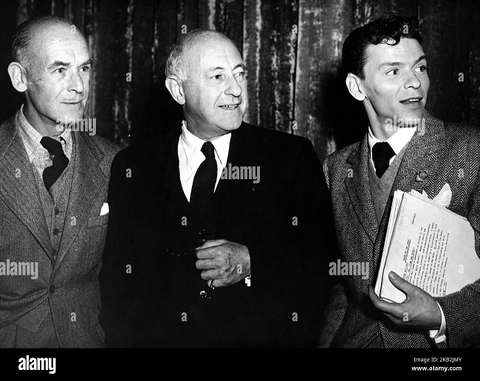
JAMES GLEASON host CECIL B. DeMILLE and FRANK SINATRA candid during Lux Radio Theatre Broadcast on February 21st 1944 of WAKE UP AND LIVE
February 23, 1944
Radio
The Frank Sinatra Program
Network: CBS
Show #8
Sponsor: VIMMS Vitamins
Time: 9:00PM - 9:30PM (EST) Wednesday
Orchestra Conducted By: Axel Stordahl
Arrangements By: Axel Stordahl
Announcer: Truman Bradley
Performers: Bert Wheeler
Guest: Alan Ladd
1. opening / theme: "This Love Of Mine"
2. I've Had This Felling Before - Frank Sinatra
3. talk & comedy "tough Alan Ladd" - Frank Sinatra, Burt Wheeler
4. commercial #1 Vimms Vitamins - Truman Bradley
5. The Song Is You - Frank Sinatra
6. talk & comedy - Frank Sinatra, Alan Ladd, Burt Wheeler & Truman Bradley
7. The Music Stopped - Frank Sinatra
8. skit: "Singer District Attorney" - Frank Sinatra, Alan Ladd, Burt Wheeler & Truman Bradley a. My Ideal - Alan Ladd
9. commercial #2 Vimms Vitamins - Truman Bradley
10.. Stormy Weather - Frank Sinatra & Vimms Vocalists
11. closing: "Put Your Dreams Away" - Frank Sinatra
Notes: Ed O'Brien: "Ladd sang "My Ideal." Sinatra was quite impressed by Alan's vocal prowess. A very good show."
In the comedy skit in Ladd, Wheeler and Bradley, the Singing D.A. (Sinatra) sang brief parodies of "All Or Nothing At All," "That Old Black Magic" and "Speak Low."
--Ed
Confirmed aired on WABC
[image referenced in source but could not be recovered]
The Frank Sinatra Show
Network: CBS
Show #8
Sponsor: VIMMS Vitamins
Time: 9:00PM - 9:30PM (EST) Wednesday
Orchestra Conducted By: Axel Stordahl
Arrangements By: Axel Stordahl
Announcer: Truman Bradley
Performers: Bert Wheeler
Guest: Alan Ladd
Note: Sinatra did not sing "America The Beautiful" on the program nor did he sing "Embraceable You."
note: Eileen Barton and Billy May both told me Frank's radio shows were often in a state of flux. This article shows the songs to be featured that evening. "Embraceable You" and "America The Beautiful" were dropped before air time. Eileen told me that quite often the uptempo charts were done by whoever was available at the time.
Ed
[image referenced in source but could not be recovered]
[image referenced in source but could not be recovered]
The FBI interviewed Captain Weintrob, who had personally examined and rejected Frank. He confirmed the ear diagnosis and said the rejection went against Frank's own wishes, while his written report to his commanding officer also detailed a psychiatric interview describing Frank as anxious in crowds and elevators. (Source: Richard Havers, "Sinatra" (Dorling Kindersley, 2007).)
February 25, 1944
Studio
RKO, Los Angeles
STEP LIVELY (Original title "MANHATTAN SERENADE)
Friday
Orchestra conducted by Constantin Bakaleinikoff
Arrangements by Axel Stordahl
Some Other Time
w/Gloria DeHaven & Chorus
As Long As There's Music
w/ Chorus
Where Does Love Begin (Finale)
w/ George Murphy, Gloria DeHaven and Chorus
Arranged by Ken Darby
As Long As There's Music
w/Chorus & Gloria DeHaven
note: RKO would release the film to mixed reviews on
June 27, 1944. Frank would make the Oscar winning
short "The House I Live In" at RKO in 1945. But he moved
to MGM the same year. His next effort for RKO would be
the 1947 "film "Miracle Of The Bells."
February 26, 1944
Radio
Your Hit Parade
Network: CBS
Program #458
Time: 9:00-9:45 P.M. (Rebroadcast February 27, 1944 12:00-12:45 A.M.)
Sponsor: Lucky Strike
Script By: Robert Paul Smith
1. A Lovely Way To Spend An Evening (6) - Frank Sinatra
2. Liza - Orchestra
3. No Love No Nothin' (5) - Frank Sinatra
4. Mairzy Doats (4) - Joan Edwards & Group
5. commercial
6. There's A Great Day Coming Manana - Orchestra
7. I Couldn't Sleep A Wink Last Night (7) - Frank Sinatra
8. Thou Swell - Orchestra
9. My Ideal (8) - Joan Edwards
10. station break
11. My Shining Hour (9) - Frank Sinatra
12. Jingle Jangle Jingle - Orchestra & Hit Paraders
13. commercial
14. Shoo Shoo Baby (3) - Joan Edwards
15. My Heart Tells Me (2) - Hit Paraders
16. commercial
17. Besame Mucho (1) - Frank Sinatra
March 1944
[Nancy confronts Frank; move to California proposed]
Kaplan: During the christening visit, Nancy, effectively a single mother in Hasbrouck Heights, confronted Frank about his absences and his intentions. George Evans pressed the same point -- that a family man should live with his family. Frank proposed moving Nancy and the children to a big house in California; she was skeptical but didn't refuse outright.
Source: James Kaplan, "Frank: The Voice" (2010)
[Travels east for son's christening]
Kaplan: While Wasserman finalized the MGM and RKO business, Sinatra flew east for his son's christening. The presiding priest objected to naming a Jew, Manie Sacks, as godfather; Sinatra simply stared him down.
Source: James Kaplan, "Frank: The Voice" (2010)
[Draft Status Changed to Occupational Deferment]
Sinatra's draft status was changed from 4-F to an occupational deferment.
Source: George Carpozi Jr., Frank Sinatra: Is This Man Mafia? (New York: Manor Books, 1979).
March 1, 1944
Radio
The Frank Sinatra Show
Network: CBS
Show #9
Sponsor: VIMMS Vitamins
Time: 9:00PM - 9:30PM (EST) Wednesday
Orchestra Conducted By: Axel Stordahl
Arrangements By: Axel Stordahl
Announcer: Truman Bradley
Performers: Bert Wheeler
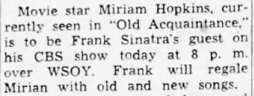
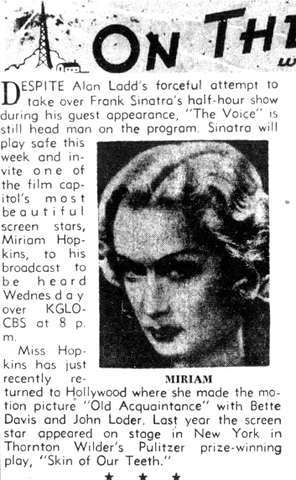
Guest: Miriam Hopkins
1. Ave Maria
Notes: Confirmed aired on WABC
The Frank Sinatra Show
Network: CBS
Show #9
Sponsor: VIMMS Vitamins
Time: 9:00PM - 9:30PM (EST) Wednesday
Orchestra Conducted By: Axel Stordahl
Arrangements By: Axel Stordahl
Announcer: Truman Bradley
Performers: Bert Wheeler
Guest: Miriam Hopkins
March 1, 1954
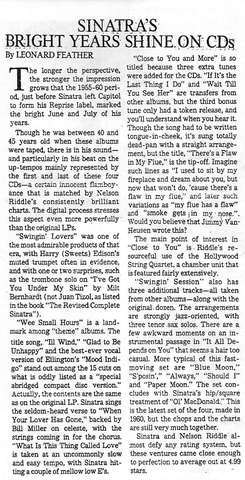
12366 Last Night When We Were Young
(Harold Arlen/E.Y. Harburg)
Arranged & Conducted by Nelson Riddle
-30 CD: CDP 7-96826-2 In The Wee Small Hours
LP: W581 In The Wee Small Hours
Note: There is a mistake in the "Wee Small Hours" segment of this review. The original 12 inch LP did have 16 songs. Capitol's first CD release omitted "Last Night When We Were Young."
Although it was recorded a year earlier, Arlen's song was a real highlight of the album. The song was written in 1935 and recorded by Lawrence
Tibbett. Judy Garland loved the song and made two fine recordings. But by 1954, it had been largely forgotten. Sam Arlen, Harold's adopted son ( his brother's child), told me it was Arlen's favorite song and he credited Sinatra with saving it for future generations. Harold considered Frank's recording to be the definitive effort. And he played it quite often.
Ed
March 4, 1944
Studio
Los Angeles, WARNER BROS
THE SHINING FUTURE
Saturday
Orchestra conducted by Leo Forbstein
Arrangement by Axel Stordahl
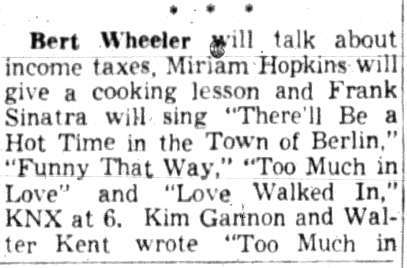
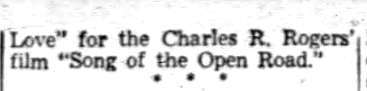
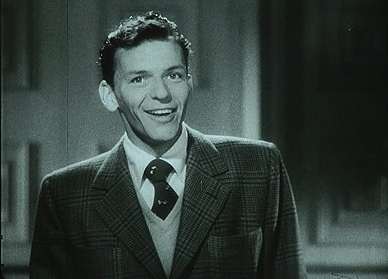
There'll Be A Hot Time In The Town Of Berlin
C. Kisco on piano
Ed Notes:
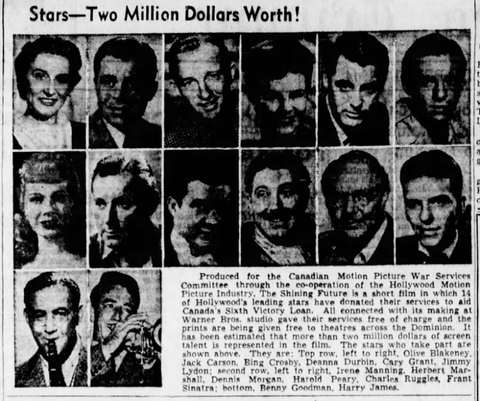
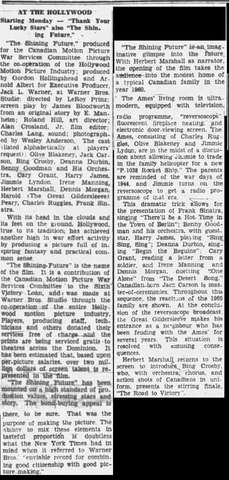
The film was produced by WB for Canada's war
drive loans. It was a 20 minute two-reeler. Jack Carson
introduced the Sinatra segment. The U.S.
release was retitled "Road To Victory" and was cut
to one reel. Sinatra's segment didn't make the cut.
--This is a still from the film.
Ed
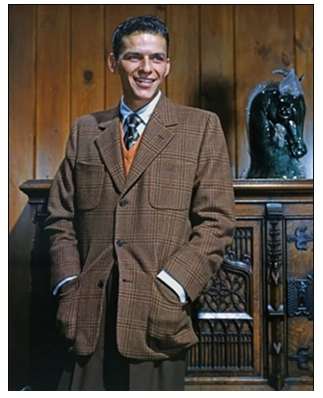
Los Angeles, WARNER BROS
THE SHINING FUTURE
Saturday
Orchestra conducted by Leo Forbstein
Arrangement by Axel Stordahl
"There'll Be A Hot Time In The Town Of Berlin"
March 5, 1944
Radio
Command Performance #106
Taped 2-12-44
Announcer: Ken Carpenter
Bob Hope, Frank Sinatra, Judy Garland
1 Hope opens with monologue and introduces Sinatra
They rib each other and do some Crosby jokes.
2. Frank sings "The Song Is You" (gorgeous rendition).
3. Hope introduces Garland.
4. She sings her latest recording "No Love, No Nothin'
5. Bob, Judy and Frank do a desert island skit with segments of popular songs. Frank does "Oh What
A Beautiful Mornin'," "I've Got You Under My Skin,"
"I Know That You Know," "Out Of Nowhere," "I Can't
Give Anything But Love," "Blues In The Night."
6. Frank and Judy sing "Embraceable You."
7. Threesome thank the fighting men overseas
8. Sign Off
--Ed
March 6, 1944
Radio
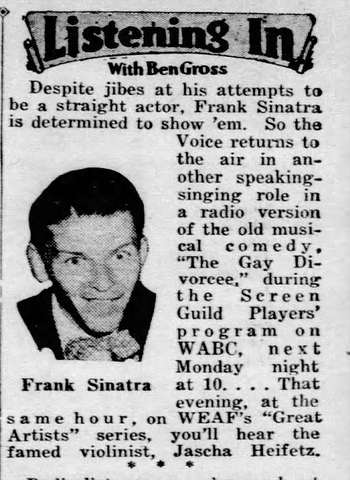
Lady Esther Screen Guild Theatre
"The Gay Divorcee'
Sponsor: Lady Esther Face Cream
CBS-Radio
Monday Evening
10:00 p.m. to 10:30 p.m.
Screen Guild Players
Frank Sinatra, Gloria Dehaven, Spring Byington, Edward Everett Horton
1. Night And Day
2. I'll Follow My Secret Heart
3. As Time Goes By
4. Time On My Hands
5. The Continental w/Gloria Dehaven
6. Night And Day
Note: The show appears on the officially released CD set: 60 Greatest Old Time Radio Show "Frank Sinatra & Friends"
30 mins.
Lady Esther Screen Guild Theatre, "The Gay Divorcee"
Frank Sinatra, Gloria Dehaven, Spring Byington, Edward Everett Horton
1. Night And Day
2. I'll Follow My Secret Heart
3. As Time Gose By
4. Time On My Hands
5. The Continental
6. Night And Day
[image referenced in source but could not be recovered]
Front Line Theater, "The Gay Divorcee"
Frank Sinatra, Gloria Dehaven, Spring Byington, Edward Everett Horton
1. Night And Day
2. I'll Follow My Secret Heart
3. As Time Gose By
4. Time On My Hands
5. The Continental
6. Night And Day
March 8, 1944
Radio
The Frank Sinatra Show
Network: CBS
Show #10
Sponsor: VIMMS Vitamins
Time: 9:00PM - 9:30PM (EST) Wednesday
Orchestra Conducted By: Axel Stordahl
Arrangements By: Axel Stordahl
Announcer: Truman Bradley
Performers: Bert Wheeler
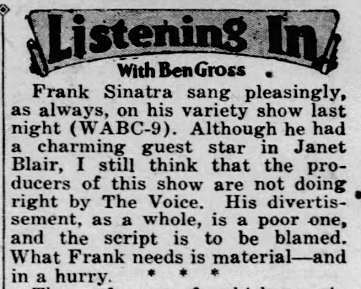
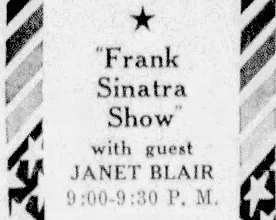
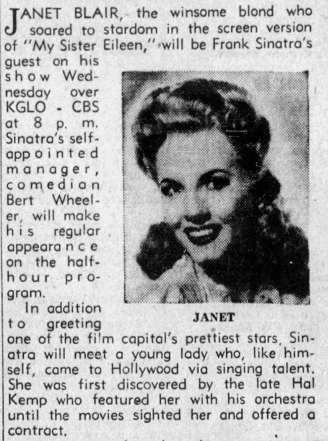
Guest: Janet Blair
Songs:
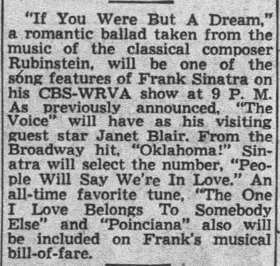
--If You Are But A Dream
--People Will Say We're In Love
--The One I Love Belongs To Somebody Else
--Poinciana
note: I'm sure the Rubenstein is "If You Are But
A Dream" from "Romance." I'll also bet
he opened with "One I Love Belongs To Some-
body Else" with Vimms Vocalists "People Will
Say We're In Love " was most likely a duet with
Blair. Frank did not like "Oklahoma." He so
intensely disliked it a second visit to the show
was made. But he still didn't get it at all. Frank
loved "Carousel."
Ed
Concerts
The Frank Sinatra Show
Daily News (New York, New York) 9 Mar 1944
Cancelled Appearance
1945 Rudy Vallee Show
Location: Hollywood
Network: NBC
Sponsor: Dreene Shampoo
Time: 10:30-11:00PM
Xavier Cugat & His Orchestra
Performers: Rudy Vallee, Mary Boland
Announcer: Truman Bradley
Guests: Frank Sinatra
Notes: Confirmed aired on WEAF
Ed O'Brien:
Frank was a no-show for the second time in five weeks.
As the show opens, Rudy answers the phone, thinking it is Sinatra. Monty Woolley is the caller. Frank won't be on the show. He is busy doing a Command Performance for
AFRS for the boys overseas. Monty has a great idea to save the day: The Life of Rudy Vallee." At the show's conclusion, Truman Bradley tells the radio listeners that Frank Sinatra will be on the show after his eastern tour.
[image referenced in source but could not be recovered]
[image referenced in source but could not be recovered]
[image referenced in source but could not be recovered]
The Frank Sinatra Show
Daily News (New York, New York) 9 Mar 1944
Cancelled Appearance
1945 Rudy Vallee Show
Location: Hollywood
Network: NBC
Sponsor: Dreene Shampoo
Time: 10:30-11:00PM
Xavier Cugat & His Orchestra
Performers: Rudy Vallee, Mary Boland
Announcer: Truman Bradley
Guests: Frank Sinatra
Notes: Confirmed aired on WEAF
Ed O'Brien:
Frank was a no-show for the second time in five weeks.
As the show opens, Rudy answers the phone, thinking it is Sinatra. Monty Woolley is the caller. Frank won't be on the show. He is busy doing a Command Performance for
AFRS for the boys overseas. Monty has a great idea to save the day: The Life of Rudy Vallee." At the show's conclusion, Truman Bradley tells the radio listeners that Frank Sinatra will be on the show after his eastern tour.
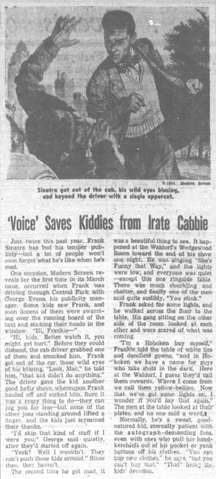
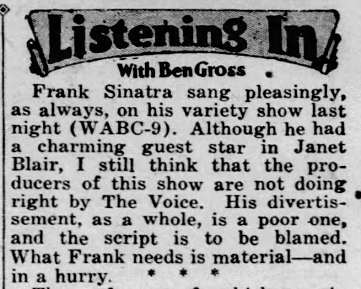
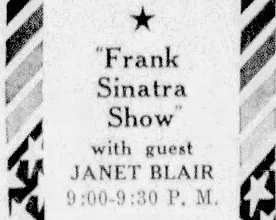
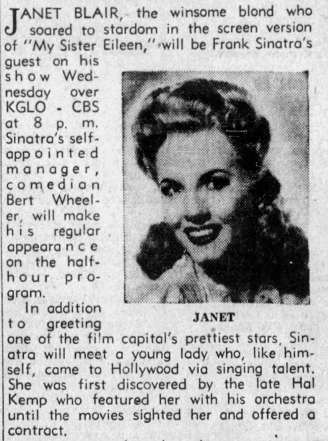
The Frank Sinatra Show
Daily News (New York, New York) 9 Mar 1944
Cancelled Appearance
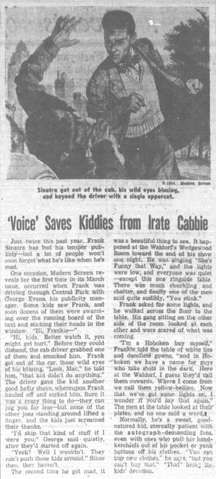
March 11, 1944
Radio
Command Performance
Program #110
Frank Sinatra, Ginny Simms, Dinah Shore
Announcer: Ken Carpenter
1. Memphis Blues Dinah Shore
2. Kiss Me Again Frank Sinatra
3. I Couldn't Sleep A Wink Last Night Ginny Simms
4. Dancing in The Dark Frank Sinatra
5. In The Still Of The Night Ginny Simms
6. Besame Mucho Dinah Shore
7. Parody of "Frankie & Johnny"
Songs by Ginny Simms, Frank Sinatra, Dinah Shore and Ken Carpenter: Frankie & Johnny, In My Merry
Oldsmobile, You'll Never Know, Man I Love, My Heart
Tells Me, You'll Never Know, I Love You Truly, People
Will Say We're In Love
Audio condition:excellent. Complete. note: Show was taped on 3-11-44 and broadcast by AFRS on 4-2-44.
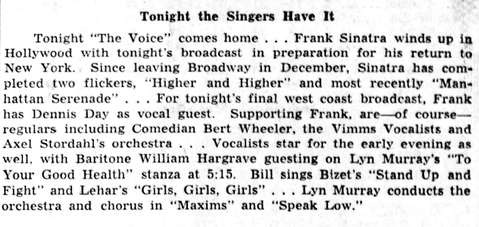
March 15, 1944
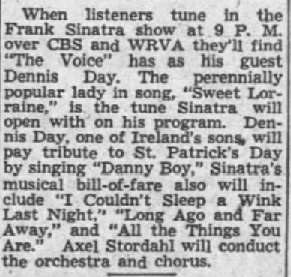
Radio
The Frank Sinatra Show
Network: CBS
Show #11
Sponsor: VIMMS Vitamins
Time: 9:00PM - 9:30PM (EST) Wednesday
Orchestra Conducted By: Axel Stordahl
Arrangements By: Axel Stordahl
Announcer: Truman Bradley
Performers: Bert Wheeler
Guest: Dennis Day
Notes: Confirmed aired on WABC
Songs:
1. Sweet Lorraine
2. Danny Boy - Dennis Day
3. I Couldn't Sleep A Wink Last Night
4. Long Ago and Far Away
5. All The Things You Are
The Frank Sinatra Show
Network: CBS
Show #11
Sponsor: VIMMS Vitamins
Time: 9:00PM - 9:30PM (EST) Wednesday
Orchestra Conducted By: Axel Stordahl
Arrangements By: Axel Stordahl
Announcer: Truman Bradley
Performers: Bert Wheeler
Guest: Dennis Day
March 22, 1944
Radio
The Frank Sinatra Show
Network: CBS
Show #12
Sponsor: VIMMS Vitamins
Time: 9:00PM - 9:30PM (EST) Wednesday
Orchestra Conducted By: Axel Stordahl
Arrangements By: Axel Stordahl
Announcer: Truman Bradley
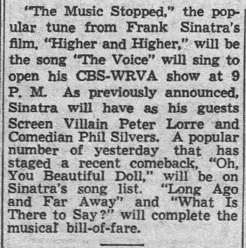
Guest: Peter Lorre, Phil Silvers
1. The Music Stopped
2. Oh, You Beautiful Doll
3. Long Ago And Far Away
4. What Is There To Say?
Notes: Confirmed airing on WABC
The Frank Sinatra Show
Network: CBS
Show #12
Sponsor: VIMMS Vitamins
Time: 9:00PM - 9:30PM (EST) Wednesday
Orchestra Conducted By: Axel Stordahl
Arrangements By: Axel Stordahl
Announcer: Truman Bradley
Guest: Peter Lorre, Phil Silvers
Tampa Tribune
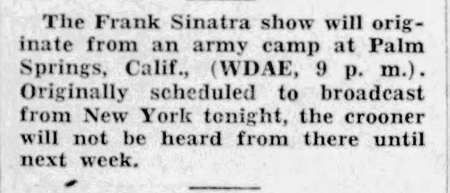
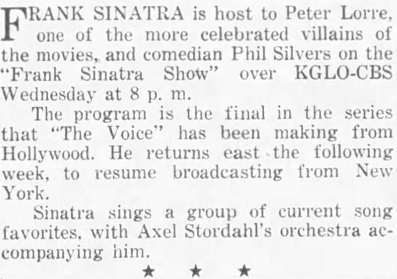
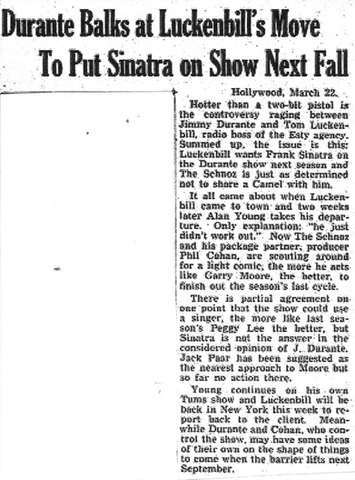
note: Frank was suppose to be in New York on 3/22. RKO discovered some scenes from "Step Lively" that needed looping. Frank decided to do the army camp in Palm Springs at the last moment. I found a number of ads that had him in New York.
Hollywood March 22, 1949
Variety
March 24, 1944
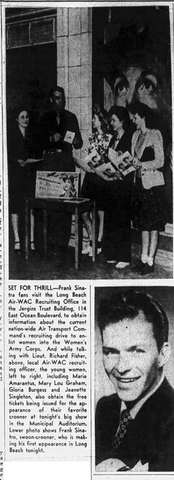
Concerts
Municipal Auditorium, Long Beach, California
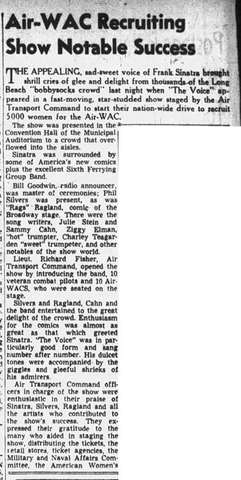
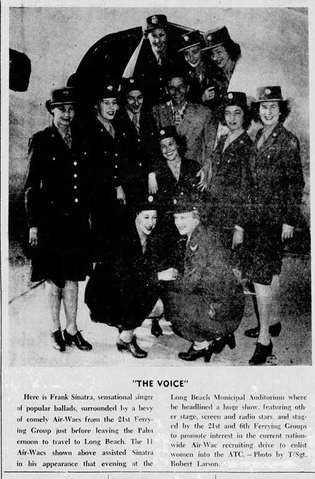
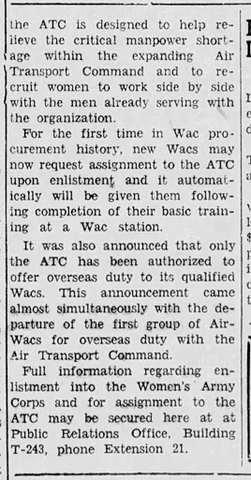
Sinatra sang at AIR-WAC Recruitment Drive
Also: Phil Silvers & Rags Ragland
Municipal Auditorium, Long Beach, California
Sinatra sang at AIR-WAC Recruitment Drive
Also: Phil Silvers & Rags Ragland
© 1997-2026 The Sinatra Archive
This calendar, or any parts thereof, may not be reproduced in any fashion whatsoever without the prior written permission of the publisher (The Sinatra Archive)



March 29, 1944
Radio
The Frank Sinatra Show
Network: CBS
Show #13
Sponsor: VIMMS Vitamins
Time: 9:00PM - 9:30PM (EST) Wednesday
Orchestra Conducted By: Axel Stordahl
Arrangements By: Axel Stordahl
Announcer: John Reed King
Performers: Jerry Lester
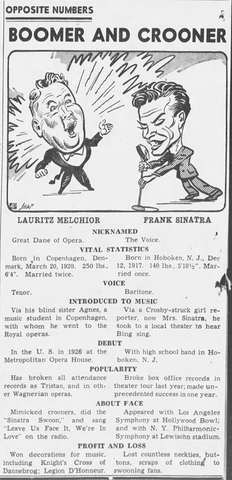
Guest: Lauritz Melchior
1. Here It Is Monday
2. Night And Day
3. La Donna È Mobile
4. medley w/ Lauritz Melchior: Caro Nome / I Only Have Eyes For
You
Notes: Ed O'Brien:"Good show. Frank's guest is Lauritz Melchior.
Opening number is "Here It Is Monday" (never recorded), "Night and Day," Aria medley with Melchior and "I Only
Have Eyes For You" closes the show. Frank has a good time trading quips with Lauritz including the obligatory "skinny" jokes." Confirmed aired on WABC
Variety
Concerts
The Frank Sinatra Show
Guest: Lauritz Melchior
Emacs!
The Frank Sinatra Show
Guest: Lauritz Melchior
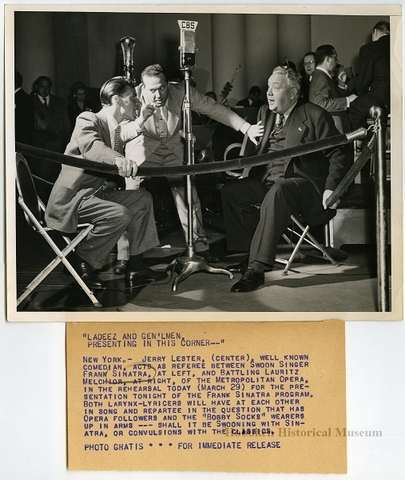
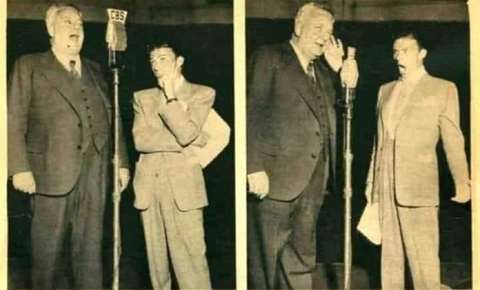
Frank Sinatra and opera singer Lauritz Melchior comparing styles on the Frank Sinatra radio show, 1944
The Frank Sinatra Show w/L.MELCHIOR 29th march 1944
This show ran through 1944, with different guests each week (including Rise Stevens which I will also upload if there is interest). This episode begins with an opening number by Sinatra and a brief comedy spot, followed by Sinatra singing "Night and Day". Melchior appears about 10 mins into the show .
Sinatra and Melchior do some comedy sparring about opera Melchior sings Vesti La Giubba The pair then engage in a competition "opera vs swing" - where Melchior sings an operatic phrase and Sinatra must sing the same phrase in a contemporary style. Sinatra and Melchior conclude with a duet of Caro Nome from Rigoletto (strange but true). Sinatra sings a final number (and don't miss his financial advice at the end of the show)
April 1944
[Meets Peter Lawford at Mayer party]
Kaplan: Back on the Coast from the christening trip, Sinatra attended a Louis B. Mayer party honoring the newly discharged Henry Ford II and met young English MGM contract player Peter Lawford. The two recognized a natural affinity despite their differences and struck up a friendship, trading jokes about Lawford's looks versus Sinatra's status.
Source: James Kaplan, "Frank: The Voice" (2010)
April 5, 1944
Radio
The Frank Sinatra Show
Network: CBS
Show #14
Sponsor: VIMMS Vitamins
Time: 9:00PM - 9:30PM (EST) Wednesday
Orchestra Conducted By: Axel Stordahl
Arrangements By: Axel Stordahl
Announcer: Truman Bradley
Performers: Jerry Lester
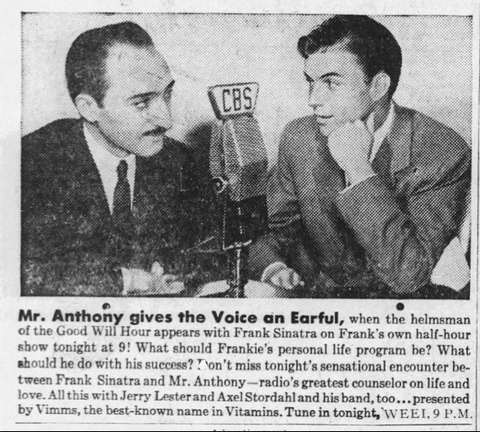
Guest: John J. Anthony note: John Reed King was the announcer
Vimms Vocalists were also on the show
Songs:
1. Sunday
2. Too Much In Love ( song from film "The Open Road" )
3. Amor
4. Ave Maria (Schubert"s) with Vimms Vocalists'
Easter Sunday was 4-9
5. Put Your Dreams Away
Notes: Confirmed aired on WABC
The Frank Sinatra Show
Network: CBS
Show #14
Sponsor: VIMMS Vitamins
Guest: John J. Anthony
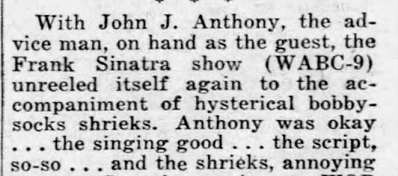
The annoying comment is interesting. Prior to the 2-16-44 broadcast, Frank came out on stage and asked the girls with the socks to tone it down.
Lever Brothers was less than pleased with the screaming and let it be known. They were not happy with the ratings and the lack of a more mature audience.
Frank let the young ladies know they would not be welcomed to future shows if the screaming continued.
I guess they just couldn't control themselves no matter what Frank said.
--Ed
April 12, 1944
Radio
The Frank Sinatra Show
Network: CBS
Show #15
Sponsor: VIMMS Vitamins
Time: 9:00PM - 9:30PM (EST) Wednesday
Orchestra Conducted By: Axel Stordahl
Arrangements By: Axel Stordahl
Announcer: John Reed King
Comedian: Jerry Lester Vimms Vocalists(8)
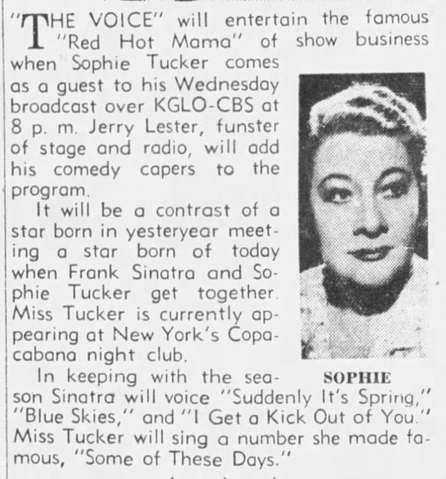
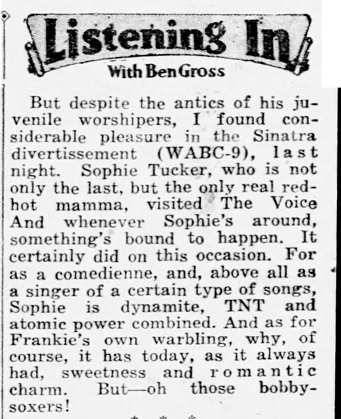
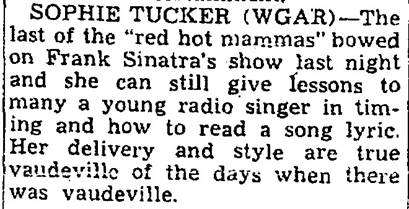
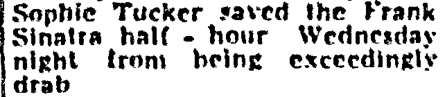
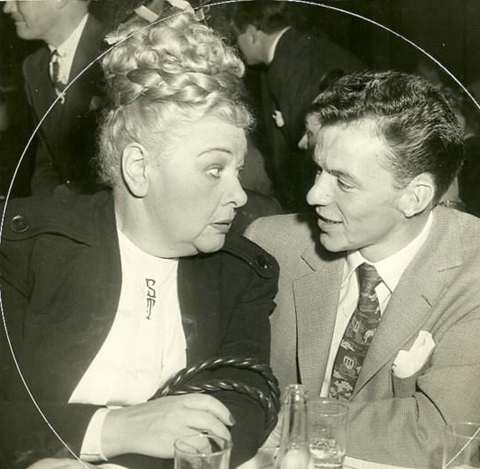
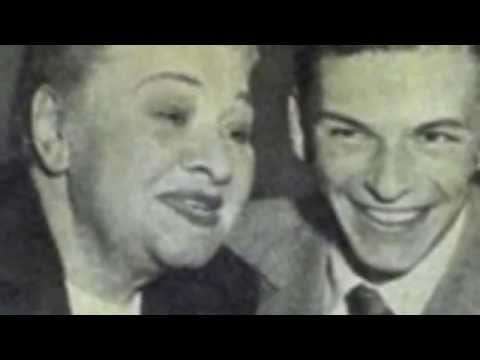
Guest: Sophie Tucker
1. Blue Skies
2. I Love You (Cole Porter)
3. Tess's Torch Song ( from Up In Arms )Sophie Tucker skit with Frank, Sophie, Jerry
4. I Get A Kick Out Of You ( Frank gives song a big build up) w/Vimms Vocalists(8)
note:" I Get A Kick Out Of You" is on disc three of A Voice In Time(1939-1952). John Reed King was the announcer throughout the April shows. Frank would sing: "Suddenly It's Spring" on the 4-26-44 Vimms show.
Ed
Notes: Confirmed aired on WABC
The Frank Sinatra Show
Network: CBS
Guest: Sophie Tucker
Frank & Sophie Tucker
April 13, 1944
Concerts
Ebbets Field, Brooklyn, NY
Red Cross Fund Drive
Sinatra and John Boles
April 16, 1944
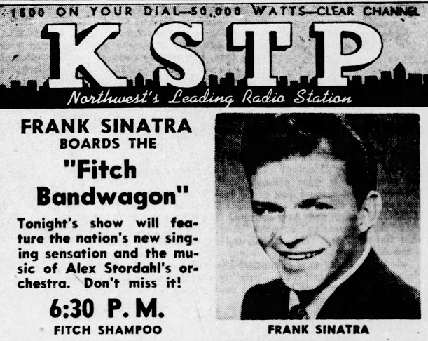
Radio
Fitch Bandwagon AFRS #97
1. Long Ago And Far Away
2. The Song Is You
Ed O'Brien:
Tom Ready was the announcer on this show.
Frank Sinatra and Axel Stordahl appeared.
Frank lauded the great orchestra leader Stordahl.
Bandwagon was essentially a band leader's show and Frank was there to pay tribute to his arranger/ conductor. Between Frank's two numbers (listed above), Axel conducted his arrangement of
"Poinciana."
Fitch Bandwagon AFRS #97
1. Long Ago And Far Away
2. The Song Is You
April 19, 1944
Radio
The Frank Sinatra Show
Network: CBS
Show #16
Sponsor: VIMMS Vitamins
Time: 9:00PM - 9:30PM (EST) Wednesday
Orchestra Conducted By: Axel Stordahl
Arrangements By: Axel Stordahl
Announcer: Truman Bradley
Performers: Jerry Lester
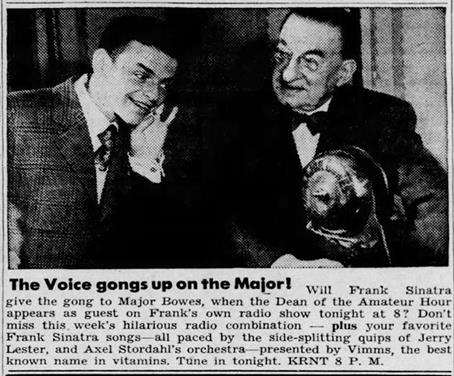
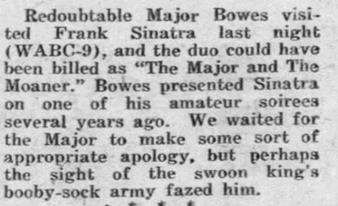
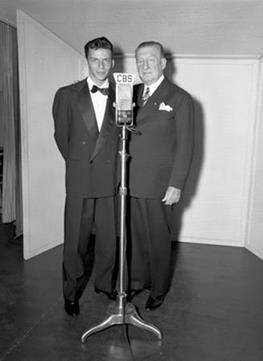
Guest: Major Bowes
1. It Had To Be You
2. A Lovely Way To Spend An Evening
3. I'll Be Seeing You
Note: Major Bowes was Frank's guest on the Vimms show, 4-19-44 and Frank reciprocated with an appearance on Bowes' May 4, 1944 program.
Variety
April 19, 1944
With Eddie Cantor going off the air for the summer,
Vimms, sponsors of the opposition show on CBS, which stars Frank Sinatra, are mulling the idea of keep- ing The Voice on the air through the hot months in order to build up the program for the fall season.
Sinatra is entitled to an eight-week hiatus allowance, but indications now are that he'll stay right through with the show, which returns to the coast from N.Y. on May
10th.
Sinatra is now asking and getting $5,000 per guest shot.
He has done two so far at that price, the Lux radio pro- gram weeks ago and the Fitch Bandwagon shot last
Sunday(16). Latter program cost the sponsor over
$7,000 for talent alone, since, in addition to Sinatra's 5Gs, Axel Stordahl, his conductor, drew $1,000 and
Fitch paid the band.
When singer returns to the coast next month, he begins work for Metro on "Anchors Aweigh." He is on a loan out arrangement between the two studios(RKO).
note: Frank decided to exercise his option and take the eight-week hiatus from his Vimms show. His broadcast of 6-14-44 would be his last until 8-16-44. Mildred Bailey replaced him on Wednesdays at nine for an eight-week run.
The Frank Sinatra Show
Network: CBS
Show #16
Sponsor: VIMMS Vitamins
Guest: Major Bowes
Daily News (New York, New York) 20 Apr 1944
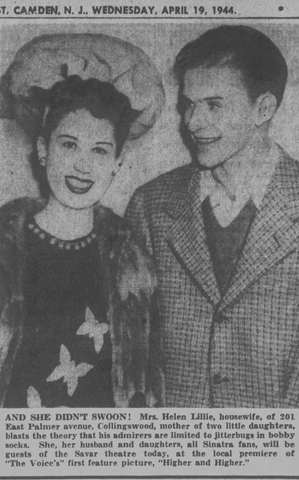
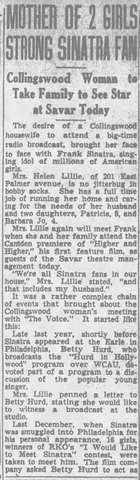
THE MORNING POST
APRIL 19, 1944
April 25, 1944
Concerts
Grand Ballroom of the Waldorf Astoria Hotel, NYC.
Banshees' Luncheon
Sinatra was one of the performers
Grand Ballroom of the Waldorf Astoria Hotel, NYC.
Banshees' Luncheon
Sinatra was one of the performers
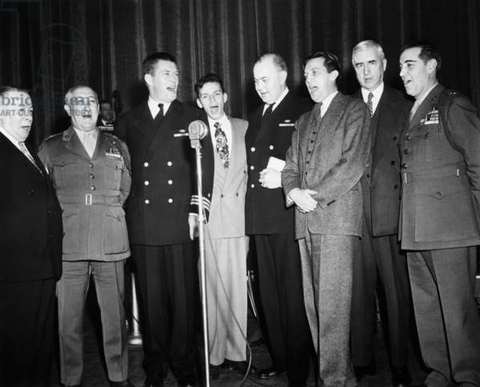
An all star octet entertains visiting editors and publishers at the Banshees' Luncheon, April 25, 1944
An all star octet entertains visiting editors and publishers at the Banshees' Luncheon. April 25, 1944, Grand Ballroom of the Waldorf Astoria Hotel, NYC. L-R: George McManus, cartoonist; Brig. Gen. Robert Denig, USMC Public Relations; Gene Tunney, Frank 'The Voice' Sinatra; Capt. Leland Lovett, USN Public Relations; George Healy OWI, Chief, Domestic Div.; Jesse Jones, Dir. RFC; and Brig. Gen. Jerry Thomas, USMC. The Luncheon was given on the occasion of the opening of the 58th Annual Convention of the American Newspaper Publishers Assn.
April 26, 1944
Radio
The Frank Sinatra Show
Wednesday
Location: CBS Playhouse Number Three
Network: CBS
Show #17
Sponsor: VIMMS Vitamins
Time: 9:00PM - 9:30PM (EST) Wednesday
Orchestra Conducted By: Axel Stordahl
Arrangements By: Axel Stordahl
Announcer: John Reed King
Performers: Jerry Lester, Pert Kelton, Vimms Vocalists
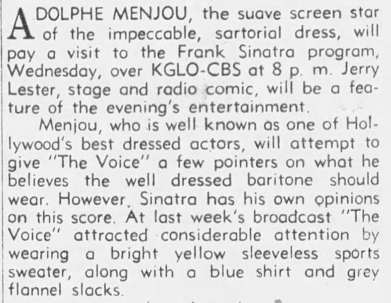
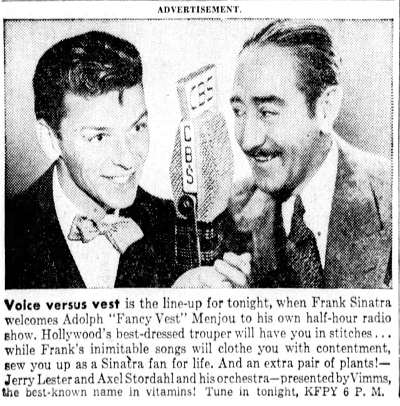
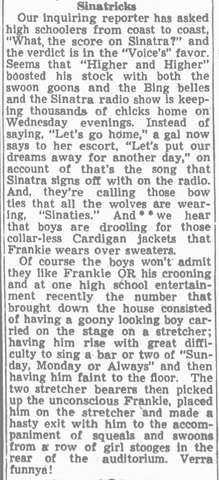
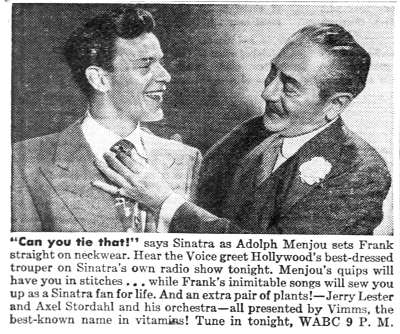
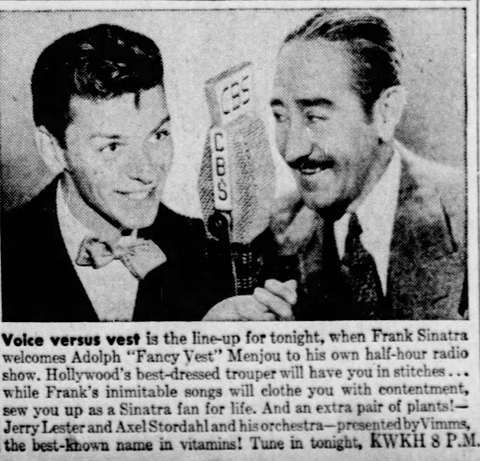
Guest: Adolphe Menjou
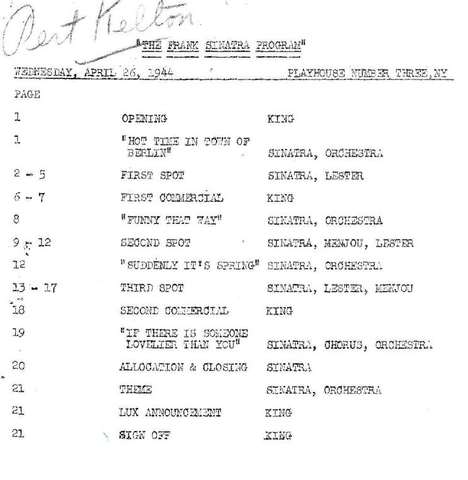
1. King opens show with introductory remarks
Orchestra plays "This Love Of Mine."
2."Hot Time In The Town Of Berlin" Frank
3. Frank & Jerry Lester do a comedy skit
Jerry is having problems with his cook.
4. Vimms commercial
5. "She's Funny That Way" Frank
6. Frank, Jerry and honored guest Adolphe Menjou
Skit: Menjou and Sinatra plug their soon to be released RKO film "Step Lively" ( release date was
June 27, 1944 ). Frank asks Menjou to help with
Lester's cook.
7. "Suddenly It's Spring" Frank
8. Sinatra, Menjou and Lester go over to Jerry's house.
The cook, Pert Kelton," is singing while she works.
Skit on her possible show biz career
9. Vimms commercial
10. "If There Is Someone Lovelier Than You" Frank and Vimms Vocalists
11. Closing remarks: Next week ( May 3 ) show will come from United States
Naval Training School, Woman's Reserve at Hunter College. Frank's guest will be Joan Leslie.
12. Put Your Dreams Away
13. King plugs Lux Radio, on Monday night, and Burns and Allen, on Tuesday.
14.. Sign-Off
Notes: Confirmed aired on WABC. Details - Ed O'Brien
[The Cinematic Legacy of Frank Sinatra — Step Lively (1944)]
David Wills's 2015 photo history The Cinematic Legacy of Frank Sinatra devotes a section to Step Lively (1944), illustrated with 3 behind-the-scenes and publicity photographs (posters, lobby cards, and on-set/on-location shots) filed here.
Source: David Wills, The Cinematic Legacy of Frank Sinatra (St. Martin's Press, 2015), pp. 36–38.
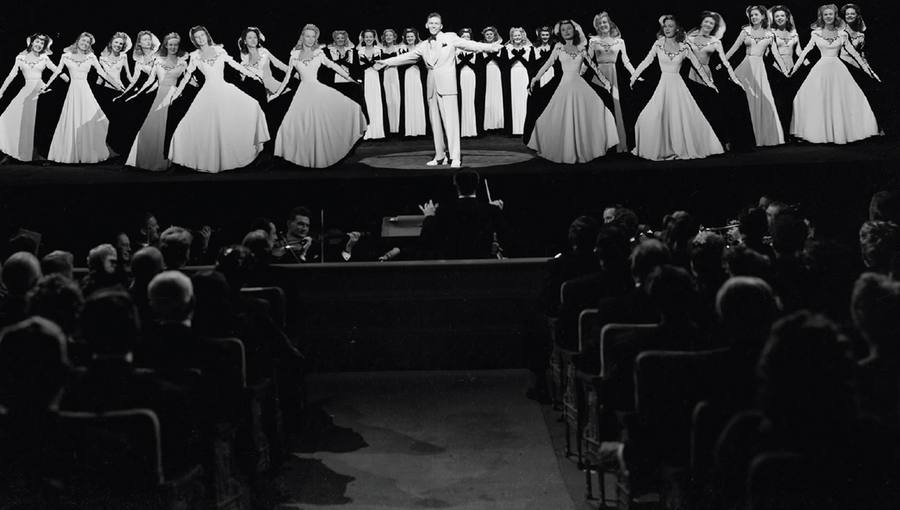
Insert poster, Step Lively, 1944. / As Glenn Russell, Step Lively. / “With the Sinatra Swoon & Squeal Society in / force at the Palace Theater, where Step Lively is / displaying their idol under favorable conditions, / it is not always possible to pay attention to the / picture. Sinatra himself, cas (Photo: The Cinematic Legacy of Frank Sinatra, David Wills, 2015.)
1944) / 1943. (Photo: The Cinematic Legacy of Frank Sinatra, David Wills, 2015.)
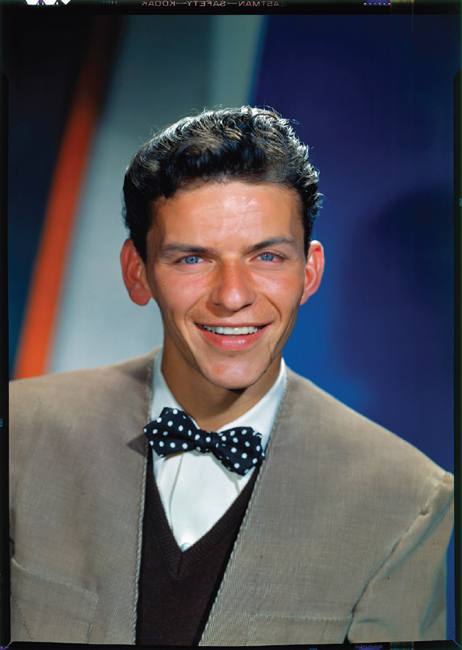
1943. (Photo: The Cinematic Legacy of Frank Sinatra, David Wills, 2015.)
The Frank Sinatra Show
Wednesday
Guest: Adolphe Menjou
note: I obtained the sheet below and the transcript of the show from the LOC. I sent the transcript to the list some years ago.
--Ed
April 29, 1944
Radio
Your Hit Parade
Network: CBS
Program #467
Time: 9:00-9:45 P.M. (Rebroadcast April 30, 1944 12:00-12:45 A.M.)
Sponsor: Lucky Strike
Script By: Robert Paul Smith
1. I'll Get By (5) - Frank Sinatra
2. Sunny Side Up - Orchestra
3. Besame Mucho (9) - Hit Paraders
4. When They Ask About You (6) - Joan Edwards
5. commercial
6. Praise The Lord And Pass The Amunition - Orchestra & Hit Paraders
7. Poinciana (4) - Frank Sinatra
8. Deep In The Heart Of Texas - Orchestra & Hit Paraders
9. Goodnight Wherever You Are (8) - Joan Edwards
10. San Fernando Valley (7) - Frank Sinatra
11. Singin' In The Rain - Orchestra
12. commercial
13. Long Ago And Far Away (3) - Hit Paraders
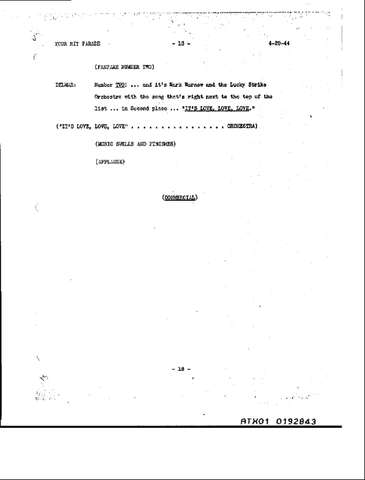
14. It's Love, Love, Love (2) - Mark Warnow & His Orchestra
15. Commercial
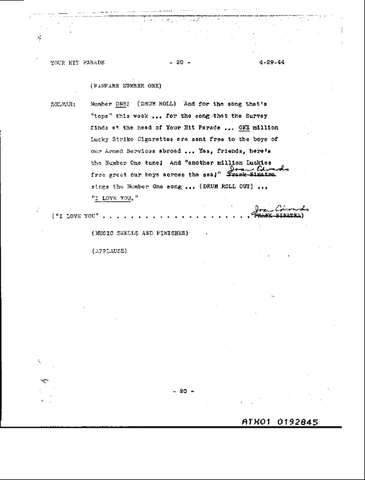
16. I Love You (1) - Joan Edwards
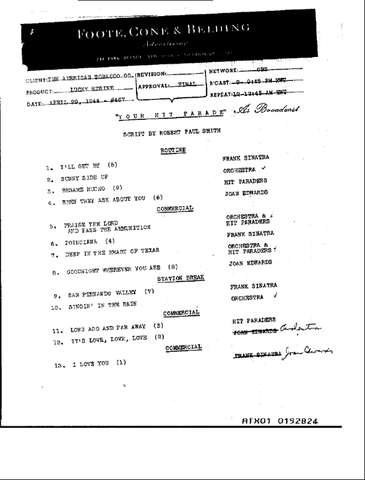
Ed O'Brien:
This was not listed on the date in history. I went back through the last three years and discovered the same omission. I would not have known if not for
Guy Steele. He wanted to know if "It's Love, Love,
Love" was really done by Sinatra. That's when the missing data was noticed by me. But there is more:
Frank did not sing the song in question. AFRS picks up the broadcast with Frank singing "Poinciana." With the exception of "Goodnight Wherever You Are," the rest of the show is offered in its entirety. Mark Warnow & His Orchestra do a quick run through of "It's Love . ."
I checked all of the other shows where this show was performed. There is not another orchestral version.
Obviously, Frank opted, probably at the last minute, not to sing the song.
Your Hit Parade
Network: CBS
Program #467
Time: 9:00-9:45 P.M. (Rebroadcast April 30, 1944 12:00-12:45 A.M.)
Sponsor: Lucky Strike
Here's the Script from April 29, 1944. As you can see, Joan Edwards was to sing It's Love, Love, Love. Sinatra was to sing I Love You. I misread the changes as Frank Sinatra instead of Orchestra. It was a little hard to make out. I added the confirmed pages below. --ED
May 1944
[Stars and Stripes profile by Sgt. Foisie]
Jack Foisie: The Army newspaper Stars and Stripes ran a wisecracking, envy-tinged profile of Sinatra by Sergeant Jack Foisie, noting his roughly $1 million annual income, 50 million fans, 2,000 weekly fan letters, and his on-air pleas for female fans not to scream during broadcasts since screams hurt overseas GI morale.
Source: James Kaplan, "Frank: The Voice" (2010)
May 3, 1944
Radio
The Frank Sinatra Show
Network: CBS
Show #18
Sponsor: VIMMS Vitamins
Time: 9:00PM - 9:30PM (EST) Wednesday
Orchestra Conducted By: Axel Stordahl
Arrangements By: Axel Stordahl
Announcer: Truman Bradley
Performers: Jerry Lester
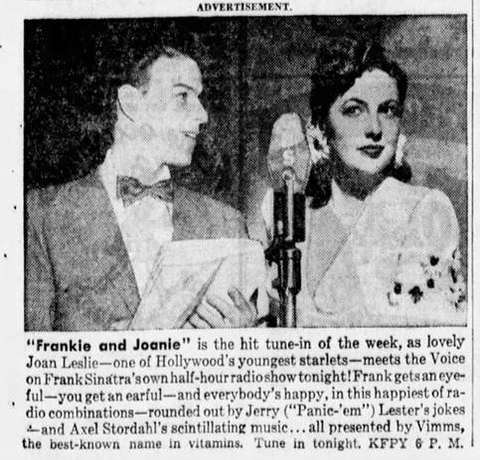
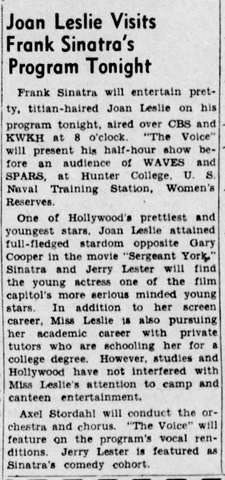
Guest: Joan Leslie
Before an audience of WAVES and SPARS at Hunter College, U.S. naval training station, Bronx, New York at Hunter College, U.S. Naval Training School, Bronx, New York
1. All Of Me
2. The Music Stopped
3. Nancy ( new song written by Phil Silvers and Jimmy Van Heusen )
4. How To Bake A Cake (parody) Frank, Joan and Jerry
4. You And The Night and The Music w/ Vimms Vocalists
5. Put You Dreams Away note: At the conclusion of the program Frank introduces a WAVE recruiter who encourages young women listening in to join up.
Frank would not be on the 5/10 show. He went to Chicago to meet Tommy Dorsey. Plan was to finalize pay off with TD. Didn't work out. Dinah Shore subbed on the Vimms Show with guest Robert Benchley. Ed
Notes: Confirmed aired on WABC. No show on May 10, 1944. In it's place on WABC 9:00PM-9:30PM Joan Edwards, songs Robert Benchley Guest.
The Frank Sinatra Show
Network: CBS
Show #18
Guest: Joan Leslie
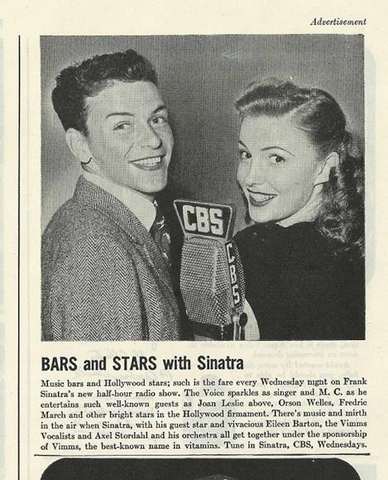
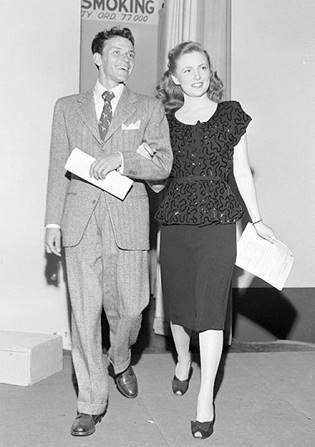
Note: The ad for Vimms was run just prior to the 8-16-44 show, but the photo was taken during the rehearsal for the 5-3-44 show.
And the above photo is also from that show.
Ed
Walter Winchell column
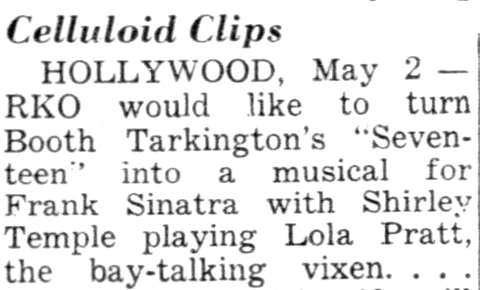
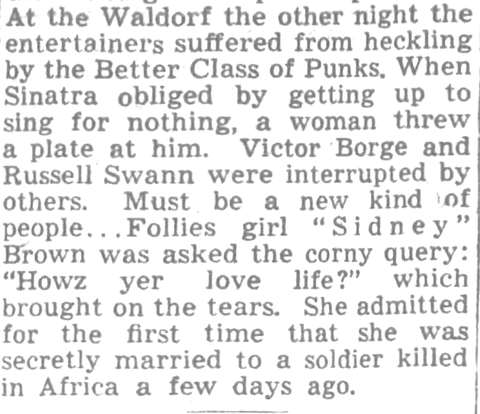
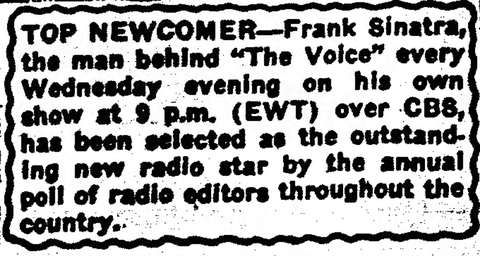
May 4, 1944
Radio
Major Bowes Amateurs
Sinatra was guest
CBS 8:00 PM
Note: Major Bowes was Frank's guest on the Vimms show, 4-19-44.
[image referenced in source but could not be recovered]
[image referenced in source but could not be recovered]
[image referenced in source but could not be recovered]
May 6, 1944
Radio
Your Hit Parade
Starring: Frank Sinatra, Joan Edwards, The Hit Paraders, Mark Warnow and The Lucky Strike Orchestra, Basil Ruysdael (announcer)
1. Poinciana (Song Of The Trees) (#9) - Frank Sinatra
2. Jeepers Creepers - Orchestra
3. When They Ask About You (#6) - Joan Edwards
4. Don't Sweet-Heart Me (#7) - The Hit Paraders
5. Smile, Darn You Smile - Orchestra
6. San Fernando Valley (#8) - Joan Edwards
7. I'll Be Seeing You (#5) - Frank Sinatra
8. In The Good Ol' Summertime - The Hit Paraders
9. It's Love, Love, Love (#4) - Joan Edwards
10. Rose Room - Orchestra
11. Long Ago And Far Away (#3) - The Hit Paraders
12. I'll Get By (#2) - Joan Edwards
13. I Love You (#1) - Frank Sinatra
14. So Long For A While - The Hit Paraders
Your Hit Parade
Starring: Frank Sinatra, Joan Edwards, The Hit Paraders, Mark Warnow and The Lucky Strike Orchestra, Basil Ruysdael (announcer)
Ed:
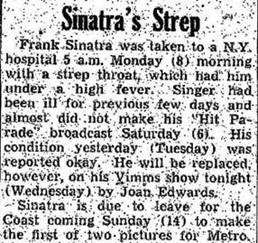
Note: I am running a thread through Frank's appearance on this show, his Vimm's show of May 10th and the following week's
Hit Parade. Against doctor's orders, Frank insisted on making his weekly appearance on the 5/6 Saturday Hit Parade. He barely made it through the half-hour. He was running a very high fever with chills and severe throat discomfort. Here is what happened next:
Variety
5-10-44
Joan Edwards did indeed sub for Frank on the Vimms show and her guest was Robert Benchley. We can only lament that Frank did not have the opportunity to exchange quips with that very clever and funny man.
Next up was the 5/13 Hit Parade.
Network: CBS
Program #469
Time: 9:00-9:45 P.M. (Rebroadcast May 14, 1944 12:00-12:45 A.M.)
Sponsor: Lucky Strike
Script By: Robert Paul Smith
Script (First & Final As Broadcast)
1. I'll Be Seeing You (7) - Joan Edwards
2. Boo Hoo - Orchestra
3. Poinciana (6) - Hit Paraders
4. San Fernando Valley (4) - Bob Wacker, Groups & Orchestra
5. commercial
6. Blow Gabriel Blow - Orchestra
7. Goodnight Wherever You Are (9) - Joan Edwards
8. Besame Mucho (8) - Bob Wacker & Orchestra
9. Give My Regards To Broadway - Orchestra & Hit Paraders
10. station break
11. I'll Get By (5) - Joan Edwards
12. Margie - Orchestra
13. commercial
14. It's Love, Love, Love (3) - Hit Paraders
15. I Love You (2) - Joan Edwards
16. commercial
17. Long Ago And Far Away (1) - Bob Wacker & Hit Paraders
As you can see, Bob Wacker, aided by the Hit Paraders, subbed for Sinatra. Frank joined the H.P. on 2-13-43 and was there through the 12-30-44 broadcast. In all there were 97 shows in that time frame. Frank was the male vocalist on 95. He also missed the 9-18-43 airing. Jerry Wayne, also supported by the Hit Paraders, stepped in for Sinatra. Yesterday, I listened to the 5-6 and 5-13-44 shows. Frank sounded fine on the first one. It was the commercial Lucky Strike broadcast. The AFRS airing of the 5/13 has no mention of the Sinatra name throughout. Frank took a train out to Hollywood on 5/14. His 5/17 Vimms show has no mention of his illness or his absence for the previous week's show. That's it.
--Ed
May 12, 1944
[Farewell party at the Copacabana]
Comedian Joe E. Lewis hosted a farewell cocktail party for Sinatra at Monte Proser's Copacabana in New York on the eve of his departure for Hollywood, featuring Conover modeling agency cover girls as hostesses.
Source: James Kaplan, "Frank: The Voice" (2010).
May 17, 1944
Radio
The Frank Sinatra Show
Network: CBS
Show #19
Sponsor: VIMMS Vitamins
Time: 9:00PM - 9:30PM (EST) Wednesday
Orchestra Conducted By: Axel Stordahl
Arrangements By: Axel Stordahl
Announcer: Truman Bradley
Performers: Jerry Lester
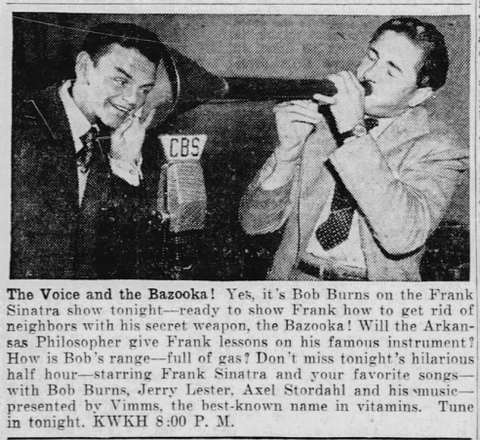
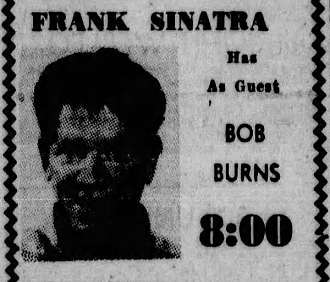
Guest: Bob Burns
Dress Rehearsal:
1. Some Other Time
2. Come Out, Wherever You Are
3. Exactly Like You
4. Some Other Time
5. Come Out Wherever You Are
6. The Way You Look Tonight
Broadcast:
1. Exactly Like You
2. Some Other Time
3. Come Out, Come Out Wherever You Are
4. The Way You Look Tonight with Vimms Vocalists
5. Put Your Dreams Away sign -off
Notes: Confirmed aired on WABC.
From the dress rehearsal "Some Other Time" & "Come Out, Wherever You Are" are on the CD: The V-discs (Columbia).
NOTE: "Exactly Like You," Ed O'Brien says, has a Sy Oliver chart and Sinatra does a lovely reading on "The Way You Look Tonight." He also plugs two of his recording from the movie "Step Lively."
The Frank Sinatra Show
Network: CBS
Show #19
Sponsor: VIMMS Vitamins
Time: 9:00PM - 9:30PM (EST) Wednesday
Orchestra Conducted By: Axel Stordahl
Arrangements By: Axel Stordahl
Announcer: Truman Bradley
Performers: Jerry Lester
Guest: Bob Burns
May 21, 1944
Radio
Take It Or Leave It
CBS 9:00 PM
Host: Phil Baker
Guest: Frank Sinatra
Take It Or Leave It
CBS 9:00 PM
Host: Phil Baker
Guest: Frank Sinatra
Phil Baker & Frank Sinatra
Host Phil Baker (1896 - 1963) with American singer and actor Frank Sinatra (1915 - 1998) in front of a blackboard on the set of a quiz show, 'Take It or Leave It,' 1944. (Photo by Hulton Archive/Getty Images)
note: "Take It Or Leave It" was a CBS show that was broadcast from 10:00 P.M. to 10:30 P.M. on Sunday nights. There were a number of hosts through the years including Phil Baker during the 1944 broadcasts. The contestants would attempt to win a grand prize of $64.00. Frank would be a guest on 5-21-44 and 10-29-44. He would also appear on the one hour "Radio Hall of Fame, 10-29-44 from 6 to 7 P.M. Paul Whiteman was the bandleader on all three shows. Whiteman was the most popular bandleader of the pre-swing era and he introduced Bing Crosby to America. Bing would be the only musical artist to achieve greater success in the first half of the 20th Century. Sinatra sang "There's No You" and "Ol' Man River" with the Whiteman band on the 10-29 "Take It Or Leave It." The arrangements were done by Whiteman. Baker asked Frank when did he first started making money in show business. Frank told him in 1942 A.D. Baker asked what the A.D. signified. The answer was "After Dorsey." The show would become a very successful TV series and be renamed "$64,000 Question." Ed
May 24, 1944
Radio
The Frank Sinatra Show
Network: CBS
Show #20
Sponsor: VIMMS Vitamins
Time: 9:00PM - 9:30PM (EST) Wednesday
Orchestra Conducted By: Axel Stordahl
Arrangements By: Axel Stordahl
Announcer: Truman Bradley
Performers: Jerry Lester
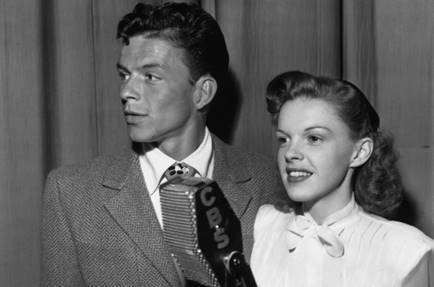
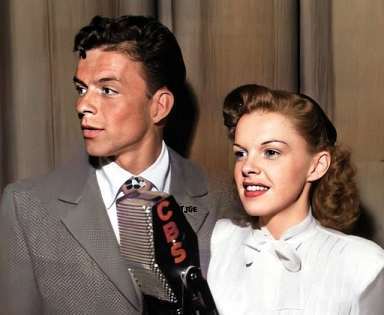
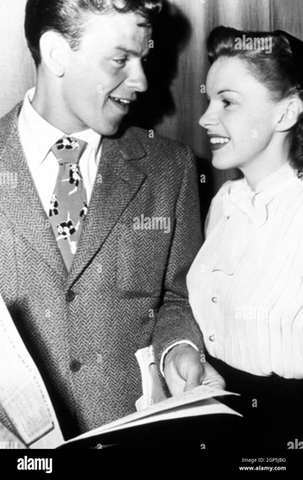
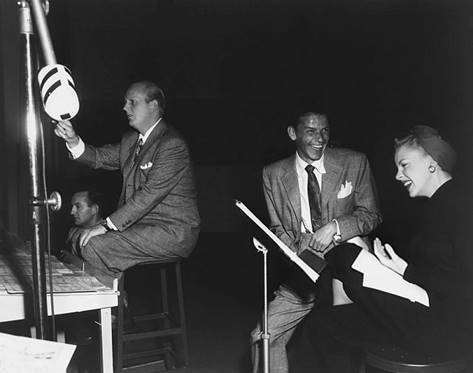
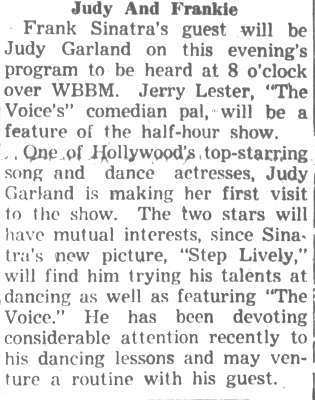
Guest: Judy Garland
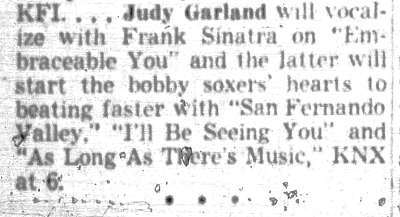
1. San Fernando Valley
2. And Then You Kissed Me
3. Frank sings a line from "Sunday, Monday, and Always"
4. Zing Went The Strings Of My Heart - Judy
5. Embraceable You w/Judy
6. Put Your Dreams Away
Notes: Ed O'Brien: "After "San Fernando Valley" Frank does a skit with Jerry Lester.
They talk about Frank getting set to shoot "Anchors Aweigh."
When he intros "And Then You Kissed Me, "
there is mention of just having completed "Step Lively."
Segments with Garland are quite interesting.
She was at the apex of her MGM career and Frank is quite deferential. They do a nice "Embraceable You."
Confirmed aired on WABC. The CD The V-discs 1 (Columbia) contains "Put Your Dreams Away" & "And Then You Kissed
Me"
The Frank Sinatra Show
Network: CBS
Guest: Judy Garland
May 25, 1944
Radio
The Lifebuoy Show
NBC
7:30 - 8:00 p.m.
Thursday Evening
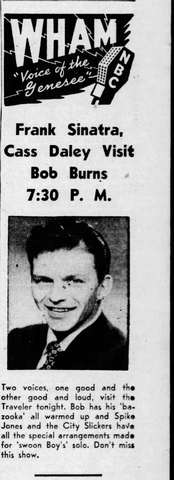
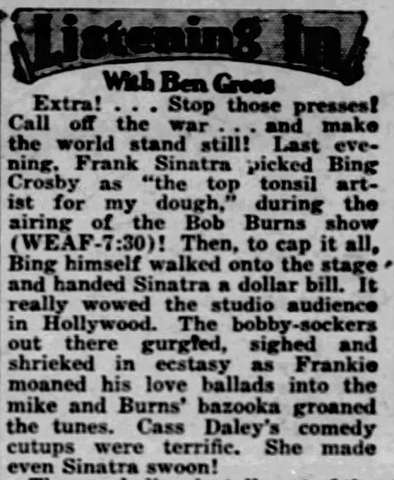
Sponsor: Lifebuoy Soap
Guests: Frank Sinatra,
Bob Burns, Cass Daley, Spike Jones and The City Slickers, Carl Grayson (Vocal)
Announcer: Doug Gorlay
1. South Of The Border
2. I Had A Man
3. Pistol Packin' Mama
4. Speak Low
5. Your Feet's Too Big
6. You're Driving Me Crazy
Notes: The show appears on the officially released CD set: 60 Greatest Old Time Radio Shows "Frank Sinatra & Friends." 30mins.
Condition: Very good to excellent. Complete as above.
The Lifebuoy Show
NBC
7:30 - 8:00 p.m.
Thursday Evening
Sponsor: Lifebuoy Soap
Guests: Frank Sinatra,
Bob Burns, Cass Daley, Spike Jones and The City Slickers, Carl Grayson (Vocal)
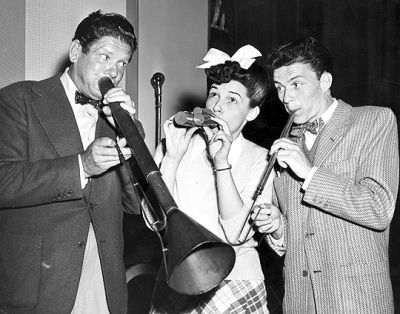
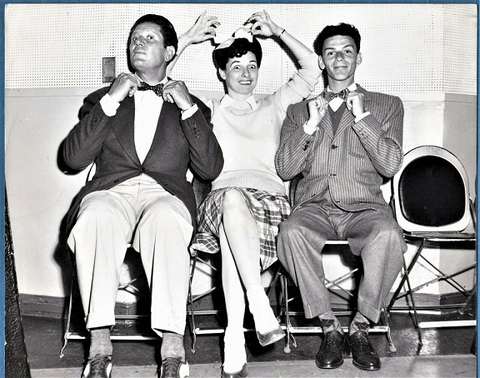
Bob Burns Cass Daley Frank Sinatra
Above photo was supplied thanks to Michel M.
May 27, 1944
Radio
Your Hit Parade. Sinatra sang "San Fernando Valley" (Jenkins), which placed at No. 4 on this broadcast. Source: liner notes, JR Records JRR 144-2, "Frank Sinatra: Your Hit Parade 1944 -- It Was a Very Good Year."
May 31, 1944
Radio
The Frank Sinatra Show
Network: CBS
Show #21
Sponsor: VIMMS Vitamins
Time: 9:00PM - 9:30PM (EST) Wednesday
Orchestra Conducted By: Axel Stordahl
Arrangements By: Axel Stordahl
Announcer: Truman Bradley
Performers: Jerry Lester
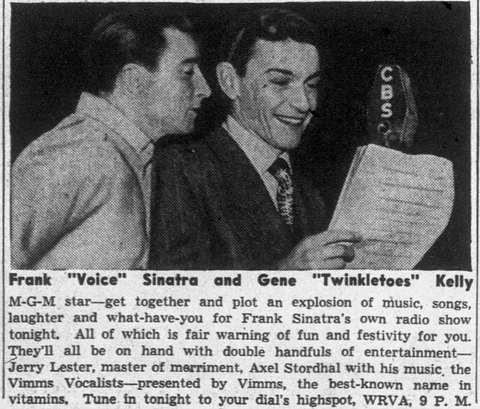
Guest: Gene Kelly
1. Miss Annabelle Lee
2. Too Much In Love
3. Ol' Man River
4. San Fernando Valley (Parody) w/Kelly & Lester
5. I'll Be Seeing You
6. Put Your Dreams Away
Notes: Ed O'Brien:"The 44 show with Kelly is a real treasure. They worked well together and there are some rare songs that would never be recorded by Frankie. " Parody is titled "Metro-Goldwin-Mayer Our Home." Confirmed aired on WABC.
The Frank Sinatra Show
Network: CBS
Show #21
Guest: Gene Kelly
June 1944
[Filming Begins on Anchors Aweigh]
Sinatra began filming the MGM musical Anchors Aweigh in June 1944. He later credited co-star Gene Kelly, who adapted his own choreography to Sinatra's ability, with teaching him nearly everything he came to know as a performer.
Source: Charles Pignone, "Frank Sinatra 100" (2015).
June 1, 1944
[Family arrives in Pasadena]
Nancy, four-year-old Little Nancy, baby Frank Jr., and Nancy's sister Tina (Constante) Barbato arrived by train at the Union Pacific station in Pasadena to join Frank in California. He checked out of his bachelor suite at the Sunset Tower and into the Castle Argyle hotel near CBS while their new house was readied.
Source: James Kaplan, "Frank: The Voice" (2010).
June 3, 1944
Radio
Your Hit Parade
Network: CBS
Program #472
Time: 9:00-9:45 P.M. (Rebroadcast June 4, 1944 12:00-12:45 A.M.)
Sponsor: Lucky Strike
Script By: Robert Paul Smith
Script (Final As Broadcast)
1. Amor (7) - Frank Sinatra
2. Lullaby Of Broadway - Orchestra
3. Goodnight Wherever You Are (8) - Hit Paraders
4. San Fernando Valley (4) - Joan Edwards
5. commercial
6. Clap Yo' Hands - Orchestra
7. I Love You (6) - Joan Edwards
8. How Blue The Night (9) - Frank Sinatra
9. Deacon Jones - Orchestra & Hit Paraders
10. station break
11. It's Love, Love, Love (5) - Joan Edwards
12. California Here I Come - Orchestra
13. commercial
14. I'll Be Seeing You (3) - Hit Paraders
15. I'll Get By (2) - Joan Edwards
16. commercial
17. Long Ago And Far Away (1) - Frank Sinatra
Notes: Sinatra portion from Hollywood.
June 4, 1944
Radio
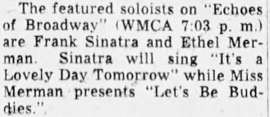
Echoes of Broadway
WMCA 7:03 PM
Guests Frank Sinatra and Ethel Merman
Note: Sinatra sang "It's A Lovely Day Tomorrow"
June 6, 1944
Studio
MGM - Los Angeles
ANCHORS AWEIGH
Tuesday D-Day
Orchestra conducted by Georgie Stoll
Arranged by Axel Stordahl
Brahms' Lullaby
take 6(1:28), take 8(1:25) and take 10(1:35) were mastered
June 7, 1944
Radio
The Frank Sinatra Show
D-Day Announcement
Network: CBS
Show #22
Sponsor: VIMMS Vitamins
Time: 9:00PM - 9:30PM (EST) Wednesday
Orchestra Conducted By: Axel Stordahl
Arrangements By: Axel Stordahl
Announcer: Truman Bradley
Performers: Jerry Lester
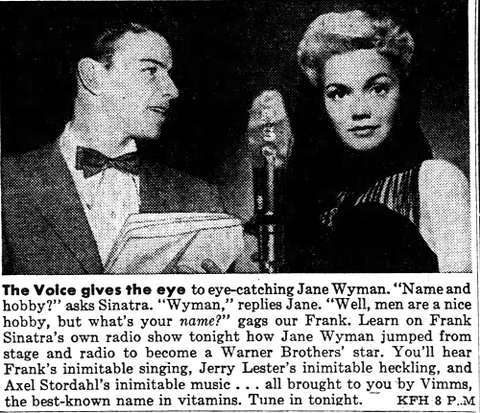
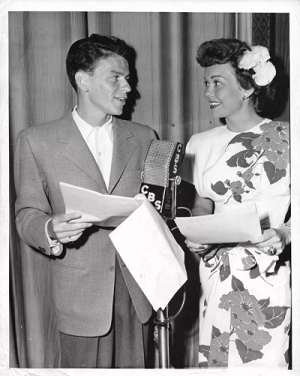
Guest: Jayne Wyman
1. There'll Be A Hot Time In The Town Of Berlin
2. The Song Is You
3. Amor
4. Where Or When
5. America The Beautiful
6. Put Your Dreams Away
NOTE: Historic is the only way to describe this show, Ed O'Brien exclaims. Here is Sinatra's introduction: "Good evening, ladies and gentlemen, this is Frank Sinatra. We are all mindful of the situation overseas and should any bulletins arrive from Invasion Headquarters, our program will be interrupted so you can hear them immediately. Thank you very much."
Guest Jane Wyman at that time was a stock player at Warners. She had planned to do a comedy skit with Sinatra that evening, but D-Day changed all that and, instead, she gave a very moving speech, even mentioning that her husband was in uniform. She was married at the time to a B movie star who went into politics later. He went on to become Governor of California and President of the United States, Ronald Reagan.
Here are Frank's complete opening remarks from this show of 68 (2012) years ago:
"Good evening ladies and gentlemen, this is Frank Sinatra. We're all mindful of the situation overseas and should any bulletins arrive from invasion headquarters, our are program will be interrupted, so you may hear them immediately. Thank you very much........ Friends, as I talk to you now, the armed forces of the United Nations are engaged in the greatest crusade of all times. A crusade to free the world from the threat of slavery and oppression. These are historic hours. A time for courage and hope. With this thought in mind, my co-workers and I feel it only fitting to put aside our regular program. So, we naturally turn to our first love, music. Sometimes music can be more eloquent than the spoken word and is ofttimes comforting to those who have a love one far away...A little while ago, we said that music can be more eloquent than the spoken word. Sometimes music stimulates our hopes for the future, for the day when peace will come and all of us will sing........ "
Television
None
The Frank Sinatra Show
D-Day Announcement
Guest: Jayne Wyman
note:: Gags like the one mentioned above were written out the minute D-Day announcement was received.
June 10, 1944
Radio
Your Hit Parade
Network: CBS
Program #473
Time: 9:00-9:45 P.M. (Rebroadcast June 11, 1944 12:00-12:45 A.M.)
Sponsor: Lucky Strike
Sript By: Robert Paul Smith
Script (Final As Broadcast)
1. San Fernando Valley (4) - Frank Sinatra
2. Lady Be Good - Orchestra
3. Goodnight Wherever You Are (5) - Hit Paraders
4. It's Love, Love, Love (8) - Joan Edwards
5. commercial
6. Chicago - Orchestra
7. I Love You (6) - Joan Edwards
8. Swinging On A Star (9) - Frank Sinatra
9. There Is A Tavern In The Town - Orchestra & Hit Paraders
10. station break
11. Amor (7) - Joan Edwards
12. Alexander's Ragtime Band - Orchestra
13. commercial
14. I'll Get By (3) - Hit Paraders
15. I'll Be Seeing You (2) - Frank Sinatra
16. commercial
17. Long Ago And Far Away (1) - Joan Edwards & Group
Notes: Sinatra portion from Hollywood.
June 11, 1944
Concerts
Hollywood Bowl, Los Angeles, CA
War Wounded Fund Benefit
Frank Sinatra, Abbott & Costello, Carmen Miranda, Mickey Rooney, Frances Langford, Jerry Lester and others
note: All of Hollywood was fighting to land an appearance at this benefit. Sinatra was the exception. He was such a hot property in June 44, the organizers wanted him from the start. Frank was honored to perform that night. --Ed
Hollywood Bowl, Los Angeles, CA
War Wounded Fund Benefit
Frank Sinatra, Abbott & Costello, Carmen Miranda, Mickey Rooney, Frances Langford, Jerry Lester and others
Thanks to Carl for above photos
------------------------------------------
© 1997-2026 The Sinatra Archive
This calendar, or any parts thereof, may not be reproduced in any fashion whatsoever without the prior written permission of the publisher (The Sinatra Archive)
[image referenced in source but could not be recovered]
[image referenced in source but could not be recovered]
[image referenced in source but could not be recovered]
June 13, 1944
Studio
MGM - Los Angeles
Tuesday
ANCHORS AWEIGH
Orchestra conducted by Georgie Stoll
I Begged Her
w/ Gene Kelly
Vocal required 9 takes 7(2:09),8(2:09), and 9(2:10) were mastered dance segment to bar 85 required one take(1:08) bar 125 to end was done in two sections.
There were 13 and 16 takes done respectively. Numerous takes were mastered.
We Hate To Leave
w/Gene Kelly
there were 14 takes.
Takes 7(2:03),8(2:04),12(2:03) and 14(2:04) were mastered.
If You Knew Susie
w/Gene Kelly
11 takes (1:58)
June 14, 1944
Radio
The Frank Sinatra Show
Network: CBS
Show #23
Sponsor: VIMMS Vitamins
Time: 9:00PM - 9:30PM (EST) Wednesday
Orchestra Conducted By: Axel Stordahl
Arrangements By: Axel Stordahl
Announcer: Truman Bradley
Performers: Jerry Lester
Guest: Lana Turner
1. Come Out, Come Out Wherever You Are
2. Nancy
3. As Long As There's Music
4. Dancing In The Dark
5. Put Your Dreams Away
Notes: Last show of the series. Confirmed aired on WABC.
On June 21, 1944 WABC aired Jack Carson Show 9:00PM-9:30PM.
Sinatra returns with a new series August 16, 1944.
Ed O'Brien notes:
What a show! Flag day 1944 and Frank, Lana, Jerry Lester, Axel, Vimms Vocalist and Truman Bradley are broadcasting live from Birmingham General Hospital in Van Nuys, California. The audience is made up of servicemen and women. Frank opens with "Come Out, Come Out Wherever You Are" and then does a comedy skit with Lester. Frank mentions that Father's Day is coming up next Sunday and sings "Nancy" for all the dads with little girls. The gang does a skit on visiting Palm Springs and scouting a movie location. Frank announces that Axel has suggested he sing a brand new song never before done on radio. He sings "As Long As There's Music" from "Step Lively." He then does a romantic scene with Lana and sings "Dancing in the Dark."
Frank thanks the soldiers and tells his radio audience to buy Victory Bonds and to tune in when the show returns on 8/16. He closes with "Put Your Dreams Away." A wonderful artifact from the war years.
Television
None
The Frank Sinatra Show
Network: CBS
Guest: Lana Turner
note: Frank and Lana 6-14-44
On the 14th of June 1944 Lana was the guest in Frank Sinatra’s show “Hollywood: “The Frank Sinatra Program – Vimms Vitamins.” She introduced him.
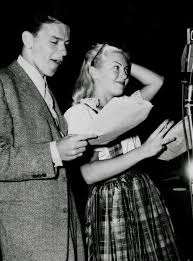
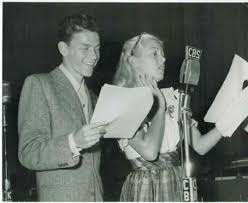
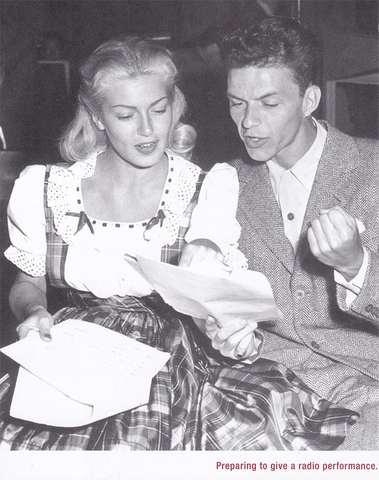
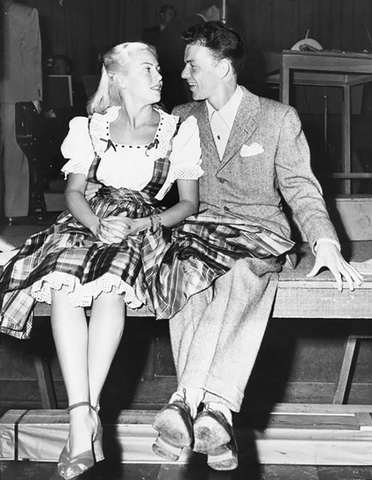
Lana Turner and Frank Sinatra preparing to give a radio performance
June 15, 1944
Frank Sinatra began work on Anchors Aweigh with Gene Kelly, his first film under his new MGM contract. Kelly, patient with his inexperienced costar's dancing, tailored the choreography around Sinatra's limitations; Sinatra would later credit Kelly as one of the people who helped make him a star. Production was also marked by friction with producer Joe Pasternak, including a dispute over Sinatra's insistence on viewing dailies that briefly led him to walk off the film before returning a few days later. Source: J. Randy Taraborrelli, Sinatra: Behind the Legend.
Frank began shooting Anchors Aweigh with Gene Kelly, who tutored him in dance; the demanding routines caused him to lose four pounds during the first rehearsal, so he drank six malted milks a day for two weeks to regain the weight.
Frank Sinatra (quoted): "You may have set dancing back 20 years."
Source: Nancy Sinatra, Frank Sinatra: An American Legend, 1995.
June 16, 1944
Concerts
Battalion G dance, Memorial Room of Willard Straight, Ithaca, NY Friday
Time 9:00 P.M.
Eddie Moore's orchestra
Note: Thanks to Richard Cook for the above listing and article below.
Battalion G dance, Memorial Room of Willard Straight, Ithaca, NY Friday
Time 9:00 P.M.
Eddie Moore's orchestra
Note: Thanks to Richard Cook for the article below.
[image referenced in source but could not be recovered]
June 17, 1944
Radio
Your Hit Parade
Network: CBS
Program #474
Time: 9:00-9:45 P.M. (Rebroadcast June 18, 1944 12:00-12:45 A.M.)
Sponsor: Lucky Strike
Script By: Robert Paul Smith
Script (Final As Broadcast)
1. Amor (5) - Frank Sinatra
2. Black Bottom - Orchestra
3. Some Day I'll Meet You Again (9) - Hit Paraders
4. San Fernando Valley (4) - Bea Wain
5. commercial
6. Flying Down To Rio - Orchestra
7. Goodnight Wherever You Are (8) - Bea Wain & Group
8. I Love You (6) - Frank Sinatra
9. Three Little Words - Orchestra & Hit Paraders
10. station break
11. It's Love, Love, Love (7) - Bea Wain
12. I Got Plenty Of Nothin' - Orchestra
13. commercial
14. I'll Get By (3) - Hit Paraders
15. I'll Be Seeing You (2) - Bea Wain
16. commercial
17. Long Ago And Far Away (1) Frank Sinatra
Notes: Sinatra portion from Hollywood. Joan Edwards was ill.
June 20, 1944
Radio
Fifth War Loan Drive Show: "The Land Is Bright"
Network: CBS
WABC New York main base for broadcast
Time: 10:30PM - 11:45PM (EWT) 75 minute broadcast
Producers: William N. Robson, Robert L. Shayon & His Staff including Bob Hafter,
John Dietz, Paul LaPorte, Laury Harding, Walter Preston, Hank Swartwood, Bob Heller, Tom Aarons. Orchestra & Chorus under the direction of Alexander Seminler
Performers:Conrad Nagle, Col. Stoopnagle, Bob Hawk, Phil Baker, Danny O'Neil, Fred Allen, Portland Hoffa,
Irene Beasley, Joe King, Del Sharbutt, Frank Sinatra, Dinah Shore, Jimmy Durante, Gary Moore, Phil Baker, Danny O'Neil, Irene Beasley, Warren Hull
Note: CBS devoted entire day to raising funds for war bonds. The culmination of this massive effort was
"The Land Is Bright" The show originated in New York with 10 pickups ranging from the bottom of a coal mine in Alabama to a lighthouse outside a harbor in Boston. Between pickups the program would switch- back to it N.Y.C. headquarters. Conrad Nagle narrated and "Land Is Bright" theme was used throughout the show. Entertainment took a backseat as the show spotlighted the average American worker throughout. Jimmy Durante, Garry Moore, Dinah Shore and Frank Sinatra were picked up at the Lockheed plant in Burbank, California. Frank and Dinah sang a duet of "Embraceable You," described by Variety as a "sock rendition." It is considered by many to be the best war bond broadcast of the entire war.
--Ed
Television
None
Fifth War Loan Drive Show: "The Land Is Bright"
Network: CBS
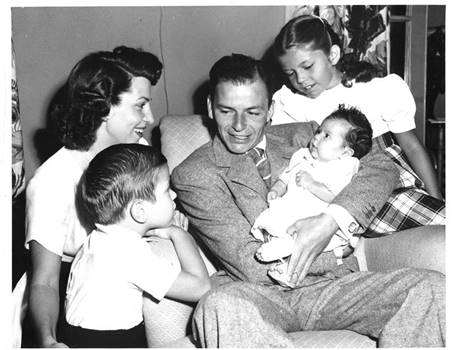
June 20, 1948 Christina “Tina” Sinatra is born

June 24, 1944
Radio
Hollywood Bowl Academy Night
1. And Then You Kissed Me
Notes: "And Then You Kissed Me" appears on the CD: "The Unheard Frank
Sinatra Volume 3, Radio Rarities 1943-49" VJC 1030-2
NOTE: Ed O'Brien observes what a wonderful project it would be to prepare and release a CD of the marvellous performances Sinatra gave at the Hollywood Bowl in the 1940s. Absolute gems have been preserved.
They cry out for wide distribution
Your Hit Parade
Network: CBS
Program #475
Time: 9:00-9:45 P.M. (Rebroadcast June 25, 1944 12:00-12:45 A.M.)
Sponsor: Lucky Strike
Script By: Robert Paul Smith
Script (Final As Broadcast)
1. Goodnight Wherever You Are (4) - Frank Sinatra
2, That's A Plenty - Orchestra
3. Time Waits For No One (8) - Hit Paraders
4. San Fernando Valley (5) - Joan Edwards
5.. commercial
6. I Won't Dance - Orchestra
7. I Love You (9) - Joan Edwards
8. Swinging On A Star (7) - Frank SInatra
9. Woodpecker Song - Orchestra & Hit Paraders
10. station break
11. Amor (6) - Joan Edwards
12. Ain't Misbehavin' - Orchestra
13. commercial
14. Long Ago And Far Away (3) - Hit Paraders
15. I'll Get By (2) - Joan Edwards
16. commercial
17. I'll Be Seeing You (1) - Frank Sinatra
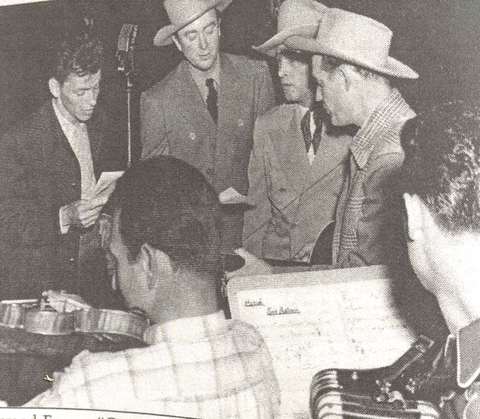
Frank Sinatra and Riders of the Purple Sage during taping of Command
Performance #126, 6-24-44
June 27, 1944
Frank's first on-screen kiss, with actress Gloria DeHaven, was filmed for RKO's Step Lively, a musical remake of the Marx Brothers' Room Service in which he played a country bumpkin aspiring to be a playwright.
Source: Nancy Sinatra, Frank Sinatra: An American Legend, 1995.
June 30, 1944
Studio
MGM Recording Studio
What Makes The Sunset?
For the movie :Anchors Aweigh:
Arranged by Alex Stordahl
Conducted by Georgie Stoll
Seven takes and 3 intercuts from Bar 37
One intercut from Bar 87
July 1944
[Cancels Riobamba; Dean Martin substitutes]
Kaplan: Sinatra had to cancel a scheduled return engagement at Manhattan's Riobamba nightclub in July 1944. MCA sent a young singer named Dean Martin (born Dino Crocetti) as his replacement; columnist Lee Mortimer noted Martin sounded and looked like Sinatra.
Source: James Kaplan, "Frank: The Voice" (2010)
July 1, 1944
Radio
Your Hit Parade
Network: CBS
Program #476
Time: 9:00-9:45 P.M. (Rebroadcast July 2, 1944 12:00-12:45 A.M..)
Sponsor: Lucky Strike
Script By: Robert Paul Smith
Script (Final As Broadcast)
1. I'll Get By (7) - Frank Sinatra
2. Lady In Red - Orchestra
3. Time Waits For No One (8) - Hit Paraders
4. San Fernando Valley (4) - Joan Edwards
5. commercial
6. Everybody Step - Orchestra
7. Swinging On A Star (6) - Joan Edwards & Hit Paraders
8. Goodnight Wherever You Are (5) - Frank Sinatra
9. Ballin' The Jack - Orchestra & Hit Paraders
10. station break
11. I Love You (9) - Joan Edwards
12. I Got Rhythm - Orchestra
13. commercial
14. Amor (3) - Hit Paraders
15. Long Ago And Far Away (2) - Joan Edwards
16. commercial
17. I'll Be Seeing You (1) - Frank Sinatra
Notes: Sinatra portion from Hollywood.
July 3, 1944
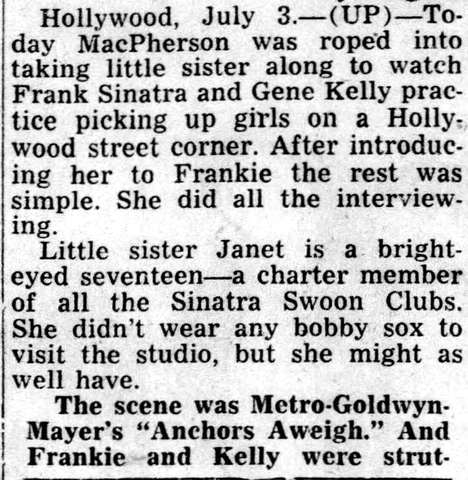
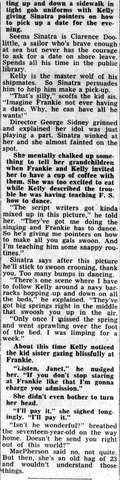
Hanaford Morning Journal
7-4-44
July 8, 1944
Studio
V-DISC RECORDING SESSION
Saturday evening
VP818-D4TC
262 All The Things You Are V-Disc
287-B (Army)
67-B (Navy)
VP818-D4TC
262 All Of Me
V-Disc 287-B (Army)
67-B (Navy)
VP823-D4TC
267 Nancy
V-Disc 323-A (Army)
103-A (Navy)
VP824-D4TC
268 Mighty Lak'A Rose
V-Disc 310-A (Army)
90-A (Navy)
VP919-D4TC
426 If Loveliness Were Music
N/R on V-Disc
VP919-D4TC
426 If You Are But A Dream
N/R on V-Disc
VP1148-XP
34237 Brahms' Lullaby (The Cradle Song)
N/R on V-Disc
VP1148-XP
34237 I'll Follow My Secret Heart
N/R on V-Disc
VP1332-D5TC
295 Falling In Love With Love
V-Disc 467-A (Army)
247-A (Navy)
VP1399-D5TC
515 Brahms' Lullaby (The Cradle Song)
V-Disc 506-A (Army)
266-A (Navy)
VP1399-D5TC
515 I'll Follow My Secret Heart
V-Disc 506-A (Army)
266-A (Navy)
Ed O'Brien notes: Sinatra paid for the studio time and orchestra.
The Hit Parade originated from CBS Studio Theatre
KFWB, located in the Warner Theatre, in Hollywood.
After the broadcast, Sinatra was joined by Axel Stordahl and the studio orchestra for a V-Disc recording session.
It was the only one he ever did. There were 11 recordings done of nine songs and seven would eventually be issued on V-Disc.
Radio
Your Hit Parade
Network: CBS
Program #477
Time: 9:00-9:45 P.M. (Rebroadcast July 9, 1944 12:00-12:45 A.M.)
Sponsor: Lucky Strike
Script By: Robert Paul Smith
Script (Final As Broadcast)
1, I'll Get By (4) - Frank Sinatra
2. Stompin' At The Savoy - Orchestra
3. Time Waits For No One (8) - Hit Paraders
4. Milkman Keep Those Bottles Quiet (5) - Joan Edwards
5. commercial
6. Toy Trumpet - Orchestra
7. Goodnight Wherever You Are (7) - Joan Edwards
8. Swinging On A Star (9) - Frank Sinatra
9. Chattanooga Choo Choo - Orchestra & Hit Paraders
10. station break
11. San Fernando Valley (6) - Joan Edwards
12. Carioca - Orchestra
13. commercial
14. Long Ago And Far Away (3) - Hit Paraders
15. Amor (2) - Joan Edwards
16. commercial
17. I'll Be Seeing You (1) - Frank Sinatra
Notes: Sinatra portion from Hollywood
[If You Are But a Dream -- critical commentary]
It’s fully a year from “Music Stopped,” the last a cappella title, to “If You Are But a Dream,” the first true Sinatra-Stordahl recording. If you listen to the Columbia sessions chronologically, the transition is overwhelming; done only three days after Columbia made peace with the union, the song seems to be Stordahl’s attempt to make up for lost time. How better than to start with an adaption of the classical piano masterwork Romance in E Flat Major, Op. 44 by Anton Rubinstein? For what was previously known as a piano solo or a string quartet work, Sinatra employs a full chamber symphony orchestra, including strings and woodwinds, not to mention eight Bobby Tucker Singers for good measure.
This song/context matches multiple dated entries in the chronology; the specific date Friedwald is referring to could not be determined with confidence.
Source: Will Friedwald, "Sinatra! The Song Is You: A Singer's Art" (2018 revised edition), Ch. 4, "With Axel Stordahl" (1943-1948)
July 12, 1944
Radio
Radio: Your Personal Album, an AFRS transcription program featuring Sinatra recordings, was issued this date, drawing "I'll Walk Alone," "Over The Rainbow," "If You Are But A Dream," and "Close To You" from his December 26, 1943 Songs By Sinatra broadcast. Source: sinatradiscography.com, Radio Transcriptions Database.
July 15, 1944
Radio
Your Hit Parade
Network: CBS
Program #478
Time: 9:00-9:45 P.M. (Rebroadcast July 16, 1944 12:00-12:45 A.M.)
Sponsor: Lucky Strike
Script By: Robert Paul Smith
Script (Final As Broadcast)
1. Milkman Keep Those Bottles Quiet (6) - Frank Sinatra
2. My Blue Heaven - Orchestra
3. Time Waits For No One (7) - Hit Paraders
4. San Fernando Valley (8) - Joan Edwards
5. commercial
6. Strike Up The Band - Orchestra
7. Swinging On A Star (6) - Joan Edwards & Hit Paraders
8. Goodnight Wherever You Are (9) - Frank Sinatra
9. For Me And My Gal - Orchestra & Hit Paraders
10. station break
11. I'll Get By (4) - Joan Edwards
12. After You've Gone - Orchestra
13. commercial
14. Amor (3) - Hit Paraders
15. Long Ago And Far Away (2) - Joan Edwards
16. commercial
17. I'll Be Seeing You (1) - Frank Sinatra
Notes: Sinatra portion from Hollywood.
July 22, 1944
Radio
Your Hit Parade
Network: CBS
Program #479
Time: 9:00-9:45 P.M. (Rebroadcast July 23, 1944 12:00-12:45 A.M.)
Sponsor: Lucky Strike
Script By Robert Paul Smith
Script (Final As Broadcast)
1. Sweet Lorraine (7) - Frank Sinatra
2. Darktown Strutters Ball - Orchestra
3. I'll Get By (5) - Hit Paraders
4. Milkman Keep Those Bottles Quiet (9) - Bea Wain
5. commercial
6. Sweet Georgia Brown - Orchestra
7. Amor (4) - Bea Wain
8. And Then You Kissed Me (8) - Frank Sinatra
9. I've Got Rings On My Fingers And Bells On My Toes - Orchestra & Hit Paraders
10. station break
11. Goodnight Wherever You Are (6) - Bea Wain & Group
12. Dark Eyes - Orchestra
13. commercial
14. Long Ago And Far Away (3) - Hit Paraders
15. Swinging On A Star (2) - Frank Sinatra
16. commercial
17. I'll Be Seeing You (1) - Bea Wain
Notes: Sinatra portion from Hollywood.
"Something for the Girls"
WMCA in N.Y.C.
6:15- 6:30 p.m.
Singing Master of Ceremonies: Frank Sinatra
Orchestra: Alex Stordahl and his Orchestra
Guest: WAVE Isabel Kane
Announcer: John Reed King
1. It Had To Be You
2. I’ll Be Seeing You
3. All The Things You Are
NOTE: Ed O'Brien says this was an all-star salute to the WAVES in navy blue. Sinatra opened with a swinging "It Had to be You" (probably a Siravo arrangement). He then did a lovely ballad reading on "I'll Be Seeing You." WAVE Kane then joined him and gave Sinatra a rundown on the role being played by the WAVES in war. Sinatra closed with "All the Things You Are," accompanied by a choral group. An interesting 15-minute show.
"Something for the Girls"
WMCA in N.Y.C.
6:15- 6:30 p.m.
Singing Master of Ceremonies: Frank Sinatra
Orchestra: Alex Stordahl and his Orchestra
Guest: WAVE Isabel Kane
Announcer: John Reed King
note: Show was syndicated throughout the country. Sinatra's appearance was the first in the series. I found ads for the broadcast in Montana, Missouri, Massachusetts, etc. The debut of the series was on Saturday, 7/22. Four N.Y.C. stations broadcast it. And all at different times through the broadcasting day. I am sure discs were sent to hundreds of radio stations . Here is an article from Shreveport, Louisiana, dated 7-25.
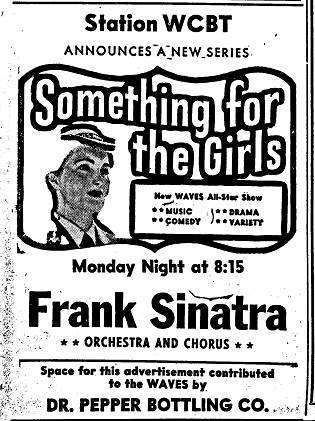
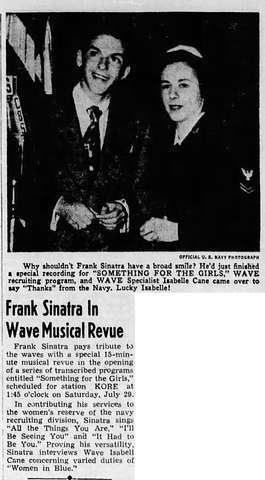
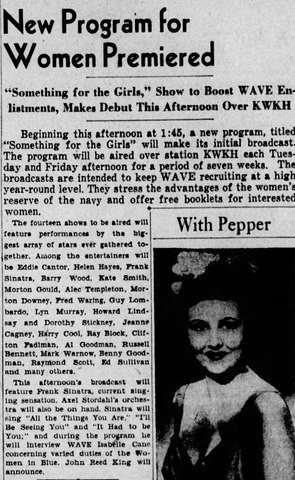
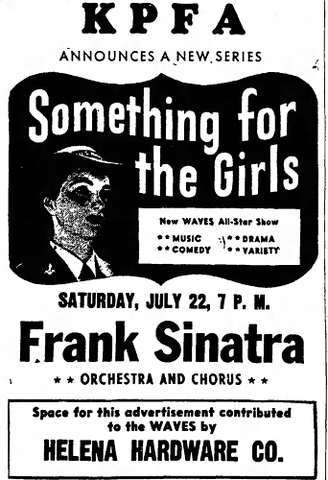
July 24, 1944
Radio
Mail Call No. 104
Host : Rudy Vallee.
Guests : Frank Sinatra, Portland Hoffa( Fred Allen's wife and radio partner)
Announcer: Don Wilson
1. Begin The Beguine
2. Come Out Wherever You Are w/Gloria DeHaven
30 mins.
Mail Call No. 104
Host : Rudy Vallee.
Guests : Frank Sinatra, Portland Hoffa( Fred Allen's wife and radio partner)
Announcer: Don Wilson
1. Begin The Beguine
2. Come Out Wherever You Are w/Gloria DeHaven
30 mins.
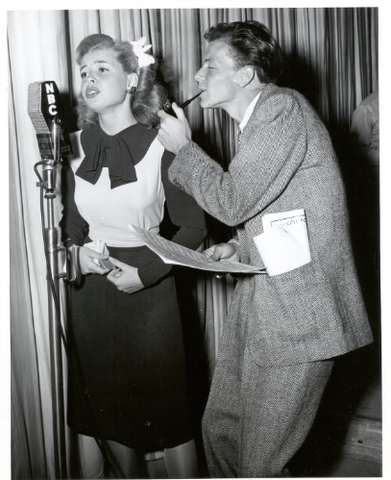
July 26, 1944
Film
"Step Lively" (USA Release: July 26,
1944)
Starring: Frank Sinatra, George Murphy, Adolphe Menjou, Gloria
DeHaven, Walter Slezak, Eugene Pallette
Produced by: Robert Fellows
Directed by: Tim Whelan
Gordon Miller (Murphy) is rehearsing a musical comedy in the penthouse suite of Gribble's hotel...on credit. The mounting bill is driving Gribble (Walter Slezak) frantic.
Chaos increases when playwright Glen Russell (Sinatra), whose dramatic play he thinks Miller is producing, arrives. But it turns out Russell can sing like Sinatra, and Miller has leading lady Christine (DeHaven) turn on the charm. Can Miller's crazed machinations save the show?
DVD Release: 2008-05-13
"Step Lively" (USA Release: July 26,
1944)
Starring: Frank Sinatra, George Murphy, Adolphe Menjou, Gloria
DeHaven, Walter Slezak, Eugene Pallette
Ad in N.Y.C. papers for opening at the RKO Palace on 7-26-44
Frank's second film for RKO was his first with top billing. RKO was paying him $25,000 to star in their remake of "Room Service."
The 1937 smash
Broadway musical had been purchased by the studio for the Marx Brothers. The film came out in 1938 and was a dud at the box office. When RKO
was looking for a star vehicle for Frankie, they decided to redo a project that had proven to be a big loss financially for the studio. Tim Whelan, who
had directed Frank in "Higher And Higher" was the studio's choice again. An all-star cast was added to support a still uncertain commodity. RKO
was taking no chances. Frank wanted and got Sammy Cahn and Jule Styne to write the music and the lovely Gloria DeHaven was the romantic
interest for The Voice. They got along great except for one teensy problem. Gloria like wearing hats on screen. Frank felt it distracted from him
and also made her look taller. No hat. Gloria was about to give him his first screen kiss . Mr. Sinatra took this rite of passage very seriously.
The working title of the film throughout the shoot was "Manhattan Serenade." The filming got underway in early January of 1944.
Whelan showed Sinatra how to get the most control out of the recordings done for the movie and the project moved along without any serious
problems A piece of trivia: Dorothy Malone can be seen in an uncredited and brief role. Ten years later she would be the blonde sister of Doris Day
in "Young At Heart." Frank was finished with his scenes by early March. RKO continued to work on the film into the latter part of May.
Frank started introducing songs from the movie on his radio shows in mid-May.
The official release date for the film is 7-26-44, but I discovered it opened a week earlier (16) at the Hippodrome in Baltimore and the Brandeis in
Omaha. RKO was pyramiding the film. The N.Y.C. opening was a near riot with the bobby soxers screaming and squealing throughout the 88 minute
showing. "Step Lively" also opened that week in Los Angeles, Kansas City, Buffalo and Cincinnati. In some cities the film was part of an equal double
feature. The critical response was lukewarm with Frank getting excellent reviews for his natural acting style. The film would do much better at the
box office than "Higher And Higher," taking in $4.7 million. A very nice profit for RKO and a great selling point as Frank moved up to the big leagues,
jumping over to MGM for "Anchors Aweigh." Which reminds me: The MGM sequel, "All Ashore," would finally be realized in 1952 with Mickey Rooney
and Dick Haymes taking over the Sinatra-Kelly roles. Lux Radio tried to get Frank, Gloria and the other stars to do "Step Lively" around the same time
the film opened. The different schedules of the actors proved to be too much of a hurdle.
The film was never issued on a laser disc. The VHS tape from Turner Home Entertainment came out on October 6, 1998 and the DVD on May 13, 2008
Ed
Step Lively (1944 film) - Wikipedia
Cast:
Frank Sinatra, George Murphy, Adolph Menjou [ More ]
Director:
Tim Whelan
Writers:
Warren Duff, Peter Milne
Producer:
Robert Fellows
Cinematographer:
Robert de Grasse
Editor:
Gene Milford
Production Designers:
Albert D'Agostino, Carroll Clark
Production Company:
RKO Radio Pictures, Inc.
The working title of this film was Manhattan Serenade. According to a news item in NYT, RKO bought the rights to the working title from M-G-M. Frank Sinatra received his first top billing in the opening credits of this picture. The film was the second Sinatra made under a seven-year contract with RKO, but it was his last film for the studio before going under contract to M-G-M. The Var review commented that Room Service, the play on which this film was loosely based, was reworked to feature Sinatra. A news item in HR adds that choreographers Ernst and Maria Matray were awarded term contracts at RKO after completing this film. Gloria De Haven was borrowed from M-G-M to appear in this picture. According to a HR news item, the manager of the Palace Theater in New York claimed that Sinatra fans ripped the railing from the theater's balcony when their idol appeared on the screen. This picture received an Academy Award nomination for Best Art Direction. The 1938 RKO film Room Service, starring the Marx Brothers and directed by William A. Seiter, was also based on the John Murray and Allen Boretz play
Frank's first screen kiss.
"Step Lively"
Sinatra's next film was Step Lively, RKO's musical remake of the non-musical Marx Brothers flop Room Service (1938), again directed by Tim Whelan. It gave Sinatra his first-ever top billing, with songs by Jule Styne and Sammy Cahn and orchestrations by Axel Stordahl, though Santopietro judges the film a frantic misfire overall.
Source: Tom Santopietro, "Sinatra in Hollywood" (2008).
"Step Lively"
Step Lively casts Sinatra as playwright Glenn Russell, whose bad play is redeemed because he can also sing. George Murphy plays fast-talking producer Gordon Miller and Walter Slezak plays sympathetic hotel manager Joe Gribble; Santopietro says Sinatra's musical numbers are essentially all that salvage the labored farce plot.
Source: Tom Santopietro, "Sinatra in Hollywood" (2008).
"Step Lively"
Sinatra and co-star Gloria DeHaven (playing Christine Marlowe) reportedly had a good working friendship on and off screen, aside from Sinatra's demand that the similarly short DeHaven stop wearing a tall hat that made her appear taller than him.
Source: Tom Santopietro, "Sinatra in Hollywood" (2008).
"Step Lively"
Step Lively delivered a widely reported milestone: Frank Sinatra's first onscreen kiss, with love interest Gloria DeHaven, immediately followed (naturally) by a musical number.
Source: Tom Santopietro, "Sinatra in Hollywood" (2008).
"Step Lively"
Santopietro notes Sinatra's acting was "slowly improving" in Step Lively -- his fake-drunk scene was passable, and he gained more rhythm in line readings, including a comic bit where his character warbles the opening of Bing Crosby's signature song "Where the Blue of the Night Meets the Gold of the Day," continuing the films' running Crosby-rivalry joke.
Source: Tom Santopietro, "Sinatra in Hollywood" (2008).
"Step Lively"
Santopietro grades this a C, calling it Frank's "first actual role—learning."
Source: Tom Santopietro, "Sinatra in Hollywood" (2008).
"Step Lively"
Santopietro (Filmography): RKO Radio Pictures. Produced by Robert Fellows, directed by Tim Whelan, written by Warren Duff and Peter Milne (based on the play Room Service), score by Jule Styne and Sammy Cahn. Sinatra starred as Glenn Russell opposite George Murphy, Adolphe Menjou and Gloria DeHaven, singing 'Come Out, Come Out, Wherever You Are,' 'As Long as There's Music,' 'Where Does Love Begin?' and 'Some Other Time.'
Source: Tom Santopietro, "Sinatra in Hollywood" (2008).
July 28, 1944
Radio
Sound Off, Hollywood, California
Episode: #384
1. Swingin' On A Star
Hotel Roosevelt
Hollywood
July 28, 1944
L.A. Times
July 29, 1944
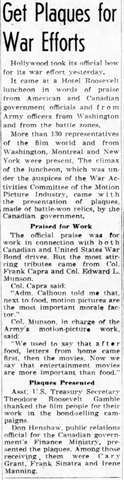
July 29, 1944
Radio
Your Hit Parade
Network: CBS
Program #480
Time: 9:00-9:45 P.M. (Rebroadcast July 30, 1944 12:00-12:45 A.M.)
Sponsor: Lucky Strike
Script By: Robert Paul Smith
Script (Final As Broadcast)
1. Swinging On A Star (4) - Frank Sinatra
2. Thou Swell - Orchestra
3. Time Waits For No One (6) - Hit Paraders
4. Milkman Keep Those Bottles Quiet (8) - Bea Wain
5. commercial
6. Great Day - Orchestra
7. I'll Get By (5) - Bea Wain
8. It Could Happen To You (9) - Frank Sinatra
9. Ida - Orchestra & Hit Paraders
10. station break
11. Goodnight Wherever You Are (7) - Bea Wain & Group
12. Limehouse Blues - Orchestra
13. commercial
14. Long Ago And Far Away (3) - Hit Paraders
15. I'll Be Seeing You (2) - Bea Wain
16. commercial
17. Amor (1) - Frank Sinatra
Notes: Sinatra portion from Hollywood.
Television
NONE
This 15 minute show had its debut on 7-22-44. A second wave of
broadcasts occured over the last weekend of July 44 throughout the
land.
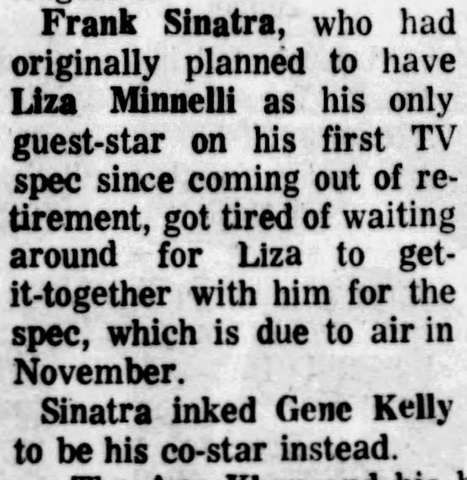
August 2, 1944
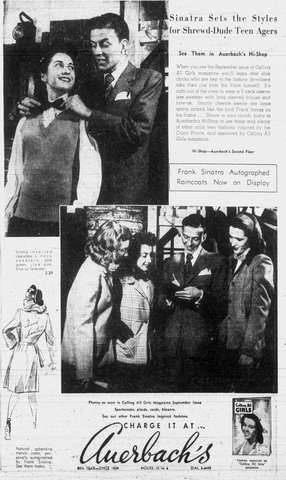
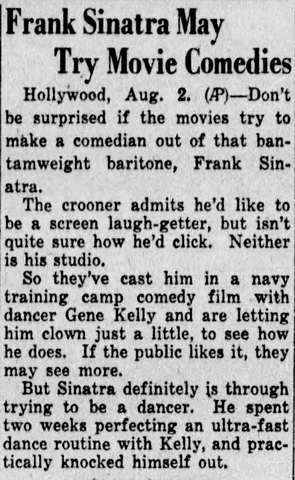
August 5, 1944
Radio
Your Hit Parade
Network: CBS
Program #481
Time: 9:00-9:45 P.M. (Rebroadcast August 6, 1944 12:00-12:45 A.M.)
Sponsor: Lucky Strike
Script By: Tom Langan
Script (Final As Broadcast)
1. Long Ago And Far Away (5) - Frank Sinatra
2. Bye Bye Blues - Orchestra
3. I'll Get By (6) - Hit Paraders
4. Milkman Keep Thoes Bottles Quiet (7) - Bea Wain
5. commercial
6. I Can't Give You Anything But Love - Orchestra
7. Time Waits For No One (4) - Bea Wain & Group
8. It Could Happen To You (8) - Frank Sinatra
9. I'm An Old Cowhand - Orchestra & Hit Paraders
10. station break
11. Goodnight Wherever You Are (9) - Bea Wain
12. Waiting For The Robert E. Lee - Orchestra
13. commercial
14. Swinging On A Star (3) - Hit Paraders
15. Amor (2) - Bea Wain
16. commercial
17. I'll Be Seeing You (1) - Frank Sinatra
Notes: Sinatra portion from Hollywood.
Television
NONE
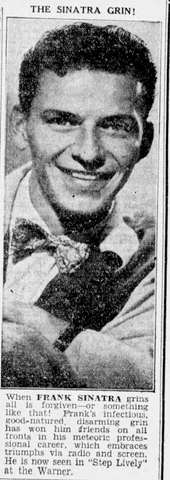
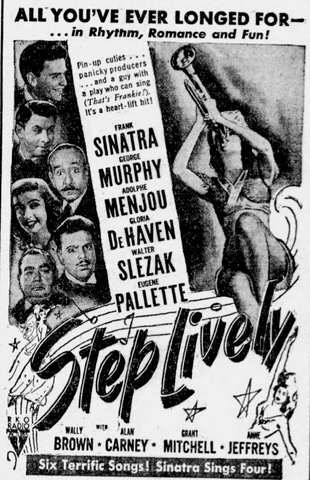
August 6, 1944
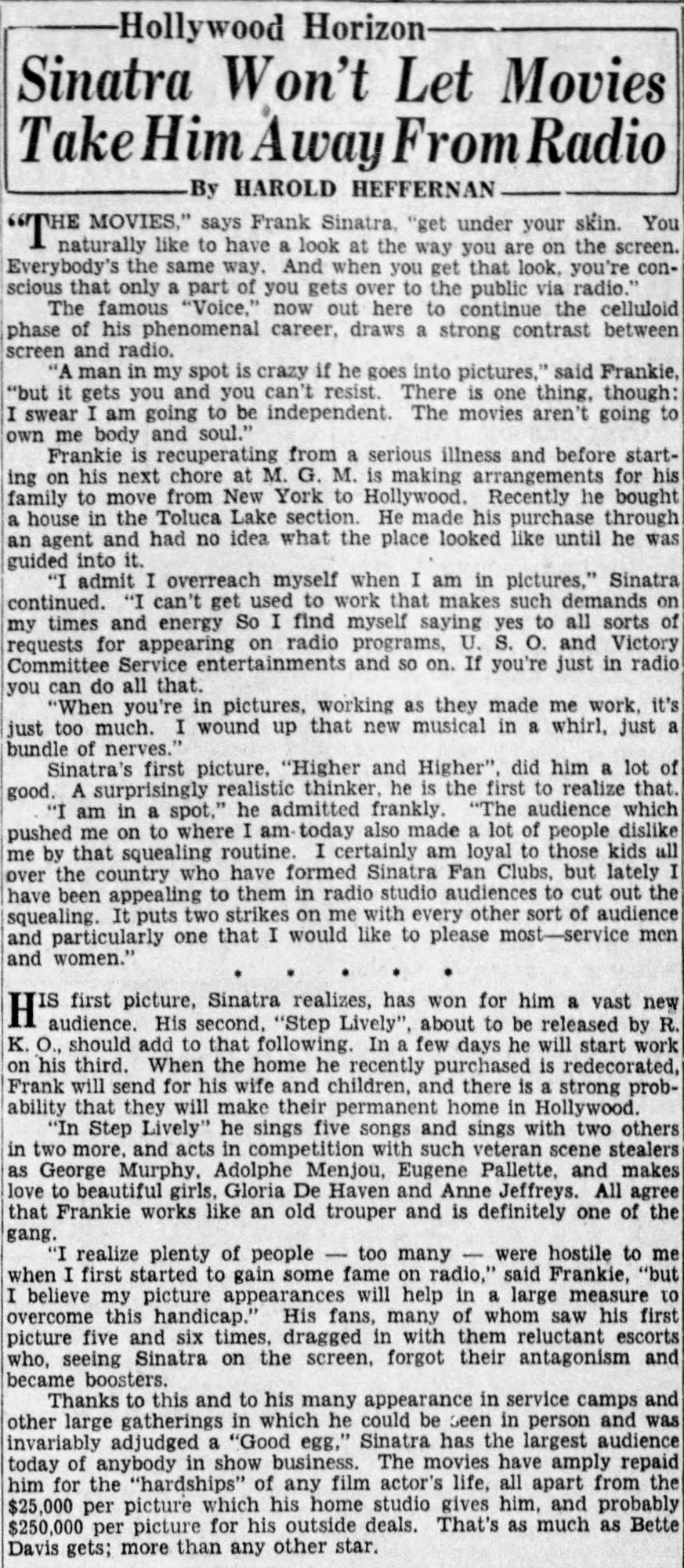
The Record, August 6, 1944.
August 9, 1944
Radio
Mail Call
Network: AFRS
Show: #104
Host: Rudy Vallee.
Guests: Frank Sinatra, Fred Allen, Mary Livingstone, Gloria DeHaven
Announcer: Don Wilson
Sinatra Arrangements by: Axel Stordahl
1. opening
2. The Maine Stein Song - Rudy Valle
3. comedy - Fred Allen, Rudy Vallee & Frank Sinatra
4. Begin The Beguine - Frank Sinatra
5. comedy - Rudy Vallee, Fred Allen & Mary Livingstone
6. Come Out, Come Out, Wherever You Are - Frank & Gloria
7. skit "Way, Why Down East" - cast
8. closing
Notes: Salute to the state of Maine. The show appears on the officially released CD set: 60
Greatest Old Time Radio Show "Frank Sinatra &
Friends." TT 30mins. Audio condition: Excellent. Complete.
August 12, 1944
Radio
Your Hit Parade
Network: CBS
Program #482
Time: 9:00-9:45 P.M. (Rebroadcast August 13, 1944 12:00-12:45 A.M.)
Sponsor: Lucky Strike
Script By: Tom Langan
Script (Final As Broadcast)
1. Is You Is Or Is You Ain't (9) - Frank Sinatra
2. Sometimes I'm Happy - Orchestra
3. Time Waits For No One (8) - Hit Paraders
4. Milkman Keep Those Bottles Quiet (7) - Joan Edwards
5. commercial
6. I Know That You Know - Orchestra
7. I'll Get By (4) - Joan Edwards
8. I'll Walk Alone (6) - Frank Sinatra
9. By The Beautiful Sea - Orchestra & Hit Parade
10. station break
11. Long Ago And Far Away (5) - Joan Edwards
12. Top Hat, White Tie And Tails - Orchestra
13. commercial
14. Swinging On A Star (3) - Hit Paraders
15. Amor (2) - Joan Edwards
16. commercial
17. I'll Be Seeing You (1) - Frank Sinatra
Notes: Sinatra portion from Hollywood.
Television
NONE
August 16, 1944
Radio
Frank Sinatra In Person
Network: CBS
Location: Hollywood
Show #1
Sponsor: VIMMS Vitamins
Time: 9:00PM - 9:30PM (EST) Wednesday
Orchestra Conducted By: Axel Stordahl
Arrangements By: Axel Stordahl
Announcer: Jerry Lawrence
Writers: Carroll Carroll
Performers: Eileen Barton, Vimms Vocalists
Guest: Fredric March
1. There'll Be A Hot Time In The Town Of Berlin - w/V.Vocalists
2. It Could Happen To You
3. She's Funny That Way
4. Come Out, Come Out Wherever You Are w/Eileen & V.Vocalists
5. You'd Be So Easy To Love
6. I've Got You Under My Skin w/V.Vocalists
Notes: Confirmed airing on WABC. Also aired on WBBM 8:00PM, KNX 6:00PM.
note: The final number is a song within a song of two Cole Porter tunes. The Vimms Vocalists sing most of "Skin." and Frank sings "Easy To Love,"
Ed O'Brien says that he adores the Vimms and Max Factor series of radio shows. Sinatra did many songs on them he never recorded, had guests including Crosby, Lana Turner, Walter Huston, W. C. Fields, Judy Garland, and Bob Hope, and he had a terrific supporting cast. Eileen Barton told O'Brien that she appeared on the show for a year, but, in reality, the August 16 show was her first and she was on most of them through December 25, 1944. She also insisted that Vimms was her only Sinatra radio show, but her memory was playing tricks on her. She was on shows in early 1945.
Television
NONE
Frank Sinatra In Person
Network: CBS
Guest: Fredric March
Fredric
March
Frank Sinatra
Cancelled
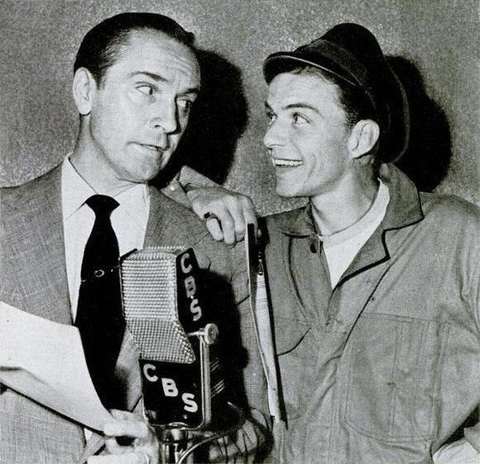
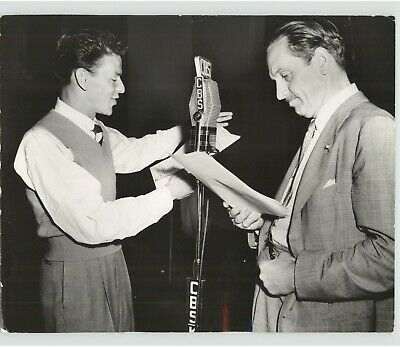
August 18, 1944
Studio
MGM Soundstage - Los Angeles, California
For the movie "Anchors Aweigh"
Orchestra conducted by George Stoll
"The Charm of You" - Frank Sinatra
13 takes, 7 complete. Take One was the longest at 2:34.
August 19, 1944
Radio
Your Hit Parade
Network: CBS
Program #483
Time: 9:00-9:45 P.M. (Rebroadcast August 20, 1944 12:00-12:45 A.M.)
Sponsor: Lucky Strike
Script By: Tom Langan
Script (Final As Broadcast)
1. I'll Walk Alone (7) - Frank Sinatra
2. There'll Be Some Changes Made - Orchestra
3. Long Ago And Far Away (6) - Hit Paraders
4. Is You Is Or Is You Ain't (9) - Joan Edwards
5. commercial
6. Twelfth Street Rag - Orchestra
7. Time Waits For No One (4) - Joan Edwards & Group
8. It Could Happen To You (8) - Frank Sinatra
9. With Plenty Of Money And You - Orchestra & Hit Paraders
10. station break
11. I'll Get By (5) - Joan Edwards
12. Makin' Whoopee - Orchestra
13. commercial
14. I'll Be Seeing You (3) - Hit Paraders
15. Swinging On A Star (2) - Joan Edwards
16. commercial
17. Amor (1) - Frank Sinatra
Notes: Sinatra portion from Hollywood.
Frank and his firstborn, Nancy Jr., circa 1944. Source: photo and caption from J. Randy Taraborrelli, Sinatra: Behind the Legend (mptvimages.com).
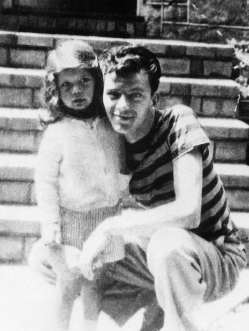
August 23, 1944
Radio
Frank Sinatra In Person
Network: CBS
Location: Hollywood
Show #2
Sponsor: VIMMS Vitamins
Time: 9:00PM - 9:30PM (EST) Wednesday
Orchestra Conducted By: Axel Stordahl
Arrangements By: Axel Stordahl
Announcer: Joe Walters
Writers: Carroll Carroll
Performers: Eileen Barton, Vimms Vocalists
Guest: Rise Stevens
1. Swinging On A Star
2. Begin The Beguine
3. And Then You Kissed Me
4. You've Got Me Where You Want Me
5. Stand Up And Fight - w/Rise Stevens & V.Vocalists
Notes: Confirmed airing on WABC.
Ed O'Brien says that Sinatra opened the show with "Swingin' On a Star" and then gave Crosby's new picture "Going My Way" a big plug. Eileen Barton and Sinatra did a skit and then Sinatra sang Cole Porter's "Begin the Beguine." In his introduction, he lauded Porter's ability to write song that "not only became hits, they stay hits.
Announcer J Walters did a commercial and then Sinatra introduced the new Sammy Cahn-Jule Styne tune "And Then You Kissed Me."
Barton then joined Sinatra for another skit that segued into a duet on " You Got Me Where You Want Me." After another J Walters commercial, Sinatra welcomes the Metropolitan Opera's mezzosoprano Rise Stevens to the show. Stevens sang an aria from "Carmen Jones" written by Billy Rose and Oscar Hammerstein. Sinatra then joined her in another song from that opera "Stand Up and Fight."
Before signing off, Sinatra told his listening audience that the Office of War Information was requesting that everyone save paper. Seems that it had become very scarce and they were asking that consumers use as little as possible.
Frank Sinatra In Person
Network: CBS
Location: Hollywood
Show #2
Guest: Rise Stevens
August 26, 1944
Radio
Your Hit Parade
Network: CBS
Program #484
Time: 9:00-9:45 P.M. (Rebroadcast August 27, 1944 12:00-12:45 A.M.)
Sponsor: Lucky Strike
Script By: Tom Langan
Script (Final As Broadcast)
1. It Had To Be You (6) - Frank Sinatra
2. The Girl Friend - Orchestra
3. I'll Walk Alone (7) - Orchestra & Hit Paraders
4. Pretty Kitty Blue Eyes (9) - Joan Edwards
5. commercial
6. Song Of The Vagabonds - Orchestra
7. Amor (4) - Joan Edwards
8. It Could Happen To You (5) - Frank Sinatra
9. Let Yourself Go - Orchestra & Hit Paraders
10. station break
11. I'll Get By (8) - Joan Edwards
12. You - Orchestra
13. commercial
14. Swinging On A Star (3) - Joan Edwards
15. Time Waits For No One (2) - Hit Paraders
16. commercial
17. I'll Be Seeing You (1) - Frank Sinatra
Notes: Sinatra portion from Hollywood
Concerts
North Hollywood Recreation Center, Los Angeles, CA
Sinatra appeared at a Youth Civic Dance
Also: Bob Mohr's Band & Ann Jeffries
North Hollywood Recreation Center, Los Angeles, CA
Sinatra appeared at a Youth Civic Dance
Also: Bob Mohr's Band & Ann Jeffries
August 30, 1944
Radio
Frank Sinatra In Person
Network: CBS
Location: Riverside, California
Show #3
Sponsor: VIMMS Vitamins
Time: 9:00PM - 9:30PM (EST) Wednesday
Orchestra Conducted By: Axel Stordahl
Arrangements By: Axel Stordahl
Announcer: Jerry Lawrence
Writers: Carroll Carroll
Performers: Eileen Barton, Vimms Vocalists
Guest: Joan Leslie
1. Is You Is Or Is You Ain't?
2. The Song Is You
3. I'll Walk Alone
4. You're Getting To Be A Habit With Me w/Eileen Barton
5. April In Paris
6. The Last Time I Saw Paris (Frank celebrates the liberation of Paris with this medley of two songs. He sings solo on the first song and then is joined by the Vimms Vocalist on the second. Stordahl would do these medleys on the Vimms shows in the late summer and throughout the fall of 1944).
note: Show was broadcast from Camp Anza in Riverside, California. Frank's audience was made up of army soldiers. Announcer was Joe Walters. Jerry Lawrence would not make an appearance until 10-4-44 Ed
Frank Sinatra In Person
Network: CBS
Location: Riverside, California
Show #3
Sponsor: VIMMS Vitamins
Guest: Joan Leslie
Frank Sinatra and Joan Leslie during rehearsals for her appearance on his radio show, August 1944
September 1944
[$7,500 donation to Democratic campaign]
Kaplan: The day after meeting FDR, on George Evans' recommendation, Sinatra made a $7,500 donation in his and Nancy's names to the Democratic campaign fund -- a striking sum and a rare public political act for an entertainer at the time; Nancy, who managed the household purse, questioned his sanity over the phone.
Source: James Kaplan, "Frank: The Voice" (2010)
September 2, 1944
Radio
Your Hit Parade
Network: CBS
Time: 9:00-9:45 P.M.
Sponsor: Lucky Strike
Frank Sinatra
Joan Edwards
The Hit Paraders
Mark Warnow & Orchestra
Axel Stordahl Orchestra in Hollywood with Sinatra
1. Is You Is Or Is You Ain’t My Baby? # 5 - Frank Sinatra
2. Bye, Bye, Blackbird - Orchestra
3. Time Waits For No One # 4 - The Hit Paraders
4. It Had To Be You # 9 - Joan Edwards
5. Beer Barrel Polka - The Hit Paraders
6. I’ll Walk Alone # 6 - Frank Sinatra
7. Crazy Rhythm - Joan Edwards
8. It Could Happen To You - Orchestra
9. I’ll Get By - Joan Edwards
10. Some Of These Days - Orchestra
11. Amor # 3- The Hit Paraders
12. Swinging On A Star # 2- Frank Sinatra
13. I’ll Be Seeing You # 1- Joan Edwards
September 4, 1944
Radio
"Too Many Husbands" The Lady Esther Screen Guild Theatre
Network: CBS net
Sponsored by: Lady Esther.
Somerset Maugham (author), Frank Sinatra, Bill Goodwin, Donna Reed, Truman Bradley (host), Wilbur Hatch (arranger, conductor) A comedy about one bride and her two husbands
NOTE: Ed O'Brien points out that Sinatra would reprise this role with Bob Hope and Lucille Ball in 1947. O'Brien likes this performance better. In it Sinatra sings "Embraceable."
September 5, 1944
Studio
Los Angeles
ANCHORS AWEIGH MGM
Orchestra conducted by Georgie Stoll
Arranged by Axel Stordahl
I Fall In Love Too Easily
Nine takes
Take 8 and 9 were mastered
Both ran 1:33
Ed O'Brien:
Jule Styne and Sammy Cahn wrote the song for Frank and it is a defining moment in the era of "The Voice."
The elusive nature of idealized romantic love is captured perfectly by the 28 year old bobbysox idol. Skitch Henderson described the amazing vocal power Sinatra possessed as simply remarkable. He would record the song for Columbia Records on 12-1-44 in New York City. Vocal runs 3:13.
"Anchors Awieigh"was released on 8-15-45. On the 9-19-45 Old Gold Show, the song was beautifully sung by Mr. Sinatra
September 6, 1944
Radio
Frank Sinatra In Person (CBS)
Guests: Eileen Barton
Orchestra Conducted by: Axel Stordahl
Arrangements by: Axel Stordahl
From the Waves Training Center, San Diego, CA
Guests: Orson Welles
1. Sweet Lorraine w. Vimms Vocalists
2. I'll Remember April ( good but the 10-11-44 is better )
3. These Foolish Things
4. Together w/Eileen Barton
-- Skit w/Orson Welles
5. Embraceable You/Bidin' My Time w/Vimms Vocalistsnote: Skit with Welles is the same one done on the unaired Vimms show with Gloria DeHaven as the regular femme vocalist. The same applies to the skit with Eileen. The theme and dialogue are very similar. Announcer on 9/6 was Joe Walters. After the opening number, Frank does a very nice tribute to the WAVES. Axel penned a lovely chart for "I'll Remember April."Ed
Frank Sinatra In Person (CBS)
Guests: Eileen Barton
Orchestra Conducted by: Axel Stordahl
Arrangements by: Axel Stordahl
From the Waves Training Center, San Diego, CA
Guests: Orson Welles
Frank
Sinatra
Orson Welles
September 9, 1944
Radio
Your Hit Parade
Network: CBS
Program #486
Time: 9:00-9:45 P.M. (Rebroadcast September 10, 1944 12:00-12:45 A.M.)
Sponsor: Lucky Strike
Script By: Tom Langan
Script (Final As Broadcast)
1. It Had To Be You (9) - Frank Sinatra
2. Louisiana Hayride - Orchestra
3. Fellow On A Furlough (8) - Hit Paraders
4. Is You Is Or Is You Ain't (4) - Joan Edwards
5. commercial
6. Varsity Drag - Orchestra
7. Amor (5) - Joan Edwards
8. It Could Happen To You (7) - Frank Sinatra
9. A-Tisket A-Tasket - Hit Paraders
10. station break
11. I'll Walk Alone (6) - Joan Edwards
12. Dinah - Orchestra
13. commercial
14. Time Waits For No One (3) - Hit Paraders
15. Swinging On A Star (2) - Joan Edwards
16. commercial
17. I'll Be Seeing You (1) - Frank Sinatra
Notes: Sinatra portion from Hollywood.
Concerts
Elsa Maxwell threw a Victory Party to celebrate the liberation of France
Sinatra sang "Night and Day"
September 13, 1944
Radio
Frank Sinatra In Person
Network: CBS
Location: Army Airfield, Longbeach, California
Show #5
Sponsor: VIMMS Vitamins
Time: 9:00PM - 9:30PM (EST) Wednesday
Orchestra Conducted By: Axel Stordahl
Arrangements By: Axel Stordahl
Announcer: Joe Walters
Writers: Carroll Carroll
Performers: Eileen Barton, Vimms Vocalists
Guest: Walter Huston
1. Come Out, Come Out Wherever You Are
2. Mighty Lak' A Rose
3. Some Other Time
4. It Had To Be You w/Eileen Barton & V.Vocalists
5. Summertime/I Got Plenty O' Nuttin' - w/V.Vocalists on reprise
note: Eileen Barton told me that quite often there would be song substitutions
at the last minute. Certainly happened with this show. "Gershwin Medley"
was also done on the unaired Vimms with Gloria DeHaven and Orson
Welles.
Ed
Frank Sinatra In Person
Network: CBS
Performers: Eileen Barton, Vimms Vocalists
Guest: Walter Huston
Frank Eileen
Barton
Walter Huston
September 16, 1944
Radio
Your Hit Parade
Network: CBS
Program #487
Time: 9:00-9:45 P.M. (Rebroadcast September 17, 1944 12:00-12:45 A.M.)
Sponsor: Lucky Strike
Script (Final As Broadcast)
1. Is You Is Or Is You Ain't (4) - Frank Sinatra
2. Margie - Orchestra
3. I'll Be Seeing You (6) - Hit Paraders
4. It Had To Be You (9) - Joan Edwards
5. commercial
6. Puttin' On The Ritz - Orchestra
7. Amor (5) - Joan Edwards
8. It Could Happen To You (7) - Frank Sinatra
9. The Riff Song - Orchestra & Hit Paraders
10.. station break
11. I'll Get By (8) - Joan Edwards
12. Singin' In The Rain - Orchestra
13. commercial
14. Time Waits For No One (3) - Hit Paraders
15. Swinging On A Star (2) - Joan Edwards & Groups
16. commercial
17. I'll Walk Alone (1) - Frank Sinatra
Notes: Sinatra Portion from Hollywood.
September 17, 1944
Radio
Your All Time Hit Parade
Sunday evening
7 - 7:30: PM EDT
NBC
Tommy Dorsey & His Orchestra
Guests: Bonnie Lou Williams & Frank Sinatra
Annc: Harry Von Zell.
1. I've Got Rings On My Finger T.D. & Orch.
2. I Can't Give You Anything But Love B.L.W.
3. I'll Walk Alone F.S.
4. South Of The Border T.D. & Orch.
5. If You Are But A Dream F.S.
6.. Summertime T.D. & Orch.
Ed O'Brien:
Frankie's reunion with T.D. & Band
When he left in Sept. of 42, Dorsey had the most popular big band in the land. Two years later Sinatra was the teen-idol and the band era was on the wane.
There is a tape in circulation of the rehearsal for this show.
Hep Records' 1990 CD "The All Time Hit Parade Rehearsals" (Hep CD 39) preserves the surviving off-air acetates of Dorsey's dress rehearsals for the NBC series, including this September 17 session -- the rehearsal ran well beyond the six songs actually broadcast that evening, and the liner essay notes it also features a trombone showcase from Dorsey himself during "Summertime." The personnel sheet for the date lists a large studio string-and-brass complement backing the core band, including trombonist Nelson Riddle -- who would become Sinatra's most celebrated arranger a decade later -- alongside Dorsey and Walter Benson in the trombone section, with Buddy De Franco on clarinet and alto sax. Source: liner notes, Hep Records 00392, "Tommy Dorsey and His Orchestra: The All Time Hit Parade Rehearsals" (1990).
September 20, 1944
Radio
Frank Sinatra In Person
Network: CBS
Location: 21st Group FS Fourth Command
Ferrying Group(Division/Army Air Field, Palm Springs, California
Show #6
Sponsor: VIMMS Vitamins
Time: 9:00PM - 9:30PM (EST) Wednesday
Orchestra Conducted By: Axel Stordahl
Arrangements By: Axel Stordahl
Announcer: Joe Walters
Writers: Carroll Carroll
Performers: Eileen Barton, Vimms Vocalists
Guest: Joan Blondell
1. One I Love Belongs To Somebody Else w/Vimms Vocalists
2 I'll Walk Alone
3. Falling In Love With Love
4. Is You Is Or Is You Ain't My Baby w/ E.. Barton
5. A Pretty Girl Is Like A Melody/Alexander's Ragtime Band w/ Vimm
Vocalists
NOTE: Ed O'Brien points out that this broadcast emanated from the 21st
Group of the Air Transport Command, Shurring Division Field, in Palm Springs , California .
Frank Sinatra In Person
Show #6
Sponsor: VIMMS Vitamins
Performers: Eileen Barton, Vimms Vocalists
Guest: Joan Blondell
Joan Blondell Frank Sinatra
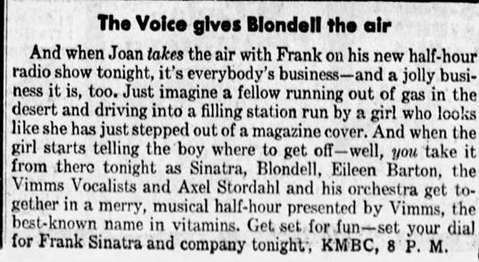
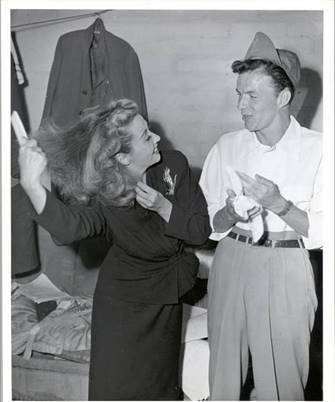
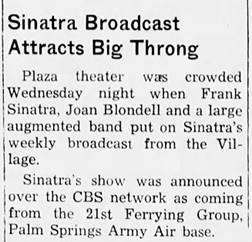
September 23, 1944
Radio
Your Hit Parade
Network: CBS
Program #488 (First Broadcast)
New York City
Time: 9:00-9:30 P.M
Sponsor: Lucky Strike
Script By: Tom Langan
Script (Final As Broadcast)
1. Swinging On A Star (6) - Frank Sinatra
2. El Rancho Grande (With Yippees) - Orchestra & Hit Paraders
3. It Had To Be You (8) - Joan Edwards
4. commercial
5. How Many Hearts Have You Broken (7) - Hit Paraders
6. It Could Happen To You (5) - Joan Edwards
7. Georgia Camp Meeting - Orchestra
8. commercial
9. I'll Be Seeing You (3) - Hit Paraders
10. Is You Is Or Is You Ain't (2) - Joan Edwards
1. I'll Walk Alone (1) - Frank Sinatra
September 27, 1944
Radio
Frank Sinatra In Person
Network: CBS
Location: New York City
Show #7
Sponsor: VIMMS Vitamins
Time: 9:00PM - 9:30PM (EST) Wednesday
Orchestra Conducted By: Axel Stordahl
Arrangements By: Axel Stordahl
Announcer: John Reed King
Writers: Carroll Carroll
Performers: Eileen Barton, Vimms Vocalists
Guest: Oscar Levant
Dress Rehearsal:
1. Someone To Watch Over Me
Broadcast:
1. There'll Be A Hot Time In The Town Of Berlin
2. What A Difference A Day Made
3. If You Are But A Dream
4. Trolley Song w/Eileen Barton
5. George Gershwin's Prelude #2 Oscar Levan
6. Someone To Watch Over Me - w/V.Vocalists note: made corrections
--Ed
Frank Sinatra In Person
Network: CBS
Location: New York City
Show #7
Sponsor: VIMMS Vitamins
Time: 9:00PM - 9:30PM (EST) Wednesday
Orchestra Conducted By: Axel Stordahl
Arrangements By: Axel Stordahl
Announcer: John Reed King
Writers: Carroll Carroll
Performers: Eileen Barton, Vimms Vocalists
Guest: Oscar Levant
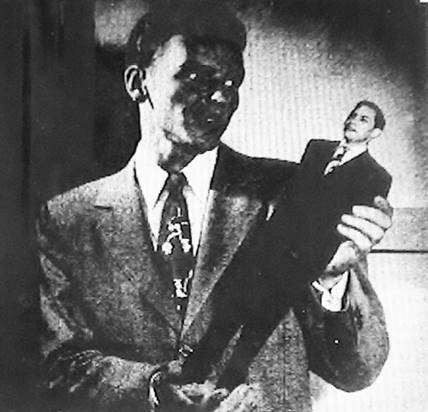
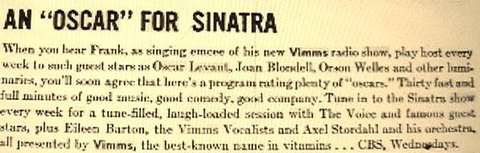
Sinatra On Shor's Back
American singer and entertainer Frank Sinatra (1915 - 1998) climbs onto the back of American restauranteur Bernard Toots Shor (1904 - 1977), September 27, 1944. Holding Mr. Sinatra’s arm is Rags Ragland (USO tours). And on is left are Jule Styne and Hank Sanicola. (Photo by CBS Photo Archive/Getty Images)
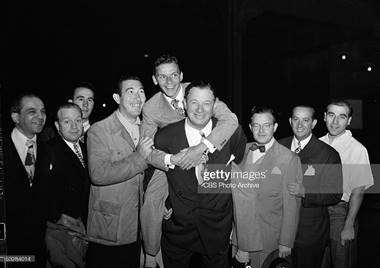
September 28, 1944
Sinatra had an audience with President Roosevelt at the White House, having wangled an invitation via restaurateur Toots Shor and the Democratic Committee chairman; FDR's endorsement was meant partly to counter Bing Crosby's public support for Republican challenger Thomas E. Dewey. "Look who's here," Roosevelt exclaimed, and asked Sinatra to confide which song would top the hit parade the following week ("Amapola," Sinatra told him). The meeting went well, though the president was said afterward to have marveled to an aide that the skinny young crooner had mastered the art of making girls faint: "He would never have made them swoon in our day." Source: David Lehman, Sinatra's Century.
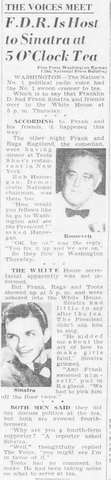
Frank visited the White House and had tea with President Franklin D. Roosevelt, his political hero; on a separate occasion Roosevelt reportedly teased him about reviving the lost art of women fainting at public appearances.
Source: Nancy Sinatra, Frank Sinatra: An American Legend, 1995.
September 30, 1944
Radio
Your Hit Parade
Network: CBS
Sponsor: Lucky Strike
Swinging On A Star - Frank Sinatra
Get Happy - Orchestra
Together - The Hit Paraders
How Many Hearts Have You Broken - Joan Edwards
Baby Face - Orchestra
Time Waits For No One - Joan Edwards
It Could Happen To You - Frank Sinatra
Oh You Beautiful Doll - The Hit Paraders
I’ll Be Seeing You - Joan Edwards
Swamp Fire - Orchestra
It Had To Be You - The Hit Paraders
Is You Is Or Is You Ain’t My Baby? - Joan Edwards
I’ll Walk Alone - Frank Sinatra
October 1944
[The "Columbus Day Riot" at the Paramount]
Sinatra's celebrated second engagement at New York's Paramount Theatre in October 1944 drew such mass hysteria among bobbysoxers that more than a hundred police officers were called out to maintain order, earning the event the nickname the "Columbus Day Riot."
Source: Charles Pignone, "Frank Sinatra 100" (2015).
[Dolly Sinatra talks to reporters backstage]
Dolly Sinatra: Backstage at the Paramount, Dolly Sinatra fielded reporters' questions about her famous son, telling them he'd always be a baby to her and that she'd taught him to be nice to people on the way up because they're the same people he'll pass coming down.
Source: James Kaplan, "Frank: The Voice" (2010)
[Sailors throw tomatoes at marquee]
Kaplan: A group of sailors on leave, fueled by beer and newspaper accounts of the Paramount uproar, pelted the giant marquee image of Sinatra with overripe tomatoes until his painted face streamed with red juice.
Source: James Kaplan, "Frank: The Voice" (2010)
[The 1944 Columbus Day Riot at the New York Paramount -- critical commentary]
No one ever thought that he could ever top the Columbus Day Riot of 1944 when he returned to the New York Paramount to an audience of thirty thousand fans. [Footnote:] Sinatra’s 1944 Columbus Day appearances attracted an even greater crowd; traffic was blocked all over Times Square and most of midtown. Fully 421 patrolmen and twenty patrolwomen were required to maintain order.
Source: Will Friedwald, "Sinatra! The Song Is You: A Singer's Art" (2018 revised edition), Ch. 4, "With Axel Stordahl" (1943-1948)
October 4, 1944
Radio
Frank Sinatra In Person
Network: CBS
Location: New York City
Show #8
Sponsor: VIMMS Vitamins
Time: 9:00PM - 9:30PM (EST) Wednesday
Orchestra Conducted By: Axel Stordahl
Arrangements By: Axel Stordahl
Announcer: Jerry Lawrence
Writers: Carroll Carroll
Performers: Eileen Barton, Vimms Vocalists
Guest: Joseph Cotton
1. Sunday
2. The Day After Forever
3. Night And Day
4. How Many Hearts Have You Broken ? w/Eileen Barton
5. The Song Is You/Why Haven't I Told You w/Vimms Vocalists ( Jerome Kern Tribute )
Ed O'Brien points out that Joseph Cotton was the guest. He was starring in the epic Selznick film, "Since You Went Away." Sunday wouldn't be recorded until 1954 and this effort is light years removed from the Sinatra/Riddle recording.
October 7, 1944
Radio
Your Hit Parade
Network: CBS
Program #490
Time: 9:00-9:40 P.M. (Rebroadcast October 8, 1944 12:00-12:40 A.M.)
Sponsor: Lucky Strike
Script by: Tom Langan
Script (Final As Broadcast)
1. Singing On A Star (6) - Frank Sinatra
2. Hallelujah - Orchestra
3. It Had To Be You (7) - Joan Edwards
4. commercial
5. When The Red Red Robin Comes Bob Bob Bobin' Along - Orchestra & Hit Paraders
6. Let Me Love You Tonight (9) - Frank Sinatra
7. Alabamy Bound - Orchestra
8. station break
9. Time Waits For No One (5) - Hit Paraders
10. How Many Hearts Have You Broken (4) - Joan Edwards
11. commercial
12. Together (3) - Hit Paraders
13. Is You Is Or Is You Ain't (2) - Joan Edwards
14. commercial
15. I'll Walk Alone (1) - Frank Sinatra
Notes: Show was revised to 40mins. for Democratic National Committee.
October 8, 1944
Radio
The Jack Benny Program
Network: NBC
Sponsor: Lucky Strike
Show: #2 of the 1944 Series
Time: 7:00pm EST (Rebroadcast: 9:30 - 10:00 P.M. PWT)
Host: Jack Benny
Guests: Frank Sinatra,
Cast: Don Wilson, Phil Harris, Mary Livingstone, Rochester, Arthur Q. Bryan, Frank Nelson, Sara Berner, Bea Benaderet, A. Speed Riggs (tobacco auctioneer), F. E. Boone (tobacco auctioneer), Basil Ruysdael (announcer)
Writers: Sam Perrin, George Balzer, John Tackaberry, Milt Josefsberg
Producer By: Hilliard Marks
Script (Final As Broadcast, some missing pages)
1. commercial
2. opening
3. first routine - Jack Benny, Marry Livingstone & Rodchester
4. I'll Get By - Phill Harris Orchestra
5. second routine - Jack Benny, Marry Livingstone, Phil Harris, Mel Blanc, Don Wilson & Rodchester
6. All The Things You Are - Frank Sinatra
7. third routine - Jack Benny, Sara Berner, Bea Benaderet, Mel Blanc, Don Wilson, Mary Livingstone & Frank Sinatra
8. commercial
9. closing - Jack Benny, Mary Livingstone & Don Wilson
Notes: Jack looks for a replacement for Dennis Day. TT: 30mins. AFRS & KFI Aircheck survive complete, LOC has 10inch NBC sound reel.
The show appears on the officially released CD set: 60 Greatest Old Time Radio Shows "Frank Sinatra & Friends"
October 10, 1944
Hotel Commodore, New York
FDR fundraiser
A National Citizens Political Action Committee meeting/FDR fundraiser on October 10, 1944, at the Hotel Commodore, New York. Far left: Eleanor Roosevelt; at right: journalist Quentin Reynolds and Helen Keller.
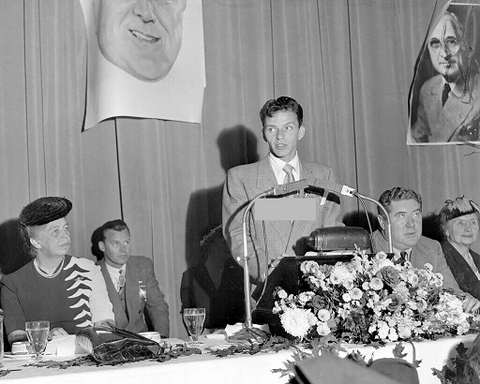
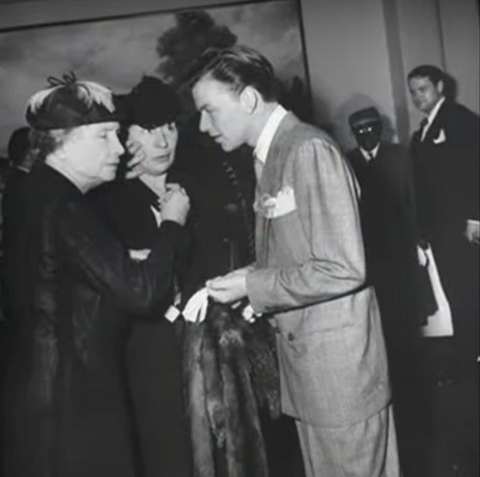
October 11, 1944
Radio
Frank Sinatra In Person
Network: CBS
Location: New York City
Show #9
Sponsor: VIMMS Vitamins
Time: 9:00PM - 9:30PM (EST) Wednesday
Orchestra Conducted By: Axel Stordahl
Arrangements By: Axel Stordahl
Announcer: Jerry Lawrence
Writers: Carroll Carroll
Performers: Eileen Barton, Vimms Vocalists
Guest: Roy Rogers
Dress rehearsal:
1. There's No You
Note: appears on the CD: The V-discs 1(Columbia CK 66135)
Broadcast:
1. Exactly Like You
2. Frank, Axel and Eileen banter
3. There's No You "new song by Tom Adair & Hal
Hopper"
4. Vimms ad
5. I'll Remember April
6. skit with Eileen
7. There Goes That Song Again w/ Eileen
8. Frank and Roy do a western skit. Roy is with the World Rodeo at the old MSG
9. You Are My Sunshine w/ Roy
10. Vimms ad
11. Medley of Ray Noble songs: Goodnight Sweet Heart/ The Very
Thought Of You
Frank's guest next week will be Orson Welles
note: Rich Warrick, a member of our list, was instrumental in helping attain the information for this show.
Ed O'Brien:
Frank does a nice reading of "I'll Remember April," but the
Concerts
Paramount Theatre, New York City (October 11-29)
Wednesday
Opening Day Of A Three-Week Engagement
Frank Sinatra with The Raymond Paige Orchestra
O.A. Eileen Barton, Ollie O'Toole, Pops & Louie
Film: Our Hearts Were Young And Gay
NIGHT CLUBS - VAUDEVILLE
Paramount, New York
Sinatra! That's all, brother.
Paramount execs probably reinforced the walls and called the police department to handle the bobby socks - all last week to make sure the place had adequate protection when The Voice began a three week stint (11).
And brother, they needed it. Kids mobbed the joint, climbed the ceiling, squealed, sighed, ahhed, gurgled, mooned all over the place and in every way gave indication that F.S. is probably one of the hottest b.- o. attractions around in the last decade. There were a few adults in the place - those that brought some of the kids because they were afraid they might be killed in the rush (and they were right in their fears), and those who came as curio seekers, more like those that toss their dimes on the counter to see the two-headed lady in the circus.
It's pure unadulterated showbiz! Show, which runs around 50 minutes, has plenty to offer besides
Sinatra, and cost the theater somewhere between
$10,000 and $15,000 for entire bill. Reason for
Sinatra's $4,000 is that he is playing off a contract and is reported asking for the formerly agreed to amount when the theater wouldn't kick in with a $30,000 package per week deal that Sinatra wanted. He's said to have a huge bonus coming to him if biz warrants after the three weeks. From all indications he'll bust the record and walk off with the marquee as his end.
Raymond Paige, recruited from radio to back Sinatra, supplies music; Eileen Barton, fem chirper, also on
Sinatra's radio show, sings rhythm tunes, Olie
O'Toole, impressionist, supplies comedy, and sepia tapsters, Pops and Louie handle dancing. It's all big time vaude.
No matter what anyone says about Sinatra's voice, he's a master at phrasing, especially on a pop that has a half decent lyric. Although he sounds simple and uncomplicated to the ear, it's apparent that he's definitely taken advantage of lyrical content of pop songs and given them personal meaning to every kid in the audience. That was more than uppermost in this reviewer's mind, for when he gushed on a certain phrase, such as "there's romance in your menu," in the tune "What A
Difference A Day Makes," the kids squealed.
It's a good thing he didn't sing "I Love You."
He's cut out the bow-tie and boyish appearance which is all for the better. He's now out to sing a tune and do the best job he can. When caught (11) last show opening day, he sounded tired, but that can be for a number of reasons. However, he could have come out and laid on the floor and gone to sleep and probably the house wouldn't have had a single refund, After drifting through half a dozen pops, each one a killer, no matter what he selected, he finished with "Ol' Man
River." That he is not only a romancer, but can sell straight material was demonstrated.
He walked off with a parody of "Everything
Happens To Me," telling the story of F.S. in song, and it's effective mainly because he kids himself.
All in all he puts on a great show, probably because he gives the impression of not taking himself, but his job, seriously. He stops the howling at one point to query, "Do I Stop You
From Making A Buck?" It brings howls and punches the point across. He gets a fine assist from Raymond Paige's ork, some 40 musicians who spread out across the thin stage. Some 20 strings on one side; brass, sax and rhythm section on the other, and
Paige in the middle. Leader doesn't monkey around, and puts on one of the best all-around musical jobs seen on a New York stage in a long time. Not only are arrangements way above par, especially for stage, for they're showy and lively, but he's got the cream of crop of musicians.
Only bad spot to music was in opening number of Eileen Barton's tune, when brass engulfed her. After that it was smooth sailing.
Pic is Para's "Our Hearts Were Young And
Gay."
Billboard
October 21, 1944
Paul Secon
Ed O'Brien:
Almost five thousand bobby sockers filled the theatre, designed to seat less than 3,500.
Management ignored the fire codes. There was an estimated 10,000 girls waiting to get in every day. Frank also sang "All Or Nothing
At All," "I Couldn't Sleep A Wink Last Night,"
"Close To You," "I Don't Know Why," " This
Love Of Mine" and "Put Your Dreams Away."
Frank Sinatra In Person
Network: CBS
Location: New York City
Show #9
Sponsor: VIMMS Vitamins
Time: 9:00PM - 9:30PM (EST) Wednesday
Orchestra Conducted By: Axel Stordahl
Arrangements By: Axel Stordahl
Announcer: Jerry Lawrence
Writers: Carroll Carroll
Performers: Eileen Barton, Vimms Vocalists
Guest: Roy Rogers
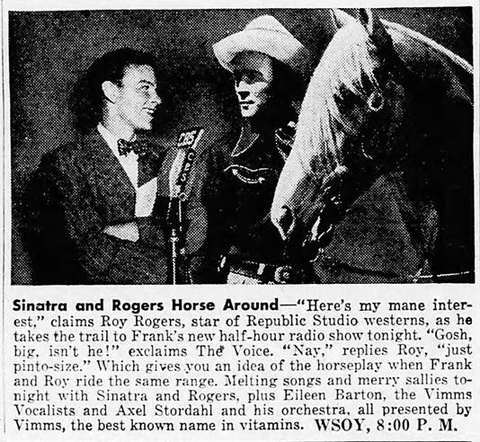
Paramount Theatre, New York City (October 11-29)
Wednesday
Opening Day Of A Three-Week Engagement
Frank Sinatra with The Raymond Paige Orchestra
Variety
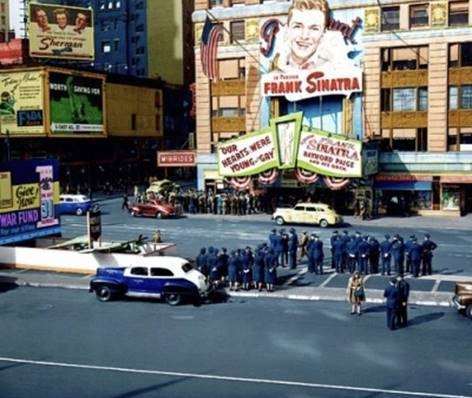
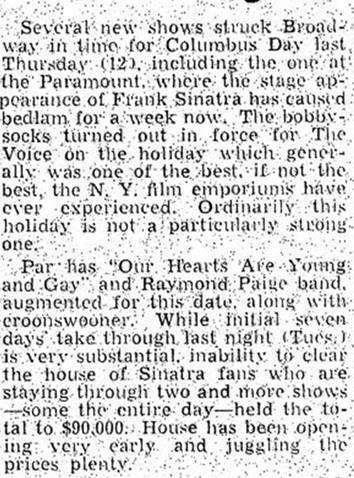
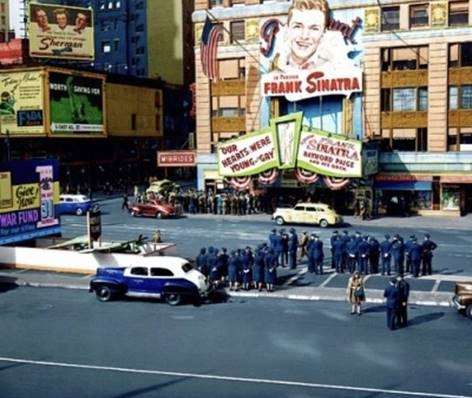
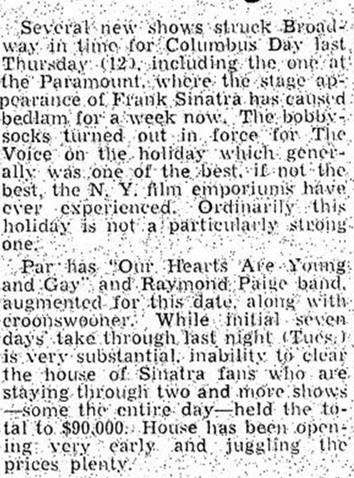
Photo from October 11, 1944
AT THE PARAMOUNT 10-11-44 #2.
A PARAMOUNT REVIEW 10-11-44.
Ed O'Brien:
There were six shows a day. A estimated 30,000 young teen-age girls(13-14 yrs old) stood out- side waiting to see and hear "The Voice." The gross the first week was $90,000 (3,664 seats), then $89,000, per, for the next two weeks. Grand total for the three weeks was $268,000, despite the police making a vain attempt to control truancy.
‘Voice’ Wins His Loudest Squeal
Originally published by the Daily News on October 13, 1944. This story was written by Elaine Cunniffe and Gilbert Millstein.) Thousands upon thousands of shrill, flushed pilgrims surged into Times Square yesterday, their mecca the Paramount Theatre, their prophet a languid baritone with big ears and a habit of writhing back of a microphone clutched in is hands.
They rose with the milkman. They brought their lunches, autograph books, bobby socks, short skirts and noisy ecstasy.
Shortly after 10 A.M., 3,600 of them were wedged into the theatre, while outside a passionate 25,000 contended with the cops. The chosen, who got inside, ripped ties from ushers and were lectured in classical music like “Old Man River,” by that great classicist, Frank Sinatra.
The reason so many were able to show up was that yesterday was a holiday.
A Feint to the Larynx.
Several outside swooned on schedule. One, 16-year-old Loretta Dillon of 6 Calvin St., Lynbrook, L. I., rallied sufficiently to insist upon being allowed inside to look at The Voice. Her success prompted a succession of false faints thereafter, but none was successful.
The cops, mature and case-hardened, handled the idolators well – firmly but gently. On hand were two emergency trucks, 20 radio cars, four lieutenants, six sergeants, two captains, two assistant chief inspectors, two inspectors, 70 patrolmen, 50 traffic cops, 12 mounted men, 20 policewomen, 200 detectives and 41 temporary police, the latter drawn from the ranks guarding the Columbus Day parade on Fifth Ave.
The crowd, four abreast, stretched from the Paramount’s gilded ticket office, right around 43d St. to Eighth Ave., from there to 44th and then eastward to Broadway. All traffic had to be detoured between 43d and 44th Sts. for about an hour before noon.
The cause of it all, a vision in brown slacks, brown and yellow plaid jacket, flaming orange sweater and tie and a white shirt with points like two pieces of pie, came on the stage shortly after 10 A.M.
He opened his mouth. The auditorium trembled with juvenile acclaim and the audience rose. He closed his mouth.
Five minutes later he opened it again – and sang.
Music – and Words.
He sand “I’ll Walk Alone,” “Come Out” and “There’ll Be a Hot Time in the Town of Berlin,” but no one could hear him for the applause. He smiled tentatively and the footlights shone on his healthy tan makeup.
“Now,” he said, “I want to sing a very beautiful song, “Old Man River.'” He did and you were able to distinguish such phrases as “he don’t say nothin’, he just keeps rollin’,” etc. This classic sobered his audience down to a roar.
“I hope you appreciated that song,” he said, “because the music is very beautiful. I don’t want to preach to you about music, but I do want you to realize there is more than one kind.
“And now, I’d like to ‘sing a song which is often sung to babies, the Brahms “Lullaby.” Many in the audience listened respectfully.
Anything Goes.
Frankie said he hoped they appreciated THAT. “As long as you sing it, Frankie, we like it!” they intoned. Then he tried to go offstage. He got off once but was shouted back on. Finally, he refused encores, blew the cultists a kiss with both hands and disappeared – until the next show.
The audience sat practically solid through two shows. After Frankie had appeared the second time, however, about half departed, walking on air.
It was that way all day – and far into the night.
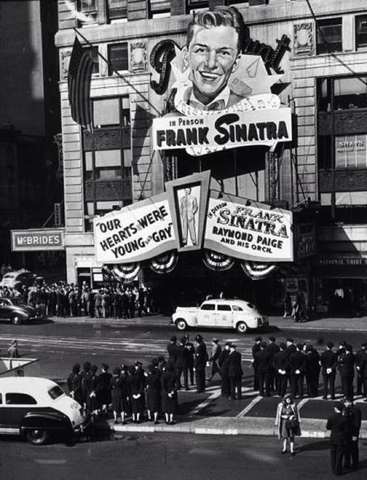
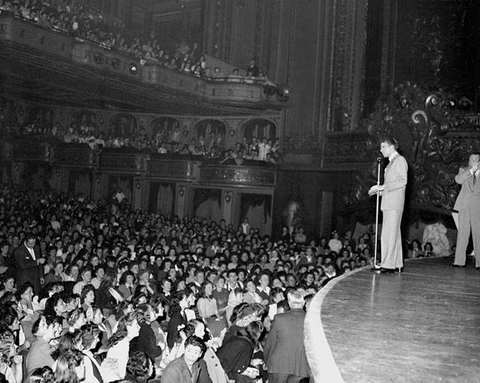
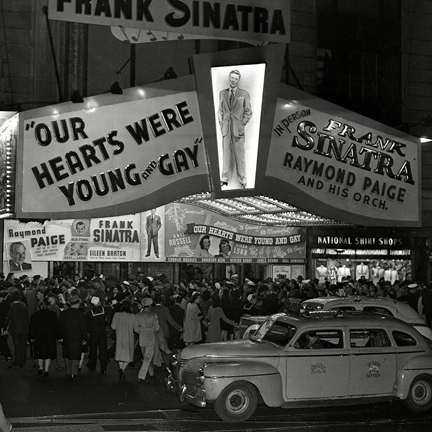
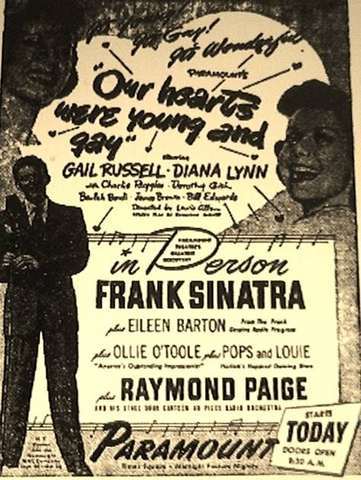
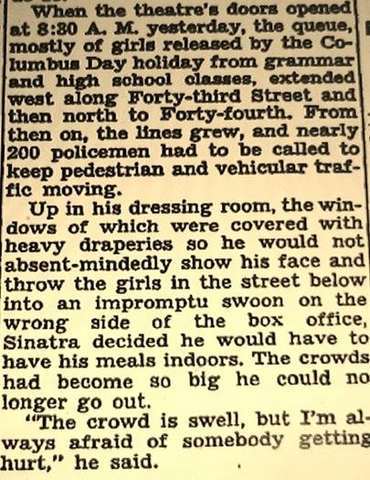
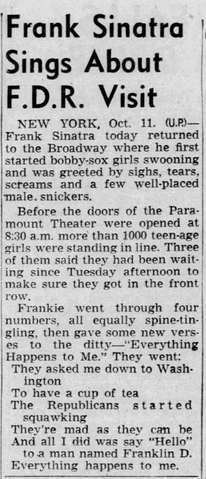
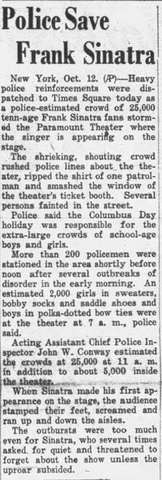
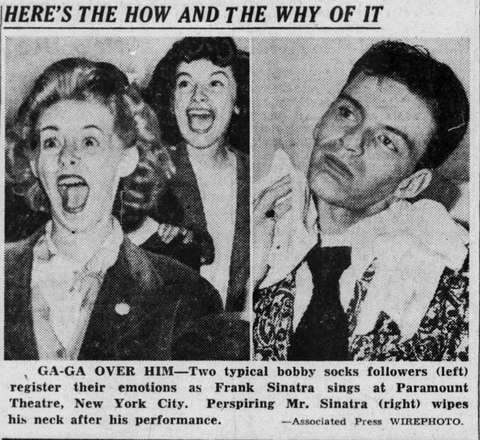
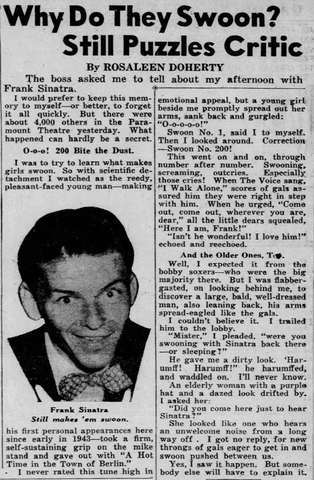
[Paramount Theater 'Columbus Day Riot']
Sinatra opened a new Paramount Theater engagement. At the 10 a.m. first show, manager Bob Weitman let nearly 5,000 fans, mostly girls, into a theater built for 3,500, while some 10,000 more waited outside; over the day's six shows roughly 30,000 fans besieged the theater, with police reinforcements, fainting fans, and ambulance calls. The event became known as the Paramount Riot or Columbus Day Riot.
Source: James Kaplan, "Frank: The Voice" (2010).
[Egg-throwing incident during show]
Alexander J. Dorogokupetz: During the Paramount engagement, eighteen-year-old Alexander J. Dorogokupetz threw four eggs at Sinatra from the third row, hitting his face and bow tie, in what he later described as a protest against 'two years of consecutive swooning.' Sinatra kept singing despite being struck.
Source: James Kaplan, "Frank: The Voice" (2010).
October 12, 1944
Concerts
Paramount Theatre , New York City (11-29)
Three-Week Engagement
Frank Sinatra with The Raymond Paige Orchestra
O.A. Eileen Barton, Ollie O'Toole, Pops & Louie
Film: Our Hearts Were Young And Gay
Paramount Theatre , New York City (11-29)
Three-Week Engagement
Frank Sinatra with The Raymond Paige Orchestra
O.A. Eileen Barton, Ollie O'Toole, Pops & Louie
Film: Our Hearts Were Young And Gay
NYT
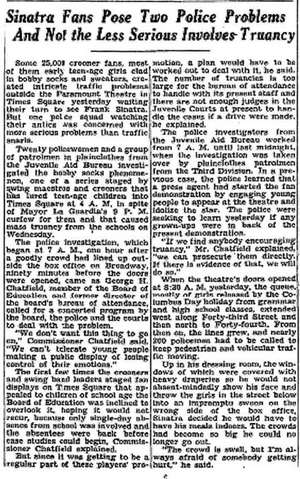
Columbus Day Riots:
Frank Sinatra fans at the Columbus Day riot.
Photograph: Weegee (Arthur Fellig)/International/Getty Images
Jon
Savage
Fri 10 Jun 2011 19.50 EDT
On 12 October 1944,
Frank
Sinatra opened his third season at New York's Paramount theatre. It was Columbus Day, a public holiday, and the bobby-soxers turned out in force. The famed New York photographer Weegee (Arthur Fellig) was there with his camera and notebook, capturing the scene in hyperventilated prose.
"Oh! Oh! Frankie," he began, mimicking the girls' ululations.
"The line in front of the Paramount theatre on Broadway starts forming at midnight. By four in the morning, there are over 500 girls … they wear bobby sox (of course), bow ties (the same as Frankie wears) and have photos of Sinatra pinned to their dresses …
"Then the great moment arrived. Sinatra appeared on stage ... hysterical shouts of 'Frankie ... Frankie'; you've heard the squeals on the radio when he sings. Multiply that by about a thousand times and you get an idea of the deafening noise."
For Weegee, this was another example of the human extremities that he documented with his instinct for the climatic moments in New York life: what he didn't mention was the fact that, after each performance, the Paramount was drenched in urine.
Like Rudolph Valentino's funeral in 1926, or The Wizard of Oz opening in 1939, the Columbus Day riot was a generation-defining media event acted out on Manhattan's streets: during the day some 30,000 frenzied bobby-soxers swarmed over Times Square in an exhilarated display of girl power.
The New Republic editor Bruce Bliven called it "a phenomenon of mass hysteria that is only seen two or three times in a century. You need to go back not merely to Lindbergh [Charles Lindbergh's first flight] and Valentino to understand it, but to the dance madness that overtook some German villages in the middle ages, or to the Children's Crusade." What was new was the power that one singer held, heralded by mass screaming, and the advent of the teenager as a social ideal. Sinatra was the first modern pop star.
Sinatra's fame had been steadily building. His breakthrough came in his first Paramount season in December 1942, when the theatre erupted with "five thousand kids stamping, yelling, screaming, applauding".
These scenes only intensified during his return in May 1943. The mania overtook the hype: his press agents remembered hiring "girls to scream when he sexily rolled a note. But we needn't have. The dozen girls we hired to scream and swoon did exactly as we told them. But hundreds more we didn't hire screamed even louder. It was wild, crazy, completely out of control."
Although nearly 29 by October 1944, Sinatra was slightly built, nervous and youthful: "It was the war years," he later said,
"there was a great loneliness. I was the boy in every corner drugstore, the boy who had gone to war."
In concert, he seduced his young audience. His bright blue eyes raked the crowd, singling out individuals so that he appeared to be singing for them alone, just one in a crowd of thousands. Matched to the ethereal kitsch of slow ballads such as Embraceable You, "The Voice" “ as Sinatra was known – cast a spell that suspended time.
Sinatra's rise was unstoppable, for he filled a deep need. Bliven thought that the bobby-soxers at the Paramount "found in him, for all his youthfulness, something of a father image. And beyond that, he represents a dream of what they themselves might conceivably do or become."
In the mid-40s, Sinatra became a national figure of controversy and criticism. He was blamed for making young people lose "control of their emotions", and was attacked for being out of uniform: because of an injury, he had been ruled unfit for duty in 1943.
Yet his status was confirmed in September 1944 when he went to the White House and met the president. Franklin Roosevelt had already made public statements linking American politics with its popular music, but this meeting was a shrewdly taken opportunity to reaffirm that adolescents were a vital part of American society.
The Columbus Day riots coincided with the invention of the teenage market. In September 1944, the magazine Seventeen was launched, which declared to its primarily female readers: "you are the bosses of the business". It was an immediate success, selling half a million copies. Seventeen offered a non-patronising approach that struck a chord, and it focused Americans on the barely recognised purchasing power of adolescents: estimated at $750m ( 465m).
The hysteria that surrounded Sinatra in October 1944 came at a crux time in the history of America and its youth. It reaffirmed the collective power of young women, and how they have always been central to pop.
Beaming at the audience of 4,000 teenagers jammed into the Paramount Theatre on October 12, 1944, singing phenomenon Sinatra said, "the crowd is swell, but I am always afraid of someone getting hurt." One newspaper described the 25,000 who had lined up to get in as "squealing, shoving-yes, even fainting-youngsters, mostly of the bobby socks persuasion."
The "Columbus Day Riot" marked the peak of Sinatra's early career, when his hits included "I'll Never Smile Again,"
"All or Nothing at All," and "I'll Be Seeing You."
Signed by Harry James in 1939, he sang with the Tommy Dorsey band from 1940 to 1942 before going out on his own. Sinatra's appeal to bobby-soxers marked a sea change in the broadcast and recording industry, which had previously marketed pop music mainly for adults.
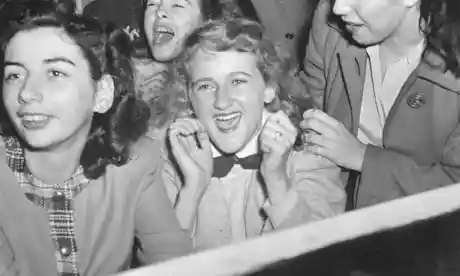
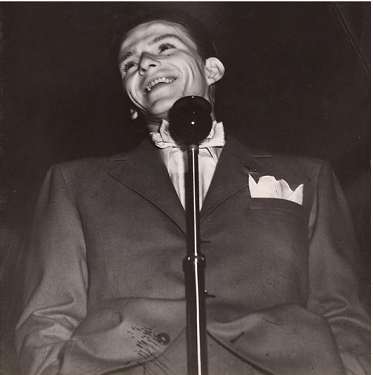
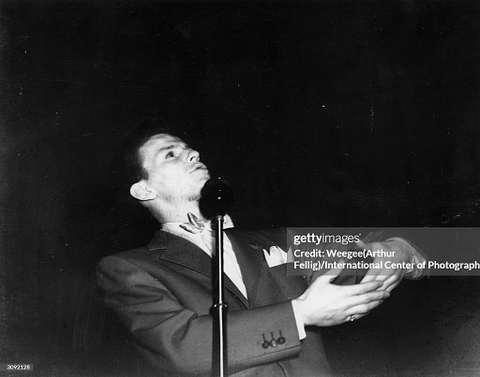
[Evans stages ambulance/ammonia PR]
Publicist George Evans hired an ambulance to park outside the Paramount and had ushers issued bottles of ammonia in case fans fainted from excitement -- a calculated publicity flourish amid the Sinatramania.
Source: James Kaplan, "Frank: The Voice" (2010).
Sinatra's return engagement at the Paramount Theatre touched off the so-called Columbus Day Riot: roughly 30,000 fans defied curfew and mobbed Times Square outside the theater, requiring a large police response to control the crowd. Source: Derek Jewell, Frank Sinatra: A Celebration (New York: Applause Books, 1999).
October 13, 1944
Concerts
Paramount Theatre, New York City (11-29)
Three-Week Engagement
Frank Sinatra with The Raymond Paige Orchestra
O.A. Eileen Barton, Ollie O'Toole, Pops & Louie
Film: Our Hearts Were Young And Gay
October 14, 1944
Radio
Your Hit Parade
Network: CBS
Program #491
Time: 9:00-9:45 P.M. (Rebroadcast October 15, 1944 12:00-12:45 A.M.)
Sponsor: Lucky Strike
Script By: Tom Langan
Script (Final As Broadcast)
1. How Many Hearts Have You Broken (7) - Frank Sinatra
2. Rise 'N' Shine - Orchestra
3. Time Waits For No One (5) - Hit Paraders
4. Dance With A Dolly (4) - Joan Edwards
5. commercial
6. All God's Chillun Got Rhythm - Orchestra
7. Swinging On A Star (8) - Joan Edwards & Group
8. It Could Happen To You (6) - Frank Sinatra
9. Deep In The Heart Of Texas (With Yippees) - Orchestra & Hit Paraders
10. station break
11. I'll Be Seeing You (9) - Joan Edwards
12. Zing Went The String Of My Heart - Orchestra
13. commercial
14. It had To Be You (3) - Hit Paraders
15. Is You Is Or Is You Ain't (2) - Joan Edwards
16. commercial
17. I'll Walk Alone (1) - Frank Sinatra
Concerts
Paramount Theatre, New York City (10-11-44 to 10-29-44) Wednesday
Opening Day Of A Three-Week Engagement
Frank Sinatra with The Raymond Paige Orchestra
O.A. Eileen Barton, Ollie O'Toole, Pops & Louie
Film: Our Hearts Were Young And Gay
NIGHT CLUBS - VAUDEVILLE
Paramount, New York
October 15, 1944
Concerts
Paramount Theatre, New York City (October 11-29)
Frank Sinatra with The Raymond Paige Orchestra
O.A. Eileen Barton, Ollie O'Toole, Pops & Louie
Film: Our Hearts Were Young And Gay
NIGHT CLUBS - VAUDEVILLE
Paramount, New York
October 16, 1944
Concerts
Paramount Theatre, New York City (October 11-29)
Opening Day Of A Three-Week Engagement
Frank Sinatra with The Raymond Paige Orchestra
O.A. Eileen Barton, Ollie O'Toole, Pops & Louie
Film: Our Hearts Were Young And Gay
NIGHT CLUBS - VAUDEVILLE
Paramount, New York
October 17, 1944
Concerts
Paramount Theatre, New York City (10-11-44 to 10-29-44)
Opening Day Of A Three-Week Engagement
Frank Sinatra with The Raymond Paige Orchestra
O.A. Eileen Barton, Ollie O'Toole, Pops & Louie
Film: Our Hearts Were Young And Gay
NIGHT CLUBS - VAUDEVILLE
Paramount, New York
October 18, 1944
Radio
Frank Sinatra In Person (CBS)
Wednesday Evening
9 to 9:30 pm
#10
Sponsor: Lever Brothers
Eileen Barton
Vimms Vitamins Vocalist
Axel Stordahl & His Orch.
Announcer: Jerry Lawrence
Guest: Orson Welles
Rehearsal:
1. Let Me Love You Tonight
2. Just Close Your Eyes
3. Together w/Eileen Barton & Vimms Vocalists
4. All Of Me
5. Thine Alone
Broadcast:
1. All Of Me
2. Skit with Axel and Eileen
3. Just Close Your Eyes
4. Vimms commercial
5. Let Me Love You Tonight
6 Skit with Eileen
7. Together w/ Eileen & Vimms Vocalists
8. Ghoulish skit with Orson Welles
9 Vimms commercial
10. Thine Alone/ A Kiss In The Dark w/ Vimms Vocalists
11. closing
Note : The dress rehearsal version of "Let Me Love You Tonight" & "Just Close Your Eyes" appear on the CD: The V-discs 2 ( Columbia ) Frank and Orson Welles
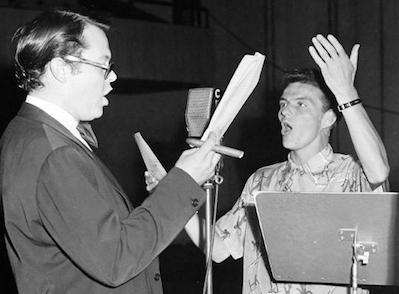
Concerts
Paramount Theatre, New York City (11-29)
Three-Week Engagement
Frank Sinatra with The Raymond Paige Orchestra
O.A. Eileen Barton, Ollie O'Toole, Pops & Louie
Film: Our Hearts Were Young And Gay
Frank Sinatra In Person (CBS)
Wednesday Evening
9 to 9:30 pm
#10
Sponsor: Lever Brothers
Eileen Barton
Vimms Vitamins Vocalist
Axel Stordahl & His Orch.
Announcer: Jerry Lawrence
Guest: Orson Welles
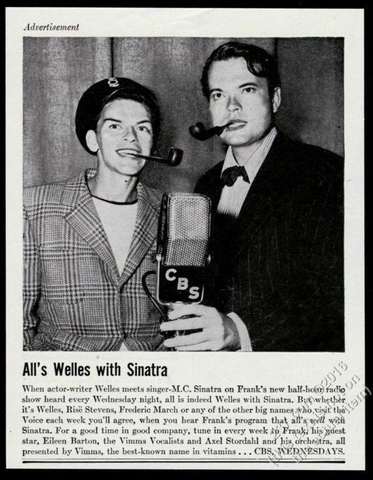
October 19, 1944
Concerts
Paramount Theatre, New York City (11-29)
Three-Week Engagement
Frank Sinatra with The Raymond Paige Orchestra
O.A. Eileen Barton, Ollie O'Toole, Pops & Louie
Film: Our Hearts Were Young And Gay
October 20, 1944
Concerts
Paramount Theatre, New York City (11-29)
Three-Week Engagement
Frank Sinatra with The Raymond Paige Orchestra
O.A. Eileen Barton, Ollie O'Toole, Pops & Louie
Film: Our Hearts Were Young And Gay
October 21, 1944
Radio
Your Hit Parade
Network: CBS
Sponsor: Lucky Strike
1. Is You Is Or Is You Ain't (4)
2. Always (8)
3. I'll Walk Alone (1)
Concerts
Paramount Theatre , New York City (11-29)
Three-Week Engagement
Frank Sinatra with The Raymond Paige Orchestra
O.A. Eileen Barton, Ollie O'Toole, Pops & Louie
Film: Our Hearts Were Young And Gay
Paramount Theatre , New York City (11-29)
Three-Week Engagement
Frank Sinatra with The Raymond Paige Orchestra
NIGHT CLUBS - VAUDEVILLE
Paramount, New York
Sinatra! That's all, brother.
Paramount execs probably reinforced the walls and called the police department to handle the bobby socks - all last week to make sure the place had adequate protection when The Voice began a three week stint (11).
And brother, they needed it. Kids mobbed the joint, climbed the ceiling, squealed, sighed, ahhed, gurgled, mooned all over the place and in every way gave indication that F.S. is probably one of the hottest b.- o. attractions around in the last decade. There were a few adults in the place - those that brought some of the kids because they were afraid they might be killed in the rush (and they were right in their fears), and those who came as curio seekers, more like those that toss their dimes on the counter to see the two-headed lady in the circus.
It's pure unadulterated showbiz! Show, which runs around 50 minutes, has plenty to offer besides
Sinatra, and cost the theater somewhere between
$10,000 and $15,000 for entire bill. Reason for
Sinatra's $4,000 is that he is playing off a contract and is reported asking for the formerly agreed to amount when the theater wouldn't kick in with a $30,000 package per week deal that Sinatra wanted. He's said to have a huge bonus coming to him if biz warrants after the three weeks. From all indications he'll bust the record and walk off with the marquee as his end.
Raymond Paige, recruited from radio to back Sinatra, supplies music; Eileen Barton, fem chirper, also on
Sinatra's radio show, sings rhythm tunes, Olie
O'Toole, impressionist, supplies comedy, and sepia tapsters, Pops and Louie handle dancing. It's all big time vaude.
No matter what anyone says about Sinatra's voice, he's a master at phrasing, especially on a pop that has a half decent lyric. Although he sounds simple and uncomplicated to the ear, it's apparent that he's definitely taken advantage of lyrical content of pop songs and given them personal meaning to every kid in the audience. That was more than uppermost in this reviewer's mind, for when he gushed on a certain phrase, such as "there's romance in your menu," in the tune "What A
Difference A Day Makes," the kids squealed.
It's a good thing he didn't sing "I Love You."
He's cut out the bow-tie and boyish appearance which is all for the better. He's now out to sing a tune and do the best job he can. When caught (11) last show opening day, he sounded tired, but that can be for a number of reasons. However, he could have come out and laid on the floor and gone to sleep and probably the house wouldn't have had a single refund, After drifting through half a dozen pops, each one a killer, no matter what he selected, he finished with "Ol' Man
River." That he is not only a romancer, but can sell straight material was demonstrated.
He walked off with a parody of "Everything
Happens To Me," telling the story of F.S. in song, and it's effective mainly because he kids himself.
All in all he puts on a great show, probably because he gives the impression of not taking himself, but his job, seriously. He stops the howling at one point to query, "Do I Stop You
From Making A Buck?" It brings howls and punches the point across. He gets a fine assist from Raymond Paige's ork, some 40 musicians who spread out across the thin stage. Some 20 strings on one side; brass, sax and rhythm section on the other, and
Paige in the middle. Leader doesn't monkey around, and puts on one of the best all-around musical jobs seen on a New York stage in a long time. Not only are arrangements way above par, especially for stage, for they're showy and lively, but he's got the cream of crop of musicians.
Only bad spot to music was in opening number of Eileen Barton's tune, when brass engulfed her. After that it was smooth sailing.
Pic is Para's "Our Hearts Were Young And
Gay."
Billboard
October 21, 1944
Paul Secon
Ed O'Brien:
Almost five thousand bobby sockers filled the theatre, designed to seat less than 3,500.
Management ignored the fire codes. There was an estimated 10,000 girls waiting to get in every day. Frank also sang "All Or Nothing
At All," "I Couldn't Sleep A Wink Last Night,"
"Close To You," "I Don't Know Why," " This
Love Of Mine" and "Put Your Dreams Away."
Unfortunately not everyone was a fan of Sinatra at the Paramount in 1944:
The Ogden Standard-Examiner (Ogden, Utah) · 21 Oct 1944
October 22, 1944
Concerts
Paramount Theatre, New York City (11-29)
Three-Week Engagement
Frank Sinatra with The Raymond Paige Orchestra
O.A. Eileen Barton, Ollie O'Toole, Pops & Louie
Film: Our Hearts Were Young And Gay
Broadway For Roosevelt Dinner, New York
October 22, 1944
Frank Sinatra, Ethel Merman, Jackie Gleason, Bert Lahr and others
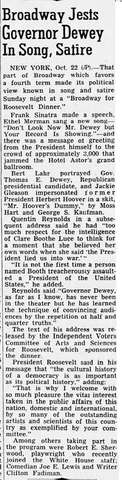
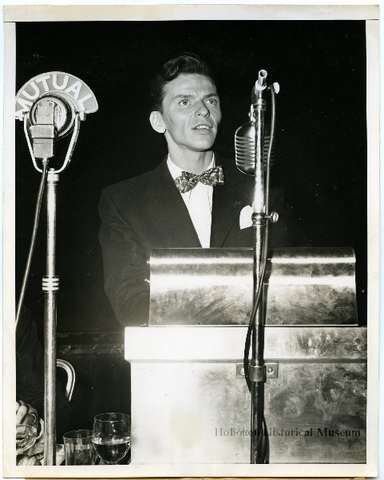
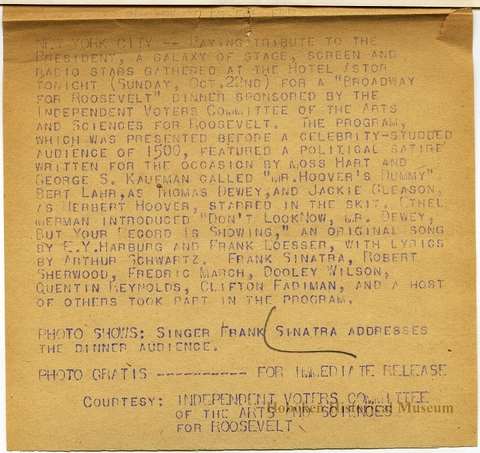
October 23, 1944
Radio
For The Record Show
Location: New York City
Network: NBC
Time: 11:30PM - 12:00PM (EST)
Show: #13
Guests: Frank Sinatra w/Raymond Paige and his orchestra, Hazel Scott, Deems Taylor, The Ink Spots
Conductor: Raymond Paige
1. If You Are But A Dream
2. Strange Music 3. Brahms Lullaby
4. Dick Haymes, Dick Todd And Como (Parody)
Notes: Confirmed aired on WEAF. Special radio recording session produced by George Simon for V-disc release.
Above songs appear on the CD: The V-discs 2. This is a V-Disc recording session with, Frank Sinatra, Raymond Paige, and Deems Taylor. LOC has 10-inch NBC sound reel. TT: 30mins. Their copy has several bad skips at beginning of part 2. Mr. Costello opens the show:
V-Discs Presents For The Record
The War Department Army Services Forces in cooperation with the National Broadcasting Company Presents another V-Disc recording session for our servicemen overseas Frank Sinatra, Hazel Scott, Raymond Paige & His Stage Door Canteen Orchestra ( 35 musicians ) and master of V-Discs, Deems Taylor.
1. Salute To The Service R. Paige & Orch.
2. If You Are But A Dream F. Sinatra
3. The Man I Love H. Scott piano and vocal
4. Dick Haymes, Dick Todd and Como ( parody of Sunday, Monday Or Always ) F. Sinatra
5. Brahms' Lullaby F. Sinatra
6. Classical Standards mixed with Patriotic Standards of the Day R. Paige & Orch.
7. Unidentified piece played by Hazel Scott after sign-off
Sinatra recorded " Strange Music" but it was not aired that evening. It is available in the Sinatra V-Disc boxed set.

Concerts
Paramount Theatre, New York City (11-29)
Three-Week Engagement
Frank Sinatra with The Raymond Paige Orchestra
O.A. Eileen Barton, Ollie O'Toole, Pops & Louie
Film: Our Hearts Were Young And Gay
For The Record Show
Location: New York City
Network: NBC
Time: 11:30PM - 12:00PM (EST)
Show: #13
Guests: Frank Sinatra w/Raymond Paige and his orchestra, Hazel Scott, Deems Taylor, The Ink Spots
Conductor: Raymond Paige
Photo from the session:
----------------------------------------------------
Young Voters For Roosevelt Committee
10-23-44.
note: Frank meeting with Young Voters For Roosevelt Committee 10-23-44. They were discussing plans for 10-24 rally at Carnegie Hall.
-------------------------------------------------
October 23, 1945 Benjamin Franklin High School, New York, New York Sinatra talks about racial unity
Apparently Sinatra did sing. He sang "Aren't You Glad You're You," at two assemblies:
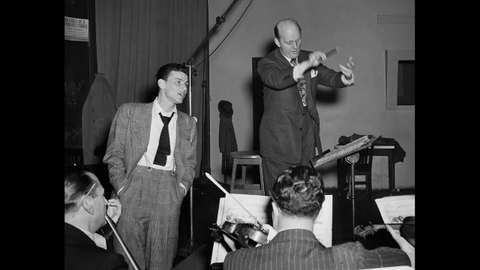
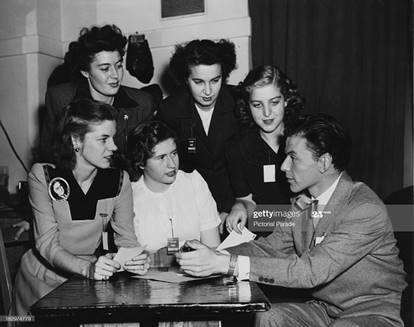
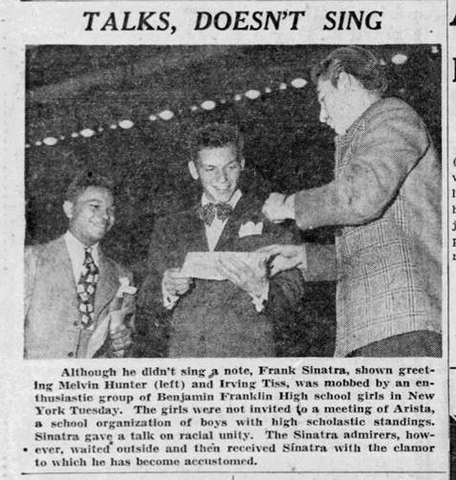
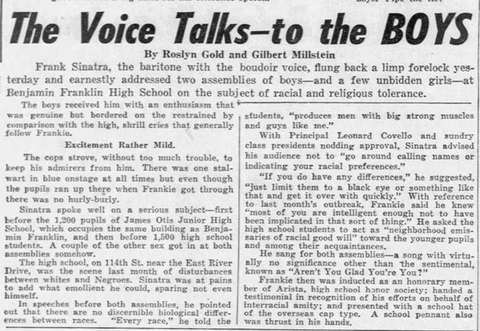
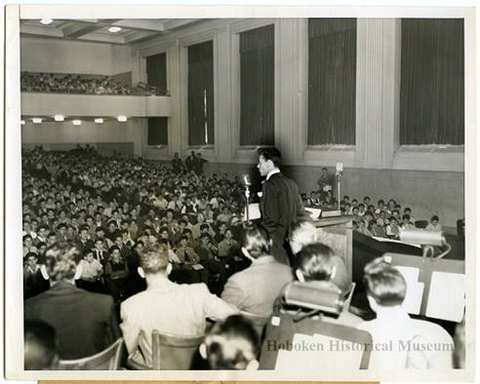
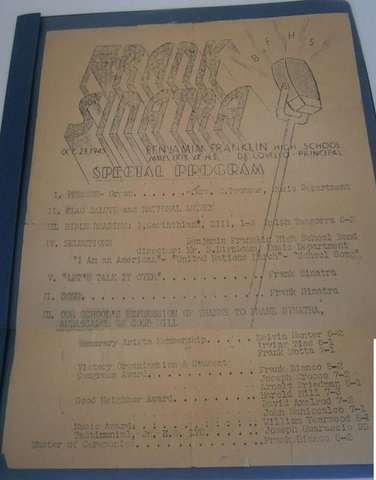
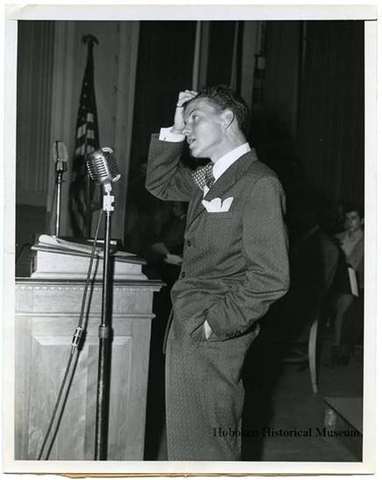
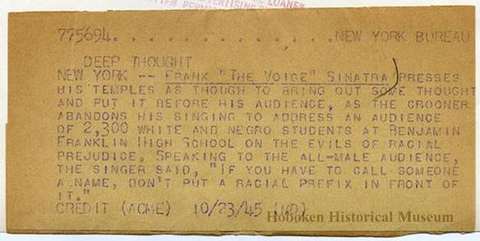
. note: Frank meeting with Young Voters For Roosevelt Committee
. They were discussing plans for 10-24 rally at Carnegie Hall.
October 23, 1945 Benjamin Franklin High School, New York, New York
Sinatra talks about racial unity
Apparently Sinatra did sing. He sang "Aren't You Glad You're You," at two assemblies:
October 23, 1950 New York:
Singing star Frank Sinatra lends his famous voice to the words of the "The Star-Spangled Banner," in a United Nations flag-raising ceremony at historic Madison House
Frank Sinatra Singing With Young Boys
(Original Caption) 10/23/50-New York: Singing star Frank Sinatra lends his famous voice to the words of the "The Star-Spangled Banner," in a United Nations flag-raising ceremony at historic Madison House, in the Lower East Side's traditional melting pot. Joining him in the chorus, which marked UN Day, Oct. 24, is a make-up choir of some of the neighborhood kids.
City Of Hope Dinner/Benefit (Cancer Research)
October 23, 1955
Hollywood
Sunday Evening
Entertainment: Jose Greco, Anna Maria Alberghetti,
Gene Kelly, Dinah Shore, Frank Sinatra
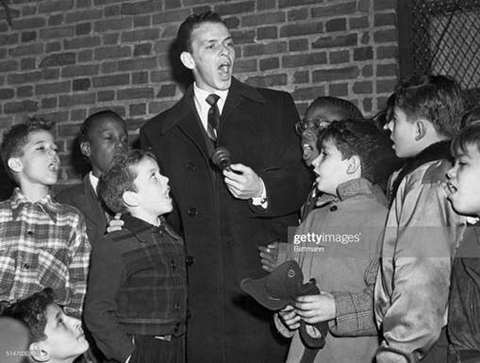
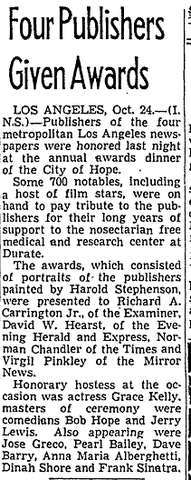
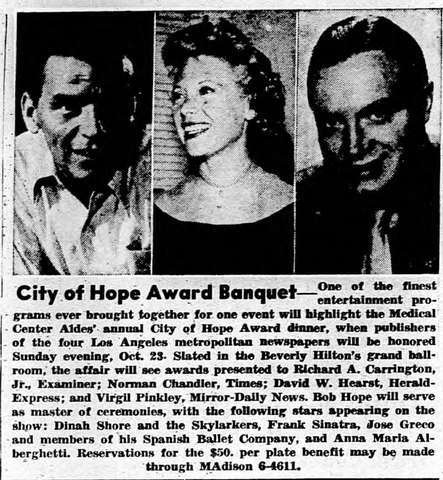
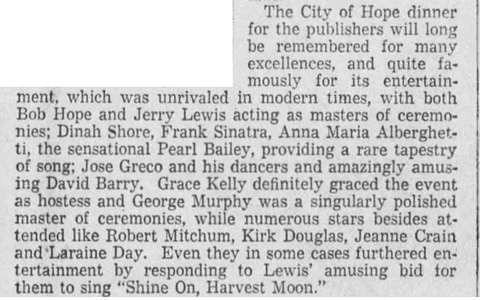
. note: Frank meeting with Young Voters For Roosevelt Committee
. note: Frank meeting with Young Voters For Roosevelt Committee
. note: Frank meeting with Young Voters For Roosevelt Committee
October 24, 1944
Concerts
Paramount Theatre , New York City (11-29)
Three-Week Engagement
Frank Sinatra with The Raymond Paige Orchestra
O.A. Eileen Barton, Ollie O'Toole, Pops & Louie
Film: Our Hearts Were Young And Gay
October 25, 1944
Radio
Frank Sinatra In Person
Network: CBS
Location: New York City
Show #11
Sponsor: VIMMS Vitamins
Time: 9:00PM - 9:30PM (EST) Wednesday
Orchestra Conducted By: Axel Stordahl
Arrangements By: Axel Stordahl
Announcer: Jerry Lawrence
Writers: Carroll Carroll
Performers: Eileen Barton, Vimms Vocalists
Guest: Milton Berle
1. It's Only A Paper Moon
2. Skit with Eileen & Axel
3..What A Difference A Day Makes
4. Skit with Eileen & Axel
5. I'm In The Mood For Love
6. Young married couple skit w/ Eileen
7. Come Out, Come Out Wherever You Are - w/Eileen Barton & V.Vocalists
8. Skit with Milton Berle
9. Together w/ Milton
10.There's No You
11. Closing next week's guest will be Charles Boyer
Notes: Confirmed airing on WABC.
Concerts
Paramount Theatre , New York City (11-29)
Three-Week Engagement
Frank Sinatra with The Raymond Paige Orchestra
O.A. Eileen Barton, Ollie O'Toole, Pops & Louie
Film: Our Hearts Were Young And Gay
Frank Sinatra In Person
Network: CBS
Location: New York City
Show #11
Sponsor: VIMMS Vitamins
Time: 9:00PM - 9:30PM (EST) Wednesday
Orchestra Conducted By: Axel Stordahl
Arrangements By: Axel Stordahl
Announcer: Jerry Lawrence
Writers: Carroll Carroll
Performers: Eileen Barton, Vimms Vocalists
Guest: Milton Berle
October 25, 1948
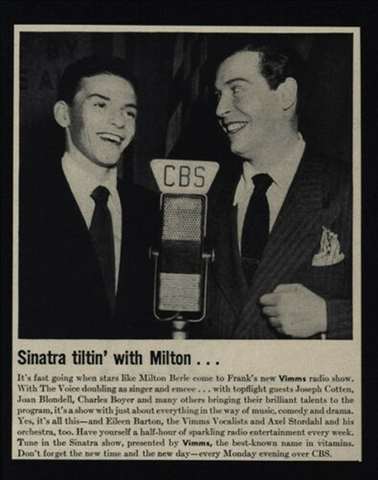
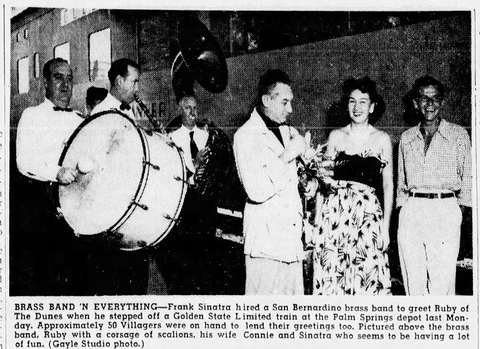
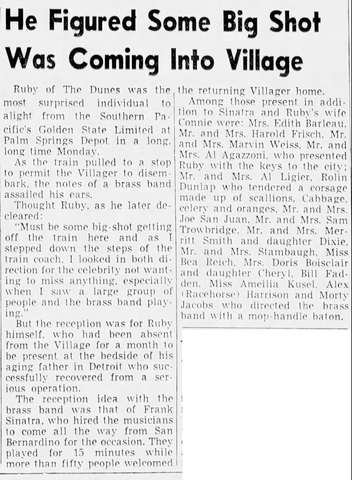
October 26, 1944
Radio
ILGUW Campaign Talks: Vice President Henry Wallace: Frank
Sinatra"
Network: WJZ
Time: 10:15 - 10:30 AM (EST)
Ed O'Brien:
Show was on WJZ from 10:15 pm to 10:30 pm, followed by an address at
10:30 pm from Senator Harry Truman in Peoria, Illinois. He was the VP candidate
for the Democrats that fall.
note: A very busy day in the life of The Voice. He was doing seven shows a day
at the Paramount Theater, that afternoon he was the main attraction at a luncheon
at the Waldorf. The Saints & Sinners Club made him a life time member. Tex O'Rourke
introduced Frankie to the audience. As the thin singer stood at the microphone, the
S&S produced caricatures of Lauritz Melchior and Bing Crosby on the wall behind
him. Frank rushed over to WJZ from the Paramount that evening.
Variety
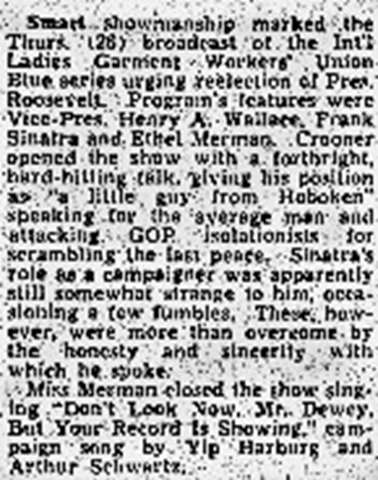
Concerts
Paramount Theatre, New York City (11-29)
Three-Week Engagement
Frank Sinatra with The Raymond Paige Orchestra
O.A. Eileen Barton, Ollie O'Toole, Pops & Louie
Film: Our Hearts Were Young And Gay
ILGUW Campaign Talks: Vice President Henry Wallace: Frank Sinatra"
Network: WJZ
Time: 10:15 - 10:30 AM (EST)
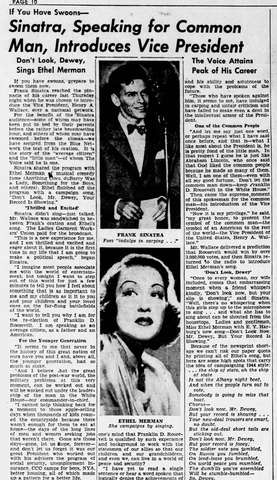
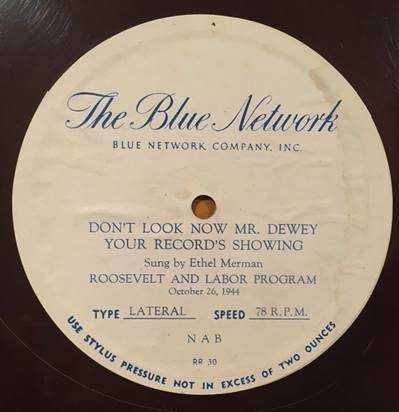
October 27, 1944
Concerts
Paramount Theatre, New York City (11-29)
Three-Week Engagement
Frank Sinatra with The Raymond Paige Orchestra
O.A. Eileen Barton, Ollie O'Toole, Pops & Louie
Film: Our Hearts Were Young And Gay
Paramount Theatre , New York City (11-29)
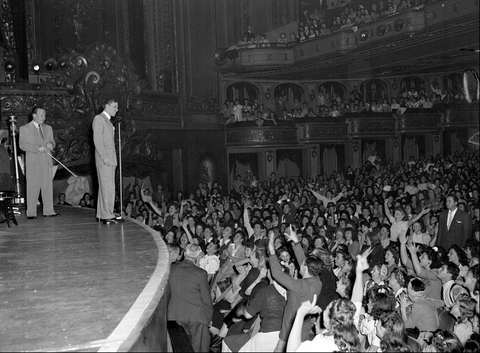
October 28, 1944
Radio
Your Hit Parade
Network: CBS
Program #493
Time: 9:00-9:40 P.M. (Rebroadcast October 29, 1944 12:00-12:40 A.M.)
Sponsor: Lucky Strike
Script By: Tom Langan
Script (First & Final As Broadcast)
1, Together (5) - Frank Sinatra
2, Don't Sit Under The Apple Tree - Orchestra
3. Is You Is Or Is You Ain't (4) - Joan Edwards
4. commercial
5. Anchors Aweigh - Orchestra & Hit Paraders
6. Let Me Love You Tonight (9) - Frank Sinatra
7. California, Here I Come - Orchestra
8. station break
9. How Many Hearts Have You Broken (6) - Hit Paraders
10. Always (8) - Joan Edwards
11. commercial
12. The Trolley Song (3) - Hit Paraders
13. Dance With A Dolly (2) - Joan Edwards
14. commercial
15. I'll Walk Alone
Notes: Show revised to 40mins for the Democratic National Committee.
Concerts
Paramount Theatre , New York City (11-29)
Three-Week Engagement
Frank Sinatra with The Raymond Paige Orchestra
O.A. Eileen Barton, Ollie O'Toole, Pops & Louie
Film: Our Hearts Were Young And Gay
note: Frank brought in $265,000 for the three-week run. First two weeks saw an identical gross of $88,000 per and closing week brought in $89,000. This was huge in the fall of 1944. Frank then prepared for a sensational engagement at the Waldorf. He was set to receive 50% of every dollar against a guarantee. A heady time for The Voice, indeed.
Ed
October 29, 1944
Radio
Radio Hall Of Fame
Take It Or Leave It
CBS - Radio
WABC
Ritz Theater
New York City
10:00 p.m.- 10:30 p.m.
Sponsor: Philco Electronics
Paul Whiteman & His Orchestra
Ella Mae Morse, Deep River Boys,
Ward Wilson Lulu McConnell
WABC
New York City
Special Guest:
Frank Sinatra
Songs by Frank:
1. There's No You
2. Ol Man River
note: Harriet Gainsboro was a 15 year old who lived in Newton Centre, Massachusetts. Harriet adored The Voice. In September of 1944, she developed acute appendicitis. After an emergency operation, Harriet recovered at home, while listening to Frankie sing. A friend wrote to Frank and asked him to send Harriet an autographed picture. After the photo arrived, the friend decided to ask for the moon: Could Harriet meet Frank when she was strong enough to travel. Harriet was stunned when the telegram arrived with the news that Frank definitely wanted to meet her. Here is a photo of Harriet, backstage at the Ritz Theater, standing next to Frank as he autographs, for her, his script from "Take It Or Leave It.," on Sunday evening, October 29, 1944. Frank then asked Harriet and her family if they would like to see him perform, that evening, at the Paramount Theater engagement. --Ed
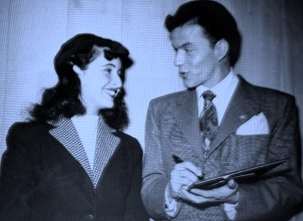
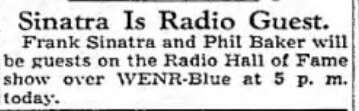
Concerts
Paramount Theatre , New York City (11-29)
Three-Week Engagement
Frank Sinatra with The Raymond Paige Orchestra
O.A. Eileen Barton, Ollie O'Toole, Pops & Louie
Film: Our Hearts Were Young And Gay
Radio Hall of Fame
Daily News (New York, New York) · 29 Oct 1944, Sun
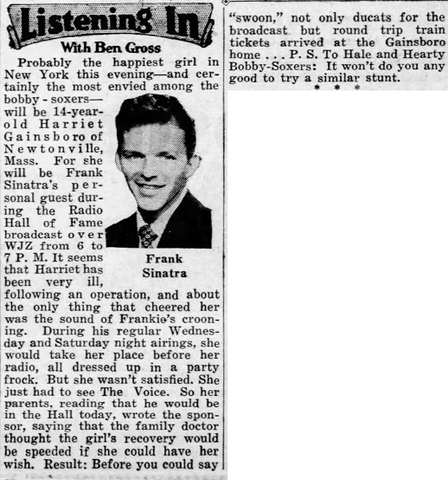
October 31, 1944
Concerts
Madison Square Garden, New York
Roosevelt-Truman Rally
Madison Square Gardens, New York
Roosevelt-Truman Rally
!
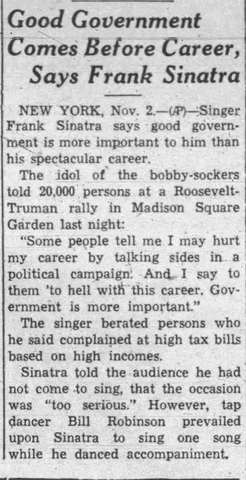
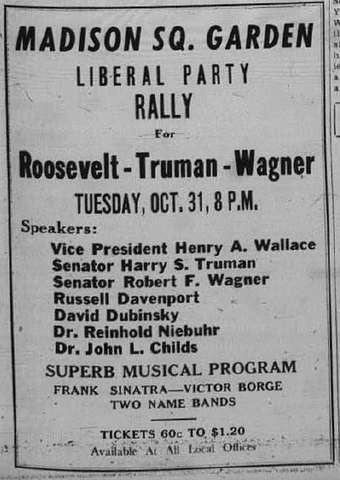
November 1944
[Resumes recording after AFM strike ends]
Kaplan: When Columbia Records finally struck a deal with the American Federation of Musicians, Sinatra and Stordahl rushed to Liederkranz Hall and recorded seventeen new sides over the following month -- his first orchestral sessions since July 1942 -- marking a newly mature phase of his sound, beginning with 'If You Are But a Dream.'
Source: James Kaplan, "Frank: The Voice" (2010)
[Sinatra explains his St Christopher/Star of David medallion]
Interviewed by Robert Sullivan of the New York Sunday News, Frank was unusually candid about race and religion. He showed off a medallion bearing St Christopher on one side and the Star of David on the other, telling Sullivan he acted on instinct rather than overthinking things once something made him "sore."
Source: Richard Havers, "Sinatra" (Dorling Kindersley, 2007).
November 1, 1944
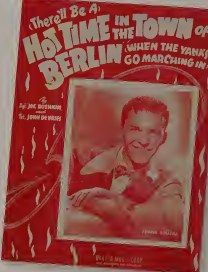
[Photograph: Frank appears on election night broadcast. From Richard Havers, "Sinatra" (Dorling Kindersley, 2007), p.96.]
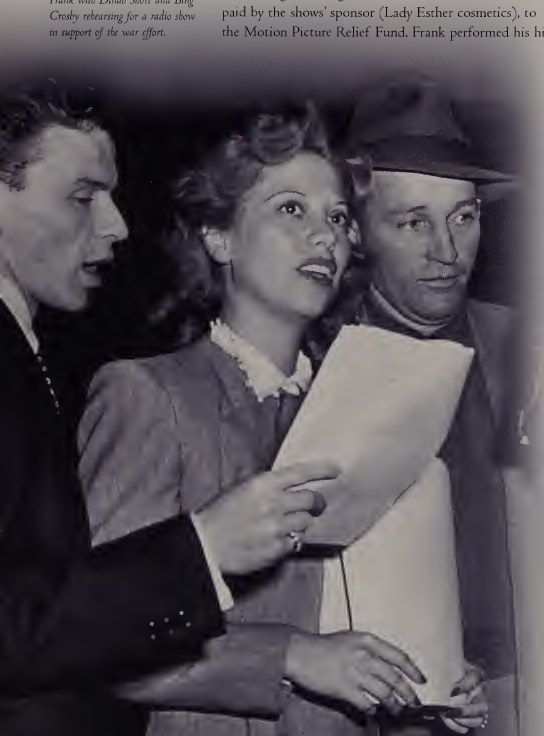
[Photograph: Frank appears on election night broadcast. From Richard Havers, "Sinatra" (Dorling Kindersley, 2007), p.96.]
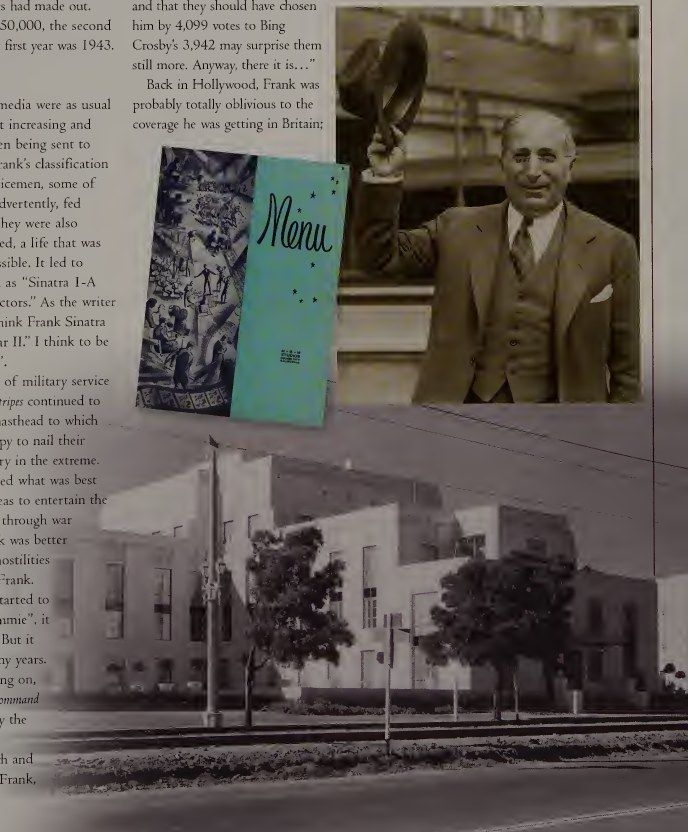
[Photograph: Frank appears on election night broadcast. From Richard Havers, "Sinatra" (Dorling Kindersley, 2007), p.95.]
Radio
Frank Sinatra In Person
Network: CBS
Location: New York City
Show #12
Sponsor: VIMMS Vitamins
Time: 9:00PM - 9:30PM (EST) Wednesday
Orchestra Conducted By: Axel Stordahl
Arrangements By: Axel Stordahl
Announcer: Jerry Lawrence
Writers: Carroll Carroll
Guest: Charles Boyer
1. There'll Be A Hot Time In The Town Of Berlin
2. I Dream Of You
3. I Love You ( Song of Norway )
4. I'm Confessin' - w/Eileen Barton & V.Vocalists
5. Stormy Weather w/V. Vocalists
note: A tape of this show has been in circulation for years, but someone tacked on "When Your
Lover Has Gone" from the 12-11-44 show. As you can see, Frank sang "Stormy Weather" to close the show.
Ed
Ed O'Brien
There were the usual skits between songs.
The highlight of the show was Boyer and Sinatra discussing the liberation of Paris. Boyer told a very moving story about one incident he knew of during the liberation. Sinatra owned the rights to "Hot Time In The Town Of Berlin" He passed on recording and let Bing have a go at it. Frank knew there was no one better at selling such a song. Barton Music would, of course, benefit mightily from the record and sheet music sales.
I believe this was the first time Frank sang "When
Your Lover Has Gone" on the radio. Over the next forty years Frank would sing this song hundreds of times, in concerts and on radio and TV programs.
On presidential election night, Frank appeared on a CBS broadcast alongside Mrs Vincent Astor, Mrs Tyrone Power, and actress Miriam Hopkins, having recently done his show Frank Sinatra in Person. (Source: Richard Havers, "Sinatra" (Dorling Kindersley, 2007).)
November 2, 1944
Radio
Independent Voters Committee for Roosevelt and Truman, Madison Square Garden, New York
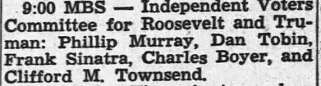
November 3, 1944
Concerts
Democratic Rally, Academy of Music, Brooklyn, NY
Sinatra was one of several performers at the Rally
Democratic Rally, Academy of Music, Brooklyn, NY
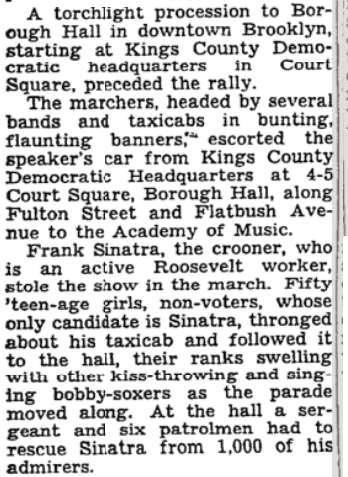
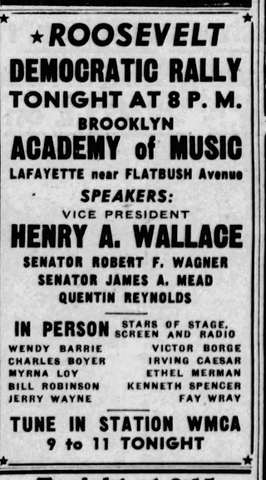
November 4, 1944
Concerts
Fenway Gardens, Boston
FDR Rally
Sinatra spoke and sang “America the Beautiful”
Orson Welles also spoke
Fenway Gardens, Boston
FDR Rally
Sinatra spoke and sang “America the Beautiful”
Orson Welles also spoke
Sinatra and Orson Welles
FDR last campaign rally 75 years ago with Orson Welles
November 4, 2019
Seventy five years ago on November 4, 1944, Franklin D. Roosevelt made his final campaign stop with a speech before a crowd of 40,000 at Fenway Park in Boston.
Red, white and blue bunting and banners were looped along the infield fence, around uprights and the edge of the grandstand roof of the historic ballpark.
Orson Welles accompanied Roosevelt to Fenway Park, where Frank Sinatra sang “America the Beautiful” and Welles pushed for a fourth term for the incumbent Democrat.
“The crowd roared its enthusiasm as Orson Welles and Frank Sinatra were introduced,” reported The Boston Globe, which referred to Welles and Sinatra as “the ‘dramatic voice’ and ‘The Voice’.”
The progressive Welles told the Boston crowd that the GOP was not concerned about the working man, according to Smithsonian.
“By free enterprise they want exclusive right to freedom,” Welles said. “They are stupid enough to think that a few can enjoy prosperity at the expense of the rest.”
Welles also attacked Republican candidate Thomas Dewey for running a negative campaign, which had questioned FDR’s health. (Roosevelt would die five months later on April 12, 1945.)
Throughout the fall of 1944, Welles had made campaigning for Roosevelt a priority, leaving his pregnant wife, Rita Hayworth, at home to travel the country by air and rail.
In his speech at Fenway Park, FDR acknowledged he had been “reluctant to run for the presidency again this year. ”
“But since this campaign developed, I tell you frankly that I have become most anxious to win and I say that for the reason that never before in my lifetime has a campaign been filled with such misrepresentation, distortion, and falsehood,” Roosevelt said. “Never since 1928 have there been so many attempts to stimulate in America racial or religious intolerance.”
Three days later, Roosevelt defeated Dewey by winning 53 percent of the popular vote and taking the electoral college, 432-99.
Later, FDR sent Welles a telegram, thanking him for his help during the 1944 presidential campaign.
“It was a great show,” Roosevelt cabled, “in which you played a great part.”
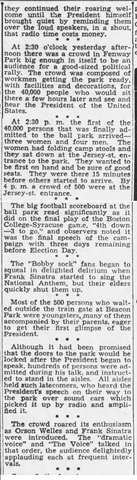
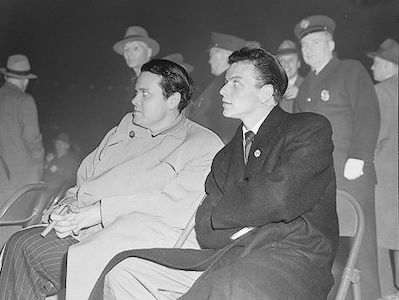
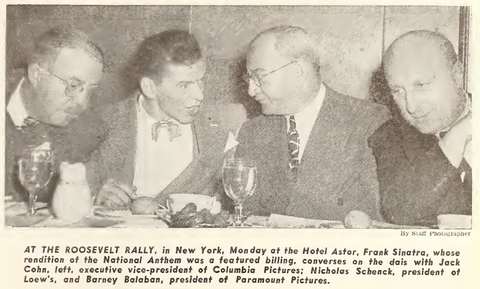
November 5, 1944
Radio
Frank Sinatra Speaks For Roosevelt
10:15 WHN

Concerts
Perth Amboy, New Jersey
Democratic Rally
Sinatra spoke and then later gave a "croon program"
Perth Amboy, New Jersey
Democratic Rally
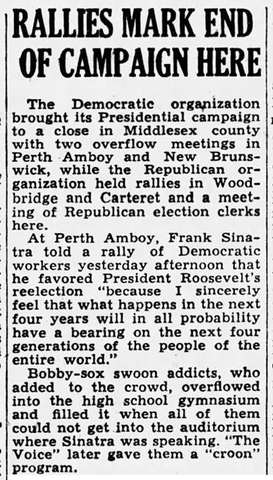
Writing in the New York Sunday News, Robert Sullivan argued that the frenzy around Frank said more about his admirers' "mass hysteria" than about Frank himself. (Source: Richard Havers, "Sinatra" (Dorling Kindersley, 2007).)
November 6, 1944
Radio
Liberal Party of New York
Speaking on Behalf of President Roosevelt,
Harry S. Truman and Robert F. Wagner
NBC Red Network - WEAF New York City
Time 11:15 p.m. - 11:30 p.m.
Campaign items on other networks including WEAF carried 10-11:30. M.C.: Frank Sinatra
Guests: Marian Anderson, Dean Alfange, Franz Rupp, Robert F. Wagner note: Frank opens the show by introducing Marian Anderson, who sings "Nobody Knows The Trouble I've Seen" and "Let Us Break Bread Together," backed by pianist Franz Rupp.
Frank then reads a message from FDR to Wagner. Frank then introduces Wagner, who gives a stirring speech. The former candidate for Governor of New York, Dean Alfange, is introduced by Frank. Alfange urges people who are supporting Roosevelt to vote on the Liberal Party line.
Frank is very nervous and stumbles while reading the introductions.
President Roosevelt Campaign Talk
CBS with lots of stars
10:30 to 11:30 E.W.T

The New Republic noted that of the thousands who packed the first Paramount show, only about 250 left when the second show began, illustrating how determined fans were to stay put all day. (Source: Richard Havers, "Sinatra" (Dorling Kindersley, 2007).)
November 7, 1944
[Election night; Pegler hotel confrontation]
On the night of FDR's reelection, Sinatra celebrated with Orson Welles and others at Toots Shor's, then led his group to confront columnist Westbrook Pegler at his Waldorf-Astoria hotel room. Accounts diverge: Sinatra later said Pegler wasn't in, but a purported Pegler aide later claimed Pegler needled Sinatra through the door and that Sinatra returned to his suite and smashed furniture, throwing a chair out a window.
Source: James Kaplan, "Frank: The Voice" (2010).
November 8, 1944
Studio
All-Star Bond Rally - Film short
Twentieth Century Fox Recording Studio
Arranged and conducted by Axel Stordahl
With Harry James and his Orchestra
"Saturday Night is The Loneliest Night in the Week"
NOTE: Sinatra Scholar Ed O'Brien provided the information on this sound recording for the film short.
Radio
Frank Sinatra In Person
Network: CBS
Location: New York City
Show #13
Sponsor: VIMMS Vitamins
Time: 9:00PM - 9:30PM (EST) Wednesday
Orchestra Conducted By: Axel Stordahl
Arrangements By: Axel Stordahl
Announcer: Jerry Lawrence
Writers: Carroll Carroll
Performers: Eileen Barton, Vimms Vocalists
Guest: Quentin Reynolds
1. There Goes That Song Again
2. The Day After Forever
3. My Melancholy Baby
4. How Many Hearts Have You Broken w/E. Barton
5. Porter medley: I Get A Kick Out Of You/Anything Goes w/Vimms'
Vocalists
Concerts
Wedgwood Room, Waldorf Astoria, New York City (Nov. 8 - 28) with Nat Brandwynne and his Orchestra
--Frank opened on the 8th for a three week engagement.
I have reviews from Billboard and Variety. He also did some moonlighting during the month. He was dark on Sundays, so he played Montreal, 11-19, to, according to Billboard, boffo attendance. There were 12,000 at the show. He appeared at the Memorial Auditorium, Buffalo, on 11.22. It was a disaster. First he was going to be there, then he wasn't then he missed his plane, then he appeared. Promoter was expecting 10,000. Frank drew 5,000 and walked away with $10,000. He was set to play at Symphony Hall, in Boston, with Arthur Fielder conducting, 11-26( Sunday). He cancelled, claiming a sore throat. Frank offered to pay the musicians but the promoter was threatening a lawsuit. How many days he actually appeared at the Waldorf, I can not tell you. The week before Buffalo, there was a War Bond Rally in Philly. He drew thousands that day. After closing at the Waldorf, he heaed back to L.A. in early December via train. He got off in Chicago and conducted the Dorsey Orchestra, 12-6, at the Sherman Hotel. Tommy got hung up in L.A. and asked Frank's help. Don't know if he sang a few numbers. It was announced that week there would be Columbia sessions with some of the Basie band in the near future. --Ed
P.S. If memory serves, Frank canceled some dates and then made them up in 45. Probably explains the longer run.
All-Star Bond Rally - Film short
Twentieth Century Fox Recording Studio
Arranged and conducted by Axel Stordahl
With Harry James and his Orchestra
"Saturday Night is The Loneliest Night in the Week"
note: The 7th Victory Loan Drive ( 8th in Canada) was filmed in November of 1944 and released to theatres in May of 1945
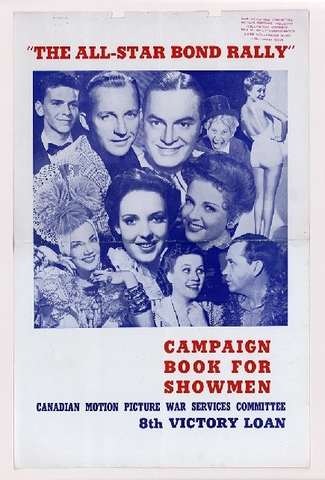
Wedgwood Room, Waldorf Astoria (8-28)
© 1997-2025 The Sinatra Archive
This calendar, or any parts thereof, may not be reproduced in any fashion whatsoever without the prior written permission of the publisher (The Sinatra Archive)
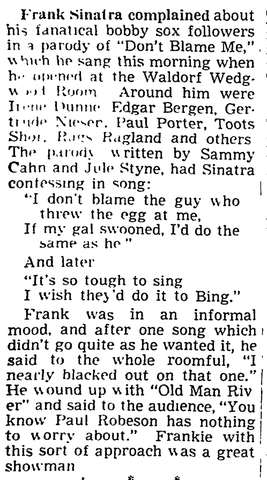
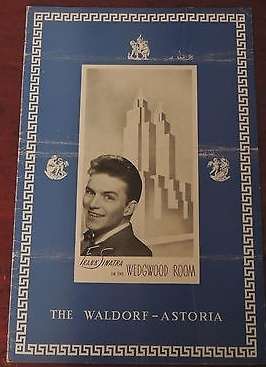
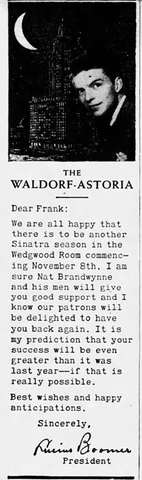

Wedgwood Room, Waldorf Astoria (8-28)
© 1997-2025 The Sinatra Archive
This calendar, or any parts thereof, may not be reproduced in any fashion
whatsoever without the prior written permission of the publisher (The
Sinatra Archive)
November 9, 1944
Concerts
Wedgwood Room, Waldorf Astoria, New York City (Nov. 8 - 28) with Nat Brandwynne and his Orchestra
November 10, 1944
Concerts
Wedgwood Room, Waldorf Astoria, New York City (Nov. 8 - 28) with Nat Brandwynne and his Orchestra
November 11, 1944
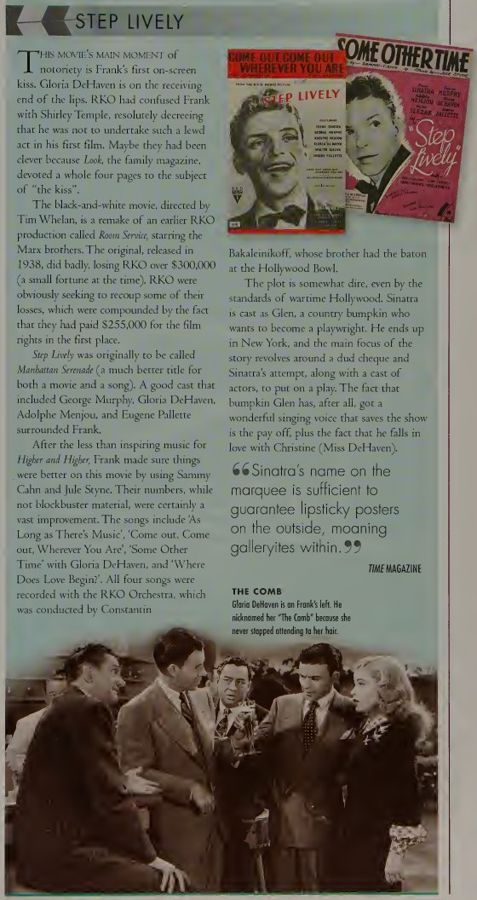
[Photograph: Musicians' strike ends. From Richard Havers, "Sinatra" (Dorling Kindersley, 2007), p.99.]
[Photograph: Musicians' strike ends. From Richard Havers, "Sinatra" (Dorling Kindersley, 2007), p.98.]
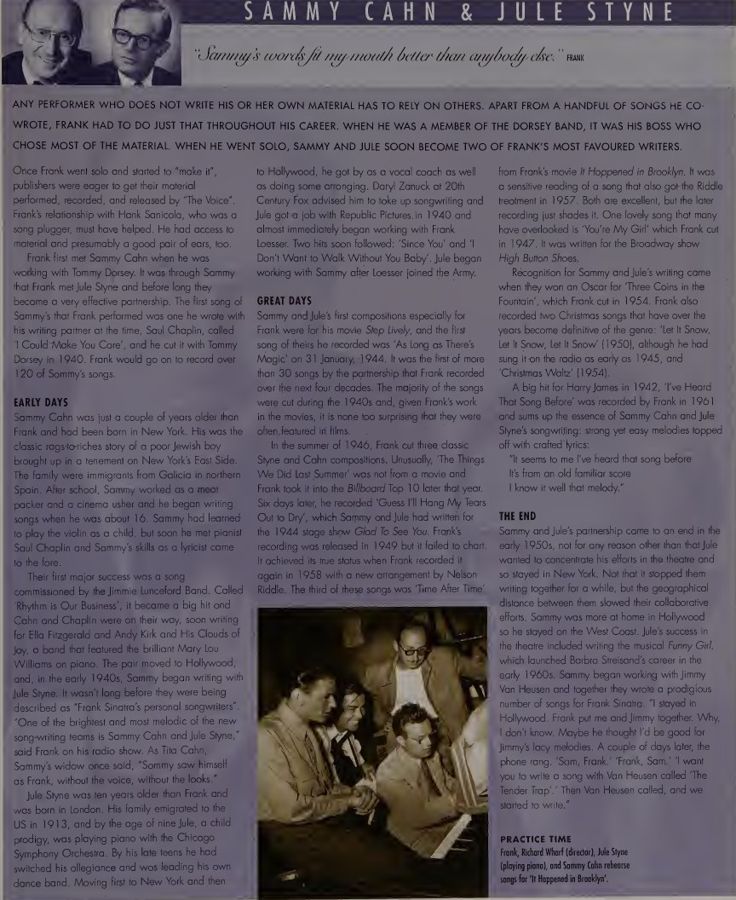
[Photograph: Musicians' strike ends. From Richard Havers, "Sinatra" (Dorling Kindersley, 2007), p.97.]
Radio
Your Hit Parade
Network: CBS
Program #494
Time: 9:00-9:45 P.M. (Rebroadcast November 12, 1944 12:00-12:45 A.M.)
Sponsor: Lucky Strike
Script By: Tom Langan
Script (Final As Broadcast)
1. Together (5) - Frank Sinatra
2. Everything I've Got Belongs To You - Orchestra
3. I'm Making Believe (9) - Hit Paraders
4. How Many Hearts Have You Broken (6) - Joan Edwards
5.. commercial
6. Fine And Dandy - Orchestra
7. It Had To Be You (7) - Joan Edwards
8. Strange Music (8) - Frank Sinatra
9. Jingle Jangle Jingle (With Yippees) - Orchestra & Hit Paraders
10. station break
11. Always (4) - Joan Edwards
12. Blow Gabriel Blow - Orchestra
13. commercial
14. The Trolly Song (3) - Frank Sinatra
15. I'll Walk Alone (2) - Hit Paraders
16. commercial
17. Dance With A Dolly (1) - Joan Edwards
Ed O'Brien notes:
There is a rehearsal tape of this show circulating among collectors. The quality is outstanding but there is no audience or applause. Definitely a different listening experience from all of the H.P. shows that are out there.
I don't believe the complete 45 minute CBS broad- cast has ever been in circulation. There is, however, a tape of the AFRS version floating around. It runs for
30 minutes.
Concerts
Wedgwood Room, Waldorf Astoria, New York City (Nov. 8 - 28) with Nat Brandwynne and his Orchestra
The long-running musicians' strike concluded, freeing Frank and others to return to full-orchestra recording sessions after months of restrictions. (Source: Richard Havers, "Sinatra" (Dorling Kindersley, 2007).)
November 12, 1944
Concerts
Wedgwood Room, Waldorf Astoria, New York City (Nov. 8 - 28) with Nat Brandwynne and his Orchestra
Convention Hall, Philadelphia, PA
War Chest Rally
Frank Sinatra, Jane Withers, Helen Jepson of the Metropolitan Opera
Convention Hall, Philadelphia, PA
War Chest Rally
Frank Sinatra, Jane Withers, Helen Jepson of the Metropolitan Opera
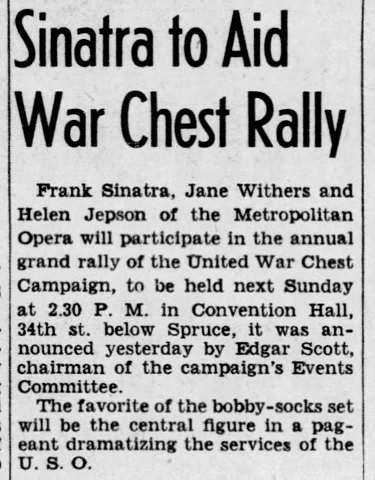
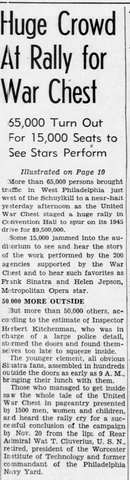
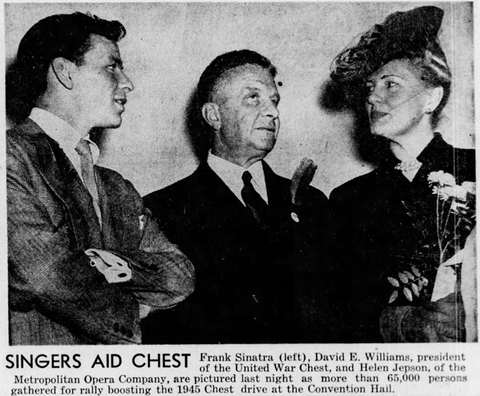
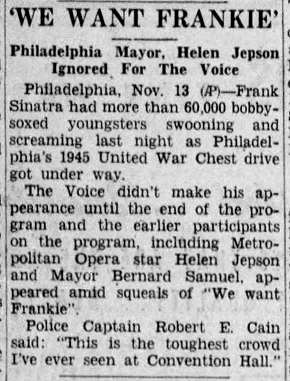
November 13, 1944
Concerts
Wedgwood Room, Waldorf Astoria, New York City (Nov. 8 - 28) with Nat Brandwynne and his Orchestra
Radio
Radio: Sinatra appeared as a guest on Lux Radio Theater this date, promoting his own program during the broadcast of "Magnificent Obsession," starring Claudette Colbert and Don Ameche. Source: sinatradiscography.com, Radio Transcriptions Database.
November 14, 1944
Studio
New York City
CO33808 If You Are But A Dream
(M. Jaffe/J. Fulton/N.Bonx)
(adapt. from Rubinstein's Romance)
Barton Music Corp. (ASCAP) 1941
Arrangement & Conducted by Axel Stordahl
-2 (3:03) CD: Columbia Years 43-52 Vol. 1
CD: 09274 Greatest Hits-The Early Years, Vol. 1
LP: CL-2474 Greatest Hits, The Early Years, Vol. 1 (alt. take)
LP: C2L6 Frank Sinatra Story In Music
78: 36814
78: 36756
CO33809 Saturday Night (Is The Loneliest Night Of The Week) (J. Styne/S. Cahn)
Cahn Music Corp./Barton Music Corp. (ASCAP) 1944
Arrangement & Conducted by Axel Stordahl
-1 (2:43) CD: Columbia Years 43-52 Vol. 1
CD: 09274 Greatest Hits-The Early Years, Vol. 1
LP: 2474 Greatest Hits, The Early Years, Vol.. 1
LP: C6X-40343 The Voice-Columbia Years 43-52 (6-LP Set)
78: 50069
78: 36762
CO33810 There's No You
(T. Adair/H. Hopper)
Barton Music Corp. (ASCAP) 1944
Arrangement & Conducted by Axel Stordahl
-1 (3:26) CD: Columbia Years 43-52 Vol. 1
LP: C6X-40343 The Voice-Columbia Years 43-52 (6-LP Set)
LP: CL-2739 The Essential Frank Sinatra, Vol. 1
78: 36797
CO33811 White Christmas w/The Bobby Tucker Singers
(I. Berlin)
(from Holiday Inn)
Irving Berlin Music, Inc. (ASCAP) 1942
Arrangement & Counducted by Axel Stordahl
-1 (3:22) CD: Columbia Years 43-52 Vol. 1
CD: 40707 Christmas Dreaming
LP: HL-7400 Have Yourself A Merry Little Christmas
LP: CL-1032 Christmas Dreaming
78: 38257
78: 37152
78: 36860
78: 36756
Violins: J. Brand, F. Buldrini, S. Harris, L. Kanter, M. Kellner, B. Kundell, W. Lockwood. A Loesserman, H. Micklin, S. Miroff. G. Orloff, R. Polikian; Violas: M. Kahn, S. Paeff, S. Rumberg; Cellos: E. Gara, G. Polikian, A. Twerdowsky; Saxes: A. Baker, H. Feldman, B. Kaufman, R. Pumiglio, H. Ross; Trumpets: C. Poole, S. Shapiro, M. Solomon; Trombones: J. D'Agostino, A. Russo, C. Small; French Horn: K.. Chlupse (only on "If You Are But A Dream" & "Saturday Night"); Piano: W. Rowland; Guitar: M. Golizio; Bass: W. Lay; Drums: J. Blowers; Harp: R. Hill Bobby Tucker Singers: "White Christmas" Ernest Anderson, Jewel Bowman, Kathleen Carnes, Elwin Carter, Fay Devlin, Ruth Doring, Pauline Dugart, Thomas Foster, Ed Hayes, Travis Johnson, Jack Lathrop, Kathleen Mullen, Mary Margaret Mullen, Rae Whitney
NOTE: Author Ed O'Brien calls this a wonderful session. The songs would be identified with Sinatra for years and he would do multiple remakes of the four tunes during the Capitol era.
Concerts
Wedgwood Room, Waldorf Astoria (8-28) with Nat Brandywynne's Orchestra
November 15, 1944
Studio
Frank Sinatra In Person
Network: CBS
Location: New York City
Show #14
Sponsor: VIMMS Vitamins
Time: 9:00PM - 9:30PM (EST) Wednesday
Orchestra Conducted By: Axel Stordahl
Arrangements By: Axel Stordahl
Announcer: Jerry Lawrence
Writers: Carroll Carroll
Performers: Eileen Barton, Vimms Vocalists
Guest: Alec Templeton
1. opening theme "This Love Of Mine" - orchestra
2.. Sinatra intro - Jerry Lawrence
3. Button Up Your Overcoat - Frank Sinatra
4. comedy spot - Sinatra, Barton & Stordahl
5. Sunday, Monday or Always (parody) - Frank Sinatra
6. Nancy - Frank Sinatra
7. commercial - Jerry Lawrence
8. I Guess I'll Hang My Tears Out To Dry - Frank Sinatra
9. comedy spot & skit - Frank Sinatra & Eileen Barton
10. The Trolly Song - Frank Sinatra & Eileen Barton
11. intro & banter to Alec Templeton - Frank Sinatra
12. Ravel's Minuet - Alec Templeton solo (piano)
13. skit: opera spoof: "Monday, Monday, And Always Monday" - cast
14. commercial - Jerry Lawrence
15. Where Or When - Frank Sinatra w/V. Vocalists
16. PSA for War Bonds - Jerry Lawrence
17. closing - Frank Sinatra
18. commercial
Notes: Confirmed airing on WABC. On November 22, 1944 WABC aired Inner Sanctum "Voice On The Wire" in Sinatra's old time slot.
note: The theme of this show was Frank's big move to Monday nights at 8: 30 p.m. He was getting killed in the ratings on Wednesday night by the Eddie Cantor show. The move to Monday night was designed to put Frank in the Top 15 Hooper rated shows. They brought in the biggest star in Hollywood, both in films and recordings, for the first Monday show. And it worked. Frank was back with the elite. He held his own even without Crosby. But the American military was looking for a pick me up for the battlefield soldiers in Europe and the Pacific. Vimms looked like the perfect solution. Alas, their chemists quickly discovered the vitamins were worthless. Lever Brothers deep sixed the product and Frankie's show. In December there were negotiations with a lot of potential sponsors including Coca-Cola. Max Factor got the nod because of the predominantly female audience. Frank's Vimms ended on 12-25-44 and the new show had its debut on 1-3-45. Unfortunately, it was put back in the 9: p.m. Wednesday time slot opposite Cantor. Frank's ratings dropped dramatically. Ed
Concerts
Wedgwood Room, Waldorf Astoria (8-28) with Nat Brandywynne's Orchestra
November 16, 1944
Radio
Music Hall Starring Bing Crosby
Network: NBC
Time 9:00 P.M. - 9:30 P.M.
Sponsor: Kraft
Guests: Frank Sinatra
Performers: The Charioteers, Eugenie Baird.
John Scott Trotter And His Orchestra, Axel Stordahl and His Orchestra (for Sinatra)
Announcer: Ken Carpenter
1. opening
2. Accentuate The Positive - Bing Crosby
3. commercial
4. Sleigh Ride In July - Bing Crosby
5. Don't Take Your Love From Me - Eugenie Baird
6. I've Got Rhythm - John Scott Trotter And His Orchestra
7. dialogue - Bing Crosby & Frank Sinatra
8. These Foolish Things - Frank Sinatra
9. commercial
10. Medley: One, Two, Button Your Shoe / And So Do I / When Skeleton In The Closet Started To Dance / Pennies From Heaven - Bing Crosby, Euginie Baird & The Charioteers
11. psa - Bing Crosby
12. closing
Notes: Sinatra appears from Buffalo, New York. The show appears on the officially released CD set: 60 Greaest Old Time Radio Show "Frank Sinatra & Friends." TT: 30mins. Audio Condition: Excellent, Complete. Confirmed at WEAF.
Ed O'Brien:
While in Buffalo on 11/16, Sinatra was a guest on Bing Crosby's Kraft Music Hall.
Bing was in Hollywood and Frank, via remote, told him he was doing a concerto with a 60 piece orchestra in Buffalo. Frank sang "These
Foolish Things." Bing would be Frank's guest on the Vimms Show, 11-20-44.
Kenny Lucas: regarding this date 11/16/1944. the concert he gave in Buffalo, has it ever been documented.
Ed O'Brien:
Yes. Last year I posted an article on the tour he did in mid-Nov. that year. He was a big hit in Montreal but Buffalo was a huge disappointment. Promoter paid Frank $10,000 for the one-nighter and there were thousands of empty seats. He cancelled his Boston engagement and had to pay the promoter over there.
Concerts
Buffalo Memorial Auditorium, Buffalo, New York
Sinatra with the Buffalo Civic Orchestra note: Frank's first appearance at the AUD. He would play there six times --Ed
Buffalo Memorial Auditorium, Buffalo, New York
Sinatra with the Buffalo Civic Orchestra
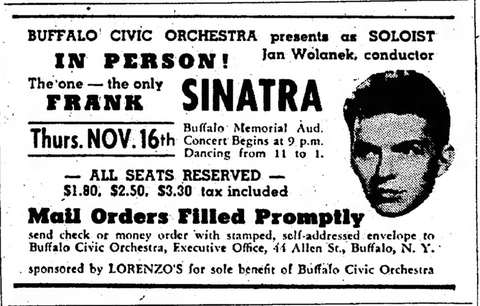
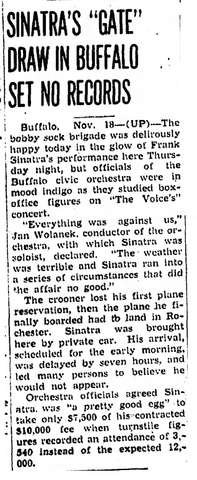
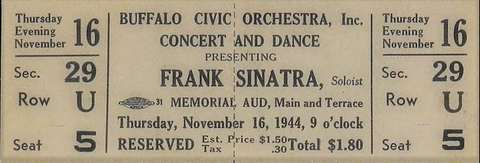
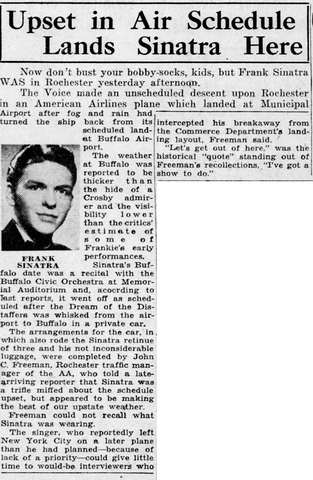
November 17, 1944
Concerts
Wedgwood Room, Waldorf Astoria (8-28) with Nat Brandywynne's Orchestra
Wedgwood Room, Waldorf Astoria (8-28)
Variety
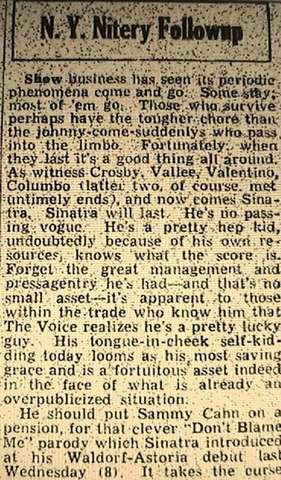
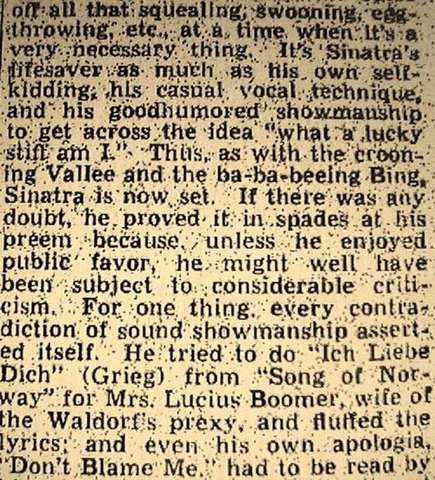
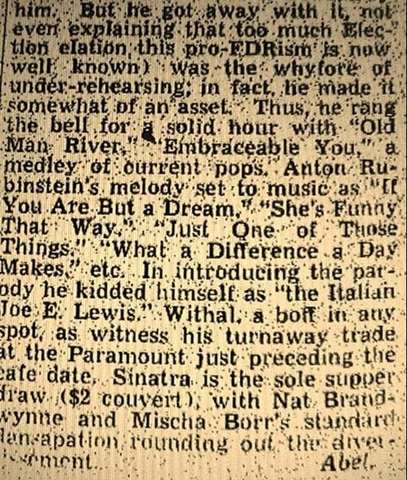
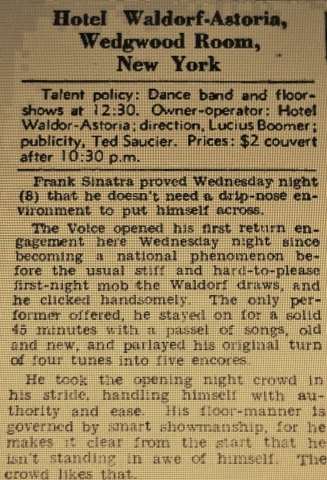
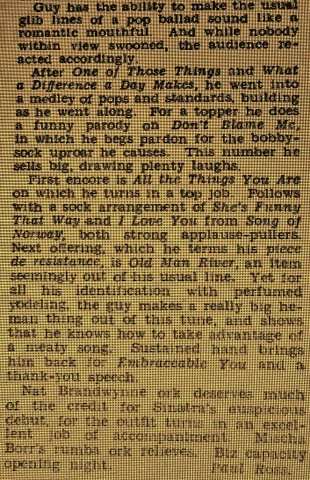
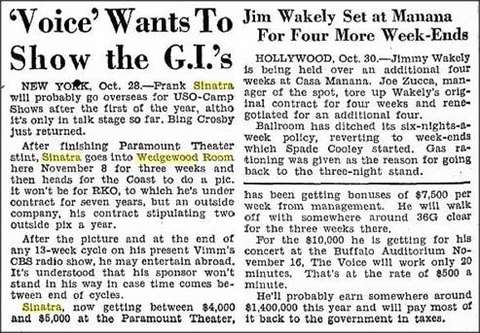
Ed O'Brien:
terrific insights by the reviewer. Frank got
rapped by a lot of journalist back then. They
saw him as a flash-in-the-pan or as a noxious
influence on the young. Abel, from Variety, got
it.
Billboard
note: Here is the other review I posted of Frank's
opening at the Waldorf. It was a three week
engagement. Frank was absent a few days
but probably closed on the 28th.
Ed
November 18, 1944
Radio
Your Hit Parade
Network: CBS
Program #495
Time: 9:00-9:45 P.M. (Rebroadcast November 19, 1944 12:00-12:45 A.M.)
Sponsor: Lucky Strike
Script by: Tom Langan
Script (Final As Broadcast)
1. Let Me Love You Tonight (6) - Frank Sinatra
2. Alexander's Ragtime Band - Orchestra
3. Always (5) - Hit Paraders
4. Dance With A Dolly (4) - Joan Edwards
5. commercial
6. Love Is Sweeping The Country - Orchestra
7. I'm Making Believe (7) - Orchestra
8. What A Difference A Day Made (9) - Frank Sinatra
9. Sing - It's Good For You - Orchestra & Hit Paraders
10. station break
11. How Many Hearts Have You Broken (8) - Joan Edwards
12. Just One Of Those Things - Orchestra
13. commercial
14. Together (3) - Hit Paraders
15. I'll Walk Alone (2) - Joan Edwards
16. commercial
17. The Trolley Song (1) - Frank Sinatra
Concerts
Wedgwood Room, Waldorf Astoria (8-28) with Nat Brandywynne's Orchestra
November 19, 1944
Concerts
The Forum, Montreal, Quebec, Canada
Set list included
--Swinging On A Star
--Embraceable You
--If You Are But A Dream
--What A Difference A Day Makes
--Old Man River
--Night and Day
--I'll Walk Alone
--Kiss Me Again
--The Song Is You
--I Love You, Dear
--Do not Blame Me
--Brahms’ Lullaby.
Note: This was Sinatra's second appearance at The Forum in Montreal. His first was with Dorsey on May 6, 1942.
Sinatra would not return to The Forum again until 1975 and would play the Forum again in 1976 and finally in 1979 Both Variety and Billboard would mistakenly report this concert as having occurred in Toronto. -- Scott
The Forum, Montreal, Quebec, Canada
Review:
La Patrie, Montreal, November 20 1944
At the Forum
12,000 people came to hear Frank Sinatra.
He has come, we have seen and heard him and everyone seems to be content. Frank Sinatra, the man of the day with the girls, sang last night at the Forum in front of the Montreal public, a series of twelve languid and romantic ballads. Let us say that he did not receive a poached egg(?), as in New York, in honor of his talent and his efforts.
Because Frank Sinatra, let's face it, has a real talent in his kind of "swooner", and let’s say that he is making real efforts to make his voice pleasant. However, a group of teenage girls, also suffering the effect of the hurricane blowing across the United States for Frankie, began lamenting when Frank turned his gaze to one side or the other. There were, however, only a few groups, but we know what contagion can do in such a case.
Frank Sinatra, Frankie as "they" call him, appeared on the scene in darky navy, with pale blue shirt and matching tie.
His admirers could not see his traditional polka-dot tie. He is a very friendly man and very comfortable at the microphone.
As soon as he appeared on the scene, a long ovation was made to him; people were standing with binoculars to see him better, and there was endless applause. It must also be said that the orchestra of sixty musicians, led by Allan McIver, may have abused the crowd by presenting six pieces to begin. And if McIver's music was covered, it's a bit of his fault.
The youngsters first heard "Swinging On A Star",
"Embraceable You" "If You Are But A Dream", "What A
Difference A Day Makes", "Old Man River" and in the second part of the program, Frank Sinatra sang "Night and Day", "I Walk Alone", "Kiss Me Again", "The Song Is You", "I Love You, Dear", "Do not Blame Me", and "The Lullaby", a lullaby dedicated to his two young children.
Young people who demanded at the end of a Bing Crosby song, attracted an intelligent response because Frank
Sinatra said: "If Crosby was here, you would have a good singer, and I too would like his presence". Sinatra seems to esteem Crosby and in his humorous song "Do not Blame Me", he admits he cannot compare himself to him.
To summarize, let's say that the McIver orchestra, without the presence of teenage girls who were playing shouting loudest, could have been tasted. Having misunderstood the music given, I can hardly talk about it. As for Frankie, the star of the evening, he is quite friendly and his baritone voice is pleasant to hear; its way of giving certain sounds to some notes of the high or low register is quite personal and has no resemblance to other crooners. The evening brings him $ 10,000; and as in the song, "who pays my taxes"?
Frank Sinatra recalled having already sung at the Forum, three or four years ago, at a concert for the benefit of the Red Cross.
Michel Normandin was a master of ceremonies.
There was no fainting or hysterical crisis last night. Only a pretty pronounced craze ... and some shouting. There was no need for the help of two St. John Ambulance officers who were present.
-Lydia Patry
La Patrie, Montreal, November 20 1944
Billboard 1944-12-02
(Note that Billboard mistakenly reports Sinatra was in Toronto when he was in Montreal)
© 1997-2025 The Sinatra Archive
This calendar, or any parts thereof, may not be reproduced in any fashion whatsoever without the prior written permission of the publisher (The Sinatra Archive)
[image referenced in source but could not be recovered]
[image referenced in source but could not be recovered]
[image referenced in source but could not be recovered]
[image referenced in source but could not be recovered]
November 20, 1944
Radio
Frank Sinatra In Person
Network: CBS
Location: New York City
Show #15
Sponsor: VIMMS Vitamins
Time: 8:30PM - 8:55PM (EST) Monday
Orchestra Conducted By: Axel Stordahl
Arrangements By: Axel Stordahl
Announcer: Jerry Lawrence
Writers: Carroll Carroll
Performers: Eileen Barton, Vimms Vocalists
Guest: Bing Crosby
1. There'll Be A Hot Time In The Town Of Berlin
2. There's No You
3. Is You Is Or Is You Ain't? - w/Eileen Barton, V. Vocalists
4. medley (parodies) w/Bing Crosby: I Hear You Cried Last Night / I'll Get
By / I Don't Believe It But Say It Again / Out Of Nowhere / Going My Way / Sunday Monday Or Always
5. Swing Low Sweet Chariot - w/V. Vocalists note: Bing sings a new holiday song "I'll Be Home For Christmas" prior to his medley with Frank
Ed
Notes: Show in new time slot. 8:30PM - 8:55PM on Mondays. News with Bill Henry follows at 8:55PM - 9:00PM. Listed as Premiere. Confirmed airing on WABC.
note: Frank's appearance on Bing's Kraft Music
Hall originated from Buffalo. Bing returned the favor by being piped in from Hollywood on Sinatra's first Monday night broadcast of his Vimms show.
--Ed
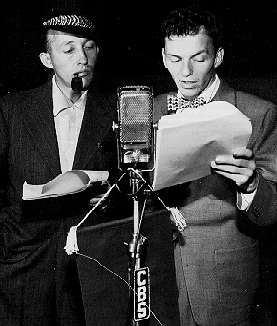
Frank Sinatra In Person
Network: CBS
Location: New York City
Show #15
Sponsor: VIMMS Vitamins
Time: 8:30PM - 8:55PM (EST) Monday
Orchestra Conducted By: Axel Stordahl
Arrangements By: Axel Stordahl
Announcer: Jerry Lawrence
Writers: Carroll Carroll
Performers: Eileen Barton, Vimms Vocalists
Guest: Bing Crosby
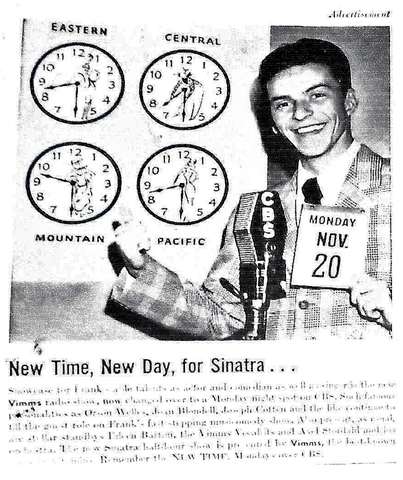
November 21, 1944
Concerts
Wedgwood Room, Waldorf Astoria (8-28) with Nat Brandywynne's Orchestra
November 22, 1944
Concerts
Wedgwood Room, Waldorf Astoria (8-28) with Nat Brandywynne's Orchestra
November 23, 1944
Concerts
Wedgwood Room, Waldorf Astoria (8-28) with Nat Brandywynne's Orchestra
November 24, 1944
Concerts
Rustic Cabin, Englewood Cliffs, New Jersey (One-Nighter) Benefit Show of the Mount Carmel Guild of Eastern Bergen County Eileen Barton also performed
Sinatra sang three songs:
--Trolley Car Song
--What A Difference A Day Makes
--Come Out, Come Out, Wherever You Are
Note: Sinatra got his start at the Rustic Cabin and performed there until he was discovered by and joined Harry James in 1939
Wedgwood Room, Waldorf Astoria (8-28) with Nat Brandywynne's Orchestra
Rustic Cabin, Englewood Cliffs, New Jersey (One-Nighter) Benefit Show of the Mount Carmel Guild of Eastern Bergen County
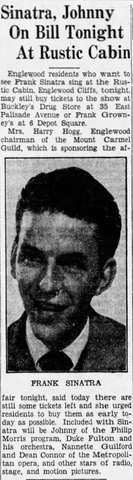
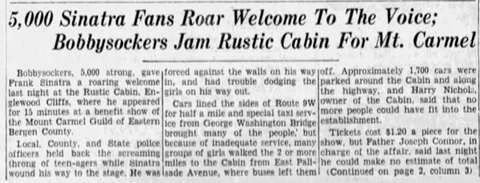
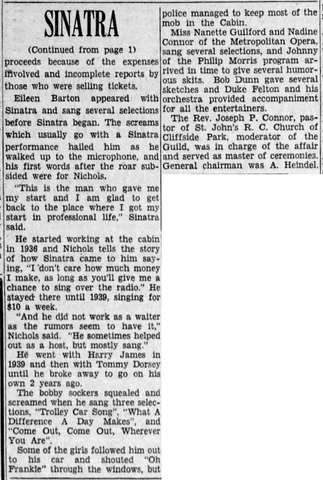
November 25, 1944
Radio
Atlantic Spotlight
Network: NBC
Time: 12:30 p.m.
MCs: Leslie Mitchell (London), Ben Grauer (New York)
Performers: Frank Sinatra, Harry McNaughton, Dave Grupp, Stanley Black, Sydney Burchall, Mabel Constanduros.
Conductors: Dave Grupp, Stanley Black
1. These Foolish Things
2. Come Out, Come Out, Wherever You Are
Notes: "These Foolish Things" & "Come Out" appear on the CD: The Rarest Sinatra Decade CD103. LOC has NBC 10-inch sound reel. TT: 30mins
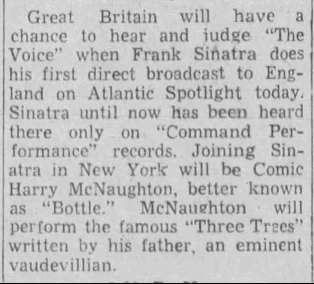
Your Hit Parade
Network: CBS
Program #496
Time: 9:00-9:45 P.M. (Rebroadcast November 26, 1944 12:00-12:45 A.M.)
Sponsor: Lucky Strike
Script By: Tom Langan
Script (Final As Broadcast)
1. How Many Hearts Have You Broken (8) - Frank Sinatra
2. That's A Plenty - Orchestra
3. Together (4) - Hit Paraders
4. I'm Making Believe (6) - Joan Edwards
5. commercial
6. I Double Dar You - Orchestra
7. I Don't Want To Love You (9) - Joan Edwards
8. The Very Thought Of You (7) - Frank Sinatra
9. Broadway Rhythm - Orchestrs & Hit Paraders
10. station break
11. Always (5) - Joan Edwards
12. Don't Hold Everything - Orchestra
13. commercial
14. I'll Walk Alone (3) - Hit Paraders
15. Dance With A Dolly (2) - Joan Edwards
16. commercial
17. The Trolly Song (1) - Frank Sinatra
Concerts
Wedgwood Room, Waldorf Astoria (8-28) with Nat Brandywynne's Orchestra
November 26, 1944
Concerts
Wedgwood Room, Waldorf Astoria (8-28) with Nat Brandywynne's Orchestra
Note: Sinatra was off sick)
Symphony Hall, Boston, MA (Cancelled)
Symphony Hall, Boston, MA (Cancelled)
[image referenced in source but could not be recovered]
[image referenced in source but could not be recovered]
November 27, 1944
Radio
Frank Sinatra In Person
Network: CBS
Location: New York City
Show #16
Sponsor: VIMMS Vitamins
Time: 8:30PM - 8:55PM (EST) Monday
Orchestra Conducted By: Axel Stordahl
Arrangements By: Axel Stordahl
Announcer: Jerry Lawrence
Writers: Carroll Carroll
Performers: Eileen Barton, Vimms Vocalists
Guest: Franchot Tone
1. Three Little Words
2. I Dreamed Of You
3. Always - w/Eileen Barton, V.Vocalists
4. I Only Have Eyes For You note: Frank did a dramatic sketch with Mr. Tone.
Notes: Confirmed airing on WABC. note: Sinatra did not sing "Here It Is Monday" on this show.
Frank and Ben Barton owned Barton Music
Publishing Co. In February of 44, they agreed to publish songs from the United Artist film musical "Songs Of The Open Road." Frank promised to record "Too Much In Love" and
"Here It Is Monday" from that score. Columbia
Records did not agree. They wanted to hear both tunes before any commitment was made for actual recordings. Frank sang "Here It Is
Monday" on the 3-29-44 Vimms and "Too Much In
Love" on the 5-31-44 show. There are no known recordings.
Ed
Concerts
Wedgwood Room, Waldorf Astoria (8-28) with Nat Brandywynne's Orchestra
November 28, 1944
Concerts
Wedgwood Room, Waldorf Astoria (8-28) with Nat Brandywynne's Orchestra
December 1944
[Records 'She's Funny That Way']
Kaplan: A few days after returning to California, Sinatra recorded the wistful 'She's Funny That Way' ('I Got a Woman Crazy for Me') at the CBS recording studio in Hollywood, reportedly thinking of Nancy while singer/actress Marilyn Maxwell watched through the studio glass.
Source: James Kaplan, "Frank: The Voice" (2010)
[Returns to California]
Kaplan: Sinatra flew back to the West Coast in December 1944, reuniting with Nancy and the children at the Toluca Lake house after an eventful, politically charged stretch in New York.
Source: James Kaplan, "Frank: The Voice" (2010)
[Frank's first stint on Your Hit Parade ends]
Sinatra remained a regular on Your Hit Parade until leaving in December 1944, after which he continued making other radio appearances; he later returned to the program in September 1947 before finally departing for good in May 1949.
Source: Richard Havers, "Sinatra" (Dorling Kindersley, 2007).
December 1, 1944
Studio
New York City.
CO33928 I Dream Of You (More Than You Dream I Do)
(M. Goetschius/E. Osser)
Embassy Music Corp. (BMI) 1944
Arrangement & Conducted by Axel Stordahl
-1 (3:07) CD: Columbia Years 43-52 Vol. 1
LP: C2X-40897 Hello Young Lovers
LP: CL-1136 Put Your Dreams Away
78: 36762
CO33929 I Begged Her
(J. Styne/S. Cahn)
(from Anchors Aweigh)
Leo Feist, Inc. (ASCAP) 1944
Arrangement & Conducted by Axel Stordahl
-1 (2:59) CD: Columbia Years 43-52 Vol. 1
LP: CL-2913 Frank Sinatra In Hollywood
78: 36774
CO33930 What Makes The Sunset?
(J. Styne/S. Cahn)
(from Anchors Aweigh)
Miller Music, Inc. (ASCAP) 1944
Arrangement & Conducted by Axel Stordahl
-2 (2:54) CD: Columbia Years 43-52 Vol. 1
LP: CL-2913 Frank Sinatra In Hollywood (alt. take)
78: 36774
CO33931 I Fall In Love Too Easily w/Piano Solo by Dave Mann
(J. Styne/S. Cahn)
(from Anchors Aweigh)
Leo Feist, Inc. (ASCAP) 1944
Arrangement & Counducted by Axel Stordahl
-1 (3:13) CD: Columbia Years 43-52 Vol. 1
LP: C6X-40343 The Voice-The Columbia Years 43-52 (6-LP Set)
LP: CL-2913 Frank Sinatra In Hollywood
78: 36830
Violins: M. Brrnstein, J. Brand, L. Gabowitz, S. Harris, L. Kanter, Z. Kaufman, M. Kellner, B. Levitsky, G. Orloff, R. Polikian, M. Polikoff, R. Reher; Violas: T. Adoff, S. Brecher, R. Dickler; Cellos: A. Kaproff, G. Polikian, A. Shapinsky; Saxes: A. Baker, H. Feldman, B. Kaufman, P. Pumiglio, W. Taninbaum; Trumpets: C. Poole, S. Shapiro, M. Solomon (Not On "I Fall In Love Too Easily"); French Horn: K. Chlupse; Trombones: J. D'Agostino, S. Koty, A. Mastren (Not On "I Fall In Love Too Easily"); Harp: R. Berman; Piano: D. mann; Guitar: M. Golizio; Bass: W. Lay; Drums: J. Blowers
[I Dream of You -- critical commentary]
The 1944 “I Dream of You” also has the feeling of a quasi-classical opus, although it is a Cahn-Styne song that may have been written for Anchors Aweigh (though never filmed or recorded for that production).
This song/context matches multiple dated entries in the chronology; the specific date Friedwald is referring to could not be determined with confidence.
Source: Will Friedwald, "Sinatra! The Song Is You: A Singer's Art" (2018 revised edition), Ch. 4, "With Axel Stordahl" (1943-1948)
[What Makes the Sunset? -- critical commentary]
Contrastingly, they borrow the customary Pan American polyrhythm of the “Beguine” and apply it to “What Makes the Sunset?,” and thereby give what might have been just another love song an entirely new dimension. (In this case, that particular beat was probably written into the original tune by composer Jule Styne, since Sinatra introduced it in the locale of a Mexican restaurant in his 1945 film Anchors Aweigh.)
This song/context matches multiple dated entries in the chronology; the specific date Friedwald is referring to could not be determined with confidence.
Source: Will Friedwald, "Sinatra! The Song Is You: A Singer's Art" (2018 revised edition), Ch. 4, "With Axel Stordahl" (1943-1948)
December 2, 1944
Radio
These Are Our Men
Saturday
Network: NBC
Episode: 1 (Premiere) "Franklin D.. Roosevelt"
Sponsor: Parker Watch Company (paid time for War Bond Sales)
Time: 2:00 P.M - 2:30 P.M. (EST)
Director: Anton M. Leader
Announcer: Jack Costello
Narrator: Staats Cotsworth
Orchestra Conducted By:: Joseph Cherniavsky
Sound Effects: Tom Glaser
Guests: Frank Sinatra, William Adams
1. opening / description
2. quick opening chat, plug - Frank Sinatra & Jack Costello
3. Life Story Of Our Commander And Chief "Franklin Roosevelt"
4. "War Bond plug" - Frank Sinatra
5. closing
Notes: Sinatra does not perform but advocates for "War Bonds." Confirmed aired on WEAF
Your Hit Parade
Network: CBS
Program #497
Time: 9:00-9:45 P.M. (Rebroadcast December 3, 1944 12:00-12:45 A.M.)
Sponsor: Lucky Strike
Script By: Tom Langan
1. Always (7) - Frank Sinatra
2. Jersey Bounce - Orchestra
3. I'll Walk Alone (6) - Hit Paraders
4. Don't Fence Me In (5) - Joan Edwards
5. commercial
6. I Got Rhythm - Orchestra
7. I'm Confessin' (8) - Joan Edwards
8. There Goes That Song Again (9) - Frank Sinatra
9. Chattanooga Choo Choo - Orchestra & Hit Paraders
10. station break
11. Together (4) - Joan Edwards
12. Strike Up The Band - Orchestra
13. commercial
14. I'm Making Believe (3) - Hit Paraders
15. Dance With A Dolly (2) - Joan Edwards
16. commercial
17. The Trolley Song (1) - Frank Sinatra
December 3, 1944
Studio
New York City
CO33932 Nancy (With The Laughing Face)
(P. Silvers/J. Van Heusen)
Barton Music Corp. (ASCAP) 1944
Arrangement & Conducted by Axel Stordahl
-1 (3:19) CD: Columbia Years 43-52 Vol. 1
CO33933 The Cradle Song (Brahms' Lallaby)
(J. Brahms)
Public Domain
Arrangement & Conducted by Axel Stordahl
-1 (3:06) CD: Columbia Years 43-52 Vol. 1
LP: CL-1448 Reflections
78: 36868
XCO33934 Ol' Man River
(J. Kern/O. Hammerstein II)
(from Show Boat)
T.B. Harms, Inc. (ASCAP) 1927
Arrangement & Conducted by Axel Stordahl
-1 (4:00) CD: Columbia Years 43-52 Vol. 1
CD: 09372 Greatest Hits-The Early Years, Vol. 2
LP: C6X-40343 The Voice-The Columbia Years 43-52 (6-LP Set)
LP: CL-2572 Greatest hits, The Early Years Vol. 2
LP: C2L-6 Frank Sinatra Story In Music
78: 55037 (12 inch)
XCO33935 Stormy Weather w/The Ken Lane Singers
(H. Arlen/T. Koehler)
(from Cotton Club Parade Of 1933)
Mills Music, Inc. (ASCAP) 1933
Arrangement & Conducted by Axel Stordahl
-1 (4:13) CD: Columbia Years 43-52 Vol. 1
LP: C6X-40343 The Voice-The Columbia Years 43-52 (6-LP Set)
LP: C2L-6 Frank Sinatra Story In Music
78: 55037 (12 inch)
note: Before the release of this 12 inch single, many of the music critics
of the day, considered Sinatra a joke. He was a lightweight, who bent notes
and created pandemonium with silly teenagers. It was simply odious to com-
pare him to the great Crosby. The perception they had changed dramatically
when they heard The Voice sing these two great favorites with Mr. Stordahl's
wonderful arrangements.
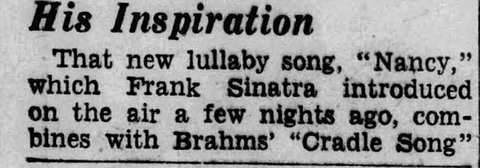
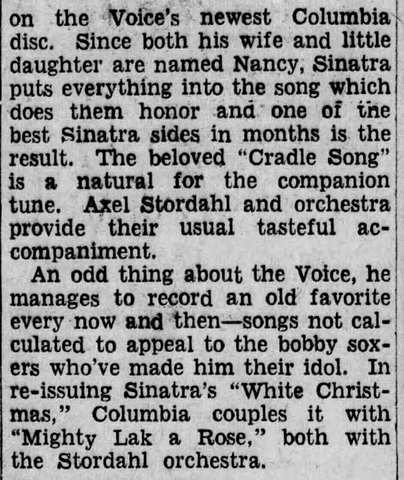
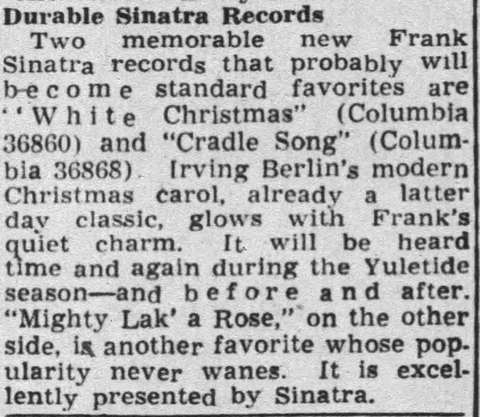
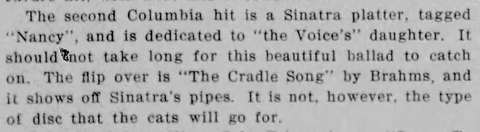
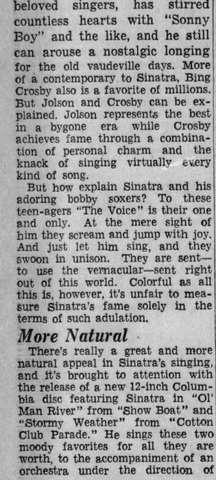
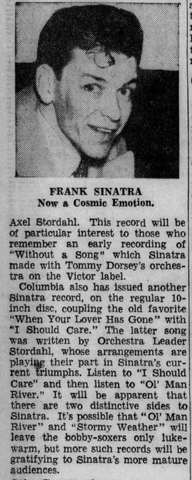
New York City
CO33932 Nancy (With The Laughing Face)
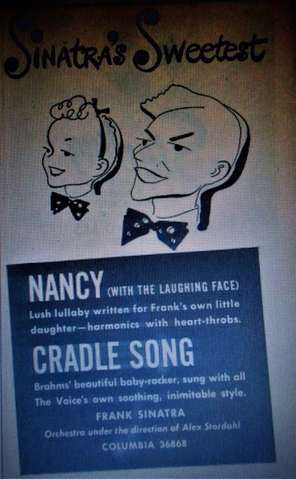
"Nancy (with the Laughing Face)"
Friedwald / Sinatra: The song originated in Sinatra’s relationship with Phil Silvers and Jimmy Van Heusen, who, Sinatra recalled, “hung around my house a great deal in those days.” At a party given in the spring of 1944 at lyricist Johnny Burke’s house, Silvers cracked a joke that gave a case of the giggles to Burke’s wife, Bessie. This prompted Silvers to characterize her as “Bessie with the Laughing Face.” Van Heusen, Burke’s longtime composing partner, thought that would make a good title for a song. Since Burke had resolved not to work that day, Silvers took twenty minutes and wrote the words himself. The two substituted “Nancy” for “Bessie” when Silvers got the idea of making a present of the song to Sinatra’s daughter at her fourth birthday party a few weeks later.
Source: Will Friedwald, "Sinatra! The Song Is You: A Singer's Art" (2018 revised edition).
"Nancy (with the Laughing Face)"
Friedwald / Phil Silvers: Sinatra introduced “Nancy” on a broadcast of his Vimms radio series around April 1944. In July 1944 he recorded two takes of the song as part of his only completely “original” session for the V-Disc program (which usually utilized performances from his radio shows). That December, Sinatra attempted a take for Columbia, which didn’t get released until fifty years later. Then, according to Silvers, everyone forgot all about it. However, when Sinatra and Silvers toured Europe for the USO in June 1945, Sinatra asked for requests, and “the first scream from two thousand men was for ‘Nancy (with the Laughing Face),’” as Silvers later wrote. The GIs had fallen in love with the song via the V-Disc, which utilized a longer and slower chart than the commercial take, and when Sinatra rerecorded “Nancy” for Columbia in August, it became, as Silvers said, “one of his perennial hits.”
Source: Will Friedwald, "Sinatra! The Song Is You: A Singer's Art" (2018 revised edition).
[Ol' Man River -- critical commentary]
Jerome Kern (quoted): Sinatra first sang "Ol' Man River" at the Hollywood Bowl and Lewisohn Stadium during his summer 1943 concert tour, then added it to his radio repertoire, deliberately restoring its dramatic tempo and philosophical weight (versus Crosby's earlier up-tempo jazz version) in the context of the war against fascism. By May 1944 he was singing the full verse; in October 1944 he performed it with Paul Whiteman. Jerome Kern reportedly told Sinatra, "My idea with that song was to have a rabbity little fellow do it -- somebody who made you believe he was tired of livin' and scared of dyin'. That's how you do it, Frankie." Sinatra extended the number to four and a half minutes at an August 1945 Hollywood Bowl Kern tribute, and MGM made it the climax of the 1946 Kern biopic, despite cutting the verse and dressing him absurdly.
This song/context matches multiple dated entries in the chronology; the specific date Friedwald is referring to could not be determined with confidence.
Source: Will Friedwald, "Sinatra! The Song Is You: A Singer's Art" (2018 revised edition), Ch. 8, "Gordon Jenkins" (1956-1981)
[Ol' Man River -- critical commentary]
With the AFM recording strike over, Sinatra finally cut a commercial Columbia version of "Ol' Man River" with Stordahl in December 1944 -- a reading Friedwald calls so definitive it makes all prior versions (Robeson, Jolson, swing/fox-trot readings) sound dated. He highlights two vocal high-wire acts: a Dorsey-style long-breath join of the bridge's last note into the final A section (supported by Stordahl's chromatic harmony), and an agonizingly sustained note on "a-long" where the orchestra and beat both suspend -- an unusually Broadway-belt ending for Sinatra, more Judy Garland than his typical intimate close.
This song/context matches multiple dated entries in the chronology; the specific date Friedwald is referring to could not be determined with confidence.
Source: Will Friedwald, "Sinatra! The Song Is You: A Singer's Art" (2018 revised edition), Ch. 8, "Gordon Jenkins" (1956-1981)
December 4, 1944
Radio
Frank Sinatra In Person
Network: CBS
Location: New York City
Show #17
Sponsor: VIMMS Vitamins
Time: 8:30PM - 8:55PM (EST) Monday
Orchestra Conducted By: Axel Stordahl
Arrangements By: Axel Stordahl
Announcer: Jerry Lawrence
Writers: Carroll Carroll
Performers: Eileen Barton, Vimms Vocalists
Guest: Tallulah Bankhead
1. opening theme "This Love Of Mine" - orchestra
2. Sinatra intro - Jerry Lawrence
3. You Brought A New Kind Of Love To Me - Frank Sinatra
4. comedy patter: show going to Hollywood & Romance skit
5. Kiss Me Again - Frank Sinatra
6. commercial - Jerry Lawrence
7. The Trolley Song - Frank Sinatra & Eileen Barton
8. I'll Take Tallulah (few bars as an intro to Bankhead) - Sinatra
9. skit: dramatic "War Hospital" skit w/Sinatra & Bankhead
10. commercial - Jerry Lawrence
11. Happy Holidays (few bars used as a intro) - Sinatra
12. White Christmas - Frank Sinatra w/V. Vocalists
13. Sinatra PSA for 6th Annual War Load Drive
14. Sinatra closing
15. "Put Your Dreams Away" - orchestra
16. broadcast closing - Jerry Lawrence
Notes: Confirmed airing on WABC. Contents come directly from WEEI (Boston) transcription lacquer.
Sinatra voice cracks near the end of Kiss Me Again. Sinatra Scholar Ed O'Brien observes that Sinatra and Bankhead worked well together. They did other radio shows and a Milton Berle TV show. Tallulah was way over the top and Sinatra loved it. O'Brien wonders if "Trolley Song" was the most performed song he did in the 40's that was never recorded by him. Eileen Barton told O'Brien that Frank loved to sing it. He especially liked doing it as a duet. He sure did sing it a lot.
note: Last show from New York in 1944. Next week from Hollywood
Frank Sinatra In Person
Network: CBS
Location: New York City
Show #17
Sponsor: VIMMS Vitamins
Time: 8:30PM - 8:55PM (EST) Monday
Orchestra Conducted By: Axel Stordahl
Arrangements By: Axel Stordahl
Announcer: Jerry Lawrence
Writers: Carroll Carroll
Performers: Eileen Barton, Vimms Vocalists
Guest: Tallulah Bankhead
Frank and Eileen Barton looking at song for they will duet on a Vimms show
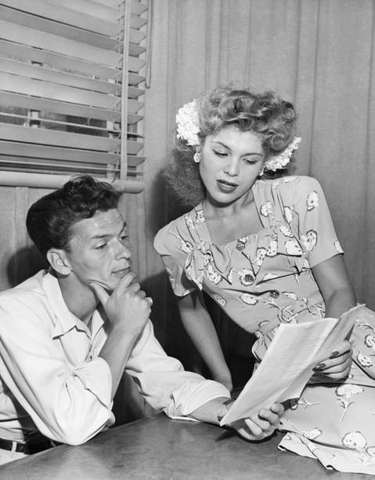
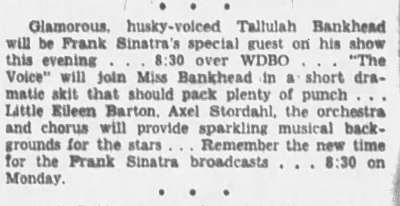
December 9, 1944
Radio
Your Hit Parade
Network: CBS
Program #498
Time: 9:00-9:45 P.M. (Rebroadcast December 10, 1944 12:00-12:45 A.M.)
Sponsor: Lucky Strike
Script By: Tom Langan
1. Let Me Love You Tonight (9) - Frank Sinatra
2. Bugle Call Rag - Orchestra
3. I'll Walk Alone (4) - Hit Paraders
4. Dance With A Dolly (5) - Joan Edwards
5. commercial
6. Everybody Step - Orchestra
7. Always (6) - Joan Edwards
8. I Dream Of You (8) - Frank Sinatra
9. Jericho - Orchestra & Hit Paraders
10. station break
11. Together (7) - Joan Edwards
12. Canadian Capers - Orchestra
13. commercial
14. Don't Fence Me In (3) - Hit Paraders
15. I'm Making Believe (2) - Joan Edwards
16. OPA announcement
17. The Trolly Song (1) - Frank Sinatra
Notes: Sinatra portion from Hollywood
December 11, 1944
Radio
Frank Sinatra In Person
Network: CBS
Location: Hollywood
Show #18
Sponsor: VIMMS Vitamins
Time: 8:30PM - 8:55PM (EST) Monday
Orchestra Conducted By: Axel Stordahl
Arrangements By: Axel Stordahl
Announcer: Joe Walters
Writers: Carroll Carroll
Performers: Eileen Barton, Vimms Vocalists
Guest: Burns And Allen
1. There Goes That Song Again
2. When Your Lover Has Gone
3. Saturday Night Is The Loneliest Night Of The Week w/Eileen Barton
4. With A Song In My Heart - V.Vocalists
note: Gracie Allen steals this show from Frank and George I added additional information and changed announcers.
Ed
December 12, 1944
Radio
Burns & Allen
Time: 9:00 P.M. - 9:30 P.M. (EST)
Network: WABC
Sponsor: Swan Soap
Guests: Frank Sinatra, Jimmy Cash
Felix Mills Orchestra
Announcer: Bill Goodwin
1. "Buy A Bond" - Frank Sinatra, George Burns & Gracie Allen
2. Embraceable You - Frank Sinatra
3. There's No You - Frank Sinatra
4. The Trolley Song - Frank Sinatra
5. Sunday, Monday Or Always - Frank Sinatra
Note: The show appears on the officially released CD set: 60 Greatest Old Time Radio Shows "Frank Sinatra & Friends"
December 16, 1944
Radio
Your Hit Parade
Network: CBS
Program #499
Time: 9:00-9:45 P.M. (Rebroadcast December 17, 1944 12:00-12:45 A.M.)
Sponsor: Lucky Strike
Script by: Tom Langan
1. There Goes That Song Again (7) - Frank Sinatra
2. Clap Yo' Hands - Orchestra
3. I'll Walk Alone (9) - Hit Paraders
4. Dance With A Dolly (8) - Joan Edwards
5. commercial
6. Keep Your Sunny Side Up - Orchestra
7. I'm Making Believe (4) - Joan Edwards
8. I Dream Of You (6) - Frank Sinatra
9. Deacon Jones - Orchestra & Hit Paraders
10. station break
11. Together (5) - Joan Edwards
12. Surrey With The Fringe On Top - Orchestra
13. commercial
14. White Christmas (3) - Joan Edwards
15. Don't Fence Me In (2) - Hit Paraders
16. commercial
17. The Trolly Song (1) - Frank Sinatra
Notes: Sinatra portion from Hollywood.
Your Hit Parade
Network: CBS
Program #499
Time: 9:00-9:45 P.M. (Rebroadcast December 17, 1944 12:00-12:45 A.M.)
Sponsor: Lucky Strike
Script by: Tom Langan
[image referenced in source but could not be recovered]
December 17, 1944
Radio
The Jack Benny Program
Network: NBC
Sponsor: Lucky Strike
Show: #12 of the 1944-45 series
Time: 7:00 PM EST (Rebroadcast 9:30 - 10:00 PM PST)
Host: Jack Benny
Guests: Frank Sinatra
Cast: Phil Harris, Mary Livingstone, Rochester, Tempty ?, Mel Blanc,
Frank Nelson, John Brown, Pauline ?, Larry?, Kern?, Bea Benaderet, Phil Harris, Verna Felton.
Writers: Sam Perrin, George Balzer, John Tackaberry, Milt Josefsberg
Producer By: Hilliard Marks
1. commercial
2. first routine - Jack Benny, Rochester, Tempty, Mel Blanc, Frank
Nelson,
3. Dance With Dolly - Quartet w/Phil Harris Orchestra
4. second routine - Jack Benny, Don Wilson, Mel Blanc, John Brown, Frank
Sinatra, Tempy, Pauline, Mary Livingstone
5. Sleigh Ride Is July - Larry
6. third routine - Jack Benny, Mary Livingstone, Frank Nelson, Kern, Bea
Benaderet, Phil Harris, Verna Felton
7. commercial
8. closing w/PSA - Jack Benny
Notes: Sinatra has a small cameo and plug.
Ed O'Brien noted:
I put up a Benny show dated 12-15-44. I got this information from the Library of Congress.
After seeing your post I researched Benny's show from 44. You have the correct date.
He was on Sunday's at 7:pm I am very surprised the LOC is in error.
All of the discs have the dates and air time. I'll bet NBC mislabeled the disc.
Brian Chearno responded:
My listing comes right off the script. Also there is no indication that the show was pre-recorded.
Ed O'Brien:
note: After Jack listens to "Dance With The Dolly," he starts walking over to Mary's house. He starts to sing "Sweet Georgia Brown" and a dog goes after him. He runs into Don Wilson and they do a fun commercial for L.S. Jack then goes into the local drug store for some Sympathy Soothing Syrup. Druggist tells him what sympathy spelled backward represents and does a little jazz riff. Skit continues and Frank Sinatra just happens to be in the store. They exchange greetings. Frank tells Jack not to forget he is on his program tomorrow night. Jack assures him he won't forget. As Frank is leaving he tells Jack that Sinatra spelled backwards is Artanis. Frank then does an aside, expressing regret that Jack will be on his show. Jack then expresses the same regret regarding his appearance. When Jack leaves the store a young girl asks for his autograph and then faints. Benny's response is an acknowledgement of the bobbysoxer craze: "Well how do you like that. I only spoke to Frankie, and I got some of it on me."
December 18, 1944
Radio
Frank Sinatra In Person
Network: CBS
Location: Warner Brother Wilton Theatre in Hollywood
Show #19
Sponsor:Lever Brothers: VIMMS Vitamins
Time: 8:30PM - 8:55PM (EST) Monday
Eileen Barton
Orchestra Conducted By: Axel Stordahl
Arrangements By: Axel Stordahl
VIMMS Vocalists
Announcer: Joe Walters
Writers: Carroll Carroll
Guest: Jack Benny
Shows Content:
1. Just One Of Those Things
Christmas skit with Barton and Stordahl
2. There's No You
Frank urges his listeners to buy U.S. Savings Bonds
3. Don't Fence Me In Sinatra & Barton skit with Jack Benny
4. Sunday, Monday Or Always Frank sings it a capella and Jack plays his version on the violin. They ask audience to compare their performances. Frank wins.
Benny encourages listens to buy War Loan Drive bonds.
5. The Way You Look Tonight Frank and VIMMS vocalists penultimate broadcast in the series.
Christmas Day guest will be Margaret O'Brien
Notes: Confirmed airing on WABC.
December 19, 1944
Studio
Hollywood
HCO1183 Embraceable You
(G & I. Gershwin)
(from Girl Crazy)
T.B. Harms, Inc. (ASCAP) 1930
Arranged & Conducted by Axel Stordahl
-1 (3:16) CD: Columbia Years 43-52 Vol. 2
LP: C6X 40343 The Voice-The Columbia Years, 43-52 (6-LP Set)
LP: CL-1359 Come back To Sorrento
78: 37259
HCO1184 When Your Lover Has Gone
(E.A. Swan)
Remick Music Corp. (ASCAP) 1931
Arranged & Conducted by Axel Stordahl
-1 (2:52) CD: Columbia Years 43-52 Vol. 2
LP: C6X 40343 The Voice-The Columbia Years, 43-52 (6-LP Set)
LP: CL-2739 The Essential Frank Sinatra, Vol. 1
LP: CL-1448 Reflections
78: 36791
HCO1185 Kiss Me Again
(H. Blossom/V. Herbert)
(from Mademoiselle Modiste)
M. Witmark & Sons (ASCAP) 1915
Arranged & Conducted by Axel Stordahl
-1 (2:45) CD: Columbia Years 43-52 Vol. 2
78: 38287
HCO1186 (I Got A Women Crazy For Me) She's Funny That Way (N. Moret/R.A. Whiting)
Robbins Music Corp. (ASCAP) 1928
Arrangement & Conducted by Axel Stordahl
-1 (3:20) CD: Columbia Years 43-52 Vol. 2
LP: C6X 40343 The Voice-The Columbia Years, 43-52 (6-LP Set)
LP: CL-743 The Voice
78: 37259
Violins: V. Arno, R. Barene, P. Ellis, D. Frisina, G. Joyce, G. Kast, S. Kindler, A. Perrotti, N. Pisani, T. Rosen, M. Russell, O. Vail; Violas: A. Harshman, D. Sterkin, G. White; Cellos: F. Goerner, A. Kafton, J. Sewell; Saxes: H. Beau, L. Hartman, H. Lawson, D. Logiudice, F. Stulce; Horns: J. Stagliano; Trumpets: C. Griffard, L. Mach, W. May; Trombones: C. Loeffler, J.. Skiles, E. Smithers; Piano: M. McIntyre; Guitar: D. Barbour; Bass: P. Stephens; Drums: R. Hagan; Harp: I. Clow
note: Sinatra had sung the four songs done at this session numerous times on his radio shows and in concerts. The musicians strike prevented him from recording with a full orchestra. He had done acappella sessions at Columbia in June and November of 43 and again in February 44. But he was not particularly pleased with the results. Ray Charles told me you really needed an orchestra to do justice to a quality pop tune. A preponderance of the songs Frank recorded in late 44, early 45 ( after the strike ended ) were the creme de la creme of what he had been singing over the previous two years. Ed
December 23, 1944
Radio
Your Hit Parade
Network: CBS
Program #500
Time: 9:00-9:45 P.M. (Rebroadcast December 24, 1944 12:00-12:45 A.M.)
Sponsor: Lucky Strike
Script By: Tom Langan
1, I Dream Of You (7) - Frank Sinatra
2. Chicago - Orchestra
3. I'll Walk Alone (9) - Hit Paraders
4. Dance With A Dolly (5) - Joan Edwards
5. commercial
6. I Can't Give You Anything But Love - Orchestra
7. There Goes That Song Again (4) - Joan Edwards
8. White Christmas (6) - Frank Sinatra & Chorus
9. Oklahoma (With Yippees) - Orchestra & Hit Paraders
10. station break
11. Together (8) - Joan Edwards
12. Tico Tico - Orchestra
13. commercial
14. I'm Making Believe (3) - Joan Edwards
15. The Trolley Song (2) - Hit Paraders
16. commercial
17. Don't Fence Me In (1) - Frank Sinatra
Notes: Sinatra portion from Hollywood. AFRS version cuts Sinatra's "White Christmas" due to delayed broadcast. "How Many Hearts Have You Broken" w/Hit Paraders was used from another broadcast. Probably (not checked yet) Sept or October.
Sinatra Scholar Ed O'Brien reports that Billy May did the arrangement of Don't Fence Me In". May told O'Brien that it was the first one he did for Sinatra.
Mail Call No. 117
Network: AFRS
1. Strange Music (I Love You, Dear) - Frank Sinatra
Note: "Strange Music" was adapted by Robert Wright and George Forrest from Edvard Grieg's "Nocturne" for the Broadway musical "Song of Norway" (1944); a rare Sinatra attempt at a pseudo-classical song setting.
Source: Vintage Jazz Classics VJC-1049, "Missing You: Sentimental Songs of World War II" liner notes.
December 25, 1944
Radio
Frank Sinatra In Person
Network: CBS
Location: Hollywood
Show #20
Sponsor: VIMMS Vitamins
Time: 8:30PM - 8:55PM (EST) Monday
Orchestra Conducted By: Axel Stordahl
Arrangements By: Axel Stordahl
Announcer: Jerry Lawrence
Writers: Carroll Carroll
Performers: Eileen Barton, Vimms Vocalists
Guest: Margaret O'Brien
1. Great Day
skit with Eileen & Axel
2. Goin' Home w/ Vimms Vocalists
3. Jingle Bells w/Eileen Barton & Axel Stordahl
skit with Margaret O'Brien
4. Silent Night w/Vimms Vocalist
5. Put Your Dreams Away
note: Here is the actual content from the last Vimms show.
Eileen Barton told me that Frank talked Axel into joining
them on "Jingle Bells" Probably the only time he ever
sang on the air with Frank. Skit with Margaret O'Brien
works nicely. She tells Frank her favorite singer just
sends her. Turns out to be Mr. Durante. Joe Walters
was the announcer. Burns & Allen replaced Frank
in this time slot the following Monday (1-1-45).
Ed
Notes: This was the final show in the series. Max Factor took over as sponsor for Sinatra's regular show. New series began January 3, 1945. Confirmed airing on WABC.
Margaret O'Brien & Frank Sinatra
December 30, 1944
Radio
Your Hit Parade
Network: CBS
Program #501
Time: 9:00-9:45 P.M. (Rebroadcast December 31, 1944 12:00-12:45 A.M.)
Sponsor: Lucky Strike
Script By: Tom Langan
1. Always (8) - Frank Sinatra
2. Forty-Second Street - Orchestra
3. White Christmas (4) - Hit Paraders
4. Dance With A Dolly (7) - Joan Edwards
5. commercial
6. Three O’clock In The Morning - Orchestra
7. Santa Claus Is Coming To Town (9) - Joan Edwards
8. I Dream Of You (6) - Frank Sinatra
9. There's A Great Day Coming Manana - Orchestra & Hit Paraders
10. station break
11. I'm Making Believe (5) - Joan Edwards
12. You're A Grand Old Flag - Orchestra & Hit Paraders
13. commercial
14. There Goes That Song Again (3) - Joan Edwards
15. The Trolley Song (2) - Hit Paraders
16. commercial
17. Don't Fence Me In (1) - Frank Sinatra
Notes: Sinatra portion from Hollywood. This was Sinatra's last YHP show until he returned in September 6, 1947.
When his Your Hit Parade producer balked at giving him a raise and rejected his proposal for a 13-week layoff, Frank ended his relationship with the show; he was replaced by Metropolitan Opera star Lawrence Tibbett.
Source: Nancy Sinatra, Frank Sinatra: An American Legend, 1995.
December 31, 1944
[New Year's Eve housewarming party]
Sinatra threw a New Year's Eve housewarming party at the Toluca Lake house, complete with rented chairs, curtains borrowed from MGM props, and a specially written satirical song by Sammy Cahn mocking his move from RKO to MGM, performed for guests including Gene Kelly, Judy Garland, Phil Silvers -- and a bemused Louis B. Mayer, present in the audience.
Source: James Kaplan, "Frank: The Voice" (2010).
1945
[FBI File: Topeka Citizen's German Agent Rumor]
Among the 1,275 pages of her father's FBI file that Tina later obtained via the Freedom of Information Act was a 1945 letter from a Kansas resident asking whether Sinatra, Kate Smith, and Major Bowes were secretly German agents.
Source: Tina Sinatra, "My Father's Daughter: A Memoir" (2000).
[FDR's Death Marks A Turning Point]
Nancy, then four years old, recalled the radio announcement of Franklin Roosevelt's death as an unmistakable marker of changing times, coinciding with Truman's presidency, Hiroshima and Nagasaki, and Sinatra's own USO touring.
Source: Nancy Sinatra, "Frank Sinatra, My Father" (1985).
[MGM Contract with Louis B. Mayer]
MGM studio chief Louis B. Mayer signed Sinatra to a movie contract in 1945, setting him on course to become a major film star; Sinatra recalled being starstruck walking the studio lot among actors he had once paid to see.
Source: Charles Pignone, "Frank Sinatra 100" (2015).
[Sinatra's Final Paramount Booking Of The Decade]
In 1945 Sinatra made his last nineteen-forties Paramount appearance, performing with Jan Savitt's band.
Source: Nancy Sinatra, "Frank Sinatra, My Father" (1985).
[The House I Live In Confronts Intolerance]
Sinatra's personal project "The House I Live In" (1945), with a screenplay by Albert Maltz, tackled religious prejudice. Sinatra, producer Frank Ross, and director Mervyn LeRoy all forwent salary and donated the profits to youth organizations.
Source: Nancy Sinatra, "Frank Sinatra, My Father" (1985).
[The Song 'Nancy' Is Written For A Five-Year-Old]
Songwriters Phil Silvers and Jimmy Van Heusen wrote the song "Nancy" about Sinatra's daughter when she was five years old, one of several notable Sinatra recordings from that period.
Source: Nancy Sinatra, "Frank Sinatra, My Father" (1985).
[USO Show with Phil Silvers in Italy]
Shortly after VE Day in 1945, Sinatra performed with comedian Phil Silvers at a USO event in Italy; Silvers recalled that the men in the crowd responded to Sinatra's singing nearly as enthusiastically as the women did.
Source: Charles Pignone, "Frank Sinatra 100" (2015).
['The House I Live In' released]
Kaplan: Under the winding-down RKO deal, Sinatra made the short subject The House I Live In, released in 1945 -- the only RKO project he completed after MGM absorbed most of his film career.
Source: James Kaplan, "Frank: The Voice" (2010)
[Anchors Aweigh released]
Kaplan: MGM's Anchors Aweigh, starring Sinatra as sailor Clarence Doolittle opposite Gene Kelly, was released in 1945.
Source: James Kaplan, "Frank: The Voice" (2010)
[Davis meets Sinatra again in Los Angeles]
Sammy Davis Jr.: In fall 1945, recently discharged from the Army, Sammy Davis Jr. put his uniform back on to get a serviceman's ticket to Sinatra's CBS radio show in Los Angeles; waiting at the stage door among hundreds of fans, he got Sinatra's autograph and was surprised when Sinatra recognized him and invited him backstage.
Source: James Kaplan, "Frank: The Voice" (2010)
[Frank Sinatra in Person radio show]
Kaplan: Sinatra's other radio program, Frank Sinatra in Person, switched sponsors from Vimms to Max Factor and was based in Los Angeles.
Source: James Kaplan, "Frank: The Voice" (2010)
[Frank at Paramount, 'Put Your Dreams Away']
Consiglio: In 1945, back at the Paramount, Frank still performed the live fifteen-minute radio broadcast Songs by Sinatra, closing each night with "Put Your Dreams Away," which became his de facto theme song.
Source: Tony Consiglio (as told to Franz Douskey), "Sinatra and Me: The Very Good Years" (2012)
[Lana Turner befriends Nancy Sinatra]
Kaplan: After meeting at a New Year's Eve party, Lana Turner and Nancy Sinatra struck up an unlikely friendship, with Turner visiting 1051 Valley Spring Lane, mostly when Frank was away; Nancy told friends back in Jersey she'd made a real friend in Hollywood in Lana Turner.
Source: James Kaplan, "Frank: The Voice" (2010)
[Meeropol reportedly furious at Sinatra's abridged lyric]
Michael Meeropol (via Joel Katz documentary): According to Abel Meeropol's son Michael, recounted in Joel Katz's 2002 documentary Strange Fruit, Meeropol -- himself Jewish -- was incensed that Sinatra's version left out the verse "The house I live in, my neighbors, white and black," reportedly shouting "Shit! Shit! They ruined my song!" upon hearing it and being thrown out of the theater as a result.
Source: Anthony Barnett, "The White and Black" (Snow lit rev 8, 2020)
[Nancy Sinatra's letter to Manie Sacks]
Nancy Barbato Sinatra: In an undated handwritten letter, Nancy Sinatra asked Manie Sacks to look after Frank during an upcoming New York theater engagement (probably the Paramount), writing that she was depending on him to watch Frank, 'for you know how Frank likes to make the spots... and stay out late talking.'
Source: James Kaplan, "Frank: The Voice" (2010)
[Origin of 'Nancy (with the Laughing Face)']
Kaplan: Phil Silvers wrote the lyric at a party (originally as 'Bessie, with the Laughing Face' honoring Johnny Burke's wife) and Jimmy Van Heusen composed the tune; the pair repurposed it as a birthday gift for Sinatra's daughter Nancy, and Sinatra assigned his songwriter royalties to her.
Source: James Kaplan, "Frank: The Voice" (2010)
[Sammy Cahn marries Gloria Delson]
Kaplan: Songwriter Sammy Cahn married Goldwyn Girl Gloria Delson in 1945, after his earlier years running with Sinatra's poker-playing, skirt-chasing crowd at the Sunset Tower bachelor pad.
Source: James Kaplan, "Sinatra: The Chairman" (2015)
[Sheet music reissued with Sinatra on the cover]
Anthony Barnett: Chappell's 1942 sheet music for "The House I Live In" was reissued in 1945 with Sinatra pictured on the cover (brown, orange and cream design), distinct from the original 1942 black-and-white/turquoise cover. The reissued sheet music still printed the full second refrain as a text block on the cover verso, even though virtually no recorded version -- including Sinatra's -- included it.
Source: Anthony Barnett, "The White and Black" (Snow lit rev 8, 2020)
[Sinatra at Benjamin Franklin High School]
Sonny Rollins: Sinatra sang at Benjamin Franklin High School in Italian East Harlem, where fistfights had broken out among the integrated student body. Sonny Rollins, then a sophomore, later recalled that after Sinatra's visit 'things got better, and the rioting stopped.'
Source: James Kaplan, "Frank: The Voice" (2010)
[Sinatra brushes off Red-baiting]
Sinatra: In the Worker interview, Sinatra joked to Walter Lowenfels that 'they called Shirley Temple a Communist. Me and Shirley both, I guess,' but later told another reporter more cautiously that he didn't like Communists and had nothing to do with any organization except the Knights of Columbus.
Source: James Kaplan, "Frank: The Voice" (2010)
[Sinatra first meets Gloria Vanderbilt]
Kaplan: Sinatra first met Gloria Vanderbilt backstage at the Hollywood Bowl in summer 1945, when her husband, conductor Leopold Stokowski (then 63 to her 21), was performing there.
Source: James Kaplan, "Sinatra: The Chairman" (2015)
[Sinatra sings at Benjamin Franklin High School]
Sonny Rollins (via Bob Blumenthal interview): Recalling the period around the House I Live In short, saxophonist Sonny Rollins told interviewer Bob Blumenthal (for the 1992 Sonny Rollins: The Complete Prestige Recordings booklet) that he and trumpeter Lowell Lewis were sent to newly-desegregating Benjamin Franklin High School in an Italian neighborhood of East Harlem, where tensions ran high; Sinatra, already a big star and an Italian-American, came to sing at the school after one of the incidents and told the students to settle down, which made a big impression on Rollins.
Source: Anthony Barnett, "The White and Black" (Snow lit rev 8, 2020)
[Sinatra's USO photos in Newfoundland]
Consiglio: Photo captions describe Sinatra, who was classified 4-F and could not serve in the military, performing with the USO to entertain troops; photos of him in uniform were taken in Newfoundland in 1945.
Source: Tony Consiglio (as told to Franz Douskey), "Sinatra and Me: The Very Good Years" (2012)
[Sinatra's humanitarian speaking tour]
Kaplan: Publicists Evans and Keller sent Sinatra to thirty speaking engagements in 1945 to counter gossip with a humanitarian image, many at high schools dealing with racial tension.
Source: James Kaplan, "Frank: The Voice" (2010)
[The All-Star Bond Rally]
Santopietro grades this a B: "FS as himself; one song" (a war-bond short).
No corresponding dated entry could be identified in the chronology for this film/context.
Source: Tom Santopietro, "Sinatra in Hollywood" (2008), Career Scorecard
[casting / MGM contract origin]
Frank Sinatra: Sinatra's move to MGM reportedly came about after studio chief Louis B. Mayer saw him perform "Ol' Man River" at a benefit concert and was moved to tears. Sinatra recalled: "I guess the way I sang it made him cry... L.B. turned to an aide and said 'I want that boy.' When he said 'I want that boy,' he got that boy."
No corresponding dated entry could be identified in the chronology for this film/context.
Source: Tom Santopietro, "Sinatra in Hollywood" (2008), The Boy Next Door / A Paesano Onscreen
[contract]
Sinatra's new agents at MCA negotiated a $1.3 million, five-year MGM contract at $260,000/year (roughly $13 million and $3 million respectively in 2008 dollars) -- a fivefold raise over his RKO pay -- with a $130,000 guarantee for the first film, an outside-picture clause, and twelve weeks' vacation annually. It ran concurrently with his existing RKO deal.
No corresponding dated entry could be identified in the chronology for this film/context.
Source: Tom Santopietro, "Sinatra in Hollywood" (2008), The Boy Next Door / A Paesano Onscreen
[Ava Gardner marries Artie Shaw]
After divorcing Rooney, Ava Gardner married bandleader Artie Shaw in 1945, despite being pursued by producer Howard Hughes; the marriage lasted a little over a year.
Source: Richard Havers, "Sinatra" (Dorling Kindersley, 2007).
[Frank first records a Gordon Jenkins composition]
Years before working together directly, Frank had already recorded a Gordon Jenkins song, 'Homesick - That's All,' back in March 1945.
Source: Richard Havers, "Sinatra" (Dorling Kindersley, 2007).
[Modern Screen names Sinatra top screen star of 1945]
Despite a comparatively lackluster year on the record charts, Modern Screen magazine named Frank the most popular screen star of 1945, and Metronome magazine separately voted him its "Act of the Year."
Source: Richard Havers, "Sinatra" (Dorling Kindersley, 2007).
[Manhattan Tower (1945/1956) -- Jenkins's own concept-album 'song cycle,' background to Trilogy: The Future -- critical commentary]
Friedwald traces Jenkins's own extended-form ambitions to Manhattan Tower, completed at the end of 1945 as a 'song cycle'/musical fantasia with narrator (Elliott Lewis), released as a hit multi-part album despite containing no famous songs or stars. Jenkins performed it as a stage show (Capitol Theater, NYC, 1949; Thunderbird, Las Vegas, 1953) and on The Ed Sullivan Show (1950), then re-recorded and expanded it for Capitol in 1956. Friedwald notes it plausibly influenced Pet Sounds and Sgt. Pepper's, though the Beach Boys/Beatles likely didn't know it. This background explains the long-form ambitions Jenkins brought to Trilogy: The Future decades later.
Source: Will Friedwald, "Sinatra! The Song Is You: A Singer's Art" (2018 revised edition), Ch. 8, "Gordon Jenkins" (1956-1981)
[The Voice of Frank Sinatra (1945) - first true concept album, chamber-group sound -- critical commentary]
The popular album, as an idea at least, had been around for about two decades before The Voice, and yet Sinatra was still the first major popular singer to record an all-original, to use a term that we can’t totally agree on, concept album. Both The Voice (1945) and Frankly Sentimental (1947) were originally issued as 78 rpm albums, in gatefold packages that contained multiple discs... On The Voice especially, Sinatra and Stordahl devised a kind of chamber-group sound in order to sonically distinguish the album cuts from his regular singles. Although Stordahl had already written more traditional full-scale orchestrations of “She’s Funny That Way” and “Someone to Watch Over Me” (which Sinatra had broadcast in recent months), the two then completely rethought those songs for The Voice. The accompaniment here derives from a classical small group, employing a core group of four strings (and occasional classical woodwinds, like the flute) and four rhythm players plus one or two horns (a format Sinatra would reprise a decade later on Close to You).
Source: Will Friedwald, "Sinatra! The Song Is You: A Singer's Art" (2018 revised edition), Ch. 4, "With Axel Stordahl" (1943-1948)
January 1945
[Sinatra ends Your Hit Parade contract]
Kaplan: At the start of 1945 Sinatra's contract with Lucky Strike's Your Hit Parade ended, not by his choice. Producer George Washington Hill dropped Sinatra after the singer asked for a raise and demanded the show relocate to the West Coast; Hill replaced him with opera singer Lawrence Tibbett at $700 a week more than Sinatra had earned.
Source: James Kaplan, "Frank: The Voice" (2010)
January 3, 1945
Radio
Frank Sinatra Show
Network: CBS
Location: Hollywood
Show #1
Sponsor: Max Factor
Time: 9:00PM - 9:30PM (EST) Wednesday
Orchestra Conducted By: Axel Stordahl
Arrangements By: Axel Stordahl
Announcer: Bill Goodwin, Don Forbes
Performers: Eileen Barton, The Ken Lane Singers
Guest: Rudy Vallee
Rehearsal:
1. None But The Lonely Heart - w/chorus
Broadcast:
1. There Goes That Song Again
2. I Should Care
3. Oh What A Beautiful Morning!
4. The Trolley Song - w/Eileen Barton
5. Over The Rainbow - w/Eileen Barton & Ken Lane Singers
Notes: Confirmed airing on WABC. Program also aired on WBBM 8:00PM - 8:30PM, KNX 6:00PM - 6:30PM, WTOP 9:00PM - 9:30PM. KNX aircheck complete.
Ed O'Brien noted:
Frank's first for Max Factor. CBS moved him to Wednesday night. Stordahl and Barton followed him from the Vimms Show but the new choral group was The Ken Lane Singers. Bill Goodwin was the announcer/funny man and John Forbes sold the products. Frank opened with a swinging version of "There Goes That Song Again," a song he would never record. He then introduced "I Should Care," a new song written by Axel Stordahl, Paul Weston and Sammy Cahn, for the film "Thrill Of A Lifetime." Frank sang the verse, which he dropped for the Columbia recording and subsequent radio and concert performances.The Ken Lane Singers backed Frank on an uptempo reading of "Oh, What A Beautiful Mornin' " and a stunning ballad reading of the Harburg/Arlen classic "Over The Rainbow." Vallee did a funny skit with Frank and sang a parody. Eileen Barton joined him on a duet of "The Trolley Song." Frank's closing remarks included a reminder that Edward G. Robinson would be his guest on the 1-10-45 show.
When I interviewed Eileen Barton she absolutely insisted that her only radio appearances with Frank were the Vimms shows and one Milton Berle in which he was the guest. I told her the Max Factor of 1-3-45 had her singing "The Trolley Song." with him. Told her I had the show. She still doubted me.
Note: There are 22 shows in the series. Frank missed three shows. Dinah Shore subbed for him on the 2-7 show.
Frank was dealing with some private business matters. He would miss the last two shows of the series because he was doing his USO tour. Dinah subbed on 5-23 and Ginny Simms did the honors on the final show of the series, 5-30. --Ed
Rehearsal:
1. None But The Lonely Heart - w/chorus note: This is not correct. I looked at the two-CD V-Disc issue. They credit this date for "None But The Lonely Heart," done during the dress rehearsal. Problem is, it’s based on hearsay. They also claim Frank never sang the song on any other Max Factor. I listened to the V-Disc and then his rendition on the 1-31-45 M.F. They are a perfect match.
Ed
Frank Sinatra Show
Daily News (New York, New York) · 4 Jan 1945, Thu
Frank Sinatra with Rudy Vallee at CBS, January 3, 1945
Variety
1-10-45
"Oh, What a Beautiful Mornin'"
Among them, Sinatra’s Your Hit Parade rendition of “Oh, What a Beautiful Mornin’” is so convincing that even the ludicrous image of Sinatra as a bronco-busting, ten-gallon–hatted cowboy (less Okie than Hobokie) doesn’t detract from it. A season later, on a March 1, 1945, broadcast, Sinatra revived “Beautiful Morning” and improved it with a lightly swinging up-tempo version that moves deftly.
Source: Will Friedwald, "Sinatra! The Song Is You: A Singer's Art" (2018 revised edition).
January 5, 1945
Radio
March Of Dimes
1. If Loveliness Were Music
2. Speak Low
Note: "If Loveliness Were Music" & "Speak Low" appear on the CD: The Unheard Frank Sinatra Vol 1 & 2. Voice-1100
March Of Dimes
1. If Loveliness Were Music
2. Speak Low
The Judy Garland Show 1962
Though it was a CBS production the show was videotaped at NBC in Hollywood. The Sinatra-Martin scenes and duets were videotaped on January 5 -Fred W
January 8, 1945
The Players, Hollywood, Ca
Singer Frank Sinatra exclaims, "Those peppers are hot!" when actor Peter Lawford hands him another one as they dined at The Players in Hollywood, Ca., January 8, 1945.
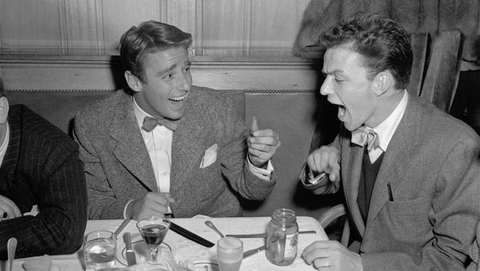
January 10, 1945
Radio
Frank Sinatra Show
Network: CBS
Location: Hollywood
Show #2
Sponsor: Max Factor
Time: 9:00PM - 9:30PM (EST) Wednesday
Orchestra Conducted By: Axel Stordahl
Arrangements By: Axel Stordahl
Announcer: , Don Forbes
Performers: Eileen Barton, Bill Goodwin, The Ken Lane Singers
Guest: Edward G Robinson
1.Saturday Night Is The Loneliest Night Of The Week Sy Oliver arg.
2. Mighty Lak' A Rose*
Franklin Family skit
3. Accentuate The Positive - w/Ken Lane Singers requested by E. Barton ( terrific vocal )
Edward G. Robinson skit
4. When Day Is Done w/ Ken Lane Singers
5. Put Your Dreams Away (sign off)
* "There is a little guy listening tonight, and it is his first birthday. In the best way a one-year old boy could say, he has let me know that his favorite song is Ethelbert Nevins "Mighty Lak' A Rose." So here it is for Frank Sinatra Jr., who is one-year old today." Sings "Mighty Lak' A Rose. At the conclusion, Frank says, "Happy Birthday, son."
note: This was Eileen Barton's last show with Frank. She moved over to Milton Berle's "Let Yourself Go."
I corrected the song listing and moved Bill Goodwin into the performer column. Ed
'Voice* Also Factor In
Producing Factor Show,
Frank Sinatra deal with Max
Factor (show returned (3) to old
Wed. night spot on CBS under the cosmetic banner) provides for a three-year deal, with straight 52- week option and privilege to take off 13 weeks for vacation. Price for show, on graduated scale covering three-year period, is $14,000, $15,000 and $16,500.
Rick Vollaerts. who has left J.
Walter Thompson, will oversee the writing job. with Sinatra himself as factotum on the production end.
VARIETY
January 3, 1945
Frank Sinatra Show
Network: CBS
Location: Hollywood
Show #2
Sponsor: Max Factor
Time: 9:00PM - 9:30PM (EST) Wednesday
Orchestra Conducted By: Axel Stordahl
Arrangements By: Axel Stordahl
Announcer: , Don Forbes
Performers: Eileen Barton, Bill Goodwin, The Ken Lane Singers
Guest: Edward G Robinson
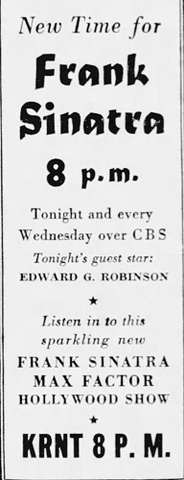
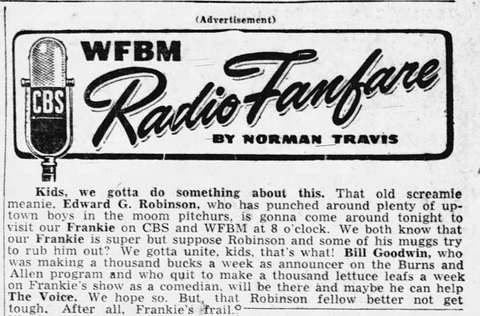
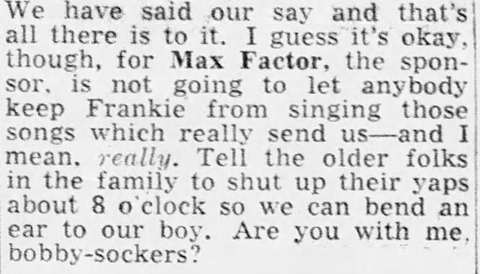
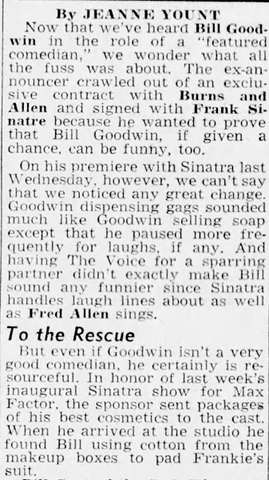
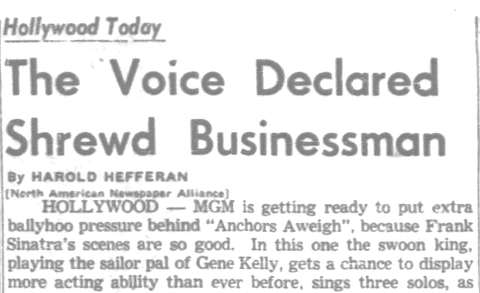
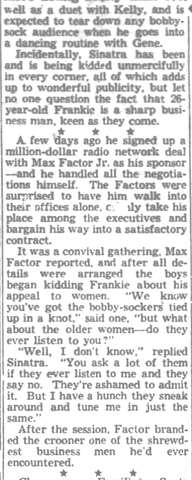
January 12, 1945
Radio
G. I. Journal
AFRS Program #77
Hosts: Frank Sinatra & Fibber McGee and Molly
Performers: Jim Jordan, Marian Jordan, Arthur Q. Bryan, Connie Haines,
Ginger Rogers, The Les Paul Trio, Mel Blanc.
1. My Ideal
Notes: TT: 30:mins. Audio condition: Very good to excellent. Complete. Ed
O'Brien points out that Sinatra sang "Shine on Harvest Moon," and after singing "outdoors and spoon," he laughs and throws in the following aside "This is a great lyric." He has Fibber, Molly. Ginger and other guests join him and the audience for the second chorus.
January 17, 1945
Radio
Frank Sinatra Show
Network: CBS
Location: Hollywood
Show #3
Sponsor: Max Factor
Time: 9:00PM - 9:30PM (EST) Wednesday
Orchestra Conducted By: Axel Stordahl
Arrangements By: Axel Stordahl
Announcer: Don Forbes
Performers: Bill Goodwin Ginny Simms The Ken Lane Singers
Guest: Alan Reed, aka Falstaff Openshaw
1. Don't Fence Me In
2. My Melancholy Baby
3. On The Sunny Side Of The Street w/ Ken Lane Singers
4. Don't Ever Change Ginny Simms
5. Embraceable You w/Ginny Simms
Ed O'Brien:
Ginny Simms was a temporary replacement for Eileen Barton, who moved over
to "Let Yourself Go," starring Milton Berle.
note: Sinatra's duet of the Gershwin tune, with Simms, is the best
with a female vocalist.
Frank Sinatra Show
Network: CBS
Location: Hollywood
Show #3
Sponsor: Max Factor
Time: 9:00PM - 9:30PM (EST) Wednesday
Orchestra Conducted By: Axel Stordahl
Arrangements By: Axel Stordahl
Announcer: Don Forbes
Performers: Bill Goodwin Ginny Simms The Ken Lane Singers
Guest: Alan Reed, aka Falstaff Openshaw
Ed O'Brien:
Ginny Simms was a temporary replacement for Eileen Barton, who moved over
to "Let Yourself Go," starring Milton Berle.
note: There was only one broadcast. Show was heard in the
four time zones with a difference of one hour per zone.
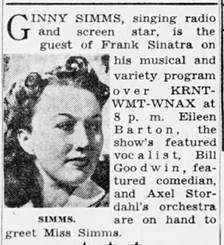
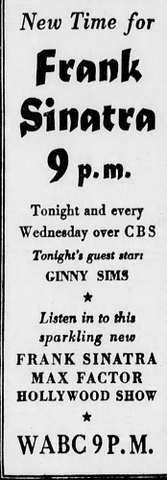
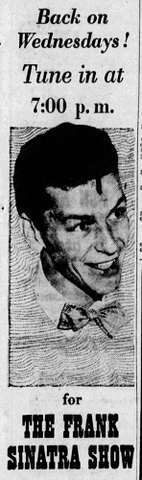
January 18, 1945
Radio
Suspense
Program: "To Find Help"
Network: WABC
Time: 8:00-8:30PM
Actors: Frank Sinatra, Agnes Moorehead, John McIntire, Wally Maher, William Johnstone, Joseph Kearns
Writers: Mel Dinelli
Produced and Directed By: William Spier
Composer: Lucien Moraweck
Conductor: Lud Gluskin
Notes: Audio condition Very good to excellent. Complete. The show appears on the officially released CD set: 60 Greatest Old Time Radio Show "Frank Sinatra & Friends"
Suspense
Program: "To Find Help"
Review:
Listening to this episode today - one of its most interesting aspects is that it is set at a time when jobs were apparently so plentiful that characters appear to find it odd that anyone would have to put any effort into finding one. A second point of interest is that, unusually, both versions of the story that were broadcast had 'big name' stars playing the main character: the first features Frank Sinatra (in a relatively early acting role), the second Gene Kelly. Both give good performances, but Kelly's is probably stronger, as he comes across as even more intense (and deranged); yet Agnes Moorehead, in the first adaptation, may have the slight edge as the widow. Regardless, the story is very entertaining whichever version is listened to, with its portrayal of a strange young man who is gradually revealed to be a psychopath. It is his characterization that makes the story, as he becomes increasingly, and memorably, unhinged. The plot doesn't offer many surprises, and there isn't a twist at the end - in fact, the tale fizzles out a little - but this is still a compelling listen.
Rating: * * * *
Note: Story was adapted for radio by Mel Dinelli. It was based on his short story "The Man" Dinelli expanded the story into a stage play with the same title. A second broadcast of the story was on Suspense, January 6, 1949, with Gene Kelly, William Conrad and Ethel Barrymore. Play had its debut in 1950. Film version with Ida Lupino and Robert Ryan was released in 1952.
Ed
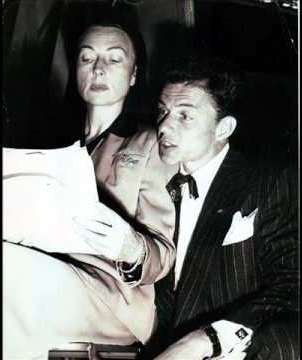
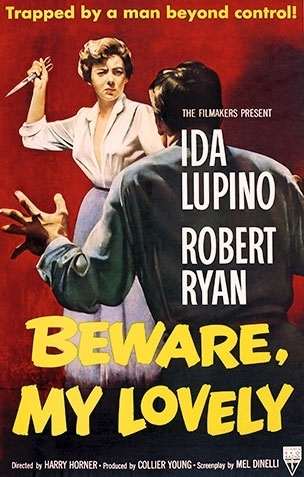
January 24, 1945
Radio
The Frank Sinatra Show
Hollywood
Wednesday Evening
Time: 9:00 - 9:30 p.m..
Network: CBS
Sponsor: Max Factor
Orchestra arranged and conducted by: Axel Stordahl
Announcer: Don Forest
Producer: Robert Brewster
Head Writer: Hendrick Vollaerts
Additional Writers: Bill Telack, Jerry Gollard, Virginia Radcliffe
Performers: Bill Goodwin The Ken Lane Singersm
Guest: Carmen Miranda
1. Blue Skies
2. Magic Is The Moonlight ( from MGM film "Bathing Beauty )
3. Surrey With The Fringe On Top w/Ken Lane Singers
4. Mama Eu Quero Carmen Miranda
5. Thine Alone/A Kiss In The Dark w/Ken Lane Singers ( Tribute to Victor Herbert )
January 25, 1945
Radio
Command Performance
"In Sir Sanctum In B-Flat"
Program #159
Host: Frank Morgan
The Andrew Sisters, Frank Sinatra, Nelson Eddy, The Riders Of The Purple Sage Blanche Stewart, Elvia Allman
Announcer: Ken Carpenter
Songs:
--One Meat Ball Andrew Sisters
--Saturday Night Is The Loneliest Night Of The Week Frank Sinatra --Cool Water Riders Of The Purple Sage
--Master Of My Fate/Captain Of My Soul Nelson Eddy --Skit: In Sir Sanctum In B Flat
--Eddy tries to sing All Or Nothing At All and Dance With The Dolly. --Frank sings a little bit of Short'nin' & Bread
note: there is some confusion here. I went into the AFRS site and discovered that the correct air date of this AFRS program was 1-25-45. The "Dick Tracy In B. Flat" was broadcast on 2-15-45.
There is no connection between the two shows.
Sinatra's "Saturday Night Is The Loneliest Night On The Week" is simply terrific. The arrangement is jazzy and really enhances the vocal and the song.
Ed
Note: The show appears on the officially released CD set: 60 Greatest Old Time Radio Show "Frank Sinatra & Friends Show was taped on 1-25-45. AFRS aired it on 3-11-45
January 28, 1945
Radio
Charlie McCarthy Show
Network: NBC & AFRS (rebroadcast)
Sponsor: Standard Brands
Perfomers: Edgar Bergan, Ray Noble & Orchestra
Guests : Frank Sinatra (from Hollywood), Don Ameche, Joan Merrill
Orchestra Conducted By: Axel Strodahl (Sinatra)
1. introduction - Don Ameche
2. comedy - Edgar Bergen
3. Get Happy - Joan Merrill
4. You're So Sweet To Remember - Joan Merrill
5. comedy - Edgar Bergen
6. There's No You - Frank Sinatra
7. comedy - Frank Sinatra & Don Ameche
8. The Very Thought Of You - Frank Sinatra
Notes: AFRS & Broadcast are in S.A. collection. The show appears on the officially released CD set: 60 Greatest Old Time Radio Shows "Frank Sinatra & Friends."
Sinatra sings the above songs + Comedy. TT: 30mins.
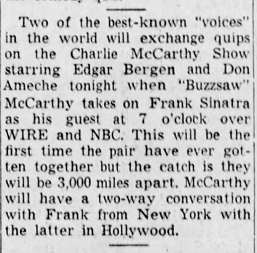
January 29, 1945
Studio
Hollywood
HCO1257 My Melancholy Baby
(G. Norton/M. Watson/E. Burnett)
(from Birth Of The Blues)
Shapiro, Bernstein & Co. (ASCAP) 1912
Arrangement & Conducted by Axel Stordahl
-1 (3:08) CD: Columbia Years 43-52 Vol. 2
LP: C6X 40343 The Voice-The Columbia Years, 43-52 (6-LP Set)
CL-1359 Come Back To Sorrento
78: 38287
HCO1258 Where Or When w/The Ken Lane Singers
(R. Rodgers/L. Hart)
(from Babes In Arms)
Chappell & Co., Inc. (ASCAP) 1937
Arrangement & Conducted by Axel Stordahl
-1 (3:13) CD: Columbia Years 43-52 Vol. 2
LP: C6X 40343 The Voice-The Columbia Years, 43-52 (6-LP Set)
LP: CL 1448 Reflections
78: 38685
Ed O'Brien notes:
Through the years Sinatra would perform this song in concerts and on radio and TV, and often give it a lavish introduction. In the forties and fifties there would be wonderful ballad interpretations with charts by Stordahl and later on by Riddle. A great uptempo chart would be done by Billy Byers in the sixties and Frank would do it for the next 20 plus years. Finally, Bill Rogers would modify that chart for Frank in the nineties.I can only think of a few other tunes that spanned so many years in Sinatra's career. There would be four studio recordings done, beginning with the above in 1945, and ending with a recording in October of 1993.
HCO1259 All The Things You Are w/The Ken Lane Singers
(J. Kern/O. Hammerstien II)
(from Very Warm For May)
T.B. Harms, Inc. (ASCAP) 1939
Arrangement & Counducted by Axel Stordahl
-1 (3:00) CD: Columbia Years 43-52 Vol. 2
LP: C6X 40343 The Voice-The Columbia Years, 43-52 (6-LP Set)
LP: CL-1448 Reflections
78: 37258
HCO1260 Mighty Lak' A Rose
(F.L. Stanton/E. Nevin)
John Church Co. (free) 1901
Arrangement & Counducted by Axel Stordahl
-1 (3:23) CD: Columbia Years 43-52 Vol. 2
LP: Reflections
78: 36860
The Ken Lane Singers: Betty B. Allan, Marvin Charles Bailey, Dorothy Compton, Lee Gotch, Norma B Larson, Thora Ann Matthiason, Mark L. McLean, Charles Schrouder, Ernest W. Seckler
Violins: V. Arno, P. Ellis, S. Freed, Jr., G. Joyce, G. Kast, S. Kindler,S
Levine, A. Perrotti, N. Pisani, T. Rosen, M. Russell, O. Vail; Violas: A. Harshman, D. Sterkin, G. White; Cellos: F. Goerner, A. Kafton, J. Sewell; Saxes: H. Beau, E. Gershman, L. Hartman, H. Lawson, D. Logiudice; Horns: J. Stagliano; Trumpets: D. Anderson, C. Griffard, L. MachTrombones: C. Loeffler, J. Skiles, J. Yukl; Piano: M. McIntyre; Guitar: D. Barbour; Bass: A. Shapiro; Drums: R. Hagan; Harp: I. Clow
January 30, 1945
Radio
America Salutes The President's Birthday
Time 11:15 p.m. - 12:00 a.m.
Pool feed to all nets
Sponsor: March Of Dimes Fund Appeal.
Host: Bing Crosby ( Hollywood )
Performers: Jack Benny, Judy Garland, Frank Sinatra, Edgar Bergen, Joan Edwards.
Axel Stordahl and His Orchestra
John Scott Trotter and His Orchestra
1. When Your Lover Has Gone
2. Medley of tunes with Mr. Crosby
3. I Wonder Who's Kissing Her Now (parody) with Crosby and Judy Garland
America Salutes The President's Birthday. January 30, 1945.
March Of Dimes Fund Appeal. The first tune heard is, "I Didn't Know About You" New York portion originates from the Grand Ballroom of the Waldorf Astoria. Don Wilson (announcer), Bing Crosby (Hollywood host), Frank Sinatra, Axel Stordahl and His Orchestra, Judy Garland, John Scott Trotter and His Orchestra, Basil O'Connor (President of the March of Dimes, makes an emotional appeal for dimes), Quentin Reynolds (m.c.), Woody Herman and His Orchestra, Joan Edwards, Jack Benny (plays a violin solo, "To A Wild Rose"), Larry Stevens, Phil Harris, Eddie Anderson, David Frank Stamp (Postmaster of Dimebox, Texas), Louis Casuri (from Dimebox, Texas), Eleanor Roosevelt (reads a letter from Franklin), The Great Lakes Naval Training Center Orchestra (plays, "Our Waltz" from the Navy Base in Illinois), The Great Lakes Naval Training Center Chorus (of 1000 voices), The Santa Ana Orchestra and Chorus (from Santa Ana, California), Eddie Dunstedter (conductor), Ken Carpenter (announcer).
Show runs almost 68 minutes.
America Salutes The President's Birthday
Time 11:15 p.m. - 12:00 a.m.
Pool feed to all nets
Sponsor: March Of Dimes Fund Appeal.
Host: Bing Crosby ( Hollywood )
Performers: Jack Benny, Judy Garland, Frank Sinatra, Edgar Bergen, Joan Edwards.
Axel Stordahl and His Orchestra
John Scott Trotter and His Orchestra
1. When Your Lover Has Gone
2. Medley of tunes with Mr. Crosby
3. I Wonder Who's Kissing Her Now (parody) with Crosby and Judy Garland
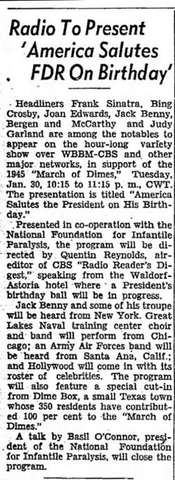
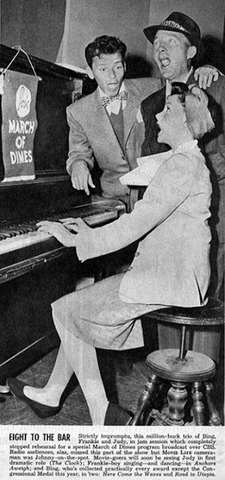
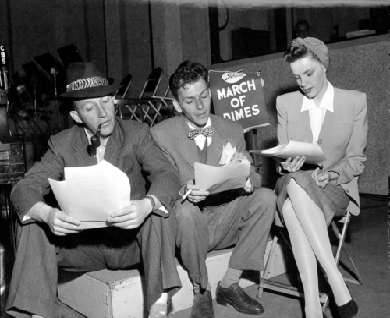
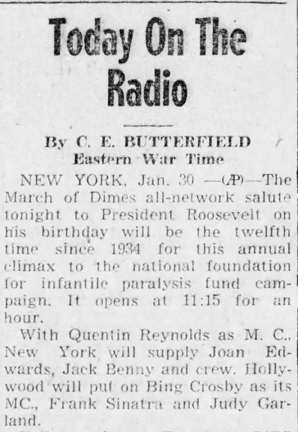
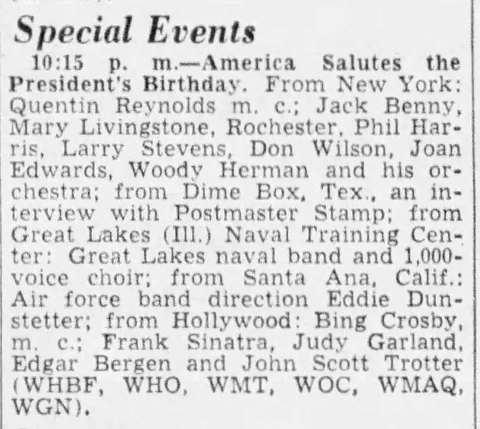
America Salutes The President's Birthday
January 31, 1945
Radio
Frank Sinatra Show
Network: CBS
Location: Hollywood
Show #5
Sponsor: Max Factor
Time: 9:00PM - 9:30PM (EST) Wednesday
Orchestra Conducted By: Axel Stordahl
Arrangements By: Axel Stordahl
Announcer: Bill Goodwin,
Performers: The Ken Lane Singers
Guest: Lionel Barrymore
1. Love Is Just Around The Corner w/ Ken Lane Singers
2. When Your Lover Has Gone
3. Saturday Night Is The Loneliest Night Of The Week
4. None But The Lonely Heart w/ Ken Lane Singers note: Announcer was Lou Crosby, Robert Brewster was the producer and Carroll Carroll was the main writer. Bill Goodwin was the comedian.
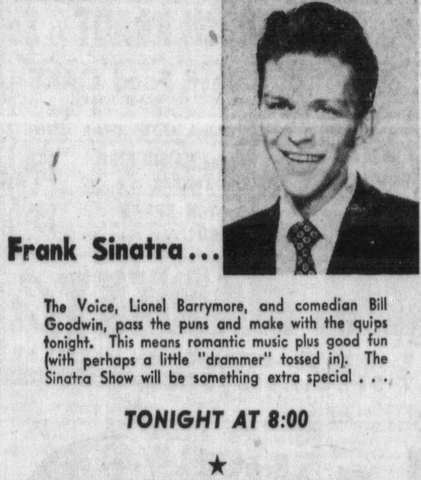
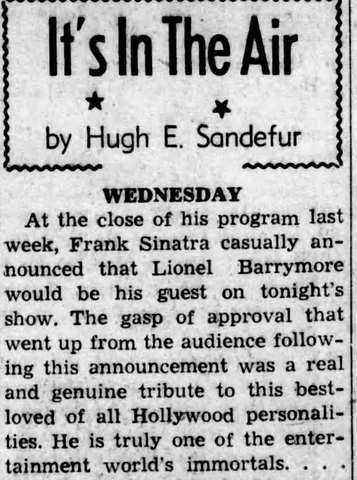
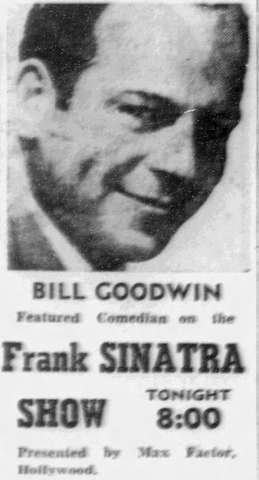
[Sacks explains Axel Stordahl fee arrangement to Nancy]
Manie Sacks: Sacks referenced a letter he'd written to Nancy Sinatra on January 31, 1945 explaining the arrangement by which Stordahl's $300 conducting fee would be offset by his Columbia scale payments, along with some of Stordahl's recording checks.
Source: James Kaplan, "Frank: The Voice" (2010).
February 1945
[Sinatra reclassified 2-A by draft board]
Kaplan: Sinatra again reported to his draft board in Jersey City and was reclassified 2-A, meaning unfit for service but employed in work 'necessary to the national health, safety, and interest.' Headlines questioned whether crooning was essential war work.
Source: James Kaplan, "Frank: The Voice" (2010)
February 7, 1945
Radio
Frank Sinatra Show
Network: CBS
Location: Hollywood
Show #6
Sponsor: Max Factor
Time: 9:00PM - 9:30PM (EST) Wednesday
Orchestra Conducted By: Axel Stordahl
Arrangements By: Axel Stordahl
Announcer: Bill Goodwin, Don Forbes
Performers: The Ken Lane Singers
Guest M.C.: Dinah Shore
Notes: Sinatra not on show. Confirmed airing on WABC.
February 9, 1945
Maria de Lourdes Villiers “Mia” Farrow — who would become Frank Sinatra's third wife in 1966 — was born in Beverly Hills, California, to director John Farrow and actress Maureen O'Sullivan; her godparents were George Cukor and Louella Parsons. Source: Kitty Kelley, "His Way: An Unauthorized Biography of Frank Sinatra" (1986).
February 10, 1945
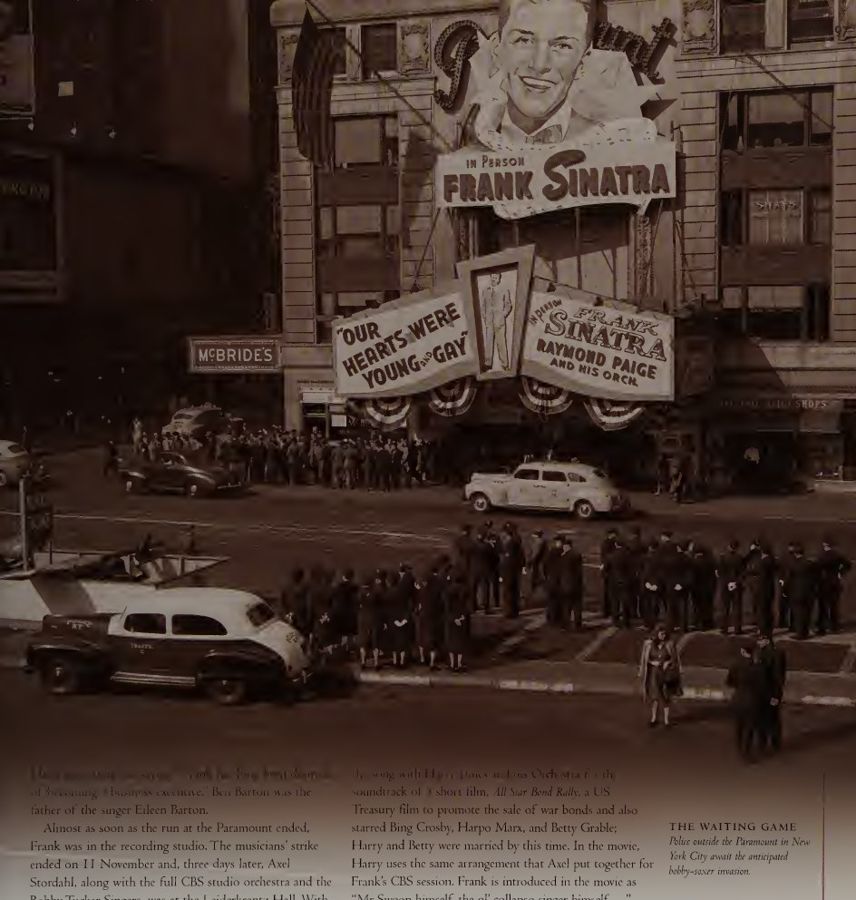
[Photograph: Frank undergoes new Selective Service physical. From Richard Havers, "Sinatra" (Dorling Kindersley, 2007), p.101.]
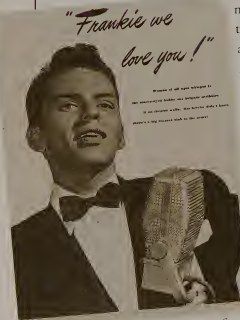
[Photograph: Frank undergoes new Selective Service physical. From Richard Havers, "Sinatra" (Dorling Kindersley, 2007), p.100.]
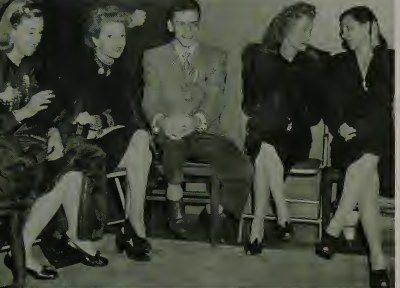
[Photograph: Frank undergoes new Selective Service physical. From Richard Havers, "Sinatra" (Dorling Kindersley, 2007), p.100.]
Radio
Report To The Nation
Guest: Frank Sinatra
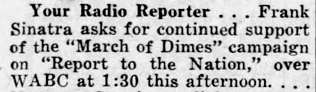
Report To The Nation
Guest: Frank Sinatra
Frank arriving for Report To The Nation broadcast 2-10-45
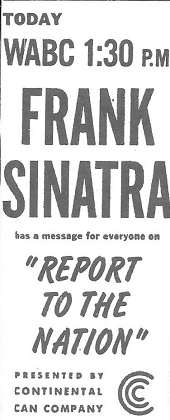
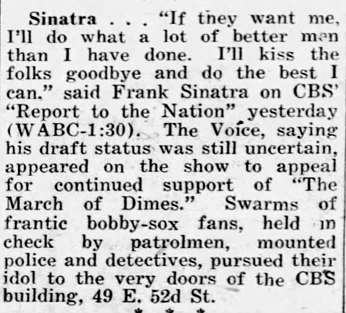
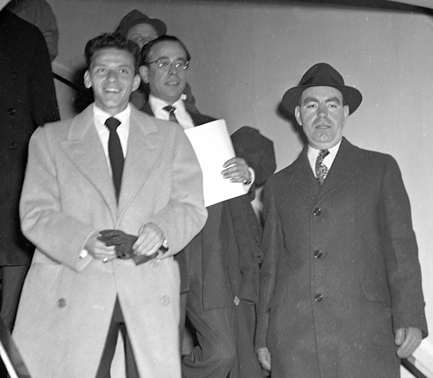
Frank had another physical examination by Selective Service, after which he was photographed out at La Martinique nightclub in New York. (Source: Richard Havers, "Sinatra" (Dorling Kindersley, 2007).)
February 14, 1945
Radio
Frank Sinatra Show
Network: CBS
Location: Hollywood
Show #7
Sponsor: Max Factor
Time: 9:00PM - 9:30PM (EST) Wednesday
Orchestra Conducted By: Axel Stordahl
Arrangements By: Axel Stordahl
Announcer: Lou Crosby
Performers: The Ken Lane Singers
Guest: Diana Lynn
1. Sunday
2. Strange Music
3. I'm Beginning To See The Light w/Ken Lane Singers
4. All The Things You Are
Notes: Confirmed airing on WABC.
Frank Sinatra Show
Network: CBS
Location: Hollywood
Show #7
Sponsor: Max Factor
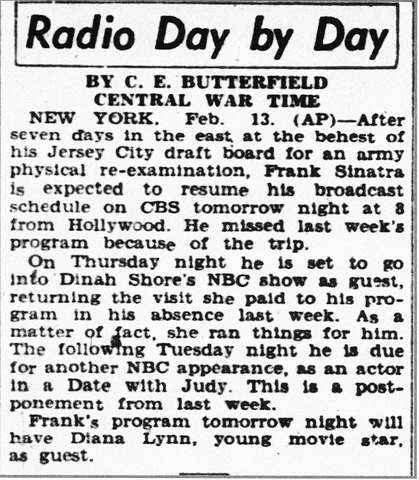
February 15, 1945
Radio
Bird's Eye Open House, Starring Dinah Shore
NBC
Time 8:30 p.m.
Sponsor: Birds Eye, Gaines Dog Food
Host: Dinah Shore
Robert Emmett Dolan & Orchestra
Joe Lilley & Chorus
Annc: Harry Von Zell
Guest: Frank Sinatra
--My Dreams Are Getting Better All The Time Dinah Shore --Introductions and skit with Von Zell He mispronounces Lauren Bacall's name. --Lady Of Spain Joe Lilley's chorus
NBC in San Francisco interrupts with war bulletin:
NBC war correspondent Robert McCormack reports from Guam American carrier planes are attacking Tokyo. The American fleet has moved within the 300 mile radius necessary for the carrier planes to reach Tokyo. The main targets are the Japanese fighter planes on bases near Tokyo.
--Dinah has introduced Frank.. He thanks her for subbing for him last week on the Max Factor show (7th). They discuss Bill Goodwin, Frank's comic on the show, and the half-pound Frank has gained. Dinah tells him he carries it well.
--When Your Lover Has Gone Frank Sinatra
--Frank and Dinah do a short skit. He sings a few brief parodies. --My Romance Frank and Dinah
--Sign-off song by Joe Lilley Chorus
Jack Carson will be next week's guest.
Ed O'Brien:
This was Frank's first guest appearance on Dinah's Open House.
He would also be her guest on the 5-10-45 and 1-24-46 shows.
Command Performance
"Dick Tracy in B-Flat"
Program #162
Bing Crosby, Dinah Shore, Jimmy Durante, Judy Garland, Cass Daley, Frank Sinatra, Frank Morgan, Bob Hope, Harry Von Zell, Jerry Colonna, Andrews Sisters, Joe Lilley Chorus, Lou Crosby
Command Performance
"Dick Tracy in B-Flat"
Program #162
Bing Crosby, Dinah Shore, Jimmy Durante, Judy Garland, Cass Daley, Frank Sinatra, Frank Morgan, Bob Hope, Harry Von Zell, Jerry Colonna, Andrews Sisters, Joe Lilley Chorus, Lou Crosby
Sinatra is on the far right
Daley, Crosby, Garland & Sinatra
Sinatra, Colonna, & Hope
Bing and Dinah
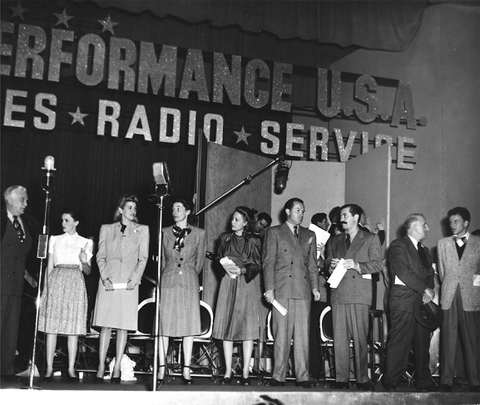
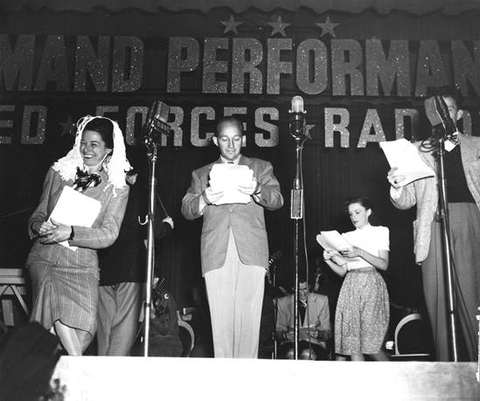
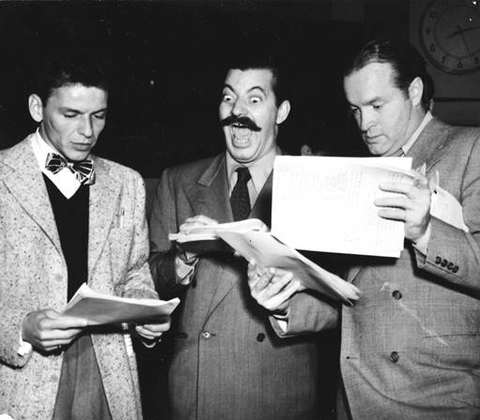
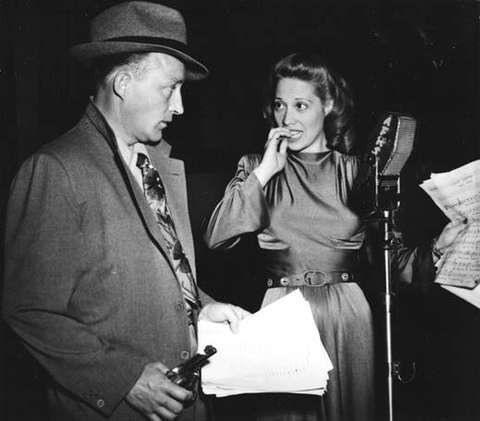
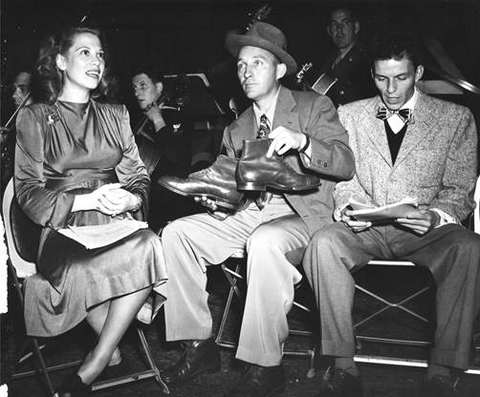
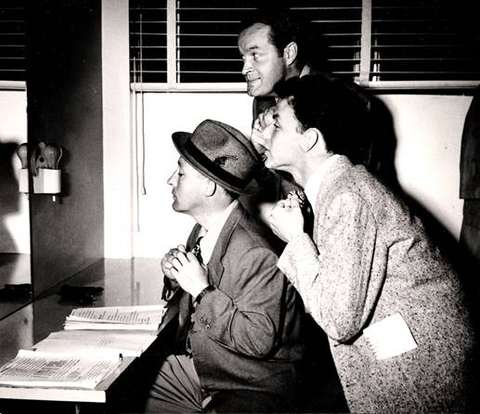
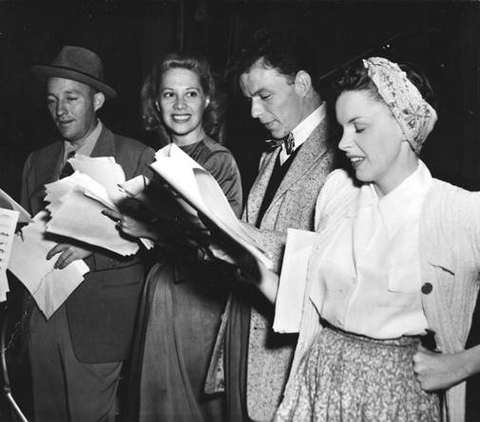
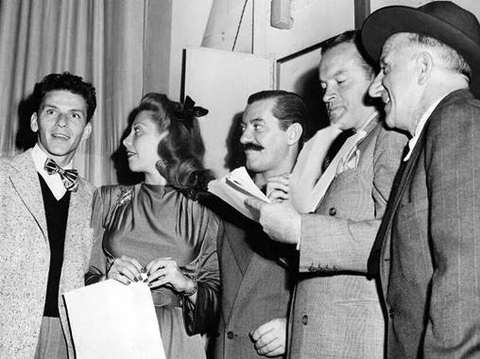
Bird's Eye Open House, Starring Dinah Shore
NBC
Time 8:30 p.m.
Sponsor: Birds Eye, Gaines Dog Food
Host: Dinah Shore
Robert Emmett Dolan & Orchestra
Joe Lilley & Chorus
Annc: Harry Von Zell
Guest: Frank Sinatra
note: As you can see, the songs mentioned here were not done on the broadcast.
Reminds me of the Fred
Astaire Packard Hour, 11-3-36. Fred was introduc-
ing songs from his new film "Swing Time." But his show was being inter
rupted by political bulletins that night. Roosevelt vs Landon was being
covered by the network.
Frank and Dinah were being interrupted by news
from the war in the
Pacific. I would guess they had to do some quick
changes to fit the half-hour format.
Ed
© 1997-2026 The Sinatra Archive
This calendar, or any parts thereof, may not be reproduced in any fashion
whatsoever without the prior written permission of the publisher (The
Sinatra Archive)
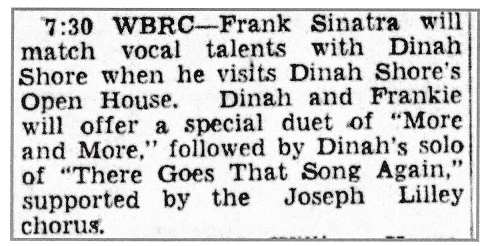
February 18, 1945
Concerts
Earl Carroll Theatre, Los Angeles, CA
Sixteenth Annual Charity Ball of the Junior Auxiliary of the Home for the Aged Frank Sinatra, Bob Hope, Danny Kaye, Mary Pickford, Jimmy Durante and others
Earl Carroll Theatre, Los Angeles, CA
Sixteenth Annual Charity Ball of the Junior Auxiliary of the Home for the Aged Frank Sinatra, Bob Hope, Danny Kaye, Mary Pickford, Jimmy Durante and others
Sinatra receives the Home's annual award for outstanding service
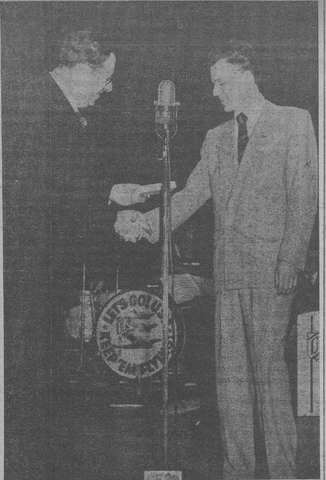
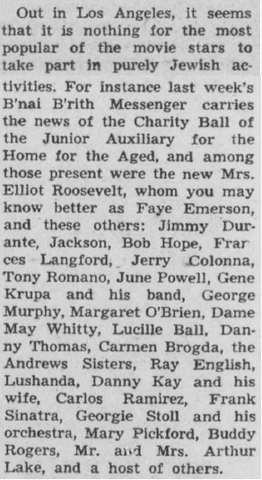
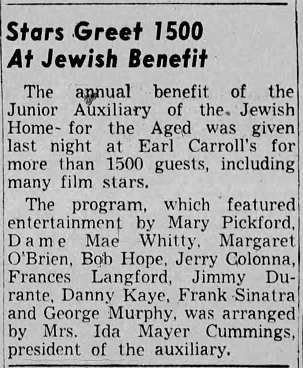
February 19, 1945
Radio
G.I. Journal
Network: AFRS
Show: #65
M.C.: Edgar Bergen
Guests: Frank Sinatra, The Modernaires, Hildegarde, Roy Rogers, Foy Willing & Riders of the Purple Page
New York Port Of Embarcation Orchestra Conducted By: Harry Sosnick
1. Is You Is Or Is You Ain't My Baby? - The Modernaires
2. Tico Tico - New York Army Band
3. The Trolley Song - Hildegarde
4. When My Blue Moon Turns To Gold - Roy Rogers
5. Mighty Lak' A Rose - Frank Sinatra
February 20, 1945
Radio
A Date With Judy
Location: Hollywood
Network: NBC
Sponsor: Tums
Orchestra Conducted By: Constantin Bakaleinikoff
Arrangements By: Axel Stordahl (Sinatra)
Written by Aleen Leslie
Announcer: Ken Niles
Performers: Richard Crenna, Dix Davis, Louise Erickson, John Brown
Guest: Frank Sinatra
1. Commercial
2. Comedy (Judy preparing to see Sinatra)
3. Comedy (Judy and FS)
4. Night And Day - Frank Sinatra
5. Commercial
6. Comedy (Judy after seeing Sinatra)
7. Comedy (Judy and FS)
8. A Date With Judy (Parody)
9. I Don't Know Why - Frank Sinatra
10. Commercial
Notes: TT: 30mins.
Ed O'Brien:
A Date With Judy was a radio comedy series on NBC. Louise Erickson played 14 year old Judy. The plot had Judy and her boyfriend, Iggy Pringle, going to see a Sinatra film at the local movie house. Frank sang "Night And Day" in the film and later on Judy dreams of Frank being her boyfriend. But she realizes during the dream that Iggy is the real heartthrob in her life. Frank and Judy go to see Iggy in his new movie and he sings "A Date With Judy." After the film, Frank walks Judy home and he sings "I Don't Know Why" while she sleeps on the divan.
Unfortunately Judy doesn't swoon and lets Frankie know that she wants to be with Iggy. Her dad wakes her at 7.30 and Judy heads off to school. That evening she can't wait to go to bed so she'll have another Frankie dream.
A Date With Judy
Location: Hollywood
Network: NBC
Sponsor: Tums
Orchestra Conducted By: Constantin Bakaleinikoff
Arrangements By: Axel Stordahl (Sinatra)
Written by Aleen Leslie
Announcer: Ken Niles
Performers: Richard Crenna, Dix Davis, Louise Erickson, John Brown
Guest: Frank Sinatra
-------------------------------------------
© 1997-2026 The Sinatra Archive
This calendar, or any parts thereof, may not be reproduced in any fashion whatsoever without the prior written permission of the publisher (The Sinatra Archive)
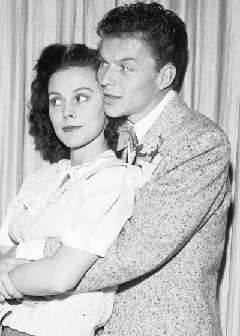
February 21, 1945
Radio
Frank Sinatra Show
Network: CBS
Location: Hollywood
Show #8
Sponsor: Max Factor
Time: 9:00PM - 9:30PM (EST) Wednesday
Orchestra Conducted By: Axel Stordahl
Arrangements By: Axel Stordahl
Announcer: Bill Goodwin, Don Forbes
Performers: The Ken Lane Singers
Guest: Janet Blair, Vera Vague
1. Saturday Night Is The Loneliest Night Of The Week
2. Don't Ever Change
3. Somebody Loves Me
4. Over The Rainbow - w/Ken Lane Singers
Notes: Confirmed airing on WABC.
NOTE: Ed O'Brien points out that Vera Vague and Bill Goodwin were also on the show for comedy relief.
Frank's opening number has a nice arrangement by Sy Oliver and "Don't Ever Change" is quite a rarity. Before he sings Gershwin's "Somebody Loves Me," Frank announces he will be aided and abetted by Bev and the boys (vocal chorus). Janet Blair sings "Anywhere" from the Columbia picture "Tonight and Every Night." Cahn and Styne wrote the tunes.. Frank closes the show with a gorgeous reading of "Over the Rainbow" with the vocal chorus.
Frank Sinatra Show
Network: CBS
Location: Hollywood
Show #8
Sponsor: Max Factor
Time: 9:00PM - 9:30PM (EST) Wednesday
Orchestra Conducted By: Axel Stordahl
Arrangements By: Axel Stordahl
Announcer: Bill Goodwin, Don Forbes
Performers: The Ken Lane Singers
Guest: Janet Blair, Vera Vague
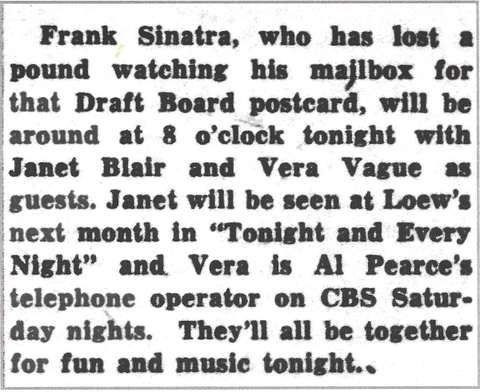
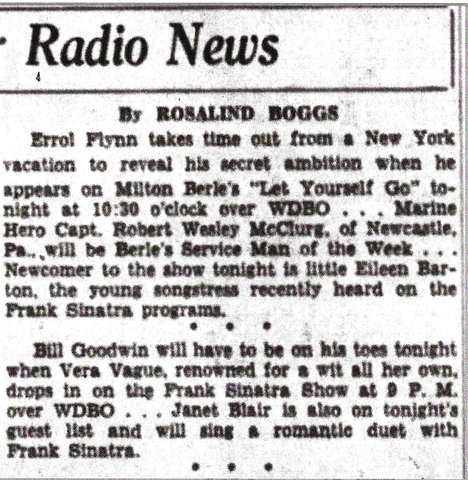
February 23, 1945
Concerts
The Old Pueblo Club, Tucson, AZ (One Nighter)
The Old Pueblo Club, Tucson, AZ (One Nighter)
------------------------------------------------
© 1997-2026 The Sinatra Archive
This calendar, or any parts thereof, may not be reproduced in any fashion whatsoever without the prior written permission of the publisher (The Sinatra Archive)
[image referenced in source but could not be recovered]
[image referenced in source but could not be recovered]
[image referenced in source but could not be recovered]
The Old Pueblo Club, Tucson, AZ (One Nighter)
------------------------------------------------
© 1997-2026 The Sinatra Archive
This calendar, or any parts thereof, may not be reproduced in any fashion whatsoever without the prior written permission of the publisher (The Sinatra Archive)
[image referenced in source but could not be recovered]
[image referenced in source but could not be recovered]
[image referenced in source but could not be recovered]
February 25, 1945
February 25, 1945 Shrine Auditorium, Los Angeles, CA
Sinatra receives recognition on his work on intolerance
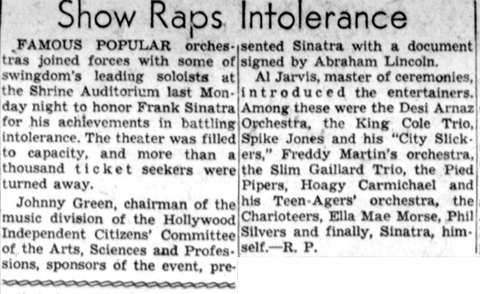
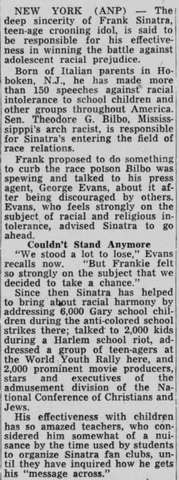
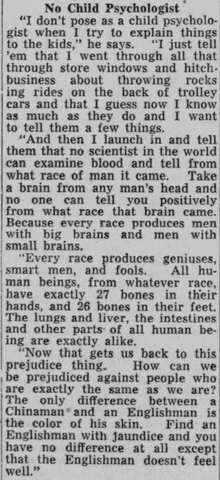
Hi Ed,
Loved the story about Sinatra, Bogart and Judy!
Guy
> On Feb 25, 2026, at 4:20 PM, 'Ed O'Brien' via Sinatraphiles <sinatraphiles@googlegroups.com> wrote: >
>
>
> ---------------------------------------
>
> February 25, 1945 Shrine Auditorium, Los Angeles, CA
> Sinatra receives recognition on his work on intolerance >
> <26aafc.png>
>
> <1772054118374blob.jpg>
> ----------------------------------------
> <1772054231064blob.jpg>
> <1772054385019blob.jpg>
>
>
>
>
>
> --
>
February 27, 1945
Radio
The Bob Hope Show
NBC & AFRS rebroadcast
Sponsor: Pepsodent
Performers: Bob Hope, Frances Langford, Frank Sinatra. Wendell Niles (announcer), Jerry Colonna, Barbara Jo Allen (as "Vera Vague").
1. I'm Beginning To See The Light
Note: Sinatra appears in a western skit. LOC has 10-inch NBC sound reel, 30mins. Complete.
A 7.17mins recording appears as part of the show "To The Rear March" AFRS #82
Frances Langford sang "I Dream Of You"
Sinatra sang "I'm Beginning To See The Light" with Phil Lewis and the Boys Frank and Bob sang snippets of "Don't Fence Me In" while doing a western skit. ---Ed
note: Skinnay Ennis was also a guest on this show. He was a regular on the show from 1938 until the army drafted him in 1943. --Ed
Concerts
Torney General Hospital, Palm Springs, CA
Sinatra gave four nurses a thirty-minute personal preview of songs that he was going to sing as a guest on the Bob Hope Radio Show that evening. (see Extras Section)
Torney General Hospital, Palm Springs, CA
Sinatra gave four nurses a thirty-minute personal preview of songs that he was going to sing as a guest on the Bob Hope Radio Show that evening. https://rsc.byu.edu/latter-day-saint-nurses-war/world-war-ii
Recollection of Nurse Olive Eloise Crouse Kauffroth:
It was those experiences at Bushnell that made me want to serve in the Army Nurse Corps. After we completed that six-month assignment, we went home to take our state board exams. I was sworn in as Second Lieutenant Olive Eloise Crouse, ANC, at Fort Douglas in Salt Lake City, Utah, on November 2, 1944. The day was memorable both for its significance as a monumental day in my life and also because during the ceremony, the officer swearing me in looked down to see that my galoshes were on the wrong feet. His laughter, my embarrassment, and his comment, “Young lady, I hope you pay more attention to details in your army career,” made this one of life’s funny and embarrassing moments that I’ve never forgotten.
In the next few days after my swearing in, I was sent by train to Fort Lewis in Washington State for two weeks of introduction to the details of army life. We then were taken to Torney General Hospital in Palm Springs, California. Torney was another new experience for me in a long line of new places.
After two days of orientation, I started the traditional night duty: twelve-hour shifts (from 7 p.m. to 7 a.m.) thirty nights in a row. After the thirty-day stint, a nurse had two days off and then began another schedule of thirty more nights on duty. In the short time I was there, I worked sixty-seven nights and felt like I had been born working nights!
The patients at Torney were very different than those I cared for at Bushnell. Almost none had wounds. Instead, they had diseases from the South Pacific. Many patients had what is known as “jungle rot,” and it truly was that horrific. The condition made them lose body hair and patches of skin, and this made them miserable most of the time. The only cure was various lotions, medications, and ointments that were supposed to help, but the medications helped only for a brief time. In spite of this, in the short period I was there, only a few patients died from that disease.
Although caring for patients was the critical task, we also had fun. Movie stars from Hollywood often came to Palm Springs, and almost all of them wanted to come and visit the patients. Of all the many stars I met, my favorite by far was Frank Sinatra. He gave me and three other nurses a thirty-minute personal preview of songs that he was going to sing as a guest on the Bob Hope Radio Show that evening. It was exciting and a dream for all of us. He even got our names and was going to dedicate his songs to us that night, but the rule was that the names of army personnel could not be publicized. So the wonderful Mr. Sinatra said, “OK, you’ll know who you are.” That night he dedicated his performance to “four lovely nurses.” I never forgot how handsome and how charming he was to us that night.
The Bob Hope Show
NBC & AFRS rebroadcast
Sponsor: Pepsodent
Performers: Bob Hope, Frances Langford, Frank Sinatra. Wendell Niles (announcer), Jerry Colonna, Barbara Jo Allen (as "Vera Vague").
1. I'm Beginning To See The Light
Note: Sinatra appears in a western skit. LOC has 10-inch NBC sound reel, 30mins. Complete.
A 7.17mins recording appears as part of the show "To The Rear March" AFRS #82
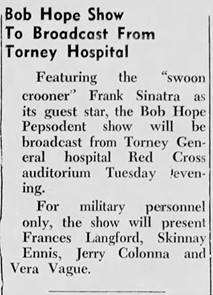
February 28, 1945
Radio
Frank Sinatra Show
Network: CBS
Location: Hollywood
Show #9
Sponsor: Max Factor
Time: 9:00PM - 9:30PM (EST) Wednesday
Orchestra Conducted By: Axel Stordahl
Arrangements By: Axel Stordahl
Performers: The Ken Lane Singers
Guest: Abbott and Costello
note: Bill Goodwin was the comic regular on the show
and Lou Crosby was the announcer.
1. Blue Skies (Frank would record the Berlin classic, 7-30-46, with
Stordahl's chart )
2. Dream w/Ken Lane Singers ( Frank would make a recording at Columbia,
3-6-45, with the K.L. Singers )
3. I Should Care ( Recording would be done at Columbia, 3-6-45. He had introduced the song on his 1-3-45
Max Factor Show and he did the verse. It was dropped for the recording and not sung on the 2/28 show.
4. When Day Is Done w/Ken Lane Singers
following "I Should Care," Frank did a serious skit that would be a precursor for the "House I Live In"
film short and his many appearances throughout America on behalf of racial and religious tolerance.
--Ed
Sinatra would be the guest on Abbott and Costello's show the next night, March 1st, 1945
Frank Sinatra Show
Network: CBS
Location: Hollywood
Show #9
Sponsor: Max Factor
Time: 9:00PM - 9:30PM (EST) Wednesday
Orchestra Conducted By: Axel Stordahl
Arrangements By: Axel Stordahl
Performers: The Ken Lane Singers
Guest: Abbott and Costello note: Bill Goodwin was the comic regular on the show and Lou Crosby was the announcer.
1. Blue Skies (Frank would record the Berlin classic, 7-30-46, with Stordahl's chart )
2. Dream w/Ken Lane Singers ( Frank would make a recording at Columbia, 3-6-45, with the K.L. Singers )
3. I Should Care ( Recording would be done at Columbia, 3-6-45. He had introduced the song on his 1-3-45
Max Factor Show and he did the verse. It was dropped for the recording and not sung on the 2/28 show.
4. When Day Is Done w/Ken Lane Singers following "I Should Care," Frank did a serious skit that would be a precursor for the "House I Live In" film short and his many appearances throughout America on behalf of racial and religious tolerance. --Ed
Sinatra would be the guest on Abbott and Costello's show the next night, March 1st, 1945
Television in Review: Song Magic; Merman, Sinatra and Lahr in Gay Revival of 'Anything Goes'
Wonderful melodic treats were presented on television on Sunday. One was the bright and gay revival of Cole Porter's musical, "Anything Goes," with capital performances by Ethel Merman, Frank Sinatra and Bert Lahr. .
It was the second time out on TV for "Anything Goes"; once before it had been done on video with rather disastrous consequences. But this time the knowledgable gentlemen of the "Comedy Hour" (8 P. M. Sundays over N. B. C.) put the horse before the cart. They intelligently pared the story as much as possible and were content to settle primarily for Mr. Porter's superb score, rendered under the knowing baton of Al Goodman.
Miss Merman, who herself had a woeful experience on TV only a few weeks ago, was in fine fettle. Here and there perhaps her voice may have lost a shade of its trueness, but no matter. In selling a song with gusto, beat and style, she's in a class of her own.
To hear Miss Merman run through "You're the Top,” “I Get a Kick Out of You," "Blow, Gabriel, Blow” and the title song was to have the best in Broadway musicals right in the home.
As the agent who is in love with Reno, the singer played by Miss Merman, Mr. Sinatra was a most pleasant surprise. Admittedly, it was casting rather out of the ordinary, especially to those who saw William Gaxton in the original Broadway production. But none the less Mr. S. acquitted himself admirably. His personable and relaxed way before the camera was engaging. His voice also is infinitely improved over what it was a couple of seasons ago.
In the role of Public Enemy No. 13, created on Broadway by Victor Moore, Mr. Lahr was at his best and terribly funny. One only wished that he had much more to do, but in an hour's condensation of a Broadway musical not everything is possible. But if Mr. Lahr does not get more TV chores on the basis of his Sunday night contribution, there's no justice left.
The producing staff of the "Comedy Hour" also wisely did not tinker unduly with the setting or dating of "Anything Goes." Neither the costuming nor the excuse for a story was altered materially. Such is the quality of Mr. Porter's score that it seems hard to realize how long ago “Anything Goes” had its Broadway première. It was Nov. 21, 1934.
NYT
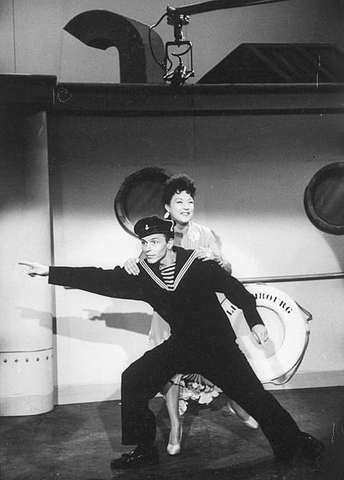
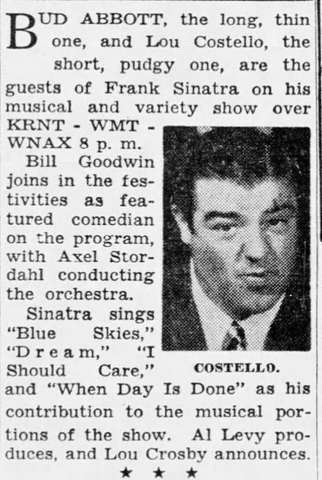
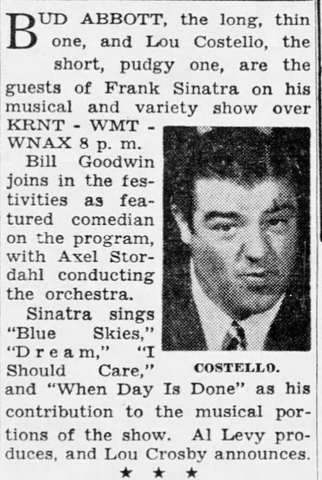
March 1, 1945
Radio
Abbott & Costello
1. If You Are But A Dream
2. One Meatball
Note: The show appears on the officially released CD set: 60 Greatest
Old Time Radio Show "Frank Sinatra & Friends"
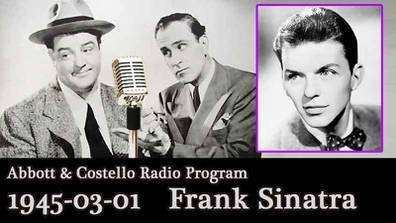
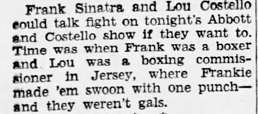
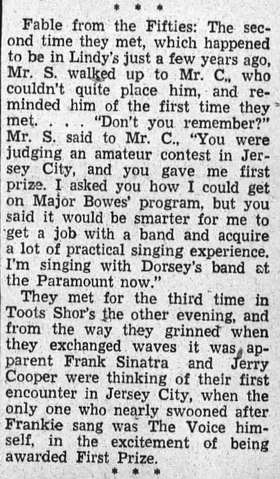
March 2, 1945
Studio
Los Angeles - MGM
Friday afternoon
ANCHORS AWEIGH
Orchestra conducted by Georgie Stoll
Tonight We Love ( Tchaikovsky' s First Piano Concerto #1 First movement) Sinatra and Jose Iturbi and MGM orchestra
Frank recorded to loops 1 take :13
Iturbi & Orchestra recorded second part of "Piano Concerto" in 1 take 6:05
March 4, 1945
Radio
The Andrews Sisters Show
Location: Hollywood
Network: ABC Blue Net
Sponsor: Nash-Kelvinator
Performances: The Andrews Sisters, Gabby Hayes, Frank Sinatra, Foy Willing & Riders Of The Purple Sage
Announcer: Marvin Miller
Vic Schoen and His Orchestra
1. Roll Out The Barrel - Andrew Sisters
2. Every time I Fall In Love - Andrew Sisters
3. There's A Rainbow Over The Range - Riders Of The Purple Sage
4. I Didn't Know About You - Frank Sinatra
5. Empty Saddles - Frank Sinatra & Andrew Sisters
Notes: TT 29mins. Audio condition: Very good. Complete.
Note: Sinatra Scholar Ed O'Brien reports that Frank sang the Ellington classic "I Didn't Know About You"ť and joined The Andrews Sisters on "Empty Saddles."
The Andrews Sisters Show
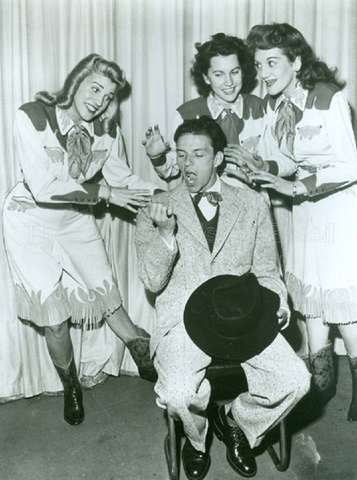
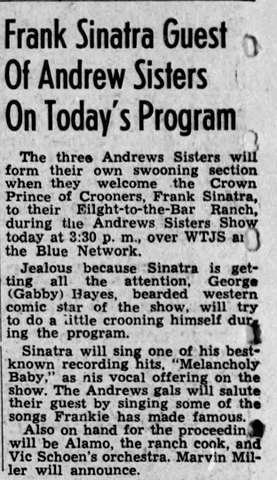
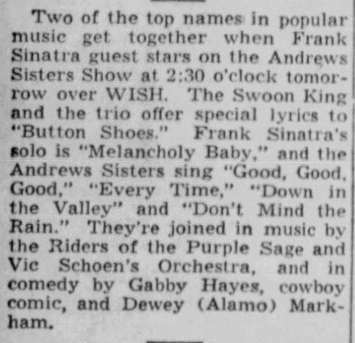
The Andrews Sisters Show
© 1997-2026 The Sinatra Archive
This calendar, or any parts thereof, may not be reproduced in any fashion
whatsoever without the prior written permission of the publisher (The
Sinatra Archive)
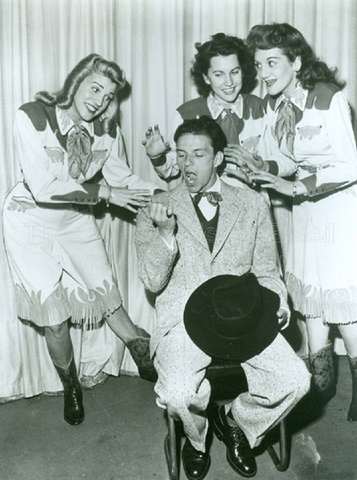
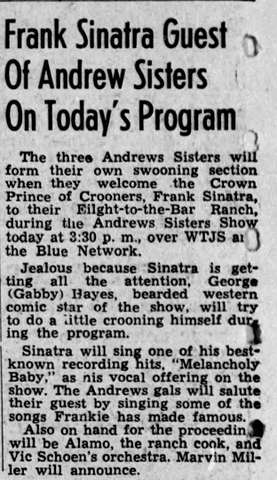
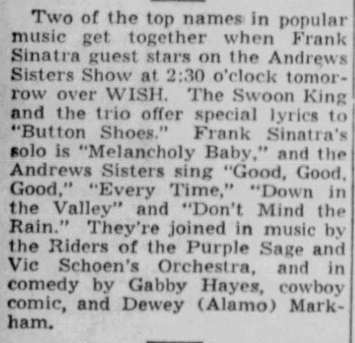
The Andrews Sisters Show
© 1997-2026 The Sinatra Archive
This calendar, or any parts thereof, may not be reproduced in any fashion
whatsoever without the prior written permission of the publisher (The
Sinatra Archive)
March 5, 1945
[Draft board reclassifies Sinatra 4-F]
The draft board announced its 2-A classification of Sinatra had been a mistake and reclassified him 4-F, prompting further critical headlines and editorials.
Source: James Kaplan, "Frank: The Voice" (2010).
March 6, 1945
Studio
Hollywood
HCO1286 I Should Care
(S. Cahn/A. Stordahl/P. Weston)
(from Thrill Of A Romance)
Dorsey Bros. Music Co. (ASCAP) 1944
Arrangement & Conducted by Axel Stordahl
-1 (3:00) CD: Columbia Years 43-52 Vol. 2
LP: C6X 40343 The Voice-The Columbia Years, 43-52 (6-LP Set)
LP: CL-2739 The Essential Frank Sinatra, Vol. 1
78: 36791
HCO1287 Homesick - That's All
(G. Jenkins)
Mayfair Music, Inc. (ASCAP) 1945
Arrangement & Conducted by Axel Stordahl
-1 (3:22) CD: Columbia Years 43-52 Vol. 2
78: 36820
HCO1288 Dream (When You're Feeling Blue) w/The Ken Lane Singers
(J. Mercer)
(from Her Highness And The Bellboy)
Michael Golden, Inc. (ASCAP) 1944
Arrangement & Conducted by Axel Stordahl
-1 (3:02) CD: Columbia Years 43-52 Vol. 2
CD: 09274 Greatest Hits-The Early Years, Vol. 1
LP: C6X 40343 The Voice-The Columbia Years, 43-52 (6-LP Set)
LP: 2474 Greatest Hits, The Early Years, Vol. 1
78: 40522
78: 36797
HCO1289 A Friend Of Yours w/The Ken Lane Singers
(J. Burke/J. Van Heusen)
(from The Great John L..)
Burke-Van Heusen, Inc. (ASCAP) 1944
Arrangement & Conducted by Axel Stordahl
-1 (3:01) CD: Columbia Years 43-52 Vol. 2
LP: CL-2739 The Essential Frank Sinatra, Vol. 1
78: 36820
The Ken Lane Singers: Stewart M. Bair, Ken Cameron, Raymond Clark, Ruth Clark, John Glaha, Elva Lars Kellogg, Dudley Kuzell, Kermit Lane, Norma Larsen, Mona Ann Matthiason, Sydney Pepple, Orville Race
Violins: V. Arno, P. Ellis, S. Freed, Jr., G. Joyce, G. Kast, S. Kindler,S Levine, A. Perrotti, N. Pisani, T. Rosen, M. Russell, O. Vail; Violas: A. Harshman, D. Sterkin, G. White; Cellos: F. Goerner, A. Kafton, J. Sewell; Saxes: H. Beau, E. Gershman, L. Hartman, H. Haymer, H. Lawson; Horns: J. Stagliano; Trumpets: D. Anderson, C. Griffard, L. MachTrombones: C. Loeffler, J. Skiles, J. Yukl; Piano: M. McIntyre; Guitar: D. Barbour; Bass: A. Shapiro; Drums: R. Hagan; Harp: I. Clow
[Recording session including 'Homesick, That's All']
The day after his 4-F reclassification, Sinatra was back in the Hollywood studio recording four numbers, including Gordon Jenkins's nostalgic 'Homesick, That's All,' aimed at both servicemen abroad and the women waiting for them at home.
Source: James Kaplan, "Frank: The Voice" (2010).
March 7, 1945
Radio
Frank Sinatra Show
Network: CBS
Location: Hollywood
Show #10
Sponsor: Max Factor
Time: 9:00PM - 9:30PM (EST) Wednesday
Orchestra Conducted By: Axel Stordahl
Arrangements By: Axel Stordahl
Announcer: Lou Crosby
Performers: The Ken Lane Singers & Bill Goodwin (Comedian)
Guest: Bob Hope
1. Opening Announcements
2. It's Only A Paper Moon
3. More And More
4. More Than You Know - w/Ken Lane Singers
Notes: Confirmed airing on WABC.
The comedian was Bill Goodwin
and Lou Crosby was the announcer. He would be
replaced by Jerry Lawrence the following week. Frank
usually sang four or five songs each show. But Bob
Hope was the King of Radio in March of 1945. His
Hooper Rating was 35.1. The only other show to top
a 30 share was Fibber McGee & Molly at 32.9. Bob
was pulling in a weekly rating that was roughly three
times the size of Frank's. His dominance was recognized
and the spotlight was on comedy skits through most of the
half-hour.
--Ed
Frank Sinatra Show
Network: CBS
Location: Hollywood
Show #10
Sponsor: Max Factor
Time: 9:00PM - 9:30PM (EST) Wednesday
Orchestra Conducted By: Axel Stordahl
Arrangements By: Axel Stordahl
Announcer: Lou Crosby
Performers: The Ken Lane Singers & Bill Goodwin (Comedian)
Guest: Bob Hope
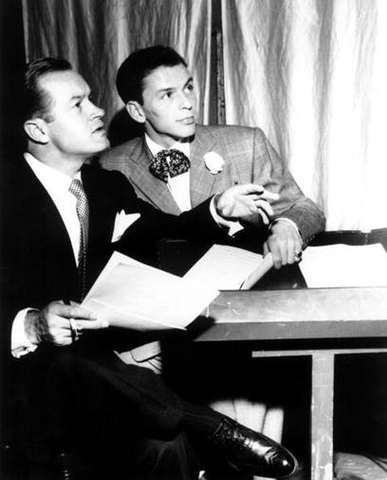
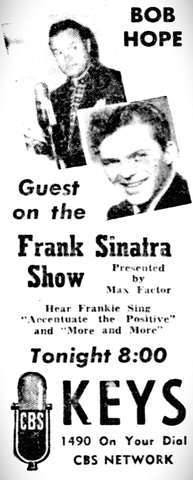
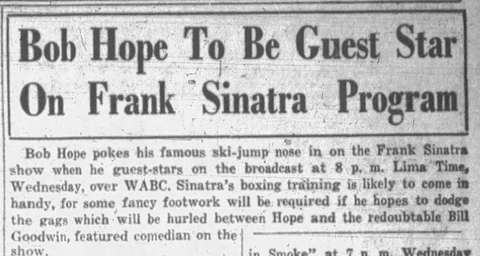
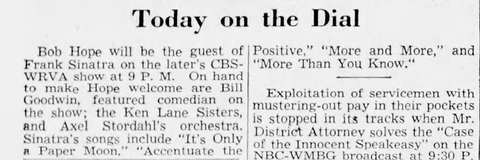
March 8, 1945
Radio
Command Performance
Program #165
Frank Sinatra (m. c.), Frances Langford, Elizabeth Taylor, Margaret O'Brien, Roddy McDowall, Peggy Ann Garner, Gary Crosby.
1. The Trolley Song
2. Brahms Lullaby
Note: The show appears on the officially released CD set: 60 Greatest
Old Time Radio Show "Frank Sinatra & Friends"
Concerts
Command Performance
Program #165
Frank Sinatra (m. c.), Frances Langford, Elizabeth Taylor, Margaret O'Brien, Roddy McDowall, Peggy Ann Garner, Gary Crosby.
1. The Trolley Song
2. Brahms Lullaby
Elizabeth Taylor Roddy McDowall Frank Sinatra Dennis Crosby Margaret O'Brien Nancy Sinatra Gary Crosby Margaret O'Brien with Frank
[image not recovered — source caption: “Frank Sinatra, Elizabeth Taylor, Nancy Sinatra, Roddy McDowell”]
[image referenced in source but could not be recovered]
Rudy Vallee Show
Location: Hollywood
Network: NBC
Sponsor: Dreene Shampoo
Time: 10:30-11:00PM
Xavier Cugat & His Orchestra
Performers: Rudy Vallee, Mary Boland
Announcer: Truman Bradley
Guests: Frank Sinatra
Notes: Confirmed aired on WEAF
Ed O'Brien:
Frank was a no-show for the second time in five weeks.
As the show opens, Rudy answers the phone, thinking it is Sinatra. Monty Woolley is the caller. Frank won't be on the show. He is busy doing a Command Performance for
AFRS for the boys overseas. Monty has a great idea to save the day: The Life of Rudy Vallee." At the show's conclusion, Truman Bradley tells the radio listeners that Frank Sinatra will be on the show after his eastern tour.
Command Performance
Program #165
Frank Sinatra (m. c.), Frances Langford, Elizabeth Taylor, Margaret O'Brien, Roddy McDowall, Peggy Ann Garner, Gary Crosby.
1. The Trolley Song
2. Brahms Lullaby
Elizabeth Taylor Roddy McDowall Frank Sinatra ]
Dennis Crosby Margaret O'Brien Nancy Sinatra Gary Crosby Margaret O'Brien with Frank
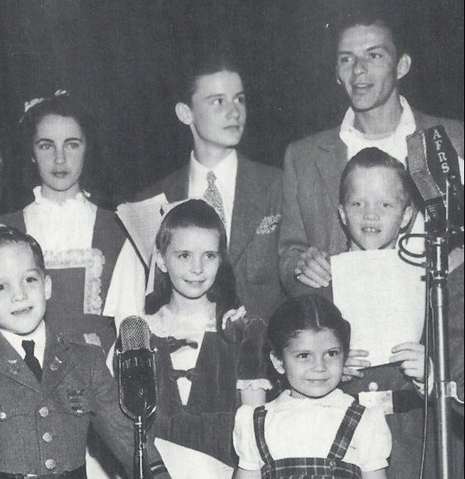
[Manie Sacks telegram about Winchell item]
Manie Sacks: Manie Sacks sent Sinatra a telegram noting Walter Winchell's column reported Sinatra and Columbia executives were 'on the outs,' urging Frank to wire Winchell to correct the record; Frank wired back the next day jokingly affirming Winchell's account and threatening a punch in the nose.
Source: James Kaplan, "Frank: The Voice" (2010).
March 11, 1945
Radio
Command Performance
"Dick Tracy in B-Flat"
Program #162
Bing Crosby, Dinah Shore, Jimmy Durante, Judy Garland, Cass Daley, Frank Sinatra, Frank Morgan, Bob Hope, Harry Von Zell, Jerry Colonna, Andrews Sisters, Joe Lilley Chorus, Lou Crosby Songs:
--One Meat Ball Andrew Sisters
--Saturday Night Is The Loneliest Night Of The Week Frank Sinatra --Cool Water Riders Of The Purple Sage
--Master Of My Fate/Captain Of My Soul Nelson Eddy --Skit: In Sir Sanctum In B Flat
--Eddy tries to sing All Or Nothing At All and Dance With The Dolly. --Frank sings a little bit of Short' nin' & Bread
Show was taped on 1-25-45 and broadcast by AFRS 3-11-45 note: "Saturday Night" was sung on this show. The version done on Max Factor, 1-10-45, is quite different.
Ed
Command Performance
"Dick Tracy in B-Flat"
Program #159
Sinatra is on the far right
© 1997-2024 The Sinatra Archive
This calendar, or any parts thereof, may not be reproduced in any fashion whatsoever without the prior written permission of the publisher (The Sinatra Archive)
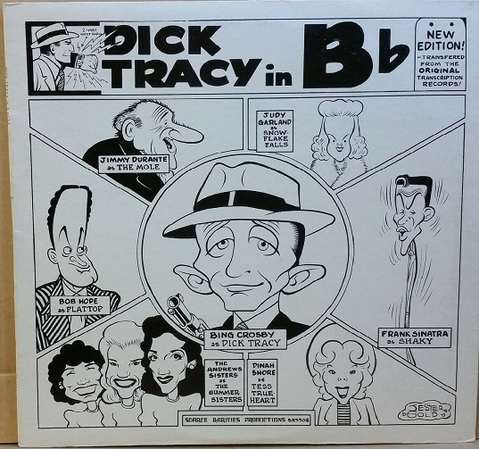
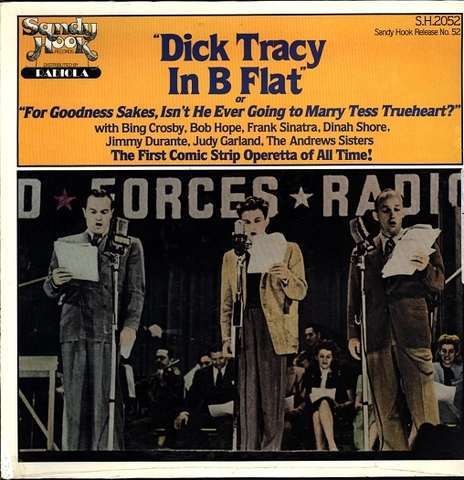
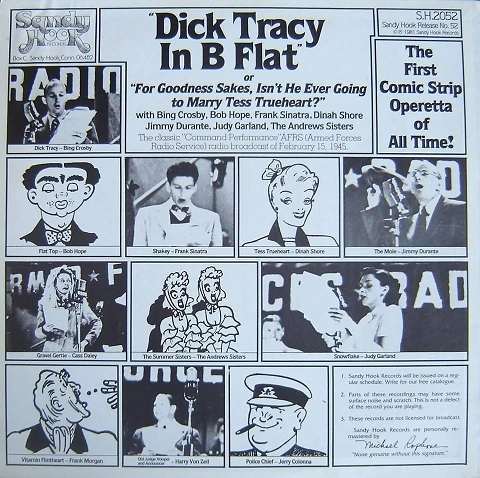
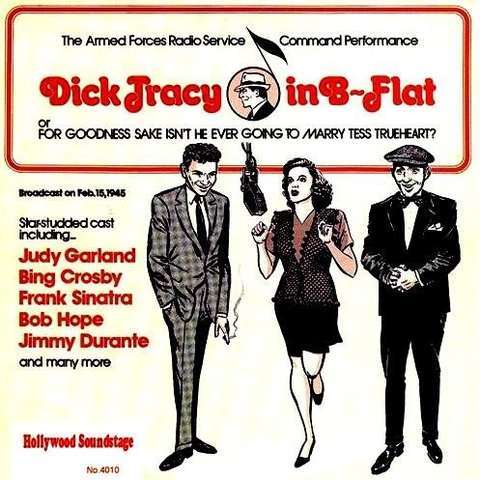
Command Performance
"Dick Tracy in B-Flat"
Program #159
Sinatra is on the far right
[image referenced in source but could not be recovered]
[image referenced in source but could not be recovered]
[image referenced in source but could not be recovered]
[image referenced in source but could not be recovered]
[image referenced in source but could not be recovered]
[image referenced in source but could not be recovered]
Command Performance
"Dick Tracy in B-Flat"
Program #159
Sinatra is on the far right
© 1997-2024 The Sinatra Archive
This calendar, or any parts thereof, may not be reproduced in any fashion
whatsoever without the prior written permission of the publisher (The
Sinatra Archive)
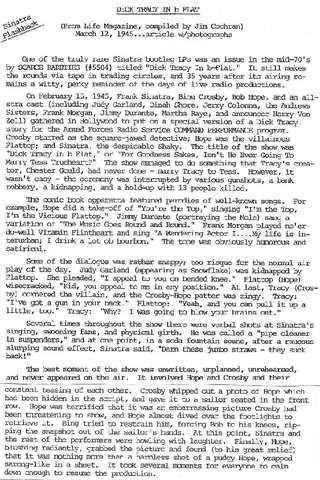
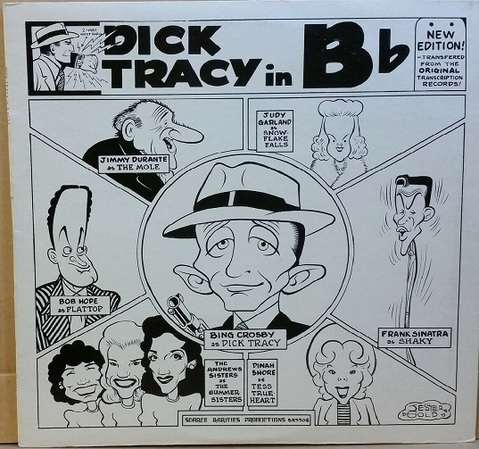
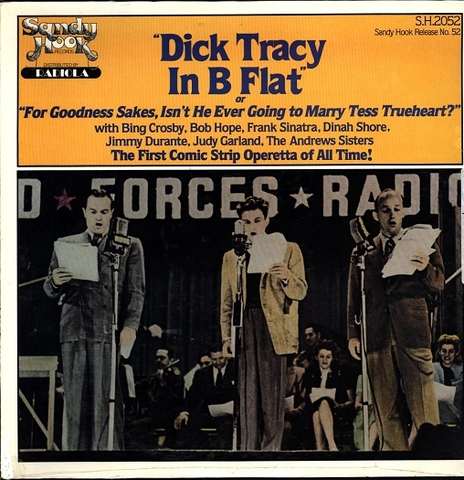
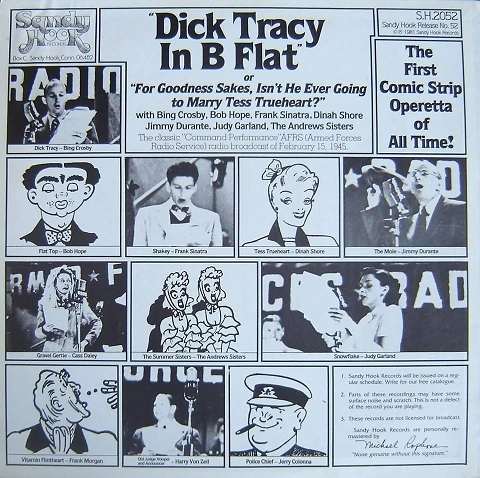
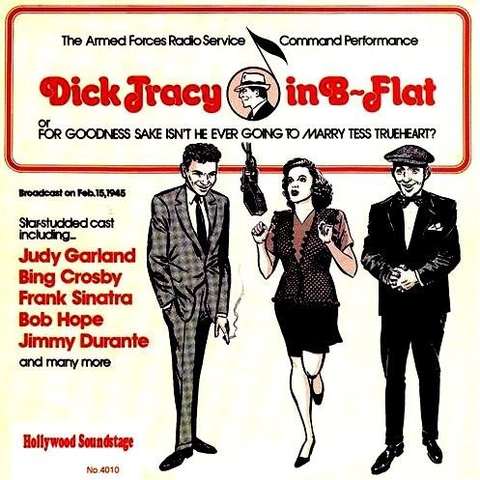
March 14, 1945
Radio
Frank Sinatra Show
Network: CBS
Location: New York City
Show #11
Sponsor: Max Factor
Time: 9:00PM - 9:30PM (EST) Wednesday
Orchestra Conducted By: Axel Stordahl
Arrangements By: Axel Stordahl
Announcer: Bill Goodwin, Don Forbes
Performers: The Ken Lane Singers
Guest: Fred Allen
1. The One I Love
2. What Makes The Sunset
3. I Dream Of You
4. I Begged Her
5. I'll Walk Alone
Notes: Confirmed airing on WABC.
Ed notes:
Frank opens with a swinging "One I Love... Bill Goodwin does his
obligatory "wolf" skit with Frank. Fred Allen tickled Frank's funny
bone in a big way. They did a number of guest appearances on each
other's shows. There are two very funny skits on this one. The
first has Fred straightening out Frank's vocal problems
as The Voice warbles "I Dream Of You," and I do mean
warbles. He plugs 2 of his recordings from the forth-
coming "Anchors Aweigh," "I Begged Her" and
"What Makes
The Sunset." Before singing "I'll Walk Alone," Sinatra mentions
that the Oscar ceremonies will take place the next evening and
then tells the audience that the Jule Styne/Sammy Cahn tune
got his vote. This is very interesting because "I Couldn't Sleep
A Wink Last Night," from "Higher And Higher," was also a nominee.
The Best Song category had 12 nominees. The winner was
"Swinging
On A Star" from "Going My Way."
Frank Sinatra Show
Network: CBS
Location: New York City
Show #11
Sponsor: Max Factor
Time: 9:00PM - 9:30PM (EST) Wednesday
Orchestra Conducted By: Axel Stordahl
Arrangements By: Axel Stordahl
Announcer: Bill Goodwin, Don Forbes
Performers: The Ken Lane Singers
Guest: Fred Allen
1. The One I Love
2. What Makes The Sunset
3. I Dream Of You
4. I Begged Her
5. I'll Walk Alone
Notes: Confirmed airing on WABC.
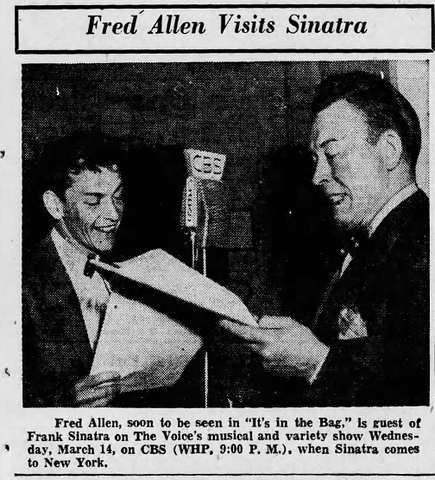
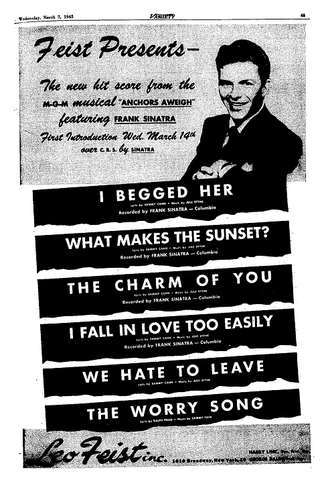
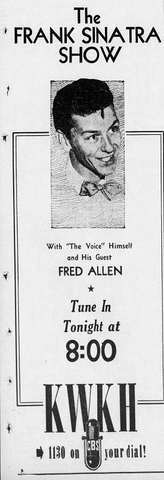
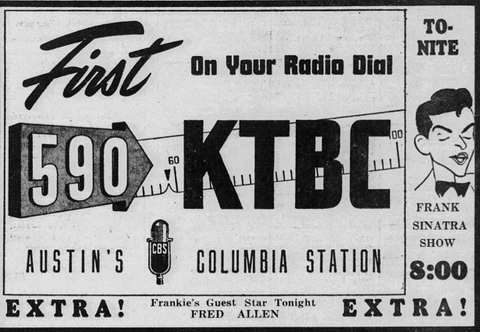
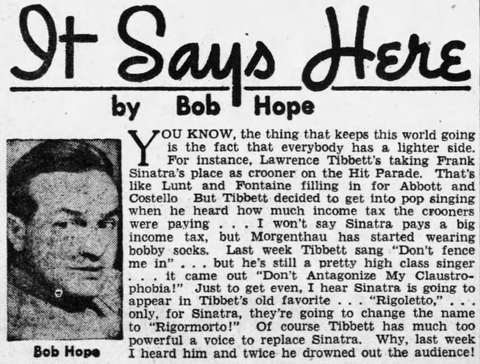
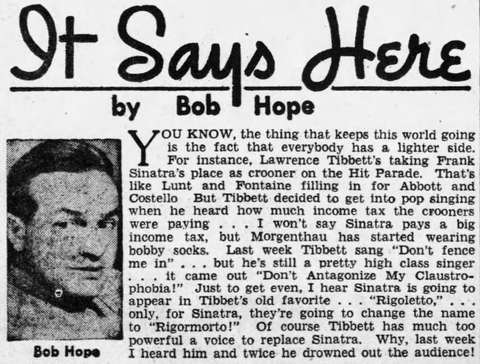
March 17, 1945
The Daily Worker reported that Frank had been invited to address the World Youth Rally at Carnegie Hall, staged by a group called "American Youth for a Free World.". (Source: Richard Havers, "Sinatra" (Dorling Kindersley, 2007).)
March 18, 1945
Radio
Earl Wilson Show
Guest: Frank Sinatra

Earl Wilson Show
Guest: Frank Sinatra
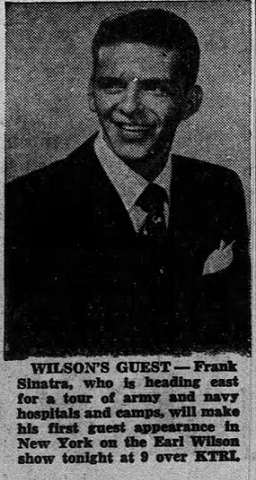
March 20, 1945
Radio
Behind The Scenes at CBS
10:45 - 11:00 P.M.
Tuesday Evening
Location: New York City
Network: CBS (WABC)
Guest: Frank Sinatra
Notes: Confirmed aired on WABC.

March 21, 1945
Radio
Frank Sinatra Show
Network: CBS
Location: New York City
Show #12
Sponsor: Max Factor
Time: 9:00PM - 9:30PM (EST) Wednesday
Orchestra Conducted By: Axel Stordahl
Arrangements By: Axel Stordahl
Announcer: Jerry Lawrence
Comedy: Bill Goodwin
Performers: The Ken Lane Singers
Guest: Lawrence Tibbett, Shirley Booth
1. Great Day
2. The Night Is Young And You Are So Beautiful - w/Ken Lane Singers
3. Saturday Night
4. Medley w/Tibbett
note. Jerry Lawrence was the announcer and Bill Goodwin the comedy
relief. Tibbett was an excellent guest. Shirley Booth was Dottie
Mahoney. Her unique version of "Tangerine" was very funny.
--Ed
Let Yourself Go
Network: CBS
Time: 10:30PM - 11:00PM (EST)
Performers: Milton Berle, Eileen Barton, Frank Sinatra, Joe Besser, others
1. Gertie's Gherkins Hit The Spot (parody) - Frank Sinatra
2. If You Are But A Dream - Frank Sinatra
Notes: Confirmed aired on WABC
Ed O'Brien
Frank also does a tribute piece to America. Berle asks what America means to him. Frank does a long bit on all the good things the country offers --similar to the "House I Live In" -- and then sings a segment of "America The Beautiful."
World Youth Rally
Location: Carnegie Hall
Time: 11:00PM - 11:15PM (EST)
Notes: Confirmed aired on WNEW. Frank Sinatra, Discussing "Tolerance and the Youth Of Tomorrow" at world Youth Rally.
Frank Sinatra Show & 1945 Let Yourself Go & 1945 World
Youth Rally
VARIETY
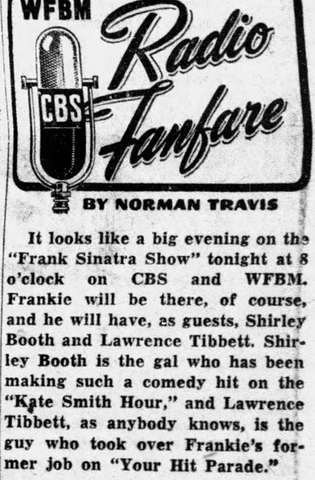
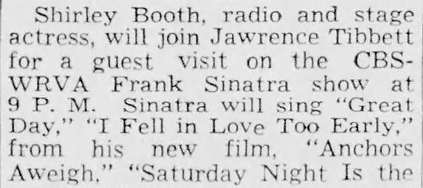
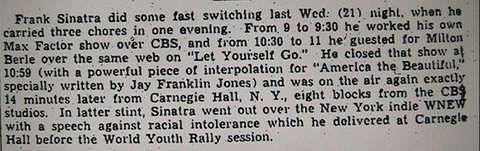
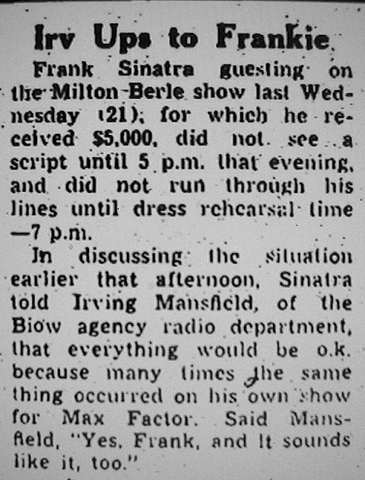
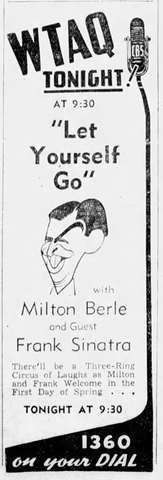
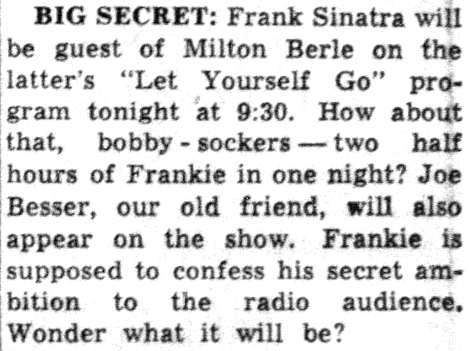
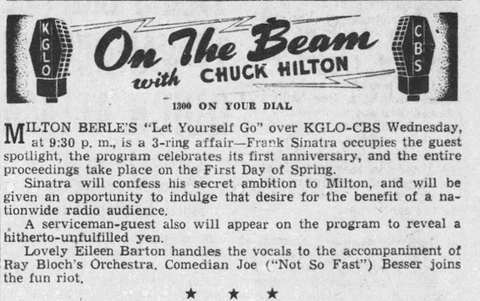
Let Yourself Go
Network: CBS
Time: 10:30PM - 11:00PM (EST)
Performers: Milton Berle, Eileen Barton, Frank Sinatra, Joe Besser, others
1. Gertie's Gherkins Hit The Spot (parody) - Frank Sinatra
2. If You Are But A Dream - Frank Sinatra
Globe Gazette
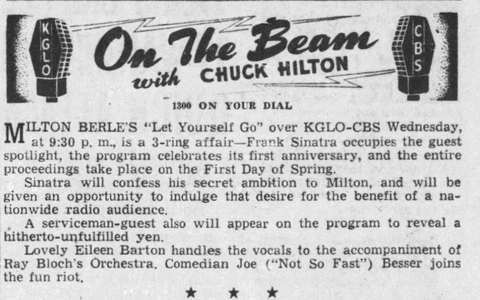
Indianapolis News
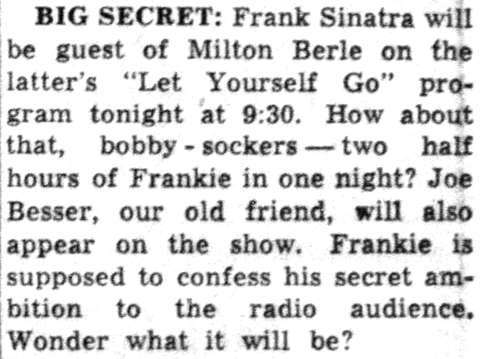
Wednesday, March 21, 1945 at 8 PM
Main Hall
PRESENTED BY
American Youth for a Free World
Rally: American Youth for a Free World
Speech–OtherAddress
Helen Gahagan Douglas, Speaker
Bryn Hovde, Speaker
Frank Sinatra, Speaker
Martha H. Fletcher, Speaker
Dr. Guy Emery Shipler, Speaker
In addition to addresses by the speakers listed here, the program included "an hour-long pageant depicting contributions to the war by youths of the United Nations, [...] native songs of other lands, and [...] folk dances of several European groups."
Pamphlet: Thoughts of an American. By Frank Sinatra. Issued by The International Workers Order as a hand-out for 'I-Am-an-American Day,' Sunday, May 20, 1945. Single sheet folded to 8-9/16" wide x 5-1/8" high.
Excerpted from an address to the World Youth Rally on March 21, 1945, New York City.
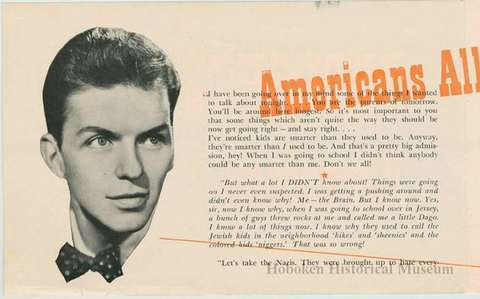
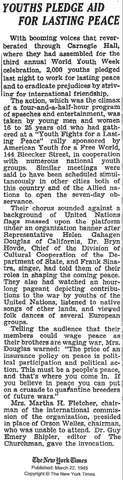
Frank Sinatra Show & 1945 Let Yourself Go & 1945 World Youth Rally
VARIETY
3-28-45
Wednesday, March 21, 1945 at 8 PM
Main Hall
PRESENTED BY
American Youth for a Free World
Rally: American Youth for a Free World
Speech–OtherAddress
Helen Gahagan Douglas, Speaker
Bryn Hovde, Speaker
Frank Sinatra, Speaker
Martha H. Fletcher, Speaker
Dr. Guy Emery Shipler, Speaker
In addition to addresses by the speakers listed here, the program included "an hour-long pageant depicting contributions to the war by youths of the United Nations, [...] native songs of other lands, and [...] folk dances of several European groups."
Pamphlet: Thoughts of an American. By Frank Sinatra. Issued by The International Workers Order as a hand-out for 'I-Am-an-American Day,' Sunday, May 20, 1945. Single sheet folded to 8-9/16" wide x 5-1/8" high.
Excerpted from an address to the World Youth Rally on March 21, 1945, New York City.
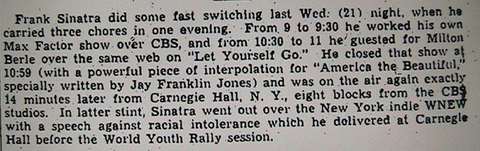
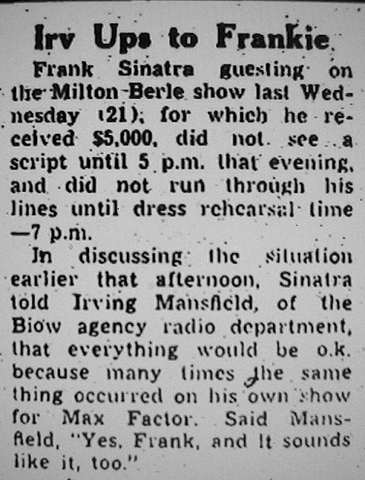
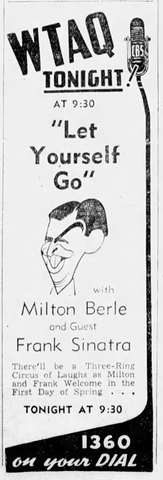
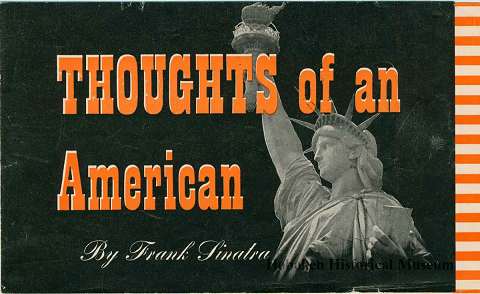
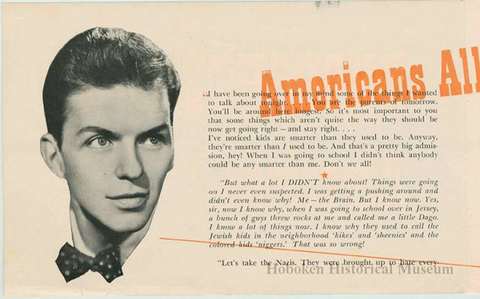
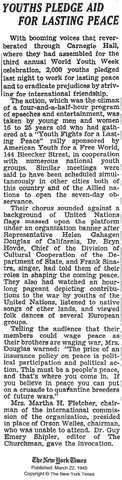
March 24, 1945
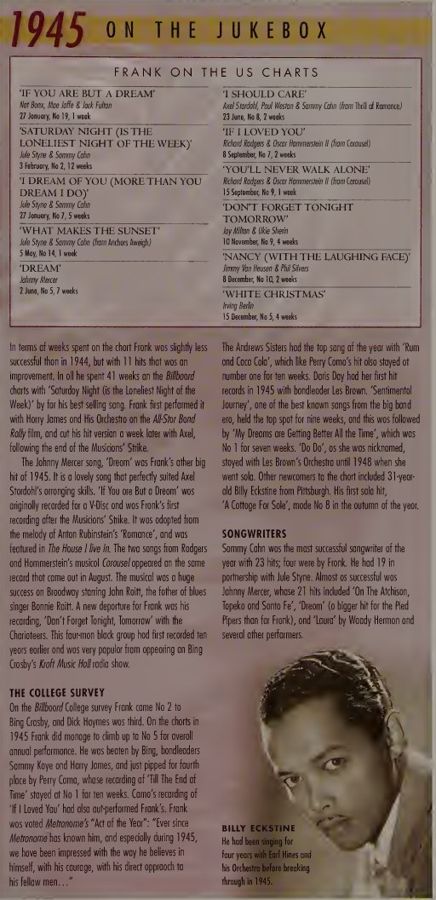
[Photograph: Myth debunked: Sinatra's album wasn't the first Billboard No. 1. From Richard Havers, "Sinatra" (Dorling Kindersley, 2007), p.113.]
The book corrects a common myth that The Voice of Frank Sinatra was the first album to top the Billboard chart. That honor actually belongs to Nat King Cole's King Cole Trio Collection of Favorites, which reached No. 1 a full year before Sinatra's album was released. (Source: Richard Havers, "Sinatra" (Dorling Kindersley, 2007).)
March 28, 1945
Radio
Frank Sinatra Show
Network: CBS
Location: New York City
Show #13
Sponsor: Max Factor
Time: 9:00PM - 9:30PM (EST) Wednesday
Orchestra Conducted By: Axel Stordahl
Arrangements By: Axel Stordahl
Announcer: Jerry Lawrence
Performers: The Ken Lane Singers
Guests: 1,500 WAVES Of The United States Naval Training School
Woman's Reserve
1. Easter Parade
2. I Fall In Love Too Easily
3. Candy
4. Someone To Watch Over Me
5. Ave Maria
Notes: Confirmed airing on WABC. "Ave Maria" is on the CD :
Christmas Songs by Sinatra (Columbia CK66413).
Ed Notes:
Another gem from the Max Factor series.
Frank , Bill Goodwin, Jerry Lawrence (annc. ) and Axel are at the United States Naval Training Station Women's
Reserve in the Bronx.
Frank's guests are 1,500 WAVES. Frank opens with a swinging "Easter Parade" (I wonder who did the chart ? Skitch Henderson,
Sy Oliver and Billy May all told me that the uptempo songs in this era were farmed out to whom ever happened to be
available). Bill Goodwin joins Frank for a comedy skit centering mainly on his desire to date as many WAVES as
possible. Sinatra then sings "I Fall In Love Too Easily," plugging "Anchors Aweigh"(film would be released
on 8-15-45). After a Max Factor commercial, Frank sings "Candy"
(Wish he had recorded that one. Wonder
who did the chart ?). Stordahl then contributes an instrumental. The Gershwin's classic "Someone To
Watch Over Me" is the next Sinatra vocal and is immediately followed by Frank pleading for racial
and religious tolerance. He invokes the first Easter in Judea and all the people in this country who
fought for freedom. The WAVES choral group of 40 voices then accompany him in singing Schubert's
"Ave Maria." At the conclusion Frank says, "Very lovely, girls.' Bill Goodwin comes on to urge all
Americans to buy bonds, warning the listeners that a vicious battle is occurring at that moment
in Germany and Japan awaits. Frank then thanks the WAVES and signs off with the opening lines
of "Put Your Dreams Away." Next week's show will be broadcast from Philadelphia. Frank's guests
will be Tom Howard and his "It Pays To Be Ignorant" panel.
Note: The announcer was Jerry Lawrence. He was a D.J. in the early '40s and plugged
Frank's songs. Lawrence was a very successful announcer on radio and TV.
He lived to be 93 years old.
--Ed
note: I found quite a few entries indicating that Frank would be singing "The Lord's Prayer" on this show. I was told
by people who worked on Frank's radio shows that songs would go in and others go out right up to air time. Stordahl
was not very good writing up tempo charts. Often there would be a frantic search for a musician competent enough to
pen a quick arrangement. Frank would sing "The Lord's Prayer" on the 10-26-49 Light Up Time."
--Ed
Frank Sinatra Show
Network: CBS
Location: New York City
Show #13
Sponsor: Max Factor
Time: 9:00PM - 9:30PM (EST) Wednesday
Orchestra Conducted By: Axel Stordahl
Arrangements By: Axel Stordahl
Announcer: Jerry Lawrence
Performers: The Ken Lane Singers
Guests: 1,500 WAVES Of The United States Naval Training School
Woman's Reserve
March 29, 1945
Radio
Music That Satisfies
WABC
Frank Sinatra, Monica Lewis, Paul Baron Orchestra
Note: Frank subbed for Johnnie Johnston
Concerts
Music That Satisfies
WABC
Frank Sinatra, Monica Lewis, Paul Baron Orchestra
Note: Frank subbed for Johnnie Johnston
MUSICAL SATISFACTION: Monica shared this remarkable photo of herself with
Frank Sinatra several times on her social media channels over the years. But this is the first time we've actually seen how it appeared, captioned and in print, in the September 1945 issue of METRONOME magazine. Frank stepped in as a celebrity substitute for Monica's regular cohost, Johnnie Johnston, on the hit CBS Radio program "The Chesterfield Hour: Music that Satisfies," which was broadcast on both U.S. coasts twice weekly out of New York. Said Monica of Frank in a substantial passage on her friendship with the singer in her 2011 memoir, HOLLYWOOD THROUGH MY EYES: "He was generous, kind, and respectful to me whenever and wherever I encountered him. I will always remember him as he was in the 1940s--a cute, skinny guy with wavy hair, a killer grin, truly blue eyes... and that voice."
Emacs!
Emacs!
Frank Sinatra, Monica Lewis, Blain Vito-
[image referenced in source but could not be recovered]
[image referenced in source but could not be recovered]
Music That Satisfies
WABC
Frank Sinatra, Monica Lewis, Paul Baron Orchestra
Note: Frank subbed for Johnnie Johnston
MUSICAL SATISFACTION: Monica shared this remarkable photo of herself with Frank Sinatra several times on her social media channels over the years. But this is the first time we've actually seen how it appeared, captioned and in print, in the September 1945 issue of METRONOME magazine. Frank stepped in as a celebrity substitute for Monica's regular co-host, Johnnie Johnston, on the hit CBS Radio program "The
Chesterfield Hour: Music that Satisfies," which was broadcast on both U.S. coasts twice weekly out of New York. Said Monica of Frank in a substantial passage on her friendship with the singer in her 2011 memoir,
HOLLYWOOD THROUGH MY EYES: "He was generous, kind, and respectful to me whenever and wherever I encountered him. I will always remember him as he was in the 1940s--a cute, skinny guy with wavy hair, a killer grin, truly blue eyes... and that voice."
Frank Sinatra, Monica Lewis, Blain Vito
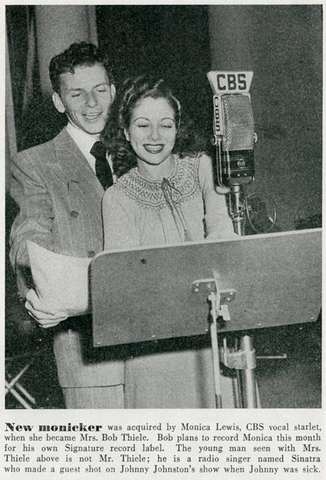
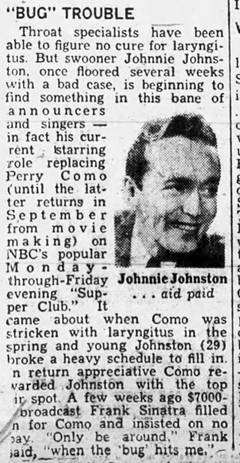
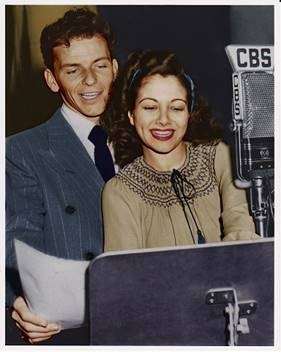
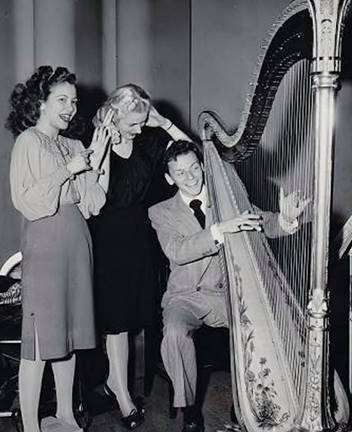
April 1, 1945
Concerts
Monte Carlo, New York, NY
Victory Brunch
Frank Sinatra, Beatrice Lillie, Bill Robinson
Ed Sullivan was Master of Ceremonies
Monte Carlo, New York, NY
Frank Sinatra, Beatrice Lillie, Bill Robinson
Ed Sullivan was Master of Ceremonies
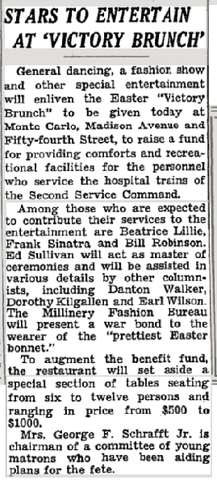
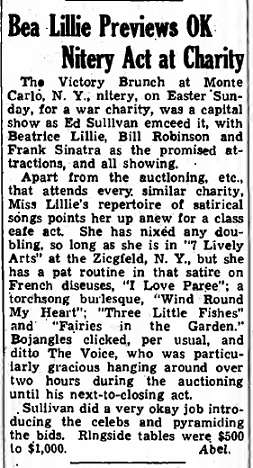
April 1945
Frank Sinatra met twenty-two-year-old film star Ava Gardner for the first time at the Mocambo nightclub on the Sunset Strip. Gardner was married to Mickey Rooney at the time; Frank told her, half-joking, that he'd have married her himself if he'd met her first, and kept her phone number tucked in his wallet “for future reference.” Their paths would not seriously cross again for a few more years. Source: J. Randy Taraborrelli, Sinatra: Behind the Legend.
[Frank Meets Ava Gardner At The Mocambo]
Nancy Sinatra: On a night out with friends at the Sunset Strip's Mocambo nightclub, Frank was introduced to 22-year-old Ava Gardner, then married to Mickey Rooney. He reportedly joked that he wished he'd met her before Mickey, sparking an instant flirtation that went nowhere at the time since she knew he was a married man.
Source: Nancy Sinatra, Frank Sinatra: An American Legend, 1995.
[Sinatra reacts to FDR's death]
Kaplan: When FDR died in April 1945, Sinatra, in New York, lit a candle at St. Patrick's Cathedral and drove to Hyde Park for a memorial service, feeling deep but not overwhelming sadness, as though he'd lost a beloved uncle.
Source: James Kaplan, "Frank: The Voice" (2010)
April 4, 1945
Radio
Frank Sinatra Show
Network: CBS
Location: Academy Of Music In Philadelphia, PA.
Show #14
Sponsor: Max Factor
Time: 9:00PM - 9:30PM (EST) Wednesday
Orchestra Conducted By: Axel Stordahl
Arrangements By: Axel Stordahl
Announcer: Bill Goodwin, David Lee
Performers: The Ken Lane Singers
Guest: Tom Howard & his board of experts from the Phillip Morris program "It Pays To Be Ignorant."
1. I Can't Give You Anything But Love (Sy Oliver arg.) comedy bit with Bill Goodwin
2. When Your Lover Has Gone
Frank during intro mentions song is one of his latest Columbia Recording releases and he "hopes
Mannie is happy."
3. Like Someone In Love
Tom Howard, Bill Goodwin, Sinatra plus Board of
Experts doing a bit.
4. Ol' Man River "destined to be an everlasting favorite.
One of the greatest American songs we have."
Frank's guest next week will be Myrna Loy & Sgt. Sy Oliver
Notes: Confirmed airing on WABC. Thanks to Ed O'Brien for the setlist
Concerts
Stage Door Canteen, Academy of Music, Philadelphia, PA
Note: Sinatra broadcast his Frank Sinatra Show from the Academy of Music but apparently then did another performance in the Stage Door Canteen in the lower level of the hall
Ritz-Carlton Hotel Ballroom, Philadelphia, PA
Party for Columbia Record Dealers and personnel given by Motor Parts Company Songs included:
--Saturday Night
--I Begged Her
--Old Man River
Frank Sinatra Show
Network: CBS
Location: Academy Of Music In Philadelphia, PA.
April 4, 1945 Frank Sinatra lectures about Tolerance
Fellowship House, Philadelphia, PA
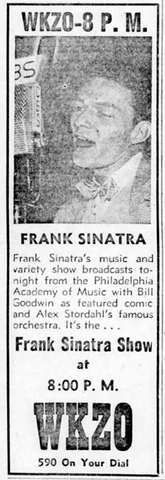
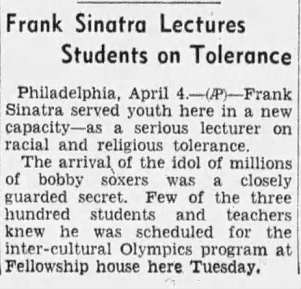
Ritz-Carlton Hotel Ballroom, Philadelphia, PA
Party for Columbia Record Dealers and personnel given by Motor Parts Company Songs included:
--Saturday Night
--I Begged Her
--Old Man River
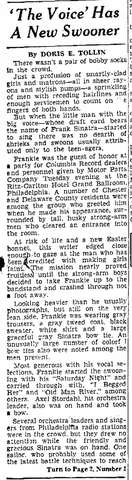
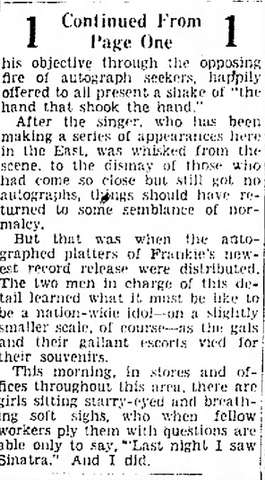
Stage Door Canteen, Academy of Music, Philadelphia, PA
Note: Sinatra broadcast his Frank Sinatra Show from the Academy of Music but apparently then did another performance in the Stage Door Canteen in the lower level of the hall:
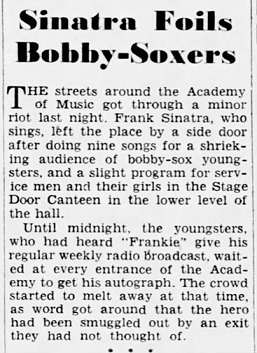
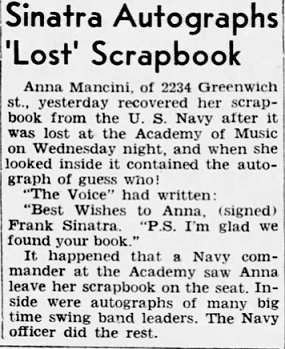
Frank and Nancy at the Trocadero nightclub in Hollywood in 1945. “If he loved you, that was it,” said their daughter Nancy Jr. of Frank. “He loved you through and through. There would be no change in that.” Source: photo and caption from J. Randy Taraborrelli, Sinatra: Behind the Legend (mptvimages.com).
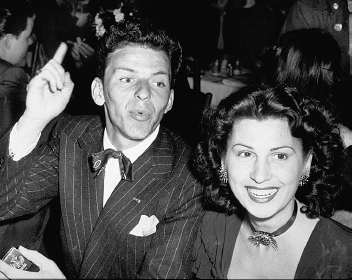
April 6, 1945
Radio
Jerry Lawrence Records
Network: WMCA
Time: 8:03PM - 9:00PM (EST)
Guests: Frank Sinatra
Notes: Confirmed aired on WMCA and is listed as "Guest."
Ed O'Brien:
Here is a little additional information: Title of Lawrence's show was "Air Theatre." Frank's hour appearance was built around the subject of tolerance: race, religion, ethnicity. A month later Frank would star in the 10 minute short "The House I Live In." The later events in 1945, after his USO tour and appearance in Gary, Indiana, would cause quite a bit of controversy. His statements would be seen by many as subversive and the FBI would find him to be a person of interest.
Note: Sinatra did not appear after all. He was mobbed by fans and had to cancel. See article below.
Note: Jerry Lawrence was an all-around success. He was an actor, talk- show host, game show moderator and a radio announcer. Lawrence was on Frank's Max Factor show in the spring of 1945. He lived to 93 years old.
Ed
Jerry Lawrence Records
Network: WMCA
Time: 8:03PM - 9:00PM (EST)
Guests: Frank Sinatra
Cancelled Appearance
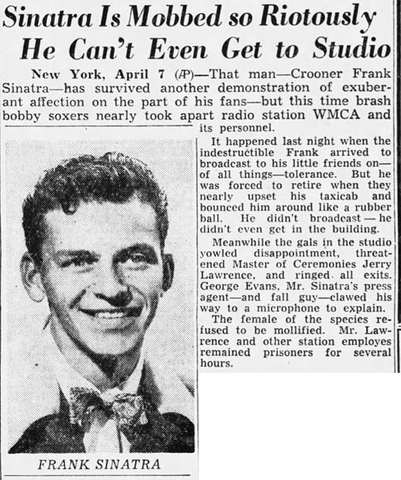
April 11, 1945
Radio
Frank Sinatra Show
Network: CBS
Location: Broadcast from Camp Shanks, Orangetown, NY
Show #15
Sponsor: Max Factor
Time: 9:00PM - 9:30PM (EST) Wednesday
Orchestra Conducted By: Axel Stordahl
Arrangements By: Axel Stordahl
Announcer: Bill Goodwin, Don Forbes
Performers: The Ken Lane Singers
Guest: Myrna Loy, Sy Oliver
1. I'm Beginning To See The Light
2. My Melancholy Baby
3. Yes Indeed - w/Sy Oliver
4. (All Of A Sudden) My Heart Sings
5. How Deep Is The Ocean?
Notes: Confirmed airing on WABC.
Ed O'Brien: note: Frank closed with "How Deep Is The Ocean? "
Marked the first time he sang it on a commercial radio broadcast.
Concerts
Victory Hall, Camp Shanks, Orangetown, NY
Sinatra performed a concert in Victory Hall at the Camp before the broadcast of his radio show.
Frank Sinatra Show
Network: CBS
Location: Broadcast from Camp Shanks, Orangetown, NY
Show #15
Sponsor: Max Factor
Time: 9:00PM - 9:30PM (EST) Wednesday
Orchestra Conducted By: Axel Stordahl
Arrangements By: Axel Stordahl
Announcer: Bill Goodwin, Don Forbes
Performers: The Ken Lane Singers
Guest: Myrna Loy, Sy Oliver
Here's a nice photo of Sinatra and Myrna Loy from 1945. Frank Sinatra visited Myrna Loy on the set of THE THIN MAN GOES HOME ('45). He was filming ANCHORS AWEIGH ('45) nearby.
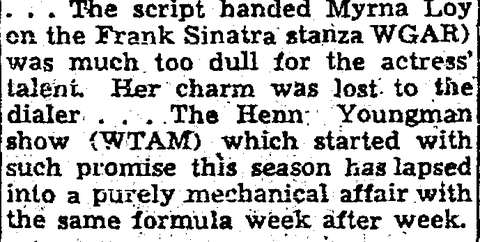
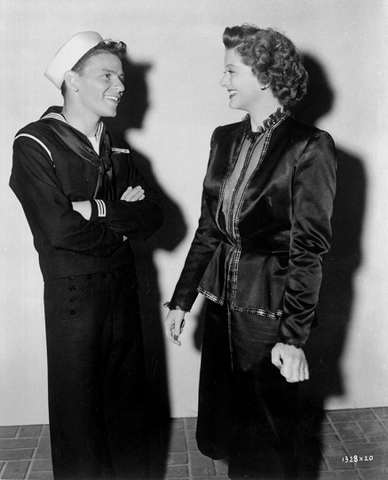
Victory Hall, Camp Shanks, Orangetown, NY
Sinatra performed a concert in Victory Hall at the Camp before the broadcast of his radio show.
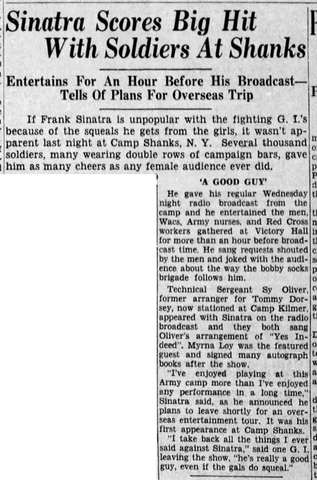
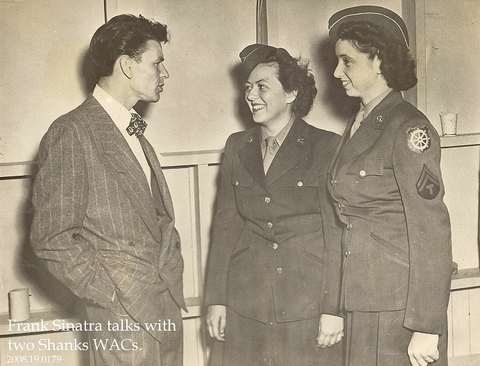

April 12, 1945
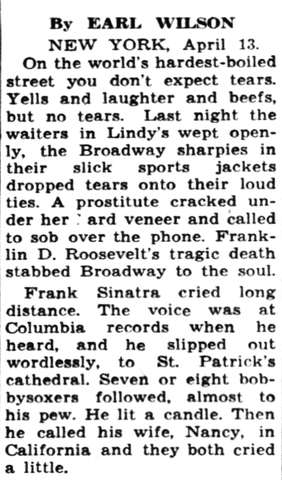
Nancy, then four years old, recalled hearing the radio announcer report President Roosevelt's death and understanding even at that young age that her father had lost a hero.
Frank Sinatra (quoted): "The President is dead."
Source: Nancy Sinatra, Frank Sinatra: An American Legend, 1995.
April 18, 1945
Radio
Frank Sinatra Show
Network: CBS
Location: Hollywood
Show #16
Sponsor: Max Factor
Time: 9:00PM - 9:30PM (EST) Wednesday
Orchestra Conducted By: Axel Stordahl
Arrangements By: Axel Stordahl
Announcer: Bill Goodwin, Don Forbes
Performers: The Ken Lane Singers
Guest: Frances Langford
1. There'll Be A Hot Time In The Town Of Berlin
2. Homesick That's All
3. Surrey With The Fringe On Top - w/Ken Lane Singers
4. Goin' Home - w/Ken Lane Singers
Notes: Ed O'Brien emphasizes that this is the radio broadcast that has the great heartfelt tribute to Franklin D. Roosevelt before Sinatra sings "Going Home." Confirmed airing on WABC.
Note: After Frank sang "Surrey . . .", Francis Langford did the Cole Porter classic, "Ev'ry Time We Say Goodbye."
"Frank's reading of "Homesick" runs almost four minutes.
--Ed
Shrine Auditorium, Los Angeles, CA
Democratic Tribute to FDR
Sinatra sang "Home On The Range"
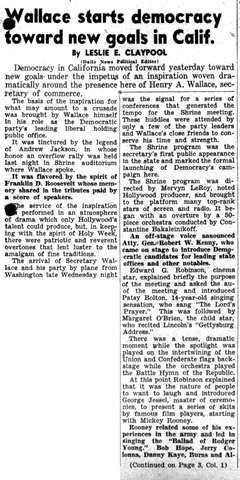
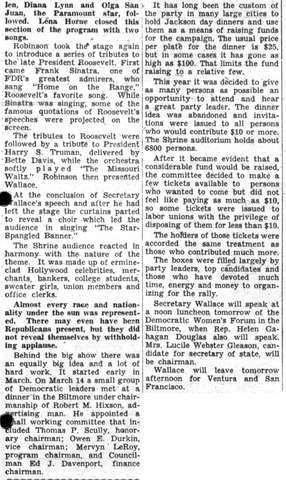
April 23, 1945
Concerts
Hollywood Bowl, Los Angeles, CA
Tribute to the late President Franklin D Roosevelt
Sinatra sang: "Goin' Home"
Hollywood Bowl, Los Angeles, CA
Tribute to the late President Franklin D Roosevelt
Sinatra sang: "Goin' Home"
[image referenced in source but could not be recovered]
[image referenced in source but could not be recovered]
[image referenced in source but could not be recovered]
[image referenced in source but could not be recovered]
April 24, 1945
Radio
Mail Call
Network: AFRS
Show: #142
Host: Betty Hutton
Guests: B. S. Pulley, Vivian Blaine, Frank Sinatra, The King Sisters, William Demarest
Announcer: Ken Niles
Sinatra Arrangements by: Axel Stordahl
The Armed Forces Radio Service Orchestra
1. opening
2. Stuff Like That There - Betty Hutton
3. comedy - Frank Sinatra & Betty Hutton
4. I Can't Give You Anything But Love - Frank Sinatra
5. comedy - Vivian Blaine, Frank Sinatra & Betty Hutton
6. The Man I Love - Vivian Blaine
7. comedy - William Demarest, Frank Sinatra & Betty Hutton
8. The Jersey Bounce - The King Sisters
9. skit - William Demarest, Frank Sinatra, B. S. Pulley & Betty Hutton
10. Dream - Frank Sinatra
11. closing
Mail Call
Network: AFRS
Show: #142
Host: Betty Hutton
Guests: B. S. Pulley, Vivian Blaine, Frank Sinatra, The King Sisters, William Demarest
Announcer: Ken Niles
Sinatra Arrangements by: Axel Stordahl
The Armed Forces Radio Service Orchestra
[image referenced in source but could not be recovered]
April 25, 1945
Radio
Frank Sinatra Show
Network: CBS
Location: Hollywood
Show #17
Sponsor: Max Factor
Time: 9:00PM - 9:30PM (EST) Wednesday
Orchestra Conducted By: Axel Stordahl
Arrangements By: Axel Stordahl
Announcer: Bill Goodwin, Don Forbes
Performers: The Ken Lane Singers
Guest: Danny Kaye
1. Good, Good, Good
2. Laura
3. Lonely Love
4. Lulu's Back In Town - w/Ken Lane Singers
5. Candy - w/Ken Lane Singers
6. The Number Two Boys - w/Danny Kaye
7. Put Your Dreams Away
Notes: Confirmed airing on WABC.
Ed O'Brien:
A terrific Sinatra show Frank opened with
'Good, Good, Good" and then Bill Goodwin did a very
funny skit with him. Otto Preminger's film "Laura" had
been a huge film at the B.O. and the Mercer/Raksin
title song was a real gem.Frank's version here was
done with a Stordahl arrangement. He would not get
around to recording the song at Columbia until October
of 1947. "Lonely Love," Frank called a lovely ballad
that would be a huge hit. The highlights of the show
were Frank's vocals, with Sy Oliver arrangements,
of "Lulu's Back In Town" and "Candy." Two genuine
jazz classics. Danny Kaye and Frank did two
comedy skits, The second would include
a number of song parodies. "Put Your Dreams
Away" closed the half-hour. Sinatra would sing
four tunes that would never be recorded for
commercial release. A memorable Max
Factor show.
Ed O'Brien:
Song listing is from AFRS broadcast. The CBS
original broadcast has never been in circulation.
I thing the additional tune is "Candy." It would fit per-
fectly where the second commercial should be.
It doesn't match up with Frank's version on his
Frank Sinatra Show
Guest: Danny Kaye
"Lonely Love"
Ed O'Brien:
Frank was obviously doing a favor for his cousin Ray. The song is passable at best. Here is the cover of the sheet music that was issued in early May of 1945
Here is a photo from the 4/25 show and a ticket to that show.
Ed note:Stormy Weather didn't make it.
Frank was a guest of KECA in
L.A.
Notice how " for" is spelled.
Citizens News L.A.
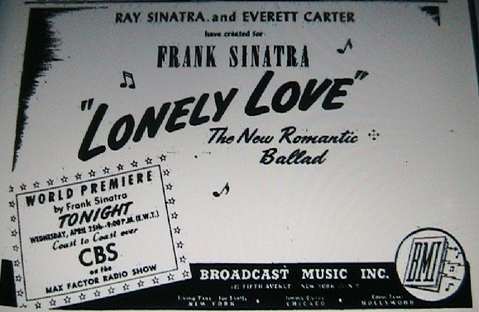
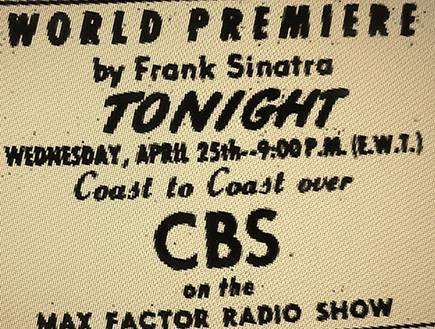
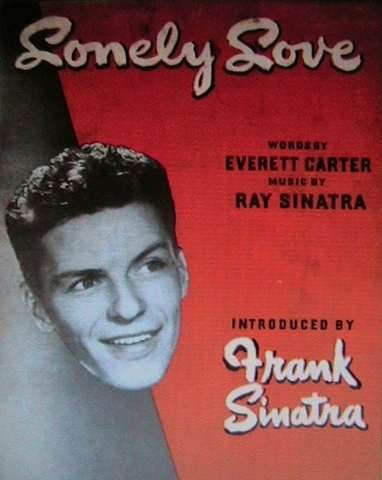
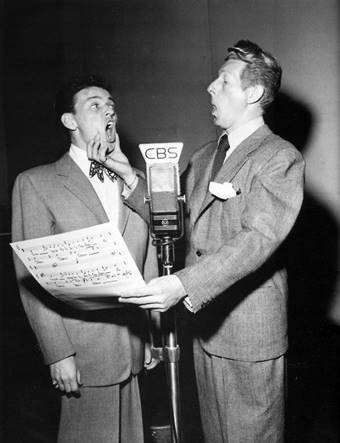
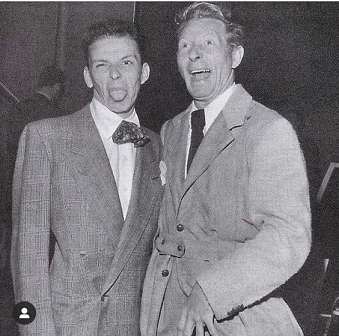
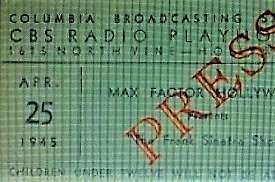
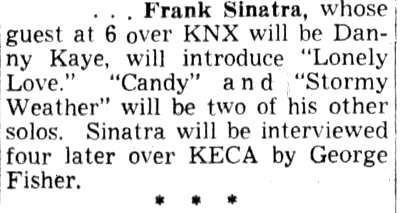
Pomona Progress Bulletin
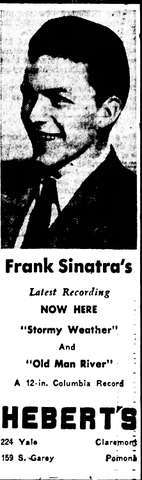
plugging the song that failed to make the show
Notice it is a 12 inch 78
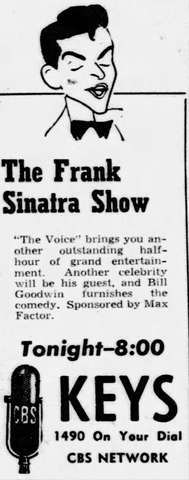
April 26, 1945
Studio
Los Angeles
COLUMBIA STUDIOS
"A THOUSAND AND ONE NIGHTS"
Orchestra conducted by Morris Stoloff
Arranged by Axel Stordahl
37 piece orchestra
All Or Nothing At All
Ed O'Brien Notes: vocal runs 1:17
recorded especially for the film.
Sinatra did the vocal as a favor
for his pal Phil Silvers, who lip synchs
to Frank's recording.
May 1945
[Sinatra meets Bogart and Bacall at the Players]
Kaplan: One night in May 1945, Sinatra and his entourage stopped at Preston Sturges's restaurant the Players on Sunset, encountering Humphrey Bogart and his new twenty-year-old bride Lauren Bacall. Bogart needled Sinatra ('Make me faint') and the two hit it off, with Bogart inviting him to sit and have a drink.
Source: James Kaplan, "Frank: The Voice" (2010)
[The All-Star Bond Rally]
Santopietro (Filmography): Short film made for the U.S. Treasury Dept. War Activities Committee. Twentieth Century-Fox Film Corporation. Produced by Fanchon, directed by Michael Audley, written by Don Quinn. Sinatra appeared as himself alongside Bing Crosby, Linda Darnell, Betty Grable, Bob Hope and Harry James and His Orchestra, singing the solo 'Saturday Night (Is the Loneliest Night in the Week).'
No corresponding dated entry could be identified in the chronology for this film/context.
Source: Tom Santopietro, "Sinatra in Hollywood" (2008), Filmography
[V-E Day prompts USO tour plan]
Kaplan: Less than a month after FDR's death, the war in Europe ended; publicists George Evans and Jack Keller decided the time had come for Sinatra to entertain troops overseas, partly to quiet critics who called him a draft dodger.
Source: James Kaplan, "Frank: The Voice" (2010)
May 1, 1945
Studio
Hollywood
HCO1377 Put You Dreams Away (For Another Day)
(R. Lowe/P. Mann/S. Weiss)
Barton Music Corp. (ASCAP) 1942
Arrangement & Conducted by Axel Stordahl
-1 (3:00) CD: Columbia Years 43-52 Vol. 2
CD: 09274 Greatest Hits-The Early Years, Vol 1
LP: C6X 40343 The Voice-The Columbia Years, 43-52 (6-LP Set)
LP: CL-2474 Greatest hits, The Early Years, Vol. 1
LP: C2L-6 Frank Sinatra Story in Music
78: 36814
HCO1378 Over The Rainbow
w/The Ken Lane Singers
(H. Arlen/E.Y. Harburg)
(from The Wizard Of Oz)
Leo Feist, Inc. (SACAP) 1939
Arrangement & Conducted by Axel Stordahl
alt take (3:16) CD: Columbia Years 43-52 Vol. 2
-1 LP: HL-7405 Romantic Scenes From The Early Years
LP: CL-743 The Voice
78: 37258
HCO1379 You'll Never Walk Alone
w/The Ken Lane Singers
(R. Rodgers/O. Hammerstein II)
(from Carousel)
Williamson Music, Inc. (ASCAP) 1945
Arrangement & Conducted by Axel Stordahl
-1 (3:25) CD: Columbia Years 43-52 Vol. 2
LP: C2L-6 Frank Sinatra Story In Music
78: 50066
78: 36825
HCO1380 If I Loved You
(R. Rodgers/O. Hammerstien II)
(from Carousel)
Williamson Music, Inc. (ASCAP) 1945
Arrangement & Conducted by Axel Stordahl
-1 (3:03) CD: Columbia Years 43-52 Vol. 2
LP: C2L-6 Frank Sinatra Story In Music
78: 50066
78: 36825
The Ken Lane Singers: Stewart M. Bair, Ken Cameron, Raymond Clark, Ruth
Clark, John Glaha, Elva LarsKellogg, Dudley Kuzell, Kermit Lane, Norma Larsen, Mona Ann Matthiason, Sydney Pepple, Orville Race
Violins: V. Arno, P. Ellis, S. Freed, Jr., G. Joyce, G. Kast, S.
Kindler,S Levine, A. Perrotti, N. Pisani, T. Rosen, M. Russell, O. Vail;
Violas: A. Harshman, M. Perlmutter, D Sterkin; Cellos: F. Goerner, A.
Kafton, J. Sewell; Saxes: H. Beau, E. Gershman, L. Hartman, H. Haymer, W. Smith; Horns: J. Stagliano; Trumpets: C. Griffard, L. Mach, H.
Nelson;Trombones: C. Loeffler, J. Skiles, P. Weigand; Piano: M. McIntyre;
Guitar: D. Barbour; Bass: A. Shapiro; Drums: R. Hagan; Harp: I.
Clow
NOTE: Sinatra Scholar Ed O'Brien observes: "What a session!
Sinatra finally recorded his theme song. He laid down the song that the American Film Institute picked as the greatest ever from a motion picture from what was then the hottest show on Broadway. All four still offer wonderful listening pleasure."
May 2, 1945
Radio
Frank Sinatra Show
Network: CBS
Location: Hollywood
Show #18
Sponsor: Max Factor
Time: 9:00PM - 9:30PM (EST) Wednesday
Orchestra Conducted By: Axel Stordahl
Arrangements By: Axel Stordahl
Choral Group: Ken Lane Singers
Comic: Bill Goodwin,
Announcer: Lou Crosby
Guests:: Bing Crosby, Lorraine Russell( Andy's sister )
1. Victory Polka Frank
2. A Friend Of Yours Frank & KLS
3. Medley of Parodies Frank & Bing
Little Sir Echo/Saturday Night/That's The Human
Thing To Do//Headin' For The Last Roundup/If I
Had My Way/Falling Upon The Floor/I Wonder
What Has Become Of Crosby/Daring Young
Man On Wednesday Eve/Learn To Croon/ Sunday,
Monday Or Always/People Will Say We're In Love
4. This Heart Of Mine Bing
5. The Night Is Young And You're So Beautiful Frank & KLS
Notes: Confirmed airing on WABC.
Ed O'Brien considers this to probably be the best of Sinatra's radio shows with Crosby in the 40s. Sinatra opened with "Victory Polka." The medley with Crosby is still great to hear, O'Brien adds.
note: When Frank appeared on Bing's Kraft Music Hall, 11-16-44, he was in Buffalo, N.Y. Bing's show was in Hollywood. The following Monday night(20), Bing was Frank's guest on the Vimms show. Bing was still in Hollywood and Frank was in N.Y.C. There actual gettogether on 5-2-45 benefitted greatly from both men being in the same studio. They had a great chemistry and you can heard the difference in the long medley, Bing was born on May 3, 1903.
Ed
Frank Sinatra Show
Guests:: Bing Crosby, Lorraine Russell( Andy's sister )
Note: Bing and Frank had been on a number of radio shows prior to the 5-2-45 show.
They did Command Performance, Bond shows, March of Dimes, Trib to FDR and others. And they were on the same stage.
--Ed
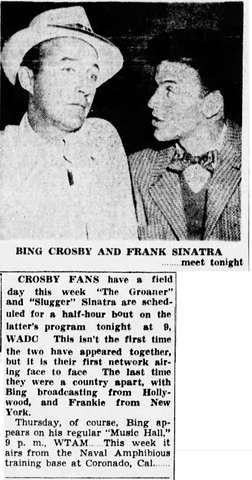
May 8, 1945
Studio
RKO - Los Angeles
7:30 to 10:30 PM
Tuesday evening
THE HOUSE I LIVE
Orchestra conducted by Constanin Bakaleinikoff
Arranged by Axel Stordahl
35 piece orchestra
Manny Harmon contractor
The House I Live In
If You Are But A Dream
10 minute short on racial tolerance
Sinatra and Mervyn LeRoy received special Oscars for outstanding achievement
NEW YORK PUBLIC LIBRARY FOR THE PERFORMING ARTS
The Sinatra: An American Icon exhibition has many wonderful media stations for visitorssongs, excerpts froom television specials, films trailers and featurettes, and a juke box. But the one that is garnering the most attention is "The House I Live In," the RKO short film that won Sinatra his first Oscar.
In 1945, Frank Sinatra used his popularity as a radio and recordings star to promote tolerance, especially in speaking to youth groups. He sang and recorded the song, "The House I Live In" by Lewis Allan and Earl Robinson, performing it on the Armed Forces Service's V-J Day Broadcast. In the exhibition, it can also be heard on the juke box and the videotaped live "Concert of the Americas." Visible in the exhibition is the sheet music issued concurrently with the film. The inside front cover of the song reprints the full lyrics of "The House I Live In" including an additional three verses and alternate double bridge. Unlike the remainder of the song, the bridges have very specific references to American history and then-current World War II references, connecting the battle of Concord and Gettysburg to Midway and Bataan. The producers Frank Ross and Mervyn LeRoy made the short subject for RKO Radio Pictures, combining footage of Sinatra recording the ballad "If This is But a Dream" with a narrative section of him coming across a group of boys harassing a foreign-looking boy and teaching them about tolerance with the title song. In the phrase recommended for publicizing the featurette: "The theme of Tolerance, impassioned and thrilling in its fervent plea in Frank Sinatra's sincere, human way.. an epochal inspiration of the public conscience." We know this information because the Billy Rose Theatre Division has a full exploitation sheet (flyer) for the short subject. An exploitation sheet was developed by the studio publicity department to be shipped to theater managers in advance of the booking. It includes 3 pages of squibs, articles to be planted in local newspapers, and suggested publicity campaigns. The back page has samples of one-sheets, lobby cards, stills, and slugs for the film so that all images, text, logos, and fonts used locally followed the rules set by the studio. Headlines for the articles focused on "Frank Sinatra Inspires Youth" and "As Sinatra Sees It." The exploitation (a word then used without evil connotations) recommended cross-promotion with scouting, veterans and school groups, as well as Sinatra fan clubs. It also included "Commended by F.D.R:" claiming that Sinatra had visited the President who approved "his intention to combat religious and racial intolerance amongst the youngsters of the nation." There were claims that proceeds from the film would be (on the cover page) "donated to organizations working on the problems of juvenile delinquency" and (on p. 2) "devoted to agencies engaged in combating intolerance." Most one-reel films and short subjects did not merit full exploitation sheets. Sinatra's popularity and, I suspect, the personal commitment of the producers to the theme, made them publicize the short as if it was a feature film. note: Film was released November 9, 1945
The House I Live In (1945)
Sponsor: Anti-Defamation League of B'nai B'rith. Production Co.: Frank Ross Productions Ltd. Director: Mervyn LeRoy. Producer: Frank Ross. Writer: Albert Maltz. Camera: Robert De Grasse. Music: Axel Stordahl. Editor: Philip Martin Jr. Cast: Frank Sinatra. Transfer Note: Scanned from a 35mm print held by the Library of Congress. Running Time: 10 minutes.
Advocacy film commissioned by the civil rights organization to discourage ethnic and racial prejudice. Caught in a dispute that assumes ethnic dimensions, a group of boys find common interests through the intervention of Frank Sinatra, who tells a story and sings two songs.
Note: The title number was written by Earl Robinson and Lewis Allan [Abel Meeropol]. This widely distributed film, produced at the end of World War II, discourages prejudice but disparages people of Japanese ancestry.
[The Cinematic Legacy of Frank Sinatra — The House I Live In (1945)]
David Wills's 2015 photo history The Cinematic Legacy of Frank Sinatra devotes a section to The House I Live In (1945), illustrated with 5 behind-the-scenes and publicity photographs (posters, lobby cards, and on-set/on-location shots) filed here.
Source: David Wills, The Cinematic Legacy of Frank Sinatra (St. Martin's Press, 2015), pp. 43–47.
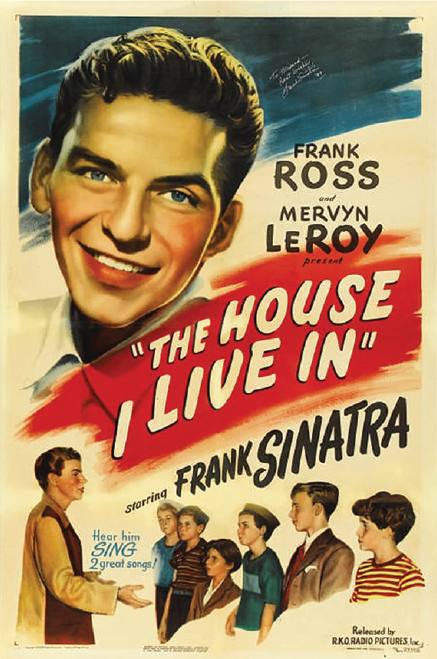
One sheet poster, The House I Live In, 1945. / “God didn't create one people better than / another. Your blood is the same as mine, and / mine is the same as his. You know what this / country is? It's made up of a hundred different (Photo: The Cinematic Legacy of Frank Sinatra, David Wills, 2015.)
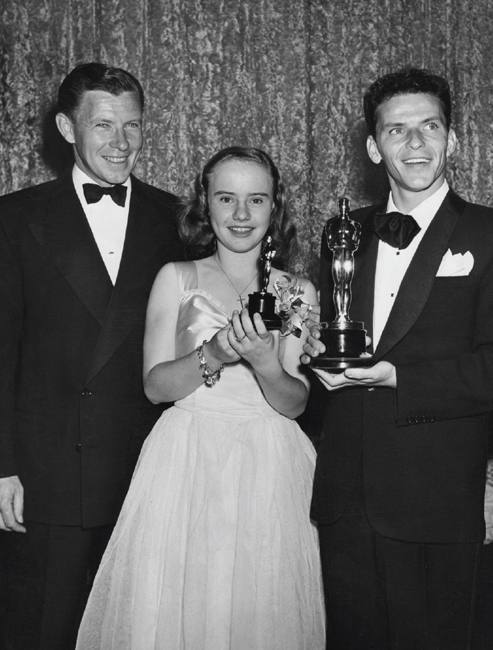
kinds of people—and they're all Americans.… / Let's use our good American brains and not / fight each other.” / With George Murphy and Peggy Ann Garner, at the 18th Academy Awards, 1946. Sinatra / accepted a special Oscar for The House I Live In. (Photo: The Cinematic Legacy of Frank Sinatra, David Wills, 2015.)
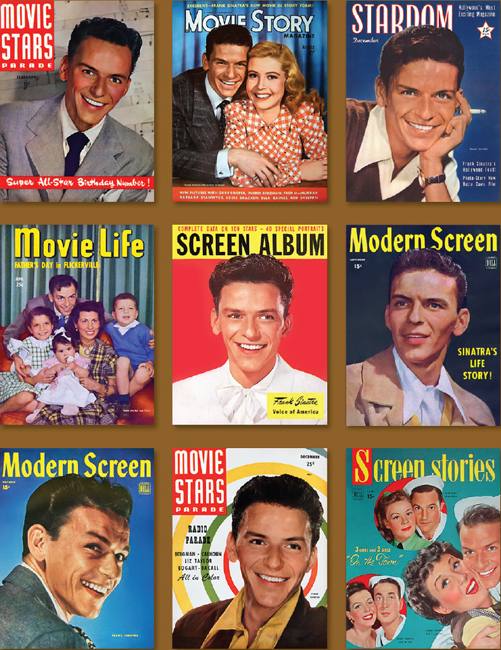
Fan magazines, c. mid 1940s. (Photo: The Cinematic Legacy of Frank Sinatra, David Wills, 2015.)
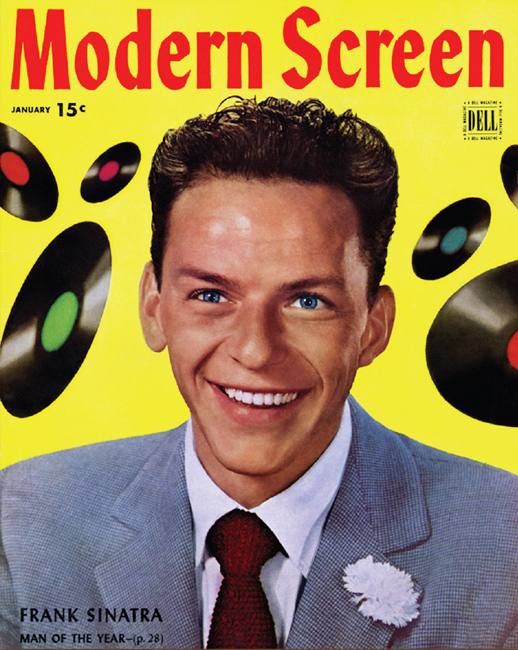
Modern Screen, January. 1947. (Photo: The Cinematic Legacy of Frank Sinatra, David Wills, 2015.)
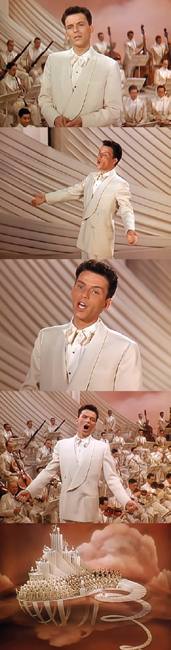
“My idea with that song, was to have / a … little fellow do it—somebody / who made you believe he was tired (Photo: The Cinematic Legacy of Frank Sinatra, David Wills, 2015.)
Radio
Hollywood Victory Show
Network: CBS
Sponsor: Sustaining
Performers: Pat O'Brien, Leith Stevens and His Orchestra, The Mills Brothers, Jeanette MacDonald, Nelson Eddy, Shirley Ross, Frank Sinatra, Charles Boyer, Axel Stordahl and His Orchestra, Robert Armstrong.
Announcer: James Matthews
Produced & Directed By: Charles Vanda
Writers: John Dunkel, Joel Malone
Newscast: Bill Henry
Newscast Announcer: Tony Marvin
1. If You Are But A Dream
2. You'll Never Walk Alone
Notes: TT 60mins. Excellent. Complete.
May 9, 1945
Radio
Frank Sinatra Show
Network: CBS
Location: Hollywood
Show #19
Sponsor: Max Factor
Time: 9:00PM - 9:30PM (EST) Wednesday
Orchestra Conducted By: Axel Stordahl
Arrangements By: Axel Stordahl
Announcer: Bill Goodwin, Don Forbes
Performers: The Ken Lane Singers
Guest: Dame May Whitty
1. Sweet Lorraine - w/Ken Lane Singers
2. You're So Worth The Waiting For
3. Lulu's Back In Town - w/Ken Lane Singers
4. Laura
5. Stormy Weather - w/Ken Lane Singers
Notes: Confirmed airing on WABC.
.
May 10, 1945
Radio
Birds Eye Open House, Starring Dinah Shore
NBC
Time: 8:30PM - 9:00PM (EST)
Sponsor: Birds Eye, Gaines Dog Food
Host: Dinah Shore
Performers: Frank Sinatra, Harry Von Zell, The Joseph Lilly Chorus, Robert Emmett Dolan and His Orchestra
Writers: Howard Harris, Sid Zelinka
1. A Kiss Goodnight Leads To Another
2. You'll Never Walk Alone
The Buffalo News
May 16, 1945
Studio
Hollywood
HCO1395 Lily Belle w/The Charioteers
(D. Franklin/I. Taylor)
Martin Music (ASCAP) 1945
Arrangement & Conducted by Axel Stordahl
-1 (3:29) CD: Columbia Years 43-52 Vol. 2
78: 36854
HCO1396 Don't Forget Tonight Tomorrow w/The Charioteers
(L. Sherin/J. Milton)
Barton Music Corp. (ASCAP) 1945
Arrangement & Conducted by Axel Stordahl
-1 (3:02) CD: Columbia Years 43-52 Vol. 2
78: 36854
note: Columbia released the single in late October 1945. "Don't Forget Tonight Tomorrow" was a Top 10 single and charted for four weeks.
HCO1397 I've Got A Home In That Rock w/The Charioteers
(unknown)
Public Domain
Arrangement & Conducted by Axel Stordahl
-1 (3:10) CD: Columbia Years 43-52 Vol. 2
78: 37853
HCO1398 Jesus Is A Rock (In A Weary Land) w/The Charioteers
(unknown)
Public Domain
Arrangement & Conducted by Axel Stordahl
-1 (3:19) CD: Columbia Years 43-52 Vol. 2
78: 37853
The Charioteers: Howard Daniels, Edward Jackson, James Sherman, Ira Williams, Wilfred Williams
Trumpet: Red Nichols; Clarinet: Jimmy Mayhew; Piano: James Sherman; Guitar: Dave Barbour; Bass: Phil Stephens; Drums: Nick Fatool
Columbia would not release a single of these two spirituals until September of 1947. They were very uncertain of who would buy Sinatra with The Charioteers. Neither song charted. I think Frank was terrific and today they hold up much better than many of his more popular Columbia hits.
Radio
Frank Sinatra Show
Network: CBS
Location: Hollywood
Show #20
Time: 9:00PM - 9:30PM (EST) Wednesday
Orchestra Conducted By: Axel Stordahl
Arrangements By: Axel Stordahl
Announcer: Bill Goodwin, Don Forbes
Performers: The Ken Lane Singers
Guest: Rise Stevens
1. Good, Good, Good
2. That's You
3. If You Are But A Dream
4. Mean To Me - w/Ken Lane Singers
5. There's No You
6. Songs From Bizet's "Carmen Jones"
Notes: Confirmed airing on WABC.
Ed Notes:
Another terrific Max Factor half-hour.
The first two number sung by Frankie that evening would never be recorded by him. The next three are all classic
Sinatra songs. The arias with Stevens are a lot of fun. Frank took his opera efforts more seriously than many realize.
Dorothy Kirsten, in her autobio, reveals that by 1949 Sinatra seriously considered packing in the pop singer career and moving up to the legit level of classical singer.
Note: Frank's last appearance for Max Factor.
The USO tour was about to get underway and the final two episodes would see D. Shore and then G. Simms sub for him.
--Ed
Hollywood
HCO1395 Lily Belle w/The Charioteers
HCO1396 Don't Forget Tonight Tomorrow w/The Charioteers
HCO1397 I've Got A Home In That Rock w/The Charioteers
HCO1398 Jesus Is A Rock (In A Weary Land) w/The Charioteers
The Charioteers: Howard Daniels, Edward Jackson, James Sherman, Ira Williams, Wilfred Williams
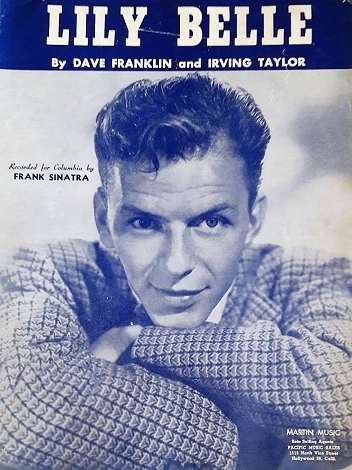
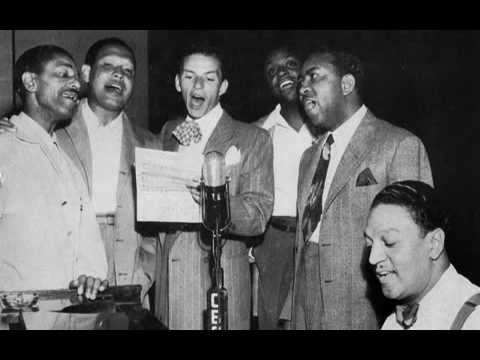
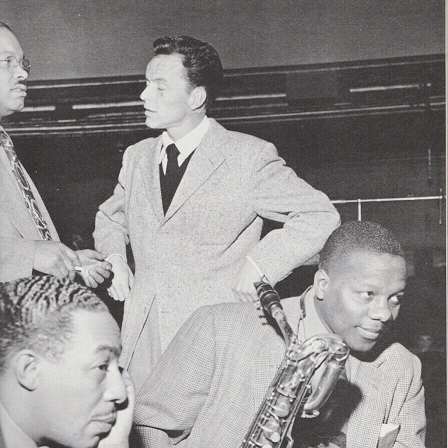
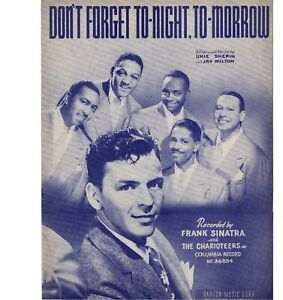
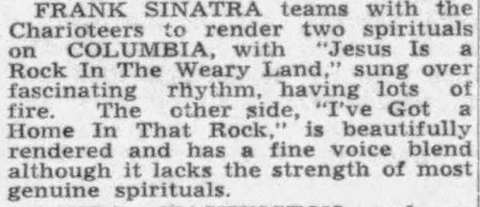
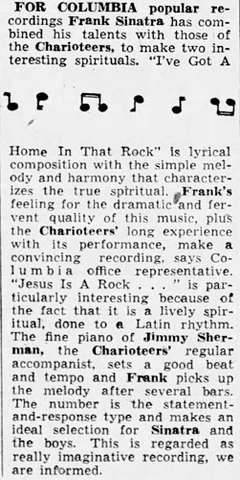
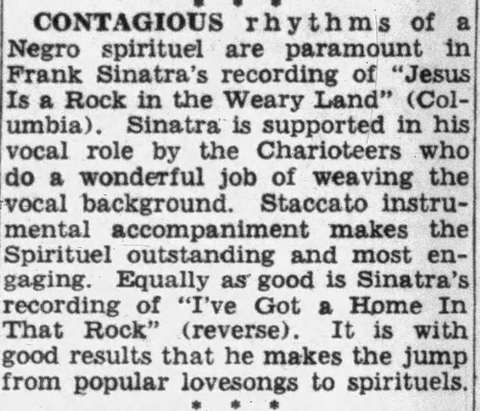
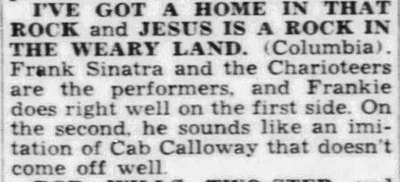
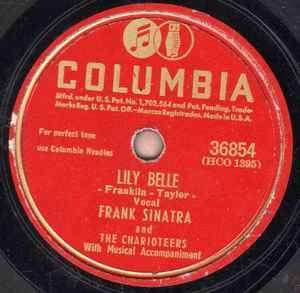
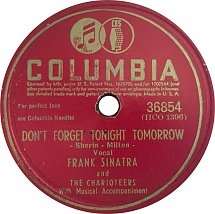
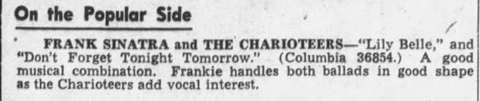
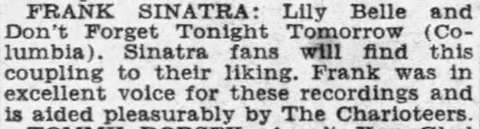
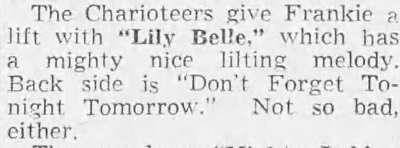
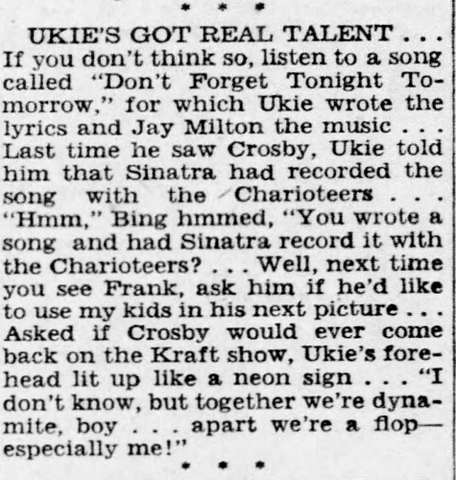
Frank Sinatra Show
Network: CBS
Location: Hollywood
Show #20
Time: 9:00PM - 9:30PM (EST) Wednesday
Orchestra Conducted By: Axel Stordahl
Arrangements By: Axel Stordahl
Announcer: Bill Goodwin, Don Forbes
Performers: The Ken Lane Singers
Guest: Rise Stevens
Madison Square Garden
Veterans Rally
May 16, 1946
Frank Sinatra at podium addressing at a war veterans rally about housing and other issues, Madison Square Garden, New York, May 16, 1946.:
Thanks to Carl R. for the above photo and the photo tag below:
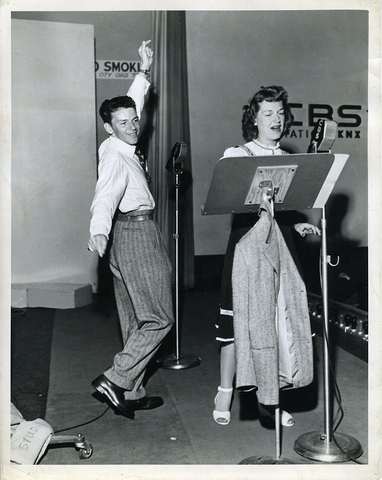
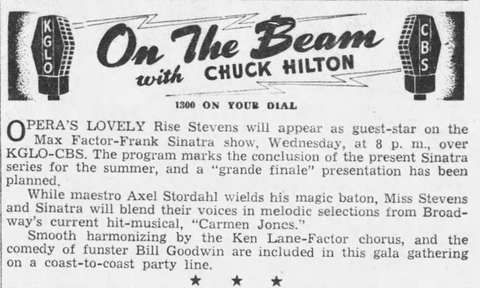
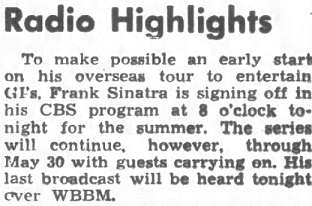
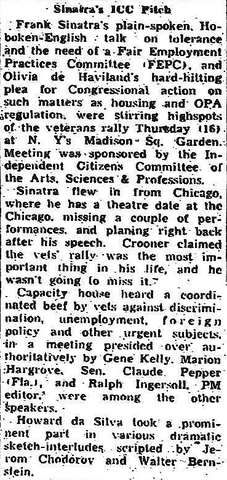
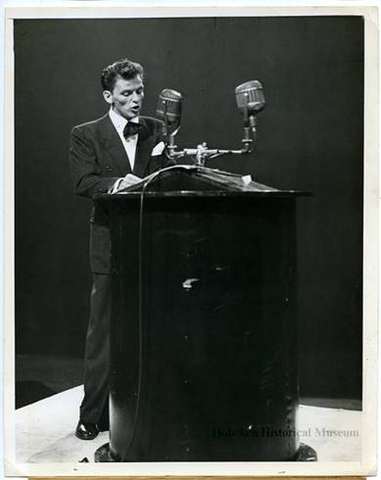
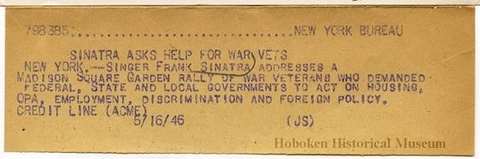
May 18, 1945
Dayton, OH
Sinatra had a stopover in Dayton, Ohio May 18, 1945, He mentions that he was with Dorsey in Dayton three years earlier. Sinatra and Dorsey were in Dayton at the Lakeside Park on November 10, 1941
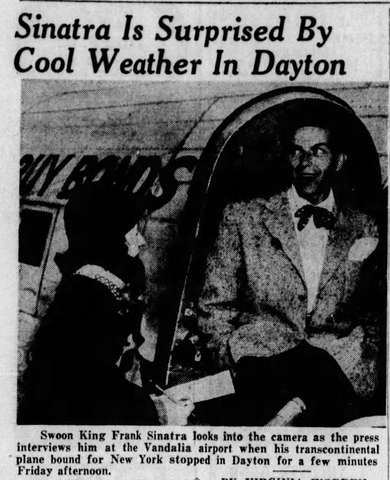
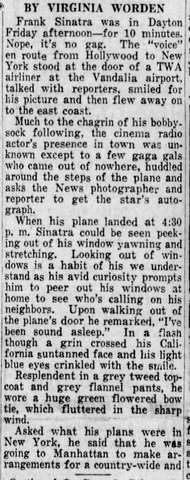
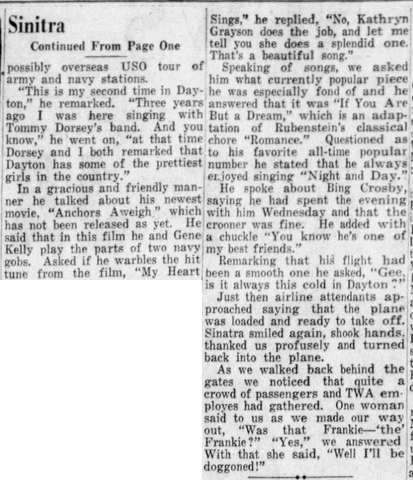
May 23, 1945
Radio
Frank Sinatra Show
Network: CBS
Location: Hollywood
Show #21
Sponsor: Max Factor
Time: 9:00PM - 9:30PM (EST) Wednesday
Orchestra Conducted By: Axel Stordahl
Arrangements By: Axel Stordahl
Announcer: Bill Goodwin, Don Forbes
Performers: The Ken Lane Singers
Guest M.C.: Dinah Shore
Notes: Sinatra is on a USO tour during the last two shows of this series. Confirmed airing on WABC.
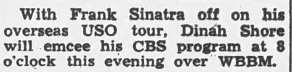
May 24, 1945
Studio
New York City
CO34817 Stars In Your Eyes
(R. Lopez Mendez/M. Greene/G. Ruiz)
Southern Music Pub. Co. (ASCAP) 1945
Arrangement & Conducted by Xavier Cugat
-1 (2:45) CD: Columbia Years 43-52 Vol. 2
78: 36842
CO34818 My Shawl
(S. Adams/X. Cugat)
E.B. Marks Music Corp. (ASCAP) 1934
Arranged & Conducted by Xavier Cugat
-1 (3:15) CD: Columbia Years 43-52 Vol. 2
LP: CL-2739 The Essential Frank Sinatra, Vol. 1
78: 36842
***** How Long Will It Last (N/R)
Violins: W. Brailowsky, M. Gold, S. Grant, J. Livoist, D. Ornstein, S. Picardi, N. Ragusa, A. Rickey, M. Roman, J. Spallino, H. Urbont, H. Zito; Saxes: C. Dimanlig, W. Hobbs, R. Mosca, R. Moss, M. Nadell; French Horn: R. Moore; Trumpets: G. Lopez, N. Sandow; Trombone: J. Curry; Violas: V. Alonge, M. Serbin; Cellos: J. Benavente, L. Ratal; Guitar: H. Bogert; Marimba: R. Gonzalez; Bass: S. Madera; Drum: A. Lopez; Piano: R. Soler; Maracas: A. Santos
Scott Henderson:
I'm not familiar with the song "How Long Will It Last." Anyone have more information?
Ed O'Brien:
Frank did a run through of the song. Master #CO34819.
Joseph Meyer & Max Lief wrote the tune for the 1931 film "Possessed," starring Joan Crawford and Clark Gable.
A very daring pre-code film.
There was a 32 piece orchestra at the session
I recently discovered some additional information.
Frank was set to record four songs with Cugat that night. One was discarded early on and the above titled tune received a quick run through.
--Ed
"Stars in Your Eyes" / "My Shawl" / "How Long Will It Last?"
At the same May 24, 1945 session with Xavier Cugat that produced the released duets 'Stars in Your Eyes' and 'My Shawl,' Sinatra and orchestra also cut an obscure, unreleased third song, 'How Long Will It Last?' The surviving take is a rough run-through where Sinatra jokes and improvises nonsense lyrics rather than singing seriously, ending with him saying 'Get me the hell out of here!' No master number was ever assigned and the recording went undocumented until 1993.
Source: Charles L. Granata, "Sessions with Sinatra: Frank Sinatra and the Art of Recording" (1999/2003).
May 30, 1945
Radio
Frank Sinatra Show
Network: CBS
Location: Hollywood
Show #22
Sponsor: Max Factor
Time: 9:00PM - 9:30PM (EST) Wednesday
Orchestra Conducted By: Axel Stordahl
Arrangements By: Axel Stordahl
Announcer: Bill Goodwin, Don Forbes
Performers: The Ken Lane Singers
Guest M.C.: Ginny Simms
Notes: Sinatra is overseas performing for the troops during the last two shows of this series.
Final show in series. Confirmed airing on WABC.
On June 6, 1945 WABC aired "Ray Noble Orchestra,
Trudy Erwin Songs" (Premiere) in it's time show.
Concerts
Harmon Field Air Base, Stephenville, Newfoundland, Canada (May 30-31) Frank Sinatra, Phil Silvers, Betty Yeaton, Fay McKenzie, and composer and pianist Saul Chaplin. Note; The 1945 USO Tour made stops at Harmon Field Air Base in Stephenville, Camp Gilbert in Gander, Fort McAndrew (close to the location for the current Bristol Field Airport) in Argentia, Fort Pepperrell in St. John's, and Canadian Air Base Torbay.
--Scott
May 30, 1945, Harmon Field Air Base, Stephenville, NL
The Akron Beacon Journal
(Akron, Ohio)
June 10, 1945 · Page 26
Scott:
This article mentions Sinatra and his group were “introduced to the overseas G.I. on Memorial day.” Memorial Day in 1945 was on May 30. Although the article maintains that after four shows the group headed for the Mediterranean area, it is more likely they flew to other bases in Newfoundland. It is possible there were shows on May 30th and May 31st and possibly shows on June 1st before leaving for Camp Gilbert in Gander. Sinatra and company not only performed shows on the base but helped to open the base radio station VOHF. The following articles come from “Harmoneer”, a magazine published by North Atlantic Division Air Transport Command, Harmon Field Air Base in Stephenville. This issue is Volume 1, Number 2, August 1945 and the pages reprinted here are from pages 4 and 14. The “Harmoneer” created a fictional character for a series of jovial letters home regarding life on the base. Corporal Merryweather K. Dinkle, ASN 39648113, is described as “a stalwart if somewhat hypothetical warrior stationed at Harmon field.” This comic letter helps to establish that Sinatra was in Stephenville near the end of May, beginning of June 1945. The following are some very nice reprints of the photos that appeared in the Harmoneer magazine. I want to thank Carl Rasmussen who supplied these from his research on the 1945 USO Tour.
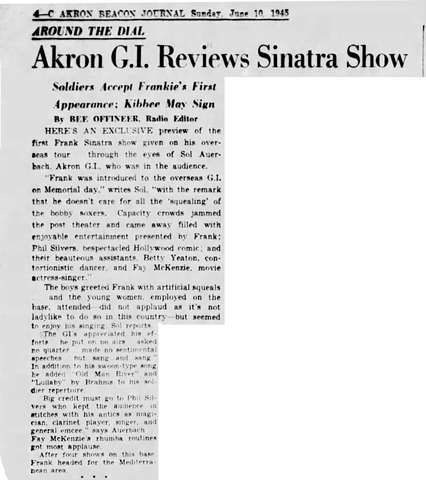
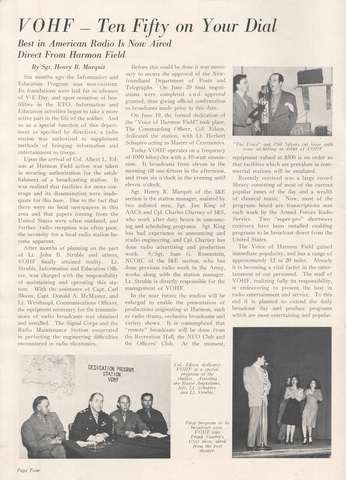
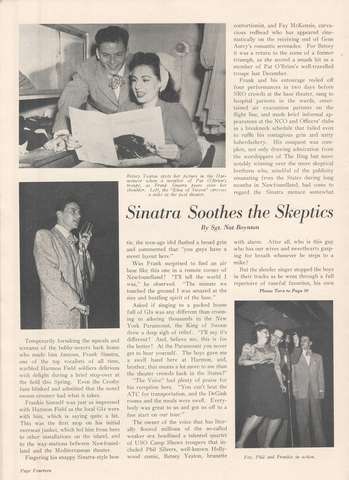
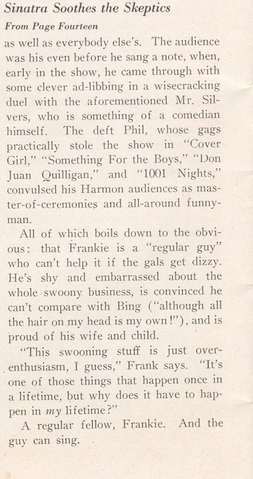
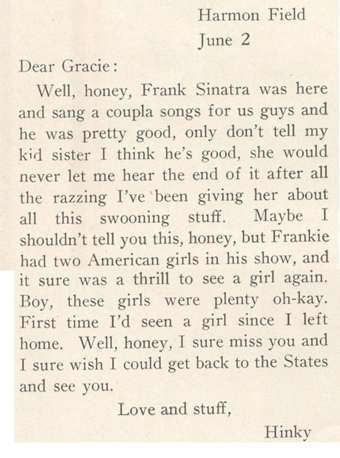
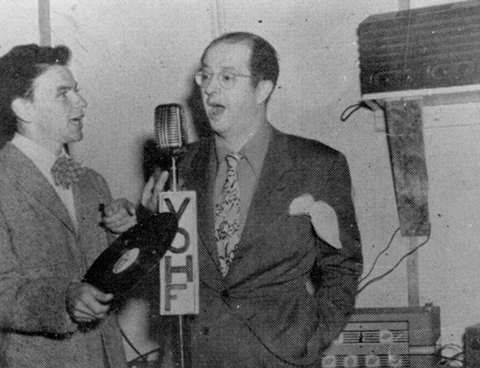
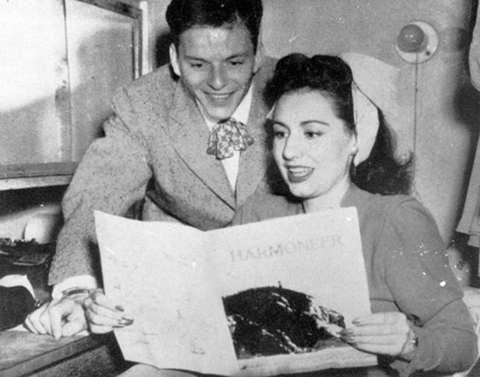
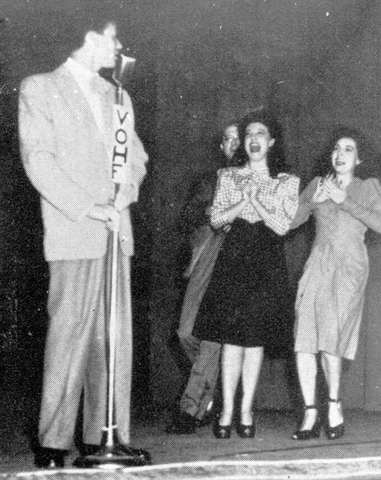
May 31, 1945
Concerts
Harmon Field Air Base, Stephenville, Newfoundland, Canada (May 30-31) Frank Sinatra, Phil Silvers, Betty Yeaton, Fay McKenzie, and composer and pianist Saul Chaplin.
June 1945
[USO Camp Show in Naples]
An advertisement survives for a June 1945 USO camp show in Naples featuring Sinatra alongside performer Fay McKenzie, self-described "acrobatic cutie" Betty Yeaton, and pianist-arranger Saul Chaplin.
Source: Charles Pignone, "Frank Sinatra 100" (2015).
[Sinatra criticizes USO on return]
Kaplan: Landing at La Guardia after the tour, Sinatra told reporters the USO and Army Special Services were run incompetently by 'shoemakers in uniform,' drawing sharp criticism from Stars and Stripes and columnist Lee Mortimer, who called the trip a 'joy ride.'
Source: James Kaplan, "Frank: The Voice" (2010)
[Sinatra's USO tour overseas]
Kaplan: Sinatra, accompanied by Phil Silvers as onstage foil, pianist Saul Chaplin, actress Fay McKenzie, and dancer Betty Yeaton, flew to Casablanca on an Army C-47. The troupe performed seventeen shows in ten days across North Africa and Italy (including Rome, Caserta, Foggia, and Venice), entertaining ninety-seven thousand servicemembers; in Rome Sinatra had an audience with Pope Pius XII, who asked if he was a tenor.
Source: James Kaplan, "Frank: The Voice" (2010)
June 1, 1945
Concerts
Camp Gilbert, Gander, Newfoundland, Canada (June 1-2)
1945 USO Tour: Frank Sinatra, Phil Silvers, Betty Yeaton, Fay McKenzie, and composer and pianist Saul Chaplin.
Note: Sinatra and Phil Silvers also appeared on a broadcast over VORG out of Gander on June 1st. T
Camp Gilbert, Gander, Newfoundland, Canada (June 1-2)
1945 USO Tour: Frank Sinatra, Phil Silvers, Betty Yeaton, Fay McKenzie, and composer and pianist Saul Chaplin.
The next stop on the USO Tour in Newfoundland was at Camp Gilbert, Gander.
The only newspaper article I could find that mentioned the stop was from the article below.
The Gazette and Daily (York, Pennsylvania) Thursday, June 7, 1945 · Pg. 26
The article mentions that Sinatra and Phil Silvers appeared on a broadcast over VORG out of Gander on the Monday night. The article having been published on June 7th would have meant the VORG performance would have been on June 4th. This is not possible because the group was at Fort McAndrew on June 4th. Luckily, an unofficial newspaper does survive from that time-frame that mentions the arrival of the group on June 1st, performances at Camp Gilbert on June 1st and 2nd and documents the VORG broadcast as possibly occurring on June 1st, a Friday. This comes from The Prop of APO 865 from June 1st, 1945, a newsletter published daily, except Sundays, on the base in Gander. Three articles mention both the USO shows on June 1st and 2nd and the VORG broadcast:
The Prop of APO 865 from June 1st, 1945.
"USO CAMP SHOW featuring Frank Sinatra and Phil Silvers today at 9 pm for military personnel and guests only. On Saturday there will be shows at 2 and 9 to which everyone on the base is invited."
"AT THE RED CROSS TONIGHT
If present plans materialize THE VOICE (Mr. Sinatra to you) will appear on the regular LAUGHTIME broadcast which emanates from the Red Cross Rec Hall each Friday night at 7:30. It is broadcast over VORG. Everyone is always welcome at these broadcasts."
"CELEBRITY ARRIVES
This morning we tore away from the typewriter for a few minutes to go over and see P&T in operation when 'personalities' appear. There was not a small crowd around to see what could be seen.
Piling out of the plane were several GIs back from furlough, we gathered, a couple of nurses from our hospital, two young girls who we understand will sing and dance tonight on our stage, Sinatra, looking tan and fit and chewing gum madly, and the big broad Harold Lloyd smile of Phil Silvers. Everyone seemed in the best of spirits and we can predict a lively show tonight."
The Prop of APO 865 from June 4th, 1945.
Other than the illustration of the USO Group, there was no reference to the group in the rest of this edition.
The autograph below was acquired by Gloria Lindsay (née Durham) who was a Morse code radio operator stationed at Camp Gilbert, Gander from 1944-1946.
Source: http://bobsganderhistory.com/mog.html:
"I was twice in the U.S. reception hall. Once with an English dance instructor who was an officer in the RAF and wanted a partner for New Year's Eve. It was a delightful evening; we danced the whole night – latin dances, waltzes, foxtrots, jive - and he was pleased that I could follow his lead. The 2nd visit was with an RCAF airman. He had worked as a cartoon artist in Hollywood but joined the RCAF to help with the war effort in 1939. He knew of a visit by Frank Sinatra, Phil Silvers and Saul Chaplin, who were on tour. He introduced me to them and they gave me an autograph.
----------------------------------------------------------
© 1997-2026 The Sinatra Archive
This calendar, or any parts thereof, may not be reproduced in any fashion whatsoever without the prior written permission of the publisher (The Sinatra Archive)
[image referenced in source but could not be recovered]
[image referenced in source but could not be recovered]
[image referenced in source but could not be recovered]
[image referenced in source but could not be recovered]
June 2, 1945
Concerts
Camp Gilbert, Gander, Newfoundland, Canada (June 1-2)
USO Tour: Frank Sinatra, Phil Silvers, Betty Yeaton, Fay McKenzie, and composer and pianist Saul Chaplin.
June 3, 1945
Concerts
Fort McAndrew, Argentia, Newfoundland (June 3-6)
USO Tour: Frank Sinatra, Phil Silvers, Betty Yeaton, Fay McKenzie, and composer and pianist Saul Chaplin.
Fort McAndrew, Argentia, Newfoundland (June 3-6)
USO Tour: Frank Sinatra, Phil Silvers, Betty Yeaton, Fay McKenzie, and composer and pianist Saul Chaplin.
Scott:
The only reference that I could find published in 1945 regarding the stop at Fort McAndrew is this article from The News Journal from Wilmington, Delaware. It mentions that the group arrived on the Sunday which would have been June 3rd, 1945 and left on the Wednesday June 6th. The article also mentions that there were five shows on the base. There were “three performances at the Post Theatre and two at the Navy North Rec Hall.”
Arriving on the Sunday follows with the last reference of the tour at Camp Gilbert in Gander on Saturday June 2nd.
In 1998, on the occasion of Sinatra’s death, the article below was published in The Tribune-Democrat, Johnstown, Pa., May 17, 1998 . A woman serving with the Red Cross at Fort McAndrew recalls Sinatra’s visit. She remembers the visit being near the beginning of World War II but that would have been too early in his career. The 1945 tour date was probably more correct.
The following photo comes from the book “Argentia : sentinel of the North Atlantic":
The caption for this image was “Performance by Frank Sinatra at Buckmaster’s Field, St. John’s in 1945 Chris Andrews, far right on stage, was the MC for the event. The Argentia CB Band played that night."
Source for the photo above: “A Friendly Invasion II: A Personal Touch” by John N. Cardoulis
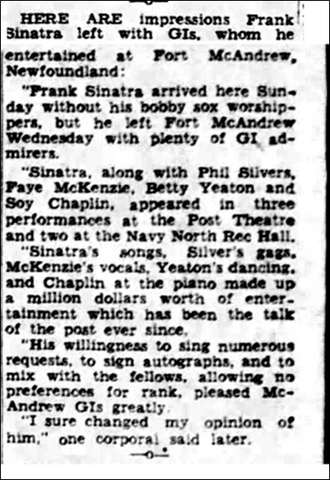
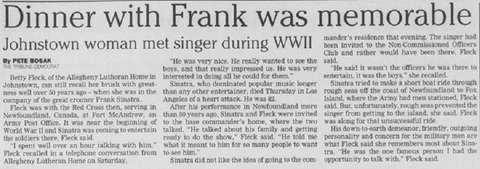
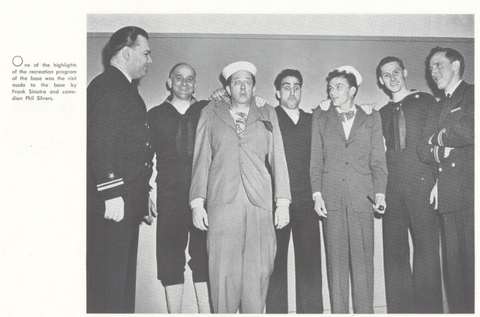
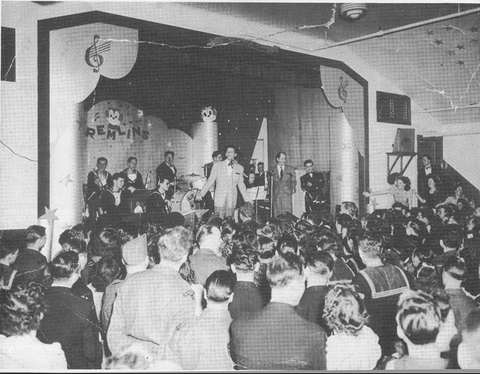
June 4, 1945
Concerts
Fort McAndrew, Argentia, Newfoundland (June 3-6)
USO Tour: Frank Sinatra, Phil Silvers, Betty Yeaton, Fay McKenzie, and composer and pianist Saul Chaplin.
June 5, 1945
Concerts
Fort McAndrew, Argentia, Newfoundland (June 3-6)
USO Tour: Frank Sinatra, Phil Silvers, Betty Yeaton, Fay McKenzie, and composer and pianist Saul Chaplin.
June 6, 1945
Concerts
Fort McAndrew, Argentia, Newfoundland (June 3-6)
USO Tour: Frank Sinatra, Phil Silvers, Betty Yeaton, Fay McKenzie, and composer and pianist Saul Chaplin.
June 7, 1945
Concerts
Fort Pepperrell, Pleasantville, Newfoundland
USO Tour: Frank Sinatra, Phil Silvers, Betty Yeaton, Fay McKenzie, and composer and pianist Saul Chaplin.
Fort Pepperrell, Pleasantville , Newfoundland
USO Tour: Frank Sinatra, Phil Silvers, Betty Yeaton, Fay McKenzie, and composer and pianist Saul Chaplin.
The following letter and accompanying photos appeared in an online auction site. The letter, dated June 9th, places Sinatra and the group at Fort Pepperell, St. John’s, Newfoundland on June 7th, 1945. It is not clear from the letter how many shows may have been performed at Fort Pepperell.
”On behalf of the members of the Sergeants Club of Fort Pepperell, Newfoundland, I wish to take this opportunity to express our appreciation and sincerest thanks for your honored visit to our party 7 June 1945. The overwhelming success of this affair can be attributed to no one but you and your troupe.
It is also an honor for me to offer to you Mr. Sinatra, and you Mr. Silvers, “Honorary Memberships” to the Sergeants Club. You have won a place among us by being “one of us.”
Wishing you and yours a most successful trip. God speed you in your work.”
These were the complete group of photos that were included with the letter that was auctioned off.
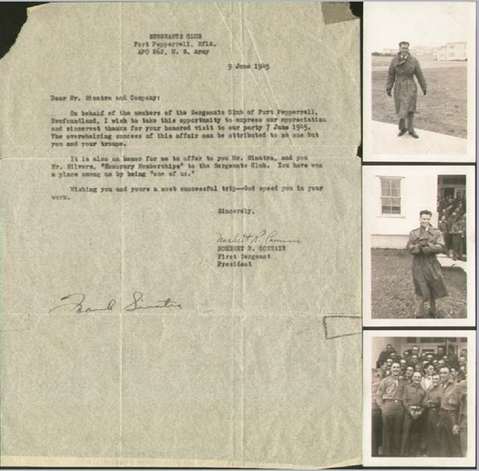
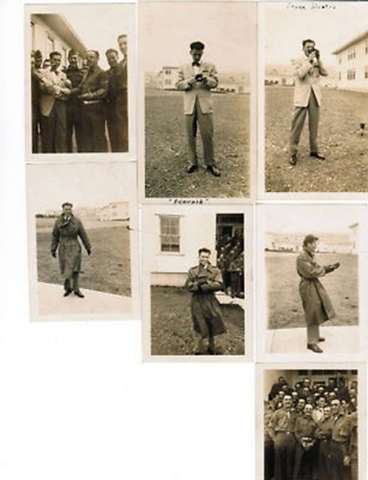
June 9, 1945
Concerts
Royal Canadian Air Force Station Torbay, Newfoundland
USO Tour: Frank Sinatra, Phil Silvers, Betty Yeaton, Fay McKenzie, and composer and pianist Saul Chaplin.
Royal Canadian Air Force Station Torbay, Newfoundland
USO Tour: Frank Sinatra, Phil Silvers, Betty Yeaton, Fay
McKenzie, and composer and pianist Saul Chaplin.
Scott:
The following is an excerpt from the Daily Diary of the 42 Radio Unit - Cape Spear, Newfoundland, April 1, 1945 to July 3, 1945.
The entry for June 7th, 1945 mentions receiving "12 ticket from RCAF Station Torbay for personnel at this Unit to attend a USO show
at Torbay this evening featuring Frank Sinatra.” This is the only reference I have found regarding the Torbay performance.
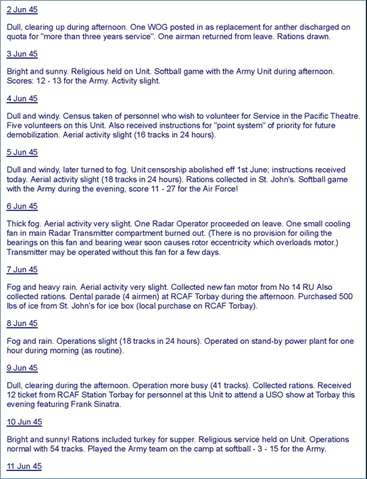
June 13, 1945
Concerts
Santa Maria and Lajes Base the Azores,
USO Tour with Sinatra, Saul Chaplin, and Phil Silvers
June 14, 1945
Concerts
Santa Maria, Azores
USO Tour: Frank Sinatra, Phil Silvers, Betty Yeaton, Fay McKenzie, and composer and pianist Saul Chaplin
Note: Thanks to Carl R for the above listing
Santa Maria, Azores
USO Tour: Frank Sinatra, Phil Silvers, Betty Yeaton, Fay
McKenzie, and composer and pianist Saul Chaplin
From Carl R:
After their stay in Newfoundland, they flew to the Azores.
The widely-separated Azores, 972 miles (1564 km) directly west of Lisbon, Portugal, includes nine islands (all volcanic in origin)
Their first stop was a British Air Base Lajes Field on Terceira.
Glenn Miller directed one of his last concerts in the base of Lajes in 1944, where Frank Sinatra now gave his first show on Portuguese territory.
Frank Sinatra also strolled through the streets of Angra do Heroísmo, where, according to local press at the time, he signed autographs and bought a Zeiss camera.
After the first day’s shows and activities, they sat sipping drinks when they heard a plane overhead. It was an ambulance plane with wounded soldiers,
which landed to be cleaned and refueled. The wounded soldiers were placed in a Quonset hut for an hour. Frank sang half a dozen songs a cappella to them.
The last song he sang, when they were carried back to the plane, was Brahms’ Lullaby.
Next day they flew to the US air base on Santa Maria.
The Azores, Santa Maria.
The News & Views below, dated Thursday June 14th, mentions that the second stop of the Azores was on the island of Santa Maria,
so their first stop was on the island of Terceira the day before (Wednesday June 13th 1945)
Since the copy may be difficult to read, here is a transcript:
BIG USO SHOW
TONITE:
Frank Sinatra brings his USO show on the stage tonite with an eyefilling cast of stage and screen stars. Prominent among the stars are Phil Silvers,
burlesque’s hilarious gift to Hollywood, curvacious Fay McKenzie (who needs only to appear on the boards to thrill all), Betty Yeaton, Broadway’s
package to movieland, and now to us, Saul Chaplin, music master of the “baton”, and “Frankie” himself giving out with his “voice”.
This is the start of their tour, and last reports say “it’s terrific”.
There are two shows: 1900 and 2100 in the Base Theatre.
Frank Sinatra on Terceira Island
Chronicle of Victor Rui Dores
Luis Costa - Brasil | Published 04 Aug, 2021, 19:59 / updated on 04 Aug, 2021, 20:58
The Lajes Air Base was, at the Azores level, the great center of diffusion of musical genres such as jazz and big band, first with the English military bands ("station bands") and, later, with the concerts promoted by the United Service Organization, which raised funds to promote entertainment shows for the U.S. military.
It is in this context that, accompanied by comedian Phil Silvers (in a pipe, pictured), Frank Albert Sinatra (1915-1998) passed through Terceira Island. It was the year 1945 and the singer, already with a brilliant career, performed for the U.S. military forces stationed at Lajes Base, in what was his first concert in Portuguese territory.
Few were the Terceirenses who heard "the voice", but, according to the account of the historian Valdemar Mota in his Complete Works, vol. III (Turiscon Editora, 2020), Sinatra, on a brief trip through Angra do Heroísmo, strolled through Rua da Sé, signed autographs and had a conversation with some merchants, including José Pinto Enes.
According to that historian, Sinatra saw and liked a certain regional Jordanian quilt, and so fell in love with it that he proposed to the said merchant the business of exchanging it for a camera he had with him, a Kodak. Deal accepted and closed. Sinatra took the showy quilt with him to the United States and Kodak continued in Terceira its function of "taking portraits"... Later, when José Pinto Enes died, his widow, a witness of that episode, offered the camera to Valdemar Mota, "which I value very much and keep as a precious relic".
In his book Under the Wings of the Açor, A History of Aviation in the Azores (Letras Lavadas editions, 2008), Guy Warner mentions that, in addition to Sinatra, other famous passengers such as Bing Crosby, Bob Hope, Arturo Toscanini, Charlton Heston, Vivien Leigh and Glenn Miller (who gave one of his last concerts at the Lajes Base) passed through the islands of Terceira and Santa Maria. This was the time of the technical stopovers at the airports of those two islands, true metropolises of North Atlantic aviation. Through these two aerial platforms passed people arriving and departing, speaking almost every language in the world, traveling in TWA's elegant Super Constellation and Pan American's solid DD6... And how can we forget the beautiful blue of KLM, the bright colors of
VARIG, Iberia, Air France, Avianca?... The dream at your fingertips. And the social, commercial and musical dynamics generated on the aforementioned islands.
It should be noted that Frank Sinatra would only return to Portugal for two more times: once to play golf in the Algarve, in the seventies, and another to perform in Porto (Antas stadium), in a memorable concert held on June 8, 1992, the singer was 76 years old. And until he left us, he continued to be "the voice" and one of the greatest artists of the twentieth century.
Modern Screen January 1946:
WHO SAYS SINATRA'S A "SAD SACK?" THEY SURE LOVED HIM
OVERSEAS AND 150.000 GIs CAN'T BE WRONG !
One sunny day last summer a big C-54 Army
2 litter ship bearing shot-up Yanks from Europe
swooped gently down to Santa Maria Airport
in the Azores. A few hours before, a C-47, heading
East out of America, had sat down on the same landing
strip. It carried a load of Hollywood stars bound for
Italy to entertain the lucky all-in-one-piece GIs finishing
off the victory job these wOunded guys had put
across. Anyone could recognize one of Hollywood's
funniest clowns. Phil Silvers. twcV of its dreamiest songand-
dance cuties. Fav McKenzie and Betty Yeatonand
a skinny, bright-eyed, bony-faced guy. who sings a little
now and then, named Frank Sinatra.
In a few minutes, the invalided heroes w.ere lined up
in rows of stretchers on the concrete strip, grabbing
fresh air. coffee and a cigarette to ease their miseries.
And walking up and down the aisles to hand out a
first welcome-home were the Hollywood star bunch:
knocking themselves out to make it a good, old fashioned,
impromptu American clambake.
For Phil Silvers that was easy. He had a gag for
everv occasion a million of \
'em stored up from years of collecting
belly busters.
In a few sees it was Old Home Week.
Half those hero guys, flat on their backs,
. hadn't met their home bound neighbors.
Phil, Frank and the girls ran up and down
the aisles getting the gang together.
"Missouriyou from Missouri? Hey
where's that other soldier with the St.
Louis blues?". . . and Frankie would
go running. Or "Miami, Florida? Why
this doughfoot says that's just a suburb
of Los Angeles!" It was going great
until Phil Silvers came to a burly rockfaced
guy with a sheet over his legs. "Me?"
he grated. "SayI'm from Brooklyn."
"Na'il him, Frankie!" yelled Phil. "Brooklyn,
your own home town." Frankie came
running up. But he stopped dead in his
tracks when the guy growled,
"Don't you come near me!"
Frankie turned white. The soldier
scowled darkly. Frank's tongue jammed,
but Phil Silvers jumped into the breach.
"Aw, don't mind Frankie," he cracked.
"He just wants you to move over so he
can lie down. That bow tie's got him
weary"
"Don't tell me about Sinatra," broke in
the soldier. "Listen, I used to hack in
front of Lindy's. I know de guy. He's
dynamite. Say what about all the times
dem crazy swoon fans wrecked my cab?
How about dat, Frankie?" The Brooklyn
joke was over. He broke into a whiskered
grin. " 'Member me, Frankie?"
Frank bent over and a happy wave of
relief smacked him like a welcome shower
on a hot day. "Katzie!" he cried. "You
big bum!"
"Yeah, Katziedat's me, Kid," the soldier
chuckled. "But, Frankie, when you
come to Noo Yawk please stay away
from me, pal you're poison! And listen don't tink 'cause I got a scratch on my
leg, I ain't gonna be back at de old stand."
There are a double dozen ways Frank
Sinatra has improved with his overseas experience.
He's got more audience poise. He
learned to send his voice out stronger
when there wasn't a mike. He learned to
out-ad lib Fred Allen. He turned into
such a comedian and laugh-louse under
Phil Silvers' guidance that Phil finally
cracked crabbily, "Look, Frankie
you tell
the jokes. Let me wear the bow tie and
sing!" But the best thing of alland what
thrilled Frankie most was the happy
realization that at last he'd smashed to
smithereens the old ghost of absent GI
scorn.
ripe tomato reception . . .
The audience he aimed to tackle had been
overseas for three and four years. When
they left, Frank Sinatra was nobody
special. But they'd heard about the squeal deals
and the swoon-sessions going on
back in the States, while they were blasting
Krauts out of the Apennines in the
slow, rugged drive up the boot. They were
not amused.
Hollywood Victory Committee officials
didn't disillusion him, either. They were
nervous. "There might be some unpleasantness,"
they said. Maybe some hoots
and boos. Maybe some things flying
through the airlike ripe tomatoes. You
never can tell what a bunch of hard-cooked
GIs sitting around bored, waiting for a
ride home, might do. The war was over;
discipline was naturally a little relaxed.
It was up to Frankie.
He knew from talking to Bing that you
couldn't ham and egg to an overseas
crowd. "Those guys are hep," stated Bir
when he got back from his last year
Atlantic trip, "but when you hit 'e:
rightbrother, they eat you up. What
gang!"
gathering stars . . .
That's how come Frank asked Phil Si
vers and Fay McKenzie, Betty Yeaton ar
the pianist, Saul Chaplin, to rally roun
Phil's a very funny man, seasoned 1
vaudeville and burlesque, who can make
rowdy audience eat out of his hand. H
played dozens of service shows with £
the big timers, including Bing Crosby. I
knows every laugh routine ever invent*
and has come up with sock comedy ft
USO units ever since Uncle Sam start*
the draft. Fay McKenzie you could ca
the original Camp Show Kid and not 1
far off the beam. She started a ye;
before Pearl Harbor and has as mar
camp stands on her record as a cat h
fleas. Besides looking good enough to e
as apple pie, Fay's a swell personalii
singer who has done all right for herse
around her home town of Hollywood ar
in radio and movies, too. Like Phil, she
show business from away back; her d;
ran a tent show and made early flick
silents and her brother-in-law is Bil
Gilbert, the sneeze-king comic old time
Frankie sang across the aisle at CBS :
one season from Fay on the Grouc!
Marx show. He'd never met her but
knew about the soldier sweetenin' F
fairly oozed. He added Betty Yeaton,
acrobatic cutie who can bend herself li
a pretzel but with a shape that shou
never be wasted on a beer biscuit. Sal
Chaplin, the accompanist, is musical c
rector at CBS, so he was not exac
confined to Chopsticks.
They met in New York and preview I
the show at Camp Kilmer, over in Jers> i
Right before show time, Frank came up
Phil with a brain storm.
"Look, Phil," he said. "Let's beat th<
guys to the punch. None of this And h< >.
he comes nowthe great King of Swo 1
Frankie Sinatra!' Nuts to that. Here's
ticket: Louse me up. Make me a silly je
with every joke. Murder me!"
Phil's eyes rolled. "Frankie, my boy," 1
grinned. "It's a pleasure. And how did \ i
read my mind, Muscles?"
That night at the Camp Kilmer previ<
Phil gave Frank the business, on a no I
experiment. No guinea pig ever got need :
more thoroughly. Every time Fran i
peeped out of the wings he got slapi
:
down. Frankie'd walk out wistfully ; li
hang around waiting to be introduced. 1
"Go away, Boy, you bother me," snap I
Phil. He'd point to the other wing . i
give a glamor send-off to Fay and B< j
and when Frank eased out again, hea A
forlornly for the mike, Phil would mei jj
look over his shoulder and crack,
"Look, sonthere must be a rnistai 4
the Blood Bank's down the street."
The whole show took it up. J I
worked the old burlesque routine a
pretty Fay. You know, the one where m
bets a half-dollar he can kiss her witl ,m
touching her. Then he gives her a «
smack and she says "Yes, but you ) a.
You touched me!" "H-m-m-m-m," it
sighs, "so I did." and drops the half ck *
in her palm for the bargain buss.
But this preview night, when Fi il
muscled in on the gag, it was just ano a.
insult for Sinatra swoon appeal. Bee. Si
when Frankie bussed Fay, handed her
four-bits and walked away, she ye
"Hey, Mister Sinatrawait a minute
come back." Frankie grinned and strutted
back as if he were the greatest lover since
3arrymore. "Here," said Fay, "is a quarter
change!"
That's the way they rode and ribbed
Sinatra all through the show. It lasted
two hours, and it was an hour and thirty
minutes before Frankie ever got to stand
in the spotlight and warble one note!
A pleasant surprise hit Frankie right
under the heart in Newfoundland. Frankie
didn't expect to do much there. He'd been
tipped off the GIs took a pretty dim view
of most everything.
As usual, Frankie played the Sad Sack
fall guy, but when he got into his songs,
the show-starved soldiers wouldn't let him
stop. Pretty soon he ran out of every encore
number. "Okay, fellows," Frankie
offered. "Yell out your requests."
The first title they chorused was, "'Nancy
With the Laughing Face." Frank looked
at Phil accusingly. Phil looked at Frank
the same way. Both of them swallowed
hard, but especially Frank. How did these
guys way up in Newfoundland know about
that? Who'd primed them to ask? Frankie
was puzzled, but he sang it, then he sang
it again. It was the evening's biggest hit.
But when the show was over, both Frank
and Phil chorused, "How come?" Because
''Nancy With the Laughing Face" was a
private, a personal Sinatra song.
Phil had written it one day when his
pal Jimmy Van Heusen (who writes most
of Crosby's melodies) was noodling away
at the piano. He rippled over a tune and
Phil, who never writes songs, suddenly
ourst out, "Jimmy, I'll give you a lyric
for that one!" Evening before, he'd had
dinner with Frank and his wife, Nancy,
out in the Valley, and the way Nancy
Sinatra's eyes always twinkled and her
lips smiled stuck with him. Jimmy said,
'Okay," and in a few minutes Phil worked
out the 'words. On Nancy's birthday
Frankie sang it over the air on his show
as a special sentimental tribute to the gal
ne lovesand that was all. And now
nere up in bleakest Newfoundlandthat,
Df all songs, was the people's choice.
9ow ties and decollete . . .
One thing Frankie insisted on was being
limself in his Dogface Debut. So he
ugged along a complete, super-typical
rrankie Sinatra wardrobe
;a sport coat
hat would blind a racehorse, shoulders
jadded out like the Brooklyn bridge.
ie had collar points that tickled his tummy
ind some of those black bow ties Nancy
nakes for him whien are stricuy irom
L.atin Quarter. In spite of GI barbers, he
;ven managed to keep his floppy haircut.
3hil operated in civvies, too, and his turned-
;ip gag hat. Fay McKenzie had nothing
But the slinkiest dream formals cut down
the eye treat limit, and in purples,
ellows, reds; "exciting" colors.
It was swell to spell back-home glamor
ind take the curse off olive drab. But it
vas also a problem. Frankie's gang travlled
in C-47s all the way. That meant
hey had to squeeze everything into tiny
uitcases for the weight limit and live out
-»f toilet kits. Of all the capsule tourists,
. towever, Frankie was easily the neatest
; Jid most efficient.
At Caserta, Fay McKenzie arrived for
' tie show without a thing to wear. All her
- lamor gowns looked like they'd been slept
1 by a flock of sheep. She hauled out the
ed job that had accordion pleats, but in
re wrong places. She sang the blues in
~ont of Frankie. "What you need," he said,
is Sinatra's Snappy Service." He grabbed
ie dress, slipped it on a hanger and
angled it behind Fay's shower. Then he
orned on the hot water full blast. "Oh
rankie," she wailed, "now I'm really
Jined!" But the guy just chuckled, in a
few minutes he lifted the dress out, as
smooth as silk and tidy. "The steam does
it," said Frankie. "I wish I had a dime for
all the suits I've pressed that way."
At Foggia the Red Cross asked Frank if
he'd care to meet a litter ship due to
arrive that night. Frank remembered the
plane at the Azores and the thrill of getting
a grateful look from guys who had stopped
the lead. "Sure," he said.
"It comes in at four o'clock in the morning,"
they told him.
sweet and low . . .
Frank worried all night about that first
litter plane p. a. It wasn't like the one in
the .Azores in the daylight with the
stretchers out in the sun. He didn't mind
a bit crawling out of his sack before dawn,
but he didn't know exactly how to entertain
a bunch of sleepy, wounded soldiers.
Four a.m. is no time to croon jump tunes.
He'd be inside the C-54. He'd have no
accompaniment. But they'd expect something
besides "Hello."
He didn't know until he got there, with
Fay and Phil and the bunch. It was half
light then and somehow all the soldiers
stretched out and tucked in reminded
Frankie of kidslike his own kids and
himself when he was a kidbeing put to
bed. Without thinking he crooned softly
the words of Brahm's beautiful lullaby.
"Go to sleepand good night
"
He sang it soft and low in the Sinatra
voice that the public doesn't often hear
but which is mighty easy on the ears.
Half the patients didn't know who was
singing. In their half sleep a lot of them
dozed off again. Frankie, Fay and Phil
spoke softly to the ones awake and then
tiptoed out. From then on he never failed
to meet a litter plane that came in. And
he always sang Brahms. He sang patients
in camp hospitals to sleep with it, too.
Somehow, it was just the ticket.
The funny thing about Frankie's nightand-
day schedule abroad was that it
actually put meat on his bones, which is
some kind of a small miracle if you know
Sinatra. The only explanation is that he's
been starving himself all these years since
he got famous, eating if and when he felt
like it. But when you're traveling under
Army orders, you eat when they say, or
else. Even on the notorious diet of Spam,
Vienna sausage, powdered eggs and "beatup
bread and meat," Sinatra swelled up
five pounds worth.
A scene that touched Frank very much
was the sight of little Italian kids begging
for food. Sinatra's a sucker for kids anyway,
of any race, color or country. When
he saw the pinch-faced Italian moppets
crying "caramella" and raking the gutters,
he couldn't take it. All the gangFrankie,
Phil, Fay, Betty, Saulhad army ration
books entitling them to PX supplies of this
and thatcigarettes, candy, gum, etc.the
hard-to-get items.
"Look," said Frankie. "let's pool our
points and load up on candy for these
kids. How about it?" That was a brilliant
idea that went into force pronto.
What blood Frankie has (Crosby will
raise doubts, of course, that there is any)
is Italian and on his first trip to the home
of his ancestors Frankie was intrigued by
the Italian people also vice versa.
Frankie speaks only a few catch words in
Italian. And after a certain experience
with a gondolier in Venice, he stuck to
English as she is spoke in America.
They had rattled down in an army command
car to Venice, with a play date over
on Lido where an army camp awaited.
The sleeper jumpas often happenedwas
at night. They arrived in Venice at 3:30,
tired, bedraggled and dying to bed down.
But something had snafued and nobody
was there to meet and ferry them across.
Not even the Navy "duck" that usually
rocked them over the waves.
But it was Lido or bust and nnall;
Frankie called on the few Italian word
he knew to fast-talk a gondolier int<
paddling them across. He thought he die
all right, because the bird with the wickec
black moustachios and gold rings in hi
ears said, "Si, Si," and led them down t
a decrepit canal canoe. They piled u
with all their traps and the thing almos
swamped, but Frankie was still prett;
proud of his linguistic feat. He kept sling
ing pig Latin at the gondolier who kep
saying, "Si, Si" and hiking them over th
water. But in his enthusiasm he caugh
a crab with his paddle and drenche
Frankie and Fay with a spray of Venetia
canal water, which is not exactly swee
attar of flowers.
They were all tired and sore and eve
Frankie got put out. "I wish that jer
would watch what he's doing," he said 01
loud.
Whereupon the gondolier turned aroun
and scowled, "If I'm a jerkyou're a big
ger jerk!" he retorted.
Turned out he had had to guess wha
Frankie was trying to tell him in Italia
but American was his meat. He'd lived ha
his life in New York City!
Wherever Frank went, a lot of his aud
ence on the fringes were Italians. Th<
didn't know what to make of him. They
heard about America's great singer, Frai
Sinatra, but when he gave out with F.
Parade tunes they just looked baffle
Great singing to them meant opei
Even his Holiness, the Pope, was a litt
confused on this score. One of the t
highlights of Frank's trip and one of t
j
greatest events of his life, was his audien
] with the head of his church, the Catho
faith. The Pope had heard of Sinatra,
right, but that was about all.
"You are a tenor, my son?" he asked-
"No, Your Holiness," corrected Frank
"I'm a baritone."
"Ah, a baritone. What operas, do y
sing?" he asked.
"I don't sing operas, Your Holines
Frankie explained. "You see, I ne^
studied singing."
His Holiness smiled. "I see"and
j
conversation changed to other topics. I
afterwards, Frankie ruefully mentioned
embarrassment to the gang. "What coi
I tell him?" he asked, "that I sang '(
Man River' and 'Candy?'"
crosby plugger . . .
All of Frankie's troupe, Fay, Phil, S
and Betty went with Frankie to the V;
can and met the Pope, too. Phil hat'
out three rosaries he had purchased,
asked His Holiness if he would bless th
"I'd like to take them back to Bing Crosl
sons," he explained. The Pope smiled
blessed the beads. He knew about E
Crosby, too.
But afterwards, Frank needled Phil,
fine thing," he complained. "I take yoi
meet the Pope, and you plug Crosby."
he had a rosary blessed for little Na
too. It's one of his proudest possess
and a souvenir of his most reverent
ment.
Frankie never sang any operas in H
He wouldn't know where to start or
opera. But he did play lots of oj
houses, the big, gilded, rococo jobs
have all over Italy. They needed siz
halls to handle the soldier audie
Sinatra drew. Sometimes they ran
an open air stadium that took can
the crowds, like the Forno Italia
Rome that Mussolini built for his Olyi
athletes and then used to train the Fa
youth for war.
Next to our national anthem, the
that gave Frankie the biggest thrill to
before those patriots who'd proved it,
"The House I Live In," an inspiring anthem
about the great country we live in on the
order of "Ballad For Americans." But maybe
the biggest tingle he got down his spine
on the whole junket was hearing thousands
of GIs give their battle cry. Looking
around for local color at one camp
stop, Phil Silvers uncovered the fact that
a certain battling Yank division that had
blazed its way . up the boot, owned a
rugged yell loosed every time it stormed
into battle. Right into the guns the leaders
yelled "Powder River!"-and the whole
fighting outfit yelled back, "Let 'Er Buck!"
let 'er buck! . . .
That was a fearsome yell for plenty of
krauts, but dear to the hearts of that
division, so one night, playing before them,
Frankie and Phil yelled out "Powder
River!" at the start of their show, and ten
thousand heroes gave them a thrill they'll
never forget when they roared back as
one, "LET 'ER BUCK!"
It's moments like that that stick with
a guy. Frank Sinatra packed a lot of them
back with himsome funny, some sad, and
some that reached right down to the
ticker. Like singing to an outfit of Japanese
Nisei who'd hung up a glorious record
fighting in a tough spot for their own country
at war with their own race.
There was the running fun, too, and
camaraderie of sharing good luck and bad,
laughs and gripes, with a crew all plugging
on the same job. Of holding breaths when
the motor conked out on that take-off
from Oran and the landing scare at foggy
Foggia when a crash ambulance waited on
the field. Of kidding air-scared Phil Silvers
by whispering, "Don't look now, but our
pilot's drunk," and draping him with all
the "Mae West" life preservers in the ship.
And then there was the nice kind of feeling
it gave when Betty and Fay went out
in romantic Florence with handsome Navy
officers, but came home early saying"Oh,
nobody's as. much fun as you and Phil,
Frankie."
But nothing to compare with the tingle
you gotand keptwhen you discovered
the guys who might be against you were
with youand the way they showed it,
faking a good-natured swoon before they
shook your hand, shyly asking for an autograph,
or slipping you a message to give
a back-home sweetheart, mother, or pal.
When finally, their C-54 swooped down
on LaGuardia Field with its load of weary
troupers and joyful home-bound Army
nurses, their pilot told them goodbye. And
maybe just a bit symbolically, he made a
gesture, the thing that a guy does when
he thinks another is okay. The pilot took
off his silver wings and handed them to
Frank. "Here," he said, "take these home
to your little girl."
But Phil Silvers couldn't resist gagging
about the way it all ended. "The real reason
Sinatra went to Europe," he said, "was
to show the starving Italians that we're
starving over here, too." Then he played
his topper. "If you don't believe the sad
state of Frankie's health," said Phil, "just
look. It took 20 nurses to bring the poor
guy home!"
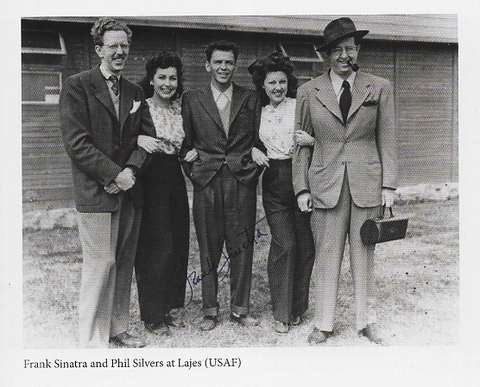
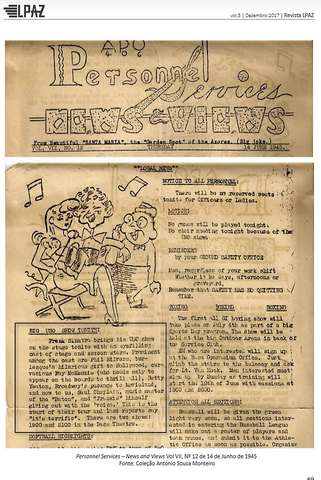
June 21, 1945
Concerts
Foro Italico, Rome, Italy
USO Tour Sinatra, Phil Silvers, Saul Chaplin, Betty Yeaton, Faye McKenzie This concert opened the Italian part of the tour. While in Rome, FS stayed at The Hotel Excelsior. In the afternoon of June 21, Phil Silvers and FS were granted an audience with Pope Pius XII. in Vatican City.
Foro Italico, Rome, Italy
USO Tour Sinatra, Phil Silvers, Saul Chaplin, Betty Yeaton, Faye McKenzie This concert opened the Italian part of the tour. While in Rome, FS stayed at The Hotel Excelsior. In the afternoon of June 21, Phil Silvers and FS were granted an audience with Pope Pius XII. in Vatican City.
June 21-22, 1952
Bing Crosby-Bob Hope Telethon For 1952 Olympic Team
Frank Sinatra, Bing Crosby, Bob Hope, and Dorothy Lamour on the 1952 Olympic Telethon, which raised over $1,000,000 for the U.S. Olympic team.
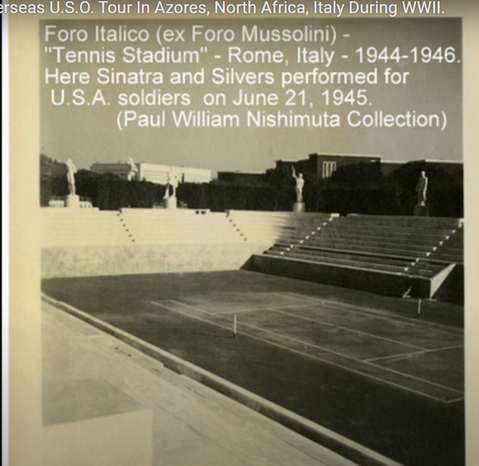
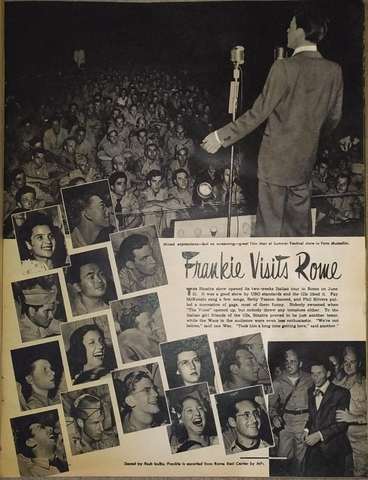
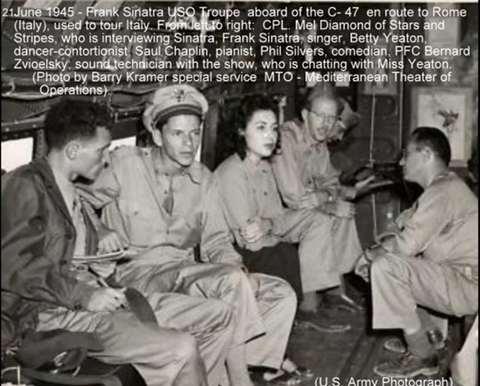
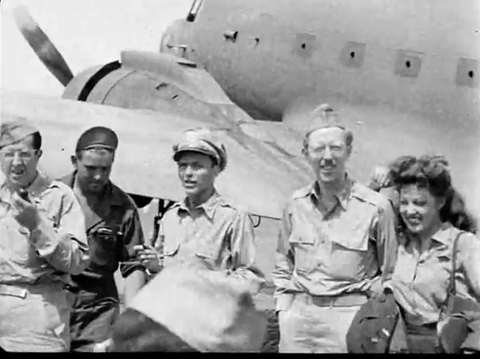
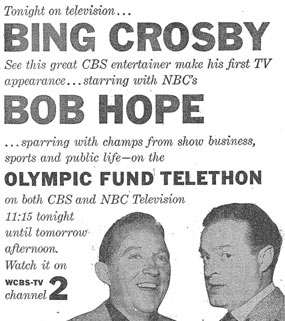
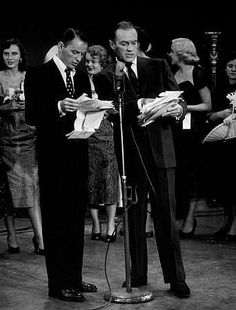
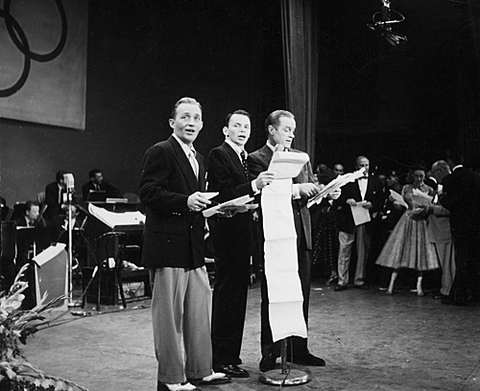
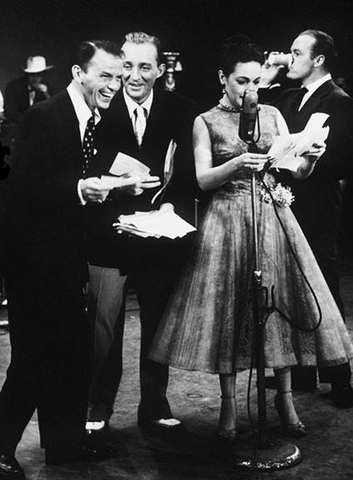
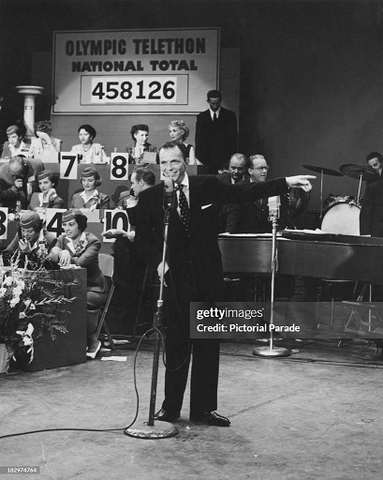
June 22, 1945
USO Tour
From Carl R:
After the shows in Rome, the group entertained soldiers and civilians in military camps, town squares and hospitals in Italy. Lack of and inaccurate information makes it difficult to present a detailed itinerary with exact dates. Here is a list of places that they visited, and it may not even be complete: Caserta, Gaeta, Naples, Pomigliano (just north of Naples), Isle of Capri, Foggia, Bari, Venice, Milan, Leghorn (Livorno). Here are some photos from Gaeta:
[image referenced in source but could not be recovered]
[image referenced in source but could not be recovered]
[image referenced in source but could not be recovered]
[image referenced in source but could not be recovered]
June 23, 1945
Concerts
Piazza Magenta, Livorno, Italy
USO Tour: Frank Sinatra, Phil Silvers, Betty Yeaton, Fay McKenzie, and composer and pianist Saul Chaplin
June 24, 1945
Concerts
Caserta, Italy
USO Tour: Frank Sinatra, Phil Silvers, Betty Yeaton, Fay McKenzie, and composer and pianist Saul Chaplin
Caserta, Italy
USO Tour: Frank Sinatra, Phil Silvers, Betty Yeaton, Fay McKenzie, and composer and pianist Saul Chaplin
Here is a better photo:
From Carl:
However, I have also found this one from The Apollo Theatre in Lecce.
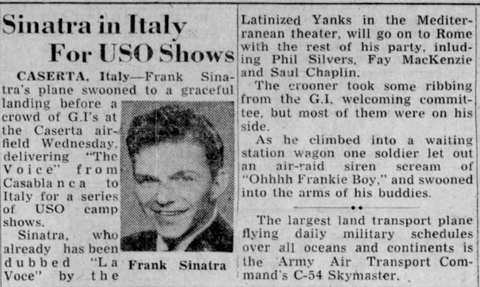
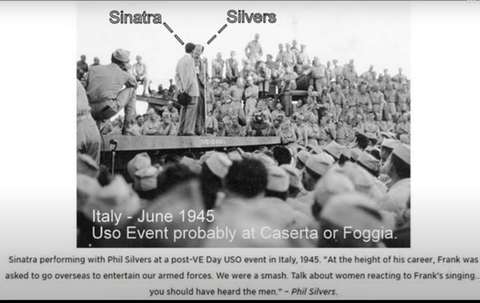
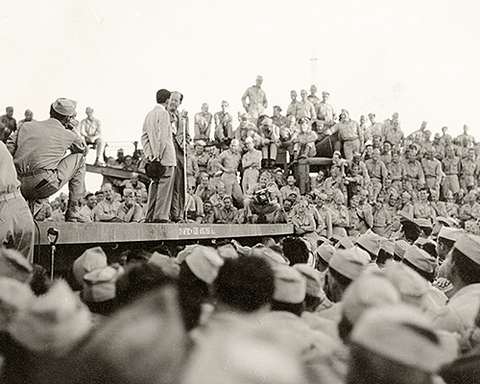
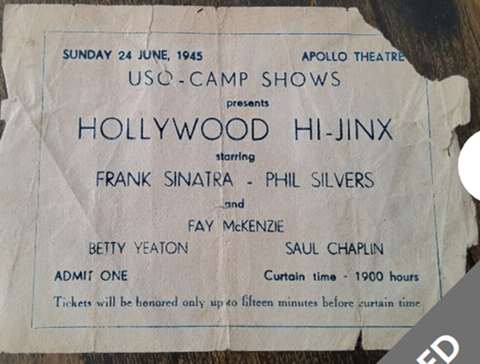
). Frank would then sing a ballad of the day. Eileen and Frank would
then do a skit as a newly married couple. She wanted to go dancing, he
preferred to stay home. Her parents bothered him, she resented doing all
the house work, there would be a number of double entendres that the
bobby soxers in the audience loved. Eileen and Frank would segue into a
duet, Frank would do another song -- usually a ballad -- and then the
weekly guest would be introduced. A recurring theme, if the guest was
an actor, was Frank's desire to do serious dramatic roles. The well known
thespian would generously offer to do a scene with Frank. The closing
song(s) might be a classic tune or a medley put together by Mr. Stordahl.
If time permitted, "Put Your Dreams Away" would be part of the sign-off.
The announcers included John Reed King, Joe Walters, Jerry Lawrence,
Truman Bradley. It might have been who ever was available that week.
There would be 20 shows broadcast from 8/16 to the final show on
Christmas Day.
--Ed
June 27, 1945
Concerts
Lido, Churchill-Roosevelt Club, Venice, Italy
USO Tour: Frank Sinatra, Phil Silvers, Betty Yeaton, Fay McKenzie, and composer and pianist Saul Chaplin
June 29, 1945
Concerts
L'Arena di Milano, Milan, Italy
USO Show with Sinatra, Phil Silvers, Saul Chaplin, Fay McKenzie, Betty Yeaton
L'Arena di Milano, Milan Italy
USO Show with Sinatra, Phil Silvers, Saul Chaplin, Fay McKenzie, Betty Yeaton
[image referenced in source but could not be recovered]
USO Tour - Italy
When looking for information on this USO Tour 1945, I often ended up in a cul-de-sac. However, the following is an example of finding something relevant to this tour, even though I was looking for something else. Again, this is an adapted Google translation of an article in Italian.
The piano Steinway & Sons. The piano on which Saul Chaplin played and which accompanied the whole tour USO 1945 is a self-report. Yes, because for this musical instrument, the adventure of that 1945 just stops in Livorno. After the tour, the piano for some reason was not part of the baggage that was shipped on to the ship or plane by which Frank Sinatra and the other artists returned to the USA.
What happened to that piano? In the chaos of the days, where and in what hands did it end? Today, thanks to random circumstances, history has perhaps reached a turning point and there is almost certainty that the piano Steinway & Sons (in its traditional mahogany red color but that during the tour USO was painted in a military green) on which Saul Chaplin played and whose music accompanied Frank Sinatra's voice, it remained in Italy, a few kilometers from Livorno. One indication is that on the piano, now again mahogany red, there are traces of green paint. In this regard, we report the testimony of Marcello Orazio.
Several clues lead to believe that the piano in question is the one currently held by Mr. Bruno Lami of Castiglioncello, who had bought it from me years ago. I had received it as a legacy from my father Alberto, who in turn had bought it in the immediate post-war period at the Casa Musicale Pietro Napoli in Livorno. The purchase of this piano was firmly recommended by the owner Roberto Napoli as an exceptional opportunity for quality and price. After intensive use, the piano remained unused for decades and was taken into consideration to determine its sale price. It was then that it emerged that this was not a common piano, but it had a not negligible historical peculiarity.
It was a version embellished with bourgeois taste of the glorious Victory Vertical Steinway, usually in olive green, of G.I. American military, built according to military specifications, sturdiness and handling, also suitable to be parachuted in outposts of the war to give moments of recreation to the troops. Having ascertained this irrefutable characteristic, the hypothesis that this piano used to accompany Frank Sinatra on the occasion of his concerto for the troops in Piazza Magenta in Livorno was consolidated.
-Thanks go to Carl R for the above
[image referenced in source but could not be recovered]
[image referenced in source but could not be recovered]
June 30, 1945
Concerts
Naples, Italy
USO Tour: Frank Sinatra, Phil Silvers, Betty Yeaton, Fay McKenzie, and composer and pianist Saul Chaplin
Naples, Italy
USO Tour: Frank Sinatra, Phil Silvers, Betty Yeaton, Fay McKenzie, and composer and pianist Saul Chaplin
Thanks to Carl R for the following research:
Naples - "7th Replacement Depot Frank Sinatra Show"
View of soldiers seated around stage:
Woman on stage singing:
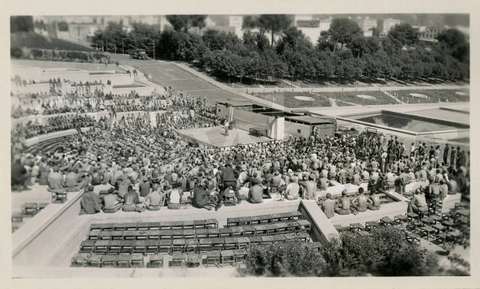
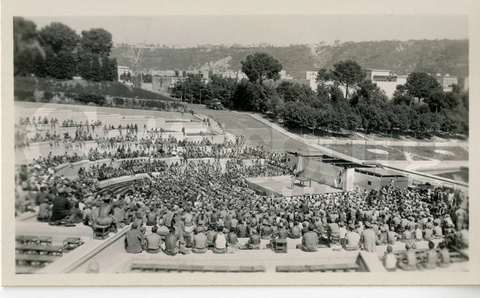
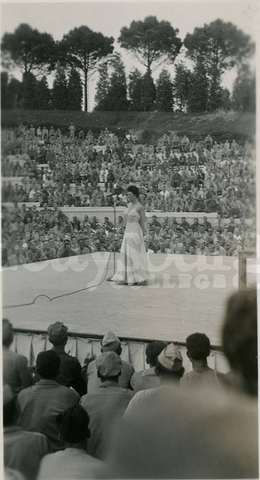
July 1945
[Original 'These Foolish Things' recording for Columbia]
Kaplan: Sinatra first recorded "These Foolish Things," with a Stordahl arrangement, for Columbia in July 1945, delivering it with youthful, tremulous feeling -- a striking contrast to his indifferent 1961 Point of No Return remake.
Source: James Kaplan, "Sinatra: The Chairman" (2015)
[Sinatra complains about free Columbia records]
Sinatra: Sinatra sent Manie Sacks a telegram grousing that everyone but him, including Axel Stordahl, got free Columbia records, sarcastically signing off with thanks.
Source: James Kaplan, "Frank: The Voice" (2010)
July 1, 1945
Concerts
Pomigliano d’Arco, Italy
USO Tour: Frank Sinatra, Phil Silvers, Betty Yeaton, Fay
McKenzie, and composer and pianist Saul Chaplin
Pomigliano d'Arco, Italy
USO Tour: Frank Sinatra, Phil Silvers, Betty Yeaton, Fay
McKenzie, and composer and pianist Saul Chaplin
Thanks to Carl R for the following research:
POMIGLIANO d'ARCO, July 1st 1945
At the Aeroporto Militare:
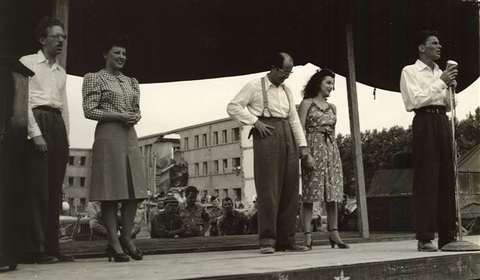
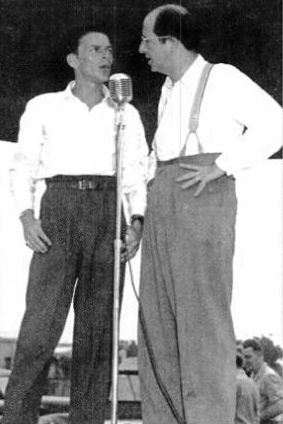
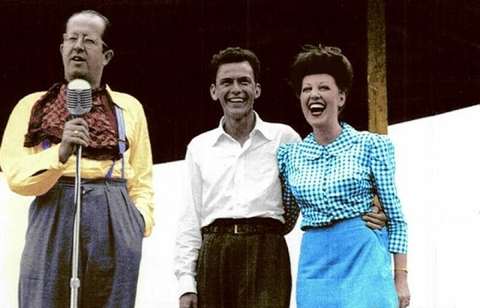
July 6, 1945
Concerts
Robin Hood Dell, Philadelphia, PA
Dinah Shore concert
Dinah invited Sinatra on stage and he sang Gershwin’s “Embraceable You†and Kern’s “Old Man River,†then he and Shore finished with a duet on Gershwin’s “Summertime.â€
Robin Hood Dell, Philadelphia, PA
Dinah Shore concert
Dinah invited Sinatra on stage and he sang Gershwin's "Embraceable You" and Kern's "Old Man River," then he and Shore finished with a duet on Gershwin's "Summertime."
MANN MUSIC ROOM: VAULT
Blog Entry by Jack McCarthy, Historian, The Mann Center for the Performing Arts The Mann Center traces its history to the Robin Hood Dell, which opened in 1930 in East Fairmount Park as a summer home for The Philadelphia Orchestra. In 1976 the organization moved to a new venue in West Fairmount Park. Originally called Robin Hood Dell West, it was later renamed the Mann Music Center in honor of its longtime director and benefactor Frederic Mann, and subsequently renamed the Mann Center for the Performing Arts.
Frank Sinatra, one of the most popular entertainers of the twentieth century, never appeared as a regularly scheduled performer at the Robin Hood Dell or Mann Music Center-his fifty-year career spanned both venues-but he sang a few songs in an impromptu appearance at the Dell in 1945. Born in 1915 in Hoboken, New Jersey, Frank Sinatra first came into prominence in 1940 as a featured singer with Tommy Dorsey's big band. He left Dorsey after two years and embarked on a very successful solo career. Sinatra enjoyed great popularity during World War II and in May of 1945 he set out on an eight-week USO tour to entertain the troops in Europe. Immediately upon his return, he accepted an invitation to attend the July 6th concert of his friend, singer Dinah Shore, who was appearing that evening at the Robin Hood Dell with conductor Andre Kostelanetz and the Robin Hood Dell Orchestra. Dinah Shore, who was very popular at the time, was making her Dell debut that night. "Golly, this is the biggest thrill I've ever had in my life, singing at the Dell and with Andre Kostelanetz," she told the audience. Following the usual format for Dell concerts with popular singers, each half of the two-part program began with symphonic pieces by the Orchestra, followed by vocal selections by the featured artist with orchestral accompaniment. The concert opened with Kostelanetz and the Dell Orchestra giving the American premiere of "Four Dances from Gayane" a ballet piece by Armenian composer Aram Khatchaturian, followed by music from another ballet, Rodeo, by American composer Aaron Copland. Dinah Shore then sang a medley of songs by Richard Rodgers and Lorenz Hart. The second half opened with Robert Russell Bennett's symphonic arrangement of music from George and Ira Gershwin's opera, Porgy and Bess, Kostelanetz and the Robin Hood Dell Orchestra had performed the piece at Judy Garland's debut at the Dell two years earlier, followed by Shore performing a selection of songs by the Gershwins, Cole Porter, and Jerome Kern. Sinatra had arrived towards the beginning of the concert and was escorted to a seat in the fourth row to enjoy his friend's performance. After finishing her final song, Shore called Sinatra to the stage, to wild applause from the audience. Before singing, Sinatra asked for quiet, telling the audience: "I don't want to sound pampered, but I just entertained the greatest audience in the world-our fighting men. And I guess I'm spoiled because you could hear a pin drop. They appreciate any entertainment over there. "Sinatra sang Gershwin's "Embraceable You"and Kern's "Old Man River, "then he and Shore finished with a duet on Gershwin's "Summertime. "As the Inquirer reported, "the audience applauded uproariously "at this unexpected performance, the only time Frank Sinatra would appear at the Dell or its successor, the Mann Music Center.
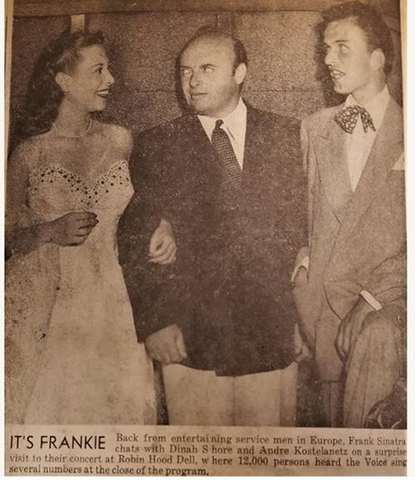
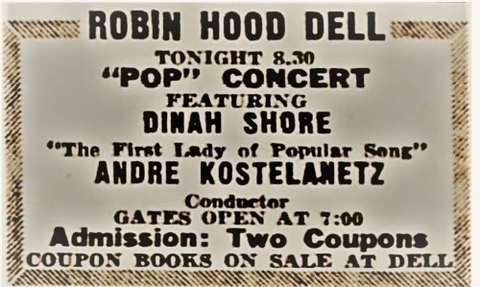
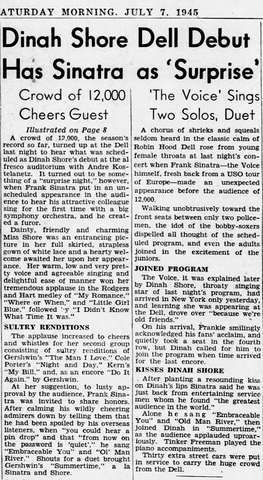
July 8, 1945
At KFWB studio theater in Hollywood, Frank recorded 'Nancy (with the Laughing Face)' along with six other songs for release as V-Discs, the version that became especially popular with troops overseas. (Source: Richard Havers, "Sinatra" (Dorling Kindersley, 2007).)
July 10, 1945
Radio
Supper Club
Network: NBC
Sponsor: Chesterfield
Time: 7:00 p.m.
Host: Marion Hutton.
M.C.: Martin Block
Performers: Frank Sinatra
Script (Final As Broadcast)
1. How Deep Is The Ocean
2. There's No You
Notes: "How Deep Is The Ocean" & "There's No You" appear on the CD: The Rarest Sinatra Dacade CD103.
LOC has 10-inch NBC sound reel. TT: 15mins.
July 11, 1945
Radio
Music For Millions
Program #5
Treasury Department syndication
Sponsor: Victory Loan Drive
Performer: Frank Sinatra,
Axel Stordahl and His Orchestra
Announcer: Bud Hiestand
1. Night And Day
2. Nancy
3. If You Are But A Dream
4. Buy A Piece Of The Peace
Notes: Date etched on disc matrix. 15mins. Audio condition: Excellent. Complete.
July 19, 1945
Film
"Anchors Aweigh" (USA Release: July 19,
1945)
Starring: Frank Sinatra, Kathryn Grayson, Gene Kelly, José
Iturbi, Dean Stockwell, Pamela Britton, Jerry the Mouse
Produced by: Joe Pasternak
Directed by: George Sidney
Joe Brady (Kelly) and Clarence Doolittle (Sinatra) are
USN sailors who have a four-day leave in Hollywood. Donald (Stockwell), a little boy who wants to join the navy, is found wandering around the boulevard by a cop, who takes him to the police station. Clarence and Joe end up being picked up by the cops to help convince Donald to go home. After the two sailors wait at home and entertain Donald, Donald's Aunt Susie (Grayson) arrives. Clarence is smitten with her from the beginning. Susan goes on to tell them that she has been trying to find work in music, and longs to perform with José Iturbi. Trying to make Susan impressed with Clarence, Joe tells her that Clarence is a personal friend of Iturbi, and that he has arranged an audition for Susan with him. That night, they go out to a cafe where Clarence meets a girl from Brooklyn, and they hit it off. Of course neither of the sailors know Iturbi but eventually Iturbi agrees to get Susan a screen test, which turns out to be very successful. The next day, Joe visits Donald's school, and tells the kids the story of how he got his medal, and how he brought happiness to a lonesome king (played by Jerry the Mouse in an animated sequence), and joy to the forest animals of the kingdom. The movie ends as Iturbi conducts the choir in singing "Anchors Aweigh", and Joe, Susan, Clarence and the girl from Brooklyn kiss.
--DVD Release: 2000-05-02 - Blu-Ray Release: 2015-05-05
.
Note: Select scenes from Anchors Aweigh were released on Super 8mm color sound film:
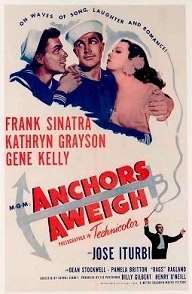
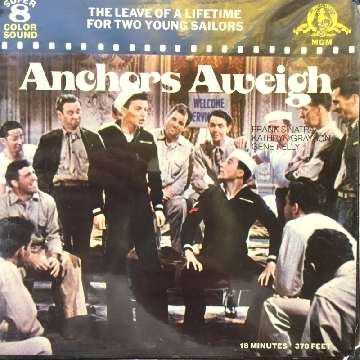
[The Cinematic Legacy of Frank Sinatra — Anchors Aweigh (1945)]
David Wills's 2015 photo history The Cinematic Legacy of Frank Sinatra devotes a section to Anchors Aweigh (1945), illustrated with 4 behind-the-scenes and publicity photographs (posters, lobby cards, and on-set/on-location shots) filed here.
“I ventured down to Times Square and was literally scared away. The police estimated that 10,000 kids were queued up six abreast … and another 20,000 were running wild in Times Square.… Girls shreiked, fainted—or swooned— fell down, were stepped on and pulled up by their companions and resumed screaming. They rushed the ticket booth and damaged it. Windows were broken.” —Earl Wilson
Source: David Wills, The Cinematic Legacy of Frank Sinatra (St. Martin's Press, 2015), pp. 39–42.
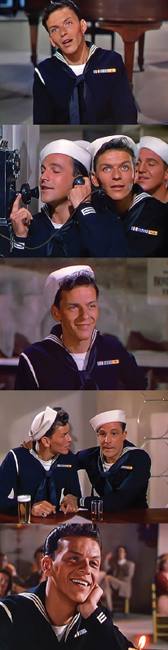
Anchors Aweigh, 1945. / “I couldn't walk, let alone dance. I / was a guy who got up and hung on / to a microphone.… And one of the (Photo: The Cinematic Legacy of Frank Sinatra, David Wills, 2015.)
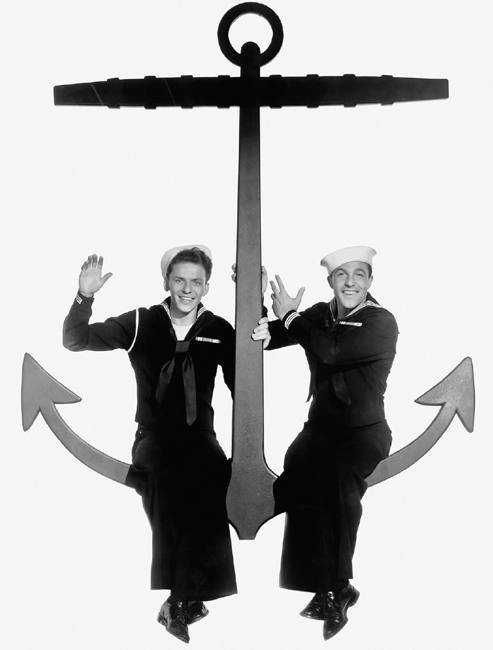
reasons I became a 'star' was Gene / Kelly.” / With costar Gene Kelly. (Photo: The Cinematic Legacy of Frank Sinatra, David Wills, 2015.)
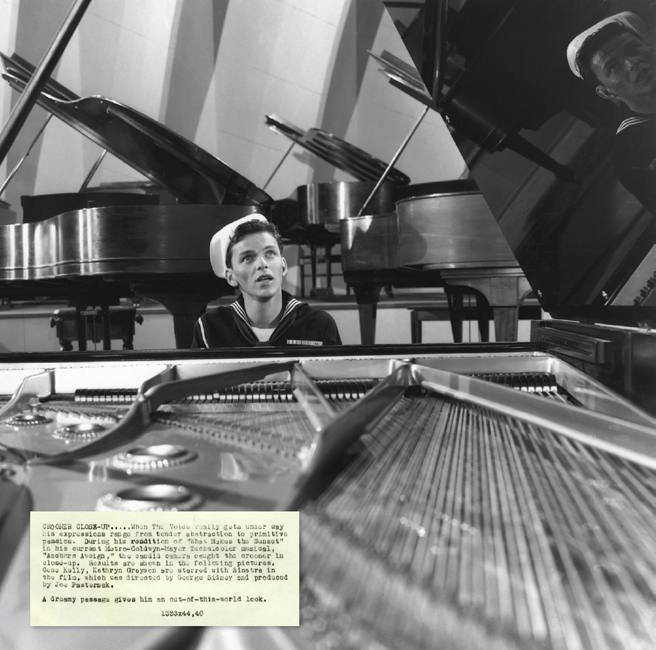
As Clarence Doolittle, Anchors Aweigh, 1945. (Photo: The Cinematic Legacy of Frank Sinatra, David Wills, 2015.)
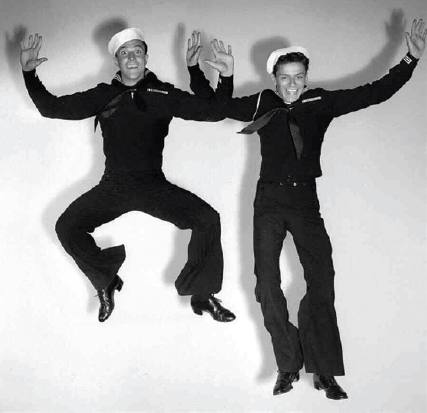
With costar Gene Kelly. / “I ventured down to Times Square and was / literally scared away. The police estimated that / 10,000 kids were queued up six abreast … and / another 20,000 were running wild in Times / Square.… Girls shreiked, fainted—or swooned— / fell down, were stepped on and pulled up b (Photo: The Cinematic Legacy of Frank Sinatra, David Wills, 2015.)
"Anchors Aweigh" (USA Release: July 19,
1945)
Starring: Frank Sinatra, Kathryn Grayson, Gene Kelly, José
Iturbi, Dean Stockwell, Pamela Britton, Jerry the Mouse
note: "Anchors Aweigh" had its world premiere at the Capitol Theatre, in N.Y.C., 7-19-45. A nation wide release would follow on 8-15-45. Johnnie Johnson, vocalist featured with the Whiteman Orchestra, would marry Kathryn Grayson in 1947.
Frank Sinatra sang for the Jewish Home For The Aged, mid-January 1944, Roosevelt Hotel in Los Angeles . Louis B. Mayer was there.. The MGM mogul was reduced
to tears by Sinatra's rendition of "Ol' Man River." He instructed his people to sign Sinatra immediately. The deal made guaranteed Frank $260,000 a year from MGM; the
right to make one film a year at another studio, 18 guest radio appearances per year, musical rights to every other film he did at MGM and a loosening of the strict moral
code the studio demanded. Frank now had a record contract with Columbia, two sponsored radio shows, theater and nightclub contracts and a fabulous agreement with
THE studio renowned for film musicals.
MGM quickly found the right vehicle for Sinatra. A short story by Natalie Marcin "You Can't Fool A Marine" became the basis for "Anchors Aweigh."Frank would co-star
with Gene Kelly and Kathryn Grayson in a lavish color production of two sailors on leave in Hollywood.
There would be an extended dance number with Kelly. This certainly presented a problem. Kelly was a magnificent hoofer and Frank was a complete novice. Not to worry. MGM instructed Gene, who did all the choreography for the film, to teach Frank the ropes. Starting in April, the two men rehearsed daily for eight weeks. Kelly was very patient and Frank was a determined student -- if not always a patient one. After the long process ended, Kelly praised Frank for his determination and pronounced him adequate.
Filming began in earnest on 6-15-44. The dance number, Frank had so diligently worked on for all those weeks, required 72 takes. Kelly's dance number with the animated mouse, Jerry, required weeks of planning, rehearsals and multiple takes. Sammy Cahn and Jule Styne wrote six original songs for the film. "It Could Only Happen In Brooklyn" was a duet written for Sinatra and Pamela Britten. At the last minute, they decided not to use it. "The Charm Of You" was intended for K. Grayson, but Frank asked for and got it.
The film was very long for an MGM musical (140 minutes) and the director George Sidney had to cut back of some planned production numbers. The film wrapped on 11-7-44
The big premiere at the Capitol Theatre in New York took place during a driving rainstorm. The critics went absolutely overboard in their praise for the film.. The first week it took in almost $100,000. MGM had spent $2,580,000 and it would be the fifth biggest film of that year, taking in $7,475,000. There would be Oscar nominations for Best Picture, Best Actor(Kelly), Cinematography ( Kelly), Best Song (I Fall In Love Too Easily) and it would win George Stoll an Oscar for Best Score. When Stoll died his Oscar was eventually offered as part of a major estate sale. Kevin Spacey had the highest bid, $156,875. He returned it to the Academy. MGM would re-release the movie, in 1955, offering the viewer their widescreen format and enhanced audio sound.
MGM released a two-set laser disc in 1992 with digital color restoration. The film has also been issued on VHS, DVD, BluRay. The Sinatra MGM recordings are available
on "Sinatra In Hollywood" and session material was issued on a deluxe Gene Kelly laser set ( 4 songs)
Frank was riding high after the success of "Anchors Aweigh." He had top billing and MGM was preparing a sequel titled "All Ashore." The film was set for early 1946 with the same three leads and George Sidney directing again. Then things went sour. Two planned projects with Garland did not happen, he had a brief appearance in "Till The Clouds Roll By" and his next big feature "It Happened In Brooklyn" was a low-budget production and it would be in B&W.. Yikes ! The MGM brass did not approve of Mr. Sinatra's personal life and they let him know by meting out punishment in a very unsubtle way. Sinatra would rebound with the final two films of his contract, both with his dancing partner Gene Kelly.
--Ed
THE SCREEN; 'Anchors Aweigh,' Gay Musical Film, With Gene Kelly, Frank Sinatra and Miss Grayson, Opens at the Capitol TheatreBy Bosley Crowther
July 20, 1945
Another humdinger of a musical has been produced by Joe Pasternak for Metro in the shape of that studio's current and colorful offering at the Capitol, "Anchors Aweigh." And in it that agile young fellow, Gene Kelly, conclusively proves himself to be the peer, if not the superior, at rigadooning, of Fred Astaire. But, indeed, Mr.
Pasternaka champion at making such film with youthful starshas accaccomplished an even greater wonder in this one. He has made Frank Sinatra look good.Well, maybe that word is misleading. He has put the fabulous "Voice" in his place, but he has done it with such charming candor that even Sinatra fans squeal with glee. (That is, we presume the emotion which prompts those girlish outbursts is glee.) For the story devised for this diversion is about two prowling gobs in Hollywood, the one a seagoing Don Juan and the other a slightly backward chump. And (try to control yourselves now, ladies) the latter is the one that Frankie plays.Yes, you might as well know it before you see it: Sir Frank Sinatra is the patsy in this case. He is the gawking, grinning flathead whom Mr. Kelly rather ruefully drags along on a damozel-hunting expedition when they catch some shore leave in Hollywood. And he is the one who falls hardest on his curiously unromantic face when they quaintly encounter a little "extra," whom Kathryn Grayson beguilingly plays. He is not, we might add, the one she fancies as the boys make a lengthy attempt to get her an audition with José Iturbi. And he is not the best thing in the show.That distinction is plainly Mr. Kelly's. He is the Apollonian marvel of the piece, dancing, singing and performing in a delightfully gay and graceful style. And Miss Grayson is not far behind him, with her winsome manner and truly lyric voice. But bashful Frankie is a large-sized contributor to
the general fun and youthful charm of the show, and through himor, through his characterrizationis transmitted a genial touch of ridicule.Mr. Kelly, howeveerhe's a fellow for you girls to make noises about, especially whenn he is dancing, which he does quite often in this film. Two numbers are particularly entrancingone a rather wistful whirl done in partial commpany with a little Mexican girl, and the other a thrilling, dashing tango performed (in black pants and chartreuse shirt) on the wine-colored tiles of a moonlit courtyard of a dreamed-up castle in Spain. Mr. Kelly also does a bright adagio with a little cartoon character in a trickily fanciful sequence (a la Disney) which fits well into this scheme.For the charm of Mr. Pasternak's productions is their visual fluidity, their displays of images with music for purely diverting effects. And the cartoon sequence falls as readily into this graceful flow as does a multiple-piano recital, featuring Iturbi, which comes in towards the end. As a matter of fact, Iturbi pops up every so often to play a snatchanything from a Tchaikovsky concertoo to a boogie-woogie version of "The Donkey Serenade."Miss Grayson sings several numbersbeautifully, be it saidfrom the semi-classic ic "Jalousie" to "All Of a Sudden My
Heart Sings." And Mr. Sinatra (remember him?) does rather nicelyand wee'd be the first to say so if he did notby such slightly sticky nummbers as "I Fall in Love Too Easily" and "What Makes the Sunset?"Indeed, for a popular entertainment, "Anchors Aweigh" is hard to beat. The proof is that it pleases both the pro and con Sinatra-ites.
ANCHORS AWEIGH, screen play by Isobel Lennart; suggested by a story by Natalie Marcin; directed by George Sidney; produced by Joe Pasternak for Metro-Goldwyn-Mayer; songs by Jule Styne and Sammy Cahn; dances arranged by Gene Kelly. At the Capitol .Joseph Brady . . . . .
Gene Kelly
Susan Abbott . . . . . Kathryn Grayson
Clarence Doollttle . . . . . Frank SinatraJ
ose Iturbi . . . . . by Himself
Donald Martin . . . . . Dean Stockwell
Girl From Brooklyn . . . . . Pamela Britton
Police Sergeant . . . . . Rags Ragland
Cafe Manager . . . . . Billy Gilbert
Carlos . . . . . Carlos Ramirez
Radio Cop . . . . . James Flavin
Police Captain . . . . . Edgar Kennedy
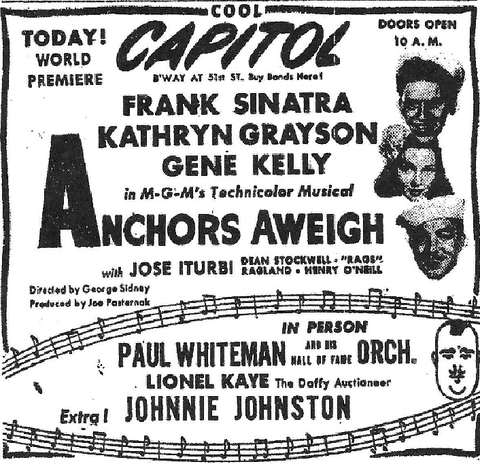
"Anchors Aweigh"
The chapter's Hoboken section opens with an epigraph citing "We Hate to Leave," sung by Sinatra and Gene Kelly in Anchors Aweigh.
Source: Tom Santopietro, "Sinatra in Hollywood" (2008).
"Anchors Aweigh"
Frank Sinatra: While filming Anchors Aweigh, an impatient, short-tempered Sinatra told United Press reporter Hal Swisher he was quitting movies: "I don't want any more movie acting. Pictures stink... Hollywood won't believe I'm through, but they'll find out I mean it." The New York Times duly reported it; Sinatra later claimed he'd been misquoted, and of course kept making films.
Source: Tom Santopietro, "Sinatra in Hollywood" (2008).
"Anchors Aweigh"
Anchors Aweigh (1945) teamed Sinatra with co-star/choreographer Gene Kelly, director George Sidney (who would later direct Sinatra in Pal Joey), songwriters Jule Styne and Sammy Cahn, orchestrator Axel Stordahl, screenwriter Isobel Lennart, and art director Cedric Gibbons -- part of MGM's top-tier Freed Unit musical infrastructure under producer Arthur Freed (and Joe Pasternak).
Source: Tom Santopietro, "Sinatra in Hollywood" (2008).
"Anchors Aweigh"
Frank Sinatra: Producer Joe Pasternak initially resisted Sinatra's insistence on using the then-unproven songwriting team of Styne and Cahn for Anchors Aweigh. When Cahn offered to step aside so as not to jeopardize Sinatra's standing on the picture, Sinatra told him: "If you're not there Monday, I'm not there Monday."
Source: Tom Santopietro, "Sinatra in Hollywood" (2008).
"Anchors Aweigh"
In this splashy Technicolor "sailor suit" musical, Sinatra received top billing over Kathryn Grayson and Gene Kelly. It was the first of three film pairings between Sinatra and Kelly, launching a lasting friendship built on mutual professional respect.
Source: Tom Santopietro, "Sinatra in Hollywood" (2008).
"Anchors Aweigh"
Frank Sinatra: Sinatra credited Gene Kelly with teaching him to believe in himself as a film actor. He recalled going through periods of depression and embarrassment, feeling less talented than his MGM colleagues, and said Kelly patiently "saw me through" and adjusted his own dancing to accommodate Sinatra's lesser skill: "He danced down to me."
Source: Tom Santopietro, "Sinatra in Hollywood" (2008).
"Anchors Aweigh"
Anchors Aweigh opens with Sinatra (age 28, playing an 18-year-old sailor named Clarence "Brooklyn" Doolittle) and Gene Kelly (as Joseph Brady) being awarded Silver Star medals, then heading out on shore leave; Dean Stockwell plays five-year-old Donnie, and Kathryn Grayson plays his aspiring-singer guardian Aunt Susie.
Source: Tom Santopietro, "Sinatra in Hollywood" (2008).
"Anchors Aweigh"
Santopietro highlights a scene of Sinatra's character singing young Donnie to sleep as an early, effective example of Sinatra's gentleness with children on screen -- a facet of his persona he says recurs later in A Hole in the Head.
Source: Tom Santopietro, "Sinatra in Hollywood" (2008).
"Anchors Aweigh"
Frank Sinatra: Sinatra recalled the demanding rehearsal schedule for Anchors Aweigh's dance numbers: "We rehearsed... here for six days a week, for eight weeks, before our first foot of film was shot on a soundstage. No way was I a dancer. Boy did we work." The "I Begged Her" tap number alone reportedly required 72 takes over several weeks.
Source: Tom Santopietro, "Sinatra in Hollywood" (2008).
"Anchors Aweigh"
Santopietro / Gene Kelly (quoted): Despite his preference for doing scenes in a single take, Sinatra tolerated the extensive rehearsal and re-shooting Gene Kelly demanded on Anchors Aweigh; it was on this film that Sinatra earned the nickname "One-Take Charlie," and per Kelly, Sinatra's dancing improved "from lousy to adequate" through sheer hard work.
Source: Tom Santopietro, "Sinatra in Hollywood" (2008).
"Anchors Aweigh"
Daniel O'Brien (cited) / Santopietro: Despite playing a naive, humble rube character, Sinatra reportedly arrived at the film's initial production meeting with an entourage of at least eight men -- per Daniel O'Brien's Frank Sinatra Film Guide -- which Santopietro cites as evidence the on-screen naivete was itself a deliberate, skilled acting choice.
Source: Tom Santopietro, "Sinatra in Hollywood" (2008).
"Anchors Aweigh"
Jeanine Basinger (cited) / Santopietro: Anchors Aweigh's celebrated Gene Kelly/Jerry the Mouse dance sequence (later re-excerpted in MGM's 1974 That's Entertainment!) combined live action with animation; per film scholar Jeanine Basinger, the sequence required two months of work and about ten thousand hand-painted frames to optically match the animated mouse to Kelly's filmed movements.
Source: Tom Santopietro, "Sinatra in Hollywood" (2008).
"Anchors Aweigh"
Santopietro singles out Sinatra's solo rendition of "I Fall in Love Too Easily," sung alone at the piano in an empty Hollywood Bowl, as a landmark moment where Sinatra-the-actor and Sinatra-the-star fully merge -- functioning as an emotional stand-in for wartime audiences' own feelings of love and loss.
Source: Tom Santopietro, "Sinatra in Hollywood" (2008).
"Anchors Aweigh"
Released July 1945 to major success, Anchors Aweigh was nominated for the Best Picture Oscar, won Best Musical Scoring (Georgie Stoll), and received further nominations for Best Actor (Gene Kelly), Best Song ("I Fall in Love Too Easily"), and Best Color Photography.
Source: Tom Santopietro, "Sinatra in Hollywood" (2008).
"Anchors Aweigh"
Louella Parsons: Anchors Aweigh's success helped quiet the outrage over Sinatra's earlier "Pictures stink" comment. Louella Parsons summed up the reception: "Sock artists, sock tunes and sock dances."
Source: Tom Santopietro, "Sinatra in Hollywood" (2008).
"That's Entertainment, Part II" / "Anchors Aweigh"
Gene Kelly: Over footage of Sinatra singing "I Fall in Love Too Easily" from Anchors Aweigh, narrator Gene Kelly states, "There's something about a Sinatra ballad that makes it automatically unforgettable" -- praise Santopietro treats as earned given Kelly's own mastery of the movie musical.
Source: Tom Santopietro, "Sinatra in Hollywood" (2008).
"Anchors Aweigh"
Santopietro grades this an A, calling it a "great musical; great Frank."
Source: Tom Santopietro, "Sinatra in Hollywood" (2008).
"Anchors Aweigh"
Santopietro (Filmography): Metro-Goldwyn-Mayer. Produced by Joe Pasternak, directed by George Sidney, screenplay by Isobel Lennart, songs by Jule Styne and Sammy Cahn, choreographed by Gene Kelly. Sinatra played Clarence Doolittle opposite Kathryn Grayson, Gene Kelly and Jose Iturbi, singing a suite of songs including 'I Fall in Love Too Easily' and 'If You Knew Susie Like I Know Susie.'
Source: Tom Santopietro, "Sinatra in Hollywood" (2008).
July 30, 1945
Studio
Hollywood
HCO1499 Someone To Watch Over Me
(G. & I. Gershwin)
(from Oh, Kay!)
T.B. Harms, Inc. (ASCAP) 1926
Arranged & Conducted by Axel Stordahl
-1 (3:20) CD: Columbia Years 43-52 Vol.. 3
LP: C6X 40343 The Voice-The Columbia Years, 43-52 (6-LP Set)
LP: HS-11277 Someone To Watch Over Me
LP: CL-1359 Come Back To Sorrento
78: 38220
78: 36921
HCO1500 You Go To My Head
(H.. Gillespie/J. F. Coots)
Remick Music Corp. (ASCAP) 1938
Arranged & Conducted by Axel Stordahl
-1 (3:00) CD: Columbia Years 43-52 Vol. 3
LP: C6X 40343 The Voice-The Columbia Years, 43-52 (6-LP Set)
LP: C2L-6 Frank Sinatra Story In Music
78: 36918
HCO1501 These Foolish Things (Remind Me Of You)
(H. Marvell/J. Strachey/H. Link)
(from Spread It Abroad)
Bourne, Inc. (ASCAP) 1936
Arranged & Conducted by Axel Stordahl
-1 (3:08) CD: Columbia Years 43-52 Vol. 3
-PB (3:07) CD: C2K 65244Portrait Of Sinatra
-1 LP: C6X 40343 The Voice-The Columbia Years, 43-52 (6-LP Set) -1 LP: CL-743 The Voice
-1 78: 36919
HCO1502 I Don't Know Why (I Just Do)
(R. Turk/F. Ahlert)
(from Faithful In My Fashion)
Leo Feist, Inc. (ASCAP) 1931
Arranged & Conducted by Axel Stordahl
-1 (2:47) CD: Columbia Years 43-52 Vol. 3
LP: C6X 40343 The Voice-The Columbia Years, 43-52 (6-LP Set)
LP: CL-743 The Voice
78: 36918
Violins: D. Frisina, M. Russell; Viola: S. Freed, Jr.; Cello: F. Goerner; Piano: M. Mclntyre; Bass: J. Ryan; Drums: R. Hagan; Guitar: G. Van Eps; Flute: J. Mayhew
St Louis Globe Democrat
Hollywood
HCO1499 Someone To Watch Over Me
HCO1500 You Go To My Head
HCO1501 These Foolish Things (Remind Me Of You)
HCO1502 I Don't Know Why (I Just Do) note: Here are the covers of the original 78 set from 1946, the 10 inch LP from 1948, the 45 box set from 1952 and the 12 inch LP release. -Ed
"These Foolish Things"
Granata singles out Sinatra's July 1945 recording of 'These Foolish Things' with Axel Stordahl (backed by a nine-piece chamber group including flute and celeste) as epitomizing his tender ballad style, praising a subtle catch in his voice on 'roses' present on the issued take but absent from an alternate take.
Source: Charles L. Granata, "Sessions with Sinatra: Frank Sinatra and the Art of Recording" (1999/2003).
"These Foolish Things"
Granata includes 'These Foolish Things' among the fifty recordings he considers essential to understanding Sinatra's artistry (arranged by Axel Stordahl, recorded 1945, Columbia); the song was chosen for its musical/interpretive value rather than commercial popularity.
Source: Charles L. Granata, "Sessions with Sinatra: Frank Sinatra and the Art of Recording" (1999/2003).
[First Voice of Frank Sinatra session]
On July 30, 1945 in Hollywood, Sinatra recorded songs that would become part of Columbia's The Voice of Frank Sinatra album, his first thematic pop album.
Source: James Kaplan, "Frank: The Voice" (2010).
[Earlier recording of You Go to My Head]
Sinatra had first recorded You Go to My Head, arranged by Axel Stordahl, on July 30, 1945, about a month before V-J Day, in a wistful, youthful version that contrasted with his deeper 1960 remake.
Source: James Kaplan, "Sinatra: The Chairman" (2015).
July 31, 1945
Radio
G.I. Journal # 105
Date of recording: July 31, 1945 (AFRS broadcast August 6, 1945)
Location: Hollywood
Length of broadcast: 30 minutes
Orchestra conductor: Alvino Rey
Guests: Claudette Colbert, Frank Sinatra, Bing Crosby, Mel Blanc
Program parts with Sinatra:
--Frank Sinatra & Bing Crosby - Comedy
--Frank Sinatra - Good Good Good
--Frank Sinatra, Bing Crosby, Claudette Colbert - Comedy --Frank Sinatra, Bing Crosby, Claudette Colbert, Mel Blanc - Hinky Dinky Parlez-Vous
G.I. Journal # 105
Date of recording: July 31, 1945 (AFRS broadcast August 6, 1945)
Location: Hollywood
Length of broadcast: 30 minutes
Orchestra conductor: Alvino Rey
Guests: Claudette Colbert, Frank Sinatra, Bing Crosby, Mel Blanc
Thanks to Fred W for the above information and the following images:
August 1945
[Sacks explains Columbia payment disputes]
Manie Sacks: In a letter, Manie Sacks tried to clarify a dispute over who should pay Axel Stordahl's $300 conducting fee and copyist Joe Ross's bills, noting that on the March 6th session Columbia had paid $1,905 to cover 37 musicians as a flat cost not deducted from Sinatra's royalties -- an arrangement unique to Sinatra among Columbia artists.
Source: James Kaplan, "Frank: The Voice" (2010)
[Sinatra threatens to quit Columbia]
Sinatra: A few weeks after Sacks's explanatory letter, Sinatra sent another telegram refusing to pay any of the disputed bills and threatening to demand an immediate release from his Columbia contract if the label didn't agree.
Source: James Kaplan, "Frank: The Voice" (2010)
[Third recording of 'Nancy (with the Laughing Face)']
Kaplan: On a hot August afternoon in Hollywood, Sinatra recorded 'Nancy (with the Laughing Face)' for the third time in a year. Kaplan speculates the repeated recording may reflect guilt, since Sinatra was behaving badly at home that year.
Source: James Kaplan, "Frank: The Voice" (2010)
August 1, 1945
[Columbia grants Sinatra free records]
In response to Sinatra's 'brutal wire,' a Columbia executive sent a telegram authorizing Sinatra to demand one free copy of any Columbia record he wanted for his collection.
Source: James Kaplan, "Frank: The Voice" (2010).
August 2, 1945
Radio
Success Story: Frank Sinatra
Network: WLIB
Time: 2:00 - 2:30 PM
Note: Not known if Sinatra appeared on program.
Ed O'Brien:
Sinatra was in Hollywood that week, recording at Columbia and playing at the Hollywood Bowl.
Television
NONE
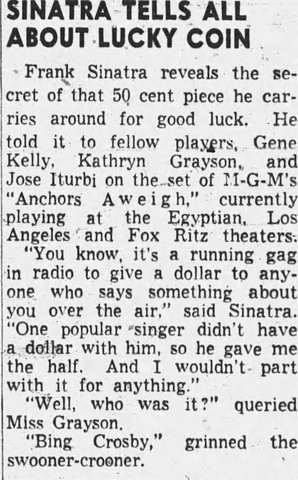
August 4, 1945
Radio
Hollywood Bowl Academy Night
Location: Hollywood
Orchestra Conducted By: Axel Stordahl
1. I Should Care
2. If I Loved You
3. Long Ago And Far Away
4. Ol' Man River
5. What Makes The Sunset
Note: Above appear on the CD: Radio Rarities 1943-49 VJC 1030-2
Concerts
Hollywood Bowl Academy Night
Location: Hollywood
Orchestra Conducted By: Axel Stordahl
1. I Should Care
2. If I Loved You
3. Long Ago And Far Away
4. Ol' Man River
5. What Makes The Sunset
Note: Above appear on the CD: Radio Rarities 1943-49 VJC 1030-2
Hollywood Bowl Academy Night
Location: Hollywood
Orchestra Conducted By: Axel Stordahl
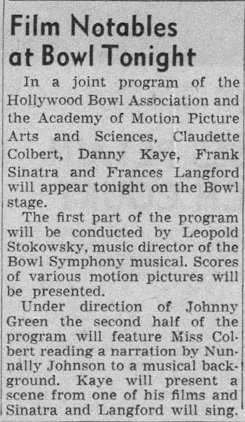
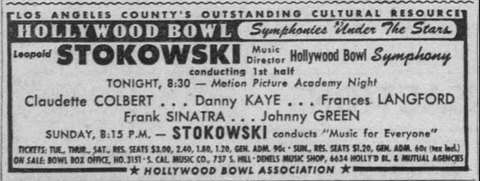

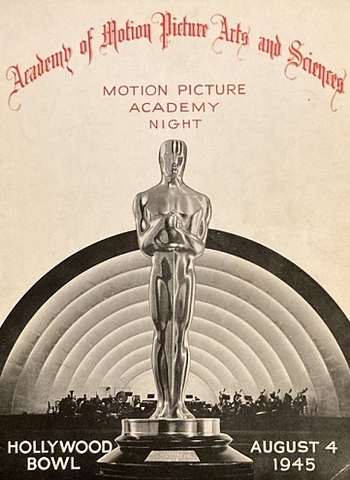
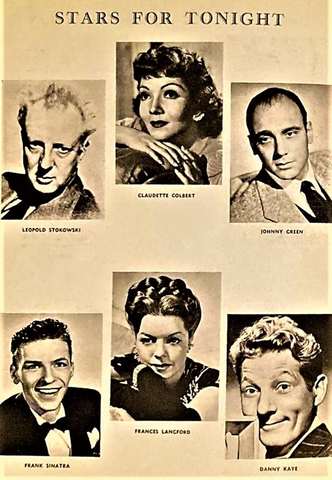
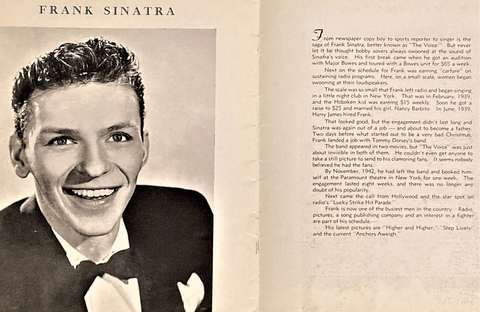
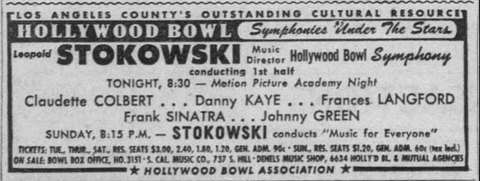

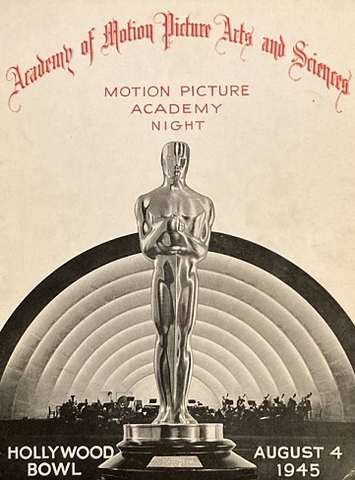
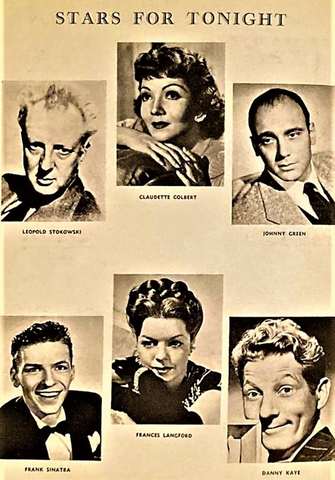
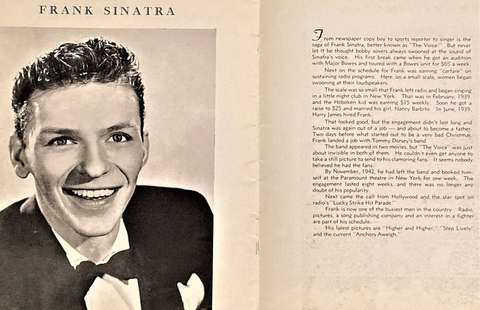
August 9, 1945
[Photograph: Anchors Aweigh released amid war's-end euphoria. From Richard Havers, "Sinatra" (Dorling Kindersley, 2007), p.106.]
[Photograph: Anchors Aweigh released amid war's-end euphoria. From Richard Havers, "Sinatra" (Dorling Kindersley, 2007), p.106.]
Anchors Aweigh hit theaters around the time of the Nagasaki bombing and was well received, becoming one of the year's top films and validating Louis B Mayer's faith in signing Frank, though much of the artistic credit went to co-star Gene Kelly. (Source: Richard Havers, "Sinatra" (Dorling Kindersley, 2007).)
August 14, 1945
Radio
Command Performance “VICTORY EXTRA”
(Broadcast August 14, 1945)
Recording location: Hollywood
Announcer: Harry von Zell
Conductor: Meredith Williamson
Master of Ceremonies: BING CROSBY
Guests: Frank Sinatra, Rise Stevens, Dinah Shore, Bette Davis, Jimmy Durante, Jose Iturbi, Marlene Dietrich, Lionel Barrymore, Ginny Simms, Janet Blair, Lucille Ball, The King Sisters, Cary Grant, Robert Montgomery, Lena Horne, Johnny Mercer, Lina Romay, Danny Kaye, Marilyn Maxwell, Carmen Miranda, Claudette Colbert, Ed Gardner, Orson Welles, Rita Hayworth, Desi Arnez, Ida Lupino, Ginger Rogers, Ruth Hussy, Clair Trevor, Don Wilson, Bill Mauldin, George Montgomery, John Conte, Junx Faulkenberg, Dianna Lewis, Ronald Colman, Burgess Meredith, William Powell, Greer Garson.--
--Frank Sinatra & Bing Crosby – Parody Medley (You Are My Sunshine / Sunny Boy / You’re The Top) --Frank Sinatra – The House I Live In
Command Performance “VICTORY EXTRA”
(broadcast August 14, 1945)
Recording location: Hollywood
Announcer: Harry von Zell
Conductor: Meredith Williamson
Master of Ceremonies: BING CROSBY
Guests: Frank Sinatra, Rise Stevens, Dinah Shore, Bette Davis, Jimmy Durante, Jose Iturbi, Marlene Dietrich, Lionel Barrymore, Ginny Simms, Janet Blair, Lucille Ball, The King Sisters, Cary Grant, Robert Montgomery, Lena Horne, Johnny Mercer, Lina Romay, Danny Kaye, Marilyn Maxwell, Carmen Miranda, Claudette Colbert, Ed Gardner, Orson Welles, Rita Hayworth, Desi Arnez, Ida Lupino, Ginger Rogers, Ruth Hussy, Clair Trevor, Don Wilson, Bill Mauldin, George Montgomery, John Conte, Junx Faulkenberg, Dianna Lewis, Ronald Colman, Burgess Meredith, William Powell, Greer Garson.--
--Frank Sinatra & Bing Crosby – Parody Medley (You Are My Sunshine / Sunny Boy / You’re The Top) --Frank Sinatra – The House I Live In
© 1997-2026 The Sinatra Archive
This calendar, or any parts thereof, may not be reproduced in any fashion whatsoever without the prior written permission of the publisher (The Sinatra Archive)
[image referenced in source but could not be recovered]
August 22, 1945
Studio
Hollywood
HCO1519 The House I Live In (That's America To Me)
(E. Robinson/L. Allen)
(from The House I Live In)
Chappell & Co.,. Inc. (ASCAP) 1942
Arranged & Counducted by Axel Stordahl
-1 (3:20) CD: Columbia Years 43-52 Vol. 3
CD: 09274 Greatest Hits-The Early Years, Vol. 1
LP: C6X 40343 The Voice-The Columbia Years, 43-52 (6-LP Set)
LP: CL-2913 Frank Sinatra in Hollywood
LP: CL-2474 Greatest Hits, The Early Years, Vol. 1
LP: C2L-6 Frank Sinatra Story In Music
78: 36886
NOTE: When Sinatra Scholar Ed O'Brien asked Guitarist Al Viola to name his favorite songs by Sinatra, his first choice was "The House I Live In." When O'Brien asked why, Viola said that Sinatra meant every word of the song. Sinatra fervently believed that the song represented the best his country had to offer. He sang the song for 50 years, always with a passionate introduction. Probably the two most moving efforts were the guitar-only backing by Earl Robinson and the big Nelson Riddle chart at the JFK Inauguration Gala.
HCO1520 Day By Day
(A. Stordahl/P. Weston/S. Cahn)
Barton Music Corp./Hanover Music Corp. (ASCAP) 1945
Arranged & Counducted by Axel Stordahl
-1 (3:08) CD: Columbia Years 43-52 Vol. 3
CD: 09372 Greatest Hits-The Early Years, Vol. 2
LP: C6X 40343 The Voice-The Columbia Years, 43-52 (6-LP Set)
LP: CL-2572 Greatest Hits, The Early Years, Vol. 2
78: 40565
78: 36905
HCO1521 Nancy (With The Laughing Face)
(P. Silvers/J. Van Heusen)
Barton Music Corp. (ASCAP) 1944
Arranged & Counducted by Axel Stordahl
-1 (3:20) CD: Columbia Years 43-52 Vol. 3
-PB1 (3:11) CD: C2K 65244Portrait Of Sinatra
-PB1 CD: 09274 Greatest Hits-The Early Years, Vol 1
-PB1 LP: C6X 40343 The Voice-The Columbia Years, 43-52
-PB1 LP:CL-2474 Greatest Hits, The Early Years, Vol. 1
-1 LP: CL-606 Frankie (First Pressing)
-1 78: 50053
-1 78: 36868
Jimmy Van Heusen wrote a song for his wife back in 1944. One Saturday night at Gene Kelly's house, Phil Silvers gave, as a present to Kelly's wife Betsy Blair, a lyric he wrote for Van Heusen's tune, and he called it "Betsy With the Laughing Face." One line went like this: "Who wouldn't miss the Irish kisser?" Silvers later that year wrote another set of lyrics for Sinatra. Through the years, Sinatra often told his audiences that "Nancy" was his favorite song.
HCO1522 You Are Too Beautiful
(R. Rodgers/L. Hart)
(from Hallelujah, I'm A Bum)
Rodart Music Corp. c/o T.B. Harms, Inc. (ASCAP) 1945
Arranged & Counducted by Axel Stordahl
-1 (3:01) CD: Columbia Years 43-52 Vol. 3
LP: CL-2739 The Essential Frank Sinatra Vol. 1
78: 36947
Violins: W. Bloom, W. Edelstein, P. Ellis, S. Freed, Jr., D. Frisina, H. Halbert, G. Joyce, S. Kindler, S. Levine, A. Perrotti, N. Pisani, M. Russell; Violas: A. Harshman, M. Perlmutter, D. Sterkin; Cellos: C. Bernard, A. Kafton, J. Sewell; Saxes: H. Beau, L. Hartman, H. Lawson, D. Logiudice, F. Stulce; Horns: J. Stagliano; Trumpets: B. Hudson, L. Mach, V. Ramsey; Trombones: P. Beilman, C. Loeffler, E. Smithers; Piano: F. Leithner; Guitar: P. Botkin; Bass: J. Ryan; Drums: R. Hagan; Harp: A. Mason
[Records "The House I Live In" for Columbia]
Anthony Barnett: Sinatra recorded "The House I Live In" (music by Earl Robinson, words by Abel Meeropol writing as Lewis Allan) for Columbia Records, using his own abridgement that includes the first refrain (with the "All races all religions" line) but omits the second refrain entirely, dropping the "My neighbors, white and black" verse -- an abridgement he held to in later performances too. The record was released in December 1945.
Source: Anthony Barnett, "The White and Black" (Snow lit rev 8, 2020).
[The House I Live In -- critical commentary]
Written by Lewis Allan (Abel Meeropol) and Earl Robinson, "The House I Live In" premiered in the week-long 1942 revue Let Freedom Sing. When Sinatra adopted it in early 1945 he dropped the wartime-specific second verse. Producer Frank Ross proposed a tolerance-themed short built around the song; Sinatra phoned director Mervyn LeRoy (a chance train acquaintance) and the film was shot in two days in May 1945. Sinatra premiered the song publicly during V-E Day victory broadcasts in August 1945 and recorded it for Columbia that same month.
This song/context matches multiple dated entries in the chronology; the specific date Friedwald is referring to could not be determined with confidence.
Source: Will Friedwald, "Sinatra! The Song Is You: A Singer's Art" (2018 revised edition), Ch. 8, "Gordon Jenkins" (1956-1981)
[The House I Live In -- critical commentary]
Budd Granoff; Frank Sinatra (Drew Pearson broadcast, quoted); Billy Rose: Publicist George Evans's assistant Budd Granoff described how Evans pushed a reluctant Sinatra to address a Bronx high school on tolerance, generating front-page coverage and a subsequent multi-city speaking tour that recast Sinatra as a public figure rather than just a pop singer. In April 1946 Sinatra guest-hosted Drew Pearson's radio show and delivered what Friedwald calls probably his most overtly political speech, condemning lynching and the KKK: "The very intolerance we fought so bitterly in Germany goes unchecked here at home... Bigotry is a form of adult delinquency." Columnist Billy Rose noted in 1947 that attacking Sinatra in print was a way for journalists to please Republican-leaning publishers.
This song/context matches multiple dated entries in the chronology; the specific date Friedwald is referring to could not be determined with confidence.
Source: Will Friedwald, "Sinatra! The Song Is You: A Singer's Art" (2018 revised edition), Ch. 8, "Gordon Jenkins" (1956-1981)
[The House I Live In / This Land Is Your Land -- critical commentary]
Friedwald (analysis): Friedwald calls this Sinatra's most majestic recorded version of 'The House I Live In,' on a somber but unpretentious album about national unity after tragedy, featuring Crosby singing Woody Guthrie's 'This Land Is Your Land' alongside traditional Americana pieces.
This song/context matches multiple dated entries in the chronology; the specific date Friedwald is referring to could not be determined with confidence.
Source: Will Friedwald, "Sinatra! The Song Is You: A Singer's Art" (2018 revised edition), Ch. 9, "Looking for the Hook" (1960-1971)
August 24, 1945
Radio
Ray Bolger Show
Network: CBS
Sponsor: Rexall Drugstore
Time: 10:00PM - 10:30PM (EST)
Ray Bargy Orchestra
Perofrmers: Ray Bolger, Jeri Sullavan, Elvia Allman
Announcer: Howard Petrie
Guests: Frank Sinatra
1. There's No You - Frank Sinatra
2. Toodle-oo, So Long, Good Bye - Frank Sinatra & Ray Bolger
3. All The Things You Are - Frank Sinatra
Note: Confirmed aired on WABC. The show appears on the officially released CD set: 60 Greatest
Old Time Radio Shows "Frank Sinatra & Friends"
Ed O'Brien says this is a good show. Sinatra chose two fine numbers to sing, "There's No You" and "All the Things You Are." He also did a fine skit with Bolger.
Ray Bolger Show
Guests: Frank Sinatra
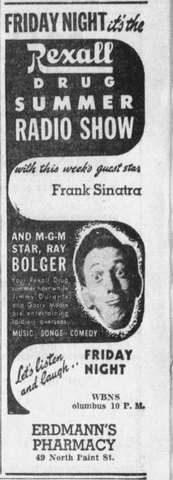
[Sacks' pained reply to Sinatra]
Manie Sacks: Manie Sacks wrote back that he was 'taken aback' by Sinatra's demands, defended Columbia's refusal to pay for arrangements, copying, and conducting fees, and noted Sinatra had recorded 49 sides and had 32 released -- more than any other Columbia artist -- while pleading that friendship and sincerity be honored.
Source: James Kaplan, "Frank: The Voice" (2010).
August 27, 1945
Studio
Hollywood
HCO1525 America The Beautiful w/The Ken Lane Singers
(K.L. Bates/ S.A. Ward)
Public Domain
Arranged & Conducted by Axel Stordahl
-1 (2:32) CD: Columbia Years 43-52 Vol. 3
78: 36886
HCO1526 Silent Night w/The Ken Lane Singers
(J. Mohr/F. Gruber)
Public Domain
Arranged & Conducted by Axel Stordahl
-1 (3:14) CD: Columbia Years 43-52 Vol. 3
CD: 40707 Christmas Dreaming
LP: HL-7400 Have Yourself A Merry Little Christmas
LP: CL-1032 Christmas Dreaming
78: 50079
78: 38256
78: 37145
HCO1527 The Moon Was Yellow (And The Night Was Young) w/The Ken Lane Singers
(E. Leslie/F. Ahlert)
Bergman, Vocco & Conn (ASCAP) 1934
Arranged & Conducted by Axel Stordahl
-1 (2:58) CD: Columbia Years 43-52 Vol. 3
CD: 09372 Greatest Hits-The Early Years, Vol. 2
LP: 2572 Greatest Hits, The Early years, Vol. 2
78: 38683
HCO1528 I Only Have Eyes For You w/The Ken Lane Singers
(A. Dubin/H. Warren)
(from Dames)
Remick Music Crop. (ASCAP) 1934
Arranged & Counducted by Axel Stordahl
-1 (3:12) CD: Columbia Years 43-52 Vol. 3
LP: C2X-40897 Hello Young Lovers
LP: CL-606 Frankie
LP: HS-11390 Frank Sinatra
78: 38550
The Ken Lane Singers: Stewart M. Bair, Ken Cameron, Ruth Clark, Raymond
Clark, John Glaha, Elva Lars Kellogg, Dudley Kuzell, Kermit Lane, Norma Larsen, Thora Ann Matthiason, Sydney Pepple, Orville Race
Violins: V. Arno, W. Edelstein, P. Ellis, S. Freed, Jr., D. Frisina, G.
Kast, S. Kindler, S. Levine, A. Perrotti, N. Pisani, M. Russell, O. Vail;
Violas: M.. Perlmutter, D. Sterkin, G. White; Cellos: F. Goerner, N.
Ochi-Albi, J. Sewell; Saxes: H. Beau, E. Gershman, L. Hartman, H. Lawson, D. Logiudice; Horns: J. Cave; Trumpets: C. Griffard, B. Hudson, L. Mach;
Trombones: C. Loeffler, J. Skiles, E. Smithers; Piano: M. Mclntyre; Guitar:
D. Barbour; Bass: J. Ryan; Drums: R. Hagan; Harp: L. McFarland
NOTE: Sinatra Scholar Ed O'Brien observes, looking at the songs from this session, he finds it striking how many times Sinatra would re-record tunes through the years. He would do six re-dos from this session, for example.
"The Moon Was Yellow"
Bing Crosby introduced the song in 1934. Sinatra's 1945 reading was heavily dramatic, in the style of Allan Jones/Tony Martin; his 1958 single restructured it on the model of the prior year's Billy May 'April in Paris,' using the bridge as an in-tempo verse (later scaled down for sextet on the 1962 world tour). The 1965 Moonlight version keeps a light Latin feel (flute, guitar, maracas) but relaxes from torrid tango into a gentler bossa beat, and repurposes the bridge-as-verse device to open the whole album via track one, 'Moonlight Becomes You.'
Source: Will Friedwald, "Sinatra! The Song Is You: A Singer's Art" (2018 revised edition).
"Silent Night"
During a take of 'Silent Night,' Sinatra flubbed the lyric, singing 'sleep in heavenly sleep' instead of 'sleep in heavenly peace,' cursed at himself, and the orchestra broke into laughter before a good take was completed.
Source: Charles L. Granata, "Sessions with Sinatra: Frank Sinatra and the Art of Recording" (1999/2003).
August 30, 1945
Frank appeared on an AFRS Command Performance broadcast alongside comic pianist Victor Borge, part of a summer of guest radio spots. (Source: Richard Havers, "Sinatra" (Dorling Kindersley, 2007).)
September 1945
[Frank Remembers Sammy Davis Jr. From A Bill Five Years Earlier]
Nancy Sinatra: Broke and sharing a two-dollar hotel room with his father and uncle, young dancer Sammy Davis Jr. waited outside a Hollywood studio for Frank to finish signing autographs. Frank recalled they had appeared on the same Detroit bill with Tommy Dorsey five years earlier, left him a pass to watch the next broadcast, and invited him backstage afterward, the start of a lasting friendship.
Source: Nancy Sinatra, Frank Sinatra: An American Legend, 1995.
[Newly discharged Sammy Davis Jr reconnects with Sinatra]
Just out of the Army, Sammy Davis Jr wore his uniform to stand in the servicemen's line and see Frank's radio show, then got to speak with him backstage. Frank remembered him from years before and gave him a ticket to the next week's show, deepening a bond that would later lead to a major career break for Sammy.
Source: Richard Havers, "Sinatra" (Dorling Kindersley, 2007).
September 2, 1945
Radio
War Chest, Victory Drive, V-J Day Show (aka: Victory Program)
Time: 9:00 p.m.-9:30 p.m
Starring : Orson Wells, Frank Sinatra
Pool feed
AFRS origination
Performers: Bing Crosby, Dinah Shore, Bob Hope,
Frank Sinatra, Frances Langford, Orson Welles,
Harry Truman, William N. Thomas, Luther Miller, Bill Mauldin
Conductor: Meredith Willson
The Armed Forces Radio Service Orchestra
1. The House I Live In
Notes: LOC has two different copies on 10 inch Sound reels. One NBC & one AFRS
September 6, 1945
Radio
Command Performance. Program #190
This is a rebroadcast of #122 June 3, 1944
Bob Hope (m. c.), Bing Crosby, Judy Garland,
Frank Sinatra, Meredith Willson (conductor). 30:03
Frank sang "All The Things You Are," did comedy sketches with the others and Bing joined him in a very entertaining medley, parodying a number of great songs including
"You're The Top" and "You Are My Sunshine."
Note: The show appears on the officially released
CD set: 60 Greaest Old Time Radio Show "Frank Sinatra & Friends"
Jubilee
AFRS Program #146.
Ernest Whitman (m. c.),
Verne Smith (announcer),
Performers: Louis Armstrong, Ella Mae Morse, Alvino Rey, Frank
Sinatra
The AFRS Orchestra
Notes: The date above is the date of recording.
1. Saturday Night is the Loneliest Night of the Week
2. Blue Skies w. Louis Armstrong
NOTE: Ed O'Brien points out that Sinatra sang "Saturday Night is the Loneliest Night of the Week"
and Louis Armstrong backed him on trumpet for a very nice reading of Irving Berlin's "Blue Skies."
Jubilee
AFRS Program #146.
Ernest Whitman (m. c.),
Verne Smith (announcer),
Performers: Louis Armstrong, Ella Mae Morse, Alvino Rey, Frank
Sinatra
The AFRS Orchestra
Notes: The date above is the date of recording.
1. Saturday Night is the Loneliest Night of the Week
2. Blue Skies w. Louis Armstrong
NOTE: Ed O'Brien points out that Sinatra sang "Saturday Night is the Loneliest Night of the Week"
and Louis Armstrong backed him on trumpet for a very nice reading of Irving Berlin's "Blue Skies."
Ella Mae Morse and Frank Sinatra
Ella Mae Morse and Frank Sinatra on a radio broadcast for the program "Jubilee." Morse is holding papers in one hand and resting her other arm on Sinatra's shoulder.
Both Morse and Sinatra are looking down and smiling, standing behind an AFRS microphone.
September 9, 1945
Radio
Treasury Department Music For Millions Show No. 5
Arranged By: Axel Stordahl
Conducted By: Axel Stordahl
1. Buy A Piece Of The Peace
Note: "Buy A Piece Of The Peace" appears on both the CD: The Rarest Sinatra Dacade CD103 & CD: Sings the songs of Sammy Cahn and Jule Styne
Ed O'Brien points out that Sinatra sang four rousing patriotic songs popular at the time‚ War Bond Man, Victory Polka, Hot Time in the Town of Berlin , and Buy a Piece of the Peace.
September 11, 1945
Frank starred in and championed The House I Live In, a 10-minute RKO short preaching religious and ethnic tolerance to a group of boys; it was his idea from the start, and the proceeds went to charity while the film later won a special Academy Award.
Source: Nancy Sinatra, Frank Sinatra: An American Legend, 1995.
September 12, 1945
Radio
Songs By Sinatra
Network: CBS
Location: Hollywood
Show #1 (PREMIERE)
Sponsor: Old Gold Cigarettes
Time: 9:00PM - 9:30PM (EST) Wednesday
Orchestra Conducted By: Axel Stordahl
Arrangements By: Axel Stordahl
Announcer: Marvin Miller
Writer: Glenn Wheaton
Directed By: Mann Holiner
Performers: The Pied Pipers
Guest: Martha Tilton, Crosby Kids
CBS Broadcast:
1. opening theme: Night And Day
2. Stars In Your Eyes - Frank Sinatra
3. There's No You - Martha Tilton
4. Gotta Be This Or That - The Pied Pipers
5. If I Loved You - Frank Sinatra
6. FS talks to The Crosby Kids
7. Embraceable You - Frank Sinatra w/Martha Tilton
8. medley with Frank Sinatra, Martha Tilton & Pied Pipers: "The Songwriters
Of The Fourties" Praise The Lord And Pass The Ammunition - (Sinatra) / Pistol Packin' Mama - (Pied Pipers) / The White Cliffs Of Dover - (Sinatra) / Don't Sit Under The Apple Tree - (Tilton) / Is You Is Or Is You Ain't - (Pied Pipers) / They're Either Too Young Or Too Old - (Tilton) / I Don't Want To Walk Without You - (Sinatra) / Don't Fence Me In - (Pied Pipers) / Sunday, Monday Or Always - (Sinatra) / Blues In The Night - (Tilton) / White Christmas - (Sinatra)
9. medley arrangement by: Axel Stordahl - Narration by: Frank Sinatra
10. closing theme: Put Your Dreams Away
Notes: Listed as Premiere. Confirmed airing on WABC. On September 5, 1945
WABC aired "Crime Photographer, with Staats Cotsworth" in this time slot. Sinatra Scholar Ed O'Brien considers this Sinatra's finest radio show of the 1940s. Sinatra would have two seasons with Old Gold and there were 75 shows. The arrangements on the ballads were all done by Axel Stordahl and a number of arrangers including Stordahl would contribute to the up-tempo numbers. The guests on the program were a who's who of the great stars of the time including Peggy Lee, Dinah Shore, Gene Kelly, Tommy Dorsey, Fred Allen, the Andrews Sisters, Nat Cole and his Trio, Benny Goodman Sextet, Jimmy Durante, Van Johnson, Jack Carson, Bob Hope, Jane Powell, Phil Silvers, Irving Berlin, Johnny Mercer, Burns and Allen, and many more.
On the opening show, Sinatra talked of the brand new season with a brand new show. By 1945, Sinatra was a radio veteran and he now had the clout to structure the kind of entertainment package week in and week out that would reach more than the bobby soxers.
Songs By Sinatra
Network: CBS
Location: Hollywood
Show #1 (PREMIERE)
Sponsor: Old Gold Cigarettes
Variety
Songs By Sinatra
Network: CBS
Location: Hollywood
Show #1 (PREMIERE)
Sponsor: Old Gold Cigarettes
Variety
9-19-45 note: Frank appeared on 75 of the 78
Old Gold broadcasts that aired from 1945 through 1947. There were 39 shows in both the 1945-46 and 1946-47 seasons.
Frank missed three shows in February
1947 ( 5th, 12th, 19th ). The May 8, 1946 show -- broadcast from Detroit -- with
Martha Raye, has not been located.
Ed
September 19, 1945
Radio
The House I Live In
Note: The show appears on the officially released CD set: 60 Greatest Old Time Radio Shows "Frank Sinatra & Friends
NOTE: Ed O'Brien emphasizes that this is nothing more than an excerpt from the Old Gold Show of September 19, 1945.
Sinatraphile Jim White presumes this is the radio show displayed immediately below:
Songs By Sinatra (CBS)
AFRS Rebroadcast Program #2 & Old Gold
Sponsor: Old Gold Cigarettes
Announcer: Marvin Miller
Orchestra Conducted By: Axel Stordahl
Performers: Frank Sinatra, The Pied Pipers
Guests: Peggy Lee
1. Opening Theme: Night And Day
2. On The Atchsison Topeka And The Santa Fe
3. I'll Buy That Dream - The Pied Pipers
4. My Melancholy Baby
5. You Was Right - Peggy Lee
6. They Surrey With The Fringe On Top
7. I Fall In Love Too Easily
8. Sinatra talks about the "The House I Live In" movie
9. The House I Live In
10 Closing Theme: Put Your Dreams Away
September 22, 1945
Concerts
Hollywood Bowl, Los Angeles, CA
Music For The Wounded
Frank Sinatra, Dinah Shore, Bette Davis, Bing Crosby, Leopold Stokowski, Bob Hope, Bob Burns, Jack Haley, Artur Rubinstein
Hollywood Bowl, Los Angeles, CA
Music For The Wounded
Frank Sinatra, Dinah Shore, Bette Davis, Bing Crosby, Leopold Stokowski, Bob Hope, Bob Burns, Jack Haley, Artur Rubinstein, Jack Benny, Jerry Colonna.
Jack Haley was master of ceremonies.
Crosby did three songs and a parody of "Don't Fence Me In,"directed at Frank.
Dinah sang "Do It Again"
Jack Benny thrilled the audience with a lovely violin concerto.
Bob Hope was easily the comic hit of the evening.
Frank sang "If I Loved You," "If You Are But A Dream" and a parody of "Don't
Blame Me." (Cahn had penned it for Frank's nightclub performances).
Show closed with Bing, Dinah and Frank doing a medley of songs from
Gershwin's "Porgy and Bess." Bing soloed "I've Got Plenty O' Nuttin," the
threesome sang "It Ain't Necessarily So" and Dinah started "Summertime"
with Frank and Bing joining her.
An early autumn evening that was quite cold for September. Brisk weather
was mentioned more than once.
Ed
------------------------------------------
September 22, 1945, Hollywood Bowl, Los Angeles, CA
Music For The Wounded
Frank Sinatra, Dinah Shore, Bette Davis, Bing Crosby, Leopold Stokowski, Bob Hope, Bob Burns, Jack Haley, Artur Rubinstein
Popular Singers Frank Sinatra, Dinah Shore and Bing Crosby backstage at the Hollywood Bowl during a rehearsal of "Music for the Wounded" September 1945
September 23, 1945
Radio
Stars In The Afternoon
September 23, 1945.
CBS
3:00 TO 4:30 P.M. EDT
Sustaining,
Director: William N. Robson
Announcers: Harry Von Zell, Del Sharbutt, Dan Seymour
Music: CBS Studio Orchestra
Conductors: Wilbur Hatch, Axel Stordahl
Piano: Robert Armbruster
Performers: Frank Sinatra, Ginny Simms, Jimmy Durante, Garry Moore
Gene Autry, Don Amerche, Claudette Colbert, Jack Carson, Ozzie & Harriet, Jean Hersholt, Nelson Eddy, Agnes Moorehead, Penny Singleton, Edward Arnold, Reginald Gardiner, Ann Sothern, Joan Davis, Verna Felton, Arthur Lake, Lionel Barrymore, Andy Russell, Hanley Stafford
Frank Sinatra sings "The House I Live In" (and forgets the words)!
Stars In The Afternoon
September 23, 1945.
CBS
3:00 TO 4:30 P.M. EDT
Sustaining,
Director: William N. Robson
Announcers: Harry Von Zell, Del Sharbutt, Dan Seymour
Music: CBS Studio Orchestra
Conductors: Wilbur Hatch, Axel Stordahl
Piano: Robert Armbruster
Performers: Frank Sinatra, Ginny Simms, Jimmy Durante, Garry Moore
Gene Autry, Don Amerche, Claudette Colbert, Jack Carson, Ozzie & Harriet, Jean Hersholt, Nelson Eddy, Agnes Moorehead, Penny Singleton, Edward Arnold, Reginald Gardiner, Ann Sothern, Joan Davis, Verna Felton, Arthur Lake, Lionel Barrymore, Andy Russell, Hanley Stafford
Frank Sinatra sings, "The House I Live In" (and forgets the words)!
Stars In The Afternoon was an extravaganza entailing two months of planning, two weeks of preparing the scripts and numerous rehearsals. All of the CBS stars had their own shows so the rehearsals were basically a catch them when you can. The show was broadcast from the CBS Radio Studio on Sunset Boulevard, in Hollywood. A photo of the theater within shows a huge crowd eagerly awaiting the star studded 90 minutes of entertainment.
Lionel Barrymore and Frank Sinatra were the co-hosts. William N. Robson was the director. As the show got underway, CBS News broke in with a bulletin. "China was reporting that Japanese Emperor Hirohito had abdicated." Sinatra would perform skits with Barrymore and Ginny Simms. He would sing a parody of "Along The Navajo Trail" with Jack Carson. It was called a duet between "The Ham and The Voice." Frank would also sing "The House I Live In." Gene Autry, just out of the army, would sing "Rose Of San Antone." As each act finished, the ushers would politely escort them out of the theater. There simply wasn't enough room to contain the array of stars. Joan Davis and her troupe was asked not to arrive at the studio until one-hour prior to their time on stage. They were the closing act.
On the previous Sunday, 16, A New York City "Stars In The Afternoon" was broadcast live from Carnegie Hall. Show was aired from 3:00 P.M to 4:30 P.M. Norman Corwin directed. Helen Hayes, Bess Myerson (Miss America 1945), John Charles Daly and many others appeared. The following year Frank and Dinah Shore would host the CBS introduction of their fall lineup on 9-22-46, in N.Y.C. The Hollywood show would be on 9/29 from the CBS Studio.
Here are some rare photos from the 9-23-45 rehearsals.
Ed
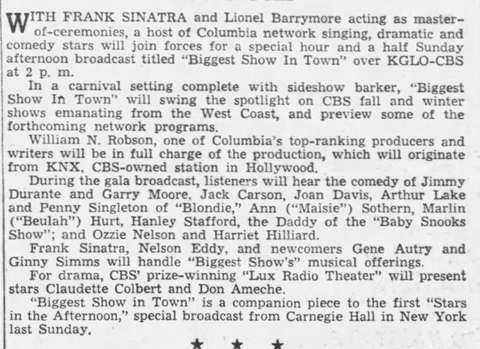
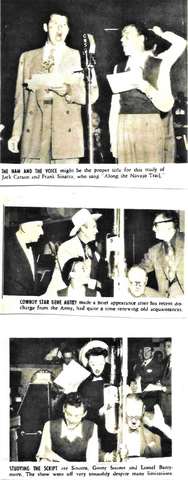
September 26, 1945
Radio
Songs By Sinatra
Network: CBS
Location: Hollywood
Show #3
Sponsor: Old Gold Cigarettes
Time: 9:00PM - 9:30PM (EST) Wednesday
Orchestra Conducted By: Axel Stordahl
Arrangements By: Axel Stordahl
Announcer: Marvin Miller
Writer: Glenn Wheaton
Directed By: Mann Holiner
Performers: The Pied Pipers
Guest: Dinah Shore
CBS Broadcast:
1. opening theme: Night And Day
2. I'm Gonna Love That Gal
3. I Wish I Knew Dinah Shore
4. Begin The Beguine
5. So In Love Pied Pipers
6.. Homesick, That's All
Frank sing Yankee Doodle Dandy jingle for Old Gold ad
7. Medley with Dinah and Pied Pipers: That Old Feeling (Dinah) /
Red Tape In The Sunset (Frank)/ Where Do I Go From Here?(Frank & Pied Pipers) / Three O' Clock In The Morning(Frank)/ Show Me The Way To Go Home(Frank)/Hawaiian Song(Pied Pipers/Why Do You Do Me(Dinah)/Ioway(Dinah and Pipers/Oklahoma(Pied Pipers)
8. The Night Is Young And You're So Beautiful w/Dinah Shore
9 closing theme: Put Your Dreams Away
Notes: The songs "Homesick, That's All" & "The Night Is Young And You're So Beautiful" are on the CD : The V-discs 2 (Columbia/Legacy C2K 66135). Confirmed airing on WABC.
September 27, 1945
Radio
Rudy Vallee Show
Network: WABC
Time: 10:30PM - 11:00PM
Sponsor: Dreene Shampoo
Performers: Rudy Vallee, Frank Sinatra, Mary Boland, Billie Burke
Xavier Cugat & His Orchestra
1. Must You Bury The Tune
2. Slowly
Note: The show appears on the officially released CD set: 60 Greatest Old Time Radio Shows "Frank Sinatra & Friends"
September 29, 1945
Radio
The Victory Chest Program
Pool feed from Hollywood Bowl
Sponsor: Victory Chest fund appeal.
Host: Orson Welles
Performers: Arch Oboler, Bill Johnson, Bob Hope,
Dinah Shore, Earl Warren (Governor of
California), Eddie Cantor, Edward G. Robinson,
Frances Langford, Frank Sinatra, Gene Autry, Hal
Gerard, Harold Peary, Jack Carson, Jerry Colonna,
Kay Kyser, Lee Sweetland, Leonard Sues, Lionel
Barrymore, Margaret Brayton, Patricia Lowery,
Paul Theodore, Preston Hotchkiss, Robert Regent,
Shirley Mitchell, The Ken Darby Chorus, Tommy Cook, Tony Romano, William Halsey The Victory War Chest Orchestra
Directed by: Carlton E. Morse
Producers: Howard Wiley, Carlton E. Morse
Announcer: James Powell
Conductor: Meredith Willson
1. Night And Day
2. The House I Live In
Notes: Sinatra sings the above two songs plus a duet with Jack Carson. TT:2hr.28mins. Audio condition: Very good to excellent. Complete.
Ed O'Brien:
Duet with Carson was a parody of Cole Porter's "Don't Fence Me In." They also did a skit with Carson trying to convince Frank to do cowboy pictures.
Concerts
All Star Victory Chest Show, Hollywood Bowl, Los Angeles, CA Victory Chest fund appeal.
Performers: Orson Welles, Arch Oboler, Bill
Johnson, Bob Hope, Dinah Shore, Earl Warren
(Governor of California), Eddie Cantor, Edward G.
Robinson, Frances Langford, Frank Sinatra, Gene
Autry, Hal Gerard, Harold Peary, Jack Carson,
Jerry Colonna, Kay Kyser, Lee Sweetland, Leonard
Sues, Lionel Barrymore, Margaret Brayton,
Patricia Lowery, Paul Theodore, Preston
Hotchkiss, Robert Regent, Shirley Mitchell, The
Ken Darby Chorus, Tommy Cook, Tony Romano, William Halsey
1. Night And Day
2. The House I Live In
Notes: Sinatra sang the above two songs plus a duet with Jack Carson
All Star Victory Chest Show, Hollywood Bowl, Los Angeles, CA
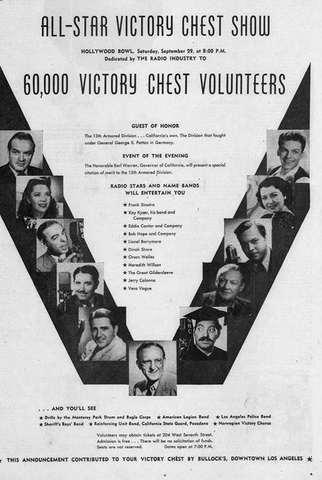
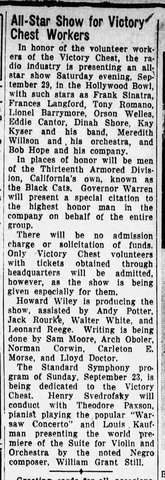
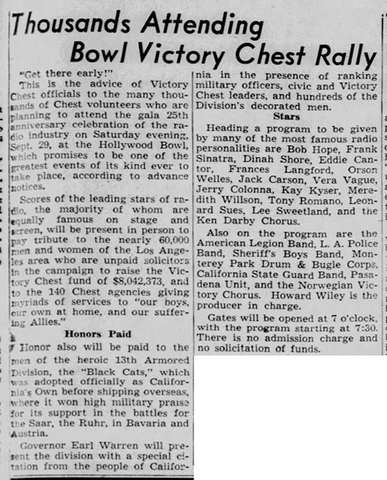
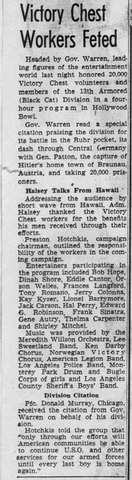
October 1945
[Ava Gardner marries Artie Shaw]
Within months of her spring encounter with Frank, Ava Gardner married bandleader Artie Shaw. Nancy Sinatra later told Louella Parsons she was struck by the couple's wealth, recalling leaner years when the Sinatras ate spaghetti without meat sauce.
Source: Richard Havers, "Sinatra" (Dorling Kindersley, 2007).
October 3, 1945
Radio
Songs By Sinatra
Network: CBS
Location: Hollywood
Show #4
Sponsor: Old Gold Cigarettes
Time: 9:00PM - 9:30PM (EST) Wednesday
Orchestra Conducted By: Axel Stordahl
Arrangements By: Axel Stordahl
Announcer: Marvin Miller
Writer: Glenn Wheaton
Directed By: Mann Holiner
Performers: The Pied Pipers
Guests: Margaret Whiting Andrew Brothers
1. opening theme: Night And Day
2. You Brought A New Kind Of Love To Me
3. It Might As Well Be Spring M.Whiting
4. Lily Belle Pied Pipers
5 The Charm Of You
6. Sonny Boy The Andrew Brothers *
7. Aren't You Glad You're You?
8. Bess, Oh Where's My Bess?
9. closing theme: Put Your Dreams Away
* Well known radio personalities
Charlie Cantor, Cliff Lazzaro and Mel Blanc formed the Andrew Brothers singing group.
They did a comedy skit with Frank and then sang a song.
October 4, 1945
Radio
The Danny Kaye Show
CBS
Frank Sinatra and Judy Garland served as guest hosts, substituting for the vacationing Danny Kaye.
The two imagined themselves fifty years in the future in a mini-musical built around "My Romance." Sinatra crooned "Suddenly It's Spring," "'Til the End of Time," and "Put Your Dreams Away," while Garland sang "How Deep Is the Ocean" and joined Sinatra on "Long Ago and Far Away."
Source: Radio Spirits 42252, "Frank Sinatra and Friends: 60 Greatest Old-Time Radio Shows" [30CD box] liner-note booklet (program notes by Anthony Tollin; cast identifications by Anthony Tollin and William Nadel).
October 5, 1945
Radio
The Danny Kaye Show
Program #22.
CBS & AFRS rebroadcast
Judy Garland (substituting for Danny Kaye),
Guests: Frank Sinatra, Axel Stordahl and His Orchestra.
Note: The show appears on the officially released CD set: 60 Greatest
Old Time Radio Shows "Frank Sinatra & Friends." Danny does NOT appear. The"true" story of the romance between Frank and Judy, set in the year 1995. TT: 30mins. Audio condition: Excellent. Complete.
note: Judy was not the host of this show.
Sinatra did most of the heavy lifting.
He opened the show, sang a song, introduced his co-star Judy. After she sang a
number, Frank took over again.. They did a skit together and a duet but the rest of
the show belonged to Frank . He closed the half-hour with his theme song.
--Ed
Ed O'Brien says this is a great half-hour with two of the truly iconic figures of the century. Danny Kaye was on tour and Sinatra and Judy subbed. The show was sponsored by Pabst Blue Ribbon beer and featured Axel Stordahl and orchestra. It was aired on October 5, 1945 over CBS.
Sinatra opened with "That's Judy" and then Judy sang "How Deep is the Ocean". They did a duet on "Gotta Be This or That." Sinatra then introduced Axel and the band did an instrumental of "I've Got You under My Skin." "Til the End of Time" was sung by Sinatra and Judy joined him for a musical/comedy skit and then they sang "My Romance."
Sinatra closed the show with "Put Your Dreams Away."
The Armed Forces broadcast had Sinatra singing "Suddenly It's Spring" and "Long Ago and Far Away" in lieu of the Pabst commercials. The show was part of the Radio Spirits 30-cd set of Sinatra's radio appearances. The quality was good, but there is a really great copy floating among collectors. "Suddenly It's
Spring" from Vimms 4-26-44 " Long Ago And Far
Away" 2-9-44
The Danny Kaye Show
Program #22.
CBS & AFRS rebroadcast
Host: Judy Garland (substituting for Danny Kaye),
Guests: Frank Sinatra, Axel Stordahl and His Orchestra. ad from 10/5/45
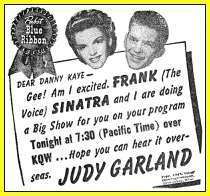
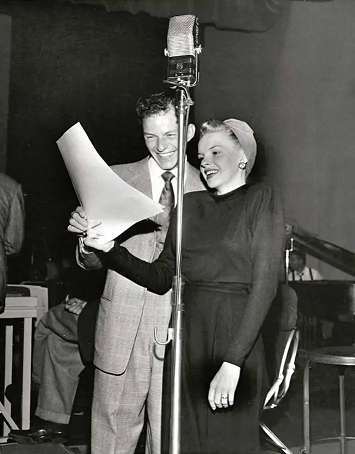
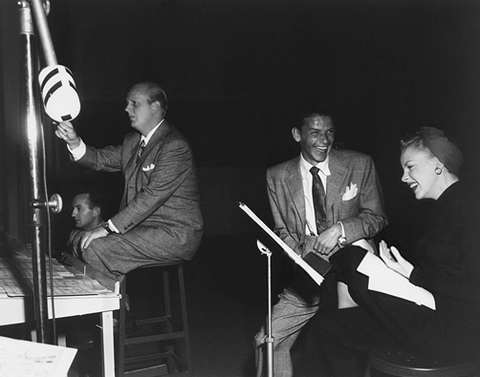
October 9, 1945
Radio
Hollywood Double Ten Special
Time 3:58 p.m.
An Office of War Information recording
Guests: Joan Edwards, James Wong Howe, Frank Sinatra, Ronald Colman, Edward Arnold.
Notes: Show commemorating the 33rd anniversary of the founding of the Chinese republic.
LOC has OWI Pacific Recordings, glass based in condition good. TT: 15mins.
October 10, 1945
Radio
Songs By Sinatra
Network: CBS
Location: Hollywood
Show #5
Sponsor: Old Gold Cigarettes
Time: 9:00PM - 9:30PM (EST) Wednesday
Orchestra Conducted By: Axel Stordahl
Arrangements By: Axel Stordahl
Announcer: Marvin Miller
Writer: Glenn Wheaton
Directed By: Mann Holiner
Performers: The Pied Pipers
Guest: Frances Langford, Ginny Simms, Jack Carson
CBS Broadcast:
1. opening theme: Night And Day
Langford & Simms come out and start discussing Frank.
Then he joins them and proceeds to sing his opening number:
2. There's No You - Frank Sinatra
3. Langford & Simms, using the Auld Land Syne melody, sing tributes, individually, to their radio sponsors
4. Baia - Frances Langford
5. It's Been A Long Long Time - Ginny Simms
6. It's Only A Paper Moon - The Pied Pipers
7. All The Things You Are - Frank Sinatra w/Pied Pipers
8. Frank and Marvin Miller sing "That's Old Gold" jingle
9. Frankie & Johnny musical comedy skit w/ Frank, Ginny, Frances and Marvin Miller.( special lyrics )
10. closing theme: Put Your Dreams Away note: AFRS broadvcast included "House I Live In."
Note: Sinatra did not sing "If I Loved You" on the broadcast
Ed O'Brien Notes:
A rather unusual Old Gold broadcast. Sinatra did not open with his standard up-tempo number. Langford, Simms and The Pied Pipers did most of the singing. Frank only sang two numbers. He did a long comedy skit with Simms and Langford.
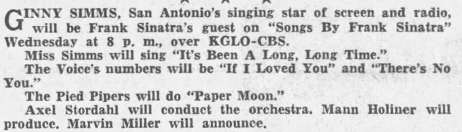
October 11, 1945
Concerts
Bergstrom Field, Recreation Hall, Austin Texas
Bergstrom Field, Recreation Hall, Austin Texas
The Austin American (Austin, Texas) · 12 Oct 1945
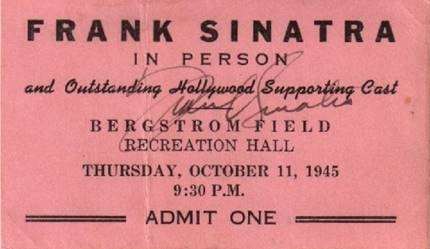
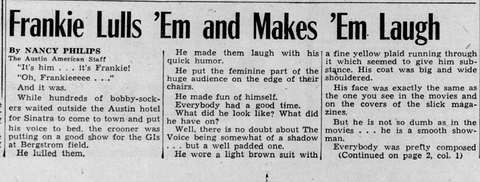
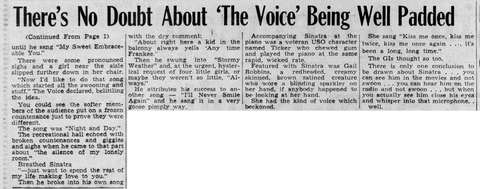
October 12, 1945
Concerts
Naval Station & Ward Island, Corpus Christi, Texas
Sinatra performed two shows on October 12, 1945.
Frank Sinatra, Phil Silvers, Faye McKenzie, Saul Chaplin, The Pied Pipers
Naval Station & Ward Island, Corpus Christi, Texas
Sinatra performed two shows on October 12, 1945.
Frank Sinatra, Phil Silvers, Faye McKenzie, Saul Chaplin, The Pied Pipers
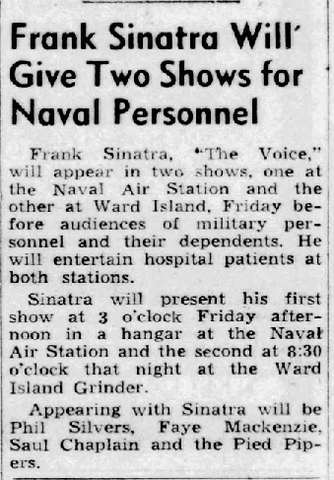
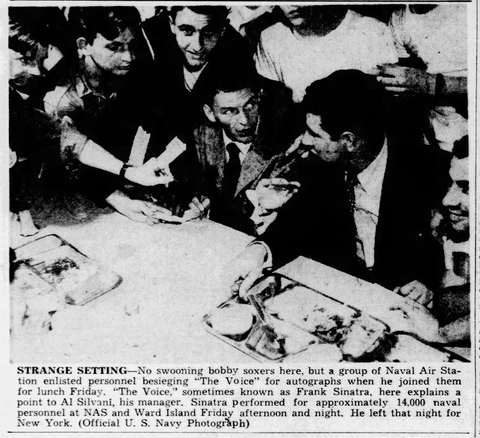
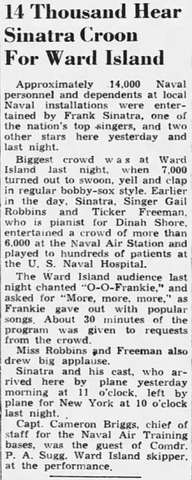
October 17, 1945
Radio
Songs By Sinatra (CBS)
Sponsor: Old Gold Cigarettes
N.Y.C.
9:00 -9:30 P.M.
Announcer: Bill Lazar
Director: Mann Holiner
Orchestra Conducted By: Axel Stordahl
Performers: Frank Sinatra, The Pied Pipers
Guests : Gene Kelly
1. What Makes The Sunset
2. Frank does singing introduction for The Pied Pipers
3. In The Middle Of May Pied Pipers
Frank & Gene recreate scene from Anchors Aweigh
4. I Fall In Love Too Easily
Frank & Gene another scene from Anchors Aweigh
5. I Begged Her w/Gene Kelly
6. The Charm Of You
Kelly plugs "House I Live In" and congratulates Frank for what he is doing to promote racial and religious tolerance. Frank says " God never meant for any man to fight for freedom and have any part of that freedom denied him by the country for which he fought."
7. Put Your Dreams Away
NOTE: Ed O'Brien writes that Gene Kelly was a guest on three of Sinatra's shows inn the 40s plus they did Lux Radio and a few other shows together. The October 17, 1945 show was really a long promo for their movie "Anchors Aweigh." The two men recreated a scene that was also a comic skit and all the song sung that evening were from the film. Kelly would receive a Best Actor nomination for his work in the MGM film,
Biltmore Hotel, Los Angeles, CA
Sinatra, Mervyn LeRoy, and Frank Ross were honored'
Meeting of the Key-Men of the Los Angeles United Jewish Welfare Fund
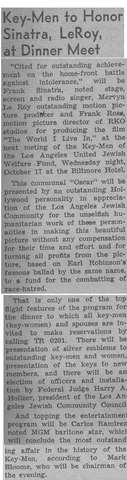
[Ava Gardner marries Artie Shaw]
Ava Gardner, then twenty-two and an MGM contract player Sinatra kept running into, married bandleader Artie Shaw in Beverly Hills -- her second marriage (after Mickey Rooney) and his fifth; the marriage would end by the following fall.
Source: James Kaplan, "Frank: The Voice" (2010).
October 21, 1945
Radio
Tommy Dorsey Show
400 Restaurant, New York
October 21, 1945
Sunday Evening
(CBS) (WABC) (Sustaining)
11:30 P.M -- 12:00 A.M.
I'm Getting Sentimental Over You (open),
Opus No. 1,
A Door Will Open (SF),
Blue Skies (FS)
Swing High (GK, dr),
I'm Getting Sentimental Over You (closing)
Note: incomplete (damaged disc) (2 tunes missing)
The Fred Allen Show
NBC
Sunday
8:30 to 9:00 p.m.
Al Goodman & His Orchestra
Portland Hoffa, Minerva Pious,
Mr. Nussman, The DeMarco
Sisters & Tenderleaf Work Shop Players
Announcer: Kenneth Delmar
Sponsor:Standard Brands
Makers of Tenderleaf Tea
& Blue Bonnet Margarine
1. Comedy Skit Fred & Portland
2. On The Atchison, Topeka & Santa Fe Demarco Sisters
3. Comedy Skit Frank & Fred
4. It Might As Well Be Spring Frank
5. Comedy Skit Fred & Frank
6. Open The Pearly Gates Frank & Fred
NOTE: Ed O'Brien emphasizes that Fred Allen was a very witty man with a sardonic sense of humor.
Sinatra just loved him. From of 1937 through
December 1946, the two men made frequent guest appearances on the other's show. Listening today you can hear the pure joy Sinatra derived from the way Allen delivered a line. They sang parodies, did silly skits, and exchange clever little digs that are still quite funny.
Tommy Dorsey Show
400 Restaurant, New York
October 21, 1945
Sunday Evening
(CBS) (WABC) (Sustaining)
11:30 P.M -- 12:00 A.M.
I'm Getting Sentimental Over You (open),
Opus No. 1,
A Door Will Open (SF),
Blue Skies (FS)
Swing High (GK, dr),
I'm Getting Sentimental Over You (closing)
Note: incomplete (damaged disc) (2 tunes missing)
Variety
10-24-45
The Fred Allen Show
NBC
Sunday
8:30 to 9:00 p.m.
Al Goodman & His Orchestra
© 1997-2025 The Sinatra Archive
This calendar, or any parts thereof, may not be reproduced in any fashion whatsoever without the prior written permission of the publisher (The Sinatra Archive)
Version 5.3
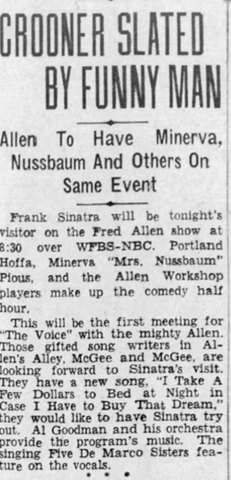
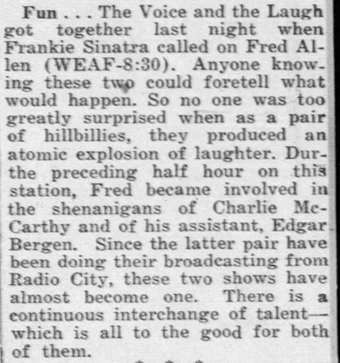
The Fred Allen Show
NBC
Sunday
8:30 to 9:00 p.m.
Al Goodman & His Orchestra
© 1997-2025 The Sinatra Archive
This calendar, or any parts thereof, may not be reproduced in any fashion whatsoever without the prior written permission of the publisher (The Sinatra Archive)
Version 5.3
October 23, 1945
Concerts
Benjamin Franklin High School, New York, New York
Sinatra talks about racial unity and sang "Aren't You Glad You're You" at two assemblies.
October 24, 1945
Radio
Songs By Sinatra
Network: CBS
Location: New York City
CBS Radio Playhouse #3
Show #7
Sponsor: Old Gold Cigarettes
Time: 9:00PM - 9:30PM (EST) Wednesday
Orchestra Conducted By: Axel Stordahl
Arrangements By: Axel Stordahl
Announcer: Bill Lazar
Writer: Glenn Wheaton
Directed By: Mann Holiner
Performers: The Pied Pipers
Guest: Tommy Dorsey
1. opening theme: Night And Day
2. I'll Buy That Dream - Frank Sinatra
3. I'm Getting Sentimental Over You Tommy Dorsey
4. Never Too Late To Pray Tommy Dorsey
5. Tampico Pied Pipers
6. Without A Song - Frank Sinatra
7. Medley: Frank Sinatra w/The Pied Pipers & Tommy Dorsey:
Somebody Loves Me (P.P.)/By The Sleepy Lagoon (T.D.)
This Love Of Mine (F.S.) / Oh Look At Me Now (F.S.-P.P.)/ Marie ( T.D.)/ (What Can I Say)After I Say I'm Sorry (P.P.)/ There Are Such Things(F.S.-P.P.) / Song Of India (T.D.) / Everything Happens To Me (F.S.)
8. I'll Never Smile Again - Frank Sinatra w/Pied Pipers & Tommy Dorsey
9. closing theme: Put Your Dreams Away
note: If I Loved You and Surrey With The Fringe On Top - from the 9-12-45 broadcast - are the added songs on the AFRS version of this show
October 27, 1945
Concerts
County Center, White Plains, New York
Sinatra appeared at the Police Benevolent Association Ball and sang 4 songs
County Center, White Plains, New York
Sinatra appeared at the Police Benevolent Association Ball and sang 4 songs
----------------------------------------------
October 27, 1947
The Philadelphia Inquirer, October 28, 1947
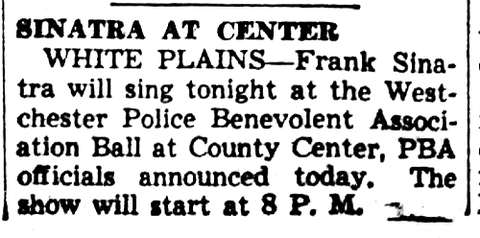
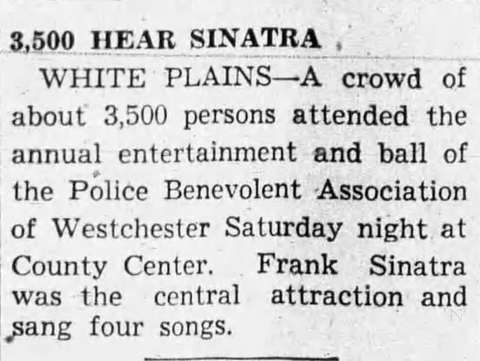
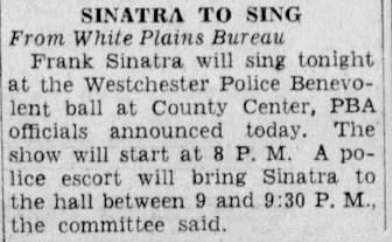
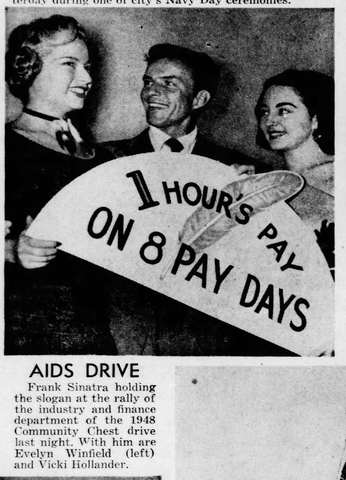
October 29, 1945
Radio
SHOWTIME PROGRAM #157
AFRS
Dinah Shore
Guests: Frank Sinatra & Ticker Freeman
The format for the show had Dinah Shore hopping in a cab, usually with a guest star and making her way along the Great White Way while singing songs from legendary Broadway shows and Hollywood musicals. On this show, Frankie Sinatra is the cabdriver. Show runs 30 minutes Here is the song list:
Between The Devil & The Deep Blue Sea Dinah
Kiss Me Again AFRS Orchestra
I Begged Her Frankie
Alone Together Dinah
The Continental AFRS Orch.
I Fall In Love Too Easily Frankie
They go back to Dinah's place where Ticker Freeman ( pianist ) joins them for a medley of songs
Anything Goes Dinah
Dancing In The Dark Frankie
If I Love Again Dinah
Evelina Frankie
As Time Goes By Dinah
What Is There To Say Frankie
Just One Of Those Things Dinah
My Romance Dinah & Frankie
note: Dinah was usually the star of the show, but there were others. I did not realize I had the show until late last year. A couple of rare vocals by Sinatra. --Ed
October 31, 1945
Radio
Songs By Sinatra
Network: CBS
Location: New York City
Show #8
Wednesday evening
9 to 9:30 P.M.
Orchestra Conducted By: Axel Stordahl
Arrangements By: Axel Stordahl
Announcer: Bill Lazar
Writer: Glenn Wheaton
Directed By: Mann Holiner
Performers: The Pied Pipers
Guest: Fred Allen
1. opening theme: Night And Day
2. It's Only A Paper Moon
3. Don't Forget Tonight Tomorrow w/Pied Pipers
4. Eleven Sixty P.M Pied Pipers
7. On The Atchison Topeka And Santa Fe w/Fred Allen ( parody with Greyhound bus subbing for train )
8. It's Been A Long, Long Time w/Pied Pipers
9. Nancy ( In a short time, maybe she'll have a sister )
10 Put Your Dreams Away note: Bill Lazar was the announcer. Sinatra and Allen do a very funny skit. They really inspired each other and it added so much to this show..
--Ed
Notes: Confirmed airing on WABC. The song "Don't Forget Tonight Tomorrow" appears on the CD : The V-discs 2 (Columbia)
November 1945
[Sinatra's Paramount and Wedgwood Room stand]
Kaplan: Sinatra returned east in November 1945 for a three-week engagement at the Paramount followed by a run at the Wedgwood Room, plus further recording sessions at Liederkranz Hall; Cole Porter again came down to catch his act at the Wedgwood.
Source: James Kaplan, "Frank: The Voice" (2010)
November 1, 1945
Radio
"Oldtimers Day"
Thursday, 12:30 PM
25TH Anniversary of Radio Luncheon
Hendrick Hudson Room, Hotel Roosevelt, New York City
Members $2.25 Guests with Members $2.75
The four networks: NBC, CBS, ABC, Mutual combined for this Gala Occasion
"No Speeches" "Pure Entertainment"
Lots of Laughs Plenty of Fun
Performers:
Frank Sinatra
Paul Whiteman
Lowell Thomas
H.V. Kaltenborn
Frank Parker
David Ross and a host of others
Concerts
Froebel High School, Gary, Indiana
Sinatra gave a speech on racial tolerance and performed for the High School audience (see photos and articles below)
Froebel High School, Gary, Indiana
In mid-September, 1945, a fight at a football game prompted 500 white students at Froebel High School in Gary to walk out for two weeks, demanding that blacks, who made up 36 percent of the school, be segregated to their own classrooms. The strike ended with vague promises of "improvement," but a month later the students were out again, in larger numbers600 this timeclaiming their principal was "favoring" the black students and demanding they be removed from the school. Sinatra, at the invitation of a "tolerance group," flew in from New York and spoke at an emotional meeting of 5,000 teens and their parents in the Gary Memorial Auditorium. First he sang a couple of songs. Then, clutching the microphone, he gave an extemporaneous speech. Sinatra may be famous for "Summer Wind," but the Gary talk was one of the finest things he ever did. "You should be proud of Gary," he began. "But you can't stay proud pulling this sort of striketaking the remarks and advice of outsiders, people meddling, people dictating to you." Sinatra was referring to rumors that the Indiana Ku Klux Klan was behind the strike. "Their aim," he continued, "is to divide and conquer you. If you stick together, they can't do it. Why should you have two groups fighting each other, anyway? You don't know what you're missing, not being friends, playing together, visiting each other's families, sticking up for each other. Other kids in other centers don't have things like you have. Educational advantages, especially. You're throwing them away." He said believing other races to be inferior was a pillar of Nazism. "Don't let it happen here," he pleaded. "I implore you to return to school. This is a bad deal, kids. It's not good for you, and it's not good for the city of Gary, which has done so much to help with the war for freedom the world over." He ended on a personal note.
"I know something about this business of racial intolerance," he said. "At 11, I was called a 'dirty guinea' back home in New Jersey. We've all done that sort of thing. We've all used the words Nigger or Kike or Mick or Pollack or Dag. Cut it out, kids. Go back to school. You've got to go back, because you don't want to be ashamed of your student body, your city, your country. "This is 1945, and it's time we began to live together like civilized people." Sinatra's wise words didn't end the Froebel school strike. That sort of thing only happens in the movies. The kids stay out 10 more days, and the problem of intolerance lasted much longer, festering and mutating into the current mess we cope with every day.
--Chicago Sun-Times, Nov. 24, 1996
Photos from Gary, Indiana, November 1, 1945
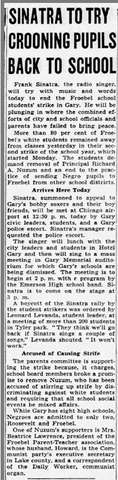
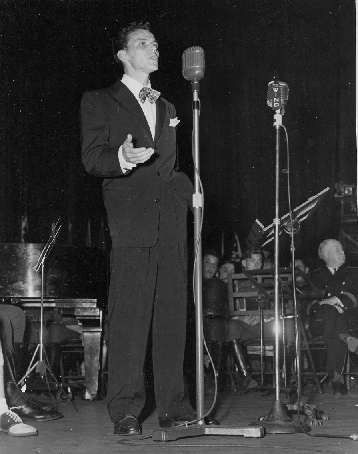
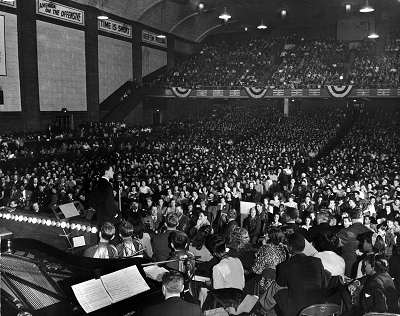
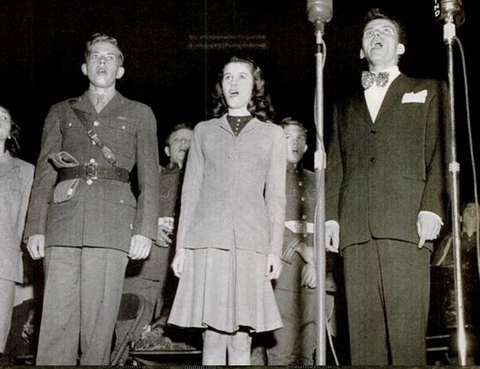
[FBI's own investigative account of the Gary, Indiana appearance]
A 1950 FBI summary of the Froebel High School strike incident gave the Bureau's own investigative account, distinct from press retrospectives: Sinatra publicly accused local figures Joseph Lach and Julius Danch of fomenting the strike, causing Father Lawrence T. Grothaus to walk off the stage in disgust after Sinatra's manager George Evans reportedly told Gary police that Sinatra's information had come "from the confidential files of the FBI" -- a claim Evans later couldn't recall making, and which Gary's police captain found implausible since Sinatra had had no opportunity to obtain such information during his brief visit. Six weeks later, on December 12, 1945, the Philadelphia SAC forwarded Hoover a report from a confidential informant claiming Sinatra had "recently been admitted" to the Communist Party's New York branch after prior membership in the American Youth for Democracy -- an allegation the FBI's own decade-long subsequent investigation was never able to substantiate.
Source: Kuntz and Kuntz, The Sinatra Files, ch. 3 (FBI summary re: Gary, Indiana strike, and Philadelphia SAC memo of December 12, 1945).
November 2, 1945
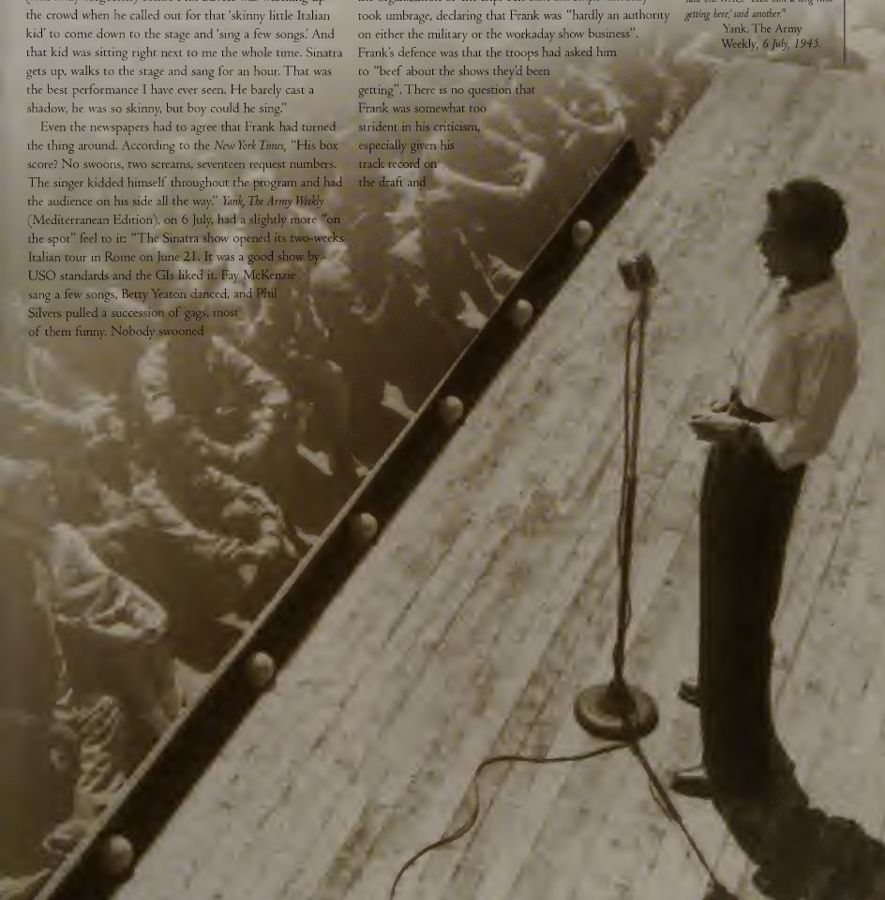
[Photograph: Friendlier reception in Philadelphia after the Gary confrontation. From Richard Havers, "Sinatra" (Dorling Kindersley, 2007), p.109.]
Concerts
Philadelphia Convention Hall, Pennsylvania
Ed O'Brien:
There is a tape of a segment of this concert circulating among collectors. Without question a tremendously invaluable artifact because it captures definitively the bobbysoxer craze and their incessant screaming while Sinatra tried to sing. They scream all through Irving Berlin's "Blue Skies," Frank can barely get a word in introducing "Its Been A Long,
Long Time," tries to chat for a few minutes above the roar and then tell them to "shaddup" while introducing "Ol' Man River." This just makes them louder and Sinatra laughs along with them.
Philadelphia Convention Hall, Pennsylvania
JEFFERSON-JACKSON DAY DINNER
LOS ANGELES
NOVEMBER 2, 1959
Master of Ceremonies : Frank Sinatra
Entertainment: Sinatra and Mort Sahl
Dais: Gov. Pat Brown, Peter Lawford
Senator Clair Engle, John F. Kennedy
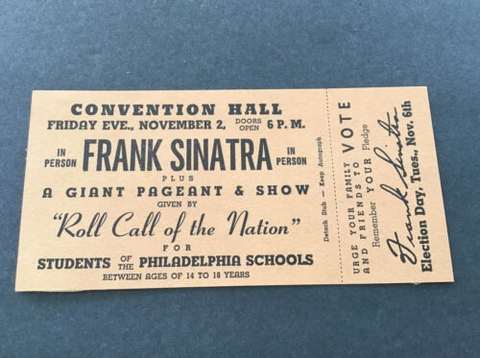
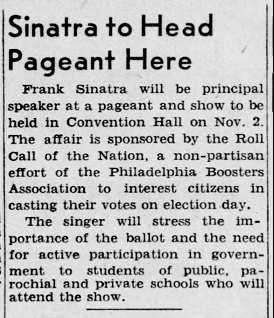
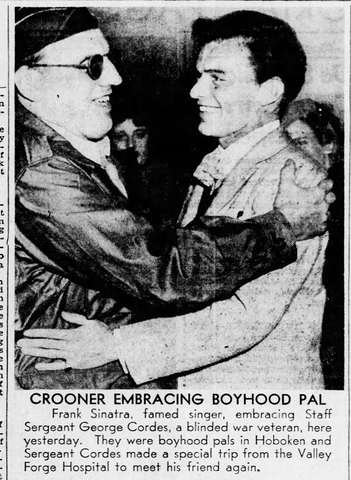
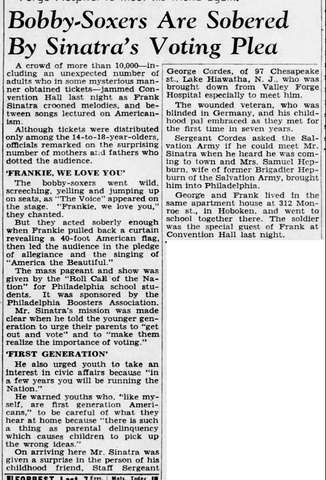
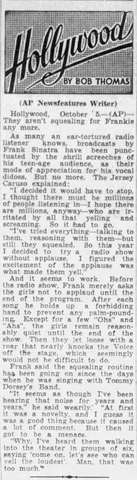
The day after the tense Gary appearance, Frank spoke to a more receptive hotel audience in Philadelphia about the importance of tolerance, without the interruptions he'd faced in Indiana. (Source: Richard Havers, "Sinatra" (Dorling Kindersley, 2007).)
November 3, 1945
Radio
Democratic Rally, Academy of Music, Brooklyn, NY
9pm - 11pm
Sinatra was one of several performers at the Rally
November 7, 1945
Radio
Songs By Sinatra
Network: CBS
Location: New York City
Show #9
Sponsor: Old Gold Cigarettes
Time: 9:00PM - 9:30PM (EST) Wednesday
Orchestra Conducted By: Axel Stordahl
Arrangements By: Axel Stordahl
Announcer: Marvin Miller, Bill Lazar
Writer: Glenn Wheaton
Directed By: Mann Holiner
Performers: The Pied Pipers
Guest: Lawrence Tibbett
Dress Rehearsal:
1. Was The Last Time I Saw You The Last Time
CBS Broadcast:
1. opening theme: Night And Day
2. Just One Of Those Things
3. Tampico/Embraceable You/California(parody of Oklahoma) Pied ;Pipers
4. Homesick, That's All
5. Aren't You Glad You're You ? Pied Pipers
6. Was The Last Time I Saw You, The Last Time ?
7. Strange Music Lawrence Tibbit
8. medley w/Lawrence Tibbett: Camptown Races / Beautiful Dreamer
9. It Might As Well Be Spring
10. closing theme: Put Your Dreams Away
Notes: Confirmed airing on WABC.
The Dress rehearsal of "Was The Last Time I Saw You The Last Time" appears on the CD: The V-discs 2 (Columbia).

Concerts
Paramount Theatre, New York (November 7-27)
Three Week Engagement
Also Jan Savitt and His Orchestra & The Pied Pipers
On Screen: Hold That Blonde
Paramount Theatre, New York
Also Jan Savitt and His Orchestra & The Pied Pipers
On Screen: Hold That Blonde
(Reviewed Wednesday Night, Nov. 7)
Current show is Frank Sinatra all the way. No matter what he did, whether it was a song, a piece of business or an ad lib, the bobby -sox bansheed like crazy. Fact that the singer is the emcee and is on stage practically all the time, except when other acts do their numbers, didn't detract from his appeal. It was "our
Franki-e-e-e" from the time the bandstand came up until it went down.
Sinatra's first was his Night and Day, with the kids drowning him out with their squeals. As personality, there is, of course, no doubt about Sinatra's draw. But as a singer, the boy let out only a few times. At times he looked and sounded tired. This was understandable considering that he had already done four shows plus a radio show. The Voice did particularly well with Anchors
Aweigh medley, Where Is My Bess? and when he worked together with the Pied
Pipers (three guys, one gal) when they sang the old pops they used to do when they were all with Tommy Dorsey. Despite the sentimental appeal, Nancy
With the Smiling Face didn't register.
Tune is only fair and lyrics aren't even that.
Jan. Savitt's ork (32, including 12 strings) does a nice job of show cutting. the only specialty was Opus No. 1 which got them a nice mitt.
The Pled Pipers don't do so good in their own spots. One reason is over arranged numbers and the other is the lack of a strong lead voice. Actually their stuff sounded monotonous. Their best was Tampico with a cute verse which the house didn't seem to get.
Coke and Moke, knockabout Negro dance team, did a great job. Taps were clean and fast even tho their chatter was full of Iowa corn.
Pair's costume jitterbug number killed 'em, and cus- tomers paid off with sock mitts.
Lane Brothers, knockabout acro team, pulled yocks and giggles from their walk on to their walk off. Boys have some sensational tricks involving clever shoulder stands and deep back bending rope jumping which deserved and won fancy applause.
Pair also do standout trundle and bug routines which almost stopped things cold. Where the lads fell down was in their chatter and there it was the fact that most of the house had been there all day and had seen and heard the act's lines. So when they started their gab, the kids always beat 'em to the topper. This can be cured by taking the audience into the act.
When it comes to the punch line the performer should give the first word and point to the audience and let it finish the line. Of course, this can only work with a crowd familiar with the routine.
But where the customers come in with their lunch and sit thru five or six shows, the gimmick will pay off.
Jeann Ryan, canary, does okay with
I'Il Buy That Dream and That's for Me.
Costume needs improvement. Miss Ryan is a big gal and short sleeves give her an
Amazonian appearance that detracts from her looks. Full sleeves would help some.
Pic, Hold That Blonde. Biz capacity.
Bill Smith.
Billboard
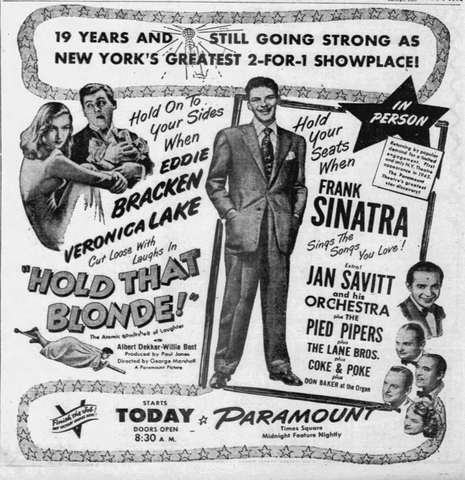
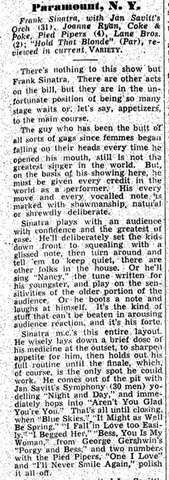
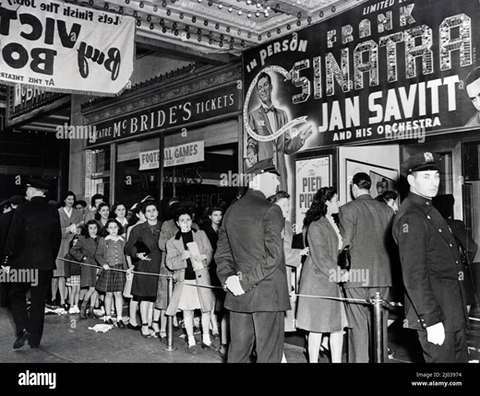
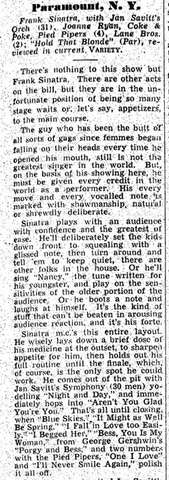
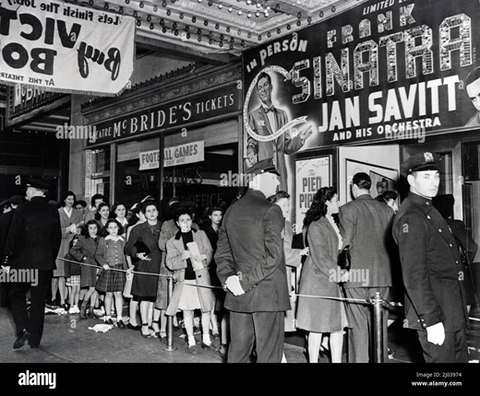
November 8, 1945
Concerts
Paramount Theatre, New York (November 7-27)
Three Week Engagement
Also Jan Savitt and His Orchestra & The Pied Pipers
On Screen: Hold That Blonde
Rivoli Theatre, New York, NY
East Side-West Side Revue
Benefit for Alfred E. Smith Memorial Wing to St. Vincent’s Hospital Frank Sinatra, Bert Lahr, Jessica Dragonette, Elsa Maxwell, Irving Berlin, Frank Fay, Morton Downey, Former Mayor James J. Walker and others
Rivoli Theatre, New York, NY
East Side-West Side Revue
Benefit for Alfred E. Smith Memorial Wing to St. Vincent’s Hospital
Frank Sinatra, Bert Lahr, Jessica Dragonette, Elsa Maxwell, Irving Berlin, Frank Fay, Morton Downey, Former Mayor James J. Walker and others
November 8, 1951
Frank Sinatra and his new bride, movie actress Ava Gardner, join hands as they cut a wedding cake in the Montmarte, a Havana, Cuba, nightclub November 8, 1951.
Married November 7, in Philadelphia, they went to Havana on a whirlwind honeymoon.
November 8, 1952, Nairobi, Africa
November 8, 1952: (Original Caption) With Poppa There's Who's Afraid of Mau Mau? Nairobi, Kenya Colony, Africa: Frank Sinatra and his actress wife, Ava Gardner, stand by a well-fingered signpost at the airport after their arrival in Nairobi. They spent their first wedding anniversary aboard an airliner going there. Miss Gardner is making a picture. Frankie went along for the ride. Asked if she were nervous about the Mau Mau (native terrorist organization that has been cutting throats in the colony). Miss Gardner said "not at all."
Above: Frank Sinatra had accompanied his wife Ava Gardner to the set of Mogambo in Africa, the two photographed here at Nairobi airport with Grace Kelly. Sinatra was in between acting jobs and during production flew back to Hollywood to do a screen test for the role of Maggio in From Here To Eternity (1953), eventually landing the role and winning the Oscar.
Photograph showing Grace Kelly, Frank Sinatra and Ava Gardner taken on location in Kenya.
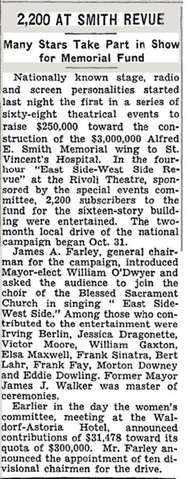
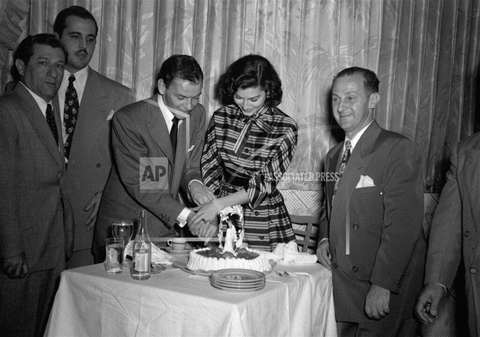
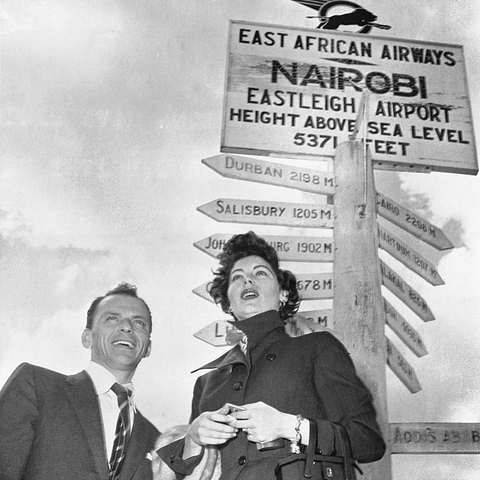
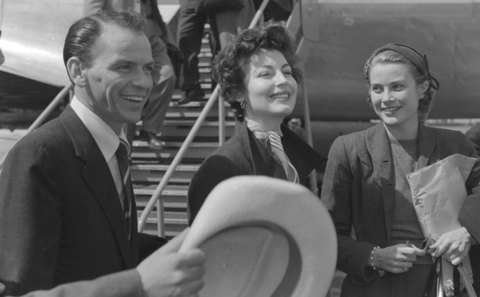
November 9, 1945
Concerts
Parade down Seventh Ave in New York to the Statue of Liberty Model in Times Square Sinatra sang a few songs at the end of the Parade route
Paramount Theatre, New York (November 7-27)
Three Week Engagement
Also Jan Savitt and His Orchestra & The Pied Pipers
On Screen: Hold That Blonde
Manhattan Center, New York
Benefit for Italian Relief Charities
Sinatra, Perry Como, Carl Ravazza
Parade down Seventh Ave in New York to the Statue of Liberty Model in Times Square
Sinatra sang a few songs at the end of the Parade route
A 15-ton model of the Statue of Liberty in Times Square, which was erected by the War Activities Committee of the film industry to encourage interest in war bonds.
The statue was declared a hazard in early 1946, according to an article in The Times, and scheduled for demolition after engineers found a crack running from the base to the top
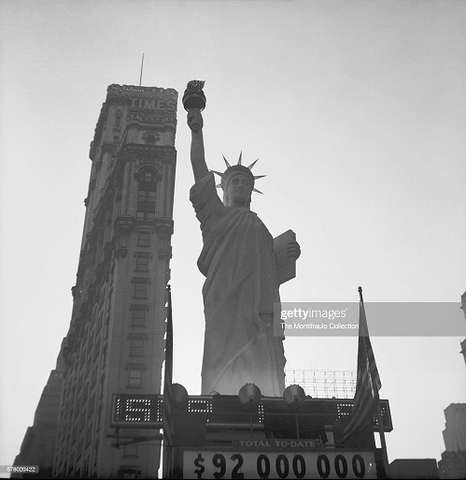
Manhattan Center, New York
Benefit for Italian Relief Charities
Sinatra, Perry Como, Carl Ravazza
Frank Sinatra performing in a benefit concert for Italian relief at Manhattan Center in 1945
The House I Live In, (US Film Release: November 9, 1945)
(Directed by Mervyn Leroy. Produced by Mervyn LeRoy and Frank Ross. Written by Albert Maltz)
Sinatra, taking a break from a recording session steps outside and intervenes when ten boys are chasing a Jewish boy. Sinatra gives a speech about tolerance and then sings "The House I Live In")
Note: Sinatra also sings "If You Are But A Dream" with an orchestra directed by Axel Stordahl
The film would win an Honorary Academy Award and special Golden Globe Award in 1946.
Frank Sinatra's "The House I Live In"by Barbara Cohen-Stratyner
June 29, 2015
Press photograph of Frank Sinatra, ca. 1946
The Sinatra: An American Icon exhibition has many wonderful media stations for visitorssongs, exccerpts from television specials, films trailers and featurettes, and a juke box. But the one that is garnering the most attention is "The House I Live In," the
RKO short film that won Sinatra his first Oscar.
In 1945, Frank Sinatra used his popularity as a radio and recordings star to promote tolerance, especially in speaking to youth groups. He sang and recorded the song, "The House I Live In" by Lewis Allan and Earl Robinson, performing it on the Armed Forces Service's V-J Day Broadcast. In the exhibition, it can also be heard on the juke box and the videotaped live "Concert of the Americas." Visible in the exhibition is the sheet music issued concurrently with the film. The inside front cover of the song reprints the full lyrics of "The House I Live In" including an additional three verses and alternate double bridge. Unlike the remainder of the song, the bridges have very specific references to American history and then-current World War II references, connecting the battle of Concord and Gettysburg to Midway and Bataan.
The producers Frank Ross and Mervyn LeRoy made the short subject for RKO Radio Pictures, combining footage of Sinatra recording the ballad "If This is But a Dream" with a narrative section of him coming across a group of boys harassing a foreign-looking boy and teaching them about tolerance with the title song. In the phrase recommended for publicizing the featurette: "The theme of Tolerance, impassioned and thrilling in its fervent plea in Frank Sinatra's sincere, human way.. an epochal inspiration of the public conscience."
We know this information because the Billy Rose Theatre Division has a full exploitation sheet (flyer) for the short subject. An exploitation sheet was developed by the studio publicity department to be shipped to theater managers in advance of the booking. It includes 3 pages of squibs, articles to be planted in local newspapers, and suggested publicity campaigns. The back page has samples of one-sheets, lobby cards, stills, and slugs for the film so that all images, text, logos, and fonts used locally followed the rules set by the studio. Headlines for the articles focused on "Frank Sinatra Inspires Youth" and "As Sinatra Sees It." The exploitation (a word then used without evil connotations) recommended cross-promotion with scouting, veterans and school groups, as well as Sinatra fan clubs. It also included "Commended by F.D.R:" claiming that Sinatra had visited the President who approved "his intention to combat religious and racial intolerance amongst the youngsters of the nation." There were claims that proceeds from the film would be (on the cover page) "donated to organizations working on the problems of juvenile delinquency" and (on p. 2) "devoted to agencies engaged in combating intolerance."
Most one-reel films and short subjects did not merit full exploitation sheets. Sinatra's popularity and, I suspect, the personal commitment of the producers to the theme, made them publicize the short as if it was a feature film.
Ten years ago, The New York Public Library for the Performing Arts presented an exhibition on American Performance in the Era of Blacklisting. Then-Executive Director Robert Marx suggested the title "The House I Live In." It was a sequel to one on antifascist performance called It Can't Happen Here . We were being ironic, but the song title did manage to encompass both the intense patriotism and social criticism of the era. Both were also present in the song and short subject by songwriters Lewis Allan and Earl Robinson (as well as the film's writer Albert Maltz), who were all duly blacklisted. All are well represented in the Library for Performing Arts' collections, especially in their work from the 1930s 1950s. As well as published songs and recordings, you can find their work in the archival collections of other writing partners, among them Jay Gorney, Yip Harburg, and Elie Siegmeister and in the papers and publications of the New Theatre League. They are worth investigating. Allan's "Strange Fruit," is one of the best known and best songs of the 20th century, but his other works also deserve recognition.
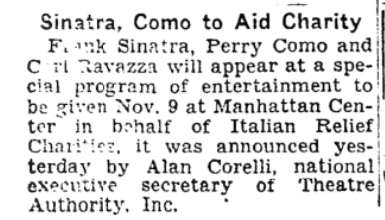

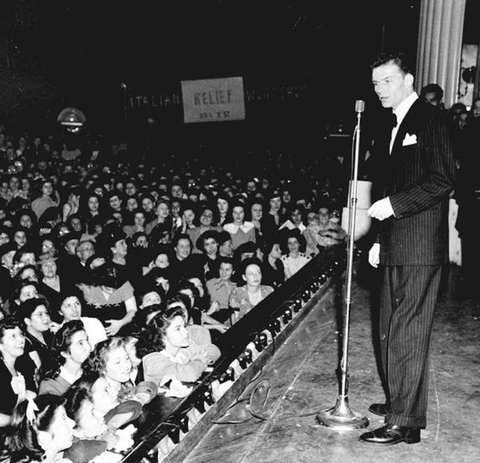
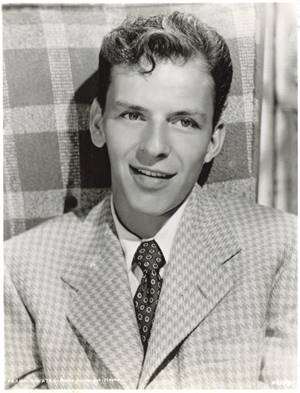
[RKO short "The House I Live In" released]
Anthony Barnett: The RKO short film The House I Live In, sponsored by the Anti-Defamation League of B'nai B'rith as part of its anti-Semitism education program, was released. In it, during a break in a recording session, Sinatra's character takes a gang of boys to task for taunting a Jewish boy, then sings the song. Barnett notes the short's message was undercut by not including a single Black performer or character, despite the song's lyric about neighbors "white and black."
Source: Anthony Barnett, "The White and Black" (Snow lit rev 8, 2020).
November 10, 1945
Concerts
Paramount Theatre, New York (November 7-27)
Three Week Engagement
Also Jan Savitt and His Orchestra & The Pied Pipers
On Screen: Hold That Blonde
Frank in 1945. Source: photo and caption from J. Randy Taraborrelli, Sinatra: Behind the Legend (mptvimages.com).
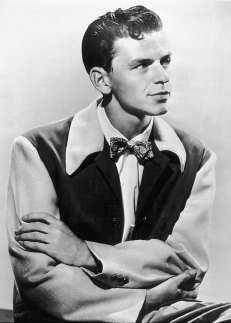
November 11, 1945
Concerts
Paramount Theatre, New York (November 7-27)
Three Week Engagement
Also Jan Savitt and His Orchestra & The Pied Pipers
On Screen: Hold That Blonde
November 12, 1945
Concerts
Paramount Theatre, New York (November 7-27)
Three Week Engagement
Also Jan Savitt and His Orchestra & The Pied Pipers
On Screen: Hold That Blonde
November 13, 1945
Concerts
Paramount Theatre, New York (November 7-27)
Three Week Engagement
Also Jan Savitt and His Orchestra & The Pied Pipers
On Screen: Hold That Blonde
12th Annual NIGHT OF STARS
MADISON SQUARE GARDEN (THE OLD GARDEN)
Benefit for the United Jewish Appeal
AN ARRAY OF STARS
Frank Sinatra, Gene Kelly, Tommy Dorsey.. Vaughn Monroe, Sophie Tucker, Ed Sullivan, Fibber McGee & Molly, Perry Como.
Andrew Sisters, Henny Youngman, Jackie Gleason, Eddy Duchin, Fred Waring, Kate Smith, Louis Jordan, Jan Savitt, Burgess Meredith, cast of "Carousel," Paulette Goddard, Martha Raye, Nicholas Brothers, DeMarco Sisters, Eddie Foy and many others.
Benefit raised $110,000.
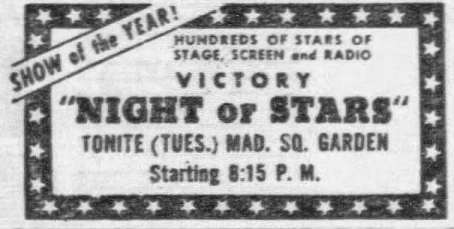
November 14, 1945
Radio
Songs By Sinatra
Network: CBS
Location: New York City
Show #10
Sponsor: Old Gold Cigarettes
Time: 9:00PM - 9:30PM (EST) Wednesday
Orchestra Conducted By: Axel Stordahl
Arrangements By: Axel Stordahl
Announcer: Bill Lazar *
Writer: Glenn Wheaton
Directed By: Mann Holiner
Performers: The Pied Pipers
Guest: The Andrew Sisters
Dress Rehearsal:
1. Oh, What It Seemed To Be
CBS Broadcast:
1. opening theme - Night And Day
2. That's For Me
3. A Kiss Goodnight w/Patti Andrews
4. We'll Be Together Again - The Pied Pipers
5. How Deep Is The Ocean
6. Begin The Beguine - The Andrew Sisters
7. Comedy Skit "At The Paramount"
8. Empty Saddles - w/The Andrew Sisters
9. closing theme: Put Your Dreams Away
Notes: The Dress rehearsal of "Oh, What It Seemed To Be" appears on the CD: The V-discs 2 (Columbia). Confirmed airing on WABC.
note: During the Paramount sketch with The Andrew Sisters, Frank sings segments of "It's Been A Long, Long Time," "I Fall In Love Too Easily," "The One I Love," "I Begged Her" and does a parody tune with the threesome. *note: Announcer was Bill Lazar --ED
Songs By Sinatra
Performers: The Pied Pipers
Guest: The Andrew Sisters
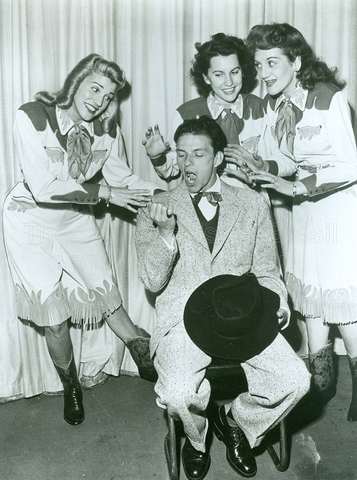
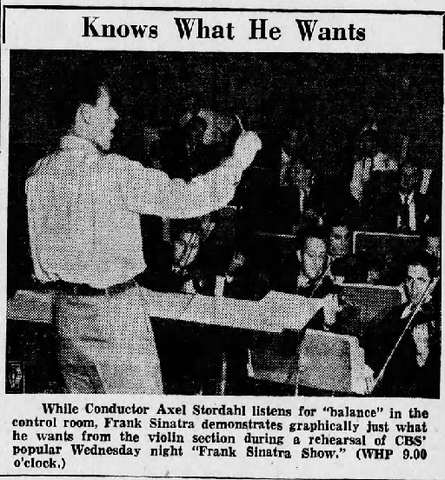
November 15, 1945
Studio
New York City
CO35426 Old School Teacher
(W. Robison)
Burke/Van Heusen, Inc. (ASCAP) 1945
Arranged by: Alec Wilder
Conducted by Mitch Miller
-1 (3:12) CD: Columbia Years 43-52 Vol. 3
:"Old School Teacher" was issued on V-Disc in 1946.
CO35427 Just An Old Stone House
(A. Wilder)
Famous Music Corp. (ASCAP) 1945
Arranged by: Alec Wilder
Conducted by Mitch Miller
-1 (3:17) CD: Columbia Years 43-52 Vol. 3
78: 388809
Trumpets: H. Berv, A. Geltzer, H. Holtzer; Trombones: W. Bradley, W. Pritchard, A. Russo; Saxophones: A. Baker, B. Kaufman, R. Merrill, E. Powell; Piano: L. Flato; Guitar: A. Ryerson; Bass: F. Siravo; Drums: N. Polen
Concerts
Paramount Theatre, New York (November 7-27)
Three Week Engagement
Also Jan Savitt and His Orchestra & The Pied Pipers
On Screen: Hold That Blonde
New York City
CO35426 Old School Teacher
CO35427 Just An Old Stone House
Variety
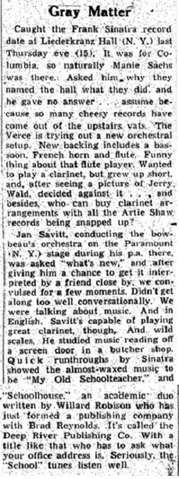
note: Harry Gray, who was the Mutual
all-night M.C.on WOR, wrote a humorous
column for Variety. Alec Wilder talked
Frank into recordings the two songs done
at this session. Wilder was a close friend
of Mitch Miller, who was considered a
great oboist. Mitch not only conducted
on this session but also was the oboe
player ( I added and deleted players
from the listed orchestra ). The session
was done after the Old Gold broadcast
that November evening in 1945.
"Old School Teacher" was issued on
a V-Disc and then was not heard from
again until the early 1970s. The Wilder
song was eventually issued as the B-side
of a 78. Both are available on the 12 disc
Columbia set issued in 1993.
Ed
© 1997-2025 The Sinatra Archive
This calendar, or any parts thereof, may not be reproduced in any fashion
whatsoever without the prior written permission of the publisher (The
Sinatra Archive)
__._,_.___
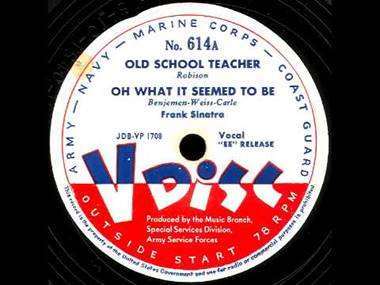
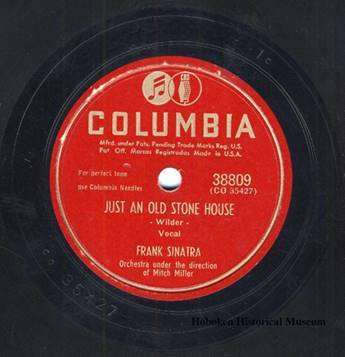
"Old School Teacher" / "Just an Old Stone House"
Mitch Miller; Jim Maher (quoting Alec Wilder); Milt Bernhart: On November 15, 1945, Sinatra recorded two Alec Wilder/Willard Robison-influenced songs, 'Old School Teacher' and 'Just an Old Stone House,' with Wilder arranging and Mitch Miller conducting -- Sinatra's only orchestral date without Stordahl between the post-Dorsey period and 1949. 'Old School Teacher' was released only as a V-Disc; 'Just an Old Stone House' stayed in the vaults until 1950. Miller recalled that when Columbia balked at a full Wilder instrumental album due to wartime shellac shortages, he suggested Sinatra himself conduct so Columbia 'couldn't refuse' him: 'You can't fake conducting... But, on the other hand, he had a feel for music... Frank came in and he waved the stick. And he didn't get in the way.' Wilder later told collaborator Jim Maher that Sinatra faced down the hard-boiled studio musicians saying, 'I don't know the first thing about conducting, but I know this music and I love it, and if you'll work with me, I think we can get it down.' The resulting album, Frank Sinatra Conducts the Music of Alec Wilder, got little public attention but was treasured by musicians -- trombonist Milt Bernhart recalled buying it and wearing it out, listening backstage during a Stan Kenton engagement at the Paramount: 'To me, that music was gorgeous.'
Source: Will Friedwald, "Sinatra! The Song Is You: A Singer's Art" (2018 revised edition).
November 16, 1945
Concerts
Paramount Theatre, New York (November 7-27)
Three Week Engagement
Also Jan Savitt and His Orchestra & The Pied Pipers
On Screen: Hold That Blonde
November 17, 1945
Radio
American Unity Award To Frank Sinatra
Location: Carnegie Hall, New York City
Network: WNEW
Time: 10:45PM - 11:00PM (EST)
Guests: Morman Corwin, Victor Jory, Dame May Whitty, Others
Concerts
Paramount Theatre, New York (November 7-27)
Three Week Engagement
Also Jan Savitt and His Orchestra & The Pied Pipers
On Screen: Hold That Blonde
American Unity Awards
Sinatra was presented with a special American Unity Award
Location: Carnegie Hall, New York City
Guests: Morman Corwin, Victor Jory, Dame May Whitty, Others
Norman Corwin and Frank Sinatra chat backstage before the American Unity Award presentation
Saturday, November 17, 1945 at 8:45 PM
Main Hall
Benefit: Common Council for American Unity
Frank Sinatra, Speaker
Josefine Balaban, Vocalist
David Brooks, Vocalist
Lawrence Brooks, Baritone
Vic Mizzy, Speaker
Alfred Drake, Actor
American Community Chorus, Choir
Karl Adler, Conductor
Rolly Rolls, Piano
Mary Small, Contralto
Benay Venuta, Actor
Margaret Webster, Speaker
Josh White, Folk Singer
Erwin Straus, Piano
Oskar Karlweis, Comedian
Ernesto Lecuona, Piano
Marilyn Maxwell, Actor
Danny O'Neil, Vocalist
Palestine String Quartet, String Quartet
Susan Reed, Vocalist
Harry Hershfield, Comedian
Hildegarde, Vocalist
Jean Innes, Actor
Sam Jaffe, Actor
Raoul Jobin, Tenor
Victor Jory, Actor
Thelma Carpenter, Vocalist
Katherine Dunham, Dancer
Duke Ellington, Piano
Alan Gale, Vocalist
Janice Gilbert, Actor
Hertha Glatz, Contralto
Notes
The second annual American Unity Award was presented to Frank Sinatra, and a citation of merit was awarded to "One Nation," a book by Wallace Steiner and the editors of Look Magazine.
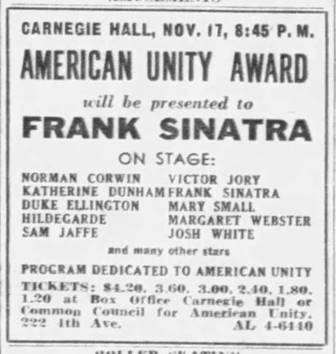
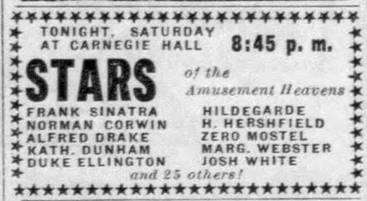
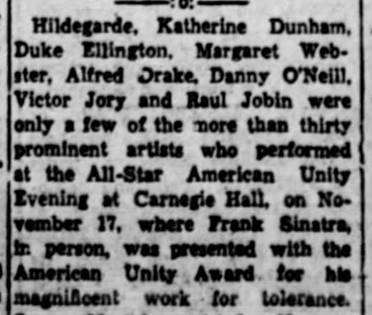
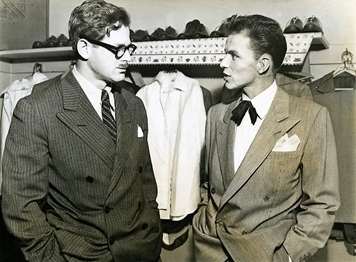
November 18, 1945
Concerts
Paramount Theatre, New York (November 7-27)
Three Week Engagement
Also Jan Savitt and His Orchestra & The Pied Pipers
On Screen: Hold That Blonde
November 19, 1945
Studio
New York City
CO35441 Full Moon And Empty Arms
(based on a theme from Rachmaninoff's Piano Concerto #2) (B. Kaye/T. Mossman)
Barton Music Corp. (ASCAP) 1945
Arranged & Conducted by Axel Stordahl
-1 78: B 47086 l
CD: Columbia Years 43-52 Vol. 3
CO35442 Oh, What It Seemed To Be
(B. Benjamin/G. Weiss/F. Carle)
Santly-Joy, Inc. (ASCAP) 1945
Arranged & Conducted by Axel Stordahl
CD: Columbia Years 43-52 Vol. 3
Ed O'Brien:
"Oh, What It Seemed To Be" was Frank's biggest hit during the Columbia years. Released in January of 1946, the song would reach #1 on the Billboard chart, 2-16-46, and stay there for eight consecutive weeks.
The single would chart for 17 weeks. Frank would intro- duce the song to his radio audience on the 1-16-46
Old Gold show and reprise it on the 2-13-46 OG show.
Concerts
Paramount Theatre, New York (November 7-27)
Three Week Engagement
Also Jan Savitt and His Orchestra & The Pied Pipers
On Screen: Hold That Blonde
November 20, 1945
Concerts
Paramount Theatre, New York (November 7-27)
Three Week Engagement
Also Jan Savitt and His Orchestra & The Pied Pipers
On Screen: Hold That Blonde
Paramount Theatre, New York (November 7-27)
Three Week Engagement
Also Jan Savitt and His Orchestra & The Pied Pipers
Variety
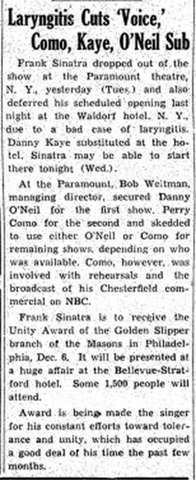
note: Mitch Miller told me Frank had a very fragile
musical instrument and did not take care of it
the way he should have in the 1940s. Frank worked
very hard with his radio shows and club appearances.
He was scheduled to open at the Wedgewood Room,
in the Waldorf, on 11/20. He was unable to appear
and Danny Kaye subbed. He finally opened on 11.23,
but was in terrible voice and had to bow out again.
At the same time, he was unable to do his shows at
the Paramount a number of nights. After closing at
the latter (27), Frank was able to complete his en-
gagement at the Waldorf. Skitch Henderson told
me Frank loved the night life in New York and just
didn't have enough hours in a day to properly rest,
considering the demands he put on himself. Despite
it all, his Old Gold shows on 11/21 and 11/28 are
outstanding.
Ed
November 21, 1945
Radio
Songs By Sinatra
Network: CBS
Location: New York City
Show #11
Sponsor: Old Gold Cigarettes
Time: 9:00PM - 9:30PM (EST) Wednesday
Orchestra Conducted By: Axel Stordahl
Arrangements By: Axel Stordahl
Announcer: Bill Lazar
Writer: Glenn Wheaton
Directed By: Mann Holiner
Performers: The Pied Pipers
Guest: Marilyn Maxwell, Louis Prima
CBS Broadcast:
1. America The Beautiful w/Pied Pipers
2. But I Did - Marilyn Maxwell
3. A Stranger In Town - The Pied Pipers
4. Ah Sweet Mystery Of Life/Shine On Harvest Moon/Till The End Of Time
5. Felicia No Capicia - Louis Prima
6. Some Sunday Morning - Louis Prima
7. Tribute To The States: Home On The Range/Oklahoma/Land Of The Sky Blue Water w/Marilyn Maxwell
8. The House I Live In
note: Show opens with Bill Lazar introducing Frank. He skips "Night And Day" The evening will be a tribute to the first Thanksgiving after the war and the men who died for our freedom. After "House I Live In," Frank says goodnight and Lazar does the sign-off
"The House I Live In" is the concluding song of a tribute to the rich and wonderful vastness of
America. Frank and Marilyn sing segments of
"Home On The Range"( Frank mentions "Mr
Roosevelt loved that song"), "Oh What A Beautiful
Mornin'" and "Land Of The Sky Blue Waters." All done in a very heartfelt way.
Ed
Concerts
Paramount Theatre, New York (November 7-27)
Three Week Engagement
Also Jan Savitt and His Orchestra & The Pied Pipers
On Screen: Hold That Blonde
November 22, 1945
Concerts
Paramount Theatre, New York (November 7-27)
Three Week Engagement
Also Jan Savitt and His Orchestra & The Pied Pipers
November 23, 1945
Radio
Sports Newsreel
Firday
Network: NBC
Time: 6:40 - 7:00 PM (EST)
Sponsor: Colgate Shave Cream.
Host: Bill Stern
Guests: Frank Sinatra
Notes: The show appears on the officially released CD set: 60 Greatest Old Time Radio Shows "Frank Sinatra & Friends." TT: 15mins. Audio condition: Excellent. Complete.
Ed O'Brien says he doesn't know how this show flew even way back then. Stern made up the most ridiculous stories and presented them as fact. Woody Allen does a wonderful send-up of the show in his 1987 film "Radio Days." Sinatra was a guest on two shows and subbed for Stern on a third.
Concerts
Wedgwood Room, Waldorf Astoria (November 23-December 17)
Wedgwood Room, Waldorf Astoria (November 23-December 17)
Tips on Tables - By Robert W. Dana - November 30, 1945
Sinatra Takes Over Wedgewood Room and Wins Crowd Despite His Illness
The quality of laryngitis is strained these nights at the Waldorf-Astoria's Wedgwood Room where Frank Sinatra is making a belated start on a short engagement.It is painfully obvious that he shouldn't be singing until he has had proper rest yet he sang 14 numbers Wednesday night, the concluding one "Old Man River."
Ordinarily the slim technician of modern song-phrasing is in his element with a large band behind him-wasn't he once a swing band vocalist? And Dick Stable's 22-piece band, featuring numerous violins and a harp, lends splendid support, but the voice that has hypnotized millions was like a butterfly in a whirlpool.
It was a masterful performance, nevertheless. There was the familiar stance, the bending of the microphone, the intent, searching glance that swept back and forth across the room in piercing penetration of the customers' thoughts and feelings and moods. He'd even turn now and then and seem to signal facilely to his piano accompanist.
Rises to His Best.
Frank's opening number was "Paper Moon"- light, airy and huskily fragile. Next came "It Might as Well Be Spring," "Laura" and "Its Been a Long, Long Time."The fifth tune was Irving Berlin's memorable "How Deep Is the Ocean," which is having a notable rebirth among top favorites. It revealed Sinatra at his best, too. From then on the singer seemed to have his laryngitis licked and the program became vibrant. He told of the time Jimmy Van Heusen and Phil Silvers were houseguests at his home and wrote a number called "Nancy With the Laughing Face," dedicated to the joy and sparkle that is his daughter. No great shucks of a composition but a tender, touching song.
After rendering "My Romance," from the still-remembered "Jumbo," and "When I Marry Sweet Lorraine," he pulled the first surprise of the evening with "Bess, Where Is My Bess." A haunting, lovely tune, he sang it very well.
Wedgewood Room
Hotel Waldorf-Astoria, New York
Talent Policy: Dance bands, floorshow at
I2. Owner-operator. Hotel Waldorf-Astoria:
Publicity. Ted Saucler. Prlces: $l-$2 cover.
Three nights after he was suppose
to open, Frank Sinatra made his official
bow into the plush Wedgewood Room
on Friday night (23) and accomplished
a major personal triumph which demonstrated
beyond doubt that he is not a fluke of publicity
and adolescent hysteria, "The Voice" was In no
voice at all, having suffered a lapse of larynx
that delayed his Waldorf appearance and kept
him out of the Paramount (currently) for several
shows. With his vocal Instrument inoperative,
Slnatra had to depend on his powers as an artist
and a showman. He not only dependedbut did it.
Capacity mob gave him top hand after top hand
and held hlm on for flve encores and a full stance
of 55 minutes, a remarkable record for a man who
pipes were next to useless.
Of the 11 numbers sung, several stand out as winners
even tho his gravelly vocal chords worked against full value.
How Deep Is the Ocean? was a fine example of a torchy
ballad romantically done. Nancy. a salute to his daughter, had
the tender personal quality of a man doing something be loves.
My Romance was a straight and touching mood of simple things
earnestly told. Foolish Things was invested with genuine feeling.
It was In Where Is My Bess? that Sinatra rocked the house, for he
invested It with a dramatic fervor few singers command or deliver, and
It brought a resounding response.
Skitch Henderson merits plaudits for the thoughtful and caressing piano
job he did on the accompaniment. Dick Stabile ork. fortified with beau-
coup violins and a harp, didn't quite have the hang of the Sinatra re-
quirements, but should work it out in a few days
Paul Ross.
Billboard
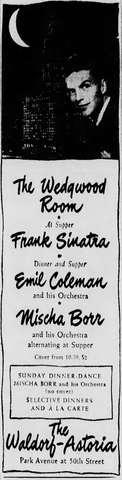
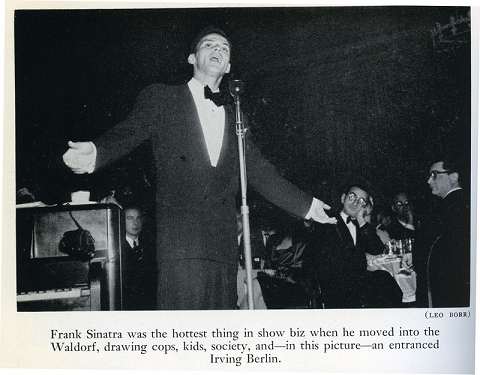
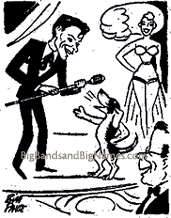
November 24, 1945
Concerts
Wedgwood Room, Waldorf Astoria (November 23-December 17)
November 25, 1945
Radio
Texaco Star Theatre
Starring: James Melton
David Broekman & His Orchestra
Lyn Murray Chorus
Anna Mary Dickey
John Reed King annc.
CBS
Sunday evening
9:30 - 10 PM
Special guest: Frank Sinatra
Where Is My Bess?
Nancy
Arias w/ Melton
Ed O'Brien:
There is an excellent quality version available.
Frank's "Where Is My Bess" is the best I have heard by him. I think Melton inspired him.
Concerts
Wedgwood Room, Waldorf Astoria (November 23-December 17)
Wedgwood Room, Waldorf Astoria (November 23-December 17)
Variety
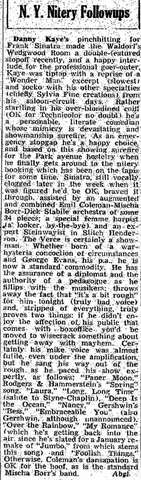
Texaco Star Theatre
Starring: James Melton
David Broekman & His Orchestra
Lyn Murray Chorus
Anna Mary Dickey
John Reed King annc.
CBS
Sunday evening
9:30 - 10 PM
Special guest: Frank Sinatra
Variety
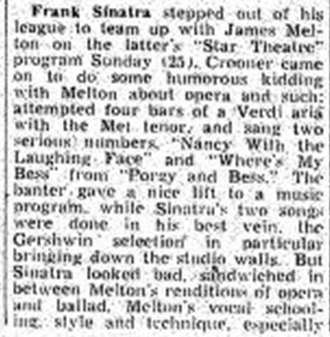
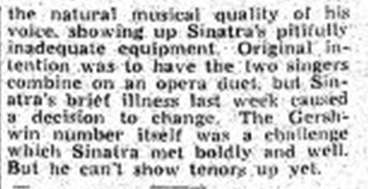
[Communist newspaper profiles Sinatra]
The Worker, a Communist newspaper, ran a full-page article on Sinatra written by Philadelphia correspondent Walter Lowenfels.
Source: James Kaplan, "Frank: The Voice" (2010).
November 26, 1945
Concerts
Wedgwood Room, Waldorf Astoria (November 23-December 17)
Hotel Astor, New York, NY
Sinatra received the Cinema Lodge, B'nai B'rith's commendation for his efforts on behalf of tolerance and inter-racial amity
[image referenced in source but could not be recovered]
November 27, 1945
Concerts
Wedgwood Room, Waldorf Astoria (November 23-December 17)
November 28, 1945
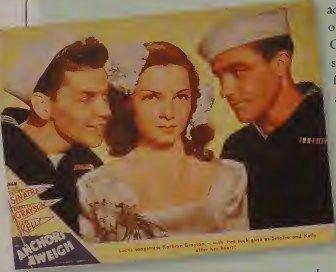
[Photograph: Gene Kelly compliments Sinatra on the tolerance short. From Richard Havers, "Sinatra" (Dorling Kindersley, 2007), p.108.]
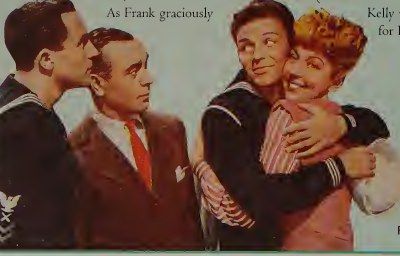
[Photograph: Gene Kelly compliments Sinatra on the tolerance short. From Richard Havers, "Sinatra" (Dorling Kindersley, 2007), p.108.]
Radio
Songs By Sinatra
Network: CBS
Location: New York City
Show #12
Sponsor: Old Gold Cigarettes
Time: 9:00PM - 9:30PM (EST) Wednesday
Orchestra Conducted By: Axel Stordahl
Arrangements By: Axel Stordahl
Announcer: Bill Lazar
Writer: Glenn Wheaton
Directed By: Mann Holiner
Performers: The Pied Pipers
Guest: Lillian Romondi, King Cole Trio
1. opening theme: Night And Day
2. One More Dream
3. Thine Alone Lilian Romondi
4. Skip To My Lou(brief) Come To Baby Do Pied Pipers
5. Nancy
6. It Is Only A Paper Moon(segment) King Cole Trio
7. Frim Fram Sauce King Cole Trio
8. Lover Come Back To Me w/Lillian Romondi
5. I Found A New Baby w/ King Cole Trio
6. Put Your Dreams Away
Concerts
Wedgwood Room, Waldorf Astoria (November 23-December 17)
Songs By Sinatra
Network: CBS
Location: New York City
Show #12
Sponsor: Old Gold Cigarettes
Time: 9:00PM - 9:30PM (EST) Wednesday
Orchestra Conducted By: Axel Stordahl
Arrangements By: Axel Stordahl
Announcer: Bill Lazar
Writer: Glenn Wheaton
Directed By: Mann Holiner
Performers: The Pied Pipers
Guest: Lillian Romondi, King Cole Trio
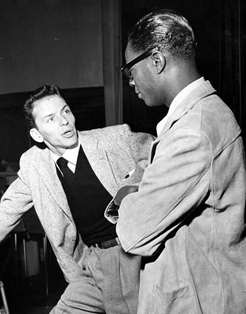
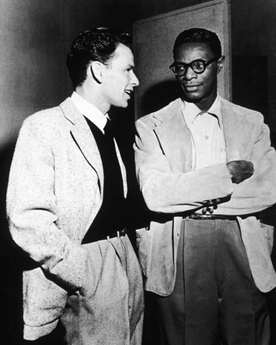
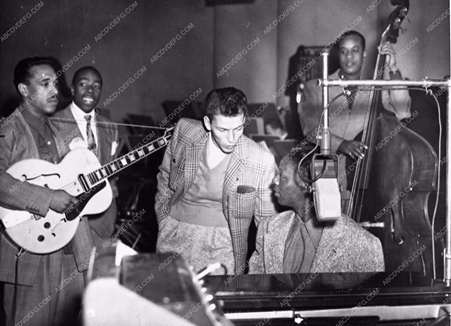
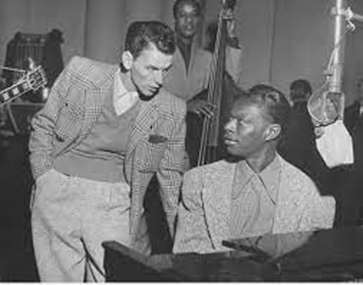
Waldorf-Astoria Hotel, New York, NY
Harvest Dinner for the Motion Picture Pioneers
Sinatra received the “Scroll of Honor” from the Motion Picture Pioneers
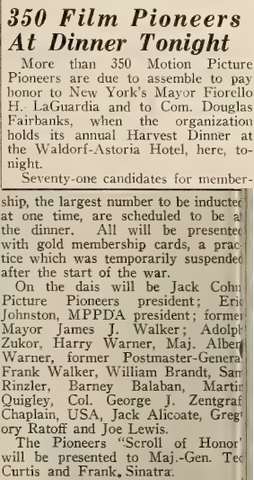
Gene Kelly told Frank on his radio program that he was proud of him for the contribution the short film made to the cause of tolerance, a brief but notable peer endorsement quoted in the book. (Source: Richard Havers, "Sinatra" (Dorling Kindersley, 2007).)
November 29, 1945
Concerts
Henry Snyder High School, Jersey City, New Jersey
1. It's Been A Long Long Time
2. It's Only A Paper Moon
3. Nancy
Henry Snyder High School, Jersey City, New Jersey
& St. Dominic Academy
November 30, 1945
Studio
New York City
CO35441 Full Moon And Empty Arms
(based on a theme from Rachmaninoff's Piano Concerto #2)
(B. Kaye/T. Mossman)
Barton Music Corp. (ASCAP) 1945
Arranged & Conducted by Axel Stordahl
-2 LP: CL-902 That Old Feeling
-2 78: 36947
CO35442 Oh, What it Seemed To Be
(B. Benjamin/G. Weiss/F. Carle)
Santly-Joy, Inc. (ASCAP) 1945
Arranged & Conducted by Axel Stordahl
-2 (2:59) CD: Columbia Years 43-52 Vol. 3
LP: HS-11390 Frank Sinatra
LP: CL-606 Frankie
78: 36905
CO35484 I Have But One Heart (O Marenariello)
(English and Italian lyrics)
(M. Symes/J. Farrow)
Barton Music Corp. (ASCAP) 1945
Arranged & Conducted by Axel Stordahl
-1 (3:13) CD: Columbia Years 43-52 Vol. 3
CD: 09372 Greatest Hits-The Early Years, Vol. 2
LP: HS-11277 Someone To Watch Over Me
LP: CL-2572 Greaest Hits, The Early Years, Vol. 2
78: 37554
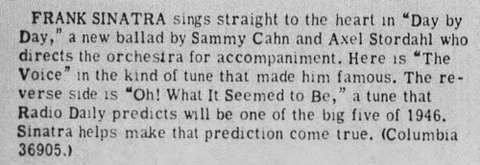
Concerts
Wedgwood Room, Waldorf Astoria (November 23-December 17)
Jersey City Garden, Jersey City, New Jersey
Friday
Benefit: Dance For A Disabled Veteran
Doors Open: 8:00 P.M.
Note: Thanks to Richard Cook for the above listing.
Jersey City Garden, Jersey City, New Jersey
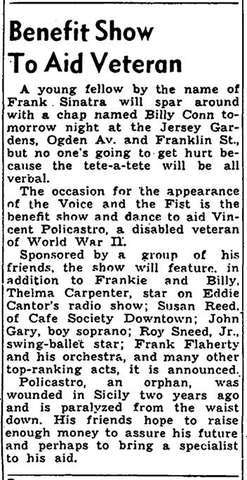
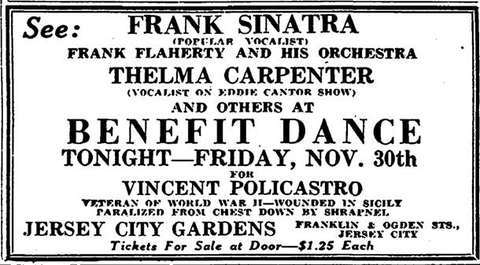
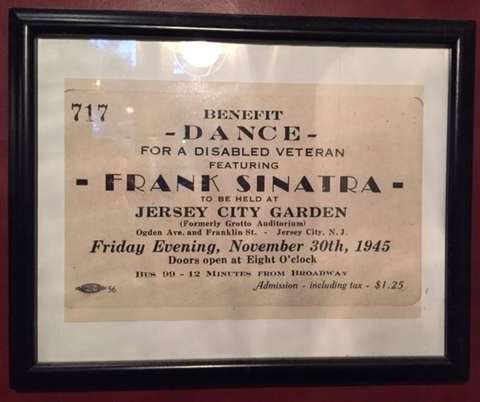
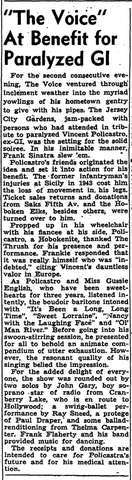
December 1945
[MGM Special Christmas Trailer (1945 short)]
Sinatra appeared in a three-minute MGM promotional short, the 1945 Special Christmas Trailer, singing 'Silent Night'; it was distributed to MGM's Loews theaters during December 1945.
No corresponding dated entry could be identified in the chronology for this film/context.
Source: Tom Santopietro, "Sinatra in Hollywood" (2008), All Over the Map
[Nancy discovers the bracelet meant for another woman]
Kaplan: A couple of days before Christmas 1945, Nancy found the Tiffany bracelet box hidden in the glove compartment of the Cadillac while going to her Beverly Hills beauty parlor.
Source: James Kaplan, "Frank: The Voice" (2010)
[Sinatra buys Nancy a Tiffany bracelet]
Kaplan: While in New York for the Wedgwood Room stand, Sinatra bought a diamond bracelet at Tiffany, nearly half a week's Paramount pay, intending it for Nancy; he hid the box in the car's glove compartment on the drive home.
Source: James Kaplan, "Frank: The Voice" (2010)
[Special Christmas Trailer]
Santopietro (Filmography): Short film for Metro-Goldwyn-Mayer, directed by Harry Loud, musical direction by Nathaniel Shilkret and Axel Stordahl. Sinatra performed the solo 'Silent Night.'
No corresponding dated entry could be identified in the chronology for this film/context.
Source: Tom Santopietro, "Sinatra in Hollywood" (2008), Filmography
[Sinatra honored by National Conference of Christians and Jews]
Frank received a citation for his contribution to religious tolerance at a New York luncheon where Hollywood producer David O. Selznick also spoke out against post-war demagoguery and rabble-rousing.
Source: Richard Havers, "Sinatra" (Dorling Kindersley, 2007).
[recording session -- critical commentary]
Sinatra made his first attempt at conducting (rather than singing) leading a full orchestra through a series of Alec Wilder instrumental vignettes at Liederkranz Hall, motivated by wanting to help his friend Wilder get the pieces recorded commercially; he opened the session by telling musicians he knew he wasn't a real conductor and was just asking for their cooperation.
Source: Charles L. Granata, "Sessions with Sinatra: Frank Sinatra and the Art of Recording" (1999/2003), Part II: The Columbia Years, 1943-1952
December 1, 1945
Concerts
Wedgwood Room, Waldorf Astoria (November 23-December 17)
For once the audience had Frank rolling in the aisles.

December 2, 1945
Concerts
Wedgwood Room, Waldorf Astoria (November 23-December 17)
December 4, 1945
Concerts
Wedgwood Room, Waldorf Astoria (November 23-December 17)
December 5, 1945
Radio
Songs By Sinatra
Network: CBS
Location: New York City
Show #13
Sponsor: Old Gold Cigarettes
Time: 9:00PM - 9:30PM (EST) Wednesday
Orchestra Conducted By: Axel Stordahl
Arrangements By: Axel Stordahl
Announcer: Bill Lazar
Writer: Glenn Wheaton
Directed By: Mann Holiner
Performers: The Pied Pipers
Guest: Earl Wilson and The Mitchell Boys Choir
1. opening theme: Night And Day
2. Let It Snow, Let Is Snow, Let It Snow
3. I'm Always Chasing Rainbows
4. Tampico Pied Pipers
5. Along The Navajo Trail
6. Old Kentucky Home w/June Hutton
7.If I Loved You ( segment )
8. Santa Claus (Jingle Bells parody) w/Pied Pipers
9. Somebody Loves Me w/Pied Pipers
10. medley: O Little Town Of Bethlehem / Joy To The World / Silent Night w/The Mitchell Boys Choir
11. closing theme: Put Your Dreams Away
Notes: Confirmed airing on WABC. Dress Rehearsal Segment was mastered and released on V-Disc. It appears on the CD: Christmas Songs by Sinatra (Columbia/Legacy CK 66413) note: Earl Wilson presented the Newspaper Guild Page One Award to Frank. It was voted to him for his advancement of religious tolerance in 1945. The Old Gold Show was broadcast from N.Y.C 10-17-45 TO 12-12-45. Bill Lazar was the announcer on all nine shows. Marvin Miller did not make an appearance.
The Mitchell Boys Choir was made up of 16 young men, ranging in age from 11 to 16. They also sang with Frank on the 12-26-45 show. One of the older boys was interviewed that evening and Frank gave them a big buildup. Strangely enough, they were never mentioned on the 12-5 broadcast.
Ed
Concerts
Wedgwood Room, Waldorf Astoria (November 23-December 17)
December 6, 1945
Concerts
Wedgwood Room, Waldorf Astoria (November 23-December 17)
December 7, 1945
Studio
New York City
CO35496 (I Don't Stand) A Ghost Of A Chance
(B. Crosby/N. Washington/V. Young)
(from Folies Bergere)
Amer. Acad. Of Music (ASCAP) 1932
Arranged & Conducted by Axel Stordahl
-1 (3:11) CD: Columbia Years 43-52 Vol. 3
LP: C6X 40343 The Voice-The Columbia Years, 43-52
LP: CL 743 The Voice
LP: Phil. BBR8038 10inch (alt take) England
78: 36919
CO35497 Why Shouldn't I?
(C. Porter)
(from Jubiliee)
T.B. Harms, Inc. (ASCAP) 1935
Arranged & Conducted by Axel Stordahl
-1 (2:52) CD: Columbia Years 43-52 Vol. 3
CD: 44236 Sinatra Rarities
LP: CL 2739 The Essential Frank Sinatra, Vol. 1
78: 36920
CO35498 Try A Little Tenderness
(H. Woods/J. Campbell/R. Connelly)
Robbins Music Corp (ASCAP) 1932
Arranged & Conducted by Axel Stordahl
-2 (3:09) CD: Columbia Years 43-52 Vol. 3
LP: C6X 40343 The Voice-The Columbia Years, 43-52 (alt take)
LP: CL 743 The Voice
LP: HL 7405 Romantic Scenes From The Early Years (alt take)
78: 36920
CO35499 Paradise
(N.H. Brown/G. Clifford)
(from A Women Commands)
Leo Feist, Inc. (ASCAP) 1931
Arranged & Conducted by Axel Stordahl
-1 (2:38) CD: Columbia Years 43-52 Vol. 3
LP: CL 743 The Voice
LP: HL 7405 Romantic Scenes From The Early Years (alt take)
78: 36921
Violins: R. Polikian, L. Posner; Violas: S. Brecher; Cello: A. Sophos;
Piano: W.
Cliffton; Guitar: M. Golizio; Bass: F. Siravo; Drums: N. Polen; Oboe: M. Miller
Radio
Sammy Davis Jr. Show
Westinghouse Broadcasting Co.
Saturday Evening
Concerts
Wedgwood Room, Waldorf Astoria (November 23-December 17)
[Second Voice of Frank Sinatra session]
A second key session for The Voice of Frank Sinatra took place December 7, 1945 in New York; together the two sessions yielded eight songs, six of them standards, released as Columbia Set C-112.
Source: James Kaplan, "Frank: The Voice" (2010).
December 8, 1945
Concerts
Wedgwood Room, Waldorf Astoria (November 23-December 17)
Amid live shows and radio work, Frank's recording of 'Nancy (with the Laughing Face)' entered the charts for a two-week run, followed a week later by a reissued 'White Christmas' that climbed to No. 5, higher than the prior year's release. (Source: Richard Havers, "Sinatra" (Dorling Kindersley, 2007).)
December 9, 1945
Radio
Jerome Kern Memorial Special Show
Network: CBS
Guests: Oscar Hammerstein, Nelson Eddy, Patrice Munsel, Dinah Shore, Jack Smith, Hildegarde, Frank Sinatra, Bing Crosby, Judy Garland, Earl Wrightson, Al Goodman and His Orchestra
1. The Song Is You
Notes: Broadcast tribute about one month after Kern's death. 1 hour. Audio condition: Excellent. Complete.
Concerts
Wedgwood Room, Waldorf Astoria (November 23-December 17)
Jerome Kern Memorial Special Show
(Vinyl record of radio show released on Ariel Records)
December 10, 1945
Studio
Columbia Recording Studio - New York City
Monday from 1 to 4:AM
Frank Sinatra Conducts Alec Wilder
Slow Dance*
Theme And Variations*
Air For English Horn**
* Orchestra made up of 28 instruments including six woodwinds and a harpsichord ** Twenty-three piece orchestra including two woodwinds.
Ed O'Brien adds:
Mitch Miller played both the English horn and the oboe on this session. He told me that Sinatra had become a great admirer of Wilder's compositions. Frank realized his name on a Wilder record would sell to a much larger audience than the usual longhairs. Miller remembered Sinatra declaring his intention to conduct and Columbia letting him have his way. The Columbia String Orchestra, made up of musicians classically trained, were quite dismissive of the young bobby sox idol at the first session on 12-5-45.
But Sinatra's impeccable musicality slowly won them over.
At the end of the second session they applauded his efforts and expressed great admiration for his perfect ear and his supreme confidence while conducting the orchestra.
Concerts
Wedgwood Room, Waldorf Astoria (November 23-December 17)
[Sinatra receives Golden Slipper Unity Award]
Per an item in the December 2, 1945 issue of The Worker, Sinatra was slated to receive the Golden Slipper Square Club's first annual Unity Award for contributions to racial and religious tolerance at Philadelphia's Broadwood Hotel on December 10, 1945.
Source: James Kaplan, "Frank: The Voice" (2010).
[Sinatra conducts the Alec Wilder sessions]
Sinatra, who could not read music, conducted (rather than sang on) two sessions of Alec Wilder's orchestral compositions at Liederkranz Hall, finishing the second and final session late on the night of December 10, 1945, after nightly performances at the Wedgwood Room; Manie Sacks had only agreed after Mitch Miller suggested Sinatra's name go on it as conductor.
Source: James Kaplan, "Frank: The Voice" (2010).
December 11, 1945
Concerts
Wedgwood Room, Waldorf Astoria (November 23 - December 17) Songs sung during engagement:
Blue Skies
All Of Me
Body And Soul w/piano
It's Been A Long, Long Time
How Deep Is The Ocean
Ol' Man River
Nancy
It's Only A Paper Moon
It Might As Well Be Spiring
Sweet Lorraine
I'll Buy That Dream (parody)
Laura
Bess, Oh Where Is My Bess
My Romance
Night And Day
Ed O'Brien supplied the above set list and add the following: Frank talked Skitch Henderson into being his pianist for the engagement. Skitch told me that Sinatra loved the idea of singing with just a piano in a nightclub setting.
Dick Stabile was the conductor but Frank ran the show.
Skitch told me he was amazed at how Frank thought nothing of changing the program if a new idea came into his head.
They usually did a tight 40 minute show. Skitch remembered how fanatical Sinatra was about doing three songs before opening his mouth for any chatter. After a brief "good evening," he would then do three more songs.They did midnight shows three times during the week. The other three nights they did two shows. Sunday was a day Sinatra searched for gigs up and down the east coast.
Skitch had a wonderful story on how Frank got him to fly down to Richmond, Virginia on 12-16-45 for a one-nighter. He wanted to see the sights in Washington and talked Skitch into flying below a thousand feet over the nation's Capital. How different things were then.
Here is a brief excerpt from the interview:
"It was a wonderful time for me. I stop at the Waldorf quite often and look at the room. I think of the marvelous things that happened there at one time. The people who work there today have no idea."
December 12, 1945
Radio
Songs By Sinatra
Network: CBS
Location: New York City
Show #14
Sponsor: Old Gold Cigarettes
Time: 9:00PM - 9:30PM (EST) Wednesday
Orchestra Conducted By: Axel Stordahl
Arrangements By: Axel Stordahl
Announcer: Bill Lazar
Writer: Glenn Wheaton
Directed By: Mann Holiner
Performers: The Pied Pipers
Guest: June Hutton, Egg Head Malarkey
CBS Broadcast:
1. opening theme: Night And Day
2. Aren't You Glad You're You? - Frank Sinatra
3. It Might As Well Be Spring - Frank Sinatra
4. Pipers sing birthday greeting to Sinatra
4.. In The Middle Of May - The Pied Pipers
5. Button Up Your Overcoat - Frank Sinatra & June Hutton
6. Day By Day - Frank Sinatra ( new song )
7. Lilly Belle - Frank Sinatra & Pied Pipers
8. Ol' Man River - Frank Sinatra
9. closing theme: Put Your Dreams Away
note: Last show from N.Y.C. Going home for Christmas.
Bill Lazar was the announcer for all nine shows in the
Big Apple.
Ed
Concerts
Wedgwood Room, Waldorf Astoria (November 23 - December 17)
[FBI memo names Sinatra as Communist Party member]
The FBI's Philadelphia special agent in charge sent J. Edgar Hoover a memo reporting a confidential informant's claim that Sinatra was a Communist Party member, citing a recent Life magazine article on his racial-tolerance work and his Gary, Indiana appearance.
Source: James Kaplan, "Frank: The Voice" (2010).
[Sinatra turns thirty]
Sinatra turned thirty on December 12, 1945, and wanted to end the year in style.
Source: James Kaplan, "Frank: The Voice" (2010).
December 13, 1945
Concerts
Wedgwood Room, Waldorf Astoria (November 23 - December 17)
December 14, 1945
Concerts
Wedgwood Room, Waldorf Astoria (November 23 - December 17)
Hotel Astor, New York
Sinatra received a Citation from the National Conference of Christians and Jews for his work in connection with racial tolerance
Dec 14 1947---PAL Show Portland
© 1997-2025 The Sinatra Archive
This calendar, or any parts thereof, may not be reproduced in any fashion
whatsoever without the prior written permission of the publisher (The
Sinatra Archive)
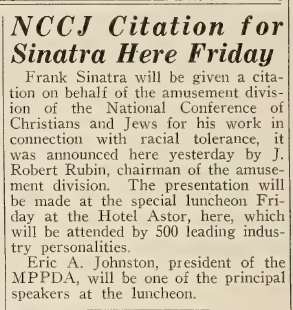
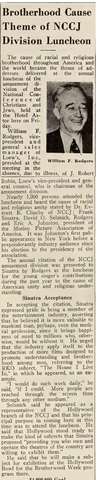
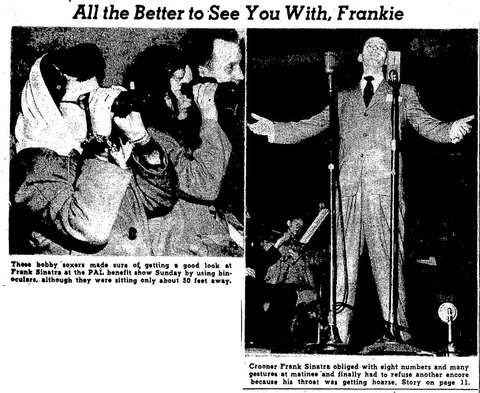

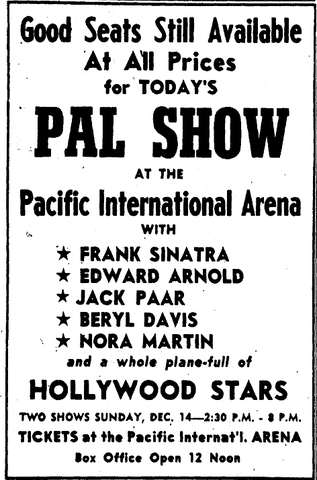
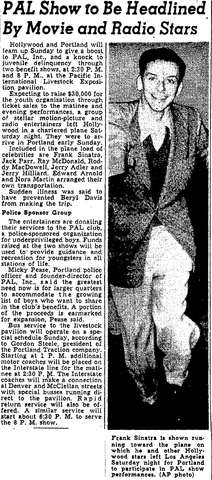
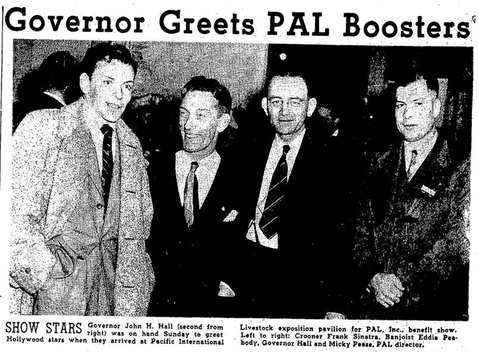
December 15, 1945
Concerts
Public Hall, Cleveland, OH.
The Cleveland Press Christmas Show
December 16, 1945
Concerts
Mosque Theatre, Richmond, Virginia
Sunday evening
Emcee: Ed Sullivan
Frank Sinatra
Skitch Hendreson
Charlie Spivak & His Orchestra
Songs Included:
--Night And Day
--Ol' Man River
--It Might As Well Be Swing
--Nancy
--The House I Live In
--I'll Buy That Dream
--White Christmas
Ed O'Brien notes:
Skitch had a wonderful story on how Frank got him to fly down to Richmond, Virginia on 12-16-45 for a one-nighter. He wanted to see the sights in Washington and talked Skitch into flying below a thousand feet over the nation's Capital. How different things were then.
Mosque Theatre, Richmond, Virginia
Sunday evening
Emcee: Ed Sullivan
Frank Sinatra
Skitch Hendreson
Charlie Spivak & His Orchestra
[image referenced in source but could not be recovered]
[image referenced in source but could not be recovered]
[image referenced in source but could not be recovered]
[image referenced in source but could not be recovered]
note: Eileen Barton told me Frank hated the format on the show. He didn't mind the $3,000 it cost him every week because the exposure was invaluable to him. But once he got a sponsored show, Frank became more and more discontented with the H.P.
Ed
December 19, 1945
Radio
Songs By Sinatra
Network: CBS
Location: Hollywood
Show #15
Sponsor: Old Gold Cigarettes
Time: 9:00PM - 9:30PM (EST) Wednesday
Orchestra Conducted By: Axel Stordahl
Arrangements By: Axel Stordahl
Announcer: Marvin Miller
Writer: Glenn Wheaton
Directed By: Mann Holiner
Performers: The Pied Pipers
Guest: Ella Mae Morse, The Vagabonds
1. opening theme: Night And Day
2. I'm An Old Cowhand
3. Tumbling Tumbleweeds
4. Ragtime Cowboy Joe Pied Pipers
5. Yippee Aye Ay Ella Mae Morse
6. Along The Navajo Trail
7. You Are My Sunshine The Vagabonds
8. Buzz Me, Buzz Me, Baby Ella Mae Morse
9 Red River Valley The Vagabonds
10. Atkinson, Topeka and the Santa Fe Pied Pipers
11. White Christmas w/Pied Pipers
12 closing theme: Put Your Dreams Away
Notes: Confirmed airing on WABC. Show #15
Note:"Old Cowhand," "Tumbling Tumbleweeds" and "Along The Navaho Trail" have been commercially released on the 4 CD " A Voice On Air" set.
Frank was back in sunny California and Marvin Miller rejoined the Old Gold gang. Frank usually sang "White Christmas" solo. I like it with the Pipers joining in. AFRS broadcast featured ,in lieu of commercials, "It Might As Well Be Spring," " Begin The Beguine," " Without A Song," " Bess. Where Is My Bess?"
Ed
December 20, 1945
Concerts
Van Nuys High School, Los Angeles, CA
Benefit for Rancho San Antonio Valley Home For Underprivileged Boys Frank Sinatra, Peggy Ryan, Rudy Vallee, Lucille Ball, the Andrews Sisters, Jack Haley, Lionel Barrymore, Victor Borge and others
Van Nuys High School, Los Angeles, CA
Benefit for Rancho San Antonio Valley Home For Underprivileged Boys
Frank Sinatra, Peggy Ryan, Rudy Vallee, Lucille Ball, the Andrews Sisters, Jack Haley, Lionel Barrymore, Victor Borge and others
2025 Note:
Sinatra may not have appeared. A subsequent review of the benefit mentions many of the performers but nothing of Sinatra performing:
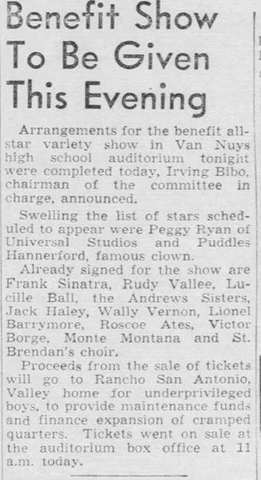
December 25, 1945
Radio
Command Performance
Network: AFRS
Assembled: September 13, 1945
Show: Special Christmas Program
Host: Bob Hope
Guests: Bing Crosby, Dinah Shore, Harry James,
Herbert Marshall, Jimmy Durante, Ginny Simms,
Jerry Colonna, Johnny Mercer, The Pied Pipers,
Judy Garland, Ed Gardner, Frances Langford, Kay
Kyser, Frank Sinatra, Mel Blanc, The Robert
Mitchell Boys Choir, Harry Truman, Cass Daley.
Announcer: Ken Carpenter
1. opening
2. comedy - Bob Hope
3. On The Atcheson, Topeka And Santa Fe - Bing Crosby
4. comedy - Bob Hope, Bing Crosby, Dinah Shore
5. Along The Navajo Trail - Dinah Shore & Bing Crosby
6. comedy - Bob Hope & Harry James
7. Two O'clock Jump - Harry James
8. comedy - Jimmy Durante, Herbert Marshall, Ken Carpenter
9. So I Ups To Him - Jimmy Durante
10. comedy - Bob Hope, Ginny Simms
11. Till The End Of Time - Ginny Simms
12. comedy - Bob Hope, Jerry Colonna
13. Camptown Races - Johnny Mercer
14. skit: "Atcheson, Topeka And Santa Fe" - Bob
Hope, Johnny Mercer, Bing Crosby, Judy Garland
15. Long Ago And Far Away - Judy Garland
16. comedy - Bob Hope, Jerry Colonna
17. Embraceble You - The Pied Pipers
18. comedy - Bob Hope, Ed Gardner, Bing Crosby
19. comedy - Frances Langford, Bob Hope
20.. Bia - Frances Langford
21. comedy - Bob Hope, Kay Kyser, Cass Daley
22. Can't Blame A Gal For Trying (several parodies) - Cass Daley
23. comedy - Frank Sinatra, Bob Hope & Bing Crosby
24. If I Loved You - Frank Sinatra
25. comedy - Bob Hope, Ken Carpenter, Mel Blanc,
Bing Crosby, Judy Garland, Ginny Simms
26. Santa Clause Is Coming To Town - Bob Mitchell Boys Choir
27. President Truman Christmas Greetings
28. Christmas medley: Joy To The World / O Come
All Ye Faithful / Hark, The Hearld Angels Sing
/ O Little Town Of Bethlehem / It Came Upon A
Midnight Clear / Silent Night - Bob Hope, Judy
Garland, Dinah Shore, Frances Langford, Ginny Simms, Bing Crosby
29. closing
Notes: Sinatra portion on second part. "If I
Loved You" appears on Sinatra:Radio Years 39-55
MTBS 001. TT: 120mins. Audio condition: Excellent. Complete.
[Sinatra gives Nancy pearl earrings]
On Christmas morning 1945, Sinatra gave Nancy a small Tiffany box containing pearl earrings -- not the diamond bracelet she had already discovered was meant for someone else.
Source: James Kaplan, "Frank: The Voice" (2010).
December 26, 1945
Radio
Songs By Sinatra
Network: CBS
Location: Hollywood
Show #16
Sponsor: Old Gold Cigarettes
Time: 9:00PM - 9:30PM (EST) Wednesday
Orchestra Conducted By: Axel Stordahl
Arrangements By: Axel Stordahl
Announcer: Marvin Miller
Writer: Glenn Wheaton
Directed By: Mann Holiner
Performers: The Pied Pipers
Guest: Mitchell Boys Choir
CBS Broadcast:
1. opening theme: Night And Day
2. Great Day
3. Medley: Good King Wenceslas - The Wassail Song Mitchell Boys Choir
4. Embraceable You - The Pied Pipers
5. Symphony
6. Dream Pied Pipers
7. Father Time Medley:
Too-Ra-Loo-Ra-Loo-Ral/Accentuate The Positive( w/Pipers )/ I'm Beginning To See The Light(June Hutton)/If I
Loved You/Sentimental Journey(Pipers)/
Saturday Night/Laura/Lily Belle(Pied Pipers)/Brahms Lullaby
8. Let's Start The New Year Right w/ Mitchell Boys Choir
9. You'll Never Walk Alone w/Mitchell Boys Choir
10. closing theme: Put Your Dreams Away
December 28, 1945
Radio
Ginny Simms Show
Network: CBS
Time: 7:30PM - 8:00PM EST
Sponsor: Bordens
Performers: Ginny Simms, Lyn Johnson
Orchestra Conducted By: Frank DeVol
Announcer: Don Wilson
Guest: Frank Sinatra
1. My Guy's Come Back - Ginny Simms
2. Symphony - Lyn Johnson
3. Nancy - Frank Sinatra
4. sketch" - Frank Sinatra & Ginny Simms
5. They Can't Take That Away From Me - Ginny Simms
Notes: The show appears on the officially released CD set: 60 Greatest
Old Time Radio Shows "Frank Sinatra & Friends"
Sinatra sings the above song + comedy w/cast. TT: 30mins. Confirmed aired on WABC.
LOOKING AT HOLLYWOOD
BY
HEDDA HOPPER
THE VOICE OF THE PEOPLE
Ginny Simms Show
Network: CBS
Time: 7:30PM - 8:00PM EST
Sponsor: Bordens
Performers: Ginny Simms, Lyn Johnson
Orchestra Conducted By: Frank DeVol
Announcer: Don Wilson
Guest: Frank Sinatra
December 31, 1945
[Sinatra's New Year's Eve party and Marilyn Maxwell's bracelet] At Sinatra's especially splendid New Year's Eve party (with sketches by Harry Crane and songs by Cahn and Styne), Nancy noticed Marilyn Maxwell -- seated with her husband John Conte -- wearing the diamond bracelet Frank had bought at Tiffany, and realized the truth.
Source: James Kaplan, "Frank: The Voice" (2010).
[Nancy confronts Marilyn Maxwell]
Nancy confronted Marilyn Maxwell at the party, taking her by the wrist with the bracelet and telling her she'd have to leave; Marilyn and her husband departed quietly while Frank kept performing.
Source: James Kaplan, "Frank: The Voice" (2010).
January 1, 1946
Radio
Radio: Showtime, an AFRS transcription program featuring Sinatra, was issued this date, with Sinatra singing "I Begged Her" (with Gene Kelly), "What Makes The Sunset," and "The Charm Of You," backed by the Louis Silvers Orchestra. Source: sinatradiscography.com, Radio Transcriptions Database.
January 2, 1946
Radio
Songs By Sinatra (CBS)
Sponsor: Old Gold Cigarettes
Announcer: Marvin Miller
Orchestra Conducted By: Axel Stordahl
Performers: Frank Sinatra, The Pied Pipers
Guests: Peggy Lee
Dress rehearsal:
1. Over The Rainbow
Broadcast Show:
1. Opening Theme: Night And Day
2. Chickery Chick
3. Dearest Darling
4. Doctor, Lawyer, Indian Chief - The Pied Pipers
5. It's Been A Long Long Time
6. Waitin' For The Train To Come In - Peggy Lee
7. You Brought A New Kind Of Love To Me w/Peggy
8. Over The Rainbow
9. Closing: Put Your Dreams Away
Note: the Dress Rehearsal of the song "Over The Rainbow" is NOT on the CD: V-discs.( Columbia ).
Instead, the "Rainbow" track is the Columbia Master HCO 1378-1 dated May 1, 1945, according to Rich Rosenberg and Giuseppe Marcucci "Where or When" database.
note: Show was broadcast from Hollywood.
Glenn Wheaton was the writer and Mann Holiner produced and directed. Pied Pipers backed Frank on "Over The Rainbow."
Songs By Sinatra (CBS)
Sponsor: Old Gold Cigarettes
Announcer: Marvin Miller
Orchestra Conducted By: Axel Stordahl
Performers: Frank Sinatra, The Pied Pipers
Guests: Peggy Lee
Los Angeles Evening Citizen News January 3, 1946
review (1-2-1962) notes
ALBUM REVIEW: I REMEMBER TOMMY
SOURCE: *SHOW BUSINESS ILLUSTRATED (SBI), JANUARY 2, 1962
FRANK SINATRA,I REMEMBER TOMMY (Reprise-M,S) -Arranger
Sy Oliver has scored a batch of old Tommy Dorsey tunes for Sinatra in this recording, but as he notes: "We didn't intend to copy. Instead we tried to adapt the tunes to Frank's current style of singing.
Remember, he punches more than he used to." The result is a disc that combines the best of the Dorsey library with sound of the mature Sinatra, a blend difficult to top. Among the tunes are "I'm Getting Sentimental Over You," "Imagination" "I'll Be Seeing You," "It's Always You," "Polka Dots And Moonbeams" "Daybreak" and six others. Regardless of tempo or mood, Sinatra sings them all with liquid phrasing, solid rhythmic sense and a firm grasp of lyric content. Along the way you can appreciate Sinatra's appreciation of the smooth Dorsey trombone sound.
###
* Hugh Hefner, Editor and Publisher
FACTOID: in this issue, SBI published the winners of the
JAZZ '61 Playboy Polls. In the Readers' Poll: Male Singer was Frank Sinatra; Female Singer was Ella Fitzgerald. In the All-Stars' All-Stars Poll: Male Singer was Frank Sinatra; Female Singer was Ella Fitzgerald.
SECOND FACTOID: SBI had this announcement: Reprise Records recorded its master's voice during Frank Sinatra's November engagement at The Sands in Las Vegas; the best moments of his latest sojourn at his own club will comprise a "Sinatra at The Sands" set. Nat Cole will form his own disc firm in 1962, but will continue to cut for Capitol.
CD: Universal – 0602527564650 America I Hear You Singing (2010 European Release)
© 1997-2024 The Sinatra Archive
This calendar, or any parts thereof, may not be reproduced in any fashion whatsoever without the prior written permission of the publisher (The Sinatra Archive)
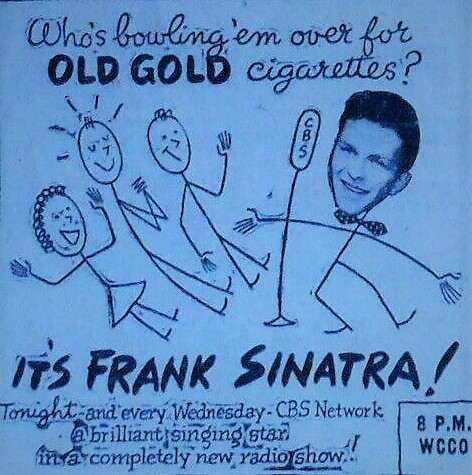
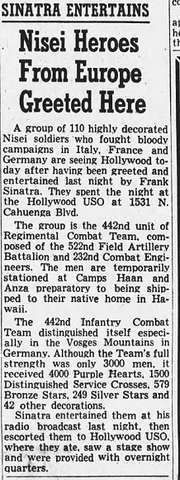
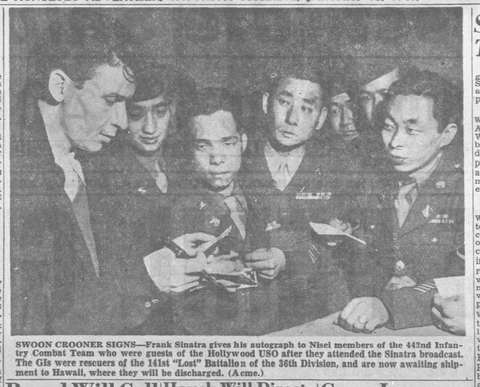
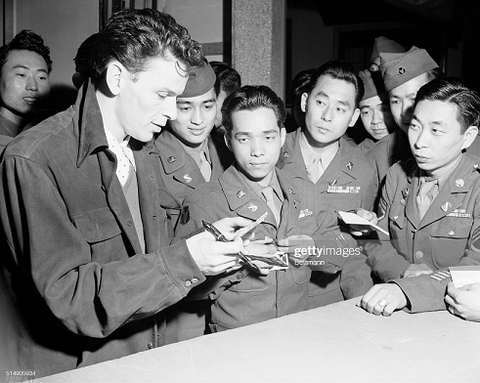
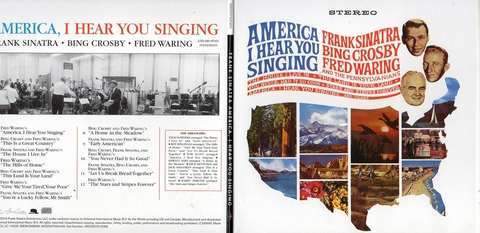
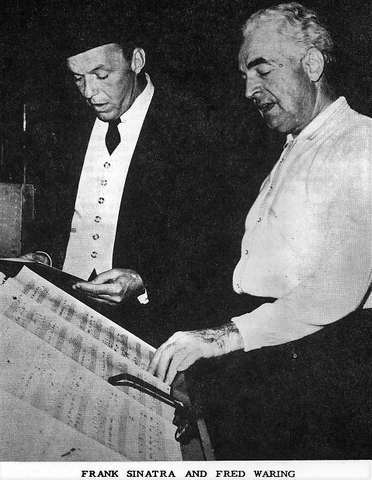
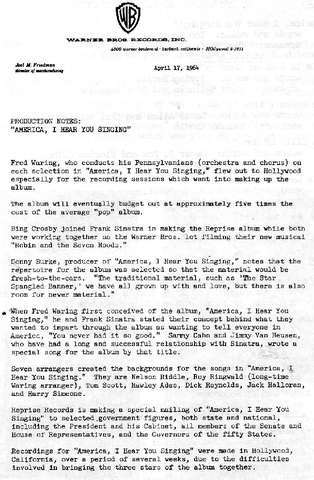
January 1946
Gerald L. K. Smith, a far-right radio host and leader of the America First Party, testified before the House Un-American Activities Committee that Frank Sinatra was “acting as a front” for communist organizations, offering no supporting explanation. The charge — which followed Sinatra's outspoken activism against juvenile intolerance and racism, including his Oscar-winning short film The House I Live In — gained traction in the era's anticommunist climate despite having no real basis; Sinatra publicly denied it, insisting, “I don't like communists either, and I'm not one.” Source: J. Randy Taraborrelli, Sinatra: Behind the Legend.
[Gerald L.K. Smith testimony before HUAC]
Gerald L. K. Smith: White supremacist Gerald L. K. Smith testified before the newly standing House Un-American Activities Committee that Sinatra was acting as a Communist front, calling him 'Mrs. Roosevelt in pants.'
Source: James Kaplan, "Frank: The Voice" (2010)
January 9, 1946
Radio
Songs By Sinatra
Network: CBS
Location: Hollywood
Show #18
Sponsor: Old Gold Cigarettes
Time: 9:00PM - 9:30PM (EST) Wednesday
Orchestra Conducted By: Axel Stordahl
Arrangements By: Axel Stordahl
Announcer: Marvin Miller
Writer: Glenn Wheaton
Directed By: Mann Holiner
Performers: The Pied Pipers
Guest: Lina Romay, Skitch Henderson
CBS Broadcast:
1. opening theme: Night And Day
2. Some Sunday Morning - Frank Sinatra
3. Get The Best Of Me Lina Romay
4. Slowly - Frank Sinatra
5. Let It Snow, Let It Snow, Let It Snow Pied Pipers
6. Liza Skitch Henderson
7. medley w/Skitch Henderson (piano): I'll Be Seeing
You / Paper Doll / Try A Little Tenderness
Somebody Loves Me / Where Or When / Blue Skies
8. No Can Do - Frank Sinatra & Lena Romay
9. Day By Day
10. Put Your Dreams Away sign-off
Ed notes: Skitch Henderson had finished an engagement with Frank at the Wedgwood Room, in the Waldorf in December of 1945.
He was the piano player and good friend. Frank asked him to be a guest on the Old Gold show. When I spoke with Skitch, he remembered the wonderful buildup Frank gave him that Wednesday evening in 1946. They became fast friends, shared a box at Carnegie Hall for classical music recitals, did nightclubs and one nighters, and Skitch often was the pilot for their little sojourns. He had wonderful stories about his work and friendship with Frank. Skitch would do quite a few Old Gold shows with Frank after that January night.
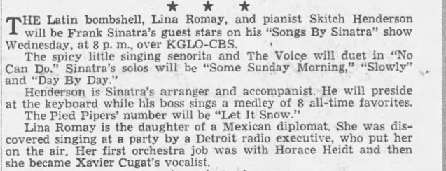
Songs By Sinatra
Network: CBS
Location: Hollywood
Show #18
Sponsor: Old Gold Cigarettes
January 9, 1949, Ambassador Hotel, Los Angeles, CA
The Los Angeles Jewish Community presented Frank Sinatra with the Judge Harry A. Hollzer Memorial Award for his racial and religious activities
Frank at Caesars in January 1980
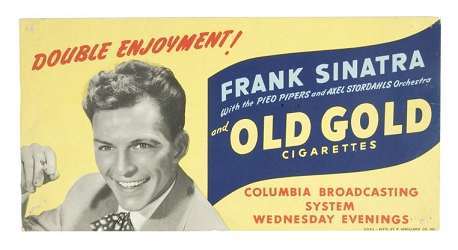
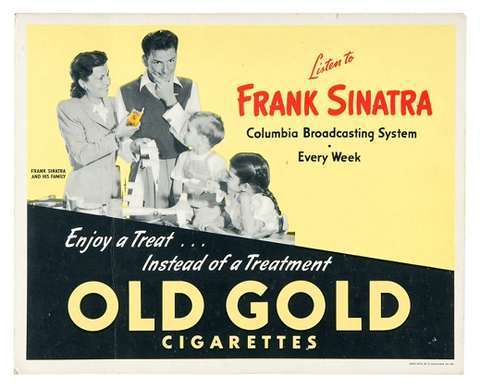
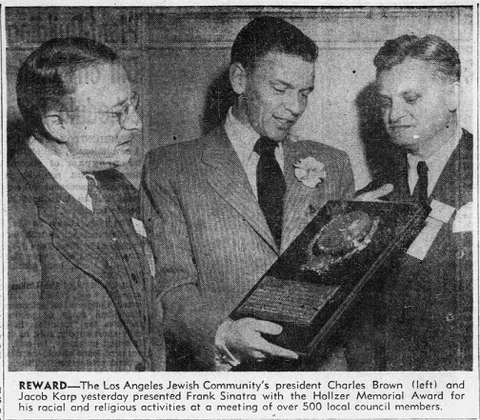
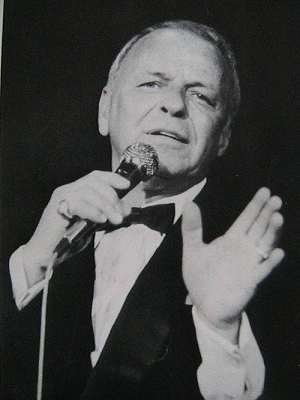
Songs By Sinatra
Network: CBS
Location: Hollywood
Show #18
Sponsor: Old Gold Cigarettes
LOS ANGELES - JANUARY 9: Pop singer Frank Sinatra poses for a portrait looking over his shoulder holding a script on January 9, 1946 in Los Angeles, California. On the pedestal is the sheet music for the tune 'Some Sunday Morning.'(Photo by Ray Whitten/Michael Ochs Archives/Getty Images)
-------------------------------------------------
January 9, 1949, Ambassador Hotel, Los Angeles, CA
The Los Angeles Jewish Community presented Frank Sinatra with the Judge Harry A. Hollzer Memorial Award for his racial and religious activities
----------------------------------------------------
January 9, 1966 Beverly Hills, CA
Friars Roast of Dean Martin
Frank Sinatra, Jack Benny, George Burns, Phil Silvers, Joey Bishop and others
---------------------------------------
Frank at Caesars in January 1980
-------------------------------------------------
© 1997-2026 The Sinatra Archive
This calendar, or any parts thereof, may not be reproduced in any fashion whatsoever without the prior written permission of the publisher (The Sinatra Archive)
[image referenced in source but could not be recovered]
[image referenced in source but could not be recovered]
[image referenced in source but could not be recovered]
[image referenced in source but could not be recovered]
[image referenced in source but could not be recovered]
[image referenced in source but could not be recovered]
[image referenced in source but could not be recovered]
[image referenced in source but could not be recovered]
[image referenced in source but could not be recovered]
[image referenced in source but could not be recovered]
[image referenced in source but could not be recovered]
January 10, 1946
Radio
Tribute To Al Jolson
1. Rock A Bye Your Baby With A Dixie Melody
NOTE: Sinatra Scholar Ed O'Brien reports that Sinatra does this song a la Al Jolson. A fun effort. There is a great picture of Sinatra backstage with Jolson.
Tribute To Al Jolson
Sinatra backstage with Jolson
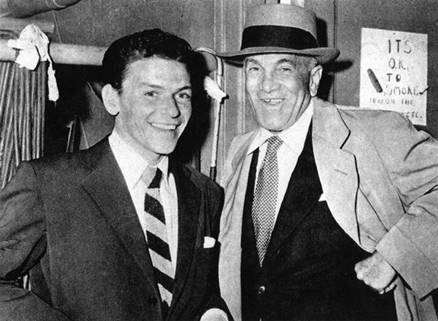
January 12, 1946
Radio
Command Performance #247
Host : Frank Sinatra
Guests: Gene Kelly, Joan Edwards,
Marie McDonald, Ray Sinatra,
The Sportsmen
Announcer : Ken Carpenter
Carpenter introduces Sinatra
"The Coffee Song" Frank Sinatra
Ray Sinatra joins Ken and Frank in a skit.
"Mountinque Suite" Ray Sinatra conducts
Frank introduces his old Hit Parade partner
"Go West Young Man, Go West " Joan Edwards and The Sportsmen Ken introduces Gene Kelly
Skit aboard "The Good Ship Errol Flynn"
Kelly and Sinatra as two sailors on leave
Marie McDonald joins skit
"Lost In The Stars" Frank Sinatra
Frank and Gene sign off
note: Known as the best radio series never heard.
All the performers plus writers, directors, etc. donated their time to creating some great shows.
It was never heard on the commercial airwaves.
Ed
Note the songs "The Coffee Song" & "Lost In The Stars" appear on the CD: The Unheard Frank Sinatra 2
Note: I knew something was wrong with the date November 10, 1946 for which this was previously listed. Command Performance #241 was broadcast by the AFRS on 12-1-46. I searched for the complete listing of the series. C.P. #247 was broadcast on 1-12-47.. On 11-10-46, #238 was aired with Bob Hope, Bela Lugosi and Superman. There is no mention of a C.P. in the radio listings of the New York Times or the Boston Globe.
--Ed
January 16, 1946
Radio
Songs By Sinatra
Network: CBS
Location: Hollywood
Show
Sponsor: Old Gold Cigarettes
Time: 9:00PM - 9:30PM (EST) Wednesday
Orchestra Conducted By: Axel Stordahl
Arrangements By: Axel Stordahl
Announcer: Marvin Miller
Writer: Glenn Wheaton
Directed By: Mann Holiner
Performers: The Pied Pipers
Guest: Andy Russell, Clark Dennis
CBS Broadcast:
1. opening theme: Night And Day
2. Aren't You Glad You're You
3. I'll Never Love Again Andy Russell
4. Come To Baby Do Pied Pipers
5. Oh What It Seemed To Be ( radio premier )
4. medley: Besame Mucho / Amor / I Cried For You / Magic Is The Moonlight
5. Where The Blue Of The Night Meets The Gold Of The Day - w/Andy Russell
6. All The Things You Are Clark Dennis
7. Bess, Oh Where's My Bess?
8.. closing theme: Put Your Dreams Away
Notes: The song "Bess Oh Where's My Bess" appears on the CD: The V-discs 2
(Columbia).
Confirmed airing on WABC.
Ed O'Brien: "My Romance" is from the dress rehearsal of the 1-23-46 show.
Skitch Henderson was
Frank's guest for the second week in a row. I asked Skitch if Frank sang some tunes with him with just piano at the Waldorf. Skitch assured me they had and often, he told me, they added something just before show.
January 23, 1946
Radio
Songs By Sinatra
Network: CBS
Location: Hollywood
Show #20
Sponsor: Old Gold Cigarettes
Time: 9:00PM - 9:30PM (EST) Wednesday
Orchestra Conducted By: Axel Stordahl
Arrangements By: Axel Stordahl
Announcer: Marvin Miller
Writer: Glenn Wheaton
Directed By: Mann Holiner
Performers: The Pied Pipers
Guest: Skitch Henderson, Teenage Tina
1. opening theme: Night And Day
2. You Must Have Been A Beautiful Baby
3. medley w/Pied Pipers: If I Loved You / It's Been A Long, Long Time /
Accentuate The Positive / Chickery Chick
4. Symphony
5. medley w/Skitch Henderson (piano): In The Gloamin’ / Who? / Dear Old
Girl, Dear Little Boy Of Mine / The Girl Of My Dreams / When You Wore A Tulip / Goin' Home
6. Begin The Beguine
7. closing theme: Put Your Dreams Away
Notes: Confirmed airing on WABC.
note: Janet Waldo played the role of Teenage Tina
note: After Frank sings "Symphony Of Love, " the Pipers do "Personality." Frank sang "Goin' Home" on his Vimms, Max Factor and a Guest Star. But the one here with Skitch is easily the best. After the song -- he sings all of it -- Marvin Miller tells him it is one of the loveliest things he ever heard on radio. I agree.
--Ed
January 24, 1946
Radio
Birds Eye Open House, Starring Dinah Shore
NBC & AFRS rebroadcast (Dinah Shore's Open House)
Time 8:30 - 9:00 p.m.
Sponsor: Birds Eye, Gaines Dog Food
Host: Dinah Shore
Performers: Frank Sinatra, Harry Von Zell, Robert Emmett Dolan and His
Orchestra
Sinatra Songs Arranged & Conducted by: Axel Stordahl
1. Tea For Two w/Dinah
2. Day By Day w/Dinah
Note: Confirmed airing on WEAF. "Tea For Two" appears on the
CD: The Live Duets 1943-57. TT: 30mins. Audio condition: Very good.
Complete.
Ed O'Brien added:
Frank sang "Day By Day" solo and then
Dinah did Berlin's "How Deep Is The Ocean,"
before they did the "Tea For Two" with a choral
backing. Frank also sang a bit of "Darling, I'm
Growing Older."
January 29, 1946
Radio
The Bob Hope Show
Network: NBC & AFRS rebroadcast program #131
Time: 10:00pm - 10:30pm
Sponsor: Pepsodent
Performers: Bob Hope, Frank Sinatra, Skinnay Ennis and His Orchestra, Frances Langford, Jerry Colonna, Mel Blanc.
1. Nancy
2 It Might As Well Be Spring (Parody)
Note: Confirmed aired on WEAF. The show appears on the officially released CD set: 60 Greaest Old Time Radio Show "Frank Sinatra & Friends"
Cast skit "The Life Story Of Frank Sinatra." 30mins Audio condition: Very good to excellent. Complete. LOC has NBC master.
Biltmore Hotel, Los Angeles, CA
Meeting of the Key Men of the United Jewish Welfare Fund Sinatra received a citation for his contribution to inter-racial and religious good-will
January 29, 1953, Sheraton Plaza, Boston, Mass
14th Annual Baseball Writers Banquet
Sinatra performed at the banquet
[image not recovered — source caption: “XX”]
[image referenced in source but could not be recovered]
[image referenced in source but could not be recovered]
[image referenced in source but could not be recovered]
January 30, 1946
Radio
Songs By Sinatra
Network: CBS
Location: Hollywood
Show #21
Sponsor: Old Gold Cigarettes
Time: 9:00PM - 9:30PM (EST) Wednesday
Orchestra Conducted By: Axel Stordahl
Arrangements By: Axel Stordahl
Announcer: Marvin Miller
Writer: Glenn Wheaton
Directed By: Mann Holiner
Performers: The Pied Pipers
Guest: Benny Goodman Sextet, Teenage Tina
CBS Broadcast:
1. opening theme: Night And Day
2. One More Dream - Frank Sinatra
3. Stompin' At The Savoy - Benny Goodman
4. What Can I Say Dear After I Say I'm Sorry - Benny Goodman
5. I Only Have Eyes For You w/The Benny Goodman Sextet
6. Waiting For The Train To Come In - The Pied Pipers
7. It Might As Well Be Spring - Frank Sinatra
8. comedy skit including parts of: Along The Navajo Trail / I'm Forever
Blowing Bubbles / I Wonder What's Become Of Sally / Lover Come Back To Me
9. Runnin' Wild - The Benny Goodman Sextet
10. Special Sinatra introduction in memory of Franklin D. Roosevelt
11. Home On The Range (Traditional)
12. closing theme: Put Your Dreams Away
Notes: Confirmed airing on WABC. AFRS version added "Along The Navajo Trail" December 19, 1945 & "Great Day" December 26, 1945 to the broadcast.
Ed O'Brien noted:
One of the best Old Gold Shows. Sinatra singing with the Benny Goodman Sextet and then a heartfelt tribute to FDR. When Frank visited the White House in the fall of 1944, he asked Roosevelt what kind of music he liked. FDR told him he was particularly fond of "Goin' Home" and "Home On The Range." The week after Roosevelt's death Frank paid a very emotional tribute to him and sang "Goin' Home" on his Max Factor show. In March of 46, he recorded what is probably the definitive version of "Home On The Range." It would remain a very rare recording for years.
March of Dimes All-Star Show
All Four Networks
10:15-11PM
Intro by President Harry Truman
Bob Hope, Dinah Shore, Frank Sinatra, Edgar Bergen & Charlie McCarthy, Jerry Colonna, Red Skelton, Cass Dailey, and others
March of Dimes All-Star Show
All Four Networks
10:15-11PM
Intro by President Harry Truman
Bob Hope, Dinah Shore, Frank Sinatra, Edgar Bergen & Charlie McCarthy, Jerry Colonna, Red Skelton, Cass Dailey, and others
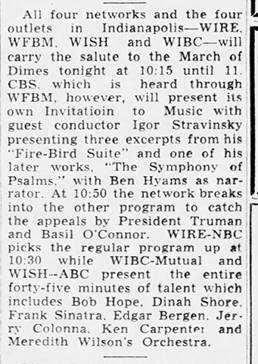
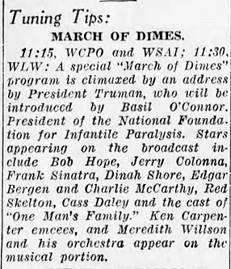
Songs By Sinatra
Network: CBS
Location: Hollywood
Show #21
Sponsor: Old Gold Cigarettes
Time: 9:00PM - 9:30PM (EST) Wednesday
Orchestra Conducted By: Axel Stordahl
Arrangements By: Axel Stordahl
Announcer: Marvin Miller
Writer: Glenn Wheaton
Directed By: Mann Holiner
Performers: The Pied Pipers
Guest: Benny Goodman Sextet, Teenage Tina
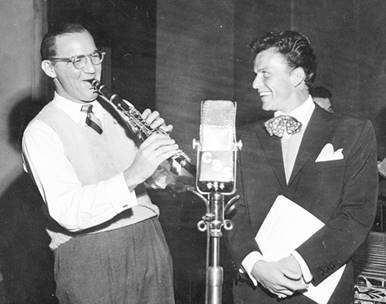
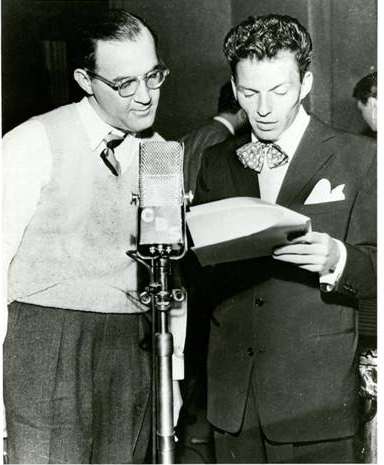
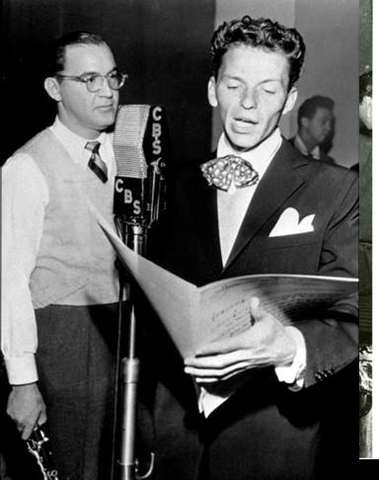
February 1946
[Sinatra brings Nancy a test pressing]
Kaplan: When Sinatra finally returned to the studio in early February 1946, he brought Nancy a test pressing of one of four newly recorded songs, the sentimental 'One Love,' as a peace offering.
Source: James Kaplan, "Frank: The Voice" (2010)
February 1, 1946
Radio
The Jimmy Durante Show
Netowork: CBS
Sponsor: Rexall
Jimmy Durante,
Performers: Garry Moore, Frank Sinatra, Roy Bargy and His Orchestra,
Announcer: Howard Petrie
Produced & Directed by: Phil Cohan
Notes: Jimmy messes up his lines and cracks up the cast. The story of
Columbus Durante is told. The cast meets Black Jack Sinatra, the pirate. The final 13:49 of the program only. Audio condition: Excellent. Incomplete.
The Jimmy Durante Show
Netowork: CBS
Sponsor: Rexall
Jimmy Durante,
Performers: Garry Moore, Frank Sinatra, Roy Bargy and His Orchestra,
Announcer: Howard Petrie
Produced & Directed by: Phil Cohan
note: "Aren't You Glad You're You" was not performed. The time shown was
for the CST broadcast.
Ed
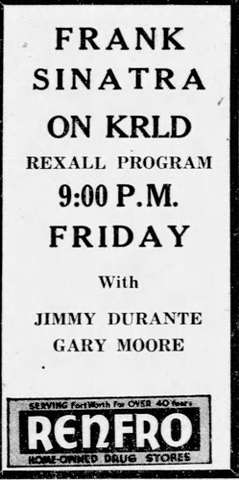
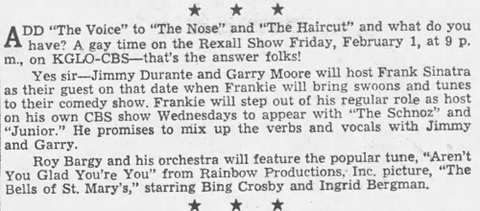
February 3, 1946
Studio
Hollywood
HCO1674 All Through The Day
(J. Kern/O. Hammerstein II)
(from Centennial Summer)
Williamson Music, Inc. (ASCAP) 1946
Arranged & Conducted by Axel Stordahl
-2 (3:01) CD: Columbia Years 43-52 Vol. 3
-2 LP: C6X 40343 The Voice-The Columbia Years, 43-52
-3 78: 36962 (alt. take)
HCO1675 One Love
(L. Robin/D. Rose)
E.H. Morris & Co. (ASCAP) 1946
Arranged & Conducted by Axel Stordahl
-1 (2:44) CD: Columbia Years 43-52 Vol. 3
LP: CL-2739
78: 37054
HCO1676 Two Hearts Are Better Than One
(J. Kern/O. Hammerstein II)
(from Centennial Summer)
T.B. Harms. Inc. (ASCAP) 1945
Arranged & Conducted by Axel Stordahl
-3 (2:49) CD: Columbia Years 43-52 Vol. 3
CD: 44236 Sinatra Rarities
78: 36962
HCO1677 How Cute Can You Be?
(B. Carey/C. Fischer)
Barton Music Corp. (ASCAP) 1946
Arranged & Conducted by Axel Stordahl
-1 (2:42) CD: Columbia Years 43-52 Vol. 3
LP: C2X-40897 Hello Young Lovers
LP: CL-606 Frankie
78: 37048
HCO1674 & HCO1675: Violins: W. Bloom, H. Blostein, S. Freed, Jr., G. Joyce, G. Kast, S. Kindler, M. King, S. Levine, S. Middleman, N. Pisani, E. Powers, M. Russell; Violas: A. Neiman, L. Selic, D. Sterkin; Cellos: F. Goerner, J. Sewell, J. Tannenbaum; Saxes: H. Beau, H. Haymer, J. Kinsler, H. Schuchman, A. Smith; Horns: R. Perissi; Harp: M. Cambern; Trombones: H. Bohannon, G. Jenkins, E. Smithers; Trumpets: M. Herman, R Linn, I. Parker; Piano: M. Mclntyre; Guitar: D. Barbour; Bass: P. Stephens; Drums. R. Hagan
HCO1676: Saxes: H. Beau, H. Haymer, J. Kinsler, H. Schuchman, A. Smith; Horns: R. Perissi; Trumpets: M. Herman, R. Linn, I. Parker; Trombones: H. Bohannon, G. Jenkins, E. Smithers; Piano: M. Mclntyre; Guitar: D. Barbour; Bass: P. Stephens; Drums: R. Hagan
HCO1677: Saxes: H. Beau, H. Haymer, H. Schuchman, A. Smith; Trumpets: R. Linn; Trombones: H. Bohannon; Piano: M. Mclntyre; Guitar: D. Barbour; Bass: P. Stephens; Drums: R. Hagan
NOTE: Sinatra Scholar Ed O'Brien exclaims what an obscure session this is! Four songs and they are not remembered today. But there is some real quality work here nevertheless. Worth a listen any time. Frank had some tonsils in February of 1946!
Sinatraphile Rich Rosenberg points out all four songs are well-remembered by Jonathan Schwartz. Rosenberg has heard Schwartz play a couple of them. I love "All Through the Day," he says. Listening to the young voice and the string arrangement transports you to another time,
Hollywood
HCO1674 All Through The Day
(J. Kern/O. Hammerstein II)
(from Centennial Summer)
Williamson Music, Inc. (ASCAP) 1946
Arranged & Conducted by Axel Stordahl
-2 (3:01) CD: Columbia Years 43-52 Vol. 3
-2 LP: C6X 40343 The Voice-The Columbia Years, 43-52
-3 78: 36962 (alt. take)
All through the day I dream about the night
I dream about the night here with you
All through the day I wish away the time
Until the time when I'm here with you
Down falls the sun, I run to meet you
The evening mist melts away
Down smiles the moon and soon your lips recall
The kiss I dreamed of all through the day
Down falls the sun, I run to meet you
The evening mist melts away
Down smiles the moon and soon your lips recall
The kiss I dreamed of all through the day
note: Frank loved this song. It was the last one Jerome Kern would compose. Frank sang it on four Old Gold shows, starting on February 27, 1946. The last effort would be on his tribute show to Kern, 1-15-47. Frank liked to share with his audience the deep affection he had for Kern's music and let them know it was the great man's swan song. Flip side was "Two Hearts Are Better Than One"
Ed
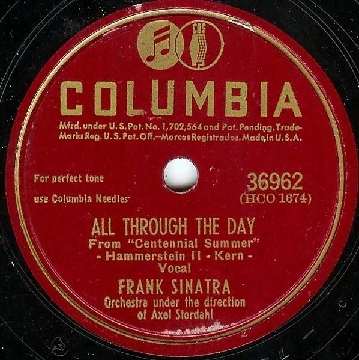
February 6, 1946
Radio
Songs By Sinatra
Network: CBS
Location: Hollywood
Show #22
Sponsor: Old Gold Cigarettes
Time: 9:00PM - 9:30PM (EST) Wednesday
Orchestra Conducted By: Axel Stordahl
Arrangements By: Axel Stordahl
Announcer: Marvin Miller
Writer: Glenn Wheaton
Directed By: Mann Holiner
Performers: The Pied Pipers
Guest: Bob Hope
CBS Broadcast:
1. opening theme: Night And Day
2. Don't Forget Tonight Tomorrow - Frank Sinatra & Pied Pipers
3. That Old Black Magic - Frank Sinatra
4. commercial 1
5. Doctor, Lawyer And Indian Chief - Pied Pipers
6. comedy - Bob Hope & Frank Sinatra
7. These Foolish Things (parody) - Frank Sinatra & Bob Hope
8. commercial 2
9. Tin Pan Alley "Race Track" Medley: Symphony /
I Can't Begin To Tell You / Let It Snow, Let It Snow,
Let It Snow / I'm Always Chasing Rainbow / It's Been
A Long Long Time / Bell Bottom Trousers - Frank Sinatra
10. Day By Day - Frank Sinatra
11. closing theme: Put Your Dreams "screams" Away - w/Bob Hope
Notes: Confirmed airing on WABC.
Ed O'Brien reports that there is a rehearsal tape of this radio show in circulation. It is great fun, he says. Bob Hope did not attend the rehearsal but Frank had a good time with the cast.
Songs By Sinatra
Network: CBS
Location: Hollywood
Show #22
Sponsor: Old Gold Cigarettes
Time: 9:00PM - 9:30PM (EST) Wednesday
Orchestra Conducted By: Axel Stordahl
Arrangements By: Axel Stordahl
Announcer: Marvin Miller
Writer: Glenn Wheaton
Directed By: Mann Holiner
Performers: The Pied Pipers
Guest: Bob Hope
[image referenced in source but could not be recovered]
[image referenced in source but could not be recovered]
[image referenced in source but could not be recovered]
[image referenced in source but could not be recovered]
[image referenced in source but could not be recovered]
February 11, 1946
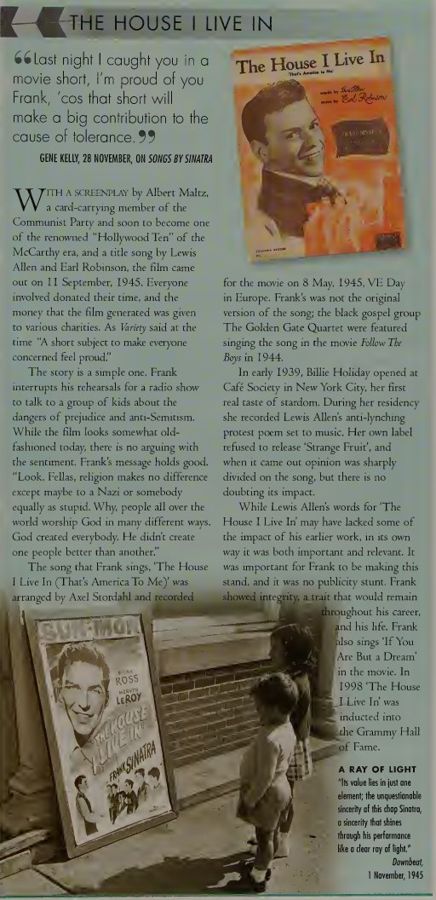
[Photograph: Sinatra honored during national Negro History Week. From Richard Havers, "Sinatra" (Dorling Kindersley, 2007), p.111.]
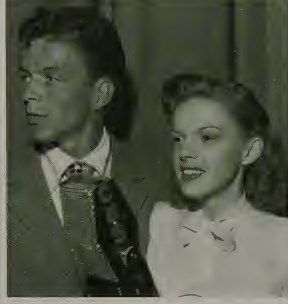
[Photograph: Sinatra honored during national Negro History Week. From Richard Havers, "Sinatra" (Dorling Kindersley, 2007), p.110.]
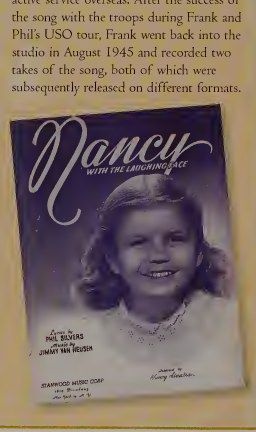
[Photograph: Sinatra honored during national Negro History Week. From Richard Havers, "Sinatra" (Dorling Kindersley, 2007), p.110.]
Following a nationwide poll, Frank was one of six white and twelve Black honorees recognized for contributions to national unity during Negro History Week. (Source: Richard Havers, "Sinatra" (Dorling Kindersley, 2007).)
February 12, 1946
Radio
Jubilee #172
Host: Ernie 'Bubbles' Whitman
Announcer: Hugh Brundage
Taped at NBC, in Hollywood, February 1946
The Jimmy Mundy All Stars Orchestra
King Cole Trio, Lena Horne, Frank Sinatra, Earl Robinson
1. One O'Clock Jump Jimmy Mundy Orchestra
2. Everything But You Jimmy Mundy Orchestra
3. Lover Man Lena Horne
4. Frim Fram Sauce The King Cole Trio
5. How Cute Can You Be? Frank Sinatra
6. The Four Rivers Lena Horne
7. The House I Live In Frank Sinatra with Earl Robinson on guitar
8. One O'Clock Rhythm Jimmy Mundy Orchestra
Date is uncertain. AFRS might have broadcast on 2-12 or 2-22- 46
NOTE: Ed O'Brien calls this "a moment to remember." Frank's only accompaniment on "House I Live In" was Earl Robinson on guitar. He sang it hundreds of times, but only this one time with the song's composer.
Jubilee #172
Host: Ernie 'Bubbles' Whitman
Announcer: Hugh Brundage
Taped at NBC, in Hollywood, February 1946
The Jimmy Mundy All Stars Orchestra
King Cole Trio, Lena Horne, Frank Sinatra, Earl Robinson
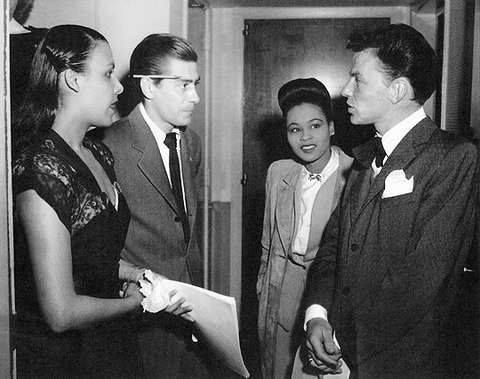
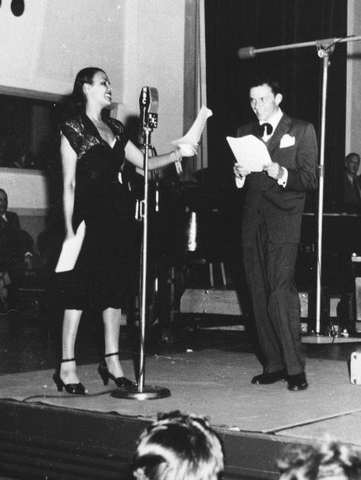
February 13, 1946
Radio
Songs By Sinatra
Network: CBS
Location: Hollywood
Show #23
Sponsor: Old Gold Cigarettes
Time: 9:00PM - 9:30PM (EST) Wednesday
Orchestra Conducted By: Axel Stordahl
Arrangements By: Axel Stordahl
Announcer: Marvin Miller
Writer: Glenn Wheaton
Directed By: Mann Holiner
Performers: The Pied Pipers
Guest: Jack Carson, June Hutton
Dress Rehearsal:
1. Somebody Loves Me - w/Pied Pipers
2. Oh! What It Seemed To Be
3. Little Brown Jug
4. Don't Bring Crosby (parody) - w/Jack Carson
5. You're Getting To Be A Habit With Me - w/June Hutton
6. The Song Is You
7. Put Your Dreams Away
CBS Broadcast:
1. Somebody Loves Me - w/Pied Pipers
2. Oh! What It Seemed To Be*
3. Easy Street Pied Pipers
4. Little Brown Jug (20 second parody) w/Jack Carson
5. Don't Bring Lulu (parody aimed at Crosby, runs one minute) - w/Jack Carson
6. The Song Is You
7. Put Your Dreams Away
* Sinatra would sing the song nine times on the Old Gold show and it would be a #1 hit for him
Notes: Confirmed airing on WABC. AFRS version added "Just One Of Those Things" from the November 7, 1945 broadcast.
Jack Carson Show
Network: CBS & AFRS (rebroadcast)
Show: #58
Host: Jack Carson
Guests: Frank Sinatra, Arthur Treacher, Diana Barrymore, Norma Jean Nilsson, Dave Willock, The Martin Men, Frank Sinatra, Randy Stewart
Freddy Martin and His Orchestra,
Announcers: Del Sharbutt, Howard Duff (AFRS)
1. Onesie, Twosie (I Love Youzy) w/Jack & Norma Jean
2. Brahm's Lallaby
Note: The show appears on the officially released CD set: 60 Greatest Old Time Radio Shows "Frank Sinatra & Friends." Sinatra sings the above songs + comedy. TT: 30mins. Audio condition: Very good. Complete.
February 16, 1946
Radio
Brotherhood Week
The National Conference Of Christians and Jews
Network: Syndication
Narrator: Joseph Cotten
Performers: Ralph Bellamy, Frank Sinatra,
Announcer: Berry Kroeger
Writers: Sylvia Berger
Music: Alexander Semmler
1. "On A Note Of Triumph" (Norman Corwin) - read by Ralph Bellamy
2. The House I Live In - Frank Sinatra
Notes: TT:15mins. Audio condition: Excellent. Complete.
February 19, 1946
British concert promoter Harold Fielding announced he had abandoned plans to bring Frank to London, after adverse UK press criticized spending dollars on American entertainers while post-war shortages restricted food imports. (Source: Richard Havers, "Sinatra" (Dorling Kindersley, 2007).)
February 20, 1946
Radio
Songs By Sinatra
Network: CBS
Location: Palm Springs, California
Show #24
Sponsor: Old Gold Cigarettes
Time: 9:00PM - 9:30PM (EST) Wednesday
Orchestra Conducted By: Axel Stordahl
Arrangements By: Axel Stordahl
Announcer: Marvin Miller
Writer: Glenn Wheaton
Directed By: Mann Holiner
Performers: The Pied Pipers
Guest: Gov. Jim Davis of Louisiana
CBS Broadcast:
1. opening theme: Night And Day
2. Aren't You Glad You're You
3. Full Moon And Empty Arms
4. Personality Pied Pipers
5. New Moon Over My Shoulder Gov. Davis
6. You Are My Sunshine w Gov. Davis
7. All The Things You Are w/Pied Pipers
8. closing theme: Put Your Dreams Away (complete)
Notes: Confirmed airing on WABC.
Ed O'Brien
The show originated from Palm Springs, California.
Frank's guest was the governor of Louisana, Jimmy Davis. The governor was also something of a songwriter. Frank and The Gov did a duet on "You Are My Sunshine." Davis claimed until his dying days that he wrote the song. Although his name was on the sheet music, it appears that he bought it from another songwriter.
Frank credits him with being the composer and they do a very nice job. In 1977, it was named the official song of Louisana and in 2003 was voted the 77th greatest C&W song of all time. I do believe Davis' appearance was the only time Frank had a sitting governor as a guest on his show.
Ed also later noted:
Sinatra's Old Gold Shows were sent by CBS to the Armed Forces Radio Service, so our soldiers stationed throughout the world could enjoy them. The show would add a few numbers in lieu of the commercials. Usually these extras were either done during the dress rehearsal or were taken from previous broadcasts.During the rehearsal for the 2-13-46 show Sinatra blows the lyric on "Oh What It Seemed To Be." He laughs and says, "Well that's one on me. The army doesn't get that kid."
The 2-20-46 AFRS show was significantly different from the commercial broadcast. Gov Davis was dropped and tunes were added from previous shows plus Frank did additional numbers during the rehearsal.:Why the governor wasn't ready for military duty is something I can't answer.
Here are the songs from the AFRS show:
Night And Day ( brief segment)
Aren't You Glad You're You
Dearest Darling (1-2-46)
Medley of songs with Skitch Henderson (1-23-46)
Full Moon And Empty Arms
The House I Live In
It Might As Well Be Spring
Lilly Belle w/The Pied Pipers
All The Things You Are w/Pied Pipers
Put Your Dreams Away (segment)
Songs By Sinatra
Network: CBS
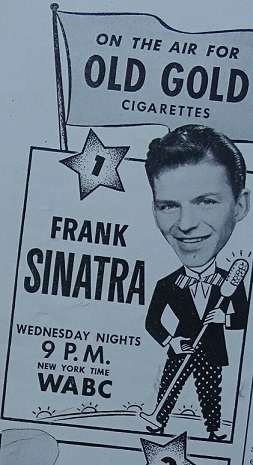
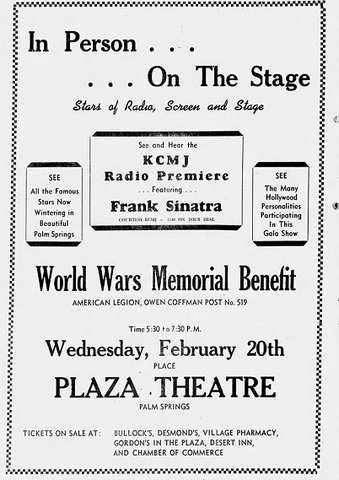
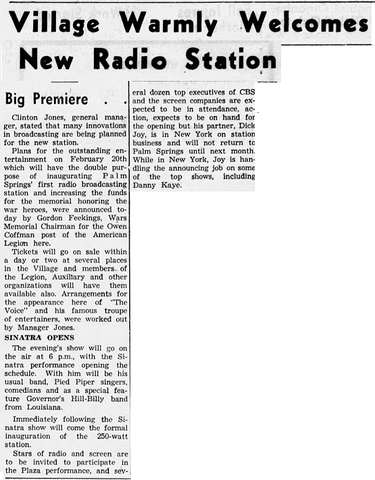
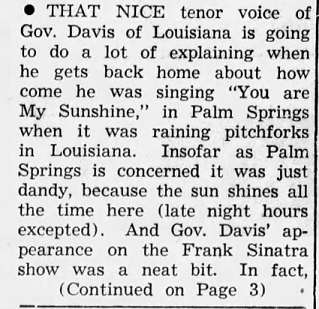
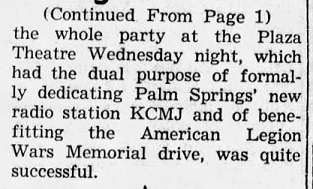
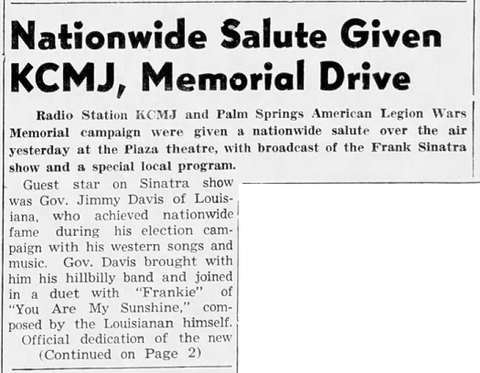
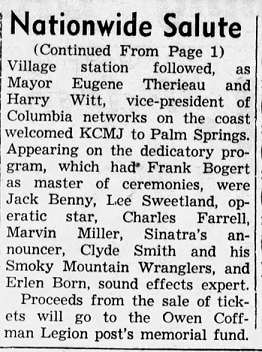
February 23, 1946
Radio
Radio: Sinatra appeared as a guest on The Jack Carson Show this date, performing "Onesy Twosy" with Jack Carson and Norma Jean Nilsson and singing "Brahms' Lullaby." Source: sinatradiscography.com, Radio Transcriptions Database.
February 24, 1946
Philharmonic Auditorium, Los Angeles
Sinatra spoke about tolerance and sang “The House I Live In”
-------------------------------------------------
February 24, 1948, Ambassador Hotel, Los Angeles
Tribute Dinner for Judge Robert P. Patterson, former Secretary of War Frank Sinatra, George Murphy, Jules Munshin, Virginia O’Brien, Lena Horne and others
[image referenced in source but could not be recovered]
[image referenced in source but could not be recovered]
Hollywood
HCO1733 From This Day Forward
(L. Harline/M. Greene)
(from From This Day Forward)
Barton Music Corp. (ASCAP) 1946
Arranged & Conducted by Axel Stordahl
-1 (3:02) CD: Columbia Years 43-52 Vol. 4
78: 36987
HCO1734 Where Is My Bess?
(G. & I. Gershwin/D. Heyward)
(from Porgy & Bess)
Gershwin Music Pub. Co. (ASCAP) 1935
Arranged & Conducted by Axel Stordahl
-1 (2:55) CD: Columbia Years 43-52 Vol. 4
LP: C6X 40343 The Voice- The Columbia Years, 43-52
LP: CL-1297 The Broadway Kick
78: 37064
HCO1735 Begin The Beguine
(C. Porter)
(from Jubilee)
T.B. Harms, Inc. (ASCAP) 1935
Arranged & Conducted by Axel Stordahl
-1 (2:55) CD: Columbia Years 43-52 Vol. 4
LP: C2L6 Frank Sinatra Story In Music
78: 37064
Bull market is in reference to the film bio "Night and Day" Lots of wonderful
music and Cary Grant as Porter. Ridiculous storyline.
HCO1736 Something Old, Something New
(R. Idriss/G. Tibbles)
Barton Music Corp. (ASCAP) 1946
Arranged & Conducted by Axel Stordahl
-1 (2:52) CD: Columbia Years 43-52 Vol. 4
LP: CL-2739 The Essential Frank Sinatra, Vol. 1
78: 36987
Violins: W. Bloom, H. Blostein, S. Freed, Jr., G. Joyce, G. Kast, M. King, S. Kindler, S. Levine, S. Middleman, N. Pisani, M. Russell, O. Vail; Violas: A. Neiman, L. Selic, D. Sterkin; Cellos: F. Goerner, J.. Sewell, J. Tannenbaum; Saxes: H. Beau, H. Haymer, J. Kinsler, H. Schuchman, A. Smith; Horns: R. Perissi; Trumpets: M. Herman, E. Klein, R. Linn; Trombones: H. Bohannon, G. Jenkins, E. Smithers; Piano: M. Mclntyre; Guitar: G.. Van Eps; Bass: P. Stephens; Drums: R. Hagan; Harp: M. Cambern
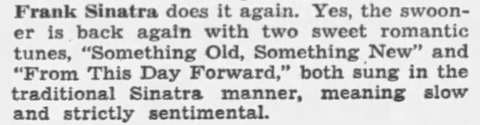
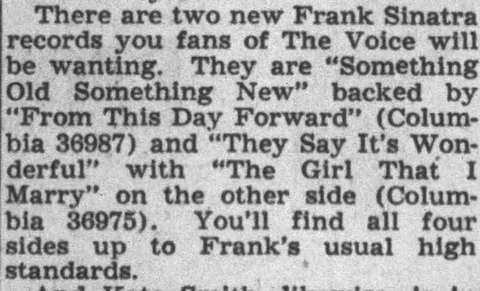
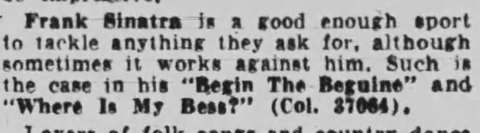
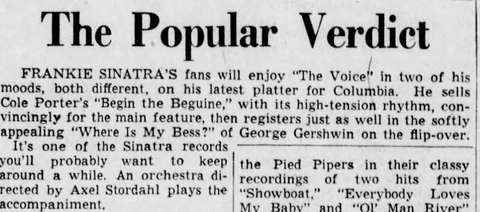
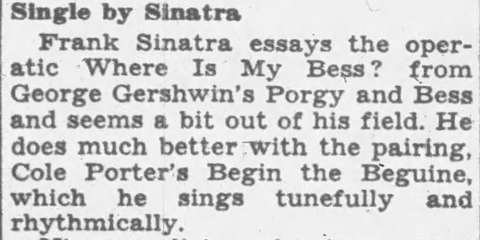

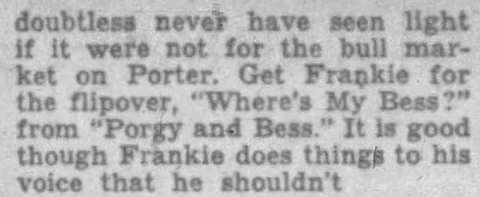
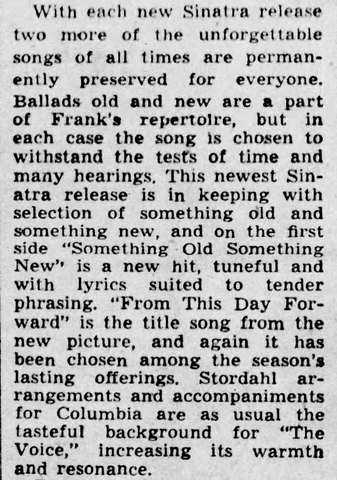
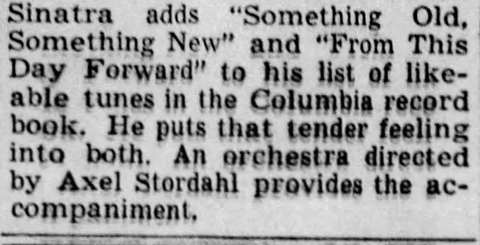
February 27, 1946
Radio
Songs By Sinatra
Network: CBS
Location: Hollywood
Show #25
Sponsor: Old Gold Cigarettes
Time: 9:00PM - 9:30PM (EST) Wednesday
Orchestra Conducted By: Axel Stordahl
Arrangements By: Axel Stordahl
Announcer: Marvin Miller
Writer: Glenn Wheaton
Directed By: Mann Holiner
Performers: The Pied Pipers
Guest: Jimmy Durante
CBS Broadcast:
1. opening theme: Night And Day
2. Sweet Lorraine w/Pied Pipers
3. All Through The Day last song written by Jerome Kern
4. Should I - The Pied Pipers
5. The Strutaway - Jimmy Durante
6. Umbriago Frank and Jimmy
7. Who Will Be With You When I'm Far Away (comedy) w/Jimmy Durante
8. Day By Day
9. closing theme: Put Your Dreams Away Jimmy Durante
10. Put Your Dreams Away Frank Sinatra
Notes: Confirmed airing on WABC. AFRS version added "I Fall In Love Too Easily" from the September 19, 1945 broadcast..
Concerts
Canoga Park High School, Los Angeles, Ca
Frank Sinatra, Bob Hope, Frances Langford, Jerry Colona, and others Sinatra sang 3 songs:
“Aren’t You Glad You’re You”
“Oh, What It Seemed To Be”
“The House I Live In”
Canoga Park High School, Los Angeles, Ca
Frank Sinatra, Bob Hope, Frances Langford, Jerry Colona, and others Sinatra sang 3 songs:
“Aren’t You Glad You’re You”
“Oh, What It Seemed To Be”
“The House I Live In”
Feb 27, 1946 - HOLLYWOOD LEGENDS BOB HOPE AND FRANK SINATRA VISITED CANOGA. "Lending their talents to the betterment of racial and religious understanding, the Hollywood Caravan, headed by Frank Sinatra and Bob Hope, made Canoga Park High School Auditorium the scene of the first high school gathering on tolerance in the Valley schools..." (Hunters' Call, 3-8-1946) The show was a reward for Canoga's award winning efforts selling Bonds and collecting scrap material during WW2. Frank Sinatra sang, "Aren't You Glad You're You."
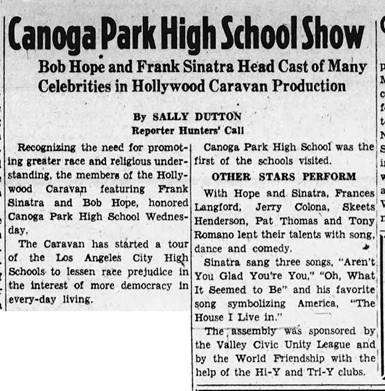
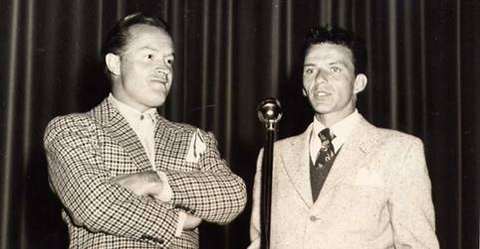
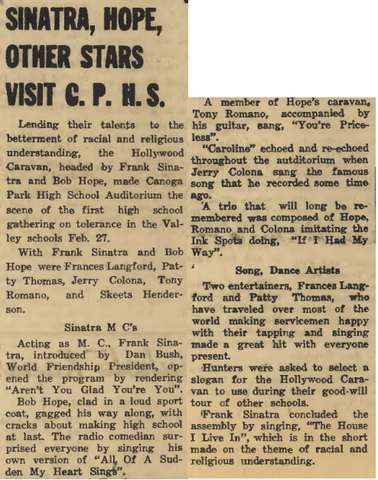
March 1946
[Filming begins on It Happened in Brooklyn]
Kaplan: Principal photography began on the MGM back lot in March 1946 for the musical It Happened in Brooklyn, starring Sinatra as war veteran Danny Miller alongside Jimmy Durante, Kathryn Grayson, and Peter Lawford.
Source: James Kaplan, "Frank: The Voice" (2010)
[Sinatra's cross-country concert tour begins]
Kaplan: At the end of March 1946, Sinatra launched a cross-country concert tour playing San Francisco, Philadelphia, Detroit, New York, and Chicago through June, with a planned return to the Hollywood Bowl in August.
Source: James Kaplan, "Frank: The Voice" (2010)
[The Voice hits number one]
Kaplan: Just over two weeks after its March 4, 1946 release, The Voice entered Billboard's Top 5 and went on to hold the number-one spot for seven weeks.
Source: James Kaplan, "Frank: The Voice" (2010)
[album history -- critical commentary]
The Voice of Frank Sinatra, released in March 1946, was Sinatra's first true concept album -- a thematically unified program of songs recorded expressly for it, rather than a haphazard collection of prior singles, marking the birth of his 'concept album' approach.
Source: Charles L. Granata, "Sessions with Sinatra: Frank Sinatra and the Art of Recording" (1999/2003), Part II: The Columbia Years, 1943-1952
March 4, 1946
[The Voice of Frank Sinatra released]
The Voice of Frank Sinatra, Sinatra's first album and the first thematic popular-music album, was released March 4, 1946, priced at $2.50, featuring songs including 'You Go to My Head,' 'Someone to Watch over Me,' and 'These Foolish Things.'
Source: James Kaplan, "Frank: The Voice" (2010).
Frank released his 78 rpm album "The Voice," part of what became his busiest year yet in the recording studio, logging 57 songs during this period including "That Old Black Magic" and "Begin the Beguine."
Source: Nancy Sinatra, Frank Sinatra: An American Legend, 1995.
March 6, 1946
Radio
Songs By Sinatra
Network: CBS
Location: Hollywood
Show #26
Sponsor: Old Gold Cigarettes
Time: 9:00PM - 9:30PM (EST) Wednesday
Orchestra Conducted By: Axel Stordahl
Arrangements By: Axel Stordahl
Announcer: Marvin Miller
Writer: Glenn Wheaton
Directed By: Mann Holiner
Performers: The Pied Pipers
Guest: Skinny Ennis, Carlos Ramirez, Bob Crosby
Network: CBS
Location: Hollywood
Show #26
Sponsor: Old Gold Cigarettes
Time: 9:00PM - 9:30PM (EST) Wednesday
Orchestra Conducted By: Axel Stordahl
Arrangements By: Axel Stordahl
Announcer: Marvin Miller
Writer: Glenn Wheaton
Directed By: Mann Holiner
Performers: The Pied Pipers
Guest: Skinny Ennis, Carlos Ramirez, Bob Crosby (needs checked)
CBS Broadcast:
1. opening theme: Night And Day
2. Gimme A Little Kiss
3. You Won't Be Satisfied Pied Pipers\
4. Medley: Embraceable You/Miserere/San Antonio Rose/Brahms Lullaby
5. Remember Me Skinny Ennis
6. Whispering w/Skinny Ennis
7. Maria Lao Carlos Ramirez
8. Figaro - w/Carlos Ramirez
9. I'm Always Chasing Rainbows
10. closing theme: Put Your Dreams Away
Notes: Confirmed airing on WABC. AFRS added "Full Moon And Empty Arms" from the February 20, 1946 broadcast.
Crosby is on the show to plug his new series on CBS.
The Crosby broadcast immediately followed Sinatra. Frank tells him he'll be over in a little while. I take that to mean he made an appearance on Crosby's first show. Strangely enough, the show is not listed at 9:30 that night. Ann Sothern's "Maisie" was in that spot. Or was it? The following week Crosby was on right after Sinatra. But it is not listed as a new show. I think it is a safe bet to assume the 3-6 broadcast did take place.
Ed
Note: did some more hunting on this one. Crosby's show was broadcast on 3-6-46 at 9:30.
Ed
The Bob Crosby Show
Sponsored by Ford-Mercury-Lincoln
Guests: Frances Langford and Frank Sinatra
Sinatra does a walk-on bit about Old Gold and Crosby’s sponsor Ford-Mercury-Lincoln. Sinatra mentions Crosby being on his show and told him he’d be right over.
I recently acquired this program and can verify Sinatra’s appearance. In one sketch, Bob Crosby and Frances Langford are in a restaurant and Crosby spots Sinatra. Sinatra says to Crosby “told you I’d be over Bob.” Crosby says he used to sell Old Gold as well. Sinatra then gives a pack of Old Gold to Crosby and then expects a Lincoln in return. The whole exchange runs less than a minute.
Also at the beginning of the show there is a squeal from the audience and Bob Crosby says “Don’t be alarmed friends, just a couple of squeals left over from Frankie” --Scott
The Bob Crosby Show
Sponsored by Ford-Mercury-Lincoln
Guests: Frances Langford and Frank Sinatra
Sinatra does a walk-on bit about Old Gold and Crosby's sponsor Ford-Mercury-Lincoln. Sinatra mentions Crosby being on his show and told him he'd be right over.
I recently acquired this program and can verify Sinatra's appearance. In one sketch, Bob Crosby and Frances Langford are in a restaurant and Crosby spots Sinatra. Sinatra says to Crosby "told you I'd be over Bob." Crosby says he used to sell Old Gold as well. Sinatra then gives a pack of Old Gold to Crosby and then expects a Lincoln in return. The whole exchange runs less than a minute.
Also at the beginning of the show there is a squeal from the audience and Bob Crosby says "Don't be alarmed friends, just a couple of squeals left over from Frankie"
--Scott
LA Times columnist Edwin Schallert announced Frank would star in a new Arthur Freed romantic comedy for MGM titled Jumbo. The project never actually happened. (Source: Richard Havers, "Sinatra" (Dorling Kindersley, 2007).)
March 7, 1946
Radio
Academy Awards Show
1. Accentuate The Positive
2. Anywhere
3. The House I Live In
4. I Fall In Love Too Easily
5. So In Love
Note: The 1945 Acabemy Award show was broadcast over ABC-Radio from
Grauman's Chinese Theatre in Hollywood. On the east coast the show came on at 12:30 A.M. and ran for more than 80 minutes.. It was a sustaining broadcast Bob Hope was the master of ceremonies. Sinatra, Mervyn LeRoy and Frank Ross were awarded special Oscars for their work on "The House I Live In." Frank was the only one to go up on stage and accept the Oscar. All the participants including RKO Pictures donated their services for the 10 minute short. RKO distributed the film to the theaters at no charge. Frank only sang nominated songs at the 1946 and 1969 ceremonies.
There were 14 songs nominated from the 1945 films.They were all done in one segment of the show. Dinah Shore, Dick Haymes, Kathryn Grayson and Sinatra took turns singing the tunes. "It Might As Well Be Spring"was awarded the Oscar. Frank was scheduled to sing Irving Berlin's "You Keep Coming Back Like A Song" at the 1946 Oscars, broadcast on 3-13-47 in Los Angeles, at the Shrine Auditorium.. Crosby canceled at the last moment and Frank followed suit. Bing was also a no-show -- at the last minute - on the 3-7-46 ceremony.
George Murphy presented the Oscar to Frank. He made a few brief remarks and then sang the title track from the film. An absolutely wonderful rendition .
--Ed
Academy Awards Show
1. Accentuate The Positive
2. Anywhere
3. The House I Live In
4. I Fall In Love Too Easily
5. So In Love
Frank was backed by a 46 piece orchestra and
Johnny Green conducting..
AP reporter wrote that Frank " brought down
the house" singing "The House I Live In."
Ed
George
Murphy
Peggy Ann
Garner
Frank Sinatra
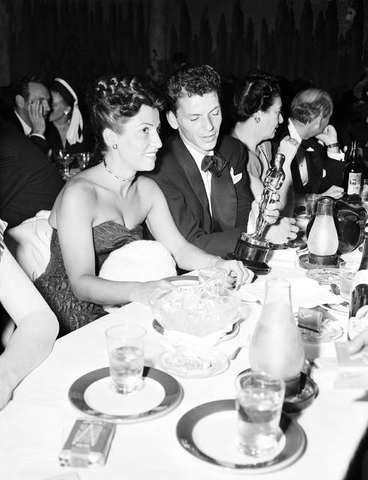
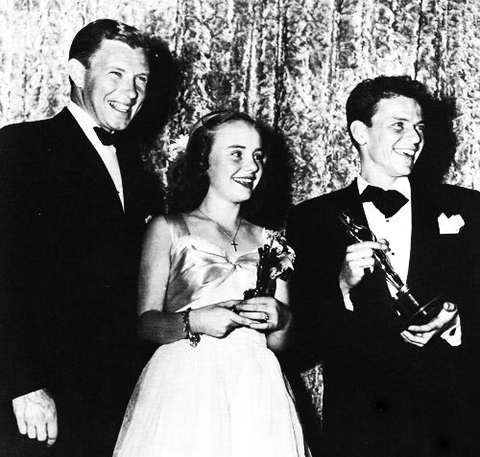
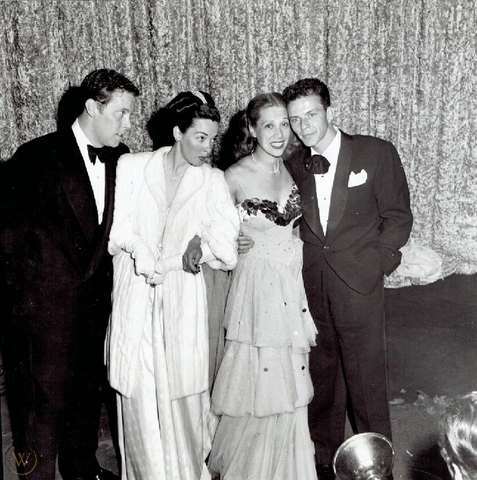
Original Photo posing for photos on the red carpet at Academy Awards are performers (From left to right) Dick Haymes, Kathryn Grayson, Dinah Shore ; Frank Sinatra.
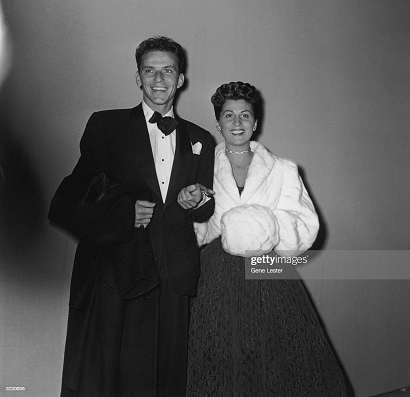
"The House I Live In"
George Murphy (quoted) / Santopietro: The short earned Sinatra a special Academy Award at the March 7, 1946 ceremony, shared with producers Mervyn LeRoy and Frank Ross. Presenter George Murphy gave an oddly framed introduction ("A lot of people were talking about 'Who owns Sinatra'... 139,000,000 [Americans] own Sinatra"), which Santopietro finds strange given contemporaneous rumors of Sinatra's organized-crime ties.
Source: Tom Santopietro, "Sinatra in Hollywood" (2008).
[Sinatra receives honorary Oscar]
Three days after The Voice's release, Sinatra attended the Academy Awards at Grauman's Chinese Theatre with producer Frank Ross and director Mervyn LeRoy to receive their special Oscars for The House I Live In; Nancy accompanied him, and a photo afterward at Ciro's shows the couple looking intimate yet oddly distant.
Source: James Kaplan, "Frank: The Voice" (2010).
[Wire story on Sinatra fan's marriage scandal]
United Press reported that a forty-five-year-old construction executive named Sven Ingildsen filed a cross-complaint against his twenty-year-old wife Josephine, alleging that the day after their wedding she insisted on visiting Sinatra alone at his show and his Waldorf-Astoria apartment, not returning home until 5 a.m.
Source: James Kaplan, "Frank: The Voice" (2010).
March 8, 1946
Concerts
Van Nuys High School, Van Nuys, CA
A variety program promoting racial tolerance
Frank Sinatra, Bob Hope, Jack Benny, Lena Horne, Jerry Colona, and others
Van Nuys High School, Van Nuys, Ca
Frank Sinatra, Bob Hope, Jack Benny, Lena Horne, Jerry Colona, and others
March 8, 1949 Red Cross Drive, Palm Springs, CA
Yes,,
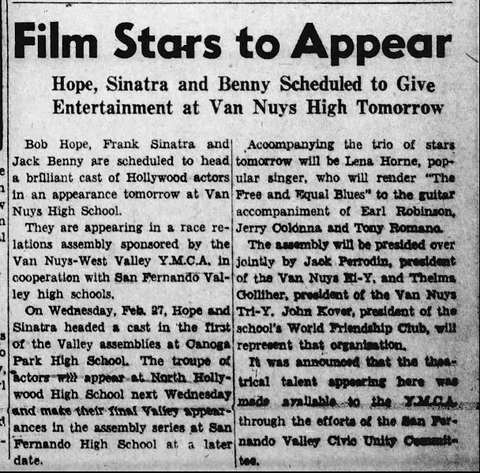
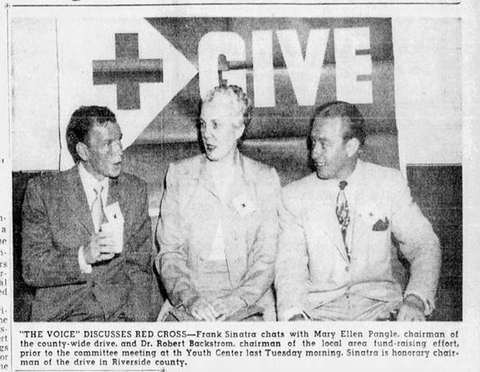
March 10, 1946
Studio
Hollywood
HCO1748 They Say It's Wonderful
(I. Berlin)
(from Annie Get Your Gun)
Berlin Music, Inc. (ASCAP) 1946
Arranged & Conducted by Axel Stordahl
-1 (3:05) CD: Columbia Years 43-52 Vol. 4
LP: C6X 40343 The Voice- The Columbia Years, 43-52
LP: CL-1297 The Broadway Kick (alt take)
78: 36975
HCO1749 That Old Black Magic
(H.. Arlen/J. Mercer)
(from Star Spangled Rhythm)
Famous Music Corp. (ASCAP) 1942
Arranged & Conducted by Axel Stordahl
-1 (2:32) CD: Columbia Years 43-52 Vol. 4
LP: C2X 40897 Hello Young Lovers
LP: CL-743 The Voice
78: 37257
HCO1750 The Girl That I Marry
(I. Berlin )
(from Annie Get Your Gun)
Berlin Music, Inc. (ASCAP) 1946
Arranged & Conducted by Axel Stordahl
-1 (3:02) CD: Columbia Years 43-52 Vol. 4
CD: 09274 Greatest Hits-The Early Years, Vol. 1
CD: 44236 Sinatra Rarities
LP: CL-2474 Greatest Hits, The Early Years, Vol. 1
78: 50053
78: 36975
HCO1751 I Fall In Love With You Everyday
(S. Stept)
Stept, Inc. (ASCAP) 1946
Arranged & Conducted by Axel Stordahl
-1 (2:43) CD: Columbia Years 43-52 Vol. 4
LP: C2X 40897 Hello Young Lovers
78: 39493
HCO1752 How Deep Is The Ocean (How High Is The Sky)
(I Berlin )
Berlin Music, Inc. (ASCAP) 1932
Arranged & Conducted by Axel Stordahl
-1 (2:57) CD: Columbia Years 43-52 Vol. 4
LP: C6X 40343 The Voice-The Columbia Years, 43-52
LP: C2L-6 Frank Sinatra Story In Music
78: 37257
HCO1753 Home On The Range
(B. Higley/D. Kelly)
Public Domain
Arranged & Conducted by Axel Stordahl
-1 (3:11) CD: Columbia Years 43-52 Vol. 4
78: DC385 ( England )
HCO1754 The Song Is You
(J. Kern/O. Hammerstein II)
(from Music In The Air)
T. B. Harms, Inc. (ASCAP) 1932
(3:30) CD: Columbia Years 43-52 Vol. 4
Violins: W. Bloom, H. Blostein, S. Freed, Jr., G. Joyce, S. Kindler, S. Middleman, N. Pisani, E. Powers, O. Vail; Violas: A. Neiman, L. Selic, D. Sterkin; Cellos: F. Goerner, J. Sewell, J. Tannenbaum; Saxes: H. Beau, H. Haymer, J. Kinsler, H. Schuchman, A. Smith; Trumpets: M. Herman, R. Linn, R. Zarchy; Trombones: H. Bohannon, G. Jenkins, E. Smithers; Piano: M. Mclntyre; Guitar: D. Barbour; Bass: P. Stephens; Drums: R. Hagan; Harp: M. Cambern
Note: What a session! Three of the seven songs were written by Irving Berlin - two from his smash Broadway musical "Annie Get Your Gun." Then add an Arlen/Mercer and a Kern/Hammerstein II. Frank did "Home On The Range" as a tribute to FDR. Would not be available in this country until the 1970s. All of these songs would be sung on the radio by Frank and five would be sung in concert. Session ran for five and a half hours.
--Ed
March 13, 1946
Radio
Songs By Sinatra
Network: CBS
Location: Hollywood
Show #27
Sponsor: Old Gold Cigarettes
Time: 9:00PM - 9:30PM (EST) Wednesday
Orchestra Conducted By: Axel Stordahl
Arrangements By: Axel Stordahl
Announcer: Marvin Miller
Writer: Glenn Wheaton
Directed By: Mann Holiner
Performers: The Pied Pipers
Guest: Mervin LeRoy, Frank Ross, King Cole Trio
Dress Rehearsal:
1. Some Sunday Morning
2. Light A Lucky
3. The House I Live In
4. A Little Bit Of Heaven
5. Put Your Dreams Away
CBS Broadcast:
1. opening theme - Night And Day
2. Some Sunday Morning - Frank Sinatra
3. What A Deal - The Pied Pipers
4. Old Gold jingle sung by Sinatra
5. Shamrock Song "A Little Bit of Heaven" - Frank Sinatra
6. intro to Nat Kiing Cole
7. Route 66 - Nat King Cole Trio first radio performance - not yet recorded
8. Exactly Like You - Frank Sinatra & King Cole Trio
9. commercial 2
10. Mervyn Leroy & Frank Sinatra
11. scene from "The House I Live In"
12. The House I Live In - Frank Sinatra
13. closing theme - Put Your Dreams Away ( complete version )
Notes: Confirmed airing on WABC. TT: 30mins. Sound Condition: Excellent. Complete. AFRS version added "I Found A New Baby" November 28, 1945 & "Somebody Loves Me" February 13, 1946 to the broadcast.
note: rehearsal of this show is in circulation among collectors.
The guests do not appear during rehearsal. People in-
volved with Frank's radio shows, back then, described
a production that was often chaotic.
Ed
March 18, 1946
Studio
MGM - Hollywood
TILL THE CLOUDS ROLL BY
Orchestra conducted by Lennie Hayton
Arrangement by Kay Thompson
"Ol' Man River" w/chorus
Take 5 (2:55) and take 8(2:57) were mastered
Ed O'Brien notes:
A Sinatra song that is both famous and infamous.
It has been called ludicrous and wildly inappropriate.
The white suit, the huge orchestra, the pedestal.
New York Times has dubbed it Sinatra's worse moment
on film.. Singing is good though.
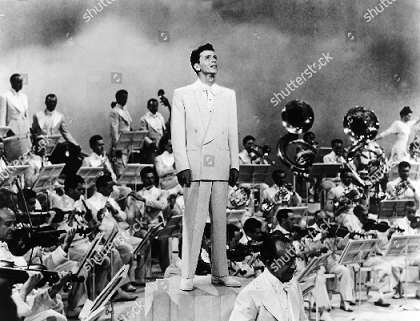
MGM - Hollywood
TILL THE CLOUDS ROLL BY
Orchestra conducted by Lennie Hayton
Arrangement by Kay Thompson
"Ol' Man River" w/chorus
March 18, 1947
Ray Brown/Ben Evans Fight
Sinatra was to have been in attendance but had to cancel his appearance
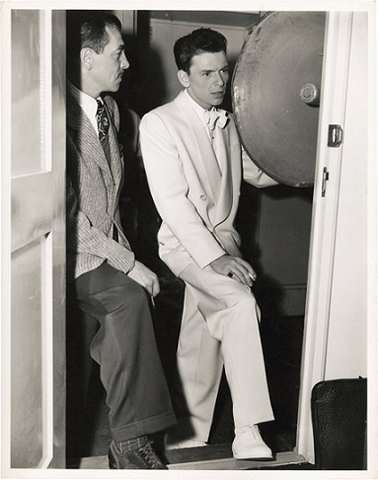
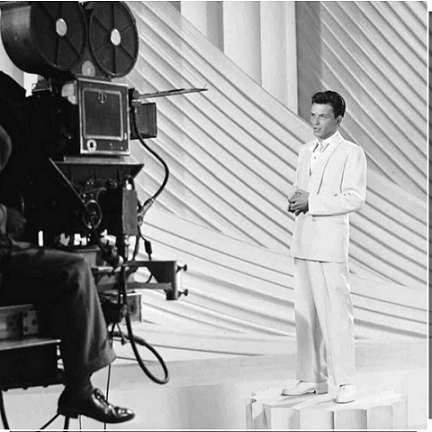
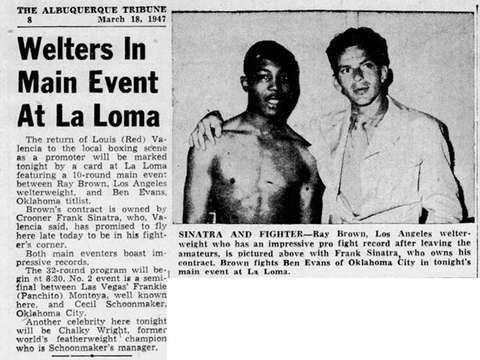
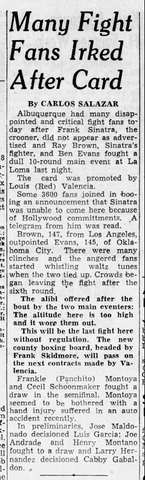
March 19, 1946
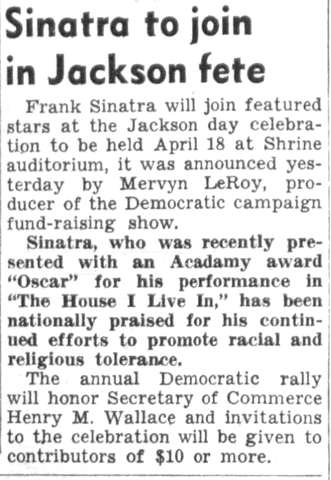
March 20, 1946
Radio
Songs By Sinatra
Network: CBS
Location: San Francisco, California
Show #28
Sponsor: Old Gold Cigarettes
Time: 9:00PM - 9:30PM (EST) Wednesday
Orchestra Conducted By: Axel Stordahl
Arrangements By: Axel Stordahl
Announcer: Marvin Miller
Writer: Glenn Wheaton
Directed By: Mann Holiner
Performers: The Pied Pipers
Guest: Van Johnson
CBS Broadcast:
1. opening theme: Night And Day
2. Personality
3.Shoo Fly Pie Pied Pipers
4. Embraceable You
5.Personality (parody) - w/Van Johnson
6. From This Day Forward new song
7.. closing theme: Put Your Dreams Away note: Audience was made up of WAVES and service men
AFRS version added "Over The Rainbow" January 1, 1946 & "You'll Never Walk Alone" December 26, 1946 to the broadcast. Ed O'Brien:
Van Johnson and Marvin Miller flew up from L.A. to Frisco to do the show. But Miller did not go to Detroit and Chicago in mid-May.
Concerts
Golden Gate Theatre, San Francisco, California (March 20-26) Music Conducted by Axel Stordahl
Also appearing:
--The Pied Pipers
--The 4 Step Brothers (Dancers)
--Stan Early (Comic Impersonator
On Screen: "Riverboat Rhythm" with Leon Errol, Walter Catlett, and Frankie Carle's Orchestra.
Golden Gate, San Francisco (Reviewed Wednesday Afternoon, March 20) Frank Sinatra, the slim, trim lad with the swoon-croon pipes, the thin-faced boy with the wistful manner, stepped onto the stage here- and suddenly a thousand female adolescents began screeching and yelling. It was enough to scare the daylights out of any modest young fellow-but the phenomenon labelled the Voice, unlike the non -vocal humpty dumpty, seems to keep himself together. They (the adolescents) punctuated his singing with ecstatic cries when he sang Night and Day. And, when the 'bantamweight's light but sustained baritone style worked out on such smoothies as Aren't You Glad You're You and You Always Hurt the One You Love, they chorused all over again. His awkward charm even managed to thaw some of the ice off the more antique spectators. Axel Stordahl directs a 30 -piece band as accompaniment for Sinatra.. Also on the bill are the Four Step Brothers, Harlem dancers, who delight with some terrific footwork. They're a clever dance foursome. The Pied Pipers, who do I'll Never Smite Again with Sinatra, are on their own with In the Middle of May and Dreams. A unique impersonator is Stan Early, whose deft mimicry of such personalities as Cary Grant and James Stewart gets humorous play. Whole show is excellent, in fact, one of the Gate's finest vaude ventures. Pic, Riverboat Rhythm. Billboard
3-30-46
Golden Gate Theatre, San Francisco, California (March 20-26) The San Francisco Examiner (San Francisco, California) · 21 Mar 1946
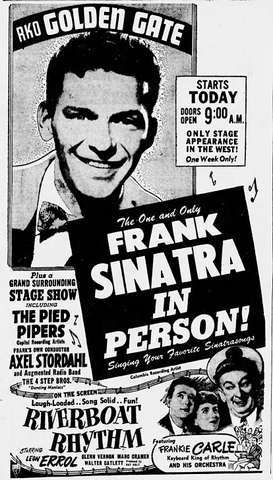
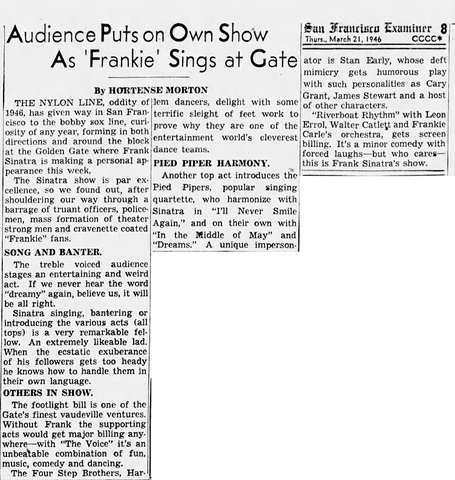
Songs By Sinatra
Location: San Francisco, California
Guest: Van Johnson
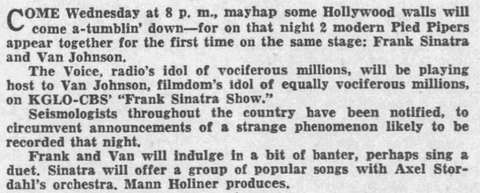
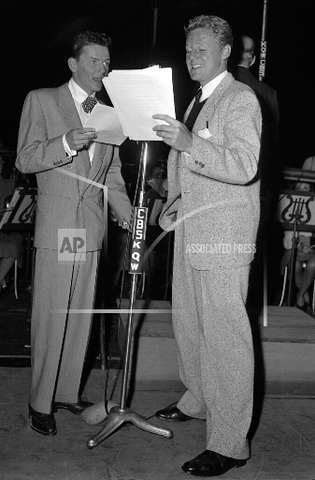
March 21, 1946
Concerts
Golden Gate Theatre, San Francisco, California (March 20-26)
Music Conducted by Axel Stordahl
Also appearing:
--The Pied Pipers
--The 4 Step Brothers (Dancers)
--Stan Early (Comic Impersonator
On Screen: "Riverboat Rhythm" with Leon Errol, Walter
Catlett, and Frankie Carle's Orchestra.
Golden Gate Theatre, San Francisco, California (March 20-26)
Note: Frank walked away with almost $30,000 for a week's work. He was in negotiations with promoters in Detroit and Chicago for a week in each city, beginning in early May. But the talks were canceled after his doctor ordered r&r back home in Palm Springs. But he did fulfilled the following obligations:Talks would resume later in
April and Frank did play both cities for a week, starting in mid-May. He was guaranteed $25,000 or 50% of the gross, beginning with the first dollar.
·
Grammy Museum worker Hilda Chavez cleans one of the photographs in the Frank Sinatra exhibit. In 1946 Sinatra had a week-long gig at the Golden Gate Theater in San Francisco. Sinatra recorded 57 songs that year --Thanks to Carl R for the above pictue
March 1947
Ed O'Brien:
The Carnegie Hall was broadcast on the
Mutual Radio Network ( WOR in N.Y.C.) from
10:00 p.m. to 11:00 p.m, 4-19-46. Others appearing on the show included Bing Crosby,
Bob Hope, Ginny Simms and Perry Como
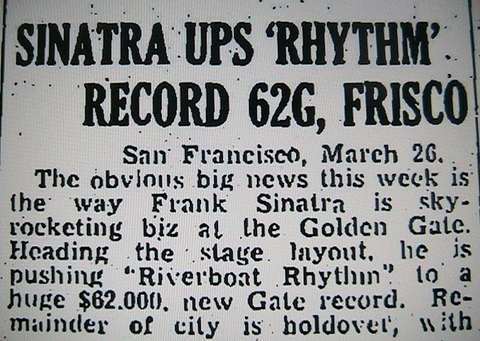
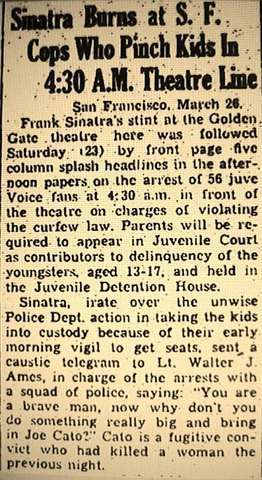
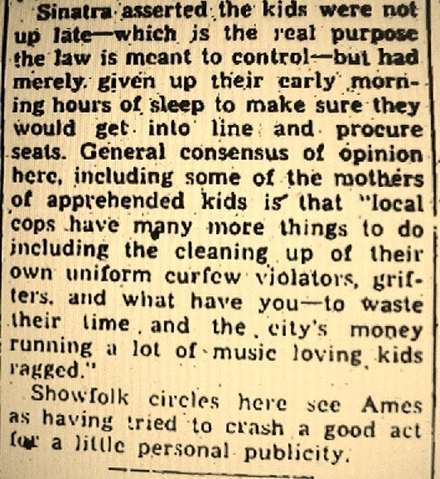
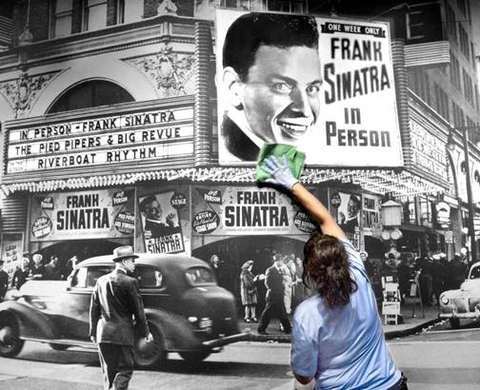
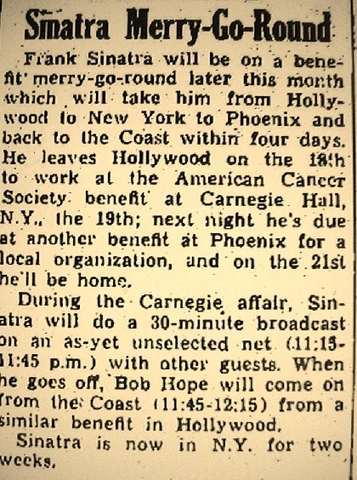
March 22, 1946
Concerts
Golden Gate Theatre, San Francisco, California (March 20-26) Music Conducted by Axel Stordahl
Also appearing:
--The Pied Pipers
--The 4 Step Brothers (Dancers)
--Stan Early (Comic Impersonator
On Screen: "Riverboat Rhythm" with Leon Errol, Walter Catlett, and Frankie Carle's Orchestra.
March 23, 1946
Concerts
Golden Gate Theatre, San Francisco, California (March 20-26) Music Conducted by Axel Stordahl
Also appearing:
--The Pied Pipers
--The 4 Step Brothers (Dancers)
--Stan Early (Comic Impersonator
On Screen: "Riverboat Rhythm" with Leon Errol, Walter Catlett, and Frankie Carle's Orchestra.
Golden Gate Theatre, San Francisco, California (March 20-26) Music Conducted by Axel Stordahl
[image referenced in source but could not be recovered]
Sinatra's debut album, the first to be thematically arranged rather than just a collection, entered the charts and spent seven weeks at the top of what was then only a Top 5 album chart, an early sign of his appeal beyond the bobby-soxer market to a more sophisticated Waldorf-Astoria-style audience. (Source: Richard Havers, "Sinatra" (Dorling Kindersley, 2007).)
March 24, 1946
Concerts
Golden Gate Theatre, San Francisco, California (March 20-26) Music Conducted by Axel Stordahl
Also appearing:
--The Pied Pipers/
--The 4 Step Brothers (Dancers)
--Stan Early (Comic Impersonator
On Screen: "Riverboat Rhythm" with Leon Errol, Walter Catlett, and Frankie
Carle's Orchestra.
March 25, 1946
Concerts
Golden Gate Theatre, San Francisco, California (March 20-26) Music Conducted by Axel Stordahl
Also appearing:
--The Pied Pipers
--The 4 Step Brothers (Dancers)
--Stan Early (Comic Impersonator
On Screen: "Riverboat Rhythm" with Leon Errol,
Walter Catlett, and Frankie Carle's Orchestra.
March 26, 1946
Concerts
Golden Gate Theatre, San Francisco, California (March 20-26) Music Conducted by Axel Stordahl
Also appearing:
--The Pied Pipers
--The 4 Step Brothers (Dancers)
--Stan Early (Comic Impersonator
On Screen: "Riverboat Rhythm" with Leon Errol, Walter Catlett, and Frankie
Carle's Orchestra.
March 27, 1946
Radio
Songs By Sinatra
Network: CBS
Location: Hollywood
Show #29
Sponsor: Old Gold Cigarettes
Time: 9:00PM - 9:30PM (EST) Wednesday
Orchestra Conducted By: Axel Stordahl
Arrangements By: Axel Stordahl
Announcer: Marvin Miller
Writer: Glenn Wheaton
Directed By: Mann Holiner
Performers: The Pied Pipers
Guest: Skitch Henderson, Abigail and Buddy Dooley
CBS Broadcast:
1. opening theme: Night And Day
2. One More Dream
3. Full Moon And Empty Arms Skitch Henderson
4. Madam Butterball Pied Pipers
5. Spring Is Here *
6. By The Light Of The Silvery Moon / When
You Come To The End Of A Perfect Day / My Melancholy Baby / A Pretty Girl Is Like A Melody / Falling In Love Again/It Might As Well Be Spring ( parody)/ Come With Me / You Go To My Head/Stardust (medley with Skitch Henderson and Pied Pipers)
5. All Through The Day
6. closing theme: Put Your Dreams Away
* Sinatra would not get around to recording "Spring Is Here" until 10-31-47. His version on the O.G. show is quite lovely.
Ed
SEE KELLY, SINATRA AS RODGERS - HART
Hollywood, March 26
Metro screen biog of (Richard) Rodgers and
(Lorenz) Hart entitled "My Heart Stood Still," is likely to have Frank Sinatra and Gene Kelly in the roles of the cleffing duo.
Script is now being written by Guy Bolten, who is conferring with Rodgers in New York, Hart died a couple of years ago.
Variety
March 27, 1946
Ed O'Brien:
The film would be retitled "Words And
Music" and be a 12-31-48 release for MGM.
Mickey Rooney would play Rodgers and Tom
Drake would land the role of Larry Hart. Gene
Kelly would choreograph "Slaughter On Tenth
Avenue." Vera Ellen would be his dance partner.
It would be the finale in a long string of great musical numbers.
March 28, 1946
March 28, 1946
The Times
Tuesday 3-26-46
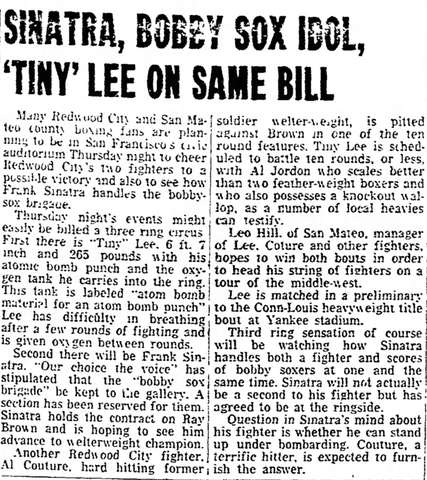
March 30, 1946
Knickerbocker Club, Hollywood, CA
Sinatra receives a Golden Globe for "The House I Live In"
Marina Cisternas, President of HFCA (Hollywood Foreign Correspondents Association presents to Frank Sinatra the newly designed Golden Globe trophy, as recipient of a special award “for the picture with the best international feeling produced in 1945†, the short film The House I Live In, at the 3rd Golden Globes ceremonies held Saturday March 30, 1946 at the Hollywood Knickerbocker Club.
Frank Sinatra & Angela Lansbury
[image referenced in source but could not be recovered]
[image referenced in source but could not be recovered]
April 3, 1946
Radio
Songs By Sinatra
Network: CBS
Location: New York City
Show #30
Sponsor: Old Gold Cigarettes
Time: 9:00PM - 9:30PM (EST) Wednesday
Orchestra Conducted By: Axel Stordahl
Arrangements By: Axel Stordahl
Announcer: Richard Stark
Writer: Glenn Wheaton
Directed By: Mann Holiner
Performers: The Pied Pipers
Guest: Martha Tilton, Clark Dennis
CBS Broadcast:
1. Shoo Fly Pie
2. Blue Skies Martha Tilton
3. Full Moon And Empty Arms
4. Doctor, Lawyer, Indian Chief Pied Pipers
5. Over The Rainbow Clark Dennis
6. Mother Goose Medley: A Tisket, A Tasket - M.Tilton
Ten Little Indians - C. Dennis -- Little Jack Horner/ Frere Jacques F. Sinatra
7. Oh What Is Seemed To Be
8. Put Your Dreams Away -- sign off
note: Richard Stark was the announcer. Marvin Miller had a scheduling conflict and stayed on the west coast
Ed
April 6, 1946
Radio
Command Performance
Network: AFRS
Show: Special in honor of "Army Day"
Host: Bob Hope
Guests: Dinah Shore, Bing Crosby, Frank Sinatra, Spike Jones and The City Slickers, The Andrews Sisters, General Dwight D. Eisenhower, Bette Davis.
Announcer: Harry Von Zell
The Armed Forces Radio Service Orchestra Conducted By: Meredith Willson
1. opening
2. comedy - Bob Hope
3. Shoo Fly Pie - Dinah Shore
4. comedy - Bette Davis, Dinah Shore, Bing Crosby, Frank Sinatra & Bob Hope
5. Doctor, Lawyer, Indian Chief - Bing Crosby
6. Oh What It Seemed To Be - Frank Sinatra
7. Your The Top (parody) - Frank Sinatra, Bob Hope & Bing Crosby
8. You Always Hurt The One You One - Spike Jones and The City Slickers
9. Chickery Chick - The Andrew Sisters
10. "Army Day Speech" - General Dwight D. Eisenhower
11. What Do You Do In The Infantry - Frank Sinatra & Chorus
12. This Is The Army - Dinah Shore
13. Caissons Go Rolling Along- Bing Crosby & Chorus
14. closing
45mins. Audio condition: Excellent. Complete.
Note: Show was taped on 4-6-46 and the AFRS air date was 4-19-46
--Ed
April 7, 1946
Studio
New York City
XCO36056 Soliloquy (Part 2) Take 1
(R. Rodgers/O. Hammerstein II)
(from Carousel)
Williamson Music Inc. (ASCAP) 1945
Arranged & Conducted by Axel Stordahl
CD: Columbia CK 64661 Sinatra Sings Rodgers And
Hammerstein
LP: Columbia C2L-6 The Frank Sinatra Story
XCO36057 Soliloquy (Part 1)
(R. Rodgers/O. Hammerstein II)
(from Carousel)
Williamson Music Inc. (ASCAP) 1945
Arranged & Conducted by Axel Stordahl
CD: Columbia CK 64661 Sinatra Sings Rodgers And
Hammerstein
LP: Columbia C2L-6 The Frank Sinatra Story
Ed O'Brien:
Sinatra would record this song again on 5-28-46.
Both recordings were done with a 35 piece orchestra
and part two was done first at both sessions. Joe
Bushkin played piano on the 4-8 date. In the interim,
Frank sang it on his 5-22-46 Old Gold show. He was
appearing at the Chicago Theatre and the local CBS
radio station broadcast his weekly show. Skitch
Henderson told me the studio was too small to
accommodate both a studio audience and the orchestra.
I believe it is the only O.G. show minus the squealing
bobby soxers. Anyway, "Soliloquy" on that broadcast,
is simply sensational. In my opinion it is better than
either of the Columbia efforts.
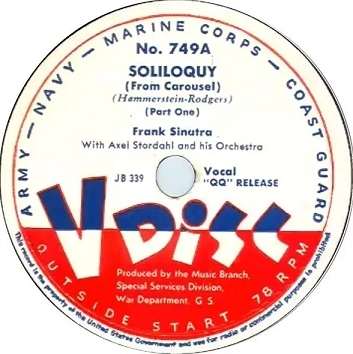
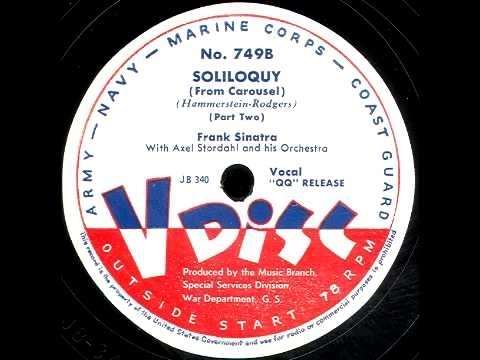
[Soliloquy -- critical commentary]
Frank Sinatra (1989): Manie Sachs gave Sinatra two sessions, April and May 1946, to record the eight-minute "Soliloquy," split across two sides of a 12-inch 78 (break after "My kid ain't even been born yet!"). Both sessions produced complete, issuable masters: the April take (later on V-Disc and the Sony Sinatra Sings Rodgers and Hammerstein CD) uses the stronger show language "I'll try, by God I'll try"; the May take (Columbia Masterworks 78, later Complete Columbia Years) softens it to "by gosh." In 1989 Sinatra said of the piece: "I just [wish] more performers would do it. If they [only] had the guts, they've got the talent [and] big voices, but nobody does that."
This song/context matches multiple dated entries in the chronology; the specific date Friedwald is referring to could not be determined with confidence.
Source: Will Friedwald, "Sinatra! The Song Is You: A Singer's Art" (2018 revised edition), Ch. 8, "Gordon Jenkins" (1956-1981)
April 10, 1946
Radio
Songs By Sinatra
Network: CBS
Location: New York City
Show #31
Sponsor: Old Gold Cigarettes
Time: 9:00PM - 9:30PM (EST) Wednesday
Orchestra Conducted By: Axel Stordahl
Arrangements By: Axel Stordahl
Announcer: Richard Stark
Writer: Glenn Wheaton
Directed By: Mann Holiner
Performers: The Pied Pipers
Guest: Gene Kelly
1. Two Hearts Are Better Than One
2. I Fall In Love With You Everyday
3. Sittin' and A Rockin' Pied Pipers
4. Medley: Oh, Our Songs Are Happy/
Down By The Old Mill Stream Frank & Gene
5. Gershwin Medley: Summertime/ It Ain't Necessarily So/
Where Is My Bess
6. Put Your Dreams Away -- sign off
note: The announcer was Richard Stark. Marvin Miller had a scheduling conflict and did not accompany the Old Gold gang to New York
--Ed
AFRS Broadcast:
1. opening theme: Night And Day
2. Two Hearts Are Better Than One
3. I Fall In Love With You Every Day
4. Don't Forget Tonight Tomorrow - w/Pied Pipers
5.. medley w/Gene Kelly: Down By The Old Mill Stream / I Begged Her / Summertime / It Ain't Necessarily So / Bess, Oh Where's My Bess?
6. closing theme: Put Your Dreams Away
Notes: The Dress rehearsal of "I Fall In Love With You Every Day" appears on the CD: The V-discs 2 (Columbia). Confirmed airing on WABC.
April 14, 1946
Radio
Command Performance
Network: AFRS
Show: #217
Host: Bob Hope
Guests: Eric Johnston, George Murphy, Frank Sinatra, Ingrid Bergman, Charles Boyer, Michael Curtiz, Johnny Green and His Orchestra.
Announcer:
Notes: TT 30mins. Audio condition: Very good to excellent. Complete..
Ed O'Brien:
A rather unusual Command Performance.
The half-hour was devoted to a rebroadcast of the highlights of the Academy Award show from Grauman's Chinese Theatre in Hollywood, 3-7-46. Frank received a special Oscar for his 10 minute short on religious and racial tolerance. He also sang the title track "The House I Live In."
April 17, 1946
Radio
Songs By Sinatra
Network: CBS
Location: Hollywood
Show #32
Sponsor: Old Gold Cigarettes
Time: 9:00PM - 9:30PM (EST) Wednesday
Orchestra Conducted By: Axel Stordahl
Arrangements By: Axel Stordahl
Announcer: Marvin Miller
Writer: Glenn Wheaton
Directed By: Mann Holiner
Performers: The Pied Pipers
Guest: Shirley Ross
CBS Broadcast:
1. opening theme: Night And Day
2. You Won't Be Satisfied (Until You Break My Heart)
3. There's A Long, Long Trail/Silver Threads Among The Gold
4. Day By Day*
5. Moonmist Pied Pipers
6. Coax Me A Little Bit Shirley Ross
7. Medley: All Of A Sudden My Heart Sings/Let's Get Away
From It All/ I've Got You On My Mind Shirley Ross
8. Without A Song (tribute to Vincent Youmans, who passed away April 5, 1946 )
9. Put Your Dreams Away sign - off
* Pied Pipers do not back Frank on "Day By Day"
Notes: Confirmed airing on WABC. AFRS version added "San Antonio Rose" from the March 6, 1946 broadcast..
April 19, 1946
Radio
Cancer Drive Program
Network: WOR
Time: 10:00 PM - 11:00 PM
Performers: Bing Crosby, Bob Hope, Ginny Simms, Frank Sinatra, Perry Como, Others
Mutual Network had exclusive rights to the airing of the show.
WOR broadcast it in N.Y.C.
--Ed
Cancer Drive Program
Network: WOR
Time: 10:00 PM - 11:00 PM
Performers: Bing Crosby, Bob Hope, Ginny Simms, Frank Sinatra, Perry Como, Others
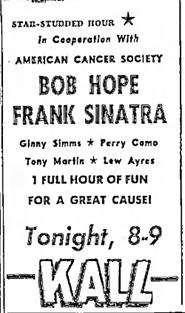
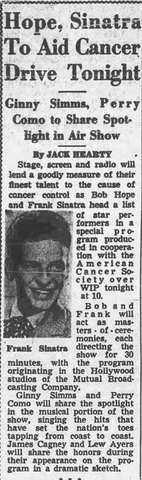
April 20, 1946
Concerts
Phoenix Union, High School Stadium, Phoenix, Arizona
Benefit for: Junior Police Jamboree
Frank Sinatra, The Pied Pipers, Sid Caesar
Songs Included:
--Nancy
--The House I Live In
--My Romance
--Oh, What It Seemed To Be
--Embraceable You
--Night and Day
--Over The Rainbow
Phoenix Union, High School Stadium, Phoenix, Arizona
Benefit for: Junior Police Jamboree
Frank Sinatra, The Pied Pipers, Mickey Rooney
Looking at this ad, it is no wonder Mickey Rooney was a no-show.
From 1938 thru 1943, Rooney was a megastar for MGM. He was the biggest movie star in the land at the time. Mickey was the top drawing box office attraction three consecutive years ( 1939 thru 1941). And placed in the top ten the other three years. His Andy Hardy films and musicals with Judy Garland were huge box office winners. And to be the top drawer in 1939 -- the year most cinephiles consider Hollywood's greatest -- is quite an achievement. How fickled fame can be.
--Ed
[image referenced in source but could not be recovered]
[image referenced in source but could not be recovered]
[image referenced in source but could not be recovered]
April 24, 1946
Radio
Songs By Sinatra
Network: CBS
Location: Hollywood
Show #33
Sponsor: Old Gold Cigarettes
Time: 9:00PM - 9:30PM (EST) Wednesday
Orchestra Conducted By: Axel Stordahl
Arrangements By: Axel Stordahl
Announcer: Marvin Miller
Writer: Glenn Wheaton
Directed By: Mann Holiner
Performers: The Pied Pipers
Guest: Slim Gaillard Trio
Dress Rehearsal:
1. They Say It's Wonderful
2. You Are Too Beautiful
CBS Broadcast:
1. opening theme: Night And Day
2. Who's Sorry Now
3. They Say It's Wonderful
Old Gold Jingle w/ Pied Pipers
4. There's Good Blues Tonight Pied Pipers
5. Yip Roc Heresy Slim GaillardTrio
6. Cement Mixer ( Put-TI Put-Ti) w/ Slim Gaillard Trio
7. You Are Too Beautiful
8. Put Your Dreams Away sign- off
Notes: The Dress rehearsal of the songs "They Say It's Wonderful" & "You Are Too Beautiful" appear on the CD:
The V-discs 2 (Columbia).
April 25, 1946
Concerts
Embassy Room, Ambassador Hotel, Los Angeles, CA
Subscription Dinner Dance of the Women's Division of the American Jewish Congress Sinatra, Phil Silvers, and the Pied Pipers
Embassy Room, Ambassador Hotel, Los Angeles, CA
Subscription Dinner Dance of the Women's Division of the American Jewish Congress
Sinatra, Phil Silvers, and the Pied Pipers
© 1997-2026 The Sinatra Archive
This calendar, or any parts thereof, may not be reproduced in any fashion
whatsoever without the prior written permission of the publisher (The
Sinatra Archive)
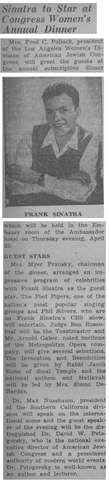
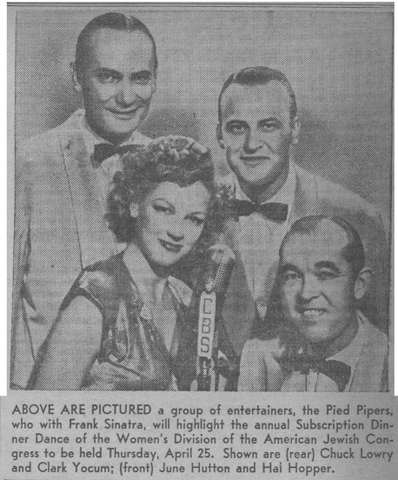
May 1, 1946
Radio
Songs By Sinatra
Network: CBS
Location: Hollywood
Show #34
Sponsor: Old Gold Cigarettes
Time: 9:00PM - 9:30PM (EST) Wednesday
Orchestra Conducted By: Axel Stordahl
Arrangements By: Axel Stordahl
Announcer: Marvin Miller
Writer: Glenn Wheaton
Directed By: Mann Holiner
Performers: The Pied Pipers
Guest: Gloria de Haven
1. Night And Day opening
2. Sioux City Sue
3. Medley of Songs from "The Voice" LP
Someone To Watch Over Me/I Don't Know Why/
These Foolish Things/Why Shouldn't I/ You Go
To My Head
4. Route 66 Pied Pipers
5. They Didn't Believe Me Gloria de Haven
6. Why Shouldn't It Happen To Us w/ Gloria de Haven
7. All Through The Day (last song written by Jerome Kern )
8. Put Your Dreams Away sign - off
Notes: Confirmed airing on WABC. Ed O'Brien: Only an excerpt of this show has circulated. Frank opened this show with "Sioux City Sue."
Note: After "Sioux City Sue" and a comedy bit with Stordahl, Frank introduced songs from his new album "The Voice." A clever bit to get the swooners excited about it and also let them know it was selling for $2.50. The scene was a flashback to the previous night. Frank was trying to play the 78s on his phonograph. His player was acting up and only segments of "Someone To Watch Over Me," "I Don't Know Why," "These Foolish Things" and "Why Shouldn't I" played before there was a loud screech and the song went off the player. Actually, Frank was singing them on the show. Why give them the complete songs. Then he switched to Nancy's little phono and did a marvellous reading of "You Go To My Head." Segment is available on "Lost And Found: The Radio Years.:" "The Voice" was the #1 album on Billboard's inaugural list of album sales. Ed
--Frank played a week at the Detroit Theatre and the Chicago Theatre in May of 1946. He opened his shows with "Sioux City Sue." And, as you know, he never made a recording of that tune.
May 3, 1946
Concerts
War Memorial Auditorium, Las Vegas, Nevada
Sinatra was Grand Marshall of the Helldorado Days Parade and that night at the War Memorial Auditorium, Sinatra packed the hall as he sang hits from his recent movies Anchors Aweigh, Step Lively, Higher and Higher and his special Oscar Award number "The House I Live In."
Hotel Last Frontier, Las Vegas, Nevada
Sinatra sang at both floor shows accompanied by Last Frontier Hillbilly Band
Saphire Room of the El Cortez in Las Vegas
Sinatra sang several songs in tribute to Gene Austin
War Memorial Auditorium, Las Vegas, Nevada
Grand Marshall of the Helldorado Days Parade was Frank Sinatra. A crowd of 50,000 lined Fremont Street to cheer and scream at the star who rode by in an oversized Stetson.
"That night at the War Memorial Auditorium, Sinatra packed the hall as he sang hits from his recent movies Anchors Aweigh, Step Lively, Higher and Higher and his special Oscar Award number "The House I Live In." On the inclined stage of the auditorium, in the building that later became Las Vegas City Hall, all was smooth warbling until the electricity failed and the mike went dead. Sinatra's vocal ability, powerless without amplification, was bereft of its very engaging quality."
Hotel Last Frontier, Las Vegas, Nevada
Sinatra sang at both floor shows accompanied by Last Frontier Hillbilly Band
Las Vegas Review-Journal
Saturday, May 04, 1946
Vegas at the time only had two hotels. Here is a photo of the Last Frontier, which opened in 1943.As you can see it was rather primitive by the standards Vegas would have in just a few years. Sinatra really didn't have the time to get to know Vegas in 44 and 45. The date you put up reveals that Frank flew from Detroit after his 5-1-46 Old Gold show and then had to get back in time to open at the Detroit Theatre and do the 5-8 Old Gold show.
--ED
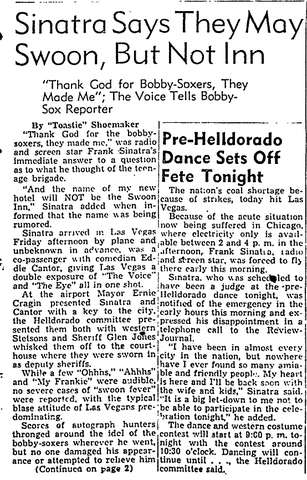
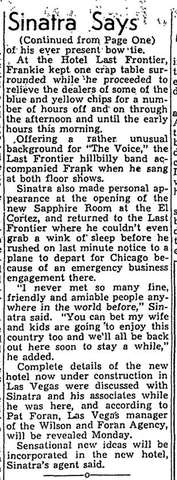
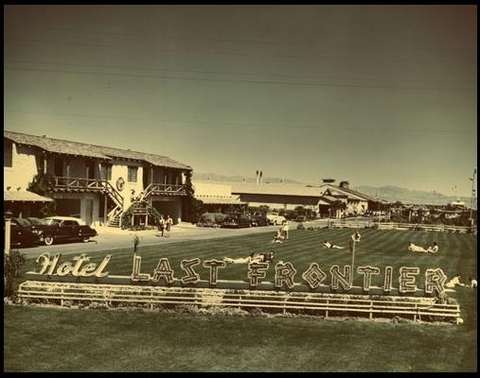
Saphire Room of the El Cortez in Las Vegas
Sinatra sang several songs in tribute to Gene Austin
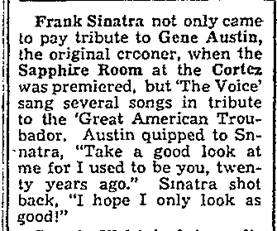
May 4, 1946
Helldorado Dance Hall, Las Vegas (Cancelled)
Sinatra had to leave early for Chicago. He was to have been a judge at the dance.
[image referenced in source but could not be recovered]
May 8, 1946
Radio
Songs By Sinatra
Network: CBS
Location: unknown
Show #35
Sponsor: Old Gold Cigarettes
Time: 9:00PM - 9:30PM (EST) Wednesday
Orchestra Conducted By: Axel Stordahl
Arrangements By: Axel Stordahl
Announcer: Franklin McCormick
Writer: Glenn Wheaton
Directed By: Mann Holiner
Performers: The Pied Pipers
Guest: Martha Raye
1. opening theme: Night And Day
2. Oh What It Seemed To Be
3. Come Rain Or Come Shine
4. closing theme: Put Your Dreams Away
note: At the end of the 5-1-46 show, Frank tells his listeners that he will be in Detroit the following week for concert appearances.
On the way, he will stop in Chicago to do the 5-8 show with Martha Raye as his guest.
He planned to have a meeting in the Windy
City prior to the taping. Frank wanted to plan the program more thoroughly. Marvin Miller was not the announcer. Franklin McCormick subbed for him on the 5/8, 5/15 and 5/22 shows.
Ed
The 14th Annual Catholic Youth Organization Sportsmen's Dinner, Palmer House, Chicago, Illinois
Caption:
Chicago: The annual Bishop Sheil's Corn and Cabbage dinner, attended by most of the city officials and notables, was held this year by candlelight because of the dim-out. Frank Sinatra, the crooner, is shown speaking at the dinner before receiving the Bishop Sheil Award for work fighting racial prejudices. With Marvin McCarthy, toastmaster; Bishop Sheil, the host; and Gov. Dwight Green of Illinois. May 8, 1946.
© 1997-2026 The Sinatra Archive
This calendar, or any parts thereof, may not be reproduced in any fashion whatsoever without the prior written permission of the publisher (The Sinatra Archive)
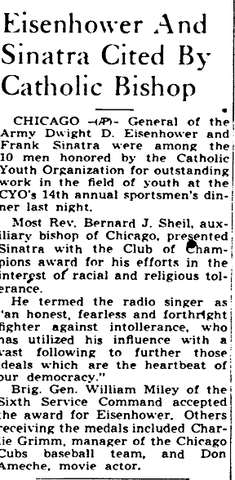
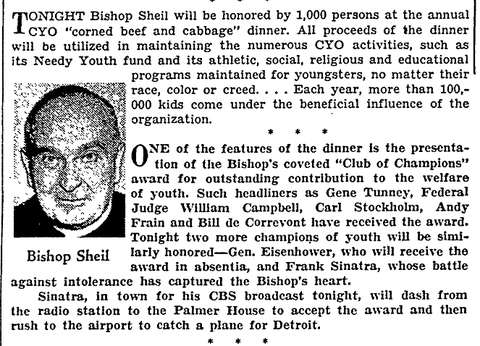
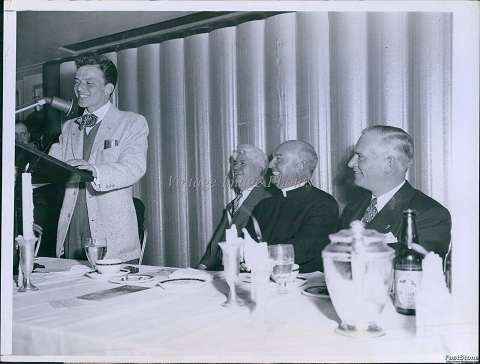
[FBI observes Sinatra mania in Detroit]
Sinatra arrived in Detroit around midnight on May 8, 1946; bobby-soxers began lining up outside the Downtown Theater at 2 a.m. for his 10 a.m. show the next day, drawing FBI observation from Louis Nichols, one of Hoover's top aides, and a subsequent memo describing truant officers and outraged parents (one suggesting Sinatra 'should be lynched').
Source: James Kaplan, "Frank: The Voice" (2010).
May 9, 1946
Concerts
Downtown Theatre, Detroit, Michigan (9-15)
Thursday thru Wednesday
with Skich Henderson, The Pied Pipers, and The Steeple Chasers (Dancers)
On Screen: "Blondie's Lucky Day"
Songs:
1. Sioux City Sue - FS
2. Full Moon and Empty Arms - FS
3. You Won't Be Satisfied - Pied Pipers
4. Dream - Pied Pipers
5. Personality - Pied Pipers
6. Day By Day - FS
7. Embraceable You - FS
8 Nancy - FS
9. My Romance - FS
10. The One I Love - FS with the Pied Pipers
11. I'll Never Smile Again - FS with the Pied Pipers
12. Oh What It Seemed To Be - FS
Ed O'Brien:
Frank played the Downtown Theatre
in Detroit ( May 9 thru 15), doing 42 shows
and grossing $55,000. Attendance was
66,000. Ford Motor Co threw a gala party
for him. They gave Frankie a spanking new
Downtown Theatre Detroit, Michigan (9-15)
Thursday thru Wednesday
Detroit Free Press (Detroit, Michigan) 10 May 1946, Fri Sinatra's Detroit Sked
46 Shows; Truant
Fear Chills Opener
DETROIT, May 11.-Frank Sinatra's show sked at Downtown Theater here should make two-a-dayers turn over in their graves. The Voice is slated to do 46 shows during the week-with a vague possibility that there might be more if the star can take it. Charles Perry, managing director of the Balaban - operated Downtown is scheduling six shows daily and eight each on Saturday and Sunday. Opening of the Sinatra engagement Thursday (9) wasn't quite as strong as anticipated, with a reasonable number of vacancies reported at the first show, but the crowd made up for it after that. Early attendance was probably scared off by the vigorous enforcement of curfew regulations, with an undisclosed number of girls under 16 taken out of the advance line by police and truant officers, and sent home or to the police station until their parents called for them.
Local law prohibits attendance of youngsters at a show during school hours, making 1 p.m. the earliest for them at the theater.
Billboard
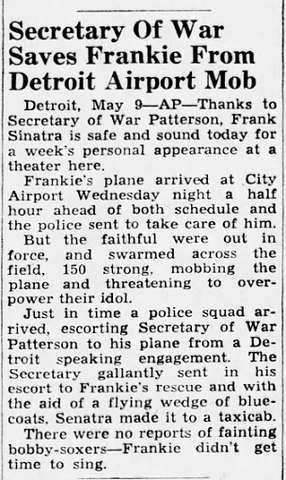
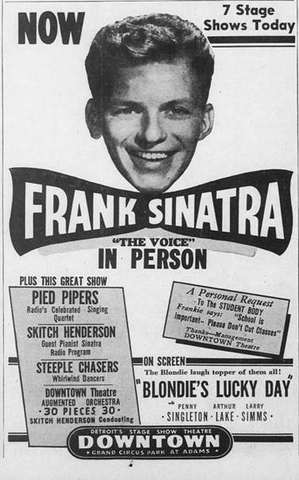
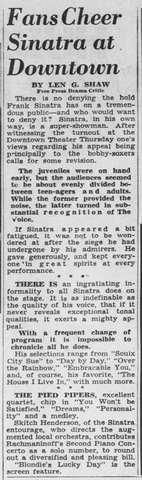
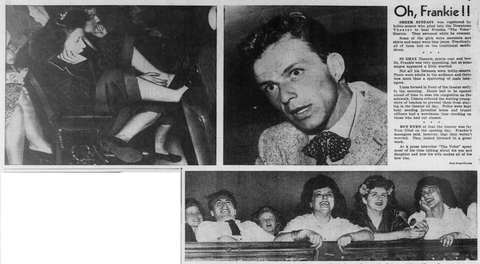

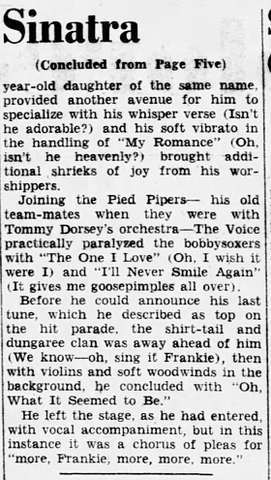
© 1997-2026 The Sinatra Archive
This calendar, or any parts thereof, may not be reproduced in any fashion whatsoever without the prior written permission of the publisher (The Sinatra Archive)
© 1997-2026 The Sinatra Archive
This calendar, or any parts thereof, may not be reproduced in any fashion
whatsoever without the prior written permission of the publisher (The
Sinatra Archive)
May 10, 1946
Concerts
Downtown Theatre Detroit, Michigan (9-15)
Thursday thru Wednesday with Skich Henderson, The Pied Pipers, and The Steeple Chasers (Dancers)
On Screen: "Blondie's Lucky Day"
Songs:
1. Sioux City Sue
2. Full Moon and Empty Arms
3. Day By Day
4. Embraceable You
5 Nancy
6. My Romance
7. The One I Love - FS with the Pied Pipers
8. I'll Never Smile Again - FS with the Pied Pipers
9. Oh What It Seemed To Be
May 11, 1946
Concerts
Downtown Theatre Detroit, Michigan (9-15)
Thursday thru Wednesday with Skich Henderson, The Pied Pipers, and The Steeple Chasers (Dancers)
On Screen: "Blondie's Lucky Day"
Songs:
1. Sioux City Sue
2. Full Moon and Empty Arms
3. Day By Day
4. Embraceable You
5 Nancy
6. My Romance
7. The One I Love - FS with the Pied Pipers
8. I'll Never Smile Again - FS with the Pied Pipers
9. Oh What It Seemed To Be
May 12, 1946
Concerts
Downtown Theatre Detroit, Michigan (9-15)
Thursday thru Wednesday with Skich Henderson, The Pied Pipers, and The Steeple Chasers (Dancers)
On Screen: "Blondie's Lucky Day"
Songs:
1. Sioux City Sue
2. Full Moon and Empty Arms
3. Day By Day
4. Embraceable You
5 Nancy
6. My Romance
7. The One I Love - FS with the Pied Pipers
8. I'll Never Smile Again - FS with the Pied Pipers
9. Oh What It Seemed To Be
May 13, 1946
Concerts
Downtown Theatre Detroit, Michigan (9-15)
Thursday thru Wednesday with Skich Henderson, The Pied Pipers, and The Steeple Chasers (Dancers)
On Screen: "Blondie's Lucky Day"
Songs:
1. Sioux City Sue
2. Full Moon and Empty Arms
3. Day By Day
4. Embraceable You
5 Nancy
6. My Romance
7. The One I Love - FS with the Pied Pipers
8. I'll Never Smile Again - FS with the Pied Pipers
9. Oh What It Seemed To Be
1969 Caesars Palace, Las Vegas, Nevada (May 9-25)
May 14, 1946
Radio
Here's To The Veterans
Orchestra Conducted By: Axel Stordahl
Announcer: Marvin Miller
1. The House I Live In
2. From This Day Forward
3. All Thru The Day
Notes: TT: 15mins.
Concerts
Downtown Theatre Detroit, Michigan (9-15)
Thursday thru Wednesday with Skich Henderson, The Pied Pipers, and The Steeple Chasers (Dancers)
On Screen: "Blondie's Lucky Day"
Songs:
1. Sioux City Sue
2. Full Moon and Empty Arms
3. Day By Day
4. Embraceable You
5 Nancy
6. My Romance
7. The One I Love - FS with the Pied Pipers
8. I'll Never Smile Again - FS with the Pied Pipers
9. Oh What It Seemed To Be
1969 Caesars Palace, Las Vegas, Nevada (May 9-25)
[Hoover aide reports on Detroit bobby-soxer riot]
FBI aide Louis B. Nichols sent Hoover's top aide Clyde Tolson a disapproving account of a Sinatra tour stop in Detroit, describing girls as young as under sixteen lining up outside the Downtown Theater from 2 a.m., truant officers being berated, and one bystander suggesting "Sinatra should be lynched." Hoover's handwritten reply on the memo: "Sinatra is as much to blame as are the moronic bobby-soxers. H."
Source: Kuntz and Kuntz, The Sinatra Files, ch. 2.
May 15, 1946
Radio
Songs By Sinatra
Network: CBS
Location: Music Hall, Detroit, Michigan
Show #36
Sponsor: Old Gold Cigarettes
Time: 9:00PM - 9:30PM (EST) Wednesday
Orchestra Conducted By: Axel Stordahl
Arrangements By: Axel Stordahl
Writer: Glenn Wheaton
Directed By: Mann Holiner
Performers: The Pied Pipers: June Hutton- Hal Hopper- Chuck Lowry- Clark Yokum
Guest: Skitch Henderson Announcer: Franklin McCormick
1. opening theme: Night And Day
1. How Cute Can You Be
2. Don't Marry That Gal
3. Anybody's Fame Pied Pipers: June Hutton- Hal Hopper- Chuck Lowry- Clark Yokum
4. You Go To My Head w/Skitch Henderson segment
4. Tea For Two w/June Hutton
5. These Foolish Things operatic parody'
5. Full Moon And Empty Arms
6. You Are Too Beautiful
7. closing theme: Put Your Dreams Away
Notes: Confirmed airing on WABC. AFRS version added " Oh! What Is Seemed To Be" & "You Go To My Head" from the March 27, 1946 broadcast.
NOTE: Ed O'Brien reports that Sinatra was playing an engagement in Detroit in mid-May 1946.
The Old Gold show was broadcast from the CBS affiliate. O'Brien asked Skitch Henderson about this appearance. Here is an excerpt from that interview:
Q. You made a number of appearances on Sinatra's Old Gold radio show. Do you have any memories to share?
A. I remember in May 1946 we played a theater in Detroit , the Fox Theatre. On closing night, the Ford family gave us a party. Ford built a wooden station wagon at the time and they gave one to Frank that night. And he didn't want it. He gave it away. I thought earlier today, what an incredible posture that was. I remember when he left there he said,"What the hell am I going to do with that car?" But the radio show was wonderful. I thought Frank was at his height vocally then. He respected lyrics and he sang the melody. It was before genius took over. It was still around the era of George Evans. It was more real and not surrounded by experts. Frank was a real happy guy back then.. He was surrounded by friends and not users. If I may say that!
Concerts
Downtown Theatre Detroit, Michigan (9-15)
Thursday thru Wednesday with Skich Henderson, The Pied Pipers, and The Steeple Chasers (Dancers)
On Screen: "Blondie's Lucky Day"
Songs:
1. Sioux City Sue
2. Full Moon and Empty Arms
3. Day By Day
4. Embraceable You
5 Nancy
6. My Romance
7. The One I Love - FS with the Pied Pipers
8. I'll Never Smile Again - FS with the Pied Pipers
9. Oh What It Seemed To Be
Songs By Sinatra
Network: CBS
2. Don't Marry That Girl
Variety
5-22-46
May 17, 1946
Concerts
Chicago Theatre, Chicago, Illinois (17-23) with Skitch Henderson
Also: The Pied Pipers and The Steeple Chasers
On Screen: "Up Goes Maisie" with Ann Sothern & George Murphy
Chicago Theatre, Chicago, Illinois (17-23)
with Skitch Henderson
Also: The Pied Pipers and The Steeple Chasers
On Screen: "Up Goes Maisie" with Ann Sothern & George Murphy
Variety
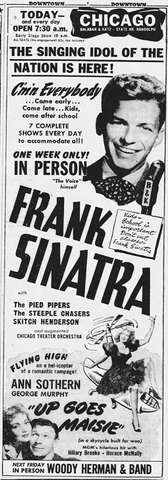

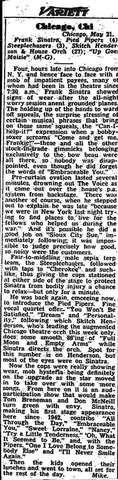
note: I like reviews that give us the list of songs
Frank was doing. Forgot to mention that he did
46 shows in Detroit. Assuming Frank did eight
per show that adds up to 368 songs over the
seven day engagement.
--Ed
Chicago Theatre
May 17 thru 23, 1946
CHICAGO, CHICAGO
(Friday, May 17)
Frank Sinatra arrived about 15 minutes before
show time because his plane from New York
had been delayed. Delay had pushed the
show back almost an hour, but when he
bounced onto the stage the complaints gave
way to screams. He silenced the house at
once with "Sioux City Sue."
With cops covering approaches to the
stage and flash bulbs popping continually,
Frank did a better-than-average job of
emceeing the production. When he
walked off after introducing the Steeple-
chasers, Negro tap terp trio, they moaned
so loud he came back to inform them that
it was a variety show and if they remained
quiet long enough to see it they would like
it. They did both, but found the "quiet"
request hard to comply with.
Steeplchasers did some hot hoofing to
"Cherokee." One of them then came out
in a zoot suit, and with interpretations of
boogy-woogie and the camel walk, they
wowed the teenage crowd. Pied Pipers,
who are on Sinatra's radio show, won
hearty hand with "You Won't Be Satisfied"
and "Dream." While they were offering
"Personality" the crowd got restless, and
despite their good work, the noise took
a lot out of this one. Their voices blend
well, but they are not for a house filled
with bobby soxers.
Skitch Henderson took over the 28
piece augmented theater band. Skitch
doubles on the 88 and did a fine job
on "Full Moon and Empty Arms."
Then The Voice gave them "Embrace-
able You," "Sweet Lorraine," "All Thru the
Day," "Oh! What It Seemed To Be" and
"Nancy." Wailing and screaming didn't
disturb Frank, who kept right on giving.
With a wave of his hand he could quiet
them, with a smile he could cause
giggles thruout the house.
"With the Pied Pipers he sang "One
I Love Belongs To Somebody Else" and
"I'll Never Smile Again" in memory of
the Dorsey days. He didn't use any gags,
but got lots of yocks whenever he uttered
anything that might pass as being funny.
Frank had them from the moment he walked
on until he walked off.
Billboard
May 25, 1946
May 18, 1946
Concerts
Chicago Theatre Chicago, Illinois (17-23)
Frank Sinatra
Other Performers: Pied Pipers, Steeple-chasers
Augmented 28 Theater Band Conducted By: Skitch Henderson Among Sinatra's Songs:
Embraceable You
Sweet Lorraine
All Thru the Day
Oh! What It Seemed To Be
Nancy
One I Love (Belongs To Somebody) Else w/Pied Pipers
I'll Never Smile Again w/Pied Pipers
May 19, 1946
Concerts
Chicago Theatre CHICAGO, Illinois (17-23)
M.C. Frank Sinatra
Other Performers: Pied Pipers, Steeple-chasers
Augmented 28 Theater Band Conducted By: Skitch Henderson Among Sinatra's Songs:
Embraceable You
Sweet Lorraine
All Thru the Day
Oh! What It Seemed To Be
Nancy
One I Love (Belongs To Somebody) Else w/Pied Pipers
I'll Never Smile Again w/Pied Pipers
May 20, 1946
Concerts
Chicago Theatre CHICAGO, Illinois (17-23)
M.C. Frank Sinatra
Other Performers: Pied Pipers, Steeple-chasers
Augmented 28 Theater Band Conducted By: Skitch Henderson Among Sinatra's Songs:
Embraceable You
Sweet Lorraine
All Thru the Day
Oh! What It Seemed To Be
Nancy
One I Love (Belongs To Somebody) Else w/Pied Pipers
I'll Never Smile Again w/Pied Pipers
Chicago Theatre CHICAGO, Illinois (17-23)
M.C. Frank Sinatra
May 21, 1946
Concerts
Chicago Theatre CHICAGO, Illinois (17-23)
M.C. Frank Sinatra
Other Performers: Pied Pipers, Steeple-chasers
Augmented 28 Theater Band Conducted By: Skitch Henderson Among Sinatra's Songs:
Embraceable You
Sweet Lorraine
All Thru the Day
Oh! What It Seemed To Be
Nancy
One I Love (Belongs To Somebody) Else w/Pied Pipers
I'll Never Smile Again w/Pied Pipers
May 22, 1946
Radio
Songs By Sinatra
Network: CBS
Location: Chicago, Illinois
Show #37
Sponsor: Old Gold Cigarettes
Time: 9:00PM - 9:30PM (EST) Wednesday
Orchestra Conducted By: Axel Stordahl
Arrangements By: Axel Stordahl
Announcer: Franklin McCormick
Writer: Glenn Wheaton
Directed By: Mann Holiner
Performers: The Pied Pipers
Guest: Skitch Henderson
CBS Broadcast:
1. opening theme: Night And Day
2. The Girl That I Marry
3. Route 66 Pied Pipers
3. Medley w/Skitch: If I Loved You/It's Been A Long, Long Time,Tampico( Pipers),I' ll Never Smile Again w Pipers,
White Christmas, Personality( Pipers)
4. Oh What It Seemed To Be # 1 hit eight straight weeks for Frank in the winter/spring of 46
5. Elegie ( Jules Massenet composition ) Skitch Henderson
6. Soliloquy first radio version.
7. closing theme: Put Your Dreams Away
Notes: Confirmed airing on WABC.
Ed O'Brien:
Franklin McCormick subbed for Marvin Miller during the mid west tour. He was the announcer on the 5/8,5/15 and 5/22 shows. At the conclusion of "Soliloquy," McCormick says, "Honestly, Frank, that is one of the finest things I have ever heard on the air."
Ed O'Brien:
Skitch told me that the CBS radio station was too small for a studio audience. Frank was in awe of "Soliloquy."
When he saw Raitt perform it on the New York stage,
Frank told Skitch it was a song he had to record. In all, he would make five recordings. It became a concert song in the forties, early fifties, late sixties and then a Sinatra staple beginning in 1986. I wish the 63 recording was the complete song.
Concerts
Chicago Theatre, Chicago, Illinois (17-23)
M.C. Frank Sinatra
Other Performers: Pied Pipers, Steeple-chasers
Augmented 28 Theater Band Conducted By: Skitch Henderson Among Sinatra's Songs:
Embraceable You
Sweet Lorraine
All Thru the Day
Oh! What It Seemed To Be
Nancy
One I Love (Belongs To Somebody) Else w/Pied Pipers
I'll Never Smile Again w/Pied Pipers
Chicago Theatre, Chicago, Illinois (17-23)
M.C. Frank Sinatra
Other Performers: Pied Pipers, Steeple-chasers
Augmented 28 Theater Band Conducted By: Skitch Henderson Among Sinatra's Songs:
Embraceable You
Sweet Lorraine
All Thru the Day
Oh! What It Seemed To Be
Nancy
One I Love (Belongs To Somebody) Else w/Pied Pipers
I'll Never Smile Again w/Pied Pipers
May 21, 1946
5-31-46
The concert took place at the Milwaukee Auditorium.Sinatra was a rising star in the music industry at the time.The performance featured a mix of popular standards and orchestral arrangements.This event showcased the collaboration between a solo artist and a symphony orchestra.It contributed to the popularity of orchestral pop music in the post-war era.The concert is remembered as a significant cultural moment in Milwaukee's history.
note:Tis' a mystery. I called two libraries in Milwaukee. There
is no mention of such a performance taking place on the
25th of May in 1946, Not one review. Sinatra that year
was voted the most popular star in Hollywood, Metronome
and Downbeat music polls had him winning easily. and Frank
had 10 of his recordings chart in Billboard's Top 10 , including
two that reached #1.And not one mention of him actually per-
forming.
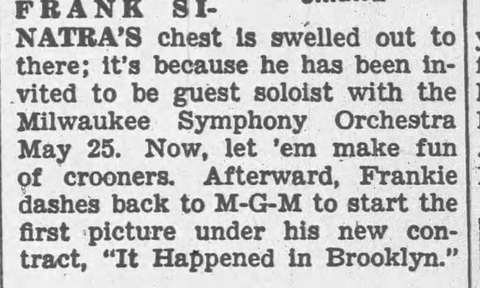
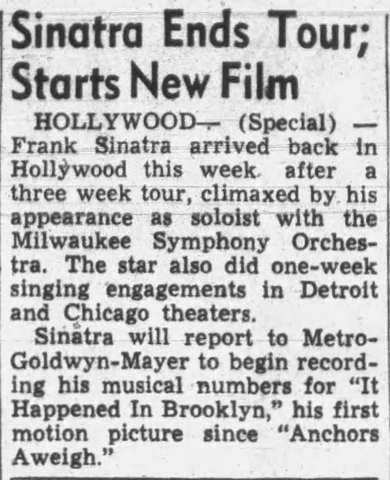
The concert took place at the Milwaukee Auditorium.
Sinatra was a rising star in the music industry at the time.
The performance featured a mix of popular standards and orchestral arrangements. This event showcased the collaboration between a solo artist and a symphony orchestra. It contributed to the popularity of orchestral pop music in the post-war era. The concert is remembered as a significant cultural moment in Milwaukee's history.
note:Tis' a mystery. I called two libraries in Milwaukee. There
is no mention of such a performance taking place on the
25th of May in 1946, Not one review. Sinatra that year
was voted the most popular star in Hollywood, Metronome
and Downbeat music polls had him winning easily. and Frank
had 10 of his recordings chart in Billboard's Top 10 , including
two that reached #1.And not one mention of him actually per-
forming.
May 23, 1946
Concerts
Chicago Theatre, Chicago, Illinois (17-23)
M.C. Frank Sinatra
Other Performers: Pied Pipers, Steeple-chasers
Augmented 28 Theater Band Conducted By: Skitch Henderson Among Sinatra's Songs:
Embraceable You
Sweet Lorraine
All Thru the Day
Oh! What It Seemed To Be
Nancy
One I Love (Belongs To Somebody) Else w/Pied Pipers
I'll Never Smile Again w/Pied Pipers
May 28, 1946
Studio
Hollywood
XHCO1849 Soliloquy (Part 2)
(R. Rodgers/O. Hammerstein II)
(from Carousel)
Williamson Music Inc. (ASCAP) 1945
Arranged & Conducted by Axel Stordahl
-1 (7:57 Pt. 1&2) CD: Columbia Years 43-52 Vol. 4
EP: B2564 Frank Sinatra (Hall Of Fame Series)
78: 7492M (12 inch)
XHCO1850 Soliloquy (Part 1)
(R. Rodgers/O. Hammerstein II)
(from Carousel)
Williamson Music Inc. (ASCAP) 1945
Arranged & Conducted by Axel Stordahl
-1 (7:57 Pt. 1&2) CD: Columbia Years 43-52 Vol. 4
EP: B2564 Frank Sinatra (Hall Of Fame Series)
78: 7492M (12 inch)
HCO1851 Somewhere In The Night
(M. Gordon/J. Myrow)
(from Three Little Girls In Blue)
Triangle Music Corp. (ASCAP) 1946
Arranged & Conducted by Axel Stordahl
-1 (3:05) CD: Columbia Years 43-52 Vol. 4
78: 37054
HCO1852 Could'ja? w/The pied Pipers
(B. Carey/C. Fischer)
Barton Music Corp. (ASCAP) 1946
Arranged & Conducted by Axel Stordahl
-1 (2:27) CD: Columbia Years 43-52 Vol. 4
CD: 44236 Sinatra Rarities
78: 38608
HCO1853 Five Minutes More
(J. Styne/S. Cahn)
(from Piccadilly Hayride)
Melrose Music Corp. (ASCAP) 1946
Arranged & Conducted by Axel Stordahl
-1 (2:35) CD: Columbia Years 43-52 Vol. 4
LP: CL-2474 Greatest Hits, The Early Years, Vol. 1
LP: CL-1241 Love Is A Kick
78: 37048
78: 50069
HCO1849, 1850 & 1851: Violins: W. Bloom, S. Cytron, D. Frisina, S. Freed, Jr., G. Kast, S. Kindler, S. Middleman, N. Pisani, E. Powers, M. Russell, O. Vail, G. Vinci; Violas: G. Nuttycombe, G. Serulnic, D. Sterkin; Cellos: F. Goerner, J. Sewell, J. Tannenbaum; Trumpets: E. Klein, R. Linn, R. Zarchy; Trombones: G. Jenkins, W. Schaefer, S. Zentner; Saxes: H. Beau, F. Dornbach, H. Haymer, J. Kinsler, F. Stulce; Horn: J. Staglino; Piano: M. Mclntyre; Guitar: A. Reuss; Bass: A. Shapiro; Drums: R. Hagan; Harp: M. Cambern HCO1852 & 1853: Saxes: H Beau, F. Dornbach, H. Haymer, F. Stulce; Trumpet: R. Linn; Trombone: W. Schaefer; Piano: M. Mclntyre; Guitar: A. Reuss; Bass: A. Shapiro; Drums: R. Hagan
NOTE: Ed O'Brien finds this to be an interesting session. Sinatra re-did "Soliloquy" seven weeks after his initial attempt. Part 2 was done first at both sessions. "Could'ja" was arranged by Sy Oliver. "Five Minutes More" was a huge smash hit for Sinatra. It was released in July of 1946 and reached #1 on the Billboard chart on August 3r. It stayed there for 22 weeks. Frank's best at Columbia! Only "All the Way" would surpass it with 30 weeks on the charts. "Young at Heart" also charted for 22 weeks.
Vance Adair:
How bittersweet that today's date finds the first ('46) and one of the last ('92) performances of 'Soliloquy' sitting side by side. There is a book to be written about the musical structure of this fascinating song and also about FS's fabled circuitous encounters with it. I have heard quite a few performances of the song throughout the years and it is one that he always delivered with gusto. I happen to think that many of his later concert performances were superbly realized dramatic monologues. On so many occasions I hear him plough through the crowd pleasers. And he sounds bored.
Not so with this witty, strange and troubling tune. It produced some of the most enervated and enervating live performances of his career. -Vance
Ed O'Brien:
Have you ever heard the version from his Old Gold on 5-22-46? First time he did it on radio. Show came from a CBS studio in Chicago. Skitch Henderson told me the broadcast room was too small for a studio audience. Sinatra was in awe of the song and his reading that night was a real tour de force.
Ed Spiegel
His incomplete 1955 version of "Soliloquy" is wonderful and it's unfortunate that it's incomplete. Even more unfortunate that he didn't make the movie. My favorite version on record is from his "80th Live" album, recorded I believe in '88. He lived it and clearly was loving doing the song. In '92 I saw him sing it at Radio City and it was at least as marvelous - many tears in the audience and a standing ovation from the packed house. By then he had put back the verse (about 45 seconds) that was omitted from the otherwise magnificent '63 Reprise recording with Nelson Riddle ("When I have a daughter, etc..."). Have always wondered why those wonderful Hammerstein words were left off. Ed O'Brien adds:
The claim has always been that someone overlooked that page of the sheet music. I don't believe it. Sinatra adored the song. He started singing it in 1946 and it was often done in concerts and nightclubs into the fifties. He did the recordings in 1955. So, he really knew and greatly admired the song. I'll bet it was the time constraints on a stereo album in 1963. Or Frank worried about the excessive length being too much for the listener. With the deleted segment, it would have run more than nine minutes.
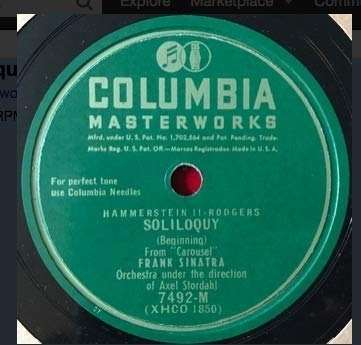
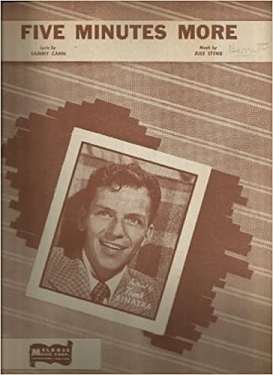
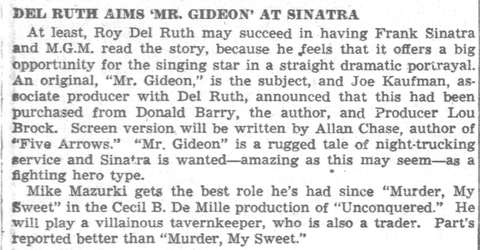
May 29, 1946
Radio
Songs By Sinatra
Network: CBS
Location: Hollywood
Show #38
Sponsor: Old Gold Cigarettes
Time: 9:00PM - 9:30PM (EST) Wednesday
Orchestra Conducted By: Skitch Henderson
Announcer: Marvin Miller
Writer: Glenn Wheaton
Directed By: Mann Holiner
Performers: The Pied Pipers
Guest: Rise Stevens
CBS Broadcast:
1. opening theme: Night And Day
2. They Say It's Wonderful
3. Ol' Man River Pied Pipers
4. Medley of Highlights from first season:
Day By Day/Who Will Be With You When I'm Far Away/
Shoo Fly Pie/Doctor, Lawyer, Indian Chief( Pied Pipers)/ Cement Mixer Put-Ti, Put-Ti, w/Pipers/I'm Always Chasing Rainbows/Lily Belle( Pied Pipers)/You Go To My Head
5.The Song Is You ( Stordahl track Frank made famous) Rise Stevens
6. Strange Music w/ Rise Stevens
7. Full Moon And Empty Arms -- "latest single release"
8. Put Your Dreams Away - sign-off
note: Axel Stordahl was down with a 24 hour bug. Skitch Henderson subbed for him and also played piano on the medley segment.
--Ed
Songs By Sinatra
Guest: Rise Stevens
CBS Broadcast:
Rise Frank
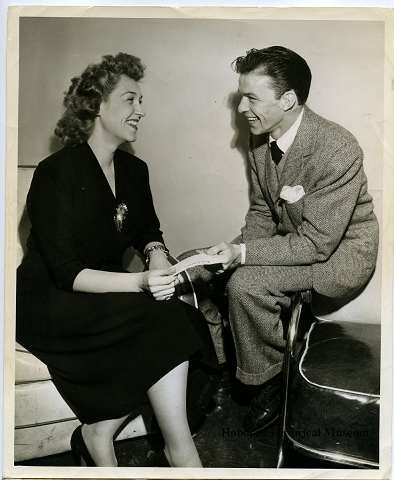
Summer 1946
Frank Sinatra began an affair with Marilyn Maxwell, a twenty-four-year-old MGM contract actress and singer recently divorced from actor John Conte. He quickly told friends he intended to leave Nancy for her. When Nancy found out through mutual friends, she asked press agent George Evans to intervene; Evans warned Maxwell that dating a married man would violate the morals clause in her studio contract, and she backed off — for a time. Source: J. Randy Taraborrelli, Sinatra: Behind the Legend.
[Golden Gate Theatre Marquee]
A photograph captures Sinatra's name lit up on the marquee of San Francisco's Golden Gate Theatre.
Source: Nancy Sinatra, "Frank Sinatra, My Father" (1985).
[Jo Davidson's Clay Bust of Sinatra]
Sculptor Jo Davidson, known for portraying prominent figures of the era including Einstein and Eisenhower, created a clay bust of Sinatra in 1946.
Source: Charles Pignone, "Frank Sinatra 100" (2015).
[Sinatra Fan Club Membership Card]
A 1946 membership card for one of Sinatra's fan clubs is pictured among period memorabilia.
Source: Charles Pignone, "Frank Sinatra 100" (2015).
[Avakian on Sinatra's demeanor]
George Avakian: George Avakian recalled that Sinatra initially treated him dismissively, calling him 'kid' because he didn't know his name, and that colleagues warned newcomers to be careful around him; but Sinatra was surprisingly relaxed and quick (two takes each) on the trio numbers Avakian supervised.
Source: James Kaplan, "Frank: The Voice" (2010)
[Avakian on Sinatra's studio demeanor]
George Avakian: Producer George Avakian recalled a contrasting 1946 Sinatra session in which the singer seemed tense while recording heavily orchestrated ballads but became completely relaxed later in the session while cutting casual numbers with a small jazz trio.
Source: James Kaplan, "Frank: The Voice" (2010)
[Columbia's Voice of Frank Sinatra format]
Kaplan: Sinatra's first album, Columbia's 1946 release The Voice of Frank Sinatra, consisted of four 78 rpm shellac discs holding eight songs.
Source: James Kaplan, "Sinatra: The Chairman" (2015)
[Evans pressures Marilyn Maxwell to end the affair]
Kaplan: George Evans phoned Marilyn Maxwell, invoking her MGM morals clause and Sinatra's status as a married father, pressuring her to end the relationship; she wept, and when Sinatra called her afterward he seemed less devastated than she'd hoped, effectively ending the affair.
Source: James Kaplan, "Frank: The Voice" (2010)
[Frank Sinatra Conducts the Music of Alec Wilder]
Kaplan: Sinatra had previously conducted an orchestra (rather than sung) on the 1946 Columbia album Frank Sinatra Conducts the Music of Alec Wilder, containing six of Wilder's meditative compositions, proving to himself he was more than just a voice.
Source: James Kaplan, "Sinatra: The Chairman" (2015)
[Honorary Oscars for The House I Live In]
Kaplan: LeRoy, producer Frank Ross, Maltz, Meeropol, and Sinatra were all nominated for and received honorary Academy Awards for The House I Live In.
Source: James Kaplan, "Frank: The Voice" (2010)
[Hoover's comment on Detroit bobby-soxers]
J. Edgar Hoover: After receiving Nichols's memo on the Detroit mania, J. Edgar Hoover scrawled that Sinatra was as much to blame as the 'moronic bobby-soxers.'
Source: James Kaplan, "Frank: The Voice" (2010)
[Leo Durocher's baseball suspension and career]
Consiglio: Leo Durocher managed the Brooklyn Dodgers until 1946, when he was suspended from baseball for associating with known gamblers. He went on to manage the New York Giants (late 1940s into the mid-1950s, the period he became close with Sinatra), then the Chicago Cubs and Houston Astros, and coached for the Los Angeles Dodgers in the 1960s.
Source: Tony Consiglio (as told to Franz Douskey), "Sinatra and Me: The Very Good Years" (2012)
[Old Gold Presents Songs by Sinatra radio show]
Kaplan: During the tour, Sinatra commuted back to Los Angeles for his new weekly radio show, Old Gold Presents Songs by Sinatra, opening each broadcast with 'Night and Day' and closing with 'Put Your Dreams Away.'
Source: James Kaplan, "Frank: The Voice" (2010)
[Sinatra attends the Conn-Louis fight]
Kaplan: Sinatra went to the Conn-Louis title fight anyway on a Wednesday night at Yankee Stadium, accompanied by Mr. and Mrs. Toots Shor, Marlene Dietrich, and Joe DiMaggio (in his first season back from the war); Sinatra later called Lana Turner, who was still in town for her Postman Always Rings Twice premiere.
Source: James Kaplan, "Frank: The Voice" (2010)
[Sinatra buys Weehawken house for parents]
Kaplan: Without consulting Nancy, Sinatra paid $22,000 in cash for a new house in Weehawken for his parents Dolly and Marty, further angering his wife, who was trying to control family finances.
Source: James Kaplan, "Frank: The Voice" (2010)
[Sinatra explains Lana Turner affair to Hopper]
Sinatra: Sinatra later told Hedda Hopper that he had no real defense for the affair, saying he had been in a state of total mental confusion.
Source: James Kaplan, "Frank: The Voice" (2010)
[Sinatra first meets the Fischetti brothers]
Frank Sinatra: Sinatra testified he first met Joe Fischetti in 1946 while performing in Chicago, when Joe took him for a ride on his speedboat and later introduced him to his brothers Charlie and Rocco.
Source: James Kaplan, "Frank: The Voice" (2010)
[Sinatra plays Madison Square Garden]
Kaplan: In New York, Sinatra outgrew the Paramount and was booked into Madison Square Garden, which held nearly twenty-five thousand, despite poor sight lines, thick cigarette haze in the balconies, and a bad sound system.
Source: James Kaplan, "Frank: The Voice" (2010)
[Sinatra's Chicago Theatre payday]
Kaplan: At the Chicago Theatre later that spring, Sinatra was paid $41,000 for a week's work, equivalent to nearly $450,000 in today's money.
Source: James Kaplan, "Frank: The Voice" (2010)
[Sinatra's first Columbia recording of Soliloquy]
Kaplan: Sinatra first recorded 'Soliloquy' from Carousel for Columbia in 1946, taking two sessions to lay down the nearly eight-minute piece, which was released as two sides of a twelve-inch 78 rpm record on the label's classical Masterworks division, arranged by Axel Stordahl.
Source: James Kaplan, "Sinatra: The Chairman" (2015)
[Sinatra's last previous number-one single]
Kaplan: Before 'Strangers in the Night' reached number one in 1966, Sinatra's last number-one single had been 'Five Minutes More' back in 1946.
Source: James Kaplan, "Sinatra: The Chairman" (2015)
[Sinatra's penance after the bracelet incident]
Kaplan: After the New Year's confrontation, Sinatra spent a week in silent penance followed by repeated bouquets of flowers, which Nancy ignored; he stayed close to home and didn't return to the recording studio until early February 1946.
Source: James Kaplan, "Frank: The Voice" (2010)
[Sinatra's recording pace, five sessions]
Kaplan: By the time he returned to LA in mid-1946, Sinatra had done five recording sessions and eighteen songs since February, including 'Begin the Beguine,' 'How Deep Is the Ocean?,' and two takes of 'Soliloquy' from Carousel that Kaplan judges did not do the material justice.
Source: James Kaplan, "Frank: The Voice" (2010)
[The House I Live In]
Sinatra kept returning to "The House I Live In": he re-created the short's scenario on his TV variety show around 1950, re-recorded the song for the 1964 Reprise album America, I Hear You Singing, performed it on his 1974 TV concert/album Sinatra: The Main Event, released a duet version with Neil Diamond on 1994's Duets II, and the song was inducted into the Grammy Hall of Fame in 1998.
This film/context matches multiple dated entries in the chronology; the specific date Santopietro is referring to could not be determined with confidence.
Source: Tom Santopietro, "Sinatra in Hollywood" (2008), The Boy Next Door / A Paesano Onscreen
[Toots Shor bars Marilyn Maxwell from the fight]
Kaplan: When Sinatra planned to bring Marilyn Maxwell to the Billy Conn-Joe Louis title bout at Yankee Stadium, restaurateur Toots Shor objected since he was bringing his own wife; Shor enlisted Manie Sacks and George Evans to intervene.
Source: James Kaplan, "Frank: The Voice" (2010)
[Voice of Frank Sinatra as proto-concept album]
Kaplan: Kaplan notes Sinatra had pioneered the concept album approach as early as his 1946 Columbia release The Voice of Frank Sinatra, organizing tracks around a specific mood, a practice he continued and Riddle helped perfect at Capitol.
Source: James Kaplan, "Sinatra: The Chairman" (2015)
[Wilder album released]
Kaplan: Columbia Masterworks released Frank Sinatra Conducts the Music of Alec Wilder (Set M-637) the following spring, featuring six Wilder compositions across three 78-rpm discs, with liner notes by Goddard Lieberson praising Sinatra's conducting.
Source: James Kaplan, "Frank: The Voice" (2010)
[Your Hit Parade moves to California]
Consiglio: Sometime in 1946 or 1947, Your Hit Parade relocated production to California, which suited Frank well since he had begun making movies there.
Source: Tony Consiglio (as told to Franz Douskey), "Sinatra and Me: The Very Good Years" (2012)
[awards]
Sinatra was voted Most Popular Film Star of 1946 by Modern Screen magazine.
No corresponding dated entry could be identified in the chronology for this film/context.
Source: Tom Santopietro, "Sinatra in Hollywood" (2008), All Over the Map
[Ava Gardner's breakout roles in Whistle Stop and The Killers]
Ava Gardner's first solid film part came in 1946's Whistle Stop with George Raft; that same year MGM lent her to Universal to appear in the successful The Killers for $350 a week.
Source: Richard Havers, "Sinatra" (Dorling Kindersley, 2007).
[Bugsy Siegel tries to recruit Sinatra for a Vegas party]
Mobster Bugsy Siegel flew to Los Angeles to persuade Frank, Jimmy Durante, and Lana Turner to attend a party tied to the Flamingo Hotel's opening in Las Vegas. Frank did not end up attending, and FBI suspicions that he'd invested in the hotel proved baseless.
Source: Richard Havers, "Sinatra" (Dorling Kindersley, 2007).
[Major Bowes dies, ending NBC run of Amateur Hour]
NBC continued airing the Original Amateur Hour until 1946, when its host and creator, Major Bowes, died.
Source: Richard Havers, "Sinatra" (Dorling Kindersley, 2007).
[Gift to Buddy Rich]
Sinatra gave drummer Buddy Rich $50,000 to help him start his own band.
Source: George Carpozi Jr., Frank Sinatra: Is This Man Mafia? (New York: Manor Books, 1979).
[The Voice (1946 release) - commercial and influence impact; Frank Military recalling Dean Martin -- critical commentary]
Frank Military: When The Voice was released in 1946, it became both a number-one selling album (in that very early, pre-LP phase of the pop album charts) and a major influence on other singers. “I was working in a record store, and Dean Martin came in every day to see me,” Frank Military remembered. “And one day The Voice album came in, and it sold like hotcakes. I didn’t know Frank, and Dean didn’t know Frank, but the two of us just sat there listening to all four 78s over and over.”
Source: Will Friedwald, "Sinatra! The Song Is You: A Singer's Art" (2018 revised edition), Ch. 4, "With Axel Stordahl" (1943-1948)
[concept albums overview - Columbia's early theme albums -- critical commentary]
Granata argues that although most people regard Sinatra's earliest Capitol efforts as his first concept albums, Columbia was actually assembling cohesively packaged theme albums as early as 1946, originally issued as 78 rpm four-disc sets (eight songs) and later reissued as 10-inch LPs from 1948 on.
Source: Charles L. Granata, "Sessions with Sinatra: Frank Sinatra and the Art of Recording" (1999/2003), Afterword & Appendices A-D
[technique/engineering history -- critical commentary]
Bing Crosby, a friend of Sinatra's and an early financial backer of magnetic tape, pushed for prerecording his radio show (resisted by NBC), moved to ABC in 1946 with a lucrative deal, and by 1948 was recording his Philco Hour on the new Ampex Model 200 tape machine -- helping pioneer the studio adoption of tape that would later shape Sinatra's own Columbia recordings.
Source: Charles L. Granata, "Sessions with Sinatra: Frank Sinatra and the Art of Recording" (1999/2003), Part II: The Columbia Years, 1943-1952
June 1946
[Location filming in New York]
Kaplan: In June 1946 the It Happened in Brooklyn company traveled to New York City for location shooting.
Source: James Kaplan, "Frank: The Voice" (2010)
[Sinatra and Lana Turner dancing photo]
Kaplan: A nightclub photograph from June 1946 shows Sinatra dancing cheek to cheek with Lana Turner, grinning with unrestrained joy while his wedding ring is plainly visible on his hand -- a public image that scandalized observers including Nancy.
Source: James Kaplan, "Frank: The Voice" (2010)
[Sinatra visits Fischetti family home]
Kaplan: According to Sinatra's FBI file, a Selective Service clerk named Frances Duffy reported that Sinatra, accompanied by gangster Charles 'Trigger Happy' Fischetti, visited the Brooklyn home of Fischetti's mother, Mrs. Mary Fischetti, one evening in about June 1946.
Source: James Kaplan, "Frank: The Voice" (2010)
June 5, 1946
Radio
Songs By Sinatra
Network: CBS
Location: Hollywood
Show #39
Sponsor: Old Gold Cigarettes
Time: 9:00PM - 9:30PM (EST) Wednesday
Orchestra Conducted By: Axel Stordahl
Arrangements By: Axel Stordahl
Announcer: Marvin Miller
Writer: Glenn Wheaton
Directed By: Mann Holiner
Performers: The Pied Pipers
Guest: Ed Sullivan, Herb Vigran (Sad Sack)
CBS Broadcast: Wednesday Evening 9 to 9:30 P.M.
1. Night And Day Opening
2. How Cute Can You Be
3. Ed Sullivan presents Sinatra with Modern Screen Award via phone from N.Y.C.
4. Something Old, Something New
5. My Gal Sal (Pied Pipers)
6. I Don't Know Why (Parody with Sad Sack)
7. Sinatra named Outstanding Radio Father of the Year by National Father's Day Committee
8. Come Rain Or Come Shine
9. Put Your Dreams Away (closing) note: Sad Sack was the 13 week summer replacement series, starring Herb Vigran. CBS opted not to pick up the show.
Songs By Sinatra
Network: CBS
Location: Hollywood
Show #39
Sponsor: Old Gold Cigarettes
Time: 9:00PM - 9:30PM (EST) Wednesday
Orchestra Conducted By: Axel Stordahl
Arrangements By: Axel Stordahl
Announcer: Marvin Miller
Writer: Glenn Wheaton
Directed By: Mann Holiner
Performers: The Pied Pipers
Guest: Ed Sullivan, Herb Vigran (Sad Sack)
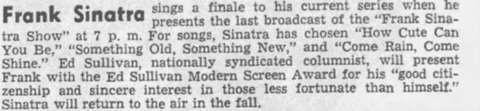
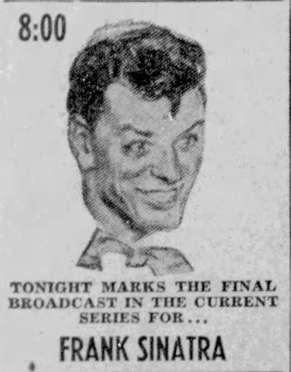
June 6, 1946
Studio
MGM - Los Angeles
IT HAPPENED IN BROOKLYN
Thursday
Orchestra conducted by Johnny Green
Arrangements by Axel Stordahl
The Brooklyn Bridge Part 1
takes 3(2:14) and 9(2:11) were mastered
Sinatra's Vocal Ending Of Bach's Invention #1
piano and Sinatra
one take (:15)
The Brooklyn Bridge Part 2
take 7 (1:02) was mastered (not used in film)
The Brooklyn Bridge orch. only
two takes (:21) both mastered
June 11, 1946
Studio
M-G-M Studios, Hollywood , California
"La Ci Darem La Mano" from Mozart's opera "Don Giovanni"
For the film "It Happened in Brooklyn"
Frank Sinatra and Kathryn Grayson, vocals
Pianos: Andre Previn and Johnny Green
NOTE: Sinatra Scholar Ed O'Brien points out that on this date Sinatra and Grayson would record this duet backed by the twin piano sound of Andre Previn and Johnny Green. They would do seven takes with a running time of 3:13. This recording, however, would not be used in the film.
On July 18, 1946 a second attempt would prove more successful with just Previn on piano backed by the M-G-M Orchestra. Takes 14, 25, and 27 would be mastered. Take 25 was used in the movie.
Scott Henderson:
I have the Kathryn Grayson LP "Opera and Song" on the Azel Records label and it contains the June 11th, 1946 duet of "La Ci Darem La Mano" not used in the film. It's not as good as the July 18, 1946 effort but it's still nice to listen to.
[image referenced in source but could not be recovered]
M-G-M Studios, Hollywood , California
"La Ci Darem La Mano" from Mozart's opera "Don Giovanni"
For the film "It Happened in Brooklyn"
Frank Sinatra and Kathryn Grayson, vocals
Pianos: Andre Previn and Johnny Green
Kathryn Grayson LP "Opera and Song" on the Azel Records label contains the June 11th, 1946 duet of "La Ci Darem La Mano" not used in the film.
[image referenced in source but could not be recovered]
[image referenced in source but could not be recovered]
June 12, 1946
Concerts
Chicago Stadium, Chicago, IL
9th annual Knights of Columbus Barbecue and Youth Benefit Frank Sinatra and Eddy Howard and his Orchestra
Chicago Stadium, Chicago, IL
9th annual Knights of Columbus Barbecue and Youth Benefits Frank Sinatra and Eddy Howard and his Orchestra
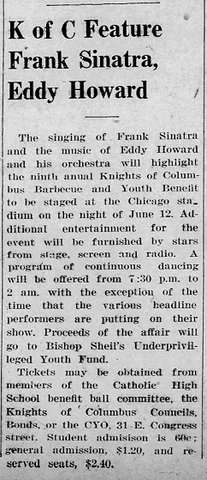
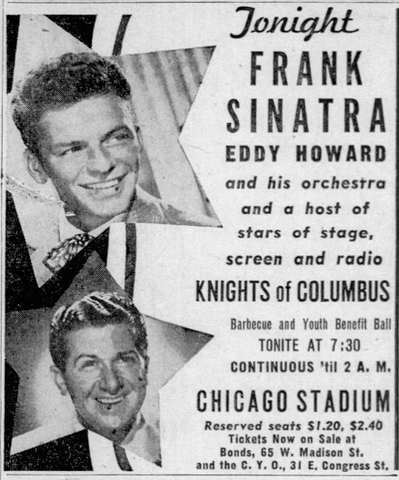
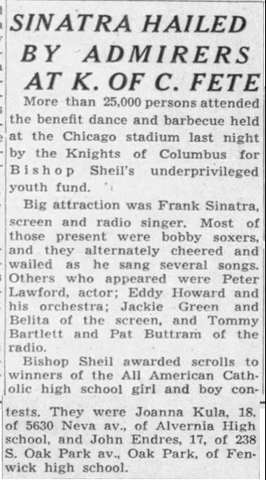
June 16, 1946
Radio
Father's Day Program
National Father's Day Committee syndication.
Frank Sinatra, Alan Baxter, Hazel Shermet, Tom Hudson, William Wyatt, Jerry Macy, Bill Adams,
Writer: Harry Bailey
Director: Tom Kellerher
Notes: TT: 15mins. Audio condition: Very good to excellent. Complete.
Ed O'Brien:
Show was not aired in the greater New York area.
Frank was the Radio Father of the Year.
Television
None
June 19, 1946
The Bronx, New York City, New York
Original caption: Before Joe Louis and Billy Conn squared off in the big fight at Yankee Stadium “The Voice,” Frank Sinatra in person, has a word to...
Ben Grauer Frank Sinatra
Sinatra and Delores Hope
note: First Conn-Louis meeting in 1941 was a doozy. Conn had the fight won after 12 rounds. All he had to do was stay away from the Brown Bomber for the last three rounds. Unfortunately an attack of hubris got in the way. Conn thought he could win by a knockout and started slugging toe-to-toe with the great man. Louis ko'd him in the 13th round. Took Joe eight rounds to end the rematch in 1946. Frank always bet on Louis.
Ed
[image referenced in source but could not be recovered]
[image referenced in source but could not be recovered]
June 23, 1946
Radio
HOUR OF MYSTERY
Network: ABC-RADIO
Sunday evening
Time: 10:00 PM - 11:00 PM EST
Episode: "Turn On The Heat"
Starring: Frank Sinatra, Jeanne Cagney, Bette Garde
Written By: A.A. Fair
Musical Director: Harold Levey
Directed By: Kenneth Webb
Turn on the Heat (June 23, 1946, ABC)
Based on the novel by A.A. Fair
Adapted by Welbourne Kelly
Starring Frank Sinatra as Donald Lam
Supporting cast:
Bertha Cool Bette Garde
Marion Dunton Jeanne Cagney
Dr. Altamont Alexander Scourby
Mrs. Lintig Laura Martin
Commissioner Harris Richard Coogan plus the following actors:
Sybil Trent
Thelma Ritter
Ted Jewett
William Woodson note: Thelma Ritter was a writer on radio shows before turning to acting. She wrote for some of Frank's shows in 1943-44. She landed her first film role in 1947 and would go on to receive six Academy
Award nominations for Best Supporting Actress.
I wonder if Frank and Thelma reminisced about
"Turn On The Heat" while filming "A Hole In The
Head" in 1959 ?
Ed
Ed O'Brien:
This is one that got away. I don't believe any collector has a copy of this hour crime drama. James Cagney's sister, Jeanne, was Frank's co-star in this thriller. I believe there was some singing involved because there is a photo of Frank and Mr. Levey checking over the musical cues for the show.
Television
None
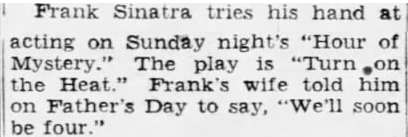
July 1946
[Martin and Lewis's first pairing]
Kaplan: In July 1946, facing being fired from the 500 Café for a weak solo act, comic Jerry Lewis proposed pairing with a singer he'd met at New York's Glass Hat -- Dean Martin -- launching the Martin and Lewis act.
Source: James Kaplan, "Sinatra: The Chairman" (2015)
[Sinatra returns to LA, pursues Turner]
Kaplan: Sinatra returned to Los Angeles in mid-July 1946 and immediately resumed his affair with Lana Turner, despite an exhausting schedule of concerts, filming, speeches, and recording.
Source: James Kaplan, "Frank: The Voice" (2010)
July 1, 1946
Steeplechase Park, Coney Island, New York
Anchor Club Picnic for Orphans
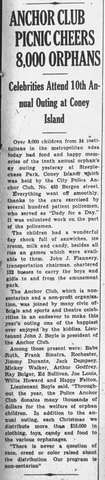
July 7, 1946
[MGM production memo on Sinatra no-show]
An MGM production memo for July 7, 1946 recorded that the company had an early call, waited on Sinatra until 5:50 p.m. at double-time pay for the crew, and he never showed up.
Source: James Kaplan, "Frank: The Voice" (2010).
July 17, 1946
[MGM production memo, Sinatra ill]
MGM production memo: An MGM production memo dated July 17, 1946 reported that Sinatra had arrived from New York but claimed illness and did not work that day.
Source: James Kaplan, "Frank: The Voice" (2010).
July 18, 1946
Studio
M-G-M Studios, Hollywood , California
"La Ci Darem La Mano" (from Mozart's "Don
Giovanni" for the film "It Happened in Brooklyn)
Frank Sinatra and Kathryn Grayson, vocals
Andre Previn, piano
M-G-M Orchestra
NOTE: Sinatra Scholar Ed O'Brien points out that this was the second attempt to record this number for the film. It was a successful effort. The first attempt, that of June 11, 1946, featured the twin pianos of Andre Previn and Johnny Green, but this second try used only the piano of Andre Previn. Takes 14, 25, and 27 would be mastered. Take 25 was used in the film.
"Whose Baby Are You"
Andre Previn on piano
Ed O'Brien:
"Whose Baby Are You" required 8 takes. Takes 7 & 8 were mastered, both ran .34 secs.
Sinatra - vocal
Previn - piano
Johnny Green - conducted
July 20, 1946
Radio
A Tribute To Jerome Kern
CBS
Saturday evening
Hollywood Bowl
1. Ol Man River
Ed O'Brien:
Arthur Freed organized a tribute to Kern at the Bowl with a number of MGM stars. Lena Horne was taken ill just prior to the show and Judy Garland did her portion of the program. Robert Walker, who had been very ill, distinguished himself with an outstanding performance that evening.
There were appearances by Kathryn Grayson, Johnny Green, Lennie Hayton, Bill Roberts, Virginia O'Brien and Judy Garland.
Near the end of the evening's performance Frank Sinatra sings "Ol' Man River." It is the exact same arrangement heard in the film "Till The Clouds Roll By."
P.S. There were live performances that evening. Garland was outstanding. Grayson, Roberts, O'Brien also sang.
Brian Chearno:
For some time people were not convinced that Sinatra was in attendance or sang the above song. Last year I began checking. First I confirmed that the recording is not from "Till The Clouds Roll By." It is completely different. Then I dug through the archives and found that Sinatra was in attendance and was reviewed as singing. The performance is completely different from the film recording and news reports confirm him being there.
Concerts
A Tribute To Jerome Kern, Hollywood Bowl, Los Angeles
Saturday evening
1. Ol Man River
Hillcrest Country Club, Los Angles
(25th Anniversary Benefit)
Stars inc Frank Sinatra, A Jolson, Jack Benny, Danny Thomas, Gene Kelly, Margaret O'Brien, Van Johnson, Mickey Rooney, Red Skelton, Jose Iturbi, Xavier Cugat, Carmen Miranada, Danny Kaye, George Burns M.C was Jack Benny---att was about 800
Note: Apologies to Fred W who passed this along in 2017 and it was dismissed. I did some digging and verified the event. Review in EXTRA section below. --Scott
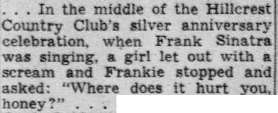
A Tribute To Jerome Kern, Hollywood Bowl, Los Angeles
Saturday evening
1. Ol Man River – Frank Sinatra
Thanks to Sinatraphile Margriet for sending these photos along
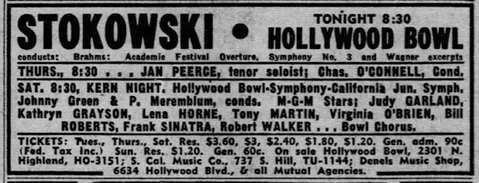
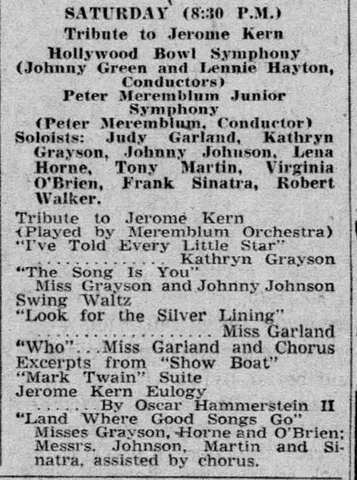
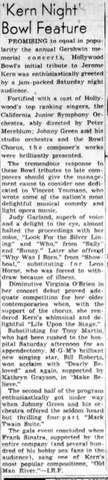
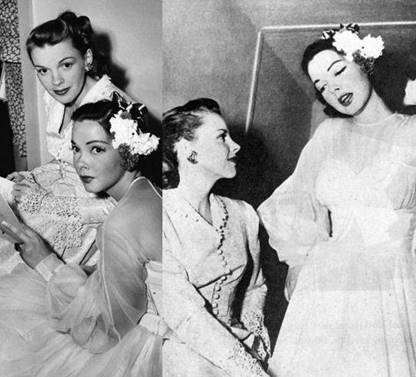
Hillcrest Country Club, Los Angles
(25th Anniversary Benefit)
Stars inc Frank Sinatra, A Jolson, Jack Benny, Danny Thomas, Gene Kelly, Margaret O'Brien, Van Johnson, Mickey Rooney, Red Skelton, Jose Iturbi, Xavier Cugat, Carmen Miranada, Danny Kaye, George Burns M.C was Jack Benny---att was about 800 note: Sullivan's description of Jolson's magic is so accurate. I have the George Jessel Friars Tribute from 4-4-48. The dais had an incredible array of stars and all of them are very entertaining. Jolson is the last to perform before Jessel is set to give his speech. Jolie electrified the room. The applause and awe he earned that night is something only a few performers were ever truly capable of doing. --Ed
The Hillcrest was the later performance by F.S. He sang "Soliloquy.." Jolson closed the show around one a.m. I called Hillcrest and asked about the anniversary celebration. They have a history of everything, but for security reasons they will not give out any information.
--Ed
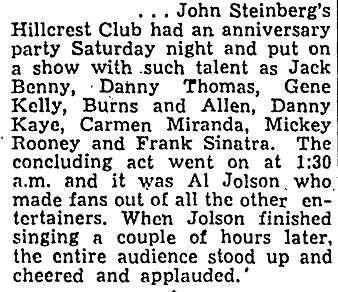
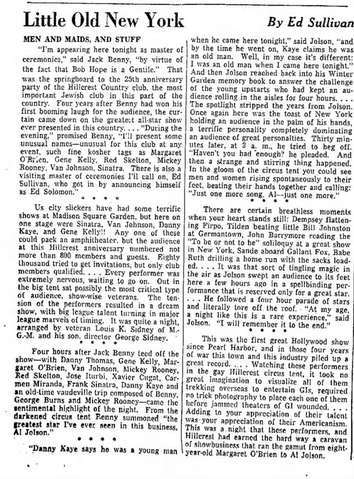
July 24, 1946
Studio
Hollywood
HCO1922 The Things We Did Last Summer
(S. Cahn/J. Styne)
E.H. Morris & Co. (ASCAP) 1946
Arranged & Conducted by Axel Stordahl
-1(3:15) CD: Columbia Years 43-52 Vol. 4
CD: 44236 Sinatra Rarities
LP: CL-1136 Put Your Dreams Away
78: 37089
NOTE: Sinatra Scholar Ed O'Brien believes this may be the best of all the Sinatra songs from the 1940's that idealized romantic love. And Sinatra was so good at making you believe it!
HCO1923 You'll Know When It Happens
(C. Lombardo/J.J. Loeb)
Bourne, Inc. (ASCAP) 1946
Arranged & Conducted by Axel Stordahl
-1 (2:54) CD: Columbia Years 43-52 Vol. 4
**: DO 3041 ( Australia )
HCO1924 This Is The Night
(R. Evans/L. Bellin)
Jefferson Music Co. (ASCAP) 1946
Arranged & Conducted by Axel Stordahl
-1 (3:05) CD: Columbia Years 43-52 Vol. 4
78: 37193
78: 38853
HCO1925 The Coffee Song (They've Got An Awful Lot Of Coffee In Brazil) (B. Hilliard/D. Miles)
Valiant Music Co. (ASCAP) 1946
Arranged & Conducted by Axel Stordahl
-1 (2:30) CD: Columbia Years 43-52 Vol. 4
CD: 09274 Greatest Hits-The Early Years, Vol.1 (alt take)
LP: CL-2474 Greatest Hits, The Early Years, Vol.1 (alt take)
78: 37089
Violins: W. Bloom, H. Bluestone, W. Callies, S. Cytron, P. Ellis, S. Freed, Jr., G. Joyce, G. Kast, M. King, S. Middleman, M. Russell, O. Vail; Violas: R. Robyn, S. Spiegelman, D. Sterkin; Cellos: C. Bernard, F. Goerner, J. Sewell, Saxes: H. Beau, F. Dornbach (maracas on HCO1925) H. Haymer, J. Kinsler, F. Stulce; Trumpets: D. Anderson, R. Linn, R, Zarchy; Trombones: E, Kuczborski, G. Jenkins, W. Schaefer; Piano: M. Mclntyre; Guitar: D. Barbour; Bass: P. Stephens; Drums: R. Hagan; Horns: R. Perissi; Harp: M. Cambern
note: Frank would get two Top 10 hits from this session. Columbia released a
single in late August. The A-side was "The Coffee Song." It was reach
#6 in Billboard and chart for 12 weeks. The flip side, "The Things We Did
Last Summer would chart for 6 weeks. beginning in October, an peak at
#8.
Indianapolis Star
July 30, 1946
Studio
Hollywood
HCO1930 Among My Souvenirs
(E. Leslie/H. Nicholls)
(from The Best years Of Our Lives)
T.B. Harms, Inc./Crawford Music, Inc. (ASCAP) 1927
Arranged & Conducted by Axel Stordahl
-PB (3:16) CD: Columbia Years 43-52 Vol. 4
-1 LP: HS 11390 Frank Sinatra
LP: CL-1359 Come Back To Sorrento
78: 50003
78: 37161
.
HCO1931 I Love You
(R. Wright/G. Forrest/E. Grieg)
(from Song Of Norway )
Chappell & Co., Inc. (ASCAP) 1944
Arranged & Conducted by Axel Stordahl
-1 (2:41) CD: Columbia Years 43-52 Vol. 4
LP: HS 11277 Someone To Watch Over Me
78: 38684
HCO1932 September Song
(K. Weill/M. Anderson)
(from Knickerbocker Holiday)
DeSylva, Brown & Henderson (ASCAP) 1938
Arranged & Conducted by Axel Stordahl
-1 (3:06) CD: Columbia Years 43-52 Vol. 4
CD: 09372 Greatest Hits-The Early Years, Vol. 2
LP: C6X-40343 The Voice-The Columbia Years 43-52
LP: CL-2572 Greatest Hits, The Early Years, Vol. 2
78: 50003
78: 37161
HCO1933 Blue Skies
(I. Berlin )
(from Blue Skies)
Berlin Music, Inc. (ASCAP) 1927
Arranged & Conducted by Axel Stordahl
-1 (2:28) CD: Columbia Years 43-52 Vol. 4
LP: C6X-40343 The Voice-The Columbia Years 43-52
LP: CL-2740 The Essential Frank Sinatra, Vol. 2
LP: CL-902 That Old Feeling
HCO1934 Guess I'll Hang My Tears Out To Dry
(J. Styne/S. Cahn)
Chappell & Co., Inc. (ASCAP) 1944
Arranged & Conducted by Axel Stordahl
-1 (3:24) CD: Columbia Years 43-52 Vol. 4
LP: C6X-40343 The Voice-The Columbia Years 43-52
LP: CL-2740 The Essential Frank Sinatra, Vol. 2
78: 38474
Violins: W. Bloom, W. Callies, W. Edelstein, S. Freed, Jr., D. Frisina, H. Halbert, S. Kindler, M. King, E. Lamas, D. Lube, M. Russell, G. Vinci; Violas: A. Hochstien, A. Neiman, S. Spiegelman; Cellos: F. Goerner, J. Sewell, J. Tannenbaum; Saxes: F. Dornbach, H. Haymer, H. Klee, J. Kinsler; Trumpets: C. Hurley, E. Klein, R, Zarchy; Trombones: H. Bohannon, G. Jenkins, E, Kuczborski; Piano: M. Mclntyre; Guitar: D. Barbour; Bass: P. Stephens; Drums: R. Hagan; Horns: R. Perissi; Harp: A. Mason
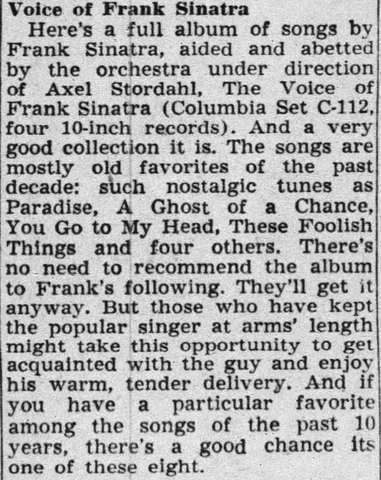
August 1946
[Ava Gardner's breakout role]
Kaplan: In August 1946, Ava Gardner had her career breakthrough starring opposite Burt Lancaster in The Killers, an adaptation of a Hemingway story, catapulting her from a minor MGM contract player to the A-list and forging her friendship with Lana Turner.
Source: James Kaplan, "Frank: The Voice" (2010)
[Fischetti brothers request hotel help for Army-Notre Dame game]
Kaplan: In August 1946 Charlie and Joe Fischetti asked Sinatra to secure them deluxe hotel reservations (likely at the Waldorf) for the Army-Notre Dame football game at Yankee Stadium, which ended 0-0; the brothers thanked Sinatra with two dozen custom-made shirts.
Source: James Kaplan, "Frank: The Voice" (2010)
[Phil Silvers loses Copa partner]
Kaplan: Shortly after Ragland's death, Jules Podell of the Copacabana told Phil Silvers -- booked there as half of a duo act with Ragland -- that he must perform solo or be banned from the club forever.
Source: James Kaplan, "Frank: The Voice" (2010)
[Blue Skies -- critical commentary]
In 1945, Sinatra joined his ex-boss at the 400 Restaurant in New York City to celebrate the tenth anniversary of the Tommy Dorsey Orchestra and sang "Blue Skies" with the band. He did the same in 1955, honoring the twentieth anniversary; on that occasion, he volunteered to sing even before Tommy could ask him, and wound up doing three numbers with the reunited Dorsey Brothers orchestra. (The 1955 reunion was included on the 2009 boxed set Sinatra: New York.)
This song/context matches multiple dated entries in the chronology; the specific date Friedwald is referring to could not be determined with confidence.
Source: Will Friedwald, "Sinatra! The Song Is You: A Singer's Art" (2018 revised edition), Ch. 3, "With Tommy Dorsey" (1940-1942)
[Blue Skies / Among My Souvenirs -- critical commentary]
On some of the up-tempos of the period, usually arranged by George Siravo (about whom more later), he’s brash and extroverted: “Blue Skies” marks one of Sinatra’s fiercest swingers ever, with vital contributions from the soloing sidemen, including his favorite tenor of the times, Herbie Haymer. Yet on the same session in 1946, he and Stordahl also produced one of their most hauntingly introspective works, “Among My Souvenirs” (by coincidence, like “Blue Skies,” written in 1927). Sinatra transforms it into an even more personal soliloquy than Rodgers and Hammerstein’s “Soliloquy,” in which Sinatra recites the text almost as if he were thinking out loud. Often the more conceptually spare the libretto—“Embraceable You,” for one, leaves a lot to the imagination—the more Sinatra dreams up to do with it. Here, as on the slightly fuller “All Through the Day,” he passes through several emotional levels within the same text.
This song/context matches multiple dated entries in the chronology; the specific date Friedwald is referring to could not be determined with confidence.
Source: Will Friedwald, "Sinatra! The Song Is You: A Singer's Art" (2018 revised edition), Ch. 4, "With Axel Stordahl" (1943-1948)
August 4, 1946
Radio
Drew Pearson, ABC
Frank Sinatra subbed for Drew Pearson
Television
NONE


Drew Pearson, ABC
Frank Sinatra subbed for Drew Pearson
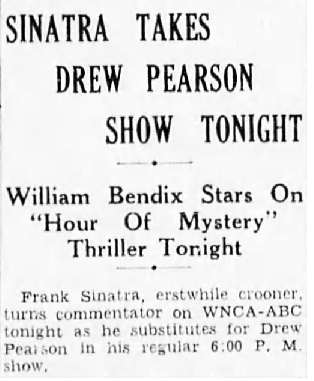
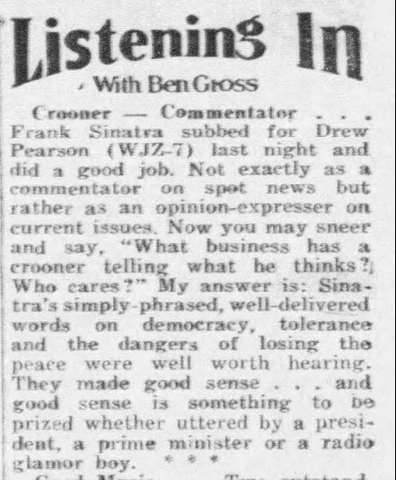
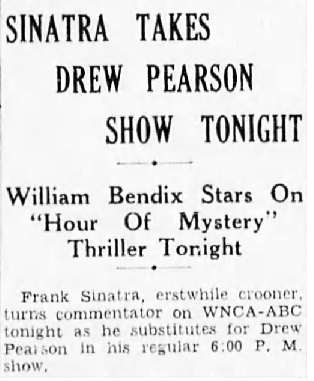
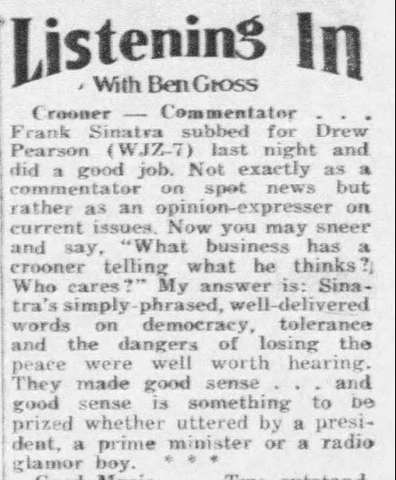
August 8, 1946
Studio
Hollywood
HCO1945 Adeste Fideles (O Come All Ye Faithful)
(Traditional)
Public Domain
Arranged & Conducted by Axel Stordahl
-1 (2:36) CD: Columbia Years 43-52 Vol. 5
CD: 40707 Christmas Dreaming
LP: HL-7400 Have Yourself A Merry Little Christmas
CL-1032 Christmas Dreaming
78: 50079
78: 38256
78: 37145
HCO1946 Lost In The Stars
(K. Weill/M. Anderson)
(from Lost In The Stars)
Crawford Music Corp. (ASCAP) 1946
Arranged & Conducted by Axel Stordahl
-1 (3:18) CD: Columbia Years 43-52 Vol. 5
LP: C6X-40343 The Voice- The Columbia Years, 43-52
LP: CL-1297 The Broadway Kick
LP: CL-1136 Put Your Dreams Away
78: 38650
HCO1947 Jingle Bells w/The Ken Lane Singers
(J.S. Pierpont)
Public Domain
Arranged & Conducted by Axel Stordahl
-1 (2:33) CD: Columbia Years 43-52 Vol. 5
CD: 40707 Christmas Dreaming
LP: HL-7400 Have Yourself A Merry Little Christmas
LP: CL-1032 Christmas Dreaming
78: 38257
78: 37152
HCO1948 Falling In Love With Love
(R. Rodgers/L. Hart)
(from The Boys From Syracuse )
Chappell & Co., Inc. (ASCAP) 1938
Arranged & Conducted by Axel Stordahl
-1 (2:45) CD: Columbia Years 43-52 Vol. 5
LP: C2X-40897 Hello Young Lovers
LP: CL-606 Frankie
Violins: H. Bluestone. W. Callies, P. Ellis, S. Freed, Jr., G. Joyce, G.
Kast, S. Kindler, M. King, D. Lube, S. Middleman, M. Russell, M. Sosson;
Violas: P. Robyn, S. Spiegelman, D. Sterkin; Cellos: C. Bernard, F. Goerner,
J. Sewell; Saxes: F. Dornbach, J. Dumont, H. Haymer, J. Kinsler, F. Stule;
Horns: J. Cave; Trumpets: E. Klein, R. Linn, R. Zarchy; Trombones: H.
Bohannon, E. Kuczborski, E. Smithers; Piano: M. Mclntyre; Guitar: A. Reuss;
Bass: A. Shapiro; Drums: R. Hagan; Harp: M. Cambern
[Lost in the Stars -- critical commentary]
Sinatra recorded Kurt Weill/Maxwell Anderson's "Lost in the Stars" in August 1946, three years before the Broadway show Lost in the Stars opened -- how he obtained the song is unexplained. The 1946 vocal (3:13, gentle and belt-free) reads as a lullaby to his children; the 1963 Concert Sinatra remake with Riddle's famous 'polytones' introduction (strings as starscape, woodwinds as twinkling stars) has 'considerably more teeth,' suggesting Sinatra's growing disillusionment that the postwar promise of racial progress had gone unfulfilled -- an eerie anticipation, Friedwald argues, of the national disillusionment after JFK's assassination weeks later.
This song/context matches multiple dated entries in the chronology; the specific date Friedwald is referring to could not be determined with confidence.
Source: Will Friedwald, "Sinatra! The Song Is You: A Singer's Art" (2018 revised edition), Ch. 8, "Gordon Jenkins" (1956-1981)
August 13, 1946
Radio
100th Anniversary Of American Flag Raising Over Los Angeles
Time: 10:30-11PM
Network: WJZ
Performers: Tyrone Powers, Frank Sinatra, others
Ed O'Brien:
COMMEMORATING Centennial anniversary of raising flag over Los Angeles, ABC Aug. 13 airs full network half-hour with George Jesse] as m. c.; Gov. Earl C. Warren, Walter Huston,
Meredith Wilson, Frank Sinatra, Judy Garland,
Margaret O'Brien, speakers.
Television
NONE
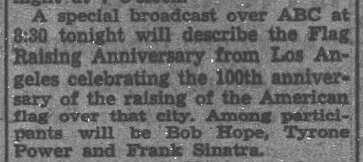
August 20, 1946
[Death of Rags Ragland]
Comedian Rags Ragland died of acute kidney failure on August 20, 1946, three days before his 41st birthday, reportedly following an overindulgent Mexican vacation. It was the first time Sinatra witnessed the death of a close friend; he kept vigil at the hospital with Phil Silvers.
Source: James Kaplan, "Frank: The Voice" (2010).
August 21, 1946
Memorial Services for Rags Ragland, Hollywood
Sinatra sang and Phil Silvers did the eulogy
On August 23rd, Funeral Services were held in Loiusville, Kentucky for Ragland and the The Courier-Journal from Louisville on August 22, mentions that Sinatra sang at the Hollywood memorial services on August 21st:
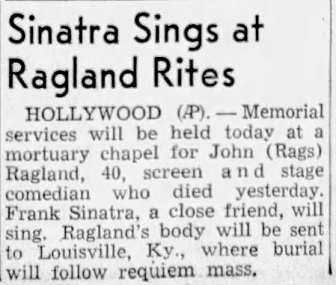
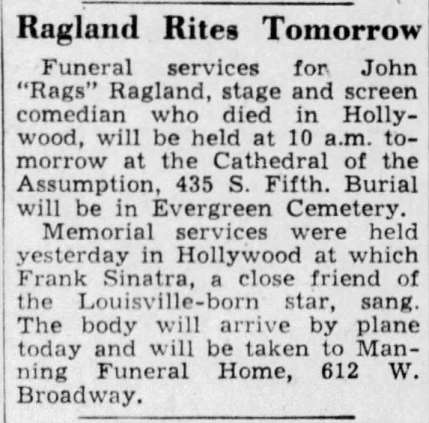
August 22, 1946
Studio
Hollywood
HCO1969 Hush-A-Bye Island
(J. McHugh/H. Adamson)
(from Smash Up)
Melrose Music Corp. (ASCAP) 1946
Arranged & Conducted by Axel Stordahl
-1 (3:19) CD: Columbia Years 43-52 Vol. 5
78: 37193
HCO1970 So They Tell Me
(H. Mott/J. Gale/A. Kent)
Barton Music Corp. (ASCAP) 1946
Arranged & Conducted by Axel Stordahl
-1 (3:23) CD: Columbia Years 43-52 Vol. 5
HCO1971 There's No Business Like Show Business
(I. Berlin)
(from Annie Get Your Gun)
Berlin Music Co. (ASCAP) 1946
Arranged & Conducted by Axel Stordahl
-1 (3:19) CD: Columbia Years 43-52 Vol. 5
LP: C6X-40343 The Voice- The Columbia Years, 43-52
LP: CL-1297 The Broadway Kick
78: 38829
HCO1972 (Once Upon A) Moonlight Night
(S. Clare/I. Bibo)
Sinatra Songs, Inc. (ASCAP) 1947
Arranged & Conducted by Axel Stordahl
-1 (3:05) CD: Columbia Years 43-52 Vol. 5
78: 38316
Violins: H. Bluestone. W. Callies, P. Ellis, S. Freed, Jr., G. Joyce, G.
Kast, M. King, E. Lamas, S. Middleman, M. Russell, F. Slatkin, M. Sosson;
Violas: P. Robyn, S. Spiegelman, D. Sterkin; Cellos: F. Goerner, J. Sewell,
J. Tannenbaum; Saxes: F. Dornbach, J. Dumont, H. Haymer, J. Kinsler, F. Stule; Horns: J. Cave; Trumpets: D. Anderson, R. Linn, R. Zarchy; Trombones: H. Bohannon, G. Jenkins, E. Smithers; Piano: M. Mclntyre; Guitar: A. Reuss;
Bass: A. Shapiro; Drums: R. Hagan; Harp: M. Cambern
[Sinatra records after Ragland's death]
Two days after Ragland's death, on a Thursday, Sinatra recorded four numbers at CBS including 'There's No Business Like Show Business'; Kaplan describes the performance as dispirited given his grief.
Source: James Kaplan, "Frank: The Voice" (2010).
August 26, 1946
Radio
AFRS BROADCAST:SECOND ANNUAL "MUSIC FOR THE WOUNDED"
Hollywood Bowl
August 26, 1946
Broadcast all over the world by short wave -- ran for 150 minutes. Part 1
Hollywood Bowl Orchestra playing a collection of classic and contemporary composers. Orchestra conducted by Leopold Stokowski
Part 2
"Anything Can Happen" featuring stars of radio and motion pictures
Announcer: Ken Carpenter
Master of Ceremonies: Jack Haley
Guests: Robert Montgomery, Bing Crosby, Frank Sinatra, Lena Horne,
Lucille Ball, Bob Burns, Danny Thomas, Eddie Rio, Mickey Rooney Highlights of second half:
Robert Montgomery opened the proceedings by reading a letter from a wounded G.I.
The Bowl's famous shell, hanging over the stage, was removed to accommodate the 250 piece orchestra.
Haley introduced the first act:
Bing Crosby, with John Scott Trotter conducting, sang Irving Berlin's "They Say It's Wonderful" and "Blue Skies"(ballad version) Bob Burns does a comic routine
Orchestra leaders and sidemen play a number of popular songs
Leaders: Harry James, Lawrence Welk, David Rose, Phil Harris,
Freddy Martin, Meredith Wilson, Emil Coleman
Sidemen: Charlie Barnet, Carmen Cavallero, Billy Butterfield
No introduction for Frank Sinatra
Kids about Crosby, calls him "my father" and tells audience that his Berlin song is almost as good as Bing's selection. Frank sings "The Girl That I Marry." Then gives a big build up to his second number "Soliloquy." Then he tells the audience he had just received a new song that is a parody of "Ol' Man River." He is sure Jerome Kern would enjoy it if he were there.. Frank then sings "Ol' Man Crosby." Axel Stordahl conducted for Frank
Jack Haley does a song and dance routine.
Lucille Ball is introduced. She presents an award to the AFRS for their great ability to offer American music overseas. She then does a skit with Haley
David Rose conducts his own composition "Holiday For Strings"
Haley introduces Danny Thomas -- does comedy routine
Haley introduces top MGM star of her day "Miss Lena Horne."
She sings "Can't Help Lovin' That Man Of Mine" and "The House I Live In." Lennie Hayton conducts for her.
AFRS signs off.
Ed
Television
NONE
Concerts
Second Annual Music For The Wounded Concert, Hollywood Bowl, Los Angeles, California Hollywood Bowl, Los Angeles
"Music for the Wounded" concert
Leopold Stokowski conducting:
1. Benjamin Britten: Soirées Musicales opus 9 (1936): March
2. Johann Strauss Jr.: Die Fledermaus (1874): waltz
3. Tchaikovsky: Marche Slave in B-flat minor, opus 31
4. Igor Stravinsky conducting: Firebird Suite (1945 version)
5. Sigmund Romberg conducting: medley of light opera selections by Victor Herbert
6. Sigmund Romberg conducting: music from 'The Student Prince'
7. Robert Montgomery - reading
8. Bing Crosby - They Say It's Wonderful
9. Bing Crosby - Blue Skies
10. Bob Burns - Comedy Monologue
11. Band - Lady Be Good
12. Lawrence Welk - Tea for Two
13. Freddy Martin - To Each His Own
14. Billy Butterfield - Star Dust
15. Charlie Barnet - Cherokee
16. Leonard Sues - Blue Prelude
17. Harry James - Ciribiribin
18. Carmen Cavalerro - Till The End of Time
19. Bob Burns - I Ain't Got Nobody
20. Phil Harris - Lady Be Good
21. Frank Sinatra - The Girl That I Marry
22. Frank Sinatra - Soliloquy - from 'Carousel'
Note: Sinatra also did a version of Ol' Man Crosby -- a parody of Ol' Man River
Second Annual Music For The Wounded, Hollywood Bowl, Los Angeles, California Frank Sinatra, Bob Hope, Bing Crosby, Mickey Rooney, Lena Horne, Marilyn Maxwell, David Rose and Sigmund Romberg, Dorothy Lamour, Phil Harris, Bob Burns, Leopold Stokowski, Igor Stravinsky
Variety
9-2-46
September 1946
[Sinatra skips rehearsal and photo shoot]
MGM production memo: An exasperated MGM production memo from mid-September 1946 recorded that Sinatra missed a scheduled 10:30 rehearsal with choreographer Jack Donohue and a publicity photo appointment, arriving at 2:20 p.m., shooting a poster still, running through a number once, then leaving at 2:45 p.m. calling it a 'cinch.'
Source: James Kaplan, "Frank: The Voice" (2010)
September 2, 1946
Concerts
Labor Day Concert, Hollywood Bowl, Hollywood, CA
Sinatra, Arthur Rubinstein, Gregory Peck, Vincent Price. Alfred Drake, Earl Robinson, Franz Waxman
Labor Day Concert, Hollywood Bowl
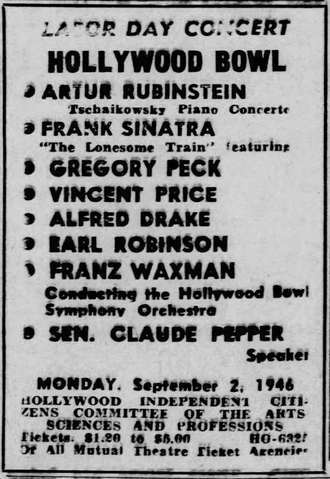
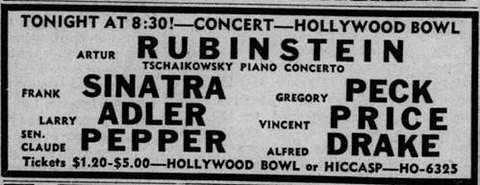
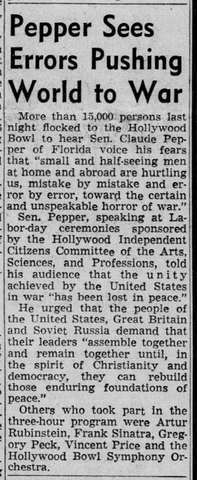
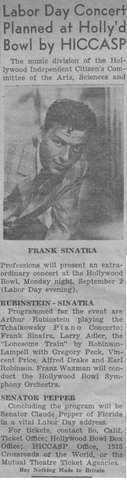
Labor Day Concert, Hollywood Bowl
Los Angeles Evening Citizen's News
9-3-46 note: Frank sang "Soliloquy" from "Carousel."
L.A. paper claims it was his first concert performance of the song. That is incorrect.
He did it at the Bowl on 8-26-46.
Ed
Frank photographed with world renowned classical pianist, Arthur Rubinstein in 1946
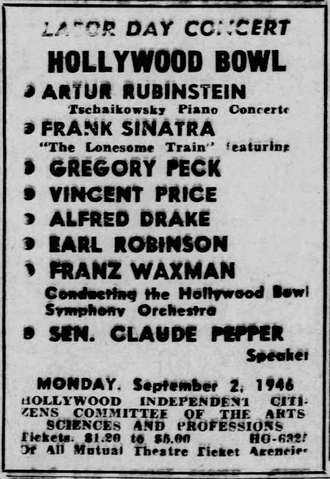
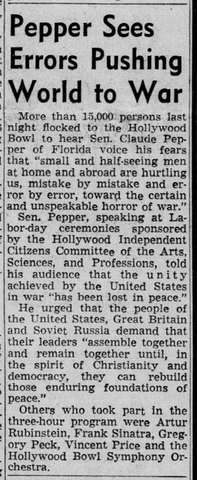
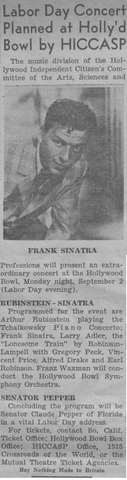
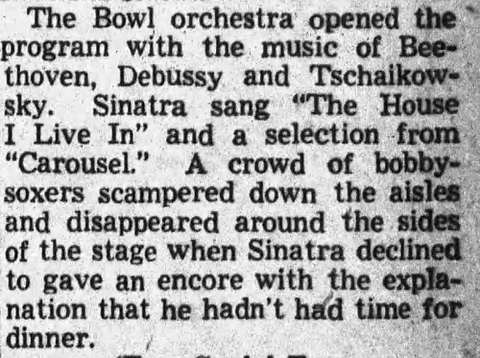
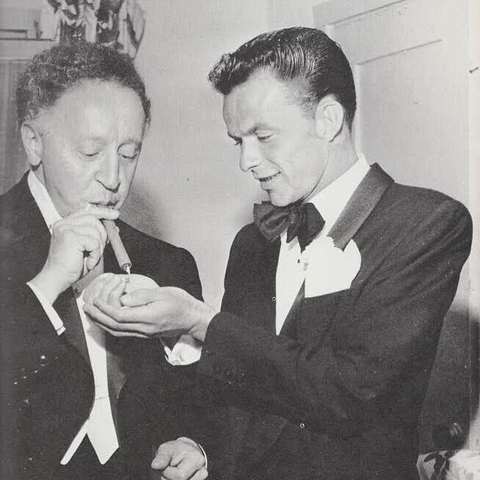
September 4, 1946
Emacs!
Variety
9-4-46
Variety
9-4-46
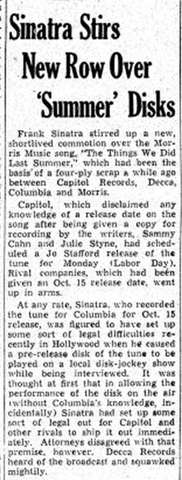
[Sinatra leaves set for New York without permission]
MGM production memo: MGM's production memo for Wednesday, September 4, 1946 (Labor Day week) noted that Sinatra called in claiming illness, but studio staff later learned he had left for New York without permission.
Source: James Kaplan, "Frank: The Voice" (2010).
September 5, 1946
Concerts
Copacabana, New York City w/Phil Silvers - Comedy Only
Copacabana , New York City w/Phil Silvers - Comedy Only
Frank & Julie
March 14, 2017
By Will Friedwald for Cabaret Scenes
Julie Wilson, Phil Silvers, Frank Sinatra
Copa, NYC, 1946
A lot was riding on the team’s September 1946 opening at the Copa, but, to everyone’s horror, Ragland died suddenly of Uremia only about two weeks prior. Silvers had decided to go on as a solo act, but was nervous and frightened without his partner. He asked his longtime friend Frank to help out, but Sinatra was contractually obligated to stay in Hollywood, where he was supposed to be filming his latest MGM movie, titled "It Happened in Brooklyn" (despite the title, it was actually being shot in Culver City, California). Then, at the last minute, Sinatra, who was already perpetually in trouble with MGM for acting like he had a mind of his own (in those days, the movie studios essentially owned all the actors they had under contract, who never questioned the orders they were given), suddenly decided to play hooky from Hollywood. He unexpectedly hopped a plane to New York, and presented himself to Phil Silvers on the afternoon of the opening as the funnyman’s new stooge.
Louis B. Mayer was horrified at first, but Sinatra’s selfless act of pitching in and helping out two pals, one living and one departed, was a bonanza of positive publicity the whole country was buzzing about Silvers and Sinatra at the Copa. Most of these details are recounted in several biographies of Sinatra, including James Kaplan’s wonderful The Voice. (Even the dreadful Kitty Kelly had to acknowledge it.) Yet, somehow none of us realized that Julie Wilson was right there, smack dab in the middle of the entire incident.
Ah yes, she remembered it well.. “And then, it came the opening night for Phil Silvers, and Rags Ragland died, and Sinatra flew in and didn't tell anybody he’d showed up to be his sidekick. Isn't that nice? I was there. And Frank said, ‘C’mon Julie, we’re going to do a song together, the three of us.’ It was Phil Silvers, Frank, and I was the girl singer. I still remember the song, ” at this point in the interview, Julie started singing to us, “I've flown around the world in a plane I can't get started, with you.” She added, “I was I was so thrilled I could hardly talk.”
(Thanks to Carl R for above photo and article)
Distraught, Silvers was a showbiz trouper and went to New York for the shows at the Copa.
The first night of the booking, as he sat in his dressing room wondering what to do, Silvers heard the door open - and a voice. "Hi. What do we open with?" Sinatra, in the middle of a movie shoot in California, had flown to New York to be with Silvers on opening night. The two proceeded to do the old burlesque routines, including "My Buddy."
At the end of the night, Silvers took a bow for Rags. Phil Silvers knew not to thank his friend, not to gush over the gesture or cry on his shoulder, but he needed to show Sinatra how much he loved and appreciated him.
The lighter he had customized for Frank is engraved "FS" on the top and has the opening bars to "My Buddy" picked out in silver musical notes accented by diamonds and sapphires. More valuable than the gemstones, though, is the inscription in gold: "I'm not ashamed of my love for this boy - Phil."
(again thanks to Carl R for above information and photo)
SINATRA STOOGERY FOR PHIL SILVERS '
N.Y. NITERY PREEM AN INSPIRED EVENT
OPENING NIGHT 9-5-46
Variety
9-11-46
(Thanks to Ed for the above article and the one below)
REVIEW: SINATRA SUBS FOR RAGS SEPTEMBER 1946
Expand Messages
SILVERS PREEM AT COPA
FIELD DAY FOR NAMES
By
Bill Smith
NEW YORK, Sept. 7. -- It was a night the showbiz mob will talk about for years to come. Thursday night (5), Phil Silvers opened at the Copa with a straight man who could feed them like a guy who has had years working the whistle stops, tank towns and who finally made the Palace.
Straight man was a tanned, thin-faced kid who does a little singing under the name of Frank Sinatra. Boy's dead-panned feeding was so good that even if his name was Joe Zilch he'd be a smash in any booker's report.
Silver's was right in there with him with his slow double-takes and bits of biz catch- ing the stuff as if he was back at Minsky's.
He was a smasheroo.
"I'm not going to introduce my partner," said Silvers. "She's a cute kid an a hell of a dancer . . ." While he was gabbing away, Sinatra walked on. Silvers saw him, did a slow take and said, "Screw, kid. Later. Not now." Sinatra dead-panned and asked for a job. From then on it was
Silvers' old burly routine, getting funnier and funnier. Bit went on for about ten minutes with yocks getting bigger and louder. Next came the "Manhattan" number with Sinatra and Silvers doing take offs on nitery characters around the town. Julie Wilson, who also came into the act, did a great job in fast company.
It was a field day for the flash bulb boys and a great night for the customers.
The pay-off was Silver's exit line. Standing quietly waiting for the noise to subside, Silvers said simply, "May I take a bow for Rags," and ran off with tears in his eyes. Lots of customers also started blowing in their hankys.
Third show was a hassle, with Silvers, Berle,
Lewis, Pully, Gleason, Hyers, Bob Crosby and
Jerry Cooper grabbing instruments to make like a band. Pully did the vocals -- if you can imagine that.
It was a great night, Thursday night. What
Silvers will do for a straight man or men on succeeding nights of his month's stay is another question. He showed enough material to hazard a guess that he'll do okay as a single.
He worked like a hep guy who can do a job in any man's saloon.
Billboard
September 14, 1946
note: Silvers and his partner, Rags Ragland, had signed to play the Copa right after Labor Day for a full month. This was a big opportunity for both men.
Unfortunately, Rags, who was 41 years old, died of kidney failure on August 20th. Sinatra was a good pal of both men and was devastated by this sudden turn of events. At the time he was filming "It Happened In Brooklyn" at MGM in Hollywood. Silvers begged for his help and Frank responded He called in sick after the holiday weekend and flew to New York. Silvers and Sinatra had worked a USO Tour and had swapped guest appearances on their respective radio shows, so they had a solid routine that wowed audiences. Frank backed Silvers for the weekend and then flew back to California.
MGM and Mr Mayer were none too pleased but Silvers was a big hit and that mattered more to Sinatra.
[Silvers's solo Copa opening flops]
On Thursday, September 5, 1946, Phil Silvers performed his Copacabana dinner show solo to a lukewarm response, including a waiter dropping a tray mid-song.
Source: James Kaplan, "Frank: The Voice" (2010).
[Sinatra surprises Silvers at Copa]
That same night, Sinatra unexpectedly showed up for Silvers's 10 p.m. Copacabana show, and the two revived their old USO stooge act to a rapturous crowd; Silvers closed by asking to take a bow 'for Rags,' silencing the room. Variety ran the story the next morning praising Sinatra's gesture.
Source: James Kaplan, "Frank: The Voice" (2010).
September 6, 1946
Concerts
Copacabana , New York City w/Phil Silvers - Comedy Only
Note: Sinatra did opening night with Silvers (5) and then the midnight show on the 6th.
Ed
Copacabana , New York City w/Phil Silvers - Comedy Only
Note: Sinatra did opening night with Silvers(5) and then the midnight show on the 6th.
Ed
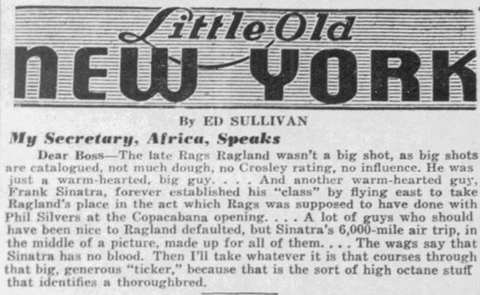
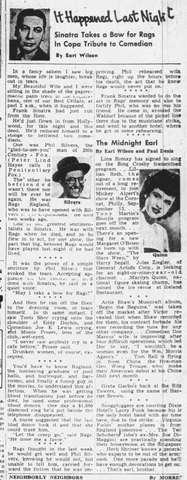
September 9, 1946
When Phil Silvers' comedy partner Rags Ragland died just before their Copacabana opening, a grieving Silvers was about to go on alone until Frank showed up at his dressing room an hour before curtain and stepped in to help perform the act.
Frank Sinatra (quoted): "Hi, what do we open with?"
Source: Nancy Sinatra, Frank Sinatra: An American Legend, 1995.
September 10, 1946
[Sinatra returns to LA, delays filming]
MGM production memo: MGM's production memo for Tuesday, September 10, 1946 recorded that manager Bobby Burns called to say Sinatra had arrived from New York exhausted and would not report, but would do his radio broadcast Wednesday and report to the set Thursday.
Source: James Kaplan, "Frank: The Voice" (2010).
September 11, 1946
Radio
Songs By Sinatra (CBS)
Sponsor: Old Gold Cigarettes
Guests: Andre Previn & Janet Waldo
1. Night And Day --FS
2. Five Minutes More --FS
3. I've Got The Sun In The Morning --Pied Pipers
4. To Each His Own --FS
5. The Man I Love --Andre Previn
6. The Girl That I Marry Frank Sinatra
7. Frank Sinatra & Janet Waldo - Sketch
8. The Girl That I Marry --FS & Pied Pipers
9. Begin The Beguine --FS
10. Put Your Dreams Away --FS note: Wonderful song selection to start the second season..
I corrected the information on "The Girl That I Marry." Frank does a very nice solo version before the skit with Janet Waldo and the Pied Pipers. The cigarette commercials with Marvin Miller were outrageous. Have to be heard to be believed.
--Ed
Television
NONE
Songs By Sinatra (CBS)
Sponsor: Old Gold Cigarettes
Guests: André Previn & Janet Waldo
11th September 1946: American singer Frank Sinatra leans next to composer and pianist Andre Previn while Previn plays piano on 'The Frank Sinatra Show,' California. Previn was 17 years-old at the time.
note: I don't know where to start. Judy Stevens had signed a contract to be the female vocalist for the second season of the Old Gold Show. She was listed in all the papers and received a few brief write ups. Janet Waldo was featured instead and Judy never received a mention on the 9-11 broadcast. Ads for the 9 -18 show had Judy finally making her debut. Frances Robinson appeared, following week Sandra Gould, despite ads again announcing Judy. The following weeks had Cathy Lewis on two shows and Peggy Mann on three. Jane Powell must have made quite an impression with her 10-23 performance because she became the regular distaff vocalist beginning with the 12-26 show. Stevens was never mentioned. There is nothing in Variety or any news- paper articles. She did become the female singer on "Betty," an ABC series that got under way in early November. What happened ? You can see the songs listed in the newspapers were not entirely accurate for the first show of the season. Frank would sing Berlin's "They Say It's Wonderful" the following week.
Ed
Songs By Sinatra (CBS)
Sponsor: Old Gold Cigarettes
Guests: André Previn & Janet Waldo
note: I don't know where to start. Judy Stevens had signed a contract to be the female vocalist for the second season of the Old Gold Show. She was listed in all the papers and received a few brief write ups. Janet Waldo was featured instead and Judy never received a mention on the 9-11 broadcast. Ads for the 9 -18 show had Judy finally making her debut. Frances Robinson appeared, following week Sandra Gould, despite ads again announcing Judy. The following weeks had Cathy Lewis on two shows and Peggy Mann on three. Jane Powell must have made quite an impression with her 10-23 performance because she became the regular distaff vocalist beginning with the 12-26 show. Stevens was never mentioned. There is nothing in Variety or any news- paper articles. She did become the female singer on "Betty," an ABC series that got under way in early November. What happened ? You can see the songs listed in the newspapers were not entirely accurate for the first show of the season. Frank would sing Berlin's "They Say It's Wonderful" the following week.
Ed
---------------------------------------------
Frank was a guest on "Lucky Lager Dance Time" with Ira Cook on 9-24-46
Show was aired over KFAC-AM.
Here is an excerpt of the interview:
Cook asked him about his new vocalist on his Old Gold show.
" Well we haven't gotten around to using Judy yet, because we
haven't time, because of an unfortunate happening. The first show -
when we came on the air for the first Wednesday this season -
we were four minutes and forty-five seconds over and we had
to cut the show. And, of course, now as the format remains, now,
we can't possibly fit in a singer, not yet, but, we are hoping we can
very soon. Because Judy Stevens is a wonderful singer. I heard
some records of her's, Judy, and that is how we brought her for
the show. She has got a wonderful style of singing. It is just a plain,
straight, melodic style, no tricks- you know ?"
And that is Frank's story behind the Judy Stevens' mystery.
What we don't know is why the sudden change in format
and why other female singers were used until Jane Powell
became a regular part of the show.
Ed
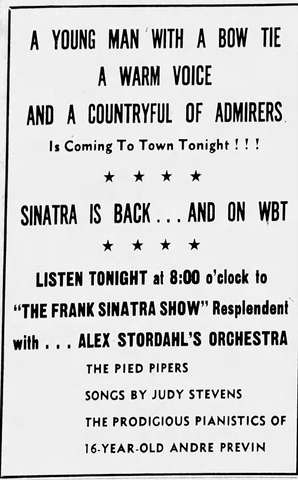
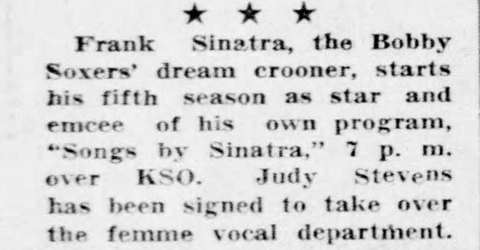
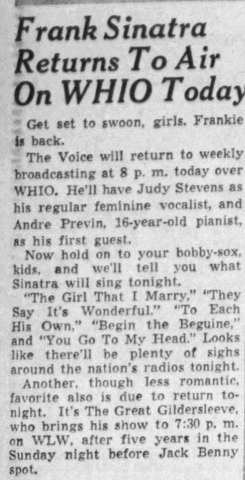
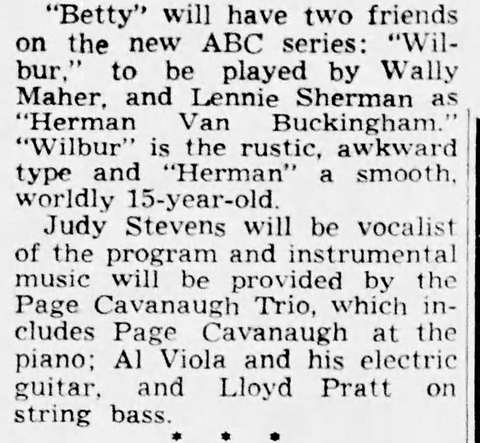
September 13, 1946
Radio
Casino Gardens Ballroom, Ocean Park, California
Saturday
Network: ABC
Tommy & Jimmy Dorsey band, Frank Sinatra
1. I Don't Know Why - Frank Sinatra note: After the remote broadcast, Sinatra remained on stage and sang a number of songs with the band
Concerts
Casino Gardens Ballroom, Ocean Park, California
Tommy & Jimmy Dorsey band, Frank Sinatra
1. I Don't Know Why - Frank Sinatra
note: Sinatra remained on stage
and sang a number of songs with the band
Casino Gardens Ballroom, Ocean Park, California
Tommy & Jimmy Dorsey band, Frank Sinatra
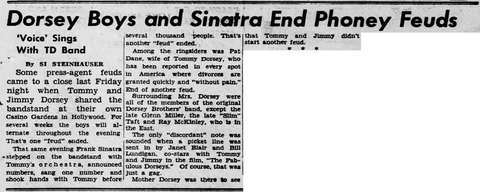
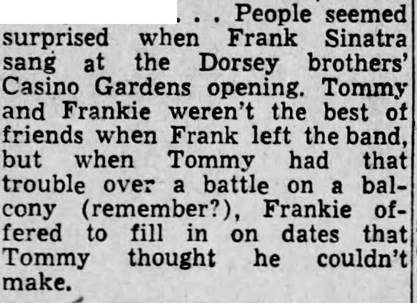
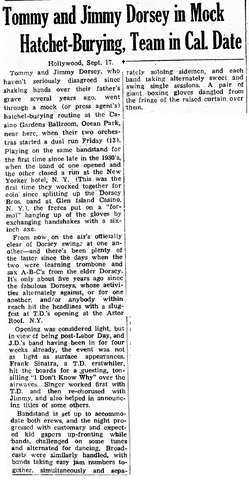
An FBI report identified Frank as a sponsor of the American Crusade to End Lynchings, chaired by singer Paul Robeson, which was planning a Washington DC pilgrimage later that month. The bureau's report described it as a communist-engineered demonstration. (Source: Richard Havers, "Sinatra" (Dorling Kindersley, 2007).)
September 17, 1946
Studio
MGM Sound Studio Hollywood , California
Sound recording for the MGM film "It Happened in Brooklyn "
"Time after Time" Frank Sinatra w/Andre Previn on piano
Take 3 (1:19) and Take 7 (1:23) were mastered.
NOTE: Ed O'Brien considers that another gem from Cahn-Styne written for the 1940s Sinatra voice. Sinatra and Previn made a record of the time for Columbia Records in October of 1946 and for Capitol in November of 1957. The latter has a Riddle chart with Jimmy Rowles on piano, Alvin Stoller on drums, Bob Bain on guitar, and Joe Comfort on bass.
September 18, 1946
Radio
Songs By Sinatra (CBS)
Begins New Season
Sponsor: Old Gold Cigarettes
Announcer: Art Gilmore
Orchestra Conducted By: Axel Stordahl
Performers: Frank Sinatra, The Pied Pipers
Guests: Frances Robinson, Andre Previn
Night & Day intro
1. The Coffee Song
2. I Don't Know Enough Pied Pipers
3. Somewhere In The Night
4. Lover Andre Previn
5. South America Take It Away W/ Pied Pipers
6. They Say It's Wonderful w/Robinson
(Frank sings Berlin's song and then does a skit with Frances with a little help from the Pied Pipers joining in on "Wonderful."
7 Come Rain Or Come Shine
8. Put Your Dreams Away sign-off
Ed O'Brien observes that this is an excellent show. Terrific songs. The highlight is the song with Frances Robinson.
Concerts
Fox Theater, San Francisco
Hero Firemen Benefit Show
Among the Performers: Frank Sinatra, Bob Hope, George Murphy
Fox Theater, San Francisco
Hero Firemen Benefit Show
Among the Performers: Frank Sinatra, Bob Hope, George Murphy
The San Francisco Examiner (San Francisco, California) 18 Sep 1946, Wed
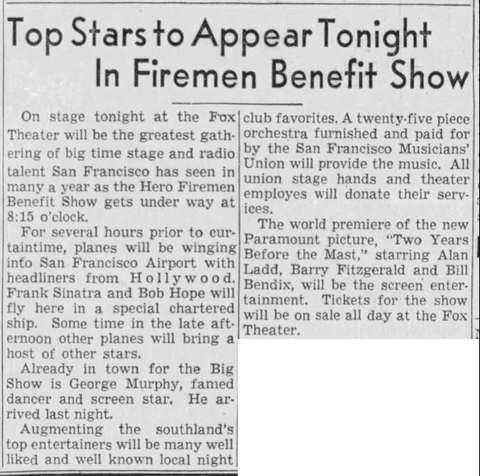
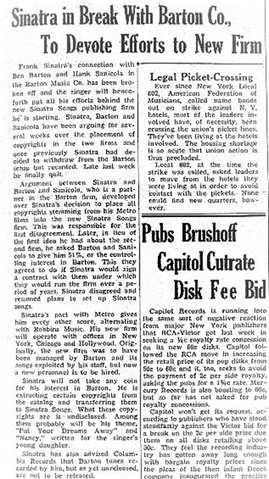
September 22, 1946
Radio
Stars In The Afternoon
Sunday
7-9 PM
CBS
M.C.: Bob Hawk
Announcer: Frank Gallop
Host: Garry Moore
Guests or Performers: Al Goodman and His Orchestra, Ann Sothern, Arthur Q. Bryan, Dinah Shore, Frank Sinatra, Hoagy Carmichael, Jack Smith, Jimmy Durante, Lud Gluskin and His Orchestra, Patrice Munsel, Peter Lind Hayes, Ralph Morgan, Staats Cotsworth, Vaughn Monroe, Virginia Bruce.
Sinatra Arrangement by: Axel Stordahl
1. You'll Never Walk Alone
NOTE: A preview show of the CBS Fall line-up. Above song appears on the CD: A Treasury Of Sinatra , Vol. 1. TT: 90mins. Audio condition: Excellent. Complete.
Ed O'Brien:
This is a gem. We get to meet a number of the CBS radio stars on a tour with Frank and Dinah. He does a medley of songs: "They Say It's Wonderful," "Dinah," "Always,"
Penthouse Serenade" With Dinah, "Love Is the Only Thing,"
"Tea For Two w/ Dinah," and he sings "You'll Never Walk Alone" with the Bob Mitchell Choir. They had appeared on Frank's Old Gold show, 12-26-45. Frank did "Let's Start the New Year Right" and "You'll Never Walk Alone" with the Choir.
September 23, 1946
Studio
MGM Soundstage, Hollywood , California
Sound recording for the MGM movie, "It Happened in Brooklyn"
"It's The Same Old Dream" Frank Sinatra
Piano: Andre Previn
Arranger: Alex Stordahl
Conductor: Johnny Green
NOTE: Sinatra Scholar Ed O'Brien, who provided this information, reports that Take 4 (2:19), Take 6 (2:32), Take 7 (2:32), and Take 13 (2:39) were mastered,
[Sinatra barely works, MGM memo]
MGM production memo: MGM's production memo for Monday, September 23, 1946 noted Sinatra worked only from 11:22 a.m. to 12:05 before lunch, then failed to return for a scheduled 1:05 rehearsal.
Source: James Kaplan, "Frank: The Voice" (2010).
September 25, 1946
Radio
Songs By Sinatra (CBS)
Sponsor: Old Gold Cigarettes
Announcer: Marvin Miller
Orchestra Conducted By: Axel Stordahl
Performers: Frank Sinatra, The Pied Pipers
Guests: Sandra Gould
1. Night And Day
2. Blue Skies
3. And The Band Played On
4. I Wonder What's Become Of Sally
5. After The Ball
6. I Wonder Who Kissing Her Now
7. On The Boardwalk In Atlantic City
8. The Things We Did Last Summer
9. September Song
10. Put Your Dreams Away
NOTE: Ed O'Brien gives us a little factoid here: Sinatra sang "And the Band
Played On" during a medley on the Old Gold Show. Thirty years later to the day, he sang it again during the second show at the Premier Theater. The latter performance was done with just the backing of Bill Miller on piano.
September 26, 1946
Studio
MGM Sound Studio - Hollywood , California
Sound recording for the MGM movie "It Happened in Brooklyn "
"The Song's Gotta Come from the Heart" - Frank Sinatra w/Jimmy Durante
Orchestra conducted by Johnny Green, who, on October 9, 1946, played a piano track that was included in the orchestration.
"Otchi-TCHOR- NI-YA" - Frank Sinatra w/Jimmy Durante
NOTE: Sinatra Scholar Ed O'Brien, who supplied the above information, points out that "The Song's Gotta Come From the Heart" was done in 10 parts. Sinatra sang on Parts 1, 3, 8, and 10. Part 1 had takes mastered: Take 2 (17 seconds), Take 4 (18 seconds), and Take 5 (17 seconds).‚ Part 3 had Take 4 (13 seconds) and Take 5 (13 seconds) mastered. Part 8 had Take 8 (38 seconds), Take 12 (37 seconds), and Take 16 (41 seconds) mastered.‚ Part 10 had Take 3 (1:20) and Take 4 (1:20) mastered.
"Otchi-TCHOR- NI-YA" had only one take of 40 seconds.
September 27, 1946
Studio
MGM Sound Recording Studio Hollywood, California
Sound recordings for the MGM movie "It Happened in Brooklyn"
Orchestra conducted by Johnny Green
Arrangement by Axel Stordahl
"It's the Same Old Dream" Frank Sinatra w/The Starlighters
Song was recorded in four parts.
Part One required 13 takes and Takes 6 (1:51) and 13 (1:48) were mastered.
On Part Two, the Starlighters joined Sinatra and Takes 8 (:48), 10 (:47). And 11 (:47) were mastered.
Part Three, again with the Starlighters, required one take (1:11).
Part Four was done with two takes (:36).
NOTE: Sinatra Scholar Ed O'Brien provided the above soundtrack recording information.
October 1946
[Evans spins the separation story to press]
George Evans: George Evans phoned columnists Louella Parsons and Hedda Hopper to frame the Sinatra separation as a minor 'family squabble,' claiming Frank had gone to a desert resort for a few days and would return to finish his picture.
Source: James Kaplan, "Frank: The Voice" (2010)
[Lana Turner denies affair to Parsons]
Lana Turner: Under pressure from Mayer's morals enforcement, Lana Turner tearfully told Louella Parsons that she was not in love with Sinatra and had never broken up a home.
Source: James Kaplan, "Frank: The Voice" (2010)
[Sinatra and Turner at Chi Chi, meet Hughes and Gardner]
Kaplan: While hiding out in Palm Springs with Lana Turner in October 1946, Sinatra ran into Howard Hughes and his date Ava Gardner at the Chi Chi nightclub; during a partner-swap dance to 'Dancing in the Dark,' Sinatra and Gardner had a flirtatious exchange before returning to their respective partners.
Source: James Kaplan, "Frank: The Voice" (2010)
October 1, 1946
Radio
A Tribute To Al Jolson
Mutual & ABC
Location: Hollywood, New York, San Francisco
Announcer: Bill Goodwin
Hosts: George Jessel, Jimmy Walker (New York)
Performers: Eddie Cantor, Desi Arnaz and His Orchestra, Dinah Shore, Bob Hope, Frank Sinatra, Morris Stoloff and His Orchestra, Hildegarde, Mitchell Ayres and His Orchestra, George Burns, Gracie Allen, Perry Como, Martha Raye, Charles Poltay, Al Jolson(dosen't sing).
Produced & Driected: Ed Cashman, Perry Lafferty
Writer & Editor: Carroll Carroll
Frank Sinatra sings “Rock-A-Bye Your Baby”
Notes: TT 51:21. Audio condition: Excellent. Commercials deleted otherwise complete.
A Tribute To Al Jolson
Mutual & ABC
Location: Hollywood, New York, San Francisco
review notes for Jolson show:
NY, Coast, London,
In Jolson Tribute
A three-way, international pick-up between New York, Hollywood and
London will feature a broadcast going out over Mutual's lines from 10 :30 to
11:30 tonight (EST), honoring Al
Jolson during the testimonial dinner to be given him by the motion pic- ture chapter of the American Veterans
Committee at the Hotel Astor, here.
Jolson is being honored "for the out- handing job he did entertaining troops during the war."
Among those scheduled to be heard during the hour-long air show are:
Hildegarde, Perry Como and Martha
Raye, who will be picked up from
New York ; Charles Cochrane, Brit- ish producer, and Anna Neagle, who will broadcast from London, and
George Jessel, Bob Hope, Eddie Can- tor, Dinah Shore, Frank Sinatra,
Burns and Allen and Mitchell Ayers and his orchestra, who will be
"piped-in" from Hollywood. â– Jessel will serve as master of ceremonies for the West Coast portion of the broad- cast.
Ed O'Brien:
Show did not start at 10:30. President Truman was carried on all the channels at that hour. He delivered a 10-minute appeal for Community Chests Of America. "Jolson Tribute" did not get under- way until 10:40 and ran a little over an hour.
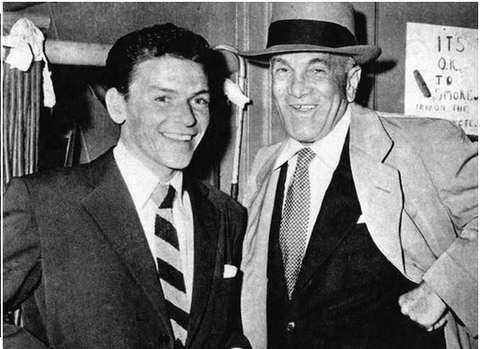
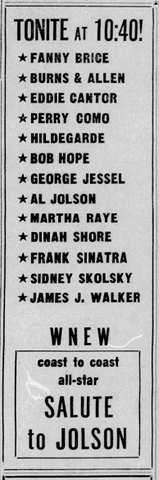
October 2, 1946
Radio
Songs By Sinatra (CBS)
Sponsor: Old Gold Cigarettes
Announcer: Marvin Miller
Orchestra Conducted By: Axel Stordahl
Performers: Frank Sinatra, The Pied Pipers
Guests: Cathy Lewis, Andre Previn
1. I'd Be Lost Without You
2. Among My Souvenirs
3. Somebody Loves Me Andre Previn
4. Medley w/Previn: Poor Butterfly/Carolina(Previn)/
On A Sunday Afternoon/Meet Me Tonight In Dreamland/
/My Gal Sal
5. My Sugar Is So Refined Pied Pipers
6. Try A Little Tenderness w/Pipers skit with Cathy Lewis
7. That Old Black Magic
8. Put Your Dreams Away ( complete )
October 5, 1946
Frank Sinatra's affair with actress Lana Turner became public when the two attended a party hosted by Sonja Henie and danced openly together. Afterward Frank brought Turner to a Hollywood apartment he'd furnished for the relationship; unimpressed, she had him take her to the Beverly Hills Hotel instead. Learning of the affair, Nancy Sinatra called George Evans for help, as she had with Marilyn Maxwell — but this time Turner, unafraid of any morals-clause threat, brushed Evans off entirely. Source: J. Randy Taraborrelli, Sinatra: Behind the Legend.
[Sinatra and Turner at Sonja Henie party]
On Saturday night, October 5, 1946, Sinatra attended a party hosted by Sonja Henie where he and Lana Turner danced together repeatedly; he did not go home that night.
Source: James Kaplan, "Frank: The Voice" (2010).
October 6, 1946
Frank Sinatra told press agent George Evans he intended to marry Lana Turner “as soon as Nancy gives me a divorce.” Evans, convinced Nancy would never agree, was overruled; that day he publicly announced the Sinatras were separating, calling it “a family squabble” with “no talk of divorce.” Nancy, furious, packed several of Frank's suitcases and left them on the front lawn, declaring she would never grant him a divorce but also wouldn't live with him. The affair burned out within about two weeks, and — following a family intervention led by Dolly and Marty Sinatra — Frank and Nancy staged a public reconciliation soon after at Phil Silvers's show at Slapsie Maxie's in Hollywood. Source: J. Randy Taraborrelli, Sinatra: Behind the Legend.
[Sinatra asks Nancy for separation]
The day after the Henie party, Sinatra called Nancy and told her he wanted a separation and his freedom, though not a divorce; she hung up on him, then called publicist George Evans, breaking down in tears.
Source: James Kaplan, "Frank: The Voice" (2010).
October 7, 1946
[Sinatra no-shows again, MGM memo]
MGM production memo: MGM's production memo for Monday, October 7, 1946 recorded that Sinatra refused to come in for rehearsal because his co-star Jimmy Durante was unavailable, despite the choreographer wanting to use the time.
Source: James Kaplan, "Frank: The Voice" (2010).
Amid swirling rumors of Frank's affairs and on-set behavior, gossip columnist Louella Parsons wrote in the LA Examiner that she believed Frank had genuinely tried to balance being a good family man with his public, glamorous image. (Source: Richard Havers, "Sinatra" (Dorling Kindersley, 2007).)
October 9, 1946
Studio
MGM Sound Studios, Los Angeles , California
Sound recordings for MGM movie, "Happened in Brooklyn"
Orchestra conducted by Johnny Green
The Brooklyn Bridge finale
Take 7 (45 secs) and Take 8 (47 secs) were mastered
Kathryn Grayson recorded Rossini's La Danza (11 secs). J. Sullivan also sang the Rossini aria (1:58) and Johnny Green added a piano track to The Song's Gotta Come From the Heart 7 takes (38 secs).
Radio
Songs By Sinatra (CBS)
Hollywood
Sponsor: Old Gold Cigarettes
Announcer: Marvin Miller
Orchestra Conducted By: Axel Stordahl
Performers: Frank Sinatra, The Pied Pipers
Guests: Andre Previn, Cathy Lewis, Louie .B. Mayer
1. Five Minutes More ( sings the verse )
2. This Is Always
3. I Know That You Know Andre Previn
4.Medley w/Andre Previn Wait Till The Sun Shines Nellie/ My Melancholy Baby
5. What Are You Gonna Do ? Pied Pipers
6.. If You Were The Only Girl In The World w/ Pied Pipers Skit with Cathy Lewis
-- Louie B. Mayer presents Modern Screen Magazine Award -- voted to Frank by the readers as the most popular screen star of 1946 - and Mayer gives Frank the Jo Davidson bust that was done of Frank. Mayer tells Frank that Davidson also did a bust of FDR. Frank tells Mayer that will be a hard one to live up to.
7. There's No Business Like Show Business w/ Pied Pipers
8. Put Your Dreams Away
[Mayer confronts Sinatra, gives award]
On a Wednesday night in mid-October 1946, Louis B. Mayer accompanied Sinatra to his radio broadcast to present him a Modern Screen 'Most Popular Star of 1946' award and a $10,000 bronze bust, but privately warned him to resolve the Turner situation quickly, calling Sinatra part of the 'MGM family.'
Source: James Kaplan, "Frank: The Voice" (2010).
October 13, 1946
Radio
The Louella Parsons Show
Network: ABC
8:15-8:30PM
Guest: Frank Sinatra
Community Chest Drive
90 Minutes
Bob Hope, Bing Crosby, Frank Sinatra, Red Skelton, Jack Benny, Robert Young, Fibber McGee and Molly, Frances Langford and others
The Louella Parsons Show
Network: ABC
8:15-8:30PM
Guest: Frank Sinatra
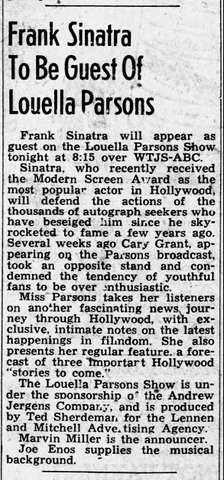
Community Chest Drive
90 Minutes
Bob Hope, Bing Crosby, Frank Sinatra, Red Skelton, Jack Benny, Robert Young and others
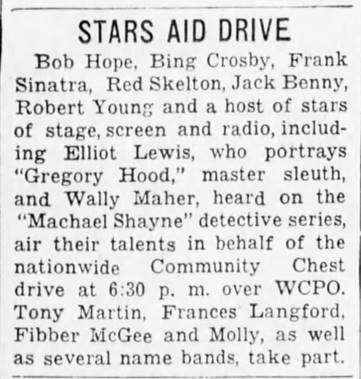
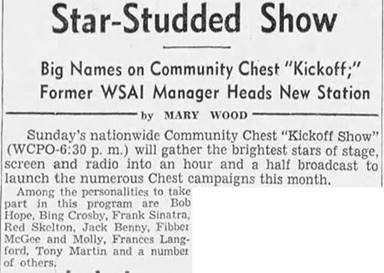
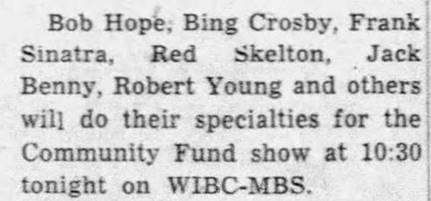
October 15, 1946
Studio
Hollywood
HCO2090 Strange Music
(R. Wright/G. Forrest/E. Grieg)
(from Song Of Norway )
Chappell & Co., Inc. (ASCAP) 1944
Arranged & Conducted by Axel Stordahl
-1(2:59) CD: Columbia Years 43-52 Vol. 5
HCO2091 Poinciana (Song Of The Tree)
(N. Simon/B. Bernier)
E.B. Marks Music Corp. (ASCAP) 1936
Arranged & Conducted by Axel Stordahl
-1 (3:19) CD: Columbia Years 43-52 Vol. 5
78: DB2357 ( England )
HCO2092 The Music Stopped
(H. Adamson/J. Mchugh)
(from Higher And Higher)
Robbins Music Corp. (ASCAP) 1943
Arranged & Conducted by Axel Stordahl
-1 (3:00) CD: Columbia Years 43-52 Vol..
HCO2093 Why Shouldn't It Happen To Us?
(M. Holiner/A. Nichols)
Sinatra Songs, Inc. (ASCAP) 1945
Arranged & Conducted by Axel Stordahl
-1 (3:11) CD: Columbia Years 43-52 Vol. 5
LP: CL-2740 The Essential Frank Sinatra, Vol. 2
78: 37251
HCO2094 None But The Lonely Heart N/R
(P.I. Tchaikovsky/ B. Westbrook)
Public Domain
Arranged & Conducted by Axel Stordahl
Violins: V. Arno, W. Bloom, H. Bluestone, W. Edelstein, P. Ellis, S. Freed, Jr., G. Joyce, M. King, N. Pisani, M. Russell, M. Sosson, O. Vail; Violas: R. Lane, M. Perlmutter, D. Sterkin; Cellos: C. Bernard, F. Goerner, J. Sewell; Saxes: H. Beau, F. Dornbach, H. Haymer, J. Kinsler, F. Stulce; Horns: J. McGee; Trombones: F. Howard, G. Jenkins, W. Schaefer; Trumpets: D. Anderson, R. Linn, R. Zarchy; Piano: L. Berman; Guitar: V. Mumolo; Bass: A. Shapiro; Drums: R. Hagan; Harp: K. Tompson
[Strange Music / I Love You / If You Are but a Dream / Till the End of Time / Full Moon and Empty Arms / One Love / None but the Lonely Heart / Moon Love -- critical commentary]
During the Columbia years he went through enough of these classical adaptations to fill an album, which would have been called, obviously, The Symphonic Sinatra. These included “Strange Music” and another Grieg-orian ditty from the Broadway show Song of Norway, “I Love You”; “If You Are but a Dream,” which was written “after,” as they say, Anton Rubinstein; “Till the End of Time,” derived from Chopin (and done by Sinatra on his 1945 Old Gold series); that bestselling slice of Rach(maninoff)-and-roll, “Full Moon and Empty Arms”; and three Russian-inspired tunes that prove what Band of Renown leader Les Brown declared in a 1941 record, namely that “Everybody’s Making Money but Tchaikovsky”: “One Love,” “None but the Lonely Heart,” and “Moon Love” (sung live with Harry James but not recorded until 1965).
This song/context matches multiple dated entries in the chronology; the specific date Friedwald is referring to could not be determined with confidence.
Source: Will Friedwald, "Sinatra! The Song Is You: A Singer's Art" (2018 revised edition), Ch. 4, "With Axel Stordahl" (1943-1948)
[The Music Stopped -- critical commentary]
Sinatra would return to two of the nine numbers, “The Music Stopped,” in 1947, at which time the 1943 a cappella version of which had not yet been released. (Then much later, in 1956, he made his classic recording of “Close to You” with Nelson Riddle.) The more fully realized, fully orchestrated rendition of “The Music Stopped” contains one of his most moving glissandi (in the first line of the outchorus). Since the lyrics are all about music stopping, he interprets it as a tour de force of pauses, rests, and fermatas, with Sinatra alternately deciding to either extend or cut short the crucial note on “stopped.” The lovely way he goes up on “lights” and down on “low” in the same phrase is also particularly compelling; contrastingly, the effectiveness of these vocal effects is severely curtailed on the 1943 reading. (This was a particularly poor song to select for the a cappella process—how can he sing about the music stopping when the music isn’t even there to begin with? In that sense, “The Music Stopped” is a theme song for the whole AFM ban period.)
This song/context matches multiple dated entries in the chronology; the specific date Friedwald is referring to could not be determined with confidence.
Source: Will Friedwald, "Sinatra! The Song Is You: A Singer's Art" (2018 revised edition), Ch. 4, "With Axel Stordahl" (1943-1948)
October 16, 1946
Radio
Songs By Sinatra (CBS)
Sponsor: Old Gold Cigarettes
Announcer: Marvin Miller
Orchestra Conducted By: Axel Stordahl
Performers: Frank Sinatra, The Pied Pipers, Andre Previn
1. Great Day
2. Linger In My Arms A Little Longer, Baby - The Pied Pipers
3. The First Movement of Rachmaninoff's Piano Concerto - Andre Previn
4. Medley w/Andre Previn: East Side-West Side, Bedelia, Call Me Up Some Rainy Afternoon,
If I Had My Way Dear ( complete)
5. South America Take It Away Sinatra & The Pied Pipers
6. Lost In The Stars
7. Put Your Dreams Away
NOTE: Sinatraphile Scott Henderson says he listened to the 1946 Songs by Sinatra recording. He especially loved "Lost in the Stars."
October 18, 1946
Concerts
Fresno Memorial Auditorium, Fresno, California
Benefit for The Shack, Fresno Youth Center
Fresno Memorial Auditorium, Fresno, California
Benefit for The Shack, Fresno Youth Center
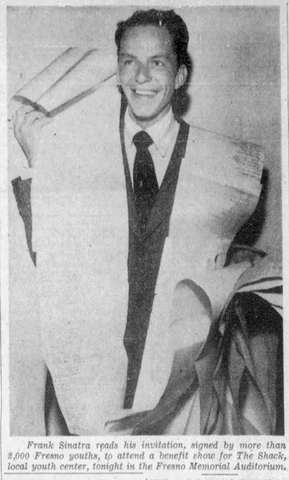
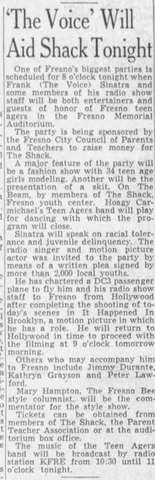
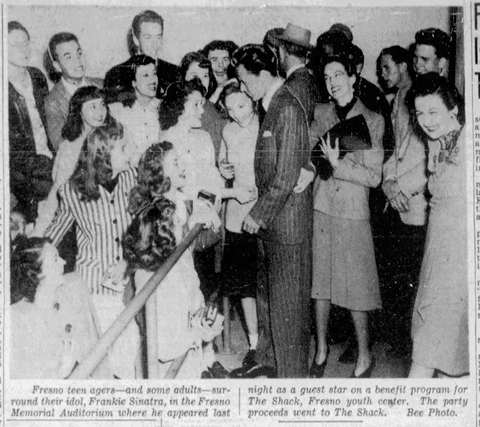
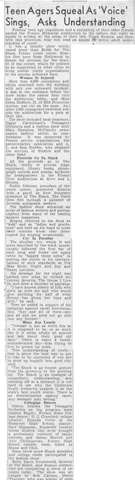
October 21, 1946
Studio
MGM Soundtrack Recording Studio, Los Angeles , California Studio recordings for the MGM movie, "It Happened in Brooklyn "
Orchestra conducted by Johnny Green
"I Believe" Frank Sinatra w/Jimmy Durante and
Bobby Long (vocal for Billy Roy)
The song was recorded in four parts:
Sinatra did his vocal in Part One (Take 1 [1:04] and Take 7 [1:01] were mastered)
Durante vocal was Part Two. Take 5 (:46) and Take 7 (:46) were mastered Bobby Long did Pate Three and Take 7 (:45) was mastered Part Four was an instrumental with Green conducting, Take 3 (1:14), Take 6 (1:12), and Take 7 (1:13) were mastered. The engineers then cobbled together the separate
Parts and the final number ran for 3:48.
NOTE: Sinatra Scholar Ed O'Brien provided this soundstage information.
note: Cahn & Styne wrote two lovely ballads for
Frank to sing in the film: "Time After Time" & "It's The Same Old Dream."
Frank recorded both at
Columbia The former reached #16 on the Billboard chart and the latter failed to make an appearance. The unexpected hit was
"I Believe." Song reached #5 in Billboard. Frank would redo all three at Capitol. Counting the MGM efforts,
Frank did a combined 10 recordings on the three songs.
Ed
October 23, 1946
Radio
Songs By Sinatra (CBS)
Sponsor: Old Gold Cigarettes
Location: Hollywood
Announcer: Marvin Miller
Orchestra Conducted By: Axel Stordahl
Performers: Frank Sinatra, The Pied Pipers, Janet Waldo
1. The Coffee Song
2. The Things We Did Last Summer
3. By The Sea
4. Should I Pied Pipers
3. For Me And My Gal
4. I'm Sorry I Made You Cry
5. On The Boardwalk In Atlantic City w/ Pied Pipers
6. Soliloquy Frank introduces the song as the "Barker's Soliloquy" from "Carousel."
7. Put Your Dreams Away
note: Frank had this to say before singing "Soliloquy:" "In my book, this song goes on the list as one of the all time greats."
Janet Waldo appeared on a number of Frank's O.G. shows. Usually, she was not credited. Here is a photo and an excerpt from an interview with her.
WR: A few years ago, Capitol released a Frank Sinatra "Duet" album, featuring performances by him and people he had never even met. I cannot ask them the following question, but I can ask it of you. What's it like, singing with Frank Sinatra?
JW: Oh! That was the greatest fun! You're talking about when I played Teenaged Tina on his radio show. Benny Goodman was on that one and that's the only time Frankie and Benny performed together.
WR: Ever sing with the Velvet Fog?
JW: Oh, yes! When I sang with Frankie it was a medley -- we took turns -- but with Mel Torme it was a real duet.
Ed O'Brien:
I noticed a few songs were missing and decided to update the listing. While listening to the show I made some interesting discoveries. I found three sites that list Jane Powell as a guest. She does not make an appearance. The show is an early celebration of Halloween. Frank says hello to "fellow pumpkin eaters" after the first number and closes the proceedings with the following remarks, "Well, sir, it's time to put away your jack o' lanterns, put the scythe back on the bed and hide the broomstick to next Halloween." I think the 10-30-46 show is a bit of a hodge- podge. Marvin Miller's introduction is almost the same and there are no guests. I am fairly certain the 10-30 show was cobbled together the same night Frank did the 10-23 show.
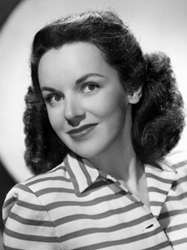
[Sinatra and Nancy publicly reconcile]
On October 23, 1946, at Phil Silvers's opening at Slapsie Maxie Rosenbloom's club, Sinatra sang 'Going Home' and, with Nancy present, tearfully embraced her in front of the crowd, then took her home to his Sunset Tower penthouse.
Source: James Kaplan, "Frank: The Voice" (2010).
[Led to Styne's table by Phil Silvers]
Rough Guide to Frank Sinatra: By this account the reconciliation unfolded at Phil Silvers's own club engagement rather than his opening night, with Silvers leading an overcome Sinatra -- mid-song -- to the table where Nancy sat with Jule Styne, where husband and wife embraced as the room looked on.
Source: Rough Guide to Frank Sinatra (Rough guide 8.pdf), chapter "The Inner Circle."
October 24, 1946
Studio
Hollywood
HCO2116 Time After Time
(J. Styne/S. Cahn)
(from It Happened In Brooklyn)
Sinatra Music Publishing Corp. (ASCAP) 1946
Arranged & Conducted by Axel Stordahl
-1 (3:08) CD: Columbia Years 43-52 Vol. 5
CD: 09372 Greatest Hits-The Early Years, Vol. 2
LP: C6X-40343 The Voice- The Columbia Years, 43-52
LP: CL-2913 Frank Sinatra In Hollywood
LP: CL-2572 Greatest Hits, The Early Years, Vol. 2
LP: CL-606 Frankie
78: 37300
HCO2117 It's The Same Old Dream w/Four Hits & A Miss
(J. Styne/S. Cahn)
(from It Happened In Brooklyn)
Sinatra Music Publishing Corp. (ASCAP) 1946
Arranged & Conducted by Axel Stordahl
-1 (3:05) CD: Columbia Years 43-52 Vol. 5
LP: C6X-40343 The Voice- The Columbia Years, 43-52
LP: CL-2913 Frank Sinatra In Hollywood
LP: CL-2740 The Essential Frank Sinatra, Vol. 2
78: 37288
NOTE: Sinatra Scholar Ed O'Brien thinks the songs by Cahn/Styne for "It Happened in Brooklyn" were the best Sinatra had during the MGM years.
The two listed above are still fresh after all these years. There would be three recordings made by Sinatra for both tunes. He wishes that MGM had employed their gorgeous Technicolor on this underrated gem.
HCO2118 I'm Sorry I Made You Cry
(N.J. Clesi)
(from Rose Of Washington Square)
Leo Feist, Inc. (ASCAP) 1918
Arranged & Conducted by Axel Stordahl
-1 (3:04) CD: Columbia Years 43-52 Vol. 5
LP: CL-6087 Songs By Sinatra, Vol. 1 (10 inch)
78: 37256
Four Hits And A Miss: Marvin Bailey, Lee Gotch, Beverly Mahr, Mack McLean, William Seckler
Violins: E. Bergman, H. Bluestone, W. Callies, S. Cytron, W. Edelstein, P. Ellis, G. Kast, M. King, S. Middleman, F. Olson, N. Pisani, E. Powers, M. Russell, F. Slatkin, M. Sosson; Violas: A. Harshman, P. Lowenkron, M. Perlmutter, P. Robyn; Cellos: F. Goerner, A. Kafton, N. Ochi-Albi, J. Sewell; Harp: M. Hogan Cambern; Horn: F. Fox; Saxes: H. Beau, H. Haymer, J. Kinsler, F. Stulce; Trumpets: D. Anderson, R. Linn, R. Zarchy; Trombones: D. Hallett, G. Jenkins, W. Schaefer; Piano: M. Mclntyre; Guitar: A. Reuss; Bass: P. Stephens; Drums: R. Hagan
[Time After Time / Guess I'll Hang My Tears Out to Dry / I Fall in Love Too Easily / The Brooklyn Bridge / Let It Snow! Let It Snow! Let It Snow! / Can't You Just See Yourself / The Things We Did Last Summer / The Christmas Waltz / Three Coins in the Fountain -- critical commentary]
The Cahn-Styne songwriting partnership, active 1942-1954, produced numerous Sinatra classics; in 1982 Cahn and Styne briefly reunited to write two new songs specifically for Sinatra, "Searching" and "Love Makes Us Whatever We Want to Be."
This song/context matches multiple dated entries in the chronology, or lacked a sufficiently precise date; the specific date could not be determined with confidence.
Source: Charles L. Granata, "Sessions with Sinatra: Frank Sinatra and the Art of Recording" (1999/2003), Part I: The Big Band Years, 1937-1942
October 30, 1946
Radio
Songs By Sinatra (CBS)
9 to 9:30 P.M.
Wednesday Evening
Sponsor: Old Gold Cigarettes
Announcer: Marvin Miller
Orchestra Conducted By: Axel Stordahl
Performers: Frank Sinatra, The Pied Pipers
1. Ole Buttermilk Sky
2. This Time
3. Why Does It Get So Late So Early Pied Pipers
4. You'll Always Be The One I Love
5. Love Is Just Around The Corner w/Pied Pipers
6. The Galloping Ghost Of Central High
7. You'll Always Be The One I Love
8. Embraceable You
9. Put Your Dreams Away
AFRS also has "This Is Always" after "This Time."
He also sings "The Galloping Ghost Of Central High."
Pied Pipers sing "Why Does It Get So Late So Early." and "Linger In My Arms.."
--Ed
Concerts
Biltmore Hotel, Los Angeles, CA
United Jewish Welfare Fund Dinner
Sinatra, Vivian Blaine, Jane Powell and others
Songs By Sinatra (CBS)
9 to 9:30 P.M.
Wednesday Evening
Sponsor: Old Gold Cigarettes
Announcer: Marvin Miller
Orchestra Conducted By: Axel Stordahl
Performers: Frank Sinatra, The Pied Pipers
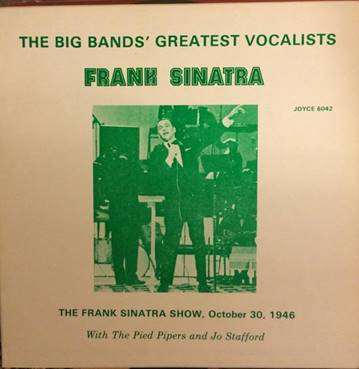
Biltmore Hotel, Los Angeles, CA
United Jewish Welfare Fund Dinner
Sinatra, Vivian Blaine, Jane Powell and others
--------------------------------------
October 30, 1947 Frank Sinatra Day, Hoboken, NJ
Black-and-white copy photo of Mayor Fred DeSapio presenting Frank Sinatra with the Key to the City at Hoboken City Hall, Hoboken, October 30, 1947. Digital print, 8" x 10" wide. Photographer not indicated. Reverse has modern holographic ink notes by Dr. Gerard DeSapio.
Identified by DeSapio: left to right | Martin Sinatra - Frank's Father [partially seen], Frank [Sinatra] | Dolly Sinatra - Frank's Mother | Mayor DeSapio | Capt. John Marrata.
Lettering on the wood key reads: To Frank Sinatra from The Hearts of the Citizens of the City of Hoboken, N.J. "Sinatra Day" Oct. 30, 1947.
On October 30, 1947, Hoboken celebrated Sinatra Day, the final event in a month-long March of Progress celebration orchestrated by Mayor Fred M. DeSapio with the assistance of his dedicated ward leader, Dolly Sinatra. Twenty thousand people lined Washington Street in the pouring rain to catch a glimpse of the star, who announced, “I’ve met people in cities all over the country, but folks here in Hoboken, well, they’re just wonderful – that’s all.”
In 1947 Frank Sinatra made his last public appearance in the city for nearly forty years – until he returned to accompany Ronald Reagan to St. Annn's Feast in 1984. On October 30, 1947, Hoboken celebrated Sinatra Day, the final event in a month-long March of Progress celebration orchestrated by Mayor Fred M. DeSapio with the assistance of his dedicated ward leader, Dolly Sinatra. Twenty thousand people lined Washington Street in the pouring rain to catch a glimpse of the star, who announced, I've met people in cities all over the country, but folks here in Hoboken, well, they're just wonderful – that's all.: More than a few Hobokenites will return the compliment. As one man wrote to "Blue Eyes" in the sign-in book at Sinatra's birthplace: "I was much younger than you, but grew up in this town, and all my family knew you and your legacy growing up here. Thanks for the world." Hoboken has thanked Frank Sinatra by dedicating its main post office, a waterfront park, and a street along its picturesque waterfront, to the city's most famous son.
Take a look at the above photo and then look at the man center front in the photo you sent There is a flash camera in front of him. That is Marty Sinatra doing what he can to protect his son.
--ED
Stranger in the Night:
The Story of Sinatra and Hoboken and What Went Wrong
By Anthony De Palma, Jr.
A Myth Debunked: Everybody Booed and Threw Fruit
Hoboken doesn't resent Sinatra's success, but people are bothered, and a bit ashamed, that he never came back. There had to be a reason, and when Sinatra himself never publicly admitted anything, they came up with their own. Fred Tamburro, and some other Hoboken characters who tried to hit Sinatra for favors, often get the blame. Choosing Tamby as the scapegoat somehow makes the rebuke easier to accept. "Those guys think they owned Sinatra, and they always wanted something from him," the others say. "No wonder he never came back."
Other tales, loosely based on the truth, are told, but over the years they have been shaded with more legend than fact. "Oh, it was the parade they gave Sinatra," goes one of them. "Everybody booed and threw fruit. He swore he'd never come back after that."
That explanation for Sinatra's thirty-year estrangement from Hoboken is so commonly offered that even some of those who attended the parade now doubt what they saw back in 1947, just a few months after Fred M. DeSapio, a Hoboken businessman, had succeeded in bucking the Hudson County political machine by upsetting Bernard McFeely in the mayoral election. DeSapio won with the help of Dolly Sinatra, who by then was as well known in Hoboken as her son. By late September, part of DeSapio's reform team had started to splinter off, forming its own coalition, and the new mayor, looking at a postwar Hoboken and the beginnings of a thirty-year ride on the skids that would ravage the city, needed a big boost. He rallied the local chamber of commerce to show off Hoboken in a March of Progress celebration that would last the entire month of October. DeSapio saved his trump card for last, squeezing every bit of advantage from the scheduled appearance on October 30 of Frank Sinatra. His faithful ward leader had not let him down.
What actually transpired that day, the only official Sinatra Day, Hoboken ever had, differs substantially from the legend. The day before Halloween in 1947 was wet and gloomy. Despite a heavy downpour, the crowds began gathering at City Hall in the early afternoon, and by 7 P.M., some 20,000 people lined Washington Street, waiting for the parade they were not even sure was still going to happen. Sinatra, in a trenchcoat, finally arrived at City Hall, determined to take that ride down the main drag of his hometown in a fire engine driven by his dad. Hoboken organizers were stunned by the crush of photographers and reporters who crowded into City Hall, but they somehow managed to complete a photo session and to present Sinatra with a roughly cut wooden key to the city from "the hearts of the citizens of Hoboken, New Jersey."
Standing on the steps of City Hall, just around the corner from the Hudson Observer offices where he had worked as a copy boy, Sinatra blushed and told the crowd in the best, hero-returns-home fashion, "Gosh, little did I think when I worked for the Obby that I'd be greeted like this." He reached out to the crowds jumping and screaming in front of him, his fans from all over the metropolitan area mixed with his old babysitters, his stickball second baseman, his old gang. "You know," he told them, "I've met people in cities all over the country but folks here in Hoboken, well, they're just wonderful - that's all."
Sinatra weaved through the crowd and jumped on the fire engine with his father. Overloaded with photographers who clung to the side of the engine, Sinatra and company made their way slowly down Washington Street. Cheers went up as they approached. Occasionally, Sinatra shouted to a recognized old buddy. "Hi, Gus. How ya doing?"
By the time the parade reached Eleventh Street, the rain had become too much, and Sinatra hopped off the engine and into Mayor DeSapio's car for a retreat to City Hall. Most of the program - an awards presentation at Veterans' Field, an address at Joseph F. Brandt school - had to be canceled. It was ten o'clock, and Sinatra had to be in Madison Square Garden for a Bellevue Hospital benefit by eleven. He made his apologies and left, and the crowds still waiting at the field and school had to be told he wasn't coming. They groused a bit, but understood.
Both local newspapers carried stories on the parade and reported that the crowds were exhilarated at their brief glimpse of Frankie. Even the gossipy fan magazines were there, and although they probably would have loved to report that the crowds booed and threw fruit, they mentioned only screams and excitement coming from the rainsoaked mob. The booing story that has made the rounds so frequently in Hoboken that it is now considered truth was phony. And, in fact, Sinatra returned to play Hoboken one more time. In so doing he provided the city with the basis for yet another legend about the last time he came home.
Note: WPAT from Paterson, New Jersey would air coverage of some of Frank Sinatra Day on November 2, 1947 over WPAT radio:
Frank Sinatra lights up a cigarette of an unidentified man on a wheelchair during celebrations of 'Frank Sinatra Day' in Hoboken, New Jersey, US, 30th October 1947
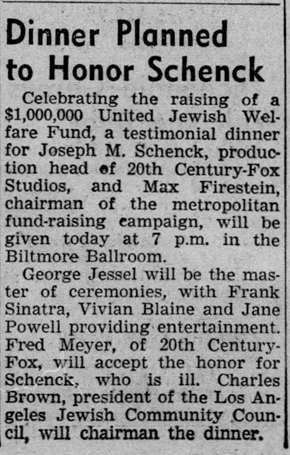
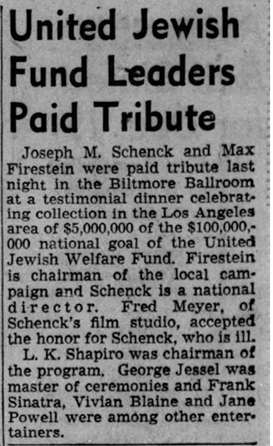
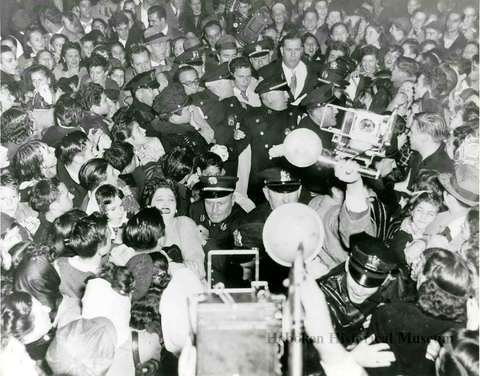
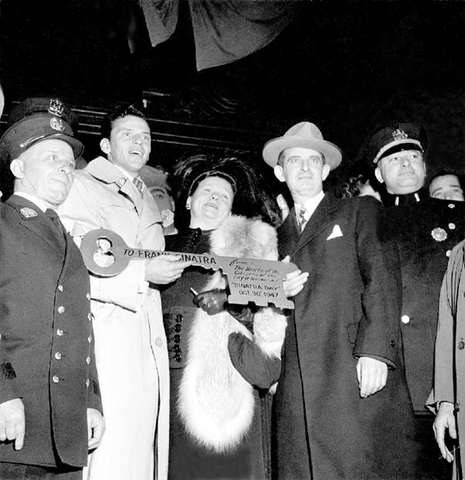


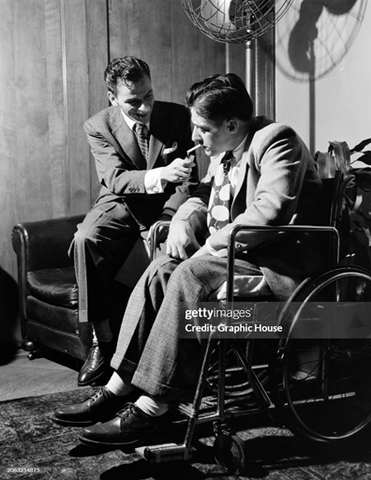
October 31, 1946
Studio
Hollywood
HCO2094 None But The Lonely Heart
(P.I. Tchaikovsky/ B. Westbrook)
Public Domain
Arranged & Conducted by Axel Stordahl
-2 (3:33) CD: Columbia Years 43-52 Vol. 5
78: DO3151 ( Australia )
HCO2121 The Brooklyn Bridge
(J. Styne/S. Cahn)
(from It happened In Brooklyn )
Sinatra Music Pub. Corp. (ASCAP) 1946
Arranged & Conducted by Axel Stordahl
-1 (2:35) CD: Columbia Years 43-52 Vol. 5
LP: C6X-40343 The Voice- The Columbia Years, 43-52
LP: CL-2913 Frank Sinatra In Hollywood
78: 37288
HCO2122 I Believe
(J. Styne/S. Cahn)
(from It happened In Brooklyn )
Sinatra Music Pub. Corp. (ASCAP) 1946
Arranged & Conducted by Axel Stordahl
-1 (3:02) CD: Columbia Years 43-52 Vol. 5
LP: CL-2913 Frank Sinatra In Hollywood
78: 37300
HCO2123 I Got A Gal I Love (In North And South Dakota ) (J. Styne/S. Cahn)
(from Ladies Man)
Famous Music Crop. (ASCAP) 1947
Arranged & Conducted by Axel Stordahl
-1 (2:42) CD: Columbia Years 43-52 Vol. 5
78: 37231
Violins: H. Bluestone, W. Callies, S. Cytron, W. Edelstein, P. Ellis, G. Kast, D. Lube, S. Middleman, A. Mierlot, F. Olson, N. Pisani, J. Quadri, M. Russell, F. Slatkin, M. Sosson; Violas: A. Harshman, P. Lowenkron, M. Perlmutter, P. Robyn; Cellos: F. Goerner, N. Ochi-Albi, J. Saxon, J. Sewell; Harp: C. Scott; Horn: R. Perissi; Saxes: M. Bercov, J. Dumont, H. Klee, B. Russin, H. Schuchman; Trumpets: P. Geil, E. Klein, R. Linn, R. Zarchy; Trombones: C. Coolidge, E. Kuczborski, W. Schaefer, S. Zentner; Piano: M. Raskin; Guitar: A. Reuss; Bass: P. Stephens; Drums: R. Hagan
November 1946
[Family trip to Waldorf, Tiffany necklace]
Kaplan: After Thanksgiving 1946, Sinatra brought Nancy and the children with him to his engagement at the Waldorf's Wedgwood Room and bought her a three-strand pearl necklace from Tiffany, presenting it before a family dinner at the Stork Club with a photographer arranged by Evans.
Source: James Kaplan, "Frank: The Voice" (2010)
[Sinatra threatens columnist Erskine Johnson]
Sinatra: After Los Angeles Daily News columnist Erskine Johnson criticized his temperamental behavior, Sinatra sent a telegram threatening to give him 'a belt' for printing lies; he backed off after learning Johnson weighed 200 pounds and wanted a fight.
Source: James Kaplan, "Frank: The Voice" (2010)
[Sinatra's angry telegram to Parsons]
Sinatra: In response to Parsons's column, Sinatra fired off a telegram insisting he had not been difficult, defending his input on 'the improvement of the picture,' and telling her to stop wasting her breath on lectures.
Source: James Kaplan, "Frank: The Voice" (2010)
[None but the Lonely Heart -- critical commentary]
Likewise, the aesthetic success of “None but the Lonely Heart,” the best of his Tchaikovsky pieces, has nothing to do with any classical roots that Sinatra was supposed to have. Rather, it illustrates Sinatra’s continuing connection to Tommy Dorsey, who had included this adaptation in his book as a vehicle for his own trombone since 1941.
This song/context matches multiple dated entries in the chronology; the specific date Friedwald is referring to could not be determined with confidence.
Source: Will Friedwald, "Sinatra! The Song Is You: A Singer's Art" (2018 revised edition), Ch. 4, "With Axel Stordahl" (1943-1948)
November 6, 1946
Radio
Songs By Sinatra (CBS)
Hollywood
Sponsor: Old Gold Cigarettes
Announcer: Marvin Miller
Orchestra Conducted By: Axel Stordahl
Performers: Frank Sinatra, The Pied Pipers
Guests: Jimmy Durante, Andre Previn
1. My Sugar Is So Refined Frank
2. Linger In My Arms The Pied Pipers
3, Pretending Frank
4. Hallelujah Andre Previn
5. You Got To Start Off Each Day With A Song -- I Ups To Him, He Ups To Me Jimmy Durante
6. I Remember You - Oh, How I Miss You Tonight Frank
7. Because They Love You -- You Got To Start Each Day With A Song J. Durante
7. All The Things You Are Frank & Pied Pipers
8. Put Your Dream Away Frank
Note: Sinatra sang neither of the songs mentioned in this article. Sinatra sang "And Then It's Heaven" on the November 13, 1946 show and would not sing "The Whole World Is Singing My Song" until the December 4, 1946 show.
November 7, 1946
Studio
Hollywood
HCO2134 The Dum Dot Song (I Put The Penny In The Gum Slot)
w/The Pied Pipers
(J. Kay)
Sinatra Songs, Inc. (ASCAP) 1947
Arranged & Conducted by Axel Stordahl
-1 (2:57) CD: Columbia Years 43-52 Vol. 5
78: 37966
Radio
Burns & Allen Show
Time: 8:30 PM -9:00 PM
Network: NBC
Sponsor: Maxwell House
Guest: Frank Sinatra,
Performers: George Burns, Gracie Allen, Mel Blanc
Orchestra conducted By: Meredith Willson
Announcer: Bill Goodwin
Commercial Spokesman: Tobe Reed
1. September Song
Note: The show appears on the officially released CD set: 60 Greaest Old Time Radio Show "Frank Sinatra & Friends" Audio condition: Excellent. Complete.
Hollywood
HCO2136 It's All Up To You w/Dinah Shore and Chorus
(J. Styne/S. Cahn)
Was this song recorded in Connecticut ? I dug out the session and gave a listen. Before take one,
Frank and Dinah are talking about corn pone and black eyed peas. First take was a false start and the second proved to be the record. The clapping is much more pronounced on the session tape. There is more chatter between Frank and Dinah and it sounds to me like the onset of a session.
--Ed
Crooning for a Cure: The star-studded song that changed NC’s health care landscape
Frank Sinatra, Dinah Shore and Kay Kyser teamed up 77 years ago to rally support for the state’s Good Health Plan. by Jaymie Baxley January 9, 2024
Frank Sinatra and Dinah Shore in publicity photographs from around the time that "It's All Up To You" was released. By Jaymie Baxley
No matter where you went in North Carolina in the early months of 1947, the song “It’s All Up To You” was inescapable. A recording of the song by Frank Sinatra and Dinah Shore played in heavy rotation on the state’s radio stations and jukeboxes. The swinging big band tune’s lyrics appeared on the front pages of local newspapers. Copies of the song’s sheet music were distributed to public schools, where students were required to learn and perform it. Though largely forgotten today, “It’s All Up To You” was written to raise awareness of North Carolina’s poor health conditions at the time. It was the centerpiece of a public education and public relations campaign that had a lasting effect on the state’s health care infrastructure.
Creating the Good Health Plan
Two years before the song’s release, the State Hospital and Medical Care Commission presented some troubling statistics to the General Assembly. North Carolina had had the nation’s highest rate of draft rejections during World War II. More than half of the state’s conscripted men were deemed medically unfit for military service, with many of them suffering from hookworm, tuberculosis and other diseases. By 1945, North Carolina had only 2,300 doctors for its 3.5 million residents. The shortage of physicians was so severe that a quarter of babies born in rural counties were delivered without a doctor present. Thirty-nine of the state’s 100 counties lacked hospital beds for Black patients, who in the Jim Crow South were forced to seek care at segregated facilities. In 33 counties, there were no hospitals at all. These and other issues contributed to the abysmal state of conscripts’ health. At Gov. Joseph Broughton’s request, members of the commission developed a plan to improve the situation. Their proposal called for the construction of hospitals and clinics to provide “better distribution of facilities, medical care, and public health services for every citizen Irrespective of race, creed, or financial resources.” They called it the “Good Health Plan.”
Calling on Kyser
The commission knew it needed public support to persuade lawmakers to fund the $48 million plan. In March 1946, the commission organized a meeting of 200 of the state’s “leading medical men and laymen” in Thomasville. From that gathering came the Good Health Association, a volunteer committee that sought to “educat[e] the people of North Carolina as to the desperate need” for more doctors and hospital beds. Isaac Greer, superintendent of the Baptist Children’s Homes orphanage, was named the association’s president. Hoping to enlist a well-known North Carolinian to assist with the effort, Greer reached out to bandleader Kay Kyser. The Rocky Mount native had released several chart-topping swing records with his big band orchestra in the 1940s. He had also appeared in a string of successful Hollywood comedies, including “You’ll Find Out,” “Playmates” and “My Favorite Spy.” Ol’ Professor of Swing Kyser needed little convincing. After learning about his home state’s health woes, the musician embarked on an impromptu tour of more than 30 counties to solicit funding for the education campaign. He also drew from his experience in show business to craft a marketing and publicity prospectus for the Good Health Association, which adopted the document. Over the next few months, marketing from the campaign was unavoidable. The association used dramatic billboards, brochures, news releases, displays in pharmacy windows, essay writing contests for school children and all manner of other media to extoll the benefits of the Good Health Plan.
But Kyser believed that many residents would never read about the State's bad health record, or listen to even the most eloquent speaker discuss startling statistic, according to a report released by the association at the campaign's conclusion. He felt that these people would, however, sit up and listen to a musical appeal. Spreading the health alarm
Kyser passed the assignment to arguably the second most successful songwriting duo, behind Rodgers and Hammerstein, on Tin Pan Alley. Lyricist Sammy Cahn and composer Jule Styne were established hitmakers in New York, having first teamed up three years earlier for the Oscar-nominated Ive Heard That Song Before. Their most enduring collaboration, the Christmas staple Let it Snow! Let it Snow! Let it Snow!, propelled crooner Vaughn Monroe to the top of the charts in 1945. Cahn and Styne wrote the words and jaunty music for Its All Up To You in less than 24 hours. They framed it as a call to action, urging North Carolinians to spread the health alarm to every town and farm across the state. We need vitamins and medicines and beds to spare
Places where the sick can go and get some care
Lots of new equipment to combat disease
Clinics where the poor can go for moderate fees
The lyrics also reference Leonora Martins poem The Old North State, which would be recognized a decade later by the General Assembly as the official toast of North Carolina: If we do these things then we will be the state
Where the weak grow strong and the strong grow great
With the associations musical appeal now on paper, Kyser set out to find singers who could make Its All Up To You resonate with radio listeners. As luck would have it, he shared a record label with two of the country's biggest rising stars. Sinatra and Shore
Frank Sinatra and Dinah Shore were among Columbia Records most popular acts in 1946. Sinatra had released his first full-length album, the best-selling The Voice of Frank Sinatra, earlier that year. Though he was a New Jersey native, Sinatra had something in common with many men in North Carolina: He had also been rejected for military service during WWII.
Shore, a new signee to Columbia, was enjoying a successful run of singles that included Laughing on the Outside (Crying on the Inside) and The Gypsy, which peaked at No. 2 on the Billboard chart. When Kyser approached Sinatra and Shore with Its All Up To You, they agreed to sing it for free. They recorded their vocals with Kyser's orchestra in about an hour at a studio in Connecticut, according to newspaper reports. Cover of the sheet music for "It's All Up To You." || Credit: The Good Health Association "It's All Up To You" officially premiered in North Carolina on New Year's Day in 1947 as part of a special program broadcast on every radio station in the state. More than 9,000 copies of the track were later sent to the stations to give out to listeners. "Even after they had given away their allotment of the records, many radio stations continued to play ‘It's All Up To You' daily, and disk jockeys reported many requests for the number," read a report published by the association. Records were also sent to the superintendents of county and city school systems, along with printouts of the song's sheet music. Some schools required students to perform "It's All Up To You" during Good Health Week that February. The track was provided to jukebox operators in the state's largest cities. Displays promoting the song were placed in the windows of record stores. Stories about it ran in newspapers. One article, published in The State Port Pilot of Southport, called the recording a "songsation." "Perhaps no single phase or feature of the never-a-dull-moment Good Health publicity campaign has clicked so decisively as this latest device," the paper wrote. Lasting impact
The Good Health Plan was approved that March by the legislature, which agreed to put $32 million equivalent to roughly $440 million in 2023 toward the initiative. An additional $16 million came from the Hill-Burton Act, a federal measure signed into law the previous year by President Harry Truman to increase the nation's supply of hospital beds. Cherry in 1947. The plan was created at the request of Cherry's predecessor, Joseph Broughton. || Credit: The Good Health Association Money from the act would eventually fund the creation of 230 healthcare facilities in North Carolina, according to the National Health Law Program. In addition to its role in expanding the state's hospital system, the Good Health Plan paid for the construction of a four-year medical school at the University of North Carolina in Chapel Hill. The once-ubiquitous anthem that helped drum up support for the plan has faded into obscurity, but it hasn't been lost to time. "It's All Up To You" can be heard today on Spotify, Apple Music and YouTube.
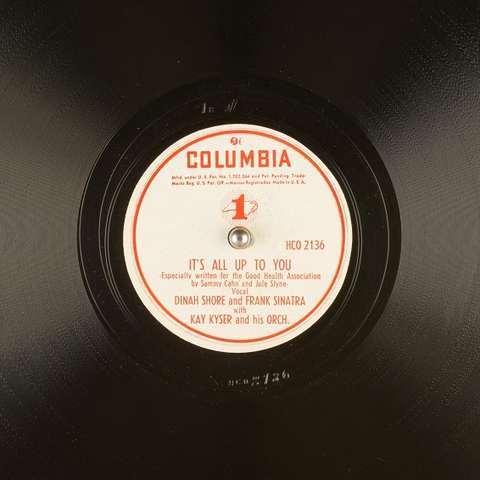
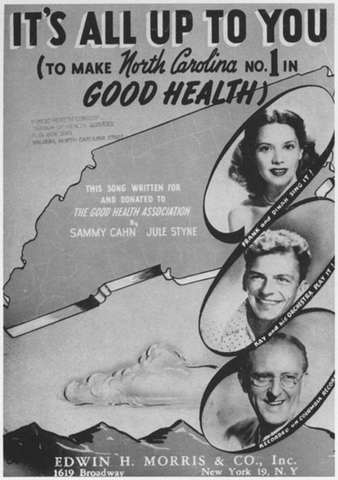
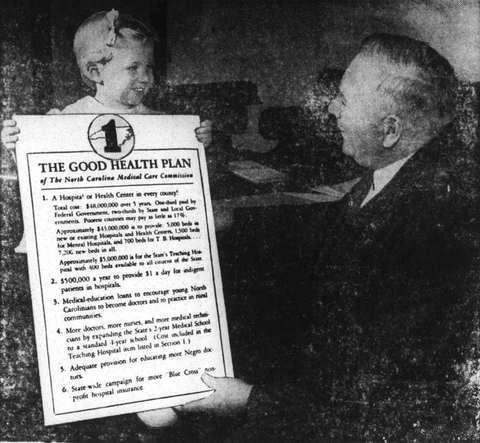
[Sinatra skips set for Burns and Allen]
MGM production memo: MGM's production memo for November 7, 1946 noted Sinatra left the set at 2:30 p.m. to appear on the Burns and Allen radio broadcast, prompting Mayer to send a telegram accusing him of violating his contract.
Source: James Kaplan, "Frank: The Voice" (2010).
November 8, 1946
Radio
Jimmy Durante & Gary Moore Show
Network: CBS
Sponsor: Rexall Drugstore
Time: 9:30PM - 10:00PM (EST)
Performers: Jimmy Durante, Gary Moore, Suzanne Ellers
Ray Bargy Orchestra
Guests: Frank Sinatra
note: Show opens with Jimmy calling Moore about the election(5).
He is depressed because he lost. Moore introduces Sinatra, who comes on singing the opening to "Sunday, Monday Or Always."
Durante joins them. There is a combination of silly jokes and the promotion of "It Happened In Brooklyn." Frank sings "The Things We Did Last Summer" before joining Garry and Jimmy for a comedy spoof of westerns.
Frank and Jimmy swapped guest appearances throughout 1946-47.
Each making three guest shots on the other's show.
--Ed
November 13, 1946
Radio
Songs By Sinatra (CBS) Hollywood
Wednesday
9 to 9:30 P.M.
Sponsor: Old Gold Cigarettes
Announcer: Marvin Miller
Orchestra Conducted By: Axel Stordahl
Performers: Frank Sinatra, The Pied Pipers
Guests: Martha Tilton, Andre Previn
1. The Coffee Song
2. And Then It's Heaven
3. Everybody Loves My Baby Pied Pipers Frank sings intro
4. I Don't Know Why/.That Old Feeling
5.. I Surrender Dear Andre Previn
6. Cuddle Me Up M. Tilton
7. My Romance w/M. Tilton
8. Lullaby Of Broadway w/ Pied Pipers
9. Put You Dreams Away. next week show will come from New York City
November 14, 1946
[Parsons predicts MGM-Sinatra split]
Louella Parsons: In her column of November 14, 1946, Louella Parsons speculated that Sinatra and MGM might part ways permanently, citing his difficult behavior on the lot, including anger over being denied rights to the song 'Time After Time.'
Source: James Kaplan, "Frank: The Voice" (2010).
November 16, 1946
Concerts
Continental Hotel, Chicago, Illinois
Benefit for Jerome D. Solomon Memorial Research Foundation
Continental Hotel, Chicago, Illinois
Benefit for Jerome D. Solomon Memorial Research Foundation
Thanks to Kevin Greenlee for above article.

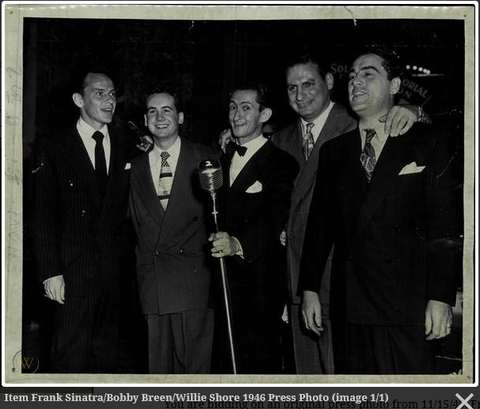
November 20, 1946
Radio
Songs By Sinatra (CBS)
Wednesday Evening
New York City
9 to 9:30 P.M. EST
Sponsor: Old Gold Cigarettes
Produced and Directed By: Mann Holiner
Announcer: Richard Shark
Written by Frank Wilson
Orchestra Conducted By: Axel Stordahl
Performers: Frank Sinatra, The Pied Pipers,
Guests: Peggy Mann and Cy Walter
1. Night And Day intro
1. Ole Buttermilk Sky*
2. Somewhere In The Night
3. My Gal Sal Frank sings opening line and then the Pied Pipers take over
4. It's Only A Paper Moon Cy Walter
5 The Girl That I Marry/Blue Moon/Someone To Watch Over Me w/ Cy Walter
6. South America Take It Away Peggy Mann
7. They Didn't Believe Me w/Peggy Mann
8. Begin The Beguine
8. Put Your Dreams Away
note: Frank was very upset that "darkie" was still in "Ol' Man River" when he sang it at the Hollywood Bowl, 8-14-43. Vowed he would never do it again. For whatever reason, he did sing the line "darkie and me" during "Ole Buttermilk Sky."
Frank Wilson was the new writer for the series and Richard Shark was the announcer.
Ed
Songs By Sinatra (CBS)
Wednesday Evening
New York City
9 to 9:30 P.M. EST
Sponsor: Old Gold Cigarettes
Produced and Directed By: Mann Holiner
Announcer: Richard Shark
Written by Frank Wilson
Orchestra Conducted By: Axel Stordahl
Performers: Frank Sinatra, The Pied Pipers,
Guests: Peggy Mann and Cy Walter
Variety
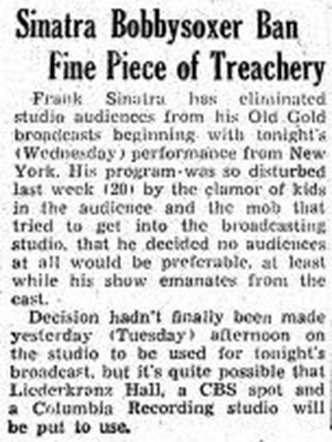
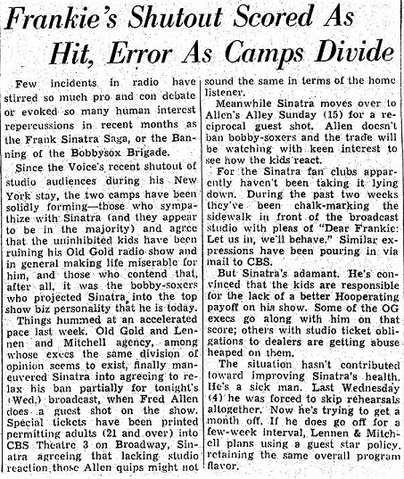
note: The mob of soxers at this broadcast screamed
and screamed and screamed some more. After
Frank finished "Begin The Beguine," and was
signing off, the cacophony rose to new heights.
That was when he warned them "There will be
no audience next week. Frank then sang "Put
Your Dreams Away." In open defiance, the crowd
raise the noise level a few decibels higher. The
11/27 broadcast was lacking an audience.
Variety
note: The ban continued through the 12-4-46 show. Then Frank relented and the 12-11
show did indeed have an audience. The screaming had stopped and was replaced by
polite applause. The last show from New York,12-18, also had relatively quiet crowd.
The show returned to Hollywood for the Christmas show and an audience was welcomed
from that point on.
Ed
© 1997-2025 The Sinatra Archive
This calendar, or any parts thereof, may not be reproduced in any fashion
whatsoever without the prior written permission of the publisher (The
Sinatra Archive)
November 23, 1946
Radio
Harvest Moon Festival, Chicago Stadium, Chicago
WMAQ at 10 pm.
Frank Sinatra, Bob Hope, Frances Langford, Louis Prima

Concerts
Harvest Moon Festival, Chicago Stadium, Chicago
Bob Hope, Frank Sinatra, Frances Langford, Jane Russell, Lena Horne, Louise Prima, Janis Paige
Note: Janis Paige passed away in 2024 at the age of 101!
Harvest Moon Festival, Chicago Stadium, Chicago
Bob Hope, Frank Sinatra, Frances Langford, Jane Russell, Lena Horne, Louise Prima, Janis Paige
At a Chicago Harvest Moon charity ball. L to R: Irv Kupcinet, Frank Sinatra, Janis Paige.
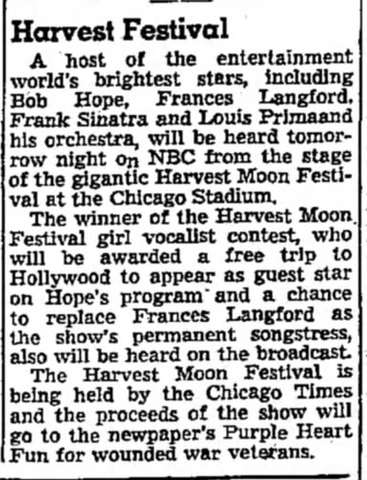
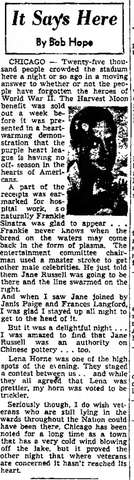
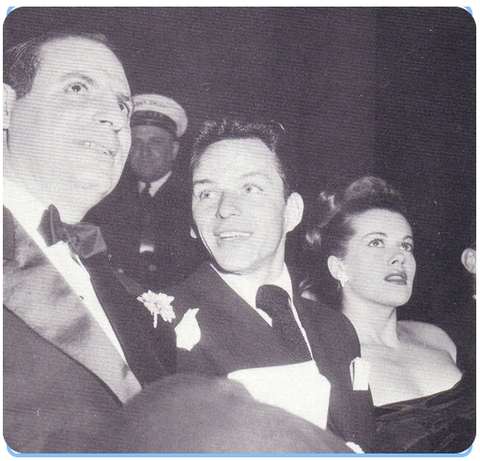
November 27, 1946
Radio
Songs By Sinatra (CBS)
Wednesday Evening
New York City
9 to 9:30 EST
Sponsor: Old Gold Cigarettes
Announcer: Dan Seymour
Produced and Directed By: Mann Holiner
Written by Frank Wilson
Orchestra Conducted By: Axel Stordahl
Guests: Peggy Mann and Cy Walter
1. Let It Snow, Let It Snow, Let It Snow
2. You'll Always Be The One I Love
3. Why Does It Get So Late so Early (Frank does opening line then Pied Pipers take over)
4. I Concentrate On You
5. Falling In Love With Love Cy Walter
6. Give Me A Goodnight Kiss Peggy Mann
7. Camptown Races Pied Pipers
8. Battle Hymm Of Th- e Republic w/Pied Pipers
9. Zip - A - Dee - Doo Dah w/Pied Pipers
10. The House I Live In
11. Put Your Dreams Away
note: Dan Seymour was the announcer and Frank Wilson was the writer There was no studio audience
Ed O'Brien says this is an excellent Old Gold show. Good song selection and it's obvious Frank is enjoying every minute of it.
November 29, 1946
Concerts
Wedgwood Room, Waldorf Astoria, New York City (November 29 - December 19 )
Wedgwood Room, Waldorf Astoria, New York City (November 29 - December 19 )
review
NIGHT CLUB REVIEWS
WEDGEWOOD ROOM, NEW YORK
(Friday, November 29)
Talent Policy: Floor show at midnight;
continuous dance music. Owner-
Operator, Waldorf-Astoria Hotel;
publicity, Ted Saucier.
Prices: $2 cover after 10:30.
Plush or soxer, Sinatra draws
'em in and in droves. His opening
was jammed packed with names
in both showbiz and the social
register. Room's captains had
trouble matching the folk with
the tables available. It was a gala
opening and Sinatra gave the crowd
just what they wanted.
He's a changed chanter. No
longer hanging on to the mike and
slurring and slurping his way thru
pop tunes to give the soxers Sinatraphy,
Frank today is a chirper with pipes and
showmanship; plenty of peddling savvy
and a free and easy style gained apparently
from his film work.
Opening with "The Coffee Song" which
he hoked in showmanly fashion by drinking
a cuppa java during the rests, he presented
a well-varied program, including "Things We
Did Last Summer," "On the Boardwalk at
Atlantic City" and a practically unknown
Kurt Weill number, 'Lost in the Stars." He
also provided a smart switch to comedy
with a parody on "Ol' Man River" entitled
"Ol' Man Crosby," wowing the mink and
boiled-shirt crowd. With Irving Berlin pre-
sent, Sinatra swung into "Girl That I Marry"
and then hit his high point, the "Soliloquy"
from "Carousel," revealing pipes that carry.
In giving his all to the Rodgers number, tho,
he strained a little, and so the recall, "Ole
Buttermilk Sky," came out somewhat
hoarse. A medley -- "I Wonder Who's
Kissing Her Now," Angel Eyes"(Irving
Berlin,1909) and "I'm Sorry I Made You
Cry" -- did okay, with another comedy
bit take-off on "You Made Me Love You,"
done as a letter to Ingrid Bergman, bring-
ing down the house deservedly. Sinatra
showed his comedy talents in putting over
the patter in this one. Closer was "Some-
one To Watch Over Me," and with this he
begged off after working one hour.
Sinatra is due to stay at this room
until December 19, but he could stay on
till doomsday and fill the place. He has
so much more to sell now than the Sinatra
of a few years back. He's in at a measly 5G
a week, fulfilling a four year-old contract with
the Waldorf-Astoria management. Probably
the greatest buy in recent showbiz annals.
Emil Coleman's ork supports, and Mischa
Barr's rumba group handles the non-chanting
moments expertly.
Billboard
December 7, 1946
November 30, 1946
Concerts
Wedgwood Room, Waldorf Astoria, New York City (November 29 - December 19 )
December 1, 1946
Concerts
Wedgwood Room, Waldorf Astoria, New York City (November 29 - December 19 )
December 2, 1946
Concerts
Wedgwood Room, Waldorf Astoria, New York City (November 29 - December 19 )
December 4, 1946
Radio
Songs By Sinatra (CBS)
New York City
Wednesday Evening
9:00 to 9:30 P,M, EST
Sponsor: Old Gold Cigarettes
Announcer: Dan Seymour
Produced and Directed By: Mann Holiner
Written by Frank Wilson
Orchestra Conducted By: Axel Stordahl
Performers: Frank Sinatra, The Pied Pipers
Guests: Peggy Mann, Page Cavanaugh Trio
1 Night And Day (opening )
2.The Whole World Is Singing My Song
3. Pretending
4. Lover ( F.S. sings opening line ) Pied Pipers
5. Body and Soul Page Cavanaugh Trio
6. Ma She's Making Eyes At Me w/Page Cavanaugh Trio
7. Dear Little Boy Of Mine w/Page Cavanaugh Trio
8. Five Minutes More Peggy Mann
9. Tea For Two w/Peggy Mann
10. There's No Business Like Show Business w/Pied Pipers
11. Put Your Dreams Away
Concerts
Wedgwood Room, Waldorf Astoria, New York City (November 29 - December 19 )
December 5, 1946
Film
Till the Clouds Roll By (US Film Release: December 5, 1946) (Directed by Richard Whorf (Uncredited), Busby Berkeley, Henry Koster, Vincente Minnelli, and George Sidney) (Produced by Arthur Freed)
A fictionalized biopic of composer Jerome Kern, portrayed by Robert Walker.
Guest appearances: Frank Sinatra, Judy Garland, Lena Horne, Angela Lansbury, June Allyson, Lucille Bremer Kathryn Grayson,
Van Heflin, Lena Horne, Van Johnson, Dinah Shore, Gower Champion, Cyd Charisse, Angela Lansbury, Virginia O'Brien Sinatra appears in the finale singing "Ol' Man River"
(1st DVD Release date: 1998-05-12 - Remastered version released 2006-04-25)
A fictionalized biopic perfectly describes this film. The question is why? Kern was a fascinating man who deserved a much better film-bio. The silly story at the center of this film gets in the way of some truly glorious music. Sinatra was the front-runner for the role of Kern in the early pre-production stage. I think he would have been a far better choice than the badly miscast Robert Walker. The filming got underway in November of 1945 and continued in fits and starts into August of 1946. Film earned over $7 million dollars and was the 14th top grossing movie of 1947.MGM did not renew the copyright and the film became part of the public domain. I bought a few copies back in the early 1980s on VHS. Quality was awful. The washed out color and very poor sound was the norm until MGM (Turner) issued a gorgeous laser disc version in the early 1990s. The original DVD(1998) paled in comparison. Finally a DVD comparable to the laser was issued in 2006.
Film offers up 28 Kern songs including the rather infamous Sinatra rendition of "Ol' Man River." Frank did a wonderful vocal with a 40 piece MGM orchestra, but the film's offering of that performance borders on the ridiculous. Life magazine and The Times both dubbed it the "worst performance of 1946." I would imagine Frank was not too thrilled with his cameo. Film is worth watching just for the music and there is a lot of that in the two-hour running time. Ed
note: During his January 47 Old Gold shows, Frank raves about this movie. Has very nice things to say about
Louie B.. Mayer and the cast of the biopic. The
1-15-47 show is a half-hour tribute to Jerome
Kern. Wonderful singing by all involved that night.
--Ed
[image referenced in source but could not be recovered]
[The Cinematic Legacy of Frank Sinatra — Till the Clouds Roll By (1946)]
David Wills's 2015 photo history The Cinematic Legacy of Frank Sinatra devotes a section to Till the Clouds Roll By (1946), illustrated with 4 behind-the-scenes and publicity photographs (posters, lobby cards, and on-set/on-location shots) filed here.
“Frank, of course, thrills the customers with his vocalizing, but it's his naturalness and easy- going charm that beget applause. It just seems like all of a sudden it's spring and Frankie is an actor. His comical duet with Durante provoked great whoops of approval from the boys and girls out front.” —Sara Hamilton
Source: David Wills, The Cinematic Legacy of Frank Sinatra (St. Martin's Press, 2015), pp. 48–51.
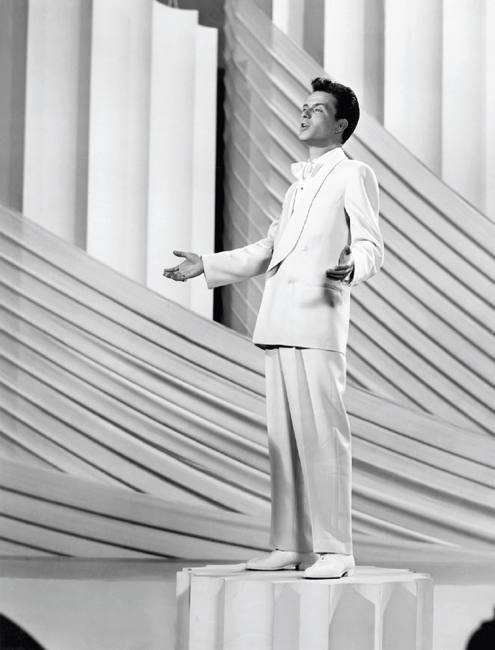
of livin' and scared of dyin'. That's / how you do it, Frankie.” / Sinatra's performance in Till the Clouds Roll By, 1946) / Performing “Ol' Man River”, Till the Clouds Roll By, 1946. (Photo: The Cinematic Legacy of Frank Sinatra, David Wills, 2015.)
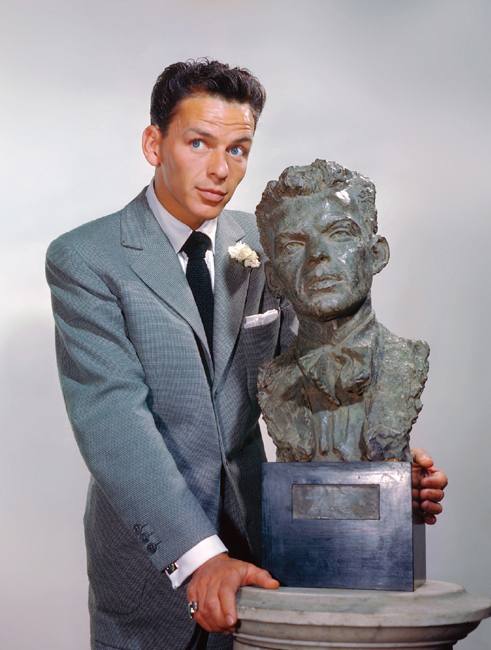
1946. (Photo: The Cinematic Legacy of Frank Sinatra, David Wills, 2015.)
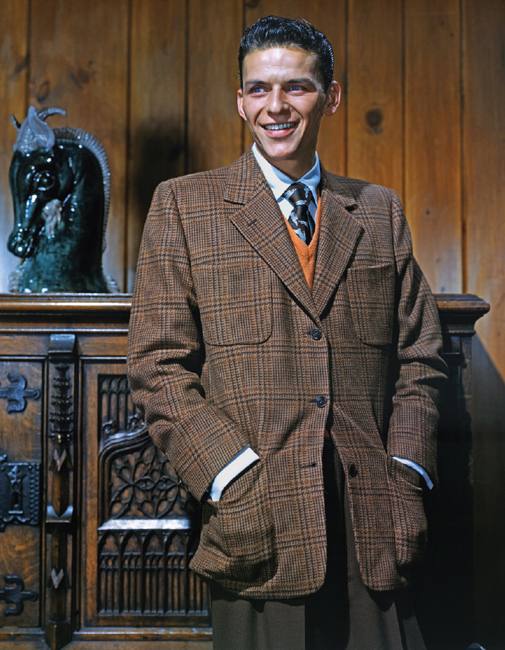
1945. Photo by Pagano. (Photo: The Cinematic Legacy of Frank Sinatra, David Wills, 2015.)
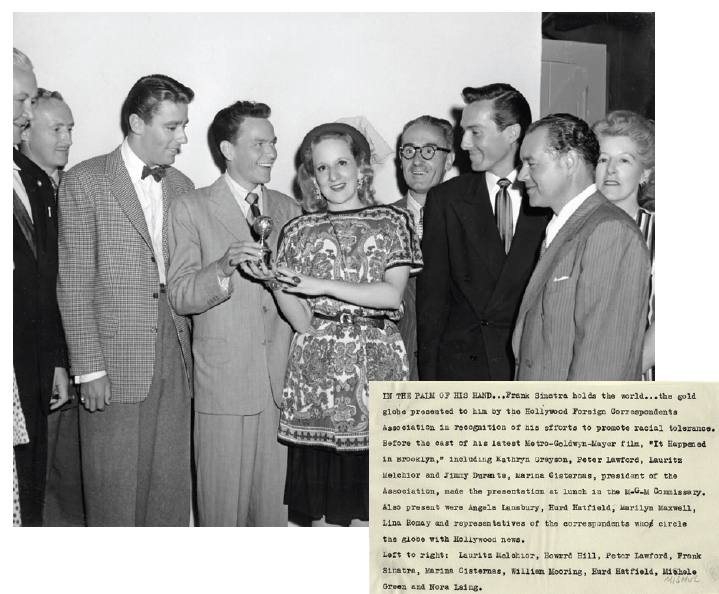
Frank Sinatra receiving a special Golden Globe for “Promoting Good Will”, 1947. / “Frank, of course, thrills the customers with his / vocalizing, but it's his naturalness and easy- / going charm that beget applause. It just seems / like all of a sudden it's spring and Frankie is an / actor. His comi (Photo: The Cinematic Legacy of Frank Sinatra, David Wills, 2015.)
Concerts
Wedgwood Room, Waldorf Astoria, New York City (November 29 - December 19 )
Till the Clouds Roll By (US Film Release: December 5, 1946) (Directed by Richard Whorf (Uncredited), Busby Berkeley, Henry Koster, Vincente Minnelli, and George Sidney) (Produced by Arthur Freed)
A fictionalized biopic of composer Jerome Kern, portrayed by Robert Walker.
Guest appearances: Frank Sinatra, Judy Garland, Lena Horne, Angela Lansbury, June Allyson, Lucille Bremer Kathryn Grayson,
Van Heflin, Lena Horne, Van Johnson, Dinah Shore, Gower Champion, Cyd Charisse, Angela Lansbury, Virginia O'Brien Sinatra appears in the finale singing "Ol' Man River"
[image referenced in source but could not be recovered]
[image referenced in source but could not be recovered]
"Till the Clouds Roll By"
Amid an all-star MGM cast, Sinatra was featured in the climax of the Jerome Kern biopic Till the Clouds Roll By, singing 'Ol' Man River' -- generally considered the best-known of all his cameo film roles.
Source: Tom Santopietro, "Sinatra in Hollywood" (2008).
"Till the Clouds Roll By"
Composer Jerome Kern died during the filming of his own screen biography. The film was produced by Arthur Freed and directed by Richard Whorf, with some sequences directed by Vincente Minnelli and George Sidney; musical talent included Lennie Hayton (musical supervisor/conductor), Conrad Salinger (orchestrations), and Kay Thompson (vocal arrangements).
Source: Tom Santopietro, "Sinatra in Hollywood" (2008).
"Till the Clouds Roll By"
Santopietro criticizes the film as a whitewashed, fact-glossing Hollywood biography that overstuffs itself with MGM stars in a 'spot the star singing a well-known tune' revue -- calling it 'the dodo bird of MGM musicals: it moves but never flies.' Featured performers passing through include June Allyson, a very young Angela Lansbury, Van Johnson, and Cyd Charisse.
Source: Tom Santopietro, "Sinatra in Hollywood" (2008).
"Till the Clouds Roll By" / "Show Boat (1951)"
Lena Horne's excerpt from Show Boat in Till the Clouds Roll By, singing 'Can't Help Lovin' Dat Man' and 'Why Was I Born?', shows how well-suited she was to the role of Julie -- but MGM, fearing a Southern boycott if the African-American Horne played the lead in its planned 1951 Show Boat remake, instead cast Horne's friend Ava Gardner in the role.
Source: Tom Santopietro, "Sinatra in Hollywood" (2008).
"Till the Clouds Roll By"
Sinatra's 'Ol' Man River' number was staged with garish MGM excess: a white-suited Sinatra on a white pedestal in front of an all-white-garbed orchestra and a solid-white wedding-cake set with a pink backdrop, designed under Cedric Gibbons -- an incongruous 'heaven is all white' treatment of Hammerstein's mournful lyric about the African-American experience.
Source: Tom Santopietro, "Sinatra in Hollywood" (2008).
"Till the Clouds Roll By"
Santopietro judges Sinatra's 'Ol' Man River' performance wrong for the song racially and conceptually, yet says he 'sure as hell delivers' vocally, investing it with real passion -- more powerful than his late-1930s big-band sound -- and notes MGM closed the film with his rendition.
Source: Tom Santopietro, "Sinatra in Hollywood" (2008).
"Till the Clouds Roll By"
Sinatra refused to sing the original lyric of 'Ol' Man River,' which used the word 'darkies,' reflecting his well-known liberal political views of the era; Santopietro connects this to Sinatra's later career-long championing of composers like Kern and Gershwin, and even ties his eventual political shift toward Reagan-era conservatism partly to the 1960s dismissal of that classic songbook tradition.
Source: Tom Santopietro, "Sinatra in Hollywood" (2008).
"Till the Clouds Roll By"
Santopietro / Life magazine / Variety: Till the Clouds Roll By was a major box-office success but drew mixed reviews. Life magazine called Sinatra's appearance the worst moment in any 1946 film, 'a high point in bad taste,' while Variety was more even-handed about the film's two versions of the song.
Source: Tom Santopietro, "Sinatra in Hollywood" (2008).
"Till the Clouds Roll By"
Pete Hamill (quoted); Santopietro (rebuttal): Chronicler Pete Hamill called Sinatra 'at his most ludicrous' in the white-tuxedo 'Ol' Man River' clip, but Santopietro disputes this, arguing Sinatra's worst work is actually found in films like Double Dynamite or The Kissing Bandit.
Source: Tom Santopietro, "Sinatra in Hollywood" (2008).
"Till the Clouds Roll By"
Jerome Kern: Composer Jerome Kern himself reportedly commented that the song called for 'a rabbity little fellow' who could convey being 'tired of livin' and scared of dyin'' -- concluding wryly, 'That's how you do it, Frankie.'
Source: Tom Santopietro, "Sinatra in Hollywood" (2008).
"Till the Clouds Roll By"
The film's narration claims it was "inevitable" that producer Arthur Freed would cast Sinatra to sing "Ol' Man River"; Santopietro pushes back on this, noting the song was written for an African-American voice and that Paul Robeson would have been the more fitting choice.
Source: Tom Santopietro, "Sinatra in Hollywood" (2008).
"Till the Clouds Roll By"
Santopietro grades this a C, citing "the infamous 'Ol' Man River'" number.
Source: Tom Santopietro, "Sinatra in Hollywood" (2008).
"Till the Clouds Roll By"
Santopietro (Filmography): Metro-Goldwyn-Mayer. Produced by Arthur Freed, directed by Richard Whorf, George Sidney and Vincente Minnelli, screenplay by Myles Connolly and Jean Holloway, music by Jerome Kern. A biopic-revue with Robert Walker as Kern, alongside Van Heflin, Judy Garland, Lena Horne, Van Johnson, Cyd Charisse and Angela Lansbury; Sinatra appeared as the finale soloist, singing 'Ol' Man River.'
Source: Tom Santopietro, "Sinatra in Hollywood" (2008).
December 6, 1946
Concerts
Wedgwood Room, Waldorf Astoria, New York City (November 29 - December 19 )
December 7, 1946
Concerts
Wedgwood Room, Waldorf Astoria, New York City (November 29 - December 19 )
December 8, 1946
Concerts
Wedgwood Room, Waldorf Astoria, New York City (November 29 - December 19 )
December 9, 1946
Concerts
Wedgwood Room, Waldorf Astoria, New York City (November 29 - December 19 )
December 10, 1946
Concerts
Wedgwood Room, Waldorf Astoria, New York City (November 29 - December 19 )
December 11, 1946
Radio
Songs By Sinatra (CBS)
New York City
Wednesday Evening
9:00 to 9:30 P.M.
Sponsor: Old Gold Cigarettes
Announcer: Dan Seymour
Orchestra Conducted By: Axel Stordahl
Performers: Frank Sinatra, The Pied Pipers
Guests: Fred Allen
1. It's All Over Now
2. You Keep Coming Back Like A Song
3. Ole Buttermilk Sky (Frank sings opening line) Pied Pipers
4. Among My Souvenirs
5.Acidophilus Moon Fred Allen
6. In My Merry Oldsmobile w/Fred Allen
6. Ol' Man River
7. Put Your Dreams Away
note: Frank had just enough time to sing the title to his theme song at the conclusion of the show. Dan Seymour was the announcer and "Come Rain Or Come Shine" was added to the AFRS broadcast of the show.
Ed
Concerts
Wedgwood Room, Waldorf Astoria, New York City (November 29 - December 19 )
December 12, 1946
Concerts
Wedgwood Room, Waldorf Astoria, New York City (November 29 - December 19 )
December 13, 1946
Concerts
Wedgwood Room, Waldorf Astoria, New York City (November 29 - December 19 )
December 14, 1946
Concerts
Wedgwood Room, Waldorf Astoria, New York City (November 29 - December 19)
December 15, 1946
Studio
New York City
CO37162 I Want To Thank Your Folks
(B. Benjamin/G. Weiss)
Oxford Music Corp. (ASCAP) 1946
Arranged & Conducted by Axel Stordahl
-1 (3:10) CD: Columbia Years 43-52 Vol. 6
78: 37251
CO37163 That's How Much I Love You w/The Page Cavanaugh Trio
(E. Arnold/W. Fowler/J.G. Hall)
Vogue Music Corp. (ASCAP) 1946
Arranged by Page Cavanaugh
-1 (3:09) CD: Columbia Years 43-52 Vol. 6
LP: C6X-40343 The Voice- The Columbia Years, 43-52
78: 37231
New York City
CO37177 Sweet Lorraine w/The Metronome All Stars
(M. Parish/C. Burwell)
Mills Music, Inc. (ASCAP) 1928
Arranged & Conducted by Sy Oliver
-1 (3:08) CD: Columbia Years 43-52 Vol. 6
-2 (3:13) CD: C2K 65244Portrait Of Sinatra
LP: C6X-40343 The Voice- The Columbia Years, 43-52 (alt. take)
LP: CL-2740 The Essential Frank Sinatra, Vol. 2 (alt. take)
78: 37293
The Metronome All-Stars: Piano: Nat Cole; Guitar: Bob Ahern; Bass: Eddie Safransky; Drums: Buddy Rich; Trumpet: Charlie Shavers; Trombones: Lawrence Brown; Alto Sax: Johnny Hodges; Tenor Sax: Coleman Hawkins; Baritone Sax: Harry Carney
Ed O'Brien:
Frank won the Metronome favorite male vocalist for the fourth time in 1946. For the first time, the all-star jazz musicians who had won, invited a vocalist to join them. Columbia gave Frankie the O.K. and he jumped at the chance. George Simon produced the session that ran from 4:15 to 6:15 on that cold December day in 1946. Sinatra had been singing the King Cole Trio hit "Sweet Lorraine" on the radio and in nightclubs. Sy Oliver did the arrangement and the recording is one of Frank's best from the forties. It is the only time Frank made a recording with Nat King Cole and Coleman Hawkins. In all there were 7 takes, including four complete ones. The jazz solos Oliver built around the vocal are a wonderful addition to Frank's performance. Nat Cole and June Christy were featured on the other recording done at the session, "Nat Meets June." Sinatra remained in the studio to witness this terrific jazz recording. The two songs were issued on Col.37293.
The jazz critic and musicologist George Simon supervised the session. There were seven takes. Two of the four complete takes remain unreleased. There was a second song done with the All-Stars featuring Nat Cole and June Christy doing a vocal duet. Title is "Nat Meets June." It is terrific.
The Coleman Hawkins Mosaic 8-CD set contains three takes of the Dec . 1946 Metronome All Star "Sweet Lorraine" plus four breakdowns. The breakdowns are 36 sec., 10 sec., 32 sec. and 2 min. 36 sec. I suppose that there will be a touch of Frank on one or two of the breakdowns. The breakdowns are identified as nos. 1, 2, 4 and 5. (Maybe the not-to-be-issued no. 3 was a false start.)
--Marv
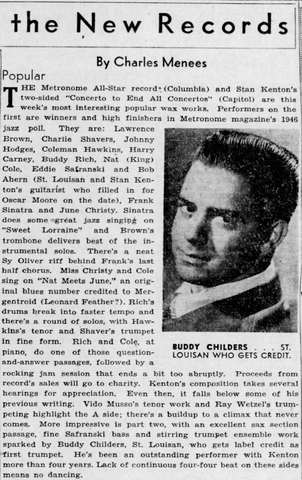
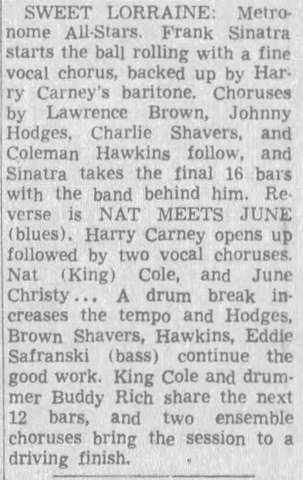
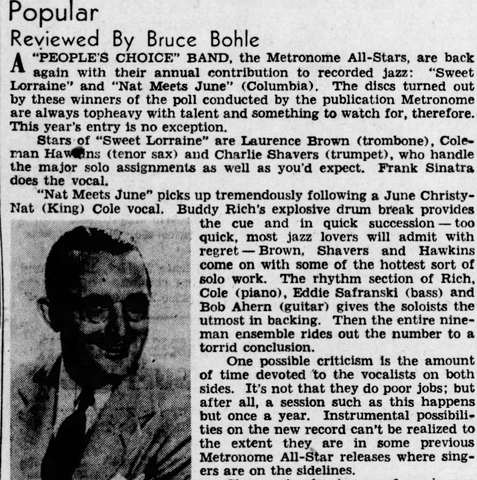
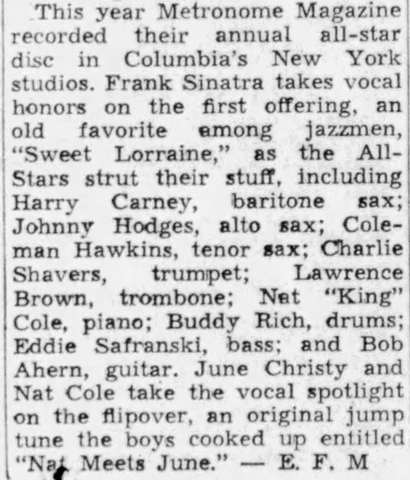
Radio
The Fred Allen Show
Network: NBC
Sunday Evening
Time: 8:30 P.M. - 9:00 P.M.
Sponsor: Tender Leaf Tea & Shepherd Tea
Cast: Portland Hoffa, Minerva Pious,
Parker Fennelly, Peter Donald
The Demarco Sisters, Al Goodman & Orchestra
Announcer: Kenny Delmar
Guest: Frank Sinatra
Songs: It's All Over Now Demarco Sisters
You'll Always Be The One I Love Frank Sinatra
My Time Is Your Time Frank sings first line of song
--Show ends abruptly due to the miscalculating of its running time. Frank was just about to sing with a vocal group.
Ed
[image referenced in source but could not be recovered]
Concerts
Wedgwood Room, Waldorf Astoria, New York City (November 29 - December 19 )
New York City
CO37177 Sweet Lorraine w/The Metronome All Stars
(M. Parish/C. Burwell)
Mills Music, Inc. (ASCAP) 1928
Arranged & Conducted by Sy Oliver
-1 (3:08) CD: Columbia Years 43-52 Vol. 6
-2 (3:13) CD: C2K 65244Portrait Of Sinatra
LP: C6X-40343 The Voice- The Columbia Years, 43-52 (alt. take)
LP: CL-2740 The Essential Frank Sinatra, Vol. 2 (alt. take)
78: 37293
Upper left, Frank Sinatra talks to Columbia's Manie Sacks on the telephone, as Metronome editor George Simon, Columbia supervisor Mitch Ayres, Buddy Rich, and visitor Alec Wilder look on. Upper right, Sinatra and June Christy. Lower left, Bob Ahern, unidentified, Eddie Safranski, Nat Cole and Buddy Rich. George Simon looks on. Lower right, Harry Carney and Nat Cole. Here is additional information on the December 46 sessions. The Sunday afternoon of the session was remembered by participants as being very cold. After "Sweet Lorraine" was completed, Sinatra insisted on staying for the Nat Cole-June Christy segment. Session ran from 4 to 7 P.M.
Location: New York
Label: Columbia
Metronome All Stars Rehearsal
Johnny Hodges (as), Coleman Hawkins (ts), Harry Carney (bar), Charlie Shavers (t), Lawrence Brown (tb), Nat Cole (p), Bob Ahern (g), Eddie Safranski (b), Dave Tough (d) a.rhlSweet Lorraine(Mitchell Parish, Cliff Burwell) - 3:45 unissued
With Cole's piano substituting for Sinatra's vocals and Dave Tough replacing Buddy Rich on drums, the Metronome All-Stars gathered a day prior to the recording session for a rehearsal. Although never heard, an acetate disc capturing "Sweet Lorraine" is known to exist.
Date: December 15, 1946 [16:15-18:55]
Location: New York
Label: Columbia
Metronome All Stars
George Simon (pro), June Christy, Frank Sinatra (v), Nat Cole (v, p), Johnny Hodges (as), Coleman Hawkins (ts), Harry Carney (bar), Charlie Shavers (t), Lawrence Brown (tb), Bob Ahern (g), Eddie Safranski (b), Buddy Rich (d) a. CO 3717-BD1 lfs Sweet Lorraine (Mitchell Parish, Cliff Burwell) / arr: Sy Oliver - 0:36 Mosaic CD BoxMD8-251 Classic Coleman Hawkins Session 1922–1947 (2012) b. CO 37177-3alt Sweet Lorraine (Mitchell Parish, Cliff Burwell) / arr: Sy Oliver - 3:15 Mosaic CD BoxMD8-251 Classic Coleman Hawkins Session 1922–1947 (2012) c. CO 37177-BD2 lfs Sweet Lorraine (Mitchell Parish, Cliff Burwell) / arr: Sy Oliver - 0:10 Mosaic CD BoxMD8-251 Classic Coleman Hawkins Session 1922–1947 (2012) d. CO 37177-2alt Sweet Lorraine (Mitchell Parish, Cliff Burwell) / arr: Sy Oliver - 3:15 Columbia 78M235 (JP) Sweet Lorraine / Nat Meets June (1947) Harmony LP 12"HL 7044 Metronome All – Stars (1957)
Columbia CDCK 65245 Portrait of Sinatra (1997)
Mosaic CD BoxMD8-251 Classic Coleman Hawkins Session 1922–1947 (2012) e. CO 37177-BD3 lfs Sweet Lorraine (Mitchell Parish, Cliff Burwell) / arr: Sy Oliver unissued f. CO 37177-BD4 lfs Sweet Lorraine (Mitchell Parish, Cliff Burwell) / arr: Sy Oliver - 0:32 Mosaic CD BoxMD8-251 Classic Coleman Hawkins Session 1922–1947 (2012) g. CO 37177-BD5 lfs Sweet Lorraine (Mitchell Parish, Cliff Burwell) / arr: Sy Oliver - 2:36 Mosaic CD BoxMD8-251 Classic Coleman Hawkins Session 1922–1947 (2012) h. CO 37177-BD6 lfs Sweet Lorraine (Mitchell Parish, Cliff Burwell)/ arr: Sy Oliver unissued i. CO 37177-1 Sweet Lorraine (Mitchell Parish, Cliff Burwell) / arr: Sy Oliver - 3:12 Columbia 7837293 Sweet Lorraine / Nat Meets June (1947) Columbia LP 12"CL 2528 The Metronome All-Stars (1955) Columbia CD BoxC12K 48673 The Columbia Years 1943–1952: The Complete Recordings &nbbsp; (1993) Columbia CDCK 65240 Sinatra Sings His Greatest Hits (1997) Mosaic CD BoxMD8-251 Classic Coleman Hawkins Session 1922–1947 (2012) j. CO 37178-4alt Nat Meets June (George Simon [as Randy Mergentroid]) / arr: Sy Oliver - 3:38 Columbia LP 12"CJ 40652 The 1940s The Singers (1987) Mosaic CD BoxMD8-251 Classic Coleman Hawkins Session 1922–1947 (2012) k. CO 37178-3alt Nat Meets June (George Simon [as Randy Mergentroid]) / arr: Sy Oliver - 3:16 Harmony LP 12"HL 7044 Metronome All – Stars (1957)
Mosaic CD BoxMD8-251 Classic Coleman Hawkins Session 1922–1947 (2012) l. CO 37178-BD1 lfs Nat Meets June (George Simon [as Randy Mergentroid]) / arr: Sy Oliver unissued m. CO 37178-BD2lfs Nat Meets June (George Simon [as Randy Mergentroid]) / arr: Sy Oliver - 1:30 Mosaic CD BoxMD8-251 Classic Coleman Hawkins Session 1922–1947 (2012) n. CO 37178-2alt Nat Meets June (George Simon [as Randy Mergentroid]) / arr: Sy Oliver - 3:09 Columbia 78M235 (JP) Sweet Lorraine / Nat Meets June (1947) Mosaic CD BoxMD8-251 Classic Coleman Hawkins Session 1922–1947 (2012) o. CO 37178-1 Nat Meets June (George Simon [as Randy Mergentroid]) / arr: Sy Oliver - 3:05 Columbia 7837293 Sweet Lorraine / Nat Meets June (1947) Columbia LP 12"CL 2528 The Metronome All-Stars (1955) Mosaic CD BoxMD8-251 Classic Coleman Hawkins Session 1922–1947 (2012) June Christy (v) on j-o; Nat Cole (v) on j-o; Frank Sinatra (v) on a-i. Releases
Some sources suggest that 37177-2 ("Sweet Lorraine") appeared on the original 78 issue 37293. Sinatra discographer, Luiz Carlos do Nascimento Silva, says the second take was used 'on only a few copies' of the original 78. For his part, Teubig says takes 1 & 2 appeared on the original 78, and also says that takes 1 & 2 of "Nat Meets June" were both issued on various pressings of the initial 78. Mosaic, in the discography to the Coleman Hawkins set, says the following about the second take of "Sweet Lorraine": 'Discographies list 37177-2 as being initially issued on Columbia 37293 or Harmony HL 7044. However, the Japanese 78 is the initial release.' Unreleased Breakdowns
The Hawkins Mosaic set omitted three breakdowns, two on "Sweet Lorraine" (BD3 & BD6) and one on "Nat Meets June" (BD1). Mosaic also included several seconds of chatter in between two takes of "Nat Meets June", not placed here. Session Order
Per Mosaic, the sequencing of the listed titles 'comes from written information on the sleeve of the original lacquer disc'.
[image referenced in source but could not be recovered]
[image referenced in source but could not be recovered]
The Fred Allen Show
Network: NBC
Sunday Evening
Time: 8:30 P.M. - 9:00 P.M.
Sponsor: Tender Leaf Tea & Shepherd Tea
Cast: Portland Hoffa, Minerva Pious,
Parker Fennelly, Peter Donald
The Demarco Sisters, Al Goodman & Orchestra
Announcer: Kenny Delmar
Guest: Frank Sinatra
Songs: It's All Over Now Demarco Sisters
You'll Always Be The One I Love Frank Sinatra
My Time Is Your Time Frank sings first line of song
Show ends abruptly due to the miscalculating of its running time. Frank was just about to sing with a vocal group.
Ed
[image referenced in source but could not be recovered]
[image referenced in source but could not be recovered]
The Fred Allen Show
Network: WNBC
Time: 8:30 P.M. - 9:00 P.M.
Guest: Frank Sinatra
[image referenced in source but could not be recovered]
[image referenced in source but could not be recovered]
"Sweet Lorraine"
Sinatra's participation in the Metronome All-Stars session with jazz greats Charlie Shavers, Coleman Hawkins, Johnny Hodges, Harry Carney, Lawrence Brown, Buddy Rich, and pianist Nat 'King' Cole for a loose rendition of Cole's 'Sweet Lorraine' is considered one of the highlights of Sinatra's Columbia period and an early sign of the jazz direction his music would later take.
Source: Charles L. Granata, "Sessions with Sinatra: Frank Sinatra and the Art of Recording" (1999/2003).
[Sunday recording session with Avakian]
On Sunday, December 15, 1946, an unprecedented Sunday session, Sinatra recorded 'Always' and 'I Want to Thank Your Folks' with Axel Stordahl's orchestra under Manie Sacks, then relaxed into two jazz numbers, 'That's How Much I Love You' and 'You Can Take My Word for It, Baby,' with the Page Cavanaugh Trio supervised by young producer George Avakian.
Source: James Kaplan, "Frank: The Voice" (2010).
December 16, 1946
Radio
Joe Louis Tribute Dinner, Waldorf-Astoria, New York City
Time: 10:30 P.M. - 11:00 P.M.
Network: WMCA
Guests: Mayor O'Dwyer, Carol Landis, Dr. Channing Tobias, Burl Ives, Frank Sinatra, Burl Ives & others
[image referenced in source but could not be recovered]
Concerts
Wedgwood Room, Waldorf Astoria, New York City (November 29 - December 19 )
Joe Louis Tribute Dinner, Waldorf-Astoria, New York City
Time: 10:30 P.M. - 11:00 P.M.
Network: WMCA
Guests: Mayor O'Dwyer, Carol Landis, Dr. Channing Tobias, Burl Ives, Frank Sinatra & others
[image referenced in source but could not be recovered]
[image referenced in source but could not be recovered]
[image referenced in source but could not be recovered]
December 17, 1946
Concerts
Wedgwood Room, Waldorf Astoria, New York City (November 29 - December 19)
[Sweet Lorraine with Metronome All-Stars]
Two days after the December 15 session, Sinatra recorded a celebrated version of 'Sweet Lorraine' with the Metronome All-Stars, including Johnny Hodges, Coleman Hawkins, Harry Carney, Charlie Shavers, Lawrence Brown, Nat 'King' Cole, and Buddy Rich -- a performance Kaplan cites as proof Sinatra could swing.
Source: James Kaplan, "Frank: The Voice" (2010).
December 18, 1946
Radio
Songs By Sinatra (CBS)
New York City
Wednesday Evening
9:00 P.M. -9:30 P.M
Sponsor: Old Gold Cigarettes
Announcer: Dan Seymour
Orchestra Conducted By: Axel Stordahl
Performers: Frank Sinatra, The Pied Pipers
Guest: Peggy Mann
1. Night And Day intro
2. Jingle Bells w/Pied Pipers
3. You'll Always Be The One I Love
4. Santa Claus Is Comin' To Town (Frank does opening line ) Pied Pipers
5.Parade Of The Wooden Soldiers
6. Have Yourself A Merry Little Christmas
7. Winter Wonderland Peggy Mann
8. Embraceable You w/Peggy Mann
9. Silent Night w/ Pied Pipers
10. Put Your Dreams Away
note: Last show in New York. Marvin Miller was back as the regular announcer on the 12/25 show from Hollywood.
Ed
Concerts
Wedgwood Room, Waldorf Astoria, New York City (November 29 - December 19 )
December 19, 1946
Radio
Radio Readers Digest:
Title: "There Was Room For A Stranger
Network: WCBS
Time: 10:00 P.M - 10:30 P.M.
Sponsor: Hallmark Cards
Host: Richard Kollmar
Performers: Frank Sinatra
Announcer: Tom Shirley
Writer: Robert Sloane
Director: Marx B. Loeb
Composer: Jack Miller
Note: A soldier is re-united with his girl on Christmas. The show appears on the officially released CD set: 60 Greaest Old Time Radio Show "Frank Sinatra & Friends"
Concerts
Wedgwood Room, Waldorf Astoria, New York City (November 29 - December 19 )
Radio Readers Digest:
Title: "There Was Room For A Stranger
Network: WCBS
Time: 10:00 P.M - 10:30 P.M.
Sponsor: Hallmark Cards
Host: Richard Kollmar
Performers: Frank Sinatra
Announcer: Tom Shirley
Writer: Robert Sloane
Director: Marx B. Loeb
Composer: Jack Miller
Note: A soldier is re-united with his girl on Christmas. The show appears on the officially released CD set: 60 Greaest Old Time Radio Show "Frank Sinatra & Friends"
December 19. 1947
Benny, Sinatra, & 'Rochester'
American actor and comedian Eddie 'Rochester' Anderson (1905 - 1977) (second left) stands by an antique Maxwell car, as fellow comedian Jack Benny (born Benjamin Kubelsky, 1894 - 1974) sits in the driver's seat outside NBC studios, California, December 19, 1947. Among others watching in the background is entertainer Frank Sinatra (1915 - 1998) (hands on hips). (Photo by Gene Lester/Getty Images)
[image referenced in source but could not be recovered]
[image referenced in source but could not be recovered]
[image referenced in source but could not be recovered]
[image referenced in source but could not be recovered]
[image referenced in source but could not be recovered]
[image referenced in source but could not be recovered]
December 1946
Sinatra recorded “Sweet Lorraine” with the Metronome All-Stars, an ensemble of leading jazz musicians including Coleman Hawkins, Harry Carney, and Charlie Shavers, with Nat King Cole on piano -- a session historian Charles L. Granata calls one of the highlights of Sinatra's Columbia years. Source: Wikipedia, “Frank Sinatra.”
[Sinatra bars young fans, then reverses]
Kaplan: In early December 1946, Sinatra issued an edict barring fans under 21 from his radio broadcasts; the public outcry was so loud he quickly reversed the decision.
Source: James Kaplan, "Frank: The Voice" (2010)
[Life magazine mocks Sinatra's 'Ol' Man River' cameo]
When Till the Clouds Roll By, an MGM biopic about Jerome Kern, was released, Frank's incongruous cameo singing 'Ol' Man River' in a white suit surrounded by an all-white orchestra drew a scathing review from Life magazine calling it a high point in bad taste.
Source: Richard Havers, "Sinatra" (Dorling Kindersley, 2007).
December 21, 1946
The Hollywood Women's Press Club voted Frank "Least Cooperative Star" of 1946, a reputation the author attributes to his frustration with sleazy tabloid attacks he had no real forum to answer.
Source: Nancy Sinatra, Frank Sinatra: An American Legend, 1995.
December 22, 1946
[Havana mafia summit convenes]
Four days before the Flamingo opening, a major mob conference convened at the Hotel Nacional in Havana, organized by Meyer Lansky and presided over by Lucky Luciano, with every important American gangster attending except the deliberately excluded Bugsy Siegel.
Source: James Kaplan, "Frank: The Voice" (2010).
December 24, 1946
[Ava Gardner turns 24]
Ava Gardner turned twenty-four the week before Sinatra's New Year's Eve party ending 1946, having recently broken out with her role in The Killers.
Source: James Kaplan, "Frank: The Voice" (2010).
December 25, 1946
Radio
Songs By Sinatra (CBS)
Hollywood
9;00 P.M. -9:30 P.M EST
Sponsor: Old Gold Cigarettes
Announcer: Marvin Miller
Orchestra Conducted By: Axel Stordahl
Written by Frank Wilson
Performers: Frank Sinatra, The Pied Pipers
Guests: Jane Powell, Page Cavanaugh Trio
1. Zip A Dee Do Dah w/ Pied Pipers
2. Let It Snow, Let It Snow, Let It Snow w/ Page Cavanaugh Trio
3. A Gal In Calico (first line sung by Sinatra then entire song sung by Pied Pipers)
4. Crazy Rhythm Page Cavanaugh Trio
5. Medley: Pretty Baby/It's All Over Now/ Put On Your Old Gray Bonnet
6. Kiss Me Again Jane Powell
7. The Song Is You w/Jane Powell
8. When The Day Is Done w/Pied Pipers
9. Put Your Dreams Away
Frank's slow ballad reading of "Let It Snow, Let
It Snow, Let It Snow" is exquisite. His sole accompaniment is Page Cavanaugh.
note: This was Jane Powell's first appearance on Frank's Old Gold series. In all, she would be on 21 shows.
Marvin Miller would present Frank with a plaque from Metronome Magazine. He won the poll for most popular singer in the country for the third straight year.
Ed
December 26, 1946
Radio
Command Performance
Network: AFRS
Show: #254
Host: Carole Landis
Guests: Frank Sinatra, Jimmy Durante, Clark Dennis, The Smart Set
Announcer: Bill Stewart
1. I Got A Gal I Love
2. The Things We Did Last Summer
Notes: TT 30mins. Audio condition:
© 1997-2025 The Sinatra Archive
This calendar, or any parts thereof, may not be reproduced in any fashion
whatsoever without the prior written permission of the publisher (The
Sinatra Archive)
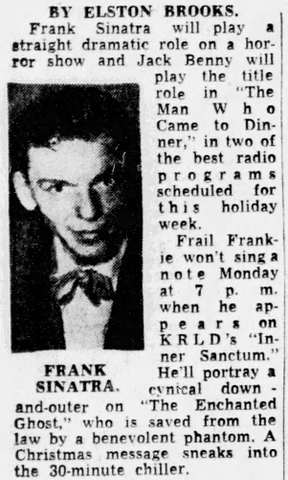
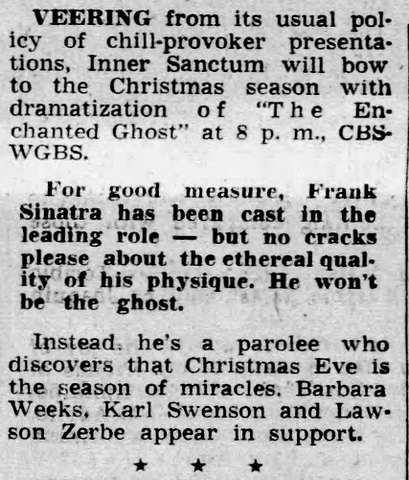
© 1997-2024 The Sinatra Archive
This calendar, or any parts thereof, may not be reproduced in any fashion
whatsoever without the prior written permission of the publisher (The
Sinatra Archive)
© 1997-2025 The Sinatra Archive
This calendar, or any parts thereof, may not be reproduced in any fashion
whatsoever without the prior written permission of the publisher (The
Sinatra Archive)
[Flamingo Hotel's disastrous opening]
Bugsy Siegel's Flamingo Hotel opened in Las Vegas on the cold, rainy night of December 26, 1946; most of the major stars he had invited (Gable, Hepburn, Tracy, Cooper, Dietrich, and Sinatra among them) failed to appear, and the casino ended the night $200,000 in the red.
Source: James Kaplan, "Frank: The Voice" (2010).
December 29, 1946
Radio
Command Performance No. 254
Guests: Frank Sinatra, Jimmy Durante, Carole Landis
1. I Got A Gal I Love
2. The Things We Did Last Summer
+ comedy skits / 30 mins. note: Show was taped on 12-26-46
--Ed
December 31, 1946
At a New Year's Eve party the Sinatras hosted at their home, Nancy confronted Marilyn Maxwell — uninvited, and wearing a diamond bracelet Nancy had found hidden in her own car and assumed was a gift meant for her — and demanded she hand it over and leave. Frank later admitted to still seeing Maxwell and to having given her the bracelet. The party ended in a bitter argument between Frank and Nancy in front of remaining guests, whom Frank ultimately threw out. Source: J. Randy Taraborrelli, Sinatra: Behind the Legend.
[Sinatra's New Year's Eve party, meets Ava]
At Sinatra's New Year's Eve party welcoming 1947, Peter Lawford arrived with his date Ava Gardner, who exchanged an amused, charged glance with Sinatra despite his wife being present nearby.
Source: James Kaplan, "Frank: The Voice" (2010).
1947
[Sachs vetoes an Ellington collaboration]
Rough Guide to Frank Sinatra: Columbia producer George Avakian proposed pairing Sinatra with Duke Ellington's orchestra on record, but Manie Sachs, weighing the commercial risk, dismissed the idea as too marginal and it went no further.
Source: Rough Guide to Frank Sinatra (Rough guide 8.pdf), chapter "The Inner Circle."
[Ava Gardner Enters Frank's Life]
As Frank's singing career began to falter, Ava Gardner entered his life, setting off a tumultuous romance.
Source: Tina Sinatra, "My Father's Daughter: A Memoir" (2000).
[Back To Your Hit Parade, Now With Doris Day]
In 1947 Sinatra returned to "Your Hit Parade," this time costarring with Doris Day.
Source: Nancy Sinatra, "Frank Sinatra, My Father" (1985).
["But Beautiful" written as Burke declines]
Jimmy Van Heusen: Van Heusen recalled that when he wrote "But Beautiful" in 1947, lyricist Johnny Burke was so debilitated by alcoholism that he could barely lift a coffee cup to his mouth.
Source: James Kaplan, "Sinatra: The Chairman" (2015)
[Columbia Session Recalled by William Gottlieb]
Writer William Gottlieb recalled covering a 1947 Sinatra recording session for Columbia at Liederkranz Hall in New York, during which Sinatra repeatedly called for retakes; the session musicians told Gottlieb his ear for mistakes was consistently accurate, even though his career was widely seen as fading.
Source: Charles Pignone, "Frank Sinatra 100" (2015).
[FBI File: Daily Mirror Denies Communist Sympathies]
A 1947 New York Daily Mirror clipping in Sinatra's FBI file quoted him denying any sympathy for Lenin or communism.
Source: Tina Sinatra, "My Father's Daughter: A Memoir" (2000).
[Frank's Open Letter Thanking His Fans]
Nancy Sinatra: After enduring a wave of newspaper accusations linking him to organized crime and communism, Frank published an open letter on MGM stationery thanking fans, colleagues and studio workers who had rushed to defend him without waiting to hear any evidence, crediting their support with helping the attacks against him subside.
Source: Nancy Sinatra, Frank Sinatra: An American Legend, 1995.
[MGM Loans Frank to RKO]
As punishment from studio chief Louis B. Mayer, Frank was loaned to RKO to play a priest in a film he privately dismissed as unremarkable, and later returned to MGM for another forgettable picture, all while commuting to New York for radio work.
Source: Tina Sinatra, "My Father's Daughter: A Memoir" (2000).
[Named Second Most Popular Living Person]
An ABC Radio poll names Sinatra the second most popular living person, behind Bing Crosby and ahead of Pope Pius XII; Hoboken holds a "Sinatra Day" in his honor, and he appears in "It Happened in Brooklyn."
Source: Nancy Sinatra, "Frank Sinatra, My Father" (1985).
[Nancy Sr. Pregnant with Tina]
Nancy Sr. became pregnant again in the fall; Frank was hopeful for another daughter and already favored naming her Tina, after his sister-in-law.
Source: Tina Sinatra, "My Father's Daughter: A Memoir" (2000).
[Old Havana Story Resurfaces During Licensing Hearing]
While seeking to regain his Nevada gaming license, Sinatra had to again address old rumors, including his 1947 trip to Havana, which he had always maintained was simply a vacation.
Source: The Rough Guide to Frank Sinatra, chapter "I Want to Be a Part of It, 1971-98."
[Photographed With Lucky Luciano]
After being photographed with mobster Lucky Luciano, Sinatra faced MGM head Louis B. Mayer's threat to invoke the studio's morals clause; Sinatra refused to back down or distance himself from his friends.
Source: Tina Sinatra, "My Father's Daughter: A Memoir" (2000).
[The Swooners: Sinatra's Celebrity Softball Team]
Nancy Sinatra: On weekends around Los Angeles, Frank fielded a celebrity softball team called the Swooners, playing second base alongside actors Anthony Quinn and Barry Sullivan and songwriters Sammy Cahn and Jule Styne, with a cheerleading squad that included Ava Gardner, Marilyn Maxwell and Shelley Winters.
Source: Nancy Sinatra, Frank Sinatra: An American Legend, 1995.
[Consiglio meets Dean Martin in New Haven]
Consiglio: Consiglio met Dean Martin in New Haven in 1947, when Martin and Jerry Lewis were becoming the hottest comedy team around, performing in nightclubs, hosting a weekly radio show, and eventually making about six movies together.
Source: Tony Consiglio (as told to Franz Douskey), "Sinatra and Me: The Very Good Years" (2012)
[Construction of Twin Palms begins]
Kaplan: Late in 1947, construction crews worked double shifts under floodlights on Alejo Road in Palm Springs to finish Sinatra's new house, ultimately named Twin Palms, by Christmas; architect E. Stewart Williams persuaded him to choose a modern design over the requested Georgian mansion, featuring a piano-shaped pool.
Source: James Kaplan, "Frank: The Voice" (2010)
[Day and Sinatra meet on Your Hit Parade]
Kaplan: Doris Day first got to know Sinatra in 1947 when they worked together on the radio program Your Hit Parade.
Source: James Kaplan, "Sinatra: The Chairman" (2015)
[Filming The Kissing Bandit]
Kathryn Grayson: Through spring and summer 1947, Sinatra reported to Culver City each weekday to film The Kissing Bandit in Technicolor, undergoing daily application of a toupee and makeup to cover scars; his co-star Kathryn Grayson later said she 'couldn't stand kissing him' because he was too skinny.
Source: James Kaplan, "Frank: The Voice" (2010)
[Frank rejoins Your Hit Parade]
Consiglio: Frank rejoined Your Hit Parade in 1947 and stayed with the show until 1949, after which it transitioned to a regular Saturday-night network television program.
Source: Tony Consiglio (as told to Franz Douskey), "Sinatra and Me: The Very Good Years" (2012)
[It Happened in Brooklyn filming trouble]
Consiglio: While filming It Happened in Brooklyn (1947) with Jimmy Durante, Sinatra had constant trouble finishing scenes because Durante's clowning off-camera (rolling his eyes, sticking out his tongue) kept breaking him up laughing; one bedside scene reportedly took about fifteen takes.
Source: Tony Consiglio (as told to Franz Douskey), "Sinatra and Me: The Very Good Years" (2012)
[Mayer loans Sinatra to RKO]
Kaplan: After the Kissing Bandit, Mayer informed Sinatra that, given his recent conduct, MGM would loan him out to RKO to play a priest in a new picture, The Miracle of the Bells.
Source: James Kaplan, "Frank: The Voice" (2010)
[Mortimer's hostile review]
Lee Mortimer: Reviewing It Happened in Brooklyn, Lee Mortimer wrote that the picture 'bogs down under the miscast Frank (Lucky) Sinatra,' using the review to needle Sinatra's underworld reputation.
Source: James Kaplan, "Frank: The Voice" (2010)
[Nancy pregnant again]
Tina Sinatra: According to Tina Sinatra, Nancy became pregnant again in the fall of 1947 after the couple's reconciliation.
Source: James Kaplan, "Frank: The Voice" (2010)
[Postwar inflation joke about "meat"]
Consiglio: Around 1947, amid postwar inflation and rising meat prices, Consiglio complained to Sinatra about his dry spell with women; Sinatra teased him that everything's price was going up except Tony's "meat," which hadn't risen in a month.
Source: Tony Consiglio (as told to Franz Douskey), "Sinatra and Me: The Very Good Years" (2012)
[Roasted chestnuts vendor story]
Consiglio: Around 1947 or 1948 in New York, Sinatra sent Consiglio out for roasted chestnuts and told him to pay the street vendor a fifty-dollar bill -- about two weeks' wages for the vendor -- and refuse change.
Source: Tony Consiglio (as told to Franz Douskey), "Sinatra and Me: The Very Good Years" (2012)
[Sinatra allegedly punches Lee Mortimer]
Kaplan: A photo caption notes that in 1947 Sinatra allegedly knocked down anti-Sinatra columnist Lee Mortimer with one punch.
Source: James Kaplan, "Frank: The Voice" (2010)
[Sinatra and Sammy Davis Jr. friendship]
Consiglio: Consiglio notes Sinatra had known Sammy Davis Jr. since 1947 and considered him a great entertainer capable of carrying an entire show alone -- singing, dancing, playing drums and leading the orchestra -- which made him a reliable fill-in whenever Sinatra couldn't perform.
Source: Tony Consiglio (as told to Franz Douskey), "Sinatra and Me: The Very Good Years" (2012)
[Sinatra claims illness to cover Havana trip]
Kaplan: After his salary complaints angered Old Gold, Sinatra announced he was sick and needed three weeks' rest in Florida -- which turned out to be his trip to Havana, further angering the sponsor.
Source: James Kaplan, "Frank: The Voice" (2010)
[Sinatra first considers a Duke Ellington album]
Kaplan: Sinatra had first considered making an album with Duke Ellington back in 1947, during his Columbia Records days, though it would take twenty years for the collaboration to actually happen.
Source: James Kaplan, "Sinatra: The Chairman" (2015)
[Sinatra insists on booking the Mastin Trio]
Kaplan: In 1947, when Sinatra headlined New York's Capitol Theater, he demanded management hire the Will Mastin Trio (featuring young Sammy Davis Jr.) to open for him, at five times their usual salary.
Source: James Kaplan, "Sinatra: The Chairman" (2015)
[Sinatra meets Johnny Rosselli]
Kaplan: Sinatra had met Los Angeles gangster Johnny Rosselli, later a key CIA-Mafia liaison in the Castro plot, at the Havana Mafia summit in 1947.
Source: James Kaplan, "Sinatra: The Chairman" (2015)
[Sinatra's declining chart fortunes]
Kaplan: Despite record recording output, Sinatra's commercial fortunes slid in 1947: his records spent only 26 weeks on the Billboard charts versus 97 weeks in 1946, and his annual income dropped below $1 million for the first time since 1942, with Perry Como overtaking him on Billboard's annual performance chart.
Source: James Kaplan, "Frank: The Voice" (2010)
[Sinatra's stated reasons for buying a gun]
Sinatra: Sinatra gave differing explanations for the gun, telling Hedda Hopper he wanted Nancy to have protection at home, and telling another reporter it was to protect personal funds.
Source: James Kaplan, "Frank: The Voice" (2010)
[Tina Sinatra on father's reaction]
Tina Sinatra: Tina Sinatra later wrote that her father ordered Nancy never to do that again, and that afterward he made a dramatic turnaround, spending more time at home and courting Nancy again with dinners at Ciro's.
Source: James Kaplan, "Frank: The Voice" (2010)
[Will Mastin Trio opens for Sinatra]
Consiglio: Sammy Davis Jr., performing with his father and uncle as the Will Mastin Trio, opened for Sinatra at the Capitol Theater in New York in 1947 - years before Davis's 1954 car accident.
Source: Tony Consiglio (as told to Franz Douskey), "Sinatra and Me: The Very Good Years" (2012)
[personal life]
Robert Ruark (via Santopietro): A photograph of Sinatra deplaning in Havana alongside Joe Fischetti, both wearing dark glasses and carrying attache cases, fueled anti-Italian prejudice and mob insinuations; right-wing Scripps Howard columnist Robert Ruark, who detested Sinatra, wrote scathingly of Sinatra's 'movie shorts on tolerance' hypocrisy in light of the trip.
No corresponding dated entry could be identified in the chronology for this film/context.
Source: Tom Santopietro, "Sinatra in Hollywood" (2008), All Over the Map
[personal life]
Sinatra got into a physical altercation with longtime press adversary Lee Mortimer outside the Hollywood nightspot Ciro's in the early morning hours of April 9, 1947, after Mortimer allegedly called him a slur; Sinatra was arrested the next day while rehearsing at CBS studios and, having no cash for bail, was bailed out by sympathetic bystanders.
No corresponding dated entry could be identified in the chronology for this film/context.
Source: Tom Santopietro, "Sinatra in Hollywood" (2008), All Over the Map
[personal life]
Santopietro / Lee Mortimer: Sinatra settled the Mortimer altercation out of court, paying Mortimer nine thousand dollars in damages; charges were dropped and Mortimer publicly stated Sinatra had not called him the names alleged.
No corresponding dated entry could be identified in the chronology for this film/context.
Source: Tom Santopietro, "Sinatra in Hollywood" (2008), All Over the Map
[1947 is Frank's worst chart year of the decade so far]
With his records spending just 26 weeks on the Billboard chart, 1947 marked the worst chart performance yet of Frank's solo career, and even his lone No. 1 that year was the weakest of his three 1940s chart-toppers.
Source: Richard Havers, "Sinatra" (Dorling Kindersley, 2007).
[Frank sang at Willie Moretti's daughter's wedding]
At the height of his 1940s fame, Frank performed at the wedding of mob boss Willie Moretti's daughter in Hasbrouck Heights, New Jersey. The book notes this went well beyond what one would do for a mere "passing acquaintance," undercutting Frank's later claims of only superficial familiarity with such men.
Source: Richard Havers, "Sinatra" (Dorling Kindersley, 2007).
[Frank wins final 1940s Downbeat 'male singer of the year' award]
1947 was the last year in the 1940s that Downbeat readers voted Frank "male singer of the year"; he had previously won the award in 1941, 1942, 1943, and 1946.
Source: Richard Havers, "Sinatra" (Dorling Kindersley, 2007).
[Hoboken honors native son with Frank Sinatra Day]
Frank's hometown of Hoboken held a Frank Sinatra Day, with the mayor presenting him the key to the city in a rain-soaked ceremony attended by his parents, Dolly and Marty.
Source: Richard Havers, "Sinatra" (Dorling Kindersley, 2007).
[Vic Damone's first hit record]
Signed to Mercury Records after winning the Arthur Godfrey Talent Scouts contest and being encouraged by Perry Como while working as a Paramount Theatre usher, Vic Damone had his first hit with 'I Have But One Heart,' which climbed to No. 7 on Billboard in summer 1947.
Source: Richard Havers, "Sinatra" (Dorling Kindersley, 2007).
January 1947
[Black Dahlia murder as cultural backdrop]
Kaplan: The January 1947 murder of Elizabeth Short (the 'Black Dahlia') is cited by Kaplan as symbolic of the end of Hollywood's sunny wartime image and the rise of a darker, noir-tinged era in which Sinatra's own scandals were unfolding.
Source: James Kaplan, "Frank: The Voice" (2010)
[Sinatra floats return to Your Hit Parade]
Kaplan: In January 1947, Sinatra publicly mentioned the possibility of returning to Your Hit Parade at nearly triple his Old Gold radio salary; Variety reported the comments, angering his sponsor, who reminded him he had a year left on his contract.
Source: James Kaplan, "Frank: The Voice" (2010)
[Sinatra writes to New Republic on tolerance]
Frank wrote to New Republic editor Henry Wallace arguing that mutual respect, whether between children or nations, was simply tolerance by another name, continuing his public advocacy against prejudice into the new year.
Source: Richard Havers, "Sinatra" (Dorling Kindersley, 2007).
[Lee Mortimer's "$2 Million Suitcase" Allegation]
Columnist Lee Mortimer charged that Sinatra carried a suitcase containing $2 million in small bills to deliver to exiled Mafia boss Charles "Lucky" Luciano during a Havana trip. Sinatra rebutted the charge in detail, calculating that the cash would have weighed thousands of pounds, and called it the most ridiculous accusation ever leveled at him.
Source: George Carpozi Jr., Frank Sinatra: Is This Man Mafia? (New York: Manor Books, 1979).
January 1, 1947
Radio
Songs By Sinatra (CBS)
Sponsor: Old Gold Cigarettes
Hollywood
9:00 P.M. to 9:30 P.M. EST
Announcer: Marvin Miller
Written by Frank Wilson
Produced by Ted Kertamin
Orchestra Conducted By: Axel Stordahl
Performers: Frank Sinatra, Jane Powell, The Pied Pipers, Page Cavanaugh Trio
1. The Coffee Song
2. My Melancholy Baby
3. My Gal Sal Pied Pipers.
4. Alice Blue Gown Jane Powell
5. Always
6. Dardanella Page Cavanaugh Trio
7. I'll Never Smile Again w/ Pied Pipers
8. People Will Say Were In Love w/Jane Powell
9. You'll Never Walk Alone w/Mitchell Boys Choir
10. Put Your Dreams Away
Good Health Program
Radio Stations in North Carolina
Frank Sinatra, Dinah Shore, Kay Kyser, Claudette
Colbert, Lauritz Melchoir, Alan Ladd, Don Ameche, and Jimmy Durante The November 7, 1946 recording of "It's All Up To
You" with Frank Sinatra & Dinah Shore was used in the program

Good Health Program
Radio Stations in North Carolina
Frank Sinatra, Dinah Shore, Kay Kyser, Claudette Colbert, Lauritz Melchoir, Alan Ladd, Don Ameche, and Jimmy Durante
The November 7, 1946 recording of "It's All Up To You" with Frank Sinatra & Dinah Shore was used in the program
Its All Up to You! North Carolina and the Good Health
Program
by Helen thomas
During World War II, the state of North Carolina received an enormous number of draft rejections due to the poor health of its citizens compared to other states, including problems such as poor teeth and eyesight, chronic infections, malnutrition, tuberculosis, hookworm, and even malaria. The conditions of medical care in the state prompted the Medical Society of the State of North Carolina to urge Governor Broughton to take action, resulting in the formation of the State Hospital and Medical Care Commission in 1944. Their study of health conditions demonstrated that a lack of hospitals, lack of doctors, and limited understanding of health and nutrition were among the reasons for North Carolinians poor health. At the same time, statistics showed that while 41% of white draftees and 61% of African American draftees were being rejected in North Carolina, young men raised in orphanages (receiving state supported medical care and nutrition) had a draft acceptance rate of 99%.
In response to this study, lawmakers, administrators, health officials, and prominent citizens launched the Good Health Program to educate North Carolinians about health needs, raise money for the building of hospitals, and generate support for increased medical training in the state.
One of these prominent citizens was Kay Kyser, a Rocky Mount, NC native whose career as a band leader had taken him to Hollywood. Kysers dedication to the Good Health program resulted in the talents of well known musicians, radio personalities, and film stars being recruited for the public awareness campaign, encompassing film, radio, and various print media.
North Carolina natives including film stars Ava Gardner, Kathryn Grayson, Randolph Scott, and Anne Jeffreys, as well as bandleaders Edgar Skinnay Ennis and John Trotter, participated in programs and advertisements via radio and movie trailers to increase awareness of the projects goals. Popular radio personalities Burns & Allen and Fibber McGee & Molly contributed radio announcements as well.
One of the most well remembered publicity efforts of the Good Health Program was the creation of its theme song, Its All Up to You! Written by Sammy Cahn and Jule Styne (authors of Let It Snow among other popular songs), the song was played by Kay Kysers Orchestra and sung by Frank Sinatra and Dinah Shore. Copies of the recording were played and distributed to the public by every radio station in state and sent to juke box operators in all major North Carolina cities. Sheet music was made available to the public through Columbia dealers and sent to the superintendent of each county and city school system.
January 8, 1947
Radio
Songs By Sinatra (CBS)
Hollywood
Wednesday Evening
9:00 - 9:30 P.M. EST
Sponsor: Old Gold Cigarettes
Announcer: Marvin Miller
Orchestra Conducted By: Axel Stordahl
Written By Frank Wilson
Directed by Ted Sheramen
Performers: Frank Sinatra, Jane Powell The Pied Pipers,
1.The Other End Of A Kiss
2.The Old Lamplighter
3. You Can't See The Sun When You're Crying Pied Pipers
4. You'll Always Be The One I Love
5. I Think Of You Jane Powell
6. Why Shouldn't It Happen To Us (new Columbia release )
7. Lover Come Back To Me w/Jane Powell
8. Where Or When w/ Pied Pipers
9. Put Your Dreams Away
Your Personal Album #819 AFRS
Axel Stordahl & Orchestra
1. On The Atchison, Topeka And Santa Fe
2. Brahms Lullaby
3. It Might As Well Be Spring
4. Goodnight Wherever You Are
5. I'm Gonna Love That Gal
January 9, 1947
Studio
Hollywood
HCO2181 Always
(I. Berlin)
Irving Berlin, Inc. (ASCAP) 1925
Arranged & Conducted by Axel Stordahl
-PB1 (2:55) CD: Columbia Years 43-52 Vol. 6
-1 LP: C2X-40897 Hello Young Lovers
-1 LP: CL-1359 Come back To Sorrento
-1 78: 38686
Notes: In response to a remark by Sinatraphile Rich Rosenberg, Sinatra Scholar Ed O'Brien points out that the
December 15, 1946 recording of "Always" is a nice effort, but this January 9, 1947 effort is exquisite. Really exquisite! Amazing difference!
HCO2182 I Concentrate On You
(C. Porter)
(from Broadway Melody Of 1940)
Chappell & Co,. Inc. (ASCAP) 1939
Arranged & Conducted by Axel Stordahl
-1 (3:04) CD: Columbia Years 43-52 Vol. 6
LP: C2X-40897 Hello Young Lovers
LP: C2L-6 Frank Sinatra Story In Music
78: 37256
HCO2183 My Love For You
(E. Heyman/H. Jacobson)
(from Black And Blue)
Chappell & Co., Inc. (ASCAP) 1939
Arranged & Conducted by Axel Stordahl
-1 (2:51) CD: Columbia Years 43-52 Vol. 6
78: DB2388 ( England )
HCO2181 Violins: A. Beller, H. Bluestone, S. Cytron, D. Jefferson, G. Joyce, G. Kast, M. King, N. Pisani, E. Powers, M. Russell, F. Slatkin, O. Tomasso; Violas: W. Hymanson, W. Spear, D. Sterkin; Cellos: C. Bernard, F. Goemer, J. Sewell;
Saxes: H. Beau, F. Dornbach, H. Haymer, H. Lawson, F. Stulce; Piano: M.
Mclntyre; Guitar: A. Reuss; Bass: J. Ryan; Drums: R. Hagan; Harp: M. Cambern
HCO2182 & 2183 Violins: A. Beller, H. Bluestone, S. Cytron, D. Jefferson, G. Joyce, G. Kast, M. King, N. Pisani, E. Powers, M. Russell, F. Slatkin, O. Tomasso; Violas: W. Hymanson, W. Spear, D. Sterkin; Cellos: C. Bernard, F. Goemer, J. Sewell; Saxes: H. Beau, F. Dornbach, H. Haymer, H. Lawson, F.. Stulce;
Horns: R. Perissi; Trumpets: R. Linn, L. Mach, R. Zarchy; Trombones: D. Hallet,
G. Jenkins, P. Pederson; Piano: M. Mclntyre; Guitar: A. Reuss; Bass: J. Ryan;
Drums: R. Hagan; Harp: M. Cambern
[image referenced in source but could not be recovered]
[Always -- critical commentary]
Sinatra: He does the same on the 1947 “Always.” When asked at the time of Irving Berlin’s one-hundreth birthday to talk about why Berlin was such a great songwriter, Sinatra responded, “When a man writes a song and he says, ‘Not for just an hour, not for just a day, not for just a year, but always,’ that’s as simple and as pure as anybody can write a piece of prose or a pop song.” Sinatra makes you feel the difference between each, fully milking the value of Berlin’s parallel—yet, as he stresses, deceptively simple—construction by ever so slightly varying the amount of weight given to each of those temporal increments.
This song/context matches multiple dated entries in the chronology; the specific date Friedwald is referring to could not be determined with confidence.
Source: Will Friedwald, "Sinatra! The Song Is You: A Singer's Art" (2018 revised edition), Ch. 4, "With Axel Stordahl" (1943-1948)
January 10, 1947
Frank recorded the Cole Porter standard 'I Concentrate on You,' later noted as showing early signs of the more mature vocal style he'd develop in the following decade. (Source: Richard Havers, "Sinatra" (Dorling Kindersley, 2007).)
January 15, 1947
Radio
Songs By Sinatra (CBS)
Hollywood
Wednesday Evening
9:00 to 9:30 P.M. EST
Tribute To Jerome Kern
Sponsor: Old Gold Cigarettes
Writer : Frank Wilson
Producer and Director: Ted Sherdeman
Announcer: Marvin Miller
Orchestra Conducted By: Axel Stordahl
Performers: Frank Sinatra, The Pied Pipers,
Jane Powell
1. I Won't Dance - FS
2. The Touch Of Your Hand - FS
3. Who - FS Musical Intro Followed By Pied Pipers
4. Smoke Gets In Your Eyes - Jane Powell
5. Why Was I Born - FS
6. Medley: Axel Stordahl & Orchestra -The Way You Look
Tonight/A Fine Romance(Pied Pipers)/
She Didn't Say Yes
7. All Through The Day - FS
5. Make Believe FS wJane Powell
7. All The Things You Are FS w/Jane Powell
8. Put Your Dreams Away FS -- sign off
note: Ted Sherdeman became the producer/director with the Christmas Day
show, 12-25-46
Ed
note: The Song Is You" was not done on the CBS broadcast. AFRS added it for the broadcast overseas.
Ed notes: This Old Gold tribute show to Jerome Kern is
marvellous. Siravo did the chart for "I Won't Dance"
and it was the perfect song to open the show.
"Frank gave a very tender reading to "The Touch
Of Your Hand." Lovely song. The song selection
was superb throughout and there is no question that
Sinatra had the highest regard for Mr. Kern and his music.
January 21, 1947
The LA Times reported that Frank had obtained a permit to carry a gun. He later told columnist Hedda Hopper he'd bought it for Nancy's protection while he was away from home. (Source: Richard Havers, "Sinatra" (Dorling Kindersley, 2007).)
January 22, 1947
Radio
Songs By Sinatra (CBS)
Sponsor: Old Gold Cigarettes
Announcer: Marvin Miller
Orchestra Conducted By: Axel Stordahl
Performers: Frank Sinatra, The Pied Pipers, Jane Powell
1. It's A Good Day
2. This Is The Night
3. When You're Away w/Jane Powell
4. The Best Man - Pied Pipers
5. Hush-A-Bye Island
6. La Golondrina - Jane Powell
7. She's Funny That Way
8. For Sentimental Reasons w. Pied Pipers
9. Put Your Dreams Away note: Frank Wilson was the writer for the show and Ted Sherdeman directed and produced.
Show originated from Hollywood. Frank makes a joke about Nipper the famous RCA symbol on their label.
--Ed
Ed O'Brien noted: Among the long list of songs Frank never recorded "I Love You For Sentimental Reasons" is a real stand out. If he had recorded the song before the
King Cole Trio, I'm convinced it would have been a
# 1 hit for him. The Old Gold effort has him singing the tune with the Pied Pipers and it has a marvellous romantic sound.
January 27, 1947
[Parsons and Sinatra 'bury the hatchet']
Louella Parsons: In her column of January 27, 1947, Louella Parsons wrote that she and Sinatra had reconciled over lunch, and reported that he would soon leave for Miami and then Cuba, returning only when MGM was ready to begin The Kissing Bandit.
Source: James Kaplan, "Frank: The Voice" (2010).
January 28, 1947
Concerts
Night of Stars, Beach Theatre, Miami, Florida
March of Dimes Benefit
Frank Sinatra, Edward G. Robinson, Danny Kaye, Al Jolson, Sophie Tucker, Joe E. Lewis, Martha Raye, the Ritz Brothers, and others
Night of Stars, Beach Theatre, Miami, Florida
March of Dimes Benefit
Frank Sinatra, Edward G. Robinson, Danny Kaye, Al Jolson, Sophie Tucker, Joe E. Lewis, Martha Raye, the Ritz Brothers, and others
January 28, 1949
Friday
"It's Only Money" (re-titled and released as "Double Dynamite," in December 1951) RKO STUDIOS Los Angeles
Orchestra conducted by Constantin Bakaleinikoff
Arrangement by Leigh Harline
2 to 6:PM
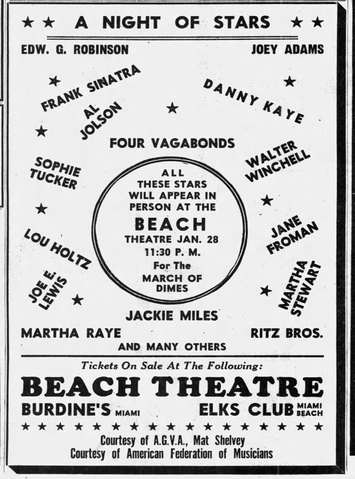
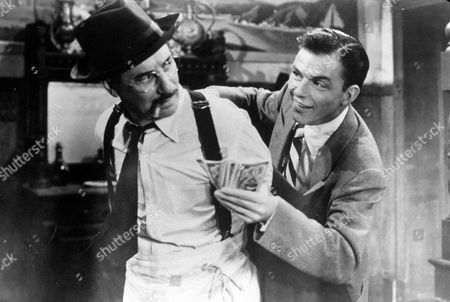
January 29, 1947
Radio
Songs By Sinatra (CBS)
Sponsor: Old Gold Cigarettes
Announcer: Marvin Miller
Orchestra Conducted By: Axel Stordahl
Performers: Frank Sinatra, Jane Powell, The Pied Pipers, Page Cavanaugh Trio
1. Intro followed by a brief passage from Night and Day
2. I Got A Gal I Love
3. This Time
4. A Rainy Night In Rio - PP
5. You'll Always Be The One I Love
6. I Am Loved - JP
7. You Can Take My Word For It, Baby / w Page Cavanaugh Trio
8. Falling In Love With Love w JP
9. Over The Rainbow w JP & PP
10. Put Your Dreams Away sign off note: Frank Wilson was the writer for the show and Ted Sherdeman directed and produced.
Show originated from Hollywood. Jane Powell had become a big hit with the radio audience and was featured on at least two numbers each week and sometimes three. Frank would take the next three weeks off. His return would not be until the 2/26 show.
--Ed
January 30, 1947
[Sinatra fingerprinted for gun permit]
Three days after Parsons's column, the Los Angeles Times photographed Sinatra being fingerprinted by a deputy sheriff as he applied for a permit to carry a pistol.
Source: James Kaplan, "Frank: The Voice" (2010).
January 31, 1947
Frank Sinatra finalized plans to travel to Havana, Cuba, with brothers Joe, Charlie, and Rocco Fischetti — Joe was a Hoboken acquaintance and a cousin of Al Capone. Sinatra later said he believed he was simply joining a vacation; he was, without his knowledge, being used to lend an air of legitimacy to a major Mafia summit called by exiled boss Lucky Luciano. Source: J. Randy Taraborrelli, Sinatra: Behind the Legend.
February 1947
Nancy Sinatra learned she was pregnant with a third child. Already doubting whether her marriage could survive Frank's infidelities, and not wanting to bring another child into it, she told Frank she was considering ending the pregnancy — a decision he, mindful of his own mother's arrest years earlier for performing abortions, pleaded with her to reconsider. Source: J. Randy Taraborrelli, Sinatra: Behind the Legend.
[Frank proposes Acapulco second honeymoon]
Kaplan: Trying to make amends, Sinatra proposed a two-week second honeymoon with Nancy in Acapulco beginning around Valentine's Day 1947.
Source: James Kaplan, "Frank: The Voice" (2010)
[Havana trip with Luciano and Fischettis]
Frank Sinatra: Recounted in his Kefauver testimony, Sinatra described his February 1947 trip to Havana, made en route to meet Nancy in Mexico around Valentine's Day, during which he repeatedly encountered the Fischetti brothers and Lucky Luciano at the Hotel Nacional and nearby clubs, denying he carried money or packages for them.
Source: James Kaplan, "Frank: The Voice" (2010)
[Nancy learns of Lana meetings, threatens abortion]
Kaplan: After learning Frank had been secretly meeting Lana Turner in New York, a pregnant Nancy Sinatra told him she would get an abortion -- a shocking threat for a Catholic couple in the 1940s.
Source: James Kaplan, "Frank: The Voice" (2010)
[Nancy's abortion discovered in Acapulco]
Kaplan: When Sinatra finally arrived in Acapulco, he discovered Nancy had gone through with an abortion in Los Angeles while he was in Cuba, arranged through a friend's doctor.
Source: James Kaplan, "Frank: The Voice" (2010)
[Ruark's Havana Luciano story]
Kaplan: Hearst columnist Robert Ruark had earlier gone after Sinatra when he chanced upon Frank fraternizing with mobster Lucky Luciano in February 1947 at a Mafia summit in Havana.
Source: James Kaplan, "Sinatra: The Chairman" (2015)
[Sinatra's Havana lodging and role]
Kaplan: During his four-day Havana trip, Sinatra stayed in a seventh-floor suite at the Hotel Nacional, one floor below Lucky Luciano, and gave a private concert for the assembled mob bosses in the hotel's banquet room, apparently serving partly as cover for the underworld summit.
Source: James Kaplan, "Frank: The Voice" (2010)
February 3, 1947
Radio
Make Believe Ballroom
WNEW-AM 1130 in New York
Monday Evening
D.J. Martin Block
Guests:
WNEW Poll Winners
1. Frank Sinatra Male Vocal ( Frank appeared via telephone from Hollywood)
2. Margaret Whiting Female Vocal
3. Tex Beneke ( He led the official "Glenn Miller Ghost Band," authorized by the Miller Estate and formed in 1946).
February 5, 1947
Radio
Songs By Sinatra (CBS)
Sponsor: Old Gold Cigarettes
Announcer: Marvin Miller
Orchestra Conducted By: Axel Stordahl
Performers: The Pied Pipers
Note: Sinatra did not appear on this show Jack Carson subbed for Frank
[image referenced in source but could not be recovered]
February 7, 1947
Concerts
Miami, Florida
Command performance for US Serviceman
February 10, 1947
Concerts
Colonial Inn, Miami, Florida
Damon Runyon Memorial Fund Benefit
1. The Coffee Song
2. Embraceable You
3. Try A Little Tenderness
4. Ol' Man River
5. I Love You For Sentimental Reasons
6. Nancy
7. Night And Day
8. The House I Live In
Ed: I want to add a little background to this one-nighter.
Variety in January of 47 ran an article about Frank wanting to leave the Old Gold Show. Lorilard wanted Frank back on the Hit Parade and was offering him a very lucrative contract.
Old Gold was not about to let him out of his contract, so, Frank decided a quick vacation was in order. This caught both CBS and the sponsor flat footed. Frank flew to New York on 1/31 to do a radio show.. Have not been able to track down the exact show. He then flew down to Miami. I can find no credible evidence that he did the 2/7 Command Performance in Miami. I did track down the origin of that date and discovered it was supposedly a Command Performance AFRS show. There is no such animal to be found. The Colonial Inn, in Hallendale, a suburb of Miami, was originally a five night engagement ( 2-10 thru 2/14). Frank' s salary would have been donated to the Damon Runyon Fund. But the vacation also included a four day trip to Havana, Cuba and the people, with Frank, wanted to go earlier than originally planned. Colonial Inn became a one night appearance. Here is Variety's coverage:
Frank Sinatra's stint for charity( all money going to Damon Runyon Fund) at Colonial Inn, packed the huge room Monday night(10).
Sinatra and Co. flew down to Havana the next day. On the evening of the 13th Frank did a concert in the show room of the Hotel Nacional. On Valentine's Day a big party was held to honor Frank. He flew back to Miami on the 15th. Here is a Variety entry from the 2-28-47 issue:
Let There Be Light MIAMI, Feb. 22.-It was a celeb night at Kitty Davis's Airliner Monday (17) and the joint was loaded with names. Among them was Frank Sinatra, who got up to sing. "Okay, give me a spot," he said. Just then all the lights went out. "Hey," Sinatra yelled, "don't cancel me. Put the lights on."
Frank flew to Mexico on the 19th for a second honeymoon with Nancy. Although Frank had a year to go on his contract with Old Gold, they cried uncle and canceled his show. He finished out the season and joined the Hit Parade, for a second time, on 9-6-47. Ed
Colonial Inn, Miami, Florida
Damon Runyon Memorial Fund Benefit
The Miami News (Miami, Florida) · 10 Feb 1947, Mon
The Miami News (Miami, Florida) · 12 Feb 1947, Wed
--------------------------------------
FRANKIE SINGS SO LONG TO THE HIT PARADE 2-10-49
Sinatra To Quit Hit Parade
Seen Eyeing TeleAnd CBSS
Hollywood ” Frank Sinatra and
American Tobacco Company have arrived at an amicable parting of the ways. The singer has definitely decided not to return to the "Hit
Parade " program next season. His decision is said to be based on the conviction that television will soon be the main market for advertisers and is desirous of appearing on a type of program more readily con- vertible to the demands of video medium .
!t is significant that Sinatra's rep - resentatives have already participa - ted in a series of meetings with
William S. Paley , of CBS, indicating that he will soon join the list of stars who have switched to CBS. All
Paley deals to date have been predi - cated on the premise that Its newly acquired stars will soon be appear - ing visually as well as audibly.
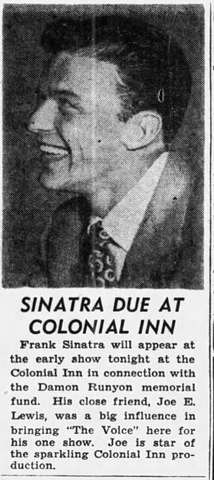
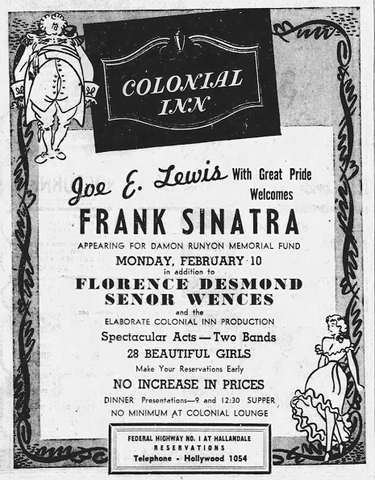
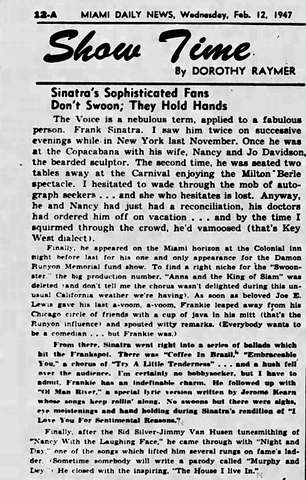
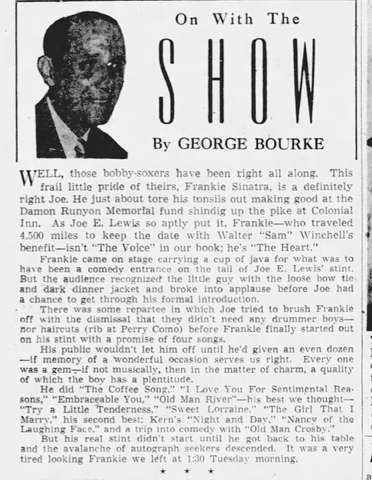
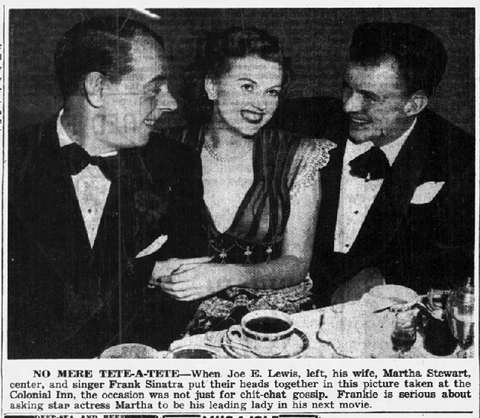
[Sinatra's free concert at Colonial Inn]
While staying at the Fischetti family's Miami mansion, Sinatra gave a free concert on the night of February 10, 1947 at the Colonial Inn, a gambling casino in Hallandale owned by Meyer Lansky and Joe Adonis.
Source: James Kaplan, "Frank: The Voice" (2010).
February 11, 1947
Frank Sinatra and the Fischetti brothers flew to Havana and checked into the Hotel Nacional, where dozens of top American organized-crime figures — among them Lucky Luciano, Meyer Lansky, and Albert Anastasia — had gathered for a rare underworld summit. Sinatra spent several days there socializing, gambling, and attending a party with Luciano. The visit would dog his public image and fuel FBI interest in him for years; Luciano himself later claimed, implausibly according to people close to Sinatra, to have personally bankrolled Frank's early career. Source: J. Randy Taraborrelli, Sinatra: Behind the Legend.
[Sinatra flies to Havana]
On the morning of February 11, 1947, Sinatra boarded a TWA DC-3 in Miami bound for Havana, photographed on arrival carrying a heavy valise, flanked by Rocco and Joe Fischetti.
Source: James Kaplan, "Frank: The Voice" (2010).
February 12, 1947
Radio
Songs By Sinatra (CBS)
Sponsor: Old Gold Cigarettes
Announcer: Marvin Miller
Orchestra Conducted By: Axel Stordahl
Note: Sinatra did not appear on this show
Ozzie and Harriet Nelson subbed for Frank.
Jane Powell was also on the show.
--Ed
February 13, 1947
Concerts
Hotel Nacional, Havana, Cuba
Hotel Nacional, Havana, Cuba
Rough translation: The great American folk singer was in Havana. Our readers know the portentous artist, who has had the strange virtue of shocking his countrymen.
He appears in this photo with a group of young ladies.
Diario de la marina February 14, 1947
Not a great photo but you can spot Sinatra in the center under the lamp.
Sinatra At The National Casino--Accompanied by Mr. Connie Immerman, the great North American singer arrives at the Casino, greeted by Captain
Antonio Arias, president of the National Casino
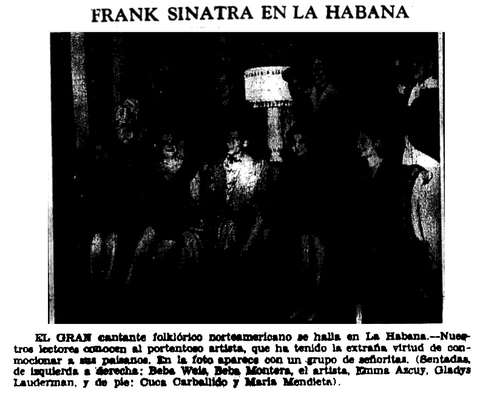
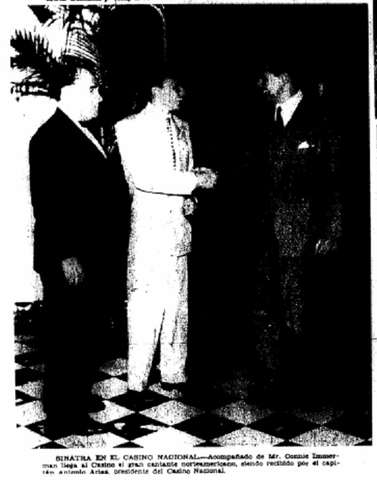
February 14, 1947
[Sinatra's Havana going-away party]
Ruark reported that Sinatra threw a wild going-away party in Havana on Valentine's Day 1947 attended by Luciano and Ralph Capone, among other mob figures; an orgy was also said to have occurred in Sinatra's suite during the trip.
Source: James Kaplan, "Frank: The Voice" (2010).
[Sinatra's Valentine cable to Nancy]
Sinatra: On February 14, 1947, delayed in Havana, Sinatra sent Nancy -- already waiting in Acapulco -- a cable simply asking, 'Will you be my Valentine?'
Source: James Kaplan, "Frank: The Voice" (2010).
February 19, 1947
Radio
Songs By Sinatra (CBS)
Sponsor: Old Gold Cigarettes
Announcer: Marvin Miller
Orchestra Conducted By: Axel Stordahl
Performers: The Pied Pipers
Note: Sinatra did not appear on this show
Buddy Clark and Peggy Lee subbed for him
--Ed
[image referenced in source but could not be recovered]
Late February 1947
While Frank Sinatra was traveling home from Havana to meet Nancy in Acapulco, Nancy went through with ending her pregnancy — over Frank's explicit objection before he left. He learned of it only when they were reunited in Mexico and was reportedly devastated, later telling her, according to their daughter Tina, “Don't you ever do that again.” Source: J. Randy Taraborrelli, Sinatra: Behind the Legend.
Scripps Howard columnist Robert Ruark broke the Havana story to the wider American public in a column datelined Havana, February 20, syndicated to some 160 newspapers: "It is probably my wistful old worldliness cropping up again, but I am frankly puzzled as to why Frank Sinatra... chooses to spend his vacation in the company of notorious convicted vice operators and assorted hoodlums." Hearst columnists Westbrook Pegler and Lee Mortimer piled on shortly after; within a week the FBI had compiled its first file on Sinatra. Source: Michael Sheridan & David Harvey, Sinatra and the Jack Pack.
[Ruark's first 'Shame, Sinatra!' column]
Robert Ruark: Columnist Robert Ruark published his first column exposing Sinatra's Havana trip on February 20, 1947, reporting that Sinatra's constant companions there were Luciano, his bodyguards, and gamblers, and that they were seen together at the track, casino, and parties.
Source: James Kaplan, "Frank: The Voice" (2010).
February 20, 1947
Reporter Robert Ruark, who happened to be in Havana separately, published a column revealing Frank had been seen repeatedly with Luciano at a Havana casino. The story became the foundation for decades of Sinatra-Mafia rumors, and columnist Lee Mortimer soon quietly fed background material to the FBI in its wake. (Source: Richard Havers, "Sinatra" (Dorling Kindersley, 2007).)
February 26, 1947
Radio
Songs By Sinatra (CBS)
Sponsor: Old Gold Cigarettes
Announcer: Marvin Miller
Orchestra Conducted By: Axel Stordahl
Performers: Frank Sinatra, The Pied Pipers, Jane Powell
Guests: Peter Lawford & Jimmy Durante
1. I Believe
2. Time After Time
3. It's The Same Old Dream w/The Pied Pipers
4. Whose Baby Are You? Peter Lawford
5. Otchi-Tchor- Ni-Ya w/J.D.
6. Songs Gotta Come From The Heart w/ J.D.
7. Put Your Dreams Away
note: Peter Lawford and Jimmy Durante were
Frank's guests. Six of the numbers are from "It Happened In Brooklyn," starring
Sinatra, Durante and Lawford.
Frank and Jimmy did a long skit to conclude the show. "Put Your Dreams Away" was very brief due to time constraints.
Ed
note: Durante sings a segment of "You Got To Start
Each Day With A Song" right after Frank finishes
"It's The Same Old Dream."
-- Ed
Ed O'Brien notes:
"It Happened In Brooklyn" had its premiere on 3-14-47. The 2-26-47 O.G. show was fashioned around the songs from the film and Frank's guest was Mr. Jimmy Durante.
Songs By Sinatra (CBS)
Sponsor: Old Gold Cigarettes
Announcer: Marvin Miller
Orchestra Conducted By: Axel Stordahl
Performers: Frank Sinatra, The Pied Pipers, Jane Powell
Guests: Peter Lawford & Jimmy Durante
Frank and Jimmy Durante singing The Song's Gotta Come From The Heart on the S.B.S February 26. 1947 (thanks to Michel M.)
[image referenced in source but could not be recovered]
[Tamm's exhaustive report on Sinatra's political activities]
FBI official Edward A. Tamm forwarded Hoover the first full report on the Bureau's Sinatra files, an extraordinarily detailed catalogue of the singer's associations with Communist-front organizations compiled from newspaper clippings, technical surveillances, and informants: guest appearances for the Hollywood Independent Citizens Committee of the Arts, Sciences and Professions (which Sinatra joined as a vice chairman on February 10, 1946); a $100 donation to the Joint Anti-Fascist Refugee Committee; sponsorship credits in the Daily Worker for events benefiting Yugoslav relief and the American Youth for Democracy; and a planned (but never published) 500-word AYD Yearbook article on discrimination, for which Sinatra's unnamed representative had specifically pressed AYD contacts on whether the group was a Young Communist League successor, saying Sinatra's "political beliefs don't run towards Communism." Hoover, intrigued, asked for verification of specific items in an April 19, 1947 follow-up memo from A. Rosen, who confirmed through New York agents that Sinatra's name never actually appeared in the AYD Yearbook when it was published.
Source: Kuntz and Kuntz, The Sinatra Files, ch. 3 (Tamm memo of 2-26-47 and Rosen memo of April 19, 1947).
March 1947
[It Happened in Brooklyn premieres]
Kaplan: It Happened in Brooklyn, a black-and-white film pairing Sinatra again with Kathryn Grayson and Jimmy Durante, premiered in mid-March 1947, featuring the Cahn-Styne song 'Time After Time.'
Source: James Kaplan, "Frank: The Voice" (2010)
March 5, 1947
Radio
Songs By Sinatra (CBS)
Sponsor: Old Gold Cigarettes
Announcer: Marvin Miller
Orchestra Conducted By: Axel Stordahl
Performers: Frank Sinatra, The Pied Pipers
1. It's A Good Day
2. You'll Always Be The One I Love
3. This Can't Be Love Pied Pipers
4. Zigeuner (The Gypsy) Jane Powell
5. The Brooklyn Bridge
6. La Ci Darem La Mano w/Jane Powell
7. I Love You For Sentimental Reasons w/Pied Pipers
8. Put You Dreams Away -- sign off -- "Goodnight, Mrs. Calabash"
NOTE: This is another good one from the best of all Frank's radio shows, Ed O'Brien observes. He opened with a song he would never record, did a lovely reading on "You'll Always Be the One I Love," continued plugging his new film, "The Brooklyn Bridge," did a duet on "La Ci Darem La Mano" (film recording with Kathryn Grayson required 27 takes. Scott Perry, MGM archivist, told O'Brien that the problem wasn't Frank.), closed the show with his second attempt on the Nat King Cole hit "For Sentimental Reasons." His first effort, on January 22, 1947, was done with the Pied Pipers. The March effort was solo. O'Brien prefers the former.
"La ci darem la mano"
The sole notable example of him singing an aria essentially straight is “Là Ci Darem la Mano” from Don Giovanni, a duet with soprano Kathryn Grayson in the 1947 film It Happened in Brooklyn. I have played this for numerous opera singers and they all say the same thing: Sinatra isn’t a proper Mozart tenor, but he expresses the point of the aria, the goal of seducing the leading lady and making her come off with him, as well as any tenor who ever sang the role.
Source: Will Friedwald, "Sinatra! The Song Is You: A Singer's Art" (2018 revised edition).
March 11, 1947
Studio
Hollywood
HCO2256 Mam'selle
(M. Gordon/E. Goulding)
(from The Razor's Edge)
Leo Feist, Inc. (ASCAP) 1947
Arranged & Conducted by Axel Stordahl
-1 (3:20) CD: Columbia Years 43-52 Vol. 6
LP: Hl-7405 Romantic Scenes From The Early Years
LP: CL-1136 Put Your Dreams Away
78: 37343
8-5-47
5-1-47
HCO2257 Ain'tcha Ever Comin' Back? w/The Pied Pipers
(P. Weston/A. Stordahl/I. Taylor)
Sinatra Songs, inc. (ASCAP) 1947
Arranged & Conducted by Axel Stordahl
-1 (2:44) CD: Columbia Years 43-52 Vol. 6
LP: CL-1136 Put Your Dreams Away
78: 37554
8-20-47
7-20-47
8-10-47
7-20-47
7-19-47
HCO2258 Stella By Starlight
(N. Washington/V. Young)
(from The Uninvited)
Beverly Music Corp. (ASCAP) 1946
Arranged & Conducted by Axel Stordahl
-1 (3:20) CD: Columbia Years 43-52 Vol. 6
CD: 44236 Sinatra Rarities
LP: HS-11277 Someone To Watch Over Me
LP: CL-1448 Reflections
78: 37343
8-4-47
6-11-47
[The Cinematic Legacy of Frank Sinatra — It Happened in Brooklyn (1947)]
David Wills's 2015 photo history The Cinematic Legacy of Frank Sinatra devotes a section to It Happened in Brooklyn (1947), illustrated with 2 behind-the-scenes and publicity photographs (posters, lobby cards, and on-set/on-location shots) filed here.
“Directing Frank is a revelation. He blends in more than you'd think with the other cast members. He once said to me, 'When everyone else is in top form, they improve my form.' He believed in team work.” —Richard Whorf
Source: David Wills, The Cinematic Legacy of Frank Sinatra (St. Martin's Press, 2015), pp. 52–53.
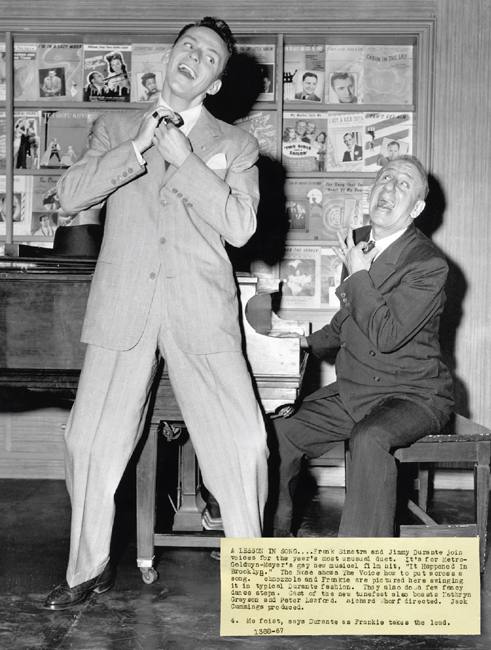
With costar Jimmy Durante, It Happened in Brooklyn, 1947. (Photo: The Cinematic Legacy of Frank Sinatra, David Wills, 2015.)
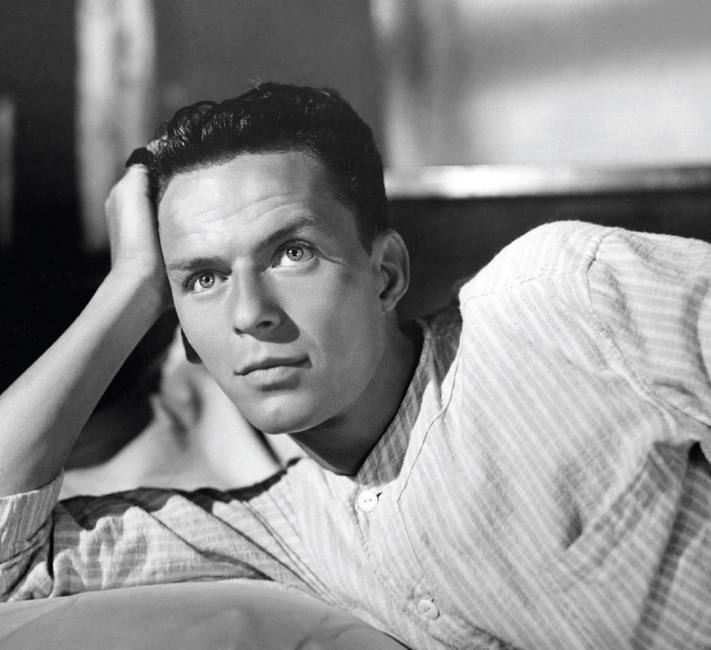
As Danny Webson Miller, It Happened in Brooklyn, 1947. / “Directing Frank is a revelation. He blends in / more than you'd think with the other cast / members. He once said to me, 'When everyone / else is in top form, they improve my form.' He / believed in team work.” / (Director, It Happened in Bro (Photo: The Cinematic Legacy of Frank Sinatra, David Wills, 2015.)
Film
"It Happened In Brooklyn" (Brooklyn Premiere March 11, 1947)
Starring: Frank Sinatra, Kathryn Grayson, Peter Lawford, Jimmy Durante, Gloria Grahame, Bobby Long
Produced by: Jack Cummings
Directed by: Richard Whorf
Danny (Sinatra) has been in the army for 4 years, yet all he thinks about is Brooklyn and how great it is. When he returns after the war, he soon finds that Brooklyn is not so nice after all. He is able to share a place with Nick (Durante), the janitor of his old High School, and get a job as a singer in a music store. He meets Anne (Grayson), a teacher, whose dream is to singing Opera. When Jamie (Lawford) arrives from England, Danny tries to show him the Brooklyn experience and help him compose modern swing music. Eventually Danny finds love with a Brooklyn-born nurse (Grahame) he had met at the end of the war before leaving England. (DVD Release: 2008-05-13)
Frank was elated by the success of "Anchors Aweigh" The film grossed $5,000.000 and was the second biggest b.o. hit of 1945. After a cameo appearance in "Till The Clouds Roll By," MGM gave Sinatra the lead in "It Happened In Brooklyn." Initially, he was upbeat about the film until it became apparent that the project was a low budget musical entry in black and white. GeorgeSidney ( "Anchors Aweigh) was the director, at the outset, but was quickly replaced by Richard Whorf. The filming got underway on March 14, 1946 (Thursday). The final scenes would not be completed until early November of 46. Frank was often absent and this delayed production many times. His most publicized absence occurred after the death of Phil Silvers' partner, Rags Ragland. Phil was set to open at the Copa in N.Y,C. on 9-5-46. He had begged Frank to help him. But L.B. Mayer was furious at all the delays and another one would mean big trouble for Frankie. Frank did the only thing he could think of at the time. On Wednesday, 9-4, he hopped a plane heading to the Big Apple. Frank played straight man through the weekend and Silvers was rescued, the Copa was thrilled. Frank arrived back in L.A. on the 10th but was still a no-show on the film set. And so it went way into October. Whorf was beside himself. Earlier in the production, Sammy Cahn announced he was ending his partnership with Jule Styne. Sammy wanted to collaborate with the very successful Harry Warren. Frank wouldn't hear of it. He backed Styne all the way. The New York location work was done in mid-June. A 17 year old Andre Previn provided all of the piano music throughout the film. The movie was previewed at the Loew's Sheridan, in New York, 2-18-47. Variety reviewer gave it a rave, citing Frank, the score and a very pleasant story line. Frank had agreed to be at the New York premieres in March but at the last minute he informed the studio a flu bug had hit him. He retired to Palm Springs in order to recover. Kathryn Grayson was the only star, from the film, to appear in Brooklyn at the Loew's Metropolitan opening on 3/11. Grayson and her husband, Johnnie Johnston, would also make an in-person appearance at the Capitol Theater in Manhattan, the next day, to plug the film, which opened on Thursday (13). The Sammy Kaye Orchestra was the live stage show. MGM was hoping for at least two solid weeks in New York. The film took in $86,000 the first week and then only dropped down to $69,000 the second. The film would run another two weeks -- taking in $62,000 and closing with a very respectable $67,000 the final week. MGM would slowly release the film nationwide, beginning in late March and early April. They had spent $1.8 million making it and it would gross $2.6. There was a final loss of $138,000. Despite the better than average reviews, the filmgoers were not particularly interested in a b&w MGM musical.
Today what holds up the most from the film is the music. Cahn/Styne wrote a lovely tribute to the Brooklyn Bridge, two beautiful ballads "It's The Same Old Dream" and "Time After Time" and Frank had a Top 10 hit with the swing number "I Believe." Bobby Long did that song and dance in the film with Frank and Jimmy Durante - Long's vocal was done by Billy Roy. This is bizarre: Long has been missing since 1947. No one seems to know what happened to him. Songs Frank did with Durante are also lot of fun to watch. I listened to Sinatra's 11-6-46 Old Gold show with Durante. Film had just been completed. There is no mention of it from either of them. A laser was released in 1992 and included the original trailer. Excellent print. VHS came out on 11-20-2001 and a DVD was issued 5-13-2008.
--Ed
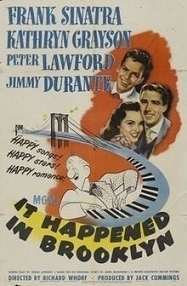
"It Happened In Brooklyn" (Brooklyn Premiere March 11, 1947) The Brooklyn Daily Eagle (Brooklyn, New York) 11 Mar 1947 The Brooklyn Daily Eagle (Brooklyn, New York) 12 Mar 1947 Sinatra Gives Performance of Casual Charm in 'It Happened in Brooklyn' at the Capitol By Bosley Crowther
March 14, 1947
Metro probably figured it could get away with anything in a film called "It Happened in Brooklyn" without seeming implausible. And so, in a comedy of that title which came to the Capitol yesterday, it has sprawled a capricious assortment of music and youthful romance. It has Frank Sinatra singing boogie-woogie in one breath and, in the next, joining Kathryn Grayson in a "Don Giovanni" duet. It has Peter Lawford behaving like a prize British "square" at the start and ending up shagging and trucking for a bunch of Brooklyn "cats." It has Miss Grayson singing a "Lakme" aria, complete with costumes and settings, and it has Jimmy Durante. 'Nough said.Well, no it isn't either. For the fact cannot be escaped that the general assemblage of this hodgepodge leaves something to be desired. It is slow in the narrative stretches. The humor is not too good. And Mr. Durante's contribution is a bit on the parsimonious side. Also, the Brooklyn cultists might find it a trifle odd that a sense of inferiority should trouble its major votary.As a veteran, home-coming to Brooklyn, Mr. Sinatra is uncommonly shy until he moves in with Mr. Durante, the janitor of New Utrecht High. With Mr. Durante's encouragement, he acquires both confidence and a job. This starts a chain reaction and Miss Grayson gets confidence, too. As a music teacher at the high school, she has lacked assurance, up till now. But then she turns to Mr. Lawford, and her confidence makes him bold. He takes her away from Mr. Sinatra andsounds like a vicious circle, what?IIn a way, it iswith Mr. Sinatra as the starting point on the circummference and with Mr. Durante, likewise troubled with social liabilities, as the hub. But, for all the story's meanderings and its mildly psychological culs-de-sac, a good bit of light-weight entertainment is badgered out of it.Maybe you won't believe this (and it happens in Brooklyn, don't forget), but Mr. Sinatra turns in a performance of considerable casual charm. He acts with some ease and dexterity, he speaks as though he's thought of what he says and he sings without too much suggestion of having a stomach-ache. Best of his numbers are a ditty entitled "The Same Old Dream" and a wild splurge with Mr. Durante to "The Song's Gotta Come From the Heart."As for Jimmy, the man with the schnozolla, he, of course, can do no wrongin thhis writer's estimation. But he can do a lot better when given a chance. In this particular picture, his invention as a Brooklyn Mr. Chips, furnace-room variety, was grand, but that's about as far as it goes. Except for a couple of momentsand that song with Frankie is onehe is confined to bumping his head against a loose door and making philosophic remarks. Miss Grayson, too, is somewhat hobbled, except when she's let out to sing, and Mr. Lawford is not yet conditioned to challenge Clifton Webb. A few other sidelines performers add nothing of artistic note. (That supposed piano recital by Billy Roy must have come from someone else.)It might be remarked, however, that Mr. Sinatra appears in one scene, arising from his bed in a nightshirt, and no one in the audience passed away. Two years ago, such desecration of his glamour would have been hooted from the screen. It looks as though Mr. Sinatraand "the kids" are growing up.Sammy Kaye andd his orchestra are the feature on the Capitol stage, with Harvey Stone as an added attraction. IT HAPPENED IN BROOKLYN, screen play by Isobel Lennart; songs by Sammy Cahn and Jule Styne; directed by Richard Whorf; produced by Jack Cummings for Metro-Goldwyn-Mayer. At the Capitol.Danny Miller . . . . . Frank SinatraAnne Fielding . . . . . Kathryn GraysonJamie Shellgrove . . . . . Peter LawfordNick Lombardi . . . . . Jimmy DuranteNurse . . . . . Gloria GrahameRae Jakobi . . . . . Marcy McGuireDigby John . . . . . Aubrey MatherMrs. Kardos . . . . . Tamara ShayneLeo Kardos . . . . . Billy RoyJohnny O'Brien . . . . . Bobby Long NYT 3-14-47
[image referenced in source but could not be recovered]
[image referenced in source but could not be recovered]
[image referenced in source but could not be recovered]
[image referenced in source but could not be recovered]
[image referenced in source but could not be recovered]
"It Happened in Brooklyn"
Despite following the lavish Till the Clouds Roll By, Sinatra's next film It Happened in Brooklyn was a cheap-looking black-and-white MGM production, indifferently directed by Richard Whorf and produced by Jack Cummings (L.B. Mayer's nephew) -- Santopietro speculates MGM lacked confidence Sinatra could carry a film alone without Gene Kelly or a big cast.
Source: Tom Santopietro, "Sinatra in Hollywood" (2008).
"It Happened in Brooklyn"
It Happened in Brooklyn marked the second pairing of Sinatra and Kathryn Grayson, with songs by Styne and Cahn and orchestrations by Axel Stordahl, but a weak screenplay by Isobel Lennart -- redeemed largely by costar Jimmy Durante.
Source: Tom Santopietro, "Sinatra in Hollywood" (2008).
"It Happened in Brooklyn"
Frank Sinatra: Sinatra praised costar Jimmy Durante's ability to dominate a scene, reportedly saying 'Durante can upstage anybody, me included.'
Source: Tom Santopietro, "Sinatra in Hollywood" (2008).
"It Happened in Brooklyn"
The 'Brooklyn Bridge' number was actually shot on location two years before the more celebrated location filming of On the Town, with Sinatra's character traversing the bridge as ships pass below.
Source: Tom Santopietro, "Sinatra in Hollywood" (2008).
"It Happened in Brooklyn"
The film's 'Time After Time' piano accompaniment was actually played by a then-seventeen-year-old Andre Previn, not Sinatra; Santopietro calls the resulting number 'pretty damn great.'
Source: Tom Santopietro, "Sinatra in Hollywood" (2008).
"It Happened in Brooklyn"
The Durante/Sinatra duet 'The Song's Gotta Come from the Heart' is singled out as a highlight of Sinatra's film career, later excerpted in the compilation film That's Entertainment!; Santopietro notes Sinatra and Durante had performed together often on radio and their real affection shows on screen, with Sinatra affectionately imitating Durante's voice, walk, and necktie gesture.
Source: Tom Santopietro, "Sinatra in Hollywood" (2008).
"It Happened in Brooklyn"
Sinatra's later recording of 'How About You' on his Songs for Swingin' Lovers LP altered a lyric to reference Jimmy Durante's looks -- a nod to their friendship stemming from It Happened in Brooklyn and radio work together.
Source: Tom Santopietro, "Sinatra in Hollywood" (2008).
"It Happened in Brooklyn"
Production memos reveal Sinatra's dissatisfaction and unprofessionalism during filming: on September 12 he was called for a 10:30 A.M. rehearsal with director Jack Donohue, didn't arrive until 12:30 P.M., and left at 2:43 P.M.
Source: Tom Santopietro, "Sinatra in Hollywood" (2008).
"It Happened in Brooklyn"
During filming, Sinatra halted production for several days to fly to New York and perform alongside his friend Phil Silvers after Silvers's comedy partner Rags Ragland died -- an unpaid gesture of friendship that nonetheless cost the studio money and breached his contract.
Source: Tom Santopietro, "Sinatra in Hollywood" (2008).
"It Happened in Brooklyn"
Kathryn Grayson (as Anne Fielding): Kathryn Grayson's character Anne Fielding complains early in the film, 'There aren't any nice days in Brooklyn' -- a line Santopietro wryly links to the film's overall dispirited tone during a troubled production.
Source: Tom Santopietro, "Sinatra in Hollywood" (2008).
"It Happened in Brooklyn"
At the time of It Happened in Brooklyn's release, long-rumored mob-connection stories broke in the press following an ill-advised Sinatra trip to Havana, Cuba with reputed mobster Joe Fischetti; rumor held Sinatra delivered $2 million in cash to Lucky Luciano, though Santopietro questions the physical plausibility of the story.
Source: Tom Santopietro, "Sinatra in Hollywood" (2008).
"It Happened in Brooklyn"
Santopietro grades this a C, calling it cheap-looking but noting a nice teaming with Jimmy Durante.
Source: Tom Santopietro, "Sinatra in Hollywood" (2008).
"It Happened in Brooklyn"
Santopietro (Filmography): Metro-Goldwyn-Mayer. Produced by Jack Cummings, directed by Richard Whorf, screenplay by Isobel Lennart, songs by Jule Styne and Sammy Cahn. Sinatra starred as Danny Miller opposite Kathryn Grayson, Peter Lawford and Jimmy Durante, singing songs including 'Time After Time' and 'I Believe.'
Source: Tom Santopietro, "Sinatra in Hollywood" (2008).
March 12, 1947
Radio
Songs By Sinatra (CBS)
Sponsor: Old Gold Cigarettes
Announcer: Marvin Miller
Orchestra Conducted By: Axel Stordahl
Performers: Frank Sinatra, The Pied Pipers
1. Night And Day (opening theme by F.S. segment only)
2. Zing Went The Strings Of My Heart
3. I'll Close My Eyes
4. I Believe Pied Pipers
5. Laura orchestral only with Axel & Orch.
6. Mam'selle (new Sinatra single release. Would reach # 1 0n 5-10-47. One of four Columbia single releases to top the chart)
7 One Night Of Love - Jane Powell (Frank always referred to her on the show as "Janie..")
8. Long Ago And Far Away Frank and Janie
9. This Is The Night
10. Put Your Dreams Away ( closing theme segment only)
March 13, 1947
The MGM musical opened to mostly favorable notices, with Newsweek calling Frank a smoother performer with each outing, though Lee Mortimer predictably panned it. Despite decent reviews, the film ultimately lost over $100,000. (Source: Richard Havers, "Sinatra" (Dorling Kindersley, 2007).)
March 19, 1947
Radio
Songs By Sinatra (CBS)
Sponsor: Old Gold Cigarettes
Announcer: Marvin Miller
Orchestra Conducted By: Axel Stordahl
Performers: Frank Sinatra, The Pied Pipers, Jane Powell
1. Linda
2. Roses In The Rain
3. Rainy Night In Rio Pied Pipers
4. Summertime Jane Powell
5. If You Are But A Dream
6.The Song Is You w/Jane Powell
7 It's The Same Old Dream w/ Pied Pipers
8..Put Your Dreams Away note: Frank did not sing "Night and Day" on the CBS broadcast
Ed Notes:
It would take Frank another 30 years before he got around to recording the Jack Lawrence gem
"Linda." "Roses In The Rain" is a rarity very nicely sung by Frank. He continued plugging the tunes from "It
Happened In Brooklyn,"with "It's The Same Old Dream," and he did the two songs he recorded the most through the years "Night And Day" and "The Song Is You." "If
You Are But A Dream" is one of Sinatra's finest recordings from the 1940s and he never sang it badly. Quite a show.
Ol' Blue Eyes learns to knit with equally dazzlingly blue-eyed Jane Powell. They were both featuring on the 'Songs by Sinatra' broadcast.
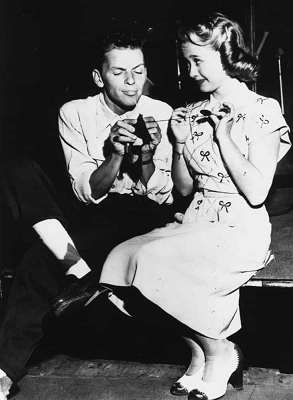
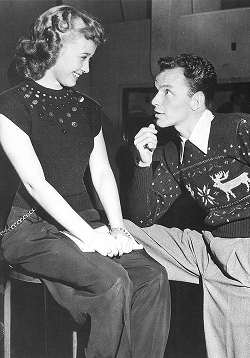
Paramount, Los Angeles California
ABC
Benefit for Damon Runyon Cancer Fund w/Bob Hope, Jack Benny, Frank Sinatra, Dinah Shore, Al Jolson, Jimmy Durante KFWB did a color broadcast from the lobby from 9-9:30 with Art Linkletter Valley Times (North Hollywood, California) 19 Mar 1947, Wed
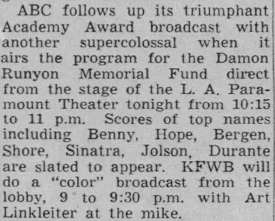
Concerts
Paramount, Los Angeles California
Benefit for Damon Runyon Cancer Fund w/Bob Hope, Jack Benny, Frank Sinatra, Dinah Shore, Al Jolson, Jimmy Durante
Paramount, Los Angeles California
Benefit for Damon Runyon Cancer Fund w/Bob Hope, Jack Benny, Frank Sinatra, Dinah Shore, Al Jolson, Jimmy Durante
Variety
3-26-47
Ed O'Brien notes: Damon Runyon Memorial Fund had 21 major stars at their gala, 3-19-47. The first hour was broadcast by ABC-Radio. Frank and Dinah Shore agreed to record a single with all the funds going to the D.R.M.F.
The session took place at the Columbia Studios in
Hollywood, 4-25-47.All of the participants donated their time freely. Frank and Dinah recorded "Tea For Two" and "My Romance." Here is a photo from the session:
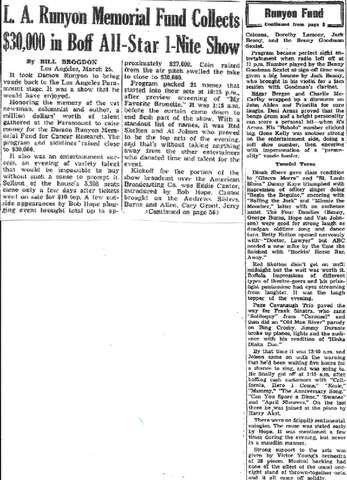
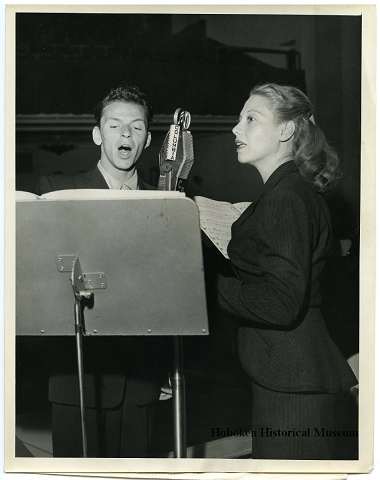
March 21, 1947
Radio
Jimmy Durante & Gary Moore Show
Network: WCBS
Time: 9:30 PM - 10:00 PM
Ray Bargy Orchestra
Guests: Frank Sinatra
Jimmy Durante & Gary Moore Show
Network: WCBS
Time: 9:30 PM - 10:00 PM
Ray Bargy Orchestra
Guests: Frank Sinatra
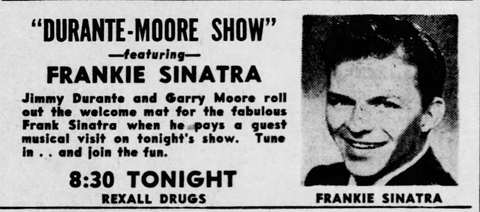
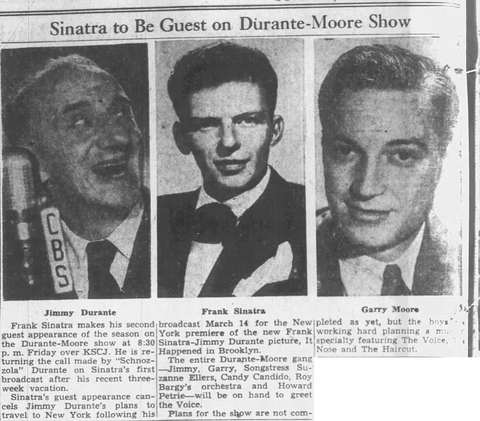
March 26, 1947
Radio
Songs By Sinatra
Wednesday
Time: 9:00 P.M. - 9:30 P.M. (EST)
Show: 29
Location: Hollywood
Network: CBS
Sponsor: Old Gold Cigarettes
Announcer: Dan Seymour
Produced and Directed By: Mann Holiner
Writer: Frank Wilson
Orchestra Conducted By: Axel Stordahl
Performers: Frank Sinatra, The Pied Pipers
Guests: The Page Cavanaugh Trio
1. opening: "Night And Day"
2. If This Isn't Love - Frank Sinatra
3. Time After Time - Frank Sinatra
4. When Am I Going To Kiss You - The Pied Pipers
5. After You've Gone - The Page Cavanaugh Trio
6. That's How Much I Love You Baby - Frank Sinatra
7, One Kiss - Jane Powell
8. The Anniversary Song Frank Sinatra & Jane Powell
9. If There Is Someone Lovelier Than You - Frank Sinatra
10. Closing: "Put Your Dreams Away"
note: Page Cavanaugh Trio back Frank on "That's How
Much I Love You Baby" and Pied Pipers join him on "If There Is Someone Lovelier Than You."
Ed
March 27, 1947
Concerts
Paramount, San Francisco, California w/Bob Hope, Jack Benny, Frank Sinatra
Benefit for Damon Runyon Cancer Fund
Notes: Evening grossed $42,000, which Variety described as colossal.
Paramount, San Francisco, California w/Bob Hope, Jack Benny
Benefit for Damon Runyon Cancer Fund
----------------------------------------------------
© 1997-2026 The Sinatra Archive
This calendar, or any parts thereof, may not be reproduced in any fashion whatsoever without the prior written permission of the publisher (The Sinatra Archive)
March 29, 1947
Concerts
Civic Auditorium, San Francisco, CA
Newspaper Frolic
Jack Benny, Frank Sinatra
Civic Auditorium, San Francisco, CA
Newspaper Frolic, San Francisco-Oakland Newspaper Guild Show Jack Benny, Mary Livingston, Don Wilson, Dennis Day, Rochester, Phill Harris, Frank Sinatra, Jane Wyman, William Demarest, Billy DeWolfe Emacs!
Emacs!
March 29, 1948 Broadwood Hotel, Philadelphia, PA
Allied Jewish Appeal Drive
Frank Sinatra, Jesse Lasky, Ruth Warwick, Charles Coburn, Rhonda Flemming, Leo Carrillo
Emacs!
Emacs!
Emacs!
© 1997-2023 The Sinatra Archive
This calendar, or any parts thereof, may not be reproduced in any fashion whatsoever without the prior written permission of the publisher (The Sinatra Archive)
Civic Auditorium, San Francisco, CA
Newspaper Frolic, San Francisco-Oakland Newspaper Guild Show
Jack Benny, Mary Livingston, Don Wilson, Dennis Day, Rochester, Phill Harris, Frank Sinatra, Jane Wyman, William Demarest, Billy DeWolfe
March 29, 1948 Broadwood Hotel, Philadelphia, PA
Allied Jewish Appeal Drive
Frank Sinatra, Jesse Lasky, Ruth Warwick, Charles Coburn, Rhonda Flemming, Leo Carrillo
© 1997-2026 The Sinatra Archive
This calendar, or any parts thereof, may not be reproduced in any fashion
whatsoever without the prior written permission of the publisher (The
Sinatra Archive)
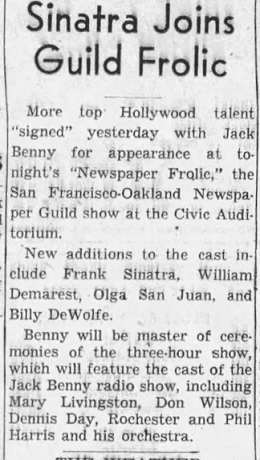
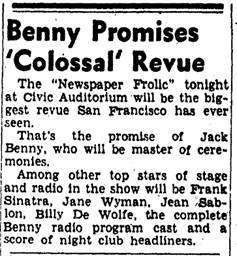
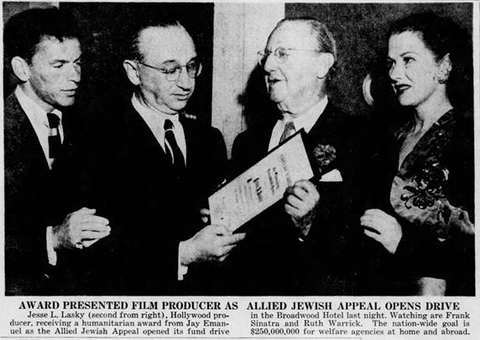
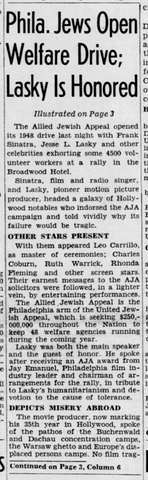
March 30, 1947
Radio
Radio: Sinatra appeared as a guest on Guest Star, episode #1, a commercial radio broadcast, this date, singing "Powder Your Face With Sunshine," "Once In Love With Amy," and "Why Was I Born?" with Eileen Wilson and the Axel Stordahl Orchestra. Source: sinatradiscography.com, Radio Transcriptions Database.
March 31, 1947
Studio
Hollywood
HCO2280 There But For You Go I
(A.J. Lerner/F. Loewe)
(from Brigadoon)
Sam Fox Publishing Co. (ASCAP) 1947
Arranged & Conducted by Axel Stordahl
-1 (3:05) CD: Columbia Years 43-52 Vol. 6
LP: C2X-40897 Hello Young Lovers
LP: CL-1297 The Broadway Kick
78: 37382
HCO2281 Almost Like Being In Love
(A.J. Lerner/F. Loewe)
(from Brigadoon)
Sam Fox Publishing Co. (ASCAP) 1947
Arranged & Conducted by Axel Stordahl
-2 (2:42) CD: Columbia Years 43-52 Vol. 6
LP: C2X-40897 Hello Young Lovers (alt. take)
LP: CL-606 Frankie (2nd pressing) - alt. take
LP: CL-606 Frankie (1st pressing)
78: 37382
Violins: H. Bluestone, S. Cytron, S. Freed, Jr., G. Joyce, G. Kast, M. King, N. Pisani, M. Russell, F. Slatkin, M. Sosson, O. Vail, G. Vinci; Violas: H. Harshman, W. Hymanson, D. Sterkin; Cellos: C. Bernard, F. Goerner, J. Sewell; Saxes: H. Beau, L. Hartman, H. Haymer, J. Kinsler, F. Stulce; Trumpets: D. Anderson, R. Linn, R. Zarchy; Trombones: D. Hallett, G. Jenkins, W. Schaefer; Piano: M. Mclntyre; Guitar: A. Reuss; Bass: P. Stephens; Drums: R. Hagan; Harp: M. Cambern
Radio
American Cancer Society Drive
Bob Hope, Ginny Simms, Jerry Colonna, Joan Davis, Frank Sinatra, others 10:30-11PM WOR
April 2, 1947
Radio
Songs By Sinatra (CBS)
Sponsor: Old Gold Cigarettes
Announcer: Marvin Miller
Orchestra Conducted By: Axel Stordahl
Performers: Frank Sinatra, Jane Powell, The Pied Pipers
1. I Got A Gal I Love
2. Maybe You'll Be There
3. I Believe Pied Pipers
4. In The Still Of The Night Jane Powell
5. April Showers
6. This Is The Night w/ Jane Powell
7. What Am I Gonna To Do About You? w/ Pied Pipers
8. Put Your Dreams Away - sign off
Ed O'Brien:
I love what Frank did with the Cahn-Styne song "What Am I Gonna Do About You?" What a great recording he could have done with this gem. The Pied Pipers blend beautifully into the number. A song I've listened to many times through the years. A great flipside for the recording would have been the King Cole Trio hit "I Love You For Sentimental Reasons," which Frank sang twice on his Old Gold shows in 1947. I prefer the one in which The Pied Pipers back him.
Asheville Times
4-2-47
note: Quite a few newspapers offered the above information on Frank's 4-2-47 show. Berlin's "Easter Parade" was obviously dropped shortly before the broadcast. Easter that year came on April 6th.
Ed
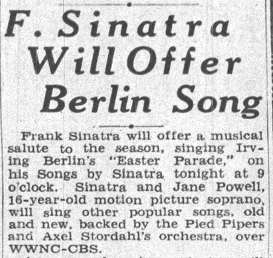
April 8, 1947
Frank Sinatra physically assaulted gossip columnist Lee Mortimer at Ciro's nightclub in Hollywood, punching him after calling him a slur, in the culmination of a long-running feud; Mortimer, a source for FBI gossip about Sinatra's underworld associations, had Frank arrested for assault and battery and sued him for $25,000. The suit was settled on June 4, 1947, with Sinatra paying $9,000 and issuing a court-ordered apology; the incident, following the Havana trip, further damaged his public standing. Source: J. Randy Taraborrelli, Sinatra: Behind the Legend.
[Sinatra punches Lee Mortimer at Ciro's]
Shortly after 11 p.m. on April 8, 1947, Sinatra arrived at Ciro's nightclub and, after apparently exchanging hostile looks with columnist Lee Mortimer inside, followed him outside and punched him from behind, knocking him down while shouting he would kill him.
Source: James Kaplan, "Frank: The Voice" (2010).
[Sinatra's account of the Mortimer fight]
Sinatra: Talking to columnist Harrison Carroll at the Ciro's bar afterward, Sinatra claimed Mortimer had given him a contemptuous look, that he 'saw red' and hit him, and defended his temper by citing his tough upbringing and years of being needled by Mortimer over his teenage fans.
Source: James Kaplan, "Frank: The Voice" (2010).
April 9, 1947
Radio
Songs By Sinatra (CBS)
Sponsor: Old Gold Cigarettes
Announcer: Marvin Miller
Orchestra Conducted By: Axel Stordahl
Performers: Frank Sinatra, The Pied Pipers, Jane Powell
1. Managua, Nicaragua
2. My Number One Dream Came True
3. My Heart Goes Crazy Pied Pipers
4. Yours Is My Heart Alone Jane Powell
5. Nancy
6. My Romance w/ Jane Powell
7. It's The Same Old Dream w/ Pied Pipers
8. Put Your Dreams Away - sign off
Ed O'Brien notes:
Frank's O.G. show was never better than during its last few months on the air.
The opening song, "Managua, Nicaragua," has an interesting history. Freddy Martin's orchestra had a #1 hit with the song in January of 1947, first charting on 1-18-47, staying at #1 for three weeks and staying on the charts for 13 weeks. Guy Lomardo's orchestra also reached #1 with the song, first appearing on the Billboard chart on 1-25-47 and remaining there for 15 weeks. Kay Kyser's orchestra also had a top ten hit with the song (#6) in February of 47 and charted for 12 weeks. The song was on Your Hit Parade for 11 weeks but never reached #1. Sinatra's vocal was outstanding and I'm sure the writers of this ditty, lyricist Albert Gamse and composer Irving Fields, were very pleased.
Songs By Sinatra (CBS)
Sponsor: Old Gold Cigarettes
Announcer: Marvin Miller
Orchestra Conducted By: Axel Stordahl
Performers: Frank Sinatra, The Pied Pipers, Jane Powell
[Sinatra arrested during Old Gold rehearsal]
On the afternoon of April 9, 1947, while rehearsing 'Oh, What a Beautiful Mornin' for his Old Gold radio show at the CBS Vine Street studio, Sinatra was arrested by a deputy sheriff and district attorney investigators on Mortimer's battery complaint.
Source: James Kaplan, "Frank: The Voice" (2010).
[Sinatra arraigned, trial set for May 28]
At Beverly Hills Justice Court on April 9, 1947, Sinatra pleaded not guilty and requested a jury trial; Judge Woodward set trial for May 28 at 10 a.m., with bail set at $500, which he and his attorney had to scrounge together in cash.
Source: James Kaplan, "Frank: The Voice" (2010).
[Sinatra flies to New York, dubbed 'The Punch']
Late on April 9, 1947, Sinatra flew to New York, where 500 screaming fans and reporters met him at La Guardia; the press dubbed him 'The Punch' and he repeated his claim that Mortimer had called him a slur.
Source: James Kaplan, "Frank: The Voice" (2010).
April 11, 1947
Times Square, New York, NY
Sinatra made an appearance in the campaign for the American Cancer Society
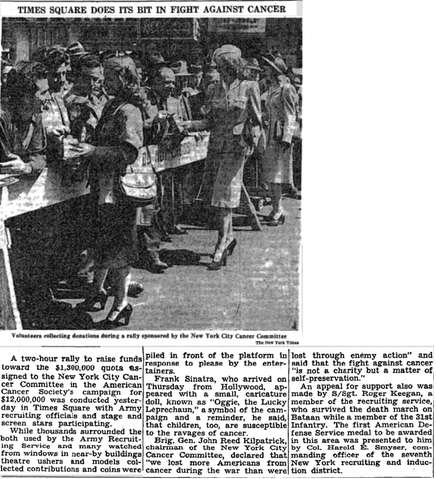
April 13, 1947
Waldorf Astoria, New York, NY
Frank Sinatra receives the Thomas Jefferson Award from James Waterman Wise, director of the Council Against Intolerance in America
Frank Sinatra is back signing autographs for his fans after receiving his Jefferson award for Tolerance from the "Council against Intolerance in America."
© 1997-2025 The Sinatra Archive
This calendar, or any parts thereof, may not be reproduced in any fashion whatsoever without the prior written permission of the publisher (The Sinatra Archive)
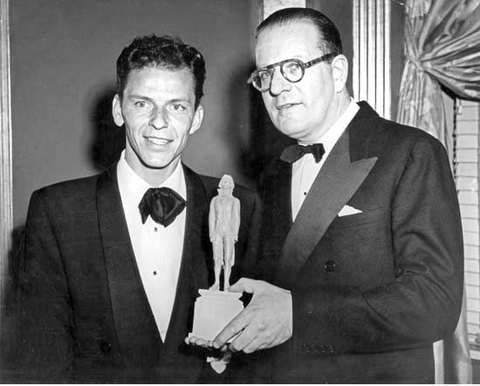
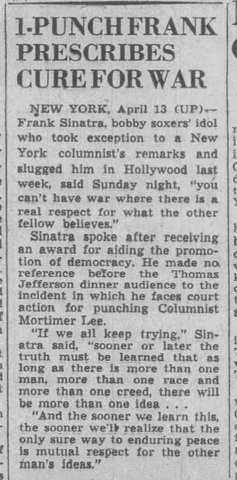
April 14, 1947
Radio
This Is New York
Network: WCBS
Time: 9:15 AM - 10:00 AM
Host: Bill Lenard
Guest: Frank Sinatra

April 15, 1947
[Photograph: Sinatra: 'as communistic as Winston Churchill'. From Richard Havers, "Sinatra" (Dorling Kindersley, 2007), p.125.]
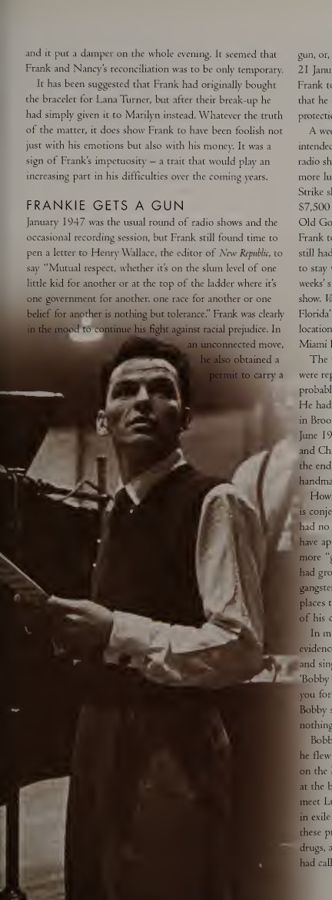
[Photograph: Sinatra: 'as communistic as Winston Churchill'. From Richard Havers, "Sinatra" (Dorling Kindersley, 2007), p.125.]
Pushing back against accusations of communist sympathies, Frank told the New York Daily News he was no more communist than the staunchly anti-communist British statesman Winston Churchill. (Source: Richard Havers, "Sinatra" (Dorling Kindersley, 2007).)
April 16, 1947
Radio
Songs By Sinatra (CBS)
Sponsor: Old Gold Cigarettes
Announcer: Marvin Miller
Orchestra Conducted By: Axel Stordahl
Performers: Frank Sinatra, Jane Powell,The Pied Pipers
1. Night And Day (abridged) F.S.
2. I Believe F.S.
3. That's Where I Came In F.S.
4. You Can't See The Sun When You're Crying P.P..
5. Softly As A Morning Sunrise J.P..
6. Roses In The Rain F.S.
7. Make Believe w./ J. P.
8. Mam'selle ( from "Razor's Edge" ) F.S.
9. Put Your Dreams Away (abridged) F.S.
note: Frank recorded "Mam'selle" on 3-11-47.
Before singing it on 4-16 show, Frank tells the audience he had the pleasure of introducing the song a few weeks ago ( 3-12-47 show ). It had not taken off yet, but when it did, "Mam'selle" would be his last #1 hit song at Columbia.
Here is a review of two Sinatra singles from the film "It Happened In Brooklyn," that were selling very nicely in April of 47. "I Believe" was a Top 10 hit for Frankie.
Ed
FRANK SINATRA (Columbia 37288.37300)
It's the Same Old Dream-FT; V. The Brooklyn Bridge-FT; V.
Time After Time-FT; V. I Believe-FT; V. From the tuneful Sammy Cahn -Jule Styne screen score for "It Happened in Brooklyn," Frank Sinatra gives fine lyrical exposition of four songs, virtually all in the smooth -spinning ballad register. And the Voice registers on all chants, particularly for the nostalgic "Time After Time" ballad, backing with a catchy rhythm chune in "I Believe." It's an easy flow of rhythm for the tuneful "It's the Same Old Dream," Sinatra's vocal force all the more forceful In the song assist of the Four Hits and a Miss. And to complete, pays a glowing lyrical tribute to that famous old structure in "The Brooklyn Bridge." Per usual, Axel Stordahl's musical accompaniment excels. Movie hypo gives all the sides a fair chance for coins.
Billboard
4-12-47
April 17, 1947
[FBI memo on a prostitute's visit to Sinatra's Waldorf suite]
Two days before Sinatra was to receive a Waldorf-Astoria award for fighting racial and religious intolerance, an FBI memo from Alex Rosen to Edward Tamm recorded that a prostitute arranged through restaurateur "Toots" Shor had paid a "professional visit" to Sinatra's hotel room on April 11, 1947, but was too drunk to complete the engagement -- and still expected her $100 fee. A handwritten notation reads: "Director advised."
Source: Kuntz and Kuntz, The Sinatra Files, ch. 3.
April 21, 1947
Radio
Screen Guild Theater
Location: Hollywood, California
Sponsor: Gulf Gasoline
Episode Title: "Too Many Husbands"
Network: CBS
Time: 10:00 PM - 10:30 PM
Performers: Bob Hope, Frank Sinatra, Lucille Ball
1. Time After Time
Note: The show appears on the officially released CD set: 60 Greaest Old Time Radio Show "Frank Sinatra & Friends"
Ed O'Brien Notes:
What a cast ! Hope was a super star in 1947, Lucy was a B movie star, who would become one of the great iconic figures of the century. Frank starred in "Too Many Husbands" twice. The
9-4-44 version featured Donna Reed, Bill
Goodwin and Frank. He sang "Embraceable You" and did "Time After Time" on the 47 show.
note: Show finished in the Top 10 Hooper ratings that week.
Had an audience of over four million listeners.
--Ed
Screen Guild Theater
Location: Hollywood, California
Sponsor: Gulf Gasoline
Episode Title: "Too Many Husbands"
Network: CBS
Time: 10:00 PM - 10:30 PM
Performers: Bob Hope, Frank Sinatra, Lucille Ball
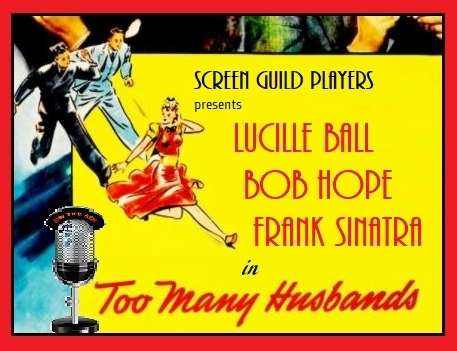
April 23, 1947
Radio
Songs By Sinatra (CBS)
Sponsor: Old Gold Cigarettes
Announcer: Marvin Miller
Orchestra Conducted By: Axel Stordahl
Performers: Frank Sinatra, The Pied Pipers, Jane Powell
Guests: Irving Berlin
1. Blue Skies Frank Sinatra
2. The Girl That I Marry Frank Sinatra
3. Heat Wave Pied Pipers
4. Marie From Sunny Italy Irving Berlin ( his first published song )
5. Call Me Up Some Rainy Afternoon Frank Sinatra
6. Russian Lullaby Jane Powell
7. Medley Of Berlin Songs:
1. Always Frank Sinatra
2. A Pretty Girl Is Like A Melody Jane Powell
3. Alexander's Ragtime Band Frank Sinatra, Irving Berlin & Pied Pipers
8. Help Me To Help My Neighbor Frank Sinatra
9. Put Your Dreams Away sign off
NOTE: Ed O'Brien calls this a great, great show. Berlin is a great guest and FAS sings some of Berlin's finest efforts.
Note: For more than 40 years, Frank Sinatra called Irving on his birthday, 5/11.
Irving lived to be 101 years old.
--Ed
Songs By Sinatra (CBS)
Performers: Frank Sinatra, The Pied Pipers, Jane Powell
Guests: Irving Berlin
Frank Sinatra and Jane Powell watch Irving Berlin perform on the Songs by Sinatra radio show, 1947.
------------------------------------------------------------
April 23, 1965
EXCERPT FROM ARTICLE:
[image referenced in source but could not be recovered]
[image referenced in source but could not be recovered]
[image referenced in source but could not be recovered]
[image referenced in source but could not be recovered]
[image referenced in source but could not be recovered]
April 25, 1947
Studio
Hollywood
HCO2310 Tea For Two w/Dinah Shore
(V. Youmans/I. Caesar)
(from No, No, Nanette)
T.B. Harms, Inc. (ASCAP) 1924
Arranged & Conducted by Axel Stordahl
-1 (3:15) CD: Columbia Years 43-52 Vol. 6
78: 37528
8-1-47
8-3-47
HCO2311 My Romance w/Dinah Shore & Chorus
(R. Rodgers/L. Hart)
(from Jumbo)
T.B. Harms, Inc. (ASCAP) 1935
Arranged & Conducted by Axel Stordahl
-1 (3:15) CD: Columbia Years 43-52 Vol. 6
(alt take) LP: CL-2740 The Essential Frank Sinatra, Vol. 2 78: 37528
7-6-47
Hollywood
Tea For Two / My Romance
Variety
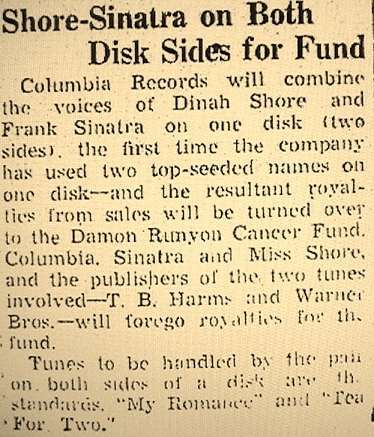
Sinatra and Shore would also make the cover of May 24, 1947 Billboard for their recording:
Columbia Records ad from 1947
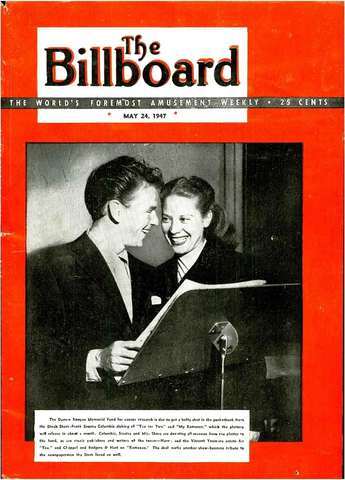
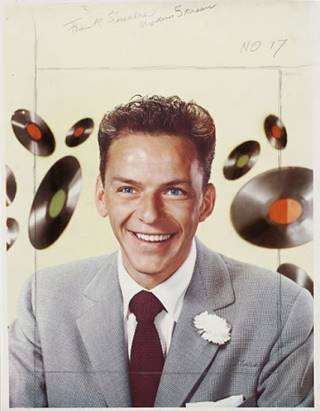
April 26, 1947
Concerts
San Jose Civic Auditorium, San Jose, CA
Hollywood Star Time
Benefit for Youth Center
San Jose Civic Auditorium, San Jose, CA
Hollywood Star Time
Benefit for Youth Center
.
Scott notes: I had some delightful messages from 92 year old
Raymond Gerald da Gama-Gamma who is the administrator for the Wutzit Club Alumni & Santa Clara Valley Youth Village Facebook page. I reached out to the group to see if they had some information about the performance or any pictures of Sinatra from the April 26th, 1947 performance. Here's what he had to say:
I was present at his performance that was just a visit to our clubs home after they, Sinatra, Buddy Bear, and others did a fund raising stage performance at the San Jose Civic Auditorium for our Wutzit Club.
Father Schmidt with club member Larry Marsallie went to Hollywood and met with Rhonda Fleming and she was instrumental in getting Jack Carson. Henry Morgan and Frank Sinatra and others who put that benefit show on because the State Fire Marshal was going to shut down the Sadality Hall that belonged to our St. Clare Parish Church that the church allowed us to use on Wednesday, Friday and Saturday night
I was 17 in 1947. The Wutzit Club began in 1944. We had three directors that first year, Father Walter W. Schmidt S.J. was our 3rd director from then to the end in 1985.
He was my friend from the beginning to the very end, he even married us, my wife and I…
Here's a picture of Sinatra with Father Walter W. Schmidt in 1980
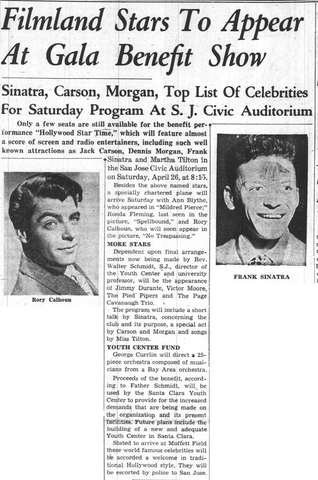
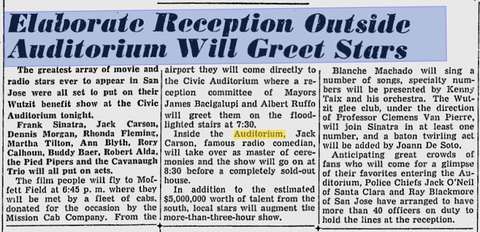
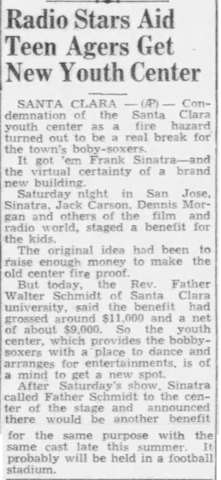
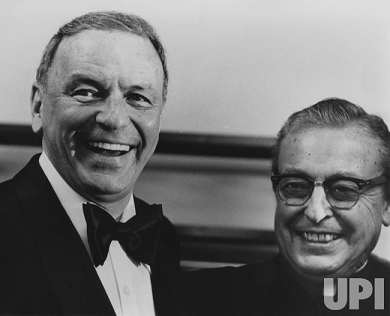
April 28, 1947
Concerts
City Auditorium, Galveston, Texas
Benefit for Victims Of The Texas City Petroleum Explosion Texas Relief Fund
Showtime: 8:15 a.m. w/Jack Benny, Mary Livingston, Burns & Allen, Phil Harris Alice Faye, Phil Silvers, Gene Autry, Axel Stordahl, Page Cavanaugh Trio, Governor Beauford Jester, Frank Sinatra
Ed O'Brien:
Jack Benny was the first entertainer to sign-up for the trip to Galveston and New Orleans. Burns & Allen joined him and the others quickly followed. Frank decided to do his Old Gold show in New Orleans(30). Frank insisted on a large auditorium with a paying crowd. The group flew down from L.A. on the morning of the 28th, arriving at 9:a.m.
Their mode of transportation was an army transport plane.
Frank brought along the CBS studio band and his arranger/ conductor, Axel Stordahl.
City Auditorium, Galveston, Texas
Benefit for Victims Of The Texas City Petroleum Explosion Texas Relief Fund
Showtime: 8:15 a.m. w/Jack Benny, Mary Livingston, Burns & Allen, Phil Harris Alice Faye, Phil Silvers, Gene Autry, Axel Stordahl, Page Cavanaugh Trio, Governor Beauford Jester, Frank Sinatra
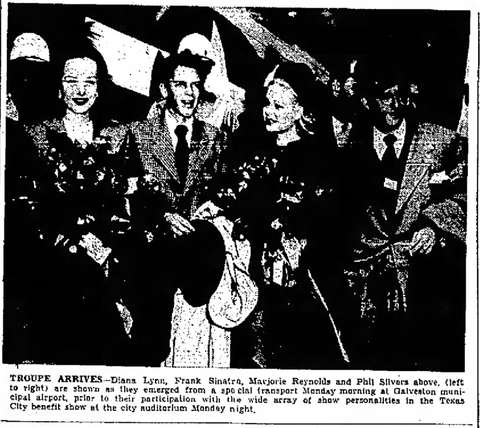
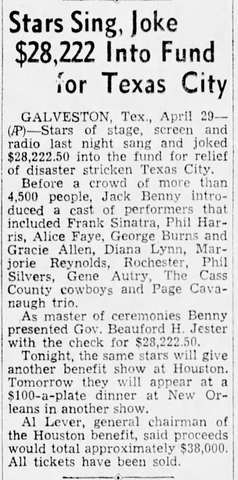
April 29, 1947
Concerts
City Auditorium, Houston, Texas
Benefit for Victims Of The Texas City Petroleum Explosion Texas Relief Fund
Showtime: 8:15 a.m. w/Jack Benny, Mary Livingston, Burns & Allen, Phil Harris Alice Faye, Phil Silvers, Gene Autry, Axel Stordahl, Page Cavanaugh Trio, Governor Beauford Jester, Frank Sinatra
note: Al Viola was the guitarist with Page Cavanaugh Trio.
He had worked with Frank at the Waldorf and on
Old Gold shows. He told me that very few people realized how good Frank was by 1947. He had all kinds of innovative ideas when working with the trio. Al was in awe of him. The performances in
Texas that week stayed with Al. He vividly described for me the impact Frank has on a concert stage.
Ed
City Auditorium, Houston, Texas
Benefit for Victims Of The Texas City Petroleum Explosion Texas Relief Fund
Showtime: 8:15 pm. w/Jack Benny, Mary Livingston, Burns & Allen, Phil Harris Alice Faye, Phil Silvers, Gene Autry, Axel Stordahl, Page Cavanaugh Trio, Governor Beauford Jester, Frank Sinatra
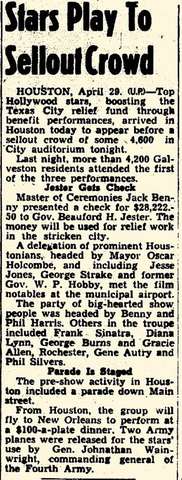
April 30, 1947
Radio
Songs By Sinatra (CBS)
Sponsor: Old Gold Cigarettes
Announcer: Marvin Miller
Orchestra Conducted By: Axel Stordahl
Frank Sinatra, The Pied Pipers, Jane Powell
Guests: Jean Sablon, Page Cavanaugh Trio
1. Night And Day Frank and Jean
2. Way Down Yonder In New Orleans Frank
3. Vous Qui Passez ( Passing By) sung in English by Mr. Sablon - his theme song
4. It's A Good Day The Pied Pipers
5. The Night Was Made For Love Jane Powell
6. Parlez Moi D'amour Frank - with a little help from Jean
7. Mimi Frank and Jean
8. Basin Street Blues Frank and Page Cavanaugh Trio
9. You'll Never Walk Alone* Frank
10. Put Your Dreams Away Frank
AFRS Broadcast:
1.Night And Day Frank and Jean
2. Way Down Yonder In New Orleans Frank
3. Vous Qui Passez ( Passing By) sung in English by Mr. Sablon
4. I'd Be Lost Without You Frank
5. It's A Good Day The Pied Pipers
6. Stella By Starlight Frank
7. The Night Was Made For Love Jane Powell
8. Parlez Moi D'amour Frank - with a little help from Jean
9. Mimi Frank and Jean
10. Basin Street Blues Frank and Page Cavanaugh Trio
11. She's Funny That Way Frank
12. You'll Never Walk Alone* Frank
13. Put Your Dreams Away Frank
* The Pied Pipers backed Frank on "You'll Never Walk Alone."
Note: The governor of Louisiana and the mayor of New Orleans asked Frank to bring his show down to New Orleans so it could benefit the survivors of the Texas disaster. The broadcast originated from the Municipal Auditorium in N.O.
There were almost 7,000 people at the show. There was no announcer for the AFRS version.
Ed
Ed O'Brien notes:
Here is what happened after that performance:
PETRILLO CHAMPIONS SINATRA IN PLANNED
BENEFIT AIR STANZA
Hollywood, April 26. -- Frank Sinatra found a ready champion in none other than American Federation of Musicians (AFM) Prexy James C Petrillo, who personally interceded to veto a Local 47 ruling which threatened to throw a wrench in The Voice's plans to do a benefit airer from New Orleans April 30.
Squabble arose when Sinatra agreed to do regular air show from New Orleans, with proceeds to go to Texas City disaster relief fund. Local 47, however, nixed plan to fly Axel Stordahl ork south in army plane, altho transportation was to be provided gratis. Union stand was based on regulation adopted several years ago which forbids transportation of musicians in non-commercial airliners ( Reg was designed to protect orksters in case of accident, since insurance riders obviate payment of claims if disaster occurs in other than commercial planes.)
When matter was brought to Petrillo's attention, union prexy longdistanced Los Angeles and ordered ruling relaxed. Petrillo reasoned that if Sinatra and other showbiz biggies were willing to risk flight in army plane, then union should accept same terms for their members. As a result, Local 47's anti-commercial plane ban will hereafter be tossed out the window.
Billboard
May 3, 1947
Note: Have another interesting article on the demise of Frank's Old Gold show.
The show from 4-30-47 has never surfaced among collectors. I wonder if the airing was live to the entire country due to the New Orleans location? There may have been no need to tape the show.
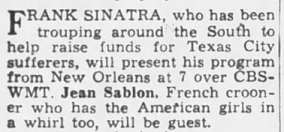
Concerts
Blue Room, Hotel Roosevelt. New Orleans
$100.00 A Plate Dinner For Texas City Disaster Victims
Performers: Jack Benny, Burns & Allen, Mary Livingston,Gene Autry,
Jean Sablon, Eddie 'Rochester' Anderson, Alice Faye, Phil Harris, Phil Silvers, Majorie Reynolds, Page Cavanaugh Trio, The Pied Pipers, Jane Powell, Connee Boswell, Axel Stordahl and Frank Sinatra note: Benefit raised $50,000.
Songs By Sinatra (CBS)
Sponsor: Old Gold Cigarettes
Announcer: Marvin Miller
Orchestra Conducted By: Axel Stordahl
Frank Sinatra, The Pied Pipers, Jane Powell
Guests: Jean Sablon, Page Cavanaugh Trio
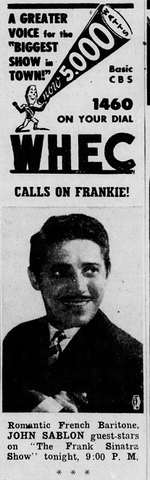
Blue Room, Hotel Roosevelt. New Orleans
$100.00 A Plate Dinner For Texas City Disaster Victims
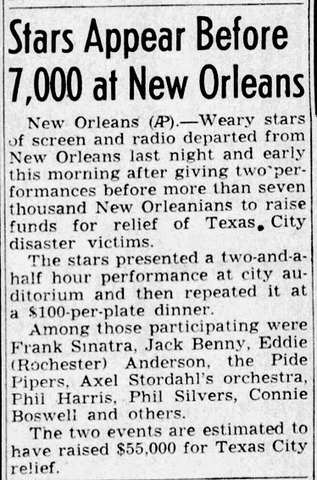
May 1947
Frank Sinatra opened at New York's Capitol Theatre — the same venue where he'd first found fame with Major Bowes in 1935 — to a noticeably tepid reception, a sharp contrast to the fan mobs of just a few years earlier. Between the communist accusations, the Havana trip, and the Mortimer assault, his once-unassailable popularity had begun to visibly erode. Source: J. Randy Taraborrelli, Sinatra: Behind the Legend.
[Frank Chooses An Unknown Trio Over The Nicholas Brothers]
Nancy Sinatra: Booking his return to New York's Capitol Theater, Frank turned down the famous Nicholas Brothers as his opening act in favor of a little-known family trio he'd merely heard about: Will Mastin, his brother, and young Sammy Davis Jr. He secured them an unprecedented $1,250 a week, far more than they had ever earned.
Source: Nancy Sinatra, Frank Sinatra: An American Legend, 1995.
[Sinatra commissions Twin Palms house]
Kaplan: In May 1947, wearing a yachting cap and eating an ice cream cone, Sinatra walked into architect E. Stewart Williams's Palm Springs office and demanded a Georgian mansion be built for Nancy by Christmas.
Source: James Kaplan, "Frank: The Voice" (2010)
May 6, 1947
Radio
Bob Hope Show
Tuesday evening
Network: NBC
Time: 10:15PM - 10:45 PM EDT
Desi Arnaz & His Orchestra
Jeanny McKeon, Jerry Colonna, Vera Vague
Guest: Frank Sinatra
Annc: Wendill Niles
Broadcast from San Gabriel, California
Benefit for YMCA Summer Camps for Children
Sponsor: Lever Bros Pepsodent Toothpaste
1. Hope monologue
Bob plugs baseball great Bob Feller's autobio.
Pepsodent ad
2. No Greater Love J. McKeon
3. Hope chats with Frank who has just returned from Galveston, Tx, where he helped raise money with benefit concert after tragic tanker explosion.
4. Skit with V. Vague, F. Sinatra & B.Hope.
5. Time After Time F. Sinatra
Pepsodent ad
6. B. Hope & F. Sinatra do a baseball skit
7. Thanks For The Memory B.Hope & F. Sinatra special lyrics thanking community for their effort helping YMCA program.
8. Hope signs off - Frank will be a guest again next week when the show comes from North Hollywood.
Bob Hope Show
Tuesday evening
Network: NBC
Time: 10:15PM - 10:45 PM EDT
Desi Arnaz & His Orchestra
Jeanny McKeon, Jerry Colonna, Vera Vague
Guest: Frank Sinatra
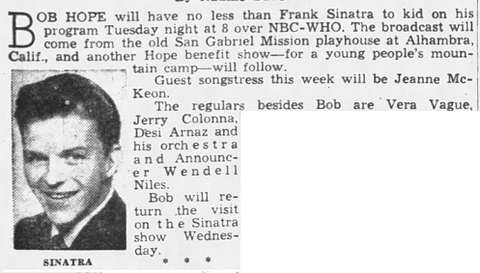
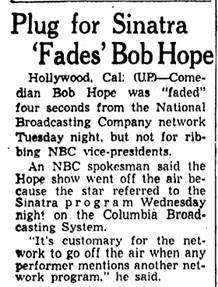
May 7, 1947
Radio
Old Gold Show
CBS
Wednesday evening
9 - 9:30 pm
Axel Stordahl and His Orchestra
Jane Powell The Pied Pipers
Guest: Bob Hope
Annc: Marvin Miller
1. Night And Day ( opening theme)
2. Almost Like Being In Love
3. The Anniversary Song
O.G. commercial
4. Linda - The Pied Pipers
5. It's The Same Old Dream
6. One Man( One Magic Night ) Jane Powell
7. Yes, We Have No Bananas
6. That's My Weakness (parody) w/Bob Hope
7. I Believe (parody) w/ Bob Hope
8. Put Your Dreams Away
May 8, 1947
Studio
MGM
Thursday
THE KISSING BANDIT
Orchestra conducted by Georgie Stoll
Arrangements by Leo Arnaud
If I Steal A Kiss takes 6(2:57), take 8(2:59), take 9(2:50) and take 15(3:01) were mastered
Sinatra then redid from bar 60 to end takes 1(:28), take 3(:25) and take 6(:25) were mastered
session began with Sinatra attempting a solo take on "We're On Our Way." rejected concept
"We're On Our Way" w/ J.Carrol Nash take 3(2:57) and take 5(2:57) were mastered
Song was not used in the film
Total master time from session came to 5:58.
May 12, 1947
[FBI memo on Mortimer's planned questions]
Louis Nichols: On May 12, 1947, FBI aide Louis Nichols wrote a memo to Clyde Tolson detailing questions Lee Mortimer wanted to raise with J. Edgar Hoover about Sinatra, including an unidentified man in a Havana photo, Sinatra's ties to gangster Willie Moretti, and his 1938 sex-offense arrest.
Source: James Kaplan, "Frank: The Voice" (2010).
[Tolson's follow-up meeting with Mortimer]
The day after Nichols briefed Hoover for his meeting with Lee Mortimer, Tolson himself met with the columnist and reported to Hoover that he'd steered Mortimer toward Bergen County police contacts and the Jersey City draft board for the material Mortimer wanted on Sinatra -- all while insisting to Hoover that he'd given Mortimer no "official assistance," a claim the memo's own content undercuts.
Source: Kuntz and Kuntz, The Sinatra Files, ch. 2 (Tolson memo of May 13, 1947).
May 13, 1947
Concerts
North Hollywood High School, Hollywood, CA
Benefit for new YMCA/YWCA Building
Bob Hope, Frank Sinatra, Phil Silvers, Page Cavanaugh Trio, Hary Von Zell, Peter Lorre, Martha, Tilton, Jerry Colonna, Vera Vauge, Desi Arnaz Orchestra
Note: The first half-hour of this program was broadcast as Bob Hope's regular weekly program. Sinatra did not appear on broadcast.
North Hollywood High School, Hollywood, CA
Benefit for new YMCA/YWCA Building
Bob Hope, Frank Sinatra, Phil Silvers, Page Cavanaugh Trio, Hary Von Zell, Peter Lorre, Martha, Tilton, Jerry Colonna, Vera Vauge, Desi Arnaz Orchestra
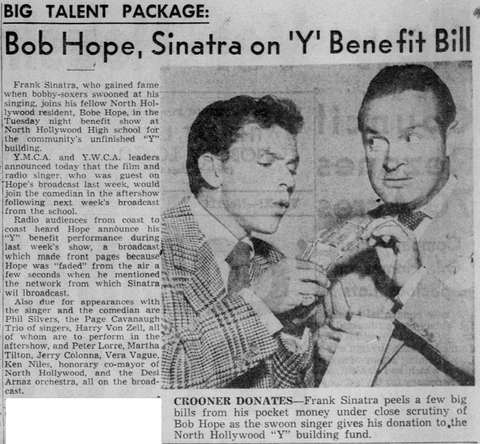
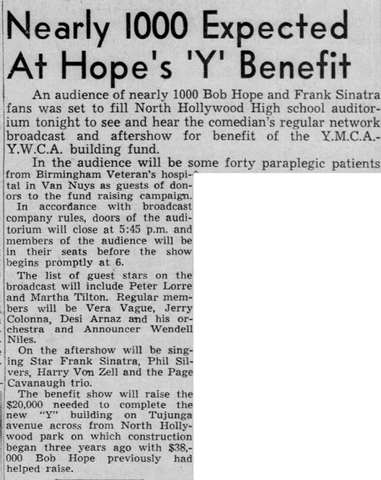
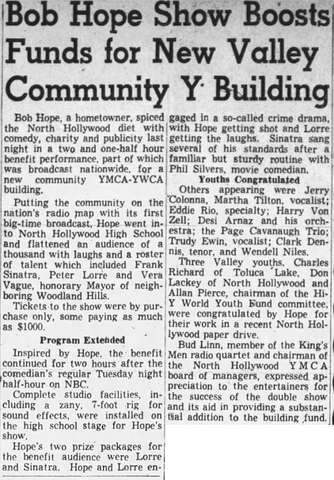
[Mortimer meets Tolson instead of Hoover]
Clyde Tolson: When Lee Mortimer arrived for his scheduled meeting on May 13, 1947, he found Clyde Tolson rather than Hoover waiting for him; Tolson declined to give official information but discussed Mortimer's questions about Sinatra's Havana photo and Willie Moretti connection.
Source: James Kaplan, "Frank: The Voice" (2010).
May 14, 1947
Radio
Songs By Sinatra (CBS)
Old Gold
Sponsor: Old Gold Cigarettes
Announcer: Marvin Miller
Orchestra Conducted By: Axel Stordahl
Performers: Frank Sinatra, The Pied Pipers, Jane Powell
Guests: George Burns, Gracie Allen
1. You Can't See The Sun
2. All Or Nothing At All sings segment as part of a skit with George Burns
3. Across The Alley From The Alamo Pied Pipers
4. A Kiss In The Dark Jane Powell
5. Time After Time
6. Why Shouldn't It Happen To Us w/George Burns verse was dropped for this version
7. Begin The Beguine
8. Put Your Dreams Away sign-off
May 21, 1947
Radio
Songs By Sinatra (CBS)
9:00 to 9:30 P.M
Wednesday evening
Sponsor: Old Gold Cigarettes
Announcer: Marvin Miller
Orchestra Conducted By: Axel Stordahl
Performers: Frank Sinatra, Jane Powell, The Pied Pipers
Guests: Phil Silvers
1. That's How Much I Love You Baby
2. As Long As I'm Dreaming
3 We Knew It All The Time Pied Pipers
4. Indian Love Call Jane Powell
5. Stella By Starlight
6. Ain'tcha Ever Comin' Back ( new song ) w/ Pied Pipers
7. Put Your Dreams Away sign - off
note: "Stella By Starlight," on AFRS, 4-30-47, O.G., is from this show.
May 23, 1947
Concerts
A Night Of Music, Hollywood Bowl, Los Angeles, CA
Frank Sinatra, Dinah Shore, Jimmy Durante, Benny Goodman, Jo Stafford, Phil Silvers, Danny Thomas, Peter Lawford, David Rose
A Night Of Music, Hollywood Bowl, Los Angeles, CA
Frank Sinatra, Dinah Shore, Jimmy Durante, Benny Goodman,
Jo Stafford, Phil Silvers, Danny Thomas, Peter Lawford, David Rose
© 1997-2026 The Sinatra Archive
This calendar, or any parts thereof, may not be reproduced in any fashion
whatsoever without the prior written permission of the publisher (The
Sinatra Archive)
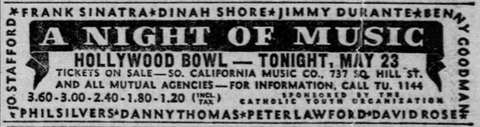
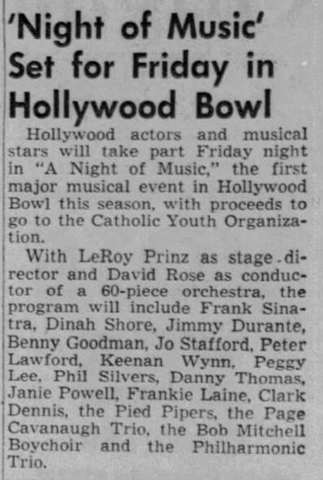
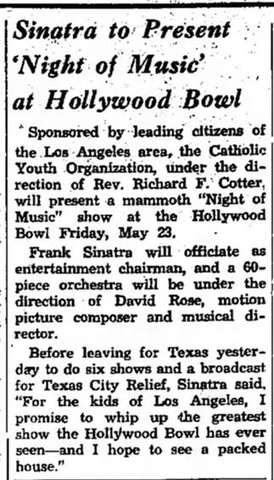
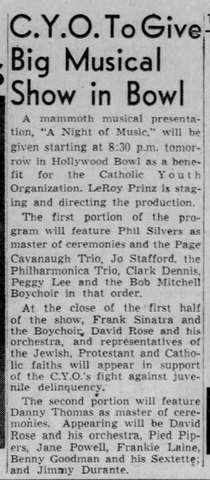
May 27, 1947
Studio
MGM - Los Angeles
Tuesday
THE KISSING BANDIT
Orchestra conducted by Georgie Stoll
Arrangements by Leo Arnaud
37 musicians
Morning session: 9:30 - 12:35 P.M.
Adelita orchestral track one take .27 secs
Early evening session: 3 - 7:35 PM
Siesta takes 7, 8 and 12 were mastered. All three ran 2:03
Entire recording time for both sessions 2:30
May 28, 1947
Radio
Songs By Sinatra (CBS)
Sponsor: Old Gold Cigarettes
Announcer: Frank Goss
Orchestra Conducted By: Axel Stordahl
Performers: Frank Sinatra, Jane Powell, The Pied Pipers
Guest: Johnny Mercer
1. That Old Black Magic
2. Accentuate The Positive w/ Johnny Mercer -he sings the rarely heard verse
3. Give Me One Kiss Jane Powell
4. Cecilia Johnny Mercer & Pied Pipers
5. Laura
6. There's No Business Like Show Business Frank and Johnny - special lyrics by Mercer
6. Time After Time
7. Put Your Dreams Away -sign off
NOTE: On this show, Ed O'Brien writes, the great lyricist Johnny Mercer was the guest.
They did a duet with Mercer's "Accentuate the Positive" with Mercer singing the verse, and there was another fascinating joint effort on Berlin's "There's No Business like Show Business," with special lyrics by Mercer.
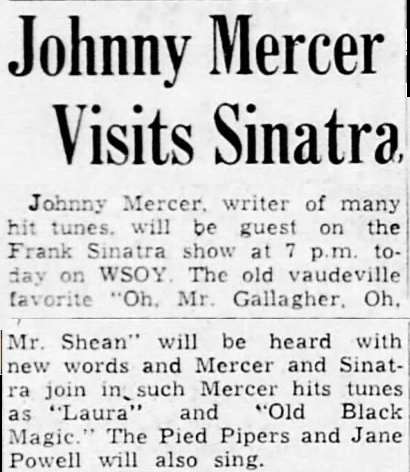
May 29, 1947
Radio
Command Performance Program
M.C.: Lionel Barrymore
Announcer: Ken Carpenter
Guests: Bill Goodwin, Bing Crosby, Clark Gable, Danny Kaye, Dinah Shore, Don Wilson, Frank Sinatra, Fred Allen, George Murphy, Ginny Simms, Greer Garson, Harry Von Zell, Jack Benny, Jimmy Durante, Judy Garland, Lauritz Melchior, Lina Romay, Nelson Eddy, Orson Welles, Paul Lukas, Peter Lind Hayes, Portland Hoffa, Rochester, Ernst Lubitsch, J. Lawton Collins (Lieutenant General), Robert Anders (Secretary Of War)
Notes: An assembled program, Frank's portion on this assembled show comes from the C. P. Victory Extra, 8-14-45. He sang "The House I Live In." --Ed
June 1947
[Old Gold drops Sinatra's radio show]
Kaplan: Within a week of the Mortimer settlement, Old Gold dropped Sinatra from his radio show and replaced him with singer Buddy Clark.
Source: James Kaplan, "Frank: The Voice" (2010)
June 2, 1947
Concerts
Shrine Auditorium, Los Angeles CA
Benefit for West View Hospital Building Association
Sinatra, Joe Louis, Cab Calloway, George Burns, Red Skelton, Harpo Mark and others
Shrine Auditorium, Los Angeles CA
Benefit for West View Hospital Building Association
Sinatra, Joe Louis, Cab Calloway, George Burns, Red Skelton, Harpo Mark and others
[image referenced in source but could not be recovered]
[image referenced in source but could not be recovered]
[image referenced in source but could not be recovered]
[image referenced in source but could not be recovered]
June 4, 1947
Radio
Songs By Sinatra (CBS)
Wednesday Evening
9 to 9:30 P.M.
Tribute To George Gershwin
Sponsor: Old Gold Cigarettes
Announcer: Frank Goss
Orchestra Conducted By: Axel Stordahl
Performers: Frank Sinatra, Jane Powell The Pied Pipers, Ken Lane Singers
1. Soon w/ Pied Pipers & Ken Lane Singers
2. Embraceable You
3. S'Wonderful Pied Pipers
4. Summertime Jane Powell
5. Boat That’s Leavin' For New York Pied Pipers & Ken Lane Singers
6. Bess, You Is My Woman Now w/ Pied Pipers & Ken Lane Singers
7. Someone To Watch Over Me
8. Love Walked In w/ Pied Pipers & Ken Lane Singers
6. Put Your Dreams Away sign - off
note Frank Goss was the announcer. "Rhapsody In Rhythm" was the replacement series for the summer (13 wks) Johnnie Johnson and Buddy Clark would alternate each week.
Ed
NOTE: Ed O'Brien points out that the Old Gold show was on for two full seasons and Sinatra did 75 shows.
This Gershwin tribute is his best in the 1940's. The song selection is A1. Stordahl's charts perfectly fit the bill and the singing is grand. A Great exit!
Songs By Sinatra (CBS)
Wednesday Evening
9 to 9:30 P.M.
Tribute To George Gershwin
Sponsor: Old Gold Cigarettes
Announcer: Frank Goss
Orchestra Conducted By: Axel Stordahl
Performers: Frank Sinatra, Jane Powell The Pied Pipers, Ken Lane Singers
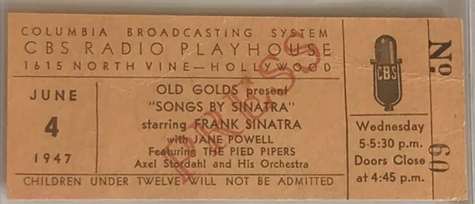
[Sinatra publicly apologizes to Mortimer]
On June 4, 1947, at Mayer's insistence, Sinatra read a public statement in Beverly Hills District Court calling the Ciro's incident a misunderstanding and expressing regret; he paid Mortimer a $9,000 settlement plus $50 in court costs and roughly $15,000 in legal fees, and the case was dismissed.
Source: James Kaplan, "Frank: The Voice" (2010).
June 12, 1947
Concerts
Municipal Auditorium, Long Beach, CA
Junior Chamber of Commerce Convention
Sinatra, Jo Stafford, Jack Carson, King Cole Trio, Johnny Mercer, Eddie Bracken
Municipal Auditorium, Long Beach, CA
Junior Chamber of Commerce Convention
Sinatra, Jo Stafford, Jack Carson, King Cole Trio, Johnny Mercer, Eddie Bracken
Ed O'Brien sends along this review:
REVIEW: GREAT SONGS FROM GREAT BRITAIN
FRANK SINATRA
SINATRA SINGS SONGS FROM
GREAT BRITAIN
Frank Sinatra with The Robert Farnon orchestra
****
Some thirty years ago Frank Sinatra was at the peak of his career. The demand for his services-on record, in person, and in the movies-was extraordinary. When he toured Great Britain, however, his voice was put to the test. Sinatra knows his voice, the limitations and the strengths, and he had overworked it. What to do in England with a record date already set up,arrangements marked, musicians booked. There was a record to do. And Robert Farnon, one of England's finest arranger-conductors , was ready for the main event. Sinatra would follow through but since Reprise was,after all, his own record company, he insisted that his greatest fans, the Americanpublic, should not get this recording; his voice, he said,wasn't up to snuff. Sinatra probably wishes he had this voice today. True, there's some raspiness here and there but-and it's an important but-that voice and those strings combine for one of the most satisfying releases Sinatra ever had. Now it's available on CD and Sinatra fans will no doubt welcome it.When he opens with "The Very Thought of You," he's in full control of the material, the words, the pacing, and Farnon surrounds him with soft, unobtrusive backup. "If I Had You," "Now Is The Hour," and "The Gypsy" are truly socko performances. Since this is, after all, a British menu, "A Nightingale Sang In Berkeley[Barkley] Square" and "We'll Meet Again," major songs during World War II are a must, and Sinatra really digs into his soul for the perfect touch. "London By Night" and "A Garden In The Rain," too, pay off for listeners. What's all the worry here?
The timbre of the voice may be a minute shade different but Frank Sinatra's way of presenting the lyrics made him a star, not just that easy, often beautiful voice. That is here, and then some.
W.Y.
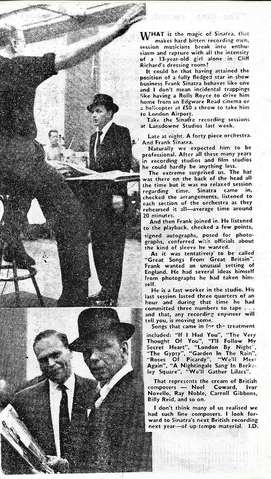
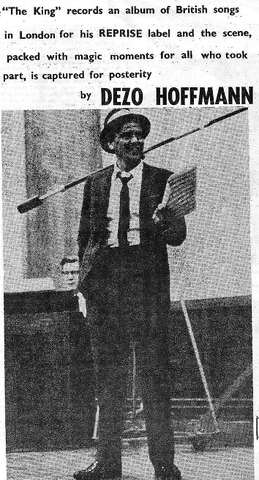
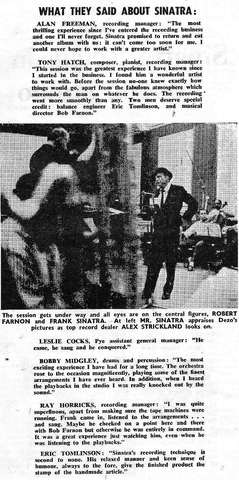
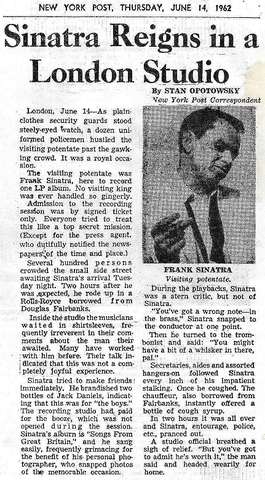
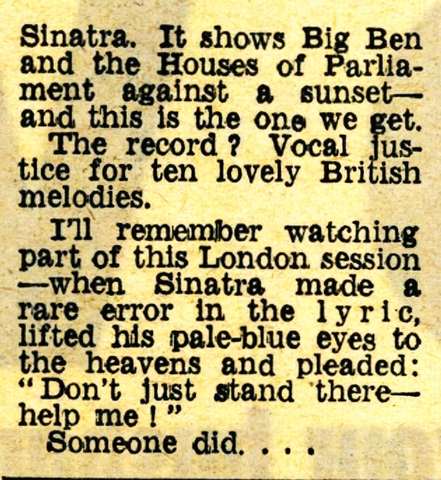
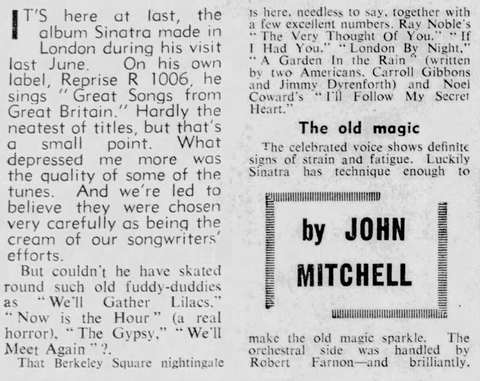
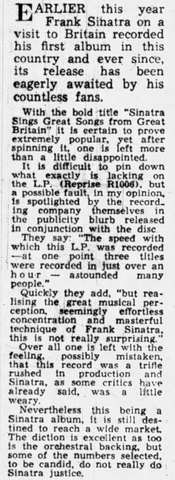
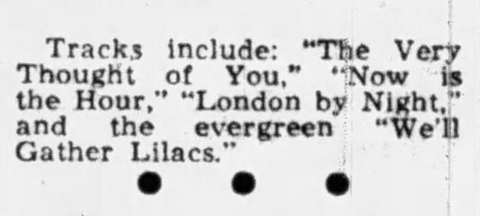
June 20, 1947
Mobster Bugsy Siegel, builder of the Flamingo Hotel in Las Vegas, was shot dead through a window of Virginia Hill's rented Beverly Hills house on orders reluctantly approved by Meyer Lansky, over objections Lansky had personally made to Lucky Luciano at their Havana meeting earlier that year. Among the crowd of mourners who visited the house the following day to pay their respects was Frank Sinatra. Source: Michael Sheridan & David Harvey, Sinatra and the Jack Pack.
[Bugsy Siegel assassinated]
On the night of Friday, June 20, 1947, after dinner at Jack's restaurant in Ocean Park, Bugsy Siegel was shot dead by a rifleman through the window of Virginia Hill's Beverly Hills home at 810 North Linden Drive while sitting with associate Allen Smiley.
Source: James Kaplan, "Frank: The Voice" (2010).
June 21, 1947
[Sinatra learns of Siegel's murder]
Sinatra heard of Bugsy Siegel's murder the next morning, Saturday June 21, 1947, via a call from Hank Sanicola while preparing for a softball game; he later concluded the killing had been ordered from the Havana mob summit and managed by Charlie Fischetti.
Source: James Kaplan, "Frank: The Voice" (2010).
June 23, 1947
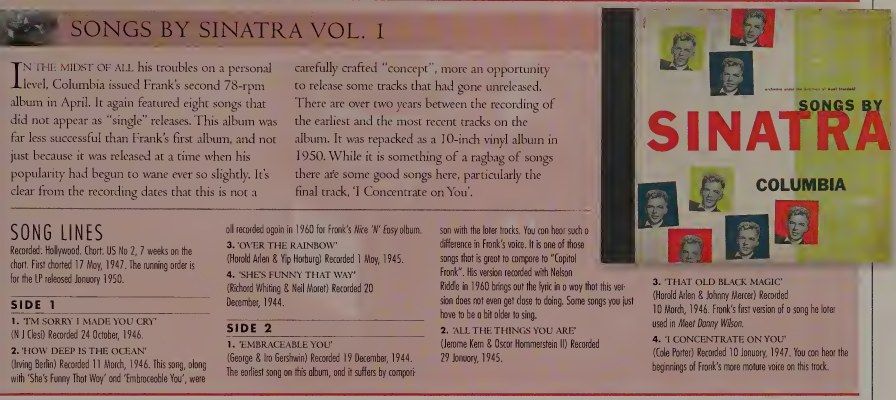
[Photograph: Frank co-promotes Walcott-Maxim boxing bout. From Richard Havers, "Sinatra" (Dorling Kindersley, 2007), p.131.]
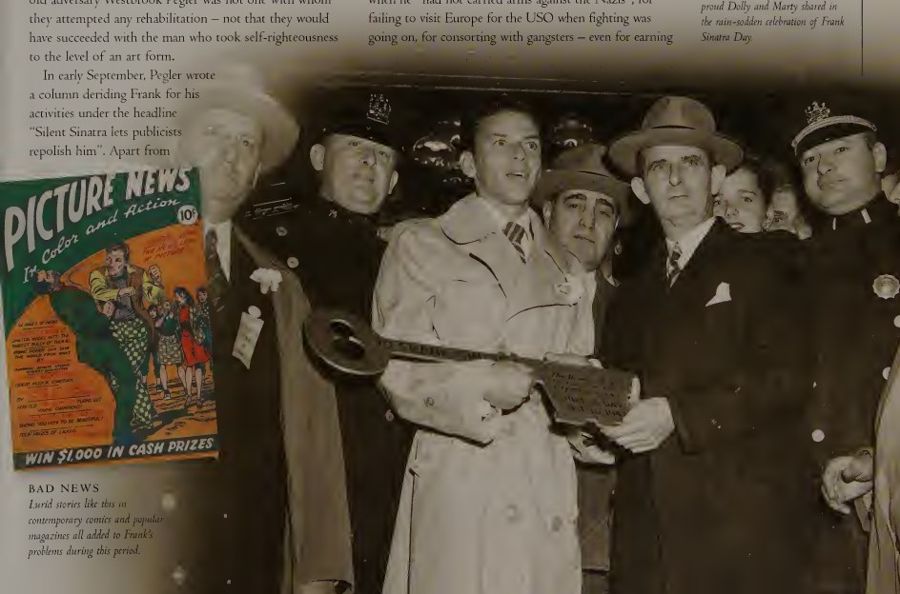
[Photograph: Frank co-promotes Walcott-Maxim boxing bout. From Richard Havers, "Sinatra" (Dorling Kindersley, 2007), p.131.]
Pursuing his ambition to become a businessman, Frank co-promoted a heavyweight bout between Jersey Joe Walcott and Joey Maxim at Los Angeles's Gilmore Stadium on 23 June 1947. Walcott's win earned him a title shot against Joe Louis. (Source: Richard Havers, "Sinatra" (Dorling Kindersley, 2007).)
June 26, 1947
Studio
Hollywood
HCO2419 Have Yourself A Merry Little Christmas
(H. Martin/R. Blane)
(from Meet Me In St. Louis )
Leo Feist, Inc. (ASCAP) 1944
Arranged & Conducted by Axel Stordahl
CD: 40707 Christmas Dreaming (alt. take)
LP: HL-7400 Have Yourself A Merry Little Christmas
LP: CL-1032 Christmas Dreaming
HCO2420 Christmas Dreaming
( I. Gordon/L/ Lee)
Leeds Music Corp. (ASCAP) 1947
Arranged & Conducted by Axel Stordahl
CD: 40707 Christmas Dreaming
LP: HL-7400 Have Yourself A Merry Little Christmas
LP: CL-1032 Christmas Dreaming
HCO2421 The Stars Will Remember (So Will I) (N/R)
(L. Towers/D. Pelosi)
(from Smart Girls Don't Talk)
T.B. Harms, Inc. (ASCAP) 1947
Arranged & Conducted by Axel Stordahl
[Sinatra records Christmas songs]
Six days after Bugsy Siegel's murder, on June 26, 1947, Sinatra was back in the studio recording Christmas songs; over the course of 1947 he would record a total of seventy sides.
Source: James Kaplan, "Frank: The Voice" (2010).
June 27, 1947
Radio
Stars In The Spotlight
Friday evening
Sponsored by Cardinet Candy Company
Harold Collins
Annc: Bill Hartell
Guest: Frank Sinatra
15 minutes
Harold opens with the latest Hollywood gossip. Biggest story is the premature birth of Jane Wyman and Ronald Reagan's baby. Weighed in at only 1.8 lbs. Harold then tells us that Ronnie was rushed to the hospital just before air time. He was suffering from pneumonia.
Guest was Frank Sinatra from the San Fernando Valley. Harold tells Francis that an appalling number of listeners write in demanding that Frank teach F.S. Jr to sing. They want the Sinatra sound to last for years. Frank tells Harold that he plans to be around for a few generations.. Frank plugs his new MGM film "The Kissing Bandit." Collins tells the listeners it will be one of the greatest Hollywood musicals. Harold asks Frank if Crosby was instrumental in his career. Frank tells of seeing Bing at a theatre in Jersey City. He lauds Crosby and gives him a great deal of credit regarding his decision to become a singer. Harold wraps up the show with more gossip about Gable, Kerr, Wayne, Russell, etc.
Next week's guest will be Maria Montez.
Ed O'Brien: note: Mutual Network syndicated this show. WOR, in N.Y.C. did not carry it. The 5-4-47 show with Jean Pierre Aumont was broadcast on Sunday evening.
Ed
June 28, 1947
Studio
MGM - Hollywood
The Kissing Bandit
Saturday afternoon
Arrangements by Leo Arnaud
Conducted by Georgie Stoll
Senorita
w/ Kathryn Grayson and Chorus
13 takes 2:10
Song recorded from bar 41 to end
no acceptable takes
Senorita
Takes 3(2:11) and 5(2:11) and take 8(2:15) were mastered
this version was not used in the film.
note: I have the MGM session sheet for this date.
The Sinatra solo recording was done but has
never surfaced.
"Sinatra in Hollywood" doesn't
have it and it is not mentioned. MGM archivist,
Scott Perry, told me some material was taken
from this film.
Didn't tell me how he knew.
Ed
June 29, 1947
Concerts
Shrine Auditorium, Los Angeles, CA
Spring music Festival Benefiting the Los Angeles Sanatorium's National Medical Center Frank Sinatra, Marie McDonald, Dennis Morgan
Shrine Auditorium, Los Angeles, CA
Spring music Festival Benefiting the Los Angeles Sanatorium's National Medical Center Frank Sinatra, Marie McDonald, Dennis Morgan
[image referenced in source but could not be recovered]
Summer-Fall 1947
On weekends in Los Angeles, Sinatra led an amateur softball team, the Swooners, in games against other celebrity-studded lineups. He played second base, and the team had its own cheerleaders: Virginia Mayo, Marilyn Maxwell, Shelley Winters, and Ava Gardner. Source: Sinatra, Nancy. Frank Sinatra: An American Legend. 1998. (via sinatra.com/frank-sinatra-timeline)
[Feudin', Fussin', and A-Fightin' -- critical commentary]
Friedwald (analysis): Sinatra resumed hosting Your Hit Parade on September 6, 1947, at age thirty-one, now spotlighted as the sole star singer with Axel Stordahl as arranger-conductor, but sponsor George Washington Hill still dictated content aimed at the lowest common denominator. The very first song on Sinatra's first show back was 'Feudin', Fussin', and A-Fightin',' a Burton Lane/Al Dubin novelty hit for Dorothy Shay that Friedwald calls 'singularly unsuited to Sinatra' and 'probably the last thing in the world that he should have been asked to sing' -- an inauspicious omen for the two-year run, since the show's top-ten format obligated Sinatra to sing whatever was #1 regardless of quality.
Source: Will Friedwald, "Sinatra! The Song Is You: A Singer's Art" (2018 revised edition), Ch. 5, "In-Between Years" (1948-1953)
[November 5, 1947 Columbia session -- Mitch Miller/Mercury incident -- critical commentary]
George Siravo (recalling Sinatra and Manie Sachs); Mitch Miller: At a November 5, 1947 session, after Sinatra nailed what he felt was a perfect take, the engineer said it ran too long for a ten-inch 78. When Sinatra rejected editing or speeding the tempo ('kill the feeling'), a voice from the back of the ensemble -- Mitch Miller, then running pop A&R at Mercury Records -- called out, 'We could fit the whole thing in over at Mercury!' Furious, Sinatra stormed into Manie Sachs's office; per arranger George Siravo, Sinatra raged, 'You mean a big fuckin' outfit like Columbia can't do what a nickel record company like Mercury do?' Sachs, uncharacteristically angry, vowed Miller would never again set foot at Columbia -- an order arrangers later got around by requesting Miller by name. Siravo noted the irony that no one then imagined 'Mitch would go on to become the great white father' (i.e., succeed Sachs at Columbia).
Source: Will Friedwald, "Sinatra! The Song Is You: A Singer's Art" (2018 revised edition), Ch. 5, "In-Between Years" (1948-1953)
[Origins of the idea for a Sinatra-Ellington collaboration, Columbia session -- critical commentary]
George Avakian: At his November 9, 1947 Columbia session, Sinatra made small talk with producer George Avakian, who mentioned Ellington would be recording in the same studio two days later. Sinatra said, 'You know, I've always wanted to make a record with Duke.' Avakian pitched the idea to A&R chief Manie Sachs, who wasn't especially interested since Ellington wasn't a big seller for the label at the time: 'Manie realized that Ellington was important and that he should be on the label, but he didn't give him a lot of attention.'
Source: Will Friedwald, "Sinatra! The Song Is You: A Singer's Art" (2018 revised edition), Ch. 7, "With Billy May" (1953-1979)
[album history -- critical commentary]
Tom Rednour: Columbia released a run of themed 78rpm album sets: Songs by Sinatra, Volume One (1947), Christmas Songs by Sinatra (1948), Frankly Sentimental (1949), Dedicated to You (1950), and Sing and Dance with Frank Sinatra (1950); researcher Tom Rednour argues these are underappreciated as albums of substantially new or previously unissued material rather than mere compilations.
Source: Charles L. Granata, "Sessions with Sinatra: Frank Sinatra and the Art of Recording" (1999/2003), Part II: The Columbia Years, 1943-1952
[microphone history - 1947 U47 -- critical commentary]
In 1947 Georg Neumann introduced the U47 condenser microphone, distributed by Telefunken and nicknamed "the bottle" or "the Telly"; by 1953, when Sinatra began recording at Capitol Records, the U47 had replaced the RCA 44 as the preferred vocal mic, changing his recording performance technique.
Source: Charles L. Granata, "Sessions with Sinatra: Frank Sinatra and the Art of Recording" (1999/2003), Part I: The Big Band Years, 1937-1942
July 1947
[Biographer notes Sinatra's declining fortunes and exclusion from Who's Who]
Writer E. J. Khan observed in Coronet magazine that despite being one of the most famous living Americans, Frank was not listed in the 1946-47 edition of Who's Who in America, and mused that his declining income might reassure critics worried about his lasting influence.
Source: Richard Havers, "Sinatra" (Dorling Kindersley, 2007).
July 2, 1947
Concerts
Music For Wounded, Hollywood Bowl, Los Angeles, CA
Music For Wounded, Hollywood Bowl, Los Angeles, CA
Frank performed in Part Two of the program. Axel Stordahl conducted.
© 1997-2026 The Sinatra Archive
This calendar, or any parts thereof, may not be reproduced in any fashion whatsoever without the prior written permission of the publisher (The Sinatra Archive)
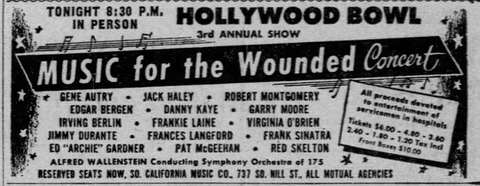
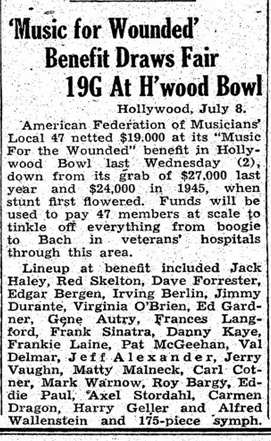
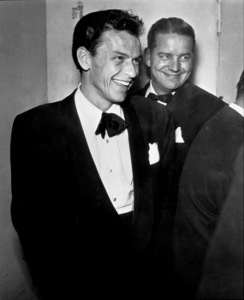
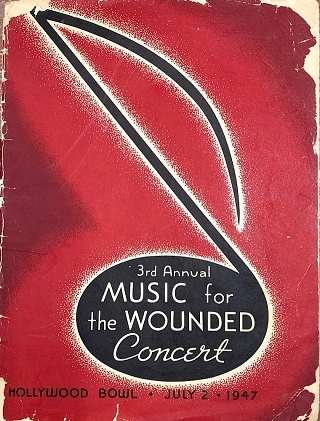
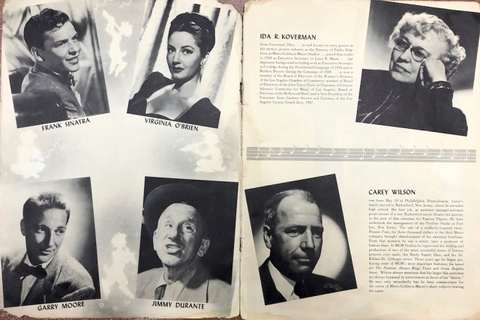
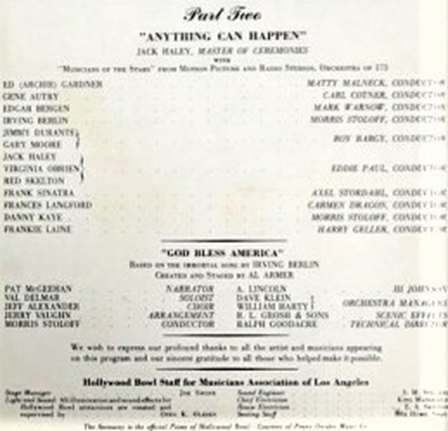
FS Time
After Time
FS Soliloquy
FS The
Girl That I Marry
FS That
Old Black Magic
FS Bess,
Oh Where’s My Bess
FS Time
After Time
FS That
Old Black Magic
FS Bess,
Oh Where’s My Bess
Guy Steele corrected me on the songs performed that evening.
I had included two numbers from the 1946 show. Made the
mistake of assuming without actually checking the broadcast.
Ed
FSTime
FSThat
FSTime
FSThat
July 3, 1947
Studio
Hollywood
HCO2419 Have Yourself A Merry Little Christmas
(H. Martin/R. Blane)
(from Meet Me In St. Louis)
Leo Feist, Inc. (ASCAP) 1944
Arranged & Conducted by Axel Stordahl
-3 (2:47) CD: Columbia Years 43-52 Vol. 6
LP: CL-6019 Christmas Songs By Sinatra (10 inch)
78: 38259
HCO2420 Christmas Dreaming (A Little Early This Year)
(I. Gordon/L/ Lee)
Leeds Music Corp. (ASCAP) 1947
Arranged & Conducted by Axel Stordahl
-2 (2:55) CD: Columbia Years 43-52 Vol. 6
78: 37809
NOTE: Sinatra Scholar Ed O'Brien observes that Sinatra would record the above two songs, first, on June 26, 1947, and, then, again on July 3, 1947. Both sessions were done in Hollywood; both with a 35-piece orchestra. All four efforts have been issued and all are superbly done. In fact, there is little discernible difference on the two songs from the June and July recording sessions. One has to wonder why Sinatra felt the need to re-do them exactly a week after his initial attempts. "Tis a mystery!"
HCO2421 The Stars Will Remember (So Will I)
(L. Towers/D. Pelosi)
(from Smart Girls Don't Talk)
T.B. Harms, Inc. (ASCAP) 1947
Arranged & Conducted by Axel Stordahl
-2 (3:16) CD: Columbia Years 43-52 Vol. 6
78: 37809
HCO2433 It All Came True
(S. Skylar)
Sinatra Songs, Inc. (ASCAP) 1947
Arranged & Conducted by Axel Stordahl
-1 (2:32) CD: Columbia Years 43-52 Vol. 6
78: DB2381 ( England )
Violins: A. Beller, H. Bluestone, S. Cytron, G. Joyce, G. Kast, M. King, S. Middleman, N. Pisani, M. Russell, F. Slatkin, M. Sosson; Violas: H. Hashman, W. Hymanson, D. Sterkin; Cellos: C. Bernard, F. Goerner, J. Sewell; Saxes: F. Dornbach, J. Dumont, J. Kinsler, B. Russin, F. Stulce; Horns: V. De Rosa; Trumpets: E. Klein, L. Mach, R. Zarchy; Trombones: D. Hallett, G. Jenkins, P. Pederson; Piano: M. Mclntyre; Guitar: A. Reuss; Bass: J. Ryan; Drums: R. Hagan; Harp: M. Camber
note: I was involved in the 1987 issue of the "Christmas Dreaming" LP-CD-cassette. There was a lot of discussion regarding this session and the session of 06-26-47 with re-dos on both tunes. Finally was decided to release an alternate of "Have Yourself A Merry Little Christmas" from the June date and to also put the title track for the album from the same session. I argued for the release of the rare 12-28-47 recording of "White Christmas." The producer agreed and it was the first cut on side one. The only release prior to was a 78 from Australia. I obtained a copy and it took six weeks for it to arrive. Still have it.
Ed
July 27, 1947
Studio
New York City
Lucky Strike Promo Film-1948- Salesman's Movie 48-A
American Tobacco Co.
Sunday afternoon
Arranged & conducted by Axel Stordahl
Embraceable You
w/ Lucky Strike Quartette & The Hit Parade Orchestra
July 31, 1947
Concerts
Birmingham Hospital, Van Nuys, California
Benefit for Damon Runyon Memorial Fund
Birmingham Hospital, Van Nuys, California
Benefit for Damon Runyon Memorial Fund
[image referenced in source but could not be recovered]
[image referenced in source but could not be recovered]
[image referenced in source but could not be recovered]
August 1, 1947
Radio
Radio: Sinatra hosted an episode of The Colgate Sports Newsreel this date, substituting for the vacationing regular host Bill Stern -- an unusual turn away from his usual musical-variety format. Source: sinatradiscography.com, Radio Transcriptions Database.
August 8, 1947
Concerts
Mocambo, Los Angeles, CA
Walter Winchell Tribute
Mocambo, Los Angeles, CA
Walter Winchell Tribute
Nora Eddington (Mrs. Errol Flynn), Errol Flynn, Walter Winchell, Frank Sinatra, Leonard Lyons (behind Sinatra)
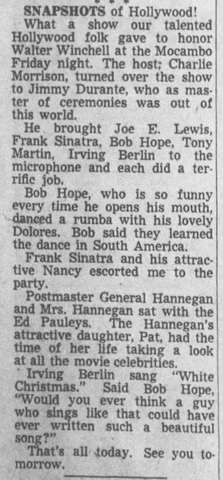
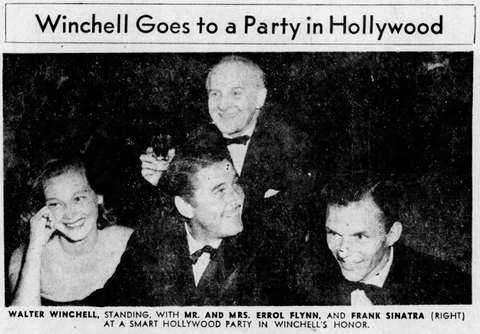
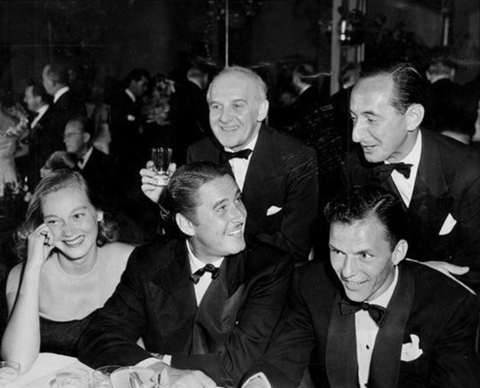
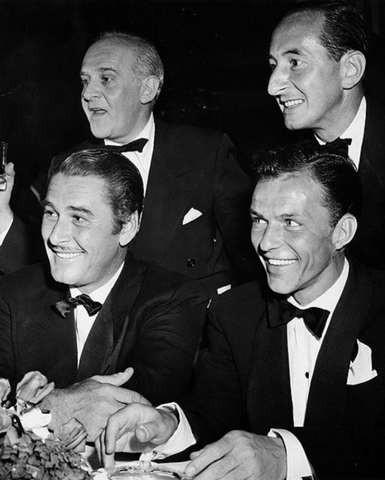
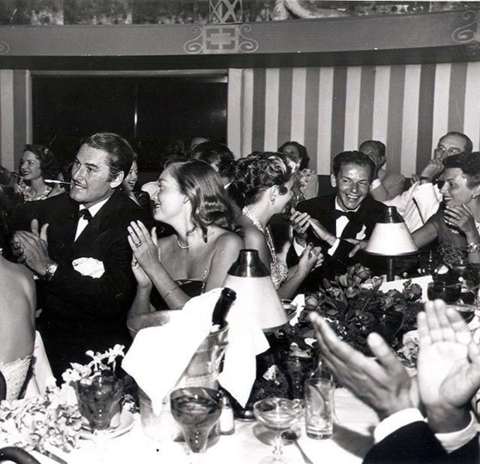
Frank Sinatra is older here. Below is a photo that
was taken on 8/19/47.
I have also enclosed a column by Louella Parsons.
She mentions that Errol Flynn's wife was not at the
party and Flynn sat at a table with the Reginald Gar-
diners, Cesar Romero and Irving Berlin. I also found
a photo of Flynn's wife. No question she was with him
in the photos claiming to be from 1947.
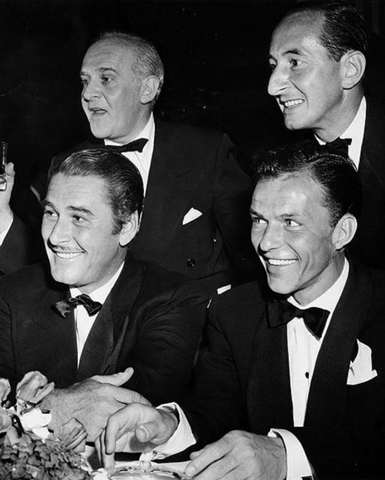
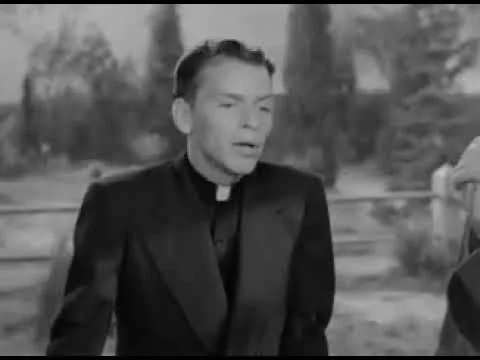
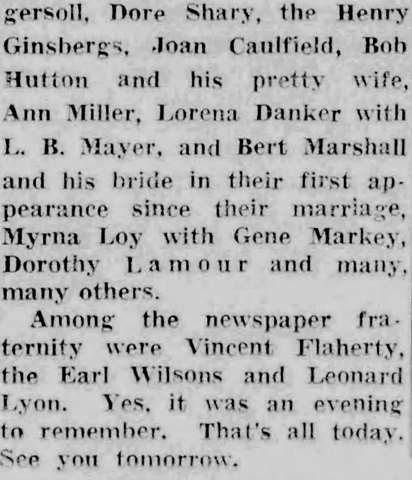
August 11, 1947
Studio
Hollywood
HCO2519 That Old Feeling
(L. Brown/S. Fain)
Leo Feist, Inc. (ASCAP) 1937
Arranged & Conducted by Axel Stordahl
-2 (3:15) CD: Columbia Years 43-52 Vol. 6
-1 LP: C6X-40343 The Voice-The Columbia years, 43-52
-2 LP: HL-7405 Romantic Scenes From The Early Years (alt. take) -1 LP: CL-902 That Old Feeling
HCO2520 If I Had You
(T. Shapiro/J. Campbell/R. Connelly)
Robbins Music Corp. (ASCAP) 1928
Arranged & Conducted by Axel Stordahl
-1 (3:06) CD: Columbia Years 43-52 Vol. 6
LP: C6X-40343 The Voice-The Columbia years, 43-52
LP: HL-7405 Romantic Scenes From The Early Years
HCO2521 The Nearness Of You
(N. Washington/H. Carmichael)
Famous Music Corp. (ASCAP)1940
Arranged & Conducted by Axel Stordahl
-1 (2:40) CD: Columbia Years 43-52 Vol. 6
LP: C6X-40343 The Voice-The Columbia years, 43-52 (alt. take)
LP: HS-11277 Someone To Watch Over Me
LP: CL-902
HCO2522 One For My Baby (And One More For The Road)
(H. Arlen/J. Mercer)
(from The Sky's The Limit)
E.H. Morris & Co., Inc. (ASCAP) 1943
Arranged & Conducted by Axel Stordahl
-1 (3:04) CD: Columbia Years 43-52 Vol. 6
LP: C6X-40343 The Voice-The Columbia years, 43-52
LP: CL-2740 The Essential Frank Sinatra, Vol. 2
LP: C2L-6 Frank Sinatra Story In Music
78: 38474
HCO2519, 2520 & 2521 Violins: M. Russell, F.
Slatkin; Viola: D. Sterkin; Cello: F. Goerner;
Flute: J. Kinsler; Piano & Celeste: M. Mclntyre;
Guitar: A. Reuss; Bass: P. Stephens; Drums: R. Hagan
HCO2522 Violins: M. Russell, F. Slatkin; Viola:
D. Sterkin; Cello: F. Goerner; Trumpet; R.
Zarchy; Flute: J. Kinsler; Saxes: H. Beau, H.
Haymer, J. Kinsler; Piano & Celeste: M. Mclntyre;
Guitar: A. Reuss; Bass: P. Stephens; Drums: R. Hagan
NOTE: Sinatra Scholar Ed O'Brien emphasizes that this set of songs is a nice preliminary before the main event at Capitol Records.
Sinatra does a very decent job here, but the
Capitol efforts on all four of these songs is nothing short of exquisite.
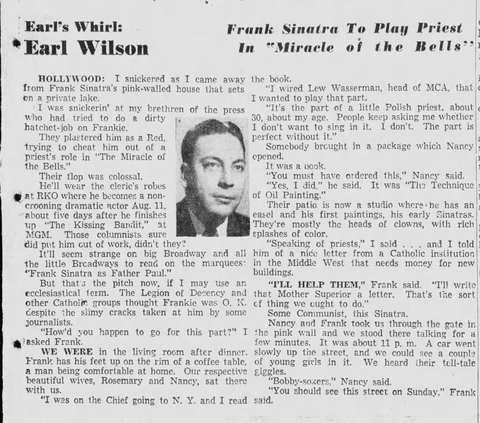
"One for My Baby"
'One for My Baby,' Sinatra's saloon-song showstopper (first recorded for Columbia in 1947), was captured twice for Only the Lonely: an informal rehearsal take with just Bill Miller's piano (whose existence wasn't known to be saved until found in the Capitol vaults and issued on CD in 1990) and the final full-orchestra master two days later.
Source: Charles L. Granata, "Sessions with Sinatra: Frank Sinatra and the Art of Recording" (1999/2003).
[One for My Baby -- critical commentary]
Sinatra had been developing the archetypal saloon-song reading for years: hinted at in his 1947 Columbia recording, perfected by 1954 in the film Young at Heart, and heard in a celebrated June 1957 Seattle concert -- both nearly identical to the eventual June 24, 1958 studio version, which Friedwald calls the blueprint for Riddle's added strings the next night.
This song/context matches multiple dated entries in the chronology; the specific date Friedwald is referring to could not be determined with confidence.
Source: Will Friedwald, "Sinatra! The Song Is You: A Singer's Art" (2018 revised edition), Ch. 6, "With Nelson Riddle" (1953-1979)
[One for My Baby -- critical commentary]
Will Friedwald: Friedwald singles out Sinatra's 1993 solo vocal track for 'One for My Baby' (before any duet overdubs) as among the most remarkable things he recorded in his entire career, in contrast to weaker vocals cut the same period that justified the harshest press criticism of the Duets project.
This song/context matches multiple dated entries in the chronology; the specific date Friedwald is referring to could not be determined with confidence.
Source: Will Friedwald, "Sinatra! The Song Is You: A Singer's Art" (2018 revised edition), Ch. 10, "Concert Years" (1973-1994)
[One for My Baby -- critical commentary]
Granata includes 'One for My Baby' among the fifty recordings he considers essential to understanding Sinatra's artistry (arranged by Nelson Riddle, recorded 1993, Capitol); the song was chosen for its musical/interpretive value rather than commercial popularity.
This song/context matches multiple dated entries in the chronology, or lacked a sufficiently precise date; the specific date could not be determined with confidence.
Source: Charles L. Granata, "Sessions with Sinatra: Frank Sinatra and the Art of Recording" (1999/2003), Afterword & Appendices A-D
[One for My Baby / All the Way -- critical commentary]
Lee Herschberg; analysis by Will Friedwald: Sinatra and Miller recorded 'One for My Baby' together for the third time in the summer of 1993 for the Duets album; the track begins with 'All the Way' played by Kenny G before segueing into the Sinatra-Miller duet. Friedwald calls Sinatra's vocal, at 78 or 79, one of the most painfully moving of his career, and analyzes Miller's dual role -- providing harmonic support while dramaturgically 'playing' the indifferent saloon pianist the Sinatra character is confiding in. Engineer Lee Herschberg said, 'Bill has always had a great sense of what Frank [is] going to do. He always knew exactly where he was going to be, and he was always in the right place.' Friedwald highlights how Sinatra draws out the closing line 'that long, long road' by repeating 'it's long, it's so long.'
This song/context matches multiple dated entries in the chronology; the specific date Friedwald is referring to could not be determined with confidence.
Source: Will Friedwald, "Sinatra! The Song Is You: A Singer's Art" (2018 revised edition), Ch. 1, "Night and Day" (Sinatra style overview)
[S' Wonderful / One for My Baby / The Moon Was Yellow -- critical commentary]
Friedwald (analysis): On the January 3, 1951 episode of the low-profile radio series Meet Frank Sinatra, subtly swung rhythm-section-only versions of 'S' Wonderful,' 'One for My Baby,' and 'The Moon Was Yellow' are, per Friedwald, an early anticipation of the 'Swingin' Lovers' Capitol sound that would arrive nearly five years later.
This song/context matches multiple dated entries in the chronology; the specific date Friedwald is referring to could not be determined with confidence.
Source: Will Friedwald, "Sinatra! The Song Is You: A Singer's Art" (2018 revised edition), Ch. 5, "In-Between Years" (1948-1953)
August 16, 1947
Civic Auditorium, San Jose, CA
Benefit for Santa Clara Youth Center
© 1997-2026 The Sinatra Archive
This calendar, or any parts thereof, may not be reproduced in any fashion
whatsoever without the prior written permission of the publisher (The
Sinatra Archive)
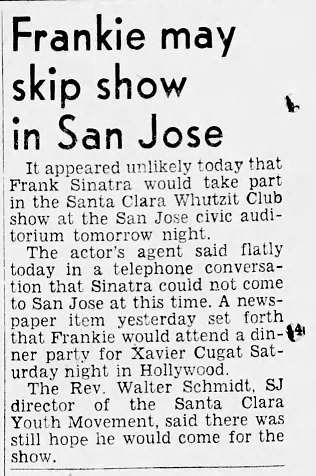
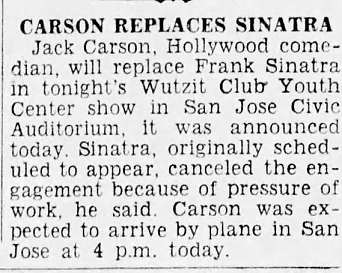
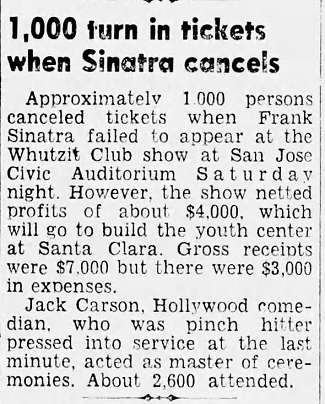
Civic Auditorium, San Jose, CA
Benefit for Santa Clara Youth Center
© 1997-2025 The Sinatra Archive
This calendar, or any parts thereof, may not be reproduced in any fashion
whatsoever without the prior written permission of the publisher (The
Sinatra Archive)
August 17, 1947
Studio
Hollywood
HCO2538 But Beautiful
(J. Burke/J. Van Heusen)
(from Road To Rio)
Burke-Van Heusen, Inc. (ASCAP) 1947
Arranged & Conducted by Axel Stordahl
-1 (3:12) CD: Columbia Years 43-52 Vol. 7
LP: C6X-40343 The Voice-The Columbia years, 43-52
LP: CL-1448 Reflections
78: 38053
HCO2539 A Fellow Needs A Girl
(R. Rodgers/O. Hammerstein II)
(from Allergo)
Williamson Music, Inc. (ASCAP) 1947
Arranged & Conducted by Axel Stordahl
-PB (3:11) CD: Columbia Years 43-52 Vol. 7
-1 LP: CL-902 That Old Feeling
-1 78: 37883
HCO2540 So Far
(R. Rodgers/O. Hammerstein II)
(from Allergo)
Williamson Music, Inc. (ASCAP) 1947
Arranged & Conducted by Axel Stordahl
-PB (3:08) CD: Columbia Years 43-52 Vol. 7
-1 CD: 44236 Sinatra Rarities
-1 78: 37883
Violins: H. Bluestone, W. Callies, S. Cytron, P.
Ellis. S. Freed, Jr., G. Kast, B. Kundell, N.
Pisani, M. Russell, M. Sosson, O. Vail; Violas:
A. Harshman, W. Hymanson, D. Sterkin; Cellos: C.
Bernard, F. Goerner, J. Sewell; Saxes: H. Beau,
F. Dornbach, H. Haymer, J. Kinsler, F. Stulce;
Horns: V. De Rosa; Trumpets: E. Klein, R. Linn,
R. Zarchy; Trombones: D. Hallett, G. Jenkins, P.
Pederson; Piano: M. Mclntyre; Guitar: A. Reuss;
Bass: P. Stephens; Drums: R. hagan; Harp: M. Cambern
NOTE: Ed O'Brien bets that Sinatra was thrilled to record such quality songs from the pens of such outstanding writers. In the mid-1970's,
Riddle wrote a great chart for "But
Beautiful." Sinatra sang it often in concert but never did a recording.
August 19, 1947
Studio
RKO Soundstage - Los Angeles, California
For the movie, "The Miracle of the Bells"
"Ever Homeward"
Frank Sinatra (sung in Polish acapella on the set, no prerecording)
Scene #46 sessions held on August 19 and August 20 at 9 a.m.
Musical Supervisor: Norman Bennet
Shot on Set #19 with Pathe 15 film.
Sinatra was designated actor #3 for the film
NOTE: Sinatra Scholar Ed O'Brien, who provided information on this soundstage work, says that Sinatra was badly miscast in this film and the film was a disaster.
I know most people don't like "Miracle of the Bells" but I get sentimental for that film at Christmas. It's great to watch around Christmas just for the sentimental scene in the Chinese restaurant. I'm glad there's a DVD release. Some of Valli's acting as Joan of Arc isn't too bad. Not for everyone though.
--Scott
September 6, 1947
Radio
Your Hit Parade
Network: NBC
Time: 9:00-9:30 P.M.EST
Sponsor: Lucky Strike
1. Feudin' Fightin' and a-Fussin' (#4)
2. That's My Desire (#5)
3. That Old Black Magic (Hit Parade Extra)
4. I Wonder Who's Kissing Her Now
NOTE: We are grateful to Ed O'Brien for the above program, which marked Sinatra's return to the Hit Parade broadcasts.
Eileen Barton told Ed that Frank hated the rigid and staid format when he was the male vocalist in 1943 and 1944.
When he agreed to come back in 1947, it was with the proviso that there would be some changes made.
He brought along Alex Stordahl, introduced most of the songs, did some outstanding "Hit Parade Extras,"
and dominated the show for the next 21 months. Doris Day was his female counterpart in the Fall of 1947
[Second Your Hit Parade run debuts]
On Saturday, September 6, 1947, Sinatra's second run on Your Hit Parade premiered, introducing Axel Stordahl as the new bandleader and Doris Day as co-star; Sinatra's flat rendition of the novelty song 'Feudin' and Fightin'' signaled trouble.
Source: James Kaplan, "Frank: The Voice" (2010).
September 7, 1947
Concerts
Greenacres, Harold Lloyd Estate, Beverly Hills, CA
Benefit for the Los Angeles Nursery School for Visually Handicapped Children Auction and Entertainment
Frank Sinatra & Betty Hutton performed
Greenacres, Harold Lloyd Estate, Beverly Hills, CA
Benefit for the Los Angeles Nursery School for Visually Handicapped Children
Auction and Entertainment
Frank Sinatra & Betty Hutton performed
September 7, 1960
Location: Home of Janet Leigh & Tony Curtis in Hollywood
Time: 11:00 A.M.
Frank Sinatra singing while standing on the diving board
Backed by Nelson Riddle conducting a jazz combo
Dean Martin and Bobby Darin also performed.
Here is the rest of the story:
It happened in September. We were organizing Women for Kennedy, with their funny hats and everythingI hated it, actually; it was just so sexist back thenand we were having a fundraiser. We were very concerned, because this had been Adlai Stevenson territory beyond belief. The activists were all for Stevenson. Would they come? I got the idea that if we held it at a celebrity’s home, maybe some people would be interested. Janet Leigh agreed to let us use her yard. She was married to Tony Curtis, and they were the sweethearts of Hollywood.
Maybe, if I could put a show together, more people would come. So I went to Frank Sinatra and said, “Frank, would you sing?”
Frank said, “I’m in.”
Janet didn’t want us to hold the fundraiser in her house, but she agreed that whoever came could walk through it so they could see it and then go on out into her back yard. Janet and Tony agreed to about 300 people. I told Janet that if we had 300 people, it would be incredible. I thought I could get only about 100, to tell the truth. Their house was near Pickfair, the famous place that Doug Fairbanks and Mary Pickford had up above the Beverly Hills Hotel. I knew that parking would be awful up there. In those days, you could get permission to use one side of the street, so we hired a valet service, and they said, “We’ll make it work.
We charged next to nothing to attend. I can’t remember what it was. In those days, you probably charged $50. To get 300 people, I figured I had to send out 3,000 to 4,000 invitations. Everybody said, “God, it’s all Stevenson. Nobody is into Kennedy yet. It’s too soon. Teddy was out here in L.A., and he was a wreck. He didn’t think we could do it. I’ll always see him shaking his finger at me. The first day of return mail, we got 100 people. I said, “Well, I guess they’re the people who care about Kennedy, and that’s probably going to be it. We’ll have to work hard for the next 100. We’ll have to get on the phones. Remember, I had promised Janet on the Bible that we wouldn’t have more than 300, and 300 people, I figured, would be phenomenal. Tony didn’t care. He was, you know, “Whatever Janet wants.” On the second day that the mail came in, we had the 300, and there were many more days to go. I thought, “I can’t tell her.”
Even then, though, I figured the total would be only a little bit over
300. I thought that I had everybody who cared. But I was shocked that I was getting that many people so quickly. And the mail just kept coming. Now I was up to 500, and the parking guy says, “Roz, we can’t handle this. It’s out of control.”
We went down to the Beverly Hills Hotel and made arrangements to have people park there and to bus them up the hill. I could pay for it, because now I’ve got so many people coming that I’m ahead already. I’m seeing a big profit. But I still haven’t told Janet. It was scary. In politics, you can’t tell people, “You’re invited, but you can’t come.” What do I do? Edna Mosk, the wife of Stanley Mosk, then the state attorney general, was in real estate. She was a leading woman on the West Side, and we were very close friends. I said, “Edna, I’ve got a problem. Do you by any chance know who lives next door to Janet Leigh?” She got out something that real estate people use, and we found out who lived next door. Nobody knew who the man was. I said, “We don’t even know if he’s a Democrat or a Republican. Edna said, “Well, what the heck, Roz, you’re a city official. I’m the wife of the attorney general. Why don’t wewhy don’t you call him?”
So I called. His name was Jo Van Runkle. I said, “Mr. Van Runkle, this is Roz Wyman. Could Edna Moskyou may know the name (I was hoping)would you let the two of us come visit you?”
And he said, “What’s the subject?”
I said, “Well, it’s kind of a neighborhood problem.” I didn't want to tell him what it was. I said, “Mrs. Mosk is in real estate. He probably thought we wanted to buy his house.
We went up to see him. He was a lovely man, a very elegant kind of guy, a bachelor. I told him what was going to go on next door, and he probably thought I was just being polite and warning him about the disruption. Then I said, “Mr. Van Runkle, what I need is the use of your yard. I have so many people coming that Janet’s and Tony’s yard can't hold them. ”
He looked at me like I was crazy. He said, “I’m a Republican.
I said, “Well, I . . . I really . . . We’ll clean up. I promise. Just your yard, not your house. I would have entertainment in your back yard . . . “
He said, “Well, this is insane.”
I said, “Well, I know it is, but we’re here to beg.”
He said, “Let me sleep on it.”
He called me the next day, and he said, “I’m crazier than you are. I’m going to let you do this.”
I said, “Maybe, now that you’ve said yes, I should lay out in more detail how it will work. I wanted to break down the brick wall between his house and Janet’s housemake a path through the wall so I could take the people through Janet’s house, walk them through Janet’s yard and into his yard.”
He said, “You’re going to do what to my brick wall?”
And I said, “Well, Mr. Van Runkle, it will work better that way.”
He looked at me for a long time.
I said, “I promise I will have the wall back up the next day. It will go down one day, and it will be back up the next day, and it will be identical. I will have the finest bricklayers that I can get my hands on.”
He kept looking at me like, “Are you out of your mind, lady?”
But he let me do it. He said, “My yes is provided on one thing. I’ve never met Tony and Janet. I would like to meet them. That’s the condition.”
I still hadn’t told Janet anything, but I said, “Oh, I’m sure I can have you meet them. I’m sure I can.”
Now I had to tell Janet, and she looked at me as if I were crazy. I asked her to please have brunch, or lunch, or dinner, or something with Jo Van Runkle. “I’ll pay for it,” I said. “Anyplace you’d like. But he really wants to come to your house. So get the finest help for the occasion and serve anything you’d like, and I’ll pay for it. By now we had almost 1,000 people coming to the fundraiser, and we still had several more days to go. I could see maybe 1,000 coming, or a few more. I said, “Janet, it’s out of control. It’s just unbelievable. Honest, in all my years in politics . . . “
Janet said, “Oh, my God!”
Then she said, “Do you think you can pull it off?
I said, “It will work.”
She said, “I think you’re right. It will work if you have his yard.”
The head of the bricklayers union was a friend. Most of the labor people in L.A. had become friends of mine, and they were great. The day before the event, they took down an eight-foot wide section of the fence, big enough so people would have no trouble going through it. They did it very carefully.
Mr. Van Runkle’s yard was lower than Janet’s and Tony’s yard. My husband, Gene, who was a wonderful lawyer, kept saying, “You’re going to have a lawsuit. You’re going to have a lawsuit.” So the bricklayers built two steps on Mr. Van Runkle’s side. I remember saying, “Let’s not have small steps. Let’s make it pretty wide.” The bricklayers would do anything I wanted. And we got some Young Democrats to stand at the steps. That way nobody would fall.
Originally Frank Sinatra was going to sing in the afternoon. But now that we had two yards, I had to get him to sing twice, once in the morning, as well. I said, “Frank, you have to do two shows. And Frank, one of them is at 11 o’clock in the morning. The way it’s set up, you may have to stand on the diving board of Janet’s and Tony’s pool. It’ll be the best way for everybody to see you.”
“Wyman,” he said, “are you crazy?
Frank never went to bed until the sun came up. Nelson Riddle, his arranger and conductor, said, “Frank’s going to sing at 11:00 in the morning? I usually put him to bed at that time. But Nelson was great. He said he would help. “I’ll put together a little combo so Frank will be comfortable.
Frank said, “I’ll be there, and I will sing, but I don’t know if I’m going to sing on a diving board.
The day arrived, and it was great. All those people came, and we had food for everyone. At Mr. Von Runkle’s house, Frank sang on a regular little stage. Dean Martin got up there with him. At Janet’s house, Frank climbed up on the diving board and sang. He handed the microphone down to Dean, and Dean said, “I’m not getting on that diving board. Bobby Darin was there too. Frank sounded great. And until the day he died, he always said, “I had never in my life, at 11 o’clock in the morning, sung on a diving board, but that lady and if I were in the room, he would point at me”that lady right there had me do it. That crazy lady.”
The next morning, the bricklayers were there at 7 o’clock, and they put the wall back so beautifully. When they used new bricks, they made them look a little old so they matched the other bricks. They didn’t charge me. The work was their contribution to the fundraiser.
We madewell, let’s figure it out. The newspapers said we had 2,000 people, but it only seemed like that many. It was over 1,000 people, but not much. At $50 apieceI can’t remember, maybe I charged just under $100, maybe $99 apiecebut I think it was $50, so that would be $50,000.
Janet and Tony invited Mr. Van Runkle to brunch at their house. He called and said, “Roz thank you very much. I had the loveliest time. I’m glad to know them, and we’ve agreed to be real neighbors..”
Janet Leigh's home, Sept 1960. Frank Sinatra talking with Edward M. Kennedy, lower left at "Key Women for Kennedy"
Frank Sinatra Frank Sinatra singing for guests at garden party rally at Janet Leigh's house, Beverly Hills, California, 1960 (Photo by Ralph Crane/The LIFE Picture Collection via Getty Images)
Here are a few more photos from the rally to identify the musicians.
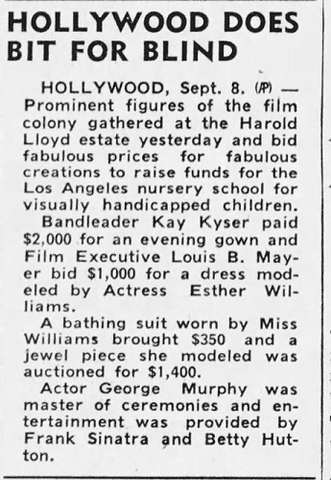
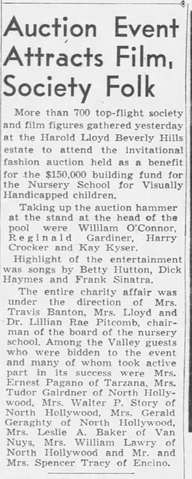
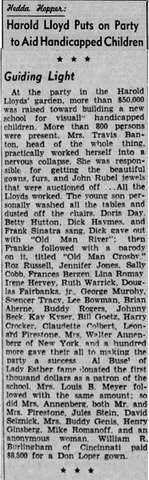
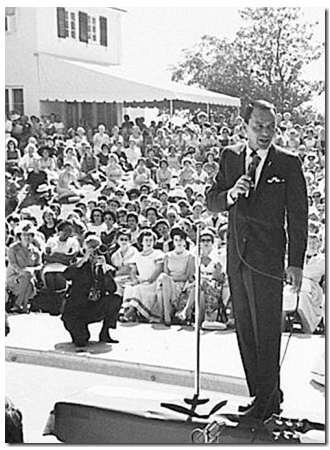
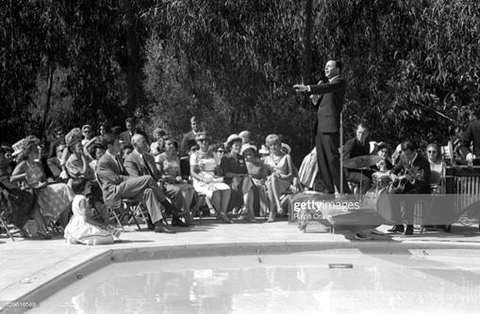
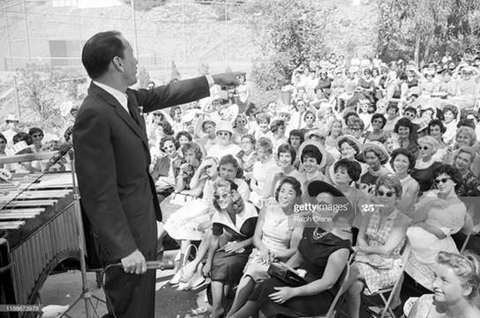
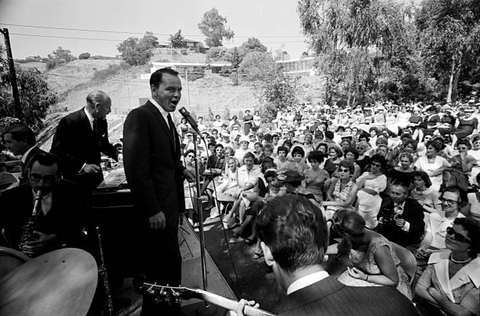
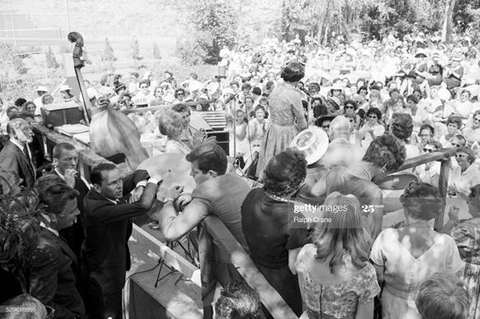
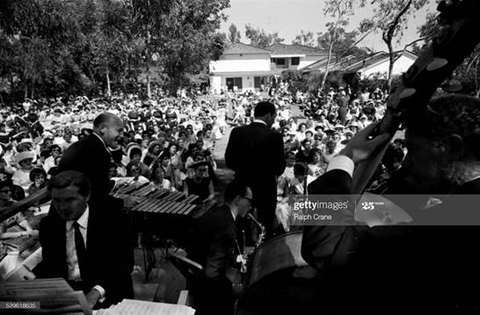
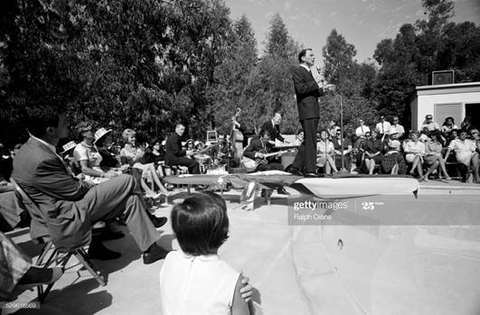
September 10, 1947
[Pegler's 'propaganda campaign' column]
Westbrook Pegler: Westbrook Pegler's column of September 10, 1947 opened by accusing unnamed writers of running a propaganda campaign to rehabilitate Sinatra's reputation, an accusation loaded with Red-baiting implication amid the era's anti-Communist climate.
Source: James Kaplan, "Frank: The Voice" (2010).
September 12, 1947
( 5th, 12th, 19th ). The May 8, 1946
show -- broadcast from Detroit -- with
Martha Raye, has not been located.
Ed
September 13, 1947
Radio
Your Hit Parade
Network: NBC
Program #641
Time: 9:00-9:30 P.M.EST (Rebroadcast 8:00-8:30 P.M. PST)
Sponsor: Lucky Strike
Script (Final As Broadcast)
1. commercial 1
2. Zing! Went The Strings Of My Heart - Frank Sinatra
3. I Wish I Didn't Love You So (4) - Doris Day
4. Sweet Georgia Brown - Orchestra
5. When You Were Sweet Sixteen (6) - Sinatra & Hit Paraders
6. commercial 2
7. Ask Anyone Who Knows (7) - Doris Day
8. Get Happy - Orchestra
9. Feudin' And Fightin' (5) - Doris Day & Hit Paraders
10. I Wonder Who's Kissing Her Now (3) - Frank Sinatra
11. Peg O' My Heart (2) - Hit Paraders
12. commercial 3
13. That's My Desire (1) - Frank Sinatra
Ed O'Brien:
Frank returned to the Hit Parade on 9-6-47 after a two year and eight month hiatus. Doris Day joined Frank on that first show in 47. She would be on 13 shows that fall. Twelve of them would feature both great singers. Sinatra would miss the 11-15-47 show, and Vic Damone would sub for him. Frank and Doris would do duets on "There's No Business Like Show Business" and "Take Me Out To
The Ballgame." They would also appear together on Mail Call, Here's To Vets and a Command Performance that fall. Doris was very unhappy living in New York City. She missed her son and didn't particularly enjoy doing live radio. At the end of the 11-29 show, the announcer mentions that Frank and Doris will be heard again the following
Saturday. It was not to be. Beryl Davis replaced Doris on the 12-6 show.
September 20, 1947
Radio
Your Hit Parade
Network: NBC
Sponsor: Lucky Strike
1. Almost Like Being In Love - Frank Sinatra (#7)
2. With Plenty Of Money And You - Orchestra
3. Ask Anyone Who Knows - Frank Sinatra (#5)
4. Lullaby Of Broadway - Orchestra
5. Feudin’ And Fightin’ - Doris Day
6. How Deep Is The Ocean - Frank Sinatra
7. I Wonder Who’s Kissing Her Now - Ken Lane & The Hit Paraders
8. That’s My Desire - Doris Day
9. Peg O' My Heart - Frank Sinatra (#1)
September 23, 1947
Studio
Hollywood
HCO2642 It All Came True
w/Alvy West And The Little Band
(S.. Skylar)
Sinatra Songs, Inc. (ASCAP) 1947
Arranged & Conducted by Alvy West
-1 (2:52) CD: Columbia Years 43-52 Vol. 7
LP: CL-2740 The Essential Frank Sinatra, Vol. 2
78: 37966
Alvy West & The Little Band: Leader: Alvy West; Bass: Aurthur Shapiro; Guitars: Trefoni Rizzi, Alton Hendrickson; Trumpet: John Plonsky; Drums: Milton Holland; Accordion: Robert Caudana
NOTE: Ed O'Brien points out that this session was the first with Sinatra for guitarist Al Henrickson. He remembered the session going very smoothly and Sinatra liked the sound Alvy West and his little band gave him.
Hollywood
HCO2642 It All Came True
w/Alvy West And The Little Band
(S.. Skylar)
Sinatra Songs, Inc. (ASCAP) 1947
Arranged & Conducted by Alvy West
-1 (2:52) CD: Columbia Years 43-52 Vol. 7
LP: CL-2740 The Essential Frank Sinatra, Vol. 2
78: 37966
Alvy West & The Little Band: Leader: Alvy West; Bass: Aurthur Shapiro; Guitars: Trefoni Rizzi, Alton Hendrickson; Trumpet: John Plonsky; Drums: Milton Holland; Accordion: Robert Caudana
Deseret News
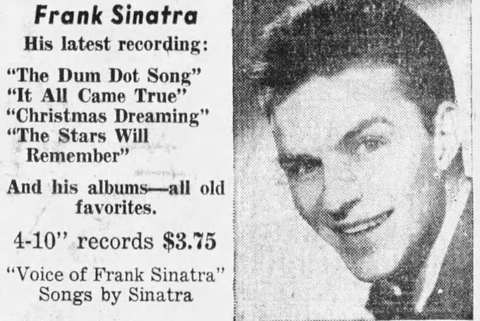
Connecticut Post
Tampa Bay Times
Knoxville Journal
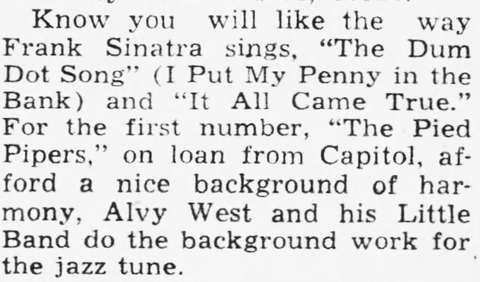
St Louis Star and Times

Buffalo Courier
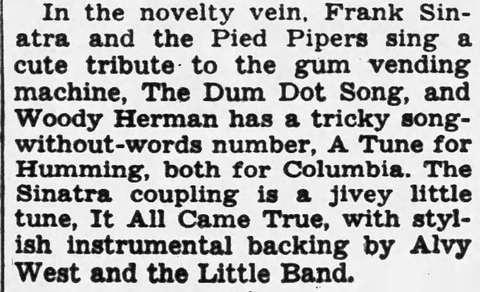
The Capital Times
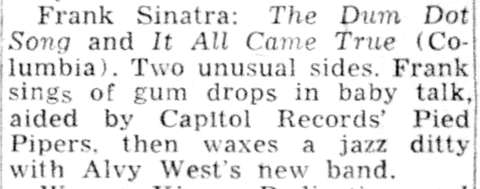
Chattnooga Daily Times
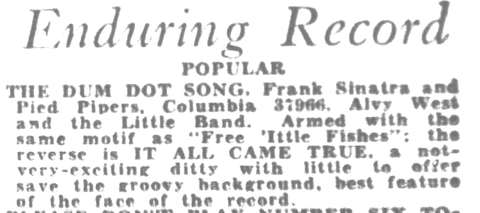
Portland Press Herald
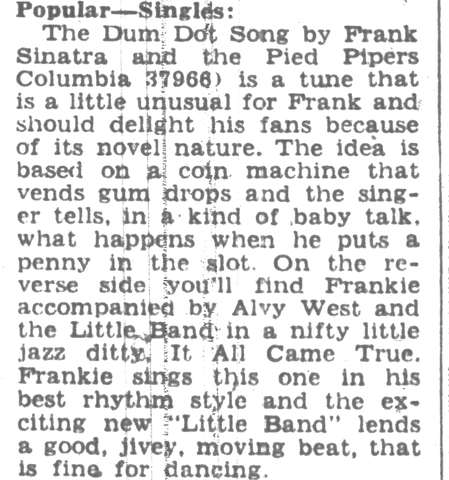
St Louis Globe Democrat
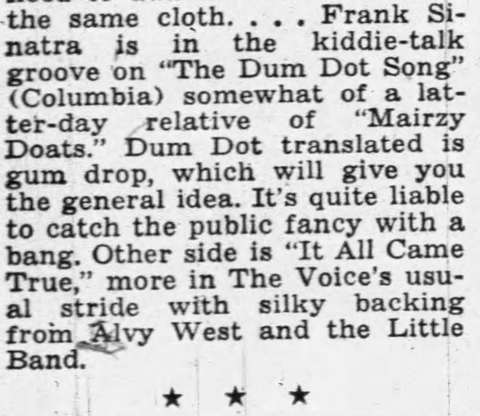
The Virginian Pilot
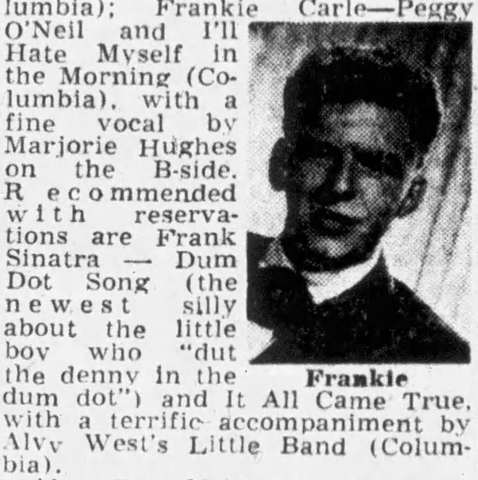
September 26, 1947
[Pegler compares Sinatra to Hitler]
Westbrook Pegler: In his syndicated Hearst column of September 26, 1947, Westbrook Pegler wrote that there was 'a weird light playing around Sinatra,' comparing his hold on fans to Hitler's effect on Germans.
Source: James Kaplan, "Frank: The Voice" (2010).
September 27, 1947
Radio
Your Hit Parade
Network: NBC
Program #643
Time: 9:00-9:30 P.M.EST (Rebroadcast 8:00-8:30 P.M. PST)
Sponsor: Lucky Strike
Script (Final As Broadcast)
1. commercial 1
2. Take Me Out To The Ball Game - Frank Sinatra, Doris Day & Hit Paraders
3. That's My Desire (5) - Doris Day
4. Thou Swell - Orchestra
5. Ask Anyone Who Knows (6) - Frank Sinatra
6. commercial 2
7. An Apple Blossom Wedding (7) - Doris Day & Hit Paraders
8. Give My Regards To Broadway - Orchestra
9. Peg O' My Heart (4) - Frank Sinatra
10. I Wonder Who's Kissing Her Now (3) - Hit Paraders
11. I Wish I Didn't Love You So (2) - Doris Day
12. commercial 3
13. Feudin' And Fightin' (1) - Frank Sinatra & Hit Paraders
Your Hit Parade
Network: NBC
Program #643
Time: 9:00-9:30 P.M.EST (Rebroadcast 8:00-8:30 P.M. PST)
Sponsor: Lucky Strike
Script (Final As Broadcast)
2. Take Me Out To The Ball Game - Frank Sinatra, Doris Day & Hit Paraders
5. Ask Anyone Who Knows (6) - Frank Sinatra
With Doris Day and fan, Your Hit Parade, September 27, 1947.
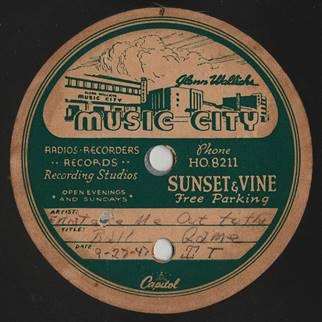
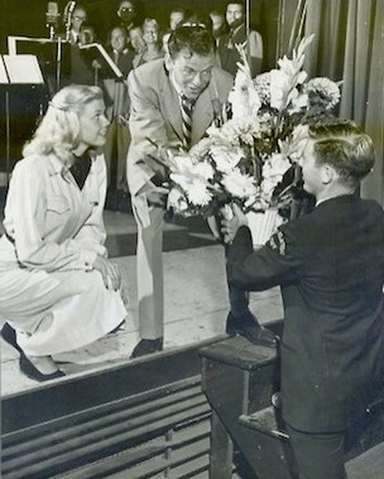
September 28, 1947
Concerts
The Dunes, Palm Springs, CA
Sinatra did an impromptu set of 6 songs with Jimmy Van Heusen & Buddy Pepper
The Dunes, Palm Springs, CA
Sinatra did an impromptu set of 6 songs with Jimmy Van Heusen & Buddy Pepper
© 1997-2025 The Sinatra Archive
This calendar, or any parts thereof, may not be reproduced in any fashion
whatsoever without the prior written permission of the publisher (The
Sinatra Archive)
__._,_.___
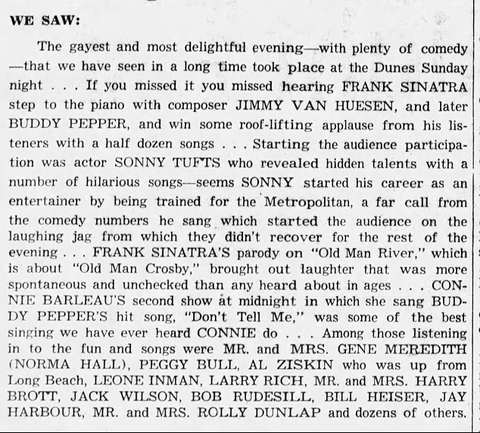
October 1947
[Sinatra's prolific October recording sessions]
Kaplan: In October 1947 alone, Sinatra recorded twenty sides at Liederkranz Hall -- more than he had cut in all of 1943 -- including standards like 'All of Me,' 'Laura,' 'The Song Is You,' and 'What'll I Do?'
Source: James Kaplan, "Frank: The Voice" (2010)
October 4, 1947
Radio
Your Hit Parade
Network: NBC
Program #644
Time: 9:00-9:30 P.M.EST (Rebroadcast 12:00-12:30 A.M.)
Sponsor: Lucky Strike
Script (Final As Broadcast)
1. commercial
2. There's No Business Like Show Business - Frank Sinatra, Doris Day & Paraders
3. That's My Desire (5) - Doris Day
4. Love Is Sweeping The Country - Orchestra
5. I Wonder Who's Kissing Her Now (4) - Frank Sinatra
6. commercial 2
7. Who Cares - Orchestra
8. Peg O' My Heart (7) - Hit Paraders
9. The Lady From Twenty Nine Palms (6) - Frank Sinatra
10. Feudin' And Fightin' (3) - Doris Day & Hit Paraders
11. Near You (2) - Hit Paraders
12. commercial 3
13. I Wish I Didn't Love You So (1) - Frank Sinatra
October 5, 1947
Concerts
Boston Gardens, Boston, MA
Christopher Columbus Catholic Centre Second Annual Jamboree
Boston Gardens, Boston, MA
Christopher Columbus Catholic Centre Second Annual Jamboree
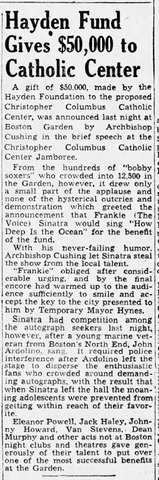
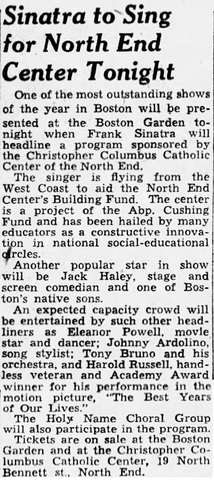
October 11, 1947
Radio
Your Hit Parade
Network: NBC
Program #645
Time: 9:00-9:30 P.M.EST (Rebroadcast 12:00-12:30 A.M. EST)
Sponsor: Lucky Strike
Script (Final As Broadcast)
1. commercial
2. Almost Like Being In Love (6) - Frank Sinatra
3. The Best Things In Life Are Free - Orchestra
4. You Do (5) - Doris Day
5. I Wonder Who's Kissing Her Now (7) - Frank Sinatra
6. commercial 2
7. You Do Something To Me - Orchestra
8. Peg O' My Heart (4) - Hit Paraders
9. Over The Rainbow - Frank Sinatra, Doris Day & Hit Paraders
10. Near You (3) - Hit Paraders
11. Feudin' And Fightin' (2) - Doris Day & Hit Paraders
12. commercial 3
13. I Wish I Didn't Love You So (1) - Frank Sinatra
October 13, 1947
Roosevelt Grill, Roosevelt Hotel
45 East 45th Street (in Manhattan)
New York City
Monday Evening
Guy Lombardo & His Royal Canadians draw a capacity throng on opening night. Billboard dubbed it "trade affair of the season." Variety also lauded the band and the excitement of opening night.
Frank Sinatra, Buddy Clark, Vaughn Monroe and Skitch Henderson were there that evening to cheer Lombardo and his orchestra.
--NYT Review
October 18, 1947
Radio
Your Hit Parade
Network: NBC
Sponsor: Lucky Strike
1. The Lady From Twenty Nine Palms - Frank Sinatra (6)
2. You Do - Doris Day (4)
3. You - Axel Stordahl & Orchestra (Lucky Strike Extra)
4. Peg O' My Heart - Frank Sinatra (7)
5. I Wonder Who's Kissing Her Now - The Hitparaders (5)
6. Embraceable You (Lucky Strike Extra)
7. Feudin' and a' Fightin' - Doris Day (3)
8. I Wish I Didn't Love You So - Ken Lane & The Hitparaders (2)
9. Near You - Frank Sinatra (1)
October 19, 1947
Studio
New York City
CO38269 Can't You Just See Yourself?
(J. Styne/S. Cahn)
(from Hight Button Shoes)
E.H. Morris & Co., Inc. (ASCAP) 1947
Arranged by Dick Jones
Conducted by Axel Stordahl
-1 (2:57) CD: Columbia Years 43-52 Vol. 7
LP: CL-1297 The Broadway Kick
78: 37978
CO38270 You're My Girl
(J. Styne/S. Cahn)
(from Hight Button Shoes)
E.H. Morris & Co., Inc. (ASCAP) 1947
Arranged & Conducted by Axel Stordahl
-1 (3:09) CD: Columbia Years 43-52 Vol. 7
LP: C2X-40897 Hello Young Lovers
LP: CL-1297 The Broadway Kick (alt. take)
78: 37978
Portland Press Herald
October 22, 1947
Studio
New York City
CO38272 I'll Make Up For Everything
(R. Parker)
Peter Maurice Music Co. Ltd. (ASCAP) 1947
Arranged & Conducted by Axel Stordahl
-1 (2:55) CD: Columbia Years 43-52 Vol. 7
78: 38089
Harrisberg Telegraph
"Laura" / "Night and Day"
William Gottlieb: A Columbia session on October 22, 1947 yielded the classic 'Laura' as well as two versions of 'Night and Day' that remained undocumented and unreleased in the Columbia vault for over 45 years. Jazz writer William Gottlieb, covering the session, noted Sinatra kept interrupting takes to point out orchestral mistakes, generating costly overtime, and wondered whether Sinatra (whose career was then beginning to wane) was truly hearing errors or just asserting authority -- musicians assured him Sinatra's ear was accurate.
Source: Charles L. Granata, "Sessions with Sinatra: Frank Sinatra and the Art of Recording" (1999/2003).
October 24, 1947
Studio
New York City
CO38284 My Cousin Louella
(B. Bierman/J. Manus)
Shapiro, Berstein & Co., Inc. (ASCAP) 1947
Arranged & Conducted by John Guarnieri-1 (3:05) CD: Columbia Years 43-52 Vol. 7 78: 38045
CO38285 We Just Couldn't Say Goodbye
(H. Woods)
Words And Music, Inc. (ASCAP) 1929
Arranged & Conducted by John Guarnieri
-1 (3:06) CD: Columbia Years 43-52 Vol. 7
LP: C2X-40897 Hello Young Lovers
78: 38129
CO38286 S'Posin'
(A. Razaf/P. Denniker)
Mayfair Music Corp. (ASCAP) 1929
Arranged & Conducted by John Guarnieri
-1 (2:45) CD: Columbia Years 43-52 Vol. 7
LP: C6X-40343 The Voice-The Columbia years, 43-52
LP: CL-606 Frankie
78: 38210
Piano: John Guarnieri; Bass: Herman Alpert; Guitar: Tony Mattola
NOTE:‚ Ed O''Brien points out that guitarist Tony Mattola had known Sinatra since the early 1930s. They had worked together at WAAT in Jersey City back in 1933 when Sinatra was 17 years old.
They both had sustaining 15-minute shows. Tony was on a number of Sinatra's radio shows after the Dorsey years and was a regular on the Vimms show of 1944.
But his first session with Sinatra was on October 24, 1947. Mattola told O'Brien that Mitch Miller was behind "My Cousin Louella," and Sinatra was less than thrilled. One of the few sessions done with just a trio.
October 25, 1947
Radio
Your Hit Parade
Network: NBC
Program #647
Time: 9:00-9:30 P.M.EST (Rebroadcast 12:00-12:30 A.M. EST)
Sponsor: Lucky Strike
Script (Final As Broadcast)
1. commercial 1
2. Feudin' And Fightin' (5) - Frank Sinatra & Hit Paraders
3. Just One Of Those Things - Orchestra
4. The Lady From Twenty Nine Palms (6) - Doris Day
5. You Do (4) - Frank Sinatra
6. commercial 2
7. Oklahoma - Orchestra & Hit Paraders
8. Peg O' My Heart (7) - Frank Sinatra
9. Everything I've Got Belongs To You - Orchestra
10, I Wonder Who's Kissing Her Now (3) - Hit Paraders
11. I Wish I Didn't Love You So (2) - Doris Day
12. commercial 3
13. Near You (1) - Frank Sinatra
October 26, 1947
Studio
New York City
CO38287 None But The Lonely Heart
(P.I. Tchaikovsky/ B. Westbrook)
Public Domain
Arranged & Conducted by Axel Stordahl
-1 (3:12) CD: Columbia Years 43-52 Vol. 7
LP: CL-1359 Come Back To Sorrento
78: 38685
Dedicated To You
Four Record set (78s) or 10 inch LP
CO38275 Just For Now
(D. Redmond )
(from Whiplash)
Advanced Music Corp. (ASCAP) 1947
Arranged & Conducted by Axel Stordahl
-2 (2:59) CD: Columbia Years 43-52 Vol. 7
78: 38225
"Dedicated To You"
Granata lists this Axel Stordahl-arranged album, released as a 78 rpm set and 10-inch LP (CL-6096) in March 1950, including 'Where or When,' 'Always,' and 'Why Was I Born?'
Source: Charles L. Granata, "Sessions with Sinatra: Frank Sinatra and the Art of Recording" (1999/2003).
October 27, 1947
Radio
Radio: Here's To Veterans, episode #78, an AFRS transcription featuring Sinatra, was issued this date, with Sinatra singing "Great Day" and "You'll Never Walk Alone"; it was later rebroadcast on Guest Star #40 (December 28, 1947). Source: sinatradiscography.com, Radio Transcriptions Database.
October 28, 1947
Concerts
Veterans' Cavalcade of Stars, Madison Square Garden, New York Benefit for Hospitalized Veterans
Stokowski and N.Y. Philarmonic Orchestra, Frank Sinatra, John Garfield, Dean Martin & Jerry Lewis, Perry Como, Vaughan Monroe, Jackie Gleason, Mel Torme, Sid Caesar and others
Veterans' Cavalcade of Stars, Madison Square Garden, New York Benefit for Hospitalized Veterans
Stokowski and N.Y. Philarmonic Orchestra, Frank Sinatra, John Garfield, Dean Martin & Jerry Lewis, Perry Como, Vaughan Monroe, Jackie Gleason, Mel Torme, Sid Caesar and others
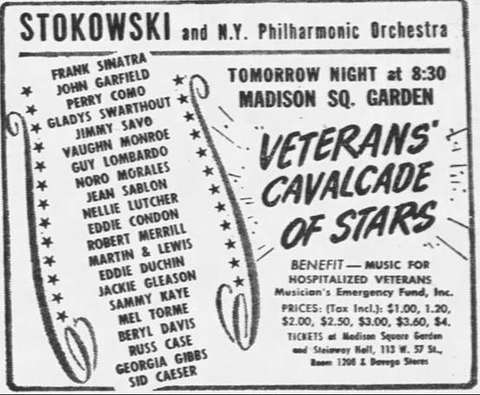
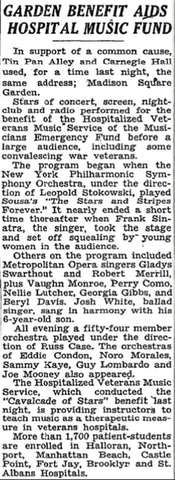
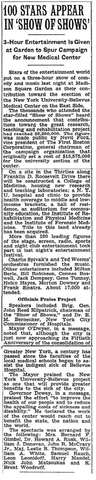
October 29, 1947
Studio
New York City
CO38293 What'll I Do?
(I. Berlin )
Irving Berlin Music (ASCAP) 1924
Arranged & Conducted by Axel Stordahl
-1 (3:05) CD: Columbia Years 43-52 Vol. 7
78: 38045
CO38294 Poinciana (Song Of The Tree)
(B. Bernier/N. Simon)
E.B. Marks Music Corp. (BMI) 1947
Arranged & Conducted by Axel Stordahl
-2 (3:15) CD: Columbia Years 43-52 Vol. 7
LP: C6X-40343 The Voice-The Columbia years, 43-52
LP: CL-2740 The Essential Frank Sinatra, Vol. 2
LP: CL-902 That Old Feeling
78: 38829
CO38295 (I Offer You The Moon) Senorita
(E. Heyman/N.H. Brown)
(from The Kissing Bandit)
Leo Feist, Inc. (ASCAP) 1947
Arranged & Conducted by Axel Stordahl
-1 (2:44) CD: Columbia Years 43-52 Vol. 7
LP: CL-2913 Frank Sinatra In Hollywood
78:38334
CO38296 The Music Stopped
(J. McHugh/H. Adamson)
(from Higher And Higher)
Robbins Music Corp. (ASCAP) 1943
Arranged & Conducted by Axel Stordahl
-? (2:57) CD: Columbia Years 43-52 Vol. 7
LP: HL-7405 Romantic Scenes From The Early Years(2nd press - alt take)
-2 LP: C2X-40897 Hello Young Lovers
-2 78: 38683
Violins: F. Buldrini, M. Ceppos, S. Harris, H. Katzman, S. Kirsner, L. Kruczek, F. Orlewitz, R. Polikian, S. Rand, Z. Smirnoff, J. Zyde; Violas: H. Colletta, H. Furmansky, S. Deutsch; Cellos: M. Brown, F, Miller, G. Ricci; Trumpets: A. Ferretti, G. Griffin, J. Lausen; Trombones: W. Pritchard, W. Rausch, A. Russo; Saxes: E. Caceres, H. Feldman, B. Kaufman, H. Shertzer, W. Taninbaum; Horn: J. Singer; Piano: J. Guarnier; Guitar: M. Golizio; Bass: H. Alpert; Drums: N. Shawker; Harp: E. Vito Ricci
Ed O'Brien:
There is session material from this date floating out there among collectors. Frank had a fun time with Berlin's classic, including a breakdown attempt that had him making up some very unacceptable lyrics for 1947. "Poinciana" was a song Sinatra was familiar with and required only minimal effort. The song from his upcoming MGM film was rather easy and only required a few takes. The last tune starts off great. After take one, Frank says, "Now that you've heard it, let's make a record." A record would eventually be realized but would require more than another take. In all Frank would do six recordings from 1943 thru 1947 of "The Music Stopped," including a V-Disc.
October 30, 1947
Television
The Show of Shows, Madison Square Garden, New York
Benefit for the New York University - Bellevue Medical Center Fund WCBS 8:45PM - 1AM

Concerts
The Show of Shows, Madison Square Garden, New York
Benefit for the New York University - Bellevue Medical Center Fund Celebrities included Frank Sinatra, Harrold Russell, Bojangles, Hellen Hayes, Milton Berle, Henny Youngman, , Connee Boswell, Helen Hayes, Ginny Simms, Sid Caesar, Mel Torme, Morey Amsterdam, and boxers Gene Tunney and Jack Dempsey
The Show of Shows, Madison Square Garden, New York
Benefit for the New York University - Bellevue Medical Center Fund Celebrities included Sinatra, Harrold Russell, Bojangles, Hellen Hayes, Milton Berle, Henny Youngman, Helen Hayes, Ginny Simms, Sid Caesar, Mel Torme, Morey Amsterdam, and boxers Gene Tunney and Jack Dempsey
Variety November 5, 1947
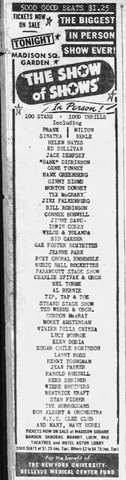
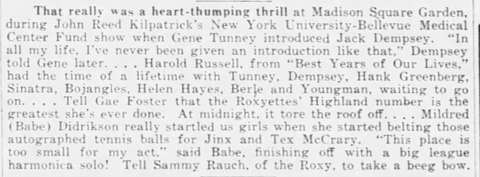
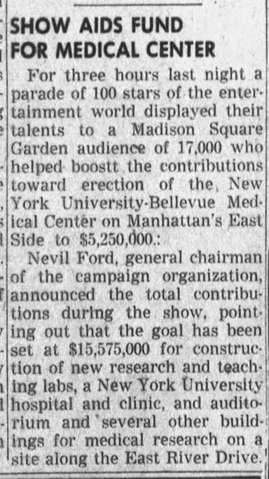
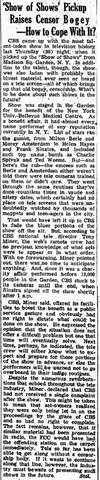
Dolly and Marty Sinatra stand proudly with their son, Frank, during the ceremonies for “Frank Sinatra Day” in Hoboken, New Jersey, October 30, 1947. Source: photo and caption from J. Randy Taraborrelli, Sinatra: Behind the Legend (mptvimages.com).
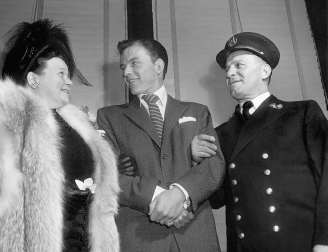
[Frank Sinatra Day in Hoboken]
On October 30, 1947, Hoboken held Frank Sinatra Day in cold rain; the mayor presented him a giant wooden key to the city as his parents Dolly and Marty stood beside him and a visibly pregnant Nancy watched nearby.
Source: James Kaplan, "Frank: The Voice" (2010).
October 31, 1947
Studio
New York City
CO38301 Mean To Me
(R. Turk/F. Ahlert)
(from Ain't Misbehavin')
Crawford Music Corp. (ASCAP) 1929
Arranged & Conducted by Axel Stordahl
-PB3 (3:16) CD: Columbia Years 43-52 Vol. 8
-1 CD: 09372 Greatest Hits-The Early Years, Vol. 2
-1 LP: C6X-40343 The Voice-The Columbia years, 43-52
-1 LP: CL-2572 Grestest Hits, The Early years, Vol. 2
-1 LP: CL-902 That Old Feeling
CO38302 Spring Is Here
(R. Rodgers/L. Hart)
(from I Married An Angel)
Robbins Music Corp. (ASCAP) 1938
Arranged & Conducted by Axel Stordahl
-PB2 (2:43) CD: Columbia Years 43-52 Vol. 8
-1 LP: HL-7405 Romantic Scenes From The Early Years
-1 LP: CL-743 The Voice
-178: 38473
CO38303 Fools Rush In (Where Angels Fear To Tread)
(J. Mercer/R. Bloom)
Bergman, Vocco & Conn (ASCAP) 1940
Arranged & Conducted by Axel Stordahl
-PB (3:00) CD: Columbia Years 43-52 Vol. 8
-1 LP: CL-743 The Voice
-1 78: 38473
note: Johnny Mercer crafted a lovely verse for this great tune. Frank does a memorable reading. I wonder why he decided to omit it from the March 1960 recording ? And it was not done for the recording with Dorsey in March
1940.
Ed
CO38301 Violins: R. Polilian, Z. Smirnoff; Viola: H. Colletta; Cello: G. Ricci; Piano: J. Guarnier; Bass: H. Alpert; Drums: J. Blowers; Trumpet: C. Griffin; Guitar: M. Golizio; Saxes: E. Caceres , W. Taninbaum
CO38302 & 38303 Violins: R. Polilian, Z. Smirnoff; Viola: H. Colletta; Cello: G. Ricci; Piano: J. Guarnier; Bass: H. Alpert; Drums: J. Blowers; Guitar: M. Golizio; Oboe: M. Miller
[Sinatra records three standards]
On Friday, October 31, 1947, the day after Frank Sinatra Day, Sinatra recorded 'Mean to Me,' 'Spring Is Here,' and 'Fools Rush In.'
Source: James Kaplan, "Frank: The Voice" (2010).
[Fools Rush In / Blue Skies / When You Awake / I'll Be Seeing You / There Are Such Things / This Love of Mine / Without a Song / I Guess I'll Have to Dream the Rest -- critical commentary]
Sinatra kept a great many of the songs associated with his Dorsey tenure in his act and on his recording schedule. With the Dorsey originals still green in memory, Sinatra rerecorded "Fools Rush In," "Blue Skies," and "When You Awake" in new arrangements. He also kept "I’ll Be Seeing You," "There Are Such Things," his own "This Love of Mine," and others alive on the radio, and "Without a Song" in concerts up through the late 1980s. In 1951, Sinatra also waxed a beautiful reading of "I Guess I’ll Have to Dream the Rest" that comes fairly close to the original of ten years earlier, with a new, otherwise unknown group, the Whippoorwills, replacing the Pied Pipers. The star appropriately amplifies his own role here, and his singing, so much more emotionally aware, reaches both heights and depths of feeling he could only aspire to in the Dorsey days. In 1941, Sinatra fans had to dream the rest; in 1950, he does it for them.
This song/context matches multiple dated entries in the chronology; the specific date Friedwald is referring to could not be determined with confidence.
Source: Will Friedwald, "Sinatra! The Song Is You: A Singer's Art" (2018 revised edition), Ch. 3, "With Tommy Dorsey" (1940-1942)
November 1947
[Sinatra's disappointing Capitol Theater run]
Lee Mortimer: Sinatra's November 1947 engagement at New York's Capitol Theater, the site of his famous 1942-43 breakout, underperformed badly; Lee Mortimer reported the second week's take was only $71,000, half the advance estimate, and rumored it might be his last New York appearance.
Source: James Kaplan, "Frank: The Voice" (2010)
[Will Mastin Trio with Sammy Davis Jr. opens for Sinatra]
Kaplan: At the November 1947 Capitol Theater engagement, the Will Mastin Trio featuring Sammy Davis Jr. served as Sinatra's opening act, billed beneath other performers despite Davis being the real star of the trio; Sinatra insisted on hiring them for $1,250 over more famous acts like the Nicholas Brothers.
Source: James Kaplan, "Frank: The Voice" (2010)
November 1, 1947
Radio
Your Hit Parade
Network: NBC
Program #648
Time: 9:00-9:30 P.M.EST (Rebroadcast 12:00-12:30 A.M. EST)
Sponsor: Lucky Strike
1. commercial 1
2. The Lady From Twenty Nine Palms (6) - Frank Sinatra
3. Anything Goes - Orchestra
4. I Wonder Who's Kissing Her Now (5) - Frank Sinatra
5. I Won't Dance - Doris Day & Hit Paraders
6. commercial 2
7. When You Were Sweet Sixteen (7) - Hit Paraders
8. You Do (4) - Frank Sinatra
9. Jersey Bounce - Orchestra
10. I Wish I Didn't Love You So (3) - Hit Paraders
11. Feudin' And Fightin' (2) - Doris Day & Hit Paraders
12. commercial 3
13. Near You (1) - Frank Sinatra
NOTE: Ed OBrien reports that in the fall of 1947, Sinatra would sing seven of the tunes listed on this show without recording any of them.
November 5, 1947
Studio
New York City
CO38331 When You Awake
(H. Nemo)
Plymouth Music Co. (ASCAP) 1940
Arranged & Conducted by Axel Stordahl
-PB4 (3:15) CD: Columbia Years 43-52 Vol. 8
-1 LP: CL-6059 Frankly Sentimental (10 inch)
-1 78: 38475
CO38332 It Never Entered My Mind
(R. Rodgers/L. Hart)
(from Higher & Higher)
Chappell & Co., Inc. (ASCAP) 1940
Arranged & Conducted by Axel Stordahl
-Alt (3:34) CD: Columbia Years 43-52 Vol. 8
-1 LP: C6X-40343 The Voice-The Columbia years, 43-52
-1 LP: CL-1136 Put Your Dreams Away
-1 78: 39498
-1 78: 38475
LP was issued in the spring of 1949
CO38333 I've Got A Crush On You
Trumpet solo/Bobby Hackett
(G. & I. Gershwin)
(from Strike Up The Band)
New World Music Corp. (ASCAP) 1930
Arranged & Conducted by Axel Stordahl
-1 (3:16) CD: Columbia Years 43-52 Vol. 8
CD: 09274 Greatest Hits-The Early Years, Vol. 1
LP: C6X-40343 The Voice-The Columbia years, 43-52
LP: CL-2474 Greatest Hits, The Early Years, Vol. 1
LP: C2L-6 Frank Sinatra Story in Music
78: 50028
78: 38151
Violins: R. Polikian, Z. Smirnoff; Viola: H. Colletta; Cello: G. Ricci;
Trumpet: R. Hackett; Flute: B. Kaufman; Oboe: M. Miller; Piano: R.
Kitsis; Guitar: M. Golizio; Bass: H. Alpert; Drums: J. Blowers
[It Never Entered My Mind / Lover / My Romance / Spring Is Here / You Are Too Beautiful / Falling in Love with Love / I Could Write a Book / Where or When? -- critical commentary]
Ironically, in his first starring feature film, Higher and Higher, Sinatra participated in a typical Hollywood demolition job of a Broadway musical with a super-sophisticated score by Rodgers and Hart. The moguls applied their “leave a little, remove a lot” treatment even more thoroughly than usual, retaining only a single and singularly undistinguished tune from the 1940 show: they kept “Disgustingly Rich” and trashed “It Never Entered My Mind.” ... Sinatra did music the greater service when he revived “It Never Entered My Mind” in 1947, along with seven other Rodgers and Hart songs over the course of his Columbia contract [footnote: “Lover,” “My Romance,” “Spring Is Here,” “You Are Too Beautiful,” “Falling in Love with Love,” “I Could Write a Book,” “Where or When?” (along with “It Never Entered My Mind”)] and Lord knows how many more for Capitol and Reprise.
This song/context matches multiple dated entries in the chronology; the specific date Friedwald is referring to could not be determined with confidence.
Source: Will Friedwald, "Sinatra! The Song Is You: A Singer's Art" (2018 revised edition), Ch. 4, "With Axel Stordahl" (1943-1948)
November 7, 1947
Concerts
Imperial Theatre, New York, NY
Benefit for the Actor’s Temple
Frank Sinatra, Phil Silvers, Milton Berle, Georgie Jessel, Nanette Fabray, Pearl Bailey, Jan Peerce, Billy De Wolfe, Frankie Laine, Perry Como, Vic Damone and others
Imperial Theatre, New York, NY
Benefit for the Actor’s Temple
Frank Sinatra, Phil Silvers, Milton Berle, Georgie Jessel, Nanette Fabray, Pearl Bailey, Jan Peerce,
Billy De Wolfe, Frankie Laine, Perry Como, Vic Damone and others
Frank and Ava were married on November 7, 1951.
Carl sent the following along that celebrated their first anniversary on November 7, 1952
This card issued by Scandinavian Airlines commemorates Frank's crossing of the equator, on their first anniversary, November 7, 1952. This was likely the flight the two took together to Nairobi, Kenya when Frank accompanied Ava to Africa for the filming of Mogambo.
Thanks to Carl R for above image.
I have a video of the wedding. They look very happy.
Wedding took place at Lester Sacks' home( Manie's brother). There were only
20 guests. Dick Jones played the piano. Manie escorted Ava down the stairs
and into the living room. A slew of reporters were stationed outside the house.
Ava told Frank to ignore them. He hated that they were there but agreed to
stay calm for her sake. But then they sent a note asking for a photo of the
newlyweds. Frank let them know it wasn't going to happen. They were
still standing out in the rain when Frank and Ava slipped out the back entrance
and made their getaway.
Ed
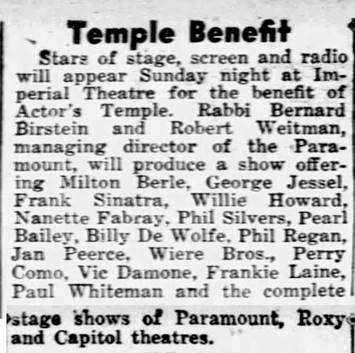
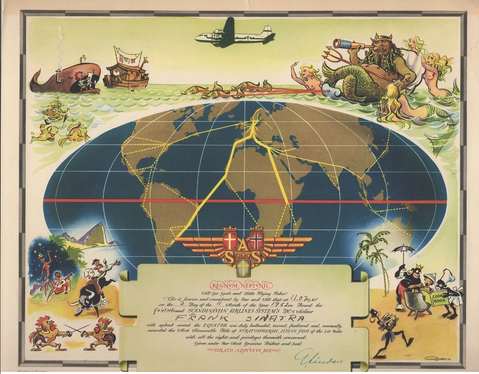
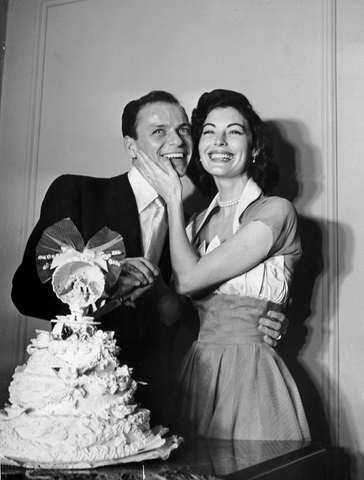
November 8, 1947
Radio
Your Hit Parade
Network: NBC
Program #649
Time: 9:00-9:30 P.M.EST (Rebroadcast 12:00-12:30 A.M. EST)
Sponsor: Lucky Strike
Script (Final As Broadcast)
1. commercial 1
2. Great Day - Frank Sinatra
3. The Lady From Twenty Nine Palms (5) - Doris Day
4. Sunny - Orchestra
5. I Wish I Didn't Love You So (4) - Frank Sinatra
6. commercial 2
7. An Apple Blossom Wedding (7) - Hit Paraders
8. Jericho - Orchestra
9. And Mimi (6) - Frank Sinatra
10. Feudin' And Fightin' (3) - Doris Day & Hit Paraders
11. You Do (2) - Hit Paraders
12. commercial 3
13. Near You (1) - Frank Sinatra
Ed O'Brien notes:
During the fall of 1947, Sinatra would sing seven of the tunes listed above on YHP. He never did a recording of even one of the seven. A few were quality songs including "Near You," "I Wish I didn't Love You So," and "Great Day."
November 9, 1947
Studio
New York City
CO38369 Body And Soul
Trumpet solo/Bobby Hackett
(E. Heyman/R. Sour/F. Eyton/J. Green)
(from Three's A Crowd)
T.B. Harms, Inc. (ASCAP) 1930
Arranged & Conducted by Axel Stordahl
-1 (3:16) CD: C2K 65244Portrait Of Sinatra
-2 (3:20) CD: Columbia Years 43-52 Vol. 8
-2 LP: C6X-40343 The Voice-The Columbia years, 43-52 (alt. take) -2 LP: CL-2740 The Essential Frank Sinatra, Vol. 2 (2nd alt. take)-2 LP: CL-1448 Reflections (alt. take) -1 LP: CL-6059 Frankly Sentimental (10 inch)
-1 78: 38472
CO38370 I'm Glad There Is You
(P. Maderia/J. Dorsey)
Mayfair Music Corp. (ASCAP) 1942
Arranged & Conducted by Axel Stordahl
-1 (3:07) CD: Columbia Years 43-52 Vol. 8
LP: C6X-40343 The Voice-The Columbia years, 43-52
LP: C2L-6 Frank Sinatra Story In Music (alt. take)
78: 40229
Violins: F. Buldrini, M. Ceppos, M. Hershaft, H. Katzman, H. Kay, S. Kirsner, L. Kruczek, M. Pitt, R. Polikian, S. Rand, J. Schachter, Z. Smirnoff; Violas: H. Colletta, H. Furmansky, I. Zirr; Cello: M. Brown, A. Kaproff, G. Ricci; Saxes: E. Caceres, H. Feldman, N. Mondello, W. Taninbaum, M. Yaner; Harp: E. Vito Ricci; Horn: J. Singer; Trumpets: A. Ferretti, R. Hackett, J. Lausen, M. Solomon; Trombones: G. Arus, W. Pritchard, A. Russo; Piano: R. Kitsis; Guitar: M. Golizio; Bass: H. Alpert; Drums: J. Blowers
NOTE: Referring to "I'm Glad There is You," Sinatraphile Vance Adair writes "Quite possibly, to my ears, the finest ballad ever written. I adore this tune and remain mystified why Sinatra never revisited it during his Capitol or Reprise days."
Sinatra Scholar Ed O'Brien responds, "I think the Columbia effort is sensational. Could he have done better later on? Maybe. But I'll gladly take the Columbia recording."
"Body and Soul"
Granata reconstructs the full take-to-take evolution of 'Body and Soul' from surviving session lacquers and arranger George Siravo's recollections, calling it a case study in Sinatra's meticulous refinement of a rough initial interpretation into a polished master, and noting his voice took on darker, more emotionally introspective hues at this point in his career.
Source: Charles L. Granata, "Sessions with Sinatra: Frank Sinatra and the Art of Recording" (1999/2003).
"Body and Soul"
In early takes, cornetist Bobby Hackett was initially heard off-mike due to an engineering oversight, quickly corrected; Sinatra experimented with different enunciations of line endings (dropping vs. keeping the 'g' in words like 'making'/'takin') across successive takes, and grew irritated when Hackett's bridge solo went off-track, halting the orchestra with 'Well, STOP IT!'
Source: Charles L. Granata, "Sessions with Sinatra: Frank Sinatra and the Art of Recording" (1999/2003).
"Body and Soul"
After a complete take ran too long for a 10-inch 78rpm side, producer Morty Palitz and engineer Fred Plaut told Sinatra a cut was needed. When Sinatra balked, someone in the orchestra called out 'We can do it down at Mercury!' -- revealed to be session oboist Mitch Miller, who was also Mercury Records' A&R chief. Sinatra, along with Stordahl, Plaut, Palitz, and Siravo, stormed to Manie Sacks's office to complain about Columbia's technical limitations.
Source: Charles L. Granata, "Sessions with Sinatra: Frank Sinatra and the Art of Recording" (1999/2003).
"Body and Soul"
George Siravo: Manie Sacks, angered by Mitch Miller's remark undermining Columbia in front of Sinatra, reportedly vowed Miller would never work at Columbia again -- a vow later reversed when Miller became Columbia's A&R chief in 1950. Arranger George Siravo called Miller 'a good politician' who gained bargaining power from the incident despite being technically correct.
Source: Charles L. Granata, "Sessions with Sinatra: Frank Sinatra and the Art of Recording" (1999/2003).
"Body and Soul"
The final approved master of 'Body and Soul' was shortened by cutting the full orchestral introduction and moving Bobby Hackett's introductory solo to the front, coming in at just under 3:18, while preserving the slower, more emotional tempo Sinatra insisted on.
Source: Charles L. Granata, "Sessions with Sinatra: Frank Sinatra and the Art of Recording" (1999/2003).
"Body and Soul"
Granata includes 'Body and Soul' among the fifty recordings he considers essential to understanding Sinatra's artistry (arranged by Axel Stordahl, recorded 1947, Columbia); the song was chosen for its musical/interpretive value rather than commercial popularity.
Source: Charles L. Granata, "Sessions with Sinatra: Frank Sinatra and the Art of Recording" (1999/2003).
November 11, 1947
Radio
We, The People
CBS 9:00PM
Host: Dwight Weist
Guests: Frank Sinatra, The Saratoga Snake Club
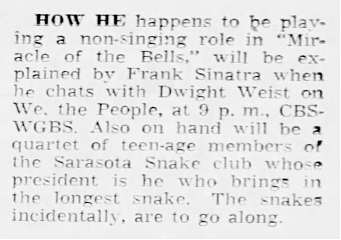
We, The People
CBS 9:00PM
Host: Dwight Weist
Guests: Frank Sinatra, The Saratoga Snake Club
Shedding light on the Sarasota Snake Club
Sarasota is known as being the home of such attractions as the Ringling Bros. Barnum & Bailey Circus, the Unconditional Surrender statue and … the Sarasota Snake Club?
The club was started in 1947 when a snake bit a young Sarasota girl, Marie Proctor, while she was waiting for the school bus. Because she did not know what type of snake bit her, doctors gave her anti-venom for a rattlesnake bite, which led to a reaction that resulted in her leg being amputated.
“She was one of the youngest amputees in the country,” says former club member Jill Spelman.
To educate local children about snakes, the Sarasota Snake Club was formed. Price of entry? Your own pet snake. The member with the longest snake became club president.
Spelman was 10 years old at the time and remembers catching her rat snake, Cleopatra, for the club.
“I didn’t think we were unusual; we lived where snakes were,” says former member Sondra Montressor Dicken. “I thought it was a good thing that we were learning like this.”
After a few months, the club began to attract national interest. In 1947, eight members of the club visited New York; they took their snakes along for the ride in hatboxes with holes punched in the top. The club was featured in the New Yorker magazine, and club members — and their snakes — received a free tour of the city and were interviewed on the famous radio show “We the People.”
One of the more unforgettable moments of the trips was when the maids at the New York hotel where the club was staying unknowingly walked into the bathroom where the snakes were kept in the bathtub.
After a year or so members started to move away or attend new schools. Some snakes were released back into the wild; others died. Now in their adolescence, the members became more interested in dating than in the snakes, Spelman remembers.
Looking back, both members say the club was a once-in-a-lifetime experience. However, Spelman says although at the time club was exciting, she thinks the club was more of a publicity stunt set up by its founder, Ray Krimm.
“We wouldn’t have ever done any of it had he not set it up,” Spelman says. “He had clever ideas, like racing the snakes (in Payne Park) and taking a picture.”
One of the photos Krimm took of the children, which Spelman says was staged, became a famous postcard — it shows the children sitting at a soda fountain counter with their pet snakes.
Dicken, however, never thought of the club as a publicity stunt. She remembers it as a learning experience.
“I’m so happy that it happened,” Dicken says. “I mean, how many children in that era get to do something like that? I just thought it was a nice thing we could do; a fun thing we could do, something special.”
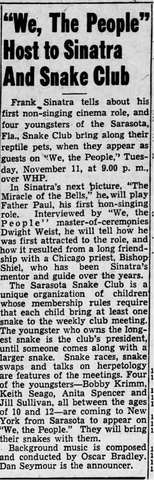
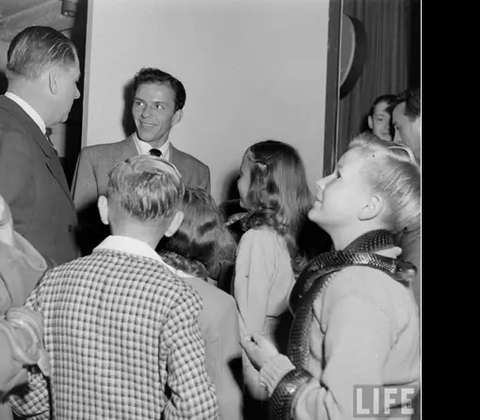
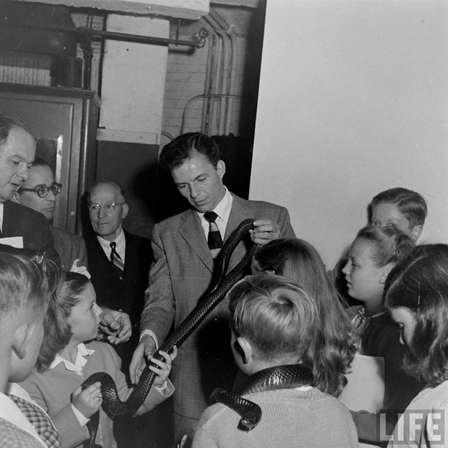
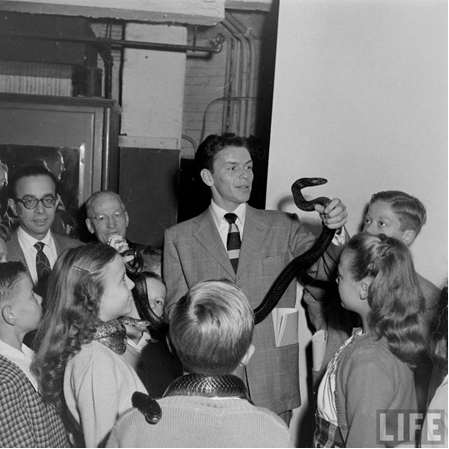
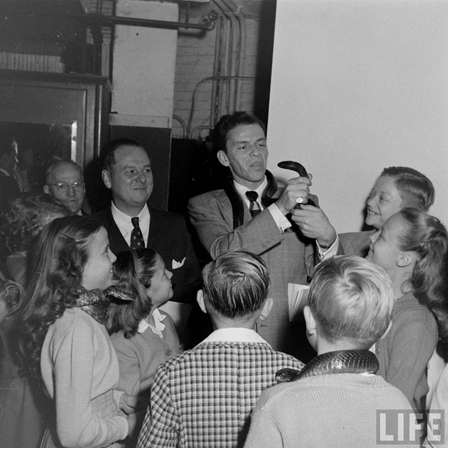
November 13, 1947
Concerts
Capitol Theater , New York City (November 13 - December 3) Last official concerts for two years
Up to eight shows a day
Songs Included:
--Night And Day
--Wrap Your Troubles In Dreams
--A Fellow Needs Girl
--I've Got A Crush On You
--I Have But One Heart
--Soliloquy
--Ole Man River (parody)
--Nancy
--All Of Me
CAPITOL, NEW YORK
(Thursday, November 13)
Capacity 4,627. Prices,70 cents -$1.50.
Five shows opening day, probably six or seven after that. House booker, Sid
Piermont. Show played by name on the bill.
It is Frank Sinatra all the way. Show caught was 50 minutes and The Voice was on almost 30 minutes of it, working like a showman, getting the customary squeals and howls from the bubble-gum set that jammed the first 15 rows from the time the doors opened. Presentation, a dream child of Alan Zee's house producer, was novel and effective. Pit came up in a dark house with Sinatra on top of the piano, which had a glassed panel in the cover out of which a light hit the singer. And right away the tumult began. Anything Sinatra did got screeches. But if the kids came in to see him, they help louse up the rest of the show. Having already sat through three performances they knew all of Lorraine Rogan's and Pat McCafferies' lines. Every gag brought the topper from the kids. Despite their tussle, Miss Rogan and her boy managed to come off ahead, winding up with fine hands. Acts working to an audience that knows the snappers have solved it in the past by turning to the customers and waving them to come in. It's usually good for additional laughs and helps performers get off the spot. Will Masten Trio
Will Masten Trio, three Negro hoofers, were dressed smartly, worked hard and fast, with Masten sparking the group with his flash terps. Other two lads were in there with him, but it was Masten who got the results.
Skitch Henderson's augmented ork ( nine strings added ) backed the show beautifully. Henderson, a personality lad in his own right, was under wraps. His only chore, outside of backing Sinatra, was a "Warsaw Concerto" briefie and the finale speech. Henderson's canary, Nancy Reed, was adequate in her single novelty number. Gal showed to much better advantage when last caught at the Meadowbrook. Here she was just a pretty good band singer.
Sinatra was showmanship personified. He mixed his stuff up doing a particularly brilliant job on the "Soliloquy" from "Carousel."
Even the kids shut up for that one. But, if he sang well, it was his ease, his bits and general handling of the show that made him a standout. Lad emceed, did quickie bits with the Will Masten Trio and even threw in hep showbiz lines, topping it all off with some cockney chatter that just about fractured them. He even plugged opposition houses, which must have made the management squirm. But a Sinatra is box-office today. He can get away with it.
Pic, "Her Husband's Affairs."
Bill Smith
Billboard
November 22, 1947
Ed O'Brien:
The bobbysoxer's last hurrah. Frankie was getting older and the teenage girls were finding younger men to swoon over. The Capitol engagement was much ballyhoo and got off to a rousing start. After missing the first weekend due to illness, the 17 day stand ( 11/13 -12/3) turned into a fiasco. The youngsters stayed away and each day the gross was an embarrassment for a performer of Sinatra's stature. If one compared the chart activity Sinatra experienced in 1946 and 1947,it was obvious the times were changin' for The Voice. In 46 he had nine songs chart in the Billboard Top 10, there were only four in 47 Frank and Sammy Davis were performing together on stage during this engagement. Sammy was 22 years old and performing with Will Masten and Sammy Sr. Interesting that the reviewer singled out Masten as the most effective performer of the trio.
"Her Husband's Affairs" starred Lucille Ball, Franchot Tone and Edward Everett Horton. It was a bomb. Certainly didn't help to fill the seats.
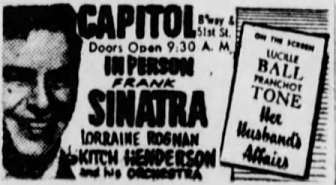
Capitol Theater , New York City (November 13 - December 3)
Last official concerts for two years
Up to eight shows a day
NOTE: Author Richard Havers says that given Frank Sinatra's personal problems with Nancy, Sr., it was ironic that the featured film during his Capitol Theater run was Lucille Ball in "Her Husband's Affair." On a professional level, this was far from a triumphant homecoming. The New York Times said that with Frank Sinatra on the bill not much attention would be paid to the film and that is why such a lightweight affair had been booked. "Frank Sinatra take it away" is how they previewed Frank's appearance. In fact, he didn't. The crowds were less than anticipated; the reviews were not so enthusiastic, even ignoring the bad reviews perpetuated by the likes of Lee Mortimer (NY Daily Mirror) and his sympathizers. By the end of the second week, Mortimer reported "The crooner, expected to pile up new highs, almost hits a new low. His second week (in which he missed no performances) was a sickly $71.000. half of the advance estimate." It's probably factually
correct, Frank was on the wane. As one writer put it, "Frank was not The Voice, just a voice."
Given all that happened in the recent months, Havers continues, it was not too surprising. There were other factors, too. It is easy to forget that back in 1947 Frank was not a legend, not the Chairman of the Board, leader of the Rat Pack, or any other of the epithets that has been bestowed upon him. He may have been "The Voice," but he was essentially a pop singer.
Regardless of how good a pop singer he was, like every other pop singer since, he has been subject to the changes in attitudes of what is an unusually fickle audience. Some people grow older with their idols, while many move on, dropping their adolescent heroes as they mature and change. The main wave of hysteria that surrounded Frank was from the bobby-soxers, 13, 14, 15, and 16 year old girls, young women who fantasized about Frankie. There was an inevitability in Frank's changing audience that no amount of good or bad publicity could alter.
He was, like many who have competed in the same field, at the point where he had to somehow change. Either he had to develop an appeal outside music, and the movies were the obvious arenas, although so far the material had been less than impressive, or he had to find a way of changing his style to build a new audience, Havers points out. Sixty years ago people did not envisage a career in "pop music." There was no such thing. It was just something you did for a while before moving on to live the rest of your life.
Whether Frank had a real sense of what the rest of his life might be like is impossible to know, Havers states, He may have seen himself becoming principally a movie star, or maybe he saw himself becoming a businessman; he talked of and had already made some investments. Frank's disappointing showing in New York by no means signaled the end of a career. In the same way as Frank was no overnight success, neither would he disappear overnight.
note: Skitch Henderson told me how disappointing the four-week run at
the Capitol turned out to be, The theater guaranteed Frank $20,000
a week. I asked Skitch why Frank failed to draw. He told me the kids
just stopped coming to see him.
Frank opened on Thursday to a packed house. The next day was a
shocker. The place was half-empty during part of the day. Saturday,
Frank barely made it through the first show. He was sick and had to
bow out for the rest of the day. He would miss all the shows Saturday
through Monday. Jane Powell and Jack Smith would sub for him.
Here is an article in the 11-19-47 Variety.
Here is the gross each week during the engagement:
1. $55,000
2. $65,000
3. $79,000
4. $74,000
Total take for the month was $273,000. Based on
Sinatra's previous drawing power, the theater was
projecting a gross of half-a-million dollars. Sinatra
was almost 32 years old. He learned that an older
audience was what he needed to capture if there
was any chance of grabbing the brass ring again.
Ed
Source: sinatraphiles digest (date extracted from item text; originally routed to appendix for review).
Capitol Theater , New York City (November 13 - December 3) Last official concerts for two years
Up to eight shows a day
NOTE: Author Richard Havers says that given Frank Sinatra's personal problems with Nancy, Sr., it was ironic that the featured film during his Capitol Theater run was Lucille Ball in "Her Husband's Affair." On a professional level, this was far from a triumphant homecoming. The New York Times said that with Frank Sinatra on the bill not much attention would be paid to the film and that is why such a lightweight affair had been booked. "Frank Sinatra take it away" is how they previewed Frank's appearance. In fact, he didn't. The crowds were less than anticipated; the reviews were not so enthusiastic, even ignoring the bad reviews perpetuated by the likes of Lee Mortimer (NY Daily Mirror) and his sympathizers. By the end of the second week, Mortimer reported "The crooner, expected to pile up new highs, almost hits a new low. His second week (in which he missed no performances) was a sickly $71.000. half of the advance estimate." It's probably factually correct, Frank was on the wane. As one writer put it, "Frank was not The Voice, just a voice."
Given all that happened in the recent months, Havers continues, it was not too surprising. There were other factors, too. It is easy to forget that back in 1947 Frank was not a legend, not the Chairman of the Board, leader of the Rat Pack, or any other of the epithets that has been bestowed upon him. He may have been "The Voice," but he was essentially a pop singer.
Regardless of how good a pop singer he was, like every other pop singer since, he has been subject to the changes in attitudes of what is an unusually fickle audience. Some people grow older with their idols, while many move on, dropping their adolescent heroes as they mature and change. The main wave of hysteria that surrounded Frank was from the bobby-soxers, 13, 14, 15, and 16 year old girls, young women who fantasized about Frankie. There was an inevitability in Frank's changing audience that no amount of good or bad publicity could alter.
He was, like many who have competed in the same field, at the point where he had to somehow change. Either he had to develop an appeal outside music, and the movies were the obvious arenas, although so far the material had been less than impressive, or he had to find a way of changing his style to build a new audience, Havers points out. Sixty years ago people did not envisage a career in "pop music." There was no such thing. It was just something you did for a while before moving on to live the rest of your life.
Whether Frank had a real sense of what the rest of his life might be like is impossible to know, Havers states, He may have seen himself becoming principally a movie star, or maybe he saw himself becoming a businessman; he talked of and had already made some investments. Frank's disappointing showing in New York by no means signaled the end of a career. In the same way as Frank was no overnight success, neither would he disappear overnight.
note: Skitch Henderson told me how disappointing the four-week run at the Capitol turned out to be, The theater guaranteed Frank $20,000 a week. I asked Skitch why Frank failed to draw. He told me the kids just stopped coming to see him.
Frank opened on Thursday to a packed house. The next day was a shocker. The place was half-empty during part of the day. Saturday, Frank barely made it through the first show. He was sick and had to bow out for the rest of the day. He would miss all the shows Saturday through Monday. Jane Powell and Jack Smith would sub for him.
Here is an article in the 11-19-47 Variety.
Here is the gross each week during the engagement:
1. $55,000
2. $65,000
3. $79,000
4. $74,000
Total take for the month was $273,000. Based on
Sinatra's previous drawing power, the theater was projecting a gross of half-a-million dollars. Sinatra was almost 32 years old. He learned that an older audience was what he needed to capture if there was any chance of grabbing the brass ring again.
Ed
Source: sinatraphiles digest (date extracted from item text; originally routed to appendix for review).
Capitol Theater , New York City (November 13 - December 3)
Variety November 1947.
Scott: I recently saw "Her Husband's Affairs" with Lucille Ball and Franchot Tone. I enjoyed it.
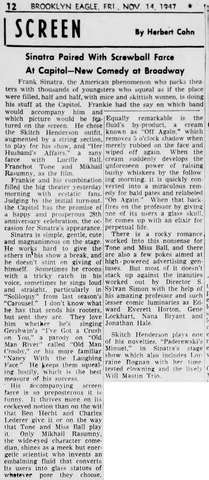
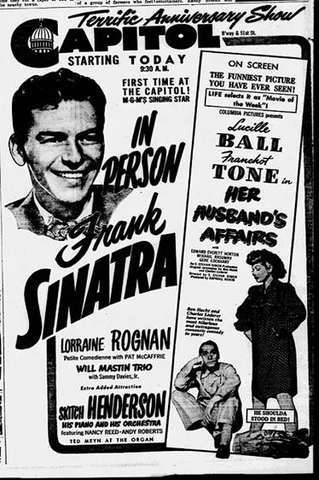
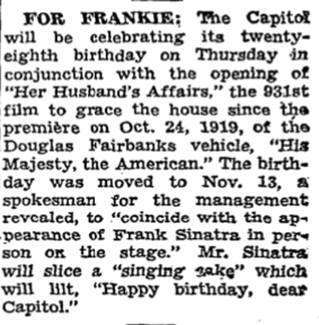
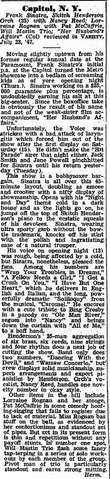
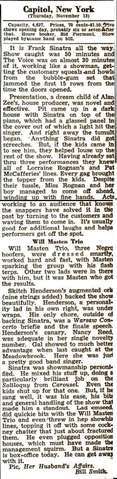
November 14, 1947
Concerts
Capitol Theater, New York City (November 13 - December 3) Last official concerts for two years
Up to eight shows a day
December 1947
[Sinatra had first recorded 'Everybody Loves Somebody' 17 years earlier]
Nearly 17 years before Dean Martin's hit version, Sinatra had recorded "Everybody Loves Somebody" himself in December 1947 with arranger Axel Stordahl.
Source: Richard Havers, "Sinatra" (Dorling Kindersley, 2007).
December 5, 1947
Joe Louis defeated Jersey Joe Walcott on points at Madison Square Garden, a fight many observers thought Walcott should have won. Louis reportedly apologized to Walcott as he left the ring. (Source: Richard Havers, "Sinatra" (Dorling Kindersley, 2007).)
November 15, 1947
Studio
Your Hit Parade
Network: NBC
Program #650
Time: 9:00-9:30 P.M.EST (Rebroadcast 12:00-12:30 A.M. EST)
Sponsor: Lucky Strike
Script (Final As Broadcast)
1. commercial 1
2. Civilization (7) - Vic Damone
3. That's A Plenty - Orchestra
4. Feudin' And Fightin' (4) - Doris Day & Hit Paraders
5. And Mimi (5) - Vic Damone
6.. commercial 2
7. Who - Orchestra
8. An Apple Blossom Wedding (6) - Hit Paraders
9. Night And Day - Vic Damone
10. You Do (3) - Hit Paraders
11. Near You (2) - Doris Day
12. commercial 3
13. I Wish I Didn't Love You So (1) - Vic Damone
Notes: Vic Damone subs for Frank Sinatra.
Ed O'Brien writes: "When I saw Sinatra at Saratoga in 1975, he told about Damone being the understudy and never getting on the show.
I have takes from 78-79 and he repeats the story. He obviously forgot November 15, 1947!"
DAMONE AND CLARK SUB FOR SINATRA
NEW YORK, Nov. 15. - - Vic Damone and Buddy Clark substituted for
Frank Sinatra on his NBC "Hit Parade" American Tobacco show tonight,
while assorted performers pinch-hit for him at his Capitol Theater run.
Sinatra has come down with a fever and a
bum throat, said to have resulted from overwork. He does five shows
a day, eight songs per show, at the Capitol. Jane Powell and Jack
Smith filled him for him at the second and third stage shows respec-
tively. Damone did the Hit Parade early show and Clark the repeat.
Billboard
Concerts
Capitol Theater , New York City (November 13 - December 3) Last official concerts for two years
Up to eight shows a day
November 16, 1947
Radio
Command Performance No. 300
Show was taped on 10-21-47
Armed Forces Radio Service ce (AFRS) program #300
Stars: Frank Sinatra
Announcer: Marvin Miller
Guests: Doris Day, Jim Backus, Joey Farber, Bud Widom, Al Hopkins Music:
AFRS Orchestra conducted by Michel Perriere
1. I Wonder Who's Kissing Her Now - Frank Sinatra
2. Tea For Two - Frank Sinatra & Doris Day
3. There'll Be Some Changes Made - Doris Day
4. The House I Live In - Frank Sinatra
Concerts
Capitol Theater , New York City (November 13 - December 3) Last official concerts for two years
Up to eight shows a day
November 17, 1947
Radio
Night of Stars, Carnegie Hall New York
9:30 PM

Concerts
Capitol Theater, New York City (November 13 - December 3) Last official concerts for two years
Up to eight shows a day
Night of Stars, Madison Square Gardens, New York, NY
Benefit for the United Jewish Appeal
Sinatra, Milton Berle, Perry Como, Helen Hayes, Vic Damone, Lana, Turner, Humphrey Bogart, Lauren Bacall, Celeste Holm, Jane Powell and others
Night of Stars, Madison Square Gardens, New York, NY
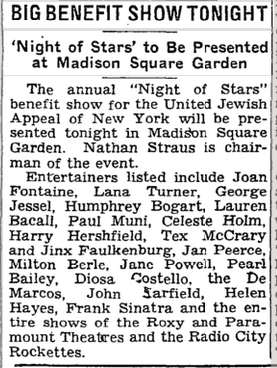
November 18, 1947
Concerts
Capitol Theater, New York City (November 13 - December 3) Last official concerts for two years
Up to eight shows a day
November 19, 1947
Concerts
Capitol Theater, New York City (November 13 - December 3) Last official concerts for two years
Up to eight shows a day
Capitol Theater , New York City (November 13 - December 3)
November 19, 1947 DOWNBEAT
Frank Sinatra and Doris Day on cover
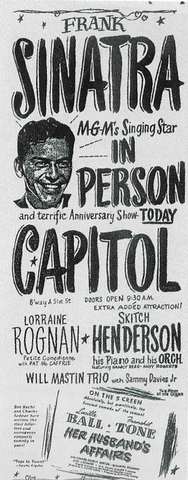
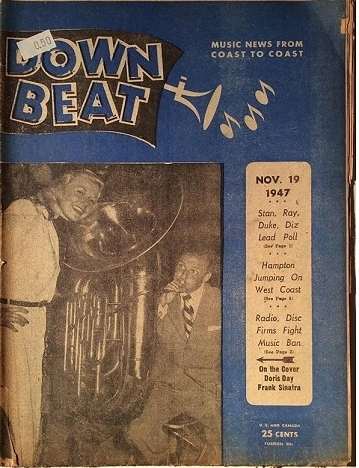
November 20, 1947
Concerts
Capitol Theater , New York City (November 13 - December 3) Last official concerts for two years
Up to eight shows a day
November 21, 1947
Concerts
Capitol Theater , New York City (November 13 - December 3) Last official concerts for two years
Up to eight shows a day
November 22, 1947
Radio
Your Hit Parade
Network: NBC
Program #651
Time: 9:00-9:30 P.M.EST (Rebroadcast 12:00-12:30 A.M. EST)
Sponsor: Lucky Strike
Script (Final As Broadcast)
1. commercial 1
2. Civilization (7) - Frank Sinatra
3. Strike Up The Band - Orchestra
4. Feudin' And Fightin' (4) - Doris Day & Hit Paraders
5. And Mimi (5) - Frank Sinatra
6. commercial 2
7. Chicago - Orchestra
8. The Whiffenpoof Song (6) - Frank Sinatra & Hit Paraders
9. Button Up Your Overcoat - Orchestra
10. Near You (3) - Doris Day
11. I Wish I Didn't Love You So (2) - Hit Paraders
12. commercial 3
13. You Do (1) - Frank Sinatra
Concerts
Capitol Theater , New York City (November 13 - December 3) Last official concerts for two years
Up to eight shows a day
November 23, 1947
Concerts
Capitol Theater , New York City (November 13 - December 3) Last official concerts for two years
Up to eight shows a day
November 24, 1947
Concerts
Capitol Theater , New York City (November 13 - December 3) Last official concerts for two years
Up to eight shows a day
November 25, 1947
Studio
New York City
CO38408 I Went Down To Virginia
(R. Evans/D. Mann)
Jefferson Music Co. (ASCAP) 1947
Arranged & Conducted by Axel Stordahl
-1 (3:09) CD: Columbia Years 43-52 Vol. 8
LP: CL-2740 The Essential Frank Sinatra, Vol. 2
78: 38163
CO38409 If I Only Had A Match
(L. Morris/A. Johnston/G.W. Meyer)
E.H. Morris Co., Inc. (ASCAP) 1947
Arranged & Conducted by Axel Stordahl
-1 (3:10) CD: Columbia Years 43-52 Vol. 8
LP: CL-2740 The Essential Frank Sinatra, Vol. 2
78: 38053
Concerts
Capitol Theater , New York City (November 13 - December 3) Last official concert for two years
Up to eight shows a day
New York City
CO38409 If I Only Had A Match
Variety
November 26, 1947
Concerts
Capitol Theater , New York City (November 13 - December 3) Last official concerts for two years
Up to eight shows a day
November 27, 1947
Radio
Dorothy Kilgallen Show
WAKR 10:45 AM
Guest: Frank Sinatra
Concerts
Capitol Theater , New York City (November 13 - December 3) Last official concerts for two years
Up to eight shows a day
Dorothy Kilgallen Show
WAKR 10:45 AM
Guest: Frank Sinatra
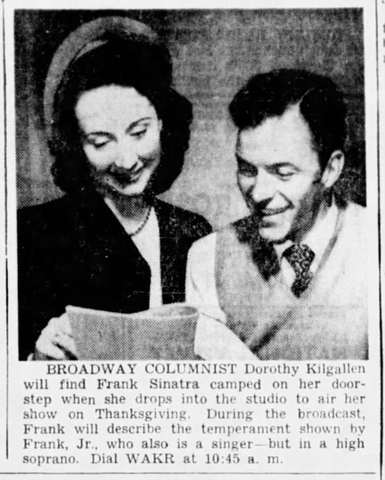
November 28, 1947
Concerts
Capitol Theater , New York City (November 13 - December 3) Last official concerts for two years
Up to eight shows a day
November 29, 1947
Radio
Your Hit Parade
Network: NBC
Program #652
Time: 9:00-9:30 P.M.EST (Rebroadcast 12:00-12:30 A.M. EST)
Sponsor: Lucky Strike
Script (Final As Broadcast)
1. commercial 1
2. Civilization (6) - Frank Sinatra
3. Why - Orchestra
4. How Soon (5) - Hit Paraders
5. Fine And Dandy - Doris Day & Hit Paraders
6. commercial 2
7. So Far (7) - Frank Sinatra
8. Margie - Orchestra
9. And Mimi (4) - Frank Sinatra
10. I Wish I Didn't Love You So (3) - Hit Paraders
11, You Do (2) - Doris Day & Hit Paraders
12. commercial 3
13. Near You (1) - Frank Sinatra
Ed O'Brien:
Doris Day joined the Hit Parade on 9-6-47, same show as Frank beginning his second run on the series. Frank and Doris sang two duets during her 13 week run. Without question the finest twosome in the history of the long running Saturday night broadcast. At the end of the 11/29 show, the announcer tells the listening audience to tune in next week for another evening with Frank and Doris. But it was not to be. Doris had left the building.
Concerts
Capitol Theater , New York City (November 13 - December 3) Last official concerts for two years
Up to eight shows a day
November 30, 1947
Concerts
Capitol Theater, New York City (November 13 - December 3) Last official concerts for two years
Up to eight shows a day
December 1, 1947
Concerts
Capitol Theater , New York City (November 13 - December 3) Last official concerts for two years
Up to eight shows a day
December 2, 1947
Radio
The Bob Hope Show, New York City
Tuesday Evening
Network NBC & AFRS rebroadcast program #131
Location: Studio C in Radio City Building
Time: 10:00pm - 10:30pm
Sponsor: Pepsodent
Host: Bob Hope
Performers: Jerry Colonna, Vera Vague
Guests: Frank Sinatra
Annc. Wendell Niles
1. Hope monologue
2. Pepsodent commercial
3. Papa Won't You Dance With Me E. Wilson
4. Hope-Vague skit
5. Hope-Colonna skit
6. Pepsodent commercial
7. Hope-Sinatra skit including English Drawing Room sketch with Vague & Colonna
8. You're My Girl F. Sinatra w/ piano (probably Skitch Henderson)
9. Sketch continues
10. Sign-Off
Note: Confirmed aired on WNBC. LOC has complete NBC 30min master.
Concerts
Capitol Theater , New York City (November 13 - December 3) Last official concerts for two years
Up to eight shows a day
December 3, 1947
Capitol Theater , New York City (November 13 - December 3)
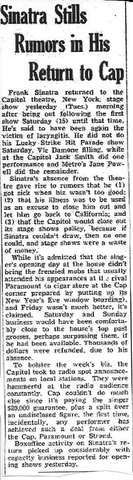
December 4, 1947
Studio
New York City
CO38482 If I Steal A Kiss
(E. Heyman/N.H. Brown)
(from The Kissing Bandit)
Leo Feist, Inc. (ASCAP) 1947
Arranged & Conducted by Axel Stordahl
-1 (3:15) CD: Columbia Years 43-52 Vol. 8
LP: CL-2913 Frank Sinatra In Hollywood
78: 38334
Note: This is Sinatra's second recording of this song. He had recorded it earlier in 1947 on May 8th at MGM for the movie "The Kissing Bandit"
CO38483 Autumn In New York
(V. Duke)
T.B. Harms, Inc. (ASCAP) 1934
Arranged & Conducted by Axel Stordahl
-1 (3:15) CD: Columbia Years 43-52 Vol. 8
LP: C6X-40343 The Voice-The Columbia years, 43-52
LP: HS-11390 Frank Sinatra
LP: CL-902 That Old Feeling
78: 38316
CO38484 Everybody Loves Somebody
( I. Taylor/K. Lane )
Sinatra Songs, Inc. (ASCAP) 1947
Arranged & Conducted by Axel Stordahl
-1 (3:15) CD: Columbia Years 43-52 Vol. 8
LP: CL-2740 The Essential Frank Sinatra, Vol. 2
78: 38225
Violins: H. Azen, M. Ceppos, M. Hershaft, M. Keliner, S. Morris, H. Nosco, F.
Orlewitz, M. Pitt, R. Polikian, B. Sheppard, H. Urbont, J. Zyde; Violas: G. Brown, S. Deutsch, D. Mankowitz; Cellos: A. Kaproff, F. Miller, M. Prinz;
Trumpets: A. Ferretti, G. Griffin, D. McMickle; Trombones: G. Arus, J.
D'Agostino, W. Pritchard; Saxes: E. Caceres, B. Kaufman, F. Pfeiffer, H. Shertzer, W. Taninbaum; Horns: K. Chlupse; Piano: R. Kitsis; Bass: F. Carroll;
Guitars: M. Golizio, B. Mortell; Drums: J. Blowers; Harp: E. Vito Ricci
December 5, 1947
Concerts
Benefit for Isaac Gimbel American Legion Post, Grand Ballroom,Hotel Pennsylvania, New York Frank Sinatra, Billy De Wolfe, Georgie Jessel, Myron Cohen, The Tunesmen
Friday afternoon
Dinty Moore's Restaurant
New York City
Friars Luncheon For Frank Sinatra
Variety December 10, 1947
[image referenced in source but could not be recovered]
[image referenced in source but could not be recovered]
Benefit for Isaac Gimbel American Legion Post, Grand Ballroom,Hotel Pennsylvania, New York Frank Sinatra, Billy De Wolfe, Georgie Jessel, Myron Cohen, The Tunesmen
[image referenced in source but could not be recovered]
[image referenced in source but could not be recovered]
December 6, 1947
Radio
Your Hit Parade
Network: NBC
Program #653
Time: 9:00-9:30 P.M.EST (Rebroadcast 12:00-12:30 P.M. EST)
Sponsor: Lucky Strike
1. commercial 1
2. Just One Of Those Things - Frank Sinatra
3. Civilization (4) - Beryl Davis
4. How Soon (6) - Hit Paraders
5. Blow, Gabriel, Blow - Orchestra
6. commercial 2
7. I Wish I Didn't Love You So (5) - Frank Sinatra
8. Crazy Rhythm - Orchestra
9. Ballerina (7) - Hit Paraders
10. And Mimi (3) - Frank Sinatra
11. You Do (2) - Beryl Davis
12. commercial 3
13. Near You (1) - Frank Sinatra
December 7, 1947
Concerts
Imperial Theatre, New York, NY
Benefit for the Actor’s Temple
December 8, 1947
Studio
New York City
CO38496 A Little Learnin' Is A Dangerous Thing - Part 1 w/Pearl Bailey
(S. Oliver/D. Jacobs)
Sinatra Songs, Inc. (ASCAP) 1948
Arranged by Sy Oliver
Conducted by Axel Stordahl
-1 (3:24) CD: Columbia Years 43-52 Vol. 8
EP: B2542 Frank Sinatra w/ Harry James & Pearl Bailey
78: 38362
CO38497 A Little Learnin' Is A Dangerous Thing - Part 2 w/Pearl Bailey
(S. Oliver/D. Jacobs)
Sinatra Songs, Inc. (ASCAP) 1948
Arranged by Sy Oliver
Conducted by Axel Stordahl
-1 (3:05) CD: Columbia Years 43-52 Vol. 8
EP: B2542 Frank Sinatra w/ Harry James & Pearl Bailey
78: 38362
CO38498 Ever Homeward
(J. Styne/S. Cahn)
(from Miracle of The Bells)
Sinatra Songs, Inc. (ASCAP) 1947
Arranged & Conducted by Axel Stordahl
-1 (3:28) CD: Columbia Years 43-52 Vol. 8
LP: CL-2913 Frank Sinatra in Hollywood (alt take)
78: 38151
Sinatraphile Scott Henderson notes: I think "Ever Homeward" is a little gem that doesn't get much fanfare. I know a lot of people don't care for the film "Miracle of the Bells" but I get sentimental for that film around this time of the year. It's great to watch around Christmas just for the sentimental scene in the Chinese restaurant.
O38496 & 38497 Piano: Billy Kyle; Bass: Herman Alpert; Guitar: Carmen Mastren;
Drums: James Crawford; Trumpet: Melvin Solomon: Tenor Sax: Artie Drelinger;
Clarinet: John Mince
CO38498 Violins: H. Azen, M. Ceppos, S. Harris, J. Held, M. Hershaft, S. Kirsner, F. Orlewitz, M. Pitt, R. Polikian, B. Sheppard, H. Shomer, H. Urbont;
Violas: S. Deutsch, L. Frengut, R. Hersh; Cellos: A. Kaproff, G. Ricci, H.
Shapiro; Trumpets: G. Griffin, Y. Lawson, R. Solomon; Trombones: R. Dupont, W. Pritchard, A. Russo; Saxes: E. Caceres, H. Feldman, B. Kaufman, J. Mince, W. Taninbaum; Horns: A. Miranda; Piano: B. Kitsis; Guitar: M. Golizio; Bass: H. Alpert; Drums: J. Blowers; Harp: E. Vito Ricci
[Pegler's final broadside against Sinatra]
Westbrook Pegler: In his column of December 8, 1947, Pegler alleged a 'strange liaison' between journalism, the underworld, and Communist fronts, attacked Sinatra associate Jimmy Tarantino, and quoted an unnamed remark attributed to George Evans disparaging Sinatra's teenage fans as 'sexually excited jailbait.'
Source: James Kaplan, "Frank: The Voice" (2010).
December 13, 1947
Radio
Your Hit Parade
Network: NBC
Program #654
Time: 9:00-9:30 P.M.EST (Rebroadcast 9:00-9:30 P.M. PST)
Sponsor: Lucky Strike
1. commercial 1
2. Let It Snow, Let It Snow, Let It Snow - Frank Sinatra
3.. Ballerina (6) - Beryl Davis
4. Liza - Orchestra
5. I Wish I Didn't Love You So (7) - Frank Sinatra
6. commercial 2
7. Near You (5) - Hit Paraders
8. And Mimi (4) - Frank Sinatra
9. I Got Rhythm - Orchestra
10. You Do (3) - Beryl Davis
11. How Soon (2) - Hit Paraders
12. commercial 3
13. Civilization (1) - Frank Sinatra
Notes: Sinatra was to open with "Zing! Went The Strings Of My Heart" but it was changed to Let It Snow.
December 14, 1947
Concerts
PAL Show Portland Oregon
Frank Sinatra, Edward Arnold, Jack Paar, Beryl Davis, Nora Martin, and others
December 18, 1947
Concerts
Racquet Club, Palm Springs, CA
Benefit for Youth Center
Bob Hope, Frank Sinatra, Jerry Colonna, Dorothy Lamour, Rudy Valee and others
Racquet Club, Palm Springs, CA
Benefit for Youth Center
Bob Hope, Frank Sinatra, Jerry Colonna, Dorothy Lamour, Rudy Valee and others
[image referenced in source but could not be recovered]
[image referenced in source but could not be recovered]
[image referenced in source but could not be recovered]
December 20, 1947
Radio
Your Hit Parade
Network: NBC
Program #655
Time: 9:00-9:30 P.M.EST (Rebroadcast 9:00-9:30 P.M. PST)
Sponsor: Lucky Strike
1. commercial 1
2. Jingle Bells - Frank Sinatra & Hit Paraders
3. Near You (7) - Beryl Davis
4. Good News - Orchestra
5. You Do (5) - Frank Sinatra
6. commercial 2
7. Ballerina (4) - Hit Paraders
8. Serenade Of The Bells (6) - Frank Sinatra
9. I Want To Be Happy - Orchestra
10. And Mimi (3) - Hit Paraders
11. Civilization (2) - Berly Davis
12. commercial 3
13. How Soon (1) - Frank Sinatra
Ed O'Brien notes:
The seven songs that made up the Hit Parade on 12-20-47 were all sung on the show by F.S but he didn't record any of them.
December 26, 1947
Studio
Hollywood
HCO3052 But None Like You
(R. Noble)
Sinatra Songs, Inc. (ASCAP) 1948
Arranged & Conducted by Axel Stordahl
-1 (3:10) CD: Columbia Years 43-52 Vol. 8
78: 38129
HCO3053 Catana
(E. De Lange/A. Newman)
(from Captain From Castile
Robbins Music Corp. (ASCAP) 1947
Arranged & Conducted by Axel Stordahl
-1 (3:13) CD: Columbia Years 43-52 Vol. 8
HCO3054 Why Was I Born? N/R
(J. Kern/O. Hammerstein II)
(from Sweet Adeline)
T.B. Harms, Inc. (ASCAP) 1929
Arranged & Conducted by Axel Stordahl
Violins: W. Bloom, W. Callies, S. Cytron, P.
Ellis, S. Freed, Jr., D. Frisina, J. Gotkin, G.
Joyce, G. Kast, D. Lube, S. Middleman, O. Vail,
G. Vinci; Violas: M. Perlmutter, D. Sterkin, G.
White; Cellos: C. Bernard, F. Goerner, J. Sewell;
Trumpets: L. Mach, G. Seaberg, R. Zarchy;
Trombones: P. Pederson, W. Schaefer, E. Smithers;
Saxes: M. Clark, A. Gershunoff, H. Haymer, F.
Stulce; Horns: J. McGee; Piano: M. Raskin,
Guitar: A. Reuss; Bass: J. Ryan; Harp: A. Mason
December 27, 1947
Radio
Your Hit Parade
Network: NBC
Program #656
Time: 9:00-9:30 P.M.EST (Rebroadcast 9:00-9:30 P.M. PST)
Sponsor: Lucky Strike
1. commercial
2. Wrap Your Troubles In Dream - Frank Sinatra
3. You Do (4) - Beryl Davis & Hit Paraders
4. Puttin' On The Ritz - Orchestra
5. Serenade Of The Bells (6) - Frank Sinatra
6. commercial 2
7. And Mimi (5) - Hit Paraders
8. The Lady In Red - Orchestra
9. White Christmas (7) - Frank Sinatra & Hit Paraders
10. Near You (3) - Beryl Davis
11. How Soon (2) - Hit Paraders
12. commercial 3
13. Ballerina (1) - Frank Sinatra
December 28, 1947
Studio
Hollywood
HCO3067 It Came Upon A Midnight Clear w/The Ken Lane Singers
(E.H. Sears/R. Storrs Willis)
Public Domain
Arranged & Conducted by Axel Stordahl
-1 (3:25) CD: Columbia Years 43-52 Vol. 8
CD: 40707 Christmas Dreaming
LP: HL-7400 Have Yourself A Merry Little Christmas
LP: CL-1032 Christmas Dreaming
78: 38258
HCO3068 O Little Town Of Bethlehem w/The Ken Lane Singers
(P. Brooks/L.H. Redner)
Public Domain
Arranged & Conducted by Axel Stordahl
-1 (3:01) CD: Columbia Years 43-52 Vol. 8
CD: 40707 Christmas Dreaming
LP: HL-7400 Have Yourself A Merry Little Christmas
LP: CL-1032 Christmas Dreaming
78: 38258
HCO3069 White Christmas
(I. Berlin )
(from Holiday Inn)
Irving Berlin Music (ASCAP) 1942
Arranged & Conducted by Axel Stordahl
-1 (3:16) CD: Columbia Years 43-52 Vol. 8
CD: 40707 Christmas Dreaming
78: DO3745 ( Australia )
Ed O'Brien notes:
The above three songs were recorded on Sunday evening from 6 to 9 P.M. There was a 35 piece orchestra plus the Ken Lane Singers (12 strong). Ted Nash and Mahlon Clark were both starting their long association with Sinatra. They recalled for me the marvelous voice Sinatra had in 1947.
HCO3070 For Every Man There's A Woman
(H. Arlen/L. Robin)
(from Casbah)
Harwin Music Corp. (ASCAP) 1948
Arranged & Conducted by Axel Stordahl
-1 (2:50) CD: Columbia Years 43-52 Vol. 8
LP: C6X-40343 The Voice-The Columbia years, 43-52
LP: CL-902 That Old Feeling
78: 38089
HCO3071 Help Yourself To My Heart
(B. Kaye/S. Timberg)
Sinatra Songs, Inc. (ASCAP) 1947
Arranged & Conducted by Axel Stordahl
-1 (3:14) CD: Columbia Years 43-52 Vol. 9
The second session on 12-28-47 took place from
10:30 PM to 1:30 Am. There was a 40 piece orchestra
HCO3072 Santa Claus Is Comin' To Town
(H. Gillespie/J.F. Coots)
Leo Feist, Inc. (ASCAP) 1934
Arranged & Conducted by Axel Stordahl
-1 (2:33) CD: Columbia Years 43-52 Vol. 9
CD: 40707 Christmas Dreaming
LP: HL-7400 Have Yourself A Merry Little Christmas
LP: CL-1032 Christmas Dreaming
78: 38259
The above track was done on the morning of 12-29-47 from 1:30 to 2:30 AM. There was a 17 piece orchestra.
HCO3054 Why Was I Born?
(J. Kern/O. Hammerstein II)
(from Sweet Adeline)
T.B. Harms, Inc. (ASCAP) 1929
Arranged & Conducted by Axel Stordahl
-1 (2:49) CD: Columbia Years 43-52 Vol. 8
-M2 (2:42) CD: C2K 65244Portrait Of Sinatra
LP: C6X-40343 The Voice-The Columbia years, 43-52
LP: C2L-6 Frank Sinatra Story in Music
EP: B-1702 Frank Sinatra Sings Jerome Kern (alt take)
78:38686
The Ken Lane Singers: Stewart Blair, Ken Cameron,
Raymond Clark, Ruth Clark, John Glaha, Elva
Kellogg, Dudley Kuzell, Kermit Lane, Norma
Larsen, Flora Matthiason, Sydney Pepple, Orville Race
Violins: W. Callies, S. Cytron, W. Edelstein, D.
Frisina, G. Kast, S. Middleman, N. Pisani, M.
Russell, F. Slatkin, M. Sosson, O. Vail, G.
Vinci; Violas: P. Robyn, D. Sterkin, G. White;
Cello: C. Bernard, F. Goerner, J. Sewell; Saxes:
H. Beau, L. Hartman, H. Haymer, J. Kinsler, F..
Stulce; Hrons: J. McGee; Trumpets: R. Linn, G.
Seaberg, R. Zarchy; Trombones: P. Pederson, W.
Schaefer, E. Smithers; Piano: M. Mclntyre:
Guitar: A. Reuss; Bass: P. Stephens; Drums: R. Hagan; Harp: M. Hogan Camber
Radio
Treasury Department Guest Star
Treasury Department syndication
Program #40
Guests: Frank Sinatra, Les Tremayne.
1. Great Day
2. You'll Never Walk Alone
Note: TT 15mins. The show appears on the officially released CD set: 60 Greatest Old Time
Radio Show "Frank Sinatra & Friends"
Treasury Department Guest Star
Treasury Department syndication
Program #40
Guests: Frank Sinatra, Les Tremayne.
1. Great Day
2. You'll Never Walk Alone
Note: TT 15mins. The show appears on the officially released CD set:
60 Greaest Old Time Radio Show "Frank Sinatra &
Friends"
© 1997-2024 The Sinatra Archive
This calendar, or any parts thereof, may not be reproduced in any fashion
whatsoever without the prior written permission of the publisher (The
Sinatra Archive)
December 29, 1947
Radio
Radio Theatre
Title: "Anchors Aweigh"
Network: CBS
Time: 9:00 P.M. - 10:00 P.M.
Sponsor: Lux, Pepsodent
Host: William Keighley
Performers: Frank Sinatra, Gene Kelly, Kathryn
Grayson, Frances Robinson, John McGovern, Truda
Marson, Cliff Clark, William Johnstone, Ed
Emerson, Clarke Gordon, Gil Stratton, Robert
Griffin, Edward Marr, George Neise,
Announcer: John Milton Kennedy
Commercial Spokeswomen: Dorothy Lovett (Libby's)
Louis Silvers and His Orchestra provided the arrangements and he conducted
Screen Writer: Isobel Lennart
Director: Fred MacKaye
Adaptor: Sanford Barnett
Sound Effects: Charlie Forsyth
1. The Charm Of You
2. The Cradle Song
3. I Begged Her
4. What Makes The Sunset
Note: Confirmed aired on WCBS. "The Cradle Song"
& "What Makes The Sunset" are on the CD: The
Unheard Frank Sinatra Vol 1 As Time Goes By.
"I Begged Her" appears on the CD: The Unheard
Frank Sinatra Vol. 2 The House I Live In.
Ed O'Brien:
An excellent example of the power of radio in
1947. Film had been released on August 15, 1945.
Twenty-eight months has elapsed before Lux Radio Theater offered this hour version. And it is outstanding.
The three leads reprised their roles with great flair.
The complete show is on the Radio Spirits 60
Greatest Sinatra Radio Show. The set offers 30 hours of Frank and Friends from radio shows in the 1940s and 50s. There is a truncated version of this broadcast on
Showtime #305. The date of that broadcast is supposed to be 1-1-46. As you can see, that is not possible. There is not very good documentation on the AFRS Showtime series, but I think 1-1-48 is a good bet.
I have #157 dated 10-29-45, so #305 would be a few years down the line. --Ed
December 30, 1947
Studio
Hollywood
HCO3089 If I Forget You
(I Caesar)
Irving Caesar, Inc. (ASCAP) 1933
Arranged & Conducted by Axel Stordahl
-1 (3:11) CD: Columbia Years 43-52 Vol. 9
LP: CL-1136 Put Your Dreams Away
78: 41133
Notes: "If I Forget You"
Ed O'Brien:
Song was composed by Irving Caesar in 1933. It would become the memorial song, used for a charity drive, for Will Rogers in 1938. Judy Garland can be seen in a 1940 MGM short singing the song to a Frederic Remington sculpture of Rogers (It was the third charity drive using Rogers name). I have her recording plus Rosemary Clooney's and Sinatra's
1947 version. A very moving song.
HCO3090 Where Is The One?
(E. Finckel/A. Wilder)
Famous Music Corp. (ASCAP) 1948
Arranged & Conducted by Axel Stordahl
-1 (2:47) CD: Columbia Years 43-52 Vol. 9
CD: 44236 Sinatra Rarities
78: 38421
HCO3091 When Is Sometime?
(J. Burke/J. Van Heusen)
(from A Connecticut Yankee In King Arthurà ¢s Court)
Burke-Van Heusen, Inc. (ASCAP) 1948
Arranged & Conducted by Axel Stordahl
-1 (2:42) CD: Columbia Years 43-52 Vol. 9
CD: 44236 Sinatra Rarities
78: 38417
Violins: R. Barene, E. Briano, W. Callies, D.
Frisina, M. Levant, T. Mancini, F. Olson, M.
Russell, F. Slatkin, P. Shure, M. Sosson, G..
Vinci; Violas: P. Robyn, D. Sterkin, A. Weiss;
Cellos: C. Bernard, J. Sewell, E. Slatkin; Saxes:
H. Beau, J. Dumont, A. Gershunoff, J. Jacobs, T.
Nash; Horns: V. De Rosa; Trumpets: R. Linn, G.
Seaberg, R. Zarchy; Trombones: G. Jenkins, E.
Kuczborski, W. Schaefer; Piano: M. Mclntyre;
Guitar: A. Reuss; Bass: A Bernstein; Drums: R. Hagan; Harp: L. McFarland
Notes: The last session in 1947 put Frank's total recording output at 75 songs for the year.
When he learned there would be a prolonged musician's strike, Sinatra was determined to get as many songs in the can as possible. The strike in 1943-44 had hurt his commercial potential badly. His recordings for Columbia in
1948 consisted of two vocal overdubbings, two sub rosa sessions, an a cappella recording and a session with non-union personnel, before the strike ended in mid December of that year.
The 75 recordings in 47 topped both 1961(70) and
1956(62) for the most recordings in one year.
Ed
[image referenced in source but could not be recovered]
January 1948
["Too Fat Polka" on Your Hit Parade]
Kaplan: On Your Hit Parade, Sinatra rushed through a dispiriting version of the novelty song "Too Fat Polka."
Source: James Kaplan, "Frank: The Voice" (2010)
January 1, 1948
[AFM recording strike begins]
A new American Federation of Musicians strike began, once again barring recording with orchestras; the ban would not end until early December 1948.
Source: James Kaplan, "Frank: The Voice" (2010).
January 3, 1948
Radio
Your Hit Parade
Network: NBC
Program #657
Time: 9:00-9:30 P.M.EST (Rebroadcast 9:00-9:30 P.M. PST)
Sponsor: Lucky Strike
Script (Final As Broadcast)
1. commercial 1
2. Civilization (5) - Frank Sinatra
3. And Mimi (7) - Hit Paraders
4. Keep Your Sunny Side Up - Orchestra
5. Serenade Of The Bells (4) - Frank Sinatra
6. commercial 2
7. This Can't Be Love - Beryl Davis
8. White Christmas (6) - Frank Sintatra
9. Rise And Shine - Orchestra
10. Near You (3) - Hit Paraders
11. How Soon (2) - Beryl Davis
12. commercial 3
13. Ballerina (1) - Frank Sinatra
Notes: The Hit Paraders were originally going to perform with Sinatra on
"White Christmas."
January 6, 1948
Concerts
The Palm House, Palm Springs, California
“Ladies Night” Celebration for the Riverside County Peace Officers Frank Sinatra, Jimmy Van Heusen and others
The Palm House, Palm Springs, California
“Ladies Night” Celebration for the Riverside County Peace Officers Frank Sinatra, Jimmy Van Heusen and others
County Peace Officers Enjoy Great Party Here
Desert Sun, January 9, 1948
It was a swell shindig all the way from the food served through the big-time show and the dancing that followed.
That was the expression of approximately 200 or more persons who attended the annual dinnerdance hosted by the Palm Springs police department for the Riverside County Peace Officers association. THE AFFAIR, an annual event in Palm Springs, had Chief of Police August Kettmann hopping around town before the social event took place arranging for music and entertainment and he was as busy as any man could be during the affair which was held at the Palm House Tuesday night. Present at the occasion were some of the leading peace officers of the county including members of the Federal Bureau of Investigation who operate in this district. Among them were Riverside Chief of Police Jack Bennett, Corona Chief of Police Joe Lowery, William Murphy, FBI agent," San Diego, in charge of this district; Harold Higgins and Joe Rice, both FBI agents working out of the Riverside office and Captain Pierce of the Riverside county sheriff’s office.
NEARLY ALL of the local talent appearing professionally at various night spots in the Village were on hand to do their bit. They included Connie of The Dunes, The Three Loose Screws of the Del Tahquitz; Daughters of the Pioneers who have just opened at Mr. Dee’s and Martha Davis who just opened at the Pago Pago. A 1 Pearce of screen and radio fame gave a stellar performance and had the crowd figuratively rolling in the aisle with his comedy monologue. Frank Sinatra accompanied at the piano by the incomparable song writer, Jimmy Van Heusen, was not permitted to leave the stage by continuous rounds of applause for one song after another until both were nearly exhausted. Lee Fields was the hilarious Emcee. DANCING to the music of Frankie Ortega and his band, now playing nightly at the Palm House followed the stage show and was thoroughly enjoyed by all those present. Expressions on the dance floor could be heard indicating that the rhythms dispensed by the band compelled one to dance on and on. Vic Sudaha and Gene Hughes owner-operators of the Palm House left nothing undone in order to make the affair a successful one and they did not fail in that.
-----------------------------------------------
4-9 Filming for the February 25, 1987 Magnum P.I.
Guest: Frank Sinatra.
Sinatra stars as a retired officer tracking down the killer of his granddaughter
© 1997-2026 The Sinatra Archive
This calendar, or any parts thereof, may not be reproduced in any fashion whatsoever without the prior written permission of the publisher (The Sinatra Archive)
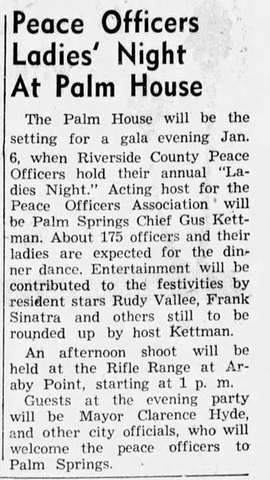
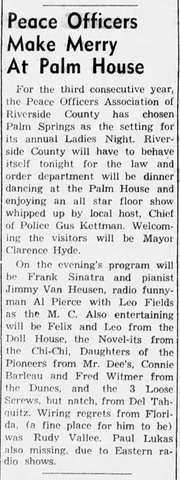
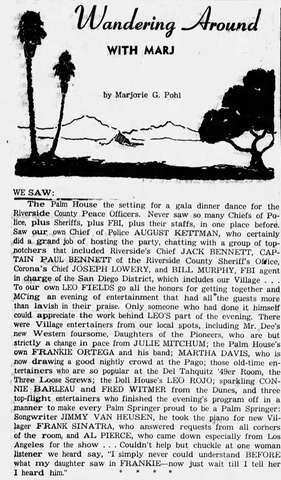
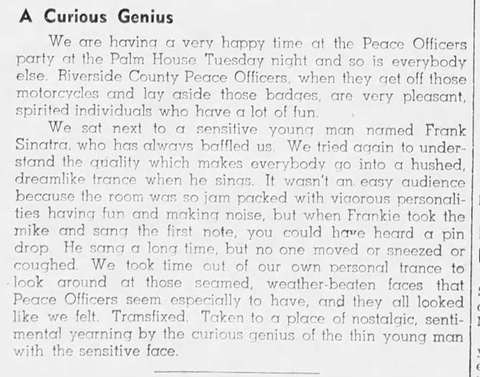
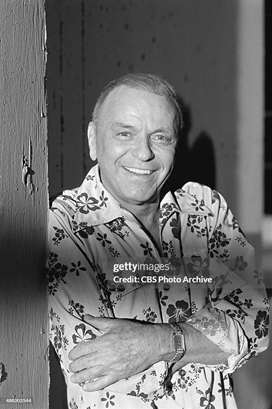
January 15, 1948
Radio
Radio: Sinatra appeared as a guest on Frank Sinatra Sings For The March Of Dimes -- a CBS broadcast marking the campaign's 10th anniversary -- this date, singing "Near You." Source: sinatradiscography.com, Radio Transcriptions Database.
January 24, 1948
Radio
Your Hit Parade
Network: NBC
Program #660
Time: 9:00-9:30 P.M.EST (Rebroadcast 9:00-9:30 P.M. PST)
Sponsor: Lucky Strike
1. commercial 1
2. I'll Dance At Your Wedding (4) - Frank Sinatra
3. Alexander's Ragtime Band - Orchestra
4. Golden Earrings (5) - Hit Paraders
5. Begin The Beguine - Frank Sinatra
6. commercial 2
7. Civilization (6) - Beryl Davis
8. Too Fat Polka (7) - Frank Sinatra & Hit Paraders
9. Somebody Stole My Gal - Orchestra
10. Serenade Of The Bells (3) - Hit Paraders
11. Ballerina (2) - Beryl Davis
12. commercial 3
13. How Soon (1) - Frank Sinatra
"Too Fat Polka"
Friedwald (analysis): In January 1948 Sinatra had to perform 'Too Fat Polka,' an Arthur Godfrey hit with special-material lyrics customized to mock Sinatra's own famous skinniness -- an example, per Friedwald, of the 'conceptually lean' novelty material Sinatra was contractually forced to sing as the week's #1 hit on Your Hit Parade.
Source: Will Friedwald, "Sinatra! The Song Is You: A Singer's Art" (2018 revised edition).
January 28, 1948
Radio
Mail Call
Network: AFRS
Show: #283
Host: Chili Williams
Guests: The Four Blazes, Jo Stafford, The Starlighters, Frank Sinatra, Garry Moore, Jimmy Durante, Candy Candido
Announcer:
Sinatra Arrangements by: Axel Stordahl
1. Begin The Beguine
2. The Anniversary Song
The Armed Forces Radio Service Orchestra Conducted By: Mishel Perrier
Notes: Could be a compilation show. Audio condition: Excellent. Complete.
January 31, 1948
Radio
The March of Dimes Party 10th Anniversary Show
15 minutes Hollywood
NBC
Host : Ralph Edwards
Guests: William Bendix, Judy Canova
Frank Sinatra, Axel Stordahl, Digger Oâ Dell,
Kay Kyser, Cast From College of Musical
Knowledge, Beryl Davis
Songs:
Pass That Peacepipe Judy Canova
Near You Frank Sinatra note: Party was celebrating FDR's birthday
Your Hit Parade
Network: NBC
Program #661
Time: 9:00-9:30 P.M.EST (Rebroadcast 9:00-9:30 P.M. PST)
Sponsor: Lucky Strike
1. commercial 1
2. I'll Dance At Your Wedding (5) - Frank Sinatra
3. Flying Down To Rio - Orchestra
4. How Soon (4) - Beryl Davis
5. Civilization (6) - Frank Sinatra
6. commercial 2
7. Shine - Orchestra
8. I'm Looking Over A Four Leaf Clover (7) - Hit Paraders
9. The Song Is You - Frank Sinatra
10. Ballerina (3) - Hit Paraders
11. Serenade Of The Bells (2) - Beryl Davis
12. commercial 3
13. Golden Errings (1) - Frank Sinatra
Notes: Eileen Barton's last listed show. Confirmed airing on WABC.
Early 1948
Frank Sinatra and Ava Gardner went on their first date, after months of Frank and his Sunset Tower drinking buddies calling up to her apartment window across the way. He took her for drinks and dinner and then to a shooting gallery at an amusement park; the two drank heavily and confided in one another about the toll show business had taken on their personal lives. The evening nearly ended in bed, but Gardner — married to Mickey Rooney and then Artie Shaw before this, and wary of moving too fast — stopped things short, later explaining, “I decided I didn't want to just give it all away on the first date.” Source: J. Randy Taraborrelli, Sinatra: Behind the Legend.
February 1948
[Sinatra interview with George T. Simon in Metronome]
Frank Sinatra / George T. Simon: Sinatra sat down with Metronome's George T. Simon and vented at length about the poor state of Tin Pan Alley songwriting and the music business, calling contemporary popular songs "decadent" and "bloodless" and blaming songwriters, publishers, and record companies for chasing quick hits.
Source: James Kaplan, "Frank: The Voice" (2010)
February 14, 1948
Radio
Your Hit Parade
Network: NBC
Program #662
Time: 9:00-9:30 P.M.EST (Rebroadcast 9:00-9:30 P.M. PST)
Sponsor: Lucky Strike
1. commercial 1
2. I'm Looking Over A Four Leaf Clover (5) - Frank Sinatra & Hit Paraders
3. Brazil - Orchestra
4. How Soon (7) - Beryl Davis
5. Now Is The Hour (4) - Hit Paraders
6. commercial 2
7. Way Down Yonder In New Orleans - Orchestra
8. But Beautiful (6) - Frank Sinatra
9. Jingle, Jangle, Jingle - Hit Paraders
10. Serenade Of The Bells (3) - Frank Sinatra
11. I'll Dance At Your Wedding (2) - Beryl Davis
12. commercial 3
13. Ballerina (1) - Frank Sinatra
Notes: There was no show February 7, 1948 so the network could carry the Republican Lincoln Day Dinner.
Ed O'Brien sent over the song list compiled for the February 7 show, had it been made:
7. Serenade Of The Bells
6. I'm Looking Over A Four Leaf Clover
5. Now Is The Hour
4. I'll Dance At Your Wedding
3. Golden Earrings
2. How Soon
1. Ballerina
February 21, 1948
Radio
Your Hit Parade
Network: NBC
Program #663
Time: 9:00-9:30 P.M.EST (Rebroadcast 9:00-9:30 P.M. PST)
Sponsor: Lucky Strike
1. commercial 1
2. The Best Things In Life Are Free (7) - Frank Sinatra & Hit Paraders
3. There'll Be Some Changes Made - Orchestra
4. I'll Dance At Your Wedding (6) - Beryl Davis
5. Golden Earrings (4) - Frank Sinatra
6. commercial 2
7. Rio Rita - Orchestra
8. Serenade Of The Bells (5) - Hit Paraders
9. Nobody's Sweetheart - Orchestra
10. Now Is The Hour (3) - Frank Sinatra
11. Ballerina (2) - Beryl Davis
12. commercial 3
13. I'm Looking Over A Four Leaf Clover (1) - Frank Sinatra & Hit Paraders
February 22, 1948
Radio
The Jack Benny Program
Network: NBC
Sponsor: Lucky Strike
Show: #21 of the 1947-48 series
Time: 7:00pm
Host: Jack Benny
Guests: Frank Sinatra,
Cast: Mary Livingstone, Don Wilson, Dennis Day, Artie Auerbach, Frank Nelson, Mel Blanc, Rochester, Phil Harris.
Writers: Sam Perrin, George Balzer, John Tackaberry, Milt Josefsberg
Producer By: Hilliard Marks
1. commercial
2. first routine - Jack Benny, Don Wilson, Mary Livingstone, Dennis Day
3. My Adobe Hacienda - Sportmen Quartet
4. second routine - Jack Benny, Mary Livingston, Artie, Don Wilson, Dennis Day
5. Serenade Of The Bells - Dennis Day
6. third routine - Jack Benny, Dennis Day, Mary Livingstone, Don Wilson, Frank Nelson, Mel Blanc, Frank Sinatra, Rodchester, Mel Blanc
7. commercial
8. closing
Notes: Sinatra makes brief appearance. Show from Palm Springs. Audio condition: Good- & Complete. TT: 30mins
February 24, 1948
Concerts
Ambassador Hotel, Los Angeles, CA
Tribute Dinner for Judge Robert P. Patterson, former Secretary of War Frank Sinatra, George Murphy, Jules Munshin, Virginia O’Brien, Lena Horne and others
February 25, 1948
Concerts
Biltmore Hotel, Los Angeles, CA
Men's Club Honor Jimmy Durante
Frank Sintra, Kay Kaser, Jame Powell, Margaret O'Brien, Esther Williams and others
Biltmore Hotel, Los Angeles, CA
Men's Club Honor Jimmy Durante
Frank Sintra, Kay Kaser, Jame Powell, Margaret O'Brien, Esther Williams and others
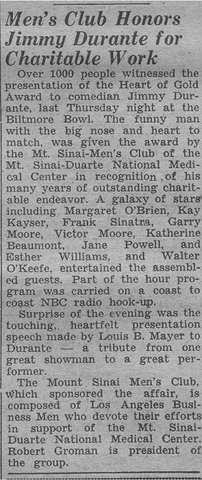
February 26, 1948
Studio
MGM, Los Angeles
THE KISSING BANDIT
Thursday afternoon
Orchestra conducted by Georgie Stoll
Arrangements by Leo Arnaud
What's Wrong With Me?
11 takes running time 1:25
What's Wrong With Me? w/Kathryn Grayson
11 takes takes 10 & 11 were mastered 1:20 not used in film
Grayson opened the session with Tomorrow Means Romance
11 takes #8,10 were mastered 1:58 and 11 was mastered 1:57
They had her pick up the tune from bar
10 to the end take 3(1"35) and 4(1:37) were mastered.
Song did not appear in the film
Note: This was the final recording session for the film
MGM in a desperate effort to salvage the film tried to add a few more musical numbers. It didn't work.
The studio held up its release for more than a year.
Released on 11-19-48, it was savaged by the critics and bombed at the box office. Grayson in an interview many years later called it the worst film of her career.
Sinatra agreed. Was it the worst? I don't think so. Any film with Sinatra singing a number of songs plus the lavish MGM technicolor is far superior to some of the films he did in the 60s.
"The Kissing Bandit"
The Kissing Bandit, a Technicolor farce with Sinatra as a bumbling would-be Hispanic bandit in 1840s California, began filming right after the final broadcast of The Frank Sinatra Show on CBS radio; cinematography was by Robert Surtees.
Source: Tom Santopietro, "Sinatra in Hollywood" (2008).
"The Kissing Bandit"
Justin Gilbert: Release of The Kissing Bandit was delayed a full year until November 1948, by which time two later Sinatra films (The Miracle of the Bells and Take Me Out to the Ball Game) had already finished production. Los Angeles Mirror critic Justin Gilbert panned Sinatra's acting despite his singing.
Source: Tom Santopietro, "Sinatra in Hollywood" (2008).
"The Kissing Bandit"
Santopietro grades this a D, quoting Frank's own review: "Please don't let my granddaughters watch it."
Source: Tom Santopietro, "Sinatra in Hollywood" (2008).
"The Kissing Bandit"
Santopietro (Filmography): Metro-Goldwyn-Mayer. Produced by Joe Pasternak, directed by Laszlo Benedek, screenplay by John Briard Harding and Isobel Lennart. Sinatra starred as Ricardo opposite Kathryn Grayson, with a dance specialty from Ricardo Montalban, Cyd Charisse and Ann Miller; his songs included 'If I Steal a Kiss,' 'Senorita' and 'Siesta.'
Source: Tom Santopietro, "Sinatra in Hollywood" (2008).
February 27, 1948
Concerts
Rogers' Ranch, "The Stables", Palm Springs, CA
First Annual Gala Dinner Dance by Jewish Community Centre of Palm Springs
Rogers' Ranch, "The Stables", Palm Springs, CA
First Annual Gala Dinner Dance by Jewish Community Centre of Palm Springs
-----------------------------------------
© 1997-2026 The Sinatra Archive
This calendar, or any parts thereof, may not be reproduced in any fashion whatsoever without the prior written permission of the publisher (The Sinatra Archive)
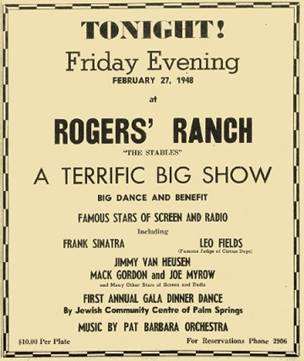
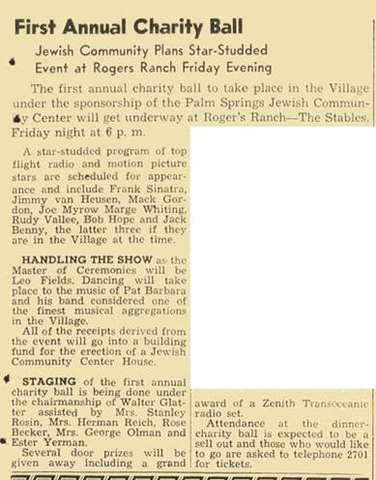
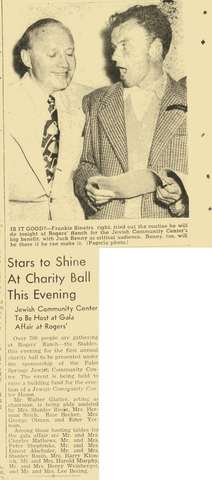
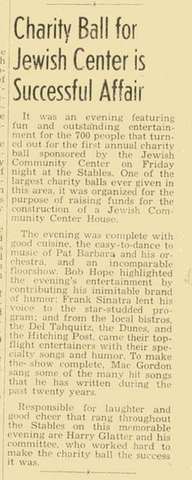
February 28, 1948
Radio
Your Hit Parade
Network: NBC
Program #664
Time: 9:00-9:30 P.M.EST (Rebroadcast 9:00-9:30 P.M. PST)
Sponsor: Lucky Strike
Script (Final As Broadcast)
1. commercial 1
2. I'll Dance At Your Wedding (7) - Frank Sinatra
3. All God's Chillun Got Rhythm - Orchestra
4. Beg Your Pardon (6) - Beryl Davis
5. Golden Earrings (5) - Frank Sinatra
6. commercial 2
7. Blue Skies - Orchestra
8. Serenade Of The Bells (4) - Hit Paraders
9. I'm Shooting High - Orchestra
10. Ballerina (3) - Frank Sinatra
11. I'm Looking Over A Four Leaf Clover (2) - Beryl Davis
12. commercial 3
13. Now Is The Hour (1) - Frank Sinatra & Hit Paraders
March 1948
[Sinatra's Secret Work Smuggling Money For The Haganah]
Nancy Sinatra: After befriending Teddy Kollek, then a Haganah arms buyer in New York and later mayor of Jerusalem, Frank became one of the couriers who ferried money from Haganah headquarters at a Manhattan hotel to the docks for shipment overseas during Israel's war of independence, telling his daughter years later that he wanted to help because he feared the fledgling nation might fail.
Source: Nancy Sinatra, Frank Sinatra: An American Legend, 1995.
March 4, 1948
Radio
Frank Sinatra and Company.
Red Cross syndication.
Sponsor: Red Cross fund appeal.
Announcer: Hy Averback
Performers: Frank Sinatra, Beryl Davis, Axel Stordahl and His Orchestra
1. There's Gonna Be A Great Day Great Day
2. I Wonder Who's Kissing Her Now
3. Wrap You Troubles In Dreams
Notes: TT: 15 mins. Audio condition: Excellent. Complete.
March 5, 1948
Radio
Burl Ives Show
Mutual Network
Friday evening
Frank and Burl sing "Clementine" and 'Hey Lollie, Lollie Low."
The two men kid about taking the show on the road and Burl gives Frank's new film "Miracle Of The Bells" a big plug, telling his listeners that it opens Easter week.
Note: Thanks to Ed O'Brien for the above radio listing.
Burl Ives Show
Mutual Network
Friday evening
Frank and Burl sing "Clementine" and 'Hey Lollie, Lollie Low."
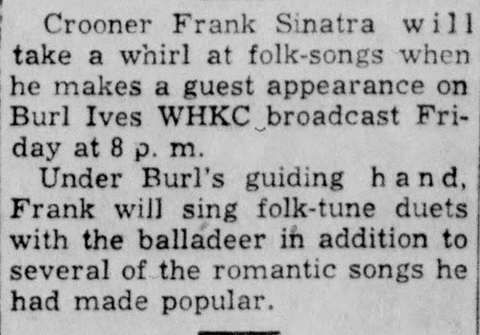
March 6, 1948
Radio
Your Hit Parade
Network: NBC
Program #665
Time: 9:00-9:30 P.M.EST (Rebroadcast 9:00-9:30 P.M. PST)
Sponsor: Lucky Strike
1. commercial 1
2. Ballerina (4) - Frank Sinatra
3. Top Hat, White Tie And Tails - Orchestra
4. Golden Earrings (5) - Beryl Davis
5. Manana (7) - Frank Sinatra & Hit Paraders
6. commercial 2
7. Clap Yo' Hands - Orchestra
8. Serenade Of The Bells (6) - Frank Sinatra
9. Lady Be Good - Orchestra
10. Beg Your Pardon (3) - Hit Paraders
11. I'm Looking Over A Four Leaf Clover (2) - Beryl Davis
12. commercial 3
13. Now Is The Hour (1) - Frank Sinatra & Hit Paraders
March 13, 1948
Radio
Your Hit Parade
Network: NBC
Program #666
Time: 9:00-9:30 P.M.EST (Rebroadcast 9:00-9:30 P.M. PST)
Sponsor: Lucky Strike
Script (Final As Broadcast)
1. commercial 1
2. Manana (4) - Frank Sinatra & Hit Paraders
3. Of Thee I Sing - Orchestra
4. Ballerina (7) - Beryl Davis
5. Golden Earrings (6) - Frank Sinatra
6. commercial 2
7. Forty-Second Street - Orchestra
8. Serenade Of The Bells (5) - Frank Sinatra
9. Jeepers Creepers - Orchestra
10. Beg Your Pardon (3) - Beryl Davis
11. I'm Looking Over A Four Leaf Clover (2) - Hit Paraders
12. commercial 3
13. Now Is The Hour (1) - Frank Sinatra & Hit Paraders
March 16, 1948
Studio
Hollywood
(Orchestral tracks pre-recorded in Hollywood, December 9, 1947)
HCO3224 It Only Happens When I Dance With You
(I. Berlin )
(from Easter Parade)
Irving Berlin Music (ASCAP) 1948
Arranged & Conducted by Axel Stordahl
-1 (3:18) CD: Columbia Years 43-52 Vol. 9
CD: 44236 Sinatra Rarities
78: 38192
6=20-48
6-20-48
HCO3225 A Fella With An Umbrella
(I. Berlin )
(from Easter Parade)
Irving Berlin Music (ASCAP) 1948
Arranged & Conducted by Axel Stordahl
-1 (2:31) CD: Columbia Years 43-52 Vol. 9
78: 38192
5-30-48
7-10-48
[The Cinematic Legacy of Frank Sinatra — The Miracle of the Bells (1948)]
David Wills's 2015 photo history The Cinematic Legacy of Frank Sinatra devotes a section to The Miracle of the Bells (1948), illustrated with 1 behind-the-scenes and publicity photograph (posters, lobby cards, and on-set/on-location shots) filed here.
“… Frank considers money of secondary importance. If memory serves me correctly, he gave at least a bulk of his salary for playing the priest In Miracle of the Bells to charity.” —Hedda Hopper (Columnist)
Source: David Wills, The Cinematic Legacy of Frank Sinatra (St. Martin's Press, 2015), p. 54.
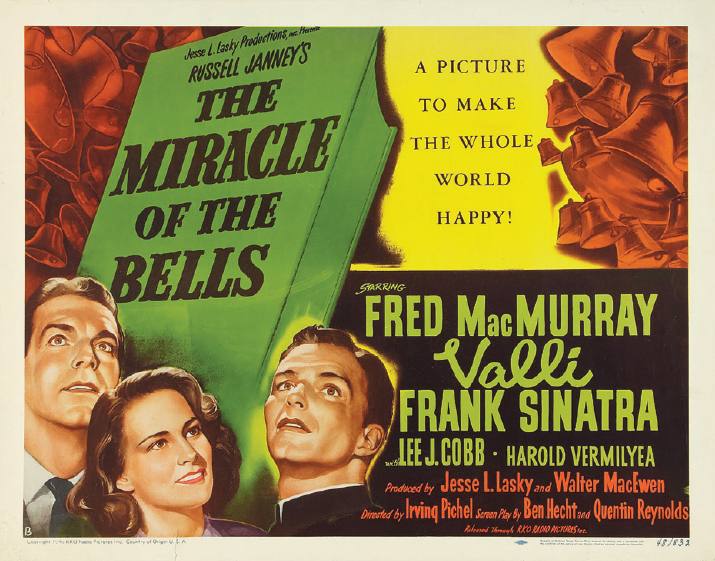
Half sheet poster, The Miracle of the Bells, 1948. / “… Frank considers money of / secondary importance. If memory / serves me correctly, he gave at least / a bulk of his salary for playing the / priest In Miracle of the Bells to / charity.” (Photo: The Cinematic Legacy of Frank Sinatra, David Wills, 2015.)
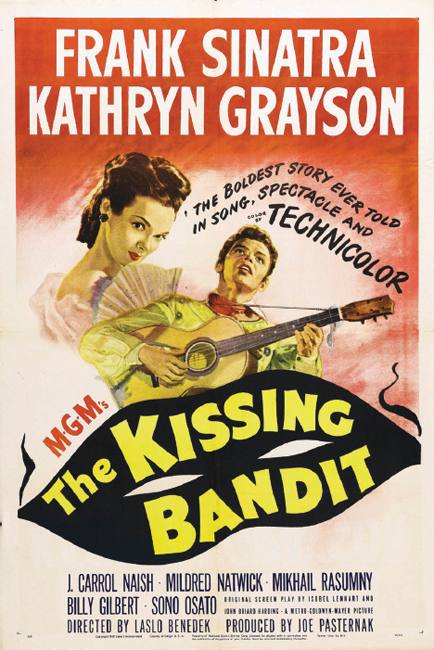
One sheet poster, The Kissing Bandit, 1948. (Photo: The Cinematic Legacy of Frank Sinatra, David Wills, 2015.)
[The Cinematic Legacy of Frank Sinatra — The Kissing Bandit (1948)]
David Wills's 2015 photo history The Cinematic Legacy of Frank Sinatra devotes a section to The Kissing Bandit (1948), illustrated with 1 behind-the-scenes and publicity photograph (posters, lobby cards, and on-set/on-location shots) filed here.
Source: David Wills, The Cinematic Legacy of Frank Sinatra (St. Martin's Press, 2015), p. 55.
Half sheet poster, The Miracle of the Bells, 1948. / “… Frank considers money of / secondary importance. If memory / serves me correctly, he gave at least / a bulk of his salary for playing the / priest In Miracle of the Bells to / charity.” (Photo: The Cinematic Legacy of Frank Sinatra, David Wills, 2015.)
One sheet poster, The Kissing Bandit, 1948. (Photo: The Cinematic Legacy of Frank Sinatra, David Wills, 2015.)
Film
"Miracle of the Bells" (New York City Premiere March 16, 1948)
Starring: Fred MacMurray, Alida Valli, Frank Sinatra, Lee J. Cobb
Produced by: Jesse L. Lasky Jr. and Walter MacEwen
Directed by: Irving Pichel
Granting her final request, a Hollywood press agent (MacMurray) brings the dead body of an actress Olga Treskovna (Valli), who died after making her first and only film, back to her hometown for burial. To arouse public interest, and to get the reluctant studio head to release the film, he asks all the local churches to ring their bells for three days. Sinatra plays Father Paul the priest of the smaller and poorer Polish St. Michael's church where Olga's body is to buried in accordance with Olga's wishes. (DVD & Blu-Ray Release date: 2013-05-14) note: On March 18, 1948, Sinatra recorded a message that was played on KYW radio in Philadelphia. He talked about the wonderful edifice dedicated to four very brave men: Chapel of the Four Chaplains - located in Philly. The four men sacrificed their lives during the war so others could be saved on a sinking ship . They were from different religions but represented the great religious unity during the war. Frank wondered how that sense of unity could be maintained in peace time. He asked the radio audience to send in their answers to "Miracle Of The Bells" in Philadelphia. A distinguished panel would choose the 100 best entries. They winners would attend of a private showing of the film at the KYW Auditorium. The producer of the film, Jesse Lasky, and stars from the film, including Mr. Sinatra, would be attending. Frank also ask the listeners to en- close, in their letters, a contribution to the chapel.* During the filming of "Miracle Of The Bells," a remarkable moment occurred. A woman, who did not speak any English, spotted Frank in his priestly outfit. She walked over, bent in front of him and kissed his ring. Frank did not wish to embarrass her and never let her know he was not a member of the cloth.
* The Sinatra message on KYW is available on "Sinatra In Hollywood" six-CD set. Ed
"Miracle of the Bells" (New York City Premiere March 16, 1948) Daily News (New York, New York) 16 Mar 1948, Tue
The opening credits of the film read: "Jesse L. Lasky Productions, Inc. presents Russell Janney's The Miracle of the Bells ." Contemporary news items add the following information about the production: Lasky and co-producer Walter MacEwen purchased Janney's novel in Oct 1946 for $100,000 plus five percent of the producers' gross up to the first $4,000,000. After $4,000,000, Janney was to receive ten percent of the producers' gross, with no maximum limit set. Four other parties negotiated for the book's screen rights, including William Cagney, who wanted the property as a vehicle for his brother, James Cagney. At that time, Lasky and MacEwen reportedly made James Cagney a "percentage offer" to play the part of "Bill Dunnigan." Janney was announced as the picture's screenwriter at that time. Clark Gable and Cary Grant were also considered for the lead male role. Many actresses were considered for the part of "Olga," including Barbara Bel Geddes, Ingrid Bergman, Jennifer Jones, Joan Fontaine and Greer Garson. In 1946, Bergman appeared as "Joan of Arc" in the Maxwell Anderson stage play Joan of Lorraine . (Ironically, shortly after the release of this film, RKO distributed Joan of Arc , Walter Wanger's screen adaptation of Anderson's play, starring Bergman.) Lasky and MacEwen also considered casting an unknown actress in the part and tested Jana Garth, who also had played "Joan of Arc" on stage, and Ricky Soma, an eighteen-year-old New York ballerina. Maxwell Hamilton, who plays a reporter in the picture, was the editor of Motion Picture magazine. In Feb 1947, John Cromwell was announced as the film's director, but he was replaced by Irving Pichel. Lasky borrowed Pichel from Paramount for the production. Lasky and MacEwen considered doing the picture in Technicolor, but eventually concluded that the story would "work better" in black and white. A reproduction of a Pennsylvania mining town was built at RKO's Forty Acres ranch in Culver City. HR announced in Jun 1947 that a featurette about the making of the film was to be shot and used in movie theaters to advertise the multi-million dollar production. Although the national release of the film coincided with Easter week of 1948, HR announced in Oct 1947 that the film was to be shown in Los Angeles in Dec 1947 in order to qualify for the 1947 Academy Awards. The picture did not receive any Academy Award nominations, however.
In Mar 1948, NYT reported a rumor that the actual contribution of radio personality Quentin Reynolds, who is credited onscreen with Ben Hecht as a screenwriter, was "reading the novel and reporting its contents to Mr. Hecht, the latter having taken the assignment of writing the screenplay on the provision that he didn't have to read the book." According to NYHT , Hecht, a declared Anglophobe, had his name removed from British release prints of the film. In Aug 1948, Raymond Polniaszek, an undertakeer from Glen Lyon, Pennsylvania, sued RKO for $500,000 in damages on the grounds that he had been caricaturized as "Nick Orloff" in the film, according to a LADN article. Polniaszek claimed that he participated in a number of real-life events that were depicted in both the novel and the film, including the burial of a woman named Olga Trotski. The disposition of that suit has not been discovered.
Modern sources add the following information about the production: Before casting Frank Sinatra in the role of "Father Paul," Lasky sought approval from the Catholic Church, which voiced no objections to the performer. Sinatra, who had actively sought the part, then announced his intention to donate his acting salary to the Church. Sinatra's scenes were written by DeWitt Bodeen. Reviewers commented on Sinatra's simple, a capella rendition of the song "Ever Homeward." The film encountered distribution difficulties in England because of a boycott against the films of Ben Hecht. Hecht had made derogatory comments about the presence of Britain in Palestine.[4]The premier for the film is another interesting story. It took place on Friday, March 26, 1948 at the then "Park Theater" on Brownsville Road in the little Coal Mining town of Library, Pennsylvania. Although the movie was not filmed in Library, the town was chosen to host the premier because it "most resembled a typical American mining community, like the one portrayed in the movie." Accompanying the premier, a large motorcade escorted movie stars Charles Coburn, Ruth Warrick and Leo Carrillo into the town of Library. The stars visited the War Memorial just down the road from the theater, where they addressed the enormous crowd of locals who showed up for the pomp and celebration. The theater is still standing today, and over the years has been converted for other uses, such as a Dance Studio and a Boxing Gym.[
Reception[edit]
The Miracle of the Bells was dismissed by critics, and was mentioned in the satirical film book The Golden Turkey Awards, which poked fun at Frank Sinatra's portrayal of Father Paul. Time magazine excoriated the film upon release, declaring in their review that "St. Michael ought to sue".[ In recent decades the film has developed a better reputation due to its realistic portrayal of coal miners in small town America.
Box office
The film recorded a loss of $640,000
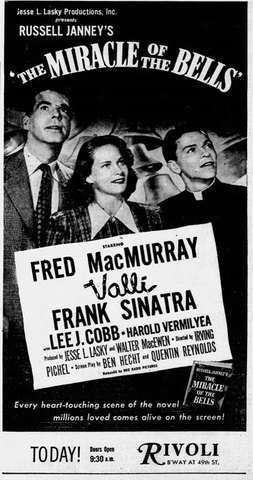
Amid press negativity over his alleged Mafia connections at the time, it was announced that Sinatra would donate his $100,000 salary for playing a priest in The Miracle of the Bells to the Catholic Church. Source: Wikipedia, “Frank Sinatra.”
"The Miracle of the Bells"
The Miracle of the Bells, produced by Jesse Lasky and directed by Irving Pichel at RKO, cast Sinatra in his first nonsinging dramatic role as a parish priest, Father Paul -- reportedly inspired by the hope he might match Bing Crosby's Oscar-winning turn as a priest in Going My Way. It was filmed before The Kissing Bandit but released in March 1948, months earlier.
Source: Tom Santopietro, "Sinatra in Hollywood" (2008).
"The Miracle of the Bells"
The screenplay was co-written by Ben Hecht, Quentin Reynolds, and DeWitt Bodeen, with Bodeen reportedly responsible for Sinatra's specific dialogue; the film is narrated by top-billed Fred MacMurray as press agent Bill Dunnigan.
Source: Tom Santopietro, "Sinatra in Hollywood" (2008).
"The Miracle of the Bells"
Sinatra was billed third in The Miracle of the Bells, his lowest billing since Higher and Higher, reflecting dwindling box office and hostile press around his personal life; to counter the bad press, RKO publicized that Sinatra was donating his $100,000 salary to the Catholic Church.
Source: Tom Santopietro, "Sinatra in Hollywood" (2008).
"The Miracle of the Bells"
An ABC radio poll taken in 1947, the year The Miracle of the Bells was filmed, named Sinatra the second most popular living person, wedged between Bing Crosby and Pope Pius XII.
Source: Tom Santopietro, "Sinatra in Hollywood" (2008).
"The Miracle of the Bells"
Contrary to its reputation, Santopietro argues Sinatra's soft-spoken, underplayed performance as Father Paul is genuinely effective and foreshadows why Frank Capra reportedly kept Sinatra as his first choice to star in a planned (unmade) film about Saint Paul.
Source: Tom Santopietro, "Sinatra in Hollywood" (2008).
"The Miracle of the Bells"
In a widely reported (possibly press-agent-invented) anecdote, the non-English-speaking mother of Sinatra's friend George 'Bullets' Durgom visited the set, mistook Sinatra in costume for an actual priest, and kissed his ring; Sinatra reportedly did not correct her.
Source: Tom Santopietro, "Sinatra in Hollywood" (2008).
"The Miracle of the Bells"
Cue magazine / Hedda Hopper / Philip K. Scheuer: The Miracle of the Bells opened to mostly terrible reviews -- Cue magazine called it 'nauseating' and Hedda Hopper dismissed it as 'a hunk of religious baloney' -- though Los Angeles Times critic Philip K. Scheuer praised Sinatra for wisely not overacting.
Source: Tom Santopietro, "Sinatra in Hollywood" (2008).
"The Miracle of the Bells"
Sinatra told producer Jesse Lasky he would not attend the film's San Francisco premiere, and when contractually forced to attend anyway, deliberately ran up enormous hotel bills in apparent protest.
Source: Tom Santopietro, "Sinatra in Hollywood" (2008).
"The Miracle of the Bells"
Santopietro grades this a C, with Frank playing a priest in a film that's "not great but oddly affecting."
Source: Tom Santopietro, "Sinatra in Hollywood" (2008).
"The Miracle of the Bells"
Santopietro (Filmography): Jesse Larkey Productions/RKO Radio Pictures. Produced by Jesse L. Lasky and Walter MacEwen, directed by Irving Pichel, screenplay by Ben Hecht, Quentin Reynolds and DeWitt Bodeen based on the Russell Janney novel. Sinatra played Father Paul opposite Fred MacMurray, Alida Valli and Lee J. Cobb, singing 'Ever Homeward' (by Jule Styne and Sammy Cahn).
Source: Tom Santopietro, "Sinatra in Hollywood" (2008).
"It Only Happens When I Dance with You" / "A Fella with an Umbrella" Among the earliest Sinatra overdubs (rare for the time), Sinatra dubbed vocals in March 1948 onto orchestra tracks that had been recorded the previous December, likely to solve scheduling problems.
Source: Charles L. Granata, "Sessions with Sinatra: Frank Sinatra and the Art of Recording" (1999/2003).
[The Miracle of the Bells premiere]
Kaplan / Time magazine: The Miracle of the Bells premiered the day before St. Patrick's Day. An RKO production starring Sinatra (on loan from MGM) and Fred MacMurray, it was seen as an attempt to cash in on Bing Crosby's priest pictures; critics including Bosley Crowther and Time panned it, with Time calling Sinatra's performance as Father Paul "flea-bitten."
Source: James Kaplan, "Frank: The Voice" (2010).
March 20, 1948
Radio
Your Hit Parade
Network: NBC
Program #667
Time: 9:00-9:30 P.M.EST (Rebroadcast 9:00-9:30 P.M. PST,10:00-10:30 P.M. PDST)
Sponsor: Lucky Strike
Script (Final As Broadcast)
1. commercial 1
2. Ballerina (6) - Frank Sinatra
3. Love Is Sweeping The Country - Orchestra
4. Beg Your Pardon (7) - Beryl Davis
5. But Beautiful (5) - Frank Sinatra
6. commercial 2
7. Thou Swell - Orchestra
8. Serenade Of The Bells (4) - Hit Paraders
9. Sometimes I'm Happy - Orchestra
10. Manana (3) - Frank Sinatra & Hit Paraders
11. Now Is The Hour (2) - Beryl Davis
12. commercial 3
13. I'm Looking Over A Four Leaf Clover (1) - Frank Sinatra & Hit Paraders
March 25, 1948
On another "Frank Sinatra Day," he appeared as guest DJ for 24 hours of continuous Sinatra songs on New York's WINS, an early version of what would later be called a Sinatrathon. The date also coincided with Nancy Sr.'s birthday, with their daughter Tina due in about ten weeks.
Source: Nancy Sinatra, Frank Sinatra: An American Legend, 1995.
March 27, 1948
Radio
Your Hit Parade
Network: NBC
Program #668
Time: 9:00-9:30 P.M.EST (Rebroadcast 9:00-9:30 P.M. PST,10:00-10:30 P.M. PDST)
Sponsor: Lucky Strike
1. commercial 1
2. Manana (4) - Frank Sinatra & Hit Paraders
3. Strike Up The Band - Orchestra
4. Ballerina (7) - Beryl Davis
5. Easter Parade - Frank Sinatra & Hit Paraders
6. commercial 2
7. Serenade Of The Bells (6) - Hit Paraders
8. Hallelujah - Orchestra
9. But Beautiful (5) - Frank Sinatra
10. Beg Your Pardon (3) - Hit Paraders
11. I'm Looking Over A Four Leaf Clover (2) - Beryl Davis
12. commercial 3
13. Now Is The Hour (1) - Frank Sinatra & Hit Paraders
March 28, 1948
Monte Carlo, New York, NY
Easter Brunch and Millinery Fashion Show
Benefit for the New York Heart Fund
March 28, 1948, at the Copa, Sinatra was "crowned ‘the King of all Crooners’ and, apparently this was broadcast from the Copa on the "Fred Robbins " radio show over WINS-NYC radio
Thanks to Fred W for the above listing.
Sinatra was very busy on March 28, 1948. He also made appearance with Maurice Chevalier at the Golden Theater
Maurice Chevalier And Bojangles Dance
(Original Caption) 3/28/1948- Maurice Chevalier and Bill Robinson dance as Frank Sinatra, atop a piano at right, watches at Golden Theater NY at a benefit for heart fund.
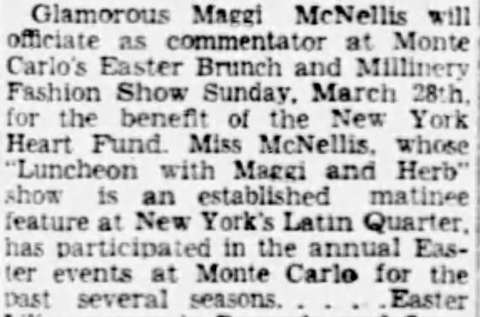
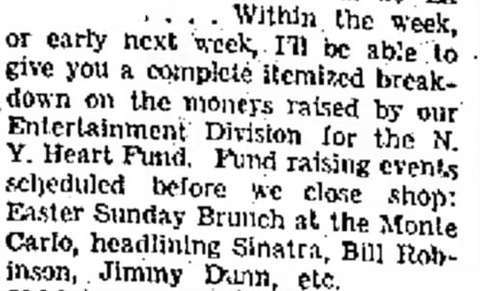
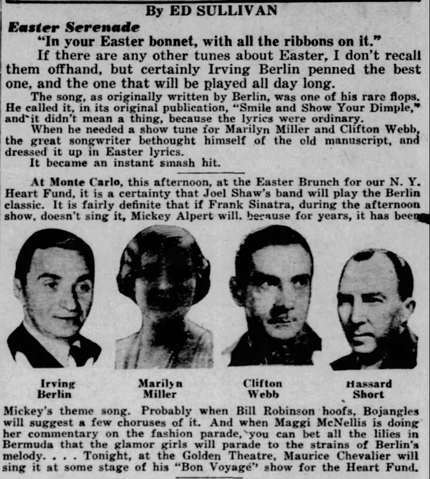
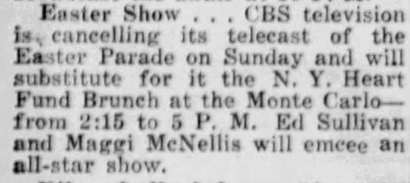
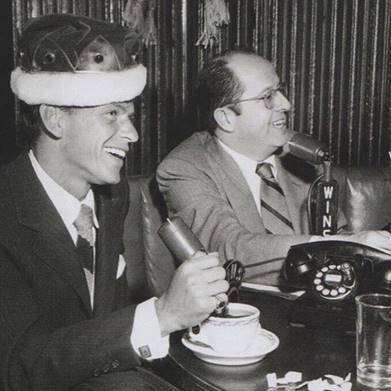
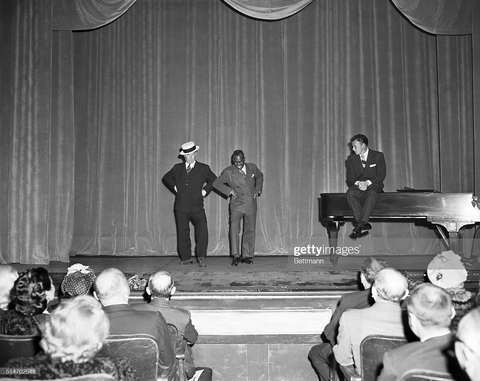
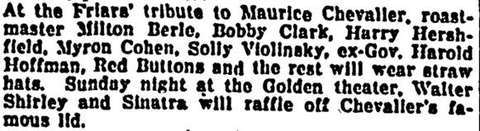
March 29, 1948
Concerts
Broadwood Hotel, Philadelphia, PA
Allied Jewish Appeal Drive
Frank Sinatra, Jesse Lasky, Ruth Warwick, Charles Coburn, Rhonda Flemming, Leo Carrillo
March 30, 1948
Concerts
Broadwood Hotel, Philadelphia, PA
Golden Slipper Square Club
Testimonial Party to Jesse Lasky
Broadwood Hotel, Philadelphia, PA
Golden Slipper Square Club
Testimonial Party to Jesse Lasky
March 31, 1948
Harrisburg, Pennsylvania
Sinatra had to cancel his appearance in a stage show at the Senate Theatre to promote "Miracle of the Bells."
------------------------------------
March 31, 1953
Conquest for Cancer
© 1997-2026 The Sinatra Archive
This calendar, or any parts thereof, may not be reproduced in any fashion whatsoever without the prior written permission of the publisher (The Sinatra Archive)
__._,_.___
[image referenced in source but could not be recovered]
April 3, 1948
Radio
Your Hit Parade
Network: NBC
Program #669
Time: 9:00-9:30 P.M.EST (Rebroadcast 9:00-9:30 P.M. PST,10:00-10:30 P.M. PDST)
Sponsor: Lucky Strike
Script (Final As Broadcast)
1. commercial 1
2. I Get A Kick Out Of You - Frank Sinatra & Hit Paraders
3. Beg Your Pardon (4) - Beryl Davis
4. Fine And Dandy - Orchestra
5. But Beautiful (5) - Frank Sinatra
6. commercial 2
7. Easter Parade (7) - Hit Paraders
8. Just One Of Those Things - Orchestra
9. Serenade Of The Bells (6) - Hit Paraders
10. I'm Looking Over A Four Leaf Clover (3) - Frank Sinatra & Hit Paraders
11. Manana (2) - Beryl Davis & Hit Paraders
12. commercial 3
13. Now Is The Hour (1) - Frank Sinatra & Hit Paraders
April 8, 1948
[Sinatra meets Martin and Lewis at the Copacabana]
Kaplan / Jonathan Van Meter: Skinny D'Amato brought Frank Sinatra to the Copacabana in New York on April 8, 1948, the night Martin and Lewis opened there for the first time, marking Frank's first meeting with the pair.
Source: James Kaplan, "Sinatra: The Chairman" (2015).
April 10, 1948
Studio
Hollywood
HCO3250 Nature Boy -1 (3:18)
w/The Jeff Alexander Choir
(E. Ahbez)
Burke-Van Heusen, Inc./Crestview Music Corp. (ASCAP) 1948
Arranged & Conducted by Jeff Alexander
78: Columbia 38210
LP: Reflections CL 1448
CD: The Columbia Years 1943-1952 C12K 48673
Radio
Your Hit Parade
Network: NBC
Program #670
Time: 9:00-9:30 P.M.EST (Rebroadcast 9:00-9:30 P.M. PST,10:00-10:30 P.M. PDST)
Sponsor: Lucky Strike
1. commercial 1
2. I Only Have Eyes For You - Frank Sinatra & Hit Paraders
3. Sabre Dance (6) - Orchestra
4. Beg Your Pardon (5) - Beryl Davis
5. Haunted Heart (7) - Frank Sinatra
6. commercial 2
7. Who - Orchestra
8. But Beautiful (4) - Frank Sinatra
9. I Know That You Know - Orchestra
10. I'm Looking Over A Four Leaf Clover (3) - Beryl Davis
11. Now Is The Hour (2) - Hit Paraders
12. commercial 3
13. Manana (1) - Frank Sinatra & Hit Paraders
5-16-48
5-16-48
5-11-48
6-1-48
5-15-48
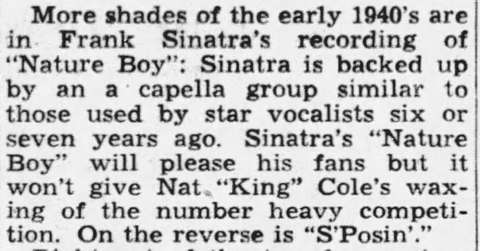
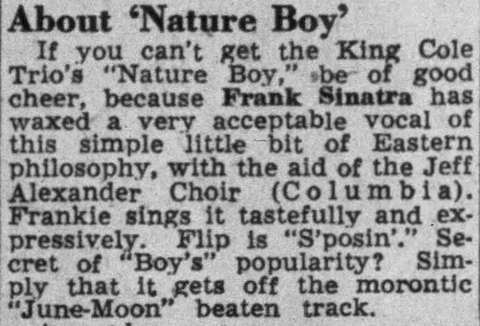
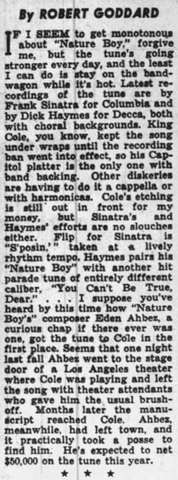
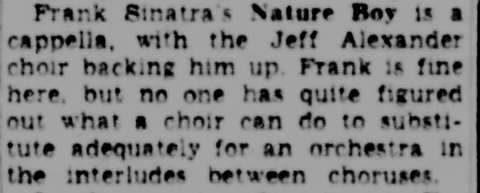
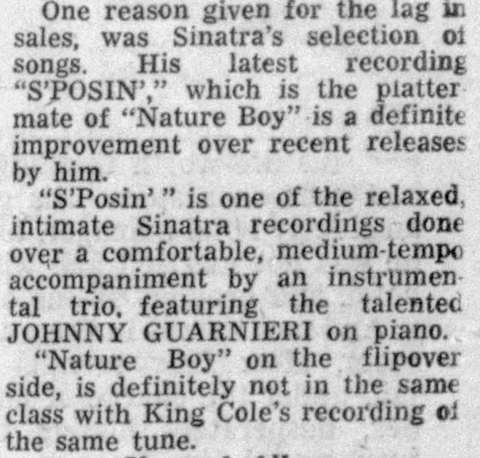
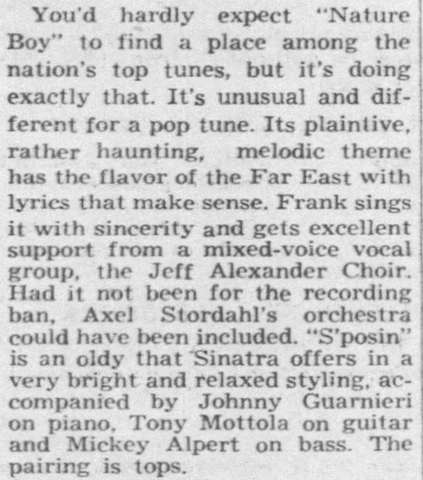
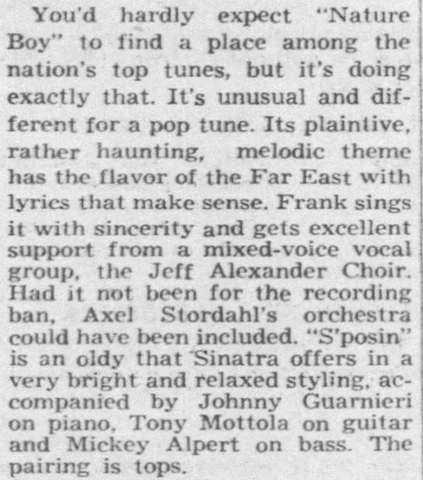
April 16, 1948
Concerts
Del Tahquitz Hotel, Palm Springs, CA
Third Anniversary Party for Chief of Police August Kettman Frank Sinatra sings one song
Del Tahquitz Hotel, Palm Springs, CA
Third Anniversary Party for Chief of Police August Kettman Frank Sinatra sings one song
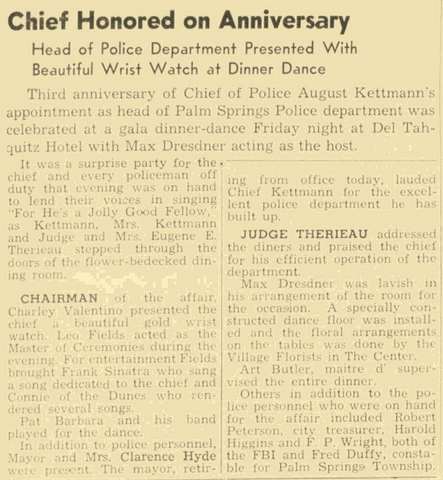
April 17, 1948
Radio
Your Hit Parade
Network: NBC
Program #671
Time: 9:00-9:30 P.M.EST (Rebroadcast 9:00-9:30 P.M. PST,10:00-10:30 P.M. PDST)
Sponsor: Lucky Strike
1. commercial 1
2. Manana (5) - Frank Sinatra & Hit Paraders
3. Broadway Rhythm - Orchestra
4. Baby Face (6) - Beryl Davis
5. But Beautiful (4) - Frank Sinatra
6. commercial 2
7. Oklahoma - Hit Paraders
8. The Dicky-Bird Song (7) - Frank Sinatra & Hit Paraders
9. I Won't Dance - Orchestra
10. Beg Your Pardon (3) - Hit Paraders
11. I'm Looking Over A Four Leaf Clover (2) - Beryl Davis
12. commercial 3
13. Now Is The Hour (1) - Frank Sinatra & Hit Paraders
April 18, 1948
Radio
The Lucky Strike Program Starring Jack Benny
Network: NBC
Sponsor: Lucky Strike
Show: #29 of the 1947-48 series
Time: 7:00pm
Host: Jack Benny
Guests: Charles Farrell, Sam Goldwyn, and Frank Sinatra
Cast: Mary Livingstone, Don Wilson, Dennis Day, Mel Blanc, Bea Benaderet,
Sara Berner, The Sportsmen, Basil Ruysdael (announcer)
Writers: Sam Perrin, George Balzer, John Tackaberry, Milt Josefsberg
Producer By: Hilliard Marks
1. commercial
2. opening
3. first routine - Jack Benny, Mary Livingstone, Don Wilson, Dennis Day, Bea
Benaderet, Sara Berner & Mel Blanc
4.. Now Is The Hour - Dennis Day
5. second routine - Jack Benny, Don Wilson, Dennis Day, Mel Blanc, Charles
Farrel, Mary Livingstone, Samuel Goldwyn & Frank Sinatra
6. Red Cross PSA - Jack Benny
7. commercial
8. closing - Jack Benny, Merry Livingstone & Mel Blanc
Notes: Show from Palm Springs. Sinatra has a small cameo and does not sing.
Audio condition: Very good to excellent. Complete. TT:30mins.
The show appears on the officially released CD set: 60 Greatest Old Time Radio Shows "Frank Sinatra & Friends"
April 24, 1948
Radio
Your Hit Parade
Network: NBC
Program #672
Time: 9:00-9:30 P.M.EST (Rebroadcast 9:00-9:30 P.M. PST,10:00-10: 30 P.M. PDST)
Sponsor: Lucky Strike
Script (Final As Broadcast)
1. commercial 1
2. The Dickey-Bird Song (7) - Frank Sinatra & Hit Paraders
3. Sunny - Orchestra
4. I'm Looking Over A Four Leaf Clover (5) - Beryl Davis & Hit Paraders
5. Take Me Out To The Ball Game - Frank Sinatra & Hit Paraders
6. commercial 2
7. Beg Your Pardon (6) - Hit Paraders
8. That's A 'Plenty - Orchestra
9. Baby Face (4) - Hit Paraders
10. But Beautiful (3) - Frank Sinatra
11. Manana (2) - Beryl Davis & Hit Paraders
12. commercial 3
13. Now Is The Hour (1) - Frank Sinatra & Hit Paraders
April 26, 1948
Radio
American Cancer Society
Network: WJZ
Time: 10:30 PM - 11:00 PM
Bernie Green Orchestra
Guests: Eddie Dowling, Harry Morgan, Frank Sinatra, Jack Benny
American Cancer Society
Network: WJZ
Time: 10:30 PM - 11:00 PM
Bernie Green Orchestra
Guests: Eddie Dowling, Harry Morgan, Frank Sinatra, Jack Benny
Variety
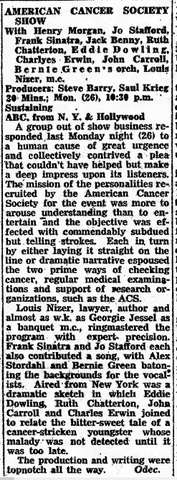
April 27, 1948
RKO Golden Gate, San Francisco, CA
Sinatra was part of a stage show at the San Francisco premiere of “Miracle of the Bells”
© 1997-2026 The Sinatra Archive
This calendar, or any parts thereof, may not be reproduced in any fashion whatsoever without the prior written permission of the publisher (The Sinatra Archive)
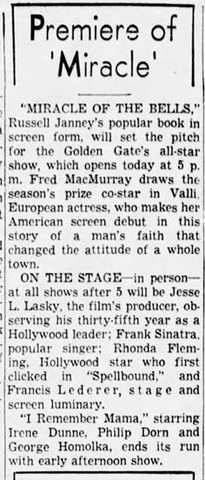
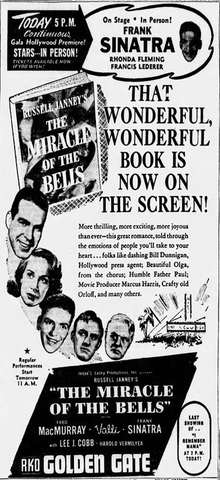
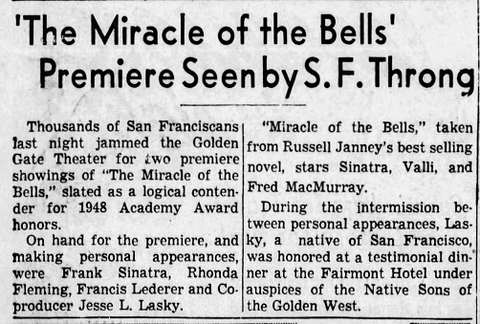
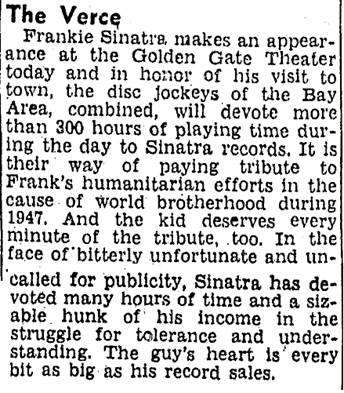
May 1, 1948
Radio
Your Hit Parade
Network: NBC
Program #673
Time: 9:00-9:30 P.M. (Rebroadcast 9:00-9:30 P.M. PST,10:00-10:30 P.M. PDST)
Sponsor: Lucky Strike
1. commercial 1
2. Manana (5) - Frank Sinatra & Hit Paraders
3. You - Orchestra
4. I'm Looking Over A Four Leaf Clover (4) - Beryl Davis
5. Laroo Laroo Lilli Bolero (7) - Frank Sinatra
6. commercial 2
7. Sweet Georgia Brown - Orchestra
8. But Beautiful (6) - Beryl Davis
9. All Of Me - Frank Sinatra
10. Beg Your Pardon (3) - Hit Paraders
11. The Dickey-Bird Song (2) - Beryl Davis
11. commercial 3
12. Now Is The Hour (1) - Frank Sinatra & Hit Paraders
May 2, 1948
Radio
The Lucky Strike Program Starring Jack Benny
Network: NBC
Sponsor: Lucky Strike
Show: #31 of the 1947-48 series
Time: 7:00pm
Host: Jack Benny
Guests: Frank Sinatra
Cast: Don Wilson, Mary Livingstone, Phil Harris, Artie Auerbach, Rochester, Joe Besser, Basil Ruysdael (commercial spokesman), F. E. Boone (tobacco auctioneer), L.. A. Speed Riggs (tobacco auctioneer),
Writers: Sam Perrin, George Balzer, John Tackaberry, Milt Josefsberg
Producer By: Hilliard Marks
Script (Final As Broadcast)
1. opening / commercial
2. first routine - Don Wilson, Jack Benny, Mary Livingstone, Phil Harris, Artie Auerbach
3. The New Look - Phil Harris Orchestra
4. second routine - Jack Benny, Mary Livingstone, Phil Harris, Rodchester, Don Wilson
5. But Beautiful - Frank Sinatra
6. third routine - Frank Sinatra, Mary Livingstone, Jack Benny, Don Wilson, Mel Blanc
7. PSA Spot - Don Wilson
8. commercial
9. closing - Jack Benny, Mel Blanc
Notes: Don wants a new contract. Audio very good to excellent. Complete. TT:30mins.
1948
While performing at the Copacabana, Sinatra was approached at the bar by a stranger who needed a package delivered to the captain of a ship loaded with arms bound for the nascent State of Israel, but couldn't risk being seen doing it himself. Sinatra agreed. The next morning the stranger walked out the club's front door with a satchel, feds trailing him, while Sinatra slipped out the back with a paper bag full of cash, delivered it to the pier, and watched the ship sail. The stranger was Teddy Kollek, later the longtime mayor of Jerusalem. Source: David Lehman, Sinatra's Century.
[A Priest's Ring, Kissed By Mistake]
Nancy Sinatra: While in costume as a priest for The Miracle of the Bells, Frank was introduced on set to a friend's foreign-born mother, who did not recognize him as an actor and knelt to kiss his ring. Not wanting to embarrass her, he let her believe he really was a man of the cloth rather than correct her.
Source: Nancy Sinatra, Frank Sinatra: An American Legend, 1995.
[Birth of Daughter Tina]
Amid an otherwise difficult career stretch, one bright spot for Sinatra was the 1948 birth of his daughter, Tina.
Source: Charles Pignone, "Frank Sinatra 100" (2015).
["Comme Ci Comme Ça" recording session]
Kaplan: In his first post-strike recording session with new arranger/conductor (Sibelius, per text), Sinatra recorded "Comme Ci Comme Ça"; Kaplan notes his voice sounds utterly without conviction, reflecting the erosion of his working relationship with Axel Stordahl.
Source: James Kaplan, "Frank: The Voice" (2010)
[Frank And Ava's Balcony Courtship]
Nancy Sinatra: Sammy Cahn recalled that Frank increasingly stayed overnight at a friend's Hollywood apartment near Ava Gardner's house instead of driving home. He and his songwriting buddies would shout up to her from the balcony until she finally opened a curtain and waved, and Frank soon stopped her on the sidewalk to ask her to dinner, a date that, by her own account, ended in guilty but exhilarating necking.
Source: Nancy Sinatra, Frank Sinatra: An American Legend, 1995.
[The Kids Get Their First Television Set]
In 1948 the family got its first television, a large set with a small screen that Nancy and her brother nicknamed "Mr. Kitla" after their favorite channel, KTLA.
Source: Nancy Sinatra, "Frank Sinatra, My Father" (1985).
[Tina Sinatra Is Born On Father's Day]
Christina "Tina" Sinatra was born on Father's Day, 1948, after her mother went into fast labor during a game of charades and Sinatra drove her to the hospital running red lights along the way.
Source: Nancy Sinatra, "Frank Sinatra, My Father" (1985).
['The Miracle of the Bells' released]
Kaplan: As part of a loan-out arrangement stemming from the old RKO contract, Sinatra appeared in The Miracle of the Bells, released in 1948 and considered one of his weaker films.
Source: James Kaplan, "Frank: The Voice" (2010)
[Barbara Blakeley's first beauty contest]
Betsy Duncan Hammes: After her family moved to Long Beach, California, twenty-year-old Barbara Blakeley entered and won her first beauty contest; runner-up Betsy Duncan Hammes recalled her as 'really tall and absolutely gorgeous.'
Source: James Kaplan, "Sinatra: The Chairman" (2015)
[Columbia introduces the 33 1/3 rpm LP]
Kaplan: Columbia introduced the first 33 1/3 rpm long-playing album format in 1948, allowing eight songs on a single ten-inch vinyl disc.
Source: James Kaplan, "Sinatra: The Chairman" (2015)
[Down Beat poll: Sinatra falls to number four]
Kaplan: Down Beat's year-end poll for Best Male Singer, which Sinatra had topped every year since 1943, ranked him fourth in 1948, behind Billy Eckstine, Frankie Laine, and Bob Crosby.
Source: James Kaplan, "Frank: The Voice" (2010)
[Filming It's Only Money with Groucho and Jane Russell]
Arthur Marx / Jane Russell / Kaplan: During the three-week shoot of It's Only Money, Sinatra clashed with Groucho Marx (who resented Frank showing up late and unprepared, per Groucho's son Arthur) but got along well with co-star Jane Russell, who recalled him as polite and a perfect gentleman; Ava reportedly sat in the sound booth for much of the shoot. The film was so poorly regarded that RKO withheld release until 1951, retitling it Double Dynamite.
Source: James Kaplan, "Frank: The Voice" (2010)
[First Sinatra-Gardner date at Mocambo]
Ava Gardner / Kaplan: After a few chance encounters on the sidewalk, Frank invited Ava to drinks and dinner; they went to the Mocambo on the Sunset Strip. Ava later wrote that she was drawn to him despite knowing he was married, describing his voice as ranking with Judy Garland's and Maria Callas's in its emotional effect on her.
Source: James Kaplan, "Frank: The Voice" (2010)
[Frank hosts Light Up Time radio show]
Consiglio: Frank hosted the daily fifteen-minute radio program Light Up Time from the late 1940s until 1952.
Source: Tony Consiglio (as told to Franz Douskey), "Sinatra and Me: The Very Good Years" (2012)
[George Evans signs Martin and Lewis]
Consiglio: In 1948, publicist George Evans -- who had earlier built Sinatra's image and reportedly coined "The Voice" -- became the press agent for the new comedy team of Dean Martin and Jerry Lewis, quickly making them hugely popular through radio, movies, and television.
Source: Tony Consiglio (as told to Franz Douskey), "Sinatra and Me: The Very Good Years" (2012)
[Governess Georgie Hardwick hired]
Kaplan / Gary Crosby / Gary Giddins: Georgie Hardwick, a strict Irish Catholic disciplinarian formerly the Bing Crosby children's nurse (known for beating them with wire coat hangers per Gary Crosby's memoir), was fired by Bing Crosby and immediately hired by Frank Sinatra as governess for his children.
Source: James Kaplan, "Frank: The Voice" (2010)
[Hedda Hopper and Life panning Sinatra films]
Hedda Hopper / Life magazine / Kaplan: Hedda Hopper called The Miracle of the Bells "a hunk of religious baloney." In its year-end movie wrap-up, Life magazine chose Sinatra's cameo singing "Ol' Man River" in Till the Clouds Roll By as the worst single moment in any picture of the previous year.
Source: James Kaplan, "Frank: The Voice" (2010)
[Lucky Strike Salesman's Movie]
Santopietro grades this C, calling the short film "a true oddity."
No corresponding dated entry could be identified in the chronology for this film/context.
Source: Tom Santopietro, "Sinatra in Hollywood" (2008), Career Scorecard
[Lucky Strike Salesman's Movie 48-A]
In one of the strangest entries in his filmography, Sinatra appeared in a ten-minute promotional short for the American Tobacco Company, Lucky Strike Salesman's Movie 48-A, singing 'Embraceable You' with the Lucky Strike Quartette.
No corresponding dated entry could be identified in the chronology for this film/context.
Source: Tom Santopietro, "Sinatra in Hollywood" (2008), All Over the Map
[MGM loans Sinatra to RKO for It's Only Money]
Kaplan: Following the Sacramento no-show, MGM exercised its annual option to loan Sinatra's services to another studio; in November he was to report to RKO to film It's Only Money with Jane Russell and Groucho Marx.
Source: James Kaplan, "Frank: The Voice" (2010)
[Nancy Sandra's memory of a Twin Palms weekend]
Nancy Sinatra Jr. / Kaplan: Nancy Sinatra Jr. later recalled a Palm Springs weekend when she and her brother were driven out by song plugger Sam Weiss to see their father, with the plan that Sam would then drive the children home so their parents could be alone. Nancy Jr. cried inconsolably at being sent away, prompting Frank to tell Big Nancy to go with the kids instead; Big Nancy cried quietly in the car on the way home, which shocked young Nancy since she had never seen her mother cry.
Source: James Kaplan, "Frank: The Voice" (2010)
[Purchase of 320 North Carolwood Drive]
Kaplan: The Sinatras bought a house at 320 North Carolwood Drive in Holmby Hills, a Mediterranean-style estate on three acres costing roughly a quarter of a million 1948 dollars, moving among neighbors like Loretta Young, Walt Disney, and Humphrey Bogart.
Source: James Kaplan, "Frank: The Voice" (2010)
[Sammy Cahn terrace anecdote, first meeting Ava]
Sammy Cahn / Kaplan: At Sinatra's Sunset Tower penthouse, Sammy Cahn pointed out that Ava Gardner lived in a house across the street. Frank and Sammy drunkenly yelled her name from the terrace, and Ava opened her window and waved back, recognizing Sinatra's voice.
Source: James Kaplan, "Frank: The Voice" (2010)
[San Francisco premiere bender for Miracle of the Bells]
Kaplan: Forced by producer Jesse Lasky to attend the San Francisco premiere of The Miracle of the Bells, Sinatra went in "full Monster mode": he ordered 88 Manhattans from room service that sat untouched for three days, had a piano delivered at 4am, threw an all-night party, and bought $1,200 worth of cashmere clothing for each of three friends, all charged to the studio. He then took a $1,100 limousine from San Francisco to Palm Springs when fog grounded flights.
Source: James Kaplan, "Frank: The Voice" (2010)
[Sinatra and Dean Martin first meet]
Kaplan: Sinatra and Dean Martin first met when Frank introduced Martin and his partner Jerry Lewis to the audience at the pair's Copacabana premiere.
Source: James Kaplan, "Sinatra: The Chairman" (2015)
[Sinatra and Gardner's first night together]
Ava Gardner / Kaplan: After dinner and drinks, Frank took Ava to an apartment (not his own); they kissed on the couch but did not sleep together. Ava stopped him when he tried to unzip her dress, calling him "Francis" -- a name no one had used for him before. Neither slept that night, and it would be months before they saw each other again.
Source: James Kaplan, "Frank: The Voice" (2010)
[Sinatra begins wearing on-film hairpiece]
Kaplan: Sinatra began wearing a hairpiece for film roles as early as 1948's The Kissing Bandit, though he wasn't yet solvent or comfortable enough to wear one off-camera in everyday life.
Source: James Kaplan, "Frank: The Voice" (2010)
[Sinatra family Christmas card]
Nancy Sinatra Sr. / Kaplan: Big Nancy recalled that Christmas 1948 wasn't very happy but that the family's Christmas card was among the cutest she'd seen: a cartoon tree with photos of family members in ornaments, with Frank pictured alone in his own globe, apart from the rest of the family.
Source: James Kaplan, "Frank: The Voice" (2010)
[Sinatra skips Sacramento governors' event]
Kaplan: Louis B. Mayer asked Sinatra, as a favor, to sing for the National Conference of State Governors in Sacramento, with Governor Earl Warren providing a private plane -- a favor meant to help Sinatra's image amid the HUAC era. Sinatra instead sneaked off the MGM lot hidden under boxes on a pickup truck, forcing Mayer to wire the governor's office that Sinatra had fallen ill.
Source: James Kaplan, "Frank: The Voice" (2010)
[Sinatra's MGM salary and tax troubles]
Sheilah Graham / Kaplan: MGM paid Sinatra $325,833 in 1948, but he continued spending faster than he earned and fell behind on his income tax; columnist Sheilah Graham estimated in her year-end wrap-up that he had made $11 million over the previous six years yet couldn't save any of it.
Source: James Kaplan, "Frank: The Voice" (2010)
[Sinatra's failed bid for a delinquent role]
Kaplan: Wanting to update his boyish image in 1948, Sinatra tried out for a delinquent role in Knock on Any Door but was judged too old to play a juvenile.
Source: James Kaplan, "Frank: The Voice" (2010)
[Sparse 1948 recording output]
Kaplan: During the AFM strike year, Sinatra went into the studio only twice, laying down three sides total: two later released with overdubbed orchestral backing, and a version of "Nature Boy" with a choir, considered far inferior to Nat Cole's pre-strike recording.
Source: James Kaplan, "Frank: The Voice" (2010)
[The Kissing Bandit photographed with sideburns]
Kaplan: A production photo shows Sinatra in a toupee and fake sideburns, looking embarrassed, in the 1948-released film The Kissing Bandit.
Source: James Kaplan, "Frank: The Voice" (2010)
[Twin Palms completed, over budget]
Kaplan: The Palm Springs house Twin Palms was finished on schedule but wound up costing $150,000 -- five times the original estimate -- a huge sum in 1948.
Source: James Kaplan, "Frank: The Voice" (2010)
[personal life]
Daughter Tina Sinatra was born June 20, 1948; the marriage to first wife Nancy ultimately could not survive Sinatra's affair with Ava Gardner and his rising fame. Santopietro notes that despite Sinatra's frequent absence as a father, all three children (Nancy Jr., Frank Jr., Tina) remained notably clear-eyed rather than blindly idolizing him.
No corresponding dated entry could be identified in the chronology for this film/context.
Source: Tom Santopietro, "Sinatra in Hollywood" (2008), The Boy Next Door / A Paesano Onscreen
[personal life]
Amid Sinatra's mounting career and press troubles, daughter Tina Sinatra was born on June 20, 1948 -- described as the one bright spot of that period.
No corresponding dated entry could be identified in the chronology for this film/context.
Source: Tom Santopietro, "Sinatra in Hollywood" (2008), All Over the Map
[Amateur Hour revived on ABC Radio]
The Amateur Hour was revived on ABC Radio in 1948, later moving to television, both times hosted by Ted Mack, who had been a talent scout and director under Bowes.
Source: Richard Havers, "Sinatra" (Dorling Kindersley, 2007).
[Ampex releases first tape recorder]
In 1948 the obscure Californian manufacturer Ampex released its first tape recorder, based on the German Magnetophon design; its 300 and 350 models soon became the industry standard for recording studios.
Source: Richard Havers, "Sinatra" (Dorling Kindersley, 2007).
[Bandleader Jan Savitt dies; singer Bon Bon vanishes]
Russian-born bandleader Jan Savitt, whose band featured the unusually named vocalist Bon Bon, died in 1948. Bon Bon, who had also appeared in several movies with the band, was reportedly never heard from again afterward.
Source: Richard Havers, "Sinatra" (Dorling Kindersley, 2007).
[Jenkins finds solo success and signs the Weavers to Decca]
After signing to Decca in 1948, Gordon Jenkins had his own first hit, 'Maybe You'll Be There,' reaching No. 3 that summer, and later persuaded the label to sign the folk group the Weavers.
Source: Richard Havers, "Sinatra" (Dorling Kindersley, 2007).
[Martin and Lewis sign to Capitol, debut on film]
Dean Martin and Jerry Lewis signed to Capitol Records in 1948, the same year their comedy duo made its film debut in My Friend Irma, with Jerry playing the comic and Dean the straight man.
Source: Richard Havers, "Sinatra" (Dorling Kindersley, 2007).
[Peggy Lee ranks second only to the Andrews Sisters]
By the end of 1948, Peggy Lee's chart success placed her second only to the Andrews Sisters among the era's biggest recording stars.
Source: Richard Havers, "Sinatra" (Dorling Kindersley, 2007).
[Anti-Communist Broadcast to Italy]
Sinatra took part in an anti-Communist radio broadcast to Italy, organized at the request of a Truman administration aide ahead of Italy's April 1948 elections.
Source: George Carpozi Jr., Frank Sinatra: Is This Man Mafia? (New York: Manor Books, 1979).
[Christmas Songs by Sinatra -- critical commentary]
Granata lists this Axel Stordahl-arranged Christmas album, released as a 78 rpm set (C-167) and 10-inch LP (CL-6019) in October 1948, including 'White Christmas,' 'Jingle Bells,' and 'Have Yourself a Merry Little Christmas.'
Source: Charles L. Granata, "Sessions with Sinatra: Frank Sinatra and the Art of Recording" (1999/2003), Afterword & Appendices A-D
[The Woody Woodpecker Song -- critical commentary]
Frank Sinatra (off-mic aside, quoted by Friedwald): As 'The Woody Woodpecker Song' climbed the charts in spring 1948, Sinatra dreaded doing it; on the June 26, 1948 broadcast he can be heard exclaiming under the intro, 'I just couldn't do it!' But once the song hit #1 on the July 10, 1948 show, he had no choice and performed it with the vocal group.
Source: Will Friedwald, "Sinatra! The Song Is You: A Singer's Art" (2018 revised edition), Ch. 5, "In-Between Years" (1948-1953)
[album history -- critical commentary]
George Avakian: Producer George Avakian deliberately made Columbia's very first pop LP (catalog #6001) a Sinatra record -- a reissue of the 1945 78rpm album set The Voice of Frank Sinatra -- because Sinatra was the label's best-selling and most important pop artist at the time; it hit the market as a 10-inch LP on June 28, 1948.
Source: Charles L. Granata, "Sessions with Sinatra: Frank Sinatra and the Art of Recording" (1999/2003), Part II: The Columbia Years, 1943-1952
[album history/industry background -- critical commentary]
Columbia introduced the vinyl 33 1/3 rpm 'Long Playing' (LP) record in 1948, developed at CBS Labs by Rene Snepvangers and Howard Chinn under Peter Goldmark and later led to completion by engineer William S. Bachman (hired 1947), producing microgroove discs of 250-400 grooves per inch versus standard 78 shellac discs.
Source: Charles L. Granata, "Sessions with Sinatra: Frank Sinatra and the Art of Recording" (1999/2003), Part II: The Columbia Years, 1943-1952
[industry background -- critical commentary]
Granata / Ted Wallerstein: Columbia publicly announced the LP format at a June 20, 1948 press demonstration at New York's Waldorf Astoria, playing a 78 rpm record until it broke mid-track and then the same recording uninterrupted on LP to a rapturous reception. The format was introduced to Columbia's distributors and dealers in Atlantic City on June 28, 1948.
Source: Charles L. Granata, "Sessions with Sinatra: Frank Sinatra and the Art of Recording" (1999/2003), Part II: The Columbia Years, 1943-1952
[studio -- critical commentary]
CBS-TV took over half of the Liederkranz Hall facility in early 1948 to build television studios, permanently destroying the room's acoustic ambience that had made it a favorite of producers and engineers.
Source: Charles L. Granata, "Sessions with Sinatra: Frank Sinatra and the Art of Recording" (1999/2003), Part II: The Columbia Years, 1943-1952
May 8, 1948
Radio
Your Hit Parade
Network: NBC
Program #674
Time: 9:00-9:30 P.M. (Rebroadcast 9:00-9:30 P.M. PST,10:00-10:30 P.M. PDST)
Sponsor: Lucky Strike
1. commercial 1
2. Laroo, Laroo, Lilli Bolero (6) - Frank Sinatra
3. Zing, Went The Strings Of My Heart - Orchestra
4. Beg Your Pardon (7) - Beryl Davis
5. Baby Face (4) - Hit Paraders
6. commercial 2
7. Beer Barrel Polka - Hit Paraders
8. But Beautiful (5) - Frank Sinatra
9. Crazy Rhythm - Orchestra
10. The Dickey-Bird Song (3) - Frank Sinatra & Hit Paraders
11. Manana (2) - Beryl Davis & Hit Paraders
12. commercial 3
13. Now Is The Hour (1) - Frank Sinatra
Notes: Originally the Hit Paraders were to accompany Frank Sinatra on "Laroo, Laroo, Lilli Bolero." Complete 30mins.
May 12, 1948
Radio
Duffy's Tavern
Sponsor: Vitalis
Time: 9:00 p.m. - 9:30 p.m.
Network: NBC
Performers: Ed Gardner (Archie), actor; Frank Sinatra, actor, vocalist.
1. I’ve Got A Crush On You
[image referenced in source but could not be recovered]
[image referenced in source but could not be recovered]
Duffy's Tavern
Sponsor: Vitalis
Time: 9:00 p.m. - 9:30 p.m.
Network: NBC
Performers: Ed Gardner (Archie), actor; Frank Sinatra, actor, vocalist.
Frank and Ed Gardner May 12, 1948
[image referenced in source but could not be recovered]
[image referenced in source but could not be recovered]
[image referenced in source but could not be recovered]
[image referenced in source but could not be recovered]
May 15, 1948
Radio
Your Hit Parade
Network: NBC
Program #675
Time: 9:00-9:30 P.M. (Rebroadcast 9:00-9:30 P.M. PST,10:00-10:30 P.M. PDST)
Sponsor: Lucky Strike
Script (Final As Broadcast)
1. commercial 1
2. Laroo, Laroo, Lilli Bolero (5) - Frank Sinatra
3. Anything Goes - Orchestra
4. Toolie Oolie Doolie (4) - Beryl Davis & Hit Paraders
5. Sabre Dance (6) - Orchestra
6. commercial 2
7. Deep In The Heart Of Texas - Hit Paraders
8. Haunted Heart (7) - Frank Sinatra
9. Jersey Bounce - Orchestra
10. The Dickey-Bird Song (3) - Frank Sinatra & Hit Paraders
11. Baby Face (2) - Beryl Davis
12. commercial 3
13. Now Is The Hour (1) - Frank Sinatra & Hit Paraders
May 22, 1948
Radio
Your Hit Parade
Network: NBC
Program #676
Time: 9:00-9:30 P.M. (Rebroadcast 9:00-9:30 P.M. PST,10:00-10:30 P.M. PDST)
Sponsor: Lucky Strike
Script (Final As Broadcast)
1. commercial 1
2. Laroo, Laroo, Lilli Bolero (6) - Frank Sinatra
3. Why - Orchestra
4. Baby Face (4) - Hit Paraders
5. Toolie Oolie Doolie (5) - Beryl Davis & Hit Paraders
6. commercial 2
7. Alexander's Ragtime Band - Hit Paraders
8. Haunted Heart (7) - Frank Sinatra
9. I Got Rhythm - Orchestra
10. The Dickey-Bird Song (3) - Frank Sinatra & Hit Paraders
11. Now Is The Hour (2) - Beryl Davis
12. commercial 3
13. Nature Boy (1) - Frank Sinatra & Hit Paraders
May 29, 1948
Radio
Your Hit Parade
Network: NBC
Program #677
Time: 9:00-9:30 P.M. (Rebroadcast 9:00-9:30 P.M. PST,10:00-10:30 P.M. PDST)
Script (Final As Broadcast)
1. commercial 1
2. You Can't Be True Dear (5) - Frank Sinatra & Hit Paraders
3. Chicago - Orchestra
4. Toolie, Oolie, Doolie (4) - Beryl Davis & Hit Paraders
5. Laroo, Laroo, Lilli Bolero (7) - Frank Sinatra
6. commercial 2
7. Jingle, Jangle, Jingle - Hit Paraders
8. Haunted Heart (6) - Frank Sinatra & Hit Paraders
9. I Love Louisa - Orchestra
10. Baby Face (3) - Hit Paraders
11. Now Is The Hour (2) - Beryl Davis
12. commercial 3
13. Nature Boy (1) - Frank Sinatra & Hit Parader
Ed O"Brien points out that Sinatra never recorded the Schwartz/Hart tune, Haunted Heart,"ť but he obviously loved the song. He sang it on Your Hit Parade 10 times out of the 12 times the song made appearances on the show.
Command Performance Program
M.C.: Bob Hope
Announcer: Ken Carpenter
Guests: Dinah Shore, Ticker Freeman, Frank Sinatra, Claudette Colbert, Jimmy Durante, Ronald Colman, Betty Hutton, Jack Benny, Dennis Day, Sara Berner, Rita Hayworth, Bing Crosby, Jerry Colonna.
Notes: The sixth anniversary show. A program assembled from previous broadcasts.
Frank's segments are from C.P. 204 and 123. On the former he sang "Nancy" ( air date 1-13-46 ) and on the latter he sang "If I Had My Way" with Crosby, Hope and Jerry Colonna ( air date 6-3-44). --Ed
Spotlight on Sports
Sustaining Via ABC
Sinatra, interviewed in Chicago, told about his early beatings as an amateur boxer, and how he gave up his interest in Tami Mauriello, who "had a phobia against sticking to the rules."
Winner Take All Spotlight on Sports
Sustaining Via ABC
RADIO-TELEVISISON 1948
Winner Take All Spotlight on Sports
Reviewed May 29
Sustaining Via ABC
Producer, Mike Roshkind; director, Walter Scanlon; announcer-writer, Gene
Kirby.
(Sustaining) None
Sportscaster Gene Kirby has a
couple of good wrinkles in this new
sportscast, aired weekly over American Broadcasting Company
(ABC) following broadcast of the horse races on Saturdays. Kirby
packs three interviews with name personalities, plus
one sports yarn, into the 15 minutes, and the show moves
swiftly and colorfully along as a consequence. The interviews are
sometimes transcribed, depending upon availability of the interviewees.
He leads off with the announcement that he spouts no scores of events, but
rather, dishes out material for the entire family. He makes good on
promise. Interviews on the stanza caught were Frankie Frisch, now a
sportscaster himself; sports columnist Frank
Graham and singer Frank Sinatra.
Frisch detailed the events surrounding a great double play in which he
had a hand in the last game of the 1921 World Series, when he was a
rookie. Graham described graphically the ferocious Dempsey-Firpo fight,
in which Dempsey was dumped into the laps of the sports writers. Sinatra,
interviewed in Chicago, told about his early beatings as an amateur boxer,
and how he gave up his interest in Tami Mauriello, who "had
a phobia against sticking to the rules." The interviews all were bright,
snappy and informative, and had the ring of authenticity, thruout.
Last feature on the program, a believe-it-or-not sort of yarn about
death and World Series, was clever and fascinating in a gruesome sort
of way, but rather strongly written and a bit over-dramatic. The story
dealt with the coincidence by which three pitchers, slated to start series
games since 1935, had a death in their immediate families the morning
of the games, nevertheless, pitched the best series games of their careers.
The clincher was a fourth such case, back in 1882, when a Cincinnati
pitcher, meeting with this misfortune, withdrew from the game. His substitute
was so badly pummelled that he quit baseball and entered politics, later to
become president-William Howard Taft .Kirby's show offers something a
bit off the beaten sports path 'and should fare well in its current slot, where
it automatically picks up an audience of sports fans.
Sam Chase.
Billboard
Thanks to Ed O for the above entry
May 31, 1948
Radio
Lux Radio Theater
"The Miracle Of The Bells"
CBS
9:00 - 10:00 p.m.
Monday Evening
William Keighley (host)
Starring: Frank Sinatra, Fred MacMurray, Valli, Jeff Chandler, Gerald Mohr, Lawrence Dobkin, Carlton Kadell, George Neise, Jack Carrington, William Johnstone, Herb Butterfield, Veronica Pataky, Howard McNear, Norman Field, Virginia Apollo,
Announcer: John Milton Kennedy
Music Director: Louis Silvers
Commercial Spokeman: Dorothy Lovett
Guest at intermission: Jean Ruth
Screen Writers: Ben Hecht, Quentin Reynolds
Author: Russell Janney
Adaptor: Sanford Barnett
Directed By: Fred MacKaye
Sound Effects: Charlie Forsyth
Notes: Radio version of movie 60 mins, Excellent. Complete. Film was released March 17, 1948
Ed O'Brien says that this 1948 Lux Radio show really doesn't do much for "Miracle of the Bells." Sinatra was badly miscast and the story really drags.
Lux Radio Theater
"The Miracle Of The Bells"
CBS
9:00 - 10:00 p.m.
Monday Evening
William Keighley (host)
Starring: Frank Sinatra, Fred MacMurray, Valli,
The Lux Radio Theatre. May 31, 1948. CBS network.
"The Miracle Of The Bells". Sponsored by: Lux.
A religious melodrama about a newly deceased movie star whose body is brought back to her Pennsylvania home town.
Jeff Chandler, Gerald Mohr, Lawrence Dobkin, Carlton KaDell (doubles), George Neise, Jack Carrington, Frank Sinatra,
William Keighley (host),
John Milton Kennedy (announcer),
Louis Silvers (music director),
William Johnstone, Herb Butterfield, Veronica Pataky, Howard McNear, Fred MacMurray, Alida Valli (billed as "Valli"), Norman Field, Virginia Apollo, Dorothy Lovett (commercial spokesman: as "Libby"),
Jean Ruth (intermission guest),
Ben Hecht (screenwriter), Quentin Reynolds (screenwriter), Russell Janney (author),
Fred MacKaye (director),
Sanford Barnett (adaptor),
Charlie Forsyth (sound effects).
1 hour
June 5, 1948
Radio
Your Hit Parade
Network: NBC
Program #678
Time: 9:00-9:30 P.M. (Rebroadcast 9:00-9:30 P.M. PDST 8:00-8:30 P.M. PST)
Sponsor: Lucky Strike
Script (Final As Broadcast)
1. commercial 1
2. Laroo, Laroo, Lilli Bolero (7) - Frank Sinatra
3. Sunny Side Up - Orchestra
4. Baby Face (4) - Beryl Davis
5. Sabre Dance (6) - Orchestra
6. commercial 2
7. June Is Bustin' Out All Over - Hit Paraders
8. Haunted Heart (5) - Frank Sinatra & Hit Paraders
9. Lady In Red - Orchestra
10. Now Is The Hour (3) - Frank Sinatra
11. You Can't Be True, Dear (2) - Beryl Davis
12. commercial 3
13. Nature Boy (1) - Frank Sinatra & Hit Paraders
June 6, 1948
Radio
Hollywood Star Preview #37
Frank Sinatra Presents Betsy Blair
4:30 p.m.-- (WMAQ)
(on WIBA at 5:30).
Note: Hollywood Star Theatre, sponsored by Anacin, ran for four season on NBC radio from 1947 thru 1950.
Every week an established star would introduce an up and coming talent on this radio drama series. Usually the star would appear in the story with the newcomer. Sinatra was on two shows during the series run. His first appearance took place on Sunday afternoon, June 6, 1948. Frank introduced Betsy Blair, aka Mrs. Gene Kelly. His second appearance was on Saturday evening March 5, 1949 with Teresa Celli as the promising starlet. The announcer was Ken Peters throughout the series run... The LOC has the 3-5-49 and probably the 6-6-48 as well. There are only a few shows in circulation among collectors.
Hollywood Star Preview #37
Frank Sinatra Presents Betsy Blair
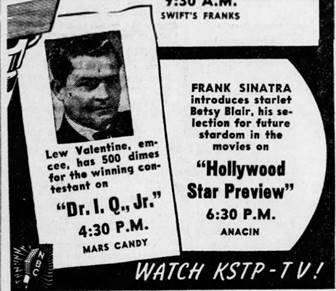
June 12, 1948
Radio
Your Hit Parade
Network: NBC
Program #679
Time: 9:00-9:30 P.M. (Rebroadcast 9:00-9:30 P.M. PDST 8:00-8:30 P.M. PST)
Sponsor: Lucky Strike
Script (Final As Broadcast)
1. commercial 1
2. The Dickey-Bird Song (6) - Frank Sinatra & Hit Paraders
3. Flying Down To Rio - Orchestra
4. You Can't Be True, Dear (4) - Beryl Davis
5. There's No Business Like Show Business - Frank Sinatra & Hit Paraders
6. commercial 2
7. Sabre Dance (5) - Orchestra
8. Haunted Heart (7) - Frank Sinatra & Hit Paraders
9. Get Happy - Orchestra
10. Baby Face (3) - Hit Paraders
11. Toolie Oolie Doolie (2) - Beryl Davis & Hit Paraders
12. commercial 3
13. Nature Boy (1) - Frank Sinatra & Hit Paraders
Television
None
June 14, 1948
Concerts
Hollywood Palladium, Los Angeles, CA
L.A. Press Club Anniversary Ball
Frank Sinatra, Harry James, Jimmy Durante, Mickey Rooney, Marie Wilson and others
Hollywood Palladium, Los Angeles, CA
L.A. Press Club Anniversary Ball
Frank Sinatra, Harry James, Jimmy Durante, Mickey Rooney, Marie Wilson and others
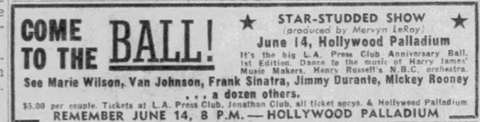
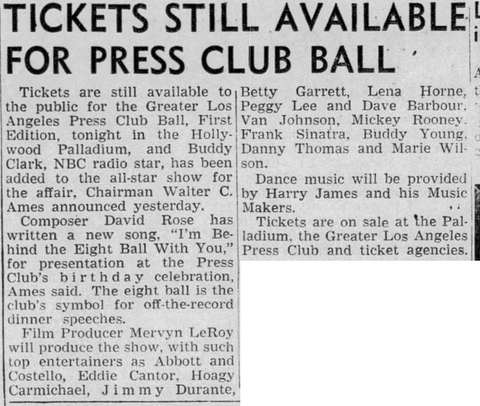
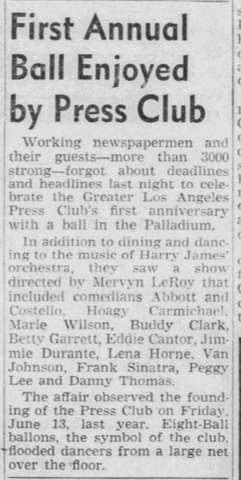
June 15, 1948
Concerts
Mead Auditorium, John Muir College, Pasadena, CA
Frank Sinatra and Peggy Lee shared billing
Mead Auditorium, John Muir College, Pasadena, CA
Frank Sinatra and Peggy Lee shared billing
The Hippodrome, Bristol, June 15, 1953
Fan Betty Bowden saw the Bristol concert - the only time he appeared in the city - and then excitedly followed him to Frenchay.
She said: 'I remember that his popularity was at an all time low and the
Hippodrome was half empty (or half full if you are an optimist).
'He came out on the stage, looked around at all the empty seats and wanted to know where the 'Big Brass Band' was playing.
Fan Betty Bowden saw the Bristol concert at the Hippodrome (pictured) which still stands today - the only time he appeared in the city - and then excitedly followed him to Frenchay hospital
'After being used to packed theatres, with young women screaming and swooning over him, you would think he would be a bit put out, but not a bit.
'He gave us a night to remember, singing song after song to great applause.
'He was asked if he would visit Frenchay Hospital, to which he very kindly agreed. I went over to see him at the Hospital.
'He was met by the Matron, who accompanied him to some of the wards to meet the patients.
'These photographs show him arriving and sitting on the bed whilst singing to one young lady.'
Betty added: 'What a lovely man he was with such a wonderful voice. I don't think today's singers will leave such lasting memories.
--Carl
Frank Sinatra visited Frenchay Hospital in 1953
He met the matron, sat on the beds with the patients
and sang them a few songs.
Remembering Frank Sinatra,
by Betty Bowden.
November 2000.
I saw Frank Sinatra's daughter on television the other evening and having been a fan of his in my younger days I listened with great interest as she told us about her life with such a famous father. It reminded me of when I went to see him at the Bristol Hippodrome in June 1953. It was his one and only visit to Bristol and he stayed at the Grand Hotel.
I remember that his popularity was at an all time low and the Hippodrome was half empty (or half full if you are an optimist). He came out on the stage, looked around at all the empty seats and wanted to know where the 'Big Brass Band' was playing. After being used to packed theatres, with young women screaming and swooning over him, you would think he would be a bit put out, but not a bit. He gave us a night to remember, singing song after song to great applause.
He was asked if he would visit Frenchay Hospital, to which he very kindly agreed. I went over to see him at the Hospital. He was met by the Matron, who accompanied him to some of the wards to meet the patients. The accompanying photographs show him arriving and sitting on the bed whilst singing to one young lady.
What a lovely man he was with such a wonderful voice. I don't think today's singers will leave such lasting memories. I doubt in fifty years time we will even remember their names.
--Carl R.
Additional article on Frank Sinatra’s visit to Bristol 1953:
Imagine laying in your hospital bed and having Frank Sinatra appear in the ward. That’s exactly what happened to patients at Frenchay Hospital in 1953. David Clensy talks to Fred Hooper, who remembers the visit well.
BY the time Frank Sinatra arrived in Bristol in the late summer of 1953, he was already having a bad year.
His career had sunk to an all-time low and his alleged Mafia connections were beginning to be called into question in the press. At the same time, his stormy marriage to screen beauty Ava Gardner was also starting to make headlines.
But it was all about to change for Ole Blue Eyes.
Within just a few weeks, From Here To Eternity would become a blockbuster around the world, long before the word “blockbuster” had even been coined.
The movie would lift Sinatra towards his eventual iconic status.
But for now, he was pitching up outside the Hippodrome in his trademark trilby, his overcoat folded across his arm, and a small entourage of musicians in tow.
The tour, his first of the UK, would go down in history as the start of Sinatra's golden age.
But in that moment, as he prepared to take to the Bristol stage with his opening number for the night “ When You're Smiling “ he must have felt a bit it glum.
But remarkably, rather than taking to his dressing room and cracking open the bottle of Scotch, Sinatra made his way to Frenchay Hospital with his pianist in tow, having decided he was going to cheer up the patients.
Fred Hooper was one of those lucky patients. The Bristol fireman, who was 28 years old at the time, had been cooped up in the hospital since April.
“I'd damaged my lungs after attending a bad fire in Avonmouth docks earlier in the year,” he explains.
“They had to remove two lobes from the right side of my lungs, which is a major operation, and was a pioneering procedure back in those days. By the time Sinatra came I was almost well enough to be discharged - I was well enough to get bored of being stuck there, so I was glad of the diversion.
“The first we knew about it was when one of the nurses came into the ward in the evening and said 'Frank Sinatra's coming tomorrow'.”
In fact, Fred hadn't been Sinatra's number one fan.
“Just after the war I'd been in the army in India, working as a dispatch rider,” he recalls.
“I came off my bike and damaged my knee, so was stuck in a hospital near Poona for three months.
“One of the other men in the military hospital had a gramophone, and he played Frank Sinatra records round the clock.”
With Sinatra singing “night and day”, if you'll excuse the pun, Fred had developed an acute distaste for Ole Blue Eyes' distinctive baritone.
“But by the time I was in Frenchay, I'd forgiven him for that,” he laughs. “I was just glad of the distraction from life on the ward.”
In the morning, Sinatra made a leisurely tour of the wards, chatting to individual patients about their treatment.
“I can remember the sense of excitement going around the hospital in the morning, though he never got to our ward.
“I think he was invited to have lunch with the doctors, and afterwards we were all called down to the hospital's assembly hall to hear him sing.
“It was only a small hall, but hundreds of us crammed in there. Those who couldn't walk were pushed down in wheelchairs. One man was even on a stretcher.
“But not everyone went. Sinatra was surprisingly unpopular at the time. After the war - and the problems the British Army had in Italy with the Mafia - the gangster underworld was very unpopular.
“They certainly didn't have the sense of glamour that they would later have because of The Godfather films and the Rat Pack themselves.”
“But he gave a nice little concert for half-an-hour or so, accompanied by his pianist. I can remember him singing Nancy With The Laughing Face and High Hopes.”
But the afternoon didn't all pass in high spirits.
“The hospital matron was there to see him,” Fred recalls.
“She was carrying her little lap dog - she carried him everywhere, strangely enough.
“The matron wasn't somebody you would generally cross, she terrified all of us.
“But Sinatra wasn't happy when the dog let out the inevitable bark. Sinatra demonstrated just how short a fuse he had then.
“I remember him shouting angrily, 'get that dog out of here!'
“The matron, who certainly wasn't used to taking orders, didn't seem too happy but she left.
“I think Sinatra and the matron must have made up their differences, though, because after the concert Frank went and had afternoon tea with her in her office.”
Sinatra must have enjoyed the experience, because during his few days at the Hippodrome he also visited Ham Green and Winsley hospitals.
“I know a lot of people have talked about Sinatra being rude to them after they'd waited for his autograph at the stage door of the Hippodrome,” Fred says.
“And I certainly wasn't a fan of him at the time. But I had to hand it to Sinatra for taking the time to visit the hospitals, he certainly didn't have to do it.
“I wonder how many young stars would take the time to do that sort of thing today?”
Posted by: "Carl Rasmussen"
June 19, 1948
Radio
Truth Or Consequences
NBC
Time 8:30 p.m. - 9:00 p.m.
Host: Ralph Edwards
Performers: Frank Sinatra
Notes: NBC Quiz show. Frank Sinatra participates in one of the gags.
LOC has the complete 30min program.
Your Hit Parade
Network: NBC
Program #680
Time: 9:00-9:30 P.M. (Rebroadcast 9:00-9:30 P.M. PDST 8:00-8:30 P.M. PST)
Sponsor: Lucky Strike
Script (Final As Broadcast)
1. commercial 1
2. Little White Lies (6) - Frank Sinatra & Hit Paraders
3. Rise 'N Shine - Orchestra
4. Toolie Oolie Doolie (4) - Beryl Davis & Hit Paraders
5. The Dickey-Bird Song (5) - Frank Sinatra & Hit Paraders
6. commercial 2
7. Jericho - Hit Paraders
8. Haunted Heart (7) - Frank Sinatra & Hit Paraders
9. Let Yourself Go - Orchestra
10. Baby Face (3) - Hit Paraders
11. You Can't Be True, Dear (2) - Beryl Davis
12. commercial 3
13. Nature Boy (1) - Frank Sinatra
Television
None
June 20, 1948
Frank and Nancy Sinatra's third child, daughter Christina (“Tina”), was born at Cedars of Lebanon Hospital in Los Angeles — on Father's Day, and the only one of Frank's three children's births at which he was actually present. He drove Nancy to the hospital at two in the morning from a game of charades with friends, and later pantomimed the delivery for their still-waiting guests. “I was definitely born into show business,” Tina Sinatra would later say of the story. Source: J. Randy Taraborrelli, Sinatra: Behind the Legend.
Frank and Nancy with their daughter Tina, born in 1948. Source: photo and caption from J. Randy Taraborrelli, Sinatra: Behind the Legend (mptvimages.com).
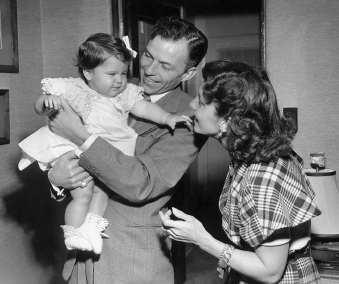
[Birth of Christina (Tina) Sinatra]
In the early hours of June 20, 1948 (Father's Day, and the anniversary of Bugsy Siegel's death), while Frank and Nancy were playing charades at Toluca Lake with the Jule Stynes, Nancy went into labor. Frank drove her to Cedars of Lebanon Hospital, and Christina (Tina) Sinatra was born within minutes. It was the first time Frank had been in town for the birth of one of his children; he returned to the charades game afterward to announce the news.
Source: James Kaplan, "Frank: The Voice" (2010).
June 21, 1948
[Columbia announces the LP record]
At a press conference at the Waldorf-Astoria, Columbia Recording Corporation announced the new long-playing 33 1/3-rpm phonograph record, the brainchild of Columbia president Ted Wallerstein. A ten-inch LP reissue of Sinatra's 1946 album The Voice of Frank Sinatra was among the label's first LP pressings.
Source: James Kaplan, "Frank: The Voice" (2010).
The day after Tina's birth, Frank took Nancy and Frankie out on Toluca Lake in a rowboat to celebrate their new sister's arrival. (Source: Tina Sinatra, "My Father's Daughter: A Memoir" (2000).)
June 26, 1948
Radio
Your Hit Parade
Network: NBC
Program #681
Time: 9:00-9:30 P.M. (Rebroadcast 9:00-9:30 P.M. PDST 8:00-8:30 P.M. PST)
Sponsor: Lucky Strike
Listen Now Script (Final As Broadcast)
1. commercial 1
2. Little White Lies (6) - Frank Sinatra & Hit Paraders
3. Rosalie - Orchestra
4. My Happiness (5) - Beryl Davis
5. You Can't Be True, Dear (4) - Frank Sinatra
6. commercial 2
7. Wintergreen For President - Hit Paraders
8. Haunted Heart (7) - Frank Sinatra & Hit Paraders
9. The Continental - Orchestra
10. Woody Woodpecker (3) - Hit Paraders
11. Toolie Oolie Doolie (2) - Beryl Davis & Hit Paraders
12. commercial 3
13. Nature Boy (1) - Frank Sinatra
Notes: Complete 30mins. Excellent sound.
["Woody Woodpecker Song" on Your Hit Parade]
Frank Sinatra / Kaplan: On Your Hit Parade, Sinatra introduced "The Woody Woodpecker Song" with evident disbelief, telling the studio audience "I just couldn't do it!" -- meaning he couldn't bring himself to sing it.
Source: James Kaplan, "Frank: The Voice" (2010).
July 9, 1948
Radio
The Bill Stern Show
Network: NBC
Sponsor: Colgate Shave Cream.
Host: Frank Sinatra (substituting for Bill Stern)
1. Take Me Out To The Ballgame
Notes: The show appears on the officially released CD set: 60 Greatest Old Time Radio Shows "Frank Sinatra & Friends."
TT: 15mins. Audio condition: Excellent. Complete.
Television
NONE
July 10, 1948
Radio
Your Hit Parade
Network: NBC
Program #683
Time: 9:00-9:30 P.M. (Rebroadcast 9:00-9:30 P.M. PDST 8:00-8:30 P.M. PST)
Sponsor: Lucky Strike
Script (Final As Broadcast)
1. commercial 1
2, Haunted Heart (5) - Frank Sinatra
3. Everything I've Got - Orchestra
4. Toolie Oolie Doolie (7) - Beryl Davis & Hit Paraders
5. Little White Lies (4) - Hit Paraders
6. commercial 2
7. Canadian Capers - Orchestra
8. Nature Boy (6) - Frank Sinatra
9. I Know That You Know - Hit Paraders
10. My Happiness (3) - Frank Sinatra
11. You Can't Be True, Dear (2) - Beryl Davis
12. commercial 3
13. Woody Woodpecker (1) - Frank Sinatra & Hit Paraders
Notes: Complete 30mins. VG (needs noise print)
[Sinatra forced to sing Woody Woodpecker laugh]
On Your Hit Parade, having no choice this time, Sinatra performed "The Woody Woodpecker Song" including the cartoon character's laugh, calling it a humiliating desecration of his own voice and getting through it as quickly as possible.
Source: James Kaplan, "Frank: The Voice" (2010).
July 17, 1948
Radio
Your Hit Parade
Network: NBC
Program #684
Time: 9:00-9:30 P.M. (Rebroadcast 9:00-9:30 P.M. PDST 8:00-8:30 P.M. PST)
Sponsor: Lucky Strike
Script (Final As Broadcast)
1. commercial 1
2. Little White Lies (4) - Frank Sinatra & Hit Paraders
3. Oh! Lady Be Good - Orchestra
4. Haunted Heart (7) - Beryl Davis
5. Toolie Oolie Doolie (5) - Hit Paraders
6. commercial 2
7. Shine - Orchestra
8. My Happiness (6) - Frank Sinatra
9. Sing - It's Good For Ya - Hit Paraders
10. Nature Boy (3) - Frank Sinatra
11. Woody Woodpecker (2) - Beryl Davis
12. commercial 3
13. You Can't Be True, Dear (1) - Frank Sinatra
July 22, 1948
Studio
MGM, LOS ANGELES
"TAKE ME OUT TO THE BALLGAME"
Thursday
Conducted By Adolph Deutsch
YES INDEEDY
With G. Kelly, Jules Munshin, and Chorus
9 Takes
Arranged By Conrad Salinger
TAKE ME OUT TO THE BALLGAME
With Gene Kelly
1 Take
Arranged by Robert Tucker
Ed O'Brien:
Here is a little more information from this session.
1. Yes, Indeedy
MGM mastered 3 takes, #7 ( 3:09 ), 8( 3:09 ) 9 ( 3:08 )
2. Take Me Out To The Ballgame was done in one take 1:56
At the end of the session, the report shows 5:05 of useable material. MGM used either take 7 or 8 of "Yes Indeedy" in the film.
July 23, 1948
Studio
MGM SOUND STUDIO - LOS ANGELES
"TAKE ME OUT TO THE BALLGAME"
FRIDAY
CONDUCTED BY ADOLPH DEUTSCH
ARRANGED BY ROBERT TUCKER
"O'BRIEN TO RYAN TO GOLDBERG"
WITH GENE KELLY AND JULES MUNSHIN
18 TAKES
Take 3 was master (4:03)
Bars 105 to 118
Take 4 was mastered (:31)
Bars 119 to 144
Take 6 was mastered (:36)
Bars 145 to end
Take 3 was mastered (1:41)
Bars 167 to end
Take 2 was mastered (:58)
Gene Kelly recorded "Baby Doll"
Takes 1 (3:48) and take 3(3:29) were mastered
Bars 106 to end
Take 1 was mastered (:15)
Total usable recording time for session was 7:32
Note: We owe a great deal of Thanks to Ed O'Brien for supplying the above session info.
July 24, 1948
Radio
Your Hit Parade
Network: NBC
Program #685
Time: 9:00-9:30 P.M. (Rebroadcast Canceled)
Sponsor: Lucky Strike
Script By:
Script (Final As Broadcast)
1. commercial 1
2. It's Magic (4) - Frank Sinatra
3. Puttin' On The Ritz - Orchestra
4. Toolie Oolie Doolie (5) - Hit Paraders
5. Nature Boy (7) - Beryl Davis
6. commercial 2
7. Love Is Sweeping The Country - Orchestra
8. A Tree In The Meadow (6) - Frank Sinatra & Hit Paraders
9. Swanee - Orchestra
10. My Happiness (3) - Frank Sinatra
11. You Can't Be True, Dear (2) - Beryl Davis
12. commercial 3
13. Woody Woodpecker (1) - Frank Sinatra & Hit Paraders
Notes: No rebroadcast due to 3rd Party Convention
July 28, 1948
[Take Me Out to the Ball Game shooting begins]
Shooting began on the MGM musical Take Me Out to the Ball Game with Gene Kelly. Sinatra had lobbied that summer to be loaned to Columbia to play a young Italian-American murder suspect opposite Bogart in Knock on Any Door, but the producers cast 22-year-old John Derek instead.
Source: James Kaplan, "Frank: The Voice" (2010).
July 31, 1948
Radio
Your Hit Parade
Network: NBC
Program #686
Time: 9:00-9:30 P.M. (Rebroadcast 9:00-9:30 P.M. PDST 8:00-8:30 P.M. PST)
Sponsor: Lucky Strike
Script (Final As Broadcast)
1. commercial 1
2. Little White Lies (6) - Frank Sinatra & Hit Paraders
3. Forty-Second Street - Orchestra
4. Love Somebody (7) - Beryl Davis & Hit Paraders (Male Quartet)
5. A Tree In The Meadow (4) - Frank Sinatra & Hit Paraders
6. commercial 2
7. Brazil - Orchestra
8. My Happiness (5) - Beryl Davis
9. 12th Street Rag - Orchestra
10. It's Magic (3) - Frank Sinatra
11. Woody Woodpecker (2) - Beryl Davis & Hit Paraders
12. commercial 3
13. You Can't Be True, Dear (1) - Frank Sinatra & Hit Paraders
Notes: Complete 30mins. VG (needs a noise print)
Ed O'Brien points out that "Little White Lies," "A Tree In The Meadow," "It's Magic," & "You Can't Be True Dear" all have no commercial recordings by Sinatra. "It's Magic" is the best of the four.
Television
NONE
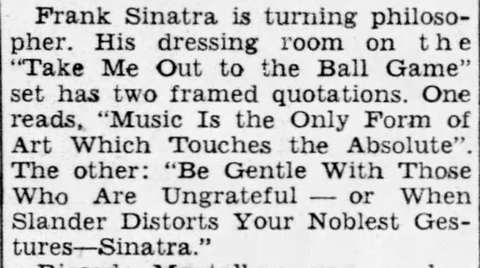
August 5, 1948
Radio
Radio: Sinatra appeared as a guest on Music For The Wounded (Symphonies Under the Stars), a benefit broadcast from the Hollywood Bowl, this date, singing "The Girl That I Marry," "Soliloquy," and "Time After Time." Source: sinatradiscography.com, Radio Transcriptions Database.
August 7, 1948
Radio
Your Hit Parade
Network: NBC
Program #687
Time: 9:00-9:30 P.M. (Rebroadcast 9:00-9:30 P.M. PDST 8:00-8:30 P.M. PST)
Sponsor: Lucky Strike
Script By:
Script (Final As Broadcast)
1. commercial 1
2. Just One Of Those Things - Frank Sinatra
3. You Call Everybody Darling (6) - Marjorie Hughes
4. Little White Lies (5) - Hit Paraders
5. My Happiness (4) - Frank Sinatra
6. commercial 2
7. Fine And Dandy - Orchestra
8. You Can't Be True, Dear (7) - Hit Paraders
9. In The Mood - Orchestra
10. A Tree In The Meadow (3) - Frank Sinatra & Hit Paraders
11. Woody Woodpecker (2) - Marjorie Hughes & Hit Paraders
12. commercial 3
13. It's Magic (1) - Frank Sinatra
Notes: Complete 30mins. VG
Sinatra Scholar Ed O'Brien terms this an
"interesting song selection." The one song of the four Sinatra recorded, Cole Porter's "Just One of
Those Things," was a Hit Parade extra. O'Brien likes all four songs. The Cahn-Styne hit "It's
Magic" is certainly one of Sinatra's better efforts. O'Brien was recently listening to a
Sinatra concert from 1978, where Sinatra reminisced about his 1947-49 years on Your Hit
Parade. Sinatra told the audience that Vic Damone was his understudy but never got to sub for him.
Told how even when he was badly hung over, they would prop him up and somehow he would make it through the show. But Sinatra was wrong about
Damone, O'Brien says, because Vic did indeed sub for Frank. It was on the November 15, 1947 show!
Television
NONE
Your Hit Parade
Network: NBC
Program #687
Time: 9:00-9:30 P.M. (Rebroadcast 9:00-9:30 P.M. PDST 8:00-8:30 P.M.
PST)
Sponsor: Lucky Strike
Script By:
Script (Final As Broadcast)
note: I checked the six Hit Parades that the above article refers to.
Bonnie Lou Williams would be on the
8/14 show; Carol Richards
would replace Patti Clayton on the
8/21 and Eileen Wilson would
be the female vocalist on the 8/28 show. Ms. Wilson would get
the nod from Sinatra and appear on the first two shows in September.
She would replace Beryl Davis as the weekly distaff singer on 12/6/48.
--Ed
August 9, 1948
Los Angeles Evening Citizens NewsAugust 10, 1948
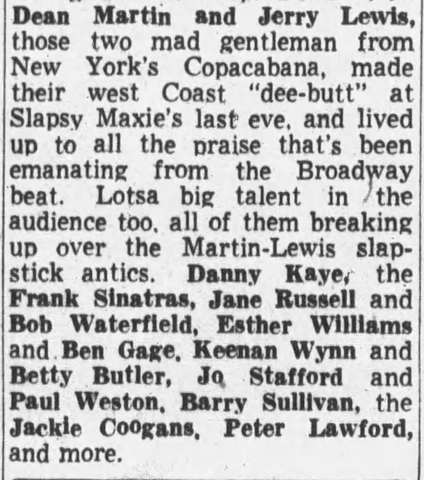
August 12, 1948
Studio
MGM Soundstage, Hollywood
Recording Session for the film "Take Me Out to the Ballgame"
Produced by Richard Powers
Orchestra conducted by Adolph Deutsch
Arrangements by Richard Tucker
It's Fate, Baby, It's Fate
Vocals: Frank Sinatra and Betty Garrett
Two takes and two intercuts
The Right Girl for Me
Frank Sinatra - two takes
Boys and Girls Like You and Me
Frank Sinatra - Six takes (Deleted from the film)
NOTE: Sinatra Scholar Ed O'Brien says that the song "Boys and Girls Like You and Me" was deleted from the film but it has a very fascinating history.
Written by Rodgers and Hammerstein, it was the love song that concluded the second act in "Oklahoma". That play opened in New Haven and the number was warmly received. When the try-outs moved to Boston, the song was dropped. Arthur Freed acquired the rights and Judy Garland sang it in "Meet Me in St. Louis." But she didn't. It was deleted. When Garland was cast to star in "Take Me out to the Ballgame," it was again resurrected for her to sing. But she didn't. Esther Williams replaced Garland in the film but the swimming star was no singer. So Sinatra got the song by default. He did the pre-recording and shot the scene with Betty Garrett at the end of the clambake sequence. But, again, it was deleted. O'Brien feels that it is easily the best number done for the film and the scene with Garrett is absolutely charming. It is available on the MGM DVD release. It also has the Gene Kelly number "Baby Doll," which was deleted from the film.
August 14, 1948
Radio
Your Hit Parade
Network: NBC
Program #688
Time: 9:00-9:30 P.M. (Rebroadcast 9:00-9:30 P.M. PDST 8:00-8:30 P.M. PST)
Sponsor: Lucky Strike
Script (Final As Broadcast)
1. commercial 1
2. You Call Everybody Darling (6) - Frank Sinatra
3. Blue Skies - Orchestra
4. Love Somebody (5) - Bonnie Lou Williams & Male Hit Paraders
5. My Happiness (4) - Frank Sinatra
6. commercial 2
7. Everybody Step - Orchestra
8. Woody Woodpecker (7) - Frank Sinatra & Hit Paraders
9. Liza - Orchestra
10, You Can't Be True, Dear (3) - Hit Paraders
11. A Tree In The Meadow (2) - Bonnie Lou Williams
12. commercial 3
13. It's Magic (1) - Frank Sinatra & Hit Paraders
Notes: Complete 30mins. VG
Ed O'Brien:
Frank would sing eight of the songs listed here and not commit one to wax. He sang # 2,4,5,8,9,10,11,13
Television
NONE
August 18, 1948
Friars Roast of Ed Wynn and Keenan Wynn
---------------------------
Cancelled appearance:
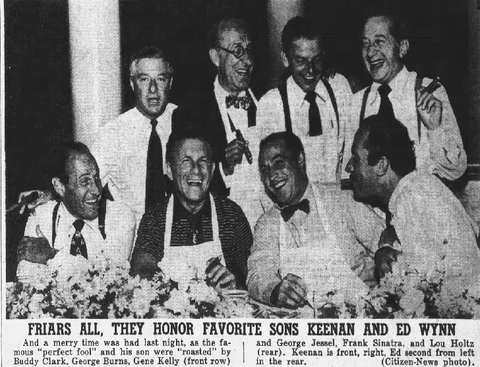

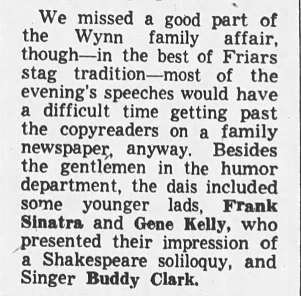
August 21, 1948
Radio
Your Hit Parade
Network: NBC
Saturday night
Time: 9 - 9:30 pm EDT
Frank Sinatra
Carol Richards
Hit Paraders
Lyn Murray & The Lucky Strike Orch.
Sponsor: Lucky Strike cigarettes
1. You Call Everybody Darling (#4)- Frank Sinatra
2. Oklahoma - The Hit Paraders (Hit Parade Extra)
3. You Can’t Be True Dear (#6) - Carol Richards
4. Lucky Strike Commercial
5. Love Somebody (#5) - Frank Sinatra
6. Wild Flower - Orchestra (Hit Parade Extra)
7. Woody Woodpecker (#7) - The Hit Paraders
8. Don't Hold Everything - Orchestra (Hit Parade Extra)
9. It’s Magic (#3) - Frank Sinatra
10. My Happiness (#2) Carol Richards
11. Lucky Strike Commercial
12. A Tree In The Meadow (#1) - Frank Sinatra
Television
NONE
August 23, 1948
Gilmore Ball Park, Los Angeles, CA
Second Annual “Out Of This World” Series Softball Game
Frank Sinatra’s Swooners vs. Andy Russell’s Sprouts
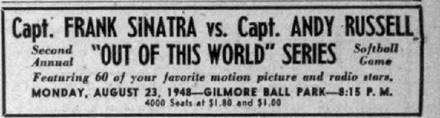
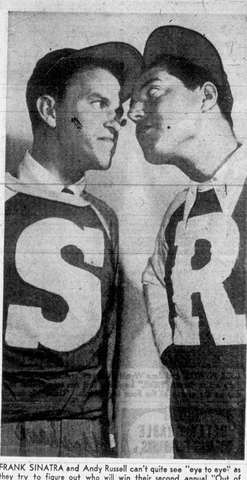
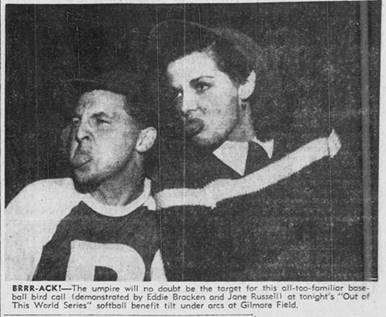
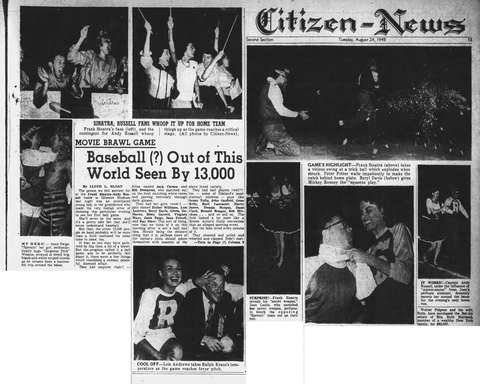
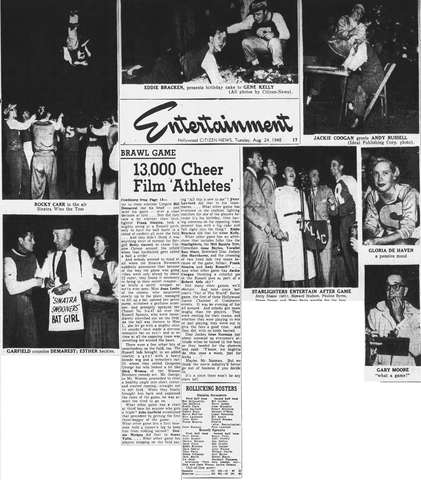
August 28, 1948
Radio
Your Hit Parade
Network: NBC
Program #690
Time: 9:00-9:30 P.M. (Rebroadcast 9:00-9:30 P.M. PDST 8:00-8:30 P.M. PST)
Sponsor: Lucky Strike
Script (Final As Broadcast)
1. commercial 1
2. Love Somebody (5) - Frank Sinatra & Quintet
3. New Sun In The The Sky - Orchestra
4. My Happiness (4) - Eileen Wilson
5. You Can't Be True. Dear (7) - Hit Paraders
6. commercial 2
7. Good News - Orchestra
8. Maybe You'll Be There (6) - Frank Sinatra & Hit Paraders
9. Hallelujah - Hit Paraders
10. It's Magic (3) - Frank Sinatra & Hit Paraders
11. You Call Everybody Darling (2) - Eileen Wilson
12. commercial 3
13. A Tree In The Meadow (1) - Frank Sinatra
Television
NONE
September 1948
[Frank and Ava fall in love]
Ava Gardner / Kaplan: Ava wrote in her memoir that the Palm Springs night ended with Frank driving her home without incident, and that she went in and woke her sister Bappie to tell her how much she liked Sinatra, though she felt it might really be love. Frank called her again once sober, and at their next dinner she asked him about Nancy; he said he had left her emotionally and geographically years earlier though he remained committed to the children. They became lovers that night at Ava's rented house in Nichols Canyon.
Source: James Kaplan, "Frank: The Voice" (2010)
[Late-night drive and Indio shooting incident]
Jack Keller / Kaplan / Ava Gardner: After the Selznick party, Frank and Ava drove out through Palm Canyon Drive to Indio, drinking gin from a bottle along the way. At a Texaco station around 2:30am, Frank produced two pistols from the glove compartment; according to publicist Jack Keller's later account, the two emptied and reloaded the guns, shattering streetlights and store windows and grazing a passerby, leading to a call for help from the Indio police station. Ava denied the episode in her memoir; Keller recorded an oral history of it before his death in 1975 and also told it to Peter Bogdanovich.
Source: James Kaplan, "Frank: The Voice" (2010)
[Reunion with Ava at Selznick party]
Kaplan / Ava Gardner: At a party at David O. Selznick's Palm Springs-area house, Frank and Ava reconnected after months apart. They caught up, and Ava mentioned she had just finished shooting The Bribe with Robert Taylor.
Source: James Kaplan, "Frank: The Voice" (2010)
September 4, 1948
Radio
Your Hit Parade
Network: NBC
Time: 9:00-9:30 P.M..
Sponsor: Lucky Strike
1. Love Somebody # 5- Frank Sinatra
2. Who? - Orchestra
3. My Happiness - Eileen Wilson
4. You Can’t Be True Dear - The Hit Paraders
5. I Want To Be Happy - Orchestra
6. Maybe You’ll Be There # 6- Frank Sinatra
7. Great Day - The Hit Paraders
8. You Call Everybody Darling # 3- Frank Sinatra
9. It’s Magic - Eileen Wilson
10. A Tree In The Meadow # 1- Frank Sinatra
11. So Long For A While - Frank Sinatra
Grounds of Pan-Pacific Coliseum, Los Angeles
St. John's Hospital Guild premiere of Ringling Bros. and Barnum & Bailey Circus
© 1997-2025 The Sinatra Archive
This calendar, or any parts thereof, may not be reproduced in any fashion whatsoever without the prior written permission of the publisher (The Sinatra Archive)
September 18, 1948
Radio
Your Hit Parade
Sponsor: Lucky Strike
Music: Alex Stordahl and His Orchestra
--Love Somebody - Frank Sinatra
--Lullaby Of Broadway - The Hit Paraders
--Bluebird Of Happiness - Beryl Davis
--People Will Say We’re In Love - Frank Sinatra
--My Happiness - Beryl Davis
--Three Little Words - Orchestra
--You Call Everybody Darling - Frank Sinatra
--It’s Magic - Beryl Davis
--A Tree In The Meadow - Frank Sinatra
--So Long For A While - Frank Sinatra
September 25, 1948
Radio
Your Hit Parade #694
Sponsor: Lucky Strike
Music: Alex Stordahl and His Orchestra
--Hair Of Gold, Eyes Of Blue - Frank Sinatra
--Who Cares - Orchestra
--Love Somebody - Beryl Davis
--My Happiness - The Hit Paraders
--Top Hat White Tie And Tails - Orchestra
--Maybe You’ll Be There - Frank Sinatra
--There’s A Great Day Comin’ Mañana - The Hit Paraders
--You Call Everybody Darling - Frank Sinatra
--It’s Magic - Beryl Davis
--A Tree In The Meadow - Frank Sinatra
--So Long For A While - Frank Sinatra
September 26, 1948
Radio
Let's talk Hollywood
NBC
Time 7:00 p.m. - 7:30 p.m.
Performers: Edith Gwyn; Eddie Bracken; Frank Sinatra; Jack Benny; George Murphy
Notes: LOC lists under Quiz shows and has NBC copy. TT: 30mins.
Ed O'Brien:
Show was a summer replacement series on Sunday nights with George Murphy as the moderator. The series began on 7-4-48 and ran for 13 weeks. Frank's appearance was on the final broadcast. Listening to it today, one has to wonder what NBC was thinking. The best of the guests that night was Jack Benny.
September 27, 1948
Sinatra is the guest columnist for Dororthy Killgallen’s column

October 1948
[Columbia Sinatra Christmas album released]
Kaplan: Columbia released a Sinatra Christmas album that spent a week on the charts, peaking at number 7; his next hit album would not come for five years.
Source: James Kaplan, "Frank: The Voice" (2010)
[Vocal trouble on Spike Jones's Spotlight Revue]
Kaplan: On a guest appearance on bandleader Spike Jones's radio show Spotlight Revue, Jones asked Sinatra on air whether his voice was all right; Sinatra joked around, blew a pitch pipe and a deliberately off-key note, then coughed and blew the first note of "Everybody Loves Somebody" during the live broadcast -- an early sign of vocal problems.
Source: James Kaplan, "Frank: The Voice" (2010)
October 1, 1948
Radio
Spotlight Revue Starring Spike Jones
CBS
Sponsor: Coca Cola.
10:30 p.m till 11:00 p.m.
Spike Jones and The City Slickers
Guests: Frank Sinatra, Dorothy Shay, Doodles Weaver, George Rock
Announcer: Michael Roy
Commercial Spokesman: Dick Joy
Notes: The show appears on the officially released CD set: 60 Greaest Old Time Radio Show "Frank Sinatra & Friends." The first show of the season. TT: 28:18. Audio condition: Complete.
Ed O'Brien says that Sinatra sang "Everybody Loves Somebody" and joined Dorothy Shay and Spike Jones in singing "Love Somebody."
Spotlight Revue Starring Spike Jones
CBS
Sponsor: Coca Cola.
10:30 p.m till 11:00 p.m.
Spike Jones and The City Slickers
Guests: Frank Sinatra, Dorothy Shay, Doodles Weaver, George Rock
Announcer: Michael Roy
Commercial Spokesman: Dick Joy
Notes: The show appears on the officially released CD set: 60 Greaest Old Time Radio Show "Frank Sinatra & Friends." The first show of the season. TT: 28:18. Audio condition: Complete.
---------------------------------------------
© 1997-2025 The Sinatra Archive
This calendar, or any parts thereof, may not be reproduced in any fashion whatsoever without the prior written permission of the publisher (The Sinatra Archive)
October 2, 1948
Radio
Your Hit Parade
Network: NBC
Program #695
Time: 9:00-9:30 P.M. (Rebroadcast 9:00-9:30 P.M. PDST 8:00-8:30 P.M.
PST)
Sponsor: Lucky Strike
Script (Final As Broadcast)
1. commercial 1
2. Love Somebody (6) - Frank Sinatra & Quintet
3. I'm Shooting High - Orchestra
4. My Happiness (7) - Beryl Davis
5. Hair Of Gold, Eyes Of Blue (4) - Hit Paraders
6. commercial 2
7. Digga Digga Do - Orchestra
8. Maybe You'll Be There (5) - Frank Sinatra & Hit Paraders
9. Beyond The Blue Horizon - Hit Paraders
10. It's Magic (3) - Frank Sinatra
11. You Call Everybody Darling (2) - Beryl Davis
12. commercial 3
13. A Tree In The Meadow (1) - Frank Sinatra
Television
NONE
October 9, 1948
Radio
Your Hit Parade
Network: NBC
Program #696
Time: 9:00-9:30 P.M. (Rebroadcast 9:00-9:30 P.M. PST 10:00-10:30 P.M. PDST)
Sponsor: Lucky Strike
Script (Final As Broadcast)
1. commercial 1
2. Hair Of Gold, Eyes Of Blue (7) - Frank Sinatra
3. Anything Goes - Orchestra
4. Underneath The Arches (6) - Beryl Davis
5. My Happiness (4) - Hit Paraders
6. commercial 2
7. Brazil - Orchestra
8. Maybe You'll Be There (5) - Frank Sinatra & Hit Paraders
9. Buckle Down Winsocki - Hit Paraders
10. It's Magic (3) - Frank Sinatra
11. You Call Everybody Darling (2) - Beryl Davis
12. commercial 3
13. A Tree In The Meadow (1) - Frank Sinatra & Hit Paraders
Your Hit Parade
Network: NBC
Program #696
Time: 9:00-9:30 P.M. (Rebroadcast 9:00-9:30 P.M. PST 10:00-10:30 P.M. PDST)
Sponsor: Lucky Strike
Script (Final As Broadcast)
1. commercial 1
2. Hair Of Gold, Eyes Of Blue (7) - Frank Sinatra
3. Anything Goes - Orchestra
4. Underneath The Arches (6) - Beryl Davis
5. My Happiness (4) - Hit Paraders
6. commercial 2
7. Brazil - Orchestra
8. Maybe You'll Be There (5) - Frank Sinatra & Hit Paraders
9. Buckle Down Winsocki - Hit Paraders
10. It's Magic (3) - Frank Sinatra
11. You Call Everybody Darling (2) - Beryl Davis
12. commercial 3
13. A Tree In The Meadow (1) - Frank Sinatra & Hit Paraders
Thanks to Michel Macaire for sending along above image
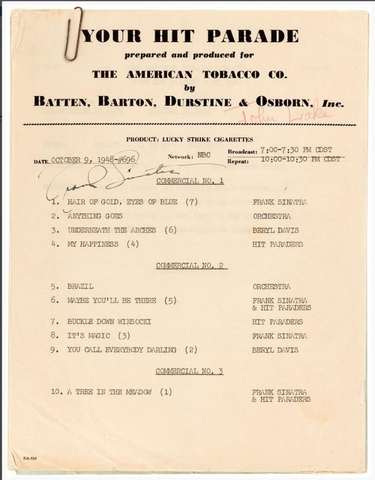
October 15, 1948
Studio
MGM Sound Recording Studios, Los Angeles , California
Sound recording for MGM movie "Take Me Out to the Ballgame"
Conducted by Adolph Deutsch
Arranged by Robert Tucker
Strictly U.S.A. (Finale) w/Gene Kelly, Esther Williams, Betty Garrett, and Frank Sinatra The Judy Matson vocalists with chorus
Takes 5 (2:13) and Take 6 (2:13) were mastered.
NOTE: Thanks go to Sinatra Scholar Ed O'Brien who provided this studio sound recording information.
October 16, 1948
Radio
Your Hit Parade
Network: NBC
Program #697
Time: 9:00-9:30 P.M. (Rebroadcast 9:00-9:30 P.M. PST 10:00-10:30 P.M. PDST)
Sponsor: Lucky Strike
Script (Final As Broadcast)
1. commercial 1
2. Love Somebody (7) - Frank Sinatra & Hit Paraders
3. Zing Went The Strings Of My Heart - Orchestra
4. Bluebird Of Happiness (5) - Beryl Davis
5. My Happiness (6) - Hit Paraders
6. commercial 2
7. Green Eyes - Orchestra
8. It's Magic (4) - Frank Sinatra & Hit Paraders
9. Of Thee I Sing - Orchestra
10. Hair Of Gold, Eyes Of Blue (3) - Frank Sinatra
11. You Call Everybody Darling (2) - Beryl Davis
12. commercial 3
13. A Tree In The Meadow (1) - Frank Sinatra
Concerts
Annual Hollywood Press Photographer's Costume Ball, Ciro's Restaurant, Los Angeles, CA Frank Sinatra and Gene Kelly performed (among others)
Annual Hollywood Press Photographer's Costume Ball, Ciro's Restaurant, Los Angeles, CA Frank Sinatra and Gene Kelly performed (among others)
These are the same costumes they used in “Take Me Out To The Ballgame”
From the film
I was born with a couple of left feet, and I didn't even know how to walk, let alone dance. It was Gene who saw me through. We became a team only because he had the patience of Job, and the fortitude not to punch me in the mouth because I was so impatient. Moviemaking takes a lot of time, and I couldn't understand why. He managed to calm me when it was important to calm me [...] Apart from being a great artist, he's a born teacher, and he taught me how to move and how to dance [...] I couldn't dance exactly like he danced so he danced down to me. He taught me everything I know. (Frank Sinatra on Gene Kelly)
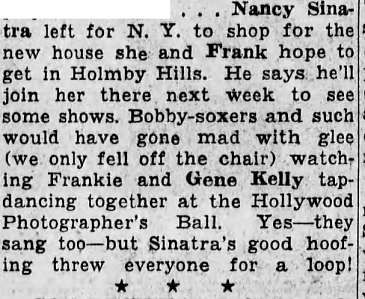
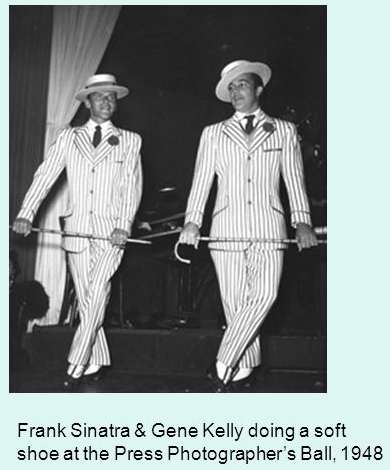
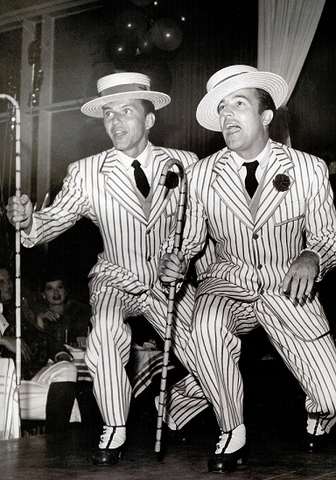
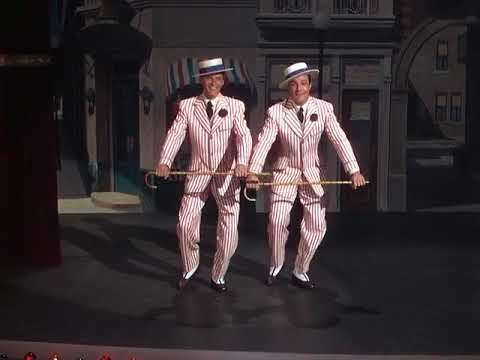
October 20, 1948
Radio
Duffy's Tavern
Wednesday evening
8:30
NBC Blue Network
30 minutes
Ed Gardner, Eddie Green
Guest: Frank Sinatra
Ed O'Brien:
Frank's second appearance on the show. He was a guest on the 5-12-48 show. and sang "I've Got A Crush On You."
The second and final Duffy's had Frank stopping in to resolve a disagreement with Archie the bartender. Duffy was the owner but only made one appearance during the show's long run. Archie and Frank worked out their differences and apologies all around called for drinks and some bar chat. There is a discussion of Hoboken and Frank's Hit Parade show. Miss Duffy ( Duffy's daughter ) asks Frank to sing a song. He obliges with "Every Day I Love You( Just A Little Bit More)." The song had already been on the Hit Parade for two weeks without Frank singing it. He would do it that Saturday night, 10-23, and again on 11-20. Archie was working on his interpretation of "Barber of Seville." Frank helps run it down and does a little singing, very little. There is a little more bar talk and then Frank departs. Duffy's eighth season premiere( 10-1-47 ) listed Crosby, Sinatra and Hope as the guests. The listener received an early Halloween trick when they turned out to be Larry Crosby, Ray Sinatra and Jim Hope.
[image referenced in source but could not be recovered]
October 22, 1948
War Memorial Opera House, San Francisco, CA
Friars’ Frolic Benefit for Blind Babies Nursery
Jack Benny, George Jessel, George Burns, Frank Sinatra, Bob Hope, George Raft, Abbott and Costello, Ronald Reagan, Al Jolson, The Ritz Brothers, Donald O’Connor, Dan Dailey, Danny Kaye and others
© 1997-2025 The Sinatra Archive
This calendar, or any parts thereof, may not be reproduced in any fashion whatsoever without the prior written permission of the publisher (The Sinatra Archive)
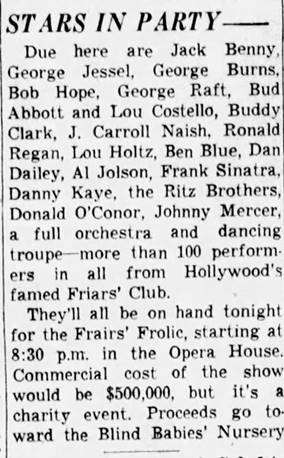
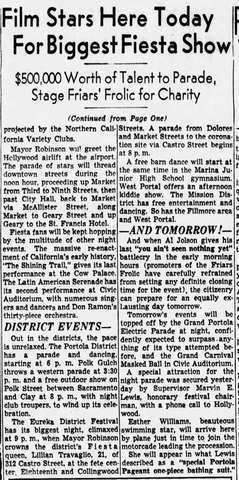
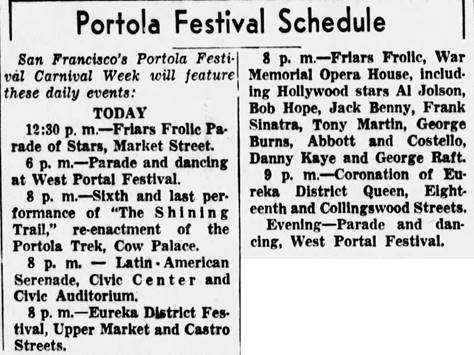
October 23, 1948
Radio
Your Hit Parade
Network: NBC
Program #698
Time: 9:00-9:30 P.M. (Rebroadcast 9:00-9:30 P.M. PST 10:00-10:30 P.M. PDST)
Sponsor: Lucky Strike
Script (Final As Broadcast)
1. commercial 1
2. Every Day I Love You (7) - Frank Sinatra
3. Thou Swell - Orchestra
4. Buttons And Bows (6) - Beryl Davis
5. On The Sunny Side Of The Street - Orchestra
6. commercial 2
7. Hair Of Gold, Eyes Of Blue (4) - Hit Paraders
8. Maybe You'll Be There (5) - Frank Sinatra
9. The Continental - Orchestra
10. It's Magic (3) - Frank Sinatra
11. A Tree In The Meadow (2) - Beryl Davis
12. commercial 3
13. You Call Everybody Darling (1) - Frank Sinatra
Notes: Song order was changed during program. See script for details.
Ed O'Brien:
Another example of a song list that Sinatra would eventually cover completely.
October 24, 1948
Radio
Radio: Sinatra appeared as a guest on Duffy's Tavern this date. Source: sinatradiscography.com, Radio Transcriptions Database.
October 26, 1948
Radio
Labors League For Political Action
ABC 10-10:30 PM
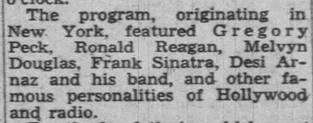
Labors League For Political Action
ABC 10-10:30 PM
October 26, 1956, Jackie Coogan's 42nd Birthday
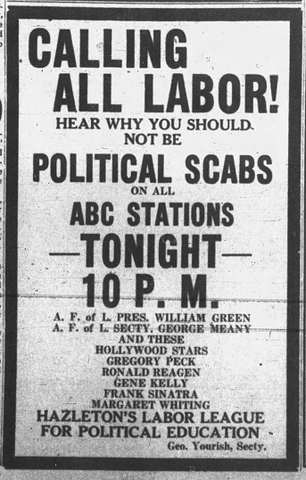
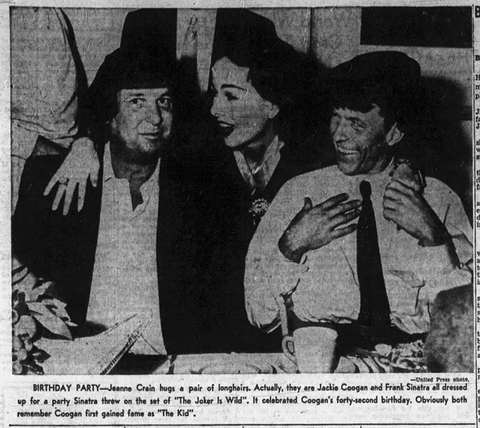
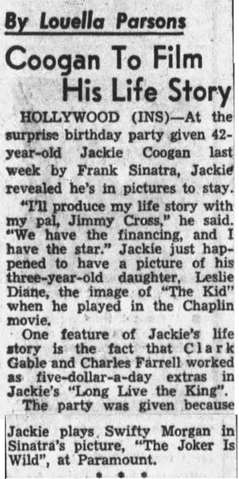
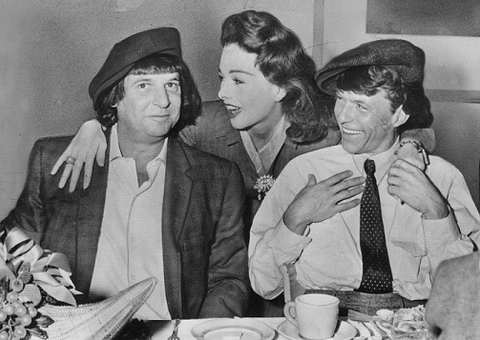
October 30, 1948
Radio
Your Hit Parade
Network: NBC
Program #699
Time: 9:00-9:30 P.M. (Rebroadcast 9:00-9:30 P.M. PDST 10:00-10:30 P.M. PST)
Sponsor: Lucky Strike
Script (Final As Broadcast)
1. commercial 1
2. You Call Everybody Darling (5) - Frank Sinatra
3. Crazy Rhythm - Orchestra
4. Underneath The Arches (6) - Beryl Davis
5. Maybe You'll Be There (4) - Frank Sinatra
6. commercial 2
7. Ridin' High - Orchestra
8. It's Magic (7) - Frank Sinatra
9. The Best Things In Life Are Free - Orchestra
10. Hair Of Gold, Eyes Of Blue (3) - Hit Paraders
11. Buttons And Bows (2) - Beryl Davis
12. commercial 3
13. A Tree In The Meadow (1) - Frank Sinatra
November 1948
[The Kissing Bandit opens to poor reviews]
Kaplan: Three days after The Kissing Bandit opened to widespread negative reviews (Bosley Crowther among the critics), Sinatra started work on It's Only Money at RKO under new studio chief Howard Hughes.
Source: James Kaplan, "Frank: The Voice" (2010)
November 6, 1948
Radio
Your Hit Parade
Network: NBC
Program #700
Time: 9:00-9:30 P.M. (Rebroadcast 9:00-9:30 P.M. PST 10:00-10:30 P.M. PDST)
Sponsor: Lucky Strike
Script (Final As Broadcast)
1. commercial 1
2. You Were Only Fooling (6) - Frank Sinatra
3. I Won't Dance - Orchestra
4. It's Magic (4) - Beryl Davis
5. Twelfth Street Rag (7) - Orchestra
6. commercial 2
7. The Marine's Hymn - Hit Paraders
8. Maybe You'll Be There (5) - Frank Sinatra
9. The Piccolino - Orchestra
10. A Tree In The Meadow (3) - Frank Sinatra & Hit Paraders
11. Hair Of Gold, Eyes Of Blue (2) - Beryl Davis
12. commercial 3
13. Buttons And Bows (1) - Frank Sinatra
November 13, 1948
Radio
Your Hit Parade
Network: NBC
Program #701
Time: 9:00-9:30 P.M. (Rebroadcast 9:00-9:30 P.M. PST 10:00-10:30 P.M. PDST)
Sponsor: Lucky Strike
Script (Final As Broadcast)
1. commercial 1
2. You Were Only Fooling (5) - Frank Sinatra
3. I've Got The Sun In The Morning - Orchestra
4. A Tree In The Meadow (4) - Beryl Davis
5. Hair Of Gold, Eyes Of Blue (7) - Hit Paraders
6. commercial 2
7. Tico Tico - Orchestra
8. Maybe You'll Be There (6) - Frank Sinatra
9. It's A Grand Night For Singing - Hit Paraders
10. You Call Everybody Darling (3) - Frank Sinatra
11. On A Slow Boat To China (2) - Beryl Davis
12. commercial 3
13. Buttons And Bows (1) - Frank Sinatra
November 19, 1948
Frank's RKO film The Kissing Bandit was released to terrible reviews, compounding what must have been a depressing period for him as he simultaneously worked on the similarly weak Double Dynamite. (Source: Richard Havers, "Sinatra" (Dorling Kindersley, 2007).)
November 20, 1948
Radio
Your Hit Parade
Network: NBC
Program #702
Time: 9:00-9:30 P.M. (Rebroadcast 9:00-9:30 P.M. PST 10:00-10:30 P.M. PDST)
Sponsor: Lucky Strike
Script (Final As Broadcast)
1. commercial 1
2. Every Day I Love You (10) - Frank Sinatra
3. You Call Everybody Darling (6) - Beryl Davis
4. Underneath The Arches (8) - Orchestra
5. Maybe You'll Be There (5) - Frank Sinatra
6. Hair Of Gold, Eyes Of Blue (7) - Hit Paraders
7. commercial 2
8. Until (9) - Frank Sinatra
9. The Carioca - Orchestra
10. You Were Only Fooling (4) - Frank Sinatra
11. A Tree In The Meadow (3) - Orchestra & Hit Paraders
12. On A Slow Boat To China (2) - Beryl Davis
13. commercial 3
14. Buttons And Bows (1) - Frank Sinatra
November 27, 1948
Radio
Your Hit Parade
Network: NBC
Program #703
Time: 9:00-9:30 P.M. (Rebroadcast 9:00-9:30 P.M. PST 10:00-10:30 P.M. PDST)
Sponsor: Lucky Strike
Script (Final As Broadcast)
1. commercial 1
2. You Call Everybody Darling (9) - Frank Sinatra
3. Maybe You'll Be There (8) - Beryl Davis
4. Hair Of Gold, Eyes Of Blue (6) - Orchestra
5. Until (4) - Frank Sinatra
6. A Tree In The Meadow (5) - Orchestra
7. commercial 2
8. Cuanto La Gusta (10) - Hit Paraders
9. My Darling, My Darling (7) - Frank Sinatra
10. Some Of These Days - Orchestra
11. You Were Only Fooling (3) - Frank Sinatra & Hit Paraders
12. On A Slow Boat To China (2) - Beryl Davis
13. commercial 3
14. Buttons And Bows (1) - Frank Sinatra
Ed O'Brien specifies that Sinatra sang five songs on that Saturday night 72 years ago. He never recorded any of them!
November 29, 1948
Concerts
Biltmore Hotel, Los Angeles, CA
United Jewish Welfare Fund Awards
Performers: Frank Sinatra, Dinah Shore, Oscar Levant, Donald O'Connor
Biltmore Hotel, Los Angeles
United Jewish Welfare Fund Awards
Performers: Frank Sinatra, Dinah Shore, Oscar Levant, Donald
O'Connor
© 1997-2025 The Sinatra Archive
This calendar, or any parts thereof, may not be reproduced in any fashion
whatsoever without the prior written permission of the publisher (The
Sinatra Archive)
December 1948
["Is Sinatra Finished?" headline]
Kaplan / Nancy Sinatra Jr.: The industry journal Modern Television & Radio ran the headline "IS SINATRA FINISHED?" Around this time Sinatra reportedly told Manie Sacks he felt washed up; Sacks assured him life was cyclical and he'd be on top again in a few years.
Source: James Kaplan, "Frank: The Voice" (2010)
[Manie Sacks Predicts A Comeback]
Nancy Sinatra: At a low point in his career, Frank confided to Manie Sacks that he felt washed up. Sacks told him life runs in cycles and that he was too talented not to bounce back, predicting, "In a few years, you'll be on top again," a prediction that would prove accurate.
Source: Nancy Sinatra, Frank Sinatra: An American Legend, 1995.
December 2, 1948
Studio
RKO, Los Angeles
Thursday afternoon
DOUBLE DYNAMITE(Original Title "It's Only Money")
Orchestra conducted by Constantin Bakaleinikoff
Arranged by Leigh Harline
Kisses And Tears w/Jane Russell
Ed O'Brien supplied the above RKO session and added the following: Sinatra laid down another recording of the Cahn/Styne song with the Phil Moore Four on Tuesday, 1-4-49, at Columbia Records in Hollywood. Bob Bain was the guitarist with the musical quartet. He told me it was his second session with Frank. Bob would later work on a number of sessions with Sinatra at Capitol and Reprise. He fondly recalled for me the incredible voice Frank had during the Columbia years.
A third recording of "Kisses And Tears" was made at Columbia, in Hollywood,with Miss. Russell, on 2-23-50 (Thursday) . It was done as a gentle reminder to Howard Hughes that the film was languishing in the vaults. The solo effort with Phil Moore's group is without question the best of the three recordings.
Radio
Radio: Sinatra appeared as a guest on Spotlight Revue Starring Spike Jones this date, singing "Once In Love With Amy." Source: sinatradiscography.com, Radio Transcriptions Database.
December 3, 1948
Spotlight Revue Starring Spike Jones
Network: CBS
Time: 10:30 PM - 11:00 PM
Sponsor: Coca Cola.
Spike Jones and The City Slickers
Announcer: Michael Roy
Commercial Spokesman: Dick Joy
Guests: Frank Sinatra, Dorothy Shay, Doodles Weaver, George Rock
1. Once In Love With Amy - Frank SInatra
2. Prisoner Of Love - Frank Sinatra
Note: The show appears on the officially released CD set: 60 Greatest Old Time Radio Show "Frank Sinatra & Friends"
Ed O'Brien noted:
"Once In Love With Amy" was from the Broadway musical
"Where's Charley"," starring Ray Bolger. Frank would record the song in mid-December of 48. He did sing a throwaway version of "Prisoner Of Love" during a skit with Spike Jones and his crew.
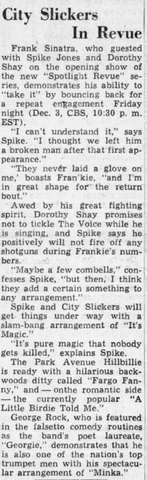
Program for National arthritic association
Bob Hope, Frank Sinatra, Ida Lupino, Les Brown and others
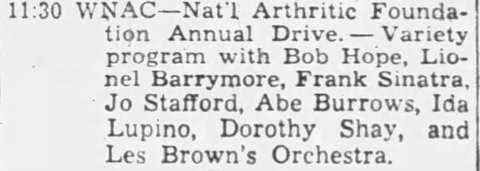
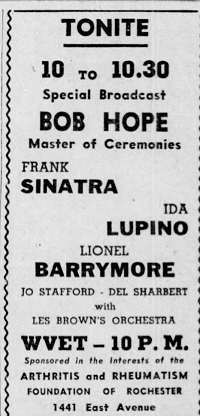
December 4, 1948
Radio
Your Hit Parade
Network: NBC
Program #704
Time: 9:00-9:30 P.M. (Rebroadcast 9:00-9:30 P.M. PST 10:00-10:30 P.M. PDST)
Sponsor: Lucky Strike
1. commercial 1
2. You Were Only Fooling (4) - Frank Sinatra
3. A Tree In The Meadow (6) - Eileen Wilson
4. Cuanto La Gusta (8) - Hit Paraders
5. My Happiness (10) - Orchestra
6. Maybe You'll Be There (7) - Frank Sinatra & Hit Paraders
7. commercial 2
8. Begin The Beguine - Orchestra
9. Until (5) - Frank Sinatra
10, Hair Of Gold, Eyes Of Blue (9) - Hit Paraders
11. My Darling, My Darling (3) - Frank Sinatra
12. On A Slow Boat To China (2) - Eileen Wilson
13. commercial 3
14. Buttons And Bows (1) - Frank Sinatra
Ed O'Brien:
Another example of Frank covering all the songs performed on this show. And he would do all 11 on the Hit Parade.
December 6, 1948
Studio
Hollywood
HCO3467 Sunflower
(M. David)
Famous Music Corp. (ASCAP) 1948
Arranged & Conducted by Axel Stordahl
-1 (2:53) CD: Columbia Years 43-52 Vol. 9
78: 38391
Ed O'Brien:
By December of 1948, the musicians strike was almost a year old.
Frank needed to get some new material out to the radio stations and record stores.
"Sunflower" was recorded at NBC Radio Studios, on Sunset Blvd, 12-6-48. The personnel were:
Billy Tonneson steel guitar solo chorus in middle of song was done by him Dickie McBride bass player
Earl Finely guitar
Monte Montjoy drummer
Vic Davis piano
There were five takes
Tonneson, McBride and Finely played with the Ole Rasmussen Swing Band. They were appearing at the 97th St Corral Dance Hall in South Los Angeles,
When they got the call for the session. It was a non-union session. The participants did not encounter any problem with the union for violating the strike.
The song was the B side of the 78 featuring "Once In Love With Amy." Columbia rushed it out. Billboard reviewed it in the 12-25-48 issue and again in the 1-22-49 issue. They gave both sides very high marks. "Amy" received an overall rating of 88 and "Sunflower" an 89. Disc Jockeys and Retailers predicted both would be huge hit. "Amy" never charted. "Sunflower" reached #14 and charted for 5 weeks. A huge disappointment for Sinatra. "Sunflower" became the official state song of Kansas.
Concerts
Cocoanut Grove, Ambassador Hotel, Los Angeles, CA
Democratic Party Victory Celebration
Frank Sinatra, Dinah Shore, and others
Cocoanut Grove, Ambassador Hotel, Los Angeles, CA
Democratic Party Victory Celebration
Frank Sinatra, Dinah Shore, and others
"Sunflower"
Friedwald (analysis): When the second AFM recording ban ended in December 1948, the first song Sinatra recorded was, per Friedwald, 'unbelievably, a country-and-western number titled Sunflower.' Not bad by Nashville standards but 'hardly classic Frank,' its melody later provided the inspiration for the title song of Jerry Herman's Hello, Dolly! (which Sinatra recorded in 1964).
Source: Will Friedwald, "Sinatra! The Song Is You: A Singer's Art" (2018 revised edition).
December 7, 1948
Radio
The Al Rockwell Show
KRNT 10:15 PM - Midnight
Al Rockwell interviewed Frank Sinatra
The Al Rockwell Show
KRNT 10:15 PM - Midnight
Al Rockwell interviewed Frank Sinatra

December 11, 1948
Radio
Your Hit Parade
Network: NBC
Program #705
Time: 9:00-9:30 P.M. (Rebroadcast 9:00-9:30 P.M. PST 10:00-10:30 P.M. PDST)
Sponsor: Lucky Strike
1. commercial 1
2. Hair Of Gold, Eyes Of Blue (6) - Frank Sinatra
3. You Were Only Fooling (4) - Orchestra
4. Maybe You'll Be There (10) - Eileen Wilson
5. Cuanto La Gusta (7) - Hit Paraders
6. Until (5) - Frank Sinatra
7. commercial 2
8. Just One Of Those Things - Orchestra
9. A Little Bird Told Me (8) - Frank Sinatra
10. A Tree In The Meadow (9) - Orchestra & Hit Paraders
11. My Darling, My Darling (3) - Frank Sinatra
12. On A Slow Boat To China (2) - Eileen Wilson
13. commercial 3
14. Buttons And Bows (1) - Frank Sinatra & Hit Paraders
Ed O'Brien notes: This show gives one a real sense of how many songs Frank sang on his radio shows that were never recorded by him. The five performed that evening plus he got around to doing four more that charted that week. The one that he did record "Maybe You'll Be There" was on and off the HP for 16 weeks. Sinatra would sing it 11 of the first 12 times it appeared. I am obviously not counting "Just One Of Those Things." Frank did perform it on a HP and record it, but it was a HP extra.
Concerts
Kaiser-Frazer Plant, Long Beach, CA
Sinatra performed at the Aviation Ball
Kaiser-Frazer Plant, Long Beach, CA
Sinatra performed at the Aviation Ball
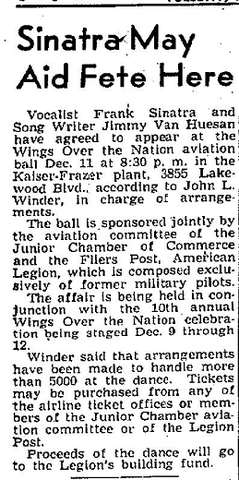
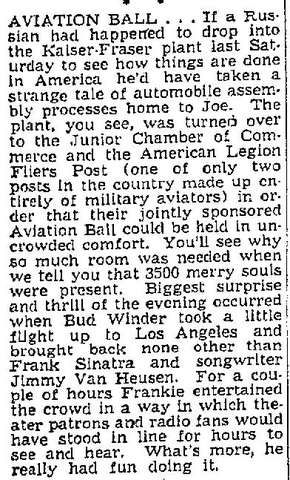
December 14, 1948
Studio
New York City
CO40254 Once In Love With Amy
(F. Loesser)
(from Where's Charley?)
E.H. Morris & Co. (ASCAP) 1948
-1 (2:54) CD: Columbia Years 43-52 Vol. 9
Piano: Henry Rowland
Ed O'Brien
The musicians' strike started on 1-1-48 and ended on 12-14-48.
Frank recorded the Loesser song with a non-union piano player,
Henry Rowland. The following day the orchestral track was laid
down with a now non-striking group of union musicians.
[Once in Love with Amy -- critical commentary]
For 'Once in Love with Amy,' the orchestra track was recorded in New York while Sinatra's vocal was overdubbed separately in Hollywood, again likely to accommodate scheduling conflicts.
This song/context matches multiple dated entries in the chronology, or lacked a sufficiently precise date; the specific date could not be determined with confidence.
Source: Charles L. Granata, "Sessions with Sinatra: Frank Sinatra and the Art of Recording" (1999/2003), Part II: The Columbia Years, 1943-1952
December 15, 1948
Studio
New York City
CO40254 Once In Love With Amy
(F. Loesser)
(from Where's Charley?)
E.H. Morris & Co. (ASCAP) 1948
Arranged & Conducted by Mitchell Ayres
-1 (3:00) CD: Columbia Years 43-52 Vol. 9
LP: CL-902 That Old Feeling
78: 38391
Trumpets: J. Maxwell, C. Poole, R. Solomon; Trombones: J. D'Agostino, B. Morrow, W. Rausch; Saxes: H. Feldman, H. Ross, J. Small, H. Terrill, P. Zolkind; Piano: H. Rowland; Guitar: H. White; Bass: R. Haggart; Drums: T. Snyder
Ed O'Brien notes: Frank laid down his vocal on 12-14 with just piano.
The orchestral overdub was done on 12-15.
Hollywood (Evening)
HCO3575 Why Can't You Behave w/The Phil Moore Four
(C. Porter)
(from Kiss Me Kate)
Chappell & Co., Inc. (ASCAP) 1948
Arranged & Conducted by Phil Moore
-1 (3:18) CD: Columbia Years 43-52 Vol. 9
LP: C6X-40343
LP: CL-1297
78: 38393
HCO3476 Bop! Goes My Heart w/The Phil Moore Four
(J. Styne/W. Bishop)
J.J. Robbins & Sons (ASCAP) 1949
Arranged & Conducted by Phil Moore
-1 (3:04) CD: Columbia Years 43-52 Vol. 9
CD: 44236 Sinatra Rarities
78: 38421
The Phil Moore Four: Leader & Piano: Phil Moore; Clarinet: Marshall Royal;
Guitar: Robert Bain; Bass: Ernest Shepard, Jr.; Drums: Leonidas R. Young Jr.
December 18, 1948
Radio
Your Hit Parade
Network: NBC
Program #706
Time: 9:00-9:30 P.M. (Rebroadcast 9:00-9:30 P.M. PST 10:00-10:30 P.M. PDST)
Sponsor: Lucky Strike
1. commercial 1
2. Cuanto La Gusta (6) - Frank Sinatra & Hit Paraders
3. You're The Top - Orchestra
4. Maybe You'll Be There (7) - Eileen Wilson
5. Say Something Sweet Yo Your Sweetheart (9) - Hit Paraders
6. For You (8) - Frank Sinatra
7. commercial 2
8. You Were Only Fooling (4) - Eileen Wilson
9. A Little Bird Told Me (4) - Frank Sinatra
10. Until (5) - Orchestra
11. On A Slow Boat To China (3) - Frank Sinatra
12. My Darling, My Darling (2) - Eileen Wilson
13. commercial 3
14. Buttons And Bows (1) - Frank Sinatra & Hit Paraders
Notes: There was a tie for #4.
December 19, 1948
Studio
Hollywood
HCO3479 Comme Ci Comme Ca
(P. Dudan/B.. Coquatrix/A. Kramer/J. Whitney)
Leeds Music Corp. (ASCAP) 1948
Arranged & Conducted by Axel Stordahl
-1 (2:54) CD: Columbia Years 43-52 Vol. 9
LP: CL-2740 The Essential Frank Sinatra, Vol. 2
78: 38407
HCO3480 No Orchids For My Lady
(A. Stranks/J. Strachey)
(from Bolton's Revue)
Leeds Music Corp. (ASCAP) 1948
Arranged & Conducted by Axel Stordahl
-1 (2:38) CD: Columbia Years 43-52 Vol. 9
78: 38393
HCO3481 While The Angelus Was Ringing (Les Trois Cloches) (J. Villard/D. Manning)
Chas K. Harris Music Pub. (ASCAP) 1945
Arranged & Conducted by Axel Stordahl
-1 (2:45) CD: Columbia Years 43-52 Vol. 9
78: 38407
Violins: W. Callies, S. Cytron, D. Frisina, D. Karpilowsky, G. Kast, M. Kellner, S. Middleman, N. Pisani, R. Polikian, M. Russell, J. Schachter, O. Vail; Violas: M. Perlmutter, P. Robyn, G. White; Cellos: C. Bernard, J. Sewell, E. Slatkin; Saxes: H. Beau, F. Chase, M. Cohan, A. Gershunoff, H. Haymer, F. Stulce; Horns: V. De Rosa; Trumpets: Z. Elman, G. Seaberg, R. Zarchy; Trombones: G. Jenkins, R. McGarity, W. Schaefer; Piano: M. Mclntyre; Guitar: A. Reuss; Bass: P. Stephnes; Drums: R. Hagan; Harp: M. Hogan
Note: Sinatra Scholar Ed O'Brien exclaims - What an amazing difference in the quality of the material Sinatra recorded in 1944 and then in 1948. Three of the four tunes from the 1944 session were songs that would be closely associated with Sinatra for decades.
The 1948 tunes would, instead, be sung a few times, notably on Light Up Time broadcasts and then forgotten. It was shortly after this that Sinatra started speaking out about the serious problem he faced finding decent material to record.
Radio
Treasury Department Guest Star
Treasury Department syndication
Program #91
Arranged by Axel Stordahl
Orchestra Conducted By: David Rose
Announcer: Jess Barker
1. White Christmas
2. Goin' Home
Notes: Christmas special. Complete 15mins. Audio Condition: Very Good to Excellent.
December 22, 1948
Radio
Carol Songfest
Frank Sinatra, emcee, with Marilyn Maxwell
8:45 WEWS

Concerts
Civic Opera House, Chicago, Illinois
Herald-American Xmas Veteran's Benefit
Frank Sinatra & Marilyn Maxwell
Civic Opera House, Chicago, Illinois
Herald-American Xmas Veteran's Benefit
Frank Sinatra & Marilyn Maxwell
But here's an article from the December 26th, 1948 Chicago Sun-Times that suggests that Jimmy Van Heusen did not make the trip to Chicago:
Here are a couple of reviews of the event and a note that the event was broadcast on television
© 1997-2024 The Sinatra Archive
This calendar, or any parts thereof, may not be reproduced in any fashion
whatsoever without the prior written permission of the publisher (The
Sinatra Archive)
December 25, 1948
Radio
Your Hit Parade
Network: NBC
Program #707
Time: 9:00-9:30 P.M. (Rebroadcast 9:00-9:30 P.M. PST 10:00-10:30 P.M. PDST)
Sponsor: Lucky Strike
1. commercial 1
2. Jingle Bells - Frank Sinatra & Hit Paraders
3. A Little Bird Told Me (4) - Eileen Wilson
4. Cuanto La Gusta (9) - Hit Paraders
5. White Christmas (8) - Frank SInatra
6. Until (5) - Orchestra
7. commercial 2
8. Lavendar Blue (6) - Eileen Wilson
9, You Were Only Fooling (7) - Frank Sinatra
10. Maybe You'll Be There (10) - Orchestra
11. My Darling, My Darlong (3) - Frank Sinatra
12. On A Slow Boat To China (2) Eileen Wilson
13. commercial 3
14. Buttons And Bows (1) - Frank Sinatra
15. Silent Night - Frank Sinatra & Hit Paraders
note: Frank did six songs including three holiday classics. There is no traditional sign-off just Frank wishing everyone a merry holiday after "Silent Night."
Ed
January 1949
[Ava Gardner Recalls Sinatra Flirting In Traffic]
Nancy Sinatra: On her way to MGM's star-studded 25th-anniversary photo shoot, Ava Gardner recalled a car repeatedly speeding past, cutting her off, and slowing down. After the driver had done this three times, he pulled alongside, raised his hat, and sped off toward the same photo session; it was Frank, flirting from behind the wheel.
Source: Nancy Sinatra, Frank Sinatra: An American Legend, 1995.
[Engagement party incident with Mel Tormé and Candy Toxton]
Mel Tormé / Kaplan: At a January engagement party for Mel Tormé and Candy Toxton, an intoxicated Sinatra showed up uninvited with Jimmy Van Heusen, gave Tormé an inappropriate champagne "birthday" gift, then pursued Candy (on whom he had a crush) up the stairs and pounded on the locked bedroom door until Van Heusen pulled him away and Tormé asked him to leave.
Source: James Kaplan, "Frank: The Voice" (2010)
[MGM Silver Jubilee group photo]
Kaplan / Ava Gardner: MGM gathered 57 of its biggest stars, including Lassie, for a historic Silver Jubilee group photograph. Sinatra, looking pallid and thinning, sat in the back row between Ginger Rogers and Red Skelton, while Ava Gardner sat prominently in the second row between Clark Gable and Judy Garland; Ava recalled Frank playfully cutting her off in his car on the way to the shoot.
Source: James Kaplan, "Frank: The Voice" (2010)
January 1, 1949
Radio
Your Hit Parade (NBC)
Program #708
Time: 9:00-9:30 P.M. (Rebroadcast 9-9:30 PM PST)
Sponsor: Lucky Strike
1. Commercial
2. A Little Bird Told Me (#4) Frank Sinatra
3. Siboney Orchestra
4. Lavender Blue (#7) Eileen Wilson
5. Santa Claus is Coming to Town (#9) Hit Parader's
6. All I Want for Christmas is my Two Front Teeth Frank Sinatra
7. Commercial
8. You Were Only Fooling (#6) Orchestra
9. Until (#8) Frank Sinatra
10. White Christmas (#5) Hit Parader's
11. On a Slow Boat to China (#3) Frank Sinatra
12. My Darling, My Darling ((#2) Eileen Wilson
13. Commercial
14. Buttons and Bows (#1) Frank Sinatra & Hit Parader's
Ed O'Brien:
Another great example of a slew of songs never recorded by F.S. He would sing on the H.P.
"Buttons And Bows," "My Darling, My Darling,"
"You Were Only Fooling," "All I Want For Christmas
Is My Two Front Teeth," "On A Slow Boat To
China," "Until" and "A Little Bird Told Me."
He sang a lot of songs on YHP that never were recorded by him.
January 4, 1949
Studio
Hollywood
HCO3511 If You Stub Your Toe On The Moon w/The Phil Moore Four
(J.. Burke/J. Van Heusen)
(from A Connecticut Yankee In King Arthur's Court)
Burke-Van Heusen, Inc. (ASCAP) 1949
Arranged & Conducted by Phil Moore
-1 (2:45) CD: Columbia Years 43-52 Vol. 9
LP: CL-2740 The Essential Frank Sinatra, Vol. 2
78: 38417
HCO3512 Kisses And Tears w/The Phil Moore Four
(J. Styne/S. Cahn)
(from Double Dynamite)
E.H. Morris & Co. (ASCAP) 1949
Arranged & Conducted by Phil Moore
-1 (2:44) CD: Columbia Years 43-52 Vol. 9
The Phil Moore Four: Leader & Piano: Phil Moore, Sax: Marshall Royal;
Guitar: Robert Bain; Bass: Ernest Shepard, Jr.; Drums: Oscar Lee Bradley
Ed O'Brien noted:
This was guitarist Bob Bain's second session with Sinatra.
He had vivid memories of the forties Sinatra when I chatted with him. Bob remembered how great the vocals were on the Burke- VanHeusen and Cahn - Styne tunes on that Tuesday evening sixty years ago, in Hollywood. Frank did three recordings of "Kisses And Tears" and this one is easily the best.
Musicians: Frank Sinatra & The Phil Moore Four Marshall Royal (sax/clt); Phil Moore (p); Bob Bain (g); Ernie Sheppard (b); Lee Bradley (d). Phil Moore (arr).
(Source: Put Your Dreams Away - A Frank Sinatra Discography, Luiz Carlos do Nascimento Silva)
January 8, 1949
Radio
Your Hit Parade (NBC)
Program #709
Time: 9:00-9:30 pm (Rebroadcast 9:00-9:30 pm)
Sponsor: Lucky Strike
1. Commercial
2. Cuanto la Gusta (8) - Frank Sinatra & Hit Paraders
3. Until (9) - Orchestra
4. A Little Bird Told Me - Eileen Wilson
5. Far Away Places (7) - Frank Sinatra
6.. Lavender Blue - Hit Paraders
7. Commercial
8. You Were Only Fooling (5) - Frank Sinatra
9. Maybe You'll Be There (10) - Eileen Wilson
10. Sabre Dance - Orchestra
11. My Darling, My Darling (3) - Frank Sinatra
12. Buttons and Bows (2) - Eileen Wilson
13. Commercial
14. On a Slow Boat to China (1) - Frank Sinatra & Hit Paraders
Ed O'Brien noted:
Another excellent example of Frank performing songs on the radio that would never be recorded by him.
He did not record any of the five songs done that night.
He did sing "My Darling, My Darling" in his nightclub performances that year. I'm sure he would have had great success with "Far Away Places" and "You Were
Only Fooling," if he had had the initial releases.
January 15, 1949
Radio
Your Hit Parade (NBC)
Program # 710
Time: 9:00-9:30 pm PST (Rebroadcast: 9:00-9:30 pm PST)
Sponsor: Lucky Strike
1. Commercial
2. A Little Bird Told Me (4) - Frank Sinatra
3. Lavender Blue (6) - Eileen Wilson
4. Cuanto La Gusta (7) - Hit Paraders
5. Far Away Places (5) - Frank Sinatra
6. Holiday for Strings - Orchestra
7. Commercial
8. Here I'll Stay (10) - Frank Sinatra
9. You Were Only Fooling (8) - Orchestra
10. Until (9) - Frank Sinatra
11. My Darling, My Darling (3) - Eileen Wilson
12. Commercial
13. On A Slow Boat to China (1) - Frank Sinatra
Ed O'Brien: Another excellent example of Frank singing top songs from the late forties that would never see a recording by him. And they ain't bad songs.
He played with "Slow Boat To China," singing it in different tempos as the tune reappeared for a number of weeks. "Here I'll Stay" is very pretty and the Sinatra vocal is very quiet. I like "Far Away
Places." Frank must have too because he sang it a number of times on the HP. "Until" is also a decent little ditty and Frank gives it a nice reading.
"A Little Bird" isn't much, but four out of five is a pretty good average.
January 17, 1949
Concerts
The Beachcomber, Miami, Florida (January 17-20)
Note: Variety lists the engagement as running from 1/16 thru1/20. Frank changed that to the dates you list. He did the gig between Hit Parade appearances.
BTW: Sophie Tucker followed Frank at the Beachcomber and played to SRO crowds. Frank had the same problem again in the winter of 1954. Nat Cole came in after him and drew much bigger crowds.
Ed
The Beachcomber, Miami, Florida (January 17-20)
Billboard, January 1st, 1949
The Miami News (Miami, Florida) · 17 Jan 1949, Mon · Page 7
The Miami News (Miami, Florida) · 17 Jan 1949, Mon · Page 8
3
a variety review 1-26-49
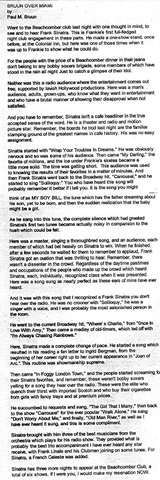
January 18, 1949
Concerts
The Beachcomber, Miami, Florida (January 17-20)
January 19, 1949
Concerts
The Beachcomber, Miami, Florida (January 17-20)
The Beachcomber, Miami, Florida (January 17-20)
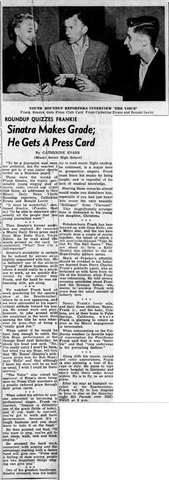
January 20, 1949
Concerts
Beachcomber Club Miami, Florida (17-20)
Monday evening.
Sinatra did four nights and eight shows (1/17 to1/20/1949) The cost for dinner, drinks, and the show was $5.00
Opening acts were The Vagabonds and then Manor
& Mignon.

Beachcomber Club Miami, Florida (17-20)
Monday evening.
Frank Linale and His Clubmen backed him.
BRUUN OVER MIAMI
by Paul M. Bruun
Went to the Beachcomber Club last night with one thought in mind, to see and hear Frank Sinatra.
This is Frankie's first full-fledged night club engagement in these parts. He made a one-show stand, once before, at the Colonial Inn, but here was one of those times when it was up to Frankie to show what he could do.
For the people with the price of a Beachcomber dinner in their jeans don't belong to any bobby soxers brigade, some members of which have stood in the rain all night just to catch a glimpse of their idol.
Neither was this a radio audience where the entertainment comes out free, supported by lavish Hollywood productions.
Here was a man's audience,.adults, grown-ups, who know what they want in entertainment and who have a brutal manner of showing their disapproval when not satisfied.
And you have to remember, Sinatra isn't a cafe headliner in the true accepted sense of the word. He is a theater and radio and motion picture star. Remember, the boards he trod last night are the familiar stamping ground of the greatest names in cafe history.His was no easy assignment.
Sinatra started with "Wrap Your Troubles In Dreams." He was obviously nervous and so was some of his audience.
Then came "My Darling, My Darling," the favorite of millions, and the ice under Frankie's skates became a little more solid. The time was getting short. This audience was used to knowing the results of their favorites in a matter of minutes. And then Frank Sinatra went to the Broadway hit "Carousel," and he started to sing "Soliloquy." You who have heard this song will probably remember it better if I tell you, it is the song you might think of as "My Boy Bill," the tune has the father dreaming about his son, yet to be born, and then the sudden realization that the baby might be a girl.
As he sang into this tune, the complete silence which had greeted Sinatra's first two tunes became actually noisy in comparison to the hush which could be felt.
Here was a master, singing a thoroughbred song, and an audience, each member of which had bet heavily on Sinatra to win. When he finished, after a few seconds he waited for them to remember to applaud, Frank Sinatra got an ovation that was thrilling to hear. Remember, there wasn't a dissenter in the crowd. Regardless of the daytime pastimes and occupations of the people who made up the crowd which heard Sinatra, each, individually, recognized class when it was presented. Here was a song sung as nearly perfect as these ears of mine have ever heard.
And it was with this song that I recognized a Frank Sinatra you don't hear over the radio. He was no crooner with
"Soliloquy," he was a singer with a voice, and I was probably the most astonished person in the room.
He went to the current Broadway hit "Where's Charlie," for "Once In Love With Amy." Then came a medley of old-timers, which led off with "I'm Always Chasing Rainbows."
Here,Sinatra made a complete change of pace. He started a song that resulted in his reading a fan letter to Ingrid Bergman, from the beginning of her career right up to her current appear- ance in "Joan of Arc." The routine was showmanship supreme.
Then came "A Foggy London Town," and the people started screaming for their Sinatra favorites, and remember, these weren't bobby soxers yelling for a song they hear over the radio. These were the elite who quench their thirst with imported Scotch and who buy their cigarettes from girls with fancy trays at premium prices.
He succumbed to requests and sang "The Girl That I Marry," then back to the show "Carousel" for the ever popular "You'll Never Walk Alone." He sang "Don't Worry 'Bout Me" and finally, "Ol' Man River," as well as I have ever heard it sung, and this is some compliment.
Sinatra brought with him three of the best musicians from the orchestra which plays for his radio show. They provided what is probably the best trio accompaniment I have ever heard any star receive, with Frank Linale and his Clubmen joining on some tunes. For Sinatra, a French celeste was added.
Sinatra has three more nights to appear at the Beachcomber Club, a total of six shows. If I were you, I'd make my reservation NOW.
note: It is quite revealing that Sinatra did a tribute to Ingrid Bergman. During one of my conversations with Mitch Miller, he told me the problems Sinatra had in his private life back then were similar to what Bergman went through.. She left her husband and children to be with Roberto Rossellini. Effectively ended her career in Hollywood for almost a decade.
note: First show Frank was onstage for one hour and 40 mins.
According to Miami papers, Beachcomber was turning away hundreds every night. And ads ran every day count- ing down the number of remaining shows.
Ed
[image referenced in source but could not be recovered]
January 22, 1949
Radio
Your Hit Parade (NBC)
Program #711
Time 9:00-9:30 pm (Rebroadcast: 9:00-9:30 PST)
Sponsor: Lucky Strike
1. Commercial
2. Cuanto la Gusta (9) Frank Sinatra and Hit Paraders
3. Galway Bay(10) Eileen Wilson
4. You Were Only Fooling (6) Orchestra
5. My Darling, My Darling (4) --Frank Sinatra
6. Lavender Blue (5) Hit Paraders
7. Commercial
8. I Got Rhythm - Orchestra
9. Far Away Places (7) Frank Sinatra and Hit Paraders
10. Until (10) Ziggy Elman & Orchestra
11. On A Slow Boat to China (3) Frank Sinatra
12. A Little Bird Told Me (2) Eileen Wilson
13. Commercial
14. Buttons and Bows (1) Frank Sinatra and Hit Paraders
Ed O'Brien noted:
Frank performed nine of the top ten tunes shown here.
He never did "Lavender Blue." All nine were sung on Hit Parade shows and he didn't record any of them. He did sing a few in concert including "My Darling, My Darling" and "Slow Boat To China." He had a lot of fun with the latter on H.P. shows, doing it in different tempos. There are some good songs here that Frank passed on.
January 29, 1949
Radio
Your Hit Parade #712
Sponsor: Lucky Strike
Music: Alex Stordahl and His Orchestra
--Powder Your Face With Sunshine Frank Sinatra
--Mama Inez Eileen Wilson
--Lavender Blue Eileen Wilson
--Far Away Places Frank nk Sinatra
--You Were Only Fooling The Hit Paraders
--Here I'll Stay Frank Sinatra
--On A Slow Boat To China Eileen Wilson
--Galway Bay Frank Sinatra
--Buttons And Bows The Hit Paraders
--My Darling, My Darling Eileen Wilson
--A Little Bird Told Me Frank Sinatra
January 31, 1949
Studio
Monday evening
IT'S ONLY MONEY (re-titled "Double Dynamite") RKO
10 AM to 1:PM
Orchestra conducted by C. Bakaleinikoff
Arrangement by Leigh Harline
29 piece orchestra
It's Only Money (finale) with Groucho Marx
note: Jane Russell was also on this date. Actual
vocal only runs 26 seconds in the film.
February 1949
[Sinatra fires George Evans]
Kaplan: After demanding Evans fire West Coast publicist Jack Keller (who Evans refused to fire), Sinatra finally ended his professional relationship with George Evans at the end of February 1949 -- the man who had done much to build his career.
Source: James Kaplan, "Frank: The Voice" (2010)
[Rehearsals begin for On the Town]
Frank began intensive dance rehearsals for On the Town with Gene Kelly and co-star Jules Munshin in the third week of February 1949, more demanding than those for Anchors Aweigh.
Source: Richard Havers, "Sinatra" (Dorling Kindersley, 2007).
February 5, 1949
Radio
Your Hit Parade
Network: NBC
Program #713
Time: 9:00-9:30 P.M. (Rebroadcast 9:00-9:30 P.M. PST)
Sponsor: Lucky Strike
1. commercial 1
2. I've Got My Love To Keep Me Warn (9) - Frank Sinatra
3. On A Slow Boat To China (4) - Orchestra
4. Buttons And Bows (5) - Eileen Wilson
5. Galway Bay (8) - Frank Sinatra
6. Lavender Blue (7) - Hit Paraders
7. commercial 2
8. So In Love (10) - Frank Sinatra
9. And The Angels Sing - Ziggy Elman & Orchestra
10. My Darling, My Darling (6) - Frank Sinatra
11. Powder You Face With Sunshine (3) - Hit Paraders
12. Far Away Places (2) - Eileen Wilson
13. commercial 3
14. A Little Bird Told Me (1) - Frank Sinatra & Hit Paraders
February 12, 1949
Radio
Your Hit Parade
Network: NBC
Program #714
Time: 9:00-9:30 P.M. (Rebroadcast 9:00-9:30 P.M. PST)
Sponsor: Lucky Strike
1. commercial 1
2. On A Slow Boat To China (10) - Frank Sinatra & Hit Paraders
3. My Darling, My Darling (5) - Eileen Wilson
4. Lavender Blue (4) - Orchestra
5. I've Got My Love To Keep Me Warm (8) - Frank Sinatra
6. Galway Bay (6) - Eileen Wilson
7. commercial 2
8. Buttons And Bows (7) - Hit Paraders
9. So In Love (9) - Frank Sinatra
10. Brazil - Orchestra
11. Far Away Places (3) - Frank Sinatra & Hit Paraders
12. Powder Your Face With Sunshine (2) - Eileen Wilson
13. commercial 3
14. A Little Bird Told Me (1) - Frank Sinatra
Note: Ed O'Brien adds The only song from the above list that Frank never sang was "Lavender Blue."
February 19, 1949
Radio
Your Hit Parade
Network: NBC
Program #715
Time: 9:00-9:30 P.M. (Rebroadcast 9:00-9:30 P.M. PST)
Sponsor: Lucky Strike
1. commercial 1
2. I've Got My Love To Keep Me Warm (6) - Frank Sinatra
3. On A Slow Boat To China (7) - Orchestra
4. Buttons And Bows (8) - Eileen Wilson
5. Galway Bay (9) - Frank Sinatra
6. Lavender Blue (4) - Hit Paraders
7. commercial 2
8. Here I'll Stay (10) - Frank Sinatra
9. Say Si Si - Orchestra
10. My Darling, My Darling (5) - Frank Sinatra & Eileen Wilson
11. A Little Bird Told Me (3) - Hit Paraders
12. Far Away Places (2) - Eileen Wilson
13. commercial 3
14. Powder Your Face With Sunshine (1) - Frank Sinatra & Hit Paraders
February 20, 1949
Concerts
Biltmore Hotel, Los Angeles, CA
20th Annual Charity Ball of the Jewish Home For The Aged Frank Sinatra, Red Skelton, Jimmy Durante, Georgie Jessel, Bob Hope, Ethel Barrymore and others
Biltmore Hotel, Los Angeles, CA
20th Annual Charity Ball of the Jewish Home For The Aged Frank Sinatra, Red Skelton, Jimmy Durante, Georgie Jessel, Bob Hope, Ethel Barrymore and others
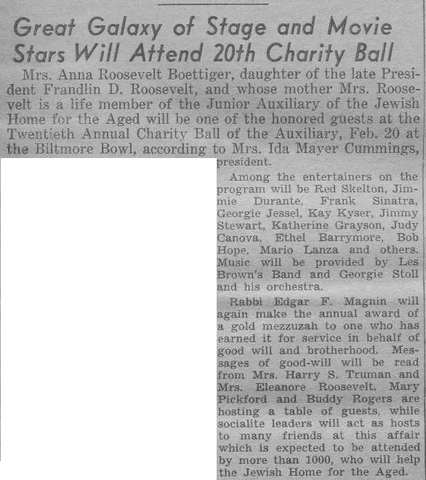
February 26, 1949
Radio
Your Hit Parade
Network: NBC
Program #716
Time: 9:00-9:30 P.M. (Rebroadcast 9:00-9:30 P.M. PST)
Sponsor: Lucky Strike
1. commercial 1
2. Sun Flower (10) - Frank Sinatra
3. I've Got My Love To Keep Me Warm (6) - Orchestra
4. Galway Bay (5) - Eileen Wilson
5. On A Slow Boat To China (9) - Frank Sinatra
6. Lavender Blue (4) - Hit Paraders
7. commercial 2
8. Cruising Down The River (8) - Frank Sinatra, Eileen Wilson & Hit Paraders
9. Frenesi - Orchestra
10. So In Love (7) - Frank Sinatra
11. A Little Bird Told Me (3) - Eileen Wilson
12. Powder Your Face With Sunshine (2) - Hit Paraders
13. commercial 3
14. Far Away Places (1) - Frank Sinatra
Concerts
Shrine Convention Hall, Los Angeles, CA
Sixth Annual Military Ball
Frank Sinatra, Jack Benny, Dinah Shore
Shrine Convention Hall, Los Angeles, CA
Sixth Annual Military Ball
Frank Sinatra, Jack Benny, Dinah Shore
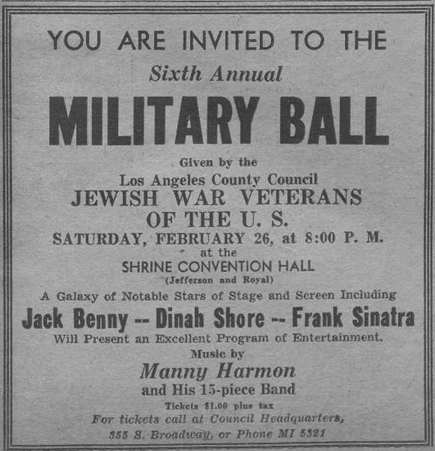
March 1949
[Down Beat criticizes Phil Moore Four sides]
Down Beat / Kaplan: In March 1949, Down Beat criticized a group of sides Sinatra recorded with the jazz quartet the Phil Moore Four, saying they missed the intimate feel intended and that Sinatra sang some notes off-pitch.
Source: James Kaplan, "Frank: The Voice" (2010)
[On the Town shooting begins]
Kaplan: Sinatra began shooting On the Town with Gene Kelly (co-directing with Stanley Donen) at the end of March 1949; for the first time in a Sinatra picture, Kelly received first billing over him.
Source: James Kaplan, "Frank: The Voice" (2010)