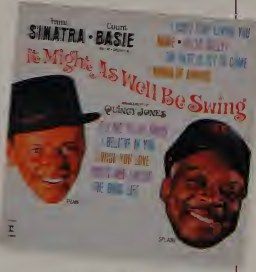
RE: [Sinatraphiles] September 25 - THIS DATE IN SINATRA HISTORY
Flagged for reviewFrom: "Danny Faux thefox98@hotmail.com [Sinatraphiles]" <Sinatraphiles@yahoogroups.com> | Received: 2014-09-26
Editorial note: parsed as a “Television” entry for 1986, but no existing entry was found to reconcile it against. This may be a genuinely new item, or a fragment split off from a longer post (e.g. a source citation date misread as a new entry). Recommend manual placement.
Madrid, Spain
Sinatra Concert / 84 min.
RE: [Sinatraphiles] September 25 - THIS DATE IN SINATRA HISTORY
Flagged for reviewFrom: "Danny Faux thefox98@hotmail.com [Sinatraphiles]" <Sinatraphiles@yahoogroups.com> | Received: 2014-09-26
Editorial note: parsed as a “Concerts” entry for 1977, but no existing entry was found to reconcile it against. This may be a genuinely new item, or a fragment split off from a longer post (e.g. a source citation date misread as a new entry). Recommend manual placement.
Ahmanson Theatre, Los Angeles, California
Benefit
Orchestra Conducted By: Bill Miller
January 1 - THIS DATE IN SINATRA HISTORY
Flagged for reviewFrom: Scott Henderson <scott@falseducks.com> | Received: 2024-01-01
Editorial note: parsed as a “Film” entry for 1938, but no existing entry was found to reconcile it against. This may be a genuinely new item, or a fragment split off from a longer post (e.g. a source citation date misread as a new entry). Recommend manual placement.
film ended with the death of John Garfield's character. Frank had perished in both "Eternity" and "Suddenly." He didn't see any
charm in making it three in a row. Warners balked and Frank told them he wouldn't sign the contract unless the ending was rewritten.
The film did not have a working title until Jack Warner, who adored Frank's recording of "Young At Heart," decided it was the title he
wanted. It would open and close the film. The pre-recordings were done in mid-July and production of the film got underway on 7-22-54.
The famous "One For My Baby" scene, which first established Sinatra as a saloon singer, was shot on 8-11-54. The film was completed
on 9-14-54.
After his success in "Eternity" and the renewed vocal career at Capitol, Frank Sinatra knew exactly what he wanted and would accept
nothing less. The first casualty during the filming of "Young At Heart" happened just two days into the shoot. Charles Lang, the Academy
Award winning cinematographer, was a meticulous craftsman, who set up every shot with great care. Frank could not stand the long
waits between scenes. He demanded that Lang be replaced or he was dropping out of the project. Ted D McCord replaced him. A few
weeks into the filming, Frank announced that Marty Melcher, Doris's husband, was to be barred from the set. Period. But what bothered
Day, far more, was Frank's dilatory ways. Doris was a consummate professional and her co-star was late every day. Sometimes he did
not show until after lunch. In later years, she would write about her frustration and discuss it in many interviews.
After seeing the rushes, WB offered Frank the lead in the remake of the Bogie classic "High Sierra." Frank agreed to do it for 50% of the
net. He knew they would not accept such a demand. One did not do remakes of Bogart films.
In 2001, Republic Entertainment Inc, a division of Paramount Pictures, issued the DVD of "Young At Heart." It is not digitally remastered
and there are no special features. Truly a shame that this film has not received the respect it so richly deserves.
--Ed
January 6 - THIS DATE IN SINATRA HISTORY
Flagged for reviewFrom: Scott Henderson <scott@falseducks.com> | Received: 2024-01-06
Editorial note: parsed as a “Studio” entry for 1940, but no existing entry was found to reconcile it against. This may be a genuinely new item, or a fragment split off from a longer post (e.g. a source citation date misread as a new entry). Recommend manual placement.
. Released in February of 41, the tune
was #2 on the Billboard chart for six consecutive
weeks and stayed around for 14 weeks.
January 6 - THIS DATE IN SINATRA HISTORY
Flagged for reviewFrom: Scott Henderson <scott@falseducks.com> | Received: 2024-01-06
Editorial note: parsed as a “Concerts” entry for 1958, but no existing entry was found to reconcile it against. This may be a genuinely new item, or a fragment split off from a longer post (e.g. a source citation date misread as a new entry). Recommend manual placement.
Sands, Las Vegas, Nevada (January 5-28)
Notes: In response to an inquiry from Sinatraphile Tom Adam, Ed
O'Brien points out that Sinatra was doing "Come Fly With Me."
January 1958 featured two renditions of that song in TV appearances plus Isle of Capri . Sinatra dedicated the full half-hour of
his opening TV show in 1958 to the "Come Fly With Me" lp. Teddy Randazzo and George Jacobs told O'Brien that Sinatra would
bring the arranger of his most recent album into the Sands around the time of its release. Randazzo also told him that
Billy May was with him when their albums came out. O'Brien doubts that Sinatra did any of the songs from "Only The Lonely,"
with the one exception being "One for My Baby," which had become a concert staple after mid-1952.
Sinatra did a few of the "Come Fly . . ." songs on his TV show into the Spring of 1958, O'Brien continues. Unfortunately, there is no
documentation of just what he sang at the Sands in January, but here is the list from Monte Carlo , June 14, 1958.
Curious that he did only one song from the legendary May 29 session and it wasn't a track from "Only The Lonely."
1. Come Fly With Me
2. I Get a Kick out of You
3. I've Got You Under My Skin
4. Where or When (ballad recording done September 11, 1958)
5. Moonlight in Vermont
6. On the Road to Mandalay
7. When Your Lover has Gone
8. April in Paris
9. All the Way
10. Monique (song from "Kings Go Forth ")
11. Bewitched
12. Lady is a Tramp
13. You Make Me Feel so Young
These, O'Brien says, are essentially the gems that would be Sinatra's concert repertoire for the next four decades..
He is willing to bet that some enterprising soul could dig up some reviews from the trade papers and possibly
Vegas papers covering the entertainment on The Strip.
January 7 - THIS DATE IN SINATRA HISTORY
Flagged for reviewFrom: Scott Henderson <scott@falseducks.com> | Received: 2024-01-07
Editorial note: parsed as a “Radio” entry for 1951, but no existing entry was found to reconcile it against. This may be a genuinely new item, or a fragment split off from a longer post (e.g. a source citation date misread as a new entry). Recommend manual placement.
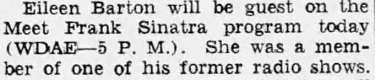
Meet Frank Sinatra
Guest: Eileen Barton
note: First show with 45 minute running time. Last 15 minutes of the hour had "News with Eric Sevareld"
Television
None
Re: January 7 - THIS DATE IN SINATRA HISTORY
Flagged for reviewFrom: "John K. George" <dmarc-noreply@freelists.org> | Received: 2024-01-10
Editorial note: parsed as a “Radio” entry for 1951, but no existing entry was found to reconcile it against. This may be a genuinely new item, or a fragment split off from a longer post (e.g. a source citation date misread as a new entry). Recommend manual placement.
Meet Frank Sinatra
Guest: Eileen Barton
note: First show with 45 minute running time. Last 15 minutes of the hour had "News with Eric Sevareld"
Television
None
Re: January 7 - THIS DATE IN SINATRA HISTORY
Flagged for reviewFrom: Ed O'Brien <dmarc-noreply@freelists.org> | Received: 2024-01-10
Editorial note: parsed as a “Radio” entry for 1951, but no existing entry was found to reconcile it against. This may be a genuinely new item, or a fragment split off from a longer post (e.g. a source citation date misread as a new entry). Recommend manual placement.
Meet Frank Sinatra
Guest: Eileen Barton
note: First show with 45 minute running time. Last 15 minutes of the hour had "News with Eric Sevareld"
January
7, 1951 Meet Frank Sinatra
Taped December 27, 1950
Show
#11
Network: CBS
Sunday
5 P.M - 5:45 P.M. EST
Sponsor: Tintair - Luden's Cough Drops
Musicians: Graham Forbes and His
Quartet
Announcer: Hal Sims
Writers: Paul Dudley
Guest: Eileen Barton
Notes:
First show with the new 45 minute format. Last 15 minutes of the hour have "News with Eric Sevareid"
\
Producers:
Mark Goodson, Bill Todman
Re: January 7 - THIS DATE IN SINATRA HISTORY
Flagged for reviewFrom: Vance Adair <dr.vanceadair@gmail.com> | Received: 2024-01-10
Editorial note: parsed as a “Radio” entry for 1951, but no existing entry was found to reconcile it against. This may be a genuinely new item, or a fragment split off from a longer post (e.g. a source citation date misread as a new entry). Recommend manual placement.
Meet Frank Sinatra
Guest: Eileen Barton
note: First show with 45 minute running time. Last 15 minutes of the hour had "News with Eric Sevareld"
Television
None
January 11 - THIS DATE IN SINATRA HISTORY
Flagged for reviewFrom: Scott Henderson <scott@falseducks.com> | Received: 2024-01-11
Editorial note: parsed as a “Concerts” entry for 1940, but no existing entry was found to reconcile it against. This may be a genuinely new item, or a fragment split off from a longer post (e.g. a source citation date misread as a new entry). Recommend manual placement.
Shea Theatre, Buffalo, New York (December 31/39 to January 11/40) Harry James with Frank Sinatra
Red Skelton, Erina Stillwell, Patricia Norman
Hudson Wonders, Frank Paris and His Marionettes
Note: Sinatra's last concert with Harry James. He would join Tommy Dorsey's Orchestra in Rockford, Illinois on January 24th
Re: January 7 - THIS DATE IN SINATRA HISTORY
Flagged for reviewFrom: Ed O'Brien <dmarc-noreply@freelists.org> | Received: 2024-01-11
Editorial note: parsed as a “Radio” entry for 1951, but no existing entry was found to reconcile it against. This may be a genuinely new item, or a fragment split off from a longer post (e.g. a source citation date misread as a new entry). Recommend manual placement.
Meet Frank Sinatra
Guest: Eileen Barton
note: First show with 45 minute running time. Last 15 minutes of the hour had "News with Eric Sevareld"
Television
None
Re: January 7 - THIS DATE IN SINATRA HISTORY
Flagged for reviewFrom: Vance Adair <dr.vanceadair@gmail.com> | Received: 2024-01-11
Editorial note: parsed as a “Radio” entry for 1951, but no existing entry was found to reconcile it against. This may be a genuinely new item, or a fragment split off from a longer post (e.g. a source citation date misread as a new entry). Recommend manual placement.
Meet Frank Sinatra
Guest: Eileen Barton
note: First show with 45 minute running time. Last 15 minutes of the hour had "News with Eric Sevareld"
Television
None
January 16 - THIS DATE IN SINATRA HISTORY
Flagged for reviewFrom: Scott Henderson <scott@falseducks.com> | Received: 2024-01-16
Editorial note: parsed as a “Television” entry for 1951, but no existing entry was found to reconcile it against. This may be a genuinely new item, or a fragment split off from a longer post (e.g. a source citation date misread as a new entry). Recommend manual placement.
Texaco Star Theatre
Milton Berle, Martha Raye, Perry Como
A boxed marked "The Thing" is opened and Frank Sinatra steps out
January 20 - THIS DATE IN SINATRA HISTORY
Flagged for reviewFrom: Scott Henderson <scott@falseducks.com> | Received: 2024-01-20
Editorial note: parsed as a “Concerts” entry for 1975, but no existing entry was found to reconcile it against. This may be a genuinely new item, or a fragment split off from a longer post (e.g. a source citation date misread as a new entry). Recommend manual placement.
Caesars Palace, Las Vegas, Nevada (16-22)
Woody Herman Orchestra Conducted By: Bill Miller
1. The Lady Is A Tramp
2. Bad, Bad Leroy Brown
3. Let Me Try Again
4. My Kind Of Town
5. medley: Last Night When We Were Young / Violets For Your Furs /
Here's That Rainy Day
6. monologue
7. Something
8.. You Are The Sunshine Of My Life
9. My Way
10. Strangers In The Night
11. Send In The Clowns
12. I Have Dreamed
13. I've Got You Under My Skin
Notes: TT 52mins.
January 21 - THIS DATE IN SINATRA HISTORY
Flagged for reviewFrom: Scott Henderson <scott@falseducks.com> | Received: 2024-01-21
Editorial note: parsed as a “Studio” entry for 1962, but no existing entry was found to reconcile it against. This may be a genuinely new item, or a fragment split off from a longer post (e.g. a source citation date misread as a new entry). Recommend manual placement.
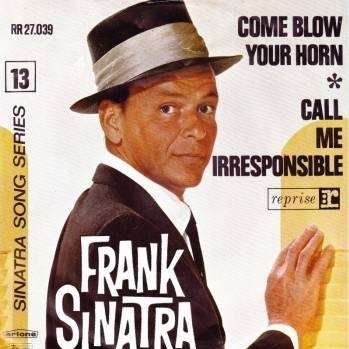
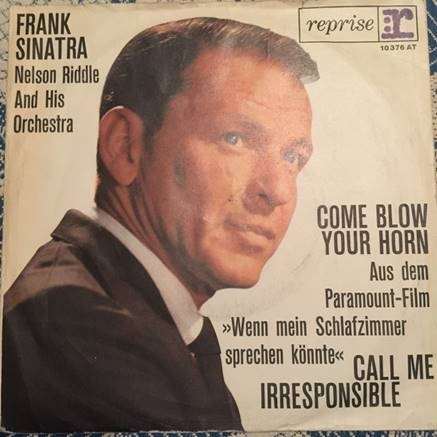
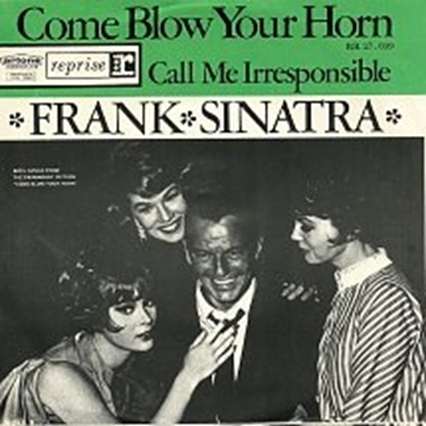
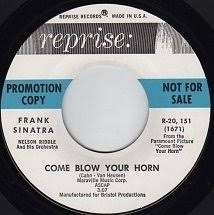
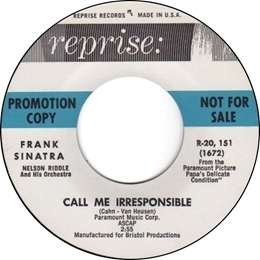
. "Call Me Irresponsible" was intended for Fred Astaire and Frank
got it after Fred dropped out of the film project involving the song ("Papa's
Delicate Condition."). This was the first Reprise session where Riddle's charts would
be acknowledged when the recordings were released. He was no longer contractually
committed to Capitol Records.
Vance Adair:
Sammy Cahn, somewhat late in life, came to regard this as his favourite song.
Cahn was justly proud of the ease with which the seven syllable phrase blends with the music.
note: I have an interview with Cahn in which he talks about his great disappointment regarding
Astaire. Among singers and songwriters, Fred was considered to be the very best exponent
of a song. Berlin, Porter, Gershwin were in awe of his ability to sell their work to a mass
audience. I have a show that Tony Bennett did with Jonathan Schwartz. They discuss
how musicians viewed Astaire and Jonathan relates stories from his father, Arthur Schwartz.
--Ed
March 9 - THIS DATE IN SINATRA HISTORY
Flagged for reviewFrom: Scott Henderson <scott@falseducks.com> | Received: 2024-03-09
Editorial note: parsed as a “Film” entry for 1955, but no existing entry was found to reconcile it against. This may be a genuinely new item, or a fragment split off from a longer post (e.g. a source citation date misread as a new entry). Recommend manual placement.
. He negotiated a tremendous deal with the studio before agreeing
to star in "Can-Can." Frank received up front $200,000 and 25% of the
gross earnings. This was unheard of in 1959. A clever studio accountant
could easily make a net profit disappear. But the gross was the gross.
20th Century wanted Marilyn Monroe to play Simon, but Frank insisted on
Shirley MacLaine. Filming got underway in early September
of 1959. The budget was $6,000,000. It became apparent very early in the
filming that Frank and Shirley were badly miscast. Whereas the two Frenchmen ,
Maurice Chevalier and Louis Jordan, fit into the story splendidly. On 10-13-59, Sinatra
and Chevalier recorded "I Love Paris." The recording is on the Capitol s/t album, but for
some insane reason it was deleted from the final cut.
The film was a wrap in early November. An elaborate opening took place at the Rivoli
Theatre, in N.Y.C, 3-9-60. There was one showing at 8:30 P.M and all seats were reserved.
The nation-wide release took place two days later. The reviews were not good. Prior to the release,
Variety estmated the movie would have a domestic gross of $10,000,000.
The actual take was $4.2 million. Time has not been good to the film.
On Rotten Tomatoes, "Can-Can" receives an audience score of 47%.
Capitol Records released the soundtrack album on April 4,
1960. The big selling point at the time
was Full Dimensional Stereo. A CD version from Capitol was issued in
1989. A
more recent version is available on the Hallmark label. The quality of that release is definitely inferior
to the Capitol original. The VHS was issued in April 1993 and the deluxe DVD in May of 2007.
The latter is a two-disc offering that is the wide-screen version. 20th filmed it in TODD-AO and
it is really the only way to watch it. The second disc offers a look at the famous Khrushev visit
to the "Can-Can" set on 9-19-59. Sinatra, Maclaine,
Chevalier, Jordan did numbers
from the film. Nikita and Co were shocked at the very revealing outfits worn by the dancers and
would later issue a statement condemning western decadence. A laser disc copy was issued
in wide screen format in 1995. Excellent quality.
--Ed
Re: October 22 - THIS DATE IN SINATRA HISTORY
Flagged for reviewFrom: Ed O'Brien <dmarc-noreply@freelists.org> | Received: 2024-10-23
Editorial note: parsed as a “Studio” entry for 1980, but no existing entry was found to reconcile it against. This may be a genuinely new item, or a fragment split off from a longer post (e.g. a source citation date misread as a new entry). Recommend manual placement.
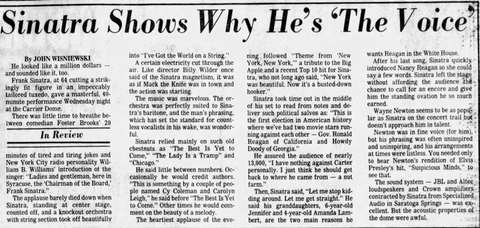
Syracuse Carrier Dome, New York
Reagan Benefit
Wednesday evening
Conducted by Vinnie Falcone
O.A. Wayne Newton
1. I've Got The World On A String
2. The Best Is Yet To Come
3. The Song Is You
4. When Your Lover Has Gone
5. The Lady Is A Tramp monologue
6. Street Of Dreams
7. You And Me
8. My Kind Of Town
9. New York, New York
The Post Standard
October 25 - THIS DATE IN SINATRA HISTORY
Flagged for reviewFrom: scott@falseducks.com | Received: 2024-10-24
Editorial note: parsed as a “Studio” entry for 1946, but no existing entry was found to reconcile it against. This may be a genuinely new item, or a fragment split off from a longer post (e.g. a source citation date misread as a new entry). Recommend manual placement.
Hollywood
HCO2116 Time After Time
(J. Styne/S. Cahn)
(from It Happened In Brooklyn)
Sinatra Music Publishing Corp. (ASCAP) 1946
Arranged & Conducted by Axel Stordahl
-1 (3:08) CD: Columbia Years 43-52 Vol. 5
CD: 09372 Greatest Hits-The Early Years, Vol. 2
LP: C6X-40343 The Voice- The Columbia Years, 43-52
LP: CL-2913 Frank Sinatra In Hollywood
LP: CL-2572 Greatest Hits, The Early Years, Vol. 2
LP: CL-606 Frankie
78: 37300
HCO2117 It's The Same Old Dream w/Four Hits & A Miss
(J. Styne/S. Cahn)
(from It Happened In Brooklyn)
Sinatra Music Publishing Corp. (ASCAP) 1946
Arranged & Conducted by Axel Stordahl
-1 (3:05) CD: Columbia Years 43-52 Vol. 5
LP: C6X-40343 The Voice- The Columbia Years, 43-52
LP: CL-2913 Frank Sinatra In Hollywood
LP: CL-2740 The Essential Frank Sinatra, Vol. 2
78: 37288
NOTE: Sinatra Scholar Ed O'Brien thinks the songs by Cahn/Styne for "It Happened in Brooklyn" were the best Sinatra had during the MGM years.
The two listed above are still fresh after all these years. There would be three recordings made by Sinatra for both tunes. He wishes that MGM had employed their gorgeous Technicolor on this underrated gem.
HCO2118 I'm Sorry I Made You Cry
(N.J. Clesi)
(from Rose Of Washington Square)
Leo Feist, Inc. (ASCAP) 1918
Arranged & Conducted by Axel Stordahl
-1 (3:04) CD: Columbia Years 43-52 Vol. 5
LP: CL-6087 Songs By Sinatra, Vol. 1 (10 inch)
78: 37256
Four Hits And A Miss: Marvin Bailey, Lee Gotch, Beverly Mahr, Mack McLean, William Seckler
Violins: E. Bergman, H. Bluestone, W. Callies, S. Cytron, W. Edelstein, P. Ellis, G. Kast, M. King, S. Middleman, F. Olson, N. Pisani, E. Powers, M. Russell, F. Slatkin, M. Sosson; Violas: A. Harshman, P. Lowenkron, M. Perlmutter, P. Robyn; Cellos: F. Goerner, A. Kafton, N. Ochi-Albi, J. Sewell; Harp: M. Hogan Cambern; Horn: F. Fox; Saxes: H. Beau, H. Haymer, J. Kinsler, F. Stulce; Trumpets: D. Anderson, R. Linn, R. Zarchy; Trombones: D. Hallett, G. Jenkins, W. Schaefer; Piano: M. Mclntyre; Guitar: A. Reuss; Bass: P. Stephens; Drums: R. Hagan
October 25 - THIS DATE IN SINATRA HISTORY
Flagged for reviewFrom: scott@falseducks.com | Received: 2024-10-24
Editorial note: parsed as a “Studio” entry for 1947, but no existing entry was found to reconcile it against. This may be a genuinely new item, or a fragment split off from a longer post (e.g. a source citation date misread as a new entry). Recommend manual placement.
New York City
CO38284 My Cousin Louella
(B. Bierman/J. Manus)
Shapiro, Berstein & Co., Inc. (ASCAP) 1947
Arranged & Conducted by John Guarnieri-1 (3:05) CD: Columbia Years 43-52 Vol. 7 78: 38045
CO38285 We Just Couldn't Say Goodbye
(H. Woods)
Words And Music, Inc. (ASCAP) 1929
Arranged & Conducted by John Guarnieri
-1 (3:06) CD: Columbia Years 43-52 Vol. 7
LP: C2X-40897 Hello Young Lovers
78: 38129
CO38286 S'Posin'
(A. Razaf/P. Denniker)
Mayfair Music Corp. (ASCAP) 1929
Arranged & Conducted by John Guarnieri
-1 (2:45) CD: Columbia Years 43-52 Vol. 7
LP: C6X-40343 The Voice-The Columbia years, 43-52
LP: CL-606 Frankie
78: 38210
Piano: John Guarnieri; Bass: Herman Alpert; Guitar: Tony Mattola
NOTE:‚ Ed O''Brien points out that guitarist Tony Mattola had known Sinatra since the early 1930s. They had worked together at WAAT in Jersey City back in 1933 when Sinatra was 17 years old.
They both had sustaining 15-minute shows. Tony was on a number of Sinatra's radio shows after the Dorsey years and was a regular on the Vimms show of 1944.
But his first session with Sinatra was on October 24, 1947. Mattola told O'Brien that Mitch Miller was behind "My Cousin Louella," and Sinatra was less than thrilled. One of the few sessions done with just a trio.
October 25 - THIS DATE IN SINATRA HISTORY
Flagged for reviewFrom: scott@falseducks.com | Received: 2024-10-24
Editorial note: parsed as a “Studio” entry for 1975, but no existing entry was found to reconcile it against. This may be a genuinely new item, or a fragment split off from a longer post (e.g. a source citation date misread as a new entry). Recommend manual placement.
Hollywood
TCA5717 A Baby Just Like You w/Vocal Chorus
(John Denver /Joe Henry)
Cherry Lane Music Publishing Co. Inc. (ASCAP)
Arranged by Don Costa
Conducted by Bill Miller
(2:45) CD: 46013-2 The Complete Reprise Studio Recordings Disc 17
LP: W54093 I Sing The Songs Vol.2‚ ( Italy )
45: S1342
TCA5718 Christmas Memories w/Vocal Chorus
(Alan Bergman/Marilyn Bergman/Don Costa)
WB Music Corp. (ASCAP)
Arranged by Don Costa
Conducted by Bill Miller
(2:08) CD: 46013-2 The Complete Reprise Studio Recordings Disc 17
LP: W54093 I Sing The Songs Vol.2
45: S1342
Note: The Orchestral tracks were pre-recorded on October 15, 1975
Ed O'Brien:
Shortly after the recordings were done, Reprise released them on a 45 (RPS1342). There was a picture of Frank's granddaughter, Amanda, on the sleeve. An employee at the record company told me the suits were none too pleased with the extra expense the very attractive sleeve cost. Typical record executives. Recordings were a nice tribute.
October 25 - THIS DATE IN SINATRA HISTORY
Flagged for reviewFrom: scott@falseducks.com | Received: 2024-10-24
Editorial note: parsed as a “Radio” entry for 1940, but no existing entry was found to reconcile it against. This may be a genuinely new item, or a fragment split off from a longer post (e.g. a source citation date misread as a new entry). Recommend manual placement.
Fame And Fortune - Tommy Dorsey Orchestra
Network: NBC - Blue Network
Location: Hollywood
Show #2
Sponsor: Nature's Remedy
Time: 8:30PM - 9:00PM (EST) Thursdays
Orchestra Conducted By: Tommy Dorsey
Arrangements By: Axel Stordahl (Sinatra)
Announcer: Fred B. Cole
Musicians: Chuck Peterson, Ray Linn, Clyde Hurley, Ziggy Elman (trumpet); Tommy Dorsey, George Arus, Les Jenkins, Lowell Martin (trombone); Fred Stulce, Paul Mason (alto sax); Don Lodice, Heinie Beau (tenor sax); Johnny Mince (clarinet & alto sax); Clark Yocum (guitar); Sid Weiss (bass); Joe Bushkin (piano); Buddy Rich (drums).
Vocals: Frank Sinatra, Connie Haines, Pied Pipers
1. opening theme: Getting Sentimental Over You - TD & Orchestra
2. Dark Eyes - Orchestra
3. Trade Winds - Frank Sinatra
4. That's For Me - Connie Haines
5. Who? - Frank Sinatra
6. Margie - Pied Pipers
7. I Know That You Know - Orchestra
8. Oh! Look At Me Now - Frank Sinatra, Connie Haines & Pied Pipers
9. closing theme: Getting Sentimental Over You - TD & Orchestra
Notes: Confirmed airing on WJZ.
("Who" appears in the box set Tommy Dorsey Frank Sinatra - The Song Is You)
("Oh! Look at Me Now" appears on the CD "It's All So New")
Ed O'Brien:
The melody for "Oh! Look At Me Now" was written by Joe Bushkin.
He was a ringer in the amateur contest. John DeVries submitted the lyrics the previous week. The set-up at the time involved a panel of experts who listened to the entries the previous Saturday(19) and chose the top three songs. On the 10-24 show, the intro to the winning tune was a brief orchestral version of "There I Go." note: Joe Bushkin was a guest on Frank's CBS-TV show, 12-9-50. Joe and Frank did a duet of "Oh! Look At Me Now" Before Bushkin started the piano intro, Frank teased him about the "amateur" songwriter on the long ago Fame & Fortune broadcast.
Ed
October 25 - THIS DATE IN SINATRA HISTORY
Flagged for reviewFrom: scott@falseducks.com | Received: 2024-10-24
Editorial note: parsed as a “Radio” entry for 1943, but no existing entry was found to reconcile it against. This may be a genuinely new item, or a fragment split off from a longer post (e.g. a source citation date misread as a new entry). Recommend manual placement.
Songs By Sinatra
Network: CBS
Time: 7:15-7:30PM Sunday
Show #1
Sponsor: none (sustaining)
Producer: Herb Polesie
Orchestra conducted by: Axel Stordahl
Musicians: The Bobby Tucker Singers
Arrangements By: Axel Stordahl
1. Paper Doll
2. Lover Come Back To Me
3. Put Your Dreams Away
Note: Frank also sang "Kiss Me Again" and "If Loveliness Were Music."
Announcer was Everett Clark.
Love the ballad reading of "Paper Doll." Show opens with a short segment of " This Love Of Mine."
Notes: Confirmed aired on WABC, WTOP & KNX among others. Sinatra takes over the Jerry Lester Show time slot, which aired the week before on WABC 7:00PM - 7:30PM.
Ed O'Brien:
Stephen Holden, NYT art critic, told me his favorite Sinatra was the bobbysox singer from 1943-47. "Lover Come Back To Me," from Frank's first "Songs By Sinatra," in the fall of 1943, is a perfect example of what he was so attracted to from those years. Frankie had such a remarkable voice. There is an angelic sound to every note and virtuoso singing of a very high order.
Note: The full show opens disc 2 of "A Voice on Air".
October 25 - THIS DATE IN SINATRA HISTORY
Flagged for reviewFrom: scott@falseducks.com | Received: 2024-10-24
Editorial note: parsed as a “Radio” entry for 1945, but no existing entry was found to reconcile it against. This may be a genuinely new item, or a fragment split off from a longer post (e.g. a source citation date misread as a new entry). Recommend manual placement.
Songs By Sinatra
Network: CBS
Location: New York City
CBS Radio Playhouse #3
Show #7
Sponsor: Old Gold Cigarettes
Time: 9:00PM - 9:30PM (EST) Wednesday
Orchestra Conducted By: Axel Stordahl
Arrangements By: Axel Stordahl
Announcer: Bill Lazar
Writer: Glenn Wheaton
Directed By: Mann Holiner
Performers: The Pied Pipers
Guest: Tommy Dorsey
1. opening theme: Night And Day
2. I'll Buy That Dream - Frank Sinatra
3. I'm Getting Sentimental Over You Tommy Dorsey
4. Never Too Late To Pray Tommy Dorsey
5. Tampico Pied Pipers
6. Without A Song - Frank Sinatra
7. Medley: Frank Sinatra w/The Pied Pipers & Tommy Dorsey:
Somebody Loves Me (P.P.)/By The Sleepy Lagoon (T.D.)
This Love Of Mine (F.S.) / Oh Look At Me Now (F.S.-P.P.)/ Marie ( T.D.)/ (What Can I Say)After I Say I'm Sorry (P.P.)/ There Are Such Things(F.S.-P.P.) / Song Of India (T.D.) / Everything Happens To Me (F.S.)
8. I'll Never Smile Again - Frank Sinatra w/Pied Pipers & Tommy Dorsey
9. closing theme: Put Your Dreams Away
note: If I Loved You and Surrey With The Fringe On Top - from the 9-12-45 broadcast - are the added songs on the AFRS version of this show
October 25 - THIS DATE IN SINATRA HISTORY
Flagged for reviewFrom: scott@falseducks.com | Received: 2024-10-24
Editorial note: parsed as a “Television” entry for 1975, but no existing entry was found to reconcile it against. This may be a genuinely new item, or a fragment split off from a longer post (e.g. a source citation date misread as a new entry). Recommend manual placement.
Highlights Of A Quarter Century Of Bob Hope
Guests: Frank Sinatra
October 25 - THIS DATE IN SINATRA HISTORY
Flagged for reviewFrom: scott@falseducks.com | Received: 2024-10-24
Editorial note: parsed as a “Film” entry for 1962, but no existing entry was found to reconcile it against. This may be a genuinely new item, or a fragment split off from a longer post (e.g. a source citation date misread as a new entry). Recommend manual placement.
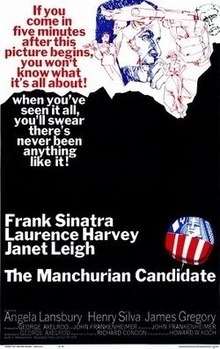
The Manchurian Candidate (US Film Release: October 24, 1962
Starring: Frank Sinatra, Laurence Harvey, Janet Leigh, Angela Lansbury, Henry Silva, and James Gregory
Produced and Directed by John Frankenheimer. The screenplay was written by George Axelrod, and was based on the 1959 Richard Condon novel The Manchurian Candidate Sinatra plays Captain Bennett Marco in this political thriller film about the Cold War and sleeper agents. (1st DVD Release date: 1998-03-24 -- Blu Ray Release date: 2011-01-31)
Note: This film is considered by many to be Sinatra's greatest. He was paid $1,000,000. Laurence Harvey received $200,000 and the additional cost, for everything involved in the making of the film - $1,000,000 - made a grand total of $2,200,000. The film was not removed from circulation after the Kennedy assassination. It would be re-released and also shown on commercial TV. CBS ran it against Dean Martin's premiere NBC variety show, with Frank as guest, 9-16-65. The b.o. take for the initial run was $2,700,000. The re-releases plus numerous TV showings would bring in millions more through the years. The film was completed in 39 days. Sinatra's scenes were shot in 15 days. Frank very much wanted Lucille Ball for the role of Harvey's mother. After Frankenheimer showed Frank Lansbury's screen test, Sinatra agreed she was perfect for the part. Frank did all his own stunts in the film. And he broke his finger in the karate fight with Henry Silva. Rotten Tomatoes shows a 96% favorable rating from more than 50 critics and a 90% favorable from the audience.. Frank obtained complete rights to the film in 1972. He allowed a few showings before the big re-release in 1988. Suddenly" is a different story. Oswald watched a 16mm print prior to killing Kennedy. Sinatra asked that all copies be pulled from circulation. Sinatra gave a fantastic performance in that film. -- Ed
October 25 - THIS DATE IN SINATRA HISTORY
Flagged for reviewFrom: scott@falseducks.com | Received: 2024-10-24
Editorial note: parsed as a “Concerts” entry for 1982, but no existing entry was found to reconcile it against. This may be a genuinely new item, or a fragment split off from a longer post (e.g. a source citation date misread as a new entry). Recommend manual placement.
Resorts International, Atlantic City, New Jersey (14-24)
Orchestra Conducted By: Joe Parnello
1. I've Got You Under My Skin
2. I Get A Kick Out Of You
3. Come Rain Or Come Shine
4. When Your Lover Has Gone
5. The Lady Is A Tramp
6. monologue
7. Guess I'll Hang My Tears Out To Dry
8. Change Partners
9. The Best Is Yet To Come
10. New York, New York
Notes: TT 48mins.
October 25 - THIS DATE IN SINATRA HISTORY
Flagged for reviewFrom: scott@falseducks.com | Received: 2024-10-24
Editorial note: parsed as a “Concerts” entry for 1987, but no existing entry was found to reconcile it against. This may be a genuinely new item, or a fragment split off from a longer post (e.g. a source citation date misread as a new entry). Recommend manual placement.
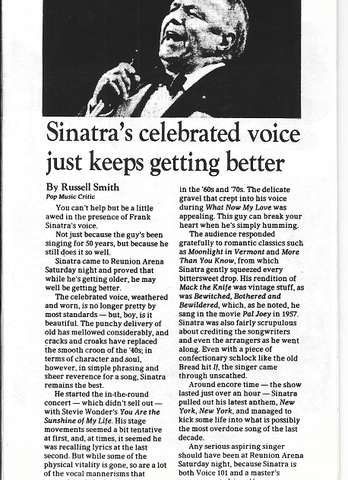
"Come Swing With Me" - Reunion Area, Dallas, Texas
Orchestra Conducted By: Bill Miller
Full Set List:
1. overture
2. You Are The Sunshine Of My Life
3. What Now My Love
4. My Heart Stood Still
5. Moonlight In Vermont
6. Summer Wind
7. You Will Be My Music
8. More Than You Know
9. Mack The Knife
10. What's New
11. Bewitched
12. monologue
13. Angel Eyes
14. If
15. When Joanna Loved Me
16. For Once In My Life
17. Lonely Town
18. New York, New York
19. Where Or When
20. My Way
21. Maybe This Time
22. Lady Is A Tramp
Notes: Complete concert circulates on Stereo Audio Tape. An edited radio transcription was made of this concert a played on a special broadcast. "You Are The Sunshine Of My Life", "What Now My Love", "My Heart Stood Still", "What New", "You Will Be My Music", "Angel Eyes", "For Once In My Life", "New York, New York", "Where Or When", & "Maybe This Time." All appear on the Sinatra 80th-Live In Concert
OCTOBER 27 - THIS DATE IN SINATRA HISTORY
Flagged for reviewFrom: Scott Henderson <scott@falseducks.com> | Received: 2024-10-27
Editorial note: parsed as a “Concerts” entry for 1979, but no existing entry was found to reconcile it against. This may be a genuinely new item, or a fragment split off from a longer post (e.g. a source citation date misread as a new entry). Recommend manual placement.
Resorts International, Atlantic City, New Jersey
Orchestra Conducted By: Vincent Falcone, jr.
Fw: December 20 - THIS DATE IN SINATRA HISTORY
Flagged for reviewFrom: Ed O'Brien <dmarc-noreply@freelists.org> | Received: 2024-12-21
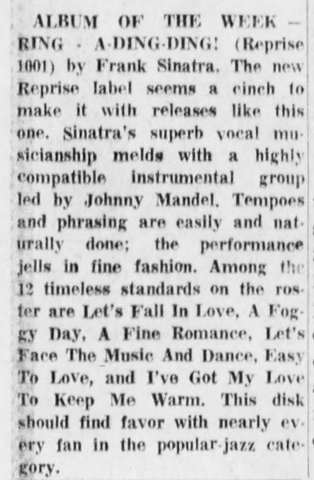
Editorial note: parsed as a “Studio” entry for 1961, but no existing entry was found to reconcile it against. This may be a genuinely new item, or a fragment split off from a longer post (e.g. a source citation date misread as a new entry). Recommend manual placement.
San Bernardino County Sun
December 21 - THIS DATE IN SINATRA HISTORY
Flagged for reviewFrom: Ed O'Brien <dmarc-noreply@freelists.org> | Received: 2024-12-22
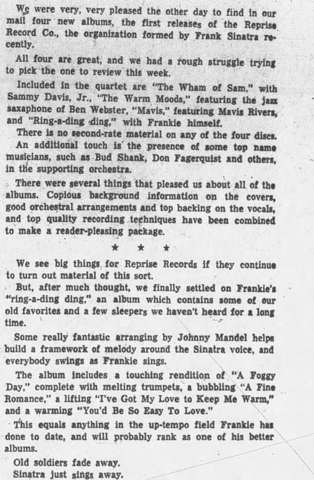
Editorial note: parsed as a “Studio” entry for 1961, but no existing entry was found to reconcile it against. This may be a genuinely new item, or a fragment split off from a longer post (e.g. a source citation date misread as a new entry). Recommend manual placement.
Hawaii Tribune Herald
December 22 - THIS DATE IN SINATRA HISTORY
Flagged for reviewFrom: Scott Henderson <scott@falseducks.com> | Received: 2024-12-22
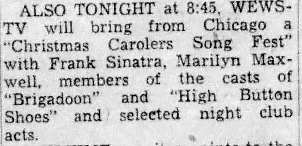
Editorial note: parsed as a “Television” entry for 1948, but no existing entry was found to reconcile it against. This may be a genuinely new item, or a fragment split off from a longer post (e.g. a source citation date misread as a new entry). Recommend manual placement.
Christmas Carolers Song Fest
Frank Sinatra and Marilyn Maxwell
8:45 WENR, ABC, and WEWS
December 22 - THIS DATE IN SINATRA HISTORY
Flagged for reviewFrom: Scott Henderson <scott@falseducks.com> | Received: 2024-12-22
Editorial note: parsed as a “Concerts” entry for 1939, but no existing entry was found to reconcile it against. This may be a genuinely new item, or a fragment split off from a longer post (e.g. a source citation date misread as a new entry). Recommend manual placement.
Chicago Theatre, Chicago, Illinois (December 15-21)
Harry James and his Orchestra with Frank Sinatra
On Screen: Daytime Wife with Tyrone Power & Linda
Darnell
The Andrews Sisters were also appearing during this run.
December 24 - THIS DATE IN SINATRA HISTORY
Flagged for reviewFrom: Scott Henderson <scott@falseducks.com> | Received: 2024-12-24
Editorial note: parsed as a “Radio” entry for 1939, but no existing entry was found to reconcile it against. This may be a genuinely new item, or a fragment split off from a longer post (e.g. a source citation date misread as a new entry). Recommend manual placement.
Harry James and His Orchestra
WTAM Cleveland 10:30-11:00pm

December 24 - THIS DATE IN SINATRA HISTORY
Flagged for reviewFrom: Scott Henderson <scott@falseducks.com> | Received: 2024-12-24
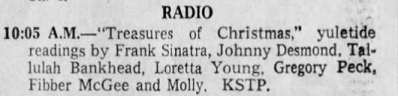
Editorial note: parsed as a “Radio” entry for 1958, but no existing entry was found to reconcile it against. This may be a genuinely new item, or a fragment split off from a longer post (e.g. a source citation date misread as a new entry). Recommend manual placement.
Treasures of Christmas
Yuletide readings by Frank Sinatra, Johnny Desmond,
Tallulah Bankhead, Loretta Young, Gregory Peck and others
December 25 - THIS DATE IN SINATRA HISTORY
Flagged for reviewFrom: Scott Henderson <scott@falseducks.com> | Received: 2024-12-25
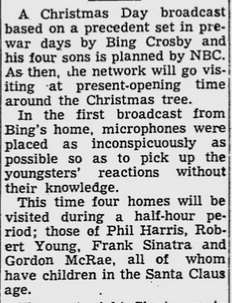
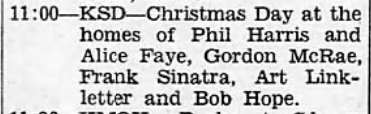
Editorial note: parsed as a “Radio” entry for 1949, but no existing entry was found to reconcile it against. This may be a genuinely new item, or a fragment split off from a longer post (e.g. a source citation date misread as a new entry). Recommend manual placement.
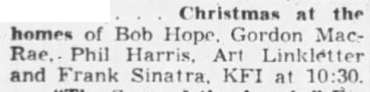
Christmas at the home of Phil Harris, Frank Sinatra, Gordon McRae, Robert Young, Bob Hope and others
December 26 - THIS DATE IN SINATRA HISTORY
Flagged for reviewFrom: Scott Henderson <scott@falseducks.com> | Received: 2024-12-26
Editorial note: parsed as a “Concerts” entry for 1939, but no existing entry was found to reconcile it against. This may be a genuinely new item, or a fragment split off from a longer post (e.g. a source citation date misread as a new entry). Recommend manual placement.
Trianon Ballroom, Cleveland, Ohio
Harry James and His Orchestra with Frank Sinatra
December 28 - THIS DATE IN SINATRA HISTORY
Flagged for reviewFrom: Scott Henderson <scott@falseducks.com> | Received: 2024-12-28
Editorial note: parsed as a “Radio” entry for 1946, but no existing entry was found to reconcile it against. This may be a genuinely new item, or a fragment split off from a longer post (e.g. a source citation date misread as a new entry). Recommend manual placement.
A certain group of fans here
sure are sure down on Frank
Sinatra. He has been very
difficult since his last trip to
New York. On the Ginny
Simms show, he talked,
joked, laughed all during
the rehearsal. And I hear
that's the real reason he
did not do a guest shot
with Dinah Shore
Re: December 25 - THIS DATE IN SINATRA HISTORY
Flagged for reviewFrom: Ed O'Brien <dmarc-noreply@freelists.org> | Received: 2024-12-30
Editorial note: parsed as a “Radio” entry for 1949, but no existing entry was found to reconcile it against. This may be a genuinely new item, or a fragment split off from a longer post (e.g. a source citation date misread as a new entry). Recommend manual placement.
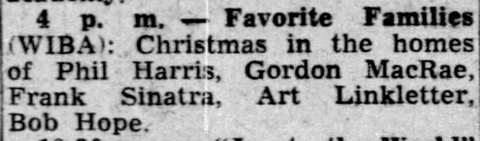
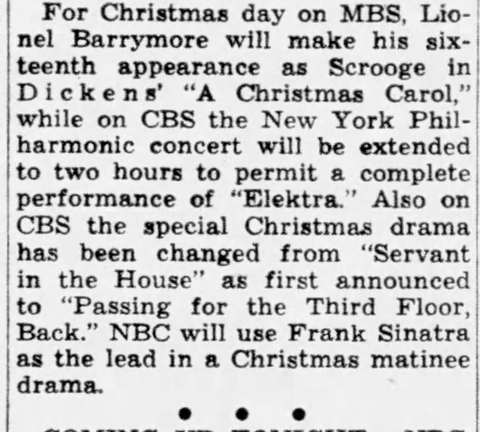
Christmas at the home of Phil Harris, Frank Sinatra, Gordon McRae, Robert Young, Bob Hope and others
NBC show was titled "Favorite Families." Show ran 30 minutes and
the theme was the opening of gifts around the Christmas tree in the
home of the stars. Broadcast time varied with the earliest at noon and
at various times throughout the afternoon.
The Times
January 1 - THIS DATE IN SINATRA HISTORY
Flagged for reviewFrom: Scott Henderson <scott@falseducks.com> | Received: 2025-01-01
Editorial note: parsed as a “Film” entry for 1938, but no existing entry was found to reconcile it against. This may be a genuinely new item, or a fragment split off from a longer post (e.g. a source citation date misread as a new entry). Recommend manual placement.
film ended with the death of John Garfield's character. Frank had perished in both "Eternity" and "Suddenly." He didn't see any
charm in making it three in a row. Warners balked and Frank told them he wouldn't sign the contract unless the ending was rewritten.
The film did not have a working title until Jack Warner, who adored Frank's recording of "Young At Heart," decided it was the title he
wanted. It would open and close the film. The pre-recordings were done in mid-July and production of the film got underway on 7-22-54.
The famous "One For My Baby" scene, which first established Sinatra as a saloon singer, was shot on 8-11-54. The film was completed
on 9-14-54.
After his success in "Eternity" and the renewed vocal career at Capitol, Frank Sinatra knew exactly what he wanted and would accept
nothing less. The first casualty during the filming of "Young At Heart" happened just two days into the shoot. Charles Lang, the Academy
Award winning cinematographer, was a meticulous craftsman, who set up every shot with great care. Frank could not stand the long
waits between scenes. He demanded that Lang be replaced or he was dropping out of the project. Ted D McCord replaced him. A few
weeks into the filming, Frank announced that Marty Melcher, Doris's husband, was to be barred from the set. Period. But what bothered
Day, far more, was Frank's dilatory ways. Doris was a consummate professional and her co-star was late every day. Sometimes he did
not show until after lunch. In later years, she would write about her frustration and discuss it in many interviews.
After seeing the rushes, WB offered Frank the lead in the remake of the Bogie classic "High Sierra." Frank agreed to do it for 50% of the
net. He knew they would not accept such a demand. One did not do remakes of Bogart films.
In 2001, Republic Entertainment Inc, a division of Paramount Pictures, issued the DVD of "Young At Heart." It is not digitally remastered
and there are no special features. Truly a shame that this film has not received the respect it so richly deserves.
--Ed
MARCH 28 - THIS DATE IN SINATRA HISTORY
Flagged for reviewFrom: scott@falseducks.com | Received: 2025-03-28
Editorial note: parsed as a “Radio” entry for 1948, but no existing entry was found to reconcile it against. This may be a genuinely new item, or a fragment split off from a longer post (e.g. a source citation date misread as a new entry). Recommend manual placement.
"Fred Robbins" radio show over WINS-NYC
At the Copa, Sinatra was "crowned ‘the King of all Crooners’
MARCH 28 - THIS DATE IN SINATRA HISTORY
Flagged for reviewFrom: scott@falseducks.com | Received: 2025-03-28
Editorial note: parsed as a “Television” entry for 1948, but no existing entry was found to reconcile it against. This may be a genuinely new item, or a fragment split off from a longer post (e.g. a source citation date misread as a new entry). Recommend manual placement.
N.Y. Heart Fund Brunch at the Monte Carlo
Ed Sullivan and Maggie McNellis were emcees
CBS Television 2:15 to 5pm
MARCH 28 - THIS DATE IN SINATRA HISTORY
Flagged for reviewFrom: scott@falseducks.com | Received: 2025-03-28
Editorial note: parsed as a “Concerts” entry for 1948, but no existing entry was found to reconcile it against. This may be a genuinely new item, or a fragment split off from a longer post (e.g. a source citation date misread as a new entry). Recommend manual placement.
Monte Carlo, New York, NY
Easter Brunch and Millinery Fashion Show
Benefit for the New York Heart Fund
MARCH 28 - THIS DATE IN SINATRA HISTORY
Flagged for reviewFrom: scott@falseducks.com | Received: 2025-03-28
Editorial note: parsed as a “Concerts” entry for 1975, but no existing entry was found to reconcile it against. This may be a genuinely new item, or a fragment split off from a longer post (e.g. a source citation date misread as a new entry). Recommend manual placement.
Caesars Palace, Las Vegas, Nevada (March 20 – April 2)
Key Musicians: Gene Cherico (bass), Al Viola (guitar), Irv Cottler (drums), Charlie Turner (trumpet), Bill Miller (piano)
Nat Brandwynne Orchestra Conducted By: Don Costa
Opening Act: Sam Butera & The Witnesses featuring Sandy Williams.
April 28 - THIS DATE IN SINATRA HISTORY
Flagged for reviewFrom: scott@falseducks.com | Received: 2025-04-28
Editorial note: parsed as a “Concerts” entry for 1977, but no existing entry was found to reconcile it against. This may be a genuinely new item, or a fragment split off from a longer post (e.g. a source citation date misread as a new entry). Recommend manual placement.
Waldorf Astoria, New York, NY
July 13 - THIS DATE IN SINATRA HISTORY
Flagged for reviewFrom: Scott Henderson <scott@falseducks.com> | Received: 2025-07-13
Editorial note: parsed as a “Studio” entry for 1965, but no existing entry was found to reconcile it against. This may be a genuinely new item, or a fragment split off from a longer post (e.g. a source citation date misread as a new entry). Recommend manual placement.
Frank's recording career got underway 84 years ago today.
On that Thursday afternoon, so long ago now, the Harry James
Band entered the Brunswick Recording Studio, 550 Fifth Ave,
in N.Y.C. The boy vocalist in the band would earn an additional
$50.00 for his efforts. That is what Harry James paid him for
the two recordings..
The Make Believe Ballroom, WNEW A.M., had released a poll
showing that the James contingent was the eighth most popular
band in the greater New York area. Harry and Co. received a
lot of radio attention and that evening was no exception. At midnight
WOR broadcast the James band live from the Roseland Ballroom.
Frank could be heard singing "I Poured My Heart Into A Song"
On
the 7/15 broadcast, he sang the two songs recorded on 7-13-39.
According to Variety, the band played the Paramount before jumping
over to the Roseland for an extended stay. WOR, CBS, WNEW and
other radio stations would broadcast this exciting new band throughout
the summer of 1939. They would be heard from the Steel Pier, in Atlantic
City, the World's Fair and Roseland in N.Y.C.
In August of 39, James and Sinatra decided to try out a new song on the
radio broadcasts before making a recording. The song was "All Or Nothing
At All." According to Billboard the song was released in June of 1940 and
sold 16,000 copies. The re-release in June 1943 sold well over a million
units..
I am indebted to Variety, Peter Levinson, NYT
and Billboard.
Ed
July 18 - THIS DATE IN SINATRA HISTORY
Flagged for reviewFrom: 'Ed O'Brien' via Sinatraphiles <sinatraphiles@googlegroups.com> | Received: 2025-07-21
Editorial note: parsed as a “Studio” entry for 1964, but no existing entry was found to reconcile it against. This may be a genuinely new item, or a fragment split off from a longer post (e.g. a source citation date misread as a new entry). Recommend manual placement.
The Mail Millom and South Copeland Edition
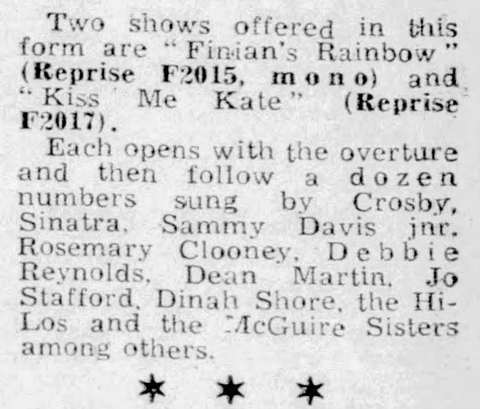
Re: July 18 - THIS DATE IN SINATRA HISTORY
Flagged for reviewFrom: 'Ed O'Brien' via Sinatraphiles <sinatraphiles@googlegroups.com> | Received: 2025-07-21
Editorial note: parsed as a “Studio” entry for 1964, but no existing entry was found to reconcile it against. This may be a genuinely new item, or a fragment split off from a longer post (e.g. a source citation date misread as a new entry). Recommend manual placement.
The Mail Millom and South Copeland Edition
Re: July 18 - THIS DATE IN SINATRA HISTORY
Flagged for reviewFrom: "'John K. George' via Sinatraphiles" <sinatraphiles@googlegroups.com> | Received: 2025-07-21
Editorial note: parsed as a “Studio” entry for 1964, but no existing entry was found to reconcile it against. This may be a genuinely new item, or a fragment split off from a longer post (e.g. a source citation date misread as a new entry). Recommend manual placement.
The Mail Millom and South Copeland Edition
July 23 - THIS DATE IN SINATRA HISTORY
Flagged for reviewFrom: scott@falseducks.com | Received: 2025-07-23
Editorial note: parsed as a “Radio” entry for 1941, but no existing entry was found to reconcile it against. This may be a genuinely new item, or a fragment split off from a longer post (e.g. a source citation date misread as a new entry). Recommend manual placement.
Live Remote from the Cavalier Beach Club, Cavalier Hotel, Virginia Beach, Virginia Tommy Dorsey & His Orchestra with Frank Sinatra
WTAR 11:30pm
Note: Dorsey would broadcast from the Cavalier Beach Club on July 21st and July 23rd.
Television
NONE

July 24 - THIS DATE IN SINATRA HISTORY
Flagged for reviewFrom: 'Ed O'Brien' via Sinatraphiles <sinatraphiles@googlegroups.com> | Received: 2025-07-25
Editorial note: parsed as a “Studio” entry for 1964, but no existing entry was found to reconcile it against. This may be a genuinely new item, or a fragment split off from a longer post (e.g. a source citation date misread as a new entry). Recommend manual placement.
Liverpool Daily Post
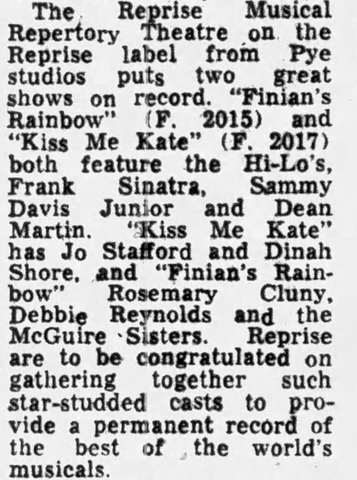
Re: July 24 - THIS DATE IN SINATRA HISTORY
Flagged for reviewFrom: "'John K. George' via Sinatraphiles" <sinatraphiles@googlegroups.com> | Received: 2025-07-25
Editorial note: parsed as a “Studio” entry for 1964, but no existing entry was found to reconcile it against. This may be a genuinely new item, or a fragment split off from a longer post (e.g. a source citation date misread as a new entry). Recommend manual placement.
Liverpool Daily Post
Re: [sinatraphiles] July 25 - THIS DATE IN SINATRA HISTORY
Flagged for reviewFrom: 'Ed O'Brien' via Sinatraphiles <sinatraphiles@googlegroups.com> | Received: 2025-07-27
Editorial note: parsed as a “Studio” entry for 1964, but no existing entry was found to reconcile it against. This may be a genuinely new item, or a fragment split off from a longer post (e.g. a source citation date misread as a new entry). Recommend manual placement.
Re: [sinatraphiles] July 28 - THIS DATE IN SINATRA HISTORY
Flagged for reviewFrom: "'John K. George' via Sinatraphiles" <sinatraphiles@googlegroups.com> | Received: 2025-07-28
Editorial note: parsed as a “Television” entry for 1984, but no existing entry was found to reconcile it against. This may be a genuinely new item, or a fragment split off from a longer post (e.g. a source citation date misread as a new entry). Recommend manual placement.
MTV Premiere of music video for "L.A. Is My Lady"
August 1 - THIS DATE IN SINATRA HISTORY
Flagged for reviewFrom: scott@falseducks.com | Received: 2025-08-01
Editorial note: parsed as a “Television” entry for 1976, but no existing entry was found to reconcile it against. This may be a genuinely new item, or a fragment split off from a longer post (e.g. a source citation date misread as a new entry). Recommend manual placement.
Repeat Airing of 'John Denver and Friend'
July 31 - THIS DATE IN SINATRA HISTORY
Flagged for reviewFrom: 'Ed O'Brien' via Sinatraphiles <sinatraphiles@googlegroups.com> | Received: 2025-08-02
Editorial note: parsed as a “Studio” entry for 1964, but no existing entry was found to reconcile it against. This may be a genuinely new item, or a fragment split off from a longer post (e.g. a source citation date misread as a new entry). Recommend manual placement.
The Morning Union
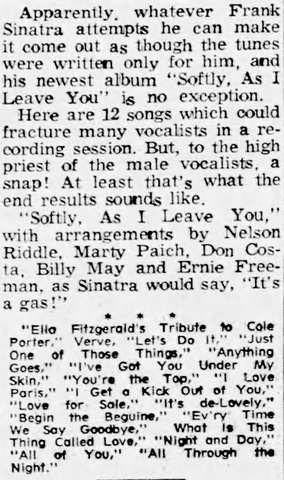
July 31 - THIS DATE IN SINATRA HISTORY
Flagged for reviewFrom: 'Ed O'Brien' via Sinatraphiles <sinatraphiles@googlegroups.com> | Received: 2025-08-02
Editorial note: parsed as a “Studio” entry for 1965, but no existing entry was found to reconcile it against. This may be a genuinely new item, or a fragment split off from a longer post (e.g. a source citation date misread as a new entry). Recommend manual placement.
Concerts
England
August 1, 1953
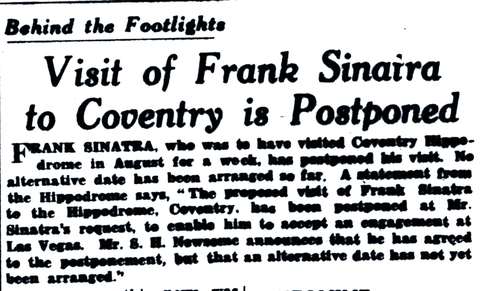
Re: June 19 - THIS DATE IN SINATRA HISTORY
Flagged for reviewFrom: 'Ed O'Brien' via Sinatraphiles <sinatraphiles@googlegroups.com> | Received: 2025-08-15
Editorial note: parsed as a “Studio” entry for 1948, but no existing entry was found to reconcile it against. This may be a genuinely new item, or a fragment split off from a longer post (e.g. a source citation date misread as a new entry). Recommend manual placement.
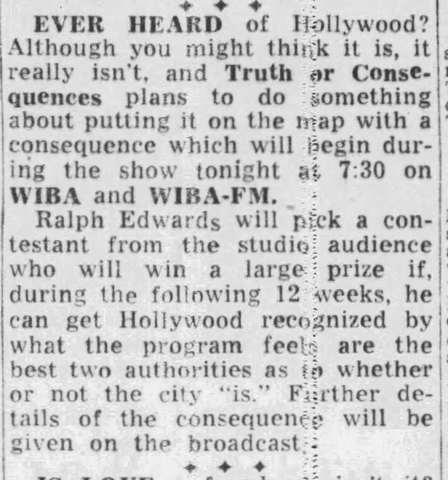
Truth Or Consequences
Sponsored by DUZ
NBC Saturday Night
Time 8:30 p.m. - 9:00 p.m.
Host: Ralph Edwards
Announcer: Harlow Wilcox
Performers: Mr. and Mrs. Felix, Mr. Eddie Caridio, Mrs, Boyd Lydle, Mr. and Mrs. Dolan, Frank Sinatra
note: There is no mention of Sinatra being on the show until 22 minutes have elapsed.
Mrs.Lydle is blindfolded and instructed to go onto the next room. She does not realized
it is actually the Hit Parade studio. Frank is waiting to go on at 9: P.M. The poor woman
is told to make all kinds of funny noises and than imitate the voice of Frank Sinatra.
She sings "Four Leaf Clover." Ralph Edwards tells her to take off the blindfold. Frank is
standing next to her. Mrs. Lydle screams. Frank tells Ralph that he likes her act.
The Capital Times
August 17 - THIS DATE IN SINATRA HISTORY
Flagged for reviewFrom: Scott Henderson <scott@falseducks.com> | Received: 2025-08-17
Editorial note: parsed as a “Television” entry for 1973, but no existing entry was found to reconcile it against. This may be a genuinely new item, or a fragment split off from a longer post (e.g. a source citation date misread as a new entry). Recommend manual placement.
Rehearsal for "Ol' Blue Eyes Is Back' TV special
Show would be taped on 9-20-73
August 17 - THIS DATE IN SINATRA HISTORY
Flagged for reviewFrom: Scott Henderson <scott@falseducks.com> | Received: 2025-08-17
Editorial note: parsed as a “Concerts” entry for 1960, but no existing entry was found to reconcile it against. This may be a genuinely new item, or a fragment split off from a longer post (e.g. a source citation date misread as a new entry). Recommend manual placement.
Cal-Neva Lodge, Nevada (August 8 - 17)
Frank Sinatra, Matty Malneck and His Orchestra
O.A.: Buddy Lester
August 21 - THIS DATE IN SINATRA HISTORY
Flagged for reviewFrom: 'Ed O'Brien' via Sinatraphiles <sinatraphiles@googlegroups.com> | Received: 2025-08-22
Editorial note: parsed as a “Studio” entry for 1980, but no existing entry was found to reconcile it against. This may be a genuinely new item, or a fragment split off from a longer post (e.g. a source citation date misread as a new entry). Recommend manual placement.
August 22 - THIS DATE IN SINATRA HISTORY
Flagged for reviewFrom: 'Ed O'Brien' via Sinatraphiles <sinatraphiles@googlegroups.com> | Received: 2025-08-25
Editorial note: parsed as a “Studio” entry for 1961, but no existing entry was found to reconcile it against. This may be a genuinely new item, or a fragment split off from a longer post (e.g. a source citation date misread as a new entry). Recommend manual placement.
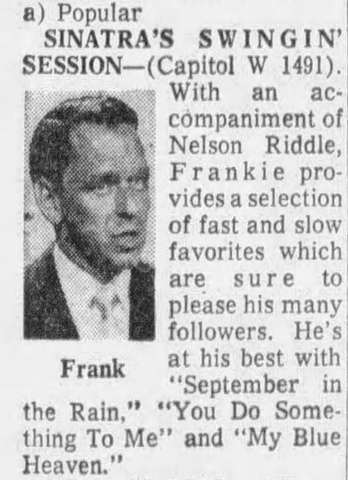
Valley Times
August 23 - THIS DATE IN SINATRA HISTORY
Flagged for reviewFrom: 'Ed O'Brien' via Sinatraphiles <sinatraphiles@googlegroups.com> | Received: 2025-08-28
Editorial note: parsed as a “Studio” entry for 1961, but no existing entry was found to reconcile it against. This may be a genuinely new item, or a fragment split off from a longer post (e.g. a source citation date misread as a new entry). Recommend manual placement.
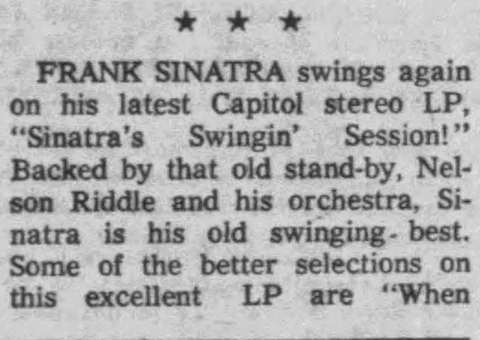
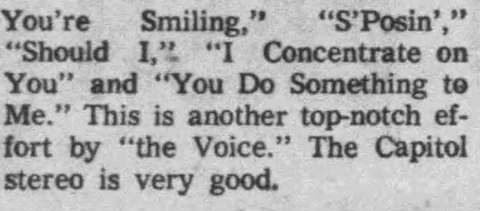
Journal and Courier
August 25 - THIS DATE IN SINATRA HISTORY
Flagged for reviewFrom: 'Ed O'Brien' via Sinatraphiles <sinatraphiles@googlegroups.com> | Received: 2025-08-28
Editorial note: parsed as a “Studio” entry for 1970, but no existing entry was found to reconcile it against. This may be a genuinely new item, or a fragment split off from a longer post (e.g. a source citation date misread as a new entry). Recommend manual placement.
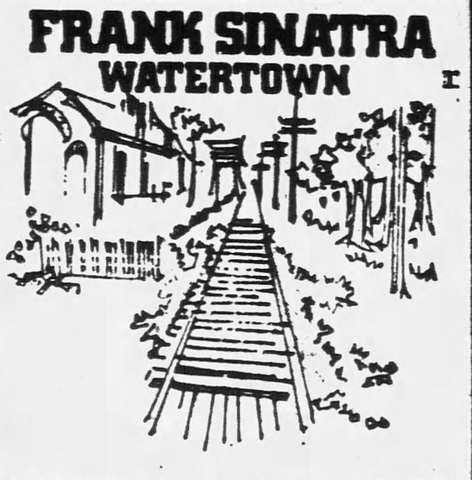
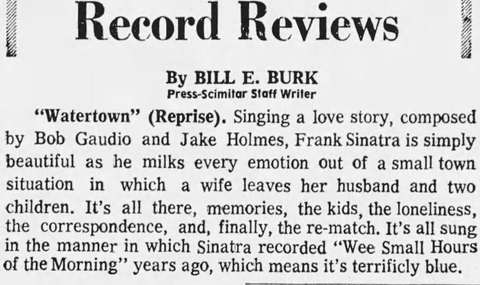
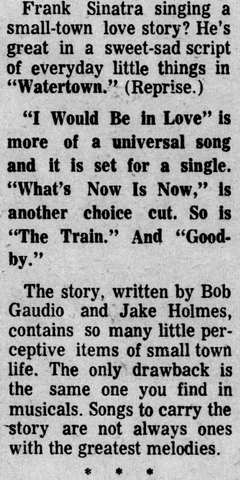
M51587 The Train
(Bob Gaudio/Jake Holmes)
Devalbo Inc./WB Music Corp. (ASCAP)
Arranged & Conducted By Joseph Scott
(3:25) CD: 46013-2 The Complete Reprise Studio Recordings Disc 15
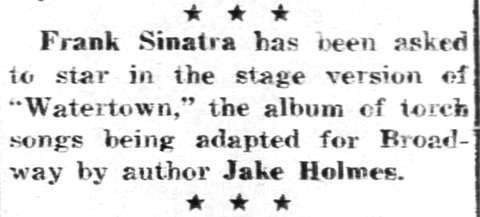
LP: FS1031 Watertown
45: 0920
M51594 She Says w/Chorus
(Bob Gaudio/Jake Holmes)
Devalbo Inc./WB Music Corp. (ASCAP)
Arranged & Conducted By Joseph Scott
(1:50) CD: 46013-2 The Complete Reprise Studio Recordings Disc 15
LP: FS1031Watertown
M51637 Lady Day
(Bob Gaudio/Jake Holmes)
Devalbo Inc./WB Music Corp. (ASCAP)
Arranged by Charles Calello
Conducted By Joseph Scott
(2:47) CD: 46013-2 The Complete Reprise Studio Recordings Disc 15
CD: 45689-2
M51636 For A While N/R
(Bob Gaudio/Jake Holmes)
Devalbo Inc../WB Music Corp. (ASCAP)
Arranged by Charles Calello
Conducted By Joseph Scott
Memphis Press Scimitar
August 26 - THIS DATE IN SINATRA HISTORY
Flagged for reviewFrom: 'Ed O'Brien' via Sinatraphiles <sinatraphiles@googlegroups.com> | Received: 2025-08-28
Editorial note: parsed as a “Studio” entry for 1970, but no existing entry was found to reconcile it against. This may be a genuinely new item, or a fragment split off from a longer post (e.g. a source citation date misread as a new entry). Recommend manual placement.
Plain Dealer
August 27 - THIS DATE IN SINATRA HISTORY
Flagged for reviewFrom: 'Ed O'Brien' via Sinatraphiles <sinatraphiles@googlegroups.com> | Received: 2025-08-28
Editorial note: parsed as a “Studio” entry for 1970, but no existing entry was found to reconcile it against. This may be a genuinely new item, or a fragment split off from a longer post (e.g. a source citation date misread as a new entry). Recommend manual placement.
Daily News
August 31 - THIS DATE IN SINATRA HISTORY
Flagged for reviewFrom: Scott Henderson <scott@falseducks.com> | Received: 2025-08-31
Editorial note: parsed as a “Studio” entry for 1943, but no existing entry was found to reconcile it against. This may be a genuinely new item, or a fragment split off from a longer post (e.g. a source citation date misread as a new entry). Recommend manual placement.
November/December,1968; February ,1976 and for his 40th Anniversary Party, June, 1979
He would still be performing the song in November of 1994. After a while he would claim it was
the first song he did with Harry James. The release in 1939 sold, according to Billboard, 16,000
copies. Reissued during the musician's strike in 1943, the song would top the charts and become
Frank's first solo million seller. A tune recorded five times and performed countless times through
the years. And what a great title to sum up what Frank was shooting for in August of 1939.
Ed O'Brien (2014):
Seventy-five years ago. Wow! Frank laid down this track on the day before the start of World War II.
Germany marched into Poland on September 1, 1939. The world would be at war for the next six years.
During those years Frank Sinatra would become the first teenage idol and the ads would read "The Voice
That Thrilled Millions." The recording done on this date in 1939 would be the one to define him throughout
his career: All Or Nothing At All.
August 31 - THIS DATE IN SINATRA HISTORY
Flagged for reviewFrom: 'Ed O'Brien' via Sinatraphiles <sinatraphiles@googlegroups.com> | Received: 2025-09-01
Editorial note: parsed as a “Studio” entry for 1940, but no existing entry was found to reconcile it against. This may be a genuinely new item, or a fragment split off from a longer post (e.g. a source citation date misread as a new entry). Recommend manual placement.
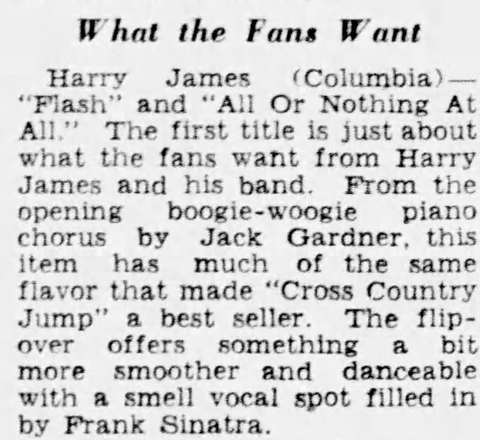
Richmond Times Dispatch
August 31 - THIS DATE IN SINATRA HISTORY
Flagged for reviewFrom: 'Ed O'Brien' via Sinatraphiles <sinatraphiles@googlegroups.com> | Received: 2025-09-01
Editorial note: parsed as a “Studio” entry for 1961, but no existing entry was found to reconcile it against. This may be a genuinely new item, or a fragment split off from a longer post (e.g. a source citation date misread as a new entry). Recommend manual placement.
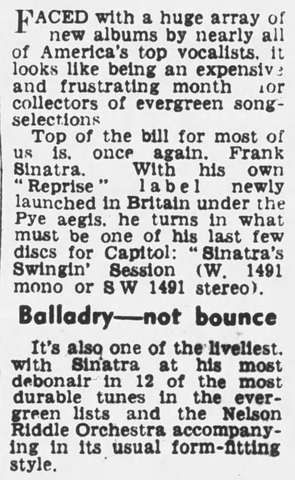
The Bolten News
Fw: September 1 - THIS DATE IN SINATRA HISTORY
Flagged for reviewFrom: 'Ed O'Brien' via Sinatraphiles <sinatraphiles@googlegroups.com> | Received: 2025-09-02
Editorial note: parsed as a “Studio” entry for 1961, but no existing entry was found to reconcile it against. This may be a genuinely new item, or a fragment split off from a longer post (e.g. a source citation date misread as a new entry). Recommend manual placement.
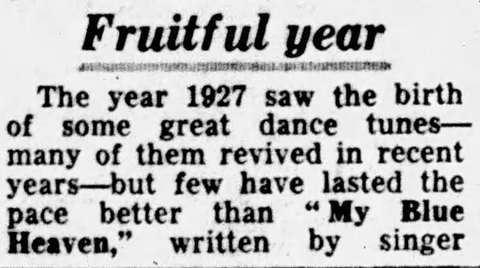
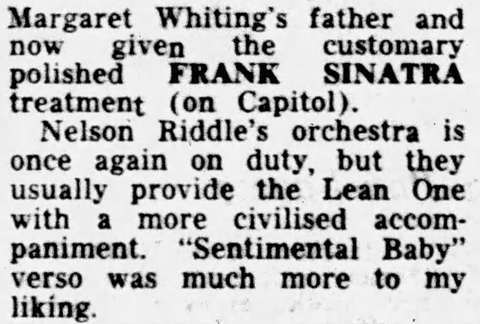
Evening Post
September 12 - THIS DATE IN SINATRA HISTORY
Flagged for reviewFrom: scott@falseducks.com | Received: 2025-09-12
Editorial note: parsed as a “Concerts” entry for 1978, but no existing entry was found to reconcile it against. This may be a genuinely new item, or a fragment split off from a longer post (e.g. a source citation date misread as a new entry). Recommend manual placement.
Royal Festival Hall, London, England
Conductor: Bill Miller
Piano: Vincent Falcone Jr.
O.A. Guys 'N' Dolls group, Lennie Bennett & Jerry Steven
1. Night and Day
2. At Long Last Love
3. The Lady is a Tramp
4. Didn't We
5. Someone to Watch over Me
6. Something
7.. Baubles, Bangles and Beads
8. Gal that Got Away/Never Entered my Mind
9. Monologue
10. That's What God Looks Like to Me
11. I Hadn't Anyone Til You
12. You and Me
13. The Oldest Established Floating Crap Game
14. Lonely Town
15. My Kind of Town
16. Remember
17. Maybe This Time
18. My Way
September 11 - THIS DATE IN SINATRA HISTORY
Flagged for reviewFrom: 'Ed O'Brien' via Sinatraphiles <sinatraphiles@googlegroups.com> | Received: 2025-09-13
Editorial note: parsed as a “Studio” entry for 1962, but no existing entry was found to reconcile it against. This may be a genuinely new item, or a fragment split off from a longer post (e.g. a source citation date misread as a new entry). Recommend manual placement.
The Gazette
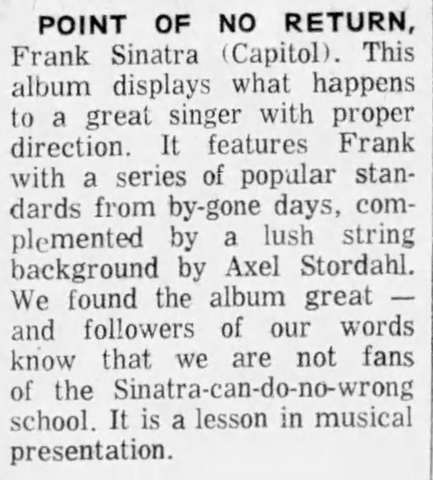
September 12 - THIS DATE IN SINATRA HISTORY
Flagged for reviewFrom: 'Ed O'Brien' via Sinatraphiles <sinatraphiles@googlegroups.com> | Received: 2025-09-13
Editorial note: parsed as a “Studio” entry for 1962, but no existing entry was found to reconcile it against. This may be a genuinely new item, or a fragment split off from a longer post (e.g. a source citation date misread as a new entry). Recommend manual placement.
The Progress Index
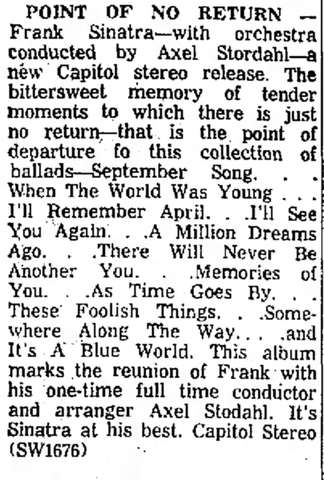
September 13 - THIS DATE IN SINATRA HISTORY
Flagged for reviewFrom: 'Ed O'Brien' via Sinatraphiles <sinatraphiles@googlegroups.com> | Received: 2025-09-14
Editorial note: parsed as a “Studio” entry for 1956, but no existing entry was found to reconcile it against. This may be a genuinely new item, or a fragment split off from a longer post (e.g. a source citation date misread as a new entry). Recommend manual placement.
The Times and Democrat
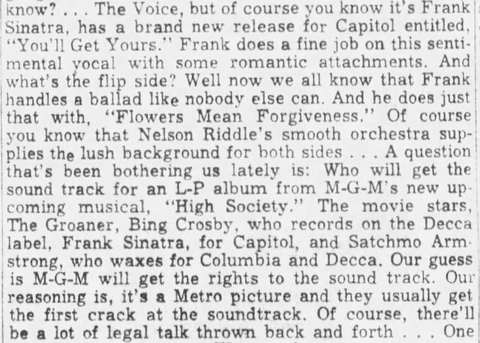
Fw: SEPTEMBER 18 - THIS DATE IN SINATRA HISTORY
Flagged for reviewFrom: 'Ed O'Brien' via Sinatraphiles <sinatraphiles@googlegroups.com> | Received: 2025-09-22
Editorial note: parsed as a “Studio” entry for 1942, but no existing entry was found to reconcile it against. This may be a genuinely new item, or a fragment split off from a longer post (e.g. a source citation date misread as a new entry). Recommend manual placement.
BS067915 A Sinner Kissed An Angel
(M. David/R. Joseph)
Polygram International Publishing Inc./Larry Shayne Enterprises (ASCAP) -1 (2:52) CD: 07863 66353-2 "The Song Is You" 5CD set Vol 3
CD: RCA 8554-2-R
LP: SD 1000
78: 27611
Baltimore Sun
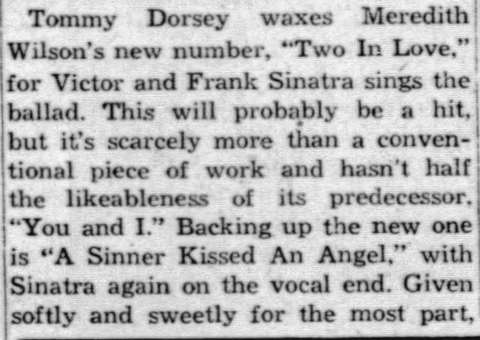
September 21 - THIS DATE IN SINATRA HISTORY
Flagged for reviewFrom: 'Ed O'Brien' via Sinatraphiles <sinatraphiles@googlegroups.com> | Received: 2025-09-24
Editorial note: parsed as a “Studio” entry for 1961, but no existing entry was found to reconcile it against. This may be a genuinely new item, or a fragment split off from a longer post (e.g. a source citation date misread as a new entry). Recommend manual placement.
note: Columbia release of "London By Night" had "April In Paris" on the flipside.
Ed
October 1 - THIS DATE IN SINATRA HISTORY
Flagged for reviewFrom: 'Ed O'Brien' via Sinatraphiles <sinatraphiles@googlegroups.com> | Received: 2025-10-02
Editorial note: parsed as a “Studio” entry for 1958, but no existing entry was found to reconcile it against. This may be a genuinely new item, or a fragment split off from a longer post (e.g. a source citation date misread as a new entry). Recommend manual placement.
Reno Gazette Journal
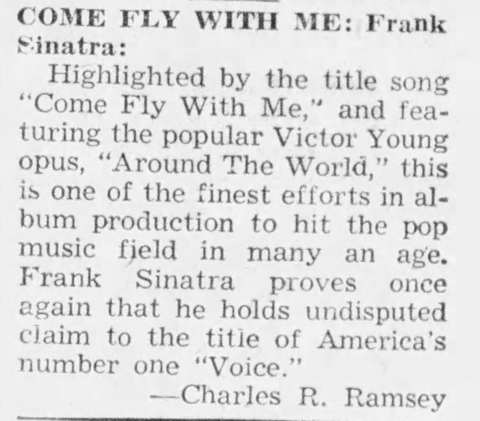
October 2 - THIS DATE IN SINATRA HISTORY
Flagged for reviewFrom: 'Ed O'Brien' via Sinatraphiles <sinatraphiles@googlegroups.com> | Received: 2025-10-03
Editorial note: parsed as a “Studio” entry for 1963, but no existing entry was found to reconcile it against. This may be a genuinely new item, or a fragment split off from a longer post (e.g. a source citation date misread as a new entry). Recommend manual placement.
The Sunday Oregonian
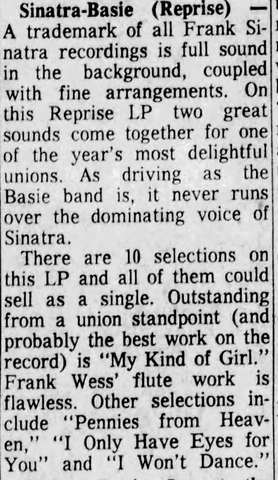
October 3 - THIS DATE IN SINATRA HISTORY
Flagged for reviewFrom: 'Ed O'Brien' via Sinatraphiles <sinatraphiles@googlegroups.com> | Received: 2025-10-03
Editorial note: parsed as a “Studio” entry for 1958, but no existing entry was found to reconcile it against. This may be a genuinely new item, or a fragment split off from a longer post (e.g. a source citation date misread as a new entry). Recommend manual placement.
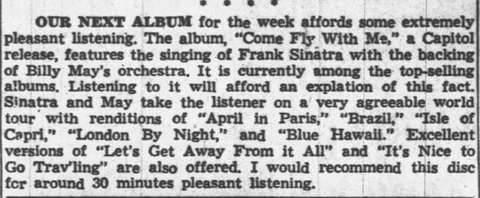
note: Reviewer was a tad off on this one. Album hit #1 on Billboard just three
weeks after being issued and charted for 71 weeks.
Independent
October 3 - THIS DATE IN SINATRA HISTORY
Flagged for reviewFrom: 'Ed O'Brien' via Sinatraphiles <sinatraphiles@googlegroups.com> | Received: 2025-10-03
Editorial note: parsed as a “Studio” entry for 1963, but no existing entry was found to reconcile it against. This may be a genuinely new item, or a fragment split off from a longer post (e.g. a source citation date misread as a new entry). Recommend manual placement.
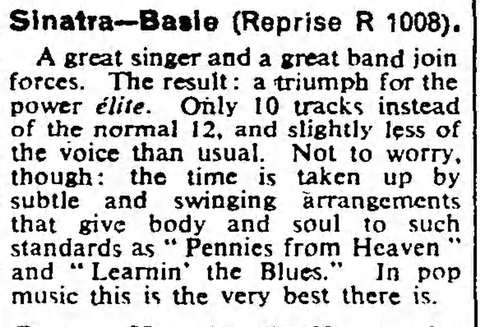
The Observer
October 3 - THIS DATE IN SINATRA HISTORY
Flagged for reviewFrom: 'Ed O'Brien' via Sinatraphiles <sinatraphiles@googlegroups.com> | Received: 2025-10-03
Editorial note: parsed as a “Studio” entry for 1965, but no existing entry was found to reconcile it against. This may be a genuinely new item, or a fragment split off from a longer post (e.g. a source citation date misread as a new entry). Recommend manual placement.
October 2 - THIS DATE IN SINATRA HISTORY
Flagged for reviewFrom: Scott Henderson <scott@falseducks.com> | Received: 2025-10-04
Editorial note: parsed as a “Concerts” entry for 1942, but no existing entry was found to reconcile it against. This may be a genuinely new item, or a fragment split off from a longer post (e.g. a source citation date misread as a new entry). Recommend manual placement.
October 8 - THIS DATE IN SINATRA HISTORY
Flagged for reviewFrom: 'Ed O'Brien' via Sinatraphiles <sinatraphiles@googlegroups.com> | Received: 2025-10-09
Editorial note: parsed as a “Studio” entry for 1958, but no existing entry was found to reconcile it against. This may be a genuinely new item, or a fragment split off from a longer post (e.g. a source citation date misread as a new entry). Recommend manual placement.
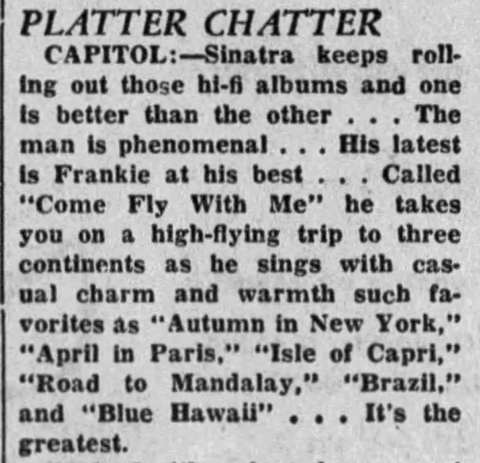
Piedmont Journal
October 9 - THIS DATE IN SINATRA HISTORY
Flagged for reviewFrom: 'Ed O'Brien' via Sinatraphiles <sinatraphiles@googlegroups.com> | Received: 2025-10-11
Editorial note: parsed as a “Studio” entry for 1951, but no existing entry was found to reconcile it against. This may be a genuinely new item, or a fragment split off from a longer post (e.g. a source citation date misread as a new entry). Recommend manual placement.
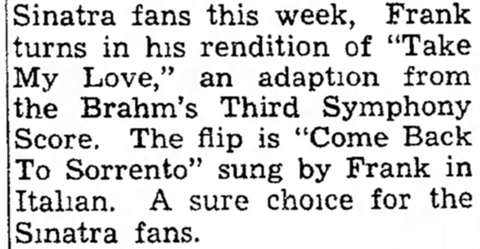
The Progress
October 9 - THIS DATE IN SINATRA HISTORY
Flagged for reviewFrom: 'Ed O'Brien' via Sinatraphiles <sinatraphiles@googlegroups.com> | Received: 2025-10-11
Editorial note: parsed as a “Studio” entry for 1952, but no existing entry was found to reconcile it against. This may be a genuinely new item, or a fragment split off from a longer post (e.g. a source citation date misread as a new entry). Recommend manual placement.
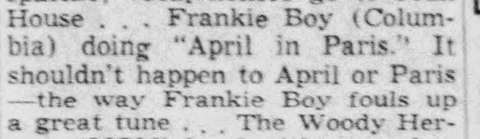
Richmond Times Dispatch
October 15 - THIS DATE IN SINATRA HISTORY
Flagged for reviewFrom: 'Ed O'Brien' via Sinatraphiles <sinatraphiles@googlegroups.com> | Received: 2025-10-18
Editorial note: parsed as a “Studio” entry for 1947, but no existing entry was found to reconcile it against. This may be a genuinely new item, or a fragment split off from a longer post (e.g. a source citation date misread as a new entry). Recommend manual placement.
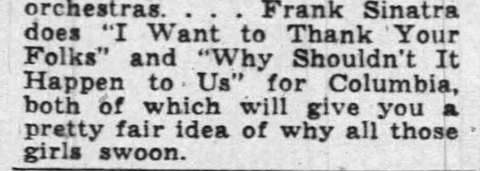
St Louis Globe Democrat
October 15 - THIS DATE IN SINATRA HISTORY
Flagged for reviewFrom: 'Ed O'Brien' via Sinatraphiles <sinatraphiles@googlegroups.com> | Received: 2025-10-18
Editorial note: parsed as a “Studio” entry for 1959, but no existing entry was found to reconcile it against. This may be a genuinely new item, or a fragment split off from a longer post (e.g. a source citation date misread as a new entry). Recommend manual placement.
The Spokesman Review
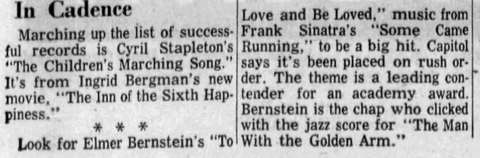
October 17 - THIS DATE IN SINATRA HISTORY
Flagged for reviewFrom: 'Ed O'Brien' via Sinatraphiles <sinatraphiles@googlegroups.com> | Received: 2025-10-20
Editorial note: parsed as a “Studio” entry for 1956, but no existing entry was found to reconcile it against. This may be a genuinely new item, or a fragment split off from a longer post (e.g. a source citation date misread as a new entry). Recommend manual placement.
Petaluma Argus Courier
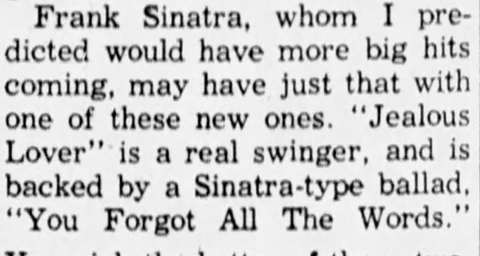
October 18 - THIS DATE IN SINATRA HISTORY
Flagged for reviewFrom: 'Ed O'Brien' via Sinatraphiles <sinatraphiles@googlegroups.com> | Received: 2025-10-20
Editorial note: parsed as a “Studio” entry for 1967, but no existing entry was found to reconcile it against. This may be a genuinely new item, or a fragment split off from a longer post (e.g. a source citation date misread as a new entry). Recommend manual placement.
Kidderminister Shuttle
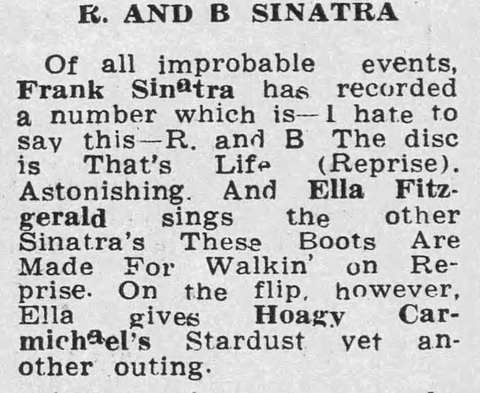
October 19 - THIS DATE IN SINATRA HISTORY
Flagged for reviewFrom: 'Ed O'Brien' via Sinatraphiles <sinatraphiles@googlegroups.com> | Received: 2025-10-21
Editorial note: parsed as a “Studio” entry for 1948, but no existing entry was found to reconcile it against. This may be a genuinely new item, or a fragment split off from a longer post (e.g. a source citation date misread as a new entry). Recommend manual placement.
Indianapolis News
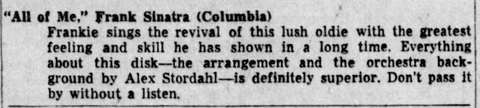
October 21 - THIS DATE IN SINATRA HISTORY
Flagged for reviewFrom: scott@falseducks.com | Received: 2025-10-21
Editorial note: parsed as a “Radio” entry for 1939, but no existing entry was found to reconcile it against. This may be a genuinely new item, or a fragment split off from a longer post (e.g. a source citation date misread as a new entry). Recommend manual placement.
Panther Room, Hotel Sherman, Chicago, Illinois
WMAQ ( NBC )
11: p.m. -11:30 p.m.
Harry James and his Orchestra w/Frank Sinatra
October 22 - THIS DATE IN SINATRA HISTORY
Flagged for reviewFrom: 'Ed O'Brien' via Sinatraphiles <sinatraphiles@googlegroups.com> | Received: 2025-10-23
Editorial note: parsed as a “Studio” entry for 1948, but no existing entry was found to reconcile it against. This may be a genuinely new item, or a fragment split off from a longer post (e.g. a source citation date misread as a new entry). Recommend manual placement.
Hartford Courant
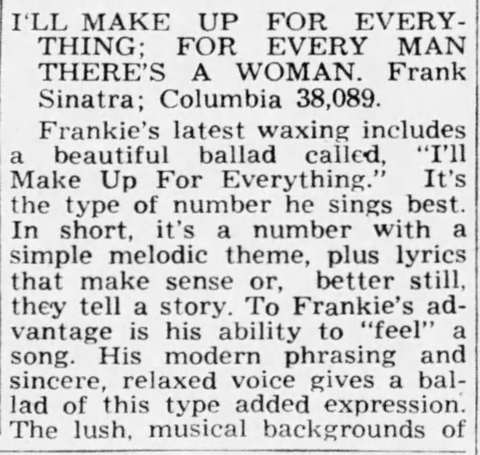
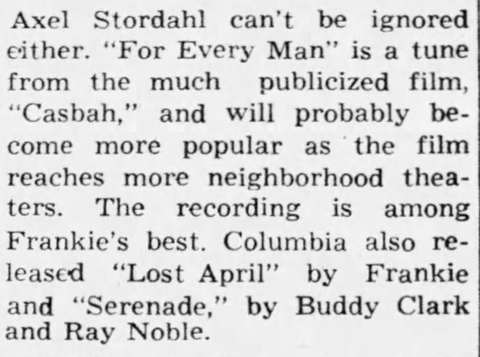
November 8 - THIS DATE IN SINATRA HISTORY
Flagged for reviewFrom: 'Ed O'Brien' via Sinatraphiles <sinatraphiles@googlegroups.com> | Received: 2025-11-08
Editorial note: parsed as a “Studio” entry for 1940, but no existing entry was found to reconcile it against. This may be a genuinely new item, or a fragment split off from a longer post (e.g. a source citation date misread as a new entry). Recommend manual placement.
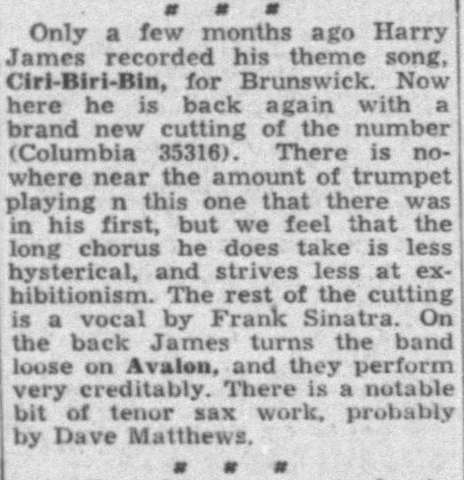
release
reviewed 1-20
Hollywood
November 8 - THIS DATE IN SINATRA HISTORY
Flagged for reviewFrom: 'Ed O'Brien' via Sinatraphiles <sinatraphiles@googlegroups.com> | Received: 2025-11-08
Editorial note: parsed as a “Studio” entry for 1979, but no existing entry was found to reconcile it against. This may be a genuinely new item, or a fragment split off from a longer post (e.g. a source citation date misread as a new entry). Recommend manual placement.
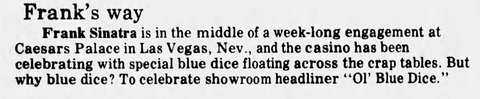
Caesars Palace, Las Vegas, Nevada (8-14)
Opening Night
Orchestra Conducted By: Vincent Falcone, jr.
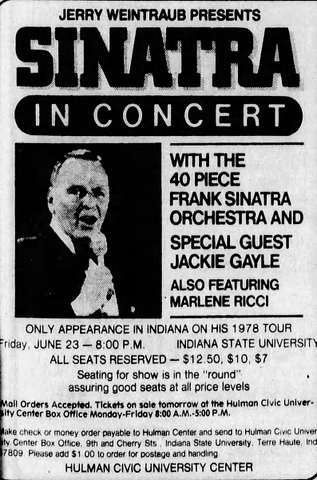
O.A.Marlene Ricci
Pat Henry
THIS DATE IN SINATRA HISTORY NOVEMBER 10
Flagged for reviewFrom: "scott@falseducks.com" <scott@falseducks.com> | Received: 2025-11-10
Editorial note: parsed as a “Concerts” entry for 1954, but no existing entry was found to reconcile it against. This may be a genuinely new item, or a fragment split off from a longer post (e.g. a source citation date misread as a new entry). Recommend manual placement.
The Sands, Las Vegas, NV (November 10 -16)
dinner & late show
Frank Sinatra
Borrah Minevitch Harmonica Rascals
w/ Johnny Puleo (6)
Nanci Crompion
Copa Girls (12)
Antonio Morelli & His Orch. (18)
no cover or minimum
note: I put this up some years back. Looking for a story on "Young At Heart," I stumbled
on it again. Billy Eckstine followed Sinatra, opening on the 17th for a two week run. Variety reviewer
felt Eckstine had a tough act to follow.
Sinatra had completed "Swing Easy" at Capitol (Riddle's pick as the best work he did with Frank),
on 11/5&6, then the Fanfare appearance on 11/7 (he had received rave reviews) when Entratter asked him
to do a week at the Sands. Following his SRO week, Frank began recording songs from "Finian's
Rainbow" for the John and Faith Hubley animated cartoon project. He would do two singles sessions
at Capitol with Riddle, the second week in December, and then fly to New York and close out the year with a sensational
engagement at the Copa. He truly had made the greatest comeback in the history of show business. And the best
was yet to come.
THIS DATE IN SINATRA HISTORY NOVEMBER 10
Flagged for reviewFrom: scott@falseducks.com | Received: 2025-11-10
Editorial note: parsed as a “Concerts” entry for 1954, but no existing entry was found to reconcile it against. This may be a genuinely new item, or a fragment split off from a longer post (e.g. a source citation date misread as a new entry). Recommend manual placement.
The Sands, Las Vegas, NV (November 10 -16) dinner & late show
Frank Sinatra
Borrah Minevitch Harmonica Rascals w/ Johnny Puleo (6)
Nanci Crompion
Copa Girls (12)
Antonio Morelli & His Orch. (18) no cover or minimum note: I put this up some years back. Looking for a story on "Young At Heart," I stumbled on it again. Billy Eckstine followed Sinatra, opening on the 17th for a two week run. Variety reviewer felt Eckstine had a tough act to follow.
Sinatra had completed "Swing Easy" at Capitol (Riddle's pick as the best work he did with Frank), on 11/5&6, then the Fanfare appearance on 11/7 (he had received rave reviews) when Entratter asked him to do a week at the Sands. Following his SRO week, Frank began recording songs from "Finian's Rainbow" for the John and Faith Hubley animated cartoon project. He would do two singles sessions at Capitol with Riddle, the second week in December, and then fly to New York and close out the year with a sensational engagement at the Copa. He truly had made the greatest comeback in the history of show business. And the best was yet to come.
THIS DATE IN SINATRA HISTORY NOVEMBER 10
Flagged for reviewFrom: 'Ed O'Brien' via Sinatraphiles <sinatraphiles@googlegroups.com> | Received: 2025-11-11
Editorial note: parsed as a “Concerts” entry for 1954, but no existing entry was found to reconcile it against. This may be a genuinely new item, or a fragment split off from a longer post (e.g. a source citation date misread as a new entry). Recommend manual placement.
The Sands, Las Vegas, NV (November 10 -16)
dinner & late show
Frank Sinatra
Borrah Minevitch Harmonica Rascals
w/ Johnny Puleo (6)
Nanci Crompion
Copa Girls (12)
Antonio Morelli & His Orch. (18)
Evening Sun
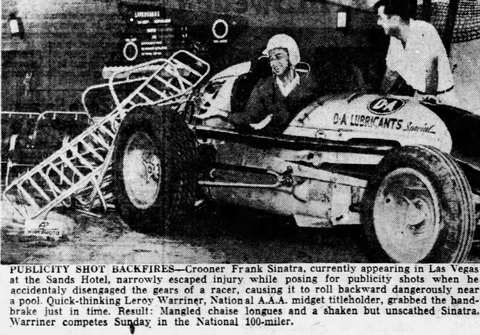
November 13 - THIS DATE IN SINATRA HISTORY
Flagged for reviewFrom: 'Ed O'Brien' via Sinatraphiles <sinatraphiles@googlegroups.com> | Received: 2025-11-14
Editorial note: parsed as a “Studio” entry for 1969, but no existing entry was found to reconcile it against. This may be a genuinely new item, or a fragment split off from a longer post (e.g. a source citation date misread as a new entry). Recommend manual placement.
The Rock Island Argus
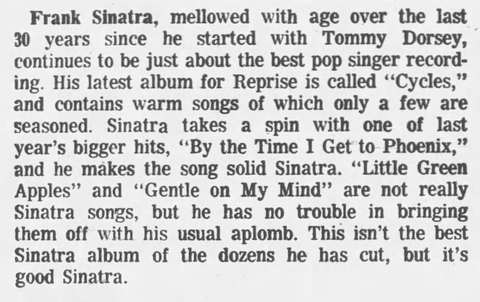
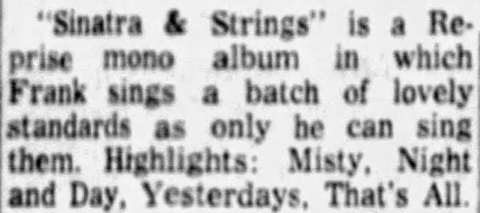
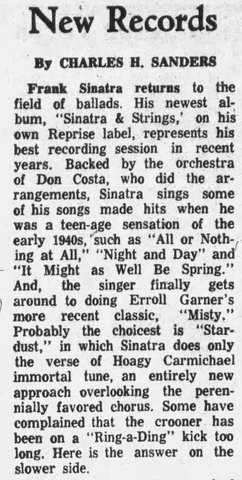
November 21 - THIS DATE IN SINATRA HISTORY
Flagged for reviewFrom: 'Ed O'Brien' via Sinatraphiles <sinatraphiles@googlegroups.com> | Received: 2025-11-22
Editorial note: parsed as a “Studio” entry for 1962, but no existing entry was found to reconcile it against. This may be a genuinely new item, or a fragment split off from a longer post (e.g. a source citation date misread as a new entry). Recommend manual placement.
November 28 - THIS DATE IN SINATRA HISTORY
Flagged for reviewFrom: "scott@falseducks.com" <scott@falseducks.com> | Received: 2025-11-28
Editorial note: parsed as a “Radio” entry for 1960, but no existing entry was found to reconcile it against. This may be a genuinely new item, or a fragment split off from a longer post (e.g. a source citation date misread as a new entry). Recommend manual placement.
Timex show on ABC-TV. He was still doing some very
credible versions of the Riddle ballad arg. in the 1990s.
Vance Adair added:
FS delivered some beautiful versions of this Riddle arrangement in the late 80s. The old man loved to surprise his audiences with that last big sustaining note.
They always cheered to the heavens. And rightly so.
December 3 - THIS DATE IN SINATRA HISTORY
Flagged for reviewFrom: "scott@falseducks.com" <scott@falseducks.com> | Received: 2025-12-03
Editorial note: parsed as a “Radio” entry for 1936, but no existing entry was found to reconcile it against. This may be a genuinely new item, or a fragment split off from a longer post (e.g. a source citation date misread as a new entry). Recommend manual placement.
Major Bowes Amateur Hour
Thursday Evening
Time: 9:00 PM - 10:00 PM (EST)
Location: CBS-Studios, New York City
Sponsor: Chrysler Corporation
730th Consecutive Broadcast
Among the Contestants: The Swingsters Vocal & Instrumental Quintet
1. Major chats with Frank Sinatra & Irwin Zike
2. "Curse Of An Aching Heart"
3. Swingsters close show with instrumental of "Stardust."
Note: above information credited to Ed O'Brien
note: Frank and The Swingsters did not fare too well in the voting
on that Thursday evening 82 years ago. They finished far back
with 1,028 votes. The winning amateur garnered 2,837 votes.
The ads for Chrysler offered a brand new 1937 Plymouth for
$510.00 and the Chrysler for $715.00.
Ed
December 3 - THIS DATE IN SINATRA HISTORY
Flagged for reviewFrom: "scott@falseducks.com" <scott@falseducks.com> | Received: 2025-12-03
Editorial note: parsed as a “Radio” entry for 1940, but no existing entry was found to reconcile it against. This may be a genuinely new item, or a fragment split off from a longer post (e.g. a source citation date misread as a new entry). Recommend manual placement.
Live Remote: Hollywood Palladium
Tuesday Evening
11:30 pm - 12:am
NBC Red Network - KFI Los Angeles
Western Feed Only
Tommy Dorsey & His Orch
Frank Sinatra, Connie Haines & The Pied Pipers Ziggy Elman, Joe Bushkin, Sy Oliver, Buddy Rich
December 3 - THIS DATE IN SINATRA HISTORY
Flagged for reviewFrom: "scott@falseducks.com" <scott@falseducks.com> | Received: 2025-12-03
Editorial note: parsed as a “Radio” entry for 1942, but no existing entry was found to reconcile it against. This may be a genuinely new item, or a fragment split off from a longer post (e.g. a source citation date misread as a new entry). Recommend manual placement.
Reflections
Network: CBS
Location: New York City - CBS Playhouse #3
Show #8
Sponsor: none (substaining)
Time: 8:00PM - 8:30PM (EST)
Musicans: Walter Gross's orchestra and Bobby Tucker's Voices
Arrangements By: Axel Stordahl
Notes: Confirmed airing as Reflections on WISV / Listed as Variety Musical on WABC. No Show 12-10-42. Airing in it's place December 10, 1942 WISV 8:00PM - 8:30PM Italians For Freedom / WABC Italians For Freedom Play.
Sinatra did do a show 12-10-42 at 10:45-11PM on this night. It was not "Reflections" as far as I can tell and was not carried by any other stations but WABC. So it was a local NYC show, like SBS 42'. Has the same format listed as a Songs By Sinatra of that time period.
note: I checked radio listings in Boston and the 10:45 to 11:P.M. was a Treasury Song Parade on the Mutual Network. Might have been Frank.
Ed
December 3 - THIS DATE IN SINATRA HISTORY
Flagged for reviewFrom: "scott@falseducks.com" <scott@falseducks.com> | Received: 2025-12-03
Editorial note: parsed as a “Radio” entry for 1948, but no existing entry was found to reconcile it against. This may be a genuinely new item, or a fragment split off from a longer post (e.g. a source citation date misread as a new entry). Recommend manual placement.
Spotlight Revue Starring Spike Jones
Network: CBS
Time: 10:30 PM - 11:00 PM
Sponsor: Coca Cola.
Spike Jones and The City Slickers
Announcer: Michael Roy
Commercial Spokesman: Dick Joy
Guests: Frank Sinatra, Dorothy Shay, Doodles Weaver, George Rock
1. Once In Love With Amy - Frank SInatra
2. Prisoner Of Love - Frank Sinatra
Note: The show appears on the officially released CD set: 60 Greatest Old Time Radio Show "Frank Sinatra & Friends"
Ed O'Brien noted:
"Once In Love With Amy" was from the Broadway musical
"Where's Charley"," starring Ray Bolger. Frank would record the song
in mid-December of 48. He did sing a throwaway version of "Prisoner
Of Love" during a skit with Spike Jones and his crew.
December 3 - THIS DATE IN SINATRA HISTORY
Flagged for reviewFrom: "scott@falseducks.com" <scott@falseducks.com> | Received: 2025-12-03
Editorial note: parsed as a “Radio” entry for 1950, but no existing entry was found to reconcile it against. This may be a genuinely new item, or a fragment split off from a longer post (e.g. a source citation date misread as a new entry). Recommend manual placement.
Meet Frank Sinatra
Show #6
Network: CBS
Sponsor: Tintair, Ludens
Time: 5:00PM - 6:00PM (EST), Sunday
Producers: Mark Goodson, Bill Todman
Musicians: Graham Forbes and His Quartet
Announcer: Hal Sims
Guest: Georgia Gibbs, Nancy Reed
Notes: Confirmed aired on WCBS
December 3 - THIS DATE IN SINATRA HISTORY
Flagged for reviewFrom: "scott@falseducks.com" <scott@falseducks.com> | Received: 2025-12-03
Editorial note: parsed as a “Radio” entry for 1954, but no existing entry was found to reconcile it against. This may be a genuinely new item, or a fragment split off from a longer post (e.g. a source citation date misread as a new entry). Recommend manual placement.
The Frank Sinatra Show
Network: NBC
Show Number: 28
Time 8:15 p.m. - 8:30 p.m.
Sponsor: Bobbi Home Permanent, White Rain Shampoo, Deep Magic Face lotion
Host: Frank Sinatra
Writers: Norm Sickel
Announcer: Maurice Hart
Producer: Andrew C. Love
1. My Blue Heaven - Frank Sinatra
2. That's All I Want From You - Jaye P. Morgan
3. It Worries Me - Frank Sinatra
Television
NONE
December 3 - THIS DATE IN SINATRA HISTORY
Flagged for reviewFrom: "scott@falseducks.com" <scott@falseducks.com> | Received: 2025-12-03
Editorial note: parsed as a “Concerts” entry for 1939, but no existing entry was found to reconcile it against. This may be a genuinely new item, or a fragment split off from a longer post (e.g. a source citation date misread as a new entry). Recommend manual placement.
Sweet's Ballroom, Oakland, California
Harry James and his Orchestra w/Frank Sinatra
December 3 - THIS DATE IN SINATRA HISTORY
Flagged for reviewFrom: "scott@falseducks.com" <scott@falseducks.com> | Received: 2025-12-03
Editorial note: parsed as a “Concerts” entry for 1940, but no existing entry was found to reconcile it against. This may be a genuinely new item, or a fragment split off from a longer post (e.g. a source citation date misread as a new entry). Recommend manual placement.
Hollywood Palladium, Hollywood, California (October 31 - December 11)
Tommy Dorsey and his Orchestra w/Frank Sinatra
December 3 - THIS DATE IN SINATRA HISTORY
Flagged for reviewFrom: "scott@falseducks.com" <scott@falseducks.com> | Received: 2025-12-03
Editorial note: parsed as a “Concerts” entry for 1943, but no existing entry was found to reconcile it against. This may be a genuinely new item, or a fragment split off from a longer post (e.g. a source citation date misread as a new entry). Recommend manual placement.
RKO-BOSTON, Boston, Massachusetts (December 2-8)
(Thursday thru Wednesday)
w/Jan Savitt & His Orchestra
w/seven piece string section
Buddy Welcome, The Three
Welles and Marty May.
Film: "Falcon and the Co-Eds"
Tom Conway as The Falcon
December 3 - THIS DATE IN SINATRA HISTORY
Flagged for reviewFrom: "scott@falseducks.com" <scott@falseducks.com> | Received: 2025-12-03
Editorial note: parsed as a “Concerts” entry for 1945, but no existing entry was found to reconcile it against. This may be a genuinely new item, or a fragment split off from a longer post (e.g. a source citation date misread as a new entry). Recommend manual placement.
Wedgwood Room, Waldorf Astoria (November 23-December 17)
December 3 - THIS DATE IN SINATRA HISTORY
Flagged for reviewFrom: "scott@falseducks.com" <scott@falseducks.com> | Received: 2025-12-03
Editorial note: parsed as a “Concerts” entry for 1946, but no existing entry was found to reconcile it against. This may be a genuinely new item, or a fragment split off from a longer post (e.g. a source citation date misread as a new entry). Recommend manual placement.
Wedgwood Room, Waldorf Astoria, New York City (November 29 - December 19 )
December 3 - THIS DATE IN SINATRA HISTORY
Flagged for reviewFrom: "scott@falseducks.com" <scott@falseducks.com> | Received: 2025-12-03
Editorial note: parsed as a “Concerts” entry for 1947, but no existing entry was found to reconcile it against. This may be a genuinely new item, or a fragment split off from a longer post (e.g. a source citation date misread as a new entry). Recommend manual placement.
Capitol Theater , New York City (November 13 - December 3)
Last official concerts for two years
Up to eight shows a day
NOTE: Author Richard Havers says that given Frank Sinatra's personal problems with Nancy, Sr., it was ironic that the featured film during his Capitol Theater run was Lucille Ball in "Her Husband's Affair." On a professional level, this was far from a triumphant homecoming. The New York Times said that with Frank Sinatra on the bill not much attention would be paid to the film and that is why such a lightweight affair had been booked. "Frank Sinatra take it away" is how they previewed Frank's appearance. In fact, he didn't. The crowds were less than anticipated; the reviews were not so enthusiastic, even ignoring the bad reviews perpetuated by the likes of Lee Mortimer (NY Daily Mirror) and his sympathizers. By the end of the second week, Mortimer reported "The crooner, expected to pile up new highs, almost hits a new low. His second week (in which he missed no performances) was a sickly $71.000. half of the advance estimate." It's probably factually
correct, Frank was on the wane. As one writer put it, "Frank was not The Voice, just a voice."
Given all that happened in the recent months, Havers continues, it was not too surprising. There were other factors, too. It is easy to forget that back in 1947 Frank was not a legend, not the Chairman of the Board, leader of the Rat Pack, or any other of the epithets that has been bestowed upon him. He may have been "The Voice," but he was essentially a pop singer.
Regardless of how good a pop singer he was, like every other pop singer since, he has been subject to the changes in attitudes of what is an unusually fickle audience. Some people grow older with their idols, while many move on, dropping their adolescent heroes as they mature and change. The main wave of hysteria that surrounded Frank was from the bobby-soxers, 13, 14, 15, and 16 year old girls, young women who fantasized about Frankie. There was an inevitability in Frank's changing audience that no amount of good or bad publicity could alter.
He was, like many who have competed in the same field, at the point where he had to somehow change. Either he had to develop an appeal outside music, and the movies were the obvious arenas, although so far the material had been less than impressive, or he had to find a way of changing his style to build a new audience, Havers points out. Sixty years ago people did not envisage a career in "pop music." There was no such thing. It was just something you did for a while before moving on to live the rest of your life.
Whether Frank had a real sense of what the rest of his life might be like is impossible to know, Havers states, He may have seen himself becoming principally a movie star, or maybe he saw himself becoming a businessman; he talked of and had already made some investments. Frank's disappointing showing in New York by no means signaled the end of a career. In the same way as Frank was no overnight success, neither would he disappear overnight.
note: Skitch Henderson told me how disappointing the four-week run at
the Capitol turned out to be, The theater guaranteed Frank $20,000
a week. I asked Skitch why Frank failed to draw. He told me the kids
just stopped coming to see him.
Frank opened on Thursday to a packed house. The next day was a
shocker. The place was half-empty during part of the day. Saturday,
Frank barely made it through the first show. He was sick and had to
bow out for the rest of the day. He would miss all the shows Saturday
through Monday. Jane Powell and Jack Smith would sub for him.
Here is an article in the 11-19-47 Variety.
Here is the gross each week during the engagement:
1. $55,000
2. $65,000
3. $79,000
4. $74,000
Total take for the month was $273,000. Based on
Sinatra's previous drawing power, the theater was
projecting a gross of half-a-million dollars. Sinatra
was almost 32 years old. He learned that an older
audience was what he needed to capture if there
was any chance of grabbing the brass ring again.
Ed
December 3 - THIS DATE IN SINATRA HISTORY
Flagged for reviewFrom: "scott@falseducks.com" <scott@falseducks.com> | Received: 2025-12-03
Editorial note: parsed as a “Concerts” entry for 1949, but no existing entry was found to reconcile it against. This may be a genuinely new item, or a fragment split off from a longer post (e.g. a source citation date misread as a new entry). Recommend manual placement.
State Theatre, Hartford, Conn. (December 3-4)
w/Ziggy Elman and His Trumpet, Harvey Stone
Eight shows over the two days
Brian Chearno notes:
Grossed $18,000 breaking Arthur Godfrey's record. December 4, 1949 Sunday Herald mention first theatre stand in two years. December 10, 1949 mention of record breaking shows. November 27, 1949 ad mentions Sinatra's coming appearance. Hartford Courant mentioned that Sinatra gave a boost to help fund the Hospital in Italy drive. Sinatra invited students at the Connecticut School for the Blind to the afternoon show. They also reported that he announced he would return in February.
December 3 - THIS DATE IN SINATRA HISTORY
Flagged for reviewFrom: "scott@falseducks.com" <scott@falseducks.com> | Received: 2025-12-03
Editorial note: parsed as a “Concerts” entry for 1952, but no existing entry was found to reconcile it against. This may be a genuinely new item, or a fragment split off from a longer post (e.g. a source citation date misread as a new entry). Recommend manual placement.
French Casino, New York City (11-26 TO 12-8 1952)
Frank Sinatra with Bill Miller
December 3 - THIS DATE IN SINATRA HISTORY
Flagged for reviewFrom: "scott@falseducks.com" <scott@falseducks.com> | Received: 2025-12-03
Editorial note: parsed as a “Concerts” entry for 1964, but no existing entry was found to reconcile it against. This may be a genuinely new item, or a fragment split off from a longer post (e.g. a source citation date misread as a new entry). Recommend manual placement.
Sands, Las Vegas, Nevada (November 27 - December 10)
Count Basie Orchestra
Conducted by Quincy Jones
December 3 - THIS DATE IN SINATRA HISTORY
Flagged for reviewFrom: "scott@falseducks.com" <scott@falseducks.com> | Received: 2025-12-03
Editorial note: parsed as a “Concerts” entry for 1968, but no existing entry was found to reconcile it against. This may be a genuinely new item, or a fragment split off from a longer post (e.g. a source citation date misread as a new entry). Recommend manual placement.
Caesars Palace, Las Vegas, Nevada (November 22 - December 19)
w/Harry James, The Fifth Dimension, Jose Feliciano, Pat Henry
December 3 - THIS DATE IN SINATRA HISTORY
Flagged for reviewFrom: "scott@falseducks.com" <scott@falseducks.com> | Received: 2025-12-03
Editorial note: parsed as a “Concerts” entry for 1988, but no existing entry was found to reconcile it against. This may be a genuinely new item, or a fragment split off from a longer post (e.g. a source citation date misread as a new entry). Recommend manual placement.
Fox Theater, Detroit, Michigan (November 30-December 4)
Orchestra Conducted By: Frank Sinatra, jr.
1. I've Got The World On A String
2. In The Still Of The Night
3. I've Got A Crush On You
4. Come Rain Or Come Shine
5. Where Or When
6. My Heart Stood Still
7. Mack The Knife
8. Guess I'll Hang My Tears Out To Dry
9. My Way
10. One For My Baby
11. medley w/ Liza Minnelli & Sammy Davis Jr: Guys And Dolls / Luck Be A Lady / The Oldest Established / Style / Witchcraft / All Or Nothing At All / I've Got You Under My Skin / All The Way / The Lady Is A Tramp / New York, New York
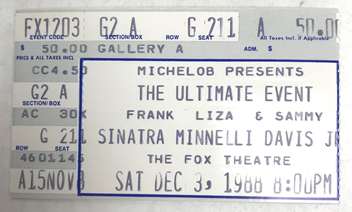
December 3 - THIS DATE IN SINATRA HISTORY
Flagged for reviewFrom: "scott@falseducks.com" <scott@falseducks.com> | Received: 2025-12-03
Editorial note: parsed as a “Concerts” entry for 1990, but no existing entry was found to reconcile it against. This may be a genuinely new item, or a fragment split off from a longer post (e.g. a source citation date misread as a new entry). Recommend manual placement.
Beverly Hilton Hotel, Los Angeles, California
Society Of Singers Salute To Frank Sinatra
Orchestra Conducted By: Henry Mancini
Performers: Jack Jones, George Burns, Harry Connick, Jo Stafford, The Hi -Lo's, Tony Bennett, Manhattan Transfer, Connie Haines, Peggy Lee, Herb Jeffries, Tony Martin, Kay Star, Helen Forrest, Martha Tilton, Bea Wayne, Kitty Kallen, Helen O'Connell, Frances
Warren, The Sentimentalists, Joe Williams, Steve Lawrence, Eydie Gorme.
1. The Lady Is A Tramp w/Ella
2. Alright, Ok, You Win w/Joe William & Cast
December 3 - THIS DATE IN SINATRA HISTORY
Flagged for reviewFrom: scott@falseducks.com | Received: 2025-12-03
Editorial note: parsed as a “Radio” entry for 1936, but no existing entry was found to reconcile it against. This may be a genuinely new item, or a fragment split off from a longer post (e.g. a source citation date misread as a new entry). Recommend manual placement.
Major Bowes Amateur Hour
Thursday Evening
Time: 9:00 PM - 10:00 PM (EST)
Location: CBS-Studios, New York City
Sponsor: Chrysler Corporation
730th Consecutive Broadcast
Among the Contestants: The Swingsters Vocal & Instrumental Quintet
1. Major chats with Frank Sinatra & Irwin Zike
2. "Curse Of An Aching Heart"
3. Swingsters close show with instrumental of "Stardust."
Note: above information credited to Ed O'Brien
note: Frank and The Swingsters did not fare too well in the voting on that Thursday evening 82 years ago. They finished far back with 1,028 votes. The winning amateur garnered 2,837 votes.
The ads for Chrysler offered a brand new 1937 Plymouth for $510.00 and the Chrysler for $715.00.
Ed
December 3 - THIS DATE IN SINATRA HISTORY
Flagged for reviewFrom: scott@falseducks.com | Received: 2025-12-03
Editorial note: parsed as a “Radio” entry for 1940, but no existing entry was found to reconcile it against. This may be a genuinely new item, or a fragment split off from a longer post (e.g. a source citation date misread as a new entry). Recommend manual placement.
Live Remote: Hollywood Palladium
Tuesday Evening
11:30 pm - 12:am
NBC Red Network - KFI Los Angeles
Western Feed Only
Tommy Dorsey & His Orch
Frank Sinatra, Connie Haines & The Pied Pipers Ziggy Elman, Joe Bushkin, Sy Oliver, Buddy Rich
December 3 - THIS DATE IN SINATRA HISTORY
Flagged for reviewFrom: scott@falseducks.com | Received: 2025-12-03
Editorial note: parsed as a “Radio” entry for 1942, but no existing entry was found to reconcile it against. This may be a genuinely new item, or a fragment split off from a longer post (e.g. a source citation date misread as a new entry). Recommend manual placement.
Reflections
Network: CBS
Location: New York City - CBS Playhouse #3
Show #8
Sponsor: none (substaining)
Time: 8:00PM - 8:30PM (EST)
Musicans: Walter Gross's orchestra and Bobby Tucker's Voices
Arrangements By: Axel Stordahl
Notes: Confirmed airing as Reflections on WISV / Listed as Variety Musical on WABC. No Show 12-10-42. Airing in it's place December 10, 1942 WISV 8:00PM - 8:30PM Italians For Freedom / WABC Italians For Freedom Play. Sinatra did do a show 12-10-42 at 10:45-11PM on this night. It was not "Reflections" as far as I can tell and was not carried by any other stations but WABC. So it was a local NYC show, like SBS 42'. Has the same format listed as a Songs By Sinatra of that time period.
note: I checked radio listings in Boston and the 10:45 to 11:P.M. was a Treasury Song Parade on the Mutual Network. Might have been Frank. Ed
December 3 - THIS DATE IN SINATRA HISTORY
Flagged for reviewFrom: scott@falseducks.com | Received: 2025-12-03
Editorial note: parsed as a “Radio” entry for 1948, but no existing entry was found to reconcile it against. This may be a genuinely new item, or a fragment split off from a longer post (e.g. a source citation date misread as a new entry). Recommend manual placement.
Spotlight Revue Starring Spike Jones
Network: CBS
Time: 10:30 PM - 11:00 PM
Sponsor: Coca Cola.
Spike Jones and The City Slickers
Announcer: Michael Roy
Commercial Spokesman: Dick Joy
Guests: Frank Sinatra, Dorothy Shay, Doodles Weaver, George Rock
1. Once In Love With Amy - Frank SInatra
2. Prisoner Of Love - Frank Sinatra
Note: The show appears on the officially released CD set: 60 Greatest Old Time Radio Show "Frank Sinatra & Friends"
Ed O'Brien noted:
"Once In Love With Amy" was from the Broadway musical
"Where's Charley"," starring Ray Bolger. Frank would record the song in mid-December of 48. He did sing a throwaway version of "Prisoner Of Love" during a skit with Spike Jones and his crew.
December 3 - THIS DATE IN SINATRA HISTORY
Flagged for reviewFrom: scott@falseducks.com | Received: 2025-12-03
Editorial note: parsed as a “Radio” entry for 1950, but no existing entry was found to reconcile it against. This may be a genuinely new item, or a fragment split off from a longer post (e.g. a source citation date misread as a new entry). Recommend manual placement.
Meet Frank Sinatra
Show #6
Network: CBS
Sponsor: Tintair, Ludens
Time: 5:00PM - 6:00PM (EST), Sunday
Producers: Mark Goodson, Bill Todman
Musicians: Graham Forbes and His Quartet
Announcer: Hal Sims
Guest: Georgia Gibbs, Nancy Reed
Notes: Confirmed aired on WCBS
December 3 - THIS DATE IN SINATRA HISTORY
Flagged for reviewFrom: scott@falseducks.com | Received: 2025-12-03
Editorial note: parsed as a “Radio” entry for 1954, but no existing entry was found to reconcile it against. This may be a genuinely new item, or a fragment split off from a longer post (e.g. a source citation date misread as a new entry). Recommend manual placement.
The Frank Sinatra Show
Network: NBC
Show Number: 28
Time 8:15 p.m. - 8:30 p.m.
Sponsor: Bobbi Home Permanent, White Rain Shampoo, Deep Magic Face lotion
Host: Frank Sinatra
Writers: Norm Sickel
Announcer: Maurice Hart
Producer: Andrew C. Love
1. My Blue Heaven - Frank Sinatra
2. That's All I Want From You - Jaye P. Morgan
3. It Worries Me - Frank Sinatra
Television
NONE
December 3 - THIS DATE IN SINATRA HISTORY
Flagged for reviewFrom: scott@falseducks.com | Received: 2025-12-03
Editorial note: parsed as a “Concerts” entry for 1939, but no existing entry was found to reconcile it against. This may be a genuinely new item, or a fragment split off from a longer post (e.g. a source citation date misread as a new entry). Recommend manual placement.
Sweet's Ballroom, Oakland, California
Harry James and his Orchestra w/Frank Sinatra
December 3 - THIS DATE IN SINATRA HISTORY
Flagged for reviewFrom: scott@falseducks.com | Received: 2025-12-03
Editorial note: parsed as a “Concerts” entry for 1940, but no existing entry was found to reconcile it against. This may be a genuinely new item, or a fragment split off from a longer post (e.g. a source citation date misread as a new entry). Recommend manual placement.
Hollywood Palladium, Hollywood, California (October 31 - December 11) Tommy Dorsey and his Orchestra w/Frank Sinatra
December 3 - THIS DATE IN SINATRA HISTORY
Flagged for reviewFrom: scott@falseducks.com | Received: 2025-12-03
Editorial note: parsed as a “Concerts” entry for 1943, but no existing entry was found to reconcile it against. This may be a genuinely new item, or a fragment split off from a longer post (e.g. a source citation date misread as a new entry). Recommend manual placement.
RKO-BOSTON, Boston, Massachusetts (December 2-8)
(Thursday thru Wednesday) w/Jan Savitt & His Orchestra w/seven piece string section
Buddy Welcome, The Three
Welles and Marty May.
Film: "Falcon and the Co-Eds"
Tom Conway as The Falcon
December 3 - THIS DATE IN SINATRA HISTORY
Flagged for reviewFrom: scott@falseducks.com | Received: 2025-12-03
Editorial note: parsed as a “Concerts” entry for 1945, but no existing entry was found to reconcile it against. This may be a genuinely new item, or a fragment split off from a longer post (e.g. a source citation date misread as a new entry). Recommend manual placement.
Wedgwood Room, Waldorf Astoria (November 23-December 17)
December 3 - THIS DATE IN SINATRA HISTORY
Flagged for reviewFrom: scott@falseducks.com | Received: 2025-12-03
Editorial note: parsed as a “Concerts” entry for 1946, but no existing entry was found to reconcile it against. This may be a genuinely new item, or a fragment split off from a longer post (e.g. a source citation date misread as a new entry). Recommend manual placement.
Wedgwood Room, Waldorf Astoria, New York City (November 29 - December 19 )
December 3 - THIS DATE IN SINATRA HISTORY
Flagged for reviewFrom: scott@falseducks.com | Received: 2025-12-03
Editorial note: parsed as a “Concerts” entry for 1947, but no existing entry was found to reconcile it against. This may be a genuinely new item, or a fragment split off from a longer post (e.g. a source citation date misread as a new entry). Recommend manual placement.
Capitol Theater , New York City (November 13 - December 3) Last official concerts for two years
Up to eight shows a day
NOTE: Author Richard Havers says that given Frank Sinatra's personal problems with Nancy, Sr., it was ironic that the featured film during his Capitol Theater run was Lucille Ball in "Her Husband's Affair." On a professional level, this was far from a triumphant homecoming. The New York Times said that with Frank Sinatra on the bill not much attention would be paid to the film and that is why such a lightweight affair had been booked. "Frank Sinatra take it away" is how they previewed Frank's appearance. In fact, he didn't. The crowds were less than anticipated; the reviews were not so enthusiastic, even ignoring the bad reviews perpetuated by the likes of Lee Mortimer (NY Daily Mirror) and his sympathizers. By the end of the second week, Mortimer reported "The crooner, expected to pile up new highs, almost hits a new low. His second week (in which he missed no performances) was a sickly $71.000. half of the advance estimate." It's probably factually correct, Frank was on the wane. As one writer put it, "Frank was not The Voice, just a voice."
Given all that happened in the recent months, Havers continues, it was not too surprising. There were other factors, too. It is easy to forget that back in 1947 Frank was not a legend, not the Chairman of the Board, leader of the Rat Pack, or any other of the epithets that has been bestowed upon him. He may have been "The Voice," but he was essentially a pop singer.
Regardless of how good a pop singer he was, like every other pop singer since, he has been subject to the changes in attitudes of what is an unusually fickle audience. Some people grow older with their idols, while many move on, dropping their adolescent heroes as they mature and change. The main wave of hysteria that surrounded Frank was from the bobby-soxers, 13, 14, 15, and 16 year old girls, young women who fantasized about Frankie. There was an inevitability in Frank's changing audience that no amount of good or bad publicity could alter.
He was, like many who have competed in the same field, at the point where he had to somehow change. Either he had to develop an appeal outside music, and the movies were the obvious arenas, although so far the material had been less than impressive, or he had to find a way of changing his style to build a new audience, Havers points out. Sixty years ago people did not envisage a career in "pop music." There was no such thing. It was just something you did for a while before moving on to live the rest of your life.
Whether Frank had a real sense of what the rest of his life might be like is impossible to know, Havers states, He may have seen himself becoming principally a movie star, or maybe he saw himself becoming a businessman; he talked of and had already made some investments. Frank's disappointing showing in New York by no means signaled the end of a career. In the same way as Frank was no overnight success, neither would he disappear overnight.
note: Skitch Henderson told me how disappointing the four-week run at the Capitol turned out to be, The theater guaranteed Frank $20,000 a week. I asked Skitch why Frank failed to draw. He told me the kids just stopped coming to see him.
Frank opened on Thursday to a packed house. The next day was a shocker. The place was half-empty during part of the day. Saturday, Frank barely made it through the first show. He was sick and had to bow out for the rest of the day. He would miss all the shows Saturday through Monday. Jane Powell and Jack Smith would sub for him.
Here is an article in the 11-19-47 Variety.
Here is the gross each week during the engagement:
1. $55,000
2. $65,000
3. $79,000
4. $74,000
Total take for the month was $273,000. Based on
Sinatra's previous drawing power, the theater was projecting a gross of half-a-million dollars. Sinatra was almost 32 years old. He learned that an older audience was what he needed to capture if there was any chance of grabbing the brass ring again.
Ed
December 3 - THIS DATE IN SINATRA HISTORY
Flagged for reviewFrom: scott@falseducks.com | Received: 2025-12-03
Editorial note: parsed as a “Concerts” entry for 1949, but no existing entry was found to reconcile it against. This may be a genuinely new item, or a fragment split off from a longer post (e.g. a source citation date misread as a new entry). Recommend manual placement.
State Theatre, Hartford, Conn. (December 3-4) w/Ziggy Elman and His Trumpet, Harvey Stone
Eight shows over the two days
Brian Chearno notes:
Grossed $18,000 breaking Arthur Godfrey's record. December 4, 1949 Sunday Herald mention first theatre stand in two years. December 10, 1949 mention of record breaking shows. November 27, 1949 ad mentions Sinatra's coming appearance. Hartford Courant mentioned that Sinatra gave a boost to help fund the Hospital in Italy drive. Sinatra invited students at the Connecticut School for the Blind to the afternoon show. They also reported that he announced he would return in February.
December 3 - THIS DATE IN SINATRA HISTORY
Flagged for reviewFrom: scott@falseducks.com | Received: 2025-12-03
Editorial note: parsed as a “Concerts” entry for 1952, but no existing entry was found to reconcile it against. This may be a genuinely new item, or a fragment split off from a longer post (e.g. a source citation date misread as a new entry). Recommend manual placement.
French Casino, New York City (11-26 TO 12-8 1952)
Frank Sinatra with Bill Miller
December 3 - THIS DATE IN SINATRA HISTORY
Flagged for reviewFrom: scott@falseducks.com | Received: 2025-12-03
Editorial note: parsed as a “Concerts” entry for 1964, but no existing entry was found to reconcile it against. This may be a genuinely new item, or a fragment split off from a longer post (e.g. a source citation date misread as a new entry). Recommend manual placement.
Sands, Las Vegas, Nevada (November 27 - December 10)
Count Basie Orchestra
Conducted by Quincy Jones
December 3 - THIS DATE IN SINATRA HISTORY
Flagged for reviewFrom: scott@falseducks.com | Received: 2025-12-03
Editorial note: parsed as a “Concerts” entry for 1968, but no existing entry was found to reconcile it against. This may be a genuinely new item, or a fragment split off from a longer post (e.g. a source citation date misread as a new entry). Recommend manual placement.
Caesars Palace, Las Vegas, Nevada (November 22 - December 19) w/Harry James, The Fifth Dimension, Jose Feliciano, Pat Henry
December 3 - THIS DATE IN SINATRA HISTORY
Flagged for reviewFrom: scott@falseducks.com | Received: 2025-12-03
Editorial note: parsed as a “Concerts” entry for 1988, but no existing entry was found to reconcile it against. This may be a genuinely new item, or a fragment split off from a longer post (e.g. a source citation date misread as a new entry). Recommend manual placement.
Fox Theater, Detroit, Michigan (November 30-December 4)
Orchestra Conducted By: Frank Sinatra, jr.
1. I've Got The World On A String
2. In The Still Of The Night
3. I've Got A Crush On You
4. Come Rain Or Come Shine
5. Where Or When
6. My Heart Stood Still
7. Mack The Knife
8. Guess I'll Hang My Tears Out To Dry
9. My Way
10. One For My Baby
11. medley w/ Liza Minnelli & Sammy Davis Jr: Guys And Dolls / Luck Be A Lady / The Oldest Established / Style / Witchcraft / All Or Nothing At All / I've Got You Under My Skin / All The Way / The Lady Is A Tramp / New York, New York
December 3 - THIS DATE IN SINATRA HISTORY
Flagged for reviewFrom: scott@falseducks.com | Received: 2025-12-03
Editorial note: parsed as a “Concerts” entry for 1990, but no existing entry was found to reconcile it against. This may be a genuinely new item, or a fragment split off from a longer post (e.g. a source citation date misread as a new entry). Recommend manual placement.
Beverly Hilton Hotel, Los Angeles, California
Society Of Singers Salute To Frank Sinatra
Orchestra Conducted By: Henry Mancini
Performers: Jack Jones, George Burns, Harry Connick, Jo Stafford, The Hi -Lo's, Tony Bennett, Manhattan Transfer, Connie Haines, Peggy Lee, Herb Jeffries, Tony Martin, Kay Star, Helen Forrest, Martha Tilton, Bea Wayne, Kitty Kallen, Helen O'Connell, Frances Warren, The Sentimentalists, Joe Williams, Steve Lawrence, Eydie Gorme.
1. The Lady Is A Tramp w/Ella
2. Alright, Ok, You Win w/Joe William & Cast
re: [sinatraphiles] December 3 - THIS DATE IN SINATRA HISTORY
Flagged for reviewFrom: "scott@falseducks.com" <scott@falseducks.com> | Received: 2025-12-03
Editorial note: parsed as a “Concerts” entry for 1939, but no existing entry was found to reconcile it against. This may be a genuinely new item, or a fragment split off from a longer post (e.g. a source citation date misread as a new entry). Recommend manual placement.
Sweet's Ballroom, Oakland, California
Harry James and his Orchestra w/Frank Sinatra
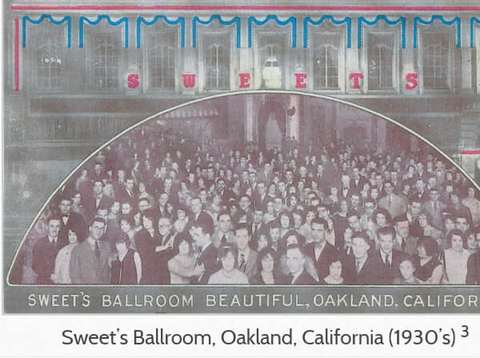
re: [sinatraphiles] December 3 - THIS DATE IN SINATRA HISTORY
Flagged for reviewFrom: scott@falseducks.com | Received: 2025-12-03
Editorial note: parsed as a “Concerts” entry for 1939, but no existing entry was found to reconcile it against. This may be a genuinely new item, or a fragment split off from a longer post (e.g. a source citation date misread as a new entry). Recommend manual placement.
Sweet's Ballroom, Oakland, California
Harry James and his Orchestra w/Frank Sinatra
December 1 - THIS DATE IN SINATRA HISTORY
Flagged for reviewFrom: 'Ed O'Brien' via Sinatraphiles <sinatraphiles@googlegroups.com> | Received: 2025-12-05
Editorial note: parsed as a “Studio” entry for 1954, but no existing entry was found to reconcile it against. This may be a genuinely new item, or a fragment split off from a longer post (e.g. a source citation date misread as a new entry). Recommend manual placement.
The Frank Sinatra Show
Network: NBC
Show Number: 27
Time 8:15 p.m. - 8:30 p.m.
Sponsor: Bobbi Home Permanet, White Rain Shampoo, Deep Magic Face lotion
Host: Frank Sinatra
Writers: Norm Sickel
Announcer: Maurice Hart
Producer: Andrew C. Love
1. Someone To Watch Over Me - Frank Sinatra
2. One For My Baby - Frank Sinatra w/Bill Miller, piano
3. You, My Love - Frank Sinatra.
Notes: Frank promotes his songs from the Warner Bros. release "Young At Heart."
Hi There !
" This is young at heart Sinatra
welcoming you to our Wednesday, December
1st, Bobbi classroom."
" 'One For My Baby,' another song from
'Young At Heart.' Barney Sloan, that's me,
sings it in the picture and it is almost a
character study of the guy. Cause, Barney
is bitter about one thing: himself. He looked
in the mirror one day and found a reflection
as shoddy as the world he lives in. He sits
and plays the piano and sings at a local
saloon, dropping cigarette ashes and dreams,
all over the place. Mr. Kanobi, sir, the scene
is set, so let's grab off another take on 'One
For My Baby.' "
note: The first Bobbi show in December 54
was built around the soon to be released
Warner Brother film "Young At Heart." Show
opened with an edited recording of the
Gershwin's "Someone To Watch Over Me."
Frank devoted time to explaining what made
his character in the film tick and then sang
"One For My Baby" with Bill Miller backing
him on piano. "You My Love" closed the
show.
--Ed
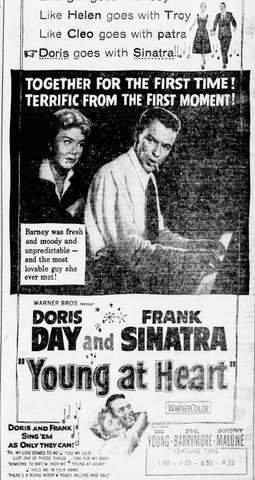
December 7 - THIS DATE IN SINATRA HISTORY
Flagged for reviewFrom: 'Ed O'Brien' via Sinatraphiles <sinatraphiles@googlegroups.com> | Received: 2025-12-07
Editorial note: parsed as a “Studio” entry for 1957, but no existing entry was found to reconcile it against. This may be a genuinely new item, or a fragment split off from a longer post (e.g. a source citation date misread as a new entry). Recommend manual placement.
8:00 p.m. to 9:00 p.m.
Premier broadcast
Special guest: Frank Sinatra
Boston Globe
December 13 - THIS DATE IN SINATRA HISTORY
Flagged for reviewFrom: 'Ed O'Brien' via Sinatraphiles <sinatraphiles@googlegroups.com> | Received: 2025-12-14
Editorial note: parsed as a “Studio” entry for 1959, but no existing entry was found to reconcile it against. This may be a genuinely new item, or a fragment split off from a longer post (e.g. a source citation date misread as a new entry). Recommend manual placement.
Sunday
Frank Sinatra
L.A. Mirror
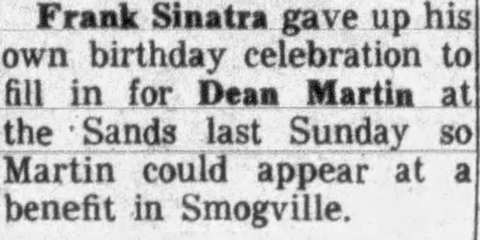
December 16 - THIS DATE IN SINATRA HISTORY
Flagged for reviewFrom: 'Ed O'Brien' via Sinatraphiles <sinatraphiles@googlegroups.com> | Received: 2025-12-17
Editorial note: parsed as a “Studio” entry for 1945, but no existing entry was found to reconcile it against. This may be a genuinely new item, or a fragment split off from a longer post (e.g. a source citation date misread as a new entry). Recommend manual placement.
Richmond News Leader
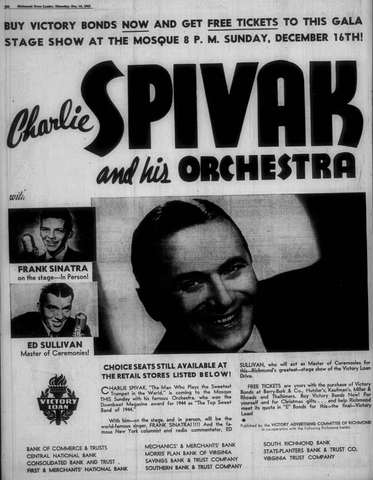
December 18 - THIS DATE IN SINATRA HISTORY
Flagged for reviewFrom: "scott@falseducks.com" <scott@falseducks.com> | Received: 2025-12-18
Editorial note: parsed as a “Television” entry for 1930, but no existing entry was found to reconcile it against. This may be a genuinely new item, or a fragment split off from a longer post (e.g. a source citation date misread as a new entry). Recommend manual placement.
lyrics:
verse:
The more I travel across the gravel,
The more I sail the sea,
The more I feel
convinced of the fact
New York's the town for me.
Its crazy skyline is right in my line
And when I'm far away
I'm able to bear it for several hours,
And then break down and say:
refrain
Take me back to Manhattan,
Take Me Back to New York,
I'm just longing to see once more
My little home on the hundredth floor.
Can you wonder I'm gloomy ?
Can you smile when I frown ?
I miss the East Side, the West Side,
The North Side and the South Side,
So take me back to Manhattan,
That dear old dirty town.
Sinatra's version on 12-18-51
verse
New York, New York,
I've been to Paris and tasted its thrills,
But I wasn't amused there.
I've done the nightclubs of Beverly Hills,
But I was so utterly confused there,
I found no joy in Illinois, in Mexico, or Rome.
And now it is time for your wandering boy,
To start in heading home, so.....
Refrain
Take me back to Manhattan,
Take me back to New York,
I just want to go to that door,
And say hello to my boy Toots Shor.
When I'm out of the country,
I just mope and I frown,
Although Great Britain is terrific,
They've got South Pacific,
So take me back to Manhattan,
That one and only town
Take me back to the Battery,
Take me up to the Bronx,
I love each cop, every shiny badge,
The bleachers cling to the name DiMag.
When you mention the Copa,
I just grin like a clown.
I love the music by the Cubans,
The Lindy's and Reubens.
So take me back to Manhattan,
My very favorite town.
Take me down to the subway,
And the buses and els,
I love the models along fifth ave,
I love to swing to the things that they have,
I adore Earl Wilson or whoever is around,
I love each ferry in the harbor,
I just adore Impellitteri,
So take me back to Manhattan,
That stupendous, tremendous,
That glorious, uproarious,
That peaceful, sinful, lovely, sinful town
Ed O'Brien answered:
Porter wrote "Farewell Amanda" for the Tracy-Hepburn
MGM film "Adam's Rib," in 1949. David Wayne also
sang the tune in the film but Frank made a special recording
of the song for the film. Did he write expressly for Sinatra ?
I don't know. Maybe, maybe not.
I'm glad you found "Take Me Back To Manhattan" interesting.
I doubt very much that Cahn rewrote the lyrics, esp. in 1951.
I've tried to trace the history of the tune and if there is anything
in the Porter collection at Yale. I haven't had any luck . Perhaps
there is a mention at the end of the FS show on 12-18-51.
December 26 - THIS DATE IN SINATRA HISTORY
Flagged for reviewFrom: Scott Henderson <scott@falseducks.com> | Received: 2025-12-26
Editorial note: parsed as a “Concerts” entry for 1939, but no existing entry was found to reconcile it against. This may be a genuinely new item, or a fragment split off from a longer post (e.g. a source citation date misread as a new entry). Recommend manual placement.
Trianon Ballroom, Cleveland, Ohio
Harry James and His Orchestra with Frank Sinatra
January 16 - THIS DATE IN SINATRA HISTORY
Flagged for reviewFrom: scott@falseducks.com | Received: 2026-01-16
Editorial note: parsed as a “Television” entry for 1951, but no existing entry was found to reconcile it against. This may be a genuinely new item, or a fragment split off from a longer post (e.g. a source citation date misread as a new entry). Recommend manual placement.
Texaco Star Theatre
Milton Berle, Martha Raye, Perry Como
A boxed marked "The Thing" is opened and Frank Sinatra steps out
MARCH 8 - THIS DATE IN SINATRA HISTORY
Flagged for reviewFrom: Scott Henderson <scott@falseducks.com> | Received: 2026-03-08
Editorial note: parsed as a “Concerts” entry for 1938, but no existing entry was found to reconcile it against. This may be a genuinely new item, or a fragment split off from a longer post (e.g. a source citation date misread as a new entry). Recommend manual placement.
. He tells the audience Dinah Shore had a 15 minute
show from 10 to 10:15 A.M. and he followed her with a
15 minute show. The station paid him 35 cents for carfare.
Ed O'Brien: After "I Can't Get Started," Frank sings a segment of Eddie Fisher's big hit "Oh! My Pa-Pa.'
During the monologue, he tells the audience Bogie introduced Jack Daniels to him. A very
long and rewarding association for Frank.
Monologue
note: Recently I have come across articles that attribute Sinatra's introduction to Jack
Daniels to a number of people. Two of the most prominent being Jackie Gleason and
Joe E. Lewis. Here is Frank Sinatra telling the audience at Caesars the real story:
"That's Blackass Jack Daniels. How many people drink Jack Daniels . . . in the house?
I was introduced to this drink by a great friend. A great man named Mr. Bogart. He introduced
me to Jack Daniels one night after dinner --- at his house. Which was outdoors, I think, at the
time. He said to me, 'Dago, what do you want to drink after dinner?' And I said, 'I don't know.' He
said, 'All right, how about a little Jack Daniels?' And I said, 'What the hell is Jack Daniels?' It's
true. He said, "Let me pour you some.' And it was a happy marriage from then on."
FEBRUARY 8 THIS DATE IN SINATRA HISTORY
Flagged for reviewFrom: 'Ed O'Brien' via Sinatraphiles <sinatraphiles@googlegroups.com> | Received: 2026-03-09
Editorial note: parsed as a “Studio” entry for 1956, but no existing entry was found to reconcile it against. This may be a genuinely new item, or a fragment split off from a longer post (e.g. a source citation date misread as a new entry). Recommend manual placement.
Capitol Studio A, Hollywood
E15185 If It's The Last Thing I Do w/ The Hollywood String Quartet
Arranged & Conducted by Nelson Riddle
CD: CDP 7-46572-2 Close To You
LP: T2602 Forever Frank
E15186 Don't Like Goodbyes w/ The Hollywood String Quartet
(H. Arlen/T. Capote)
Harwin Music Co. (ASCAP)
Arranged & Conducted by Nelson Riddle
-4 (4:50) CD: C2-94777 The Capitol Years
CD: CDP 7-46572-2 Close To You
LP: W789 Close To You
E15187 P.S. I Love You w/ The Hollywood String Quartet
Arranged & Conducted by Nelson Riddle
CD: CDP 7-46572-2 Close To You
LP: W789 Close To You
E15188 Love Locked Out w/ The Hollywood String Quartet
Arranged & Conducted by Nelson Riddle
CD: CDP 7-46572-2 Close To You
LP: W789 Close To You
Original reviews from spring of 1957:
RALPH J. GLEASON
There is one in every crowd including music critics
Love the "Moonlight Sinatra" reference in a 1957 review.
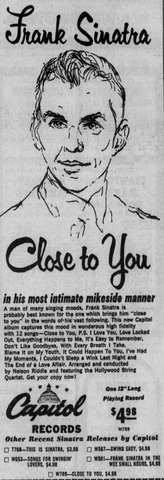
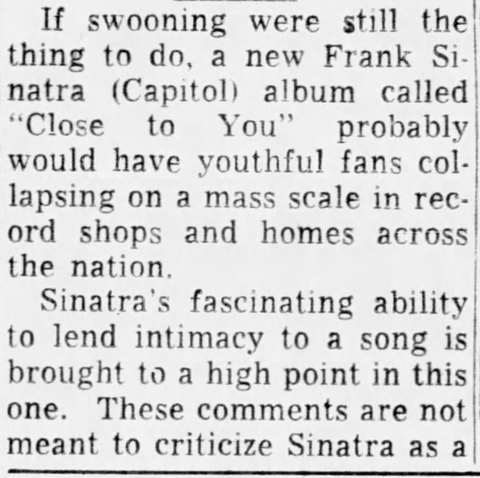
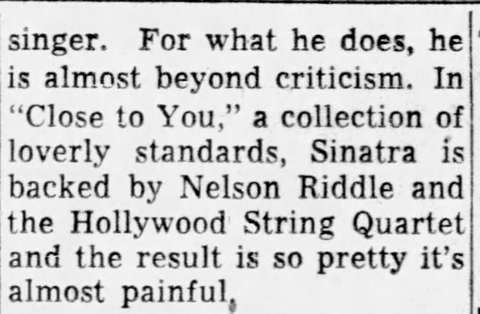
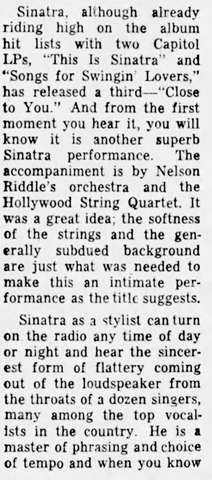
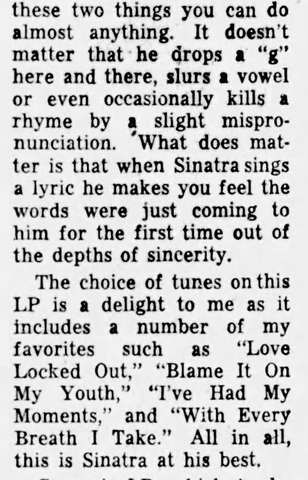
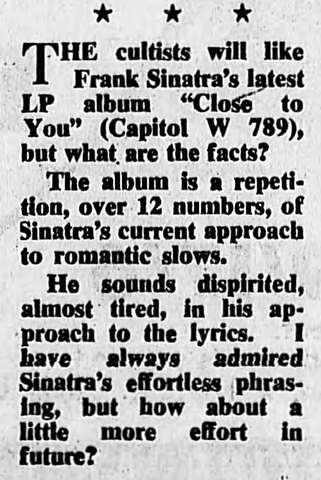
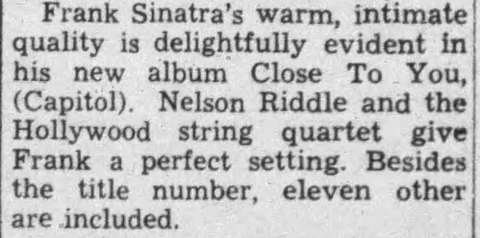
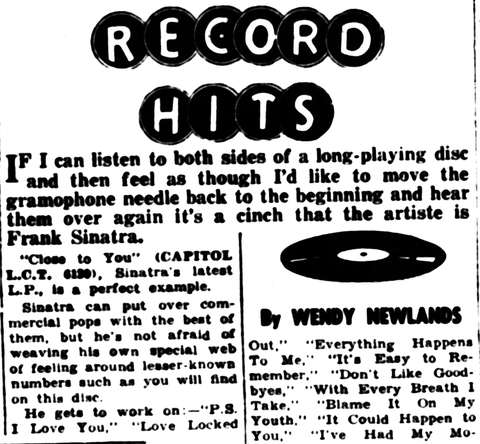
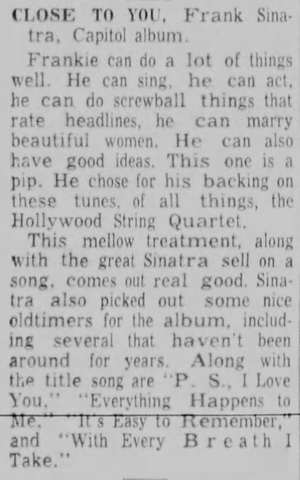
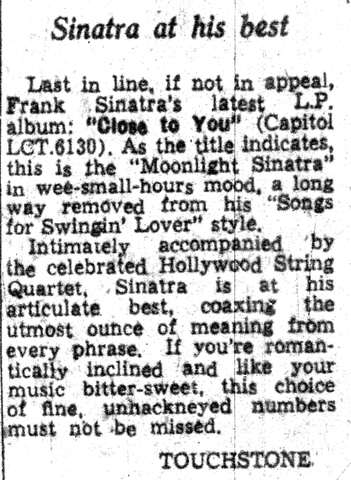
March 9 - THIS DATE IN SINATRA HISTORY
Flagged for reviewFrom: "scott@falseducks.com" <scott@falseducks.com> | Received: 2026-03-09
Editorial note: parsed as a “Film” entry for 1955, but no existing entry was found to reconcile it against. This may be a genuinely new item, or a fragment split off from a longer post (e.g. a source citation date misread as a new entry). Recommend manual placement.
. He negotiated a tremendous deal with the studio before agreeing
to star in "Can-Can." Frank received up front $200,000 and 25% of the
gross earnings. This was unheard of in 1959. A clever studio accountant
could easily make a net profit disappear. But the gross was the gross.
20th Century wanted Marilyn Monroe to play Simon, but Frank insisted on
Shirley MacLaine. Filming got underway in early September
of 1959. The budget was $6,000,000. It became apparent very early in the
filming that Frank and Shirley were badly miscast. Whereas the two Frenchmen ,
Maurice Chevalier and Louis Jordan, fit into the story splendidly. On 10-13-59, Sinatra
and Chevalier recorded "I Love Paris." The recording is on the Capitol s/t album, but for
some insane reason it was deleted from the final cut.
The film was a wrap in early November. An elaborate opening took place at the Rivoli
Theatre, in N.Y.C, 3-9-60. There was one showing at 8:30 P.M and all seats were reserved.
The nation-wide release took place two days later. The reviews were not good. Prior to the release,
Variety estimated the movie would have a domestic gross of $10,000,000.
The actual take was $4.2 million. Time has not been good to the film.
On Rotten Tomatoes, "Can-Can" receives an audience score of 47%.
Capitol Records released the soundtrack album on April 4, 1960. The big selling point at the time
was Full Dimensional Stereo. A CD version from Capitol was issued in 1989. A
more recent version is available on the Hallmark label. The quality of that release is definitely inferior
to the Capitol original. The VHS was issued in April 1993 and the deluxe DVD in May of 2007.
The latter is a two-disc offering that is the wide-screen version. 20th filmed it in TODD-AO and
it is really the only way to watch it. The second disc offers a look at the famous Khrushev visit
to the "Can-Can" set on 9-19-59. Sinatra, Maclaine, Chevalier, Jordan did numbers
from the film. Nikita and Co were shocked at the very revealing outfits worn by the dancers and
would later issue a statement condemning western decadence. A laser disc copy was issued
in wide screen format in 1995. Excellent quality.
--Ed
Re: [sinatraphiles] March 9 - THIS DATE IN SINATRA HISTORY
Flagged for reviewFrom: Kenny Lucas <kennylucas589@gmail.com> | Received: 2026-03-11
Editorial note: parsed as a “Film” entry for 1955, but no existing entry was found to reconcile it against. This may be a genuinely new item, or a fragment split off from a longer post (e.g. a source citation date misread as a new entry). Recommend manual placement.
. He negotiated a tremendous deal with the studio before agreeing
to star in "Can-Can." Frank received up front $200,000 and 25% of the
gross earnings. This was unheard of in 1959. A clever studio accountant
could easily make a net profit disappear. But the gross was the gross.
20th Century wanted Marilyn Monroe to play Simon, but Frank insisted on
Shirley MacLaine. Filming got underway in early September
of 1959. The budget was $6,000,000. It became apparent very early in the
filming that Frank and Shirley were badly miscast. Whereas the two Frenchmen ,
Maurice Chevalier and Louis Jordan, fit into the story splendidly. On 10-13-59, Sinatra
and Chevalier recorded "I Love Paris." The recording is on the Capitol s/t album, but for
some insane reason it was deleted from the final cut.
The film was a wrap in early November. An elaborate opening took place at the Rivoli
Theatre, in N.Y.C, 3-9-60. There was one showing at 8:30 P.M and all seats were reserved.
The nation-wide release took place two days later. The reviews were not good. Prior to the release,
Variety estimated the movie would have a domestic gross of $10,000,000.
The actual take was $4.2 million. Time has not been good to the film.
On Rotten Tomatoes, "Can-Can" receives an audience score of 47%.
Capitol Records released the soundtrack album on April 4, 1960. The big selling point at the time
was Full Dimensional Stereo. A CD version from Capitol was issued in 1989. A
more recent version is available on the Hallmark label. The quality of that release is definitely inferior
to the Capitol original. The VHS was issued in April 1993 and the deluxe DVD in May of 2007.
The latter is a two-disc offering that is the wide-screen version. 20th filmed it in TODD-AO and
it is really the only way to watch it. The second disc offers a look at the famous Khrushev visit
to the "Can-Can" set on 9-19-59. Sinatra, Maclaine, Chevalier, Jordan did numbers
from the film. Nikita and Co were shocked at the very revealing outfits worn by the dancers and
would later issue a statement condemning western decadence. A laser disc copy was issued
in wide screen format in 1995. Excellent quality.
--Ed
March 24 - THIS DATE IN SINATRA HISTORY
Flagged for reviewFrom: scott@falseducks.com | Received: 2026-03-24
Editorial note: parsed as a “Concerts” entry for 1960, but no existing entry was found to reconcile it against. This may be a genuinely new item, or a fragment split off from a longer post (e.g. a source citation date misread as a new entry). Recommend manual placement.
Fontainebleau, Miami, Fla, (March 8 to March 27)
Also appearing: The Duquaines & Sacacas and his Latin America Orchestra
MARCH 25 - THIS DATE IN SINATRA HISTORY
Flagged for reviewFrom: scott@falseducks.com | Received: 2026-03-25
Editorial note: parsed as a “Concerts” entry for 1960, but no existing entry was found to reconcile it against. This may be a genuinely new item, or a fragment split off from a longer post (e.g. a source citation date misread as a new entry). Recommend manual placement.
Fontainebleau, Miami, Fla, (March 8 to March 27)
Also appearing: The Duquaines & Sacacas and his Latin America Orchestra
Last three nights ( 25 to 27 ) Dean, Sammy, Joey and
Peter joined Frank. First time "The Summit" played outside Vegas
March 26 - THIS DATE IN SINATRA HISTORY
Flagged for reviewFrom: scott@falseducks.com | Received: 2026-03-26
Editorial note: parsed as a “Concerts” entry for 1960, but no existing entry was found to reconcile it against. This may be a genuinely new item, or a fragment split off from a longer post (e.g. a source citation date misread as a new entry). Recommend manual placement.
Fontainebleau, Miami, Fla, (March 8 to March 27)
Also appearing: The Duquaines & Sacacas and his Latin America Orchestra
Last three nights ( 25 to 27 ) Dean, Sammy, Joey and
Peter joined Frank. First time "The Summit" played outside Vegas
MARCH 27 - THIS DATE IN SINATRA HISTORY
Flagged for reviewFrom: scott@falseducks.com | Received: 2026-03-27
Editorial note: parsed as a “Concerts” entry for 1960, but no existing entry was found to reconcile it against. This may be a genuinely new item, or a fragment split off from a longer post (e.g. a source citation date misread as a new entry). Recommend manual placement.
Fontainebleau, Miami, Fla, (March 8 to March 27)
Also appearing: The Duquaines & Sacacas and his Latin America Orchestra
Last three nights ( 25 to 27 ) Dean, Sammy, Joey and
Peter joined Frank. First time "The Summit" played outside Vegas
MARCH 27 - THIS DATE IN SINATRA HISTORY
Flagged for reviewFrom: scott@falseducks.com | Received: 2026-03-27
Editorial note: parsed as a “Concerts” entry for 1975, but no existing entry was found to reconcile it against. This may be a genuinely new item, or a fragment split off from a longer post (e.g. a source citation date misread as a new entry). Recommend manual placement.
Caesars Palace, Las Vegas, Nevada (March 20 – April 2)
Key Musicians: Gene Cherico (bass), Al Viola (guitar), Irv Cottler (drums), Charlie Turner (trumpet), Bill Miller (piano)
Nat Brandwynne Orchestra Conducted By: Don Costa
Opening Act: Sam Butera & The Witnesses featuring Sandy Williams
MARCH 28 - THIS DATE IN SINATRA HISTORY
Flagged for reviewFrom: Scott Henderson <scott@falseducks.com> | Received: 2026-03-28
Editorial note: parsed as a “Radio” entry for 1948, but no existing entry was found to reconcile it against. This may be a genuinely new item, or a fragment split off from a longer post (e.g. a source citation date misread as a new entry). Recommend manual placement.
"Fred Robbins" radio show over WINS-NYC
At the Copa, Sinatra was "crowned ‘the King of all Crooners’
MARCH 28 - THIS DATE IN SINATRA HISTORY
Flagged for reviewFrom: Scott Henderson <scott@falseducks.com> | Received: 2026-03-28
Editorial note: parsed as a “Television” entry for 1948, but no existing entry was found to reconcile it against. This may be a genuinely new item, or a fragment split off from a longer post (e.g. a source citation date misread as a new entry). Recommend manual placement.
N.Y. Heart Fund Brunch at the Monte Carlo
Ed Sullivan and Maggie McNellis were emcees
CBS Television 2:15 to 5pm
MARCH 28 - THIS DATE IN SINATRA HISTORY
Flagged for reviewFrom: Scott Henderson <scott@falseducks.com> | Received: 2026-03-28
Editorial note: parsed as a “Concerts” entry for 1948, but no existing entry was found to reconcile it against. This may be a genuinely new item, or a fragment split off from a longer post (e.g. a source citation date misread as a new entry). Recommend manual placement.
Monte Carlo, New York, NY
Easter Brunch and Millinery Fashion Show
Benefit for the New York Heart Fund
MARCH 28 - THIS DATE IN SINATRA HISTORY
Flagged for reviewFrom: Scott Henderson <scott@falseducks.com> | Received: 2026-03-28
Editorial note: parsed as a “Concerts” entry for 1975, but no existing entry was found to reconcile it against. This may be a genuinely new item, or a fragment split off from a longer post (e.g. a source citation date misread as a new entry). Recommend manual placement.
Caesars Palace, Las Vegas, Nevada (March 20 – April 2)
Key Musicians: Gene Cherico (bass), Al Viola (guitar), Irv Cottler
(drums), Charlie Turner (trumpet), Bill Miller (piano)
Nat Brandwynne Orchestra Conducted By: Don Costa
Opening Act: Sam Butera & The Witnesses featuring Sandy
Williams.
MARCH 29 - THIS DATE IN SINATRA HISTORY
Flagged for reviewFrom: Scott Henderson <scott@falseducks.com> | Received: 2026-03-29
Editorial note: parsed as a “Concerts” entry for 1956, but no existing entry was found to reconcile it against. This may be a genuinely new item, or a fragment split off from a longer post (e.g. a source citation date misread as a new entry). Recommend manual placement.
Sands, Las Vegas (March 29-April 3)
MARCH 29 - THIS DATE IN SINATRA HISTORY
Flagged for reviewFrom: Scott Henderson <scott@falseducks.com> | Received: 2026-03-29
Editorial note: parsed as a “Concerts” entry for 1975, but no existing entry was found to reconcile it against. This may be a genuinely new item, or a fragment split off from a longer post (e.g. a source citation date misread as a new entry). Recommend manual placement.
Caesars Palace, Las Vegas, Nevada (March 20 – April 2)
Key Musicians: Gene Cherico (bass), Al Viola (guitar), Irv Cottler
(drums), Charlie Turner (trumpet), Bill Miller (piano)
Nat Brandwynne Orchestra Conducted By: Don Costa
Opening Act: Sam Butera & The Witnesses featuring Sandy
Williams.
March 30 - THIS DATE IN SINATRA HISTORY
Flagged for reviewFrom: scott@falseducks.com | Received: 2026-03-30
Editorial note: parsed as a “Concerts” entry for 1975, but no existing entry was found to reconcile it against. This may be a genuinely new item, or a fragment split off from a longer post (e.g. a source citation date misread as a new entry). Recommend manual placement.
Caesars Palace, Las Vegas, Nevada (March 20 – April 2)
Key Musicians: Gene Cherico (bass), Al Viola (guitar), Irv Cottler (drums), Charlie Turner (trumpet), Bill Miller (piano)
Nat Brandwynne Orchestra Conducted By: Don Costa
Opening Act: Sam Butera & The Witnesses featuring Sandy Williams.
March 30 - THIS DATE IN SINATRA HISTORY
Flagged for reviewFrom: scott@falseducks.com | Received: 2026-03-30
Editorial note: parsed as a “Concerts” entry for 1981, but no existing entry was found to reconcile it against. This may be a genuinely new item, or a fragment split off from a longer post (e.g. a source citation date misread as a new entry). Recommend manual placement.
Caesars Palace, Las Vegas, Nevada (March 26-April 1) (Camceled)
Orchestra Conducted By: Vincent Falcone, jr.
Ed O'Brien:
The last three days of this engagement were canceled due to the Reagan assassination attempt in Washington, D.C.
MARCH 31 - THIS DATE IN SINATRA HISTORY
Flagged for reviewFrom: scott@falseducks.com | Received: 2026-03-31
Editorial note: parsed as a “Concerts” entry for 1975, but no existing entry was found to reconcile it against. This may be a genuinely new item, or a fragment split off from a longer post (e.g. a source citation date misread as a new entry). Recommend manual placement.
Caesars Palace, Las Vegas, Nevada (March 20 – April 2)
Key Musicians: Gene Cherico (bass), Al Viola (guitar), Irv Cottler (drums), Charlie Turner (trumpet), Bill Miller (piano)
Nat Brandwynne Orchestra Conducted By: Don Costa
Opening Act: Sam Butera & The Witnesses featuring Sandy Williams.
APRIL 18 THIS DATE IN SINATRA HISTORY
Flagged for reviewFrom: Scott Henderson <scott@falseducks.com> | Received: 2026-04-18
Editorial note: parsed as a “Concerts” entry for 1945, but no existing entry was found to reconcile it against. This may be a genuinely new item, or a fragment split off from a longer post (e.g. a source citation date misread as a new entry). Recommend manual placement.
Shrine Auditorium, Los Angeles, CA
Democratic Tribute to FDR
Sinatra sang "Home On The Range"
]April 29 - THIS DATE IN SINATRA HISTORY
Flagged for reviewFrom: 'Ed O'Brien' via Sinatraphiles <sinatraphiles@googlegroups.com> | Received: 2026-04-30
Editorial note: parsed as a “Studio” entry for 1942, but no existing entry was found to reconcile it against. This may be a genuinely new item, or a fragment split off from a longer post (e.g. a source citation date misread as a new entry). Recommend manual placement.
"Ship Ahoy" (U.S. Release: April 29, 1942)
Starring: Eleanor Powell, Red Skelton, Bert Lahr, Virginia O'Brien, Tommy Dorsey and His Orchestra with Frank Sinatra
Produced by: Jack Cummings
Directed by: Edward Buzzell
Excerpt from Variety review
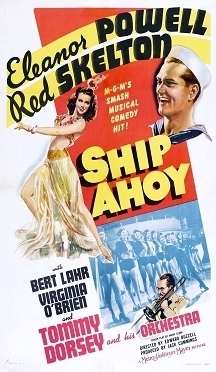
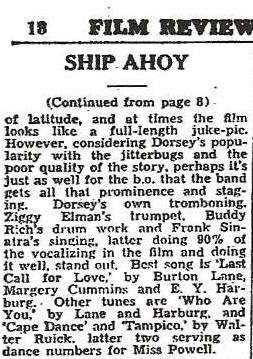
Re: [sinatraphiles] MAY 1 - THIS DATE IN SINATRA HISTORY
Flagged for reviewFrom: 'Ed O'Brien' via Sinatraphiles <sinatraphiles@googlegroups.com> | Received: 2026-05-08
Editorial note: parsed as a “Studio” entry for 1947, but no existing entry was found to reconcile it against. This may be a genuinely new item, or a fragment split off from a longer post (e.g. a source citation date misread as a new entry). Recommend manual placement.
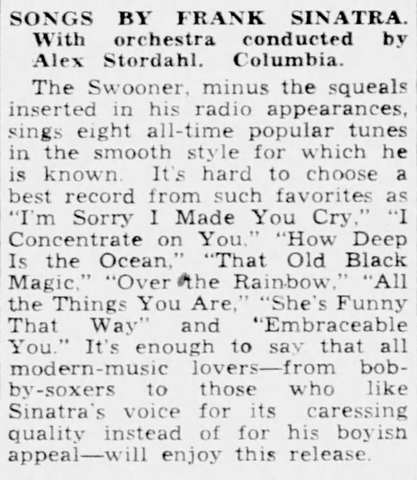
Re: [sinatraphiles] MAY 6 - THIS DATE IN SINATRA HISTORY
Flagged for reviewFrom: 'Ed O'Brien' via Sinatraphiles <sinatraphiles@googlegroups.com> | Received: 2026-05-09
Editorial note: parsed as a “Studio” entry for 1977, but no existing entry was found to reconcile it against. This may be a genuinely new item, or a fragment split off from a longer post (e.g. a source citation date misread as a new entry). Recommend manual placement.
Latin Casino, Cherry Hill, New Jersey
Orchestra Conducted By: Bill Miller
O.A, Pat Henry
note: According to this ad, Sinatra played 15 shows during this engagement. He was dark on Monday(2nd). He did two shows a night on consecutive weekends and one show on Tues, Wed and Thurs. But an offer than ran in the papers, five
days before he opened, refutes that claim:
May 2nd fell on a Monday.
Philadelphia Daily News
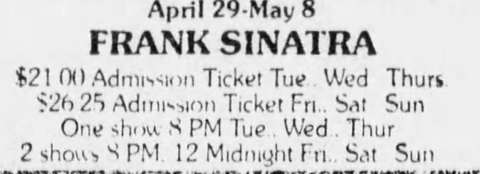
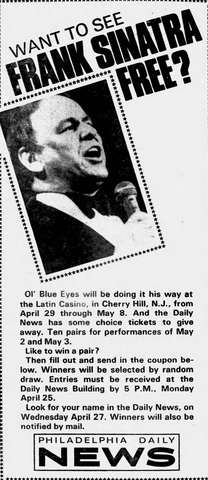
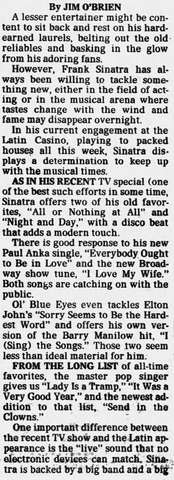
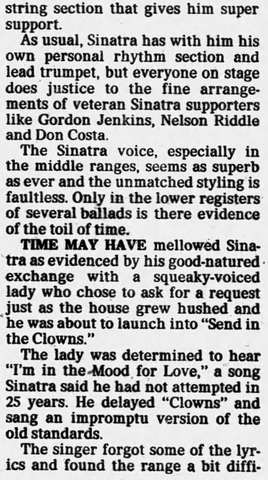
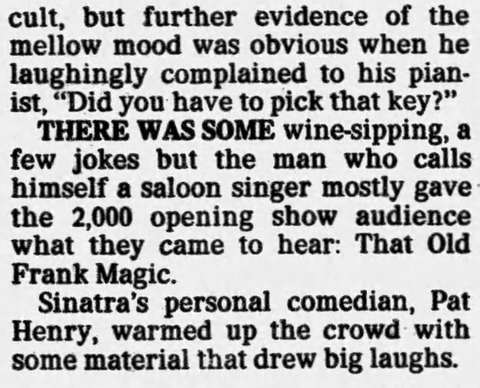
June 13 - THIS DATE IN SINATRA HISTORY
Flagged for reviewFrom: Scott Henderson <scott@falseducks.com> | Received: 2026-06-13
Editorial note: parsed as a “Concerts” entry for 1957, but no existing entry was found to reconcile it against. This may be a genuinely new item, or a fragment split off from a longer post (e.g. a source citation date misread as a new entry). Recommend manual placement.
and "Pal Joey." Sinatra as the lovable heel, Joey Evens, hustling for show
business and romantic success. Sinatra electrifies "The Lady Is A Tramp" with his
own inimitable brand of flip humor.
But Sinatra isn't through. He will end his farewell appearance his way..
"I've built my career," he say softly, "on saloon songs," and he slips into "Angel Eyes."
Lonely words and lonely notes. Darkness, a pin point spot.. Sinatra in silhouette. Sinatra
and loneliness. Sinatra with perspective, which could well be the real man.
Midway through the number he lights a cigarette. Smoke encircles, protects him. Forty-
five minutes out front to say goodbye. Memories of 58 films,100 albums and nearly 1,500 recordings.
He comes to the last line of the song, "Excuse me while I . . . disappear." And he is gone.
Billboard
June 19, 1971
Brian Chearno:
I wanted to add a few things.. Henry Kissinger was in the audience at this event. He called it the most moving performance he had ever seen. Commenting that even the secret service men were crying. In discussions for the April 17, 1973 concert, Kissinger and Nixon thought it would be wonderful to sort of recreate that "farewell" event. Nixon came up with having it at the Kennedy Center and televised. The president felt the East Room was to small for big name entertainers. He also wanted performances no longer than 25 or 30 minutes for events held there.
The president tracked Sinatra down in Monte Carlo in July and talked of the idea. Nixon mentioned the Kennedy Center or the East Room, Sinatra opted for the East Room. It's funny but I think Nixon thought he was talking to the more powerful man. Nervous, back slapping and thoroughly agreeably to whatever Sinatra said. Very strange phone call from what is supposed to be the most powerful person in the world.
Mike Agron:
I was able to attend the LA Retirement with my girlfriend, and was lucky to grab 2 seats in the upper balcony of the Music Center They cost $25 each which was a lot of money in '71. The roster of artists was incredible from Cary Grant, Jack Benny, to Barbra Streisand, etc. They started in the Music Center and then went across the property to play the same set at the Ahmanson Theater. As Streisand finished her set, Roz Russell came on and then introduced him. The Music Center set was shorter than the Ahmanson venue, maybe 8 or so songs. I'll never forget how he finished singing My Way, we all thought that was the end of the show, and then he slid into That's Life, and closed with Angel Eyes, and walked off the stage to thunderous applause. All of old Hollywood was there. I was so glad to have been there too.
JULY 17 THIS DATE IN SINATRA HISTORY
Flagged for reviewFrom: 'Ed O'Brien' via Sinatraphiles <sinatraphiles@googlegroups.com> | Received: 2026-06-19
Editorial note: parsed as a “Studio” entry for 1942, but no existing entry was found to reconcile it against. This may be a genuinely new item, or a fragment split off from a longer post (e.g. a source citation date misread as a new entry). Recommend manual placement.
New York City
BS075282 In The Blue Of Evening
(T. Adair/A. D'Artega)
Shapiro, Berstein & Co. (ASCAP)
Arranged by Axel Stordahl
-1 (2:54) CD: 07863 66353-2 "The Song Is You" 5CD set Vol 4
CD: RCA 8554-2-R
LP: SD 1000
78: 20-1530
78: 27947
note: session was done in Studio #2. After Frank laid down :"In The
Blue of Evening" two Dorsey tunes were recorded:"Sleepy Lagoon"
and ",Melody." Session ran from 1:30 p.m. to 4:45 p.m.with full orchestra
RCA would release this recording in late May of 1943. It would reach #1
and remain there for three weeks. Song would chart for 16 weeks.
BS075285 Dig Down Deep w/The Pied Pipers
(W. Hirsch/G. Marks/S. Marco)
Embassy Music Corp. (BMI)
-1 (2:06) CD: 07863 66353-2 "The Song Is You" 5CD set Vol 4
LP: SD 1000
78: 20-1539
note session - minus strings - took half-an-hour - 4:45 p.m. to 5:15 p.m.
Sy Oliver arranged.
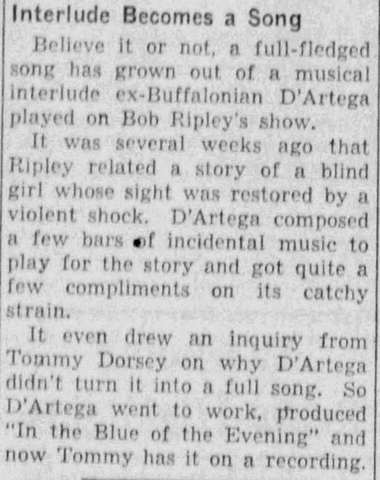
JULY 17 THIS DATE IN SINATRA HISTORY
Flagged for reviewFrom: 'Ed O'Brien' via Sinatraphiles <sinatraphiles@googlegroups.com> | Received: 2026-06-19
Editorial note: parsed as a “Studio” entry for 1943, but no existing entry was found to reconcile it against. This may be a genuinely new item, or a fragment split off from a longer post (e.g. a source citation date misread as a new entry). Recommend manual placement.
July 13 - THIS DATE IN SINATRA HISTORY
Flagged for reviewFrom: Scott Henderson <scott@falseducks.com> | Received: 2026-07-13
Editorial note: parsed as a “Studio” entry for 1965, but no existing entry was found to reconcile it against. This may be a genuinely new item, or a fragment split off from a longer post (e.g. a source citation date misread as a new entry). Recommend manual placement.
Frank's recording career got underway 84 years ago today.
On that Thursday afternoon, so long ago now, the Harry James
Band entered the Brunswick Recording Studio, 550 Fifth Ave,
in N.Y.C. The boy vocalist in the band would earn an additional
$50.00 for his efforts. That is what Harry James paid him for
the two recordings..
The Make Believe Ballroom, WNEW A.M., had released a poll
showing that the James contingent was the eighth most popular
band in the greater New York area. Harry and Co. received a
lot of radio attention and that evening was no exception. At midnight
WOR broadcast the James band live from the Roseland Ballroom.
Frank could be heard singing "I Poured My Heart Into A Song"
On
the 7/15 broadcast, he sang the two songs recorded on 7-13-39.
According to Variety, the band played the Paramount before jumping
over to the Roseland for an extended stay. WOR, CBS, WNEW and
other radio stations would broadcast this exciting new band throughout
the summer of 1939. They would be heard from the Steel Pier, in Atlantic
City, the World's Fair and Roseland in N.Y.C.
In August of 39, James and Sinatra decided to try out a new song on the
radio broadcasts before making a recording. The song was "All Or Nothing
At All." According to Billboard the song was released in June of 1940 and
sold 16,000 copies. The re-release in June 1943 sold well over a million
units..
I am indebted to Variety, Peter Levinson, NYT
and Billboard.
Ed
JULY 13, 1939
Flagged for reviewFrom: 'Ed O'Brien' via Sinatraphiles <sinatraphiles@googlegroups.com> | Received: 2026-07-15
Editorial note: parsed as a “Studio” entry for 1992, but no existing entry was found to reconcile it against. This may be a genuinely new item, or a fragment split off from a longer post (e.g. a source citation date misread as a new entry). Recommend manual placement.
TEST PRESSING
sinatraphiles] July 23 - THIS DATE IN SINATRA HISTORY
Flagged for reviewFrom: scott@falseducks.com | Received: 2026-07-24
Editorial note: parsed as a “Radio” entry for 1941, but no existing entry was found to reconcile it against. This may be a genuinely new item, or a fragment split off from a longer post (e.g. a source citation date misread as a new entry). Recommend manual placement.
Live Remote from the Cavalier Beach Club, Cavalier Hotel, Virginia Beach, Virginia Tommy Dorsey & His Orchestra with Frank Sinatra
WTAR 11:30pm
Note: Dorsey would broadcast from the Cavalier Beach Club on July 21st and July 23rd.
Television
NONE
[image referenced in source but could not be recovered]
July 28 - THIS DATE IN SINATRA HISTORY
Flagged for reviewFrom: scott@falseducks.com | Received: 2026-07-28
Editorial note: parsed as a “Television” entry for 1984, but no existing entry was found to reconcile it against. This may be a genuinely new item, or a fragment split off from a longer post (e.g. a source citation date misread as a new entry). Recommend manual placement.
MTV Premiere of music video for "L.A. Is My Lady"
August 1 - THIS DATE IN SINATRA HISTORY
Flagged for reviewFrom: Scott Henderson <scott@falseducks.com> | Received: 2026-08-01
Editorial note: parsed as a “Television” entry for 1976, but no existing entry was found to reconcile it against. This may be a genuinely new item, or a fragment split off from a longer post (e.g. a source citation date misread as a new entry). Recommend manual placement.
Repeat Airing of 'John Denver and Friend'
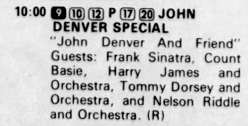
August 3 - THIS DATE IN SINATRA HISTORY
Flagged for reviewFrom: Scott Henderson <scott@falseducks.com> | Received: 2026-08-03
Editorial note: parsed as a “Concerts” entry for 1960, but no existing entry was found to reconcile it against. This may be a genuinely new item, or a fragment split off from a longer post (e.g. a source citation date misread as a new entry). Recommend manual placement.
Copa Room, Sands Hotel, Las Vegas, NV
Frank, Sammy, Joey Bishop, Peter Lawford, and Buddy Lester joined Dean Martin on stage.
August 11 - THIS DATE IN SINATRA HISTORY
Flagged for reviewFrom: scott@falseducks.com | Received: 2026-08-11
Editorial note: parsed as a “Concerts” entry for 1960, but no existing entry was found to reconcile it against. This may be a genuinely new item, or a fragment split off from a longer post (e.g. a source citation date misread as a new entry). Recommend manual placement.
Cal-Neva Lodge, Nevada (August 8 - 17)
Frank Sinatra, Matty Malneck and His Orchestra
O.A.: Buddy Lester
August 16 - THIS DATE IN SINATRA HISTORY
Flagged for reviewFrom: Scott Henderson <scott@falseducks.com> | Received: 2026-08-16
Editorial note: parsed as a “Concerts” entry for 1960, but no existing entry was found to reconcile it against. This may be a genuinely new item, or a fragment split off from a longer post (e.g. a source citation date misread as a new entry). Recommend manual placement.
Cal-Neva Lodge, Nevada (August 8 - 17)
Frank Sinatra, Matty Malneck and His Orchestra
O.A.: Buddy Lester
August 17 - THIS DATE IN SINATRA HISTORY
Flagged for reviewFrom: scott@falseducks.com | Received: 2026-08-17
Editorial note: parsed as a “Television” entry for 1973, but no existing entry was found to reconcile it against. This may be a genuinely new item, or a fragment split off from a longer post (e.g. a source citation date misread as a new entry). Recommend manual placement.
Rehearsal for "Ol' Blue Eyes Is Back' TV special
Show would be taped on 9-20-73
August 17 - THIS DATE IN SINATRA HISTORY
Flagged for reviewFrom: scott@falseducks.com | Received: 2026-08-17
Editorial note: parsed as a “Concerts” entry for 1960, but no existing entry was found to reconcile it against. This may be a genuinely new item, or a fragment split off from a longer post (e.g. a source citation date misread as a new entry). Recommend manual placement.
Cal-Neva Lodge, Nevada (August 8 - 17)
Frank Sinatra, Matty Malneck and His Orchestra
O.A.: Buddy Lester
A Corporate Lawyer Passes On The Dorsey Case
Undated materialFrom: Nancy Sinatra, "Frank Sinatra, My Father" (1985).
Manie Sacks first brought Sinatra's contract dispute to attorney Harold Medina -- later a famous federal judge -- who admitted the tangled management deal wasn't really his area of expertise.
Context: A Corporate Lawyer Passes On The Dorsey Case
Date as given in source: undated
Date as given in source could not be resolved to a specific calendar day for the main chronology; routed to Appendix as undated material.
A Chipped Elbow Kept Quiet
Undated materialFrom: Nancy Sinatra, "Frank Sinatra, My Father" (1985).
After Sinatra chipped his elbow filming a scene, he and Nancy Sr. tiptoed in to kiss a young Nancy goodnight with his arm bandaged; overhearing him whisper that she hadn't noticed, Nancy cried herself to sleep without ever asking what happened.
Context: A Chipped Elbow Kept Quiet
Date as given in source: undated
Date as given in source could not be resolved to a specific calendar day for the main chronology; routed to Appendix as undated material.
A Candid Photo of Ray Charles and Sinatra
Undated materialFrom: Nancy Sinatra, "Frank Sinatra, My Father" (1985).
A photo taken during a studio break, showing Ray Charles visiting Frank between sessions, ran in a music trade magazine captioned as representing the state of the recording industry.
Context: A Candid Photo of Ray Charles and Sinatra
Date as given in source: undated
Date as given in source could not be resolved to a specific calendar day for the main chronology; routed to Appendix as undated material.
A Campus Tour Against Prejudice
Undated materialFrom: Nancy Sinatra, "Frank Sinatra, My Father" (1985).
With CBS chief William Paley's help, Sinatra toured college campuses that had experienced racial or religious incidents, urging students against intolerance, and pointedly changed a lyric in "Ol' Man River" to remove a racial slur.
Context: A Campus Tour Against Prejudice
Date as given in source: undated
Date as given in source could not be resolved to a specific calendar day for the main chronology; routed to Appendix as undated material.
A Final Dinner and a Lesson in Loyalty
Undated materialFrom: Charles Pignone, "Frank Sinatra 100" (2015).
Not long before Sinatra's death, Bennett had a private dinner with him at his home, during which Sinatra said loyalty was the one thing he truly believed in.
Context: A Final Dinner and a Lesson in Loyalty
Date as given in source: undated
Date as given in source could not be resolved to a specific calendar day for the main chronology; routed to Appendix as undated material.
A Description of Sinatra's Loyalty
Undated materialFrom: Charles Pignone, "Frank Sinatra 100" (2015).
An unnamed speaker recalled Sinatra as a man without a middle ground, capable of loving someone unconditionally or, if crossed, turning fiercely against them.
Context: A Description of Sinatra's Loyalty
Date as given in source: undated
Date as given in source could not be resolved to a specific calendar day for the main chronology; routed to Appendix as undated material.
A Flawless Chicago Show
Undated materialFrom: Tina Sinatra, "My Father's Daughter: A Memoir" (2000).
According to Nancy, once his medication schedule was adjusted, Frank delivered a strong show in St. Louis and then, in Chicago, performed flawlessly without needing the teleprompter, drawing an ecstatic audience response.
Context: A Flawless Chicago Show
Date as given in source: undated
Date as given in source could not be resolved to a specific calendar day for the main chronology; routed to Appendix as undated material.
A New Will Favoring Barbara
Undated materialFrom: Tina Sinatra, "My Father's Daughter: A Memoir" (2000).
Barbara ultimately pursued a new will designed to remove Tina as executor and consolidate her own gains, a document that required a credible attorney's involvement to withstand any future challenge.
Context: A New Will Favoring Barbara
Date as given in source: undated
Date as given in source could not be resolved to a specific calendar day for the main chronology; routed to Appendix as undated material.
A Thankful Reunion Thanksgiving
Undated materialFrom: Tina Sinatra, "My Father's Daughter: A Memoir" (2000).
The family gathered for what Tina considered their most grateful Thanksgiving ever. Frank walked to the table unassisted, clean-shaven and clear-headed, visibly moved to have his children and grandchildren together again after so long.
Context: A Thankful Reunion Thanksgiving
Date as given in source: That Thanksgiving
Date as given in source could not be resolved to a specific calendar day for the main chronology; routed to Appendix as undated material.
A Winning Night at the Dice Table
Undated materialFrom: Nancy Sinatra, "Frank Sinatra, My Father" (1985).
Sammy Davis Jr. remembered Sinatra inviting him to shoot dice for him at a private Hollywood game, winning roughly twelve thousand dollars, giving Sammy a cut, and having his driver take him safely home.
Context: A Winning Night at the Dice Table
Date as given in source: undated
Date as given in source could not be resolved to a specific calendar day for the main chronology; routed to Appendix as undated material.
A Wartime Bond Rally On Film
Undated materialFrom: Nancy Sinatra, "Frank Sinatra, My Father" (1985).
Sinatra appeared in the U.S. Treasury short "The All Star Bond Rally," singing alongside stars like Bing Crosby, Bob Hope, and Betty Grable to promote war bond sales.
Context: A Wartime Bond Rally On Film
Date as given in source: undated
Date as given in source could not be resolved to a specific calendar day for the main chronology; routed to Appendix as undated material.
A Vegas Christmas Show
Undated materialFrom: Nancy Sinatra, "Frank Sinatra, My Father" (1985).
After an eight o'clock Christmas night show in Las Vegas, Nancy recalled her parents' joyful faces as they sang "Jingle Bells" together on stage as one of her most vivid memories.
Context: A Vegas Christmas Show
Date as given in source: undated
Date as given in source could not be resolved to a specific calendar day for the main chronology; routed to Appendix as undated material.
A Train-Set Fight Before Dad's Visit
Undated materialFrom: Nancy Sinatra, "Frank Sinatra, My Father" (1985).
Waiting dressed up for a visit from their father, Nancy and her brother got into a fight over their toy train that left both of them bloodied just as the doorbell rang.
Context: A Train-Set Fight Before Dad's Visit
Date as given in source: undated
Date as given in source could not be resolved to a specific calendar day for the main chronology; routed to Appendix as undated material.
A Tense Weekend in Palm Springs
Undated materialFrom: Nancy Sinatra, "Frank Sinatra, My Father" (1985).
Artist Paul Clemens recalled a strained Palm Springs weekend with Frank and Ava, where Ava abruptly stormed off from the Racquet Club and Frank later attempted a late-night flight home to Los Angeles, only to be turned back because the fogged-in airport was closed.
Context: A Tense Weekend in Palm Springs
Date as given in source: undated
Date as given in source could not be resolved to a specific calendar day for the main chronology; routed to Appendix as undated material.
A Tearful Drive Back From Palm Springs
Undated materialFrom: Nancy Sinatra, "Frank Sinatra, My Father" (1985).
When young Nancy cried inconsolably at being sent home early from a Palm Springs visit, Sinatra relented and sent her mother along too; on the drive back, Nancy Sr. broke down crying behind dark glasses, which shocked her daughter.
Context: A Tearful Drive Back From Palm Springs
Date as given in source: undated
Date as given in source could not be resolved to a specific calendar day for the main chronology; routed to Appendix as undated material.
A Table Flipped on an Aggressive Paparazzo
Undated materialFrom: Nancy Sinatra, "Frank Sinatra, My Father" (1985).
Bakalyan recalled that while Roman paparazzi could be maddening, Frank never physically struck one himself, though Bakalyan once flipped a table onto a photographer, an incident later captured in a magazine photo.
Context: A Table Flipped on an Aggressive Paparazzo
Date as given in source: undated
Date as given in source could not be resolved to a specific calendar day for the main chronology; routed to Appendix as undated material.
A Startled Fan At The Museum Of Modern Art
Undated materialFrom: Nancy Sinatra, "Frank Sinatra, My Father" (1985).
Newly famous and visiting the Museum of Modern Art for the first time, Sinatra overheard a girl whisper that she thought she'd spotted him, and her unimpressed mother ask what he was doing in a place like that; embarrassed, he left.
Context: A Startled Fan At The Museum Of Modern Art
Date as given in source: undated
Date as given in source could not be resolved to a specific calendar day for the main chronology; routed to Appendix as undated material.
A Snowbound High School Concert
Undated materialFrom: Nancy Sinatra, "Frank Sinatra, My Father" (1985).
Sinatra recalled, more than twenty years after the fact, playing a snowed-in high school date where the band kept performing until four in the morning rather than disappoint the waiting kids.
Context: A Snowbound High School Concert
Date as given in source: undated
Date as given in source could not be resolved to a specific calendar day for the main chronology; routed to Appendix as undated material.
A Shattered Antique Clock During Charades
Undated materialFrom: Nancy Sinatra, "Frank Sinatra, My Father" (1985).
During a game of charades in Palm Springs, Sinatra's date Barbara Marx called "Time's up" using a small antique clock as proof; when he disputed it, he grabbed the clock and hurled it across the room, shattering it against a door, before the group nervously guessed the title he'd been acting out.
Context: A Shattered Antique Clock During Charades
Date as given in source: the 1970s
Date as given in source could not be resolved to a specific calendar day for the main chronology; routed to Appendix as undated material.
A Run Of Notable Mid-Forties Recordings
Undated materialFrom: Nancy Sinatra, "Frank Sinatra, My Father" (1985).
Among Sinatra's notable 78 rpm sides from 1944 and 1945 were "Embraceable You," "Put Your Dreams Away" (his eventual theme song), "The House I Live In," and the two-part "Soliloquy" from "Carousel," which Nancy called her favorite.
Context: A Run Of Notable Mid-Forties Recordings
Date as given in source: '44 and '45
Date as given in source could not be resolved to a specific calendar day for the main chronology; routed to Appendix as undated material.
A Rare Snowfall Shared At Midnight
Undated materialFrom: Nancy Sinatra, "Frank Sinatra, My Father" (1985).
One night near Christmas, Sinatra woke his young daughter to show her a rare Los Angeles snowfall from the deck.
Context: A Rare Snowfall Shared At Midnight
Date as given in source: undated
Date as given in source could not be resolved to a specific calendar day for the main chronology; routed to Appendix as undated material.
A Quiet Visit at the Waldorf
Undated materialFrom: Nancy Sinatra, "Frank Sinatra, My Father" (1985).
Leaving after a visit to her father in New York, Nancy crept into his bedroom at the Waldorf and found him asleep like a boy, snow drifting past the window, as he neared his seventieth birthday.
Context: A Quiet Visit at the Waldorf
Date as given in source: January '85
Date as given in source could not be resolved to a specific calendar day for the main chronology; routed to Appendix as undated material.
A Prison Chaplain's Letter Angers Sinatra
Undated materialFrom: Nancy Sinatra, "Frank Sinatra, My Father" (1985).
Months after sentencing, a prison chaplain wrote asking the Sinatras to forgive two of the kidnappers, describing the ordeal as causing the family "perhaps some embarrassment." Frank's pointed written reply objected to the phrasing and rejected any suggestion the case had been a personal grudge rather than a crime against the public.
Context: A Prison Chaplain's Letter Angers Sinatra
Date as given in source: undated
Date as given in source could not be resolved to a specific calendar day for the main chronology; routed to Appendix as undated material.
A Palm Springs Retreat With A Piano-Shaped Pool
Undated materialFrom: Nancy Sinatra, "Frank Sinatra, My Father" (1985).
The family built a Palm Springs house with a grand-piano-shaped swimming pool, where Sinatra taught his son to swim and drove the kids around in an army jeep.
Context: A Palm Springs Retreat With A Piano-Shaped Pool
Date as given in source: undated
Date as given in source could not be resolved to a specific calendar day for the main chronology; routed to Appendix as undated material.
A Novelty Duet With Dagmar
Undated materialFrom: Nancy Sinatra, "Frank Sinatra, My Father" (1985).
At Mitch Miller's direction, Sinatra recorded the novelty song "Mama Will Bark" with statuesque comic actress Dagmar, later joking that the record's only real audience was dogs.
Context: A Novelty Duet With Dagmar
Date as given in source: undated
Date as given in source could not be resolved to a specific calendar day for the main chronology; routed to Appendix as undated material.
A New, Tougher Sinatra Sound
Undated materialFrom: Nancy Sinatra, "Frank Sinatra, My Father" (1985).
Nelson Riddle's arrangements, starting with "I've Got the World on a String" and "Don't Worry 'Bout Me," gave Sinatra's voice a more sophisticated, less purely silky quality than his 1940s crooning.
Context: A New, Tougher Sinatra Sound
Date as given in source: undated
Date as given in source could not be resolved to a specific calendar day for the main chronology; routed to Appendix as undated material.
A Lucrative Golden Nugget Contract
Undated materialFrom: Nancy Sinatra, "Frank Sinatra, My Father" (1985).
Around this period Sinatra was about to sign a lucrative contract to perform at the Golden Nugget properties in Las Vegas and Atlantic City.
Context: A Lucrative Golden Nugget Contract
Date as given in source: the early 1980s
Date as given in source could not be resolved to a specific calendar day for the main chronology; routed to Appendix as undated material.
A Lavish Atwater Kent Children's Party
Undated materialFrom: Nancy Sinatra, "Frank Sinatra, My Father" (1985).
Nancy recalled an extravagantly staged Hollywood children's party at Atwater Kent's home, complete with a merry-go-round, Ferris wheel, clowns, and elephants.
Context: A Lavish Atwater Kent Children's Party
Date as given in source: undated
Date as given in source could not be resolved to a specific calendar day for the main chronology; routed to Appendix as undated material.
A Homemade Cinderella For The March Of Dimes
Undated materialFrom: Nancy Sinatra, "Frank Sinatra, My Father" (1985).
Nancy and her friends staged a backyard production of Cinderella to raise money for the March of Dimes, but the only ticket buyers turned out to be their own famous mothers, including Jane Wyman and Anne Shirley.
Context: A Homemade Cinderella For The March Of Dimes
Date as given in source: undated
Date as given in source could not be resolved to a specific calendar day for the main chronology; routed to Appendix as undated material.
A Press Agent Stages Fake Swooning Fans, Then Doesn't Need To
Undated materialFrom: Nancy Sinatra, Frank Sinatra: An American Legend, 1995.
Nancy Sinatra: According to Paramount Theatre manager Bob Weitman, Frank's press agent George Evans once hired teenage girls to swoon and faint at his shows as a publicity stunt, thinking it would make good copy. The stunt turned out unnecessary, since genuine fan hysteria had already ignited entirely on its own.
Context: A Press Agent Stages Fake Swooning Fans, Then Doesn't Need To
Date as given in source: undated
Date as given in source could not be resolved to a specific calendar day for the main chronology; routed to Appendix as undated material.
"A Nobody In Movies": Frank On Learning To Dance
Undated materialFrom: Nancy Sinatra, Frank Sinatra: An American Legend, 1995.
Nancy Sinatra: Reflecting on arriving at MGM as, in his own words, "just a crooner" who couldn't dance and felt less talented than his new colleagues, Frank credited Gene Kelly's patience and teaching for turning him into a screen performer, calling Kelly one of the reasons he became a star.
Context: "A Nobody In Movies": Frank On Learning To Dance
Date as given in source: undated
Date as given in source could not be resolved to a specific calendar day for the main chronology; routed to Appendix as undated material.
A Lonely Childhood, Alone After School
Undated materialFrom: Nancy Sinatra, Frank Sinatra: An American Legend, 1995.
Nancy Sinatra: Cousin John Tredy recalled that young Frank was often left to fend for himself since his parents worked constantly, and Frank remembered coming home from school to an empty house with nothing to eat, not from lack of money, but because his mother was always busy elsewhere. Frank later told his daughter that being an only child had been "very lonely."
Context: A Lonely Childhood, Alone After School
Date as given in source: undated, childhood in the 1920s
Date as given in source could not be resolved to a specific calendar day for the main chronology; routed to Appendix as undated material.
Adapting Mealtime and Wheelchair Routines
Undated materialFrom: Tina Sinatra, "My Father's Daughter: A Memoir" (2000).
As Frank's peripheral vision and coordination declined, the family adapted small routines to protect his dignity, such as giving him smaller glasses, pre-cutting his food, and describing plate positions by clock face. He still enjoyed a ceremonial glass of wine and cigarette on occasion, and used a special recliner nicknamed his "funny chair," though he preferred being physically helped up by a daughter.
Context: Adapting Mealtime and Wheelchair Routines
Date as given in source: undated
Date as given in source could not be resolved to a specific calendar day for the main chronology; routed to Appendix as undated material.
Agnew Invites Tina to Baltimore and the White House
Undated materialFrom: Tina Sinatra, "My Father's Daughter: A Memoir" (2000).
After the 1972 election, Ted Agnew invited Tina to a nonpartisan event in Baltimore and a White House visit, joking that he intended to win her over politically; on the same trip she was also hosted by Averell and Pam Harriman, reflecting how she moved comfortably across the political spectrum through family friendships.
Context: Agnew Invites Tina to Baltimore and the White House
Date as given in source: "Postelection"
Date as given in source could not be resolved to a specific calendar day for the main chronology; routed to Appendix as undated material.
Al Jolson's Cold Handshake
Undated materialFrom: Nancy Sinatra, "Frank Sinatra, My Father" (1985).
An eager young Sinatra once approached Al Jolson to shake his hand, only to have Jolson pull out a financial statement instead and ask if Sinatra thought he could match it, leaving him crushed.
Context: Al Jolson's Cold Handshake
Date as given in source: undated
Date as given in source could not be resolved to a specific calendar day for the main chronology; routed to Appendix as undated material.
Al Capp's "Hal Fascinatra"
Undated materialFrom: Nancy Sinatra, "Frank Sinatra, My Father" (1985).
Cartoonist Al Capp recalled nicknaming Sinatra "Hal Fascinatra" in print and being surprised by Frank's delighted reaction; Sinatra continued sending Capp champagne in restaurants even during his own broke years.
Context: Al Capp's "Hal Fascinatra"
Date as given in source: undated
Date as given in source could not be resolved to a specific calendar day for the main chronology; routed to Appendix as undated material.
Albert Maltz Blacklisted
Undated materialFrom: Tina Sinatra, "My Father's Daughter: A Memoir" (2000).
Two years after their collaboration, Maltz refused to cooperate with the House Committee on Un-American Activities, was blacklisted and briefly imprisoned, and relocated to Mexico as his film career stalled.
Context: Albert Maltz Blacklisted
Date as given in source: Two years later
Date as given in source could not be resolved to a specific calendar day for the main chronology; routed to Appendix as undated material.
All Nippon Airways Ad Campaign In Japan
Undated materialFrom: Charles Pignone, "Frank Sinatra 100" (2015).
Japan's All Nippon Airways featured Sinatra in an advertising campaign for its Tokyo-New York route, with his image appearing on billboards across Japan in the early 1990s, where he was said to be even more popular than in the United States.
Context: All Nippon Airways Ad Campaign In Japan
Date as given in source: early 1990s
Date as given in source could not be resolved to a specific calendar day for the main chronology; routed to Appendix as undated material.
Al Viola on Sinatra's Charity Generosity
Undated materialFrom: Charles Pignone, "Frank Sinatra 100" (2015).
Guitarist Al Viola recalled that Sinatra worked hard on his charity tours because proceeds went to children's causes, that he personally visited hospitals, and that he covered his band's costs out of his own pocket for countless benefits over the years.
Context: Al Viola on Sinatra's Charity Generosity
Date as given in source: undated
Date as given in source could not be resolved to a specific calendar day for the main chronology; routed to Appendix as undated material.
Amanda's "Pop-Pop Was There, and Then He Wasn't"
Undated materialFrom: Tina Sinatra, "My Father's Daughter: A Memoir" (2000).
After a benefit concert where Frank brought his granddaughters onstage, young Amanda cried at bedtime, telling Tina that her grandfather had been there and then suddenly gone - a moment that made Tina recognize the same feeling of loss she'd carried since childhood.
Context: Amanda's "Pop-Pop Was There, and Then He Wasn't"
Date as given in source: undated
Date as given in source could not be resolved to a specific calendar day for the main chronology; routed to Appendix as undated material.
An Early Lesson About Prejudice
Undated materialFrom: Nancy Sinatra, "Frank Sinatra, My Father" (1985).
When Nancy, then about eight, giggled at a magazine photo of Albert Einstein and remarked that he "looked so Jewish," her father reacted with rare, sharp anger, telling her firmly that nobody looks like anything -- a moment she never forgot.
Context: An Early Lesson About Prejudice
Date as given in source: when I was eight years old
Date as given in source could not be resolved to a specific calendar day for the main chronology; routed to Appendix as undated material.
An Annual Two-Hundred-Guest New Year's Party
Undated materialFrom: Nancy Sinatra, "Frank Sinatra, My Father" (1985).
The Sinatras hosted an annual New Year's party for two hundred guests featuring Hollywood entertainment and risque Sammy Cahn song parodies, while the children were shipped off to their grandparents'.
Context: An Annual Two-Hundred-Guest New Year's Party
Date as given in source: undated
Date as given in source could not be resolved to a specific calendar day for the main chronology; routed to Appendix as undated material.
An Uncomfortable Duets Recording Session
Undated materialFrom: Tina Sinatra, "My Father's Daughter: A Memoir" (2000).
Tina attended one Duets recording session and sensed, for the only time she could recall, that Frank was unhappy to see her; he seemed strained and frustrated with himself throughout the take.
Context: An Uncomfortable Duets Recording Session
Date as given in source: undated
Date as given in source could not be resolved to a specific calendar day for the main chronology; routed to Appendix as undated material.
An Unforgettable Fourth Of July Fireworks Mishap
Undated materialFrom: Nancy Sinatra, Frank Sinatra: An American Legend, 1995.
Nancy Sinatra: Hosting a lakeside Fourth of July for the whole neighborhood, Frank staged a fireworks show from a raft anchored mid-lake while his children cued "The Star-Spangled Banner" on a record player. Sparks from one pinwheel ignited an entire carton of fireworks at once, and Frank vanished in the resulting explosion before emerging from the water, still wearing his hat and a ruined new wristwatch.
Context: An Unforgettable Fourth Of July Fireworks Mishap
Date as given in source: undated, a Fourth of July in the mid-1940s
Date as given in source could not be resolved to a specific calendar day for the main chronology; routed to Appendix as undated material.
Anonymously Covering Lee Remick's Hotel Bill
Undated materialFrom: Nancy Sinatra, "Frank Sinatra, My Father" (1985).
Actress Lee Remick recalled that while she waited at the Beverly Hills Hotel for news of her injured then-husband, a TV director working with Sinatra, Frank quietly paid her entire hotel bill without her knowledge.
Context: Anonymously Covering Lee Remick's Hotel Bill
Date as given in source: undated
Date as given in source could not be resolved to a specific calendar day for the main chronology; routed to Appendix as undated material.
"Anti-swoon" mints offered to bobbysoxers outside the Paramount
Undated materialFrom: Rough Guide to Frank Sinatra (Rough guide 2.pdf)
A photo of bobbysoxers outside the Paramount Theatre, New York, in November 1945 carries the caption that Song Hits magazine offered the queuing fans "anti-swoon" mints.
Antivert Prescribed to Counter Elavil Side Effects
Undated materialFrom: Tina Sinatra, "My Father's Daughter: A Memoir" (2000).
Frank's antidepressant, Elavil, tended to kick in right before showtime, leaving him light-headed and disoriented in the wings. His doctors added a drug called Antivert to his regimen to counteract the dizziness before performances.
Context: Antivert Prescribed to Counter Elavil Side Effects
Date as given in source: undated
Date as given in source could not be resolved to a specific calendar day for the main chronology; routed to Appendix as undated material.
"Are You Okay, Smokey?"
Undated materialFrom: Nancy Sinatra, "Frank Sinatra, My Father" (1985).
Sammy Davis Jr. described Sinatra's shorthand way of checking in on troubled friends, a brief exchange like "Are you okay, Smokey?" that quietly signaled his support.
Context: "Are You Okay, Smokey?"
Date as given in source: undated
Date as given in source could not be resolved to a specific calendar day for the main chronology; routed to Appendix as undated material.
Ava Walks Out on Frank in Spain
Undated materialFrom: Tina Sinatra, "My Father's Daughter: A Memoir" (2000).
During one of their periodic post-divorce reunions, Ava abruptly left Frank at a restaurant in Spain; he remarked to friends that it wasn't the first time she'd walked out, but it would be the last.
Context: Ava Walks Out on Frank in Spain
Date as given in source: One encounter in the early sixties
Date as given in source could not be resolved to a specific calendar day for the main chronology; routed to Appendix as undated material.
Backing Out Of Nancy's Tonsillectomy
Undated materialFrom: Nancy Sinatra, "Frank Sinatra, My Father" (1985).
Sinatra later admitted that when he took young Nancy to the hospital for her tonsils and saw her frightened face, he couldn't go through with it and turned the errand over to her mother instead.
Context: Backing Out Of Nancy's Tonsillectomy
Date as given in source: undated
Date as given in source could not be resolved to a specific calendar day for the main chronology; routed to Appendix as undated material.
Axel Stordahl Sees A Turning Point
Undated materialFrom: Nancy Sinatra, "Frank Sinatra, My Father" (1985).
Arranger Axel Stordahl believed the intimate Bluebird sessions marked the moment Sinatra began seriously considering a solo career.
Context: Axel Stordahl Sees A Turning Point
Date as given in source: undated
Date as given in source could not be resolved to a specific calendar day for the main chronology; routed to Appendix as undated material.
Ava Gardner's Effortless Glamour
Undated materialFrom: Nancy Sinatra, "Frank Sinatra, My Father" (1985).
Nancy remembered Ava Gardner as strikingly beautiful and unpretentious -- diving into the Palm Springs pool, drying her hair with a quick towel-rub, and giving Nancy her first tube of lipstick, Tangee Natural.
Context: Ava Gardner's Effortless Glamour
Date as given in source: undated
Date as given in source could not be resolved to a specific calendar day for the main chronology; routed to Appendix as undated material.
Ava Fails to Meet Frank in Naples
Undated materialFrom: Nancy Sinatra, "Frank Sinatra, My Father" (1985).
Nancy suggests the true end of her parents' marriage may have come when her father flew to Naples for a concert expecting Ava to join him there, and she simply never showed.
Context: Ava Fails to Meet Frank in Naples
Date as given in source: undated
Date as given in source could not be resolved to a specific calendar day for the main chronology; routed to Appendix as undated material.
Barbara and Frank's Secret Engagement Revealed
Undated materialFrom: Tina Sinatra, "My Father's Daughter: A Memoir" (2000).
At Amanda's christening at Nancy's home, Frank arrived with Barbara sporting a new nose job and a large diamond ring, revealing to the stunned family that they were engaged. He then left early for a recording session, leaving Barbara to face the family's shock alone.
Context: Barbara and Frank's Secret Engagement Revealed
Date as given in source: "Two months later, in June"
Date as given in source could not be resolved to a specific calendar day for the main chronology; routed to Appendix as undated material.
Barbara Calls Frank a "Scared Little Girl"
Undated materialFrom: Tina Sinatra, "My Father's Daughter: A Memoir" (2000).
After an argument at Foothill in which Barbara accused Frank of overprotecting his children financially, Frank remarked quietly to Tony Oppedisano that, deep down, Barbara was really just a scared little girl.
Context: Barbara Calls Frank a "Scared Little Girl"
Date as given in source: undated
Date as given in source could not be resolved to a specific calendar day for the main chronology; routed to Appendix as undated material.
Barbara Defends the Elavil Regimen
Undated materialFrom: Tina Sinatra, "My Father's Daughter: A Memoir" (2000).
When Nancy and Tina raised concerns about the sedating antidepressant, Barbara insisted the medication was working perfectly and that the prescribing doctor agreed it was needed to level Frank's moods and protect his heart.
Context: Barbara Defends the Elavil Regimen
Date as given in source: undated
Date as given in source could not be resolved to a specific calendar day for the main chronology; routed to Appendix as undated material.
Barbara Dismisses Concerns About Frank's Late Mornings
Undated materialFrom: Tina Sinatra, "My Father's Daughter: A Memoir" (2000).
When Tina remarked on Frank sleeping later and later, Barbara claimed he wasn't like that when the children weren't around, a statement Tina knew to be false based on Jilly's earlier complaints about Frank's lethargy.
Context: Barbara Dismisses Concerns About Frank's Late Mornings
Date as given in source: undated
Date as given in source could not be resolved to a specific calendar day for the main chronology; routed to Appendix as undated material.
Barbara Hires Her Own Business Manager
Undated materialFrom: Tina Sinatra, "My Father's Daughter: A Memoir" (2000).
Barbara brought on her own business manager, Marshall Gelfand, prompting Tina to fear that Sonny Golden might eventually be pushed out just as Mickey Rudin had been.
Context: Barbara Hires Her Own Business Manager
Date as given in source: undated
Date as given in source could not be resolved to a specific calendar day for the main chronology; routed to Appendix as undated material.
Barbara Pushes Out Bob Finkelstein
Undated materialFrom: Tina Sinatra, "My Father's Daughter: A Memoir" (2000).
Displeased that Bob Finkelstein controlled Bristol, Sheffield, and the Somerset Trust and remained close to Tina, Barbara ensured he would no longer represent her husband, even though he and Barbara had once been friendly gin rummy and backgammon partners.
Context: Barbara Pushes Out Bob Finkelstein
Date as given in source: undated
Date as given in source could not be resolved to a specific calendar day for the main chronology; routed to Appendix as undated material.
Barbara Retains Her Divorce Lawyer After Reconciling
Undated materialFrom: Tina Sinatra, "My Father's Daughter: A Memoir" (2000).
Sometime after Frank and Barbara reconciled from a earlier separation, Tina learned from Sonny Golden that Barbara was still paying her divorce attorney, Arthur Crowley, out of Frank's account, which struck Tina as an ominous sign for the marriage.
Context: Barbara Retains Her Divorce Lawyer After Reconciling
Date as given in source: undated
Date as given in source could not be resolved to a specific calendar day for the main chronology; routed to Appendix as undated material.
Barbara Returns and Nancy Reagan Urges Frank to Leave Her
Undated materialFrom: Tina Sinatra, "My Father's Daughter: A Memoir" (2000).
Ten days into the separation, Barbara came back to Palm Springs. When Frank told Nancy Reagan by phone that he was waiting for Barbara to finish a massage before talking to her, Nancy Reagan told him bluntly that Barbara wasn't right for him and he should keep walking out the door. He reconciled with Barbara anyway, later appearing with her and Father Rooney at Caesars Palace in Las Vegas.
Context: Barbara Returns and Nancy Reagan Urges Frank to Leave Her
Date as given in source: "Ten days into the separation"
Date as given in source could not be resolved to a specific calendar day for the main chronology; routed to Appendix as undated material.
Barbara Screens Frank's Phone Calls
Undated materialFrom: Tina Sinatra, "My Father's Daughter: A Memoir" (2000).
Barbara would frequently pick up an extension line under the guise of a mistake, both disrupting Frank's calls and learning who was on the other end. Tina's mother resorted to using a private cell phone to reach Frank away from Barbara's interference.
Context: Barbara Screens Frank's Phone Calls
Date as given in source: undated
Date as given in source could not be resolved to a specific calendar day for the main chronology; routed to Appendix as undated material.
Barbara Sinatra Children's Center
Undated materialFrom: Tina Sinatra, "My Father's Daughter: A Memoir" (2000).
As Barbara grew increasingly occupied running the Barbara Sinatra Children's Center, a facility for abused children, she and Frank saw less of each other, their opposite daily schedules leaving them sharing an address more than a life.
Context: Barbara Sinatra Children's Center
Date as given in source: undated
Date as given in source could not be resolved to a specific calendar day for the main chronology; routed to Appendix as undated material.
Barbara Takes Over Frank's Home Office
Undated materialFrom: Tina Sinatra, "My Father's Daughter: A Memoir" (2000).
Frank's Palm Springs home office, which displayed his many awards and housed a twelve-car model train that circled overhead, was eventually taken over by Barbara and her personal secretaries.
Context: Barbara Takes Over Frank's Home Office
Date as given in source: undated
Date as given in source could not be resolved to a specific calendar day for the main chronology; routed to Appendix as undated material.
Barbara's Allowance Quintuples
Undated materialFrom: Tina Sinatra, "My Father's Daughter: A Memoir" (2000).
Over time, Barbara's annual allowance grew into the high six figures after Frank, weary of her complaints, told Sonny Golden to make sure she had enough so he wouldn't have to hear about it anymore.
Context: Barbara's Allowance Quintuples
Date as given in source: undated
Date as given in source could not be resolved to a specific calendar day for the main chronology; routed to Appendix as undated material.
Barbara's Candid Admission About Money
Undated materialFrom: Tina Sinatra, "My Father's Daughter: A Memoir" (2000).
A few months after the wedding, Barbara reportedly confided to a mutual friend that this time she had married for money, a comment Tina found strikingly candid given Barbara's history.
Context: Barbara's Candid Admission About Money
Date as given in source: undated
Date as given in source could not be resolved to a specific calendar day for the main chronology; routed to Appendix as undated material.
Barbara's Early Words of Compassion
Undated materialFrom: Tina Sinatra, "My Father's Daughter: A Memoir" (2000).
During Frank's convalescence, Barbara showed Tina glimpses of genuine empathy, warning her that losing a father was unlike anything else. Tina appreciated the sentiment even though it confirmed her worst fear.
Context: Barbara's Early Words of Compassion
Date as given in source: undated
Date as given in source could not be resolved to a specific calendar day for the main chronology; routed to Appendix as undated material.
Barbara's Modeling Career Under Mr. Blackwell
Undated materialFrom: Tina Sinatra, "My Father's Daughter: A Memoir" (2000).
After leaving Zeppo the first time, Barbara worked as a lead model for designer Mr. Blackwell, who later wrote in his memoir that beneath her soft exterior was a shrewdly calculating mind, and that she was determined to marry a wealthy man rather than build a career.
Context: Barbara's Modeling Career Under Mr. Blackwell
Date as given in source: undated
Date as given in source could not be resolved to a specific calendar day for the main chronology; routed to Appendix as undated material.
Barbara's Ongoing Push for More
Undated materialFrom: Tina Sinatra, "My Father's Daughter: A Memoir" (2000).
Barbara repeatedly pressed for greater control, unsuccessfully trying to get Frank to restructure Somerset, Bristol, and Sheffield, and later pushing for a cut when Sonny negotiated improved royalty deals with Columbia and RCA.
Context: Barbara's Ongoing Push for More
Date as given in source: undated
Date as given in source could not be resolved to a specific calendar day for the main chronology; routed to Appendix as undated material.
Barbara's Pretext: "He's a Private Man"
Undated materialFrom: Tina Sinatra, "My Father's Daughter: A Memoir" (2000).
When Tina confronted Barbara about being frozen out at the hospital, Barbara defended herself by claiming Frank preferred to keep such matters quiet, a rationale Tina came to see as Barbara's standing justification for controlling access to him.
Context: Barbara's Pretext: "He's a Private Man"
Date as given in source: undated
Date as given in source could not be resolved to a specific calendar day for the main chronology; routed to Appendix as undated material.
Barbara's Vegas Showgirl Years
Undated materialFrom: Tina Sinatra, "My Father's Daughter: A Memoir" (2000).
After her first marriage ended, Barbara worked as a Riviera showgirl in Las Vegas earning $175 a week, later stationed in a piano lounge to mingle with high rollers, where she learned to skim extra gambling chips into her bodice - and where she met Zeppo Marx.
Context: Barbara's Vegas Showgirl Years
Date as given in source: undated
Date as given in source could not be resolved to a specific calendar day for the main chronology; routed to Appendix as undated material.
Bert Fields Confirms Rothman Never Saw the Agreement
Undated materialFrom: Tina Sinatra, "My Father's Daughter: A Memoir" (2000).
Attorney Bert Fields, retained by the children, confirmed that Frank Rothman had never actually reviewed the joint tenancy agreement before it was signed, undercutting Crowley's claim that Frank had been properly represented.
Context: Bert Fields Confirms Rothman Never Saw the Agreement
Date as given in source: undated
Date as given in source could not be resolved to a specific calendar day for the main chronology; routed to Appendix as undated material.
Bill Miller on Filming The Frank Sinatra Show
Undated materialFrom: Charles Pignone, "Frank Sinatra 100" (2015).
Pianist Bill Miller recalled uncertainty about how much Sinatra enjoyed doing the TV show, noting minimal rehearsal time but that Sinatra remained professional on stage and relaxed once each episode wrapped.
Context: Bill Miller on Filming The Frank Sinatra Show
Date as given in source: undated
Date as given in source could not be resolved to a specific calendar day for the main chronology; routed to Appendix as undated material.
Bennett Sings at Sinatra's Milestone Birthdays
Undated materialFrom: Charles Pignone, "Frank Sinatra 100" (2015).
Tony Bennett recalled the pleasure of spending several of Sinatra's birthdays with him, including singing at his fiftieth, seventy-fifth, and eightieth birthday celebrations.
Context: Bennett Sings at Sinatra's Milestone Birthdays
Date as given in source: undated
Date as given in source could not be resolved to a specific calendar day for the main chronology; routed to Appendix as undated material.
Billy May's Studio Persona
Undated materialFrom: Nancy Sinatra, "Frank Sinatra, My Father" (1985).
Frank Jr. compared arranger Billy May's comic personality to Oliver Hardy's, recalling him showing up to sessions in blue jeans, tennis shoes, and a Hawaiian shirt.
Context: Billy May's Studio Persona
Date as given in source: undated
Date as given in source could not be resolved to a specific calendar day for the main chronology; routed to Appendix as undated material.
Billy May and Nelson Riddle Trade Favors
Undated materialFrom: Nancy Sinatra, "Frank Sinatra, My Father" (1985).
When Frank first wanted Billy May's sound for the singles "South of the Border" and "My Lean Baby," May was on tour with his band, so he gave Nelson Riddle permission to write the charts in May's style; May later returned the favor by writing for a Smothers Brothers show in Riddle's stead.
Context: Billy May and Nelson Riddle Trade Favors
Date as given in source: undated (mid-1950s, before Come Fly with Me)
Date as given in source could not be resolved to a specific calendar day for the main chronology; routed to Appendix as undated material.
Benny Goodman's Secret to Staying Sharp
Undated materialFrom: Nancy Sinatra, Frank Sinatra: An American Legend, 1995.
Nancy Sinatra: Sinatra recalled finding Benny Goodman quietly practicing his clarinet alone in a corner at a Madison Square Garden Christmas benefit while everyone else socialized. When Sinatra asked why he practiced so constantly, Goodman answered that it was simply so that on a night he wasn't great, he'd at least still be good, a philosophy Sinatra said he tried to live by himself.
Context: Benny Goodman's Secret to Staying Sharp
Date as given in source: undated ("many years ago," per Sinatra's recollection)
Date as given in source could not be resolved to a specific calendar day for the main chronology; routed to Appendix as undated material.
Ava Gardner Recalls Frank's Staged Gunshot 'Suicide' In New York
Undated materialFrom: Nancy Sinatra, Frank Sinatra: An American Legend, 1995.
Nancy Sinatra: Ava Gardner wrote that after a quarrel sent her to a friend's apartment for the night, Frank phoned to say he was going to kill himself and fired a gunshot into a pillow to muffle the sound; Hank Sanicola rushed over and removed the bloodied mattress before police arrived to find Frank calmly denying anything had happened.
Context: Ava Gardner Recalls Frank's Staged Gunshot 'Suicide' In New York
Date as given in source: undated (New York, Hampshire House suite, c. 1950)
Date as given in source could not be resolved to a specific calendar day for the main chronology; routed to Appendix as undated material.
Birth of Christina Sinatra
Undated materialFrom: Nancy Sinatra, "Frank Sinatra, My Father" (1985).
Sinatra's third child, Christina, is born in Los Angeles; he appears in the films "The Miracle of the Bells" and "The Kissing Bandit."
Context: Birth of Christina Sinatra
Date as given in source: 1948
Date as given in source could not be resolved to a specific calendar day for the main chronology; routed to Appendix as undated material.
Bing Crosby Names the 'Greatest Singer'
Undated materialFrom: Nancy Sinatra, "Frank Sinatra, My Father" (1985).
Song plugger Sam Weiss recalled Bing Crosby's staff bristling over a magazine quote in which Sinatra reportedly praised Tony Bennett; when asked directly, Crosby himself declared that Sinatra alone was the greatest singer in the world.
Context: Bing Crosby Names the 'Greatest Singer'
Date as given in source: undated
Date as given in source could not be resolved to a specific calendar day for the main chronology; routed to Appendix as undated material.
Bing Crosby on the "Swoon" Era
Undated materialFrom: Charles Pignone, "Frank Sinatra 100" (2015).
Bing Crosby recalled Sinatra's early years as Dorsey's featured vocalist, describing him as a thin, tousle-headed young singer whose performances triggered shrieking, aisle-falling hysteria among fans, in the same period Crosby himself was known as the "croon" singer.
Context: Bing Crosby on the "Swoon" Era
Date as given in source: undated
Date as given in source could not be resolved to a specific calendar day for the main chronology; routed to Appendix as undated material.
Birthday Party Split Announced
Undated materialFrom: Tina Sinatra, "My Father's Daughter: A Memoir" (2000).
At a Sheffield board meeting, Tina learned via Dorothy that Barbara had scheduled the children's family birthday celebration for the 13th, a day after a separate party the Schlatters were hosting on the 12th without them. Furious, Tina called Foothill to confront Frank, who was upset and said he did not want to spend his birthday without his children.
Context: Birthday Party Split Announced
Date as given in source: A week or so after the auction, a few days before Dad's eightieth
Date as given in source could not be resolved to a specific calendar day for the main chronology; routed to Appendix as undated material.
Bob Finkelstein on the Nature of Grief
Undated materialFrom: Tina Sinatra, "My Father's Daughter: A Memoir" (2000).
Tina's friend Bob Finkelstein, who had lost his own father as a young man, told her that grief does not disappear over time but simply changes shape — advice she came to find true.
Context: Bob Finkelstein on the Nature of Grief
Date as given in source: not specified
Date as given in source could not be resolved to a specific calendar day for the main chronology; routed to Appendix as undated material.
Bob Finkelstein's Legal Work for Frank
Undated materialFrom: Tina Sinatra, "My Father's Daughter: A Memoir" (2000).
After Mickey Rudin's resignation, Bob Finkelstein took on a closer role advising Frank, handling the split with Rudin and negotiating the rerelease of The Manchurian Candidate, which had sat shelved since the Kennedy assassination.
Context: Bob Finkelstein's Legal Work for Frank
Date as given in source: undated
Date as given in source could not be resolved to a specific calendar day for the main chronology; routed to Appendix as undated material.
Bobby Kennedy's Anti-Mob Crusade Blindsides Sinatra
Undated materialFrom: Tina Sinatra, "My Father's Daughter: A Memoir" (2000).
Within months of the inauguration, Attorney General Robert Kennedy launched an aggressive investigation into organized crime figures close to Giancana, leaving Sinatra stunned that the administration was now targeting the very people it had recently relied on for help.
Context: Bobby Kennedy's Anti-Mob Crusade Blindsides Sinatra
Date as given in source: Within months of taking office
Date as given in source could not be resolved to a specific calendar day for the main chronology; routed to Appendix as undated material.
Bobby Marx's Name Change and Road Life
Undated materialFrom: Tina Sinatra, "My Father's Daughter: A Memoir" (2000).
After Barbara married Zeppo, her son Robert Oliver Jr. took the name Bobby Marx, and once Barbara married Frank, Bobby became a fixture on tour, eventually joining the road staff.
Context: Bobby Marx's Name Change and Road Life
Date as given in source: undated
Date as given in source could not be resolved to a specific calendar day for the main chronology; routed to Appendix as undated material.
Bobby Marx's Reaction to the Scrapped Adoption
Undated materialFrom: Tina Sinatra, "My Father's Daughter: A Memoir" (2000).
When Tina later told Bobby Marx she didn't think the adoption plan had been appropriate, he shrugged it off as no big deal, showing neither hurt nor embarrassment - and his biological father, Robert Oliver, separately confirmed he had never consented to a formal adoption by Zeppo either.
Context: Bobby Marx's Reaction to the Scrapped Adoption
Date as given in source: undated
Date as given in source could not be resolved to a specific calendar day for the main chronology; routed to Appendix as undated material.
Bogart's Death and Frank's Reassurance
Undated materialFrom: Tina Sinatra, "My Father's Daughter: A Memoir" (2000).
When Humphrey Bogart's death shook young Tina's sense that parents could die, Frank called her right away, promising he would never grow old and would be around a long time. Tina, then roughly in third grade, believed him completely.
Context: Bogart's Death and Frank's Reassurance
Date as given in source: when I was a third grader (Humphrey Bogart's death)
Date as given in source could not be resolved to a specific calendar day for the main chronology; routed to Appendix as undated material.
Breakfast Room Fire
Undated materialFrom: Tina Sinatra, "My Father's Daughter: A Memoir" (2000).
At age nine, Tina accidentally set the breakfast room's curtains ablaze while lighting a Christmas candle too close to the fabric.
Context: Breakfast Room Fire
Date as given in source: at the age of nine, I set it on fire
Date as given in source could not be resolved to a specific calendar day for the main chronology; routed to Appendix as undated material.
Brando's Private Admiration
Undated materialFrom: Nancy Sinatra, "Frank Sinatra, My Father" (1985).
Henry Silva recalled Marlon Brando, after working with Sinatra, quietly marveling to friends about Frank's singing ability.
Context: Brando's Private Admiration
Date as given in source: undated
Date as given in source could not be resolved to a specific calendar day for the main chronology; routed to Appendix as undated material.
Bolted-Down Seats At A Boston Armory
Undated materialFrom: Nancy Sinatra, "Frank Sinatra, My Father" (1985).
Crowd control got so serious that when Sinatra played a Boston armory, management had the seats bolted to the floor beforehand.
Context: Bolted-Down Seats At A Boston Armory
Date as given in source: undated
Date as given in source could not be resolved to a specific calendar day for the main chronology; routed to Appendix as undated material.
Bogart's Assessment of Sinatra the Actor
Undated materialFrom: Nancy Sinatra, "Frank Sinatra, My Father" (1985).
Humphrey Bogart remarked that Frank could become one of the best actors in the business if he spent less time chasing women and more time developing his craft.
Context: Bogart's Assessment of Sinatra the Actor
Date as given in source: undated
Date as given in source could not be resolved to a specific calendar day for the main chronology; routed to Appendix as undated material.
British Customs with Ava and Van Heusen
Undated materialFrom: Charles Pignone, "Frank Sinatra 100" (2015).
A photo from the early 1950s shows Ava Gardner, Sinatra, and songwriter Jimmy Van Heusen passing through British customs together.
Context: British Customs with Ava and Van Heusen
Date as given in source: early 1950s
Date as given in source could not be resolved to a specific calendar day for the main chronology; routed to Appendix as undated material.
Burt Lancaster Advises Against the Project
Undated materialFrom: Tina Sinatra, "My Father's Daughter: A Memoir" (2000).
Tina's mentor Burt Lancaster urged her not to take on producing the miniseries, warning she was just beginning to establish her own identity in the business, but Frank disagreed with the advice.
Context: Burt Lancaster Advises Against the Project
Date as given in source: undated
Date as given in source could not be resolved to a specific calendar day for the main chronology; routed to Appendix as undated material.
Burt Lancaster on Sinatra 'Adopting' Friends' Problems
Undated materialFrom: Nancy Sinatra, "Frank Sinatra, My Father" (1985).
Burt Lancaster observed that confiding a personal problem to Sinatra risked having him take it over entirely, sometimes more thoroughly than a friend actually wanted.
Context: Burt Lancaster on Sinatra 'Adopting' Friends' Problems
Date as given in source: undated
Date as given in source could not be resolved to a specific calendar day for the main chronology; routed to Appendix as undated material.
Building the Cathedral City Desert House
Undated materialFrom: Nancy Sinatra, "Frank Sinatra, My Father" (1985).
Sinatra built a cozy two-bedroom house on the seventeenth fairway of a Cathedral City golf course near Palm Springs, where errant golfers occasionally wandered, or even drove a cart, into the pool area.
Context: Building the Cathedral City Desert House
Date as given in source: undated
Date as given in source could not be resolved to a specific calendar day for the main chronology; routed to Appendix as undated material.
British TV Satire Draws a Sinatra Lawsuit
Undated materialFrom: Nancy Sinatra, "Frank Sinatra, My Father" (1985).
The British program "That Was the Week That Was" ran a mocking satire suggesting the kidnapping had been a hoax; Frank later sued and won a judgment against the show.
Context: British TV Satire Draws a Sinatra Lawsuit
Date as given in source: undated
Date as given in source could not be resolved to a specific calendar day for the main chronology; routed to Appendix as undated material.
Career Decline of the Late 1940s
Undated materialFrom: Charles Pignone, "Frank Sinatra 100" (2015).
By the late 1940s Sinatra's career and personal life had entered a marked decline as changing musical tastes and rising singers such as Johnny Ray, Eddie Fisher, and Frankie Laine eclipsed him; he later admitted he blamed only himself for growing complacent with early success.
Context: Career Decline of the Late 1940s
Date as given in source: late 1940s
Date as given in source could not be resolved to a specific calendar day for the main chronology; routed to Appendix as undated material.
Caption on Sinatra's Resilience After Setbacks
Undated materialFrom: Charles Pignone, "Frank Sinatra 100" (2015).
A caption reflects on how few entertainers could have rallied from the career reversals Sinatra faced, noting that he managed his comeback largely on his own.
Context: Caption on Sinatra's Resilience After Setbacks
Date as given in source: undated
Date as given in source could not be resolved to a specific calendar day for the main chronology; routed to Appendix as undated material.
Capitol-Era Concept Albums Praised as Landmark Recordings
Undated materialFrom: Charles Pignone, "Frank Sinatra 100" (2015).
The Capitol years produced Sinatra's celebrated concept albums with arrangers Nelson Riddle, Billy May, and Gordon Jenkins, regarded by the author as the finest body of work in popular music history.
Context: Capitol-Era Concept Albums Praised as Landmark Recordings
Date as given in source: undated
Date as given in source could not be resolved to a specific calendar day for the main chronology; routed to Appendix as undated material.
Caring for Elderly Friends: Joe E. Lewis and Swifty Morgan
Undated materialFrom: Tina Sinatra, "My Father's Daughter: A Memoir" (2000).
Frank quietly supported elderly, down-on-their-luck friends like street vendor Swifty Morgan and comic Joe E. Lewis. On one New York trip, Tina watched her father tend to Joe E. Lewis at dinner like a caretaker, then tuck him into bed at his small apartment afterward.
Context: Caring for Elderly Friends: Joe E. Lewis and Swifty Morgan
Date as given in source: undated
Date as given in source could not be resolved to a specific calendar day for the main chronology; routed to Appendix as undated material.
Casting Phillip Casnoff
Undated materialFrom: Tina Sinatra, "My Father's Daughter: A Memoir" (2000).
After struggling to find an actor who combined street edge with polish, Tina cast Phillip Casnoff, a Broadway performer known for his versatility. Sidney Poitier, whose opinion she sought, was won over by his audition tape.
Context: Casting Phillip Casnoff
Date as given in source: undated
Date as given in source could not be resolved to a specific calendar day for the main chronology; routed to Appendix as undated material.
Cherry Bombs in a Paris Hotel Lobby
Undated materialFrom: Nancy Sinatra, "Frank Sinatra, My Father" (1985).
Tina recounted, without giving full details, a night when Frank set off cherry bombs in the lobby of a Paris hotel, alarming the concierge nearly to the point of a heart attack.
Context: Cherry Bombs in a Paris Hotel Lobby
Date as given in source: the 1970s
Date as given in source could not be resolved to a specific calendar day for the main chronology; routed to Appendix as undated material.
Chaos on the Dorsey Band Bus
Undated materialFrom: Nancy Sinatra, "Frank Sinatra, My Father" (1985).
Life aboard the Dorsey band's tour bus was famously chaotic, with the rowdiest musicians seated toward the back; one especially wild night the bus broke down in Ohio, leading to an impromptu 7 a.m. jam session for bewildered local residents.
Context: Chaos on the Dorsey Band Bus
Date as given in source: undated
Date as given in source could not be resolved to a specific calendar day for the main chronology; routed to Appendix as undated material.
Changing Arrangers "To Get a Different Sound"
Undated materialFrom: Nancy Sinatra, "Frank Sinatra, My Father" (1985).
Asked why he kept switching arrangers, Sinatra told Frank Jr. it was simply to get a different sound on different records.
Context: Changing Arrangers "To Get a Different Sound"
Date as given in source: undated
Date as given in source could not be resolved to a specific calendar day for the main chronology; routed to Appendix as undated material.
Cash-Stuffed Envelopes at Nancy's Sands Wedding
Undated materialFrom: Nancy Sinatra, "Frank Sinatra, My Father" (1985).
When Nancy married Tommy Sands at the Sands hotel, staff and high-rolling guests slipped envelopes of cash gift money under the couple's door throughout the night.
Context: Cash-Stuffed Envelopes at Nancy's Sands Wedding
Date as given in source: undated
Date as given in source could not be resolved to a specific calendar day for the main chronology; routed to Appendix as undated material.
Christmas Decorating Waits for Dad's Birthday
Undated materialFrom: Tina Sinatra, "My Father's Daughter: A Memoir" (2000).
As a family tradition, Christmas decorating at the Sinatra home never began until after Frank's December birthday had passed.
Context: Christmas Decorating Waits for Dad's Birthday
Date as given in source: we wouldn't begin the trimming process until after his birthday, on December 12
Date as given in source could not be resolved to a specific calendar day for the main chronology; routed to Appendix as undated material.
Christmas with the Burnses
Undated materialFrom: Tina Sinatra, "My Father's Daughter: A Memoir" (2000).
One year when Frank was away in Africa while Ava filmed "Mogambo," family friends George and Gracie Burns hosted the Sinatra children for Christmas Eve, complete with presents under their tree.
Context: Christmas with the Burnses
Date as given in source: one Christmas when my father couldn't be with us—he was in Africa with Ava, who was filming Mogambo
Date as given in source could not be resolved to a specific calendar day for the main chronology; routed to Appendix as undated material.
Chronic Neck and Shoulder Pain Treated With Epidurals
Undated materialFrom: Tina Sinatra, "My Father's Daughter: A Memoir" (2000).
Frank suffered weeks of neck and shoulder pain during the summer, much of it spent at the Malibu beach house. Surgery was ruled out because he could not tolerate the confinement of a neck brace, so his doctors managed the pain with medication and two epidural injections instead.
Context: Chronic Neck and Shoulder Pain Treated With Epidurals
Date as given in source: that summer
Date as given in source could not be resolved to a specific calendar day for the main chronology; routed to Appendix as undated material.
Cleaning Condensers on the United Fruit Lines
Undated materialFrom: Nancy Sinatra, "Frank Sinatra, My Father" (1985).
Because he was small enough to crawl inside a ship's condenser, Frank found work cleaning corroded tubes on a United Fruit Lines vessel; during one freezing night shift, co-workers knocked a supervisor into the river after he made a racist remark.
Context: Cleaning Condensers on the United Fruit Lines
Date as given in source: undated
Date as given in source could not be resolved to a specific calendar day for the main chronology; routed to Appendix as undated material.
Civil Rights Lectures, USO Tour, and American Unity Award
Undated materialFrom: Nancy Sinatra, "Frank Sinatra, My Father" (1985).
Sinatra delivers civil rights lectures, tours with the USO, and receives the American Unity Award along with commendations from the National Conference of Christians and Jews and the Bureau of Inter-Cultural Education; he also conducts his first recording session as a conductor and appears in "Anchors Aweigh" and "The House I Live In."
Context: Civil Rights Lectures, USO Tour, and American Unity Award
Date as given in source: 1945
Date as given in source could not be resolved to a specific calendar day for the main chronology; routed to Appendix as undated material.
Christmas With Daughters Nancy and Tina
Undated materialFrom: Charles Pignone, "Frank Sinatra 100" (2015).
A Christmas photo of Sinatra with daughters Nancy and Tina was signed by Ted Allan, a photographer Sinatra kept under personal contract for years and nicknamed "Farley Focus."
Context: Christmas With Daughters Nancy and Tina
Date as given in source: early 1960s
Date as given in source could not be resolved to a specific calendar day for the main chronology; routed to Appendix as undated material.
Confrontation at Sonny Golden's Office
Undated materialFrom: Tina Sinatra, "My Father's Daughter: A Memoir" (2000).
That same summer, Tina called a meeting at Sonny Golden's office with Barbara, her attorney Arthur Crowley, and Crowley's associate Nick Cuneo. When Tina asked Frank directly, he admitted he was unsure what he'd signed and confirmed he had not been represented by his own lawyer, ending the meeting on the spot.
Context: Confrontation at Sonny Golden's Office
Date as given in source: That summer
Date as given in source could not be resolved to a specific calendar day for the main chronology; routed to Appendix as undated material.
Crowd Outside Patsy's Restaurant
Undated materialFrom: Tina Sinatra, "My Father's Daughter: A Memoir" (2000).
During that same visit, father and daughter had dinner at Patsy's in East Harlem and emerged to find roughly five hundred fans crowded outside waiting for them.
Context: Crowd Outside Patsy's Restaurant
Date as given in source: On my last night in the city
Date as given in source could not be resolved to a specific calendar day for the main chronology; routed to Appendix as undated material.
Death of Dean Paul Martin
Undated materialFrom: Tina Sinatra, "My Father's Daughter: A Memoir" (2000).
In spring 1987, Dean Martin's son Dean Paul Martin, an Air National Guard pilot, died when his jet crashed into the same mountain that had earlier claimed Frank's mother, Dolly. The Sinatra family was devastated, and Frank grew deeply worried about his grieving friend Dean Martin.
Context: Death of Dean Paul Martin
Date as given in source: In the spring of 1987
Date as given in source could not be resolved to a specific calendar day for the main chronology; routed to Appendix as undated material.
Death of Sammy Davis Jr.
Undated materialFrom: Tina Sinatra, "My Father's Daughter: A Memoir" (2000).
About four months after Ava Gardner's death, Sammy Davis Jr. died after declining throat cancer surgery that would have cost him his voice, ultimately communicating with chalk on a blackboard in his final days. Tina and Nancy sat vigil with his wife Altovise, and Frank attended what would be the last funeral Tina ever saw him go to.
Context: Death of Sammy Davis Jr.
Date as given in source: Four months later
Date as given in source could not be resolved to a specific calendar day for the main chronology; routed to Appendix as undated material.
Dino Martin's Vow To Marry Olivia Hussey
Undated materialFrom: Tina Sinatra, "My Father's Daughter: A Memoir" (2000).
After seeing actress Olivia Hussey in Zeffirelli's Romeo and Juliet, teenage Dino Martin declared on the spot that he would marry her; years later, he did.
Context: Dino Martin's Vow To Marry Olivia Hussey
Date as given in source: A few years later
Date as given in source could not be resolved to a specific calendar day for the main chronology; routed to Appendix as undated material.
Disneyland Preview
Undated materialFrom: Tina Sinatra, "My Father's Daughter: A Memoir" (2000).
The family got an advance look at Disneyland before its public opening, though Tina was too short to meet the height requirement for the Autopia ride.
Context: Disneyland Preview
Date as given in source: the previous July, when we'd previewed Disneyland before it opened to the public
Date as given in source could not be resolved to a specific calendar day for the main chronology; routed to Appendix as undated material.
Disneyland Preview With Sammy
Undated materialFrom: Tina Sinatra, "My Father's Daughter: A Memoir" (2000).
Not long after his accident, Sammy joined the family for a Disneyland preview, cheerfully taking photos despite his new eye patch.
Context: Disneyland Preview With Sammy
Date as given in source: a few months later
Date as given in source could not be resolved to a specific calendar day for the main chronology; routed to Appendix as undated material.
Divesting From The Cal-Neva
Undated materialFrom: Tina Sinatra, "My Father's Daughter: A Memoir" (2000).
Sinatra was pushed to sell his stake in the Cal-Neva Lodge after Giancana, who was banned from Nevada casinos, was spotted visiting his girlfriend Phyllis McGuire there.
Context: Divesting From The Cal-Neva
Date as given in source: undated
Date as given in source could not be resolved to a specific calendar day for the main chronology; routed to Appendix as undated material.
Divorce Papers Delivered To Mia
Undated materialFrom: Tina Sinatra, "My Father's Daughter: A Memoir" (2000).
Without warning his family, Sinatra sent his lawyer Mickey Rudin to Mia's film set with divorce papers; she signed immediately and without objection, and the couple were legally separated.
Context: Divorce Papers Delivered To Mia
Date as given in source: Not long after my November visit to New York
Date as given in source could not be resolved to a specific calendar day for the main chronology; routed to Appendix as undated material.
Doctors Brief the Family: Dementia and Prognosis
Undated materialFrom: Tina Sinatra, "My Father's Daughter: A Memoir" (2000).
Rex Kennamer and his partner Jeffrey Helfenstein met with the family to review Frank's condition. Rex said Frank's iron will alone had gotten him through the heart attack, warned of risk from further cardiac events or stroke, advised against open-heart surgery given his dementia diagnosis, and estimated two to three more years of life if he stayed comfortable and stable. It was the first time Tina heard the word "dementia" used about her father.
Context: Doctors Brief the Family: Dementia and Prognosis
Date as given in source: The evening before Thanksgiving
Date as given in source could not be resolved to a specific calendar day for the main chronology; routed to Appendix as undated material.
Dolly Sinatra Chains Herself to City Hall
Undated materialFrom: Tina Sinatra, "My Father's Daughter: A Memoir" (2000).
Frank's mother Dolly, an early feminist and neighborhood political operator, chained herself to Hoboken's City Hall during a women's suffrage demonstration.
Context: Dolly Sinatra Chains Herself to City Hall
Date as given in source: a protest for women's suffrage in 1919
Date as given in source could not be resolved to a specific calendar day for the main chronology; routed to Appendix as undated material.
Dolly Sinatra's Role Helping Desperate Women
Undated materialFrom: Tina Sinatra, "My Father's Daughter: A Memoir" (2000).
In Hoboken, Dolly Sinatra quietly helped unmarried or struggling women end unwanted pregnancies, work that later shaped Frank's visceral reaction when his own wife considered the same choice.
Context: Dolly Sinatra's Role Helping Desperate Women
Date as given in source: Dolly had served as the neighborhood midwife
Date as given in source could not be resolved to a specific calendar day for the main chronology; routed to Appendix as undated material.
Dolly's Blunt Disapproval of Barbara
Undated materialFrom: Tina Sinatra, "My Father's Daughter: A Memoir" (2000).
Grandmother Dolly made no secret of disliking Barbara, bluntly declaring she wanted no such woman marrying into the family, leading to major rifts between her and Frank.
Context: Dolly's Blunt Disapproval of Barbara
Date as given in source: undated
Date as given in source could not be resolved to a specific calendar day for the main chronology; routed to Appendix as undated material.
Dolly's Move Next Door and Her Feuds With Frank
Undated materialFrom: Tina Sinatra, "My Father's Daughter: A Memoir" (2000).
After Marty's death, Frank moved his mother Dolly into a house next door in the desert, along with Uncle Vincent, a disabled World War I veteran who had lived with the family for decades. Dolly and Frank had a volatile relationship, adoring but exhausting each other, and would sometimes go days without speaking despite living a hundred yards apart.
Context: Dolly's Move Next Door and Her Feuds With Frank
Date as given in source: undated
Date as given in source could not be resolved to a specific calendar day for the main chronology; routed to Appendix as undated material.
Dorothy Uhlemann's Private Line
Undated materialFrom: Tina Sinatra, "My Father's Daughter: A Memoir" (2000).
Assistant Dorothy Uhlemann could reliably connect callers to Frank through a private business tie-line, since Barbara generally respected calls that appeared to be business-related.
Context: Dorothy Uhlemann's Private Line
Date as given in source: undated
Date as given in source could not be resolved to a specific calendar day for the main chronology; routed to Appendix as undated material.
Dorothy's Unheeded Warning
Undated materialFrom: Tina Sinatra, "My Father's Daughter: A Memoir" (2000).
The day before Frank's planned set visit, Dorothy Uhlemann told Tina she sensed something was wrong with him, but Tina filed the warning away and never raised it directly with her father.
Context: Dorothy's Unheeded Warning
Date as given in source: The day before Dad was due
Date as given in source could not be resolved to a specific calendar day for the main chronology; routed to Appendix as undated material.
Dr. Pat Picchione Joins the Road Company
Undated materialFrom: Tina Sinatra, "My Father's Daughter: A Memoir" (2000).
After Frank's second onstage collapse, a family friend, Dr. Pat Picchione, joined the touring company. When Frank's memory problems flared up in Baltimore, Picchione reassured Tony and Eliot that shifting his Elavil dose to bedtime would be medically safe, allowing him to sleep through the worst side effects.
Context: Dr. Pat Picchione Joins the Road Company
Date as given in source: undated
Date as given in source could not be resolved to a specific calendar day for the main chronology; routed to Appendix as undated material.
Dr. Randall Espinoza Takes Over Care
Undated materialFrom: Tina Sinatra, "My Father's Daughter: A Memoir" (2000).
After months of Tina and Nancy pushing for a change, Rex found a replacement geriatric psychiatrist, Dr. Randall Espinoza, who proved warmer and more inventive than his predecessor, including mashing pills into liquids to ease Frank's worries about his medication.
Context: Dr. Randall Espinoza Takes Over Care
Date as given in source: By February
Date as given in source could not be resolved to a specific calendar day for the main chronology; routed to Appendix as undated material.
Duets Becomes a Commercial Triumph
Undated materialFrom: Tina Sinatra, "My Father's Daughter: A Memoir" (2000).
Despite its rocky production, Duets went on to top Billboard's album chart and sell three million copies, making it the most commercially successful album of Frank's career; Tina was the first to congratulate him when it crossed the million mark.
Context: Duets Becomes a Commercial Triumph
Date as given in source: released that October
Date as given in source could not be resolved to a specific calendar day for the main chronology; routed to Appendix as undated material.
Eliot Promises Bobby Marx Won't Become Frank's Lawyer
Undated materialFrom: Tina Sinatra, "My Father's Daughter: A Memoir" (2000).
In their meeting, Eliot Weisman assured Tina that Bobby Marx, then newly out of law school, would never be installed as Frank's full-time attorney, and promised to find an experienced replacement instead.
Context: Eliot Promises Bobby Marx Won't Become Frank's Lawyer
Date as given in source: undated
Date as given in source could not be resolved to a specific calendar day for the main chronology; routed to Appendix as undated material.
Eliot Swaps Frank's Hundreds for Twenties
Undated materialFrom: Tina Sinatra, "My Father's Daughter: A Memoir" (2000).
As Frank's eyesight and judgment declined, Eliot Weisman quietly began replacing the hundred-dollar bills Frank habitually carried and tipped with with twenties, to rein in his spending.
Context: Eliot Swaps Frank's Hundreds for Twenties
Date as given in source: undated
Date as given in source could not be resolved to a specific calendar day for the main chronology; routed to Appendix as undated material.
Eliot's Rationale for Keeping Frank on Tour
Undated materialFrom: Tina Sinatra, "My Father's Daughter: A Memoir" (2000).
Eliot Weisman explained his strategy of keeping Frank's income flowing so that Barbara would feel she was getting her share and would be less likely to make claims against the children's trust.
Context: Eliot's Rationale for Keeping Frank on Tour
Date as given in source: undated
Date as given in source could not be resolved to a specific calendar day for the main chronology; routed to Appendix as undated material.
"Family and Blood, First and Forever"
Undated materialFrom: Tina Sinatra, "My Father's Daughter: A Memoir" (2000).
Frank's guiding principle, which Tina adopted as her own, was that family and blood came before all else, a motto that shaped her fierce loyalty to him despite the turmoil of his fourth marriage.
Context: "Family and Blood, First and Forever"
Date as given in source: undated
Date as given in source could not be resolved to a specific calendar day for the main chronology; routed to Appendix as undated material.
Family Photos Vanish from the Piano
Undated materialFrom: Tina Sinatra, "My Father's Daughter: A Memoir" (2000).
Tina noticed that photographs of herself, Nancy, and Frankie gradually disappeared from the grand piano at the Compound, while pictures of Bobby Marx and his children remained prominently displayed.
Context: Family Photos Vanish from the Piano
Date as given in source: undated
Date as given in source could not be resolved to a specific calendar day for the main chronology; routed to Appendix as undated material.
Family Sells Carolwood, Moves To Nimes Road
Undated materialFrom: Tina Sinatra, "My Father's Daughter: A Memoir" (2000).
When Tina was thirteen, her mother sold the large Carolwood estate to ease the financial burden on Sinatra and moved them into a smaller contemporary house on Nimes Road in Bel-Air.
Context: Family Sells Carolwood, Moves To Nimes Road
Date as given in source: When I was thirteen
Date as given in source could not be resolved to a specific calendar day for the main chronology; routed to Appendix as undated material.
Family Wary of Press Leaks About Barbara Conflicts
Undated materialFrom: Tina Sinatra, "My Father's Daughter: A Memoir" (2000).
Tina, Nancy, and Frankie were repeatedly covered in the press over tensions with Barbara, both before and after Frank's heart attack, and grew wary about what they said to reporters, wanting to shield their father from seeing family conflicts aired publicly.
Context: Family Wary of Press Leaks About Barbara Conflicts
Date as given in source: undated
Date as given in source could not be resolved to a specific calendar day for the main chronology; routed to Appendix as undated material.
Farewell After Twenty-Two Years
Undated materialFrom: Tina Sinatra, "My Father's Daughter: A Memoir" (2000).
After the burial, Tina reflected that twenty-two years after her father married Barbara, she was saying a final good-bye to her stepmother, with nothing left to hold them together.
Context: Farewell After Twenty-Two Years
Date as given in source: After twenty-two years
Date as given in source could not be resolved to a specific calendar day for the main chronology; routed to Appendix as undated material.
Father Rooney's Growing Influence
Undated materialFrom: Tina Sinatra, "My Father's Daughter: A Memoir" (2000).
After brokering the annulment, Father Tom Rooney became a fixture at the Compound and was referred to in the press as Frank's personal priest; he and Barbara also raised funds for his World Mercy Fund charity through a celebrity tennis event at Turnberry Isle in Miami.
Context: Father Rooney's Growing Influence
Date as given in source: undated
Date as given in source could not be resolved to a specific calendar day for the main chronology; routed to Appendix as undated material.
FBI Wiretap Of A Proposed Hit
Undated materialFrom: Tina Sinatra, "My Father's Daughter: A Memoir" (2000).
An FBI wiretap caught a mob associate proposing violence against Sinatra, an idea that Giancana himself immediately shut down.
Context: FBI Wiretap Of A Proposed Hit
Date as given in source: undated
Date as given in source could not be resolved to a specific calendar day for the main chronology; routed to Appendix as undated material.
First Trip to New York Without Mom
Undated materialFrom: Tina Sinatra, "My Father's Daughter: A Memoir" (2000).
On Tina's first trip to New York with just her father and siblings, Frank struggled with unfamiliar fatherly tasks like buttoning coats and gloves; at a matinee of "My Fair Lady," Tina lost a new charm bracelet, and Frank spent part of the act searching the floor by lighter-light to find it.
Context: First Trip to New York Without Mom
Date as given in source: my first trip to New York
Date as given in source could not be resolved to a specific calendar day for the main chronology; routed to Appendix as undated material.
Forgetting the Lyrics at the Riviera
Undated materialFrom: Tina Sinatra, "My Father's Daughter: A Memoir" (2000).
During a performance at the Riviera, Frank forgot the words to "The Second Time Around," a song he had sung countless times, and the audience finished it for him.
Context: Forgetting the Lyrics at the Riviera
Date as given in source: undated
Date as given in source could not be resolved to a specific calendar day for the main chronology; routed to Appendix as undated material.
Frank and Bacall's Failed Romance
Undated materialFrom: Tina Sinatra, "My Father's Daughter: A Memoir" (2000).
Following Bogart's death, Frank's friendship with Lauren Bacall became a romance and led to engagement plans, but he got cold feet after columnist Louella Parsons leaked the news, ending the relationship on a bitter note for years.
Context: Frank and Bacall's Failed Romance
Date as given in source: After Bogart died, my father's relationship with Betty Bacall turned romantic
Date as given in source could not be resolved to a specific calendar day for the main chronology; routed to Appendix as undated material.
Frank and Nancy Barbato Meet at the Jersey Shore
Undated materialFrom: Tina Sinatra, "My Father's Daughter: A Memoir" (2000).
Frank and Nancy Barbato met as teenagers at the Jersey shore and fell for each other immediately; unlike Frank's parents and everyone else, she alone believed in his ambition to become a great singer.
Context: Frank and Nancy Barbato Meet at the Jersey Shore
Date as given in source: My father was seventeen and my mother only fifteen when they met
Date as given in source could not be resolved to a specific calendar day for the main chronology; routed to Appendix as undated material.
Frank Backs Out of a Family Vacation
Undated materialFrom: Tina Sinatra, "My Father's Daughter: A Memoir" (2000).
Tina recalled that back in the 1970s, Frank had once backed out of a planned French vacation with her mother and sister at the last minute, an early instance of the pattern that resurfaced when he canceled his miniseries set visit decades later.
Context: Frank Backs Out of a Family Vacation
Date as given in source: Back in the 1970s
Date as given in source could not be resolved to a specific calendar day for the main chronology; routed to Appendix as undated material.
Frank Befriends Young Lawyer Bob Finkelstein
Undated materialFrom: Tina Sinatra, "My Father's Daughter: A Memoir" (2000).
Frank became friendly with Bob Finkelstein, a young attorney then working under Mickey Rudin, in the mid-1970s. Frank hoped Tina would eventually marry Bob and repeatedly asked him to look after his children.
Context: Frank Befriends Young Lawyer Bob Finkelstein
Date as given in source: in the mid-seventies
Date as given in source could not be resolved to a specific calendar day for the main chronology; routed to Appendix as undated material.
Frank Can't Bring Himself to Visit Nancy Sr.
Undated materialFrom: Tina Sinatra, "My Father's Daughter: A Memoir" (2000).
Frank often told Tony Oppedisano he wanted to reconcile with his first wife, Nancy Sr. One afternoon he asked to be driven to her house, but by the time they arrived he grew too confused and anxious to get out of the car.
Context: Frank Can't Bring Himself to Visit Nancy Sr.
Date as given in source: undated
Date as given in source could not be resolved to a specific calendar day for the main chronology; routed to Appendix as undated material.
Frank Cancels His Set Visit
Undated materialFrom: Tina Sinatra, "My Father's Daughter: A Memoir" (2000).
In April 1992, Frank was scheduled to visit the Sinatra miniseries set, where the crew had prepared an orange director's chair stenciled "The Voice." He called sick at the last minute, canceling in front of roughly 250 gathered cast, crew, and well-wishers, devastating Tina.
Context: Frank Cancels His Set Visit
Date as given in source: a date in April
Date as given in source could not be resolved to a specific calendar day for the main chronology; routed to Appendix as undated material.
Frank Finally Discusses Bacall
Undated materialFrom: Tina Sinatra, "My Father's Daughter: A Memoir" (2000).
Decades later, while Tina was researching a television miniseries about his life, Frank finally spoke to her about his failed romance with Bacall, admitting his intentions had gotten out of hand.
Context: Frank Finally Discusses Bacall
Date as given in source: My father wouldn't talk to me about her until thirty years later
Date as given in source could not be resolved to a specific calendar day for the main chronology; routed to Appendix as undated material.
Frank Leaves the Compound for the Last Time
Undated materialFrom: Tina Sinatra, "My Father's Daughter: A Memoir" (2000).
After the new owners let Frank and Barbara stay on as guests for two extra months, Frank finally left his desert home of fifty years. He was subdued and had little appetite that day, and Tina hoped someone remembered to preserve mementos like her childhood snowman mosaic and the plaque marking JFK's old room.
Context: Frank Leaves the Compound for the Last Time
Date as given in source: an afternoon in late May
Date as given in source could not be resolved to a specific calendar day for the main chronology; routed to Appendix as undated material.
Frank Leaves the Family for Ava
Undated materialFrom: Tina Sinatra, "My Father's Daughter: A Memoir" (2000).
Within about a year of the move to Holmby Hills, Frank left the family home to pursue his relationship with Ava Gardner.
Context: Frank Leaves the Family for Ava
Date as given in source: within a year after that
Date as given in source could not be resolved to a specific calendar day for the main chronology; routed to Appendix as undated material.
Frank Loved the Barbato Family Dinner Table
Undated materialFrom: Tina Sinatra, "My Father's Daughter: A Memoir" (2000).
As an only child raised in a quiet household, young Frank was drawn to the loud, crowded family dinners at the Barbato home and cherished the noisy commotion of a big family.
Context: Frank Loved the Barbato Family Dinner Table
Date as given in source: he ate at the Barbatos' table every chance he could
Date as given in source could not be resolved to a specific calendar day for the main chronology; routed to Appendix as undated material.
Frank Reassures Tina He Never Wanted Her Excluded
Undated materialFrom: Tina Sinatra, "My Father's Daughter: A Memoir" (2000).
After returning from Hawaii and hearing about the hospital incident, Frank told Tina he never intended for her to be shut out and promised to address Barbara's behavior himself.
Context: Frank Reassures Tina He Never Wanted Her Excluded
Date as given in source: undated
Date as given in source could not be resolved to a specific calendar day for the main chronology; routed to Appendix as undated material.
Frank Says He'll Handle the Crowley Issue
Undated materialFrom: Tina Sinatra, "My Father's Daughter: A Memoir" (2000).
When Tina raised her concerns about Crowley's ongoing retainer, Frank told her he appreciated her support of the marriage but would handle the matter himself, saying it shouldn't be her problem.
Context: Frank Says He'll Handle the Crowley Issue
Date as given in source: undated
Date as given in source could not be resolved to a specific calendar day for the main chronology; routed to Appendix as undated material.
Frank Scolds Tina for Not Voting
Undated materialFrom: Tina Sinatra, "My Father's Daughter: A Memoir" (2000).
In the 1976 presidential election, Tina abstained from voting altogether, and it was one of the few times her father expressed real disapproval, telling her that wasn't how the country was supposed to work.
Context: Frank Scolds Tina for Not Voting
Date as given in source: the '76 presidential election
Date as given in source could not be resolved to a specific calendar day for the main chronology; routed to Appendix as undated material.
Frank Stages Reagan's Inaugural Gala
Undated materialFrom: Tina Sinatra, "My Father's Daughter: A Memoir" (2000).
Twenty years after producing JFK's inaugural gala, Frank staged the same kind of event for Ronald Reagan's inauguration, underscoring how far his politics had shifted rightward while he still held onto certain liberal positions like being pro-choice and against the death penalty.
Context: Frank Stages Reagan's Inaugural Gala
Date as given in source: "twenty years after he'd done the same for JFK"
Date as given in source could not be resolved to a specific calendar day for the main chronology; routed to Appendix as undated material.
Frank Surrenders His Car Keys
Undated materialFrom: Tina Sinatra, "My Father's Daughter: A Memoir" (2000).
As his medication-related confusion worsened, Frank once became disoriented while driving just blocks from the Compound. He voluntarily gave up his car keys afterward and never drove again.
Context: Frank Surrenders His Car Keys
Date as given in source: undated
Date as given in source could not be resolved to a specific calendar day for the main chronology; routed to Appendix as undated material.
Frank's 60th Birthday Party and the USC Marching Band
Undated materialFrom: Tina Sinatra, "My Father's Daughter: A Memoir" (2000).
For Frank's sixtieth birthday, Tina and Wes Farrell hosted a party at their home, where Gene Kelly arranged for the USC marching band to march up the driveway in full formation as a surprise gift.
Context: Frank's 60th Birthday Party and the USC Marching Band
Date as given in source: "Dad's sixtieth birthday"
Date as given in source could not be resolved to a specific calendar day for the main chronology; routed to Appendix as undated material.
Frank's Anonymous Charity: The Christmas Tree Fire
Undated materialFrom: Tina Sinatra, "My Father's Daughter: A Memoir" (2000).
After seeing a news report about a family who'd lost their Christmas presents in a house fire, Frank had his business manager Sonny Golden anonymously send them a "nickel" - family code for $5,000.
Context: Frank's Anonymous Charity: The Christmas Tree Fire
Date as given in source: undated
Date as given in source could not be resolved to a specific calendar day for the main chronology; routed to Appendix as undated material.
Frank's Cameo in Young at Heart
Undated materialFrom: Tina Sinatra, "My Father's Daughter: A Memoir" (2000).
Tina, producing the TV movie Young at Heart in Toronto, arranged a cameo for her father despite her nervousness about adding to his workload. He arrived by hired minibus, joked that he had started his career on a bus and would end it the same way, rehearsed his scene with Olympia Dukakis, and completed his brief appearance efficiently before an emotional goodbye that turned out to be one of their most memorable.
Context: Frank's Cameo in Young at Heart
Date as given in source: undated
Date as given in source could not be resolved to a specific calendar day for the main chronology; routed to Appendix as undated material.
Frank's Catchphrase: "This Is Easy"
Undated materialFrom: Tina Sinatra, "My Father's Daughter: A Memoir" (2000).
When Tina proposed appointing a custodian for his memorabilia and recording catalogues, Frank readily agreed and joked with his stock line about expecting something harder to be asked of him.
Context: Frank's Catchphrase: "This Is Easy"
Date as given in source: undated
Date as given in source could not be resolved to a specific calendar day for the main chronology; routed to Appendix as undated material.
Frank's Extravagant and Thoughtful Gestures
Undated materialFrom: Tina Sinatra, "My Father's Daughter: A Memoir" (2000).
Tina recalls a Chasen's dinner where Frank gave every woman a Van Cleef & Arpels diamond bracelet as a party favor, as well as smaller gestures - sending an oversized colander after struggling to find a pasta strainer at her house, and painting an abstract artwork for the Gregory Pecks after noticing a bare wall in their foyer.
Context: Frank's Extravagant and Thoughtful Gestures
Date as given in source: undated
Date as given in source could not be resolved to a specific calendar day for the main chronology; routed to Appendix as undated material.
Frank's Farewell Retirement Concert
Undated materialFrom: Tina Sinatra, "My Father's Daughter: A Memoir" (2000).
Sinatra's retirement performance was staged as a benefit for the Motion Picture and Television Relief Fund, drawing top stars like Barbra Streisand and George Burns, and spilling across two adjoining theaters. He closed a twenty-five-minute set spanning his career with "Angel Eyes," stepping out of the spotlight during the final line and vanishing before the lights came up, never returning for an encore.
Context: Frank's Farewell Retirement Concert
Date as given in source: "his farewell performance" (1971, ~two weeks before June 1971 Monaco trip)
Date as given in source could not be resolved to a specific calendar day for the main chronology; routed to Appendix as undated material.
Frank's Fear of Stopping
Undated materialFrom: Tina Sinatra, "My Father's Daughter: A Memoir" (2000).
As contemporaries died around him, Frank adopted a standard line that if he stopped working, he'd be next, reflecting his belief that performing was tied to his survival.
Context: Frank's Fear of Stopping
Date as given in source: undated
Date as given in source could not be resolved to a specific calendar day for the main chronology; routed to Appendix as undated material.
Frank's Final Concert, at the Fukuoka Dome
Undated materialFrom: Tina Sinatra, "My Father's Daughter: A Memoir" (2000).
Frank's very last booking was a high-paying engagement at the Fukuoka Dome in Japan. The trip left him little time to rest before performing, and his shows there were reportedly poor, though Tina cared only that he was finally coming home for good.
Context: Frank's Final Concert, at the Fukuoka Dome
Date as given in source: undated
Date as given in source could not be resolved to a specific calendar day for the main chronology; routed to Appendix as undated material.
Frank's Hand Surgery After Marty's Death
Undated materialFrom: Tina Sinatra, "My Father's Daughter: A Memoir" (2000).
Soon after his father's death, Frank developed Dupuytren's contracture, a painful hand condition that left him barely able to shake hands. Nancy and Jilly Rizzo helped coax the hospital-averse Frank into treatment, and his recovery was slow and painful - the first time Tina saw her father suffer physically.
Context: Frank's Hand Surgery After Marty's Death
Date as given in source: undated
Date as given in source could not be resolved to a specific calendar day for the main chronology; routed to Appendix as undated material.
Frank's Late-Night Regret: "I Wasn't There Enough"
Undated materialFrom: Tina Sinatra, "My Father's Daughter: A Memoir" (2000).
In quiet evening conversations once Barbara had gone to bed, Frank would reminisce about his grandchildren and good times on the road before turning self-critical about his failures as a father, telling Tina he hadn't been there enough for her, which was painful for her to hear.
Context: Frank's Late-Night Regret: "I Wasn't There Enough"
Date as given in source: undated
Date as given in source could not be resolved to a specific calendar day for the main chronology; routed to Appendix as undated material.
Frank's Nightly Prayer
Undated materialFrom: Tina Sinatra, "My Father's Daughter: A Memoir" (2000).
Tony Oppedisano overheard Frank's nightly prayer asking for health so he could continue providing for Barbara and his children and grandchildren, while also wishing simply to earn no more than he needed.
Context: Frank's Nightly Prayer
Date as given in source: undated
Date as given in source could not be resolved to a specific calendar day for the main chronology; routed to Appendix as undated material.
Frank's Quiet Kindness to a Dying Bruce Cabot
Undated materialFrom: Tina Sinatra, "My Father's Daughter: A Memoir" (2000).
Poolside in Biarritz, Tina watched her father notice that actor Bruce Cabot - unknowingly terminally ill - was shivering in the afternoon chill, and without a word Frank draped his own windbreaker over Cabot's shoulders so he could hold it closed himself.
Context: Frank's Quiet Kindness to a Dying Bruce Cabot
Date as given in source: "one summer in Biarritz"
Date as given in source could not be resolved to a specific calendar day for the main chronology; routed to Appendix as undated material.
Frank's Refrain: "I Miss You"
Undated materialFrom: Tina Sinatra, "My Father's Daughter: A Memoir" (2000).
As depression deepened, Frank initiated fewer of his daily calls to Tina, so she began calling him instead, often hearing him say wistfully that he missed her.
Context: Frank's Refrain: "I Miss You"
Date as given in source: undated
Date as given in source could not be resolved to a specific calendar day for the main chronology; routed to Appendix as undated material.
Frank's Retirement Pastimes: Art and Baseball
Undated materialFrom: Tina Sinatra, "My Father's Daughter: A Memoir" (2000).
During his retirement, Frank devoted himself to painting and art collecting, favoring artists like Andrew Wyeth, Edward Hopper, and Childe Hassam, and the family regularly attended Dodgers games, where Tina became known for teasing visiting players like Lou Piniella from Frank's front-row box.
Context: Frank's Retirement Pastimes: Art and Baseball
Date as given in source: undated
Date as given in source could not be resolved to a specific calendar day for the main chronology; routed to Appendix as undated material.
Frank's Soupy Sales Cameo
Undated materialFrom: Tina Sinatra, "My Father's Daughter: A Memoir" (2000).
At Tina's urging, Frank made a guest appearance on the relocated "Soupy Sales" show in Los Angeles and got hit with a whipped-cream pie, delighting Tina and her friends.
Context: Frank's Soupy Sales Cameo
Date as given in source: When I was twelve
Date as given in source could not be resolved to a specific calendar day for the main chronology; routed to Appendix as undated material.
Frank's Vague Explanation for the Cancellation
Undated materialFrom: Tina Sinatra, "My Father's Daughter: A Memoir" (2000).
When Tina later asked Frank about canceling his set visit, he could only offer that he hadn't felt well and that it "wasn't a very good time," without further explanation.
Context: Frank's Vague Explanation for the Cancellation
Date as given in source: undated
Date as given in source could not be resolved to a specific calendar day for the main chronology; routed to Appendix as undated material.
Frank's Warning: "Get a Court Lawyer"
Undated materialFrom: Tina Sinatra, "My Father's Daughter: A Memoir" (2000).
A few weeks after the joint tenancy meeting, Frank called Tina, agitated, and told his children to hire themselves a serious courtroom attorney. Tina wasn't sure if it was a warning to protect themselves or a plea for help.
Context: Frank's Warning: "Get a Court Lawyer"
Date as given in source: a few weeks after the joint tenancy meeting
Date as given in source could not be resolved to a specific calendar day for the main chronology; routed to Appendix as undated material.
Frankie Becomes Frank's Musical Director
Undated materialFrom: Tina Sinatra, "My Father's Daughter: A Memoir" (2000).
Frankie naturally progressed into the role of his father's musical director on the road. Though Frank could be harshly critical of him, singling him out more than others, the two were also deeply devoted and shared a love of the music, and Frankie's support was essential to Frank being able to keep performing as long as he did.
Context: Frankie Becomes Frank's Musical Director
Date as given in source: undated
Date as given in source could not be resolved to a specific calendar day for the main chronology; routed to Appendix as undated material.
Frankie's Early Loss
Undated materialFrom: Tina Sinatra, "My Father's Daughter: A Memoir" (2000).
When their parents separated, four-year-old Frankie was old enough to sense the loss but too young to process it, and Tina believes the experience left him quietly traumatized for years.
Context: Frankie's Early Loss
Date as given in source: Frankie was four years old when Dad left
Date as given in source could not be resolved to a specific calendar day for the main chronology; routed to Appendix as undated material.
Frankie's Fateful Change Of Entrance
Undated materialFrom: Tina Sinatra, "My Father's Daughter: A Memoir" (2000).
The day after Thanksgiving, Frankie drove Tina back to Los Angeles and walked her through the Ambassador Hotel's front entrance rather than the usual back one — a small departure from routine that, in hindsight, had major consequences for the kidnapping plot against him.
Context: Frankie's Fateful Change Of Entrance
Date as given in source: the day after Thanksgiving
Date as given in source could not be resolved to a specific calendar day for the main chronology; routed to Appendix as undated material.
Frankie's Radio Birthday Tribute
Undated materialFrom: Tina Sinatra, "My Father's Daughter: A Memoir" (2000).
Around that Thanksgiving, Frankie recorded an NBC radio birthday greeting for his father, describing him as demanding but open-minded and willing to discuss nearly anything with him.
Context: Frankie's Radio Birthday Tribute
Date as given in source: around this time
Date as given in source could not be resolved to a specific calendar day for the main chronology; routed to Appendix as undated material.
Frankie's Teenage Trouble
Undated materialFrom: Tina Sinatra, "My Father's Daughter: A Memoir" (2000).
As a young teen seeking attention, Frankie fell in with a rebellious older boy from outside the neighborhood, began shooting out streetlamps, and was eventually arrested with a BB gun for breaking curfew, prompting his mother to bail him out at two in the morning.
Context: Frankie's Teenage Trouble
Date as given in source: By his early teens
Date as given in source could not be resolved to a specific calendar day for the main chronology; routed to Appendix as undated material.
Friction on the Young at Heart Set
Undated materialFrom: Nancy Sinatra, "Frank Sinatra, My Father" (1985).
Sinatra and costar Doris Day disagreed during filming of Young at Heart over the ending and over the presence on set of her husband, who was also her agent.
Context: Friction on the Young at Heart Set
Date as given in source: undated
Date as given in source could not be resolved to a specific calendar day for the main chronology; routed to Appendix as undated material.
French Honor and Grammys for "September of My Years"
Undated materialFrom: Nancy Sinatra, "Frank Sinatra, My Father" (1985).
French President Charles de Gaulle presents Sinatra with the Commandeur de la Sante Publique; he is named Man of the Year by the Conference of Personal Managers, performs at the Newport Jazz Festival with Count Basie, and wins Grammys for Album of the Year ("September of My Years") and Best Solo Vocal Performance ("It Was a Very Good Year").
Context: French Honor and Grammys for "September of My Years"
Date as given in source: 1965
Date as given in source could not be resolved to a specific calendar day for the main chronology; routed to Appendix as undated material.
Frankie's Uncanny Resemblance to His Father
Undated materialFrom: Nancy Sinatra, "Frank Sinatra, My Father" (1985).
Frank once marveled that his young son unconsciously copied his mannerisms, like standing with hands clasped behind his back at the fireplace, and could recite back everything his father had said on a recent television appearance.
Context: Frankie's Uncanny Resemblance to His Father
Date as given in source: undated
Date as given in source could not be resolved to a specific calendar day for the main chronology; routed to Appendix as undated material.
Frankie's Curfew Arrest
Undated materialFrom: Nancy Sinatra, "Frank Sinatra, My Father" (1985).
Frank Jr., then twelve or thirteen, was arrested with a group of boys for violating an L.A. curfew ordinance after getting caught up with a gang; Nancy Sinatra Sr. woke Nancy at 2 a.m. to help bail him out of jail.
Context: Frankie's Curfew Arrest
Date as given in source: undated
Date as given in source could not be resolved to a specific calendar day for the main chronology; routed to Appendix as undated material.
Frankie's Brushes With the Police
Undated materialFrom: Nancy Sinatra, "Frank Sinatra, My Father" (1985).
As a teenager, Frank Jr. repeatedly ran afoul of local police over neighborhood mischief, including being the prime suspect when streetlights were shot out with a BB gun.
Context: Frankie's Brushes With the Police
Date as given in source: undated
Date as given in source could not be resolved to a specific calendar day for the main chronology; routed to Appendix as undated material.
Frankie and the French Fry Souvenir
Undated materialFrom: Nancy Sinatra, "Frank Sinatra, My Father" (1985).
A young woman once approached Frank Jr. in a restaurant and asked for one of his french fries as a keepsake because he was "Frank Sinatra's son," leaving him stunned at the strangeness of his position.
Context: Frankie and the French Fry Souvenir
Date as given in source: undated
Date as given in source could not be resolved to a specific calendar day for the main chronology; routed to Appendix as undated material.
Frank's Trick for Looking Like He's Drinking
Undated materialFrom: Nancy Sinatra, "Frank Sinatra, My Father" (1985).
Frank told Nancy that at parties he would take a couple of sips of a drink, set it aside, and let hosts keep refilling it so people assumed he was drinking heavily when he really wasn't.
Context: Frank's Trick for Looking Like He's Drinking
Date as given in source: undated
Date as given in source could not be resolved to a specific calendar day for the main chronology; routed to Appendix as undated material.
Frank's Fall Down the Stairs
Undated materialFrom: Nancy Sinatra, "Frank Sinatra, My Father" (1985).
As a boy, Frank once fell down a flight of stairs; his mother Dolly's harsh reaction afterward reportedly frightened and hurt him more than the fall itself, and he never fell down stairs again.
Context: Frank's Fall Down the Stairs
Date as given in source: undated
Date as given in source could not be resolved to a specific calendar day for the main chronology; routed to Appendix as undated material.
Frank's Advice to His Son About the Press
Undated materialFrom: Nancy Sinatra, "Frank Sinatra, My Father" (1985).
Asked what career advice he had given Frankie, Frank said the key was to be honest, courteous, and fair with reporters, even if the press did not always reciprocate in kind.
Context: Frank's Advice to His Son About the Press
Date as given in source: undated
Date as given in source could not be resolved to a specific calendar day for the main chronology; routed to Appendix as undated material.
Frank Sinatra's Views On Religion
Undated materialFrom: Nancy Sinatra, "Frank Sinatra, My Father" (1985).
Sinatra described his religious views in the 1960s as a personal belief in nature and a non-personal God, while criticizing organized religion for hypocrisy and bloodshed committed in the name of the Prince of Peace.
Context: Frank Sinatra's Views On Religion
Date as given in source: undated
Date as given in source could not be resolved to a specific calendar day for the main chronology; routed to Appendix as undated material.
Frank Sinatra's Bedside Vigil For His Dying Father
Undated materialFrom: Nancy Sinatra, "Frank Sinatra, My Father" (1985).
For five days, Frank Sinatra kept vigil at his father Marty's bedside, greeting and kissing him each time he entered the room, holding his hand, and wiping his face, until Marty died.
Context: Frank Sinatra's Bedside Vigil For His Dying Father
Date as given in source: For five agonizing days
Date as given in source could not be resolved to a specific calendar day for the main chronology; routed to Appendix as undated material.
Frank Sinatra Reflects On Singing And Emotion
Undated materialFrom: Nancy Sinatra, "Frank Sinatra, My Father" (1985).
In interviews during the 1960s, Sinatra described feeling personally involved in every song he performed, calling himself an "eighteen-karat manic-depressive" with a heightened capacity for both sadness and elation.
Context: Frank Sinatra Reflects On Singing And Emotion
Date as given in source: undated
Date as given in source could not be resolved to a specific calendar day for the main chronology; routed to Appendix as undated material.
Frank Sinatra Jr., the "Avis" of the Family
Undated materialFrom: Nancy Sinatra, "Frank Sinatra, My Father" (1985).
Frank Sinatra Jr. joked onstage that he was the "Avis" — eternal runner-up — of the Sinatra household, wryly acknowledging crowds who cheered loudest whenever he performed his father's signature songs.
Context: Frank Sinatra Jr., the "Avis" of the Family
Date as given in source: undated
Date as given in source could not be resolved to a specific calendar day for the main chronology; routed to Appendix as undated material.
Frank Sinatra Jr. Opens At The Royal Box
Undated materialFrom: Nancy Sinatra, "Frank Sinatra, My Father" (1985).
Around the time of Nancy's Vietnam tour, Frank Sinatra Jr. opened with his band at the Royal Box in New York's Americana Hotel; Frank Sr.'s friends Jack E. Leonard, Toots Shor, Jackie Gleason, Earl Wilson, and Joe E. Lewis attended and led the applause, and Newsweek compared father and son's styles and audiences.
Context: Frank Sinatra Jr. Opens At The Royal Box
Date as given in source: By the time of the Vietnam tour
Date as given in source could not be resolved to a specific calendar day for the main chronology; routed to Appendix as undated material.
Frank Sinatra Jr. on Crossing Paths With Mob Figures Backstage
Undated materialFrom: Nancy Sinatra, "Frank Sinatra, My Father" (1985).
Frankie recalled an FBI agent and a reputed mob boss cordially exchanging pleasantries with their children on a theater staircase, joking that their rivalry was strictly a business-hours affair, illustrating how entertainers routinely rubbed shoulders with both sides of the law.
Context: Frank Sinatra Jr. on Crossing Paths With Mob Figures Backstage
Date as given in source: undated
Date as given in source could not be resolved to a specific calendar day for the main chronology; routed to Appendix as undated material.
Frank Recalls Being Denied a Key Change by Tommy Dorsey
Undated materialFrom: Nancy Sinatra, "Frank Sinatra, My Father" (1985).
Reminiscing with Duke Ellington's band about "Indian Summer," Frank recalled having to sing the song in singer Jack Leonard's original key during his Tommy Dorsey days because Dorsey refused to transpose it, joking that his eyeballs nearly fell out reaching the top note each time.
Context: Frank Recalls Being Denied a Key Change by Tommy Dorsey
Date as given in source: Tommy Dorsey days (1940s)
Date as given in source could not be resolved to a specific calendar day for the main chronology; routed to Appendix as undated material.
Frank and Nancy Discuss Turning Seventy
Undated materialFrom: Nancy Sinatra, "Frank Sinatra, My Father" (1985).
On a separate, later occasion, Nancy told her father not to be discouraged by lifetime-achievement tributes, noting he was still only sixty-nine; he quietly wondered aloud what he would be doing at ninety-five, and Nancy assured him he would still be doing something creative, so long as he took care of himself.
Context: Frank and Nancy Discuss Turning Seventy
Date as given in source: undated
Date as given in source could not be resolved to a specific calendar day for the main chronology; routed to Appendix as undated material.
Forty Turkey Sandwiches For The Fans
Undated materialFrom: Nancy Sinatra, "Frank Sinatra, My Father" (1985).
Assistant road manager Richie Lisella recalled being sent out repeatedly for dozens of sandwiches so Sinatra could feed the same fans who returned show after show at the Paramount.
Context: Forty Turkey Sandwiches For The Fans
Date as given in source: undated
Date as given in source could not be resolved to a specific calendar day for the main chronology; routed to Appendix as undated material.
Fortieth Anniversary in Show Business
Undated materialFrom: Nancy Sinatra, "Frank Sinatra, My Father" (1985).
Sinatra marks his fortieth anniversary in show business with the TV special "Sinatra: The First Forty Years" at Caesar's Palace, receives the International Man of the Year Award from President Gerald Ford, gives charity concerts at the Pyramids in Cairo, and serves as Grand Marshal of New York's Columbus Day Parade. His album "Trilogy" reaches #1 and earns six Grammy nominations.
Context: Fortieth Anniversary in Show Business
Date as given in source: 1979
Date as given in source could not be resolved to a specific calendar day for the main chronology; routed to Appendix as undated material.
First White Recipient of the Order of the Leopard
Undated materialFrom: Nancy Sinatra, "Frank Sinatra, My Father" (1985).
President Lucas Mangope of Bophuthatswana awards Sinatra the Order of the Leopard, making him the first white person to receive the honor, during a concert tour of Sun City, South Africa; Sinatra also produces and directs Ronald Reagan's Inaugural Gala, establishes the Frank Sinatra Student Scholarship Fund in Hoboken, and performs concerts in Buenos Aires and Sao Paulo. Daughter Christina marries Richard Cohen.
Context: First White Recipient of the Order of the Leopard
Date as given in source: 1981
Date as given in source could not be resolved to a specific calendar day for the main chronology; routed to Appendix as undated material.
First Solo Recording Session
Undated materialFrom: Nancy Sinatra, "Frank Sinatra, My Father" (1985).
Sinatra records his first solo sides away from Dorsey for Bluebird Records, including "The Night We Called It a Day," "The Lamplighter's Serenade," "The Song Is You," and "Night and Day."
Context: First Solo Recording Session
Date as given in source: 1942
Date as given in source could not be resolved to a specific calendar day for the main chronology; routed to Appendix as undated material.
First Commercial Recordings
Undated materialFrom: Nancy Sinatra, "Frank Sinatra, My Father" (1985).
That same month, Sinatra made his first commercially released recordings with the Harry James band, singing "From the Bottom of My Heart" and "Melancholy Mood."
Context: First Commercial Recordings
Date as given in source: that same month (July 1939)
Date as given in source could not be resolved to a specific calendar day for the main chronology; routed to Appendix as undated material.
First Columbia Recording Session
Undated materialFrom: Nancy Sinatra, "Frank Sinatra, My Father" (1985).
Sinatra holds his first Columbia recording session, with Alec Wilder and the Bobby Tucker Singers, cutting "Close to You," "People Will Say We're in Love," and "You'll Never Know."
Context: First Columbia Recording Session
Date as given in source: 1943
Date as given in source could not be resolved to a specific calendar day for the main chronology; routed to Appendix as undated material.
First Australian Tour and Five Films
Undated materialFrom: Nancy Sinatra, "Frank Sinatra, My Father" (1985).
Sinatra tours Australia for the first time, stars in an NBC television production of "Our Town" with Paul Newman and Eva Marie Saint, and appears in five films: "Young at Heart," "Not as a Stranger," "The Tender Trap," "Guys and Dolls," and "The Man with the Golden Arm."
Context: First Australian Tour and Five Films
Date as given in source: 1955
Date as given in source could not be resolved to a specific calendar day for the main chronology; routed to Appendix as undated material.
First Appearance with Harry James's Band
Undated materialFrom: Nancy Sinatra, "Frank Sinatra, My Father" (1985).
Sinatra makes his first appearance singing with Harry James's orchestra, at the Hippodrome in Baltimore, and cuts his first records with James, including "Melancholy Mood," "From the Bottom of My Heart," and "All or Nothing at All."
Context: First Appearance with Harry James's Band
Date as given in source: 1939
Date as given in source could not be resolved to a specific calendar day for the main chronology; routed to Appendix as undated material.
Filling In for an Ailing Perry Como
Undated materialFrom: Nancy Sinatra, "Frank Sinatra, My Father" (1985).
Guitarist Tony Mottola recalled Sinatra stepping in at the last minute for a laryngitis-stricken Perry Como on his TV show, choosing to perform using Como's own existing arrangements rather than have new charts written for him.
Context: Filling In for an Ailing Perry Como
Date as given in source: undated
Date as given in source could not be resolved to a specific calendar day for the main chronology; routed to Appendix as undated material.
Ethnic Slurs Shape Views on Prejudice
Undated materialFrom: Nancy Sinatra, "Frank Sinatra, My Father" (1985).
As a boy, Frank was troubled by neighborhood kids' use of ethnic slurs, and he even pushed back when his own mother asked whether a boy he'd brought home was "Swedish or Jewish."
Context: Ethnic Slurs Shape Views on Prejudice
Date as given in source: undated
Date as given in source could not be resolved to a specific calendar day for the main chronology; routed to Appendix as undated material.
Escape Through A Pizza Parlor's Basement Window
Undated materialFrom: Nancy Sinatra, "Frank Sinatra, My Father" (1985).
A quick stop for pizza in Little Italy turned into a mobbed scene, forcing Sinatra to leave through a basement window -- though not before pocketing a few pastries for later.
Context: Escape Through A Pizza Parlor's Basement Window
Date as given in source: undated
Date as given in source could not be resolved to a specific calendar day for the main chronology; routed to Appendix as undated material.
Engineering His Own Discovery by Tommy Dorsey
Undated materialFrom: Nancy Sinatra, "Frank Sinatra, My Father" (1985).
While still with the James band, Sinatra arranged to sit in with the Bob Chester band on a night Tommy Dorsey was expected in the audience, effectively staging his own audition without Dorsey's knowledge.
Context: Engineering His Own Discovery by Tommy Dorsey
Date as given in source: undated
Date as given in source could not be resolved to a specific calendar day for the main chronology; routed to Appendix as undated material.
Elvis's Late-Night Call About His Newborn Daughter
Undated materialFrom: Nancy Sinatra, "Frank Sinatra, My Father" (1985).
Nancy recalled Elvis Presley calling her around 3 a.m. the night his daughter was born, sounding sad and worrying aloud about the futures of all the babies born that night, especially Black children, and wondering if he should have become a preacher instead.
Context: Elvis's Late-Night Call About His Newborn Daughter
Date as given in source: undated
Date as given in source could not be resolved to a specific calendar day for the main chronology; routed to Appendix as undated material.
Eleanor Slatkin Takes Over the Control Booth
Undated materialFrom: Nancy Sinatra, "Frank Sinatra, My Father" (1985).
When no A&R producer was available for a session, cellist Eleanor Slatkin stepped out of the string section at her husband Felix's suggestion to direct from the booth, bantering commandingly with Frank as she produced a well-balanced album.
Context: Eleanor Slatkin Takes Over the Control Booth
Date as given in source: undated
Date as given in source could not be resolved to a specific calendar day for the main chronology; routed to Appendix as undated material.
Early Dream of Becoming an Engineer
Undated materialFrom: Nancy Sinatra, "Frank Sinatra, My Father" (1985).
As a young man, Frank briefly considered studying engineering at Stevens Institute in Hoboken, drawn to the idea of designing bridges, tunnels, and highways, before music took over his ambitions.
Context: Early Dream of Becoming an Engineer
Date as given in source: undated
Date as given in source could not be resolved to a specific calendar day for the main chronology; routed to Appendix as undated material.
Dorsey Brothers Reunite
Undated materialFrom: Nancy Sinatra, "Frank Sinatra, My Father" (1985).
Nearly twenty years after their acrimonious split, Tommy and Jimmy Dorsey reunited for a recording session; Frank Jr. told the story of the pair bickering over where Tommy should stand in the studio.
Context: Dorsey Brothers Reunite
Date as given in source: 1950s
Date as given in source could not be resolved to a specific calendar day for the main chronology; routed to Appendix as undated material.
Dorothy Uhlemann, Sinatra's Longtime Executive Secretary
Undated materialFrom: Nancy Sinatra, "Frank Sinatra, My Father" (1985).
Frank praised his longtime secretary Dorothy "Dot" Uhlemann for her warmth, discretion, and reliability, along with newer office staffer Lori Anderson, saying secretaries are too often taken for granted.
Context: Dorothy Uhlemann, Sinatra's Longtime Executive Secretary
Date as given in source: undated
Date as given in source could not be resolved to a specific calendar day for the main chronology; routed to Appendix as undated material.
Don Rickles Ribs Sinatra Before Retirement Show
Undated materialFrom: Nancy Sinatra, "Frank Sinatra, My Father" (1985).
Before his farewell concert, Sinatra was teased backstage by Don Rickles, who joked that the audience would love him out of pity.
Context: Don Rickles Ribs Sinatra Before Retirement Show
Date as given in source: undated
Date as given in source could not be resolved to a specific calendar day for the main chronology; routed to Appendix as undated material.
Dolly Moves Marty's Body Twice After Burial
Undated materialFrom: Nancy Sinatra, "Frank Sinatra, My Father" (1985).
Less than a year after the funeral, Dolly Sinatra had Marty's body moved back to Fort Lee, and eventually relocated again to Palm Springs.
Context: Dolly Moves Marty's Body Twice After Burial
Date as given in source: Less than a year later
Date as given in source could not be resolved to a specific calendar day for the main chronology; routed to Appendix as undated material.
Dolly and Marty Elope
Undated materialFrom: Nancy Sinatra, "Frank Sinatra, My Father" (1985).
Dolly and Marty eloped despite her family's objections to the match, later holding a second, family-sanctioned wedding ceremony.
Context: Dolly and Marty Elope
Date as given in source: undated
Date as given in source could not be resolved to a specific calendar day for the main chronology; routed to Appendix as undated material.
Dispute Over the Ending of "Von Ryan's Express"
Undated materialFrom: Nancy Sinatra, "Frank Sinatra, My Father" (1985).
Sinatra insisted, against the wishes of studio executives hoping for a sequel, that his character Colonel Ryan be killed in the final scene of "Von Ryan's Express" rather than escape as in the novel, arguing audiences would reject a happy ending; studio president Richard Zanuck ultimately backed Sinatra's version over his father Darryl Zanuck's preference to follow the book.
Context: Dispute Over the Ending of "Von Ryan's Express"
Date as given in source: undated
Date as given in source could not be resolved to a specific calendar day for the main chronology; routed to Appendix as undated material.
Discovering Ava Gardner In The Movie Magazines
Undated materialFrom: Nancy Sinatra, "Frank Sinatra, My Father" (1985).
Rummaging in her mother's closet, young Nancy stumbled on a stash of hidden movie magazines full of photos of her father with Ava Gardner and other women, a devastating discovery made in the middle of the scandal.
Context: Discovering Ava Gardner In The Movie Magazines
Date as given in source: undated
Date as given in source could not be resolved to a specific calendar day for the main chronology; routed to Appendix as undated material.
Dinner At Trader Vic's Sparks Idea For Nancy's Book
Undated materialFrom: Nancy Sinatra, "Frank Sinatra, My Father" (1985).
At a quiet dinner at Trader Vic's in Beverly Hills with Mia, Frank, and publisher Bennett Cerf shortly after the Sinatra-Farrow wedding, Mia lamented press nastiness about the marriage; Cerf suggested Nancy write a book telling her father's true story, planting the seed for this biography.
Context: Dinner At Trader Vic's Sparks Idea For Nancy's Book
Date as given in source: shortly after the wedding [to Mia]
Date as given in source could not be resolved to a specific calendar day for the main chronology; routed to Appendix as undated material.
Dick Haymes Recommended As Sinatra's Dorsey Replacement
Undated materialFrom: Nancy Sinatra, "Frank Sinatra, My Father" (1985).
When Sinatra left Dorsey's band, he recommended Dick Haymes as his successor, having earlier made the same recommendation to Harry James.
Context: Dick Haymes Recommended As Sinatra's Dorsey Replacement
Date as given in source: undated
Date as given in source could not be resolved to a specific calendar day for the main chronology; routed to Appendix as undated material.
Defending Doris Day Over a Thrown Kleenex Box
Undated materialFrom: Nancy Sinatra, "Frank Sinatra, My Father" (1985).
When a crew member accidentally hit Doris Day with a tossed Kleenex box during an emotional scene, Sinatra angrily confronted the man, telling him never to throw things at a lady.
Context: Defending Doris Day Over a Thrown Kleenex Box
Date as given in source: undated
Date as given in source could not be resolved to a specific calendar day for the main chronology; routed to Appendix as undated material.
Dedication of the Frank Sinatra Student Center
Undated materialFrom: Nancy Sinatra, "Frank Sinatra, My Father" (1985).
At Hebrew University in Jerusalem, Sinatra dedicated the Frank Sinatra International Student Center, built with funds he had personally raised.
Context: Dedication of the Frank Sinatra Student Center
Date as given in source: April 1978
Date as given in source could not be resolved to a specific calendar day for the main chronology; routed to Appendix as undated material.
Dedication Of The Anthony Martin Sinatra Medical Education Center
Undated materialFrom: Nancy Sinatra, "Frank Sinatra, My Father" (1985).
Shortly before his retirement, Sinatra dedicated the Anthony Martin Sinatra Medical Education Center in Palm Springs, which he had raised funds to build in memory of his father Marty; Governor Ronald Reagan spoke at the ceremony, and Dr. Dan Kaplan made Sinatra an honorary hospital staff member.
Context: Dedication Of The Anthony Martin Sinatra Medical Education Center
Date as given in source: shortly before retiring
Date as given in source could not be resolved to a specific calendar day for the main chronology; routed to Appendix as undated material.
Dean's Helicopter Rifle Prank and "Blood Brothers" Pact
Undated materialFrom: Nancy Sinatra, "Frank Sinatra, My Father" (1985).
To relieve Frank's boredom on a repetitive helicopter commute to a desert film location, Dean surprised him with loaded .22 rifles so they could shoot at debris mid-flight; the two also became informal "blood brothers" by nicking their thumbs together.
Context: Dean's Helicopter Rifle Prank and "Blood Brothers" Pact
Date as given in source: undated
Date as given in source could not be resolved to a specific calendar day for the main chronology; routed to Appendix as undated material.
Dean Steals Frank's Opening Songs
Undated materialFrom: Nancy Sinatra, "Frank Sinatra, My Father" (1985).
One night Dean deliberately performed the three songs Frank had planned to open his own set with, so that when Frank later sang them beautifully the crowd's applause was noticeably muted.
Context: Dean Steals Frank's Opening Songs
Date as given in source: undated
Date as given in source could not be resolved to a specific calendar day for the main chronology; routed to Appendix as undated material.
Dean on Having Sinatra as a Partner
Undated materialFrom: Nancy Sinatra, "Frank Sinatra, My Father" (1985).
Dean joked that having Frank as a partner meant he now worried about wherever Frank happened to be working, quipping that Frank had never had a partner before because nobody liked him.
Context: Dean on Having Sinatra as a Partner
Date as given in source: undated
Date as given in source could not be resolved to a specific calendar day for the main chronology; routed to Appendix as undated material.
Dean Heckles "It Was a Very Good Year"
Undated materialFrom: Nancy Sinatra, "Frank Sinatra, My Father" (1985).
While Frank sang the sentimental ballad, Dean interjected joking insults through an offstage microphone at each mention of Frank's age, once breaking Frank up so badly he couldn't sing for nearly two minutes.
Context: Dean Heckles "It Was a Very Good Year"
Date as given in source: undated
Date as given in source could not be resolved to a specific calendar day for the main chronology; routed to Appendix as undated material.
Dean and Frank Toss Don Rickles Out Naked
Undated materialFrom: Nancy Sinatra, "Frank Sinatra, My Father" (1985).
When Don Rickles mouthed off in the steam room, Dean and Frank pulled his towel away and shoved him, undressed, out into the hallway.
Context: Dean and Frank Toss Don Rickles Out Naked
Date as given in source: undated
Date as given in source could not be resolved to a specific calendar day for the main chronology; routed to Appendix as undated material.
Count Basie's 'Late Tuesday Afternoon' Quip
Undated materialFrom: Nancy Sinatra, "Frank Sinatra, My Father" (1985).
When Sinatra's trunks of sheet music were delayed on tour, he asked bandleader Count Basie how long he could fill the show; Basie calmly replied he could play from Sunday evening until late Tuesday afternoon.
Context: Count Basie's 'Late Tuesday Afternoon' Quip
Date as given in source: undated
Date as given in source could not be resolved to a specific calendar day for the main chronology; routed to Appendix as undated material.
Consoling Nancy Through Her Own Divorce
Undated materialFrom: Nancy Sinatra, "Frank Sinatra, My Father" (1985).
Years later, when Nancy's first marriage ended, Sinatra comforted her by admitting he understood her pain from his own past and telling her that, unlike him, she wasn't alone.
Context: Consoling Nancy Through Her Own Divorce
Date as given in source: undated
Date as given in source could not be resolved to a specific calendar day for the main chronology; routed to Appendix as undated material.
Confronting the Doctor Who Scarred Him
Undated materialFrom: Nancy Sinatra, "Frank Sinatra, My Father" (1985).
Nicknamed "Scarface" by neighborhood kids over his birth injuries, young Frank once tracked down and pounded on the door of the doctor responsible, though the doctor wasn't home at the time.
Context: Confronting the Doctor Who Scarred Him
Date as given in source: undated
Date as given in source could not be resolved to a specific calendar day for the main chronology; routed to Appendix as undated material.
Friendship With Joanie Glick
Undated materialFrom: Tina Sinatra, "My Father's Daughter: A Memoir" (2000).
At fourteen, Tina spent much of her time with friend Joanie Glick, often preferring sleepovers at Joanie's conventional, close-knit household to her own quieter home life.
Context: Friendship With Joanie Glick
Date as given in source: At fourteen
Date as given in source could not be resolved to a specific calendar day for the main chronology; routed to Appendix as undated material.
Frank with His Parents
Undated materialFrom: Charles Pignone, "Frank Sinatra 100" (2015).
A mid-1940s photograph of Frank with his parents accompanies his recollection that his father, who could barely read or write, was spared the embarrassment of reading his own mail -- Frank would read it to him instead.
Context: Frank with His Parents
Date as given in source: mid-1940s
Date as given in source could not be resolved to a specific calendar day for the main chronology; routed to Appendix as undated material.
Frank Sinatra Jr. on the Excitement of Capitol Sessions
Undated materialFrom: Charles Pignone, "Frank Sinatra 100" (2015).
Frank Sinatra Jr. described a palpable excitement at his father's Capitol sessions, crediting the combination of top singer, arrangers, musicians, engineers, and studios.
Context: Frank Sinatra Jr. on the Excitement of Capitol Sessions
Date as given in source: undated
Date as given in source could not be resolved to a specific calendar day for the main chronology; routed to Appendix as undated material.
Frank Sinatra Jr. on Sammy Davis Jr. as the Group's Target
Undated materialFrom: Charles Pignone, "Frank Sinatra 100" (2015).
Frank Sinatra Jr. recalled that his father had known Sammy Davis Jr. since the 1940s and that Davis was frequently the target of relentless teasing from Sinatra and Dean Martin, which he would return in kind.
Context: Frank Sinatra Jr. on Sammy Davis Jr. as the Group's Target
Date as given in source: undated
Date as given in source could not be resolved to a specific calendar day for the main chronology; routed to Appendix as undated material.
Frank Sinatra Jr. on His Father's World Tour Motivation
Undated materialFrom: Charles Pignone, "Frank Sinatra 100" (2015).
Frank Sinatra Jr. recalled that his father not only wanted to help others but had the means and position to actually carry out that ambition.
Context: Frank Sinatra Jr. on His Father's World Tour Motivation
Date as given in source: undated
Date as given in source could not be resolved to a specific calendar day for the main chronology; routed to Appendix as undated material.
Frank and Nancy's Teenage Courtship
Undated materialFrom: Charles Pignone, "Frank Sinatra 100" (2015).
According to fan-club lore, Nancy and Frank met as teenagers, ages fifteen and sixteen, in Long Branch, New Jersey; friends doubted the seriousness of their young romance before the couple eventually married.
Context: Frank and Nancy's Teenage Courtship
Date as given in source: undated
Date as given in source could not be resolved to a specific calendar day for the main chronology; routed to Appendix as undated material.
Father's Silence Over a Singing Career
Undated materialFrom: Charles Pignone, "Frank Sinatra 100" (2015).
When young Frank told his father he intended to become a singer rather than take a steady trade job, his father was heartbroken and refused to speak to him for a year.
Context: Father's Silence Over a Singing Career
Date as given in source: undated
Date as given in source could not be resolved to a specific calendar day for the main chronology; routed to Appendix as undated material.
Father and Son Listen to a Playback
Undated materialFrom: Charles Pignone, "Frank Sinatra 100" (2015).
Frank Sinatra Jr. and Sr., together with producer Sonny Burke, are shown listening to a studio playback.
Context: Father and Son Listen to a Playback
Date as given in source: mid-1960s
Date as given in source could not be resolved to a specific calendar day for the main chronology; routed to Appendix as undated material.
Family Session for the Sinatra Family Christmas Album
Undated materialFrom: Charles Pignone, "Frank Sinatra 100" (2015).
Tina and Nancy joined their father at a Reprise session for The Sinatra Family Wish You A Merry Christmas; Sinatra sang solo on 'Whatever Happened To Christmas?' and 'The Christmas Waltz,' with Frank Jr. also featured on the record.
Context: Family Session for the Sinatra Family Christmas Album
Date as given in source: August 1968
Date as given in source could not be resolved to a specific calendar day for the main chronology; routed to Appendix as undated material.
Don Costa on Sinatra's Musical Phrasing
Undated materialFrom: Charles Pignone, "Frank Sinatra 100" (2015).
Arranger Don Costa praised Sinatra's lyrical phrasing as nearly flawless, noting his rare gift for balancing a song's words against its melody and his mastery of understated delivery that could move an audience to tears.
Context: Don Costa on Sinatra's Musical Phrasing
Date as given in source: undated
Date as given in source could not be resolved to a specific calendar day for the main chronology; routed to Appendix as undated material.
Discovering Singing in His Father's Bar
Undated materialFrom: Charles Pignone, "Frank Sinatra 100" (2015).
Sinatra recalled discovering his love of singing as a boy of about nine to eleven, when patrons at his father's Hoboken tavern, Marty O'Brien's Bar and Grill, would lift him onto the player piano to sing along with the paper rolls.
Context: Discovering Singing in His Father's Bar
Date as given in source: undated
Date as given in source could not be resolved to a specific calendar day for the main chronology; routed to Appendix as undated material.
Debating The Meaning Of 'Legend'
Undated materialFrom: Charles Pignone, "Frank Sinatra 100" (2015).
Sinatra downplayed being called a legend, saying he didn't really understand the term and suggesting that perhaps simply lasting long enough in a career is what makes one.
Context: Debating The Meaning Of 'Legend'
Date as given in source: undated
Date as given in source could not be resolved to a specific calendar day for the main chronology; routed to Appendix as undated material.
Dean Martin on the "Rat Pack" Nickname
Undated materialFrom: Charles Pignone, "Frank Sinatra 100" (2015).
Dean Martin dismissed the "Clan" or "Rat Pack" labels, joking that the group was really more like a "Perfect Togetherness Association."
Context: Dean Martin on the "Rat Pack" Nickname
Date as given in source: undated
Date as given in source could not be resolved to a specific calendar day for the main chronology; routed to Appendix as undated material.
Dean Martin And Sinatra Rehearsing In The 1970s
Undated materialFrom: Charles Pignone, "Frank Sinatra 100" (2015).
A photo caption shows Sinatra and Dean Martin rehearsing together at some point during the 1970s.
Context: Dean Martin And Sinatra Rehearsing In The 1970s
Date as given in source: 1970s
Date as given in source could not be resolved to a specific calendar day for the main chronology; routed to Appendix as undated material.
Crosby and Sinatra's Early Friendship
Undated materialFrom: Charles Pignone, "Frank Sinatra 100" (2015).
A photo from the early 1940s illustrates that despite a press-manufactured "crooner versus swooner" rivalry, Bing Crosby and Sinatra were friends from early in Sinatra's career.
Context: Crosby and Sinatra's Early Friendship
Date as given in source: early 1940s
Date as given in source could not be resolved to a specific calendar day for the main chronology; routed to Appendix as undated material.
Gloves With Dollar Bills
Undated materialFrom: Tina Sinatra, "My Father's Daughter: A Memoir" (2000).
During an early tour, short on money, Nancy Sr. mailed Frank a pair of gloves with a dollar bill tucked into each finger, her way of making sure he had enough to eat.
Context: Gloves With Dollar Bills
Date as given in source: When Dad was out on a winter tour
Date as given in source could not be resolved to a specific calendar day for the main chronology; routed to Appendix as undated material.
Governess Georgie Hardwick Takes Charge
Undated materialFrom: Nancy Sinatra, "Frank Sinatra, My Father" (1985).
Former governess to the Crosby children, Georgie Hardwick became the Sinatra kids' toughest and most respected governess, quietly reshaping Nancy's behavior after a spoiled episode.
Context: Governess Georgie Hardwick Takes Charge
Date as given in source: undated
Date as given in source could not be resolved to a specific calendar day for the main chronology; routed to Appendix as undated material.
Gordon Jenkins's Mock 'Markers' Joke
Undated materialFrom: Nancy Sinatra, "Frank Sinatra, My Father" (1985).
Jenkins once jokingly told Sinatra, from behind him at a table, that he was thirty thousand dollars in debt from gambling markers around town; without turning around, Sinatra reached straight into his pocket.
Context: Gordon Jenkins's Mock 'Markers' Joke
Date as given in source: undated
Date as given in source could not be resolved to a specific calendar day for the main chronology; routed to Appendix as undated material.
Gordon Jenkins and the Hundred-Dollar Tip
Undated materialFrom: Nancy Sinatra, "Frank Sinatra, My Father" (1985).
Arranger Gordon Jenkins recalled Sinatra tipping a Las Vegas bellboy a hundred dollars for a simple errand, brushing off Jenkins's remark that fifty would have been plenty.
Context: Gordon Jenkins and the Hundred-Dollar Tip
Date as given in source: undated
Date as given in source could not be resolved to a specific calendar day for the main chronology; routed to Appendix as undated material.
German Fans Mob Nancy Over Stern Cover
Undated materialFrom: Nancy Sinatra, "Frank Sinatra, My Father" (1985).
After appearing on the cover of the German magazine Stern, Nancy was mobbed by a large crowd of fans at the airport, forcing her and her escort to run for safety.
Context: German Fans Mob Nancy Over Stern Cover
Date as given in source: undated
Date as given in source could not be resolved to a specific calendar day for the main chronology; routed to Appendix as undated material.
George Sidney On Sinatra's One-Take Discipline
Undated materialFrom: Nancy Sinatra, "Frank Sinatra, My Father" (1985).
Director George Sidney compared Sinatra's preference for getting a scene right on the first or second take to the similarly no-nonsense professionalism of Spencer Tracy and Clark Gable.
Context: George Sidney On Sinatra's One-Take Discipline
Date as given in source: undated
Date as given in source could not be resolved to a specific calendar day for the main chronology; routed to Appendix as undated material.
George Schlatter on Sinatra's Reputation for Leaving "Bodies" Behind
Undated materialFrom: Nancy Sinatra, "Frank Sinatra, My Father" (1985).
Producer George Schlatter argued that people who blamed Frank for wreckage in his wake often really tripped over each other while trying to keep up, rather than being directly harmed by him.
Context: George Schlatter on Sinatra's Reputation for Leaving "Bodies" Behind
Date as given in source: undated
Date as given in source could not be resolved to a specific calendar day for the main chronology; routed to Appendix as undated material.
George Schlatter on a Flubbed Medley With John Denver
Undated materialFrom: Nancy Sinatra, "Frank Sinatra, My Father" (1985).
Producer George Schlatter described a TV special featuring an elaborate career-spanning medley with John Denver, backed by musicians from the Harry James, Tommy Dorsey, Nelson Riddle, and Basie bands. Sinatra arrived early despite his reputation, hit a rare wrong note during the live take, and agreed to redo just four bars to fix it.
Context: George Schlatter on a Flubbed Medley With John Denver
Date as given in source: undated
Date as given in source could not be resolved to a specific calendar day for the main chronology; routed to Appendix as undated material.
George Burns Passes On Sinatra For 'The Smoothies'
Undated materialFrom: Nancy Sinatra, "Frank Sinatra, My Father" (1985).
Comedian George Burns admitted he once turned down hiring young Sinatra for his radio show at $250 a week, opting instead for a three-person act called The Smoothies for the same money.
Context: George Burns Passes On Sinatra For 'The Smoothies'
Date as given in source: undated
Date as given in source could not be resolved to a specific calendar day for the main chronology; routed to Appendix as undated material.
Gene Kelly Recalls Teaching Sinatra To Dance
Undated materialFrom: Nancy Sinatra, "Frank Sinatra, My Father" (1985).
Gene Kelly credited his own patience for their partnership's success, saying Sinatra could barely walk let alone dance when they began, but grew into stardom through their collaboration.
Context: Gene Kelly Recalls Teaching Sinatra To Dance
Date as given in source: undated
Date as given in source could not be resolved to a specific calendar day for the main chronology; routed to Appendix as undated material.
Frank Jr.'s Las Vegas Debut Impresses His Father
Undated materialFrom: The Rough Guide to Frank Sinatra, chapter "I Want to Be a Part of It, 1971-98."
Though clearly uncomfortable with his son's chosen path, Frank Sinatra Sr. praised his musicianship and technique, remarking that Frank Jr. was better than he himself had been at the same age when his son made his Las Vegas debut.
Context: Frank Jr.'s Las Vegas Debut Impresses His Father
Date as given in source: undated
Date as given in source could not be resolved to a specific calendar day for the main chronology; routed to Appendix as undated material.
Frank Jr.'s Complicated Musical Partnership With His Father
Undated materialFrom: The Rough Guide to Frank Sinatra, chapter "I Want to Be a Part of It, 1971-98."
Frank Jr. released several albums, led his own band, and worked alternately with arrangers Nelson Riddle and Billy May before eventually becoming his father's conductor. Their working relationship included moments where Frank Jr. was reportedly humiliated by his father in concert, yet he remained loyal, even performing on his father's signature song 'My Kind of Town.'
Context: Frank Jr.'s Complicated Musical Partnership With His Father
Date as given in source: undated
Date as given in source could not be resolved to a specific calendar day for the main chronology; routed to Appendix as undated material.
Frank Jr. Tours With Remnants Of The Dorsey Orchestra
Undated materialFrom: The Rough Guide to Frank Sinatra, chapter "I Want to Be a Part of It, 1971-98."
Frank Sinatra Jr. followed his father into a singing career, performing quality standards in a swing style and even touring with what remained of the Tommy Dorsey Orchestra, the band that had launched his father's career.
Context: Frank Jr. Tours With Remnants Of The Dorsey Orchestra
Date as given in source: undated
Date as given in source could not be resolved to a specific calendar day for the main chronology; routed to Appendix as undated material.
Family Friction Over Reprise Recording Rights
Undated materialFrom: The Rough Guide to Frank Sinatra, chapter "I Want to Be a Part of It, 1971-98."
After Sinatra's death, friction arose between his children, who held rights to his Reprise recordings, and Barbara and her son Bobby Marx, as the two sides contested control of that part of Sinatra's musical legacy.
Context: Family Friction Over Reprise Recording Rights
Date as given in source: undated
Date as given in source could not be resolved to a specific calendar day for the main chronology; routed to Appendix as undated material.
Edie Goetz Rejects Sinatra's Marriage Proposal
Undated materialFrom: The Rough Guide to Frank Sinatra, chapter "I Want to Be a Part of It, 1971-98."
Sinatra courted Edie Goetz, widow of studio executive Bill Goetz and daughter of Louis B. Mayer, but when he proposed marriage she reportedly laughed and rebuffed him, calling him nothing more than a hoodlum; he never spoke to her again.
Context: Edie Goetz Rejects Sinatra's Marriage Proposal
Date as given in source: undated
Date as given in source could not be resolved to a specific calendar day for the main chronology; routed to Appendix as undated material.
Early 1970s Romances Before Barbara
Undated materialFrom: The Rough Guide to Frank Sinatra, chapter "I Want to Be a Part of It, 1971-98."
In the early 1970s, before Barbara Marx became his steady companion, Sinatra dated actresses Eva Gabor, Hope Lange, and future Dallas star Victoria Principal.
Context: Early 1970s Romances Before Barbara
Date as given in source: undated
Date as given in source could not be resolved to a specific calendar day for the main chronology; routed to Appendix as undated material.
Duets II Released
Undated materialFrom: The Rough Guide to Frank Sinatra, chapter "I Want to Be a Part of It, 1971-98."
A sequel, Duets II, followed roughly a year after the original and proved nearly as popular, even though longtime Sinatra fans remained largely unimpressed with the records themselves.
Context: Duets II Released
Date as given in source: a year later
Date as given in source could not be resolved to a specific calendar day for the main chronology; routed to Appendix as undated material.
Contemporaries Pass Away In The Mid-1980s
Undated materialFrom: The Rough Guide to Frank Sinatra, chapter "I Want to Be a Part of It, 1971-98."
As Sinatra kept working through his later years, a number of friends and collaborators died in the mid-1980s, including Grace Kelly, arranger Don Costa, bandleader Count Basie, arranger Nelson Riddle, and drummer Buddy Rich.
Context: Contemporaries Pass Away In The Mid-1980s
Date as given in source: undated
Date as given in source could not be resolved to a specific calendar day for the main chronology; routed to Appendix as undated material.
Grandma Dolly's Favorite
Undated materialFrom: Tina Sinatra, "My Father's Daughter: A Memoir" (2000).
Grandma Dolly made no secret that Frankie was her favorite grandchild, telling the family more than once that he would inherit everything when she died.
Context: Grandma Dolly's Favorite
Date as given in source: undated (recurring)
Date as given in source could not be resolved to a specific calendar day for the main chronology; routed to Appendix as undated material.
Grandpa Marty's Horse Retaliation
Undated materialFrom: Tina Sinatra, "My Father's Daughter: A Memoir" (2000).
When a business rival who owed him money opened a competing tavern nearby, Sinatra's father Marty bought an old horse from a glue factory, led it into the rival's storefront, and shot it dead, forcing the competitor to tear down part of the building to remove the carcass.
Context: Grandpa Marty's Horse Retaliation
Date as given in source: back in Hoboken in the 1920s
Date as given in source could not be resolved to a specific calendar day for the main chronology; routed to Appendix as undated material.
Growing Resentment Over Cancelled Visits
Undated materialFrom: Tina Sinatra, "My Father's Daughter: A Memoir" (2000).
As a young child, Tina became increasingly upset, more so than her mother or sister, whenever Frank's work obligations forced him to cancel a planned visit.
Context: Growing Resentment Over Cancelled Visits
Date as given in source: by the time I was six or seven years old, I'd get positively cranky when Dad stood us up
Date as given in source could not be resolved to a specific calendar day for the main chronology; routed to Appendix as undated material.
Grueling ABC Tribute Taping
Undated materialFrom: Tina Sinatra, "My Father's Daughter: A Memoir" (2000).
Despite Tina's objections, George Schlatter proceeded with his ABC octogenarian tribute special for Frank. The taping dragged on for roughly two and a half hours with a star-studded lineup, and Tina could tell from her seat that Frank was miserable through most of it.
Context: Grueling ABC Tribute Taping
Date as given in source: The taping that November
Date as given in source could not be resolved to a specific calendar day for the main chronology; routed to Appendix as undated material.
Harry Cohn Screens the Casting Tests Three Times
Undated materialFrom: Nancy Sinatra, "Frank Sinatra, My Father" (1985).
Joan Cohn recalled her husband Harry screening Sinatra's and Eli Wallach's Maggio screen tests for her three times each in a private projection room before finalizing the ethnically fitting choice.
Context: Harry Cohn Screens the Casting Tests Three Times
Date as given in source: undated
Date as given in source could not be resolved to a specific calendar day for the main chronology; routed to Appendix as undated material.
Guest-Hosting for a Hospitalized Ed Sullivan
Undated materialFrom: Nancy Sinatra, "Frank Sinatra, My Father" (1985).
Despite an ongoing feud, Sinatra immediately agreed to guest-host Ed Sullivan's rival network show after Sullivan was hospitalized following a car accident, responding to the request with "Where is Ed? What time do you want me?"
Context: Guest-Hosting for a Hospitalized Ed Sullivan
Date as given in source: undated
Date as given in source could not be resolved to a specific calendar day for the main chronology; routed to Appendix as undated material.
Gregory Peck's Menton Train Station Rescue
Undated materialFrom: Nancy Sinatra, "Frank Sinatra, My Father" (1985).
Gregory Peck recalled arriving exhausted by overnight train in Menton, near Monte Carlo, to meet the Sinatras, only to find no porters available at that early hour. To his astonishment, Sinatra himself appeared pushing a baggage cart in a porter's uniform to help with the luggage.
Context: Gregory Peck's Menton Train Station Rescue
Date as given in source: undated
Date as given in source could not be resolved to a specific calendar day for the main chronology; routed to Appendix as undated material.
Great-Aunt Josie on Frankie's Generosity
Undated materialFrom: Nancy Sinatra, "Frank Sinatra, My Father" (1985).
A family member recalled that even as a young man, if Frankie had a dollar, he would give away most of it to his friends.
Context: Great-Aunt Josie on Frankie's Generosity
Date as given in source: undated
Date as given in source could not be resolved to a specific calendar day for the main chronology; routed to Appendix as undated material.
Grandpa Mike Gives Frank Plastering Work
Undated materialFrom: Nancy Sinatra, "Frank Sinatra, My Father" (1985).
Nancy Sr.'s father, a plastering contractor, employed young Frank and her brother Bart on jobs, initially having to redo their sloppy work himself before they gradually improved.
Context: Grandpa Mike Gives Frank Plastering Work
Date as given in source: undated
Date as given in source could not be resolved to a specific calendar day for the main chronology; routed to Appendix as undated material.
Grandmother's Audience with the Pope
Undated materialFrom: Nancy Sinatra, "Frank Sinatra, My Father" (1985).
During a visit to Italy, Sinatra's mother had an audience with the Pope, who told her in Italian that her son was close to God because he did charitable work quietly, without publicizing it.
Context: Grandmother's Audience with the Pope
Date as given in source: undated
Date as given in source could not be resolved to a specific calendar day for the main chronology; routed to Appendix as undated material.
Grandma Dolly's Rigged Slot Machine
Undated materialFrom: Nancy Sinatra, "Frank Sinatra, My Father" (1985).
Casino staff would quietly fix a specific slot machine so that Dolly Sinatra, who hated losing, would hit jackpot after jackpot whenever she played.
Context: Grandma Dolly's Rigged Slot Machine
Date as given in source: undated
Date as given in source could not be resolved to a specific calendar day for the main chronology; routed to Appendix as undated material.
Grandfather's Years at the American Pencil Company
Undated materialFrom: Nancy Sinatra, "Frank Sinatra, My Father" (1985).
After arriving from Sicily, Frank's paternal grandfather worked seventeen years at the American Pencil Company for eleven dollars a week, work that ultimately ruined his lungs from inhaled dust.
Context: Grandfather's Years at the American Pencil Company
Date as given in source: undated
Date as given in source could not be resolved to a specific calendar day for the main chronology; routed to Appendix as undated material.
Harry James Recalls Discovering Sinatra
Undated materialFrom: Charles Pignone, "Frank Sinatra 100" (2015).
Bandleader Harry James recalled first hearing Sinatra sing at the Rustic Cabin and signing him to a two-year contract at seventy-five dollars a week.
Context: Harry James Recalls Discovering Sinatra
Date as given in source: undated
Date as given in source could not be resolved to a specific calendar day for the main chronology; routed to Appendix as undated material.
Gregory Peck On Frank's Six-Hour Home-Cooked Feast And Whiskey Foot Soak
Undated materialFrom: Nancy Sinatra, Frank Sinatra: An American Legend, 1995.
Nancy Sinatra: Gregory Peck recalled that Sinatra once spent six hours in the kitchen preparing an Italian dinner in the style of his mother's cooking for two dozen guests, then afterward showed off his personal cure for sore feet: soaking them in a pan of Scotch whiskey. Peck, a friend since 1942, said he was the person he would call first in any emergency.
Context: Gregory Peck On Frank's Six-Hour Home-Cooked Feast And Whiskey Foot Soak
Date as given in source: undated
Date as given in source could not be resolved to a specific calendar day for the main chronology; routed to Appendix as undated material.
Gene Kelly Sings Sinatra's Praises, Literally
Undated materialFrom: Nancy Sinatra, Frank Sinatra: An American Legend, 1995.
Nancy Sinatra: Gene Kelly recalled that after years of ribbing Frank about his effect on women, his own infant daughter once wouldn't stop crying no matter what he or his wife tried. When Frank picked her up and sang to her, she quieted, stared at him wide-eyed, and fell blissfully asleep by the end of a chorus and a half; Kelly said he never teased him again.
Context: Gene Kelly Sings Sinatra's Praises, Literally
Date as given in source: undated
Date as given in source could not be resolved to a specific calendar day for the main chronology; routed to Appendix as undated material.
Gene Kelly On Frank's Idea Of Lunch
Undated materialFrom: Nancy Sinatra, Frank Sinatra: An American Legend, 1995.
Nancy Sinatra: Gene Kelly recalled being astonished during the filming of Take Me Out to the Ball Game by how little his skinny co-star ate; Frank's idea of a good lunch, Kelly said, was just a Coca-Cola and a Mars bar.
Context: Gene Kelly On Frank's Idea Of Lunch
Date as given in source: 1949, during filming
Date as given in source could not be resolved to a specific calendar day for the main chronology; routed to Appendix as undated material.
Garson Kanin On Frank's Real Ambition In Life
Undated materialFrom: Nancy Sinatra, Frank Sinatra: An American Legend, 1995.
Nancy Sinatra: Writer Garson Kanin recalled once asking Sinatra what he most wanted to feel he had accomplished in life. Sinatra reflected and answered that his real ambition was to pass on to younger people what had taken him a long time to learn, so that knowledge would not die with him.
Context: Garson Kanin On Frank's Real Ambition In Life
Date as given in source: undated
Date as given in source could not be resolved to a specific calendar day for the main chronology; routed to Appendix as undated material.
Frank's Rule: Never Record Before Eight At Night
Undated materialFrom: Nancy Sinatra, Frank Sinatra: An American Legend, 1995.
Nancy Sinatra: Sinatra said he could only work well under pressure and disliked having too much free time before a session, and made it a personal rule never to record before eight o'clock in the evening because his voice was more relaxed by then.
Context: Frank's Rule: Never Record Before Eight At Night
Date as given in source: undated
Date as given in source could not be resolved to a specific calendar day for the main chronology; routed to Appendix as undated material.
Frank's Recurring Closing Line To His Audiences
Undated materialFrom: Nancy Sinatra, Frank Sinatra: An American Legend, 1995.
Nancy Sinatra: Nancy Sinatra recalled that at one concert not long before he stopped touring, her father closed the show with a line he had used as a kind of blessing to his fans over the years, wishing them long life and hoping his would be the last voice they ever heard.
Context: Frank's Recurring Closing Line To His Audiences
Date as given in source: undated
Date as given in source could not be resolved to a specific calendar day for the main chronology; routed to Appendix as undated material.
Frank's Prank On His Look-Alike Manie Sacks
Undated materialFrom: Nancy Sinatra, Frank Sinatra: An American Legend, 1995.
Nancy Sinatra: Because Columbia executive Manie Sacks physically resembled Frank and was often mistaken for him, Frank once slapped him on the back in front of a crowd of autograph seekers at a Philadelphia benefit and greeted him loudly with "Hiya, Frank. How's your throat?", leaving the flustered Sacks to sign autographs in his stead.
Context: Frank's Prank On His Look-Alike Manie Sacks
Date as given in source: undated
Date as given in source could not be resolved to a specific calendar day for the main chronology; routed to Appendix as undated material.
Frank's Crew Throws Dick Bakalyan's Clothes Out A Window In Cortina
Undated materialFrom: Nancy Sinatra, Frank Sinatra: An American Legend, 1995.
Nancy Sinatra: Actor Dick Bakalyan recalled that when he went to bed early instead of staying up with Sinatra's group during a film shoot in Cortina, Italy, Frank and the others broke into his room the next day and threw all his clothes out the window; Sinatra later bought him an entirely new wardrobe.
Context: Frank's Crew Throws Dick Bakalyan's Clothes Out A Window In Cortina
Date as given in source: undated (early 1960s)
Date as given in source could not be resolved to a specific calendar day for the main chronology; routed to Appendix as undated material.
Frank's Account Of Testing For Maggio With Olives And Dice
Undated materialFrom: Nancy Sinatra, Frank Sinatra: An American Legend, 1995.
Nancy Sinatra: Sinatra recalled that his screen test for From Here to Eternity was an unscripted barroom improvisation; director Fred Zinnemann simply told him to act like a drunk at a bar, so Frank worked out a bit of business with olives and dice, and left for Africa convinced rival Eli Wallach's stronger test had cost him the part.
Context: Frank's Account Of Testing For Maggio With Olives And Dice
Date as given in source: undated (Sinatra's own recollection)
Date as given in source could not be resolved to a specific calendar day for the main chronology; routed to Appendix as undated material.
Frank Tried To Track Down The Doctor Who Delivered Him
Undated materialFrom: Nancy Sinatra, Frank Sinatra: An American Legend, 1995.
Nancy Sinatra: According to his daughter, Sinatra at one point tried to locate the doctor present at his difficult birth, blaming him for the forceps scars left on his face and neck.
Context: Frank Tried To Track Down The Doctor Who Delivered Him
Date as given in source: undated (childhood)
Date as given in source could not be resolved to a specific calendar day for the main chronology; routed to Appendix as undated material.
Frank Tells Nancy To Double Her Playboy Modeling Fee
Undated materialFrom: Nancy Sinatra, Frank Sinatra: An American Legend, 1995.
Nancy Sinatra: When Nancy Sinatra decided to pose for Playboy to relaunch her career after her daughters left for college, she sought her father's blessing rather than his permission. He approved of everything except the fee the magazine offered, telling her flatly to double it — and Hugh Hefner came close to meeting that number.
Context: Frank Tells Nancy To Double Her Playboy Modeling Fee
Date as given in source: undated
Date as given in source could not be resolved to a specific calendar day for the main chronology; routed to Appendix as undated material.
Frank Telegrams Jack Benny After Frank Jr.'s TV Debut
Undated materialFrom: Nancy Sinatra, Frank Sinatra: An American Legend, 1995.
Nancy Sinatra: During a Sinatra-Basie recording session, the studio stopped so everyone could watch Frank Jr. make a guest appearance on The Jack Benny Show; a proud Sinatra sent Benny a telegram signed simply "Frankie's Father."
Context: Frank Telegrams Jack Benny After Frank Jr.'s TV Debut
Date as given in source: undated (1963)
Date as given in source could not be resolved to a specific calendar day for the main chronology; routed to Appendix as undated material.
Frank Stands By Spiro Agnew During His Disgrace
Undated materialFrom: Nancy Sinatra, Frank Sinatra: An American Legend, 1995.
Nancy Sinatra: Herbert Kalmbach wrote to thank Sinatra for the loyalty and simple decency he showed in standing by Vice President Spiro Agnew during the period of Agnew's public disgrace.
Context: Frank Stands By Spiro Agnew During His Disgrace
Date as given in source: undated
Date as given in source could not be resolved to a specific calendar day for the main chronology; routed to Appendix as undated material.
Frank Reflects On Being Traded To MGM
Undated materialFrom: Nancy Sinatra, Frank Sinatra: An American Legend, 1995.
Nancy Sinatra: Recalling his move from RKO to MGM, Frank said he learned of the deal when a studio executive told him to pack his bags because he'd "been traded," comparing it to a ball club. His pay jumped dramatically, and when he insisted on a telephone in his cedar-paneled dressing room despite studio rules against it, MGM solved the problem by silencing the bell and installing a light instead.
Context: Frank Reflects On Being Traded To MGM
Date as given in source: undated
Date as given in source could not be resolved to a specific calendar day for the main chronology; routed to Appendix as undated material.
Frank On His Father's Restraint
Undated materialFrom: Nancy Sinatra, Frank Sinatra: An American Legend, 1995.
Nancy Sinatra: Frank recalled that despite having been a professional boxer, his father Marty never once struck him, even when he got into trouble, instead simply staring at him in a way that conveyed everything that needed to be said.
Context: Frank On His Father's Restraint
Date as given in source: undated
Date as given in source could not be resolved to a specific calendar day for the main chronology; routed to Appendix as undated material.
Frank Borrows From A Loan Shark To Bail Out A Friend
Undated materialFrom: Nancy Sinatra, Frank Sinatra: An American Legend, 1995.
Nancy Sinatra: Columnist Jimmy Cannon recounted a friend whose life would have been ruined by a financial crisis if not for Sinatra, who, unable to get a bank loan himself because he was short on cash at the time, instead borrowed $10,000 from a loan shark at steep interest just to bail the man out.
Context: Frank Borrows From A Loan Shark To Bail Out A Friend
Date as given in source: undated
Date as given in source could not be resolved to a specific calendar day for the main chronology; routed to Appendix as undated material.
FDR Whispers A Request To Frank
Undated materialFrom: Nancy Sinatra, Frank Sinatra: An American Legend, 1995.
Nancy Sinatra: After being introduced to President Franklin Roosevelt, who beckoned him over quietly, Frank leaned down and the president whispered a request to know which song would top that Saturday's Hit Parade before anyone else found out. On another visit to the White House for tea, Roosevelt teased him about personally reviving the "lost art" of ladies fainting.
Context: FDR Whispers A Request To Frank
Date as given in source: undated
Date as given in source could not be resolved to a specific calendar day for the main chronology; routed to Appendix as undated material.
Fans Camp Out On The Sinatra Lawn
Undated materialFrom: Nancy Sinatra, Frank Sinatra: An American Legend, 1995.
Nancy Sinatra: After the family moved to an unwalled house in Hasbrouck Heights, New Jersey, Nancy Sr. recalled fans lingering on the lawn for hours and peering into her bedroom window. Unable to make them leave, she eventually gave up and sent out doughnuts and drinks instead.
Context: Fans Camp Out On The Sinatra Lawn
Date as given in source: undated
Date as given in source could not be resolved to a specific calendar day for the main chronology; routed to Appendix as undated material.
Dolly's Aborted Run For Mayor Of Hoboken
Undated materialFrom: Nancy Sinatra, Frank Sinatra: An American Legend, 1995.
Nancy Sinatra: Dolly Sinatra's political clout as a Democratic Party ward worker grew to the point that she once planned to run for mayor of Hoboken, prompting Marty to pull young Frank aside and complain that she had become impossible to live with.
Context: Dolly's Aborted Run For Mayor Of Hoboken
Date as given in source: undated
Date as given in source could not be resolved to a specific calendar day for the main chronology; routed to Appendix as undated material.
Dolly Confronts Her Sisters-In-Law Over A Rumor
Undated materialFrom: Nancy Sinatra, Frank Sinatra: An American Legend, 1995.
Nancy Sinatra: After hearing that her husband's sisters had spread a story that she had another boyfriend, Dolly Sinatra stormed into their grocery store and confronted them, knocking over olive barrels and sweeping cans off the counter.
Context: Dolly Confronts Her Sisters-In-Law Over A Rumor
Date as given in source: undated
Date as given in source could not be resolved to a specific calendar day for the main chronology; routed to Appendix as undated material.
Dean Martin: 'Blood Brothers'
Undated materialFrom: Nancy Sinatra, Frank Sinatra: An American Legend, 1995.
Nancy Sinatra: Dean Martin recalled that he and Sinatra once cut the tops of their thumbs to become blood brothers, joking that Sinatra had actually wanted to cut their wrists before Martin talked him out of it. To Martin, the two had always felt like brothers because they were, in his words, alike.
Context: Dean Martin: 'Blood Brothers'
Date as given in source: undated
Date as given in source could not be resolved to a specific calendar day for the main chronology; routed to Appendix as undated material.
Dean Martin's NAACP Joke About A Drunk Sammy Davis Jr.
Undated materialFrom: Nancy Sinatra, Frank Sinatra: An American Legend, 1995.
Nancy Sinatra: Dean Martin recalled a night when Sammy Davis Jr. finished his act, climbed onto the piano and refused to get off; Dean simply picked him up and carried him to the microphone, announcing to the crowd that he wanted to thank the NAACP for the wonderful trophy.
Context: Dean Martin's NAACP Joke About A Drunk Sammy Davis Jr.
Date as given in source: undated
Date as given in source could not be resolved to a specific calendar day for the main chronology; routed to Appendix as undated material.
Dean Martin And Frank Become Blood Brothers
Undated materialFrom: Nancy Sinatra, Frank Sinatra: An American Legend, 1995.
Nancy Sinatra: Dean Martin recalled that he and Sinatra once cut the tops of their thumbs to become blood brothers, though Frank had wanted to cut their wrists instead, an idea Dean talked him out of.
Context: Dean Martin And Frank Become Blood Brothers
Date as given in source: undated
Date as given in source could not be resolved to a specific calendar day for the main chronology; routed to Appendix as undated material.
"He Loves Them All" -- Debuting "All the Way"
Undated materialFrom: Nancy Sinatra, "Frank Sinatra, My Father" (1985).
Songwriter Sammy Cahn recalled performing "All the Way," written for The Joker Is Wild, for Sinatra before his "breakfast" at 4 p.m.; Frank's deadpan reaction to the song was misread by a collaborator as dislike, when in fact, Cahn explained, he loved every song they wrote him.
Context: "He Loves Them All" -- Debuting "All the Way"
Date as given in source: undated
Date as given in source could not be resolved to a specific calendar day for the main chronology; routed to Appendix as undated material.
'He Knew Exactly What He Wanted'
Undated materialFrom: Nancy Sinatra, "Frank Sinatra, My Father" (1985).
A & R chief Harry Meyerson recalled that in the Bluebird sessions, Sinatra arrived self-assured and confident, nothing like a typical band vocalist.
Context: 'He Knew Exactly What He Wanted'
Date as given in source: undated
Date as given in source could not be resolved to a specific calendar day for the main chronology; routed to Appendix as undated material.
Hazlewood Directs Nancy's 'Nasty' Vocal Style For Boots
Undated materialFrom: Nancy Sinatra, "Frank Sinatra, My Father" (1985).
Producer Lee Hazlewood told Nancy to sing "like a fourteen-year-old girl in love with a forty-year-old man" and pushed her toward a tougher, more mature vocal delivery for "These Boots Are Made for Walking," nicknaming her "Nasty."
Context: Hazlewood Directs Nancy's 'Nasty' Vocal Style For Boots
Date as given in source: undated
Date as given in source could not be resolved to a specific calendar day for the main chronology; routed to Appendix as undated material.
Harry Kurnitz Bows Face-Down to "The Emperor"
Undated materialFrom: Nancy Sinatra, "Frank Sinatra, My Father" (1985).
Outside the New York restaurant "21," writer Harry Kurnitz greeted Michael Romanoff's arrival by theatrically throwing himself face down in the snow, which Romanoff calmly stepped over, pronouncing him "a good subject."
Context: Harry Kurnitz Bows Face-Down to "The Emperor"
Date as given in source: undated
Date as given in source could not be resolved to a specific calendar day for the main chronology; routed to Appendix as undated material.
"He Never Had the Nerve"
Undated materialFrom: Tina Sinatra, "My Father's Daughter: A Memoir" (2000).
Tony Oppedisano later wrote to Nancy Sr. that Frank had never stopped caring deeply for her but never found the courage to act on it. Nancy Sr. reflected that one never truly forgets a first love.
Context: "He Never Had the Nerve"
Date as given in source: undated
Date as given in source could not be resolved to a specific calendar day for the main chronology; routed to Appendix as undated material.
Helping Sammy Buy A Beverly Hills Home
Undated materialFrom: Tina Sinatra, "My Father's Daughter: A Memoir" (2000).
Sinatra helped Sammy Davis Jr. purchase a house in an exclusive, previously all-white part of Beverly Hills, breaking another color line.
Context: Helping Sammy Buy A Beverly Hills Home
Date as given in source: undated
Date as given in source could not be resolved to a specific calendar day for the main chronology; routed to Appendix as undated material.
Hidden Surveillance Cameras Discovered
Undated materialFrom: Tina Sinatra, "My Father's Daughter: A Memoir" (2000).
Tony quietly warned the sisters to be careful what they said in the house. Tina later learned that beyond the Plexiglas, hidden cameras had been installed, including a lens disguised inside a clock facing the den couch and a wide-angle camera in the bookcase facing Frank's bed.
Context: Hidden Surveillance Cameras Discovered
Date as given in source: A few weeks later [after the February Plexiglas discovery]
Date as given in source could not be resolved to a specific calendar day for the main chronology; routed to Appendix as undated material.
Holzer Memorial Award and "On the Town"
Undated materialFrom: Nancy Sinatra, "Frank Sinatra, My Father" (1985).
Sinatra receives the Holzer Memorial Award from the Los Angeles Jewish Community and appears in the films "Take Me Out to the Ball Game" and "On the Town."
Context: Holzer Memorial Award and "On the Town"
Date as given in source: 1949
Date as given in source could not be resolved to a specific calendar day for the main chronology; routed to Appendix as undated material.
Higher And Higher Launches A Film Career
Undated materialFrom: Nancy Sinatra, "Frank Sinatra, My Father" (1985).
In "Higher and Higher," Sinatra's first major film role, he played himself and introduced songs including the Oscar-nominated "I Couldn't Sleep a Wink Last Night."
Context: Higher And Higher Launches A Film Career
Date as given in source: undated
Date as given in source could not be resolved to a specific calendar day for the main chronology; routed to Appendix as undated material.
Honored With Kennedy Center, Freedom, And Congressional Gold Medals
Undated materialFrom: Charles Pignone, "Frank Sinatra 100" (2015).
Among hundreds of honors, Sinatra received the Kennedy Center Honor for lifetime achievement, the Presidential Medal of Freedom, and the Congressional Gold Medal, the highest civilian award Congress can bestow.
Context: Honored With Kennedy Center, Freedom, And Congressional Gold Medals
Date as given in source: undated
Date as given in source could not be resolved to a specific calendar day for the main chronology; routed to Appendix as undated material.
Honors Roll In For Sinatra
Undated materialFrom: The Rough Guide to Frank Sinatra, chapter "I Want to Be a Part of It, 1971-98."
Among the honors that came Sinatra's way in this period were Israel's Medal of Valor, the Medallion of Citizenship from the city of Chicago, Italy's Cavaliere Ufficiale award, and the Songwriters of America's Entertainer of the Century title.
Context: Honors Roll In For Sinatra
Date as given in source: undated
Date as given in source could not be resolved to a specific calendar day for the main chronology; routed to Appendix as undated material.
Hugh Lambert's Mother Outlasts Sinatra At The Bar
Undated materialFrom: Nancy Sinatra, "Frank Sinatra, My Father" (1985).
At Nancy and Hugh Lambert's wedding reception in Palm Springs, Hugh's mother Mae matched Frank Sinatra drink for drink at the bar until six in the morning.
Context: Hugh Lambert's Mother Outlasts Sinatra At The Bar
Date as given in source: undated
Date as given in source could not be resolved to a specific calendar day for the main chronology; routed to Appendix as undated material.
Hubert Humphrey Recalls Sinatra's Early Civil Rights Work
Undated materialFrom: Nancy Sinatra, "Frank Sinatra, My Father" (1985).
Hubert Humphrey, writing to Nancy, credited Frank Sinatra with visiting schools in the Roosevelt era to speak to children against prejudice and intolerance, crediting this early activism with helping create the political climate for 1960s civil rights legislation.
Context: Hubert Humphrey Recalls Sinatra's Early Civil Rights Work
Date as given in source: undated
Date as given in source could not be resolved to a specific calendar day for the main chronology; routed to Appendix as undated material.
How Frank Got Out Of His Punishing Dorsey Contract
Undated materialFrom: Nancy Sinatra, Frank Sinatra: An American Legend, 1995.
Nancy Sinatra: When Tommy Dorsey refused to release Frank from a contract entitling him to a large share of his lifetime entertainment earnings, attorney Henry Jaffe pressured Dorsey over his network broadcasting deals and enlisted MCA chief Jules Stein to negotiate directly. Dorsey ultimately accepted a large cash settlement plus additional bookings to let Frank go.
Context: How Frank Got Out Of His Punishing Dorsey Contract
Date as given in source: undated, 1942
Date as given in source could not be resolved to a specific calendar day for the main chronology; routed to Appendix as undated material.
Henry Silva On Frank's Habit Of Barely Sleeping
Undated materialFrom: Nancy Sinatra, Frank Sinatra: An American Legend, 1995.
Nancy Sinatra: Actor Henry Silva, working with Sinatra on a film, once asked him how much sleep he'd gotten the night before. Sinatra answered that he had gone to bed at six and gotten up at seven-thirty, consistent with his reputation for rarely sleeping much at all.
Context: Henry Silva On Frank's Habit Of Barely Sleeping
Date as given in source: undated
Date as given in source could not be resolved to a specific calendar day for the main chronology; routed to Appendix as undated material.
"I Have to Make Sure Everyone's Taken Care Of"
Undated materialFrom: Tina Sinatra, "My Father's Daughter: A Memoir" (2000).
When Tina urged Frank to retire from touring, he grew visibly frightened and insisted he could not stop, saying he needed to keep earning to make sure everyone was provided for.
Context: "I Have to Make Sure Everyone's Taken Care Of"
Date as given in source: undated
Date as given in source could not be resolved to a specific calendar day for the main chronology; routed to Appendix as undated material.
"I Like Him, Too" -- The Eddie Fisher Taunt
Undated materialFrom: Nancy Sinatra, "Frank Sinatra, My Father" (1985).
During his career slump, Sinatra was taunted by kids outside a recording studio chanting their love for rival singer Eddie Fisher; he replied simply and sincerely that he liked Fisher too.
Context: "I Like Him, Too" -- The Eddie Fisher Taunt
Date as given in source: undated
Date as given in source could not be resolved to a specific calendar day for the main chronology; routed to Appendix as undated material.
"I'm a Fool to Want You" recorded
Undated materialFrom: Tony Consiglio (as told to Franz Douskey), "Sinatra and Me: The Very Good Years" (2012)
Consiglio: Sinatra recorded "I'm a Fool to Want You" in 1951 while he was fighting to hold onto his relationship with Ava Gardner. Like several other songs he didn't actually write, Sinatra received a songwriting credit and royalty share on the record.
Context: "I'm a Fool to Want You" recorded
Date as given in source: 1951
Date as given in source could not be resolved to a specific calendar day for the main chronology; routed to Appendix as undated/partially-dated material.
'I've Never Felt So Much Love In One Room'
Undated materialFrom: Charles Pignone, "Frank Sinatra 100" (2015).
Sinatra later said he had never felt so much love in one room as during The Main Event concert, while promoter Jerry Weintraub worked to keep enthusiastic fans from rushing the stage.
Context: 'I've Never Felt So Much Love In One Room'
Date as given in source: undated
Date as given in source could not be resolved to a specific calendar day for the main chronology; routed to Appendix as undated material.
Integrating The Sands
Undated materialFrom: Tina Sinatra, "My Father's Daughter: A Memoir" (2000).
In segregated 1950s Las Vegas, after a hotel drained its pool because Lena Horne's child had swum in it, Sinatra refused to perform at the Sands unless Sammy Davis Jr. was allowed to stay and gamble there, forcing management to change its policy.
Context: Integrating The Sands
Date as given in source: through the 1950s
Date as given in source could not be resolved to a specific calendar day for the main chronology; routed to Appendix as undated material.
Jilly Rizzo Stops Visiting the Compound
Undated materialFrom: Tina Sinatra, "My Father's Daughter: A Memoir" (2000).
Jilly Rizzo felt increasingly unwelcome at the Compound and, unable to bear watching Barbara belittle Frank after she'd been drinking, eventually stopped visiting altogether by the mid-1980s.
Context: Jilly Rizzo Stops Visiting the Compound
Date as given in source: undated
Date as given in source could not be resolved to a specific calendar day for the main chronology; routed to Appendix as undated material.
Jilly Rizzo: Frank's Constant Companion
Undated materialFrom: Tina Sinatra, "My Father's Daughter: A Memoir" (2000).
Jilly Rizzo, a fireplug-built nightclub owner with a glass eye and mangled English, became Frank's closest companion and unofficial bodyguard, known for pranks like carrying cherry bombs and for once having an overly drunk date at Chasen's removed by a private ambulance at Frank and Jilly's arrangement.
Context: Jilly Rizzo: Frank's Constant Companion
Date as given in source: undated
Date as given in source could not be resolved to a specific calendar day for the main chronology; routed to Appendix as undated material.
Jilly's Glass Eye Fooled Everyone
Undated materialFrom: Tina Sinatra, "My Father's Daughter: A Memoir" (2000).
The family eventually realized that Jilly, whose glass eye often stayed open while he slept, actually slept far more than anyone had assumed.
Context: Jilly's Glass Eye Fooled Everyone
Date as given in source: undated
Date as given in source could not be resolved to a specific calendar day for the main chronology; routed to Appendix as undated material.
Jilly's Later Regret Over Urging Reconciliation
Undated materialFrom: Tina Sinatra, "My Father's Daughter: A Memoir" (2000).
Jilly Rizzo, who initially disliked Barbara, later admitted to a mutual friend that he had once encouraged Frank to patch things up with her - a decision he came to regret after Barbara eventually pushed Jilly out of Frank's life.
Context: Jilly's Later Regret Over Urging Reconciliation
Date as given in source: undated
Date as given in source could not be resolved to a specific calendar day for the main chronology; routed to Appendix as undated material.
Jilly's Warning: "Be Careful on the Phones"
Undated materialFrom: Tina Sinatra, "My Father's Daughter: A Memoir" (2000).
Before his death, Jilly Rizzo warned Tina to be cautious about what she said on the phone, anticipating that Barbara might be listening in or intercepting calls.
Context: Jilly's Warning: "Be Careful on the Phones"
Date as given in source: undated
Date as given in source could not be resolved to a specific calendar day for the main chronology; routed to Appendix as undated material.
Joey Bishop's Quiet Falling-Out With Sinatra
Undated materialFrom: Nancy Sinatra, "Frank Sinatra, My Father" (1985).
After some misunderstandings, Joey Bishop drifted out of Frank's circle without directly confronting him about it, which Nancy notes was a mistake others have made in disputes with her father, who valued people who argued things out face to face.
Context: Joey Bishop's Quiet Falling-Out With Sinatra
Date as given in source: undated
Date as given in source could not be resolved to a specific calendar day for the main chronology; routed to Appendix as undated material.
Joey Bishop's Five-Minute Suite Upgrade
Undated materialFrom: Nancy Sinatra, "Frank Sinatra, My Father" (1985).
When Frank learned Joey Bishop had been given a lower-floor room at Miami's Fontainebleau Hotel instead of a penthouse suite, he threatened to cancel the entire engagement unless Bishop was moved upstairs within five minutes, and hotel staff scrambled to comply.
Context: Joey Bishop's Five-Minute Suite Upgrade
Date as given in source: undated
Date as given in source could not be resolved to a specific calendar day for the main chronology; routed to Appendix as undated material.
Joe E. Lewis's Cat in Paris
Undated materialFrom: Nancy Sinatra, "Frank Sinatra, My Father" (1985).
Struggling with the language in Paris, comedian Joe E. Lewis joked to Sinatra that he'd finally found someone who spoke English -- a cat that said "meow."
Context: Joe E. Lewis's Cat in Paris
Date as given in source: undated
Date as given in source could not be resolved to a specific calendar day for the main chronology; routed to Appendix as undated material.
Joe E. Lewis and Sinatra's Dry Cross-Country Flight
Undated materialFrom: Nancy Sinatra, "Frank Sinatra, My Father" (1985).
Sinatra recalled a chartered flight with comedian Joe E. Lewis from Miami to Los Angeles during which the two forgot to stock the plane's bar; every refueling stop turned out to be closed or in a dry state, leaving them without a drink for the entire ten-hour trip -- something Lewis never let him forget.
Context: Joe E. Lewis and Sinatra's Dry Cross-Country Flight
Date as given in source: undated
Date as given in source could not be resolved to a specific calendar day for the main chronology; routed to Appendix as undated material.
Jo Stafford's Surprise Duet Partner
Undated materialFrom: Nancy Sinatra, "Frank Sinatra, My Father" (1985).
While performing with the Pied Pipers in New Jersey, Jo Stafford was startled when Sinatra unexpectedly strolled onstage during their closing number and joined her for "I'll Never Smile Again."
Context: Jo Stafford's Surprise Duet Partner
Date as given in source: undated
Date as given in source could not be resolved to a specific calendar day for the main chronology; routed to Appendix as undated material.
Jo Stafford On Paramount Pit Chaos
Undated materialFrom: Nancy Sinatra, "Frank Sinatra, My Father" (1985).
Jo Stafford recalled having to duck out of sight during Dorsey band shows at the Paramount because fans grabbing for Sinatra would tear the flowers and jewelry off any woman sharing the stage with him.
Context: Jo Stafford On Paramount Pit Chaos
Date as given in source: undated
Date as given in source could not be resolved to a specific calendar day for the main chronology; routed to Appendix as undated material.
Jo Stafford On Dorsey's Brand Of Discipline
Undated materialFrom: Nancy Sinatra, "Frank Sinatra, My Father" (1985).
Singer Jo Stafford remembered Tommy Dorsey as a perfectionist who tolerated honest mistakes but not carelessness -- professional standards she said became the model Sinatra later demanded of his own musicians.
Context: Jo Stafford On Dorsey's Brand Of Discipline
Date as given in source: undated
Date as given in source could not be resolved to a specific calendar day for the main chronology; routed to Appendix as undated material.
Jimmy Bowen And Lee Hazlewood Take Over Nancy's Career
Undated materialFrom: Nancy Sinatra, "Frank Sinatra, My Father" (1985).
When Reprise moved to Warner Brothers, producer Jimmy Bowen worked with Nancy without much chart success; he then brought in Lee Hazlewood, who convinced label chief Mo Ostin to give Nancy one more chance rather than dropping her.
Context: Jimmy Bowen And Lee Hazlewood Take Over Nancy's Career
Date as given in source: undated
Date as given in source could not be resolved to a specific calendar day for the main chronology; routed to Appendix as undated material.
Jack Benny's Timex
Undated materialFrom: Nancy Sinatra, "Frank Sinatra, My Father" (1985).
After Jack Benny mentioned that none of his dozen gold watches ever kept time, Sinatra sent him a Timex, prompting Benny to joke about wanting a full, not partial, gift.
Context: Jack Benny's Timex
Date as given in source: undated
Date as given in source could not be resolved to a specific calendar day for the main chronology; routed to Appendix as undated material.
Jack Benny's "Three Sure Shots" Rule
Undated materialFrom: Nancy Sinatra, "Frank Sinatra, My Father" (1985).
Jack Benny told Frank he always opened his act with three proven crowd-pleasing bits rather than untested material; Frank adopted the same principle for his own opening songs.
Context: Jack Benny's "Three Sure Shots" Rule
Date as given in source: undated
Date as given in source could not be resolved to a specific calendar day for the main chronology; routed to Appendix as undated material.
It Happened In Brooklyn Pairs Sinatra With Durante
Undated materialFrom: Nancy Sinatra, "Frank Sinatra, My Father" (1985).
Sinatra's 1947 film "It Happened in Brooklyn" featured the songs "Time After Time" and "It's the Same Old Dream," and gave him a good on-screen rapport with Jimmy Durante.
Context: It Happened In Brooklyn Pairs Sinatra With Durante
Date as given in source: 1947
Date as given in source could not be resolved to a specific calendar day for the main chronology; routed to Appendix as undated material.
Jimmy Van Heusen on Working with Sinatra
Undated materialFrom: Charles Pignone, "Frank Sinatra 100" (2015).
Songwriter Jimmy Van Heusen called Sinatra the greatest singer of all time and considered himself fortunate to have worked with him for so long.
Context: Jimmy Van Heusen on Working with Sinatra
Date as given in source: undated
Date as given in source could not be resolved to a specific calendar day for the main chronology; routed to Appendix as undated material.
Joint Birthday Parties With Dean Martin
Undated materialFrom: Tina Sinatra, "My Father's Daughter: A Memoir" (2000).
Because Dean Martin shared their June birth month, Nancy and Tina began celebrating their birthdays jointly with him and actor James Darren at Chasen's, with a roster of top Hollywood entertainers attending.
Context: Joint Birthday Parties With Dean Martin
Date as given in source: undated (recurring)
Date as given in source could not be resolved to a specific calendar day for the main chronology; routed to Appendix as undated material.
"Keep Barbara Off Our Back"
Undated materialFrom: Tina Sinatra, "My Father's Daughter: A Memoir" (2000).
When Tina questioned the wisdom of the Capitol Duets deal, Eliot justified it by saying it would keep Barbara satisfied and away from the children's trust.
Context: "Keep Barbara Off Our Back"
Date as given in source: undated
Date as given in source could not be resolved to a specific calendar day for the main chronology; routed to Appendix as undated material.
Kitty Hawk Carrier Stay During Vietnam Tour
Undated materialFrom: Nancy Sinatra, "Frank Sinatra, My Father" (1985).
During her USO tour, Nancy spent a night aboard the aircraft carrier Kitty Hawk; the ship's captain lent her his quarters for two nights so she could do laundry, later regretting a photo of the gesture being considered for the ship's newspaper.
Context: Kitty Hawk Carrier Stay During Vietnam Tour
Date as given in source: undated
Date as given in source could not be resolved to a specific calendar day for the main chronology; routed to Appendix as undated material.
Kennedy Center Honors for Lifetime Achievement
Undated materialFrom: Nancy Sinatra, "Frank Sinatra, My Father" (1985).
Sinatra received the Kennedy Center Honors for Lifetime Achievement, with the family invited to Washington for a dinner hosted by the Secretary of State, a White House reception with the Reagans, and the award ceremony itself.
Context: Kennedy Center Honors for Lifetime Achievement
Date as given in source: 1983
Date as given in source could not be resolved to a specific calendar day for the main chronology; routed to Appendix as undated material.
Ken Venturi Earns the Nickname "Hopalong"
Undated materialFrom: Nancy Sinatra, "Frank Sinatra, My Father" (1985).
Golfer Ken Venturi recalled going horseback riding at Sinatra's Palm Springs home in full cowboy gear, only to fall off the horse near the barn. Despite swearing everyone to secrecy, Sinatra found out and has teased him as "Hopalong" ever since.
Context: Ken Venturi Earns the Nickname "Hopalong"
Date as given in source: the middle seventies
Date as given in source could not be resolved to a specific calendar day for the main chronology; routed to Appendix as undated material.
Launching Sammy Davis Jr.'s Career
Undated materialFrom: Tina Sinatra, "My Father's Daughter: A Memoir" (2000).
Sinatra boosted Sammy Davis Jr.'s career by insisting the Will Mastin Trio, with Sammy as lead dancer, open for him at New York's Capitol Theater.
Context: Launching Sammy Davis Jr.'s Career
Date as given in source: in the late forties
Date as given in source could not be resolved to a specific calendar day for the main chronology; routed to Appendix as undated material.
Learning Not to Fight Over a Padded Bar Tab
Undated materialFrom: Nancy Sinatra, "Frank Sinatra, My Father" (1985).
Dick Bakalyan recalled Frank telling him to drop a dispute over an inflated bar bill in Portofino, explaining that strangers sometimes picked fights with Sinatra's entourage purely to generate publicity for themselves.
Context: Learning Not to Fight Over a Padded Bar Tab
Date as given in source: undated
Date as given in source could not be resolved to a specific calendar day for the main chronology; routed to Appendix as undated material.
Lean Times During the James Band's LA Run
Undated materialFrom: Nancy Sinatra, "Frank Sinatra, My Father" (1985).
When the Harry James band struggled to get paid at a Los Angeles club, the musicians pooled money for spaghetti that Nancy Sr. cooked for everyone; she also redeemed empty Coke bottles for cash, and Frank once used bottle-deposit money to surprise her with a ham sandwich and apple pie.
Context: Lean Times During the James Band's LA Run
Date as given in source: undated
Date as given in source could not be resolved to a specific calendar day for the main chronology; routed to Appendix as undated material.
Learning of Red Skelton's Son's Death
Undated materialFrom: Tina Sinatra, "My Father's Daughter: A Memoir" (2000).
Around the same period as Bogart's death, Tina also learned of the death of comedian Red Skelton's young son from leukemia.
Context: Learning of Red Skelton's Son's Death
Date as given in source: Not long after that I heard about something even worse: the death of a child, Red Skelton's son
Date as given in source could not be resolved to a specific calendar day for the main chronology; routed to Appendix as undated material.
Learning to Swim with a Popcorn Can
Undated materialFrom: Tina Sinatra, "My Father's Daughter: A Memoir" (2000).
Frank taught Tina to swim at the Palm Springs pool using an empty jumbo popcorn can as a float.
Context: Learning to Swim with a Popcorn Can
Date as given in source: My father later taught me how to swim at his place in Palm Springs
Date as given in source could not be resolved to a specific calendar day for the main chronology; routed to Appendix as undated material.
Leaving Demarest High School
Undated materialFrom: Charles Pignone, "Frank Sinatra 100" (2015).
Sinatra left Demarest High School during his senior year to pursue a career in music.
Context: Leaving Demarest High School
Date as given in source: undated
Date as given in source could not be resolved to a specific calendar day for the main chronology; routed to Appendix as undated material.
Leaving USC for a Singing Career
Undated materialFrom: Nancy Sinatra, "Frank Sinatra, My Father" (1985).
Nancy enrolled at USC after high school but left during her first semester, frustrated by required coursework, to pursue a singing career instead, disappointing her father, who had wanted her to have the formal education he never had.
Context: Leaving USC for a Singing Career
Date as given in source: undated
Date as given in source could not be resolved to a specific calendar day for the main chronology; routed to Appendix as undated material.
Joseph Kennedy's Running Joke About Sinatra's Wardrobe
Undated materialFrom: Nancy Sinatra, Frank Sinatra: An American Legend, 1995.
Nancy Sinatra: Frank recalled that Joseph Kennedy used to needle him about his extravagant spending on suits, asking how many he could possibly need, and always addressed him by his given name, Francis, because, Kennedy said, it was a good Catholic name.
Context: Joseph Kennedy's Running Joke About Sinatra's Wardrobe
Date as given in source: undated
Date as given in source could not be resolved to a specific calendar day for the main chronology; routed to Appendix as undated material.
Joey Bishop On Sinatra's Kindness To A Stranger
Undated materialFrom: Nancy Sinatra, Frank Sinatra: An American Legend, 1995.
Nancy Sinatra: Joey Bishop recalled a dinner where a stranger reached over and took food off Sinatra's plate; instead of reacting angrily, Frank simply invited the hungry man to sit down and eat, brushing off his entourage's objections.
Context: Joey Bishop On Sinatra's Kindness To A Stranger
Date as given in source: undated
Date as given in source could not be resolved to a specific calendar day for the main chronology; routed to Appendix as undated material.
Jo Stafford's First Impression Of Sinatra's Voice
Undated materialFrom: Nancy Sinatra, Frank Sinatra: An American Legend, 1995.
Nancy Sinatra: Dorsey band vocalist Jo Stafford recalled the band's initial skepticism about their new singer evaporating within four bars of his first performance, realizing they were hearing an entirely new, unique sound unlike the many Bing Crosby imitators of the day.
Context: Jo Stafford's First Impression Of Sinatra's Voice
Date as given in source: undated
Date as given in source could not be resolved to a specific calendar day for the main chronology; routed to Appendix as undated material.
Jerry Lewis On Impersonating Sinatra As A Teenager
Undated materialFrom: Nancy Sinatra, Frank Sinatra: An American Legend, 1995.
Nancy Sinatra: A 15-year-old Jerry Lewis, doing a lip-sync act at a New York club and physically resembling a young Sinatra, was watched by Frank's mother Dolly three nights a week for twenty weeks; she became his biggest early fan and once took him to see Frank perform with Harry James.
Context: Jerry Lewis On Impersonating Sinatra As A Teenager
Date as given in source: undated (Jerry Lewis's early career, 1940s)
Date as given in source could not be resolved to a specific calendar day for the main chronology; routed to Appendix as undated material.
Jackie Gleason's 'Tuning Fork' Joke About Sinatra
Undated materialFrom: Nancy Sinatra, Frank Sinatra: An American Legend, 1995.
Nancy Sinatra: Friends since the 1940s, Jackie Gleason and Frank Sinatra ran gags on each other's TV shows rehearsed only briefly by phone; Gleason once spotted Sinatra in the shower and told him he looked like a tuning fork.
Context: Jackie Gleason's 'Tuning Fork' Joke About Sinatra
Date as given in source: undated (friendship dating from the 1940s)
Date as given in source could not be resolved to a specific calendar day for the main chronology; routed to Appendix as undated material.
Jack Benny's Joke With Sinatra At The Sands
Undated materialFrom: Nancy Sinatra, Frank Sinatra: An American Legend, 1995.
Nancy Sinatra: Jack Benny recalled Sinatra introducing him from the stage to a packed house at the Sands; when Benny took a bow and joked that the crowd was so big he thought he was the one performing, Sinatra collapsed laughing.
Context: Jack Benny's Joke With Sinatra At The Sands
Date as given in source: undated
Date as given in source could not be resolved to a specific calendar day for the main chronology; routed to Appendix as undated material.
Legend Of Sinatra's Run-In With Hoboken Police
Undated materialFrom: The Rough Guide to Frank Sinatra, chapter "I Want to Be a Part of It, 1971-98."
According to a story from his youth, Sinatra was roughed up by policemen in Hoboken who mistakenly believed he had stolen his own fancy clothing. Humphrey Bogart later observed that Sinatra was a 'cop hater' who assumed anyone questioning him must be a police officer.
Context: Legend Of Sinatra's Run-In With Hoboken Police
Date as given in source: undated
Date as given in source could not be resolved to a specific calendar day for the main chronology; routed to Appendix as undated material.
Lee Remick Affair Ends Abruptly
Undated materialFrom: The Rough Guide to Frank Sinatra, chapter "I Want to Be a Part of It, 1971-98."
Sinatra had an affair with actress Lee Remick, his co-star in The Detective, which ended when she panicked and broke things off by leaving a note on his front door.
Context: Lee Remick Affair Ends Abruptly
Date as given in source: undated
Date as given in source could not be resolved to a specific calendar day for the main chronology; routed to Appendix as undated material.
Life at the Compound
Undated materialFrom: Tina Sinatra, "My Father's Daughter: A Memoir" (2000).
The ten-bedroom Compound functioned like a luxury inn for Frank's circle of friends, stocked with every toiletry imaginable; he once flew in a sackful of Maui onions for Ruth Gordon and, another time, flew an entire group of guests to Acapulco for a promised Mexican dinner.
Context: Life at the Compound
Date as given in source: undated
Date as given in source could not be resolved to a specific calendar day for the main chronology; routed to Appendix as undated material.
Leslie Bricusse's Son Adam Visits 'Franksinatra'
Undated materialFrom: Nancy Sinatra, "Frank Sinatra, My Father" (1985).
Composer Leslie Bricusse and his four-year-old son Adam visited Palm Springs for a weekend during a World Series; Adam pronounced Sinatra's name as one word and, when he later said he had "lost Franksinatra," clarified he meant not Frank himself but the household's black houseman.
Context: Leslie Bricusse's Son Adam Visits 'Franksinatra'
Date as given in source: one year, World Series on TV, per Bricusse anecdote
Date as given in source could not be resolved to a specific calendar day for the main chronology; routed to Appendix as undated material.
List of Sinatra's Notable Film Roles
Undated materialFrom: Charles Pignone, "Frank Sinatra 100" (2015).
The book surveys Sinatra's film career highlights across the 1950s and 1960s, spanning dramas and musicals/comedies that established him as a major box-office draw for nearly two decades.
Context: List of Sinatra's Notable Film Roles
Date as given in source: undated
Date as given in source could not be resolved to a specific calendar day for the main chronology; routed to Appendix as undated material.
Life on the Band Bus
Undated materialFrom: Charles Pignone, "Frank Sinatra 100" (2015).
A mid-1940s nightclub performance photo accompanies Sinatra's recollection that nothing shaped him more than his years touring by bus with the big bands, playing hundreds of one-night stands a year.
Context: Life on the Band Bus
Date as given in source: mid-1940s
Date as given in source could not be resolved to a specific calendar day for the main chronology; routed to Appendix as undated material.
Marlo Thomas's Words of Comfort
Undated materialFrom: Tina Sinatra, "My Father's Daughter: A Memoir" (2000).
Grieving, Tina found comfort recalling something actress Marlo Thomas had once said after her own father's death — that parents ultimately do not belong solely to their children.
Context: Marlo Thomas's Words of Comfort
Date as given in source: not specified
Date as given in source could not be resolved to a specific calendar day for the main chronology; routed to Appendix as undated material.
Marty Hides His Pride
Undated materialFrom: Tina Sinatra, "My Father's Daughter: A Memoir" (2000).
After achieving fame, Sinatra visited his father at the firehouse and noticed his locker was lined with newspaper clippings about him; when Marty realized he'd been seen, he quickly shut the locker door.
Context: Marty Hides His Pride
Date as given in source: After Dad had won some renown
Date as given in source could not be resolved to a specific calendar day for the main chronology; routed to Appendix as undated material.
Marty's Disapproval Of Frank's Singing
Undated materialFrom: Tina Sinatra, "My Father's Daughter: A Memoir" (2000).
Sinatra's father wanted him to become an engineer, mocked his singing ambitions by calling him "Mr. Big Shot," and eventually kicked him out of the house when he refused to give up performing.
Context: Marty's Disapproval Of Frank's Singing
Date as given in source: undated
Date as given in source could not be resolved to a specific calendar day for the main chronology; routed to Appendix as undated material.
Marymount Enrollment And Repeating Fourth Grade
Undated materialFrom: Tina Sinatra, "My Father's Daughter: A Memoir" (2000).
Tina's mother enrolled her at the all-girls Marymount Junior School in Brentwood hoping smaller classes would help, but Tina disliked the rigid uniform and rules and was ultimately held back to repeat fourth grade.
Context: Marymount Enrollment And Repeating Fourth Grade
Date as given in source: undated
Date as given in source could not be resolved to a specific calendar day for the main chronology; routed to Appendix as undated material.
Mia Declines Alimony
Undated materialFrom: Tina Sinatra, "My Father's Daughter: A Memoir" (2000).
After the divorce, Mia refused any alimony from Sinatra, saying she wanted only his respect and friendship, and the two remained close friends for the rest of his life.
Context: Mia Declines Alimony
Date as given in source: undated
Date as given in source could not be resolved to a specific calendar day for the main chronology; routed to Appendix as undated material.
Mia Farrow's Written Reflection On Her Marriage
Undated materialFrom: Nancy Sinatra, "Frank Sinatra, My Father" (1985).
Roughly two decades after their divorce, Mia Farrow wrote to Nancy reflecting fondly on quiet domestic moments with Sinatra, but acknowledging that their age difference and her own immaturity at the time had kept them from truly understanding each other.
Context: Mia Farrow's Written Reflection On Her Marriage
Date as given in source: almost twenty years after she had been Mrs. Frank Sinatra
Date as given in source could not be resolved to a specific calendar day for the main chronology; routed to Appendix as undated material.
Mia Farrow Seeks Solace With The Maharishi, Then Films Rosemary's Baby
Undated materialFrom: Nancy Sinatra, "Frank Sinatra, My Father" (1985).
After separating from Sinatra, Mia Farrow traveled to India to see the Maharishi Mahesh Yogi, guru to the Beatles, and then channeled her feelings into her performance in Rosemary's Baby.
Context: Mia Farrow Seeks Solace With The Maharishi, Then Films Rosemary's Baby
Date as given in source: after they split up
Date as given in source could not be resolved to a specific calendar day for the main chronology; routed to Appendix as undated material.
Merv Griffin's Joke About Sinatra's Friends
Undated materialFrom: Nancy Sinatra, "Frank Sinatra, My Father" (1985).
At Reagan's fiftieth Inaugural Gala, television host Merv Griffin joked that the powerful people who counted Sinatra as a friend needed somebody to look up to too, just like everyone else.
Context: Merv Griffin's Joke About Sinatra's Friends
Date as given in source: the fiftieth Inaugural Gala
Date as given in source could not be resolved to a specific calendar day for the main chronology; routed to Appendix as undated material.
Meeting Henry Silva at a Red Light
Undated materialFrom: Nancy Sinatra, "Frank Sinatra, My Father" (1985).
Sinatra first met actor Henry Silva by calling out a compliment from his car at a Sunset Boulevard stoplight, later casting him in several films.
Context: Meeting Henry Silva at a Red Light
Date as given in source: undated
Date as given in source could not be resolved to a specific calendar day for the main chronology; routed to Appendix as undated material.
Meeting Ava Gardner For The First Time
Undated materialFrom: Nancy Sinatra, "Frank Sinatra, My Father" (1985).
Sinatra brought Nancy along to see his and Ava Gardner's Coldwater Canyon house, introducing them casually; Nancy, expecting to feel resentment, instead found herself struck by Ava's beauty.
Context: Meeting Ava Gardner For The First Time
Date as given in source: undated
Date as given in source could not be resolved to a specific calendar day for the main chronology; routed to Appendix as undated material.
Meet Danny Wilson Gives Sinatra A Dramatic Lead
Undated materialFrom: Nancy Sinatra, "Frank Sinatra, My Father" (1985).
In 1952's "Meet Danny Wilson," Sinatra took his first real dramatic film role, delivering strong performances of songs like "I've Got a Crush on You," though the picture again did modest business.
Context: Meet Danny Wilson Gives Sinatra A Dramatic Lead
Date as given in source: 1952
Date as given in source could not be resolved to a specific calendar day for the main chronology; routed to Appendix as undated material.
Medal of Honor for Science and Art, Austria
Undated materialFrom: Nancy Sinatra, "Frank Sinatra, My Father" (1985).
Sinatra tours Europe, receives an honorary Doctor of Fine Arts from Loyola Marymount and the Distinguished American Award from the Boy Scouts of America, and is given Austria's highest civilian honor, the Medal of Honor for Science and Art, First Class, in Vienna. He appears in "Cannonball Run II."
Context: Medal of Honor for Science and Art, Austria
Date as given in source: 1984
Date as given in source could not be resolved to a specific calendar day for the main chronology; routed to Appendix as undated material.
Mayer's "Chats"
Undated materialFrom: Nancy Sinatra, "Frank Sinatra, My Father" (1985).
Mayer would periodically summon Sinatra for one-sided office "chats" on odd topics, cutting off any attempted reply with a barked demand to be quiet.
Context: Mayer's "Chats"
Date as given in source: undated
Date as given in source could not be resolved to a specific calendar day for the main chronology; routed to Appendix as undated material.
Maureen O'Sullivan Recalls Sinatra's Orderliness
Undated materialFrom: Nancy Sinatra, "Frank Sinatra, My Father" (1985).
Mia Farrow's mother, actress Maureen O'Sullivan, recalled Sinatra as a highly organized man who personally handled his correspondence and daily plans, and described his flustered reaction when a reporter got his private Palm Springs phone number.
Context: Maureen O'Sullivan Recalls Sinatra's Orderliness
Date as given in source: undated
Date as given in source could not be resolved to a specific calendar day for the main chronology; routed to Appendix as undated material.
Marty's Laxative Prank
Undated materialFrom: Nancy Sinatra, "Frank Sinatra, My Father" (1985).
Marty once slipped a laxative into a friend's drink and secretly coated the outhouse seat with glue, leaving the man stuck there, pants down, shouting for help.
Context: Marty's Laxative Prank
Date as given in source: undated
Date as given in source could not be resolved to a specific calendar day for the main chronology; routed to Appendix as undated material.
Marty Sinatra's Chaotic Funeral In Fort Lee
Undated materialFrom: Nancy Sinatra, "Frank Sinatra, My Father" (1985).
Marty Sinatra's funeral drew huge crowds in Fort Lee, New Jersey, turning into what Nancy called a bizarre, unmanageable receiving line at the mortuary chapel; at the graveside, Dolly Sinatra tried to throw herself onto the casket and had to be pulled back by Frank, Jilly Rizzo, and Danny Schwartz while Father Robert Perella rushed through the final prayers.
Context: Marty Sinatra's Chaotic Funeral In Fort Lee
Date as given in source: Grandpa's funeral
Date as given in source could not be resolved to a specific calendar day for the main chronology; routed to Appendix as undated material.
Marty Sinatra's Boxing Career and Ring Name
Undated materialFrom: Nancy Sinatra, "Frank Sinatra, My Father" (1985).
Frank's father, Anthony Sinatra, started as an apprentice cobbler nicknamed "Tony the Shoemaker," then took up prizefighting under the more advantageous Irish ring name "Marty O'Brien" before eventually becoming a Hoboken fire captain.
Context: Marty Sinatra's Boxing Career and Ring Name
Date as given in source: undated
Date as given in source could not be resolved to a specific calendar day for the main chronology; routed to Appendix as undated material.
Marty Sinatra's Asthma Attack After A Broadway Show
Undated materialFrom: Nancy Sinatra, "Frank Sinatra, My Father" (1985).
After taking her grandparents to Patsy's restaurant and a Broadway show, Nancy and Tommy struggled to find a cab in heavy traffic; the exhaust fumes triggered a severe asthma attack in Marty Sinatra, who lacked his adrenaline injection kit, echoing a similar episode when he had carried furniture into their apartment.
Context: Marty Sinatra's Asthma Attack After A Broadway Show
Date as given in source: undated
Date as given in source could not be resolved to a specific calendar day for the main chronology; routed to Appendix as undated material.
Marilyn Monroe Visits Strasberg's Home
Undated materialFrom: Nancy Sinatra, "Frank Sinatra, My Father" (1985).
While living in New York, Nancy and Tommy Sands spent evenings at Lee Strasberg's home, where Nancy met Marilyn Monroe and found her, contrary to her public image, to be sweet, soft-spoken, and more attractive in person than expected.
Context: Marilyn Monroe Visits Strasberg's Home
Date as given in source: undated
Date as given in source could not be resolved to a specific calendar day for the main chronology; routed to Appendix as undated material.
Marathon Sunday Dinners at Marty and Dolly's
Undated materialFrom: Nancy Sinatra, "Frank Sinatra, My Father" (1985).
Nancy describes the family's marathon nine-course Italian Sunday dinners at her grandparents' house, complete with antipasto, pasta, meat, greens, and dessert courses, a ritual Sammy Davis Jr. regularly shared as an adopted family member.
Context: Marathon Sunday Dinners at Marty and Dolly's
Date as given in source: undated
Date as given in source could not be resolved to a specific calendar day for the main chronology; routed to Appendix as undated material.
Louis B. Mayer Trades for Sinatra
Undated materialFrom: Nancy Sinatra, "Frank Sinatra, My Father" (1985).
MGM chief Louis B. Mayer arranged to acquire Sinatra's contract from RKO after hearing him sing, quintupling his per-picture pay from $25,000 to $130,000.
Context: Louis B. Mayer Trades for Sinatra
Date as given in source: undated
Date as given in source could not be resolved to a specific calendar day for the main chronology; routed to Appendix as undated material.
Losing His Voice At The Copacabana
Undated materialFrom: Nancy Sinatra, "Frank Sinatra, My Father" (1985).
During a Copacabana engagement, Sinatra opened his mouth to sing and found nothing came out; a vocal-cord hemorrhage forced him to whisper "good night" to a stunned, silent audience and walk off.
Context: Losing His Voice At The Copacabana
Date as given in source: undated
Date as given in source could not be resolved to a specific calendar day for the main chronology; routed to Appendix as undated material.
Mia Leaves Peyton Place
Undated materialFrom: Tina Sinatra, "My Father's Daughter: A Memoir" (2000).
At Sinatra's urging, Mia left her role on the television series Peyton Place, with the couple hoping to work together on films instead.
Context: Mia Leaves Peyton Place
Date as given in source: undated
Date as given in source could not be resolved to a specific calendar day for the main chronology; routed to Appendix as undated material.
Mickey Rudin Explains The Racetrack Investment
Undated materialFrom: Nancy Sinatra, "Frank Sinatra, My Father" (1985).
Attorney Mickey Rudin explained that Sinatra's minor investment in a racetrack was returned once concerns about alleged organized-crime ties and a Massachusetts bribery scandal surfaced, and that Sinatra's team proactively turned over related files to the FBI before being asked.
Context: Mickey Rudin Explains The Racetrack Investment
Date as given in source: undated
Date as given in source could not be resolved to a specific calendar day for the main chronology; routed to Appendix as undated material.
Mid-1970s Charitable Causes
Undated materialFrom: The Rough Guide to Frank Sinatra, chapter "I Want to Be a Part of It, 1971-98."
Sinatra's fundraising concerts of the period benefited causes including the Muscular Dystrophy Association, the Frank Sinatra Youth Center for Arab and Jewish children in Israel, the Eisenhower Medical Center in Palm Springs, and St Jude Children's Research Center in Memphis, where a Frank Sinatra Child Care Unit was established.
Context: Mid-1970s Charitable Causes
Date as given in source: undated
Date as given in source could not be resolved to a specific calendar day for the main chronology; routed to Appendix as undated material.
Michael Romanoff, The Self-Made 'Emperor' Of Sinatra's Circle
Undated materialFrom: Nancy Sinatra, Frank Sinatra: An American Legend, 1995.
Nancy Sinatra: Restaurateur Michael Romanoff, born Gergenson in Brooklyn rather than Russian nobility as he claimed, adopted a mock-royal persona and would reward Frank, Sammy, Dean and Jimmy Van Heusen for a job well done by theatrically "gifting" them things like the Ural Mountains or the Volga River; he became something of a father figure to Sinatra.
Context: Michael Romanoff, The Self-Made 'Emperor' Of Sinatra's Circle
Date as given in source: undated
Date as given in source could not be resolved to a specific calendar day for the main chronology; routed to Appendix as undated material.
Meeting Billie Holiday and Mabel Mercer on 52nd Street
Undated materialFrom: Nancy Sinatra, Frank Sinatra: An American Legend, 1995.
Nancy Sinatra: Singer Sylvia Syms recalled that she and Sinatra, then newly signed with Tommy Dorsey's band, first met each other on 52nd Street while going to hear Billie Holiday perform. Holiday herself introduced the two young singers and then brought them across the street to hear Mabel Mercer, whose phrasing influenced both of their styles for the rest of their careers.
Context: Meeting Billie Holiday and Mabel Mercer on 52nd Street
Date as given in source: early 1940s
Date as given in source could not be resolved to a specific calendar day for the main chronology; routed to Appendix as undated material.
Maureen O'Sullivan On Sinatra's Fastidious Daily Order
Undated materialFrom: Nancy Sinatra, Frank Sinatra: An American Legend, 1995.
Nancy Sinatra: Mia Farrow's mother, actress Maureen O'Sullivan, said what impressed her most about Sinatra was his precise sense of order; he answered his own phone, personally read and dictated replies to his mail, and always knew exactly what was on the dinner menu.
Context: Maureen O'Sullivan On Sinatra's Fastidious Daily Order
Date as given in source: undated (mid-1960s)
Date as given in source could not be resolved to a specific calendar day for the main chronology; routed to Appendix as undated material.
Mario Puzo On Inventing The Horse's-Head Legend
Undated materialFrom: Nancy Sinatra, Frank Sinatra: An American Legend, 1995.
Nancy Sinatra: Novelist Mario Puzo said the famous horse's-head scene in The Godfather, long assumed to reference Sinatra's real-life career break, was pure invention drawn from Sicilian folklore about killing a man's prized animal as a warning, not a factual account.
Context: Mario Puzo On Inventing The Horse's-Head Legend
Date as given in source: undated
Date as given in source could not be resolved to a specific calendar day for the main chronology; routed to Appendix as undated material.
Mario Puzo On Inventing "An Offer You Can't Refuse"
Undated materialFrom: Nancy Sinatra, Frank Sinatra: An American Legend, 1995.
Nancy Sinatra: Novelist Mario Puzo said he based The Godfather's fictional singer subplot on a half-remembered gossip-column story about Dorsey holding Sinatra to a punishing contract, and that he invented the line "I'll make you an offer you can't refuse" purely by imagining how such a character might think, not from any real mob threat against Dorsey.
Context: Mario Puzo On Inventing "An Offer You Can't Refuse"
Date as given in source: undated
Date as given in source could not be resolved to a specific calendar day for the main chronology; routed to Appendix as undated material.
Manie Sacks Tells Sinatra RCA Won't Sign Him
Undated materialFrom: Nancy Sinatra, Frank Sinatra: An American Legend, 1995.
Nancy Sinatra: Manie Sacks, Sinatra's friend and the new head of RCA Victor, polled his entire staff about signing Sinatra and reported back that nobody at the label thought they could move him; Sacks told Frank he'd rather see him go elsewhere than sign with people who doubted him.
Context: Manie Sacks Tells Sinatra RCA Won't Sign Him
Date as given in source: undated (early 1950s, around Sinatra's Columbia decline)
Date as given in source could not be resolved to a specific calendar day for the main chronology; routed to Appendix as undated material.
Mob Clubs Kept Sinatra Working
Undated materialFrom: Tina Sinatra, "My Father's Daughter: A Memoir" (2000).
During a career slump in the early 1950s, mob-connected club figures like Skinny D'Amato kept Sinatra booked when few others in the business would.
Context: Mob Clubs Kept Sinatra Working
Date as given in source: in the early fifties
Date as given in source could not be resolved to a specific calendar day for the main chronology; routed to Appendix as undated material.
Montgomery Clift Predicts an Oscar
Undated materialFrom: Nancy Sinatra, "Frank Sinatra, My Father" (1985).
Watching dailies of one of Sinatra's close-ups during the Eternity shoot, Montgomery Clift told Lancaster he believed Frank would win the Academy Award for the role.
Context: Montgomery Clift Predicts an Oscar
Date as given in source: undated
Date as given in source could not be resolved to a specific calendar day for the main chronology; routed to Appendix as undated material.
Morphine-Induced Confessions During Recovery
Undated materialFrom: Tina Sinatra, "My Father's Daughter: A Memoir" (2000).
During his hospital recovery, when the morphine drip loosened his guard, Frank confided remorse to Tina over the people he felt he had hurt and his belief that he didn't deserve happiness.
Context: Morphine-Induced Confessions During Recovery
Date as given in source: undated
Date as given in source could not be resolved to a specific calendar day for the main chronology; routed to Appendix as undated material.
Motorcycle Accident With Roger
Undated materialFrom: Tina Sinatra, "My Father's Daughter: A Memoir" (2000).
At fifteen, Tina secretly rode on the back of boyfriend Roger's motorcycle without a helmet; a car cut them off and both were thrown, leaving Tina with severe road-rash injuries. Dean Martin, passing by, stopped to help, and her father later delivered a stern rebuke once he knew she was unharmed.
Context: Motorcycle Accident With Roger
Date as given in source: when I was fifteen years old
Date as given in source could not be resolved to a specific calendar day for the main chronology; routed to Appendix as undated material.
Move to Holmby Hills
Undated materialFrom: Tina Sinatra, "My Father's Daughter: A Memoir" (2000).
About half a year after Tina's birth, the family moved from the Valley to Holmby Hills, closer to Frank's work at MGM.
Context: Move to Holmby Hills
Date as given in source: six months after my birth
Date as given in source could not be resolved to a specific calendar day for the main chronology; routed to Appendix as undated material.
Moving to Capitol Records
Undated materialFrom: Nancy Sinatra, "Frank Sinatra, My Father" (1985).
After leaving Columbia, Sinatra signed with Capitol Records, where producer Voyle Gilmore paired him first with trumpeter Billy May's style of arranging and then with young trombonist-arranger Nelson Riddle.
Context: Moving to Capitol Records
Date as given in source: undated
Date as given in source could not be resolved to a specific calendar day for the main chronology; routed to Appendix as undated material.
Nancy Charts Frank's Moods on Tour
Undated materialFrom: Tina Sinatra, "My Father's Daughter: A Memoir" (2000).
Touring frequently with her father in the early eighties, Nancy noticed he was relaxed and jovial when on his own, but grew subdued and short-tempered whenever Barbara was present, once overhearing a bitter argument through adjoining hotel walls at the Waldorf Towers.
Context: Nancy Charts Frank's Moods on Tour
Date as given in source: "in the early eighties"
Date as given in source could not be resolved to a specific calendar day for the main chronology; routed to Appendix as undated material.
Nancy Gives Birth to A.J.
Undated materialFrom: Tina Sinatra, "My Father's Daughter: A Memoir" (2000).
Less than four months after Tina's wedding, Nancy gave birth to her first child with Hugh Lambert, a daughter named Angela Jennifer, known in the family as A.J.
Context: Nancy Gives Birth to A.J.
Date as given in source: "Less than four months later"
Date as given in source could not be resolved to a specific calendar day for the main chronology; routed to Appendix as undated material.
Nancy Investigates Frank's Medications
Undated materialFrom: Tina Sinatra, "My Father's Daughter: A Memoir" (2000).
After Vine reported that Frank had been told to take unfamiliar pills daily, Nancy inspected his breakfast-table pill bottles and found a diuretic, a sleeping pill, a migraine barbiturate, and the antidepressant Elavil, prompting her research into its risks.
Context: Nancy Investigates Frank's Medications
Date as given in source: undated
Date as given in source could not be resolved to a specific calendar day for the main chronology; routed to Appendix as undated material.
Nancy Sr. And Giancana
Undated materialFrom: Tina Sinatra, "My Father's Daughter: A Memoir" (2000).
Before learning of his criminal reputation, Sinatra's ex-wife Nancy actually liked Sam Giancana when she met him in Nevada, and Giancana himself later encouraged Sinatra to reconcile with her.
Context: Nancy Sr. And Giancana
Date as given in source: undated
Date as given in source could not be resolved to a specific calendar day for the main chronology; routed to Appendix as undated material.
Nancy Sr. Answers The Fan Mail
Undated materialFrom: Nancy Sinatra, "Frank Sinatra, My Father" (1985).
Before a press office took over, Nancy Sr. personally handled hundreds of fan letters, forging Sinatra's signature on photographs with help from her sisters.
Context: Nancy Sr. Answers The Fan Mail
Date as given in source: undated
Date as given in source could not be resolved to a specific calendar day for the main chronology; routed to Appendix as undated material.
Nancy on Her Father's Darkest Hour
Undated materialFrom: Nancy Sinatra, "Frank Sinatra, My Father" (1985).
Nancy wrote that during this period her father came close to contemplating suicide, and that he later credited friend Jackie Gleason with helping see him through the crisis.
Context: Nancy on Her Father's Darkest Hour
Date as given in source: undated
Date as given in source could not be resolved to a specific calendar day for the main chronology; routed to Appendix as undated material.
Nancy Marries Hugh Lambert In Cathedral City
Undated materialFrom: Nancy Sinatra, "Frank Sinatra, My Father" (1985).
Nancy married choreographer Hugh Lambert around the time of her father's fifty-fifth birthday, at a small church in Cathedral City, California; local Mexican families who found the church closed for the private ceremony were invited in by Frank Sinatra to join the celebration. During the ceremony Sinatra was fixated on the pristine new soles of Hugh's shoes.
Context: Nancy Marries Hugh Lambert In Cathedral City
Date as given in source: for Dad's fifty-fifth birthday
Date as given in source could not be resolved to a specific calendar day for the main chronology; routed to Appendix as undated material.
Nancy Learns Of Grandfather Marty's Grave Illness
Undated materialFrom: Nancy Sinatra, "Frank Sinatra, My Father" (1985).
In January 1969, two months after Humphrey's election defeat, Nancy was hosting a Kraft Music Hall Special at NBC Studio 8H in New York when her father and Jilly Rizzo arrived unexpectedly; her father, red-eyed, asked her to call her grandfather, who was gravely ill.
Context: Nancy Learns Of Grandfather Marty's Grave Illness
Date as given in source: in January 1969
Date as given in source could not be resolved to a specific calendar day for the main chronology; routed to Appendix as undated material.
Nancy Films Movin' With Nancy TV Special
Undated materialFrom: Nancy Sinatra, "Frank Sinatra, My Father" (1985).
Sponsored by Royal Crown Cola with roughly a half-million-dollar budget, Nancy produced the TV special "Movin' With Nancy," featuring her father, Frank Sinatra Jr., Dean Martin, and Sammy Davis Jr., directed by Jack Haley Jr. Dean Martin missed his own daughter's singing debut because of the shoot, and the special won an Emmy for Haley.
Context: Nancy Films Movin' With Nancy TV Special
Date as given in source: not specified (mid-1960s, before Boots/Vietnam era per context)
Date as given in source could not be resolved to a specific calendar day for the main chronology; routed to Appendix as undated material.
Nancy Comforts A Comatose Soldier Named Jim
Undated materialFrom: Nancy Sinatra, "Frank Sinatra, My Father" (1985).
At a field hospital outside Da Nang, Nancy held the hand of a comatose soldier named Jim who had not responded to doctors in about a week; she told him she would call his wife Tilly and say he was fine. He gripped her hand so tightly the doctors had to pry his fingers open, marking his first response in days.
Context: Nancy Comforts A Comatose Soldier Named Jim
Date as given in source: during the Vietnam tour
Date as given in source could not be resolved to a specific calendar day for the main chronology; routed to Appendix as undated material.
Nancy Breaks Down On Marriage On The Rocks Set
Undated materialFrom: Nancy Sinatra, "Frank Sinatra, My Father" (1985).
Shortly after Sands left, Nancy returned to filming Marriage on the Rocks with her father, Deborah Kerr, and Dean Martin. Hearing her father's voice outside the makeup room caused her to break down; hairdresser Naomi and makeup man Shotgun Britton helped hide her tears so Sinatra would not find out and halt filming.
Context: Nancy Breaks Down On Marriage On The Rocks Set
Date as given in source: just after the separation
Date as given in source could not be resolved to a specific calendar day for the main chronology; routed to Appendix as undated material.
Nancy and Tommy Confront a Segregated Nashville Hotel
Undated materialFrom: Nancy Sinatra, "Frank Sinatra, My Father" (1985).
Not long after Sammy's snub at the Inaugural Gala, Nancy and her husband Tommy Sands traveled to Nashville for a recording session, accompanied by Frank's houseman George Jacobs. A hotel clerk turned Jacobs away for being Black, so Nancy and Tommy left with him and checked into a run-down hotel across town rather than stay separately.
Context: Nancy and Tommy Confront a Segregated Nashville Hotel
Date as given in source: shortly after the Inaugural Gala snub
Date as given in source could not be resolved to a specific calendar day for the main chronology; routed to Appendix as undated material.
Nancy And Tina Mistaken For Wearing Miniskirts At The Vatican
Undated materialFrom: Nancy Sinatra, "Frank Sinatra, My Father" (1985).
Years after Frank Sinatra had an audience with the Pope, Nancy and her sister Tina were turned away from the Vatican by guards who mistook their pleated skirts and knee socks for miniskirts.
Context: Nancy And Tina Mistaken For Wearing Miniskirts At The Vatican
Date as given in source: undated
Date as given in source could not be resolved to a specific calendar day for the main chronology; routed to Appendix as undated material.
Musical Influences and Vocal Training
Undated materialFrom: Charles Pignone, "Frank Sinatra 100" (2015).
Sinatra described the influences that shaped his singing style, including phrasing borrowed from Billie Holiday and Louis Armstrong and breath-control technique inspired by violinist Jascha Heifetz, developed with the help of vocal coach and former opera singer John Quinlan.
Context: Musical Influences and Vocal Training
Date as given in source: undated
Date as given in source could not be resolved to a specific calendar day for the main chronology; routed to Appendix as undated material.
Nancy Sr. Rebuilds Her Social Life
Undated materialFrom: Tina Sinatra, "My Father's Daughter: A Memoir" (2000).
About four years after the divorce, Nancy Sr. had established a full social calendar of her own, with an active circle of friends and no shortage of admirers.
Context: Nancy Sr. Rebuilds Her Social Life
Date as given in source: Four years after the divorce
Date as given in source could not be resolved to a specific calendar day for the main chronology; routed to Appendix as undated material.
Nancy Sr.'s Abortion
Undated materialFrom: Tina Sinatra, "My Father's Daughter: A Memoir" (2000).
Determined not to bring a third child into a faltering marriage, Nancy Sr. arranged for an abortion in Los Angeles while Frank was away in Cuba; he realized what had happened when they reunited afterward in Acapulco, and it devastated him.
Context: Nancy Sr.'s Abortion
Date as given in source: had the procedure while my father was in Cuba
Date as given in source could not be resolved to a specific calendar day for the main chronology; routed to Appendix as undated material.
Nancy's Australia Trip and the Stockings
Undated materialFrom: Tina Sinatra, "My Father's Daughter: A Memoir" (2000).
Nancy joined Frank on a two-week Australian tour, but the trip soured when she discovered women's stockings in his hotel room; combined with trouble from the Australian press, the trip was cut short and Nancy returned home visibly upset.
Context: Nancy's Australia Trip and the Stockings
Date as given in source: When Nancy was fourteen
Date as given in source could not be resolved to a specific calendar day for the main chronology; routed to Appendix as undated material.
Nancy's Frightened Return From Vietnam Via San Francisco
Undated materialFrom: Nancy Sinatra, "Frank Sinatra, My Father" (1985).
Arriving back in San Francisco at about 2 a.m. after her Vietnam tour with no connecting flight to Los Angeles until 8 a.m., an overwhelmed and drained Nancy called her father and asked him to send a plane to bring her home immediately.
Context: Nancy's Frightened Return From Vietnam Via San Francisco
Date as given in source: undated
Date as given in source could not be resolved to a specific calendar day for the main chronology; routed to Appendix as undated material.
Nancy's First Single, 'Cufflinks and a Tie Clip'
Undated materialFrom: Nancy Sinatra, "Frank Sinatra, My Father" (1985).
After Sinatra started Reprise Records, Nancy asked to record a single. Producer Tutti Camarata paired her with a novelty song called "Cufflinks and a Tie Clip," backed with an R&B tune, "Not Just Your Friend"; a Palm Springs radio deejay's on-air mention of it as "Frank Sinatra's daughter's first effort" thrilled her enough that she drove to the station to get his autograph.
Context: Nancy's First Single, 'Cufflinks and a Tie Clip'
Date as given in source: not specified, after the missile crisis scare
Date as given in source could not be resolved to a specific calendar day for the main chronology; routed to Appendix as undated material.
Nancy Warned To Stay In Hotel During Chicago Convention
Undated materialFrom: Nancy Sinatra, "Frank Sinatra, My Father" (1985).
While in Chicago for the 1968 Democratic National Convention on Humphrey campaign business, Nancy's father called and told her to stay in her hotel because trouble was expected; exhausted, she instead left town.
Context: Nancy Warned To Stay In Hotel During Chicago Convention
Date as given in source: the Democratic Convention in '68
Date as given in source could not be resolved to a specific calendar day for the main chronology; routed to Appendix as undated material.
Nancy Turns Five And Sees Anchors Aweigh
Undated materialFrom: Nancy Sinatra, "Frank Sinatra, My Father" (1985).
On her fifth birthday, Nancy and friends were taken to Lew Wasserman's MCA office, where they watched the newly finished "Anchors Aweigh" in his private screening room.
Context: Nancy Turns Five And Sees Anchors Aweigh
Date as given in source: on my fifth birthday
Date as given in source could not be resolved to a specific calendar day for the main chronology; routed to Appendix as undated material.
Nancy Tries To Sneak Off With A Green Berets Captain
Undated materialFrom: Nancy Sinatra, "Frank Sinatra, My Father" (1985).
During the Vietnam tour, Nancy nearly slipped away with a Green Berets captain to visit his unit in a nearby danger zone to boost morale, but the commanding officer stopped the plan before she reached them.
Context: Nancy Tries To Sneak Off With A Green Berets Captain
Date as given in source: undated
Date as given in source could not be resolved to a specific calendar day for the main chronology; routed to Appendix as undated material.
Nancy's Hits With Lee Hazlewood
Undated materialFrom: The Rough Guide to Frank Sinatra, chapter "I Want to Be a Part of It, 1971-98."
Teaming with country-pop producer and songwriter Lee Hazlewood, and capitalizing on her image as a tough, glamorous 'chick,' Nancy Sinatra scored a run of hits including the worldwide smash 'These Boots Are Made For Walkin'.'
Context: Nancy's Hits With Lee Hazlewood
Date as given in source: undated
Date as given in source could not be resolved to a specific calendar day for the main chronology; routed to Appendix as undated material.
Nancy Seeks Career Advice From Her Father
Undated materialFrom: The Rough Guide to Frank Sinatra, chapter "I Want to Be a Part of It, 1971-98."
When Nancy Sinatra approached her father for career advice as she was entering show business, his only counsel was simply not to do what he did.
Context: Nancy Seeks Career Advice From Her Father
Date as given in source: undated
Date as given in source could not be resolved to a specific calendar day for the main chronology; routed to Appendix as undated material.
Nancy's Pink Thunderbird
Undated materialFrom: Tina Sinatra, "My Father's Daughter: A Memoir" (2000).
For her seventeenth birthday, Frank gave Nancy a pink Thunderbird convertible with a detachable hardtop, portholes, and an oversized bow tied around the hood.
Context: Nancy's Pink Thunderbird
Date as given in source: Nancy's seventeenth birthday
Date as given in source could not be resolved to a specific calendar day for the main chronology; routed to Appendix as undated material.
Nancy's Song for Their Father
Undated materialFrom: Tina Sinatra, "My Father's Daughter: A Memoir" (2000).
In the epilogue, Tina notes that her sister Nancy always associates their father with the Rodgers and Hammerstein song 'Something Wonderful,' about a flawed but big-hearted man worth loving despite his stumbles.
Context: Nancy's Song for Their Father
Date as given in source: not specified
Date as given in source could not be resolved to a specific calendar day for the main chronology; routed to Appendix as undated material.
Nancy's Token Alimony Request
Undated materialFrom: Nancy Sinatra, "Frank Sinatra, My Father" (1985).
After her divorce from Tommy Sands, Nancy asked for only token alimony of one dollar a year for five years, and borrowed money from her mother to cover her new house's mortgage, repaying her quickly.
Context: Nancy's Token Alimony Request
Date as given in source: undated
Date as given in source could not be resolved to a specific calendar day for the main chronology; routed to Appendix as undated material.
Nancy's Take On Sinatra's Earliest Solo Recording
Undated materialFrom: Nancy Sinatra, "Frank Sinatra, My Father" (1985).
Listening back years later, Nancy found Sinatra's first recording of "All or Nothing at All" still remarkably young, sweet, and strong.
Context: Nancy's Take On Sinatra's Earliest Solo Recording
Date as given in source: undated
Date as given in source could not be resolved to a specific calendar day for the main chronology; routed to Appendix as undated material.
Nancy's Secretary Lilian Peloso On Fan Mail Pleas
Undated materialFrom: Nancy Sinatra, "Frank Sinatra, My Father" (1985).
Sinatra's secretary Lilian Peloso reported that many of the more than thirty thousand letters Sinatra received during retirement begged him to at least make another album.
Context: Nancy's Secretary Lilian Peloso On Fan Mail Pleas
Date as given in source: undated
Date as given in source could not be resolved to a specific calendar day for the main chronology; routed to Appendix as undated material.
Nancy's Record-Breaking Caesars Palace Engagement
Undated materialFrom: Nancy Sinatra, "Frank Sinatra, My Father" (1985).
Nancy's second Las Vegas engagement, at Caesars Palace with the Blossoms, the Osmonds, and a twelve-man chorus line produced by Hugh Lambert, smashed the venue's house attendance record and drew strong reviews.
Context: Nancy's Record-Breaking Caesars Palace Engagement
Date as given in source: My second Las Vegas appearance was at Caesars
Date as given in source could not be resolved to a specific calendar day for the main chronology; routed to Appendix as undated material.
Nancy's Quiet Support For Robert Kennedy In 1968 Primaries
Undated materialFrom: Nancy Sinatra, "Frank Sinatra, My Father" (1985).
During the 1968 Democratic primaries, Nancy privately favored Robert Kennedy for his pledge to end the Vietnam War but did not campaign publicly for him, out of consideration for her father's ties to the Johnson administration.
Context: Nancy's Quiet Support For Robert Kennedy In 1968 Primaries
Date as given in source: Nineteen sixty-eight was a presidential election year
Date as given in source could not be resolved to a specific calendar day for the main chronology; routed to Appendix as undated material.
Nancy's Nightclub Debut At The International Hotel
Undated materialFrom: Nancy Sinatra, "Frank Sinatra, My Father" (1985).
Bill Miller, entertainment director of the new International Hotel in Las Vegas, gave Nancy a three-week engagement following Barbra Streisand and Elvis Presley -- her first-ever nightclub performance. Her team included choreographer Hugh Lambert, the Osmond Brothers, the Blossoms, and songwriter Mac Davis; Sinatra invited Hollywood friends including the Milton Berles, Gregory Pecks, Kirk Douglases, and Elvis Presley to attend.
Context: Nancy's Nightclub Debut At The International Hotel
Date as given in source: not specified, follows the International engagement
Date as given in source could not be resolved to a specific calendar day for the main chronology; routed to Appendix as undated material.
Needing Oxygen at the Desert Inn
Undated materialFrom: Tina Sinatra, "My Father's Daughter: A Memoir" (2000).
After a difficult show at the Desert Inn, Frank felt so ill by the end of the performance that he needed oxygen from a tank he kept on hand.
Context: Needing Oxygen at the Desert Inn
Date as given in source: undated
Date as given in source could not be resolved to a specific calendar day for the main chronology; routed to Appendix as undated material.
Nelson Riddle Calms Sinatra's Temper
Undated materialFrom: Nancy Sinatra, "Frank Sinatra, My Father" (1985).
Arranger Nelson Riddle recalled being one of the few people who could calm Sinatra down mid-session when he snapped at someone, describing Frank as someone who always felt the world was against him and combative because of it.
Context: Nelson Riddle Calms Sinatra's Temper
Date as given in source: undated
Date as given in source could not be resolved to a specific calendar day for the main chronology; routed to Appendix as undated material.
Nelson Riddle On Sinatra's Demanding Perfectionism
Undated materialFrom: Nancy Sinatra, Frank Sinatra: An American Legend, 1995.
Nancy Sinatra: Arranger Nelson Riddle said Sinatra drew the best work out of everyone around him because he expected nothing less, rarely offering compliments and keeping the whole orchestra on its toes.
Context: Nelson Riddle On Sinatra's Demanding Perfectionism
Date as given in source: undated
Date as given in source could not be resolved to a specific calendar day for the main chronology; routed to Appendix as undated material.
Nelson Riddle On Calming Sinatra's Temper
Undated materialFrom: Nancy Sinatra, Frank Sinatra: An American Legend, 1995.
Nancy Sinatra: Nelson Riddle said his own placid manner sometimes helped defuse Sinatra's flashes of temper in the studio, recalling that a calm word could stop Frank mid-outburst, though Riddle believed Sinatra always felt the world was out to get him.
Context: Nelson Riddle On Calming Sinatra's Temper
Date as given in source: undated
Date as given in source could not be resolved to a specific calendar day for the main chronology; routed to Appendix as undated material.
Musicians "Swoon Back" At Swooning Fans
Undated materialFrom: Nancy Sinatra, Frank Sinatra: An American Legend, 1995.
Nancy Sinatra: Tommy Dorsey recalled that when bobby-soxers swooned at the sight of Sinatra performing, the band's own musicians would sometimes stop playing and mockingly swoon right back at the crowd. Dorsey noted Frank was no matinee idol, "just a skinny kid with big ears," yet the excitement he generated was unmistakable.
Context: Musicians "Swoon Back" At Swooning Fans
Date as given in source: undated
Date as given in source could not be resolved to a specific calendar day for the main chronology; routed to Appendix as undated material.
Nelson Riddle on Working with Sinatra at Capitol
Undated materialFrom: Charles Pignone, "Frank Sinatra 100" (2015).
Arranger Nelson Riddle recalled that Sinatra saw him as well prepared for sessions, though Riddle's outward calm often concealed last-minute scrambling to finish multiple arrangements in a single day.
Context: Nelson Riddle on Working with Sinatra at Capitol
Date as given in source: undated
Date as given in source could not be resolved to a specific calendar day for the main chronology; routed to Appendix as undated material.
Nelson Riddle on Sinatra's Demanding Studio Presence
Undated materialFrom: Charles Pignone, "Frank Sinatra 100" (2015).
Riddle described Sinatra as a stimulating but demanding collaborator who pushed both himself and the studio musicians to their best performances.
Context: Nelson Riddle on Sinatra's Demanding Studio Presence
Date as given in source: undated
Date as given in source could not be resolved to a specific calendar day for the main chronology; routed to Appendix as undated material.
"Nelson, you're a gas" exchange
Undated materialFrom: James Kaplan, "Sinatra: The Chairman" (2015)
Frank Sinatra: During the Wee Small Hours sessions, after finally nailing a satisfactory vocal take of "What Is This Thing Called Love?" on the twenty-first attempt, Sinatra told Riddle, "Nelson, you're a gas," to which the socially awkward Riddle replied simply, "Likewise."
Context: "Nelson, you're a gas" exchange
Date as given in source: 1955
Date as given in source could not be resolved to a specific calendar day for the main chronology; routed to Appendix as undated/partially-dated material.
"Nevertheless" charts at number 14
Undated materialFrom: James Kaplan, "Frank: The Voice" (2010)
Kaplan: Sinatra's single "Nevertheless (I'm in Love with You)" reached only number 14 on the charts in December 1950, after which no Sinatra side would chart again for months.
Context: "Nevertheless" charts at number 14
Date as given in source: December 1950
Date as given in source could not be resolved to a specific calendar day for the main chronology; routed to Appendix as undated/partially-dated material.
Nineteen-Year-Old Tina Meets Otto Preminger
Undated materialFrom: Tina Sinatra, "My Father's Daughter: A Memoir" (2000).
At nineteen and with almost no acting experience, Tina landed a meeting with director Otto Preminger about a small film role. He was courteous but blunt, telling her she needed to lose her baby fat and get more training before she was ready for the part.
Context: Nineteen-Year-Old Tina Meets Otto Preminger
Date as given in source: "At nineteen"
Date as given in source could not be resolved to a specific calendar day for the main chronology; routed to Appendix as undated material.
Noel Coward's Tribute to Sinatra
Undated materialFrom: Nancy Sinatra, "Frank Sinatra, My Father" (1985).
Introducing Frank on one occasion, Noel Coward praised him for never once showing poor taste or making a wrong move.
Context: Noel Coward's Tribute to Sinatra
Date as given in source: undated
Date as given in source could not be resolved to a specific calendar day for the main chronology; routed to Appendix as undated material.
Nikita Khrushchev Watches the "Can-Can" Set
Undated materialFrom: Nancy Sinatra, "Frank Sinatra, My Father" (1985).
During his visit to the United States, Soviet premier Nikita Khrushchev was entertained by the cast of "Can-Can" and reportedly called the film's title dance number "immoral," a controversy Newsweek suggested boosted advance ticket sales beyond even those for "Ben-Hur."
Context: Nikita Khrushchev Watches the "Can-Can" Set
Date as given in source: undated
Date as given in source could not be resolved to a specific calendar day for the main chronology; routed to Appendix as undated material.
Nightly Martinis and the Lost Dunhill Lighter
Undated materialFrom: Nancy Sinatra, "Frank Sinatra, My Father" (1985).
During the Eternity shoot, Lancaster remembered nightly gatherings in Sinatra's hotel room, complete with martinis Frank served himself, futile nightly phone attempts to reach Ava in Spain, and a gold Dunhill lighter Frank insisted on giving him that he promptly lost.
Context: Nightly Martinis and the Lost Dunhill Lighter
Date as given in source: undated
Date as given in source could not be resolved to a specific calendar day for the main chronology; routed to Appendix as undated material.
Ol' Blue Eyes Is Back Album And NBC Special
Undated materialFrom: Charles Pignone, "Frank Sinatra 100" (2015).
Sinatra paired his 1973 comeback album Ol' Blue Eyes Is Back with an NBC television special that reunited him with Gene Kelly.
Context: Ol' Blue Eyes Is Back Album And NBC Special
Date as given in source: 1973
Date as given in source could not be resolved to a specific calendar day for the main chronology; routed to Appendix as undated material.
New Jersey Shore with Friends
Undated materialFrom: Charles Pignone, "Frank Sinatra 100" (2015).
A late-1920s photograph shows a teenage Frank posing with a group of friends at the New Jersey Shore.
Context: New Jersey Shore with Friends
Date as given in source: late 1920s
Date as given in source could not be resolved to a specific calendar day for the main chronology; routed to Appendix as undated material.
New Closing Song: 'Theme From New York, New York'
Undated materialFrom: Charles Pignone, "Frank Sinatra 100" (2015).
Sinatra scored a major hit and adopted "Theme from New York, New York" as a new closing number for his live performances.
Context: New Closing Song: 'Theme From New York, New York'
Date as given in source: undated
Date as given in source could not be resolved to a specific calendar day for the main chronology; routed to Appendix as undated material.
'One Thing At A Time': Sinatra's Secret To His Schedule
Undated materialFrom: Nancy Sinatra, Frank Sinatra: An American Legend, 1995.
Nancy Sinatra: Director George Sidney once asked Sinatra how he managed to record, film and perform simultaneously; Frank's simple answer was that he handled everything one thing at a time, which Sidney called astonishing concentration.
Context: 'One Thing At A Time': Sinatra's Secret To His Schedule
Date as given in source: undated
Date as given in source could not be resolved to a specific calendar day for the main chronology; routed to Appendix as undated material.
Nixon's Anonymous $500 Checks
Undated materialFrom: Nancy Sinatra, Frank Sinatra: An American Legend, 1995.
Nancy Sinatra: Richard Nixon recalled that Sinatra had a habit of reading the morning papers and circling the names of ordinary people he did not know who had suffered some misfortune or bad luck, then instructing his secretary to send each of them a check for five hundred dollars, always anonymously and never claimed as a tax deduction.
Context: Nixon's Anonymous $500 Checks
Date as given in source: undated
Date as given in source could not be resolved to a specific calendar day for the main chronology; routed to Appendix as undated material.
One Year Survived; Nancy Sr. Joins for What Would Be Her Last Visit
Undated materialFrom: Tina Sinatra, "My Father's Daughter: A Memoir" (2000).
A year after his heart attack, Frank had made it through largely without medical crisis. Barbara invited Tina's mother for Thanksgiving dinner; Frank offered an emotional toast to his family but had to excuse himself before dessert to rest, in what turned out to be the last meal Tina's mother would share with him.
Context: One Year Survived; Nancy Sr. Joins for What Would Be Her Last Visit
Date as given in source: As Thanksgiving approached
Date as given in source could not be resolved to a specific calendar day for the main chronology; routed to Appendix as undated material.
Oscar Nomination for "The Man with the Golden Arm"
Undated materialFrom: Nancy Sinatra, "Frank Sinatra, My Father" (1985).
Sinatra receives an Academy Award nomination for Best Actor and a special British Cinematography Council award for "The Man with the Golden Arm," and is named "The Musician's Musician" by Metronome; he also appears in "Meet Me in Las Vegas," "Johnny Concho," "High Society," and "Around the World in 80 Days."
Context: Oscar Nomination for "The Man with the Golden Arm"
Date as given in source: 1956
Date as given in source could not be resolved to a specific calendar day for the main chronology; routed to Appendix as undated material.
Oscar for Best Supporting Actor, "From Here to Eternity"
Undated materialFrom: Nancy Sinatra, "Frank Sinatra, My Father" (1985).
Sinatra wins the Academy Award for Best Supporting Actor for "From Here to Eternity," is named Top Male Singer by Billboard and Most Popular Vocalist by Downbeat, and scores a #1 hit with "Young at Heart."
Context: Oscar for Best Supporting Actor, "From Here to Eternity"
Date as given in source: 1954
Date as given in source could not be resolved to a specific calendar day for the main chronology; routed to Appendix as undated material.
Oscar for "The House I Live In"
Undated materialFrom: Nancy Sinatra, "Frank Sinatra, My Father" (1985).
Sinatra wins an Academy Award for the short film "The House I Live In" and receives the Jefferson Award from the Council Against Intolerance in America; Downbeat names him America's Favorite Male Singer.
Context: Oscar for "The House I Live In"
Date as given in source: 1946
Date as given in source could not be resolved to a specific calendar day for the main chronology; routed to Appendix as undated material.
Open-Air Concert at the Pyramids
Undated materialFrom: Nancy Sinatra, "Frank Sinatra, My Father" (1985).
Sinatra gave an outdoor concert at the foot of the pyramids in Egypt that raised more than half a million dollars for charities backed by Mrs. Anwar Sadat, prompting warm letters of thanks from both President Sadat and Israel's Menachem Begin.
Context: Open-Air Concert at the Pyramids
Date as given in source: 1979
Date as given in source could not be resolved to a specific calendar day for the main chronology; routed to Appendix as undated material.
Oscars and Grammys Locked Behind Plexiglas
Undated materialFrom: Tina Sinatra, "My Father's Daughter: A Memoir" (2000).
While Barbara was away at her annual charity golf tournament, Tina noticed that the bookcase displaying Frank's Oscars and Grammys at Foothill had been sealed behind thick Plexiglas. Barbara later explained it as a security measure given the number of strangers in the house.
Context: Oscars and Grammys Locked Behind Plexiglas
Date as given in source: In February
Date as given in source could not be resolved to a specific calendar day for the main chronology; routed to Appendix as undated material.
Otto Preminger as an Actor's Director
Undated materialFrom: Charles Pignone, "Frank Sinatra 100" (2015).
Sinatra described himself as more focused on performance than technical filmmaking, and singled out director Otto Preminger on The Man with the Golden Arm as someone who worked closely and helpfully with his actors, unlike some directors on earlier films such as From Here to Eternity.
Context: Otto Preminger as an Actor's Director
Date as given in source: undated
Date as given in source could not be resolved to a specific calendar day for the main chronology; routed to Appendix as undated material.
Overdose Scare in Reno
Undated materialFrom: Tina Sinatra, "My Father's Daughter: A Memoir" (2000).
While performing in Reno on a trip Barbara skipped, Frank accidentally took a second dose of Elavil, leaving him pale and hyperventilating until Bill Stapely had him breathe into a paper bag; Tina stayed with him until he fell asleep.
Context: Overdose Scare in Reno
Date as given in source: undated
Date as given in source could not be resolved to a specific calendar day for the main chronology; routed to Appendix as undated material.
Perry Como Fills In For Sinatra
Undated materialFrom: Nancy Sinatra, "Frank Sinatra, My Father" (1985).
When Sinatra occasionally asked him to cover a Paramount show, Perry Como remembered walking onto the stage to a hostile, confused crowd who had no idea who he was.
Context: Perry Como Fills In For Sinatra
Date as given in source: undated
Date as given in source could not be resolved to a specific calendar day for the main chronology; routed to Appendix as undated material.
Peggy Lee's Devoted Nurse
Undated materialFrom: Nancy Sinatra, "Frank Sinatra, My Father" (1985).
Singer Peggy Lee recalled that while she suffered days of ptomaine poisoning during a joint Paramount engagement, Sinatra -- despite his own frenzied schedule -- visited between every one of his shows to bring her blankets, tea, and comfort.
Context: Peggy Lee's Devoted Nurse
Date as given in source: undated
Date as given in source could not be resolved to a specific calendar day for the main chronology; routed to Appendix as undated material.
Paramount Theatre Engagement Ignites a 'Generation Gap'
Undated materialFrom: Nancy Sinatra, "Frank Sinatra, My Father" (1985).
When Sinatra played New York's Paramount Theatre in the early 1940s as a lean young singer newly out of Hoboken, teenage girls swooned in a way their bewildered parents couldn't understand, creating what Nancy calls the first generational divide.
Context: Paramount Theatre Engagement Ignites a 'Generation Gap'
Date as given in source: the early 1940s
Date as given in source could not be resolved to a specific calendar day for the main chronology; routed to Appendix as undated material.
Perry Como on Sinatra's Lyric Interpretation
Undated materialFrom: Charles Pignone, "Frank Sinatra 100" (2015).
Perry Como praised Sinatra's ability to make a listener believe every word of a lyric, citing Sinatra's rendition of the personal song 'Nancy' as especially moving.
Context: Perry Como on Sinatra's Lyric Interpretation
Date as given in source: undated
Date as given in source could not be resolved to a specific calendar day for the main chronology; routed to Appendix as undated material.
Performing With Basie at the Sands
Undated materialFrom: Charles Pignone, "Frank Sinatra 100" (2015).
Sinatra again performed with Count Basie and his orchestra at the Sands Hotel in Las Vegas.
Context: Performing With Basie at the Sands
Date as given in source: 1966
Date as given in source could not be resolved to a specific calendar day for the main chronology; routed to Appendix as undated material.
Performing At Brendan Byrne Arena In New Jersey
Undated materialFrom: Charles Pignone, "Frank Sinatra 100" (2015).
Sinatra performed at the Brendan Byrne Arena in the Meadowlands Sports Complex, in his home state of New Jersey, at some point during the 1980s.
Context: Performing At Brendan Byrne Arena In New Jersey
Date as given in source: 1980s
Date as given in source could not be resolved to a specific calendar day for the main chronology; routed to Appendix as undated material.
Peggy Lee on Her Longtime Friendship with Sinatra
Undated materialFrom: Charles Pignone, "Frank Sinatra 100" (2015).
Peggy Lee recalled meeting Sinatra early in both their careers when they were starting out in New York, describing a lasting friendship and admiring his elegance and charm.
Context: Peggy Lee on Her Longtime Friendship with Sinatra
Date as given in source: undated
Date as given in source could not be resolved to a specific calendar day for the main chronology; routed to Appendix as undated material.
Peter Lawford on the Grind of the Summit Shows
Undated materialFrom: Nancy Sinatra, "Frank Sinatra, My Father" (1985).
Lawford described nights of doing two shows, sleeping only a few hours, then reporting to a film set by day during the group's overlapping Vegas engagements and movie shoots.
Context: Peter Lawford on the Grind of the Summit Shows
Date as given in source: undated
Date as given in source could not be resolved to a specific calendar day for the main chronology; routed to Appendix as undated material.
Peter Lawford On The Summit's Punishing Schedule
Undated materialFrom: Nancy Sinatra, Frank Sinatra: An American Legend, 1995.
Nancy Sinatra: Peter Lawford recalled the Rat Pack's routine during their Vegas heyday, two shows a night, bed around five, up again by seven or eight to shoot a film during the day, and said people were taking bets they'd all collapse from it.
Context: Peter Lawford On The Summit's Punishing Schedule
Date as given in source: undated
Date as given in source could not be resolved to a specific calendar day for the main chronology; routed to Appendix as undated material.
Pat Henry's Surprise Trip to England
Undated materialFrom: Nancy Sinatra, Frank Sinatra: An American Legend, 1995.
Nancy Sinatra: Opening act Pat Henry recalled Sinatra calling to ask if he owned a passport, then inviting him to dinner and, without warning, on to look at Kirk Kerkorian's new jet at LaGuardia. What Sinatra billed as a quick "test run" of the plane turned into an impromptu two-hour flight, at the end of which Sinatra casually revealed they were flying to England, leaving Henry stranded with only thirty-seven dollars and the single suit he was wearing.
Context: Pat Henry's Surprise Trip to England
Date as given in source: undated
Date as given in source could not be resolved to a specific calendar day for the main chronology; routed to Appendix as undated material.
Phil Silvers' Original "Bessie With The Laughing Face" Lyric
Undated materialFrom: Benny Green, liner notes to "Frank Sinatra: The First Definitive Performances" (Avid Records, AMSC 566, 1996).
According to Benny Green's account, "Nancy (With the Laughing Face)" began at a Hollywood party when Phil Silvers dashed off a quick lyric titled "Bessie With The Laughing Face" in tribute to a producer's wife who was present; James Van Heusen later tidied up the melody and Silvers' words were reworked into the title with special appeal for Sinatra.
Context: Phil Silvers' Original "Bessie With The Laughing Face" Lyric
Date as given in source: undated
Date as given in source could not be resolved to a specific calendar day for the main chronology; routed to Appendix as undated material.
Phil Silvers and the Wartime USO Tours
Undated materialFrom: Nancy Sinatra, "Frank Sinatra, My Father" (1985).
Comedian Phil Silvers recalled touring North Africa and Italy with Sinatra to entertain troops during the war, having been recruited by Frank's manager to teach him comedy routines developed with his burlesque partner Rags Ragland.
Context: Phil Silvers and the Wartime USO Tours
Date as given in source: undated
Date as given in source could not be resolved to a specific calendar day for the main chronology; routed to Appendix as undated material.
Peter Pitchess on Investigating Sinatra's Alleged Mob Ties
Undated materialFrom: Nancy Sinatra, "Frank Sinatra, My Father" (1985).
Los Angeles County Sheriff Peter Pitchess said he had investigated Frank more thoroughly than anyone, both as an FBI agent and as sheriff, and told visiting Nevada investigators they would find nothing linking Sinatra to organized crime.
Context: Peter Pitchess on Investigating Sinatra's Alleged Mob Ties
Date as given in source: undated
Date as given in source could not be resolved to a specific calendar day for the main chronology; routed to Appendix as undated material.
Planning a Low-Key 80th Birthday
Undated materialFrom: Tina Sinatra, "My Father's Daughter: A Memoir" (2000).
Visiting the beach house with her niece Amanda, Tina discussed plans for Frank's upcoming eightieth birthday. Barbara said Frank preferred a family-only gathering to avoid slighting other friends, and they agreed to finalize details later at Foothill, Nancy's house, or a restaurant.
Context: Planning a Low-Key 80th Birthday
Date as given in source: a July visit
Date as given in source could not be resolved to a specific calendar day for the main chronology; routed to Appendix as undated material.
Playback Session for It Might As Well Be Swing
Undated materialFrom: Charles Pignone, "Frank Sinatra 100" (2015).
Sinatra and producer Sonny Burke worked a session for It Might As Well Be Swing; Sinatra is shown listening to a playback with a lead sheet for 'I Wish You Love' on the music stand.
Context: Playback Session for It Might As Well Be Swing
Date as given in source: June 1964
Date as given in source could not be resolved to a specific calendar day for the main chronology; routed to Appendix as undated material.
Photographed On Stage By Charles Turner
Undated materialFrom: Charles Pignone, "Frank Sinatra 100" (2015).
Trumpeter and photographer Charles Turner captured Sinatra performing on stage during the late 1970s.
Context: Photographed On Stage By Charles Turner
Date as given in source: late 1970s
Date as given in source could not be resolved to a specific calendar day for the main chronology; routed to Appendix as undated material.
Post-Graduation Trip To Hoboken
Undated materialFrom: Tina Sinatra, "My Father's Daughter: A Memoir" (2000).
After Tina's high school graduation, she and her father traveled to Europe by way of New York, stopping in Hoboken so she could see his childhood home, the site of his birth, and the wharf where he used to swim as a boy.
Context: Post-Graduation Trip To Hoboken
Date as given in source: After I graduated from high school
Date as given in source could not be resolved to a specific calendar day for the main chronology; routed to Appendix as undated material.
Post-Surgery Trip to Hawaii for Magnum, P.I.
Undated materialFrom: Tina Sinatra, "My Father's Daughter: A Memoir" (2000).
As soon as doctors cleared him after his diverticulitis surgery, Frank rebounded quickly, flying to Hawaii for a guest appearance on Magnum, P.I., even performing some of his own stunts.
Context: Post-Surgery Trip to Hawaii for Magnum, P.I.
Date as given in source: undated
Date as given in source could not be resolved to a specific calendar day for the main chronology; routed to Appendix as undated material.
Pranking Michael Romanoff
Undated materialFrom: Tina Sinatra, "My Father's Daughter: A Memoir" (2000).
Beverly Hills restaurateur Michael Romanoff, a beloved friend who posed as Russian nobility, was the frequent target of elaborate practical jokes by Sinatra and Dean Martin, including secretly swapping his laundry and shaving down his walking stick a little each night.
Context: Pranking Michael Romanoff
Date as given in source: undated (recurring)
Date as given in source could not be resolved to a specific calendar day for the main chronology; routed to Appendix as undated material.
Realizing Dad Was Famous
Undated materialFrom: Tina Sinatra, "My Father's Daughter: A Memoir" (2000).
At twelve, returning from a father-daughter school square dance, Tina saw strangers in a nearby car gawking and realized with a jolt that they were staring at her father, not her, and understood for the first time the scale of his fame.
Context: Realizing Dad Was Famous
Date as given in source: I was twelve years old before I realized Dad was somebody
Date as given in source could not be resolved to a specific calendar day for the main chronology; routed to Appendix as undated material.
Recording the Sinatra Family Christmas Album
Undated materialFrom: Tina Sinatra, "My Father's Daughter: A Memoir" (2000).
The Sinatra children joined their father to record a family Christmas album, with Tina straining for a high note on one song, and the siblings also performed a paired father-child holiday segment on Dean Martin's TV show, nervous because neither dad tolerated retakes.
Context: Recording the Sinatra Family Christmas Album
Date as given in source: undated
Date as given in source could not be resolved to a specific calendar day for the main chronology; routed to Appendix as undated material.
Registering Voters Poolside With Vice President Agnew
Undated materialFrom: Tina Sinatra, "My Father's Daughter: A Memoir" (2000).
During the 1972 campaign, Tina spent a weekend at the Compound where fellow guests included Vice President Spiro Agnew and his wife, who had become regulars there. Wearing her McGovern button at the pool, she signed up several guests to vote, including Sammy Davis Jr., while Agnew laughed along good-naturedly.
Context: Registering Voters Poolside With Vice President Agnew
Date as given in source: during the McGovern campaign, the desert weekend with Ted Agnew
Date as given in source could not be resolved to a specific calendar day for the main chronology; routed to Appendix as undated material.
Reprise Sale Gifts to the Children
Undated materialFrom: Tina Sinatra, "My Father's Daughter: A Memoir" (2000).
As each Sinatra child reached adulthood, Frank gave them a million dollars from the proceeds of selling his Reprise label to Warner Records, though he otherwise avoided setting up trust funds, preferring his children to be self-reliant.
Context: Reprise Sale Gifts to the Children
Date as given in source: undated
Date as given in source could not be resolved to a specific calendar day for the main chronology; routed to Appendix as undated material.
Second Collapse, in Atlantic City
Undated materialFrom: Tina Sinatra, "My Father's Daughter: A Memoir" (2000).
Frank collapsed again during a hot summer performance in Atlantic City, this time managing to get offstage before fans could see. He again refused hospitalization, prompting his manager to insist a doctor accompany him home, and Tina angrily confronted Eliot Weisman about letting the pattern continue.
Context: Second Collapse, in Atlantic City
Date as given in source: Five months later, on a hot August night
Date as given in source could not be resolved to a specific calendar day for the main chronology; routed to Appendix as undated material.
Securing A Hotel Key For Sy Oliver
Undated materialFrom: Tina Sinatra, "My Father's Daughter: A Memoir" (2000).
When integration was still a radical idea, Sinatra insisted that Dorsey band arranger Sy Oliver, who was Black, be given his own hotel room key while on tour.
Context: Securing A Hotel Key For Sy Oliver
Date as given in source: Back in the early forties
Date as given in source could not be resolved to a specific calendar day for the main chronology; routed to Appendix as undated material.
"She's Funny That Way": Margaret Whiting Reveals Her Father's Hidden Credit
Undated materialFrom: Benny Green, liner notes to "Frank Sinatra: The First Definitive Performances" (Avid Records, AMSC 566, 1996).
Liner-note writer Benny Green relates that singer Margaret Whiting told him her father, songwriter Richard Whiting, wrote the lyric to the standard "She's Funny That Way" to express his love for his wife, and disguised his authorship under the pseudonym "N. Moret" for reasons she never learned.
Context: "She's Funny That Way": Margaret Whiting Reveals Her Father's Hidden Credit
Date as given in source: undated
Date as given in source could not be resolved to a specific calendar day for the main chronology; routed to Appendix as undated material.
Sheffield's Board Expands
Undated materialFrom: Tina Sinatra, "My Father's Daughter: A Memoir" (2000).
About two years after Sheffield's founding, Frank asked to expand its board from three members to six, adding Eliot Weisman, Harvey Silbert, and Bobby Marx. Tina initially refused, suspecting Barbara's influence, but relented after her mother urged her not to add to Frank's burdens.
Context: Sheffield's Board Expands
Date as given in source: After two years of operation
Date as given in source could not be resolved to a specific calendar day for the main chronology; routed to Appendix as undated material.
Sinatra Hires Albert Maltz For The House I Live In
Undated materialFrom: Tina Sinatra, "My Father's Daughter: A Memoir" (2000).
Sinatra hired writer Albert Maltz for the short film The House I Live In, an anti-intolerance piece that went on to win a special Oscar.
Context: Sinatra Hires Albert Maltz For The House I Live In
Date as given in source: Back in 1945
Date as given in source could not be resolved to a specific calendar day for the main chronology; routed to Appendix as undated material.
Sinatra Miniseries Premiere Week and the Waldorf Illness
Undated materialFrom: Tina Sinatra, "My Father's Daughter: A Memoir" (2000).
As the miniseries neared its November 1992 airdate, Tina hosted a New York press event at the Rainbow Room while Frank was set to perform at Radio City with Shirley MacLaine. He fell ill with a fever at the Waldorf Towers and canceled the show; Barbara later gave Tina an inscribed gold Cartier lighter as a thank-you gift for the miniseries.
Context: Sinatra Miniseries Premiere Week and the Waldorf Illness
Date as given in source: our November airdate
Date as given in source could not be resolved to a specific calendar day for the main chronology; routed to Appendix as undated material.
Sinatra Miniseries Wins Awards
Undated materialFrom: Tina Sinatra, "My Father's Daughter: A Memoir" (2000).
The Sinatra miniseries was well-reviewed and went on to win the Golden Globe for best miniseries, along with two of its nine Emmy nominations, for direction and costume design.
Context: Sinatra Miniseries Wins Awards
Date as given in source: undated
Date as given in source could not be resolved to a specific calendar day for the main chronology; routed to Appendix as undated material.
Sinatra Regains Some Strength
Undated materialFrom: Tina Sinatra, "My Father's Daughter: A Memoir" (2000).
By March 1998, Sinatra was recovering from the February crisis, regaining weight and bringing his anemia under control, though he remained thinner than at any point since his heart attack.
Context: Sinatra Regains Some Strength
Date as given in source: By March
Date as given in source could not be resolved to a specific calendar day for the main chronology; routed to Appendix as undated material.
Sinatra Returns Actively to the Church After His Mother's Death
Undated materialFrom: Nancy Sinatra, "Frank Sinatra, My Father" (1985).
Since his mother Dolly's death, Sinatra has actively returned to the Catholic Church, attending Mass every Sunday and sometimes during the week.
Context: Sinatra Returns Actively to the Church After His Mother's Death
Date as given in source: undated
Date as given in source could not be resolved to a specific calendar day for the main chronology; routed to Appendix as undated material.
Sinatra Receives Thomas A. Dooley Foundation Award
Undated materialFrom: Nancy Sinatra, "Frank Sinatra, My Father" (1985).
In March 1973, Sinatra received an award from the Thomas A. Dooley Foundation.
Context: Sinatra Receives Thomas A. Dooley Foundation Award
Date as given in source: In March '73
Date as given in source could not be resolved to a specific calendar day for the main chronology; routed to Appendix as undated material.
Sinatra Orders Thirty Thousand Clams After Granddaughter's Birth
Undated materialFrom: Nancy Sinatra, "Frank Sinatra, My Father" (1985).
Tina recalled that after learning by phone that Nancy had given birth to daughter A.J., Frank Sinatra and promoter Jerry Weintraub abandoned a resolution to stop drinking and ordered thirty thousand clams at a seafood restaurant, served a hundred at a time.
Context: Sinatra Orders Thirty Thousand Clams After Granddaughter's Birth
Date as given in source: undated
Date as given in source could not be resolved to a specific calendar day for the main chronology; routed to Appendix as undated material.
Sinatra On Why He Loved Strings
Undated materialFrom: Nancy Sinatra, "Frank Sinatra, My Father" (1985).
Sinatra said that if Dorsey's band had had a string section back in 1940, he might never have left, since he'd always craved that lush vocal backing.
Context: Sinatra On Why He Loved Strings
Date as given in source: undated
Date as given in source could not be resolved to a specific calendar day for the main chronology; routed to Appendix as undated material.
Sinatra Moves From The Sands To Caesars Palace
Undated materialFrom: Nancy Sinatra, "Frank Sinatra, My Father" (1985).
By the time the Sinatra-Farrow divorce was finalized, Frank Sinatra had left the Sands' small Copa Room for the larger Circus Maximus at Caesars Palace, where his marquee eventually simply read "HE'S HERE."
Context: Sinatra Moves From The Sands To Caesars Palace
Date as given in source: By the time their divorce came through
Date as given in source could not be resolved to a specific calendar day for the main chronology; routed to Appendix as undated material.
Sinatra Learns Of Final Divorce During TV Taping
Undated materialFrom: Nancy Sinatra, "Frank Sinatra, My Father" (1985).
The summer after the separation, while Sinatra was taping a TV special, his friend Jilly Rizzo told him during a break that lawyer Mickey Rudin had confirmed the divorce from Mia Farrow was finalized in Nicaragua. Sinatra chose to use the earlier dress-rehearsal footage rather than perform the number again.
Context: Sinatra Learns Of Final Divorce During TV Taping
Date as given in source: the following summer, taping a TV special
Date as given in source could not be resolved to a specific calendar day for the main chronology; routed to Appendix as undated material.
Sinatra Hosts Twenty-Two Guests At Palm Springs For Holidays
Undated materialFrom: Nancy Sinatra, "Frank Sinatra, My Father" (1985).
Freddie Brisson recalled that Sinatra once invited twenty-two friends to stay at his Palm Springs compound from December 18 through the New Year, personally overseeing every detail of the guesthouse's stocking and decor, down to buying out an entire art store's inventory of paintings.
Context: Sinatra Hosts Twenty-Two Guests At Palm Springs For Holidays
Date as given in source: from December 18 until after New Year's
Date as given in source could not be resolved to a specific calendar day for the main chronology; routed to Appendix as undated material.
Sinatra Hated the Dorsey Band's Shoes
Undated materialFrom: Nancy Sinatra, "Frank Sinatra, My Father" (1985).
A photo caption of the Dorsey band notes that Sinatra disliked the stage shoes Tommy Dorsey required the group to wear, though Dorsey insisted on them anyway.
Context: Sinatra Hated the Dorsey Band's Shoes
Date as given in source: undated
Date as given in source could not be resolved to a specific calendar day for the main chronology; routed to Appendix as undated material.
Sinatra Gives Mia A Thunderbird To Match Her Hair
Undated materialFrom: Nancy Sinatra, "Frank Sinatra, My Father" (1985).
During their courtship, Sinatra gave Mia Farrow a light yellow Thunderbird, telling her it was "to match your hair"; she called him "Charlie Brown" and wrote him poems.
Context: Sinatra Gives Mia A Thunderbird To Match Her Hair
Date as given in source: undated
Date as given in source could not be resolved to a specific calendar day for the main chronology; routed to Appendix as undated material.
Sinatra Family Reacts To Robert Kennedy's Assassination
Undated materialFrom: Nancy Sinatra, "Frank Sinatra, My Father" (1985).
The assassination of Robert Kennedy devastated the family; afterward Frank Sinatra grew quiet even while continuing to campaign for Hubert Humphrey, and Nancy threw herself into full support for Humphrey's campaign.
Context: Sinatra Family Reacts To Robert Kennedy's Assassination
Date as given in source: When Bobby was killed
Date as given in source could not be resolved to a specific calendar day for the main chronology; routed to Appendix as undated material.
Sinatra Consolidates His Real Estate Holdings
Undated materialFrom: Nancy Sinatra, "Frank Sinatra, My Father" (1985).
After Nancy's wedding, Sinatra bought mountain property near Palm Springs for a family retreat, bought back his Los Angeles hillside home, and sold his London flat and New York East 72nd Street apartment, reestablishing his New York base at the Waldorf Towers.
Context: Sinatra Consolidates His Real Estate Holdings
Date as given in source: undated
Date as given in source could not be resolved to a specific calendar day for the main chronology; routed to Appendix as undated material.
Sinatra Confronts Gun-Wielding Caesars Palace Boss
Undated materialFrom: Nancy Sinatra, "Frank Sinatra, My Father" (1985).
During a later engagement of his own at Caesars Palace, Sinatra confronted casino boss Sandy Waterman over what he saw as unfair treatment of a patron; Waterman pulled a gun, which Jilly Rizzo and a security guard wrestled away. Furious, Sinatra vowed never to play Caesars again, and Nancy canceled her own lucrative multiyear Caesars contract in solidarity, only revealing this to her father fourteen years later from the stage of their final Caesars show together.
Context: Sinatra Confronts Gun-Wielding Caesars Palace Boss
Date as given in source: a few nights after it opened, following Nancy's Caesars run
Date as given in source could not be resolved to a specific calendar day for the main chronology; routed to Appendix as undated material.
Sinatra Conducts For A Late Tommy Dorsey
Undated materialFrom: Nancy Sinatra, "Frank Sinatra, My Father" (1985).
Songwriter Sammy Cahn recalled a Dorsey band engagement at the Hollywood Palladium where Dorsey arrived late; Sinatra took over as conductor, then sharply scolded Dorsey when he finally showed up.
Context: Sinatra Conducts For A Late Tommy Dorsey
Date as given in source: undated
Date as given in source could not be resolved to a specific calendar day for the main chronology; routed to Appendix as undated material.
Sinatra Cancels A Riviera Trip At The Last Minute
Undated materialFrom: Nancy Sinatra, "Frank Sinatra, My Father" (1985).
After weeks in Biarritz, Sinatra called Nancy just as she, her mother, and Hugh were about to fly out to join him on the Riviera, admitting he wished he were coming the other way -- prompting the family to cancel the trip.
Context: Sinatra Cancels A Riviera Trip At The Last Minute
Date as given in source: undated
Date as given in source could not be resolved to a specific calendar day for the main chronology; routed to Appendix as undated material.
Sinatra Builds The Christmas Tree House In Palm Springs
Undated materialFrom: Nancy Sinatra, "Frank Sinatra, My Father" (1985).
Sinatra added a separate four-bedroom guest dwelling at his Palm Springs compound, nicknamed the Christmas Tree House for its pine trees and Connecticut-style architecture, which became a favorite gathering place for Nancy, Tina, and Frankie; the expanded compound could sleep twenty-two.
Context: Sinatra Builds The Christmas Tree House In Palm Springs
Date as given in source: undated
Date as given in source could not be resolved to a specific calendar day for the main chronology; routed to Appendix as undated material.
Sinatra And Mia Farrow Separate
Undated materialFrom: Nancy Sinatra, "Frank Sinatra, My Father" (1985).
After a year and a half of marriage, Frank Sinatra and Mia Farrow separated; Nancy flew to Miami, where her father was filming a movie, to be with him, and he told her it would be harder for Mia to recover because of her youth.
Context: Sinatra And Mia Farrow Separate
Date as given in source: after a year and a half of marriage
Date as given in source could not be resolved to a specific calendar day for the main chronology; routed to Appendix as undated material.
Sinatra And Farrow's Bel Air House
Undated materialFrom: Nancy Sinatra, "Frank Sinatra, My Father" (1985).
Frank Sinatra and Mia Farrow bought a house in Bel Air, which Mia decorated with designer Laura Mako in an Old English style with dark wood and bright fabrics, including a small reading loft for Mia.
Context: Sinatra And Farrow's Bel Air House
Date as given in source: undated
Date as given in source could not be resolved to a specific calendar day for the main chronology; routed to Appendix as undated material.
Shutting Down a Film to Visit Dying Manie Sacks
Undated materialFrom: Nancy Sinatra, "Frank Sinatra, My Father" (1985).
When mentor Manie Sacks was dying of leukemia in 1958, Sinatra halted production on Kings Go Forth for two days at his own expense and flew to Philadelphia to see him, defying hospital orders against visitors.
Context: Shutting Down a Film to Visit Dying Manie Sacks
Date as given in source: In 1958
Date as given in source could not be resolved to a specific calendar day for the main chronology; routed to Appendix as undated material.
Shirley MacLaine, "One of the Guys"
Undated materialFrom: Nancy Sinatra, "Frank Sinatra, My Father" (1985).
Shirley MacLaine recalled hanging around the Summit crowd feeling like one of the boys, remarking that surrounded by attractive men, none of them ever made a romantic move on her.
Context: Shirley MacLaine, "One of the Guys"
Date as given in source: undated
Date as given in source could not be resolved to a specific calendar day for the main chronology; routed to Appendix as undated material.
Sheriff Pitchess Counsels Sinatra on Feuding With the Press
Undated materialFrom: Nancy Sinatra, "Frank Sinatra, My Father" (1985).
Former Los Angeles Sheriff Peter Pitchess urged Sinatra to stop sparring with columnists from the stage; Sinatra agreed to apologize to one writer he had insulted, but turned the on-stage apology into an even sharper jab instead. Years later, on a trip to Africa, Barbara Sinatra quietly asked Pitchess not to encourage another such apology.
Context: Sheriff Pitchess Counsels Sinatra on Feuding With the Press
Date as given in source: undated
Date as given in source could not be resolved to a specific calendar day for the main chronology; routed to Appendix as undated material.
Sending Frankie to Desert Sun School
Undated materialFrom: Nancy Sinatra, "Frank Sinatra, My Father" (1985).
Concerned that Frankie was growing up surrounded only by women, his parents sent him to the Desert Sun boarding school near Idyllwild; he initially felt rejected but later thrived there, forming his own band.
Context: Sending Frankie to Desert Sun School
Date as given in source: undated
Date as given in source could not be resolved to a specific calendar day for the main chronology; routed to Appendix as undated material.
Sculptor Robert Berks on Giving Away Sinatra Busts
Undated materialFrom: Nancy Sinatra, "Frank Sinatra, My Father" (1985).
Sculptor Robert Berks recalled Sinatra telling him that giving away replicas of the bronze portrait bust was the closest thing he could offer people to how he truly felt inside.
Context: Sculptor Robert Berks on Giving Away Sinatra Busts
Date as given in source: undated
Date as given in source could not be resolved to a specific calendar day for the main chronology; routed to Appendix as undated material.
Scopus Award and an Honorary Doctorate
Undated materialFrom: Nancy Sinatra, "Frank Sinatra, My Father" (1985).
Sinatra accepted the Scopus Award from the American Friends of Hebrew University in Israel and received an honorary Doctor of Humane Letters from the University of Nevada. He phoned his mother Dolly afterward with the simple news, "Ma, I graduated today."
Context: Scopus Award and an Honorary Doctorate
Date as given in source: 1976
Date as given in source could not be resolved to a specific calendar day for the main chronology; routed to Appendix as undated material.
Scolded for Driving Too Carefully
Undated materialFrom: Nancy Sinatra, "Frank Sinatra, My Father" (1985).
As a newly licensed teenage driver following her father to a recording session, Nancy drove cautiously and arrived exactly on time, only to be scolded by Frank for being "late," since he was used to arriving ten minutes early.
Context: Scolded for Driving Too Carefully
Date as given in source: undated
Date as given in source could not be resolved to a specific calendar day for the main chronology; routed to Appendix as undated material.
Scolded at Harry Rapf's Funeral
Undated materialFrom: Nancy Sinatra, "Frank Sinatra, My Father" (1985).
When studio associate Harry Rapf died, Mayer called Sinatra in to complain that almost no one from the studio had come to the funeral.
Context: Scolded at Harry Rapf's Funeral
Date as given in source: undated
Date as given in source could not be resolved to a specific calendar day for the main chronology; routed to Appendix as undated material.
Sawed-Off Stool and Toy Putter Pranks on Sammy
Undated materialFrom: Nancy Sinatra, "Frank Sinatra, My Father" (1985).
The Summit crew sawed down the legs of Sammy's onstage stool and, on the golf course, made him play with a miniature putter instead of regular clubs.
Context: Sawed-Off Stool and Toy Putter Pranks on Sammy
Date as given in source: undated
Date as given in source could not be resolved to a specific calendar day for the main chronology; routed to Appendix as undated material.
Sammy's Rigged Steam-Room Robe
Undated materialFrom: Nancy Sinatra, "Frank Sinatra, My Father" (1985).
As a running gag, Frank had the steam room staff swap Sammy Davis Jr.'s white robe, towels, and soap for brown ones, claiming it was Sinatra's order; the whole group broke up laughing once Sammy confronted Frank about it.
Context: Sammy's Rigged Steam-Room Robe
Date as given in source: undated
Date as given in source could not be resolved to a specific calendar day for the main chronology; routed to Appendix as undated material.
Sammy Rounds Up Two Dozen Dancers for Frank
Undated materialFrom: Nancy Sinatra, "Frank Sinatra, My Father" (1985).
After Frank complained no women were around one night, Sammy called in roughly twenty-five chorus dancers from two different hotel revues to join them in the lounge.
Context: Sammy Rounds Up Two Dozen Dancers for Frank
Date as given in source: undated
Date as given in source could not be resolved to a specific calendar day for the main chronology; routed to Appendix as undated material.
Sammy Davis on Sinatra's Quiet Grief
Undated materialFrom: Nancy Sinatra, "Frank Sinatra, My Father" (1985).
Sammy Davis Jr. described Sinatra's post-Ava period as a quiet, withdrawn time when he processed his pain privately and channeled it into recordings like "In the Wee Small Hours" and "Only the Lonely."
Context: Sammy Davis on Sinatra's Quiet Grief
Date as given in source: undated
Date as given in source could not be resolved to a specific calendar day for the main chronology; routed to Appendix as undated material.
Sammy Davis Jr.'s Drunken Blowup and Reconciliation
Undated materialFrom: Nancy Sinatra, "Frank Sinatra, My Father" (1985).
Sammy Davis Jr. recalled a night of heavy drinking when he cursed out Sinatra at the Sands, then dreaded facing him the next morning. Sinatra simply told him that everyone had done the same thing at some point, and that if Sammy couldn't handle his drinking, he should stop.
Context: Sammy Davis Jr.'s Drunken Blowup and Reconciliation
Date as given in source: undated
Date as given in source could not be resolved to a specific calendar day for the main chronology; routed to Appendix as undated material.
Sammy Davis Jr. Recovers from Losing an Eye
Undated materialFrom: Nancy Sinatra, "Frank Sinatra, My Father" (1985).
After losing an eye in a car accident, Sammy Davis Jr. went straight to Sinatra in Palm Springs, who helped him cope through humor, practical retraining exercises like pouring water, and anticipating his needs before he had to ask.
Context: Sammy Davis Jr. Recovers from Losing an Eye
Date as given in source: undated
Date as given in source could not be resolved to a specific calendar day for the main chronology; routed to Appendix as undated material.
Sammy Davis Jr. on the John Wayne 'Brawl'
Undated materialFrom: Nancy Sinatra, "Frank Sinatra, My Father" (1985).
Sammy Davis Jr. recounted a night when a drunken Sinatra tried to punch John Wayne over a perceived earlier slight; Wayne simply lifted him aside and laughed it off, yet tabloids later reported a full parking-lot brawl.
Context: Sammy Davis Jr. on the John Wayne 'Brawl'
Date as given in source: undated
Date as given in source could not be resolved to a specific calendar day for the main chronology; routed to Appendix as undated material.
Sammy Davis Jr. on Sinatra's Sense of Right and Wrong
Undated materialFrom: Nancy Sinatra, "Frank Sinatra, My Father" (1985).
Sammy said that whenever Frank was rude to someone, it was because the person deserved it, and that Frank enforced clear personal boundaries that other members of the group let slide.
Context: Sammy Davis Jr. on Sinatra's Sense of Right and Wrong
Date as given in source: undated
Date as given in source could not be resolved to a specific calendar day for the main chronology; routed to Appendix as undated material.
Saloon Trips With Grandpa Marty
Undated materialFrom: Nancy Sinatra, "Frank Sinatra, My Father" (1985).
Nancy recalled toddling requests to go to her paternal grandfather Marty's saloon, much to her grandmother Dolly's exasperation.
Context: Saloon Trips With Grandpa Marty
Date as given in source: undated
Date as given in source could not be resolved to a specific calendar day for the main chronology; routed to Appendix as undated material.
Ruth Berle's WAC Commission
Undated materialFrom: Nancy Sinatra, "Frank Sinatra, My Father" (1985).
Actress Ruth Berle recalled Sinatra's frustration at being repeatedly turned down for service, and how touched she was when he sent her flowers in Des Moines the day she received her WAC officer's commission.
Context: Ruth Berle's WAC Commission
Date as given in source: undated
Date as given in source could not be resolved to a specific calendar day for the main chronology; routed to Appendix as undated material.
Ruth Berle on Sinatra's Loneliness on the Road
Undated materialFrom: Nancy Sinatra, "Frank Sinatra, My Father" (1985).
Ruth Berle, then dating drummer Buddy Rich, recalled Sinatra confiding how lonely it was touring during the holidays, having to spend Christmas away from his family in places like Minneapolis.
Context: Ruth Berle on Sinatra's Loneliness on the Road
Date as given in source: undated
Date as given in source could not be resolved to a specific calendar day for the main chronology; routed to Appendix as undated material.
Russ Columbo and Bing Crosby as Idols
Undated materialFrom: Nancy Sinatra, "Frank Sinatra, My Father" (1985).
Frank and Nancy Sr. watched live acts featuring Russ Columbo and one of Bing Crosby's final vaudeville performances at a Jersey City theater; Frank deliberately avoided imitating Crosby's style, wanting to sound different.
Context: Russ Columbo and Bing Crosby as Idols
Date as given in source: undated
Date as given in source could not be resolved to a specific calendar day for the main chronology; routed to Appendix as undated material.
Ruling Holmby Hills As Kids
Undated materialFrom: Nancy Sinatra, "Frank Sinatra, My Father" (1985).
With only Bomber Shapiro and her brother Frankie as neighborhood playmates, Nancy recalled the trio treating their exclusive Holmby Hills street -- home to neighbors like Walt Disney, Robert Ryan, and Loretta Young -- as their own private territory for games and mock raids.
Context: Ruling Holmby Hills As Kids
Date as given in source: undated
Date as given in source could not be resolved to a specific calendar day for the main chronology; routed to Appendix as undated material.
Roz Russell Introduces Sinatra's Farewell Show
Undated materialFrom: Nancy Sinatra, "Frank Sinatra, My Father" (1985).
Actress Rosalind Russell introduced Sinatra's retirement farewell performance with an emotional speech honoring his decades-long career and the audience's connection to him.
Context: Roz Russell Introduces Sinatra's Farewell Show
Date as given in source: undated
Date as given in source could not be resolved to a specific calendar day for the main chronology; routed to Appendix as undated material.
Ron Joy's Publicity Campaign Modeled On Raquel Welch
Undated materialFrom: Nancy Sinatra, "Frank Sinatra, My Father" (1985).
Photographer Ron Joy, noting how ubiquitous Raquel Welch was on magazine covers worldwide despite limited film work, launched a similar international pinup photo campaign for Nancy tied to holidays, helping boost her career and generating covers on Stars and Stripes, Look, Paris-Match, and Stern.
Context: Ron Joy's Publicity Campaign Modeled On Raquel Welch
Date as given in source: undated
Date as given in source could not be resolved to a specific calendar day for the main chronology; routed to Appendix as undated material.
Roller Skating Days At Toluca Lake
Undated materialFrom: Nancy Sinatra, "Frank Sinatra, My Father" (1985).
Nancy remembered learning to roller skate and ride a bike at the family's Toluca Lake home, playing with neighborhood friends including Bill Goodwin's and Jan Savitt's daughters.
Context: Roller Skating Days At Toluca Lake
Date as given in source: undated
Date as given in source could not be resolved to a specific calendar day for the main chronology; routed to Appendix as undated material.
Robert Merrill on the Rigors of Bowes Touring
Undated materialFrom: Nancy Sinatra, "Frank Sinatra, My Father" (1985).
Singer Robert Merrill, who toured with a different Major Bowes amateur-hour company in the same period, recalled cramped, cattle-car travel conditions and cheap shared hotel rooms under the notoriously stingy Major Bowes.
Context: Robert Merrill on the Rigors of Bowes Touring
Date as given in source: undated
Date as given in source could not be resolved to a specific calendar day for the main chronology; routed to Appendix as undated material.
Robert Merrill on Sinatra's Need for Bodyguards
Undated materialFrom: Nancy Sinatra, "Frank Sinatra, My Father" (1985).
Opera singer Robert Merrill described the crowds that besieged Sinatra after public appearances, recalling one night leaving Carnegie Hall when Sinatra physically shielded Merrill's wife and pushed them both into a waiting car.
Context: Robert Merrill on Sinatra's Need for Bodyguards
Date as given in source: undated
Date as given in source could not be resolved to a specific calendar day for the main chronology; routed to Appendix as undated material.
Robert Merrill Coaches Sinatra's Rusty Voice
Undated materialFrom: Nancy Sinatra, "Frank Sinatra, My Father" (1985).
Ahead of a run of ten one-night New York shows after his two-year retirement, Sinatra, worried his voice had gone rusty, asked opera singer Robert Merrill to listen to him sing at the Waldorf Towers; Merrill gave him vocal exercises, and Sinatra later credited Merrill on TV as "my great teacher."
Context: Robert Merrill Coaches Sinatra's Rusty Voice
Date as given in source: not specified, around the time of 'Ol' Blue Eyes' TV special
Date as given in source could not be resolved to a specific calendar day for the main chronology; routed to Appendix as undated material.
Rigging the Casino Tables for Friends
Undated materialFrom: Nancy Sinatra, "Frank Sinatra, My Father" (1985).
Late at night, Frank, Dean, and Sammy sometimes took over dealing blackjack themselves, secretly helping friends win using the house's own money by exposing both hands at the table.
Context: Rigging the Casino Tables for Friends
Date as given in source: undated
Date as given in source could not be resolved to a specific calendar day for the main chronology; routed to Appendix as undated material.
Richard Zanuck's Letter on Sinatra's Unflinching Honesty
Undated materialFrom: Nancy Sinatra, "Frank Sinatra, My Father" (1985).
Studio executive Richard Zanuck wrote that Frank's willingness to see and judge himself and others truthfully, without pretense, made him uniquely, sometimes uncomfortably, "real" to the people around him.
Context: Richard Zanuck's Letter on Sinatra's Unflinching Honesty
Date as given in source: undated
Date as given in source could not be resolved to a specific calendar day for the main chronology; routed to Appendix as undated material.
Richard Brooks on Sinatra's Vulnerability
Undated materialFrom: Nancy Sinatra, "Frank Sinatra, My Father" (1985).
Director Richard Brooks described watching Sinatra and Humphrey Bogart weep every time they watched A Star Is Born together, arguing it revealed a deep vulnerability beneath Sinatra's tough public image.
Context: Richard Brooks on Sinatra's Vulnerability
Date as given in source: undated
Date as given in source could not be resolved to a specific calendar day for the main chronology; routed to Appendix as undated material.
Retirement Announcement and Concert
Undated materialFrom: Nancy Sinatra, "Frank Sinatra, My Father" (1985).
Sinatra stages the Inaugural Gala for California Governor Ronald Reagan, dedicates the Anthony Martin Sinatra Medical Education Center in Palm Springs in his father's memory, announces his retirement, and gives a retirement benefit concert for the Motion Picture and Television Relief Fund; Senator John Tunney reads a tribute to him into the Congressional Record, and he receives the Jean Hersholt Humanitarian Award (Oscar).
Context: Retirement Announcement and Concert
Date as given in source: 1971
Date as given in source could not be resolved to a specific calendar day for the main chronology; routed to Appendix as undated material.
"Respect the Date -- It's His Date"
Undated materialFrom: Nancy Sinatra, "Frank Sinatra, My Father" (1985).
Sinatra insisted studio authority always belonged to whichever arranger was conducting a session, even once giving up his own booth seat so Billy May could sit there during a playback.
Context: "Respect the Date -- It's His Date"
Date as given in source: undated
Date as given in source could not be resolved to a specific calendar day for the main chronology; routed to Appendix as undated material.
Recording Francis A., Edward K. on Frank's Birthday
Undated materialFrom: Nancy Sinatra, "Frank Sinatra, My Father" (1985).
The Sinatra-Ellington album Francis A., Edward K. was recorded on Frank's birthday. Liner notes describe Duke Ellington precisely setting up his backstage "cafeteria" of Cokes and cigarettes while Frank, dressed formally, joked about needing "the ex-trumpet player" when Billy May arrived in tennis shoes; alto player Johnny Hodges's solo on "Indian Summer" was so absorbing that Frank nearly missed his own reentry.
Context: Recording Francis A., Edward K. on Frank's Birthday
Date as given in source: Frank's birthday, year unspecified
Date as given in source could not be resolved to a specific calendar day for the main chronology; routed to Appendix as undated material.
Recording "The Future" at the Shrine Auditorium
Undated materialFrom: Nancy Sinatra, "Frank Sinatra, My Father" (1985).
Gordon Jenkins composed, arranged, and conducted Trilogy's third record, a 154-musician suite about the future, recorded at the Shrine Auditorium in Los Angeles.
Context: Recording "The Future" at the Shrine Auditorium
Date as given in source: December 1979
Date as given in source could not be resolved to a specific calendar day for the main chronology; routed to Appendix as undated material.
Record Crowd at Rio's Maracanã Stadium
Undated materialFrom: Nancy Sinatra, "Frank Sinatra, My Father" (1985).
Sinatra gave a concert at Rio de Janeiro's massive Maracanã soccer stadium before roughly 275,000 people who had waited all day in pouring rain; the rain stopped the instant he touched the first microphone. Mid-song he lost the lyrics to "Strangers in the Night," and the entire stadium sang the words back to him in English before the rain resumed as he finished the encore.
Context: Record Crowd at Rio's Maracanã Stadium
Date as given in source: the early 1980s
Date as given in source could not be resolved to a specific calendar day for the main chronology; routed to Appendix as undated material.
Record Crowd at Maracana Stadium, Rio de Janeiro
Undated materialFrom: Nancy Sinatra, "Frank Sinatra, My Father" (1985).
Sinatra serves as Grand Marshal of the Tournament of Roses Parade in Pasadena and sets the record for the largest live paid audience ever for a solo performer at Maracana Stadium in Rio de Janeiro, Brazil; he also appears in "The First Deadly Sin."
Context: Record Crowd at Maracana Stadium, Rio de Janeiro
Date as given in source: 1980
Date as given in source could not be resolved to a specific calendar day for the main chronology; routed to Appendix as undated material.
Reading Sinatra's Moods in Person
Undated materialFrom: Nancy Sinatra, "Frank Sinatra, My Father" (1985).
Producer Howard Koch said he learned never to discuss important business with Sinatra by phone, preferring face-to-face meetings where he could read Frank's body language and mood.
Context: Reading Sinatra's Moods in Person
Date as given in source: undated
Date as given in source could not be resolved to a specific calendar day for the main chronology; routed to Appendix as undated material.
Rags Ragland's Fatal Illness
Undated materialFrom: Nancy Sinatra, "Frank Sinatra, My Father" (1985).
Before a planned joint engagement at the Copacabana, Silvers's comedy partner Rags Ragland became gravely ill; Sinatra helped arrange his admission to Cedars hospital, but Ragland died before ever performing there.
Context: Rags Ragland's Fatal Illness
Date as given in source: undated
Date as given in source could not be resolved to a specific calendar day for the main chronology; routed to Appendix as undated material.
Quietly Picking Up the Check
Undated materialFrom: Nancy Sinatra, "Frank Sinatra, My Father" (1985).
Family friend Dorothy Manners recalled Sinatra quietly paying restaurant tabs in Chinatown and at the Cocoanut Grove even during his leanest years, and selling a Beverly Hills property to Mayer for far less than its eventual multimillion-dollar value.
Context: Quietly Picking Up the Check
Date as given in source: undated
Date as given in source could not be resolved to a specific calendar day for the main chronology; routed to Appendix as undated material.
"Put Your Dreams Away" Becomes Frank's Theme Song
Undated materialFrom: Nancy Sinatra, "Frank Sinatra, My Father" (1985).
Frank asked Ruth Lowe, who had written "I'll Never Smile Again," to compose "Put Your Dreams Away" for him (with Stephen Weiss and Paul Mann); it became his theme song in the 1940s.
Context: "Put Your Dreams Away" Becomes Frank's Theme Song
Date as given in source: 1940s
Date as given in source could not be resolved to a specific calendar day for the main chronology; routed to Appendix as undated material.
Polo Lounge Brawl Over an Ethnic Insult
Undated materialFrom: Nancy Sinatra, "Frank Sinatra, My Father" (1985).
When two strangers called Frank and Dean "loud dagos" outside the Polo Lounge, both men struck their taunters and threw them against a wall before police arrived; the pair told officers they didn't know who was responsible.
Context: Polo Lounge Brawl Over an Ethnic Insult
Date as given in source: undated
Date as given in source could not be resolved to a specific calendar day for the main chronology; routed to Appendix as undated material.
Sinatra Reflects on Restlessness in His Marriage
Undated materialFrom: Charles Pignone, "Frank Sinatra 100" (2015).
In a photo with Nancy Sr., Nancy Jr., and Tina, Sinatra is quoted admitting he grew restless in married life despite adoring his children, though he and Nancy never had a falling-out and stayed close over the years.
Context: Sinatra Reflects on Restlessness in His Marriage
Date as given in source: undated
Date as given in source could not be resolved to a specific calendar day for the main chronology; routed to Appendix as undated material.
Sinatra Reflects on His Career Low Point
Undated materialFrom: Charles Pignone, "Frank Sinatra 100" (2015).
Sinatra recalled feeling like a has-been at thirty-eight with only a dream to rely on, observing that both success and failure carry their own kind of pain, but that he preferred to risk being hurt as a success.
Context: Sinatra Reflects on His Career Low Point
Date as given in source: undated
Date as given in source could not be resolved to a specific calendar day for the main chronology; routed to Appendix as undated material.
Sinatra Performing at The Sands
Undated materialFrom: Charles Pignone, "Frank Sinatra 100" (2015).
Another caption shows Sinatra performing at The Sands Hotel in Las Vegas in 1964.
Context: Sinatra Performing at The Sands
Date as given in source: 1964
Date as given in source could not be resolved to a specific calendar day for the main chronology; routed to Appendix as undated material.
Sinatra on Working with Monty Clift
Undated materialFrom: Charles Pignone, "Frank Sinatra 100" (2015).
Sinatra said he became close friends with co-star Montgomery Clift while making From Here to Eternity, praising Clift's talent and helpfulness.
Context: Sinatra on Working with Monty Clift
Date as given in source: undated
Date as given in source could not be resolved to a specific calendar day for the main chronology; routed to Appendix as undated material.
Sinatra on Wanting to Play the Maggio Role
Undated materialFrom: Charles Pignone, "Frank Sinatra 100" (2015).
A caption quote has Sinatra expressing enthusiasm about wanting to play a particular role, apparently referencing his pursuit of the Maggio part.
Context: Sinatra on Wanting to Play the Maggio Role
Date as given in source: undated
Date as given in source could not be resolved to a specific calendar day for the main chronology; routed to Appendix as undated material.
Sinatra on the Sands Hotel Steam Room Antics
Undated materialFrom: Charles Pignone, "Frank Sinatra 100" (2015).
Sinatra recalled that he and his friends would relax in the steam room at The Sands before shows and, once dressed in tuxedos, would sometimes throw pies at each other for fun, with Sammy Davis Jr. often the good-natured target of jokes.
Context: Sinatra on the Sands Hotel Steam Room Antics
Date as given in source: undated
Date as given in source could not be resolved to a specific calendar day for the main chronology; routed to Appendix as undated material.
Sinatra on the Financial Success of His Own Productions
Undated materialFrom: Charles Pignone, "Frank Sinatra 100" (2015).
Sinatra noted that while his self-produced films were not artistically great, they were consistently profitable, citing the box-office success of Ocean's 11 and Sergeants 3.
Context: Sinatra on the Financial Success of His Own Productions
Date as given in source: undated
Date as given in source could not be resolved to a specific calendar day for the main chronology; routed to Appendix as undated material.
Sinatra on His Troubled Relationship with Ava Gardner
Undated materialFrom: Charles Pignone, "Frank Sinatra 100" (2015).
Sinatra reflected that ongoing personal problems with Ava Gardner motivated him to focus intensely on advancing his career.
Context: Sinatra on His Troubled Relationship with Ava Gardner
Date as given in source: undated
Date as given in source could not be resolved to a specific calendar day for the main chronology; routed to Appendix as undated material.
Sinatra on His Reserved Father
Undated materialFrom: Charles Pignone, "Frank Sinatra 100" (2015).
Sinatra described his father Marty as loving him deeply but rarely showing it, calling him a terrible introvert who never spoke about being proud of his son's success. Pictured with parents Marty and Dolly.
Context: Sinatra on His Reserved Father
Date as given in source: undated
Date as given in source could not be resolved to a specific calendar day for the main chronology; routed to Appendix as undated material.
Sinatra on Divorce and His Children's Personalities
Undated materialFrom: Charles Pignone, "Frank Sinatra 100" (2015).
Sinatra reflected on his divorce from Nancy, praising her as a devoted mother, and compared his children's temperaments: Tina's impatience mirrored his own, Nancy Jr. resembled her mother, and Frankie was a dreamer he admired.
Context: Sinatra on Divorce and His Children's Personalities
Date as given in source: undated
Date as given in source could not be resolved to a specific calendar day for the main chronology; routed to Appendix as undated material.
Sinatra on Disliking Weekly Television
Undated materialFrom: Charles Pignone, "Frank Sinatra 100" (2015).
Sinatra remarked that he was never fond of doing weekly television, finding the pace and pressure exhausting and describing how the grind wore down talented performers.
Context: Sinatra on Disliking Weekly Television
Date as given in source: undated
Date as given in source could not be resolved to a specific calendar day for the main chronology; routed to Appendix as undated material.
Sinatra Describes Winning His Oscar
Undated materialFrom: Charles Pignone, "Frank Sinatra 100" (2015).
Sinatra recalled that receiving his Academy Award marked the greatest change in his life, describing the surreal feeling of accepting the statuette in front of a huge television audience while fighting back tears.
Context: Sinatra Describes Winning His Oscar
Date as given in source: undated
Date as given in source could not be resolved to a specific calendar day for the main chronology; routed to Appendix as undated material.
Sinatra Describes His Vision for a Family TV Show
Undated materialFrom: Charles Pignone, "Frank Sinatra 100" (2015).
Sinatra said he wanted his television show to feel like a casual, understated family program done in good taste.
Context: Sinatra Describes His Vision for a Family TV Show
Date as given in source: undated
Date as given in source could not be resolved to a specific calendar day for the main chronology; routed to Appendix as undated material.
Sinatra Campaigns for the Role of Maggio
Undated materialFrom: Charles Pignone, "Frank Sinatra 100" (2015).
Sinatra described pursuing the part of Maggio relentlessly, pleading with producer Buddy Adler, auditioning a drunk-scene test for Harry Cohn, and worrying that actor Eli Wallach might get the role instead while Sinatra was away visiting Ava Gardner in Africa.
Context: Sinatra Campaigns for the Role of Maggio
Date as given in source: undated
Date as given in source could not be resolved to a specific calendar day for the main chronology; routed to Appendix as undated material.
Sessions for Music From Pictures and Plays
Undated materialFrom: Charles Pignone, "Frank Sinatra 100" (2015).
Recording sessions for the album Frank Sinatra Conducts Music From Pictures And Plays took place in Hollywood, just under a week after Sinatra returned from his charity world tour.
Context: Sessions for Music From Pictures and Plays
Date as given in source: June 20 and 21, 1962
Date as given in source could not be resolved to a specific calendar day for the main chronology; routed to Appendix as undated material.
Session for Guys and Dolls Numbers With Crosby and Martin
Undated materialFrom: Charles Pignone, "Frank Sinatra 100" (2015).
Sinatra clowned around with Bing Crosby and Dean Martin at a recording session for 'The Oldest Established (Permanent Floating Crap Game In New York)' and 'Fugue For Tinhorns' from Guys And Dolls.
Context: Session for Guys and Dolls Numbers With Crosby and Martin
Date as given in source: July 1963
Date as given in source could not be resolved to a specific calendar day for the main chronology; routed to Appendix as undated material.
Sands Copa Room Engagement Placards from the 1950s
Undated materialFrom: Charles Pignone, "Frank Sinatra 100" (2015).
Vintage placards advertise Sinatra's Copa Room engagements at The Sands during the 1950s, featuring supporting acts and full production credits; Steve Wynn later compared Sinatra's importance to Las Vegas to George Washington's to America.
Context: Sands Copa Room Engagement Placards from the 1950s
Date as given in source: undated
Date as given in source could not be resolved to a specific calendar day for the main chronology; routed to Appendix as undated material.
Sammy Cahn on an Unused Favorite Song
Undated materialFrom: Charles Pignone, "Frank Sinatra 100" (2015).
Songwriter Sammy Cahn described himself as the lyricist most trusted by Sinatra, dating back to Anchors Aweigh, and recounted his disappointment that Sinatra recorded but never used his song 'I Like To Lead When I Dance' in Robin And The 7 Hoods; Cahn had written Sinatra a pleading note about it just days before Frank Sinatra Jr.'s kidnapping.
Context: Sammy Cahn on an Unused Favorite Song
Date as given in source: undated
Date as given in source could not be resolved to a specific calendar day for the main chronology; routed to Appendix as undated material.
Road Trip with Mother Dolly
Undated materialFrom: Charles Pignone, "Frank Sinatra 100" (2015).
A photo shows a young Frank on a road trip with his mother, Dolly, in the mid-1920s.
Context: Road Trip with Mother Dolly
Date as given in source: mid-1920s
Date as given in source could not be resolved to a specific calendar day for the main chronology; routed to Appendix as undated material.
Richard Burton's Tribute Speech
Undated materialFrom: Charles Pignone, "Frank Sinatra 100" (2015).
At the Variety Clubs tribute, longtime friend Richard Burton gave an emotional speech describing Sinatra's deliberately secretive generosity, recalling an occasion when Sinatra quietly arranged work for a struggling actor without wanting credit.
Context: Richard Burton's Tribute Speech
Date as given in source: undated
Date as given in source could not be resolved to a specific calendar day for the main chronology; routed to Appendix as undated material.
Rehearsing With Gene Kelly For 'Ol' Blue Eyes Is Back'
Undated materialFrom: Charles Pignone, "Frank Sinatra 100" (2015).
Sinatra and Gene Kelly rehearsed at MGM in 1973 for the television special tied to his comeback album Ol' Blue Eyes Is Back.
Context: Rehearsing With Gene Kelly For 'Ol' Blue Eyes Is Back'
Date as given in source: 1973
Date as given in source could not be resolved to a specific calendar day for the main chronology; routed to Appendix as undated material.
Recording With Bill Miller
Undated materialFrom: Charles Pignone, "Frank Sinatra 100" (2015).
Sinatra recorded with longtime pianist Bill Miller, reflecting that a nagging awareness that recordings might outlast him for decades made him strive for his best possible performance.
Context: Recording With Bill Miller
Date as given in source: early 1960s
Date as given in source could not be resolved to a specific calendar day for the main chronology; routed to Appendix as undated material.
Recording Session With Quincy Jones and Basie
Undated materialFrom: Charles Pignone, "Frank Sinatra 100" (2015).
Sinatra recorded with Quincy Jones and Count Basie, with score sheets for 'Hello Dolly' and 'I Can't Stop Loving You' visible on the podium, part of the sessions for the 1964 album It Might As Well Be Swing.
Context: Recording Session With Quincy Jones and Basie
Date as given in source: June 1964
Date as given in source could not be resolved to a specific calendar day for the main chronology; routed to Appendix as undated material.
Quincy Jones Recalls Sinatra's Cigarette-Smoke Photo at the Sporting Club
Undated materialFrom: Charles Pignone, "Frank Sinatra 100" (2015).
Quincy Jones recounted watching Sinatra perform 'Come Fly with Me' at the Sporting Club in 1958, describing how photographer Herman Leonard captured an iconic shot of Sinatra exhaling cigarette smoke timed to the lyric about rarefied air.
Context: Quincy Jones Recalls Sinatra's Cigarette-Smoke Photo at the Sporting Club
Date as given in source: '58
Date as given in source could not be resolved to a specific calendar day for the main chronology; routed to Appendix as undated material.
Preminger Directs Sinatra in The Man with the Golden Arm
Undated materialFrom: Charles Pignone, "Frank Sinatra 100" (2015).
Director Otto Preminger is shown directing Sinatra on the set of The Man with the Golden Arm (1955); Sinatra also appears at a charity baseball game with restaurateur Toots Shor and Leo Durocher, with his children in attendance.
Context: Preminger Directs Sinatra in The Man with the Golden Arm
Date as given in source: 1955
Date as given in source could not be resolved to a specific calendar day for the main chronology; routed to Appendix as undated material.
Sinatra Sings At Sammy Davis Jr.'s Tribute
Undated materialFrom: The Rough Guide to Frank Sinatra, chapter "I Want to Be a Part of It, 1971-98."
Sinatra performed at a televised all-star tribute celebrating Sammy Davis Jr.'s 60 years in show business. Davis had just been diagnosed with throat cancer and would die about six months later.
Context: Sinatra Sings At Sammy Davis Jr.'s Tribute
Date as given in source: November 1989
Date as given in source could not be resolved to a specific calendar day for the main chronology; routed to Appendix as undated material.
Sinatra Regains His Nevada Gaming License
Undated materialFrom: The Rough Guide to Frank Sinatra, chapter "I Want to Be a Part of It, 1971-98."
Wanting back the gaming license he had lost in 1963, Sinatra endured more than five hours of questioning from the Nevada Gaming Commission in a hearing televised by CNN. With several key figures from his past having died or not been called to testify, he survived the scrutiny and got his license restored.
Context: Sinatra Regains His Nevada Gaming License
Date as given in source: undated
Date as given in source could not be resolved to a specific calendar day for the main chronology; routed to Appendix as undated material.
Sinatra Explains His Distrust Of Authority
Undated materialFrom: The Rough Guide to Frank Sinatra, chapter "I Want to Be a Part of It, 1971-98."
Sinatra told journalist Pete Hamill that growing up, he and his peers assumed corruption was everywhere, from police to priests to schoolteachers, which he offered as an explanation for his evasive and combative responses when questioned by officials later in life.
Context: Sinatra Explains His Distrust Of Authority
Date as given in source: undated
Date as given in source could not be resolved to a specific calendar day for the main chronology; routed to Appendix as undated material.
Sinatra Collapses On Stage In Richmond
Undated materialFrom: The Rough Guide to Frank Sinatra, chapter "I Want to Be a Part of It, 1971-98."
Shortly after the Grammy ceremony, while performing 'My Way' in Richmond, Virginia, Sinatra collapsed on stage due to overheating and dehydration.
Context: Sinatra Collapses On Stage In Richmond
Date as given in source: a few days after the Grammys
Date as given in source could not be resolved to a specific calendar day for the main chronology; routed to Appendix as undated material.
Sheffield Enterprises Licenses Sinatra-Branded Products
Undated materialFrom: The Rough Guide to Frank Sinatra, chapter "I Want to Be a Part of It, 1971-98."
Sheffield Enterprises, the corporation run by Sinatra's children holding rights to his name and image, authorized officially endorsed merchandise including pasta, champagne, hats, and singing plates, a commercialization that reportedly displeased Barbara.
Context: Sheffield Enterprises Licenses Sinatra-Branded Products
Date as given in source: undated
Date as given in source could not be resolved to a specific calendar day for the main chronology; routed to Appendix as undated material.
Sinatra Sings At White House Dinner For Italian President
Undated materialFrom: Nancy Sinatra, "Frank Sinatra, My Father" (1985).
In April 1973, Sinatra performed at the White House following a state dinner for the President of Italy; some critics objected because of his reputed underworld ties, but President Nixon later called inviting him one of his best decisions.
Context: Sinatra Sings At White House Dinner For Italian President
Date as given in source: in April he appeared at the White House
Date as given in source could not be resolved to a specific calendar day for the main chronology; routed to Appendix as undated material.
Sinatra Quietly Pays A Chinatown Dinner Check
Undated materialFrom: Nancy Sinatra, Frank Sinatra: An American Legend, 1995.
Nancy Sinatra: Dorothy Manners recalled hosting a small dinner in Chinatown with Frank, Jimmy Van Heusen and other friends, only to be told when she tried to pay the bill that Mr. Sinatra had already taken care of it.
Context: Sinatra Quietly Pays A Chinatown Dinner Check
Date as given in source: undated (during Sinatra's lean years)
Date as given in source could not be resolved to a specific calendar day for the main chronology; routed to Appendix as undated material.
Sinatra Dropped By Columbia Records And His Agency
Undated materialFrom: Nancy Sinatra, Frank Sinatra: An American Legend, 1995.
Nancy Sinatra: At the bottom of his career slump, Sinatra lost his contracts with both Columbia Records and his talent agency, MCA, leaving him without a studio deal, an agent, or a record label.
Context: Sinatra Dropped By Columbia Records And His Agency
Date as given in source: June 1952
Date as given in source could not be resolved to a specific calendar day for the main chronology; routed to Appendix as undated material.
Sinatra Confronts A Diner Over A Black Driver
Undated materialFrom: Nancy Sinatra, Frank Sinatra: An American Legend, 1995.
Nancy Sinatra: When a diner counterman refused to serve the Black driver who had taken Frank and a companion to his uncle's house, Frank reached across the counter, grabbed the much larger man by the shirtfront, and told him he was serving coffee for three, and the man complied.
Context: Sinatra Confronts A Diner Over A Black Driver
Date as given in source: undated
Date as given in source could not be resolved to a specific calendar day for the main chronology; routed to Appendix as undated material.
Sinatra Buys Sammy Davis Jr. A House In Beverly Hills
Undated materialFrom: Nancy Sinatra, Frank Sinatra: An American Legend, 1995.
Nancy Sinatra: In the 1950s Sinatra bought a house in Beverly Hills for Sammy Davis Jr., helping make him one of the first African-Americans to live there. Tina Sinatra ultimately left the story out of her 1992 miniseries about her father because she worried it would make the film read like a list of his good deeds rather than a psychologically honest portrait.
Context: Sinatra Buys Sammy Davis Jr. A House In Beverly Hills
Date as given in source: 1950s
Date as given in source could not be resolved to a specific calendar day for the main chronology; routed to Appendix as undated material.
Sinatra and Carl Cohen's Fistfight at the Sands
Undated materialFrom: Nancy Sinatra, Frank Sinatra: An American Legend, 1995.
Nancy Sinatra: After Howard Hughes's new management cut off Sinatra's casino credit without warning him, Sinatra was humiliated at the baccarat table in front of a group of visiting Apollo astronauts. Enraged, he tore phone wires from a switchboard and drove a golf cart through a plate-glass window, prompting Sands executive Carl Cohen to punch him in the mouth. Kirk Douglas later asked Sinatra directly whether the fight had really happened, and Sinatra, after a pause, admitted it had, adding wryly that he'd learned never to fight a Jew in the desert.
Context: Sinatra and Carl Cohen's Fistfight at the Sands
Date as given in source: September 1967
Date as given in source could not be resolved to a specific calendar day for the main chronology; routed to Appendix as undated material.
Sheldon Keller's 'Schmuck, Schmuck, Schmuck' Story
Undated materialFrom: Nancy Sinatra, Frank Sinatra: An American Legend, 1995.
Nancy Sinatra: Writer Sheldon Keller recalled a television special taping where Sinatra arrived hoarse after drinking until four in the morning the night before. During a break, Keller saw him sitting alone in a chair, quietly berating himself under his breath: drink, drink, drink, smoke, smoke, smoke, schmuck, schmuck, schmuck.
Context: Sheldon Keller's 'Schmuck, Schmuck, Schmuck' Story
Date as given in source: undated
Date as given in source could not be resolved to a specific calendar day for the main chronology; routed to Appendix as undated material.
Seating Hierarchy On The Dorsey Band Bus
Undated materialFrom: Nancy Sinatra, Frank Sinatra: An American Legend, 1995.
Nancy Sinatra: Jo Stafford recalled that the band's tour bus mirrored the bandstand's seating order, with calmer string and sax players up front and increasingly rowdy trombone and trumpet players toward the back. The wildest section, the rhythm players in the very back, was where Frank and Stafford herself usually sat.
Context: Seating Hierarchy On The Dorsey Band Bus
Date as given in source: undated
Date as given in source could not be resolved to a specific calendar day for the main chronology; routed to Appendix as undated material.
Sculptor Jo Davidson Describes Sinatra's Face
Undated materialFrom: Nancy Sinatra, Frank Sinatra: An American Legend, 1995.
Nancy Sinatra: Sculptor Jo Davidson described Sinatra's face as having a curious structure — pronounced cheekbones, bulges around the cheeks and a heavy lower lip — comparing the look to a young Abraham Lincoln.
Context: Sculptor Jo Davidson Describes Sinatra's Face
Date as given in source: early 1940s
Date as given in source could not be resolved to a specific calendar day for the main chronology; routed to Appendix as undated material.
Sammy Davis Jr. On The Summit's Failed Attempt At A Ladies' Night
Undated materialFrom: Nancy Sinatra, Frank Sinatra: An American Legend, 1995.
Nancy Sinatra: Sammy Davis Jr. recalled once rounding up roughly 25 showgirls for a night out with the Rat Pack after Frank complained about the lack of women around, only for Frank to keep everyone at the table telling stories until dawn while nearly all the women, including Sammy's own date, quietly left.
Context: Sammy Davis Jr. On The Summit's Failed Attempt At A Ladies' Night
Date as given in source: undated
Date as given in source could not be resolved to a specific calendar day for the main chronology; routed to Appendix as undated material.
Sammy Davis Jr. On Sinatra Editing A Script By Hand
Undated materialFrom: Nancy Sinatra, Frank Sinatra: An American Legend, 1995.
Nancy Sinatra: Sammy Davis Jr. recalled that when a studio complained one of Sinatra's films ran too long, Frank simply grabbed the script, tore out a fistful of pages, and declared it shorter now.
Context: Sammy Davis Jr. On Sinatra Editing A Script By Hand
Date as given in source: undated (mid-1960s)
Date as given in source could not be resolved to a specific calendar day for the main chronology; routed to Appendix as undated material.
Sammy Davis Jr. On Learning To Handle Prejudice From Frank
Undated materialFrom: Nancy Sinatra, Frank Sinatra: An American Legend, 1995.
Nancy Sinatra: Sammy Davis Jr. said Sinatra taught him to shrug off racism, telling him bigoted people weren't worth his attention, and introduced him around Hollywood to stars like Gary Cooper and Judy Garland while he was still an unknown performer at Ciro's.
Context: Sammy Davis Jr. On Learning To Handle Prejudice From Frank
Date as given in source: undated
Date as given in source could not be resolved to a specific calendar day for the main chronology; routed to Appendix as undated material.
Sammy Davis Jr. On How Sinatra Helped Him Find His Own Voice
Undated materialFrom: Nancy Sinatra, Frank Sinatra: An American Legend, 1995.
Nancy Sinatra: Sammy Davis Jr. recalled that he had studied Frank's singing style so closely he had lost any sound of his own. Rather than let the flattering imitation continue, Frank talked to him about it and helped him develop his own style, a generosity Davis said a more selfish star would never have offered.
Context: Sammy Davis Jr. On How Sinatra Helped Him Find His Own Voice
Date as given in source: undated
Date as given in source could not be resolved to a specific calendar day for the main chronology; routed to Appendix as undated material.
Sammy Cahn Recalls Sinatra's Prediction Of Stardom
Undated materialFrom: Nancy Sinatra, Frank Sinatra: An American Legend, 1995.
Nancy Sinatra: Songwriter Sammy Cahn recalled Frank leaning in one night with startling intensity to declare that he would become the biggest singer there had ever been, then grabbing Cahn's arm to ask if he truly believed it, and Cahn said he did.
Context: Sammy Cahn Recalls Sinatra's Prediction Of Stardom
Date as given in source: undated
Date as given in source could not be resolved to a specific calendar day for the main chronology; routed to Appendix as undated material.
Robert Merrill Shoves Aside a Hostile Reporter
Undated materialFrom: Nancy Sinatra, Frank Sinatra: An American Legend, 1995.
Nancy Sinatra: Opera star Robert Merrill recalled a backstage press encounter at the Met where a local television reporter needled Sinatra, repeatedly and insultingly questioning what business he had performing there. Sinatra stayed polite and self-deprecating throughout, but Merrill, unable to hold back his own anger at her baiting, grabbed the microphone and physically pushed the reporter away.
Context: Robert Merrill Shoves Aside a Hostile Reporter
Date as given in source: undated
Date as given in source could not be resolved to a specific calendar day for the main chronology; routed to Appendix as undated material.
Robert Kennedy's Response to Frank Jr.'s Kidnapping
Undated materialFrom: Nancy Sinatra, Frank Sinatra: An American Legend, 1995.
Nancy Sinatra: In a photo caption, Sinatra recalled Attorney General Robert Kennedy as an early and forceful ally when his son was kidnapped, noting that Kennedy made one of the first calls to him and, together with FBI director J. Edgar Hoover, assured him more than two hundred agents were already on the case with more coming.
Context: Robert Kennedy's Response to Frank Jr.'s Kidnapping
Date as given in source: undated
Date as given in source could not be resolved to a specific calendar day for the main chronology; routed to Appendix as undated material.
Richard Condon On Frank's Approach To An Argument
Undated materialFrom: Nancy Sinatra, Frank Sinatra: An American Legend, 1995.
Nancy Sinatra: Manchurian Candidate author Richard Condon said Sinatra once described his own theory of negotiating a dispute as figuratively kicking an opponent in the ankle, then, while the man hopped on one foot, hitting him soundly across the jaw.
Context: Richard Condon On Frank's Approach To An Argument
Date as given in source: undated
Date as given in source could not be resolved to a specific calendar day for the main chronology; routed to Appendix as undated material.
Reporters Recall Being Mistaken For Sinatra's Bodyguards
Undated materialFrom: Nancy Sinatra, Frank Sinatra: An American Legend, 1995.
Nancy Sinatra: Journalists Tommy Thompson and Jimmy Cannon separately told Nancy Sinatra they had been misidentified in print as her father's "bodyguards" — one incident involved a photo of two of his musicians, a pianist and a guitarist, being captioned as security men, which Sinatra found absurd since, as he put it, they could barely look after their own bodies.
Context: Reporters Recall Being Mistaken For Sinatra's Bodyguards
Date as given in source: undated
Date as given in source could not be resolved to a specific calendar day for the main chronology; routed to Appendix as undated material.
"Sinatra to Wed Bacall" headline
Undated materialFrom: Tony Consiglio (as told to Franz Douskey), "Sinatra and Me: The Very Good Years" (2012)
Consiglio: After Humphrey Bogart's death, Sinatra grew close to Lauren Bacall and they discussed marriage. Gossip columnist Louella Parsons got Bacall to confirm it during an interview, and the syndicated headline "Sinatra to Wed Bacall" ran in over two hundred papers. Furious that Bacall went to the press without telling him, Frank called and ended the relationship on the spot, canceling a planned trip to see the Carmen Basilio-Sugar Ray Robinson fight in Chicago.
Context: "Sinatra to Wed Bacall" headline
Date as given in source: (not specified)
Date as given in source could not be resolved to a specific calendar day for the main chronology; routed to Appendix as undated/partially-dated material.
Sinatra's Answer About Heaven
Undated materialFrom: Tina Sinatra, "My Father's Daughter: A Memoir" (2000).
As a child, when Tina asked her father where heaven was, Sinatra — named for St. Francis of Assisi — would tell her that heaven is where all the animals go.
Context: Sinatra's Answer About Heaven
Date as given in source: when I was a child
Date as given in source could not be resolved to a specific calendar day for the main chronology; routed to Appendix as undated material.
Sinatra's Lone Post-Inauguration Visit
Undated materialFrom: Tina Sinatra, "My Father's Daughter: A Memoir" (2000).
Sinatra managed to see President Kennedy privately only once after taking office, as Joe Sr. and Bobby Kennedy plainly wanted to keep him at arm's length.
Context: Sinatra's Lone Post-Inauguration Visit
Date as given in source: a number of months after the inauguration
Date as given in source could not be resolved to a specific calendar day for the main chronology; routed to Appendix as undated material.
Sinatra's Low Expectations For The Marriage
Undated materialFrom: Tina Sinatra, "My Father's Daughter: A Memoir" (2000).
Shortly before marrying Mia, Sinatra confided in Dean Martin that he would be satisfied with just a couple of good years together, aware the odds were against the marriage lasting.
Context: Sinatra's Low Expectations For The Marriage
Date as given in source: Shortly before they eloped
Date as given in source could not be resolved to a specific calendar day for the main chronology; routed to Appendix as undated material.
Sinatra's Own Words On Tolerance
Undated materialFrom: Nancy Sinatra, "Frank Sinatra, My Father" (1985).
In "The House I Live In," Sinatra's character argued that America was made of a hundred different peoples and ways of worship, all equally American, and that prejudice was simple foolishness.
Context: Sinatra's Own Words On Tolerance
Date as given in source: undated
Date as given in source could not be resolved to a specific calendar day for the main chronology; routed to Appendix as undated material.
Sinatra's Love of Recording Live
Undated materialFrom: Nancy Sinatra, "Frank Sinatra, My Father" (1985).
Frank said he loved making records more than almost anything else, valuing the total personal accountability of a solo vocal performance, and always preferred to record only after eight in the evening when his voice felt most relaxed.
Context: Sinatra's Love of Recording Live
Date as given in source: undated
Date as given in source could not be resolved to a specific calendar day for the main chronology; routed to Appendix as undated material.
Sinatra's Later Regret
Undated materialFrom: Nancy Sinatra, "Frank Sinatra, My Father" (1985).
Years afterward, when Nancy asked her father whether, given the choice again, he would have left the family for Ava, he answered with a single word: no.
Context: Sinatra's Later Regret
Date as given in source: undated
Date as given in source could not be resolved to a specific calendar day for the main chronology; routed to Appendix as undated material.
Sinatra's Joke to a Room of Newspapermen
Undated materialFrom: Nancy Sinatra, "Frank Sinatra, My Father" (1985).
Speaking at an Associated Press dinner, Sinatra wryly thanked the crowd for the chance to address a group he sarcastically praised for its marvelous relationship with him, joking that rumors of his brutality toward reporters were started by journalists he'd merely run over with his car.
Context: Sinatra's Joke to a Room of Newspapermen
Date as given in source: undated
Date as given in source could not be resolved to a specific calendar day for the main chronology; routed to Appendix as undated material.
Sinatra's Evacuation Plan Using Wartime Airstrips
Undated materialFrom: Nancy Sinatra, "Frank Sinatra, My Father" (1985).
Back in Los Angeles, Sinatra showed his family a map of deserted World War II-era airstrips and had them stockpile water, canned food, flashlights, blankets, and a radio in case they needed to flee to Palm Springs and then to a safe airstrip.
Context: Sinatra's Evacuation Plan Using Wartime Airstrips
Date as given in source: same period as the missile crisis
Date as given in source could not be resolved to a specific calendar day for the main chronology; routed to Appendix as undated material.
Sinatra's Engagement Ring Proposal On His Lear Jet
Undated materialFrom: Nancy Sinatra, "Frank Sinatra, My Father" (1985).
Maureen O'Sullivan described Sinatra proposing to Mia Farrow aboard his Learjet en route to New York by hiding an engagement ring behind a slice of cake he coaxed her to eat.
Context: Sinatra's Engagement Ring Proposal On His Lear Jet
Date as given in source: undated
Date as given in source could not be resolved to a specific calendar day for the main chronology; routed to Appendix as undated material.
Sinatra's Doodle Before His Retirement Farewell Show
Undated materialFrom: Nancy Sinatra, "Frank Sinatra, My Father" (1985).
Backstage before his farewell performance, a nervous Sinatra reviewed his set list repeatedly with writer Thomas Thompson present, then doodled a house on paper and filled in its windows and doors with black ink as though no one lived there.
Context: Sinatra's Doodle Before His Retirement Farewell Show
Date as given in source: undated
Date as given in source could not be resolved to a specific calendar day for the main chronology; routed to Appendix as undated material.
Sinatra's Dog Ringo And His Rescued Pets
Undated materialFrom: Nancy Sinatra, "Frank Sinatra, My Father" (1985).
At his Palm Springs home, Sinatra kept around seven dogs and four cats, many rescued from the pound, including one named Ringo.
Context: Sinatra's Dog Ringo And His Rescued Pets
Date as given in source: undated
Date as given in source could not be resolved to a specific calendar day for the main chronology; routed to Appendix as undated material.
Sinatra's Disguised Cameo in "The List of Adrian Messenger"
Undated materialFrom: Nancy Sinatra, "Frank Sinatra, My Father" (1985).
Sinatra played one of several stars disguised in unrecognizable makeup for cameo roles in "The List of Adrian Messenger"; the whole cast and crew were sworn to secrecy about the hidden stars' identities, and Nancy says she had trouble even finding a production still showing her father unmasked, recognizing him only by his Sinatra family crest ring.
Context: Sinatra's Disguised Cameo in "The List of Adrian Messenger"
Date as given in source: undated
Date as given in source could not be resolved to a specific calendar day for the main chronology; routed to Appendix as undated material.
Sinatra's Candid Remarks on Money, Sex, and Women
Undated materialFrom: Nancy Sinatra, "Frank Sinatra, My Father" (1985).
In frank interview remarks, Sinatra said money never thrilled him and needed to keep moving, that he had no special wisdom to offer other men about women despite his reputation, and joked that if tabloid claims about his affairs were true he'd be a medical case study.
Context: Sinatra's Candid Remarks on Money, Sex, and Women
Date as given in source: undated
Date as given in source could not be resolved to a specific calendar day for the main chronology; routed to Appendix as undated material.
Sinatra Wins the Academy Award for Maggio
Undated materialFrom: Nancy Sinatra, "Frank Sinatra, My Father" (1985).
At the 1954 Academy Awards, held on Nancy Sinatra Sr.'s birthday, Frank won the Oscar for From Here to Eternity; his family had already given him a small gold replica, and in his speech he recalled the leis given to him by two young girls at the Kauai fair.
Context: Sinatra Wins the Academy Award for Maggio
Date as given in source: The night of the 1954 Academy Awards
Date as given in source could not be resolved to a specific calendar day for the main chronology; routed to Appendix as undated material.
Sinatra Wins Honors For Tolerance Work
Undated materialFrom: Nancy Sinatra, "Frank Sinatra, My Father" (1985).
Sinatra's civil-rights advocacy earned him commendations and the American Unity Award, which in turn fueled conservative press insinuations that he had communist sympathies.
Context: Sinatra Wins Honors For Tolerance Work
Date as given in source: undated
Date as given in source could not be resolved to a specific calendar day for the main chronology; routed to Appendix as undated material.
Sinatra Warns Family During Cuban Missile Crisis
Undated materialFrom: Nancy Sinatra, "Frank Sinatra, My Father" (1985).
After getting a tip from the White House about the impending Cuban blockade announcement, Sinatra called Nancy in New York, cryptically telling her to pack and be ready to leave. A Kennedy aide had warned him to get his children out of town in case missiles were aimed at New York as well as Washington.
Context: Sinatra Warns Family During Cuban Missile Crisis
Date as given in source: when the Cuban missile crisis broke
Date as given in source could not be resolved to a specific calendar day for the main chronology; routed to Appendix as undated material.
Sinatra's Retirement Statement on Public Life
Undated materialFrom: Charles Pignone, "Frank Sinatra 100" (2015).
In his retirement statement, Sinatra reflected on his decades-long career, describing his work as having taught him how fundamentally alike people are despite their differences, and expressed a wish to spend more time with family and perhaps try writing or teaching.
Context: Sinatra's Retirement Statement on Public Life
Date as given in source: undated
Date as given in source could not be resolved to a specific calendar day for the main chronology; routed to Appendix as undated material.
Sinatra's Photography Hobby with a Rolleiflex Camera
Undated materialFrom: Charles Pignone, "Frank Sinatra 100" (2015).
A portrait highlights Sinatra's lifelong interest in photography, showing him holding a Rolleiflex medium-format camera.
Context: Sinatra's Photography Hobby with a Rolleiflex Camera
Date as given in source: undated
Date as given in source could not be resolved to a specific calendar day for the main chronology; routed to Appendix as undated material.
Sinatra's Own Account of the Cuban Trip
Undated materialFrom: Charles Pignone, "Frank Sinatra 100" (2015).
In his own recollection of the "Cuban incident," Sinatra said the trip began with a benefit performance for the Damon Runyon Cancer Fund at Miami's Colonial Inn, after which he decided to spend a few days in Cuba before meeting Nancy in Acapulco for Valentine's Day, traveling light with only a small attache case.
Context: Sinatra's Own Account of the Cuban Trip
Date as given in source: undated
Date as given in source could not be resolved to a specific calendar day for the main chronology; routed to Appendix as undated material.
Sinatra's Hit Songs of the Late Sixties
Undated materialFrom: Charles Pignone, "Frank Sinatra 100" (2015).
During the late 1960s Sinatra scored hits with 'Strangers in the Night,' the father-daughter duet 'Somethin' Stupid,' and 'My Way.'
Context: Sinatra's Hit Songs of the Late Sixties
Date as given in source: undated
Date as given in source could not be resolved to a specific calendar day for the main chronology; routed to Appendix as undated material.
Sinatra's Anonymous Charity Work
Undated materialFrom: Charles Pignone, "Frank Sinatra 100" (2015).
Sinatra kept most of his charitable giving private, supporting education, medicine, science, animal welfare, and especially children's causes throughout his life; he is credited with raising over a billion dollars for charity worldwide.
Context: Sinatra's Anonymous Charity Work
Date as given in source: undated
Date as given in source could not be resolved to a specific calendar day for the main chronology; routed to Appendix as undated material.
Sinatra Travels to Spain to See Ava Gardner
Undated materialFrom: Charles Pignone, "Frank Sinatra 100" (2015).
In May 1950, Sinatra canceled a scheduled engagement at Chicago's Chez Paree in order to travel to Spain and visit Ava Gardner on the set of Pandora and the Flying Dutchman.
Context: Sinatra Travels to Spain to See Ava Gardner
Date as given in source: May 1950
Date as given in source could not be resolved to a specific calendar day for the main chronology; routed to Appendix as undated material.
Sinatra's Return To Catholicism Becomes Public
Undated materialFrom: The Rough Guide to Frank Sinatra, chapter "I Want to Be a Part of It, 1971-98."
The secret of Sinatra and Barbara's Catholic remarriage came out when he was spotted receiving communion, prompting a local newspaper to run a headline asking whether Sinatra had made the Vatican an offer it could not refuse. The episode upset Sinatra's children, who worried it implied they were illegitimate, deepening the rift with their father's new wife.
Context: Sinatra's Return To Catholicism Becomes Public
Date as given in source: the following year
Date as given in source could not be resolved to a specific calendar day for the main chronology; routed to Appendix as undated material.
Sinatra's Influence On Later Pop Stars
Undated materialFrom: The Rough Guide to Frank Sinatra, chapter "I Want to Be a Part of It, 1971-98."
Long after his death, Sinatra's vocal style continued to inspire performers ranging from karaoke bar impersonators to pop stars such as Robbie Williams, Westlife, and Michael Bublé, all of whom borrowed from his phrasing and delivery.
Context: Sinatra's Influence On Later Pop Stars
Date as given in source: undated
Date as given in source could not be resolved to a specific calendar day for the main chronology; routed to Appendix as undated material.
Sinatra's Theory Of His Own Appeal
Undated materialFrom: Nancy Sinatra, "Frank Sinatra, My Father" (1985).
Sinatra later theorized that his popularity stemmed from wartime loneliness and a public hunger for a new young star to root for, since Bing Crosby had appealed mainly to an older audience.
Context: Sinatra's Theory Of His Own Appeal
Date as given in source: undated
Date as given in source could not be resolved to a specific calendar day for the main chronology; routed to Appendix as undated material.
Sinatra's Visions of His Mother and Jilly
Undated materialFrom: Tina Sinatra, "My Father's Daughter: A Memoir" (2000).
According to Tony, in his final months Sinatra once called him into his room insisting his late mother was sitting nearby and wouldn't leave him to rest; he also claimed his late friend Jilly was visiting him, moments Tina chose to interpret as comforting rather than as mere hallucination.
Context: Sinatra's Visions of His Mother and Jilly
Date as given in source: not specified (final months)
Date as given in source could not be resolved to a specific calendar day for the main chronology; routed to Appendix as undated material.
Sinatra's Wedding-Gift Deal For Sammy Davis Jr.
Undated materialFrom: Nancy Sinatra, Frank Sinatra: An American Legend, 1995.
Nancy Sinatra: At Sammy Davis Jr.'s bachelor dinner, Sinatra told him he was restructuring his pay for Sergeants 3 into a salary plus seven percent of the profits, worth roughly a quarter million dollars, telling Sammy he'd need it now that he had a wife and kids to think about.
Context: Sinatra's Wedding-Gift Deal For Sammy Davis Jr.
Date as given in source: undated (shortly before Sammy Davis Jr.'s November 1960 wedding)
Date as given in source could not be resolved to a specific calendar day for the main chronology; routed to Appendix as undated material.
Sinatra's Own Account Of 'Guilt By Association'
Undated materialFrom: Nancy Sinatra, Frank Sinatra: An American Legend, 1995.
Nancy Sinatra: Sinatra told his daughter he had worked around organized-crime figures all his life simply because of the nightclub and Vegas business he was in, knowing old bootleggers-turned-club-owners the way any performer of his era would; he believed having an Italian surname made him an easier target for suspicion than performers of other backgrounds.
Context: Sinatra's Own Account Of 'Guilt By Association'
Date as given in source: undated
Date as given in source could not be resolved to a specific calendar day for the main chronology; routed to Appendix as undated material.
Sinatra's Fan-Torn Wardrobe
Undated materialFrom: Nancy Sinatra, Frank Sinatra: An American Legend, 1995.
Nancy Sinatra: Fans regularly tore the sleeves, lapels and buttons off Frank's suits and made off with his trademark floppy bow ties, handmade by his wife, as souvenirs. A former boxing trainer working as one of his bodyguards remarked that the teenage girls "fought cleaner" than the prizefighters he used to train.
Context: Sinatra's Fan-Torn Wardrobe
Date as given in source: undated
Date as given in source could not be resolved to a specific calendar day for the main chronology; routed to Appendix as undated material.
Sinatra's Early Blackface Performances, In Hindsight
Undated materialFrom: Nancy Sinatra, Frank Sinatra: An American Legend, 1995.
Nancy Sinatra: Sinatra told his daughter years later that he and his fellow performers had done blackface routines in complete innocence in the 1930s, admitting they only became aware of the harm such acts caused Black performers once the NAACP raised the issue in the mid-1940s.
Context: Sinatra's Early Blackface Performances, In Hindsight
Date as given in source: undated reflection
Date as given in source could not be resolved to a specific calendar day for the main chronology; routed to Appendix as undated material.
Singing "Barbara" for the Audience
Undated materialFrom: Tina Sinatra, "My Father's Daughter: A Memoir" (2000).
When Barbara attended a show, Frank would perform the ballad written for her and point her out to the crowd, a display that struck those who knew the marriage's private tensions as painfully hollow.
Context: Singing "Barbara" for the Audience
Date as given in source: undated
Date as given in source could not be resolved to a specific calendar day for the main chronology; routed to Appendix as undated material.
Singing for Sandwiches and Cigarettes
Undated materialFrom: Nancy Sinatra, "Frank Sinatra, My Father" (1985).
Early in his career, Frank sang at social clubs and roadhouses, sometimes for no pay or just food, operating on the theory of staying active and getting as much performing practice as possible.
Context: Singing for Sandwiches and Cigarettes
Date as given in source: undated
Date as given in source could not be resolved to a specific calendar day for the main chronology; routed to Appendix as undated material.
Sinatra's Wish For A Cross-Country One-Nighter Tour
Undated materialFrom: Nancy Sinatra, "Frank Sinatra, My Father" (1985).
As he approached fifty, Sinatra expressed a wish to tour the country doing concert-style one-night shows with an orchestra like Basie's and a few other performers, an ambition he later largely fulfilled.
Context: Sinatra's Wish For A Cross-Country One-Nighter Tour
Date as given in source: undated
Date as given in source could not be resolved to a specific calendar day for the main chronology; routed to Appendix as undated material.
Sixteenth Birthday Firebird
Undated materialFrom: Tina Sinatra, "My Father's Daughter: A Memoir" (2000).
For her sixteenth birthday, Sinatra gave Tina a new powder-blue Pontiac Firebird convertible, believing new cars were safer, which gave her a new sense of independence.
Context: Sixteenth Birthday Firebird
Date as given in source: When I turned sixteen
Date as given in source could not be resolved to a specific calendar day for the main chronology; routed to Appendix as undated material.
Sneaking Friends into the Palisades Park Pool
Undated materialFrom: Charles Pignone, "Frank Sinatra 100" (2015).
As a young teenager, Sinatra recalled sneaking friends into a swimming pool at New Jersey's Palisades Park by passing his admission card back through the fence, and being beaten by an attendant who caught on -- with none of the friends he'd helped coming to his aid.
Context: Sneaking Friends into the Palisades Park Pool
Date as given in source: undated
Date as given in source could not be resolved to a specific calendar day for the main chronology; routed to Appendix as undated material.
So Long, Babe Becomes A Hit For Nancy
Undated materialFrom: Nancy Sinatra, "Frank Sinatra, My Father" (1985).
Producer Lee Hazlewood, arranger Billy Strange, and engineer Eddie Brackett recorded "So Long, Babe" with Nancy, which charted around the same time as Sonny and Cher's "I Got You, Babe," allowing her to pay back the money she had borrowed from her mother after the divorce.
Context: So Long, Babe Becomes A Hit For Nancy
Date as given in source: not specified
Date as given in source could not be resolved to a specific calendar day for the main chronology; routed to Appendix as undated material.
Sonny Golden on Frank's Generosity to Barbara
Undated materialFrom: Tina Sinatra, "My Father's Daughter: A Memoir" (2000).
Longtime business manager Sonny Golden observed to Tina that Frank was the most generous man he'd ever known, yet could never seem to satisfy his wife no matter how much he gave her.
Context: Sonny Golden on Frank's Generosity to Barbara
Date as given in source: undated
Date as given in source could not be resolved to a specific calendar day for the main chronology; routed to Appendix as undated material.
Subdued Thanksgiving After The Assassination
Undated materialFrom: Tina Sinatra, "My Father's Daughter: A Memoir" (2000).
The family gathered for a quieter-than-usual Thanksgiving at the Compound days after Kennedy's death; nineteen-year-old Frankie, by contrast, was upbeat, having recently left college to sing with the Sam Donahue-led remnant of the Tommy Dorsey Orchestra.
Context: Subdued Thanksgiving After The Assassination
Date as given in source: The following weekend was Thanksgiving
Date as given in source could not be resolved to a specific calendar day for the main chronology; routed to Appendix as undated material.
Television Debut and London Palladium Debut
Undated materialFrom: Nancy Sinatra, "Frank Sinatra, My Father" (1985).
Sinatra makes his television debut on Bob Hope's show, signs a contract with CBS-TV, and makes his first appearance at the London Palladium.
Context: Television Debut and London Palladium Debut
Date as given in source: 1950
Date as given in source could not be resolved to a specific calendar day for the main chronology; routed to Appendix as undated material.
Studying Voice While Moonlighting Solo
Undated materialFrom: Nancy Sinatra, "Frank Sinatra, My Father" (1985).
Before formally leaving Dorsey, Sinatra had begun playing occasional solo weekend dates in Providence and studying vocal technique with teacher John Quinlan in New York.
Context: Studying Voice While Moonlighting Solo
Date as given in source: undated
Date as given in source could not be resolved to a specific calendar day for the main chronology; routed to Appendix as undated material.
Steve McQueen's Pranks During "Never So Few"
Undated materialFrom: Nancy Sinatra, "Frank Sinatra, My Father" (1985).
During location filming of "Never So Few" in Burma, Ceylon, and Thailand, Sinatra recommended Steve McQueen for the cast after seeing him on television; the two passed long shooting delays playing pranks, including McQueen setting off cherry bombs behind a policeman who had asked Sinatra to stop clowning around, and later smuggling a firecracker into a crew member's pants.
Context: Steve McQueen's Pranks During "Never So Few"
Date as given in source: undated
Date as given in source could not be resolved to a specific calendar day for the main chronology; routed to Appendix as undated material.
Thanksgiving at Patsy's During the Lean Years
Undated materialFrom: Charles Pignone, "Frank Sinatra 100" (2015).
Patsy's Italian Restaurant owner Joe Scognamillo recalled that during Sinatra's career slump, acquaintances often snubbed him in public, but Patsy's reopened specially on Thanksgiving so Sinatra could dine there with the staff and their families after being turned away elsewhere.
Context: Thanksgiving at Patsy's During the Lean Years
Date as given in source: undated
Date as given in source could not be resolved to a specific calendar day for the main chronology; routed to Appendix as undated material.
Terry O'Neill's London Contact Sheets
Undated materialFrom: Charles Pignone, "Frank Sinatra 100" (2015).
Photographer Terry O'Neill documented Sinatra's arrival, rehearsal, and stage performance during a London trip in a series of contact sheets reproduced in the book.
Context: Terry O'Neill's London Contact Sheets
Date as given in source: undated
Date as given in source could not be resolved to a specific calendar day for the main chronology; routed to Appendix as undated material.
Taping A Man and His Music + Ella + Jobim
Undated materialFrom: Charles Pignone, "Frank Sinatra 100" (2015).
Sinatra's NBC television special A Man And His Music + Ella + Jobim, featuring Ella Fitzgerald, was taped in early October.
Context: Taping A Man and His Music + Ella + Jobim
Date as given in source: early October 1967
Date as given in source could not be resolved to a specific calendar day for the main chronology; routed to Appendix as undated material.
Sonny Burke on Sinatra's Session Discipline
Undated materialFrom: Charles Pignone, "Frank Sinatra 100" (2015).
Producer Sonny Burke described Sinatra preparing for a recording date like a boxer training for a title fight, cutting back on smoking and getting extra sleep; pianist Bill Miller was on permanent call to review songs before arrangers were brought in.
Context: Sonny Burke on Sinatra's Session Discipline
Date as given in source: undated
Date as given in source could not be resolved to a specific calendar day for the main chronology; routed to Appendix as undated material.
The Annulment Becomes Public
Undated materialFrom: Tina Sinatra, "My Father's Daughter: A Memoir" (2000).
The Sinatra children didn't learn of their parents' 1978 church annulment until 1979, after newspapers noticed Frank receiving Communion at St. Patrick's Cathedral. Tina was upset enough to ask her father if she was now technically illegitimate, and her mother was devastated by the news, largely withdrawing from the Catholic Church afterward.
Context: The Annulment Becomes Public
Date as given in source: "the following year"
Date as given in source could not be resolved to a specific calendar day for the main chronology; routed to Appendix as undated material.
The Bastille Day Fireworks Surprise
Undated materialFrom: Tina Sinatra, "My Father's Daughter: A Memoir" (2000).
Frank once invited Tina to meet him in Monte Carlo, and as her plane approached Nice she saw a spectacular fireworks display below. Thrilled, she assumed he had arranged it just for her, but he gently informed her it was simply Bastille Day.
Context: The Bastille Day Fireworks Surprise
Date as given in source: "On another occasion"
Date as given in source could not be resolved to a specific calendar day for the main chronology; routed to Appendix as undated material.
The Borrowed Tea Set
Undated materialFrom: Tina Sinatra, "My Father's Daughter: A Memoir" (2000).
At around age seven, Tina took a friend's china tea set she coveted; her mother made her return it and confess, and Frank later addressed it calmly and briefly with her before letting the matter drop.
Context: The Borrowed Tea Set
Date as given in source: I was seven years old
Date as given in source could not be resolved to a specific calendar day for the main chronology; routed to Appendix as undated material.
The Caviar Confrontation ("l'affaire beluga")
Undated materialFrom: Tina Sinatra, "My Father's Daughter: A Memoir" (2000).
About three weeks after Tina's birthday party, Barbara cut her European trip short and, furious that a kilo of caviar was missing, confronted Tina by phone. Barbara insisted the house was hers and criticized Tina for allowing a guest into their wine closet without asking permission first.
Context: The Caviar Confrontation ("l'affaire beluga")
Date as given in source: Three weeks later
Date as given in source could not be resolved to a specific calendar day for the main chronology; routed to Appendix as undated material.
The Crosby Boys Take Refuge
Undated materialFrom: Tina Sinatra, "My Father's Daughter: A Memoir" (2000).
Bing Crosby's sons, close to Nancy's age, would sometimes show up at the Sinatra house seeking comfort and a meal after running away from home or being kicked out by their father.
Context: The Crosby Boys Take Refuge
Date as given in source: They were teenagers in the mid-fifties
Date as given in source could not be resolved to a specific calendar day for the main chronology; routed to Appendix as undated material.
The Dispute Over Dolly's Belongings
Undated materialFrom: Tina Sinatra, "My Father's Daughter: A Memoir" (2000).
After Dolly's death, Barbara had Dolly's china, silver, and jewelry moved into a locked closet at the Compound before the family could object, explaining she was "protecting" Frank as sole heir. Some items, including furs and jewelry, never resurfaced, souring Nancy on Barbara for weeks.
Context: The Dispute Over Dolly's Belongings
Date as given in source: undated
Date as given in source could not be resolved to a specific calendar day for the main chronology; routed to Appendix as undated material.
The Doll at Rumpelmayer's
Undated materialFrom: Tina Sinatra, "My Father's Daughter: A Memoir" (2000).
While having ice cream sodas with Tina at Rumpelmayer's near Central Park, Frank noticed a mother telling her daughter she couldn't afford a doll. He bought it himself, delivered it to the surprised girl on the sidewalk, and slipped away before anyone could thank him.
Context: The Doll at Rumpelmayer's
Date as given in source: undated
Date as given in source could not be resolved to a specific calendar day for the main chronology; routed to Appendix as undated material.
The Downgraded Wheelchair
Undated materialFrom: Tina Sinatra, "My Father's Daughter: A Memoir" (2000).
Frank's sleek leased wheelchair was quietly replaced with an old, worn secondhand chair that had belonged to a deceased uncle of Barbara's whom Frank had financially supported. Tina found the swap disheartening, given how much personal style Frank maintained even in illness.
Context: The Downgraded Wheelchair
Date as given in source: undated
Date as given in source could not be resolved to a specific calendar day for the main chronology; routed to Appendix as undated material.
The Duets Album and Capitol Deal
Undated materialFrom: Tina Sinatra, "My Father's Daughter: A Memoir" (2000).
Eliot Weisman pitched a duets album concept, first to Mo Ostin at Reprise and then, after Tina expressed doubt, to Charles Koppelman at EMI/Capitol, a deal that broke Frank's own longstanding rule of always owning his masters, since Capitol would own the Duets recordings.
Context: The Duets Album and Capitol Deal
Date as given in source: undated
Date as given in source could not be resolved to a specific calendar day for the main chronology; routed to Appendix as undated material.
The Dodgers Prank
Undated materialFrom: Nancy Sinatra, "Frank Sinatra, My Father" (1985).
Sinatra once tricked Dean Martin into believing he had great seats for a Dodgers game, sitting him in the last row of the top tier and getting him to bet on the team, which then lost.
Context: The Dodgers Prank
Date as given in source: undated
Date as given in source could not be resolved to a specific calendar day for the main chronology; routed to Appendix as undated material.
The Diabetic Dessert Joke
Undated materialFrom: Nancy Sinatra, "Frank Sinatra, My Father" (1985).
When Sinatra reminded diabetic friend Joe E. Lewis he shouldn't be eating dessert, Lewis joked that he was so calorie-conscious he wouldn't even shake hands with boxer Sugar Ray Robinson.
Context: The Diabetic Dessert Joke
Date as given in source: undated
Date as given in source could not be resolved to a specific calendar day for the main chronology; routed to Appendix as undated material.
The Cursed Tie Shop Prank in London
Undated materialFrom: Nancy Sinatra, "Frank Sinatra, My Father" (1985).
While in London filming a cameo in The Road to Hong Kong, Frank and Dean secretly cut the seams of ties Romanoff had custom-ordered, so each one fell apart in his hands as he tried to wear it; the pair pinned the blame on impressionist Vic Damone.
Context: The Cursed Tie Shop Prank in London
Date as given in source: undated
Date as given in source could not be resolved to a specific calendar day for the main chronology; routed to Appendix as undated material.
The Cold-Night Standoff With Jack Fier
Undated materialFrom: Nancy Sinatra, "Frank Sinatra, My Father" (1985).
During a freezing night shoot at the Columbia Ranch, an ailing Montgomery Clift's collapse nearly provoked Sinatra into striking production chief Jack Fier, until Clift himself calmly and firmly asked Fier to leave.
Context: The Cold-Night Standoff With Jack Fier
Date as given in source: undated
Date as given in source could not be resolved to a specific calendar day for the main chronology; routed to Appendix as undated material.
The Cigarette Gag Follows Romanoff Home
Undated materialFrom: Nancy Sinatra, "Frank Sinatra, My Father" (1985).
The rigged-cigarette prank followed Michael Romanoff all the way to his own house in Beverly Hills, where even a freshly sealed pack from his home bar turned out to be doctored, implicating his wife Gloria in his eyes.
Context: The Cigarette Gag Follows Romanoff Home
Date as given in source: undated
Date as given in source could not be resolved to a specific calendar day for the main chronology; routed to Appendix as undated material.
The Bus Driver Nicknamed 'King'
Undated materialFrom: Nancy Sinatra, "Frank Sinatra, My Father" (1985).
A perpetually lost Dorsey band bus driver nicknamed King once had to personally test whether a flooded bridge could support the bus; after one especially bad night getting lost en route to Altoona, band members needled him ever after with the sarcastic refrain "Straight ahead, driver."
Context: The Bus Driver Nicknamed 'King'
Date as given in source: undated
Date as given in source could not be resolved to a specific calendar day for the main chronology; routed to Appendix as undated material.
The Bullets Durgom Feud
Undated materialFrom: Nancy Sinatra, "Frank Sinatra, My Father" (1985).
Sinatra stopped speaking to manager Bullets Durgom for years after wrongly blaming him for a scheduling conflict that kept Jackie Gleason from a show; when they reconciled, Durgom advised him to verify rumors before turning on friends.
Context: The Bullets Durgom Feud
Date as given in source: undated
Date as given in source could not be resolved to a specific calendar day for the main chronology; routed to Appendix as undated material.
The Brisson Anniversary Hat Contest
Undated materialFrom: Nancy Sinatra, "Frank Sinatra, My Father" (1985).
At a wedding anniversary party thrown by Rosalind Russell and Frederick Brisson, blindfolded guests were given bags of feathers, ribbons, and trinkets to fashion into hats; Frank won by simply wearing the empty paper sack on his head.
Context: The Brisson Anniversary Hat Contest
Date as given in source: undated
Date as given in source could not be resolved to a specific calendar day for the main chronology; routed to Appendix as undated material.
The Book Warehouse Job
Undated materialFrom: Nancy Sinatra, "Frank Sinatra, My Father" (1985).
Frank worked with his friend Danny Hannigan unloading crates and shelving books for a publisher, eventually quitting out of boredom even though Danny, whose family needed the income more, chose to stay on.
Context: The Book Warehouse Job
Date as given in source: undated
Date as given in source could not be resolved to a specific calendar day for the main chronology; routed to Appendix as undated material.
The Blind Pianist at the Rustic Cabin
Undated materialFrom: Nancy Sinatra, "Frank Sinatra, My Father" (1985).
At the Rustic Cabin, Frank worked with a completely blind pianist, wheeling his small piano from table to table; Frank sometimes teased him by pocketing coin tips instead of dropping them in the dish, later confessing.
Context: The Blind Pianist at the Rustic Cabin
Date as given in source: undated
Date as given in source could not be resolved to a specific calendar day for the main chronology; routed to Appendix as undated material.
The Blind Girl and the Color of the Wind
Undated materialFrom: Nancy Sinatra, "Frank Sinatra, My Father" (1985).
During a charity tour stop, a blind girl asked Frank what color the wind was; fighting back tears, he told her no one knows, because it moves too fast to see.
Context: The Blind Girl and the Color of the Wind
Date as given in source: undated
Date as given in source could not be resolved to a specific calendar day for the main chronology; routed to Appendix as undated material.
The Album Too Sad for Portraits
Undated materialFrom: Nancy Sinatra, "Frank Sinatra, My Father" (1985).
Photographer John Engstead recalled being unable to play Sinatra's "Only the Lonely" during portrait sessions anymore, since it left his subjects too somber to smile for the camera.
Context: The Album Too Sad for Portraits
Date as given in source: undated
Date as given in source could not be resolved to a specific calendar day for the main chronology; routed to Appendix as undated material.
The Geriatric Psychiatrist's Visits
Undated materialFrom: Tina Sinatra, "My Father's Daughter: A Memoir" (2000).
Before Dr. Espinoza took over, a tall and somewhat forbidding geriatric psychiatrist visited Foothill twice weekly, looming over Frank, who would insist he felt great just to end the interaction quickly.
Context: The Geriatric Psychiatrist's Visits
Date as given in source: undated
Date as given in source could not be resolved to a specific calendar day for the main chronology; routed to Appendix as undated material.
The Ginny Simms Wisecrack Ends Well With Mayer
Undated materialFrom: Nancy Sinatra, "Frank Sinatra, My Father" (1985).
After Mayer broke bones falling from a horse, Sinatra joked to Gene Kelly that he'd really fallen off girlfriend Ginny Simms; Kelly scolded him for his indiscretion, and when the remark got back to Mayer, he told Sinatra to leave MGM for good.
Context: The Ginny Simms Wisecrack Ends Well With Mayer
Date as given in source: undated
Date as given in source could not be resolved to a specific calendar day for the main chronology; routed to Appendix as undated material.
The Freewheeling Early Sands
Undated materialFrom: Nancy Sinatra, "Frank Sinatra, My Father" (1985).
Nancy remembered the early Sands Hotel's casual generosity -- free drinks for gamblers, bags of silver dollars, a dollar all-you-can-eat Chuck Wagon -- along with Frank's own apartment there.
Context: The Freewheeling Early Sands
Date as given in source: undated
Date as given in source could not be resolved to a specific calendar day for the main chronology; routed to Appendix as undated material.
The Great Cherry-Bomb Shoe War Of Rome And Portofino
Undated materialFrom: Nancy Sinatra, Frank Sinatra: An American Legend, 1995.
Nancy Sinatra: When Brad Dexter wouldn't stop complaining about needing new shoes, Jilly Rizzo and Sinatra rigged his old pair with cherry bombs that blew them twenty feet in the air; Dexter later tried to get revenge by luring Jilly into the water so Frank could blow up his shoes too, but Frank blew up Dexter's shoes again instead, then bought him a better replacement pair.
Context: The Great Cherry-Bomb Shoe War Of Rome And Portofino
Date as given in source: undated (early 1960s)
Date as given in source could not be resolved to a specific calendar day for the main chronology; routed to Appendix as undated material.
The Fleeting Stage Name Frankie Trent
Undated materialFrom: Nancy Sinatra, Frank Sinatra: An American Legend, 1995.
Nancy Sinatra: For about two weeks Frank performed under the stage name "Frankie Trent," even having fliers printed, before his mother spotted one and ordered him to change it back, warning that his father would "kick your ass" if he found out. His girlfriend Nancy and cousin Ray agreed the new name was a bad idea, and he kept Sinatra.
Context: The Fleeting Stage Name Frankie Trent
Date as given in source: undated, circa mid-1930s
Date as given in source could not be resolved to a specific calendar day for the main chronology; routed to Appendix as undated material.
The Copacabana Errand for Israel
Undated materialFrom: Nancy Sinatra, Frank Sinatra: An American Legend, 1995.
Nancy Sinatra: While performing at the Copacabana, Sinatra was once handed a package and instructed to take a specific taxi to a deserted pier and leave it there, which he did without asking questions. He did not learn until decades later, when a tearful Menachem Begin embraced him during a visit to Israel and thanked him, that the package had contained money for arms for the fledgling Jewish state.
Context: The Copacabana Errand for Israel
Date as given in source: 1948 (Sinatra learned the full story roughly 30 years later)
Date as given in source could not be resolved to a specific calendar day for the main chronology; routed to Appendix as undated material.
Teasing His Democrat Mother With The Word "Republican"
Undated materialFrom: Nancy Sinatra, Frank Sinatra: An American Legend, 1995.
Nancy Sinatra: Frank recalled that his mother Dolly was such a devout Democrat that he and his father would tease her by dropping the word "Republican" into conversation. Since she rarely cooked, he joked, it was fortunate his father was a great cook so the family still got fed.
Context: Teasing His Democrat Mother With The Word "Republican"
Date as given in source: undated
Date as given in source could not be resolved to a specific calendar day for the main chronology; routed to Appendix as undated material.
Steve Wynn's 'Moxie' Wins Sinatra Over
Undated materialFrom: Nancy Sinatra, Frank Sinatra: An American Legend, 1995.
Nancy Sinatra: Sinatra became a paid spokesperson for Steve Wynn's Golden Nugget in Atlantic City, appearing in commercials and using the resort's jet, helicopters and suites, reportedly because he was drawn to what he called Wynn's "moxie." He told Wynn it was the kind of hands-on involvement he had always wanted in a business relationship, since normally people only wanted him to sing and then disappear into his room.
Context: Steve Wynn's 'Moxie' Wins Sinatra Over
Date as given in source: January 1983
Date as given in source could not be resolved to a specific calendar day for the main chronology; routed to Appendix as undated material.
The Havana Rumor and a Punch at Ciro's
Undated materialFrom: Nancy Sinatra, "Frank Sinatra, My Father" (1985).
A gossip columnist accused Sinatra of laundering money for mobster Lucky Luciano after the two crossed paths at a Havana casino during a vacation, when in fact they had merely exchanged greetings. When the columnist later called Sinatra a slur at the nightclub Ciro's, Sinatra knocked him down.
Context: The Havana Rumor and a Punch at Ciro's
Date as given in source: the 1940s
Date as given in source could not be resolved to a specific calendar day for the main chronology; routed to Appendix as undated material.
The House I Live In Earns a Special Oscar
Undated materialFrom: Charles Pignone, "Frank Sinatra 100" (2015).
In 1945, Sinatra starred in the short film The House I Live In, which addressed racial tolerance and earned him a special Academy Award from the Academy of Motion Picture Arts and Sciences.
Context: The House I Live In Earns a Special Oscar
Date as given in source: 1945
Date as given in source could not be resolved to a specific calendar day for the main chronology; routed to Appendix as undated material.
The Jaguar's True Owner
Undated materialFrom: Tina Sinatra, "My Father's Daughter: A Memoir" (2000).
The green Jaguar sold at the Christie's auction had originally been a wedding gift from Barbara to Frank, who later passed it on to Bobby Marx once he stopped driving. The auction catalogue listed it only as property of Mr. and Mrs. Sinatra, without disclosing Bobby's actual ownership.
Context: The Jaguar's True Owner
Date as given in source: undated
Date as given in source could not be resolved to a specific calendar day for the main chronology; routed to Appendix as undated material.
The Judith Campbell Exner Story
Undated materialFrom: Tina Sinatra, "My Father's Daughter: A Memoir" (2000).
Sinatra is widely believed to have introduced Judith Campbell Exner to both Jack Kennedy and Sam Giancana, though he never discussed the matter directly with Tina.
Context: The Judith Campbell Exner Story
Date as given in source: undated
Date as given in source could not be resolved to a specific calendar day for the main chronology; routed to Appendix as undated material.
The Kennedy Room in Palm Springs
Undated materialFrom: Charles Pignone, "Frank Sinatra 100" (2015).
Sinatra kept a study at his Palm Springs home that he called "The Kennedy Room," decorated with letters and photographs from President Kennedy.
Context: The Kennedy Room in Palm Springs
Date as given in source: undated
Date as given in source could not be resolved to a specific calendar day for the main chronology; routed to Appendix as undated material.
The Pattern of Fights and Reconciliation
Undated materialFrom: Tina Sinatra, "My Father's Daughter: A Memoir" (2000).
Frank and Barbara's arguments followed a predictable pattern: he'd offer to help her pack when she threatened to leave, then be contrite by morning, while Barbara punished him with extended silent treatment that left him visibly miserable - something the housekeeper Vine would hint at when Tina called to check in.
Context: The Pattern of Fights and Reconciliation
Date as given in source: undated
Date as given in source could not be resolved to a specific calendar day for the main chronology; routed to Appendix as undated material.
The Rainy Weekend Painting and Toy Store Lesson
Undated materialFrom: Tina Sinatra, "My Father's Daughter: A Memoir" (2000).
During a rained-out visit to Palm Springs, Frank set Tina and her friend Shelley up to paint with oils; afterward, at a toy store, he gently taught Tina a lesson about choosing different toys to share rather than duplicates.
Context: The Rainy Weekend Painting and Toy Store Lesson
Date as given in source: Once I brought my friend Shelley down for the weekend and it rained nonstop
Date as given in source could not be resolved to a specific calendar day for the main chronology; routed to Appendix as undated material.
The Silver Flask from Bacall
Undated materialFrom: Tina Sinatra, "My Father's Daughter: A Memoir" (2000).
Not long before Frank's death, Nancy Sr. gave Tina an engraved silver flask that had once been a gift to Frank from Lauren Bacall, inscribed "Love, WITCH.".
Context: The Silver Flask from Bacall
Date as given in source: Shortly before my father died
Date as given in source could not be resolved to a specific calendar day for the main chronology; routed to Appendix as undated material.
The Tony Mottola Radio Show
Undated materialFrom: Nancy Sinatra, "Frank Sinatra, My Father" (1985).
Frank and guitarist Tony Mottola landed a fifteen-minute, five-day-a-week radio program themed to the song "Blue Moon," earning barely enough to cover their carfare.
Context: The Tony Mottola Radio Show
Date as given in source: undated
Date as given in source could not be resolved to a specific calendar day for the main chronology; routed to Appendix as undated material.
The Summit's Core Cast
Undated materialFrom: Nancy Sinatra, "Frank Sinatra, My Father" (1985).
The self-styled "Summit" centered on Frank, Dean Martin, Sammy Davis Jr., Joey Bishop, and Peter Lawford, joined at times by top-tier guests like Bing Crosby, Milton Berle, Don Rickles, Judy Garland, and Shirley MacLaine, mostly during their Las Vegas heyday in their forties.
Context: The Summit's Core Cast
Date as given in source: undated
Date as given in source could not be resolved to a specific calendar day for the main chronology; routed to Appendix as undated material.
The Songbird Soup Incident
Undated materialFrom: Nancy Sinatra, "Frank Sinatra, My Father" (1985).
While vacationing, Mayer had two expensive pet songbirds delivered to the MGM studio for his aviary, only to be served them, unwittingly, in his favorite chicken soup by an overeager studio chef.
Context: The Songbird Soup Incident
Date as given in source: undated
Date as given in source could not be resolved to a specific calendar day for the main chronology; routed to Appendix as undated material.
The Sands' 325-Seat House That Felt Like Triumph
Undated materialFrom: Nancy Sinatra, "Frank Sinatra, My Father" (1985).
Dean Martin recalled the excitement of their first sold-out show together at the Sands, which held only 325 people; despite their combined fame, none of the group took a full house for granted, having all started at the bottom.
Context: The Sands' 325-Seat House That Felt Like Triumph
Date as given in source: undated
Date as given in source could not be resolved to a specific calendar day for the main chronology; routed to Appendix as undated material.
The Round Commissary Table
Undated materialFrom: Nancy Sinatra, "Frank Sinatra, My Father" (1985).
Teased by Judy Garland about his studio pull, Sinatra had a large round oak table custom-built for the MGM commissary so their group of friends could all sit and talk together, delighting the cast when it appeared overnight.
Context: The Round Commissary Table
Date as given in source: undated
Date as given in source could not be resolved to a specific calendar day for the main chronology; routed to Appendix as undated material.
The Room Goes Quiet When He Enters
Undated materialFrom: Nancy Sinatra, "Frank Sinatra, My Father" (1985).
Henry Silva described the palpable drop in a party's noise level whenever Sinatra walked in, with everyone's focus instantly shifting toward him.
Context: The Room Goes Quiet When He Enters
Date as given in source: undated
Date as given in source could not be resolved to a specific calendar day for the main chronology; routed to Appendix as undated material.
The Raft As A Phone-Free Hideout
Undated materialFrom: Nancy Sinatra, "Frank Sinatra, My Father" (1985).
To escape the constantly ringing telephone, Sinatra would retreat to a raft in the middle of the lake to play cards with friends like Axel Stordahl and Don McGuire.
Context: The Raft As A Phone-Free Hideout
Date as given in source: undated
Date as given in source could not be resolved to a specific calendar day for the main chronology; routed to Appendix as undated material.
The Portrait Of A Typical Fan
Undated materialFrom: Nancy Sinatra, "Frank Sinatra, My Father" (1985).
Fan club coordinator Marjorie Diven sketched an archetypal Sinatra fan: a lonely fourteen-year-old in a small town who wrote him letters and waited eagerly by a rural mailbox for a reply.
Context: The Portrait Of A Typical Fan
Date as given in source: undated
Date as given in source could not be resolved to a specific calendar day for the main chronology; routed to Appendix as undated material.
The New Yorker Catalogs Sinatra Mania
Undated materialFrom: Nancy Sinatra, "Frank Sinatra, My Father" (1985).
Writer E. J. Kahn Jr. documented the extremes of Sinatra fandom for The New Yorker, including girls collecting his barbershop hair clippings and a fan hospitalized after being stabbed with an ice pick during an argument over Sinatra versus Bing Crosby.
Context: The New Yorker Catalogs Sinatra Mania
Date as given in source: undated
Date as given in source could not be resolved to a specific calendar day for the main chronology; routed to Appendix as undated material.
The Never-Ending Cigarette Gag on Romanoff
Undated materialFrom: Nancy Sinatra, "Frank Sinatra, My Father" (1985).
On a trip from Los Angeles to London and back, Frank and Dean secretly broke and carefully retaped Michael Romanoff's cigarettes so that every pack he opened, in the car, on the plane, and at hotels along the way, yielded only stubs.
Context: The Never-Ending Cigarette Gag on Romanoff
Date as given in source: undated
Date as given in source could not be resolved to a specific calendar day for the main chronology; routed to Appendix as undated material.
The Maui Onion Story With Garson Kanin And Ruth Gordon
Undated materialFrom: Nancy Sinatra, "Frank Sinatra, My Father" (1985).
Writer Garson Kanin recalled that when his wife Ruth Gordon asked for a Maui onion at a Palm Springs golf club lunch and none was available, Sinatra had onions flown in from Hawaii by private pilot so they could be served at dinner the next day.
Context: The Maui Onion Story With Garson Kanin And Ruth Gordon
Date as given in source: undated
Date as given in source could not be resolved to a specific calendar day for the main chronology; routed to Appendix as undated material.
The Valet's Repeat Tip
Undated materialFrom: Charles Pignone, "Frank Sinatra 100" (2015).
Wynn illustrates Sinatra's legendary generosity with tipping, or "duking," through a story of a parking valet whom Sinatra secretly re-tipped, having anonymously given him an equally large tip a month earlier.
Context: The Valet's Repeat Tip
Date as given in source: undated
Date as given in source could not be resolved to a specific calendar day for the main chronology; routed to Appendix as undated material.
The Rat Pack's "Summit at the Sands" Show
Undated materialFrom: Charles Pignone, "Frank Sinatra 100" (2015).
In 1960 Sinatra teamed with Dean Martin, Sammy Davis Jr., Joey Bishop, and Peter Lawford for the press-dubbed "Rat Pack" stage show at the Sands, running two shows nightly for four weeks while the group simultaneously filmed Ocean's 11; in its first six days alone the show turned away more than eighteen thousand reservation requests.
Context: The Rat Pack's "Summit at the Sands" Show
Date as given in source: 1960
Date as given in source could not be resolved to a specific calendar day for the main chronology; routed to Appendix as undated material.
Third Pregnancy Begins
Undated materialFrom: Tina Sinatra, "My Father's Daughter: A Memoir" (2000).
Not long after the bracelet incident, Nancy Sr. became pregnant for a third time, even as she grew increasingly wary of the pattern of her husband's infidelities.
Context: Third Pregnancy Begins
Date as given in source: shortly after their New Year's Eve blowup
Date as given in source could not be resolved to a specific calendar day for the main chronology; routed to Appendix as undated material.
Tina Begins Analysis
Undated materialFrom: Tina Sinatra, "My Father's Daughter: A Memoir" (2000).
Around age sixteen, at Tina's own initiative and with her father's support, she began therapy to work through long-buried feelings of abandonment stemming from her parents' separation; her father later joined several sessions himself.
Context: Tina Begins Analysis
Date as given in source: issues I'd filed away for sixteen years
Date as given in source could not be resolved to a specific calendar day for the main chronology; routed to Appendix as undated material.
Tina Declines Yale Drama School
Undated materialFrom: Tina Sinatra, "My Father's Daughter: A Memoir" (2000).
At eighteen, Tina turned down her father's offer of a spot in the first coeducational class at Yale Drama School, preferring financial independence to more schooling; Dad was disappointed but urged her to reconsider.
Context: Tina Declines Yale Drama School
Date as given in source: "I was eighteen"
Date as given in source could not be resolved to a specific calendar day for the main chronology; routed to Appendix as undated material.
Tina Diagnosed With Astigmatism
Undated materialFrom: Tina Sinatra, "My Father's Daughter: A Memoir" (2000).
Tina finally got glasses at eight after years of undiagnosed astigmatism that made it hard to see the blackboard, by which point she had already fallen behind in school and lost confidence.
Context: Tina Diagnosed With Astigmatism
Date as given in source: I got my glasses at age eight
Date as given in source could not be resolved to a specific calendar day for the main chronology; routed to Appendix as undated material.
Tina Finally Gets the Thunderbird Junior
Undated materialFrom: Tina Sinatra, "My Father's Daughter: A Memoir" (2000).
Tina finally received the coveted Thunderbird Junior toy car that Christmas, only to discover she had grown too big to comfortably fit inside it.
Context: Tina Finally Gets the Thunderbird Junior
Date as given in source: The upshot came the following Christmas
Date as given in source could not be resolved to a specific calendar day for the main chronology; routed to Appendix as undated material.
Tina First Meets Ava Gardner
Undated materialFrom: Tina Sinatra, "My Father's Daughter: A Memoir" (2000).
At about age four, Tina met Ava for the first time at the home of Ava's sister Bappie; she was struck by Ava's natural, unmade-up beauty and the way she knelt down to greet a small child.
Context: Tina First Meets Ava Gardner
Date as given in source: I was four when I first met my father's new wife
Date as given in source could not be resolved to a specific calendar day for the main chronology; routed to Appendix as undated material.
Tina Joins the McGovern Campaign and Registers Voters
Undated materialFrom: Tina Sinatra, "My Father's Daughter: A Memoir" (2000).
Voting for president for the first time at twenty-four, Tina threw herself into George McGovern's campaign, recruiting fellow actors like Jane Fonda, Jon Voight, and Cicely Tyson to help register voters in South Central Los Angeles. At a Baptist church event tied to a Ted Kennedy appearance, several young men she didn't recognize scrutinized her speech and afterward pledged their group's cooperation - she later learned they were Black Panthers.
Context: Tina Joins the McGovern Campaign and Registers Voters
Date as given in source: "At twenty-four"
Date as given in source could not be resolved to a specific calendar day for the main chronology; routed to Appendix as undated material.
Tina On Not Knowing Her Father As A Household Presence
Undated materialFrom: Nancy Sinatra, "Frank Sinatra, My Father" (1985).
Because Sinatra had already moved out by the time she was old enough to remember, Tina Sinatra said she never felt the same wrench her siblings did, though visits with him always felt like formal occasions requiring her to be scrubbed and dressed up.
Context: Tina On Not Knowing Her Father As A Household Presence
Date as given in source: undated
Date as given in source could not be resolved to a specific calendar day for the main chronology; routed to Appendix as undated material.
Three Last-Minute Charts for "Swingin' Lovers"
Undated materialFrom: Nancy Sinatra, "Frank Sinatra, My Father" (1985).
Frank Jr. recalled a late scramble to add three songs to Songs for Swingin' Lovers, with Nelson Riddle writing arrangements by flashlight in the back seat of his wife's car; the finished session, including "I've Got You Under My Skin," moved the whole studio to tears and applause.
Context: Three Last-Minute Charts for "Swingin' Lovers"
Date as given in source: undated
Date as given in source could not be resolved to a specific calendar day for the main chronology; routed to Appendix as undated material.
"There Is a Part in Here I Must Play"
Undated materialFrom: Nancy Sinatra, "Frank Sinatra, My Father" (1985).
After reading James Jones's novel From Here to Eternity, Sinatra told friend Robert Weitman he was desperate to play the role of Maggio, a part he identified with deeply.
Context: "There Is a Part in Here I Must Play"
Date as given in source: undated
Date as given in source could not be resolved to a specific calendar day for the main chronology; routed to Appendix as undated material.
Tina Pitches the Miniseries Idea
Undated materialFrom: Tina Sinatra, "My Father's Daughter: A Memoir" (2000).
When a stalled feature film about Frank's life came up, Tina suggested a television miniseries as a more practical format. Frank simply told her to run with it, launching her years-long involvement as producer.
Context: Tina Pitches the Miniseries Idea
Date as given in source: undated
Date as given in source could not be resolved to a specific calendar day for the main chronology; routed to Appendix as undated material.
Tina Overcome By Nerves During Family TV Special
Undated materialFrom: The Rough Guide to Frank Sinatra, chapter "I Want to Be a Part of It, 1971-98."
During a Sinatra family television special, Tina, the youngest of the children, was overcome by nerves and had to be covered for at the last minute.
Context: Tina Overcome By Nerves During Family TV Special
Date as given in source: undated
Date as given in source could not be resolved to a specific calendar day for the main chronology; routed to Appendix as undated material.
Tina Stops Attending Frank's Shows
Undated materialFrom: Tina Sinatra, "My Father's Daughter: A Memoir" (2000).
Unable to bear watching her father struggle onstage, Tina eventually stopped attending his performances altogether, despite Eliot's periodic calls urging her to come see him on a good night.
Context: Tina Stops Attending Frank's Shows
Date as given in source: undated
Date as given in source could not be resolved to a specific calendar day for the main chronology; routed to Appendix as undated material.
Tina Visits Mia In New York
Undated materialFrom: Tina Sinatra, "My Father's Daughter: A Memoir" (2000).
While in New York on other business, Tina stayed with Mia and learned in candid late-night conversations just how strained the marriage had become, and how much Mia's outlook and lifestyle were shifting.
Context: Tina Visits Mia In New York
Date as given in source: my November visit to New York
Date as given in source could not be resolved to a specific calendar day for the main chronology; routed to Appendix as undated material.
Thirty Thousand Clams for a New Grandfather
Undated materialFrom: Nancy Sinatra, Frank Sinatra: An American Legend, 1995.
Nancy Sinatra: At Caesars Palace, Sinatra raised a toast to his newborn granddaughter from the stage, wishing her a hundred times the fun he'd had and a hundred times as many admirers as he'd had romances himself.
Context: Thirty Thousand Clams for a New Grandfather
Date as given in source: June 1974 (during a run at Caesars Palace, June 6-19, 1974)
Date as given in source could not be resolved to a specific calendar day for the main chronology; routed to Appendix as undated material.
'They're Staring At Me': Tina On Her Father's Fame
Undated materialFrom: Nancy Sinatra, Frank Sinatra: An American Legend, 1995.
Nancy Sinatra: Tina Sinatra recalled being nine or ten before she understood her father was famous, and wondering why people stared at her when they were together; Frank told her the crowds weren't looking at her, they were looking at him.
Context: 'They're Staring At Me': Tina On Her Father's Fame
Date as given in source: undated (Tina was about nine or ten)
Date as given in source could not be resolved to a specific calendar day for the main chronology; routed to Appendix as undated material.
The Night The Sands Piano Collapsed Under Bill Miller
Undated materialFrom: Nancy Sinatra, Frank Sinatra: An American Legend, 1995.
Nancy Sinatra: Pianist Bill Miller recalled a ballad performance at the Sands where the piano's sustaining pedal, then a leg, gradually gave way beneath him; he held it up with his knee until the song ended and the piano finally toppled over, prompting Sinatra to joke to the audience about a two-dollar piano in a twenty-million-dollar hotel.
Context: The Night The Sands Piano Collapsed Under Bill Miller
Date as given in source: undated
Date as given in source could not be resolved to a specific calendar day for the main chronology; routed to Appendix as undated material.
The Named Rooms Of Frank's Palm Springs Compound
Undated materialFrom: Nancy Sinatra, Frank Sinatra: An American Legend, 1995.
Nancy Sinatra: At his Palm Springs estate each building carried the name of one of his songs: a guest house called "New York, New York," a painting studio called "All the Way," a screening room named "Send in the Clowns," and an office called "My Way." A separate guest house built for President Kennedy's visits was named "The Tender Trap."
Context: The Named Rooms Of Frank's Palm Springs Compound
Date as given in source: undated
Date as given in source could not be resolved to a specific calendar day for the main chronology; routed to Appendix as undated material.
Tina's Early Acting Career and Apartment
Undated materialFrom: Tina Sinatra, "My Father's Daughter: A Memoir" (2000).
Frank set Tina up in a Century City apartment with neighbors George Raft, Phil Silvers, and David Janssen, whom she considered informal godfathers. She earned steady day-rate income on shows like It Takes a Thief and Mannix, was cast in the Fantasy Island pilot alongside Peter Lawford, and eventually decided she lacked the drive to pursue acting seriously, moving instead into talent representation under agent Arnold Stiefel, where she managed the notoriously difficult Robert Blake.
Context: Tina's Early Acting Career and Apartment
Date as given in source: undated
Date as given in source could not be resolved to a specific calendar day for the main chronology; routed to Appendix as undated material.
Tina's First Meeting With Nat King Cole
Undated materialFrom: Tina Sinatra, "My Father's Daughter: A Memoir" (2000).
At four years old, Tina was frightened when she was woken up to meet a dinner guest and initially fled the room upon seeing him; the visitor turned out to be singer Nat King Cole, and she warmed to him once her mother coaxed her back downstairs.
Context: Tina's First Meeting With Nat King Cole
Date as given in source: I wasn't conscious of color until I was four years old
Date as given in source could not be resolved to a specific calendar day for the main chronology; routed to Appendix as undated material.
Tina's Unspoken Role as Family Custodian
Undated materialFrom: Tina Sinatra, "My Father's Daughter: A Memoir" (2000).
Without any formal conversation, Tina understood she was expected to manage "the family business" while her siblings pursued performing careers, and that Frank was relying on her, along with Sonny Golden, as an eventual executor of his estate.
Context: Tina's Unspoken Role as Family Custodian
Date as given in source: undated
Date as given in source could not be resolved to a specific calendar day for the main chronology; routed to Appendix as undated material.
Toddler A.J. Boards Grandpa's Plane
Undated materialFrom: Nancy Sinatra, "Frank Sinatra, My Father" (1985).
A photo caption shows granddaughter A.J. Lambert, at roughly a year and a half old, walking hand-in-hand with her grandfather to board his chartered plane.
Context: Toddler A.J. Boards Grandpa's Plane
Date as given in source: undated
Date as given in source could not be resolved to a specific calendar day for the main chronology; routed to Appendix as undated material.
Tina's Nervous Solo on the Family Christmas Album
Undated materialFrom: Nancy Sinatra, "Frank Sinatra, My Father" (1985).
Recording The Sinatra Family Wish You a Merry Christmas, young Tina was so nervous approaching the microphone for her solo that she described herself as "in a coma"; Frank joked she only got one take. The children gave their father every gift named in their reworded "Twelve Days of Christmas," and the album's "It's Such a Lonely Time of Year" was written as a Vietnam-era antiwar song.
Context: Tina's Nervous Solo on the Family Christmas Album
Date as given in source: 1968
Date as given in source could not be resolved to a specific calendar day for the main chronology; routed to Appendix as undated material.
Tina's Memoir Reveals A Largely Absent Father
Undated materialFrom: The Rough Guide to Frank Sinatra, chapter "I Want to Be a Part of It, 1971-98."
In her memoir, My Father's Daughter, Tina Sinatra revealed that her father had left the family home while she was still a toddler, and described her subsequent dealings with him candidly.
Context: Tina's Memoir Reveals A Largely Absent Father
Date as given in source: undated
Date as given in source could not be resolved to a specific calendar day for the main chronology; routed to Appendix as undated material.
Tony Bennett On Sinatra's Late-Career Ballads
Undated materialFrom: Charles Pignone, "Frank Sinatra 100" (2015).
Tony Bennett praised the emotional power of Sinatra's fragile late-career performances of saloon songs such as "One for My Baby," "Angel Eyes," and "Guess I'll Hang My Tears Out to Dry," calling his ability to communicate unmatched by anyone else.
Context: Tony Bennett On Sinatra's Late-Career Ballads
Date as given in source: undated
Date as given in source could not be resolved to a specific calendar day for the main chronology; routed to Appendix as undated material.
'Together Again' Tour Sells Out, Becomes 'The Ultimate Event'
Undated materialFrom: Charles Pignone, "Frank Sinatra 100" (2015).
The opening show of the "Together Again" tour sold out within hours at the 16,000-seat Oakland Coliseum. After Dean Martin left the tour following six performances, Liza Minnelli took his place and the tour was renamed "The Ultimate Event."
Context: 'Together Again' Tour Sells Out, Becomes 'The Ultimate Event'
Date as given in source: undated
Date as given in source could not be resolved to a specific calendar day for the main chronology; routed to Appendix as undated material.
Transfer To Rexford School
Undated materialFrom: Tina Sinatra, "My Father's Daughter: A Memoir" (2000).
After finishing tenth grade at Marymount, Tina's mother finally agreed to let her transfer to Rexford, a small private school, where she enrolled directly as a senior and regained the year she had lost.
Context: Transfer To Rexford School
Date as given in source: After I finished tenth grade
Date as given in source could not be resolved to a specific calendar day for the main chronology; routed to Appendix as undated material.
Too Hungover to Read the Chart on His Birthday
Undated materialFrom: Nancy Sinatra, "Frank Sinatra, My Father" (1985).
Billy May recalled a session booked, unknowingly, on Sinatra's birthday, when Frank arrived too hungover from earlier celebrating to read the lead sheet, and instead invited the whole band back to his house for a party.
Context: Too Hungover to Read the Chart on His Birthday
Date as given in source: undated
Date as given in source could not be resolved to a specific calendar day for the main chronology; routed to Appendix as undated material.
Traveling in Style With Dean Martin
Undated materialFrom: Charles Pignone, "Frank Sinatra 100" (2015).
Sinatra and Dean Martin were photographed traveling together in the 1960s.
Context: Traveling in Style With Dean Martin
Date as given in source: 1960s
Date as given in source could not be resolved to a specific calendar day for the main chronology; routed to Appendix as undated material.
Turned Down Again: Frank's Frustration Over Military Service
Undated materialFrom: Nancy Sinatra, Frank Sinatra: An American Legend, 1995.
Nancy Sinatra: Ruth Cosgrove Berle recalled sitting with Frank in a New York hotel after he had once again been rejected for military service. Despite his fervent patriotism and repeated attempts to enlist, his punctured eardrum kept him classified 4-F, leaving him enraged and frustrated.
Context: Turned Down Again: Frank's Frustration Over Military Service
Date as given in source: undated
Date as given in source could not be resolved to a specific calendar day for the main chronology; routed to Appendix as undated material.
TV Guide Photo Shoot
Undated materialFrom: Tina Sinatra, "My Father's Daughter: A Memoir" (2000).
At a September 1992 TV Guide photo shoot at Harry Langdon's studio, Frank appeared agitated and impatient throughout. Nancy later told Tina plainly that their father was depressed.
Context: TV Guide Photo Shoot
Date as given in source: a September TV Guide photo shoot
Date as given in source could not be resolved to a specific calendar day for the main chronology; routed to Appendix as undated material.
Ureter Cancer Treatment Precedes Heart Crisis
Undated materialFrom: Tina Sinatra, "My Father's Daughter: A Memoir" (2000).
Shortly before his heart attack, Frank's urologist cauterized a localized, non-life-threatening cancer in his ureter and inserted a stent to keep the canal open. Frank later pulled the stent out himself, causing fluid retention that filled his lungs and put added strain on his heart.
Context: Ureter Cancer Treatment Precedes Heart Crisis
Date as given in source: A few days before Dad's heart attack
Date as given in source could not be resolved to a specific calendar day for the main chronology; routed to Appendix as undated material.
Vacations at the Palm Springs House
Undated materialFrom: Tina Sinatra, "My Father's Daughter: A Memoir" (2000).
By the later part of the decade, the family spent most vacation time at Frank's Palm Springs property on Wonder Palm Drive, later renamed Frank Sinatra Drive, which remained a family home for decades.
Context: Vacations at the Palm Springs House
Date as given in source: By the late fifties, we were spending most vacations at Dad's place in the desert
Date as given in source could not be resolved to a specific calendar day for the main chronology; routed to Appendix as undated material.
Vic Damone's Voice Fools an Airline at Heathrow
Undated materialFrom: Nancy Sinatra, "Frank Sinatra, My Father" (1985).
Someone impersonating Frank's voice phoned ahead to have the trio's first-class tickets downgraded to coach, sparking a scene at Heathrow with Romanoff banging his umbrella on the counter; Frank and Dean again suspected mimic Vic Damone.
Context: Vic Damone's Voice Fools an Airline at Heathrow
Date as given in source: undated
Date as given in source could not be resolved to a specific calendar day for the main chronology; routed to Appendix as undated material.
Vic Damone Barred From Romanoff's Restaurant
Undated materialFrom: Nancy Sinatra, "Frank Sinatra, My Father" (1985).
After being repeatedly blamed for the tie and phone pranks, Vic Damone was later thrown out when he tried to have dinner at Romanoff's restaurant.
Context: Vic Damone Barred From Romanoff's Restaurant
Date as given in source: undated
Date as given in source could not be resolved to a specific calendar day for the main chronology; routed to Appendix as undated material.
Unpaid WNEW Radio Exposure
Undated materialFrom: Nancy Sinatra, "Frank Sinatra, My Father" (1985).
Frank sang on WNEW's unsponsored nightly Dance Parade broadcasts purely to be heard, sometimes performing as many as eighteen unpaid "sustaining" radio shows in a single week.
Context: Unpaid WNEW Radio Exposure
Date as given in source: undated
Date as given in source could not be resolved to a specific calendar day for the main chronology; routed to Appendix as undated material.
Uncle Ruby Fights Leo Durocher For The Garter
Undated materialFrom: Nancy Sinatra, "Frank Sinatra, My Father" (1985).
At Nancy's wedding to Hugh Lambert, her sister caught the bouquet Nancy threw directly to her, while Uncle Ruby had to fight off Leo Durocher to catch the garter.
Context: Uncle Ruby Fights Leo Durocher For The Garter
Date as given in source: undated
Date as given in source could not be resolved to a specific calendar day for the main chronology; routed to Appendix as undated material.
Twyla Tharp on Choreographing to Sinatra's Songs
Undated materialFrom: Nancy Sinatra, "Frank Sinatra, My Father" (1985).
In an interview with Nancy, choreographer Twyla Tharp described building a dance piece around a sequence of Sinatra recordings, including two versions of "My Way," chosen to trace one long relationship's arc and to capture the emotional depth she felt was embedded in his singing.
Context: Twyla Tharp on Choreographing to Sinatra's Songs
Date as given in source: undated
Date as given in source could not be resolved to a specific calendar day for the main chronology; routed to Appendix as undated material.
Two Sinatra-Kelly Musicals Reach MGM Screens
Undated materialFrom: Nancy Sinatra, "Frank Sinatra, My Father" (1985).
MGM released two Sinatra-Gene Kelly collaborations in 1949: the baseball musical "Take Me Out to the Ball Game," and the classic "On the Town," directed by Kelly and Stanley Donen.
Context: Two Sinatra-Kelly Musicals Reach MGM Screens
Date as given in source: 1949
Date as given in source could not be resolved to a specific calendar day for the main chronology; routed to Appendix as undated material.
Two New Radio Programs
Undated materialFrom: Nancy Sinatra, "Frank Sinatra, My Father" (1985).
During his early-1950s career lull, Sinatra hosted two new radio programs of his own, a drama called "The Rocky Fortune Show" and a music program, "To Be Perfectly Frank."
Context: Two New Radio Programs
Date as given in source: undated
Date as given in source could not be resolved to a specific calendar day for the main chronology; routed to Appendix as undated material.
Two Front Teeth Lost In The Lake
Undated materialFrom: Nancy Sinatra, "Frank Sinatra, My Father" (1985).
Swimming across Toluca Lake with her father, Nancy slipped and knocked out her two front teeth on a dock; Sinatra calmly scooped the teeth from the water, and the tooth fairy left her fifty cents that night.
Context: Two Front Teeth Lost In The Lake
Date as given in source: undated
Date as given in source could not be resolved to a specific calendar day for the main chronology; routed to Appendix as undated material.
Villa Venice Performance
Undated materialFrom: Tina Sinatra, "My Father's Daughter: A Memoir" (2000).
To settle his debt of loyalty to Giancana after the mob boss's help with the Kennedy campaign backfired on him, Sinatra later performed with Sammy Davis Jr. and Dean Martin at the Villa Venice nightclub in Chicago.
Context: Villa Venice Performance
Date as given in source: undated
Date as given in source could not be resolved to a specific calendar day for the main chronology; routed to Appendix as undated material.
Vine Reports Barbara "Locked Away"
Undated materialFrom: Tina Sinatra, "My Father's Daughter: A Memoir" (2000).
When Tina called for an update after Frank's alarming phone call about hiring a lawyer, Vine described things as tense in the house, with Barbara secluded in her room and Frank visibly suffering.
Context: Vine Reports Barbara "Locked Away"
Date as given in source: undated
Date as given in source could not be resolved to a specific calendar day for the main chronology; routed to Appendix as undated material.
Visit to the Sunshine Home for Blind Babies
Undated materialFrom: Charles Pignone, "Frank Sinatra 100" (2015).
Sinatra visited the Sunshine Home for Blind Babies and Children in Middlesex, England, as part of his charity tour.
Context: Visit to the Sunshine Home for Blind Babies
Date as given in source: June 1962
Date as given in source could not be resolved to a specific calendar day for the main chronology; routed to Appendix as undated material.
Villa Venice Shows in Northbrook
Undated materialFrom: Charles Pignone, "Frank Sinatra 100" (2015).
Sinatra, Dean Martin, and Sammy Davis Jr. performed at the "New" Villa Venice nightclub in Northbrook, Illinois, owned by Sam Giancana; the shows were reportedly Sinatra's way of repaying Giancana for assistance given to John F. Kennedy's presidential campaign.
Context: Villa Venice Shows in Northbrook
Date as given in source: November 1962
Date as given in source could not be resolved to a specific calendar day for the main chronology; routed to Appendix as undated material.
Valentine Love-In Benefits For Desert Hospital
Undated materialFrom: Charles Pignone, "Frank Sinatra 100" (2015).
Through the 1980s Sinatra hosted a recurring charity event called the "Valentine Love-In," raising money for Desert Hospital in Palm Springs, California.
Context: Valentine Love-In Benefits For Desert Hospital
Date as given in source: 1980s
Date as given in source could not be resolved to a specific calendar day for the main chronology; routed to Appendix as undated material.
Voice Fails at the Copacabana
Undated materialFrom: Tina Sinatra, "My Father's Daughter: A Memoir" (2000).
About a month after the stove incident, Frank's throat hemorrhaged mid-performance at the Copacabana, leaving him unable to sing.
Context: Voice Fails at the Copacabana
Date as given in source: A month later ... at the Copacabana
Date as given in source could not be resolved to a specific calendar day for the main chronology; routed to Appendix as undated material.
Walt Disney's Backyard Train
Undated materialFrom: Tina Sinatra, "My Father's Daughter: A Memoir" (2000).
Neighbor Walt Disney hosted neighborhood children for rides on a scaled-down model train circling his property each Saturday, until the demands of building Disneyland ended the tradition.
Context: Walt Disney's Backyard Train
Date as given in source: Walt Disney lived across the street
Date as given in source could not be resolved to a specific calendar day for the main chronology; routed to Appendix as undated material.
Watching Old Movies Together
Undated materialFrom: Tina Sinatra, "My Father's Daughter: A Memoir" (2000).
During his convalescence, Frank began watching his own films for the first time, including The Tender Trap and Guys and Dolls, at one point joking that his costar Marlon Brando still couldn't sing.
Context: Watching Old Movies Together
Date as given in source: undated
Date as given in source could not be resolved to a specific calendar day for the main chronology; routed to Appendix as undated material.
Watching Universal Studios Burn
Undated materialFrom: Nancy Sinatra, "Frank Sinatra, My Father" (1985).
When a fire destroyed the back lot of neighboring Universal Studios, Sinatra and Nancy watched the smoke for hours, and ash coated their property for days afterward.
Context: Watching Universal Studios Burn
Date as given in source: undated
Date as given in source could not be resolved to a specific calendar day for the main chronology; routed to Appendix as undated material.
Wanting the Lead in Guys and Dolls
Undated materialFrom: Nancy Sinatra, "Frank Sinatra, My Father" (1985).
Sinatra felt Guys and Dolls would have been stronger had he, rather than Marlon Brando, played the singing lead Sky Masterson, and had more singers rather than movie stars filled out the cast.
Context: Wanting the Lead in Guys and Dolls
Date as given in source: undated
Date as given in source could not be resolved to a specific calendar day for the main chronology; routed to Appendix as undated material.
Visits To Grandma And Grandpa Barbato
Undated materialFrom: Nancy Sinatra, "Frank Sinatra, My Father" (1985).
Nancy remembered happy childhood visits to her mother's parents' three-story house, with its tiled bathroom, home-brewed wine, and constant opera playing in the kitchen.
Context: Visits To Grandma And Grandpa Barbato
Date as given in source: undated
Date as given in source could not be resolved to a specific calendar day for the main chronology; routed to Appendix as undated material.
Wetting His Pants As Ring Boy At A Wedding
Undated materialFrom: Nancy Sinatra, Frank Sinatra: An American Legend, 1995.
Nancy Sinatra: Serving as ring boy at an elaborate church wedding for a friend of his father's, young Frank kept trying to catch his mother's attention during the long High Mass. When she wouldn't look his way, he wet his pants at the altar.
Context: Wetting His Pants As Ring Boy At A Wedding
Date as given in source: undated
Date as given in source could not be resolved to a specific calendar day for the main chronology; routed to Appendix as undated material.
What Frank Carried in His Pockets
Undated materialFrom: Tina Sinatra, "My Father's Daughter: A Memoir" (2000).
Frank never carried a wallet or credit cards, keeping his suits clean-lined; instead his pockets held folded hundred-dollar bills bound by a rubber band or money clip, a house key, folded tissues, dimes for pay phones, and sometimes gum or cherry Life Savers.
Context: What Frank Carried in His Pockets
Date as given in source: undated
Date as given in source could not be resolved to a specific calendar day for the main chronology; routed to Appendix as undated material.
"What the Hell Have I Done?"
Undated materialFrom: Tina Sinatra, "My Father's Daughter: A Memoir" (2000).
The day after the anniversary celebration, Frank remained in his room well into the afternoon. When Tony checked on him, he found Frank lying awake, arms folded, staring at the ceiling in evident despair about either the vow renewal or the marriage itself.
Context: "What the Hell Have I Done?"
Date as given in source: The next day [after the anniversary]
Date as given in source could not be resolved to a specific calendar day for the main chronology; routed to Appendix as undated material.
"When Are We Going Home?"
Undated materialFrom: Tina Sinatra, "My Father's Daughter: A Memoir" (2000).
Frank repeatedly asked Barbara when they were going home, sometimes genuinely disoriented and other times more playfully needling her about missing the desert. One such exchange ended with Barbara storming off, followed by Frank innocently asking Tony whether his wife was upset about something.
Context: "When Are We Going Home?"
Date as given in source: undated
Date as given in source could not be resolved to a specific calendar day for the main chronology; routed to Appendix as undated material.
"What Color Is the Wind?"
Undated materialFrom: Charles Pignone, "Frank Sinatra 100" (2015).
During a world tour, Sinatra visited a children's home where a blind girl asked him what color the wind was; he gently told her that no one could know, because the wind moved too fast.
Context: "What Color Is the Wind?"
Date as given in source: undated
Date as given in source could not be resolved to a specific calendar day for the main chronology; routed to Appendix as undated material.
White House Performance For Italian Prime Minister
Undated materialFrom: The Rough Guide to Frank Sinatra, chapter "I Want to Be a Part of It, 1971-98."
Despite government concern that the Cheshire uproar might force cancellation, Sinatra went ahead with a White House performance before Italian Prime Minister Giulio Andreotti. President Nixon later praised the show, saying Sinatra had captured the room with a moment of real magic.
Context: White House Performance For Italian Prime Minister
Date as given in source: April 1973
Date as given in source could not be resolved to a specific calendar day for the main chronology; routed to Appendix as undated material.
"Who's the star" anecdote
Undated materialFrom: Tony Consiglio (as told to Franz Douskey), "Sinatra and Me: The Very Good Years" (2012)
Consiglio: At the 500 Club, Consiglio spotted an attractive woman backstage and told Sinatra he wanted her; Sinatra simply asked "Tony, who's the star?" and ended up with the woman, leaving Consiglio with a less impressive match. Consiglio says he has a photo of himself, Sinatra, and Skinny D'Amato at a table from that night.
Context: "Who's the star" anecdote
Date as given in source: (not specified)
Date as given in source could not be resolved to a specific calendar day for the main chronology; routed to Appendix as undated/partially-dated material.
Why The Manchurian Candidate Vanished For Over 20 Years
Undated materialFrom: Nancy Sinatra, Frank Sinatra: An American Legend, 1995.
Nancy Sinatra: Sinatra later explained that the long disappearance of The Manchurian Candidate from circulation wasn't a grand conspiracy but simply that he hadn't realized his own company owned the rights, since he rarely dealt directly with the business side of his career.
Context: Why The Manchurian Candidate Vanished For Over 20 Years
Date as given in source: undated (Sinatra's later recollection)
Date as given in source could not be resolved to a specific calendar day for the main chronology; routed to Appendix as undated material.
Wins a Model Airplane Contest
Undated materialFrom: Nancy Sinatra, "Frank Sinatra, My Father" (1985).
Frank won a model-airplane-building contest sponsored by a local clothing store; the prize, a short plane ride over New Jersey, sparked his lifelong love of flying.
Context: Wins a Model Airplane Contest
Date as given in source: undated
Date as given in source could not be resolved to a specific calendar day for the main chronology; routed to Appendix as undated material.
Winning the High School Song Banquet
Undated materialFrom: Nancy Sinatra, "Frank Sinatra, My Father" (1985).
As song chairman of her high school Tri-Y club, Nancy wrote a prize-winning routine set to a Grieg piano concerto, only to have rival parents assume she'd had professional help because of her famous father.
Context: Winning the High School Song Banquet
Date as given in source: undated
Date as given in source could not be resolved to a specific calendar day for the main chronology; routed to Appendix as undated material.
Withdrawn Recording of the Bennett Standard
Undated materialFrom: Charles Pignone, "Frank Sinatra 100" (2015).
Sinatra recorded '(I Left My Heart In) San Francisco' as a B-side to 'The Look Of Love' but later pulled it from release, feeling it didn't measure up to Tony Bennett's earlier version.
Context: Withdrawn Recording of the Bennett Standard
Date as given in source: undated
Date as given in source could not be resolved to a specific calendar day for the main chronology; routed to Appendix as undated material.
With Martin and Lewis at the Copacabana
Undated materialFrom: Charles Pignone, "Frank Sinatra 100" (2015).
A late-1940s photo shows Sinatra with Dean Martin and Jerry Lewis, then the top comedy duo in show business, at New York's Copacabana nightclub.
Context: With Martin and Lewis at the Copacabana
Date as given in source: late 1940s
Date as given in source could not be resolved to a specific calendar day for the main chronology; routed to Appendix as undated material.
Worried About Van Heusen, Not Himself
Undated materialFrom: Nancy Sinatra, "Frank Sinatra, My Father" (1985).
Bing Crosby recalled visiting an exhausted Sinatra backstage at the Sands during a High Society break; rather than accept Crosby's offer to fill in for him, Frank instead wanted to talk about getting friend Jimmy Van Heusen to take better care of himself.
Context: Worried About Van Heusen, Not Himself
Date as given in source: undated
Date as given in source could not be resolved to a specific calendar day for the main chronology; routed to Appendix as undated material.
"Wrap Your Troubles in Dreams" incident
Undated materialFrom: James Kaplan, "Sinatra: The Chairman" (2015)
Kaplan: Early in their collaboration, during a take of "Wrap Your Troubles in Dreams," Sinatra stopped the band and called Riddle into the booth to explain that his arrangement, though beautiful, had too many notes and was crowding out the singer; Riddle never repeated the mistake, and Sinatra chose not to fire him and return to his old arranger Axel Stordahl.
Context: "Wrap Your Troubles in Dreams" incident
Date as given in source: (not specified)
Date as given in source could not be resolved to a specific calendar day for the main chronology; routed to Appendix as undated/partially-dated material.
Wynn Signs Sinatra as Golden Nugget Spokesman
Undated materialFrom: Charles Pignone, "Frank Sinatra 100" (2015).
In the early 1980s, Steve Wynn decided Sinatra should become the promotional face of his Golden Nugget hotel-casino rather than just a hired performer, making commercials with him and using him to host customers at parties in Las Vegas, New York, Hong Kong, and New Orleans.
Context: Wynn Signs Sinatra as Golden Nugget Spokesman
Date as given in source: early 1980s
Date as given in source could not be resolved to a specific calendar day for the main chronology; routed to Appendix as undated material.
'Strangers in the Night' reaches #1
Undated materialFrom: James Kaplan, "Sinatra: The Chairman" (2015)
Kaplan: About two months after charting, 'Strangers in the Night' reached number one, knocking off the Beatles' 'Paperback Writer,' which had itself just unseated the Rolling Stones' 'Paint It Black.' It was Sinatra's first number-one single since 1946's 'Five Minutes More.'
Context: 'Strangers in the Night' reaches #1
Date as given in source: July 1966
Date as given in source could not be resolved to a specific calendar day for the main chronology; routed to Appendix as undated/partially-dated material.
A Foggy Day
Undated materialFrom: Will Friedwald, "Sinatra! The Song Is You: A Singer's Art" (2018 revised edition), Ch. 6, "With Nelson Riddle" (1953-1979)
Will Friedwald (analysis): Friedwald highlights Sinatra's rhythmic ingenuity: he transforms Ira Gershwin's three syllables 'lost its charm' into a stop-time break reminiscent of 'Oh, play that thing' from 'Sugar Foot Stomp,' and repeats the word 'shining' four times purely because it sounds good -- 'shining is exactly what he's doing.'
Context: Songs for Young Lovers
This song/context matches multiple dated entries in the chronology; the specific date Friedwald is referring to could not be determined with confidence.
A Foggy Day
Undated materialFrom: Charles L. Granata, "Sessions with Sinatra: Frank Sinatra and the Art of Recording" (1999/2003), Part IV: The Reprise Years
Sinatra liked the bells in Mandel's arrangement of 'A Foggy Day' (a Gershwin tune, setting up his 'Londonderry' allusion), humming along during rehearsal and complimenting Mandel on the tempo.
Context: recording session
This song/context matches multiple dated entries in the chronology, or lacked a sufficiently precise date; the specific date could not be determined with confidence.
A Long Night
Undated materialFrom: Will Friedwald, "Sinatra! The Song Is You: A Singer's Art" (2018 revised edition), Ch. 8, "Gordon Jenkins" (1956-1981)
Vincent Falcone: Vincent Falcone said Wilder's "A Long Night" (along with "South -- To a Warmer Place") 'were written for him [Johnny Hartman]. Again, they weren't exactly classic Sinatra, but he got the right arranger because they were right up Gordon's alley.' Friedwald calls the piece, a near free-verse poetry recitation sounding like a Kerouac/Spillane mashup, the closest thing in the Sinatra canon to an obscure 1953 radio number called "The Most Blues," and says it fits the mood of In the Wee Small Hours better than anything on that actual 1955 album.
Context: She Shot Me Down (1981) -- Alec Wilder song originally written for Johnny Hartman
This song/context matches multiple dated entries in the chronology; the specific date Friedwald is referring to could not be determined with confidence.
A Man Alone
Undated materialFrom: Charles L. Granata, "Sessions with Sinatra: Frank Sinatra and the Art of Recording" (1999/2003), Afterword & Appendices A-D
Granata's discography entry: A Man Alone, arranged by Don Costa, released August 1969.
Context: Reprise concept album release date
Date as given in source: 1969-08
This song/context matches multiple dated entries in the chronology, or lacked a sufficiently precise date; the specific date could not be determined with confidence.
A Nightingale Sang in Berkeley Square / If I Had You / A Garden in the Rain / Roses of Picaroy
Undated materialFrom: Charles L. Granata, "Sessions with Sinatra: Frank Sinatra and the Art of Recording" (1999/2003), Afterword & Appendices A-D
Granata notes this album documents highlights from Sinatra's first European recording session, including 'A Nightingale Sang in Berkeley Square,' 'If I Had You,' 'A Garden in the Rain,' and 'Roses of Picaroy.'
Context: companion recording: Great Songs from Great Britain (Warner/Reprise 42519)
This song/context matches multiple dated entries in the chronology, or lacked a sufficiently precise date; the specific date could not be determined with confidence.
A Thousand and One Nights
Undated materialFrom: Tom Santopietro, "Sinatra in Hollywood" (2008), Ava and the Downfall / The Comeback
Chapter epigraph notes Sinatra sang "All or Nothing at All" on the soundtrack of the film A Thousand and One Nights, used to frame the chapter's theme of loss and reinvention.
Context: soundtrack credit
This film/context matches multiple dated entries in the chronology; the specific date Santopietro is referring to could not be determined with confidence.
All Alone / The Song Is Ended (but the Melody Lingers On)
Undated materialFrom: Will Friedwald, "Sinatra! The Song Is You: A Singer's Art" (2018 revised edition), Ch. 8, "Gordon Jenkins" (1956-1981)
Friedwald analyzes how Jenkins frames the Berlin ballads that open and close All Alone with an ethereal wordless 'air voice,' sung by Hollywood studio soprano Loulie Jean Norman, to suggest the fantasized presence of a departed lover -- calling the pairing of "All Alone" as opener and "The Song Is Ended" as closer an ideal match that even Berlin himself couldn't have improved upon.
Context: Bookend tracks of the 1962 album All Alone
This song/context matches multiple dated entries in the chronology; the specific date Friedwald is referring to could not be determined with confidence.
All I Need Is the Girl
Undated materialFrom: Will Friedwald, "Sinatra! The Song Is You: A Singer's Art" (2018 revised edition), Ch. 7, "With Billy May" (1953-1979)
Sinatra's first of only a few recordings of a Stephen Sondheim lyric; a two-beat treatment Friedwald cites to illustrate the stylistic lineage running from Ellington through Sy Oliver into May's own arranging approach.
Context: Francis A. & Edward K.
This song/context matches multiple dated entries in the chronology; the specific date Friedwald is referring to could not be determined with confidence.
All of You
Undated materialFrom: Will Friedwald, "Sinatra! The Song Is You: A Singer's Art" (2018 revised edition), Ch. 7, "With Billy May" (1953-1979)
The only recent (1954) tune on The Past. Sinatra used the family-friendly lyric variant ('sweet and pure of you') rather than 'take a tour of you,' delivering two 32-bar choruses in under ninety seconds.
Context: Trilogy: The Past -- replacement for 'Surrey,' from 1954's Silk Stockings
This song/context matches multiple dated entries in the chronology; the specific date Friedwald is referring to could not be determined with confidence.
All or Nothing at All
Undated materialFrom: Will Friedwald, "Sinatra! The Song Is You: A Singer's Art" (2018 revised edition), Ch. 2, "For Old Times' Sake" (1915-1939)
Will Friedwald (author); quotes from Jack Lawrence (1995) and Harry James: Friedwald calls this the best-known of the ten James-Sinatra sides and a structural breakthrough: rather than the usual band-vocal-band format, Sinatra dominates virtually the whole 64-bar record, framed only by a brief intro and an instrumental interlude featuring James's lead horn -- effectively a vocal record with accompaniment, foreshadowing both James's later fondness for vocal features (e.g. Helen Forrest) and Sinatra's own Dorsey-era and later sides. Though not written specifically for Sinatra, its long-meter, 'All the Way'-style stance makes it sound ahead of its time. Songwriter Jack Lawrence, interviewed by Friedwald in May 1995, recalled: 'it's interesting to listen to that young voice when he first started and the way he attacked that song and what he did with the breath control... I still prefer to listen to that young voice singing that song' (versus Sinatra's later re-recordings with Stordahl, Costa, and Riddle arrangements). The record wasn't released until summer 1940 and didn't chart until Sinatra's Your Hit Parade years; at least three live versions survive, including one from the band's 1939 World's Fair engagement. Friedwald hears traces of a 1930s 'popera' baritone (a la Nelson Eddy) in the melodramatic high ending, alongside the long legato lines that anticipate Sinatra's mature style. James is quoted calling Sinatra 'a very serious singer [even] then. There was no kidding. When he sang, he sang.' The original 1940 release sold a mediocre ~8,000 copies, but its 1943 Columbia reissue (arranged by publisher Lou Levy to sidestep the recording ban) sold a million copies, with many fans not realizing it dated from the James era.
Context: Harry James Orchestra session with Sinatra, 1939 (Brunswick); words by Jack Lawrence, music by Arthur Altman
This song/context matches multiple dated entries in the chronology; the specific date Friedwald is referring to could not be determined with confidence.
All or Nothing at All
Undated materialFrom: Will Friedwald, "Sinatra! The Song Is You: A Singer's Art" (2018 revised edition), Ch. 3, "With Tommy Dorsey" (1940-1942)
Jack Leonard / Johnny Mince: "There’s a guy on ‘All or Nothing at All’ who does the vocal, and he scares the hell out of me," Leonard reportedly told Dorsey. "He’s that good."
"The first time I heard him," recalled Dorsey’s star clarinetist Johnny Mince, "we were standing in front of a hotel before going in for a one-nighter. Tommy said, ‘Come here, Johnny, I want you to hear something.’ Sinatra was singing ‘All or Nothing at All’ with Harry James on the radio, and Tommy asked me, ‘What do you think?’ I said, ‘Boy! He really sings well. He really does.’ Even though I used to like Jack Leonard, Frank Sinatra had it all over him."
Context: Harry James record of "All or Nothing at All" being heard by Dorsey/Leonard before Sinatra joined Dorsey
This song/context matches multiple dated entries in the chronology; the specific date Friedwald is referring to could not be determined with confidence.
All the Things You Are
Undated materialFrom: Charles L. Granata, "Sessions with Sinatra: Frank Sinatra and the Art of Recording" (1999/2003), Afterword & Appendices A-D
Granata includes 'All the Things You Are' among the fifty recordings he considers essential to understanding Sinatra's artistry (arranged by Axel Stordahl, recorded 1945, Columbia); the song was chosen for its musical/interpretive value rather than commercial popularity.
Context: essential song - Fifty Songs That Define the Essence of Sinatra
Date as given in source: 1945
This song/context matches multiple dated entries in the chronology, or lacked a sufficiently precise date; the specific date could not be determined with confidence.
All the Way
Undated materialFrom: Charles L. Granata, "Sessions with Sinatra: Frank Sinatra and the Art of Recording" (1999/2003), Part I: The Big Band Years, 1937-1942
Sammy Cahn: Cahn recounted traveling to Las Vegas with Van Heusen to preview "All the Way" (written for "The Joker Is Wild") for Sinatra, who kept them waiting until 4 p.m. ("before breakfast" by his schedule) before hearing the song and giving a characteristically understated but positive reaction.
Context: songwriting anecdote
This song/context matches multiple dated entries in the chronology, or lacked a sufficiently precise date; the specific date could not be determined with confidence.
Alvin Stoller on Dorsey's demanding leadership style
Undated materialFrom: Will Friedwald, "Sinatra! The Song Is You: A Singer's Art" (2018 revised edition), Ch. 3, "With Tommy Dorsey" (1940-1942)
Alvin Stoller: Dorsey pushed everybody "all the way" to the limit, as Alvin Stoller (who replaced Buddy Rich) recalls. "He was a very demanding man. It wasn’t a matter of can you do it, or should you try it, it was just do it! I learned a lot just by following him and watching how he worked. When I got in the band, Tommy wanted this and he wanted that. Eventually you find yourself capable of doing things that you didn’t know you could do. If you don’t try, you won’t make it—talking about it isn’t going to make it happen. Tommy would just force you to do it. It hardened me as far as playing is concerned, it gave me an assurance that I didn’t know I had."
Context: Alvin Stoller on Dorsey's demanding leadership style
No corresponding dated entry could be identified in the chronology for this song/context.
Alvin Stoller's anecdote about Dorsey firing musicians, comparing to Hitler
Undated materialFrom: Will Friedwald, "Sinatra! The Song Is You: A Singer's Art" (2018 revised edition), Ch. 3, "With Tommy Dorsey" (1940-1942)
Alvin Stoller: "One day Tommy was mad, and he was firing everybody again. He said, ‘You don’t like it, get your tail out!’ So I said, ‘Well, I quit!’ He said, ‘You can’t quit!’ Then he said, ‘There’s three real sons of bitches in this world—you, Buddy Rich, and Hitler! And I had to be stuck with two out of the three of you in my band.’ I told that to Buddy, and he just fell over laughing. He said, ‘How’d we get to Hitler?’ I don’t think Hitler could play drums, but if he could, I still don’t think he would have worked for Tommy!"
Context: Alvin Stoller's anecdote about Dorsey firing musicians, comparing to Hitler
No corresponding dated entry could be identified in the chronology for this song/context.
Always / September in the Rain / I Can't Believe That You're in Love with Me
Undated materialFrom: Will Friedwald, "Sinatra! The Song Is You: A Singer's Art" (2018 revised edition), Ch. 6, "With Nelson Riddle" (1953-1979)
Riddle uses strings rhythmically, having them pluck pizzicato in swing time on 'Always,' de-waltzed from 3/4 to 4/4. 'September in the Rain' gets a booming bass coda by Joe Comfort; 'Always' and 'I Can't Believe That You're in Love with Me' have well-conceived closers combining lyric and musical variation that Sinatra 'all but throws directly into the audience, as if in a 3-D movie.'
Context: Sinatra's Swingin' Session!!! - Riddle's rhythmic use of strings and closing devices
This song/context matches multiple dated entries in the chronology; the specific date Friedwald is referring to could not be determined with confidence.
Anchors Aweigh / From Here to Eternity / The Man with the Golden Arm
Undated materialFrom: Tom Santopietro, "Sinatra in Hollywood" (2008), The Peak Years (pt. 3)
Santopietro argues Sinatra's occasional willingness to rehearse heavily (despite never formally studying acting) came specifically on films where he had something to prove: establishing himself as a musical star worthy of Gene Kelly on Anchors Aweigh, proving his dramatic chops on From Here to Eternity, and showing he could again carry a serious film on The Man with the Golden Arm. Once he'd proven a point, he felt no need to keep proving it on every subsequent film.
Context: analysis
This film/context matches multiple dated entries in the chronology; the specific date Santopietro is referring to could not be determined with confidence.
Anchors Aweigh / From Here to Eternity / The Manchurian Candidate / The First Deadly Sin
Undated materialFrom: Tom Santopietro, "Sinatra in Hollywood" (2008), March 25, 1954 / Well Did You Evah / Hoboken
The author traces an arc across Sinatra's film roles: the boy-next-door persona of Anchors Aweigh evolved into the pathetic Maggio of From Here to Eternity, then into the tortured Bennett Marco of The Manchurian Candidate, before finally settling into the world-weary Edward Delaney of The First Deadly Sin.
Context: career analysis
This film/context matches multiple dated entries in the chronology; the specific date Santopietro is referring to could not be determined with confidence.
Anchors Aweigh / On the Town / From Here to Eternity / Suddenly / The Man with the Golden Arm / Pal Joey / The Manchurian Candidate
Undated materialFrom: Tom Santopietro, "Sinatra in Hollywood" (2008), Knight-Errant (pt. 2) / That's Life
Santopietro argues that calling films like Anchors Aweigh, On the Town, From Here to Eternity, Suddenly, The Man with the Golden Arm, Pal Joey, and The Manchurian Candidate merely "pretty good" undersells them, crediting Sinatra with bringing indelible depth to roles ranging from boy-next-door to presidential assassin to drug addict.
Context: analysis
This film/context matches multiple dated entries in the chronology; the specific date Santopietro is referring to could not be determined with confidence.
Anchors Aweigh / Pal Joey
Undated materialFrom: Tom Santopietro, "Sinatra in Hollywood" (2008), March 25, 1954 / Well Did You Evah / Hoboken
George Sidney: Sinatra strongly preferred completing scenes in a single take, a preference the author attributes to his instinctive talent working best on the first try rather than indifference toward his craft. Director George Sidney, who directed him in Anchors Aweigh and Pal Joey, said Sinatra's first take was better than anyone else's fifteenth.
Context: working method
This film/context matches multiple dated entries in the chronology; the specific date Santopietro is referring to could not be determined with confidence.
Anchors Aweigh released
Undated materialFrom: James Kaplan, "Frank: The Voice" (2010)
Kaplan (quoting Bosley Crowther): Anchors Aweigh opened in mid-July 1945 to strong reviews and box office; even the New York Times's Bosley Crowther, after praising Gene Kelly, allowed that 'bashful Frankie is a large-sized contributor to the general fun.'
Context: Anchors Aweigh released
Date as given in source: July 1945
Date as given in source could not be resolved to a specific calendar day for the main chronology; routed to Appendix as undated/partially-dated material.
Anchors Aweigh shoot begins
Undated materialFrom: James Kaplan, "Frank: The Voice" (2010)
Kaplan: Sinatra was due to start his first MGM feature, Anchors Aweigh, in mid-June 1944, and before shooting insisted the studio hire his friends Sammy Cahn and Jule Styne to write the songs, over producer Joe Pasternak's objections that they lacked movie-songwriting credentials.
Context: Anchors Aweigh shoot begins
Date as given in source: June 1944
Date as given in source could not be resolved to a specific calendar day for the main chronology; routed to Appendix as undated/partially-dated material.
Angel Eyes
Undated materialFrom: Will Friedwald, "Sinatra! The Song Is You: A Singer's Art" (2018 revised edition), Ch. 6, "With Nelson Riddle" (1953-1979)
'Angel Eyes' (1946) was first sung by its composer, pianist-singer Matt Dennis, popularized by him in the 1953 film Jennifer; earlier notable recordings by Herb Jeffries (Exclusive Records, 1946), Ella Fitzgerald (who called it her favorite song), and Nat King Cole. Sinatra's version (lacking the verse, which Dennis and lyricist Earl Brent didn't write until 20 years later) is extremely minor and noir; Riddle's arrangement parallels Brent's lyric by gradually falling out of meter to underscore confusion and impending doom.
Context: Only the Lonely - song history and Riddle's arrangement
This song/context matches multiple dated entries in the chronology; the specific date Friedwald is referring to could not be determined with confidence.
Angel Eyes / The Moon Was Yellow / Falling in Love with Love / That Old Black Magic
Undated materialFrom: Will Friedwald, "Sinatra! The Song Is You: A Singer's Art" (2018 revised edition), Ch. 4, "With Axel Stordahl" (1943-1948)
Most often he ends quietly and post-climactically, sometimes he disappears entirely at the end, as he would on “Angel Eyes” years later. And yes, he also uses big dramatic “belt” endings where appropriate, as on “The Moon Was Yellow,” “Falling in Love with Love,” and, less convincingly, on “That Old Black Magic.” (The latter is a song that worked better as a swinger than a dramatic ballad.) He has no single way of doing things. He lets the material determine the approach.
Context: Examples of different ending styles; "That Old Black Magic" criticized as working better as a swinger than dramatic ballad
This song/context matches multiple dated entries in the chronology; the specific date Friedwald is referring to could not be determined with confidence.
Anonymous gift for church playground wall
Undated materialFrom: Ed Walters, pit boss reminiscences (compiled by Kraus, Sinatra mailing list)
Ed Walters: During a mid-1960s engagement, a vacationing Catholic priest (Father B.) played 21 at the Sands with Sinatra's group without revealing he was clergy, joking about needing money to build a wall around his home parish's schoolyard. After the priest left, Sinatra had Walters quietly follow up over several months, eventually anonymously covering the roughly $800 cost of the wall. The priest later called the Sands to thank Sinatra, unaware Walters had asked him not to name Sinatra publicly; the priest told his parish only that someone He loves very much had provided the gift. Sinatra, on hearing this, said there are only kids, they need a place to play.
Context: Anonymous gift for church playground wall
Date as given in source: mid-1960s
Date as given in source could not be resolved to a specific calendar day for the main chronology; routed to Appendix as undated/partially-dated material.
Anything Goes
Undated materialFrom: Tom Santopietro, "Sinatra in Hollywood" (2008), Ava and the Downfall / The Comeback
In the frantic, song-crammed Anything Goes broadcast (adapted by Herbert Baker from the Cole Porter musical), Sinatra gets essentially one moment to build a real character -- singing "All Through the Night" from behind jail-cell bars -- before the show returns to its breakneck pace.
Context: production/analysis
This film/context matches multiple dated entries in the chronology; the specific date Santopietro is referring to could not be determined with confidence.
April in Paris
Undated materialFrom: Charles L. Granata, "Sessions with Sinatra: Frank Sinatra and the Art of Recording" (1999/2003), Part II: The Columbia Years, 1943-1952
Granata praises Sinatra and Stordahl's late-Columbia recording of 'April in Paris' for its dramatic control, noting Sinatra approached the recording so closely to perfection that he mimicked its vocal phrasing nearly note-for-note on his 1957 re-recording with Billy May.
Context: analysis
This song/context matches multiple dated entries in the chronology, or lacked a sufficiently precise date; the specific date could not be determined with confidence.
Arnold Palmer wanted to see Sinatra perform
Undated materialFrom: Ed Walters, pit boss reminiscences (compiled by Kraus, Sinatra mailing list)
Ed Walters: When golfer Arnold Palmer's presence at the Sands' 21 pit briefly halted all casino action, Walters got him out and to the airport. An hour later Palmer had the airport patch a call from his airplane to the pit just to confirm Walters would get him tickets to see Sinatra perform on a future trip, which he eventually did and loved.
Context: Arnold Palmer wanted to see Sinatra perform
Date as given in source: (not specified)
Date as given in source could not be resolved to a specific calendar day for the main chronology; routed to Appendix as undated/partially-dated material.
Arnold Palmer's first Sands visit
Undated materialFrom: Ed Walters, pit boss reminiscences (compiled by Kraus, Sinatra mailing list)
Ed Walters: Arnold Palmer, staying at the Desert Inn, stopped by the Sands 21 pit for directions and to use a phone, and was quickly mobbed by players and golf-loving dealers until Walters got him a car to the airport. About an hour later, Palmer had the phone operator patch in a call from his plane just to confirm Walters would get him in to see Sinatra when he returned, which he later did. Years afterward, Palmer hosted the Howard Hughes Sands Golf Invitational.
Context: Arnold Palmer's first Sands visit
Date as given in source: (not specified)
Date as given in source could not be resolved to a specific calendar day for the main chronology; routed to Appendix as undated/partially-dated material.
Around the World
Undated materialFrom: Will Friedwald, "Sinatra! The Song Is You: A Singer's Art" (2018 revised edition), Ch. 7, "With Billy May" (1953-1979)
Billy May: May called this Sinatra's most effective straight-ahead waltz and 'the best ballad in the album,' noting Victor Young won an Academy Award for the underlying film score (Around the World in 80 Days, in which Sinatra made a cameo). 'That's a beautiful tune, and Frank sang the shit out of it, too. Boy! He's really a good singer.'
Context: Come Fly with Me
This song/context matches multiple dated entries in the chronology; the specific date Friedwald is referring to could not be determined with confidence.
Assault on a Queen / The Naked Runner
Undated materialFrom: Tom Santopietro, "Sinatra in Hollywood" (2008), Knight-Errant (pt. 1)
Santopietro contrasts the evident fun Sinatra has in the Tony Rome/Lady in Cement detective films with what he calls the 'labored efforts' of Assault on a Queen and The Naked Runner.
Context: analysis
This film/context matches multiple dated entries in the chronology; the specific date Santopietro is referring to could not be determined with confidence.
Assessment of Great Songs from Great Britain
Undated materialFrom: James Kaplan, "Sinatra: The Chairman" (2015)
Kaplan: Kaplan judges Sinatra Sings Great Songs from Great Britain a curiosity and an 'honorable failure' -- Farnon's orchestration is gorgeous, but heavy echo was used to mask Sinatra's vocal imperfections, and much of the material is pleasant but negligible aside from two standout ballads.
Context: Assessment of Great Songs from Great Britain
Date as given in source: 1962
Date as given in source could not be resolved to a specific calendar day for the main chronology; routed to Appendix as undated/partially-dated material.
Astor engagement extended to fourteen weeks
Undated materialFrom: James Kaplan, "Frank: The Voice" (2010)
Kaplan: On the strength of Sinatra's success with 'I'll Never Smile Again,' the Dorsey band's initial three-week Astor Roof booking was extended to fourteen weeks.
Context: Astor engagement extended to fourteen weeks
Date as given in source: 1940
Date as given in source could not be resolved to a specific calendar day for the main chronology; routed to Appendix as undated/partially-dated material.
Autumn in New York
Undated materialFrom: Will Friedwald, "Sinatra! The Song Is You: A Singer's Art" (2018 revised edition), Ch. 4, "With Axel Stordahl" (1943-1948)
Sinatra’s melodic descent at the end of “Autumn in New York” functions like a slow, graceful elevator ride down the Empire State Building.
Context: Analysis of Sinatra's melodic descent at song's end
This song/context matches multiple dated entries in the chronology; the specific date Friedwald is referring to could not be determined with confidence.
Ava Gardner and Lady Adele Astor rivalry
Undated materialFrom: Tony Consiglio (as told to Franz Douskey), "Sinatra and Me: The Very Good Years" (2012)
Consiglio: During a period when Sinatra was involved with both Ava Gardner and the English Lady Adele Astor, Consiglio recalls fielding a call from Ava at the Dorchester Hotel announcing she was flying to meet Frank at the Fontainebleau. Frank had to send Lady Astor away before Ava arrived, and Consiglio personally escorted Astor to the airport.
Context: Ava Gardner and Lady Adele Astor rivalry
Date as given in source: (not specified)
Date as given in source could not be resolved to a specific calendar day for the main chronology; routed to Appendix as undated/partially-dated material.
Ava Gardner's independence strains marriage
Undated materialFrom: Tony Consiglio (as told to Franz Douskey), "Sinatra and Me: The Very Good Years" (2012)
Consiglio: Consiglio recalls that during the late 1940s and early 1950s, Ava Gardner would defy Frank's wishes and fly to Spain to be photographed with bullfighters and actors. Frank would drop everything -- even missing recording sessions and concerts, something he never did before or after her -- to fly to Spain and confront her.
Context: Ava Gardner's independence strains marriage
Date as given in source: late 1940s-early 1950s
Date as given in source could not be resolved to a specific calendar day for the main chronology; routed to Appendix as undated/partially-dated material.
Ava appeals to Joan Cohn
Undated materialFrom: James Kaplan, "Frank: The Voice" (2010)
Kaplan: Ava Gardner visited Harry Cohn's wife Joan while she was home sick with the flu, asking her to persuade Harry to give Frank a screen test for Maggio, saying he needed the part desperately and she feared he might harm himself without it.
Context: Ava appeals to Joan Cohn
Date as given in source: (not specified)
Date as given in source could not be resolved to a specific calendar day for the main chronology; routed to Appendix as undated/partially-dated material.
Ava confronts Lana at Twin Palms
Undated materialFrom: James Kaplan, "Frank: The Voice" (2010)
Kaplan: Ava and her sister Bappie drove to Palm Springs, climbed the fence at Twin Palms, and were let in by Benton Cole to find only Lana Turner there, not Frank. The women, plus Cole, ended up drinking and swapping Hollywood stories together into the morning.
Context: Ava confronts Lana at Twin Palms
Date as given in source: (not specified)
Date as given in source could not be resolved to a specific calendar day for the main chronology; routed to Appendix as undated/partially-dated material.
Ava reveals the abortion to Frank
Undated materialFrom: James Kaplan, "Frank: The Voice" (2010)
Kaplan: At some point during the wait for word from Columbia, alcohol loosened Ava's tongue and she told Frank about her November abortion in London -- a revelation Kaplan describes as devastating, colliding with Frank's wish for a large family and painful memory of Nancy's earlier abortion.
Context: Ava reveals the abortion to Frank
Date as given in source: (not specified)
Date as given in source could not be resolved to a specific calendar day for the main chronology; routed to Appendix as undated/partially-dated material.
Ava secures Maggio role for Frank
Undated materialFrom: Tony Consiglio (as told to Franz Douskey), "Sinatra and Me: The Very Good Years" (2012)
Consiglio: When Frank's career was down, it was Ava Gardner who persuaded Columbia's Harry Cohn to cast him as Maggio in From Here to Eternity, a role Consiglio says never would have happened without her.
Context: Ava secures Maggio role for Frank
Date as given in source: late 1940s-early 1950s
Date as given in source could not be resolved to a specific calendar day for the main chronology; routed to Appendix as undated/partially-dated material.
Ava snaps at Frank's complaining
Undated materialFrom: James Kaplan, "Frank: The Voice" (2010)
Ava Gardner: Feeling ill (possibly dysentery) and worn down by Frank's constant griping about his troubles, Ava screamed at him one night, 'Why don't you just get on with your fucking life?' -- loud enough that many in camp heard.
Context: Ava snaps at Frank's complaining
Date as given in source: (not specified)
Date as given in source could not be resolved to a specific calendar day for the main chronology; routed to Appendix as undated/partially-dated material.
Ava's angry phone call to Frank in Spain
Undated materialFrom: James Kaplan, "Sinatra: The Chairman" (2015)
Richard Condon: According to unit publicist Richard Condon, he witnessed Ava Gardner call Sinatra's hotel suite, yelling loudly enough for the room to hear, "You goddamned jerk... You've been here how many days and you don't even call me." Peggy Connelly, overhearing, confronted Frank afterward; he told her to pack her bags and leave. Weeks later he sent her a $20,000 grand piano as an apology.
Context: Ava's angry phone call to Frank in Spain
Date as given in source: (not specified)
Date as given in source could not be resolved to a specific calendar day for the main chronology; routed to Appendix as undated/partially-dated material.
Ava's favorite role on Mogambo
Undated materialFrom: James Kaplan, "Frank: The Voice" (2010)
Ava Gardner: Ava said she never felt looser or more comfortable in a role, before or since, than playing the brash, whiskey-swigging playgirl in Mogambo, and that she was even allowed to improvise some of her dialogue.
Context: Ava's favorite role on Mogambo
Date as given in source: (not specified)
Date as given in source could not be resolved to a specific calendar day for the main chronology; routed to Appendix as undated/partially-dated material.
Ava's wedding ring thrown from window
Undated materialFrom: Tony Consiglio (as told to Franz Douskey), "Sinatra and Me: The Very Good Years" (2012)
Consiglio: During a fight at the St. Moritz hotel, Ava Gardner threw her wedding ring out a fourteenth-floor window. Sinatra, wanting to comfort Ava, sent Consiglio down at 4 a.m. to search for it with a flashlight; after about ninety minutes Consiglio found the ring near a fire hydrant and returned it to Frank.
Context: Ava's wedding ring thrown from window
Date as given in source: (not specified)
Date as given in source could not be resolved to a specific calendar day for the main chronology; routed to Appendix as undated/partially-dated material.
Awards for racial tolerance work
Undated materialFrom: James Kaplan, "Frank: The Voice" (2010)
Kaplan: Following his tolerance campaign, Sinatra collected an honorary scroll from the Bureau of Intercultural Education (with Eleanor Roosevelt as keynote speaker), the Philadelphia Golden Slipper Square Club's unity award, the Newspaper Guild's Page One Award, and a citation from the National Conference of Christians and Jews.
Context: Awards for racial tolerance work
Date as given in source: 1945
Date as given in source could not be resolved to a specific calendar day for the main chronology; routed to Appendix as undated/partially-dated material.
Axel Stordahl's final session on Point of No Return
Undated materialFrom: Tony Consiglio (as told to Franz Douskey), "Sinatra and Me: The Very Good Years" (2012)
Consiglio: For his last Capitol album, Point of No Return, Frank brought back his original arranger Axel Stordahl, dating to their days together in the Tommy Dorsey band and Columbia Records. Frank learned during the session that Stordahl was dying of cancer at age forty-eight; it proved to be Stordahl's final recording session before his death.
Context: Axel Stordahl's final session on Point of No Return
Date as given in source: (not specified)
Date as given in source could not be resolved to a specific calendar day for the main chronology; routed to Appendix as undated/partially-dated material.
Bacall on grief and Sinatra's comfort
Undated materialFrom: James Kaplan, "Sinatra: The Chairman" (2015)
Lauren Bacall: In her memoir, Bacall described the crushing loneliness after Humphrey Bogart's death and how Sinatra, also alone, would pick her up for dinners with friends and helped her feel better; she recalled loving his frequent phone calls checking on her.
Context: Bacall on grief and Sinatra's comfort
Date as given in source: (not specified)
Date as given in source could not be resolved to a specific calendar day for the main chronology; routed to Appendix as undated/partially-dated material.
Backstage in Providence, Rhode Island
Undated materialFrom: Tony Consiglio (as told to Franz Douskey), "Sinatra and Me: The Very Good Years" (2012)
Consiglio: A photo caption places Sinatra and Consiglio backstage at a Sinatra concert in Providence, Rhode Island, in the early 1980s, with Sinatra jokingly asking how much longer the photo session would take.
Context: Backstage in Providence, Rhode Island
Date as given in source: 1980s
Date as given in source could not be resolved to a specific calendar day for the main chronology; routed to Appendix as undated/partially-dated material.
Backstage photos with Abbott and Costello
Undated materialFrom: Tony Consiglio (as told to Franz Douskey), "Sinatra and Me: The Very Good Years" (2012)
Consiglio: A photo caption notes Consiglio posed separately backstage with Bud Abbott and Lou Costello in the late 1940s; by that point in their careers the comedy duo no longer spoke to each other off stage and refused to be photographed together.
Context: Backstage photos with Abbott and Costello
Date as given in source: late 1940s
Date as given in source could not be resolved to a specific calendar day for the main chronology; routed to Appendix as undated/partially-dated material.
Barbara organizes tennis for Ava Gardner
Undated materialFrom: James Kaplan, "Sinatra: The Chairman" (2015)
Barbara Marx: Barbara recalled Sinatra once calling her out of the blue to organize a doubles tennis match for visiting ex-wife Ava Gardner on a court he'd had built specially; Frank flirted with Barbara courtside, apparently to make Ava jealous.
Context: Barbara organizes tennis for Ava Gardner
Date as given in source: 1960s
Date as given in source could not be resolved to a specific calendar day for the main chronology; routed to Appendix as undated/partially-dated material.
Barbara's early marriages
Undated materialFrom: James Kaplan, "Sinatra: The Chairman" (2015)
Kaplan: Barbara Blakeley married band singer Bob Oliver at twenty, had a son, Bobby, and the marriage broke up after his infidelity. She then paired with DJ Joe Graydon, moved to Las Vegas, and worked as a $150-a-week showgirl at the Riviera.
Context: Barbara's early marriages
Date as given in source: 1950s
Date as given in source could not be resolved to a specific calendar day for the main chronology; routed to Appendix as undated/partially-dated material.
Baron Hilton writes off Lawford's debts
Undated materialFrom: Tony Consiglio (as told to Franz Douskey), "Sinatra and Me: The Very Good Years" (2012)
Consiglio: Peter Lawford was chronically broke and repeatedly had Consiglio put thousand-dollar charges on his Hilton hotel bills. Hotel heir Baron Hilton eventually told Peter, while the two flew together on Hilton's private plane, that his roughly $25,000 in accumulated loans had been written off the books -- signaling no more credit.
Context: Baron Hilton writes off Lawford's debts
Date as given in source: (not specified)
Date as given in source could not be resolved to a specific calendar day for the main chronology; routed to Appendix as undated/partially-dated material.
Bathroom fight sparks Palm Springs blowup
Undated materialFrom: James Kaplan, "Frank: The Voice" (2010)
Ava Gardner: After a drunken dinner in the Valley that same evening, Ava retreated to her bath at their Pacific Palisades home; when Frank intruded to continue an argument, she yelled at him to leave, and he stormed out shouting he was going to Palm Springs to sleep with Lana Turner -- who happened to actually be staying at their Twin Palms house at the time.
Context: Bathroom fight sparks Palm Springs blowup
Date as given in source: (not specified)
Date as given in source could not be resolved to a specific calendar day for the main chronology; routed to Appendix as undated/partially-dated material.
Baubles, Bangles, and Beads
Undated materialFrom: Will Friedwald, "Sinatra! The Song Is You: A Singer's Art" (2018 revised edition), Ch. 7, "With Billy May" (1953-1979)
Friedwald traces the tune from Borodin's 1881 String Quartet No. 2 through the 1953 Kismet Broadway adaptation to Sinatra and May's radical 1958 reconfiguration from 3/4 waltz time into 4/4 swing. The coda reworks Basie's famous three-note ending tag into the sung words 'Cool -- cool -- beads!'
Context: Come Dance with Me!
This song/context matches multiple dated entries in the chronology; the specific date Friedwald is referring to could not be determined with confidence.
Begin the Beguine
Undated materialFrom: Will Friedwald, "Sinatra! The Song Is You: A Singer's Art" (2018 revised edition), Ch. 4, "With Axel Stordahl" (1943-1948)
Sometimes Sinatra and Stordahl take a song far away from what the composer intended. Cole Porter’s “Begin the Beguine” was first played as a rumba, yet S. and S., following loosely in the footsteps of Artie Shaw, transform it into an up-tempo swing dance piece that builds to a well-deserved climax.
Context: Sinatra-Stordahl reworking of Cole Porter's rumba into an up-tempo swing piece, following Artie Shaw's lead
This song/context matches multiple dated entries in the chronology; the specific date Friedwald is referring to could not be determined with confidence.
Beginning Only the Lonely
Undated materialFrom: James Kaplan, "Sinatra: The Chairman" (2015)
Kaplan: In early May 1958, Sinatra and Nelson Riddle began recording the album that both would come to regard as Sinatra's finest, Frank Sinatra Sings for Only the Lonely, originally conceived as a Gordon Jenkins project until Jenkins's Vegas commitments left the job to Riddle.
Context: Beginning Only the Lonely
Date as given in source: May 1958
Date as given in source could not be resolved to a specific calendar day for the main chronology; routed to Appendix as undated/partially-dated material.
Bennett's original recording
Undated materialFrom: James Kaplan, "Sinatra: The Chairman" (2015)
Kaplan: Tony Bennett had originally recorded 'I Left My Heart in San Francisco' in January 1962 as a B-side; it became a surprise gold hit later that year once radio DJs flipped the single, eventually becoming Bennett's signature song.
Context: Bennett's original recording
Date as given in source: January 1962
Date as given in source could not be resolved to a specific calendar day for the main chronology; routed to Appendix as undated/partially-dated material.
Bernhart invited to hear playback
Undated materialFrom: James Kaplan, "Sinatra: The Chairman" (2015)
Milt Bernhart: After the session, Sinatra invited Milt Bernhart into the control booth to hear the finished 'I've Got You Under My Skin' take, simply saying 'Listen!' -- a rare direct show of praise that Bernhart said Sinatra reserved for special occasions.
Context: Bernhart invited to hear playback
Date as given in source: (not specified)
Date as given in source could not be resolved to a specific calendar day for the main chronology; routed to Appendix as undated/partially-dated material.
Bewitched / I Get Along Without You Very Well
Undated materialFrom: Charles L. Granata, "Sessions with Sinatra: Frank Sinatra and the Art of Recording" (1999/2003), Part IV: The Reprise Years
Bill Miller: Pianist Bill Miller explained to Granata how Sinatra executed smooth mid-phrase key changes: on a held note, if the arranger builds in the chord change (as Nelson Riddle did on 'Bewitched'), Sinatra's sharp ear lets him slip into the new key almost imperceptibly, entering just after the chord change so listeners don't notice the shift.
Context: technique
This song/context matches multiple dated entries in the chronology, or lacked a sufficiently precise date; the specific date could not be determined with confidence.
Bill Miller hired as Frank's pianist
Undated materialFrom: Tony Consiglio (as told to Franz Douskey), "Sinatra and Me: The Very Good Years" (2012)
Consiglio: Around 1951, after regular pianist Graham Forbes quit during Frank's career slump, Frank discovered lounge pianist Bill Miller playing at the Desert Inn in Las Vegas, paid off Miller's debt to the hotel, and hired him. Miller remained Frank's pianist and music director for nearly fifty years.
Context: Bill Miller hired as Frank's pianist
Date as given in source: 1951
Date as given in source could not be resolved to a specific calendar day for the main chronology; routed to Appendix as undated/partially-dated material.
Billboard critiques Sinatra's "pash"
Undated materialFrom: James Kaplan, "Frank: The Voice" (2010)
Kaplan: During the Chicago engagement, a Billboard reviewer praised Sinatra's pleasant voice on torch ballads but criticized him for singing with 'a little too much pash, which is not all convincing.'
Context: Billboard critiques Sinatra's "pash"
Date as given in source: Summer 1939
Date as given in source could not be resolved to a specific calendar day for the main chronology; routed to Appendix as undated/partially-dated material.
Billy May on hiring strings for Sinatra
Undated materialFrom: James Kaplan, "Sinatra: The Chairman" (2015)
Billy May: Billy May recalled that record companies normally pushed to minimize musician costs, but Sinatra always wanted a full string section, telling the arranger to "fill up the outfield."
Context: Billy May on hiring strings for Sinatra
Date as given in source: (not specified)
Date as given in source could not be resolved to a specific calendar day for the main chronology; routed to Appendix as undated/partially-dated material.
Blue Moon
Undated materialFrom: Will Friedwald, "Sinatra! The Song Is You: A Singer's Art" (2018 revised edition), Ch. 6, "With Nelson Riddle" (1953-1979)
Bill Miller: Bill Miller recalled being asked by Sinatra to suggest a tune: 'He said, "Pick a tune for me. What would you play if you were going to sit down at the piano right now?" I said, "Oh, maybe 'Blue Moon.'" He said, "Okay. Call Nelson and tell him to make 'Blue Moon.'"' On the recording, Sinatra improvises imaginative harmony lines around the melody.
Context: Sinatra's Swingin' Session!!! - only song suggested by Bill Miller
This song/context matches multiple dated entries in the chronology; the specific date Friedwald is referring to could not be determined with confidence.
Blue Skies
Undated materialFrom: Will Friedwald, "Sinatra! The Song Is You: A Singer's Art" (2018 revised edition), Ch. 3, "With Tommy Dorsey" (1940-1942)
For "Blue Skies," Oliver creates a slyly minor-key mood for this Berlin ballad, opening with a riff that suggests his later "Swingin’ on Nothin’," Dorsey piercing through the ensemble with his trombone like a sunbeam searing through the clouds. Sinatra has never been looser, and is looser still on several aircheck versions; he’s not even competing with the background chanters anymore. He fearlessly sits out most of the bridge and gleefully plays with words like bluebirds. Sinatra also teasingly extends the final "from . . . now on" before the band declaims, "Mr. Elman, go ahead, go ahead." Oliver brings the thing home with crashing brass, and Elman zigs even higher over them, with Bushkin’s piano solo providing a brief breather. Never before or since would Sinatra so completely capture the inner essence of a Dorsey trombone solo, absolutely nailing down TD’s phrasing, tone, and conception. He comes even closer to TD’s essential spirit than the singing of Louis Armstrong or Jack Teagarden does to their own horn work.
Context: Sy Oliver's "Marie"-clone arrangement; Friedwald considers it a career highlight for Sinatra's phrasing capturing TD's trombone style
This song/context matches multiple dated entries in the chronology; the specific date Friedwald is referring to could not be determined with confidence.
Bluebird solo record and Dolly's reaction
Undated materialFrom: Tony Consiglio (as told to Franz Douskey), "Sinatra and Me: The Very Good Years" (2012)
Consiglio: Sinatra recorded a single on Bluebird Records (an RCA subsidiary), his first without the Tommy Dorsey band, with Axel Stordahl arranging; the sides were "The Night We Called It a Day" and "The Lamplighter's Serenade." Consiglio bought a copy at Sam Goody's and brought it to Sinatra's parents' house in Hoboken, where Dolly Sinatra sarcastically asked how they were supposed to play it without a record player -- prompting Frank to have one sent to her.
Context: Bluebird solo record and Dolly's reaction
Date as given in source: (not specified)
Date as given in source could not be resolved to a specific calendar day for the main chronology; routed to Appendix as undated/partially-dated material.
Blues in the Night / It's a Lonesome Old Town
Undated materialFrom: Will Friedwald, "Sinatra! The Song Is You: A Singer's Art" (2018 revised edition), Ch. 6, "With Nelson Riddle" (1953-1979)
Paradoxically the two most old-fashioned pieces on the album, 'Blues in the Night' and 'Lonesome Old Town,' become the furthest-out and most Stravinskian; Riddle's treatment of the Arlen tune also evokes Le Sacre du printemps.
Context: Only the Lonely - Riddle's Stravinskian treatment of older material
This song/context matches multiple dated entries in the chronology; the specific date Friedwald is referring to could not be determined with confidence.
Bob Hope on Bing Crosby
Undated materialFrom: James Kaplan, "Sinatra: The Chairman" (2015)
Bob Hope: Despite their public partnership, Sinatra was privately intimidated by the cool, aloof Crosby. Even Crosby's longtime comedy partner Bob Hope later said he never liked Bing, calling him 'a son of a bitch.'
Context: Bob Hope on Bing Crosby
Date as given in source: (not specified)
Date as given in source could not be resolved to a specific calendar day for the main chronology; routed to Appendix as undated/partially-dated material.
Body and Soul
Undated materialFrom: Charles L. Granata, "Sessions with Sinatra: Frank Sinatra and the Art of Recording" (1999/2003), Afterword & Appendices A-D
In an endnote, Granata explains that his analysis of 'Body and Soul' in the book traces the evolution of the performance through multiple takes: the version on Sinatra Sings His Greatest Hits is take PB3, the first take appears on Portrait of Sinatra (Columbia/Legacy C2K 65244), and the second take appears on Best of the Columbia Years and The Complete Recordings (Columbia/Legacy C4K 64681 and CXK 48673).
Context: companion recording note: alternate takes of Body and Soul across releases
This song/context matches multiple dated entries in the chronology, or lacked a sufficiently precise date; the specific date could not be determined with confidence.
Body and Soul / April in Paris / I Could Write a Book / I'm a Fool to Want You
Undated materialFrom: Charles L. Granata, "Sessions with Sinatra: Frank Sinatra and the Art of Recording" (1999/2003), Afterword & Appendices A-D
Granata highlights this Columbia hits collection as containing key recordings discussed in the book, most notably 'Body and Soul,' the original version of 'April in Paris,' 'I Could Write a Book,' and 'I'm a Fool to Want You.'
Context: companion recording: Sinatra Sings His Greatest Hits (Columbia/Legacy CK 65240)
This song/context matches multiple dated entries in the chronology, or lacked a sufficiently precise date; the specific date could not be determined with confidence.
Brazil / Isle of Capri
Undated materialFrom: Will Friedwald, "Sinatra! The Song Is You: A Singer's Art" (2018 revised edition), Ch. 7, "With Billy May" (1953-1979)
'Brazil' uses a marimba but otherwise leans on the song's big-band association rather than South American roots. 'Isle of Capri' double-times into a pasodoble with a mandolin break and marks the return of May's trademark slurping saxophones, which he'd largely abandoned by 1957 (omitted entirely on his Grammy-winning 1958 Big Fat Brass). Friedwald suggests May revived the sound in response to its earlier effectiveness on Nelson Riddle's 'South of the Border' (1953 single), since 'Isle of Capri' functions as a follow-up to that track.
Context: Come Fly with Me
This song/context matches multiple dated entries in the chronology; the specific date Friedwald is referring to could not be determined with confidence.
But Not for Me
Undated materialFrom: Will Friedwald, "Sinatra! The Song Is You: A Singer's Art" (2018 revised edition), Ch. 7, "With Billy May" (1953-1979)
Dick Nash; Billy May: Styled as 'Tommy Dorsey and his Sentimentalists,' in the manner of 'I'll Never Smile Again'/'Stardust,' with a vocal quartet in close harmony and trombonist Dick Nash playing a Dorsey-style bridge solo. Nash recalled learning of the assignment only en route to the studio: 'I didn't have any idea what we were going to do until I bumped into Billy on the way into the studio. He said, "Oh good, Frank told me that he wanted you to do your Tommy Dorsey shit."' May added it was 'a lucky coincidence that the tune...happened to perfectly fit that category.'
Context: Trilogy: The Past -- tribute to Tommy Dorsey (who never recorded the song)
This song/context matches multiple dated entries in the chronology; the specific date Friedwald is referring to could not be determined with confidence.
Call Me / Downtown
Undated materialFrom: Will Friedwald, "Sinatra! The Song Is You: A Singer's Art" (2018 revised edition), Ch. 6, "With Nelson Riddle" (1953-1979)
Sinatra makes the two Tony Hatch songs work differently: 'Call Me' as a genuine, sultry Basie/Lunceford-mold swinger; 'Downtown' played for laughs, poking fun at its rigid go-go beat by inserting an extra syllable ('oh downtown') that morphs by the end into a verbal grimace 'à la Jackie Gleason.'
Context: Strangers in the Night - Tony Hatch/Petula Clark songs
This song/context matches multiple dated entries in the chronology; the specific date Friedwald is referring to could not be determined with confidence.
Call Me Irresponsible
Undated materialFrom: Will Friedwald, "Sinatra! The Song Is You: A Singer's Art" (2018 revised edition), Ch. 6, "With Nelson Riddle" (1953-1979)
Sammy Cahn: Sammy Cahn was proud of building the lyric around rhythm rather than rhyme, ending each line with a five-syllable word; he frequently said, 'Not bad, for a guy from a one-syllable neighborhood.'
Context: Sinatra's Sinatra (1963) - Cahn/Van Heusen song rescued from a flop film (Papa's Delicate Condition)
This song/context matches multiple dated entries in the chronology; the specific date Friedwald is referring to could not be determined with confidence.
Can-Can
Undated materialFrom: Tom Santopietro, "Sinatra in Hollywood" (2008), The Peak Years (pt. 3)
While singing Cole Porter's 'C'est Magnifique,' Sinatra ad-libbed the phrase 'Ring a ding ding ding' into the lyric -- an insertion Santopietro says destroys the song's flow and, since Porter wasn't present and director Walter Lang didn't dare object, marks a turning point where Sinatra, for the first time in forty films, stopped fully trying to inhabit a character and instead coasted on star persona.
Context: behind-the-scenes anecdote
No corresponding dated entry could be identified in the chronology for this film/context.
Can-Can
Undated materialFrom: Tom Santopietro, "Sinatra in Hollywood" (2008), The Peak Years (pt. 3)
Director Walter Lang heavily altered Cole Porter's original Broadway score for the film, cutting songs and substituting others never written for Can-Can. When Porter refused Sinatra's request to rewrite lyrics for 'It's All Right with Me,' Ira Gershwin and Sammy Cahn were brought in to supply new lyrics instead -- a substitution Santopietro calls almost sacrilegious.
Context: production
No corresponding dated entry could be identified in the chronology for this film/context.
Can-Can
Undated materialFrom: Tom Santopietro, "Sinatra in Hollywood" (2008), The Peak Years (pt. 3)
Santopietro singles out the film's rendition of 'It's All Right with Me,' sung by Sinatra directly to costar Juliet Prowse, as a genuine highlight, noting that Sinatra and Prowse were romantically involved during filming and subsequently became engaged, lending real erotic charge to the scene.
Context: personal life
No corresponding dated entry could be identified in the chronology for this film/context.
Can-Can / Who Was That Lady?
Undated materialFrom: Tom Santopietro, "Sinatra in Hollywood" (2008), The Peak Years (pt. 3)
Sinatra insisted on casting Shirley MacLaine as Simone Pistache, which required Fox to buy out her existing Columbia Pictures contract for Who Was That Lady? Santopietro considers the casting an unfortunate choice, faulting MacLaine's broad, distinctly American performance for undermining the film's period setting.
Context: casting
No corresponding dated entry could be identified in the chronology for this film/context.
Capitol's reluctance over Close to You
Undated materialFrom: James Kaplan, "Sinatra: The Chairman" (2015)
Leonard Slatkin: Leonard Slatkin recalled that Capitol Records resisted the Close to You concept of pairing Sinatra with the Hollywood String Quartet, unsure how to market or sell it, until Sinatra insisted, telling the label he would leave if they didn't do it.
Context: Capitol's reluctance over Close to You
Date as given in source: (not specified)
Date as given in source could not be resolved to a specific calendar day for the main chronology; routed to Appendix as undated/partially-dated material.
Carousel
Undated materialFrom: Tom Santopietro, "Sinatra in Hollywood" (2008), The Peak Years (pt. 1)
Frank Sinatra (attributed): Sinatra walked off Carousel during location shooting in Boothbay Harbor, Maine, upon learning Twentieth Century-Fox planned to shoot each scene twice -- once in standard 35mm CinemaScope and once in the new 55mm CinemaScope for roadshow engagements. He reportedly said, 'You're not getting two Sinatras for the price of one,' and left.
Context: production (abandoned) / on-set incident
No corresponding dated entry could be identified in the chronology for this film/context.
Carousel
Undated materialFrom: Tom Santopietro, "Sinatra in Hollywood" (2008), The Peak Years (pt. 1)
Shirley Jones: Shirley Jones recalled that upon seeing the two cameras, Sinatra said 'I signed to do one movie, not two,' got back in his car, and returned to the airport.
Context: on-set incident / quote
No corresponding dated entry could be identified in the chronology for this film/context.
Carousel
Undated materialFrom: Tom Santopietro, "Sinatra in Hollywood" (2008), The Peak Years (pt. 1)
Henry Ephron (recounting Frank Sinatra): Carousel producer Henry Ephron recalled Sinatra telling him bluntly at the time, 'It's me or the camera. One of us has to go... I've only got one good take in me,' pushing back on rumors that Sinatra was actually just insecure about his fitness for the role and used the double-filming issue as an excuse.
Context: on-set incident / quote
No corresponding dated entry could be identified in the chronology for this film/context.
Carousel
Undated materialFrom: Tom Santopietro, "Sinatra in Hollywood" (2008), The Peak Years (pt. 1)
Henry Ephron: Producer Henry Ephron recalled that during prerecording sessions for Carousel, Sinatra nailed 'If I Loved You' but struggled with the demanding eight-minute 'Soliloquy,' eventually telling Ephron 'Let's try it another time. I've had it for tonight.' He never revisited the song for the film, and his completed film vocal tracks remain unreleased due to contractual issues, leaving only an earlier Capitol recording of 'Soliloquy' as the closest surviving version.
Context: production detail / recording
No corresponding dated entry could be identified in the chronology for this film/context.
Carousel
Undated materialFrom: Tom Santopietro, "Sinatra in Hollywood" (2008), The Peak Years (pt. 1)
After Sinatra walked off Carousel, Twentieth Century-Fox sued him for roughly a million dollars; the suit was settled when Sinatra agreed to star in a different film for the studio. Gordon MacRae ultimately took over the role of Billy Bigelow.
Context: aftermath/legal
No corresponding dated entry could be identified in the chronology for this film/context.
Cary Grant flies in for Chinese food
Undated materialFrom: Ed Walters, pit boss reminiscences (compiled by Kraus, Sinatra mailing list)
Ed Walters: While in London with the Faberge cosmetics group, Cary Grant called Walters saying he hadn't had a good meal there and wanted Chinese food. He flew the Faberge jet with about ten people to Las Vegas, had dinner at the Sands' Garden Room, and flew straight back to London.
Context: Cary Grant flies in for Chinese food
Date as given in source: late 1960s
Date as given in source could not be resolved to a specific calendar day for the main chronology; routed to Appendix as undated/partially-dated material.
Cary Grant mobs the casino
Undated materialFrom: Ed Walters, pit boss reminiscences (compiled by Kraus, Sinatra mailing list)
Ed Walters: Cary Grant, a frequent Sands visitor normally heading to the Regency Room, once entered through the casino floor instead and was mobbed by women players at the roulette wheels; the crowd grew until the entire 21 pit emptied out to see him, forcing Walters to call security to extract him.
Context: Cary Grant mobs the casino
Date as given in source: (not specified)
Date as given in source could not be resolved to a specific calendar day for the main chronology; routed to Appendix as undated/partially-dated material.
Casinos never pressed Sinatra for gambling debts
Undated materialFrom: Ed Walters, pit boss reminiscences (compiled by Kraus, Sinatra mailing list)
Ed Walters: Walters says that neither the Sands nor the Desert Inn -- despite the DI's reputation for tough enforcement -- ever demanded payment from Sinatra for small gambling losses incurred while entertaining guests, given his stature and what his presence meant to Las Vegas. If Sinatra genuinely gambled to win elsewhere and lost, however, he was expected to cover any markers.
Context: Casinos never pressed Sinatra for gambling debts
Date as given in source: 1960s-1970s
Date as given in source could not be resolved to a specific calendar day for the main chronology; routed to Appendix as undated/partially-dated material.
Charades incident with Barbara
Undated materialFrom: James Kaplan, "Sinatra: The Chairman" (2015)
Barbara Marx: During a compound charades game with Sinatra's drinking buddies (Pat Henry, Kenny Venturi, Jimmy Van Heusen, Leo Durocher), Barbara Marx, as timekeeper, called time on Frank's team before they guessed his charade; enraged, Frank hurled a brass clock against a door, shattering it.
Context: Charades incident with Barbara
Date as given in source: Late 1960s
Date as given in source could not be resolved to a specific calendar day for the main chronology; routed to Appendix as undated/partially-dated material.
Cherry bomb prank on Jack E. Leonard
Undated materialFrom: Tony Consiglio (as told to Franz Douskey), "Sinatra and Me: The Very Good Years" (2012)
Consiglio: At the Hotel Claridge during a 500 Club stay, Sinatra had Consiglio bring him a cherry bomb, which he lit and rolled toward comedian Jack E. Leonard's chair as a prank. It exploded, blowing a hole in the rug; Sinatra had Consiglio hide the damage by rearranging furniture, and they left the hotel before it was discovered.
Context: Cherry bomb prank on Jack E. Leonard
Date as given in source: (not specified)
Date as given in source could not be resolved to a specific calendar day for the main chronology; routed to Appendix as undated/partially-dated material.
Christina used for casino skim runs
Undated materialFrom: James Kaplan, "Sinatra: The Chairman" (2015)
Dan Arney: In a 2003 interview with Anthony Summers, pilot Dan Arney, who co-piloted Sinatra's plane the Christina in the 1960s, described flying 'skim run' routes between Cal-Neva, the Sands, and Burbank carrying briefcases stacked with cash.
Context: Christina used for casino skim runs
Date as given in source: 1960s
Date as given in source could not be resolved to a specific calendar day for the main chronology; routed to Appendix as undated/partially-dated material.
Ciribiribin
Undated materialFrom: Will Friedwald, "Sinatra! The Song Is You: A Singer's Art" (2018 revised edition), Ch. 2, "For Old Times' Sake" (1915-1939)
Will Friedwald (author): James had already adopted 'Ciribiribin' as his band's theme, recording it as an instrumental in January 1939; on Sinatra's final session with the band he rerecorded it with the departing singer, making it the effective closing theme of the James-Sinatra collaboration. Friedwald notes Bing Crosby (with Joe Venuti and the Andrews Sisters) cut a zingier version of the same Italian tune, but rates the James-Sinatra version respectable in its own right, driven by its swinging beat.
Context: Harry James Orchestra with Sinatra; James's theme song (adapted by James and Jack Lawrence from an 1898 Italian aria)
This song/context matches multiple dated entries in the chronology; the specific date Friedwald is referring to could not be determined with confidence.
Close to You
Undated materialFrom: Charles L. Granata, "Sessions with Sinatra: Frank Sinatra and the Art of Recording" (1999/2003), Part III: The Capitol Years, 1953-1962
Paul Shure: Violinist Paul Shure called writing for a string quartet 'the hardest thing to do' because there is nowhere to hide, unlike a full orchestra where riffs or pads can cover melodic gaps; he called the Close to You arrangements Riddle's most stunning work for that reason.
Context: technique
This song/context matches multiple dated entries in the chronology, or lacked a sufficiently precise date; the specific date could not be determined with confidence.
Close to You
Undated materialFrom: Charles L. Granata, "Sessions with Sinatra: Frank Sinatra and the Art of Recording" (1999/2003), Part III: The Capitol Years, 1953-1962
Nelson Riddle: Nelson Riddle described his approach to string writing to historian Stan Britt as almost mathematically 'classical': balancing sections at a ratio of roughly four violins to three violas to two cellos, since lower strings sound thicker as pitch descends.
Context: technique
This song/context matches multiple dated entries in the chronology, or lacked a sufficiently precise date; the specific date could not be determined with confidence.
Close to You
Undated materialFrom: Charles L. Granata, "Sessions with Sinatra: Frank Sinatra and the Art of Recording" (1999/2003), Part III: The Capitol Years, 1953-1962
Granata / Nelson Riddle: Riddle's arrangements for Close to You show the clear influence of Impressionist composers Debussy and Ravel, an interest he traced to a childhood gift of an old Victrola with a Debussy disc; violinist Paul Shure said Riddle also drew on Villa-Lobos.
Context: influence
This song/context matches multiple dated entries in the chronology, or lacked a sufficiently precise date; the specific date could not be determined with confidence.
Close to You
Undated materialFrom: Charles L. Granata, "Sessions with Sinatra: Frank Sinatra and the Art of Recording" (1999/2003), Part III: The Capitol Years, 1953-1962
Surviving session dialogue from 'Close to You' captures Sinatra, Riddle, and harpist Kathryn Julye discussing exact downbeat placement and octave doubling in the arrangement, reflecting Sinatra's close attention to instrumental detail during recording.
Context: session anecdote
This song/context matches multiple dated entries in the chronology, or lacked a sufficiently precise date; the specific date could not be determined with confidence.
Close to You
Undated materialFrom: Charles L. Granata, "Sessions with Sinatra: Frank Sinatra and the Art of Recording" (1999/2003), Afterword & Appendices A-D
Granata recommends the full Close to You album, praising its classic beauty, the Hollywood String Quartet accompaniment, and some of Nelson Riddle's most sensitive arrangements.
Context: companion recording: Close to You album (Capitol 46572)
This song/context matches multiple dated entries in the chronology, or lacked a sufficiently precise date; the specific date could not be determined with confidence.
Close to You
Undated materialFrom: Charles L. Granata, "Sessions with Sinatra: Frank Sinatra and the Art of Recording" (1999/2003), Afterword & Appendices A-D
In an endnote (as of the book's writing), Granata notes that the Close to You album had been deleted from Capitol's CD catalog but was expected to be remastered and reissued; he suggests seeking out either the original CD or a vinyl LP copy in the meantime.
Context: companion recording note: Close to You catalog status
This song/context matches multiple dated entries in the chronology, or lacked a sufficiently precise date; the specific date could not be determined with confidence.
Close to You (1957) vs. the Swingin' albums - relative influence and reputation
Undated materialFrom: Will Friedwald, "Sinatra! The Song Is You: A Singer's Art" (2018 revised edition), Ch. 6, "With Nelson Riddle" (1953-1979)
Friedwald contrasts Swingin' Lovers' broad cultural influence with Close to You (1957), which influenced almost no one and is prized mainly by Sinatra aficionados, yet is no less a masterpiece. He notes it's the only classic Sinatra Capitol cover to show him actually singing (mic in hand, eyes closed), and the only one of the series not continuously in print through the LP era.
Context: Close to You (1957) vs. the Swingin' albums - relative influence and reputation
No corresponding dated entry could be identified in the chronology for this song/context.
Close to You - Hollywood String Quartet / Felix and Eleanor Slatkin background
Undated materialFrom: Will Friedwald, "Sinatra! The Song Is You: A Singer's Art" (2018 revised edition), Ch. 6, "With Nelson Riddle" (1953-1979)
Background on the Hollywood String Quartet founders Felix and Eleanor Slatkin: founded around 1940, both employed by movie studios (Felix concertmaster at 20th Century Fox, Eleanor at Warner Bros.), suspended during WWII, reconvened 1946. Felix Slatkin first appeared on a Sinatra session in 1946, Eleanor the following year; their most intense working period began with the Riddle-Capitol era (1953) and ended with Felix's death (1963), during which Slatkin served as regular concertmaster and backup conductor for both Sinatra and Riddle.
Context: Close to You - Hollywood String Quartet / Felix and Eleanor Slatkin background
No corresponding dated entry could be identified in the chronology for this song/context.
Close to You - genesis of the string-quartet album concept
Undated materialFrom: Will Friedwald, "Sinatra! The Song Is You: A Singer's Art" (2018 revised edition), Ch. 6, "With Nelson Riddle" (1953-1979)
Eleanor Slatkin: Eleanor Slatkin recalled that she and Felix became close friends of Sinatra's, spending weekends at his Palm Springs home: 'Frank, as you know, has a tremendous collection of classical records, and he fell in love with the quartet. So he said, "You know, I think it would be a terrific idea to do an album with a string quartet."'
Context: Close to You - genesis of the string-quartet album concept
No corresponding dated entry could be identified in the chronology for this song/context.
Cohn engineers dinner with Ava
Undated materialFrom: James Kaplan, "Frank: The Voice" (2010)
Ava Gardner: Intrigued by Ava's plea, Harry Cohn had his tenant, portrait painter Paul Clemens (a friend of Ava's), invite her to dinner at the Cohn house. There, a tipsy Ava told Cohn her husband was the man for Maggio and offered to make him a free picture if he'd just test Frank.
Context: Cohn engineers dinner with Ava
Date as given in source: (not specified)
Date as given in source could not be resolved to a specific calendar day for the main chronology; routed to Appendix as undated/partially-dated material.
Cohn out of town delays casting
Undated materialFrom: James Kaplan, "Frank: The Voice" (2010)
Buddy Adler: Producer Buddy Adler recalled thinking Frank's test guaranteed an Oscar-caliber performance, but casting couldn't be finalized because Harry Cohn was out of town in New York; Frank returned to Africa and would wait almost two months, and three weeks before rejoining the Mogambo shoot.
Context: Cohn out of town delays casting
Date as given in source: (not specified)
Date as given in source could not be resolved to a specific calendar day for the main chronology; routed to Appendix as undated/partially-dated material.
Come Back to Me
Undated materialFrom: Will Friedwald, "Sinatra! The Song Is You: A Singer's Art" (2018 revised edition), Ch. 7, "With Billy May" (1953-1979)
Billy May: May turned for inspiration to Ellington's 1937 'Diminuendo and Crescendo in Blue,' famously revived at the 1956 Newport Jazz Festival; May said he preferred the original 1937 version for its clarinet writing. He featured tenor saxophonist Paul Gonsalves prominently (who'd blown 27 spontaneous choruses at Newport 1956), calling him 'an exciting player.' The chart ends with a stuttering stop-start finish recalling Ellington train pieces like 'Daybreak Express' and 'Happy Go Lucky Local.'
Context: Francis A. & Edward K. -- album's sole up-tempo closer
This song/context matches multiple dated entries in the chronology; the specific date Friedwald is referring to could not be determined with confidence.
Come Dance with Me / It's Nice to Go Trav'ling / The Last Dance
Undated materialFrom: Will Friedwald, "Sinatra! The Song Is You: A Singer's Art" (2018 revised edition), Ch. 7, "With Billy May" (1953-1979)
Sammy Cahn: Sammy Cahn recalled that the Come Fly with Me title songs came easily, but for Come Dance with Me!'s closer he and Van Heusen were stumped, since Irving Berlin had already written a dance song for every angle ('Cheek to Cheek,' 'Change Partners,' 'Let's Face the Music and Dance'). When an impatient Sinatra called asking where the closing song was, Cahn asked Van Heusen whether a song titled 'Last Dance' already existed; ASCAP confirmed none did, so they wrote it essentially on the spot. Cahn also recalled suggesting at the session that Sinatra stress the phrase 'when will we leave / but till we leave' in the last chorus, an emphasis that 'does wonders for the melody.'
Context: Come Dance with Me! (1959) -- writing the closing title song
This song/context matches multiple dated entries in the chronology; the specific date Friedwald is referring to could not be determined with confidence.
Come Fly With Me opening bit
Undated materialFrom: Ed Walters, pit boss reminiscences (compiled by Kraus, Sinatra mailing list)
Ed Walters: Walters recalls Sinatra's opening with Count Basie's band on Come Fly With Me, and that after a few nights of the run they developed a running bit where Sinatra would walk out, look at the audience and quip something like how did all these people get in my room before Basie cued the band in.
Context: Come Fly With Me opening bit
Date as given in source: 1960s (Count Basie engagement at the Sands)
Date as given in source could not be resolved to a specific calendar day for the main chronology; routed to Appendix as undated/partially-dated material.
Come Fly with Me
Undated materialFrom: Will Friedwald, "Sinatra! The Song Is You: A Singer's Art" (2018 revised edition), Ch. 7, "With Billy May" (1953-1979)
Sammy Cahn: Sammy Cahn recalled the original lyric line was 'there's a bar in far Bombay,' which Sinatra recorded first. At the end of the date Cahn revealed he'd also written a racier alternate line, substituting 'booze' for 'views,' which he considered fine for Vegas but too risque for the family-oriented Capitol release. On hearing it, Sinatra immediately called the musicians (already leaving for the night) back to rerecord the song with the spicier line.
Context: Come Fly with Me (1957), title track session
This song/context matches multiple dated entries in the chronology; the specific date Friedwald is referring to could not be determined with confidence.
Come Fly with Me
Undated materialFrom: Will Friedwald, "Sinatra! The Song Is You: A Singer's Art" (2018 revised edition), Ch. 7, "With Billy May" (1953-1979)
Frank Flynn: Percussionist Frank Flynn recalled being with May one afternoon at four o'clock (while both were also working on The Stan Freberg Show) with a Sinatra session set for eight that night, and May panicking that he still had two arrangements left to write, including the title track 'Come Fly with Me' with its taxiing-down-the-runway intro.
Context: Title track arranging, under deadline
This song/context matches multiple dated entries in the chronology; the specific date Friedwald is referring to could not be determined with confidence.
Come Fly with Me
Undated materialFrom: Will Friedwald, "Sinatra! The Song Is You: A Singer's Art" (2018 revised edition), Ch. 7, "With Billy May" (1953-1979)
Sinatra rerecorded May's 'Come Fly with Me' chart multiple times over the years: for the 1965 A Man and His Music retrospective set, live at the Sands with Count Basie, and again in 1993 for Duets II.
Context: Later rerecordings of the May chart
This song/context matches multiple dated entries in the chronology; the specific date Friedwald is referring to could not be determined with confidence.
Come Fly with Me / Only the Lonely
Undated materialFrom: Will Friedwald, "Sinatra! The Song Is You: A Singer's Art" (2018 revised edition), Ch. 1, "Night and Day" (Sinatra style overview)
Sammy Cahn: Lyricist Sammy Cahn, demonstrating for Friedwald by caressing and extending a long vowel sound, explained that Sinatra makes the word 'lovely' sound genuinely lovely (as in 'weather-wise it's such a lo-ovely day' from Cahn's lyric to 'Come Fly with Me'), and similarly makes 'lonely' (in 'Only the Lonely') sound like a truly lonely word.
Context: Discussion of Sinatra's word-sound painting
This song/context matches multiple dated entries in the chronology; the specific date Friedwald is referring to could not be determined with confidence.
Come Fly with Me sessions -- May's habitual last-minute arranging
Undated materialFrom: Will Friedwald, "Sinatra! The Song Is You: A Singer's Art" (2018 revised edition), Ch. 7, "With Billy May" (1953-1979)
Alan Livingston; Frank Sinatra; Ted Nash: Alan Livingston recalled May arriving at 8am sessions with a copyist still literally writing out parts as recording proceeded; of four planned sides, the last would often still be unfinished when the date started. Sinatra confirmed: 'With Billy, you don't get the copies of the next number until you've finished the one before.' Ted Nash described May sometimes half-arranging aloud on the spot, assigning individual notes to musicians ('third alto take this note and go up half a tone') to get a date finished under pressure.
Context: Come Fly with Me sessions -- May's habitual last-minute arranging
No corresponding dated entry could be identified in the chronology for this song/context.
Come Rain or Come Shine
Undated materialFrom: Will Friedwald, "Sinatra! The Song Is You: A Singer's Art" (2018 revised edition), Ch. 10, "Concert Years" (1973-1994)
Will Friedwald: Friedwald notes that even in Sinatra's very last years touring big rooms, 'Come Rain or Come Shine' remained a defiant, triumphant highlight of his shows, unlike some of the more fragile material.
Context: Late-career concert staple
This song/context matches multiple dated entries in the chronology; the specific date Friedwald is referring to could not be determined with confidence.
Come Rain or Come Shine / Yesterdays / Prisoner of Love / That's All
Undated materialFrom: Charles L. Granata, "Sessions with Sinatra: Frank Sinatra and the Art of Recording" (1999/2003), Part IV: The Reprise Years
On Sinatra's first album with arranger Don Costa, Sinatra and Strings, the production team enhanced otherwise flat session tapes with a carefully chosen shower of reverberation, giving the record a glossy, wet, late-night club sound that suited tracks like 'Come Rain or Come Shine' and 'That's All.'
Context: engineering/production
This song/context matches multiple dated entries in the chronology, or lacked a sufficiently precise date; the specific date could not be determined with confidence.
Come-On-a-My-House
Undated materialFrom: Charles L. Granata, "Sessions with Sinatra: Frank Sinatra and the Art of Recording" (1999/2003), Part II: The Columbia Years, 1943-1952
Rosemary Clooney: Rosemary Clooney recalled Mitch Miller pressuring her to record 'Come-On-a-My-House' over her preference ('Tenderly'), escalating from persuasion to 'You are going to do this' -- though she credits going along with building a good working relationship given Miller's power to move product through Sales.
Context: personnel/anecdote
No corresponding dated entry could be identified in the chronology for this song/context.
Comme Ci, Comme Ça
Undated materialFrom: Will Friedwald, "Sinatra! The Song Is You: A Singer's Art" (2018 revised edition), Ch. 5, "In-Between Years" (1948-1953)
Friedwald (analysis): Friedwald calls the imported French number 'Comme Ci, Comme Ça,' opening Sinatra's first post-ban Stordahl session, emblematic of 'the blasé recordings Sinatra churned out that season' -- part of what he calls easily the driest spell of Sinatra's career to that point.
Context: First post-ban Stordahl orchestra session, 1949
No corresponding dated entry could be identified in the chronology for this song/context.
Connie Haines recalls hearing Night and Day
Undated materialFrom: James Kaplan, "Frank: The Voice" (2010)
Connie Haines: Band vocalist Connie Haines remembered the group listening to the playback of Sinatra's "Night and Day": as the last note ended, the musicians rose to their feet cheering, and Sinatra reportedly cracked, "Hey, Bing, old man. Move over. Here I come."
Context: Connie Haines recalls hearing Night and Day
Date as given in source: (not specified)
Date as given in source could not be resolved to a specific calendar day for the main chronology; routed to Appendix as undated/partially-dated material.
Consiglio babysits Sinatra's kids
Undated materialFrom: Tony Consiglio (as told to Franz Douskey), "Sinatra and Me: The Very Good Years" (2012)
Consiglio: A photo caption recalls that Consiglio often watched Sinatra's children; one shows him in the 1950s minding Nancy, Tina, and Frank Jr. on a New Jersey beach while Frank slept.
Context: Consiglio babysits Sinatra's kids
Date as given in source: 1950s
Date as given in source could not be resolved to a specific calendar day for the main chronology; routed to Appendix as undated/partially-dated material.
Consiglio dates a Copa girl
Undated materialFrom: Tony Consiglio (as told to Franz Douskey), "Sinatra and Me: The Very Good Years" (2012)
Consiglio: Consiglio dated a Copacabana chorus girl and brought her home to New Haven to meet his mother; the Copa girls were required to wear purple-dyed hair for their act, which startled his mother and sister-in-law Flo.
Context: Consiglio dates a Copa girl
Date as given in source: 1950s
Date as given in source could not be resolved to a specific calendar day for the main chronology; routed to Appendix as undated/partially-dated material.
Consiglio meets Judy Garland
Undated materialFrom: Tony Consiglio (as told to Franz Douskey), "Sinatra and Me: The Very Good Years" (2012)
Consiglio: Consiglio recalls falling for Judy Garland when she came through New Haven's Union Station with Mickey Rooney to promote one of their popular Andy Hardy movies; the crowd followed their motorcade to the Bijou Theater. He later met her properly through Frank at the MGM commissary.
Context: Consiglio meets Judy Garland
Date as given in source: late 1930s
Date as given in source could not be resolved to a specific calendar day for the main chronology; routed to Appendix as undated/partially-dated material.
Consiglio valets for Dean Martin in Vegas
Undated materialFrom: Tony Consiglio (as told to Franz Douskey), "Sinatra and Me: The Very Good Years" (2012)
Consiglio: When Dean Martin's regular valet fell ill during a week-long Las Vegas engagement, Sinatra asked Consiglio to help Dean out. Afterward Dean offered to double Consiglio's salary to hire him away; Sinatra told Dean that even tripling the offer wouldn't work because Consiglio wouldn't leave him.
Context: Consiglio valets for Dean Martin in Vegas
Date as given in source: (not specified)
Date as given in source could not be resolved to a specific calendar day for the main chronology; routed to Appendix as undated/partially-dated material.
Consiglio visits Frank Jr. at the Oakdale after Frank's death
Undated materialFrom: Tony Consiglio (as told to Franz Douskey), "Sinatra and Me: The Very Good Years" (2012)
Consiglio: After Frank died, Consiglio saw Frank Jr. performing at the Oakdale Theater in Wallingford, Connecticut. Frank Jr. reserved a full row of front seats for Consiglio's family and friends and had him escorted backstage with red-carpet treatment despite an initial mix-up over tickets.
Context: Consiglio visits Frank Jr. at the Oakdale after Frank's death
Date as given in source: (not specified)
Date as given in source could not be resolved to a specific calendar day for the main chronology; routed to Appendix as undated/partially-dated material.
Consiglio's Postal Service sinecure
Undated materialFrom: Tony Consiglio (as told to Franz Douskey), "Sinatra and Me: The Very Good Years" (2012)
Consiglio: Around the time of the Kennedy presidency, at age forty-four, Consiglio told Sinatra he was tired of constant travel and wanted stability. Through Sinatra and Larry O'Brien, he was made supervisor of transportation for the Boston office of the U.S. Postal Service - a no-show job where the checks simply kept coming.
Context: Consiglio's Postal Service sinecure
Date as given in source: early 1960s
Date as given in source could not be resolved to a specific calendar day for the main chronology; routed to Appendix as undated/partially-dated material.
Contract on Cherry Street
Undated materialFrom: Tom Santopietro, "Sinatra in Hollywood" (2008), Knight-Errant (pt. 2) / That's Life
The film captures late-1970s anxieties about a New York City spiraling out of control, with Hovannes and fellow cops resorting to vigilante violence against rival crime gangs; Santopietro highlights a scene where Hovannes voices retrograde views on the feminist movement ("Man goes out and kills the bear...") reflecting the character's -- and the era's -- discomfort with changing social mores.
Context: analysis
This film/context matches multiple dated entries in the chronology; the specific date Santopietro is referring to could not be determined with confidence.
Contract on Cherry Street
Undated materialFrom: Tom Santopietro, "Sinatra in Hollywood" (2008), Knight-Errant (pt. 2) / That's Life
Santopietro singles out Sinatra's wordless performance after his partner Ernie Weinberg (Martin Balsam) is murdered -- cleaning out the dead man's desk, handling his gun and badge -- as evidence that at sixty-two, Sinatra could still convey urban despair better than almost anyone.
Context: analysis
This film/context matches multiple dated entries in the chronology; the specific date Santopietro is referring to could not be determined with confidence.
Contract on Cherry Street
Undated materialFrom: Tom Santopietro, "Sinatra in Hollywood" (2008), Knight-Errant (pt. 2) / That's Life
The film ends with Hovannes gunned down after taking the law into his own hands, dying beneath a "Cherry Street / One Way" sign; Santopietro calls the symbolism heavy-handed but credits the film with proving that after a seven-year acting layoff, Sinatra hadn't lost his touch, even though critics panned the film itself.
Context: production
This film/context matches multiple dated entries in the chronology; the specific date Santopietro is referring to could not be determined with confidence.
Contract on Cherry Street / The First Deadly Sin / Tony Rome / 4 for Texas
Undated materialFrom: Tom Santopietro, "Sinatra in Hollywood" (2008), The Peak Years (pt. 2)
Santopietro argues that late in his career Sinatra often worked at a higher level as a film actor than as a singer, citing strong late performances in Contract on Cherry Street and especially The First Deadly Sin, and defending the 'style and authority' of films like Tony Rome even while conceding a misfire like 4 for Texas cannot be defended.
Context: career
This film/context matches multiple dated entries in the chronology; the specific date Santopietro is referring to could not be determined with confidence.
Copa Room capacity and small houses
Undated materialFrom: Ed Walters, pit boss reminiscences (compiled by Kraus, Sinatra mailing list)
Ed Walters: Answering questions about the Copa Room's history, Walters explains the original showroom (late 1950s) seated only 350-400 and was expanded in the early 1960s (after the 1960 Rat Pack shows boosted business) by knocking out a back wall to add roughly 150 more seats behind a curtain used only when needed. He notes that despite Sinatra's headline draw, there were slow-season nights when Frank (like Martin, Sammy Davis, or others) played to houses of 100 people or fewer.
Context: Copa Room capacity and small houses
Date as given in source: 1950s-1960s Sands era
Date as given in source could not be resolved to a specific calendar day for the main chronology; routed to Appendix as undated/partially-dated material.
Crosby-Sinatra 'Well, Did You Evah?' duet
Undated materialFrom: James Kaplan, "Sinatra: The Chairman" (2015)
Kaplan: Though Crosby and Louis Armstrong had performed together often, Crosby and Sinatra had never recorded as a duo before; Sinatra said dueting with Crosby was his main reason for doing High Society. Their comic number 'Well, Did You Evah?' -- staged by director Charles Walters -- became one of the film's highlights.
Context: Crosby-Sinatra 'Well, Did You Evah?' duet
Date as given in source: (not specified)
Date as given in source could not be resolved to a specific calendar day for the main chronology; routed to Appendix as undated/partially-dated material.
Day In, Day Out
Undated materialFrom: Will Friedwald, "Sinatra! The Song Is You: A Singer's Art" (2018 revised edition), Ch. 7, "With Billy May" (1953-1979)
Bill Miller gets a rare individual instrumental break on this track -- Sinatra's third Capitol recording of the tune -- the only notable solo excursion on the whole album.
Context: Come Dance with Me!
This song/context matches multiple dated entries in the chronology; the specific date Friedwald is referring to could not be determined with confidence.
Day recalls Sinatra's Cocoanut Grove slump
Undated materialFrom: James Kaplan, "Sinatra: The Chairman" (2015)
Doris Day: In her autobiography, Day recalled visiting the Cocoanut Grove, urged by her husband Martin Melcher, during Sinatra's career slump; the room was only a third full and had a melancholy air, and Frank, seeming uncertain and a little embarrassed, sat briefly with them for a drink.
Context: Day recalls Sinatra's Cocoanut Grove slump
Date as given in source: (not specified)
Date as given in source could not be resolved to a specific calendar day for the main chronology; routed to Appendix as undated/partially-dated material.
Days of Wine and Roses / Moon River
Undated materialFrom: Will Friedwald, "Sinatra! The Song Is You: A Singer's Art" (2018 revised edition), Ch. 6, "With Nelson Riddle" (1953-1979)
'Days of Wine and Roses' originated from a TV play (Playhouse 90) and film about alcoholism; both playwright JP Miller and lyricist Johnny Mercer took the title from Ernest Dowson's 1896 poem 'Vitae Summa Brevis.' As written, 'Wine and Roses' is a downer while 'Moon River' is vaguely optimistic; Sinatra and Riddle invert this, making 'Wine and Roses' a medium-bounce swinger (George Roberts trombone) and 'Moon River' bittersweet and melancholy (Vince DeRosa's French horn). Friedwald compares Sinatra's mature 'Moon River' delivery to Judy Garland singing 'Over the Rainbow' in her forties -- like someone who's already been to Oz and back.
Context: Academy Award Winners - Mercer/Mancini pairing, mood inversion
This song/context matches multiple dated entries in the chronology; the specific date Friedwald is referring to could not be determined with confidence.
Dealers room TV incident (degenerators)
Undated materialFrom: Ed Walters, pit boss reminiscences (compiled by Kraus, Sinatra mailing list)
Ed Walters: In the mid-1960s, during a slow Sunday night, Sinatra stopped into the Sands dealers' room and asked if they were going to watch a rock-and-roll act (possibly Elvis or The Beatles) on a TV broadcast from New York. The dealers, watching a different show, refused, with one calling the act degenerators (meaning degenerates); when Sinatra's companion tried to switch the channel, dealers threatened to break his arm if he touched the TV again, and Sinatra left laughing to find another television, with dealers shouting after him to go do his own show that night.
Context: Dealers room TV incident (degenerators)
Date as given in source: mid-1960s
Date as given in source could not be resolved to a specific calendar day for the main chronology; routed to Appendix as undated/partially-dated material.
Dean Martin calls the cops on his own dinner party
Undated materialFrom: Tony Consiglio (as told to Franz Douskey), "Sinatra and Me: The Very Good Years" (2012)
Consiglio: At a dinner Dean Martin hosted for Sinatra and Consiglio in Beverly Hills, the evening grew into an all-night party; Dean, wanting to sleep before an early golf match, secretly called the police to complain about noise so the guests would leave. When Sinatra found out, he was genuinely angry with Dean, one of the rare times he lost his temper with him.
Context: Dean Martin calls the cops on his own dinner party
Date as given in source: (not specified)
Date as given in source could not be resolved to a specific calendar day for the main chronology; routed to Appendix as undated/partially-dated material.
Dean's joking cover for Sinatra's bad moods
Undated materialFrom: Ed Walters, pit boss reminiscences (compiled by Kraus, Sinatra mailing list)
Ed Walters: Walters recalls that when Sinatra had an off night onstage due to a bad mood, Dean Martin would deflect questions about it with a gentle joke rather than criticize Frank directly -- e.g., claiming Frank was upset because "he wants to do an album of Elvis songs and they won't let him."
Context: Dean's joking cover for Sinatra's bad moods
Date as given in source: 1950s-1960s Sands era
Date as given in source could not be resolved to a specific calendar day for the main chronology; routed to Appendix as undated/partially-dated material.
Death Wish
Undated materialFrom: Tom Santopietro, "Sinatra in Hollywood" (2008), Knight-Errant (pt. 2) / That's Life
Sinatra turned down the lead role in Death Wish, which went on to make a major star of his former Never So Few costar Charles Bronson; Santopietro speculates Sinatra was wary of the public conflating his increasingly conservative persona with the film's vigilante revenge theme.
Context: casting
No corresponding dated entry could be identified in the chronology for this film/context.
Death of Ambassador Joseph P. Kennedy
Undated materialFrom: Tony Consiglio (as told to Franz Douskey), "Sinatra and Me: The Very Good Years" (2012)
Consiglio: Some years after JFK's funeral, while Consiglio was in New York with Peter Lawford at the Savoy-Hilton, Peter got word that his father-in-law, Ambassador Joseph Kennedy, had died. A devoutly religious Peter asked Consiglio to accompany him to St. Patrick's Cathedral to say prayers.
Context: Death of Ambassador Joseph P. Kennedy
Date as given in source: late 1960s
Date as given in source could not be resolved to a specific calendar day for the main chronology; routed to Appendix as undated/partially-dated material.
Deep in a Dream / The End of a Love Affair
Undated materialFrom: Will Friedwald, "Sinatra! The Song Is You: A Singer's Art" (2018 revised edition), Ch. 6, "With Nelson Riddle" (1953-1979)
Will Friedwald (analysis): Friedwald singles these two performances as examples of Sinatra's perfectly calibrated emotional balance nearing his 40th birthday -- if he added the tiniest bit more emotion he'd sound hysterical, if he pulled back even slightly he'd sound detached.
Context: In the Wee Small Hours (Deep in a Dream); Close to You (The End of a Love Affair)
This song/context matches multiple dated entries in the chronology; the specific date Friedwald is referring to could not be determined with confidence.
Denial of Cal-Neva "suicide attempt"
Undated materialFrom: Tony Consiglio (as told to Franz Douskey), "Sinatra and Me: The Very Good Years" (2012)
Consiglio: Consiglio dismisses rumors of a genuine suicide attempt by Sinatra involving pills at Cal-Neva, arguing Frank distrusted medicine and hated hospitals; he believed any such episodes were attempts to get Ava Gardner's attention during their tumultuous relationship, not real danger to himself.
Context: Denial of Cal-Neva "suicide attempt"
Date as given in source: (not specified)
Date as given in source could not be resolved to a specific calendar day for the main chronology; routed to Appendix as undated/partially-dated material.
DiMaggio's divorce from Dorothy Arnold
Undated materialFrom: Tony Consiglio (as told to Franz Douskey), "Sinatra and Me: The Very Good Years" (2012)
Consiglio: Before marrying Marilyn Monroe, Joe DiMaggio was married to actress Dorothy Arnold, with whom he had a son, Joe DiMaggio Jr.; the couple divorced in the late 1940s, a few years before Joe met Marilyn.
Context: DiMaggio's divorce from Dorothy Arnold
Date as given in source: late 1940s
Date as given in source could not be resolved to a specific calendar day for the main chronology; routed to Appendix as undated/partially-dated material.
Dick Nash on the creative tension between Dorsey's strict tempo and Sinatra's desire to bend the beat
Undated materialFrom: Will Friedwald, "Sinatra! The Song Is You: A Singer's Art" (2018 revised edition), Ch. 3, "With Tommy Dorsey" (1940-1942)
Dick Nash: "Tommy wanted him to be a little more strict with the beat," trombonist Dick Nash explained. "Tommy was always straight up and down, and with that quick vibrato and underneath that good sound. So when Frank sang, he always wanted to be more expressive and bend things around, and maybe delay the beat a little bit and phrase a little more. And of course Tommy would come up behind Frank: ‘Hey! Get on the beat, kid. Come on.’"
Context: Dick Nash on the creative tension between Dorsey's strict tempo and Sinatra's desire to bend the beat
No corresponding dated entry could be identified in the chronology for this song/context.
Difficulties on Ball Game set with Busby Berkeley
Undated materialFrom: James Kaplan, "Frank: The Voice" (2010)
Kaplan: Still stewing over losing the Knock on Any Door role, Sinatra took it out on director Busby Berkeley during filming of Take Me Out to the Ball Game, showing up late and muffing lines; Berkeley, on his last picture, drank through it, and Kelly and assistant Stanley Donen ended up directing much of the film.
Context: Difficulties on Ball Game set with Busby Berkeley
Date as given in source: 1948
Date as given in source could not be resolved to a specific calendar day for the main chronology; routed to Appendix as undated/partially-dated material.
Dirty Dingus Magee
Undated materialFrom: Tom Santopietro, "Sinatra in Hollywood" (2008), Knight-Errant (pt. 1)
Frank Sinatra: Sinatra articulated a thoughtful theory of classic screen comedy (Chaplin, Keaton, Laurel and Hardy) as vicarious emotional release for ordinary people pushed around by authority, concluding 'laughter is dry tears.' Santopietro agrees with the theory but notes Dingus Magee delivered neither laughter nor tears, just boredom.
Context: analysis
This film/context matches multiple dated entries in the chronology; the specific date Santopietro is referring to could not be determined with confidence.
Dirty Dingus Magee
Undated materialFrom: Tom Santopietro, "Sinatra in Hollywood" (2008), Knight-Errant (pt. 1)
Dirty Dingus Magee's cast included George Kennedy as Hoke Birdsill, Anne Jackson as madam Belle Knops, Michele Carey as 'Native American' love interest Anna Hot Water, and John Dehner as a self-parodying army general -- with cinematography by Harry Stradling Jr. and a score by Jeff Alexander (plus additional music by Billy Strange) that Santopietro criticizes as heavy-handed.
Context: production/cast
This film/context matches multiple dated entries in the chronology; the specific date Santopietro is referring to could not be determined with confidence.
Dirty Dingus Magee / The Pride and the Passion / Double Dynamite / The Kissing Bandit
Undated materialFrom: Tom Santopietro, "Sinatra in Hollywood" (2008), Knight-Errant (pt. 2) / That's Life
Santopietro identifies Dirty Dingus Magee, The Pride and the Passion, and Double Dynamite as genuinely bad Sinatra films, and cites Sinatra's own joke that watching The Kissing Bandit amounts to "a sadistic form of torture" -- while noting that on The Pride and the Passion at least Sinatra genuinely tried, taking accent coaching for the role.
Context: analysis
This film/context matches multiple dated entries in the chronology; the specific date Santopietro is referring to could not be determined with confidence.
Dirty Harry
Undated materialFrom: Tom Santopietro, "Sinatra in Hollywood" (2008), Knight-Errant (pt. 1)
Sinatra was originally slated to star in Dirty Harry, to be directed by Irving Kershner, but had to drop out after developing Dupuytren's contracture, requiring hand surgery that made even holding a microphone painful. Clint Eastwood replaced him in what became a career-defining role. Santopietro calls this one of the great missed opportunities of Sinatra's filmography.
Context: casting / missed opportunity
No corresponding dated entry could be identified in the chronology for this film/context.
Disputed Pebble Beach golf-tournament brawl
Undated materialFrom: Ed Walters, pit boss reminiscences (compiled by Kraus, Sinatra mailing list)
Ed Walters: A Carmel Magazine article claimed that in 1964 Sinatra and Dean Martin arrived late at The Lodge at Pebble Beach demanding food, and when Richard Osborne (son-in-law of owner Samuel F.B. Morse) came out, Sinatra punched him, leading to a brawl, a broken hand for Sinatra, and a permanent ban from the resort. Walters, drawing on his knowledge of how Frank and Dean actually behaved together, doubts the specifics -- he thinks Dean would never have stood by for such a fight -- but believes some altercation likely did occur, possibly with Frank being the one punched rather than the puncher.
Context: Disputed Pebble Beach golf-tournament brawl
Date as given in source: 1964
Date as given in source could not be resolved to a specific calendar day for the main chronology; routed to Appendix as undated/partially-dated material.
Disputed reasons for shelving 'Flaw in My Flue'
Undated materialFrom: James Kaplan, "Sinatra: The Chairman" (2015)
Nancy Sinatra / Ed O'Brien: Nancy Sinatra claimed in her book that 'Flaw in My Flue' was a private joke Sinatra played on Capitol executives who initially loved the demo, but archivist Ed O'Brien, citing interviews with Alan Livingston, disputed this, saying the label never seriously considered including the comic song on the album.
Context: Disputed reasons for shelving 'Flaw in My Flue'
Date as given in source: (not specified)
Date as given in source could not be resolved to a specific calendar day for the main chronology; routed to Appendix as undated/partially-dated material.
Dolly Sinatra meets Ava, approves
Undated materialFrom: James Kaplan, "Frank: The Voice" (2010)
Kaplan: Dolly Sinatra met Ava Gardner at the On the Town premiere and took an immediate liking to her, having never liked Nancy much. Three nights later at Frank's 34th-birthday party at the Copacabana (thrown by Jack Entratter), Dolly and Ava bonded over drinking and swearing, and Dolly congratulated Frank on landing her.
Context: Dolly Sinatra meets Ava, approves
Date as given in source: December 1949
Date as given in source could not be resolved to a specific calendar day for the main chronology; routed to Appendix as undated/partially-dated material.
Dolly Sinatra's audience with Pope Paul VI
Undated materialFrom: Rough Guide to Frank Sinatra (Rough guide 4.pdf)
According to daughter Nancy Sinatra's book, when Frank's mother Dolly visited Rome she had an audience with Pope Paul VI, who told her, "Your son is very close to God." When she asked him to explain, he said, "Because he does God's work and he does not talk about it."
Dolly Sinatra's gambling debt
Undated materialFrom: Tony Consiglio (as told to Franz Douskey), "Sinatra and Me: The Very Good Years" (2012)
Consiglio: During the war years, Dolly Sinatra ran up a $1,200 debt playing the numbers and, not wanting Frank or Marty to know, asked Consiglio to help; he got a loan from Seaboard on her behalf to cover it.
Context: Dolly Sinatra's gambling debt
Date as given in source: World War II
Date as given in source could not be resolved to a specific calendar day for the main chronology; routed to Appendix as undated/partially-dated material.
Dolly arrested again for abortion
Undated materialFrom: James Kaplan, "Frank: The Voice" (2010)
Kaplan: Three weeks after Frank and Nancy's wedding, Dolly Sinatra was arrested once more for performing an illegal abortion, again making the Hudson County papers.
Context: Dolly arrested again for abortion
Date as given in source: February 1939
Date as given in source could not be resolved to a specific calendar day for the main chronology; routed to Appendix as undated/partially-dated material.
Dolly's dinner reconciles Frank and Ava
Undated materialFrom: James Kaplan, "Frank: The Voice" (2010)
Dolly Sinatra: Sinatra's mother Dolly separately invited Ava and Frank to a dinner at her Weehawken home without telling either the other was coming. The surprise reunion in Dolly's kitchen led the couple to reconcile, laughing and hugging; that night they attended Frank's late show at the Riviera in Fort Lee, where he sang 'I Get a Kick Out of You' directly to her.
Context: Dolly's dinner reconciles Frank and Ava
Date as given in source: September 1953
Date as given in source could not be resolved to a specific calendar day for the main chronology; routed to Appendix as undated/partially-dated material.
Dolly's guest list snubs
Undated materialFrom: James Kaplan, "Sinatra: The Chairman" (2015)
Kaplan: For the anniversary party, Frank left the three-hundred-guest invitation list to Dolly, who pointedly excluded her own sister Josie Monaco (who had told Look magazine in 1957 that Dolly was an absentee mother) and Frank's godfather Frank Garrick, who had fired young Sinatra from a newspaper job in 1932. Neither Dolly nor Frank ever forgave Garrick.
Context: Dolly's guest list snubs
Date as given in source: (not specified)
Date as given in source could not be resolved to a specific calendar day for the main chronology; routed to Appendix as undated/partially-dated material.
Don't Fence Me In
Undated materialFrom: Will Friedwald, "Sinatra! The Song Is You: A Singer's Art" (2018 revised edition), Ch. 7, "With Billy May" (1953-1979)
Billy May: This is the only song May could later recall having arranged for Sinatra on the Hit Parade radio broadcasts, filling in when Stordahl needed help ('When Axel got stuck and needed some help, I did a couple of things for Sinatra'). None of what May wrote for the show at the time was recorded commercially.
Context: Hollywood Your Hit Parade radio broadcasts, conducted by Axel Stordahl
This song/context matches multiple dated entries in the chronology; the specific date Friedwald is referring to could not be determined with confidence.
Don't Make a Beggar of Me / I'm Walking Behind You
Undated materialFrom: Will Friedwald, "Sinatra! The Song Is You: A Singer's Art" (2018 revised edition), Ch. 6, "With Nelson Riddle" (1953-1979)
Alan Livingston; Frank Sinatra; Bill Miller: Livingston wanted Sinatra to try Nelson Riddle instead of Axel Stordahl, but Sinatra insisted on Stordahl out of loyalty ('I've worked with Axel Stordahl for practically my whole career. I can't leave Axel.'). They compromised: try a Stordahl session first; if it flopped, Sinatra would work with whoever Livingston/Gilmore picked. The resulting singles, 'Don't Make a Beggar of Me' and 'I'm Walking Behind You,' did nothing commercially, prompting Livingston to push again for Riddle. Bill Miller confirms: 'Frank had to be sold Nelson Riddle... It was Capitol's idea to utilize Nelson.'
Context: First Sinatra-Stordahl Capitol session (trial date)
This song/context matches multiple dated entries in the chronology; the specific date Friedwald is referring to could not be determined with confidence.
Dorsey asked (in the early 1950s) whether Sinatra learned to breathe from him
Undated materialFrom: Will Friedwald, "Sinatra! The Song Is You: A Singer's Art" (2018 revised edition), Ch. 3, "With Tommy Dorsey" (1940-1942)
Tommy Dorsey: Dorsey himself was once asked, in the early 1950s (by record producer Arthur Shimkin), "Is it true that Sinatra learned how to breathe from you?" The trombonist answered in his usual sensitive diplomatic fashion, "It’s a load of crap!" Dorsey meant that Sinatra was already breathing in this fashion—that was probably one of the main features that attracted Dorsey to Sinatra to begin with.
Context: Dorsey asked (in the early 1950s) whether Sinatra learned to breathe from him
No corresponding dated entry could be identified in the chronology for this song/context.
Dorsey band books the Astor Roof
Undated materialFrom: James Kaplan, "Frank: The Voice" (2010)
Kaplan: Beginning in May 1940, the Dorsey band was booked to play the posh roof garden of the Hotel Astor in New York, a much-anticipated engagement for the city's high society.
Context: Dorsey band books the Astor Roof
Date as given in source: May 1940
Date as given in source could not be resolved to a specific calendar day for the main chronology; routed to Appendix as undated/partially-dated material.
Dorsey's phrasing lessons, reiterated by band members
Undated materialFrom: Will Friedwald, "Sinatra! The Song Is You: A Singer's Art" (2018 revised edition), Ch. 3, "With Tommy Dorsey" (1940-1942)
Skeets Herfurt: "Dorsey was my teacher, and he was Frank Sinatra’s teacher, too. He taught me how to phrase," remembers Arthur "Skeets" Herfurt. "Frank mentions the same thing—that Tommy is the one who taught him to phrase. Tommy sometimes used to make the whole orchestra (not just the trombones) play from the top of a page clear down to the bottom without taking a breath. It was way too many bars! But I sure developed lung power, which I still have at the age of eighty. Everybody in the band would learn to play like Tommy did."
Context: Dorsey's phrasing lessons, reiterated by band members
No corresponding dated entry could be identified in the chronology for this song/context.
Dorsey's tolerance for improvising players like Bunny Berigan and Don Lodice
Undated materialFrom: Will Friedwald, "Sinatra! The Song Is You: A Singer's Art" (2018 revised edition), Ch. 3, "With Tommy Dorsey" (1940-1942)
Joe Bushkin: "Tommy might give a little heat to any lead player who was strictly a technical player," added Bushkin. "But he never bothered any of the guys who could improvise, like [trumpeter] Bunny Berigan or [saxophonist] Don Lodice."
Context: Dorsey's tolerance for improvising players like Bunny Berigan and Don Lodice
No corresponding dated entry could be identified in the chronology for this song/context.
Dorsey's tone as trombonist
Undated materialFrom: Will Friedwald, "Sinatra! The Song Is You: A Singer's Art" (2018 revised edition), Ch. 3, "With Tommy Dorsey" (1940-1942)
Steve Turre: In the words of contemporary jazz trombonist Steve Turre, "Just beautiful!"
Context: Dorsey's tone as trombonist
No corresponding dated entry could be identified in the chronology for this song/context.
Dorsey's trombone playing / general style discussion
Undated materialFrom: Will Friedwald, "Sinatra! The Song Is You: A Singer's Art" (2018 revised edition), Ch. 3, "With Tommy Dorsey" (1940-1942)
Buddy Rich: In the words of ex-sideman Buddy Rich (who couldn’t stand Dorsey personally), "He was the greatest melodic trombone player that ever lived. Absolutely." Since Dorsey essentially sang with his trombone, it’s easy to see how someone who sang with his own vocal instrument would have much to learn from him.
Context: Dorsey's trombone playing / general style discussion
No corresponding dated entry could be identified in the chronology for this song/context.
Double Dynamite / Meet Danny Wilson
Undated materialFrom: Tom Santopietro, "Sinatra in Hollywood" (2008), March 25, 1954 / Well Did You Evah / Hoboken
Before his Oscar-winning comeback, Sinatra had been dropped by two studios and suffered back-to-back box-office flops with Double Dynamite and Meet Danny Wilson, followed by roughly three years where he found himself professionally shut out, with turned backs and unreturned phone calls.
Context: career slump
This film/context matches multiple dated entries in the chronology; the specific date Santopietro is referring to could not be determined with confidence.
Douglas-Home describes the studio before Sinatra arrives
Undated materialFrom: James Kaplan, "Sinatra: The Chairman" (2015)
Robin Douglas-Home: British writer Robin Douglas-Home, present at the Point of No Return sessions, described a relaxed studio atmosphere -- musicians chatting, listening to a ball game, smoking -- that fell silent the instant Sinatra sauntered in, dressed sharply in a grey suit and felt hat, looking alert and a bit tense.
Context: Douglas-Home describes the studio before Sinatra arrives
Date as given in source: September 1961
Date as given in source could not be resolved to a specific calendar day for the main chronology; routed to Appendix as undated/partially-dated material.
Draft deal valued at $5.25 million
Undated materialFrom: James Kaplan, "Sinatra: The Chairman" (2015)
Kaplan: An early memo by Warner attorney Peter Knecht proposed Sinatra receive about 350,000 shares of Warner Bros. stock, worth roughly $5.25 million, for his Essex stock; Warner balked at taking on Cal-Neva and other unwanted Essex assets.
Context: Draft deal valued at $5.25 million
Date as given in source: (not specified)
Date as given in source could not be resolved to a specific calendar day for the main chronology; routed to Appendix as undated/partially-dated material.
Drunk gambler calmed by Sinatra
Undated materialFrom: Ed Walters, pit boss reminiscences (compiled by Kraus, Sinatra mailing list)
Ed Walters: A big-betting but frequently drunk and abusive blackjack player was causing trouble with his wife and staff. Pit bosses Bucky Harris and Carl Cohen couldn't calm him, so Walters arranged for the couple to be seated in the showroom. The man ended up heckling from the front row when Sinatra came on; Sinatra looked him in the eye and told him to be nice because he 'worked alone.' The man instantly sobered up and became affectionate toward his wife, and Walters says he never again saw the man mistreat her in all the years afterward.
Context: Drunk gambler calmed by Sinatra
Date as given in source: (not specified)
Date as given in source could not be resolved to a specific calendar day for the main chronology; routed to Appendix as undated/partially-dated material.
Duplicate wedding ring for Ava
Undated materialFrom: James Kaplan, "Frank: The Voice" (2010)
Kaplan: During the trip from New York to St. Louis, Ava's wedding ring went missing; Frank had a duplicate made at considerable expense, borrowed against his next William Morris paycheck, and sent it by overnight courier to the Chase Hotel.
Context: Duplicate wedding ring for Ava
Date as given in source: (not specified)
Date as given in source could not be resolved to a specific calendar day for the main chronology; routed to Appendix as undated/partially-dated material.
Durante guest appearance
Undated materialFrom: James Kaplan, "Frank: The Voice" (2010)
Kaplan: Three nights after Hedda Hopper's Frascati's item, Frank made a guest appearance on Jimmy Durante's All-Star Revue, arranged as a favor by his old It Happened in Brooklyn costar.
Context: Durante guest appearance
Date as given in source: (not specified)
Date as given in source could not be resolved to a specific calendar day for the main chronology; routed to Appendix as undated/partially-dated material.
Earlier, more restrained Capitol session
Undated materialFrom: James Kaplan, "Frank: The Voice" (2010)
Kaplan: At a Capitol session the previous May, Sinatra had sung beautifully but politely over lush orchestral strings, muffling the promise shown two days earlier on his recording of 'I've Got the World on a String.' Kaplan contrasts this more cautious performance with his transformed, exposed singing at the November 5, 1953 session for Songs for Young Lovers.
Context: Earlier, more restrained Capitol session
Date as given in source: May 1953
Date as given in source could not be resolved to a specific calendar day for the main chronology; routed to Appendix as undated/partially-dated material.
East of the Sun
Undated materialFrom: Will Friedwald, "Sinatra! The Song Is You: A Singer's Art" (2018 revised edition), Ch. 3, "With Tommy Dorsey" (1940-1942)
Zeke Zarchy: "Frank made a great splash when he sang ‘East of the Sun’ at the Riverside Theatre in Milwaukee when he first joined the band. When you sing ‘East of the Sun,’ normally you would sing it like very straight (à la Jack Leonard), well Frank would swing it, just like a horn player would do. Everybody in the band got a big kick out of that. Instead of singing it like a ballad, he really swung it."
Context: Zeke Zarchy on Sinatra's early performance of "East of the Sun" at the Riverside Theatre, Milwaukee
This song/context matches multiple dated entries in the chronology; the specific date Friedwald is referring to could not be determined with confidence.
East of the Sun / Head on My Pillow
Undated materialFrom: Will Friedwald, "Sinatra! The Song Is You: A Singer's Art" (2018 revised edition), Ch. 3, "With Tommy Dorsey" (1940-1942)
The first two Sinatra Sentimentalist titles, "East of the Sun" and "Head on My Pillow," boast enough jazz solo space to suggest a direct extension of the Clambake Seven series. In format and overall quality, "Pillow" comes very close to the classic Teddy Wilson–Billie Holiday sessions. Trumpeter Bunny Berigan, who played on many Lady Day dates, here underscores that feeling, as does Sinatra himself, fashioning his most relaxed, Holidayesque chorus yet. (Down Beat magazine had recently published a photo of the young Sinatra digging Miss Holiday, like everyone else, at Chicago’s Off-Beat Club, taken the previous September.)
Context: First two Sinatra Sentimentalist titles, comparison to Teddy Wilson-Billie Holiday sessions
This song/context matches multiple dated entries in the chronology; the specific date Friedwald is referring to could not be determined with confidence.
East of the Sun / Imagination / Without a Song / It Started All Over Again / It's Always You / I'll Be Seeing You
Undated materialFrom: Will Friedwald, "Sinatra! The Song Is You: A Singer's Art" (2018 revised edition), Ch. 3, "With Tommy Dorsey" (1940-1942)
Still, the good tracks on I Remember Tommy—the ones included in the Reprise Collection especially—are about as good as it gets. "East of the Sun" has an instrumental choir following the same lines that the band chorus sang in the original and excitingly builds to a series of multiple false endings patterned on Glenn Miller’s "In the Mood." The very danceable "Imagination" has Sinatra offering another variation on the mock closer idea, repeatedly uttering the penultimate phrase before thrillingly resolving it with the final two notes. "Without a Song" doesn’t quite come up to the 1941 Victor or the 1965 reading that opened the first Man and His Music TV special but remains majestic just the same; the patented Sinatra-Dorsey celeste tinkles against a monstrous brass crescendo and concludes on a haunting and unexpected final chord in the manner of the Nat Cole–Billy May "You’ll Never Know." "It Started All Over Again," boasting a Bushkiny break by Bill Miller, sounds as good as ever in a suitably simple chart that parallels the original. In contrast, Burke and Van Heusen’s "It’s Always You" finds new life as a Luncefordian bouncer in a two-beat chart that challenges the original. "I’ll Be Seeing You" similarly revamps that hit World War II ballad into a rollicking rocker, following Dorsey’s own 1943 rearrangement of the piece with that jivey vocal group, the Sentimentalists.
Context: Positive assessment of individual I Remember Tommy tracks
This song/context matches multiple dated entries in the chronology; the specific date Friedwald is referring to could not be determined with confidence.
Easy to Love
Undated materialFrom: Charles L. Granata, "Sessions with Sinatra: Frank Sinatra and the Art of Recording" (1999/2003), Part IV: The Reprise Years
Engineer Bill Putnam paid close attention to preserving the soft vibraphone sound on 'Easy to Love,' double-checking the balance in the control room; Sinatra separately asked Putnam to reduce the playback gain slightly during the session.
Context: engineering
This song/context matches multiple dated entries in the chronology, or lacked a sufficiently precise date; the specific date could not be determined with confidence.
Ebb Tide
Undated materialFrom: Will Friedwald, "Sinatra! The Song Is You: A Singer's Art" (2018 revised edition), Ch. 6, "With Nelson Riddle" (1953-1979)
Composer Robert Maxwell's 'Ebb Tide' arrangement follows Debussy's La Mer in using rising/falling orchestral motion to depict the ocean; Sinatra floats rhythmically 'as if on a life raft,' deliberately out of sync with the orchestral undertow, resisting its pull until the text's conclusion, when protagonist and the elemental water are finally at peace.
Context: Only the Lonely - orchestral depiction of ocean motion
This song/context matches multiple dated entries in the chronology; the specific date Friedwald is referring to could not be determined with confidence.
Edward G. Robinson visits dealers room; painting talk
Undated materialFrom: Ed Walters, pit boss reminiscences (compiled by Kraus, Sinatra mailing list)
Ed Walters: Walters recalls Sinatra bringing his friend, actor Edward G. Robinson, to visit the Sands dealers' room, where Robinson enjoyed bantering with the dealers, who joked he could watch their TV but Sinatra couldn't. On a separate occasion, Walters sat in on a quiet Garden Room conversation between Sinatra and Robinson expecting talk of movies, but overheard them discussing painting instead; Sinatra later told Walters not to mention that in the casino.
Context: Edward G. Robinson visits dealers room; painting talk
Date as given in source: 1960s
Date as given in source could not be resolved to a specific calendar day for the main chronology; routed to Appendix as undated/partially-dated material.
Eleanor Slatkin on Close to You's origin
Undated materialFrom: James Kaplan, "Sinatra: The Chairman" (2015)
Eleanor Slatkin: Eleanor Slatkin recalled that she and her husband Felix spent many weekends with Sinatra at his Palm Springs home, where he always had classical and opera records playing. His love for the Hollywood String Quartet led him to propose the idea for what became the album Close to You.
Context: Eleanor Slatkin on Close to You's origin
Date as given in source: (not specified)
Date as given in source could not be resolved to a specific calendar day for the main chronology; routed to Appendix as undated/partially-dated material.
Eleanor Slatkin's playback quip
Undated materialFrom: James Kaplan, "Sinatra: The Chairman" (2015)
Eleanor Slatkin: During a Tone Poems of Color session in Capitol's acoustically troubled new Studio A, cellist Eleanor Slatkin, caught on camera during a break, told Sinatra bluntly that a playback 'sounds like shit' -- and he just laughed.
Context: Eleanor Slatkin's playback quip
Date as given in source: (not specified)
Date as given in source could not be resolved to a specific calendar day for the main chronology; routed to Appendix as undated/partially-dated material.
Election night with the Kennedys
Undated materialFrom: Tony Consiglio (as told to Franz Douskey), "Sinatra and Me: The Very Good Years" (2012)
Consiglio: On election night 1960, Consiglio was at the Kennedy family compound in Hyannis, Massachusetts; the next morning, after Kennedy's victory was confirmed, he photographed Joseph P. Kennedy Sr. still in his sleeping robe.
Context: Election night with the Kennedys
Date as given in source: November 1960
Date as given in source could not be resolved to a specific calendar day for the main chronology; routed to Appendix as undated/partially-dated material.
Ella Fitzgerald's early career parallels Frank's
Undated materialFrom: Tony Consiglio (as told to Franz Douskey), "Sinatra and Me: The Very Good Years" (2012)
Consiglio: Consiglio notes Ella Fitzgerald recorded 'A-Tisket, A-Tasket' with Chick Webb's band around the same time Frank recorded 'All or Nothing At All' with Harry James, launching her as a major star. Frank later tried repeatedly to record a duet album with her, but contractual conflicts between Decca and Capitol blocked it every time, which he called his one real career regret.
Context: Ella Fitzgerald's early career parallels Frank's
Date as given in source: late 1930s
Date as given in source could not be resolved to a specific calendar day for the main chronology; routed to Appendix as undated/partially-dated material.
Emergency dental repair at the Fontainebleau, Miami
Undated materialFrom: Tony Consiglio (as told to Franz Douskey), "Sinatra and Me: The Very Good Years" (2012)
Consiglio: While staying at the Fontainebleau in Miami, Frank broke a dental cap biting into a hard bagel and had to cancel a show. His New York dentist flew down the same day with equipment, repaired the cap in Frank's hotel suite, and Frank performed that night. No specific year is given in the text.
Context: Emergency dental repair at the Fontainebleau, Miami
Date as given in source: (not specified)
Date as given in source could not be resolved to a specific calendar day for the main chronology; routed to Appendix as undated/partially-dated material.
Essex Productions formed
Undated materialFrom: James Kaplan, "Sinatra: The Chairman" (2015)
Kaplan / Alan Livingston: Sinatra formed Essex Productions, claiming in the trade press it was a full-fledged independent record company and that he was only nominally a Capitol artist. Alan Livingston countered that Essex was purely a paper deal for tax purposes and Capitol still owned every Sinatra Capitol recording in perpetuity. With lawyer Mickey Rudin of Gang, Kopp & Tyre, Sinatra would form several similarly named corporations (Essex, Bristol, Kent, Canterbury) partly to co-produce projects and partly to reduce his tax exposure.
Context: Essex Productions formed
Date as given in source: (not specified)
Date as given in source could not be resolved to a specific calendar day for the main chronology; routed to Appendix as undated/partially-dated material.
Everybody Loves Somebody / Softly, As I Leave You
Undated materialFrom: Charles L. Granata, "Sessions with Sinatra: Frank Sinatra and the Art of Recording" (1999/2003), Part IV: The Reprise Years
Jimmy Bowen: Bowen's first goal at Reprise was to produce Dean Martin, and he scored a hit with 'Everybody Loves Somebody.' Because of that success Sinatra gave Bowen a chance too; Bowen pitched 'Softly, As I Leave You' from his song file, promising to keep Sinatra's style intact rather than 'bastardize' it, and Sinatra agreed to record it.
Context: personnel/anecdote
This song/context matches multiple dated entries in the chronology, or lacked a sufficiently precise date; the specific date could not be determined with confidence.
Everybody Ought to Be in Love
Undated materialFrom: Will Friedwald, "Sinatra! The Song Is You: A Singer's Art" (2018 revised edition), Ch. 10, "Concert Years" (1973-1994)
Will Friedwald: Recorded on the same February 1977 date as the disco tracks, Paul Anka's 'Everybody Ought to Be in Love,' arranged by Charles Calello (of the Four Seasons, who had also orchestrated Watertown in 1969), is described as 1977-style club dance music -- 'not unwelcome in Studio 54' -- and one of the best songs Anka ever wrote, with Calello's inspired modulations boosting the melody.
Context: 1977 single, flip side of disco 'Night and Day'; Charles Calello arrangement
Date as given in source: 1977-02
This song/context matches multiple dated entries in the chronology; the specific date Friedwald is referring to could not be determined with confidence.
Everything Happens to Me / It's Easy to Remember / Unforgettable
Undated materialFrom: Will Friedwald, "Sinatra! The Song Is You: A Singer's Art" (2018 revised edition), Ch. 6, "With Nelson Riddle" (1953-1979)
Mahlon Clark: Clarinetist Mahlon Clark on Riddle's skill: 'Nelson was a master at what, I guess, you'd call "counterpoint." He wrote wonderfully for strings and had a knack for writing things "fat" so they sounded large.' Friedwald notes 'Everything Happens to Me' is dominated by fiddles while 'It's Easy to Remember' relies on vibes and flute, updating the keyboard textures of the Cole-Riddle 'Unforgettable.'
Context: Close to You - Riddle's writing for strings/vibes/flute
This song/context matches multiple dated entries in the chronology; the specific date Friedwald is referring to could not be determined with confidence.
Everything Happens to Me / Violets for Your Furs
Undated materialFrom: Will Friedwald, "Sinatra! The Song Is You: A Singer's Art" (2018 revised edition), Ch. 3, "With Tommy Dorsey" (1940-1942)
Matt Dennis: Two Dennis and Adair standards, Stordahl’s treatment of "Everything Happens to Me" and reedman Heinie Beau’s chart on "Violets for Your Furs," presented Sinatra with two of his earliest opportunities to sing a verse. "That was interesting because that was not the practice at that time," observed Matt Dennis. "Verses were common in the ’20s and early ’30s, with famous standards and show tunes. Today also, everybody sings those kind of verses. But nobody ever sang them in the big band era because they were only interested in the melody of the chorus. But I enjoyed writing verses, and I told Tom, ‘Let’s write a verse whether anybody does it or not.’" In general, Sinatra was not a believer; relatively few of his recordings, from the big band era or afterwards, actually use the verse, though many of the ones that do (like "Glad to Be Unhappy" on Wee Small Hours) are all the more effective because of it.
Context: Matt Dennis on writing verses for Dennis-Adair songs, unusual for the big band era
This song/context matches multiple dated entries in the chronology; the specific date Friedwald is referring to could not be determined with confidence.
Ex-girlfriend visits Frank backstage at the Paramount
Undated materialFrom: Tony Consiglio (as told to Franz Douskey), "Sinatra and Me: The Very Good Years" (2012)
Consiglio: The only other time Consiglio saw the Tootsie Roll factory girl was backstage during Frank's Paramount Theatre days, within about a year of her breakup with Frank. Frank was polite to her in person but afterward told Consiglio to make sure she left.
Context: Ex-girlfriend visits Frank backstage at the Paramount
Date as given in source: early 1940s
Date as given in source could not be resolved to a specific calendar day for the main chronology; routed to Appendix as undated/partially-dated material.
Falcone's debut as permanent conductor, Radio City Music Hall
Undated materialFrom: Will Friedwald, "Sinatra! The Song Is You: A Singer's Art" (2018 revised edition), Ch. 10, "Concert Years" (1973-1994)
Vincent Falcone: After being confirmed as Sinatra's permanent conductor, Falcone's first show was at Radio City Music Hall: 'That was a hell of a place to open!... I don't think I could ever have explained to anybody what a feeling it was when opening night came and Sinatra said to me, "Are you ready, Vincenzo? Let's go!"'
Context: Falcone's debut as permanent conductor, Radio City Music Hall
No corresponding dated entry could be identified in the chronology for this song/context.
Fan and press backlash over Nancy divorce
Undated materialFrom: Tony Consiglio (as told to Franz Douskey), "Sinatra and Me: The Very Good Years" (2012)
Consiglio: When Frank left his first wife Nancy, many loyal fans who saw her as a devoted wife turned on him. Around the same period, the Catholic Church began condemning his films, and his recording career was struggling under Columbia producer Mitch Miller.
Context: Fan and press backlash over Nancy divorce
Date as given in source: early 1950s
Date as given in source could not be resolved to a specific calendar day for the main chronology; routed to Appendix as undated/partially-dated material.
Feelin' Kinda Sunday / Somethin' Stupid
Undated materialFrom: Charles L. Granata, "Sessions with Sinatra: Frank Sinatra and the Art of Recording" (1999/2003), Afterword & Appendices A-D
Granata describes For My Dad as Nancy Sinatra's tribute album to her father, including two of their three duets, 'Feelin' Kinda Sunday' and 'Somethin' Stupid,' the latter containing notable pre-recording session chatter.
Context: companion recording: For My Dad (DCC DZS-165)
This song/context matches multiple dated entries in the chronology, or lacked a sufficiently precise date; the specific date could not be determined with confidence.
Fifty Songs That Define the Essence of Sinatra - introduction
Undated materialFrom: Charles L. Granata, "Sessions with Sinatra: Frank Sinatra and the Art of Recording" (1999/2003), Afterword & Appendices A-D
Granata introduces his list of fifty recordings he believes epitomize the essence of Sinatra's artistry -- his vocal style, his approach to recording, and his flair for the dramatic. He notes deliberately excluding most of Sinatra's commercial 'hits,' choosing songs instead for exceptional musical value, and acknowledges the selections are personal and debatable.
Context: Fifty Songs That Define the Essence of Sinatra - introduction
No corresponding dated entry could be identified in the chronology for this song/context.
Filming of The House I Live In
Undated materialFrom: James Kaplan, "Frank: The Voice" (2010)
Kaplan: At Mervyn LeRoy's suggestion, Sinatra made the fifteen-minute short The House I Live In for RKO, playing himself and confronting a gang of boys bullying a Jewish kid, then singing the title song about tolerance. Hollywood leftists Albert Maltz (script) and Abel Meeropol, writing as Lewis Allan (lyrics), were behind it.
Context: Filming of The House I Live In
Date as given in source: Summer 1945
Date as given in source could not be resolved to a specific calendar day for the main chronology; routed to Appendix as undated/partially-dated material.
Finian's Rainbow
Undated materialFrom: Tom Santopietro, "Sinatra in Hollywood" (2008), The Peak Years (pt. 1)
Following Young at Heart's success, Sinatra signed on to an ambitious animated adaptation of the Broadway musical Finian's Rainbow, alongside Ella Logan, Ella Fitzgerald, and Louis Armstrong, with musical direction by Lyn Murray. Four Sinatra vocal solos were fully recorded before the project collapsed after roughly $300,000 had been spent, when additional financing could not be raised -- likely due to the story's politically 'radical' racial/economic equality themes during the McCarthy era.
Context: production (abandoned project)
No corresponding dated entry could be identified in the chronology for this film/context.
Finian's Rainbow
Undated materialFrom: Tom Santopietro, "Sinatra in Hollywood" (2008), The Peak Years (pt. 1)
Santopietro relays two theories for the animated Finian's Rainbow's collapse: one rumor blames Walt Disney sabotaging it because animator Art Babbitt (a key figure on the project) had led a unionization effort at Disney; the more likely explanation is that director John Hubley refused to name names before HUAC, causing funder Chemical Bank to pull financing. The property was eventually made as a live-action 1968 film directed by Francis Ford Coppola with Fred Astaire and Petula Clark.
Context: production (abandoned project)
No corresponding dated entry could be identified in the chronology for this film/context.
First Reprise release slate
Undated materialFrom: Will Friedwald, "Sinatra! The Song Is You: A Singer's Art" (2018 revised edition), Ch. 9, "Looking for the Hook" (1960-1971)
Frank Sinatra (to Robin Douglas-Home): The first Reprise release package included Sinatra's Ring-a-Ding Ding!, Ben Webster's The Warm Moods, Sammy Davis Jr.'s The Wham of Sam, Mavis Rivers' Mavis, and Joe E. Lewis's It Is Now Post Time. Sinatra told Robin Douglas-Home that advance orders of 200,000 units for I Remember Tommy later that year were record-setting for him, noting industry skepticism at Reprise's launch: 'The buyers all thought it was a joke... They treated us pretty carefully at first, but now we're well underway.'
Context: First Reprise release slate
Date as given in source: February 1961
No corresponding dated entry could be identified in the chronology for this song/context.
First paid public singing gig
Undated materialFrom: James Kaplan, "Frank: The Voice" (2010)
Frank Sinatra: By Sinatra's own account (given decades later), his first paid public singing performance took place at a hotel in Elizabeth, New Jersey, in the late 1920s, for the price of cigarettes and a sandwich.
Context: First paid public singing gig
Date as given in source: Late 1920s
Date as given in source could not be resolved to a specific calendar day for the main chronology; routed to Appendix as undated/partially-dated material.
First recording of One for My Baby
Undated materialFrom: James Kaplan, "Sinatra: The Chairman" (2015)
Kaplan: Sinatra had first recorded Mercer and Arlen's "One for My Baby (and One More for the Road)" for Columbia in 1947, in an upbeat, slick, Dixieland-flavored arrangement quite different from his later, more haunted 1958 version.
Context: First recording of One for My Baby
Date as given in source: 1947
Date as given in source could not be resolved to a specific calendar day for the main chronology; routed to Appendix as undated/partially-dated material.
Flight to Winston-Salem
Undated materialFrom: James Kaplan, "Frank: The Voice" (2010)
Kaplan: Frank, Ava, and Bappie landed at Idlewild to reporters fishing for conflict, then flew on to Winston-Salem, North Carolina -- Ava's first trip home in three years -- fulfilling the couple's bargain that Frank meet her family after she'd met his.
Context: Flight to Winston-Salem
Date as given in source: (not specified)
Date as given in source could not be resolved to a specific calendar day for the main chronology; routed to Appendix as undated/partially-dated material.
Fly Me to the Moon
Undated materialFrom: Will Friedwald, "Sinatra! The Song Is You: A Singer's Art" (2018 revised edition), Ch. 9, "Looking for the Hook" (1960-1971)
Frank Sinatra (stage patter, quoted): Sinatra's spoken intro on the live recording -- 'Now this man here, he's gonna take me by the hand, he's going to lead me down the right path to righteousness -- and all that other mother jazz -- in the right tempo' -- delivered in a tone Friedwald describes as 'half Kingfish and half Pigmeat Markham.'
Context: Sinatra at the Sands
This song/context matches multiple dated entries in the chronology; the specific date Friedwald is referring to could not be determined with confidence.
Follow Me
Undated materialFrom: Will Friedwald, "Sinatra! The Song Is You: A Singer's Art" (2018 revised edition), Ch. 7, "With Billy May" (1953-1979)
Billy May: Friedwald links the melancholy reading of this Camelot song to JFK-Camelot mythology, noting it was actually recorded last, at the second session, and that the RFK and MLK assassinations followed the next year (1968). May, despite the languid tempo, insisted: '"Follow Me" swings like hell!'
Context: Francis A. & Edward K. -- opening track, from Camelot
This song/context matches multiple dated entries in the chronology; the specific date Friedwald is referring to could not be determined with confidence.
Fools Rush In
Undated materialFrom: Will Friedwald, "Sinatra! The Song Is You: A Singer's Art" (2018 revised edition), Ch. 4, "With Axel Stordahl" (1943-1948)
“Fools Rush In” on The Voice contains a stunning Sinatraism in the way he lets the word “care” diminuendo out into the beginning of the next line, in a perfect, subdued example of emotion suggested rather than overtly expressed.
Context: The Voice - example of subtle vocal diminuendo technique
This song/context matches multiple dated entries in the chronology; the specific date Friedwald is referring to could not be determined with confidence.
For Those Who Think Young
Undated materialFrom: Tom Santopietro, "Sinatra in Hollywood" (2008), A Waste of Talent
For Those Who Think Young, produced by Sinatra Enterprises but not starring Frank, was a nearly unwatchable college-surfing musical functioning largely as an extended Pepsi-Cola promotion, starring Nancy Sinatra opposite Bob Denver, with Ellen McRae (later Ellen Burstyn) and Paul Lynde in the cast.
Context: production
No corresponding dated entry could be identified in the chronology for this film/context.
For the Good Times
Undated materialFrom: Will Friedwald, "Sinatra! The Song Is You: A Singer's Art" (2018 revised edition), Ch. 10, "Concert Years" (1973-1994)
Will Friedwald: Kris Kristofferson's country hit 'For the Good Times' (a 1970 hit for Ray Price, also an Elvis concert staple) is arranged with opera singer Eileen Farrell providing vocal counterpoint. Friedwald finds lines like 'lay your warm and tender body next to mine' faintly uncomfortable given the singers' age ('like watching your parents making love') but says the piece nonetheless carries the ineffable sadness of the best Sinatra ballads; he prefers live versions without the second voice.
Context: Trilogy: The Present, with soprano Eileen Farrell as counterpoint voice
This song/context matches multiple dated entries in the chronology; the specific date Friedwald is referring to could not be determined with confidence.
Ford pleads with Ava against abortion
Undated materialFrom: James Kaplan, "Frank: The Voice" (2010)
Ava Gardner: When Ava told John Ford she planned to leave the Mogambo shoot for an abortion after less than three weeks of filming, the devoutly Catholic director tried hard to talk her out of it, offering to shield her pregnancy on camera and warning it would hurt Frank; Ava refused, saying it was her decision.
Context: Ford pleads with Ava against abortion
Date as given in source: (not specified)
Date as given in source could not be resolved to a specific calendar day for the main chronology; routed to Appendix as undated/partially-dated material.
Ford tests Ava's resolve on set
Undated materialFrom: James Kaplan, "Frank: The Voice" (2010)
Ava Gardner: John Ford, known for provoking those around him, told Ava early in the Mogambo shoot that he'd really wanted Maureen O'Hara for her role; Ava won him over after telling him to shove his ever-present handkerchief up his ass, after which Ford took her aside and told her, 'You're damn good. Just take it easy.'
Context: Ford tests Ava's resolve on set
Date as given in source: (not specified)
Date as given in source could not be resolved to a specific calendar day for the main chronology; routed to Appendix as undated/partially-dated material.
Francis Albert Sinatra Does His Thing airs
Undated materialFrom: James Kaplan, "Sinatra: The Chairman" (2015)
Kaplan: Sinatra's fourth TV special, Francis Albert Sinatra Does His Thing, aired featuring a white corduroy Nehru jacket (and later a psychedelic ice-blue one), performances of 'Hello, Young Lovers,' 'Baubles, Bangles, and Beads,' and 'Cycles,' a spirituals medley with Diahann Carroll, and 'Sweet Blindness' with the Fifth Dimension. The uncorrected dress rehearsal aired, awkward staging and all.
Context: Francis Albert Sinatra Does His Thing airs
Date as given in source: Late November 1968
Date as given in source could not be resolved to a specific calendar day for the main chronology; routed to Appendix as undated/partially-dated material.
Francis Albert Sinatra and Antonio Carlos Jobim
Undated materialFrom: Charles L. Granata, "Sessions with Sinatra: Frank Sinatra and the Art of Recording" (1999/2003), Afterword & Appendices A-D
Granata's discography entry: Francis Albert Sinatra and Antonio Carlos Jobim, arranged by Claus Ogerman, released March 1967.
Context: Reprise concept album release date
Date as given in source: 1967-03
No corresponding dated entry could be identified in the chronology for this song/context.
Frank Jr.'s lasting damage from kidnapping stigma
Undated materialFrom: James Kaplan, "Sinatra: The Chairman" (2015)
Tina Sinatra: Tina Sinatra later wrote that although Frankie was blameless, he couldn't undo public suspicion that the kidnapping was staged; he was heckled at shows for years. She speculated his career suffered as much from bad timing in a changing music business as from the scandal, and that the crisis never truly repaired his relationship with their father.
Context: Frank Jr.'s lasting damage from kidnapping stigma
Date as given in source: (not specified)
Date as given in source could not be resolved to a specific calendar day for the main chronology; routed to Appendix as undated/partially-dated material.
Frank and Ava attend On the Town premiere in New York
Undated materialFrom: James Kaplan, "Frank: The Voice" (2010)
Kaplan: Sinatra traveled to New York City in early December 1949 for the premiere of On the Town; Ava went too, and the couple stayed in Manie Sacks's suite at the Hampshire House.
Context: Frank and Ava attend On the Town premiere in New York
Date as given in source: early December 1949
Date as given in source could not be resolved to a specific calendar day for the main chronology; routed to Appendix as undated/partially-dated material.
Frank and Barbara Marx, twenty-two years of marriage
Undated materialThough Barbara was always at odds with Frank's daughters, Nancy and Tina, she did seem to make Frank happy during their twenty-two years of marriage. Source: photo and caption from J. Randy Taraborrelli, Sinatra: Behind the Legend (mptvimages.com).
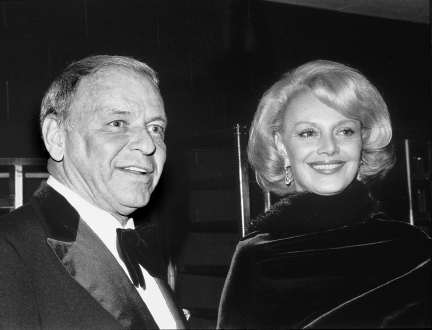
Frank and Grace Kelly's earlier date
Undated materialFrom: James Kaplan, "Sinatra: The Chairman" (2015)
George Jacobs: George Jacobs recalled that Sinatra felt humiliated pining over Ava Gardner in front of Grace Kelly on the set of Mogambo and never made a real play for her on High Society. The two had reportedly gone on a date about a year earlier during which a drunk Sinatra sobbed to Kelly about Ava and tried to manhandle her; he phoned the next day to apologize and the two later laughed about it, but nothing romantic developed.
Context: Frank and Grace Kelly's earlier date
Date as given in source: (not specified)
Date as given in source could not be resolved to a specific calendar day for the main chronology; routed to Appendix as undated/partially-dated material.
Frank and Judy Garland's bond
Undated materialFrom: Ed Walters, pit boss reminiscences (compiled by Kraus, Sinatra mailing list)
Ed Walters: Walters recalls Sinatra's evident tenderness toward Judy Garland whenever she visited the Sands, which he attributes both to sympathy for performers who struggled with life and to Sinatra's general admiration for great talent. On one memorable night, after much back-and-forth in the lounge, Judy and Frank sang 'Over the Rainbow' together before she finished it alone to a standing ovation from the whole casino, including Sinatra.
Context: Frank and Judy Garland's bond
Date as given in source: (not specified)
Date as given in source could not be resolved to a specific calendar day for the main chronology; routed to Appendix as undated/partially-dated material.
Frank blamed for runaway craze
Undated materialFrom: Tony Consiglio (as told to Franz Douskey), "Sinatra and Me: The Very Good Years" (2012)
Consiglio: Consiglio recalls that at the height of Frank's popularity, he was blamed not only for truancy but for a rise in runaways, with strangers falsely claiming to be his relatives in order to get backstage.
Context: Frank blamed for runaway craze
Date as given in source: mid-1940s
Date as given in source could not be resolved to a specific calendar day for the main chronology; routed to Appendix as undated/partially-dated material.
Frank bursts in on the group
Undated materialFrom: James Kaplan, "Frank: The Voice" (2010)
Kaplan: Frank returned to Twin Palms after failing to find Chester (Jimmy Van Heusen) and driving around Palm Springs at dawn; finding Ava, Bappie, Lana, and Cole partying in his house, he exploded, denied wanting Turner, and a violent fight with Ava followed, including thrown belongings and a call to police.
Context: Frank bursts in on the group
Date as given in source: (not specified)
Date as given in source could not be resolved to a specific calendar day for the main chronology; routed to Appendix as undated/partially-dated material.
Frank clashes with director Minnelli
Undated materialFrom: James Kaplan, "Sinatra: The Chairman" (2015)
Kaplan: When director Vincente Minnelli's meticulous pace put Some Came Running behind schedule, co-producer Sinatra ripped twenty pages out of the script, cutting scenes including Shirley MacLaine's biggest moment (compensating by having her character die at film's end, which earned her an Oscar nomination).
Context: Frank clashes with director Minnelli
Date as given in source: August 1958
Date as given in source could not be resolved to a specific calendar day for the main chronology; routed to Appendix as undated/partially-dated material.
Frank cuts North Carolina trip short
Undated materialFrom: James Kaplan, "Frank: The Voice" (2010)
Frank Sinatra: After only a day in North Carolina, a depressed Frank told Ava he needed to return to Manhattan; she stayed on with her family. At the airport farewell, with reporters watching, he called out 'Goodbye, Dolly, I'll call you' as he ran for the plane.
Context: Frank cuts North Carolina trip short
Date as given in source: (not specified)
Date as given in source could not be resolved to a specific calendar day for the main chronology; routed to Appendix as undated/partially-dated material.
Frank meets Lucky Luciano in Havana
Undated materialFrom: Tony Consiglio (as told to Franz Douskey), "Sinatra and Me: The Very Good Years" (2012)
Consiglio: Years after both had suites in the Waldorf Towers without ever crossing paths there, Frank had a chance meeting with mobster Lucky Luciano while performing in Havana, Cuba. Consiglio did not accompany him on that particular trip.
Context: Frank meets Lucky Luciano in Havana
Date as given in source: (not specified)
Date as given in source could not be resolved to a specific calendar day for the main chronology; routed to Appendix as undated/partially-dated material.
Frank meets Nancy Barbato on Jersey shore
Undated materialFrom: Tony Consiglio (as told to Franz Douskey), "Sinatra and Me: The Very Good Years" (2012)
Consiglio: Frank and Nancy Barbato met as teenagers on a beach; both families had beach houses on the Jersey shore. Nancy, born in Jersey City, was one of seven or eight sisters in the Barbato family.
Context: Frank meets Nancy Barbato on Jersey shore
Date as given in source: 1930s
Date as given in source could not be resolved to a specific calendar day for the main chronology; routed to Appendix as undated/partially-dated material.
Frank meets the Gardner family
Undated materialFrom: James Kaplan, "Frank: The Voice" (2010)
Kaplan: In Winston-Salem, Frank and Ava stayed with her sister Myra and brother-in-law Bronnie Pearce, who ran a laundry business; Frank, depressed and preoccupied with the still-undecided Maggio role, made polite conversation with relatives including the Pearces, Grimeses, and Creeches.
Context: Frank meets the Gardner family
Date as given in source: (not specified)
Date as given in source could not be resolved to a specific calendar day for the main chronology; routed to Appendix as undated/partially-dated material.
Frank recalls the 'death wait' for news
Undated materialFrom: James Kaplan, "Frank: The Voice" (2010)
Frank Sinatra: In a 1954 interview with Hedda Hopper, Frank described the agonizing wait for word on the Maggio role after learning Columbia was testing six other actors; he said he nearly gave up, and recalled Ava and Gable both encouraging him to hang on.
Context: Frank recalls the 'death wait' for news
Date as given in source: (not specified)
Date as given in source could not be resolved to a specific calendar day for the main chronology; routed to Appendix as undated/partially-dated material.
Frank sidelined on Mogambo set
Undated materialFrom: James Kaplan, "Frank: The Voice" (2010)
Kaplan: While Ford directed Ava and the cast in the bush each day, a miserable Frank sat in a camp chair rereading his copy of From Here to Eternity, drinking, and grumbling about the heat, dirt, flies, and Columbia's silence; Ford needled him with lines like 'Make the spaghetti, Frank.'
Context: Frank sidelined on Mogambo set
Date as given in source: (not specified)
Date as given in source could not be resolved to a specific calendar day for the main chronology; routed to Appendix as undated/partially-dated material.
Frank sings 'When You Awake' to Ava
Undated materialFrom: James Kaplan, "Frank: The Voice" (2010)
Ava Gardner: Ava recalled Frank, riding with her in a jeep across the African plain while she felt sick, spontaneously singing 'When You Awake' to her -- a rare, treasured moment since he reserved singing for special occasions.
Context: Frank sings 'When You Awake' to Ava
Date as given in source: (not specified)
Date as given in source could not be resolved to a specific calendar day for the main chronology; routed to Appendix as undated/partially-dated material.
Frank visits Nancy and the kids
Undated materialFrom: James Kaplan, "Frank: The Voice" (2010)
Kaplan: Frank borrowed money from Van Heusen to buy Christmas gifts for his children and ex-wife Nancy, then drove to the Holmby Hills house; Nancy Sr. still had the home on the market, and Frank noted how well she looked and how Nancy Jr. (a teenager), Tina (four), and Frankie (eight) had grown.
Context: Frank visits Nancy and the kids
Date as given in source: (not specified)
Date as given in source could not be resolved to a specific calendar day for the main chronology; routed to Appendix as undated/partially-dated material.
Frank's Mogambo nightclub jokes
Undated materialFrom: James Kaplan, "Frank: The Voice" (2010)
Frank Sinatra: Between songs at the French Casino, Frank turned his customs ordeal into stage patter and joked about Mogambo, quipping that Gable had 'shot six natives' in a week and that Ava faced dangers in Africa including 'lions, tigers, crocodiles; Clark Gable.'
Context: Frank's Mogambo nightclub jokes
Date as given in source: (not specified)
Date as given in source could not be resolved to a specific calendar day for the main chronology; routed to Appendix as undated/partially-dated material.
Frank's intestinal surgery during a European tour
Undated materialFrom: Tony Consiglio (as told to Franz Douskey), "Sinatra and Me: The Very Good Years" (2012)
Consiglio: Frank was hospitalized while touring Europe with severe stomach pains, and doctors had to remove twelve feet of his intestines. Consiglio called Frank's aide Dorothy Uhlemann daily for updates during his recovery. No specific year is given in the text.
Context: Frank's intestinal surgery during a European tour
Date as given in source: (not specified)
Date as given in source could not be resolved to a specific calendar day for the main chronology; routed to Appendix as undated/partially-dated material.
Frank's regular calls to Nancy Jr. and touring check-ins
Undated materialFrom: Tony Consiglio (as told to Franz Douskey), "Sinatra and Me: The Very Good Years" (2012)
Consiglio: In the late 1950s and 1960s, Frank often called Nancy Jr. and always asked first, "How's your mother?" Once Frank Jr. and Nancy Jr. began touring as singers themselves, they reported their appearance schedules to Frank's secretary Gloria Lovell so Frank could reach them on short notice.
Context: Frank's regular calls to Nancy Jr. and touring check-ins
Date as given in source: 1950s-1960s
Date as given in source could not be resolved to a specific calendar day for the main chronology; routed to Appendix as undated/partially-dated material.
Frankie's teenage troubles
Undated materialFrom: James Kaplan, "Sinatra: The Chairman" (2015)
Kaplan: As adolescence set in, Frank Sinatra Jr. became isolated and troubled, falling in with bad company and getting arrested for shooting out streetlamps with a BB gun; his mother Nancy decided he needed to go live with his father or be sent to boarding school.
Context: Frankie's teenage troubles
Date as given in source: (not specified)
Date as given in source could not be resolved to a specific calendar day for the main chronology; routed to Appendix as undated/partially-dated material.
Fried egg sandwich incident, Bridgeport
Undated materialFrom: Tony Consiglio (as told to Franz Douskey), "Sinatra and Me: The Very Good Years" (2012)
Consiglio: While Sinatra was still touring with Tommy Dorsey's band, he sent Consiglio out on a cold March night in Bridgeport, Connecticut to get a fried-egg sandwich from a diner near the Lyric Theater. Frank rejected it over the smell of the cooking oil and refused to eat it.
Context: Fried egg sandwich incident, Bridgeport
Date as given in source: early 1940s
Date as given in source could not be resolved to a specific calendar day for the main chronology; routed to Appendix as undated/partially-dated material.
From Here to Eternity / Pal Joey
Undated materialFrom: Tom Santopietro, "Sinatra in Hollywood" (2008), Ava and the Downfall / The Comeback
From Eternity onward, Sinatra visibly absorbed Clift's physical mannerisms -- hunched shoulders, clenched fists, a wounded look of vulnerability. By Pal Joey (1957) he had built a full repertoire of small telling gestures, like a raised eyebrow or a finger scratching his nose, to convey character.
Context: analysis/acting technique
This film/context matches multiple dated entries in the chronology; the specific date Santopietro is referring to could not be determined with confidence.
From Here to Eternity / Some Came Running
Undated materialFrom: Tom Santopietro, "Sinatra in Hollywood" (2008), Ava and the Downfall / The Comeback
Screenwriter Daniel Taradash's script skillfully compressed James Jones's sprawling novel into a tight, effective drama; Santopietro notes the achievement stands out even more when compared to the unwieldy 1958 screen adaptation of Jones's similarly epic Some Came Running.
Context: production/analysis
This film/context matches multiple dated entries in the chronology; the specific date Santopietro is referring to could not be determined with confidence.
From Here to Eternity / The Man with the Golden Arm
Undated materialFrom: Tom Santopietro, "Sinatra in Hollywood" (2008), March 25, 1954 / Well Did You Evah / Hoboken
Frank Sinatra: Asked by Johnny Carson on The Tonight Show to name the highlight of his career, Sinatra cited winning the Academy Award for From Here to Eternity, and then being part of The Man with the Golden Arm, which he considered a milestone in the picture business -- notably naming his films rather than his acclaimed recordings or Grammy wins.
Context: self-assessment/legacy
This film/context matches multiple dated entries in the chronology; the specific date Santopietro is referring to could not be determined with confidence.
From Here to Eternity / The Man with the Golden Arm / The Manchurian Candidate
Undated materialFrom: Tom Santopietro, "Sinatra in Hollywood" (2008), March 25, 1954 / Well Did You Evah / Hoboken
Donald Clarke: Sinatra's most acclaimed screen performances -- Maggio in From Here to Eternity, Frankie Machine in The Man with the Golden Arm, and Marco in The Manchurian Candidate -- all portrayed men whose passions outstripped their self-control. Writer Donald Clarke observed that the greatest loneliness lies in disillusionment, and that Sinatra fought against disillusionment throughout his life, a struggle mirrored by these characters.
Context: critical analysis
This film/context matches multiple dated entries in the chronology; the specific date Santopietro is referring to could not be determined with confidence.
From Here to Eternity / The Man with the Golden Arm / The Manchurian Candidate
Undated materialFrom: Tom Santopietro, "Sinatra in Hollywood" (2008), The Rat Pack (pt. 1)
Santopietro argues Sinatra's very best film performances all came under top-rank directors who could channel his impatience productively — John Frankenheimer, Otto Preminger, and Fred Zinnemann (From Here to Eternity) — whereas lesser material or unchecked bullying on set tended to produce weaker films.
Context: analysis
This film/context matches multiple dated entries in the chronology; the specific date Santopietro is referring to could not be determined with confidence.
From Here to Eternity / The Manchurian Candidate
Undated materialFrom: Tom Santopietro, "Sinatra in Hollywood" (2008), The Boy Next Door / A Paesano Onscreen
Santopietro argues Sinatra's most resonant film roles -- Maggio in From Here to Eternity (his first character with a distinctly Italian surname) and Marco in The Manchurian Candidate -- built on his real-life persona as a scrappy underdog willing to challenge powerful institutions (the military, the political establishment), which is central to why audiences stayed loyal to him even as he grew wealthy and powerful.
Context: career/persona analysis
This film/context matches multiple dated entries in the chronology; the specific date Santopietro is referring to could not be determined with confidence.
Funny Girl
Undated materialFrom: Tom Santopietro, "Sinatra in Hollywood" (2008), Knight-Errant (pt. 1)
Barbra Streisand kept a congratulatory telegram Sinatra sent her in the 1960s as she was rising to stardom; she later enlarged and displayed it in the recording studio for inspiration while recording her half of 'I've Got a Crush on You,' a duet with Sinatra for his Duets album.
Context: personal life/anecdote
Date as given in source: 1960s
No corresponding dated entry could be identified in the chronology for this film/context.
Gable meets the flight in Nairobi
Undated materialFrom: James Kaplan, "Frank: The Voice" (2010)
Ava Gardner: Clark Gable met Frank and Ava's flight at Eastleigh Airport; Ava greeted him warmly as an old friend from their earlier film Lone Star, though she described him privately as a man who was 'stuck for an answer' to small talk.
Context: Gable meets the flight in Nairobi
Date as given in source: (not specified)
Date as given in source could not be resolved to a specific calendar day for the main chronology; routed to Appendix as undated/partially-dated material.
General characterization of Tommy Dorsey and Sinatra's personalities
Undated materialFrom: Will Friedwald, "Sinatra! The Song Is You: A Singer's Art" (2018 revised edition), Ch. 3, "With Tommy Dorsey" (1940-1942)
Alvin Stoller: "Frank is like Tommy," drummer Alvin Stoller told us, "very demanding."
Context: General characterization of Tommy Dorsey and Sinatra's personalities
No corresponding dated entry could be identified in the chronology for this song/context.
General comparison of Sinatra's three main Capitol/Reprise arrangers
Undated materialFrom: Will Friedwald, "Sinatra! The Song Is You: A Singer's Art" (2018 revised edition), Ch. 8, "Gordon Jenkins" (1956-1981)
Frank Sinatra; Billy May: Sinatra characterized his three key arrangers: "Billy May is driving, while Nelson has depth, and with Gordon Jenkins, it's all so beautiful and simple that to me it's like being back in the womb." Billy May elaborated that Sinatra 'would more or less pick Gordon Jenkins if he wanted to do something sentimental with strings, and then he would get either myself or Nelson -- mostly Nelson -- to do just the nuts and bolts stuff.'
Context: General comparison of Sinatra's three main Capitol/Reprise arrangers
No corresponding dated entry could be identified in the chronology for this song/context.
General discussion of band singers absorbing musicians' style, big band era
Undated materialFrom: Will Friedwald, "Sinatra! The Song Is You: A Singer's Art" (2018 revised edition), Ch. 3, "With Tommy Dorsey" (1940-1942)
Quincy Jones: "All the band singers with the bands would listen to these great musicians play all night long, and they were all very affected by jazz musicians," as arranger Quincy Jones remembered the big-band era. "Peggy Lee, Ella Fitzgerald, Sarah Vaughan—they were all very jazz-oriented because they were playing with these great jazz instrumentalists, and the instrumentalists were the focal point. In those years the players were the ones getting all of the attention, so naturally the singers emulated them, and that’s why their phrasing is so good and so instrumental-like."
Context: General discussion of band singers absorbing musicians' style, big band era
No corresponding dated entry could be identified in the chronology for this song/context.
General industry context: Joni Mitchell/Jimmy Webb conversation and Billy Eckstine quote on the rise of singer-songwriters
Undated materialFrom: Will Friedwald, "Sinatra! The Song Is You: A Singer's Art" (2018 revised edition), Ch. 9, "Looking for the Hook" (1960-1971)
Joni Mitchell (via Jimmy Webb); Billy Eckstine (via David Hajdu): Joni Mitchell told Jimmy Webb that she was doing 'a half-assed version of what it would have taken ten different guys to do just a few years ago' (write music, lyrics, arrangement, play, sing, produce). Billy Eckstine told David Hajdu, 'It's not enough to be a great singer anymore... Now you have to write the fuckin' songs.' Friedwald uses these to frame the central tension of Sinatra's late-1960s career: the industry shift toward singer-songwriter authenticity displacing the art of interpretation that Sinatra had perfected.
Context: General industry context: Joni Mitchell/Jimmy Webb conversation and Billy Eckstine quote on the rise of singer-songwriters
No corresponding dated entry could be identified in the chronology for this song/context.
General vocal-style shift, Stordahl to Riddle era
Undated materialFrom: Will Friedwald, "Sinatra! The Song Is You: A Singer's Art" (2018 revised edition), Ch. 6, "With Nelson Riddle" (1953-1979)
Sammy Cahn; Will Friedwald (analysis): Sammy Cahn on Sinatra's changing sound: 'His sound changed. He went from the violin with Axel, that pure violin sound, to the sound underneath, the viola, with Nelson.' Friedwald notes this deepening came with a price: Sinatra's pitch became less consistently accurate than in the pure-toned Stordahl 1940s, sometimes deliberately for emotional effect, as intonation became less important than the expanded emotional-musical vocabulary needed to sustain a single mood across sixteen-song concept albums.
Context: General vocal-style shift, Stordahl to Riddle era
No corresponding dated entry could be identified in the chronology for this song/context.
George Jacobs on Sinatra and Barbara
Undated materialFrom: James Kaplan, "Sinatra: The Chairman" (2015)
George Jacobs: Valet George Jacobs recalled Sinatra initially disliking Barbara Marx ('Wouldn't date her... Who keeps inviting her around?'), before later confiding that what he saw in her was 'Grace Kelly with my eyes closed.'
Context: George Jacobs on Sinatra and Barbara
Date as given in source: Late 1960s
Date as given in source could not be resolved to a specific calendar day for the main chronology; routed to Appendix as undated/partially-dated material.
George Siravo on Stordahl's transparent scoring style (general arranging philosophy, applicable across the Sinatra-Stordahl catalog)
Undated materialFrom: Will Friedwald, "Sinatra! The Song Is You: A Singer's Art" (2018 revised edition), Ch. 4, "With Axel Stordahl" (1943-1948)
George Siravo: “Axel wrote with great transparency,” as his lieutenant, George Siravo, delineated. “In other words, if you look at the score, the blacker it looks on the paper, the more depressed a layperson would be. The denser it looks, the heavier it sounds.” Stordahl, he expounded, knew how to avoid overcomplicating things. “You might look at his string scores and see only two or three different notes, but the results he got speak for themselves. It didn’t take me long to catch on to how to do that—in my own writing.”
Context: George Siravo on Stordahl's transparent scoring style (general arranging philosophy, applicable across the Sinatra-Stordahl catalog)
No corresponding dated entry could be identified in the chronology for this song/context.
Get Happy
Undated materialFrom: Will Friedwald, "Sinatra! The Song Is You: A Singer's Art" (2018 revised edition), Ch. 5, "In-Between Years" (1948-1953)
Friedwald (analysis): Among the new charts commissioned for Sinatra's CBS television show, Neal Hefti (a new writer for Sinatra at the time) arranged a 'fascinating, minor key treatment' of 'Get Happy,' one of the few musical bright spots Friedwald credits on an otherwise primitive TV variety show.
Context: The Frank Sinatra Show (CBS television), arranged by Neal Hefti
This song/context matches multiple dated entries in the chronology; the specific date Friedwald is referring to could not be determined with confidence.
Getting Sentimental over You / Marie / South of the Border
Undated materialFrom: Will Friedwald, "Sinatra! The Song Is You: A Singer's Art" (2018 revised edition), Ch. 3, "With Tommy Dorsey" (1940-1942)
Sammy Cahn: "and Dorsey would be playing his theme song, ‘Getting Sentimental over You.’ When the pit went up, he went into ‘Marie,’ and he would stop the show with that. Then he would introduce Connie Haines. Big hit. Then he would introduce Jo Stafford with the Pied Pipers. Big hit. Then he’d introduce Ziggy Elman on the trumpet. Big hit. Then he would introduce Buddy Rich, who would really shatter the theater.
"When all this was finished, out came a thin, frail human being. And I mean the word thin in its purest sense, thinner than my pinky. He sang, I’ll never forget it, ‘South of the Border.’ And he just topped the whole show."
Context: Dorsey band 'stage shows' at the Paramount Theatre
This song/context matches multiple dated entries in the chronology; the specific date Friedwald is referring to could not be determined with confidence.
Giancana at Cal-Neva ends friendships
Undated materialFrom: Tony Consiglio (as told to Franz Douskey), "Sinatra and Me: The Very Good Years" (2012)
Consiglio: Sam Giancana visited Cal-Neva Lodge as Hank Sanicola's guest to see his girlfriend Phyllis McGuire perform. Attorney General Bobby Kennedy called Sinatra demanding undesirable characters be removed from the property. Furious, Sinatra clashed with Kennedy and declared he was no longer a Democrat; the episode also ended Sinatra's friendship and business partnership with Sanicola, to whom he gave full control of Barton Music as a parting settlement.
Context: Giancana at Cal-Neva ends friendships
Date as given in source: early 1960s
Date as given in source could not be resolved to a specific calendar day for the main chronology; routed to Appendix as undated/partially-dated material.
Giancana sues the Justice Department
Undated materialFrom: James Kaplan, "Sinatra: The Chairman" (2015)
Kaplan: On the advice of son-in-law Anthony Tisci, Sam Giancana filed suit against the Justice Department seeking an injunction against FBI harassment, claiming the agency was violating his constitutional right to privacy.
Context: Giancana sues the Justice Department
Date as given in source: (not specified)
Date as given in source could not be resolved to a specific calendar day for the main chronology; routed to Appendix as undated/partially-dated material.
Girl hides in hotel suite, Hotel Claridge
Undated materialFrom: Tony Consiglio (as told to Franz Douskey), "Sinatra and Me: The Very Good Years" (2012)
Consiglio: During a 500 Club engagement, while Sinatra and Consiglio were staying at the Hotel Claridge, an unknown woman at a late-night gathering hid under Frank's bed rather than leaving. Sinatra heard noises and had Consiglio search the room; after finding her, Consiglio talked her into leaving quietly. The incident led them to tighten hotel security afterward.
Context: Girl hides in hotel suite, Hotel Claridge
Date as given in source: (not specified)
Date as given in source could not be resolved to a specific calendar day for the main chronology; routed to Appendix as undated/partially-dated material.
Glad to Be Unhappy / Can't We Be Friends? / I'll Be Around / Dancing on the Ceiling
Undated materialFrom: Will Friedwald, "Sinatra! The Song Is You: A Singer's Art" (2018 revised edition), Ch. 6, "With Nelson Riddle" (1953-1979)
Will Friedwald (analysis): On one Wee Small Hours date, departing from usual practice, Sinatra recorded four songs with just the five-man rhythm unit (no orchestra), sequenced seamlessly among the string-orchestra tracks so most listeners don't notice: 'Glad to Be Unhappy,' 'Can't We Be Friends?,' 'I'll Be Around' (featuring a celesta riff that spins a punningly circular pattern), and 'Dancing on the Ceiling.' Friedwald notes this, plus two tracks on John Graas's 1953 album French Horn Jazz, are rare examples of Riddle writing for a small jazz combo.
Context: In the Wee Small Hours (small five-man-unit session)
This song/context matches multiple dated entries in the chronology; the specific date Friedwald is referring to could not be determined with confidence.
Glad to Be Unhappy / Guess I'll Hang My Tears Out to Dry
Undated materialFrom: Will Friedwald, "Sinatra! The Song Is You: A Singer's Art" (2018 revised edition), Ch. 4, "With Axel Stordahl" (1943-1948)
Frank Military: Frank Military pointed out that most of the classic songs were immediately forgotten after their initial runs were over; the shows closed, the movies were out of the theaters, the songs were almost consigned to the dustbins of history. “If you look at songs like ‘Glad to Be Unhappy,’” Military noted, “they were just songs done in little cabarets by chi-chi kind of singers’”—until Sinatra brought them back into the mainstream. “He even took songs out of flop shows, like [Cahn and Styne’s] ‘Guess I’ll Hang My Tears Out to Dry’ [from Glad to See You] and made them into important standards.”
Context: Frank Military on how Sinatra revived forgotten songs, including one from the flop show Glad to See You
This song/context matches multiple dated entries in the chronology; the specific date Friedwald is referring to could not be determined with confidence.
Golf putting hustle with Gleason and Dean Martin
Undated materialFrom: Ed Walters, pit boss reminiscences (compiled by Kraus, Sinatra mailing list)
Ed Walters: During a Sinatra and Dean Martin engagement, Walters and Jackie Gleason set up a putting hustle against local businessmen at the Tropicana golf club. Dean Martin, practicing nearby, offered his putter but Gleason waved him off, telling Ed to find something else to putt with as agreed terms of the bet; Walters retrieved his own pool cue from his car and used it to win the $300 match.
Context: Golf putting hustle with Gleason and Dean Martin
Date as given in source: 1960s (during a Sinatra and Martin engagement)
Date as given in source could not be resolved to a specific calendar day for the main chronology; routed to Appendix as undated/partially-dated material.
Good Thing Going / Hey Look, No Crying
Undated materialFrom: Will Friedwald, "Sinatra! The Song Is You: A Singer's Art" (2018 revised edition), Ch. 8, "Gordon Jenkins" (1956-1981)
"Good Thing Going" (Sondheim, from Merrily We Roll Along), arranged by Don Costa, opens the album with what Friedwald calls a comparatively lightweight chart -- 'the Don Costa of Some Nice Things I've Missed... not the Costa of Sinatra & Strings.' "Hey Look, No Crying" (Jule Styne/Susan Birkenhead) has Sinatra insisting he won't cry over a departing lover, a deflective device Friedwald says makes the song 'about the saddest thing we've ever heard.'
Context: She Shot Me Down (1981) opening tracks
This song/context matches multiple dated entries in the chronology; the specific date Friedwald is referring to could not be determined with confidence.
Goodbye
Undated materialFrom: Will Friedwald, "Sinatra! The Song Is You: A Singer's Art" (2018 revised edition), Ch. 6, "With Nelson Riddle" (1953-1979)
Nelson Riddle: 'Goodbye' (composed by Gordon Jenkins, adapted by Benny Goodman as a closing theme) features a recurring six-note instrumental 'response' figure (G G F, repeated as G G F#). Riddle first states it Jenkins-style, arco on double basses, then transforms it into something deeper: 'The idea of that [phrase] being a mandatory thing bothered me, although I'm crazy about the song, I always have been. You just find another way to do something that might add a little touch of freshness.' A footnote notes ex-Goodman band members traditionally sang 'Go to hell, go to hell' over the riff, and Billy May once made a mambo version chanting 'Cha, cha, cha-cha, cha, cha' over it.
Context: Only the Lonely - closing track of side A, composed by Gordon Jenkins
This song/context matches multiple dated entries in the chronology; the specific date Friedwald is referring to could not be determined with confidence.
Goodbye
Undated materialFrom: Will Friedwald, "Sinatra! The Song Is You: A Singer's Art" (2018 revised edition), Ch. 8, "Gordon Jenkins" (1956-1981)
Nelson Riddle; Joel Herron: Nelson Riddle orchestrated "Goodbye" for Sinatra when composer Jenkins himself was unavailable, saying he was 'crazy about' the song and 'admired Gordon so much for having written it.' Songwriter Joel Herron called it 'the most important thing that he wrote... I played it at my wife's funeral, and better than that I can't say.' Bruce Jenkins's biography reveals the song was inspired by a girlfriend of Jenkins's who died in childbirth along with her stillborn baby.
Context: Gordon Jenkins's 1935 song (Benny Goodman's theme), later recorded with Sinatra when Jenkins was unavailable for Only the Lonely
This song/context matches multiple dated entries in the chronology; the specific date Friedwald is referring to could not be determined with confidence.
Goodbye (She Quietly Says) / For a While / Michael & Peter / I Would Be in Love (Anyway) / Elizabeth / What A Funny Girl (You Used to Be) / What's Now Is Now / She Says / The Train
Undated materialFrom: Will Friedwald, "Sinatra! The Song Is You: A Singer's Art" (2018 revised edition), Ch. 9, "Looking for the Hook" (1960-1971)
Jake Holmes (paraphrased) / Friedwald (analysis): Friedwald walks through Watertown's narrative structure track by track: 'Goodbye (She Quietly Says)' has the wife leaving mid-meal with the lyric 'There is no string ensemble / and she doesn't even cry.' 'Michael & Peter' is an epistolary letter-song about the couple's two sons ('Michael is you, he has your face... Peter is me, 'cept when he smiles'). 'I Would Be in Love (Anyway)' is called the most Frankish vocal on the record, using his classic loud/soft dynamics ('If I knew that you'd leave me... I would be in love anyway'). 'She Says' -- built on a samisen-like instrument (possibly guitarist Vinnie Bell's 'bellzouki'), flute, and Morricone-esque percussion with a children's choir -- delivers the wife's cryptic response, 'She's coming home.' The closing track 'The Train' ends ambiguously with Sinatra on a platform unable to spot her ('And I know for sure I'd recognize your face'); songwriter Jake Holmes has said this means she's never coming home, but Friedwald reads the ending as genuinely ambiguous.
Context: Watertown song-by-song narrative analysis
This song/context matches multiple dated entries in the chronology; the specific date Friedwald is referring to could not be determined with confidence.
Goodnight Irene / Dear Little Boy of Mine
Undated materialFrom: Will Friedwald, "Sinatra! The Song Is You: A Singer's Art" (2018 revised edition), Ch. 5, "In-Between Years" (1948-1953)
Frank Sinatra (to Ben Heller); Johnny Blowers: Recorded right after the Sing and Dance sessions, 'Goodnight Irene' (billed as 'Frank Sinatra with the Mitch Miller Singers') reached #5 in early August 1950 -- Sinatra's biggest hit of his 'nosedive' period, despite covering the Weavers' Leadbelly song. Friedwald calls it surprisingly 'palatable,' with Sinatra singing it straight in a manner he'd later apply to 'It Was a Very Good Year.' Drummer Johnny Blowers recalled crowds in Atlantic City demanding it repeatedly: 'I don't think Frank liked it too much, but it was a big hit for him... That Mitch Miller, what a cornball! But anyway, Frank did it -- and it was big.' In a backstage interview with Ben Heller, Sinatra himself joked about the song: 'We've got a new one that's moving pretty good called, you'll excuse the expression, Goodnight Irene'... 'You wanna bet? Naw, it's really cute'... 'Don't hold your breath!'
Context: First Sinatra record with clear Mitch Miller stamp, backed with a choir
Date as given in source: 1950-08
This song/context matches multiple dated entries in the chronology; the specific date Friedwald is referring to could not be determined with confidence.
Gordon Jenkins on recording with Sinatra
Undated materialFrom: James Kaplan, "Sinatra: The Chairman" (2015)
Gordon Jenkins: Arranger Gordon Jenkins described an intense creative connection with Sinatra during sessions but said he deliberately avoided socializing with him afterward, feeling their professional relationship worked better that way.
Context: Gordon Jenkins on recording with Sinatra
Date as given in source: (not specified)
Date as given in source could not be resolved to a specific calendar day for the main chronology; routed to Appendix as undated/partially-dated material.
Grammy wins for It Was a Very Good Year and September of My Years
Undated materialFrom: James Kaplan, "Sinatra: The Chairman" (2015)
Kaplan: Sinatra and Gordon Jenkins each won a Grammy for 'It Was a Very Good Year,' and the album September of My Years also earned a Grammy.
Context: Grammy wins for It Was a Very Good Year and September of My Years
Date as given in source: 1965
Date as given in source could not be resolved to a specific calendar day for the main chronology; routed to Appendix as undated/partially-dated material.
Great Songs from Great Britain
Undated materialFrom: Charles L. Granata, "Sessions with Sinatra: Frank Sinatra and the Art of Recording" (1999/2003), Part IV: The Reprise Years
Great Songs from Great Britain was not released in the United States until nearly thirty years after it was recorded; original British pressings remain among the most collectible Sinatra items.
Context: reception
This song/context matches multiple dated entries in the chronology, or lacked a sufficiently precise date; the specific date could not be determined with confidence.
Great Songs from Great Britain (Reprise, 1962)
Undated materialFrom: Will Friedwald, "Sinatra! The Song Is You: A Singer's Art" (2018 revised edition), Ch. 1, "Night and Day" (Sinatra style overview)
Robert Farnon: Arranger Robert Farnon recalled that during these sessions Sinatra told him his favorite way of working was in the recording studio, rather than in concert halls or films -- reinforcing Friedwald's claim that Sinatra, more than any predecessor, fully grasped and transformed the possibilities of the recording medium itself.
Context: Great Songs from Great Britain (Reprise, 1962)
Date as given in source: 1962
No corresponding dated entry could be identified in the chronology for this song/context.
Guess I'll Hang My Tears Out to Dry
Undated materialFrom: Will Friedwald, "Sinatra! The Song Is You: A Singer's Art" (2018 revised edition), Ch. 6, "With Nelson Riddle" (1953-1979)
George Van Eps played the May 5 take (presumably on his self-developed seven-string guitar), while Al Viola played the issued version on a more conventional gut-string guitar. Sinatra was also racing to finish before leaving for Europe (Kings Go Forth filming and the Monte Carlo concert conducted by Quincy Jones, introduced by Noel Coward, June 1958).
Context: Only the Lonely - guitar substitution between takes
This song/context matches multiple dated entries in the chronology; the specific date Friedwald is referring to could not be determined with confidence.
Guess I'll Hang My Tears Out to Dry
Undated materialFrom: Will Friedwald, "Sinatra! The Song Is You: A Singer's Art" (2018 revised edition), Ch. 6, "With Nelson Riddle" (1953-1979)
Al Viola: The Riddle arrangement (first recorded by Sinatra in 1946) suspends much of the rhythm during the voice-and-guitar verse and entirely during the bridge. Al Viola: 'one of the notes [on the verse] was very difficult, so I did a classical tuning for that special note. That way I didn't have to worry about the fingering. It also was a pedal point note, and at that time we were at the key of F-sharp. That's why it came off so good and rang out so clear and sharp.'
Context: Only the Lonely - guitar technique on the verse/bridge
This song/context matches multiple dated entries in the chronology; the specific date Friedwald is referring to could not be determined with confidence.
Guess I'll Hang My Tears Out to Dry
Undated materialFrom: Charles L. Granata, "Sessions with Sinatra: Frank Sinatra and the Art of Recording" (1999/2003), Part III: The Capitol Years, 1953-1962
Eleanor Slatkin: Eleanor Slatkin recalled Sinatra praising Felix Slatkin's conducting on the re-recorded Only the Lonely sessions as 'the marriage of a dream,' crediting Slatkin's background as an actual conductor (unlike most arranger-conductors) for shaping every phrase to fit Sinatra's singing.
Context: anecdote
This song/context matches multiple dated entries in the chronology, or lacked a sufficiently precise date; the specific date could not be determined with confidence.
Gun given by Miami police chief, fired to scare Ava
Undated materialFrom: Tony Consiglio (as told to Franz Douskey), "Sinatra and Me: The Very Good Years" (2012)
Consiglio: Miami Beach Police Chief Fox once gave Sinatra a small pearl-handled, nickel-plated handgun. Sinatra later used it during a fight with Ava Gardner at the Hampshire House, firing it (apparently into a pillow or the floor) to frighten her; Ava briefly feared he had shot himself, but no one was hurt.
Context: Gun given by Miami police chief, fired to scare Ava
Date as given in source: (not specified)
Date as given in source could not be resolved to a specific calendar day for the main chronology; routed to Appendix as undated/partially-dated material.
Guys and Dolls
Undated materialFrom: Tom Santopietro, "Sinatra in Hollywood" (2008), The Peak Years (pt. 1)
Sinatra was upset at losing the lead romantic role of gambler Sky Masterson to non-singer Marlon Brando in the Samuel Goldwyn production of Guys and Dolls, directed by Joseph Mankiewicz, and was cast instead as Nathan Detroit. Santopietro argues Sinatra actually comes off best of the four principal stars despite the demotion.
Context: casting
This film/context matches multiple dated entries in the chronology; the specific date Santopietro is referring to could not be determined with confidence.
Guys and Dolls
Undated materialFrom: Tom Santopietro, "Sinatra in Hollywood" (2008), The Peak Years (pt. 1)
Producer Samuel Goldwyn's first choice for Sky Masterson was Gene Kelly, but MGM boss Nicholas Schenck refused to lend him out. Goldwyn also first offered the role of Sister Sarah to Grace Kelly, then to Deborah Kerr, before scheduling conflicts led to Jean Simmons -- who had recently co-starred with Brando in 1954's Desiree -- being cast instead.
Context: casting
This film/context matches multiple dated entries in the chronology; the specific date Santopietro is referring to could not be determined with confidence.
Guys and Dolls
Undated materialFrom: Tom Santopietro, "Sinatra in Hollywood" (2008), The Peak Years (pt. 1)
Santopietro notes that director Joseph Mankiewicz, despite being a celebrated writer-director (winner of back-to-back Oscars for A Letter to Three Wives and All About Eve), had never directed a musical before Guys and Dolls, and his inexperience shows in perfunctory staging and underuse of CinemaScope, unlike William Wyler's later success directing Funny Girl.
Context: production
This film/context matches multiple dated entries in the chronology; the specific date Santopietro is referring to could not be determined with confidence.
Guys and Dolls
Undated materialFrom: Tom Santopietro, "Sinatra in Hollywood" (2008), The Peak Years (pt. 1)
Original Broadway set designer Oliver Smith served as the film's production designer, opting for a highly stylized, two-dimensional Times Square set that Santopietro argues clashes badly with the medium of film, especially when real cars and buses are shown driving through the obviously artificial soundstage backdrop.
Context: production design
This film/context matches multiple dated entries in the chronology; the specific date Santopietro is referring to could not be determined with confidence.
Guys and Dolls
Undated materialFrom: Tom Santopietro, "Sinatra in Hollywood" (2008), The Peak Years (pt. 1)
Guys and Dolls was reportedly not a happy set: Sinatra was still smarting from having lost both the Terry Malloy role in On the Waterfront and the Sky Masterson role to Brando (he had been offered the consolation supporting role of Father Barry, which was withdrawn after Karl Malden had already been cast -- Sinatra later sued and settled out of court five years afterward). Brando's habit of endless rehearsal also grated on 'one-take Charlie' Sinatra.
Context: on-set tension/behind-the-scenes
This film/context matches multiple dated entries in the chronology; the specific date Santopietro is referring to could not be determined with confidence.
Guys and Dolls
Undated materialFrom: Tom Santopietro, "Sinatra in Hollywood" (2008), The Peak Years (pt. 1)
Frank Sinatra / Marlon Brando: Sinatra mockingly nicknamed Brando 'Mumbles' for his Method-style rehearsing, reportedly telling director Mankiewicz, 'Don't put me in the game, Coach, until Mumbles is through rehearsing.' Brando retaliated with his own barb, joking that when Sinatra dies he'll find God and yell at him for making him bald.
Context: on-set tension/quote
This film/context matches multiple dated entries in the chronology; the specific date Santopietro is referring to could not be determined with confidence.
Guys and Dolls
Undated materialFrom: Tom Santopietro, "Sinatra in Hollywood" (2008), The Peak Years (pt. 1)
Tina Sinatra: In her memoir My Father's Daughter, Tina Sinatra recalled watching Guys and Dolls on television with her father about a year before his death, with Frank still ribbing Brando's singing decades later, saying 'He still can't sing.'
Context: personal life/family anecdote
This film/context matches multiple dated entries in the chronology; the specific date Santopietro is referring to could not be determined with confidence.
Guys and Dolls
Undated materialFrom: Tom Santopietro, "Sinatra in Hollywood" (2008), The Peak Years (pt. 1)
Wilfrid Sheed: Sinatra also reportedly clashed with songwriter Frank Loesser during Guys and Dolls; per Wilfrid Sheed's book The House That George Built, Sinatra never forgave Loesser for giving him direction on how to play Nathan Detroit.
Context: anecdote
This film/context matches multiple dated entries in the chronology; the specific date Santopietro is referring to could not be determined with confidence.
Guys and Dolls
Undated materialFrom: Tom Santopietro, "Sinatra in Hollywood" (2008), The Peak Years (pt. 1)
Sinatra felt the film's casting choices undermined it, and Santopietro agrees: Jean Simmons sang notably flat in parts of 'I'll Know,' and while Brando stayed on pitch, his singing lacked resonance -- undercutting Frank Loesser's score, aside from performances by Broadway holdovers Vivian Blaine and Stubby Kaye.
Context: music/soundtrack
This film/context matches multiple dated entries in the chronology; the specific date Santopietro is referring to could not be determined with confidence.
Guys and Dolls
Undated materialFrom: Tom Santopietro, "Sinatra in Hollywood" (2008), The Peak Years (pt. 1)
Jack Moffitt / Time magazine: Critics were largely disappointed by Guys and Dolls (1955), though Sinatra individually won more praise than his costars; The Hollywood Reporter's Jack Moffitt wrote that Sinatra 'is always a man and never a buffoon,' while Time magazine judged the film 'faithful in detail' but 'false to the original in its feeling.'
Context: reviews/reception
This film/context matches multiple dated entries in the chronology; the specific date Santopietro is referring to could not be determined with confidence.
Guys and Dolls
Undated materialFrom: Tom Santopietro, "Sinatra in Hollywood" (2008), The Peak Years (pt. 1)
Despite mixed reviews, Guys and Dolls was a big box-office hit, making it Sinatra's third consecutive box-office winner following Young at Heart and Not as a Stranger.
Context: box office
This film/context matches multiple dated entries in the chronology; the specific date Santopietro is referring to could not be determined with confidence.
Harper
Undated materialFrom: Tom Santopietro, "Sinatra in Hollywood" (2008), Knight-Errant (pt. 1)
Santopietro cites Sinatra's earlier passed-over chance to star in the detective thriller Harper (about five years before Dirty Harry) as another missed opportunity that likely would have won him critical and audience approval.
Context: casting / missed opportunity
No corresponding dated entry could be identified in the chronology for this film/context.
Have You Met Miss Jones? / Zing Went the Strings of My Heart
Undated materialFrom: Charles L. Granata, "Sessions with Sinatra: Frank Sinatra and the Art of Recording" (1999/2003), Part IV: The Reprise Years
Johnny Mandel: Both songs were dropped from Ring-a-Ding-Ding! after problems in the studio. Mandel says 'Have You Met Miss Jones?' might have worked as a ballad but there were numerous copying errors in the chart; Sinatra grew visibly impatient, joking that copyist Vern Yocum must have been drunk, and ordered the notes fixed. After a tempo change didn't salvage it, the tune was scrapped.
Context: recording session
This song/context matches multiple dated entries in the chronology, or lacked a sufficiently precise date; the specific date could not be determined with confidence.
Have Yourself a Merry Little Christmas / The Nearness of You / One for My Baby
Undated materialFrom: Will Friedwald, "Sinatra! The Song Is You: A Singer's Art" (2018 revised edition), Ch. 4, "With Axel Stordahl" (1943-1948)
More often the simplest ideas work best, such as the ironic holiday chimes at the end of Sinatra’s movingly melancholy “Have Yourself a Merry Little Christmas” or the rhythm section dropping out for eight bars to suspend the tempo on the bridge to “The Nearness of You” or the atmospheric tinkly saloon piano and whistling in the fade-out of “One for My Baby.”
Context: Examples of Stordahl's simple, effective arrangement ideas ("Lucky Strike Extras")
This song/context matches multiple dated entries in the chronology; the specific date Friedwald is referring to could not be determined with confidence.
Hearse omen precedes mob hit at Umberto's
Undated materialFrom: Tony Consiglio (as told to Franz Douskey), "Sinatra and Me: The Very Good Years" (2012)
Consiglio: Dining incognito at Umberto's in Little Italy, Consiglio noticed a hearse parked out back with no funeral home nearby; Frank joked about it being about timing. Weeks later, Consiglio read that "Crazy" Joey Gallo and associates had been shot dead while dining at the same restaurant.
Context: Hearse omen precedes mob hit at Umberto's
Date as given in source: (not specified)
Date as given in source could not be resolved to a specific calendar day for the main chronology; routed to Appendix as undated/partially-dated material.
Hedda Hopper spots reconciled couple
Undated materialFrom: James Kaplan, "Frank: The Voice" (2010)
Hedda Hopper: Hedda Hopper reported spotting Frank and Ava, apparently reconciled, dining at Frascati's in Beverly Hills, calling them the most loving and attentive couple she'd seen. Frank claimed there were 60 theaters in Africa where he could perform and mentioned a standing Palladium offer.
Context: Hedda Hopper spots reconciled couple
Date as given in source: (not specified)
Date as given in source could not be resolved to a specific calendar day for the main chronology; routed to Appendix as undated/partially-dated material.
Hello, Dolly!
Undated materialFrom: Will Friedwald, "Sinatra! The Song Is You: A Singer's Art" (2018 revised edition), Ch. 9, "Looking for the Hook" (1960-1971)
Will Friedwald (analysis): Friedwald describes Sinatra's second chorus as an homage to Louis Armstrong, opening with a cry of 'Hello, Satch!' and paraphrasing Armstrong's own lyric ('This is Louis, Dolly') as 'This is Francis, Louis,' capped with a Satchmo-style rasped 'Oh, yeahhhh!'
Context: It Might as Well Be Swing — Sinatra's homage to Louis Armstrong
This song/context matches multiple dated entries in the chronology; the specific date Friedwald is referring to could not be determined with confidence.
Hello, Young Lovers / We Kiss in a Shadow / I Whistle a Happy Tune
Undated materialFrom: Will Friedwald, "Sinatra! The Song Is You: A Singer's Art" (2018 revised edition), Ch. 5, "In-Between Years" (1948-1953)
Johnny Blowers; Friedwald (analysis): Friedwald calls this trio from the new Rodgers & Hammerstein hit The King and I 'the collaboration [Sinatra-Stordahl] at its Olympian zenith,' even though barely noticed commercially. For 'Hello, Young Lovers,' Stordahl had drummer Johnny Blowers source miniature Zildjian cymbals for an Eastern atmosphere; Blowers recalled twenty-two grueling takes: 'We hated that song!... we beat each other to the bar to see who got his drink the fastest.' Friedwald's musical analysis: Sinatra sings 'as if every word were a two-ton boulder and he was Sisyphus,' the arrangement moving from Asian percussion to European strings and back. On 'We Kiss in a Shadow,' Stordahl acts 'like a theatrical director,' using a flitting five-note woodwind motif representing caged/freed songbirds that returns at the end as a symbol of confinement. 'I Whistle a Happy Tune' features an uncredited studio whistler and Sinatra deliberately syllabifying big words ('de-cep-tion') to convey childlike naivete -- Friedwald calls it 'a triumph of acting as well as singing.'
Context: The King and I trilogy, Sinatra-Stordahl Columbia recordings
This song/context matches multiple dated entries in the chronology; the specific date Friedwald is referring to could not be determined with confidence.
Here's to the Band
Undated materialFrom: Will Friedwald, "Sinatra! The Song Is You: A Singer's Art" (2018 revised edition), Ch. 10, "Concert Years" (1973-1994)
Will Friedwald: Written by three little-known New Jersey songwriters (Sharman Howe, Alfred Nittoli, Artie Schroeck) as a tribute to professional musicians, 'Here's to the Band' reprises the Garland-Minnelli vaudeville shtick of 'New York, New York' but, per Friedwald, never transcends its jingoistic message the way the earlier song does.
Context: 1980s single honoring the American Federation of Musicians, Joe Parnello arrangement
This song/context matches multiple dated entries in the chronology; the specific date Friedwald is referring to could not be determined with confidence.
High Society / The Tender Trap
Undated materialFrom: Tom Santopietro, "Sinatra in Hollywood" (2008), The Peak Years (pt. 2)
High Society reunited Sinatra with his Tender Trap costar Celeste Holm and that film's director, Charles Walters, who also staged High Society's musical numbers.
Context: production
This film/context matches multiple dated entries in the chronology; the specific date Santopietro is referring to could not be determined with confidence.
High Society deal terms
Undated materialFrom: James Kaplan, "Sinatra: The Chairman" (2015)
Kaplan: Producer Sol C. Siegel paid Cole Porter $250,000 to write his first movie score in a decade for High Society; Crosby, Sinatra, and Kelly were signed to similarly rich deals, with Crosby's company co-producing and Sinatra earning the same fee as Porter. Johnny Green supervised the music and Conrad Salinger collaborated on orchestrations alongside Nelson Riddle; Charles Walters directed.
Context: High Society deal terms
Date as given in source: (not specified)
Date as given in source could not be resolved to a specific calendar day for the main chronology; routed to Appendix as undated/partially-dated material.
Higher and Higher / Cannonball Run II
Undated materialFrom: Tom Santopietro, "Sinatra in Hollywood" (2008), Knight-Errant (pt. 2) / That's Life
Santopietro notes symmetry in Sinatra's feature-film career: he began it in Higher and Higher causing a co-star to faint upon hearing "Hello, I'm Frank Sinatra," and forty-one years later ended it playing himself again in Cannonball Run II, still causing grown men to fawn.
Context: analysis
This film/context matches multiple dated entries in the chronology; the specific date Santopietro is referring to could not be determined with confidence.
Higher and Higher / High Society
Undated materialFrom: Tom Santopietro, "Sinatra in Hollywood" (2008), The Boy Next Door / A Paesano Onscreen
Santopietro / Daniel O'Brien (cited): The Higher and Higher screenplay includes an in-joke about Sinatra rivaling Bing Crosby (dialogue: "Bing Bang Sinatra" / "He'll never get anywhere"). Later, Sinatra rides a bicycle with a pipe in his mouth in homage/parody of Crosby. According to Daniel O'Brien's Frank Sinatra Film Guide, screenwriters originally wanted a scene of Sinatra and Crosby passing each other on bicycles sticking out their tongues, but Crosby's schedule or fee demands scuttled it -- so their actual on-screen pairing had to wait until 1956's High Society.
Context: casting / rivalry in-joke
This film/context matches multiple dated entries in the chronology; the specific date Santopietro is referring to could not be determined with confidence.
Higher and Higher filmed
Undated materialFrom: James Kaplan, "Frank: The Voice" (2010)
Kaplan: Sinatra filmed his first substantial movie role, essentially playing himself in RKO's "Higher and Higher," delivering "Good morning. My name is Frank Sinatra" as his first-ever line of movie dialogue and performing five musical numbers.
Context: Higher and Higher filmed
Date as given in source: 1943
Date as given in source could not be resolved to a specific calendar day for the main chronology; routed to Appendix as undated/partially-dated material.
Hired as singing waiter at Rustic Cabin
Undated materialFrom: James Kaplan, "Frank: The Voice" (2010)
Kaplan: Frank landed a job as singing waiter and emcee at the Rustic Cabin in Englewood Cliffs for $15 a week, a venue with a live WNEW radio wire. He'd initially been turned down by bandleader Harold Arden, but Dolly used her political connections (North Bergen mayor Harry Steeper, tied to musicians' union boss James Caesar Petrillo) to secure him the spot.
Context: Hired as singing waiter at Rustic Cabin
Date as given in source: (not specified)
Date as given in source could not be resolved to a specific calendar day for the main chronology; routed to Appendix as undated/partially-dated material.
Hit records That's Life, Summer Wind, Somethin' Stupid
Undated materialFrom: Tony Consiglio (as told to Franz Douskey), "Sinatra and Me: The Very Good Years" (2012)
Consiglio: Consiglio recalls Sinatra having major 1960s hits including "That's Life" and "Summer Wind," plus a number-one duet with his daughter Nancy, "Somethin' Stupid."
Context: Hit records That's Life, Summer Wind, Somethin' Stupid
Date as given in source: 1960s
Date as given in source could not be resolved to a specific calendar day for the main chronology; routed to Appendix as undated/partially-dated material.
Homesick, That's All / I Only Have Eyes for You / Mighty Lak' a Rose / The Cradle Song / The Charm of You / Could'ja / Dum-Dot Song
Undated materialFrom: Will Friedwald, "Sinatra! The Song Is You: A Singer's Art" (2018 revised edition), Ch. 4, "With Axel Stordahl" (1943-1948)
“Homesick, That’s All,” for instance, finds Sinatra embodying the very picture of a nostalgic GI at war’s end. He also perfectly captures the sense of delightfully bemused befuddlement that Al Dubin’s lyric to “I Only Have Eyes for You” describes. He’s glowingly wide-eyed like a young parent who is still practically a child himself on “Mighty Lak’ a Rose” and “The Cradle Song” (from Brahms’s “Lullaby,” which he actually croons to sleeping Kind Dean Stockwell in Anchors Aweigh) and “The Charm of You.” On both he transforms ancient warhorses into fresh, vital, and intimate experiences. On “Could’ja” and the underappreciated “Dum-Dot Song” (a swingingly swell record of an admittedly inane ditty), as well as an entire album of Christmas songs, he sings to children on their own level without talking down to them.
Context: Sinatra's character-shifting technique across different songs in this period
This song/context matches multiple dated entries in the chronology; the specific date Friedwald is referring to could not be determined with confidence.
How Deep Is the Ocean?
Undated materialFrom: Will Friedwald, "Sinatra! The Song Is You: A Singer's Art" (2018 revised edition), Ch. 4, "With Axel Stordahl" (1943-1948)
Stordahl continually supported the narrative with bonus ideas that weren’t in the original composition. He concocted a grand, sweeping chart on “How Deep Is the Ocean?,” which was highly appropriate for a song that measures love in quantities of the infinite and on which Sinatra sings more dramatically straight than usual. To build to a climax in the outchorus, while Sinatra maintains the same tempo, the background switches from the big symphonic sounds to staccato string plucks that even someone who was not paying attention to the accompaniment would be forced to notice. In effect, Stordahl moves the background closer to the foreground to attract attention and increase tension.
Context: Stordahl's grand, sweeping arrangement for Sinatra
This song/context matches multiple dated entries in the chronology; the specific date Friedwald is referring to could not be determined with confidence.
How Do You Keep the Music Playing?
Undated materialFrom: Will Friedwald, "Sinatra! The Song Is You: A Singer's Art" (2018 revised edition), Ch. 10, "Concert Years" (1973-1994)
Frank Sinatra: After performing 'How Do You Keep the Music Playing?' (from the film Best Friends) in concert, Sinatra reportedly turned to Tony Bennett, seated in the audience, and announced, 'Tony, you should sing this song.' It went on to become a major part of Bennett's repertoire for years, something it never was for Sinatra.
Context: L.A. Is My Lady, later became a signature Tony Bennett song
This song/context matches multiple dated entries in the chronology; the specific date Friedwald is referring to could not be determined with confidence.
Hunter College benefit for WAC
Undated materialFrom: Tony Consiglio (as told to Franz Douskey), "Sinatra and Me: The Very Good Years" (2012)
Consiglio: During the war, Frank gave a benefit performance at Hunter College in New York for the Women's Army Corps, then immediately left for another benefit; he sometimes did two or three such benefits in a single day.
Context: Hunter College benefit for WAC
Date as given in source: early 1940s
Date as given in source could not be resolved to a specific calendar day for the main chronology; routed to Appendix as undated/partially-dated material.
I Can Dream, Can't I?
Undated materialFrom: Will Friedwald, "Sinatra! The Song Is You: A Singer's Art" (2018 revised edition), Ch. 4, "With Axel Stordahl" (1943-1948)
Paul Weston: “Tommy encouraged that,” said Weston. “He liked an arrangement to have some form rather than just playing the song and letting somebody sing it—maybe an introduction that might be repeated in the middle.” Weston says of Stordahl’s signature intros and codas: “Axel used to have what we referred to as an ‘Axel ending.’ On the end of some of the ballads, like ‘I Can Dream, Can’t I?’ [for Dorsey] and others, he would use sort of a complicated tag where he would change key a couple of times in the last four bars.”
Context: Dorsey-era example of Stordahl's signature "Axel ending" technique
This song/context matches multiple dated entries in the chronology; the specific date Friedwald is referring to could not be determined with confidence.
I Can't Get Started / Why Try to Change Me Now?
Undated materialFrom: Will Friedwald, "Sinatra! The Song Is You: A Singer's Art" (2018 revised edition), Ch. 8, "Gordon Jenkins" (1956-1981)
Friedwald calls "I Can't Get Started" and the remade "Why Try to Change Me Now?" perfect Sinatra anthems -- more so, he argues, than "My Way" -- noting Sinatra was the only singer who could sing the 1936 lyric "All the papers, where I led the news / With my capers" and speak literal truth. He also notes "I Can't Get Started" anticipates the later 1981 Jenkins-Sinatra "Thanks for the Memory" through its device of a new updated lyric (there, reputedly by Ira Gershwin).
Context: Where Are You? / No One Cares remakes
This song/context matches multiple dated entries in the chronology; the specific date Friedwald is referring to could not be determined with confidence.
I Couldn't Sleep a Wink Last Night
Undated materialFrom: Will Friedwald, "Sinatra! The Song Is You: A Singer's Art" (2018 revised edition), Ch. 1, "Night and Day" (Sinatra style overview)
Mahlon Clark / Frank Sinatra: Clarinetist Mahlon Clark, after playing a stunning interlude on this track, nervously asked Sinatra, 'Frank, was the clarinet okay?' Sinatra shot back, 'You're asking me? You guys are asking me? Of course it was all right!' -- cited as typical of Sinatra deflecting direct praise while still conveying approval.
Context: Studio session
This song/context matches multiple dated entries in the chronology; the specific date Friedwald is referring to could not be determined with confidence.
I Couldn't Sleep a Wink Last Night / If It's the Last Thing I Do / The End of a Love Affair / Don't Like Goodbyes / It Could Happen to You / I've Had My Moments
Undated materialFrom: Will Friedwald, "Sinatra! The Song Is You: A Singer's Art" (2018 revised edition), Ch. 6, "With Nelson Riddle" (1953-1979)
Clarinetist Mahlon Clark plays only on 'I Couldn't Sleep a Wink Last Night' and the originally deleted 'If It's the Last Thing I Do'; Edison appears once, on 'The End of a Love Affair,' leading Sinatra 'through the purgatory of a romance gone sour like a trumpet-toting Virgil' (a tune Sinatra learned from mentor Mabel Mercer). Vince DeRosa's French horn plays a low, background coloristic role on 'Don't Like Goodbyes,' 'It Could Happen to You,' and 'I've Had My Moments' rather than being featured as an improvisor.
Context: Close to You - use of guest soloists within the string-quartet format
This song/context matches multiple dated entries in the chronology; the specific date Friedwald is referring to could not be determined with confidence.
I Cover the Waterfront / Where Is the One? / Laura / I Think of You / A Cottage for Sale
Undated materialFrom: Will Friedwald, "Sinatra! The Song Is You: A Singer's Art" (2018 revised edition), Ch. 8, "Gordon Jenkins" (1956-1981)
David Frisina: Friedwald analyzes Jenkins's restrained orchestration on these two albums: foghorn-like French horns open "I Cover the Waterfront"; a countermelody underscores "Where Is the One?" On "Laura," Sinatra uses a fuller, juicier voice filling both stereo channels, while much of the rest deploys a thinner, more emotionally desperate palette -- "on 'A Cottage for Sale,' in particular, Sinatra seems to be on the verge of real tears." Concertmaster David Frisina said of Jenkins: "He wrote very simply, and he couldn't get complicated. He liked to have a lot of violins playing the melody, and when he did, I tell you, it sounded oh so beautiful."
Context: Where Are You? and No One Cares -- Jenkins's string/vocal textures
This song/context matches multiple dated entries in the chronology; the specific date Friedwald is referring to could not be determined with confidence.
I Don't Stand a Ghost of a Chance with You
Undated materialFrom: Will Friedwald, "Sinatra! The Song Is You: A Singer's Art" (2018 revised edition), Ch. 8, "Gordon Jenkins" (1956-1981)
Friedwald points to a signature Jenkins device here (also used on Nat King Cole's "Paradise" and later on "Don't Wait Too Long" from September of My Years): the strings almost literally verbalize a lyric phrase -- here "I know I must" -- immediately before Sinatra completes the line with "I'm dreaming."
Context: Where Are You? (1957)
No corresponding dated entry could be identified in the chronology for this song/context.
I Get a Kick Out of You / They Can't Take That Away from Me
Undated materialFrom: Will Friedwald, "Sinatra! The Song Is You: A Singer's Art" (2018 revised edition), Ch. 6, "With Nelson Riddle" (1953-1979)
Will Friedwald (analysis); Bill Miller: Friedwald analyzes Siravo's charts as more anchored to swing-era conventions than Riddle's later work -- relying on rhythm guitar (Reuss/Hendrickson) in unison with Clark's clarinet, Goodman-Christian small-group style, evoking Basie's 1950 octet and Shaw's Gramercy Five rather than Ravel/Debussy. Bill Miller, an ardent Riddle partisan, dismissed 'I Get a Kick out of You' as 'too square,' yet it remained the most-performed Siravo chart in Sinatra's live 'book.'
Context: Songs for Young Lovers (Siravo arrangements)
This song/context matches multiple dated entries in the chronology; the specific date Friedwald is referring to could not be determined with confidence.
I Had the Craziest Dream
Undated materialFrom: Will Friedwald, "Sinatra! The Song Is You: A Singer's Art" (2018 revised edition), Ch. 7, "With Billy May" (1953-1979)
Billy May: A hit for James's band (sung by Helen Forrest) in 1943. May recalled Sinatra briefly considering bringing James himself onto the session before deciding against the hassle: '"Aw, God knows what kind of a record deal he's got, and we'll have to get clearance from some son of a bitch. Fuck it. Charlie'll play the shit out of it anyway."' (Referring to trumpeter Charlie Turner.) Friedwald notes Turner captures James's brilliance but suspects James himself, still playing well at the time, might have done it even better.
Context: Trilogy: The Past -- tribute to Harry James
This song/context matches multiple dated entries in the chronology; the specific date Friedwald is referring to could not be determined with confidence.
I Have Dreamed
Undated materialFrom: Will Friedwald, "Sinatra! The Song Is You: A Singer's Art" (2018 revised edition), Ch. 6, "With Nelson Riddle" (1953-1979)
Frank Sinatra (paraphrased via Eleanor Slatkin): Riddle opens the album with 'I Have Dreamed' using light flutes, bringing in his huge string contingent so slowly it's 'as if an engineer gradually turning up the volume.' The album was recorded shortly after Felix Slatkin's sudden death; Sinatra insisted Eleanor Slatkin participate as a kind of grief therapy, reportedly saying 'Unless she agrees to play, I won't do the album.'
Context: The Concert Sinatra (1963) - opening track, orchestration technique
This song/context matches multiple dated entries in the chronology; the specific date Friedwald is referring to could not be determined with confidence.
I Have Dreamed / Ol' Man River / Bewitched, Bothered, and Bewildered / You'll Never Walk Alone / This Nearly Was Mine
Undated materialFrom: Charles L. Granata, "Sessions with Sinatra: Frank Sinatra and the Art of Recording" (1999/2003), Afterword & Appendices A-D
Granata recommends The Concert Sinatra for tracks including 'I Have Dreamed,' 'Ol' Man River,' 'Bewitched, Bothered, and Bewildered,' 'You'll Never Walk Alone,' and 'This Nearly Was Mine,' noting that the current CD edition (under the 'Entertainer of the Century' banner) was restored and remastered from the original three-track tapes and is the preferred version.
Context: companion recording: The Concert Sinatra (Warner/Reprise 9-47244)
This song/context matches multiple dated entries in the chronology, or lacked a sufficiently precise date; the specific date could not be determined with confidence.
I Like the Sunrise
Undated materialFrom: Will Friedwald, "Sinatra! The Song Is You: A Singer's Art" (2018 revised edition), Ch. 7, "With Billy May" (1953-1979)
Frank Sinatra: Originally written by Ellington (with his own lyrics) for Al Hibbler as the opener to his 1947 Liberian Suite, composed for the 100th anniversary of Liberia's founding by freed slaves. Sinatra's rendition is unusually humble and reverential; he reportedly phoned Hibbler after the session to say, 'You're the only guy in the world who can sing that goddamned thing!'
Context: Francis A. & Edward K. -- the album's sole Ellington original
This song/context matches multiple dated entries in the chronology; the specific date Friedwald is referring to could not be determined with confidence.
I Loved Her
Undated materialFrom: Will Friedwald, "Sinatra! The Song Is You: A Singer's Art" (2018 revised edition), Ch. 8, "Gordon Jenkins" (1956-1981)
Per Bruce Jenkins's biography, "I Loved Her" (originally titled "But I Loved Her") was inspired by a magazine cartoon Sinatra sent Gordon Jenkins, showing a woman breaking up with a man: 'It'll never work, Virgil, I'm herbal tea and yogurt, and you're cola and Twinkies.' Sinatra saw song potential in the idea; Jenkins wrote it in a terse, contrast-based shorthand ('She was polo / I was racetrack'). The recorded version includes a piano solo apparently played by Vincent Falcone and a twist-ending half-chorus of new lyrics that Friedwald calls 'pure Lefty.'
Context: She Shot Me Down (1981) -- Jenkins original, inspired by a magazine cartoon Sinatra sent him
This song/context matches multiple dated entries in the chronology; the specific date Friedwald is referring to could not be determined with confidence.
I Loved Her
Undated materialFrom: Will Friedwald, "Sinatra! The Song Is You: A Singer's Art" (2018 revised edition), Ch. 8, "Gordon Jenkins" (1956-1981)
Friedwald pairs "I Loved Her" (Jenkins) with "Monday Morning Quarterback" (composed by Don Costa but arranged by Jenkins rather than Costa) as companion songs about looking back at failed relationships with hindsight and lost second chances, comparing the mood to Dante's depiction of fortune-tellers condemned to look backward for eternity.
Context: She Shot Me Down (1981), pairing with the Don Costa-composed "Monday Morning Quarterback" (arranged by Jenkins)
This song/context matches multiple dated entries in the chronology; the specific date Friedwald is referring to could not be determined with confidence.
I Only Have Eyes for You
Undated materialFrom: Will Friedwald, "Sinatra! The Song Is You: A Singer's Art" (2018 revised edition), Ch. 4, "With Axel Stordahl" (1943-1948)
Paul Weston / Skeets Herfurt: “Axel was a very good string writer, and he also wrote with a very good harmonic sense,” explained Weston. Stordahl was also heavily classically oriented. “Axel and I listened to Wagner and Rachmaninoff and Tchaikovsky,” said Weston. And Skeets Herfurt remembered, “Debussy was one of his favorite composers. And he got a lot of ideas from Delius, too.” Appropriately, on Harry Warren’s “I Only Have Eyes for You,” Stordahl emphasizes the coincidental melodic similarity to Debussy’s Afternoon of a Faun. Stordahl relied on the strings and woodwinds as his main mode of expression; the rest of the orchestra, including the saxophone-centric dance band, serves mainly as a buffer for the strings. “Nelson [Riddle], for example, never really cared much about writing for strings. He would just use the strings as a pad,” explained Weston, whereas “both Axel and I were more inclined to write countermelodies against the singer than a lot of the other guys.”
Context: Stordahl's classical influences (Debussy's Afternoon of a Faun); string writing
This song/context matches multiple dated entries in the chronology; the specific date Friedwald is referring to could not be determined with confidence.
I Only Have Eyes for You / Kiss Me Again / (There'll Be) A Hot Time in the Town of Berlin
Undated materialFrom: Will Friedwald, "Sinatra! The Song Is You: A Singer's Art" (2018 revised edition), Ch. 4, "With Axel Stordahl" (1943-1948)
For instance, the earliest original Sinatra V-Disc contained three numbers: “I Only Have Eyes for You,” “Kiss Me Again,” and “(There’ll Be) A Hot Time in the Town of Berlin.” Only the second title, a particularly lovely adaptation from a Victor Herbert operetta, has a close commercial equivalent. The first would be broadly truncated on the 1945 Columbia version, and the third, a wildly jingoistic war anthem by former Dorsey pianist Joe Bushkin, wouldn’t be recorded at all.
Context: Earliest original Sinatra V-Disc
This song/context matches multiple dated entries in the chronology; the specific date Friedwald is referring to could not be determined with confidence.
I Wanna Be Around / The Good Life
Undated materialFrom: Will Friedwald, "Sinatra! The Song Is You: A Singer's Art" (2018 revised edition), Ch. 9, "Looking for the Hook" (1960-1971)
Will Friedwald (analysis): Friedwald judges these two Tony Bennett-associated songs as 'classic Tony, but not classic Frank.' 'I Wanna Be Around' (written by Johnny Mercer from an idea suggested by Cincinnati housewife Sadie Vimmerstedt) is 'slightly underinspired'; Friedwald doubts any woman could plausibly break the middle-aged Sinatra's heart, and feels Sinatra hasn't invested enough interpretive effort. 'The Good Life,' a French song, is 'almost too animated'; the Sinatra-Basie version 'swings too hard to be looking for anything,' notably in an outchorus with a wailing tenor probably played by Frank Wess. Sung beautifully but not one of Sinatra's deeper interpretations.
Context: It Might as Well Be Swing (Sinatra-Basie, arr. Quincy Jones)
This song/context matches multiple dated entries in the chronology; the specific date Friedwald is referring to could not be determined with confidence.
I Will Wait for You / You're Gonna Hear from Me / Somewhere My Love (Lara's Theme) / Winchester Cathedral / What Now My Love / The Impossible Dream
Undated materialFrom: Will Friedwald, "Sinatra! The Song Is You: A Singer's Art" (2018 revised edition), Ch. 9, "Looking for the Hook" (1960-1971)
Friedwald (analysis): Friedwald singles out Michel Legrand's 'I Will Wait for You' and André Previn's 'You're Gonna Hear from Me' as absolutely right for Sinatra at that moment. Both 'Somewhere My Love' and 'Winchester Cathedral' got surprisingly swinging arrangements that Friedwald says doff their hats to Basie and Riddle, though neither caught on with the public; 'What Now My Love' (Gilbert Bécaud) became a concert perennial Sinatra sang into the 1990s.
Context: That's Life album, remaining tracks
This song/context matches multiple dated entries in the chronology; the specific date Friedwald is referring to could not be determined with confidence.
I Won't Dance / Makin' Whoopee / From This Moment On / Memories of You
Undated materialFrom: Will Friedwald, "Sinatra! The Song Is You: A Singer's Art" (2018 revised edition), Ch. 6, "With Nelson Riddle" (1953-1979)
Will Friedwald (analysis): Friedwald catalogs Sinatra's playful ad-libbed lyric alterations in the Armstrong tradition: 'but he's so willing' becomes 'this cat's so willing' in 'Makin' Whoopee'; 'I Won't Dance' contains the first documented use of Sinatra's catchphrase 'Ring-a-Ding-Ding' (later a Cahn-Van Heusen song and 1960 album title). On 'From This Moment On,' Sinatra contrasts legato phrasing with percussive bursts on 'hoop-de-do songs'; on 'Memories of You' he integrates staccato stress mid-legato-line on 'your face beams in my dreams.'
Context: A Swingin' Affair! / Songs for Swingin' Lovers!
This song/context matches multiple dated entries in the chronology; the specific date Friedwald is referring to could not be determined with confidence.
I'll Never Smile Again
Undated materialFrom: Will Friedwald, "Sinatra! The Song Is You: A Singer's Art" (2018 revised edition), Ch. 3, "With Tommy Dorsey" (1940-1942)
The Sentimentalists presented more intimate music for listening (or dancing very slowly) in contrast to the standard three-chorus fox-trot. ... After the unprecedented success of ‘I’ll Never Smile Again," the Sentimentalist label was reserved for further slow vocals by Sinatra, with the Pied Pipers weaving in and out, and backed by the band’s rhythm section with Dorsey himself and one or two other horns. The song had had been written in 1939 by Ruth Lowe, a Canadian pianist, in reaction to the tragically young death of her husband. Lowe had played in Ina Ray Hutton’s all-female band, and the song had reached Dorsey via the musicians’ grapevine. (Later, there would be further connections between the Huttons and the Dorseyites: Ina Ray’s sister June would sing with Sinatra on radio and television and eventually marry Axel Stordahl.)
Context: Origin of the song, written by Ruth Lowe in 1939
This song/context matches multiple dated entries in the chronology; the specific date Friedwald is referring to could not be determined with confidence.
I'll Never Smile Again
Undated materialFrom: Will Friedwald, "Sinatra! The Song Is You: A Singer's Art" (2018 revised edition), Ch. 3, "With Tommy Dorsey" (1940-1942)
Sinatra: "We were rehearsing on a Saturday afternoon, up at the roof of the Astor Hotel," Sinatra recalled, "and Tommy asked Joe Bushkin to play the song. I noticed that everybody suddenly was very quiet, the whole orchestra sat quietly when he played it. There was a feeling of a kind of eeriness that took place, as though we all knew that this would be a big, big hit, and that it was a lovely song."
Context: Rehearsal at the Astor Hotel roof where the band first heard the song
This song/context matches multiple dated entries in the chronology; the specific date Friedwald is referring to could not be determined with confidence.
I'll Never Smile Again
Undated materialFrom: Will Friedwald, "Sinatra! The Song Is You: A Singer's Art" (2018 revised edition), Ch. 8, "Gordon Jenkins" (1956-1981)
Bill Miller: Bill Miller recounted that "Smile Again" nearly wrecked the No One Cares sessions: one passage 'goes from B-flat to D,' but Jenkins wrote it 'right up to an F-seventh, real high. It was terrible!' Sinatra told Miller, 'Well, shit, have Nelson change it.' Miller called Nelson Riddle, who rewrote the four bars over the phone -- Miller says the insert is audibly Riddle's, not Jenkins's, though Friedwald notes he personally can't detect the difference on repeated listens.
Context: No One Cares (1959) session -- a near-disaster fixed on the fly by Nelson Riddle
This song/context matches multiple dated entries in the chronology; the specific date Friedwald is referring to could not be determined with confidence.
I'll Take Tallulah
Undated materialFrom: Will Friedwald, "Sinatra! The Song Is You: A Singer's Art" (2018 revised edition), Ch. 3, "With Tommy Dorsey" (1940-1942)
The MGM number excludes Sinatra entirely, but the RCA Victor version makes him its lead voice. It remains one of the most ingenious works in the Dorsey-Sinatra canon, for it’s a genuine butt-kicker with a truly humorous text. Not just another rhythm tune with nonsense lyrics to be quickly sung and gotten over with (the sort of thing that the Dorsey-Oliver "Opus One" makes fun of ), it incorporates solo and group voices with considerable humor and swing into the true spirit of the big-band flag-waver. "Tallulah" contains all the witty rhymes and puns of "Get Away from It All" and adds two elements, leader Dorsey’s harsh but friendly squawking, long familiar to radio listeners, and a Latinate rhythm base ground out by percussion master Rich. Starting with a Cuban clave beat, the piece sets witty wordplay against a rumba backdrop, exchanges between star Sinatra and various guest vocalists: Dorsey, Stafford, and Haines, backed by the Pipers as a swingin’ Greek chorus. By the time the vocal is done, the conga-line routine has been forgotten and the piece is a straight swing up-tempo instrumental; to enforce this, Oliver sets up a shouting match between Dorsey and Ziggy Elman that looks backward to the two-trumpet battle of Ellington’s "Tootin’ Through the Roof" and forward to Oliver’s innovative use of the device in the Dorsey classic "Well, Git It!" "Tallulah" ends with blaring, loudly dissonant brass, making you wonder what is Oliver’s greater achievement—making the five-minute "Let’s Get Away from It All" seem like half that length or cramming more stuff into "Tallulah" than you would ever believe could fit into three minutes. It’s a comedy number, a flag-waver, and a conga all in one.
Context: Sy Oliver chart from MGM's Ship Ahoy, RCA Victor version featuring Sinatra
This song/context matches multiple dated entries in the chronology; the specific date Friedwald is referring to could not be determined with confidence.
I'm Beginning to See the Light
Undated materialFrom: Will Friedwald, "Sinatra! The Song Is You: A Singer's Art" (2018 revised edition), Ch. 9, "Looking for the Hook" (1960-1971)
Will Friedwald (analysis): Friedwald analyzes Sinatra's vocal phrasing in tightly-muted-trumpet harmony as evoking both co-composers Duke Ellington and Harry James, with guest tenor saxophonist Ben Webster (Ellington alum, nicknamed for calling Ellington 'The Guv'nor') taking the instrumental break in a full-throated tone Friedwald compares to a human voice as distinctive as Sinatra's own.
Context: Sinatra and Swingin' Brass — Ben Webster guest solo, echoing Ellington/Harry James
This song/context matches multiple dated entries in the chronology; the specific date Friedwald is referring to could not be determined with confidence.
I've Got You Under My Skin
Undated materialFrom: Will Friedwald, "Sinatra! The Song Is You: A Singer's Art" (2018 revised edition), Ch. 6, "With Nelson Riddle" (1953-1979)
Will Friedwald (analysis): Friedwald opens the chapter calling this the most perfect, goose-bump-raising Sinatra-Riddle record, built like six Hitchcock films' worth of tension. He traces the arrangement's three-part structure (opening chorus, instrumental break, concluding chorus/outchorus) as typical of mature Sinatra records. Riddle lays a Basie-esque danceable foundation, then in the break introduces 'daring' modern harmonies and a trombone-section clash won by Milt Bernhart, who erupts from the ensemble in a dissonant solo. Sinatra's return for the outchorus ('I would sacrifice anything') picks up exactly where Bernhart's highest emotional/musical note leaves off, becoming Sinatra's lowest note, in a climax Friedwald calls both intellectual and physical, extracting full meaning from Cole Porter's words and melody.
Context: Songs for Swingin' Lovers! (1955-56)
This song/context matches multiple dated entries in the chronology; the specific date Friedwald is referring to could not be determined with confidence.
I've Got You Under My Skin
Undated materialFrom: Will Friedwald, "Sinatra! The Song Is You: A Singer's Art" (2018 revised edition), Ch. 6, "With Nelson Riddle" (1953-1979)
unnamed trombonist (likely Milt Bernhart, continued from prior page): A trombonist (continuing a quote begun on the previous page, presumably Milt Bernhart) describes the difficulty of a passage with dense flatted chords: 'if it was the bridge, I would have used that as a guide... it had chords, but it was only really one chord... all these flats, and it was a flat chord. It's not easy to do on the trombone. The more flats, the harder. So that threw me a curve. What am I supposed to do in those few little beats? Something hysterical, something historical.'
Context: Songs for Swingin' Lovers! - trombone solo discussion (continuation from prior chapter section)
This song/context matches multiple dated entries in the chronology; the specific date Friedwald is referring to could not be determined with confidence.
I've Got You Under My Skin
Undated materialFrom: Will Friedwald, "Sinatra! The Song Is You: A Singer's Art" (2018 revised edition), Ch. 10, "Concert Years" (1973-1994)
Will Friedwald: Friedwald calls the Bono duet on 'I've Got You Under My Skin' particularly painful given that Bono had championed Sinatra to his own rock generation and gave a heartfelt, moving introduction of Sinatra at the 1994 Grammy Awards; on the recorded duet Bono addresses him as 'you old fool,' which Friedwald finds uncharitable given Sinatra wasn't even present to defend himself.
Context: Duets, electronic duet with Bono
This song/context matches multiple dated entries in the chronology; the specific date Friedwald is referring to could not be determined with confidence.
I've Got You Under My Skin
Undated materialFrom: Charles L. Granata, "Sessions with Sinatra: Frank Sinatra and the Art of Recording" (1999/2003), Part III: The Capitol Years, 1953-1962
Bill Miller / Nelson Riddle: Bill Miller recalled that when the band first ran down Riddle's 'Skin' arrangement, the musicians applauded, apparently aware Riddle had written it in a rush; Riddle himself told Jonathan Schwartz he'd stayed up late in Malibu to finish the chart under pressure.
Context: session anecdote
This song/context matches multiple dated entries in the chronology, or lacked a sufficiently precise date; the specific date could not be determined with confidence.
I've Got You Under My Skin
Undated materialFrom: Charles L. Granata, "Sessions with Sinatra: Frank Sinatra and the Art of Recording" (1999/2003), Part III: The Capitol Years, 1953-1962
George Roberts: For the crescendo leading into the 'Skin' trombone bridge, Riddle called bass trombonist George Roberts for an Afro-Cuban rhythmic idea; Roberts suggested lifting the pattern from Stan Kenton's '23 Degrees North, 82 Degrees West,' which became the famous bop-bop/bom-bom crescendo.
Context: technique/anecdote
This song/context matches multiple dated entries in the chronology, or lacked a sufficiently precise date; the specific date could not be determined with confidence.
I've Got You Under My Skin
Undated materialFrom: Charles L. Granata, "Sessions with Sinatra: Frank Sinatra and the Art of Recording" (1999/2003), Part III: The Capitol Years, 1953-1962
Milt Bernhart: Trombonist Milt Bernhart, who played the famous solo on 'Skin,' recalled it was spontaneous and that his best playing came on the first five of about ten takes; partway through, engineers realized the trombone mic was too high on the riser, and Sinatra himself fetched a box for Bernhart to stand on to reach it.
Context: session anecdote
This song/context matches multiple dated entries in the chronology, or lacked a sufficiently precise date; the specific date could not be determined with confidence.
I've Got You Under My Skin
Undated materialFrom: Charles L. Granata, "Sessions with Sinatra: Frank Sinatra and the Art of Recording" (1999/2003), Part III: The Capitol Years, 1953-1962
Milt Bernhart: After the 'Skin' session, Sinatra invited Bernhart into the control booth to hear the playback and simply said 'Listen!' -- a rare moment of direct praise from a man who, per Bernhart, almost never handed out compliments.
Context: session anecdote
This song/context matches multiple dated entries in the chronology, or lacked a sufficiently precise date; the specific date could not be determined with confidence.
I've Got You Under My Skin
Undated materialFrom: Charles L. Granata, "Sessions with Sinatra: Frank Sinatra and the Art of Recording" (1999/2003), Part V: Capitol Revisited
Patrick Williams: Williams asked Terry Woodson, who managed the Sinatra music library, to send him arrangements to prepare for Duets; about 35 charts arrived by messenger. On top of the pile was "I've Got You Under My Skin," credited to Nelson Riddle, and Williams was overcome with emotion realizing how much the songs -- which he'd loved since childhood -- meant to him personally.
Context: arrangement/personnel
This song/context matches multiple dated entries in the chronology, or lacked a sufficiently precise date; the specific date could not be determined with confidence.
I've Got You Under My Skin
Undated materialFrom: Charles L. Granata, "Sessions with Sinatra: Frank Sinatra and the Art of Recording" (1999/2003), Afterword & Appendices A-D
Granata includes 'I've Got You Under My Skin' among the fifty recordings he considers essential to understanding Sinatra's artistry (arranged by Nelson Riddle, recorded 1956, Capitol); the song was chosen for its musical/interpretive value rather than commercial popularity.
Context: essential song - Fifty Songs That Define the Essence of Sinatra
Date as given in source: 1956
This song/context matches multiple dated entries in the chronology, or lacked a sufficiently precise date; the specific date could not be determined with confidence.
I've Got You Under My Skin / A Swingin' Affair!
Undated materialFrom: Will Friedwald, "Sinatra! The Song Is You: A Singer's Art" (2018 revised edition), Ch. 6, "With Nelson Riddle" (1953-1979)
Will Friedwald (narration); Irv Cottler background: Friedwald argues Affair, unlike Lovers, has no single standout cut like 'Skin' but the album as a whole packs more wallop; it's leaner with fewer ornamental fills. On one date Sinatra downplayed strings for more big-band sound and brought in drummer Irv Cottler (rather than usual Alvin Stoller) for a straight-ahead, powerhouse feel. Cottler, who debuted on the 'Skin' session, became Sinatra's regular touring drummer for 33 years.
Context: A Swingin' Affair! (1957) - overall album character vs. Songs for Swingin' Lovers!
This song/context matches multiple dated entries in the chronology; the specific date Friedwald is referring to could not be determined with confidence.
I've Got You Under My Skin / It's a Lonesome Old Town / 23 Degrees North, 82 Degrees West (Kenton/Russo) / Improvisation (Kenton/Russo) / Over the Rainbow (Kenton/Russo)
Undated materialFrom: Will Friedwald, "Sinatra! The Song Is You: A Singer's Art" (2018 revised edition), Ch. 6, "With Nelson Riddle" (1953-1979)
Will Friedwald (analysis): Friedwald draws a structural parallel: both 'Skin' and 'Lonesome' use trombone (Riddle's own instrument) as a second voice against Sinatra, and both reflect the direct inspiration of Stan Kenton arranger Bill Russo -- 'Skin' alludes to the polyrhythms of Russo's '23 Degrees North, 82 Degrees West,' while 'Lonesome' echoes the twinkling-stars effect Russo devised for 'Improvisation' and 'Over the Rainbow.' On 'Skin' Riddle uses the very modern trombonist Milt Bernhart (from Kenton's band); on 'Lonesome' he instead uses the warmer, old-fashioned-toned Ray Sims (Les Brown's band, brother of Zoot Sims) against amazingly modern, sci-fi-movie-like backing, for contrast.
Context: Songs for Swingin' Lovers!
This song/context matches multiple dated entries in the chronology; the specific date Friedwald is referring to could not be determined with confidence.
I've Got You Under My Skin / The Lady Is a Tramp
Undated materialFrom: Will Friedwald, "Sinatra! The Song Is You: A Singer's Art" (2018 revised edition), Ch. 6, "With Nelson Riddle" (1953-1979)
Irv Cottler: Drummer Irv Cottler described Riddle's arranging method using 'Skin' and 'Tramp' as examples: 'Nelson has a beautiful approach to building a chart. He starts with a foundation and builds up to the roof. Other writers start from the roof and go down, but where can you go from the roof?'
Context: A Swingin' Affair! - Riddle's chart-building approach
This song/context matches multiple dated entries in the chronology; the specific date Friedwald is referring to could not be determined with confidence.
I've Got a Crush on You
Undated materialFrom: Will Friedwald, "Sinatra! The Song Is You: A Singer's Art" (2018 revised edition), Ch. 4, "With Axel Stordahl" (1943-1948)
Ruby Braff / Sinatra: Approximately thirty years later, one of the trumpeter’s own disciples, cornetist Ruby Braff, had an impromptu conversation with Sinatra about his work with Hackett. “Weren’t you smart to make those great records with Bobby?” Ruby told Sinatra, in his usual caustic way. “I always wondered why you hadn’t made more of them.” At this point, Sinatra got a kind of faraway reflective look in his eye, and told Braff, “You know, you always think there’ll be time to do all the things you want to do, but somehow there never is.” (If you compare Sinatra’s 1945 record of “Crush on You” with the two versions by Lee Wiley, from 1940 and 1950, you’ll see the outlines of a fascinating back and forth—almost a dialogue—between the two singers.) Siravo echoed these orchestrations in a similar 1950 treatment he wrote for Sinatra of “Nevertheless” that costars trumpeter Billy Butterfield.
Context: Ruby Braff's later conversation with Sinatra about the Bobby Hackett collaborations
This song/context matches multiple dated entries in the chronology; the specific date Friedwald is referring to could not be determined with confidence.
I've Got a Crush on You
Undated materialFrom: Will Friedwald, "Sinatra! The Song Is You: A Singer's Art" (2018 revised edition), Ch. 6, "With Nelson Riddle" (1953-1979)
Paul Shure: Second violinist Paul Shure described Riddle's method on the 1940s chamber tracks: 'Nelson decided to use a string quartet and [four rhythm], and each tune would have another instrument. He'd have string quartet and French horn [Vince DeRosa], string quartet and flute [Harry Klee or James Williamson], string quartet and trumpet [Sweets Edison], string quartet and solo violin [Slatkin]. It was all a core of string quartet writing with different instruments added.'
Context: Close to You - arranging approach with the Hollywood String Quartet
This song/context matches multiple dated entries in the chronology; the specific date Friedwald is referring to could not be determined with confidence.
I've Got a Crush on You
Undated materialFrom: Charles L. Granata, "Sessions with Sinatra: Frank Sinatra and the Art of Recording" (1999/2003), Part V: Capitol Revisited
Al Schmitt: For the Barbra Streisand duet, the intimate closing tag line ("I have got a crush, my Barbra, on you...") was recorded backstage, with Cattaneo having Sinatra sing it into a DAT machine; the line was then cut into the final mix -- an example of the digital editing techniques used throughout the Duets sessions.
Context: technique/engineering/anecdote
This song/context matches multiple dated entries in the chronology, or lacked a sufficiently precise date; the specific date could not be determined with confidence.
I've Got a Crush on You / Body and Soul
Undated materialFrom: Will Friedwald, "Sinatra! The Song Is You: A Singer's Art" (2018 revised edition), Ch. 4, "With Axel Stordahl" (1943-1948)
Friedwald / Alec Wilder: On “I’ve Got a Crush on You” (a rare ballad arrangement by Siravo) and “Body and Soul,” Sinatra is joined by the legendary jazz cornetist Bobby Hackett, whose introductions (heart-stopping cadenzas à la his idol Louis Armstrong’s “West End Blues”), obbligatos, and solos immediately whisk these tracks to the pinnacle of Mount Olympus even before Sinatra’s entrance. “It Never Entered My Mind” and “Crush” also signify the apogee of Sinatra’s romantic style and the rarefied level of his source material, the first song laced with wry melancholia and the second with coy innocence. And both are imbued with musicality (even considering a mildly flat note in the coda of the original master of “Crush”). Alec Wilder later wrote that even with the written music in front of him, he invariably heard “Crush on You” with the variations that Sinatra worked into it. And, said Wilder, any artist who had ever heard Sinatra’s record could never be tempted to return to the way Gershwin wrote it.
Context: Rare ballad arrangement by George Siravo; Bobby Hackett's cornet contributions
This song/context matches multiple dated entries in the chronology; the specific date Friedwald is referring to could not be determined with confidence.
I've Got the World on a String
Undated materialFrom: Will Friedwald, "Sinatra! The Song Is You: A Singer's Art" (2018 revised edition), Ch. 1, "Night and Day" (Sinatra style overview)
Will Friedwald: Cited briefly by Friedwald as proof Sinatra could maintain a song's inherent intimacy even at superfast tempo, treating the melody like a punching bag while the underlying emotion still came through.
Context: Uptempo repertoire staple
This song/context matches multiple dated entries in the chronology; the specific date Friedwald is referring to could not be determined with confidence.
I've Got the World on a String / I've Got You Under My Skin / In the Wee Small Hours of the Morning / The Tender Trap / Guess I'll Hang My Tears Out to Dry / Almost Like Being in Love / Nice 'n Easy / Close to You / Only the Lonely
Undated materialFrom: Charles L. Granata, "Sessions with Sinatra: Frank Sinatra and the Art of Recording" (1999/2003), Afterword & Appendices A-D
Granata recommends this Capitol compilation, singling out the classic version of 'I've Got You Under My Skin' (featuring Milt Bernhart on trombone) and 'Guess I'll Hang My Tears Out to Dry' (with Al Viola on guitar); he notes that the versions of 'Close to You' and 'Only the Lonely' included here contain bits of session chatter preceding the musical performance.
Context: companion recording: The Capitol Years (Capitol 94777)
This song/context matches multiple dated entries in the chronology, or lacked a sufficiently precise date; the specific date could not be determined with confidence.
I've Had My Moments / Everything Happens to Me
Undated materialFrom: Will Friedwald, "Sinatra! The Song Is You: A Singer's Art" (2018 revised edition), Ch. 6, "With Nelson Riddle" (1953-1979)
Friedwald highlights Sinatra's discovery of Walter Donaldson's 'I've Had My Moments' from the otherwise disastrous 1934 film Hollywood Party (noting the song anticipates 'A Foggy Day's' half-step movement and Gershwinesque rhythms). Sinatra conceives it as 'a beautifully schizophrenic battle of inner moods' -- overt braggadocio versus self-conscious humility -- pairing perfectly with 'Everything Happens to Me,' where romance and self-deprecation intermingle.
Context: Close to You - Sinatra's programming and song selection
This song/context matches multiple dated entries in the chronology; the specific date Friedwald is referring to could not be determined with confidence.
If I Didn't Care / Wishing (Will Make It So) / The Lamp Is Low / Moon Love
Undated materialFrom: Will Friedwald, "Sinatra! The Song Is You: A Singer's Art" (2018 revised edition), Ch. 2, "For Old Times' Sake" (1915-1939)
Will Friedwald (author): Friedwald flags several James-Sinatra aircheck performances as superior to the commercial studio output. 'If I Didn't Care' (Jack Lawrence's era-defining hit, associated with the Ink Spots) is rendered beautifully; the corny ballad 'Wishing (Will Make It So)' is made memorable by the band swinging it hard; and the classical adaptations 'The Lamp Is Low' (from Ravel) and 'Moon Love' (from Tchaikovsky, a song Sinatra would return to in 1965) are described as 'precisely Sinatra's meat.'
Context: Harry James-Sinatra live airchecks (issued by Sony Legacy in 1995), not among the ten commercially released Brunswick sides
This song/context matches multiple dated entries in the chronology; the specific date Friedwald is referring to could not be determined with confidence.
If I Had You / Roses of Picardy / A Nightingale Sang in Berkeley Square / We'll Gather Lilacs / We'll Meet Again / The Gypsy / London by Night / Garden in the Rain / Now Is the Hour
Undated materialFrom: Will Friedwald, "Sinatra! The Song Is You: A Singer's Art" (2018 revised edition), Ch. 9, "Looking for the Hook" (1960-1971)
Robert Farnon; Bill Miller; Alan Freeman; Frank Sinatra: Farnon recalled the fraught first number, 'If I Had You': Sinatra struggled to enter after Farnon's 25-second trombone-led intro, then the studio's concert grand piano broke mid-solo during Bill Miller's part -- 'somebody forgot to tune the goddamn thing, which was unheard of' (Miller) -- so Sinatra suggested using a celeste instead, which Farnon then wrote into the finished arrangement. Farnon on Sinatra's strained voice: 'He was finding it difficult to sing... His voice was tired, and it was breaking a lot. He was very angry with himself.' During 'Roses of Picardy,' Sinatra reportedly stopped the orchestra and shouted up at the ceiling, 'Don't just stand up there. Come down and help me!' Sinatra ultimately ordered producer Alan Freeman to cut 'Roses of Picardy' from the album ('Scrub "Roses of Picardy." I don't like it') despite Freeman's objections: 'I still think it's a great pity he decided to scrap it because he had so much emotion... he sang it so beautifully, with tremendous feel.' On 'A Nightingale Sang in Berkeley Square,' after trombonist Harry Roche flubbed a note, Sinatra quipped, 'I'm afraid you got a little bit of whisker in there, mate,' then watched the engineer splice it out. Nelson Riddle, present in London on unrelated business, questioned Sinatra's phrasing on 'The Gypsy,' but Sinatra 'maintained that his was the way to go.'
Context: Great Songs from Great Britain sessions, London, with Robert Farnon
Date as given in source: June 12-14, 1962
This song/context matches multiple dated entries in the chronology; the specific date Friedwald is referring to could not be determined with confidence.
Ill Wind / What Is This Thing Called Love?
Undated materialFrom: Will Friedwald, "Sinatra! The Song Is You: A Singer's Art" (2018 revised edition), Ch. 6, "With Nelson Riddle" (1953-1979)
Will Friedwald (analysis): 'Ill Wind' also features a haunting Benny Carter-like alto obbligato from Skeets Herfurt. Mahlon Clark's clarinet frames 'What Is This Thing Called Love?' with an original lick; an alternate take reveals Sinatra had originally planned a longer arrangement with a full second chorus, opening with 16 bars of Clark against the strings before it was trimmed.
Context: In the Wee Small Hours
This song/context matches multiple dated entries in the chronology; the specific date Friedwald is referring to could not be determined with confidence.
In the Wee Small Hours
Undated materialFrom: Charles L. Granata, "Sessions with Sinatra: Frank Sinatra and the Art of Recording" (1999/2003), Part III: The Capitol Years, 1953-1962
George Van Eps: Guitarist George Van Eps recalled a February 1955 In the Wee Small Hours session where Sinatra sang a few notes, stopped, and said 'Good Night, fellas... I'll see you tomorrow night,' walking out because his voice wasn't right; everyone was paid anyway, and he returned the next night in fine voice.
Context: session anecdote
Date as given in source: February 1955
This song/context matches multiple dated entries in the chronology, or lacked a sufficiently precise date; the specific date could not be determined with confidence.
In the Wee Small Hours
Undated materialFrom: Charles L. Granata, "Sessions with Sinatra: Frank Sinatra and the Art of Recording" (1999/2003), Part III: The Capitol Years, 1953-1962
John Palladino: Engineer John Palladino recalled that the Melrose studio's Studio A was the large former radio theater used for full orchestra/dance-band sessions with Riddle and Billy May, while the smaller Studio C -- used for albums like In the Wee Small Hours -- was better suited to small-group recordings.
Context: technique
This song/context matches multiple dated entries in the chronology, or lacked a sufficiently precise date; the specific date could not be determined with confidence.
In the Wee Small Hours (of the Morning)
Undated materialFrom: Will Friedwald, "Sinatra! The Song Is You: A Singer's Art" (2018 revised edition), Ch. 6, "With Nelson Riddle" (1953-1979)
Friedwald calls this remake perhaps the most successful on the album, deliberately substituting a 'nicer 'n' easier' lightness for the noir drama of the original 1955 recording.
Context: Sinatra's Sinatra (1963) - remake of the 1955 title track
No corresponding dated entry could be identified in the chronology for this song/context.
In the Wee Small Hours as a whole
Undated materialFrom: Will Friedwald, "Sinatra! The Song Is You: A Singer's Art" (2018 revised edition), Ch. 6, "With Nelson Riddle" (1953-1979)
Bill Miller: Bill Miller on the album's significance in cementing the Sinatra-Riddle partnership: 'That's what I think hit Sinatra... That's what gave him the inspiration to say, "Hey, let's do more of that."' Friedwald contextualizes Wee Small Hours among Sinatra's 'suicide albums' (a phrase attributed to Sinatra's son, meaning albums that should be 'sold by prescription only'), alongside the more extreme Only the Lonely (1958) and No One Cares (1959), though its dark mood is leavened here by jazz and black humor.
Context: In the Wee Small Hours as a whole
No corresponding dated entry could be identified in the chronology for this song/context.
In the Wee Small Hours of the Morning
Undated materialFrom: Will Friedwald, "Sinatra! The Song Is You: A Singer's Art" (2018 revised edition), Ch. 6, "With Nelson Riddle" (1953-1979)
David Mann: Songwriters David Mann and Bob Hilliard wrote the song about the night itself during an overnight session, and the next morning encountered Sinatra and Riddle (on a rare Riddle visit to New York) getting out of a cab; they demonstrated the new song, joined by Bill Miller. Mann recalled Sinatra instantly recognizing its importance: 'He loved it instantly... He said, "Fellas, that's my kind of song. We'll do it."' Friedwald notes this became the first of Sinatra's tradition of commissioning/choosing a title song to set an album's mood.
Context: In the Wee Small Hours (title track)
This song/context matches multiple dated entries in the chronology; the specific date Friedwald is referring to could not be determined with confidence.
In the Wee Small Hours small-group tracks, rhythm section personnel
Undated materialFrom: Will Friedwald, "Sinatra! The Song Is You: A Singer's Art" (2018 revised edition), Ch. 6, "With Nelson Riddle" (1953-1979)
Bill Miller: Wee Small Hours varies instrumentation track to track (five-piece rhythm alone up to full strings). Core personnel: Bill Miller (piano), George Van Eps (rhythm guitar), Phil Stephens (bass), Al Stoller (drums), Paul Smith (celeste). Bill Miller recalled Sinatra's direction for the rhythm-only feel: 'Frank said, "I want to pretend you just sat down and you're going to fake a tune behind me."... He said, "I want some of the tunes to sound unrehearsed." I agreed with him, but I still took the liberty of writing out the parts... so that we all played the right chord changes.'
Context: In the Wee Small Hours small-group tracks, rhythm section personnel
No corresponding dated entry could be identified in the chronology for this song/context.
Indian Summer
Undated materialFrom: Will Friedwald, "Sinatra! The Song Is You: A Singer's Art" (2018 revised edition), Ch. 7, "With Billy May" (1953-1979)
Billy May; Nelson Riddle; Milt Bernhart; Frank Sinatra: May called it 'just outstanding,' and Nelson Riddle reportedly cited it as the single greatest Sinatra arrangement not his own -- the only one by another orchestrator he wished he had written. Johnny Hodges's alto solo is called one of the most sensual of his career; Milt Bernhart called it 'the only thing really good that happened' on the date: 'Hodges played that alto solo in the middle, and it's really quintessential Johnny Hodges.' Bernhart also recalled Sinatra's rare enthusiastic reaction at playback -- the most excited Bernhart ever saw him get: 'My God! That's unbelievable, John.'
Context: Francis A. & Edward K. -- widely considered the album's best track
This song/context matches multiple dated entries in the chronology; the specific date Friedwald is referring to could not be determined with confidence.
Indian Summer
Undated materialFrom: Charles L. Granata, "Sessions with Sinatra: Frank Sinatra and the Art of Recording" (1999/2003), Part IV: The Reprise Years
Granata (citing Nelson Riddle): Nelson Riddle reportedly called 'Indian Summer,' from the Sinatra-Ellington album, his all-time favorite Sinatra performance; the track features a moving Johnny Hodges alto sax solo. Granata notes it's a shame Sinatra and Ellington never made a planned follow-up album that might have tackled classics like 'Take the A Train' and 'Sophisticated Lady.'
Context: reception/analysis
This song/context matches multiple dated entries in the chronology, or lacked a sufficiently precise date; the specific date could not be determined with confidence.
Isle of Capri / Moonlight in Vermont / Autumn in New York
Undated materialFrom: Will Friedwald, "Sinatra! The Song Is You: A Singer's Art" (2018 revised edition), Ch. 7, "With Billy May" (1953-1979)
Friedwald's analysis: only Sinatra and May could juxtapose the send-up of Tin Pan Alley conventions in 'Isle of Capri' with the wistfully nostalgic, cliche-free 'Moonlight in Vermont' on the same album. In 'Autumn in New York,' May finds nuances of dire melancholia that even Axel Stordahl never achieved.
Context: Come Fly with Me
This song/context matches multiple dated entries in the chronology; the specific date Friedwald is referring to could not be determined with confidence.
It Happened in Brooklyn with Jimmy Durante
Undated materialFrom: Tony Consiglio (as told to Franz Douskey), "Sinatra and Me: The Very Good Years" (2012)
Consiglio: In the 1940s, with Jimmy Durante a rising star, Frank made It Happened in Brooklyn with him; Frank generally sought co-stars who were box-office draws, later making several films with Gene Kelly and pairing with Montgomery Clift, Burt Lancaster, Deborah Kerr, and Ernest Borgnine in From Here to Eternity.
Context: It Happened in Brooklyn with Jimmy Durante
Date as given in source: 1940s
Date as given in source could not be resolved to a specific calendar day for the main chronology; routed to Appendix as undated/partially-dated material.
It Might as Well Be Spring / Love Is a Many-Splendored Thing
Undated materialFrom: Will Friedwald, "Sinatra! The Song Is You: A Singer's Art" (2018 revised edition), Ch. 6, "With Nelson Riddle" (1953-1979)
Sinatra's 'It Might as Well Be Spring' brings a relaxed, second-time-around sensibility versus Dick Haymes's more anxious original ('busy as a spider spinning daydreams'). 'Love Is a Many-Splendored Thing' is called the closest thing to a disappointment on the album -- Friedwald says the team should have rethought or swung it as they did with the Mercer-Mancini songs.
Context: Academy Award Winners - additional ballads
This song/context matches multiple dated entries in the chronology; the specific date Friedwald is referring to could not be determined with confidence.
It Was a Very Good Year
Undated materialFrom: Will Friedwald, "Sinatra! The Song Is You: A Singer's Art" (2018 revised edition), Ch. 8, "Gordon Jenkins" (1956-1981)
Frank Military: Frank Military recounted that Sinatra heard the Kingston Trio's "It Was a Very Good Year" on the radio, pulled over at a gas station, and phoned Jenkins from a pay phone, instructing him to get the song and arrange it 'schmaltzy.' Military noted the irony: 'Frank was taking a big risk, because everything Gordon did was already schmaltzy... the way Gordon wrote for strings, if he had been Jewish, it would be unbearable.'
Context: Sinatra's discovery of the song by car radio and phone call to Jenkins
This song/context matches multiple dated entries in the chronology; the specific date Friedwald is referring to could not be determined with confidence.
It Was a Very Good Year
Undated materialFrom: Will Friedwald, "Sinatra! The Song Is You: A Singer's Art" (2018 revised edition), Ch. 8, "Gordon Jenkins" (1956-1981)
Ervin Drake (telegram, paraphrased): Drake was vacationing in London when his publisher tracked him down at his hotel to tell him of the Sinatra recording, then played him the full four-and-a-half-minute track over the phone. Drake, overwhelmed, sent Jenkins a telegram: 'I am amazed by your beautiful orchestration. You made my song sound as wonderful as one of your own marvelous songs.'
Context: Ervin Drake learns of the Sinatra recording while on vacation in London
This song/context matches multiple dated entries in the chronology; the specific date Friedwald is referring to could not be determined with confidence.
It Was a Very Good Year
Undated materialFrom: Will Friedwald, "Sinatra! The Song Is You: A Singer's Art" (2018 revised edition), Ch. 8, "Gordon Jenkins" (1956-1981)
Bill Miller; Lou Levy: Bill Miller recalled that after the record date, musicians would walk out singing 'Gor-don Jen-kins' to mock his signature minor-major string shift. Pianist Lou Levy called Jenkins's sound 'sort of a wail and a moan... I could take only so much of it, but with Sinatra, it worked... How can you knock an arrangement like "Very Good Year"? That's really sort of a masterpiece.'
Context: Musicians' reflections on Jenkins's arrangement style, via this song specifically
This song/context matches multiple dated entries in the chronology; the specific date Friedwald is referring to could not be determined with confidence.
It Was a Very Good Year
Undated materialFrom: Charles L. Granata, "Sessions with Sinatra: Frank Sinatra and the Art of Recording" (1999/2003), Part IV: The Reprise Years
Ervin Drake: Songwriter Ervin Drake originally wrote 'It Was a Very Good Year' for the Kingston Trio after publisher Artie Mogull asked him for a solo song for their album Going Places. Drake conceived it as a folk-style, minor-key 'story of a guy's life told in wine vintage terms' and wrote the tune and lyric essentially simultaneously within about an hour.
Context: songwriting
This song/context matches multiple dated entries in the chronology, or lacked a sufficiently precise date; the specific date could not be determined with confidence.
It Was a Very Good Year
Undated materialFrom: Charles L. Granata, "Sessions with Sinatra: Frank Sinatra and the Art of Recording" (1999/2003), Part IV: The Reprise Years
Gordon Jenkins: Gordon Jenkins recalled inserting a 'Mickey Mouse' comedy/discord musical figure at the line about chauffeurs when Sinatra was 'thirty-five,' worrying about it enough to test it on his wife Beverly first. During the actual session Sinatra laughed at the moment during playback but ultimately asked Jenkins to remove it, saying it didn't fit despite being funny.
Context: songwriting/arrangement anecdote
This song/context matches multiple dated entries in the chronology, or lacked a sufficiently precise date; the specific date could not be determined with confidence.
It Was a Very Good Year
Undated materialFrom: Charles L. Granata, "Sessions with Sinatra: Frank Sinatra and the Art of Recording" (1999/2003), Part IV: The Reprise Years
Ervin Drake: Songwriter Ervin Drake learned Sinatra had recorded his song while in London, when a friend played it for him over the phone; he had it played twice, then rushed to buy the album on returning home and played it dozens of times the first day -- something he'd never done with any other song he'd written.
Context: reception/personnel
This song/context matches multiple dated entries in the chronology, or lacked a sufficiently precise date; the specific date could not be determined with confidence.
It Was a Very Good Year
Undated materialFrom: Charles L. Granata, "Sessions with Sinatra: Frank Sinatra and the Art of Recording" (1999/2003), Afterword & Appendices A-D
Granata calls this Sinatra's fiftieth-birthday classic, the album that produced 'It Was a Very Good Year,' and recommends the CBS News documentary 'Sinatra' (available on home video) for a firsthand look at that recording session.
Context: companion recording: September of My Years (Warner/Reprise 46946)
This song/context matches multiple dated entries in the chronology, or lacked a sufficiently precise date; the specific date could not be determined with confidence.
Jackie Gleason moves TV show to Miami
Undated materialFrom: Tony Consiglio (as told to Franz Douskey), "Sinatra and Me: The Very Good Years" (2012)
Consiglio: Consiglio recalls Jackie Gleason relocating his top-rated TV show by chartering an entire train to move the production -- actors, dancers, writers -- from New York to Miami, an unheard-of move at the time.
Context: Jackie Gleason moves TV show to Miami
Date as given in source: (not specified)
Date as given in source could not be resolved to a specific calendar day for the main chronology; routed to Appendix as undated/partially-dated material.
Jackie Gleason moves show to Miami
Undated materialFrom: Tony Consiglio (as told to Franz Douskey), "Sinatra and Me: The Very Good Years" (2012)
Consiglio: After Jackie Gleason relocated his television show from New York to Miami in the late 1960s, he became one of the city's most favored figures, with the mayor and Chamber of Commerce making sure he got whatever he wanted.
Context: Jackie Gleason moves show to Miami
Date as given in source: late 1960s
Date as given in source could not be resolved to a specific calendar day for the main chronology; routed to Appendix as undated/partially-dated material.
Jackie Gleason's TV-prank retaliation
Undated materialFrom: Tony Consiglio (as told to Franz Douskey), "Sinatra and Me: The Very Good Years" (2012)
Consiglio: After Jackie Gleason left a late-night gathering at the Fontainebleau early, Sinatra had the switchboard block all calls, then had Consiglio phone Gleason to say something exciting was on channel 4 -- which was actually just showing the test pattern. An embarrassed Gleason vowed revenge but, per Consiglio, never followed through because he loved Sinatra.
Context: Jackie Gleason's TV-prank retaliation
Date as given in source: (not specified)
Date as given in source could not be resolved to a specific calendar day for the main chronology; routed to Appendix as undated/partially-dated material.
Jackie Kennedy's dislike of Sinatra
Undated materialFrom: James Kaplan, "Sinatra: The Chairman" (2015)
Barbara Leaming (as cited by Kaplan): According to biographer Barbara Leaming, Jacqueline Kennedy considered Sinatra a crude, boorish influence on her husband and had tried during the campaign to convince Jack that his association with Sinatra and the Rat Pack was politically damaging.
Context: Jackie Kennedy's dislike of Sinatra
Date as given in source: (not specified)
Date as given in source could not be resolved to a specific calendar day for the main chronology; routed to Appendix as undated/partially-dated material.
Jeepers Creepers / We'll Be Together Again
Undated materialFrom: Will Friedwald, "Sinatra! The Song Is You: A Singer's Art" (2018 revised edition), Ch. 6, "With Nelson Riddle" (1953-1979)
Harry 'Sweets' Edison; Nelson Riddle: Edison, a Basie band veteran nicknamed 'Sweets' by Lester Young, became Sinatra/Riddle's key obbligato trumpeter, isolated with headphones near the ensemble rather than seated in the section, treated as 'a second singer, a duet partner.' On 'We'll Be Together Again' (Swingin' Lovers), the ensemble plays a quick variation on the melody specifically to leave room for Edison's interjections. Edison on timing: 'You have to wait for them to breathe or something.' Riddle: 'I think the muted trumpet can make a comment and yet not get in the way of the singer'; and on Edison's comic sensibility: 'The humor is in Harry's head. You show him what you want, you delineate the area that he's going to play in, and he's the one who actually makes the humor of the comment... He can be on my team anytime.'
Context: Harry 'Sweets' Edison's role as obbligato trumpeter, Swing Easy! / Songs for Swingin' Lovers!
This song/context matches multiple dated entries in the chronology; the specific date Friedwald is referring to could not be determined with confidence.
Jenkins's reflections on working with Sinatra, and his death
Undated materialFrom: Will Friedwald, "Sinatra! The Song Is You: A Singer's Art" (2018 revised edition), Ch. 8, "Gordon Jenkins" (1956-1981)
Gordon Jenkins; Frank Sinatra; Loulie Jean Norman: In an extended reflection (from a Wink Martindale radio interview), Jenkins described an almost romantic creative connection with Sinatra in performance: "It's as close as you're gonna get without being [of the] opposite sex... there's a definite mental connection between the two of us when it's going down well... you have to never take your eyes off him... he assumes you'll be there." He also described Sinatra's exacting standards ('he expects it to be absolutely perfect... it depresses him when it isn't') and his own practice of keeping social distance off the clock. Sinatra eulogized Jenkins to Sid Mark as "one of the modern geniuses of good pop music." Jenkins died of ALS on May 1, 1984, at age seventy-three; Loulie Jean Norman called their partnership 'a real love affair, musically, between those two.'
Context: Jenkins's reflections on working with Sinatra, and his death
Date as given in source: 1984-05-01
No corresponding dated entry could be identified in the chronology for this song/context.
Jerry Lewis dealing blackjack
Undated materialFrom: Ed Walters, pit boss reminiscences (compiled by Kraus, Sinatra mailing list)
Ed Walters: Jerry Lewis occasionally got behind the 21 table himself, turning dealing into a comedy routine — deliberately misjudging hands, taking or giving away chips for laughs, and working the crowd so well no one ever objected, even when it bordered on mean-spirited. Walters recalls Lewis also using the routine to publicly rib him about withholding a camera. Difficult as he was in the casino, Walters calls Lewis one of the greatest talents ever on the Copa Room stage, and notes that by the time of writing Lewis was touring successfully in a Broadway production of Damn Yankees.
Context: Jerry Lewis dealing blackjack
Date as given in source: (not specified)
Date as given in source could not be resolved to a specific calendar day for the main chronology; routed to Appendix as undated/partially-dated material.
Jersey Observer morals-charge headline
Undated materialFrom: James Kaplan, "Frank: The Voice" (2010)
Kaplan: The day after Frank's second arrest, the Jersey Observer ran the headline 'SONGBIRD HELD IN MORALS CHARGE,' publicizing the scandal around Sinatra and Toni Della Penta.
Context: Jersey Observer morals-charge headline
Date as given in source: December 1938
Date as given in source could not be resolved to a specific calendar day for the main chronology; routed to Appendix as undated/partially-dated material.
Jilly Rizzo dies in car crash on his 75th birthday
Undated materialFrom: Tony Consiglio (as told to Franz Douskey), "Sinatra and Me: The Very Good Years" (2012)
Consiglio: Jilly Rizzo died in a car accident on his 75th birthday, driving a friend's Jaguar that was broadsided by a driver who had been arrested for DUI weeks earlier. The Jaguar's dual gas tanks exploded and Jilly, likely unconscious, could not be freed from the automatically-locked doors; the other driver fled, went home, drank, and only later called 911.
Context: Jilly Rizzo dies in car crash on his 75th birthday
Date as given in source: (not specified)
Date as given in source could not be resolved to a specific calendar day for the main chronology; routed to Appendix as undated/partially-dated material.
Jilly's reputation for order
Undated materialFrom: James Kaplan, "Sinatra: The Chairman" (2015)
Monty Alexander: Pianist Monty Alexander, who began playing at Jilly's in the early 1960s, recalled Jilly Rizzo personally dragging a purse thief to the subway and throwing him down the stairs himself rather than delegating to a bouncer, reinforcing the bar's reputation as a safe, well-protected hangout.
Context: Jilly's reputation for order
Date as given in source: early 1960s
Date as given in source could not be resolved to a specific calendar day for the main chronology; routed to Appendix as undated/partially-dated material.
Joe Fischetti's demand for Fontainebleau dishware
Undated materialFrom: Tony Consiglio (as told to Franz Douskey), "Sinatra and Me: The Very Good Years" (2012)
Consiglio: Al Capone's cousin Joe Fischetti pressured Consiglio into secretly collecting an entire monogrammed 'F' dinner set from the Fontainebleau's room service over several weeks, including a later demand for luncheon napkins Consiglio hadn't realized existed.
Context: Joe Fischetti's demand for Fontainebleau dishware
Date as given in source: (not specified)
Date as given in source could not be resolved to a specific calendar day for the main chronology; routed to Appendix as undated/partially-dated material.
Joe Kennedy pressures Sinatra over Maltz
Undated materialFrom: James Kaplan, "Sinatra: The Chairman" (2015)
Peter Lawford: Per Peter Lawford, Joseph P. Kennedy telephoned Sinatra and demanded he choose between Maltz and the Kennedys, worried the Communist association would compound anti-Catholic attacks on JFK during the campaign.
Context: Joe Kennedy pressures Sinatra over Maltz
Date as given in source: (not specified)
Date as given in source could not be resolved to a specific calendar day for the main chronology; routed to Appendix as undated/partially-dated material.
Joe Kennedy's ugly weekend at Sinatra's desert home
Undated materialFrom: James Kaplan, "Sinatra: The Chairman" (2015)
George Jacobs: During a late-1950s weekend visit to Sinatra's Palm Springs house, valet George Jacobs was struck by Joseph P. Kennedy's coarse antisemitic and racist dinner-table remarks (calling Hollywood moguls 'Sheenie rag traders' and Louis B. Mayer a 'kike junkman'), which Frank endured with a forced smile because Kennedy held the political access Sinatra craved.
Context: Joe Kennedy's ugly weekend at Sinatra's desert home
Date as given in source: Late 1950s
Date as given in source could not be resolved to a specific calendar day for the main chronology; routed to Appendix as undated/partially-dated material.
John Farrow dies
Undated materialFrom: James Kaplan, "Sinatra: The Chairman" (2015)
Kaplan: Mia Farrow's father, director John Farrow -- a talented but unhappy, hard-drinking man who had cheated persistently on Farrow's mother, actress Maureen O'Sullivan -- died of a heart attack at age fifty-eight in early 1963.
Context: John Farrow dies
Date as given in source: 1963
Date as given in source could not be resolved to a specific calendar day for the main chronology; routed to Appendix as undated/partially-dated material.
Judy Garland suicide attempt in England
Undated materialFrom: Tony Consiglio (as told to Franz Douskey), "Sinatra and Me: The Very Good Years" (2012)
Consiglio: Consiglio recounts that while in England, Judy Garland tried to commit suicide by cutting her wrists; she was found in time and hospitalized in critical condition. Frank had Consiglio send her a telegram reading simply "Dear Judy: WIN! Love, Frank," which she later told him always stuck with her.
Context: Judy Garland suicide attempt in England
Date as given in source: (not specified)
Date as given in source could not be resolved to a specific calendar day for the main chronology; routed to Appendix as undated/partially-dated material.
Just Friends
Undated materialFrom: Will Friedwald, "Sinatra! The Song Is You: A Singer's Art" (2018 revised edition), Ch. 8, "Gordon Jenkins" (1956-1981)
"Just Friends" is cited as containing Jenkins's famous spiraling-strings motif, described as aurally suggesting a carpet being rolled open up a flight of stairs -- a device later reused in the 1965 September of My Years album and in Jenkins's Man and His Music TV segment.
Context: Where Are You? (1957) / No One Cares (1959)
This song/context matches multiple dated entries in the chronology; the specific date Friedwald is referring to could not be determined with confidence.
Kazan on casting Brando over Sinatra
Undated materialFrom: James Kaplan, "Frank: The Voice" (2010)
Elia Kazan: Reflecting years later on the Waterfront casting, director Elia Kazan said Sinatra 'would have been wonderful, but Marlon was more vulnerable,' with more capacity for shame -- a quality Kaplan notes Sinatra rarely allowed himself to display.
Context: Kazan on casting Brando over Sinatra
Date as given in source: (not specified)
Date as given in source could not be resolved to a specific calendar day for the main chronology; routed to Appendix as undated/partially-dated material.
Keely Smith and Louis Prima at the Sahara
Undated materialFrom: Ed Walters, pit boss reminiscences (compiled by Kraus, Sinatra mailing list)
Ed Walters: Louis Prima and Keely Smith became a sensation performing in the tiny Sahara lounge in the late 1950s (the same lounge later depicted in Ocean's Eleven), helping start the trend of booking name lounge acts. Walters says Sinatra genuinely admired Keely's singing, sometimes pausing his blackjack game to listen when she performed. It was also at the Sahara in the early 1950s that Sinatra first encountered Don Rickles.
Context: Keely Smith and Louis Prima at the Sahara
Date as given in source: 1950s
Date as given in source could not be resolved to a specific calendar day for the main chronology; routed to Appendix as undated/partially-dated material.
Kelly's engagement to Prince Rainier
Undated materialFrom: James Kaplan, "Sinatra: The Chairman" (2015)
Kaplan: Even as High Society was shooting, Grace Kelly had fallen in love with, and would soon marry, Prince Rainier III of Monaco -- making the film her last before retiring from acting to become a princess.
Context: Kelly's engagement to Prince Rainier
Date as given in source: (not specified)
Date as given in source could not be resolved to a specific calendar day for the main chronology; routed to Appendix as undated/partially-dated material.
Kennedy campaign retrieves Rat Pack photos from Vegas
Undated materialFrom: James Kaplan, "Sinatra: The Chairman" (2015)
Kaplan: Shortly after the convention, the Kennedy campaign sent an envoy to Las Vegas to collect photographs and negatives showing JFK socializing with Sinatra, Dean Martin, Sammy Davis Jr., Peter Lawford, and friends.
Context: Kennedy campaign retrieves Rat Pack photos from Vegas
Date as given in source: Summer 1960
Date as given in source could not be resolved to a specific calendar day for the main chronology; routed to Appendix as undated/partially-dated material.
Kidnappers' sentences later reduced
Undated materialFrom: James Kaplan, "Sinatra: The Chairman" (2015)
Kaplan: After Judge East discovered the prosecution had tampered with a psychiatric report, he reduced Keenan's sentence to twelve years. Amsler and Irwin ultimately served three and a half years; Keenan was released in 1968 after four and a half years and later became a wealthy real estate developer.
Context: Kidnappers' sentences later reduced
Date as given in source: (not specified)
Date as given in source could not be resolved to a specific calendar day for the main chronology; routed to Appendix as undated/partially-dated material.
Kilgallen tombstone incident
Undated materialFrom: James Kaplan, "Sinatra: The Chairman" (2015)
Kaplan: When Frank disliked a piece of coverage he usually sent a nasty telegram or threatened legal action, but in Dorothy Kilgallen's case he had a tombstone engraved with her name sent to her.
Context: Kilgallen tombstone incident
Date as given in source: (not specified)
Date as given in source could not be resolved to a specific calendar day for the main chronology; routed to Appendix as undated/partially-dated material.
Kissing Bandit and Miracle of the Bells production
Undated materialFrom: James Kaplan, "Frank: The Voice" (2010)
Kaplan: The Kissing Bandit had wrapped (though extra scenes were later shot the following March), and production on The Miracle of the Bells finished at the end of September. Sinatra would start work on a new MGM musical with Gene Kelly, Take Me Out to the Ball Game, in July.
Context: Kissing Bandit and Miracle of the Bells production
Date as given in source: 1948
Date as given in source could not be resolved to a specific calendar day for the main chronology; routed to Appendix as undated/partially-dated material.
Kramer on Sinatra's on-set tension
Undated materialFrom: James Kaplan, "Sinatra: The Chairman" (2015)
Stanley Kramer: Stanley Kramer later recalled that whenever Sinatra walked into a room, tension came with him; on the Spain shoot Sinatra refused to rehearse or wait for crowd scenes to be set, so Kramer eventually shot all his scenes together and let him leave early to keep the peace.
Context: Kramer on Sinatra's on-set tension
Date as given in source: (not specified)
Date as given in source could not be resolved to a specific calendar day for the main chronology; routed to Appendix as undated/partially-dated material.
LA Times reports Sinatra-Ava row
Undated materialFrom: James Kaplan, "Frank: The Voice" (2010)
Kaplan: Two days after the Palm Springs incident, the Los Angeles Times ran the story on page one under the headline 'NOT CONFIRMED,' with Chief Kettmann publicly denying knowledge of any disturbance despite rumors that Frank had thrown Ava out.
Context: LA Times reports Sinatra-Ava row
Date as given in source: (not specified)
Date as given in source could not be resolved to a specific calendar day for the main chronology; routed to Appendix as undated/partially-dated material.
La Cage aux Folles
Undated materialFrom: Tom Santopietro, "Sinatra in Hollywood" (2008), The Peak Years (pt. 3)
In the late 1980s, a seventy-plus Sinatra reportedly expressed interest in starring as a gay nightclub owner in a planned American remake of La Cage aux Folles. The film was eventually made in 1996 (as The Birdcage) directed by Mike Nichols, with Robin Williams playing the role Sinatra had once been interested in.
Context: unrealized project
Date as given in source: late 1980s
No corresponding dated entry could be identified in the chronology for this film/context.
Lady in Cement
Undated materialFrom: Tom Santopietro, "Sinatra in Hollywood" (2008), Knight-Errant (pt. 1)
Dan Blocker played the gargantuan Waldo Gronsky, a character Santopietro likens to Moose Malloy from Raymond Chandler's Farewell, My Lovely, calling Blocker's mix of menace and humor a highlight of the film.
Context: cast
This film/context matches multiple dated entries in the chronology; the specific date Santopietro is referring to could not be determined with confidence.
Lady in Cement
Undated materialFrom: Tom Santopietro, "Sinatra in Hollywood" (2008), Knight-Errant (pt. 1)
Richard Conte played Rome's police-lieutenant pal Dave Santini; comedian Pat Henry appeared as an undercover cop working in drag, in one of the film's more memorable comic vignettes.
Context: cast
This film/context matches multiple dated entries in the chronology; the specific date Santopietro is referring to could not be determined with confidence.
Lady in Cement
Undated materialFrom: Tom Santopietro, "Sinatra in Hollywood" (2008), Knight-Errant (pt. 1)
Santopietro speculates the film's rushed, confusing final act may reflect Sinatra limiting the remaining shooting schedule, jokingly imagining Sinatra telling the filmmakers he'd only give them three more days to wrap.
Context: production anecdote
This film/context matches multiple dated entries in the chronology; the specific date Santopietro is referring to could not be determined with confidence.
Lady in Cement
Undated materialFrom: Tom Santopietro, "Sinatra in Hollywood" (2008), Career Scorecard
Santopietro grades this a B, calling it "Tony Rome Part II"—fine Frank.
Context: career scorecard
Date as given in source: 1968
This film/context matches multiple dated entries in the chronology; the specific date Santopietro is referring to could not be determined with confidence.
Lady in Cement
Undated materialFrom: Tom Santopietro, "Sinatra in Hollywood" (2008), Filmography
Santopietro (Filmography): Arcola-Millfield/Twentieth Century-Fox. Produced by Aaron Rosenberg, directed by Gordon Douglas, screenplay by Marvin H. Albert and Jack Guss, musical score by Hugo Montenegro. Sinatra reprised Tony Rome opposite Raquel Welch and Richard Conte.
Context: filmography credits
Date as given in source: October 1968
This film/context matches multiple dated entries in the chronology; the specific date Santopietro is referring to could not be determined with confidence.
Lana Turner's beating by Fernando Lamas
Undated materialFrom: James Kaplan, "Frank: The Voice" (2010)
Kaplan: Lana Turner was hiding at Twin Palms under the protection of business manager Benton Cole after her boyfriend Fernando Lamas beat her in a jealous rage, provoked when she danced with Lex Barker at Marion Davies's party -- the same party where Lamas had gazed meaningfully at Ava for photographers.
Context: Lana Turner's beating by Fernando Lamas
Date as given in source: (not specified)
Date as given in source could not be resolved to a specific calendar day for the main chronology; routed to Appendix as undated/partially-dated material.
Larry King's first Sinatra interview via Jackie Gleason
Undated materialFrom: James Kaplan, "Sinatra: The Chairman" (2015)
Larry King: Miami broadcaster Larry King, mentored by Jackie Gleason, got Sinatra to appear on his three-hour radio show while Frank was opening at the Eden Roc, as repayment for an old favor Gleason had done Sinatra years earlier in Brooklyn. Sinatra showed up as promised on a Monday night; in the interview he discussed being 'bum-rapped' by the press, including bringing up his son's kidnapping unprompted, saying reporters 'live off the real or imagined fortunes or misfortunes of those with much greater talent than them.'
Context: Larry King's first Sinatra interview via Jackie Gleason
Date as given in source: 1965
Date as given in source could not be resolved to a specific calendar day for the main chronology; routed to Appendix as undated/partially-dated material.
Last Night When We Were Young
Undated materialFrom: Will Friedwald, "Sinatra! The Song Is You: A Singer's Art" (2018 revised edition), Ch. 4, "With Axel Stordahl" (1943-1948)
Jim Maher (recounting a conversation with Harold Arlen): Jim Maher recalled a conversation with Harold Arlen in which he asked the composer, “‘What songwriter would ever use a fermata on the first note of an eighth-note triplet?’ Harold thought about it and said, ‘No one. It wouldn’t work.’ I said, ‘Well, you did, in “Last Night When We Were Young.” And you know, Frank Sinatra is the only singer who ever picked up on that.’” But whether justified in the score or not, whatever notes Sinatra chooses to extend always sound exactly right.
Context: Harold Arlen composition - Sinatra's unique use of a fermata written into an eighth-note triplet
This song/context matches multiple dated entries in the chronology; the specific date Friedwald is referring to could not be determined with confidence.
Late-night session with Nancy's duet
Undated materialFrom: James Kaplan, "Sinatra: The Chairman" (2015)
Kaplan: On the last night of the Jobim album sessions, after Jobim and Ogerman's work was finished, Nancy Sinatra brought in her own musicians to record 'Somethin' Stupid' with her father, arranged and conducted by Billy Strange; Frank mangled the lyric comically on the first take before they finished it on the second.
Context: Late-night session with Nancy's duet
Date as given in source: (not specified)
Date as given in source could not be resolved to a specific calendar day for the main chronology; routed to Appendix as undated/partially-dated material.
Laura
Undated materialFrom: Will Friedwald, "Sinatra! The Song Is You: A Singer's Art" (2018 revised edition), Ch. 4, "With Axel Stordahl" (1943-1948)
“Was it a vision,” Keats asks in “Ode to a Nightingale,” “or a waking dream?” Stordahl decorates “Laura,” a noir song about a dream girl, vividly imagined but, in the lyric at least, ultimately unreal, with surreal, dreamlike motifs. Pizzicato violins suggest “footsteps that you hear down the hall,” and the muffled French horns together with a flute distant enough to be several blocks away enhance the quality of the scenario. For a closer, Sinatra seems to dissolve into the ether, like a movie flashback where everybody’s faces get all mushy and wavy.
Context: Stordahl arrangement analysis - dreamlike, noir motifs
This song/context matches multiple dated entries in the chronology; the specific date Friedwald is referring to could not be determined with confidence.
Laura
Undated materialFrom: Charles L. Granata, "Sessions with Sinatra: Frank Sinatra and the Art of Recording" (1999/2003), Part II: The Columbia Years, 1943-1952
David Raksin: Composer David Raksin told Granata that Sinatra once called 'Laura' his favorite ballad and 'nailed the song exactly,' calling Sinatra the pre-eminent singer of his day.
Context: reception/quote
This song/context matches multiple dated entries in the chronology, or lacked a sufficiently precise date; the specific date could not be determined with confidence.
Lean Baby / South of the Border / I Love You
Undated materialFrom: Will Friedwald, "Sinatra! The Song Is You: A Singer's Art" (2018 revised edition), Ch. 7, "With Billy May" (1953-1979)
Milt Bernhart: Trombonist Milt Bernhart speculated that Billy May's touring dance band (which was draining his finances) was the reason May wasn't available to arrange Sinatra's comeback Capitol sides; had May been in Los Angeles instead of on the road, Bernhart mused, 'who knows what history would have produced? If Billy had been here, then Nelson would not have had the opportunity. Not a chance.'
Context: Sinatra's first Capitol sessions (1953); pseudo-May-styled arrangements written by Nelson Riddle while May was on tour
This song/context matches multiple dated entries in the chronology; the specific date Friedwald is referring to could not be determined with confidence.
Learnin' the Blues
Undated materialFrom: Will Friedwald, "Sinatra! The Song Is You: A Singer's Art" (2018 revised edition), Ch. 6, "With Nelson Riddle" (1953-1979)
Frank Sinatra: Sinatra praised this as one of the only unsolicited song submissions with real craft: 'only one that was sent to me that ever had any -- to use a strange word -- professionality. It was called "Learnin' the Blues," and it was written by a girl named [Dolores Vicki] Silver from Philadelphia... She never wrote another one that I know of.' The song had first been a local Philadelphia hit for singer Joe Valino. Despite being a huge seller and often covered by later Sinatra tribute artists, Sinatra almost never performed it in concert himself.
Context: Single, Sinatra's most successful of the 1950s
This song/context matches multiple dated entries in the chronology; the specific date Friedwald is referring to could not be determined with confidence.
Least Cooperative Star vote
Undated materialFrom: James Kaplan, "Frank: The Voice" (2010)
Kaplan: The Hollywood Women's Press Club voted Sinatra Least Cooperative Star in a landslide, a sharp reversal from his image as a humanitarian hero only a year earlier following The House I Live In.
Context: Least Cooperative Star vote
Date as given in source: 1946
Date as given in source could not be resolved to a specific calendar day for the main chronology; routed to Appendix as undated/partially-dated material.
Let's Face the Music and Dance
Undated materialFrom: Charles L. Granata, "Sessions with Sinatra: Frank Sinatra and the Art of Recording" (1999/2003), Part IV: The Reprise Years
During the run-through, Sinatra directed the band to play the first chorus in a 'fat two' tempo. Take one (master M-104) was recorded at a brighter tempo than later takes; Sinatra himself judged it too fast and called for it to be slowed, demonstrating an uncannily precise sense of tempo.
Context: recording session
This song/context matches multiple dated entries in the chronology, or lacked a sufficiently precise date; the specific date could not be determined with confidence.
Let's Fall in Love
Undated materialFrom: Charles L. Granata, "Sessions with Sinatra: Frank Sinatra and the Art of Recording" (1999/2003), Part IV: The Reprise Years
Johnny Mandel: Johnny Mandel recalls that Sinatra suggested inserting an empty bar before the line 'Let's...[pause] fall in love,' right on the session date -- a small but effective change that heightened dramatic tension since the verse had never been recorded before and no one knew what was coming.
Context: arrangement
This song/context matches multiple dated entries in the chronology, or lacked a sufficiently precise date; the specific date could not be determined with confidence.
Let's Fall in Love / Have You Met Miss Jones? / Zing! Went the Strings of My Heart / Be Careful, It's My Heart
Undated materialFrom: Will Friedwald, "Sinatra! The Song Is You: A Singer's Art" (2018 revised edition), Ch. 9, "Looking for the Hook" (1960-1971)
Johnny Mandel; Frank Sinatra: Sinatra used his signature delayed-recognition device on 'Let's Fall in Love,' opening with the song's bridge (familiar-but-disguised), moving to its rarely heard verse, then inserting an unplanned empty bar before the refrain -- a change made live in the studio. Mandel: 'He stuck an empty bar in there, which was a very good change... What made him think of it, I'll never know, because I wouldn't have thought of it.' Two fully-arranged Mandel charts, 'Have You Met Miss Jones?' and 'Zing! Went the Strings of My Heart,' were cut from the album; on hearing the 'Miss Jones' chart at the session Sinatra reportedly said, 'This sounds like a different album... This doesn't belong on an album called Ring-a-Ding-Ding!' He later re-recorded 'Miss Jones' with Billy May in 1962.
Context: Ring-a-Ding-Ding! (1960) — Harold Arlen's 'Let's Fall in Love' arrangement device; two cut tracks
This song/context matches multiple dated entries in the chronology; the specific date Friedwald is referring to could not be determined with confidence.
Let's Get Away from It All
Undated materialFrom: Will Friedwald, "Sinatra! The Song Is You: A Singer's Art" (2018 revised edition), Ch. 3, "With Tommy Dorsey" (1940-1942)
Matt Dennis / Jo Stafford / Friedwald: "I’d play my new songs for Tommy," says Dennis, "and I’d say, ‘This might be good for Connie,’ or Frank or whoever, and usually Tommy would agree." But what Dorsey did for Dennis and Adair‘s "Let’s Get Away from It All" would have been better than a month of Hanukkahs for any songwriter: an extra-long two-sided extravaganza featuring not only every singer in the unit—all seven of ’em—plus a gaggle of the band’s best horn soloists. "Tommy thought it would be very entertaining to do it as a [musical comedy–style] production number," says Dennis. "Tom wrote two sets of lyrics, which gave them a little more material, so that everybody could join in. And, of course, the instrumentalists played some wonderful solos." Sidestepping the possibility that just repeating a thirty-two–bar AABA number for two sides might get repetitious, the Dorsey crew beefed it up with extended transitions and other additional material. The record opens with an instrumental chorus of the tune heavily featuring TD. Next, Jo Stafford and the Pied Pipers sing the verse and refrain once through. A reed passage bridges the gap between the two sides of the disc, and then Sinatra and Haines appear with another chorus’s worth of additional lyrics, bantering and one-upping each other more perkily than ever, making the most of the text’s snappy attitude and witty rhyme combinations. The instrumental ensemble, spotlighting an enthusiastic trumpet solo from Ziggy Elman, and the vocal sextet, heavy on the Sinatra, divide the last chorus. They don’t have to hammer it into your head with a spike and a pile driver: after just one hearing, the tune will stay in your head for the rest of your life. "It was almost like a production number," says Stafford. "We did quite a few of those things after that."
Context: Extended two-sided "production number" featuring the entire Dorsey vocal roster
This song/context matches multiple dated entries in the chronology; the specific date Friedwald is referring to could not be determined with confidence.
Let's Take an Old-Fashioned Walk / The Old Master Painter
Undated materialFrom: Will Friedwald, "Sinatra! The Song Is You: A Singer's Art" (2018 revised edition), Ch. 5, "In-Between Years" (1948-1953)
Friedwald (analysis): Among the few bright spots of 1949, Sinatra's Miss Liberty duet with Doris Day, 'Let's Take an Old-Fashioned Walk,' is described by Friedwald as a 'yummy, bubbly' (Sinatra's own word) pairing where Day's sunny attitude reawakens Sinatra's own; the companion tune 'The Old Master Painter' is called 'cute and peppy' in a Disneyesque vein.
Context: Miss Liberty songs, 1949 duet with Doris Day
This song/context matches multiple dated entries in the chronology; the specific date Friedwald is referring to could not be determined with confidence.
Life magazine interview on first performance
Undated materialFrom: James Kaplan, "Frank: The Voice" (2010)
Frank Sinatra: Asked by a Life magazine writer in the early 1970s about the first time he ever sang in public, Sinatra recalled it was at a hotel in Elizabeth, New Jersey, in the late 1920s, where he probably sang 'Am I Blue?' for a couple of packs of cigarettes and a sandwich.
Context: Life magazine interview on first performance
Date as given in source: Early 1970s
Date as given in source could not be resolved to a specific calendar day for the main chronology; routed to Appendix as undated/partially-dated material.
Like Someone in Love
Undated materialFrom: Will Friedwald, "Sinatra! The Song Is You: A Singer's Art" (2018 revised edition), Ch. 6, "With Nelson Riddle" (1953-1979)
Mahlon Clark; Will Friedwald (analysis): The one genuinely new Riddle chart on the album, notable for spotlighting his soon-to-be-signature flute sound and quasi-impressionistic harmonies, pitting Mahlon Clark's clarinet against Skeets Herfurt's flute. Clark: 'Skeets had some beautiful alto solos, but I remember he was having a hell of a time with the flute part!... I was sitting there thinking, "Thank God it's him, not me."' Friedwald calls it the track that 'pointed the way to the future.'
Context: Songs for Young Lovers
This song/context matches multiple dated entries in the chronology; the specific date Friedwald is referring to could not be determined with confidence.
Limburger cheese prank on Jimmy Van Heusen
Undated materialFrom: Tony Consiglio (as told to Franz Douskey), "Sinatra and Me: The Very Good Years" (2012)
Consiglio: During a late-night party at the Hotel Claridge after a 500 Club show (with Robert Wagner and Natalie Wood among the guests, suggesting the late 1950s), Sinatra had Consiglio fetch Limburger cheese from Skinny D'Amato and hide it in Jimmy Van Heusen's bedsheets to sabotage a romantic rendezvous. Van Heusen fled to a nearby motel for the night once the smell hit.
Context: Limburger cheese prank on Jimmy Van Heusen
Date as given in source: late 1950s
Date as given in source could not be resolved to a specific calendar day for the main chronology; routed to Appendix as undated/partially-dated material.
Listen Up: The Lives of Quincy Jones
Undated materialFrom: Tom Santopietro, "Sinatra in Hollywood" (2008), Knight-Errant (pt. 2) / That's Life
Quincy Jones: Quincy Jones called Sinatra "an incredible actor" who treated "every song" as "a role," saying he "could turn a two-bar song into a three-act play," and separately named conducting Sinatra with the Count Basie Band at age 31 as the happiest moment of his life.
Context: quote
No corresponding dated entry could be identified in the chronology for this film/context.
Listen Up: The Lives of Quincy Jones
Undated materialFrom: Tom Santopietro, "Sinatra in Hollywood" (2008), Knight-Errant (pt. 2) / That's Life
Directed by Ellen Weissbrod, Santopietro finds the documentary an interesting but flawed homage undercut by jittery handheld camerawork and excessive jump cuts, though Sinatra's brief tribute segment -- including 1965 Newport Jazz Festival footage of him singing "Fly Me to the Moon" with the Basie Orchestra -- helps elevate it; this was Sinatra's penultimate screen appearance before Young at Heart in 1995.
Context: reviews/reception
No corresponding dated entry could be identified in the chronology for this film/context.
Little Man with a Candy Cigar
Undated materialFrom: Will Friedwald, "Sinatra! The Song Is You: A Singer's Art" (2018 revised edition), Ch. 3, "With Tommy Dorsey" (1940-1942)
Jo Stafford: "I was instrumental in bringing Dennis and Adair into the [Dorsey] organization. I had known Matt since 1936 or 1937. He used to work clubs out here [in Los Angeles], and I was a big fan. At that time, Tommy had a publishing company also. And when I came back out here, we were having a record date, and I asked him to hear Matt and Tom, and let them do some of their songs. And he hired them then and there as part of his organization. Their stuff was awfully good."
Context: How Jo Stafford brought Dennis and Adair into the Dorsey organization; her first solo record for Dorsey
No corresponding dated entry could be identified in the chronology for this song/context.
Livingston on Sinatra's renewed market value
Undated materialFrom: James Kaplan, "Sinatra: The Chairman" (2015)
Alan Livingston: Alan Livingston told Down Beat that whereas Sinatra couldn't get a record deal when Capitol signed him two and a half years earlier, now every company in the business wanted him, including serious interest from RCA Victor when contract negotiations stalled.
Context: Livingston on Sinatra's renewed market value
Date as given in source: (not specified)
Date as given in source could not be resolved to a specific calendar day for the main chronology; routed to Appendix as undated/partially-dated material.
Livingston's confrontational call with Sinatra
Undated materialFrom: James Kaplan, "Sinatra: The Chairman" (2015)
Alan Livingston: Alan Livingston recalled phoning Sinatra to try to resolve the Capitol dispute; Frank angrily refused to talk, threatening to tear down that round building, after which the matter was handled entirely by lawyers.
Context: Livingston's confrontational call with Sinatra
Date as given in source: (not specified)
Date as given in source could not be resolved to a specific calendar day for the main chronology; routed to Appendix as undated/partially-dated material.
Look magazine libel suit and the Koussevitsky privacy-law precedent
Undated materialFrom: Rough Guide to Frank Sinatra (Rough guide 4.pdf)
After Look magazine ran Bill Davidson's three-part profile "Talent, Tantrums and Torment" in 1957, Sinatra filed a libel suit against the magazine, then dropped it on legal advice and replaced it with an invasion-of-privacy suit. He dropped that suit too after a similar case involving conductor Serge Koussevitzky led to a ruling that a public figure cannot sue for invasion of privacy. From this point on, Sinatra adopted a distant, selective relationship with journalists, ostracizing reporters he perceived as critical and continuing to snipe at the press from the stage for the rest of his career.
Lost in the Stars
Undated materialFrom: Will Friedwald, "Sinatra! The Song Is You: A Singer's Art" (2018 revised edition), Ch. 6, "With Nelson Riddle" (1953-1979)
The Kurt Weill song (the only one on the album not by Rodgers/Hammerstein) opens with a strikingly Stravinskian 45-second instrumental intro depicting heavenly bodies before focusing on 'one lonely being on one little star' -- Friedwald calls it the most striking example of Riddle's polytonal approach heard as far back as 'Three Coins in the Fountain.' Thematically it argues man is abandoned by God and ultimately alone in the universe, contrasted with the following track 'You'll Never Walk Alone,' which argues human solidarity outweighs any suprahuman being.
Context: The Concert Sinatra - the album's Stravinskian showcase
This song/context matches multiple dated entries in the chronology; the specific date Friedwald is referring to could not be determined with confidence.
Lou Levy on Gordon Jenkins' sound
Undated materialFrom: James Kaplan, "Sinatra: The Chairman" (2015)
Lou Levy: Pianist Lou Levy, an occasional Sinatra substitute for Bill Miller, said Gordon Jenkins had a distinctive wailing, moaning sound that could be overdone, but that it worked for Sinatra, and called 'It Was a Very Good Year' a 'masterpiece.'
Context: Lou Levy on Gordon Jenkins' sound
Date as given in source: (not specified)
Date as given in source could not be resolved to a specific calendar day for the main chronology; routed to Appendix as undated/partially-dated material.
Lover
Undated materialFrom: Will Friedwald, "Sinatra! The Song Is You: A Singer's Art" (2018 revised edition), Ch. 7, "With Billy May" (1953-1979)
Highlighted as a standout vocal moment: Sinatra's unexpected downward swoop on 'I would die,' plus an effortless-sounding final three notes.
Context: Come Swing with Me!
This song/context matches multiple dated entries in the chronology; the specific date Friedwald is referring to could not be determined with confidence.
Lucky Strike Salesman's Movie 48-A
Undated materialFrom: Tom Santopietro, "Sinatra in Hollywood" (2008), Filmography
Santopietro (Filmography): Short film produced by the American Tobacco Co., released in 1948, with musical direction and arrangement by Axel Stordahl. Sinatra appeared as himself, singing 'Embraceable You.'
Context: filmography credits
No corresponding dated entry could be identified in the chronology for this film/context.
Lush Life
Undated materialFrom: Charles L. Granata, "Sessions with Sinatra: Frank Sinatra and the Art of Recording" (1999/2003), Part III: The Capitol Years, 1953-1962
Nelson Riddle: Nelson Riddle believed Sinatra was 'momentarily put off' by the harmonic complexity of 'Lush Life' and that recording it as the seventh song of an unusually long session left him too fatigued to fully commit to it.
Context: analysis
This song/context matches multiple dated entries in the chronology, or lacked a sufficiently precise date; the specific date could not be determined with confidence.
Lush Life / Willow Weep for Me
Undated materialFrom: Will Friedwald, "Sinatra! The Song Is You: A Singer's Art" (2018 revised edition), Ch. 6, "With Nelson Riddle" (1953-1979)
Billy Strayhorn's 'Lush Life' was the only misstep -- Sinatra realized it wasn't right for him or the album (discussed further in the Ellington/Strayhorn chapter). Uncompleted takes make clear it doesn't sit well next to 'Willow Weep for Me,' a dark 1932 torch song where Sinatra stresses and stretches the word 'weep' to the point of nearly falling out of tune. Trumpeter Pete Candoli fills the Edison-style role so convincingly that Riddle later misremembered the trumpeter on the date as Sweets Edison himself (though Riddle wasn't even present, since Slatkin conducted).
Context: Only the Lonely - the rejected Strayhorn track
This song/context matches multiple dated entries in the chronology; the specific date Friedwald is referring to could not be determined with confidence.
MGM pressures Ford over Ava's health
Undated materialFrom: James Kaplan, "Frank: The Voice" (2010)
John Ford: After Ava told her MGM publicist and agent she intended to get an abortion, the studio cabled John Ford urging him to use his influence to keep her on location; Ford cabled back praising her performance while insisting a London 'consultation' was imperative, citing her illness -- covertly greenlighting the trip.
Context: MGM pressures Ford over Ava's health
Date as given in source: (not specified)
Date as given in source could not be resolved to a specific calendar day for the main chronology; routed to Appendix as undated/partially-dated material.
Mack the Knife
Undated materialFrom: Will Friedwald, "Sinatra! The Song Is You: A Singer's Art" (2018 revised edition), Ch. 10, "Concert Years" (1973-1994)
Billy Wilder / Frank Sinatra: Director Billy Wilder said of Sinatra: '[He] is beyond talent. It's some sort of magnetism that goes in higher revolutions than that of anybody else in the whole of show business. There's a certain electricity permeating the air. It's like Mack the Knife is in town and the action is starting.' When told of the quote, Sinatra's characteristic response was, 'I think that Wilder's a drunk for saying such things!'
Context: Billy Wilder's assessment of Sinatra's magnetism, tied to the song
This song/context matches multiple dated entries in the chronology; the specific date Friedwald is referring to could not be determined with confidence.
Mad About You
Undated materialFrom: Will Friedwald, "Sinatra! The Song Is You: A Singer's Art" (2018 revised edition), Ch. 5, "In-Between Years" (1948-1953)
Friedwald (analysis): Friedwald calls 'Mad About You,' by film composer Victor Young, 'the first new Sinatra-Stordahl masterpiece since 1947,' noting its sweeping strings, soaring horns, and the arranger's signature voice-fading-into-ensemble ending.
Context: 1949 Sinatra-Stordahl session, Victor Young song
This song/context matches multiple dated entries in the chronology; the specific date Friedwald is referring to could not be determined with confidence.
Mahoney relays Frank's anger over Cohen story
Undated materialFrom: James Kaplan, "Sinatra: The Chairman" (2015)
Jim Mahoney (via Earl Wilson): Months earlier, publicist Jim Mahoney had told Earl Wilson that 'Frank didn't like the way you handled the story of the fight' -- referring to Wilson's coverage of the Carl Cohen incident -- which Wilson found bewildering since no coverage of Sinatra's outburst could have pleased him.
Context: Mahoney relays Frank's anger over Cohen story
Date as given in source: (not specified)
Date as given in source could not be resolved to a specific calendar day for the main chronology; routed to Appendix as undated/partially-dated material.
Mama Will Bark recording
Undated materialFrom: James Kaplan, "Sinatra: The Chairman" (2015)
Kaplan: In May 1951, under Columbia A&R man Mitch Miller, Sinatra recorded the novelty duet 'Mama Will Bark' during a career slump.
Context: Mama Will Bark recording
Date as given in source: May 1951
Date as given in source could not be resolved to a specific calendar day for the main chronology; routed to Appendix as undated/partially-dated material.
Man in the Looking Glass
Undated materialFrom: Will Friedwald, "Sinatra! The Song Is You: A Singer's Art" (2018 revised edition), Ch. 8, "Gordon Jenkins" (1956-1981)
Bart Howard: Bart Howard recalled how his song became part of September of My Years: Alec Wilder called him to say he was helping Sinatra assemble a turning-fifty album, and Sinatra remembered Howard's earlier song for Mabel Mercer, "It Was Worth It." That song didn't translate to a male vocal ('it simply was a woman's idea,' Howard said), but the contact reopened the door -- Sinatra had already had a hit with Howard's "Fly Me to the Moon" -- and after repeated rejections ('Not Frank Sinatra material'), Wilder got Sinatra on the phone directly, leading to "Man in the Looking Glass," whose reflective, mirror-based lyric became one of the album's key songs.
Context: September of My Years (1965) -- Bart Howard's contribution via Alec Wilder
No corresponding dated entry could be identified in the chronology for this song/context.
Mandalay
Undated materialFrom: Will Friedwald, "Sinatra! The Song Is You: A Singer's Art" (2018 revised edition), Ch. 7, "With Billy May" (1953-1979)
Frank Flynn; Skeets Herfurt; Billy May: Percussionist Frank Flynn recalled May's written arrangement continued for another half-chorus after the line 'And the dawn comes up like thunder' (following Flynn's hit on a 32-inch gong). But at the take used, May waved the band off after the gong rather than signal them to continue, and Sinatra spontaneously put on his hat, threw his coat over his shoulder, and walked out of the studio -- ending the record there. Skeets Herfurt confirmed the band burst out laughing, unsure whether Sinatra would return to redo it; that ad-libbed abrupt ending is what was released, and May said he preferred it, as if acknowledging 'You're a better man than I am, Francis A.'
Context: Come Fly with Me recording session -- famous unresolved ending
This song/context matches multiple dated entries in the chronology; the specific date Friedwald is referring to could not be determined with confidence.
Mandalay
Undated materialFrom: Will Friedwald, "Sinatra! The Song Is You: A Singer's Art" (2018 revised edition), Ch. 7, "With Billy May" (1953-1979)
Alvin Stoller; Billy May: Drummer Alvin Stoller offered an uncorroborated theory that May simply hadn't had time to finish writing the arrangement's ending, consistent with May's chronic last-minute working habits. May himself, in a characteristic understatement, told Friedwald: 'I tended to procrastinate.'
Context: Alternate explanation for the abrupt ending
This song/context matches multiple dated entries in the chronology; the specific date Friedwald is referring to could not be determined with confidence.
Mandalay (On the Road to Mandalay)
Undated materialFrom: Will Friedwald, "Sinatra! The Song Is You: A Singer's Art" (2018 revised edition), Ch. 7, "With Billy May" (1953-1979)
The arrangement was likely inspired by a swinging 1939 version of the Kipling poem by Jan Savitt and His Top Hatters, featuring vocalist George 'Bon-Bon' Tunnell singing 'Come you back you swingin' soldier' -- a line Sinatra altered to 'Come you back, you mother soldier.' The track was dropped from UK Capitol pressings because Kipling's daughter/estate objected, only twenty years after the poet's death.
Context: Come Fly with Me
No corresponding dated entry could be identified in the chronology for this song/context.
Manie Sachs tries to lure Sinatra to RCA
Undated materialFrom: Tony Consiglio (as told to Franz Douskey), "Sinatra and Me: The Very Good Years" (2012)
Consiglio: After moving to RCA in the early 1950s, Manie Sachs tried unsuccessfully to get Sinatra to switch labels; the move didn't happen partly because Sinatra still owed Columbia money from an advance Sachs himself had arranged years earlier.
Context: Manie Sachs tries to lure Sinatra to RCA
Date as given in source: early 1950s
Date as given in source could not be resolved to a specific calendar day for the main chronology; routed to Appendix as undated/partially-dated material.
Marian Brush and Dolly's suspicion
Undated materialFrom: James Kaplan, "Frank: The Voice" (2010)
Kaplan: Before dropping out of high school, Frank dated neighbor Marian Brush; one afternoon he brought her up to his room to show her his new radio, and Dolly's suspicious stare left Marian feeling accused of impropriety, an incident she recalled decades later.
Context: Marian Brush and Dolly's suspicion
Date as given in source: (not specified)
Date as given in source could not be resolved to a specific calendar day for the main chronology; routed to Appendix as undated/partially-dated material.
Marie
Undated materialFrom: Will Friedwald, "Sinatra! The Song Is You: A Singer's Art" (2018 revised edition), Ch. 3, "With Tommy Dorsey" (1940-1942)
Jack Leonard deserves credit for launching the series with Dorsey, and when he sang a "Marie" variation, the amusement largely derived from the way the chanting band seemed to be putting him down, making musical rabbit ears, as it were, behind the singer for the camera. He’s the straight man, and they are the comic cutups; he is square and they are hip. But when Sinatra moved up to the mic, he wasn’t just hip, he was immediately hipper than all of them put together. At once the band was having fun with him rather than making fun of him. He comes on strong with the first utterance of the word "Marie," which opens the song. Then when he gets to the next "Marie" at the start of the second line, he glides into it. Throughout all sixteen bars Sinatra is relaxed and affable, going with the grain of the surroundings rather than against it, as Leonard did. With Leonard we quickly want the crooner to shut up so we can hear the cool counter-chorus, but with Sinatra it’s the other way around.
Context: Comparison of Sinatra's approach to "Marie" versus predecessor Jack Leonard's
This song/context matches multiple dated entries in the chronology; the specific date Friedwald is referring to could not be determined with confidence.
Marriage on the Rocks / Anchors Aweigh / Take Me Out to the Ball Game
Undated materialFrom: Tom Santopietro, "Sinatra in Hollywood" (2008), A Waste of Talent
A go-go dance sequence with Sinatra flailing his arms is described as a jarring reversal from the first-rate, skillful dancing he displayed decades earlier in Anchors Aweigh and Take Me Out to the Ball Game.
Context: reviews/reception
This film/context matches multiple dated entries in the chronology; the specific date Santopietro is referring to could not be determined with confidence.
Marriage on the Rocks / Assault on a Queen / The Naked Runner
Undated materialFrom: Tom Santopietro, "Sinatra in Hollywood" (2008), The Rat Pack (pt. 2)
Despite the strong critical and popular reception of Von Ryan's Express, Sinatra's immediate follow-up films (Marriage on the Rocks, Assault on a Queen, The Naked Runner) were, in Santopietro's assessment, a baffling and serious lapse in judgment that would have ended a less bankable star's career.
Context: career analysis
This film/context matches multiple dated entries in the chronology; the specific date Santopietro is referring to could not be determined with confidence.
Marriage on the Rocks / From Here to Eternity / The King and I
Undated materialFrom: Tom Santopietro, "Sinatra in Hollywood" (2008), A Waste of Talent
Deborah Kerr is judged badly miscast as a frustrated suburban wife -- a role suited to the energetic style of a Doris Day -- since Kerr's natural reserve and refinement worked much better in films like The King and I and her earlier pairing with Sinatra, From Here to Eternity, where she could suggest passion beneath a proper exterior.
Context: reviews/reception
This film/context matches multiple dated entries in the chronology; the specific date Santopietro is referring to could not be determined with confidence.
Mary Edna Grimes recalls Frank's visit
Undated materialFrom: James Kaplan, "Frank: The Voice" (2010)
Mary Edna Grimes: Billy Grimes's sister Mary Edna remembered Frank as 'very nice -- a little quiet and shy,' recalling him sitting on the piano stool talking respectfully with her ten-year-old brother Michael about clarinet lessons and mentioning he'd learned flute as a boy.
Context: Mary Edna Grimes recalls Frank's visit
Date as given in source: (not specified)
Date as given in source could not be resolved to a specific calendar day for the main chronology; routed to Appendix as undated/partially-dated material.
Massive Mogambo location camp
Undated materialFrom: James Kaplan, "Frank: The Voice" (2010)
Ava Gardner: The Mogambo company -- nearly six hundred crew, bearers, guides, and eight big-game hunters including Frank 'Bunny' Allen -- moved in a convoy of fifty trucks and set up an encampment of some three hundred tents along the Kagera River, including dining, wardrobe, recreation, hospital, and even jail tents.
Context: Massive Mogambo location camp
Date as given in source: (not specified)
Date as given in source could not be resolved to a specific calendar day for the main chronology; routed to Appendix as undated/partially-dated material.
Mau Mau Uprising security on Mogambo set
Undated materialFrom: James Kaplan, "Frank: The Voice" (2010)
Ava Gardner: Mogambo was shot on location in Africa amid the Mau Mau Uprising in Kenya; the production had its own thirty-man police force plus protection from the Lancashire Fusiliers and Queen's African Rifles, and cast members were issued weapons.
Context: Mau Mau Uprising security on Mogambo set
Date as given in source: (not specified)
Date as given in source could not be resolved to a specific calendar day for the main chronology; routed to Appendix as undated/partially-dated material.
Meadowbrook engagement, first RCA Victor sessions
Undated materialFrom: Will Friedwald, "Sinatra! The Song Is You: A Singer's Art" (2018 revised edition), Ch. 3, "With Tommy Dorsey" (1940-1942)
Jack Egan / Friedwald: The next stops on the tour brought Sinatra back home; on February 20, they began three weeks at Frank Dailey’s Meadowbrook, where Sinatra made his first batch of live remote broadcasts with the band. They would also do a steady series of commercial recording sessions for RCA Victor that spring, starting on March 12 (these would climax in the biggest of all FS-TD hits, "I’ll Never Smile Again," in May). On that same evening they opened at the New York Paramount Theatre—this was ground zero for the big band business, and the kind of big-time engagement that the young Sinatra had been dreaming about for a decade by that point. "And there was nothing rigged about it either," said Jack Egan. "I know, because I was the band’s press agent. And I was also Jack Leonard’s close friend, and I wasn’t inclined to go all out for any other singer. No, those screams were for real!"
Context: Meadowbrook engagement, first RCA Victor sessions
Date as given in source: February 20, 1940 / March 12, 1940 (RCA sessions begin) / May 1940 ("I'll Never Smile Again")
No corresponding dated entry could be identified in the chronology for this song/context.
Meet Danny Wilson
Undated materialFrom: Tom Santopietro, "Sinatra in Hollywood" (2008), Ava and the Downfall / The Comeback
Santopietro argues Meet Danny Wilson is the first film where the "real" and "reel" Sinatra intersect: the story of a down-on-his-luck singer with a chip on his shoulder closely echoes Sinatra's own tabloid image at the time.
Context: analysis
This film/context matches multiple dated entries in the chronology; the specific date Santopietro is referring to could not be determined with confidence.
Meet Danny Wilson
Undated materialFrom: Tom Santopietro, "Sinatra in Hollywood" (2008), Ava and the Downfall / The Comeback
Meet Danny Wilson was directed by Joseph Pevney, with story and screenplay by Don McGuire -- a Sinatra friend who had costarred in Double Dynamite and doubled as associate producer on this film.
Context: production
This film/context matches multiple dated entries in the chronology; the specific date Santopietro is referring to could not be determined with confidence.
Meet Danny Wilson
Undated materialFrom: Tom Santopietro, "Sinatra in Hollywood" (2008), Ava and the Downfall / The Comeback
Universal contract player Shelley Winters was cast as Sinatra's love interest, Joy Carroll. Reported on-set friction between the two actors shows onscreen, according to Santopietro, in their weak romantic chemistry.
Context: casting/on-set
This film/context matches multiple dated entries in the chronology; the specific date Santopietro is referring to could not be determined with confidence.
Meet Danny Wilson
Undated materialFrom: Tom Santopietro, "Sinatra in Hollywood" (2008), Ava and the Downfall / The Comeback
Richard Havers: Citing Richard Havers's book Sinatra, the author notes that Winters and Sinatra's dislike of each other during Meet Danny Wilson was so extreme that on one take she actually punched him in the face.
Context: on-set incident
This film/context matches multiple dated entries in the chronology; the specific date Santopietro is referring to could not be determined with confidence.
Meet Danny Wilson
Undated materialFrom: Tom Santopietro, "Sinatra in Hollywood" (2008), Ava and the Downfall / The Comeback
Sinatra's real-life reputation for on-set impatience and refusal to reshoot scenes was directly mirrored in the film, where his character Danny Wilson is depicted as a late, petulant rising star.
Context: analysis/casting parallel
This film/context matches multiple dated entries in the chronology; the specific date Santopietro is referring to could not be determined with confidence.
Meet Danny Wilson
Undated materialFrom: Tom Santopietro, "Sinatra in Hollywood" (2008), Ava and the Downfall / The Comeback
Dave Cavanaugh: Sinatra's Capitol Records producer Dave Cavanaugh described him as "a lightning rod" whose singing, when he was in good voice, "discharged the hostile electricity" -- a quality evident in his musical numbers in Meet Danny Wilson.
Context: reviews/analysis
This film/context matches multiple dated entries in the chronology; the specific date Santopietro is referring to could not be determined with confidence.
Meet Danny Wilson
Undated materialFrom: Tom Santopietro, "Sinatra in Hollywood" (2008), Ava and the Downfall / The Comeback
The New York Times: At the film's New York premiere at the Paramount Theater, the screaming crowds of Sinatra's 1940s heyday were gone. The New York Times noted the notably "subdued" reception and speculated it might mark "the beginning of the end of an era."
Context: premiere/reception
Date as given in source: 1952
This film/context matches multiple dated entries in the chronology; the specific date Santopietro is referring to could not be determined with confidence.
Meet Danny Wilson
Undated materialFrom: Tom Santopietro, "Sinatra in Hollywood" (2008), Filmography
Santopietro (Filmography): Universal-International Pictures. Produced by Leonard Goldstein, directed by Joseph Pevney, screenplay by Don McGuire. Sinatra starred as Danny Wilson opposite Shelley Winters, Alex Nicol and Raymond Burr, performing a large song set including 'All of Me,' 'That Old Black Magic' and 'When You're Smiling.'
Context: filmography credits
Date as given in source: 1952
This film/context matches multiple dated entries in the chronology; the specific date Santopietro is referring to could not be determined with confidence.
Mickey Cohen's testimonial dinner and Sinatra's investment in Hollywood Night Life
Undated materialFrom: Rough Guide to Frank Sinatra (Rough guide 2.pdf)
When Sinatra's career was on the skids in the late 1940s, West Coast mob boss Mickey Cohen threw an encouraging testimonial dinner for the singer at the Beverly Hills Hotel in the early 1950s. Sinatra was also linked to Mob-associated business ventures: to ensure good publicity he invested $15,000 in a magazine owned by Cohen, Hollywood Night Life, though the deal later went sour. This was the first inappropriate business relationship Sinatra had to answer questions about during his private, late-night testimony to the Kefauver Committee in 1951; he was evasive, saying "I asked Hank Sanicola, my manager, to handle it and that was the last I heard of it ... I don't know the rest of the story."
Midnight Sun
Undated materialFrom: Will Friedwald, "Sinatra! The Song Is You: A Singer's Art" (2018 revised edition), Ch. 6, "With Nelson Riddle" (1953-1979)
Frank Flynn: On Swing Easy!, Sinatra sought the Red Norvo/Mildred Bailey 'Mr. and Mrs. Swing Band' sound, with vibraphonist Frank Flynn. Flynn recalled that Sinatra and Riddle were delighted with how the vibes were used, and considered it his best recorded work -- with the possible exception of his solo on Riddle and Ella Fitzgerald's 'Midnight Sun.' Notably, despite the success, Sinatra and Riddle never used vibes this prominently again; the celesta later filled a similar role on Songs for Swingin' Lovers! tracks like 'You're Getting to Be a Habit with Me,' 'Pennies from Heaven,' and 'Swingin' Down the Lane,' and throughout In the Wee Small Hours.
Context: Swing Easy! vibraphone sound / Riddle-Fitzgerald collaboration
This song/context matches multiple dated entries in the chronology; the specific date Friedwald is referring to could not be determined with confidence.
Milt Bernhart on Sinatra session atmosphere
Undated materialFrom: James Kaplan, "Sinatra: The Chairman" (2015)
Milt Bernhart: Trombonist Milt Bernhart recalled that Sinatra's recording sessions at the KHJ studio (a former radio theater with an auditorium) drew packed, star-studded crowds who came to watch as if attending a live performance, with real risk that applause could ruin a take.
Context: Milt Bernhart on Sinatra session atmosphere
Date as given in source: (not specified)
Date as given in source could not be resolved to a specific calendar day for the main chronology; routed to Appendix as undated/partially-dated material.
Mitch Miller introduces Sinatra to Alec Wilder
Undated materialFrom: James Kaplan, "Frank: The Voice" (2010)
Kaplan: Columbia oboist Mitch Miller introduced himself to Sinatra after a recording session and pushed his friend Alec Wilder's compositions on him; Sinatra recorded two Wilder/Robison art songs, 'Old School Teacher' and 'Just an Old Stone House.'
Context: Mitch Miller introduces Sinatra to Alec Wilder
Date as given in source: 1945
Date as given in source could not be resolved to a specific calendar day for the main chronology; routed to Appendix as undated/partially-dated material.
Mixed reactions to the screen test
Undated materialFrom: James Kaplan, "Frank: The Voice" (2010)
Daniel Taradash: Screenwriter Daniel Taradash felt Sinatra's test was merely 'all right' compared to Eli Wallach's superior reading, and Columbia had largely settled on Wallach. But director Fred Zinnemann was floored by Sinatra's raw physicality and pain, and summoned Adler back to the soundstage to see it live.
Context: Mixed reactions to the screen test
Date as given in source: (not specified)
Date as given in source could not be resolved to a specific calendar day for the main chronology; routed to Appendix as undated/partially-dated material.
Monday Morning Quarterback
Undated materialFrom: Will Friedwald, "Sinatra! The Song Is You: A Singer's Art" (2018 revised edition), Ch. 10, "Concert Years" (1973-1994)
Will Friedwald: A rare instance of a tune actually composed by Costa (rather than just arranged by him), 'Monday Morning Quarterback' was arranged by Gordon Jenkins with one of his most morose string charts; Friedwald calls Sinatra's interpretation a real 'in-your-gut' performance, among the most gloriously emotional on the album.
Context: She Shot Me Down, composed by Don Costa, arranged by Gordon Jenkins
This song/context matches multiple dated entries in the chronology; the specific date Friedwald is referring to could not be determined with confidence.
Mood Indigo / Witchcraft / Ill Wind
Undated materialFrom: Will Friedwald, "Sinatra! The Song Is You: A Singer's Art" (2018 revised edition), Ch. 6, "With Nelson Riddle" (1953-1979)
Will Friedwald (analysis): Sweets Edison is the major horn exception on the largely horn-free Wee Small Hours, soloing on the two numbers with strongest jazz pedigree: Ellington's 'Mood Indigo,' where he lays down a figure Riddle would later expand into the background riff for 'Witchcraft,' and Arlen's 'Ill Wind,' on which he stretches eight bars into thirty 'gloriously erotic' seconds -- one of his longest solos in the Sinatra catalog.
Context: In the Wee Small Hours
This song/context matches multiple dated entries in the chronology; the specific date Friedwald is referring to could not be determined with confidence.
Moon Love
Undated materialFrom: Will Friedwald, "Sinatra! The Song Is You: A Singer's Art" (2018 revised edition), Ch. 6, "With Nelson Riddle" (1953-1979)
Based on the Andante cantabile (second movement) of Tchaikovsky's Fifth Symphony, the track proceeds at a stately, down-to-earth tempo, becoming especially convincing at the close where Sinatra diminuendos out on the word 'disappear,' echoing the way he vanishes on the word 'disappear' at the end of 'Angel Eyes.'
Context: Moonlight Sinatra - based on Tchaikovsky
This song/context matches multiple dated entries in the chronology; the specific date Friedwald is referring to could not be determined with confidence.
Moonlight Mood
Undated materialFrom: Will Friedwald, "Sinatra! The Song Is You: A Singer's Art" (2018 revised edition), Ch. 6, "With Nelson Riddle" (1953-1979)
Opens with a rarely-heard verse to a little-known Peter DeRose song, accompanied only by Bill Miller's piano; the tune suffered from the 1942-44 recording ban though it had been waxed by Glenn Miller and the Casa Loma Orchestra, and by Sinatra himself on a wartime transcription.
Context: Moonlight Sinatra - obscure Peter DeRose song revived
This song/context matches multiple dated entries in the chronology; the specific date Friedwald is referring to could not be determined with confidence.
Move to Palm Springs, Wonder Palms Road
Undated materialFrom: Tony Consiglio (as told to Franz Douskey), "Sinatra and Me: The Very Good Years" (2012)
Consiglio: After leaving Mulholland Drive, Sinatra moved to a house on Wonder Palms Road in Palm Springs (later renamed Frank Sinatra Drive), near the golf course's first tee. Nancy Sinatra and the children had a set of house keys gold-plated as a housewarming gift, despite the couple's long separation.
Context: Move to Palm Springs, Wonder Palms Road
Date as given in source: (not specified)
Date as given in source could not be resolved to a specific calendar day for the main chronology; routed to Appendix as undated/partially-dated material.
Movie stars waited at Sands tables to see Sinatra
Undated materialFrom: Ed Walters, UNLV Table Games Management Oral History (2015)
Ed Walters: Walters recalls that in the early days, visiting movie stars such as Cary Grant and Edward G. Robinson would sit at a twenty-one table at the Sands simply waiting for Sinatra's show to start, illustrating Sinatra's draw even among other celebrities.
Context: Movie stars waited at Sands tables to see Sinatra
Date as given in source: 1960s
Date as given in source could not be resolved to a specific calendar day for the main chronology; routed to Appendix as undated/partially-dated material.
Mrs. Robinson
Undated materialFrom: Charles L. Granata, "Sessions with Sinatra: Frank Sinatra and the Art of Recording" (1999/2003), Part IV: The Reprise Years
Phil Ramone: Sinatra's cover of 'Mrs. Robinson' changed some of Paul Simon's lyrics (e.g., 'Jilly loves you more than you will know'); producer Phil Ramone recalled Simon telling him years later that he was upset enough about the alteration to consider suing, though in hindsight Simon acknowledged that would have been naive.
Context: reception/anecdote
This song/context matches multiple dated entries in the chronology, or lacked a sufficiently precise date; the specific date could not be determined with confidence.
My Baby Just Cares for Me / Yes, Sir, That's My Baby / You're Driving Me Crazy
Undated materialFrom: Will Friedwald, "Sinatra! The Song Is You: A Singer's Art" (2018 revised edition), Ch. 6, "With Nelson Riddle" (1953-1979)
On 'My Baby Just Cares for Me,' Sinatra kids his New York roots by pronouncing 'choices' as 'cherces'; on 'You're Driving Me Crazy' he seems set to sing 'would hoit me' but changes his mind mid-word and corrects to 'would hurt me.' The take chosen (take three) pleased Sinatra for its momentum even though an earlier take had gotten the pronunciation cleanly right but swung less hard.
Context: Strangers in the Night - Walter Donaldson songs and vocal quirks
This song/context matches multiple dated entries in the chronology; the specific date Friedwald is referring to could not be determined with confidence.
My Buddy
Undated materialFrom: Will Friedwald, "Sinatra! The Song Is You: A Singer's Art" (2018 revised edition), Ch. 2, "For Old Times' Sake" (1915-1939)
Will Friedwald (author): Andy Gibson's arrangement of Walter Donaldson's 1922 standard 'My Buddy' was Sinatra's first recorded 'oldie' (not counting the Hoboken Four sides), set to a schottische tempo similar to contemporaneous Crosby/Dorsey treatments circa 1937. Friedwald hears Sinatra as uncomfortable in the opening eight lines, then compensating by playing with the time in the second half -- an early sign of his rushing/lagging phrasing technique that would mature later. Trombonist Dalton Rizzotto and James himself are singled out for a peppy muted middle-register chorus recalling James's Goodman-era predecessor Bunny Berigan.
Context: Harry James Orchestra sessions with Sinatra, 1939 (Brunswick)
This song/context matches multiple dated entries in the chronology; the specific date Friedwald is referring to could not be determined with confidence.
My Funny Valentine
Undated materialFrom: Will Friedwald, "Sinatra! The Song Is You: A Singer's Art" (2018 revised edition), Ch. 6, "With Nelson Riddle" (1953-1979)
Will Friedwald (analysis): Friedwald credits the arrangement's coda -- which shifts time signature between 4/4 and 3/4 and briefly quotes 'Bess, You Is My Woman Now' -- to Sinatra's own idea. Sinatra also gets credit for reviving the song, barely heard since its introduction in the 1937 show Babes in Arms. It became an enduring Sinatra standard, still performed as late as Duets (1993).
Context: Songs for Young Lovers
This song/context matches multiple dated entries in the chronology; the specific date Friedwald is referring to could not be determined with confidence.
My Heart Stood Still
Undated materialFrom: Will Friedwald, "Sinatra! The Song Is You: A Singer's Art" (2018 revised edition), Ch. 6, "With Nelson Riddle" (1953-1979)
Sinatra had performed a lighter Riddle chart of this song on a 1960 TV appearance but never recorded it commercially before Concert Sinatra. As Sinatra modulates from verse to chorus at the lyric 'castles that rise in Spain,' Riddle dangles a few castanets to distract from the key change; Friedwald calls the pronunciation of 'my heart's do-main' classic Frankish phrasing.
Context: The Concert Sinatra - Riddle's arrangement detail
This song/context matches multiple dated entries in the chronology; the specific date Friedwald is referring to could not be determined with confidence.
My Prayer / Marie / South of the Border
Undated materialFrom: Will Friedwald, "Sinatra! The Song Is You: A Singer's Art" (2018 revised edition), Ch. 3, "With Tommy Dorsey" (1940-1942)
Deane Kincaide / Jack Egan: Deane Kincaide, who was then the band’s premier jazz arranger, before he left a week or so later and that position went to Sy Oliver, said that from the very beginning, Sinatra "was far and away the top guy as far as that’s concerned."
As Jack Egan later told big band chronicler George Simon, "So when Frank made his first appearance with the band he only had two songs. First he did a ballad, it might have been ‘My Prayer.’ Then he did ‘Marie,’ which was still our big number. Well, he broke it up completely. And that was tough to do, because a lot of the kids were big Jack Leonard fans. They kept yelling for more, but Frank had no encore prepared. So right onstage he and Tommy went into a huddle and Frank suggested they fake ‘South of the Border.’ Well that broke it up even more, especially when Frank started slurring those notes. You know, right then and there, when he went into the slurring bit the kids started screaming, just the way they did later at the Paramount."
Context: Sinatra's first appearance with the Dorsey band (Lyric Theater, Indianapolis area / Riverside Theater Milwaukee, early February 1940)
Date as given in source: February 1-9, 1940
This song/context matches multiple dated entries in the chronology; the specific date Friedwald is referring to could not be determined with confidence.
My Romance
Undated materialFrom: Will Friedwald, "Sinatra! The Song Is You: A Singer's Art" (2018 revised edition), Ch. 4, "With Axel Stordahl" (1943-1948)
Very occasionally an idea doesn’t work: in the middle of “My Romance,” a choir suddenly appears from nowhere and starts singing in fast waltz time, like a gang of chaperones breaking down the door at a petting party.
Context: Rare Stordahl arrangement misstep - choir interpolation
This song/context matches multiple dated entries in the chronology; the specific date Friedwald is referring to could not be determined with confidence.
My Shining Hour
Undated materialFrom: Will Friedwald, "Sinatra! The Song Is You: A Singer's Art" (2018 revised edition), Ch. 7, "With Billy May" (1953-1979)
Billy May: May recalled Sinatra explaining in advance his plan to use a 'long breath' technique learned from Tommy Dorsey -- taking in a large breath at the bridge and carrying the phrase over exactly where listeners expect him to breathe -- so May built chromatic harmony under that moment to enhance the effect: 'He deliberately made sure that I knew he was gonna do that, so I enhanced it by making the fucking band come up there... I have to say that it wouldn't work with every singer. Frank really knows what he's doing.'
Context: Trilogy: The Past
This song/context matches multiple dated entries in the chronology; the specific date Friedwald is referring to could not be determined with confidence.
My Way
Undated materialFrom: Will Friedwald, "Sinatra! The Song Is You: A Singer's Art" (2018 revised edition), Ch. 10, "Concert Years" (1973-1994)
Will Friedwald / Frank Sinatra (via Bill Boggs interview): Friedwald analyzes 'My Way' as a deliberately repetitive, musically simple melody (five nearly identical four-note-phrase stanzas) that functions less as a song and more as a frame/script for the Sinatra persona to inflate to giant proportions on stage -- the ultimate 'victory-lap' anthem of the Me Decade. He argues the real, authentic Sinatra is heard more in 'Angel Eyes' or 'You Make Me Feel So Young' than in this constructed autobiography. When Bill Boggs asked Sinatra in 1975 why he constantly bad-mouthed the song, Sinatra pointed to his own nose, meaning it was too 'on the nose' -- too close to how the public assumed he really was.
Context: Analysis of 'My Way' as Sinatra's postretirement signature
This song/context matches multiple dated entries in the chronology; the specific date Friedwald is referring to could not be determined with confidence.
My Way album sessions begin
Undated materialFrom: James Kaplan, "Sinatra: The Chairman" (2015)
Kaplan: Five days after the Jobim sessions, Sinatra reconvened with arranger Don Costa to build an album around the newly popular single 'My Way,' recording Luiz Bonfá's 'Day in the Life of a Fool,' a remake of 'All My Tomorrows,' and Paul McCartney's 'Yesterday.'
Context: My Way album sessions begin
Date as given in source: February 1969
Date as given in source could not be resolved to a specific calendar day for the main chronology; routed to Appendix as undated/partially-dated material.
Nancy (with the Laughing Face)
Undated materialFrom: Will Friedwald, "Sinatra! The Song Is You: A Singer's Art" (2018 revised edition), Ch. 4, "With Axel Stordahl" (1943-1948)
Sinatra: “For the first couple of years people thought I wrote the song,” Sinatra later said. “So I had to explain to them that it was Jimmy Van Heusen, and when I mentioned Phil Silvers, everybody giggled. Still, whenever I announce that I’m going to do ‘Nancy,’ there’s a kind of a deep breath from the audience.” If “White Christmas” and “Homesick, That’s All” and other numbers that Sinatra also recorded in this period made servicemen nostalgic, Sinatra’s song to his little girl made them think about their own wives and little girls back home.
Context: Sinatra's reflection on the song's authorship and enduring popularity
This song/context matches multiple dated entries in the chronology; the specific date Friedwald is referring to could not be determined with confidence.
Nancy (with the Laughing Face)
Undated materialFrom: Will Friedwald, "Sinatra! The Song Is You: A Singer's Art" (2018 revised edition), Ch. 4, "With Axel Stordahl" (1943-1948)
Stordahl opens and closes “Nancy” with a five-note figure—not a riff, it’s played slowly, almost ad-lib, by the full string section and not intended to swing. Sinatra glides in headfirst, carrying the main melody... Stordahl rightfully showcases Sinatra’s melodic capacity so completely that one can almost never tell what song is being played without the vocal up front. A Stordahl arrangement is almost like a whole “counter-song” meant to envelope and showcase the first one. The strings, playing passages that seem to metamorphose from violins to woodwinds with no audible segue, make up the basic texture, with the brass mainly coming in for punctuation, as on the end of the second A right before the bridge. The bridge itself contrasts the diverse textures of pizzicato and arco string playing in a subtle call-and-response pattern, similar to the way most big-band arrangers contrast brass against reeds. When the lyric refers to “mission bells,” the fiddlers pluck slightly agitatedly. Then, in the next line, Stordahl resolves this agitation as Sinatra returns lyrically to “Nancy” herself and the “glow” she gives you. On this line Stordahl’s strings ease, legato-like, into a warm, calmer, and more relaxedly “glowing” sound.
Context: Analysis of Stordahl's arrangement and Sinatra's vocal phrasing
This song/context matches multiple dated entries in the chronology; the specific date Friedwald is referring to could not be determined with confidence.
Nancy (with the Laughing Face)
Undated materialFrom: Will Friedwald, "Sinatra! The Song Is You: A Singer's Art" (2018 revised edition), Ch. 4, "With Axel Stordahl" (1943-1948)
On that most perfect Sinatra performance of “Nancy,” when he arrives at the payoff at the end of the bridge (the word “hello”), he puts less stress on that crucial word than on any other one in the sentence. Here, understating the key word serves to illustrate the lovely gentleness of Nancy as well as underscoring it with a completely unaffected, wide-eyed childlike cadence; both are precisely what the song is all about.
Context: Analysis of Sinatra's vocal technique - underemphasizing the word "hello"
This song/context matches multiple dated entries in the chronology; the specific date Friedwald is referring to could not be determined with confidence.
Nancy Sinatra learns of Marty's illness
Undated materialFrom: James Kaplan, "Sinatra: The Chairman" (2015)
Kaplan: A few days after New Year's, Nancy Sinatra was taping a Kraft Music Hall special at NBC's Studio 8H in New York when Frank and Jilly Rizzo showed up. She was happy to see her father until she noticed his bloodshot, tired eyes; he told her to call her grandfather, Marty Sinatra.
Context: Nancy Sinatra learns of Marty's illness
Date as given in source: January 1969
Date as given in source could not be resolved to a specific calendar day for the main chronology; routed to Appendix as undated/partially-dated material.
Nancy Sinatra on her father's lasting scars
Undated materialFrom: James Kaplan, "Sinatra: The Chairman" (2015)
Nancy Sinatra: Nancy Sinatra maintains her father was persecuted over Cal-Neva because of his visibility in Nevada, that he never fully recovered, and that continual press errors made him lose his remaining idealism and become more prone to grudges, though Kaplan notes this portrait may be overly forgiving.
Context: Nancy Sinatra on her father's lasting scars
Date as given in source: (not specified)
Date as given in source could not be resolved to a specific calendar day for the main chronology; routed to Appendix as undated/partially-dated material.
Nancy Sr.'s unmarried devotion
Undated materialFrom: James Kaplan, "Sinatra: The Chairman" (2015)
Nancy Barbato Sinatra (via Tina Sinatra): Big Nancy never remarried after the divorce and kept the Beverly Hills house largely as it had been, filled with Sinatra family photos; her steadiest companions in the mid-1950s were Barbara Stanwyck (whose ex-husband Robert Taylor had also left her for Ava Gardner) and actor Cesar Romero. She reportedly told her daughter Tina that she had married one man for life and, with her luck, it had to be Frank.
Context: Nancy Sr.'s unmarried devotion
Date as given in source: (not specified)
Date as given in source could not be resolved to a specific calendar day for the main chronology; routed to Appendix as undated/partially-dated material.
Nancy permits Nevada divorce filing
Undated materialFrom: James Kaplan, "Frank: The Voice" (2010)
Kaplan: Nancy announced she would allow Frank to file for divorce in Nevada, which had only a six-week residency requirement. Broke, Sinatra booked two weeks at the Riverside Hotel in Reno followed by two weeks at the Desert Inn in Las Vegas.
Context: Nancy permits Nevada divorce filing
Date as given in source: 1951
Date as given in source could not be resolved to a specific calendar day for the main chronology; routed to Appendix as undated/partially-dated material.
Nature Boy
Undated materialFrom: Will Friedwald, "Sinatra! The Song Is You: A Singer's Art" (2018 revised edition), Ch. 5, "In-Between Years" (1948-1953)
Friedwald (analysis), quoting Sinatra's 1948 Metronome interview: Friedwald uses 'Nature Boy' to illustrate Sinatra's 1948 complaint (in a Metronome interview with George Simon) about the era's 'bloodless' pop songs. Nat King Cole's Capitol recording became a freak hit during the second AFM ban because no other label could release a competing orchestral version; Sinatra's own version, his sole commercial release during the eleven-month ban, was recorded a cappella (choir only, no musicians) since instrumentalists couldn't record. Friedwald judges Sinatra's singing 'tender and sympathetic' but says the stark choir backing gives the record 'as much warmth as a Gregorian chant'; on Your Hit Parade Sinatra also performed it with a conventional string orchestra. Sarah Vaughan and Dick Haymes also cut a cappella versions during the ban; Como and Crosby declined.
Context: Your Hit Parade / a cappella Columbia single during 1948 AFM recording ban
This song/context matches multiple dated entries in the chronology; the specific date Friedwald is referring to could not be determined with confidence.
Neal Hefti as Reprise staff producer/arranger and his working relationship with Sinatra
Undated materialFrom: Will Friedwald, "Sinatra! The Song Is You: A Singer's Art" (2018 revised edition), Ch. 9, "Looking for the Hook" (1960-1971)
Emil Richards: Emil Richards recalled a moment at the Swingin' Brass sessions where Hefti called out from the booth during playback, 'Frank, come on in! You're gonna cream in your pants when you hear this one!' -- to which Sinatra deadpanned to Richards, 'Do you believe this guy? Talking like that in front of all these people?' while clearly enjoying himself ('Frank was digging it!').
Context: Neal Hefti as Reprise staff producer/arranger and his working relationship with Sinatra
No corresponding dated entry could be identified in the chronology for this song/context.
Nelson Riddle on music and sex (general philosophy, tied to 'Skin' crescendo discussion)
Undated materialFrom: Will Friedwald, "Sinatra! The Song Is You: A Singer's Art" (2018 revised edition), Ch. 6, "With Nelson Riddle" (1953-1979)
Chris Riddle (recounting Nelson Riddle): Chris Riddle recalled a family argument in which his mother told Nelson Riddle, 'All you ever think about is music and sex!' When Chris later asked his father about it, Riddle replied with a twinkle in his eye, 'After all, what else is there?' Chris called it 'a window into his insides.'
Context: Nelson Riddle on music and sex (general philosophy, tied to 'Skin' crescendo discussion)
No corresponding dated entry could be identified in the chronology for this song/context.
Nelson Riddle's session nerves
Undated materialFrom: James Kaplan, "Sinatra: The Chairman" (2015)
Nelson Riddle: Nelson Riddle described the anxious anticipation of Sinatra recording sessions, saying the electric atmosphere always left him wondering whether Frank would like the arrangement and tempo -- gauged mainly by whether Sinatra objected or set the beat himself with a finger snap or shoulder movement.
Context: Nelson Riddle's session nerves
Date as given in source: (not specified)
Date as given in source could not be resolved to a specific calendar day for the main chronology; routed to Appendix as undated/partially-dated material.
Never So Few
Undated materialFrom: Tom Santopietro, "Sinatra in Hollywood" (2008), The Peak Years (pt. 3)
Santopietro criticizes Sinatra's ridiculous goatee in his first scenes as Captain Tom Reynolds, arguing it undercuts his otherwise ideal casting as a combat-hardened veteran and looks like a leftover Vegas affectation rather than a wartime commander's look.
Context: casting
No corresponding dated entry could be identified in the chronology for this film/context.
Never So Few
Undated materialFrom: Tom Santopietro, "Sinatra in Hollywood" (2008), The Peak Years (pt. 3)
MGM heavily marketed the Sinatra/Gina Lollobrigida pairing, with trailers proclaiming 'SOONER OR LATER THIS HAD TO HAPPEN -- SINATRA MEETS LOLLOBRIGIDA.' Santopietro argues no romantic chemistry actually materializes on screen, similar to the lack of sparks between Sinatra and Sophia Loren in The Pride and the Passion, suggesting Sinatra read as unambiguously American rather than Italian on film.
Context: casting
No corresponding dated entry could be identified in the chronology for this film/context.
Never So Few
Undated materialFrom: Tom Santopietro, "Sinatra in Hollywood" (2008), The Peak Years (pt. 3)
Santopietro; Frank Sinatra (quoted): With Davis out, the role went to a young Steve McQueen, a piece of casting instigated by Sinatra himself. Sinatra recognized McQueen's commanding screen presence early and told director John Sturges to 'give the kid close-ups.' The role was a major early career boost for McQueen, who went on to work with Sturges again on The Magnificent Seven.
Context: casting
No corresponding dated entry could be identified in the chronology for this film/context.
Never So Few
Undated materialFrom: Tom Santopietro, "Sinatra in Hollywood" (2008), The Peak Years (pt. 3)
Santopietro concludes Never So Few is an inconsistent, 'herky-jerky' film that met an indifferent response from critics and audiences, comparing it unfavorably to the similarly uneven Kings Go Forth.
Context: reviews/reception
No corresponding dated entry could be identified in the chronology for this film/context.
New Haven Coliseum show, tea signal for dignitaries
Undated materialFrom: Tony Consiglio (as told to Franz Douskey), "Sinatra and Me: The Very Good Years" (2012)
Consiglio: At a Sinatra concert at the New Haven Veterans' Memorial Coliseum -- attended by Burt Reynolds, Connecticut Governor Ella Grasso, and New Haven Mayor Bart Guida -- Frank had Consiglio bring him a cup of tea on cue during "Look down, look down that lonesome road," then paused mid-show to publicly greet Consiglio as his closest friend rather than the dignitaries in attendance.
Context: New Haven Coliseum show, tea signal for dignitaries
Date as given in source: late 1970s
Date as given in source could not be resolved to a specific calendar day for the main chronology; routed to Appendix as undated/partially-dated material.
New York Times review of Our Town
Undated materialFrom: James Kaplan, "Sinatra: The Chairman" (2015)
J. P. Shanley: New York Times critic J. P. Shanley praised the Our Town TV broadcast as 'magnificent entertainment,' complimenting the Cahn-Van Heusen songs despite calling the addition of music to Wilder's play an 'extremely risky' gamble.
Context: New York Times review of Our Town
Date as given in source: September 1955
Date as given in source could not be resolved to a specific calendar day for the main chronology; routed to Appendix as undated/partially-dated material.
New York recording sessions for The Present / She Shot Me Down
Undated materialFrom: Will Friedwald, "Sinatra! The Song Is You: A Singer's Art" (2018 revised edition), Ch. 10, "Concert Years" (1973-1994)
Frank Sinatra: Discussing why he preferred recording in New York despite the city's poor studios ('There are maybe three decent studios in all of Manhattan that you can work in, and they're not the best... The walls have been changed. They've been ruined, actually'), Sinatra told interviewer Arlene Francis he was considering building a state-of-the-art studio near Lincoln Center with real estate developer Harry Helmsley.
Context: New York recording sessions for The Present / She Shot Me Down
No corresponding dated entry could be identified in the chronology for this song/context.
New seven-year Capitol contract
Undated materialFrom: James Kaplan, "Sinatra: The Chairman" (2015)
Kaplan: Sinatra and Capitol reached a new seven-year contract with an annual guarantee of $200,000 and near-total creative freedom to record what he pleased. The label's first indulgence was Frank Sinatra Conducts Tone Poems of Color.
Context: New seven-year Capitol contract
Date as given in source: 1956
Date as given in source could not be resolved to a specific calendar day for the main chronology; routed to Appendix as undated/partially-dated material.
Night and Day
Undated materialFrom: Will Friedwald, "Sinatra! The Song Is You: A Singer's Art" (2018 revised edition), Ch. 6, "With Nelson Riddle" (1953-1979)
Nelson Riddle (quote); Will Friedwald (analysis): Friedwald notes Sinatra sequenced 'Skin' at the start of side two of Lovers, and Affair opens with its strongest follow-up, 'Night and Day,' redoing the song from his first solo session as a declaration of 'look at me now.' Riddle again builds to a trombone feature, this time for valve trombonist Juan Tizol (20-year Ellington veteran), also heard on 'From This Moment On' and 'I Got It Bad.' Riddle said Tizol 'had, to me, a very exotic sound on that valve trombone.' Tizol's solo is described as less orgiastic than Bernhart's but creating a different kind of tension leading into Sinatra's outchorus.
Context: A Swingin' Affair! - opening track, trombone feature
This song/context matches multiple dated entries in the chronology; the specific date Friedwald is referring to could not be determined with confidence.
Night and Day / All or Nothing at All
Undated materialFrom: Will Friedwald, "Sinatra! The Song Is You: A Singer's Art" (2018 revised edition), Ch. 10, "Concert Years" (1973-1994)
Irv Cottler / Vincent Falcone: For his brief disco experiment, Sinatra had drummer Irv Cottler suggest which standards to redo as disco tracks -- Cottler picked 'Night and Day' and 'All or Nothing at All,' his only ever song suggestion to Sinatra ('It sounded like a great idea at the time'). Guitarist Joe Beck, a jazz-rock fusion pioneer, wrote the charts. Cottler later savaged Beck to researcher Rick Apt on tape: 'I think he's the worst writer I ever heard in my life! He's not a writer, he's a bricklayer.' Pianist Vincent Falcone recalled making a face during a Caesars Palace rehearsal that prompted Sinatra to stop the band and order, 'Throw it on the floor!' -- ending the disco charts for good and restoring the old 'Night and Day.'
Context: 1977 disco sessions, arranged by Joe Beck
Date as given in source: 1977-02
This song/context matches multiple dated entries in the chronology; the specific date Friedwald is referring to could not be determined with confidence.
No One Ever Tells You
Undated materialFrom: Will Friedwald, "Sinatra! The Song Is You: A Singer's Art" (2018 revised edition), Ch. 6, "With Nelson Riddle" (1953-1979)
Sinatra had planned 'The Lady Is a Tramp' for Affair but saved it for the Pal Joey soundtrack instead, replacing it with 'No One Ever Tells You,' a new song by British composer Carroll Coates recorded some months earlier, which takes Sinatra through blues territory yet fits the album.
Context: A Swingin' Affair! - only non-standard song on the two Swingin' albums
This song/context matches multiple dated entries in the chronology; the specific date Friedwald is referring to could not be determined with confidence.
Noah / You Will Be My Music / Nobody Wins
Undated materialFrom: Will Friedwald, "Sinatra! The Song Is You: A Singer's Art" (2018 revised edition), Ch. 8, "Gordon Jenkins" (1956-1981)
Friedwald calls Joe Raposo's "Noah" the nadir of Sinatra's post-retirement repertoire, an 'uneasy mix of childishness and overbearing pretension.' "You Will Be My Music," by contrast, gives Sinatra a workable metaphor despite an incongruous rock-pop rhythm section (two guitars, two keyboards, three bassists) undercutting Jenkins's chart. Kris Kristofferson's "Nobody Wins" succeeds, as Jenkins and Sinatra 'transform a good country song into respectable Sinatra material.'
Context: Ol' Blue Eyes Is Back / Some Nice Things I've Missed (early-mid 1970s) -- Joe Raposo and Kris Kristofferson songs arranged by Jenkins
This song/context matches multiple dated entries in the chronology; the specific date Friedwald is referring to could not be determined with confidence.
Not as a Stranger
Undated materialFrom: Will Friedwald, "Sinatra! The Song Is You: A Singer's Art" (2018 revised edition), Ch. 6, "With Nelson Riddle" (1953-1979)
Will Friedwald (analysis): Friedwald cites this as a flamboyant showcase of Riddle's signature polytonal approach -- a 'shower of shimmering harmonies' comparable to what Riddle used behind Nat Cole on 'I Am in Love' and Billy Eckstine on 'Seabreeze,' but here even more resplendent.
Context: Movie theme single (Van Heusen/Cahn)
This song/context matches multiple dated entries in the chronology; the specific date Friedwald is referring to could not be determined with confidence.
O'Brian declares Nehru jacket passe
Undated materialFrom: James Kaplan, "Sinatra: The Chairman" (2015)
Jack O'Brian: In an April 1968 column, Jack O'Brian declared the Nehru jacket trend already over, noting it had become uniform wear for waiters and beauty-salon staff -- a memo Sinatra seemed not to have received, still wearing his months later on television.
Context: O'Brian declares Nehru jacket passe
Date as given in source: (not specified)
Date as given in source could not be resolved to a specific calendar day for the main chronology; routed to Appendix as undated/partially-dated material.
Ocean's Eleven / Kings Go Forth
Undated materialFrom: Tom Santopietro, "Sinatra in Hollywood" (2008), The Rat Pack (pt. 1)
Sinatra brought the Ocean's Eleven property to Warner Bros. because he owed the studio another film (a result of Natalie Wood's participation in Kings Go Forth). Jack Warner bought the script and granted Sinatra casting control; together they settled on Lewis Milestone (All Quiet on the Western Front) as director.
Context: production
This film/context matches multiple dated entries in the chronology; the specific date Santopietro is referring to could not be determined with confidence.
Oh! Look at Me Now
Undated materialFrom: Will Friedwald, "Sinatra! The Song Is You: A Singer's Art" (2018 revised edition), Ch. 3, "With Tommy Dorsey" (1940-1942)
Two songs even made it onto the Dorsey-Sinatra recording schedule, and one, "Oh! Look at Me Now"—written by Joe Bushkin with Johnny DeVries—became a standard. The best remembered of the Sinatra-Haines duets (even more than the epic "Let’s Get Away from It All"), "Oh! Look at Me Now" also represents Sinatra’s most successful up-tempo number so far. Not to worry, Francis takes to swinging the way King Kong takes to climbing skyscrapers. Following his example, the Pied Pipers are also immediately in the groove, making this about the snazziest band and vocal group outing since arranger Oliver’s great days with Lunceford.
Context: Origin as a Fame and Fortune contest winning song, written by Joe Bushkin and Johnny DeVries
This song/context matches multiple dated entries in the chronology; the specific date Friedwald is referring to could not be determined with confidence.
Ol' Man River
Undated materialFrom: Will Friedwald, "Sinatra! The Song Is You: A Singer's Art" (2018 revised edition), Ch. 1, "Night and Day" (Sinatra style overview)
Emil Richards: Vibraphonist Emil Richards described Sinatra's breath control in performance: holding his hands behind his back as if handcuffed and pulling his shoulders/chest to maximize air, delivering 'Tote that barge / Lift that bale / Get a little drunk and you land in jaillll...' without a breath and continuing straight into 'I get weary.' Richards said attempting to match this himself was nearly impossible, and that the effect gave him chills or made him cry every time.
Context: Concert repertoire piece, blockbuster showstopper
This song/context matches multiple dated entries in the chronology; the specific date Friedwald is referring to could not be determined with confidence.
Ol' Man River
Undated materialFrom: Charles L. Granata, "Sessions with Sinatra: Frank Sinatra and the Art of Recording" (1999/2003), Part IV: The Reprise Years
Emil Richards: Percussionist Emil Richards recalled that Sinatra performed a physical technique while singing 'Ol' Man River' -- holding his hands behind his back as if handcuffed and pushing his chest/shoulders out to gain more air -- enabling him to sustain the song's long final phrases without an audible breath.
Context: technique/anecdote
This song/context matches multiple dated entries in the chronology, or lacked a sufficiently precise date; the specific date could not be determined with confidence.
On a Clear Day You Can See Forever
Undated materialFrom: Tom Santopietro, "Sinatra in Hollywood" (2008), Knight-Errant (pt. 1)
Sinatra was also considered as the male lead opposite Streisand in Vincente Minnelli's film of On a Clear Day You Can See Forever. Santopietro calls this a bad idea for Sinatra from the start, given the thin male role and Sinatra's known dislike of Minnelli's directing methods.
Context: casting
No corresponding dated entry could be identified in the chronology for this film/context.
On a Little Street in Singapore
Undated materialFrom: Will Friedwald, "Sinatra! The Song Is You: A Singer's Art" (2018 revised edition), Ch. 2, "For Old Times' Sake" (1915-1939)
Will Friedwald (author): Friedwald situates this song within the 'tragic mulatto'-style East/West romance genre traced back to Madame Butterfly. The record opens cinematically with Sinatra and James playing two American sailors in a Far East opium den; James's trumpet brags boastfully (anticipating Gene Kelly's Anchors Aweigh persona) while Sinatra sounds 'dazed and confused,' sticking cautiously to melody and a straight 4/4 beat, seemingly wary of the underlying bolero motif. Friedwald notes Sinatra never returned seriously to this exoticized genre, later defusing similar material ('South of the Border,' 'Isle of Capri') into near-nonsense rhythm numbers instead.
Context: Harry James Orchestra session with Sinatra, 1939 (Brunswick)
This song/context matches multiple dated entries in the chronology; the specific date Friedwald is referring to could not be determined with confidence.
On set of The Man with the Golden Arm
Undated materialFrom: Tony Consiglio (as told to Franz Douskey), "Sinatra and Me: The Very Good Years" (2012)
Consiglio: In 1955, Consiglio was on the set of The Man with the Golden Arm, where actress Kim Novak playfully slipped her hand under him and remarked that it was "more interesting this way."
Context: On set of The Man with the Golden Arm
Date as given in source: 1955
Date as given in source could not be resolved to a specific calendar day for the main chronology; routed to Appendix as undated/partially-dated material.
On the Town
Undated materialFrom: Tom Santopietro, "Sinatra in Hollywood" (2008), All Over the Map
Gene Kelly: Codirector Gene Kelly recalled believing at the time that On the Town 'would be a milestone,' citing its innovative on-screen time-flash device and revolutionary editing, and the novelty of 'make-believe sailors' getting off a real ship and dancing through real New York streets.
Context: production
No corresponding dated entry could be identified in the chronology for this film/context.
On the Town
Undated materialFrom: Tom Santopietro, "Sinatra in Hollywood" (2008), All Over the Map
MGM's cost-conscious executives allotted only five days of New York City location shooting for On the Town, but Kelly and Donen managed to stretch that to eighteen days; the rest of the film was shot in the studio and looked noticeably phonier by comparison.
Context: production
No corresponding dated entry could be identified in the chronology for this film/context.
On the Town
Undated materialFrom: Tom Santopietro, "Sinatra in Hollywood" (2008), All Over the Map
During the Empire State Building rooftop sequence of the 'New York, New York' number, costar Jules Munshin, who was phobic about heights, could not rehearse the ending and got through the shot only via a hidden safety rope tied under his sailor suit.
Context: production
No corresponding dated entry could be identified in the chronology for this film/context.
On the Town
Undated materialFrom: Tom Santopietro, "Sinatra in Hollywood" (2008), All Over the Map
Censors forced a lyric change in the 'New York, New York' number from 'a helluva town' to the sanitized 'a wonderful town' heard in the finished film.
Context: production
No corresponding dated entry could be identified in the chronology for this film/context.
On the Town
Undated materialFrom: Tom Santopietro, "Sinatra in Hollywood" (2008), All Over the Map
Leonard Bernstein's jazz-inflected Broadway score for On the Town was largely cut for the film at producer Arthur Freed's insistence (he reportedly disliked it), leaving only four original songs; arranger Roger Edens supplied replacement material, and Edens and Lennie Hayton won the Oscar for Best Scoring of a Musical Picture for the film.
Context: production
No corresponding dated entry could be identified in the chronology for this film/context.
On the Town
Undated materialFrom: Tom Santopietro, "Sinatra in Hollywood" (2008), All Over the Map
Studio chief L.B. Mayer reportedly found the Broadway version of On the Town 'smutty' and 'Communistic' after seeing it, objecting in particular to Jerome Robbins's use of an interracial couple in a dance sequence -- despite MGM having invested $250,000 to acquire the film rights, making On the Town the first Broadway show sold to Hollywood as a preproduction deal.
Context: production
No corresponding dated entry could be identified in the chronology for this film/context.
On the Town
Undated materialFrom: Tom Santopietro, "Sinatra in Hollywood" (2008), All Over the Map
Frank Sinatra: The song 'Lonely Town,' originally meant to combine Kelly's dancing with Sinatra's singing, was cut at the last minute by Arthur Freed. Decades later, discussing his film musical career with singer/pianist Michael Feinstein, Sinatra still resented the loss, saying the number would have been great 'but that f---ing Arthur Freed got in the way.'
Context: production
No corresponding dated entry could be identified in the chronology for this film/context.
On the Town
Undated materialFrom: Tom Santopietro, "Sinatra in Hollywood" (2008), All Over the Map
Gene Kelly (paraphrased via Santopietro): During filming, Sinatra grew impatient with delays for lighting and weather; friend and codirector Gene Kelly reportedly checked his behavior by reminding him that whatever the front office thought, Sinatra couldn't bear losing the respect of fellow professionals.
Context: production
No corresponding dated entry could be identified in the chronology for this film/context.
On the Town
Undated materialFrom: Tom Santopietro, "Sinatra in Hollywood" (2008), All Over the Map
Frank Sinatra: During On the Town's production, Sinatra made an off-color joke about L.B. Mayer's riding accident -- 'He didn't fall off a horse, he fell off Ginny Simms' -- which, combined with Sinatra's on-set impatience, weak box office, and his ongoing affair with Ava Gardner, reportedly pushed Mayer to finally end his patience with Sinatra.
Context: personal life
No corresponding dated entry could be identified in the chronology for this film/context.
On the Town
Undated materialFrom: Tom Santopietro, "Sinatra in Hollywood" (2008), Filmography
Santopietro (Filmography): Metro-Goldwyn-Mayer. Produced by Arthur Freed, directed by Stanley Donen and Gene Kelly, screenplay by Adolph Green and Betty Comden from their own Broadway play, score by Leonard Bernstein, Roger Edens, Green and Comden. Sinatra played Chip opposite Gene Kelly, Betty Garrett, Ann Miller and Vera-Ellen, singing 'New York, New York,' 'Come Up to My Place' and other numbers.
Context: filmography credits
Date as given in source: December 1949
No corresponding dated entry could be identified in the chronology for this film/context.
On the Waterfront / Guys and Dolls / The Man with the Golden Arm
Undated materialFrom: Tom Santopietro, "Sinatra in Hollywood" (2008), March 25, 1954 / Well Did You Evah / Hoboken
As Sinatra's dramatic range peaked in the 1950s, his only serious rival for the era's top dramatic film roles was Marlon Brando; the two traded off the decade's prime parts across films including On the Waterfront, Guys and Dolls, and The Man with the Golden Arm.
Context: career analysis
This film/context matches multiple dated entries in the chronology; the specific date Santopietro is referring to could not be determined with confidence.
Once Upon a Time / This Is All I Ask / Don't Wait Too Long
Undated materialFrom: Will Friedwald, "Sinatra! The Song Is You: A Singer's Art" (2018 revised edition), Ch. 8, "Gordon Jenkins" (1956-1981)
Friedwald observes that three September of My Years songs appear to have been suggested by Tony Bennett recordings: "Once Upon a Time" (b-side of Bennett's "I Left My Heart in San Francisco"), Jenkins's own "This Is All I Ask" (first popularized by Bennett), and "Don't Wait Too Long" (sung by Bennett on 1964's The Many Moods of Tony). He connects this to Sinatra's contemporaneous Life magazine tribute calling Bennett 'the best singer in the business, the best exponent of a song.'
Context: September of My Years (1965) -- three tracks connected to Tony Bennett's repertoire
This song/context matches multiple dated entries in the chronology; the specific date Friedwald is referring to could not be determined with confidence.
One for My Baby
Undated materialFrom: Will Friedwald, "Sinatra! The Song Is You: A Singer's Art" (2018 revised edition), Ch. 1, "Night and Day" (Sinatra style overview)
Milt Bernhart: Milt Bernhart recalled witnessing Sinatra perform 'One for My Baby' for the first time solo with just Bill Miller at the piano at the Sands, an arrangement the two developed on the spot ('Just stay with me,' Sinatra told Miller) as a reduction of Riddle's chart from Only the Lonely. Sinatra acted out a drunk-trembling bit; the audience held its breath for about five seconds before erupting in applause. Afterward Bernhart went to Sinatra's dressing room to compliment him and got only an embarrassed 'Aah!' A footnote clarifies Sinatra and Miller had already privately recorded a duet version (unreleased until 1990), itself rooted in a treatment Sinatra performed with pianist André Previn in the 1955 film Young at Heart.
Context: Live performance at the Sands (Bill Miller voice-and-piano arrangement); also 1955 film Young at Heart (with pianist André Previn) and a 1990-released studio duet
This song/context matches multiple dated entries in the chronology; the specific date Friedwald is referring to could not be determined with confidence.
One for My Baby
Undated materialFrom: Will Friedwald, "Sinatra! The Song Is You: A Singer's Art" (2018 revised edition), Ch. 1, "Night and Day" (Sinatra style overview)
Will Friedwald: Friedwald notes that Tony Bennett found a way, starting in the mid-1950s, to sing 'One for My Baby' as a belted, rock-'em sock-'em uptempo number specifically so it wouldn't evoke Sinatra's devastating ballad reading -- and stuck with that approach for decades, illustrating how definitively Sinatra's ballad version had claimed the song.
Context: Contrast between Sinatra's ballad version and Tony Bennett's up-tempo version (mid-1950s onward)
This song/context matches multiple dated entries in the chronology; the specific date Friedwald is referring to could not be determined with confidence.
One for My Baby
Undated materialFrom: Charles L. Granata, "Sessions with Sinatra: Frank Sinatra and the Art of Recording" (1999/2003), Part I: The Big Band Years, 1937-1942
Mitch Miller: Producer Mitch Miller argued that Sinatra's convincing emotional performances (citing his recurring rendition of "One for My Baby") were a product of craftsmanship, not genuine personal emotion -- Sinatra was skilled at making the listener feel emotion rather than drawing on his own.
Context: performance philosophy
This song/context matches multiple dated entries in the chronology, or lacked a sufficiently precise date; the specific date could not be determined with confidence.
One for My Baby
Undated materialFrom: Charles L. Granata, "Sessions with Sinatra: Frank Sinatra and the Art of Recording" (1999/2003), Part III: The Capitol Years, 1953-1962
Frank Sinatra: Sinatra told Robin Douglas-Home that the final take of 'One for My Baby,' closing Only the Lonely, was recorded with the studio lights cut except a spotlight on him -- recreating the nightclub atmosphere in which he usually sang the song -- at producer Dave Cavanaugh's suggestion, in front of an unusually large crowd of Capitol staff and onlookers; it was captured in a single take.
Context: session anecdote
This song/context matches multiple dated entries in the chronology, or lacked a sufficiently precise date; the specific date could not be determined with confidence.
One for My Baby
Undated materialFrom: Charles L. Granata, "Sessions with Sinatra: Frank Sinatra and the Art of Recording" (1999/2003), Afterword & Appendices A-D
Granata recommends the original Duets album for its high-profile pairings with Barbra Streisand, Aretha Franklin, Tony Bennett, and Gloria Estefan, as well as Sinatra's haunting final recorded version of 'One for My Baby.'
Context: basic collection: Duets (Capitol 89611)
This song/context matches multiple dated entries in the chronology, or lacked a sufficiently precise date; the specific date could not be determined with confidence.
One for My Baby / Angel Eyes
Undated materialFrom: Will Friedwald, "Sinatra! The Song Is You: A Singer's Art" (2018 revised edition), Ch. 6, "With Nelson Riddle" (1953-1979)
Friedwald frames 'One for My Baby' as a direct extension of 'Angel Eyes,' both ultimate examples of what Sinatra called a 'saloon song' -- songs about saloons rather than Sinatra performing in one. He argues the performance is deeply influenced by Humphrey Bogart in Casablanca (the 'As Time Goes By' scene): Bill Miller's piano plays the Sam role, riffing in the background rather than following Sinatra the way an accompanist usually does, conflating Mercer's silent bartender and piano player into one figure.
Context: Definition of the 'saloon song' and the Bogart/Casablanca influence
This song/context matches multiple dated entries in the chronology; the specific date Friedwald is referring to could not be determined with confidence.
One for My Baby / For Once in My Life / I've Got a Crush on You / My Funny Valentine / How Do You Keep the Music Playing? / Come Rain or Come Shine / New York, New York / My Kind of Town
Undated materialFrom: Charles L. Granata, "Sessions with Sinatra: Frank Sinatra and the Art of Recording" (1999/2003), Part V: Capitol Revisited
Granata singles out several standout Duets performances: a spare piano-and-vocal "One for My Baby" (a reminder of why Sinatra kept Bill Miller on his team for so long), "For Once in My Life" with Gladys Knight and Stevie Wonder, "I've Got a Crush on You" with Barbra Streisand, a "My Funny Valentine"/"How Do You Keep the Music Playing?" medley with Lorrie Morgan, "Come Rain or Come Shine" with Gloria Estefan, "New York, New York" with Tony Bennett, and a rousing "My Kind of Town" pairing Sinatra with his son, Frank Sinatra Jr.
Context: reception/analysis
This song/context matches multiple dated entries in the chronology, or lacked a sufficiently precise date; the specific date could not be determined with confidence.
One-Finger Melody
Undated materialFrom: Will Friedwald, "Sinatra! The Song Is You: A Singer's Art" (2018 revised edition), Ch. 5, "In-Between Years" (1948-1953)
Friedwald (analysis): Friedwald calls 'One-Finger Melody' 'one of the dopiest discs he ever did,' built around a 'Chopsticks'-like piano part; he speculates Miller sweetened the deal by routing the publishing rights to Sinatra's own firm, Barton Music.
Context: Mitch Miller-era Columbia novelty
No corresponding dated entry could be identified in the chronology for this song/context.
Only the Lonely (title song)
Undated materialFrom: Will Friedwald, "Sinatra! The Song Is You: A Singer's Art" (2018 revised edition), Ch. 6, "With Nelson Riddle" (1953-1979)
The title song, commissioned and published by Sinatra, pushed everyone to their limits: arranger Riddle, conductor Slatkin, composer Cahn, lyricist Van Heusen, and classical pianist Harry Sukman (brought in for the Chopinesque passages). Friedwald calls it a uniquely avant-garde piece of songwriting employing modal-style harmonies months before Miles Davis's Kind of Blue, with an unusual chorus structure (A A' A A' B A A'') delivered in a single devastating chorus. Later notably covered by Aretha Franklin.
Context: Only the Lonely - the title track as the album's most classical piece
No corresponding dated entry could be identified in the chronology for this song/context.
Only the Lonely (title song) / Angel Eyes / Willow Weep for Me / Guess I'll Hang My Tears Out to Dry
Undated materialFrom: Will Friedwald, "Sinatra! The Song Is You: A Singer's Art" (2018 revised edition), Ch. 6, "With Nelson Riddle" (1953-1979)
Milt Bernhart; Ted Nash; Skeets Herfurt: For many tracks, Sinatra specified a far less clearly defined tempo than in his prior work, which exposed a gap between Riddle's writing genius and his relatively limited conducting skill. Milt Bernhart: 'Nelson never pretended to be a conductor... He had never, ever considered himself in line to be a conductor. Suddenly, there he was. Nelson took some lessons, studied with a few people, such as Felix Slatkin... On motion picture calls, it was all you could do to follow him.' Ted Nash: 'He made it tough on the musicians in that he wasn't that correct about what he did with his motions... he just sort of waved his arms around and kept everybody together informally.' Skeets Herfurt: 'we were used to all sorts of conductors.'
Context: Only the Lonely - the challenge of loosely defined tempo and Riddle's limits as a conductor
This song/context matches multiple dated entries in the chronology; the specific date Friedwald is referring to could not be determined with confidence.
Only the Lonely - Riddle's personal tragedies during composition
Undated materialFrom: Will Friedwald, "Sinatra! The Song Is You: A Singer's Art" (2018 revised edition), Ch. 6, "With Nelson Riddle" (1953-1979)
Nelson Riddle: Riddle later called Only the Lonely 'the best vocal album I've ever done,' joking to Alan Dell it was 'because I had time to work on the arrangements -- a week!' (he could typically write 3-4 arrangements a day). He also linked the album's dark colors to personal tragedy: he wrote the orchestrations 'at a time when my mother was in Sinai Hospital with terminal cancer. I think the somber circumstances of [my] mother dying contributed to the darker colors of the album.' She died weeks before the sessions began. He added, 'And I had also lost a daughter three months earlier' -- referring to Lenora, who died at six months of a respiratory problem -- 'so if one can attach events like that to music, perhaps Only the Lonely was the result.'
Context: Only the Lonely - Riddle's personal tragedies during composition
No corresponding dated entry could be identified in the chronology for this song/context.
Only the Lonely album released
Undated materialFrom: James Kaplan, "Sinatra: The Chairman" (2015)
Kaplan: Frank Sinatra Sings for Only the Lonely was released in mid-September 1958.
Context: Only the Lonely album released
Date as given in source: Mid-September 1958
Date as given in source could not be resolved to a specific calendar day for the main chronology; routed to Appendix as undated/partially-dated material.
Origin of the 'Rat Pack' term
Undated materialFrom: Ed Walters, pit boss reminiscences (compiled by Kraus, Sinatra mailing list)
Ed Walters: Walters says 'Rat Pack' began as a derogatory term coined by the Eastern press ('Sinatra and his rat pack') and was never used that way by Vegas insiders. Despite Sinatra being looked down on by some of the Hollywood elite, top actors like Cary Grant, Gregory Peck, and Kirk Douglas were close friends who came to Vegas often specifically to see Sinatra perform and openly admired his talent.
Context: Origin of the 'Rat Pack' term
Date as given in source: early 1960s
Date as given in source could not be resolved to a specific calendar day for the main chronology; routed to Appendix as undated/partially-dated material.
Origin of the Trilogy album concept
Undated materialFrom: Will Friedwald, "Sinatra! The Song Is You: A Singer's Art" (2018 revised edition), Ch. 10, "Concert Years" (1973-1994)
Vincent Falcone: Vincent Falcone recalled that during an unrelated recording date, producer Sonny Burke came into the booth and pitched the three-record Trilogy concept to Sinatra, laying it all out. Sinatra was so taken with the idea that he ended the recording session on the spot: 'We will not do another thing until we do this.'
Context: Origin of the Trilogy album concept
No corresponding dated entry could be identified in the chronology for this song/context.
Origins of the Rat Pack name
Undated materialFrom: Tony Consiglio (as told to Franz Douskey), "Sinatra and Me: The Very Good Years" (2012)
Consiglio: The original "Rat Pack" was a 1950s social circle formed by Humphrey Bogart and Lauren Bacall that included Judy Garland, Swifty Lazar, Sid Luft, Joey Bishop, and Sinatra. Sinatra's own later Rat Pack coalesced during the Vegas years, when Dean Martin played the Riviera, Sinatra the Sands, and Sammy Davis Jr. the Stardust, and the group gathered at the Sands after their shows.
Context: Origins of the Rat Pack name
Date as given in source: 1950s
Date as given in source could not be resolved to a specific calendar day for the main chronology; routed to Appendix as undated/partially-dated material.
Our Love
Undated materialFrom: Charles L. Granata, "Sessions with Sinatra: Frank Sinatra and the Art of Recording" (1999/2003), Part I: The Big Band Years, 1937-1942
Granata describes Sinatra's vocal on "Our Love" as his true first real recording, remarkably relaxed for a novice, with fragments of the fluid vocal-line handling that would fully develop during his James and Dorsey years already audible.
Context: musical analysis
This song/context matches multiple dated entries in the chronology, or lacked a sufficiently precise date; the specific date could not be determined with confidence.
Our Town
Undated materialFrom: Tom Santopietro, "Sinatra in Hollywood" (2008), The Peak Years (pt. 1)
Our Town featured orchestrations by Nelson Riddle, vocal direction by Norman Luboff, teleplay by David Shaw, direction by Delbert Mann, and songs by Jimmy Van Heusen and Sammy Cahn. Santopietro notes in passing that the associate director was Dominick Dunne, who decades later wrote of his strong dislike of and clashes with Sinatra.
Context: production credits
No corresponding dated entry could be identified in the chronology for this film/context.
Our Town
Undated materialFrom: Tom Santopietro, "Sinatra in Hollywood" (2008), The Peak Years (pt. 1)
Santopietro considers Sinatra badly miscast as the folksy New England Stage Manager, arguing his strong urban persona makes lines like 'by Jove' unbelievable in a way they weren't for Henry Fonda, who had played the role on Broadway.
Context: casting analysis
No corresponding dated entry could be identified in the chronology for this film/context.
Our Town
Undated materialFrom: Tom Santopietro, "Sinatra in Hollywood" (2008), The Peak Years (pt. 1)
Our Town co-starred a young Paul Newman and Eva Marie Saint as young lovers Emily Webb and George Gibbs; Santopietro notes Newman, then about thirty, strains credibility as a teenager, though he later played the Stage Manager himself, more successfully, in a Broadway revival decades on.
Context: casting
No corresponding dated entry could be identified in the chronology for this film/context.
Our Town
Undated materialFrom: Tom Santopietro, "Sinatra in Hollywood" (2008), The Peak Years (pt. 1)
A photo caption in the chapter notes that Sinatra's refusal to rehearse for the Our Town television production angered costar Paul Newman.
Context: on-set anecdote
No corresponding dated entry could be identified in the chronology for this film/context.
Pale Moon (An Indian Love Song) / Neiani / Trade Winds
Undated materialFrom: Will Friedwald, "Sinatra! The Song Is You: A Singer's Art" (2018 revised edition), Ch. 3, "With Tommy Dorsey" (1940-1942)
"Pale Moon (an Indian Love Song)" also affords the vocalist more space than was customary in 1941. Along with "Neiani" and "Trade Winds," "Pale Moon" constitutes his major Dorsey-era voyage into the realm of the exotic. This 1920 opus (by Frederick Knight Logan and Jesse Glick) refers not to genuine American (or even Hindu) Indians, but to the stereotypical depiction of Native Americans in literature and poetry. ... Note that when white Americans reflect on the romances of exotic races within their own borders, generally these relationships are intraracial as opposed to interracial; it wouldn’t do to suggest that the protagonist could enjoy any liaison—even a doomed one—with someone of another skin color so close to home. The idea is the same in the island flirtations of "Trade Winds," or the Hawaiian-guitar–tinged "Neiani" (coauthored by Stordahl and Oliver).
Context: Sinatra's Dorsey-era exotica repertoire
This song/context matches multiple dated entries in the chronology; the specific date Friedwald is referring to could not be determined with confidence.
Palm Springs police called
Undated materialFrom: James Kaplan, "Frank: The Voice" (2010)
Kaplan: Police chief August 'Gus' Kettmann, reportedly a friend of Frank's, responded to the disturbance, found no criminal activity on private property, told the couple to calm down, and left without filing charges.
Context: Palm Springs police called
Date as given in source: (not specified)
Date as given in source could not be resolved to a specific calendar day for the main chronology; routed to Appendix as undated/partially-dated material.
Paul Weston on Sy Oliver's hesitation to join Dorsey's all-white band
Undated materialFrom: Will Friedwald, "Sinatra! The Song Is You: A Singer's Art" (2018 revised edition), Ch. 3, "With Tommy Dorsey" (1940-1942)
Paul Weston: "Sy was very ambivalent about joining the band," says Paul Weston. "Tommy wanted him, and made him a nice deal. But he didn’t know if he’d be comfortable, being the only black guy around."
Context: Paul Weston on Sy Oliver's hesitation to join Dorsey's all-white band
No corresponding dated entry could be identified in the chronology for this song/context.
Peggy Connelly on not being 'the love of his life'
Undated materialFrom: James Kaplan, "Sinatra: The Chairman" (2015)
Peggy Connelly: Asked by a biographer if Sinatra had been the love of her life, Peggy Connelly said certainly not, explaining that his public persona took him over and he couldn't ever fully let his guard down, though he was generous, complimentary, and took her everywhere -- Cary Grant reportedly said parties went better when Frank brought Peggy.
Context: Peggy Connelly on not being 'the love of his life'
Date as given in source: (not specified)
Date as given in source could not be resolved to a specific calendar day for the main chronology; routed to Appendix as undated/partially-dated material.
Pennies from Heaven
Undated materialFrom: Will Friedwald, "Sinatra! The Song Is You: A Singer's Art" (2018 revised edition), Ch. 9, "Looking for the Hook" (1960-1971)
Will Friedwald (analysis): Friedwald calls 'Pennies from Heaven' possibly the disc's most successful cut, with Sinatra locked firmly into Basie's rhythmic groove throughout, using the bridge's 'up-side-down' phrase as a blues stop-time break. He notes Sinatra apparently improvised the memorable repeated-phrase coda ('For you and, for you and...') on the spot in the studio, since two earlier takes show him simply holding the last note while the band vamped instrumentally.
Context: Sinatra-Basie: An Historic Musical First — most successful track, spontaneous ending
This song/context matches multiple dated entries in the chronology; the specific date Friedwald is referring to could not be determined with confidence.
Peter Lawford's laundry banned from Frank's bag
Undated materialFrom: Tony Consiglio (as told to Franz Douskey), "Sinatra and Me: The Very Good Years" (2012)
Consiglio: While living across the hall from Frank at the Fontainebleau Hotel, Peter Lawford took to slipping his dirty shirts into Frank's laundry bag to avoid paying his own bill. When Frank found shirts monogrammed "PL" coming back with his laundry, he had Consiglio tell Peter to stop.
Context: Peter Lawford's laundry banned from Frank's bag
Date as given in source: (not specified)
Date as given in source could not be resolved to a specific calendar day for the main chronology; routed to Appendix as undated/partially-dated material.
Phil Irwin contradicts Sinatra's testimony
Undated materialFrom: James Kaplan, "Sinatra: The Chairman" (2015)
Phil Irwin: Investigator Phil Irwin testified after Sinatra at the Kraft Committee hearing that Sinatra's account was largely false, claiming Sinatra had coached him to say the Wrong-Door Raid participants had all been at a party at Frank's house. Committee member Edwin Regan remarked, "There is perjury apparent here." Irwin also testified he had since been beaten up and still feared Sinatra.
Context: Phil Irwin contradicts Sinatra's testimony
Date as given in source: (not specified)
Date as given in source could not be resolved to a specific calendar day for the main chronology; routed to Appendix as undated/partially-dated material.
Polka Dots and Moonbeams / Shake Down the Stars / Too Romantic
Undated materialFrom: Will Friedwald, "Sinatra! The Song Is You: A Singer's Art" (2018 revised edition), Ch. 3, "With Tommy Dorsey" (1940-1942)
On the aforementioned "Polka Dots," Sinatra’s early uneasiness effectively conveys the interior Sturm und Drang of a nervous young wallflower at a prom. The song is already the third (after "Shake Down the Stars" and "Too Romantic") that Dorsey and Sinatra would do by Jimmy Van Heusen, who was soon to become Sinatra’s closest drinking companion and running mate. (Van Heusen would write no fewer than nine songs recorded by Dorsey and Sinatra on Victor.)
Context: Jimmy Van Heusen songs recorded by Dorsey and Sinatra; "Polka Dots" analysis of Sinatra's early uneasiness
This song/context matches multiple dated entries in the chronology; the specific date Friedwald is referring to could not be determined with confidence.
Poor Butterfly
Undated materialFrom: Will Friedwald, "Sinatra! The Song Is You: A Singer's Art" (2018 revised edition), Ch. 7, "With Billy May" (1953-1979)
A 1916 pop song inspired by Madama Butterfly, grouped by Friedwald with 'South of the Border' as another 'American Pinkerton loving and leaving a femme foreigner' narrative. Sinatra's second chorus is described as powerful and contemplative.
Context: Francis A. & Edward K.
This song/context matches multiple dated entries in the chronology; the specific date Friedwald is referring to could not be determined with confidence.
Praise for Sinatra's 'New York band,' 1974-91
Undated materialFrom: Will Friedwald, "Sinatra! The Song Is You: A Singer's Art" (2018 revised edition), Ch. 10, "Concert Years" (1973-1994)
Vincent Falcone / Sid Cooper: Saxophonist Sid Cooper (sax section leader 1974-91) and Vincent Falcone both praised the New York touring band as superior to the L.A. musicians. Falcone: 'The New York group was by far the best band ever!... Too many egos, too many players who have reputations that certainly are deserved [in L.A.]. They never learned that New York attitude of burying one's ego in favor of the finished product.' Cooper recalled that on several standout performances 'Frank came up to me and kissed me!'
Context: Praise for Sinatra's 'New York band,' 1974-91
No corresponding dated entry could be identified in the chronology for this song/context.
Priest's schoolyard wall quietly funded
Undated materialFrom: Ed Walters, pit boss reminiscences (compiled by Kraus, Sinatra mailing list)
Ed Walters: A visiting Catholic priest played blackjack casually at the Sands and mentioned wanting to win money for a schoolyard wall back home. After the priest returned home and his fundraising fell short, Sinatra had Walters quietly track his progress and arranged for an anonymous benefactor to cover the wall's construction (estimated over $800), letting the priest tell his parish only that a mysterious gift had come from someone who loved them, without ever revealing Sinatra's name.
Context: Priest's schoolyard wall quietly funded
Date as given in source: mid-1960s
Date as given in source could not be resolved to a specific calendar day for the main chronology; routed to Appendix as undated/partially-dated material.
Private Slovik
Undated materialFrom: Tom Santopietro, "Sinatra in Hollywood" (2008), The Rat Pack (pt. 1)
After Ocean's Eleven, Sinatra planned to make his directorial debut producing and directing Private Slovik, starring Steve McQueen as the only U.S. soldier executed for desertion since the Civil War, hiring formerly blacklisted writer Albert Maltz (screenwriter of The House I Live In) to adapt William Bradford Huie's novel.
Context: production
No corresponding dated entry could be identified in the chronology for this film/context.
Private Slovik
Undated materialFrom: Tom Santopietro, "Sinatra in Hollywood" (2008), The Rat Pack (pt. 1)
Hiring Albert Maltz, who had served jail time for contempt of Congress after refusing to cooperate with HUAC in 1947, sparked a firestorm of conservative criticism against Sinatra amid ongoing Cold War anxieties, compounded by his close ties to presidential candidate JFK.
Context: casting
No corresponding dated entry could be identified in the chronology for this film/context.
Private Slovik
Undated materialFrom: Tom Santopietro, "Sinatra in Hollywood" (2008), The Rat Pack (pt. 1)
Cardinal Spellman of New York warned Joseph Kennedy Sr. that Sinatra's hiring of the controversial Maltz to write about such a politically sensitive subject could cost JFK the presidential election.
Context: production
No corresponding dated entry could be identified in the chronology for this film/context.
Private Slovik
Undated materialFrom: Tom Santopietro, "Sinatra in Hollywood" (2008), The Rat Pack (pt. 1)
The press ads backfired: the New York Mirror called Maltz an 'unrepentant enemy of the country' and the Los Angeles Examiner branded the planned film a vehicle for Communist propaganda.
Context: reviews/reception
No corresponding dated entry could be identified in the chronology for this film/context.
Private Slovik
Undated materialFrom: Tom Santopietro, "Sinatra in Hollywood" (2008), The Rat Pack (pt. 1)
Tina Sinatra: According to Tina Sinatra's memoir, Frank initially withstood pressure from both Bobby and Joseph Kennedy Sr. to fire Maltz, but ultimately folded after a grade-school classmate asked young Tina if she was a Communist like her father.
Context: personal life
No corresponding dated entry could be identified in the chronology for this film/context.
Private Slovik
Undated materialFrom: Tom Santopietro, "Sinatra in Hollywood" (2008), The Rat Pack (pt. 1)
Frank Sinatra: In April 1960 Sinatra announced he was canceling Maltz's involvement, citing the public's judgment on the 'morality' of the hire, and he paid Maltz his full $75,000 fee despite the cancellation.
Context: production
Date as given in source: April 1960
No corresponding dated entry could be identified in the chronology for this film/context.
Providence security guard fired
Undated materialFrom: Tony Consiglio (as told to Franz Douskey), "Sinatra and Me: The Very Good Years" (2012)
Consiglio: In the mid-1970s, Sinatra played a show in Providence where a security guard shoved Consiglio away at the door despite his claim to be a friend of Frank's. When Consiglio told Frank backstage, Sinatra had the guard fired on the spot before the show.
Context: Providence security guard fired
Date as given in source: mid-1970s
Date as given in source could not be resolved to a specific calendar day for the main chronology; routed to Appendix as undated/partially-dated material.
Purchase of Cal-Neva Lodge
Undated materialFrom: Tony Consiglio (as told to Franz Douskey), "Sinatra and Me: The Very Good Years" (2012)
Consiglio: Sinatra and Hank Sanicola went into business together buying the Cal-Neva Lodge, a resort straddling the California-Nevada border where the swimming pool crossed the state line.
Context: Purchase of Cal-Neva Lodge
Date as given in source: (not specified)
Date as given in source could not be resolved to a specific calendar day for the main chronology; routed to Appendix as undated/partially-dated material.
Purpose of onstage Sammy jokes
Undated materialFrom: Ed Walters, pit boss reminiscences (compiled by Kraus, Sinatra mailing list)
Ed Walters: Walters recounts Sinatra explaining that the racial jokes about Sammy Davis Jr. onstage carried a deliberate message to the room: "Sammy is with me. He is a guy we can kid with, he is alright." According to Walters, Frank was using humor to signal to gamblers and casino staff, many of whom didn't want black entertainers in the casino at the time, that Sammy was accepted as one of the guys.
Context: Purpose of onstage Sammy jokes
Date as given in source: early 1960s Sands era
Date as given in source could not be resolved to a specific calendar day for the main chronology; routed to Appendix as undated/partially-dated material.
Quincy Jones fakes a string section
Undated materialFrom: James Kaplan, "Sinatra: The Chairman" (2015)
Kaplan: Lacking strings to play the Riddle and Jenkins charts for songs like 'I've Got You Under My Skin' and 'It Was a Very Good Year,' Quincy Jones had the Basie band's brass play with bucket mutes and doubled the lead trumpet with three unison flutes, a trick that pleased Sinatra. Billy Byers also contributed new arrangements, including a version of 'The Shadow of Your Smile' and a swinging 'Where or When' that became Sinatra's standard version.
Context: Quincy Jones fakes a string section
Date as given in source: January 1966
Date as given in source could not be resolved to a specific calendar day for the main chronology; routed to Appendix as undated/partially-dated material.
Quincy Jones on Tommy Sands' downfall
Undated materialFrom: James Kaplan, "Sinatra: The Chairman" (2015)
Quincy Jones: Quincy Jones recalled warning Tommy Sands that he was 'playing with fire' by carousing at Hollywood nightclubs like PJ's while married into the Sinatra family; Sands assured Jones 'Francis will understand,' then told Frank he and Nancy were trying a 'light separation.' Sinatra's fury effectively ended Sands' show-business career at the same time as the marriage.
Context: Quincy Jones on Tommy Sands' downfall
Date as given in source: (not specified)
Date as given in source could not be resolved to a specific calendar day for the main chronology; routed to Appendix as undated/partially-dated material.
RKO seven-year contract signed
Undated materialFrom: James Kaplan, "Frank: The Voice" (2010)
Kaplan: Sinatra had signed a seven-year movie contract with RKO roughly six months before his February 1944 MGM negotiations began; the deal would soon be largely superseded once MCA secured him the MGM contract.
Context: RKO seven-year contract signed
Date as given in source: August 1943
Date as given in source could not be resolved to a specific calendar day for the main chronology; routed to Appendix as undated/partially-dated material.
Rare party with musicians
Undated materialFrom: James Kaplan, "Sinatra: The Chairman" (2015)
Milt Bernhart: Trombonist Milt Bernhart recalled a mid-1950s party at Sinatra's Coldwater Canyon house attended by about twenty musicians plus a few prominent guests including Lauren Bacall, Adolph Green, and Bill and Edie Goetz. Sinatra spent the whole time with the instrumentalists, ignoring his other guests, seemingly enjoying making them wait.
Context: Rare party with musicians
Date as given in source: mid-1950s
Date as given in source could not be resolved to a specific calendar day for the main chronology; routed to Appendix as undated/partially-dated material.
Rat Pack term origin and Hollywood friends' admiration
Undated materialFrom: Ed Walters, pit boss reminiscences (compiled by Kraus, Sinatra mailing list)
Ed Walters: Walters explains that "Rat Pack" originated as a derogatory term coined by the Eastern press and was never used by Vegas insiders. He notes that despite Sinatra being looked down on by parts of the Hollywood elite, top actors like Cary Grant, Gregory Peck, and Kirk Douglas were close friends who came to Vegas often to see Sinatra perform and openly admired his talent.
Context: Rat Pack term origin and Hollywood friends' admiration
Date as given in source: early 1960s
Date as given in source could not be resolved to a specific calendar day for the main chronology; routed to Appendix as undated/partially-dated material.
Reaching for the Moon / The Most Beautiful Girl in the World
Undated materialFrom: Will Friedwald, "Sinatra! The Song Is You: A Singer's Art" (2018 revised edition), Ch. 6, "With Nelson Riddle" (1953-1979)
Moonlight's waltz, Irving Berlin's 'Reaching for the Moon,' is a fusion of past and future harmonies/rhythms. Strangers' waltz, Rodgers and Hart's 'The Most Beautiful Girl in the World' (from 1935's Jumbo), is transformed out of 3/4 into a hard-swinging four, with Riddle adding countermelodies, polyrhythms, big band, organ, and even a bongo player for a Latin clave feel (compared to Riddle's arrangement of 'Come Rain or Come Shine' for Judy Garland).
Context: Comparing the waltzes on Moonlight Sinatra and Strangers in the Night
This song/context matches multiple dated entries in the chronology; the specific date Friedwald is referring to could not be determined with confidence.
Reconciliation via Earl Wilson column
Undated materialFrom: James Kaplan, "Frank: The Voice" (2010)
Kaplan: Earl Wilson brokered the public reconciliation, running a New York Post column headlined 'Frankie Ready to Surrender; Wants Ava Back, Any Terms' after leaning on Frank to admit his misery; once alerted, Ava let it be known she'd take his call, and he called.
Context: Reconciliation via Earl Wilson column
Date as given in source: (not specified)
Date as given in source could not be resolved to a specific calendar day for the main chronology; routed to Appendix as undated/partially-dated material.
Recording "American Beauty Rose" with Ava watching
Undated materialFrom: Tony Consiglio (as told to Franz Douskey), "Sinatra and Me: The Very Good Years" (2012)
Consiglio: During Sinatra and Gardner's relationship, Consiglio recalls sitting with Ava in the front row of a New York recording session for "American Beauty Rose." Ava's low-cut dress distracted the band so badly it took several failed takes before Frank banished her and Consiglio to the control booth, after which he nailed the song in one take.
Context: Recording "American Beauty Rose" with Ava watching
Date as given in source: (not specified)
Date as given in source could not be resolved to a specific calendar day for the main chronology; routed to Appendix as undated/partially-dated material.
Recording Frank Sinatra Sings Days of Wine and Roses
Undated materialFrom: James Kaplan, "Sinatra: The Chairman" (2015)
Kaplan: About a week and a half after the Del Monte Lodge incident, Sinatra recorded ten tracks over two nights at United Recording for the album "Frank Sinatra Sings Days of Wine and Roses, Moon River, and Other Academy Award Winners," arranged and conducted by Nelson Riddle. Standouts included fresh interpretations of "Secret Love," "Moon River," "Days of Wine and Roses," and a newly recorded "The Way You Look Tonight."
Context: Recording Frank Sinatra Sings Days of Wine and Roses
Date as given in source: January 1964
Date as given in source could not be resolved to a specific calendar day for the main chronology; routed to Appendix as undated/partially-dated material.
Recording around the musicians' ban
Undated materialFrom: Tony Consiglio (as told to Franz Douskey), "Sinatra and Me: The Very Good Years" (2012)
Consiglio: To keep producing new Sinatra material during the musicians' strike, Manie Sachs recorded Frank with vocal backing groups -- the Bobby Tucker Singers and the Ken Lane Singers -- without instrumentalists, sidestepping the ban on musicians in the studio.
Context: Recording around the musicians' ban
Date as given in source: (not specified)
Date as given in source could not be resolved to a specific calendar day for the main chronology; routed to Appendix as undated/partially-dated material.
Reprise Repertory Theatre losses
Undated materialFrom: James Kaplan, "Sinatra: The Chairman" (2015)
Stan Cornyn: The Reprise Repertory Theatre album project cost $100,000 per album to produce but only drew genuine interest from about 17,900 buyers, making it, per Cornyn, Reprise's biggest gamble and biggest disaster.
Context: Reprise Repertory Theatre losses
Date as given in source: (not specified)
Date as given in source could not be resolved to a specific calendar day for the main chronology; routed to Appendix as undated/partially-dated material.
Reprise merges with Warner Bros., Cal-Neva sold
Undated materialFrom: Tony Consiglio (as told to Franz Douskey), "Sinatra and Me: The Very Good Years" (2012)
Consiglio: After tiring of running Reprise day to day and amid a partnership dispute with Hank, Frank struck a deal to merge Reprise into Warner Brothers Records for millions while retaining artistic control. Jack Warner required Frank to give up his stake in the Cal-Neva resort first, partly due to Attorney General Bobby Kennedy's pressure over mobster Sam Giancana's presence there; Frank sold Cal-Neva and cut ties with Hank to complete the deal.
Context: Reprise merges with Warner Bros., Cal-Neva sold
Date as given in source: early 1960s
Date as given in source could not be resolved to a specific calendar day for the main chronology; routed to Appendix as undated/partially-dated material.
Reprise's artist roster and promises
Undated materialFrom: James Kaplan, "Sinatra: The Chairman" (2015)
Cornyn: Sinatra built Reprise's roster starting with wooing Dean Martin away from Capitol, and promised artists unusual latitude -- ownership of masters, company shares, full control of sessions -- though Mo Ostin later noted most of these promises were not actually kept except creative control over sessions.
Context: Reprise's artist roster and promises
Date as given in source: (not specified)
Date as given in source could not be resolved to a specific calendar day for the main chronology; routed to Appendix as undated/partially-dated material.
Retrospective on the Sinatra-Riddle Capitol/Reprise partnership as a whole
Undated materialFrom: Will Friedwald, "Sinatra! The Song Is You: A Singer's Art" (2018 revised edition), Ch. 6, "With Nelson Riddle" (1953-1979)
Closing assessment: the nine Riddle charts on Strangers in the Night represent the last fully realized, top-drawer examples of the Sinatra-Riddle collaboration ('Summer Wind' its final pinnacle). Friedwald frames their body of work (fourteen albums plus dozens of singles) as perhaps the greatest in all of popular music, quoting Theophile Gautier on great art emerging 'more beautiful from a material that resists the process' and adding '...twelve-inch vinyl pancakes to the list.'
Context: Retrospective on the Sinatra-Riddle Capitol/Reprise partnership as a whole
No corresponding dated entry could be identified in the chronology for this song/context.
Reunion with Harry James on "Castle Rock"
Undated materialFrom: James Kaplan, "Frank: The Voice" (2010)
Harry James: In a July 1951 reunion session with his former bandleader Harry James, also under Mitch Miller's direction at Columbia, Sinatra recorded "Castle Rock," which James later called "the worst thing that either one of us ever recorded."
Context: Reunion with Harry James on "Castle Rock"
Date as given in source: July 1951
Date as given in source could not be resolved to a specific calendar day for the main chronology; routed to Appendix as undated/partially-dated material.
Richard Jones (arranger) on Sinatra's musical roots in the Dorsey band
Undated materialFrom: Will Friedwald, "Sinatra! The Song Is You: A Singer's Art" (2018 revised edition), Ch. 3, "With Tommy Dorsey" (1940-1942)
Richard Jones: Sinatra maintained decades-long relations with arrangers Sy Oliver, Heinie Beau, and Richard Jones, who said "Sinatra’s musical taste was developed at Tommy’s elbow," as well as with Buddy Rich, Johnny Mince, Jo Stafford, Joe Bushkin, Zeke Zarchy, Lee Castle, Don Lodice, Ziggy Elman, and the Pied Pipers.
Context: Richard Jones (arranger) on Sinatra's musical roots in the Dorsey band
No corresponding dated entry could be identified in the chronology for this song/context.
Rickles roasts Sinatra's group, second night
Undated materialFrom: Ed Walters, pit boss reminiscences (compiled by Kraus, Sinatra mailing list)
Ed Walters: A few days after their first encounter, Sinatra's group returned to the Sahara for Rickles's 2am show, this time with Walters present. Rickles insulted the whole group at length (including Richard Conte, Shirley MacLaine, Sammy Davis Jr., Peter Lawford, and Joey Bishop) before turning sincere and thanking Sinatra directly for his support, prompting a several-minute standing ovation. Walters says the encounter became the talk of the town and helped launch Rickles toward main-room stardom.
Context: Rickles roasts Sinatra's group, second night
Date as given in source: December 1960
Date as given in source could not be resolved to a specific calendar day for the main chronology; routed to Appendix as undated/partially-dated material.
Riddle and Sinatra first collaborate
Undated materialFrom: James Kaplan, "Sinatra: The Chairman" (2015)
Kaplan: Sinatra and Nelson Riddle first worked together the previous spring, when Capitol vice president Alan Livingston introduced Riddle as a substitute conductor; upon hearing the playback of Riddle's arrangement of "I've Got the World on a String," Sinatra felt his life had changed irrevocably.
Context: Riddle and Sinatra first collaborate
Date as given in source: spring 1953
Date as given in source could not be resolved to a specific calendar day for the main chronology; routed to Appendix as undated/partially-dated material.
Riddle on Sinatra's voice
Undated materialFrom: James Kaplan, "Sinatra: The Chairman" (2015)
Nelson Riddle: Riddle said he preferred Sinatra's later, toughened voice to his earlier 'syrupy' sound, saying Frank became a fascinating interpreter of lyrics who could almost talk a song and make it work.
Context: Riddle on Sinatra's voice
Date as given in source: (not specified)
Date as given in source could not be resolved to a specific calendar day for the main chronology; routed to Appendix as undated/partially-dated material.
Riddle on music and sex
Undated materialFrom: James Kaplan, "Sinatra: The Chairman" (2015)
Nelson Riddle: Nelson Riddle, when accused by his wife Doreen of only thinking about music and sex, remarked to his son, "After all, what else is there?" He also wrote that most of his best arrangements for Sinatra were paced to "the tempo of the heartbeat," since to him music and sex were intertwined.
Context: Riddle on music and sex
Date as given in source: (not specified)
Date as given in source could not be resolved to a specific calendar day for the main chronology; routed to Appendix as undated/partially-dated material.
Riddle upset by being sidelined
Undated materialFrom: James Kaplan, "Sinatra: The Chairman" (2015)
Frank Military: Music publisher Frank Military recalled Nelson Riddle calling him confused and hurt after Sinatra began working with Gordon Jenkins instead, asking "What did I do? What's the matter?" Military told him Sinatra simply wanted a different sound.
Context: Riddle upset by being sidelined
Date as given in source: (not specified)
Date as given in source could not be resolved to a specific calendar day for the main chronology; routed to Appendix as undated/partially-dated material.
Riddle's rule: get out of the way
Undated materialFrom: James Kaplan, "Sinatra: The Chairman" (2015)
Nelson Riddle: Riddle described his approach to arranging for Sinatra as finding a song's emotional peak and building toward it, then getting out of the way when the singer was performing, giving Frank room to breathe.
Context: Riddle's rule: get out of the way
Date as given in source: (not specified)
Date as given in source could not be resolved to a specific calendar day for the main chronology; routed to Appendix as undated/partially-dated material.
Ring-a-Ding-Ding!
Undated materialFrom: Will Friedwald, "Sinatra! The Song Is You: A Singer's Art" (2018 revised edition), Ch. 9, "Looking for the Hook" (1960-1971)
Emil Richards: Sinatra asked Mandel to 'put some bell sounds in there' given the title's carillon references, giving percussionist Emil Richards a showcase for his chime/bell collection (paralleling Billy May's earlier 'Moonlight on the Ganges'). Richards praised Mandel's charts as fully realized: 'with Johnny's music, all you have to do is play what's on the paper, and he does all the substitutions for you.' Bell effects recur through the album, including church bells on the title song's reprise and bells suggesting Big Ben on the intro to 'A Foggy Day.'
Context: Ring-a-Ding-Ding! title track — bell effects arrangement
No corresponding dated entry could be identified in the chronology for this song/context.
Ring-a-Ding-Ding!
Undated materialFrom: Charles L. Granata, "Sessions with Sinatra: Frank Sinatra and the Art of Recording" (1999/2003), Part IV: The Reprise Years
Johnny Mandel: Johnny Mandel recalled that Sinatra, an admirer of vocalist David Allyn, may have picked him as arranger after hearing hard-swinging club charts Mandel had written for Vic Damone; Sinatra reportedly asked Damone who wrote them shortly before recruiting Mandel for the swinging numbers.
Context: arrangement/personnel
No corresponding dated entry could be identified in the chronology for this song/context.
Ring-a-Ding-Ding!
Undated materialFrom: Charles L. Granata, "Sessions with Sinatra: Frank Sinatra and the Art of Recording" (1999/2003), Part IV: The Reprise Years
Johnny Mandel: Mandel recalls meeting Sinatra on the set of The Devil at Four O'Clock (brought out by pianist Bill Miller) to discuss the new label and its sound; Sinatra specifically requested bell sounds for the title track, which Mandel provided using tubular chimes, a device he reused sparingly throughout the album.
Context: arrangement
No corresponding dated entry could be identified in the chronology for this song/context.
Ring-a-Ding-Ding!
Undated materialFrom: Charles L. Granata, "Sessions with Sinatra: Frank Sinatra and the Art of Recording" (1999/2003), Part IV: The Reprise Years
Unedited session tapes for the title track show a jovial, party-like studio atmosphere. Sinatra worked out the tempo by singing scat syllables and snapping his fingers with drummer Irv Cottler before Mandel counted off the band; after a successful test take, the rhythm section broke into a celebratory jam.
Context: recording session
No corresponding dated entry could be identified in the chronology for this song/context.
Ring-a-Ding-Ding!
Undated materialFrom: Charles L. Granata, "Sessions with Sinatra: Frank Sinatra and the Art of Recording" (1999/2003), Part IV: The Reprise Years
Johnny Mandel: Pressed for time completing the Ring-a-Ding-Ding! album, Mandel enlisted Dick Reynolds (partial work on 'Easy to Love' and possibly 'When I Take My Sugar to Tea') and Skip Martin (who wrote the entire chart for 'Be Careful, It's My Heart') to help finish orchestrations, since Mandel described himself as a painfully slow writer.
Context: arrangement/personnel
No corresponding dated entry could be identified in the chronology for this song/context.
Riobamba engagement
Undated materialFrom: Tony Consiglio (as told to Franz Douskey), "Sinatra and Me: The Very Good Years" (2012)
Consiglio: One of the first clubs Consiglio recalls Sinatra appearing at was the Riobamba in New York, which was in financial trouble; Sinatra sang there for a week trying to help it survive, though the club eventually closed anyway. Consiglio says this marked the end of Sinatra's era of one-night stands across many cities and the start of longer hotel and nightclub engagements.
Context: Riobamba engagement
Date as given in source: (not specified)
Date as given in source could not be resolved to a specific calendar day for the main chronology; routed to Appendix as undated/partially-dated material.
Roses of Picardy
Undated materialFrom: Will Friedwald, "Sinatra! The Song Is You: A Singer's Art" (2018 revised edition), Ch. 3, "With Tommy Dorsey" (1940-1942)
A private recording exists, believed to have been made in this interval, of Sinatra accompanied only by a Hoboken accordionist named Walter Costello, singing the WW1 British art song "Roses of Picardy." He would later return to the piece in a more ambitious orchestration on the 1962 album Great Songs from Great Britain, but this informal home recording—just voice and accordion—is unsurpassed in its low-key charm. [Footnote:] The disc, which resides in the Hoboken Historical Museum, has not yet been definitively dated, but in the opinion of Chuck Granata and myself, it originates from the brief period between Sinatra’s tenures with James and Dorsey. And, like the "Our Love" disc from early 1939, it too has yet to be commercially issued.
Context: Private home recording, believed made late 1939/early 1940 between James and Dorsey tenures, with Hoboken accordionist Walter Costello; later re-recorded on 1962 album Great Songs from Great Britain
This song/context matches multiple dated entries in the chronology; the specific date Friedwald is referring to could not be determined with confidence.
Rosselli and the From Here to Eternity rumor
Undated materialFrom: James Kaplan, "Sinatra: The Chairman" (2015)
Kaplan: It has been alleged, though never proven, that Johnny Rosselli helped Sinatra land his career-reviving role in From Here to Eternity by pressuring Columbia's Harry Cohn on behalf of mobster Frank Costello.
Context: Rosselli and the From Here to Eternity rumor
Date as given in source: (not specified)
Date as given in source could not be resolved to a specific calendar day for the main chronology; routed to Appendix as undated/partially-dated material.
Royal Festival Hall charity concerts
Undated materialFrom: James Kaplan, "Sinatra: The Chairman" (2015)
Alvin Shuster: Sinatra and Count Basie's orchestra performed two charity concerts at London's Royal Festival Hall for the Society for Prevention of Cruelty to Children—his first London performance in over seven years—drawing Princess Margaret and Lord Snowdon, who waited until 1 a.m. for him to open with 'I've Got the World on a String' across a 22-song set. Sinatra paid all expenses and took no fee.
Context: Royal Festival Hall charity concerts
Date as given in source: May 7-8, 1970
Date as given in source could not be resolved to a specific calendar day for the main chronology; routed to Appendix as undated/partially-dated material.
Rudin negotiates Sinatra's one-third stake
Undated materialFrom: James Kaplan, "Sinatra: The Chairman" (2015)
Stan Cornyn: Rudin proposed Sinatra get 50 percent of the combined Warner-Reprise Records; Warner negotiated him down to 33 percent, a stake Ostin later called a windfall.
Context: Rudin negotiates Sinatra's one-third stake
Date as given in source: (not specified)
Date as given in source could not be resolved to a specific calendar day for the main chronology; routed to Appendix as undated/partially-dated material.
Runaway girls hide out during Boston engagement
Undated materialFrom: Tony Consiglio (as told to Franz Douskey), "Sinatra and Me: The Very Good Years" (2012)
Consiglio: During a Frank engagement at the RKO Theater in Boston, two teenage girls hid in the theater for nearly a week; their parents reported them missing, and Boston police asked Frank to announce a fake prize giveaway to lure them out, which worked -- the girls were then sent home, though not before Frank signed them some albums.
Context: Runaway girls hide out during Boston engagement
Date as given in source: mid-1940s
Date as given in source could not be resolved to a specific calendar day for the main chronology; routed to Appendix as undated/partially-dated material.
Sachs on why Sinatra temporarily abandoned note-bending during the a cappella period
Undated materialFrom: Will Friedwald, "Sinatra! The Song Is You: A Singer's Art" (2018 revised edition), Ch. 4, "With Axel Stordahl" (1943-1948)
Manie Sachs: Sachs once suggested another reason why he temporarily abandoned this device: “The only thing that he minded was the squealing,” Sachs recalled in 1955. “They’d do that when he bent his notes. If you follow Frank’s history, you’ll see that he stopped bending notes for a while.”
Context: Sachs on why Sinatra temporarily abandoned note-bending during the a cappella period
No corresponding dated entry could be identified in the chronology for this song/context.
Sale of Mulholland Drive house
Undated materialFrom: Tony Consiglio (as told to Franz Douskey), "Sinatra and Me: The Very Good Years" (2012)
Consiglio: When Sinatra decided to sell the Mulholland Drive house, he sold it to his jeweler -- who, Consiglio notes wryly, had already been paid many times over through Sinatra's constant purchases of watches, cufflinks, and Dunhill lighters he gave away to friends and musicians.
Context: Sale of Mulholland Drive house
Date as given in source: (not specified)
Date as given in source could not be resolved to a specific calendar day for the main chronology; routed to Appendix as undated/partially-dated material.
Sammy Cahn on Don Costa's role relative to Axel Stordahl
Undated materialFrom: Will Friedwald, "Sinatra! The Song Is You: A Singer's Art" (2018 revised edition), Ch. 9, "Looking for the Hook" (1960-1971)
Sammy Cahn: Sammy Cahn described Costa's importance to Sinatra: 'Do you know who Don Costa really was all the time to Frank? Don Costa was Axel all over again, with those deeper, fuller strings.' Cahn separately called 'Don Costa was a genius.'
Context: Sammy Cahn on Don Costa's role relative to Axel Stordahl
No corresponding dated entry could be identified in the chronology for this song/context.
Sammy Cahn on Sy Oliver joining the Dorsey band
Undated materialFrom: Will Friedwald, "Sinatra! The Song Is You: A Singer's Art" (2018 revised edition), Ch. 3, "With Tommy Dorsey" (1940-1942)
Sammy Cahn: "Sy was the man who had made Jimmie Lunceford," said Sammy Cahn, "and Sy was a true genius. I don’t use the word lightly. And Tommy Dorsey, who was always an incredibly wise musician, knew that that band was Sy Oliver, and he wouldn’t rest until he got Sy."
Context: Sammy Cahn on Sy Oliver joining the Dorsey band
No corresponding dated entry could be identified in the chronology for this song/context.
Sammy Cahn's recollection of Sinatra's confidence around the time of the Bluebird session
Undated materialFrom: Will Friedwald, "Sinatra! The Song Is You: A Singer's Art" (2018 revised edition), Ch. 3, "With Tommy Dorsey" (1940-1942)
Sammy Cahn: Sammy Cahn remembered that about this time, "I was sitting with Sinatra, and we were talking, and he says, ‘I’m going to be the world’s greatest singer.’ And I looked at him, and I’ll never forget it, I said, ‘There’s no doubt in my mind. You are the world’s greatest singer.’ He said, ‘Do you mean it?’ I said, ‘What do you mean, do I mean it? You’re the best. You’re the best. There’s nobody better than you. You’re the best.’"
Context: Sammy Cahn's recollection of Sinatra's confidence around the time of the Bluebird session
No corresponding dated entry could be identified in the chronology for this song/context.
Sammy Davis Jr. distancing from racial jokes later
Undated materialFrom: Ed Walters, pit boss reminiscences (compiled by Kraus, Sinatra mailing list)
Ed Walters: Walters recounts that in later years Sammy Davis Jr., criticized by other black public figures as an Uncle Tom, began publicly saying some of the old racial jokes from the Sinatra/Martin shows had hurt him -- which Walters says he understood as Davis trying to align himself with the civil rights movement rather than reflecting how he'd actually felt at the time; Walters believed Sinatra understood this shift as well.
Context: Sammy Davis Jr. distancing from racial jokes later
Date as given in source: 1960s-1970s
Date as given in source could not be resolved to a specific calendar day for the main chronology; routed to Appendix as undated/partially-dated material.
Sammy Davis Jr.'s fake phone blackjack
Undated materialFrom: Ed Walters, pit boss reminiscences (compiled by Kraus, Sinatra mailing list)
Ed Walters: Some months after Sinatra's steamroom phone-blackjack became a habit, Sammy Davis Jr. asked to do the same. Carl Cohen agreed only on condition Walters secretly fake the results (no cards were actually dealt), since the privilege was meant for Sinatra alone. Walters strung Sammy along to a fake loss of around $1,100 before revealing at day's end that he owed nothing; Sammy took it in stride and laughed it off.
Context: Sammy Davis Jr.'s fake phone blackjack
Date as given in source: mid-1960s
Date as given in source could not be resolved to a specific calendar day for the main chronology; routed to Appendix as undated/partially-dated material.
Sammy Davis's rigged 'phone blackjack' game
Undated materialFrom: Ed Walters, pit boss reminiscences (compiled by Kraus, Sinatra mailing list)
Ed Walters: When Sammy Davis Jr. later asked to play the same phone-blackjack game from the steam room that Sinatra did, pit boss Carl Cohen quietly told Walters to fake the game entirely -- no cards were actually dealt -- so Sammy would simply lose (he ended up down about $1,100). Cohen then had Walters tell Sammy his debt was forgiven, explaining Cohen only wanted this privilege extended to Sinatra.
Context: Sammy Davis's rigged 'phone blackjack' game
Date as given in source: mid-1960s
Date as given in source could not be resolved to a specific calendar day for the main chronology; routed to Appendix as undated/partially-dated material.
Sammy Davis's wife Altovise as his true best friend
Undated materialFrom: Ed Walters, pit boss reminiscences (compiled by Kraus, Sinatra mailing list)
Ed Walters: Walters believes that despite speculation, Sammy Davis Jr.'s truest best friend in life was his wife Altovise, not any of his celebrity peers; Sammy told him he could not have gotten through the chaotic Sands years without her.
Context: Sammy Davis's wife Altovise as his true best friend
Date as given in source: (not specified)
Date as given in source could not be resolved to a specific calendar day for the main chronology; routed to Appendix as undated/partially-dated material.
Sands Hotel after-show party
Undated materialFrom: Tony Consiglio (as told to Franz Douskey), "Sinatra and Me: The Very Good Years" (2012)
Consiglio: After a Sands Hotel engagement, Frank threw a late-night party in their suite attended by Dean and Jeanne Martin, Judy Garland, Peter and Pat Lawford, Shirley MacLaine, Jimmy Van Heusen, Ernie Kovacs, and Edie Adams. Consiglio found a very drunk Dean Martin standing fully dressed in an empty shower in Frank's bathroom; Jeanne Martin eventually collected him and took him home. Pat Lawford left around 5:30 a.m. for early Mass, and the party finally broke up around nine in the morning.
Context: Sands Hotel after-show party
Date as given in source: (not specified)
Date as given in source could not be resolved to a specific calendar day for the main chronology; routed to Appendix as undated/partially-dated material.
Sanicola on Sinatra's reaction
Undated materialFrom: James Kaplan, "Frank: The Voice" (2010)
Hank Sanicola: Hank Sanicola recalled that Frank never got over the abortions and rarely discussed them, once telling Sanicola bitterly that he should have 'beaten her fuckin' brains out for what she did to me and the baby' but loved her too much -- unaware, per Kaplan, that there had actually been two pregnancies terminated.
Context: Sanicola on Sinatra's reaction
Date as given in source: (not specified)
Date as given in source could not be resolved to a specific calendar day for the main chronology; routed to Appendix as undated/partially-dated material.
Saturday Night (Is the Loneliest Night of the Week)
Undated materialFrom: Will Friedwald, "Sinatra! The Song Is You: A Singer's Art" (2018 revised edition), Ch. 5, "In-Between Years" (1948-1953)
George Siravo: Siravo, describing his arrangement of 'Saturday Night (Is the Loneliest Night of the Week)' -- one of Sinatra's best-remembered swing hits, from the very first Columbia Stordahl session (which also produced 'If You Are But a Dream') -- cited it as an example of an arranger 'taking liberties with the foundation of a song,' implying his substitute harmonic pattern improved on Jule Styne's original.
Context: Early Stordahl-era Columbia hit, arranged by George Siravo
This song/context matches multiple dated entries in the chronology; the specific date Friedwald is referring to could not be determined with confidence.
Saturday Night (Is the Loneliest Night of the Week)
Undated materialFrom: Will Friedwald, "Sinatra! The Song Is You: A Singer's Art" (2018 revised edition), Ch. 7, "With Billy May" (1953-1979)
Recorded to improve on Sinatra's 1944 hit version; the remake switched arrangers from Stordahl deputy George Siravo to Heinie Beau, with Alvin Stoller's drumming especially prominent, including a triple rimshot repeat under 'Something's Gotta Give.'
Context: Come Dance with Me!
This song/context matches multiple dated entries in the chronology; the specific date Friedwald is referring to could not be determined with confidence.
Saturday Night (Is the Loneliest Night of the Week)
Undated materialFrom: Charles L. Granata, "Sessions with Sinatra: Frank Sinatra and the Art of Recording" (1999/2003), Part I: The Big Band Years, 1937-1942
Sammy Cahn: Cahn recalled writing "Saturday Night (Is the Loneliest Night of the Week)" quickly with Jule Styne after his sister called and needled him for being home alone on a Saturday; the finished song was given to Sinatra, who later recorded it for both Columbia and Capitol.
Context: songwriting anecdote
This song/context matches multiple dated entries in the chronology, or lacked a sufficiently precise date; the specific date could not be determined with confidence.
Saul Jaffe's account of resolving the Dorsey dispute
Undated materialFrom: James Kaplan, "Frank: The Voice" (2010)
Sinatra: Sinatra told Sidney Zion that lawyer Saul Jaffe, secretary of the American Federation of Radio Artists, resolved the Dorsey standoff by threatening to have Dorsey's band barred from performing on radio broadcasts from hotel ballrooms unless he released Sinatra.
Context: Saul Jaffe's account of resolving the Dorsey dispute
Date as given in source: (not specified)
Date as given in source could not be resolved to a specific calendar day for the main chronology; routed to Appendix as undated/partially-dated material.
Screen-test cable arrives in camp
Undated materialFrom: James Kaplan, "Frank: The Voice" (2010)
Kaplan: About a week after arriving on location, Frank received a cable -- reportedly from producer Buddy Adler or agent Bert Allenberg -- ordering him to report to Culver City for a screen test as Maggio. Lacking travel funds, he accepted Ava's offer to charge the airfare to her MGM account.
Context: Screen-test cable arrives in camp
Date as given in source: (not specified)
Date as given in source could not be resolved to a specific calendar day for the main chronology; routed to Appendix as undated/partially-dated material.
Secondhand: Sinatra on Johnny Mathis and Black entertainers
Undated materialFrom: Ed Walters, pit boss reminiscences (compiled by Kraus, Sinatra mailing list)
Ed Walters (per a mailing-list compiler's secondhand recollection): This is a secondhand recollection from a mailing-list compiler (not verbatim Walters text), noting that Ed Walters reportedly told a story of Sinatra publicly claiming not to like Johnny Mathis (allegedly once calling him The African Queen) but then privately telling Walters, while sitting with Mathis at the Sands, that he's really very good. The same source recalls Walters saying Sinatra pushed the Sands to let Black artists, including Nat King Cole, stay at the hotel during Las Vegas's segregation era, and that other Black headliners were permitted to stay at the Sands even when performing at other hotels that would not have housed them.
Context: Secondhand: Sinatra on Johnny Mathis and Black entertainers
Date as given in source: (not specified)
Date as given in source could not be resolved to a specific calendar day for the main chronology; routed to Appendix as undated/partially-dated material.
Secret Love
Undated materialFrom: Will Friedwald, "Sinatra! The Song Is You: A Singer's Art" (2018 revised edition), Ch. 6, "With Nelson Riddle" (1953-1979)
Frank Sinatra: Sinatra was obligated to record best-known Oscar-winning songs even ones he didn't love. Before recording 'Secret Love,' captured in the session tape, Sinatra says: 'I'm not too thrilled with the song, I might add, before we go on record.' Friedwald nonetheless calls Sinatra's the only reading of 'Secret Love' that makes the song work, bringing a mature attitude rather than Doris Day's original younger-than-springtime idealism.
Context: Days of Wine and Roses: Academy Award Winners (1964) - Sinatra's spoken comment before recording
No corresponding dated entry could be identified in the chronology for this song/context.
See the Show Again
Undated materialFrom: Will Friedwald, "Sinatra! The Song Is You: A Singer's Art" (2018 revised edition), Ch. 10, "Concert Years" (1973-1994)
Will Friedwald: '(Why Don't You) See the Show Again,' arranged by Charles Calello, was never recorded in the studio by Sinatra despite being a much better song than 'I Sing the Songs' according to Friedwald; it survives only via concert tapes and a memorable performance on the November 14, 1977 Tonight Show, which Sinatra guest-hosted.
Context: Unrecorded Barry Manilow-melody song, performed live/on TV
Date as given in source: 1977-11-14
This song/context matches multiple dated entries in the chronology; the specific date Friedwald is referring to could not be determined with confidence.
Send in the Clowns
Undated materialFrom: Will Friedwald, "Sinatra! The Song Is You: A Singer's Art" (2018 revised edition), Ch. 1, "Night and Day" (Sinatra style overview)
Gordon Jenkins: Gordon Jenkins, naming it his favorite of the songs he arranged for Sinatra, described how Sinatra's delivery of the single word 'farce' summons the listener's entire life in front of them: 'He puts so much in that phrase that it just takes a hold of you.' Friedwald uses this as the chapter's opening illustration of Sinatra dealing in pure mental images and feeling rather than merely lyrics and melody.
Context: Studio recording with Gordon Jenkins arrangement (later also a voice-and-piano version with Bill Miller, 1976)
This song/context matches multiple dated entries in the chronology; the specific date Friedwald is referring to could not be determined with confidence.
Send in the Clowns
Undated materialFrom: Charles L. Granata, "Sessions with Sinatra: Frank Sinatra and the Art of Recording" (1999/2003), Part IV: The Reprise Years
Bob Berks: The most important recording to emerge from the Ol' Blue Eyes Is Back sessions was Stephen Sondheim's 'Send in the Clowns,' arranged by Gordon Jenkins. Sculptor Bob Berks recalled being present at Sinatra's Palm Springs home when the song arrived in the mail; Sinatra opened the envelope and sang it to him on the spot, making Berks the very first person to hear Sinatra perform it.
Context: songwriting/anecdote
This song/context matches multiple dated entries in the chronology, or lacked a sufficiently precise date; the specific date could not be determined with confidence.
September of My Years
Undated materialFrom: Charles L. Granata, "Sessions with Sinatra: Frank Sinatra and the Art of Recording" (1999/2003), Part IV: The Reprise Years
Gordon Jenkins: Gordon Jenkins counted September of My Years among his favorite Sinatra collaborations, telling Wink Martindale that Sinatra's musical taste was infallible and that the album's songs about aging suited both men perfectly, since Jenkins felt he and Sinatra were 'exactly the right age' to make that record at that particular time.
Context: reception
This song/context matches multiple dated entries in the chronology, or lacked a sufficiently precise date; the specific date could not be determined with confidence.
Sergeants 3 / 4 for Texas / Robin and the 7 Hoods
Undated materialFrom: Tom Santopietro, "Sinatra in Hollywood" (2008), The Rat Pack (pt. 1)
Sergeants 3 turned out to be the last full-fledged Rat Pack ensemble film, since Peter Lawford fell out of favor with Sinatra afterward and did not appear in the subsequent Rat Pack films 4 for Texas and Robin and the 7 Hoods.
Context: casting
This film/context matches multiple dated entries in the chronology; the specific date Santopietro is referring to could not be determined with confidence.
Sergeants 3 / Ocean's Eleven
Undated materialFrom: Tom Santopietro, "Sinatra in Hollywood" (2008), The Rat Pack (pt. 1)
After enjoying Ocean's Eleven, Sinatra developed a plan to make five Rat Pack movies over five years; eighteen months after Ocean's Eleven's release he reunited with Dean, Sammy, and Peter Lawford for Sergeants 3, a Western updating of Kipling's 'Gunga Din.'
Context: production
This film/context matches multiple dated entries in the chronology; the specific date Santopietro is referring to could not be determined with confidence.
Shadows on the Sand
Undated materialFrom: Will Friedwald, "Sinatra! The Song Is You: A Singer's Art" (2018 revised edition), Ch. 3, "With Tommy Dorsey" (1940-1942)
"Shadows on the Sand," a narrative that would still seem dopey even if it didn’t turn out to be a dream in the end, offers an early example of a Dorsey record that opened with Sinatra and then had him return for an outchorus at the end.
Context: Example of a Dorsey record opening and closing with Sinatra
This song/context matches multiple dated entries in the chronology; the specific date Friedwald is referring to could not be determined with confidence.
Should I / My Blue Heaven / I Concentrate on You / September in the Rain / Blue Moon
Undated materialFrom: Charles L. Granata, "Sessions with Sinatra: Frank Sinatra and the Art of Recording" (1999/2003), Afterword & Appendices A-D
Granata describes this as one of Sinatra and Riddle's most thrilling outings, blending the intensity of 'Should I,' 'My Blue Heaven,' and 'I Concentrate on You' with the relaxed ease of 'September in the Rain' and 'Blue Moon,' praising Capitol's warm, rich sonics.
Context: companion recording: Sinatra's Swingin' Session!!! (Capitol 46573)
This song/context matches multiple dated entries in the chronology, or lacked a sufficiently precise date; the specific date could not be determined with confidence.
Should I? / You Do Something to Me / Lover / My Blue Heaven / When You're Smiling / It's Only a Paper Moon / The Continental
Undated materialFrom: Will Friedwald, "Sinatra! The Song Is You: A Singer's Art" (2018 revised edition), Ch. 5, "In-Between Years" (1948-1953)
Friedwald (analysis): Friedwald's track-level analysis of Sinatra's first LP: on 'Should I?' (tenor solo by Babe Russin) Sinatra is 'gloriously loose,' dancing against Siravo's muted wah-wah brass and stretching the final word for climactic effect; 'You Do Something to Me' turns jazzy in its second chorus; 'Lover' (piano solo by Ken Lane, trombone by George Arus) has Sinatra reaching for a high note on 'mine' with reckless daring given his strained voice; 'My Blue Heaven' nearly cracks at the bridge but the take was kept for its spontaneous swing, and is analyzed as an homage to Sy Oliver's Jimmie Lunceford chart, down to the muted 'laughing' brass and interpolated vocal-trio line; 'When You're Smiling' is Sinatra's 'most Satchelmouthed vocal ever' (a nod to Louis Armstrong); 'It's Only a Paper Moon' updates a 1944 Siravo Vimms-show chart; 'The Continental' (muted trumpet by Billy Butterfield) is called by Friedwald a track that 'not only anticipates but very nearly equals' anything on the later Capitol album Songs for Young Lovers. Friedwald frames the whole LP as a crucial evolutionary step toward Songs for Swingin' Lovers! and A Swingin' Affair!, even though it never charted and was overshadowed when Sinatra rerecorded six of its eight tracks for 1959's Sinatra's Swingin' Session!!!
Context: Sing and Dance with Frank Sinatra (Columbia LP, arranged/conducted by George Siravo)
This song/context matches multiple dated entries in the chronology; the specific date Friedwald is referring to could not be determined with confidence.
Sinatra (1992 miniseries)
Undated materialFrom: Tom Santopietro, "Sinatra in Hollywood" (2008), Knight-Errant (pt. 2) / That's Life
Frank Sinatra: When Tina proposed a miniseries instead of a written memoir, Sinatra's response was characteristically terse: "Good idea. You do it."
Context: quote
No corresponding dated entry could be identified in the chronology for this film/context.
Sinatra (1992 miniseries)
Undated materialFrom: Tom Santopietro, "Sinatra in Hollywood" (2008), Knight-Errant (pt. 2) / That's Life
Philip Casnoff convincingly captured Sinatra's mannerisms without matching his innate star charisma; Marcia Gay Harden's Ava Gardner was less convincing, while Olympia Dukakis's Dolly was considered the standout performance. The production wisely used Sinatra's original recordings rather than having Casnoff attempt to re-sing them.
Context: reviews/reception
No corresponding dated entry could be identified in the chronology for this film/context.
Sinatra (1992 miniseries)
Undated materialFrom: Tom Santopietro, "Sinatra in Hollywood" (2008), Knight-Errant (pt. 2) / That's Life
Tina Sinatra: Written by William Mastrosimone, the miniseries candidly covered Sinatra's multiple marriages and the Sam Giancana-JFK/West Virginia primary connections, though it downplayed his recording career. Tina later wrote she wasn't sure her father ever watched the finished film, blaming interference from Barbara: "Dad should have watched Sinatra in a safe, supportive environment."
Context: production
No corresponding dated entry could be identified in the chronology for this film/context.
Sinatra addresses Gary, Indiana race riot
Undated materialFrom: James Kaplan, "Frank: The Voice" (2010)
Kaplan: In early November 1945, after white students at Froebel High School in Gary, Indiana walked out and rioted over integration, Sinatra spoke to five thousand people (mostly women and girls) at the city's Memorial Auditorium, reportedly declaring 'I can lick any son of a bitch in this joint' before urging students to return to school; a contemporary Edwardsville Intelligencer account was more skeptical of the speech's impact.
Context: Sinatra addresses Gary, Indiana race riot
Date as given in source: November 1945
Date as given in source could not be resolved to a specific calendar day for the main chronology; routed to Appendix as undated/partially-dated material.
Sinatra and Bennett Cerf friendship
Undated materialFrom: James Kaplan, "Sinatra: The Chairman" (2015)
Christopher Cerf: Sinatra and Random House co-founder Bennett Cerf had met at a Manhattan party in the 1950s and hit it off instantly, drawn together by their fascination with each other's very different worlds -- literary New York versus Hollywood stardom. Cerf's son Christopher recalled that Frank kidded his father, nicknaming him 'Bennett the Bookie.'
Context: Sinatra and Bennett Cerf friendship
Date as given in source: (not specified)
Date as given in source could not be resolved to a specific calendar day for the main chronology; routed to Appendix as undated/partially-dated material.
Sinatra and Dean's close bond
Undated materialFrom: Ed Walters, pit boss reminiscences (compiled by Kraus, Sinatra mailing list)
Ed Walters: Walters describes Frank and Dean as deeply affectionate with each other despite their otherwise guarded personalities -- hugging, kissing, and holding onto each other's arms when together, in a way neither did with others.
Context: Sinatra and Dean's close bond
Date as given in source: 1950s-1960s Sands era
Date as given in source could not be resolved to a specific calendar day for the main chronology; routed to Appendix as undated/partially-dated material.
Sinatra and DiMaggio's break-in searching for Marilyn
Undated materialFrom: Tony Consiglio (as told to Franz Douskey), "Sinatra and Me: The Very Good Years" (2012)
Consiglio: After a phone tip that Marilyn Monroe was with another man in an apartment, Joe DiMaggio and Sinatra (with Consiglio driving and waiting outside) broke into the wrong apartment and startled an elderly woman asleep in bed; Consiglio later read about the incident in the Los Angeles Times. The pair used their money and influence to quietly settle any damage.
Context: Sinatra and DiMaggio's break-in searching for Marilyn
Date as given in source: (not specified)
Date as given in source could not be resolved to a specific calendar day for the main chronology; routed to Appendix as undated/partially-dated material.
Sinatra and Edward G. Robinson in dealers' room
Undated materialFrom: Ed Walters, pit boss reminiscences (compiled by Kraus, Sinatra mailing list)
Ed Walters: Sinatra periodically brought his friend Edward G. Robinson into the Sands dealers' room, where the dealers would jokingly tell Robinson he could watch TV but Sinatra couldn't, playing off Frank's celebrity. On a separate occasion, Walters sat in on a private conversation between Sinatra and Robinson in the Garden Room, expecting talk of movies, but found the two men were quietly discussing painting; Sinatra later told Walters not to repeat that.
Context: Sinatra and Edward G. Robinson in dealers' room
Date as given in source: 1950s-1960s Sands era
Date as given in source could not be resolved to a specific calendar day for the main chronology; routed to Appendix as undated/partially-dated material.
Sinatra and Frankie Valli meet
Undated materialFrom: James Kaplan, "Sinatra: The Chairman" (2015)
Charles Calello: Sinatra and Frankie Valli of the Four Seasons first met at Jilly's, where Valli credited much of the group's success to co-founder Bob Gaudio's songwriting, prompting Frank to ask, per arranger Charles Calello, whether Gaudio could write songs for him.
Context: Sinatra and Frankie Valli meet
Date as given in source: Mid-1960s
Date as given in source could not be resolved to a specific calendar day for the main chronology; routed to Appendix as undated/partially-dated material.
Sinatra and Gleason shared love of reading
Undated materialFrom: Ed Walters, pit boss reminiscences (compiled by Kraus, Sinatra mailing list)
Ed Walters: Walters notes that Sinatra and Gleason had an unlikely shared trait: both loved reading. Sinatra read history and biographies of great people, while Gleason, on vacation at the Sands, sought out books on spirituality and past lives -- even though in the casino and lounge with friends, their talk was all "booze and broads."
Context: Sinatra and Gleason shared love of reading
Date as given in source: 1950s-1960s Sands era
Date as given in source could not be resolved to a specific calendar day for the main chronology; routed to Appendix as undated/partially-dated material.
Sinatra and Sammy Davis's private conflicts
Undated materialFrom: Ed Walters, pit boss reminiscences (compiled by Kraus, Sinatra mailing list)
Ed Walters: Walters says that despite their close bond, Sinatra and Sammy Davis Jr. did have serious private fights over the years -- "some big ones" -- though he declined to detail them, noting these episodes happened in the context of both men doing "some really stupid things" during that era.
Context: Sinatra and Sammy Davis's private conflicts
Date as given in source: 1950s-1960s Sands era
Date as given in source could not be resolved to a specific calendar day for the main chronology; routed to Appendix as undated/partially-dated material.
Sinatra and Strings
Undated materialFrom: Charles L. Granata, "Sessions with Sinatra: Frank Sinatra and the Art of Recording" (1999/2003), Part IV: The Reprise Years
Don Costa: Don Costa told British music historian Stan Britt in the 1970s that Sinatra and Strings 'was, and always will be, the hallmark of my existence.'
Context: reception
Date as given in source: 1970s
No corresponding dated entry could be identified in the chronology for this song/context.
Sinatra and Swingin' Brass recorded
Undated materialFrom: James Kaplan, "Sinatra: The Chairman" (2015)
Kaplan: In April, Sinatra and Hefti recorded the album Sinatra and Swingin' Brass, a Billy May-conceived project reworking a dozen older standards, including "They Can't Take That Away from Me," "At Long Last Love," and "Goody Goody," which became a Sinatra concert staple.
Context: Sinatra and Swingin' Brass recorded
Date as given in source: April 1962
Date as given in source could not be resolved to a specific calendar day for the main chronology; routed to Appendix as undated/partially-dated material.
Sinatra and Vegas throat
Undated materialFrom: Ed Walters, pit boss reminiscences (compiled by Kraus, Sinatra mailing list)
Ed Walters: Walters explains that Vegas throat -- sore throats from Las Vegas's extremely dry desert air combined with air-conditioned showrooms -- afflicted many touring singers, including Sinatra at times, sometimes forcing cancellations. Sinatra told Walters he always wanted to do a full show but had to gauge whether his voice was cooperating; on off nights he and bandleader Bill Miller would adjust the setlist toward easier on the throat songs. Walters notes that replacing any other headliner was manageable, but replacing Sinatra was nearly impossible for the casino.
Context: Sinatra and Vegas throat
Date as given in source: 1950s-1970s Sands era
Date as given in source could not be resolved to a specific calendar day for the main chronology; routed to Appendix as undated/partially-dated material.
Sinatra and Willie Mosconi at the Sands
Undated materialFrom: Ed Walters, pit boss reminiscences (compiled by Kraus, Sinatra mailing list)
Ed Walters: Walters says Sinatra told him to offer pool champion Willie Mosconi any room and anything he wanted whenever Mosconi visited Vegas for Sinatra's shows, but Mosconi always chose to stay at the Stardust anyway, coming over only to see and dine with Sinatra. Mosconi's wife Flora reportedly recalled Sinatra personally calling their home in Philadelphia to arrange one such Vegas visit.
Context: Sinatra and Willie Mosconi at the Sands
Date as given in source: 1960s
Date as given in source could not be resolved to a specific calendar day for the main chronology; routed to Appendix as undated/partially-dated material.
Sinatra as generous host to celebrity friends
Undated materialFrom: Ed Walters, pit boss reminiscences (compiled by Kraus, Sinatra mailing list)
Ed Walters: Walters describes Sinatra as the best host of any entertainer he saw at the Sands, personally making sure Hollywood friends like Gregory Peck, Kirk Douglas, Edward G. Robinson, and Cary Grant were treated like royalty. He recalls Sinatra personally fetching drinks for actress Rosalind Russell and her party, whom he adored.
Context: Sinatra as generous host to celebrity friends
Date as given in source: 1950s-1960s Sands era
Date as given in source could not be resolved to a specific calendar day for the main chronology; routed to Appendix as undated/partially-dated material.
Sinatra bails out Skinny D'Amato
Undated materialFrom: Tony Consiglio (as told to Franz Douskey), "Sinatra and Me: The Very Good Years" (2012)
Consiglio: Consiglio recounts that whenever Skinny D'Amato, the 500 Club owner, ran up gambling debts (often from time spent in Miami where Sam Giancana ran games), Giancana would ask Sinatra to help bail him out, and Sinatra performed at the 500 Club for free several times as a result.
Context: Sinatra bails out Skinny D'Amato
Date as given in source: (not specified)
Date as given in source could not be resolved to a specific calendar day for the main chronology; routed to Appendix as undated/partially-dated material.
Sinatra bails out Skinny D'Amato's 500 Club
Undated materialFrom: Tony Consiglio (as told to Franz Douskey), "Sinatra and Me: The Very Good Years" (2012)
Consiglio: In the 1960s, Atlantic City's Skinny D'Amato -- owner of the 500 Club, where Sinatra got his start as a nightclub headliner -- told Frank he was going to have to close because he owed gambling debts in Florida. Sinatra performed a week for free, on a handshake, to bail him out; D'Amato advertised it on billboards reading "Sinatra at the 500 Club."
Context: Sinatra bails out Skinny D'Amato's 500 Club
Date as given in source: 1960s
Date as given in source could not be resolved to a specific calendar day for the main chronology; routed to Appendix as undated/partially-dated material.
Sinatra bans rock and roll at Reprise
Undated materialFrom: James Kaplan, "Sinatra: The Chairman" (2015)
Mo Ostin: Mo Ostin recalled that Sinatra forbade Reprise from signing any rock and roll artists, insisting the label's jazz-and-standards identity be preserved even as jazz sales cratered commercially.
Context: Sinatra bans rock and roll at Reprise
Date as given in source: (not specified)
Date as given in source could not be resolved to a specific calendar day for the main chronology; routed to Appendix as undated/partially-dated material.
Sinatra begins frequenting the Bogarts' home
Undated materialFrom: James Kaplan, "Sinatra: The Chairman" (2015)
Kaplan: Sinatra had begun hanging around Humphrey Bogart and Lauren Bacall's Holmby Hills home in the early 1950s, during his career slump, when the couple took him in; his heavy drinking and disaffection with Hollywood matched theirs, and he idolized Bogart's sense of class.
Context: Sinatra begins frequenting the Bogarts' home
Date as given in source: early 1950s
Date as given in source could not be resolved to a specific calendar day for the main chronology; routed to Appendix as undated/partially-dated material.
Sinatra blows lyric on Light Up Time
Undated materialFrom: James Kaplan, "Frank: The Voice" (2010)
Kaplan: On Light Up Time two days after Christmas 1949, Sinatra performed "You're the Cream in My Coffee" out of tune and lackadaisically, blowing the lyric in the second chorus and laughing it off on air before finishing the song as a walk-through.
Context: Sinatra blows lyric on Light Up Time
Date as given in source: two days after Christmas 1949
Date as given in source could not be resolved to a specific calendar day for the main chronology; routed to Appendix as undated/partially-dated material.
Sinatra calms a drunk casino patron
Undated materialFrom: Ed Walters, pit boss reminiscences (compiled by Kraus, Sinatra mailing list)
Ed Walters: A high-rolling but drunk and abusive player caused a scene at the Sands and ended up seated in Frank's showroom despite Walters' attempt to intervene. When the man heckled, Sinatra looked him in the eye and said, "Listen buddy, be nice -- I work alone." The man sat down, sobered visibly, and according to Walters never mistreated his wife at the Sands again.
Context: Sinatra calms a drunk casino patron
Date as given in source: (not specified)
Date as given in source could not be resolved to a specific calendar day for the main chronology; routed to Appendix as undated/partially-dated material.
Sinatra credits Mabel Mercer
Undated materialFrom: James Kaplan, "Sinatra: The Chairman" (2015)
Sinatra: Sinatra was quoted in Walter Winchell's column crediting vocalist Mabel Mercer -- an idiosyncratic interpreter of the American songbook who later performed seated, nearly speaking lyrics -- as the source of everything he had learned about singing.
Context: Sinatra credits Mabel Mercer
Date as given in source: (not specified)
Date as given in source could not be resolved to a specific calendar day for the main chronology; routed to Appendix as undated/partially-dated material.
Sinatra dedicates 'I Get a Kick Out of You' to Ava on tour
Undated materialFrom: James Kaplan, "Sinatra: The Chairman" (2015)
Emil Richards: Throughout the tour, whenever Sinatra sang Cole Porter's "I Get a Kick out of You" and reached the line about "perfume in Spain," he'd punch it with an emphatic "Yeah!" -- vibraphonist Emil Richards said it was because he was heading to see Ava.
Context: Sinatra dedicates 'I Get a Kick Out of You' to Ava on tour
Date as given in source: May 1962
Date as given in source could not be resolved to a specific calendar day for the main chronology; routed to Appendix as undated/partially-dated material.
Sinatra describing his vocal influences (jazz singers)
Undated materialFrom: Will Friedwald, "Sinatra! The Song Is You: A Singer's Art" (2018 revised edition), Ch. 3, "With Tommy Dorsey" (1940-1942)
Sinatra (to Arlene Francis): He would later describe his singing to Arlene Francis as "a combination of [elements from] musicians and singers that I had heard and was influenced by. Certain nuances that Billie Holiday used to use, and shortly after that it was Sarah Vaughan and Ella Fitzgerald and Louis Armstrong had a great deal to do with it."
Context: Sinatra describing his vocal influences (jazz singers)
No corresponding dated entry could be identified in the chronology for this song/context.
Sinatra describing how he studied Dorsey's breathing technique
Undated materialFrom: Will Friedwald, "Sinatra! The Song Is You: A Singer's Art" (2018 revised edition), Ch. 3, "With Tommy Dorsey" (1940-1942)
Sinatra (to Sidney Zion / Bill Boggs): "And then when I joined Tommy’s band, and even prior to that, I wondered what it was that enabled him to execute sixteen measures of a song. If you count fairly slowly and you count four to a bar, that’s a long time. It took me a year and a half to figure out that he was breathing in the corner of his mouth because, the fink, he had his mouth covered, you see, and I couldn’t see him doing that most of the time." As Sinatra told Bill Boggs in 1975, "I used to watch his back, his jacket, and I would never see the jacket move, I would think, ‘He’s got to be breathing someplace!’ I used to kind of lean around to see if I could see. But you see in holding the instrument, he covered his mouth, and then cover the rest of his face with his hand and his slide, and on this particular night, he put the horn down, and he walked over to me and he said, haven’t you seen it yet? He knew that I had been watching him for about a year, trying to figure it out." Sinatra continued to Zion, "But he could [extend a phrase] for eight measures or maybe ten full measures without breathing, actually without breathing. And I watched him for two years, and I realized that I was learning a great deal, I was growing again."
Context: Sinatra describing how he studied Dorsey's breathing technique
No corresponding dated entry could be identified in the chronology for this song/context.
Sinatra ends things with Juliet Prowse
Undated materialFrom: Tony Consiglio (as told to Franz Douskey), "Sinatra and Me: The Very Good Years" (2012)
Consiglio: Sinatra and dancer Juliet Prowse were set to marry, but she wouldn't leave show business as he wanted. Frank had Consiglio deliver a full-length white mink coat (worth $10,000-$12,000 then) to her suite at the St. Moritz with a note reading only "This is your swan song, Frank" -- ending the relationship abruptly.
Context: Sinatra ends things with Juliet Prowse
Date as given in source: (not specified)
Date as given in source could not be resolved to a specific calendar day for the main chronology; routed to Appendix as undated/partially-dated material.
Sinatra falls for Ava Gardner
Undated materialFrom: Tony Consiglio (as told to Franz Douskey), "Sinatra and Me: The Very Good Years" (2012)
Consiglio: Consiglio dates the start of Sinatra's growing infatuation with Ava Gardner to the late 1940s, a period that coincided with a career slump: sagging record sales, vocal problems, and thinning film roles.
Context: Sinatra falls for Ava Gardner
Date as given in source: late 1940s
Date as given in source could not be resolved to a specific calendar day for the main chronology; routed to Appendix as undated/partially-dated material.
Sinatra funds Buddy Rich's band
Undated materialFrom: Tony Consiglio (as told to Franz Douskey), "Sinatra and Me: The Very Good Years" (2012)
Consiglio: Sinatra gave drummer Buddy Rich $25,000 to help him start his own band after leaving Tommy Dorsey. Despite the money, the venture struggled, partly because of Rich's volatile temper with musicians; Consiglio notes Rich once fired a band member on the road simply over his beard.
Context: Sinatra funds Buddy Rich's band
Date as given in source: 1940s
Date as given in source could not be resolved to a specific calendar day for the main chronology; routed to Appendix as undated/partially-dated material.
Sinatra funds Joe Louis's heart surgery
Undated materialFrom: Tony Consiglio (as told to Franz Douskey), "Sinatra and Me: The Very Good Years" (2012)
Consiglio: Years after helping Joe Louis get a goodwill-ambassador job at Caesars Palace, Sinatra learned Louis (left broke by IRS debts) needed heart surgery. Frank arranged for him to be treated by renowned surgeon Michael DeBakey at Methodist Hospital in Houston and paid for Louis's wife to stay nearby.
Context: Sinatra funds Joe Louis's heart surgery
Date as given in source: (not specified)
Date as given in source could not be resolved to a specific calendar day for the main chronology; routed to Appendix as undated/partially-dated material.
Sinatra gives Giancana a ring
Undated materialFrom: James Kaplan, "Sinatra: The Chairman" (2015)
Kaplan: At some point in the mid-1950s Sinatra gave Sam Giancana a star sapphire pinkie ring as a gesture of friendship; Giancana wore it proudly but never gave Sinatra one in return.
Context: Sinatra gives Giancana a ring
Date as given in source: mid-1950s
Date as given in source could not be resolved to a specific calendar day for the main chronology; routed to Appendix as undated/partially-dated material.
Sinatra introduces Campbell to Sam Flood
Undated materialFrom: James Kaplan, "Sinatra: The Chairman" (2015)
Judith Campbell Exner: At a party in the Fontainebleau's French Room, Sinatra introduced Judith Campbell to a charming middle-aged man he called Sam Flood -- in reality Sam Giancana -- who complimented her jewelry and held onto her hand.
Context: Sinatra introduces Campbell to Sam Flood
Date as given in source: (not specified)
Date as given in source could not be resolved to a specific calendar day for the main chronology; routed to Appendix as undated/partially-dated material.
Sinatra invites Walters to a recording session
Undated materialFrom: Ed Walters, pit boss reminiscences (compiled by Kraus, Sinatra mailing list)
Ed Walters: In the mid-1960s Sinatra repeatedly invited Walters to watch a Los Angeles recording session, but Walters — young and uninterested in music at the time — kept refusing, joking he wasn't going to spend days watching him sing songs. Sinatra insisted the process involved far more work than Walters realized, since songs got redone multiple times to get them right. Walters never went, and says he only came to appreciate what he'd missed decades later while listening to released session tapes.
Context: Sinatra invites Walters to a recording session
Date as given in source: mid-1960s
Date as given in source could not be resolved to a specific calendar day for the main chronology; routed to Appendix as undated/partially-dated material.
Sinatra liked Keely Smith's singing
Undated materialFrom: Ed Walters, pit boss reminiscences (compiled by Kraus, Sinatra mailing list)
Ed Walters: Walters recalls that Sinatra genuinely admired singer Keely Smith (of Louis Prima and Keely Smith) and would stop playing blackjack at the Sands to listen when she performed nearby, smiling as she sang.
Context: Sinatra liked Keely Smith's singing
Date as given in source: 1950s
Date as given in source could not be resolved to a specific calendar day for the main chronology; routed to Appendix as undated/partially-dated material.
Sinatra meets Duke Ellington at the Cotton Club
Undated materialFrom: Tony Consiglio (as told to Franz Douskey), "Sinatra and Me: The Very Good Years" (2012)
Consiglio: Sinatra met Duke Ellington at the Cotton Club in the late 1930s and they became lifelong friends; Frank later signed Ellington to a long-term deal on Reprise and gave him full artistic freedom, cutting the album Francis A. and Edward K. together.
Context: Sinatra meets Duke Ellington at the Cotton Club
Date as given in source: late 1930s
Date as given in source could not be resolved to a specific calendar day for the main chronology; routed to Appendix as undated/partially-dated material.
Sinatra meets Sam Giancana
Undated materialFrom: James Kaplan, "Sinatra: The Chairman" (2015)
Kaplan: Sinatra first met Chicago Mob boss Sam Giancana in the early 1950s through New Jersey gangster Angelo "Gyp" DeCarlo, despite Sinatra later testifying under oath to Nevada gaming regulators that he hadn't met Giancana until 1960.
Context: Sinatra meets Sam Giancana
Date as given in source: early 1950s
Date as given in source could not be resolved to a specific calendar day for the main chronology; routed to Appendix as undated/partially-dated material.
Sinatra mentored Walters, gave him books
Undated materialFrom: Ed Walters, UNLV Table Games Management Oral History (2015)
Ed Walters: Walters describes Sinatra as a mentor who called him "kid" and pushed him to better himself, warning him not to end up broke and unhappy like the other pit bosses who blew their money gambling. Sinatra brought him history books, including ones on Roosevelt, and told him "you can't end up like these people," prompting Walters to start reading seriously (including Dale Carnegie) and later become a personal advisor to others.
Context: Sinatra mentored Walters, gave him books
Date as given in source: 1960s
Date as given in source could not be resolved to a specific calendar day for the main chronology; routed to Appendix as undated/partially-dated material.
Sinatra never gambled to win at the Sands
Undated materialFrom: Ed Walters, pit boss reminiscences (compiled by Kraus, Sinatra mailing list)
Ed Walters: As a part-owner of the Sands, Sinatra rarely gambled seriously there; he played mainly to pass time or entertain friends and guests, taking whatever chips he wanted without being pressed for markers. If he lost and was leaving, Walters would quietly tell him the amount owed ("Seven, Mr. S."); if he won big, Frank would tell Walters to hold the chips for him.
Context: Sinatra never gambled to win at the Sands
Date as given in source: 1950s-1960s Sands era
Date as given in source could not be resolved to a specific calendar day for the main chronology; routed to Appendix as undated/partially-dated material.
Sinatra offers Mosconi a room
Undated materialFrom: Ed Walters, pit boss reminiscences (compiled by Kraus, Sinatra mailing list)
Ed Walters: Willie Mosconi, the pool champion and friend of Sinatra, usually stayed at the Stardust when visiting Vegas rather than the Sands, even though Sinatra told Walters to offer Mosconi any room he wanted. Mosconi still came to the Sands regularly to have dinner with Sinatra.
Context: Sinatra offers Mosconi a room
Date as given in source: 1950s-1960s Sands era
Date as given in source could not be resolved to a specific calendar day for the main chronology; routed to Appendix as undated/partially-dated material.
Sinatra on DiMaggio vs Mantle
Undated materialFrom: Ed Walters, pit boss reminiscences (compiled by Kraus, Sinatra mailing list)
Ed Walters: In a fragment continuing from an earlier passage, Walters describes Frank holding court in the Sands lounge with a group of people and telling a DiMaggio story. Sinatra recounted watching Mickey Mantle's rookie year, when he and an aging DiMaggio raced for the same fly balls in center field practice; Sinatra insisted DiMaggio, though older and about to retire, beat the much faster Mantle to the ball nearly every time. Sinatra closed by asking rhetorically whether DiMaggio knew what he was doing.
Context: Sinatra on DiMaggio vs Mantle
Date as given in source: 1950s-1960s Sands era
Date as given in source could not be resolved to a specific calendar day for the main chronology; routed to Appendix as undated/partially-dated material.
Sinatra on Joe DiMaggio and Italian-American pride
Undated materialFrom: Ed Walters, pit boss reminiscences (compiled by Kraus, Sinatra mailing list)
Ed Walters: Walters recalls that in conversation, Sinatra would bring up Joe DiMaggio when discussing great athletes of his era, particularly praising Italian-American athletes who had broken barriers for others. (The specific anecdote that follows is cut off at the end of this source excerpt.)
Context: Sinatra on Joe DiMaggio and Italian-American pride
Date as given in source: 1950s-1960s Sands era
Date as given in source could not be resolved to a specific calendar day for the main chronology; routed to Appendix as undated/partially-dated material.
Sinatra on Joe DiMaggio's fielding
Undated materialFrom: Ed Walters, pit boss reminiscences (compiled by Kraus, Sinatra mailing list)
Ed Walters: Sinatra told Walters a story in the Sands lounge about watching DiMaggio and rookie Mickey Mantle work out together in center field the year Mantle joined the Yankees (1951); DiMaggio, though near retirement and up against the era's fastest man, beat Mantle to nearly every fly ball, which Sinatra cited as proof of DiMaggio's greatness.
Context: Sinatra on Joe DiMaggio's fielding
Date as given in source: (not specified)
Date as given in source could not be resolved to a specific calendar day for the main chronology; routed to Appendix as undated/partially-dated material.
Sinatra on breath control/phrasing, learned from Dorsey
Undated materialFrom: Will Friedwald, "Sinatra! The Song Is You: A Singer's Art" (2018 revised edition), Ch. 3, "With Tommy Dorsey" (1940-1942)
Sinatra (to Sidney Zion): "You see, any brass instrument player has the same breathing and lung-power problem as a vocalist," Sinatra told Sidney Zion. "They have it a little easier because they blow through a small aperture, and they can cover their mouth with their hands, while a singer couldn’t possibly sing like that all the time. You have to get up and sing but still have enough wind down here to make your phrases much more understandable and elongated so that the entire thought of the song is there."
Context: Sinatra on breath control/phrasing, learned from Dorsey
No corresponding dated entry could be identified in the chronology for this song/context.
Sinatra on breath-control technique inspired by Jascha Heifetz
Undated materialFrom: Will Friedwald, "Sinatra! The Song Is You: A Singer's Art" (2018 revised edition), Ch. 3, "With Tommy Dorsey" (1940-1942)
Sinatra (to Arlene Francis): As Sinatra elaborated for Arlene Francis, "I began listening to musicians, both jazz and classical musicians; for instance, I was fascinated by Jascha Heifetz, who could make a change of his bow in a phrase and get to the end of the bow and continue without a perceptible missing beat in the motion. I thought if that could be done on an instrument—and the violin and the flute are two good examples—why not do it with the human voice? It was very tough to do it. It took a lot of calisthenics and physical work to get the bellows—the breathing apparatus—built up."
Context: Sinatra on breath-control technique inspired by Jascha Heifetz
No corresponding dated entry could be identified in the chronology for this song/context.
Sinatra pays Lee J. Cobb's hospital bill
Undated materialFrom: Tony Consiglio (as told to Franz Douskey), "Sinatra and Me: The Very Good Years" (2012)
Consiglio: In the early 1950s, actor Lee J. Cobb fell on hard times and landed in the hospital with a serious heart condition, unable to pay his bill. Sinatra had his secretary Gloria Lovell quietly take care of the entire cost.
Context: Sinatra pays Lee J. Cobb's hospital bill
Date as given in source: early 1950s
Date as given in source could not be resolved to a specific calendar day for the main chronology; routed to Appendix as undated/partially-dated material.
Sinatra plans Australia trip for Ava
Undated materialFrom: James Kaplan, "Sinatra: The Chairman" (2015)
Kaplan / Lee Server: Learning that a bored, alcohol-free Ava was pining for him during long transoceanic calls, Frank arranged, through promoter Lee Gordon, two concerts in Australia -- Sydney and Melbourne -- backed by the Red Norvo Quintet and Bill Miller, ostensibly to cheer her up.
Context: Sinatra plans Australia trip for Ava
Date as given in source: Late March 1959
Date as given in source could not be resolved to a specific calendar day for the main chronology; routed to Appendix as undated/partially-dated material.
Sinatra plays blackjack by phone from the steam room
Undated materialFrom: Ed Walters, pit boss reminiscences (compiled by Kraus, Sinatra mailing list)
Ed Walters: Sinatra would occasionally call the 21 pit from the Sands steam room and have Walters relay hands to him by phone -- Walters would report his cards and the dealer's upcard, and Frank would call his plays (hit, stand, split, double). Walters says this special accommodation, which Frank played well, was never extended to any other entertainer.
Context: Sinatra plays blackjack by phone from the steam room
Date as given in source: mid-1960s
Date as given in source could not be resolved to a specific calendar day for the main chronology; routed to Appendix as undated/partially-dated material.
Sinatra plays blackjack by phone from the steamroom
Undated materialFrom: Ed Walters, pit boss reminiscences (compiled by Kraus, Sinatra mailing list)
Ed Walters: During slow periods, Sinatra would sometimes call the 21 pit from the Sands steam room and have Walters relay the dealt cards and dealer's up-card over the phone so he could call his plays (hit, stand, double, split) without being physically at the table. Walters says this courtesy was never extended to anyone else.
Context: Sinatra plays blackjack by phone from the steamroom
Date as given in source: mid-1960s
Date as given in source could not be resolved to a specific calendar day for the main chronology; routed to Appendix as undated/partially-dated material.
Sinatra presses Ava on divorce decree
Undated materialFrom: James Kaplan, "Sinatra: The Chairman" (2015)
Kaplan: Sinatra had written to Ava Gardner asking when she intended to finalize picking up her divorce decree; she replied they could discuss it when he arrived in Spain.
Context: Sinatra presses Ava on divorce decree
Date as given in source: (not specified)
Date as given in source could not be resolved to a specific calendar day for the main chronology; routed to Appendix as undated/partially-dated material.
Sinatra pushes to desegregate the Sands
Undated materialFrom: Tony Consiglio (as told to Franz Douskey), "Sinatra and Me: The Very Good Years" (2012)
Consiglio (quoting Sinatra): Sinatra told Sands president Jack Entratter that if Sammy Davis Jr. and Nat King Cole were good enough to perform there, they were good enough to sleep there, and threatened to stop performing in Vegas if conditions weren't changed. Word spread quickly to other casinos, and black performers began getting lounge access and hotel suites.
Context: Sinatra pushes to desegregate the Sands
Date as given in source: late 1950s
Date as given in source could not be resolved to a specific calendar day for the main chronology; routed to Appendix as undated/partially-dated material.
Sinatra putts golf balls in his suite
Undated materialFrom: Tony Consiglio (as told to Franz Douskey), "Sinatra and Me: The Very Good Years" (2012)
Consiglio: Sinatra had his golf clubs shipped from California to the Fontainebleau despite rarely playing golf, then had Consiglio move furniture aside so he could putt balls back and forth across the living room of the presidential suite -- his way of relaxing without risking being mobbed on an actual course.
Context: Sinatra putts golf balls in his suite
Date as given in source: (not specified)
Date as given in source could not be resolved to a specific calendar day for the main chronology; routed to Appendix as undated/partially-dated material.
Sinatra rebuffs a bar owner over Wheaties display
Undated materialFrom: Tony Consiglio (as told to Franz Douskey), "Sinatra and Me: The Very Good Years" (2012)
Consiglio: Sinatra visited a downtown Miami bar decorated like a shrine to him, but abruptly left without finishing his drink after spotting a box of Wheaties on the register -- a reference to jokes about his thin build that he hated.
Context: Sinatra rebuffs a bar owner over Wheaties display
Date as given in source: (not specified)
Date as given in source could not be resolved to a specific calendar day for the main chronology; routed to Appendix as undated/partially-dated material.
Sinatra receives Thomas Jefferson Award
Undated materialFrom: James Kaplan, "Frank: The Voice" (2010)
Kaplan: Sinatra traveled to New York in April 1947 partly to receive the Thomas Jefferson Award from the Council Against Intolerance in America, timing that also let him escape the fallout from the Ciro's arrest.
Context: Sinatra receives Thomas Jefferson Award
Date as given in source: April 1947
Date as given in source could not be resolved to a specific calendar day for the main chronology; routed to Appendix as undated/partially-dated material.
Sinatra recommending Dick Haymes as his replacement, and Dorsey's refusal
Undated materialFrom: Will Friedwald, "Sinatra! The Song Is You: A Singer's Art" (2018 revised edition), Ch. 3, "With Tommy Dorsey" (1940-1942)
Sinatra: "Now, when I had left Harry James," Sinatra continued, "I told Harry that I had heard a boy named Dick Haymes. I said, ‘He’s a hell of a singer, he’s great!’ Sure enough, Dick Haymes went over with the James band. Well, time went by, and finally it got to be about three more months left in the year, and I said, ‘Tom, do you want me to find a vocalist?’" Sinatra again recommended Haymes as an obvious replacement, but Dorsey responded, "No, no, no, you’re not gonna leave this band, not as easy as you think you are."
Context: Sinatra recommending Dick Haymes as his replacement, and Dorsey's refusal
No corresponding dated entry could be identified in the chronology for this song/context.
Sinatra requests Ogerman as arranger
Undated materialFrom: James Kaplan, "Sinatra: The Chairman" (2015)
Kaplan: To signal his wish for a change of direction, Sinatra told Jobim he wanted Claus Ogerman to arrange their album together, and asked Jobim to come to Los Angeles right away to begin work on arrangements.
Context: Sinatra requests Ogerman as arranger
Date as given in source: (not specified)
Date as given in source could not be resolved to a specific calendar day for the main chronology; routed to Appendix as undated/partially-dated material.
Sinatra returns to Caesars Palace
Undated materialFrom: James Kaplan, "Sinatra: The Chairman" (2015)
Kaplan: Frank returned to Caesars Palace at a $100,000-a-week salary, appearing mellower per Variety, performing 'My Way' and 'Cycles' introspectively before revving up with 'The Lady Is a Tramp' and 'I've Got You Under My Skin.'
Context: Sinatra returns to Caesars Palace
Date as given in source: May 1969
Date as given in source could not be resolved to a specific calendar day for the main chronology; routed to Appendix as undated/partially-dated material.
Sinatra reunites Martin and Lewis on telethon
Undated materialFrom: Tony Consiglio (as told to Franz Douskey), "Sinatra and Me: The Very Good Years" (2012)
Consiglio: Sinatra engineered an on-air reconciliation between Dean Martin and Jerry Lewis, who had not spoken in over thirty years since their act broke up, by bringing Dean out from backstage during one of Jerry Lewis's Labor Day muscular dystrophy telethons. The two embraced in tears in front of a crying audience.
Context: Sinatra reunites Martin and Lewis on telethon
Date as given in source: (not specified)
Date as given in source could not be resolved to a specific calendar day for the main chronology; routed to Appendix as undated/partially-dated material.
Sinatra sends Dorothy Kilgallen a tombstone
Undated materialFrom: Rough Guide to Frank Sinatra (Rough guide 4.pdf)
After showbiz columnist Dorothy Kilgallen wrote a six-part 1957 series for the New York Journal titled "The Real Frank Sinatra Story," detailing his recent romances, Sinatra sent her a tombstone with her name carved on it and began ridiculing her appearance during his live shows, a practice he continued for years: "Dorothy Kilgallen isn't here tonight," he would announce. "I guess she's out shopping for a new chin."
Sinatra sometimes played to near-empty rooms
Undated materialFrom: Ed Walters, pit boss reminiscences (compiled by Kraus, Sinatra mailing list)
Ed Walters: Despite the sold-out-show mythology, Walters says that even with Sinatra headlining, the Copa Room's expansion section (added in the early 60s) was sometimes kept curtained off during slow months, and Frank, like Dean Martin and Sammy Davis, occasionally played to audiences of 100 people or fewer.
Context: Sinatra sometimes played to near-empty rooms
Date as given in source: 1950s-1960s Sands era
Date as given in source could not be resolved to a specific calendar day for the main chronology; routed to Appendix as undated/partially-dated material.
Sinatra supports Reagan
Undated materialFrom: Tony Consiglio (as told to Franz Douskey), "Sinatra and Me: The Very Good Years" (2012)
Consiglio: After breaking with the Democrats over his falling-out with Bobby Kennedy, Sinatra became a Republican and in the 1980s was a strong supporter of his longtime friend Ronald Reagan.
Context: Sinatra supports Reagan
Date as given in source: 1980s
Date as given in source could not be resolved to a specific calendar day for the main chronology; routed to Appendix as undated/partially-dated material.
Sinatra teaches Gloria Delson to swim
Undated materialFrom: James Kaplan, "Frank: The Voice" (2010)
Gloria Delson Franks: Gloria Delson Franks, wife of songwriter Sammy Cahn, recalled that during an early weekend trip to Palm Springs's Lone Palm resort, Sinatra patiently taught her to overcome her fear of putting her face in the water.
Context: Sinatra teaches Gloria Delson to swim
Date as given in source: 1940s
Date as given in source could not be resolved to a specific calendar day for the main chronology; routed to Appendix as undated/partially-dated material.
Sinatra tells Anka he's quitting
Undated materialFrom: James Kaplan, "Sinatra: The Chairman" (2015)
Frank Sinatra (via Paul Anka): At a Florida dinner with mob associates, Sinatra abruptly told Paul Anka, 'I'm quitting the business. I'm sick of it, I'm getting the hell out.' The remark triggered Anka's memory of a French song, 'Comme d'habitude,' whose publishing rights he'd acquired.
Context: Sinatra tells Anka he's quitting
Date as given in source: Late 1960s
Date as given in source could not be resolved to a specific calendar day for the main chronology; routed to Appendix as undated/partially-dated material.
Sinatra visits dealers' room over TV dispute
Undated materialFrom: Ed Walters, pit boss reminiscences (compiled by Kraus, Sinatra mailing list)
Ed Walters: One slow Sunday night in the mid-60s, Sinatra came into the Sands dealers' room asking if they'd watch a televised performance by a big rock act (possibly Elvis or the Beatles) broadcast from New York. The dealers, watching a David Janssen show, refused, calling the act "degenerators," and physically warned off Frank's companion when he tried to change the channel. Frank left laughing to find another TV, and the dealers needled him on his way out about playing to a nearly empty showroom that night.
Context: Sinatra visits dealers' room over TV dispute
Date as given in source: mid-1960s
Date as given in source could not be resolved to a specific calendar day for the main chronology; routed to Appendix as undated/partially-dated material.
Sinatra walks off set over Ferris wheel
Undated materialFrom: James Kaplan, "Sinatra: The Chairman" (2015)
Kaplan: In a famous incident during the Madison shoot's climactic carnival sequence, Minnelli's insistence on moving the Ferris wheel a few feet or inches enraged Sinatra, who walked off set with Dean Martin and flew back to Los Angeles for several days until producer Sol Siegel promised no further such delays.
Context: Sinatra walks off set over Ferris wheel
Date as given in source: August 1958
Date as given in source could not be resolved to a specific calendar day for the main chronology; routed to Appendix as undated/partially-dated material.
Sinatra watching Bing Crosby film Holiday Inn on set at Paramount; Frank meeting Bing
Undated materialFrom: Will Friedwald, "Sinatra! The Song Is You: A Singer's Art" (2018 revised edition), Ch. 3, "With Tommy Dorsey" (1940-1942)
Yank Lawson: "Frank had never met Bing," recalled trumpeter Yank Lawson, who had recently returned to the Bob Crosby band after a season with Dorsey. "We were doing the music for a picture called Holiday Inn"—like Road to Zanzibar, this was another Crosby Paramount picture in which the star pressured the studio to use real jazz musicians on the soundtrack—"and he asked me if he could go out and see the filming. He wanted to watch Bing work because Bing was his idol. Crosby was the big star of that time, and Sinatra was still just the singer with the band. Frank met me out at the Paramount lot, and I took him in. He just loved it, watching Bing."
Context: Sinatra watching Bing Crosby film Holiday Inn on set at Paramount; Frank meeting Bing
No corresponding dated entry could be identified in the chronology for this song/context.
Sinatra wins Golden Globe DeMille Award
Undated materialFrom: James Kaplan, "Sinatra: The Chairman" (2015)
Kaplan: A mid-February Norma Lee Browning column noted Sinatra's recent good deeds -- plans to fly his personal jet to Monaco to bring Princess Grace to a June benefit for the Motion Picture and Television Relief Fund, and funding a teen recreation center in Palm Desert -- alongside news that he had just won the Golden Globes' Cecil B. DeMille Award for outstanding contributions to entertainment.
Context: Sinatra wins Golden Globe DeMille Award
Date as given in source: February 1971
Date as given in source could not be resolved to a specific calendar day for the main chronology; routed to Appendix as undated/partially-dated material.
Sinatra wins ownership of his masters
Undated materialFrom: James Kaplan, "Sinatra: The Chairman" (2015)
Mo Ostin: Rudin priced money-losing Reprise at $2 million; Warner wanted to pay only $1.5 million, so Rudin agreed to that lower price in exchange for Sinatra retaining ownership of all his Reprise masters, a prize he'd sought and never won at Capitol.
Context: Sinatra wins ownership of his masters
Date as given in source: (not specified)
Date as given in source could not be resolved to a specific calendar day for the main chronology; routed to Appendix as undated/partially-dated material.
Sinatra withdraws his cover
Undated materialFrom: James Kaplan, "Sinatra: The Chairman" (2015)
Kaplan: Sinatra withdrew his own version of 'I Left My Heart in San Francisco' from release after just two weeks, likely out of embarrassment that his rendition, unlike Bennett's, lacked joy.
Context: Sinatra withdraws his cover
Date as given in source: 1962
Date as given in source could not be resolved to a specific calendar day for the main chronology; routed to Appendix as undated/partially-dated material.
Sinatra's 'jar in Harvard Medical School' quip
Undated materialFrom: James Kaplan, "Sinatra: The Chairman" (2015)
Sinatra: Sinatra famously deflected questions about his many love affairs by joking that if he'd had as many as reported, he'd now be speaking to reporters from a jar in Harvard Medical School -- a line Kaplan calls an evasion rather than a denial.
Context: Sinatra's 'jar in Harvard Medical School' quip
Date as given in source: (not specified)
Date as given in source could not be resolved to a specific calendar day for the main chronology; routed to Appendix as undated/partially-dated material.
Sinatra's 'mean funny' comedic style
Undated materialFrom: Ed Walters, pit boss reminiscences (compiled by Kraus, Sinatra mailing list)
Ed Walters: Walters observed that Sinatra struggled to deliver scripted comedy lines but was effective doing what Walters calls "mean funny" -- sharp remarks aimed at columnists or people he was angry with. Walters says these barbed comments were the only times he personally found Sinatra genuinely funny.
Context: Sinatra's 'mean funny' comedic style
Date as given in source: 1950s-1960s Sands era
Date as given in source could not be resolved to a specific calendar day for the main chronology; routed to Appendix as undated/partially-dated material.
Sinatra's 1946 telegram to columnist Erskine Johnson
Undated materialFrom: Rough Guide to Frank Sinatra (Rough guide 2.pdf)
In 1946, after columnist Erskine Johnson criticised Sinatra's behaviour on movie sets, Sinatra sent him a telegram: "Just continue to print lies about me, and my temper -- not my temperament -- will see that you get a belt in your vicious and stupid mouth."
Sinatra's Ford Thunderbird
Undated materialFrom: Tony Consiglio (as told to Franz Douskey), "Sinatra and Me: The Very Good Years" (2012)
Consiglio: Sinatra received a gray Thunderbird as a studio gift after finishing a movie but rarely drove it himself; Consiglio used it regularly. Decades later Consiglio's son spotted a gray Sinatra-owned Thunderbird selling at auction for hundreds of thousands of dollars.
Context: Sinatra's Ford Thunderbird
Date as given in source: (not specified)
Date as given in source could not be resolved to a specific calendar day for the main chronology; routed to Appendix as undated/partially-dated material.
Sinatra's admiration for Gleason's TV success
Undated materialFrom: Ed Walters, pit boss reminiscences (compiled by Kraus, Sinatra mailing list)
Ed Walters: Walters recalls Sinatra praising Jackie Gleason's television success, remarking to casino friends that despite Gleason living lavishly (custom suits, fine food, great cars), audiences only knew him as the working-class Ralph Kramden -- calling it genius, fucking genius.
Context: Sinatra's admiration for Gleason's TV success
Date as given in source: (not specified)
Date as given in source could not be resolved to a specific calendar day for the main chronology; routed to Appendix as undated/partially-dated material.
Sinatra's advice about talking to reporters
Undated materialFrom: Ed Walters, UNLV Table Games Management Oral History (2015)
Ed Walters: Walters recalls Sinatra teaching him not to talk to the press, paraphrasing Sinatra's line: "Kid, they write about life -- we live it -- they write about it, don't talk to them." Walters says this lesson, reinforced by the old-school casino bosses, is why he rarely gave interviews.
Context: Sinatra's advice about talking to reporters
Date as given in source: (not specified)
Date as given in source could not be resolved to a specific calendar day for the main chronology; routed to Appendix as undated/partially-dated material.
Sinatra's advice on how to view gamblers
Undated materialFrom: Ed Walters, UNLV Table Games Management Oral History (2015)
Ed Walters: Walters credits Sinatra (along with another figure he only refers to by an initial) with changing how he thought about casino customers. Rather than viewing players as "suckers," Sinatra told him to notice that the players were actually enjoying themselves and having a good time -- Walters says this reframing made him rethink his whole profession.
Context: Sinatra's advice on how to view gamblers
Date as given in source: 1960s
Date as given in source could not be resolved to a specific calendar day for the main chronology; routed to Appendix as undated/partially-dated material.
Sinatra's advice on winning women with flowers
Undated materialFrom: Tony Consiglio (as told to Franz Douskey), "Sinatra and Me: The Very Good Years" (2012)
Consiglio: Sinatra once advised Consiglio on courting a woman he liked: send exactly eleven long-stemmed roses with a card noting the twelfth rose was her, followed a few days later by a box of candy sent through Western Union. Consiglio says the technique worked every time he tried it.
Context: Sinatra's advice on winning women with flowers
Date as given in source: (not specified)
Date as given in source could not be resolved to a specific calendar day for the main chronology; routed to Appendix as undated/partially-dated material.
Sinatra's affair with singer Keely Smith
Undated materialFrom: Ed Walters, UNLV Table Games Management Oral History (2015)
Ed Walters: Discussing favorite lounge performers, Walters says both he and Sinatra loved singer Keely Smith's voice, and states that Sinatra had an affair with her.
Context: Sinatra's affair with singer Keely Smith
Date as given in source: 1950s-1960s
Date as given in source could not be resolved to a specific calendar day for the main chronology; routed to Appendix as undated/partially-dated material.
Sinatra's annual Fontainebleau engagements
Undated materialFrom: Tony Consiglio (as told to Franz Douskey), "Sinatra and Me: The Very Good Years" (2012)
Consiglio: Sinatra typically played the Fontainebleau's La Ronde Room for two weeks each early March, running through about March 15-20, timed to keep winter 'snowbird' visitors in Miami longer -- a boost owner Ben Novack depended on financially.
Context: Sinatra's annual Fontainebleau engagements
Date as given in source: (not specified)
Date as given in source could not be resolved to a specific calendar day for the main chronology; routed to Appendix as undated/partially-dated material.
Sinatra's breath control training, swimming underwater at Stevens Institute pool in Hoboken (before James or Dorsey)
Undated materialFrom: Will Friedwald, "Sinatra! The Song Is You: A Singer's Art" (2018 revised edition), Ch. 3, "With Tommy Dorsey" (1940-1942)
Sinatra (to Sidney Zion): "So I began using the pool at Stevens Institute of Technology whenever I had a chance, and I would swim underwater," Sinatra continued to Sidney Zion. "The guys there would say to me, ‘Don’t you ever swim on top of the water?’ I said, ‘No. There’s a reason for it. I don’t want to explain it.’ But it did help me develop. I was very small. I weighed about 130 pounds, and I just had to grow a little more. I did lots of exercises. I did running and that kind of stuff."
Context: Sinatra's breath control training, swimming underwater at Stevens Institute pool in Hoboken (before James or Dorsey)
No corresponding dated entry could be identified in the chronology for this song/context.
Sinatra's chronic 'Vegas throat'
Undated materialFrom: Ed Walters, pit boss reminiscences (compiled by Kraus, Sinatra mailing list)
Ed Walters: Walters describes Sinatra's recurring struggles with 'Vegas throat,' caused by the desert's extreme dryness combined with air-conditioned showrooms; on bad nights he couldn't perform at all. Sinatra experimented with drinks to soothe his throat (tea, water, Jack Daniels, honey water), later regretting the whiskey, consulted doctors and opera singers about vocal technique, and had a daily steamroom-and-massage ritual at the Sands health club when in town. He believed, per doctors he consulted, that nervousness constricted a singer's throat on opening nights.
Context: Sinatra's chronic 'Vegas throat'
Date as given in source: (not specified)
Date as given in source could not be resolved to a specific calendar day for the main chronology; routed to Appendix as undated/partially-dated material.
Sinatra's daily steamroom ritual
Undated materialFrom: Ed Walters, pit boss reminiscences (compiled by Kraus, Sinatra mailing list)
Ed Walters: When Sinatra was in town in the 1960s, he liked to sweat in the small steam room at the Sands health club in the afternoons and get a massage almost daily. The health club (a modest facility with a stationary bike, weights, two massage tables, and the steam room) became an informal gathering spot where entertainers and comics would try out new material; Sinatra reportedly said he didn't want to go out in that dry air and burn up.
Context: Sinatra's daily steamroom ritual
Date as given in source: 1960s Sands era
Date as given in source could not be resolved to a specific calendar day for the main chronology; routed to Appendix as undated/partially-dated material.
Sinatra's debt/temper trouble mostly outside Vegas
Undated materialFrom: Ed Walters, pit boss reminiscences (compiled by Kraus, Sinatra mailing list)
Ed Walters: Walters says he never saw Sands management demand gambling debt payment from Sinatra, and that the well-known incidents of Sinatra getting into casino trouble mostly happened outside Vegas, particularly in strictly-regulated Atlantic City, where casino rules left little room for the kind of leeway Sinatra was used to and where his temper sometimes got the better of him.
Context: Sinatra's debt/temper trouble mostly outside Vegas
Date as given in source: 1970s-1980s (referencing Atlantic City incidents)
Date as given in source could not be resolved to a specific calendar day for the main chronology; routed to Appendix as undated/partially-dated material.
Sinatra's demanding Copa Room schedule
Undated materialFrom: Ed Walters, pit boss reminiscences (compiled by Kraus, Sinatra mailing list)
Ed Walters: Walters describes Sinatra as the greatest entertainer the Sands ever had, working hard doing two shows a night in the Copa Room (which sat only around 350 in the early days) for two-or-three-week engagements without missing a night. The room mixed high rollers, tourists, loyal fans, and occasional troublemakers, and Walters says everyone lucky enough to see those shows felt they had witnessed one of the greatest performances of their lives.
Context: Sinatra's demanding Copa Room schedule
Date as given in source: (not specified)
Date as given in source could not be resolved to a specific calendar day for the main chronology; routed to Appendix as undated/partially-dated material.
Sinatra's earlier loose, playful singing
Undated materialFrom: James Kaplan, "Frank: The Voice" (2010)
Kaplan: Kaplan notes that Sinatra had shown a similar rhythmic looseness and sense of play back in 1946, when he recorded the jazz-trio throwaways 'That's How Much I Love You' and 'You Can Take My Word for It, Baby,' plus his celebrated 'Sweet Lorraine' with the Metronome All-Stars.
Context: Sinatra's earlier loose, playful singing
Date as given in source: 1946
Date as given in source could not be resolved to a specific calendar day for the main chronology; routed to Appendix as undated/partially-dated material.
Sinatra's earlier wrist-slashing episode
Undated materialFrom: James Kaplan, "Sinatra: The Chairman" (2015)
Kaplan: The 1961 painting-slashing incident echoed an earlier crisis: in fall 1953, amid the collapse of his marriage to Ava Gardner, Sinatra slashed his own wrist in Jimmy Van Heusen's New York apartment; Van Heusen found him in time and got him to the hospital.
Context: Sinatra's earlier wrist-slashing episode
Date as given in source: Fall 1953
Date as given in source could not be resolved to a specific calendar day for the main chronology; routed to Appendix as undated/partially-dated material.
Sinatra's eventual departure from the Sands
Undated materialFrom: Ed Walters, UNLV Table Games Management Oral History (2015)
Ed Walters: Walters notes that by the time he returned to the Sands in 1976-77, Sinatra and Dean Martin were no longer performing there, and that the venue had shifted to a tourist "TV people" crowd. He observes that even after Sinatra left the Sands, Sammy Davis Jr. remained and became a superstar performer in his own right.
Context: Sinatra's eventual departure from the Sands
Date as given in source: 1960s
Date as given in source could not be resolved to a specific calendar day for the main chronology; routed to Appendix as undated/partially-dated material.
Sinatra's first Time magazine cover
Undated materialFrom: James Kaplan, "Sinatra: The Chairman" (2015)
Kaplan: About a week after walking off Carousel, Sinatra appeared on the cover of Time for the first time -- a dark, gangsterish trompe l'oeil portrait by Aaron Bohrod floating over tabloid headlines, accompanying an Ezra Goodman cover story portraying Frank as childlike, serpentine, and dangerous, quoting an unnamed 'best friend' (sounding much like Sammy Cahn) saying there was no 'real' Sinatra beneath the surface.
Context: Sinatra's first Time magazine cover
Date as given in source: August 1955
Date as given in source could not be resolved to a specific calendar day for the main chronology; routed to Appendix as undated/partially-dated material.
Sinatra's first encounter with Don Rickles
Undated materialFrom: Ed Walters, pit boss reminiscences (compiled by Kraus, Sinatra mailing list)
Ed Walters: According to Walters, Sinatra first came across comedian Don Rickles in the early 1950s while visiting the Sahara lounge to see Louis Prima and Keely Smith perform.
Context: Sinatra's first encounter with Don Rickles
Date as given in source: early 1950s
Date as given in source could not be resolved to a specific calendar day for the main chronology; routed to Appendix as undated/partially-dated material.
Sinatra's friendship with the Slatkins
Undated materialFrom: James Kaplan, "Sinatra: The Chairman" (2015)
Leonard Slatkin: Sinatra was close with violinist Felix Slatkin and cellist Eleanor Slatkin, founders of the Hollywood String Quartet, whose friendship with Frank deepened during the Capitol period; their son Leonard Slatkin (later a noted conductor) said his father's opinions carried increasing weight with Sinatra. Felix Slatkin effectively served as de facto orchestra leader on many sessions credited to Riddle, who was reportedly an indifferent conductor.
Context: Sinatra's friendship with the Slatkins
Date as given in source: (not specified)
Date as given in source could not be resolved to a specific calendar day for the main chronology; routed to Appendix as undated/partially-dated material.
Sinatra's gambling and host behavior at the Sands
Undated materialFrom: Ed Walters, pit boss reminiscences (compiled by Kraus, Sinatra mailing list)
Ed Walters: Walters states that in all his years at the Sands he never saw Sinatra gamble seriously to beat the house; as a part-owner, Frank mainly played to pass time or entertain friends, receiving chips on request with no formal accounting. If he lost and left, Walters would just call out a marker number (Seven, Mr. S.); if he won big he'd tell Walters to hold these for him. Sinatra was, per Walters, the best host of any entertainer he saw, personally seeing to Hollywood friends like Gregory Peck, Kirk Douglas, Edward G. Robinson, Cary Grant, and Rosalind Russell when they visited.
Context: Sinatra's gambling and host behavior at the Sands
Date as given in source: 1950s-1960s Sands era
Date as given in source could not be resolved to a specific calendar day for the main chronology; routed to Appendix as undated/partially-dated material.
Sinatra's intestinal surgery
Undated materialFrom: Tony Consiglio (as told to Franz Douskey), "Sinatra and Me: The Very Good Years" (2012)
Consiglio: Sometime in the 1970s Frank became seriously ill and had roughly twelve feet of intestine removed in surgery. Consiglio sent him the same "WIN!" telegram he'd once sent Judy Garland, and Frank couldn't stop laughing when he received it.
Context: Sinatra's intestinal surgery
Date as given in source: 1970s
Date as given in source could not be resolved to a specific calendar day for the main chronology; routed to Appendix as undated/partially-dated material.
Sinatra's last 1951 recording session
Undated materialFrom: James Kaplan, "Frank: The Voice" (2010)
Kaplan: Frank hadn't recorded since July 1951, the same month his radio sponsors withdrew. His only further studio date that year came in mid-October, cutting a studio version of the Meet Danny Wilson duet "A Good Man Is Hard to Find" with Shelley Winters, which went unreleased for lack of interest.
Context: Sinatra's last 1951 recording session
Date as given in source: 1951
Date as given in source could not be resolved to a specific calendar day for the main chronology; routed to Appendix as undated/partially-dated material.
Sinatra's last Foxwoods show and lyric mix-up
Undated materialFrom: Tony Consiglio (as told to Franz Douskey), "Sinatra and Me: The Very Good Years" (2012)
Consiglio: At what Consiglio describes as essentially Sinatra's last show at Foxwoods, Frank seemed tired before going on. Mid-performance, singing "Night and Day," the orchestra (led by Frank Sinatra Jr.) was actually playing "Summer Wind" -- a mistake Consiglio saw as an early sign of decline. Consiglio's wife and sons attended, and Frank gave his sons souvenir gambling chips bearing his picture.
Context: Sinatra's last Foxwoods show and lyric mix-up
Date as given in source: (not specified)
Date as given in source could not be resolved to a specific calendar day for the main chronology; routed to Appendix as undated/partially-dated material.
Sinatra's lawyers sue New Jersey commission
Undated materialFrom: James Kaplan, "Sinatra: The Chairman" (2015)
Kaplan: Sinatra's legal team filed suit in federal court to have the New Jersey State Commission of Investigation declared unconstitutional and sought an injunction blocking any future appearance requirement; the commission threatened indictment and extradition in response.
Context: Sinatra's lawyers sue New Jersey commission
Date as given in source: Late October 1969
Date as given in source could not be resolved to a specific calendar day for the main chronology; routed to Appendix as undated/partially-dated material.
Sinatra's lunch pitch to Harry Cohn
Undated materialFrom: James Kaplan, "Frank: The Voice" (2010)
Kaplan: Back in Los Angeles, Frank invited Columbia chief Harry Cohn to lunch and asked directly to play Maggio in From Here to Eternity. Cohn was dismissive, calling it an actor's part not a crooner's, until Frank offered to do it for scale -- a thousand dollars a week -- to cover expenses. Cohn didn't refuse outright, saying he'd think it over.
Context: Sinatra's lunch pitch to Harry Cohn
Date as given in source: (not specified)
Date as given in source could not be resolved to a specific calendar day for the main chronology; routed to Appendix as undated/partially-dated material.
Sinatra's mellowing years with Barbara
Undated materialFrom: Ed Walters, pit boss reminiscences (compiled by Kraus, Sinatra mailing list)
Ed Walters: Walters recalls that by the 1980s Sinatra had changed, no longer wanting to drink and hang around the casino late into the night, and relying on Barbara to manage his social and charitable affairs, including hospital projects and initiatives in Israel, so he could focus on performing. Walters says Sinatra seemed increasingly conscious of his historical legacy in conversations from this period, once asking Walters what people would say about him when he was through.
Context: Sinatra's mellowing years with Barbara
Date as given in source: 1980s
Date as given in source could not be resolved to a specific calendar day for the main chronology; routed to Appendix as undated/partially-dated material.
Sinatra's mid-1960s ballad-rock singles generally
Undated materialFrom: Will Friedwald, "Sinatra! The Song Is You: A Singer's Art" (2018 revised edition), Ch. 9, "Looking for the Hook" (1960-1971)
Irv Cottler: Longtime drummer Irv Cottler coined the phrase 'ballad rock' to describe this material, saying, 'I don't know why they call it rock because it's not rock at all. It just has that contemporary feel.'
Context: Sinatra's mid-1960s ballad-rock singles generally
No corresponding dated entry could be identified in the chronology for this song/context.
Sinatra's mistaken bedroom plaque
Undated materialFrom: James Kaplan, "Sinatra: The Chairman" (2015)
Kaplan: More than a year after the visit, Sinatra had a gold plaque installed on the door of the bedroom where JFK had stayed, reading 'John F. Kennedy slept here November 6 and 7, 1960' -- dates that were actually wrong, since Kennedy was in Hyannis Port those nights preparing for Election Day.
Context: Sinatra's mistaken bedroom plaque
Date as given in source: Later dated, referencing Nov 6-7 1960
Date as given in source could not be resolved to a specific calendar day for the main chronology; routed to Appendix as undated/partially-dated material.
Sinatra's nerves before Count Basie shows
Undated materialFrom: Ed Walters, pit boss reminiscences (compiled by Kraus, Sinatra mailing list)
Ed Walters: Walters recalls Sinatra being unusually nervous before shows during his Count Basie engagements at the Sands Copa Room, pacing while being shielded by Jilly Rizzo, because Basie's band's full instrumental intro (unlike Sinatra's regular band, which waited for him to start singing before coming in) meant Sinatra sometimes missed his entrance cue once or twice before Basie smiled and cycled the intro again, until Sinatra came in strong on numbers like 'Come Fly With Me.' The run reportedly drew a different crowd of music-industry visitors alongside the usual gamblers.
Context: Sinatra's nerves before Count Basie shows
Date as given in source: (not specified)
Date as given in source could not be resolved to a specific calendar day for the main chronology; routed to Appendix as undated/partially-dated material.
Sinatra's on-set restlessness in Spain
Undated materialFrom: James Kaplan, "Sinatra: The Chairman" (2015)
Arnold Shaw: Biographer Arnold Shaw recorded that Sinatra grew impatient and restless during the Spain shoot, telling director Vincente Minnelli "I have to go. No one seems able to help me — doctors, no one. I have to move," and telling Stanley Kramer, "Sixteen weeks! I can't stay in one place sixteen weeks. I'll kill myself."
Context: Sinatra's on-set restlessness in Spain
Date as given in source: (not specified)
Date as given in source could not be resolved to a specific calendar day for the main chronology; routed to Appendix as undated/partially-dated material.
Sinatra's packed 1956 schedule
Undated materialFrom: James Kaplan, "Sinatra: The Chairman" (2015)
Kaplan: In 1956 Sinatra shot three movies (down from five in 1955), traveled to Spain for The Pride and the Passion, played three three-week Sands engagements while commuting to L.A. for recording and film business, sang the national anthem at the Democratic National Convention, played a week at the Paramount Theater with the Tommy and Jimmy Dorsey Orchestra, and signed a $3 million television contract with ABC.
Context: Sinatra's packed 1956 schedule
Date as given in source: 1956
Date as given in source could not be resolved to a specific calendar day for the main chronology; routed to Appendix as undated/partially-dated material.
Sinatra's prank on Dean Martin's valet
Undated materialFrom: Tony Consiglio (as told to Franz Douskey), "Sinatra and Me: The Very Good Years" (2012)
Consiglio: Sinatra once told Dean Martin, falsely, that Consiglio was too ill to work, prompting Dean to send his own valet, Mack Gray, cross-country to New York's Waldorf-Astoria. When Mack arrived, Sinatra acted baffled and sent him straight back to California -- a prank Dean found hilarious for days afterward.
Context: Sinatra's prank on Dean Martin's valet
Date as given in source: (not specified)
Date as given in source could not be resolved to a specific calendar day for the main chronology; routed to Appendix as undated/partially-dated material.
Sinatra's private love of reading
Undated materialFrom: Ed Walters, pit boss reminiscences (compiled by Kraus, Sinatra mailing list)
Ed Walters: Walters notes that Sinatra and Gleason shared a private passion for reading -- Sinatra history and biographies of great figures, Gleason books on spirituality and past lives -- even though publicly, when the two were together with friends in the casino, the talk was all booze and broads.
Context: Sinatra's private love of reading
Date as given in source: (not specified)
Date as given in source could not be resolved to a specific calendar day for the main chronology; routed to Appendix as undated/partially-dated material.
Sinatra's quick loss of interest in Reprise
Undated materialFrom: James Kaplan, "Sinatra: The Chairman" (2015)
Stan Cornyn: Former Warner-Reprise executive Stan Cornyn wrote that Sinatra lost interest in Reprise as quickly as he'd craved it, comparing it to his other fleeting passions, and left the mess for others to clean up.
Context: Sinatra's quick loss of interest in Reprise
Date as given in source: (not specified)
Date as given in source could not be resolved to a specific calendar day for the main chronology; routed to Appendix as undated/partially-dated material.
Sinatra's rage over firing Maltz
Undated materialFrom: James Kaplan, "Sinatra: The Chairman" (2015)
George Jacobs: George Jacobs recalled that giving up Maltz devastated Sinatra, who went on a three-day Jack Daniel's binge and trashed his Bowmont Drive office in fury, shouting that he was quitting show business.
Context: Sinatra's rage over firing Maltz
Date as given in source: (not specified)
Date as given in source could not be resolved to a specific calendar day for the main chronology; routed to Appendix as undated/partially-dated material.
Sinatra's ravaged voice on British album
Undated materialFrom: James Kaplan, "Sinatra: The Chairman" (2015)
Kaplan: During the Great Songs from Great Britain sessions, Sinatra's voice was hoarse, cracking, and short of breath -- a marked contrast to his usual breath control, worn down by the world tour, heavy smoking (up to three packs of unfiltered Camels a day), drinking, and late nights.
Context: Sinatra's ravaged voice on British album
Date as given in source: June 1962
Date as given in source could not be resolved to a specific calendar day for the main chronology; routed to Appendix as undated/partially-dated material.
Sinatra's refused Mitch Miller songs that became hits for Guy Mitchell
Undated materialFrom: Rough Guide to Frank Sinatra (Rough guide pt 3.pdf)
During the Mitch Miller era at Columbia, Sinatra at first tried to refuse some of the songs he was assigned, including "My Heart Cries For You" and "The Roving Kind," but when he saw them become hits for other Miller-produced singers such as Guy Mitchell, he succumbed to the banalities of "Goodnight Irene" (itself a hit), "Tennessee Newsboy," "Bim Bam Baby" and, most infamously, in the company of the flavour-of-the-week blonde bombshell Dagmar, "Mama Will Bark."
Sinatra's retirement; Consiglio joins O'Brien
Undated materialFrom: Tony Consiglio (as told to Franz Douskey), "Sinatra and Me: The Very Good Years" (2012)
Consiglio: In the early 1970s Sinatra grew tired of touring and went into retirement. Around the same time, wanting to settle down, Consiglio began traveling on a permanent basis as Larry O'Brien's companion whenever O'Brien had a speaking engagement.
Context: Sinatra's retirement; Consiglio joins O'Brien
Date as given in source: early 1970s
Date as given in source could not be resolved to a specific calendar day for the main chronology; routed to Appendix as undated/partially-dated material.
Sinatra's rule against service during shows
Undated materialFrom: Tony Consiglio (as told to Franz Douskey), "Sinatra and Me: The Very Good Years" (2012)
Consiglio: Consiglio describes Sinatra's strict house rule at the Fontainebleau's La Ronde Room: no food or drink service, and no patrons leaving their seats, while he performed -- guests had to wait until intermission no matter the circumstance.
Context: Sinatra's rule against service during shows
Date as given in source: (not specified)
Date as given in source could not be resolved to a specific calendar day for the main chronology; routed to Appendix as undated/partially-dated material.
Sinatra's shirt-cuff incident at the Fontainebleau
Undated materialFrom: Tony Consiglio (as told to Franz Douskey), "Sinatra and Me: The Very Good Years" (2012)
Consiglio: Consiglio once handed Sinatra a shirt with an improperly pressed cuff before a show; Sinatra, looking out at the pool far below, warned Consiglio he'd end up among the tiny figures below if it happened again.
Context: Sinatra's shirt-cuff incident at the Fontainebleau
Date as given in source: (not specified)
Date as given in source could not be resolved to a specific calendar day for the main chronology; routed to Appendix as undated/partially-dated material.
Sinatra's staggering 1955 output
Undated materialFrom: James Kaplan, "Sinatra: The Chairman" (2015)
Kaplan: By the time of his Time cover, Sinatra's 1955 productivity included the album In the Wee Small Hours, a number 2 single ('Learnin' the Blues'), two films already released (Young at Heart, Not as a Stranger), and two more just completed (Guys and Dolls, The Tender Trap), plus numerous recording sessions.
Context: Sinatra's staggering 1955 output
Date as given in source: 1955
Date as given in source could not be resolved to a specific calendar day for the main chronology; routed to Appendix as undated/partially-dated material.
Sinatra's teasing about records/music
Undated materialFrom: Ed Walters, pit boss reminiscences (compiled by Kraus, Sinatra mailing list)
Ed Walters: Walters describes his general working relationship with Sinatra at the Sands: Frank often lectured him about history, politics, and the importance of music, while young Walters (in his 20s) was more focused on protecting the casino. Sinatra's friends would rib Walters at the 21 table over never owning any Sinatra records; Walters always joked he'd buy Bobby Darin's records before Frank's, and the two would laugh about it.
Context: Sinatra's teasing about records/music
Date as given in source: 1950s-1960s Sands era
Date as given in source could not be resolved to a specific calendar day for the main chronology; routed to Appendix as undated/partially-dated material.
Sinatra's television debut on Hope's show
Undated materialFrom: James Kaplan, "Frank: The Voice" (2010)
Kaplan: Soon after his voice returned, Sinatra made his first-ever television appearance as a guest on Bob Hope's second Star Spangled Revue broadcast, alongside Beatrice Lillie and Peggy Lee, singing "Come Rain or Come Shine." Peggy Lee's biographer praised his composure, but Variety noted "If TV is his oyster, Sinatra hasn't broken out of his shell."
Context: Sinatra's television debut on Hope's show
Date as given in source: May 1950
Date as given in source could not be resolved to a specific calendar day for the main chronology; routed to Appendix as undated/partially-dated material.
Sinatra's tenderness toward Judy Garland
Undated materialFrom: Ed Walters, pit boss reminiscences (compiled by Kraus, Sinatra mailing list)
Ed Walters: Walters recalls that Sinatra treated Judy Garland with particular tenderness whenever she visited the Sands, seemingly moved by her struggles with life. One night the two sang together in the casino, ending with Garland performing a stunning solo rendition of "Over the Rainbow" that stopped the whole casino and drew a standing ovation, including from Sinatra.
Context: Sinatra's tenderness toward Judy Garland
Date as given in source: 1950s-1960s Sands era
Date as given in source could not be resolved to a specific calendar day for the main chronology; routed to Appendix as undated/partially-dated material.
Sinatra's theory on opening-night throat trouble
Undated materialFrom: Ed Walters, pit boss reminiscences (compiled by Kraus, Sinatra mailing list)
Ed Walters: Sinatra told Walters that he believed singers who developed Vegas throat on opening nights were often reacting to nervousness, which doctors had told him constricted blood flow to the throat. Walters notes doctors also told Sinatra he shouldn't smoke, but Frank did it his way.
Context: Sinatra's theory on opening-night throat trouble
Date as given in source: (not specified)
Date as given in source could not be resolved to a specific calendar day for the main chronology; routed to Appendix as undated/partially-dated material.
Sinatra's throat remedies
Undated materialFrom: Ed Walters, pit boss reminiscences (compiled by Kraus, Sinatra mailing list)
Ed Walters: Sinatra experimented over the years with various things to soothe his throat before singing -- tea, water, honey and warm water, and (in the 1960s) Jack Daniels, which he later told Walters in the 1970s had been a mistake. He was fascinated by opera singers and stage actors who could project without microphones, though he said he doesn't shout. He also described stopping at a small Palm Springs health food store where a proprietor gave him tablets that worked better than anything else he'd tried -- only to find the store gone a few months later.
Context: Sinatra's throat remedies
Date as given in source: 1960s-1970s
Date as given in source could not be resolved to a specific calendar day for the main chronology; routed to Appendix as undated/partially-dated material.
Sinatra, Dean Martin, and Sammy Davis on Soupy Sales's show
Undated materialFrom: Tony Consiglio (as told to Franz Douskey), "Sinatra and Me: The Very Good Years" (2012)
Consiglio: At William B. Williams's invitation, Sinatra, Dean Martin, and Sammy Davis Jr. appeared on Soupy Sales's TV show. What began as a friendly chat turned into an all-out cream-pie fight, with Sinatra taking several pies to the face -- something Consiglio says Frank rarely tolerated.
Context: Sinatra, Dean Martin, and Sammy Davis on Soupy Sales's show
Date as given in source: 1960s
Date as given in source could not be resolved to a specific calendar day for the main chronology; routed to Appendix as undated/partially-dated material.
Sinatra-Basie album sessions (Sinatra-Basie or It Might as Well Be Swing), outtake reel with Bill Miller subbing for Count Basie
Undated materialFrom: Will Friedwald, "Sinatra! The Song Is You: A Singer's Art" (2018 revised edition), Ch. 1, "Night and Day" (Sinatra style overview)
Frank Sinatra / Emil Richards (recounting): On a surviving outtake reel, Sinatra asks Bill Miller (deputizing for Basie on piano) to feed him a note; Miller responds with the most minuscule, Basie-esque 'plink' imaginable. Sinatra immediately drops into an exaggerated voice and declaims, 'Man, you economical!' -- an example of the two men's private running rapport, per Emil Richards's account of how Miller would needle Sinatra back when teased.
Context: Sinatra-Basie album sessions (Sinatra-Basie or It Might as Well Be Swing), outtake reel with Bill Miller subbing for Count Basie
No corresponding dated entry could be identified in the chronology for this song/context.
Sinatra-Basie collaboration generally
Undated materialFrom: Will Friedwald, "Sinatra! The Song Is You: A Singer's Art" (2018 revised edition), Ch. 9, "Looking for the Hook" (1960-1971)
Frank Foster: Frank Foster, Basie saxophonist, told Friedwald: 'Basie and Frank always seemed to have a great relationship going on. I know Sinatra always talked about being a saloon singer. [In shows he says things like] "As soon as this set is over, I'm going to the saloon." And I imagine Basie hit a few saloons with him.'
Context: Sinatra-Basie collaboration generally
No corresponding dated entry could be identified in the chronology for this song/context.
Sinatra-Basie recording sessions
Undated materialFrom: James Kaplan, "Sinatra: The Chairman" (2015)
Sinatra: On the nights of October 2 and 3, 1962, Sinatra recorded ten numbers with Count Basie's orchestra (arranged/conducted largely by Neal Hefti) for the album Sinatra-Basie: An Historic Musical First, declaring at the session's start, 'I've waited twenty years for this moment.'
Context: Sinatra-Basie recording sessions
Date as given in source: October 2-3, 1962
Date as given in source could not be resolved to a specific calendar day for the main chronology; routed to Appendix as undated/partially-dated material.
Sinatra-Dean Martin relationship dynamic
Undated materialFrom: Ed Walters, pit boss reminiscences (compiled by Kraus, Sinatra mailing list)
Ed Walters: Walters describes the close but contrasting friendship between Sinatra and Dean Martin: Frank handled stress with anger and intensity, taking things personally; Dean handled it by walking away and avoiding conflict, never badmouthing Frank even in his joking retellings of Sinatra stories. Despite their different temperaments, Walters says the two were visibly affectionate together -- hugging, holding on to each other -- in a way neither showed with others.
Context: Sinatra-Dean Martin relationship dynamic
Date as given in source: (not specified)
Date as given in source could not be resolved to a specific calendar day for the main chronology; routed to Appendix as undated/partially-dated material.
Sinatra-named businesses spring up in Beverly Hills
Undated materialFrom: Tony Consiglio (as told to Franz Douskey), "Sinatra and Me: The Very Good Years" (2012)
Consiglio: After Frank and Nancy moved to Beverly Hills, some of Nancy's relatives moved there too and opened five or six businesses trading on Frank's name, including a Sinatra Cleaners and a Sinatra Drive-In Restaurant decorated with his photos and a jukebox of his records. Frank was privately unhappy about it but went along rather than cause a family problem.
Context: Sinatra-named businesses spring up in Beverly Hills
Date as given in source: mid-1940s
Date as given in source could not be resolved to a specific calendar day for the main chronology; routed to Appendix as undated/partially-dated material.
Skeets Herfurt on Dorsey's vindictiveness toward those who left the band, nickname "Boss Tweed"
Undated materialFrom: Will Friedwald, "Sinatra! The Song Is You: A Singer's Art" (2018 revised edition), Ch. 3, "With Tommy Dorsey" (1940-1942)
Skeets Herfurt: Skeets Herfurt remembered that Sinatra quickly began referring to his ex-employer as "Boss Tweed," explaining that if you were in Tommy’s band you were his "fair-haired boy," but once you left, "you were on his blacklist."
Context: Skeets Herfurt on Dorsey's vindictiveness toward those who left the band, nickname "Boss Tweed"
No corresponding dated entry could be identified in the chronology for this song/context.
Sleepover at Nancy's during Frank's Wedgwood Room run
Undated materialFrom: Tony Consiglio (as told to Franz Douskey), "Sinatra and Me: The Very Good Years" (2012)
Consiglio: While Frank was singing at the Wedgwood Room in the Waldorf-Astoria, Consiglio stayed overnight at Nancy's house in Hasbrouck Heights, New Jersey. The next morning Nancy rode a bus into Manhattan with him to shop for Frank's clothes at Cy Martin's, then sent Consiglio back to the Waldorf alone, telling him Frank might need him.
Context: Sleepover at Nancy's during Frank's Wedgwood Room run
Date as given in source: early-to-mid 1940s
Date as given in source could not be resolved to a specific calendar day for the main chronology; routed to Appendix as undated/partially-dated material.
Softly, As I Leave You / That's Life / Strangers in the Night
Undated materialFrom: Charles L. Granata, "Sessions with Sinatra: Frank Sinatra and the Art of Recording" (1999/2003), Part IV: The Reprise Years
Bowen's Sinatra productions performed well commercially: 'Softly, As I Leave You' reached number 27, 'That's Life' reached number 4, and 'Strangers in the Night' reached number 1.
Context: reception/chart performance
This song/context matches multiple dated entries in the chronology, or lacked a sufficiently precise date; the specific date could not be determined with confidence.
Some Came Running / Ocean's Eleven
Undated materialFrom: Tom Santopietro, "Sinatra in Hollywood" (2008), The Peak Years (pt. 3)
A throwaway line in Some Came Running -- Dave exulting 'Ain't that a kick in the head' after a big card-game win -- reportedly stuck in Sinatra's mind. Two years later he had songwriters Jimmy Van Heusen and Sammy Cahn write a song of that title for Ocean's Eleven, which became a hit record for Dean Martin.
Context: behind-the-scenes anecdote
This film/context matches multiple dated entries in the chronology; the specific date Santopietro is referring to could not be determined with confidence.
Some Came Running / Ocean's Eleven / Cannonball Run II
Undated materialFrom: Tom Santopietro, "Sinatra in Hollywood" (2008), The Rat Pack (pt. 1)
Santopietro notes that Sinatra and Dean Martin appeared together in nine films total, a partnership running from the flawed but worthwhile Some Came Running through the entertaining Ocean's Eleven and ending with the poorly regarded Cannonball Run II, positioning them as the Rat Pack-era successors to the Crosby-Hope 'Road' picture duo.
Context: analysis
This film/context matches multiple dated entries in the chronology; the specific date Santopietro is referring to could not be determined with confidence.
Some Came Running / The Man with the Golden Arm / From Here to Eternity
Undated materialFrom: Tom Santopietro, "Sinatra in Hollywood" (2008), Knight-Errant (pt. 2) / That's Life
Martin Scorsese: At Sinatra's death, director Martin Scorsese offered what Santopietro considers the most accurate tribute, calling him "a great actor by the way -- great, great actor," citing Some Came Running, The Man with the Golden Arm, and From Here to Eternity, and declaring "there will never be another him... he was the original."
Context: reviews/reception
This film/context matches multiple dated entries in the chronology; the specific date Santopietro is referring to could not be determined with confidence.
Some Enchanted Evening
Undated materialFrom: Charles L. Granata, "Sessions with Sinatra: Frank Sinatra and the Art of Recording" (1999/2003), Part IV: The Reprise Years
Jimmy Bowen / Granata: The World We Knew (produced by Jimmy Bowen) includes an unusually bizarre H.B. Barnum arrangement of Rodgers and Hammerstein's 'Some Enchanted Evening'; Granata speculates it may have been intended to needle Richard Rodgers, who was known to be critical of artists altering his songs, though Bowen insists it was simply an experiment done casually with H.B. Barnum and denies any intent to slight Rodgers.
Context: arrangement/reception
This song/context matches multiple dated entries in the chronology, or lacked a sufficiently precise date; the specific date could not be determined with confidence.
Some Enchanted Evening / Bali Ha'i
Undated materialFrom: Will Friedwald, "Sinatra! The Song Is You: A Singer's Art" (2018 revised edition), Ch. 5, "In-Between Years" (1948-1953)
Friedwald (analysis): Friedwald finds both of Sinatra's 1949 South Pacific recordings disappointing given the standard set by his earlier Carousel recordings ('You'll Never Walk Alone,' 'Soliloquy'). 'Some Enchanted Evening' is 'merely disappointing'; 'Bali Ha'i,' which in another year Sinatra could have made 'the anthem of hope and distant dreams that it is,' instead finds him 'all but choking on poi and steel guitars.'
Context: South Pacific songs, 1949 Columbia recordings
This song/context matches multiple dated entries in the chronology; the specific date Friedwald is referring to could not be determined with confidence.
Someone to Watch Over Me
Undated materialFrom: Charles L. Granata, "Sessions with Sinatra: Frank Sinatra and the Art of Recording" (1999/2003), Afterword & Appendices A-D
Granata includes 'Someone to Watch Over Me' among the fifty recordings he considers essential to understanding Sinatra's artistry (arranged by Nelson Riddle, recorded 1954, Capitol); the song was chosen for its musical/interpretive value rather than commercial popularity.
Context: essential song - Fifty Songs That Define the Essence of Sinatra
Date as given in source: 1954
This song/context matches multiple dated entries in the chronology, or lacked a sufficiently precise date; the specific date could not be determined with confidence.
Someone to Watch Over Me / I Don't Know Why
Undated materialFrom: Will Friedwald, "Sinatra! The Song Is You: A Singer's Art" (2018 revised edition), Ch. 4, "With Axel Stordahl" (1943-1948)
George Van Eps: The emphasis on the violin as solo instrument in this “double quartet” ensemble accentuates the chamber-music feel, especially during the violin-guitar duo halfway through “Someone to Watch over Me.” A solo guitar stresses the Romantic, Italianate side of the Sinatra coin, especially throughout the opening of “I Don’t Know Why,” which begins with guitarist George Van Eps playing an unaccompanied introductory figure. A very naked-sounding Sinatra soon joins him, and the two duet for ten bars or so before the strings slide in subtly around them. “Axel used the guitar as the prime instrument in the rhythm section,” said Van Eps, who played much the same role ten years later on Sinatra’s Wee Small Hours album. “I don’t mean that it takes the place of the drums, but it adds a tonality, a sonority to the sound of the rhythm section. The rhythm is played gently, not bang-bang.”
Context: The Voice - chamber-group double-quartet arrangement; George Van Eps guitar work
This song/context matches multiple dated entries in the chronology; the specific date Friedwald is referring to could not be determined with confidence.
Someone to Watch Over Me / I Don't Know Why / I Begged Her / These Foolish Things (Remind Me of You) / Our Love Affair
Undated materialFrom: Will Friedwald, "Sinatra! The Song Is You: A Singer's Art" (2018 revised edition), Ch. 4, "With Axel Stordahl" (1943-1948)
On “Someone to Watch Over Me” and “I Don’t Know Why,” he sets himself up more as a forlorn, lost dog than the predatory wolf role that he would play a decade later. “I Begged Her” piles dimension on top of dimension, angle on angle: as in the film Anchors Aweigh, he becomes a sheep in wolf’s clothing, a bashful bookworm feigning the part of a sly lothario. On “These Foolish Things,” he lands halfway between the poles of the Dorsey-era virgin of “Our Love Affair” and the sagacious old stud of the 1950s, now himself increasingly qualified to stand in as a role model for younger lovers.
Context: Sinatra's shifting romantic personas across this period vs. his later 1950s 'wolf' persona
This song/context matches multiple dated entries in the chronology; the specific date Friedwald is referring to could not be determined with confidence.
Someone to Watch Over Me / These Foolish Things (Remind Me of You) / Spring Is Here / You Go to My Head / I Should Care
Undated materialFrom: Will Friedwald, "Sinatra! The Song Is You: A Singer's Art" (2018 revised edition), Ch. 4, "With Axel Stordahl" (1943-1948)
Throughout both these albums Sinatra’s singing is even warmer and more tender than usual: in his hands, “Someone to Watch Over Me” becomes a moving expression of vulnerability, explaining why bobby-soxers wanted even more to mother him than to wrestle with him in the back of a DeSoto. On “These Foolish Things (Remind Me of You)” Sinatra plays two roles at once, the swain at the romantic height of an affair as well as the sadder-but-wiser ex-Romeo reflecting on the liaison from a critical distance sometime later. He takes “Spring Is Here” straighter and less jazzy than the more playful “You Go to My Head” in order to make the most of the lyricist’s Hart-felt wordplay: When Sinatra sings “spring is here, I hear,” he actually pronounces those two homonyms as if they were audibly different sounds. Elsewhere, on the orchestral “I Should Care,” the most Yiddishkeit title Sinatra ever recorded, he finds several dozen different ways to phrase the three-note “hook,” and each time he sings it the shading of its implications changes subtly.
Context: The Voice and Frankly Sentimental - Sinatra's tender vocalizing, phrasing details
This song/context matches multiple dated entries in the chronology; the specific date Friedwald is referring to could not be determined with confidence.
Somethin' Stupid
Undated materialFrom: Charles L. Granata, "Sessions with Sinatra: Frank Sinatra and the Art of Recording" (1999/2003), Part IV: The Reprise Years
Granata (session transcript): Session tapes preserve studio banter between Frank, Nancy, Billy Strange, and Lee Hazlewood working out a crescendo and vocal dynamics for the recording, including Frank's joking insistence 'If you stop I'll fall down! Keep right on going.'
Context: recording session detail
This song/context matches multiple dated entries in the chronology, or lacked a sufficiently precise date; the specific date could not be determined with confidence.
Somethin' Stupid
Undated materialFrom: Charles L. Granata, "Sessions with Sinatra: Frank Sinatra and the Art of Recording" (1999/2003), Part IV: The Reprise Years
Carol Kaye: Bassist Carol Kaye, Nancy's trusted friend on the session, remembered it didn't take long to get a hot performance -- the duet felt poignant and sincere, and only three or four takes were needed.
Context: recording session
This song/context matches multiple dated entries in the chronology, or lacked a sufficiently precise date; the specific date could not be determined with confidence.
Something Old, Something New
Undated materialFrom: Will Friedwald, "Sinatra! The Song Is You: A Singer's Art" (2018 revised edition), Ch. 4, "With Axel Stordahl" (1943-1948)
On “Something Old, Something New,” playing a horny young bridegroom being aroused by the contents of his blushing bride’s overnight bag, he even utters, “Golly gee!”
Context: Sinatra playing a horny young bridegroom - innocence of the 1940s era
This song/context matches multiple dated entries in the chronology; the specific date Friedwald is referring to could not be determined with confidence.
Songs by Sinatra, Volume One
Undated materialFrom: Charles L. Granata, "Sessions with Sinatra: Frank Sinatra and the Art of Recording" (1999/2003), Afterword & Appendices A-D
Granata lists this Axel Stordahl-arranged album, issued as a 78 rpm set (C-124) in April 1947 and as a 10-inch LP (CL-6087) in January 1950, including tracks such as 'How Deep Is the Ocean?,' 'Over the Rainbow,' and 'Embraceable You.'
Context: Columbia concept album: Songs by Sinatra, Volume One
Date as given in source: 1947/1950
No corresponding dated entry could be identified in the chronology for this song/context.
Songs for Swingin' Lovers
Undated materialFrom: Charles L. Granata, "Sessions with Sinatra: Frank Sinatra and the Art of Recording" (1999/2003), Part III: The Capitol Years, 1953-1962
Nelson Riddle: Riddle recalled that while planning Songs for Swingin' Lovers, Sinatra asked for 'sustained strings' in the backgrounds; Riddle drew on Sy Oliver's sustained-string charts for Tommy Dorsey, adding rhythmic brass/sax fills, bass trombone, and Harry 'Sweets' Edison's Harmon-muted trumpet to keep the sound from becoming static.
Context: arrangement/technique
This song/context matches multiple dated entries in the chronology, or lacked a sufficiently precise date; the specific date could not be determined with confidence.
Songs for Swingin' Lovers! and A Swingin' Affair! - broader cultural impact
Undated materialFrom: Will Friedwald, "Sinatra! The Song Is You: A Singer's Art" (2018 revised edition), Ch. 6, "With Nelson Riddle" (1953-1979)
Neal Hefti: Arranger-composer Neal Hefti on the impact of the two Swingin' albums released within fifteen months of each other: 'It was as if you went to Vegas and hit five jackpots in a row... As far as I'm concerned, no one has even come close to what Nelson achieved with Sinatra... It's just that the moon and the stars were in the right position at the same time, with Frank and Nelson, plus Capitol Records, plus Frank being so exuberant because he had won the Academy Award... It's just like the Richter scale: each new thing makes the last number ten times higher.' Friedwald argues Sinatra/Riddle changed pop's whole paradigm by proving a swinging jazz number could still be full of passion and eroticism, launching an entire industry (citing Steve Lawrence, Jack Jones, and especially Bobby Darin as followers).
Context: Songs for Swingin' Lovers! and A Swingin' Affair! - broader cultural impact
No corresponding dated entry could be identified in the chronology for this song/context.
South -- To a Warmer Place
Undated materialFrom: Will Friedwald, "Sinatra! The Song Is You: A Singer's Art" (2018 revised edition), Ch. 8, "Gordon Jenkins" (1956-1981)
Friedwald judges this the closest the album comes to a light moment, though the song is too minimal to bear the weight of Jenkins's titanic arrangement -- 'the song and the arrangement don't get along nohow.' He suggests it would have suited a leaner 1948-style small-group treatment (e.g., the Phil Moore Four) better than Jenkins's full orchestra.
Context: She Shot Me Down (1981) -- Wilder/Loonis McGlohon
No corresponding dated entry could be identified in the chronology for this song/context.
South of the Border / I've Got the World on a String
Undated materialFrom: Will Friedwald, "Sinatra! The Song Is You: A Singer's Art" (2018 revised edition), Ch. 6, "With Nelson Riddle" (1953-1979)
Will Friedwald (analysis): Friedwald's musical judgment: the May-styled 'South of the Border' has Sinatra swinging harder and more convincingly than anything he had done previously (including his best Siravo charts), while 'World on a String,' with its magnificent decrescendo opening, presented a newer, more confident Sinatra -- distinguishing these sessions from the flatter results of his final Columbia year.
Context: April 30, 1953 session, released as by Billy May
This song/context matches multiple dated entries in the chronology; the specific date Friedwald is referring to could not be determined with confidence.
St. Louis booking anxiety
Undated materialFrom: James Kaplan, "Frank: The Voice" (2010)
Kaplan: Facing a week's engagement at the Chase Hotel in St. Louis that Lastfogel insisted he keep, Sinatra was consumed with anxiety after Ava again stopped taking his calls. Hank Sanicola dosed him with uppers and downers and kept his .38 revolver unloaded and the bullets hidden, worried about his despondent mood.
Context: St. Louis booking anxiety
Date as given in source: (not specified)
Date as given in source could not be resolved to a specific calendar day for the main chronology; routed to Appendix as undated/partially-dated material.
Stacher on Sinatra's Vegas drawing power
Undated materialFrom: James Kaplan, "Frank: The Voice" (2010)
Doc Stacher: Mob associate Doc Stacher recalled that Las Vegas's real owners (including Meyer Lansky, Frank Costello, and Joe Adonis) wanted Sinatra performing there because there was 'no bigger draw in Las Vegas' -- when Frank performed, the hotel filled up, which is why they fronted him the $54,000 to buy into the Sands.
Context: Stacher on Sinatra's Vegas drawing power
Date as given in source: (not specified)
Date as given in source could not be resolved to a specific calendar day for the main chronology; routed to Appendix as undated/partially-dated material.
Stan Cornyn's liner notes for September album
Undated materialFrom: James Kaplan, "Sinatra: The Chairman" (2015)
Kaplan: Liner-note writer Stan Cornyn, who usually churned out notes mechanically, instead attended the September of My Years sessions and jotted observational notes on scratch paper, producing vivid liner notes describing the recording night, Jenkins rehearsing his 'voice-empty arrangements,' and Sinatra's arrival and banter with Mike Romanoff and Jenkins.
Context: Stan Cornyn's liner notes for September album
Date as given in source: (not specified)
Date as given in source could not be resolved to a specific calendar day for the main chronology; routed to Appendix as undated/partially-dated material.
Stardust
Undated materialFrom: Will Friedwald, "Sinatra! The Song Is You: A Singer's Art" (2018 revised edition), Ch. 3, "With Tommy Dorsey" (1940-1942)
Friedwald (relating Buddy Rich anecdote): Another standard, "Stardust" returns to the same format as "I’ll Never Smile Again": the crawl tempo, the tight harmony vocal, the intimate small group. And very effectively, too, judging by its effect on the band’s drummer, Buddy Rich. Hardly the band’s sensitivity specialist. Rich, who prided himself on being hypermasculine and downright antisentimental, later confided to friend Mel Tormé that Sinatra’s rendition of "Stardust" had him hiding his face so that no one would catch a glimpse of his tears.
Context: Buddy Rich's emotional reaction to Sinatra's "Stardust" recording, as later confided to Mel Torme
This song/context matches multiple dated entries in the chronology; the specific date Friedwald is referring to could not be determined with confidence.
Stardust / You and the Night and the Music / In the Still of the Night
Undated materialFrom: Will Friedwald, "Sinatra! The Song Is You: A Singer's Art" (2018 revised edition), Ch. 9, "Looking for the Hook" (1960-1971)
Johnny Mandel: Mandel called his intro to 'You and the Night and the Music' his personal favorite moment, and named 'In the Still of the Night' his overall favorite track from the album. He said he 'would have loved to have done a ballad album with Sinatra' -- the two discussed reuniting in the early 1980s but Mandel was already booked. Sinatra later recorded two Mandel movie themes, 'Emily' and 'The Shadow of Your Smile' (the latter with Count Basie).
Context: Ring-a-Ding-Ding! arrangement favorites and Mandel's career hopes
This song/context matches multiple dated entries in the chronology; the specific date Friedwald is referring to could not be determined with confidence.
Stars Fell on Alabama
Undated materialFrom: Will Friedwald, "Sinatra! The Song Is You: A Singer's Art" (2018 revised edition), Ch. 6, "With Nelson Riddle" (1953-1979)
Will Friedwald (analysis): Riddle opens the track with a descending flutey phrase depicting falling stars (a device Sinatra likely learned from Jack Teagarden), which Riddle would later expand into the dramatic opener for 'Lost in the Stars' on The Concert Sinatra roughly a decade later. Three surviving alternate takes, apparently recorded the week before the master, document Sinatra progressively refining his ad-libbed lyric changes, including 'stars fractured 'Bama.'
Context: A Swingin' Affair!
This song/context matches multiple dated entries in the chronology; the specific date Friedwald is referring to could not be determined with confidence.
Steel Pier performance and "Goodnight Irene" quip
Undated materialFrom: James Kaplan, "Frank: The Voice" (2010)
Frank Sinatra: Over Labor Day weekend, Sinatra performed at the Steel Pier in Atlantic City, where audiences wanted to hear "Goodnight Irene." In a radio interview with DJ Ben Heller, Frank plugged his up-tempo Siravo sides but grudgingly admitted the folk hit was "moving pretty good," quipping "Don't hold your breath" when Heller suggested he do more songs like it.
Context: Steel Pier performance and "Goodnight Irene" quip
Date as given in source: September 1950
Date as given in source could not be resolved to a specific calendar day for the main chronology; routed to Appendix as undated/partially-dated material.
Stella by Starlight
Undated materialFrom: Will Friedwald, "Sinatra! The Song Is You: A Singer's Art" (2018 revised edition), Ch. 4, "With Axel Stordahl" (1943-1948)
“Stella by Starlight” (from the Ray Milland ghost story The Uninvited) showcases Stordahl’s ability to create the moody presence of otherworldly entities via spooky one-finger piano passages and bass lines that go bump in the night. “Laura” and “Stella” are perfect embodiments of the Sinatra-Stordahl ideal; they’re depicted so vividly that you could almost swear that they were real, and not just characters in a song—characters who aren’t even really there to begin with since “Stella” is a ghost and “Laura” exists only in a dream.
Context: Stordahl arrangement analysis - otherworldly atmosphere, from the film The Uninvited
This song/context matches multiple dated entries in the chronology; the specific date Friedwald is referring to could not be determined with confidence.
Strangers in the Night
Undated materialFrom: Will Friedwald, "Sinatra! The Song Is You: A Singer's Art" (2018 revised edition), Ch. 9, "Looking for the Hook" (1960-1971)
Jimmy Bowen (quoted) / Friedwald (analysis): Producer Jimmy Bowen told Friedwald how he got the song: composer Bert Kaempfert's manager Al Fine sent a plugger to demo the tune (originally the theme of the film A Man Could Get Killed). Bowen said, 'Man, get me the lyric on that, and I'll do it with Sinatra... I knew that melody [would be a hit]. So they sent me a couple of lyrics I didn't like, but then finally they got me one that I thought was right. And we went in and did that song.' Sinatra recorded it on a Monday, but competitor Jack Jones had recorded his version the prior Friday and mailed copies to radio stations first; Bowen rushed to mix and get acetates to DJs via flight attendants and couriers, beating Jones's record to the airwaves by hours. Sinatra reportedly disliked the song and recorded it reluctantly, later goofing the lyric in concert as 'a lonesome pair of pants away' instead of 'a warm embracing dance away.' The song became his first number-one single in a generation, and introduced the closing scat 'dooby-dooby-do' as the decade's new Sinatra catchphrase (Sinatra had first ad-libbed a similar 'oo-be-doo-be' a year earlier on the Hollywood Palace performance of 'Please Be Kind' with Basie).
Context: Single / Strangers in the Night album; producer Jimmy Bowen, arranger Ernie Freeman
Date as given in source: recorded on a Monday, 1966 (before Jack Jones's version, recorded the preceding Friday)
This song/context matches multiple dated entries in the chronology; the specific date Friedwald is referring to could not be determined with confidence.
Strangers in the Night
Undated materialFrom: Charles L. Granata, "Sessions with Sinatra: Frank Sinatra and the Art of Recording" (1999/2003), Part IV: The Reprise Years
Jimmy Bowen: Bowen obtained the melody for 'Strangers in the Night' from a Burt Kaempfert film score for A Man Could Get Killed, then raced to record and rush-release it before a competing Jack Jones version could reach radio -- personally overseeing acetates flown by paid stewardesses to field reps in multiple cities so the single would be nationwide within a day, beating Jones's regular-mail shipment.
Context: recording session/reception
This song/context matches multiple dated entries in the chronology, or lacked a sufficiently precise date; the specific date could not be determined with confidence.
Strangers in the Night
Undated materialFrom: Charles L. Granata, "Sessions with Sinatra: Frank Sinatra and the Art of Recording" (1999/2003), Part IV: The Reprise Years
Allen Sides: Allen Sides cites the title track of Strangers in the Night, recorded by engineer Eddie Brackett, as sounding noticeably worse than the rest of the album (recorded by Lee Herschberg), illustrating the gap between a competent and a great engineer.
Context: engineering
This song/context matches multiple dated entries in the chronology, or lacked a sufficiently precise date; the specific date could not be determined with confidence.
Strangers in the Night
Undated materialFrom: Charles L. Granata, "Sessions with Sinatra: Frank Sinatra and the Art of Recording" (1999/2003), Part IV: The Reprise Years
The microphone pictured on the Strangers in the Night album cover, which looks anemic next to a typical Neumann U67, is actually a Sennheiser 405 condenser microphone -- a crisp, more directional mic than other condensers of the era.
Context: engineering detail
Date as given in source: mid-1960s
This song/context matches multiple dated entries in the chronology, or lacked a sufficiently precise date; the specific date could not be determined with confidence.
Strangers in the Night / Witchcraft / New York, New York
Undated materialFrom: Will Friedwald, "Sinatra! The Song Is You: A Singer's Art" (2018 revised edition), Ch. 1, "Night and Day" (Sinatra style overview)
Will Friedwald: Friedwald identifies these as rare Sinatra songs he essentially never reworked once he'd found the definitive arrangement, unlike his usual practice of endlessly revisiting standards -- because audiences didn't want alternate treatments of songs this closely identified with him.
Context: Signature hit singles
This song/context matches multiple dated entries in the chronology; the specific date Friedwald is referring to could not be determined with confidence.
Street of Dreams
Undated materialFrom: Will Friedwald, "Sinatra! The Song Is You: A Singer's Art" (2018 revised edition), Ch. 7, "With Billy May" (1953-1979)
Billy May; Frank Sinatra: Modeled on May's earlier arrangement of 'You're Nobody till Somebody Loves You.' May had to phone Sinatra (in New York) to warn him the tune was only 16 bars and would make for a short record; Sinatra had May sing him the seldom-used verse over the phone in Victor Young's original march tempo, and on hearing its drug-addiction subject matter, responded, 'Oh, fuck it. We'll just make a short record.' They padded the track out with an intro, a third chorus, and a long 40-second instrumental fade-out; Sinatra originally wanted it as his concert closer (a role later taken by 'New York, New York'), and May later prepared a shorter closing edit.
Context: Trilogy: The Past -- Sinatra's third commercial version
This song/context matches multiple dated entries in the chronology; the specific date Friedwald is referring to could not be determined with confidence.
Street of Dreams / I've Got a Crush on You
Undated materialFrom: Will Friedwald, "Sinatra! The Song Is You: A Singer's Art" (2018 revised edition), Ch. 9, "Looking for the Hook" (1960-1971)
Frank Sinatra (stage patter, quoted): Eddie 'Lockjaw' Davis's tenor solo on 'Street of Dreams' at the Chicago concert prompted Sinatra to exclaim onstage, 'Ah! That Tony Martin tone!' Sinatra reintroduced 'I've Got a Crush on You' into his live book for the Sands run despite it never being a big concert number previously (aside from his 1947 studio recording with Bobby Hackett); as Davis plays a breathy, near-erotic obbligato behind the 'cunning cottage' lyric, Sinatra ad-libs to the saxophonist, in Don Rickles-like tone, 'You wanna meet Monday and we'll pick out the furniture' -- a routine not repeated on the alternate take released on the Vegas box set.
Context: Sinatra at the Sands / live Chicago concert (Arie Crown Theater)
This song/context matches multiple dated entries in the chronology; the specific date Friedwald is referring to could not be determined with confidence.
Studio anecdotes about Harry Edison
Undated materialFrom: Will Friedwald, "Sinatra! The Song Is You: A Singer's Art" (2018 revised edition), Ch. 6, "With Nelson Riddle" (1953-1979)
Nelson Riddle: Riddle recalled Edison once arriving at a Sinatra session escorted by two policemen after running red lights: Edison told them 'I'm on my way to work with Sinatra,' and when they didn't believe him he had them march him into the studio to prove it -- Sinatra and everyone laughed and the cops released him. Also noted: Sinatra once halted an entire session (30 musicians on Capitol's dime) so he and baseball-fan Edison could watch a few innings on TV.
Context: Studio anecdotes about Harry Edison
No corresponding dated entry could be identified in the chronology for this song/context.
Studio recording routine with Dorsey - the band rarely rehearsed material beforehand
Undated materialFrom: Will Friedwald, "Sinatra! The Song Is You: A Singer's Art" (2018 revised edition), Ch. 3, "With Tommy Dorsey" (1940-1942)
Joe Bushkin: "Whenever we went to a recording studio, we’d almost always get new arrangements that we had never played before," explained pianist Joe Bushkin, "so the guys would get really on top of it. We would put more energy into getting it to sound tight. Tommy didn’t do it purposely, but that’s what made the hit records. The listeners could pick up on the enthusiasm of the band. We never got anywhere with the goddamn stuff that we were already familiar with. It just so happened that whatever we played on the road had already been recorded. Then we could play our record numbers on the job. Which made sense because if you’re traveling three hundred miles a night and just barely making the gig, you sure can’t call a rehearsal."
Context: Studio recording routine with Dorsey - the band rarely rehearsed material beforehand
No corresponding dated entry could be identified in the chronology for this song/context.
Suddenly / From Here to Eternity / The Manchurian Candidate
Undated materialFrom: Tom Santopietro, "Sinatra in Hollywood" (2008), March 25, 1954 / Well Did You Evah / Hoboken
Pete Hamill: Critic Pete Hamill argued that Sinatra's films never reached the same depths of darkness his songs did. The author partially disputes this, pointing to a run of first-rate films -- including Suddenly, From Here to Eternity, and The Manchurian Candidate -- where Sinatra dug deeply into dark, ungoverned aspects of his characters.
Context: critical analysis
This film/context matches multiple dated entries in the chronology; the specific date Santopietro is referring to could not be determined with confidence.
Summer Me, Winter Me
Undated materialFrom: Will Friedwald, "Sinatra! The Song Is You: A Singer's Art" (2018 revised edition), Ch. 10, "Concert Years" (1973-1994)
Sid Cooper / Vincent Falcone: Lead saxophonist Sid Cooper called 'Summer Me, Winter Me' 'an exciting, marvelous arrangement... Costa really entwined himself in that arrangement, and we had played it for a year before we recorded it.' Vincent Falcone explained why it was rarely performed after the album's release: 'to this day nobody really knows how to perform that chart... That chart takes two hours of rehearsal and a great deal of explanation before it gets performed the way it's supposed to be. But it is a masterpiece.'
Context: Trilogy: The Present, Costa arrangement
This song/context matches multiple dated entries in the chronology; the specific date Friedwald is referring to could not be determined with confidence.
Summer Wind
Undated materialFrom: Will Friedwald, "Sinatra! The Song Is You: A Singer's Art" (2018 revised edition), Ch. 6, "With Nelson Riddle" (1953-1979)
Frank Sinatra: Friedwald likens the 'summer wind' phenomenon to an Italian sirocco marking the end of summer, comparable to the tide imagery in 'Ebb Tide' on Only the Lonely, as one of Mercer's recurring nature-as-symbol devices. Sinatra famously described Mercer's lyrics as containing 'all the love you ever lost and all the wit you wish you had.'
Context: Strangers in the Night - Mercer's nature symbolism and Sinatra's assessment of Mercer
This song/context matches multiple dated entries in the chronology; the specific date Friedwald is referring to could not be determined with confidence.
Summer Wind
Undated materialFrom: Will Friedwald, "Sinatra! The Song Is You: A Singer's Art" (2018 revised edition), Ch. 6, "With Nelson Riddle" (1953-1979)
Riddle builds a catchy leitmotif for the breeze -- first on Artie Kane's Hammond organ, then passed through high reeds, low reeds, and a baritone sax solo, becoming a countermelody behind Sinatra. The two 'orchestras' (organ and big band) together represent the wind; as Sinatra's emotion mounts, the music swells through two modulations (D-flat, then E-flat, then F) 'like a tornado' before softly drifting away at the end, 'as tenderly and as cruelly as it entered.'
Context: Strangers in the Night - Riddle's orchestral 'wind' leitmotif
This song/context matches multiple dated entries in the chronology; the specific date Friedwald is referring to could not be determined with confidence.
Susskind wary of casting Mia in Johnny Belinda
Undated materialFrom: James Kaplan, "Sinatra: The Chairman" (2015)
David Susskind / Mia Farrow: Producer David Susskind, who had a history of public feuding with Sinatra, resisted casting Mia Farrow in his TV-movie remake of 'Johnny Belinda,' telling her agent that being married to Sinatra automatically meant trouble; Mia personally called and begged Susskind to reconsider her for the role.
Context: Susskind wary of casting Mia in Johnny Belinda
Date as given in source: (not specified)
Date as given in source could not be resolved to a specific calendar day for the main chronology; routed to Appendix as undated/partially-dated material.
Swing Easy
Undated materialFrom: Charles L. Granata, "Sessions with Sinatra: Frank Sinatra and the Art of Recording" (1999/2003), Part III: The Capitol Years, 1953-1962
Swing Easy, Sinatra's second Capitol 10-inch LP, used a stringless fourteen-piece brass-and-wind band with new Nelson Riddle charts; buoyant recordings from the album, including 'All of Me' and 'Just One of Those Things,' stayed in Sinatra's repertoire for years.
Context: recording session
Date as given in source: 1954
This song/context matches multiple dated entries in the chronology, or lacked a sufficiently precise date; the specific date could not be determined with confidence.
Swing Easy
Undated materialFrom: Charles L. Granata, "Sessions with Sinatra: Frank Sinatra and the Art of Recording" (1999/2003), Afterword & Appendices A-D
Granata's discography entry: Swing Easy, 10-inch LP, arranged by Nelson Riddle, released August 1954.
Context: Capitol concept album release date
Date as given in source: 1954-08
This song/context matches multiple dated entries in the chronology, or lacked a sufficiently precise date; the specific date could not be determined with confidence.
Sy Oliver teaching Sinatra to "lay back" on the beat, the Lunceford two-beat feel
Undated materialFrom: Will Friedwald, "Sinatra! The Song Is You: A Singer's Art" (2018 revised edition), Ch. 3, "With Tommy Dorsey" (1940-1942)
Sy Oliver (to George Simon): "I was trying to get Frank to fall in with the lazy sort of two-beat feeling—the Lunceford beat," Oliver later explained to George Simon. "All kid singers tend to push too hard, and so one day I suggested, ‘Lay back on it, Frank.’ And you know what? He literally laid back with his body. Then I explained to him what I really meant, to lay back on the beat, not to push but to let the beat sort of carry him along. must say he caught on right away."
Context: Sy Oliver teaching Sinatra to "lay back" on the beat, the Lunceford two-beat feel
No corresponding dated entry could be identified in the chronology for this song/context.
Sy Oliver's recollection of advising Sinatra against leaving Dorsey too soon
Undated materialFrom: Will Friedwald, "Sinatra! The Song Is You: A Singer's Art" (2018 revised edition), Ch. 3, "With Tommy Dorsey" (1940-1942)
Sy Oliver: Sy Oliver remembered telling Sinatra, "Well, maybe you’re not ready yet." Sinatra then contended, "Look at Crosby, look at how he just went out on his own." Oliver insisted, "Well, I think maybe it’d be better if you stayed a little while longer, get more experience." But Sinatra was firm: "No, I’m ready." Oliver concluded the anecdote: "I was wrong! He was ready!"
Context: Sy Oliver's recollection of advising Sinatra against leaving Dorsey too soon
No corresponding dated entry could be identified in the chronology for this song/context.
Take Me Out to the Ball Game released
Undated materialFrom: James Kaplan, "Frank: The Voice" (2010)
Bosley Crowther / Kaplan: Take Me Out to the Ball Game was released in March 1949 to tepid reviews, with Bosley Crowther joking that audiences might get up for a seventh-inning stretch.
Context: Take Me Out to the Ball Game released
Date as given in source: March 1949
Date as given in source could not be resolved to a specific calendar day for the main chronology; routed to Appendix as undated/partially-dated material.
Tenderly
Undated materialFrom: Will Friedwald, "Sinatra! The Song Is You: A Singer's Art" (2018 revised edition), Ch. 10, "Concert Years" (1973-1994)
Jean Bach: Jean Bach told Friedwald that in the mid-1960s, at a small Upper East Side piano bar, Sinatra briefly stopped in and asked pianist (and 'Tenderly' composer) Walter Gross, who was too drunk to fully register who was singing but played the melody by rote, to accompany him on 'Tenderly.' Afterward Sinatra dropped a hundred-dollar bill in the tip jar and left.
Context: Impromptu piano-bar performance with songwriter Walter Gross
This song/context matches multiple dated entries in the chronology; the specific date Friedwald is referring to could not be determined with confidence.
Thanks for the Memory
Undated materialFrom: Will Friedwald, "Sinatra! The Song Is You: A Singer's Art" (2018 revised edition), Ch. 8, "Gordon Jenkins" (1956-1981)
Friedwald credits Sinatra and Jenkins with transforming Bob Hope's signature comic closer into one of the darkest, most somber tracks in pop music, aided by a new text from the song's original lyricist, Leo Robin, then about eighty years old. He notes that contemporary cabaret singers like Eric Comstock later adopted Robin's new lyrics after hearing this recording.
Context: She Shot Me Down (1981) -- new lyric by original writer Leo Robin
This song/context matches multiple dated entries in the chronology; the specific date Friedwald is referring to could not be determined with confidence.
That Old Black Magic
Undated materialFrom: Will Friedwald, "Sinatra! The Song Is You: A Singer's Art" (2018 revised edition), Ch. 7, "With Billy May" (1953-1979)
Sinatra's definitive four-minute reading is noted for a notable pause between the dehyphenated 'you' and 'are the lover.'
Context: Come Swing with Me!
This song/context matches multiple dated entries in the chronology; the specific date Friedwald is referring to could not be determined with confidence.
That Old Feeling
Undated materialFrom: Will Friedwald, "Sinatra! The Song Is You: A Singer's Art" (2018 revised edition), Ch. 4, "With Axel Stordahl" (1943-1948)
“That Old Feeling,” another chamber item, utilizes a Proustian trigger of emotion to set in motion a remembrance of an intrigue past. Sinatra’s voice conveys quivery nervousness throughout, only relaxing into a swing feel when the words call for it, on “there’ll be no new romance for me.”
Context: Chamber-group item - Proustian trigger of emotion
This song/context matches multiple dated entries in the chronology; the specific date Friedwald is referring to could not be determined with confidence.
That Old Feeling / Nevertheless / How Deep Is the Ocean? / Fools Rush In / She's Funny That Way / Try a Little Tenderness / Mam'selle / I've Got a Crush on You / The Nearness of You
Undated materialFrom: Will Friedwald, "Sinatra! The Song Is You: A Singer's Art" (2018 revised edition), Ch. 6, "With Nelson Riddle" (1953-1979)
Riddle showcased a different sideman on nearly every track: Plas Johnson's tenor on 'That Old Feeling' and 'Nevertheless'; George Roberts on 'How Deep Is the Ocean?'; Harry Klee on 'Fools Rush In'; trumpeter Carroll Lewis (in a Bobby Hackett style) on 'Nevertheless' and 'She's Funny That Way'; two Felix Slatkin violin solos on 'Try a Little Tenderness' and 'Mam'selle'; and a Bill Miller piano coda on 'I've Got a Crush on You.' 'The Nearness of You' was deleted from the original LP (later issued on Sinatra Sings... of Love and Things) but restored on CD.
Context: Nice 'n' Easy - featured soloists and deleted/restored track
This song/context matches multiple dated entries in the chronology; the specific date Friedwald is referring to could not be determined with confidence.
That's Entertainment! / Dirty Dingus Magee
Undated materialFrom: Tom Santopietro, "Sinatra in Hollywood" (2008), Knight-Errant (pt. 2) / That's Life
Reviewing Sinatra's on-camera appearance in That's Entertainment!, Santopietro notes he looked noticeably heavier and wore a badly styled toupee -- a marked change from four years earlier in Dirty Dingus Magee, when he was still slim and full of energy.
Context: production
This film/context matches multiple dated entries in the chronology; the specific date Santopietro is referring to could not be determined with confidence.
That's Entertainment! / It Happened in Brooklyn
Undated materialFrom: Tom Santopietro, "Sinatra in Hollywood" (2008), Knight-Errant (pt. 2) / That's Life
Frank Sinatra: The only clip of Sinatra himself shown during his own hosting segment is his duet with Jimmy Durante on "The Song's Gotta Come from the Heart" from It Happened in Brooklyn; Sinatra recalls of the era, "The work was hard, but it was great fun," and fondly recalled Gene Kelly, who drilled him through rehearsals, as "that brute."
Context: production
This film/context matches multiple dated entries in the chronology; the specific date Santopietro is referring to could not be determined with confidence.
That's Entertainment! / On the Town / High Society
Undated materialFrom: Tom Santopietro, "Sinatra in Hollywood" (2008), Knight-Errant (pt. 2) / That's Life
Elsewhere in the film, Sinatra appears in the "New York, New York" number from On the Town (introduced by Fred Astaire) and the "Well, Did You Evah!" duet with Bing Crosby from High Society, the latter introduced by Crosby with a teasingly vague nod to their old rapport, echoing Sinatra's own gesture of playing a Crosby record at the close of his 1956 Edward R. Murrow TV interview.
Context: production
This film/context matches multiple dated entries in the chronology; the specific date Santopietro is referring to could not be determined with confidence.
That's Entertainment! III
Undated materialFrom: Tom Santopietro, "Sinatra in Hollywood" (2008), Knight-Errant (pt. 2) / That's Life
Written, produced, and directed by Bud Friedgen and Michael J. Sheridan, That's Entertainment! III is judged the weakest of the trilogy, a haphazard compilation whose hosts include Mickey Rooney and Debbie Reynolds; Sinatra appears only briefly, via a portion of the "On the Town" title song, a fleeting Anchors Aweigh clip, and a still from Till the Clouds Roll By.
Context: production
No corresponding dated entry could be identified in the chronology for this film/context.
That's Entertainment, Part II
Undated materialFrom: Tom Santopietro, "Sinatra in Hollywood" (2008), Knight-Errant (pt. 2) / That's Life
Santopietro notes the sequel scored less strongly than the original because most classic clips had already been used and comedy segments diluted the musical impact, though it was well-received enough that MGM released a third installment eighteen years later.
Context: reviews/reception
No corresponding dated entry could be identified in the chronology for this film/context.
That's Entertainment, Part II / It Happened in Brooklyn / High Society / The Kissing Bandit / Take Me Out to the Ball Game / Anchors Aweigh / The Tender Trap / Meet Me in Las Vegas / Never So Few / Some Came Running
Undated materialFrom: Tom Santopietro, "Sinatra in Hollywood" (2008), Knight-Errant (pt. 2) / That's Life
Sinatra is the only star in That's Entertainment, Part II to receive a full montage of career highlights, spanning musical numbers from It Happened in Brooklyn, High Society, The Kissing Bandit, Take Me Out to the Ball Game, Anchors Aweigh, The Tender Trap, and Meet Me in Las Vegas, plus dramatic clips from Never So Few and Some Came Running, all set to "Ol' Man River" from Till the Clouds Roll By.
Context: production
This film/context matches multiple dated entries in the chronology; the specific date Santopietro is referring to could not be determined with confidence.
That's Entertainment, Part II / The Tender Trap
Undated materialFrom: Tom Santopietro, "Sinatra in Hollywood" (2008), Knight-Errant (pt. 2) / That's Life
Among the classic Sinatra moments featured in Part II is the title song sequence from The Tender Trap, plus vintage footage of Sinatramania at the Paramount Theater screened during Gene Kelly's narration, whose script (by Leonard Gershe) states that Sinatra's Paramount appearance was "not merely the birth of a star but the creation of a legend."
Context: production
This film/context matches multiple dated entries in the chronology; the specific date Santopietro is referring to could not be determined with confidence.
That's How Much I Love You / You Can Take My Word for It, Baby / It All Came True
Undated materialFrom: Will Friedwald, "Sinatra! The Song Is You: A Singer's Art" (2018 revised edition), Ch. 4, "With Axel Stordahl" (1943-1948)
The only sides that threaten to bring down the average are a series of blues-inspired small-group novelty items done at the same time as the Stordahl sessions. That’s not to say “That’s How Much I Love You” and “You Can Take My Word for It, Baby” with the Page Cavanaugh Trio, and “It All Came True” with Alvy West and the Little Band, are bad; they’re simply secondary items that don’t measure up to the extremely high standards of the Sinatra-Stordahl material.
Context: Blues-inspired small-group novelty sides with the Page Cavanaugh Trio and Alvy West and the Little Band, recorded alongside the Stordahl sessions
This song/context matches multiple dated entries in the chronology; the specific date Friedwald is referring to could not be determined with confidence.
That's Life
Undated materialFrom: Will Friedwald, "Sinatra! The Song Is You: A Singer's Art" (2018 revised edition), Ch. 9, "Looking for the Hook" (1960-1971)
Friedwald (analysis): Friedwald contrasts the Riddle chart (paying homage to Louis Armstrong with a descending paraphrase of the Satchmo coda 'Oh, yeah!'), which had Sinatra 'merely sensually funky,' with the Freeman-Bowen treatment where 'he gasps, growls, grunts, snarls, and all but spits at the audience' -- dubbed 'The Antisocial Sinatra.'
Context: Comparison of Riddle vs Freeman-Bowen arrangements
This song/context matches multiple dated entries in the chronology; the specific date Friedwald is referring to could not be determined with confidence.
That's Life
Undated materialFrom: Charles L. Granata, "Sessions with Sinatra: Frank Sinatra and the Art of Recording" (1999/2003), Part IV: The Reprise Years
Jimmy Bowen: The session for 'That's Life' was chaotic: in a newly refurbished studio, only the rhythm section microphones were reaching the tape machine. Bowen improvised by feeding Sinatra's vocal through the acoustic guitar's mic cord, telling only Sinatra that he'd be hearing just himself and the rhythm section, with the rest overdubbed later.
Context: recording session/anecdote
This song/context matches multiple dated entries in the chronology, or lacked a sufficiently precise date; the specific date could not be determined with confidence.
That's Life
Undated materialFrom: Charles L. Granata, "Sessions with Sinatra: Frank Sinatra and the Art of Recording" (1999/2003), Part IV: The Reprise Years
Jimmy Bowen: After the first take of 'That's Life,' Sinatra asked Bowen 'That's your hit, isn't it?' Bowen told him it wasn't good enough yet and needed to be redone; a visibly annoyed Sinatra then sang it with much more bite, including the ad-libbed 'My, my!' -- essentially directed at Bowen. Bowen called it a keeper as soon as it ended.
Context: anecdote
This song/context matches multiple dated entries in the chronology, or lacked a sufficiently precise date; the specific date could not be determined with confidence.
That's Life
Undated materialFrom: Charles L. Granata, "Sessions with Sinatra: Frank Sinatra and the Art of Recording" (1999/2003), Part IV: The Reprise Years
Jimmy Bowen: That's Life was Bowen's first eight-track recording, which let him bring organist Mike Melvoin in to record two clean tracks and overdub chorus parts recorded live at the session later for a cleaner mix -- a major shift from earlier techniques requiring tracks to be stacked/bounced for overdubs.
Context: technique/technical
This song/context matches multiple dated entries in the chronology, or lacked a sufficiently precise date; the specific date could not be determined with confidence.
That's Life album, producer Jimmy Bowen
Undated materialFrom: Will Friedwald, "Sinatra! The Song Is You: A Singer's Art" (2018 revised edition), Ch. 9, "Looking for the Hook" (1960-1971)
Jimmy Bowen (quoted) / Friedwald (analysis): Bowen, wanting to avoid repeating what he saw as the Strangers in the Night album's mistake (one modern hit plus nine jazz standards), told Sinatra: 'We can't do just one thing that's modern and innovative for the times and then go back and do "Wee Small Hours" for the other nine tunes.' Friedwald calls That's Life the first full album where Sinatra capitulated to commercial pressure -- the first time he made an album of songs he hoped would sell rather than songs he thought were great.
Context: That's Life album, producer Jimmy Bowen
No corresponding dated entry could be identified in the chronology for this song/context.
That's What God Looks Like to Me
Undated materialFrom: Will Friedwald, "Sinatra! The Song Is You: A Singer's Art" (2018 revised edition), Ch. 10, "Concert Years" (1973-1994)
Billy May: By urban legend the song's authors 'walked in off the street and anonymously submitted it' to Sinatra's office. When the lyric's content was explained to Billy May, his reaction was reportedly a simple 'Oh, shit!' Friedwald judges the song better philosophically than musically, worth 'walking across the room to lift up the tone arm.'
Context: Trilogy: The Present, songwriting credited to Lois Irwin and Lan O'Kun
This song/context matches multiple dated entries in the chronology; the specific date Friedwald is referring to could not be determined with confidence.
The All-Star Bond Rally
Undated materialFrom: Tom Santopietro, "Sinatra in Hollywood" (2008), The Boy Next Door / A Paesano Onscreen
Sinatra appeared in the 20th Century-Fox short The All-Star Bond Rally (filmed 1944, released May 1945) for the Office of War Information/Treasury Department, hosted by Bob Hope with Betty Grable also featured. The short marked a reunion of Sinatra with the Harry James band; he sang "Saturday Night (Is the Loneliest Night in the Week)," and Santopietro highlights it as evidence Sinatra now commanded the stage with real star authority.
Context: production
Date as given in source: 1944 (filmed); May 1945 (released)
No corresponding dated entry could be identified in the chronology for this film/context.
The Concert Sinatra
Undated materialFrom: Charles L. Granata, "Sessions with Sinatra: Frank Sinatra and the Art of Recording" (1999/2003), Part IV: The Reprise Years
Lee Herschberg: Engineer Lee Herschberg (Bill Putnam's second engineer, who supervised Sinatra's sessions in the late 1960s) described mixing down twenty-one synced 35mm tracks from the Goldwyn sessions to a three-track tape, which was then mixed again at United to a final two-track master -- a process during which most of the sonic degradation apparently occurred.
Context: engineering/technique
This song/context matches multiple dated entries in the chronology, or lacked a sufficiently precise date; the specific date could not be determined with confidence.
The Concert Sinatra
Undated materialFrom: Charles L. Granata, "Sessions with Sinatra: Frank Sinatra and the Art of Recording" (1999/2003), Part IV: The Reprise Years
Allen Sides: Allen Sides notes that 1960s-era 35mm magnetic film recorders had essentially unlimited bandwidth on the record side but limited bandwidth on playback with period equipment -- meaning modern playback on good heads reveals a much richer high end than was audible at the time, and suggesting the original Concert Sinatra tracks were sonically superior to what ultimately reached vinyl.
Context: engineering/technical
This song/context matches multiple dated entries in the chronology, or lacked a sufficiently precise date; the specific date could not be determined with confidence.
The Curse of the Aching Heart
Undated materialFrom: Will Friedwald, "Sinatra! The Song Is You: A Singer's Art" (2018 revised edition), Ch. 4, "With Axel Stordahl" (1943-1948)
At different points in his career, Sinatra and his arrangers could be overtly irreverent, particularly, for instance, when he and Billy May would take a sentimental old song and swing it up, like “The Curse of the Aching Heart.” Contrastingly, Sinatra and Stordahl were at their best when working organically and staying true to the songwriter’s intentions.
Context: Example of Sinatra and Billy May irreverently swinging up a sentimental old song (contrasted with the Stordahl approach)
No corresponding dated entry could be identified in the chronology for this song/context.
The Detective / Ocean's Eleven / Robin and the 7 Hoods / Assault on a Queen
Undated materialFrom: Tom Santopietro, "Sinatra in Hollywood" (2008), Knight-Errant (pt. 1)
Santopietro notes a recurring pattern in Sinatra's films of casting an African-American actor as a friend/coworker to the lead (Al Freeman Jr. in The Detective, echoing Ocean's Eleven, Robin and the 7 Hoods, and Assault on a Queen), tying it to Sinatra's off-camera social liberalism rooted in memories of segregated hotels from his big-band touring days.
Context: analysis
This film/context matches multiple dated entries in the chronology; the specific date Santopietro is referring to could not be determined with confidence.
The Devil at 4 O'Clock / The House I Live In
Undated materialFrom: Tom Santopietro, "Sinatra in Hollywood" (2008), The Rat Pack (pt. 1)
Director Mervyn LeRoy, known for Little Caesar and I Am a Fugitive from a Chain Gang, had previously directed Sinatra in The House I Live In.
Context: production
This film/context matches multiple dated entries in the chronology; the specific date Santopietro is referring to could not be determined with confidence.
The First Deadly Sin / Contract on Cherry Street
Undated materialFrom: Tom Santopietro, "Sinatra in Hollywood" (2008), Knight-Errant (pt. 2) / That's Life
Playing police sergeant Edward X. Delaney, Sinatra appears visibly aged and somewhat overweight compared to his look three years earlier in Contract on Cherry Street -- Santopietro calls it the first time onscreen that Sinatra genuinely appeared "old."
Context: analysis
This film/context matches multiple dated entries in the chronology; the specific date Santopietro is referring to could not be determined with confidence.
The First Deadly Sin / Dirty Dingus Magee
Undated materialFrom: Tom Santopietro, "Sinatra in Hollywood" (2008), Knight-Errant (pt. 2) / That's Life
Based on Lawrence Sanders's novel, The First Deadly Sin marked Sinatra's first starring feature role since Dirty Dingus Magee a decade earlier; Santopietro frames his return as driven by a lingering artistic need to prove he still mattered, despite the diminishing supply of good scripts for a man his age.
Context: production
This film/context matches multiple dated entries in the chronology; the specific date Santopietro is referring to could not be determined with confidence.
The First Deadly Sin / From Here to Eternity / Suddenly / The Manchurian Candidate
Undated materialFrom: Tom Santopietro, "Sinatra in Hollywood" (2008), Knight-Errant (pt. 2) / That's Life
Santopietro ranks Sinatra's Delaney performance among his very best work, alongside From Here to Eternity, Suddenly, and The Manchurian Candidate, arguing that "Sinatra the actor" surpassed "Sinatra the singer" by 1980, since his voice had grown unreliable while his acting had only sharpened.
Context: analysis
This film/context matches multiple dated entries in the chronology; the specific date Santopietro is referring to could not be determined with confidence.
The Frank Sinatra Show (ABC, 1957) television series
Undated materialFrom: Rough Guide to Frank Sinatra (Rough guide 4.pdf)
Sinatra's 1957 series for ABC, The Frank Sinatra Show -- distinct from his 1940s CBS radio program of the same name -- was an ambitious twenty-one musical hour episodes plus ten half-hour dramas featuring major show-business guest stars, but indifferent audience figures and lukewarm reviews meant it lasted only one season.
The Frank Sinatra Show (CBS TV)
Undated materialFrom: Tom Santopietro, "Sinatra in Hollywood" (2008), All Over the Map
New York Times / Wilfrid Sheed: The New York Times summed up the CBS series harshly: Sinatra 'walked off the TV high end but unfortunately fell in the shallow end of the pool.' Critic Wilfrid Sheed later observed that 'a TV set cannot whisper "I love you" the way a radio can,' capturing why Sinatra's intimate style didn't translate to weekly television.
Context: reviews/reception
No corresponding dated entry could be identified in the chronology for this film/context.
The Gal That Got Away / It Never Entered My Mind
Undated materialFrom: Will Friedwald, "Sinatra! The Song Is You: A Singer's Art" (2018 revised edition), Ch. 10, "Concert Years" (1973-1994)
Will Friedwald: Vincent Falcone got his break impressing Sinatra when Costa reworked a medley of two 25-year-old Riddle charts so the orchestra could drop out entirely on 'It Never Entered My Mind,' leaving just solo piano behind Sinatra. Sinatra chose to keep the stripped-down piano version after hearing Falcone play it, and it became a regular concert feature.
Context: Concert medley of two vintage Nelson Riddle charts, arranged as piano-only version by Costa
This song/context matches multiple dated entries in the chronology; the specific date Friedwald is referring to could not be determined with confidence.
The Girl from Ipanema / Change Partners
Undated materialFrom: Will Friedwald, "Sinatra! The Song Is You: A Singer's Art" (2018 revised edition), Ch. 9, "Looking for the Hook" (1960-1971)
Friedwald (analysis): Friedwald analyzes Sinatra's subtle jazz phrasing here, noting he emphasizes the syllables 'tall' and 'tan' (dropping 'and' between them) in 'Ipanema,' and stresses 'you've' and 'in' in 'Change Partners' ('you've been locked / in his arms'). He argues Sinatra so completely reconstructed the 1938 Cole Porter... [correction, Berlin] song 'Change Partners' as bossa nova that an entire generation has grown up thinking Jobim wrote it rather than Irving Berlin.
Context: Francis Albert Sinatra & Antônio Carlos Jobim
This song/context matches multiple dated entries in the chronology; the specific date Friedwald is referring to could not be determined with confidence.
The Godfather
Undated materialFrom: Tom Santopietro, "Sinatra in Hollywood" (2008), The Rat Pack (pt. 2)
When Paramount acquired the film rights to Mario Puzo's The Godfather, Otto Preminger (who had directed Sinatra in The Man with the Golden Arm) was briefly slated to direct and reportedly wanted Sinatra for the title role of Don Corleone; Preminger even offered to cut the uncomfortably Sinatra-resembling character of singer Johnny Fontane, but Sinatra declined to participate. Marlon Brando ultimately won the Oscar for the role under director Francis Ford Coppola.
Context: casting (declined)
No corresponding dated entry could be identified in the chronology for this film/context.
The Godfather
Undated materialFrom: Tom Santopietro, "Sinatra in Hollywood" (2008), The Rat Pack (pt. 2)
Santopietro argues Sinatra's decision to pass on The Godfather was ultimately correct: given his real-life mob associations and the parallels to the Johnny Fontane character, audiences could never have separated the actor from the role, and his presence would have turned the film into a distracting hall-of-mirrors.
Context: casting analysis
No corresponding dated entry could be identified in the chronology for this film/context.
The House I Live In
Undated materialFrom: Tom Santopietro, "Sinatra in Hollywood" (2008), The Boy Next Door / A Paesano Onscreen
The ten-minute RKO short The House I Live In, released September 11, 1945, was Sinatra's own idea, developed with producer/director Mervyn LeRoy. Everyone involved donated their services, all profits went to social service agencies, and RKO provided its sets and soundstages rent-free for the single day of shooting.
Context: production
Date as given in source: September 11, 1945
This film/context matches multiple dated entries in the chronology; the specific date Santopietro is referring to could not be determined with confidence.
The House I Live In
Undated materialFrom: Tom Santopietro, "Sinatra in Hollywood" (2008), The Boy Next Door / A Paesano Onscreen
In the short, Sinatra (playing himself) steps outside a recording session to stop a group of boys bullying a Jewish classmate, delivering an anti-prejudice speech built around the WWII bombing of a Japanese battleship crewed by an American Presbyterian pilot and an American Jewish bombardier, arguing religious difference is irrelevant to shared Americanness, before singing the title song.
Context: plot
This film/context matches multiple dated entries in the chronology; the specific date Santopietro is referring to could not be determined with confidence.
The House I Live In
Undated materialFrom: Tom Santopietro, "Sinatra in Hollywood" (2008), The Boy Next Door / A Paesano Onscreen
Frank Sinatra: Sinatra was an outspoken liberal at a time when stars rarely mixed politics with fame; the sentimental, pro-tolerance short was even cited during Red-baiting era suspicion of Sinatra's politics. Asked about being called a Communist for backing "the little guy," he said: "I'm always for the little guy, and if that makes me a Communist, then I'm red through and through."
Context: quote / political stance
This film/context matches multiple dated entries in the chronology; the specific date Santopietro is referring to could not be determined with confidence.
The House I Live In
Undated materialFrom: Tom Santopietro, "Sinatra in Hollywood" (2008), Career Scorecard
Santopietro grades this an A, calling it a heartfelt short with Frank playing himself. Winner: Honorary Academy Award, shared with Frank Ross, Mervyn LeRoy, Albert Maltz, Earl Robinson, and Lewis Allan.
Context: career scorecard
Date as given in source: 1945
This film/context matches multiple dated entries in the chronology; the specific date Santopietro is referring to could not be determined with confidence.
The House I Live In
Undated materialFrom: Tom Santopietro, "Sinatra in Hollywood" (2008), Filmography
Santopietro (Filmography): RKO Radio Pictures short film. Produced by Frank Ross, directed by Mervyn LeRoy, screenplay by Albert Maltz from an original concept by Sinatra himself. Musical direction and arrangement by Axel Stordahl; Sinatra's solos were 'If You Are But a Dream' and the title song, 'The House I Live In (That's America to Me),' a plea for tolerance.
Context: filmography credits
Date as given in source: September 1945
This film/context matches multiple dated entries in the chronology; the specific date Santopietro is referring to could not be determined with confidence.
The Kissing Bandit
Undated materialFrom: Tom Santopietro, "Sinatra in Hollywood" (2008), All Over the Map
Frank Sinatra (via Santopietro): Decades later, when his first grandchild A.J. was born, Sinatra reportedly asked daughter Nancy to promise she would never let the child see The Kissing Bandit.
Context: reviews/reception
This film/context matches multiple dated entries in the chronology; the specific date Santopietro is referring to could not be determined with confidence.
The Kissing Bandit
Undated materialFrom: Tom Santopietro, "Sinatra in Hollywood" (2008), All Over the Map
The screenplay, by Isobel Lennart and John Briard Harding, was widely panned; Santopietro details the plot as pervasively 'grade Z,' with Sinatra's character an incongruously timid, thick-New-Jersey-accented figure meant to be a Boston college graduate.
Context: production
This film/context matches multiple dated entries in the chronology; the specific date Santopietro is referring to could not be determined with confidence.
The Kissing Bandit
Undated materialFrom: Tom Santopietro, "Sinatra in Hollywood" (2008), All Over the Map
First-time director Laszlo Benedek proved out of touch with the material and was replaced by George Sidney early in shooting (Benedek would later direct Marlon Brando in The Wild One).
Context: production
This film/context matches multiple dated entries in the chronology; the specific date Santopietro is referring to could not be determined with confidence.
The Kissing Bandit
Undated materialFrom: Tom Santopietro, "Sinatra in Hollywood" (2008), All Over the Map
The 'Whip Dance' number, performed by Sono Osato, was choreographed by Stanley Donen but is judged to go nowhere despite its energy; the film also employed seven arrangers, including Andre Previn, for its second-rate score by Leo Arnaud, George Bradley, and Previn.
Context: production
This film/context matches multiple dated entries in the chronology; the specific date Santopietro is referring to could not be determined with confidence.
The Kissing Bandit
Undated materialFrom: Tom Santopietro, "Sinatra in Hollywood" (2008), All Over the Map
As MGM executives realized during production that the film was a disaster, they ordered an additional lusty dance number, 'Dance of Fury,' shoehorned in featuring Ricardo Montalban, Cyd Charisse, and Ann Miller.
Context: production
This film/context matches multiple dated entries in the chronology; the specific date Santopietro is referring to could not be determined with confidence.
The Kissing Bandit
Undated materialFrom: Tom Santopietro, "Sinatra in Hollywood" (2008), All Over the Map
Frank Sinatra: Sinatra himself later bluntly dismissed the film: 'I hated reading the script, hated doing it and, most of all, hated seeing it. So did everyone else.'
Context: reviews/reception
This film/context matches multiple dated entries in the chronology; the specific date Santopietro is referring to could not be determined with confidence.
The Kissing Bandit premiere and career slump
Undated materialFrom: Tony Consiglio (as told to Franz Douskey), "Sinatra and Me: The Very Good Years" (2012)
Consiglio: At the premiere of his film The Kissing Bandit, Sinatra joked to Consiglio that only his relatives would come see it. Around the same period, his booking agency MCA dropped him and MGM released him from his movie contract, part of a broader late-1940s/early-1950s slump.
Context: The Kissing Bandit premiere and career slump
Date as given in source: (not specified)
Date as given in source could not be resolved to a specific calendar day for the main chronology; routed to Appendix as undated/partially-dated material.
The Lady Is a Tramp / Ol' Mac Donald / The Lonesome Road
Undated materialFrom: Will Friedwald, "Sinatra! The Song Is You: A Singer's Art" (2018 revised edition), Ch. 1, "Night and Day" (Sinatra style overview)
Will Friedwald: Friedwald highlights Bill Miller's skill as a swinging soloist (not just a saloon-ballad accompanist) on these up-tempo numbers, all of which open with just Sinatra and the rhythm trio -- noting Miller's distinctive left-hand bass figure on 'The Lonesome Road.'
Context: Recordings opening with Sinatra and rhythm trio before full orchestra enters
This song/context matches multiple dated entries in the chronology; the specific date Friedwald is referring to could not be determined with confidence.
The Little Prince
Undated materialFrom: Tom Santopietro, "Sinatra in Hollywood" (2008), Knight-Errant (pt. 2) / That's Life
Stanley Donen: After his 1974 That's Entertainment! appearance, Sinatra reportedly expressed keen interest in Stanley Donen's musical film of The Little Prince, and Paramount president Frank Yablans pressed Donen to cast him as the pilot. Donen refused, citing Sinatra's impatience -- especially for the required Tunisia location shoot -- saying "He'll kill the movie"; the role went to Richard Kiley instead, and the film flopped both artistically and commercially.
Context: casting
No corresponding dated entry could be identified in the chronology for this film/context.
The Man That Got Away
Undated materialFrom: Will Friedwald, "Sinatra! The Song Is You: A Singer's Art" (2018 revised edition), Ch. 6, "With Nelson Riddle" (1953-1979)
Will Friedwald (analysis): Sinatra's single version (with pronouns adjusted) of the Garland standard grew more moving as he aged, and he reintroduced it into his concert repertoire in the 1970s and '80s.
Context: Single, introduced by Judy Garland in A Star Is Born
This song/context matches multiple dated entries in the chronology; the specific date Friedwald is referring to could not be determined with confidence.
The Man with the Golden Arm
Undated materialFrom: Tom Santopietro, "Sinatra in Hollywood" (2008), March 25, 1954 / Well Did You Evah / Hoboken
Sinatra outhustled and outbid Brando for the screen rights to The Man with the Golden Arm, evidence, in the author's view, of how much Sinatra genuinely cared about his film career.
Context: casting
This film/context matches multiple dated entries in the chronology; the specific date Santopietro is referring to could not be determined with confidence.
The Man with the Golden Arm
Undated materialFrom: Tom Santopietro, "Sinatra in Hollywood" (2008), Boy Singer
Santopietro connects Sinatra's vocal evolution -- from the bright Harry James-era sound to the deeper, more personalized phrasing he developed with Dorsey -- directly to his later dramatic range as an actor, citing films like The Man with the Golden Arm as evidence that his singing style shaped his acting approach.
Context: acting/vocal technique analysis
This film/context matches multiple dated entries in the chronology; the specific date Santopietro is referring to could not be determined with confidence.
The Man with the Golden Arm
Undated materialFrom: Tom Santopietro, "Sinatra in Hollywood" (2008), The Peak Years (pt. 1)
John Garfield originally purchased the film rights to Nelson Algren's novel The Man with the Golden Arm and hired Lewis Meltzer to write the screenplay, but died before filming began. Sinatra, who is actually mentioned by name in Algren's novel, then beat out Marlon Brando for the lead role of Frankie Machine, agreeing to a $100,000 salary plus 10 percent of profits without reading a full script; co-star Eleanor Parker was paid $25,000 more than he was.
Context: production background/rights
This film/context matches multiple dated entries in the chronology; the specific date Santopietro is referring to could not be determined with confidence.
The Man with the Golden Arm
Undated materialFrom: Tom Santopietro, "Sinatra in Hollywood" (2008), The Peak Years (pt. 1)
Daniel O'Brien (Frank Sinatra Film Guide): Sinatra reportedly rehearsed extensively for Golden Arm, a departure from his usual habits. Daniel O'Brien's Frank Sinatra Film Guide reports Sinatra arrived on set at 8 a.m. sharp daily and stayed until dailies were screened up to twelve hours later, fully consumed by the production.
Context: on-set dedication
This film/context matches multiple dated entries in the chronology; the specific date Santopietro is referring to could not be determined with confidence.
The Man with the Golden Arm
Undated materialFrom: Tom Santopietro, "Sinatra in Hollywood" (2008), The Peak Years (pt. 1)
Otto Preminger: Director Otto Preminger recalled being surprised that Sinatra loved rehearsing on Golden Arm, saying Sinatra would ask to redo scenes even when Preminger wanted to move on: 'Let's do it again, just once, please!'
Context: director's quote
This film/context matches multiple dated entries in the chronology; the specific date Santopietro is referring to could not be determined with confidence.
The Man with the Golden Arm
Undated materialFrom: Tom Santopietro, "Sinatra in Hollywood" (2008), The Peak Years (pt. 1)
The film toned down Algren's much darker novel for mass audiences: in the book, Frankie (not his wife Zosch) kills the drug dealer Louie, Zosch's paralysis is real rather than feigned, Molly becomes a prostitute, and Frankie ultimately hangs himself -- none of which survived into the film's ending.
Context: adaptation/content changes
This film/context matches multiple dated entries in the chronology; the specific date Santopietro is referring to could not be determined with confidence.
The Man with the Golden Arm
Undated materialFrom: Tom Santopietro, "Sinatra in Hollywood" (2008), The Peak Years (pt. 1)
The film opens with the famous Saul Bass title sequence and features a jazz score by Elmer Bernstein that Santopietro says functions almost as its own character in the story.
Context: production/design
This film/context matches multiple dated entries in the chronology; the specific date Santopietro is referring to could not be determined with confidence.
The Man with the Golden Arm
Undated materialFrom: Tom Santopietro, "Sinatra in Hollywood" (2008), The Peak Years (pt. 1)
Despite expectations of clashes between two famously volatile personalities, Sinatra and director Otto Preminger got along well and developed affectionate nicknames for each other (Ludvig, a mangling of Preminger's middle name, and Anatol).
Context: director/actor relationship
This film/context matches multiple dated entries in the chronology; the specific date Santopietro is referring to could not be determined with confidence.
The Man with the Golden Arm
Undated materialFrom: Tom Santopietro, "Sinatra in Hollywood" (2008), The Peak Years (pt. 1)
Otto Preminger: Preminger publicly noted Sinatra 'has a chip on his shoulder all the time' and 'can be small in little things,' yet the two men developed real mutual respect during production.
Context: director's quote about star
This film/context matches multiple dated entries in the chronology; the specific date Santopietro is referring to could not be determined with confidence.
The Man with the Golden Arm
Undated materialFrom: Tom Santopietro, "Sinatra in Hollywood" (2008), The Peak Years (pt. 1)
Otto Preminger: Director Preminger recalled that Kim Novak, relatively inexperienced with heavy dramatic roles, was frequently terrified during production, sometimes requiring even short scenes to be shot as many as thirty-five times; he said Sinatra never complained or showed impatience with her throughout.
Context: on-set / co-star support
This film/context matches multiple dated entries in the chronology; the specific date Santopietro is referring to could not be determined with confidence.
The Man with the Golden Arm
Undated materialFrom: Tom Santopietro, "Sinatra in Hollywood" (2008), The Peak Years (pt. 1)
Frank Sinatra: Before filming, Sinatra briefly observed a real heroin addict going through withdrawal to prepare for the role. He later described the roughly forty seconds he watched as 'the most frightening thing I've ever seen. I never want to see that again. Never.'
Context: on-set anecdote / research for role
This film/context matches multiple dated entries in the chronology; the specific date Santopietro is referring to could not be determined with confidence.
The Man with the Golden Arm
Undated materialFrom: Tom Santopietro, "Sinatra in Hollywood" (2008), The Peak Years (pt. 1)
The film's famous cold-turkey withdrawal scene was shot in a single take -- Santopietro suggests Sinatra may not have had the emotional stomach for a second attempt given how shaken he'd been by witnessing real withdrawal beforehand.
Context: production detail / performance
This film/context matches multiple dated entries in the chronology; the specific date Santopietro is referring to could not be determined with confidence.
The Man with the Golden Arm
Undated materialFrom: Tom Santopietro, "Sinatra in Hollywood" (2008), The Peak Years (pt. 1)
Frank Sinatra: Sinatra's performance earned him a Best Actor Academy Award nomination, but he lost to Ernest Borgnine for Marty. Sinatra later said he felt he'd won an Oscar 'for the wrong picture,' insisting Golden Arm contained the finest work of his career.
Context: awards
This film/context matches multiple dated entries in the chronology; the specific date Santopietro is referring to could not be determined with confidence.
The Man with the Golden Arm
Undated materialFrom: Tom Santopietro, "Sinatra in Hollywood" (2008), The Peak Years (pt. 1)
Arthur Knight (The Saturday Review): Arthur Knight, writing in The Saturday Review, called Sinatra's Golden Arm performance a work of 'rare ability,' praising his instinct for gesture and vocal shading that conveyed tenderness, uncertainty, and despair beyond what was written in the script -- Santopietro notes this was one of the few times in Sinatra's career reviewers were universally positive.
Context: reviews/reception
This film/context matches multiple dated entries in the chronology; the specific date Santopietro is referring to could not be determined with confidence.
The Man with the Golden Arm
Undated materialFrom: Tom Santopietro, "Sinatra in Hollywood" (2008), The Peak Years (pt. 1)
Santopietro ranks Sinatra's Frankie Machine, alongside his Bennett Marco in The Manchurian Candidate, as the most sustained and accomplished dramatic acting of his film career, arguing the role cemented his standing as a serious dramatic actor and put to rest any lingering doubts about his abilities.
Context: career significance
This film/context matches multiple dated entries in the chronology; the specific date Santopietro is referring to could not be determined with confidence.
The Man with the Golden Arm production
Undated materialFrom: Tony Consiglio (as told to Franz Douskey), "Sinatra and Me: The Very Good Years" (2012)
Consiglio: Frank made The Man with the Golden Arm in 1955, based on Nelson Algren's novel about a heroin addict, and was nominated for a best actor Oscar. Consiglio was on set daily and put drops in Frank's eyes each morning before filming so he would look like an addict.
Context: The Man with the Golden Arm production
Date as given in source: 1955
Date as given in source could not be resolved to a specific calendar day for the main chronology; routed to Appendix as undated/partially-dated material.
The Manchurian Candidate / The Man with the Golden Arm
Undated materialFrom: Tom Santopietro, "Sinatra in Hollywood" (2008), The Rat Pack (pt. 1)
John Frankenheimer: Frankenheimer stated plainly that Sinatra was simply better on the first take as an actor, not merely stubborn about doing only one take as rumored; Sinatra's most celebrated screen moments — the train and deprogramming scenes in The Manchurian Candidate and the withdrawal scene in The Man with the Golden Arm — were all first-take performances.
Context: analysis
This film/context matches multiple dated entries in the chronology; the specific date Santopietro is referring to could not be determined with confidence.
The Miracle of the Bells / A Hole in the Head
Undated materialFrom: Tom Santopietro, "Sinatra in Hollywood" (2008), All Over the Map
Frank Sinatra: Sinatra sang the song 'Ever Homeward' live on camera in The Miracle of the Bells, one of the rare instances in his film career of live (rather than lip-synced) singing on film, the other notable example being 'High Hopes' in A Hole in the Head. Sinatra said prerecorded lip-syncing robbed a performance of spontaneity: 'I never sing a song exactly the same way twice, so when I come to mime, I find it very hard.'
Context: production
This film/context matches multiple dated entries in the chronology; the specific date Santopietro is referring to could not be determined with confidence.
The Naked Runner / 4 for Texas
Undated materialFrom: Tom Santopietro, "Sinatra in Hollywood" (2008), Knight-Errant (pt. 2) / That's Life
Santopietro argues Sinatra's real screen-legacy disservice came only when he clearly wasn't trying, singling out The Naked Runner and the half-baked Rat Pack picture 4 for Texas as cases where he shortchanged both himself and the audience.
Context: analysis
This film/context matches multiple dated entries in the chronology; the specific date Santopietro is referring to could not be determined with confidence.
The Nearness of You / You Go to My Head / A Ghost of a Chance / Try a Little Tenderness / Someone to Watch Over Me / Why Shouldn't I? / It Never Entered My Mind / Mam'selle / These Foolish Things
Undated materialFrom: Charles L. Granata, "Sessions with Sinatra: Frank Sinatra and the Art of Recording" (1999/2003), Part II: The Columbia Years, 1943-1952
Granata lists these Columbia-era ballads as among Sinatra's best, sentimental without being maudlin, and representative of his mastery of the ballad form during the 1940s.
Context: reception/analysis
Date as given in source: Columbia years
This song/context matches multiple dated entries in the chronology, or lacked a sufficiently precise date; the specific date could not be determined with confidence.
The One I Love Belongs to Somebody Else / Dolores
Undated materialFrom: Will Friedwald, "Sinatra! The Song Is You: A Singer's Art" (2018 revised edition), Ch. 3, "With Tommy Dorsey" (1940-1942)
More imaginatively, the 1924 "The One I Love Belongs to Somebody Else" and the newer "Dolores" (by Frank Loesser) further desentimentalize the Sinatra–Pied Pipers combination, opening up new possibilities for the five voices in the realm of groovier tempos. "The One I Love" is perhaps the first classic chart arranged for Sinatra by Sy Oliver, a pioneering orchestrator who had already established himself as a master of the large-format jazz ensemble via his breakthrough work with Jimmie Lunceford’s orchestra. In particular, Oliver used voices brilliantly by fashioning three or four of the band’s more extroverted instrumentalists (including himself ) into ad-hoc vocal groups, creating classic charts (like "My Blue Heaven"), that would exert a profound influence not only on Sinatra but on both of his two greatest collaborators of his mature years, Nelson Riddle and Billy May. The Oliver-Lunceford tempo is just a philosophical degree of separation away from the "heartbeat" tempo favored by Sinatra on such iconic albums as Songs for Swingin’ Lovers! Proving that turnabout is fair play, Sinatra hums behind the Pied Pipers, rather than the other way around (as on "Smile Again"), on the first part of the b sections on "The One I Love." "Dolores," with its super-catchy internal rhyming scheme, is a perfect period piece, which not only reestablishes the Sinatra-Piper hierarchy but boosts his billing, since here, more than previously, he’s clearly the star and they’re his backup. That role amounts to a show of faith on Dorsey’s part since Sinatra had not yet established himself on the more rhythmic numbers. Sinatra proves he’s just as adroit at putting over one of these snappy, catchy ones as any love lament, as does Dorsey in a sprightly spot propelled by Buddy Rich’s chinka-chinka cymbals. Both restore the damage done to the song by baggy-pants comic Bert Wheeler in Paramount’s Las Vegas Nights, which marked not only Sinatra’s first feature film appearance but, surprisingly, also Dorsey’s. The record is too short: we could go on listening to Sinatra, the Pipers, and TD serenade "Dolores" chorus after chorus. It gave the Sinatra-Pipers series its sole up-tempo number-one hit.
Context: Sy Oliver's early charts for the Sinatra-Pied Pipers combination
This song/context matches multiple dated entries in the chronology; the specific date Friedwald is referring to could not be determined with confidence.
The Only Game in Town
Undated materialFrom: Tom Santopietro, "Sinatra in Hollywood" (2008), Knight-Errant (pt. 1)
Sinatra and Elizabeth Taylor both signed on to star in the film version of Frank Gilroy's Broadway flop The Only Game in Town, but production was delayed by one of Taylor's illnesses. When the delay didn't fit Sinatra's schedule, the role went to Warren Beatty instead; the resulting film flopped at the box office.
Context: casting
No corresponding dated entry could be identified in the chronology for this film/context.
The Road to Victory
Undated materialFrom: Tom Santopietro, "Sinatra in Hollywood" (2008), The Boy Next Door / A Paesano Onscreen
Sinatra appeared as himself in the wartime morale short The Road to Victory, a Warner Bros. release directed by LeRoy Prinz featuring an all-star cast including Bing Crosby, Cary Grant, and Dennis Morgan, promoting the Fifth War Loan. It was a shortened version of a longer Canadian film, The Shining Future; Sinatra sang "(There'll Be A) Hot Time in the Town of Berlin."
Context: production
Date as given in source: 1944
No corresponding dated entry could be identified in the chronology for this film/context.
The Road to Victory
Undated materialFrom: Tom Santopietro, "Sinatra in Hollywood" (2008), Filmography
Santopietro (Filmography): Short film, also known as 'The Shining Future,' made for the U.S. Treasury Dept. War Activities Committee. Warner Bros. Pictures. Produced by Gordon Hollingshead and Arnold Albert, directed by LeRoy Prinz, written by James Bloodworth. Sinatra appeared as himself with Jack Carson, Bing Crosby, Cary Grant and Dennis Morgan, performing the solo '(There'll Be A) Hot Time in the Old Town of Berlin,' arranged by Axel Stordahl.
Context: filmography credits
Date as given in source: May 1944
No corresponding dated entry could be identified in the chronology for this film/context.
The Shadow of Your Smile / September of My Years / It Was a Very Good Year / Luck Be a Lady / It's Easy to Remember
Undated materialFrom: Will Friedwald, "Sinatra! The Song Is You: A Singer's Art" (2018 revised edition), Ch. 9, "Looking for the Hook" (1960-1971)
Friedwald (analysis): Sinatra introduced 'The Shadow of Your Smile' on the alternate performance as 'inspired by a marvelous record of Tony Bennett's'; it's the only context in which he ever addressed the Mandel/Webster song. 'September of My Years' is 'merely functional' live, but 'It Was a Very Good Year' is called 'an outright disaster' at the Sands since it's impossible to replicate the Gordon Jenkins string arrangement's majesty without strings -- Friedwald says Sinatra was unwise even to try and unwiser to release the track. 'Luck Be a Lady,' heard here in what Friedwald calls its best-ever performance, was inexplicably omitted from the 1966 LP and stayed unheard until the 1998 CD reissue. 'It's Easy to Remember,' heard only at the Newport concert, got a very different Basiefied swinging chart (by Byers/Rodgers combination) compared to Riddle's 1956 ballad version on Close to You.
Context: Sinatra at the Sands / unreleased Vegas material
This song/context matches multiple dated entries in the chronology; the specific date Friedwald is referring to could not be determined with confidence.
The Sky Fell Down / Moments in the Moonlight / Say It / The Call of the Canyon
Undated materialFrom: Will Friedwald, "Sinatra! The Song Is You: A Singer's Art" (2018 revised edition), Ch. 3, "With Tommy Dorsey" (1940-1942)
If "The Sky Fell Down," the first Dorsey-Sinatra item, and "Moments in the Moonlight" are on the choppy side, "Say It" shows Sinatra beginning to connect notes into long, virtually seamless breaths. Here he also achieves a singular unity with Dorsey’s trombone, Dorsey, in this case and others, further accommodating the new singer by muting his bell to produce a sound even closer to a human voice than usual. "The Call of the Canyon," composed by Billy Hill (who brought a pronounced hillbilly feel to Tin Pan Alley in songs like "The Last Roundup" and "The Glory of Love"), sets the long-breath lines of both Dorsey and Sinatra against a contrasting background in which out-of-tempo brass play a countermelody depicting the clip-clop of a canyon pack mule in the fashion of Ferde Grofe’s Grand Canyon Suite all supported by a waddling arco bass fiddle.
Context: Early Dorsey-Sinatra recordings showing development of breath control
This song/context matches multiple dated entries in the chronology; the specific date Friedwald is referring to could not be determined with confidence.
The Song Is You
Undated materialFrom: Will Friedwald, "Sinatra! The Song Is You: A Singer's Art" (2018 revised edition), Ch. 1, "Night and Day" (Sinatra style overview)
Frank Military: Frank Military observed that Sinatra was unique among singers in completely reworking songs he had already recorded rather than repeating himself: 'If he had sung it as a ballad, ten years later he might take it out again and make it a swinger. Or if it had been a fast number, he might redo it into a love song.' Friedwald notes Sinatra recorded more versions of 'The Song Is You' than almost any other tune in his catalog.
Context: Multiple recorded/performed versions across Sinatra's career
This song/context matches multiple dated entries in the chronology; the specific date Friedwald is referring to could not be determined with confidence.
The Song Is You / The Tender Trap / Ol' Man River / Cottage for Sale / Wave
Undated materialFrom: Will Friedwald, "Sinatra! The Song Is You: A Singer's Art" (2018 revised edition), Ch. 1, "Night and Day" (Sinatra style overview)
Bill Miller (quoted); analysis by Will Friedwald: Friedwald maps Sinatra's near-two-octave range using specific recordings: the stratospheric high F (two Fs above middle C) that climaxes Axel Stordahl's arrangement of 'The Song Is You'; the high F reached on 'The Tender Trap' in the Capitol/early Reprise era; the ultradeep Jolsonian low G that closes his 1960s treatment of 'Ol' Man River'; and subterranean low notes on 1959's 'Cottage for Sale' and 1969's 'Wave.' Longtime accompanist Bill Miller cautioned that Sinatra reserved these extremes purely for dramatic emphasis; his 'practical range' was narrower.
Context: Vocal-range survey across Columbia, Capitol, and Reprise eras
This song/context matches multiple dated entries in the chronology; the specific date Friedwald is referring to could not be determined with confidence.
The Tender Trap
Undated materialFrom: Will Friedwald, "Sinatra! The Song Is You: A Singer's Art" (2018 revised edition), Ch. 9, "Looking for the Hook" (1960-1971)
Sammy Cahn: Sammy Cahn explained that the 1955 original version of 'The Tender Trap' worked because it was written to goad Sinatra into hitting a high note at the end: 'You have to hit that note because you're Frank Sinatra!' Friedwald notes the 1962 Basie remake lacks that extramusical motivation and is the one track on the album that fails to work in the Basie mold.
Context: Sinatra-Basie — 'Tender Trap' fails to translate to Basie idiom; Sammy Cahn on the song's 1955 origin
This song/context matches multiple dated entries in the chronology; the specific date Friedwald is referring to could not be determined with confidence.
The Tender Trap
Undated materialFrom: Tom Santopietro, "Sinatra in Hollywood" (2008), The Peak Years (pt. 1)
The Hollywood Reporter: The Hollywood Reporter praised The Tender Trap at the time as 'colorful as a bright new lipstick and as merry as a sixth martini,' though Santopietro judges the film, viewed decades later, as tired and dated melodrama masquerading as comedy.
Context: reviews/reception
This film/context matches multiple dated entries in the chronology; the specific date Santopietro is referring to could not be determined with confidence.
The Tender Trap
Undated materialFrom: Tom Santopietro, "Sinatra in Hollywood" (2008), The Peak Years (pt. 1)
Santopietro singles out the film's CinemaScope opening -- Sinatra strolling toward camera on an empty blue horizon while singing the Van Heusen/Cahn title song -- as one of only two genuinely first-rate sequences in an otherwise leaden film, embodying the swinging persona Sinatra had established on his Capitol albums with Nelson Riddle.
Context: production/opening sequence
This film/context matches multiple dated entries in the chronology; the specific date Santopietro is referring to could not be determined with confidence.
The Tender Trap
Undated materialFrom: Tom Santopietro, "Sinatra in Hollywood" (2008), The Peak Years (pt. 1)
Frank Sinatra: Sinatra, in a contemporaneous interview, described his mood at the time in buoyant terms: 'Everything is ahead of me. Man, I'm on top of the world. I'm buoyant.'
Context: quote/persona
This film/context matches multiple dated entries in the chronology; the specific date Santopietro is referring to could not be determined with confidence.
The Tender Trap
Undated materialFrom: Tom Santopietro, "Sinatra in Hollywood" (2008), The Peak Years (pt. 1)
Santopietro criticizes director Charles Walters (who had previously directed Easter Parade) for staging The Tender Trap as if it were a filmed stage play, failing to exploit the wide-screen CinemaScope format despite some technical distortion issues that were common with the process at the time.
Context: director/production
This film/context matches multiple dated entries in the chronology; the specific date Santopietro is referring to could not be determined with confidence.
The Tender Trap
Undated materialFrom: Tom Santopietro, "Sinatra in Hollywood" (2008), The Peak Years (pt. 1)
Debbie Reynolds: During filming, costar Debbie Reynolds was privately wrestling with whether to marry Eddie Fisher and sought marital advice from Sinatra. He reportedly warned her that being married to a singer is difficult given 'the singer's way of life' and urged her to think it over carefully; Reynolds later admitted, 'I didn't. I should have!'
Context: personal life/anecdote (costar)
This film/context matches multiple dated entries in the chronology; the specific date Santopietro is referring to could not be determined with confidence.
The Tender Trap
Undated materialFrom: Charles L. Granata, "Sessions with Sinatra: Frank Sinatra and the Art of Recording" (1999/2003), Part III: The Capitol Years, 1953-1962
Sammy Cahn: Songwriter Sammy Cahn recalled attending a Sinatra session for 'The Tender Trap' at KHJ Studios on Melrose Avenue (Nelson Riddle arrangement); Cahn told Sinatra the word 'love' in the bridge should be sung on a high note rather than flat, and though Sinatra initially resisted (calling it 'a high F'), the orchestra was recalled and the corrected phrasing made the final record.
Context: session anecdote
This song/context matches multiple dated entries in the chronology, or lacked a sufficiently precise date; the specific date could not be determined with confidence.
The Tender Trap / The Man with the Golden Arm
Undated materialFrom: Tom Santopietro, "Sinatra in Hollywood" (2008), The Peak Years (pt. 1)
Santopietro / T. H. Adamowski: Santopietro argues The Tender Trap's swinging-bachelor persona and the vulnerable, self-destructive persona of the following year's The Man with the Golden Arm together capture the two sides of Sinatra's public image, citing critic T. H. Adamowski's phrase describing Sinatra's 'willed nonchalance' as pointing to 'a genuine crisis of male identity.'
Context: analysis/persona
This film/context matches multiple dated entries in the chronology; the specific date Santopietro is referring to could not be determined with confidence.
The Verdict
Undated materialFrom: Tom Santopietro, "Sinatra in Hollywood" (2008), Knight-Errant (pt. 2) / That's Life
Around the same time, rumor held that Sinatra was interested in the starring role of down-and-out lawyer Frank Galvin in The Verdict, but the part went to Paul Newman.
Context: casting
No corresponding dated entry could be identified in the chronology for this film/context.
The Voice of Frank Sinatra
Undated materialFrom: Charles L. Granata, "Sessions with Sinatra: Frank Sinatra and the Art of Recording" (1999/2003), Afterword & Appendices A-D
Granata lists this Axel Stordahl-arranged concept album, issued as a 78 rpm set (C-112) in March 1946 and later as a 10-inch LP (CL-6001) in June 1948, with a tracklist including 'You Go to My Head,' 'Someone to Watch Over Me,' 'These Foolish Things,' and 'Try a Little Tenderness.'
Context: Columbia concept album: The Voice of Frank Sinatra
Date as given in source: 1946/1948
No corresponding dated entry could be identified in the chronology for this song/context.
The Way You Look Tonight
Undated materialFrom: Will Friedwald, "Sinatra! The Song Is You: A Singer's Art" (2018 revised edition), Ch. 6, "With Nelson Riddle" (1953-1979)
At the end of each A section, the interstitial wordless 'humming' phrase is played by the strings in a slightly different key each time; Sinatra splits the phrase with the ensemble 'as if they were breaking open a bottle of Chianti Classico together.'
Context: Academy Award Winners - Riddle's treatment of the Kern 'humming' phrase
This song/context matches multiple dated entries in the chronology; the specific date Friedwald is referring to could not be determined with confidence.
The World We Knew
Undated materialFrom: Charles L. Granata, "Sessions with Sinatra: Frank Sinatra and the Art of Recording" (1999/2003), Part IV: The Reprise Years
Milt Hinton: Jazz bassist Milt Hinton recalled a huge New York date for 'The World We Knew' with around seventy-five musicians; Sinatra arrived roughly two hours late (around midnight for a 10pm call), had booze wheeled in for everyone, and the whole band (plus fifteen to twenty background singers) racked up significant overtime while no one complained.
Context: anecdote/session atmosphere
This song/context matches multiple dated entries in the chronology, or lacked a sufficiently precise date; the specific date could not be determined with confidence.
The Young Lions
Undated materialFrom: Tom Santopietro, "Sinatra in Hollywood" (2008), The Peak Years (pt. 3)
Santopietro (citing Arthur Marx): According to Martin and Jerry Lewis biographer Arthur Marx, the breakout dramatic role Dean Martin played in The Young Lions (opposite Marlon Brando and Montgomery Clift) was at one point offered to Sinatra. Santopietro speculates about how Sinatra's own wartime reputation might have shaped his take on a Broadway singer character who is scared of combat.
Context: casting
No corresponding dated entry could be identified in the chronology for this film/context.
There Used to Be a Ballpark
Undated materialFrom: Will Friedwald, "Sinatra! The Song Is You: A Singer's Art" (2018 revised edition), Ch. 8, "Gordon Jenkins" (1956-1981)
Lou Levy: Friedwald calls "There Used to Be a Ballpark" Raposo's single best and most mature work, and Sinatra's most memorable recording of the immediate post-retirement period, inspired by the demolished Ebbets Field (home of Sinatra's favorite team, the Brooklyn/L.A. Dodgers). Pianist Lou Levy, who accompanied Sinatra on the number in concert, said: 'I think people didn't understand the significance of it, the idea about the Dodgers and the ballpark... a lot of people just sat and wondered what the song was all about.' Friedwald calls it the next Sinatra-Jenkins masterpiece after "It Was a Very Good Year."
Context: Ol' Blue Eyes Is Back -- Joe Raposo song inspired by Ebbets Field
This song/context matches multiple dated entries in the chronology; the specific date Friedwald is referring to could not be determined with confidence.
There's No Business Like Show Business
Undated materialFrom: Will Friedwald, "Sinatra! The Song Is You: A Singer's Art" (2018 revised edition), Ch. 4, "With Axel Stordahl" (1943-1948)
In fact, Stordahl and Sinatra spoil us so much that when the team tackled “There’s No Business Like Show Business” and came up with that rarity, a Sinatra-Stordahl chart with no extra angle, no little something special, no secret sauce, it’s a distinct letdown. We’re disappointed with these two when they’re only as good as the next-greatest singer-arranger team.
Context: Rare Stordahl-Sinatra chart criticized by Friedwald for lacking any distinctive arranging idea
This song/context matches multiple dated entries in the chronology; the specific date Friedwald is referring to could not be determined with confidence.
There's No You / When Your Lover Has Gone / Body and Soul / All Through the Day
Undated materialFrom: Will Friedwald, "Sinatra! The Song Is You: A Singer's Art" (2018 revised edition), Ch. 4, "With Axel Stordahl" (1943-1948)
He was always the quickest to look for contextually crucial words to hold: “feel” and “lonely” on “There’s No You”; “alone” on “When Your Lover Has Gone”; “surrender” on “Body and Soul”; “melts away” on “All Through the Day.”
Context: Analysis of Sinatra's technique of holding contextually crucial words for emphasis
This song/context matches multiple dated entries in the chronology; the specific date Friedwald is referring to could not be determined with confidence.
They All Laughed / Let's Face the Music and Dance
Undated materialFrom: Will Friedwald, "Sinatra! The Song Is You: A Singer's Art" (2018 revised edition), Ch. 7, "With Billy May" (1953-1979)
Billy May; Frank Sinatra: At Sinatra's suggestion, 'They All Laughed' ends with the whole ensemble breaking into laughter. 'Let's Face the Music' closes with a brief mariachi-style Latin brass sign-off fanfare familiar from LA mariachi bands; Sinatra initially questioned copyist Vern Yocum's written ending -- 'What the fuck is that on the end there?' -- but was won over, per May: 'Ah, you'll see. You'll like it. And he did.'
Context: Trilogy: The Past -- comedic endings
This song/context matches multiple dated entries in the chronology; the specific date Friedwald is referring to could not be determined with confidence.
They Can't Take That Away from Me
Undated materialFrom: Will Friedwald, "Sinatra! The Song Is You: A Singer's Art" (2018 revised edition), Ch. 10, "Concert Years" (1973-1994)
Tony Bennett: Tony Bennett told Friedwald that, contrary to critics' claims that Duets was mere 'sonic collage,' the singers worked hard to fit their vocals to Sinatra's pre-recorded track. On 'They Can't Take That Away from Me,' Natalie Cole (who had sung with Sinatra on a 1977 TV special) matches Sinatra's phrasing so closely that listeners might believe the two were recorded together in the same room.
Context: Duets, electronic duet with Natalie Cole
This song/context matches multiple dated entries in the chronology; the specific date Friedwald is referring to could not be determined with confidence.
Third Man and His Music special taped
Undated materialFrom: James Kaplan, "Sinatra: The Chairman" (2015)
Kaplan: Sinatra taped his third 'A Man and His Music' television special with guest stars Ella Fitzgerald and Antonio Carlos Jobim and Nelson Riddle conducting; Sinatra and Fitzgerald dueted on 'They Can't Take That Away from Me' and a barn-burning 'Lady Is a Tramp,' after which Frank said, 'I think I hurt myself.' He also performed a quiet four-song medley with Jobim.
Context: Third Man and His Music special taped
Date as given in source: Beginning of October 1967
Date as given in source could not be resolved to a specific calendar day for the main chronology; routed to Appendix as undated/partially-dated material.
This Is All I Ask
Undated materialFrom: Will Friedwald, "Sinatra! The Song Is You: A Singer's Art" (2018 revised edition), Ch. 8, "Gordon Jenkins" (1956-1981)
Billy May: Billy May praised Jenkins as a songwriter: 'He was a good songwriter and wrote some beautiful songs, especially "This Is All I Ask."' Friedwald elsewhere argues none of Sinatra's other arrangers could have created a song as moving as "This Is All I Ask," crediting Jenkins's focus on narrative over harmonic sophistication.
Context: Gordon Jenkins original composition, later featured on September of My Years
This song/context matches multiple dated entries in the chronology; the specific date Friedwald is referring to could not be determined with confidence.
This Is the Beginning of the End
Undated materialFrom: Will Friedwald, "Sinatra! The Song Is You: A Singer's Art" (2018 revised edition), Ch. 3, "With Tommy Dorsey" (1940-1942)
With his trombone and his band, Dorsey illustrated to Sinatra that if you get into a tune so that you really feel it when you tell its story to an audience, you needn’t get sentimental over it. As Sinatra sings in "This Is the Beginning of the End," all you need to do is read the writing in your heart.
Context: Analysis of Dorsey's non-sentimental approach and its influence on Sinatra
This song/context matches multiple dated entries in the chronology; the specific date Friedwald is referring to could not be determined with confidence.
This Is the Beginning of the End / Where Do You Keep Your Heart? / The World Is in My Arms
Undated materialFrom: Will Friedwald, "Sinatra! The Song Is You: A Singer's Art" (2018 revised edition), Ch. 3, "With Tommy Dorsey" (1940-1942)
"This Is the Beginning of the End," "Where Do You Keep Your Heart?," and "The World Is in My Arms" (from Al Jolson’s comeback show, Hold On to Your Hats) find Sinatra extending phrases over a shuffle rhythm in three charts wherein Sy Oliver (or possibly Jimmy Mundy) revives his the two-beat rhythm that he perfected for Jimmy Lunceford’s orchestra a few years earlier. These are graceful dances, not hell-for-leather flag-wavers; you can easily imagine Ray Bolger or John Bubbles doing a soft shoe or sand dance. Buddy Rich’s drumming is perfect here, more like his understated predecessor Dave Tough than the relentless rhythmic juggernaut he became known as years later.
Context: Sy Oliver/Jimmy Mundy two-beat shuffle charts, from Al Jolson's Hold On to Your Hats
This song/context matches multiple dated entries in the chronology; the specific date Friedwald is referring to could not be determined with confidence.
This Is the Night / So They Tell Me / I Want to Thank Your Folks
Undated materialFrom: Will Friedwald, "Sinatra! The Song Is You: A Singer's Art" (2018 revised edition), Ch. 4, "With Axel Stordahl" (1943-1948)
In fact, it’s in the codas (and, of course, the overall approach) that Stordahl and Sinatra can upgrade B-level songs, like “This Is the Night,” “So They Tell Me,” and “I Want to Thank Your Folks,” to the “A” class.
Context: Examples of B-level songs elevated to "A" class by Stordahl/Sinatra's coda treatments
This song/context matches multiple dated entries in the chronology; the specific date Friedwald is referring to could not be determined with confidence.
This Love of Mine / For Whom the Bell Tolls
Undated materialFrom: Will Friedwald, "Sinatra! The Song Is You: A Singer's Art" (2018 revised edition), Ch. 3, "With Tommy Dorsey" (1940-1942)
Sol Parker: The more conventional love song "This Love of Mine," written by Sinatra, Hank Sanicola, and song-plugger Sol Parker, is a thoroughly effective side that applies the Sentimentalist "Never Smile Again" sound to Sinatra in solo, minus the Pipers and customary celesta. ... Sol Parker (né Solomon Peskin) had originally written the song as a forty-eight–bar melody with a title borrowed from Hemingway, "For Whom the Bell Tolls." Parker once told me, "I played it for Hank Sanicola and we went up to the Paramount Theatre. Within minutes, Frank was listening to me sing this song. He’s rubbing his chin with his two skinny little fingers, and he immediately said, ‘Let’s make it more commercial.’" Within two days, Sinatra and Sanicola reworked it into a thirty-two–bar song now titled "This Love of Mine."
Context: Songwriting origin story of "This Love of Mine," written by Sinatra, Hank Sanicola, Sol Parker
This song/context matches multiple dated entries in the chronology; the specific date Friedwald is referring to could not be determined with confidence.
This Love of Mine / How About You? / Oh! Look at Me Now
Undated materialFrom: Will Friedwald, "Sinatra! The Song Is You: A Singer's Art" (2018 revised edition), Ch. 6, "With Nelson Riddle" (1953-1979)
Will Friedwald (analysis): Friedwald notes a curious pattern: Sinatra closed three consecutive albums with a remade Dorsey-era classic -- 'This Love of Mine' on Wee Small Hours, 'How About You?' on Swingin' Lovers!, and 'Oh! Look at Me Now' on A Swingin' Affair! -- the latter tellingly reusing the first fast tune he ever recorded (with Dorsey in 1941) as the album's climax.
Context: Closing tracks of Wee Small Hours, Swingin' Lovers!, and A Swingin' Affair!
This song/context matches multiple dated entries in the chronology; the specific date Friedwald is referring to could not be determined with confidence.
Throughout his career, there was no separating the singer from the meaning of his songs
Undated materialThroughout his career, there was no separating the singer from the meaning of his songs. Source: photo and caption from J. Randy Taraborrelli, Sinatra: Behind the Legend (mptvimages.com).
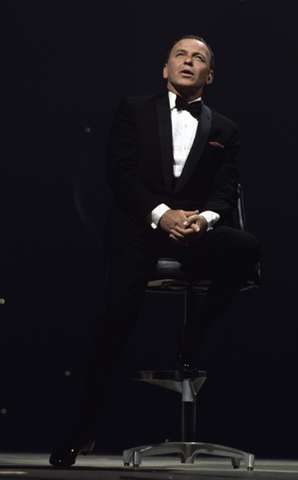
Time After Time
Undated materialFrom: Will Friedwald, "Sinatra! The Song Is You: A Singer's Art" (2018 revised edition), Ch. 4, "With Axel Stordahl" (1943-1948)
Even on “Time After Time,” conceived by Cahn and Styne as a kind of concerto for long breaths that only Sinatra could sing properly, he ends on a contrastingly quiet note. As with many another closer, he holds it softly, so that as the orchestra swells around him you’re not supposed to notice the exact point where Sinatra’s voice is simply no longer there.
Context: Cahn-Styne song conceived as a vehicle for Sinatra's long breath control; quiet ending analysis
This song/context matches multiple dated entries in the chronology; the specific date Friedwald is referring to could not be determined with confidence.
Tina Sinatra on Frank comforting Nancy after breakup
Undated materialFrom: James Kaplan, "Sinatra: The Chairman" (2015)
Tina Sinatra: Tina Sinatra recalled coming home from school to find Nancy in their old family home with Frank at her bedside, comforting her after the Sands breakup; Frank visited daily during filming until Nancy felt strong enough to return to the set, showing his skill at emotional support for his children.
Context: Tina Sinatra on Frank comforting Nancy after breakup
Date as given in source: (not specified)
Date as given in source could not be resolved to a specific calendar day for the main chronology; routed to Appendix as undated/partially-dated material.
Tina Sinatra on father's secret returns
Undated materialFrom: James Kaplan, "Sinatra: The Chairman" (2015)
Tina Sinatra: Tina Sinatra later revealed that her father actually did, sporadically and romantically, come back home to Nancy over the years, encouraging her hope for reconciliation just enough to keep it alive.
Context: Tina Sinatra on father's secret returns
Date as given in source: (not specified)
Date as given in source could not be resolved to a specific calendar day for the main chronology; routed to Appendix as undated/partially-dated material.
Tina Sinatra's account of the Maltz firing
Undated materialFrom: James Kaplan, "Sinatra: The Chairman" (2015)
Tina Sinatra: Tina Sinatra recalled that both Joe and Bobby Kennedy told her father to fire Maltz, but he initially resisted -- until she came home crying after a schoolmate accused her family of being Communists. Frank then had Maltz paid his full $75,000 fee and let go.
Context: Tina Sinatra's account of the Maltz firing
Date as given in source: (not specified)
Date as given in source could not be resolved to a specific calendar day for the main chronology; routed to Appendix as undated/partially-dated material.
To Love a Child
Undated materialFrom: Will Friedwald, "Sinatra! The Song Is You: A Singer's Art" (2018 revised edition), Ch. 10, "Concert Years" (1973-1994)
Will Friedwald: Costa's arrangement of 'To Love a Child' features his nine-year-old daughter (and future pop star) Nikka Costa; Friedwald calls it one of the last important works in the Sinatra canon by either Costa or Raposo, and one of the few classic Sinatra performances that could fairly be called 'charming.' At the same session Sinatra recorded but never released a Costa chart of Raposo's Sesame Street song 'Sing.'
Context: Joe Raposo/Hal David song written for Nancy Reagan's Foster Grandparent program; Costa arrangement
This song/context matches multiple dated entries in the chronology; the specific date Friedwald is referring to could not be determined with confidence.
Tone Poems of Color concept
Undated materialFrom: James Kaplan, "Sinatra: The Chairman" (2015)
Kaplan: The Tone Poems of Color album originated from twelve poems about colors by radio writer Norman Sickel; Sinatra liked them enough to commission a dozen original orchestral works from arrangers including Nelson Riddle, Alec Wilder, Billy May, Jeff Alexander, Elmer Bernstein, and Andre Previn -- notably excluding his former arranger Axel Stordahl, possibly out of lingering resentment over Stordahl going to work for Eddie Fisher's TV show.
Context: Tone Poems of Color concept
Date as given in source: (not specified)
Date as given in source could not be resolved to a specific calendar day for the main chronology; routed to Appendix as undated/partially-dated material.
Toni drops adultery charge
Undated materialFrom: James Kaplan, "Frank: The Voice" (2010)
Kaplan: Toni eventually dropped the adultery charge as well, claiming she had learned of Dolly's own arrest record for performing abortions.
Context: Toni drops adultery charge
Date as given in source: (not specified)
Date as given in source could not be resolved to a specific calendar day for the main chronology; routed to Appendix as undated/partially-dated material.
Tony Bill on Tommy Sands' performance
Undated materialFrom: James Kaplan, "Sinatra: The Chairman" (2015)
Tony Bill: Tony Bill, Sands' co-star in None but the Brave, said Sands 'chewed up scenery that hadn't even been built' and called the embarrassing performance 'a career ender for him.'
Context: Tony Bill on Tommy Sands' performance
Date as given in source: (not specified)
Date as given in source could not be resolved to a specific calendar day for the main chronology; routed to Appendix as undated/partially-dated material.
Tony Rome
Undated materialFrom: Tom Santopietro, "Sinatra in Hollywood" (2008), Knight-Errant (pt. 1)
Aaron Rosenberg: Producer Aaron Rosenberg described Sinatra's famously fast working style on set: everything was lit and ready before Sinatra arrived so filming could begin immediately, rarely requiring more than two to four takes.
Context: production
No corresponding dated entry could be identified in the chronology for this film/context.
Tony Rome
Undated materialFrom: Tom Santopietro, "Sinatra in Hollywood" (2008), Knight-Errant (pt. 1)
Bosley Crowther: New York Times critic Bosley Crowther panned Tony Rome as unworthy trash. Santopietro notes Crowther's review oddly dwelled on a fourteen-year-old grudge: after Crowther praised Sinatra's work in Suddenly, Sinatra sent him a thank-you note ('glad to have you on my team'), which Crowther later claimed soured him permanently on Sinatra -- an example, per Santopietro, of critics reviewing Sinatra's persona rather than the film itself.
Context: reviews/reception
No corresponding dated entry could be identified in the chronology for this film/context.
Tony Rome
Undated materialFrom: Tom Santopietro, "Sinatra in Hollywood" (2008), Knight-Errant (pt. 1)
Hollis Alpert: Hollis Alpert in The Saturday Review praised Tony Rome, writing that Sinatra had finally found a role suited to him since The Manchurian Candidate, and credited both Sinatra and the lingering influence of Bogart for the film's appeal.
Context: reviews/reception
No corresponding dated entry could be identified in the chronology for this film/context.
Tony Rome
Undated materialFrom: Tom Santopietro, "Sinatra in Hollywood" (2008), Knight-Errant (pt. 1)
Many critics accused Sinatra of imitating Humphrey Bogart's private-eye archetype, fueled by Sinatra's known friendship with Bogart and his near-marriage to Bogart's widow Lauren Bacall. Santopietro counters that any actor playing a screen detective inevitably follows Bogart's template, and argues Sinatra's Tony Rome is jauntier and less dour than Bogart's characters, colored by a 'ring-a-ding-ding' show-business persona.
Context: analysis
No corresponding dated entry could be identified in the chronology for this film/context.
Too Marvelous for Words / Swingin' Down the Lane / Lonesome Road
Undated materialFrom: Will Friedwald, "Sinatra! The Song Is You: A Singer's Art" (2018 revised edition), Ch. 6, "With Nelson Riddle" (1953-1979)
Will Friedwald (analysis): The instrumental break in 'Too Marvelous for Words' pays homage to Ellington via an exchange between the band and bassist Joe Comfort (a rare bass solo) recalling 'Ko-Ko' and 'In a Mellow Tone.' In 'Swingin' Down the Lane,' Riddle contrasts two trumpets -- Conrad Gozzo playing open-bell with Harry James-like swagger against Sweets Edison buzzing 'like a mosquito'; Riddle's intro was later borrowed (in the same key) by a British arranger for Matt Monro's 'My Kind of Girl.' 'Lonesome Road' (learned by Sinatra from Louis Armstrong) opens with Bill Miller plunking a bass-range vamp followed by a Latin shaker pattern, rather than gospel signifiers.
Context: Songs for Swingin' Lovers! instrumental details
This song/context matches multiple dated entries in the chronology; the specific date Friedwald is referring to could not be determined with confidence.
Too Romantic
Undated materialFrom: Will Friedwald, "Sinatra! The Song Is You: A Singer's Art" (2018 revised edition), Ch. 3, "With Tommy Dorsey" (1940-1942)
Tommy Dorsey (paraphrased) / Friedwald: He got around the problem on Burke’s "Too Romantic," from Road to Singapore, the first of Crosby and Bob Hope’s Road movies, but that song portrays an exasperatedly nervous would-be Romeo. Dorsey, who had been a sideman on Crosby sessions in the 1920s and ’30s, enthusiastically encouraged Sinatra to study the singer, exhorting Sinatra that there was "only one singer, and his name is Crosby."
Context: Road to Singapore song; Dorsey encouraged Sinatra to study Crosby
This song/context matches multiple dated entries in the chronology; the specific date Friedwald is referring to could not be determined with confidence.
Trilogy: The Future -- critical reception and defenses
Undated materialFrom: Will Friedwald, "Sinatra! The Song Is You: A Singer's Art" (2018 revised edition), Ch. 8, "Gordon Jenkins" (1956-1981)
Karina Longworth; Vincent Falcone; Billy May: Friedwald calls The Future the most spectacular disaster of Sinatra's recording career, but notes two defenders: podcaster/film historian Karina Longworth (You Must Remember This episode 'Frank Sinatra in Outer Space') argues newer fans without Sinatra 'baggage' can enjoy it; and conductor Vinnie Falcone insisted critics 'missed the whole point entirely,' framing the album as Sinatra's un-retired retirement testimonial: 'It may not have been classic Sinatra, but it wasn't intended to be.' Billy May, who attended the sessions, said: 'You gotta look at it this way. If Frank liked it and Frank commissioned it, then Gordon did a good job... it was sensational!'
Context: Trilogy: The Future -- critical reception and defenses
No corresponding dated entry could be identified in the chronology for this song/context.
Trilogy: The Past (1979) -- repertory planning session at Sinatra's Palm Springs compound
Undated materialFrom: Will Friedwald, "Sinatra! The Song Is You: A Singer's Art" (2018 revised edition), Ch. 7, "With Billy May" (1953-1979)
Billy May: A rare occasion when the arranger was consulted on repertory choice: May met with Sinatra, Sonny Burke, publishing man 'Sarge' Weiss, and Jimmy Van Heusen (with Gordon Jenkins, working on another part of the album, also weighing in and filling in on piano since none was present). May recalled: 'The approach for The Past was that they went by composer. They had a stack of songs, all kinds of 'em, that Frank was considering... Sarge had complete catalogues of their songs!' Van Heusen's own older songs, including a possible remake of 'Deep in a Dream,' were discussed but not used. They also considered and rejected imitating specific swing-band styles (Goodman, Miller) since May noted instrumental band sounds don't work as vocal backing.
Context: Trilogy: The Past (1979) -- repertory planning session at Sinatra's Palm Springs compound
No corresponding dated entry could be identified in the chronology for this song/context.
Triumphant run at the 500 Club, meets Giancana
Undated materialFrom: James Kaplan, "Frank: The Voice" (2010)
Kaplan: Sinatra performed to packed, overflow crowds at Skinny D'Amato's 500 Club in Atlantic City in late August, requiring extra 2 a.m. shows. It was there that Skinny introduced Frank to Sam Giancana, described as their 'good friend.'
Context: Triumphant run at the 500 Club, meets Giancana
Date as given in source: late August 1953
Date as given in source could not be resolved to a specific calendar day for the main chronology; routed to Appendix as undated/partially-dated material.
Try a Little Tenderness / Why Shouldn't I? / Paradise
Undated materialFrom: Will Friedwald, "Sinatra! The Song Is You: A Singer's Art" (2018 revised edition), Ch. 4, "With Axel Stordahl" (1943-1948)
All through The Voice and Frankly Sentimental, Sinatra is resolved not just to “Try a Little Tenderness,” as one of the songs is titled, but quite a lot. These may qualify as his most tender vocalizing ever. On “Why Shouldn’t I?,” Sinatra turns Cole Porter’s wiseguy laundry-list lyric into as sincere a portrayal of passion as the Peruvian ever wrote; he does even more for the normally patronizing and patriarchal “Tenderness.” After his atypical sensual humming in “Paradise,” we feel we’ve been there. On “Try a Little Tenderness” and “I’ve Got a Crush on You,” Sinatra does something he rarely did: he sings the verse. Clearly, this is a further way of distinguishing the album tracks from the singles, but he also uses the verses to help set up the narratives.
Context: The Voice/Frankly Sentimental - tender vocalizing, verse-singing, humming
This song/context matches multiple dated entries in the chronology; the specific date Friedwald is referring to could not be determined with confidence.
VIP guests' visits timed to Sinatra's shows
Undated materialFrom: Ed Walters, UNLV Table Games Management Oral History (2015)
Ed Walters: Walters says the Sands would coordinate wealthy "special" guests' visits around which star was performing -- for example bringing a guest's wife in to see Sinatra, or scheduling a return trip around Jerry Lewis or another act depending on what she wanted to see, since the shows themselves were a major draw.
Context: VIP guests' visits timed to Sinatra's shows
Date as given in source: 1960s
Date as given in source could not be resolved to a specific calendar day for the main chronology; routed to Appendix as undated/partially-dated material.
Van Heusen interrupts Sinatra and Connelly
Undated materialFrom: James Kaplan, "Sinatra: The Chairman" (2015)
Peggy Connelly: Peggy Connelly recalled that early in the Spain trip, Jimmy Van Heusen — who had the room down the hall in their shared suite — walked in on her and Sinatra in bed one morning and joked, "Please, please, there'll be no fucking in my presence," which made Frank laugh.
Context: Van Heusen interrupts Sinatra and Connelly
Date as given in source: (not specified)
Date as given in source could not be resolved to a specific calendar day for the main chronology; routed to Appendix as undated/partially-dated material.
Van Heusen makes peace offering
Undated materialFrom: James Kaplan, "Sinatra: The Chairman" (2015)
Jimmy Van Heusen: Several days after the painting incident, as he'd predicted to his lady friend, Sinatra sent Van Heusen an expensive Japanese print by way of apology; Van Heusen explained his tolerance for Sinatra's abuse by saying, 'Because he sings my songs, that's why. I'm a whore for my music.'
Context: Van Heusen makes peace offering
Date as given in source: April 1961
Date as given in source could not be resolved to a specific calendar day for the main chronology; routed to Appendix as undated/partially-dated material.
Variety raves about Sinatra-Basie Sands show
Undated materialFrom: James Kaplan, "Sinatra: The Chairman" (2015)
Kaplan: Variety called the Sinatra-Basie Sands engagement an obvious blockbuster, praising the pure combination of Sinatra and Basie without a chorus line; the show included Sinatra performing "Fly Me to the Moon," "My Kind of Town," and a new addition, "Get Me to the Church on Time."
Context: Variety raves about Sinatra-Basie Sands show
Date as given in source: November 1964
Date as given in source could not be resolved to a specific calendar day for the main chronology; routed to Appendix as undated/partially-dated material.
Violets for Your Furs
Undated materialFrom: Will Friedwald, "Sinatra! The Song Is You: A Singer's Art" (2018 revised edition), Ch. 3, "With Tommy Dorsey" (1940-1942)
Likewise, "Violets" opens with a brief trombone teaser before Sinatra’s plaintive verse ("It was winter in Manhattan"). Dorsey takes one of his finest trombone solos, yet what’s remarkable is that he does so in between Sinatra’s two choruses. Both songs have very specific stories that need to be told precisely—the bullseye needs to be hit exactly in the middle—and Sinatra later took the opportunity to take another swing at each with Nelson Riddle at Capitol. ... However, Sinatra would never quite improve on the original "Violets for Your Furs," which requires a certain amount of wide-eyed prom-date youthfulness. This the prewar Sinatra has in abundance.
Context: Analysis of the Heinie Beau arrangement
This song/context matches multiple dated entries in the chronology; the specific date Friedwald is referring to could not be determined with confidence.
Violets for Your Furs / Little Girl Blue
Undated materialFrom: Will Friedwald, "Sinatra! The Song Is You: A Singer's Art" (2018 revised edition), Ch. 6, "With Nelson Riddle" (1953-1979)
Mahlon Clark; Frank Sinatra: Songs for Young Lovers largely used George Siravo's small-band road arrangements (which Sinatra had been performing live at the 500 Club, Riviera, and Sands), not new Riddle charts, though Riddle conducted and got sole billing ('accompanied by Nelson Riddle'), reportedly annoying both Riddle and Siravo. Clarinetist Mahlon Clark: 'Frank used the arrangements he was using on the road then... I remember that they were tattered and worn... Nelson brought in only one new chart of his own, written for that combination, and it was "Like Someone in Love."' 'Violets for Your Furs' was actually credited to orchestrator Dick Jones. Sinatra told the Riviera audience: 'This is something new as far as I'm concerned... We usually have eighteen brass... but we decided to try something different this time.'
Context: Songs for Young Lovers (recorded from road book)
This song/context matches multiple dated entries in the chronology; the specific date Friedwald is referring to could not be determined with confidence.
Visits FDR at the White House
Undated materialFrom: James Kaplan, "Frank: The Voice" (2010)
Kaplan: Toots Shor arranged, via Democratic National Committee chair Robert Hannegan, to bring Sinatra and actor Rags Ragland to tea with President Roosevelt in the White House Red Room. FDR, looking gravely ill (he would die about six months later), shook Sinatra's hand and joked to an aide that Sinatra 'would never have made them swoon in our day' -- a remark with an implicit ethnic dig that Sinatra let pass.
Context: Visits FDR at the White House
Date as given in source: September 1944
Date as given in source could not be resolved to a specific calendar day for the main chronology; routed to Appendix as undated/partially-dated material.
Von Ryan's Express premiere at Toots Shor's
Undated materialFrom: James Kaplan, "Sinatra: The Chairman" (2015)
Kaplan: Three days after the Dismas House benefit, Frank was in New York celebrating the premiere of Von Ryan's Express at Toots Shor's with Dean Martin, Joey Bishop, and Count Basie; the film became Sinatra's highest-grossing picture of the decade. He flew east in his new Lear Jet, the Christina II.
Context: Von Ryan's Express premiere at Toots Shor's
Date as given in source: June 1965
Date as given in source could not be resolved to a specific calendar day for the main chronology; routed to Appendix as undated/partially-dated material.
Voyle Gilmore on working with Sinatra
Undated materialFrom: James Kaplan, "Sinatra: The Chairman" (2015)
Voyle Gilmore: Fired producer Voyle Gilmore said he felt only relief at being let go, describing Sinatra as brilliant with musicians but impossible to advise in front of others, someone who could charm butterflies one moment and be miserable the next.
Context: Voyle Gilmore on working with Sinatra
Date as given in source: (not specified)
Date as given in source could not be resolved to a specific calendar day for the main chronology; routed to Appendix as undated/partially-dated material.
Walter Shenson manages Sinatra's press
Undated materialFrom: James Kaplan, "Frank: The Voice" (2010)
Walter Shenson: Eternity's unit publicist Walter Shenson took charge of rehabilitating Sinatra's press image, coaching him to cooperate with reporters; Shenson recalled handling a reporter's inquiry about Frank's $109,000 tax lien by getting a calm quote from Frank about working with the government to pay it back.
Context: Walter Shenson manages Sinatra's press
Date as given in source: (not specified)
Date as given in source could not be resolved to a specific calendar day for the main chronology; routed to Appendix as undated/partially-dated material.
Walters lies to Sinatra about the records
Undated materialFrom: Ed Walters, pit boss reminiscences (compiled by Kraus, Sinatra mailing list)
Ed Walters: Years after Sinatra left the Sands (around September 1967), Walters visited him backstage at Caesars. Sinatra asked if he still had the records he'd given him, and Walters lied and said yes rather than explain he'd donated them to a dying hospice patient. Walters says he regretted the lie for years, believing Sinatra — who prized honesty — would actually have been proud of what he'd done with them.
Context: Walters lies to Sinatra about the records
Date as given in source: (not specified)
Date as given in source could not be resolved to a specific calendar day for the main chronology; routed to Appendix as undated/partially-dated material.
Walters on Sinatra's Atlantic City troubles
Undated materialFrom: Ed Walters, pit boss reminiscences (compiled by Kraus, Sinatra mailing list)
Ed Walters: Walters speculates that Sinatra's well-documented difficulties in Atlantic City casinos stemmed from AC's much stricter regulatory environment, where casino rules could not be bent the way they were in Las Vegas. He suggests Frank, when thwarted by rules, could get angry and later regret comments that made the papers.
Context: Walters on Sinatra's Atlantic City troubles
Date as given in source: (not specified)
Date as given in source could not be resolved to a specific calendar day for the main chronology; routed to Appendix as undated/partially-dated material.
Wandering
Undated materialFrom: Charles L. Granata, "Sessions with Sinatra: Frank Sinatra and the Art of Recording" (1999/2003), Afterword & Appendices A-D
Granata includes 'Wandering' among the fifty recordings he considers essential to understanding Sinatra's artistry (arranged by Don Costa, recorded 1968, Reprise); the song was chosen for its musical/interpretive value rather than commercial popularity.
Context: essential song - Fifty Songs That Define the Essence of Sinatra
Date as given in source: 1968
This song/context matches multiple dated entries in the chronology, or lacked a sufficiently precise date; the specific date could not be determined with confidence.
Wartime silk stockings for Dolly
Undated materialFrom: Tony Consiglio (as told to Franz Douskey), "Sinatra and Me: The Very Good Years" (2012)
Consiglio: During World War II, when silk stockings were scarce and nylon hosiery didn't yet exist, Consiglio arranged to get Dolly Sinatra silk stockings through his sister-in-law Flora's connection at a New Haven clothing store, Lerner's, at $1.40 a pair.
Context: Wartime silk stockings for Dolly
Date as given in source: World War II
Date as given in source could not be resolved to a specific calendar day for the main chronology; routed to Appendix as undated/partially-dated material.
Watertown concept album -- origin story
Undated materialFrom: Will Friedwald, "Sinatra! The Song Is You: A Singer's Art" (2018 revised edition), Ch. 9, "Looking for the Hook" (1960-1971)
Charles Calello (quoted) / Bob Gaudio via Friedwald: Charles Calello told Friedwald the project began because Frankie Valli 'had this uncanny ability... or the balls, really, to go up to and talk to anybody... Frankie had a lot of confidence in my ability, and he also had a lot of confidence in Gaudio's ability. So he told Sinatra they had all these hit records because Bob Gaudio wrote and produced all their songs. And Sinatra said, "Well, could he write some songs for me?"' At a Waldorf lunch, Gaudio invited Sinatra to a pool party at his new Jersey home the following weekend -- except the house had no pool; Valli and Gaudio scrambled to have a pool installed in seven days, a storm nearly destroyed the still-wet concrete, and Sinatra signed his name in it anyway; when Gaudio later moved he took the 110-pound slab of cement with him. Gaudio and Holmes wrote about four songs Sinatra liked, then Gaudio pitched the full concept-album idea, framing it (per Frankophile Ed O'Brien) as 'having a small-town approach and taking it down as much as we could to basic life in middle America.'
Context: Watertown concept album -- origin story
Date as given in source: July 1969 (Waldorf lunch and pool party)
No corresponding dated entry could be identified in the chronology for this song/context.
Watertown, vocal overdubbing process
Undated materialFrom: Will Friedwald, "Sinatra! The Song Is You: A Singer's Art" (2018 revised edition), Ch. 9, "Looking for the Hook" (1960-1971)
Charles Calello (quoted, citing Sammy Cahn): Calello explained why Sinatra overdubbed vocals in Los Angeles rather than New York, citing Sammy Cahn's account of Sinatra's learning process: 'One of the things I found out about working with him is that it took him a long time to learn a song. But I had spoken to Sammy Cahn about that. I asked him, "How long does it take you to teach a song to Sinatra?" He said, "Well, Frank doesn't like to speed-learn a song. He takes his time so he can really get it, to appreciate the value of the song. Sometimes it takes him a good week before he gets it under his belt." So for him to learn all originals for a new album was a major task.' Gaudio substantially remixed the original tracks by engineer Frank Laico; Sinatra also produced his own backing on several verses using Al Viola's acoustic guitar.
Context: Watertown, vocal overdubbing process
No corresponding dated entry could be identified in the chronology for this song/context.
Wayne Newton discovered in Copa lounge
Undated materialFrom: Tony Consiglio (as told to Franz Douskey), "Sinatra and Me: The Very Good Years" (2012)
Consiglio: Consiglio recalls hearing an unfamiliar singer in the Copa lounge one night after Sinatra's show and being surprised to learn 'she' was actually Wayne Newton. Newton later became a top Las Vegas headliner and casino owner after Jackie Gleason featured him repeatedly on his Saturday night TV show.
Context: Wayne Newton discovered in Copa lounge
Date as given in source: 1950s
Date as given in source could not be resolved to a specific calendar day for the main chronology; routed to Appendix as undated/partially-dated material.
We Open in Venice / The Oldest Established / Luck Be a Lady
Undated materialFrom: Will Friedwald, "Sinatra! The Song Is You: A Singer's Art" (2018 revised edition), Ch. 7, "With Billy May" (1953-1979)
May arranged the two most exciting trio numbers of the Rat Pack canon: 'We Open in Venice' from Kiss Me Kate (Sinatra, Martin, Davis) and 'The Oldest Established' from Guys and Dolls (Sinatra, Martin, Crosby), plus the single best-remembered number of the project, Sinatra's solo 'Luck Be a Lady.'
Context: Reprise Repertory Theater series (1963)
Date as given in source: 1963
This song/context matches multiple dated entries in the chronology; the specific date Friedwald is referring to could not be determined with confidence.
What Are You Doing the Rest of Your Life? / Summer Me, Winter Me
Undated materialFrom: Will Friedwald, "Sinatra! The Song Is You: A Singer's Art" (2018 revised edition), Ch. 10, "Concert Years" (1973-1994)
Will Friedwald: Friedwald argues the Michel Legrand/Alan & Marilyn Bergman songwriting team 'totally nailed' Sinatra's late-life worldview the way Cahn and Van Heusen had captured his 1950s-60s persona, producing performances of 'What Are You Doing the Rest of Your Life?' (Jenkins/Costa) and 'Summer Me, Winter Me' that justified his return from retirement. The five-way Sinatra-Costa-Legrand-Bergmans collaboration produced only these two tracks, never the full album's worth Friedwald wishes had existed.
Context: Legrand-Bergman collaborations with Costa, from Some Nice Things I've Missed (1974) and Trilogy: The Present (1979)
This song/context matches multiple dated entries in the chronology; the specific date Friedwald is referring to could not be determined with confidence.
What'll I Do? / Moonlight Becomes You
Undated materialFrom: Will Friedwald, "Sinatra! The Song Is You: A Singer's Art" (2018 revised edition), Ch. 4, "With Axel Stordahl" (1943-1948)
Rosemary Clooney: Compared to Crosby, explained Rosemary Clooney, Sinatra invested much more in his emotional interpretation, “at a deeper level. And I also think Frank showed a vulnerability that perhaps was not in Bing’s makeup. Bing wasn’t able to come out and sing ‘I love you’ in a song. It had to be ‘if I loved you’ or ‘if I say I love you’ [as in “Moonlight Becomes You”] or something like that. Whereas Sinatra would be more vulnerable and feel very comfortable showing that vulnerability. Therefore, you, as a listener, are more comfortable hearing it.” On a piece like “What’ll I Do?,” Sinatra saturates his performance with the strength required to show vulnerability.
Context: Rosemary Clooney comparing Sinatra's vulnerability with Crosby's approach to romantic lyrics
This song/context matches multiple dated entries in the chronology; the specific date Friedwald is referring to could not be determined with confidence.
What's New
Undated materialFrom: Will Friedwald, "Sinatra! The Song Is You: A Singer's Art" (2018 revised edition), Ch. 6, "With Nelson Riddle" (1953-1979)
'What's New' is full of entrances Sinatra delays so long that 'you're pulling your hair out in suspense,' again casting Ray Sims's trombone as company for Sinatra's misery.
Context: Only the Lonely - Riddle-conducted sessions (as opposed to the Slatkin date)
This song/context matches multiple dated entries in the chronology; the specific date Friedwald is referring to could not be determined with confidence.
What's New? / Gone with the Wind / Willow Weep for Me / Angel Eyes / One for My Baby
Undated materialFrom: Charles L. Granata, "Sessions with Sinatra: Frank Sinatra and the Art of Recording" (1999/2003), Afterword & Appendices A-D
Granata calls this a melancholy classic that both Sinatra and Nelson Riddle considered their personal best work, featuring quintessential renditions of 'What's New?,' 'Gone with the Wind,' 'Willow Weep for Me,' 'Angel Eyes,' and 'One for My Baby.'
Context: companion recording: Only the Lonely (Capitol 94756)
This song/context matches multiple dated entries in the chronology, or lacked a sufficiently precise date; the specific date could not be determined with confidence.
When Your Lover Has Gone
Undated materialFrom: Will Friedwald, "Sinatra! The Song Is You: A Singer's Art" (2018 revised edition), Ch. 4, "With Axel Stordahl" (1943-1948)
Likewise, in countless concerts Sinatra introduced “When Your Lover Has Gone” with a sense of wonder that its composer, E. A. Swan, could come out of nowhere, write such a beautiful love song, and then disappear into oblivion. There’s no doubt that Sinatra learned it from Louis Armstrong, but had it not been for the two of them, this quintessential torch song (introduced on the soundtrack of the 1931 Blonde Crazy, starring Jimmy Cagney) would have surely vanished as speedily as its one-shot author.
Context: E.A. Swan composition, introduced on the 1931 film Blonde Crazy soundtrack; Sinatra learned it via Louis Armstrong and introduced it in concert
This song/context matches multiple dated entries in the chronology; the specific date Friedwald is referring to could not be determined with confidence.
Where Are You? sessions (1957) -- Sinatra's private reaction to hearing the finished album
Undated materialFrom: Will Friedwald, "Sinatra! The Song Is You: A Singer's Art" (2018 revised edition), Ch. 8, "Gordon Jenkins" (1956-1981)
Frank Military: Frank Military recalled that around the time of Where Are You?, Sinatra worried privately that 'something was happening to his voice.' After finishing the last cut, Sinatra took an acetate up to his house and played the whole album, then told Military, 'I thought for a minute I was losing my voice.' Military replied there was no indication of that at all, calling it 'the most magnificent album I've heard for a long time.'
Context: Where Are You? sessions (1957) -- Sinatra's private reaction to hearing the finished album
No corresponding dated entry could be identified in the chronology for this song/context.
Where or When
Undated materialFrom: Will Friedwald, "Sinatra! The Song Is You: A Singer's Art" (2018 revised edition), Ch. 1, "Night and Day" (Sinatra style overview)
Al Viola: Al Viola cited this stripped-down duo recording as proof of Bill Miller's harmonic strength backing Sinatra with no orchestra: 'you can hear the strong structure of his harmonies backing Sinatra. It's perfect.'
Context: Studio recording, voice and piano only (Bill Miller)
This song/context matches multiple dated entries in the chronology; the specific date Friedwald is referring to could not be determined with confidence.
Where or When
Undated materialFrom: Will Friedwald, "Sinatra! The Song Is You: A Singer's Art" (2018 revised edition), Ch. 10, "Concert Years" (1973-1994)
Billy Byers: Friedwald singles out the Lawrence/Gorme duet 'Where or When' as especially ingenious, weaving new words around Sinatra's voice and Billy Byers's orchestration in a manner reminiscent of Lambert, Hendricks and Ross's vocalese treatments of classic Basie charts. Byers, whose 1966 arrangement was adapted for the track, said he was flattered by the reuse but was otherwise critical of the whole Duets concept: 'On "Tramp," the tempo is wrong, the band ain't swinging, and on most of the album, you don't even hear the drums... I'd rather hear Sinatra do some new stuff.'
Context: Duets, with Steve Lawrence and Eydie Gorme, Billy Byers arrangement
This song/context matches multiple dated entries in the chronology; the specific date Friedwald is referring to could not be determined with confidence.
Where or When / Over the Rainbow / All the Things You Are
Undated materialFrom: Will Friedwald, "Sinatra! The Song Is You: A Singer's Art" (2018 revised edition), Ch. 4, "With Axel Stordahl" (1943-1948)
Sinatra unfailingly triumphs in the development of devices that move the song forward on both the musical and dramatic planes. What we can call the “soft climax”—as opposed to the “anticlimax”—may be the most effective of these. Apart from exceptions like “Where or When” (on the first of three arrangements of the Rodgers and Hart song that Sinatra would record), “Over the Rainbow,” and “All the Things You Are,” the most intense moment of a Sinatra performance is rarely the last line or note. Sinatra prefers to hit the big notes in the previous rhyme or line before the end, wherever it makes the most sense to him, and then bring it home on a serenely quiet note.
Context: Exceptions to Sinatra's typical "soft climax" device - songs where the most intense moment IS the final line/note
This song/context matches multiple dated entries in the chronology; the specific date Friedwald is referring to could not be determined with confidence.
Where or When / Street of Dreams / Get Me to the Church on Time
Undated materialFrom: Will Friedwald, "Sinatra! The Song Is You: A Singer's Art" (2018 revised edition), Ch. 9, "Looking for the Hook" (1960-1971)
Friedwald (analysis): Friedwald notes 'Where or When' got a completely new in-the-groove Byers treatment for Basie, distinct from Sinatra's 1945 and 1958 ballad recordings. Byers also wrote an excellent new chart on 'Street of Dreams' and, per Friedwald, 'outdoes himself' with an ambitiously polyrhythmic arrangement of 'Get Me to the Church on Time' that captures the essence of both Basie and Sinatra in one chart.
Context: Sinatra at the Sands, new Byers charts
This song/context matches multiple dated entries in the chronology; the specific date Friedwald is referring to could not be determined with confidence.
Whispering
Undated materialFrom: Will Friedwald, "Sinatra! The Song Is You: A Singer's Art" (2018 revised edition), Ch. 3, "With Tommy Dorsey" (1940-1942)
Then came "Whispering," which re-used elements from both "East of the Sun" and "Smile Again": the mix of Sinatra and the Pied Pipers, a slightly more oomphy tempo, a Bunny Berigan trumpet interlude, all applied to a familiar old tune—one that the Dorsey brothers had played many times with Paul Whiteman and that Sinatra had already sung with TD as part of a radio "Memory Medley." It didn’t quite recreate the sensation of "Smile Again," but "Whispering" remains a lovely record; even its title is a mantra for what Sinatra was trying to achieve.
Context: Analysis of the Sentimentalist-style recording of the standard "Whispering"
This song/context matches multiple dated entries in the chronology; the specific date Friedwald is referring to could not be determined with confidence.
White-hot Columbia recording streak
Undated materialFrom: James Kaplan, "Frank: The Voice" (2010)
Kaplan: Sinatra recorded prolifically for Columbia through the year, averaging about one session a month in Hollywood and New York and cutting forty sides in all, ranging from standards like 'Where or When' and 'You Go to My Head' to oddities like 'Jesus Is a Rock in a Weary Land.'
Context: White-hot Columbia recording streak
Date as given in source: 1945
Date as given in source could not be resolved to a specific calendar day for the main chronology; routed to Appendix as undated/partially-dated material.
Who
Undated materialFrom: Will Friedwald, "Sinatra! The Song Is You: A Singer's Art" (2018 revised edition), Ch. 3, "With Tommy Dorsey" (1940-1942)
Joel Herron: "We went backstage at the Paramount where they knew Pee Wee and Leonard, and we sat down in front with [me in the middle]. We went there essentially to see this kid get killed. The band came on and did ‘Sentimental over You,’ the theme, and Dorsey came forward and said, ‘Without any further ado we’d like to introduce our new boy singer, Frank Sinatra, singing our hit record ‘Who,’ which Leonard had recorded [in 1937]. When this new kid came running out, we all were sure that he was gonna fall on his ass. But when he started to sing, I sunk down in my seat. I felt humiliated for the guy who was sitting next to me [Leonard], who had just become the oldest kind of news that there was in the world."
Context: Sinatra's Paramount Theatre debut with Dorsey, witnessed by Jack Leonard (in army uniform)
This song/context matches multiple dated entries in the chronology; the specific date Friedwald is referring to could not be determined with confidence.
Why Sinatra's Sands engagements were short
Undated materialFrom: Ed Walters, pit boss reminiscences (compiled by Kraus, Sinatra mailing list)
Ed Walters: Walters explains Sinatra's engagements at the Sands were kept to two or three weeks partly for vocal-health reasons, but mainly a business calculation: his run drew the biggest gamblers to town, who were typically 'tapped out' within a couple of weeks, so the casino didn't want its highest-paid draw performing to a broke house.
Context: Why Sinatra's Sands engagements were short
Date as given in source: (not specified)
Date as given in source could not be resolved to a specific calendar day for the main chronology; routed to Appendix as undated/partially-dated material.
Why Sinatra's Sands engagements were short
Undated materialFrom: Ed Walters, pit boss reminiscences (compiled by Kraus, Sinatra mailing list)
Ed Walters: Walters explains a casino secret: the Sands deliberately kept Sinatra's engagements to a few weeks rather than longer runs, partly due to his throat issues, but mainly because his engagements drew in the top gamblers, who would typically be tapped out of money within one or two weeks -- so the casino didn't want its star draw performing to a broke audience.
Context: Why Sinatra's Sands engagements were short
Date as given in source: (not specified)
Date as given in source could not be resolved to a specific calendar day for the main chronology; routed to Appendix as undated/partially-dated material.
William B. Williams names Sinatra Chairman of the Board
Undated materialFrom: Tony Consiglio (as told to Franz Douskey), "Sinatra and Me: The Very Good Years" (2012)
Consiglio: Radio DJ William B. Williams, who dedicated entire shows to Sinatra's music, was the one who coined Frank's nickname "Chairman of the Board." Sinatra was devoted to him in return.
Context: William B. Williams names Sinatra Chairman of the Board
Date as given in source: 1960s
Date as given in source could not be resolved to a specific calendar day for the main chronology; routed to Appendix as undated/partially-dated material.
Willow Weep for Me
Undated materialFrom: Will Friedwald, "Sinatra! The Song Is You: A Singer's Art" (2018 revised edition), Ch. 6, "With Nelson Riddle" (1953-1979)
Nelson Riddle: Riddle described the song's harmonic color: 'sort of a shady, mysterious, sad sound that occurs to me anytime I see a willow tree.'
Context: Only the Lonely - Riddle's description of the mood
This song/context matches multiple dated entries in the chronology; the specific date Friedwald is referring to could not be determined with confidence.
Winners / Here's to the Losers
Undated materialFrom: Will Friedwald, "Sinatra! The Song Is You: A Singer's Art" (2018 revised edition), Ch. 1, "Night and Day" (Sinatra style overview)
Will Friedwald: Friedwald contrasts two Sinatra recordings as opposite sides of the same coin: 'Winners' is dark, somber, and depressing despite its triumphant title, while 'Here's to the Losers' is joyful and upbeat -- a swinging take on the Sermon on the Mount with Biblical overtones. He reads this as Sinatra's implicit philosophy: winning carries grave responsibility, while losing is something you can actually have fun with; 'the real joy of life is in the losing.'
Context: Reprise-era recordings (thematic pairing, no album specified)
This song/context matches multiple dated entries in the chronology; the specific date Friedwald is referring to could not be determined with confidence.
Winter Kills
Undated materialFrom: Tom Santopietro, "Sinatra in Hollywood" (2008), Knight-Errant (pt. 2) / That's Life
Two years after Contract on Cherry Street, novelist Richard Condon (The Manchurian Candidate) proposed reuniting with Sinatra for the film of his novel Winter Kills; Sinatra approved the William Richert script but turned down the Joseph Kennedy-like role, feeling himself, at nearly sixty-five, too old for it. The part went to director John Huston, who received rave reviews for playing it.
Context: casting
No corresponding dated entry could be identified in the chronology for this film/context.
Without a Song
Undated materialFrom: Will Friedwald, "Sinatra! The Song Is You: A Singer's Art" (2018 revised edition), Ch. 3, "With Tommy Dorsey" (1940-1942)
"Without a Song," widely regarded as a major achievement in both Sinatra’s and Oliver’s careers, shows Sinatra tempering storytelling with swing in a way that points directly to Songs for Swingin’ Lovers!
Context: Sy Oliver chart that points toward Songs for Swingin' Lovers!
This song/context matches multiple dated entries in the chronology; the specific date Friedwald is referring to could not be determined with confidence.
Without a Song
Undated materialFrom: Will Friedwald, "Sinatra! The Song Is You: A Singer's Art" (2018 revised edition), Ch. 4, "With Axel Stordahl" (1943-1948)
In the Dorsey period, it had largely been up to Stordahl to develop the slow-ballad side of the band—and Sinatra in particular—at the same time the Oliver rhythm numbers turned TD’s orchestra into one of the great jazz organizations of all time. Alternating between the two men, Sinatra, like the band itself, could go either way; by the end of the Dorsey tenure he was as adroit a rhythm singer as he was a balladeer. On Oliver’s “Without a Song,” he was both at the same time.
Context: Dorsey-era (Sy Oliver arrangement) - Sinatra as both rhythm singer and balladeer simultaneously
This song/context matches multiple dated entries in the chronology; the specific date Friedwald is referring to could not be determined with confidence.
Without a Song / Polka Dots and Moonbeams / Oh! Look at Me Now / How About You? / Violets for Your Furs / Everything Happens to Me / Take Me / This Is the Beginning of the End / The World Is in My Arms
Undated materialFrom: Will Friedwald, "Sinatra! The Song Is You: A Singer's Art" (2018 revised edition), Ch. 3, "With Tommy Dorsey" (1940-1942)
Although it contains four or five killer-strong tracks, the completed I Remember Tommy does not amount to a classic Sinatra album. By and large, Oliver, the teacher, had been surpassed by his pupils—particularly Riddle and May. Much of the album’s texture resembles lesser Riddle; add a few more flutes, bass trombones, and Sweets Edison, and it would sound exactly like Riddle. In fact, Oliver does employ Kenny Shroyer’s bass trombone on "Without a Song" and unfortunately illustrates why Riddle used the instrument only for color here and there. Oliver has the thing grunting throughout, and it quickly becomes repetitious. But not even factoring in the disc’s two top-heavy dramatic pieces, "Daybreak" and the hugely overdone "Take Me," little on I Remember Tommy succeeds as an improvement over the classic Dorsey-Sinatra recordings. Much of the disc seems redundant, not only in comparison to the originals ("Polka Dots and Moonbeams" is decidedly inferior to Axel Stordahl’s 1940 arrangement), but in light of the excellent remakes Riddle had already done of "Oh! Look at Me Now," "How About You?," "Violets for Your Furs," and "Everything Happens to Me." It’s sad to report that Sy Oliver actually sounds square in spots. And it’s not the Gordon Jenkins kind of old-fashionedness that works because it matches the mood. It sounds doubly out of place in comparison to the high-powered hipness of "The One I Love Belongs to Somebody Else." It’s also a rare case of Sinatra exercising questionable judgement—why would he choose a forgettable song like "Take Me" over such gems as "This Is the Beginning of the End" and "The World Is in My Arms"?
Context: Overall critical assessment of I Remember Tommy album versus originals and Nelson Riddle remakes
This song/context matches multiple dated entries in the chronology; the specific date Friedwald is referring to could not be determined with confidence.
Wives and Lovers
Undated materialFrom: Will Friedwald, "Sinatra! The Song Is You: A Singer's Art" (2018 revised edition), Ch. 9, "Looking for the Hook" (1960-1971)
Burt Bacharach (quoting Quincy Jones): Burt Bacharach recalled in a Guardian interview asking Quincy Jones why the waltz-time 'Wives and Lovers' was changed to 4/4 for Sinatra: 'I said, "Quincy, what happened?" He said, "The Basie band can't play in 3/4."' Friedwald notes this was the second song on the album 'dewaltzed' this way, after 'Fly Me to the Moon.'
Context: It Might as Well Be Swing — Bacharach/David song, changed from 3/4 to 4/4
This song/context matches multiple dated entries in the chronology; the specific date Friedwald is referring to could not be determined with confidence.
World War None! / I've Been There! / Song Without Words
Undated materialFrom: Will Friedwald, "Sinatra! The Song Is You: A Singer's Art" (2018 revised edition), Ch. 8, "Gordon Jenkins" (1956-1981)
"World War None!" uses militaristic snare-drum march music to protest mankind's self-destructive tendencies. The three-part title suite ("The Future," "The Future (Continued) I've Been There!," "The Future (Conclusion) Song Without Words") is framed by a simple twelve-bar blues sung by Jenkins's wife Beverly Mahr (a studio singer since the mid-1940s Dick Haymes show and Manhattan Tower, whose voice Friedwald compares to Lee Wiley), related melodically to "Crescent City Blues" from Jenkins's earlier work Seven Dreams (itself the melodic source Johnny Cash borrowed for "Folsom Prison Blues"). "I've Been There!" is called derivative of but sweeter than "This Is All I Ask"; "Song Without Words" is a six-minute wordless/instrumental piece featuring soprano Loulie Jean Norman (best known as the wordless soprano on the original Star Trek theme).
Context: Trilogy: The Future -- the three-part title suite and surrounding tracks
This song/context matches multiple dated entries in the chronology; the specific date Friedwald is referring to could not be determined with confidence.
Wrap Your Troubles in Dreams
Undated materialFrom: Charles L. Granata, "Sessions with Sinatra: Frank Sinatra and the Art of Recording" (1999/2003), Part III: The Capitol Years, 1953-1962
Milt Bernhart: Milt Bernhart recalled an early Sinatra-Riddle session for 'Wrap Your Troubles in Dreams' where Sinatra abruptly stopped the band, took Riddle aside privately, and delivered what Bernhart interpreted as 'a lesson in writing for a singer' -- Riddle's chart had been too busy, more suited to an instrumental than a vocal.
Context: session anecdote
This song/context matches multiple dated entries in the chronology, or lacked a sufficiently precise date; the specific date could not be determined with confidence.
Wrong-Door Raid witness "mysteriously beaten up" during 1957 trial
Undated materialFrom: Rough Guide to Frank Sinatra (Rough guide 4.pdf)
During a 1957 trial investigating the methods of scandal magazines, a witness who claimed Sinatra had been present during the November 1954 Wrong-Door Raid on Marilyn Monroe's presumed apartment was, per this account, "mysteriously beaten up." Note: This claim comes solely from this source, with no name, exact date, or independent corroboration given; it is not verified elsewhere in this chronology.
You Are Too Beautiful / I've Got a Crush on You
Undated materialFrom: Will Friedwald, "Sinatra! The Song Is You: A Singer's Art" (2018 revised edition), Ch. 4, "With Axel Stordahl" (1943-1948)
Sammy Cahn: “I take great pride in the fact that I introduced Frank to a lot of the great, great songs,” Sammy Cahn proclaimed. “I introduced him to songs such as ‘You Are Too Beautiful.’ I [would say] ‘Frank, there’s a song.’ . . . Because he’s got a good sense of music, you can lay a good song on him, [and he’ll say], ‘Oh, geez, that’s good. Let me have that!” In fact, a session recording exists of Stordahl and Sinatra preparing to record “I’ve Got a Crush on You” in which we can hear the conductor reminding the singer, “Sammy Cahn taught you this song, Frank.” “That was our love, all of us,” Cahn said. “We loved the great standards. How are you not going to love them? Whenever we’d be around someplace, we’d always play the great songs.”
Context: Sammy Cahn's role introducing Sinatra to standards; a session recording of Stordahl reminding Sinatra of the song's origin
This song/context matches multiple dated entries in the chronology; the specific date Friedwald is referring to could not be determined with confidence.
You Make Me Feel So Young / Young at Heart
Undated materialFrom: Will Friedwald, "Sinatra! The Song Is You: A Singer's Art" (2018 revised edition), Ch. 6, "With Nelson Riddle" (1953-1979)
Will Friedwald (analysis): Friedwald calls the album opener 'Young at Heart' in swingtime, with Sinatra capturing the same childlike exuberance, savoring lyricist Mack Gordon's awkward schoolkid syllabification of 'in-div-id-u-al' (echoing 1951's 'Whistle a Happy Tune'). This is why 'You Make Me Feel So Young' became a concert perennial while 'Young at Heart,' despite being a hit single, was rarely sung again live.
Context: Songs for Swingin' Lovers! (opening track)
This song/context matches multiple dated entries in the chronology; the specific date Friedwald is referring to could not be determined with confidence.
You'll Never Walk Alone
Undated materialFrom: Will Friedwald, "Sinatra! The Song Is You: A Singer's Art" (2018 revised edition), Ch. 4, "With Axel Stordahl" (1943-1948)
On “You’ll Never Walk Alone” a similar keyboard figure (played by Mark McIntyre) symbolizes being alone, while the background choir represents the concept of communal solidarity.
Context: Stordahl arrangement analysis - Mark McIntyre's keyboard figure and choral symbolism
This song/context matches multiple dated entries in the chronology; the specific date Friedwald is referring to could not be determined with confidence.
You'll Never Walk Alone
Undated materialFrom: Will Friedwald, "Sinatra! The Song Is You: A Singer's Art" (2018 revised edition), Ch. 4, "With Axel Stordahl" (1943-1948)
On “You’ll Never Walk Alone,” Sinatra’s act of fading into the ensemble (here a vocal choir as well as the orchestra) becomes part of the message of the Rodgers and Hammerstein anthem: the individual becomes one with the community; he need never walk alone.
Context: Analysis of Sinatra's vocal fade into the choir as embodying the song's message
This song/context matches multiple dated entries in the chronology; the specific date Friedwald is referring to could not be determined with confidence.
You're Driving Me Crazy
Undated materialFrom: Will Friedwald, "Sinatra! The Song Is You: A Singer's Art" (2018 revised edition), Ch. 6, "With Nelson Riddle" (1953-1979)
Jimmy Forrest: Strangers is the only Sinatra-Riddle project to use Hammond organ (played by Artie Kane), inspired by Count Basie's use of organ. 'You're Driving Me Crazy' had been a Basie perennial (also source of the variation 'Moten Swing'). Tenor player Jimmy Forrest told Joe Goldberg the organ as accompaniment 'gives you more scope. You feel as if you have a big band behind you.' Riddle and Sinatra treat the organ as a third 'orchestra' trading phrases with the big band and strings like rival bands in a Savoy Ballroom battle; likely influenced by Nat King Cole's 1961 organ-featuring album Let's Face the Music!, arranged by Billy May.
Context: Strangers in the Night - use of Hammond organ, inspired by Basie
This song/context matches multiple dated entries in the chronology; the specific date Friedwald is referring to could not be determined with confidence.
You're Nobody till Somebody Loves You
Undated materialFrom: Will Friedwald, "Sinatra! The Song Is You: A Singer's Art" (2018 revised edition), Ch. 7, "With Billy May" (1953-1979)
unnamed Sinatra sideman: Friedwald details the arrangement's structure: a left-field string introduction, a loping tender first chorus, a sharper louder second chorus, and a surprise full third chorus in which Sinatra reaches for a long note like 'Dizzy Dean' winding up to throw. A Sinatra sideman is quoted comparing his voice and attack in this vein to 'a big, strong swinging horn.'
Context: Swing Along with Me / Sinatra Swings
This song/context matches multiple dated entries in the chronology; the specific date Friedwald is referring to could not be determined with confidence.
Young Frank Ran Away To His Cousin's House To Escape His Mother's Temper
Undated materialFrom: Nancy Sinatra, Frank Sinatra: An American Legend, 1995.
Nancy Sinatra: Nancy Sinatra described her father as a boy assertive enough to run away to his cousin Buddy's house to escape Dolly Sinatra's anger, yet also troubled enough at times to hide under the covers and cry.
Context: Young Frank Ran Away To His Cousin's House To Escape His Mother's Temper
Date as given in source: undated (childhood)
Date as given in source could not be resolved to a specific calendar day for the main chronology; routed to Appendix as undated material.
Young at Heart
Undated materialFrom: Will Friedwald, "Sinatra! The Song Is You: A Singer's Art" (2018 revised edition), Ch. 6, "With Nelson Riddle" (1953-1979)
Will Friedwald (analysis): Friedwald calls 'Young at Heart' a 'hymn to recharged batteries,' the necessary sequel to Eternity's symbolic death, marking Sinatra's first major chart hit since 1947. Riddle 'douses Sinatra in a large field of strings that never become heavy,' trimming the top of the sonic range with flutes so the orchestra shines without overshadowing the singer. This session is also framed as the record that 'consummates' the Sinatra-Riddle partnership after Riddle's earlier on-the-job coaching.
Context: Single (1954)
This song/context matches multiple dated entries in the chronology; the specific date Friedwald is referring to could not be determined with confidence.
Young at Heart (1995 TV movie)
Undated materialFrom: Tom Santopietro, "Sinatra in Hollywood" (2008), Knight-Errant (pt. 2) / That's Life
Tina Sinatra: Tina related that by 1994 Frank's health was failing, so she chartered a private jet to fly him to the Toronto location shoot -- yet paid him only scale; he was driven from the airport to set in a minibus, prompting his quip, "I started my career on the bus, and I guess I'm ending it the same way."
Context: production
No corresponding dated entry could be identified in the chronology for this film/context.
Young at Heart (1995 TV movie)
Undated materialFrom: Tom Santopietro, "Sinatra in Hollywood" (2008), Knight-Errant (pt. 2) / That's Life
Tina Sinatra: Tina described her father as "a foot taller" than he'd seemed in years while shooting his one scene, noting the crew wrapped in just forty minutes and that the director of photography was struck by how precisely Sinatra could still find his mark and key light despite his age.
Context: production
No corresponding dated entry could be identified in the chronology for this film/context.
Young at Heart (1995 TV movie)
Undated materialFrom: Tom Santopietro, "Sinatra in Hollywood" (2008), Knight-Errant (pt. 2) / That's Life
Dukakis's character was named Rose Garaventi as a tribute to Frank's maternal grandmother, Rosa Garaventi, who had saved his life at birth.
Context: production
No corresponding dated entry could be identified in the chronology for this film/context.
Yul Brynner Counts the Oscar Winners in the Room
Undated materialFrom: Nancy Sinatra, Frank Sinatra: An American Legend, 1995.
Nancy Sinatra: At an unspecified opening night at the Sinatras' Palm Springs house, Frank introduced the crowd to three Oscar winners in attendance, naming Yul Brynner, Burt Lancaster and Rod Steiger. Brynner signaled with four raised fingers, and when Frank asked what he meant afterward, Brynner pointed out that there were actually four Oscar winners present, the fourth being Sinatra himself, who had not thought to include his own honorary award.
Context: Yul Brynner Counts the Oscar Winners in the Room
Date as given in source: undated
Date as given in source could not be resolved to a specific calendar day for the main chronology; routed to Appendix as undated material.
Zeppo Marx begins courting Barbara
Undated materialFrom: James Kaplan, "Sinatra: The Chairman" (2015)
Barbara Marx: Barbara recalled that at 56, retired Marx Brother Zeppo Marx began appearing nightly to watch her rehearse after her relationship with Joe Graydon soured; designer Richard Blackwell recalled helping her borrow jewels to impress him.
Context: Zeppo Marx begins courting Barbara
Date as given in source: 1950s
Date as given in source could not be resolved to a specific calendar day for the main chronology; routed to Appendix as undated/partially-dated material.
Zinnemann insists on Clift over Aldo Ray
Undated materialFrom: James Kaplan, "Frank: The Voice" (2010)
Fred Zinnemann: Harry Cohn initially wanted contract player Aldo Ray for the role of Prewitt, but director Fred Zinnemann threatened to quit unless Montgomery Clift was cast, telling Cohn that Clift was the only actor who could play the part.
Context: Zinnemann insists on Clift over Aldo Ray
Date as given in source: (not specified)
Date as given in source could not be resolved to a specific calendar day for the main chronology; routed to Appendix as undated/partially-dated material.
acting philosophy
Undated materialFrom: Tom Santopietro, "Sinatra in Hollywood" (2008), March 25, 1954 / Well Did You Evah / Hoboken
Frank Sinatra: Sinatra traced his screen acting instincts back to his years singing one-nighters, saying that performing songs night after night was itself a form of acting, and that this experience made him comfortable performing on screen.
Context: acting philosophy
No corresponding dated entry could be identified in the chronology for this film/context.
acting philosophy
Undated materialFrom: Tom Santopietro, "Sinatra in Hollywood" (2008), March 25, 1954 / Well Did You Evah / Hoboken
Frank Sinatra: Sinatra described a disciplined three-part approach to film roles: understanding why his character behaves as he does, knowing the script thoroughly (he kept a copy in his office, car, bedroom, and by the phone, and claimed to read it fifty or sixty times before shooting began), and listening closely to other actors' lines rather than just his own, a method he developed partly through conversations with Spencer Tracy and Humphrey Bogart.
Context: acting philosophy
No corresponding dated entry could be identified in the chronology for this film/context.
acting technique
Undated materialFrom: Tom Santopietro, "Sinatra in Hollywood" (2008), Boy Singer
Connie Haines: Pied Pipers singer Connie Haines observed that when Sinatra sang, he 'believed in the words like an actor' and delivered the emotional message of a song -- an interpretive approach Santopietro says Sinatra would perfect a decade later on film and on his Capitol Records concept albums.
Context: acting technique
No corresponding dated entry could be identified in the chronology for this film/context.
afterword closing tribute
Undated materialFrom: Charles L. Granata, "Sessions with Sinatra: Frank Sinatra and the Art of Recording" (1999/2003), Afterword & Appendices A-D
Nancy Sinatra: In closing, Nancy Sinatra invokes Leo Rosten's line that 'the purpose of life is to matter, to count, to have it make some difference that we lived at all,' and argues that Sinatra's recordings are proof that his life mattered; she calls the book a precious record of his studio methodology for future musicians and historians.
Context: afterword closing tribute
No corresponding dated entry could be identified in the chronology for this song/context.
afterword reflection - favorite recordings/era
Undated materialFrom: Charles L. Granata, "Sessions with Sinatra: Frank Sinatra and the Art of Recording" (1999/2003), Afterword & Appendices A-D
Nancy Sinatra: Nancy Sinatra says her personal favorites are her father's Columbia-era ballads with Axel Stordahl ('Axel and Pop'), which she considers part of the best period in American music; she credits that era with making him who he became.
Context: afterword reflection - favorite recordings/era
No corresponding dated entry could be identified in the chronology for this song/context.
afterword reflection - four eras of Sinatra's recording career
Undated materialFrom: Charles L. Granata, "Sessions with Sinatra: Frank Sinatra and the Art of Recording" (1999/2003), Afterword & Appendices A-D
Nancy Sinatra: Nancy Sinatra describes her father's music as built around four distinct themes across his career: 'The Dream' (his earliest recordings with Harry James and Tommy Dorsey), 'The Reality' (early solo recordings at Columbia under his own name), 'The Experience' (the Capitol years with Nelson Riddle, Billy May, and Gordon Jenkins), and 'The Wisdom' (the later years after he founded his own label, Reprise), which summed up a life lived at full tilt.
Context: afterword reflection - four eras of Sinatra's recording career
No corresponding dated entry could be identified in the chronology for this song/context.
afterword reflection - personal memories of sessions
Undated materialFrom: Charles L. Granata, "Sessions with Sinatra: Frank Sinatra and the Art of Recording" (1999/2003), Afterword & Appendices A-D
Nancy Sinatra: Nancy Sinatra recalls driving to her father's Capitol sessions as a teenager, watching him work at studios including United, Western, Capitol, Goldwyn, RCA, and Columbia (in both Los Angeles and New York), and treasuring the acetates he gave her, sometimes inscribed with notes like 'For you, Chicken' or 'Play it loud!'
Context: afterword reflection - personal memories of sessions
No corresponding dated entry could be identified in the chronology for this song/context.
afterword reflection - reverence in the recording studio
Undated materialFrom: Charles L. Granata, "Sessions with Sinatra: Frank Sinatra and the Art of Recording" (1999/2003), Afterword & Appendices A-D
Nancy Sinatra: Nancy Sinatra describes the palpable awe and respect among musicians whenever her father entered a session -- a collective held breath -- noting that his voice functioned as 'an instrument in the orchestra' and that he understood the ensemble inside and out.
Context: afterword reflection - reverence in the recording studio
No corresponding dated entry could be identified in the chronology for this song/context.
afterword reflection - singer as producer / recording technology
Undated materialFrom: Charles L. Granata, "Sessions with Sinatra: Frank Sinatra and the Art of Recording" (1999/2003), Afterword & Appendices A-D
Nancy Sinatra: Nancy Sinatra notes that her father was one of the few pop artists of his era to embrace the role of 'singer as producer,' and that he was deeply engaged with the technical side of recording, tracking the evolution of studio technology throughout his career 'from the megaphone to fiber optics.'
Context: afterword reflection - singer as producer / recording technology
No corresponding dated entry could be identified in the chronology for this song/context.
analysis
Undated materialFrom: Tom Santopietro, "Sinatra in Hollywood" (2008), A Waste of Talent
Santopietro frames the mid-1960s as a period of striking disconnect between Sinatra's film and recording careers: even as his film work slumped through Marriage on the Rocks, Assault on a Queen, and The Naked Runner, he recorded one of his vocal masterpieces, Francis Albert Sinatra & Antonio Carlos Jobim, in early 1967, which earned Grammy nominations for Album of the Year and Best Male Vocal Performance.
Context: analysis
Date as given in source: early 1967
No corresponding dated entry could be identified in the chronology for this film/context.
analysis
Undated materialFrom: Tom Santopietro, "Sinatra in Hollywood" (2008), A Waste of Talent
Santopietro argues the reason for the disconnect was that recording sessions kept Sinatra fully engaged and in control (performing live before a studio audience, effectively producing and directing the session), whereas film sets required tedious setups between brief takes -- a process the increasingly wealthy, powerful older Sinatra no longer found worth the effort, unlike his younger self who endured it to prove himself as an actor.
Context: analysis
No corresponding dated entry could be identified in the chronology for this film/context.
analysis
Undated materialFrom: Tom Santopietro, "Sinatra in Hollywood" (2008), Knight-Errant (pt. 1)
Santopietro argues Sinatra's onscreen loneliness reflected his real absentee-father tendencies, and that his art (singing and acting alike) was fundamentally solitary; the detective persona let him play an all-knowing father figure onscreen even though he rarely played literal fathers in his films.
Context: analysis
No corresponding dated entry could be identified in the chronology for this film/context.
analysis
Undated materialFrom: Tom Santopietro, "Sinatra in Hollywood" (2008), Knight-Errant (pt. 2) / That's Life
George Sidney: Director George Sidney summed up Sinatra's range as a film actor flatly: "There were no heights he couldn't reach."
Context: analysis
No corresponding dated entry could be identified in the chronology for this film/context.
analysis
Undated materialFrom: Tom Santopietro, "Sinatra in Hollywood" (2008), Knight-Errant (pt. 2) / That's Life
Santopietro notes Sinatra's film-acting career spanned fifty-four years (1941-1995) across seventy-one film appearances, a versatility unmatched in Hollywood history, moving from lightweight musical player to the most versatile male screen presence of his era.
Context: analysis
No corresponding dated entry could be identified in the chronology for this film/context.
analysis (personal life/career crossover)
Undated materialFrom: Tom Santopietro, "Sinatra in Hollywood" (2008), Ava and the Downfall / The Comeback
Nelson Riddle: Arranger Nelson Riddle observed that Ava Gardner "taught him how to sing a torch song" -- "the hard way" -- directly linking Sinatra's personal heartbreak to the emotional depth of his Capitol-era singing, which in turn fed into his more mature film acting during the comeback years.
Context: analysis (personal life/career crossover)
No corresponding dated entry could be identified in the chronology for this film/context.
analysis / public image
Undated materialFrom: Tom Santopietro, "Sinatra in Hollywood" (2008), The Boy Next Door / A Paesano Onscreen
Shirley MacLaine: In a Newsweek letter written after Sinatra's death, Shirley MacLaine suggested his famously immaculate personal style functioned almost as a protective prop: appearing perfect on the outside because his "inner power tumbled about in turmoil."
Context: analysis / public image
No corresponding dated entry could be identified in the chronology for this film/context.
anecdote
Undated materialFrom: Charles L. Granata, "Sessions with Sinatra: Frank Sinatra and the Art of Recording" (1999/2003), Part III: The Capitol Years, 1953-1962
Nelson Riddle: Nelson Riddle recounted that trumpeter Harry Edison once arrived at a Sinatra date with two policemen on each arm after running red lights; when the officers doubted his excuse of rushing to 'a Sinatra recording date,' Edison walked them into the session to prove it, and they laughed and released him.
Context: anecdote
No corresponding dated entry could be identified in the chronology for this song/context.
anecdote
Undated materialFrom: Charles L. Granata, "Sessions with Sinatra: Frank Sinatra and the Art of Recording" (1999/2003), Part III: The Capitol Years, 1953-1962
Al Viola: Guitarist Al Viola recalled Sinatra pushing the band during sessions with phrases like 'Push it!' or 'Don't lay back' whenever the energy flagged.
Context: anecdote
No corresponding dated entry could be identified in the chronology for this song/context.
anecdote
Undated materialFrom: Charles L. Granata, "Sessions with Sinatra: Frank Sinatra and the Art of Recording" (1999/2003), Part III: The Capitol Years, 1953-1962
Buddy Collette: Buddy Collette said Sinatra 'had the right attitude' about knowing when a take was good -- he sometimes left after one take on the last song of a date without hearing playback, and the musicians trusted his instinct was correct.
Context: anecdote
No corresponding dated entry could be identified in the chronology for this song/context.
anecdote
Undated materialFrom: Charles L. Granata, "Sessions with Sinatra: Frank Sinatra and the Art of Recording" (1999/2003), Part III: The Capitol Years, 1953-1962
Eleanor Slatkin: Cellist Eleanor Slatkin recalled a candid moment during a Tone Poems of Color playback break: Sinatra asked what she thought, she bluntly said it sounded like excrement, and the photographer's shutter clicked on her remark just as Sinatra laughed it off.
Context: anecdote
No corresponding dated entry could be identified in the chronology for this song/context.
anecdote
Undated materialFrom: Charles L. Granata, "Sessions with Sinatra: Frank Sinatra and the Art of Recording" (1999/2003), Part III: The Capitol Years, 1953-1962
Milt Bernhart: Milt Bernhart recalled that after praising Axel Stordahl's 1942 arrangement of 'The Night We Called It a Day' to Sinatra at a party, Sinatra silently played him a newer Gordon Jenkins recording instead of responding -- Bernhart understood only later that this signaled a personal rift between Sinatra and Stordahl.
Context: anecdote
No corresponding dated entry could be identified in the chronology for this song/context.
anecdote
Undated materialFrom: Charles L. Granata, "Sessions with Sinatra: Frank Sinatra and the Art of Recording" (1999/2003), Part IV: The Reprise Years
Allen Sides (relaying Bill Putnam): Putnam once hung up on Sinatra during a late-night call ('Frank who?'), reaching a breaking point in their working relationship; Sinatra called him back the next day and they remained friends for years, since Sinatra could tolerate that kind of pushback from someone he considered a real friend.
Context: anecdote
No corresponding dated entry could be identified in the chronology for this song/context.
anecdote
Undated materialFrom: Charles L. Granata, "Sessions with Sinatra: Frank Sinatra and the Art of Recording" (1999/2003), Part V: Capitol Revisited
Phil Ramone: Ramone recalls persuading a skeptical Sinatra by comparing him to Laurence Olivier performing Shakespeare in his seventies versus his twenties -- a different but valid "reading." Ramone argued a whole generation of younger artists would give anything to record alongside Sinatra, which eventually won him over.
Context: anecdote
No corresponding dated entry could be identified in the chronology for this song/context.
anecdote
Undated materialFrom: Charles L. Granata, "Sessions with Sinatra: Frank Sinatra and the Art of Recording" (1999/2003), Part V: Capitol Revisited
Patrick Williams: About the third day of rehearsal, Williams noticed a limo arrive at Capitol to pick up a tape of that day's rehearsal; it was being driven out to Sinatra in Palm Springs so he could privately check on how the band sounded before committing to record.
Context: anecdote
No corresponding dated entry could be identified in the chronology for this song/context.
anecdote
Undated materialFrom: Charles L. Granata, "Sessions with Sinatra: Frank Sinatra and the Art of Recording" (1999/2003), Part V: Capitol Revisited
Phil Ramone: Before this session, a visibly nervous Sinatra pulled Ramone aside and pressed him for about ten minutes on why they were even attempting the record, worried about being ridiculed. Ramone reassured him they needed to "make a record that is of this time," and promised to personally destroy the tapes if the results didn't work.
Context: anecdote
No corresponding dated entry could be identified in the chronology for this song/context.
anecdote/personnel
Undated materialFrom: Charles L. Granata, "Sessions with Sinatra: Frank Sinatra and the Art of Recording" (1999/2003), Part IV: The Reprise Years
Allen Sides (relaying Bill Putnam): Allen Sides relates a story Bill Putnam told him: as Putnam grew busy producing other artists, Sinatra couldn't always get him and grew stressed about sessions that 'weren't happening.' Sinatra put Putnam on a $200,000 retainer (separate from per-session pay) to guarantee his availability, and set him up with a small studio at the Palm Springs house so Putnam could review takes with him by phone at all hours -- until it eventually became too much for Putnam to sustain.
Context: anecdote/personnel
No corresponding dated entry could be identified in the chronology for this song/context.
anecdote/personnel
Undated materialFrom: Charles L. Granata, "Sessions with Sinatra: Frank Sinatra and the Art of Recording" (1999/2003), Part V: Capitol Revisited
Patrick Williams: After the marathon recording session, about six members of the production team took Sinatra to dinner, where he was in high spirits telling stories. This began several more days in which his vocal tracks for the Duets albums were completed -- always recorded solo, never as literal side-by-side duets with the guest artists.
Context: anecdote/personnel
No corresponding dated entry could be identified in the chronology for this song/context.
archival
Undated materialFrom: Charles L. Granata, "Sessions with Sinatra: Frank Sinatra and the Art of Recording" (1999/2003), Part III: The Capitol Years, 1953-1962
Fred Grimes / Granata: Per Fred Grimes, once an assembly master was approved, session outtakes and backup safety reels were routinely destroyed to save space; as a result almost no full mono session reels survive for Sinatra's Capitol recordings, unlike his later Reprise-era tapes, which Warner/Reprise retained in full according to engineer Lee Herschberg.
Context: archival
No corresponding dated entry could be identified in the chronology for this song/context.
arrangement/personnel
Undated materialFrom: Charles L. Granata, "Sessions with Sinatra: Frank Sinatra and the Art of Recording" (1999/2003), Part IV: The Reprise Years
Jimmy Bowen: For his Sinatra sessions, Bowen deliberately used a different band and arranger (Ernie Freeman, a rhythm-and-blues veteran) than the standard Sinatra/Martin arrangers, changing the rhythm section and roughly half the strings (bringing in concertmaster Sid Sharp) to modernize the sound and make Sinatra feel like he was performing live on stage.
Context: arrangement/personnel
No corresponding dated entry could be identified in the chronology for this song/context.
arrangement/technique
Undated materialFrom: Charles L. Granata, "Sessions with Sinatra: Frank Sinatra and the Art of Recording" (1999/2003), Part II: The Columbia Years, 1943-1952
Joel Friedman: Composer-musician Joel Friedman distinguished arranging from composing, arguing Sinatra's key collaborators (Stordahl, Riddle, May, Jenkins, Costa) were really composers because they invented original countermelodies, intros, and figures rather than merely restating a melody.
Context: arrangement/technique
No corresponding dated entry could be identified in the chronology for this song/context.
arrangement/technique
Undated materialFrom: Charles L. Granata, "Sessions with Sinatra: Frank Sinatra and the Art of Recording" (1999/2003), Part II: The Columbia Years, 1943-1952
Paul Weston: Colleague Paul Weston recalled Stordahl's signature 'Axel Ending' -- a complicated tag with a couple of key changes in a ballad's last four bars -- and noted Stordahl and Weston together were unusual for writing string countermelodies against the vocal rather than simple pads.
Context: arrangement/technique
No corresponding dated entry could be identified in the chronology for this song/context.
arrangement/technique
Undated materialFrom: Charles L. Granata, "Sessions with Sinatra: Frank Sinatra and the Art of Recording" (1999/2003), Part II: The Columbia Years, 1943-1952
Skitch Henderson: Bandleader Skitch Henderson said much of Stordahl's sound derived from French Impressionist composers (Rachmaninoff, Tchaikovsky, Ravel influences), using harp, suspensions, and semi-tones -- a thread Granata notes would be fully exploited later with Nelson Riddle.
Context: arrangement/technique
No corresponding dated entry could be identified in the chronology for this song/context.
arrangement/technique
Undated materialFrom: Charles L. Granata, "Sessions with Sinatra: Frank Sinatra and the Art of Recording" (1999/2003), Part II: The Columbia Years, 1943-1952
George Siravo: George Siravo credited Warner Brothers music director Ray Heindorf with teaching him to write 'horizontally' (weaving countermelodies left to right, like a conversation) rather than 'vertically' (melody-plus-block-harmony), a lesson that shaped his approach to string writing on charts like Sing and Dance.
Context: arrangement/technique
No corresponding dated entry could be identified in the chronology for this song/context.
arrangement/technique
Undated materialFrom: Charles L. Granata, "Sessions with Sinatra: Frank Sinatra and the Art of Recording" (1999/2003), Part IV: The Reprise Years
Nelson Riddle: Nelson Riddle explained that his signature 'earthy' string-and-horn color, used often in his arrangements for Sinatra, was adapted from a technique he discovered studying the score of Debussy's La Mer -- cello lines superimposed on open horns; he typically used eight celli paired with four horns.
Context: arrangement/technique
No corresponding dated entry could be identified in the chronology for this song/context.
awards
Undated materialFrom: Tom Santopietro, "Sinatra in Hollywood" (2008), The Rat Pack (pt. 2)
Sinatra had two top-ten albums in 1964 (including Days of Wine and Roses, Moon River and Other Academy Award Winners), and 1965 brought a top-ten album (Sinatra '65), Grammy wins for September of My Years (Album of the Year) and "It Was a Very Good Year" (Best Pop Solo Performance), plus an Emmy for Sinatra: A Man and His Music and a Peabody Award.
Context: awards
Date as given in source: 1964; 1965
No corresponding dated entry could be identified in the chronology for this film/context.
awards
Undated materialFrom: Tom Santopietro, "Sinatra in Hollywood" (2008), Knight-Errant (pt. 2) / That's Life
Sinatra received the Kennedy Center Honor for Lifetime Achievement in the performing arts in 1983.
Context: awards
Date as given in source: 1983
No corresponding dated entry could be identified in the chronology for this film/context.
awards
Undated materialFrom: Tom Santopietro, "Sinatra in Hollywood" (2008), Knight-Errant (pt. 2) / That's Life
Bono: Sinatra received the Grammy Legend Award for lifetime achievement at the March 1, 1994 telecast, though his acceptance speech was cut off by producers. Presenting the award, Bono called him "the original rock star," saying "Rock and roll people love Sinatra because he's got what we want -- swagger and attitude -- he was the big bang of pop."
Context: awards
Date as given in source: March 1, 1994
No corresponding dated entry could be identified in the chronology for this film/context.
basic collection: Frank Sinatra: The Capitol Years (Capitol 94777)
Undated materialFrom: Charles L. Granata, "Sessions with Sinatra: Frank Sinatra and the Art of Recording" (1999/2003), Afterword & Appendices A-D
Granata calls this the finest compilation from Sinatra's best period, blending an almost perfect mix of songs from his great Capitol concept albums and singles with superb sonics.
Context: basic collection: Frank Sinatra: The Capitol Years (Capitol 94777)
No corresponding dated entry could be identified in the chronology for this song/context.
basic collection: Harry James and His Orchestra, Featuring Frank Sinatra (Columbia/Legacy CK 66377)
Undated materialFrom: Charles L. Granata, "Sessions with Sinatra: Frank Sinatra and the Art of Recording" (1999/2003), Afterword & Appendices A-D
Granata recommends this collection of all ten Sinatra-James master recordings, plus two alternate takes and seven of their earliest rare radio airchecks from The Roseland Ballroom and Atlantic City's Steel Pier.
Context: basic collection: Harry James and His Orchestra, Featuring Frank Sinatra (Columbia/Legacy CK 66377)
No corresponding dated entry could be identified in the chronology for this song/context.
basic collection: The Complete Capitol Singles Collection (Capitol 38039)
Undated materialFrom: Charles L. Granata, "Sessions with Sinatra: Frank Sinatra and the Art of Recording" (1999/2003), Afterword & Appendices A-D
Granata recommends this four-CD set of Capitol singles as showcasing Sinatra's vocal peak, noting that its quality is exceeded only by that of its counterpart, the sixteen original Capitol concept albums.
Context: basic collection: The Complete Capitol Singles Collection (Capitol 38039)
No corresponding dated entry could be identified in the chronology for this song/context.
basic collection: Tommy Dorsey and Frank Sinatra: The Song Is You (RCA/BMG 66353-2)
Undated materialFrom: Charles L. Granata, "Sessions with Sinatra: Frank Sinatra and the Art of Recording" (1999/2003), Afterword & Appendices A-D
Granata describes this five-CD set as containing the complete Sinatra-Dorsey master recordings (eighty-three songs), six alternate takes, Sinatra's first four solo sides with Axel Stordahl, and twenty-four ultra-rare radio transcription performances, calling it a fine collection that accurately captures his burgeoning vocal style.
Context: basic collection: Tommy Dorsey and Frank Sinatra: The Song Is You (RCA/BMG 66353-2)
No corresponding dated entry could be identified in the chronology for this song/context.
business
Undated materialFrom: Tom Santopietro, "Sinatra in Hollywood" (2008), The Rat Pack (pt. 2)
Nancy Sinatra: Daughter Nancy Sinatra characterized the Reprise sale as giving her father "big money, real security for the rest of his life," a windfall Santopietro frames as finally giving Sinatra genuine financial independence.
Context: business
No corresponding dated entry could be identified in the chronology for this film/context.
business
Undated materialFrom: Tom Santopietro, "Sinatra in Hollywood" (2008), The Rat Pack (pt. 2)
Sinatra's new Warner Bros. three-picture deal guaranteed him $250,000 per film plus 15 percent of the gross, making him among the highest-paid actors in Hollywood at the time; there was even brief speculation he might take over as studio head when Jack Warner retired.
Context: business
No corresponding dated entry could be identified in the chronology for this film/context.
career
Undated materialFrom: Tom Santopietro, "Sinatra in Hollywood" (2008), All Over the Map
During the 1940s Sinatra hosted or starred in six different radio series (two stints on Your Hit Parade, Broadway Bandbox, The Frank Sinatra Program, Songs by Sinatra, Light Up Time, To Be Perfectly Frank), plus dramatic appearances on The Rocky Fortune Show, while also releasing an early LP and charting hit singles -- prompting Santopietro to marvel at his workload.
Context: career
Date as given in source: 1940s
No corresponding dated entry could be identified in the chronology for this film/context.
career
Undated materialFrom: Tom Santopietro, "Sinatra in Hollywood" (2008), All Over the Map
Tony Bennett: Tony Bennett, described as Sinatra's one legitimate male singing rival, complained bitterly that in the 1960s the industry decreed artists had to write their own material, remarking 'all of a sudden Cole Porter wasn't good enough' -- a mind-set Santopietro says persisted until Linda Ronstadt's 1983 standards album What's New helped revive interest in the American songbook.
Context: career
Date as given in source: 1960s
No corresponding dated entry could be identified in the chronology for this film/context.
career
Undated materialFrom: Tom Santopietro, "Sinatra in Hollywood" (2008), The Peak Years (pt. 2)
Sinatra's second ABC TV series was canceled after twenty-six weeks due to weak ratings. His impatience with the medium showed in extremes: at one point he tried to film eleven episodes in just fifteen days, drastically hurting quality.
Context: career
No corresponding dated entry could be identified in the chronology for this film/context.
career
Undated materialFrom: Tom Santopietro, "Sinatra in Hollywood" (2008), The Peak Years (pt. 2)
Mamie Manson: Performer Mamie Manson, who appeared on Sinatra's second TV series, recalled his lack of preparation: 'It's not just that he didn't care about the acting or the ensemble. He wouldn't take the time to rehearse. He wouldn't even learn his lines. He just read them off the TelePrompTer... he acted like a stupid teenager.'
Context: career
No corresponding dated entry could be identified in the chronology for this film/context.
career
Undated materialFrom: Tom Santopietro, "Sinatra in Hollywood" (2008), The Peak Years (pt. 2)
Sinatra closed each episode of his second TV series with the sign-off 'Sleep warm,' one of the few moments critics felt conveyed real warmth on a show otherwise marked by his impatience with the small screen.
Context: career
No corresponding dated entry could be identified in the chronology for this film/context.
career analysis
Undated materialFrom: Tom Santopietro, "Sinatra in Hollywood" (2008), March 25, 1954 / Well Did You Evah / Hoboken
The author argues Sinatra is the only film star in history to sustain separate, ongoing onscreen careers simultaneously as a musical star, comedic actor, dramatic actor, and thriller lead, and the only actor audiences accepted without hesitation across such different genres.
Context: career analysis
No corresponding dated entry could be identified in the chronology for this film/context.
career analysis
Undated materialFrom: Tom Santopietro, "Sinatra in Hollywood" (2008), March 25, 1954 / Well Did You Evah / Hoboken
The author observes that Sinatra's most memorable film portrayals -- Maggio, the addict Frankie Machine, Marco in The Manchurian Candidate, and the various detective loners of his later career -- shared a defining trait of palpable loneliness, mirroring the isolation the author argues shaped Sinatra's entire life and performing style.
Context: career analysis
No corresponding dated entry could be identified in the chronology for this film/context.
career gap
Undated materialFrom: Tom Santopietro, "Sinatra in Hollywood" (2008), March 25, 1954 / Well Did You Evah / Hoboken
After his inauspicious 1935 short-film debut, it would be six years before Sinatra appeared on film again.
Context: career gap
No corresponding dated entry could be identified in the chronology for this film/context.
career output
Undated materialFrom: Tom Santopietro, "Sinatra in Hollywood" (2008), March 25, 1954 / Well Did You Evah / Hoboken
In the six years following his 1954 Oscar win, Sinatra appeared in no fewer than seventeen major motion pictures, repeatedly proving himself a significant, important film actor.
Context: career output
No corresponding dated entry could be identified in the chronology for this film/context.
career philosophy
Undated materialFrom: Tom Santopietro, "Sinatra in Hollywood" (2008), Boy Singer
Frank Sinatra: Sinatra recounts a formative anecdote about Benny Goodman, who explained why he kept endlessly practicing his clarinet: 'Because if I'm not great, I'm good.' The line stuck with Sinatra as a personal creed about relentless self-improvement.
Context: career philosophy
No corresponding dated entry could be identified in the chronology for this film/context.
career stats
Undated materialFrom: Tom Santopietro, "Sinatra in Hollywood" (2008), March 25, 1954 / Well Did You Evah / Hoboken
Across his career Sinatra acted in an astonishing sixty-one films, part of a relentless workload -- also including dozens of albums, constant touring, and charity work -- that the author links to his lifelong fear of being alone.
Context: career stats
No corresponding dated entry could be identified in the chronology for this film/context.
career trajectory
Undated materialFrom: Tom Santopietro, "Sinatra in Hollywood" (2008), Boy Singer
Despite critics' continued indifference, the strong box-office response to Reveille with Beverly's rerelease convinced Hollywood that Sinatra was worth a real gamble. The studio's hedge was to cast him in his first starring role playing a version of himself, since no one yet knew whether he could actually act.
Context: career trajectory
No corresponding dated entry could be identified in the chronology for this film/context.
career/album context
Undated materialFrom: Tom Santopietro, "Sinatra in Hollywood" (2008), The Peak Years (pt. 1)
Santopietro connects the lost Carousel opportunity to Sinatra's next album release, In the Wee Small Hours, arguing it was the first Sinatra album to sustain a single unified emotional mood and full-bodied characterization across every track, proving the dramatic depth that Carousel could have showcased on film.
Context: career/album context
No corresponding dated entry could be identified in the chronology for this film/context.
career/casting analysis
Undated materialFrom: Tom Santopietro, "Sinatra in Hollywood" (2008), Boy Singer
Santopietro argues Hollywood studios were slow to invest in developing Sinatra's film career in the early 1940s, viewing him as merely a bobby-soxer idol whose appeal would fade as his young fans grew up. Only Bing Crosby was then seen as the model of a lasting multimedia star; no one but Sinatra himself believed he could follow that path into movies.
Context: career/casting analysis
No corresponding dated entry could be identified in the chronology for this film/context.
career/persona analysis
Undated materialFrom: Tom Santopietro, "Sinatra in Hollywood" (2008), The Boy Next Door / A Paesano Onscreen
Unlike contemporaries such as Edward G. Robinson (born Emanuel Goldenberg) or Danny Kaye (born David Kaminsky), Sinatra never changed his name or downplayed his Italian-American identity on screen, which Santopietro argues made him a groundbreaking ethnic role model who reshaped how Italian-Americans were portrayed and saw themselves in Hollywood film, in contrast to earlier stereotyped/exoticized Italian screen figures like Rudolph Valentino.
Context: career/persona analysis
No corresponding dated entry could be identified in the chronology for this film/context.
casting rumor
Undated materialFrom: Tom Santopietro, "Sinatra in Hollywood" (2008), Knight-Errant (pt. 1)
During his detective-film run, a rumor circulated that Sinatra might costar with Barbra Streisand in the film version of her Broadway hit Funny Girl. The idea never advanced because producer Ray Stark opposed it.
Context: casting rumor
No corresponding dated entry could be identified in the chronology for this film/context.
contract
Undated materialFrom: Tom Santopietro, "Sinatra in Hollywood" (2008), The Boy Next Door / A Paesano Onscreen
Kitty Kelley (cited) / Santopietro: According to Kitty Kelley's biography His Way, Sinatra's MGM contract included an unusually lenient "morals clause" compared to the studio's typically strict standard language, which Santopietro suggests was a savvy move by his agents given Sinatra's later womanizing and press troubles.
Context: contract
No corresponding dated entry could be identified in the chronology for this film/context.
controversy
Undated materialFrom: Tom Santopietro, "Sinatra in Hollywood" (2008), Knight-Errant (pt. 2) / That's Life
Frank Sinatra: Addressing mob-association rumors directly, Sinatra explained that working saloons meant crossing paths with such men: "They paid you and the checks didn't bounce... if Francis of Assisi was a singer and worked in saloons, he would've met the same guys."
Context: controversy
No corresponding dated entry could be identified in the chronology for this film/context.
diction/enunciation analysis
Undated materialFrom: Charles L. Granata, "Sessions with Sinatra: Frank Sinatra and the Art of Recording" (1999/2003), Part I: The Big Band Years, 1937-1942
Richard Schuller: Schuller noted that although Sinatra had a New Jersey speaking accent, it vanished when he sang; his vowels were pure and "almost Italianate," free of diphthongs, and his articulation was standard American English.
Context: diction/enunciation analysis
No corresponding dated entry could be identified in the chronology for this song/context.
diction/influences
Undated materialFrom: Charles L. Granata, "Sessions with Sinatra: Frank Sinatra and the Art of Recording" (1999/2003), Part I: The Big Band Years, 1937-1942
Granata suggests Sinatra's crisp, precise diction may partly derive from admired song stylist Mabel Mercer, whose militarily precise enunciation (unlike Judy Garland's rounded-off endings) he emulated, especially in sharply articulated final "S" and "T" sounds.
Context: diction/influences
No corresponding dated entry could be identified in the chronology for this song/context.
engineering/acoustics analysis
Undated materialFrom: Charles L. Granata, "Sessions with Sinatra: Frank Sinatra and the Art of Recording" (1999/2003), Part I: The Big Band Years, 1937-1942
Granata notes that the naturally reverberant acoustics of Columbia's Liederkranz Hall became a signature "sound" of the label's records, though it's more audible on James's later recordings than on the 1939 Sinatra-James sides, which lack that same spaciousness.
Context: engineering/acoustics analysis
No corresponding dated entry could be identified in the chronology for this song/context.
engineering/personnel
Undated materialFrom: Charles L. Granata, "Sessions with Sinatra: Frank Sinatra and the Art of Recording" (1999/2003), Part IV: The Reprise Years
Jimmy Bowen / Allen Sides: Engineer Eddie Brackett handled the board for many of Bowen's mid-1960s Sinatra sessions, working with limited tracks (some records were cut and mixed simultaneously with only three tracks available). Bowen praised him, but Allen Sides recalled Brackett as an over-the-top showman with racks of unplugged custom gear whom Bill Putnam never liked.
Context: engineering/personnel
Date as given in source: mid-1960s
No corresponding dated entry could be identified in the chronology for this song/context.
engineering/reception
Undated materialFrom: Charles L. Granata, "Sessions with Sinatra: Frank Sinatra and the Art of Recording" (1999/2003), Part IV: The Reprise Years
Frank Laico: Engineer Frank Laico credited the beautiful mood of She Shot Me Down largely to how the Jenkins charts were simply written that way; he emphasized that despite the stereotype, engineers really do listen closely to what's happening musically during a session.
Context: engineering/reception
No corresponding dated entry could be identified in the chronology for this song/context.
history
Undated materialFrom: Charles L. Granata, "Sessions with Sinatra: Frank Sinatra and the Art of Recording" (1999/2003), Part III: The Capitol Years, 1953-1962
Studios A and B at the Capitol Tower hosted the label's major pop vocalists (Sinatra, Nat Cole, Judy Garland, Dean Martin, Peggy Lee) as well as jazz artists like Benny Goodman, Harry James, Duke Ellington, and Stan Kenton, plus many of Norman Granz's Verve sessions including early Ella Fitzgerald Songbooks.
Context: history
No corresponding dated entry could be identified in the chronology for this song/context.
history
Undated materialFrom: Charles L. Granata, "Sessions with Sinatra: Frank Sinatra and the Art of Recording" (1999/2003), Part III: The Capitol Years, 1953-1962
Michael Frondelli: Studio B at the Capitol Tower, Sinatra's favorite recording room, remains largely unchanged since he left the label in 1962, including the original wood-paneled walls, metal stools, and much of the analog equipment, per Studio Director Michael Frondelli.
Context: history
No corresponding dated entry could be identified in the chronology for this song/context.
history
Undated materialFrom: Charles L. Granata, "Sessions with Sinatra: Frank Sinatra and the Art of Recording" (1999/2003), Part III: The Capitol Years, 1953-1962
Granata / Alan Livingston: Sinatra named his new label Reprise (to 'play and play again'), and it became the first label giving artists full creative control and retained financial rights to their masters; it struggled financially in its early years against deliberate competition from Capitol before Jack Warner purchased it in 1963 for three million dollars (Sinatra retaining a one-third stake).
Context: history
No corresponding dated entry could be identified in the chronology for this song/context.
influence
Undated materialFrom: Charles L. Granata, "Sessions with Sinatra: Frank Sinatra and the Art of Recording" (1999/2003), Part III: The Capitol Years, 1953-1962
Buddy Collette: Reed player Buddy Collette believed Sinatra was strongly influenced by Sammy Davis Jr.'s ability to 'swing anybody to death,' particularly his note-clipping and finger-popping rhythmic sense.
Context: influence
No corresponding dated entry could be identified in the chronology for this song/context.
label history
Undated materialFrom: Charles L. Granata, "Sessions with Sinatra: Frank Sinatra and the Art of Recording" (1999/2003), Part IV: The Reprise Years
While still under contract to Capitol, Sinatra had already recorded five full albums for his new Reprise label: Ring-A-Ding-Ding!, I Remember Tommy, Swing Along with Me (later retitled Sinatra Swings! after Capitol sued over similarly-styled album titles), Sinatra and Strings, and All Alone, plus a handful of singles including three conducted by Felix Slatkin.
Context: label history
No corresponding dated entry could be identified in the chronology for this song/context.
microphone quote
Undated materialFrom: Charles L. Granata, "Sessions with Sinatra: Frank Sinatra and the Art of Recording" (1999/2003), Part I: The Big Band Years, 1937-1942
Sinatra: Sinatra said learning to use the microphone as his own instrument -- rather than treating it merely as amplification -- was one of the most important lessons of his career, comparing singers who never grasped this to orchestra members "playing a microphone" instead of a saxophone.
Context: microphone quote
No corresponding dated entry could be identified in the chronology for this song/context.
microphone quote
Undated materialFrom: Charles L. Granata, "Sessions with Sinatra: Frank Sinatra and the Art of Recording" (1999/2003), Part I: The Big Band Years, 1937-1942
Jim Webb: Recording engineer Jim Webb recalled that when the Neumann U47 debuted it was like "a bomb went off" -- its fidelity was unprecedented, and competitors rushed to copy its design down to the tube and windscreen.
Context: microphone quote
No corresponding dated entry could be identified in the chronology for this song/context.
microphone technique quote
Undated materialFrom: Charles L. Granata, "Sessions with Sinatra: Frank Sinatra and the Art of Recording" (1999/2003), Part I: The Big Band Years, 1937-1942
Sinatra: Sinatra explained his mic technique as using it "with great economy" -- never crowding or jarring it unnecessarily, avoiding popping consonants, and managing distance from the mic to prevent audible breath sounds, calling audible gasps the "worst sound" in a recording.
Context: microphone technique quote
No corresponding dated entry could be identified in the chronology for this song/context.
microphone/engineering
Undated materialFrom: Charles L. Granata, "Sessions with Sinatra: Frank Sinatra and the Art of Recording" (1999/2003), Part I: The Big Band Years, 1937-1942
The RCA 77, a directional counterpart to the 44 introduced in the early 1930s, allowed engineers to adjust its pickup pattern (bidirectional, cardioid, or near-omnidirectional) via interior vanes, and joined the 44 as an industry standard mic for radio and speech.
Context: microphone/engineering
Date as given in source: early 1930s
No corresponding dated entry could be identified in the chronology for this song/context.
microphone/engineering
Undated materialFrom: Charles L. Granata, "Sessions with Sinatra: Frank Sinatra and the Art of Recording" (1999/2003), Part I: The Big Band Years, 1937-1942
The RCA 44 ribbon mic was used throughout Sinatra's 1940s radio broadcasts and studio recording sessions but was too fragile for live stage use; for concert appearances during that decade, the sturdier Shure Unidyne Model 55 and Altec 639B mics were used instead.
Context: microphone/engineering
Date as given in source: 1940s
No corresponding dated entry could be identified in the chronology for this song/context.
microphone/technique - general
Undated materialFrom: Charles L. Granata, "Sessions with Sinatra: Frank Sinatra and the Art of Recording" (1999/2003), Part I: The Big Band Years, 1937-1942
Granata identifies the microphone, discovered and mastered during Sinatra's big-band years, as his crucial "secret weapon" -- a device whose maturation as accurate high-fidelity technology paralleled and enabled Sinatra's rise as a vocalist.
Context: microphone/technique - general
No corresponding dated entry could be identified in the chronology for this song/context.
music/analysis (tied to comeback)
Undated materialFrom: Tom Santopietro, "Sinatra in Hollywood" (2008), Ava and the Downfall / The Comeback
Frank Sinatra: Santopietro describes Sinatra's mid-1950s Capitol concept albums (the buoyant Swing Easy and A Swingin' Affair! versus the melancholy In the Wee Small Hours) as his own "aural feature films" -- fully produced mood arcs whose discipline Sinatra credited to lessons learned from bandleader Tommy Dorsey.
Context: music/analysis (tied to comeback)
No corresponding dated entry could be identified in the chronology for this film/context.
musicianship
Undated materialFrom: Charles L. Granata, "Sessions with Sinatra: Frank Sinatra and the Art of Recording" (1999/2003), Part II: The Columbia Years, 1943-1952
Dave Frisina: First-chair violinist Dave Frisina, a regular on Sinatra's Columbia dates who continued working with him into the 1980s, said Sinatra had great respect for musicians and made a point of knowing everyone in the orchestra, and had enough musicianship himself to judge who was truly capable.
Context: musicianship
No corresponding dated entry could be identified in the chronology for this song/context.
musicianship
Undated materialFrom: Charles L. Granata, "Sessions with Sinatra: Frank Sinatra and the Art of Recording" (1999/2003), Part II: The Columbia Years, 1943-1952
George Roberts: Trombonist George Roberts, a Stan Kenton band veteran later important to Sinatra's Capitol work, called his days working with Sinatra the epitome of everything he'd dreamed of, citing Sinatra's unique charisma.
Context: musicianship
No corresponding dated entry could be identified in the chronology for this song/context.
performance/body language
Undated materialFrom: Charles L. Granata, "Sessions with Sinatra: Frank Sinatra and the Art of Recording" (1999/2003), Part I: The Big Band Years, 1937-1942
Sammy Davis Jr.: Sammy Davis Jr. contrasted older deadpan singers who performed stiffly with hands in their pockets to Sinatra, who actively used his hands and body to physically convey a lyric's meaning to the audience.
Context: performance/body language
No corresponding dated entry could be identified in the chronology for this song/context.
persona analysis
Undated materialFrom: Tom Santopietro, "Sinatra in Hollywood" (2008), March 25, 1954 / Well Did You Evah / Hoboken
Mia Farrow: Ex-wife Mia Farrow said people misjudged Sinatra, missing the wounded tenderness he could barely acknowledge himself except when singing, and suggested that looking at photos of his young, almost feminine beauty reveals exactly what the tough-guy persona was built to protect.
Context: persona analysis
No corresponding dated entry could be identified in the chronology for this film/context.
persona analysis
Undated materialFrom: Tom Santopietro, "Sinatra in Hollywood" (2008), March 25, 1954 / Well Did You Evah / Hoboken
Tina Sinatra: Daughter Tina Sinatra wrote that her Catholic-raised father felt he had misery coming whenever he was unhappy, and that this perpetual unease was both part of his nature and an integral part of his art.
Context: persona analysis
No corresponding dated entry could be identified in the chronology for this film/context.
personal life
Undated materialFrom: Tom Santopietro, "Sinatra in Hollywood" (2008), The Boy Next Door / A Paesano Onscreen
Nancy Sinatra Jr.: Nancy Sinatra Jr., reflecting later on her father's rapid film stardom and her childhood, said she was "already being prepared for having to share him with the rest of the world," describing it as the start of a lifelong theme of a father who was always going away.
Context: personal life
No corresponding dated entry could be identified in the chronology for this film/context.
personal life
Undated materialFrom: Tom Santopietro, "Sinatra in Hollywood" (2008), All Over the Map
Frank Sinatra: Responding to the Havana mob controversy, Sinatra said, 'I was brought up to shake a man's hand when I am introduced to him without first investigating his past.' Decades later he more bluntly called the trip 'one of the dumbest things I ever did.'
Context: personal life
No corresponding dated entry could be identified in the chronology for this film/context.
personal life
Undated materialFrom: Tom Santopietro, "Sinatra in Hollywood" (2008), All Over the Map
Pete Hamill: Biographer Pete Hamill argued in Why Sinatra Matters that striking Mortimer was a critical mistake because it turned the press corps -- who may have despised Mortimer personally but considered him 'part of their Guild' -- against Sinatra, feeding a broader conservative-press narrative painting him as mafia-linked or a Communist sympathizer.
Context: personal life
No corresponding dated entry could be identified in the chronology for this film/context.
personal life
Undated materialFrom: Tom Santopietro, "Sinatra in Hollywood" (2008), All Over the Map
Chapter closes noting that, for the first and only time in his professional life, Sinatra began ignoring his career after meeting Ava Gardner; their passionate, volatile affair and marriage nearly derailed his career entirely.
Context: personal life
No corresponding dated entry could be identified in the chronology for this film/context.
personal life
Undated materialFrom: Tom Santopietro, "Sinatra in Hollywood" (2008), The Peak Years (pt. 2)
Betty Sicre / Mearene Jordan: According to Ava's friend Betty Sicre, Sinatra was 'on her mind in some way just about every day of her life' after their split, and Ava's companion Mearene Jordan said Sinatra kept phoning Ava for years, even during his marriage to Barbara, asking if she would come back.
Context: personal life
No corresponding dated entry could be identified in the chronology for this film/context.
personal life
Undated materialFrom: Tom Santopietro, "Sinatra in Hollywood" (2008), The Peak Years (pt. 2)
Ava Gardner: The final breaking point in the Sinatra/Gardner relationship reportedly came when Frank called Ava and announced he was in bed with another woman, reasoning that since she kept accusing him of infidelity he might as well be guilty of it. Ava recalled: 'It was a chilling moment. I was deeply hurt. I knew then that we had reached a crossroads.'
Context: personal life
No corresponding dated entry could be identified in the chronology for this film/context.
personal life
Undated materialFrom: Tom Santopietro, "Sinatra in Hollywood" (2008), The Peak Years (pt. 2)
Phyllis McGuire: Ava's discomfort with Sinatra's circle, including his friendship with mobster Sam Giancana, fueled renewed fighting. Giancana's girlfriend, singer Phyllis McGuire, recalled: 'Ava didn't like those types of people at all. She hated the image... Frank had others around him all the time and when Ava found out... she really gave him hell.'
Context: personal life
No corresponding dated entry could be identified in the chronology for this film/context.
personal life
Undated materialFrom: Tom Santopietro, "Sinatra in Hollywood" (2008), The Peak Years (pt. 2)
In the post-Ava period, Sinatra became romantically involved with Lauren Bacall, whom he had comforted after the death of her husband Humphrey Bogart (an actor Sinatra greatly admired). The relationship led to a brief engagement that Sinatra called off after it leaked to the press; Bacall later admitted it likely would not have worked given their two strong egos.
Context: personal life
No corresponding dated entry could be identified in the chronology for this film/context.
personal life
Undated materialFrom: Tom Santopietro, "Sinatra in Hollywood" (2008), The Peak Years (pt. 2)
Lauren Bacall: Lauren Bacall offered a perceptive character assessment of Sinatra: 'I'd say he is both terrified and fascinated by his own life, from which he draws insufficient joy. He's kind of Don Quixote tilting at windmills, fighting people who don't want to fight.'
Context: personal life
No corresponding dated entry could be identified in the chronology for this film/context.
personal life
Undated materialFrom: Tom Santopietro, "Sinatra in Hollywood" (2008), The Peak Years (pt. 3)
Rick Rossi: Sinatra historian Rick Rossi, who studied Sinatra's career from its 1935 start with the Hoboken Four onward, concluded that Sinatra rarely went a year without doing a dozen or more charity events, and that by his 80th birthday celebration it was noted he had raised over $1 billion for charities during his lifetime.
Context: personal life
No corresponding dated entry could be identified in the chronology for this film/context.
personal life
Undated materialFrom: Tom Santopietro, "Sinatra in Hollywood" (2008), The Peak Years (pt. 3)
Frank Sinatra: Upon Dean Martin's death, Sinatra said: 'He was my brother. Not through blood but through choice. Our friendship traveled down many roads over the years and there will always be a special place in my heart and soul for Dean.'
Context: personal life
No corresponding dated entry could be identified in the chronology for this film/context.
personal life
Undated materialFrom: Tom Santopietro, "Sinatra in Hollywood" (2008), The Rat Pack (pt. 1)
Tina Sinatra: During a period of adolescent rebellion, Tina Sinatra entered therapy and Frank himself attended several sessions, accepting responsibility for his absence and offering the terse fatherly advice: "Don't be a pain in the ass to your mother."
Context: personal life
No corresponding dated entry could be identified in the chronology for this film/context.
personal life
Undated materialFrom: Tom Santopietro, "Sinatra in Hollywood" (2008), The Rat Pack (pt. 1)
Frank Sinatra: Sinatra characterized his own restless, sleep-averse lifestyle by saying he was "for anything that gets you through the night, be it prayer, tranquilizers, or a bottle of Jack Daniel's," which Santopietro reads as evidence of a lifelong fear of loneliness rather than constant unhappiness.
Context: personal life
No corresponding dated entry could be identified in the chronology for this film/context.
personal life
Undated materialFrom: Tom Santopietro, "Sinatra in Hollywood" (2008), The Rat Pack (pt. 1)
Sinatra refused throughout his life to write an autobiography or cooperate with a biographer, even though preliminary talks were held with Pete Hamill for a memoir and journalist Sid Zion for an authorized biography; neither went beyond discussion.
Context: personal life
No corresponding dated entry could be identified in the chronology for this film/context.
personal life
Undated materialFrom: Tom Santopietro, "Sinatra in Hollywood" (2008), The Rat Pack (pt. 1)
Frank Sinatra: Sinatra publicly praised Angie Dickinson, with whom he had a long-running affair, for her discretion about her relationship with President Kennedy, quipping: "How wonderful it is to meet a lady who's a gentleman."
Context: personal life
No corresponding dated entry could be identified in the chronology for this film/context.
personal life
Undated materialFrom: Tom Santopietro, "Sinatra in Hollywood" (2008), The Rat Pack (pt. 1)
An FBI wiretap captured a mobster associate of Giancana's floating the idea of killing Sinatra in revenge for Bobby Kennedy's anti-crime crackdown, an idea Giancana himself dismissed.
Context: personal life
No corresponding dated entry could be identified in the chronology for this film/context.
personal life
Undated materialFrom: Tom Santopietro, "Sinatra in Hollywood" (2008), The Rat Pack (pt. 1)
As a 'settling of the debt' with Giancana, Sinatra, Dean Martin, and Sammy Davis Jr. performed for free in November 1962 at the organized-crime-owned Villa Venice nightclub in Illinois.
Context: personal life
Date as given in source: November 1962
No corresponding dated entry could be identified in the chronology for this film/context.
personal life
Undated materialFrom: Tom Santopietro, "Sinatra in Hollywood" (2008), The Rat Pack (pt. 1)
Frank Sinatra: Ironically, given the Private Slovik controversy over his liberal politics, Sinatra later became conservative and reportedly served as a courier for the CIA and State Department, using a private plane to move 'papers and people' across borders — telling Tina Sinatra it was 'no big deal' but that she couldn't tell anyone, which she revealed only in her memoir published after his death.
Context: personal life
No corresponding dated entry could be identified in the chronology for this film/context.
personal life
Undated materialFrom: Tom Santopietro, "Sinatra in Hollywood" (2008), The Rat Pack (pt. 1)
Two competing explanations exist for JFK's Palm Springs cancellation: one holds that Bobby Kennedy, uneasy about Sinatra's alleged Mafia ties, insisted the visit be scrapped; the other cites Secret Service security concerns about the open layout of Sinatra's home.
Context: personal life
No corresponding dated entry could be identified in the chronology for this film/context.
personal life
Undated materialFrom: Tom Santopietro, "Sinatra in Hollywood" (2008), The Rat Pack (pt. 1)
John Roselli: An FBI wiretap recorded mobster John Roselli disparaging Sinatra's standing with the Kennedy camp, remarking that press secretary Pierre Salinger and others 'treat him like they treat a whore.'
Context: personal life
No corresponding dated entry could be identified in the chronology for this film/context.
personal life
Undated materialFrom: Tom Santopietro, "Sinatra in Hollywood" (2008), The Rat Pack (pt. 1)
Rather than staying with Sinatra, JFK ultimately stayed at Bing Crosby's home during the California visit — a switch that stung Sinatra further given Crosby was a well-known Republican.
Context: personal life
No corresponding dated entry could be identified in the chronology for this film/context.
personal life
Undated materialFrom: Tom Santopietro, "Sinatra in Hollywood" (2008), The Rat Pack (pt. 1)
Tina Sinatra: The famous legend that an enraged Sinatra took a jackhammer to the helicopter landing pad he'd built for JFK's visit (dramatized in the HBO film The Rat Pack) is false, according to Tina Sinatra's memoir, which states he neither tore down walls nor took a jackhammer to the helipad.
Context: personal life
No corresponding dated entry could be identified in the chronology for this film/context.
personal life
Undated materialFrom: Tom Santopietro, "Sinatra in Hollywood" (2008), The Rat Pack (pt. 2)
Nancy Sinatra: Nancy Sinatra suggested that Frank additionally surrendered his Cal-Neva license so as not to let his own interests damage John F. Kennedy, and offered a broader analysis that the episode caused her father to bury his anger, grow defensive, and begin treating disputes as "Frank Sinatra versus the American press" rather than individual conflicts.
Context: personal life
No corresponding dated entry could be identified in the chronology for this film/context.
personal life
Undated materialFrom: Tom Santopietro, "Sinatra in Hollywood" (2008), The Rat Pack (pt. 2)
Frank Sinatra (recounted by Tina Sinatra): In the early 1990s, daughter Tina Sinatra bluntly asked her father how he could befriend a known murderer like Giancana. His full reply: he never reacted beyond how Giancana treated him personally, was well aware of who Giancana was, never brought him around the family, but found him personally decent toward him.
Context: personal life
Date as given in source: early 1990s
No corresponding dated entry could be identified in the chronology for this film/context.
personal life
Undated materialFrom: Tom Santopietro, "Sinatra in Hollywood" (2008), The Rat Pack (pt. 2)
Mia Farrow (via Santopietro): Farrow later wrote that despite a huge age gap and differing politics (including over Vietnam), she and Sinatra shared a real companionship rooted in mutual loneliness and wariness of Hollywood, though she felt like an outsider whenever Sinatra reverted to his "Vegas swinger" mode with his entourage.
Context: personal life
No corresponding dated entry could be identified in the chronology for this film/context.
personal life
Undated materialFrom: Tom Santopietro, "Sinatra in Hollywood" (2008), The Rat Pack (pt. 2)
Ava Gardner (recounted by Mia Farrow): Ava Gardner, Sinatra's former wife who also had a romantic history with Mia Farrow's father, director John Farrow, reportedly told Mia in a warm moment that she felt Mia was "the child she and Frank never had."
Context: personal life
No corresponding dated entry could be identified in the chronology for this film/context.
personal life
Undated materialFrom: Tom Santopietro, "Sinatra in Hollywood" (2008), A Waste of Talent
Brad Dexter: Chapter epigraph: actor Brad Dexter, a onetime vice-president of Sinatra Enterprises, observed that Sinatra had an insatiable desire to live every moment fully, as if he felt extinction was always just around the corner.
Context: personal life
No corresponding dated entry could be identified in the chronology for this film/context.
personal life
Undated materialFrom: Tom Santopietro, "Sinatra in Hollywood" (2008), A Waste of Talent
Amid his heavy film workload in this period, Sinatra also produced the inaugural gala for California Governor Pat Brown, married Mia Farrow, gave numerous concerts, recorded the September of My Years LP, appeared in the CBS Reports documentary Sinatra: An American Original (hosted by Walter Cronkite), and recorded the double LP Sinatra: A Man and His Music, which won a Grammy for Album of the Year.
Context: personal life
Date as given in source: 1965
No corresponding dated entry could be identified in the chronology for this film/context.
personal life
Undated materialFrom: Tom Santopietro, "Sinatra in Hollywood" (2008), Knight-Errant (pt. 1)
Mia Farrow: Reflecting decades later, Mia Farrow described coming to Sinatra as an 'impossibly immature teenager' who loved him truly, but likened the marriage's end to a messed-up adoption -- being 'returned to the void.'
Context: personal life
No corresponding dated entry could be identified in the chronology for this film/context.
personal life
Undated materialFrom: Tom Santopietro, "Sinatra in Hollywood" (2008), Knight-Errant (pt. 1)
Frank Sinatra: Before marrying Farrow, Sinatra reportedly acknowledged doubts about the age gap: 'I don't know, maybe we'll only have a couple of years together. She's so young. But we have to try.'
Context: personal life
No corresponding dated entry could be identified in the chronology for this film/context.
personal life
Undated materialFrom: Tom Santopietro, "Sinatra in Hollywood" (2008), Knight-Errant (pt. 2) / That's Life
Dinah Shore: Dinah Shore, a friend of Barbara's, described the Sinatra marriage as one where the couple would "explode every once in a while at each other," after which the relationship would grow stronger.
Context: personal life
No corresponding dated entry could be identified in the chronology for this film/context.
personal life
Undated materialFrom: Tom Santopietro, "Sinatra in Hollywood" (2008), Knight-Errant (pt. 2) / That's Life
Tina Sinatra: Daughter Tina Sinatra observed that with his final marriage to Barbara, "Frank finally got it right. He finally married his mother," drawing a parallel between Barbara and Dolly Sinatra as strong-willed women who built positions for themselves through their connection to Frank.
Context: personal life
No corresponding dated entry could be identified in the chronology for this film/context.
personal life
Undated materialFrom: Tom Santopietro, "Sinatra in Hollywood" (2008), Knight-Errant (pt. 2) / That's Life
Tina Sinatra: Tina's autobiography portrays Barbara largely unflatteringly in its second half, while offering a more balanced view of grandmother Dolly as warm and fun but also "a self-serving, rough and ready woman who perpetually had her hand out," who used her son "like a courtesan."
Context: personal life
No corresponding dated entry could be identified in the chronology for this film/context.
personal life
Undated materialFrom: Tom Santopietro, "Sinatra in Hollywood" (2008), Knight-Errant (pt. 2) / That's Life
Nancy Sinatra: Daughter Nancy Sinatra reflected that Frank and Dolly's lifelong friction had shaped him, helping "keep him at the top of his game," as he strove to prove her wrong when she belittled his choice of career.
Context: personal life
No corresponding dated entry could be identified in the chronology for this film/context.
personal life
Undated materialFrom: Tom Santopietro, "Sinatra in Hollywood" (2008), Knight-Errant (pt. 2) / That's Life
Tina Sinatra: Tina Sinatra wrote that the Magnum appearance came after Frank's hospitalization for diverticulitis, which had revealed him as "helpless and frail" -- though none of that showed onscreen, where he looked fresh, trim, and vital.
Context: personal life
No corresponding dated entry could be identified in the chronology for this film/context.
personal life / cultural attitude
Undated materialFrom: Tom Santopietro, "Sinatra in Hollywood" (2008), The Boy Next Door / A Paesano Onscreen
Frank Sinatra: Sinatra reportedly despised the radio show Life with Luigi (starring J. Carrol Naish in a stereotypical Italian accent) even as a teenager listening to it, later admitting he would "hate myself for laughing at the goddamned thing."
Context: personal life / cultural attitude
No corresponding dated entry could be identified in the chronology for this film/context.
personal life/career analysis
Undated materialFrom: Tom Santopietro, "Sinatra in Hollywood" (2008), Ava and the Downfall / The Comeback
Tina Sinatra: Daughter Tina Sinatra later reflected that rebuilding his career after the Ava relationship effectively required her father to let Ava go: "The stronger he got, the less responsible she felt for him."
Context: personal life/career analysis
No corresponding dated entry could be identified in the chronology for this film/context.
personal life/career downturn
Undated materialFrom: Tom Santopietro, "Sinatra in Hollywood" (2008), Ava and the Downfall / The Comeback
Frank Sinatra: Sinatra later summed up his early-1950s career collapse and breakup with Ava Gardner in one line, describing the period as feeling like "it was all Mondays" (as quoted by Bill Zehme).
Context: personal life/career downturn
No corresponding dated entry could be identified in the chronology for this film/context.
personal life/career downturn
Undated materialFrom: Tom Santopietro, "Sinatra in Hollywood" (2008), Ava and the Downfall / The Comeback
Frank Sinatra: During his lowest point in the early 1950s, Sinatra reportedly said there wasn't "a building high enough" for him to jump off of, reflecting the depth of his despair before his comeback.
Context: personal life/career downturn
No corresponding dated entry could be identified in the chronology for this film/context.
personal life/career reflection
Undated materialFrom: Tom Santopietro, "Sinatra in Hollywood" (2008), Ava and the Downfall / The Comeback
Frank Sinatra: Reflecting years later on his early-1950s decline, Sinatra blamed himself for coasting on success instead of tending to his craft: he said his singing "went downhill" because he stopped paying attention to how he was performing, wanting instead to enjoy the money and adulation.
Context: personal life/career reflection
No corresponding dated entry could be identified in the chronology for this film/context.
personal life/quote
Undated materialFrom: Tom Santopietro, "Sinatra in Hollywood" (2008), The Rat Pack (pt. 2)
Frank Sinatra: Reflecting the cultural alienation of his generation amid the Vietnam War and social upheaval, Sinatra lamented that New York City, once "the greatest city in the whole goddamned world" like "a big beautiful lady," had become "a busted-down hooker now."
Context: personal life/quote
No corresponding dated entry could be identified in the chronology for this film/context.
personal life/testimonial
Undated materialFrom: Tom Santopietro, "Sinatra in Hollywood" (2008), March 25, 1954 / Well Did You Evah / Hoboken
Michael Feinstein: In his tribute book "You're Sensational," singer Michael Feinstein recounted a personal meeting with Sinatra, saying Sinatra's passion for his films was extraordinary -- almost as if he were reliving their production while discussing them.
Context: personal life/testimonial
No corresponding dated entry could be identified in the chronology for this film/context.
personal life/wedding
Undated materialFrom: Tom Santopietro, "Sinatra in Hollywood" (2008), Ava and the Downfall / The Comeback
Six days after his divorce from Nancy was finalized, Sinatra married Ava Gardner in Pennsylvania at the home of Manie Sacks's brother, with Axel Stordahl as best man. The out-of-tune living room piano ruined the attempted "Wedding March," and Sinatra was so broke that Ava had to pay for the honeymoon.
Context: personal life/wedding
Date as given in source: November 7, 1951
No corresponding dated entry could be identified in the chronology for this film/context.
personnel
Undated materialFrom: Charles L. Granata, "Sessions with Sinatra: Frank Sinatra and the Art of Recording" (1999/2003), Part II: The Columbia Years, 1943-1952
Larry Keyes: Engineers Fred Plaut and Harold 'Chappie' Chapman were primarily responsible for transcribing Sinatra's Columbia sessions; later engineer Larry Keyes praised their work as unique for capturing every instrument clearly.
Context: personnel
No corresponding dated entry could be identified in the chronology for this song/context.
personnel
Undated materialFrom: Charles L. Granata, "Sessions with Sinatra: Frank Sinatra and the Art of Recording" (1999/2003), Part III: The Capitol Years, 1953-1962
Nelson Riddle began his career studying with arranger Bill Finegan, then worked as trombonist/staff arranger for Charlie Spivak and Tommy Dorsey, later studied in California with composer Mario Castelnuovo-Tedesco, and by 1950 was Capitol's main house arranger, ghostwriting uncredited Nat Cole charts for Les Baxter among others.
Context: personnel
No corresponding dated entry could be identified in the chronology for this song/context.
personnel
Undated materialFrom: Charles L. Granata, "Sessions with Sinatra: Frank Sinatra and the Art of Recording" (1999/2003), Part III: The Capitol Years, 1953-1962
Billy May: Sinatra's favorite composer was Ralph Vaughan Williams, and he was deeply knowledgeable about classical music; Billy May recalled attending the symphony with Sinatra and being surprised at his knowledge of obscure composers like the Russian Reinhold Glière.
Context: personnel
No corresponding dated entry could be identified in the chronology for this song/context.
personnel
Undated materialFrom: Charles L. Granata, "Sessions with Sinatra: Frank Sinatra and the Art of Recording" (1999/2003), Part III: The Capitol Years, 1953-1962
Sinatra had three Capitol staff producers: Voyle Gilmore (his first and most paternal producer, from 1953), Dave Cavanaugh (who took over direction of sessions in the late 1950s and became a friendly ally), and Dave Dexter, whom Sinatra vetoed as producer because Dexter had once written an unkind review of a Sinatra performance.
Context: personnel
No corresponding dated entry could be identified in the chronology for this song/context.
personnel
Undated materialFrom: Charles L. Granata, "Sessions with Sinatra: Frank Sinatra and the Art of Recording" (1999/2003), Part III: The Capitol Years, 1953-1962
John Palladino: Engineer John Palladino recalled that working with Sinatra was different from other artists because Sinatra had the entire band under his own control and handled microphones with unusual professionalism.
Context: personnel
No corresponding dated entry could be identified in the chronology for this song/context.
personnel
Undated materialFrom: Charles L. Granata, "Sessions with Sinatra: Frank Sinatra and the Art of Recording" (1999/2003), Part III: The Capitol Years, 1953-1962
Paul Shure / Eleanor Slatkin: The Hollywood String Quartet -- Felix Slatkin, Paul Shure, Alvin Dinkin, and Eleanor Slatkin -- were principal Hollywood studio musicians (Felix was Twentieth Century Fox concertmaster) who formed the quartet in their off-hours; they were the first American quartet invited to the Edinburgh Festival and became famous largely through their recordings.
Context: personnel
No corresponding dated entry could be identified in the chronology for this song/context.
personnel
Undated materialFrom: Charles L. Granata, "Sessions with Sinatra: Frank Sinatra and the Art of Recording" (1999/2003), Part III: The Capitol Years, 1953-1962
The Hollywood String Quartet members played notable historic instruments: Felix Slatkin a Guadagnini (1784) and a Guarnerius Del Gesu (c.1730, purchased from Albert Spalding's estate); Paul Shure an Andreas Guarnerius (c.1691, stolen in 1957) and a Vuillaume (1860); Eleanor Slatkin an Andreas Guarnerius cello (1689); Alvin Dinkin an Albani viola (1711).
Context: personnel
No corresponding dated entry could be identified in the chronology for this song/context.
personnel
Undated materialFrom: Charles L. Granata, "Sessions with Sinatra: Frank Sinatra and the Art of Recording" (1999/2003), Part III: The Capitol Years, 1953-1962
Gordon Jenkins: In a radio interview with Wink Martindale, Jenkins said he considered himself Sinatra's favorite arranger for 'wood songs' like 'Laura' or 'Lonely Town' -- material meant to evoke the mood later used on September of My Years -- while admitting he didn't feel he knew Sinatra well personally.
Context: personnel
No corresponding dated entry could be identified in the chronology for this song/context.
personnel
Undated materialFrom: Charles L. Granata, "Sessions with Sinatra: Frank Sinatra and the Art of Recording" (1999/2003), Part III: The Capitol Years, 1953-1962
Gordon Jenkins: Gordon Jenkins, like Riddle and Billy May, deliberately kept a polite social distance from Sinatra outside sessions, saying 'we have never had a cross word' partly because they avoided socializing closely.
Context: personnel
No corresponding dated entry could be identified in the chronology for this song/context.
personnel
Undated materialFrom: Charles L. Granata, "Sessions with Sinatra: Frank Sinatra and the Art of Recording" (1999/2003), Part III: The Capitol Years, 1953-1962
Frank Sinatra: Sinatra told Robin Douglas-Home that recording with Billy May was 'like having a cold shower... thrown in your face' -- unlike Riddle, who arrived with everything carefully worked out, May often scribbled charts up to the last minute and worked best under pressure, conducting the band with informal verbal cues rather than precise direction.
Context: personnel
No corresponding dated entry could be identified in the chronology for this song/context.
personnel
Undated materialFrom: Charles L. Granata, "Sessions with Sinatra: Frank Sinatra and the Art of Recording" (1999/2003), Part III: The Capitol Years, 1953-1962
Eleanor Slatkin / Leonard Slatkin: Cellist Eleanor Slatkin felt Billy May could 'inspire' an orchestra to play in a way Riddle could not, and considered him one of the all-time greats; Leonard Slatkin recalled May could make spontaneous chart corrections on the spot ('almost like Henry Mancini') without needing to work them out on paper first.
Context: personnel
No corresponding dated entry could be identified in the chronology for this song/context.
personnel
Undated materialFrom: Charles L. Granata, "Sessions with Sinatra: Frank Sinatra and the Art of Recording" (1999/2003), Part III: The Capitol Years, 1953-1962
Billy May: May recalled that unlike other labels that pushed for minimal personnel to save money, Sinatra told him to 'fill up the outfield' with strings regardless of cost.
Context: personnel
No corresponding dated entry could be identified in the chronology for this song/context.
personnel
Undated materialFrom: Charles L. Granata, "Sessions with Sinatra: Frank Sinatra and the Art of Recording" (1999/2003), Part IV: The Reprise Years
Leonard Slatkin: Sinatra offered Felix Slatkin the musical directorship of Reprise when he formed the label. Slatkin's son Leonard recalls his father served as chief A&R man, producer, and arranger, but left for Liberty Records (offering more autonomy and part ownership) after a short time, though he and Sinatra remained on good terms. Arranger Neal Hefti filled the vacancy Slatkin left.
Context: personnel
No corresponding dated entry could be identified in the chronology for this song/context.
personnel
Undated materialFrom: Charles L. Granata, "Sessions with Sinatra: Frank Sinatra and the Art of Recording" (1999/2003), Part IV: The Reprise Years
Alec Wilder: Because Reprise had no studios of its own, Sinatra brought in ex-Columbia engineer Morty Palitz to run its recording division, but Palitz died of a heart ailment before the job even began. In a posthumous tribute letter, songwriter Alec Wilder described Sinatra's deep respect for Palitz and lamented the cruel timing of his death just as the job he'd always wanted was finally within reach.
Context: personnel
No corresponding dated entry could be identified in the chronology for this song/context.
personnel
Undated materialFrom: Charles L. Granata, "Sessions with Sinatra: Frank Sinatra and the Art of Recording" (1999/2003), Part IV: The Reprise Years
Mickey Leonard: Except for two singles sessions (1963 and 1964), Sinatra didn't work with Don Costa again after Sinatra and Strings until 1968's Cycles album. Arranger-songwriter Mickey Leonard calls Costa 'a musician's musician... an arranger's arranger' with theatrical, emotional orchestrations, noting the unusual fact that Costa worked out his arrangements on guitar rather than piano, unlike most arrangers.
Context: personnel
No corresponding dated entry could be identified in the chronology for this song/context.
personnel
Undated materialFrom: Charles L. Granata, "Sessions with Sinatra: Frank Sinatra and the Art of Recording" (1999/2003), Part IV: The Reprise Years
Allen Sides: Allen Sides, a childhood friend of the Burke family, had the chance to observe Sonny Burke and Sinatra working together in the studio: the two would go over tunes together, with Sinatra making changes on the studio floor while Burke carefully directed from the control room.
Context: personnel
No corresponding dated entry could be identified in the chronology for this song/context.
personnel
Undated materialFrom: Charles L. Granata, "Sessions with Sinatra: Frank Sinatra and the Art of Recording" (1999/2003), Part V: Capitol Revisited
Phil Ramone: With Sinatra's vocal tracks complete, Ramone worked with Don Rubin and Hank Cattaneo to compile a "wish list" of about fifteen to twenty guest artists for the Duets pairings, including younger stars like Gloria Estefan who had grown up on Sinatra's music, as well as Tony Bennett and Liza Minnelli.
Context: personnel
No corresponding dated entry could be identified in the chronology for this song/context.
personnel comparison
Undated materialFrom: Charles L. Granata, "Sessions with Sinatra: Frank Sinatra and the Art of Recording" (1999/2003), Part IV: The Reprise Years
Jimmy Bowen: Jimmy Bowen, comparing his two star clients, said Sinatra was much more intense in sessions and curious about new studio techniques, whereas Dean Martin (a stylist rather than a singer, per Bowen) was harder to read and preferred working from demo tapes made in his key that he could sing along to in the car.
Context: personnel comparison
No corresponding dated entry could be identified in the chronology for this song/context.
personnel/anecdote
Undated materialFrom: Charles L. Granata, "Sessions with Sinatra: Frank Sinatra and the Art of Recording" (1999/2003), Part II: The Columbia Years, 1943-1952
George Avakian: Columbia producer George Avakian recalled being intimidated by Sinatra's entrances, arriving off the elevator flanked by bodyguards who checked the hallway -- 'they looked like five diamonds walking up the hall' -- though he noted the studio atmosphere itself was relaxed and non-dictatorial once sessions began.
Context: personnel/anecdote
Date as given in source: 1940s
No corresponding dated entry could be identified in the chronology for this song/context.
personnel/anecdote
Undated materialFrom: Charles L. Granata, "Sessions with Sinatra: Frank Sinatra and the Art of Recording" (1999/2003), Part II: The Columbia Years, 1943-1952
Milt Bernhart: Trombonist Milt Bernhart, a longtime first-call player on Sinatra's record, film, and TV sessions, said musicians never saw charts before a session began, though he personally liked arriving early to look at them and start thinking through his parts.
Context: personnel/anecdote
No corresponding dated entry could be identified in the chronology for this song/context.
personnel/anecdote
Undated materialFrom: Charles L. Granata, "Sessions with Sinatra: Frank Sinatra and the Art of Recording" (1999/2003), Part III: The Capitol Years, 1953-1962
Al Viola: Guitarist Al Viola recalled that after sessions the musicians would listen to playbacks, and Riddle once told bassist Joe Comfort he deliberately left song endings open because Comfort's own instincts for closing a tune were better than anything Riddle could write.
Context: personnel/anecdote
No corresponding dated entry could be identified in the chronology for this song/context.
personnel/anecdote
Undated materialFrom: Charles L. Granata, "Sessions with Sinatra: Frank Sinatra and the Art of Recording" (1999/2003), Part III: The Capitol Years, 1953-1962
Emil Richards: Percussionist Emil Richards recalled that pianist Bill Miller, though he 'took a lot of flak' from Sinatra, would retaliate subtly -- if asked for a starting key/note he'd give Sinatra only the barest single note rather than help further.
Context: personnel/anecdote
No corresponding dated entry could be identified in the chronology for this song/context.
personnel/anecdote
Undated materialFrom: Charles L. Granata, "Sessions with Sinatra: Frank Sinatra and the Art of Recording" (1999/2003), Part III: The Capitol Years, 1953-1962
Nelson Riddle: Riddle recalled that Sinatra's own physical intensity at sessions -- 'a hostile stare... with those magnetic blue eyes' -- functioned as an unspoken dynamic cue that pushed musicians to play with sharper attention to shading than any written marking could.
Context: personnel/anecdote
No corresponding dated entry could be identified in the chronology for this song/context.
personnel/anecdote
Undated materialFrom: Charles L. Granata, "Sessions with Sinatra: Frank Sinatra and the Art of Recording" (1999/2003), Part III: The Capitol Years, 1953-1962
Nelson Riddle / George Roberts: Riddle privately told bass trombonist George Roberts he was afraid of Sinatra -- not physically, but because 'you can't tell what he's going to do' -- and that his own perfectionist pressure at Sinatra sessions came from wanting to nail a performance the first time, before Sinatra could criticize a chart.
Context: personnel/anecdote
No corresponding dated entry could be identified in the chronology for this song/context.
personnel/anecdote
Undated materialFrom: Charles L. Granata, "Sessions with Sinatra: Frank Sinatra and the Art of Recording" (1999/2003), Part III: The Capitol Years, 1953-1962
Gordon Jenkins: Jenkins contrasted studio habits of different singers: he never needed Nat Cole to redo a take, but Sinatra would refuse further takes if he wanted to go home, whereas Judy Garland had to be locked in the studio to get another take; Jenkins described an intense, wordless mutual concentration between himself and Sinatra during sessions.
Context: personnel/anecdote
No corresponding dated entry could be identified in the chronology for this song/context.
personnel/anecdote
Undated materialFrom: Charles L. Granata, "Sessions with Sinatra: Frank Sinatra and the Art of Recording" (1999/2003), Part III: The Capitol Years, 1953-1962
Leonard Slatkin / Granata: Leonard Slatkin recalled Billy May's habit of drinking scotch while conducting sessions, seemingly without affecting his consistency; May quit drinking in 1964 after his friend and colleague Conrad Gozzo died of alcoholism.
Context: personnel/anecdote
No corresponding dated entry could be identified in the chronology for this song/context.
personnel/anecdote
Undated materialFrom: Charles L. Granata, "Sessions with Sinatra: Frank Sinatra and the Art of Recording" (1999/2003), Part IV: The Reprise Years
Vinnie Falcone: Nelson Riddle and Sinatra had a falling out over Sinatra's failure to appear as master of ceremonies at a dinner in Riddle's honor, which had been rearranged around Sinatra's touring schedule. When Falcone later called Riddle at Sinatra's request to ask him to write a chart, Riddle simply said 'Tell him I'm busy' and hung up.
Context: personnel/anecdote
No corresponding dated entry could be identified in the chronology for this song/context.
personnel/anecdote
Undated materialFrom: Charles L. Granata, "Sessions with Sinatra: Frank Sinatra and the Art of Recording" (1999/2003), Part IV: The Reprise Years
Billy May: Arranger Billy May recalled Nelson Riddle growing visibly angry when the topic of Sinatra came up at a dinner, saying he felt Sinatra was too egotistical and that he'd been taken advantage of -- explaining why May, not Riddle, was ultimately called to arrange The Past for Trilogy.
Context: personnel/anecdote
No corresponding dated entry could be identified in the chronology for this song/context.
personnel/arrangement
Undated materialFrom: Charles L. Granata, "Sessions with Sinatra: Frank Sinatra and the Art of Recording" (1999/2003), Part II: The Columbia Years, 1943-1952
Sinatra: Sinatra credited Axel Stordahl as the most prolific arranger of his era, saying nobody wrote ballads as beautifully until Nelson Riddle came along years later, calling Stordahl the 'Daddy' from whom others learned orchestration.
Context: personnel/arrangement
Date as given in source: early 1940s
No corresponding dated entry could be identified in the chronology for this song/context.
personnel/arrangement
Undated materialFrom: Charles L. Granata, "Sessions with Sinatra: Frank Sinatra and the Art of Recording" (1999/2003), Part V: Capitol Revisited
Ramone brought in longtime friend Patrick Williams as arranger for the Duets project. Williams was best known for television and film scoring work, including the themes for The Mary Tyler Moore Show and The Bob Newhart Show.
Context: personnel/arrangement
No corresponding dated entry could be identified in the chronology for this song/context.
personnel/collaborators
Undated materialFrom: Charles L. Granata, "Sessions with Sinatra: Frank Sinatra and the Art of Recording" (1999/2003), Part II: The Columbia Years, 1943-1952
During the Columbia era Sinatra recorded with an unusually wide range of collaborators: a gospel group (the Charioteers), an a cappella group (the Bobby Tucker Singers), small combos (Alvy West and the Little Band, the Page Cavanaugh Trio), a Latin bandleader (Xavier Cugat), reunited with Harry James, and dueted with numerous female singers (Dinah Shore, Doris Day, Pearl Bailey, Rosemary Clooney, Jane Russell, Paula Kelly, Dagmar, Shelly Winters) and vocal groups (the Modernaires, Pastels, Mitch Miller Singers, Pied Pipers, and others).
Context: personnel/collaborators
Date as given in source: Columbia years
No corresponding dated entry could be identified in the chronology for this song/context.
personnel/concept
Undated materialFrom: Charles L. Granata, "Sessions with Sinatra: Frank Sinatra and the Art of Recording" (1999/2003), Part IV: The Reprise Years
Vinnie Falcone: Sinatra conceived She Shot Me Down as a tribute to the ailing Gordon Jenkins, whose health was failing; Falcone conducted most of the sessions because Jenkins was too sick, though Jenkins traveled from LA and remained a warm, supportive presence in the studio despite his illness.
Context: personnel/concept
No corresponding dated entry could be identified in the chronology for this song/context.
personnel/dispute
Undated materialFrom: Charles L. Granata, "Sessions with Sinatra: Frank Sinatra and the Art of Recording" (1999/2003), Part II: The Columbia Years, 1943-1952
Mitch Miller: Mitch Miller denied ever forcing Sinatra to record bad songs, noting Sinatra's contract gave him 48 hours to approve or reject any master before release -- meaning Sinatra had full authority to kill any song he disliked.
Context: personnel/dispute
No corresponding dated entry could be identified in the chronology for this song/context.
personnel/dispute
Undated materialFrom: Charles L. Granata, "Sessions with Sinatra: Frank Sinatra and the Art of Recording" (1999/2003), Part II: The Columbia Years, 1943-1952
Johnny Blowers: Drummer Johnny Blowers recalled that Sinatra, unlike with Stordahl, insisted engineers not 'touch dials' during his sessions and that any directions to musicians go through him or the conductor, not the control room -- Miller repeatedly ignored this, eventually prompting Sinatra to publicly order him out of the control room ('Mitch -- out') and, when Miller didn't move, to have aide Hank Sanicola physically remove him.
Context: personnel/dispute
No corresponding dated entry could be identified in the chronology for this song/context.
personnel/historical
Undated materialFrom: Charles L. Granata, "Sessions with Sinatra: Frank Sinatra and the Art of Recording" (1999/2003), Part III: The Capitol Years, 1953-1962
Milt Bernhart / Al Viola: Milt Bernhart and Al Viola credited musicians including Buddy Collette, Benny Carter, and Red Callender with pushing to integrate Los Angeles's segregated musicians' unions in the mid-1950s; Nelson Riddle was among the first arrangers to hire Collette for Sinatra dates, and Sinatra himself insisted on an integrated orchestra.
Context: personnel/historical
No corresponding dated entry could be identified in the chronology for this song/context.
personnel/insight
Undated materialFrom: Charles L. Granata, "Sessions with Sinatra: Frank Sinatra and the Art of Recording" (1999/2003), Part II: The Columbia Years, 1943-1952
George Siravo: Siravo observed that Sinatra never asked arrangers to remove an inconvenient instrumental figure that got 'in his way' -- instead he would adapt his phrasing around it, timing his entrances to duck between orchestral 'raindrops,' a habit Siravo felt reflected Sinatra's deep respect for the arranger's work.
Context: personnel/insight
No corresponding dated entry could be identified in the chronology for this song/context.
personnel/producer relationship
Undated materialFrom: Charles L. Granata, "Sessions with Sinatra: Frank Sinatra and the Art of Recording" (1999/2003), Part II: The Columbia Years, 1943-1952
Unlike most artists of the era who left session direction to A&R staff, Sinatra took personal control of nearly every detail of his Columbia sessions -- song selection, arrangement, sonic balance -- effectively pioneering the modern 'record producer' role years before it became formalized in the mid-1950s under Mitch Miller.
Context: personnel/producer relationship
No corresponding dated entry could be identified in the chronology for this song/context.
personnel/quote
Undated materialFrom: Charles L. Granata, "Sessions with Sinatra: Frank Sinatra and the Art of Recording" (1999/2003), Part III: The Capitol Years, 1953-1962
Frank Sinatra: Sinatra told Robin Douglas-Home that Nelson Riddle was 'the greatest arranger in the world,' with a 'stenographer's brain' -- if Sinatra asked for a passage to sound like Brahms or Puccini at a planning meeting, Riddle would jot a cryptic note and deliver exactly that effect at the session.
Context: personnel/quote
No corresponding dated entry could be identified in the chronology for this song/context.
personnel/reception
Undated materialFrom: Charles L. Granata, "Sessions with Sinatra: Frank Sinatra and the Art of Recording" (1999/2003), Part I: The Big Band Years, 1937-1942
Joe Bushkin: Dorsey pianist Joe Bushkin remembered that Sinatra didn't sing like a typical "boy singer" fronting a band -- he performed more like a saxophone soloist or instrumentalist, which the band loved playing behind.
Context: personnel/reception
No corresponding dated entry could be identified in the chronology for this song/context.
personnel/reception
Undated materialFrom: Charles L. Granata, "Sessions with Sinatra: Frank Sinatra and the Art of Recording" (1999/2003), Part II: The Columbia Years, 1943-1952
Milt Bernhart: Trombonist Milt Bernhart called the resulting Frank Sinatra Conducts Alec Wilder instrumental recordings among his favorites to relax to while touring with Stan Kenton's band, citing their tremendous musicality.
Context: personnel/reception
No corresponding dated entry could be identified in the chronology for this song/context.
personnel/reception
Undated materialFrom: Charles L. Granata, "Sessions with Sinatra: Frank Sinatra and the Art of Recording" (1999/2003), Part II: The Columbia Years, 1943-1952
Rosemary Clooney: Rosemary Clooney, who recorded three duets with Sinatra late in his Columbia tenure and rehearsed with him at the Hampshire House, described him as warm and generous in the studio, so much so that she barely noticed anything else during their sessions together.
Context: personnel/reception
Date as given in source: late Columbia period
No corresponding dated entry could be identified in the chronology for this song/context.
personnel/reception
Undated materialFrom: Charles L. Granata, "Sessions with Sinatra: Frank Sinatra and the Art of Recording" (1999/2003), Part II: The Columbia Years, 1943-1952
Stan Freeman: Pianist Stan Freeman said Sinatra was always aware of exactly what he wanted in the studio -- willing to cut a flute or oboe part if needed -- but never had to 'take charge' with tantrums; he was always pleasant and, though nominally in charge, everyone simply knew and deferred to his judgment.
Context: personnel/reception
No corresponding dated entry could be identified in the chronology for this song/context.
personnel/reflection
Undated materialFrom: Charles L. Granata, "Sessions with Sinatra: Frank Sinatra and the Art of Recording" (1999/2003), Part II: The Columbia Years, 1943-1952
Johnny Blowers: Drummer Johnny Blowers said working with Sinatra was 'like working with a great, swinging horn,' underscoring the singer's strong rhythmic instincts even outside his ballad-dominated Columbia repertoire.
Context: personnel/reflection
No corresponding dated entry could be identified in the chronology for this song/context.
personnel/reflection
Undated materialFrom: Charles L. Granata, "Sessions with Sinatra: Frank Sinatra and the Art of Recording" (1999/2003), Part II: The Columbia Years, 1943-1952
Mitch Miller: Granata recounts Mitch Miller's later, failed attempts to reconcile with Sinatra, including being publicly rebuffed ('Get lost, creep') via Joe E. Lewis at the Sands in Las Vegas; interviewed in the early 1990s Miller called Sinatra 'an incredible talent' despite the difficulty of working with him, but by the time of Sinatra's death in May 1998, Miller reportedly gave a bitter interview calling Sinatra 'a pain in the ass' and predicting his music would soon be forgotten -- though he later told a friend privately, when asked if it was all worth it, 'Yeah, it was.'
Context: personnel/reflection
No corresponding dated entry could be identified in the chronology for this song/context.
personnel/reflection
Undated materialFrom: Charles L. Granata, "Sessions with Sinatra: Frank Sinatra and the Art of Recording" (1999/2003), Part II: The Columbia Years, 1943-1952
Arthur Shimkin: Bell Records founder Arthur Shimkin, who knew both men, believed the Sinatra-Miller conflict could have been avoided had Sinatra approached Miller diplomatically one-on-one instead of telling him to 'stay the f— out of my studio' -- noting Miller, for his part, privately called Sinatra 'the most talented singer in history.'
Context: personnel/reflection
No corresponding dated entry could be identified in the chronology for this song/context.
personnel/session origin
Undated materialFrom: Charles L. Granata, "Sessions with Sinatra: Frank Sinatra and the Art of Recording" (1999/2003), Part V: Capitol Revisited
Phil Ramone: It took about a year before Sinatra would even consider the Duets concept. Ramone pitched it in person at a house Sinatra had rented in Palm Beach during a performance run, telling him he had watched him perform for two nights and simply wanted to capture Sinatra singing the way he was performing live at that stage of his career.
Context: personnel/session origin
No corresponding dated entry could be identified in the chronology for this song/context.
personnel/studio history
Undated materialFrom: Charles L. Granata, "Sessions with Sinatra: Frank Sinatra and the Art of Recording" (1999/2003), Part IV: The Reprise Years
Phil Ramone: Phil Ramone recounts secretly purchasing the old Columbia Records 799 Seventh Avenue studio building (via a third party, since Columbia had barred any competitor from using it as a recording studio) with money from selling his existing 45th Street studio; Columbia was reportedly furious to learn Ramone had been the buyer.
Context: personnel/studio history
No corresponding dated entry could be identified in the chronology for this song/context.
personnel/technique
Undated materialFrom: Charles L. Granata, "Sessions with Sinatra: Frank Sinatra and the Art of Recording" (1999/2003), Part III: The Capitol Years, 1953-1962
Harry Edison: In a Stanley Dance interview, Harry 'Sweets' Edison described meeting Nelson Riddle in the early 1950s and initially being reluctant to do studio work, feeling unequipped compared to trained studio players like Manny Klein and Conrad Gozzo; Riddle was, in Edison's words, 'the most patient man' he worked with, coaching him before dates.
Context: personnel/technique
No corresponding dated entry could be identified in the chronology for this song/context.
personnel/technique
Undated materialFrom: Charles L. Granata, "Sessions with Sinatra: Frank Sinatra and the Art of Recording" (1999/2003), Part III: The Capitol Years, 1953-1962
Buddy Collette: Reed player Buddy Collette said Riddle 'found Frank's groove' by writing differently for Sinatra than he had for Nat Cole, giving the brass small rhythmic 'kicks' Sinatra wanted to bounce off his clipped, syncopated phrasing.
Context: personnel/technique
No corresponding dated entry could be identified in the chronology for this song/context.
personnel/technique
Undated materialFrom: Charles L. Granata, "Sessions with Sinatra: Frank Sinatra and the Art of Recording" (1999/2003), Part III: The Capitol Years, 1953-1962
Billy May: Billy May said Sinatra rarely got involved in pre-session details with him the way he did with Riddle, preferring to try things spontaneously at the session itself, sometimes changing tempo on the spot.
Context: personnel/technique
No corresponding dated entry could be identified in the chronology for this song/context.
personnel/technique
Undated materialFrom: Charles L. Granata, "Sessions with Sinatra: Frank Sinatra and the Art of Recording" (1999/2003), Part III: The Capitol Years, 1953-1962
Warren Webb: Warren Webb said Only the Lonely was the first time Riddle had a full symphonic woodwind section (two each of flutes, oboes, clarinets, bass clarinets, bassoons) to write for, and that Riddle scored the woodwinds the same way he wrote for strings -- something Webb had never heard him do before, having previously relied on just Webb and Harry Klee to sound like a fuller section.
Context: personnel/technique
No corresponding dated entry could be identified in the chronology for this song/context.
personnel/technique
Undated materialFrom: Charles L. Granata, "Sessions with Sinatra: Frank Sinatra and the Art of Recording" (1999/2003), Part III: The Capitol Years, 1953-1962
Warren Webb: Woodwind player Warren 'Champ' Webb described Nelson Riddle as an awkward but effective conductor who compensated for weak hand-eye coordination by simply listening closely to the players and giving a clear downbeat per bar.
Context: personnel/technique
No corresponding dated entry could be identified in the chronology for this song/context.
personnel/workspace
Undated materialFrom: Charles L. Granata, "Sessions with Sinatra: Frank Sinatra and the Art of Recording" (1999/2003), Part III: The Capitol Years, 1953-1962
Chris Riddle / Rosemary Riddle-Acerra: Riddle did much of his orchestrating in a glass-enclosed gazebo behind his Malibu home (3853 Carbon Canyon Road), working with Eberhard-Faber Blackwing pencils, an electric sharpener, and a Steinway, often late into the night under deadline pressure, according to his children Chris Riddle and Rosemary Riddle-Acerra.
Context: personnel/workspace
No corresponding dated entry could be identified in the chronology for this song/context.
preparation/craft
Undated materialFrom: Tom Santopietro, "Sinatra in Hollywood" (2008), March 25, 1954 / Well Did You Evah / Hoboken
Frank Sinatra: Contrary to the myth that Sinatra simply winged his film performances, at the start of his movie career he visited sets, watched veteran actors and directors at work, and taught himself technique by observation -- literally standing on a ladder in the back of soundstages -- rather than through formal dramatic coaching, something he later said he almost regretted skipping.
Context: preparation/craft
No corresponding dated entry could be identified in the chronology for this film/context.
production
Undated materialFrom: Tom Santopietro, "Sinatra in Hollywood" (2008), Knight-Errant (pt. 2) / That's Life
Sinatra provided narration for a documentary film on behalf of the World Mercy Fund during this period of otherwise sparse film work.
Context: production
No corresponding dated entry could be identified in the chronology for this film/context.
production
Undated materialFrom: Tom Santopietro, "Sinatra in Hollywood" (2008), Knight-Errant (pt. 2) / That's Life
In the Magnum, P.I. episode "Laura," Doheny is a retiring NYPD cop whose granddaughter is raped and killed; he tracks the killers to Hawaii, teams with Magnum while concealing his connection to the victim, and ultimately kills one of the men before delivering a monologue at her grave: "I got him, honey. I got him."
Context: production
No corresponding dated entry could be identified in the chronology for this film/context.
production
Undated materialFrom: Tom Santopietro, "Sinatra in Hollywood" (2008), Knight-Errant (pt. 2) / That's Life
Tom Selleck: Tom Selleck recalled that Sinatra's one-take methods hadn't changed on the Magnum, P.I. set: "Working with him is real interesting, because Frank has the patience of a saloon singer... he's ready on the first take... he was always good, but somebody else might not have been."
Context: production
No corresponding dated entry could be identified in the chronology for this film/context.
production
Undated materialFrom: Tom Santopietro, "Sinatra in Hollywood" (2008), Knight-Errant (pt. 2) / That's Life
During a barroom brawl scene in the Magnum, P.I. episode, Sinatra improvised on set by pouring water on the head of a thug he'd just beaten, a touch Santopietro singles out as a nice bit of business.
Context: production
No corresponding dated entry could be identified in the chronology for this film/context.
quote
Undated materialFrom: Tom Santopietro, "Sinatra in Hollywood" (2008), Knight-Errant (pt. 2) / That's Life
Frank Sinatra: Discussing his hunger for a good "real cop story" script around this period, Sinatra told a TV Guide interviewer about running into John Wayne and comparing notes on the dearth of exciting scripts available to them both, quoting Wayne calling him "little fella" and himself calling Wayne "big fella."
Context: quote
No corresponding dated entry could be identified in the chronology for this film/context.
quote
Undated materialFrom: Tom Santopietro, "Sinatra in Hollywood" (2008), Knight-Errant (pt. 2) / That's Life
Frank Sinatra: Sinatra called the 1966 Sands engagement, with the Basie band and Quincy Jones conducting, "possibly the most exciting engagement of my professional life," recalling "We did things that were jumping."
Context: quote
No corresponding dated entry could be identified in the chronology for this film/context.
quote
Undated materialFrom: Tom Santopietro, "Sinatra in Hollywood" (2008), Knight-Errant (pt. 2) / That's Life
Frank Sinatra: Sinatra himself summarized his film career with understatement: "I made some pretty good pictures... and I tried a few things that turned out to be mistakes."
Context: quote
No corresponding dated entry could be identified in the chronology for this film/context.
quote - acting philosophy
Undated materialFrom: Tom Santopietro, "Sinatra in Hollywood" (2008), The Peak Years (pt. 3)
Frank Sinatra: Sinatra explained why he preferred recording to filmmaking: 'once you're on that record singing, it's you and you alone... With a film it's never like that, there are producers and scriptwriters, and hundreds of men in offices and the thing is taken right out of your hands. With a record, you're it.'
Context: quote - acting philosophy
No corresponding dated entry could be identified in the chronology for this film/context.
quote - costar critique of Sinatra's acting
Undated materialFrom: Tom Santopietro, "Sinatra in Hollywood" (2008), The Peak Years (pt. 3)
Shirley MacLaine: In her memoir My Lucky Stars, Shirley MacLaine offered a candid critique of Sinatra's acting technique, saying his potential was 'fantastic' but that he wouldn't polish or rehearse, reasoning that if he didn't work hard he'd always have the excuse that he 'wasn't working up to my peak.' She contrasted this with how hard she felt he worked at singing.
Context: quote - costar critique of Sinatra's acting
No corresponding dated entry could be identified in the chronology for this film/context.
quote - director critique of Sinatra
Undated materialFrom: Tom Santopietro, "Sinatra in Hollywood" (2008), The Peak Years (pt. 3)
Billy Wilder: Director Billy Wilder bluntly argued that if Sinatra weren't spread so thin across television shows, records, movies, and other ventures, his film talent 'would be stupendous. That would be the only word. Stupendous.'
Context: quote - director critique of Sinatra
No corresponding dated entry could be identified in the chronology for this film/context.
quote - director on Sinatra
Undated materialFrom: Tom Santopietro, "Sinatra in Hollywood" (2008), The Peak Years (pt. 3)
Frank Capra: In his autobiography, Frank Capra offered what Santopietro calls one of the most perceptive assessments of Sinatra as film actor ever recorded by a coworker: Capra observed that while Sinatra could electrify a live audience with total command, he could not similarly 'bewitch' a film crew of dispassionate technicians; that if kept busy he stayed on an easy truce with the process, wanting to finish quickly once started; and that he bored easily, couldn't sit still, and had to be where the action was.
Context: quote - director on Sinatra
No corresponding dated entry could be identified in the chronology for this film/context.
quote - director on Sinatra's acting method
Undated materialFrom: Tom Santopietro, "Sinatra in Hollywood" (2008), The Peak Years (pt. 3)
George Sidney: Director George Sidney summed up Sinatra's one-take approach: 'His first take is better than most people's tenth. He always went for the best and took risks.'
Context: quote - director on Sinatra's acting method
No corresponding dated entry could be identified in the chronology for this film/context.
reception
Undated materialFrom: Charles L. Granata, "Sessions with Sinatra: Frank Sinatra and the Art of Recording" (1999/2003), Part IV: The Reprise Years
Anonymous sources close to Sinatra told Granata that he was ultimately not fully satisfied with L.A. Is My Lady, feeling it came out more commercial and less spontaneous than he'd originally intended, and that its disjointed mix of songs would have benefited from a more consistent repertoire.
Context: reception
No corresponding dated entry could be identified in the chronology for this song/context.
reception
Undated materialFrom: Charles L. Granata, "Sessions with Sinatra: Frank Sinatra and the Art of Recording" (1999/2003), Part V: Capitol Revisited
Granata notes that initial reactions to the Duets concept were incredulous -- critics and devoted fans found the idea of Sinatra paired with performers like Chrissie Hynde, Gloria Estefan, or Bono "preposterous, absurd" -- and that only after Sinatra's death did listeners begin to reassess the albums as a serious artistic concept rather than a gimmick.
Context: reception
No corresponding dated entry could be identified in the chronology for this song/context.
reception/album background
Undated materialFrom: Charles L. Granata, "Sessions with Sinatra: Frank Sinatra and the Art of Recording" (1999/2003), Part V: Capitol Revisited
Duets I and Duets II, recorded at Capitol, were Sinatra's final formal studio sessions, pairing his previously recorded vocals with guest artists spanning rock, country, and R&B. Despite early skepticism from critics and some fans, Granata argues the albums are genuine milestones in Sinatra's recording history and were, commercially, the best-selling records of his career.
Context: reception/album background
No corresponding dated entry could be identified in the chronology for this song/context.
reception/analysis
Undated materialFrom: Charles L. Granata, "Sessions with Sinatra: Frank Sinatra and the Art of Recording" (1999/2003), Part V: Capitol Revisited
Granata admits his own initial resistance to the Duets concept stemmed from Sinatra's decades-long reputation for eschewing modern studio techniques like overdubbing in favor of capturing live, "evanescent" performances -- Duets seemed a reversal of that ethic. After re-auditioning the records and speaking with the production team, Granata concludes the albums have genuine emotional substance, not just novelty value, and introduced Sinatra to a new generation of listeners.
Context: reception/analysis
No corresponding dated entry could be identified in the chronology for this song/context.
reception/archival find
Undated materialFrom: Charles L. Granata, "Sessions with Sinatra: Frank Sinatra and the Art of Recording" (1999/2003), Part V: Capitol Revisited
A previously unheard tape surfaced containing Sinatra's unedited, non-duet solo vocal performances from the Duets sessions. Granata found these excellent enough that they could stand as a fitting companion disc to the two official Duets albums, and cites them as evidence that Sinatra was "smokin'" once he got going in these final Capitol sessions.
Context: reception/archival find
No corresponding dated entry could be identified in the chronology for this song/context.
reception/description
Undated materialFrom: Charles L. Granata, "Sessions with Sinatra: Frank Sinatra and the Art of Recording" (1999/2003), Part I: The Big Band Years, 1937-1942
Sylvia Syms: The late Sylvia Syms, a friend of Sinatra's, once described him poetically as "a violoncello in full bloom," praising his humor, humanity, and ability to turn lyrics into "tone poems."
Context: reception/description
No corresponding dated entry could be identified in the chronology for this song/context.
record manufacturing process
Undated materialFrom: Charles L. Granata, "Sessions with Sinatra: Frank Sinatra and the Art of Recording" (1999/2003), Part I: The Big Band Years, 1937-1942
After cutting, a wax master was plated (via silver nitrate and copper coating) to create an unplayable metal "negative" part, then plated again into a playable "mother" master for quality checks, and plated a third time into the final stamper used to press retail 78 rpm shellac discs -- with each generation slightly widening the grooves and degrading fidelity.
Context: record manufacturing process
No corresponding dated entry could be identified in the chronology for this song/context.
recording process/rehearsal practice
Undated materialFrom: Charles L. Granata, "Sessions with Sinatra: Frank Sinatra and the Art of Recording" (1999/2003), Part I: The Big Band Years, 1937-1942
Jo Stafford: Dorsey alumna Jo Stafford recalled that the touring big band rarely had dedicated rehearsal time for studio sessions; new songs and arrangements were road-tested during one-nighters, and only the ones that worked live were then recorded in the studio.
Context: recording process/rehearsal practice
No corresponding dated entry could be identified in the chronology for this song/context.
recording process/rehearsal practice
Undated materialFrom: Charles L. Granata, "Sessions with Sinatra: Frank Sinatra and the Art of Recording" (1999/2003), Part I: The Big Band Years, 1937-1942
Joe Bushkin: Pianist Joe Bushkin remembered the opposite sequence for the Dorsey band: songs were often recorded first, then added to the live repertoire once they proved popular; Granata concludes both approaches likely occurred at different times.
Context: recording process/rehearsal practice
No corresponding dated entry could be identified in the chronology for this song/context.
recording session
Undated materialFrom: Charles L. Granata, "Sessions with Sinatra: Frank Sinatra and the Art of Recording" (1999/2003), Part V: Capitol Revisited
At the first attempted Duets session, a panic-stricken, 78-year-old Sinatra approached the elaborate new vocal booth, found himself unable to face the microphone comfortably, and walked away without recording anything.
Context: recording session
No corresponding dated entry could be identified in the chronology for this song/context.
recording session
Undated materialFrom: Charles L. Granata, "Sessions with Sinatra: Frank Sinatra and the Art of Recording" (1999/2003), Part V: Capitol Revisited
Ramone/Williams: On a second attempted session night, Sinatra again grew uncomfortable in the booth, complained of a sore throat ("problems with my reed"), and ultimately declared "I'm not singin' in there" -- insisting he wanted to sing out with the band rather than isolated in a booth, stunning the assembled executives.
Context: recording session
No corresponding dated entry could be identified in the chronology for this song/context.
recording session/anecdote
Undated materialFrom: Charles L. Granata, "Sessions with Sinatra: Frank Sinatra and the Art of Recording" (1999/2003), Part IV: The Reprise Years
Frank Laico: Engineer Frank Laico, recording The Present at Columbia's 30th Street Studio, told Sinatra directly that his vocal sound was off because touring with a hand mic had changed his mic technique. After Sinatra agreed to be repositioned properly at a stationary mic, he approved of the resulting take, telling Laico 'I like that. I like that!' and thanking him -- despite producer Don Costa having warned Laico beforehand not to speak up to Sinatra.
Context: recording session/anecdote
Date as given in source: 1979
No corresponding dated entry could be identified in the chronology for this song/context.
recording session/atmosphere
Undated materialFrom: Charles L. Granata, "Sessions with Sinatra: Frank Sinatra and the Art of Recording" (1999/2003), Part IV: The Reprise Years
Robert Farnon: The London sessions drew huge, unauthorized crowds -- Farnon estimated roughly 120 people crammed into the studio (thirty in the control room alone), including press, fans, and Nelson Riddle, who was on hand; Sinatra reportedly didn't mind the crowd at all.
Context: recording session/atmosphere
Date as given in source: 1962
No corresponding dated entry could be identified in the chronology for this song/context.
recording session/personnel
Undated materialFrom: Charles L. Granata, "Sessions with Sinatra: Frank Sinatra and the Art of Recording" (1999/2003), Part V: Capitol Revisited
Al Schmitt: The first "duet" partner recorded in person at the Capitol studio was Luther Vandross. Ramone had already worked out which lines each singer would take and where Sinatra's vocal would drop out; once artists began working on their parts, many added their own embellishments, several of which the production team kept.
Context: recording session/personnel
No corresponding dated entry could be identified in the chronology for this song/context.
recording session/rehearsal
Undated materialFrom: Charles L. Granata, "Sessions with Sinatra: Frank Sinatra and the Art of Recording" (1999/2003), Part V: Capitol Revisited
Patrick Williams: Bill Miller and Patrick Williams selected the material and assembled musicians who had toured with Sinatra -- including Bill Miller, Greg Fields, Chuck Berghoffer, and Ron Anthony -- plus additional players such as Conte Candoli and George Roberts and an added trumpet section. The band rehearsed all 35 charts on tape for a full week, two sessions a day, without knowing whether or when Sinatra would actually show up.
Context: recording session/rehearsal
No corresponding dated entry could be identified in the chronology for this song/context.
recording studio locations
Undated materialFrom: Charles L. Granata, "Sessions with Sinatra: Frank Sinatra and the Art of Recording" (1999/2003), Part I: The Big Band Years, 1937-1942
Victor's other studios used for big-band recording included a facility on Lake Shore Drive in Chicago and one in Hollywood located above the RCA record-pressing plant on Olive Avenue.
Context: recording studio locations
No corresponding dated entry could be identified in the chronology for this song/context.
recording technique/engineering
Undated materialFrom: Charles L. Granata, "Sessions with Sinatra: Frank Sinatra and the Art of Recording" (1999/2003), Part I: The Big Band Years, 1937-1942
During the Dorsey era, recording engineers typically placed only three or four microphones among the orchestra members, with vocalists and vocal groups given their own dedicated mic; common models of the day were the Western Electric 630-A and 639 and the RCA 44.
Context: recording technique/engineering
Date as given in source: late 1930s-early 1940s
No corresponding dated entry could be identified in the chronology for this song/context.
reflection
Undated materialFrom: Tom Santopietro, "Sinatra in Hollywood" (2008), March 25, 1954 / Well Did You Evah / Hoboken
Frank Sinatra: Looking back on his youthful blackface appearance, Sinatra said he and his peers hadn't realized they were hurting anyone at the time, and that it wasn't until the NAACP raised awareness in the mid-1940s that they recognized their insensitivity.
Context: reflection
No corresponding dated entry could be identified in the chronology for this film/context.
reviews/reception
Undated materialFrom: Tom Santopietro, "Sinatra in Hollywood" (2008), March 25, 1954 / Well Did You Evah / Hoboken
Michael Feinstein: As a counterpoint to his later warm tribute, Feinstein had written more critically in his own autobiography years earlier that listening to Sinatra grated on him, while still granting that Sinatra had a great natural vocal instrument.
Context: reviews/reception
No corresponding dated entry could be identified in the chronology for this film/context.
reviews/reception
Undated materialFrom: Tom Santopietro, "Sinatra in Hollywood" (2008), March 25, 1954 / Well Did You Evah / Hoboken
The author contrasts Sinatra's four-decade run as a top film star with Bing Crosby's longer box-office reign, noting Crosby's string of vehicles was less varied and long-lasting than Sinatra's overall body of work.
Context: reviews/reception
No corresponding dated entry could be identified in the chronology for this film/context.
reviews/reception
Undated materialFrom: Tom Santopietro, "Sinatra in Hollywood" (2008), The Rat Pack (pt. 1)
Rosemary Clooney: Rosemary Clooney remarked that watching her nephew George Clooney and his friends hanging out reminded her of the original Rat Pack forty years earlier, both groups united by a refusal to grow up.
Context: reviews/reception
No corresponding dated entry could be identified in the chronology for this film/context.
reviews/reception
Undated materialFrom: Tom Santopietro, "Sinatra in Hollywood" (2008), Knight-Errant (pt. 2) / That's Life
Bill Clinton: President Bill Clinton stated at Sinatra's death that "His music and movies will ensure that Ol' Blue Eyes is never forgotten."
Context: reviews/reception
No corresponding dated entry could be identified in the chronology for this film/context.
screen persona analysis
Undated materialFrom: Tom Santopietro, "Sinatra in Hollywood" (2008), Boy Singer
Santopietro argues that the public's association of Sinatra with organized-crime figures, however overstated, reinforced an aura of danger and unpredictability that made him compelling on screen -- audiences never quite knew what he would do next, and that unpredictability was part of his effectiveness as a film actor.
Context: screen persona analysis
No corresponding dated entry could be identified in the chronology for this film/context.
self-assessment
Undated materialFrom: Tom Santopietro, "Sinatra in Hollywood" (2008), March 25, 1954 / Well Did You Evah / Hoboken
Frank Sinatra: Sinatra summed up his own film career with characteristic bluntness: he'd made some pretty good pictures, and also tried a few things that turned out to be mistakes.
Context: self-assessment
No corresponding dated entry could be identified in the chronology for this film/context.
self-assessment
Undated materialFrom: Tom Santopietro, "Sinatra in Hollywood" (2008), March 25, 1954 / Well Did You Evah / Hoboken
Frank Sinatra: Sinatra acknowledged impatience as a lifelong personal flaw, suggesting he might have accomplished even more had he learned to curb it.
Context: self-assessment
No corresponding dated entry could be identified in the chronology for this film/context.
session anecdote
Undated materialFrom: Charles L. Granata, "Sessions with Sinatra: Frank Sinatra and the Art of Recording" (1999/2003), Part III: The Capitol Years, 1953-1962
Milt Bernhart: Bernhart recalled a session where French horn player Vince DeRosa played an extremely difficult passage beautifully the night before; Sinatra later told the band 'I could have hit him in the mouth,' meaning it as a rare, backhanded compliment.
Context: session anecdote
No corresponding dated entry could be identified in the chronology for this song/context.
session anecdote
Undated materialFrom: Charles L. Granata, "Sessions with Sinatra: Frank Sinatra and the Art of Recording" (1999/2003), Part III: The Capitol Years, 1953-1962
Alvin Stoller: Drummer Alvin Stoller recalled one of the few sessions where he and Sinatra clashed over a percussion idea Sinatra wanted (a tight rhythm-section huddle around one mic); when it wasn't working, the crew considered moving the whole session to a different room to satisfy him.
Context: session anecdote
No corresponding dated entry could be identified in the chronology for this song/context.
session ritual/technique
Undated materialFrom: Charles L. Granata, "Sessions with Sinatra: Frank Sinatra and the Art of Recording" (1999/2003), Part II: The Columbia Years, 1943-1952
A typical Sinatra recording session in the 1940s-60s lasted three hours and produced three or four fully mastered tunes, usually starting around 8:00 p.m. -- a time Sinatra felt his voice was best loosened and which fit his daytime film schedule. Musicians arrived roughly an hour early to lay out instruments and review charts.
Context: session ritual/technique
Date as given in source: 1940s-1960s
No corresponding dated entry could be identified in the chronology for this song/context.
session transcript/anecdote
Undated materialFrom: Charles L. Granata, "Sessions with Sinatra: Frank Sinatra and the Art of Recording" (1999/2003), Part III: The Capitol Years, 1953-1962
Surviving outtakes capture Sinatra directly coaching the band and producer Voyle Gilmore during a take, cutting the band off mid-song to tell the saxes not to play too loudly and instructing drummer Max Albright on how to strike the bass drum.
Context: session transcript/anecdote
No corresponding dated entry could be identified in the chronology for this song/context.
song selection philosophy
Undated materialFrom: Charles L. Granata, "Sessions with Sinatra: Frank Sinatra and the Art of Recording" (1999/2003), Part I: The Big Band Years, 1937-1942
Sinatra: Sinatra told songwriter Ervin Drake that his songwriter friends were essential to his career since he didn't write songs himself, crediting them for supplying his material.
Context: song selection philosophy
No corresponding dated entry could be identified in the chronology for this song/context.
songwriter relationship / film
Undated materialFrom: Charles L. Granata, "Sessions with Sinatra: Frank Sinatra and the Art of Recording" (1999/2003), Part I: The Big Band Years, 1937-1942
Sinatra insisted that songwriters Sammy Cahn and Jule Styne be hired to write the songs for his first major MGM feature, "Anchors Aweigh," threatening not to show up himself if Cahn wasn't brought on.
Context: songwriter relationship / film
No corresponding dated entry could be identified in the chronology for this song/context.
songwriter statistics
Undated materialFrom: Charles L. Granata, "Sessions with Sinatra: Frank Sinatra and the Art of Recording" (1999/2003), Part I: The Big Band Years, 1937-1942
Over his career Sinatra recorded 87 songs with lyrics by Sammy Cahn, 24 of them set to music by Jule Styne and 43 to music by Jimmy Van Heusen (not counting additional Cahn songs Sinatra performed only on radio, TV, film, or as special parody lyrics).
Context: songwriter statistics
No corresponding dated entry could be identified in the chronology for this song/context.
songwriting anecdote
Undated materialFrom: Charles L. Granata, "Sessions with Sinatra: Frank Sinatra and the Art of Recording" (1999/2003), Part I: The Big Band Years, 1937-1942
Sammy Cahn: Cahn recalled that Van Heusen, who shared a home with Sinatra for a time, would play new songs on a loop until Sinatra absorbed them almost unconsciously -- Cahn noted Sinatra sang best the songs he "knew," and struggled with songs he didn't.
Context: songwriting anecdote
No corresponding dated entry could be identified in the chronology for this song/context.
songwriting/approval anecdote
Undated materialFrom: Charles L. Granata, "Sessions with Sinatra: Frank Sinatra and the Art of Recording" (1999/2003), Part I: The Big Band Years, 1937-1942
Sammy Cahn: Cahn said he always personally previewed a new song for Sinatra by singing it to him face to face, with Sinatra typically responding only with a silent nod -- Cahn treated that minimal reaction as sufficient encouragement to keep writing for him.
Context: songwriting/approval anecdote
No corresponding dated entry could be identified in the chronology for this song/context.
sound quality/reception
Undated materialFrom: Charles L. Granata, "Sessions with Sinatra: Frank Sinatra and the Art of Recording" (1999/2003), Part IV: The Reprise Years
Allen Sides: Allen Sides notes that few Reprise recordings sound great overall; the best-sounding ones (like the Robin and the Seven Hoods soundtrack and Strangers in the Night) were mixed directly to two-track. He says original three-track masters he's heard sound remarkably good, suggesting the mixdown stage caused most of the era's sonic inconsistency.
Context: sound quality/reception
No corresponding dated entry could be identified in the chronology for this song/context.
stage/microphone technique
Undated materialFrom: Charles L. Granata, "Sessions with Sinatra: Frank Sinatra and the Art of Recording" (1999/2003), Part I: The Big Band Years, 1937-1942
Sinatra: Sinatra observed that early audiences' enthusiastic reaction to him leaning into the mic stand while "bending" notes taught him how physically communicating with a microphone could heighten a performance's emotional effect.
Context: stage/microphone technique
No corresponding dated entry could be identified in the chronology for this song/context.
studio demeanor/body language
Undated materialFrom: Charles L. Granata, "Sessions with Sinatra: Frank Sinatra and the Art of Recording" (1999/2003), Part I: The Big Band Years, 1937-1942
Nelson Riddle: Nelson Riddle said Sinatra's body language in the studio -- outstretched hands, feet apart, head cocked -- was a visible indicator of how invested he was in a take during recording sessions.
Context: studio demeanor/body language
No corresponding dated entry could be identified in the chronology for this song/context.
studio/technique
Undated materialFrom: Charles L. Granata, "Sessions with Sinatra: Frank Sinatra and the Art of Recording" (1999/2003), Part II: The Columbia Years, 1943-1952
George Avakian / Howard Scott: George Avakian described Liederkranz Hall (115 East 58th Street) as a former German beer-hall-turned-studio with natural sonic properties from its size and old wood construction; producer Howard Scott called it the best recording studio in New York, 100 by 60 feet with 30-foot ceilings, though heat couldn't be run in winter because old radiators were too noisy.
Context: studio/technique
Date as given in source: 1940s
No corresponding dated entry could be identified in the chronology for this song/context.
studio/technique
Undated materialFrom: Charles L. Granata, "Sessions with Sinatra: Frank Sinatra and the Art of Recording" (1999/2003), Part II: The Columbia Years, 1943-1952
Columbia recording locations on the West Coast during Sinatra's tenure included the Romaine Street studio, the CBS Radio complex at Sunset and Gower (home of station KNX, which also carried his weekly radio programs), the CBS Vine Street Playhouse, and occasionally Radio Recorders, then Hollywood's largest independent studio.
Context: studio/technique
No corresponding dated entry could be identified in the chronology for this song/context.
technical/engineering
Undated materialFrom: Charles L. Granata, "Sessions with Sinatra: Frank Sinatra and the Art of Recording" (1999/2003), Part IV: The Reprise Years
Lee Herschberg: Engineer Lee Herschberg recalls Reflections on the Future in Three Tenses (the album's third volume, The Future) as the first digital recording made with Sinatra -- a thirty-two-track digital session -- but because digital editing technology was too new to handle that many tracks, the final album used the analog tape versions instead. It was recorded at the Shrine Auditorium in Los Angeles to accommodate the 154-member LA Philharmonic and chorus required.
Context: technical/engineering
Date as given in source: 1979
No corresponding dated entry could be identified in the chronology for this song/context.
technique
Undated materialFrom: Charles L. Granata, "Sessions with Sinatra: Frank Sinatra and the Art of Recording" (1999/2003), Part II: The Columbia Years, 1943-1952
Sinatra never learned to read music formally but learned to follow lead sheets by recognizing note patterns and letter-marked entry points, making his own notations during run-throughs to flag concerns before a take.
Context: technique
No corresponding dated entry could be identified in the chronology for this song/context.
technique
Undated materialFrom: Charles L. Granata, "Sessions with Sinatra: Frank Sinatra and the Art of Recording" (1999/2003), Part III: The Capitol Years, 1953-1962
Because of his comfort with Edison, Riddle abandoned writing out formal trumpet parts for him, instead isolating him with his own microphone and letting him improvise fills freely within the arrangement.
Context: technique
No corresponding dated entry could be identified in the chronology for this song/context.
technique
Undated materialFrom: Charles L. Granata, "Sessions with Sinatra: Frank Sinatra and the Art of Recording" (1999/2003), Part III: The Capitol Years, 1953-1962
Nelson Riddle: Nelson Riddle said the small improvised 'tags'/bass figures and percussive accents heard at the ends of many Sinatra songs originated as spontaneous contributions from bassist Joe Comfort and drummer Alvin Stoller rather than being written into the charts.
Context: technique
No corresponding dated entry could be identified in the chronology for this song/context.
technique
Undated materialFrom: Charles L. Granata, "Sessions with Sinatra: Frank Sinatra and the Art of Recording" (1999/2003), Part III: The Capitol Years, 1953-1962
Nelson Riddle: Riddle summarized his two main arranging rules for Sinatra records: find the peak of a song and build the whole arrangement toward it, pacing it as Sinatra paces himself vocally; and when the singer is active, stay out of the way, but move in with a fill when he pauses. He called the ideal tempo 'the tempo of the heartbeat.'
Context: technique
No corresponding dated entry could be identified in the chronology for this song/context.
technique
Undated materialFrom: Charles L. Granata, "Sessions with Sinatra: Frank Sinatra and the Art of Recording" (1999/2003), Part III: The Capitol Years, 1953-1962
Nelson Riddle: Riddle explained that he preferred to 'hear' melodies and introductions in his head rather than search for them at the piano, considering piano-searching a wasteful 'crutch' that risked losing spontaneity, though he still used a keyboard to visualize orchestral color.
Context: technique
No corresponding dated entry could be identified in the chronology for this song/context.
technique
Undated materialFrom: Charles L. Granata, "Sessions with Sinatra: Frank Sinatra and the Art of Recording" (1999/2003), Part III: The Capitol Years, 1953-1962
Nelson Riddle: Riddle said he deliberately avoided repeating familiar melodic lines from well-known songs, instead crafting original introductions and counter-melodies that could recur later in an arrangement to give it subtle cohesiveness.
Context: technique
No corresponding dated entry could be identified in the chronology for this song/context.
technique
Undated materialFrom: Charles L. Granata, "Sessions with Sinatra: Frank Sinatra and the Art of Recording" (1999/2003), Part III: The Capitol Years, 1953-1962
Nelson Riddle: Riddle described favored instrumental color combinations in his arranging: alto flute paired with English horn for a 'honeyed,' velvety sound; four alto flutes against four muted horns; and four trombones set against baritone saxophone for relief from heavy sax-and-brass textures.
Context: technique
No corresponding dated entry could be identified in the chronology for this song/context.
technique
Undated materialFrom: Charles L. Granata, "Sessions with Sinatra: Frank Sinatra and the Art of Recording" (1999/2003), Part III: The Capitol Years, 1953-1962
Nelson Riddle: Riddle compared arranging to 'Theme and Variation': the arranger is given a basic melody and must build backgrounds and treatments under it without disfiguring it, using passing tones most actively when the melody itself is least active.
Context: technique
No corresponding dated entry could be identified in the chronology for this song/context.
technique
Undated materialFrom: Charles L. Granata, "Sessions with Sinatra: Frank Sinatra and the Art of Recording" (1999/2003), Part III: The Capitol Years, 1953-1962
Nelson Riddle: In his textbook Arranged by Nelson Riddle, Riddle wrote that his most effective crescendos were achieved not through dynamic markings or conducting gestures but by gradually adding or subtracting orchestral weight until the desired peak or diminuendo was reached.
Context: technique
No corresponding dated entry could be identified in the chronology for this song/context.
technique
Undated materialFrom: Charles L. Granata, "Sessions with Sinatra: Frank Sinatra and the Art of Recording" (1999/2003), Part III: The Capitol Years, 1953-1962
George Van Eps: Van Eps explained that with Riddle's arrangements no guitar amplification was needed at sessions; he used an Epiphone seven-string guitar, and Riddle often doubled the guitar with cello (rather than making guitar the primary rhythm instrument, as Stordahl had), producing a subtler blended tone.
Context: technique
No corresponding dated entry could be identified in the chronology for this song/context.
technique
Undated materialFrom: Charles L. Granata, "Sessions with Sinatra: Frank Sinatra and the Art of Recording" (1999/2003), Part III: The Capitol Years, 1953-1962
Nelson Riddle: In his arranging textbook, Riddle cautioned that violins 'thin out' at the top of their range and that upper notes need larger sections (eight-plus violins) to be effective, though a skilled engineer's microphone placement could compensate for a smaller string section.
Context: technique
No corresponding dated entry could be identified in the chronology for this song/context.
technique
Undated materialFrom: Charles L. Granata, "Sessions with Sinatra: Frank Sinatra and the Art of Recording" (1999/2003), Part III: The Capitol Years, 1953-1962
Bill Miller: Pianist Bill Miller noted that strings sound more brilliant when scored in sharp keys, so Sinatra insisted his string charts favor keys like B-natural over B-flat.
Context: technique
No corresponding dated entry could be identified in the chronology for this song/context.
technique
Undated materialFrom: Charles L. Granata, "Sessions with Sinatra: Frank Sinatra and the Art of Recording" (1999/2003), Part III: The Capitol Years, 1953-1962
John Palladino: Palladino described Capitol's 'secret,' carefully developed acoustic echo chambers (built on the roof at Melrose) as central to the label's signature warm sound, allowing engineers to add controlled reverb rather than relying purely on room acoustics.
Context: technique
No corresponding dated entry could be identified in the chronology for this song/context.
technique
Undated materialFrom: Charles L. Granata, "Sessions with Sinatra: Frank Sinatra and the Art of Recording" (1999/2003), Part III: The Capitol Years, 1953-1962
John Palladino: Capitol's mixing consoles at Melrose were simple twelve-position boards with rotary pots and basic two-band EQ; the studio ran Ampex 200 tape machines at 30 ips (inches per second) for greater sonic accuracy.
Context: technique
No corresponding dated entry could be identified in the chronology for this song/context.
technique
Undated materialFrom: Charles L. Granata, "Sessions with Sinatra: Frank Sinatra and the Art of Recording" (1999/2003), Part III: The Capitol Years, 1953-1962
John Palladino: According to Palladino, Capitol recorded everything in mono until late 1957, when the label began recording most material in stereo, though some experimental stereo tests had been done earlier at Melrose.
Context: technique
No corresponding dated entry could be identified in the chronology for this song/context.
technique
Undated materialFrom: Charles L. Granata, "Sessions with Sinatra: Frank Sinatra and the Art of Recording" (1999/2003), Part III: The Capitol Years, 1953-1962
John Palladino: Session tape stock at Capitol was typically Scotch 111 or similar Audiotape acetate/polyester formulations; engineers were careful about gain-riding because the tape was not high-output and could introduce noise if levels weren't tightly managed.
Context: technique
No corresponding dated entry could be identified in the chronology for this song/context.
technique
Undated materialFrom: Charles L. Granata, "Sessions with Sinatra: Frank Sinatra and the Art of Recording" (1999/2003), Part III: The Capitol Years, 1953-1962
John Palladino / Jim Webb: Sinatra's vocals at Capitol were captured on the Neumann U47 condenser/tube microphone, prized for its cardioid pattern and isolation; Palladino would roll off Sinatra's vocal at 8-10 kHz to control sibilance the tape machines handled poorly. Engineer Jim Webb noted the U47 had a subtle, flattering coloration.
Context: technique
No corresponding dated entry could be identified in the chronology for this song/context.
technique
Undated materialFrom: Charles L. Granata, "Sessions with Sinatra: Frank Sinatra and the Art of Recording" (1999/2003), Part III: The Capitol Years, 1953-1962
John Palladino: Palladino detailed his typical microphone setup for a Sinatra dance-band session: RCA 44 split low on reeds, another 44 or Neumann U47 on trombones (trumpets picked up on the same mic plus their own), RCA 44 on piano, RCA 77 over the drum kit, a 639 or Altec contact mic strapped to the bass, and a dedicated mic for guitar; strings were harder to isolate given the volume of brass and rhythm.
Context: technique
No corresponding dated entry could be identified in the chronology for this song/context.
technique
Undated materialFrom: Charles L. Granata, "Sessions with Sinatra: Frank Sinatra and the Art of Recording" (1999/2003), Part III: The Capitol Years, 1953-1962
Hugh Davies: Engineer Hugh Davies said playbacks were important rituals for Sinatra -- a chance to relax and receive the admiration of those present; any needed editing was typically done right after the playback while Sinatra was in the booth.
Context: technique
No corresponding dated entry could be identified in the chronology for this song/context.
technique
Undated materialFrom: Charles L. Granata, "Sessions with Sinatra: Frank Sinatra and the Art of Recording" (1999/2003), Part III: The Capitol Years, 1953-1962
Fred Grimes: Producer/editor Fred Grimes described how Capitol turned session reels into an album 'assembly' master: selected takes (including audible slates like 'Master E17650, Take 2') were pulled from session reels, a reference disc cut for approval, then the slates edited out to build the final master tape; he recalled doing a noise-removal edit on 'Moonlight in Vermont.'
Context: technique
No corresponding dated entry could be identified in the chronology for this song/context.
technique
Undated materialFrom: Charles L. Granata, "Sessions with Sinatra: Frank Sinatra and the Art of Recording" (1999/2003), Part III: The Capitol Years, 1953-1962
Capitol maintained a 'phonoreel,' an amalgamated tape reel of all the label's singles (not just Sinatra's) in sequential recording order, for anything slated for single release.
Context: technique
No corresponding dated entry could be identified in the chronology for this song/context.
technique
Undated materialFrom: Charles L. Granata, "Sessions with Sinatra: Frank Sinatra and the Art of Recording" (1999/2003), Part III: The Capitol Years, 1953-1962
Nelson Riddle: Nelson Riddle believed most of Capitol's finest records were actually made at the older Melrose Avenue studio, not the new Tower building, joking that the Tower was 'a hell of an office building' but poorly suited to recording music until costly acoustic fixes years later.
Context: technique
No corresponding dated entry could be identified in the chronology for this song/context.
technique
Undated materialFrom: Charles L. Granata, "Sessions with Sinatra: Frank Sinatra and the Art of Recording" (1999/2003), Part III: The Capitol Years, 1953-1962
John Palladino: Engineer John Palladino explained the Capitol Tower's echo chambers were buried about fifteen feet underground beneath the parking lot: four wedge-shaped cement chambers, each with Altec 'Voice Theater' speakers and Altec 21-B tube condenser mics, with humidity control an ongoing challenge; mono sessions used one chamber, stereo sessions used two.
Context: technique
No corresponding dated entry could be identified in the chronology for this song/context.
technique
Undated materialFrom: Charles L. Granata, "Sessions with Sinatra: Frank Sinatra and the Art of Recording" (1999/2003), Part III: The Capitol Years, 1953-1962
Carson Taylor: Taylor described early Capitol stereo sessions run with a separate set of microphones (mostly Neumann U67s, later newer Neumann models) mixed in a separate room from the mono mix, using three mics mounted on a triangular rig above the orchestra, with careful attention to phase issues that could cancel the vocal when folded down to mono.
Context: technique
No corresponding dated entry could be identified in the chronology for this song/context.
technique
Undated materialFrom: Charles L. Granata, "Sessions with Sinatra: Frank Sinatra and the Art of Recording" (1999/2003), Part III: The Capitol Years, 1953-1962
John Palladino: Engineer John Palladino explained Capitol initially ran both stereo and mono recorders simultaneously at sessions while mono was still considered primary, with ongoing debate over whether stereo mixes should be a genuine 'purist' room reproduction or a more practical two-speaker effect.
Context: technique
No corresponding dated entry could be identified in the chronology for this song/context.
technique
Undated materialFrom: Charles L. Granata, "Sessions with Sinatra: Frank Sinatra and the Art of Recording" (1999/2003), Part III: The Capitol Years, 1953-1962
Gordon Jenkins: Gordon Jenkins explained he preferred about four days to complete an orchestration rather than the two-and-a-half to three hours it could take under pressure, so he could revisit and refine small details even if 'nobody's going to notice' individually.
Context: technique
No corresponding dated entry could be identified in the chronology for this song/context.
technique
Undated materialFrom: Charles L. Granata, "Sessions with Sinatra: Frank Sinatra and the Art of Recording" (1999/2003), Part III: The Capitol Years, 1953-1962
Alvin Stoller: Drummer Alvin Stoller said Billy May 'wrote with meat' for drums -- fully realized rhythmic figures that a drummer could play almost automatically -- in contrast to Riddle's sparser drum charts, which required more of Stoller's own creative interpretation.
Context: technique
No corresponding dated entry could be identified in the chronology for this song/context.
technique/analysis
Undated materialFrom: Charles L. Granata, "Sessions with Sinatra: Frank Sinatra and the Art of Recording" (1999/2003), Part III: The Capitol Years, 1953-1962
Granata describes Riddle's technique of folding contrapuntal rhythms and fragments of the primary melody into a chart so subtly that, on casual listening, they become nearly invisible behind the vocal and lead instrumental lines -- audible only through 'active listening.'
Context: technique/analysis
No corresponding dated entry could be identified in the chronology for this song/context.
technique/anecdote
Undated materialFrom: Charles L. Granata, "Sessions with Sinatra: Frank Sinatra and the Art of Recording" (1999/2003), Part III: The Capitol Years, 1953-1962
Nelson Riddle: Riddle publicly described the charged atmosphere of a Sinatra session: he would gauge Sinatra's approval by whether he commented on the arrangement at all, and Sinatra typically signaled tempo with a snap of the fingers or hunch of the shoulders.
Context: technique/anecdote
No corresponding dated entry could be identified in the chronology for this song/context.
technique/attitude
Undated materialFrom: Charles L. Granata, "Sessions with Sinatra: Frank Sinatra and the Art of Recording" (1999/2003), Part III: The Capitol Years, 1953-1962
John Palladino / Harry Edison: Sinatra always preferred to sing live on the studio floor with the band rather than isolated, for eye contact and energy; Harry Edison agreed that Sinatra 'always wanted to sing live with the band,' saying isolated vocal-then-overdub sessions lacked the same feeling.
Context: technique/attitude
No corresponding dated entry could be identified in the chronology for this song/context.
technique/engineering
Undated materialFrom: Charles L. Granata, "Sessions with Sinatra: Frank Sinatra and the Art of Recording" (1999/2003), Part II: The Columbia Years, 1943-1952
At the start of a session, engineers used a short orchestral rehearsal to balance sound; in the mono, direct-to-disc era before 1957, achieving a perfect live balance of strings, horns, woodwinds, percussion, and vocal was essential since there was no way to fix errors afterward.
Context: technique/engineering
No corresponding dated entry could be identified in the chronology for this song/context.
technique/engineering
Undated materialFrom: Charles L. Granata, "Sessions with Sinatra: Frank Sinatra and the Art of Recording" (1999/2003), Part II: The Columbia Years, 1943-1952
Jim Webb: Microphone expert Jim Webb explained that singers like Bing Crosby exploited the 'proximity effect' of ribbon mikes -- moving in close increased perceived bass and vocal fullness, a technique also used on Sinatra's Columbia recordings.
Context: technique/engineering
No corresponding dated entry could be identified in the chronology for this song/context.
technique/engineering
Undated materialFrom: Charles L. Granata, "Sessions with Sinatra: Frank Sinatra and the Art of Recording" (1999/2003), Part II: The Columbia Years, 1943-1952
Frank Laico: Retired Columbia engineer Frank Laico recalled CBS's custom mixing console had only six positions, forcing careful microphone choices: RCA 44 for bass/guitar together, a single RCA 77 over the drum kit, one or two mikes for brass/woodwinds, one for strings, and a dedicated mike for the vocalist. The RCA 44 ribbon mike, prized for its warm sound, was Sinatra's preferred vocal microphone throughout the Columbia years.
Context: technique/engineering
Date as given in source: mid-1940s
No corresponding dated entry could be identified in the chronology for this song/context.
technique/engineering
Undated materialFrom: Charles L. Granata, "Sessions with Sinatra: Frank Sinatra and the Art of Recording" (1999/2003), Part II: The Columbia Years, 1943-1952
Mitch Miller / George Avakian: Before purpose-built echo chambers, Columbia engineers improvised reverb: at Liederkranz Hall the men's room briefly served as a natural echo chamber; at Mercury, engineer Bob Fine (per Mitch Miller) rigged a speaker and mike in a studio bathroom to add a 'halo' around vocals, a technique with the acknowledged risk of a recording being spoiled if someone used the bathroom mid-take.
Context: technique/engineering
No corresponding dated entry could be identified in the chronology for this song/context.
technique/engineering
Undated materialFrom: Charles L. Granata, "Sessions with Sinatra: Frank Sinatra and the Art of Recording" (1999/2003), Part II: The Columbia Years, 1943-1952
Bud Graham / Frank Laico: At 799 Seventh Avenue, engineers used the building's seven-story back stairwell as a natural echo chamber, a technique classical-recording engineer Bud Graham felt produced a character no electronic echo could replicate; at 30th Street, an unused basement room became a smooth, elongated echo chamber that visiting British engineers marveled at, according to Frank Laico.
Context: technique/engineering
No corresponding dated entry could be identified in the chronology for this song/context.
technique/engineering
Undated materialFrom: Charles L. Granata, "Sessions with Sinatra: Frank Sinatra and the Art of Recording" (1999/2003), Part II: The Columbia Years, 1943-1952
Columbia's vocal-overdub ('tracking') process involved recording the orchestra onto Disc A, then having the vocalist sing along with a playback of Disc A while engineers mixed the live vocal feed with the instrumental feed onto a second cutting turntable to make composite master Disc B.
Context: technique/engineering
No corresponding dated entry could be identified in the chronology for this song/context.
technique/engineering
Undated materialFrom: Charles L. Granata, "Sessions with Sinatra: Frank Sinatra and the Art of Recording" (1999/2003), Part II: The Columbia Years, 1943-1952
Arthur Shimkin: Producer Arthur Shimkin described an elaborate multi-turntable disc-editing process used to splice together the best portions of different takes: four turntables were set up in the control room, one recording a new master while engineers cued playback from the others and signaled each other by tapping shoulders to switch sources mid-recording -- workable only when different takes shared identical tempo/beat placement.
Context: technique/engineering
No corresponding dated entry could be identified in the chronology for this song/context.
technique/engineering
Undated materialFrom: Charles L. Granata, "Sessions with Sinatra: Frank Sinatra and the Art of Recording" (1999/2003), Part IV: The Reprise Years
Allen Sides: Allen Sides (later owner of Ocean Way, formerly United Recording) describes Bill Putnam's studio design: Putnam built Universal Studios in Chicago before moving to LA, and his United Studios A and B (housed in a building originally a 1900s-era Douglas Fairbanks soundstage) were unusually dramatic, large rooms designed to function like a concert hall and enhance a seventy-five piece orchestra, letting musicians hear each other and play better.
Context: technique/engineering
No corresponding dated entry could be identified in the chronology for this song/context.
technique/engineering
Undated materialFrom: Charles L. Granata, "Sessions with Sinatra: Frank Sinatra and the Art of Recording" (1999/2003), Part IV: The Reprise Years
Phil Ramone: Phil Ramone, who as a young engineer hung around United-Western in the early 1960s (secretly acting as a tape operator to watch Putnam work), calls Putnam his favorite engineer and credits him with achieving Sinatra's immaculate vocal sound and teaching Ramone what true sonic 'immediacy' means.
Context: technique/engineering
No corresponding dated entry could be identified in the chronology for this song/context.
technique/engineering
Undated materialFrom: Charles L. Granata, "Sessions with Sinatra: Frank Sinatra and the Art of Recording" (1999/2003), Part IV: The Reprise Years
Allen Sides: According to Allen Sides, Bill Putnam essentially invented the modern recording control room -- before his United Studio A control room, engineers worked from cramped 10x12 'booths' with a single speaker. Putnam's rooms had space for a producer and A&R staff to be present during sessions.
Context: technique/engineering
No corresponding dated entry could be identified in the chronology for this song/context.
technique/engineering
Undated materialFrom: Charles L. Granata, "Sessions with Sinatra: Frank Sinatra and the Art of Recording" (1999/2003), Part IV: The Reprise Years
Phil Ramone: Phil Ramone describes the goal of a great engineer/producer as finding 'immediacy'; with Sinatra there was rarely any reason for more than two or three takes. Ramone also contrasts the 'Sinatra method' of recording three songs per session, a full album in four days, with the industry norm that developed later of albums taking months or years -- crediting Sinatra-era engineers with teaching him the value of continuous, live-feeling takes over stacking many attempts.
Context: technique/engineering
No corresponding dated entry could be identified in the chronology for this song/context.
technique/engineering
Undated materialFrom: Charles L. Granata, "Sessions with Sinatra: Frank Sinatra and the Art of Recording" (1999/2003), Part IV: The Reprise Years
Allen Sides: Allen Sides describes engineer Lee Herschberg's balancing philosophy for Sinatra sessions: begin with Sinatra's microphone, then build the rest of the mix around it, since Sinatra preferred standing in the open room with the band rather than in an isolation booth, and Putnam's rooms were built so the resulting microphone leakage enhanced rather than hurt the sound.
Context: technique/engineering
No corresponding dated entry could be identified in the chronology for this song/context.
technique/engineering
Undated materialFrom: Charles L. Granata, "Sessions with Sinatra: Frank Sinatra and the Art of Recording" (1999/2003), Part V: Capitol Revisited
Patrick Williams: For the Duets sessions Ramone had an elaborate, fully furnished vocal booth built at Capitol -- complete with television monitors, sound monitors, and Sinatra's own microphone -- reportedly costing $30,000-35,000. Patrick Williams said he had never seen a vocal booth like it in his entire career.
Context: technique/engineering
No corresponding dated entry could be identified in the chronology for this song/context.
technique/engineering
Undated materialFrom: Charles L. Granata, "Sessions with Sinatra: Frank Sinatra and the Art of Recording" (1999/2003), Part V: Capitol Revisited
Al Schmitt: Engineer Al Schmitt recalls Sinatra standing right in front of the brass section rather than in an isolation booth during the session -- "an engineer's nightmare" from a sound-separation standpoint -- but the resulting vocal takes were so spontaneous that nearly all the tracks needed for both Duets and Duets II were captured that single night. Some Duets II orchestral tracks were recorded separately in New York, with Sinatra's vocals added afterward.
Context: technique/engineering
No corresponding dated entry could be identified in the chronology for this song/context.
technique/engineering
Undated materialFrom: Charles L. Granata, "Sessions with Sinatra: Frank Sinatra and the Art of Recording" (1999/2003), Part V: Capitol Revisited
Many of Sinatra's Duets partners recorded their parts remotely via EDnet, a fiber-optic link developed at Skywalker Sound that allowed high-quality audio, compressed video, and multimedia data to be transmitted between studios in different cities.
Context: technique/engineering
No corresponding dated entry could be identified in the chronology for this song/context.
technique/engineering
Undated materialFrom: Charles L. Granata, "Sessions with Sinatra: Frank Sinatra and the Art of Recording" (1999/2003), Part V: Capitol Revisited
To ensure clean material was always available for editing, Hank Cattaneo taped several live Sinatra concerts during the Duets period. Individual words or phrases from these live recordings could be digitally edited into studio masters if a problem arose with a take.
Context: technique/engineering
No corresponding dated entry could be identified in the chronology for this song/context.
technique/engineering
Undated materialFrom: Charles L. Granata, "Sessions with Sinatra: Frank Sinatra and the Art of Recording" (1999/2003), Part V: Capitol Revisited
The Duets production team used advanced digital recording and editing tools to add or remove vibrato, adjust pitch, and otherwise blend Sinatra's vocal seamlessly with his "duet" partners' contributions.
Context: technique/engineering
No corresponding dated entry could be identified in the chronology for this song/context.
technique/history
Undated materialFrom: Charles L. Granata, "Sessions with Sinatra: Frank Sinatra and the Art of Recording" (1999/2003), Part III: The Capitol Years, 1953-1962
Alan Livingston: Alan Livingston said Capitol was the first label to fully embrace magnetic tape recording and prided itself on using pure vinyl for pressings (as opposed to rivals using sand or recycled material), giving the label superior surface-noise performance.
Context: technique/history
No corresponding dated entry could be identified in the chronology for this song/context.
technique/personnel
Undated materialFrom: Charles L. Granata, "Sessions with Sinatra: Frank Sinatra and the Art of Recording" (1999/2003), Part III: The Capitol Years, 1953-1962
George Roberts: Bass trombonist George Roberts recalls that Riddle wanted a distinctive 'identification' sound for Sinatra charts; Roberts suggested the combination of flute, Harmon-muted trumpet, bass trombone, and strings that became Riddle's signature instrumentation.
Context: technique/personnel
No corresponding dated entry could be identified in the chronology for this song/context.
technique/personnel
Undated materialFrom: Charles L. Granata, "Sessions with Sinatra: Frank Sinatra and the Art of Recording" (1999/2003), Part III: The Capitol Years, 1953-1962
John Palladino: Capitol mixing engineer John Palladino said Nelson Riddle's understanding of recording technicalities let him solve acoustic problems within the orchestration itself before a session, sparing the engineers difficulties later.
Context: technique/personnel
No corresponding dated entry could be identified in the chronology for this song/context.
technique/process
Undated materialFrom: Charles L. Granata, "Sessions with Sinatra: Frank Sinatra and the Art of Recording" (1999/2003), Part III: The Capitol Years, 1953-1962
Frank Sinatra: Sinatra described his album-planning process: choosing a mood or title first, drawing a short list of about sixty candidate songs, picking twelve, then physically arranging song titles on slips of paper like a puzzle so the album told a continuous lyrical story (he cited No One Cares as an example of this narrative sequencing).
Context: technique/process
No corresponding dated entry could be identified in the chronology for this song/context.
technique/process
Undated materialFrom: Charles L. Granata, "Sessions with Sinatra: Frank Sinatra and the Art of Recording" (1999/2003), Part III: The Capitol Years, 1953-1962
Bill Miller: Bill Miller described the planning sessions: Sinatra would sit with him at the piano to set keys and sketch ideas, then meet with the arranger to discuss instrumentation (woodwinds, brass, or strings) behind the vocal, usually deferring to the arranger's judgment in the end.
Context: technique/process
No corresponding dated entry could be identified in the chronology for this song/context.
technique/process
Undated materialFrom: Charles L. Granata, "Sessions with Sinatra: Frank Sinatra and the Art of Recording" (1999/2003), Part III: The Capitol Years, 1953-1962
Nelson Riddle: Riddle described the grueling rhythm of pre-session planning meetings: Sinatra would begin with highly specific, classically-referenced instructions for the first several songs of an album, then gradually relax his comments until simply saying 'Do what you think is best.'
Context: technique/process
No corresponding dated entry could be identified in the chronology for this song/context.
technique/technology
Undated materialFrom: Charles L. Granata, "Sessions with Sinatra: Frank Sinatra and the Art of Recording" (1999/2003), Part IV: The Reprise Years
Granata contextualizes Bowen's multitrack approach within the mid-1960s shift toward 'modular' recording (also exemplified by The Beach Boys' Pet Sounds and The Beatles' Sgt. Pepper), which let producers overdub and edit extensively without degrading quality, though older performers like Sinatra generally preferred the spontaneity of recording live, in front of the band, the old-fashioned way.
Context: technique/technology
Date as given in source: mid-1960s
No corresponding dated entry could be identified in the chronology for this song/context.
unrealized project
Undated materialFrom: Tom Santopietro, "Sinatra in Hollywood" (2008), The Peak Years (pt. 3)
Santopietro (citing Frank Capra's autobiography): After A Hole in the Head, Sinatra and Capra had hoped to reteam on a planned biopic of Jimmy Durante, which would have starred Sinatra alongside Bing Crosby and Dean Martin as Durante's sidekicks. The project collapsed, per Capra's autobiography, under the complexity of negotiating with three major incorporated stars each represented by lawyers, agents, and accountants; Capra himself ultimately pulled out.
Context: unrealized project
No corresponding dated entry could be identified in the chronology for this film/context.
unrealized project/casting
Undated materialFrom: Tom Santopietro, "Sinatra in Hollywood" (2008), March 25, 1954 / Well Did You Evah / Hoboken
Frank Capra: Director Frank Capra, who had directed Sinatra, wrote in his autobiography of a spiritual heartbreak he perceived in Sinatra's persona, and this conviction led Capra to consider Sinatra the ideal choice to play St. Paul in a planned film. Critics scoffed at the idea and the project never materialized, but the author suggests Capra was onto something real about Sinatra's screen persona.
Context: unrealized project/casting
No corresponding dated entry could be identified in the chronology for this film/context.
vocal comparison - syncopation
Undated materialFrom: Charles L. Granata, "Sessions with Sinatra: Frank Sinatra and the Art of Recording" (1999/2003), Part I: The Big Band Years, 1937-1942
Granata / Richard Schuller: Granata contrasts Sinatra's rhythmic freedom with Ella Fitzgerald's tendency (per Schuller) to stick closely to a song's written rhythmic pattern in her Songbook recordings, though she reportedly added her own syncopation more freely in live performance.
Context: vocal comparison - syncopation
No corresponding dated entry could be identified in the chronology for this song/context.
vocal comparison analysis
Undated materialFrom: Charles L. Granata, "Sessions with Sinatra: Frank Sinatra and the Art of Recording" (1999/2003), Part I: The Big Band Years, 1937-1942
Nelson Riddle: Nelson Riddle compared Crosby's and Sinatra's vocal ranges (Crosby G to C; Sinatra surpassing him by roughly four tones on top though lacking one low tone), describing Sinatra's voice as more "live" and "vibrant" with more shadow and coloring than Crosby's calculated, nonchalant delivery.
Context: vocal comparison analysis
No corresponding dated entry could be identified in the chronology for this song/context.
vocal influence
Undated materialFrom: Charles L. Granata, "Sessions with Sinatra: Frank Sinatra and the Art of Recording" (1999/2003), Part I: The Big Band Years, 1937-1942
Sinatra (Ebony magazine): Sinatra credited Billie Holiday, whom he first heard in 52nd Street clubs in the early 1930s, as the single greatest musical influence on his singing, admiring her sincerity and her skill at rephrasing a melody's rhythm and extending notes beyond a measure's confines.
Context: vocal influence
Date as given in source: early 1930s
No corresponding dated entry could be identified in the chronology for this song/context.
vocal preparation
Undated materialFrom: Charles L. Granata, "Sessions with Sinatra: Frank Sinatra and the Art of Recording" (1999/2003), Part II: The Columbia Years, 1943-1952
Sinatra: Sinatra described a daily vocal warm-up ritual of spending about an hour at the piano vocalizing scales with the phrase 'Let us wander by the bay,' and claimed smoking and drinking didn't damage his vocal cords as much as overuse from shouting or not warming up -- though Granata notes smoking likely did harm his voice over time.
Context: vocal preparation
No corresponding dated entry could be identified in the chronology for this song/context.
vocal quality analysis
Undated materialFrom: Charles L. Granata, "Sessions with Sinatra: Frank Sinatra and the Art of Recording" (1999/2003), Part I: The Big Band Years, 1937-1942
Nelson Riddle: Nelson Riddle described Sinatra's voice as rangy, with a strident top register, a smooth lyrical middle register, and a tender low register, built on "infinite taste" with an overall sexual inflection.
Context: vocal quality analysis
No corresponding dated entry could be identified in the chronology for this song/context.
vocal range
Undated materialFrom: Charles L. Granata, "Sessions with Sinatra: Frank Sinatra and the Art of Recording" (1999/2003), Part I: The Big Band Years, 1937-1942
Bill Miller: Longtime accompanist Bill Miller said Sinatra's practical singing range spanned low A-flat to D (about an octave and a quarter), while his full possible range reached from low G to high F -- nearly two octaves -- though he rarely used the extremes except to show he could.
Context: vocal range
No corresponding dated entry could be identified in the chronology for this song/context.
vocal style/influences
Undated materialFrom: Charles L. Granata, "Sessions with Sinatra: Frank Sinatra and the Art of Recording" (1999/2003), Part I: The Big Band Years, 1937-1942
Sinatra: Sinatra recalled that as a young singer in the mid-1930s, nearly everyone was imitating Bing Crosby's casual, raspy crooning; he consciously decided against copying Crosby and instead drew loosely on the bel canto Italian singing tradition to develop a distinct approach.
Context: vocal style/influences
Date as given in source: mid-1930s
No corresponding dated entry could be identified in the chronology for this song/context.
vocal style/influences
Undated materialFrom: Charles L. Granata, "Sessions with Sinatra: Frank Sinatra and the Art of Recording" (1999/2003), Part I: The Big Band Years, 1937-1942
Granata identifies Sinatra's three major vocal influences as Bing Crosby (who inspired him to become a singer and whose smooth, glamorous style he initially admired), Billie Holiday, and Mabel Mercer.
Context: vocal style/influences
No corresponding dated entry could be identified in the chronology for this song/context.
vocal technique
Undated materialFrom: Charles L. Granata, "Sessions with Sinatra: Frank Sinatra and the Art of Recording" (1999/2003), Part III: The Capitol Years, 1953-1962
Frank Sinatra: Sinatra explained his approach to syncopation: 'the written word is first, always first'; music is 'only a curtain' behind the lyric, and rhythmic delay/syncopation in his phrasing avoids the stodginess of a rigid one-two-three-four beat.
Context: vocal technique
No corresponding dated entry could be identified in the chronology for this song/context.
vocal technique - breath control
Undated materialFrom: Charles L. Granata, "Sessions with Sinatra: Frank Sinatra and the Art of Recording" (1999/2003), Part I: The Big Band Years, 1937-1942
Sinatra: Sinatra described developing extraordinary breath control by studying Tommy Dorsey's seemingly endless trombone phrases -- eventually discovering Dorsey took quick "sneak" breaths through a corner of his mouth without visibly breaking a phrase. Sinatra also cited listening to violinist Jascha Heifetz's continuous bowing as inspiration for treating the voice like an instrument.
Context: vocal technique - breath control
No corresponding dated entry could be identified in the chronology for this song/context.
vocal technique - breath control
Undated materialFrom: Charles L. Granata, "Sessions with Sinatra: Frank Sinatra and the Art of Recording" (1999/2003), Part I: The Big Band Years, 1937-1942
Sinatra: Sinatra said mastering an inconspicuous "sneak" breath let him sustain phrases of six or even eight bars without an audible or visible breath, giving his singing a flowing, unbroken quality he felt distinguished him from competitors.
Context: vocal technique - breath control
No corresponding dated entry could be identified in the chronology for this song/context.
vocal technique - breath control training
Undated materialFrom: Charles L. Granata, "Sessions with Sinatra: Frank Sinatra and the Art of Recording" (1999/2003), Part I: The Big Band Years, 1937-1942
Sinatra: To build the breath control needed to sing like Dorsey's trombone, Sinatra practiced underwater laps in public pools while silently reciting song lyrics, and ran track workouts at the Stevens Institute in Hoboken.
Context: vocal technique - breath control training
No corresponding dated entry could be identified in the chronology for this song/context.
vocal technique - portamento
Undated materialFrom: Charles L. Granata, "Sessions with Sinatra: Frank Sinatra and the Art of Recording" (1999/2003), Part I: The Big Band Years, 1937-1942
Granata distinguishes Sinatra's singing technique from the classic "crooner" warble, identifying it instead as portamento -- gliding smoothly between notes like a vocal glissando -- a technique he likely absorbed from both Heifetz's violin bowing and Dorsey's trombone slides, made possible by the circular breathing Sinatra learned from Dorsey.
Context: vocal technique - portamento
No corresponding dated entry could be identified in the chronology for this song/context.
vocal technique - rhythm/syncopation
Undated materialFrom: Charles L. Granata, "Sessions with Sinatra: Frank Sinatra and the Art of Recording" (1999/2003), Part I: The Big Band Years, 1937-1942
Richard Schuller: Music educator Richard Schuller explained Sinatra's syncopation as placing rhythmic stress where a listener wouldn't expect it (e.g. the second beat in 4/4 time rather than the first), taking liberties with the melody's rhythm while keeping the underlying beat steady.
Context: vocal technique - rhythm/syncopation
No corresponding dated entry could be identified in the chronology for this song/context.
vocal technique analysis
Undated materialFrom: Charles L. Granata, "Sessions with Sinatra: Frank Sinatra and the Art of Recording" (1999/2003), Part I: The Big Band Years, 1937-1942
Nelson Riddle: Arranger Nelson Riddle characterized Sinatra's breath control as "sustained" -- taking long phrases and breathing at unexpected moments, using the element of surprise to maximize dramatic effect.
Context: vocal technique analysis
No corresponding dated entry could be identified in the chronology for this song/context.
vocal technique analysis
Undated materialFrom: Charles L. Granata, "Sessions with Sinatra: Frank Sinatra and the Art of Recording" (1999/2003), Part I: The Big Band Years, 1937-1942
Richard Schuller: Music educator Richard Schuller praised Sinatra's vocal placement and breathing as technically flawless, contrasting his longevity with "belters" whose voices wear out; Schuller attributed Sinatra's vocal durability to solid technique, whether trained or natural.
Context: vocal technique analysis
No corresponding dated entry could be identified in the chronology for this song/context.
vocal technique analysis - vowel 'covering'
Undated materialFrom: Charles L. Granata, "Sessions with Sinatra: Frank Sinatra and the Art of Recording" (1999/2003), Part I: The Big Band Years, 1937-1942
Richard Schuller: Richard Schuller explained that Sinatra's phrasing relied partly on how he shaped vowels -- "covering" them (rounding the sound, e.g. singing "Ah" rather than a flat, spread "Aye") to add color and warmth rather than singing them wide open.
Context: vocal technique analysis - vowel 'covering'
No corresponding dated entry could be identified in the chronology for this song/context.
vocal technique quote
Undated materialFrom: Charles L. Granata, "Sessions with Sinatra: Frank Sinatra and the Art of Recording" (1999/2003), Part I: The Big Band Years, 1937-1942
Sinatra: Sinatra described using "all the color changes" he could get into his voice, noting that the microphone was sensitive enough to catch even a whisper.
Context: vocal technique quote
No corresponding dated entry could be identified in the chronology for this song/context.
vocal training
Undated materialFrom: Charles L. Granata, "Sessions with Sinatra: Frank Sinatra and the Art of Recording" (1999/2003), Part II: The Columbia Years, 1943-1952
Sinatra: Sinatra never learned to read music, but studied briefly with vocal coach John Quinlan, a former Metropolitan Opera singer, to build vocal calisthenics/stamina; the two co-wrote a short book called 'Tips on Popular Singing.' Sinatra told Sidney Zion he vocalized daily throughout his career as a result.
Context: vocal training
No corresponding dated entry could be identified in the chronology for this song/context.
wax mastering process - engineering
Undated materialFrom: Charles L. Granata, "Sessions with Sinatra: Frank Sinatra and the Art of Recording" (1999/2003), Part I: The Big Band Years, 1937-1942
Carson Taylor: Taylor explained that the recording lathe's diamond or ruby cutting stylus had to be kept at a precise temperature during a wax session -- too cold and the wax would chip, too warm and the groove would lose its contour and high-frequency detail.
Context: wax mastering process - engineering
No corresponding dated entry could be identified in the chronology for this song/context.
wax mastering process - engineering anecdote
Undated materialFrom: Charles L. Granata, "Sessions with Sinatra: Frank Sinatra and the Art of Recording" (1999/2003), Part I: The Big Band Years, 1937-1942
Carson Taylor: Capitol Records engineer Carson Taylor described preparing blank wax discs for recording sessions by shaving and diamond-polishing them to a mirror shine, warning that a polished wax disc spinning at roughly 1,800 rpm could shatter dangerously -- he recalled a fragment once flying past his head and through a wall.
Context: wax mastering process - engineering anecdote
No corresponding dated entry could be identified in the chronology for this song/context.
FW: SV: [Sinatraphiles] Re: Lew Spence - Interview from 2001
Undated materialFrom: Dell Webb <dellwebb1@gmail.com> | Received: 2008-02-02
Forwarded Message
From: "eob101@aol.com" <eob101@aol.com>
Reply-To: <Sinatraphiles@yahoogroups.com>
Date: Sat, 02 Feb 2008 09:25:02 -0500
To: <Sinatraphiles@yahoogroups.com>
Subject: Re: SV: [Sinatraphiles] Re: Lew Spence - Interview from 2001
There actually is an LP album in stereo called The Nearness of You put out by Capitol (SPC-3450).
There are only 10 tracks, incl. The Nearness of You.
Carl
Hi Carl,
The album was issued on Pickwick,
Capitol's budget label. I have all six
from that label. What Livingston indicated,
during my interview, was a proposed Capitol release, soon after "Nice 'N' Easy" was issued.
At the time, the label had enough unissued material to justify a terrific package with "Nearness" as
the centerpiece.Would have been nice.
Ed
-----Original Message-----
From: Carl Rasmussen (CARA, Pers, HS) <cara@hssyd.dk
<mailto:cara%40hssyd.dk> >
To: Sinatraphiles@yahoogroups.com <mailto:Sinatraphiles%40yahoogroups.com>
Sent: Sat, 2 Feb 2008 6:24 am
Subject: SV: [Sinatraphiles] Re: Lew Spence - Interview from 2001
There actually is an LP album in stereo called The Nearness of You put out by Capitol (SPC-3450).
There are only 10 tracks, incl. The Nearness of You.
Carl
________________________________
Fra: Sinatraphiles@yahoogroups.com <mailto:Sinatraphiles%40yahoogroups.com>
[mailto:Sinatraphiles@yahoogroups.com
<mailto:Sinatraphiles%40yahoogroups.com> ] På vegne af eob101@aol.com <mailto:eob101%40aol.com>
Sendt: 1. februar 2008 20:31
Til: Sinatraphiles@yahoogroups.com <mailto:Sinatraphiles%40yahoogroups.com>
Emne: Re: [Sinatraphiles] Re: Lew Spence - Interview from 2001
And as usual, eventually FS had the right idea to record it - since Nice'n'Easy turned out to be such a great hit for him afterwards.
Many have marveled as to why Sinatra put out that overall ballad album (which was already in the can, recorded in early March 1960 with 12 songs largely being re-recordings of Columbia stuff, the title song supposed to be "The Nearness Of You") with that swingin' title track (that actually even replaced "The Nearness Of You" on the LP) - well, the album stayed at the Billboard LP charts for about two YEARS(!)
Could there be better proof for FS once more having had "the nose" (as we say in German) for the right tune?
And so eventually, Lew Spence I think was very happy about it all: 'cuz there's no nicer witch than Frank.
Bernhard.
Hi Bernhard,
In my exchanges with Lew regarding
"Nice 'N' Easy, he gave most of the credit for
it being recorded to Hank Sanicola. Lew told me
that Hank was always looking for songs that he
thought Frank might make into a big hit.When he found something of interest, Frank would hear it over and over until some interest was shown.
I asked Alan Livingston why Sinatra
redid 12 Columbia tunes with Riddle in March of
60. He told me that Frank and Capitol were both
tired of Columbia putting out LPs and making them
look like concept works. A Capitol album of defin- itive recordings by the mature singer would, in their opinion, solve the problem.Unfortunately, the best recording of the lot, "The Nearness Of
You" (title track on the LP) was deleted when
Lew's song was added. I asked Mr. Livingston why didn't they put all 13 tracks on the album.
He told me the problem was the time limitation with stereo in 1960. The could only put 22 minutes on a side and that sometimes was stretching it. They could have issued a mono album with all 13, but they realized that the record buyer, paying a dollar more for the stereo, would be less than thrilled. Capitol thought of using "Nearness" as the center- piece of a follow-up album but it was not done. Eventually it was issued on "Sinatra
Sings Of Love And Things," which featured two other songs by Lew --"Love Looks So Well
On You" and "Sentimental Baby."
Ed
-----Original Message-----
From: Vogel Bernhard <bdvogel@t-online.de <mailto:bdvogel%40t-online.de>
<mailto:bdvogel%40t-online.de> >
To: Sinatraphiles@yahoogroups.com <mailto:Sinatraphiles%40yahoogroups.com>
<mailto:Sinatraphiles%40yahoogroups.com>
Sent: Fri, 1 Feb 2008 1:34 am
Subject: Re: [Sinatraphiles] Re: Lew Spence - Interview from 2001
<eob101@aol.com <mailto:eob101%40aol.com> <mailto:eob101%40aol.com> > schrieb:
Here is Lew's recollection on his adventure with Frank in January of 1960, in Vegas.
"I had an appointment to play songs for Frank on the set of "Ocean's Eleven." I waited three-and-a-half hours for him to keep the appointment. During that time, Hank Sanicola asked me to play one of the songs for
Sammy Davis, just for kicks. The song was called "Crazy."
It was filled with many of Frank's expressions, like
"ring-a-ding-ding," and the idea was to make an album called "Crazy." We would include all songs with that word in the title. When Frank finally came over to a piano in the corner of this vast soundstage, a number of extras, grips, etc. , must have thought this was quite an event -- Frank Sinatra listening to songs for his next recording. So now he had an audience of about twenty people. He stood at my shoulder, arms folded, serious look on his face and I played and sang "Nice'N' Easy" with great enthusiasm. When
I finished, he reached for the music,picked it up with his fingernails, dropped it on the floor and said,
'What else have you got?' I was devastated. During the next two weeks, every time Frank walked into his office Hank played the first bars of "Nice 'N'
Easy," and one day Frank said, 'What's that cute thing you keep playing ?' Hank said it was that song of Lew Spence's that you're suppose to record next week. Frank said he didn't think he had given
Nelson a key on that one. They called Nelson and that's how it got recorded. When he finished the recording, he loved the song so much that they replaced the title of the next album and called it "Nice 'N' Easy." You may notice that none of the songs in the album have any connection with the title song. By the way, after he dropped
"Nice 'N' Easy" on the floor, I then played
"Crazy." Sammy Davis came tripping across the soundstage, yelling 'That my (blank) song.' Frank handed the sheet music to him and that was the end of that idea. What a day! "
****
Great stuff - thanks for sharing, Ed!
And as usual, eventually FS had the right idea to record it - since Nice'n'Easy turned out to be such a great hit for him afterwards.
Many have marveled as to why Sinatra put out that overall ballad album (which was already in the can, recorded in early March 1960 with 12 songs largely being re-recordings of Columbia stuff, the title song supposed to be "The Nearness Of You") with that swingin' title track (that actually even replaced "The Nearness Of You" on the LP) - well, the album stayed at the Billboard LP charts for about two YEARS(!)
Could there be better proof for FS once more having had "the nose" (as we say in German) for the right tune?
And so eventually, Lew Spence I think was very happy about it all: 'cuz there's no nicer witch than Frank.
Bernhard.
Bernhard Vogel
Fürth/Germany www.deutsche-sinatra-society.de www.the-main-event.de www.open-main-event.de
*******************************
FRANCIS ALBERT SINATRA
12.12.1915 - 14.5.1998
THERE WILL NEVER BE ANOTHER YOU
*******************************
__________________________________________________________ More new features than ever. Check out the new AOL Mail ! - http://webmail.aol.com <http://webmail.aol.com>
__________________________________________________________ More new features than ever. Check out the new AOL Mail ! - http://webmail.aol.com
__._,_.___
Messages in this topic
<http://groups.yahoo.com/group/Sinatraphiles/message/40572;_ylc=X3oDMTM2YWlt NTJsBF9TAzk3MzU5NzE0BGdycElkAzE5MzM1NjMEZ3Jwc3BJZAMxNzA1MDMwNTU5BG1zZ0lkAzQw NjM1BHNlYwNmdHIEc2xrA3Z0cGMEc3RpbWUDMTIwMTk2MjM0NQR0cGNJZAM0MDU3Mg--> (8) Reply (via web post)
<http://groups.yahoo.com/group/Sinatraphiles/post;_ylc=X3oDMTJxaWw1dDhwBF9TA zk3MzU5NzE0BGdycElkAzE5MzM1NjMEZ3Jwc3BJZAMxNzA1MDMwNTU5BG1zZ0lkAzQwNjM1BHNlY wNmdHIEc2xrA3JwbHkEc3RpbWUDMTIwMTk2MjM0NQ--?act=reply&messageNum=40635> | Start a new topic
<http://groups.yahoo.com/group/Sinatraphiles/post;_ylc=X3oDMTJlczQ1a2VuBF9TA zk3MzU5NzE0BGdycElkAzE5MzM1NjMEZ3Jwc3BJZAMxNzA1MDMwNTU5BHNlYwNmdHIEc2xrA250c GMEc3RpbWUDMTIwMTk2MjM0NQ-->
Messages
<http://groups.yahoo.com/group/Sinatraphiles/messages;_ylc=X3oDMTJla3VhZTRqB F9TAzk3MzU5NzE0BGdycElkAzE5MzM1NjMEZ3Jwc3BJZAMxNzA1MDMwNTU5BHNlYwNmdHIEc2xrA 21zZ3MEc3RpbWUDMTIwMTk2MjM0NQ-->
**************************************************
� 2000-2003 Sinatraphiles Mailing List
<http://groups.yahoo.com/;_ylc=X3oDMTJkMmQ2aGVmBF9TAzk3MzU5NzE0BGdycElkAzE5M zM1NjMEZ3Jwc3BJZAMxNzA1MDMwNTU5BHNlYwNmdHIEc2xrA2dmcARzdGltZQMxMjAxOTYyMzQ1> Change settings via the Web
<http://groups.yahoo.com/group/Sinatraphiles/join;_ylc=X3oDMTJmZ2lubzEwBF9TA zk3MzU5NzE0BGdycElkAzE5MzM1NjMEZ3Jwc3BJZAMxNzA1MDMwNTU5BHNlYwNmdHIEc2xrA3N0b mdzBHN0aW1lAzEyMDE5NjIzNDU-> (Yahoo! ID required)
Change settings via email: Switch delivery to Daily Digest
<mailto:Sinatraphiles-digest@yahoogroups.com?subject=Email Delivery: Digest> | Switch format to Traditional
<mailto:Sinatraphiles-traditional@yahoogroups.com?subject=Change Delivery
Format: Traditional>
Visit Your Group
<http://groups.yahoo.com/group/Sinatraphiles;_ylc=X3oDMTJkNmN1M2tjBF9TAzk3Mz U5NzE0BGdycElkAzE5MzM1NjMEZ3Jwc3BJZAMxNzA1MDMwNTU5BHNlYwNmdHIEc2xrA2hwZgRzdG ltZQMxMjAxOTYyMzQ1> | Yahoo! Groups Terms of Use
<http://docs.yahoo.com/info/terms/> | Unsubscribe
<mailto:Sinatraphiles-unsubscribe@yahoogroups.com?subject=>
Visit Your Group
<http://groups.yahoo.com/group/Sinatraphiles;_ylc=X3oDMTJlOWhoczF0BF9TAzk3Mz U5NzE0BGdycElkAzE5MzM1NjMEZ3Jwc3BJZAMxNzA1MDMwNTU5BHNlYwN2dGwEc2xrA3ZnaHAEc3 RpbWUDMTIwMTk2MjM0NQ-->
Yahoo! News
Kevin Sites
<http://us.ard.yahoo.com/SIG=13o2eefmn/M=493064.12016309.12445701.8674578/D= grplch/S=1705030559:NC/Y=YAHOO/EXP=1201969545/L=/B=.FyIBNFJq20-/J=1201962345 947056/A=3848607/R=0/SIG=10q7s9jm5/*http://hotzone.yahoo.com>
Get coverage of
world crises.
Check out the
Y! Groups blog
<http://us.ard.yahoo.com/SIG=13om1u6ms/M=493064.12016258.12582637.8674578/D= grplch/S=1705030559:NC/Y=YAHOO/EXP=1201969545/L=/B=.VyIBNFJq20-/J=1201962345 947056/A=5191952/R=0/SIG=112mhte3e/*http://www.ygroupsblog.com/blog/>
Stay up to speed
on all things Groups!
Dog Groups
on Yahoo! Groups
<http://us.ard.yahoo.com/SIG=13ov3q85s/M=493064.12016263.12445670.8674578/D= grplch/S=1705030559:NC/Y=YAHOO/EXP=1201969545/L=/B=.lyIBNFJq20-/J=1201962345 947056/A=4836042/R=0/SIG=11o19ppl5/*http://advision.webevents.yahoo.com/dogz one/index.html>
discuss everything
related to dogs.
.
__,_._,___
------ End of Forwarded Message
[image not recovered — source caption: “Non-text portions of this message have been removed”]
[image not recovered — source caption: “Non-text portions of this message have been removed”]
[image not recovered — source caption: “Non-text portions of this message have been removed”]
Test gmail pop
Undated materialFrom: Dell Webb <dellwebb1@gmail.com> | Received: 2008-02-03
Forwarded Message
From: John Brown <john.brown@mac.com>
Reply-To: <Sinatraphiles@yahoogroups.com>
Date: Sun, 3 Feb 2008 08:06:13 -0500
To: <Sinatraphiles@yahoogroups.com>, <songbirds@yahoogroups.com>,
<OldBlueEyes@yahoogroups.com>
Subject: [Sinatraphiles] SinatraAlbumPages Up & Running
www.SinatraAlbumCovers.com is out of maintenance and back up featuring a 700 x 700 cover and back for Sinatra At The Sands plus a full size 12" x 12" readable center spread with liner notes and photos.
Enjoy!
John Brown www,sinatraalbumcovers.com john.brown@mac.com <mailto:john.brown%40mac.com>
__._,_.___
Messages in this topic
<http://groups.yahoo.com/group/Sinatraphiles/message/40639;_ylc=X3oDMTM2a3Ax MDcyBF9TAzk3MzU5NzE0BGdycElkAzE5MzM1NjMEZ3Jwc3BJZAMxNzA1MDMwNTU5BG1zZ0lkAzQw NjM5BHNlYwNmdHIEc2xrA3Z0cGMEc3RpbWUDMTIwMjA0Mzk4NgR0cGNJZAM0MDYzOQ--> (1) Reply (via web post)
<http://groups.yahoo.com/group/Sinatraphiles/post;_ylc=X3oDMTJxM2UybGJnBF9TA zk3MzU5NzE0BGdycElkAzE5MzM1NjMEZ3Jwc3BJZAMxNzA1MDMwNTU5BG1zZ0lkAzQwNjM5BHNlY wNmdHIEc2xrA3JwbHkEc3RpbWUDMTIwMjA0Mzk4Ng--?act=reply&messageNum=40639> | Start a new topic
<http://groups.yahoo.com/group/Sinatraphiles/post;_ylc=X3oDMTJlNmRwbjl1BF9TA zk3MzU5NzE0BGdycElkAzE5MzM1NjMEZ3Jwc3BJZAMxNzA1MDMwNTU5BHNlYwNmdHIEc2xrA250c GMEc3RpbWUDMTIwMjA0Mzk4Ng-->
Messages
<http://groups.yahoo.com/group/Sinatraphiles/messages;_ylc=X3oDMTJlZzRkczJ1B F9TAzk3MzU5NzE0BGdycElkAzE5MzM1NjMEZ3Jwc3BJZAMxNzA1MDMwNTU5BHNlYwNmdHIEc2xrA 21zZ3MEc3RpbWUDMTIwMjA0Mzk4Ng-->
**************************************************
© 2000-2003 Sinatraphiles Mailing List
<http://groups.yahoo.com/;_ylc=X3oDMTJkMTBuN2E3BF9TAzk3MzU5NzE0BGdycElkAzE5M zM1NjMEZ3Jwc3BJZAMxNzA1MDMwNTU5BHNlYwNmdHIEc2xrA2dmcARzdGltZQMxMjAyMDQzOTg2> Change settings via the Web
<http://groups.yahoo.com/group/Sinatraphiles/join;_ylc=X3oDMTJmN3UzaGJvBF9TA zk3MzU5NzE0BGdycElkAzE5MzM1NjMEZ3Jwc3BJZAMxNzA1MDMwNTU5BHNlYwNmdHIEc2xrA3N0b mdzBHN0aW1lAzEyMDIwNDM5ODY-> (Yahoo! ID required)
Change settings via email: Switch delivery to Daily Digest
<mailto:Sinatraphiles-digest@yahoogroups.com?subject=Email Delivery: Digest> | Switch format to Traditional
<mailto:Sinatraphiles-traditional@yahoogroups.com?subject=Change Delivery
Format: Traditional>
Visit Your Group
<http://groups.yahoo.com/group/Sinatraphiles;_ylc=X3oDMTJkdmdrbm9iBF9TAzk3Mz U5NzE0BGdycElkAzE5MzM1NjMEZ3Jwc3BJZAMxNzA1MDMwNTU5BHNlYwNmdHIEc2xrA2hwZgRzdG ltZQMxMjAyMDQzOTg2> | Yahoo! Groups Terms of Use
<http://docs.yahoo.com/info/terms/> | Unsubscribe
<mailto:Sinatraphiles-unsubscribe@yahoogroups.com?subject=>
Visit Your Group
<http://groups.yahoo.com/group/Sinatraphiles;_ylc=X3oDMTJlMm5vZmFiBF9TAzk3Mz U5NzE0BGdycElkAzE5MzM1NjMEZ3Jwc3BJZAMxNzA1MDMwNTU5BHNlYwN2dGwEc2xrA3ZnaHAEc3 RpbWUDMTIwMjA0Mzk4Ng-->
Yahoo! News
Fashion News
<http://us.ard.yahoo.com/SIG=13otpt8nv/M=493064.12016309.12445701.8674578/D= grplch/S=1705030559:NC/Y=YAHOO/EXP=1202051186/L=/B=Sf4sBULaSso-/J=1202043986 843636/A=3848621/R=0/SIG=12u6o6g3h/*http://news.yahoo.com/i/1597;_ylt=A9FJqa 5Gxa5E2jgAYQKVEhkF;_ylu=X3oD>
What's the word on
fashion and style?
Best of Y! Groups
Check out the best
<http://us.ard.yahoo.com/SIG=13o162050/M=493064.12016306.12445698.8674578/D= grplch/S=1705030559:NC/Y=YAHOO/EXP=1202051186/L=/B=Sv4sBULaSso-/J=1202043986 843636/A=4763758/R=0/SIG=11ou7otip/*http://advision.webevents.yahoo.com/best ofyahoogroups/>
of what Yahoo!
Groups has to offer.
Special K Group
on Yahoo! Groups
<http://us.ard.yahoo.com/SIG=13pb481r0/M=493064.12016300.12445692.11323196/D =grplch/S=1705030559:NC/Y=YAHOO/EXP=1202051186/L=/B=S_4sBULaSso-/J=120204398 6843636/A=5170420/R=0/SIG=11b5gu1oe/*http://new.groups.yahoo.com/specialKgro up>
Join the challenge
and lose weight.
.
__,_._,___
------ End of Forwarded Message
albumPages Up & Running
Undated materialFrom: Dell Webb <dellwebb1@gmail.com> | Received: 2008-02-03
Forwarded Message
From: John Brown <john.brown@mac.com>
Reply-To: <Sinatraphiles@yahoogroups.com>
Date: Sun, 3 Feb 2008 08:06:13 -0500
To: <Sinatraphiles@yahoogroups.com>, <songbirds@yahoogroups.com>,
<OldBlueEyes@yahoogroups.com>
Subject: [Sinatraphiles] SinatraAlbumPages Up & Running
www.SinatraAlbumCovers.com is out of maintenance and back up featuring a 700 x 700 cover and back for Sinatra At The Sands plus a full size 12" x 12" readable center spread with liner notes and photos.
Enjoy!
John Brown www,sinatraalbumcovers.com john.brown@mac.com <mailto:john.brown%40mac.com>
__._,_.___
Messages in this topic
<http://groups.yahoo.com/group/Sinatraphiles/message/40639;_ylc=X3oDMTM2a3Ax MDcyBF9TAzk3MzU5NzE0BGdycElkAzE5MzM1NjMEZ3Jwc3BJZAMxNzA1MDMwNTU5BG1zZ0lkAzQw NjM5BHNlYwNmdHIEc2xrA3Z0cGMEc3RpbWUDMTIwMjA0Mzk4NgR0cGNJZAM0MDYzOQ--> (1) Reply (via web post)
<http://groups.yahoo.com/group/Sinatraphiles/post;_ylc=X3oDMTJxM2UybGJnBF9TA zk3MzU5NzE0BGdycElkAzE5MzM1NjMEZ3Jwc3BJZAMxNzA1MDMwNTU5BG1zZ0lkAzQwNjM5BHNlY wNmdHIEc2xrA3JwbHkEc3RpbWUDMTIwMjA0Mzk4Ng--?act=reply&messageNum=40639> | Start a new topic
<http://groups.yahoo.com/group/Sinatraphiles/post;_ylc=X3oDMTJlNmRwbjl1BF9TA zk3MzU5NzE0BGdycElkAzE5MzM1NjMEZ3Jwc3BJZAMxNzA1MDMwNTU5BHNlYwNmdHIEc2xrA250c GMEc3RpbWUDMTIwMjA0Mzk4Ng-->
Messages
<http://groups.yahoo.com/group/Sinatraphiles/messages;_ylc=X3oDMTJlZzRkczJ1B F9TAzk3MzU5NzE0BGdycElkAzE5MzM1NjMEZ3Jwc3BJZAMxNzA1MDMwNTU5BHNlYwNmdHIEc2xrA 21zZ3MEc3RpbWUDMTIwMjA0Mzk4Ng-->
**************************************************
© 2000-2003 Sinatraphiles Mailing List
<http://groups.yahoo.com/;_ylc=X3oDMTJkMTBuN2E3BF9TAzk3MzU5NzE0BGdycElkAzE5M zM1NjMEZ3Jwc3BJZAMxNzA1MDMwNTU5BHNlYwNmdHIEc2xrA2dmcARzdGltZQMxMjAyMDQzOTg2> Change settings via the Web
<http://groups.yahoo.com/group/Sinatraphiles/join;_ylc=X3oDMTJmN3UzaGJvBF9TA zk3MzU5NzE0BGdycElkAzE5MzM1NjMEZ3Jwc3BJZAMxNzA1MDMwNTU5BHNlYwNmdHIEc2xrA3N0b mdzBHN0aW1lAzEyMDIwNDM5ODY-> (Yahoo! ID required)
Change settings via email: Switch delivery to Daily Digest
<mailto:Sinatraphiles-digest@yahoogroups.com?subject=Email Delivery: Digest> | Switch format to Traditional
<mailto:Sinatraphiles-traditional@yahoogroups.com?subject=Change Delivery
Format: Traditional>
Visit Your Group
<http://groups.yahoo.com/group/Sinatraphiles;_ylc=X3oDMTJkdmdrbm9iBF9TAzk3Mz U5NzE0BGdycElkAzE5MzM1NjMEZ3Jwc3BJZAMxNzA1MDMwNTU5BHNlYwNmdHIEc2xrA2hwZgRzdG ltZQMxMjAyMDQzOTg2> | Yahoo! Groups Terms of Use
<http://docs.yahoo.com/info/terms/> | Unsubscribe
<mailto:Sinatraphiles-unsubscribe@yahoogroups.com?subject=>
Visit Your Group
<http://groups.yahoo.com/group/Sinatraphiles;_ylc=X3oDMTJlMm5vZmFiBF9TAzk3Mz U5NzE0BGdycElkAzE5MzM1NjMEZ3Jwc3BJZAMxNzA1MDMwNTU5BHNlYwN2dGwEc2xrA3ZnaHAEc3 RpbWUDMTIwMjA0Mzk4Ng-->
Yahoo! News
Fashion News
<http://us.ard.yahoo.com/SIG=13otpt8nv/M=493064.12016309.12445701.8674578/D= grplch/S=1705030559:NC/Y=YAHOO/EXP=1202051186/L=/B=Sf4sBULaSso-/J=1202043986 843636/A=3848621/R=0/SIG=12u6o6g3h/*http://news.yahoo.com/i/1597;_ylt=A9FJqa 5Gxa5E2jgAYQKVEhkF;_ylu=X3oD>
What's the word on
fashion and style?
Best of Y! Groups
Check out the best
<http://us.ard.yahoo.com/SIG=13o162050/M=493064.12016306.12445698.8674578/D= grplch/S=1705030559:NC/Y=YAHOO/EXP=1202051186/L=/B=Sv4sBULaSso-/J=1202043986 843636/A=4763758/R=0/SIG=11ou7otip/*http://advision.webevents.yahoo.com/best ofyahoogroups/>
of what Yahoo!
Groups has to offer.
Special K Group
on Yahoo! Groups
<http://us.ard.yahoo.com/SIG=13pb481r0/M=493064.12016300.12445692.11323196/D =grplch/S=1705030559:NC/Y=YAHOO/EXP=1202051186/L=/B=S_4sBULaSso-/J=120204398 6843636/A=5170420/R=0/SIG=11b5gu1oe/*http://new.groups.yahoo.com/specialKgro up>
Join the challenge
and lose weight.
.
__,_._,___
------ End of Forwarded Message
test3
Undated materialFrom: Dell Webb <dellwebb1@gmail.com> | Received: 2008-02-03
Forwarded Message
From: John Brown <john.brown@mac.com>
Reply-To: <Sinatraphiles@yahoogroups.com>
Date: Sun, 3 Feb 2008 08:06:13 -0500
To: <Sinatraphiles@yahoogroups.com>, <songbirds@yahoogroups.com>,
<OldBlueEyes@yahoogroups.com>
Subject: [Sinatraphiles] SinatraAlbumPages Up & Running
www.SinatraAlbumCovers.com is out of maintenance and back up featuring a 700 x 700 cover and back for Sinatra At The Sands plus a full size 12" x 12" readable center spread with liner notes and photos.
Enjoy!
John Brown www,sinatraalbumcovers.com john.brown@mac.com <mailto:john.brown%40mac.com>
__._,_.___
Messages in this topic
<http://groups.yahoo.com/group/Sinatraphiles/message/40639;_ylc=X3oDMTM2a3Ax MDcyBF9TAzk3MzU5NzE0BGdycElkAzE5MzM1NjMEZ3Jwc3BJZAMxNzA1MDMwNTU5BG1zZ0lkAzQw NjM5BHNlYwNmdHIEc2xrA3Z0cGMEc3RpbWUDMTIwMjA0Mzk4NgR0cGNJZAM0MDYzOQ--> (1) Reply (via web post)
<http://groups.yahoo.com/group/Sinatraphiles/post;_ylc=X3oDMTJxM2UybGJnBF9TA zk3MzU5NzE0BGdycElkAzE5MzM1NjMEZ3Jwc3BJZAMxNzA1MDMwNTU5BG1zZ0lkAzQwNjM5BHNlY wNmdHIEc2xrA3JwbHkEc3RpbWUDMTIwMjA0Mzk4Ng--?act=reply&messageNum=40639> | Start a new topic
<http://groups.yahoo.com/group/Sinatraphiles/post;_ylc=X3oDMTJlNmRwbjl1BF9TA zk3MzU5NzE0BGdycElkAzE5MzM1NjMEZ3Jwc3BJZAMxNzA1MDMwNTU5BHNlYwNmdHIEc2xrA250c GMEc3RpbWUDMTIwMjA0Mzk4Ng-->
Messages
<http://groups.yahoo.com/group/Sinatraphiles/messages;_ylc=X3oDMTJlZzRkczJ1B F9TAzk3MzU5NzE0BGdycElkAzE5MzM1NjMEZ3Jwc3BJZAMxNzA1MDMwNTU5BHNlYwNmdHIEc2xrA 21zZ3MEc3RpbWUDMTIwMjA0Mzk4Ng-->
**************************************************
© 2000-2003 Sinatraphiles Mailing List
<http://groups.yahoo.com/;_ylc=X3oDMTJkMTBuN2E3BF9TAzk3MzU5NzE0BGdycElkAzE5M zM1NjMEZ3Jwc3BJZAMxNzA1MDMwNTU5BHNlYwNmdHIEc2xrA2dmcARzdGltZQMxMjAyMDQzOTg2> Change settings via the Web
<http://groups.yahoo.com/group/Sinatraphiles/join;_ylc=X3oDMTJmN3UzaGJvBF9TA zk3MzU5NzE0BGdycElkAzE5MzM1NjMEZ3Jwc3BJZAMxNzA1MDMwNTU5BHNlYwNmdHIEc2xrA3N0b mdzBHN0aW1lAzEyMDIwNDM5ODY-> (Yahoo! ID required)
Change settings via email: Switch delivery to Daily Digest
<mailto:Sinatraphiles-digest@yahoogroups.com?subject=Email Delivery: Digest> | Switch format to Traditional
<mailto:Sinatraphiles-traditional@yahoogroups.com?subject=Change Delivery
Format: Traditional>
Visit Your Group
<http://groups.yahoo.com/group/Sinatraphiles;_ylc=X3oDMTJkdmdrbm9iBF9TAzk3Mz U5NzE0BGdycElkAzE5MzM1NjMEZ3Jwc3BJZAMxNzA1MDMwNTU5BHNlYwNmdHIEc2xrA2hwZgRzdG ltZQMxMjAyMDQzOTg2> | Yahoo! Groups Terms of Use
<http://docs.yahoo.com/info/terms/> | Unsubscribe
<mailto:Sinatraphiles-unsubscribe@yahoogroups.com?subject=>
Visit Your Group
<http://groups.yahoo.com/group/Sinatraphiles;_ylc=X3oDMTJlMm5vZmFiBF9TAzk3Mz U5NzE0BGdycElkAzE5MzM1NjMEZ3Jwc3BJZAMxNzA1MDMwNTU5BHNlYwN2dGwEc2xrA3ZnaHAEc3 RpbWUDMTIwMjA0Mzk4Ng-->
Yahoo! News
Fashion News
<http://us.ard.yahoo.com/SIG=13otpt8nv/M=493064.12016309.12445701.8674578/D= grplch/S=1705030559:NC/Y=YAHOO/EXP=1202051186/L=/B=Sf4sBULaSso-/J=1202043986 843636/A=3848621/R=0/SIG=12u6o6g3h/*http://news.yahoo.com/i/1597;_ylt=A9FJqa 5Gxa5E2jgAYQKVEhkF;_ylu=X3oD>
What's the word on
fashion and style?
Best of Y! Groups
Check out the best
<http://us.ard.yahoo.com/SIG=13o162050/M=493064.12016306.12445698.8674578/D= grplch/S=1705030559:NC/Y=YAHOO/EXP=1202051186/L=/B=Sv4sBULaSso-/J=1202043986 843636/A=4763758/R=0/SIG=11ou7otip/*http://advision.webevents.yahoo.com/best ofyahoogroups/>
of what Yahoo!
Groups has to offer.
Special K Group
on Yahoo! Groups
<http://us.ard.yahoo.com/SIG=13pb481r0/M=493064.12016300.12445692.11323196/D =grplch/S=1705030559:NC/Y=YAHOO/EXP=1202051186/L=/B=S_4sBULaSso-/J=120204398 6843636/A=5170420/R=0/SIG=11b5gu1oe/*http://new.groups.yahoo.com/specialKgro up>
Join the challenge
and lose weight.
.
__,_._,___
------ End of Forwarded Message
Mail System Error - Returned Mail
Undated materialFrom: Mail Administrator <Postmaster@nyc.rr.com> | Received: 2008-11-30
This Message was undeliverable due to the following reason:
The user(s) account is temporarily over quota.
<unclefreeds@nyc.rr.com>
The following websites may contain more information to assist you:
http://help.rr.com/HMSLogic/rrmail.aspx
http://security.rr.com/help.htm
http://security.rr.com/contact.htm
Please do not reply to this message, as it will go to an unread mailbox
FW: [Sinatraphiles] APRIL 2 - THIS DATE IN SINATRA HISTORY
Undated materialFrom: Michael Kraus <mkrauster@gmail.com> | Received: 2009-04-01
KHJ Studios, Hollywood
11394 Lean Baby Take 4 (2:33)
(Billy May/R. Alfred)
Morley Music Co. (ASCAP)
Arranged by Heinie Beau
Conducted by Axel Stordahl
11395 I’m Walking Behind You Take 5
(Billy Reid)
Arranged & Conducted by Axel Stordahl
Hi Jim,
Sinatra's first Capitol single was comprised of the initial two recordings done for the label.
The A side was "I'm Walking Behind You." Eddie
Fisher's record of the same song came out a few days before Capitol released Frank's effort.
Fisher's recording first charted on the Billboard
Top 100, 5-9-53. It was # 1 for seven consecutive weeks and was on the charts for 25. It sold over a million copies.
Sinatra's effort hit the charts on 5-16-53, attaining a peak position of #7, hung around for
10 weeks, and sold 150,000 copies. Biggest hit for him since "Mamselle" in 1947.
Frank appeared on the BBC Showband Show, 6-11-53, and sang "I'm Walking Behind You" plus "Birth Of The Blues" and "Ol' Man River."
"Lean Baby" also hit the charts on 5-16-53. The song reached #25 and stayed around for just three weeks. Through the years, whenever a member of the audience yelled for that ditty, Frank would sing the first few lines. And he always did it with great humor.
Ed
__._,_.___
Messages in this topic
<http://groups.yahoo.com/group/Sinatraphiles/message/39040;_ylc=X3oDMTM2amo0 b2JkBF9TAzk3MzU5NzE0BGdycElkAzE5MzM1NjMEZ3Jwc3BJZAMxNzA1MDMwNTU5BG1zZ0lkAzQz MzI4BHNlYwNmdHIEc2xrA3Z0cGMEc3RpbWUDMTIzODYxMDk0MgR0cGNJZAMzOTA0MA--> (18) Reply (via web post)
<http://groups.yahoo.com/group/Sinatraphiles/post;_ylc=X3oDMTJxYmU1Z2NyBF9TA zk3MzU5NzE0BGdycElkAzE5MzM1NjMEZ3Jwc3BJZAMxNzA1MDMwNTU5BG1zZ0lkAzQzMzI4BHNlY wNmdHIEc2xrA3JwbHkEc3RpbWUDMTIzODYxMDk0Mg--?act=reply&messageNum=43328> | Start a new topic
<http://groups.yahoo.com/group/Sinatraphiles/post;_ylc=X3oDMTJlbGV2cTgwBF9TA zk3MzU5NzE0BGdycElkAzE5MzM1NjMEZ3Jwc3BJZAMxNzA1MDMwNTU5BHNlYwNmdHIEc2xrA250c GMEc3RpbWUDMTIzODYxMDk0Mg-->
Messages
<http://groups.yahoo.com/group/Sinatraphiles/messages;_ylc=X3oDMTJlYnFkYjVrB F9TAzk3MzU5NzE0BGdycElkAzE5MzM1NjMEZ3Jwc3BJZAMxNzA1MDMwNTU5BHNlYwNmdHIEc2xrA 21zZ3MEc3RpbWUDMTIzODYxMDk0MQ-->
**************************************************
� 2000-2008 Sinatraphiles Mailing List
<http://groups.yahoo.com/;_ylc=X3oDMTJkYTl1MjN1BF9TAzk3MzU5NzE0BGdycElkAzE5M zM1NjMEZ3Jwc3BJZAMxNzA1MDMwNTU5BHNlYwNmdHIEc2xrA2dmcARzdGltZQMxMjM4NjEwOTQy> Change settings via the Web
<http://groups.yahoo.com/group/Sinatraphiles/join;_ylc=X3oDMTJmMHEwb2VpBF9TA zk3MzU5NzE0BGdycElkAzE5MzM1NjMEZ3Jwc3BJZAMxNzA1MDMwNTU5BHNlYwNmdHIEc2xrA3N0b mdzBHN0aW1lAzEyMzg2MTA5NDI-> (Yahoo! ID required)
Change settings via email: Switch delivery to Daily Digest
<mailto:Sinatraphiles-digest@yahoogroups.com?subject=Email Delivery: Digest> | Switch format to Traditional
<mailto:Sinatraphiles-traditional@yahoogroups.com?subject=Change Delivery
Format: Traditional>
Visit Your Group
<http://groups.yahoo.com/group/Sinatraphiles;_ylc=X3oDMTJkajVqNWJ2BF9TAzk3Mz U5NzE0BGdycElkAzE5MzM1NjMEZ3Jwc3BJZAMxNzA1MDMwNTU5BHNlYwNmdHIEc2xrA2hwZgRzdG ltZQMxMjM4NjEwOTQy> | Yahoo! Groups Terms of Use
<http://docs.yahoo.com/info/terms/> | Unsubscribe
<mailto:Sinatraphiles-unsubscribe@yahoogroups.com?subject=>
Recent Activity
Visit Your Group
<http://groups.yahoo.com/group/Sinatraphiles;_ylc=X3oDMTJlYXRxcWtoBF9TAzk3Mz U5NzE0BGdycElkAzE5MzM1NjMEZ3Jwc3BJZAMxNzA1MDMwNTU5BHNlYwN2dGwEc2xrA3ZnaHAEc3 RpbWUDMTIzODYxMDk0MQ-->
Give Back
Yahoo! for Good
<http://us.lrd.yahoo.com/_ylc=X3oDMTJtM2syZHR1BF9TAzk3MzU5NzE0BF9wAzEEZ3JwSW QDMTkzMzU2MwRncnBzcElkAzE3MDUwMzA1NTkEc2VjA25jbW9kBHNsawNicmFuZARzdGltZQMxMj M4NjEwOTQx;_ylg=1/SIG=11314uv3k/**http%3A//brand.yahoo.com/forgood>
Get inspired
by a good cause.
Y! Toolbar
Get it Free!
<http://us.lrd.yahoo.com/_ylc=X3oDMTJvbDV1bTBhBF9TAzk3MzU5NzE0BF9wAzIEZ3JwSW QDMTkzMzU2MwRncnBzcElkAzE3MDUwMzA1NTkEc2VjA25jbW9kBHNsawN0b29sYmFyBHN0aW1lAz EyMzg2MTA5NDE-;_ylg=1/SIG=11c6dvmk9/**http%3A//toolbar.yahoo.com/%3F.cpdl=yg rps>
easy 1-click access
to your groups.
Yahoo! Groups
Start a group
<http://groups.yahoo.com/start;_ylc=X3oDMTJvZ25mMGQ1BF9TAzk3MzU5NzE0BF9wAzME Z3JwSWQDMTkzMzU2MwRncnBzcElkAzE3MDUwMzA1NTkEc2VjA25jbW9kBHNsawNncm91cHMyBHN0 aW1lAzEyMzg2MTA5NDE->
in 3 easy steps.
Connect with others.
.
__,_._,___
------ End of Forwarded Message
RE: [Sinatraphiles] September 25 - THIS DATE IN SINATRA HISTORY
Undated materialFrom: "Danny Faux thefox98@hotmail.com [Sinatraphiles]" <Sinatraphiles@yahoogroups.com> | Received: 2014-09-26
Moulin Rouge, Paris, France
Benefit
Orchestra Conducted By: Joe Parnello
RE: [Sinatraphiles] September 25 - THIS DATE IN SINATRA HISTORY
Undated materialFrom: "Danny Faux thefox98@hotmail.com [Sinatraphiles]" <Sinatraphiles@yahoogroups.com> | Received: 2014-09-26
Sun Dome, Tampa, Florida
Orchestra Conducted By: Frank Sinatra, jr.
Frank and Dean
Undated materialFrom: cara <dmarc-noreply@freelists.org> | Received: 2023-03-02
Frank Sinatra and Dean Martin in Life Magazine, 1963.
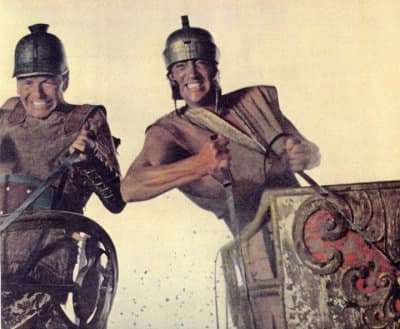
Frank and a few great champions
Undated materialFrom: Ed O'Brien <dmarc-noreply@freelists.org> | Received: 2023-03-03
Jack Dempsey Frankie Sinatra Joe Louis 1947
Ava Gardner, Frank Sinatra Sanicola and Hank attend the Joe Louis vs. Ezzard Charles fight at Yankee Stadium on Sept. 27, 1950.
Frank Sinatra shares a laugh with Muhammad Ali as promoter Don King looks on before the Ken Norton vs. Jimmy Young fight at the Sports Pavilion of Caesars Palace in Las Vegas on Nov. 5, 1977.
Frank Sinatra raises the arm of former great boxing champion Joe Louis during a star-studded tribute to Louis in Las Vegas on Nov. 9, 1978.
Bob, Bruce and Frank
Undated materialFrom: Ed O'Brien <dmarc-noreply@freelists.org> | Received: 2023-03-23
From Michel Macaire
The unforgettable night Bob Dylan and Bruce Springsteen spent at Frank Sinatra's house For both Bob Dylan and Bruce Springsteen, Frank Sinatra was their icon. Even though they were from different generations, their love of Sinatra was a bond which bridged the age divide between the songwriting pair. Dylan and Springsteen may well have been their own icons by this point; however, one night in the 1990s, they were fortunate enough to spend a night in his company. The duo went to the legend’s house for dinner and it was as magical as they anticipated.Dylan has never shied away from his admiration of Sinatra, and in 2015, he released an album of songs connected to ‘Ol’ Blue Eyes’ titled Shadows Of The Night. “When you start doing these songs, Frank’s got to be on your mind. Because he is the mountain. That’s the mountain you have to climb, even if you only get part of the way there,” he told The Guardian.Likewise, Springsteen has always outwardly expressed his appreciation for his fellow Jersey native. In an appearance on Stephen Colbert’s chat show in 2021, Springsteen even declared ‘Summer Wind’ by Sinatra as his favourite song of all time. While meeting his hero could have been awkward, thankfully, it was a dream-like experience for ‘The Boss’.In 1995, Dylan and Springsteen joined forces to pay tribute to Sinatra in a TV special to celebrate his 80th birthday. Dylan performed the deep cut, ‘Restless Farewell’, which the octogenarian had requested, while Springsteen offered a rendition of ‘Angel Eyes’.Around this time, both musicians were invited to Sinatra’s house for a celebratory dinner. During the evening, he pulled Dylan aside and told him a key nugget of wisdom that stayed with him. In conversation with Bill Flanagan in 2017, the singer-songwriter recalled: “I think he knew ‘The Times They Are a-Changin” and ‘Blowin’ In the Wind.’ I know he liked ‘Forever Young,’ he told me that. He was funny, we were standing out on his patio at night, and he said to me, ‘You and me, pal, we got blue eyes, we’re from up there,’ and he pointed to the stars. ‘These other bums are from down here.’ I remember thinking that he might be right.”Meanwhile, in Springsteen’s autobiography, Born To Run, he recalled how he, and his wife, Patti, befriended the Sinatras. They regularly attended parties at their house, and there was one occasion when Dylan also was there, which provided Bruce with a memory that’ll stay with him until he draws his final breath.“Sometime after dinner, we find ourselves around the living room piano with Steve and Eydie Gorme and Bob Dylan. Steve is playing the piano, and up close, he and Eydie can really sing the great standards. Patti has been thoroughly schooled in jazz by Jerry Coker, one of the great jazz educators at the Frost School of Music at the University of Miami,” he recalled in his book. “She was there at the same time as Bruce Hornsby, Jaco Pastorius and Pat Metheny, and she learned her stuff. At Frank’s, as the music drifts on, she slips gently in on ‘My One and Only Love.'”Springsteen continued: “Patti is a secret weapon. She can sing torch like a cross between Peggy Lee and Julie London (I’m not kidding). Eydie Gorme hears Patti, stops the music and says, ‘Frank, come over here. We’ve got a singer!’ Frank moves to the piano, and I then get to watch my wife beautifully serenade Frank Sinatra and Bob Dylan, to be met by a torrent of applause when she’s finished. The next day we play Frank’s eightieth birthday celebration for ABC TV, and I get to escort him to the stage along with Tony Bennett. It’s a beautiful evening and a fitting celebration for the greatest pop singer of all time. Two years later, Frank passed away, and we were generously invited to his funeral.”
"Softly As I Leave,"Frank Sinatra, 1958
Undated materialFrom: cara <dmarc-noreply@freelists.org> | Received: 2023-03-25
"Softly As I Leave,"Frank Sinatra, 1958
Titled “Softly As I Leave,” Leigh Wiener captured Frank Sinatra at the El Capitan Theater, Los Angeles, in 1958.
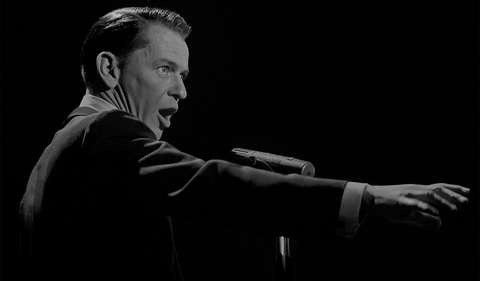
Hollywood bowl 2-cd set
Undated materialFrom: kenny lucas <dmarc-noreply@freelists.org> | Received: 2023-03-25
https://www.ebay.com/itm/334670205069?mkcid=16&mkevt=1&mkrid=711-127632-2357-0&ssspo=NgeaKUhJQ-q&sssrc=2524149&ssuid=NgeaKUhJQ-q&var=&widget_ver=artemis&media=MORE Sent from Yahoo Mail on Android
FRANK AND DAUGHTER AT PREMIERE IN LOS ANGELES
Undated materialFrom: Ed O'Brien <dmarc-noreply@freelists.org> | Received: 2023-03-30
Warner Beverly Theater, Los Angeles, June 28, 1955Benefit showing raised $30,000 for Mt. Sinai Hospital.United Artist announced its intention to spend $1,000,000publicizing "Not As A Stranger."
Preview: New Sinatra Bar & Lounge Honors Legacy And Style Of An American Legend - MusicRow.com
Undated materialFrom: Paul DAlessandro <dmarc-noreply@freelists.org> | Received: 2023-04-15
https://musicrow.com/2023/04/preview-new-sinatra-bar-lounge-honors-legacy-and-style-of-an-american-legend/
Preview: New Sinatra Bar & Lounge Honors Legacy And Style Of An American Legend
Steven Boero is the editor of The Sports Credential, MusicRow's sister publication offering Nashville sports industry news. Boero joined in March of 2021. He has a bachelor’s degree in Mass Communication with a minor in Music Business from Belmont University. While at Belmont, he served as sports editor and eventually editor-in-chief at the university’s student-run newspaper the Belmont Vision where he covered men’s and women’s basketball including Rick Byrd’s retirement and the Bruins first NCAA Tournament win in 2019. April 14, 2023
Sinatra Bar & Lounge. Photo: Courtesy of Icon Entertainment Group/Sinatra Bar & Lounge Nashville is a one-of-a-kind city and has so much to offer to the thousands of people visiting everyday as well as the growing pool of locals.
It is Music City for a reason, not only for the amazing musicians, songwriters, live music venues and music industry companies but for how it honors and recognizes the artists who have changed music world.
Frank Sinatra, the Chairman of the Board himself, now has a place honoring his legacy that offers an exclusive and unique experience to all those who want to drink, dine and enjoy the way Sinatra enjoyed life.
CEO and Founder of Icon Entertainment Group, who is running the Sinatra Lounge, Bill Miller has a string of successful businesses that have become Nashville staples like the Johnny Cash Museum, House of Cards, Nudie’s Honky Tonk and the historic Skull’s Rainbow Room. But this endeavor not only took a lot time and resources, but a lot of heart.
“Everybody in the world knows who Frank Sinatra is so when we commit to something like this, it’s incumbent upon us to really get to know the person. And so you read letters to him, you read letters from him,” said Miller. “You read books about him, you talk to family members, and you try to boil it all down to taking Frank off the pedestal for a minute, and getting to know the human being.”
This fine-dining establishment wreaks class and old-time sentiments which people have come to know and recognize from Sinatra. This small and intimate restaurant aims to capture Manhattan and Palm Springs, the two places that have become synonymous with Sinatra.
The restaurant is filled beautifully with special photographs featuring Sinatra with his friends, family, legendary celebrities, as well as his Rat Pack partners like Dean Martin and Sammy Davis Jr. It also includes paintings, done by Ol’ Blue Eyes himself. All courtesy of the Sinatra estate.
Photo: Courtesy of Icon Entertainment Group/Sinatra Bar & Lounge
The warm atmosphere allows patrons to cozy up to their tables in beautiful crescent booths surrounded by perfectly placed picture frames on mahogany walls and ceilings. Down past the marble bar facing a wall of select spirits and a one-of-a-kind Jack Daniels selection, leads to a staircase where more seating is accompanied by a space for a piano, upright bass player and vocalist performer. Customers can expect swinging classics recorded by Sinatra and his crooner contemporaries.
“It was so exciting to be able to go through this incredible archive. Instead of going out and buying headshots and album covers and concert posters, we find pictures of him and Sammy and Dino, and a picture of him and his daughter Tina (Sinatra) on the set of a movie,” said Miller. “I think you can feel the love here.”
The care is also shown in the menu selections at the Sinatra Bar & Lounge where customers can enjoy an array of Italian classics and premium cut steaks. To perfect this menu, 250 dishes and over 19 different tastings were sampled. The same goes for the cocktail menu and wine list where 25 different wine tastings took place to compliment the menu. There is a large variety for all types of drinkers but Italian wines, Sinatra’s favorites, are heavily featured.
When patrons get a reservation at this new bar and restaurant, they should not come in with any expectations other than they will have one of the most unique experiences in Nashville.
Photo: Courtesy of Icon Entertainment Group/Sinatra Bar & Lounge
“No matter how we describe it, no matter how much they could read about it, no matter how many pictures they see, they don’t get the full experience until their foot hits this floor. And then all of a sudden, you’re sort of drawn into an experience that they know is going to be special,” says Miller. “A lot of people might think that’s sort of intimidating, but the service is very warm, from the minute you meet the greeter, and when you’re seated. It’s all about showing that old-school hospitality, where every single guest means something.
“That’s the legacy, it’s pride of ownership, and at the end of the day, I just want people to leave their troubles. There are so many negative things going on in the world, so when you come here, leave those at the door and just lose yourself in this incredible Rat Pack. Spend an evening with Frank and Dino and Sammy and just enjoy yourself, eat well, and drink well.”
The Sinatra Bar & Lounge officially opens on Saturday, April 15 and is open for lunch and dinner reservations now. To learn more about the restaurant story and menu, head to sinatranashville.com.
Paul D'Alessandro
Huntington Beach, CA
Frank Sinatra, Jr. and the Tommy Dorsey Orchestra perform "Everybody's Twistin'" (live). Frank Sinatra, Jr. is joined by the Hullabaloo Dancers.\
Undated materialFrom: Margriet57 <dmarc-noreply@freelists.org> | Received: 2023-04-17
FUNNY!
https://media.gettyimages.com/id/1188948658/video/hullabaloo-episode-5-frank-sinatra-jr-everybodys-twistin.mp4?s=mp4-640x640-gi&k=20&c=dQLl033Ra1cKACeWOEwJhXcYjkT9zti9VaNNIOjWJXg=
Undated materialFrom: cara <dmarc-noreply@freelists.org> | Received: 2023-04-18
Sinatra, Gene Autrey & Gordon McRae At Benefit
L-R: American singers Tony Martin, Frank Sinatra (1915 - 1998), Dean Martin (1917 - 1995), Gene Autrey (1907 - 1998) and Gordon McRae (1931 - 1986) perform on stage in Western costumes at a SHARE benefit party, c. 1960. (Photo by Jack Albin/Getty Images)
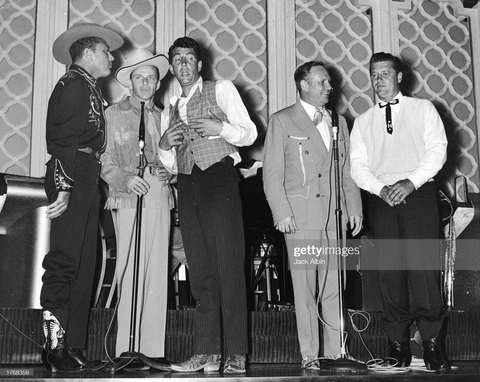
Harry Belafonte, 96, Dies; Barrier-Breaking Singer, Actor and Activist - The New York Times
Undated materialFrom: Ed O'Brien <dmarc-noreply@freelists.org> | Received: 2023-04-25
Harry Belafonte, 96, Dies; Barrier-Breaking Singer, Actor and Activist - The New York Times https://www.nytimes.com/2023/04/25/arts/music/harry-belafonte-dead.html
Harry Belafonte, 96, Dies; Barrier-Breaking Singer, Actor and Activist
In the 1950s, when segregation was still widespread, his ascent to the upper echelon of show business was historic. But his primary focus was civil rights. April 25, 2023, 9:35 a.m. ET
Harry Belafonte (1927-2023)
Harry Belafonte stormed the pop charts and smashed racial barriers in the 1950s with his highly personal brand of folk music, and went on to become a major force in the civil rights movement. Above, the singer in 1957.Bob Henriques/Magnum PhotosHarry Belafonte, who stormed the pop charts and smashed racial barriers in the 1950s with his highly personal brand of folk music, and who went on to become a major force in the civil rights movement, died on Tuesday at his home on the Upper West Side of Manhattan. He was 96.The cause was congestive heart failure, said Ken Sunshine, his longtime spokesman.At a time when segregation was still widespread and Black faces were still a rarity on screens large and small, Mr. Belafonte’s ascent to the upper echelon of show business was historic. He was not the first Black entertainer to transcend racial boundaries; Louis Armstrong, Ella Fitzgerald and others had achieved stardom before him. But none had made as much of a splash as he did, and for a few years no one in music, Black or white, was bigger.Born in Harlem to West Indian immigrants, he almost single-handedly ignited a craze for Caribbean music with hit records like “Day-O (The Banana Boat Song)” and “Jamaica Farewell.” His album “Calypso,” which contained both those songs, reached the top of the Billboard album chart shortly after its release in 1956 and stayed there for 31 weeks. Coming just before the breakthrough of Elvis Presley, it was said to be the first album by a single artist to sell more than a million copies.Performing at the Waldorf Astoria in New York in 1956.Al Lambert/Associated PressHe was equally successful as a concert attraction: Handsome and charismatic, he held audiences spellbound with dramatic interpretations of a repertoire that encompassed folk traditions from all over the world — rollicking calypsos like “Matilda,” work songs like “Lead Man Holler,” tender ballads like “Scarlet Ribbons.” By 1959 he was the most highly paid Black performer in history, with fat contracts for appearances in Las Vegas, at the Greek Theater in Los Angeles and at the Palace in New York.Success as a singer led to movie offers, and Mr. Belafonte soon became the first Black actor to achieve major success in Hollywood as a leading man. His movie stardom was short-lived, though, and it was his friendly rival Sidney Poitier, not Mr. Belafonte, who became the first bona fide Black matinee idol.But making movies was never Mr. Belafonte’s priority, and after a while neither was making music. He continued to perform into the 21st century, and to appear in movies as well (although he had two long hiatuses from the screen), but his primary focus from the late 1950s was civil rights.Early in his career, Mr. Belafonte befriended the Rev. Dr. Martin Luther King Jr. and became not just a lifelong friend but also an ardent supporter. Dr. King and Mr. Belafonte at the Abyssinian Baptist Church in Harlem in 1956.via Harry BelafonteEarly in his career, he befriended the Rev. Dr. Martin Luther King Jr. and became not just a lifelong friend but also an ardent supporter of Dr. King and the quest for racial equality he personified. He put up much of the seed money to help start the Student Nonviolent Coordinating Committee and was one of the principal fund-raisers for that organization and Dr. King’s Southern Christian Leadership Conference.He provided money to bail Dr. King and other civil rights activists out of jail. He took part in the March on Washington in 1963. His spacious apartment on West End Avenue in Manhattan became Dr. King’s home away from home. And he quietly maintained an insurance policy on Dr. King’s life, with his family as the beneficiary, and donated his own money to make sure the family was taken care of after Dr. King was assassinated in 1968.(Nonetheless, in 2013 he sued Dr. King’s three surviving children in a dispute over documents that Mr. Belafonte said were his property and the children said belonged to the King estate. The suit was settled the next year, with Mr. Belafonte retaining possession.)In an interview with The Washington Post a few months after Dr. King’s death, Mr. Belafonte expressed ambivalence about his high profile in the civil rights movement. He would like, he said, to “be able to stop answering questions as though I were a spokesman for my people,” adding, “I hate marching, and getting called at 3 a.m. to bail some cats out of jail.” But, he said, he accepted his role. The Challenge of Racism
In the same interview, he noted ruefully that although he sang music with “roots in the Black culture of American Negroes, Africa and the West Indies,” most of his fans were white. As frustrating as that may have been, he was much more upset by the racism that he confronted even at the height of his fame.His role in the 1957 movie “Island in the Sun,” which contained the suggestion of a romance between his character and a white woman played by Joan Fontaine, generated outrage in the South; a bill was even introduced in the South Carolina Legislature that would have fined any theater showing the film. In Atlanta for a benefit concert for the Southern Christian Leadership Conference in 1962, he was twice refused service in the same restaurant. Television appearances with white female singers — Petula Clark in 1968, Julie Andrews in 1969 — angered many viewers and, in the case of Ms. Clark, threatened to cost him a sponsor.He sometimes drew criticism from Black people, including the suggestion early in his career that he owed his success to the lightness of his skin (his paternal grandfather and maternal grandmother were white). When he divorced his wife in 1957 and married Julie Robinson, who had been the only white member of Katherine Dunham’s dance troupe, The Amsterdam News wrote, “Many Negroes are wondering why a man who has waved the flag of justice for his race should turn from a Negro wife to a white wife.”Mr. Belafonte with Ed Sullivan in 1955. At a time when segregation was still widespread and Black faces were still a rarity on screens large and small, Mr. Belafonte’s ascent to the upper echelon of show business was historic.Associated PressWhen RCA Victor, his record company, promoted him as the “King of Calypso,” he was denounced as a pretender in Trinidad, the acknowledged birthplace of that highly rhythmic music, where an annual competition is held to choose a calypso king.He himself never claimed to be a purist when it came to calypso or any of the other traditional styles he embraced, let alone the king of calypso. He and his songwriting collaborators loved folk music, he said, but saw nothing wrong with shaping it to their own ends.“Purism is the best cover-up for mediocrity,” he told The New York Times in 1959. “If there is no change we might just as well go back to the first ‘ugh,’ which must have been the first song.”Harold George Bellanfanti Jr. was born on March 1, 1927, in Harlem. His father, who was born in Martinique (and later changed the family name), worked occasionally as a chef on merchant ships and was often away; his mother, Melvine (Love) Bellanfanti, born in Jamaica, was a domestic.In 1936 he, his mother and his younger brother, Dennis, moved to Jamaica. Unable to find work there, his mother soon returned to New York, leaving him and his brother, he later recalled, to be looked after by relatives who were either “unemployed or above the law.” They rejoined her in Harlem in 1940. Awakening to Black History
Mr. Belafonte dropped out of George Washington High School in 1944 and enlisted in the Navy, where he was assigned to load munitions aboard ships. Black shipmates introduced him to the works of W.E.B. Du Bois and other African American authors and urged him to study Black history.He received further encouragement from Marguerite Byrd, the daughter of a middle-class Washington family, whom he met while he was stationed in Virginia and she was studying psychology at the Hampton Institute (now Hampton University). They married in 1948.He and Ms. Byrd had two children, Adrienne Biesemeyer and Shari Belafonte, who survive him, as do his two children by Ms. Robinson, Gina Belafonte and David; and eight grandchildren. He and Ms. Robinson divorced in 2004, and he married Pamela Frank, a photographer, in 2008, and she survives him, too, along with a stepdaughter, Sarah Frank, and a stepson, Lindsey Frank.Mr. Belafonte and his wife, Julie, at the Prayer Pilgrimage for Freedom event in Washington in 1957.George Tames/The New York TimesBack in New York after his discharge, Mr. Belafonte became interested in acting and enrolled under the G.I. Bill at Erwin Piscator’s Dramatic Workshop, where his classmates included Marlon Brando and Tony Curtis. He first took the stage at the American Negro Theater, where he worked as a stagehand, and where he began his lifelong friendship with a fellow theatrical novice, Sidney Poitier.Finding anything other than what he called “Uncle Tom” roles proved difficult, and even though singing was little more than a hobby, it was as a singer and not an actor that Mr. Belafonte found an audience.Early in 1949 he was given the chance to perform during intermissions for two weeks at the Royal Roost, a popular Midtown jazz nightclub. He was an immediate hit, and the two weeks became five months. Finding Folk Music
After enjoying some success but little creative satisfaction as a jazz-oriented pop singer, Mr. Belafonte looked elsewhere for inspiration. With the guitarist Millard Thomas, who would become his accompanist, and the playwright and novelist William Attaway, who would collaborate on many of his songs, he immersed himself in the study of folk music. (The calypso singer and songwriter Irving Burgie later supplied much of his repertoire, including “Day-O” and “Jamaica Farewell.”) His manager, Jack Rollins, helped him develop an act that emphasized his acting ability and his striking good looks as much as a voice that was husky and expressive but, as Mr. Belafonte admitted, not very powerful.A triumphant 1951 engagement at the Village Vanguard in Greenwich Village led to an even more successful one at the Blue Angel, the Vanguard’s upscale sister room on the Upper East Side. That in turn led to a recording contract with RCA and a role on Broadway in the 1953 revue “John Murray Anderson’s Almanac.”Dorothy Dandridge and Mr. Belafonte in a scene from the 1954 film “Carmen Jones.”20th Century FoxPerforming a repertoire that included the calypso standard “Hold ’em Joe” and his arrangement of the folk song “Mark Twain,” Mr. Belafonte won enthusiastic reviews, television bookings and a Tony Award for best featured actor in a musical. He also caught the eye of the Hollywood producer and director Otto Preminger, who cast him in the 1954 movie version of “Carmen Jones,” an all-Black update of Bizet’s opera “Carmen” with lyrics by Oscar Hammerstein II, which had been a hit on Broadway a decade earlier.Mr. Belafonte’s co-star was Dorothy Dandridge, with whom he had also appeared the year before in his first movie, the little-seen low-budget drama “Bright Road.” Although they were both accomplished vocalists, their singing voices in “Carmen Jones” were dubbed by opera singers.Mr. Belafonte also made news for a movie he turned down, citing what he called its negative racial stereotypes: the 1959 screen version of “Porgy and Bess,” also a Preminger film. The role of Porgy was offered instead to his old friend Mr. Poitier, whom he criticized publicly for accepting it. Stepping Away From Film
In the 1960s, as Mr. Poitier became a major box-office attraction, Mr. Belafonte made no movies at all: Hollywood, he said, was not interested in the socially conscious films he wanted to make, and he was not interested in the roles he was offered. He did, however, become a familiar presence — and an occasional source of controversy — on television.His special “Tonight With Belafonte” won an Emmy in 1960 (a first for a Black performer), but a deal to do five more specials for that show’s sponsor, the cosmetics company Revlon, fell apart after one more was broadcast when, according to Mr. Belafonte, Revlon asked him not to feature Black and white performers together. The taping of a 1968 special with Petula Clark was interrupted when Ms. Clark touched Mr. Belafonte’s arm and a representative of the sponsor, Chrysler-Plymouth, demanded a retake. (The producer refused and the sponsor’s representative later apologized, although Mr. Belafonte said the apology came “one hundred years too late.”)Mr. Belafonte addressed a rally for equal rights in New York in May 1960.Jacob Harris/Associated PressWhen Mr. Belafonte returned to film as both producer and co-star, with Zero Mostel, of “The Angel Levine” (1970), based on a story by Bernard Malamud, the project had a sociopolitical edge: His Harry Belafonte Enterprises, with a grant from the Ford Foundation, hired 15 Black and Hispanic apprentices to learn filmmaking by working on the crew. One of them, Drake Walker, wrote the story for Mr. Belafonte’s next movie, “Buck and the Preacher” (1972), a gritty western that also starred Mr. Poitier.But after appearing as a mob boss (a parody of Marlon Brando’s character in “The Godfather”) with Mr. Poitier and Bill Cosby in the hit 1974 comedy “Uptown Saturday Night” — directed, as “Buck and the Preacher” had been, by Mr. Poitier — Mr. Belafonte was once again absent from the big screen, this time until 1992, when he played himself in Robert Altman’s Hollywood satire “The Player.”He appeared onscreen only sporadically after that, most notably as a gangster in Altman’s “Kansas City” (1996), for which he won a New York Film Critics Circle Award. His final film role was in Spike Lee’s “BlacKkKlansman” in 2018. Political Activism
He continued to give concerts in the years when he was off the screen, but he concentrated on political activism and charitable work. In the 1980s he helped organize a cultural boycott of South Africa as well as the Live Aid concert and the all-star recording “We Are the World,” both of which raised money to fight famine in Africa. In 1986, encouraged by some New York State Democratic Party leaders, he briefly considered running for the United States Senate. In 1987 he replaced Danny Kaye as UNICEF’s good-will ambassador.Never shy about expressing his opinion, he became increasingly outspoken during the George W. Bush administration. In 2002 he accused Secretary of State Colin L. Powell of abandoning his principles to “come into the house of the master.” Four years later he called Mr. Bush “the greatest terrorist in the world.”He was equally outspoken in the 2013 New York mayoral election, in which he campaigned for the Democratic candidate and eventual winner, Bill de Blasio. During the campaign he referred to the Koch brothers, the wealthy industrialists known for their support of conservative causes, as “white supremacists” and compared them to the Ku Klux Klan. (Mr. de Blasio quickly distanced himself from that comment.)Looking back on his life and career, Mr. Belafonte was proud but far from complacent. “About my own life, I have no complaints,” he wrote in his autobiography. “Yet the problems faced by most Americans of color seem as dire and entrenched as they were half a century ago.”Karsten Moran for The New York TimesSuch statements made Mr. Belafonte a frequent target of criticism, but no one disputed his artistry. Among the many honors he received in his later years were a Kennedy Center Honor in 1989, the National Medal of Arts in 1994 and a Grammy lifetime achievement award in 2000.In 2011 he was the subject of a documentary film, “Sing Your Song,” and published his autobiography, “My Song.”In 2014, the Academy of Motion Picture Arts and Sciences gave him its Jean Hersholt Humanitarian Award in recognition of his lifelong fight for civil rights and other causes. The honor, he told The Times, gave him “a strong sense of reward.”He remained politically active to the end. On Election Day 2016, The Times published an opinion article by Mr. Belafonte urging people not to vote for Donald J. Trump, whom he called “feckless and immature.”“Mr. Trump asks us what we have to lose,” he wrote, referring to African American voters, “and we must answer: Only the dream, only everything.”Four years later, he returned to the opinion pages with a similar message: “We have learned exactly how much we had to lose — a lesson that has been inflicted upon Black people again and again in our history — and we will not be bought off by the empty promises of the flimflam man.”Looking back on his life and career, Mr. Belafonte was proud but far from complacent. “About my own life, I have no complaints,” he wrote in his autobiography. “Yet the problems faced by most Americans of color seem as dire and entrenched as they were half a century ago.”Richard Severo and Alex Traub contributed reporting.
Sent from my iPhone
BROOKLYN BRIDGE
Undated materialFrom: Ed O'Brien <dmarc-noreply@freelists.org> | Received: 2023-05-01
YouTubeFrank Sinatra- The Brooklyn Bridge ...
Sinatra and Sy Oliver
Undated materialFrom: cara <dmarc-noreply@freelists.org> | Received: 2023-05-03
Sinatra and Sy Oliver in the early 1960s.
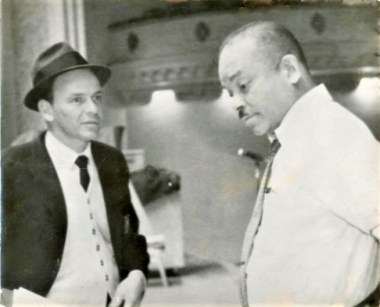
Harry James Frank Sinatra Kay Starr
Undated materialFrom: cara <dmarc-noreply@freelists.org> | Received: 2023-05-12
Hollywood Note - March 1946 - Harry James Frank Sinatra Kay Starr Woody Herman | eBay
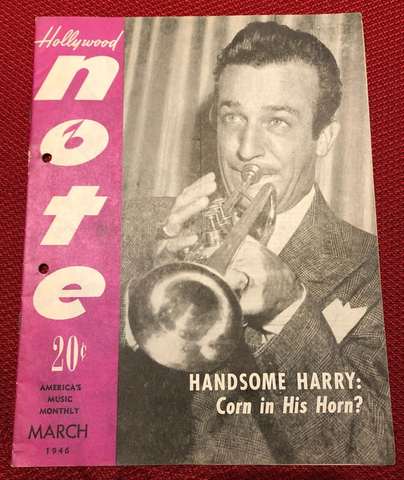
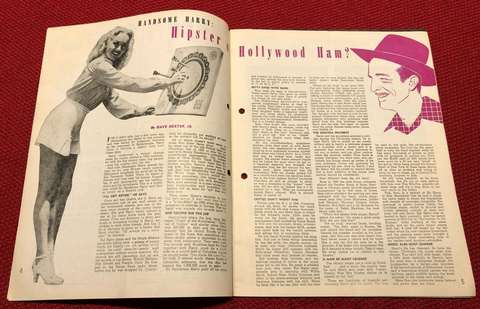
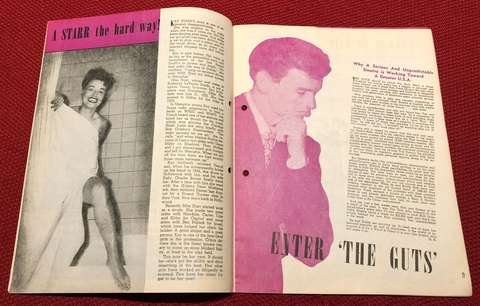
FRANK SINATRA DIED 25 YEARS AGO WSJ TRIBUTE
Undated materialFrom: Ed O'Brien <dmarc-noreply@freelists.org> | Received: 2023-05-14
BOOKS & ARTS
- MUSIC REVIEW
Follow
Celebrating Sinatra
The singer died 25 years ago on May 14, but he’s still Chairman of the Board. By WSJ Arts in Review Staff May 12, 2023 5:58 pm ET ShareResize17 Listen(53 sec) Frank Sinatra performs on his 1965 TV special ‘Frank Sinatra: A Man and His Music’ PHOTO: BETTMANN ARCHIVE Below, a selection of coverage of the singer in Arts in Review and other sections of the Journal, illuminating his music, life and enduring impact. PHOTO: MOVIESTORE/SHUTTERSTOCK When Paranoia Is Justified
Nov. 4, 2022John Frankenheimer’s ‘The Manchurian Candidate,’ a 1962 film—starring Laurence Harvey, Frank Sinatra and Angela Lansbury—about an Army veteran brainwashed by Communists, remains the godfather of conspiracy thrillers.Read the essay PHOTO: BETTMANN ARCHIVE Sinatra Serenades My Daughter
NEWSLETTER SIGN-UPGrapevineA weekly look at our most colorful, thought-provoking and original feature stories on the business of life.PreviewSubscribeOct. 25, 2022In our early days of parenthood, when our infant daughter was too colicky to settle down for the night, my wife and I tried everything before getting Frank Sinatra to help. Combing our music collection, Catherine found Sinatra’s version of “The Way You Look Tonight” and played it over and over on our stereo, cradling our newborn as she swayed across the den. Sinatra’s finger-snapping rhythms proved an ideal lullaby.Read the essay PHOTO: GETTY IMAGES
Frank Sinatra: Chairman of the Board and Boss of Bossa Nova
Aug. 26, 2021Frank Sinatra explored an uncommonly wide range of stylistic possibilities, and continued to do so as he grew older. One of them was the bossa nova. A fusion of Brazilian samba with American jazz, the bossa nova (the term is Brazilian slang for “new style”) was still a novelty in the U.S. when the jazz musicians Stan Getz and Charlie Byrd recorded Antônio Carlos Jobim’s “Desafinado” in 1962. To be sure, a few American vocalists, foremost among them Tony Bennett and Perry Como, also dabbled in the bossa nova, but it took longer for American singers as a group to embrace the style—and that was where Frank Sinatra came in.Advertisement - Scroll to Continue Read the essay PHOTO: DAVE BENETT/GETTY IMAGES ‘Sinatra and Me’ Review: The Show Must Go On
June 10, 2021As of 2021, “Sinatra Lit” could well be an acceptable field of study for an undergrad English major. Tony Oppedisano started his association with Sinatra through Jilly Rizzo, the proprietor of Jilly’s, the watering hole that was Sinatra’s primary after-hours hangout whenever he was in Manhattan. Rizzo served as the singer’s road manager, aide-de-camp and inseparable companion (and, many assumed, bodyguard) for more than 30 years, but when he was killed in a hit-and-run car accident in 1992, “Tony O” was appointed as Jilly’s approximate successor. “Sinatra and Me” gives us the singer, during the twilight of his life and singing career, as remembered by Mr. Oppedisano.Read the review PHOTO: WALT DISNEY TELEVISION VIA GETTY IMAGES
Nelson Riddle: American Music’s Artist Behind the Scenes
June 2, 2021Few members of the general public know how important an arranger is to music. But Nelson Riddle, born 100 years ago today, was lauded by Ella Fitzgerald and Frank Sinatra and became a household name to lovers of the Great American Songbook.Read the essay PHOTO: BETTMANN ARCHIVE Sinatra on the Podium
April 14, 2020Most people think, with very good reason, that Frank Sinatra was the best popular singer, as well as the best interpreter of the Great American Songbook, who ever lived. Save for a few voice lessons, he was also self-taught and had no musical training of any kind, which makes it all the more remarkable that when not singing, he dabbled in conducting—and was singularly good at it, too.Read the essay PHOTO: HERMAN LEONARD PHOTOGRAPHY LLC He Sang One for the Ages
Nov. 2, 2018One of the premier popular music recordings resulted in no small part from the failed romances of two musical figures: lyricist Johnny Mercer and singer Frank Sinatra. In Sinatra’s 1958 “One for My Baby (and One More for the Road),” five elements come together—lyrics, music, singer, accompanist and orchestra—to produce a classic of American music.Read the essay PHOTO: COURTESY OF UNIVERSAL MUSIC GROUP ‘Strangers in the Night’ at 50: It Turned Out So Right for Sinatra June 29, 2016Just before the July Fourth weekend in 1966, parents were only too happy to listen to their children’s favorite pop station on the car radio. Frank Sinatra’s “Strangers in the Night” had reached No. 1 on Billboard’s Hot 100 chart, and the song was enjoying frequent airplay.Fifty years later, the popularity of the “Strangers in the Night” single and album seems as baffling as it was improbable. Sinatra was 50 at the time and hadn’t had a No. 1 Billboard pop hit since the single “Learnin’ the Blues” in 1955 and No. 1 album hit since “Nice ’n’ Easy” in 1960.In retrospect, “Strangers in the Night” is easily Sinatra’s finest studio album of the ’60s and arguably the last perfect album of his career.Read the essay PHOTO: PHOTO: COURTESY OF CHARLES L. GRANATA/KEG PRODUCTIONS ‘A Voice on Air: 1935-1955’ and ‘Lost & Found: The Radio Years’ Reviews Dec. 10, 2015In terms of the critical perception of his long career, Frank Sinatra reverses the general equation of such fellow giants of American music as Louis Armstrong and Duke Ellington. Too many evaluations of the latter two concentrate only on their breakthrough early work, while ignoring virtually everything they did after age 40. With Sinatra , by contrast, the remarkable—even revolutionary—albums he made in his 40s and 50s completely overshadow the equally outstanding singing that he did in his younger “skinny” years.Two new releases, “A Voice on Air: 1935-1955” (four CDs from Sony Music Legacy) and “Lost & Found: The Radio Years” (a single disc from Smithsonian), at last start to shine the spotlight on the singer’s often amazing work in the years during and immediately after World War II. Taken together, these five discs amount to the most important new Sinatra music issued since his death in 1998.Read the review PHOTO: MARK REINSTEIN/MARK REINSTEIN/CORBIS Still Attuned to Sinatra at 100
Nov. 29, 2015A friend of mine was flying back from Europe a few years ago and began talking with his seatmate, a gentleman who happened to be a Swedish opera singer. Somehow Frank Sinatra came up, and, as my friend told me, the singer suddenly turned very grave. “Ah,” he said. “That is a voice without equal.”Something about Frank has sunk in deeply, from San Francisco to Stockholm. In his centennial year—he was born Dec. 12, 1915—Sinatra is much in the air, and with good reason. We celebrate his artistry, his matchless personal style, his undying charisma, his apparently inexhaustible effect on American culture.Read the review PHOTO: JOHN BRYSON/SYGMA/CORBIS Getting Under His Skin
Oct. 30, 2015Frank Sinatra is the Mount Everest of show business. For decades, journalists, biographers, jazz and movie critics, and gossips have launched themselves at the summit, striving to capture the tantalizing blend of “Lucky Luciano and Michelangelo,” to quote one musician, that made Sinatra such an electric figure in American popular culture.Sinatra would be 100 years old on Dec. 12 had he not, in his own pet locution, “gone to the mountains” at 82 on May 14, 1998. Timed to the centenary, two volumes have just been added to the buckling library shelves. One is “Sinatra’s Century,” poet David Lehman’s slim meditation on the singer in 100 epigrammatic pensées. The other is “Sinatra: The Chairman,” the second volume of James Kaplan’s gargantuan biography (following “Frank: The Voice,” from 2010), lumbering in at 883 pages of text, not counting endnotes and index. That any popular entertainer could inspire such different biographical treatments—much less nearly 1,700 pages of a two-part study published over five years—confirms Sinatra’s death grip on the American imagination.Read the review PHOTO: GAB ARCHIVE/REDFERNS/GETTY IMAGES Joseph J. Ellis on Sinatra’s ‘I’ve Got You Under My Skin’ June 23, 2015In college in the early ’60s, I danced to rock, but that wasn’t the music I truly loved. I was a fan of the Great American songbook, and my favorite was Frank Sinatra’s “I’ve Got You Under My Skin,” from his “Songs for Swingin’ Lovers!” released in 1956.Read the essay PHOTO: GETTY IMAGES One of Those Fabulous Flights
Oct. 30, 2010You can go anywhere in the world, the saying goes, and if you can find yourself a nice, classy place where civilized people are gathered, it’s a sure bet you will hear a Frank Sinatra song. It doesn’t matter what language is spoken. Everybody understands at least a line or two of Lingua Frank, and who knows how many have ditched their Berlitz tapes to instead tackle English to the immaculate phrasing of “Time After Time” or “Young at Heart”?You don’t have to be a Sinatra hater—and there remain legions of them more than a decade after his death—to wonder what’s left to say about a figure whom James Kaplan calls “perhaps, the most chronicled human in modern history.” The answer is, well, plenty.Read the review PHOTO: ASSOCIATED PRESS Frank Sinatra in New York
Dec. 28, 2009Frank Sinatra almost single-handedly invented the concept album (his first was “The Voice” in 1945), and he perfected the idea of a pop singer doing a formal concert. At a time when the music of Gershwin and of Rodgers & Hart was performed only in Broadway shows or saloons, Sinatra was among the first to bring their songs into concert halls; he was singing in classical-music venues, including the Hollywood Bowl, as early as 1943. The singer’s mastery of the concert format is the subject of “Sinatra: New York,” a five-disc boxed set of previously unissued live performances released by Reprise Records and Sinatra Enterprises.Read the review PHOTO: GETTY IMAGES Sinatra vs. ‘My Way’
June 2, 2009Frank Sinatra may not have always been the easiest guy in the world to get along with, but he was nothing if not consistent. One attitude that rarely varied was his opinion of “My Way,” a song whose 40th anniversary is being heralded with the reissue of the 1969 album. “My Way” was quite possibly the single most popular number from the final act of Sinatra’s career. And in concert after concert over a 25-year period, he never hesitated to tell audiences exactly what he thought of it:—“I hate this song—you sing it for eight years, you would hate it too!” (Caesars Palace, 1978)—“And of course, the time comes now for the torturous moment—not for you, but for me.” (L.A. Amphitheater, 1979)—“I hate this song. I HATE THIS SONG! I got it up to here [with] this God damned song!” (Atlantic City, 1979)And yet, in many of those same introductions, he told the crowd that the song had been “very good to me—and singers like me.” “My Way” may have reached only No. 27 on the pop single charts (making it to No. 11 as an album), but it helped keep the Chairman on the road in the ‘70s, ‘80s and ‘90s.Read the essay PHOTO: BILL GOTTLIEB/THE NEW YORK PUBLIC LIBRARY The Springtime of Frank Sinatra
Dec. 5, 2007In 1940, I was 15 and my jazz record collection included the popular big dance band of Tommy Dorsey because “The Sentimental Gentleman of Swing”—as the trombonist-leader was called—had such sidemen as Bunny Berigan, Buddy Rich and the silvery clarinetist Johnny Mince. On ballads, I was also drawn to Dorsey’s 25-year-old vocalist, Frank Sinatra, who had just joined the band that year.The evolution of Sinatra—who himself came to deeply influence both popular singers and jazz instrumentalists—is celebrated in a four-CD set, “Frank Sinatra: A Voice in Time, (1939-1952).”Read the review PHOTO: -/AGENCE FRANCE-PRESSE/GETTY IMAGES Sinatra Sings in Vegas, and You Are There
May 22, 2007Frank Sinatra not only made ballads move into listeners’ own lives and memories. He was also—in both romantic reveries and jubilantly swinging performances—an authentic jazzman. In whatever he sang, he was in the groove with the other musicians in the band—and he was often improvising.Sinatra attracted exceptional arrangers (notably Nelson Riddle), but especially in “live” performances those scores became fluid—flowing with the play of his emotions and the vibrations from the audience.Although his studio recordings will be played as long as this civilization and its music survive, Sinatra is most rivetingly heard on “live” recordings —and now there is a historic boxed set of previously unreleased onstage Sinatra shows in Las Vegas, where he felt more at home than in any other venue. “Frank Sinatra . . . Vegas” contains 88 tracks on four CDs and one DVD.Read the review PHOTO: DYLAN MARTINEZ/REUTERS The Best Album Sinatra Made
April 29, 2006Frank Sinatra’s “In the Wee Small Hours” (1955) is the finest vocal album of American popular songs ever recorded. This thought is not original with me. Some people prefer his “Only the Lonely” (1958), but what do they know? “In the Wee Small Hours” came first and set the standard. With it, Sinatra invented the concept album.Read the review
Zalman On, who used his brawn and brains to save European Jews - and befriended Frank Sinatra
Undated materialFrom: cara <dmarc-noreply@freelists.org> | Received: 2023-05-27
Wrestler, rescuer, diplomat, spy: Grandson unmasks his heroic Israeli patriarch | The Times of Israel
The Undercover Wrestler’ reveals an unknown story of diplomat Zalman On, who used his brawn and brains to save European Jews — and befriended Frank Sinatra
Zalman Unreich (On) greets friends Frank Sinatra and his wife Barbara upon their arrival to Israel, c. 1970s. (Courtesy of David Baron)
DOWNLOAD PREVIEW
Frank Sinatra visits Israel c. 1964 © 1978 Ted Allan
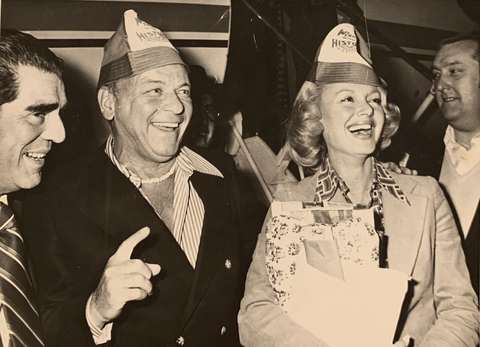
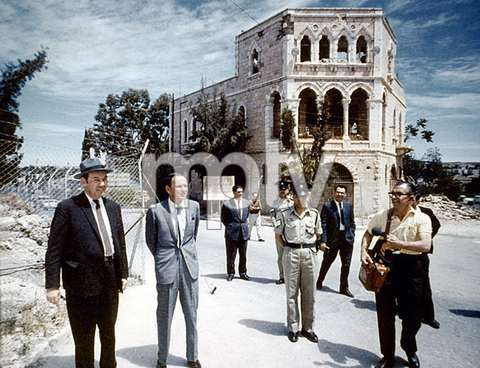
June 19th 1946 - Yankee Stadium boxing match between Joe Louis and Billy Conn
Undated materialFrom: cara <dmarc-noreply@freelists.org> | Received: 2023-06-19
19 Jun 1946, The Bronx, New York City, New York – Original caption: Before Joe Louis and Billy Conn squared off in the big fight at Yankee Stadium “The Voice,” Frank Sinatra in person, has a word to...
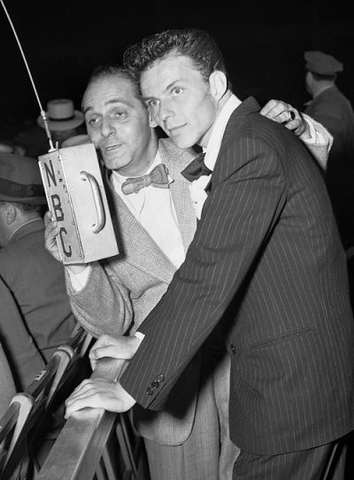
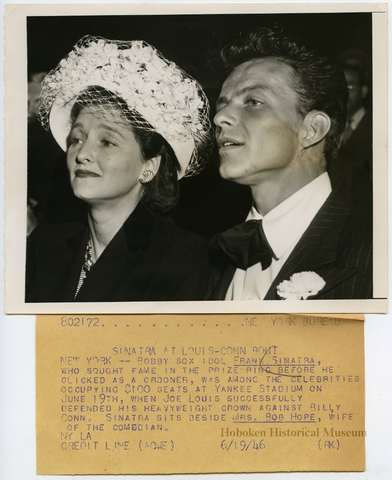
HARRY JAMES BAND AT THE WORLD'S FAIR TWO NBC BROADCASTS
Undated materialFrom: Ed O'Brien <dmarc-noreply@freelists.org> | Received: 2023-09-18
Broadcast : 08/23/1939
- Time
- 7:30 p.m.
- Medium
- Radio broadcast
- Source
- NBC Blue network
- Performer(s)
- Harry James and his orchestra; Frank Sinatra; Alice Cornett; WPA Federal Madrigal Singers; Ward and Muzzy; Tex Walker; Orange Blossom Quartet; Whistling Willie. - Recording Note
- Duplicated from an NBC Blue network radio program broadcast of Aug. 23, 1939; 7:30 p.m.-8:00 p.m. - Genre(s)
- Talent shows--Radio
- Big band music
- Name(s)
- Sinatra, Frank, 1915-. (performer)
- Cornett, Alice. (performer)
- James, Harry. (conductor)
- Group(s)
- WPA Federal Madrigal Singers. (musical group)
- Ward and Muzzy. (musical group)
- Orange Blossom Quartet. (musical group)
-
-
-
- Title
- New York World's Fair program
- Date
- Broadcast : 08/30/1939
- Time
- 7:45 p.m.
- Medium
- Radio broadcast
- Source
- NBC Blue network
- Recording Note
- Duplicated from an NBC Blue network radio program broadcast of Aug. 30, 1939; 7:45 p.m.-8:00 p.m. - Summary
- Harry James and his orchestra perform.
- Genre(s)
- Big band music
- Name(s)
- James, Harry. (conductor)
Frank Sinatra and Ava Gardner Sign Pledge
Undated materialFrom: cara <dmarc-noreply@freelists.org> | Received: 2023-09-19
Frank Sinatra and Ava Gardner Sign Pledge
Entertainers Frank Sinatra and Ava Gardner sign a pledge as good citizens on September 19, 1952 in New York, New York. (Photo courtesy of Library of Congress)
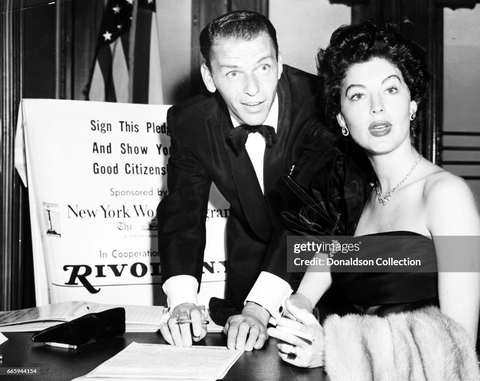
WAVE
Undated materialFrom: cara <dmarc-noreply@freelists.org> | Received: 2023-10-19
The singing star spent some time harmonizing with the WAVE singing platoon during World War II.
The photograph appeared in the newsletter for the WAVE training school in the Bronx, Conning Tower.
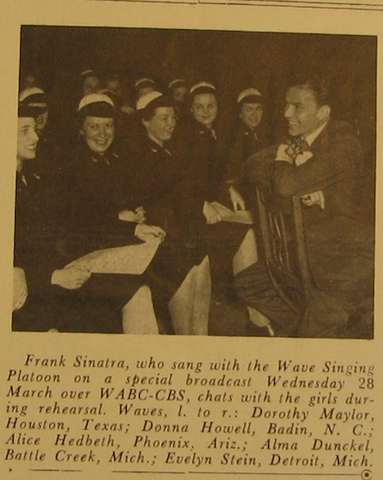
HARRY JAMES BAND'S RADIO REMOTES FROM CHICAGO IN NOVEMBER 1939
Undated materialFrom: Ed O'Brien <dmarc-noreply@freelists.org> | Received: 2023-10-28
HARRY JAMES BANDPANTHER ROOM OF THE COLLEGE INNHOTEL SHERMANCHICAGO, ILLINOISRADIO REMOTESNOVEMBER 1939NOV. 1WMAQ(NBC)11:00 P.M. - 12:30 A.M.WENR(NBC)12:30 A.M. TILL SIGN-OFFNOV. 2WMAQ(NBC)11:00 P.M. - 11:30 P.M.NOV. 3WMAQ(NBC)11:00 P.M. - 11:30 P.M.WENR(NBC)12:30 A.M. - 1:00 P.M. note: During the band's eight week engagement at theSherman Hotel, there were 74 remotes broadcast onNBC, CBS and Mutual. NBC aired almost all of them. During that 56 day period, there were 11 days with no broadcast. Monday appears to have been the band's night off. Eight of the 11 days without a remote from the hotel were on Mondays. The running time each night varied from only a half-hour to over two hours. Wednesday was the night Harry, Frank and Company received the most airtime. I wonder how many of the shows survived and are sitting in a basement or safely ensconced in somesound library ?Ed
Frank Sinatra meets with members of Anselm Youth Forum, Gary ROTC, and Froebel students, 1945.
Undated materialFrom: cara <dmarc-noreply@freelists.org> | Received: 2023-11-01
An integrated audience of thousands welcome Frank Sinatra, November 1, 1945. Calumet Regional Archives
Frank Sinatra meets with members of Anselm Youth Forum, Gary ROTC, and Froebel students, 1945. Photo courtesy of Associated Press, via Hoboken Historical Museum Online Collections Database
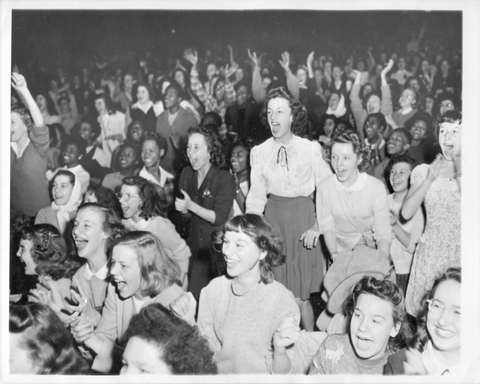
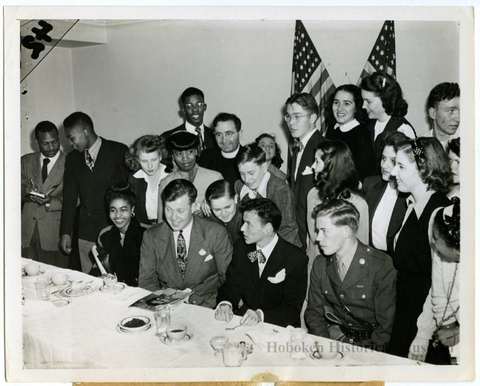
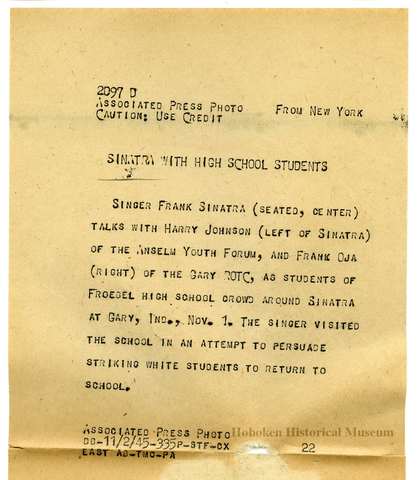
Re: C Palace:
Undated materialFrom: Scott Henderson <scott@falseducks.com> | Received: 2023-11-11
The November 7 show we have listed says the 12:30am Show. Could this have been from late November 6th making it the 7th?
1977 Caesars Palace, Las Vegas, Nevada (3-16)
Key Musicians: Al Viola (Guitar), Gene Cherico (Bass), Vincent
Falcone Jr. (Piano), Charles Tunner (Trumpet), Irv Cottler (Drums) Nat Brandwynne Orchestra Conducted By: Bill Miller
12:30am Show
Scott
At 11:30 AM 11/10/2023, you wrote:
>Hi Ed, thanks Best FJW
>
>----------
>From: sinatraphiles-bounce@freelists.org
><sinatraphiles-bounce@freelists.org> on behalf of Ed O'Brien ><dmarc-noreply@freelists.org>
>Sent: 10 November 2023 03:17
>To: sinatraphiles@freelists.org <sinatraphiles@freelists.org> >Subject: [sinatraphiles] Re: C Palace:
>
>Hi Fred,
> I just checked my listings for that engagement.
>There was no show on 11/7. The following Monday
>Frank would be dark because he was the guest host
>on the Tonight Show.
>Ed
>
>On Friday, November 10, 2023 at 03:11:32 AM EST, Fred Wadsworth ><frw2@hotmail.co.uk> wrote:
>
>
>Hi Scott, can you check C Palace Nov 7 i977 was a Monday and Frank >was dark on a monday? Best fjw
>
><http://www.avg.com/email-signature?utm_medium=email&utm_source=link&utm_campaign=sig-email&utm_content=webmail> >[]
>
>Virus-free.<http://www.avg.com/email-signature?utm_medium=email&utm_source=link&utm_campaign=sig-email&utm_content=webmail>www.avg.com >
PHOTO FROM CBS RADIO YEARS
Undated materialFrom: Ed O'Brien <dmarc-noreply@freelists.org> | Received: 2023-11-28
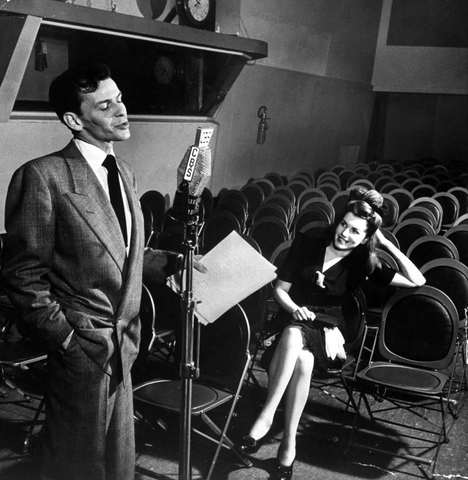
Re: Fw: December 25 - THIS DATE IN SINATRA HISTORY
Undated materialFrom: Tony Ferrigno <dmarc-noreply@freelists.org> | Received: 2023-12-27
Ed,
Thank you very much for your answer! You are most certainly a Sinatra scholar. Do you happen to know the title of this Good Music Christmas release you’ve mentioned? And concerning the a capella version of “Have Yourself A Merry Little Christmas” do you know its source?
Tony
> On Dec 27, 2023, at 3:36 PM, Ed O'Brien <dmarc-noreply@freelists.org> wrote: >
> Hi Tony,
> Frank may have sung "A Holly Jolly" at James Stewart's home > on Christmas Eve, but there is no version on a record.
> There is a Sinatra set out this Christmas from Good Music. It > is available for download and contains an a capella version of "Have > Yourself A Merry Little Christmas."
> Ed
>
> On Wednesday, December 27, 2023 at 02:31:25 AM EST, Tony Ferrigno <dmarc-noreply@freelists.org> wrote: >
>
> I just have to ask about the third picture below. Is this a CD or a list of 15 Frank Sinatra Christmas songs? I’m familiar with all of them except #8. When did Sinatra sing A Holly Jolly Christmas? Thanks in advance for your answers. >
>> On Dec 26, 2023, at 11:52 AM, Ed O'Brien <dmarc-noreply@freelists.org> wrote: >>
>>
>>
>>
>>
>>
>>
>>
Re: December 31 - THIS DATE IN SINATRA HISTORY
Undated materialFrom: John Larrabee <dmarc-noreply@freelists.org> | Received: 2023-12-31
A very Happy New Year to all!
(Photo from Tommy Dorsey's Christmas card, 1941)
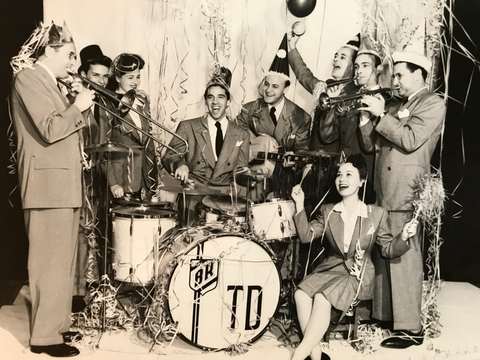
January 1 - THIS DATE IN SINATRA HISTORY
Undated materialFrom: Scott Henderson <scott@falseducks.com> | Received: 2024-01-01
show and the complete 50-52 CBS series.
Re: January 5 - THIS DATE IN SINATRA HISTORY
Undated materialFrom: Scott Henderson <scott@falseducks.com> | Received: 2024-01-06
Hi Ed,
Were there supposed to be images in your last two emails? They arrived without them.
Scott
At 11:13 PM 1/5/2024, you wrote:
>[]
>
>
>
>
>
>RADIO:
>
>
>1954 Rocky Fortune, "On The Trail Of A Killer"
>Network: NBC
>Episode: 13
>Time: 9:35 p.m.- 10 p.m.
>Performers: Frank Sinatra, Barney Phillips
>Writers: Norm Sickel
>Directors: Andrew C. Love
>Announcer: Edward King
>Description: Rocky is on the trail of Sister Ellie's Killer.
>
>
>
January 7 - THIS DATE IN SINATRA HISTORY
Undated materialFrom: Scott Henderson <scott@falseducks.com> | Received: 2024-01-07
Joe Dimaggio Show
Frank Sinatra is guest
10:30

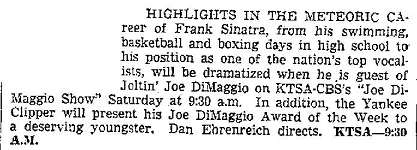
January 7 - THIS DATE IN SINATRA HISTORY
Undated materialFrom: Scott Henderson <scott@falseducks.com> | Received: 2024-01-07
Meet Frank Sinatra
Guest: Eileen Barton
note: First show with 45 minute running time. Last 15 minutes of the hour had "News with Eric Sevareld"
Television
None
Re: Sinatra Concert:
Undated materialFrom: Tito Montoya <franklyjoy22@gmail.com> | Received: 2024-01-08
Hi Ed,
I have the audio of that concert, and indeed, he was far from being on top form, he sounded hoarse. It looks like all those days in which he had to be locked in at his hotel, took their toll.
Prior to watching this concert - I'm doing it now ! - I remember some years ago one or two songs from Jerusalem appeared on youtube ( My Way was one of them if I'm not mistaken .. ), it was black and white though.
I didn't know a full B&W version had been circulating, the last three or four years I wasn't very much into the web, I may have missed a lot ...
Thank you for all the accurate information!
Al
El lun, 8 ene 2024 a las 14:56, Ed O'Brien (<dmarc-noreply@freelists.org>) escribió:
> Hi Tito,
> I have a tape of M. Rudin telling the story and what became > of the tape. If you have an audio of the concert, I'm sure you would > agree it is not Frank at his best. Or anywhere near his best.
> I know the colorized Jerusalem is being discussed, but there > is a digitally remastered b&w version that is fantastic.
> Ed
>
> On Monday, January 8, 2024 at 11:16:59 AM EST, Tito Montoya < > franklyjoy22@gmail.com> wrote:
>
>
> That's probably all true Ed .. sadly. About twelve years ago me and a > friend from Sydney contacted the promoter who brought Frank to that country > in 74 ( and later in 1987 ). I can't remember his name right now but at the > time, although well into his 60's or 70's, he was still an avid surfer. ( > He sent us some recent pics of him at the beach, lol! ). He also said he > believed the video tape had been destroyed, the concert was filmed by > Australia's ABC where this friend of mine had worked for years and she > herself, being able to access their archives, had looked for it with no > results. The story was told some years after in the film The Night we > called it a Day, with Dennis Hopper and Melanie Griffiths.
> A real shame ..
>
> El sáb, 30 dic 2023 a las 13:24, Ed O'Brien (<dmarc-noreply@freelists.org>) > escribió:
>
> Hi Fred,
> The concert you are looking for was aired in Australia > as part of the deal to get Frank up and running again. After offend- > ing the press and unions, he was literally a prisoner in his hotel > room. Mickey Rudin worked out a deal that included the concert > being aired throughout the country. But there was a proviso: all > copies had to be destroyed immediately after the airing.
> Bill Weeden(president of the Aussie Society) came to > visit later that year. I asked him if any copies escaped. He was > quite certain they had not. I then asked if anyone down under > had a Vu Matic or other machine that could have taken it directly > from the TV broadcast. Bill told me Australia was far behind > America in that kind of technology. No one was able to copy > it according to Mr. Weeden.
> Ed
>
> On Saturday, December 30, 2023 at 10:30:32 AM EST, Fred Wadsworth < > frw2@hotmail.co.uk> wrote:
>
>
> Can anyone help me as the Sinatra Concert SYDNEY 16/7 74 ever been issued > on DVD? Thanks FJW
>
>
> <http://www.avg.com/email-signature?utm_medium=email&utm_source=link&utm_campaign=sig-email&utm_content=webmail> > Virus-free.www.avg.com
> <http://www.avg.com/email-signature?utm_medium=email&utm_source=link&utm_campaign=sig-email&utm_content=webmail> > <#m_8804834078266617316_m_8458977156277733043_DAB4FAD8-2DD7-40BB-A1B8-4E2AA1F9FDF2> >
>
Re: Sinatra Concert:
Undated materialFrom: Ed O'Brien <dmarc-noreply@freelists.org> | Received: 2024-01-08
Hi Tito, I have a tape of M. Rudin telling the story and what becameof the tape. If you have an audio of the concert, I'm sure you wouldagree it is not Frank at his best. Or anywhere near his best. I know the colorized Jerusalem is being discussed, but there is a digitally remastered b&w version that is fantastic. Ed On Monday, January 8, 2024 at 11:16:59 AM EST, Tito Montoya <franklyjoy22@gmail.com> wrote:
That's probably all true Ed .. sadly. About twelve years ago me and a friend from Sydney contacted the promoter who brought Frank to that country in 74 ( and later in 1987 ). I can't remember his name right now but at the time, although well into his 60's or 70's, he was still an avid surfer. ( He sent us some recent pics of him at the beach, lol! ). He also said he believed the video tape had been destroyed, the concert was filmed by Australia's ABC where this friend of mine had worked for years and she herself, being able to access their archives, had looked for it with no results. The story was told some years after in the film The Night we called it a Day, with Dennis Hopper and Melanie Griffiths. A real shame .. El sáb, 30 dic 2023 a las 13:24, Ed O'Brien (<dmarc-noreply@freelists.org>) escribió:
Hi Fred, The concert you are looking for was aired in Australiaas part of the deal to get Frank up and running again. After offend-ing the press and unions, he was literally a prisoner in his hotelroom. Mickey Rudin worked out a deal that included the concertbeing aired throughout the country. But there was a proviso: allcopies had to be destroyed immediately after the airing. Bill Weeden(president of the Aussie Society) came tovisit later that year. I asked him if any copies escaped. He wasquite certain they had not. I then asked if anyone down under had a Vu Matic or other machine that could have taken it directlyfrom the TV broadcast. Bill told me Australia was far behindAmerica in that kind of technology. No one was able to copyit according to Mr. Weeden.Ed On Saturday, December 30, 2023 at 10:30:32 AM EST, Fred Wadsworth <frw2@hotmail.co.uk> wrote:
Can anyone help me as the Sinatra Concert SYDNEY 16/7 74 ever been issued on DVD? Thanks FJW
| | Virus-free.www.avg.com |
Re: Sinatra Concert:
Undated materialFrom: Tito Montoya <franklyjoy22@gmail.com> | Received: 2024-01-08
That's probably all true Ed .. sadly. About twelve years ago me and a friend from Sydney contacted the promoter who brought Frank to that country in 74 ( and later in 1987 ). I can't remember his name right now but at the time, although well into his 60's or 70's, he was still an avid surfer. ( He sent us some recent pics of him at the beach, lol! ). He also said he believed the video tape had been destroyed, the concert was filmed by Australia's ABC where this friend of mine had worked for years and she herself, being able to access their archives, had looked for it with no results. The story was told some years after in the film The Night we called it a Day, with Dennis Hopper and Melanie Griffiths.
A real shame ..
El sáb, 30 dic 2023 a las 13:24, Ed O'Brien (<dmarc-noreply@freelists.org>) escribió:
> Hi Fred,
> The concert you are looking for was aired in Australia > as part of the deal to get Frank up and running again. After offend- > ing the press and unions, he was literally a prisoner in his hotel > room. Mickey Rudin worked out a deal that included the concert > being aired throughout the country. But there was a proviso: all > copies had to be destroyed immediately after the airing.
> Bill Weeden(president of the Aussie Society) came to > visit later that year. I asked him if any copies escaped. He was > quite certain they had not. I then asked if anyone down under > had a Vu Matic or other machine that could have taken it directly > from the TV broadcast. Bill told me Australia was far behind > America in that kind of technology. No one was able to copy > it according to Mr. Weeden.
> Ed
>
> On Saturday, December 30, 2023 at 10:30:32 AM EST, Fred Wadsworth < > frw2@hotmail.co.uk> wrote:
>
>
> Can anyone help me as the Sinatra Concert SYDNEY 16/7 74 ever been issued > on DVD? Thanks FJW
>
>
> <http://www.avg.com/email-signature?utm_medium=email&utm_source=link&utm_campaign=sig-email&utm_content=webmail> > Virus-free.www.avg.com
> <http://www.avg.com/email-signature?utm_medium=email&utm_source=link&utm_campaign=sig-email&utm_content=webmail> > <#m_8458977156277733043_DAB4FAD8-2DD7-40BB-A1B8-4E2AA1F9FDF2> >
Re: Sinatra jerusalem concert 27.11.75 no on you tube in color
Undated materialFrom: Ed O'Brien <dmarc-noreply@freelists.org> | Received: 2024-01-08
Hi Shemmy, Roberto Quartin was the fellow who did the Jerusalemand the RFH 62. Roberto worked with what was sent to him. Hewanted both shows from the masters. Alas, that was not be. Robertowas very frustrated and worked with the material provided. I tried totalk him out of putting "All By Myself" on the CD. He loved the songand wouldn't listen to me. The London is not all from 6-1-62. Robertolifted songs from Tokyo and I believe other venues. He gave me therun down on what he replaced from 6/1. I could try and dig out his letterif you are interested.Ed On Monday, January 8, 2024 at 01:06:19 PM EST, shemmy Mashiah <smashiah@netvision.net.il> wrote:
JohnThe jerusalem concert was first released on a cd by “mazal tov” records.A very good bootleg.I was told the Brazil guy got this cd and copied it and issued it asHis find.In order to look original he added a song from Another concert “all by myself”As far as I remember.Just to look authentic.If you watch the video it is not there.It was a gimmick from reprise Brazil.They also issued the London June 1 1962 concert.I have this concert on monoAnd it sounds better.Shemmy
נשלח מה-iPhone שלי
ב-8 בינו׳ 2024, בשעה 19:10, John K. George <dmarc-noreply@freelists.org> כתב/ה:
The Jerusalem Concert was released on CD a decade or more ago by Reprise in Brazil. John G.
Sent from the all new AOL app for iOS
On Monday, January 8, 2024, 8:01 AM, Tito Montoya <franklyjoy22@gmail.com> wrote:
Thank you from me too Shemmy !! I just opened this account and found this very rare concert .. WOW !!!! For years I looked for it together with the televised Concert in Australia from 1974 ( to no avail sadly, the promoter of those concerts told us that the ABC TV tape seemed to have been destroyed, the story was loosely told in a movie some years after.)This is Frank still at his very peak! I also wonder if a video or a better sounding tape of the Concertgebow performance from that same year exists ? To me that was one of his very best concerts from the 70's ... oh well ... maybe I'm asking too much, we must be happy with this very rare jewel !!Thank you again for leading us to it Shemmy !!! Alvaro
El vie, 29 dic 2023 a las 7:46, margriet57 (<dmarc-noreply@freelists.org>) escribió:
Thank you Shemmy! Very much appreciated.Margriet
Verzonden vanaf mijn Galaxy
-------- Oorspronkelijk bericht --------Van: shemmy Mashiah <smashiah@netvision.net.il> Datum: 28-12-2023 16:02 (GMT+01:00) Aan: sinatraphiles@freelists.org Onderwerp: [sinatraphiles] Sinatra jerusalem concert 27.11.75 no on you tube in color This concert is now on YouTube in color.watch it or download it before it is removed.I was there 47 years ago. Shemmy mashiah
נשלח מה-iPhone שלי
Re: Sinatra jerusalem concert 27.11.75 no on you tube in color
Undated materialFrom: shemmy Mashiah <smashiah@netvision.net.il> | Received: 2024-01-08
John
The jerusalem concert was first released on a cd by “mazal tov” records.
A very good bootleg.
I was told the Brazil guy got this cd and copied it and issued it as
His find.
In order to look original he added a song from
Another concert “all by myself”
As far as I remember.Just to look authentic.
If you watch the video it is not there.
It was a gimmick from reprise Brazil.
They also issued the London June 1 1962 concert.
I have this concert on mono
And it sounds better.
Shemmy
נשלח מה-iPhone שלי
ב-8 בינו׳ 2024, בשעה 19:10, John K. George <dmarc-noreply@freelists.org> כתב/ה:
The Jerusalem Concert was released on CD a decade or more ago by Reprise in Brazil.
John G.
Sent from the all new AOL app for iOS
On Monday, January 8, 2024, 8:01 AM, Tito Montoya <franklyjoy22@gmail.com> wrote:
Thank you from me too Shemmy !! I just opened this account and found this very rare concert .. WOW !!!! For years I looked for it together with the televised Concert in Australia from 1974 ( to no avail sadly, the promoter of those concerts told us that the ABC TV tape seemed to have been destroyed, the story was loosely told in a movie some years after.)
This is Frank still at his very peak! I also wonder if a video or a better sounding tape of the Concertgebow performance from that same year exists ? To me that was one of his very best concerts from the 70's ... oh well ... maybe I'm asking too much, we must be happy with this very rare jewel !!
Thank you again for leading us to it Shemmy !!!
Alvaro
El vie, 29 dic 2023 a las 7:46, margriet57 (<dmarc-noreply@freelists.org>) escribió:
Thank you Shemmy!
Very much appreciated.
Margriet
Verzonden vanaf mijn Galaxy
-------- Oorspronkelijk bericht --------
Van: shemmy Mashiah <smashiah@netvision.net.il>
Datum: 28-12-2023 16:02 (GMT+01:00)
Aan: sinatraphiles@freelists.org
Onderwerp: [sinatraphiles] Sinatra jerusalem concert 27.11.75 no on you tube in color
This concert is now on YouTube in color.watch it or download it before it is removed.
I was there 47 years ago.
Shemmy mashiah
נשלח מה-iPhone שלי
Re: Sinatra jerusalem concert 27.11.75 no on you tube in color
Undated materialFrom: "John K. George" <dmarc-noreply@freelists.org> | Received: 2024-01-08
The Jerusalem Concert was released on CD a decade or more ago by Reprise in Brazil. John G.
Sent from the all new AOL app for iOS
On Monday, January 8, 2024, 8:01 AM, Tito Montoya <franklyjoy22@gmail.com> wrote:
Thank you from me too Shemmy !! I just opened this account and found this very rare concert .. WOW !!!! For years I looked for it together with the televised Concert in Australia from 1974 ( to no avail sadly, the promoter of those concerts told us that the ABC TV tape seemed to have been destroyed, the story was loosely told in a movie some years after.)This is Frank still at his very peak! I also wonder if a video or a better sounding tape of the Concertgebow performance from that same year exists ? To me that was one of his very best concerts from the 70's ... oh well ... maybe I'm asking too much, we must be happy with this very rare jewel !!Thank you again for leading us to it Shemmy !!! Alvaro
El vie, 29 dic 2023 a las 7:46, margriet57 (<dmarc-noreply@freelists.org>) escribió:
Thank you Shemmy! Very much appreciated.Margriet
Verzonden vanaf mijn Galaxy
-------- Oorspronkelijk bericht --------Van: shemmy Mashiah <smashiah@netvision.net.il> Datum: 28-12-2023 16:02 (GMT+01:00) Aan: sinatraphiles@freelists.org Onderwerp: [sinatraphiles] Sinatra jerusalem concert 27.11.75 no on you tube in color This concert is now on YouTube in color.watch it or download it before it is removed.I was there 47 years ago. Shemmy mashiah
נשלח מה-iPhone שלי
Re: Sinatra jerusalem concert 27.11.75 no on you tube in color
Undated materialFrom: Tito Montoya <franklyjoy22@gmail.com> | Received: 2024-01-08
Thank you from me too Shemmy !! I just opened this account and found this very rare concert .. WOW !!!! For years I looked for it together with the televised Concert in Australia from 1974 ( to no avail sadly, the promoter of those concerts told us that the ABC TV tape seemed to have been destroyed, the story was loosely told in a movie some years after.) This is Frank still at his very peak! I also wonder if a video or a better sounding tape of the Concertgebow performance from that same year exists ? To me that was one of his very best concerts from the 70's ... oh well ... maybe I'm asking too much, we must be happy with this very rare jewel !! Thank you again for leading us to it Shemmy !!!
Alvaro
El vie, 29 dic 2023 a las 7:46, margriet57 (<dmarc-noreply@freelists.org>) escribió:
>
> Thank you Shemmy!
> Very much appreciated.
> Margriet
>
>
> Verzonden vanaf mijn Galaxy
>
>
> -------- Oorspronkelijk bericht --------
> Van: shemmy Mashiah <smashiah@netvision.net.il>
> Datum: 28-12-2023 16:02 (GMT+01:00)
> Aan: sinatraphiles@freelists.org
> Onderwerp: [sinatraphiles] Sinatra jerusalem concert 27.11.75 no on you > tube in color
>
> This concert is now on YouTube in color.watch it or download it before it > is removed.
> I was there 47 years ago.
> Shemmy mashiah
>
> נשלח מה-iPhone שלי
>
Re: January 9 - THIS DATE IN SINATRA HISTORY - 1988 Sanctuary Cove , Australia
Undated materialFrom: Margriet <dmarc-noreply@freelists.org> | Received: 2024-01-09
Sanctuary Cove , Australia
© 1997-2024 The Sinatra Archive
This calendar, or any parts thereof, may not be reproduced in any fashion whatsoever without the prior written permission of the publisher (The Sinatra Archive)
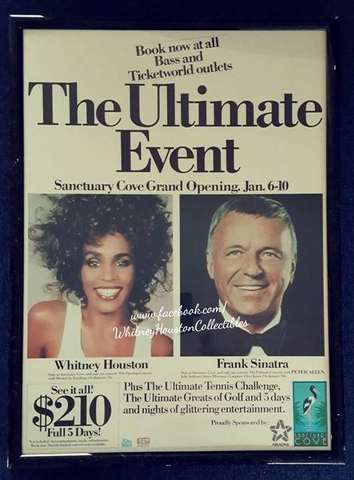
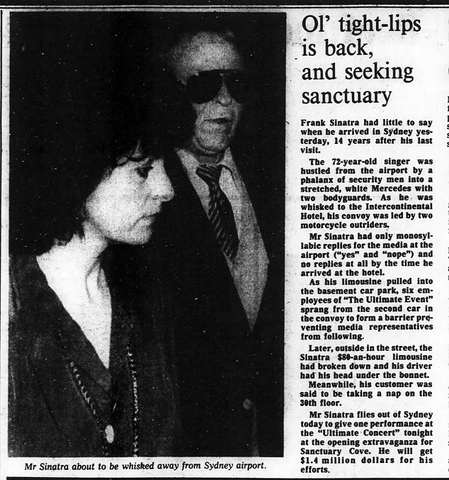
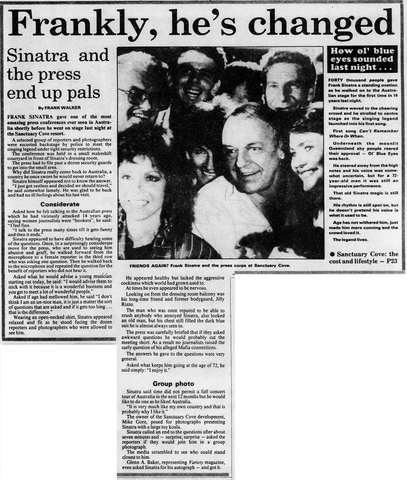
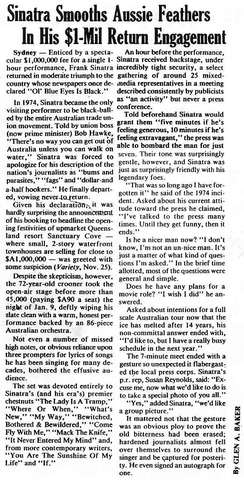
Re: January 9 - THIS DATE IN SINATRA HISTORY - 1988 Sanctuary Cove , Australia
Undated materialFrom: Margriet <dmarc-noreply@freelists.org> | Received: 2024-01-09
Sanctuary Cove , Australia
© 1997-2024 The Sinatra Archive
This calendar, or any parts thereof, may not be reproduced in any fashion whatsoever without the prior written permission of the publisher (The Sinatra Archive)
Re: Sinatra Concert:
Undated materialFrom: Ed O'Brien <dmarc-noreply@freelists.org> | Received: 2024-01-09
Hi Steve, What I meant regarding the Mikado is the curtain coming down, stage dark for about 15 minutes. That is why I made thedistinction between that concert and the 82 Dominican.Ed On Tuesday, January 9, 2024 at 11:00:50 AM EST, Steve <dmarc-noreply@freelists.org> wrote:
Ed, my memory from the only time I saw Frank in person--1991 at the Spectrum in Philadelphia--is that he left the stage to have Steve Lawrence and Eydie Gorme do a couple songs together. I could be wrong, as maybe he just sat on a stool and sipped a whiskey (or whisky, as it was sponsored by Chivas) while they sang. There definitely was not an intermission though. Does anyone remember from that tour whether Frank actually left the stage for those numbers? Considering he also did it in 1982, was that common for him in his later years?
By the way, in trying to find the answer, I found an article mentioning the band Frank, Jr. led was 31 pieces. 31 piece band! Did any of the big bands of the Big Band era even approach that size? I'm guessing no. Steve
On Tuesday, January 9, 2024 at 10:31:44 AM EST, Ed O'Brien <dmarc-noreply@freelists.org> wrote:
Hi Tito, Mikado is the only Sinatra concert that I can think of that hasan intermission. Dominican 82 has Frank leaving the stage, but BuddyRich comes out and does a memorable drum segment.Ed
Re: Sinatra Concert:
Undated materialFrom: Steve <dmarc-noreply@freelists.org> | Received: 2024-01-09
Ed, my memory from the only time I saw Frank in person--1991 at the Spectrum in Philadelphia--is that he left the stage to have Steve Lawrence and Eydie Gorme do a couple songs together. I could be wrong, as maybe he just sat on a stool and sipped a whiskey (or whisky, as it was sponsored by Chivas) while they sang. There definitely was not an intermission though. Does anyone remember from that tour whether Frank actually left the stage for those numbers? Considering he also did it in 1982, was that common for him in his later years?
By the way, in trying to find the answer, I found an article mentioning the band Frank, Jr. led was 31 pieces. 31 piece band! Did any of the big bands of the Big Band era even approach that size? I'm guessing no. Steve
On Tuesday, January 9, 2024 at 10:31:44 AM EST, Ed O'Brien <dmarc-noreply@freelists.org> wrote:
Hi Tito, Mikado is the only Sinatra concert that I can think of that hasan intermission. Dominican 82 has Frank leaving the stage, but BuddyRich comes out and does a memorable drum segment.Ed
Re: Sinatra Concert:
Undated materialFrom: Ed O'Brien <dmarc-noreply@freelists.org> | Received: 2024-01-09
Hi Tito, Mikado is the only Sinatra concert that I can think of that hasan intermission. Dominican 82 has Frank leaving the stage, but BuddyRich comes out and does a memorable drum segment.Ed On Tuesday, January 9, 2024 at 01:55:09 AM EST, Tito Montoya <franklyjoy22@gmail.com> wrote:
I agree the two concerts from Japan '62 are great! I believe Hibiya Park was officially released some years ago, Mikado might be missing. El lun, 8 ene 2024 a las 18:06, Jumong Singson (<iamjumongsingson@gmail.com>) escribió:
The two songs you're mentioning Tito was My Way and Send in the Clowns. I have the master of the black and white of the concert i don't know if this is the digitally remastered version so nah. Off-Topic but i also have two great shows. Manila 1994 and Japan 1962 (Mikado) way more better shows than those mentioned concerts above
Re: Sinatra Concert:
Undated materialFrom: Tito Montoya <franklyjoy22@gmail.com> | Received: 2024-01-09
I agree the two concerts from Japan '62 are great! I believe Hibiya Park was officially released some years ago, Mikado might be missing.
El lun, 8 ene 2024 a las 18:06, Jumong Singson (<iamjumongsingson@gmail.com>) escribió:
> The two songs you're mentioning Tito was My Way and Send in the Clowns. I > have the master of the black and white of the concert i don't know if this > is the digitally remastered version so nah. Off-Topic but i also have two > great shows. Manila 1994 and Japan 1962 (Mikado) way more better shows than > those mentioned concerts above
>
>
>>> <#m_-1052237339508264834_m_-2430510341078119992_m_2668372741691890359_m_8804834078266617316_m_8458977156277733043_DAB4FAD8-2DD7-40BB-A1B8-4E2AA1F9FDF2> >>>
>>>
Re: Sinatra Concert:
Undated materialFrom: Jumong Singson <iamjumongsingson@gmail.com> | Received: 2024-01-09
The two songs you're mentioning Tito was My Way and Send in the Clowns. I have the master of the black and white of the concert i don't know if this is the digitally remastered version so nah. Off-Topic but i also have two great shows. Manila 1994 and Japan 1962 (Mikado) way more better shows than those mentioned concerts above
Re: Sinatra jerusalem concert 27.11.75 no on you tube in color
Undated materialFrom: Paul DAlessandro <dmarc-noreply@freelists.org> | Received: 2024-01-09
Thank you for sharing this fascinating information Shemmy! I have often wondered how these historic recordings are created and shared. You are very fortunate to have attended the show!
Paul D'Alessandro
Huntington Beach, CA
On Jan 9, 2024, at 12:31 AM, smashiah@netvision.net.il wrote:
Hi Ed
Since I was there and was involved I will give you the full story.
The ‘Mazal Tov” cd was produced by the Late Rick Apt.
Mastered by one of his friends in the west coast.
He used the master tape that was recorded while the concert was broadcasted
By the IDF (Israel defence forces) Radio station
I did my army service in this station as acoustic engineer till I was about 50 years old.
This was recorded alongside the Sinatra’s audio console.
He Used for the 2500 seats Binyaney Haoma concert hall only 2-4 Shure vocal master sound columns that sounded great.
It was 1975. The Guy who supplied the sound system was a good friend of mine.
Some years later I installed an ALTEC LANSING loudspeaker system in this hall.
When the Roberto Quartin came out I talked to Rick apt.
He told me he gave a free copy to roberto who promised not to use it.
But he did not kept his word and issued a copy with the addition of” all by myself” so people will think this is the full authentic concert.
No!! it is not.
I did not mention his name because I don’t like what he did.(I do have the Brazilian cds)
I have another master tape from the show recorded from the radio broadcast by my revox that sounds very good as well.
About the Jerusalem 75 video.
The concert was broadcasted in B&W.
I have asked a friend who is a video producer to record it on Umatic.(We were more advanced than Australia)
I have this Umatic tape but never saw it since I don’t have a Umatic machine.
If you have access to one I can send it to you.
Some years later the concert was on Israel TV and I recorded it on video tape.
This is the version you are familiar with till the new colorized version arrived
On the colorized version it is written on the top right ARCHIVE in Hebrew.
So this is from the archive of the Israel broadcasting organization.
I will check if the original can be purchased.
I don’t know if it was filmed in color. Or colorized later.maybe some members know.
By the way I sat with 2 of my best friends behind Barbara Marx (Sinatra latter)
And the Sinatra companyin the concert.
Everytime the orchestra played the first 2 notes I told my friends the name of the songs.
And they turned back many times with appreciation.
I have enclosed photos where you can see me with a mark like arrow above my head right behind Barbara and the Sinatra group.
Maybe you know who they are.I can not recognize any one of them.
By the way who played piano in the concert.?
Regards
shemmy
From: sinatraphiles-bounce@freelists.org <sinatraphiles-bounce@freelists.org> On Behalf Of Ed O'Brien ("eob101")
Sent: Monday, January 8, 2024 10:08 PM
To: sinatraphiles@freelists.org
Subject: [sinatraphiles] Re: Sinatra jerusalem concert 27.11.75 no on you tube in color
Hi Shemmy,
Roberto Quartin was the fellow who did the Jerusalem
and the RFH 62. Roberto worked with what was sent to him. He
wanted both shows from the masters. Alas, that was not be. Roberto
was very frustrated and worked with the material provided. I tried to
talk him out of putting "All By Myself" on the CD. He loved the song
and wouldn't listen to me. The London is not all from 6-1-62. Roberto
lifted songs from Tokyo and I believe other venues. He gave me the
run down on what he replaced from 6/1. I could try and dig out his letter
if you are interested.
Ed
On Monday, January 8, 2024 at 01:06:19 PM EST, shemmy Mashiah <smashiah@netvision.net.il> wrote:
John
The jerusalem concert was first released on a cd by “mazal tov” records.
A very good bootleg.
I was told the Brazil guy got this cd and copied it and issued it as
His find.
In order to look original he added a song from
Another concert “all by myself”
As far as I remember.Just to look authentic.
If you watch the video it is not there.
It was a gimmick from reprise Brazil.
They also issued the London June 1 1962 concert.
I have this concert on mono
And it sounds better.
Shemmy
נשלח מה-iPhone שלי
ב-8 בינו׳ 2024, בשעה 19:10, John K. George <dmarc-noreply@freelists.org> כתב/ה:
The Jerusalem Concert was released on CD a decade or more ago by Reprise in Brazil.
John G.
Sent from the all new AOL app for iOS
On Monday, January 8, 2024, 8:01 AM, Tito Montoya <franklyjoy22@gmail.com> wrote:
Thank you from me too Shemmy !! I just opened this account and found this very rare concert .. WOW !!!! For years I looked for it together with the televised Concert in Australia from 1974 ( to no avail sadly, the promoter of those concerts told us that the ABC TV tape seemed to have been destroyed, the story was loosely told in a movie some years after.)
This is Frank still at his very peak! I also wonder if a video or a better sounding tape of the Concertgebow performance from that same year exists ? To me that was one of his very best concerts from the 70's ... oh well ... maybe I'm asking too much, we must be happy with this very rare jewel !!
Thank you again for leading us to it Shemmy !!!
Alvaro
El vie, 29 dic 2023 a las 7:46, margriet57 (<dmarc-noreply@freelists.org>) escribió:
Thank you Shemmy!
Very much appreciated.
Margriet
Verzonden vanaf mijn Galaxy
-------- Oorspronkelijk bericht --------
Van: shemmy Mashiah <smashiah@netvision.net.il>
Datum: 28-12-2023 16:02 (GMT+01:00)
Aan: sinatraphiles@freelists.org
Onderwerp: [sinatraphiles] Sinatra jerusalem concert 27.11.75 no on you tube in color
This concert is now on YouTube in color.watch it or download it before it is removed.
I was there 47 years ago.
Shemmy mashiah
נשלח מה-iPhone שלי
Re: Sinatra jerusalem concert 27.11.75 no on you tube in color
Undated materialFrom: Richard Cook <cook879@hotmail.co.uk> | Received: 2024-01-09
Thanks for the details Shemmy.
I don’t know if it was filmed in color. Or colorized later.maybe some members know.
I guess it was not filmed in colour - the top left of the video on YouTube says it was "colorized and enhanced by Silvereyes".
Richard
________________________________
From: sinatraphiles-bounce@freelists.org <sinatraphiles-bounce@freelists.org> on behalf of smashiah@netvision.net.il <smashiah@netvision.net.il>
Sent: 09 January 2024 08:31
To: sinatraphiles@freelists.org <sinatraphiles@freelists.org>
Subject: [sinatraphiles] Re: Sinatra jerusalem concert 27.11.75 no on you tube in color
Hi Ed
Since I was there and was involved I will give you the full story.
The ‘Mazal Tov” cd was produced by the Late Rick Apt.
Mastered by one of his friends in the west coast.
He used the master tape that was recorded while the concert was broadcasted
By the IDF (Israel defence forces) Radio station
I did my army service in this station as acoustic engineer till I was about 50 years old.
This was recorded alongside the Sinatra’s audio console.
He Used for the 2500 seats Binyaney Haoma concert hall only 2-4 Shure vocal master sound columns that sounded great.
It was 1975. The Guy who supplied the sound system was a good friend of mine.
Some years later I installed an ALTEC LANSING loudspeaker system in this hall.
When the Roberto Quartin came out I talked to Rick apt.
He told me he gave a free copy to roberto who promised not to use it.
But he did not kept his word and issued a copy with the addition of” all by myself” so people will think this is the full authentic concert.
No!! it is not.
I did not mention his name because I don’t like what he did.(I do have the Brazilian cds)
I have another master tape from the show recorded from the radio broadcast by my revox that sounds very good as well.
About the Jerusalem 75 video.
The concert was broadcasted in B&W.
I have asked a friend who is a video producer to record it on Umatic.(We were more advanced than Australia)
I have this Umatic tape but never saw it since I don’t have a Umatic machine.
If you have access to one I can send it to you.
Some years later the concert was on Israel TV and I recorded it on video tape.
This is the version you are familiar with till the new colorized version arrived
On the colorized version it is written on the top right ARCHIVE in Hebrew.
So this is from the archive of the Israel broadcasting organization.
I will check if the original can be purchased.
I don’t know if it was filmed in color. Or colorized later.maybe some members know.
By the way I sat with 2 of my best friends behind Barbara Marx (Sinatra latter)
And the Sinatra companyin the concert.
Everytime the orchestra played the first 2 notes I told my friends the name of the songs.
And they turned back many times with appreciation.
I have enclosed photos where you can see me with a mark like arrow above my head right behind Barbara and the Sinatra group.
Maybe you know who they are.I can not recognize any one of them.
By the way who played piano in the concert.?
Regards
shemmy
From: sinatraphiles-bounce@freelists.org <sinatraphiles-bounce@freelists.org> On Behalf Of Ed O'Brien ("eob101")
Sent: Monday, January 8, 2024 10:08 PM
To: sinatraphiles@freelists.org
Subject: [sinatraphiles] Re: Sinatra jerusalem concert 27.11.75 no on you tube in color
Hi Shemmy,
Roberto Quartin was the fellow who did the Jerusalem
and the RFH 62. Roberto worked with what was sent to him. He
wanted both shows from the masters. Alas, that was not be. Roberto
was very frustrated and worked with the material provided. I tried to
talk him out of putting "All By Myself" on the CD. He loved the song
and wouldn't listen to me. The London is not all from 6-1-62. Roberto
lifted songs from Tokyo and I believe other venues. He gave me the
run down on what he replaced from 6/1. I could try and dig out his letter
if you are interested.
Ed
On Monday, January 8, 2024 at 01:06:19 PM EST, shemmy Mashiah <smashiah@netvision.net.il<mailto:smashiah@netvision.net.il>> wrote:
John
The jerusalem concert was first released on a cd by “mazal tov” records.
A very good bootleg.
I was told the Brazil guy got this cd and copied it and issued it as
His find.
In order to look original he added a song from
Another concert “all by myself”
As far as I remember.Just to look authentic.
If you watch the video it is not there.
It was a gimmick from reprise Brazil.
They also issued the London June 1 1962 concert.
I have this concert on mono
And it sounds better.
Shemmy
נשלח מה-iPhone שלי
ב-8 בינו׳ 2024, בשעה 19:10, John K. George <dmarc-noreply@freelists.org<mailto:dmarc-noreply@freelists.org>> כתב/ה:
The Jerusalem Concert was released on CD a decade or more ago by Reprise in Brazil.
John G.
Sent from the all new AOL app for iOS<https://apps.apple.com/us/app/aol-news-email-weather-video/id646100661>
On Monday, January 8, 2024, 8:01 AM, Tito Montoya <franklyjoy22@gmail.com<mailto:franklyjoy22@gmail.com>> wrote:
Thank you from me too Shemmy !! I just opened this account and found this very rare concert .. WOW !!!! For years I looked for it together with the televised Concert in Australia from 1974 ( to no avail sadly, the promoter of those concerts told us that the ABC TV tape seemed to have been destroyed, the story was loosely told in a movie some years after.)
This is Frank still at his very peak! I also wonder if a video or a better sounding tape of the Concertgebow performance from that same year exists ? To me that was one of his very best concerts from the 70's ... oh well ... maybe I'm asking too much, we must be happy with this very rare jewel !!
Thank you again for leading us to it Shemmy !!!
Alvaro
El vie, 29 dic 2023 a las 7:46, margriet57 (<dmarc-noreply@freelists.org<mailto:dmarc-noreply@freelists.org>>) escribió:
Thank you Shemmy!
Very much appreciated.
Margriet
Verzonden vanaf mijn Galaxy
-------- Oorspronkelijk bericht --------
Van: shemmy Mashiah <smashiah@netvision.net.il<mailto:smashiah@netvision.net.il>>
Datum: 28-12-2023 16:02 (GMT+01:00)
Aan: sinatraphiles@freelists.org<mailto:sinatraphiles@freelists.org>
Onderwerp: [sinatraphiles] Sinatra jerusalem concert 27.11.75 no on you tube in color
This concert is now on YouTube in color.watch it or download it before it is removed.
I was there 47 years ago.
Shemmy mashiah
נשלח מה-iPhone שלי
Re: Sinatra jerusalem concert 27.11.75 no on you tube in color
Undated materialFrom: smashiah@netvision.net.il | Received: 2024-01-09
Sorry
Jumong
From: sinatraphiles-bounce@freelists.org <sinatraphiles-bounce@freelists.org> On Behalf Of shemmy Mashiah
Sent: Tuesday, January 9, 2024 1:39 PM
To: sinatraphiles@freelists.org
Subject: [sinatraphiles] Re: Sinatra jerusalem concert 27.11.75 no on you tube in color
Jumping
Bill miller plays on one for my baby.
I know bill Miller.
He is conducting.
When he conducts there is a piano player with a small beard.
Do you think that as a 63 year fan since I was 14 I will not recognize bill Miller?
Shemmy
נשלח מה-iPhone שלי
ב-9 בינו׳ 2024, בשעה 13:08, Jumong Singson < <mailto:iamjumongsingson@gmail.com> iamjumongsingson@gmail.com> כתב/ה:
The piano player is Bill Miller. Shemmy nice story!
On Tue, Jan 9, 2024, 4:31 PM <smashiah@netvision.net.il <mailto:smashiah@netvision.net.il> > wrote:
Hi Ed
Since I was there and was involved I will give you the full story.
The ‘Mazal Tov” cd was produced by the Late Rick Apt.
Mastered by one of his friends in the west coast.
He used the master tape that was recorded while the concert was broadcasted
By the IDF (Israel defence forces) Radio station
I did my army service in this station as acoustic engineer till I was about 50 years old.
This was recorded alongside the Sinatra’s audio console.
He Used for the 2500 seats Binyaney Haoma concert hall only 2-4 Shure vocal master sound columns that sounded great.
It was 1975. The Guy who supplied the sound system was a good friend of mine.
Some years later I installed an ALTEC LANSING loudspeaker system in this hall.
When the Roberto Quartin came out I talked to Rick apt.
He told me he gave a free copy to roberto who promised not to use it.
But he did not kept his word and issued a copy with the addition of” all by myself” so people will think this is the full authentic concert.
No!! it is not.
I did not mention his name because I don’t like what he did.(I do have the Brazilian cds)
I have another master tape from the show recorded from the radio broadcast by my revox that sounds very good as well.
About the Jerusalem 75 video.
The concert was broadcasted in B&W.
I have asked a friend who is a video producer to record it on Umatic.(We were more advanced than Australia)
I have this Umatic tape but never saw it since I don’t have a Umatic machine.
If you have access to one I can send it to you.
Some years later the concert was on Israel TV and I recorded it on video tape.
This is the version you are familiar with till the new colorized version arrived
On the colorized version it is written on the top right ARCHIVE in Hebrew.
So this is from the archive of the Israel broadcasting organization.
I will check if the original can be purchased.
I don’t know if it was filmed in color. Or colorized later.maybe some members know.
By the way I sat with 2 of my best friends behind Barbara Marx (Sinatra latter)
And the Sinatra companyin the concert.
Everytime the orchestra played the first 2 notes I told my friends the name of the songs.
And they turned back many times with appreciation.
I have enclosed photos where you can see me with a mark like arrow above my head right behind Barbara and the Sinatra group.
Maybe you know who they are.I can not recognize any one of them.
By the way who played piano in the concert.?
Regards
shemmy
From: sinatraphiles-bounce@freelists.org <mailto:sinatraphiles-bounce@freelists.org> <sinatraphiles-bounce@freelists.org <mailto:sinatraphiles-bounce@freelists.org> > On Behalf Of Ed O'Brien ("eob101")
Sent: Monday, January 8, 2024 10:08 PM
To: sinatraphiles@freelists.org <mailto:sinatraphiles@freelists.org>
Subject: [sinatraphiles] Re: Sinatra jerusalem concert 27.11.75 no on you tube in color
Hi Shemmy,
Roberto Quartin was the fellow who did the Jerusalem
and the RFH 62. Roberto worked with what was sent to him. He
wanted both shows from the masters. Alas, that was not be. Roberto
was very frustrated and worked with the material provided. I tried to
talk him out of putting "All By Myself" on the CD. He loved the song
and wouldn't listen to me. The London is not all from 6-1-62. Roberto
lifted songs from Tokyo and I believe other venues. He gave me the
run down on what he replaced from 6/1. I could try and dig out his letter
if you are interested.
Ed
On Monday, January 8, 2024 at 01:06:19 PM EST, shemmy Mashiah <smashiah@netvision.net.il <mailto:smashiah@netvision.net.il> > wrote:
John
The jerusalem concert was first released on a cd by “mazal tov” records.
A very good bootleg.
I was told the Brazil guy got this cd and copied it and issued it as
His find.
In order to look original he added a song from
Another concert “all by myself”
As far as I remember.Just to look authentic.
If you watch the video it is not there.
It was a gimmick from reprise Brazil.
They also issued the London June 1 1962 concert.
I have this concert on mono
And it sounds better.
Shemmy
נשלח מה-iPhone שלי
ב-8 בינו׳ 2024, בשעה 19:10, John K. George < <mailto:dmarc-noreply@freelists.org> dmarc-noreply@freelists.org> כתב/ה:
The Jerusalem Concert was released on CD a decade or more ago by Reprise in Brazil.
John G.
Sent from the all new AOL app for iOS <https://apps.apple.com/us/app/aol-news-email-weather-video/id646100661>
On Monday, January 8, 2024, 8:01 AM, Tito Montoya <franklyjoy22@gmail.com <mailto:franklyjoy22@gmail.com> > wrote:
Thank you from me too Shemmy !! I just opened this account and found this very rare concert .. WOW !!!! For years I looked for it together with the televised Concert in Australia from 1974 ( to no avail sadly, the promoter of those concerts told us that the ABC TV tape seemed to have been destroyed, the story was loosely told in a movie some years after.)
This is Frank still at his very peak! I also wonder if a video or a better sounding tape of the Concertgebow performance from that same year exists ? To me that was one of his very best concerts from the 70's ... oh well ... maybe I'm asking too much, we must be happy with this very rare jewel !!
Thank you again for leading us to it Shemmy !!!
Alvaro
El vie, 29 dic 2023 a las 7:46, margriet57 (<dmarc-noreply@freelists.org <mailto:dmarc-noreply@freelists.org> >) escribió:
Thank you Shemmy!
Very much appreciated.
Margriet
Verzonden vanaf mijn Galaxy
-------- Oorspronkelijk bericht --------
Van: shemmy Mashiah <smashiah@netvision.net.il <mailto:smashiah@netvision.net.il> >
Datum: 28-12-2023 16:02 (GMT+01:00)
Aan: sinatraphiles@freelists.org <mailto:sinatraphiles@freelists.org>
Onderwerp: [sinatraphiles] Sinatra jerusalem concert 27.11.75 no on you tube in color
This concert is now on YouTube in color.watch it or download it before it is removed.
I was there 47 years ago.
Shemmy mashiah
נשלח מה-iPhone שלי
---------- Forwarded message ----------
From: Shemmy Mashiah <shemmy@s-mashiah.co.il <mailto:shemmy@s-mashiah.co.il> >
To: shemmy Mashiah <smashiah@netvision.net.il <mailto:smashiah@netvision.net.il> >
Cc:
Bcc:
Date: Tue, 09 Jan 2024 09:43:19 +0200
Subject: Jerusalem 1975
נשלח מה-iPhone שלי
Re: Sinatra jerusalem concert 27.11.75 no on you tube in color
Undated materialFrom: Jumong Singson <iamjumongsingson@gmail.com> | Received: 2024-01-09
Oh im Sorry 😅😅 I've done a mistake ahahaha
On Tue, Jan 9, 2024, 7:38 PM shemmy Mashiah <smashiah@netvision.net.il> wrote:
Jumping
Bill miller plays on one for my baby.
I know bill Miller.
He is conducting.
When he conducts there is a piano player with a small beard.
Do you think that as a 63 year fan since I was 14 I will not recognize bill Miller?
Shemmy
נשלח מה-iPhone שלי
ב-9 בינו׳ 2024, בשעה 13:08, Jumong Singson <iamjumongsingson@gmail.com> כתב/ה:
The piano player is Bill Miller. Shemmy nice story!
On Tue, Jan 9, 2024, 4:31 PM <smashiah@netvision.net.il> wrote:
Hi Ed
Since I was there and was involved I will give you the full story.
The ‘Mazal Tov” cd was produced by the Late Rick Apt.
Mastered by one of his friends in the west coast.
He used the master tape that was recorded while the concert was broadcasted
By the IDF (Israel defence forces) Radio station
I did my army service in this station as acoustic engineer till I was about 50 years old.
This was recorded alongside the Sinatra’s audio console.
He Used for the 2500 seats Binyaney Haoma concert hall only 2-4 Shure vocal master sound columns that sounded great.
It was 1975. The Guy who supplied the sound system was a good friend of mine.
Some years later I installed an ALTEC LANSING loudspeaker system in this hall.
When the Roberto Quartin came out I talked to Rick apt.
He told me he gave a free copy to roberto who promised not to use it.
But he did not kept his word and issued a copy with the addition of” all by myself” so people will think this is the full authentic concert.
No!! it is not.
I did not mention his name because I don’t like what he did.(I do have the Brazilian cds)
I have another master tape from the show recorded from the radio broadcast by my revox that sounds very good as well.
About the Jerusalem 75 video.
The concert was broadcasted in B&W.
I have asked a friend who is a video producer to record it on Umatic.(We were more advanced than Australia)
I have this Umatic tape but never saw it since I don’t have a Umatic machine.
If you have access to one I can send it to you.
Some years later the concert was on Israel TV and I recorded it on video tape.
This is the version you are familiar with till the new colorized version arrived
On the colorized version it is written on the top right ARCHIVE in Hebrew.
So this is from the archive of the Israel broadcasting organization.
I will check if the original can be purchased.
I don’t know if it was filmed in color. Or colorized later.maybe some members know.
By the way I sat with 2 of my best friends behind Barbara Marx (Sinatra latter)
And the Sinatra companyin the concert.
Everytime the orchestra played the first 2 notes I told my friends the name of the songs.
And they turned back many times with appreciation.
I have enclosed photos where you can see me with a mark like arrow above my head right behind Barbara and the Sinatra group.
Maybe you know who they are.I can not recognize any one of them.
By the way who played piano in the concert.?
Regards
shemmy
From: sinatraphiles-bounce@freelists.org <sinatraphiles-bounce@freelists.org> On Behalf Of Ed O'Brien ("eob101")
Sent: Monday, January 8, 2024 10:08 PM
To: sinatraphiles@freelists.org
Subject: [sinatraphiles] Re: Sinatra jerusalem concert 27.11.75 no on you tube in color
Hi Shemmy,
Roberto Quartin was the fellow who did the Jerusalem
and the RFH 62. Roberto worked with what was sent to him. He
wanted both shows from the masters. Alas, that was not be. Roberto
was very frustrated and worked with the material provided. I tried to
talk him out of putting "All By Myself" on the CD. He loved the song
and wouldn't listen to me. The London is not all from 6-1-62. Roberto
lifted songs from Tokyo and I believe other venues. He gave me the
run down on what he replaced from 6/1. I could try and dig out his letter
if you are interested.
Ed
On Monday, January 8, 2024 at 01:06:19 PM EST, shemmy Mashiah <smashiah@netvision.net.il> wrote:
John
The jerusalem concert was first released on a cd by “mazal tov” records.
A very good bootleg.
I was told the Brazil guy got this cd and copied it and issued it as
His find.
In order to look original he added a song from
Another concert “all by myself”
As far as I remember.Just to look authentic.
If you watch the video it is not there.
It was a gimmick from reprise Brazil.
They also issued the London June 1 1962 concert.
I have this concert on mono
And it sounds better.
Shemmy
נשלח מה-iPhone שלי
ב-8 בינו׳ 2024, בשעה 19:10, John K. George <dmarc-noreply@freelists.org> כתב/ה:
The Jerusalem Concert was released on CD a decade or more ago by Reprise in Brazil.
John G.
Sent from the all new AOL app for iOS
On Monday, January 8, 2024, 8:01 AM, Tito Montoya <franklyjoy22@gmail.com> wrote:
Thank you from me too Shemmy !! I just opened this account and found this very rare concert .. WOW !!!! For years I looked for it together with the televised Concert in Australia from 1974 ( to no avail sadly, the promoter of those concerts told us that the ABC TV tape seemed to have been destroyed, the story was loosely told in a movie some years after.)
This is Frank still at his very peak! I also wonder if a video or a better sounding tape of the Concertgebow performance from that same year exists ? To me that was one of his very best concerts from the 70's ... oh well ... maybe I'm asking too much, we must be happy with this very rare jewel !!
Thank you again for leading us to it Shemmy !!!
Alvaro
El vie, 29 dic 2023 a las 7:46, margriet57 (<dmarc-noreply@freelists.org>) escribió:
Thank you Shemmy!
Very much appreciated.
Margriet
Verzonden vanaf mijn Galaxy
-------- Oorspronkelijk bericht --------
Van: shemmy Mashiah <smashiah@netvision.net.il>
Datum: 28-12-2023 16:02 (GMT+01:00)
Aan: sinatraphiles@freelists.org
Onderwerp: [sinatraphiles] Sinatra jerusalem concert 27.11.75 no on you tube in color
This concert is now on YouTube in color.watch it or download it before it is removed.
I was there 47 years ago.
Shemmy mashiah
נשלח מה-iPhone שלי
---------- Forwarded message ----------
From: Shemmy Mashiah <shemmy@s-mashiah.co.il>
To: shemmy Mashiah <smashiah@netvision.net.il>
Cc:
Bcc:
Date: Tue, 09 Jan 2024 09:43:19 +0200
Subject: Jerusalem 1975
נשלח מה-iPhone שלי
[image not recovered — source caption: “IMG_8097.JPG”]
[image not recovered — source caption: “IMG_8098.jpg”]
[image referenced in source but could not be recovered]
[image referenced in source but could not be recovered]
Re: Sinatra jerusalem concert 27.11.75 no on you tube in color
Undated materialFrom: shemmy Mashiah <smashiah@netvision.net.il> | Received: 2024-01-09
Jumping
Bill miller plays on one for my baby.
I know bill Miller.
He is conducting.
When he conducts there is a piano player with a small beard.
Do you think that as a 63 year fan since I was 14 I will not recognize bill Miller?
Shemmy
נשלח מה-iPhone שלי
ב-9 בינו׳ 2024, בשעה 13:08, Jumong Singson <iamjumongsingson@gmail.com> כתב/ה:
The piano player is Bill Miller. Shemmy nice story!
On Tue, Jan 9, 2024, 4:31 PM <smashiah@netvision.net.il> wrote:
Hi Ed
Since I was there and was involved I will give you the full story.
The ‘Mazal Tov” cd was produced by the Late Rick Apt.
Mastered by one of his friends in the west coast.
He used the master tape that was recorded while the concert was broadcasted
By the IDF (Israel defence forces) Radio station
I did my army service in this station as acoustic engineer till I was about 50 years old.
This was recorded alongside the Sinatra’s audio console.
He Used for the 2500 seats Binyaney Haoma concert hall only 2-4 Shure vocal master sound columns that sounded great.
It was 1975. The Guy who supplied the sound system was a good friend of mine.
Some years later I installed an ALTEC LANSING loudspeaker system in this hall.
When the Roberto Quartin came out I talked to Rick apt.
He told me he gave a free copy to roberto who promised not to use it.
But he did not kept his word and issued a copy with the addition of” all by myself” so people will think this is the full authentic concert.
No!! it is not.
I did not mention his name because I don’t like what he did.(I do have the Brazilian cds)
I have another master tape from the show recorded from the radio broadcast by my revox that sounds very good as well.
About the Jerusalem 75 video.
The concert was broadcasted in B&W.
I have asked a friend who is a video producer to record it on Umatic.(We were more advanced than Australia)
I have this Umatic tape but never saw it since I don’t have a Umatic machine.
If you have access to one I can send it to you.
Some years later the concert was on Israel TV and I recorded it on video tape.
This is the version you are familiar with till the new colorized version arrived
On the colorized version it is written on the top right ARCHIVE in Hebrew.
So this is from the archive of the Israel broadcasting organization.
I will check if the original can be purchased.
I don’t know if it was filmed in color. Or colorized later.maybe some members know.
By the way I sat with 2 of my best friends behind Barbara Marx (Sinatra latter)
And the Sinatra companyin the concert.
Everytime the orchestra played the first 2 notes I told my friends the name of the songs.
And they turned back many times with appreciation.
I have enclosed photos where you can see me with a mark like arrow above my head right behind Barbara and the Sinatra group.
Maybe you know who they are.I can not recognize any one of them.
By the way who played piano in the concert.?
Regards
shemmy
From: sinatraphiles-bounce@freelists.org <sinatraphiles-bounce@freelists.org> On Behalf Of Ed O'Brien ("eob101")
Sent: Monday, January 8, 2024 10:08 PM
To: sinatraphiles@freelists.org
Subject: [sinatraphiles] Re: Sinatra jerusalem concert 27.11.75 no on you tube in color
Hi Shemmy,
Roberto Quartin was the fellow who did the Jerusalem
and the RFH 62. Roberto worked with what was sent to him. He
wanted both shows from the masters. Alas, that was not be. Roberto
was very frustrated and worked with the material provided. I tried to
talk him out of putting "All By Myself" on the CD. He loved the song
and wouldn't listen to me. The London is not all from 6-1-62. Roberto
lifted songs from Tokyo and I believe other venues. He gave me the
run down on what he replaced from 6/1. I could try and dig out his letter
if you are interested.
Ed
On Monday, January 8, 2024 at 01:06:19 PM EST, shemmy Mashiah <smashiah@netvision.net.il> wrote:
John
The jerusalem concert was first released on a cd by “mazal tov” records.
A very good bootleg.
I was told the Brazil guy got this cd and copied it and issued it as
His find.
In order to look original he added a song from
Another concert “all by myself”
As far as I remember.Just to look authentic.
If you watch the video it is not there.
It was a gimmick from reprise Brazil.
They also issued the London June 1 1962 concert.
I have this concert on mono
And it sounds better.
Shemmy
נשלח מה-iPhone שלי
ב-8 בינו׳ 2024, בשעה 19:10, John K. George <dmarc-noreply@freelists.org> כתב/ה:
The Jerusalem Concert was released on CD a decade or more ago by Reprise in Brazil.
John G.
Sent from the all new AOL app for iOS
On Monday, January 8, 2024, 8:01 AM, Tito Montoya <franklyjoy22@gmail.com> wrote:
Thank you from me too Shemmy !! I just opened this account and found this very rare concert .. WOW !!!! For years I looked for it together with the televised Concert in Australia from 1974 ( to no avail sadly, the promoter of those concerts told us that the ABC TV tape seemed to have been destroyed, the story was loosely told in a movie some years after.)
This is Frank still at his very peak! I also wonder if a video or a better sounding tape of the Concertgebow performance from that same year exists ? To me that was one of his very best concerts from the 70's ... oh well ... maybe I'm asking too much, we must be happy with this very rare jewel !!
Thank you again for leading us to it Shemmy !!!
Alvaro
El vie, 29 dic 2023 a las 7:46, margriet57 (<dmarc-noreply@freelists.org>) escribió:
Thank you Shemmy!
Very much appreciated.
Margriet
Verzonden vanaf mijn Galaxy
-------- Oorspronkelijk bericht --------
Van: shemmy Mashiah <smashiah@netvision.net.il>
Datum: 28-12-2023 16:02 (GMT+01:00)
Aan: sinatraphiles@freelists.org
Onderwerp: [sinatraphiles] Sinatra jerusalem concert 27.11.75 no on you tube in color
This concert is now on YouTube in color.watch it or download it before it is removed.
I was there 47 years ago.
Shemmy mashiah
נשלח מה-iPhone שלי
---------- Forwarded message ----------
From: Shemmy Mashiah <shemmy@s-mashiah.co.il>
To: shemmy Mashiah <smashiah@netvision.net.il>
Cc:
Bcc:
Date: Tue, 09 Jan 2024 09:43:19 +0200
Subject: Jerusalem 1975
נשלח מה-iPhone שלי
[image referenced in source but could not be recovered]
[image referenced in source but could not be recovered]
Re: Sinatra jerusalem concert 27.11.75 no on you tube in color
Undated materialFrom: Jumong Singson <iamjumongsingson@gmail.com> | Received: 2024-01-09
The piano player is Bill Miller. Shemmy nice story!
On Tue, Jan 9, 2024, 4:31 PM <smashiah@netvision.net.il> wrote:
Hi Ed
Since I was there and was involved I will give you the full story.
The ‘Mazal Tov” cd was produced by the Late Rick Apt.
Mastered by one of his friends in the west coast.
He used the master tape that was recorded while the concert was broadcasted
By the IDF (Israel defence forces) Radio station
I did my army service in this station as acoustic engineer till I was about 50 years old.
This was recorded alongside the Sinatra’s audio console.
He Used for the 2500 seats Binyaney Haoma concert hall only 2-4 Shure vocal master sound columns that sounded great.
It was 1975. The Guy who supplied the sound system was a good friend of mine.
Some years later I installed an ALTEC LANSING loudspeaker system in this hall.
When the Roberto Quartin came out I talked to Rick apt.
He told me he gave a free copy to roberto who promised not to use it.
But he did not kept his word and issued a copy with the addition of” all by myself” so people will think this is the full authentic concert.
No!! it is not.
I did not mention his name because I don’t like what he did.(I do have the Brazilian cds)
I have another master tape from the show recorded from the radio broadcast by my revox that sounds very good as well.
About the Jerusalem 75 video.
The concert was broadcasted in B&W.
I have asked a friend who is a video producer to record it on Umatic.(We were more advanced than Australia)
I have this Umatic tape but never saw it since I don’t have a Umatic machine.
If you have access to one I can send it to you.
Some years later the concert was on Israel TV and I recorded it on video tape.
This is the version you are familiar with till the new colorized version arrived
On the colorized version it is written on the top right ARCHIVE in Hebrew.
So this is from the archive of the Israel broadcasting organization.
I will check if the original can be purchased.
I don’t know if it was filmed in color. Or colorized later.maybe some members know.
By the way I sat with 2 of my best friends behind Barbara Marx (Sinatra latter)
And the Sinatra companyin the concert.
Everytime the orchestra played the first 2 notes I told my friends the name of the songs.
And they turned back many times with appreciation.
I have enclosed photos where you can see me with a mark like arrow above my head right behind Barbara and the Sinatra group.
Maybe you know who they are.I can not recognize any one of them.
By the way who played piano in the concert.?
Regards
shemmy
From: sinatraphiles-bounce@freelists.org <sinatraphiles-bounce@freelists.org> On Behalf Of Ed O'Brien ("eob101")
Sent: Monday, January 8, 2024 10:08 PM
To: sinatraphiles@freelists.org
Subject: [sinatraphiles] Re: Sinatra jerusalem concert 27.11.75 no on you tube in color
Hi Shemmy,
Roberto Quartin was the fellow who did the Jerusalem
and the RFH 62. Roberto worked with what was sent to him. He
wanted both shows from the masters. Alas, that was not be. Roberto
was very frustrated and worked with the material provided. I tried to
talk him out of putting "All By Myself" on the CD. He loved the song
and wouldn't listen to me. The London is not all from 6-1-62. Roberto
lifted songs from Tokyo and I believe other venues. He gave me the
run down on what he replaced from 6/1. I could try and dig out his letter
if you are interested.
Ed
On Monday, January 8, 2024 at 01:06:19 PM EST, shemmy Mashiah <smashiah@netvision.net.il> wrote:
John
The jerusalem concert was first released on a cd by “mazal tov” records.
A very good bootleg.
I was told the Brazil guy got this cd and copied it and issued it as
His find.
In order to look original he added a song from
Another concert “all by myself”
As far as I remember.Just to look authentic.
If you watch the video it is not there.
It was a gimmick from reprise Brazil.
They also issued the London June 1 1962 concert.
I have this concert on mono
And it sounds better.
Shemmy
נשלח מה-iPhone שלי
ב-8 בינו׳ 2024, בשעה 19:10, John K. George <dmarc-noreply@freelists.org> כתב/ה:
The Jerusalem Concert was released on CD a decade or more ago by Reprise in Brazil.
John G.
Sent from the all new AOL app for iOS
On Monday, January 8, 2024, 8:01 AM, Tito Montoya <franklyjoy22@gmail.com> wrote:
Thank you from me too Shemmy !! I just opened this account and found this very rare concert .. WOW !!!! For years I looked for it together with the televised Concert in Australia from 1974 ( to no avail sadly, the promoter of those concerts told us that the ABC TV tape seemed to have been destroyed, the story was loosely told in a movie some years after.)
This is Frank still at his very peak! I also wonder if a video or a better sounding tape of the Concertgebow performance from that same year exists ? To me that was one of his very best concerts from the 70's ... oh well ... maybe I'm asking too much, we must be happy with this very rare jewel !!
Thank you again for leading us to it Shemmy !!!
Alvaro
El vie, 29 dic 2023 a las 7:46, margriet57 (<dmarc-noreply@freelists.org>) escribió:
Thank you Shemmy!
Very much appreciated.
Margriet
Verzonden vanaf mijn Galaxy
-------- Oorspronkelijk bericht --------
Van: shemmy Mashiah <smashiah@netvision.net.il>
Datum: 28-12-2023 16:02 (GMT+01:00)
Aan: sinatraphiles@freelists.org
Onderwerp: [sinatraphiles] Sinatra jerusalem concert 27.11.75 no on you tube in color
This concert is now on YouTube in color.watch it or download it before it is removed.
I was there 47 years ago.
Shemmy mashiah
נשלח מה-iPhone שלי
---------- Forwarded message ----------
From: Shemmy Mashiah <shemmy@s-mashiah.co.il>
To: shemmy Mashiah <smashiah@netvision.net.il>
Cc:
Bcc:
Date: Tue, 09 Jan 2024 09:43:19 +0200
Subject: Jerusalem 1975
נשלח מה-iPhone שלי
[image referenced in source but could not be recovered]
[image referenced in source but could not be recovered]
Re: Sinatra jerusalem concert 27.11.75 no on you tube in color
Undated materialFrom: smashiah@netvision.net.il | Received: 2024-01-09
Hi Ed
Since I was there and was involved I will give you the full story.
The ‘Mazal Tov” cd was produced by the Late Rick Apt.
Mastered by one of his friends in the west coast.
He used the master tape that was recorded while the concert was broadcasted
By the IDF (Israel defence forces) Radio station
I did my army service in this station as acoustic engineer till I was about 50 years old.
This was recorded alongside the Sinatra’s audio console.
He Used for the 2500 seats Binyaney Haoma concert hall only 2-4 Shure vocal master sound columns that sounded great.
It was 1975. The Guy who supplied the sound system was a good friend of mine.
Some years later I installed an ALTEC LANSING loudspeaker system in this hall.
When the Roberto Quartin came out I talked to Rick apt.
He told me he gave a free copy to roberto who promised not to use it.
But he did not kept his word and issued a copy with the addition of” all by myself” so people will think this is the full authentic concert.
No!! it is not.
I did not mention his name because I don’t like what he did.(I do have the Brazilian cds)
I have another master tape from the show recorded from the radio broadcast by my revox that sounds very good as well.
About the Jerusalem 75 video.
The concert was broadcasted in B&W.
I have asked a friend who is a video producer to record it on Umatic.(We were more advanced than Australia)
I have this Umatic tape but never saw it since I don’t have a Umatic machine.
If you have access to one I can send it to you.
Some years later the concert was on Israel TV and I recorded it on video tape.
This is the version you are familiar with till the new colorized version arrived
On the colorized version it is written on the top right ARCHIVE in Hebrew.
So this is from the archive of the Israel broadcasting organization.
I will check if the original can be purchased.
I don’t know if it was filmed in color. Or colorized later.maybe some members know.
By the way I sat with 2 of my best friends behind Barbara Marx (Sinatra latter)
And the Sinatra companyin the concert.
Everytime the orchestra played the first 2 notes I told my friends the name of the songs.
And they turned back many times with appreciation.
I have enclosed photos where you can see me with a mark like arrow above my head right behind Barbara and the Sinatra group.
Maybe you know who they are.I can not recognize any one of them.
By the way who played piano in the concert.?
Regards
shemmy
From: sinatraphiles-bounce@freelists.org <sinatraphiles-bounce@freelists.org> On Behalf Of Ed O'Brien ("eob101")
Sent: Monday, January 8, 2024 10:08 PM
To: sinatraphiles@freelists.org
Subject: [sinatraphiles] Re: Sinatra jerusalem concert 27.11.75 no on you tube in color
Hi Shemmy,
Roberto Quartin was the fellow who did the Jerusalem
and the RFH 62. Roberto worked with what was sent to him. He
wanted both shows from the masters. Alas, that was not be. Roberto
was very frustrated and worked with the material provided. I tried to
talk him out of putting "All By Myself" on the CD. He loved the song
and wouldn't listen to me. The London is not all from 6-1-62. Roberto
lifted songs from Tokyo and I believe other venues. He gave me the
run down on what he replaced from 6/1. I could try and dig out his letter
if you are interested.
Ed
On Monday, January 8, 2024 at 01:06:19 PM EST, shemmy Mashiah <smashiah@netvision.net.il> wrote:
John
The jerusalem concert was first released on a cd by “mazal tov” records.
A very good bootleg.
I was told the Brazil guy got this cd and copied it and issued it as
His find.
In order to look original he added a song from
Another concert “all by myself”
As far as I remember.Just to look authentic.
If you watch the video it is not there.
It was a gimmick from reprise Brazil.
They also issued the London June 1 1962 concert.
I have this concert on mono
And it sounds better.
Shemmy
נשלח מה-iPhone שלי
ב-8 בינו׳ 2024, בשעה 19:10, John K. George <dmarc-noreply@freelists.org> כתב/ה:
The Jerusalem Concert was released on CD a decade or more ago by Reprise in Brazil.
John G.
Sent from the all new AOL app for iOS
On Monday, January 8, 2024, 8:01 AM, Tito Montoya <franklyjoy22@gmail.com> wrote:
Thank you from me too Shemmy !! I just opened this account and found this very rare concert .. WOW !!!! For years I looked for it together with the televised Concert in Australia from 1974 ( to no avail sadly, the promoter of those concerts told us that the ABC TV tape seemed to have been destroyed, the story was loosely told in a movie some years after.)
This is Frank still at his very peak! I also wonder if a video or a better sounding tape of the Concertgebow performance from that same year exists ? To me that was one of his very best concerts from the 70's ... oh well ... maybe I'm asking too much, we must be happy with this very rare jewel !!
Thank you again for leading us to it Shemmy !!!
Alvaro
El vie, 29 dic 2023 a las 7:46, margriet57 (<dmarc-noreply@freelists.org>) escribió:
Thank you Shemmy!
Very much appreciated.
Margriet
Verzonden vanaf mijn Galaxy
-------- Oorspronkelijk bericht --------
Van: shemmy Mashiah <smashiah@netvision.net.il>
Datum: 28-12-2023 16:02 (GMT+01:00)
Aan: sinatraphiles@freelists.org
Onderwerp: [sinatraphiles] Sinatra jerusalem concert 27.11.75 no on you tube in color
This concert is now on YouTube in color.watch it or download it before it is removed.
I was there 47 years ago.
Shemmy mashiah
נשלח מה-iPhone שלי
Re: January 7 - THIS DATE IN SINATRA HISTORY
Undated materialFrom: "John K. George" <dmarc-noreply@freelists.org> | Received: 2024-01-10
Joe Dimaggio Show
Frank Sinatra is guest
10:30
Re: January 7 - THIS DATE IN SINATRA HISTORY
Undated materialFrom: "John K. George" <dmarc-noreply@freelists.org> | Received: 2024-01-10
Meet Frank Sinatra
Guest: Eileen Barton
note: First show with 45 minute running time. Last 15 minutes of the hour had "News with Eric Sevareld"
Television
None
Re: January 7 - THIS DATE IN SINATRA HISTORY
Undated materialFrom: Vance Adair <dr.vanceadair@gmail.com> | Received: 2024-01-10
Joe Dimaggio Show
Frank Sinatra is guest
10:30
Re: January 7 - THIS DATE IN SINATRA HISTORY
Undated materialFrom: Vance Adair <dr.vanceadair@gmail.com> | Received: 2024-01-10
Meet Frank Sinatra
Guest: Eileen Barton
note: First show with 45 minute running time. Last 15 minutes of the hour had "News with Eric Sevareld"
Television
None
Re: January 9 - THIS DATE IN SINATRA HISTORY - 1988 Sanctuary Cove , Australia
Undated materialFrom: Vance Adair <dr.vanceadair@gmail.com> | Received: 2024-01-10
A good concert. Loved the inclusion of ‘Easy to Love.’
-Vance
On Tue, 9 Jan 2024 at 20:19, Margriet <dmarc-noreply@freelists.org> wrote:
> https://www.dailymotion.com/video/x2ovf2a
>
>
>
> 1988 Sanctuary Cove , Australia – full concert!
>
>
>
>
>
>
>
>
>
> *Van: *Scott Henderson <scott@falseducks.com>
> *Verzonden: *dinsdag 9 januari 2024 18:06
> *Aan: *sinatraphiles@freelists.org
> *Onderwerp: *[sinatraphiles] January 9 - THIS DATE IN SINATRA HISTORY >
>
>
>
>
>
>
>
>
>
> *35 years ago today Sinatra exited the stage at the Sanctuary Cove in a > most unique way. Moves last seen by Buddy Ebsen, Sinatra skipped away. One > can only think he was happy with that million dollars he just earned. > --BrianEd O'Brien replied:You are so cynical. Frank went down there because > he longed to spend more time with the Australian press.Red Norvo told me > some of the wonderful things they did to Frank during his visit in 1959 and > Al Porcino remembered a few memorable moments during the 1961 visit. Funny > stories today, not so funny for Frank back then.*
>
>
> *Television*
> *1988 Frank Sinatra Australian Press Conference*15 min.
>
>
> *1988 Sanctuary Cove , Australia*1. All Of Me
> 2. You Make Me Feel So Young
> 3. For Once In My Life
> 4. Summer Wind
> 5. Maybe This Time
> 6. If
> 7. You Are The Sunshine Of My Life
> 8. What's New
> 9. Come Fly With Me
> 10. The Gal That Got Away - It Never Entered My Mind
> 11. Easy To Love
> 12. Bewitched
> 13. Mack The Knife
> 14. The Lady Is A Tramp
> 15. My Way
> 16. New York , New York
>
>
>
>
>
>
>
>
>
>
>
>
>
> *Note: Australian TV special. Peter Allen opened the showEd O'Brien:The > press conference was a love-in. Frank went out of his way to be very > cordialand there was a group photo taken of all the Australian reporters > with Sinatra.Clive Jamesinterviewed Sinatra separately and it was very > interesting. The concert at Sanctuary Coveearned Frank a million dollars > for less than 60 minutes of work. Of course there was 28hours of flying to > and fro from L.A. to Down Under. He did a very nice job on "Easy To > Love,"with the Mandel chart.*
> *1988 Sanctuary Cove, Australia*1. All Of Me
> 2. You Make Me Feel So Young
> 3. For Once In My Life
> 4. Summer Wind
> 5. Maybe This Time
> 6. If
> 7. You Are The Sunshine Of My Life
> 8. What's New
> 9. Come Fly With Me
> 10. The Gal That Got Away - It Never Entered My Mind
> 11. Easy To Love
> 12. Bewitched
> 13. Mack The Knife
> 14. The Lady Is A Tramp
> 15. My Way
> 16. New York , New York
>
>
> -------------------------------------------------
>
>
>
> * 1988 Sanctuary Cove , Australia*
>
> [image: Emacs!]
>
> [image: Emacs!]
>
> [image: Emacs!]
>
> © 1997-2024 The Sinatra Archive
> This calendar, or any parts thereof, may not be reproduced in any fashion > whatsoever without the prior written permission of the publisher (The > Sinatra Archive)
>
>
>
>
>
>
>
Re: Sinatra & CAROUSEL
Undated materialFrom: Scott Henderson <scott@falseducks.com> | Received: 2024-01-10
Great reading and listening.
I’m of the opinion that Frank left Carousel because he didn’t like the ride. He was more of a Ferris Wheel type of person.
Scott
From: sinatraphiles-bounce@freelists.org [mailto:sinatraphiles-bounce@freelists.org] On Behalf Of Will Friedwald
Sent: January 10, 2024 9:19 AM
To: sinatraphiles@freelists.org
Subject: [sinatraphiles] Sinatra & CAROUSEL
Happy New Year (it’s not too late for that, is it?) This is my SubStack story on Sinatra and CAROUSEL, in four parts, which includes access to the remarkable newly-discovered historical recordings recently unearthed by Chuck Granata. It’s the most complete look at the topic yet, although ultimately we still don’t know the definitive answer as to why Sinatra left the set, although, obviously, there was more than one reason. Hope you enjoy!
1:
https://willfriedwald.substack.com/p/sinatra-deep-cuts-another-ride-on
2:
https://willfriedwald.substack.com/p/sinatra-deep-cuts-another-ride-on-c90
3:
<https://willfriedwald.substack.com/p/sinatra-deep-cuts-another-ride-on-b0d> https://willfriedwald.substack.com/p/sinatra-deep-cuts-another-ride-on-b0d
4:
https://open.substack.com/pub/willfriedwald/p/sinatra-deep-cuts-another-ride-on-e66?r=6ra9u <https://open.substack.com/pub/willfriedwald/p/sinatra-deep-cuts-another-ride-on-e66?r=6ra9u&utm_campaign=post&utm_medium=web&showWelcome=true> &utm_campaign=post&utm_medium=web&showWelcome=true
Straighten Up & Fly Right!
W
Will Friedwald writes about music and popular culture for The Wall Street Journal, The New York Sun, The New York Stage Review, Vanity Fair, Playboy magazine and other publications. He is also the host of the radio show Sing! Sing! Sing! <http://jazz88.us/programs/Sing!_Sing!_Sing!/> on San Diego KSDS <http://jazz88.us/> on Saturday mornings. He also is the author of ten books including the award-winning A Biographical Guide To The Great Jazz And Pop Singers, Sinatra: The Song Is You, Stardust Melodies, Tony Bennett: The Good Life, Looney Tunes & Merrie Melodies, and Jazz Singing. He has written over 600 liner notes for compact discs, received eleven Grammy nominations, and appears frequently on television and other documentaries. He is also a consultant and curator for Apple Music. Current books : The Great Jazz And Pop Vocal Albums (Pantheon Books / Random House, November 2017), Sinatra: The Song Is You! - New Revised Edition (Chicago Review Press, May 2018) and Straighten Up and Fly Right: The Life and Music of Nat King Cole (Oxford University Press, July 2020). He studied elocution with Prof. Henry Higgins and musicology with Prof. Harold Hill.
Word up. Peace Out. Go forth and sin no more! (John 8:11)
Re: Sinatra Concert:
Undated materialFrom: Vance Adair <dr.vanceadair@gmail.com> | Received: 2024-01-10
For all the controversy, the tour did superb business.
On Wed, 10 Jan 2024 at 19:47, Steve <dmarc-noreply@freelists.org> wrote:
Thanks, Ed. That's what I figured. Do you know whether Frank had many tours where he stepped aside to let someone else take over for awhile like he did in 1991 (without an intermission--just a break for him), or was that a fairly uncommon occurrence?
Steve
On Tuesday, January 9, 2024 at 11:15:51 AM EST, Ed O'Brien <dmarc-noreply@freelists.org> wrote:
Hi Steve,
What I meant regarding the Mikado is the curtain coming
down, stage dark for about 15 minutes. That is why I made the
distinction between that concert and the 82 Dominican.
Ed
On Tuesday, January 9, 2024 at 11:00:50 AM EST, Steve <dmarc-noreply@freelists.org> wrote:
Ed, my memory from the only time I saw Frank in person--1991 at the Spectrum in Philadelphia--is that he left the stage to have Steve Lawrence and Eydie Gorme do a couple songs together. I could be wrong, as maybe he just sat on a stool and sipped a whiskey (or whisky, as it was sponsored by Chivas) while they sang. There definitely was not an intermission though. Does anyone remember from that tour whether Frank actually left the stage for those numbers? Considering he also did it in 1982, was that common for him in his later years?
By the way, in trying to find the answer, I found an article mentioning the band Frank, Jr. led was 31 pieces. 31 piece band! Did any of the big bands of the Big Band era even approach that size? I'm guessing no.
Steve
On Tuesday, January 9, 2024 at 10:31:44 AM EST, Ed O'Brien <dmarc-noreply@freelists.org> wrote:
Hi Tito,
Mikado is the only Sinatra concert that I can think of that has
an intermission. Dominican 82 has Frank leaving the stage, but Buddy
Rich comes out and does a memorable drum segment.
Ed
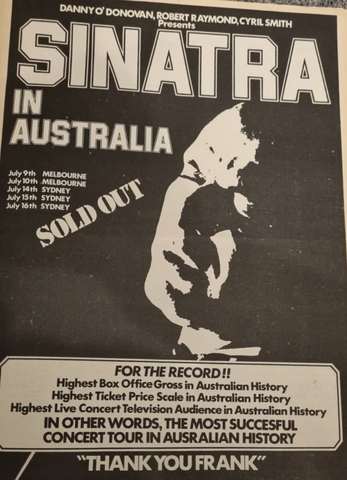
Re: Sinatra Concert:
Undated materialFrom: Steve <dmarc-noreply@freelists.org> | Received: 2024-01-10
Thanks, Ed. That's what I figured. Do you know whether Frank had many tours where he stepped aside to let someone else take over for awhile like he did in 1991 (without an intermission--just a break for him), or was that a fairly uncommon occurrence? Steve
On Tuesday, January 9, 2024 at 11:15:51 AM EST, Ed O'Brien <dmarc-noreply@freelists.org> wrote:
Hi Steve, What I meant regarding the Mikado is the curtain coming down, stage dark for about 15 minutes. That is why I made thedistinction between that concert and the 82 Dominican.Ed On Tuesday, January 9, 2024 at 11:00:50 AM EST, Steve <dmarc-noreply@freelists.org> wrote:
Ed, my memory from the only time I saw Frank in person--1991 at the Spectrum in Philadelphia--is that he left the stage to have Steve Lawrence and Eydie Gorme do a couple songs together. I could be wrong, as maybe he just sat on a stool and sipped a whiskey (or whisky, as it was sponsored by Chivas) while they sang. There definitely was not an intermission though. Does anyone remember from that tour whether Frank actually left the stage for those numbers? Considering he also did it in 1982, was that common for him in his later years?
By the way, in trying to find the answer, I found an article mentioning the band Frank, Jr. led was 31 pieces. 31 piece band! Did any of the big bands of the Big Band era even approach that size? I'm guessing no. Steve
On Tuesday, January 9, 2024 at 10:31:44 AM EST, Ed O'Brien <dmarc-noreply@freelists.org> wrote:
Hi Tito, Mikado is the only Sinatra concert that I can think of that hasan intermission. Dominican 82 has Frank leaving the stage, but BuddyRich comes out and does a memorable drum segment.Ed
Re: January 7 - THIS DATE IN SINATRA HISTORY
Undated materialFrom: Ed O'Brien <dmarc-noreply@freelists.org> | Received: 2024-01-11
Joe Dimaggio Show
Frank Sinatra is guest
10:30
Re: January 7 - THIS DATE IN SINATRA HISTORY
Undated materialFrom: Ed O'Brien <dmarc-noreply@freelists.org> | Received: 2024-01-11
Meet Frank Sinatra
Guest: Eileen Barton
note: First show with 45 minute running time. Last 15 minutes of the hour had "News with Eric Sevareld"
Television
None
Re: January 7 - THIS DATE IN SINATRA HISTORY
Undated materialFrom: Vance Adair <dr.vanceadair@gmail.com> | Received: 2024-01-11
Joe Dimaggio Show
Frank Sinatra is guest
10:30
Re: January 7 - THIS DATE IN SINATRA HISTORY
Undated materialFrom: Vance Adair <dr.vanceadair@gmail.com> | Received: 2024-01-11
Meet Frank Sinatra
Guest: Eileen Barton
note: First show with 45 minute running time. Last 15 minutes of the hour had "News with Eric Sevareld"
Television
None
Re: January 9 - THIS DATE IN SINATRA HISTORY - 1988 Sanctuary Cove , Australia
Undated materialFrom: Tito Montoya <franklyjoy22@gmail.com> | Received: 2024-01-11
Thank you Margriet !! :)
El mar, 9 ene 2024 a las 15:19, Margriet (<dmarc-noreply@freelists.org>) escribió:
> https://www.dailymotion.com/video/x2ovf2a
>
>
>
> 1988 Sanctuary Cove , Australia – full concert!
>
>
>
>
>
>
>
>
>
> *Van: *Scott Henderson <scott@falseducks.com>
> *Verzonden: *dinsdag 9 januari 2024 18:06
> *Aan: *sinatraphiles@freelists.org
> *Onderwerp: *[sinatraphiles] January 9 - THIS DATE IN SINATRA HISTORY >
>
>
>
>
>
>
>
>
>
> *35 years ago today Sinatra exited the stage at the Sanctuary Cove in a > most unique way. Moves last seen by Buddy Ebsen, Sinatra skipped away. One > can only think he was happy with that million dollars he just earned. > --BrianEd O'Brien replied:You are so cynical. Frank went down there because > he longed to spend more time with the Australian press.Red Norvo told me > some of the wonderful things they did to Frank during his visit in 1959 and > Al Porcino remembered a few memorable moments during the 1961 visit. Funny > stories today, not so funny for Frank back then.*
>
>
> *Television*
> *1988 Frank Sinatra Australian Press Conference*15 min.
>
>
> *1988 Sanctuary Cove , Australia*1. All Of Me
> 2. You Make Me Feel So Young
> 3. For Once In My Life
> 4. Summer Wind
> 5. Maybe This Time
> 6. If
> 7. You Are The Sunshine Of My Life
> 8. What's New
> 9. Come Fly With Me
> 10. The Gal That Got Away - It Never Entered My Mind
> 11. Easy To Love
> 12. Bewitched
> 13. Mack The Knife
> 14. The Lady Is A Tramp
> 15. My Way
> 16. New York , New York
>
>
>
>
>
>
>
>
>
>
>
>
>
> *Note: Australian TV special. Peter Allen opened the showEd O'Brien:The > press conference was a love-in. Frank went out of his way to be very > cordialand there was a group photo taken of all the Australian reporters > with Sinatra.Clive Jamesinterviewed Sinatra separately and it was very > interesting. The concert at Sanctuary Coveearned Frank a million dollars > for less than 60 minutes of work. Of course there was 28hours of flying to > and fro from L.A. to Down Under. He did a very nice job on "Easy To > Love,"with the Mandel chart.*
> *1988 Sanctuary Cove, Australia*1. All Of Me
> 2. You Make Me Feel So Young
> 3. For Once In My Life
> 4. Summer Wind
> 5. Maybe This Time
> 6. If
> 7. You Are The Sunshine Of My Life
> 8. What's New
> 9. Come Fly With Me
> 10. The Gal That Got Away - It Never Entered My Mind
> 11. Easy To Love
> 12. Bewitched
> 13. Mack The Knife
> 14. The Lady Is A Tramp
> 15. My Way
> 16. New York , New York
>
>
> -------------------------------------------------
>
>
>
> * 1988 Sanctuary Cove , Australia*
>
> [image: Emacs!]
>
> [image: Emacs!]
>
> [image: Emacs!]
>
> © 1997-2024 The Sinatra Archive
> This calendar, or any parts thereof, may not be reproduced in any fashion > whatsoever without the prior written permission of the publisher (The > Sinatra Archive)
>
>
>
>
>
>
>
Re: SINATRA IN ARGENTINA - PREPARATIONS FOR THE CONCERT - BEHIND THE SCENES
Undated materialFrom: James Johnson <dmarc-noreply@freelists.org> | Received: 2024-01-11
Al: Thank you for the translation. Very interesting.
_____________
Jim Johnson
Rehoboth Beach, DE
On Jan 11, 2024, at 12:39 PM, Tito Montoya <franklyjoy22@gmail.com> wrote:
Below is a Youtube clip and a translation of Ramón (Nicknamed "Palito" ) Ortega, explaining how he brought Sinatra to Argentina in 1981.
Some time after Frank went back to the States, a skyrocketing inflation took place in Argentina - actually it had already begun before Sinatra and his team arrived in Buenos Aires - ; Palito explained in another interview that when his team saw how the "pesos" began to lose value against american dollars, they saw the concerts could be a financial disaster for him. Palito's answer was that at that stage he could'nt back off, he had already signed the contract with Frank and besides he added, they're already packing up all their stuff. I gave Sinatra my word, I shall honour it.
So the peso devaluation started days before Sinatra and his team arrived in Buenos Aires, kept going up during the time he performed in that city and skyrocketed months after he left.
Minutes before the plane with Sinatra took off to take him back to the USA, Palito got in the plane for a final hug and was told by him: "I know what you're going through. I want you to know that if you ever go to the States to work, I will always be there as a warrant. I want you to remember this. "
In the below clip Ortega explains how the idea of taking Sinatra to Argentina came about, the negotiations he went though and how he came to his rescue years after, when he paid all his debts in Argentina and had to start over from zero. Palito was already a millionaire performer when he engaged Sinatra and his team to perform in Buenos Aires, but so severe was his financial crash that he had to work for some years in his country to pay all he owed before he could leave.
Palito ortega by the way, was an iconic singer-composer all over Latin America and Spain all through the sixties till this day. He didn't have the most charming of all voices, but was agreat song writer, very often too making songs for other artists turning them into big hits.
Below is the youtube clip and a translation (Btw, there was another one some time ago where he also spoke at lenght about his time with Frank in Argentina, sadly I believe it was taken down ) - The "Sinatra interview" begins at 3' 29
Palito Ortega: Frank Sinatra, la politica y el cine.
https://www.youtube.com/watch?v=QszYLfC240I
3.29
Interviewer:
Tell me what was it like bringing Sinatra, how did it come about ?
There were four dinner shows and two concerts at the Luna Park arena.
3.37
Palito: At the beginning making Sinatra appear at the
Luna park looked like a distant dream. I had a friend here, a great pianist, Filiken was his name, he had a son who used to travel a lot. He told me he that knew one of Sinatra’s lawyers .. so that’s how the first contact with one of them took place. We had a lot of meetings first, until one day Sinatra finally turned up taking a seat before me. .. face to face…. In order to break the ice and my nervoussness I made a joke to him.. in Spanish … like someone saying here “ I have a chacarera for you” (it’s an argentinian phrase meaning “ I have a something for you to sing .. ” ), instead of it I told him “ Sinatra, I have a Cumbia for you” ( the Cumbia is a popular Colombian rhythm, with various degrees of popularity in different LA countries) ..
4.30
Interviewer:
Don’t fuck me up!
Palito: I swear it, for my life … all the others present who knew spanish were trying to keep a square face … can you imagine me offering Sinatra a Cumbia ? .. but that was just to break the ice … obviously he didn’t understand a word ….
But that’s how our first meeting took place ..
I really can’t tell you how warm he was
.. when I remember the Bourbon and the Whiskie he used to drink .. I had to run to the American Embassy for some bottles … till they got all for me
… there was a large table with drinks … the look of pleasure on his face when he finished his shows … he would ask to be alone for fiteen minutes after the concerts, he shouldn’t be disturbed …he’d ask you not to go up to his suite until he finished showering, changing clothes, etc … we’ d wait for a while and then when we went up he’d welcome us with a big smile on his face and asked what you’ d like to drink .. he used to prepare the drinks for you himself …he made incredible martinis … he was very, very warm in private … he would kneel down on the carpet and sit there with my and other people’s children just being one of them (interesting pic at 5:35 … Sinatra singing or talking to the children, probably taken at one of the concerts in Buenos Aires at the Sheraton Hotel ) .. Afterwards of course he took up the stage, became Sinatra and the whole stadium fell down … a very enchanting guy … the thing is when the doors to his suite opened his whole face started to change … there’d be two big guys walking ahead and behind him .. and then one day .. I was almost impertinent to ask him … why he had so many “security people” around him … he looked at me very seriously and said … ( 6.03 ) “If John lennon had acted like me .. nothing like what happened would have taken place … I don’t think anybody hates me as much as to put a bullet in me … but the world is filled up with crazy guys “.
6.24
Intercviewer:
He was very good to you when he realized everything that was going on in Argentina at that time with the economy going down right ? … I understand he behaved great with you … a guy who honoured his word.
6.30
Palito: Yes, yes … very, very well .. they
(Sinatra’s people ) left the USA for Argentina when they had already charged their “cache” , the thing is that you had to have a large bank behind you backing you up .. they were large banking transfers, almost as if you were importing extremely valuable goods. Somebody informed him well about Argentina’s devaluation at that time .. the lies …. about USA dollars being ten one day, then twenty on the next … something awful … you couldn’t really plan anything in advance … impossible to make a project for tomorrow or the day after … finally …. in life I believe that if you behave well… at some point other people will be good to you too.
When he went back to the States, the last thing he told me was: I know everything that has happened to you, ( Inflation had already begun and Palito was losing millions with every week. )
“The only thing that you musnt’ forget is this: The day when you need someone in the States to act as a warrantor, do not hesitate to call me”
I went to the
States five years after working, and working in Argentina non-stop … till I finally paid everything I owed … I said to myself, I don’t want to make any mistakes or take a false step anymore … now I want to go and start over again … my wife was pregnant so it was hard for her too … where do we go she asked … to the USA …. She wanted to go to Europe though cause I’d been offered a contract in Spain .. but I said no, let’s go to the
States … and I took up the dates I was offered .. I went to sing to Vegas … and I was amazed, my concerts were crowded, till then I didn’t understand how that could be … soon after I realized that when he made his moves (Sinatra) … he did move!
. I began to be called by people I’d never heard about … till one day I get a call from someone who asks me : “ Mr Ortega, how are your kids doing ? .. at school I mean “ . Suddenly the principal, the vice principal .. even the doormen were coming to my house to make sure that we were all well attended.
(Palito here is skipping the fact that one of the first things he did when he arrived in the States, was contacting Sinatra’s people, though not knowing if he would remember him or even more, the promise he had made to him; on another video he speaks a t length of his meetings with Sinatra when he contacted him for help. Sinatra’s “intelligence service” had already told him that Palito was coming to perform in Vegas, so he arranged everything for his concerts to be sold out, before ven speaking with Ortega. I’ll make a translation tomorrow ).
Palito:
The truth is that he behaved so well … a huge pleasure to be sharing drinks with him all those nights and finally taking him up there at the Luna Park to perform … I had never, ever seen so many men crying … I am deeply moved when I see a man crying you know .. but deeply … I get shivers … people who never though they would see him perform … fans you know, fans are like that … “ Palito … they would thank me sobbing …. I never though I would get to see him in person “. But of course a fan is like that …
There's also another interview to Palito Orteha's son some months ago, in which he recalls how Sinatra tok the time to play with him at his hotel room ( "something he didn't have to do but took the time to! " ): I will attempt a translation tomorrow if there's an interest ..
Al (Tito)
El jue, 11 ene 2024 a las 11:03, Tito Montoya (<franklyjoy22@gmail.com>) escribió:
Ooops !! 🙄
You were very lucky though to see him live, and at his very peak too! I could never saw him in person, I was in Argentina in July of 1981, a few days before he arrived in town to give a series of concerts, but had to return back to school in Lima; so asking my parents to stay for a few more days was out of the question. That was "the closest" I ever got to see him live.
A few days ago i made translation into English, of some clips I saw on youtube, where Palito Ortega - an iconic Argentinian singer-composer who happened to bring Sinatra to Argentina - tells of his experiences with Frank before , during and after he performed in that country. I think it's interesting to know how he helped him out some years after, when Palito went to the States with his family to work. He couldn't have had a better warrant and supporter. I'll send it soon !
Alvaro
El jue, 11 ene 2024 a las 10:12, <smashiah@netvision.net.il> escribió:
Tito
It was 1960
And 2 years latter as a 16 years boys I have seen Sinatra and sextet in Haifa
May 9 1962
shemmy
From: sinatraphiles-bounce@freelists.org <sinatraphiles-bounce@freelists.org> On Behalf Of Tito Montoya
Sent: Thursday, January 11, 2024 7:11 AM
To: sinatraphiles@freelists.org
Subject: [sinatraphiles] Re: Sinatra jerusalem concert 27.11.75 no on you tube in color
Great story Shemmy, thanks for sharing it!
( Curious ... that's exactly the age when I became a Sinatra fan too, 14 by the end of 1979 .. )
El mar, 9 ene 2024 a las 9:12, Paul DAlessandro (<dmarc-noreply@freelists.org>) escribió:
Thank you for sharing this fascinating information Shemmy! I have often wondered how these historic recordings are created and shared. You are very fortunate to have attended the show!
Paul D'Alessandro
Huntington Beach, CA
On Jan 9, 2024, at 12:31 AM, smashiah@netvision.net.il wrote:
Hi Ed
Since I was there and was involved I will give you the full story.
The ‘Mazal Tov” cd was produced by the Late Rick Apt.
Mastered by one of his friends in the west coast.
He used the master tape that was recorded while the concert was broadcasted
By the IDF (Israel defence forces) Radio station
I did my army service in this station as acoustic engineer till I was about 50 years old.
This was recorded alongside the Sinatra’s audio console.
He Used for the 2500 seats Binyaney Haoma concert hall only 2-4 Shure vocal master sound columns that sounded great.
It was 1975. The Guy who supplied the sound system was a good friend of mine.
Some years later I installed an ALTEC LANSING loudspeaker system in this hall.
When the Roberto Quartin came out I talked to Rick apt.
He told me he gave a free copy to roberto who promised not to use it.
But he did not kept his word and issued a copy with the addition of” all by myself” so people will think this is the full authentic concert.
No!! it is not.
I did not mention his name because I don’t like what he did.(I do have the Brazilian cds)
I have another master tape from the show recorded from the radio broadcast by my revox that sounds very good as well.
About the Jerusalem 75 video.
The concert was broadcasted in B&W.
I have asked a friend who is a video producer to record it on Umatic.(We were more advanced than Australia)
I have this Umatic tape but never saw it since I don’t have a Umatic machine.
If you have access to one I can send it to you.
Some years later the concert was on Israel TV and I recorded it on video tape.
This is the version you are familiar with till the new colorized version arrived
On the colorized version it is written on the top right ARCHIVE in Hebrew.
So this is from the archive of the Israel broadcasting organization.
I will check if the original can be purchased.
I don’t know if it was filmed in color. Or colorized later.maybe some members know.
By the way I sat with 2 of my best friends behind Barbara Marx (Sinatra latter)
And the Sinatra companyin the concert.
Everytime the orchestra played the first 2 notes I told my friends the name of the songs.
And they turned back many times with appreciation.
I have enclosed photos where you can see me with a mark like arrow above my head right behind Barbara and the Sinatra group.
Maybe you know who they are.I can not recognize any one of them.
By the way who played piano in the concert.?
Regards
shemmy
From: sinatraphiles-bounce@freelists.org <sinatraphiles-bounce@freelists.org> On Behalf Of Ed O'Brien ("eob101")
Sent: Monday, January 8, 2024 10:08 PM
To: sinatraphiles@freelists.org
Subject: [sinatraphiles] Re: Sinatra jerusalem concert 27.11.75 no on you tube in color
Hi Shemmy,
Roberto Quartin was the fellow who did the Jerusalem
and the RFH 62. Roberto worked with what was sent to him. He
wanted both shows from the masters. Alas, that was not be. Roberto
was very frustrated and worked with the material provided. I tried to
talk him out of putting "All By Myself" on the CD. He loved the song
and wouldn't listen to me. The London is not all from 6-1-62. Roberto
lifted songs from Tokyo and I believe other venues. He gave me the
run down on what he replaced from 6/1. I could try and dig out his letter
if you are interested.
Ed
On Monday, January 8, 2024 at 01:06:19 PM EST, shemmy Mashiah <smashiah@netvision.net.il> wrote:
John
The jerusalem concert was first released on a cd by “mazal tov” records.
A very good bootleg.
I was told the Brazil guy got this cd and copied it and issued it as
His find.
In order to look original he added a song from
Another concert “all by myself”
As far as I remember.Just to look authentic.
If you watch the video it is not there.
It was a gimmick from reprise Brazil.
They also issued the London June 1 1962 concert.
I have this concert on mono
And it sounds better.
Shemmy
נשלח מה-iPhone שלי
ב-8 בינו׳ 2024, בשעה 19:10, John K. George <dmarc-noreply@freelists.org> כתב/ה:
The Jerusalem Concert was released on CD a decade or more ago by Reprise in Brazil.
John G.
Sent from the all new AOL app for iOS
On Monday, January 8, 2024, 8:01 AM, Tito Montoya <franklyjoy22@gmail.com> wrote:
Thank you from me too Shemmy !! I just opened this account and found this very rare concert .. WOW !!!! For years I looked for it together with the televised Concert in Australia from 1974 ( to no avail sadly, the promoter of those concerts told us that the ABC TV tape seemed to have been destroyed, the story was loosely told in a movie some years after.)
This is Frank still at his very peak! I also wonder if a video or a better sounding tape of the Concertgebow performance from that same year exists ? To me that was one of his very best concerts from the 70's ... oh well ... maybe I'm asking too much, we must be happy with this very rare jewel !!
Thank you again for leading us to it Shemmy !!!
Alvaro
El vie, 29 dic 2023 a las 7:46, margriet57 (<dmarc-noreply@freelists.org>) escribió:
Thank you Shemmy!
Very much appreciated.
Margriet
Verzonden vanaf mijn Galaxy
-------- Oorspronkelijk bericht --------
Van: shemmy Mashiah <smashiah@netvision.net.il>
Datum: 28-12-2023 16:02 (GMT+01:00)
Aan: sinatraphiles@freelists.org
Onderwerp: [sinatraphiles] Sinatra jerusalem concert 27.11.75 no on you tube in color
This concert is now on YouTube in color.watch it or download it before it is removed.
I was there 47 years ago.
Shemmy mashiah
נשלח מה-iPhone שלי
Re: Sinatra & CAROUSEL
Undated materialFrom: kenny lucas <dmarc-noreply@freelists.org> | Received: 2024-01-11
I subscibe to Friedwalds e-mails. On the subject of Sinatra his writing is very informative. I like the topics on: Carousel, Paramount 1951 and his " Deep Cuts " e-mails. his work on the Sinatra/Dorsey airchecks was fantastic. I asked him if BMG plans to do anymore, he said there is nothing left in the vaults. On Wednesday, January 10, 2024 at 10:44:44 AM EST, Scott Henderson <scott@falseducks.com> wrote:
<!--#yiv0798432193 filtered {}#yiv0798432193 filtered {}#yiv0798432193 p.yiv0798432193MsoNormal, #yiv0798432193 li.yiv0798432193MsoNormal, #yiv0798432193 div.yiv0798432193MsoNormal {margin:0cm;margin-bottom:.0001pt;font-size:12.0pt;font-family:"Times New Roman", "serif";}#yiv0798432193 a:link, #yiv0798432193 span.yiv0798432193MsoHyperlink {color:blue;text-decoration:underline;}#yiv0798432193 a:visited, #yiv0798432193 span.yiv0798432193MsoHyperlinkFollowed {color:purple;text-decoration:underline;}#yiv0798432193 p {margin-right:0cm;margin-left:0cm;font-size:12.0pt;font-family:"Times New Roman", "serif";}#yiv0798432193 span.yiv0798432193gmailsignatureprefix {}#yiv0798432193 span.yiv0798432193EmailStyle19 {font-family:"Calibri", "sans-serif";color:#1F497D;}#yiv0798432193 .yiv0798432193MsoChpDefault {font-family:"Calibri", "sans-serif";}#yiv0798432193 filtered {}#yiv0798432193 div.yiv0798432193WordSection1 {}--> Great reading and listening.
I’m of the opinion that Frank left Carousel because he didn’t like the ride. He was more of a Ferris Wheel type of person.
Scott
From: sinatraphiles-bounce@freelists.org [mailto:sinatraphiles-bounce@freelists.org] On Behalf Of Will Friedwald
Sent: January 10, 2024 9:19 AM
To: sinatraphiles@freelists.org
Subject: [sinatraphiles] Sinatra & CAROUSEL
Happy New Year (it’s not too late for that, is it?) This is my SubStack story on Sinatra and CAROUSEL, in four parts, which includes access to the remarkable newly-discovered historical recordings recently unearthed by Chuck Granata. It’s the most complete look at the topic yet, although ultimately we still don’t know the definitive answer as to why Sinatra left the set, although, obviously, there was more than one reason. Hope you enjoy!
1:
https://willfriedwald.substack.com/p/sinatra-deep-cuts-another-ride-on
2:
https://willfriedwald.substack.com/p/sinatra-deep-cuts-another-ride-on-c90
3:
https://willfriedwald.substack.com/p/sinatra-deep-cuts-another-ride-on-b0d
4:
https://open.substack.com/pub/willfriedwald/p/sinatra-deep-cuts-another-ride-on-e66?r=6ra9u&utm_campaign=post&utm_medium=web&showWelcome=true
Straighten Up & Fly Right!
W
Will Friedwald writes about music and popular culture for The Wall Street Journal, The New York Sun, The New York Stage Review, Vanity Fair, Playboy magazine and other publications. He is also the host of the radio show Sing! Sing! Sing! on San Diego KSDS on Saturday mornings. He also is the author of ten books including the award-winning A Biographical Guide To The Great Jazz And Pop Singers, Sinatra: The Song Is You, Stardust Melodies, Tony Bennett: The Good Life, Looney Tunes & Merrie Melodies, and Jazz Singing. He has written over 600 liner notes for compact discs, received eleven Grammy nominations, and appears frequently on television and other documentaries. He is also a consultant and curator for Apple Music. Current books : The Great Jazz And Pop Vocal Albums (Pantheon Books / Random House, November 2017), Sinatra: The Song Is You! - New Revised Edition (Chicago Review Press, May 2018) and Straighten Up and Fly Right: The Life and Music of Nat King Cole (Oxford University Press, July 2020). He studied elocution with Prof. Henry Higgins and musicology with Prof. Harold Hill.
Word up. Peace Out. Go forth and sin no more! (John 8:11)
Re: Sinatra Concert:
Undated materialFrom: Vance Adair <dr.vanceadair@gmail.com> | Received: 2024-01-11
Hi Ed,
Yes - absolutely agree. Very contrasting quality.
-Vance
On Thu, 11 Jan 2024 at 04:28, Ed O'Brien <dmarc-noreply@freelists.org> wrote:
Hi Vance,
I wish the 7-15-74 show had been aired and made available
to collectors throughout the world. Vastly superior to the 7-16 perform-
ance.
Ed
On Wednesday, January 10, 2024 at 03:30:47 PM EST, Vance Adair <dr.vanceadair@gmail.com> wrote:
For all the controversy, the tour did superb business.
On Wed, 10 Jan 2024 at 19:47, Steve <dmarc-noreply@freelists.org> wrote:
Thanks, Ed. That's what I figured. Do you know whether Frank had many tours where he stepped aside to let someone else take over for awhile like he did in 1991 (without an intermission--just a break for him), or was that a fairly uncommon occurrence?
Steve
On Tuesday, January 9, 2024 at 11:15:51 AM EST, Ed O'Brien <dmarc-noreply@freelists.org> wrote:
Hi Steve,
What I meant regarding the Mikado is the curtain coming
down, stage dark for about 15 minutes. That is why I made the
distinction between that concert and the 82 Dominican.
Ed
On Tuesday, January 9, 2024 at 11:00:50 AM EST, Steve <dmarc-noreply@freelists.org> wrote:
Ed, my memory from the only time I saw Frank in person--1991 at the Spectrum in Philadelphia--is that he left the stage to have Steve Lawrence and Eydie Gorme do a couple songs together. I could be wrong, as maybe he just sat on a stool and sipped a whiskey (or whisky, as it was sponsored by Chivas) while they sang. There definitely was not an intermission though. Does anyone remember from that tour whether Frank actually left the stage for those numbers? Considering he also did it in 1982, was that common for him in his later years?
By the way, in trying to find the answer, I found an article mentioning the band Frank, Jr. led was 31 pieces. 31 piece band! Did any of the big bands of the Big Band era even approach that size? I'm guessing no.
Steve
On Tuesday, January 9, 2024 at 10:31:44 AM EST, Ed O'Brien <dmarc-noreply@freelists.org> wrote:
Hi Tito,
Mikado is the only Sinatra concert that I can think of that has
an intermission. Dominican 82 has Frank leaving the stage, but Buddy
Rich comes out and does a memorable drum segment.
Ed
Re: Sinatra Concert:
Undated materialFrom: Tony Ferrigno <dmarc-noreply@freelists.org> | Received: 2024-01-11
Replying to Steve’s comments and question, my son and I were at Philly’s Spectrum in 1991 for the show with Frank, Steve and Eydie. My clear memory is that Sinatra wasn’t on stage at all until after the intermission. I remember us sitting there during the intermission, deciding not to leave so that we didn’t miss anything, and noticing the teleprompters turning on with the composers and words for Frank’s first number, Come Fly With Me. When his part of the show started, Frank never left the stage until the show was over. For the finale he brought out Steve and Eydie and my memory is that all three of them sang a medley of Frank’s hits called Sinatra A To Z, which ended with Zing Went The Strings Of My Heart. Frank was featured the least in this medley (probably to allow him to not get too tired) which may be why you have a memory of him leaving. But he did not. As for the question about Frank letting someone else take over during other tours, I remember that happening only once in the 30 times I saw him live. That was at the Spectrum in 1986 when he let the orchestra play an instrumental while he sat on a stool on stage. I believe the instrumental was sometimes referred to as Bossa Nova In C.
Tony
On Jan 10, 2024, at 11:29 PM, Ed O'Brien <dmarc-noreply@freelists.org> wrote:
Hi Vance,
I wish the 7-15-74 show had been aired and made available
to collectors throughout the world. Vastly superior to the 7-16 perform-
ance.
Ed
On Wednesday, January 10, 2024 at 03:30:47 PM EST, Vance Adair <dr.vanceadair@gmail.com> wrote:
For all the controversy, the tour did superb business.
<image_123650291.JPG>
On Wed, 10 Jan 2024 at 19:47, Steve <dmarc-noreply@freelists.org> wrote:
Thanks, Ed. That's what I figured. Do you know whether Frank had many tours where he stepped aside to let someone else take over for awhile like he did in 1991 (without an intermission--just a break for him), or was that a fairly uncommon occurrence?
Steve
On Tuesday, January 9, 2024 at 11:15:51 AM EST, Ed O'Brien <dmarc-noreply@freelists.org> wrote:
Hi Steve,
What I meant regarding the Mikado is the curtain coming
down, stage dark for about 15 minutes. That is why I made the
distinction between that concert and the 82 Dominican.
Ed
On Tuesday, January 9, 2024 at 11:00:50 AM EST, Steve <dmarc-noreply@freelists.org> wrote:
Ed, my memory from the only time I saw Frank in person--1991 at the Spectrum in Philadelphia--is that he left the stage to have Steve Lawrence and Eydie Gorme do a couple songs together. I could be wrong, as maybe he just sat on a stool and sipped a whiskey (or whisky, as it was sponsored by Chivas) while they sang. There definitely was not an intermission though. Does anyone remember from that tour whether Frank actually left the stage for those numbers? Considering he also did it in 1982, was that common for him in his later years?
By the way, in trying to find the answer, I found an article mentioning the band Frank, Jr. led was 31 pieces. 31 piece band! Did any of the big bands of the Big Band era even approach that size? I'm guessing no.
Steve
On Tuesday, January 9, 2024 at 10:31:44 AM EST, Ed O'Brien <dmarc-noreply@freelists.org> wrote:
Hi Tito,
Mikado is the only Sinatra concert that I can think of that has
an intermission. Dominican 82 has Frank leaving the stage, but Buddy
Rich comes out and does a memorable drum segment.
Ed
<image_123650291.JPG>
Re: Sinatra Concert:
Undated materialFrom: Ed O'Brien <dmarc-noreply@freelists.org> | Received: 2024-01-11
Hi Vance,
I wish the 7-15-74 show had been aired and made available
to collectors throughout the world. Vastly superior to the 7-16 perform-
ance.
Ed
On Wednesday, January 10, 2024 at 03:30:47 PM EST, Vance Adair <dr.vanceadair@gmail.com> wrote:
For all the controversy, the tour did superb business.
On Wed, 10 Jan 2024 at 19:47, Steve <dmarc-noreply@freelists.org> wrote:
Thanks, Ed. That's what I figured. Do you know whether Frank had many tours where he stepped aside to let someone else take over for awhile like he did in 1991 (without an intermission--just a break for him), or was that a fairly uncommon occurrence?
Steve
On Tuesday, January 9, 2024 at 11:15:51 AM EST, Ed O'Brien <dmarc-noreply@freelists.org> wrote:
Hi Steve,
What I meant regarding the Mikado is the curtain coming
down, stage dark for about 15 minutes. That is why I made the
distinction between that concert and the 82 Dominican.
Ed
On Tuesday, January 9, 2024 at 11:00:50 AM EST, Steve <dmarc-noreply@freelists.org> wrote:
Ed, my memory from the only time I saw Frank in person--1991 at the Spectrum in Philadelphia--is that he left the stage to have Steve Lawrence and Eydie Gorme do a couple songs together. I could be wrong, as maybe he just sat on a stool and sipped a whiskey (or whisky, as it was sponsored by Chivas) while they sang. There definitely was not an intermission though. Does anyone remember from that tour whether Frank actually left the stage for those numbers? Considering he also did it in 1982, was that common for him in his later years?
By the way, in trying to find the answer, I found an article mentioning the band Frank, Jr. led was 31 pieces. 31 piece band! Did any of the big bands of the Big Band era even approach that size? I'm guessing no.
Steve
On Tuesday, January 9, 2024 at 10:31:44 AM EST, Ed O'Brien <dmarc-noreply@freelists.org> wrote:
Hi Tito,
Mikado is the only Sinatra concert that I can think of that has
an intermission. Dominican 82 has Frank leaving the stage, but Buddy
Rich comes out and does a memorable drum segment.
Ed
Re: Sinatra Concert:
Undated materialFrom: Steve <dmarc-noreply@freelists.org> | Received: 2024-01-11
Tony, as Bob Hope would have said, thanks for the memory! After reading your description, I feel like I recall Frank sitting on the stool on the stage at some point at least. Maybe it was for one of his ballads, or maybe it was during Steve and Eydie's return during that medley. Or maybe I am just imagining it. I do specifically remember him introducing Sid Mark, who was sitting in one of the sections on the floor (in my memory, between the stage and the hockey boards along the side--I was sitting "behind the goal" in the lower level). I wonder whether there is a recording of the show floating around. Steve
On Thursday, January 11, 2024 at 04:05:05 AM EST, Tony Ferrigno <dmarc-noreply@freelists.org> wrote:
Replying to Steve’s comments and question, my son and I were at Philly’s Spectrum in 1991 for the show with Frank, Steve and Eydie. My clear memory is that Sinatra wasn’t on stage at all until after the intermission. I remember us sitting there during the intermission, deciding not to leave so that we didn’t miss anything, and noticing the teleprompters turning on with the composers and words for Frank’s first number, Come Fly With Me. When his part of the show started, Frank never left the stage until the show was over. For the finale he brought out Steve and Eydie and my memory is that all three of them sang a medley of Frank’s hits called Sinatra A To Z, which ended with Zing Went The Strings Of My Heart. Frank was featured the least in this medley (probably to allow him to not get too tired) which may be why you have a memory of him leaving. But he did not. As for the question about Frank letting someone else take over during other tours, I remember that happening only once in the 30 times I saw him live. That was at the Spectrum in 1986 when he let the orchestra play an instrumental while he sat on a stool on stage. I believe the instrumental was sometimes referred to as Bossa Nova In C. Tony
On Jan 10, 2024, at 11:29 PM, Ed O'Brien <dmarc-noreply@freelists.org> wrote:
Hi Vance, I wish the 7-15-74 show had been aired and made availableto collectors throughout the world. Vastly superior to the 7-16 perform-ance.Ed On Wednesday, January 10, 2024 at 03:30:47 PM EST, Vance Adair <dr.vanceadair@gmail.com> wrote:
For all the controversy, the tour did superb business.
<image_123650291.JPG>
On Wed, 10 Jan 2024 at 19:47, Steve <dmarc-noreply@freelists.org> wrote:
Thanks, Ed. That's what I figured. Do you know whether Frank had many tours where he stepped aside to let someone else take over for awhile like he did in 1991 (without an intermission--just a break for him), or was that a fairly uncommon occurrence? Steve
On Tuesday, January 9, 2024 at 11:15:51 AM EST, Ed O'Brien <dmarc-noreply@freelists.org> wrote:
Hi Steve, What I meant regarding the Mikado is the curtain coming down, stage dark for about 15 minutes. That is why I made thedistinction between that concert and the 82 Dominican.Ed On Tuesday, January 9, 2024 at 11:00:50 AM EST, Steve <dmarc-noreply@freelists.org> wrote:
Ed, my memory from the only time I saw Frank in person--1991 at the Spectrum in Philadelphia--is that he left the stage to have Steve Lawrence and Eydie Gorme do a couple songs together. I could be wrong, as maybe he just sat on a stool and sipped a whiskey (or whisky, as it was sponsored by Chivas) while they sang. There definitely was not an intermission though. Does anyone remember from that tour whether Frank actually left the stage for those numbers? Considering he also did it in 1982, was that common for him in his later years?
By the way, in trying to find the answer, I found an article mentioning the band Frank, Jr. led was 31 pieces. 31 piece band! Did any of the big bands of the Big Band era even approach that size? I'm guessing no. Steve
On Tuesday, January 9, 2024 at 10:31:44 AM EST, Ed O'Brien <dmarc-noreply@freelists.org> wrote:
Hi Tito, Mikado is the only Sinatra concert that I can think of that hasan intermission. Dominican 82 has Frank leaving the stage, but BuddyRich comes out and does a memorable drum segment.Ed
<image_123650291.JPG>
Re: Sinatra Concert:
Undated materialFrom: Steve <dmarc-noreply@freelists.org> | Received: 2024-01-11
There was a 1989 country/jazz/blues album, "Lyle Lovett and his Large Band." Frank's big band could have been called his "Very Large Band". I'm sure the members were all paid according to scale, but if there weren't union rules, I'm sure he could have attracted a lot of them to play some of those shows for free, just to be a part of it. (Not every night, mind you, but some....)
On Thursday, January 11, 2024 at 11:45:49 AM EST, Ed O'Brien <dmarc-noreply@freelists.org> wrote:
By the way, in trying to find the answer, I found an article mentioning the band Frank, Jr. led was 31 pieces. 31 piece band! Did any of the big bands of the Big Band era even approach that size? I'm guessing no. There were engagements where Sinatra had a 50 piece band. He used over 40 at CarnegieHall. Imagine the cost if Miller, Dorsey, Shaw and other big bands carried that many musicians.
Re: Sinatra Concert:
Undated materialFrom: Ed O'Brien <dmarc-noreply@freelists.org> | Received: 2024-01-11
Hi John,
I have never seen this photo before. What an outfit.
Somewhere I have a photo in color. That's how I know it is
green.
Ed
On Thursday, January 11, 2024 at 12:00:14 PM EST, John Larrabee <dmarc-noreply@freelists.org> wrote:
One more:
On Thursday, January 11, 2024 at 10:45:45 AM CST, Ed O'Brien <dmarc-noreply@freelists.org> wrote:
Thanks, Ed. That's what I figured. Do you know whether Frank had many tours where he stepped aside to let someone else take over for awhile like he did in 1991 (without an intermission--just a break for him), or was that a fairly uncommon occurrence?
By the way, in trying to find the answer, I found an article mentioning the band Frank, Jr. led was 31 pieces. 31 piece band! Did any of the big bands of the Big Band era even approach that size? I'm guessing no. There were engagements where Sinatra had a 50 piece band. He used over 40 at Carnegie
Hall. Imagine the cost if Miller, Dorsey, Shaw and other big bands carried that many musicians.
Steve
Frank appeared in the Ziegfeld Follies at the Sands in June of 1954. Jack Entratter came up with the idea
and Frank was there into July. Vic Damone took over for him and on it went with other performers. Frank did his
usual program early in the show. Later he came out onstage with the Copa Girls. He was dressed in a green
outfit which included a wild hat. One song he sang was titled "Rainbow Blues."
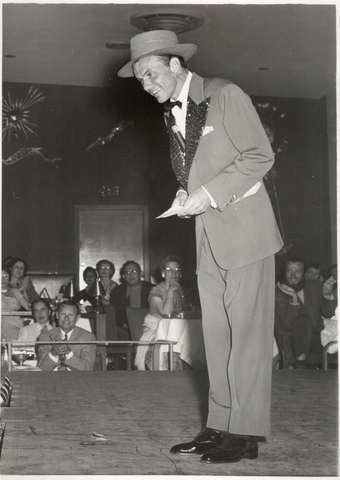
Re: Sinatra Concert:
Undated materialFrom: John Larrabee <dmarc-noreply@freelists.org> | Received: 2024-01-11
One more:
On Thursday, January 11, 2024 at 10:45:45 AM CST, Ed O'Brien <dmarc-noreply@freelists.org> wrote:
Thanks, Ed. That's what I figured. Do you know whether Frank had many tours where he stepped aside to let someone else take over for awhile like he did in 1991 (without an intermission--just a break for him), or was that a fairly uncommon occurrence?
By the way, in trying to find the answer, I found an article mentioning the band Frank, Jr. led was 31 pieces. 31 piece band! Did any of the big bands of the Big Band era even approach that size? I'm guessing no. There were engagements where Sinatra had a 50 piece band. He used over 40 at Carnegie
Hall. Imagine the cost if Miller, Dorsey, Shaw and other big bands carried that many musicians.
Steve
Frank appeared in the Ziegfeld Follies at the Sands in June of 1954. Jack Entratter came up with the idea
and Frank was there into July. Vic Damone took over for him and on it went with other performers. Frank did his
usual program early in the show. Later he came out onstage with the Copa Girls. He was dressed in a green
outfit which included a wild hat. One song he sang was titled "Rainbow Blues."
Re: Sinatra Concert:
Undated materialFrom: John Larrabee <dmarc-noreply@freelists.org> | Received: 2024-01-11
The Sands, the Copa Girls:
On Thursday, January 11, 2024 at 10:45:45 AM CST, Ed O'Brien <dmarc-noreply@freelists.org> wrote:
Thanks, Ed. That's what I figured. Do you know whether Frank had many tours where he stepped aside to let someone else take over for awhile like he did in 1991 (without an intermission--just a break for him), or was that a fairly uncommon occurrence?
By the way, in trying to find the answer, I found an article mentioning the band Frank, Jr. led was 31 pieces. 31 piece band! Did any of the big bands of the Big Band era even approach that size? I'm guessing no. There were engagements where Sinatra had a 50 piece band. He used over 40 at Carnegie
Hall. Imagine the cost if Miller, Dorsey, Shaw and other big bands carried that many musicians.
Steve
Frank appeared in the Ziegfeld Follies at the Sands in June of 1954. Jack Entratter came up with the idea
and Frank was there into July. Vic Damone took over for him and on it went with other performers. Frank did his
usual program early in the show. Later he came out onstage with the Copa Girls. He was dressed in a green
outfit which included a wild hat. One song he sang was titled "Rainbow Blues."
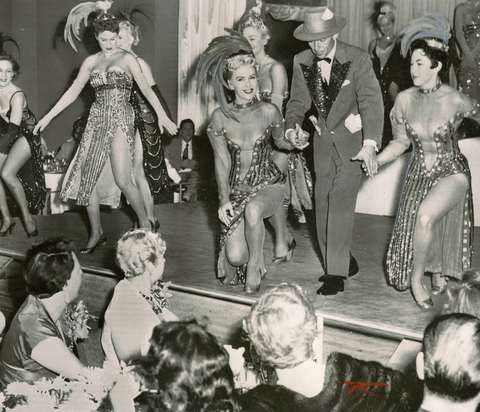
Re: Sinatra Concert:
Undated materialFrom: Ed O'Brien <dmarc-noreply@freelists.org> | Received: 2024-01-11
Thanks, Ed. That's what I figured. Do you know whether Frank had many tours where he stepped aside to let someone else take over for awhile like he did in 1991 (without an intermission--just a break for him), or was that a fairly uncommon occurrence?
By the way, in trying to find the answer, I found an article mentioning the band Frank, Jr. led was 31 pieces. 31 piece band! Did any of the big bands of the Big Band era even approach that size? I'm guessing no. There were engagements where Sinatra had a 50 piece band. He used over 40 at Carnegie
Hall. Imagine the cost if Miller, Dorsey, Shaw and other big bands carried that many musicians.
Steve
Frank appeared in the Ziegfeld Follies at the Sands in June of 1954. Jack Entratter came up with the idea
and Frank was there into July. Vic Damone took over for him and on it went with other performers. Frank did his
usual program early in the show. Later he came out onstage with the Copa Girls. He was dressed in a green
outfit which included a wild hat. One song he sang was titled "Rainbow Blues."
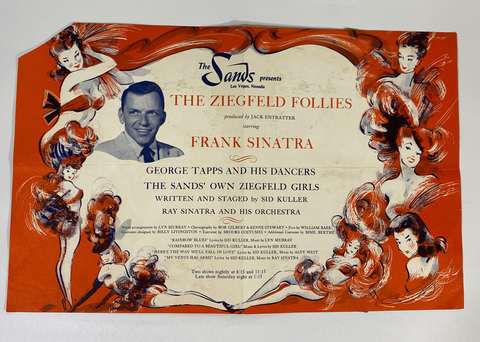
Re: Sinatra Concert:
Undated materialFrom: Ed O'Brien <dmarc-noreply@freelists.org> | Received: 2024-01-11
Hi Tony, "Bossa Nova In C" was composed by Vinnie Falcone.A tribute piece to his first wife Connie. When Frank learned thestory behind it, he insisted on conducting while Vinnie and therest of the orchestra played. Vinnie told me that the June 80 engagement at Carnegie Hall exceeded all the expectations he had in becoming an entertainer. Vinnie conducted and played the piano for Frank in front of an SRO house every night, and Frank took over the baton and did a beautiful job conducting.Ed On Thursday, January 11, 2024 at 03:23:46 AM EST, Tony Ferrigno <dmarc-noreply@freelists.org> wrote:
Replying to Steve’s comments and question, my son and I were at Philly’s Spectrum in 1991 for the show with Frank, Steve and Eydie. My clear memory is that Sinatra wasn’t on stage at all until after the intermission. I remember us sitting there during the intermission, deciding not to leave so that we didn’t miss anything, and noticing the teleprompters turning on with the composers and words for Frank’s first number, Come Fly With Me. When his part of the show started, Frank never left the stage until the show was over. For the finale he brought out Steve and Eydie and my memory is that all three of them sang a medley of Frank’s hits called Sinatra A To Z, which ended with Zing Went The Strings Of My Heart. Frank was featured the least in this medley (probably to allow him to not get too tired) which may be why you have a memory of him leaving. But he did not. As for the question about Frank letting someone else take over during other tours, I remember that happening only once in the 30 times I saw him live. That was at the Spectrum in 1986 when he let the orchestra play an instrumental while he sat on a stool on stage. I believe the instrumental was sometimes referred to as Bossa Nova In C. Tony
On Jan 10, 2024, at 11:29 PM, Ed O'Brien <dmarc-noreply@freelists.org> wrote:
Hi Vance, I wish the 7-15-74 show had been aired and made availableto collectors throughout the world. Vastly superior to the 7-16 perform-ance.Ed On Wednesday, January 10, 2024 at 03:30:47 PM EST, Vance Adair <dr.vanceadair@gmail.com> wrote:
For all the controversy, the tour did superb business.
<image_123650291.JPG>
On Wed, 10 Jan 2024 at 19:47, Steve <dmarc-noreply@freelists.org> wrote:
Thanks, Ed. That's what I figured. Do you know whether Frank had many tours where he stepped aside to let someone else take over for awhile like he did in 1991 (without an intermission--just a break for him), or was that a fairly uncommon occurrence? Steve
On Tuesday, January 9, 2024 at 11:15:51 AM EST, Ed O'Brien <dmarc-noreply@freelists.org> wrote:
Hi Steve, What I meant regarding the Mikado is the curtain coming down, stage dark for about 15 minutes. That is why I made thedistinction between that concert and the 82 Dominican.Ed On Tuesday, January 9, 2024 at 11:00:50 AM EST, Steve <dmarc-noreply@freelists.org> wrote:
Ed, my memory from the only time I saw Frank in person--1991 at the Spectrum in Philadelphia--is that he left the stage to have Steve Lawrence and Eydie Gorme do a couple songs together. I could be wrong, as maybe he just sat on a stool and sipped a whiskey (or whisky, as it was sponsored by Chivas) while they sang. There definitely was not an intermission though. Does anyone remember from that tour whether Frank actually left the stage for those numbers? Considering he also did it in 1982, was that common for him in his later years?
By the way, in trying to find the answer, I found an article mentioning the band Frank, Jr. led was 31 pieces. 31 piece band! Did any of the big bands of the Big Band era even approach that size? I'm guessing no. Steve
On Tuesday, January 9, 2024 at 10:31:44 AM EST, Ed O'Brien <dmarc-noreply@freelists.org> wrote:
Hi Tito, Mikado is the only Sinatra concert that I can think of that hasan intermission. Dominican 82 has Frank leaving the stage, but BuddyRich comes out and does a memorable drum segment.Ed
<image_123650291.JPG>
Re: Sinatra Concert:
Undated materialFrom: Ed O'Brien <dmarc-noreply@freelists.org> | Received: 2024-01-11
Hi Shemmy, Concert has been in circulation among collectorsfor many years.Ed On Thursday, January 11, 2024 at 10:12:00 AM EST, <smashiah@netvision.net.il> wrote:
HI Ed
Is this available somewhere even as an audio concert?
shemmy
From: sinatraphiles-bounce@freelists.org <sinatraphiles-bounce@freelists.org> On Behalf Of Ed O'Brien ("eob101")
Sent: Thursday, January 11, 2024 6:28 AM
To: sinatraphiles@freelists.org
Subject: [sinatraphiles] Re: Sinatra Concert:
Hi Vance,
I wish the 7-15-74 show had been aired and made available
to collectors throughout the world. Vastly superior to the 7-16 perform-
ance.
Ed
On Wednesday, January 10, 2024 at 03:30:47 PM EST, Vance Adair <dr.vanceadair@gmail.com> wrote:
For all the controversy, the tour did superb business.
On Wed, 10 Jan 2024 at 19:47, Steve <dmarc-noreply@freelists.org> wrote:
Thanks, Ed. That's what I figured. Do you know whether Frank had many tours where he stepped aside to let someone else take over for awhile like he did in 1991 (without an intermission--just a break for him), or was that a fairly uncommon occurrence?
Steve
On Tuesday, January 9, 2024 at 11:15:51 AM EST, Ed O'Brien <dmarc-noreply@freelists.org> wrote:
Hi Steve,
What I meant regarding the Mikado is the curtain coming
down, stage dark for about 15 minutes. That is why I made the
distinction between that concert and the 82 Dominican.
Ed
On Tuesday, January 9, 2024 at 11:00:50 AM EST, Steve <dmarc-noreply@freelists.org> wrote:
Ed, my memory from the only time I saw Frank in person--1991 at the Spectrum in Philadelphia--is that he left the stage to have Steve Lawrence and Eydie Gorme do a couple songs together. I could be wrong, as maybe he just sat on a stool and sipped a whiskey (or whisky, as it was sponsored by Chivas) while they sang. There definitely was not an intermission though. Does anyone remember from that tour whether Frank actually left the stage for those numbers? Considering he also did it in 1982, was that common for him in his later years?
By the way, in trying to find the answer, I found an article mentioning the band Frank, Jr. led was 31 pieces. 31 piece band! Did any of the big bands of the Big Band era even approach that size? I'm guessing no.
Steve
On Tuesday, January 9, 2024 at 10:31:44 AM EST, Ed O'Brien <dmarc-noreply@freelists.org> wrote:
Hi Tito,
Mikado is the only Sinatra concert that I can think of that has
an intermission. Dominican 82 has Frank leaving the stage, but Buddy
Rich comes out and does a memorable drum segment.
Ed
| |
Re: Sinatra Concert:
Undated materialFrom: smashiah@netvision.net.il | Received: 2024-01-11
HI Ed
Is this available somewhere even as an audio concert?
shemmy
From: sinatraphiles-bounce@freelists.org <sinatraphiles-bounce@freelists.org> On Behalf Of Ed O'Brien ("eob101")
Sent: Thursday, January 11, 2024 6:28 AM
To: sinatraphiles@freelists.org
Subject: [sinatraphiles] Re: Sinatra Concert:
Hi Vance,
I wish the 7-15-74 show had been aired and made available
to collectors throughout the world. Vastly superior to the 7-16 perform-
ance.
Ed
On Wednesday, January 10, 2024 at 03:30:47 PM EST, Vance Adair <dr.vanceadair@gmail.com <mailto:dr.vanceadair@gmail.com> > wrote:
For all the controversy, the tour did superb business.
On Wed, 10 Jan 2024 at 19:47, Steve <dmarc-noreply@freelists.org <mailto:dmarc-noreply@freelists.org> > wrote:
Thanks, Ed. That's what I figured. Do you know whether Frank had many tours where he stepped aside to let someone else take over for awhile like he did in 1991 (without an intermission--just a break for him), or was that a fairly uncommon occurrence?
Steve
On Tuesday, January 9, 2024 at 11:15:51 AM EST, Ed O'Brien <dmarc-noreply@freelists.org <mailto:dmarc-noreply@freelists.org> > wrote:
Hi Steve,
What I meant regarding the Mikado is the curtain coming
down, stage dark for about 15 minutes. That is why I made the
distinction between that concert and the 82 Dominican.
Ed
On Tuesday, January 9, 2024 at 11:00:50 AM EST, Steve <dmarc-noreply@freelists.org <mailto:dmarc-noreply@freelists.org> > wrote:
Ed, my memory from the only time I saw Frank in person--1991 at the Spectrum in Philadelphia--is that he left the stage to have Steve Lawrence and Eydie Gorme do a couple songs together. I could be wrong, as maybe he just sat on a stool and sipped a whiskey (or whisky, as it was sponsored by Chivas) while they sang. There definitely was not an intermission though. Does anyone remember from that tour whether Frank actually left the stage for those numbers? Considering he also did it in 1982, was that common for him in his later years?
By the way, in trying to find the answer, I found an article mentioning the band Frank, Jr. led was 31 pieces. 31 piece band! Did any of the big bands of the Big Band era even approach that size? I'm guessing no.
Steve
On Tuesday, January 9, 2024 at 10:31:44 AM EST, Ed O'Brien <dmarc-noreply@freelists.org <mailto:dmarc-noreply@freelists.org> > wrote:
Hi Tito,
Mikado is the only Sinatra concert that I can think of that has
an intermission. Dominican 82 has Frank leaving the stage, but Buddy
Rich comes out and does a memorable drum segment.
Ed
Re: Sinatra jerusalem concert 27.11.75 no on you tube in color
Undated materialFrom: Tito Montoya <franklyjoy22@gmail.com> | Received: 2024-01-11
Ooops !! 🙄
You were very lucky though to see him live, and at his very peak too! I could never saw him in person, I was in Argentina in July of 1981, a few days before he arrived in town to give a series of concerts, but had to return back to school in Lima; so asking my parents to stay for a few more days was out of the question. That was "the closest" I ever got to see him live.
A few days ago i made translation into English, of some clips I saw on youtube, where Palito Ortega - an iconic Argentinian singer-composer who happened to bring Sinatra to Argentina - tells of his experiences with Frank before , during and after he performed in that country. I think it's interesting to know how he helped him out some years after, when Palito went to the States with his family to work. He couldn't have had a better warrant and supporter. I'll send it soon !
Alvaro
El jue, 11 ene 2024 a las 10:12, <smashiah@netvision.net.il> escribió:
> Tito
>
> It was 1960
>
> And 2 years latter as a 16 years boys I have seen Sinatra and sextet in > Haifa
>
> May 9 1962
>
> shemmy
>
>
>
> *From:* sinatraphiles-bounce@freelists.org <
> sinatraphiles-bounce@freelists.org> *On Behalf Of *Tito Montoya > *Sent:* Thursday, January 11, 2024 7:11 AM
> *To:* sinatraphiles@freelists.org
> *Subject:* [sinatraphiles] Re: Sinatra jerusalem concert 27.11.75 no on > you tube in color
>
>
>
> Great story Shemmy, thanks for sharing it!
>
> ( Curious ... that's exactly the age when I became a Sinatra fan too, 14 > by the end of 1979 .. )
>
>
>
> El mar, 9 ene 2024 a las 9:12, Paul DAlessandro (<
> dmarc-noreply@freelists.org>) escribió:
>
> Thank you for sharing this fascinating information Shemmy! I have often > wondered how these historic recordings are created and shared. You are very > fortunate to have attended the show!
>
> --
>
> Paul D'Alessandro
>
> Huntington Beach, CA
>
>
>
> On Jan 9, 2024, at 12:31 AM, smashiah@netvision.net.il wrote: >
>
>
> Hi Ed
>
> Since I was there and was involved I will give you the full story. >
> The ‘Mazal Tov” cd was produced by the Late Rick Apt.
>
> Mastered by one of his friends in the west coast.
>
> He used the master tape that was recorded while the concert was broadcasted >
> By the IDF (Israel defence forces) Radio station
>
> I did my army service in this station as acoustic engineer till I was > about 50 years old.
>
> This was recorded alongside the Sinatra’s audio console.
>
> He Used for the 2500 seats Binyaney Haoma concert hall only 2-4 Shure > vocal master sound columns that sounded great.
>
> It was 1975. The Guy who supplied the sound system was a good friend of > mine.
>
> Some years later I installed an ALTEC LANSING loudspeaker system in this > hall.
>
> When the Roberto Quartin came out I talked to Rick apt.
>
> He told me he gave a free copy to roberto who promised not to use it. >
> But he did not kept his word and issued a copy with the addition of” all > by myself” so people will think this is the full authentic concert. >
> No!! it is not.
>
> I did not mention his name because I don’t like what he did.(I do have the > Brazilian cds)
>
> I have another master tape from the show recorded from the radio broadcast > by my revox that sounds very good as well.
>
>
>
> About the Jerusalem 75 video.
>
> The concert was broadcasted in B&W.
>
> I have asked a friend who is a video producer to record it on Umatic.(We > were more advanced than Australia)
>
>
>
> I have this Umatic tape but never saw it since I don’t have a Umatic > machine.
>
> If you have access to one I can send it to you.
>
> Some years later the concert was on Israel TV and I recorded it on video > tape.
>
> This is the version you are familiar with till the new colorized version > arrived
>
> On the colorized version it is written on the top right ARCHIVE in > Hebrew.
>
> So this is from the archive of the Israel broadcasting organization. >
>
>
> I will check if the original can be purchased.
>
> I don’t know if it was filmed in color. Or colorized later.maybe some > members know.
>
> By the way I sat with 2 of my best friends behind Barbara Marx (Sinatra > latter)
>
> And the Sinatra companyin the concert.
>
> Everytime the orchestra played the first 2 notes I told my friends the > name of the songs.
>
> And they turned back many times with appreciation.
>
> I have enclosed photos where you can see me with a mark like arrow above > my head right behind Barbara and the Sinatra group.
>
> Maybe you know who they are.I can not recognize any one of them. >
> By the way who played piano in the concert.?
>
> Regards
>
> shemmy
>
>
>
>
>
>
>
>
>
>
>
>
>
> *From:* sinatraphiles-bounce@freelists.org <
> sinatraphiles-bounce@freelists.org> *On Behalf Of *Ed O'Brien ("eob101") > *Sent:* Monday, January 8, 2024 10:08 PM
> *To:* sinatraphiles@freelists.org
> *Subject:* [sinatraphiles] Re: Sinatra jerusalem concert 27.11.75 no on > you tube in color
>
>
>
> Hi Shemmy,
>
> Roberto Quartin was the fellow who did the Jerusalem >
> and the RFH 62. Roberto worked with what was sent to him. He >
> wanted both shows from the masters. Alas, that was not be. Roberto >
> was very frustrated and worked with the material provided. I tried to >
> talk him out of putting "All By Myself" on the CD. He loved the song >
> and wouldn't listen to me. The London is not all from 6-1-62. Roberto >
> lifted songs from Tokyo and I believe other venues. He gave me the >
> run down on what he replaced from 6/1. I could try and dig out his letter >
> if you are interested.
>
> Ed
>
>
>
> On Monday, January 8, 2024 at 01:06:19 PM EST, shemmy Mashiah < > smashiah@netvision.net.il> wrote:
>
>
>
>
>
> John
>
> The jerusalem concert was first released on a cd by “mazal tov” records. >
> A very good bootleg.
>
> I was told the Brazil guy got this cd and copied it and issued it as >
> His find.
>
> In order to look original he added a song from
>
> Another concert “all by myself”
>
> As far as I remember.Just to look authentic.
>
> If you watch the video it is not there.
>
> It was a gimmick from reprise Brazil.
>
> They also issued the London June 1 1962 concert.
>
> I have this concert on mono
>
> And it sounds better.
>
> Shemmy
>
> נשלח מה-iPhone שלי
>
>
>
> ב-8 בינו׳ 2024, בשעה 19:10, John K. George <
> dmarc-noreply@freelists.org> כתב/ה:
>
> The Jerusalem Concert was released on CD a decade or more ago by > Reprise in Brazil.
>
>
>
> John G.
>
> Sent from the all new AOL app for iOS
> <https://apps.apple.com/us/app/aol-news-email-weather-video/id646100661> >
>
>
> On Monday, January 8, 2024, 8:01 AM, Tito Montoya <franklyjoy22@gmail.com> > wrote:
>
> Thank you from me too Shemmy !! I just opened this account and found this > very rare concert .. WOW !!!! For years I looked for it together with the > televised Concert in Australia from 1974 ( to no avail sadly, the promoter > of those concerts told us that the ABC TV tape seemed to have been > destroyed, the story was loosely told in a movie some years after.) >
> This is Frank still at his very peak! I also wonder if a video or a > better sounding tape of the Concertgebow performance from that same year > exists ? To me that was one of his very best concerts from the 70's ... oh > well ... maybe I'm asking too much, we must be happy with this very rare > jewel !!
>
> Thank you again for leading us to it Shemmy !!!
>
>
>
> Alvaro
>
>
>
> El vie, 29 dic 2023 a las 7:46, margriet57 (<dmarc-noreply@freelists.org>) > escribió:
>
>
>
> Thank you Shemmy!
>
> Very much appreciated.
>
> Margriet
>
>
>
>
>
> Verzonden vanaf mijn Galaxy
>
>
>
>
>
> -------- Oorspronkelijk bericht --------
>
> Van: shemmy Mashiah <smashiah@netvision.net.il>
>
> Datum: 28-12-2023 16:02 (GMT+01:00)
>
> Aan: sinatraphiles@freelists.org
>
> Onderwerp: [sinatraphiles] Sinatra jerusalem concert 27.11.75 no on you > tube in color
>
>
>
> This concert is now on YouTube in color.watch it or download it before it > is removed.
>
> I was there 47 years ago.
>
> Shemmy mashiah
>
> נשלח מה-iPhone שלי
>
>
Re: Sinatra jerusalem concert 27.11.75 no on you tube in color
Undated materialFrom: smashiah@netvision.net.il | Received: 2024-01-11
Tito
It was 1960
And 2 years latter as a 16 years boys I have seen Sinatra and sextet in Haifa
May 9 1962
shemmy
From: sinatraphiles-bounce@freelists.org <sinatraphiles-bounce@freelists.org> On Behalf Of Tito Montoya
Sent: Thursday, January 11, 2024 7:11 AM
To: sinatraphiles@freelists.org
Subject: [sinatraphiles] Re: Sinatra jerusalem concert 27.11.75 no on you tube in color
Great story Shemmy, thanks for sharing it!
( Curious ... that's exactly the age when I became a Sinatra fan too, 14 by the end of 1979 .. )
El mar, 9 ene 2024 a las 9:12, Paul DAlessandro (<dmarc-noreply@freelists.org <mailto:dmarc-noreply@freelists.org> >) escribió:
Thank you for sharing this fascinating information Shemmy! I have often wondered how these historic recordings are created and shared. You are very fortunate to have attended the show!
Paul D'Alessandro
Huntington Beach, CA
On Jan 9, 2024, at 12:31 AM, smashiah@netvision.net.il <mailto:smashiah@netvision.net.il> wrote:
Hi Ed
Since I was there and was involved I will give you the full story.
The ‘Mazal Tov” cd was produced by the Late Rick Apt.
Mastered by one of his friends in the west coast.
He used the master tape that was recorded while the concert was broadcasted
By the IDF (Israel defence forces) Radio station
I did my army service in this station as acoustic engineer till I was about 50 years old.
This was recorded alongside the Sinatra’s audio console.
He Used for the 2500 seats Binyaney Haoma concert hall only 2-4 Shure vocal master sound columns that sounded great.
It was 1975. The Guy who supplied the sound system was a good friend of mine.
Some years later I installed an ALTEC LANSING loudspeaker system in this hall.
When the Roberto Quartin came out I talked to Rick apt.
He told me he gave a free copy to roberto who promised not to use it.
But he did not kept his word and issued a copy with the addition of” all by myself” so people will think this is the full authentic concert.
No!! it is not.
I did not mention his name because I don’t like what he did.(I do have the Brazilian cds)
I have another master tape from the show recorded from the radio broadcast by my revox that sounds very good as well.
About the Jerusalem 75 video.
The concert was broadcasted in B&W.
I have asked a friend who is a video producer to record it on Umatic.(We were more advanced than Australia)
I have this Umatic tape but never saw it since I don’t have a Umatic machine.
If you have access to one I can send it to you.
Some years later the concert was on Israel TV and I recorded it on video tape.
This is the version you are familiar with till the new colorized version arrived
On the colorized version it is written on the top right ARCHIVE in Hebrew.
So this is from the archive of the Israel broadcasting organization.
I will check if the original can be purchased.
I don’t know if it was filmed in color. Or colorized later.maybe some members know.
By the way I sat with 2 of my best friends behind Barbara Marx (Sinatra latter)
And the Sinatra companyin the concert.
Everytime the orchestra played the first 2 notes I told my friends the name of the songs.
And they turned back many times with appreciation.
I have enclosed photos where you can see me with a mark like arrow above my head right behind Barbara and the Sinatra group.
Maybe you know who they are.I can not recognize any one of them.
By the way who played piano in the concert.?
Regards
shemmy
From: sinatraphiles-bounce@freelists.org <mailto:sinatraphiles-bounce@freelists.org> <sinatraphiles-bounce@freelists.org <mailto:sinatraphiles-bounce@freelists.org> > On Behalf Of Ed O'Brien ("eob101")
Sent: Monday, January 8, 2024 10:08 PM
To: sinatraphiles@freelists.org <mailto:sinatraphiles@freelists.org>
Subject: [sinatraphiles] Re: Sinatra jerusalem concert 27.11.75 no on you tube in color
Hi Shemmy,
Roberto Quartin was the fellow who did the Jerusalem
and the RFH 62. Roberto worked with what was sent to him. He
wanted both shows from the masters. Alas, that was not be. Roberto
was very frustrated and worked with the material provided. I tried to
talk him out of putting "All By Myself" on the CD. He loved the song
and wouldn't listen to me. The London is not all from 6-1-62. Roberto
lifted songs from Tokyo and I believe other venues. He gave me the
run down on what he replaced from 6/1. I could try and dig out his letter
if you are interested.
Ed
On Monday, January 8, 2024 at 01:06:19 PM EST, shemmy Mashiah <smashiah@netvision.net.il <mailto:smashiah@netvision.net.il> > wrote:
John
The jerusalem concert was first released on a cd by “mazal tov” records.
A very good bootleg.
I was told the Brazil guy got this cd and copied it and issued it as
His find.
In order to look original he added a song from
Another concert “all by myself”
As far as I remember.Just to look authentic.
If you watch the video it is not there.
It was a gimmick from reprise Brazil.
They also issued the London June 1 1962 concert.
I have this concert on mono
And it sounds better.
Shemmy
נשלח מה-iPhone שלי
ב-8 בינו׳ 2024, בשעה 19:10, John K. George < <mailto:dmarc-noreply@freelists.org> dmarc-noreply@freelists.org> כתב/ה:
The Jerusalem Concert was released on CD a decade or more ago by Reprise in Brazil.
John G.
Sent from the all new AOL app for iOS <https://apps.apple.com/us/app/aol-news-email-weather-video/id646100661>
On Monday, January 8, 2024, 8:01 AM, Tito Montoya <franklyjoy22@gmail.com <mailto:franklyjoy22@gmail.com> > wrote:
Thank you from me too Shemmy !! I just opened this account and found this very rare concert .. WOW !!!! For years I looked for it together with the televised Concert in Australia from 1974 ( to no avail sadly, the promoter of those concerts told us that the ABC TV tape seemed to have been destroyed, the story was loosely told in a movie some years after.)
This is Frank still at his very peak! I also wonder if a video or a better sounding tape of the Concertgebow performance from that same year exists ? To me that was one of his very best concerts from the 70's ... oh well ... maybe I'm asking too much, we must be happy with this very rare jewel !!
Thank you again for leading us to it Shemmy !!!
Alvaro
El vie, 29 dic 2023 a las 7:46, margriet57 (<dmarc-noreply@freelists.org <mailto:dmarc-noreply@freelists.org> >) escribió:
Thank you Shemmy!
Very much appreciated.
Margriet
Verzonden vanaf mijn Galaxy
-------- Oorspronkelijk bericht --------
Van: shemmy Mashiah <smashiah@netvision.net.il <mailto:smashiah@netvision.net.il> >
Datum: 28-12-2023 16:02 (GMT+01:00)
Aan: sinatraphiles@freelists.org <mailto:sinatraphiles@freelists.org>
Onderwerp: [sinatraphiles] Sinatra jerusalem concert 27.11.75 no on you tube in color
This concert is now on YouTube in color.watch it or download it before it is removed.
I was there 47 years ago.
Shemmy mashiah
נשלח מה-iPhone שלי
Re: Sinatra jerusalem concert 27.11.75 no on you tube in color
Undated materialFrom: Tito Montoya <franklyjoy22@gmail.com> | Received: 2024-01-11
Great story Shemmy, thanks for sharing it!
( Curious ... that's exactly the age when I became a Sinatra fan too, 14 by the end of 1979 .. )
El mar, 9 ene 2024 a las 9:12, Paul DAlessandro (< dmarc-noreply@freelists.org>) escribió:
> Thank you for sharing this fascinating information Shemmy! I have often > wondered how these historic recordings are created and shared. You are very > fortunate to have attended the show!
>
> --
> Paul D'Alessandro
> Huntington Beach, CA
>
> On Jan 9, 2024, at 12:31 AM, smashiah@netvision.net.il wrote: >
>
>
> Hi Ed
>
> Since I was there and was involved I will give you the full story. >
> The ‘Mazal Tov” cd was produced by the Late Rick Apt.
>
> Mastered by one of his friends in the west coast.
>
> He used the master tape that was recorded while the concert was broadcasted >
> By the IDF (Israel defence forces) Radio station
>
> I did my army service in this station as acoustic engineer till I was > about 50 years old.
>
> This was recorded alongside the Sinatra’s audio console.
>
> He Used for the 2500 seats Binyaney Haoma concert hall only 2-4 Shure > vocal master sound columns that sounded great.
>
> It was 1975. The Guy who supplied the sound system was a good friend of > mine.
>
> Some years later I installed an ALTEC LANSING loudspeaker system in this > hall.
>
> When the Roberto Quartin came out I talked to Rick apt.
>
> He told me he gave a free copy to roberto who promised not to use it. >
> But he did not kept his word and issued a copy with the addition of” all > by myself” so people will think this is the full authentic concert. >
> No!! it is not.
>
> I did not mention his name because I don’t like what he did.(I do have the > Brazilian cds)
>
> I have another master tape from the show recorded from the radio broadcast > by my revox that sounds very good as well.
>
>
>
> About the Jerusalem 75 video.
>
> The concert was broadcasted in B&W.
>
> I have asked a friend who is a video producer to record it on Umatic.(We > were more advanced than Australia)
>
>
>
> I have this Umatic tape but never saw it since I don’t have a Umatic > machine.
>
> If you have access to one I can send it to you.
>
> Some years later the concert was on Israel TV and I recorded it on video > tape.
>
> This is the version you are familiar with till the new colorized version > arrived
>
> On the colorized version it is written on the top right ARCHIVE in > Hebrew.
>
> So this is from the archive of the Israel broadcasting organization. >
>
>
> I will check if the original can be purchased.
>
> I don’t know if it was filmed in color. Or colorized later.maybe some > members know.
>
> By the way I sat with 2 of my best friends behind Barbara Marx (Sinatra > latter)
>
> And the Sinatra companyin the concert.
>
> Everytime the orchestra played the first 2 notes I told my friends the > name of the songs.
>
> And they turned back many times with appreciation.
>
> I have enclosed photos where you can see me with a mark like arrow above > my head right behind Barbara and the Sinatra group.
>
> Maybe you know who they are.I can not recognize any one of them. >
> By the way who played piano in the concert.?
>
> Regards
>
> shemmy
>
>
>
>
>
>
>
>
>
>
>
>
>
> *From:* sinatraphiles-bounce@freelists.org <
> sinatraphiles-bounce@freelists.org> *On Behalf Of *Ed O'Brien ("eob101") > *Sent:* Monday, January 8, 2024 10:08 PM
> *To:* sinatraphiles@freelists.org
> *Subject:* [sinatraphiles] Re: Sinatra jerusalem concert 27.11.75 no on > you tube in color
>
>
>
> Hi Shemmy,
>
> Roberto Quartin was the fellow who did the Jerusalem >
> and the RFH 62. Roberto worked with what was sent to him. He >
> wanted both shows from the masters. Alas, that was not be. Roberto >
> was very frustrated and worked with the material provided. I tried to >
> talk him out of putting "All By Myself" on the CD. He loved the song >
> and wouldn't listen to me. The London is not all from 6-1-62. Roberto >
> lifted songs from Tokyo and I believe other venues. He gave me the >
> run down on what he replaced from 6/1. I could try and dig out his letter >
> if you are interested.
>
> Ed
>
>
>
> On Monday, January 8, 2024 at 01:06:19 PM EST, shemmy Mashiah < > smashiah@netvision.net.il> wrote:
>
>
>
>
>
> John
>
> The jerusalem concert was first released on a cd by “mazal tov” records. >
> A very good bootleg.
>
> I was told the Brazil guy got this cd and copied it and issued it as >
> His find.
>
> In order to look original he added a song from
>
> Another concert “all by myself”
>
> As far as I remember.Just to look authentic.
>
> If you watch the video it is not there.
>
> It was a gimmick from reprise Brazil.
>
> They also issued the London June 1 1962 concert.
>
> I have this concert on mono
>
> And it sounds better.
>
> Shemmy
>
> נשלח מה-iPhone שלי
>
>
>
> ב-8 בינו׳ 2024, בשעה 19:10, John K. George <
> dmarc-noreply@freelists.org> כתב/ה:
>
> The Jerusalem Concert was released on CD a decade or more ago by > Reprise in Brazil.
>
>
>
> John G.
>
> Sent from the all new AOL app for iOS
> <https://apps.apple.com/us/app/aol-news-email-weather-video/id646100661> >
>
>
> On Monday, January 8, 2024, 8:01 AM, Tito Montoya <franklyjoy22@gmail.com> > wrote:
>
> Thank you from me too Shemmy !! I just opened this account and found this > very rare concert .. WOW !!!! For years I looked for it together with the > televised Concert in Australia from 1974 ( to no avail sadly, the promoter > of those concerts told us that the ABC TV tape seemed to have been > destroyed, the story was loosely told in a movie some years after.) >
> This is Frank still at his very peak! I also wonder if a video or a > better sounding tape of the Concertgebow performance from that same year > exists ? To me that was one of his very best concerts from the 70's ... oh > well ... maybe I'm asking too much, we must be happy with this very rare > jewel !!
>
> Thank you again for leading us to it Shemmy !!!
>
>
>
> Alvaro
>
>
>
> El vie, 29 dic 2023 a las 7:46, margriet57 (<dmarc-noreply@freelists.org>) > escribió:
>
>
>
> Thank you Shemmy!
>
> Very much appreciated.
>
> Margriet
>
>
>
>
>
> Verzonden vanaf mijn Galaxy
>
>
>
>
>
> -------- Oorspronkelijk bericht --------
>
> Van: shemmy Mashiah <smashiah@netvision.net.il>
>
> Datum: 28-12-2023 16:02 (GMT+01:00)
>
> Aan: sinatraphiles@freelists.org
>
> Onderwerp: [sinatraphiles] Sinatra jerusalem concert 27.11.75 no on you > tube in color
>
>
>
> This concert is now on YouTube in color.watch it or download it before it > is removed.
>
> I was there 47 years ago.
>
> Shemmy mashiah
>
> נשלח מה-iPhone שלי
>
>
Re: ZIEGFELD FOLLIES
Undated materialFrom: Ed O'Brien <dmarc-noreply@freelists.org> | Received: 2024-01-11
Should work this time. I hope.
On Thursday, January 11, 2024 at 12:51:32 PM EST, Ed O'Brien <dmarc-noreply@freelists.org> wrote:
note: Entratter added eight Copa Girls for the Follies. Usually the Sands
had 12 on stage.
Ed
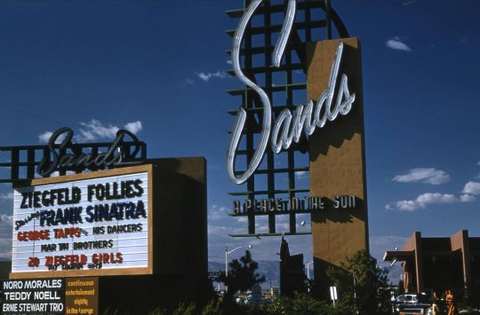
[image referenced in source but could not be recovered]
SINATRA IN ARGENTINA - PREPARATIONS FOR THE CONCERT - BEHIND THE SCENES
Undated materialFrom: Tito Montoya <franklyjoy22@gmail.com> | Received: 2024-01-11
Below is a Youtube clip and a translation of Ramón (Nicknamed "Palito" ) Ortega, explaining how he brought Sinatra to Argentina in 1981.
Some time after Frank went back to the States, a skyrocketing inflation took place in Argentina - actually it had already begun before Sinatra and his team arrived in Buenos Aires - ; Palito explained in another interview that when his team saw how the "pesos" began to lose value against american dollars, they saw the concerts could be a financial disaster for him. Palito's answer was that at that stage he could'nt back off, he had already signed the contract with Frank and besides he added, they're already packing up all their stuff. I gave Sinatra my word, I shall honour it. So the peso devaluation started days before Sinatra and his team arrived in Buenos Aires, kept going up during the time he performed in that city and skyrocketed months after he left.
Minutes before the plane with Sinatra took off to take him back to the USA, Palito got in the plane for a final hug and was told by him: "I know what you're going through. I want you to know that if you ever go to the States to work, I will always be there as a warrant. I want you to remember this. "
In the below clip Ortega explains how the idea of taking Sinatra to Argentina came about, the negotiations he went though and how he came to his rescue years after, when he paid all his debts in Argentina and had to start over from zero. Palito was already a millionaire performer when he engaged Sinatra and his team to perform in Buenos Aires, but so severe was his financial crash that he had to work for some years in his country to pay all he owed before he could leave.
Palito ortega by the way, was an iconic singer-composer all over Latin America and Spain all through the sixties till this day. He didn't have the most charming of all voices, but was agreat song writer, very often too making songs for other artists turning them into big hits.
Below is the youtube clip and a translation (Btw, there was another one some time ago where he also spoke at lenght about his time with Frank in Argentina, sadly I believe it was taken down ) - The "Sinatra interview" begins at 3' 29
Palito Ortega: Frank Sinatra, la politica y el cine.
https://www.youtube.com/watch?v=QszYLfC240I
3.29
Interviewer:
Tell me what was it like bringing Sinatra, how did it come about ?
There were four dinner shows and two concerts at the Luna Park arena.
3.37
Palito: At the beginning making Sinatra appear at the Luna park looked like a distant dream. I had a friend here, a great pianist, Filiken was his name, he had a son who used to travel a lot. He told me he that knew one of Sinatra’s lawyers .. so that’s how the first contact with one of them took place. We had a lot of meetings first, until one day Sinatra finally turned up taking a seat before me. .. face to face…. In order to break the ice and my nervoussness I made a joke to him.. in Spanish … like someone saying here “ I have a chacarera for you” (it’s an argentinian phrase meaning “ I have a something for you to sing .. ” ), instead of it I told him “ Sinatra, I have a Cumbia for you” ( the Cumbia is a popular Colombian rhythm, with various degrees of popularity in different LA countries) ..
4.30
Interviewer: Don’t fuck me up!
Palito: I swear it, for my life … all the others present who knew spanish were trying to keep a square face … can you imagine me offering Sinatra a Cumbia ? .. but that was just to break the ice … obviously he didn’t understand a word …. But that’s how our first meeting took place .. I really can’t tell you how warm he was .. when I remember the Bourbon and the Whiskie he used to drink .. I had to run to the American Embassy for some bottles … till they got all for me … there was a large table with drinks … the look of pleasure on his face when he finished his shows … he would ask to be alone for fiteen minutes after the concerts, he shouldn’t be disturbed …he’d ask you not to go up to his suite until he finished showering, changing clothes, etc … we’ d wait for a while and then when we went up he’d welcome us with a big smile on his face and asked what you’ d like to drink .. he used to prepare the drinks for you himself …he made incredible martinis … he was very, very warm in private … he would kneel down on the carpet and sit there with my and other people’s children just being one of them (interesting pic at 5:35 … Sinatra singing or talking to the children, probably taken at one of the concerts in Buenos Aires at the Sheraton Hotel ) .. Afterwards of course he took up the stage, became Sinatra and the whole stadium fell down … a very enchanting guy … the thing is when the doors to his suite opened his whole face started to change … there’d be two big guys walking ahead and behind him .. and then one day .. I was almost impertinent to ask him … why he had so many “security people” around him … he looked at me very seriously and said … ( 6.03 ) “If John lennon had acted like me .. nothing like what happened would have taken place … I don’t think anybody hates me as much as to put a bullet in me … but the world is filled up with crazy guys “.
6.24
Intercviewer:
He was very good to you when he realized everything that was going on in Argentina at that time with the economy going down right ? … I understand he behaved great with you … a guy who honoured his word.
6.30
Palito: Yes, yes … very, very well .. they (Sinatra’s people ) left the
USA for Argentina when they had already charged their “cache” , the thing is that you had to have a large bank behind you backing you up .. they were large banking transfers, almost as if you were importing extremely valuable goods. Somebody informed him well about Argentina’s devaluation at that time .. the lies …. about USA dollars being ten one day, then twenty on the next … something awful … you couldn’t really plan anything in advance … impossible to make a project for tomorrow or the day after … finally …. in life I believe that if you behave well… at some point other people will be good to you too.
When he went back to the States, the last thing he told me was: I know everything that has happened to you, ( Inflation had already begun and Palito was losing millions with every week. )
“The only thing that you musnt’ forget is this: The day when you need someone in the States to act as a warrantor, do not hesitate to call me”
I went to the States five years after working, and working in Argentina non-stop … till I finally paid everything I owed … I said to myself, I don’t want to make any mistakes or take a false step anymore … now I want to go and start over again … my wife was pregnant so it was hard for her too … where do we go she asked … to the USA …. She wanted to go to Europe though cause I’d been offered a contract in Spain .. but I said no, let’s go to the States … and I took up the dates I was offered .. I went to sing to Vegas … and I was amazed, my concerts were crowded, till then I didn’t understand how that could be … soon after I realized that when he made his moves (Sinatra) … he did move! . I began to be called by people I’d never heard about … till one day I get a call from someone who asks me : “ Mr Ortega, how are your kids doing ? .. at school I mean “ . Suddenly the principal, the vice principal .. even the doormen were coming to my house to make sure that we were all well attended.
(Palito here is skipping the fact that one of the first things he did when he arrived in the States, was contacting Sinatra’s people, though not knowing if he would remember him or even more, the promise he had made to him; on another video he speaks a t length of his meetings with Sinatra when he contacted him for help. Sinatra’s “intelligence service” had already told him that Palito was coming to perform in Vegas, so he arranged everything for his concerts to be sold out, before ven speaking with Ortega. I’ll make a translation tomorrow ).
Palito:
The truth is that he behaved so well … a huge pleasure to be sharing drinks with him all those nights and finally taking him up there at the Luna Park to perform … I had never, ever seen so many men crying … I am deeply moved when I see a man crying you know .. but deeply … I get shivers … people who never though they would see him perform … fans you know, fans are like that … “ Palito … they would thank me sobbing …. I never though I would get to see him in person “. But of course a fan is like that …
There's also another interview to Palito Orteha's son some months ago, in which he recalls how Sinatra tok the time to play with him at his hotel room ( "something he didn't have to do but took the time to! " ): I will attempt a translation tomorrow if there's an interest ..
Al (Tito)
El jue, 11 ene 2024 a las 11:03, Tito Montoya (<franklyjoy22@gmail.com>) escribió:
> Ooops !! 🙄
>
> You were very lucky though to see him live, and at his very peak too! I > could never saw him in person, I was in Argentina in July of 1981, a few > days before he arrived in town to give a series of concerts, but had to > return back to school in Lima; so asking my parents to stay for a few more > days was out of the question. That was "the closest" I ever got to see him > live.
>
> A few days ago i made translation into English, of some clips I saw on > youtube, where Palito Ortega - an iconic Argentinian singer-composer who > happened to bring Sinatra to Argentina - tells of his experiences with > Frank before , during and after he performed in that country. I think it's > interesting to know how he helped him out some years after, when Palito > went to the States with his family to work. He couldn't have had a better > warrant and supporter. I'll send it soon !
>
> Alvaro
>
> El jue, 11 ene 2024 a las 10:12, <smashiah@netvision.net.il> escribió: >
>> Tito
>>
>> It was 1960
>>
>> And 2 years latter as a 16 years boys I have seen Sinatra and sextet in >> Haifa
>>
>> May 9 1962
>>
>> shemmy
>>
>>
>>
>> *From:* sinatraphiles-bounce@freelists.org <
>> sinatraphiles-bounce@freelists.org> *On Behalf Of *Tito Montoya >> *Sent:* Thursday, January 11, 2024 7:11 AM
>> *To:* sinatraphiles@freelists.org
>> *Subject:* [sinatraphiles] Re: Sinatra jerusalem concert 27.11.75 no on >> you tube in color
>>
>>
>>
>> Great story Shemmy, thanks for sharing it!
>>
>> ( Curious ... that's exactly the age when I became a Sinatra fan too, >> 14 by the end of 1979 .. )
>>
>>
>>
>> El mar, 9 ene 2024 a las 9:12, Paul DAlessandro (<
>> dmarc-noreply@freelists.org>) escribió:
>>
>> Thank you for sharing this fascinating information Shemmy! I have often >> wondered how these historic recordings are created and shared. You are very >> fortunate to have attended the show!
>>
>> --
>>
>> Paul D'Alessandro
>>
>> Huntington Beach, CA
>>
>>
>>
>> On Jan 9, 2024, at 12:31 AM, smashiah@netvision.net.il wrote: >>
>>
>>
>> Hi Ed
>>
>> Since I was there and was involved I will give you the full story. >>
>> The ‘Mazal Tov” cd was produced by the Late Rick Apt.
>>
>> Mastered by one of his friends in the west coast.
>>
>> He used the master tape that was recorded while the concert was >> broadcasted
>>
>> By the IDF (Israel defence forces) Radio station
>>
>> I did my army service in this station as acoustic engineer till I was >> about 50 years old.
>>
>> This was recorded alongside the Sinatra’s audio console.
>>
>> He Used for the 2500 seats Binyaney Haoma concert hall only 2-4 Shure >> vocal master sound columns that sounded great.
>>
>> It was 1975. The Guy who supplied the sound system was a good friend of >> mine.
>>
>> Some years later I installed an ALTEC LANSING loudspeaker system in this >> hall.
>>
>> When the Roberto Quartin came out I talked to Rick apt.
>>
>> He told me he gave a free copy to roberto who promised not to use it. >>
>> But he did not kept his word and issued a copy with the addition of” all >> by myself” so people will think this is the full authentic concert. >>
>> No!! it is not.
>>
>> I did not mention his name because I don’t like what he did.(I do have >> the Brazilian cds)
>>
>> I have another master tape from the show recorded from the radio >> broadcast by my revox that sounds very good as well.
>>
>>
>>
>> About the Jerusalem 75 video.
>>
>> The concert was broadcasted in B&W.
>>
>> I have asked a friend who is a video producer to record it on Umatic.(We >> were more advanced than Australia)
>>
>>
>>
>> I have this Umatic tape but never saw it since I don’t have a Umatic >> machine.
>>
>> If you have access to one I can send it to you.
>>
>> Some years later the concert was on Israel TV and I recorded it on video >> tape.
>>
>> This is the version you are familiar with till the new colorized version >> arrived
>>
>> On the colorized version it is written on the top right ARCHIVE in >> Hebrew.
>>
>> So this is from the archive of the Israel broadcasting organization. >>
>>
>>
>> I will check if the original can be purchased.
>>
>> I don’t know if it was filmed in color. Or colorized later.maybe some >> members know.
>>
>> By the way I sat with 2 of my best friends behind Barbara Marx (Sinatra >> latter)
>>
>> And the Sinatra companyin the concert.
>>
>> Everytime the orchestra played the first 2 notes I told my friends the >> name of the songs.
>>
>> And they turned back many times with appreciation.
>>
>> I have enclosed photos where you can see me with a mark like arrow above >> my head right behind Barbara and the Sinatra group.
>>
>> Maybe you know who they are.I can not recognize any one of them. >>
>> By the way who played piano in the concert.?
>>
>> Regards
>>
>> shemmy
>>
>>
>>
>>
>>
>>
>>
>>
>>
>>
>>
>>
>>
>> *From:* sinatraphiles-bounce@freelists.org <
>> sinatraphiles-bounce@freelists.org> *On Behalf Of *Ed O'Brien ("eob101") >> *Sent:* Monday, January 8, 2024 10:08 PM
>> *To:* sinatraphiles@freelists.org
>> *Subject:* [sinatraphiles] Re: Sinatra jerusalem concert 27.11.75 no on >> you tube in color
>>
>>
>>
>> Hi Shemmy,
>>
>> Roberto Quartin was the fellow who did the Jerusalem >>
>> and the RFH 62. Roberto worked with what was sent to him. He >>
>> wanted both shows from the masters. Alas, that was not be. Roberto >>
>> was very frustrated and worked with the material provided. I tried to >>
>> talk him out of putting "All By Myself" on the CD. He loved the song >>
>> and wouldn't listen to me. The London is not all from 6-1-62. Roberto >>
>> lifted songs from Tokyo and I believe other venues. He gave me the >>
>> run down on what he replaced from 6/1. I could try and dig out his letter >>
>> if you are interested.
>>
>> Ed
>>
>>
>>
>> On Monday, January 8, 2024 at 01:06:19 PM EST, shemmy Mashiah < >> smashiah@netvision.net.il> wrote:
>>
>>
>>
>>
>>
>> John
>>
>> The jerusalem concert was first released on a cd by “mazal tov” records. >>
>> A very good bootleg.
>>
>> I was told the Brazil guy got this cd and copied it and issued it as >>
>> His find.
>>
>> In order to look original he added a song from
>>
>> Another concert “all by myself”
>>
>> As far as I remember.Just to look authentic.
>>
>> If you watch the video it is not there.
>>
>> It was a gimmick from reprise Brazil.
>>
>> They also issued the London June 1 1962 concert.
>>
>> I have this concert on mono
>>
>> And it sounds better.
>>
>> Shemmy
>>
>> נשלח מה-iPhone שלי
>>
>>
>>
>> ב-8 בינו׳ 2024, בשעה 19:10, John K. George <
>> dmarc-noreply@freelists.org> כתב/ה:
>>
>> The Jerusalem Concert was released on CD a decade or more ago by >> Reprise in Brazil.
>>
>>
>>
>> John G.
>>
>> Sent from the all new AOL app for iOS
>> <https://apps.apple.com/us/app/aol-news-email-weather-video/id646100661> >>
>>
>>
>> On Monday, January 8, 2024, 8:01 AM, Tito Montoya <franklyjoy22@gmail.com> >> wrote:
>>
>> Thank you from me too Shemmy !! I just opened this account and found this >> very rare concert .. WOW !!!! For years I looked for it together with the >> televised Concert in Australia from 1974 ( to no avail sadly, the promoter >> of those concerts told us that the ABC TV tape seemed to have been >> destroyed, the story was loosely told in a movie some years after.) >>
>> This is Frank still at his very peak! I also wonder if a video or a >> better sounding tape of the Concertgebow performance from that same year >> exists ? To me that was one of his very best concerts from the 70's ... oh >> well ... maybe I'm asking too much, we must be happy with this very rare >> jewel !!
>>
>> Thank you again for leading us to it Shemmy !!!
>>
>>
>>
>> Alvaro
>>
>>
>>
>> El vie, 29 dic 2023 a las 7:46, margriet57 (<dmarc-noreply@freelists.org>) >> escribió:
>>
>>
>>
>> Thank you Shemmy!
>>
>> Very much appreciated.
>>
>> Margriet
>>
>>
>>
>>
>>
>> Verzonden vanaf mijn Galaxy
>>
>>
>>
>>
>>
>> -------- Oorspronkelijk bericht --------
>>
>> Van: shemmy Mashiah <smashiah@netvision.net.il>
>>
>> Datum: 28-12-2023 16:02 (GMT+01:00)
>>
>> Aan: sinatraphiles@freelists.org
>>
>> Onderwerp: [sinatraphiles] Sinatra jerusalem concert 27.11.75 no on you >> tube in color
>>
>>
>>
>> This concert is now on YouTube in color.watch it or download it before it >> is removed.
>>
>> I was there 47 years ago.
>>
>> Shemmy mashiah
>>
>> נשלח מה-iPhone שלי
>>
>>
ZIEGFELD FOLLIES
Undated materialFrom: Ed O'Brien <dmarc-noreply@freelists.org> | Received: 2024-01-11
note: Entratter added eight Copa Girls for the Follies. Usually the Sandshad 12 on stage.Ed
January 12 - THIS DATE IN SINATRA HISTORY
Undated materialFrom: Scott Henderson <scott@falseducks.com> | Received: 2024-01-12
Command Performance #247
1. The Coffee Song
2. Lost In The Stars
Note the songs "The Coffee Song" & "Lost In The Stars" appear on the CD: The Unheard Frank Sinatra 2
Notes: Confirmed aired on WABC.
Note: I knew something was wrong with the date November 10, 1946 for which this was previously listed. Command Performance #241 was broadcast by the AFRS on 12-1-46. I searched for the complete listing of the series. C.P. #247 was broadcast on 1-12-47.. On 11-10-46, #238 was aired with Bob Hope, Bela Lugosi and Superman. There is no mention of a C.P. in the radio listings of the New York Times or the Boston Globe.
--Ed
Re: Sinatra Concert:
Undated materialFrom: Tony Ferrigno <dmarc-noreply@freelists.org> | Received: 2024-01-12
Steve and Ed,
Thank you very much for your comments and info! Steve, you had pretty good seats that night! We were up a little distance in the first tier. However, I was lucky enough to win the two tickets via a radio contest. I guess you know that this concert was the last time Frank performed at the Spectrum. The band was 31 pieces because of the strings and harp. Perhaps Tommy Dorsey’s big band or Stan Kenton’s group were that size during Stan’s Neophonic era. Most of the time Sinatra liked a full orchestra. And I do recall Frank introducing Sid Mark, as he did several other times at the Spectrum. My son, who was 11 at the time, wanted to use our binoculars to get a good look at Sid after hearing his voice every week on the radio.
Tony
On Jan 11, 2024, at 3:36 PM, Steve <dmarc-noreply@freelists.org> wrote:
Tony, as Bob Hope would have said, thanks for the memory! After reading your description, I feel like I recall Frank sitting on the stool on the stage at some point at least. Maybe it was for one of his ballads, or maybe it was during Steve and Eydie's return during that medley. Or maybe I am just imagining it. I do specifically remember him introducing Sid Mark, who was sitting in one of the sections on the floor (in my memory, between the stage and the hockey boards along the side--I was sitting "behind the goal" in the lower level).
I wonder whether there is a recording of the show floating around.
Steve
On Thursday, January 11, 2024 at 04:05:05 AM EST, Tony Ferrigno <dmarc-noreply@freelists.org> wrote:
Replying to Steve’s comments and question, my son and I were at Philly’s Spectrum in 1991 for the show with Frank, Steve and Eydie. My clear memory is that Sinatra wasn’t on stage at all until after the intermission. I remember us sitting there during the intermission, deciding not to leave so that we didn’t miss anything, and noticing the teleprompters turning on with the composers and words for Frank’s first number, Come Fly With Me. When his part of the show started, Frank never left the stage until the show was over. For the finale he brought out Steve and Eydie and my memory is that all three of them sang a medley of Frank’s hits called Sinatra A To Z, which ended with Zing Went The Strings Of My Heart. Frank was featured the least in this medley (probably to allow him to not get too tired) which may be why you have a memory of him leaving. But he did not. As for the question about Frank letting someone else take over during other tours, I remember that happening only once in the 30 times I saw him live. That was at the Spectrum in 1986 when he let the orchestra play an instrumental while he sat on a stool on stage. I believe the instrumental was sometimes referred to as Bossa Nova In C.
Tony
On Jan 10, 2024, at 11:29 PM, Ed O'Brien <dmarc-noreply@freelists.org> wrote:
Hi Vance,
I wish the 7-15-74 show had been aired and made available
to collectors throughout the world. Vastly superior to the 7-16 perform-
ance.
Ed
On Wednesday, January 10, 2024 at 03:30:47 PM EST, Vance Adair <dr.vanceadair@gmail.com> wrote:
For all the controversy, the tour did superb business.
<image_123650291.JPG>
On Wed, 10 Jan 2024 at 19:47, Steve <dmarc-noreply@freelists.org> wrote:
Thanks, Ed. That's what I figured. Do you know whether Frank had many tours where he stepped aside to let someone else take over for awhile like he did in 1991 (without an intermission--just a break for him), or was that a fairly uncommon occurrence?
Steve
On Tuesday, January 9, 2024 at 11:15:51 AM EST, Ed O'Brien <dmarc-noreply@freelists.org> wrote:
Hi Steve,
What I meant regarding the Mikado is the curtain coming
down, stage dark for about 15 minutes. That is why I made the
distinction between that concert and the 82 Dominican.
Ed
On Tuesday, January 9, 2024 at 11:00:50 AM EST, Steve <dmarc-noreply@freelists.org> wrote:
Ed, my memory from the only time I saw Frank in person--1991 at the Spectrum in Philadelphia--is that he left the stage to have Steve Lawrence and Eydie Gorme do a couple songs together. I could be wrong, as maybe he just sat on a stool and sipped a whiskey (or whisky, as it was sponsored by Chivas) while they sang. There definitely was not an intermission though. Does anyone remember from that tour whether Frank actually left the stage for those numbers? Considering he also did it in 1982, was that common for him in his later years?
By the way, in trying to find the answer, I found an article mentioning the band Frank, Jr. led was 31 pieces. 31 piece band! Did any of the big bands of the Big Band era even approach that size? I'm guessing no.
Steve
On Tuesday, January 9, 2024 at 10:31:44 AM EST, Ed O'Brien <dmarc-noreply@freelists.org> wrote:
Hi Tito,
Mikado is the only Sinatra concert that I can think of that has
an intermission. Dominican 82 has Frank leaving the stage, but Buddy
Rich comes out and does a memorable drum segment.
Ed
<image_123650291.JPG>
AJ Lambert
Undated materialFrom: Gilbert Gigliotti <gilbertgigliotti@gmail.com> | Received: 2024-01-13
Greetings:
I apologize in advance if this is a breach of the list’s etiquette.
Does anyone on the list have contact information for AJ Lambert, the singer and, of course, Frank’s granddaughter?
I want to reach out to her for a professional request, not as a fan (though I am one).
If any of you have any information that would be helpful, I’d greatly appreciate it.
Please let me know at gigliotti@ccsu.edu.
Many thanks, and may 2024 be good to all of us.
Best,
Gil Gigliotti
January 13 - THIS DATE IN SINATRA HISTORY
Undated materialFrom: Scott Henderson <scott@falseducks.com> | Received: 2024-01-13
Re: Sing and dance with Frank sinatra-IMPEX record
Undated materialFrom: shemmy Mashiah <smashiah@netvision.net.il> | Received: 2024-01-13
Ed
Thank you for teaching me
The meaning of the word harbinger.
Never read or heard it before.
Shemmy
נשלח מה-iPhone שלי
> ב-13 בינו׳ 2024, בשעה 19:21, Ed O'Brien <dmarc-noreply@freelists.org> כתב/ה: >
>
> Hi Shemmy,
> Mitch Miller was very proud of the "Sing and Dance" album. > Frank's first attempt at swing in album form. Mitch felt it was a harbinger > of the great album that Frank later did at Capitol.
> I think there is a strong possibility that Frank may have sung > "I Won't Dance" during his first live engagement with Basie-- Sands in Nov/ > Dec 64. Most of the program was a mix of the 62 and 64 albums with the > Count and his band.
> Ed
>
> On Saturday, January 13, 2024 at 10:50:19 AM EST, shemmy Mashiah <smashiah@netvision.net.il> wrote: >
>
> Hi
> Am listening now after some years to this album.
> Gee!!!!!!!
> What a production!
> The sound is unbelievable for
> 1949-1950.
> The music is top sinatra on the way to stardom again.
> By the way I am using a second turntable with a mono cartridge for sinatra mono lps. > Shemmy
> נשלח מה-iPhone שלי
Re: Sing and dance with Frank sinatra-IMPEX record
Undated materialFrom: shemmy Mashiah <smashiah@netvision.net.il> | Received: 2024-01-13
Thank you Ed
I have a single audio clip(with picture) of Pennie’s from heaven Very loose and a little different
From the studio version.
Do you know if the sands 1964 with Basie is in circulation.
About sing a dance I am amazed
In the alternate takes from sinatra’s involvement in the technical points of the recording Adkin the drummer to isolate is bass drum Bering too strong. Shemmy
נשלח מה-iPhone שלי
> ב-13 בינו׳ 2024, בשעה 19:21, Ed O'Brien <dmarc-noreply@freelists.org> כתב/ה: >
>
> Hi Shemmy,
> Mitch Miller was very proud of the "Sing and Dance" album. > Frank's first attempt at swing in album form. Mitch felt it was a harbinger > of the great album that Frank later did at Capitol.
> I think there is a strong possibility that Frank may have sung > "I Won't Dance" during his first live engagement with Basie-- Sands in Nov/ > Dec 64. Most of the program was a mix of the 62 and 64 albums with the > Count and his band.
> Ed
>
> On Saturday, January 13, 2024 at 10:50:19 AM EST, shemmy Mashiah <smashiah@netvision.net.il> wrote: >
>
> Hi
> Am listening now after some years to this album.
> Gee!!!!!!!
> What a production!
> The sound is unbelievable for
> 1949-1950.
> The music is top sinatra on the way to stardom again.
> By the way I am using a second turntable with a mono cartridge for sinatra mono lps. > Shemmy
> נשלח מה-iPhone שלי
Re: Sing and dance with Frank sinatra-IMPEX record
Undated materialFrom: Ed O'Brien <dmarc-noreply@freelists.org> | Received: 2024-01-13
Hi Shemmy, Mitch Miller was very proud of the "Sing and Dance" album.Frank's first attempt at swing in album form. Mitch felt it was a harbingerof the great album that Frank later did at Capitol. I think there is a strong possibility that Frank may have sung"I Won't Dance" during his first live engagement with Basie-- Sands in Nov/Dec 64. Most of the program was a mix of the 62 and 64 albums with theCount and his band.Ed On Saturday, January 13, 2024 at 10:50:19 AM EST, shemmy Mashiah <smashiah@netvision.net.il> wrote:
HiAm listening now after some years to this album.Gee!!!!!!!What a production!The sound is unbelievable for1949-1950.The music is top sinatra on the way to stardom again.By the way I am using a second turntable with a mono cartridge for sinatra mono lps.Shemmy נשלח מה-iPhone שלי
Re: [sinatraphiles] Re: [sinatraphiles] Re: [sinatraphiles] Re: [sinatraphiles] Sinatra -Basie-I won’t dance
Undated materialFrom: shemmy Mashiah <smashiah@netvision.net.il> | Received: 2024-01-13
Thank you
I enjoy very much the concert for the American version.
I doubt if I have 1982 concerts and if I had them I doubt the sound is good enough.will have to search my files. Is there any non official release?
I have many.
I listen mainly on weekends
And prefer the songs that I love and sound well.
“I won’t dance” in Vegas 66 could
Have been the show highlight. the Basie was a classic.
Shemmy
נשלח מה-iPhone שלי
> ב-13 בינו׳ 2024, בשעה 16:20, Ed O'Brien <dmarc-noreply@freelists.org> כתב/ה: >
>
> Hi Shermmy,
> Frank started doing the song with the Hefti chart > in May of 82. He did it about 50 times from then till October of > that year. He brought it back for one show in Chicago on 9-10-86. > Ed
>
>> On Saturday, January 13, 2024 at 05:42:08 AM EST, shemmy Mashiah <smashiah@netvision.net.il> wrote: >>
>>
>> Thank you Pedro
>> Could be but I might have this concert and don’t remember.
>> Anyway it’s from the same time of the concert for the americas. >> And I am sorry he did not sang it with Basie live 1964-66 and latter on in England. >> Shemmy
>> נשלח מה-iPhone שלי
>>
>> ב-13 בינו׳ 2024, בשעה 12:25, Pedro Matos <pedrojotamatos@gmail.com> כתב/ה: >>
>>
>
> Carnegie 1982 and that’s it I think
>
> PJM
>
>> No dia 13/01/2024, às 10:14, shemmy Mashiah <smashiah@netvision.net.il> escreveu: >>
>>
>
> I am listening now to this great album in mono.
> It was my first LP bought in 1965when I bought my first Turntable. > My favorite song is “I won’t dance”
> The Basie crescendo is out of this world.
> And I wonder.
> As far as I remember Sinatra did not sang it with Basie live.
> Can’t imagine why.
> He gave a brilliant!!!! Performence of the song with Buddy Rich at the Dominican republic. > Are there any more live versions
> Of the Niel heftie arrangement live?
> Shemmy
> נשלח מה-iPhone שלי
Re: [sinatraphiles] Re: [sinatraphiles] Re: [sinatraphiles] Sinatra -Basie-I won’t dance
Undated materialFrom: Ed O'Brien <dmarc-noreply@freelists.org> | Received: 2024-01-13
Hi Shermmy, Frank started doing the song with the Hefti chartin May of 82. He did it about 50 times from then till October of that year. He brought it back for one show in Chicago on 9-10-86.Ed On Saturday, January 13, 2024 at 05:42:08 AM EST, shemmy Mashiah <smashiah@netvision.net.il> wrote:
Thank you PedroCould be but I might have this concert and don’t remember.Anyway it’s from the same time of the concert for the americas.And I am sorry he did not sang it with Basie live 1964-66 and latter on in England.Shemmy נשלח מה-iPhone שלי
ב-13 בינו׳ 2024, בשעה 12:25, Pedro Matos <pedrojotamatos@gmail.com> כתב/ה:
Carnegie 1982 and that’s it I think
PJM
No dia 13/01/2024, às 10:14, shemmy Mashiah <smashiah@netvision.net.il> escreveu:
I am listening now to this great album in mono.It was my first LP bought in 1965when I bought my first Turntable.My favorite song is “I won’t dance”The Basie crescendo is out of this world.And I wonder.As far as I remember Sinatra did not sang it with Basie live.Can’t imagine why.He gave a brilliant!!!! Performence of the song with Buddy Rich at the Dominican republic.Are there any more live versionsOf the Niel heftie arrangement live?Shemmy נשלח מה-iPhone שלי
Re: [sinatraphiles] Re: [sinatraphiles] Sinatra -Basie-I won’t dance
Undated materialFrom: shemmy Mashiah <smashiah@netvision.net.il> | Received: 2024-01-13
Thank you Pedro
Could be but I might have this concert and don’t remember.
Anyway it’s from the same time of the concert for the americas.
And I am sorry he did not sang it with Basie live 1964-66 and latter on in England. Shemmy
נשלח מה-iPhone שלי
> ב-13 בינו׳ 2024, בשעה 12:25, Pedro Matos <pedrojotamatos@gmail.com> כתב/ה: >
>
> Carnegie 1982 and that’s it I think
>
> PJM
>
>> No dia 13/01/2024, às 10:14, shemmy Mashiah <smashiah@netvision.net.il> escreveu: >>
>> I am listening now to this great album in mono.
>> It was my first LP bought in 1965when I bought my first Turntable. >> My favorite song is “I won’t dance”
>> The Basie crescendo is out of this world.
>> And I wonder.
>> As far as I remember Sinatra did not sang it with Basie live.
>> Can’t imagine why.
>> He gave a brilliant!!!! Performence of the song with Buddy Rich at the Dominican republic. >> Are there any more live versions
>> Of the Niel heftie arrangement live?
>> Shemmy
>> נשלח מה-iPhone שלי
Re: [sinatraphiles] Sinatra -Basie-I won’t dance
Undated materialFrom: Pedro Matos <pedrojotamatos@gmail.com> | Received: 2024-01-13
Carnegie 1982 and that’s it I think
PJM
> No dia 13/01/2024, às 10:14, shemmy Mashiah <smashiah@netvision.net.il> escreveu: >
> I am listening now to this great album in mono.
> It was my first LP bought in 1965when I bought my first Turntable. > My favorite song is “I won’t dance”
> The Basie crescendo is out of this world.
> And I wonder.
> As far as I remember Sinatra did not sang it with Basie live.
> Can’t imagine why.
> He gave a brilliant!!!! Performence of the song with Buddy Rich at the Dominican republic. > Are there any more live versions
> Of the Niel heftie arrangement live?
> Shemmy
> נשלח מה-iPhone שלי
Sinatra -Basie-I won’t dance
Undated materialFrom: shemmy Mashiah <smashiah@netvision.net.il> | Received: 2024-01-13
I am listening now to this great album in mono.
It was my first LP bought in 1965when I bought my first Turntable. My favorite song is “I won’t dance”
The Basie crescendo is out of this world.
And I wonder.
As far as I remember Sinatra did not sang it with Basie live.
Can’t imagine why.
He gave a brilliant!!!! Performence of the song with Buddy Rich at the Dominican republic. Are there any more live versions
Of the Niel heftie arrangement live?
Shemmy
נשלח מה-iPhone שלי
Sing and dance with Frank sinatra-IMPEX record
Undated materialFrom: shemmy Mashiah <smashiah@netvision.net.il> | Received: 2024-01-13
Hi
Am listening now after some years to this album.
Gee!!!!!!!
What a production!
The sound is unbelievable for
1949-1950.
The music is top sinatra on the way to stardom again.
By the way I am using a second turntable with a mono cartridge for sinatra mono lps. Shemmy
נשלח מה-iPhone שלי
Re: Sing and dance with Frank sinatra-IMPEX record
Undated materialFrom: kenny lucas <dmarc-noreply@freelists.org> | Received: 2024-01-14
With the mention of the Impex SACD release I can't help but say that Chuck Granata has been the most important producer of Sinatra re-issues from all 3 of the major labels. In going over the liner notes to the 1996 release " Swing and Dance " then, reading the notes to the 2020 release it is apparent that the actual Tapes were not known of in 1996. He doesn't mention tapes until the 2020 release. Thank God they found them. the extra session material is a god send. Just wonderful to hear Sinatra actually setting up the arrangement to the extra session takes. On Saturday, January 13, 2024 at 11:08:12 PM EST, Ed O'Brien <dmarc-noreply@freelists.org> wrote:
Hi Shemmy, Mitch told me he met Frank at the airportin April of 1950. According to Mitch, Frank looked awful.He had been chasing Ava all over the world and it showed.When they got to the Columbia Studios ( N.Y.C. ), Mitchrealized Frank was in terrible shape vocally. When the session began that day, Mitch turned off Frank's mike.When he told him at the end of the session, Sinatrawas furious. Mitch got him to calm down. He had Frank come into the studio in the wee small hours.Mitch and an engineer joined him. Frank overdubbedthe songs. Miller told me if the union had known it would have been the end of him. He broke every rule, but Frank now had excellent recordings. There are two tapes from 12-5-64. Theyare not in general circulation. "Pennies From Heaven"was posted on YouTube. Runs over five minutes. Franksounds great.Ed On Saturday, January 13, 2024 at 12:47:17 PM EST, shemmy Mashiah <smashiah@netvision.net.il> wrote:
Thank you EdI have a single audio clip(with picture) of Pennie’s from heaven Very loose and a little different From the studio version.Do you know if the sands 1964 with Basie is in circulation.About sing a dance I am amazedIn the alternate takes from sinatra’s involvement in the technical points of the recording Adkin the drummer to isolate is bass drum Bering too strong.Shemmy נשלח מה-iPhone שלי
ב-13 בינו׳ 2024, בשעה 19:21, Ed O'Brien <dmarc-noreply@freelists.org> כתב/ה:
Hi Shemmy, Mitch Miller was very proud of the "Sing and Dance" album.Frank's first attempt at swing in album form. Mitch felt it was a harbingerof the great album that Frank later did at Capitol. I think there is a strong possibility that Frank may have sung"I Won't Dance" during his first live engagement with Basie-- Sands in Nov/Dec 64. Most of the program was a mix of the 62 and 64 albums with theCount and his band.Ed On Saturday, January 13, 2024 at 10:50:19 AM EST, shemmy Mashiah <smashiah@netvision.net.il> wrote:
HiAm listening now after some years to this album.Gee!!!!!!!What a production!The sound is unbelievable for1949-1950.The music is top sinatra on the way to stardom again.By the way I am using a second turntable with a mono cartridge for sinatra mono lps.Shemmy נשלח מה-iPhone שלי
Re: Sing and dance with Frank sinatra-IMPEX record
Undated materialFrom: Ed O'Brien <dmarc-noreply@freelists.org> | Received: 2024-01-14
Hi Shemmy, Mitch told me he met Frank at the airportin April of 1950. According to Mitch, Frank looked awful.He had been chasing Ava all over the world and it showed.When they got to the Columbia Studios ( N.Y.C. ), Mitchrealized Frank was in terrible shape vocally. When the session began that day, Mitch turned off Frank's mike.When he told him at the end of the session, Sinatrawas furious. Mitch got him to calm down. He had Frank come into the studio in the wee small hours.Mitch and an engineer joined him. Frank overdubbedthe songs. Miller told me if the union had known it would have been the end of him. He broke every rule, but Frank now had excellent recordings. There are two tapes from 12-5-64. Theyare not in general circulation. "Pennies From Heaven"was posted on YouTube. Runs over five minutes. Franksounds great.Ed On Saturday, January 13, 2024 at 12:47:17 PM EST, shemmy Mashiah <smashiah@netvision.net.il> wrote:
Thank you EdI have a single audio clip(with picture) of Pennie’s from heaven Very loose and a little different From the studio version.Do you know if the sands 1964 with Basie is in circulation.About sing a dance I am amazedIn the alternate takes from sinatra’s involvement in the technical points of the recording Adkin the drummer to isolate is bass drum Bering too strong.Shemmy נשלח מה-iPhone שלי
ב-13 בינו׳ 2024, בשעה 19:21, Ed O'Brien <dmarc-noreply@freelists.org> כתב/ה:
Hi Shemmy, Mitch Miller was very proud of the "Sing and Dance" album.Frank's first attempt at swing in album form. Mitch felt it was a harbingerof the great album that Frank later did at Capitol. I think there is a strong possibility that Frank may have sung"I Won't Dance" during his first live engagement with Basie-- Sands in Nov/Dec 64. Most of the program was a mix of the 62 and 64 albums with theCount and his band.Ed On Saturday, January 13, 2024 at 10:50:19 AM EST, shemmy Mashiah <smashiah@netvision.net.il> wrote:
HiAm listening now after some years to this album.Gee!!!!!!!What a production!The sound is unbelievable for1949-1950.The music is top sinatra on the way to stardom again.By the way I am using a second turntable with a mono cartridge for sinatra mono lps.Shemmy נשלח מה-iPhone שלי
Sinatra/Basie Pennies From Heaven 1964
Undated materialFrom: Tony Ferrigno <dmarc-noreply@freelists.org> | Received: 2024-01-14
As far as I can tell, the clip of Frank and Basie performing Pennies From Heaven from the Sands in 1964 has been removed from YouTube. Is it possible for someone to please include this clip in an email on this list? Thanks in advance!
Tony
> On Jan 14, 2024, at 3:26 PM, kenny lucas <dmarc-noreply@freelists.org> wrote: >
>
> With the mention of the Impex SACD release I can't help but say that Chuck Granata has been the most important producer of Sinatra re-issues from all 3 of the major labels. In going over the liner notes to the 1996 release " Swing and Dance " then, reading the notes to the 2020 release it is apparent that the actual Tapes were not known of in 1996. He doesn't mention tapes until the 2020 release. Thank God they found them. the extra session material is a god send. Just wonderful to hear Sinatra actually setting up the arrangement to the extra session takes. >
> On Saturday, January 13, 2024 at 11:08:12 PM EST, Ed O'Brien <dmarc-noreply@freelists.org> wrote: >
>
> Hi Shemmy,
> Mitch told me he met Frank at the airport > in April of 1950. According to Mitch, Frank looked awful.
> He had been chasing Ava all over the world and it showed.
> When they got to the Columbia Studios ( N.Y.C. ), Mitch > realized Frank was in terrible shape vocally. When the > session began that day, Mitch turned off Frank's mike.
> When he told him at the end of the session, Sinatra
> was furious. Mitch got him to calm down. He had
> Frank come into the studio in the wee small hours.
> Mitch and an engineer joined him. Frank overdubbed
> the songs. Miller told me if the union had known it
> would have been the end of him. He broke every
> rule, but Frank now had excellent recordings.
> There are two tapes from 12-5-64. They > are not in general circulation. "Pennies From Heaven"
> was posted on YouTube. Runs over five minutes. Frank
> sounds great.
> Ed
>> On Saturday, January 13, 2024 at 12:47:17 PM EST, shemmy Mashiah <smashiah@netvision.net.il> wrote: >>
>>
>> Thank you Ed
>> I have a single audio clip(with picture) of Pennie’s from heaven >> Very loose and a little different
>> From the studio version.
>> Do you know if the sands 1964 with Basie is in circulation.
>> About sing a dance I am amazed
>> In the alternate takes from sinatra’s involvement in the technical points of the recording Adkin the drummer to isolate is bass drum Bering too strong. >> Shemmy
>> נשלח מה-iPhone שלי
>>
>> ב-13 בינו׳ 2024, בשעה 19:21, Ed O'Brien <dmarc-noreply@freelists.org> כתב/ה: >>
>
>>
>> Hi Shemmy,
>> Mitch Miller was very proud of the "Sing and Dance" album. >> Frank's first attempt at swing in album form. Mitch felt it was a harbinger >> of the great album that Frank later did at Capitol.
>> I think there is a strong possibility that Frank may have sung >> "I Won't Dance" during his first live engagement with Basie-- Sands in Nov/ >> Dec 64. Most of the program was a mix of the 62 and 64 albums with the >> Count and his band.
>> Ed
>>
>> On Saturday, January 13, 2024 at 10:50:19 AM EST, shemmy Mashiah <smashiah@netvision.net.il> wrote: >>
>>
>> Hi
>> Am listening now after some years to this album.
>> Gee!!!!!!!
>> What a production!
>> The sound is unbelievable for
>> 1949-1950.
>> The music is top sinatra on the way to stardom again.
>> By the way I am using a second turntable with a mono cartridge for sinatra mono lps. >> Shemmy
>> נשלח מה-iPhone שלי
Is this true?
Undated materialFrom: Gilbert Gigliotti <gilbertgigliotti@gmail.com> | Received: 2024-01-15
https://www.tastingtable.com/1490534/rusty-nail-two-ingredient-cocktail-frank-sinatra/
Re: Sing and dance with Frank sinatra-IMPEX record
Undated materialFrom: shemmy Mashiah <smashiah@netvision.net.il> | Received: 2024-01-15
Thank you Ed
I remember you think highly of Mitch miller rule in those years.
Indeed thanks to him this tracks were recorded and preserved and what a sound And fabulous singing.
So why Sinatra hated him so much?
Shemmy
נשלח מה-iPhone שלי
> ב-14 בינו׳ 2024, בשעה 6:08, Ed O'Brien <dmarc-noreply@freelists.org> כתב/ה: >
>
> Hi Shemmy,
> Mitch told me he met Frank at the airport > in April of 1950. According to Mitch, Frank looked awful.
> He had been chasing Ava all over the world and it showed.
> When they got to the Columbia Studios ( N.Y.C. ), Mitch > realized Frank was in terrible shape vocally. When the > session began that day, Mitch turned off Frank's mike.
> When he told him at the end of the session, Sinatra
> was furious. Mitch got him to calm down. He had
> Frank come into the studio in the wee small hours.
> Mitch and an engineer joined him. Frank overdubbed
> the songs. Miller told me if the union had known it
> would have been the end of him. He broke every
> rule, but Frank now had excellent recordings.
> There are two tapes from 12-5-64. They > are not in general circulation. "Pennies From Heaven"
> was posted on YouTube. Runs over five minutes. Frank
> sounds great.
> Ed
>> On Saturday, January 13, 2024 at 12:47:17 PM EST, shemmy Mashiah <smashiah@netvision.net.il> wrote: >>
>>
>> Thank you Ed
>> I have a single audio clip(with picture) of Pennie’s from heaven >> Very loose and a little different
>> From the studio version.
>> Do you know if the sands 1964 with Basie is in circulation.
>> About sing a dance I am amazed
>> In the alternate takes from sinatra’s involvement in the technical points of the recording Adkin the drummer to isolate is bass drum Bering too strong. >> Shemmy
>> נשלח מה-iPhone שלי
>>
>> ב-13 בינו׳ 2024, בשעה 19:21, Ed O'Brien <dmarc-noreply@freelists.org> כתב/ה: >>
>
>>
>> Hi Shemmy,
>> Mitch Miller was very proud of the "Sing and Dance" album. >> Frank's first attempt at swing in album form. Mitch felt it was a harbinger >> of the great album that Frank later did at Capitol.
>> I think there is a strong possibility that Frank may have sung >> "I Won't Dance" during his first live engagement with Basie-- Sands in Nov/ >> Dec 64. Most of the program was a mix of the 62 and 64 albums with the >> Count and his band.
>> Ed
>>
>> On Saturday, January 13, 2024 at 10:50:19 AM EST, shemmy Mashiah <smashiah@netvision.net.il> wrote: >>
>>
>> Hi
>> Am listening now after some years to this album.
>> Gee!!!!!!!
>> What a production!
>> The sound is unbelievable for
>> 1949-1950.
>> The music is top sinatra on the way to stardom again.
>> By the way I am using a second turntable with a mono cartridge for sinatra mono lps. >> Shemmy
>> נשלח מה-iPhone שלי
Re: Sing and dance with Frank sinatra-IMPEX record
Undated materialFrom: Ed O'Brien <dmarc-noreply@freelists.org> | Received: 2024-01-16
Hi Shemmy, Mitch Miller was the head of A&R at Columbia Records.He was tremendously influential in the 1940s and '50s. Mitch was thedriving force behind the success of Tony Bennett, Doris Day, RosemaryClooney Johnnie Ray, Ray Conniff, Percy Faith, Guy Mitchell and others.Early on his relationship with Sinatra was amicable but as Frank's starfaded, Columbia wanted Mitch to find material for Frank that would makethe charts in a big way. He had received advances from the label but hissales were very disappointing. Mitch made suggestions, found songsfor Frank and oversaw the sessions. Mitch told me Frank never recordeda song that he didn't want to do. The best example was "Mama Will Bark."In the spring of 1951, Frank was appearing at the Paramount and singinga duet with the new sensation Dagmar. He called Mitch and asked him tofind something they could record. Mitch presented Frank with four or fivesongs and "Mama" was the one he wanted to record. I have an interview where Frank admits what Miller claimed. Frank also said that he was luckyit was not a hit. He would have been stuck with it. But Frank insisted onblaming Miller for the ''crap" he was recording. Mitch told me that Frank'sprivate life was the problem. The Catholic Church was after him and hisvery public relationship with Ava was proving to be a career disaster. As the years passed, Miller became an obsession with Frank.He went after him many times and blamed him for many things that Mitchfelt had no basis in reality. Miller told me he reached out to Frank but wasrebuffed every time. Frank claimed that Mitch had a definite reason forforcing him to do so many inferior recordings. Here is an excerpt froman article concerning what the two men had to say: In September of 1956 The House Judiciary subcommittee was investigating the television industry and the monopoly involved. Sinatra sent a telegram to them complaining that Miller forced inferior material on him because Columbia had a financial interest in all parts of the final product. Sinatra:
"Before Mr. Miller's arrival at Columbia Records, I found myself enjoying a freedom of Selection of material, a freedom which I may modestly say resulted in a modicum of success for me."
"Suddenly Mr. Miller, by design or coincidence, began to present many, many inferior songs, all curiously bearing the BMI (Broadcast Music Inc) label."
Sinatra then stated he preferred material from ASCAP
Miller replied to Sinatra's telegram. Saying he shouldn't blame music for his decline, but rather his own hectic love life at the time. Miller noted that Sinatra recorded while under him 51 ASCAP songs and only 5 BMI songs, but since joining Capitol, which has no broadcast connections, he has recorded "at least 10 BMI songs out of a total of 49." Miller also noted that Sinatra, a member of ASCAP has recorded at least 30 songs in which he has a financial interest.
Miller:
"If they want to examine the record, they will find that under my aegis at Columbia, Frank Sinatra recorded 95 per cent or more ASCAP songs and five percent BMI. It is a matter of record"
While in Pittsburgh in September of 1957 Miller struck back on the radio with: "I can't believe that Frank has been behind these charges. I think a high-powered public relations firm is using him."
"When Frank left Columbia," went on Mitch, "He owed us $150,000. That debt has been erased through royalties on the songs he recorded for us during the time he says we forced him to do unsalable tunes."
Miller reflected again in November 0f 1962:
"Like with Sinatra. He left Columbia owing $150,000. We couldn't give his records away. He blamed us, but what about his nightclub appearances? Or his movies? This was during his slump time and nothing was going for him. Later those same songs earned him a million dollars. It wasn't my fault they hadn't sold them. It was just timing."
On Monday, January 15, 2024 at 11:34:55 AM EST, shemmy Mashiah <smashiah@netvision.net.il> wrote:
Thank you EdI remember you think highly of Mitch miller rule in those years.Indeed thanks to him this tracks were recorded and preserved and what a sound And fabulous singing.So why Sinatra hated him so much?Shemmy נשלח מה-iPhone שלי
ב-14 בינו׳ 2024, בשעה 6:08, Ed O'Brien <dmarc-noreply@freelists.org> כתב/ה:
Hi Shemmy, Mitch told me he met Frank at the airportin April of 1950. According to Mitch, Frank looked awful.He had been chasing Ava all over the world and it showed.When they got to the Columbia Studios ( N.Y.C. ), Mitchrealized Frank was in terrible shape vocally. When the session began that day, Mitch turned off Frank's mike.When he told him at the end of the session, Sinatrawas furious. Mitch got him to calm down. He had Frank come into the studio in the wee small hours.Mitch and an engineer joined him. Frank overdubbedthe songs. Miller told me if the union had known it would have been the end of him. He broke every rule, but Frank now had excellent recordings. There are two tapes from 12-5-64. Theyare not in general circulation. "Pennies From Heaven"was posted on YouTube. Runs over five minutes. Franksounds great.Ed On Saturday, January 13, 2024 at 12:47:17 PM EST, shemmy Mashiah <smashiah@netvision.net.il> wrote:
Thank you EdI have a single audio clip(with picture) of Pennie’s from heaven Very loose and a little different From the studio version.Do you know if the sands 1964 with Basie is in circulation.About sing a dance I am amazedIn the alternate takes from sinatra’s involvement in the technical points of the recording Adkin the drummer to isolate is bass drum Bering too strong.Shemmy נשלח מה-iPhone שלי
ב-13 בינו׳ 2024, בשעה 19:21, Ed O'Brien <dmarc-noreply@freelists.org> כתב/ה:
Hi Shemmy, Mitch Miller was very proud of the "Sing and Dance" album.Frank's first attempt at swing in album form. Mitch felt it was a harbingerof the great album that Frank later did at Capitol. I think there is a strong possibility that Frank may have sung"I Won't Dance" during his first live engagement with Basie-- Sands in Nov/Dec 64. Most of the program was a mix of the 62 and 64 albums with theCount and his band.Ed On Saturday, January 13, 2024 at 10:50:19 AM EST, shemmy Mashiah <smashiah@netvision.net.il> wrote:
HiAm listening now after some years to this album.Gee!!!!!!!What a production!The sound is unbelievable for1949-1950.The music is top sinatra on the way to stardom again.By the way I am using a second turntable with a mono cartridge for sinatra mono lps.Shemmy נשלח מה-iPhone שלי
January 16 - THIS DATE IN SINATRA HISTORY
Undated materialFrom: Ed O'Brien <dmarc-noreply@freelists.org> | Received: 2024-01-18
January 17 - THIS DATE IN SINATRA HISTORY
Undated materialFrom: Ed O'Brien <dmarc-noreply@freelists.org> | Received: 2024-01-18
REVIEW: GREAT SONGS FROM GREAT BRITAIN - October 1962
Undated materialFrom: Ed O'Brien <dmarc-noreply@freelists.org> | Received: 2024-01-18
note: Some of you have contacted me privately regarding the album
and concert reviews. You want more, so I will make an effort to post
some to the list.
Here is one from The Nottingham Evening Post, Nottinghamshire,
England, 10-18-62
Ed
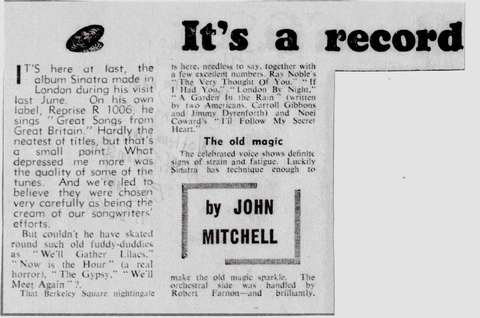
Re: January 12 - THIS DATE IN SINATRA HISTORY
Undated materialFrom: Ed O'Brien <dmarc-noreply@freelists.org> | Received: 2024-01-18
Re: January 15 - THIS DATE IN SINATRA HISTORY
Undated materialFrom: Ed O'Brien <dmarc-noreply@freelists.org> | Received: 2024-01-18
January 19 - THIS DATE IN SINATRA HISTORY
Undated materialFrom: Ed O'Brien <dmarc-noreply@freelists.org> | Received: 2024-01-19
Hollywood
Connie Haines remembers:
EXCERPT "FOR ONCE IN MY LIFE" BY CONNIE HAINES ( AUTOBIO )
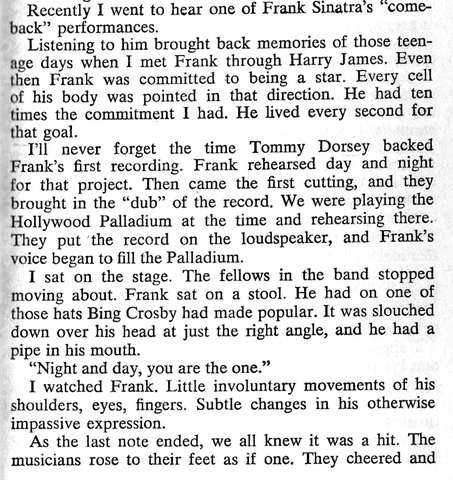
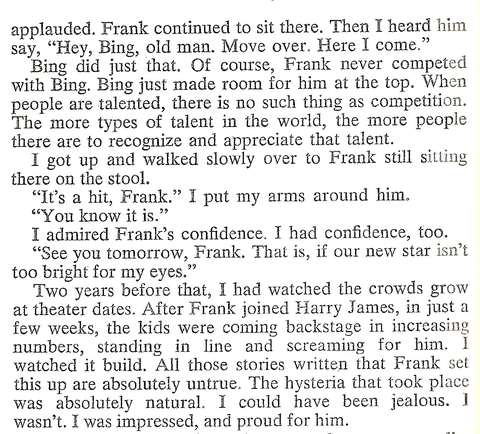
January 19 - THIS DATE IN SINATRA HISTORY
Undated materialFrom: Scott Henderson <scott@falseducks.com> | Received: 2024-01-19
SHOWER OF STARS
COLOR PRESENTATION
CBS STUDIOS
HOLLYWOOD
REVIEW: I REMEMBER TOMMY
Undated materialFrom: Ed O'Brien <dmarc-noreply@freelists.org> | Received: 2024-01-19
The Nottingham Evening Post,
Nottingham, Notting Hampshire, England
April 13-62
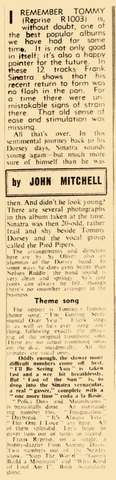
REVIEW: SWINGIN' BRASS
Undated materialFrom: Ed O'Brien <dmarc-noreply@freelists.org> | Received: 2024-01-19
Tampa Tribune
Tampa, Florida
9-2-62
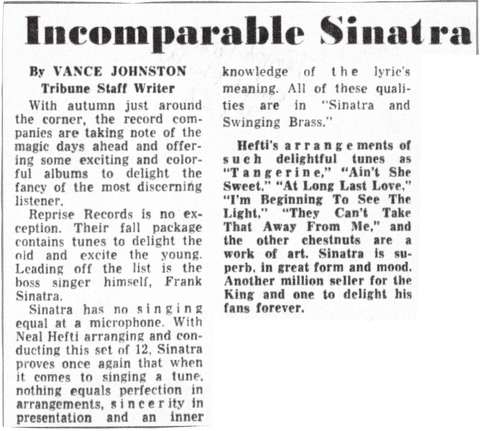
REVIEW: SWINGIN' BRASS/ALL ALONE
Undated materialFrom: Ed O'Brien <dmarc-noreply@freelists.org> | Received: 2024-01-19
Oakland Tribune
11-18-62
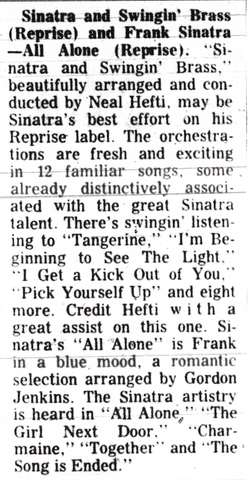
Re: January 19 - THIS DATE IN SINATRA HISTORY
Undated materialFrom: Ed O'Brien <dmarc-noreply@freelists.org> | Received: 2024-01-19
Hollywood
PBS072045 Night And Day
(Cole Porter)
Warner Bros. Music (ASCAP)
Arranged & Conducted by Axel Stordahl
-1 (3:00) CD: 07863 66353-2 "The Song Is You" 5CD set Vol 4
CD: RCA 2269-2-R
LP: LPM 1632
78: 20-1589
78: 11463
Violins: Harry Bluestone, Mischa Russell, Nick Pisani, Sam Freed, Jr.; Cello: Cy Bernard; Bass: Hank Stern; Piano: Skitch Henderson; Oboe: Charles Strickfaden; Harp: Ann Mason; Saxes: Manny Gershman, Fred Stulce, Don Lodice, Heinie Beau; Guitar: Clark Yocum
Connie Haines remembers:
EXCERPT "FOR ONCE IN MY LIFE" BY CONNIE HAINES ( AUTOBIO )
January 20 - THIS DATE IN SINATRA HISTORY
Undated materialFrom: Scott Henderson <scott@falseducks.com> | Received: 2024-01-20
Sands, Las Vegas, Nevada (January 5 - February 1)
Count Basie Orchestra
Conducted by Quincy Jones
January 21 - THIS DATE IN SINATRA HISTORY
Undated materialFrom: Scott Henderson <scott@falseducks.com> | Received: 2024-01-21
(Monday) Frank Sinatra did his first session under his own name.;
for RCA Victor (Issued on 35 cent Bluebird label). Four titles with
orchestra led by Axel Stordahl
BING'S LETTER TO FRANK DECEMBER 1943 CONCLUDED
Undated materialFrom: Ed O'Brien <dmarc-noreply@freelists.org> | Received: 2024-02-06
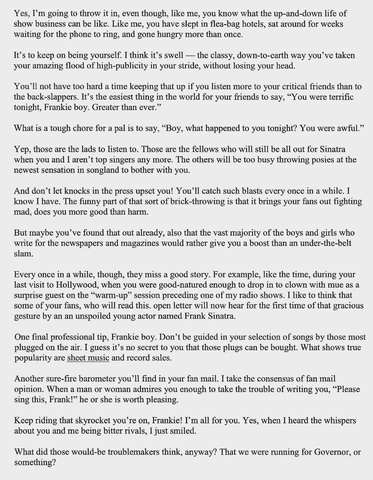
BING'S LETTER TO FRANK DECEMBER 1943
Undated materialFrom: Ed O'Brien <dmarc-noreply@freelists.org> | Received: 2024-02-06
REVIEW: SINATRA PLATINUM
Undated materialFrom: Ed O'Brien <dmarc-noreply@freelists.org> | Received: 2024-02-06
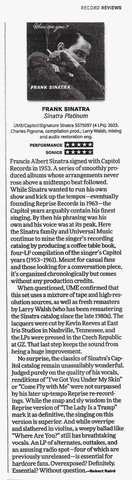
Re: February 7 - THIS DATE IN SINATRA HISTORY
Undated materialFrom: Ed O'Brien <dmarc-noreply@freelists.org> | Received: 2024-02-08
note: Interview with Dwight Newton took place on 2-7-52.
According to the Examiner, Sinatra did four shows
at the Orpheum on 2/8 with the Ray Hackett Orchestra..
Alex Nicol and the young Universal starlet Joyce Holden
also made appearances.
Ed
Frank Sinatra Clowns All Over Movie Set
Undated materialFrom: Ed O'Brien <dmarc-noreply@freelists.org> | Received: 2024-02-10
Boston Globe
2-6-44
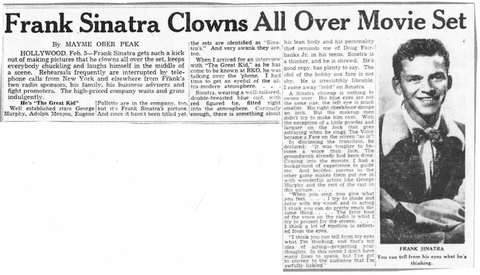
Re: Photos From Stockholm 1953
Undated materialFrom: Ed O'Brien <dmarc-noreply@freelists.org> | Received: 2024-02-14
More photos from Michel:
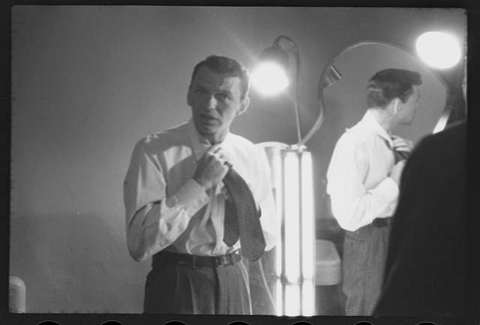
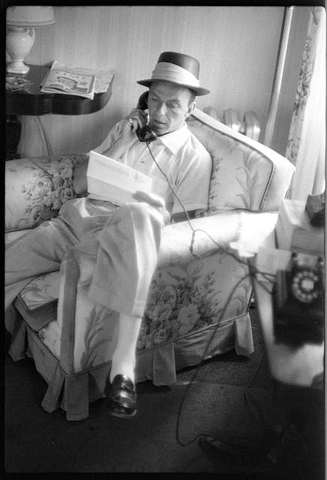
REVIEW: CYCLES
Undated materialFrom: Ed O'Brien <dmarc-noreply@freelists.org> | Received: 2024-02-25
Asbury Park Press
March 22, 1969
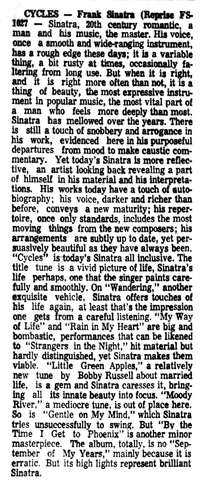
A TERRIFIC THANK YOU
Undated materialFrom: Ed O'Brien <dmarc-noreply@freelists.org> | Received: 2024-02-27
note: Ben Novack thanked Frank for two fantastic engagements at his hotel.
The first engagement ran from 2-16-67 till 3-4-67 and the second from 4-7-67
through 4-29-67. Thirty-three nights and columnist after columnist proclaimed him
the greatest live entertainer in show business.
Ed
Fw: Re: February 28 - THIS DATE IN SINATRA HISTORY
Undated materialFrom: Ed O'Brien <dmarc-noreply@freelists.org> | Received: 2024-02-28
Fontainbleau, Miami, Fla, (February 28 to March 13)
O.A. Buddy Lester
Brascia & Tybee
RADD ALBUM WAS THE THEME
Variety
March 8, 1961
note: Al Porcino, lead trumpet player, was recruited by Bill Miller
to augment the sound of the Dawson band during the two week run.
Al told me Frank secured his own train car, had it hooked up to a
regular train from L.A. to Miami. Frank had his own cook, waiter,
bartender and a couple of ladies traveled with him. Al said to me
"Frank was a real swinger."
Ed
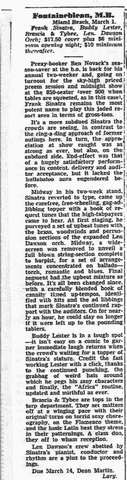
Re: February 28 - THIS DATE IN SINATRA HISTORY
Undated materialFrom: Ed O'Brien <dmarc-noreply@freelists.org> | Received: 2024-02-28
Fontainbleau, Miami, Fla, (February 28 to March 13)
O.A. Buddy Lester
Brascia & Tybee
RADD ALBUM WAS THE THEME
note: Frank's first single for Reprise was about to be issued. "Tina"
was the B-side. Frank liked being dark on Mondays, but the rubber
match between Ingemar Johansson and Floyd Patterson, at the
Convention Hall in Miami, fell on Frank's closing night 3/13 - a
Monday. Frank wanted to see the fight and announced there would
be a special party combined with a single show after the fight. Both
fighters were invited to attend, along with many celebrities. Sinatra
had a ringside seat at the fight and received a standing ovation.
Dean Martin was set to open at the Fontainbleau on 3/14. But
he had to delay his apperarance because his latest film needed a few
tweaks here and there. Frank couldn't help him because he was playing
host to Joseph P. Kennedy in Palm Springs. Dean opened on 3/17.
Frank thought the sidemen in Lenny Dawson's band were terrific.
Closing night he handed out $750.00 to be divided among them.
Ed
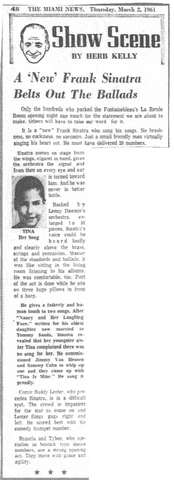
Re: February 28 - THIS DATE IN SINATRA HISTORY
Undated materialFrom: Ed O'Brien <dmarc-noreply@freelists.org> | Received: 2024-02-29
Re: March 1 - THIS DATE IN SINATRA HISTORY
Undated materialFrom: Ed O'Brien <dmarc-noreply@freelists.org> | Received: 2024-03-01
Globe Gazette
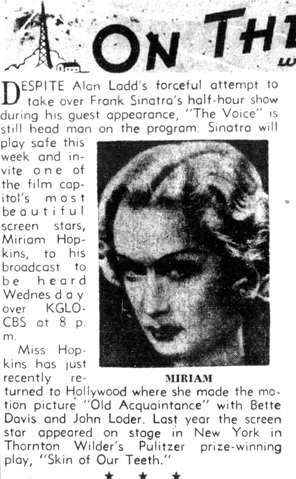
Re: March 1 - THIS DATE IN SINATRA HISTORY
Undated materialFrom: Ed O'Brien <dmarc-noreply@freelists.org> | Received: 2024-03-02
Re: March 2 - THIS DATE IN SINATRA HISTORY
Undated materialFrom: Ed O'Brien <dmarc-noreply@freelists.org> | Received: 2024-03-02
s:
March 3 - THIS DATE IN SINATRA HISTORY
Undated materialFrom: Ed O'Brien <dmarc-noreply@freelists.org> | Received: 2024-03-04
Christmas With Class
Undated materialFrom: michel macaire <michelmacaire@hotmail.com> | Received: 2024-03-04
Las Vegas Aladdin Hotel December 16. 1983 Christmas With Class
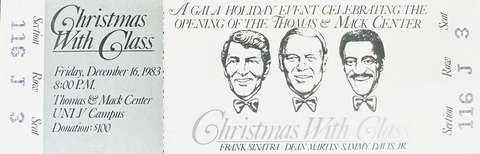
MANIE AND FRIENDS
Undated materialFrom: Ed O'Brien <dmarc-noreply@freelists.org> | Received: 2024-03-04

Re: March 3 - THIS DATE IN SINATRA HISTORY
Undated materialFrom: Ed O'Brien <dmarc-noreply@freelists.org> | Received: 2024-03-04
Re: March 4 - THIS DATE IN SINATRA HISTORY
Undated materialFrom: Ed O'Brien <dmarc-noreply@freelists.org> | Received: 2024-03-04
note: I have the transcript of this show but I never read the segment on the guide dog. Nice gesture by Sinatra.
Interesting the Sablon is not mentioned.
Ed
A Man And His Music Sessionograpy
Undated materialFrom: Ted Pastuszak Jr <akatedpastuszakjr@gmail.com> | Received: 2024-03-05
Hi Ed,
Following up on a lead from a lister, I purchased a hardcover copy of your '90's sessiongraphy from an eBay seller. I received my copy yesterday, and I very much look forward to spending a ridiculous amount of time with it.
Just two quick questions -one based on a notation that I saw for the November 26 – December 2, 1962 engagement at the Villa Venice. The note said that* “Chicago” *and *“When Your Lover Has Gone”* were mastered and considered for inclusion on the Reprise Collection CD set. I was wondering if we knew if the performances being considered for release were the same as those issued on the Jazz Hour independent set many years ago, or from the show(s) that Steve Hoffman pulled for his official release, or perhaps different ones still. Apparently, all of the shows in that engagement were recorded, the Jazz Hour release most likely being the last show of the series.
Also, sessionographies don’t seem to include an entry for “How Long Will It Last”, which I understand was recorded (perhaps incompletely) with Xavier Cugat on May 24, 1945.
I can’t believe I didn’t know about this book until you mentioned it recently. Thank you again.
Ted P.
Re: A Man And His Music Sessionograpy
Undated materialFrom: "Ted Pastuszak Jr." <tedpastuszakjr@gmail.com> | Received: 2024-03-05
Too bad! Thank you very much for confirming, Ed.
On Tue, Mar 5, 2024 at 2:45 PM Ed O'Brien <dmarc-noreply@freelists.org> wrote:
> Hi Ted,
> Yes, they are from different performances not issued. > Ed
>
> On Tuesday, March 5, 2024 at 12:27:32 PM EST, Ted Pastuszak Jr. < > tedpastuszakjr@gmail.com> wrote:
>
>
> Thank you very much, Ed.
>
> So it's likely that the versions of the two VV performances that were > considered for release on the Reprise Collection are different from the > ones that eventually came out on the various "Rat Pack" CD's? I'm just > wondering if we may have heard them in some other form over the years. >
> Ted P.
>
> On Tue, Mar 5, 2024 at 12:15 PM Ed O'Brien <dmarc-noreply@freelists.org> > wrote:
>
> Hi Ted,
> Reprise recorded all 16 shows at the Villa Venice in 62. > There were plans to release a two LP set back in early 63. Jazz > Hour release is the closing show on 12-2-62. Complete show. I > did the liner notes. The great engineer Wally Heider recorded > that one. You will see I included info from the Reprise vaults > in the book. Reprise initially planned to issue a 24 CD set in > 1995. This would have included some interesting live tracks > including some from the V. Venice. I was involved in quite > a few of the different projects and they gave me some of > the material. The two versions you mentioned were never > issued, but, were mastered.
> "How Long Will It Last" was not discovered until > after the publication of my book. And it is incomplete. I > had great rapport with the Columbia archivists. They
> just didn't know about that title at the time.
> I think you will find a great many interesting details > in the book. Enjoy.
> Ed
>
> On Tuesday, March 5, 2024 at 11:46:59 AM EST, Ted Pastuszak Jr < > akatedpastuszakjr@gmail.com> wrote:
>
>
> Hi Ed,
>
> Following up on a lead from a lister, I purchased a hardcover copy of > your '90's sessiongraphy from an eBay seller. I received my copy > yesterday, and I very much look forward to spending a ridiculous amount of > time with it.
>
> Just two quick questions -one based on a notation that I saw for the > November 26 – December 2, 1962 engagement at the Villa Venice. The note > said that* “Chicago” *and *“When Your Lover Has Gone”* were mastered and > considered for inclusion on the Reprise Collection CD set. I was wondering > if we knew if the performances being considered for release were the same > as those issued on the Jazz Hour independent set many years ago, or from > the show(s) that Steve Hoffman pulled for his official release, or perhaps > different ones still. Apparently, all of the shows in that engagement were > recorded, the Jazz Hour release most likely being the last show of the > series.
>
> Also, sessionographies don’t seem to include an entry for “How Long Will > It Last”, which I understand was recorded (perhaps incompletely) with > Xavier Cugat on May 24, 1945.
>
> I can’t believe I didn’t know about this book until you mentioned it > recently. Thank you again.
>
> Ted P.
>
>
Re: A Man And His Music Sessionograpy
Undated materialFrom: Ed O'Brien <dmarc-noreply@freelists.org> | Received: 2024-03-05
Hi Ted, Yes, they are from different performances not issued.Ed On Tuesday, March 5, 2024 at 12:27:32 PM EST, Ted Pastuszak Jr. <tedpastuszakjr@gmail.com> wrote:
Thank you very much, Ed.
So it's likely that the versions of the two VV performances that were considered for release on the Reprise Collection are different from the ones that eventually came out on the various "Rat Pack" CD's? I'm just wondering if we may have heard them in some other form over the years. Ted P.
On Tue, Mar 5, 2024 at 12:15 PM Ed O'Brien <dmarc-noreply@freelists.org> wrote:
Hi Ted, Reprise recorded all 16 shows at the Villa Venice in 62.There were plans to release a two LP set back in early 63. JazzHour release is the closing show on 12-2-62. Complete show. Idid the liner notes. The great engineer Wally Heider recordedthat one. You will see I included info from the Reprise vaultsin the book. Reprise initially planned to issue a 24 CD set in1995. This would have included some interesting live tracksincluding some from the V. Venice. I was involved in quite a few of the different projects and they gave me some of the material. The two versions you mentioned were neverissued, but, were mastered. "How Long Will It Last" was not discovered untilafter the publication of my book. And it is incomplete. Ihad great rapport with the Columbia archivists. They just didn't know about that title at the time. I think you will find a great many interesting detailsin the book. Enjoy.Ed On Tuesday, March 5, 2024 at 11:46:59 AM EST, Ted Pastuszak Jr <akatedpastuszakjr@gmail.com> wrote:
Hi Ed,
Following up on a lead from a lister, I purchased a hardcover copy of your '90's sessiongraphy from an eBay seller. I received my copy yesterday,and I very much look forward to spending a ridiculous amount of time with it.
Just two quick questions -one based on a notation that I sawfor the November 26 – December 2, 1962 engagement at the Villa Venice. The note said that “Chicago” and “When YourLover Has Gone” were mastered and considered for inclusion on the RepriseCollection CD set. I was wondering if weknew if the performances being considered for release were the same as thoseissued on the Jazz Hour independent set many years ago, or from the show(s)that Steve Hoffman pulled for his official release, or perhaps different onesstill. Apparently, all of the shows inthat engagement were recorded, the Jazz Hour release most likely being the lastshow of the series.
Also, sessionographies don’t seem to include an entry for “HowLong Will It Last”, which I understand was recorded (perhaps incompletely) withXavier Cugat on May 24, 1945.
I can’t believe I didn’t know about this book until youmentioned it recently. Thank you again.
Ted P.
Re: A Man And His Music Sessionograpy
Undated materialFrom: "Ted Pastuszak Jr." <tedpastuszakjr@gmail.com> | Received: 2024-03-05
Thank you very much, Ed.
So it's likely that the versions of the two VV performances that were considered for release on the Reprise Collection are different from the ones that eventually came out on the various "Rat Pack" CD's? I'm just wondering if we may have heard them in some other form over the years.
Ted P.
On Tue, Mar 5, 2024 at 12:15 PM Ed O'Brien <dmarc-noreply@freelists.org> wrote:
> Hi Ted,
> Reprise recorded all 16 shows at the Villa Venice in 62. > There were plans to release a two LP set back in early 63. Jazz > Hour release is the closing show on 12-2-62. Complete show. I > did the liner notes. The great engineer Wally Heider recorded > that one. You will see I included info from the Reprise vaults > in the book. Reprise initially planned to issue a 24 CD set in > 1995. This would have included some interesting live tracks > including some from the V. Venice. I was involved in quite > a few of the different projects and they gave me some of > the material. The two versions you mentioned were never > issued, but, were mastered.
> "How Long Will It Last" was not discovered until > after the publication of my book. And it is incomplete. I > had great rapport with the Columbia archivists. They
> just didn't know about that title at the time.
> I think you will find a great many interesting details > in the book. Enjoy.
> Ed
>
> On Tuesday, March 5, 2024 at 11:46:59 AM EST, Ted Pastuszak Jr < > akatedpastuszakjr@gmail.com> wrote:
>
>
> Hi Ed,
>
> Following up on a lead from a lister, I purchased a hardcover copy of > your '90's sessiongraphy from an eBay seller. I received my copy > yesterday, and I very much look forward to spending a ridiculous amount of > time with it.
>
> Just two quick questions -one based on a notation that I saw for the > November 26 – December 2, 1962 engagement at the Villa Venice. The note > said that* “Chicago” *and *“When Your Lover Has Gone”* were mastered and > considered for inclusion on the Reprise Collection CD set. I was wondering > if we knew if the performances being considered for release were the same > as those issued on the Jazz Hour independent set many years ago, or from > the show(s) that Steve Hoffman pulled for his official release, or perhaps > different ones still. Apparently, all of the shows in that engagement were > recorded, the Jazz Hour release most likely being the last show of the > series.
>
> Also, sessionographies don’t seem to include an entry for “How Long Will > It Last”, which I understand was recorded (perhaps incompletely) with > Xavier Cugat on May 24, 1945.
>
> I can’t believe I didn’t know about this book until you mentioned it > recently. Thank you again.
>
> Ted P.
>
Re: A Man And His Music Sessionograpy
Undated materialFrom: Ed O'Brien <dmarc-noreply@freelists.org> | Received: 2024-03-05
Hi Ted, Reprise recorded all 16 shows at the Villa Venice in 62.There were plans to release a two LP set back in early 63. JazzHour release is the closing show on 12-2-62. Complete show. Idid the liner notes. The great engineer Wally Heider recordedthat one. You will see I included info from the Reprise vaultsin the book. Reprise initially planned to issue a 24 CD set in1995. This would have included some interesting live tracksincluding some from the V. Venice. I was involved in quite a few of the different projects and they gave me some of the material. The two versions you mentioned were neverissued, but, were mastered. "How Long Will It Last" was not discovered untilafter the publication of my book. And it is incomplete. Ihad great rapport with the Columbia archivists. They just didn't know about that title at the time. I think you will find a great many interesting detailsin the book. Enjoy.Ed On Tuesday, March 5, 2024 at 11:46:59 AM EST, Ted Pastuszak Jr <akatedpastuszakjr@gmail.com> wrote:
Hi Ed,
Following up on a lead from a lister, I purchased a hardcover copy of your '90's sessiongraphy from an eBay seller. I received my copy yesterday,and I very much look forward to spending a ridiculous amount of time with it.
Just two quick questions -one based on a notation that I sawfor the November 26 – December 2, 1962 engagement at the Villa Venice. The note said that “Chicago” and “When YourLover Has Gone” were mastered and considered for inclusion on the RepriseCollection CD set. I was wondering if weknew if the performances being considered for release were the same as thoseissued on the Jazz Hour independent set many years ago, or from the show(s)that Steve Hoffman pulled for his official release, or perhaps different onesstill. Apparently, all of the shows inthat engagement were recorded, the Jazz Hour release most likely being the lastshow of the series.
Also, sessionographies don’t seem to include an entry for “HowLong Will It Last”, which I understand was recorded (perhaps incompletely) withXavier Cugat on May 24, 1945.
I can’t believe I didn’t know about this book until youmentioned it recently. Thank you again.
Ted P.
Re: March 4 - THIS DATE IN SINATRA HISTORY
Undated materialFrom: Ed O'Brien <dmarc-noreply@freelists.org> | Received: 2024-03-05
Hi John,
You can see this is Frank in 1944. He did a Command Performance
with the Andrew Sisters in June of that year and the unaired pilot for their
"8 To The Bar Ranch" in December 44. I think this photo is from the latter
show. I don't recognize the young woman. Could have been Frankie Carle.
Love the photo.
Ed
Here’s another version of the photo:
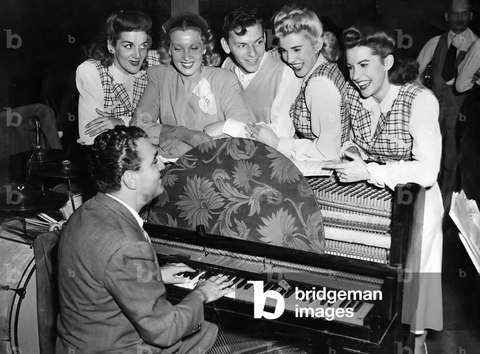
Re: March 4 - THIS DATE IN SINATRA HISTORY
Undated materialFrom: Ed O'Brien <dmarc-noreply@freelists.org> | Received: 2024-03-05
Indianapolis Star
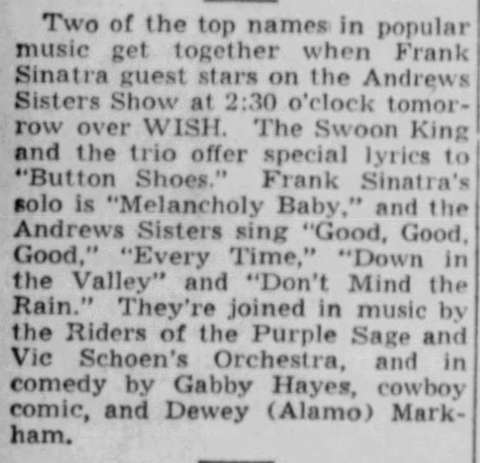
TORONTO TICKET SALES IN MARCH 1975
Undated materialFrom: Ed O'Brien <dmarc-noreply@freelists.org> | Received: 2024-03-05
I remember this controversy. Variety did a long article back then
Times
3-4-75
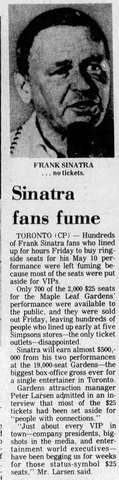
DORSEY BAND MARCH 1942
Undated materialFrom: Ed O'Brien <dmarc-noreply@freelists.org> | Received: 2024-03-06
Daily Tar Heel, North Carolina
3-1-42
note: This has to be one of the times Dorsey fired Frank.
Connie Haines loved to tell how much the two men went
at each other.
I found in the Shawnee Evening Star, 3-3-42, an announcement
that Dorsey star drummer, Buddy Rich, would soon be enlisting
in the army. Before going Buddy was going to introduce "I Realize
Now," which was a "real killer," with Sinatra and the Pied Pipers.
March 12 had two notices: Connie Haines was forced to leave
the bandstand due to illness; Blue Network broadcast the Dorsey
band that evening at 11:30 P.M. Found this in the Des Moines
Register. Local station broadcasting the half-hour was KMA.
There are hundreds and hundreds of Dorsey ads, profiles
and reviews in the papers from 1940 to 42.
Ed
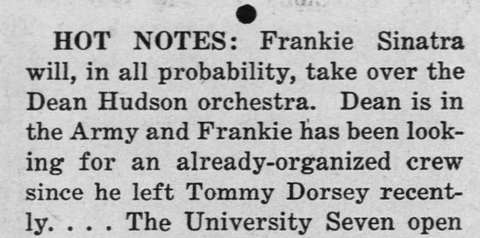
Re: March 6 - THIS DATE IN SINATRA HISTORY
Undated materialFrom: Pedro Matos <pedrojotamatos@gmail.com> | Received: 2024-03-06
“Tell you what, Chester. Why don't you get Jack Kennedy to record this f**king song, and then see how many records it sells?”
> 940 Cathy( Orchestral track only )
> Arranged and Conducted by Billy May
> (Sammy Cahn/Jimmy Van Heusen)
>
> note: Here is the second page of the AFM recording sheet.
> You will see all three songs were laid down at United Recording in Hollywood. There was a 39 piece orchestra. Billy May conducted. > He told me Frank started to do "Cathy" but his anger toward Van Heusen erupted and Frank departed. About 20 mins later, Billy got a call from him. instructing Billy to lay down the orchestral > track. Frank told Billy he would come in within a few days and do the overdub. It never happened. Billy told me it was a very pretty song and he was sorry Frank didn't follow through. > Ed
>
> <image001.jpg>
>
>
Re: March 6 - THIS DATE IN SINATRA HISTORY
Undated materialFrom: Ed O'Brien <dmarc-noreply@freelists.org> | Received: 2024-03-06
Fw: THE SUMMIT AT THE FONTAINEBLEAU
Undated materialFrom: Ed O'Brien <dmarc-noreply@freelists.org> | Received: 2024-03-08
note: The research I did some years back involved the use of Elvis sites.
They claimed there was no show at the Fontainebleau on 3/26 and
The Summit got underway after Frank closed on the 27th. The ad
I have enclosed is from the Miami Herald on 3/26. There were shows
that night. The Summit ran for three nights ( 25 to 27 ). There is a
smaller ad that has Frank, Dean, Joey, Peter and Mr X. The X was
Sammy Davis Jr. After the final show, Sammy was asked how the
hotel could "afford you guys." He told the reporter it couldn't. They
did the shows for Frank " because we love him." It was the first
appearance, of what had become a legendary act, outside of Vegas.
Earl Wilson and other columnists reported that Elvis was a side
attraction to The Summit. The lobby of the Fontainebleau saw a
lot of pushing and shoving by the hundreds of people fighting to
get into the La Ronde room.
Frank had become the biggest nightclub draw in the country, For
three consecutive years, he performed to a sold out house every
show. And that would continue throughout the 1960s.
Ed
Miami Herald
3-26-60
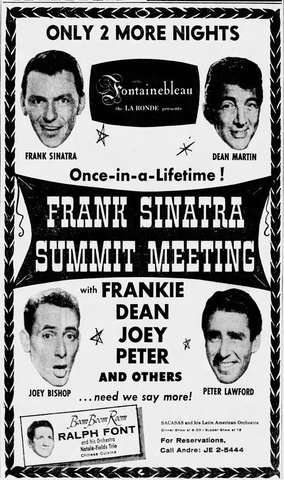
Monte Carlo 1958
Undated materialFrom: michel macaire <michelmacaire@hotmail.com> | Received: 2024-03-08
Frank crossing the tracks at the Monte Carlo station in 1958. There are many photos showing him on the platform or getting off the train, but this is the first time I've seen this one.
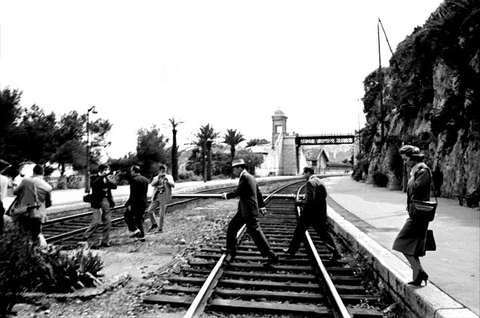
Re: MARCH 8 - THIS DATE IN SINATRA HISTORY
Undated materialFrom: Ed O'Brien <dmarc-noreply@freelists.org> | Received: 2024-03-08
Fontainebleau, Miami, Fla, (March 8 to March 27)
Also appearing: The Duquaines & Sacacas and his Latin America Orchestra
Miami News
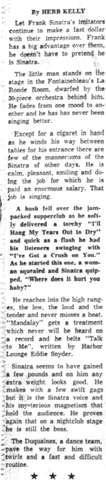
Re: MARCH 8 - THIS DATE IN SINATRA HISTORY
Undated materialFrom: Ed O'Brien <dmarc-noreply@freelists.org> | Received: 2024-03-08
Fontainebleau, Miami, Fla, (March 8 to March 27)
Also appearing: The Duquaines & Sacacas and his Latin America Orchestra
Miami News
Steve Lawrence, singer, entertainer and half of popular stage duo Steve & Eydie, dies at 88
Undated materialFrom: Scott Henderson <scott@falseducks.com> | Received: 2024-03-08
Steve Lawrence, singer, entertainer and half of popular stage duo Steve & Eydie, dies at 88
NEW YORK (AP) - Steve Lawrence, a singer and top stage act who as a solo performer and in tandem with his wife Eydie Gorme kept Tin Pan Alley alive during the rock era, died Thursday. He was 88.
Lawrence, whose hits included "Go Away Little Girl," died from complications due to Alzheimer's disease, said Susan DuBow, a spokesperson for the family.
Lawrence and Gorme - or Steve & Eydie - were known for their frequent appearances on talk shows, in night clubs and on the stages of Las Vegas. The duo took inspiration from George Gershwin, Cole Porter, Jerome Kern and other songwriters.
Soon after Elvis Presley and other rock music pioneers began to dominate radio and records, Lawrence and his wife were approached about changing their style.
"We had a chance to get in on the ground floor of rock 'n' roll," he recalled in a 1989 interview. "It was 1957 and everything was changing, but I wanted to be Sinatra, not Rick Nelson.
"Our audience knows we're not going to load up on heavy metal or set fire to the drummer - although on some nights we've talked about it," he joked.
Although Lawrence and Gorme were best known as a team, both also had huge solo hits just months apart in the early 1960s.
Dionne Warwick, a longtime friend, said in a statement that Lawrence was "resting with comfort in the arms of the Heavenly Father. My heartfelt condolences go out." Carol Burnett, in a statement, called Lawrence one of her favorite guests on her variety show. "He was also my very close friend," she said. "He will always be in my heart."
Lawrence scored first in 1962 with the achingly romantic ballad "Go Away Little Girl," written by the Brill Building songwriting team of Gerry Goffin and Carole King. Gorme matched his success the following year with "Blame It on the Bossa Nova," a bouncy tune about a dance craze of the time that was written by Brill hitmakers Barry Mann and Cynthia Weil.
By the 1970s, Lawrence and his wife were a top draw in Las Vegas casinos and nightclubs across the country. They also appeared regularly on television, making specials and guesting on various shows.
In the 1980s, when Vegas cut down on headline acts and nightclubs became scarcer, the pair switched to auditoriums and drew large audiences.
"People come with a general idea of what they're going to get with us," Lawrence said in 1989. "It's like a product. They buy a certain cereal and they know what to expect from that package."
Lawrence launched his professional singing career at age 15. After two failed auditions for "Arthur Godfrey's Talent Scouts" TV show, he was accepted on the third try, going on to win the competition and the prize of appearing on Godfrey's popular daytime radio show for a week.
King Records, impressed by the teenager's strong, two-octave voice, signed him to a contract. His first record, "Poinciana," sold more than 100,000 copies, and his high school allowed him to skip classes to promote it with out-of-town singing dates.
After several guest appearances on Steve Allen's television show, Lawrence was hired as a regular. When the program became NBC's "Tonight" in 1954, he went with it, singing and exchanging quips with Allen. The series set the pattern for the long-running "The Tonight Show."
"I think Steve Allen was the biggest thing that happened to me," said Lawrence, who stayed with the show's host for five years, honing his comedic skills and attracting a wide audience with his singing. "Every night I was called upon to do something different. In its own way it was better than vaudeville."
Early in the series' run, a young singer named Eydie Gorme joined the cast. After singing together for four years, she and Lawrence were married in 1957.
Until Gorme's death, in 2013, they remained popular, whether working together in concert or making separate TV appearances.
His reasoning: "If we did television together all the time, why should anyone go see us in a club?"
He appeared in such shows as "CSI: Crime Scene Investigation," "Gilmore Girls," "Diagnosis Murder" and "The Nanny."
He and his wife did star together in "The Steve Lawrence-Eydie Gorme Show" in 1958 and Lawrence had his own series, "The Steve Lawrence Show," in 1965.
He also made stage appearances without Gorme, including a starring role in a 1962 summer stock version of "Pal Joey." He made it to Broadway in 1964 - and earned a Tony Award nomination - in the musical "What Makes Sammy Run?" based on Budd Schulberg's classic novel about a New York hustler who claws his way to the top of the entertainment world.
Critics praised Lawrence but gave the play bad reviews. Still, it turned a profit, and insiders attributed its success to his performance.
Lawrence also had a few character roles in movies, most notably "Stand Up and Be Counted," "Blues Brothers 2000," "The Lonely Guy" and "The Yards."
Native-born New Yorkers, Lawrence and Gorme lived in a Manhattan apartment during their early years together. When the center of TV entertainment shifted to Hollywood, they moved to Beverly Hills.
Born Sidney Liebowitz in New York City's borough of Brooklyn, Lawrence was the son of a Jewish cantor who worked as a house painter. He began singing in his father's synagogue choir at 8, moving on to bars and clubs by his mid-teens. He took his name from the first names of two nephews.
He and Gorme had two sons, David, a composer, and Michael. Long troubled with heart problems, Michael died of heart failure in 1986 at age 23.
"My dad was an inspiration to so many people," his son David said in a statement. "But, to me, he was just this charming, handsome, hysterically funny guy who sang a lot. Sometimes alone and sometimes with his insanely talented wife. I am so lucky to have had him as a father and so proud to be his son."
joan edwards
Undated materialFrom: Ed O'Brien <dmarc-noreply@freelists.org> | Received: 2024-03-08
note: Joan Edwards was on the Hit Parade with Frank from July 43 to
November of that year. Later on she would be on Command Performance
#247 with him. He gave her a very nice introduction.
This letter was printed on 3-7-45
Obviously, Frank thought better of it
Undated materialFrom: Ed O'Brien <dmarc-noreply@freelists.org> | Received: 2024-03-09
Daily News
3-9-60
March 9 - THIS DATE IN SINATRA HISTORY
Undated materialFrom: Scott Henderson <scott@falseducks.com> | Received: 2024-03-09
"Can Can" (U.S. Release: March 9,
1960)
Starring: Frank Sinatra, Shirley MacLaine, Maurice Chevalier, Louis
Jourdan, Juliet Prowse
Produced by: Jack Cummings and Saul Chaplin
Directed by: Walter Lang
Montmartre, 1896: the Can-Can, the dance in which the women lift their skirts, is forbidden. Nevertheless Simone (MacLaine) has it performed every day in her nightclub. Her employees use their female charms to let the representatives of law enforcement look the other way - and even attend the shows. Then the young ambitious judge Philippe Forrestier (Jordan) decides to bring this to an end. Will Simone manage to twist him round her little finger, too? Her boyfriend Francois (Sinatra) certainly doesn't like to watch her trying.
(DVD Release date: 2007-05-22)
"Can - Can" is very loosely based on the 1953
Broadway musical. Only eight
of Porter's songs from the play were used in the film. Sinatra's character,
Francois, was not in the Broadway production.
Frank owed 20th Century a film after dropping out of
"Carousel" in August
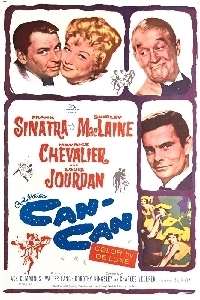
Fw: CAN-CAN EXCLUSIVE WORLD PREMIERE
Undated materialFrom: Ed O'Brien <dmarc-noreply@freelists.org> | Received: 2024-03-10
MIAMI HERALD
3-9-60
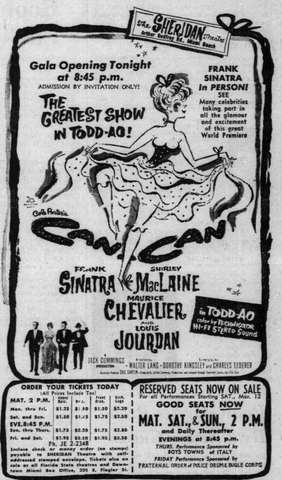
A TERRIFIC REVIEW OF FRANK'S GREAT "SWING" ALBUM
Undated materialFrom: Ed O'Brien <dmarc-noreply@freelists.org> | Received: 2024-03-11
Fort Lauderdale News
July 1, 1956
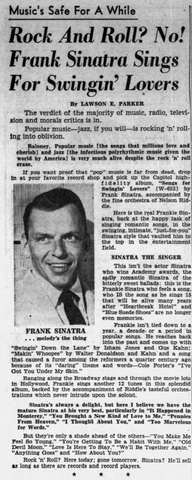
MARCH 11 - THIS DATE IN SINATRA HISTORY
Undated materialFrom: Scott Henderson <scott@falseducks.com> | Received: 2024-03-11
Fountainebleau Hotel, Miami Beach, Florida (9-30?)
26 piece orchestra conducted by: Morty Stevens
Bill Miller (piano)
among the songs:
I Love Paris
I Thought About You
I've Got A Crush On You
Road To Mandalay
River Stay Away From My Door
All The Way
High Hopes
medley: A Foggy Day, I've Got You Under My Skin, Angel Eyes
Come Fly With Me.
MARCH 11 - THIS DATE IN SINATRA HISTORY
Undated materialFrom: Scott Henderson <scott@falseducks.com> | Received: 2024-03-11
. I was in the fifth row. Half-way through the Kander-Ebb song the entire audience was on its collective feet.. His singing that night was magnificent. . Best I ever saw and heard.
Re: MARCH 11 - THIS DATE IN SINATRA HISTORY
Undated materialFrom: John Larrabee <dmarc-noreply@freelists.org> | Received: 2024-03-11
Ed: "This is bizarre:Long has been missing since 1947. No one seems to know what happened tohim."
From Mark Cantor’s “Suddenly: A Frank Sinatra Podcast,” June10, 2023:
A BRIEF BIOGRAPHY OF BOBBY LONG
Bobby Long (March 27th, 1932 - October 31st, 2005) (born Bobby Earl Logsdon,also known as Bob Logsdon) was born in St. Louis, Missouri to Hubert Earl andLola Mae Logsdon. He began tap dancing at the age of six, and by age ten wasperforming professionally on the vaudeville circuit. He toured the countrythroughout his teenage years, including gigs at the Majestic Theatre inPaterson, NJ and Steel Pier in Atlantic City, NJ, working alongside some of thebiggest names in the country.
In 1942, he was featured in a Soundie named Club Lollypop, dancingalongside a young girl named Marlene Cameron who he had also worked with duringhis stage performances. He may have also appeared in other short films of thisperiod. By 1946, he had moved to Santa Monica, CA. His big break came inthe form of a starring role singing and tap dancing to "I Believe"alongside Frank Sinatra and Jimmy Durante in the 1947 MGM musical, ItHappened in Brooklyn. He continued touring for several more months.
Then, for unknown reasons, he seems to have quit showbiz and public lifeentirely. At some stage, he may have moved to New York and then back toCalifornia again. In 1951, at the age of 19, he enlisted in the UnitedStates Navy, most likely after being drafted. He served in the Korean Waraboard the USS Philippine Sea as an aerographer's mate third class until1955.
He then led a quiet and private life for the remainder of the 20thcentury. He married once in 1960 and divorced in 1971. When That'sEntertainment, Part 2 was released in 1976, he was miscredited in the"I Believe" segment as "Billy Roy." (This is the name of adifferent child star from It Happened in Brooklyn.) Decades went byand despite ever-increasing interest in Sinatra, Old Hollywood and the MGMstory, the story of Bobby Long was apparently never investigated. Logsdon seemsto have done no interviews and did not speak publicly about his tap dancingcareer.
He lived around the Orange County area and worked in technical fields,including computer-assisted design, during at least the 1980s. He married againin the early 1980s and stayed in that relationship until his death on October31st, 2005.
In the late 2010s, interest grew in Bobby Long through comment sections onYouTube and other websites. Numerous people expressed awe at his prodigiousability, an interest in what might have happened to him, and surprise at hisseeming to disappear from public life. In 2022-23, this was investigated bythis podcast. It was determined where he ended up and that he seems to have leda quiet life by design, and so the case is now closed.
Chase Hotel:
Undated materialFrom: Fred Wadsworth <frw2@hotmail.co.uk> | Received: 2024-03-12
Hi All, does anyone know the dates Frank was at the Chase Club in the Chase Hotel in 1952? fjw
Re: Chase Hotel:
Undated materialFrom: Scott Henderson <scott@falseducks.com> | Received: 2024-03-12
We have the following from October:
1952 Chase Park Plaza Hotel, St Louis, Missouri (4-10)
Scott
At 12:03 PM 3/12/2024, you wrote:
>Hi Michel, thanks FJW
>
>----------
>From: sinatraphiles-bounce@freelists.org
><sinatraphiles-bounce@freelists.org> on behalf
>of michel macaire <michelmacaire@hotmail.com>
>Sent: 12 March 2024 04:00
>To: sinatraphiles@freelists.org <sinatraphiles@freelists.org> >Subject: [sinatraphiles] Re: Chase Hotel:
>
>Hi Fred,
>
>According to Guiseppe Marcucci Frank was at the
>Chase Hotel in St Louis on October 06 1952.
>Guiseppe wrote : "Mr Sinatra act consisted of
>telling a few jokes, then singing a few songs, then a few jokes again" >
>Best MM
>
>----------
>De : sinatraphiles-bounce@freelists.org
><sinatraphiles-bounce@freelists.org> de la part
>de Fred Wadsworth <frw2@hotmail.co.uk>
>Envoyé : mardi 12 mars 2024 15:47
>À : sinatraphiles@freelists.org <sinatraphiles@freelists.org> >Objet : [sinatraphiles] Chase Hotel:
>
>Hi All, does anyone know the dates Frank was at
>the Chase Club in the Chase Hotel in 1952? fjw
Re: Chase Hotel:
Undated materialFrom: michel macaire <michelmacaire@hotmail.com> | Received: 2024-03-12
Hi Fred,
I have refund a paper clip review mentionning 4th to 10th October It is said "Frank Sinatra arrived Saturday (4) noon to begin an engagement at the Chase Club here, although date was to have started the previous night. Before Sinatra's arrival, the hotel received a call that the singer would be unable to appear because illness"
Best MM
________________________________
De : sinatraphiles-bounce@freelists.org <sinatraphiles-bounce@freelists.org> de la part de michel macaire <michelmacaire@hotmail.com> Envoyé : mardi 12 mars 2024 16:00
À : sinatraphiles@freelists.org <sinatraphiles@freelists.org> Objet : [sinatraphiles] Re: Chase Hotel:
Hi Fred,
According to Guiseppe Marcucci Frank was at the Chase Hotel in St Louis on October 06 1952. Guiseppe wrote : "Mr Sinatra act consisted of telling a few jokes, then singing a few songs, then a few jokes again"
Best MM
________________________________
De : sinatraphiles-bounce@freelists.org <sinatraphiles-bounce@freelists.org> de la part de Fred Wadsworth <frw2@hotmail.co.uk> Envoyé : mardi 12 mars 2024 15:47
À : sinatraphiles@freelists.org <sinatraphiles@freelists.org> Objet : [sinatraphiles] Chase Hotel:
Hi All, does anyone know the dates Frank was at the Chase Club in the Chase Hotel in 1952? fjw
Re: Chase Hotel:
Undated materialFrom: Fred Wadsworth <frw2@hotmail.co.uk> | Received: 2024-03-12
Hi Michel, thanks FJW
________________________________
From: sinatraphiles-bounce@freelists.org <sinatraphiles-bounce@freelists.org> on behalf of michel macaire <michelmacaire@hotmail.com>
Sent: 12 March 2024 04:00
To: sinatraphiles@freelists.org <sinatraphiles@freelists.org>
Subject: [sinatraphiles] Re: Chase Hotel:
Hi Fred,
According to Guiseppe Marcucci Frank was at the Chase Hotel in St Louis on October 06 1952. Guiseppe wrote : "Mr Sinatra act consisted of telling a few jokes, then singing a few songs, then a few jokes again"
Best MM
________________________________
De : sinatraphiles-bounce@freelists.org <sinatraphiles-bounce@freelists.org> de la part de Fred Wadsworth <frw2@hotmail.co.uk> Envoyé : mardi 12 mars 2024 15:47
À : sinatraphiles@freelists.org <sinatraphiles@freelists.org> Objet : [sinatraphiles] Chase Hotel:
Hi All, does anyone know the dates Frank was at the Chase Club in the Chase Hotel in 1952? fjw
Re: Chase Hotel:
Undated materialFrom: michel macaire <michelmacaire@hotmail.com> | Received: 2024-03-12
Hi Fred,
According to Guiseppe Marcucci Frank was at the Chase Hotel in St Louis on October 06 1952. Guiseppe wrote : "Mr Sinatra act consisted of telling a few jokes, then singing a few songs, then a few jokes again"
Best MM
________________________________
De : sinatraphiles-bounce@freelists.org <sinatraphiles-bounce@freelists.org> de la part de Fred Wadsworth <frw2@hotmail.co.uk> Envoyé : mardi 12 mars 2024 15:47
À : sinatraphiles@freelists.org <sinatraphiles@freelists.org> Objet : [sinatraphiles] Chase Hotel:
Hi All, does anyone know the dates Frank was at the Chase Club in the Chase Hotel in 1952? fjw
March 13 - THIS DATE IN SINATRA HISTORY
Undated materialFrom: Scott Henderson <scott@falseducks.com> | Received: 2024-03-13
March 13 - THIS DATE IN SINATRA HISTORY
Undated materialFrom: Scott Henderson <scott@falseducks.com> | Received: 2024-03-13
Fw: March 3 - THIS DATE IN SINATRA HISTORY
Undated materialFrom: Ed O'Brien <dmarc-noreply@freelists.org> | Received: 2024-03-14
note: Bob Thomas was a very good reporter. I noticed immediately that he did not mention "Here Goes." Tells me that
they decided to scrap that song during the session. Frank would have said, "Too many words."
Ed
March 14 - THIS DATE IN SINATRA HISTORY
Undated materialFrom: Scott Henderson <scott@falseducks.com> | Received: 2024-03-14
Capitol Studio A, Hollywood
E16731 So Long, My Love
(S. Cahn/L. Spence)
Arranged & Conducted by Nelson Riddle
CD: C2 724383808922 The Complete Capitol Singles
LP: W982 This Is Sinatra Vol.2
45: 3703
E16732 Crazy Love
(S. Cahn/P. Tuminello)
Arranged & Conducted by Nelson Riddle
CD: C2 724383808922 The Complete Capitol Singles
LP: W982 This Is Sinatra Vol.2
45: 3703
Musicians - Reeds: Harry Klee, Joseph Koch, Babe Russin, Willie Schwartz,
William Skalak; Trumpets: Harry â Sweetsâ Edison, Conrad Gozzo, zo, Vito â Mickeyâ Mangano, Rubin bin â Zekeâ Zarchy; Trombones: Milton ton Bernhart, Francis Howard, George Roberts, Juan Tizol; Violins: Victor Bay, Alex Beller, Kurt Dieterle, Jacques Gasselin, Henry Hill, Alex Murray, Paul Nero, Gerald Vinci; Violas: Barbara Simon, David Sterkin;
Cellos: Ennio Bologini, Victor Gottlieb; Piano: Bill Miller; Bass: Joe
Comfort; Guitar: Nick Bonney; Drums: Frank DiVito; Harp: Kathryn Julye
Session Producer: Voyle Gilmore
Ed O'Brien:
Frank DeVito, drummer on this session, is still with us. Sinatra asked him to be the drummer for the June 1957 tour that included Seattle, Vancouver,
San Francisco, Portland and Sacramento. Frank sent me some fascinating rehearsal sheets from other sessions and concert work done with Sinatra in the 1950s and 1960s.
Re: Chase Hotel:
Undated materialFrom: Fred Wadsworth <frw2@hotmail.co.uk> | Received: 2024-03-14
________________________________
From: Fred Wadsworth <frw2@hotmail.co.uk>
Sent: 13 March 2024 19:00
To: Ed O'Brien <dmarc-noreply@freelists.org>
Subject: Re: [sinatraphiles] Re: Chase Hotel:
________________________________
From: Fred Wadsworth <frw2@hotmail.co.uk>
Sent: 13 March 2024 18:58
To: Ed O'Brien <dmarc-noreply@freelists.org>
Subject: Re: [sinatraphiles] Re: Chase Hotel:
Hi ED. Thank
1952 Chase Park Plaza Hotel, St Louis, Missouri (4-10)
Scott
At 12:03 PM 3/12/2024, you wrote:
Hi Michel, thanks FJW
________________________________
From: sinatraphiles-bounce@freelists.org <sinatraphiles-bounce@freelists.org> on behalf of michel macaire <michelmacaire@hotmail.com>
Sent: 12 March 2024 04:00
To: sinatraphiles@freelists.org <sinatraphiles@freelists.org>
Subject: [sinatraphiles] Re: Chase Hotel:
Hi Fred,
According to Guiseppe Marcucci Frank was at the Chase Hotel in St Louis on October 06 1952. Guiseppe wrote : "Mr Sinatra act consisted of telling a few jokes, then singing a few songs, then a few jokes again"
Best MM
________________________________
De : sinatraphiles-bounce@freelists.org <sinatraphiles-bounce@freelists.org> de la part de Fred Wadsworth <frw2@hotmail.co.uk> Envoyé : mardi 12 mars 2024 15:47
À : sinatraphiles@freelists.org <sinatraphiles@freelists.org> Objet : [sinatraphiles] Chase Hotel:
Hi All, does anyone know the dates Frank was at the Chase Club in the Chase Hotel in 1952? fjw
[https://s-install.avcdn.net/ipm/preview/icons/icon-envelope-tick-green-avg-v1.png]<http://www.avg.com/email-signature?utm_medium=email&utm_source=link&utm_campaign=sig-email&utm_content=webmail> Virus-free.www.avg.com<http://www.avg.com/email-signature?utm_medium=email&utm_source=link&utm_campaign=sig-email&utm_content=webmail>
Re: Chase Hotel:
Undated materialFrom: Ed O'Brien <dmarc-noreply@freelists.org> | Received: 2024-03-14
Hi Fred, Scott and Michel,
The Chase Hotel agreed to pay Frank his going rate
of $10,000 for one week at their club. The engagement was set to run from 10-3
to 9, 1952. The hotel put ads in the St. Louis papers and ran radio spots. There
were 600 reservations for opening night. Unfortunately, Frank was a no show.
Shortly before showtime, the management received a phone call with the claim
that Mr. Sinatra was ill. In truth, he was and the illness was his marriage to Ava.
The next day, Saturday, the fourth of October, Frank arrived in St Louis at noon.
The Chase management was not happy. They had suffered a financial loss
with opening night and were forced to do a quick ad campaign to secure a
decent house for Saturday and Sunday nights. They also raised the cover
charge from $1.00 on weekdays to $1.50 and Saturday and Sunday jumped
from $1.50 to $2.00. Frank wanted to play a full week but Los Chavales De
Espana was scheduled to open on 10-10. Here is an ad that ran over that
weekend:
Los Chavales agreed to open on the eleventh and Frank did a week in
St. Louis. He sang over 20 songs per show. Here is the list for the second
show on 10-6:
You Belong To Me
I Am Loved
The One I Love Belongs To Somebody Else
Walking My Baby Back Home
I'll Never Smile Again
I've Got A Crush On You
Don't Cry Joe
Bim Bam Baby
Birth Of The Blues
Ol' Man Crosby
You're Breaking My Heart
That Old Black Magic
All Of Me
Laura
Autumn In New York
Night and Day
It Never Entered My Mind
Nancy
You'll Never Walk Alone
Try A Little Tenderness
Put Your Dreams Away
Birth Of The Blues ( reprise)
Ed
P.S. I think this would be worth a mention this coming October.
1952 Chase Park Plaza Hotel, St Louis, Missouri (4-10)
Scott
At 12:03 PM 3/12/2024, you wrote:
Hi Michel, thanks FJW
From: sinatraphiles-bounce@freelists.org
<sinatraphiles-bounce@freelists.org> on behalf of michel macaire <michelmacaire@hotmail.com>
Sent: 12 March 2024 04:00
To: sinatraphiles@freelists.org
<sinatraphiles@freelists.org>
Subject: [sinatraphiles] Re: Chase Hotel:
Hi Fred,
According to Guiseppe Marcucci Frank was at the Chase Hotel in St Louis on October 06 1952. Guiseppe wrote : "Mr Sinatra act consisted of telling a few jokes, then singing a few songs, then a few jokes again"
Best MM
De : sinatraphiles-bounce@freelists.org
<sinatraphiles-bounce@freelists.org> de la part de Fred Wadsworth <frw2@hotmail.co.uk>
Envoyé : mardi 12 mars 2024 15:47
À : sinatraphiles@freelists.org
<sinatraphiles@freelists.org>
Objet : [sinatraphiles] Chase Hotel:
Hi All, does anyone know the dates Frank was at the Chase Club in the Chase Hotel in 1952? fjw
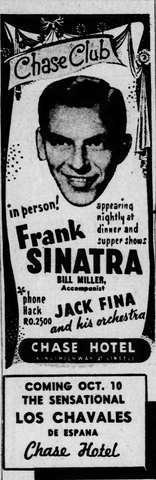
Re: MARCH 11 - THIS DATE IN SINATRA HISTORY
Undated materialFrom: Ed O'Brien <dmarc-noreply@freelists.org> | Received: 2024-03-14
note: I like when the reviewer lists the songs.
Ed
Sinatra’s program for his may 1962 world tour concerts in Israel
Undated materialFrom: shemmy Mashiah <smashiah@netvision.net.il> | Received: 2024-03-15
Just recieved it
Have been in the Fredrick Mann concert hall in Tel Aviv many times. It’s a new exhibit.
נשלח מה-iPhone שלי
March 15 - THIS DATE IN SINATRA HISTORY
Undated materialFrom: Ed O'Brien <dmarc-noreply@freelists.org> | Received: 2024-03-16
MARCH 16 - THIS DATE IN SINATRA HISTORY
Undated materialFrom: Scott Henderson <scott@falseducks.com> | Received: 2024-03-16
FS cancels the remaining concerts due to a sore throat
Re: THE NIGHT LOUIE B. MAYER HEARD SINATRA IN PERSON
Undated materialFrom: Ed O'Brien <dmarc-noreply@freelists.org> | Received: 2024-03-16
Frank must have been thrilled with the 32 piece orchestra.
On Saturday, March 16, 2024 at 10:30:14 AM EDT, Scott Henderson <scott@falseducks.com> wrote:
Thanks Ed,
We have this already in the March 19th listing but not that article soI'll add it in.
Scott
At 10:25 AM 3/16/2024, you wrote:
Hi Scott,
I remember you posting it. What I didn't know was the a capella part. Thought it was worth sharing.
Here is one I just figured out. On the AFRS version of the Danny Kaye show, 10-5-45, with Frank and Judy Garland subbing, he sings "Suddenly It's
Spring." The song was not sung on the network broadcast. I searched and found it is the one from
Vimms, 4-26-44.
Here is one you can add to the 3/19 date in history:
Re: THE NIGHT LOUIE B. MAYER HEARD SINATRA IN PERSON
Undated materialFrom: Scott Henderson <scott@falseducks.com> | Received: 2024-03-16
Thanks Ed,
We have this already in the March 19th listing but not that article so I'll add it in.
Scott
At 10:25 AM 3/16/2024, you wrote:
>Hi Scott,
> I remember you posting it. What I didn't know >was the a capella part. Thought it was worth sharing.
> Here is one I just figured out. On the AFRS >version of the Danny Kaye show, 10-5-45, with Frank
>and Judy Garland subbing, he sings "Suddenly It's
>Spring." The song was not sung on the network
>broadcast. I searched and found it is the one from
>Vimms, 4-26-44.
> Here is one you can add to the 3/19 date in >history:
>
>Inline image
>
>
>
Re: THE NIGHT LOUIE B. MAYER HEARD SINATRA IN PERSON
Undated materialFrom: Ed O'Brien <dmarc-noreply@freelists.org> | Received: 2024-03-16
Hi Scott,
I remember you posting it. What I didn't know
was the a capella part. Thought it was worth sharing.
Here is one I just figured out. On the AFRS
version of the Danny Kaye show, 10-5-45, with Frank
and Judy Garland subbing, he sings "Suddenly It's
Spring." The song was not sung on the network
broadcast. I searched and found it is the one from
Vimms, 4-26-44.
Here is one you can add to the 3/19 date in
history:
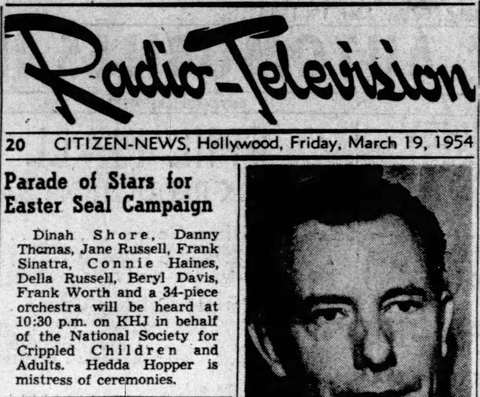
Re: THE NIGHT LOUIE B. MAYER HEARD SINATRA IN PERSON
Undated materialFrom: Scott Henderson <scott@falseducks.com> | Received: 2024-03-16
Hi Ed,
I read that too when I was researching Sinatra's appearances for the Jewish Home For the Aged.
It was probably this one:
February 20, 1944 Earl Carroll Theatre, Los Angeles, CA Fifteenth Annual Charity Ball of the Junior Auxiliary of the Home for the Aged Sinatra, Ginny Simms, Edger Bergen, Spike Jones, Chico Marx and others
THE NIGHT LOUIE B. MAYER HEARD SINATRA IN PERSON
Undated materialFrom: Ed O'Brien <dmarc-noreply@freelists.org> | Received: 2024-03-16
3-15-44
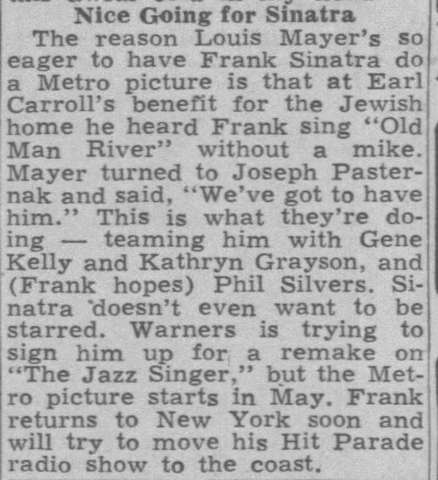
Frank holding shoes
Undated materialFrom: michel macaire <michelmacaire@hotmail.com> | Received: 2024-03-18
HOW A NEW SINATRA ALBUM WAS ANNOUNCED TO THE WORLD IN 1969
Undated materialFrom: Ed O'Brien <dmarc-noreply@freelists.org> | Received: 2024-03-19
Re: MARCH 20 - THIS DATE IN SINATRA HISTORY
Undated materialFrom: Pedro Matos <pedrojotamatos@gmail.com> | Received: 2024-03-20
First time singing “Oh Babe, What Would You Say?” and getting lost in the middle of it!
Pedro
> No dia 20/03/2024, às 19:47, Ed O'Brien <dmarc-noreply@freelists.org> escreveu: >
>
>
>
> ----------------------------------------
>
> 1975 Caesars Palace, Las Vegas, Nevada
> First Show
> Key Musicians: Gene Cherico (bass), Al Viola (guitar), Irv Cottler (drums), Charlie Turner (trumpet), Bill Miller (piano), Charles Shoemaker (vibes), Pat Rizzo (alto sax), Nino Tempo (tenor sax), Francisco Aquabella(bongos). > Nat Brandwynne Orchestra Conducted By: Don Costa
> Opening Act: Sam Butera & The Witnesses featuring Sandy Williams. >
>
> note: Frank' played two weeks at Caesars, closing on 4-2-75 > The title of the engagement was "A Man And His Music."
> A 61 piece orchestra backed Frank. His show opened with > a jazz sextet supporting him, then a large string section backed > him on some ballads, then a brass section and then all three > sections came together. Frank liked to do one show a night > during the week and two shows on weekends. But for
> the first time ever, he did two shows every night. Las Vegas > Sun reported that Frank, Elvis and Dino were being paid > $250,000 a week ( today that would be $1,477, 518.00 ).
> A new record was set when Caesars asked a cover of
> $40.00 for Frank's dinner show and #35.00 for the late > show. In the mid 1950s, you could see Sinatra for less > than $4.00. Even the veterans on the Vegas Strip were > amazed at Sinatra's drawing power. Local papers felt
> the cover charge to see the big names was out of control.
> They questioned whether people would continue to pay
> such outlandish prices.
> Ed
>
>
>
March 21 - THIS DATE IN SINATRA HISTORY
Undated materialFrom: Scott Henderson <scott@falseducks.com> | Received: 2024-03-21
Capitol Studio A, Hollywood
E35592 Yes Indeed
(Sy Oliver)
Arranged & Conducted by Billy May
CD: CDP 7-94520-2 Come Swing With Me
LP: SW1594 Come Swing With Me
E35593 American Beauty Rose
(David/Evans/ Altman)
Arranged by Heinie Beau
Conducted by Billy May
CD: C2 724383808922 The Complete Capitol Singles
CD: CDP 7-94520-2 Come Swing With Me
LP: SW1594 Come Swing With Me
45: 4615
E35594 I've Heard That Song Before
(J. Styne/S. Cahn)
Morley Music Co., Inc./Cahn Music Company (ASCAP)
Arranged & Conducted by Billy May
-5 (2:30) CD: C2 724383808922 The Complete Capitol Singles
CD: CDP 7-94520-2 Come Swing With Me (alt. take)
CD: C2-94777 The Capitol Years
LP: SW1594 Come Swing With Me
45: 4677
E35595 That Old Black Magic
(Harold Arlen/Johnny Mercer)
Arranged by Heinie Beau
Conducted by Billy May
CD: CDP 7-94520-2 Come Swing With Me
LP: SW1594 Come Swing With Me
Musicians - Trumpets: John Best, Conrad Gozzo, Emanuel Klein, Vito Mickey Mangano, Clarence Shorty Sherock, Ray Triscari, Stuart Williamson; Trombones: C.E. Carpenter, James Henderson, Lewis McCreary, Frank Rosolino, Thomas Shepard, Kenneth Shroyer, Kenneth Trimble; Tuba: Phil Stephens; French Horns: James Decker, Wally Linder, Arthur Maebe, Claude Sherry; Piano: Bill Miller; Bass: Joe Comfort; Drums: Irv Cottler; Guitar: Bobby Gibbons; Harp: Veryle Brilhart
Session Producer: Dave Cavanaugh
Re: MARCH 20 - THIS DATE IN SINATRA HISTORY
Undated materialFrom: shemmy Mashiah <smashiah@netvision.net.il> | Received: 2024-03-21
Ed I have it also in mono when I prefer it that way.
Sinatra was in great voice and Billy may and heinie beau.
Are always welcome.
I also
Like many of the songs in this album.
I don’t think sinatra could do in those years a bad album.
Shemmy
נשלח מה-iPhone שלי
> ב-21 במרץ 2024, בשעה 17:25, Ed O'Brien <dmarc-noreply@freelists.org> כתב/ה: >
>
> Hi Shemmy,
> I disagree. Frank did what he had to do to satisfy > the agreement reached with Capitol. Listen to "Swing Along With > Me." The singer is trying to knock your socks off on every song. > I think perfunctory is the word that best describes "CSWM." Billy > May felt the same and he later regretted his part in the wide spectrum > stereo. Billy felt it took too much away from Frank's vocals.
> Ed
>
> On Thursday, March 21, 2024 at 10:13:35 AM EDT, <smashiah@netvision.net.il> wrote: >
>
> Hi Ed
>
> Also it is an underrated album
>
> I love it and I even don’t care about the ping pong effect.
>
> In a way I like it.
>
> It was beautifully recorded.
>
> Wish RADD had80% of this sound.
>
> shemmy
>
>
>
> From: sinatraphiles-bounce@freelists.org <sinatraphiles-bounce@freelists.org> On Behalf Of Ed O'Brien ("eob101") > Sent: Thursday, March 21, 2024 5:32 AM
> To: sinatraphiles@freelists.org
> Subject: [sinatraphiles] Re: MARCH 20 - THIS DATE IN SINATRA HISTORY >
>
>
>
>
>
>
>
>
>
>
>
>
> Studio
>
> 1961 Capitol Studio A, Hollywood
>
> E35576 On The Sunny Side Of The Street
> (J. McHugh/D. Fields)
> Shapiro, Bernstein & Co., Inc. (ASCAP)
> Arranged by Heinie Beau
> Conducted by Billy May
> -5 (2:41) CD: CDP 7-94520-2 Come Swing With Me
> CD: C2-94777 The Capitol Years
> LP: SW1594 Come Swing With Me
>
>
> E35577 Day By Day
> (Stordahl/Weston/ Cahn)
> Arranged & Conducted by Billy May
> CD: CDP 7-94520-2 Come Swing With Me
> LP: SW1594 Come Swing With Me
>
>
> E35578 Sentimental Journey
> (Brown/Homer/ Green)
> Arranged by Heinie Beau
> Conducted by Billy May
> CD: C2 724383808922 The Complete Capitol Singles
> CD: CDP 7-94520-2 Come Swing With Me
> LP: SW1594 Come Swing With Me
> 45: 4615
>
>
> E35579 Don't Take Your Love From Me
> (Henry Nemo)
> Arranged by Heinie Beau
> Conducted by Billy May
> CD: CDP 7-94520-2 Come Swing With Me
> LP: SW1594 Come Swing With Me
>
> Musicians - Trumpets: John Best, Conrad Gozzo, Joe Graves, Maurice Harris, Emanuel Klein, Vito Mickey Mangano, James Salko, Clarence Shorty Sherock, Rubin Zeke Zarchy; Trombones: C.E. Carpenter, James Henderson, Richard Kenney, Lewis McCreary, Barrett O'Hara, James Priddy, Kenneth Trimble; Tuba: Phil Stephens; French Horns: James Craas, William Culley, Fred Fox, Gale Robinson; Piano: Bill Miller; Bass: Joe Comfort; Drums: Irv Cottler; Guitar: Tony Rizzi; Harp: Kathryn Julye > Session Producer: Dave Cavanaugh
>
> <image001.jpg>
>
>
>
> Tampa Tribune
>
> 8-13-61
>
>
>
>
>
>
>
>
> <image001.jpg>
Re: MARCH 20 - THIS DATE IN SINATRA HISTORY
Undated materialFrom: Ed O'Brien <dmarc-noreply@freelists.org> | Received: 2024-03-21
Re: MARCH 20 - THIS DATE IN SINATRA HISTORY
Undated materialFrom: smashiah@netvision.net.il | Received: 2024-03-21
Re: MARCH 20 - THIS DATE IN SINATRA HISTORY
Undated materialFrom: Ed O'Brien <dmarc-noreply@freelists.org> | Received: 2024-03-21
Re: MARCH 20 - THIS DATE IN SINATRA HISTORY
Undated materialFrom: smashiah@netvision.net.il | Received: 2024-03-21
Re: March 21 - THIS DATE IN SINATRA HISTORY
Undated materialFrom: Ed O'Brien <dmarc-noreply@freelists.org> | Received: 2024-03-21
Capitol Studio A, Hollywood
E35592 Yes Indeed
(Sy Oliver)
Arranged & Conducted by Billy May
CD: CDP 7-94520-2 Come Swing With Me
LP: SW1594 Come Swing With Me
E35593 American Beauty Rose
(David/Evans/ Altman)
Arranged by Heinie Beau
Conducted by Billy May
CD: C2 724383808922 The Complete Capitol Singles
CD: CDP 7-94520-2 Come Swing With Me
LP: SW1594 Come Swing With Me
45: 4615
E35594 I've Heard That Song Before
(J. Styne/S. Cahn)
Morley Music Co., Inc./Cahn Music Company (ASCAP)
Arranged & Conducted by Billy May
-5 (2:30) CD: C2 724383808922 The Complete Capitol Singles
CD: CDP 7-94520-2 Come Swing With Me (alt. take)
CD: C2-94777 The Capitol Years
LP: SW1594 Come Swing With Me
45: 4677
E35595 That Old Black Magic
(Harold Arlen/Johnny Mercer)
Arranged by Heinie Beau
Conducted by Billy May
CD: CDP 7-94520-2 Come Swing With Me
LP: SW1594 Come Swing With Me
Musicians - Trumpets: John Best, Conrad Gozzo, Emanuel Klein, Vito Mickey Mangano, Clarence Shorty Sherock, Ray Triscari, Stuart Williamson; Trombones: C.E. Carpenter, James Henderson, Lewis McCreary, Frank Rosolino, Thomas Shepard, Kenneth Shroyer, Kenneth Trimble; Tuba: Phil Stephens; French Horns: James Decker, Wally Linder, Arthur Maebe, Claude Sherry; Piano: Bill Miller; Bass: Joe Comfort; Drums: Irv Cottler; Guitar: Bobby Gibbons; Harp: Veryle Brilhart
Session Producer: Dave Cavanaugh
The Times Record
Re: March 21 - THIS DATE IN SINATRA HISTORY
Undated materialFrom: Ed O'Brien <dmarc-noreply@freelists.org> | Received: 2024-03-21
Re: March 21 - THIS DATE IN SINATRA HISTORY
Undated materialFrom: Ed O'Brien <dmarc-noreply@freelists.org> | Received: 2024-03-21
March 21 - THIS DATE IN SINATRA HISTORY
Undated materialFrom: Ed O'Brien <dmarc-noreply@freelists.org> | Received: 2024-03-22
March 21 - THIS DATE IN SINATRA HISTORY
Undated materialFrom: Ed O'Brien <dmarc-noreply@freelists.org> | Received: 2024-03-22
Re: March 21 - THIS DATE IN SINATRA HISTORY
Undated materialFrom: Ed O'Brien <dmarc-noreply@freelists.org> | Received: 2024-03-22
Re: March 21 - THIS DATE IN SINATRA HISTORY
Undated materialFrom: Ed O'Brien <dmarc-noreply@freelists.org> | Received: 2024-03-22
Re: March 21 - THIS DATE IN SINATRA HISTORY
Undated materialFrom: Ed O'Brien <dmarc-noreply@freelists.org> | Received: 2024-03-22
Article in 3-21-54 paper. Songs listed were done on the 3-28-54 show.
Ed
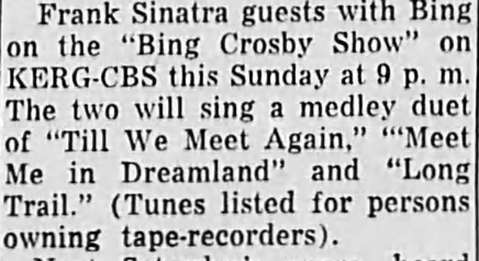
Re: March 22 - THIS DATE IN SINATRA HISTORY
Undated materialFrom: Ed O'Brien <dmarc-noreply@freelists.org> | Received: 2024-03-23
note: Frank was suppose to be in New York on 3/22. RKO discovered some scenes from "Step Lively" that needed looping.
Frank decided to do the army camp in Palm Springs at the last moment. I found a number of ads that had him in
New York.
Richmond Times
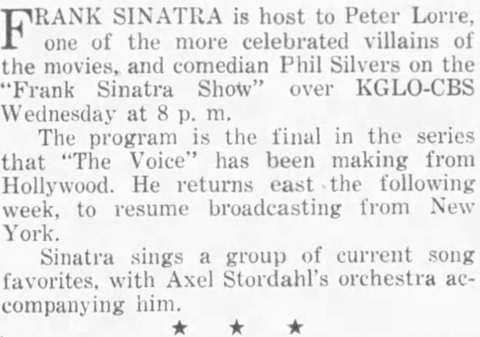
TOUGH GUYS IN HOLLYWOOD MARCH 1946
Undated materialFrom: Ed O'Brien <dmarc-noreply@freelists.org> | Received: 2024-03-28
MARCH 1956 "SINATRA IS THE ,MAN WITH THE GOLDEN COMEBACK"
Undated materialFrom: Ed O'Brien <dmarc-noreply@freelists.org> | Received: 2024-03-31
Barbara Rush
Undated materialFrom: cara <dmarc-noreply@freelists.org> | Received: 2024-04-02
Frank Sinatra ; Ronald Reagan, et BARBARA RUSH.
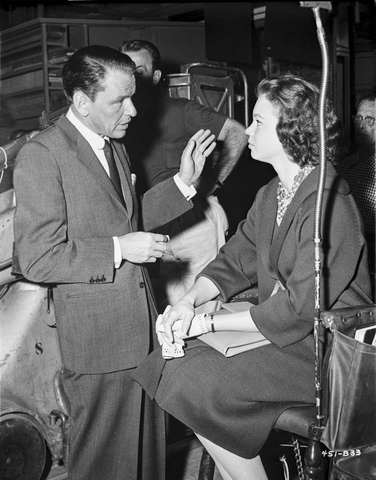
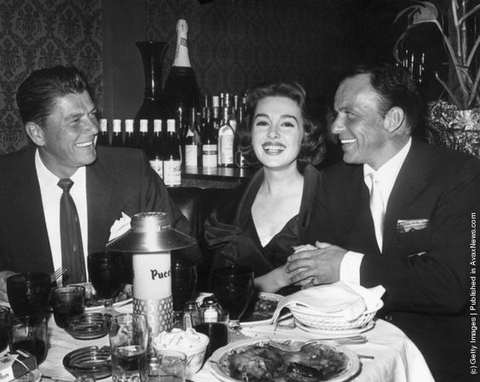
FRANK AND B. RUSH
Undated materialFrom: Ed O'Brien <dmarc-noreply@freelists.org> | Received: 2024-04-02
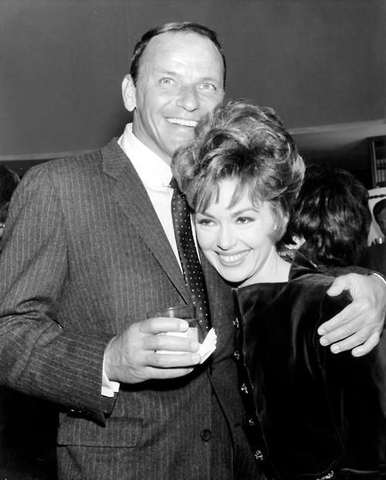
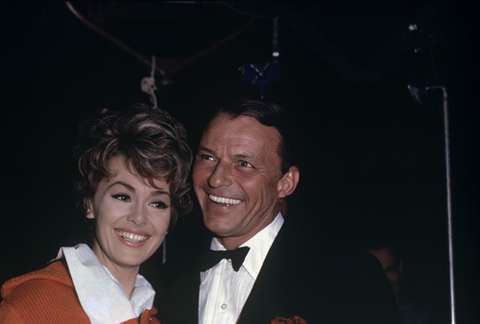
FROM STAR TO SUPPORTING PLAYER
Undated materialFrom: Ed O'Brien <dmarc-noreply@freelists.org> | Received: 2024-04-02
10-24-53
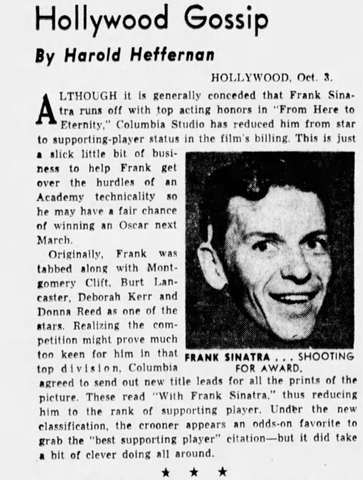
WINCHELL QUOTES SINATRA 1956 COLUMN
Undated materialFrom: Ed O'Brien <dmarc-noreply@freelists.org> | Received: 2024-04-05
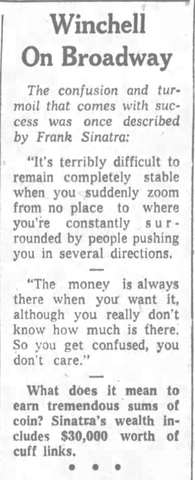
Fw: Frank Sinatra Is Back At No. 1 On Several Billboard Charts
Undated materialFrom: Ed O'Brien <dmarc-noreply@freelists.org> | Received: 2024-04-06
https://www.forbes.com/sites/hughmcintyre/2024/04/04/frank-sinatra-is-back-at-no-1-on-several-billboard-charts/
Fw: April 8- THIS DATE IN SINATRA HISTORY
Undated materialFrom: Ed O'Brien <dmarc-noreply@freelists.org> | Received: 2024-04-11
note: Bob Thomas did a number of articles on Sinatra. Frank was always
available for him.
Re: April 13 THIS DATE IN SINATRA HISTORY
Undated materialFrom: Ed O'Brien <dmarc-noreply@freelists.org> | Received: 2024-04-13
Sands, Las Vegas, Nevada (April 13 - May 3)
w/Dean Martin & Joey Bishop
Los Angeles Times
April 16, 1966
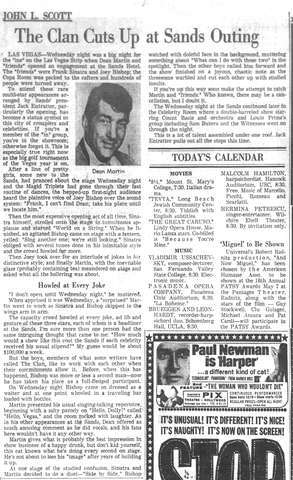
Scorsese
Undated materialFrom: Ed O'Brien <dmarc-noreply@freelists.org> | Received: 2024-04-19
Michel Macaire sent this to me:
Martin Scorsese in Talks to Direct Frank Sinatra Biopic (indiewire.com)
IT'S A LONG WAY FROM PASSIAC TO "COME SWING WITH ME"
Undated materialFrom: Ed O'Brien <dmarc-noreply@freelists.org> | Received: 2024-05-01
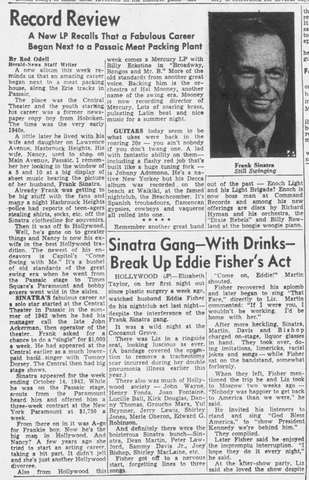
SELECTION OF THE MONTH FOR CAPITOL RECORD CLUB, JUNE 1961 MONO ISSUE ONLY
Undated materialFrom: Ed O'Brien <dmarc-noreply@freelists.org> | Received: 2024-05-01
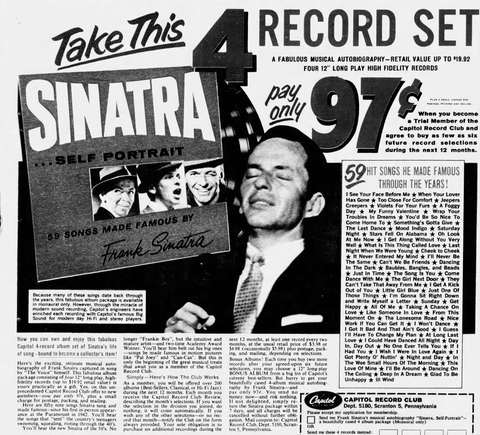
Sinatra in Israel May 1962
Undated materialFrom: cara <dmarc-noreply@freelists.org> | Received: 2024-05-12
Sinatra Takes His World Tour For Children To Israel
American singer and actor Frank Sinatra sits with children at a school during a visit to Nazareth, Israel, May 1962. Sinatra, who was on his 'World Tour for Children', used the visit to launch his 'Sinatra Centre for Children'. (Photo by Graphic House/Archive Photos/Getty Images)
Photo: Frank Sinatra visiting a kindergarten in Nazareth Illit, 1962. GPO
Sinatra in Nazareth in 1962
Sinatra planting a tree in Histadrut Forest of Jerusalem
Frank Sinatra plants a tree in the hills of Jerusalem in 1962. Photo courtesy of KKL-JNF Archive
Ben-Gurion with Frank Sinatra in Jerusalem in May 1962. Sinatra had just come from Nazareth, where he presided at the groundbreaking ceremonies for the Frank Sinatra International Youth Center for Arab and Jewish children. (© David Rubinger/Courtesy of the family of Frank Sinatra)
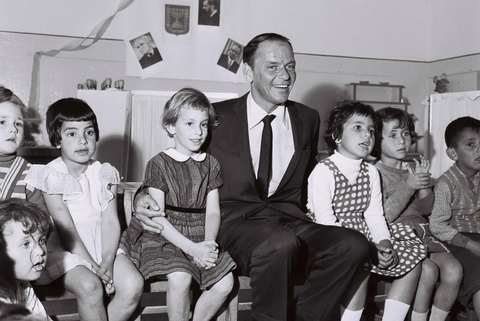
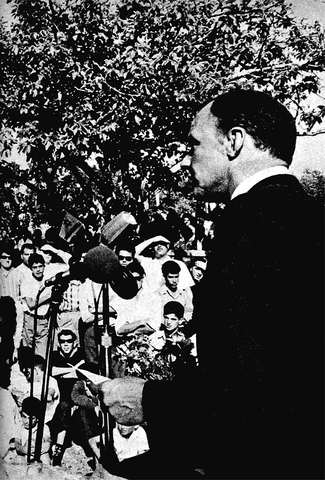
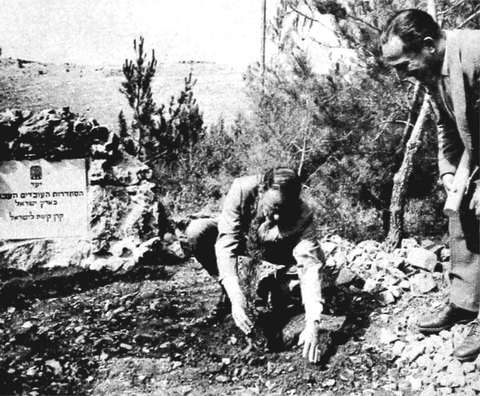
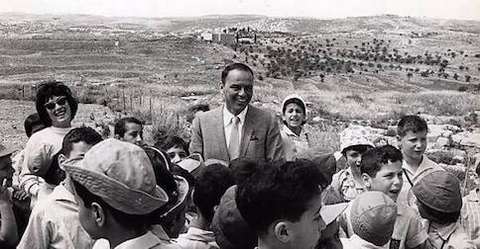
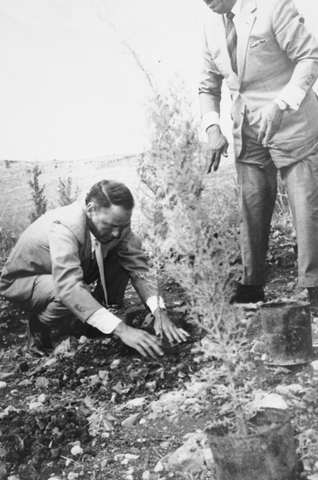
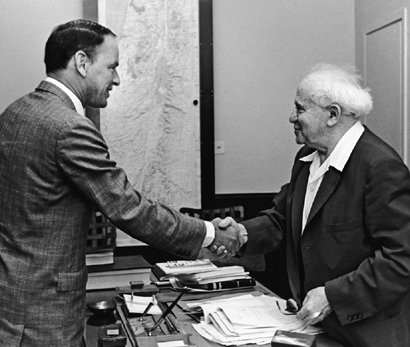
AN INTERESTING DISCOVERY
Undated materialFrom: Ed O'Brien <dmarc-noreply@freelists.org> | Received: 2024-05-20
note: As you can see the article is dated 12-22. The year is 1962.
The session described is the second night of the Sinatra-
Basie album. I know this because the Jack Benny show was aired
on 10-2-62. F.S. Jr made his TV debut that evening singing the
Matt Monro hit "My Kind Of Girl." His father would record the song
on 10-3-62. Frank laid down six songs that night. But he also re-
hearsed and possibly recorded "All Of Me." Was the Hefti chart not
quite right ? Was it recorded and then rejected by Sinatra ? We
don't know. The Reprise files have no history of it. I think it would
have been a great track on that album.
Ed
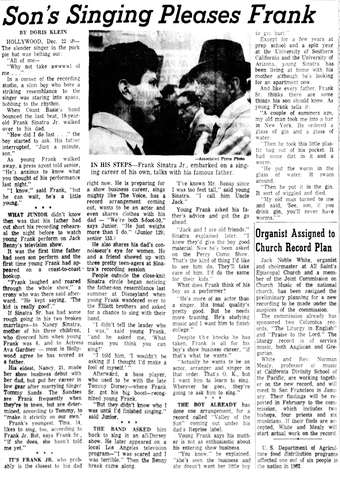
FRANK and ELLA
Undated materialFrom: Ed O'Brien <dmarc-noreply@freelists.org> | Received: 2024-05-21
Kensingston News, West London
July 25, 1958
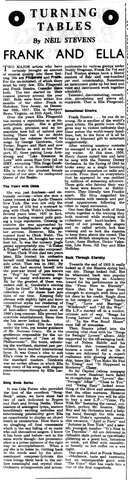
WINTER-SPRING 1944
Undated materialFrom: Ed O'Brien <dmarc-noreply@freelists.org> | Received: 2024-05-22
May 16, 1944
May 18,1944
January 22, 1944
Philadelphia Inquirer
May 5, 1944
San Fernando Valley Times
March 2, 1944
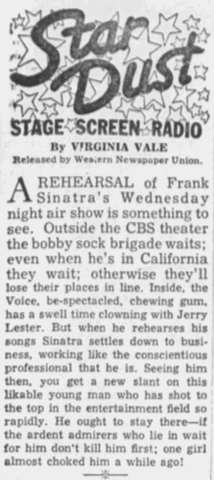
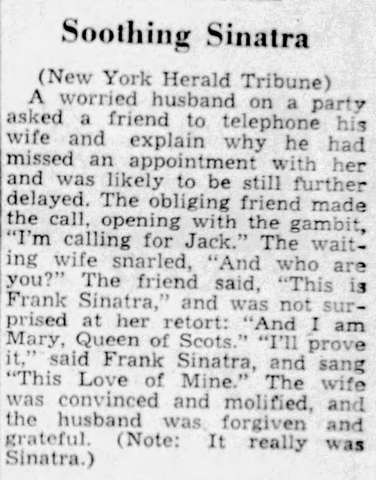
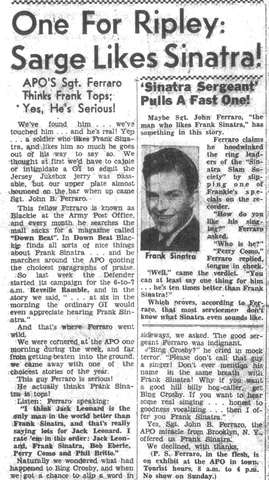
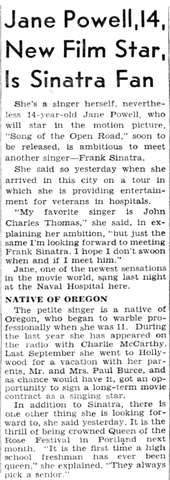
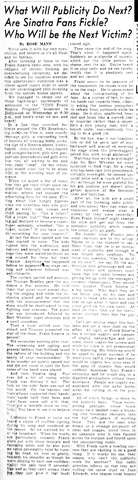
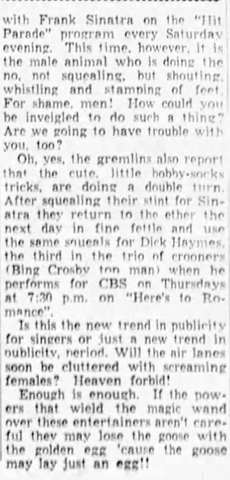
Re: May 1953 Casino Knokke, Belgium,
Undated materialFrom: Ed O'Brien <dmarc-noreply@freelists.org> | Received: 2024-05-25
:
Thank you EdDo you know if there are more of the 3 songs from casino Knokke?I read a post in Facebook that a guy have the full concert.Interesting.ShemmySent from my iPhone
Hi Shemmy,
As I'm sure you have noticed, Bill Miller starts the intro to "September Song" as the tape cuts out. If someone has the show, they certainly are making sureit does not get circulated.Ed
Re: May 1953 Casino Knokke, Belgium,
Undated materialFrom: Margriet57 <dmarc-noreply@freelists.org> | Received: 2024-05-25
My show is missing September Song!
Op 25-05-2024 15:10 CEST schreef shemmy Mashiah <smashiah@netvision.net.il>:
Thank you Ed
Do you know if there are more of the 3 songs from casino Knokke?
I read a post in Facebook that a guy have the full concert.
Interesting.
Shemmy
נשלח מה-iPhone שלי
ב-24 במאי 2024, בשעה 8:12, Ed O'Brien <dmarc-noreply@freelists.org> כתב/ה:
Hi Shemmy,
George Siravo wrote the original arg. for Sinatra
on "String." Frank used both during his European tour in 53.
Blackpool, 7-26, has Siravo and the BBC Showband has
Riddle. The latter was vastly superior.
Ed
On Thursday, May 23, 2024 at 05:15:25 PM EDT, smashiah@netvision.net.il <smashiah@netvision.net.il> wrote:
Thank you very!!!! much Margriet.
What a performance.
He sounds so good.
And at this stage he is still an has been.
“World on a string” sounds a lot different than the Riddle capitol version.
Who is the arranger .
Ill never smile again is terrific so is black magic.
Thanks again
From: sinatraphiles-bounce@freelists.org <sinatraphiles-bounce@freelists.org> On Behalf Of Margriet57 ("margriet57")
Sent: Thursday, May 23, 2024 10:26 PM
To: sinatraphiles@freelists.org
Subject: [sinatraphiles] Re: May 1953 Casino Knokke, Belgium,
Thank you Carl!
We transfer:
Sunday Show 10-21-2018 Jonathan Schwartz: Sinatra in Knokke.
https://we.tl/t-wxOyS7BFbi
Enjoy!
Margriet
Op 23-05-2024 17:10 CEST schreef cara <dmarc-noreply@freelists.org>:
Found this photo of Frank Sinatra with the André Coucke (André Koek) Orchestra (The Skyliners) at the Casino de Knokke, Belgium.
Carl
Andre Coucke Orchestra
<image001.jpg>
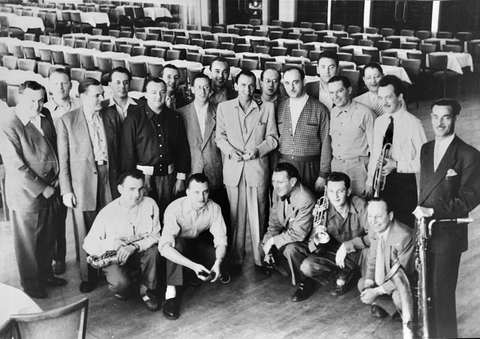
26th May 1953
Undated materialFrom: cara <dmarc-noreply@freelists.org> | Received: 2024-05-26
Frank Sinatra en route to Copenhagen after his Pentecost week-end concerts at Knokke Casino. Ava has flown to London.
Carl
Frank Sinatra, 26 May 1953, Schiphol Airport Amsterdam, in transit on his European Tour
Re: May 1953 Casino Knokke, Belgium,
Undated materialFrom: kenny lucas <dmarc-noreply@freelists.org> | Received: 2024-05-26
This excerpt is on a CD that I bought on EBAY
Sent from Yahoo Mail on Android
On Sat, May 25, 2024 at 4:21 PM, Ed O'Brien<dmarc-noreply@freelists.org> wrote: :
Thank you EdDo you know if there are more of the 3 songs from casino Knokke?I read a post in Facebook that a guy have the full concert.Interesting.ShemmySent from my iPhone
Hi Shemmy,
As I'm sure you have noticed, Bill Miller starts the intro to "September Song" as the tape cuts out. If someone has the show, they certainly are making sureit does not get circulated.Ed
THIS PUBLIC FIGURE KEPT HIS ACTS OF KINDNESS PRIVATE
Undated materialFrom: Ed O'Brien <dmarc-noreply@freelists.org> | Received: 2024-05-28
Philadelphia Daily News
May 27, 1998
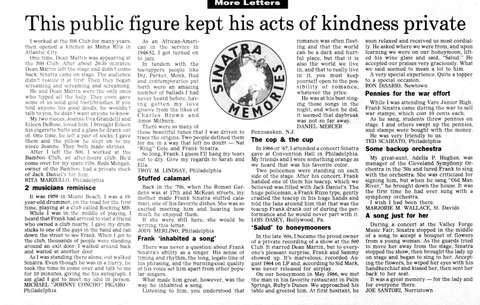
TSCHAIKOWSKY & FRANK
Undated materialFrom: Ed O'Brien <dmarc-noreply@freelists.org> | Received: 2024-05-28
Mirror-News
May 27, 1957 note: I decided to post this article because Billy May described for me
a very similar evening in the early 1980s. According to Billy, Frank
was in awe of the the great composers. An evening of symphonic
music truly was heaven for Sinatra. And Billy was amazed at Frank's
encyclopedic knowledge of the masterworks, composed by men who
possessed true genius in creating such timeless compositions.
Ed
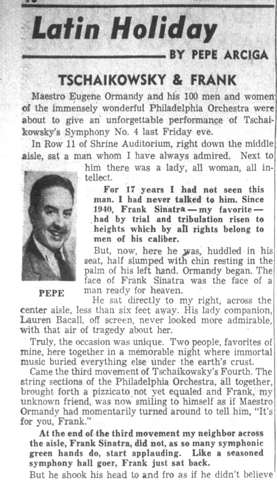
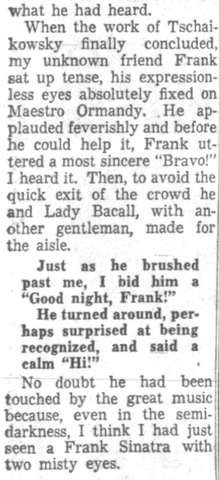
Finspång Sweden
Undated materialFrom: cara <dmarc-noreply@freelists.org> | Received: 2024-05-30
Additional photos from the concert.
Carl
"A carnation for a little girl from Finspång"
Ingrid Larsson was only ten years old when Frank Sinatra came to Finspång. Despite the expensive entrance fee of four crowns and an additional two crowns if you were to have a seat, she was accompanied by her uncle Roland "Rolle" Carlsson, who was a trumpeter in Casaloma's orchestra, and his wife. Ingrid was very interested in jazz and dressed in a coat and hat she sat down on the second row of benches. -It was a fantastic concert, says Ingrid.
Frank Sintra on stage and in the audience sits Ingrid Larsson, at the bottom right.
When the concert was over, Sinatra received a bouquet of red carnations. From it he took a flower which he "with an elegant gesture" threw directly to Ingrid. This particular event was highlighted in a report in the newspaper Filmjournalen where she was allowed to show off her carnation. The flower was dried and is still saved at home in Ingrid's photo album.
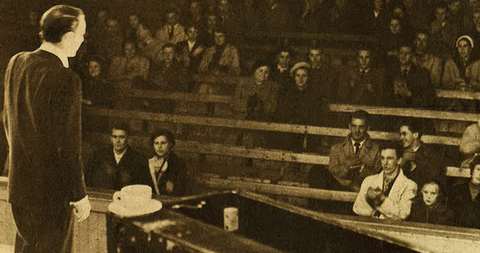

HE NEVER GOT THERE
Undated materialFrom: Ed O'Brien <dmarc-noreply@freelists.org> | Received: 2024-05-30

Re: HE NEVER GOT THERE
Undated materialFrom: Scott Henderson <scott@falseducks.com> | Received: 2024-05-30
Then I guess you’d have to hearken back to the last time he played Vancouver or Victoria, which before 1957, was with The Major Bowes Amateurs in November of 1935. Harry James & Sinatra or Tommy Dorsey & Sinatra never got to western Canada.
Scott
From: sinatraphiles-bounce@freelists.org [mailto:sinatraphiles-bounce@freelists.org] On Behalf Of Ed O'Brien ("eob101")
Sent: May 30, 2024 1:00 PM
To: sinatraphiles@freelists.org
Subject: [sinatraphiles] Re: HE NEVER GOT THERE
Hi Scott,
I don't believe the western regions recognize
those eastern provinces. It's a big country.
Ed
On Thursday, May 30, 2024 at 12:18:08 PM EDT, Scott Henderson <scott@falseducks.com> wrote:
The article is incorrect. Calgary would have been in 1957 but it was less than a decade since he’d been in Canada. Sinatra was at the Chez Paree in Montreal from February 6-15, 1953. Before that, he played the Auditorium in Ottawa on July 6th 1949 and the Mutual Arena in Toronto July 8th and 9th, 1949. Still less than a decade before the cancelled 1957 concert. After the two Vancouver concerts in 1957, Sinatra would not return to Canada until performing again in Toronto on May 10, 1975.
Scott
From: sinatraphiles-bounce@freelists.org [mailto:sinatraphiles-bounce@freelists.org] On Behalf Of Ed O'Brien ("eob101")
Sent: May 29, 2024 10:48 PM
To: Sinatra Fan
Subject: [sinatraphiles] HE NEVER GOT THERE
Re: HE NEVER GOT THERE
Undated materialFrom: Ed O'Brien <dmarc-noreply@freelists.org> | Received: 2024-05-30
Hi Scott,
I don't believe the western regions recognize
those eastern provinces. It's a big country.
Ed
On Thursday, May 30, 2024 at 12:18:08 PM EDT, Scott Henderson <scott@falseducks.com> wrote:
The article is incorrect. Calgary would have been in 1957 but it was less than a decade since he’d been in Canada. Sinatra was at the Chez Paree in Montreal from February 6-15, 1953. Before that, he played the Auditorium in Ottawa on July 6th 1949 and the Mutual Arena in Toronto July 8th and 9th, 1949. Still less than a decade before the cancelled 1957 concert. After the two Vancouver concerts in 1957, Sinatra would not return to Canada until performing again in Toronto on May 10, 1975.
Scott
From: sinatraphiles-bounce@freelists.org [mailto:sinatraphiles-bounce@freelists.org] On Behalf Of Ed O'Brien ("eob101")
Sent: May 29, 2024 10:48 PM
To: Sinatra Fan
Subject: [sinatraphiles] HE NEVER GOT THERE
Re: HE NEVER GOT THERE
Undated materialFrom: Scott Henderson <scott@falseducks.com> | Received: 2024-05-30
The article is incorrect. Calgary would have been in 1957 but it was less than a decade since he’d been in Canada. Sinatra was at the Chez Paree in Montreal from February 6-15, 1953. Before that, he played the Auditorium in Ottawa on July 6th 1949 and the Mutual Arena in Toronto July 8th and 9th, 1949. Still less than a decade before the cancelled 1957 concert. After the two Vancouver concerts in 1957, Sinatra would not return to Canada until performing again in Toronto on May 10, 1975.
Scott
From: sinatraphiles-bounce@freelists.org [mailto:sinatraphiles-bounce@freelists.org] On Behalf Of Ed O'Brien ("eob101")
Sent: May 29, 2024 10:48 PM
To: Sinatra Fan
Subject: [sinatraphiles] HE NEVER GOT THERE
Re: May 30 - THIS DATE IN SINATRA HISTORY
Undated materialFrom: Pedro Matos <pedrojotamatos@gmail.com> | Received: 2024-05-30
Once upon a time there was a song from this show on YouTube…
PJM
> No dia 30/05/2024, às 19:51, Ed O'Brien <dmarc-noreply@freelists.org> escreveu: >
>
> CONCERT
>
>
> 1970 Coliseum, Memphis, Tennesee
> Benefit for St. Jude's Children's Research Center - The Shower Of Stars > Other Performers: Danny Thomas, Jerry Lewis, Marlo Thomas, Dinah Shore > Sinatra:
> I've Got The World On A String
> Fly Me To The Moon
> The Lady Is A Tramp
> My Way
> 7 more
>
> <1717094805799blob.jpg>
>
> Memphis Press
> 6-1-70
>
> <1717094464645blob.jpg>
>
>
> 5-31-70
>
>
> <1717095001261blob.jpg>
>
> Commercial Appeal
> 6-2-70
> <1717094464645blob.jpg>
> <1717094805799blob.jpg>
> <1717095001261blob.jpg>
Fw: My Way
Undated materialFrom: Ed O'Brien <dmarc-noreply@freelists.org> | Received: 2024-06-04
Michel Macaire, Sent these two links to me.Ed Frank Sinatra Cannes Premiere Doc 'My Way' Boarded by Mediawan Rights (variety.com) Frank Sinatra's 'My Way': The Strange Saga of a Standard (people.com)
ERVIN DRAKE TRIBUTE TO A GREAT SINATRA RECORDING
Undated materialFrom: Ed O'Brien <dmarc-noreply@freelists.org> | Received: 2024-06-07
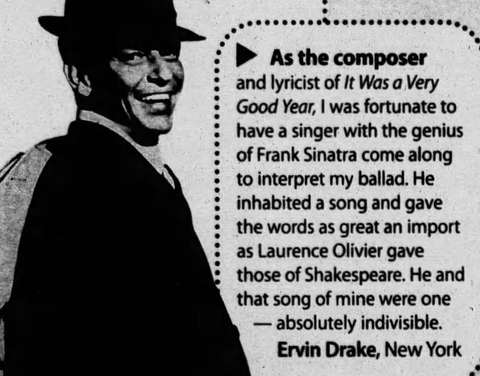
THEY FILMED THE WHOLE TOUR
Undated materialFrom: Ed O'Brien <dmarc-noreply@freelists.org> | Received: 2024-06-11
Honolulu Advertiser
June 20, 1962 note: I have been asked, many times, just how much of the 1962 World
Tour was taped. There have been many different claims, but in
this article Frank Sinatra states that all of it was filmed. Interesting.
Ed
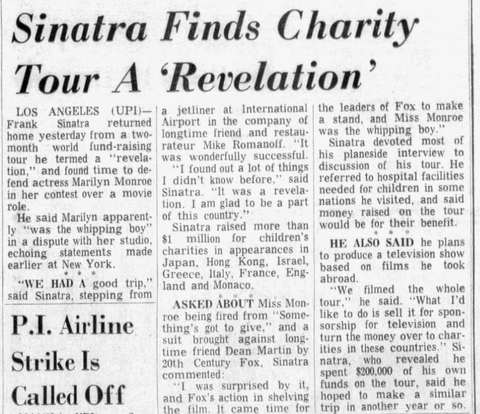
17th June 1962
Undated materialFrom: cara <dmarc-noreply@freelists.org> | Received: 2024-06-17
Other photos from June 17th 1962.
Not Monte Carlo.
Frank Sinatra seen here with Jack Bentley 17th June 1962
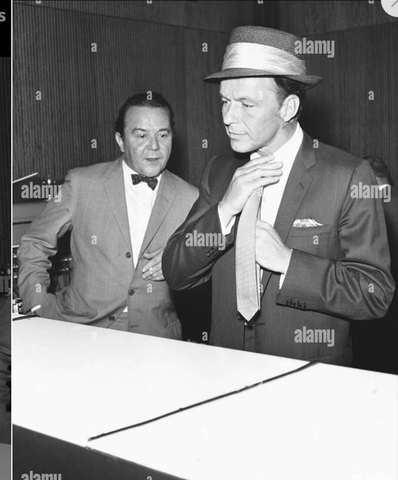
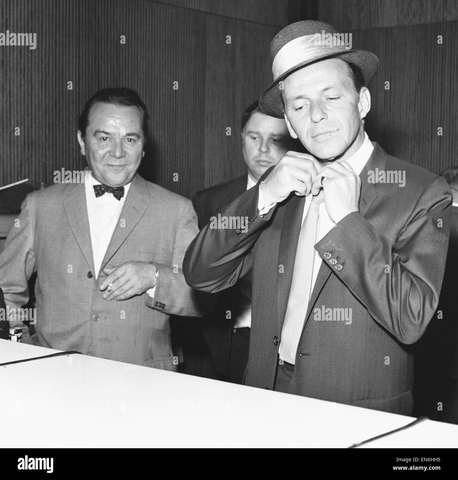
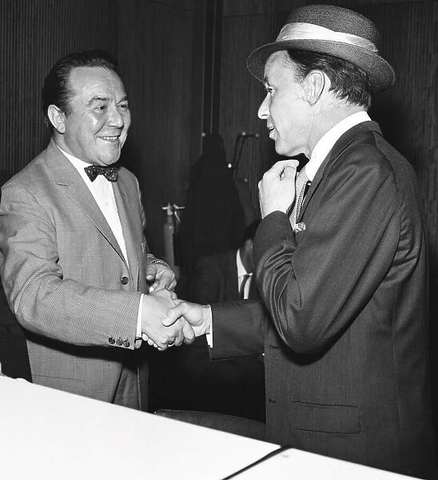

SANDS MARQUEE
Undated materialFrom: Ed O'Brien <dmarc-noreply@freelists.org> | Received: 2024-06-20
September 1962
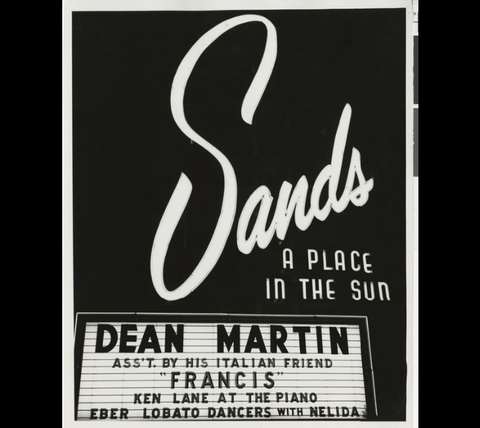
REHEARSAL AT CAESARS PALACE JUNE 1974
Undated materialFrom: Ed O'Brien <dmarc-noreply@freelists.org> | Received: 2024-06-29
Star Phoenix
6-29-74
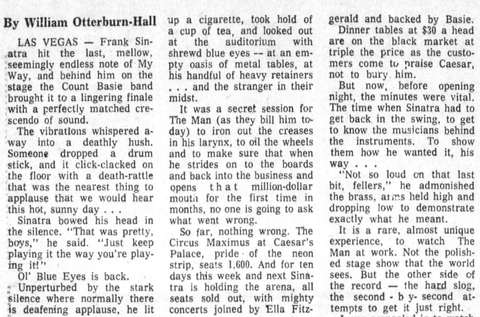
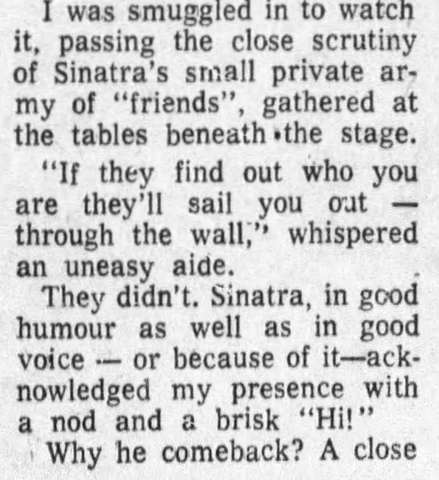

frank and otto in 1970
Undated materialFrom: Ed O'Brien <dmarc-noreply@freelists.org> | Received: 2024-07-01
The Record
June 30, 1970

FRANK IN MONACO JUNE 1958
Undated materialFrom: Ed O'Brien <dmarc-noreply@freelists.org> | Received: 2024-07-03
6-30-58
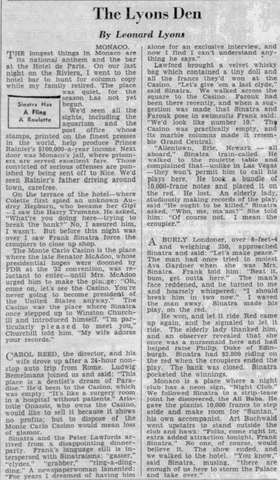
TOUR WITH BASIE IN JULY 1965
Undated materialFrom: Ed O'Brien <dmarc-noreply@freelists.org> | Received: 2024-07-07
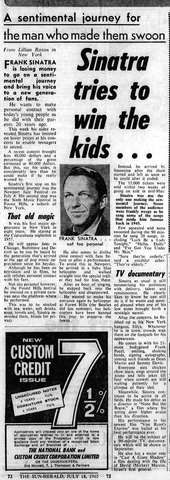
profile: frank sinatra, the last saloon singer
Undated materialFrom: Ed O'Brien <dmarc-noreply@freelists.org> | Received: 2024-07-09
THE INDEPENDENT
JULY 7, 1970
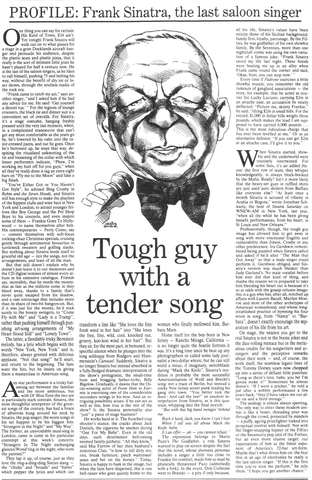
GAY TALESE PIECE ON FRANK BEFORE HE HAD THAT COLD
Undated materialFrom: Ed O'Brien <dmarc-noreply@freelists.org> | Received: 2024-07-11
NYT
7-10-65
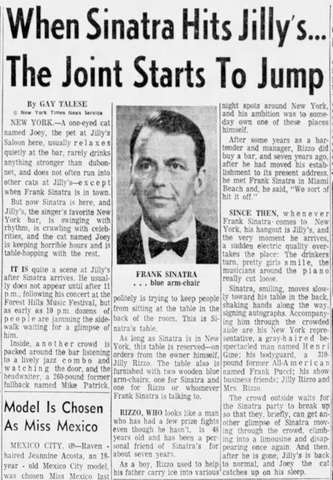
JULY 13 THIS DATE IN SINATRA HISTORY
Undated materialFrom: Ed O'Brien <dmarc-noreply@freelists.org> | Received: 2024-07-15
Daily News
July 14, 1945
note: I have a copy of the fifth annual George Gershwin
memorial tribute with Crosby, Shore and the Paul Whiteman
Orch. Had no idea Frank was the guide for the eighth outing.
Ed
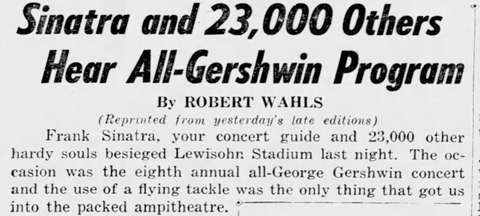
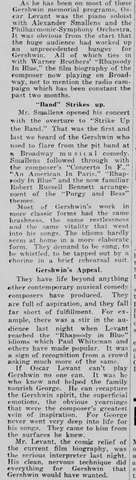
July 19 - THIS DATE IN SINATRA HISTORY
Undated materialFrom: Ed O'Brien <dmarc-noreply@freelists.org> | Received: 2024-07-19
Frank Sinatra and his girlfriend, Ava Gardner
Undated materialFrom: cara <dmarc-noreply@freelists.org> | Received: 2024-07-20
Email
Frank Sinatra and his girlfriend, Ava Gardner, arrive arm in arm for the premier of the actress' newest film, "Show Boat", in Hollywood July 17, 1951. (AP Photo)
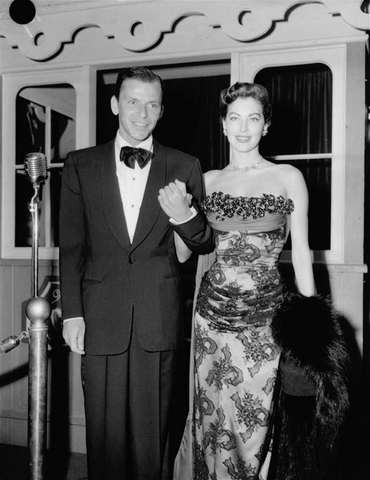
Frank Sinatra with Italian Canadian bandleader Guy Lombardo
Undated materialFrom: cara <dmarc-noreply@freelists.org> | Received: 2024-07-20
Frank Sinatra with Italian Canadian bandleader Guy Lombardo at the Waldorf Astoria in New York City on July 18, 1946.
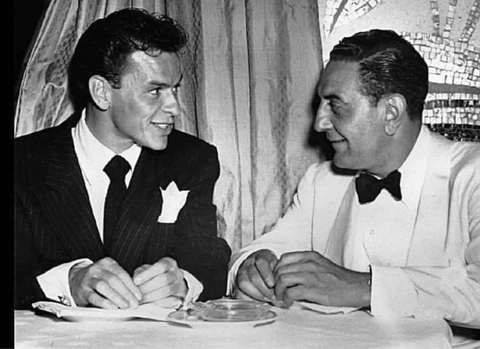
CROONER CAME FROM A FAMILY OF FIGHTERS
Undated materialFrom: Ed O'Brien <dmarc-noreply@freelists.org> | Received: 2024-07-21
Pittsburgh Post Gazette
12-11-43
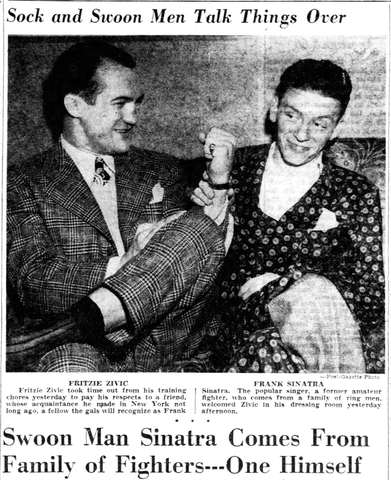
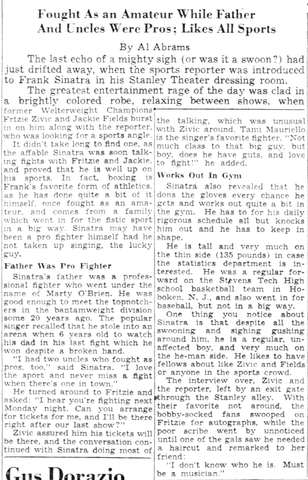

FRANKIE DRIVES THEM CRAZY
Undated materialFrom: Ed O'Brien <dmarc-noreply@freelists.org> | Received: 2024-07-21
LIVERPOOL ECHO
JULY 9, 1943
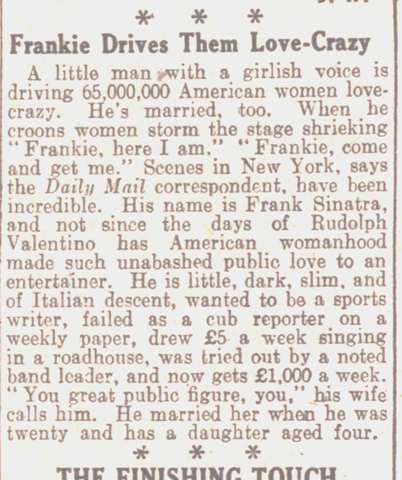
Stay With Me
Undated materialFrom: ALFRED MASCIOCCHI <dmarc-noreply@freelists.org> | Received: 2024-07-21
https://www.youtube.com/watch?v=tt1BBubMHzM
On Bob Dylan's first album of (mostly) Sinatra songs in 2015 he did "Stay With Me". It is a wonderful version. It is stripped down compared to the Sinatra version but it gets to the core like Frank's did. I think it is the version Frank would have done at age 73 (Dylan's age when he recorded it) unlike Frank's version as a 50 year old - closer to the end, looking back, a bit more feeble, a bit wiser, more in need of help on the road.
And a live version if you are inclined - https://www.youtube.com/watch?v=x5WsSJj0Q5E
Al
> On 07/11/2024 1:55 PM EDT Larry Crawford <argyle52@hotmail.com> wrote: >
>
> I just realized two obscure songs I left off my previous list: > Stay With Me - a beautiful song, and a heartfelt emotional performance by Frank. This one makes me tear up every time I hear it. > Forget Domani - this song blew me away the first time I heard it. And it still does. A great Sinatra song. >
FRANKIE ELECTS A REPUBLICAN GOVERNOR IN JERSEY AND HE IS THRILLED WITH HIS NEW ADAM HAT
Undated materialFrom: Ed O'Brien <dmarc-noreply@freelists.org> | Received: 2024-07-22
THE PLAIN DEALER
11-9-43
DETROIT FREE PRESS
JULY 9, 1943
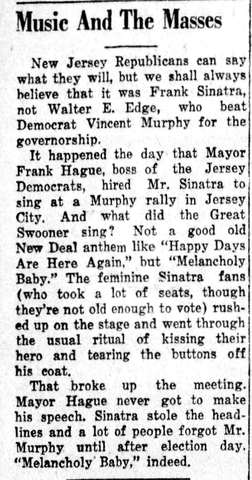
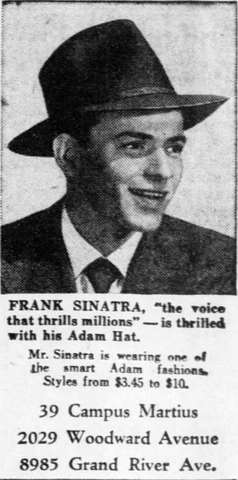
July 22 - THIS DATE IN SINATRA HISTORY
Undated materialFrom: Scott Henderson <scott@falseducks.com> | Received: 2024-07-22
500 Club, Atlantic City, New Jersey (July 22-31)
Three shows each night
Bill Miller Sextet: Joe Comfort (bass), Al Viola (guitar), Emil Richards (vibraharp), Sol Gubin (drums) Paul Horn (sax and flute),
Bill Miller (piano and conductor)
Pete Miller Orch.
Emcee: Jack Curtis
O.A. Buddy Lester
1. Too Marvelous for Words
2. Day In, Day Out
3. It's Over, It's Over, It's Over (Sinatra gives it a lukewarm introduction)
4. I Could Have Danced All Night
5. I Love Paris
6. River Stay Away from my Door
7. All the Way
8. Moonlight in Vermont
9. I've Got You Under my Skin
Ed O'Brien:
Buddy Lester opened for Sinatra. On the weekends, Sinatra did three shows and, if the demand was great enough, a fourth show was added. Frank performed for nine days. The three or four shows a night is a tad misleading. Frank did about 35 minutes per show. A four-show night usually involved roughly two hours and 15 minutes of onstage performing. This was the wonderful era of small group backings and exciting swing numbers every show. "I Love Paris" was a fun parody. There was not a lot of patter, just a lot of remarkable singing. The 500 Club was SRO every show.
Re: Stay With Me
Undated materialFrom: ALFRED MASCIOCCHI <dmarc-noreply@freelists.org> | Received: 2024-07-23
Agreed Ed, that was a marvelous performance. Put Bennett's version to shame. But then I don't think much of Tony Bennett. He is the anti-Sinatra to me in terms of digging deep into a song and capturing the essence of it.
For anyone that wants to see Dylan's performance - https://www.youtube.com/watch?v=RbcGK7kzhTw
Al
> On 07/22/2024 11:46 PM EDT Ed O'Brien <dmarc-noreply@freelists.org> wrote: >
>
>
> Hi Al,
> Dylan also did a wonderful interpretation of "Once Upon A Time," > that was part of the 90th birthday special for Tony Bennett. Show was > aired on 12-20-16. A striped down version that beautifully captured > the essence of that song.
> Ed
>
> On Sunday, July 21, 2024 at 08:45:03 AM EDT, ALFRED MASCIOCCHI <dmarc-noreply@freelists.org> wrote: >
>
> https://www.youtube.com/watch?v=tt1BBubMHzM
>
> On Bob Dylan's first album of (mostly) Sinatra songs in 2015 he did "Stay With Me". It is a wonderful version. It is stripped down compared to the Sinatra version but it gets to the core like Frank's did. I think it is the version Frank would have done at age 73 (Dylan's age when he recorded it) unlike Frank's version as a 50 year old - closer to the end, looking back, a bit more feeble, a bit wiser, more in need of help on the road. >
> And a live version if you are inclined - https://www.youtube.com/watch?v=x5WsSJj0Q5E >
> Al
>
>
>
> > On 07/11/2024 1:55 PM EDT Larry Crawford <argyle52@hotmail.com> wrote: > >
> >
> > I just realized two obscure songs I left off my previous list: > > Stay With Me - a beautiful song, and a heartfelt emotional performance by Frank. This one makes me tear up every time I hear it. > > Forget Domani - this song blew me away the first time I heard it. And it still does. A great Sinatra song. > >
>
Re: Stay With Me
Undated materialFrom: Ed O'Brien <dmarc-noreply@freelists.org> | Received: 2024-07-23
Hi Al, Dylan also did a wonderful interpretation of "Once Upon A Time,"that was part of the 90th birthday special for Tony Bennett. Show wasaired on 12-20-16. A striped down version that beautifully captured the essence of that song.Ed On Sunday, July 21, 2024 at 08:45:03 AM EDT, ALFRED MASCIOCCHI <dmarc-noreply@freelists.org> wrote:
https://www.youtube.com/watch?v=tt1BBubMHzM On Bob Dylan's first album of (mostly) Sinatra songs in 2015 he did "Stay With Me". It is a wonderful version. It is stripped down compared to the Sinatra version but it gets to the core like Frank's did. I think it is the version Frank would have done at age 73 (Dylan's age when he recorded it) unlike Frank's version as a 50 year old - closer to the end, looking back, a bit more feeble, a bit wiser, more in need of help on the road. And a live version if you are inclined - https://www.youtube.com/watch?v=x5WsSJj0Q5E Al On 07/11/2024 1:55 PM EDT Larry Crawford <argyle52@hotmail.com> wrote: I just realized two obscure songs I left off my previous list: Stay With Me - a beautiful song, and a heartfelt emotional performance by Frank. This one makes me tear up every time I hear it. Forget Domani - this song blew me away the first time I heard it. And it still does. A great Sinatra song.
Re: Stay With Me
Undated materialFrom: Vance Adair <dr.vanceadair@gmail.com> | Received: 2024-07-23
Bennett’s later trio performances of the song were much more intimate and less operatic. I heard TB give many sensitive readings of the song in live performance.
-Vance
On Tue, 23 Jul 2024 at 14:20, ALFRED MASCIOCCHI <dmarc-noreply@freelists.org> wrote:
> Agreed Ed, that was a marvelous performance. Put Bennett's version to > shame. But then I don't think much of Tony Bennett. He is the > anti-Sinatra to me in terms of digging deep into a song and capturing the > essence of it.
>
> For anyone that wants to see Dylan's performance -
> https://www.youtube.com/watch?v=RbcGK7kzhTw
>
> Al
>
> On 07/22/2024 11:46 PM EDT Ed O'Brien <dmarc-noreply@freelists.org> > wrote:
>
>
>
> Hi Al,
> Dylan also did a wonderful interpretation of "Once Upon A Time," > that was part of the 90th birthday special for Tony Bennett. Show was > aired on 12-20-16. A striped down version that beautifully captured > the essence of that song.
> Ed
>
> On Sunday, July 21, 2024 at 08:45:03 AM EDT, ALFRED MASCIOCCHI < > dmarc-noreply@freelists.org> wrote:
>
>
> https://www.youtube.com/watch?v=tt1BBubMHzM
>
> On Bob Dylan's first album of (mostly) Sinatra songs in 2015 he did "Stay > With Me". It is a wonderful version. It is stripped down compared to the > Sinatra version but it gets to the core like Frank's did. I think it is > the version Frank would have done at age 73 (Dylan's age when he recorded > it) unlike Frank's version as a 50 year old - closer to the end, looking > back, a bit more feeble, a bit wiser, more in need of help on the road. >
> And a live version if you are inclined -
> https://www.youtube.com/watch?v=x5WsSJj0Q5E
>
> Al
>
>
>
> On 07/11/2024 1:55 PM EDT Larry Crawford <argyle52@hotmail.com> wrote: >
>
> I just realized two obscure songs I left off my previous list: > Stay With Me - a beautiful song, and a heartfelt emotional performance by > Frank. This one makes me tear up every time I hear it.
> Forget Domani - this song blew me away the first time I heard it. And it > still does. A great Sinatra song.
>
>
Re: Stay With Me
Undated materialFrom: James Johnson <dmarc-noreply@freelists.org> | Received: 2024-07-24
I think Oscar credited Nat Cole in interview footage included in the Hulu documentary. _____________
Jim Johnson
Rehoboth Beach, DE
> On Jul 24, 2024, at 3:09 PM, Ed O'Brien <dmarc-noreply@freelists.org> wrote: >
>
> Hi Jim,
> I have videos of Oscar with Ella and a concert in Japan. > Have an interview in which he insists that Nat Cole was the best > piano player. I wanted to interview Peterson. Carol Sloane was > a mutual friend. She asked him. He sent me a note explaining > there was little for him to say. He was on the one song from > "Finian's" in 54 and his trio opened for Frank during the 65 tour > with Basie.
> Ed
>
> On Wednesday, July 24, 2024 at 01:04:47 PM EDT, James Johnson <dmarc-noreply@freelists.org> wrote: >
>
> Ed:
> I have shared your appreciation for Tony Bennet and have enjoyed our notes back and forth about his concerts. And I couldn’t agree with you more about Pops. IMO, Louis Armstrong and Billie Holiday changed the way singers have sung for generations. And, speaking of Oscar Peterson, there is an excellent documentary about this genius on Hulu, “Oscar Peterson: Black + White,” released in 2020. I’ve watched it 3 times and still find awe-inspiring performances each time. > _____________
> Jim Johnson
> Rehoboth Beach, DE
>
>> On Jul 24, 2024, at 12:26 PM, Ed O'Brien <dmarc-noreply@freelists.org> wrote: >>
>
>>
>> Hi Al,
>> Al Porcino was also in the same camp regarding Tony Bennett. >> But a certain singer from Hoboken was in awe of him. Back in the >> summer of 1965, Tony was playing at the Sands in Vegas. Frank, >> was sailing off the east coast and suddenly got an urge to hear >> Mr. Bennett. So, he called Jack Entratter and asked him to place >> the phone on the stage near a speaker. Frank listened to the >> show on his boat. Now there is a fan.
>> Many of the musicians who played with Frank, including >> Vinnie Falcone and Tony Mottola, shared with me Frank's opinion >> of Bennett. Vinnie and others tried to convince him to record "Maybe >> This Time" and "When Joanna Loved Me." Frank felt Tony had the >> definitive recordings. There are concerts where he told the audience, >> after singing "Joanna . .," "If you want to really hear this sung right, >> listen to Tony Bennett's recording."
>> I have a very large collection of Tony's work, but my favorite >> male singer after Sinatra is Louis Armstrong. I think he is incredible. >> There are many who cannot fathom my love of his singing. They >> tell me he has a terrible voice that sounds simply awful on the great >> American pop classics. I have cited many examples of his remark- >> able abilities. My favorite album is "Louis Armstrong Meets Oscar >> Peterson." A masterwork from start to finish. Many disagree.
>> Ed
>>
>>
>> On Tuesday, July 23, 2024 at 08:20:57 AM EDT, ALFRED MASCIOCCHI <dmarc-noreply@freelists.org> wrote: >>
>>
>> Agreed Ed, that was a marvelous performance. Put Bennett's version to shame. But then I don't think much of Tony Bennett. He is the anti-Sinatra to me in terms of digging deep into a song and capturing the essence of it. >>
>> For anyone that wants to see Dylan's performance - https://www.youtube.com/watch?v=RbcGK7kzhTw >>
>> Al
>>> On 07/22/2024 11:46 PM EDT Ed O'Brien <dmarc-noreply@freelists.org> wrote: >>>
>>>
>>>
>>> Hi Al,
>>> Dylan also did a wonderful interpretation of "Once Upon A Time," >>> that was part of the 90th birthday special for Tony Bennett. Show was >>> aired on 12-20-16. A striped down version that beautifully captured >>> the essence of that song.
>>> Ed
>>>
>>> On Sunday, July 21, 2024 at 08:45:03 AM EDT, ALFRED MASCIOCCHI <dmarc-noreply@freelists.org> wrote: >>>
>>>
>>> https://www.youtube.com/watch?v=tt1BBubMHzM
>>>
>>> On Bob Dylan's first album of (mostly) Sinatra songs in 2015 he did "Stay With Me". It is a wonderful version. It is stripped down compared to the Sinatra version but it gets to the core like Frank's did. I think it is the version Frank would have done at age 73 (Dylan's age when he recorded it) unlike Frank's version as a 50 year old - closer to the end, looking back, a bit more feeble, a bit wiser, more in need of help on the road. >>>
>>> And a live version if you are inclined - https://www.youtube.com/watch?v=x5WsSJj0Q5E >>>
>>> Al
>>>
>>>
>>>> On 07/11/2024 1:55 PM EDT Larry Crawford <argyle52@hotmail.com> wrote: >>>>
>>>>
>>>> I just realized two obscure songs I left off my previous list: >>>> Stay With Me - a beautiful song, and a heartfelt emotional performance by Frank. This one makes me tear up every time I hear it. >>>> Forget Domani - this song blew me away the first time I heard it. And it still does. A great Sinatra song.
Re: Stay With Me
Undated materialFrom: Ed O'Brien <dmarc-noreply@freelists.org> | Received: 2024-07-24
Hi Vance, Somewhere I have him singing "Once Upon A Time" on the Tonight show with just a piano backing him. Ed On Tuesday, July 23, 2024 at 09:30:52 AM EDT, Vance Adair <dr.vanceadair@gmail.com> wrote:
Bennett’s later trio performances of the song were much more intimate and less operatic. I heard TB give many sensitive readings of the song in live performance. -Vance
On Tue, 23 Jul 2024 at 14:20, ALFRED MASCIOCCHI <dmarc-noreply@freelists.org> wrote:
Agreed Ed, that was a marvelous performance. Put Bennett's version to shame. But then I don't think much of Tony Bennett. He is the anti-Sinatra to me in terms of digging deep into a song and capturing the essence of it. For anyone that wants to see Dylan's performance - https://www.youtube.com/watch?v=RbcGK7kzhTw Al On 07/22/2024 11:46 PM EDT Ed O'Brien <dmarc-noreply@freelists.org> wrote: Hi Al, Dylan also did a wonderful interpretation of "Once Upon A Time," that was part of the 90th birthday special for Tony Bennett. Show was aired on 12-20-16. A striped down version that beautifully captured the essence of that song. Ed On Sunday, July 21, 2024 at 08:45:03 AM EDT, ALFRED MASCIOCCHI <dmarc-noreply@freelists.org> wrote: https://www.youtube.com/watch?v=tt1BBubMHzM On Bob Dylan's first album of (mostly) Sinatra songs in 2015 he did "Stay With Me". It is a wonderful version. It is stripped down compared to the Sinatra version but it gets to the core like Frank's did. I think it is the version Frank would have done at age 73 (Dylan's age when he recorded it) unlike Frank's version as a 50 year old - closer to the end, looking back, a bit more feeble, a bit wiser, more in need of help on the road. And a live version if you are inclined - https://www.youtube.com/watch?v=x5WsSJj0Q5E Al On 07/11/2024 1:55 PM EDT Larry Crawford <argyle52@hotmail.com> wrote: I just realized two obscure songs I left off my previous list: Stay With Me - a beautiful song, and a heartfelt emotional performance by Frank. This one makes me tear up every time I hear it. Forget Domani - this song blew me away the first time I heard it. And it still does. A great Sinatra song.
Re: Stay With Me
Undated materialFrom: Ed O'Brien <dmarc-noreply@freelists.org> | Received: 2024-07-24
Hi Scott, I have an excellent collection of Fred Astaire including therecordings with Oscar.. The Gershwins, Irving Berlin, Cole Porter, J. Kern all thought Fred was the best singer. Mel Torme insisted Fred was the best. He did a terrific tribute album. Jonathan gave me a copy of the show he did with Tony Bennett introducing "Stepping Out." They just rave about Fred's ability to sell a song. When Fred was doing the Packard Hour, back in 1936-37, he decided to dance onhis radio show( I'm not kidding ). Fred devoted 12 hours to rehearsalevery week. Now that is extreme perfectionism. I was once part ofa three way phone call with Tony and Jonathan. Tony quoted Fred'sbelief that you always needed 20 minutes of material that wouldn'tbe done at the end of your show. Fred felt the audience would intuitively know and that gave you a huge edge. My favorite Bennett are the two albums with Bill Evans and the Canadian TV special, with Evans, is right up with the bestof Sinatra. Tony's work at Columbia in the 1960s is outstanding.My favorite LP is "When Lights Are Low" from that era. I also like the two Rodgers and Hart albums from the 1970s and hissolo work from 1988 and beyond. Have you ever heard Tony'sup tempo take on "My Way ?" Interesting. One last comment: I so wish Louis and Ella had donea TV special together.Ed
On Wednesday, July 24, 2024 at 01:45:53 PM EDT, Scott Henderson <scott@falseducks.com> wrote:
Ed,
I’m with you on Louis Armstrong. The Peterson Armstrong collaboration is phenomenal. My favourite is “I Was Doing All Right”. The Oscar Peterson and Fred Astaire collaboration is also excellent. If you don’t think much of Astaire as a singer, that album should change your mind. Ella and Louis also have done some great duets.
I’m a Tony Bennett fan. I saw him in the late-80s when his career was at a lull. $6 at Ontario Place in Toronto. Great show. His last few albums with Bill Charlap, Lady Gaga, and Diana Krall were excellent. During Covid there were a couple of videos of him singing at home. He still had it despite the ravages of Alzheimer’s.
One of my favourite Bennett tunes is Where Do I Begin, the Theme from Love Story. I wish Sinatra had tried a version.
Scott
From: sinatraphiles-bounce@freelists.org [mailto:sinatraphiles-bounce@freelists.org] On Behalf Of Ed O'Brien ("eob101")
Sent: July 24, 2024 12:27 PM
To: sinatraphiles@freelists.org
Subject: [sinatraphiles] Re: Stay With Me
Hi Al,
Al Porcino was also in the same camp regarding Tony Bennett.
But a certain singer from Hoboken was in awe of him. Back in the
summer of 1965, Tony was playing at the Sands in Vegas. Frank,
was sailing off the east coast and suddenly got an urge to hear
Mr. Bennett. So, he called Jack Entratter and asked him to place
the phone on the stage near a speaker. Frank listened to the
show on his boat. Now there is a fan.
Many of the musicians who played with Frank, including
Vinnie Falcone and Tony Mottola, shared with me Frank's opinion
of Bennett. Vinnie and others tried to convince him to record "Maybe
This Time" and "When Joanna Loved Me." Frank felt Tony had the
definitive recordings. There are concerts where he told the audience,
after singing "Joanna . .," "If you want to really hear this sung right,
listen to Tony Bennett's recording."
I have a very large collection of Tony's work, but my favorite
male singer after Sinatra is Louis Armstrong. I think he is incredible.
There are many who cannot fathom my love of his singing. They
tell me he has a terrible voice that sounds simply awful on the great
American pop classics. I have cited many examples of his remark-
able abilities. My favorite album is "Louis Armstrong Meets Oscar
Peterson." A masterwork from start to finish. Many disagree.
Ed
On Tuesday, July 23, 2024 at 08:20:57 AM EDT, ALFRED MASCIOCCHI <dmarc-noreply@freelists.org> wrote:
Agreed Ed, that was a marvelous performance. Put Bennett's version to shame. But then I don't think much of Tony Bennett. He is the anti-Sinatra to me in terms of digging deep into a song and capturing the essence of it.
For anyone that wants to see Dylan's performance - https://www.youtube.com/watch?v=RbcGK7kzhTw
Al
On 07/22/2024 11:46 PM EDT Ed O'Brien <dmarc-noreply@freelists.org> wrote:
Hi Al,
Dylan also did a wonderful interpretation of "Once Upon A Time,"
that was part of the 90th birthday special for Tony Bennett. Show was
aired on 12-20-16. A striped down version that beautifully captured
the essence of that song.
Ed
On Sunday, July 21, 2024 at 08:45:03 AM EDT, ALFRED MASCIOCCHI <dmarc-noreply@freelists.org> wrote:
https://www.youtube.com/watch?v=tt1BBubMHzM
On Bob Dylan's first album of (mostly) Sinatra songs in 2015 he did "Stay With Me". It is a wonderful version. It is stripped down compared to the Sinatra version but it gets to the core like Frank's did. I think it is the version Frank would have done at age 73 (Dylan's age when he recorded it) unlike Frank's version as a 50 year old - closer to the end, looking back, a bit more feeble, a bit wiser, more in need of help on the road.
And a live version if you are inclined - https://www.youtube.com/watch?v=x5WsSJj0Q5E
Al
On 07/11/2024 1:55 PM EDT Larry Crawford <argyle52@hotmail.com> wrote:
I just realized two obscure songs I left off my previous list:
Stay With Me - a beautiful song, and a heartfelt emotional performance by Frank. This one makes me tear up every time I hear it.
Forget Domani - this song blew me away the first time I heard it. And it still does. A great Sinatra song.
Re: Stay With Me
Undated materialFrom: Ed O'Brien <dmarc-noreply@freelists.org> | Received: 2024-07-24
Hi Jim, I have videos of Oscar with Ella and a concert in Japan.Have an interview in which he insists that Nat Cole was the bestpiano player. I wanted to interview Peterson. Carol Sloane was a mutual friend. She asked him. He sent me a note explainingthere was little for him to say. He was on the one song from "Finian's" in 54 and his trio opened for Frank during the 65 tourwith Basie.Ed On Wednesday, July 24, 2024 at 01:04:47 PM EDT, James Johnson <dmarc-noreply@freelists.org> wrote:
Ed: I have shared your appreciation for Tony Bennet and have enjoyed our notes back and forth about his concerts. And I couldn’t agree with you more about Pops. IMO, Louis Armstrong and Billie Holiday changed the way singers have sung for generations. And, speaking of Oscar Peterson, there is an excellent documentary about this genius on Hulu, “Oscar Peterson: Black + White,” released in 2020. I’ve watched it 3 times and still find awe-inspiring performances each time.
_____________
Jim Johnson
Rehoboth Beach, DE
On Jul 24, 2024, at 12:26 PM, Ed O'Brien <dmarc-noreply@freelists.org> wrote:
Hi Al, Al Porcino was also in the same camp regarding Tony Bennett.But a certain singer from Hoboken was in awe of him. Back in the summer of 1965, Tony was playing at the Sands in Vegas. Frank,was sailing off the east coast and suddenly got an urge to hearMr. Bennett. So, he called Jack Entratter and asked him to placethe phone on the stage near a speaker. Frank listened to theshow on his boat. Now there is a fan. Many of the musicians who played with Frank, includingVinnie Falcone and Tony Mottola, shared with me Frank's opinionof Bennett. Vinnie and others tried to convince him to record "MaybeThis Time" and "When Joanna Loved Me." Frank felt Tony had thedefinitive recordings. There are concerts where he told the audience,after singing "Joanna . .," "If you want to really hear this sung right,listen to Tony Bennett's recording." I have a very large collection of Tony's work, but my favorite male singer after Sinatra is Louis Armstrong. I think he is incredible.There are many who cannot fathom my love of his singing. They tell me he has a terrible voice that sounds simply awful on the greatAmerican pop classics. I have cited many examples of his remark-able abilities. My favorite album is "Louis Armstrong Meets OscarPeterson." A masterwork from start to finish. Many disagree.Ed
On Tuesday, July 23, 2024 at 08:20:57 AM EDT, ALFRED MASCIOCCHI <dmarc-noreply@freelists.org> wrote:
Agreed Ed, that was a marvelous performance. Put Bennett's version to shame. But then I don't think much of Tony Bennett. He is the anti-Sinatra to me in terms of digging deep into a song and capturing the essence of it. For anyone that wants to see Dylan's performance - https://www.youtube.com/watch?v=RbcGK7kzhTw Al On 07/22/2024 11:46 PM EDT Ed O'Brien <dmarc-noreply@freelists.org> wrote: Hi Al, Dylan also did a wonderful interpretation of "Once Upon A Time," that was part of the 90th birthday special for Tony Bennett. Show was aired on 12-20-16. A striped down version that beautifully captured the essence of that song. Ed On Sunday, July 21, 2024 at 08:45:03 AM EDT, ALFRED MASCIOCCHI <dmarc-noreply@freelists.org> wrote: https://www.youtube.com/watch?v=tt1BBubMHzM On Bob Dylan's first album of (mostly) Sinatra songs in 2015 he did "Stay With Me". It is a wonderful version. It is stripped down compared to the Sinatra version but it gets to the core like Frank's did. I think it is the version Frank would have done at age 73 (Dylan's age when he recorded it) unlike Frank's version as a 50 year old - closer to the end, looking back, a bit more feeble, a bit wiser, more in need of help on the road. And a live version if you are inclined - https://www.youtube.com/watch?v=x5WsSJj0Q5E Al On 07/11/2024 1:55 PM EDT Larry Crawford <argyle52@hotmail.com> wrote: I just realized two obscure songs I left off my previous list: Stay With Me - a beautiful song, and a heartfelt emotional performance by Frank. This one makes me tear up every time I hear it. Forget Domani - this song blew me away the first time I heard it. And it still does. A great Sinatra song.
Re: Stay With Me
Undated materialFrom: Scott Henderson <scott@falseducks.com> | Received: 2024-07-24
Ed,
I’m with you on Louis Armstrong. The Peterson Armstrong collaboration is phenomenal. My favourite is “I Was Doing All Right”. The Oscar Peterson and Fred Astaire collaboration is also excellent. If you don’t think much of Astaire as a singer, that album should change your mind. Ella and Louis also have done some great duets.
I’m a Tony Bennett fan. I saw him in the late-80s when his career was at a lull. $6 at Ontario Place in Toronto. Great show. His last few albums with Bill Charlap, Lady Gaga, and Diana Krall were excellent. During Covid there were a couple of videos of him singing at home. He still had it despite the ravages of Alzheimer’s.
One of my favourite Bennett tunes is Where Do I Begin, the Theme from Love Story. I wish Sinatra had tried a version.
Scott
From: sinatraphiles-bounce@freelists.org [mailto:sinatraphiles-bounce@freelists.org] On Behalf Of Ed O'Brien ("eob101")
Sent: July 24, 2024 12:27 PM
To: sinatraphiles@freelists.org
Subject: [sinatraphiles] Re: Stay With Me
Hi Al,
Al Porcino was also in the same camp regarding Tony Bennett.
But a certain singer from Hoboken was in awe of him. Back in the
summer of 1965, Tony was playing at the Sands in Vegas. Frank,
was sailing off the east coast and suddenly got an urge to hear
Mr. Bennett. So, he called Jack Entratter and asked him to place
the phone on the stage near a speaker. Frank listened to the
show on his boat. Now there is a fan.
Many of the musicians who played with Frank, including
Vinnie Falcone and Tony Mottola, shared with me Frank's opinion
of Bennett. Vinnie and others tried to convince him to record "Maybe
This Time" and "When Joanna Loved Me." Frank felt Tony had the
definitive recordings. There are concerts where he told the audience,
after singing "Joanna . .," "If you want to really hear this sung right,
listen to Tony Bennett's recording."
I have a very large collection of Tony's work, but my favorite
male singer after Sinatra is Louis Armstrong. I think he is incredible.
There are many who cannot fathom my love of his singing. They
tell me he has a terrible voice that sounds simply awful on the great
American pop classics. I have cited many examples of his remark-
able abilities. My favorite album is "Louis Armstrong Meets Oscar
Peterson." A masterwork from start to finish. Many disagree.
Ed
On Tuesday, July 23, 2024 at 08:20:57 AM EDT, ALFRED MASCIOCCHI <dmarc-noreply@freelists.org> wrote:
Agreed Ed, that was a marvelous performance. Put Bennett's version to shame. But then I don't think much of Tony Bennett. He is the anti-Sinatra to me in terms of digging deep into a song and capturing the essence of it.
For anyone that wants to see Dylan's performance - https://www.youtube.com/watch?v=RbcGK7kzhTw
Al
On 07/22/2024 11:46 PM EDT Ed O'Brien <dmarc-noreply@freelists.org> wrote:
Hi Al,
Dylan also did a wonderful interpretation of "Once Upon A Time,"
that was part of the 90th birthday special for Tony Bennett. Show was
aired on 12-20-16. A striped down version that beautifully captured
the essence of that song.
Ed
On Sunday, July 21, 2024 at 08:45:03 AM EDT, ALFRED MASCIOCCHI <dmarc-noreply@freelists.org> wrote:
https://www.youtube.com/watch?v=tt1BBubMHzM
On Bob Dylan's first album of (mostly) Sinatra songs in 2015 he did "Stay With Me". It is a wonderful version. It is stripped down compared to the Sinatra version but it gets to the core like Frank's did. I think it is the version Frank would have done at age 73 (Dylan's age when he recorded it) unlike Frank's version as a 50 year old - closer to the end, looking back, a bit more feeble, a bit wiser, more in need of help on the road.
And a live version if you are inclined - https://www.youtube.com/watch?v=x5WsSJj0Q5E
Al
On 07/11/2024 1:55 PM EDT Larry Crawford <argyle52@hotmail.com> wrote:
I just realized two obscure songs I left off my previous list:
Stay With Me - a beautiful song, and a heartfelt emotional performance by Frank. This one makes me tear up every time I hear it.
Forget Domani - this song blew me away the first time I heard it. And it still does. A great Sinatra song.
Re: Stay With Me
Undated materialFrom: James Johnson <dmarc-noreply@freelists.org> | Received: 2024-07-24
Ed:
I have shared your appreciation for Tony Bennet and have enjoyed our notes back and forth about his concerts. And I couldn’t agree with you more about Pops. IMO, Louis Armstrong and Billie Holiday changed the way singers have sung for generations. And, speaking of Oscar Peterson, there is an excellent documentary about this genius on Hulu, “Oscar Peterson: Black + White,” released in 2020. I’ve watched it 3 times and still find awe-inspiring performances each time. _____________
Jim Johnson
Rehoboth Beach, DE
> On Jul 24, 2024, at 12:26 PM, Ed O'Brien <dmarc-noreply@freelists.org> wrote: >
>
> Hi Al,
> Al Porcino was also in the same camp regarding Tony Bennett. > But a certain singer from Hoboken was in awe of him. Back in the > summer of 1965, Tony was playing at the Sands in Vegas. Frank, > was sailing off the east coast and suddenly got an urge to hear > Mr. Bennett. So, he called Jack Entratter and asked him to place > the phone on the stage near a speaker. Frank listened to the > show on his boat. Now there is a fan.
> Many of the musicians who played with Frank, including > Vinnie Falcone and Tony Mottola, shared with me Frank's opinion > of Bennett. Vinnie and others tried to convince him to record "Maybe > This Time" and "When Joanna Loved Me." Frank felt Tony had the > definitive recordings. There are concerts where he told the audience, > after singing "Joanna . .," "If you want to really hear this sung right, > listen to Tony Bennett's recording."
> I have a very large collection of Tony's work, but my favorite > male singer after Sinatra is Louis Armstrong. I think he is incredible. > There are many who cannot fathom my love of his singing. They > tell me he has a terrible voice that sounds simply awful on the great > American pop classics. I have cited many examples of his remark- > able abilities. My favorite album is "Louis Armstrong Meets Oscar > Peterson." A masterwork from start to finish. Many disagree.
> Ed
>
>
>> On Tuesday, July 23, 2024 at 08:20:57 AM EDT, ALFRED MASCIOCCHI <dmarc-noreply@freelists.org> wrote: >>
>>
>> Agreed Ed, that was a marvelous performance. Put Bennett's version to shame. But then I don't think much of Tony Bennett. He is the anti-Sinatra to me in terms of digging deep into a song and capturing the essence of it. >>
>> For anyone that wants to see Dylan's performance - https://www.youtube.com/watch?v=RbcGK7kzhTw >>
>> Al
>> On 07/22/2024 11:46 PM EDT Ed O'Brien <dmarc-noreply@freelists.org> wrote: >>
>>
>>
>> Hi Al,
>> Dylan also did a wonderful interpretation of "Once Upon A Time," >> that was part of the 90th birthday special for Tony Bennett. Show was >> aired on 12-20-16. A striped down version that beautifully captured >> the essence of that song.
>> Ed
>>
>> On Sunday, July 21, 2024 at 08:45:03 AM EDT, ALFRED MASCIOCCHI <dmarc-noreply@freelists.org> wrote: >>
>>
>> https://www.youtube.com/watch?v=tt1BBubMHzM
>>
>> On Bob Dylan's first album of (mostly) Sinatra songs in 2015 he did "Stay With Me". It is a wonderful version. It is stripped down compared to the Sinatra version but it gets to the core like Frank's did. I think it is the version Frank would have done at age 73 (Dylan's age when he recorded it) unlike Frank's version as a 50 year old - closer to the end, looking back, a bit more feeble, a bit wiser, more in need of help on the road. >>
>> And a live version if you are inclined - https://www.youtube.com/watch?v=x5WsSJj0Q5E >>
>> Al
>>
>>
>>> On 07/11/2024 1:55 PM EDT Larry Crawford <argyle52@hotmail.com> wrote: >>>
>>>
>>> I just realized two obscure songs I left off my previous list: >>> Stay With Me - a beautiful song, and a heartfelt emotional performance by Frank. This one makes me tear up every time I hear it. >>> Forget Domani - this song blew me away the first time I heard it. And it still does. A great Sinatra song.
Re: Stay With Me
Undated materialFrom: Ed O'Brien <dmarc-noreply@freelists.org> | Received: 2024-07-24
Hi Al, Al Porcino was also in the same camp regarding Tony Bennett.But a certain singer from Hoboken was in awe of him. Back in the summer of 1965, Tony was playing at the Sands in Vegas. Frank,was sailing off the east coast and suddenly got an urge to hearMr. Bennett. So, he called Jack Entratter and asked him to placethe phone on the stage near a speaker. Frank listened to theshow on his boat. Now there is a fan. Many of the musicians who played with Frank, includingVinnie Falcone and Tony Mottola, shared with me Frank's opinionof Bennett. Vinnie and others tried to convince him to record "MaybeThis Time" and "When Joanna Loved Me." Frank felt Tony had thedefinitive recordings. There are concerts where he told the audience,after singing "Joanna . .," "If you want to really hear this sung right,listen to Tony Bennett's recording." I have a very large collection of Tony's work, but my favorite male singer after Sinatra is Louis Armstrong. I think he is incredible.There are many who cannot fathom my love of his singing. They tell me he has a terrible voice that sounds simply awful on the greatAmerican pop classics. I have cited many examples of his remark-able abilities. My favorite album is "Louis Armstrong Meets OscarPeterson." A masterwork from start to finish. Many disagree.Ed
On Tuesday, July 23, 2024 at 08:20:57 AM EDT, ALFRED MASCIOCCHI <dmarc-noreply@freelists.org> wrote:
Agreed Ed, that was a marvelous performance. Put Bennett's version to shame. But then I don't think much of Tony Bennett. He is the anti-Sinatra to me in terms of digging deep into a song and capturing the essence of it. For anyone that wants to see Dylan's performance - https://www.youtube.com/watch?v=RbcGK7kzhTw Al On 07/22/2024 11:46 PM EDT Ed O'Brien <dmarc-noreply@freelists.org> wrote: Hi Al, Dylan also did a wonderful interpretation of "Once Upon A Time," that was part of the 90th birthday special for Tony Bennett. Show was aired on 12-20-16. A striped down version that beautifully captured the essence of that song. Ed On Sunday, July 21, 2024 at 08:45:03 AM EDT, ALFRED MASCIOCCHI <dmarc-noreply@freelists.org> wrote: https://www.youtube.com/watch?v=tt1BBubMHzM On Bob Dylan's first album of (mostly) Sinatra songs in 2015 he did "Stay With Me". It is a wonderful version. It is stripped down compared to the Sinatra version but it gets to the core like Frank's did. I think it is the version Frank would have done at age 73 (Dylan's age when he recorded it) unlike Frank's version as a 50 year old - closer to the end, looking back, a bit more feeble, a bit wiser, more in need of help on the road. And a live version if you are inclined - https://www.youtube.com/watch?v=x5WsSJj0Q5E Al On 07/11/2024 1:55 PM EDT Larry Crawford <argyle52@hotmail.com> wrote: I just realized two obscure songs I left off my previous list: Stay With Me - a beautiful song, and a heartfelt emotional performance by Frank. This one makes me tear up every time I hear it. Forget Domani - this song blew me away the first time I heard it. And it still does. A great Sinatra song.
SINATRA WITH DORSEY BAND JULY 1942
Undated materialFrom: Ed O'Brien <dmarc-noreply@freelists.org> | Received: 2024-07-24
The Sunday News
7-5-42
note: Frank left the band before "DuBarry Was A Lady." Dick Haymes
got the gig.
Ledger Star
7-24-42
Richmond Times Dispatch
7-11-42
Baltimore Sun
7-19-42
Pittsburgh Press
July 10, 1942
note: Imagine if he had listened to these sage fellows.
Tulare Advance Register
7-25-42
note: Song is from Frank's first solo session, 1-19-42.
Flip side was "The Lamplighter's Serenade."
Hartford Courant
July 20, 1942
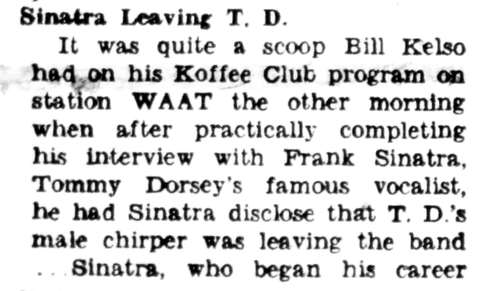
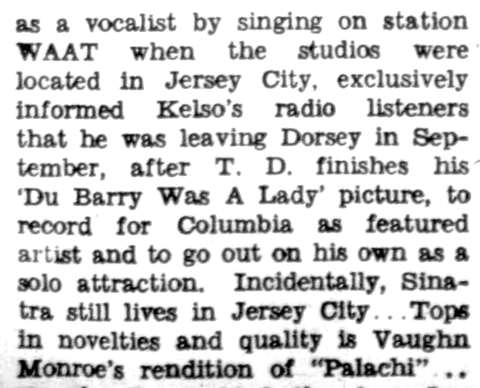
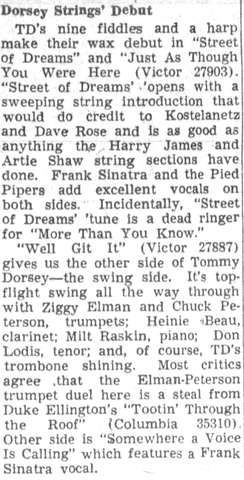
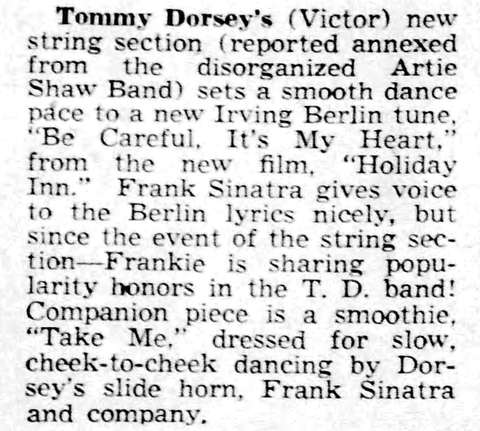
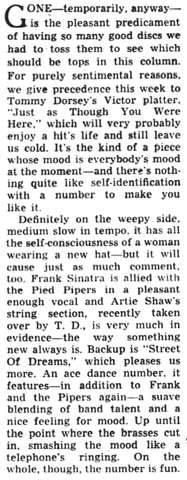
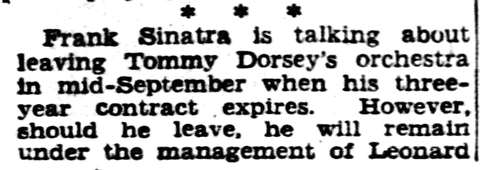
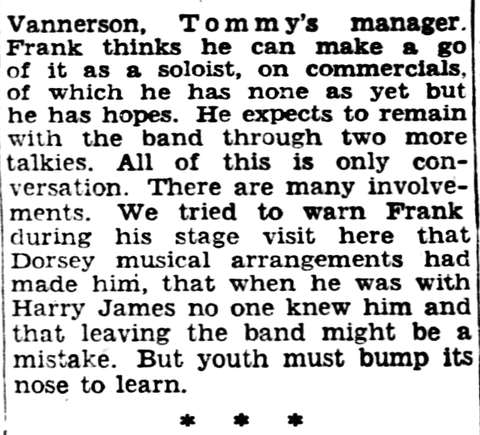
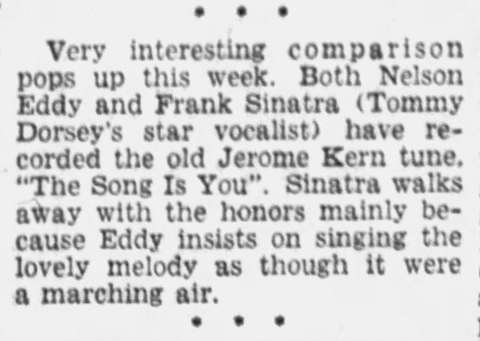
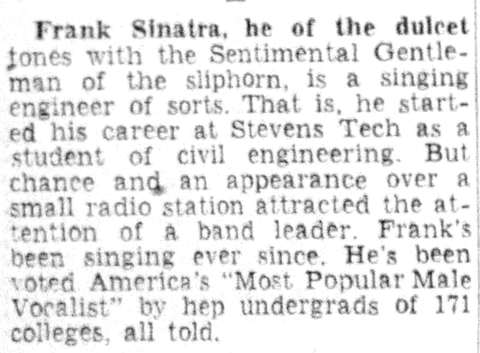
[image referenced in source but could not be recovered]
Re: July 24 - THIS DATE IN SINATRA HISTORY
Undated materialFrom: scott@falseducks.com | Received: 2024-07-25
Marine Ballroom, Steel Pier, Atlantic City (WABC)
Harry James and his Musicmakers w/Frank Sinatra
Does anyone know how long Harry Jams was at the Steel Pier in July of 1939?
The advertisement below mentions "Monday" which was July 24th.
This also appeared on the 24th:
Apparently Harry James and Alex Bartha's orchestra alternated with James appearing in the afternoon and Bartha in the evening
I have seen ads up to August 9th, 1939 but on August 10th Bartha's name is listed without James:
I'm thinking the engagement was July 24th to August 9th with possibly Sundays off. That would account for Lake Compounce and possibly a college dance.
Here's an interesting article from August 8th:
The reference to a college dance on the Sunday would have been August 6th but we have Harry James at Compounce Music Shell, Lake Compounce Amusement Park, Bristol, Connecticut. I wonder if the College dance was the previous Sunday July 30th?
Scott
[image referenced in source but could not be recovered]
[image referenced in source but could not be recovered]
[image referenced in source but could not be recovered]
[image referenced in source but could not be recovered]
[image referenced in source but could not be recovered]
[image referenced in source but could not be recovered]
Re: July 24 - THIS DATE IN SINATRA HISTORY
Undated materialFrom: Ed O'Brien <dmarc-noreply@freelists.org> | Received: 2024-07-25
Marine Ballroom, Steel Pier, Atlantic City (WABC)
Harry James and his Musicmakers w/Frank Sinatra
Does anyone know how long Harry Jams was at the Steel Pier in July of 1939?
The advertisement below mentions “Monday” which was July 24th.
This also appeared on the 24th:
Apparently Harry James and Alex Bartha’s orchestra alternated with James appearing in the afternoon and Bartha in the evening
I have seen ads up to August 9th, 1939 but on August 10th Bartha’s name is listed without James:
I’m thinking the engagement was July 24th to August 9th with possibly Sundays off. That would account for Lake Compounce and possibly a college dance.
Here’s an interesting article from August 8th:
The reference to a college dance on the Sunday would have been August 6th but we have Harry James at Compounce Music Shell, Lake Compounce Amusement Park, Bristol, Connecticut. I wonder if the College dance was the previous Sunday July 30th?
Scott
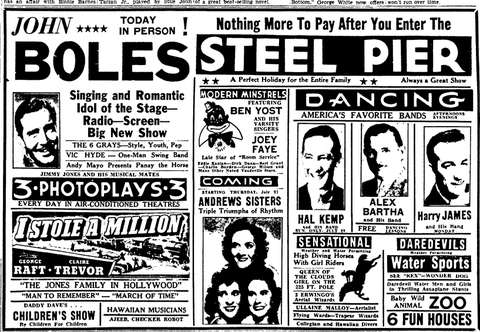
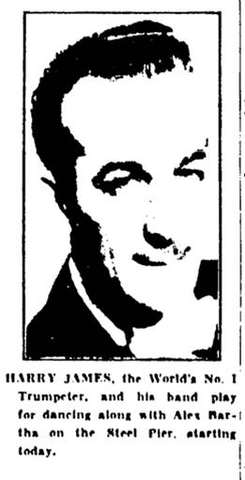
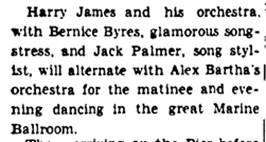
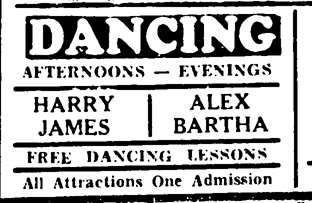
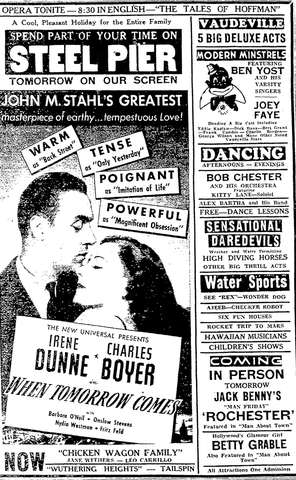
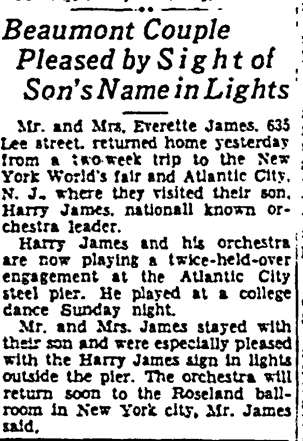
Re: July 24 - THIS DATE IN SINATRA HISTORY
Undated materialFrom: Scott Henderson <scott@falseducks.com> | Received: 2024-07-25
Marine Ballroom, Steel Pier, Atlantic City (WABC)
Harry James and his Musicmakers w/Frank Sinatra
Does anyone know how long Harry Jams was at the Steel Pier in July of 1939?
The advertisement below mentions “Monday” which was July 24th.
This also appeared on the 24th:
Apparently Harry James and Alex Bartha’s orchestra alternated with James appearing in the afternoon and Bartha in the evening
I have seen ads up to August 9th, 1939 but on August 10th Bartha’s name is listed without James:
I’m thinking the engagement was July 24th to August 9th with possibly Sundays off. That would account for Lake Compounce and possibly a college dance.
Here’s an interesting article from August 8th:
The reference to a college dance on the Sunday would have been August 6th but we have Harry James at Compounce Music Shell, Lake Compounce Amusement Park, Bristol, Connecticut. I wonder if the College dance was the previous Sunday July 30th?
Scott
Re: Stay With Me
Undated materialFrom: Ed O'Brien <dmarc-noreply@freelists.org> | Received: 2024-07-25
On Thursday, July 25, 2024 at 11:59:55 AM EDT, Scott Henderson <scott@falseducks.com> wrote:
Ah yes, the Tony Bennett and Bill Evans albums. Also fantastic. A few more Tony mentions I enjoy:
Tony Bennett and Count Basie
Tony Sings For
Bennett/Brubeck. The White House Sessions 1962
The song “Blue Velvet”
The song “Yesterday I Heard the Rain”.
I could go on and on. Recently I did a cull on my vinyl collection deciding to let go of some things I hadn’t listened to in a long time. Couldn’t bring myself to give up on any of my Tony Bennett records.
Scott Bennett sang "Blue Velvet" on a Playboy After Dark, Mitch Miller backed him on oboe. First time I heard Tony sing "Yesterday I Heard The Rain," my thought was , "Frank, you've got to sing this song." Gene Lees was the lyricist. I wish Tony had done the album with Basie in the late 1960s. He was so much better a singer by then.Ed
Re: Stay With Me
Undated materialFrom: Scott Henderson <scott@falseducks.com> | Received: 2024-07-25
Ah yes, the Tony Bennett and Bill Evans albums. Also fantastic. A few more Tony mentions I enjoy:
Tony Bennett and Count Basie
Tony Sings For Two
Bennett/Brubeck. The White House Sessions 1962
The song “Blue Velvet”
The song “Yesterday I Heard the Rain”.
I could go on and on. Recently I did a cull on my vinyl collection deciding to let go of some things I hadn’t listened to in a long time. Couldn’t bring myself to give up on any of my Tony Bennett records.
Scott
From: sinatraphiles-bounce@freelists.org [mailto:sinatraphiles-bounce@freelists.org] On Behalf Of Ed O'Brien ("eob101")
Sent: July 24, 2024 3:59 PM
To: sinatraphiles@freelists.org
Subject: [sinatraphiles] Re: Stay With Me
Hi Scott,
I have an excellent collection of Fred Astaire including the
recordings with Oscar.. The Gershwins, Irving Berlin, Cole Porter, J.
Kern all thought Fred was the best singer. Mel Torme insisted Fred
was the best. He did a terrific tribute album. Jonathan gave me a copy
of the show he did with Tony Bennett introducing "Stepping Out."
They just rave about Fred's ability to sell a song. When Fred was
doing the Packard Hour, back in 1936-37, he decided to dance on
his radio show( I'm not kidding ). Fred devoted 12 hours to rehearsal
every week. Now that is extreme perfectionism. I was once part of
a three way phone call with Tony and Jonathan. Tony quoted Fred's
belief that you always needed 20 minutes of material that wouldn't
be done at the end of your show. Fred felt the audience would
intuitively know and that gave you a huge edge.
My favorite Bennett are the two albums with Bill Evans
and the Canadian TV special, with Evans, is right up with the best
of Sinatra. Tony's work at Columbia in the 1960s is outstanding.
My favorite LP is "When Lights Are Low" from that era. I also
like the two Rodgers and Hart albums from the 1970s and his
solo work from 1988 and beyond. Have you ever heard Tony's
up tempo take on "My Way ?" Interesting.
One last comment: I so wish Louis and Ella had done
a TV special together.
Ed
On Wednesday, July 24, 2024 at 01:45:53 PM EDT, Scott Henderson <scott@falseducks.com> wrote:
Ed,
I’m with you on Louis Armstrong. The Peterson Armstrong collaboration is phenomenal. My favourite is “I Was Doing All Right”. The Oscar Peterson and Fred Astaire collaboration is also excellent. If you don’t think much of Astaire as a singer, that album should change your mind. Ella and Louis also have done some great duets.
I’m a Tony Bennett fan. I saw him in the late-80s when his career was at a lull. $6 at Ontario Place in Toronto. Great show. His last few albums with Bill Charlap, Lady Gaga, and Diana Krall were excellent. During Covid there were a couple of videos of him singing at home. He still had it despite the ravages of Alzheimer’s.
One of my favourite Bennett tunes is Where Do I Begin, the Theme from Love Story. I wish Sinatra had tried a version.
Scott
From: sinatraphiles-bounce@freelists.org [mailto:sinatraphiles-bounce@freelists.org] On Behalf Of Ed O'Brien ("eob101")
Sent: July 24, 2024 12:27 PM
To: sinatraphiles@freelists.org
Subject: [sinatraphiles] Re: Stay With Me
Hi Al,
Al Porcino was also in the same camp regarding Tony Bennett.
But a certain singer from Hoboken was in awe of him. Back in the
summer of 1965, Tony was playing at the Sands in Vegas. Frank,
was sailing off the east coast and suddenly got an urge to hear
Mr. Bennett. So, he called Jack Entratter and asked him to place
the phone on the stage near a speaker. Frank listened to the
show on his boat. Now there is a fan.
Many of the musicians who played with Frank, including
Vinnie Falcone and Tony Mottola, shared with me Frank's opinion
of Bennett. Vinnie and others tried to convince him to record "Maybe
This Time" and "When Joanna Loved Me." Frank felt Tony had the
definitive recordings. There are concerts where he told the audience,
after singing "Joanna . .," "If you want to really hear this sung right,
listen to Tony Bennett's recording."
I have a very large collection of Tony's work, but my favorite
male singer after Sinatra is Louis Armstrong. I think he is incredible.
There are many who cannot fathom my love of his singing. They
tell me he has a terrible voice that sounds simply awful on the great
American pop classics. I have cited many examples of his remark-
able abilities. My favorite album is "Louis Armstrong Meets Oscar
Peterson." A masterwork from start to finish. Many disagree.
Ed
On Tuesday, July 23, 2024 at 08:20:57 AM EDT, ALFRED MASCIOCCHI <dmarc-noreply@freelists.org> wrote:
Agreed Ed, that was a marvelous performance. Put Bennett's version to shame. But then I don't think much of Tony Bennett. He is the anti-Sinatra to me in terms of digging deep into a song and capturing the essence of it.
For anyone that wants to see Dylan's performance - https://www.youtube.com/watch?v=RbcGK7kzhTw
Al
On 07/22/2024 11:46 PM EDT Ed O'Brien <dmarc-noreply@freelists.org> wrote:
Hi Al,
Dylan also did a wonderful interpretation of "Once Upon A Time,"
that was part of the 90th birthday special for Tony Bennett. Show was
aired on 12-20-16. A striped down version that beautifully captured
the essence of that song.
Ed
On Sunday, July 21, 2024 at 08:45:03 AM EDT, ALFRED MASCIOCCHI <dmarc-noreply@freelists.org> wrote:
https://www.youtube.com/watch?v=tt1BBubMHzM
On Bob Dylan's first album of (mostly) Sinatra songs in 2015 he did "Stay With Me". It is a wonderful version. It is stripped down compared to the Sinatra version but it gets to the core like Frank's did. I think it is the version Frank would have done at age 73 (Dylan's age when he recorded it) unlike Frank's version as a 50 year old - closer to the end, looking back, a bit more feeble, a bit wiser, more in need of help on the road.
And a live version if you are inclined - https://www.youtube.com/watch?v=x5WsSJj0Q5E
Al
On 07/11/2024 1:55 PM EDT Larry Crawford <argyle52@hotmail.com> wrote:
I just realized two obscure songs I left off my previous list:
Stay With Me - a beautiful song, and a heartfelt emotional performance by Frank. This one makes me tear up every time I hear it.
Forget Domani - this song blew me away the first time I heard it. And it still does. A great Sinatra song.
Fw: Re: July 24 - THIS DATE IN SINATRA HISTORY
Undated materialFrom: Ed O'Brien <dmarc-noreply@freelists.org> | Received: 2024-07-26
Marine Ballroom, Steel Pier, Atlantic City (WABC)
Harry James and his Musicmakers w/Frank Sinatra
Does anyone know how long Harry Jams was at the Steel Pier in July of 1939?
The advertisement below mentions "Monday" which was July 24th.
This also appeared on the 24th:
Apparently Harry James and Alex Bartha's orchestra alternated with James appearing in the afternoon and Bartha in the evening
I have seen ads up to August 9th, 1939 but on August 10th Bartha's name is listed without James:
I'm thinking the engagement was July 24th to August 9th with possibly Sundays off. That would account for Lake Compounce and possibly a college dance.
Here's an interesting article from August 8th:
The reference to a college dance on the Sunday would have been August 6th but we have Harry James at Compounce Music Shell, Lake Compounce Amusement Park, Bristol, Connecticut. I wonder if the College dance was the previous Sunday July 30th?
Scott
[image referenced in source but could not be recovered]
[image referenced in source but could not be recovered]
[image referenced in source but could not be recovered]
[image referenced in source but could not be recovered]
[image referenced in source but could not be recovered]
[image referenced in source but could not be recovered]
July 26th 1953 - Blackpool
Undated materialFrom: cara <dmarc-noreply@freelists.org> | Received: 2024-07-26
CORGI BLACKPOOL BALLOON TRAM FRANK SINATRA CODE3
Frank Sinatra wearing the Mayoral chain while in Blackpool
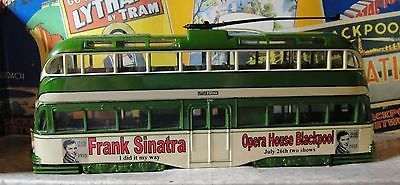
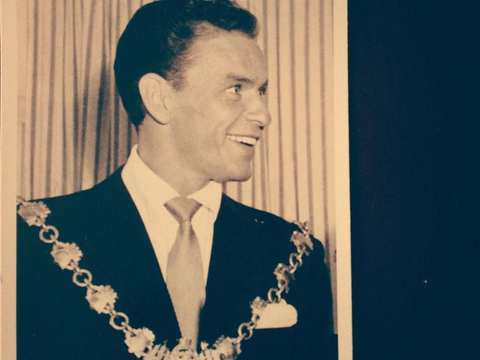
Re: July 26 - THIS DATE IN SINATRA HISTORY
Undated materialFrom: Ed O'Brien <dmarc-noreply@freelists.org> | Received: 2024-07-26
Fw: 'Sinatra House' known for serenading beachgoers is sold
Undated materialFrom: Ed O'Brien <dmarc-noreply@freelists.org> | Received: 2024-07-29
https://nypost.com/2024/07/27/us-news/jersey-shore-sinatra-house-sold-for-2-275-million/
THIS HAPPENED AT CAESARS IN JUNE OF 75
Undated materialFrom: Ed O'Brien <dmarc-noreply@freelists.org> | Received: 2024-08-03
Daily Herald Tribune
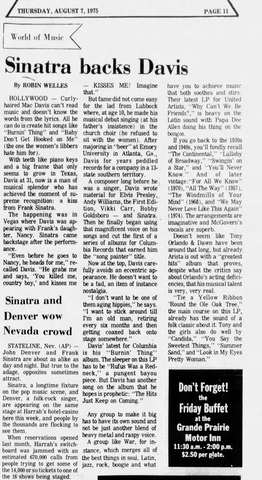
VOICE OF BROADWAY DOROTHY KILGALLEN
Undated materialFrom: Ed O'Brien <dmarc-noreply@freelists.org> | Received: 2024-08-11
REPUBLICAN-HERALD PAPER
AUGUST 9, 1943

"THE SINGING FOOL"
Undated materialFrom: Ed O'Brien <dmarc-noreply@freelists.org> | Received: 2024-08-19
San Francisco Examiner
8-18-43
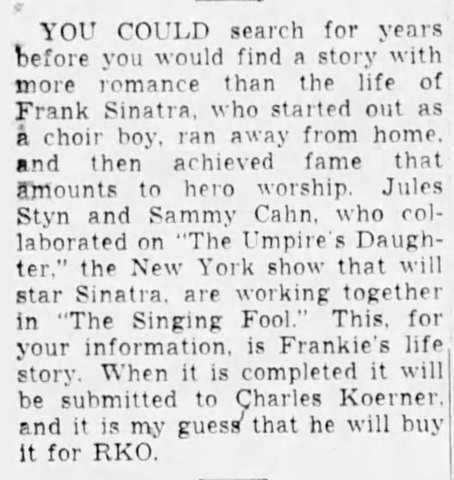
ALBUM REVIEWS
Undated materialFrom: Ed O'Brien <dmarc-noreply@freelists.org> | Received: 2024-08-20
August 1982
August 1982
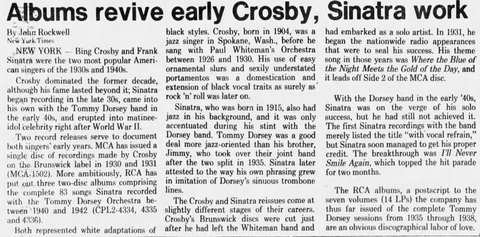
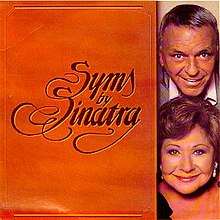
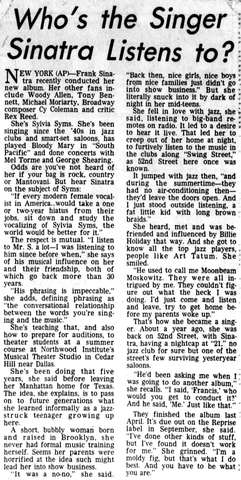
Frank Sinatra and Arthur Rubinstein
Undated materialFrom: cara <dmarc-noreply@freelists.org> | Received: 2024-09-02
The caption reads 1945.
Could it be from 1946, Labor Day Concert, Hollywood Bowl ?
Carl
Frank photographed with world renowned classical pianist, Arthur Rubinstein in 1945;
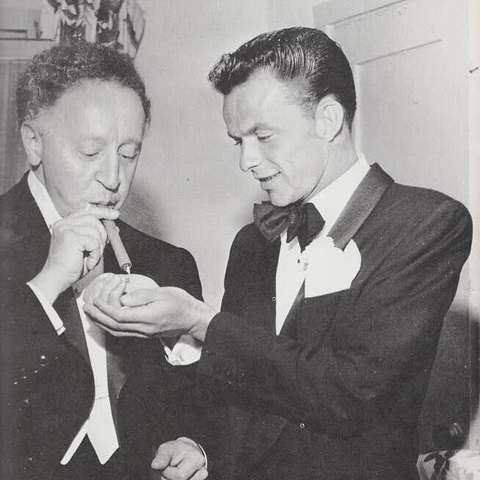
September 2 - THIS DATE IN SINATRA HISTORY
Undated materialFrom: Scott Henderson <scott@falseducks.com> | Received: 2024-09-02
500 Club , Atlantic City, New Jersey (Aug 30 to Sept 5)
Frank Sinatra and ensemlbe,
Marion Blair, George DeWitt, Henderson girls, Jack Curtis, Joe Frasetto and Pete Miller Orchestras
Re: Frank Sinatra and Arthur Rubinstein
Undated materialFrom: John Larrabee <dmarc-noreply@freelists.org> | Received: 2024-09-03
The same two gentlemen on November 5, 1975. Frank presented Rubinstein with the Scopus Award from the American Friends of the Hebrew University.
On Monday, September 2, 2024 at 11:05:29 PM CDT, Ed O'Brien <dmarc-noreply@freelists.org> wrote:
On Monday, September 2, 2024 at 04:23:08 PM EDT, cara <dmarc-noreply@freelists.org> wrote:
The caption reads 1945.
Could it be from 1946, Labor Day Concert, Hollywood Bowl ?
Carl
I think so. That was Frank in 46.
Ed
Frank photographed with world renowned classical pianist, Arthur Rubinstein in 1945;
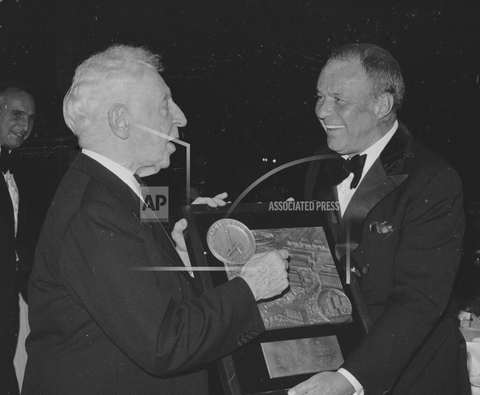
Re: Frank Sinatra and Arthur Rubinstein
Undated materialFrom: Ed O'Brien <dmarc-noreply@freelists.org> | Received: 2024-09-03
On Monday, September 2, 2024 at 04:23:08 PM EDT, cara <dmarc-noreply@freelists.org> wrote:
The caption reads 1945.
Could it be from 1946, Labor Day Concert, Hollywood Bowl ?
Carl
I think so. That was Frank in 46.
Ed
Frank photographed with world renowned classical pianist, Arthur Rubinstein in 1945;
Re: September 2 - THIS DATE IN SINATRA HISTORY
Undated materialFrom: Ed O'Brien <dmarc-noreply@freelists.org> | Received: 2024-09-03
Labor Day Concert, Hollywood Bowl
Los Angeles Evening Citizen's News
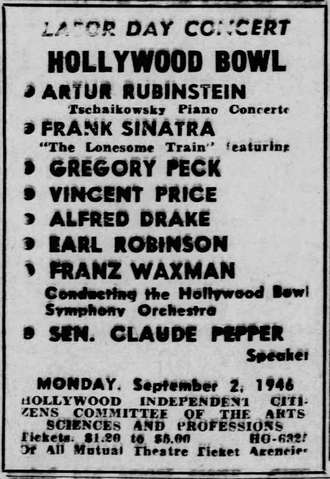
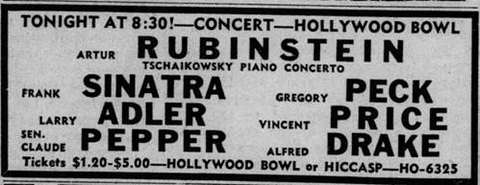
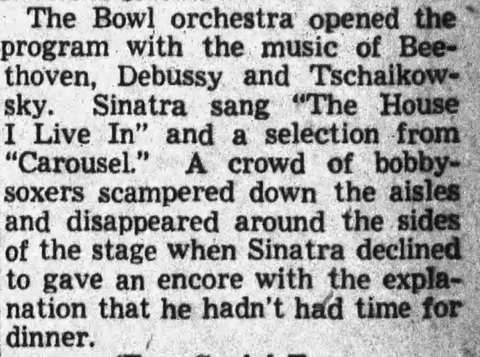
How Do You Keep The Music Playing? (Bob Florence Arrangement - 5/17/84)
Undated materialFrom: Richard Cook <cook879@hotmail.co.uk> | Received: 2024-09-06
Seems Frank Sinatra Enterprises have 'dropped' a new 'single' on the streamers.
(1) How Do You Keep The Music Playing? (Bob Florence Arrangement - 5/17/84) - YouTube<https://www.youtube.com/watch?v=bPOG9HGPblg> [https://i.ytimg.com/vi/bPOG9HGPblg/maxresdefault.jpg]<https://www.youtube.com/watch?v=bPOG9HGPblg> How Do You Keep The Music Playing? (Bob Florence Arrangement - 5/17/84)<https://www.youtube.com/watch?v=bPOG9HGPblg> Provided to YouTube by Universal Music GroupHow Do You Keep The Music Playing? (Bob Florence Arrangement - 5/17/84) · Frank SinatraHow Do You Keep The Music ... www.youtube.com
Provided to YouTube by Universal Music Group
How Do You Keep The Music Playing? (Bob Florence Arrangement - 5/17/84) · Frank Sinatra
How Do You Keep The Music Playing?
℗ 2024 Frank Sinatra Enterprises LLC, under exclusive license to UMG Recordings, Inc.
Released on: 2024-09-06
Producer: Quincy Jones
Producer: Charles Pignone
Associated Performer, Recording Arranger: Bob Florence Associated Performer, Vocals: Frank Sinatra
Studio Personnel, Mixer: Larry Walsh
Composer Lyricist: Alan Bergman
Composer Lyricist: Marilyn Bergman
Composer Lyricist: Michel Legrand
Re: How Do You Keep The Music Playing? (Bob Florence Arrangement - 5/17/84)
Undated materialFrom: Ed O'Brien <dmarc-noreply@freelists.org> | Received: 2024-09-06
Hi Richard, Terry Woodson thought the 5-17 with Florence was the bestvocal, but Frank got mixed up a bit on the lyrics. I wouldn't be shockedto discover they lifted the 4/17 vocal and married it to Florence's arg., with perhaps a few orchestral modifications. They are claiming it isthe 5/17 chart.Ed On Friday, September 6, 2024 at 02:00:27 PM EDT, Richard Cook <cook879@hotmail.co.uk> wrote:
Hi Ed,
Finally had a chance to properly listen. Side by side it seems to be the exact same vocal on both, and not much differently orchestrally. Here it is with the new YouTube track on the left audio channel, and the original on the right https://we.tl/t-Zw6tuRmdwW
| How Do You Keep the Music Playing side by side.mp31 file sent via WeTransfer, the simplest way to send your files around the worldwe.tl |
Seems the new track is from a 40th Anniversary L.A. Is My Lady CD, so maybe when that's released it will give more insight. But if it hadn't been labelled as the alternate version, I'd have guessed it was just a new remix. Richard
From: sinatraphiles-bounce@freelists.org <sinatraphiles-bounce@freelists.org> on behalf of Ed O'Brien <dmarc-noreply@freelists.org>
Sent: 06 September 2024 16:35
To: sinatraphiles@freelists.org <sinatraphiles@freelists.org>
Subject: [sinatraphiles] Re: How Do You Keep The Music Playing? (Bob Florence Arrangement - 5/17/84) Hi Richard, Terry Woodson told me this was the best recording of thethree Sinatra did of this song. Thank you very much for sharing. Much appreciated.Ed
On Friday, September 6, 2024 at 04:15:36 AM EDT, Richard Cook <cook879@hotmail.co.uk> wrote:
Seems Frank Sinatra Enterprises have 'dropped' a new 'single' on the streamers. (1) How Do You Keep The Music Playing? (Bob Florence Arrangement - 5/17/84) - YouTube | | How Do You Keep The Music Playing? (Bob Florence Arrangement - 5/17/84)Provided to YouTube by Universal Music GroupHow Do You Keep The Music Playing? (Bob Florence Arrangement - 5/17/84) · Frank SinatraHow Do You Keep The Music ...www.youtube.com |
Provided to YouTube by Universal Music Group
How Do You Keep The Music Playing? (Bob Florence Arrangement - 5/17/84) · Frank Sinatra How Do You Keep The Music Playing?
℗ 2024 Frank Sinatra Enterprises LLC, under exclusive license to UMG Recordings, Inc.
Released on: 2024-09-06
Producer: Quincy JonesProducer: Charles PignoneAssociated Performer, Recording Arranger: Bob FlorenceAssociated Performer, Vocals: Frank SinatraStudio Personnel, Mixer: Larry WalshComposer Lyricist: Alan BergmanComposer Lyricist: Marilyn BergmanComposer Lyricist: Michel Legrand
Re: How Do You Keep The Music Playing? (Bob Florence Arrangement - 5/17/84)
Undated materialFrom: Richard Cook <cook879@hotmail.co.uk> | Received: 2024-09-06
Hi Ed,
Finally had a chance to properly listen. Side by side it seems to be the exact same vocal on both, and not much differently orchestrally.
Here it is with the new YouTube track on the left audio channel, and the original on the right
https://we.tl/t-Zw6tuRmdwW
How Do You Keep the Music Playing side by side.mp3<https://we.tl/t-Zw6tuRmdwW> 1 file sent via WeTransfer, the simplest way to send your files around the world we.tl
Seems the new track is from a 40th Anniversary L.A. Is My Lady CD, so maybe when that's released it will give more insight.
But if it hadn't been labelled as the alternate version, I'd have guessed it was just a new remix.
Richard
________________________________
From: sinatraphiles-bounce@freelists.org <sinatraphiles-bounce@freelists.org> on behalf of Ed O'Brien <dmarc-noreply@freelists.org>
Sent: 06 September 2024 16:35
To: sinatraphiles@freelists.org <sinatraphiles@freelists.org>
Subject: [sinatraphiles] Re: How Do You Keep The Music Playing? (Bob Florence Arrangement - 5/17/84)
Hi Richard,
Terry Woodson told me this was the best recording of the three Sinatra did of this song.
Thank you very much for sharing. Much appreciated.
Ed
On Friday, September 6, 2024 at 04:15:36 AM EDT, Richard Cook <cook879@hotmail.co.uk> wrote:
Seems Frank Sinatra Enterprises have 'dropped' a new 'single' on the streamers.
(1) How Do You Keep The Music Playing? (Bob Florence Arrangement - 5/17/84) - YouTube<https://www.youtube.com/watch?v=bPOG9HGPblg> [https://i.ytimg.com/vi/bPOG9HGPblg/maxresdefault.jpg]<https://www.youtube.com/watch?v=bPOG9HGPblg> How Do You Keep The Music Playing? (Bob Florence Arrangement - 5/17/84)<https://www.youtube.com/watch?v=bPOG9HGPblg> Provided to YouTube by Universal Music GroupHow Do You Keep The Music Playing? (Bob Florence Arrangement - 5/17/84) · Frank SinatraHow Do You Keep The Music ... www.youtube.com
Provided to YouTube by Universal Music Group
How Do You Keep The Music Playing? (Bob Florence Arrangement - 5/17/84) · Frank Sinatra
How Do You Keep The Music Playing?
℗ 2024 Frank Sinatra Enterprises LLC, under exclusive license to UMG Recordings, Inc.
Released on: 2024-09-06
Producer: Quincy Jones
Producer: Charles Pignone
Associated Performer, Recording Arranger: Bob Florence Associated Performer, Vocals: Frank Sinatra
Studio Personnel, Mixer: Larry Walsh
Composer Lyricist: Alan Bergman
Composer Lyricist: Marilyn Bergman
Composer Lyricist: Michel Legrand
Re: How Do You Keep The Music Playing? (Bob Florence Arrangement - 5/17/84)
Undated materialFrom: Ed O'Brien <dmarc-noreply@freelists.org> | Received: 2024-09-06
Hi Richard, Terry Woodson told me this was the best recording of thethree Sinatra did of this song. Thank you very much for sharing. Much appreciated.Ed On Friday, September 6, 2024 at 04:15:36 AM EDT, Richard Cook <cook879@hotmail.co.uk> wrote:
Seems Frank Sinatra Enterprises have 'dropped' a new 'single' on the streamers. (1) How Do You Keep The Music Playing? (Bob Florence Arrangement - 5/17/84) - YouTube | | How Do You Keep The Music Playing? (Bob Florence Arrangement - 5/17/84)Provided to YouTube by Universal Music GroupHow Do You Keep The Music Playing? (Bob Florence Arrangement - 5/17/84) · Frank SinatraHow Do You Keep The Music ...www.youtube.com |
Provided to YouTube by Universal Music Group
How Do You Keep The Music Playing? (Bob Florence Arrangement - 5/17/84) · Frank Sinatra How Do You Keep The Music Playing?
℗ 2024 Frank Sinatra Enterprises LLC, under exclusive license to UMG Recordings, Inc.
Released on: 2024-09-06
Producer: Quincy JonesProducer: Charles PignoneAssociated Performer, Recording Arranger: Bob FlorenceAssociated Performer, Vocals: Frank SinatraStudio Personnel, Mixer: Larry WalshComposer Lyricist: Alan BergmanComposer Lyricist: Marilyn BergmanComposer Lyricist: Michel Legrand
September 6 - THIS DATE IN SINATRA HISTORY
Undated materialFrom: Ed O'Brien <dmarc-noreply@freelists.org> | Received: 2024-09-06
The Republic 9-9-85
Daily News
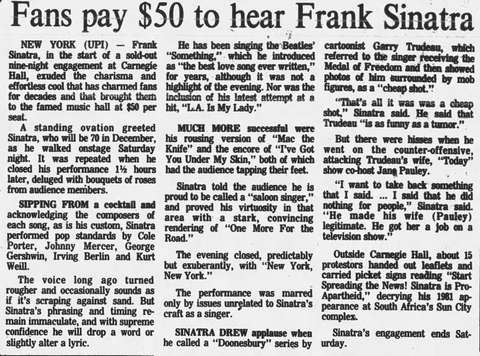
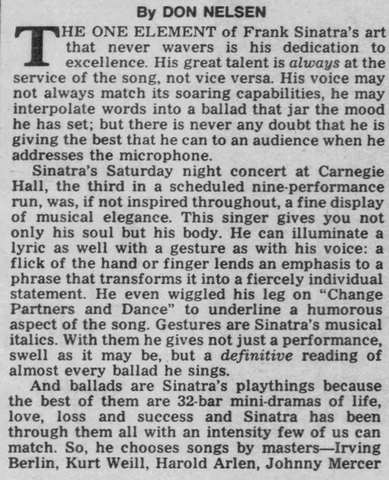
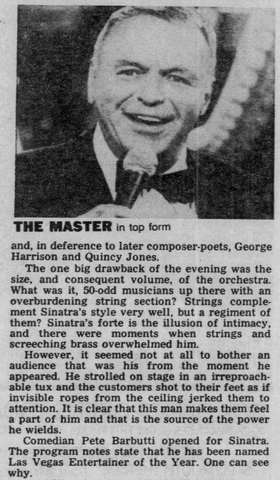
Frank Sinatra and Sergio Mendes
Undated materialFrom: cara <dmarc-noreply@freelists.org> | Received: 2024-09-08
https://gshow.globo.com/programas/conversa-com-bial/noticia/no-conversa-sergio-mendes-relembra-amizade-com-frank-sinatra-amigo-ate-a-morte.ghtml
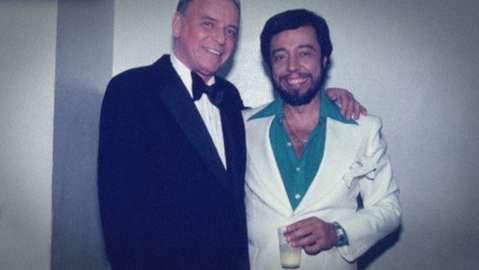
Re: How Do You Keep The Music Playing? (Bob Florence Arrangement - 5/17/84)
Undated materialFrom: Ed O'Brien <dmarc-noreply@freelists.org> | Received: 2024-09-08
I think this is the superior version. Can't believe that the producer picked the wrong version to release.
I have seen this kind of mistake many times. Let's be grateful it was discovered. The 5/17 date was filmed.
Frank started with a vocal overdub of the title track, then "Stormy Weather" a tone lower than the N.Y.C.
recording ( should have been included in new release) and then "How Do Keep The Music Playing."
Would love to see a commercial release of that video.
Ed
.
Release date is October 25
Looks like tracklist is as follows:
Original Album
1. L.A. Is My Lady
2. The Best Of Everything
3. How Do You Keep The Music Playing?
4. Teach Me Tonight
5. It’s All Right With Me
6. Mack The Knife
7. Until The Real Thing Comes Along
8. Stormy Weather
9. If I Should Lose You
10. A Hundred Years From Today
11. After You’ve Gone
Bonus Tracks (CD & Digital only)
12. How Do You Keep The Music Playing? (3/16/83-Joe Parnello arrangement)
13. How Do You Keep The Music Playing? (5/17/84-Bob Florence arrangement) +
14. Mack The Knife (10/30/86-vocal overdub)
15. Body And Soul (10/26/07-Torrie Zitto arrangement)
16. After You’ve Gone (session take) +
17. Body And Soul (session takes) +
+ previously unreleased
All tracks except #12, 14 & 17 are newly mixed by Larry Walsh
Richard
From: sinatraphiles-bounce@freelists.org <sinatraphiles-bounce@freelists.org> on behalf of Ed O'Brien <dmarc-noreply@freelists.org>
Sent: 07 September 2024 14:13
To: sinatraphiles@freelists.org <sinatraphiles@freelists.org>
Subject: [sinatraphiles] Re: How Do You Keep The Music Playing? (Bob Florence Arrangement - 5/17/84)
Hi Richard,
I listened this time before replying to you.
The arrangement is much superior and Sinatra went
back to the bel canto singing. Long, extended passages.
Thank you, thank you.
Do you know the release date of the album ?
Ed
On Saturday, September 7, 2024 at 03:16:45 AM EDT, Richard Cook <cook879@hotmail.co.uk> wrote:
Hi Ed, Scott,
They've changed the upload
Actually different arrangement and vocal performance here
https://www.youtube.com/watch?v=tB8yd8l9pOs
How
Do You Keep The Music Playing? (Bob Florence Arrangement - 5/17/84)
Provided to YouTube by Universal Music Group How Do You Keep The Music Playing? (Bob Florence Arrangement - 5/17/84) · Frank Sinatra How Do You Keep The Music Playing? ℗ 2024 Frank Sinatra Enterprises LLC, under exclusive license to UMG Recordings, Inc. Released on: 2024-09-06 Producer: Quincy Jones Producer: Charles Pignone Associated ...
www.youtube.com
Richard
From: sinatraphiles-bounce@freelists.org <sinatraphiles-bounce@freelists.org> on behalf of Scott Henderson
<scott@falseducks.com>
Sent: 06 September 2024 20:31
To: sinatraphiles@freelists.org <sinatraphiles@freelists.org>
Subject: [sinatraphiles] Re: How Do You Keep The Music Playing? (Bob Florence Arrangement - 5/17/84)
I was disappointed or underwhelmed. I couldn’t tell the difference. I thought I’d be hearing something radically different.
Scott
From: sinatraphiles-bounce@freelists.org [mailto:sinatraphiles-bounce@freelists.org]
On Behalf Of Ed O'Brien ("eob101")
Sent: September 6, 2024 2:32 PM
To: sinatraphiles@freelists.org
Subject: [sinatraphiles] Re: How Do You Keep The Music Playing? (Bob Florence Arrangement - 5/17/84)
Hi Richard,
Terry Woodson thought the 5-17 with Florence was the best
vocal, but Frank got mixed up a bit on the lyrics. I wouldn't be shocked
to discover they lifted the 4/17 vocal and married it to Florence's arg.,
with perhaps a few orchestral modifications. They are claiming it is
the 5/17 chart.
Ed
On Friday, September 6, 2024 at 02:00:27 PM EDT, Richard Cook <cook879@hotmail.co.uk> wrote:
Hi Ed,
Finally had a chance to properly listen. Side by side it seems to be the exact same vocal on both, and not much differently orchestrally.
Here it is with the new YouTube track on the left audio channel, and the original on the right
https://we.tl/t-Zw6tuRmdwW
How
Do You Keep the Music Playing side by side.mp3
1 file sent via WeTransfer, the simplest way to send your files around the world
we.tl
Seems the new track is from a 40th Anniversary L.A. Is My Lady CD, so maybe when that's released it will give more insight.
But if it hadn't been labelled as the alternate version, I'd have guessed it was just a new remix.
Richard
From: sinatraphiles-bounce@freelists.org <sinatraphiles-bounce@freelists.org> on behalf of Ed O'Brien <dmarc-noreply@freelists.org>
Sent: 06 September 2024 16:35
To: sinatraphiles@freelists.org <sinatraphiles@freelists.org>
Subject: [sinatraphiles] Re: How Do You Keep The Music Playing? (Bob Florence Arrangement - 5/17/84)
Hi Richard,
Terry Woodson told me this was the best recording of the
three Sinatra did of this song.
Thank you very much for sharing. Much appreciated.
Ed
On Friday, September 6, 2024 at 04:15:36 AM EDT, Richard Cook <cook879@hotmail.co.uk> wrote:
Seems Frank Sinatra Enterprises have 'dropped' a new 'single' on the streamers.
(1)
How Do You Keep The Music Playing? (Bob Florence Arrangement - 5/17/84) - YouTube
How
Do You Keep The Music Playing? (Bob Florence Arrangement - 5/17/84)
Provided to YouTube by Universal Music GroupHow Do You Keep The Music Playing? (Bob Florence Arrangement - 5/17/84) · Frank SinatraHow Do You Keep The Music ...
www.youtube.com
Provided to YouTube by Universal Music Group
How Do You Keep The Music Playing? (Bob Florence Arrangement - 5/17/84) · Frank Sinatra
How Do You Keep The Music Playing?
℗ 2024 Frank Sinatra Enterprises LLC, under exclusive license to UMG Recordings, Inc.
Released on: 2024-09-06
Producer: Quincy Jones
Producer: Charles Pignone
Associated Performer, Recording Arranger: Bob Florence
Associated Performer, Vocals: Frank Sinatra
Studio Personnel, Mixer: Larry Walsh
Composer Lyricist: Alan Bergman
Composer Lyricist: Marilyn Bergman
Composer Lyricist: Michel Legrand
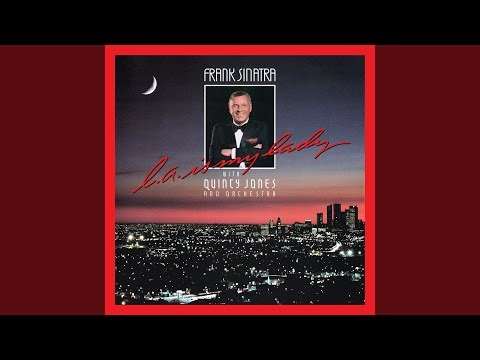
[image referenced in source but could not be recovered]
Sergio Mendes - RIP
Undated materialFrom: cara <dmarc-noreply@freelists.org> | Received: 2024-09-08
September 9 - THIS DATE IN SINATRA HISTORY
Undated materialFrom: Ed O'Brien <dmarc-noreply@freelists.org> | Received: 2024-09-09
Daily Record
September 9, 1975
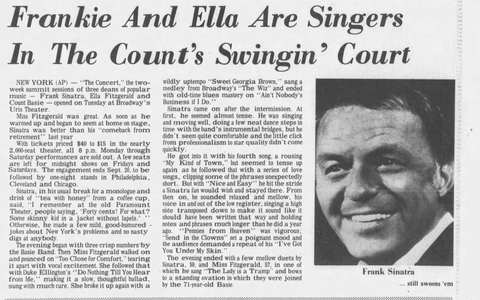
Re: September 9 - THIS DATE IN SINATRA HISTORY
Undated materialFrom: Ed O'Brien <dmarc-noreply@freelists.org> | Received: 2024-09-09
Daily News
9-10-53
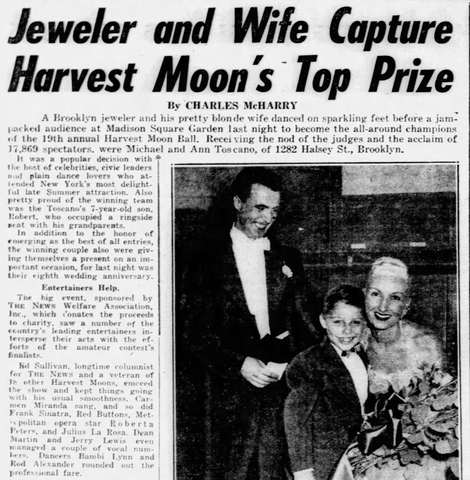
Re: September 9 - THIS DATE IN SINATRA HISTORY
Undated materialFrom: Ed O'Brien <dmarc-noreply@freelists.org> | Received: 2024-09-09
Chicago Tribune
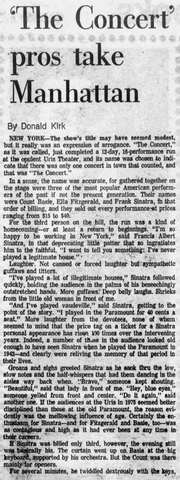
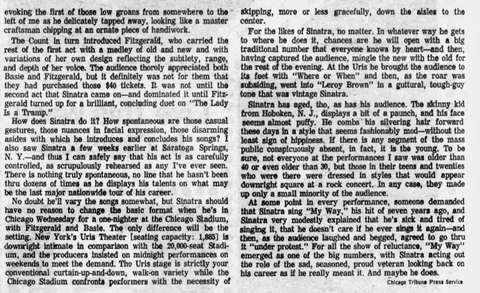
Re: September 9 - THIS DATE IN SINATRA HISTORY
Undated materialFrom: Ed O'Brien <dmarc-noreply@freelists.org> | Received: 2024-09-10
Dunes Hotel, Las Vegas, Nevada (September 9-11)
Hedda Hopper
note: Frank's appearance was done in an attempt to rescue the new Dunes.
I found a number of articles detailing the general lack of interest in another
hotel. Entratter had signed a number of major stars but there were very
few reservation. Frank received part ownership in the Dunes and despite
a heavy work load, including "Our Town," 9-19, he agreed to do the three
days on the weekend.
Ed
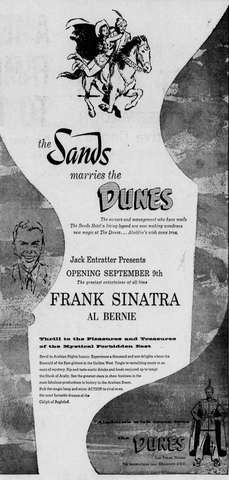
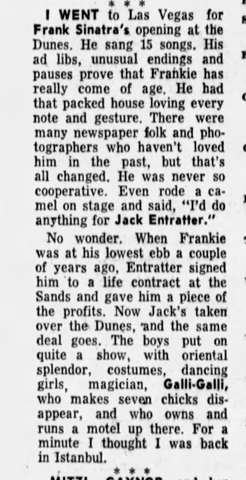
September 10 - THIS DATE IN SINATRA HISTORY
Undated materialFrom: Ed O'Brien <dmarc-noreply@freelists.org> | Received: 2024-09-11
Carnegie Hall, New York City
Orchestra Conducted By: Bill Miller
Daily News
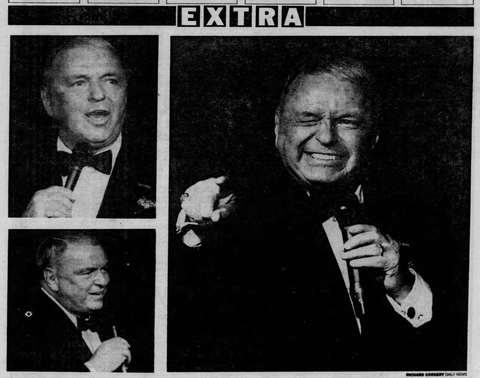
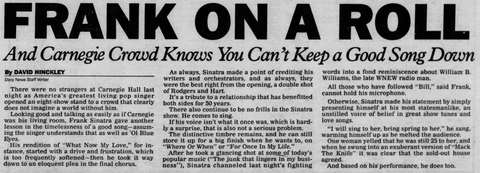
Re: September 12 - THIS DATE IN SINATRA HISTORY
Undated materialFrom: Ed O'Brien <dmarc-noreply@freelists.org> | Received: 2024-09-13
The legend has it that Frank Sinatra didn't want to do this album and just blew it off.Well, my ears don't hear that, personally I love this album. Good arrangements, great song selectections, and fine singing by FS.One of my favorites. Hi Larry, Frank very much wanted to do the album. He was angry that Capitolpicked so many great songs for his final album with the label. Bill Miller tolda friend of mine that Sinatra wanted to do a number of these gems at Reprise.Who could blame him.Ed
September 13 - THIS DATE IN SINATRA HISTORY
Undated materialFrom: Ed O'Brien <dmarc-noreply@freelists.org> | Received: 2024-09-14
9-15-82
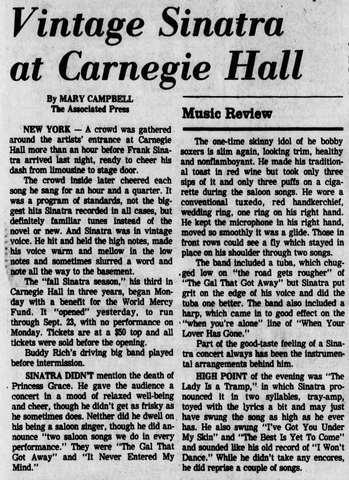
Re: September 15 - THIS DATE IN SINATRA HISTORY
Undated materialFrom: John Larrabee <dmarc-noreply@freelists.org> | Received: 2024-09-15
From Ed's comments on the Riviera gig:
Frank did not consider either to be as important as the
two-week engagement at Bill Miller's Riviera in September of 1953. Frank very
carefully chose a nine piece chamber set ( his description ) and rehearsed with them for
two solid weeks before opening at the club..There was no conductor, just the
singer and nine musicians: Bill Miller was the piano player, Alvin Stoller was
on drums, Sonny Salad pulled off a hat trick by alternating on alto sax, flute and clarinet,
throughout the two week engagement, a bass and guitar completed the rhythm section
and a string quartet made up the rest of the musical ensemble.
I posted the first photo back in May and reasoned that it was from a Songs for Young Lovers session, as "My Funny Valentine" is on the sheet music. A fellow Sinatra maven alerted me that the personnel in these photos don't match up with the Young Lovers lineup: Eleanor Slatkin and Kathryn Julye were the only women on those sessions, and this woman doesn't look like either of them. Plus, this doesn't look like any KHJ studio.
Are these photos from the two-week rehearsals for the Riviera?
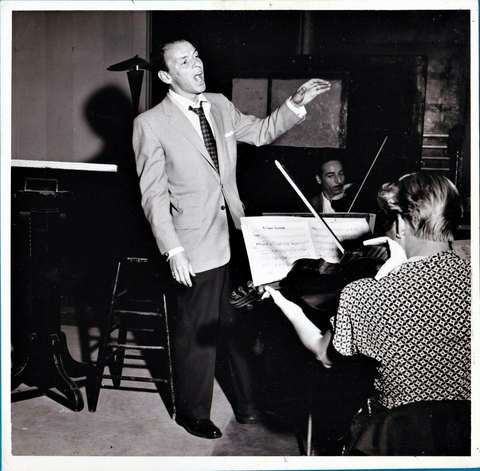
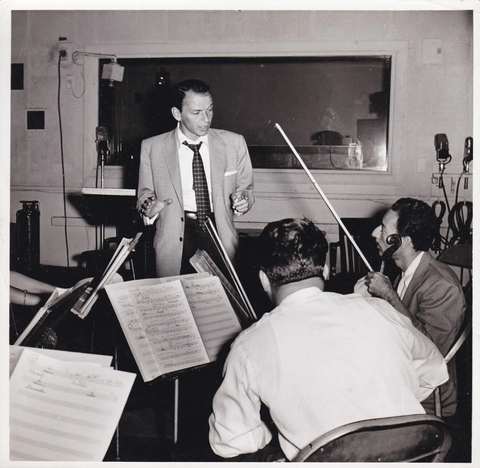
Kay Kyser, Frank Sinatra and Harry James, September 1945
Undated materialFrom: cara <dmarc-noreply@freelists.org> | Received: 2024-09-16
Kay Kyser, Frank Sinatra and Harry James, September 1945, at the recordings for the Armed Forces Radio Services (source: Tune In magazine, January 1946)
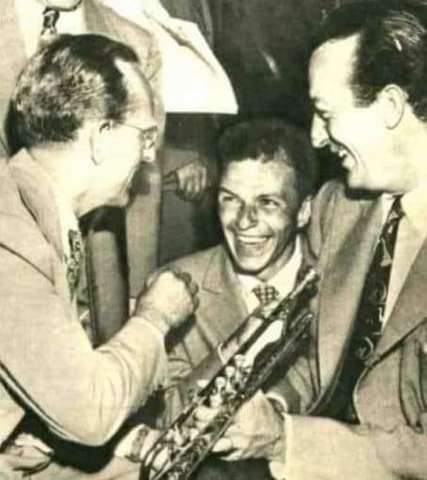
FURIOUS PACE KEEPS SINATRA DRIVING HARD
Undated materialFrom: Ed O'Brien <dmarc-noreply@freelists.org> | Received: 2024-09-19
Los Angeles Mirror
10-19-56 note: The trip down under plus Manila and Tokyo
did not happen.
Ed
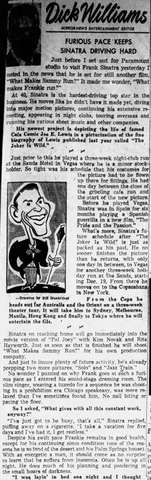
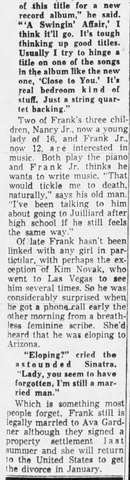
Holmby Hills Rat Pack in the fall of 1956
Undated materialFrom: Ed O'Brien <dmarc-noreply@freelists.org> | Received: 2024-09-19
10-28-56
note: Interesting article but Bacon never touches the terrible truth: Bogie was
dying. He would pass away in January of 1957.
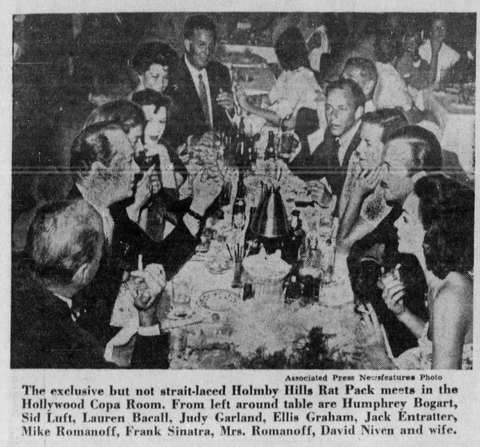
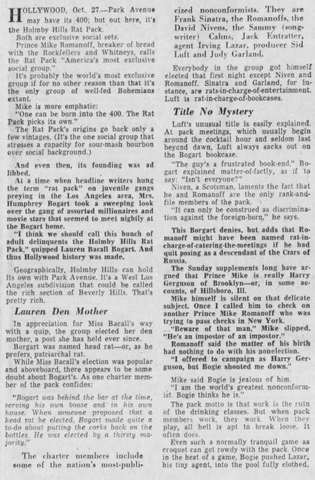
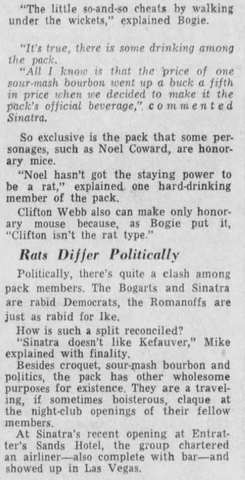
Re: VS: Holmby Hills Rat Pack in the fall of 1956
Undated materialFrom: Ed O'Brien <dmarc-noreply@freelists.org> | Received: 2024-09-19
Hi Carl,
Thank you. I put it up because it identified all were at the table.
In the past that hasn't happened with this photo. But your copy is far
better quality and covers the identities very nicely.
Bogie lived a very hard life. Similar to the Hemingway code.
Ed
On Thursday, September 19, 2024 at 03:40:15 AM EDT, cara <dmarc-noreply@freelists.org> wrote:
Thank you, Ed
Here is the same photo in a better quality.
Carl
Some members of the Holmby Hills Rat Pack, a group of exceedingly well heeled Bohemians that include screen stars and millionaires from Hollywood's super-ritzy Holmby Hill section, are seen sitting at a table having cocktails at the Copa Room in Hollywood, Oct. 15, 1956.. Shown left to right are Humphrey Bogart; producer Sid Luft; Lauren Bacall; Judy Garland; Ellie Graham; agent Jack Entratter; restaurateur Mike Romanoff (partly hidden); Frank Sinatra; Mrs. Romanoff; actor David Niven; and Mrs. Niven.
10-28-56
note: Interesting article but Bacon never touches the terrible truth: Bogie was
dying. He would pass away in January of 1957.
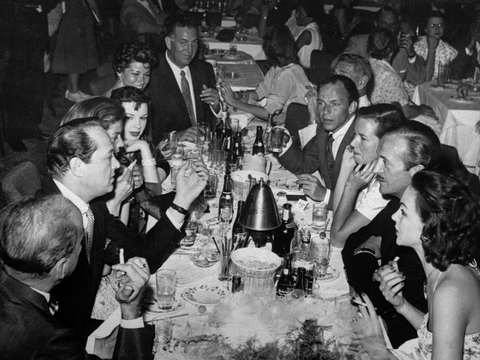
TWO CO;UMNS BY HEDDA HOPPER 1956
Undated materialFrom: Ed O'Brien <dmarc-noreply@freelists.org> | Received: 2024-09-19
6-10-56
10-20-56
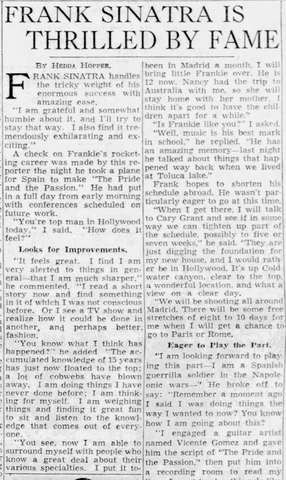
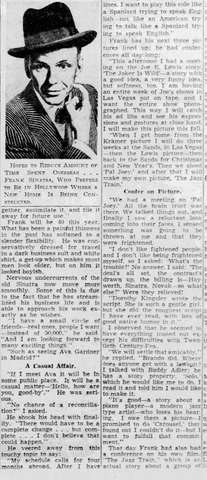
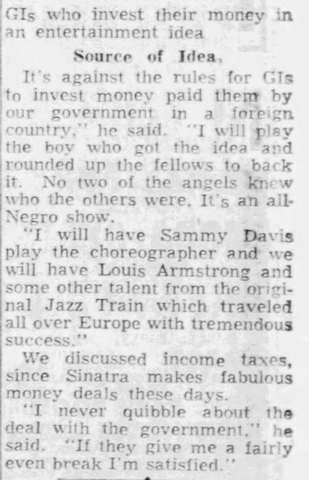
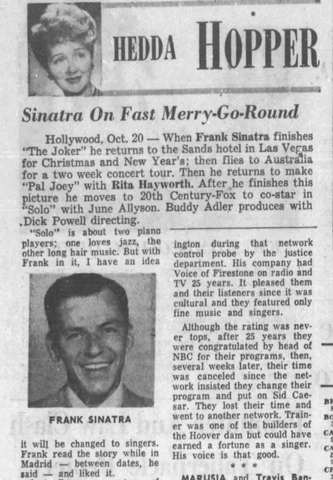
VS: Holmby Hills Rat Pack in the fall of 1956
Undated materialFrom: cara <dmarc-noreply@freelists.org> | Received: 2024-09-19
Thank you, Ed
Here is the same photo in a better quality.
Carl
Some members of the Holmby Hills Rat Pack, a group of exceedingly well heeled Bohemians that include screen stars and millionaires from Hollywood's super-ritzy Holmby Hill section, are seen sitting at a table having cocktails at the Copa Room in Hollywood, Oct. 15, 1956.. Shown left to right are Humphrey Bogart; producer Sid Luft; Lauren Bacall; Judy Garland; Ellie Graham; agent Jack Entratter; restaurateur Mike Romanoff (partly hidden); Frank Sinatra; Mrs. Romanoff; actor David Niven; and Mrs. Niven.
10-28-56
note: Interesting article but Bacon never touches the terrible truth: Bogie was
dying. He would pass away in January of 1957.
Fw HEDDA HOPPER 1956
Undated materialFrom: Ed O'Brien <dmarc-noreply@freelists.org> | Received: 2024-09-20
6-10-56
HEDDA HOPPER PART TWO 1956
Undated materialFrom: Ed O'Brien <dmarc-noreply@freelists.org> | Received: 2024-09-20
10-20-56
Sophia Loren 90 years of age - CONGRATULATIONS
Undated materialFrom: cara <dmarc-noreply@freelists.org> | Received: 2024-09-20
Princess Grace of Monaco, American singer Frank Sinatra and Italian actress Sophia Loren were among the guests at the Monagasque Red Cross Charity gala at Monte Carlo Sporting Club, Monaco, on Aug. 10, 1979.
Princess Grace with Frank Sinatra and Sophia Loren at the Rose Ball of 1979.
S
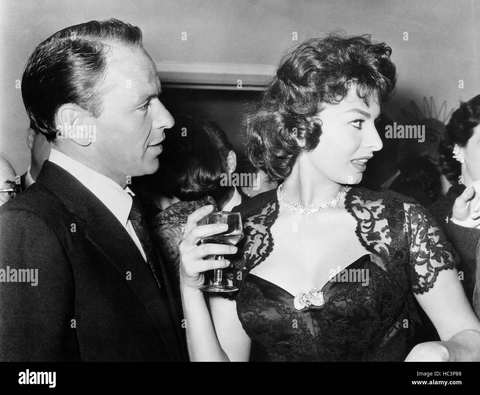
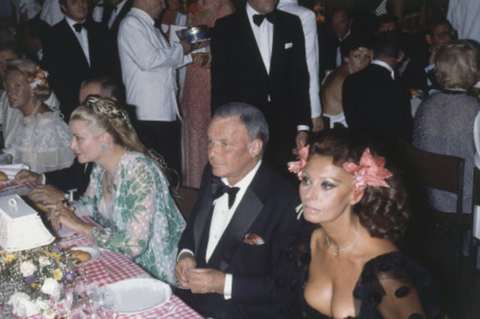
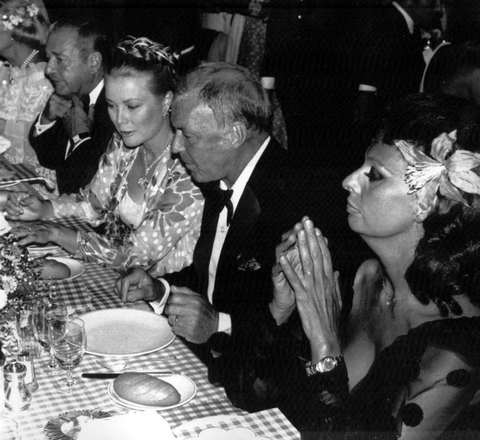
September 19 - THIS DATE IN SINATRA
Undated materialFrom: Ed O'Brien <dmarc-noreply@freelists.org> | Received: 2024-09-21
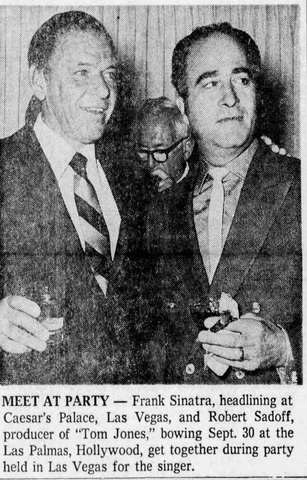
Re: September 21 - THIS DATE IN SINATRA HISTORY
Undated materialFrom: John Larrabee <dmarc-noreply@freelists.org> | Received: 2024-09-21
Two more photos with the Whippoorwills.
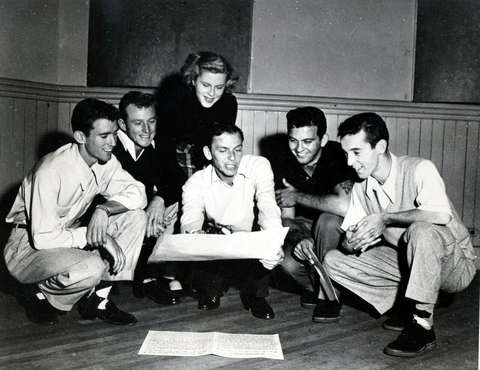
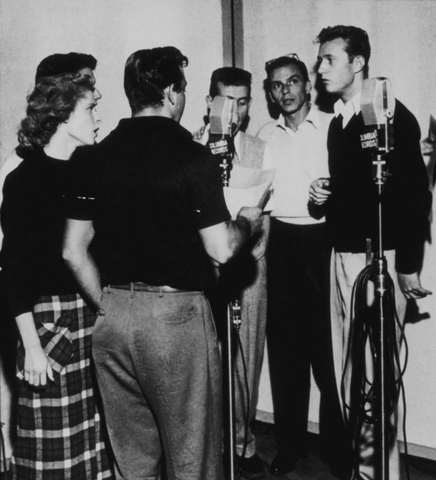
Fw: September 10 - THIS DATE IN SINATRA HISTORY
Undated materialFrom: Ed O'Brien <dmarc-noreply@freelists.org> | Received: 2024-09-23
Dunes Hotel, Las Vegas, Nevada (September 9-11)
Statesman Journal 9-20-55
note: Interesting to know that Frank was singing songs from the
upcoming TV production of "Our Town."
Ed
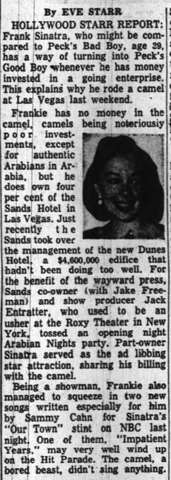
REVIEW OF TONY BENNETT'S "PERFECTLY FRANK"
Undated materialFrom: Ed O'Brien <dmarc-noreply@freelists.org> | Received: 2024-09-23
The Akron Journal
9-22-92

Rare Sinatra Acetate? -- I don't think so
Undated materialFrom: Scott Henderson <scott@falseducks.com> | Received: 2024-09-23
A seller on Ebay has the following listed for $80,000
https://www.ebay.com/itm/335586038998?mkevt=1
<https://www.ebay.com/itm/335586038998?mkevt=1&mkpid=0&emsid=e11021.m164380. l178263&mkcid=7&ch=osgood&euid=e2eb2c77370944bd8d616651d7ed1724&bu=431877225 06&ut=RU&osub=-1%7E1&crd=20240923055430&segname=11021&recoId=335586038998&re coPos=1>
&mkpid=0&emsid=e11021.m164380.l178263&mkcid=7&ch=osgood&euid=e2eb2c77370944b d8d616651d7ed1724&bu=43187722506&ut=RU&osub=-1%7E1&crd=20240923055430&segnam e=11021&recoId=335586038998&recoPos=1
Here's his description:
Rare Unreleased Acetate Vinyl Recording Featuring Frank Sinatra: *"I'll Never Smile Again"* & Dick Powell *"I Only Have Eyes for You
The seller also put up a Youtube video of the audio that he alleges is Sinatra.
https://www.youtube.com/watch?v=IMxhH0i6Yhw
To my ears, it clearly is not Sinatra.
Scott
Re: Rare Sinatra Acetate? -- I don't think so
Undated materialFrom: Ed O'Brien <dmarc-noreply@freelists.org> | Received: 2024-09-23
Hi Scott, If you recall that one offered some session material.Sinatra was talking to Riddle between takes. I sound as much like Sinatra as that faux attempt. And now we have A.I. BetteDavis nailed it: "It is going to be a bumpy ride."Ed On Monday, September 23, 2024 at 10:57:10 AM EDT, Scott Henderson <scott@falseducks.com> wrote:
I remember the guy from a few years ago who was trying to maintain a recording called “I’m In Love With A Robot” was sung by Sinatra. It was laughable.
Scott
From: sinatraphiles-bounce@freelists.org [mailto:sinatraphiles-bounce@freelists.org] On Behalf Of Ed O'Brien ("eob101")
Sent: September 23, 2024 10:37 AM
To: sinatraphiles@freelists.org
Subject: [sinatraphiles] Re: Rare Sinatra Acetate? -- I don't think so
Hi Scott,
I interviewed many of the people associated with Sinatra.
They were in awe of his voice back in the 1940s. Words used to
describe it included glorious, angelic, heavenly, stupendous and
simply wonderful. Trying to foist off on collectors these run of the
mill vocalists is utterly absurd. I'm sure you remember the attempt,
a few years back, when an amazing find occurred. Frank singing
two or three numbers. The singer was not remotely close to the
amazing gift Sinatra possessed. And the price they are asking
for such mediocrity. Outrageous. Grrrrrr . . . . . .
On Monday, September 23, 2024 at 10:17:44 AM EDT, Scott Henderson <scott@falseducks.com> wrote:
I’m not even sure why he contributes it to Sinatra. There’s nothing written on it that even suggests it’s Sinatra. You are right though, I could tell it wasn’t Dorsey and even the tempo and phrasing by the singer don’t match Sinatra. And why would you think it was worth $80,000?
Scott
From: sinatraphiles-bounce@freelists.org [mailto:sinatraphiles-bounce@freelists.org] On Behalf Of Ed O'Brien ("eob101")
Sent: September 23, 2024 9:50 AM
To: sinatraphiles@freelists.org
Subject: [sinatraphiles] Re: Rare Sinatra Acetate? -- I don't think so
Hi Scott,
There are a few ingredients missing here:
1. Tommy Dorsey's orchestra
2. Pied Pipers
3. Fred Stulce's great chart
4. Frank Sinatra
Ed
On Monday, September 23, 2024 at 09:26:18 AM EDT, Scott Henderson <scott@falseducks.com> wrote:
A seller on Ebay has the following listed for $80,000
https://www.ebay.com/itm/335586038998?mkevt=1&mkpid=0&emsid=e11021.m164380.l178263&mkcid=7&ch=osgood&euid=e2eb2c77370944bd8d616651d7ed1724&bu=43187722506&ut=RU&osub=-1%7E1&crd=20240923055430&segname=11021&recoId=335586038998&recoPos=1
Here’s his description:
Rare Unreleased Acetate Vinyl Recording Featuring Frank Sinatra: *“I’ll Never Smile Again”* & Dick Powell *“I Only Have Eyes for You
The seller also put up a Youtube video of the audio that he alleges is Sinatra.
https://www.youtube.com/watch?v=IMxhH0i6Yhw
To my ears, it clearly is not Sinatra.
Scott
Re: Rare Sinatra Acetate? -- I don't think so
Undated materialFrom: Scott Henderson <scott@falseducks.com> | Received: 2024-09-23
I remember the guy from a few years ago who was trying to maintain a recording called “I’m In Love With A Robot” was sung by Sinatra. It was laughable.
Scott
From: sinatraphiles-bounce@freelists.org [mailto:sinatraphiles-bounce@freelists.org] On Behalf Of Ed O'Brien ("eob101")
Sent: September 23, 2024 10:37 AM
To: sinatraphiles@freelists.org
Subject: [sinatraphiles] Re: Rare Sinatra Acetate? -- I don't think so
Hi Scott,
I interviewed many of the people associated with Sinatra.
They were in awe of his voice back in the 1940s. Words used to
describe it included glorious, angelic, heavenly, stupendous and
simply wonderful. Trying to foist off on collectors these run of the
mill vocalists is utterly absurd. I'm sure you remember the attempt,
a few years back, when an amazing find occurred. Frank singing
two or three numbers. The singer was not remotely close to the
amazing gift Sinatra possessed. And the price they are asking
for such mediocrity. Outrageous. Grrrrrr . . . . . .
On Monday, September 23, 2024 at 10:17:44 AM EDT, Scott Henderson <scott@falseducks.com> wrote:
I’m not even sure why he contributes it to Sinatra. There’s nothing written on it that even suggests it’s Sinatra. You are right though, I could tell it wasn’t Dorsey and even the tempo and phrasing by the singer don’t match Sinatra. And why would you think it was worth $80,000?
Scott
From: sinatraphiles-bounce@freelists.org [mailto:sinatraphiles-bounce@freelists.org] On Behalf Of Ed O'Brien ("eob101")
Sent: September 23, 2024 9:50 AM
To: sinatraphiles@freelists.org
Subject: [sinatraphiles] Re: Rare Sinatra Acetate? -- I don't think so
Hi Scott,
There are a few ingredients missing here:
1. Tommy Dorsey's orchestra
2. Pied Pipers
3. Fred Stulce's great chart
4. Frank Sinatra
Ed
On Monday, September 23, 2024 at 09:26:18 AM EDT, Scott Henderson <scott@falseducks.com> wrote:
A seller on Ebay has the following listed for $80,000
https://www.ebay.com/itm/335586038998?mkevt=1 <https://www.ebay.com/itm/335586038998?mkevt=1&mkpid=0&emsid=e11021.m164380.l178263&mkcid=7&ch=osgood&euid=e2eb2c77370944bd8d616651d7ed1724&bu=43187722506&ut=RU&osub=-1%7E1&crd=20240923055430&segname=11021&recoId=335586038998&recoPos=1> &mkpid=0&emsid=e11021.m164380.l178263&mkcid=7&ch=osgood&euid=e2eb2c77370944bd8d616651d7ed1724&bu=43187722506&ut=RU&osub=-1%7E1&crd=20240923055430&segname=11021&recoId=335586038998&recoPos=1
Here’s his description:
Rare Unreleased Acetate Vinyl Recording Featuring Frank Sinatra: *“I’ll Never Smile Again”* & Dick Powell *“I Only Have Eyes for You
The seller also put up a Youtube video of the audio that he alleges is Sinatra.
https://www.youtube.com/watch?v=IMxhH0i6Yhw
To my ears, it clearly is not Sinatra.
Scott
Re: Rare Sinatra Acetate? -- I don't think so
Undated materialFrom: Ed O'Brien <dmarc-noreply@freelists.org> | Received: 2024-09-23
Hi Scott, I interviewed many of the people associated with Sinatra. They were in awe of his voice back in the 1940s. Words used todescribe it included glorious, angelic, heavenly, stupendous andsimply wonderful. Trying to foist off on collectors these run of themill vocalists is utterly absurd. I'm sure you remember the attempt,a few years back, when an amazing find occurred. Frank singingtwo or three numbers. The singer was not remotely close to theamazing gift Sinatra possessed. And the price they are askingfor such mediocrity. Outrageous. Grrrrrr . . . . . . On Monday, September 23, 2024 at 10:17:44 AM EDT, Scott Henderson <scott@falseducks.com> wrote:
I’m not even sure why he contributes it to Sinatra. There’s nothing written on it that even suggests it’s Sinatra. You are right though, I could tell it wasn’t Dorsey and even the tempo and phrasing by the singer don’t match Sinatra. And why would you think it was worth $80,000?
Scott
From: sinatraphiles-bounce@freelists.org [mailto:sinatraphiles-bounce@freelists.org] On Behalf Of Ed O'Brien ("eob101")
Sent: September 23, 2024 9:50 AM
To: sinatraphiles@freelists.org
Subject: [sinatraphiles] Re: Rare Sinatra Acetate? -- I don't think so
Hi Scott,
There are a few ingredients missing here:
1. Tommy Dorsey's orchestra
2. Pied Pipers
3. Fred Stulce's great chart
4. Frank Sinatra
Ed
On Monday, September 23, 2024 at 09:26:18 AM EDT, Scott Henderson <scott@falseducks.com> wrote:
A seller on Ebay has the following listed for $80,000
https://www.ebay.com/itm/335586038998?mkevt=1&mkpid=0&emsid=e11021.m164380.l178263&mkcid=7&ch=osgood&euid=e2eb2c77370944bd8d616651d7ed1724&bu=43187722506&ut=RU&osub=-1%7E1&crd=20240923055430&segname=11021&recoId=335586038998&recoPos=1
Here’s his description:
Rare Unreleased Acetate Vinyl Recording Featuring Frank Sinatra: *“I’ll Never Smile Again”* & Dick Powell *“I Only Have Eyes for You
The seller also put up a Youtube video of the audio that he alleges is Sinatra.
https://www.youtube.com/watch?v=IMxhH0i6Yhw
To my ears, it clearly is not Sinatra.
Scott
Re: Rare Sinatra Acetate? -- I don't think so
Undated materialFrom: Scott Henderson <scott@falseducks.com> | Received: 2024-09-23
I’m not even sure why he contributes it to Sinatra. There’s nothing written on it that even suggests it’s Sinatra. You are right though, I could tell it wasn’t Dorsey and even the tempo and phrasing by the singer don’t match Sinatra. And why would you think it was worth $80,000?
Scott
From: sinatraphiles-bounce@freelists.org [mailto:sinatraphiles-bounce@freelists.org] On Behalf Of Ed O'Brien ("eob101")
Sent: September 23, 2024 9:50 AM
To: sinatraphiles@freelists.org
Subject: [sinatraphiles] Re: Rare Sinatra Acetate? -- I don't think so
Hi Scott,
There are a few ingredients missing here:
1. Tommy Dorsey's orchestra
2. Pied Pipers
3. Fred Stulce's great chart
4. Frank Sinatra
Ed
On Monday, September 23, 2024 at 09:26:18 AM EDT, Scott Henderson <scott@falseducks.com> wrote:
A seller on Ebay has the following listed for $80,000
https://www.ebay.com/itm/335586038998?mkevt=1 <https://www.ebay.com/itm/335586038998?mkevt=1&mkpid=0&emsid=e11021.m164380.l178263&mkcid=7&ch=osgood&euid=e2eb2c77370944bd8d616651d7ed1724&bu=43187722506&ut=RU&osub=-1%7E1&crd=20240923055430&segname=11021&recoId=335586038998&recoPos=1> &mkpid=0&emsid=e11021.m164380.l178263&mkcid=7&ch=osgood&euid=e2eb2c77370944bd8d616651d7ed1724&bu=43187722506&ut=RU&osub=-1%7E1&crd=20240923055430&segname=11021&recoId=335586038998&recoPos=1
Here’s his description:
Rare Unreleased Acetate Vinyl Recording Featuring Frank Sinatra: *“I’ll Never Smile Again”* & Dick Powell *“I Only Have Eyes for You
The seller also put up a Youtube video of the audio that he alleges is Sinatra.
https://www.youtube.com/watch?v=IMxhH0i6Yhw
To my ears, it clearly is not Sinatra.
Scott
Re: Rare Sinatra Acetate? -- I don't think so
Undated materialFrom: Ed O'Brien <dmarc-noreply@freelists.org> | Received: 2024-09-23
Hi Scott, There are a few ingredients missing here:1. Tommy Dorsey's orchestra2. Pied Pipers3. Fred Stulce's great chart4. Frank SinatraEd
On Monday, September 23, 2024 at 09:26:18 AM EDT, Scott Henderson <scott@falseducks.com> wrote:
A seller on Ebay has the following listed for $80,000
https://www.ebay.com/itm/335586038998?mkevt=1&mkpid=0&emsid=e11021.m164380.l178263&mkcid=7&ch=osgood&euid=e2eb2c77370944bd8d616651d7ed1724&bu=43187722506&ut=RU&osub=-1%7E1&crd=20240923055430&segname=11021&recoId=335586038998&recoPos=1
Here’s his description:
Rare Unreleased Acetate Vinyl Recording Featuring Frank Sinatra: *“I’ll Never Smile Again”* & Dick Powell *“I Only Have Eyes for You
The seller also put up a Youtube video of the audio that he alleges is Sinatra.
https://www.youtube.com/watch?v=IMxhH0i6Yhw
To my ears, it clearly is not Sinatra.
Scott
Re: September 17 - THIS DATE IN SINATRA HISTORY
Undated materialFrom: Ed O'Brien <dmarc-noreply@freelists.org> | Received: 2024-09-23
Re: September 17 - THIS DATE IN SINATRA HISTORY
Undated materialFrom: Ed O'Brien <dmarc-noreply@freelists.org> | Received: 2024-09-23
September 19 - THIS DATE IN SINATRA
Undated materialFrom: Ed O'Brien <dmarc-noreply@freelists.org> | Received: 2024-09-23
Kentucky Post
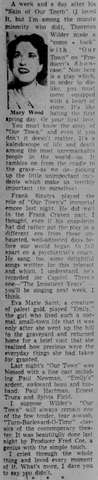
September 22 - THIS DATE IN SINATRA HISTORY
Undated materialFrom: Ed O'Brien <dmarc-noreply@freelists.org> | Received: 2024-09-23
Philadelphia Inquirer
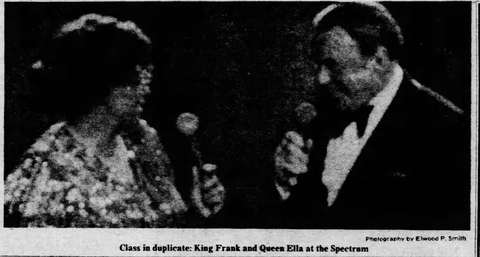
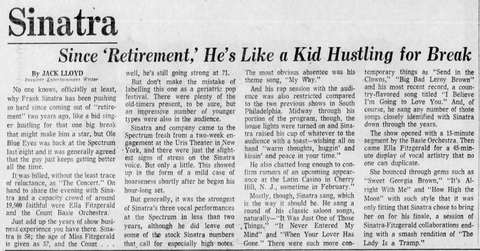
The Sands 1956
Undated materialFrom: cara <dmarc-noreply@freelists.org> | Received: 2024-09-23
Audrey Hepburn, Mel Ferrer, Frank Sinatra and Prince Mike Romanoff at The Sands,1956.
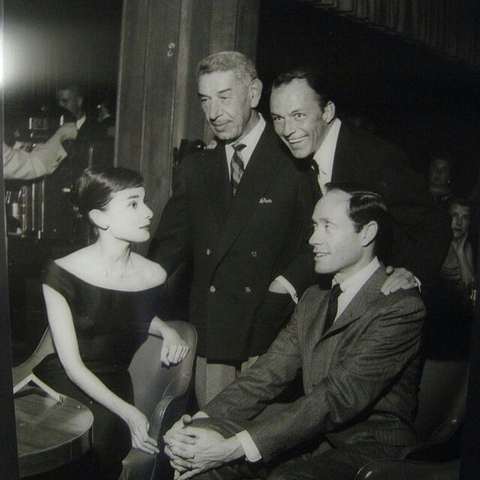
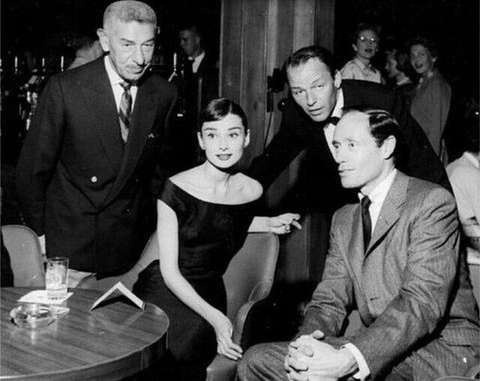
Jackie Kennedy Onassis and Frank Sinatra
Undated materialFrom: cara <dmarc-noreply@freelists.org> | Received: 2024-09-24
Thank you, Ed.
Here are some photos.
Carl
Jackie parties with Sinatra and Jane Fonda in the late ‘70s. | Jackie ...
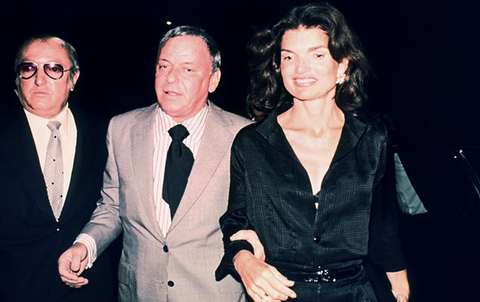
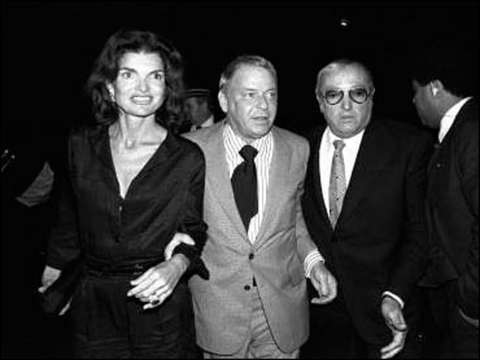
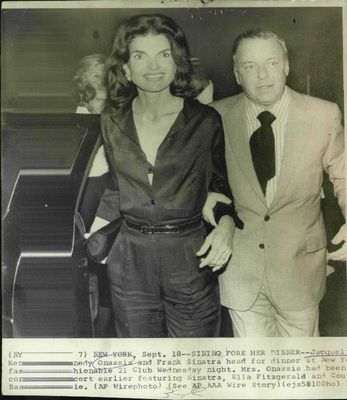
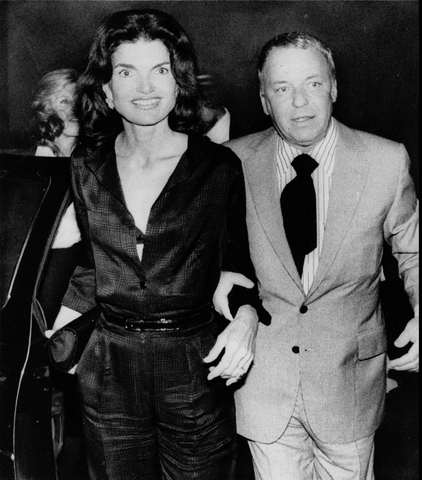
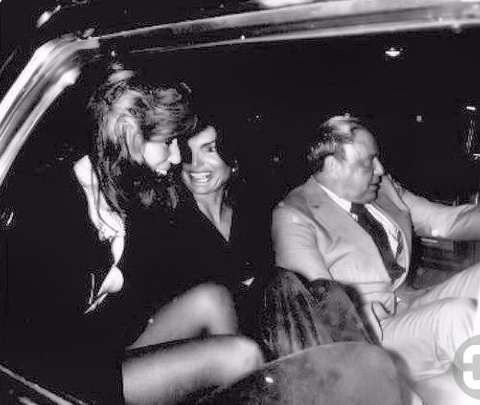
Re: Jackie Kennedy Onassis and Frank Sinatra
Undated materialFrom: Ed O'Brien <dmarc-noreply@freelists.org> | Received: 2024-09-24
On Tuesday, September 24, 2024 at 04:36:43 AM EDT, cara <dmarc-noreply@freelists.org> wrote:
Thank you, Ed.
Here are some photos.
Carl
Thank you, Carl. After becoming a widow for the second time, Jackie
moved back to N.Y.C., in the summer of 1975. She was hired by Viking as
an editor. And that explains the rapprochement with Frank. She wanted
to land the autobio of the man. The past was the past. Later Jackie went
to Doubleday and continued until her dying days to land the most sought
after celebrity. I have a long discussion regarding his feelings about telling
all. Succinctly put, he said "It's no one's business !"
Ed
Jackie parties with Sinatra and Jane Fonda in the late ‘70s. | Jackie ...
Re: Rare Sinatra Acetate? -- I don't think so
Undated materialFrom: Tito Montoya <franklyjoy22@gmail.com> | Received: 2024-09-24
The interview in Egypt Frank he gave with the Pyamids behind him, comes to my mind; when asked what he thought about impersonators trying his singing, he laughed out loud saying some of them were good when it came to the voice, "some of those voices resemble mine, but the phrasing, and the inflections are not there at all, my style is *most unusual* "
I agree, trying to sing along with Sinatra can be very tricky. Some years ago a friend of mine who always liked "Just the way you are" (which he recorded for the Trilogy project ) started singing along while I, played the record; ten seconds after he turned to me with desolate face and said; "I can't sing". I laughed cause I suspected he hadn't heard him much by then. Sinatra's extraordinary phrasing can make it impossible for any singer to follow him; the values he gave to the notes were absolutely phenomenal, it even prompted John Lahr in his book "Sinatra, the man and the Artist" to ask the opinion of a neurologist about such a gift. Apparently has to do with the part of the brain that deals with language fluency ... or as Gene Kelly put it when it came to Sinatra : "Who can define what talent is .. "
When it comes to this recording, in my opinion not even the voice resembles to Sinatra's baritone.
El lun, 23 sept 2024 a las 10:02, Ed O'Brien (<dmarc-noreply@freelists.org>) escribió:
> Hi Scott,
> If you recall that one offered some session material. > Sinatra was talking to Riddle between takes. I sound as much > like Sinatra as that faux attempt. And now we have A.I. Bette > Davis nailed it: "It is going to be a bumpy ride."
> Ed
>
> On Monday, September 23, 2024 at 10:57:10 AM EDT, Scott Henderson < > scott@falseducks.com> wrote:
>
>
> I remember the guy from a few years ago who was trying to maintain a > recording called “I’m In Love With A Robot” was sung by Sinatra. It was > laughable.
>
>
>
>
>
> Scott
>
>
>
> *From:* sinatraphiles-bounce@freelists.org [mailto:
> sinatraphiles-bounce@freelists.org] *On Behalf Of *Ed O'Brien ("eob101") > *Sent:* September 23, 2024 10:37 AM
> *To:* sinatraphiles@freelists.org
> *Subject:* [sinatraphiles] Re: Rare Sinatra Acetate? -- I don't think so >
>
>
> Hi Scott,
>
> I interviewed many of the people associated with Sinatra. >
> They were in awe of his voice back in the 1940s. Words used to >
> describe it included glorious, angelic, heavenly, stupendous and >
> simply wonderful. Trying to foist off on collectors these run of the >
> mill vocalists is utterly absurd. I'm sure you remember the attempt, >
> a few years back, when an amazing find occurred. Frank singing >
> two or three numbers. The singer was not remotely close to the >
> amazing gift Sinatra possessed. And the price they are asking >
> for such mediocrity. Outrageous. Grrrrrr . . . . . .
>
>
>
> On Monday, September 23, 2024 at 10:17:44 AM EDT, Scott Henderson < > scott@falseducks.com> wrote:
>
>
>
>
>
> I’m not even sure why he contributes it to Sinatra. There’s nothing > written on it that even suggests it’s Sinatra. You are right though, I > could tell it wasn’t Dorsey and even the tempo and phrasing by the singer > don’t match Sinatra. And why would you think it was worth $80,000? >
>
>
>
>
> Scott
>
>
>
> *From:* sinatraphiles-bounce@freelists.org [mailto:
> sinatraphiles-bounce@freelists.org] *On Behalf Of *Ed O'Brien ("eob101") > *Sent:* September 23, 2024 9:50 AM
> *To:* sinatraphiles@freelists.org
> *Subject:* [sinatraphiles] Re: Rare Sinatra Acetate? -- I don't think so >
>
>
> Hi Scott,
>
> There are a few ingredients missing here: >
> 1. Tommy Dorsey's orchestra
>
> 2. Pied Pipers
>
> 3. Fred Stulce's great chart
>
> 4. Frank Sinatra
>
> Ed
>
>
>
>
>
> On Monday, September 23, 2024 at 09:26:18 AM EDT, Scott Henderson < > scott@falseducks.com> wrote:
>
>
>
>
>
> A seller on Ebay has the following listed for $80,000 >
>
>
>
>
>
> https://www.ebay.com/itm/335586038998?mkevt=1&mkpid=0&emsid=e11021.m164380.l178263&mkcid=7&ch=osgood&euid=e2eb2c77370944bd8d616651d7ed1724&bu=43187722506&ut=RU&osub=-1%7E1&crd=20240923055430&segname=11021&recoId=335586038998&recoPos=1 >
>
>
> Here’s his description:
>
>
>
> Rare Unreleased Acetate Vinyl Recording Featuring Frank Sinatra: *“I’ll > Never Smile Again”* & Dick Powell *“I Only Have Eyes for You >
>
>
> The seller also put up a Youtube video of the audio that he alleges is > Sinatra.
>
>
>
> https://www.youtube.com/watch?v=IMxhH0i6Yhw
>
>
>
> To my ears, it clearly is not Sinatra.
>
>
>
>
>
> Scott
>
>
>
>
>
Re: September 23 - THIS DATE IN SINATRA HISTORY
Undated materialFrom: Ed O'Brien <dmarc-noreply@freelists.org> | Received: 2024-09-24
FRANK AND BUSTER 1952
Undated materialFrom: Ed O'Brien <dmarc-noreply@freelists.org> | Received: 2024-09-25
Philadelphia Inquirer
2-14-52
note: I would argue that Frank was maligned as a singer and overrated as
a comedian in this article. But the main reason for posting is the segment
on the great Buster Keaton. The man was a comedic genius and should
have been turning down a slew of offers in February of 1952. Would love
to see the comedy stretch Sinatra did with him on the 2-12-52 CBS show.
Ed
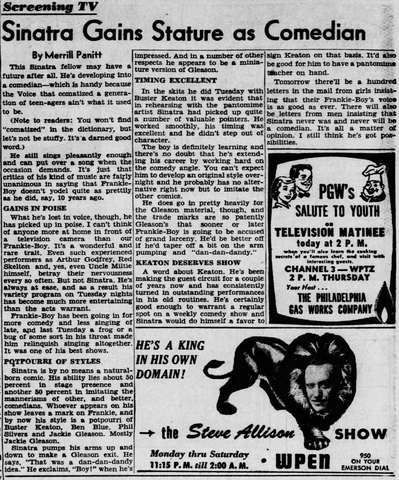
Re: Rare Sinatra Acetate? -- I don't think so
Undated materialFrom: Steve <dmarc-noreply@freelists.org> | Received: 2024-09-25
Also, where does the "Dick Powell" reference in the title come from? The record is signed from "Ray Powell"--who isn't anyone famous. I guess the seller is trying to make you think of some sort of mash-up of Ray Eberle and Dick Powell. For fun I was thinking of offering $1, but I don't want him to accept it and have me on the hook for the additional $25 media mail shipping charge. By the way, you can ship up to 28 pounds by media mail for $25. Maybe the record is stamped on 12,700-gram vinyl? Steve
On Monday, September 23, 2024 at 10:17:44 AM EDT, Scott Henderson <scott@falseducks.com> wrote:
I’m not even sure why he contributes it to Sinatra. There’s nothing written on it that even suggests it’s Sinatra. You are right though, I could tell it wasn’t Dorsey and even the tempo and phrasing by the singer don’t match Sinatra. And why would you think it was worth $80,000?
Scott
From: sinatraphiles-bounce@freelists.org [mailto:sinatraphiles-bounce@freelists.org] On Behalf Of Ed O'Brien ("eob101")
Sent: September 23, 2024 9:50 AM
To: sinatraphiles@freelists.org
Subject: [sinatraphiles] Re: Rare Sinatra Acetate? -- I don't think so
Hi Scott,
There are a few ingredients missing here:
1. Tommy Dorsey's orchestra
2. Pied Pipers
3. Fred Stulce's great chart
4. Frank Sinatra
Ed
On Monday, September 23, 2024 at 09:26:18 AM EDT, Scott Henderson <scott@falseducks.com> wrote:
A seller on Ebay has the following listed for $80,000
https://www.ebay.com/itm/335586038998?mkevt=1&mkpid=0&emsid=e11021.m164380.l178263&mkcid=7&ch=osgood&euid=e2eb2c77370944bd8d616651d7ed1724&bu=43187722506&ut=RU&osub=-1%7E1&crd=20240923055430&segname=11021&recoId=335586038998&recoPos=1
Here’s his description:
Rare Unreleased Acetate Vinyl Recording Featuring Frank Sinatra: *“I’ll Never Smile Again”* & Dick Powell *“I Only Have Eyes for You
The seller also put up a Youtube video of the audio that he alleges is Sinatra.
https://www.youtube.com/watch?v=IMxhH0i6Yhw
To my ears, it clearly is not Sinatra.
Scott
Re: September 24 - THIS DATE IN SINATRA HISTORY
Undated materialFrom: Ed O'Brien <dmarc-noreply@freelists.org> | Received: 2024-09-25
note: What a review !
Re: September 24 - THIS DATE IN SINATRA HISTORY
Undated materialFrom: Ed O'Brien <dmarc-noreply@freelists.org> | Received: 2024-09-25
Chicago Tribune
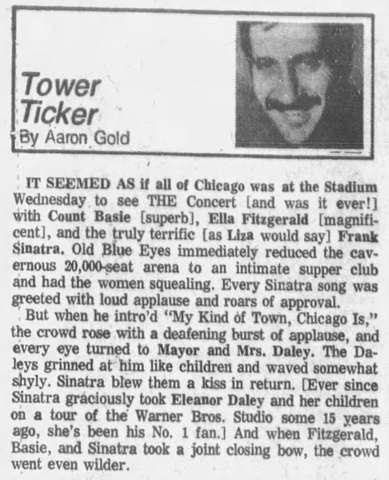
Re: September 24 - THIS DATE IN SINATRA HISTORY
Undated materialFrom: Ed O'Brien <dmarc-noreply@freelists.org> | Received: 2024-09-25
note: What a review !
SINATRA AND KEN LANE FEBRUARY 1952
Undated materialFrom: Ed O'Brien <dmarc-noreply@freelists.org> | Received: 2024-09-25
Evening Star
2-20-52
note: Ken Lane Singers and Ken Lane piano player were
part of the Columba era, starting in 1944. To claim
he was Frank's arranger and not mention Stordahl,
or Siravo, or Oliver is a bit of a stretch. Lane may
have contributed to the charts for "That Old Black
Magic" and "All Of Me," done for "Meet Danny Wilson."
He was the piano player at the Universal session in
June and July of 1951. But Neal Hefti told me that
"Old Black Magic," done for the film, was his first
effort for Sinatra. Article is a curious artifact from
Frank's last year at Columbia Records.
Ed
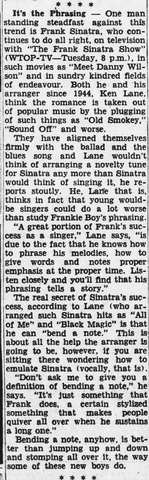
September 25 - THIS DATE IN SINATRA HISTORY
Undated materialFrom: Scott Henderson <scott@falseducks.com> | Received: 2024-09-25
Songs By Sinatra (CBS)
Sponsor: Old Gold Cigarettes
Announcer: Marvin Miller
Orchestra Conducted By: Axel Stordahl
Performers: Frank Sinatra, The Pied Pipers
Guests: Sandra Gould, Ken Christy, Andre Previn
1. Night And Day
2. Blue Skies
3. Doin' What Comes Naturally Pied Pipers
4.Medley with Andre Previn: And The Band Played On/I Wonder What's Become Of Sally. After The Ball/ I Wonder Who's Kissing Her Now
5. On The Boardwalk In Atlantic City Frank & The Pipers
6, The Things We Did Last Summer Frank, Pipers Sandra Gould, Ken Christy
7. September Song.
8. Put Your Dreams Away
NOTE: Ed O'Brien gives us a little fact here: Sinatra sang "And the Band Played On" during a medley on the Old Gold Show.
Thirty years later to the day, he sang it again during the second show at the Premier Theater. The latter performance was done with just the backing of Bill Miller on piano.
Frank Sinatra and Phil Silvers somewhere??
Undated materialFrom: cara <dmarc-noreply@freelists.org> | Received: 2024-09-26
I came across this interesting photo.
Frank Sinatra and Phil Silvers.
Marine orchestra?
Gremlins?
Marines in the audience.
Could the two girls to the right be Fay McKenzie and Betty Yeaton?
If so, could it be from the USO tour in 1945?
Carl
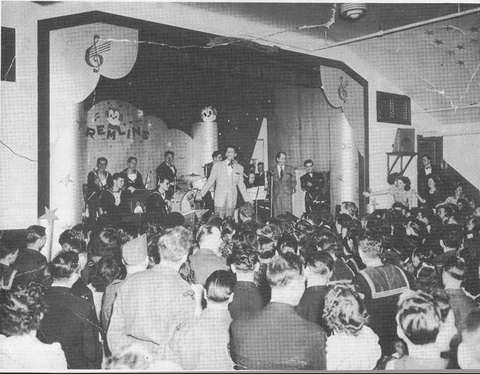
Re: Frank Sinatra and Phil Silvers somewhere??
Undated materialFrom: Scott Henderson <scott@falseducks.com> | Received: 2024-09-26
Hello Carl,
That image has been included in our Sinatra post for June 3 for the last few years.
1945 Fort McAndrew, Argentia, Newfoundland (June 3-6)
The caption for this image was “Performance by Frank Sinatra at Buckmaster’s Field, St. John’s in 1945 Chris Andrews, far right on stage, was the MC for the event. The Argentia CB Band played that night."
Source was from the book: “A Friendly Invasion II: A Personal Touch” by John N. Cardoulis
Scott
From: sinatraphiles-bounce@freelists.org [mailto:sinatraphiles-bounce@freelists.org] On Behalf Of cara ("cara")
Sent: September 26, 2024 9:33 AM
To: sinatraphiles@freelists.org
Subject: [sinatraphiles] Frank Sinatra and Phil Silvers somewhere??
I came across this interesting photo.
Frank Sinatra and Phil Silvers.
Marine orchestra?
Gremlins?
Marines in the audience.
Could the two girls to the right be Fay McKenzie and Betty Yeaton?
If so, could it be from the USO tour in 1945?
Carl
Re: Frank Sinatra and Phil Silvers somewhere??
Undated materialFrom: Ed O'Brien <dmarc-noreply@freelists.org> | Received: 2024-09-26
Hi Carl,
I see both marines and navy personnel in
the audience. Frank started out playing up around
Nova Scotia. I also see naval uniforms in the orches-
tra. Fairly certain it was at the beginning of the
tour in late May of 45.
Ed
On Thursday, September 26, 2024 at 09:32:48 AM EDT, cara <dmarc-noreply@freelists.org> wrote:
I came across this interesting photo.
Frank Sinatra and Phil Silvers.
Marine orchestra?
Gremlins?
Marines in the audience.
Could the two girls to the right be Fay McKenzie and Betty Yeaton?
If so, could it be from the USO tour in 1945?
Carl
Re: September 24 - THIS DATE IN SINATRA HISTORY
Undated materialFrom: Ed O'Brien <dmarc-noreply@freelists.org> | Received: 2024-09-26
Miami Herald
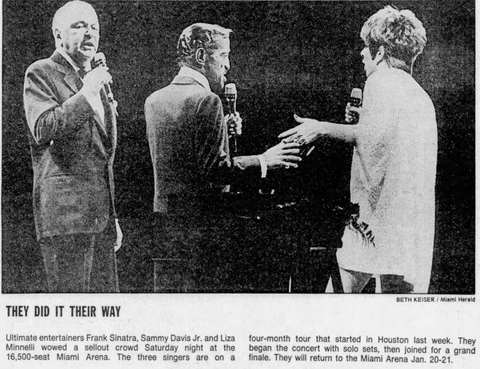
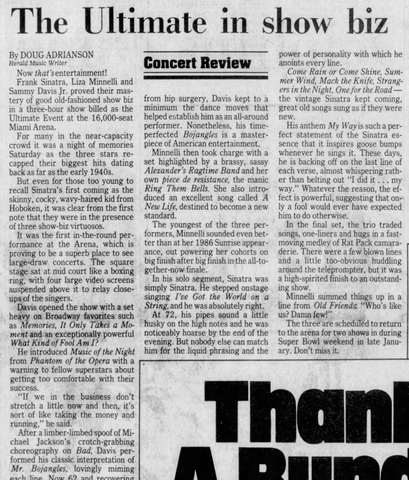
Re: September 25 - THIS DATE IN SINATRA HISTORY
Undated materialFrom: Ed O'Brien <dmarc-noreply@freelists.org> | Received: 2024-09-26
note: The reverence and appreciation for Sinatra's artistry
was at an all-time high in the early 1980s. He had
become the consummate concert performer of that
era. His magnificence onstage was celebrated by
both the concertgoer and the critic. What a joy it
was to see the man and hear him sing.
Ed
Re: September 25 - THIS DATE IN SINATRA HISTORY
Undated materialFrom: Ed O'Brien <dmarc-noreply@freelists.org> | Received: 2024-09-26
Orlando Sentinel
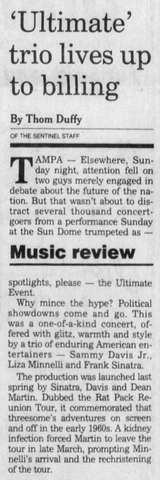
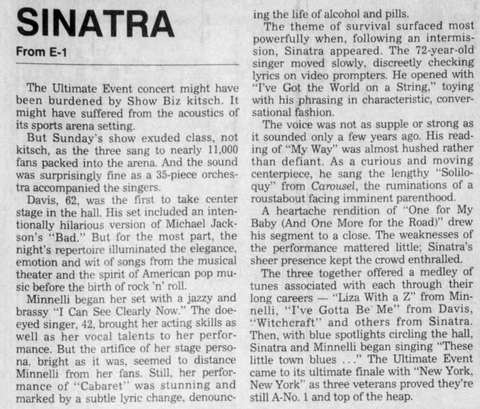
SV: Re: Frank Sinatra and Phil Silvers somewhere??
Undated materialFrom: cara <dmarc-noreply@freelists.org> | Received: 2024-09-26
Hi Scott,
Huge mistake on my part.
I cannot understand that I have overlooked this for 3 years.
Thanks for reminding me.
Carl
Hello Carl,
That image has been included in our Sinatra post for June 3 for the last few years.
1945 Fort McAndrew, Argentia, Newfoundland (June 3-6)
The caption for this image was “Performance by Frank Sinatra at Buckmaster’s Field, St. John’s in 1945 Chris Andrews, far right on stage, was the MC for the event. The Argentia CB Band played that night."
Source was from the book: “A Friendly Invasion II: A Personal Touch” by John N. Cardoulis
Scott
From: sinatraphiles-bounce@freelists.org [mailto:sinatraphiles-bounce@freelists.org] On Behalf Of cara ("cara")
Sent: September 26, 2024 9:33 AM
To: sinatraphiles@freelists.org
Subject: [sinatraphiles] Frank Sinatra and Phil Silvers somewhere??
I came across this interesting photo.
Frank Sinatra and Phil Silvers.
Marine orchestra?
Gremlins?
Marines in the audience.
Could the two girls to the right be Fay McKenzie and Betty Yeaton?
If so, could it be from the USO tour in 1945?
Carl
Re: September 27 - THIS DATE IN SINATRA HISTORY
Undated materialFrom: Ed O'Brien <dmarc-noreply@freelists.org> | Received: 2024-09-28
September 28 - THIS DATE IN SINATRA HISTORY
Undated materialFrom: Scott Henderson <scott@falseducks.com> | Received: 2024-09-28
September 29 - THIS DATE IN SINATRA HISTORY
Undated materialFrom: Scott Henderson <scott@falseducks.com> | Received: 2024-09-29
Re: September 30 - THIS DATE IN SINATRA HISTORY
Undated materialFrom: John Larrabee <dmarc-noreply@freelists.org> | Received: 2024-09-30
Ursula, J.D., and Frank's back at the Villa Capri.
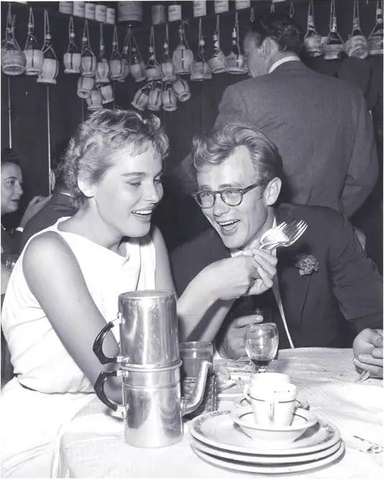
Re: September 30 - THIS DATE IN SINATRA HISTORY
Undated materialFrom: Ed O'Brien <dmarc-noreply@freelists.org> | Received: 2024-09-30
Portsmouth Stadium, Portsmouth, Virginia
Tommy Dorsey and His Orchestra with Frank Sinatra
PORTSMOUTH STAR 9-26-41

Re: September 30 - THIS DATE IN SINATRA HISTORY
Undated materialFrom: Ed O'Brien <dmarc-noreply@freelists.org> | Received: 2024-09-30
Asbury Park
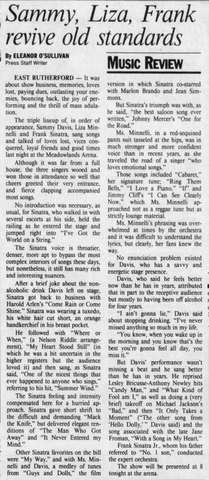
question for the group
Undated materialFrom: Scott Henderson <scott@falseducks.com> | Received: 2024-09-30
Hello everyone,
Someone emailed me asking about a post they saw on Redit. This was what was sent to me:
Need help identifying my dad's Sinatra bootleg
I'm going through my dad's music collection and there's a DIY cassette tape labeled "Sinatra Live at Caraques". From online searches I'm guessing he meant Cadaques, the town in Spain, but I can't find any online record of Sinatra performing there, let alone it being recorded. The tape doesn't have a tracklist, and I don't currently have a working tape player to listen to it on.
Does anyone know what this might be?
I responded that I didn't have a clue. Sinatra did two concerts in Spain in 1992. One was in
Barcelona on June 3 and the other was Coliseum da
Coruña, A Coruña, Spain on June 5th. Nothing in between and then he moved on to Portugal on June 7th.
Caraques is also the Spanish spelling of Caracas,
Venezuela. To my knowledge, Sinatra never performed in Venezuela.
Does anyone have any thoughts?
Scott
October 1 - THIS DATE IN SINATRA HISTORY
Undated materialFrom: Ed O'Brien <dmarc-noreply@freelists.org> | Received: 2024-10-02
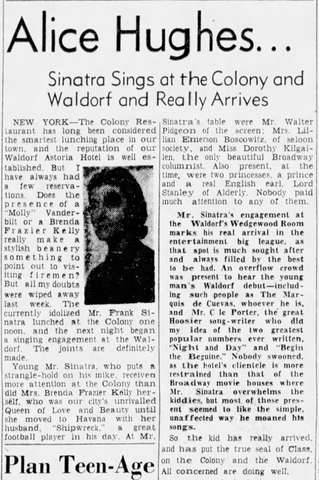
October 1 - THIS DATE IN SINATRA HISTORY
Undated materialFrom: Ed O'Brien <dmarc-noreply@freelists.org> | Received: 2024-10-02
REVIEW IOF "ALL OR NOTHING AT ALL" OCTOBER 1940
Undated materialFrom: Ed O'Brien <dmarc-noreply@freelists.org> | Received: 2024-10-04
Tampa Bay Tribune
October 6, 1940
note: "All Or Nothing At All" was recorded on 8-31-39. Released in October
of 1940. According to Billboard, the disc sold 16,000 copies. The re-
release in the summer of 1943 sold over a million.
Ed
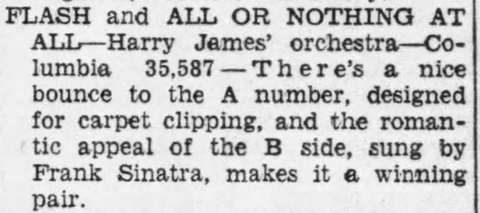
THE VOICE AND HIS MUSIC
Undated materialFrom: Ed O'Brien <dmarc-noreply@freelists.org> | Received: 2024-10-04
Boston Globe
10-5-88

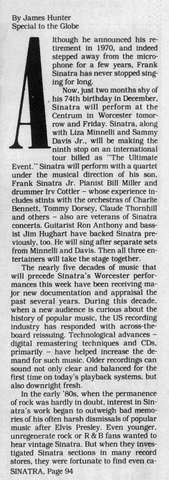

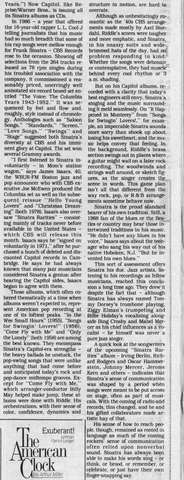
TOMMY DORSEY WITH CONNIE HAINES AND FRANK SINATRA IN OCTOBER 1940
Undated materialFrom: Ed O'Brien <dmarc-noreply@freelists.org> | Received: 2024-10-04
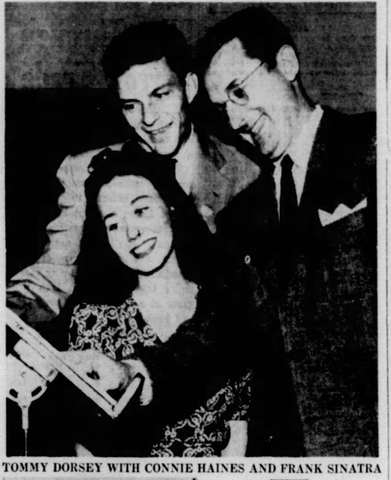
October 5 - THIS DATE IN SINATRA HISTORY
Undated materialFrom: Scott Henderson <scott@falseducks.com> | Received: 2024-10-05
October 6 - THIS DATE IN SINATRA HISTORY
Undated materialFrom: Scott Henderson <scott@falseducks.com> | Received: 2024-10-06
55.
Frank was not overly fond of his smash 1954 hit "Young At Heart." He much preferred the single's flip-side "Take
A Chance." Eight of the PF/Bobbi shows opened with "Take A Chance" and a measly one featured "Young At
Heart" as the opener.
Ed
October 6 - THIS DATE IN SINATRA HISTORY
Undated materialFrom: Scott Henderson <scott@falseducks.com> | Received: 2024-10-06
55.
Frank was not overly fond of his smash 1954 hit "Young At Heart." He much preferred the single's flip-side "Take
A Chance." Eight of the PF/Bobbi shows opened with "Take A Chance" and a measly one featured "Young At
Heart" as the opener.
Ed
Re: October 5 - THIS DATE IN SINATRA HISTORY
Undated materialFrom: Ed O'Brien <dmarc-noreply@freelists.org> | Received: 2024-10-06
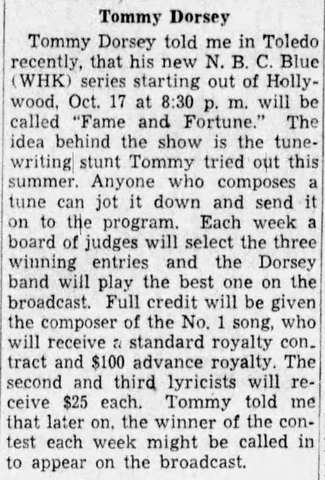
Re: October 5 - THIS DATE IN SINATRA HISTORY
Undated materialFrom: Ed O'Brien <dmarc-noreply@freelists.org> | Received: 2024-10-06
SANDS 1953
Undated materialFrom: Ed O'Brien <dmarc-noreply@freelists.org> | Received: 2024-10-07
Article was published on 10-29-53 (Thursday). States that Frank closed on Tuesday ( 27 ).
But he threw himself a party on the 28th and dressed as a clown. Look at the sadness
in his eyes. Found articles citing the preponderance of sad ballads in his Sands shows.
Had many women, in the audience, in tears.
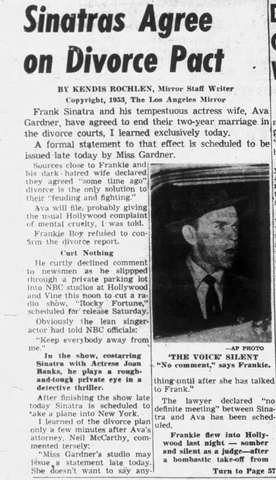
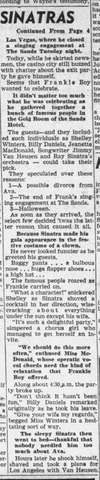
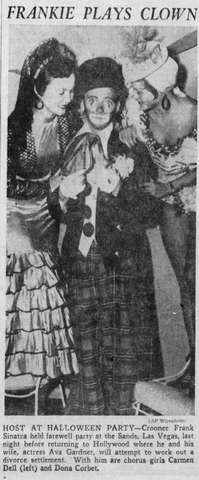
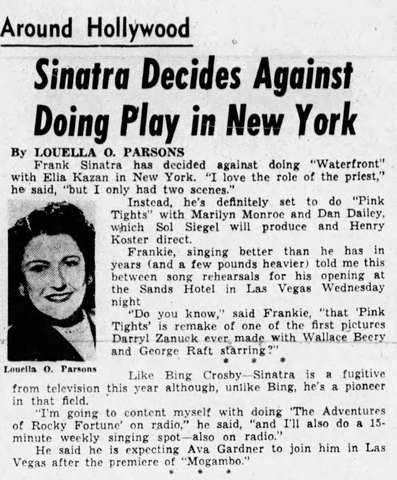
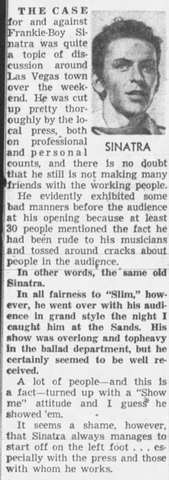
DORSEY BAND OCTOBER 1940
Undated materialFrom: Ed O'Brien <dmarc-noreply@freelists.org> | Received: 2024-10-08
L.A. TIMES
St Louis Horse Show
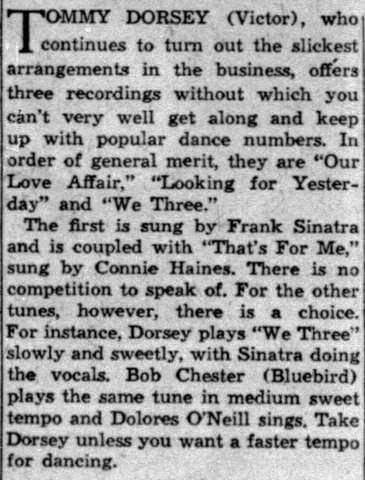
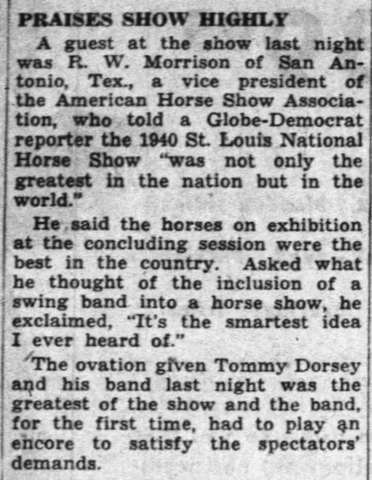
October 1940
Undated materialFrom: cara <dmarc-noreply@freelists.org> | Received: 2024-10-08
During this month in 1940 (October), Sinatra joined Tommy Dorsey & his band to begin a weekly radio show, ‘Fame and Fortune’, sponsored by Lewis Home Company and was broadcast on NBC for six months from 8:30 to 9 p.m.—that gave amateur songwriters a chance to compete for a $100 prize and the right to see their work published by NBC Music, a company in which Dorsey had an stake in. It was also a great learning curve for the young Sinatra, challenging Frank to learn and perform new and different material every outing.
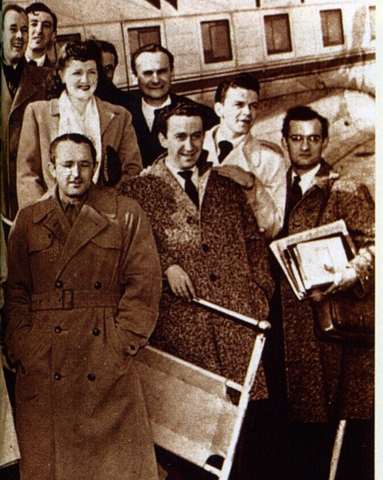
Pittsburgh Civic Arena - Friday October 8th 1993
Undated materialFrom: cara <dmarc-noreply@freelists.org> | Received: 2024-10-08
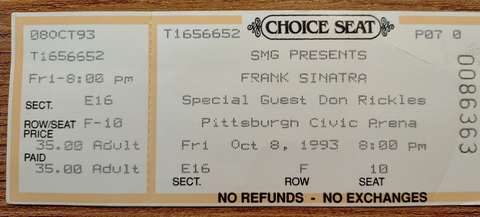
Re: Christmas gift?
Undated materialFrom: Ed O'Brien <dmarc-noreply@freelists.org> | Received: 2024-10-08
On Tuesday, October 8, 2024 at 05:23:24 AM EDT, cara <dmarc-noreply@freelists.org> wrote:
On this picture from Albacete December 1953 Ava is holding on to a 78 rpm record with her left hand.
I wonder if it was a new release that Frank gave her as a Christmas gift?
Carl
Hi Carl,
Frank was with Capitol in the fall of 1953. His most recent release
was "South of the Border/I Love You." Ava is holding a 12 inch record. And
it is not from Capitol.
Ed
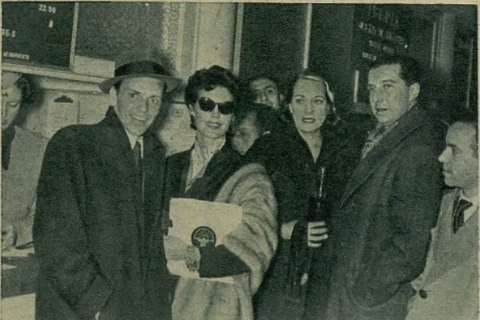
FRANKIE WAS THE MALE VOCALIST WITH THE FREDDIE NOBLE BAND
Undated materialFrom: Ed O'Brien <dmarc-noreply@freelists.org> | Received: 2024-10-09
note: Wow ! Who knew. I checked the major bios, Nancy's
books and found two obits on Noble. Nary a mention
of Frank's time with the band. I was looking for a review
of the Central Theater in Passaic, 10/42. Last year I
posted a review of Frank's December 42 engagement
at the theater. Reviewer listed songs Frank sang. I
thought there might be a review of the October show.
And I stumbled upon this article in The Record.
Ed
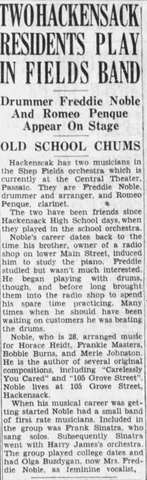
Re: FRANKIE WAS THE MALE VOCALIST WITH THE FREDDIE NOBLE BAND
Undated materialFrom: kenny lucas <dmarc-noreply@freelists.org> | Received: 2024-10-09
Fantastic Ed ..keep up the good work
Sent from Yahoo Mail on Android
On Wed, Oct 9, 2024 at 6:48 PM, James Johnson<dmarc-noreply@freelists.org> wrote: Simply amazing that there still are new discoveries about Sinatra’s career. _____________
Jim Johnson
Rehoboth Beach, DE
On Oct 9, 2024, at 6:20 PM, Ed O'Brien <dmarc-noreply@freelists.org> wrote:
<1728511489312blob.jpg> note: Wow ! Who knew. I checked the major bios, Nancy's books and found two obits on Noble. Nary a mention of Frank's time with the band. I was looking for a review of the Central Theater in Passaic, 10/42. Last year I posted a review of Frank's December 42 engagement at the theater. Reviewer listed songs Frank sang. I thought there might be a review of the October show. And I stumbled upon this article in The Record.Ed<1728511489312blob.jpg>
Re: FRANKIE WAS THE MALE VOCALIST WITH THE FREDDIE NOBLE BAND
Undated materialFrom: James Johnson <dmarc-noreply@freelists.org> | Received: 2024-10-09
Simply amazing that there still are new discoveries about Sinatra’s career. _____________
Jim Johnson
Rehoboth Beach, DE
> On Oct 9, 2024, at 6:20 PM, Ed O'Brien <dmarc-noreply@freelists.org> wrote: >
>
> <1728511489312blob.jpg>
>
> note: Wow ! Who knew. I checked the major bios, Nancy's > books and found two obits on Noble. Nary a mention > of Frank's time with the band. I was looking for a review > of the Central Theater in Passaic, 10/42. Last year I > posted a review of Frank's December 42 engagement > at the theater. Reviewer listed songs Frank sang. I > thought there might be a review of the October show.
> And I stumbled upon this article in The Record.
> Ed
> <1728511489312blob.jpg>
Re: October 1940
Undated materialFrom: Ed O'Brien <dmarc-noreply@freelists.org> | Received: 2024-10-09
Hi Carl,
Jo Stafford told me the bus trips through the Midwest were
grueling, but the propeller planes really frightened her. They were often
not air worthy. Dorsey was a dare devil and would throw caution to the
wind be it bus travel in a blizzard or a plane flight in a violent storm. She
very much preferred traveling in a train.
Ed
During this month in 1940 (October), Sinatra joined Tommy Dorsey & his band to begin a weekly radio show, ‘Fame and Fortune’, sponsored by Lewis Home Company and was broadcast on NBC for six months from 8:30 to 9 p.m.—that gave amateur songwriters a chance to compete for a $100 prize and the right to see their work published by NBC Music, a company in which Dorsey had an stake in. It was also a great learning curve for the young Sinatra, challenging Frank to learn and perform new and different material every outing.
Re: October 9 - THIS DATE IN SINATRA HISTORY
Undated materialFrom: Ed O'Brien <dmarc-noreply@freelists.org> | Received: 2024-10-10
Pittsburgh Post Gazette
October 10, 1974
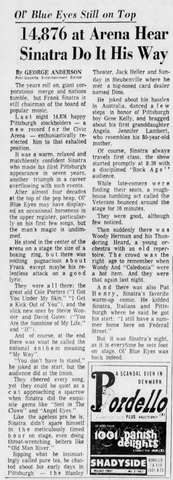
Re: SO YOU WANT TO BE A CROONER
Undated materialFrom: James Johnson <dmarc-noreply@freelists.org> | Received: 2024-10-10
Frank Sinatra was many things, certainly a genius, occasionally a neurotic, maybe even a demigod at times, but Frank was no Aquaman. I can well imagine Jo Stafford getting a belly laugh over the “breathing under water” story.
_____________
Jim Johnson
Rehoboth Beach, DE
On Oct 10, 2024, at 9:58 AM, Ed O'Brien <dmarc-noreply@freelists.org> wrote:
Hi Vance,
There was once a Sinatra Society that promulgated the notion
that Frank developed his remarkable breath control by breathing underwater.
They obviously misread or misunderstood what Frank was saying. I wrote to
the society and explained what happens if you take in air underwater. One
member steadfastly refused to accept my claim. "If Frank said he did it . . ."
Later on, I told Jo Stafford and it made her day. She could not stop laughing.
Jo told me that Frank's claim of snatching a breath was not possible. And she
had marvelous breath control. Jo told me that swimming underwater was the
key.
Frank's legato phrasing created a seamless sound in his recordings.
Interesting how he would move to a more staccato approach with the first Sinatra-
Basie album.
Ed
On Thursday, October 10, 2024 at 04:13:41 AM EDT, Vance Adair <dr.vanceadair@gmail.com> wrote:
And herein lies one of the oft (mis)quoted myths about Frank’s breath control. I cannot tell you the number of times I’ve read that Frank (inspired by Dorsey) learned to ‘sneak a breath’ in the middle of a phrase so that the line remained seamless.
This, of course, is impossible - even for a vocalist as gifted as young Frankie. There’s no doubt, however, that Frank learned a lot about legato phrasing from Dorsey.
-Vance
On Thu, 10 Oct 2024 at 04:20, Ed O'Brien <dmarc-noreply@freelists.org> wrote:
<1728530065865blob.jpg>
<1728530139253blob.jpg>
<1728530245520blob.jpg>
9-28-48
<1728530139253blob.jpg>
<1728530065865blob.jpg>
<1728530245520blob.jpg>
Re: SO YOU WANT TO BE A CROONER
Undated materialFrom: Ed O'Brien <dmarc-noreply@freelists.org> | Received: 2024-10-10
Hi Vance,
There was once a Sinatra Society that promulgated the notion
that Frank developed his remarkable breath control by breathing underwater.
They obviously misread or misunderstood what Frank was saying. I wrote to
the society and explained what happens if you take in air underwater. One
member steadfastly refused to accept my claim. "If Frank said he did it . . ."
Later on, I told Jo Stafford and it made her day. She could not stop laughing.
Jo told me that Frank's claim of snatching a breath was not possible. And she
had marvelous breath control. Jo told me that swimming underwater was the
key.
Frank's legato phrasing created a seamless sound in his recordings.
Interesting how he would move to a more staccato approach with the first Sinatra-
Basie album.
Ed
On Thursday, October 10, 2024 at 04:13:41 AM EDT, Vance Adair <dr.vanceadair@gmail.com> wrote:
And herein lies one of the oft (mis)quoted myths about Frank’s breath control. I cannot tell you the number of times I’ve read that Frank (inspired by Dorsey) learned to ‘sneak a breath’ in the middle of a phrase so that the line remained seamless.
This, of course, is impossible - even for a vocalist as gifted as young Frankie. There’s no doubt, however, that Frank learned a lot about legato phrasing from Dorsey.
-Vance
On Thu, 10 Oct 2024 at 04:20, Ed O'Brien <dmarc-noreply@freelists.org> wrote:
9-28-48
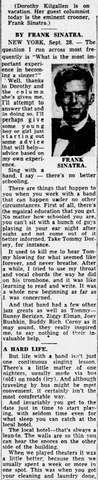
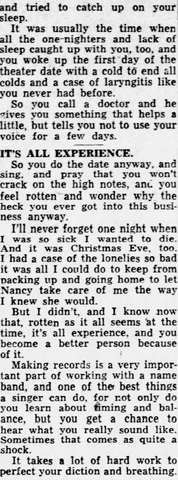
Re: SO YOU WANT TO BE A CROONER
Undated materialFrom: Vance Adair <dr.vanceadair@gmail.com> | Received: 2024-10-10
And herein lies one of the oft (mis)quoted myths about Frank’s breath control. I cannot tell you the number of times I’ve read that Frank (inspired by Dorsey) learned to ‘sneak a breath’ in the middle of a phrase so that the line remained seamless.
This, of course, is impossible - even for a vocalist as gifted as young Frankie. There’s no doubt, however, that Frank learned a lot about legato phrasing from Dorsey.
-Vance
On Thu, 10 Oct 2024 at 04:20, Ed O'Brien <dmarc-noreply@freelists.org> wrote:
9-28-48
SO YOU WANT TO BE A CROONER
Undated materialFrom: Ed O'Brien <dmarc-noreply@freelists.org> | Received: 2024-10-10
9-28-48
October 19 - THIS DATE IN SINATRA HISTORY
Undated materialFrom: Scott Henderson <scott@falseducks.com> | Received: 2024-10-19
Memorial Auditorium, Buffalo , New York
The Major Bowes Traveling Troupe, including Frank Sinatra, in 1935
Undated materialFrom: cara <dmarc-noreply@freelists.org> | Received: 2024-10-19
Here is a better picture.
The Major Bowes Traveling Troupe, including Frank, in 1935.
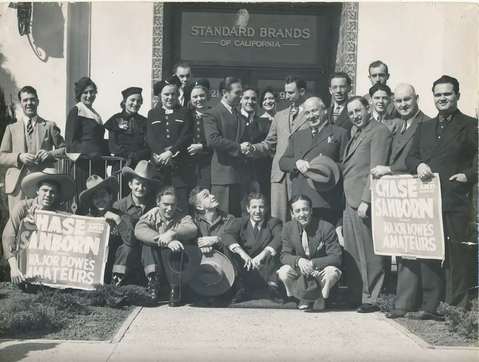
Jive Circus on Tour
Undated materialFrom: cara <dmarc-noreply@freelists.org> | Received: 2024-10-23
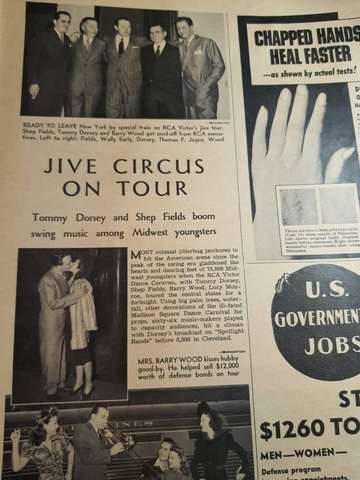
October 22 - THIS DATE IN SINATRA HISTORY
Undated materialFrom: Ed O'Brien <dmarc-noreply@freelists.org> | Received: 2024-10-23
'Youth Wants Roosevelt'
Undated materialFrom: cara <dmarc-noreply@freelists.org> | Received: 2024-10-24
Sinatra And Young Voters
Members of the Young Voters for Roosevelt Committee discuss a forthcoming youth rally with guest speaker, American actor and singer Frank Sinatra (1915 - 1998), October 1944. The rally is to be held at Carnegie Hall, New York on 24th October, prior to the presidential election in November. Standing, left to right: Doris Senk, of Young Americans for Roosevelt, Lynn Cohne of the Young Democrats and Margo Hass of the US Students' Assembly. Seated, Left to right: Trudi Kingdon-Behrle of the National Political Action Committee, Ruth Silver of the Young Liberals, and Sinatra. (Photo by Pictorial Parade/Archive Photos/Getty Images)
'Youth Wants Roosevelt'
American musician and actor Frank Sinatra (1915 - 1998) (right) meets with a group of young, female supporters of Roosevelt's presidential campaign, New York, New York, 1944. Most of them wear tags that read 'Youth Wants Roosevelt.' (Photo by Irving Haberman/IH Images/Getty Images)
Frank Sinatra sings and speaks at a rally for President Franklin Delano Roosevelt sponsored by an independent voters' commission.
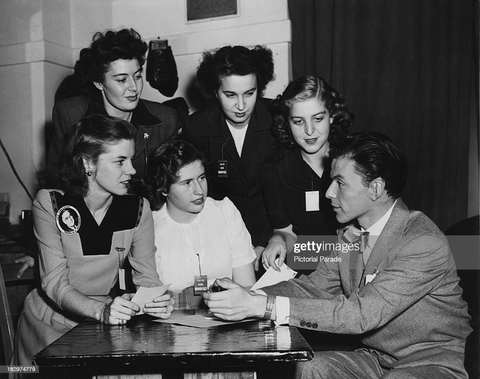
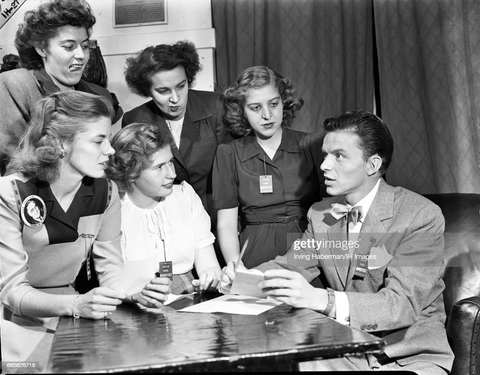
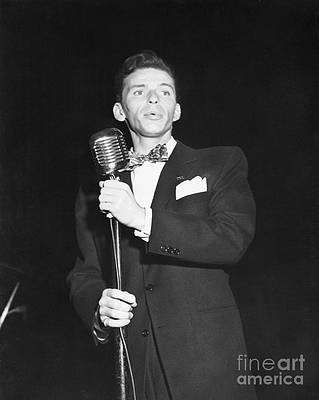
October 25 - THIS DATE IN SINATRA HISTORY
Undated materialFrom: scott@falseducks.com | Received: 2024-10-24
Light Up Time
Sponsor: Lucky Strike Cigarettes
Network: NBC
Show #36
Broadcast: 4:00-4:15 PM PST (Repeat: 8:00-8:15 PM PST)
Starring: Frank Sinatra & Dorothy Kirsten
Jeff Alexander And The Orchestra
1. opening
2. You Are My Sunshine - Frank Sinatra & Dorthy Kirsten
3. commercial 1
4. The Red River Valley - Dorothy Kirsten
5. Clementine - Frank Sinatra
6. Buttons And Bows - Dorothy Kirsten
7. Hey Lolly Lolly - Frank Sinatra & Dorothy Kirsten
8. commercial 2
9. Wagon Wheels - Frank Sinatra
10. closing
Notes: Sinatra & Kirsten were also supposed to sing "Skip To M'Lou" after "Clementine" but it was scratched.
Ed O'Brien points out, Sinatra was no cowpoke but he had a good time with these ditties. O'Brien says he prefers the "Clementine" that Sinatra did the previous year on the Burl Ives show.
October 25 - THIS DATE IN SINATRA HISTORY
Undated materialFrom: scott@falseducks.com | Received: 2024-10-24
Resorts International, Atlantic City, New Jersey
Second Show
October 25 - THIS DATE IN SINATRA HISTORY
Undated materialFrom: scott@falseducks.com | Received: 2024-10-24
Currigan Hall, Denver, Colorado
Fourth Annual Carousel Ball To Benefit Children's Diabetes Foundation of Denver Mrs Marvin Davis founded the Foundation in 1977
Art Buchwald & Merv Griffin were co-emcees
Frank Sinatra entertained
Vinnie Falcone conducted the Denver orchestra and Mr. Sinatra's sidemen.
Ed O'Brien
Frank performed at three benefits in seven days. Denver was the first stop before two in L.A. (25 and 30) at the Beverly Hilton.
Re: Sock and Swoon Men Talk Things Over
Undated materialFrom: Ed O'Brien <dmarc-noreply@freelists.org> | Received: 2024-10-24
Hi Carl,
Zivic had 233 professional fights. Imagine how many time he got
punched in the nose. He was a very good fighter who lost a number of
split decision bouts. He also had the misfortune of fighting in the era of
Sugar Ray Robinson.
Ed
On Tuesday, October 22, 2024 at 04:02:48 PM EDT, cara <dmarc-noreply@freelists.org> wrote:
I had never heard of Fritzie Zivic.
I looked him up on Google, and one of the final descriptions of him was:
“If there is a dictionary entry for the term “pug nose”, a pic of ol’ Fritzie’s sniffer should appear right next to it”.
Carl
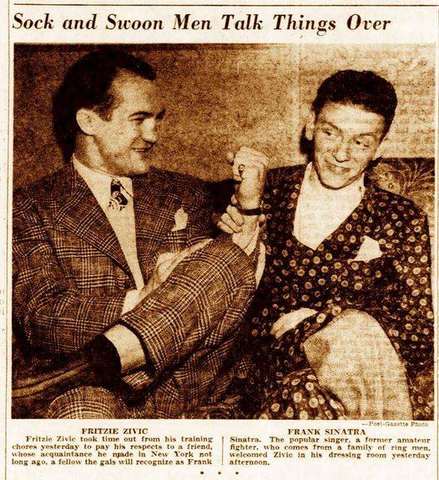
ELLA PICKS HER FAVORITE SINGERS
Undated materialFrom: Ed O'Brien <dmarc-noreply@freelists.org> | Received: 2024-10-25
May 11, 1963
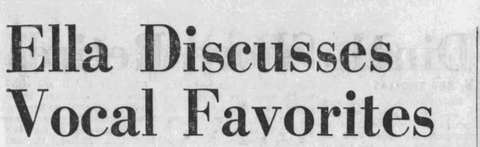
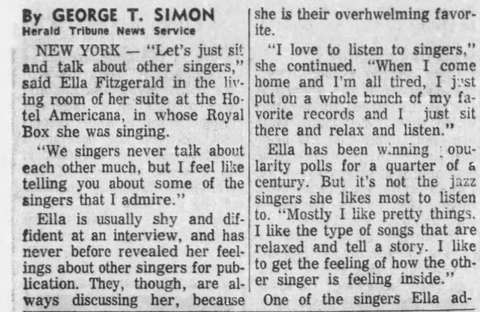
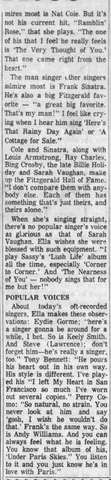
JACK JONES TIMES OBIT
Undated materialFrom: Ed O'Brien <dmarc-noreply@freelists.org> | Received: 2024-10-25
Jack Jones, a Suave, Hit-Making and Enduring Crooner, Dies at 86
With his smooth voice, he drew crowds to cabarets and music halls for six decades. He also sang the themes for films and TV shows, including “The Love Boat.” The singer Jack Jones on “The Jerry Lewis Show” in 1968. While his popularity peaked in the 1960s, Mr. Jones seemed always to have stepped out of an earlier generation, one that dressed in tuxedos for the songs of Tin Pan Alley.Credit...NBC By Robert D. McFadden
Oct. 24, 2024Updated 6:54 p.m. ET
Jack Jones, a crooner who beguiled concert fans and stage, screen and television audiences for decades with romantic ballads and gentle jazz tunes that even in large venues often achieved the intimacy of his celebrated nightclub performances, died on Wednesday in Rancho Mirage, Calif. He was 86.
His wife, Eleonora Jones, said the cause of his death, in a hospital, was leukemia.
While his popularity peaked in the 1960s, Mr. Jones found a new audience in later years singing the theme to the hit television show “The Love Boat.” But even then he seemed always to have stepped out of an earlier generation, one that dressed in tuxedos for the songs of Tin Pan Alley and reminded America of its love affairs with the Gershwins, Cole Porter, Sammy Cahn and Jimmy Van Heusen.
He won two Grammy Awards and recorded numerous albums of American Songbook favorites that hit the upper reaches of Billboard’s charts on the strength of his smooth vocal interpretations. He performed at Carnegie Hall, the Kennedy Center, the White House and the London Palladium, and for more than 60 years drew crowds to cabarets and nightclubs around the world.
At the Oak Room of the Algonquin Hotel in Manhattan in 2010, marking his 52nd year in show business, Mr. Jones opened and closed a two-hour retrospective of his songs with Paul Williams’s “That’s What Friends Are For.” He sang to a packed house of longtime fans:
Friends are like warm clothes
In the night air.
Best when they’re old
And we miss them the most when they’re gone.
“Those lyrics evoked the vanishing breed of pop-jazz crooner, of which Mr. Jones and Tony Bennett remain the great survivors,” Stephen Holden wrote in The New York Times. “Mr. Jones, now 72, draws the same kind of well-dressed sophisticated audiences that used to attend the annual appearances at the defunct Michael’s Pub of his friend Mel Tormé, who died 11 years ago at 73.” ImageMr. Jones with his fellow vocalist Tony Bennett in 1972.Credit...Central Press/Hulton Archive/Getty Images Mr. Holden called the show “a kind of master class in traditional nightclub performance: suave but intimate, alternately preening and humble, seemingly casual but seamlessly professional,” adding, “most of the old songs responded to Mr. Jones’s thoughtful outlook, which tinges everything with the sense of a man taking a moral inventory of his life.”
Mr. Jones, the son of the Hollywood actress Irene Hervey and Allan Jones, the tenor singing star of the 1930s and ’40s who romped with the Marx Brothers in “A Night at the Opera” and “A Day at the Races,” started out in a Las Vegas father-and-son act when he was 19, in which he tried to copy his dad’s forceful style. It was a mistake.
“My voice was less mature than his,” Mr. Jones told The Times in 1964. “We had a well-received act with a lot of references to Mom and home. But then my folks were divorced, and that knocked the wind out of the whole thing. I went out on my own, and my salary dropped, but I felt better.”
He began recording and singing in clubs, but with a different approach: crooning the lyrics. It was a magical transformation of his singing style and stage presence to something more casual, and it made an intimate emotional connection with audiences. It became his trademark.
On the 1960s pop scene, Mr. Jones was an anomaly, ignoring rock ’n’ roll in favor of big-band arrangements, romantic ballads and the American Songbook.
He recorded dozens of albums n the Kapp label, including “Dear Heart,” “Shall We Dance,” “She Loves Me,” “Call Me Irresponsible,” “I’ve Got a Lot of Livin’ to Do” and “The Jack Jones Christmas Album.” He won Grammy Awards for best solo male vocal performance for “Lollipops and Roses” in 1962 and “Wives and Lovers” in 1964.
He sang the title songs of several films, including “Love With the Proper Stranger” (1963), “Where Love Has Gone” (1964) and “A Ticklish Affair” (1963). He sang at White House parties during the presidencies of Lyndon B. Johnson and Ronald Reagan and performed twice for Queen Elizabeth II and the royal family.
Mr. Jones reached No. 1 on the Billboard easy listening chart with “The Impossible Dream” (1966) and “Lady” (1967). He was a staple on television variety shows hosted by Dinah Shore, Ed Sullivan, Andy Williams, Carol Burnett, Jerry Lewis, Dean Martin, Judy Garland and Steve Allen. And millions more heard him when they tuned into “The Love Boat” on ABC from 1977 through 1985. (He was replaced by Dionne Warwick for the show’s last season.)
|
|
|
| | |
|
|
|
| |
Love Boat (Long Version) - Jack Jones
|
|
|
Onstage, he appeared in regional productions of “The Pajama Game,” “Oklahoma!” and “She Loves Me” and starred in a 1995 Los Angeles production of “South Pacific.” ImageMr. Jones and his father, the singer Allan Jones, played father and son in a 1980 episode of “The Love Boat,” the series for which Jack Jones sang the title song. Laraine Stephens played Jack’s wife, and Dorothy Lamour played Allan’s.Credit...ABC Photo Archives/Disney General Entertainment Content, via Getty Images In 2001, Mr. Jones toured nationally as Don Quixote and Miguel Cervantes in Dale Wasserman’s musical “Man of La Mancha.” In Toledo, Ohio, as elsewhere, his audience was moved by his rendition of “The Impossible Dream,” the show’s big number.
“Never mind that his singing wasn’t as strong or flowing as one might have hoped,” Vanessa Winans said in a review for The Toledo Blade. “The audience had come to hear him sing it again, and he delivered.”
John Allan Jones was born in Los Angeles on Jan. 14, 1938, and spent his first few years living in a movie colony bungalow in Palm Springs, Calif., attended by hired help while his famous parents commuted to Hollywood to make movies. He had a half brother, Ted Jones, and an adopted half sister, Gail Jones, by a previous marriage of his father’s.
Jack, as he was always known, attended the Nellie Coffman School in Palm Springs and, for two years, the Principia School, a Christian Science boarding institution in St. Louis. He also had private drama and singing tutors at home, hired by his father. He was self-conscious about his privileged life when he enrolled at University High School in Los Angeles, class of 1956. His father sometimes drove him to school, but dropped him off a block or two away.
“I didn’t try to hide it, but I didn’t flaunt it either,” Mr. Jones said of his rarefied status in an interview for this obituary in 2020. University High had a diverse student body, he noted, but over the years its students had included Elizabeth Taylor, Judy Garland, Marilyn Monroe and Jeff Bridges.
“Nancy Sinatra and I were good friends,” he said. “Her father came to sing for us.” ImageMr. Jones at the Oak Room of the Algonquin Hotel in 2010. A New York Times reviewer called his show “a kind of master class in traditional nightclub performance.”Credit...Matthew Murphy for The New York Times Jack’s parents, who each had multiple marriages, were divorced in 1957.
Jack Jones, who lived in Indian Wells, Calif., was married six times, and all but his last marriage ended in divorce.
He was married to Katie Lee Nuckols (also known as the model Lee Larance), from 1960 to 1966; the actress Jill St. John, from 1967 to 1969; Gretchen Roberts, from 1970 to 1971; Kathryn Simmons, from 1977 to 1982; and Kim Ely, from 1982 to 2005. He married Eleonora Donata Peters in 2009.
In addition to his wife, he is survived by a daughter, Crystal Thomas, from his marriage to Ms. Nuckols; another daughter, Nicole Ramasco, from his marriage to Ms. Ely; two stepdaughters, Nicole Whitty and Colette Peters, from his marriage to Ms. Peters; and three grandchildren.
Mr. Jones continued to appear at casinos, performing arts centers and cabarets into his 80s.
“There’s a time when everybody has to stop,” he told The Times in 2020. “That moment is closer to me than it was a year ago. But if I never get on another airplane, I’ll be a happy man.”
October 25 - THIS DATE IN SINATRA HISTORY
Undated materialFrom: Scott Henderson <scott@falseducks.com> | Received: 2024-10-25
Light Up Time. It follows "If I Ever Love Again" on
the 10-25 show.
October 25 - THIS DATE IN SINATRA HISTORY
Undated materialFrom: Scott Henderson <scott@falseducks.com> | Received: 2024-10-25
October 26 - THIS DATE IN SINATRA HISTORY
Undated materialFrom: Scott Henderson <scott@falseducks.com> | Received: 2024-10-25
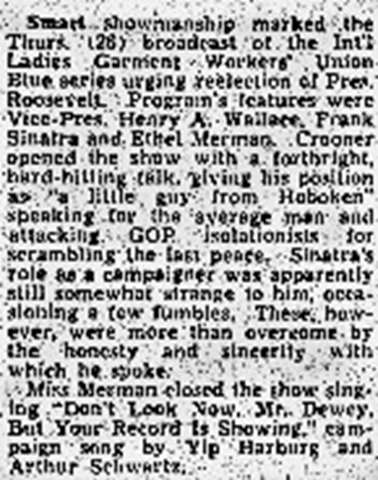
Re: October 24 - THIS DATE IN SINATRA HISTORY
Undated materialFrom: Ed O'Brien <dmarc-noreply@freelists.org> | Received: 2024-10-25
Re: October 24 - THIS DATE IN SINATRA HISTORY
Undated materialFrom: Ed O'Brien <dmarc-noreply@freelists.org> | Received: 2024-10-25
re today's posting
Undated materialFrom: Scott Henderson <scott@falseducks.com> | Received: 2024-10-25
Sorry, I noticed too late I sent out tomorrow's post today. I will send out the 25th shortly.
Scott
Frank Sinatra opens the Richfield Coliseum on Oct. 26, 1974.
Undated materialFrom: cara <dmarc-noreply@freelists.org> | Received: 2024-10-26
https://eu.beaconjournal.com/story/news/2024/10/20/frank-sinatra-opened-richfield-coliseum-in-1974/75668565007/
Show caption
Singer Frank Sinatra holds a cigarette while headlining the Richfield Coliseum on Oct. 26, 1974.
TOM MARVIN, AKRON BEACON JOURNAL FILE PHOTO
For Subscribers
Local history: Richfield Coliseum opened 50 years ago with Frank Sinatra
Mark J. Price Akron Beacon Journal
Fifty years ago, a dozen spotlights swept the night sky over Richfield Township.
Thousands of automobiles backed up for miles on Interstate 271 and state Route 303 for the grand opening of the Coliseum on Oct. 26, 1974.
Cleveland businessman Nick Mileti, owner of the new arena, had fielded offers from several famous acts to be the headliner of the inaugural concert, but the No. 1 choice seemed obvious to him.
The Chairman of the Board. Ol’ Blue Eyes. The Voice. Frank Sinatra.
“Once we thought it through, it had to be Frank,” Mileti told the Beacon Journal in 1974. “Every singer after him is somebody else.”
Mileti, 43, owner of the Cleveland Indians, Cavaliers and Crusaders, developed the sports and entertainment complex on the former site of a 110-acre farm in Richfield. It cost about $25 million to construct — nearly $160 million today. Boston architect George E. Ross designed the mammoth structure while William Passalacqua Builders of Cleveland served as general contractor.
Mileti reportedly paid Sinatra $273,000 for the appearance, which would amount to nearly $1.7 million today.
“This is the guy I wanted,” Mileti said. “He’s so special.”
Tickets cost $10, $15, $20 and $25 via mail order and Ticketron. Fans snapped up all 21,082 seats within 10 days.
Two weeks before the concert, contractors still had to pour wet concrete on the arena floor, install water and sewer lines, paint corridor walls and complete parking areas.
They simply ran out of time. The Coliseum was 90% completed by Oct. 26.
The parking lot is full on opening night of the Richfield Coliseum Oct. 26, 1974. The dotted white line in the background is the headlights of vehicles still arriving. Show less
LEW HENDERSON, AKRON BEACON JOURNAL FILE PHOTO
Traffic jam at Coliseum
Accompanied by an entourage of 20, Sinatra arrived that Saturday afternoon in a fleet of limousines from the Keg and Quarter Motor Inn in Cleveland.
Concertgoers began to converge on the Coliseum for the 8:30 p.m. show. Men in tuxedos and women in evening gowns stepped out of fancy automobiles and lined up to enter the complex. Spotlights illuminated the sky like a Hollywood premiere.
Arriving guests received a gold-plated medallion on a chain to wear around their necks. Mileti had commissioned Los Angeles jeweler Francisco Tortolani to create the keepsake. One side of the coin featured a picture of the Coliseum while the other had Sinatra’s likeness and the engraved date.
FRANK SINATRA MEDALLION ON CHAIN OCTOBER 26, 1974 RICHFIELD, OH COLISEUM GRAND OPENING NIGHT COLISEUM OWNER NICK MILETI PRESENTED EVERY ATTENDEE WITH THIS AWESOME KEEPSAKE OF A MEMORABLE EVENING.
State troopers and Summit County deputies directed traffic toward the 6,000-vehicle lot at the Coliseum. Unfortunately, construction trailers, heavy equipment and piles of debris blocked hundreds of spaces.
Some motorists spent an hour driving the last mile and a half on I-271. The two-lane highway turned into four lanes as impatient drivers used the berms. About 25 minutes before the show, the Ohio Highway Patrol sealed off the exits.
“There are no parking places left at the Coliseum,” one trooper told angry motorists. “You’ll have to go home.”
Instead, hundreds of concertgoers abandoned their cars on the median and walked the last mile to the Coliseum. Well-dressed patrons trudged through a muddy field in the dark to reach the arena.
Concertgoers line up outside the Richfield Coliseum to see Frank Sinatra on Oct. 26, 1974.
LEW HENDERSON, AKRON BEACON JOURNAL FILE PHOTO
Frank Sinatra takes stage
Inside the Coliseum, Pat Henry warmed up the audience before Woody Herman and his orchestra took the center stage. The music swelled as tuxedo-clad Frank Sinatra stepped into the blue and red spotlights.
“She gets too hungry for dinner at 8,” he sang. “She likes the theater and never comes late. She never bothers with people she’d hate. That’s why the lady is a tramp.”
Other songs in the set included “I Get a Kick Out of You,” “I’ve Got You Under My Skin,” “My Kind of Town,” “Let Me Try Again,” “I’ve Got the World on a String” and “Old Man River.” He also performed two newer songs: Jim Croce’s “Bad, Bad Leroy Brown” and Stevie Wonder’s “You Are the Sunshine of My Life.”
Sinatra, 56, casually smoked a cigarette while singing. He thanked Mileti for inviting him to the inaugural event of “this marvelous building.”
“I would have cried if he hadn’t asked me,” Sinatra said.
He noted that his good friend and fellow crooner Dean Martin was a native of Ohio.
“Dean made his first record in Steubenville,” Sinatra said. “And if you don’t believe me, ask the police chief.”
Celebrities could be glimpsed in the crowd that night. Former heavyweight boxer Joe Louis, Caesar’s Palace executive Billy Weinberger, U.S. Secretary of Housing and Urban Development James Lynn and Cleveland TV matriarch Dorothy Fuldheim were among the thousands enjoying the show.
Wiping off a chair onstage, Sinatra cracked a joke about the unfinished arena.
“You’ve got a $6 million act here and a dusty stool,” he said.
About midway through his set, Sinatra poured a glass of red wine and raised a toast to the audience.
“Luck, sweet dreams, love and kisses, and all that kind of stuff,” he said. “Cheers.”
Spotlights shine down on the center stage as Frank Sinatra opens the Richfield Coliseum on Oct. 26, 1974.
TOM MARVIN, AKRON BEACON JOURNAL FILE PHOTO
‘I did it my way’
Concertgoers continued to arrive until at least 10 p.m. When the house lights came on at intermission, mud-flecked clothing could be seen in the crowd. Some men had smudges on their suits from brushing against unpainted plasterboard.
For the big finale, Sinatra performed “My Way.”
“And now, the end is near and so I face the final curtain,” Sinatra sang. “My friend, I’ll say it clear, I’ll state my case, of which I’m certain. I’ve lived a life that’s full, I traveled each and every highway. And more, much more than this, I did it my way.”
Sinatra basked in applause and bid the audience good night.
He thanked Mileti backstage, changed clothes in a private dressing room and left with his entourage for Cleveland Hopkins Airport, where he caught a private flight for Houston.
Mileti and his wife, Gretchen, welcomed 2,000 guests at an 11 p.m. party in the Coliseum Club on the loge level.
“It’s like a dream,” Mileti kept telling well-wishers.
The parking lot cleared and concertgoers returned to their vehicles on I-271.
What a night. The Coliseum officially was open.
For 20 years, the landmark served as a center for sports and entertainment in Northeast Ohio: Rock concerts, basketball games, hockey matches, soccer games, tennis matches, circuses, rodeos, ice shows, wrestling matches, tractor pulls, track meets, horse shows, antique shows and other events.
The arena added hundreds of parking spaces and eventually built a back entrance, easing traffic congestion at shows.
But the grand building became obsolete with the construction of Gund Arena in downtown Cleveland. The Coliseum shut down in 1994 and fell to the wrecking ball five years later.
Today, the Richfield Coliseum is a meadow in Cuyahoga Valley National Park.
Mark J. Price can be reached at mprice@thebeaconjournal.com
Frank Sinatra sings Oct. 26, 1974, on opening night of the Richfield Coliseum.
TOM MARVIN, AKRON BEACON JOURNAL FILE PHOTO
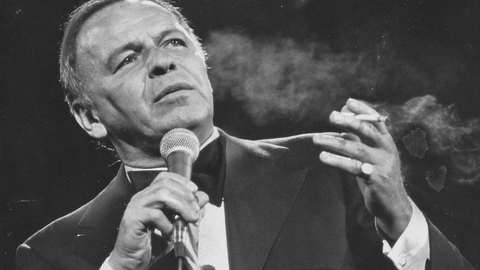
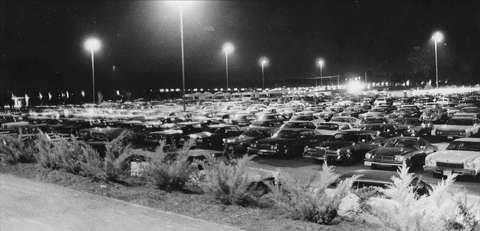
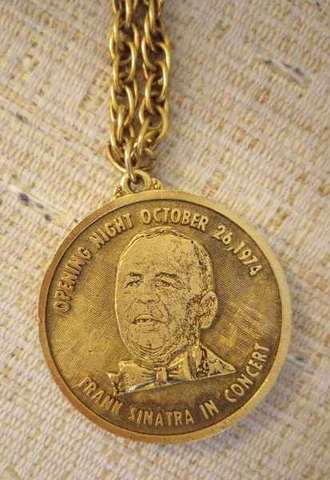
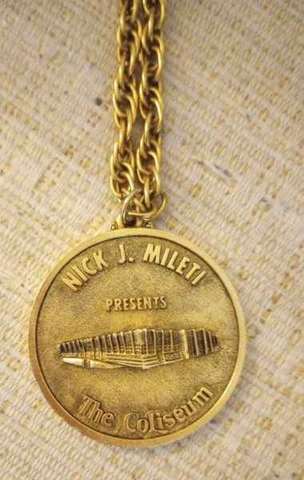
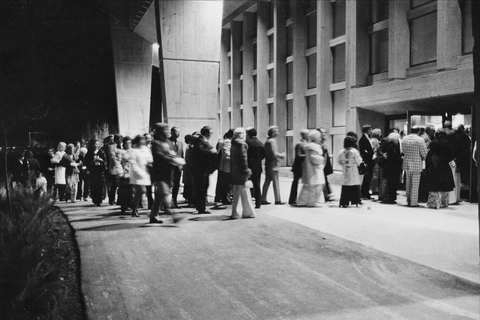
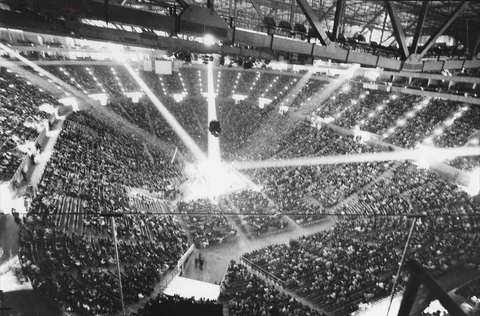
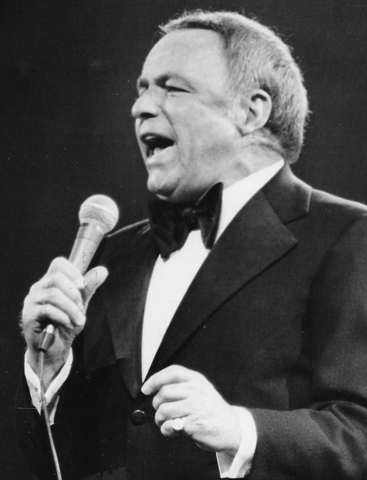
October 26 - THIS DATE IN SINATRA HISTORY
Undated materialFrom: Scott Henderson <scott@falseducks.com> | Received: 2024-10-26
Re: October 26 - THIS DATE IN SINATRA HISTORY
Undated materialFrom: Ed O'Brien <dmarc-noreply@freelists.org> | Received: 2024-10-26
Akron Beacon Journal
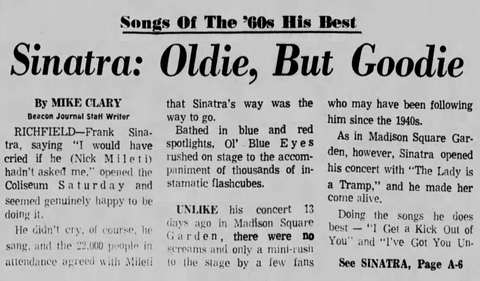
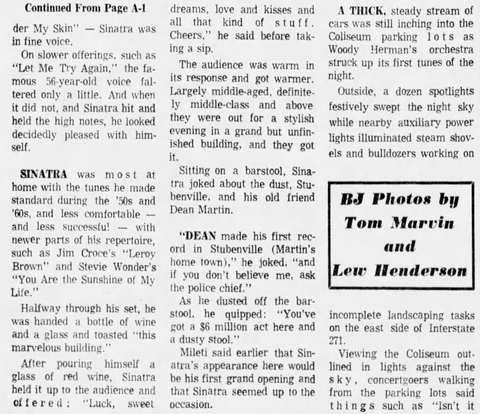
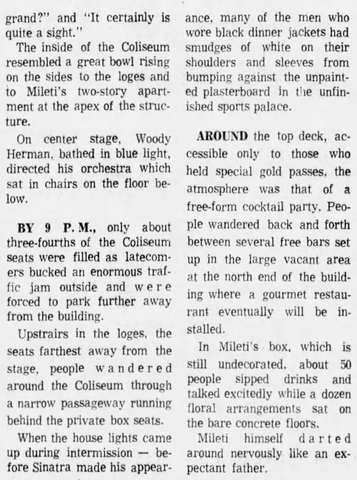
Re: OCTOBER 27 - THIS DATE IN SINATRA HISTORY
Undated materialFrom: Ed O'Brien <dmarc-noreply@freelists.org> | Received: 2024-10-28
Fw: EXCERPT FROM HARRY JAMES INTERVIEW WITH LES TOMKINS 1970
Undated materialFrom: Ed O'Brien <dmarc-noreply@freelists.org> | Received: 2024-12-08
Speaking of singers . . . didn’t you first hear Sinatra by chance on the radio?
In a way, yes. We were working at the Paramount Theatre, New York City; I came home one evening and turned the radio on. They were doing what they called spot broadcasts from different little clubs around the town, and I heard this singer on one of them, who sounded excellent. I thought he was a great vocalist. Then I found out the name of the club: the next evening we went out there, and I talked to him about joining the band.
He had never been with a band before; he just worked as a Master of Ceremonies and a singer at this club. So he came down, we got together, and that was how Frank Sinatra signed a year’s contract with us. We were struggling—really struggling. He had been with us about seven months and he still had five months to go on his contract when he had a chance to go with Tommy Dorsey—at the time that was a very big band.
You see, a lot of people don’t realise that Glenn Miller, Tommy Dorsey, Jimmv Dorsey, Bennv Goodman. Artie Shaw—were all before me by about seven or eight years. And when they were very popular I was still trying to get started. So when Sinatra had the Dorsey offer, I said: “Well, go ahead.” Because we were hardly making enough money to even eat. After he went with the Dorsey band, it was only another eight months or so before we were fortunate enough to get our own hit record. Dick Haymes came in to replace Sinatra; then Dick was with us for about three years.
You’ve certainly had some very fine singers.
Oh yes—luckily, we have. Sinatra, Dick Haymes; Helen Forrest was with us when we made a lot of our early recordings; Kitty Kallen. I feel that when our vocalist is on I sorta take a back seat, go off the stage or something, because I like to give a person a chance to express themselves, and show their own talent.
During the period Sinatra was with you, did you visualise his potential?
Not at all. I didn’t see his potential, or anyone else’s. It was just a matter of playing day by day, doing what we wanted to do, and doing it to the best of our ability. Naturally, hoping that everything would be okay. I’ve been that way all my life—just involved in what I’m doing at the moment. That’s why I still enjoy playing so much—because I’m very sincere about it, I like what I play. If someone doesn’t like it, I’m sorry; if they do, I’m glad. But I’m not going to change it or do something that somebody says they think I should do—I just don’t believe in that.
WAS THE EARLY SINATRA THE GREATEST SINGER ?
Undated materialFrom: Ed O'Brien <dmarc-noreply@freelists.org> | Received: 2024-12-16
Frank Rodriguez on May 18, 2023 at 2:52 pm said:
Absolutely, and the referenced CD is the one you have pictured in this blog. What a gem it is! Take, for example, “This is no dream”, which is one of my favorites, and compare it to the Tommy Dorsey version with Jack Leonard on vocals. The James/Sinatra rendition is superior in terms of arrangement, vocals, and accompaniment. I am blown away by Frank Sinatra’s masterful singing at age 23 when I feel his voice had the smoothness, sweetness, and pristine quality that it lost after the 1940’s. No doubt his singing mastery was still top notch in the 50’s and 60’s but I prefer how he sounded up until his comeback with Capitol Records. We should be eternally grateful to Louise Tobin and Harry James for bringing the unique talent that was Frank Sinatra out of obscurity at the Rustic Cabin and memorably introducing him to the world with the Harry James orchestra. Reply ↓
- Alanon May 19, 2023 at 8:01 am said:
Those of us (and there are not too many left) who can really appreciate the tremendous talent of Harry James, Frank Sinatra, and many of the big-band greats are very fortunate individuals. I can tell that you see it that way just as I do. My appreciation is firmly based on the musical merits of James and Sinatra, for certain. Also appealing to me is the nostalgia connected to the times and the personal stories involved. That nostalgia is reflected especially in the lyrics of the great tunes, the importance of which was fully appreciated by Sinatra. I agree that he was in his prime in the late forties, before the Capitol era and the influence of arrangers like Nelson Riddle who helped birth the more modern version of Sinatra. As a total and sophisticated performer (which he was), my favorite of all is his version of “I Didn’t Know What Time It Was” as performed in “Pal Joey.” Swinging sophistication and great backing from the little band. Sinatra was great in the role of Joey – essentially playing himself, to some degree. If you have not been there, check the link to my Sinatra post at the end of the James post. The younger generation has no clue as to what they are missing. Lucky us. Reply ↓
- Frank Rodriguez on May 17, 2023 at 8:38 pm said:
Thank you for this post. I am always interested in reading about Frank Sinatra’s early career which is when his singing was at its very best, as far as I am concerned. Of course, being a big fan of swing, I am also partial to the work he did with the Harry James and Tommy Dorsey orchestras because the music itself was so darn good. I keep a CD in my car of the recordings James made with Sinatra on vocals and never get tired of listening to it. Reply ↓
- Alanon May 18, 2023 at 6:18 am said:
I know very well the James/Sinatra CD of which you speak: the music is great and oh-so nostalgic – James and Sinatra, both at the beginning of their incomparable careers. It must have been written in the stars that Harry James would discover Sinatra that night at the Rustic Cabin steakhouse in New Jersey. Talent knows talent when it appears. I particularly like the intimacy of the musical performances on this CD; if one listens closely, one can hear the background chatter of diners and the clink of glasses on certain of the numbers recorded at the famous Roseland Ballroom in New York. Never to be duplicated intimate venues like that, and the same is true of those performances. If only the younger set of today could understand! Thanks for taking the time to share!! Reply ↓
Don the Beachcomber
Undated materialFrom: cara <dmarc-noreply@freelists.org> | Received: 2024-12-21
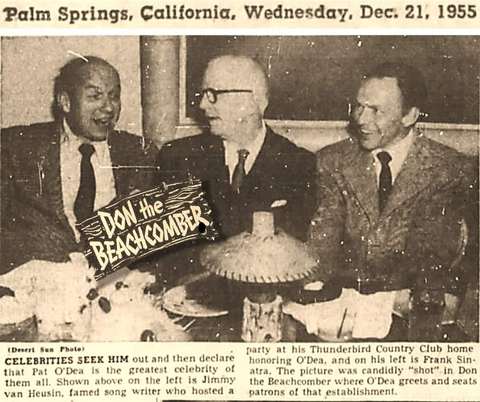
Fw: December 20 - THIS DATE IN SINATRA HISTORY
Undated materialFrom: Ed O'Brien <dmarc-noreply@freelists.org> | Received: 2024-12-21
whoops did it again
Undated materialFrom: Scott Henderson <scott@falseducks.com> | Received: 2024-12-22
Hello everyone,
I noticed that yesterday's listings did not post. I accidentally sent them to myself again. Will repost immediately.
Scott
December 23 - THIS DATE IN SINATRA HISTORY
Undated materialFrom: scott@falseducks.com | Received: 2024-12-23
Detroit, Michigan
Monday Evening
Tommy Dorsey and Orchestra played at a Private Party and Dance held by Mr. and Mrs Allan Shelden
Re: December 29 - THIS DATE IN SINATRA HISTORY
Undated materialFrom: Ed O'Brien <dmarc-noreply@freelists.org> | Received: 2024-12-30
Sands, Las Vegas, Nevada (Dec. 20 thru December 31st)'
note: As we can see, Frank was still at the Sands on 1/2/57. I found two brief
mentions of Frank closing a few days early so he could rest before traveling
to N.Y.C., for his engagement at the Copacabana, beginning 1/10. Makes
sense that he would have played through the weekend, closing on 1/6.
[image referenced in source but could not be recovered]
Re: December 29 - THIS DATE IN SINATRA HISTORY
Undated materialFrom: scott@falseducks.com | Received: 2024-12-30
Sands, Las Vegas, Nevada (Dec. 20 thru December 31st)'
note: As we can see, Frank was still at the Sands on 1/2/57. I found two brief
mentions of Frank closing a few days early so he could rest before traveling
to N.Y.C., for his engagement at the Copacabana, beginning 1/10. Makes
sense that he would have played through the weekend, closing on 1/6.
[image referenced in source but could not be recovered]
December 31st 1950: One Finger Melody - Frank Sinatra (Radio)
Undated materialFrom: cara <dmarc-noreply@freelists.org> | Received: 2024-12-31
Wishing you all a happy New Year.
Carl
https://www.youtube.com/watch?v=xXfoEdkSktQ
Here’s Frank ending 1950 with “One Finger Melody”. A song Sinatra sang earlier in the year (September 18th) for Columbia Records, which charted on the top hits on November 4th and remained there for sixteen weeks; reaching the #9 spot during its height. Radio Program: Meet Frank Sinatra Show (CBS) Air date: December 31st, 1950.
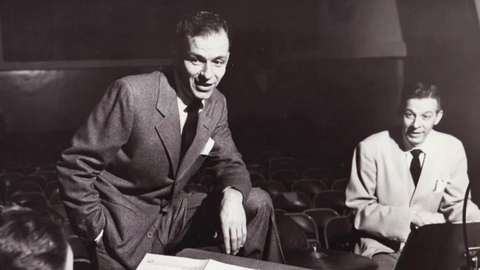
January 1 - THIS DATE IN SINATRA HISTORY
Undated materialFrom: Scott Henderson <scott@falseducks.com> | Received: 2025-01-01
show and the complete 50-52 CBS series.
January 5 - THIS DATE IN SINATRA HISTORY
Undated materialFrom: Scott Henderson <scott@falseducks.com> | Received: 2025-01-05
Ed O'Brien:
Frank Sinatra Show had its debut on 1-5-44
( show reviewed) and was on every week until 6-14-44.
The show resumed on 8-16-44( renamed Frank
Sinatra in Person) and continued through Christ-
mas Day of 1944. In all there were 47 shows.
Frank was absent once due to a sore throat.
The show switched to Mondays on 11-20-44.
It was bi-coastal. Frank did 44 of the shows
either in New York or Hollywood. His guests
were the creme de la creme of the Hollywood
elite, including Judy Garland, Bing Crosby,
W.C. Fields, Jack Benny, Orson Welles, Gene
Kelly,Lana Turner, Alan Ladd, Ida Lupino and
many more. Axel Stordahl conducted and did
most of the arrangements. Some of the uptempo
charts were penned by Billy May, George Siravo
and whoever might be available on air day.
Fw: Sinatra bypasses Beatles
Undated materialFrom: Ed O'Brien <dmarc-noreply@freelists.org> | Received: 2025-01-10
Fellow Sinatraphile, Mike Agron, sent this to me.
https://www.forbes.com/sites/hughmcintyre/2025/01/06/frank-sinatra-passes-the-beatles-with-his-new-top-10-album/
transition to Google Groups
Undated materialFrom: Margriet57 <dmarc-noreply@freelists.org> | Received: 2025-03-07
Hi Scott,
I received your email!
Margriet
Re: [sinatraphiles] MARCH 28 - THIS DATE IN SINATRA HISTORY
Undated materialFrom: 'Ed O'Brien' via Sinatraphiles <sinatraphiles@googlegroups.com> | Received: 2025-03-28
Paramount, New York City (March 26 - April 8)
Frank Fontaine, June Hutton 5 shows a day
Buddy Rich Orchestra (15)
SONGS:
I've Got The World On A String
I Could Write A Book
That Old Black Magic
I Hear A Rhapsody
Birth Of The Blues
Nancy
Cry (parody)
Ol' Man River
Re: [sinatraphiles] MARCH 28 - THIS DATE IN SINATRA HISTORY
Undated materialFrom: 'Ed O'Brien' via Sinatraphiles <sinatraphiles@googlegroups.com> | Received: 2025-03-28
Kansas City Star
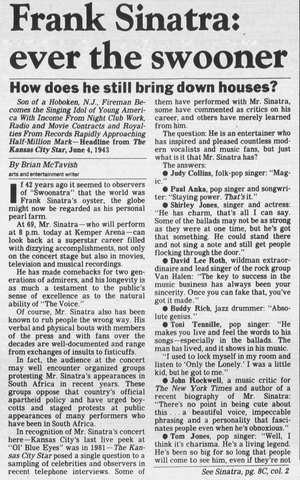
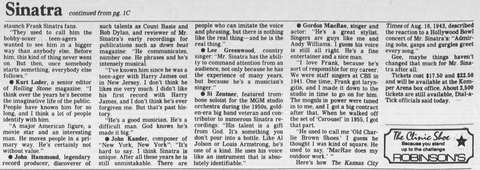
Re: [sinatraphiles] MARCH 28 - THIS DATE IN SINATRA HISTORY
Undated materialFrom: 'Ed O'Brien' via Sinatraphiles <sinatraphiles@googlegroups.com> | Received: 2025-03-28
April 28 - THIS DATE IN SINATRA HISTORY
Undated materialFrom: 'Ed O'Brien' via Sinatraphiles <sinatraphiles@googlegroups.com> | Received: 2025-04-28
note: Frank was mad about Mia Farrow. She didn't like Vegas and Frank did.
He missed shows during his two weeks at the Sands and one night
there was a near riot. The Sands had to refund more than 500 very
miffed customers. Marquee was changed to "Dean Martin, Joey Bishop
and maybe . . . Frank."
Ed
ANCHORS AWEIGH JUNE 1944
Undated materialFrom: 'Ed O'Brien' via Sinatraphiles <sinatraphiles@googlegroups.com> | Received: 2025-06-27
Frank Sinatra was now under contract to MGM.
The studio that made great musicals in glorious
technicolor. In June of 1944, Frank prerecorded
five songs for his first film with the studio. The actual
filming for "Anchors Aweigh" got underway on the
15th of the month. Frank was set to record "You
Are My Sunset" on June 30th. Frank wasn't
all that crazy about the tune, so Sammy Cahn and
Jule Styne did a rewrite and called it "What Makes
The Sunset."
Obviously, there was also last minute rewrite for the
opening scene. The enclosed article describes a
much different beginning with Margaret O'Brien
greeting Gene and Frank and other sailors in front
of the MGM gate. She lets them in and eventually
they meet Miss Grayson. Sinatra always called her
Katie.
Ed
6-28-44
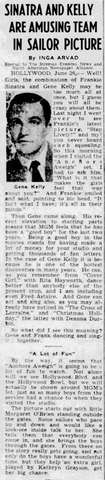
JUNE 24 THIS DATE IN SINATRA HISTORY
Undated materialFrom: 'Ed O'Brien' via Sinatraphiles <sinatraphiles@googlegroups.com> | Received: 2025-06-28
Sunday Oregonian
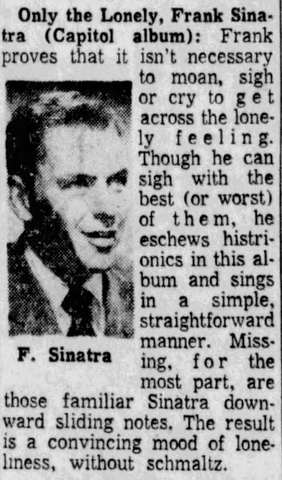
JUNE 25 THIS DATE IN SINATRA HISTORY
Undated materialFrom: 'Ed O'Brien' via Sinatraphiles <sinatraphiles@googlegroups.com> | Received: 2025-06-28
Indianapolis Star
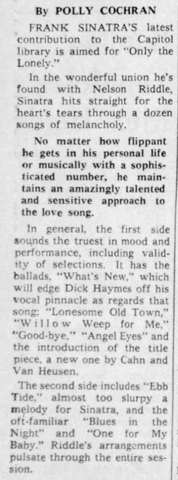
June 28 - THIS DATE IN SINATRA HISTORY
Undated materialFrom: 'Ed O'Brien' via Sinatraphiles <sinatraphiles@googlegroups.com> | Received: 2025-06-29
Indiana Gazette
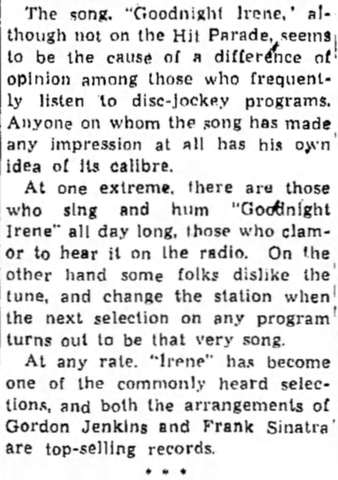
Re: [sinatraphiles] June 29 - THIS DATE IN SINATRA HISTORY
Undated materialFrom: Ted Naron <theodore.naron@gmail.com> | Received: 2025-06-29
“You Are There” is an astonishing song. And as an instrumental, it was Sinatra’s walk-off music for a time. (Not sure what years.)
—Ted
July 1 - THIS DATE IN SINATRA HISTORY
Undated materialFrom: 'Ed O'Brien' via Sinatraphiles <sinatraphiles@googlegroups.com> | Received: 2025-07-02
note: AP ran an article, on 7/1, announcing that CBS and Sinatra were about
to part company. According to the article, Sinatra was talking with NBC
radio.
Pottsville News
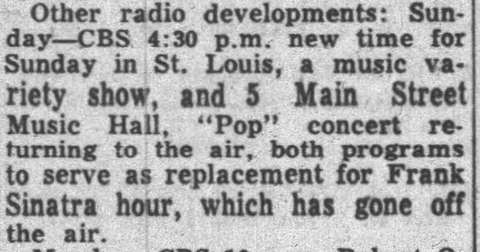
July 1 - THIS DATE IN SINATRA HISTORY
Undated materialFrom: 'Ed O'Brien' via Sinatraphiles <sinatraphiles@googlegroups.com> | Received: 2025-07-02
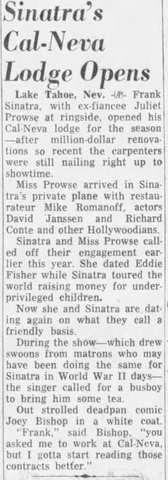
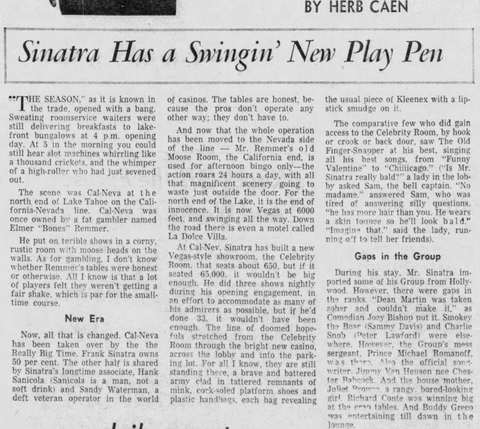
A man blowing a raspberry at a bust of Sinatra
Undated materialFrom: cara via Sinatraphiles <sinatraphiles@googlegroups.com> | Received: 2025-07-06
Slide 1. - A man blowing a raspberry at a bust of Sinatra.
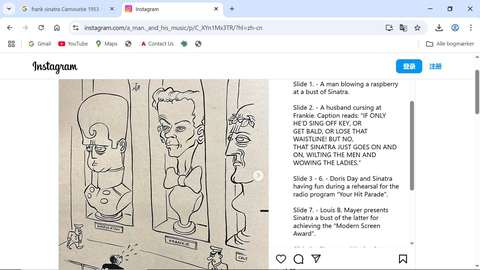
Fw: [sinatraphiles] July 4 - THIS DATE IN SINATRA HISTORY
Undated materialFrom: 'Ed O'Brien' via Sinatraphiles <sinatraphiles@googlegroups.com> | Received: 2025-07-06
CONCERT:
Frank Sinatra charts written by Billy Byers
All The Way : June 20, 1965
Call Me Irresponsible : June 24, 1965
The Gal That Got Away
Get Me To The Church On Time
Hello Dolly
I Can’t Stop op Lovin’ You : Sinatra/Basie (Las Vegas)
I Wish sh You Love : Sinatra/Basie (Las Vegas)
In The Wee Small Hour : June 20, 1965
It’s Easy To Remember : June 23, 3, 1965
Lover Come Back To Me : June 21, 1965
The Best Is Yet To Come
The Lady Is A tramp
My Kind Of Town : Sinatra/Basie (Las Vegas)
Street Of Dreams : June 24, 1965
Too Marvelous For Words : June 23, 1965
Where Or When : June 20, 1965
You Make Me Feel So Young
A Foggy Day April 1970
Byers also wrote the charts for "The Best Is Yet To Come" and "Wives and Lovers."
Re: [sinatraphiles] July 4 - THIS DATE IN SINATRA HISTORY
Undated materialFrom: 'Ed O'Brien' via Sinatraphiles <sinatraphiles@googlegroups.com> | Received: 2025-07-06
Daily News
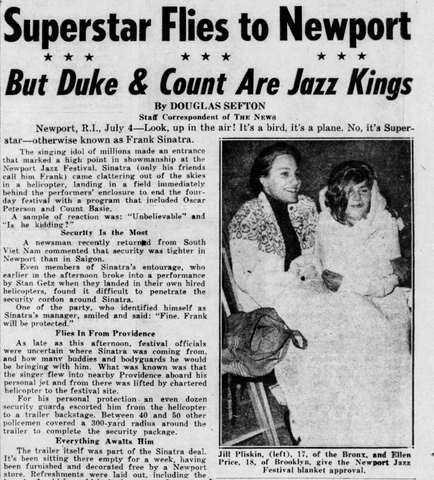
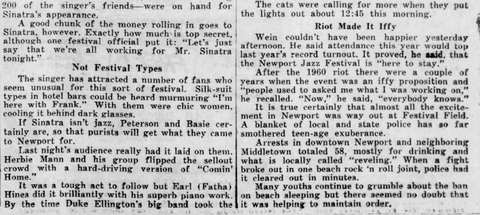
Re: April 28 - THIS DATE IN SINATRA HISTORY
Undated materialFrom: 'Ed O'Brien' via Sinatraphiles <sinatraphiles@googlegroups.com> | Received: 2025-07-07
Reno Gazette Journal
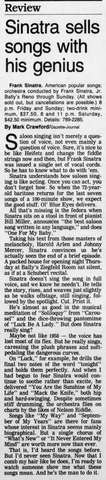
Re: [sinatraphiles] July 8 - THIS DATE IN SINATRA HISTORY
Undated materialFrom: "'jharrin769@aol.com' via Sinatraphiles" <sinatraphiles@googlegroups.com> | Received: 2025-07-08
Desert Inn, Las Vegas (July 8 - July 27)
Note;: Las Vegas was beginning to explode with incredible potential as a mecca for gambling and first class entertainment. Frank had played at the D.I.- for the first time - in the late summer of
1951. The two-week engagement had been very successful. He was back this time for a three-week stint (7/8 to 7/27). Frank loved the excitement that made the town run 24/7, and the hot weather was something that energized him. He was a big draw because it was very much his kind of crowd.People who were looking for some action. The 11 piece Carlton
Hayes orchestra was also very much to his liking.
The following October he would jump over to the
Sands Hotel. Over the next 14 years, Vegas and
Sinatra would reach heights that were unimaginable on a hot day in the summer of 1952.
Ed
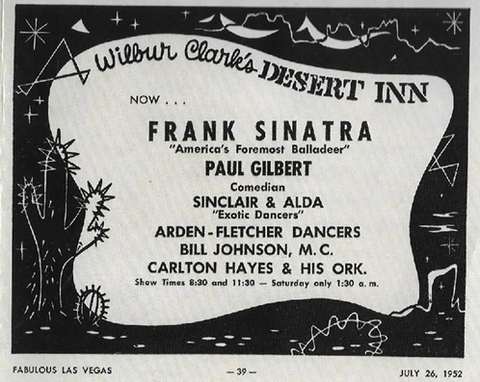
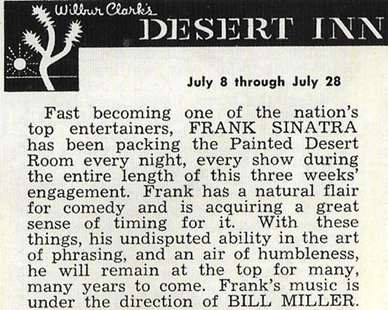
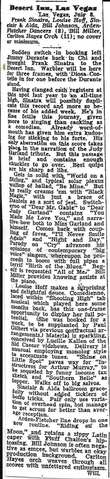
Re: [sinatraphiles] July 8 - THIS DATE IN SINATRA HISTORY
Undated materialFrom: "'jharrin769@aol.com' via Sinatraphiles" <sinatraphiles@googlegroups.com> | Received: 2025-07-08
Beverly Hilton Hotel, Los Angeles, California
Benefit for Cedars Of Lebanon Hospital
Frank Sinatra, Sammy Davis Jr. and Dean Martin at The Cedars of Lebanon charity dinner, 8th of July 1961.
© 1997-2025 The Sinatra Archive
This calendar, or any parts thereof, may not be reproduced in any fashion whatsoever without the prior written permission of the publisher (The Sinatra Archive)
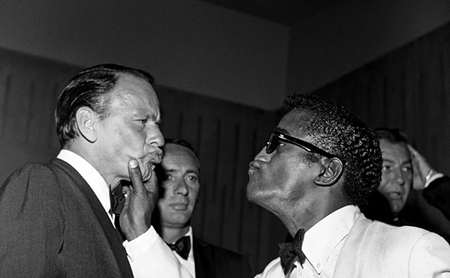
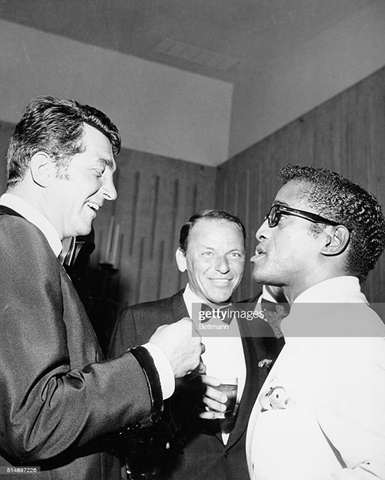
July 8 - THIS DATE IN SINATRA HISTORY
Undated materialFrom: scott@falseducks.com | Received: 2025-07-08
Desert Inn, Las Vegas (July 8 - July 27)
Note;: Las Vegas was beginning to explode with incredible potential as a mecca for gambling and first class entertainment. Frank had played at the D.I.- for the first time - in the late summer of
1951. The two-week engagement had been very successful. He was back this time for a three-week stint (7/8 to 7/27). Frank loved the excitement that made the town run 24/7, and the hot weather was something that energized him. He was a big draw because it was very much his kind of crowd.People who were looking for some action. The 11 piece Carlton
Hayes orchestra was also very much to his liking.
The following October he would jump over to the
Sands Hotel. Over the next 14 years, Vegas and
Sinatra would reach heights that were unimaginable on a hot day in the summer of 1952.
Ed
July 8 - THIS DATE IN SINATRA HISTORY
Undated materialFrom: scott@falseducks.com | Received: 2025-07-08
Beverly Hilton Hotel, Los Angeles, California
Benefit for Cedars Of Lebanon Hospital
Frank Sinatra, Sammy Davis Jr. and Dean Martin at The Cedars of Lebanon charity dinner, 8th of July 1961.
© 1997-2025 The Sinatra Archive
This calendar, or any parts thereof, may not be reproduced in any fashion whatsoever without the prior written permission of the publisher (The Sinatra Archive)
FS Dundee 1953
Undated materialFrom: cara via Sinatraphiles <sinatraphiles@googlegroups.com> | Received: 2025-07-09
One more Dundee 1953 photo.
Carl
Emne: FS Dundee 1953
https://www.thecourier.co.uk/fp/past-times/4552180/frank-sinatra-dundee-phoenix/
Sinatra enjoyed watching his friend Ben Hogan win The Open during his time in Tayside. Image: DC Thomson.
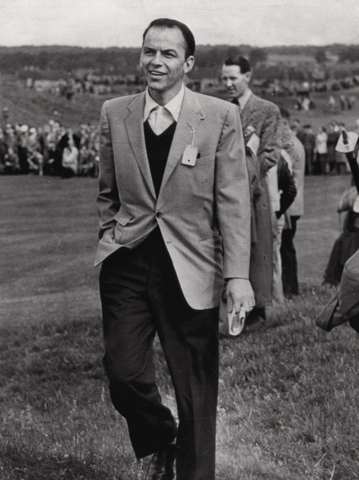
re: [sinatraphiles] July 9 - THIS DATE IN SINATRA HISTORY
Undated materialFrom: scott@falseducks.com | Received: 2025-07-09
Today's post went out incomplete.
I am fixing it and will resent shortly.
Scott
WHO DID IT ?
Undated materialFrom: 'Ed O'Brien' via Sinatraphiles <sinatraphiles@googlegroups.com> | Received: 2025-07-10
Daily News
7-5-65
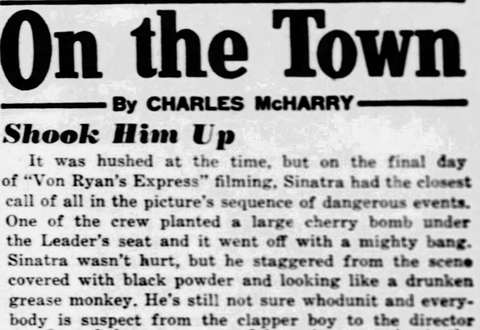
JULY 1965
Undated materialFrom: 'Ed O'Brien' via Sinatraphiles <sinatraphiles@googlegroups.com> | Received: 2025-07-11
7-5-65
7-10-65
Chicago Sun Times
7-8-65
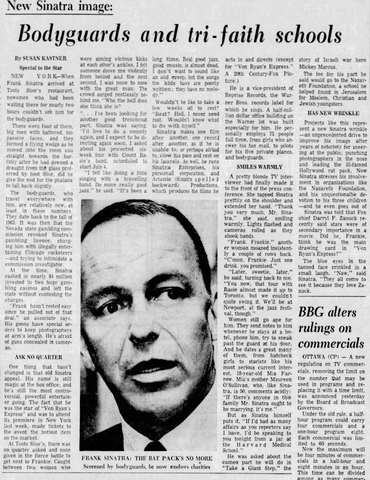
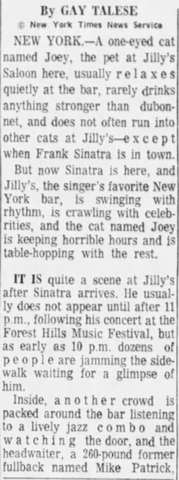
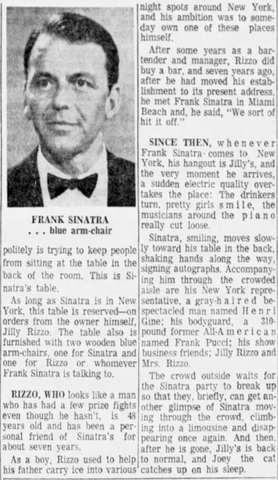

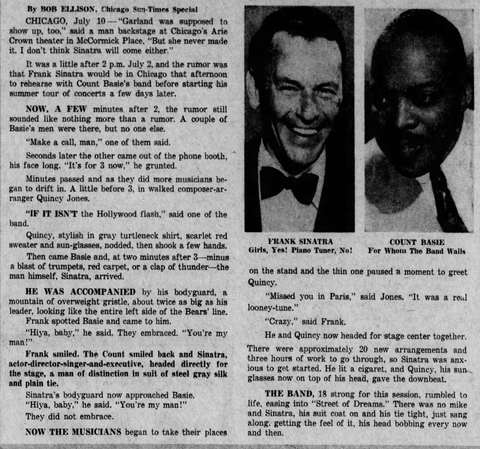
Re: July 9 - THIS DATE IN SINATRA HISTORY
Undated materialFrom: 'Ed O'Brien' via Sinatraphiles <sinatraphiles@googlegroups.com> | Received: 2025-07-11
note: Nice to have a review of the concert without all the conflict.
Ed
A BIT OF THIS AND THAT FROM THE 1960S
Undated materialFrom: 'Ed O'Brien' via Sinatraphiles <sinatraphiles@googlegroups.com> | Received: 2025-07-12
Daily News
7-6-65
7-11-60
Edmonton Journal
6-23-66
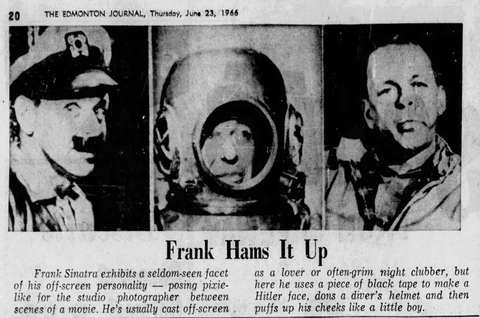
Oh ! those bobby soxers
Undated materialFrom: 'Ed O'Brien' via Sinatraphiles <sinatraphiles@googlegroups.com> | Received: 2025-07-12
Daily News
7-11-43
Ben Gross had a column in the Daily News. Irene did not not like what he
wrote about Frankie.
Philadelphia Inquirer
7-11-43
Union City Times Gazette
6-19-44
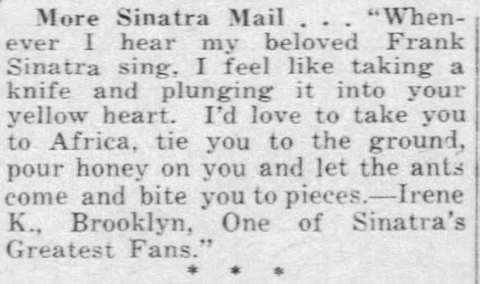
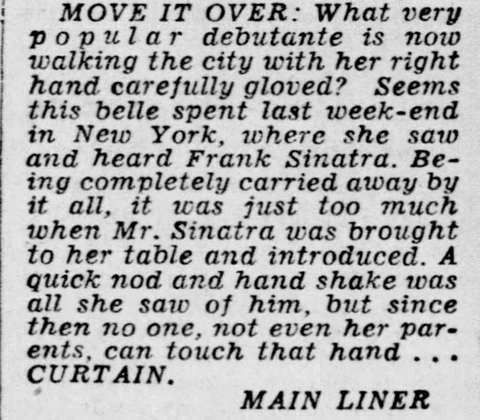
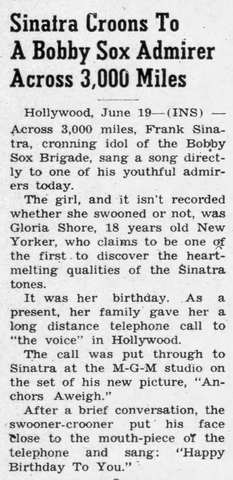
EIGHTY-SIX YEARS AGO TODAY
Undated materialFrom: 'Ed O'Brien' via Sinatraphiles <sinatraphiles@googlegroups.com> | Received: 2025-07-13
FRANK SINATRA FIRST COMMERCIAL RECORDINGS
"From The Bottom Of My Heart"
"Melancholy Mood"
New York City
Columbia Recording Studio
w. Harry James and His Band
Neither song charted
The Capital Times
September 10, 1939
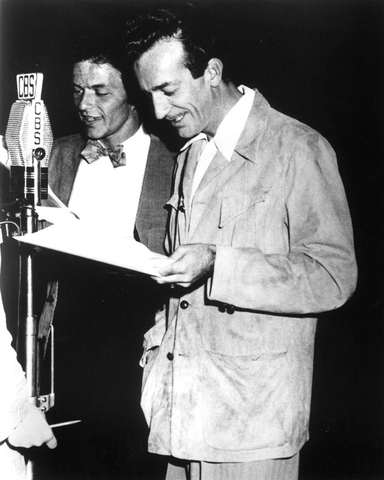
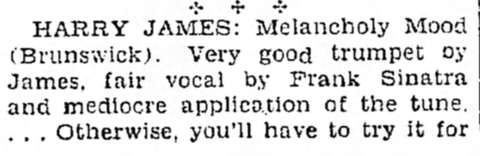

IN HIS OWN WORDS
Undated materialFrom: 'Ed O'Brien' via Sinatraphiles <sinatraphiles@googlegroups.com> | Received: 2025-07-14
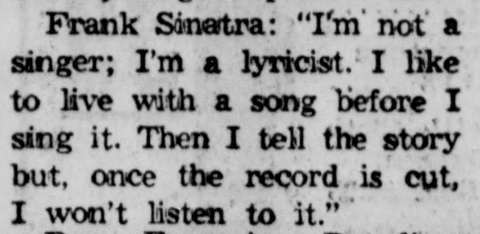
July 13 - THIS DATE IN SINATRA HISTORY
Undated materialFrom: 'Ed O'Brien' via Sinatraphiles <sinatraphiles@googlegroups.com> | Received: 2025-07-14
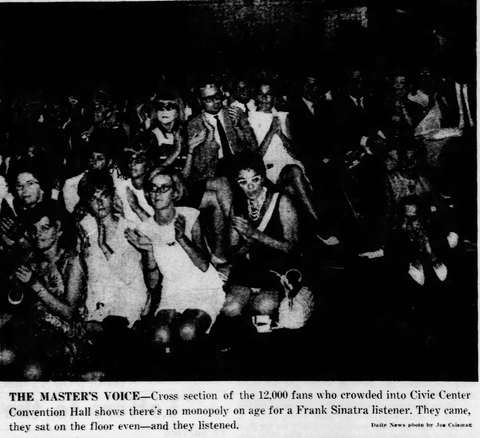
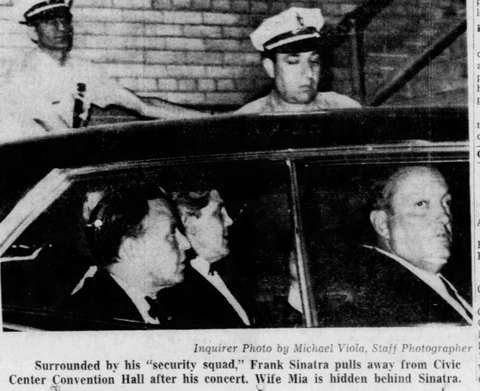
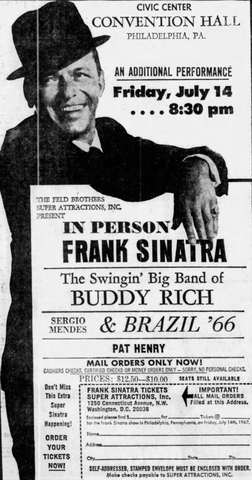
July 15 - THIS DATE IN SINATRA HISTORY
Undated materialFrom: 'Ed O'Brien' via Sinatraphiles <sinatraphiles@googlegroups.com> | Received: 2025-07-16
The Washington Daily News

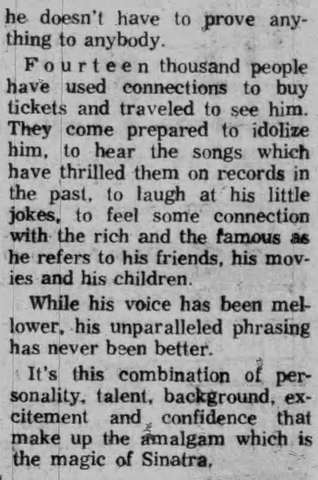
July 16 - THIS DATE IN SINATRA HISTORY
Undated materialFrom: 'Ed O'Brien' via Sinatraphiles <sinatraphiles@googlegroups.com> | Received: 2025-07-18
Indianapolis Star
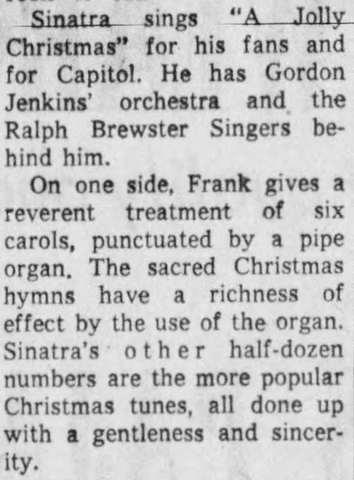
July 17 - THIS DATE IN SINATRA HISTORY
Undated materialFrom: 'Ed O'Brien' via Sinatraphiles <sinatraphiles@googlegroups.com> | Received: 2025-07-18
Buffalo News
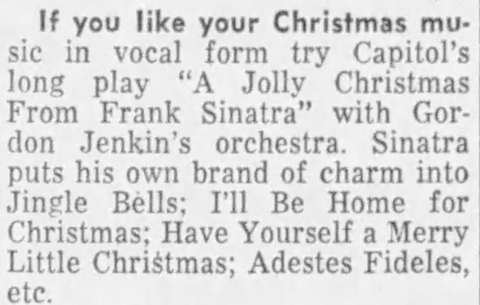
July 17 - THIS DATE IN SINATRA HISTORY
Undated materialFrom: 'Ed O'Brien' via Sinatraphiles <sinatraphiles@googlegroups.com> | Received: 2025-07-18
The York Dispatch
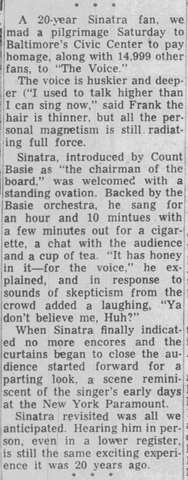
NYT: Alan Bergman Dies at 99
Undated materialFrom: 'Ed O'Brien' via Sinatraphiles <sinatraphiles@googlegroups.com> | Received: 2025-07-18
Alan Bergman, Half of a Prolific Lyric-Writing Team, Dies at 99 - The New York Times
Re: NYT: Alan Bergman Dies at 99
Undated materialFrom: "'John K. George' via Sinatraphiles" <sinatraphiles@googlegroups.com> | Received: 2025-07-18
What do you think his best song was? For me, How Do You Keep The Music Playing.
Sent from the all new AOL app for iOS
On Friday, July 18, 2025, 12:03 PM, 'Ed O'Brien' via Sinatraphiles <sinatraphiles@googlegroups.com> wrote:
Alan Bergman, Half of a Prolific Lyric-Writing Team, Dies at 99 - The New York Times
Fwd: [sinatraphiles] GOODBUY
Undated materialFrom: shemmy Mashiah <smashiah@netvision.net.il> | Received: 2025-07-20
Hi Fred
We will miss you all.
You have send your massage
To the previous group.
All the best to you my friend.
Shemmy
נשלח מה-iPhone שלי
התחלת ההודעה המועברת:
> מאת: Fred Wadsworth <dmarc-noreply@freelists.org>
> תאריך: 20 ביולי 2025 בשעה 12:45:36 GMT+3
> אל: sinatraphiles freelists <sinatraphiles@freelists.org>, Scott Henderson <scott@falseducks.com>, michel macaire <michelmacaire@hotmail.com>, Jason Maguire <jason_swing@hotmail.co.uk> > נושא: [sinatraphiles] GOODBUY
> כתובת לתשובה: sinatraphiles@freelists.org
>
>
> HI FRIENDS & SINATRAPHILES, AFTER OVER 60 YEARS OF COLLECTING ALL THE MUSIC AND NEWS BY FRANK AND ALL THE GOOD SINGERS I'M NOW GIVING IT ALL THE COLLECTING UP SO GOODBUY TO YOU ALL THE BEST FJW
GOODBUY
Undated materialFrom: Fred Wadsworth <dmarc-noreply@freelists.org> | Received: 2025-07-20
HI FRIENDS & SINATRAPHILES, AFTER OVER 60 YEARS OF COLLECTING ALL THE MUSIC AND NEWS BY FRANK AND ALL THE GOOD SINGERS I'M NOW GIVING IT ALL THE COLLECTING UP SO GOODBUY TO YOU ALL THE BEST FJW
Re: GOODBUY
Undated materialFrom: Vance Adair <dmarc-noreply@freelists.org> | Received: 2025-07-20
Hi Fred - I am sure that you have collected some wonderful items over the years.
I hope that you are OK.
-Vance
On Sun, Jul 20, 2025 at 10:45 AM Fred Wadsworth <dmarc-noreply@freelists.org> wrote:
> HI FRIENDS & SINATRAPHILES, AFTER OVER 60 YEARS OF COLLECTING ALL THE > MUSIC AND NEWS BY FRANK AND ALL THE GOOD SINGERS I'M NOW GIVING IT ALL THE > COLLECTING UP SO GOODBUY TO YOU ALL THE BEST FJW
>
July 18 - THIS DATE IN SINATRA HISTORY
Undated materialFrom: 'Ed O'Brien' via Sinatraphiles <sinatraphiles@googlegroups.com> | Received: 2025-07-21
REVIEW OPENING NIGHT 7-17-91 10 p.m.
Courier Post
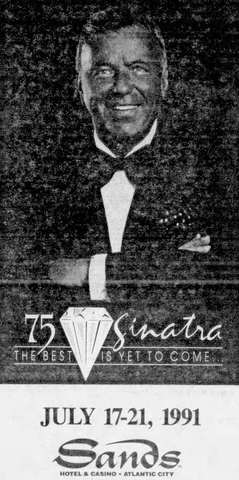
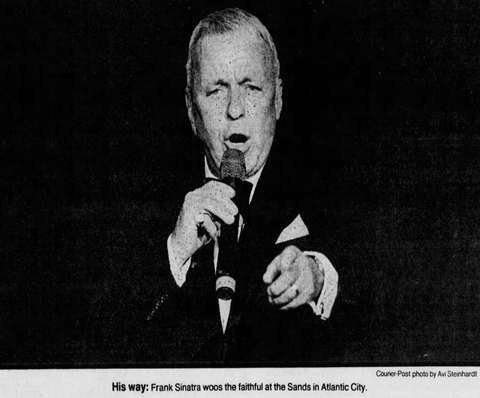
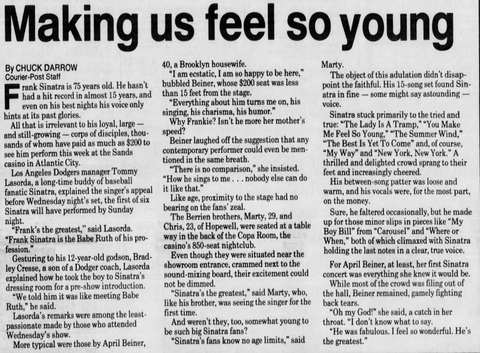
Re: July 17 - THIS DATE IN SINATRA HISTORY
Undated materialFrom: 'Ed O'Brien' via Sinatraphiles <sinatraphiles@googlegroups.com> | Received: 2025-07-21
Re: July 17 - THIS DATE IN SINATRA HISTORY
Undated materialFrom: "'John K. George' via Sinatraphiles" <sinatraphiles@googlegroups.com> | Received: 2025-07-21
Re: [sinatraphiles] July 20 - THIS DATE IN SINATRA HISTORY
Undated materialFrom: 'Ed O'Brien' via Sinatraphiles <sinatraphiles@googlegroups.com> | Received: 2025-07-21
Huddersfield Daily Examiner
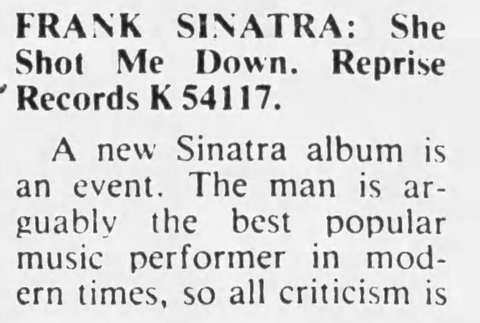
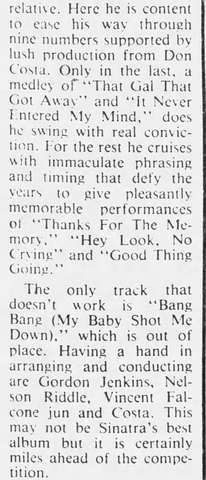
Re: GOODBUY
Undated materialFrom: smashiah <dmarc-noreply@freelists.org> | Received: 2025-07-21
Dear Fred
You will be missed by all of us.
Your contribution was much appreciated.
shemmy
From: sinatraphiles-bounce@freelists.org
<sinatraphiles-bounce@freelists.org> On Behalf Of Fred Wadsworth
Sent: Sunday, July 20, 2025 12:45 PM
To: sinatraphiles freelists <sinatraphiles@freelists.org>; Scott Henderson
<scott@falseducks.com>; michel macaire <michelmacaire@hotmail.com>; Jason Maguire <jason_swing@hotmail.co.uk>
Subject: [sinatraphiles] GOODBUY
HI FRIENDS & SINATRAPHILES, AFTER OVER 60 YEARS OF COLLECTING ALL THE MUSIC AND NEWS BY FRANK AND ALL THE GOOD SINGERS I'M NOW GIVING IT ALL THE COLLECTING UP SO GOODBUY TO YOU ALL THE BEST FJW
Re: GOODBUY
Undated materialFrom: smashiah <dmarc-noreply@freelists.org> | Received: 2025-07-21
Hi Fred
You will be missed by all of us
shemmy
From: sinatraphiles-bounce@freelists.org
<sinatraphiles-bounce@freelists.org> On Behalf Of Fred Wadsworth
Sent: Sunday, July 20, 2025 12:45 PM
To: sinatraphiles freelists <sinatraphiles@freelists.org>; Scott Henderson
<scott@falseducks.com>; michel macaire <michelmacaire@hotmail.com>; Jason Maguire <jason_swing@hotmail.co.uk>
Subject: [sinatraphiles] GOODBUY
HI FRIENDS & SINATRAPHILES, AFTER OVER 60 YEARS OF COLLECTING ALL THE MUSIC AND NEWS BY FRANK AND ALL THE GOOD SINGERS I'M NOW GIVING IT ALL THE COLLECTING UP SO GOODBUY TO YOU ALL THE BEST FJW
Re: [sinatraphiles] July 22 - THIS DATE IN SINATRA HISTORY
Undated materialFrom: "'John K. George' via Sinatraphiles" <sinatraphiles@googlegroups.com> | Received: 2025-07-22
500 Club, Atlantic City, New Jersey (July 22-31)
Three shows each night
Bill Miller Sextet: Joe Comfort (bass), Al Viola (guitar), Emil Richards (vibraharp), Sol Gubin (drums) Paul Horn (sax and flute),
Bill Miller (piano and conductor)
Pete Miller Orch.
Emcee: Jack Curtis
O.A. Buddy Lester
1. Too Marvelous for Words
2. Day In, Day Out
3. It's Over, It's Over, It's Over (Sinatra gives it a lukewarm introduction)
4. I Could Have Danced All Night
5. I Love Paris
6. River Stay Away from my Door
7. All the Way
8. Moonlight in Vermont
9. I've Got You Under my Skin
Ed O'Brien:
Buddy Lester opened for Sinatra. On the weekends, Sinatra did three shows and, if the demand was great enough, a fourth show was added. Frank performed for nine days. The three or four shows a night is a tad misleading. Frank did about 35 minutes per show. A four-show night usually involved roughly two hours and 15 minutes of onstage performing. This was the wonderful era of small group backings and exciting swing numbers every show. "I Love Paris" was a fun parody. There was not a lot of patter, just a lot of remarkable singing. The 500 Club was SRO every show.
July 22 - THIS DATE IN SINATRA HISTORY
Undated materialFrom: scott@falseducks.com | Received: 2025-07-22
500 Club, Atlantic City, New Jersey (July 22-31)
Three shows each night
Bill Miller Sextet: Joe Comfort (bass), Al Viola (guitar), Emil Richards (vibraharp), Sol Gubin (drums) Paul Horn (sax and flute),
Bill Miller (piano and conductor)
Pete Miller Orch.
Emcee: Jack Curtis
O.A. Buddy Lester
1. Too Marvelous for Words
2. Day In, Day Out
3. It's Over, It's Over, It's Over (Sinatra gives it a lukewarm introduction)
4. I Could Have Danced All Night
5. I Love Paris
6. River Stay Away from my Door
7. All the Way
8. Moonlight in Vermont
9. I've Got You Under my Skin
Ed O'Brien:
Buddy Lester opened for Sinatra. On the weekends, Sinatra did three shows and, if the demand was great enough, a fourth show was added. Frank performed for nine days. The three or four shows a night is a tad misleading. Frank did about 35 minutes per show. A four-show night usually involved roughly two hours and 15 minutes of onstage performing. This was the wonderful era of small group backings and exciting swing numbers every show. "I Love Paris" was a fun parody. There was not a lot of patter, just a lot of remarkable singing. The 500 Club was SRO every show.
Re: sinatraphiles Digest V6 #88
Undated materialFrom: Luke Mitchell <dmarc-noreply@freelists.org> | Received: 2025-07-22
Dear Fred,
Thank you for all the time you spent helping me start my Sinatra collection many years ago. It is much appreciated. I hope everything is OK and you can still enjoy the music.
Best Wishes, Luke (Nottingham)
P.S I aware I don't contribute much to this group but I find it hard to use on my phone. It's rare I turn the laptop on like today. I really enjoy receiving the e-mail with the daily Sinatra activity. Thank you to everyone who puts it together. ________________________________
From: FreeLists List Manager <ecartis@freelists.org>
Sent: 22 July 2025 02:05
To: sinatraphiles digest users <ecartis@freelists.org>
Subject: sinatraphiles Digest V6 #88
sinatraphiles Digest Mon, 21 Jul 2025 Volume: 06 Issue: 088
In This Issue:
[sinatraphiles] Re: GOODBUY
[sinatraphiles] Re: GOODBUY
From: smashiah@netvision.net.il
Subject: [sinatraphiles] Re: GOODBUY
Date: Mon, 21 Jul 2025 09:11:18 +0300
Dear Fred
You will be missed by all of us.
Your contribution was much appreciated.
shemmy
From: sinatraphiles-bounce@freelists.org
<sinatraphiles-bounce@freelists.org> On Behalf Of Fred Wadsworth
Sent: Sunday, July 20, 2025 12:45 PM
To: sinatraphiles freelists <sinatraphiles@freelists.org>; Scott Henderson
<scott@falseducks.com>; michel macaire <michelmacaire@hotmail.com>; Jason Maguire <jason_swing@hotmail.co.uk>
Subject: [sinatraphiles] GOODBUY
HI FRIENDS & SINATRAPHILES, AFTER OVER 60 YEARS OF COLLECTING ALL THE MUSIC AND NEWS BY FRANK AND ALL THE GOOD SINGERS I'M NOW GIVING IT ALL THE COLLECTING UP SO GOODBUY TO YOU ALL THE BEST FJW
From: smashiah@netvision.net.il
Subject: [sinatraphiles] Re: GOODBUY
Date: Mon, 21 Jul 2025 09:11:19 +0300
Hi Fred
You will be missed by all of us
shemmy
From: sinatraphiles-bounce@freelists.org
<sinatraphiles-bounce@freelists.org> On Behalf Of Fred Wadsworth
Sent: Sunday, July 20, 2025 12:45 PM
To: sinatraphiles freelists <sinatraphiles@freelists.org>; Scott Henderson
<scott@falseducks.com>; michel macaire <michelmacaire@hotmail.com>; Jason Maguire <jason_swing@hotmail.co.uk>
Subject: [sinatraphiles] GOODBUY
HI FRIENDS & SINATRAPHILES, AFTER OVER 60 YEARS OF COLLECTING ALL THE MUSIC AND NEWS BY FRANK AND ALL THE GOOD SINGERS I'M NOW GIVING IT ALL THE COLLECTING UP SO GOODBUY TO YOU ALL THE BEST FJW
End of sinatraphiles Digest V6 #88
**********************************
DEMOCRATIC NATIONAL CONVENTION IN LOS ANGELES JULY 1960
Undated materialFrom: 'Ed O'Brien' via Sinatraphiles <sinatraphiles@googlegroups.com> | Received: 2025-07-23
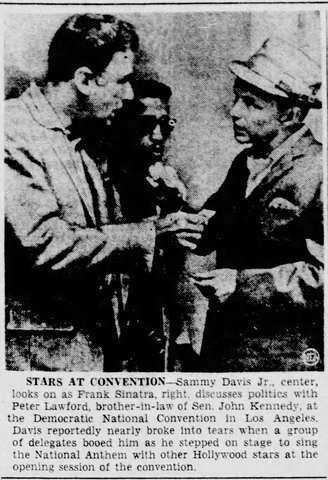
Fw: Bergmans 10 minute song for Sinatra
Undated materialFrom: 'Ed O'Brien' via Sinatraphiles <sinatraphiles@googlegroups.com> | Received: 2025-07-23
Listen to this starting at time mark 36:45. https://youtu.be/5vfwFwnwzKY?si=LC4Cu_NT4aajJ5cD
July 22 - THIS DATE IN SINATRA HISTORY
Undated materialFrom: 'Ed O'Brien' via Sinatraphiles <sinatraphiles@googlegroups.com> | Received: 2025-07-23
500 Club, Atlantic City, New Jersey (July 22-30)
Three shows each night
Bill Miller Sextet: Joe Comfort (bass), Al Viola (guitar), Emil Richards (vibraharp), Sol Gubin (drums) Paul Horn (sax and flute),
Bill Miller (piano and conductor)
Pete Miller Orch.
Emcee: Jack Curtis
O.A. Buddy Lester
1. Too Marvelous for Words
2. Day In, Day Out
3.Willow Weep For Me
4.It's Over, It's Over, It's Over
5. I Could Have Danced All Night
6. The Lady Is A Tramp
7. You Go To My Head
8. I Love Paris
9.River Stay Away From The Door
10. My Funny Valentine 1
11. Come Fly With Me
First show opening night
This ad ran in the Press Of Atlantic City newspaper, 7-30-60. I searched for it
after finding two small articles stating that Sinatra had a nine day run at the
500 Club. Frank did four shows closing night. The fourth one started at 5.30
A.M. That would be on 7/31. For the record, the engagement ran from 7/22 to
7/30.
Ed
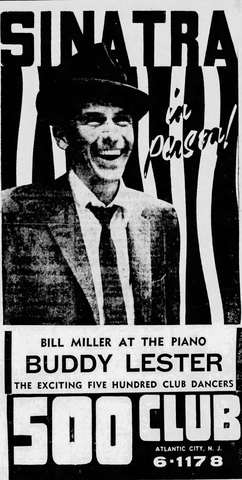
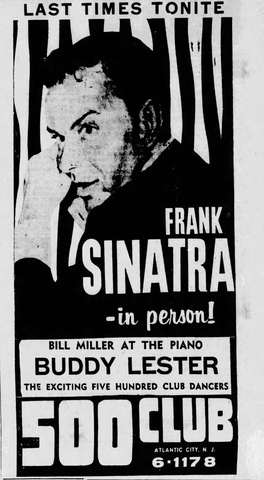
July 23 - THIS DATE IN SINATRA HISTORY
Undated materialFrom: 'Ed O'Brien' via Sinatraphiles <sinatraphiles@googlegroups.com> | Received: 2025-07-23
Philadelphia Daily News
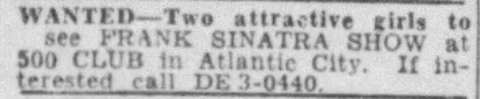
Re: Fw: Bergmans 10 minute song for Sinatra
Undated materialFrom: Vance Adair <dr.vanceadair@gmail.com> | Received: 2025-07-23
Hi Ed,
Yes - a great story and a really lovely late interview with Bergman. Is he, though, referring to 'The Same Hello The Same Goodbye'? I think Streisand is the only artist to have recorded this.
-Vance
On Wed, Jul 23, 2025 at 4:27 AM 'Ed O'Brien' via Sinatraphiles < sinatraphiles@googlegroups.com> wrote:
>
>
>
>
>
>
> Listen to this starting at time mark 36:45.
>
> https://youtu.be/5vfwFwnwzKY?si=LC4Cu_NT4aajJ5cD
>
>
>
> --
>
Re: July 22 - THIS DATE IN SINATRA HISTORY
Undated materialFrom: 'Ed O'Brien' via Sinatraphiles <sinatraphiles@googlegroups.com> | Received: 2025-07-23
The Star Ledger
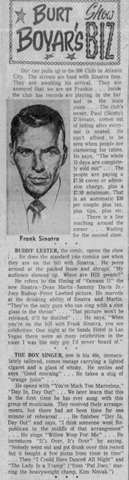
Re: NYT: Alan Bergman Dies at 99
Undated materialFrom: Vance Adair <dr.vanceadair@gmail.com> | Received: 2025-07-23
Along with Marilyn, Alan has bequeathed to us a rich legacy. The Bergmans excelled at writing songs for grown ups, and they also had an unrivalled gift for writing lines with unforgettable imagery. Both were masterful storytellers and chroniclers of the vicissitudes of love from a mature and often a uniquely psychological perspective. In a Bergman song, love is something that is not just felt but also has to be thought about and made sense of.
There are so many songs in contention for being their ‘best.’ At a push, and I could choose one of many others tomorrow, I’ll nominate ‘Where Do You Start?’
Farewell Alan - and thank you.
-Vance
On Tue, 22 Jul 2025 at 15:17, 'John K. George' via Sinatraphiles < sinatraphiles@googlegroups.com> wrote:
> What do you think his best song was? For me, How Do You Keep The Music > Playing.
>
>
> Sent from the all new AOL app for iOS
> <https://aolapp.onelink.me/eG2g?pid=NativePlacement&c=US_Acquisition_YMktg_320_EmailSignature_AttributionDL&af_sub1=Acquisition&af_sub2=US_YMktg&af_sub3=&af_sub4=100002473&af_sub5=SentFromNewAOLApp__Interstitial_&af_ios_store_cpp=ce85ce34-ad0f-4811-a92b-a172743b064e&af_android_url=https%3A%2F%2Fplay.google.com%2Fstore%2Fapps%2Fdetails%3Fid%3Dcom.aol.mobile.aolapp%26listing%3Demail_signature_attribution> >
> On Friday, July 18, 2025, 12:03 PM, 'Ed O'Brien' via Sinatraphiles < > sinatraphiles@googlegroups.com> wrote:
>
>
>
> Alan Bergman, Half of a Prolific Lyric-Writing Team, Dies at 99 - The New > York Times
> <https://www.nytimes.com/2025/07/18/arts/music/alan-bergman-dead.html> >
> --
>
July 24 - THIS DATE IN SINATRA HISTORY
Undated materialFrom: 'Ed O'Brien' via Sinatraphiles <sinatraphiles@googlegroups.com> | Received: 2025-07-25
The Herald Sun
Re: July 24 - THIS DATE IN SINATRA HISTORY
Undated materialFrom: "'John K. George' via Sinatraphiles" <sinatraphiles@googlegroups.com> | Received: 2025-07-25
The Herald Sun
CLEO LAINE
Undated materialFrom: 'Ed O'Brien' via Sinatraphiles <sinatraphiles@googlegroups.com> | Received: 2025-07-26
Singer Cleo Laine, regarded as Britain’s greatest jazz voice, dies at 97 By ROBERT BARR The Associated Press,Updated July 25, 2025, 1:06 p.m. LONDON — Cleo Laine, whose husky contralto was one of the most distinctive voices in jazz and who was regarded by many as Britain’s greatest contribution to the quintessentially American music, has died. She was 97.
The Stables, a charity and venue Ms. Laine founded with her late jazz musician husband John Dankworth, said Friday it was “greatly saddened” by the news that “one of its founders and Life President, Dame Cleo Laine has passed away.”
Monica Ferguson, artistic director of The Stables, said Ms. Laine “will be greatly missed, but her unique talent will always be remembered.”
Ms. Laine’s career spanned the Atlantic and crossed genres: She sang the songs of Kurt Weill, Arnold Schoenberg, and Robert Schumann; she acted on stage and on film, and even played God in a production of Benjamin Britten’s “Noye’s Fludde.”
Ms. Laine’s life and art were intimately bound up with band leader Dankworth, who gave her a job and her stage name in 1951, and married her seven years later. Both were still performing after their 80th birthdays. Dankworth died in 2010 at 82.
In 1997, Ms. Laine became the first British jazz artist to be made a dame, the female equivalent of a knight.
“It is British jazz that should have received the accolade for its service to me,” she said when the honor was announced. “It has given me a wonderful life, a successful career and an opportunity to travel the globe doing what I love to do.”
Ms. Laine was born Clementina Dinah Campbell in 1927. Her father, Alexander Campbell, was a Jamaican who loved opera and earned money during the Depression as a street singer. Despite hard times, her British mother, Minnie, made sure that her daughter had piano, voice and dance lessons.
She began performing at local events at age 3, and at age 12 she got a role as a movie extra in “The Thief of Bagdad.” Leaving school at 14, Ms. Laine went to work as a hairdresser and faced repeated rejection in her efforts to get a job as a singer.
A decade later, in 1951, she tried out for the Johnny Dankworth Seven, and succeeded. “Clementina Campbell” was judged too long for a marquee, so she became Cleo Laine.
“John said that when he heard me, I didn’t sound like anyone else who was singing at the time,” Ms. Laine once said. “I guess the reason I didn’t get the other jobs is that they were looking for a singer who did sound like somebody else.”
Ms. Laine had a remarkable range, from tenor to contralto, and a sound often described as “smoky.”
Dankworth, in an interview with the Irish Independent, recalled Ms. Laine’s audition.
“They were all sitting there with stony faces, so I asked the Scottish trumpet player Jimmy Deuchar, who was looking very glum and was the hardest nut of all, whether he thought she had something. ‘Something?’ he said, ‘She’s got everything!’”
Offered 6 pounds a week, Ms. Laine demanded — and got — 7 pounds.
“They used to call me ‘Scruff’, although I don’t think I was scruffy. It was just that having come from the sticks, I didn’t know how to put things together as well as the other singers of the day,” she told the Irish Independent. “And anyway, I didn’t have the money, because they weren’t paying me enough.”
Recognition came swiftly. Ms. Laine was runner-up in Melody Maker’s “girl singer” category in 1952, and topped the list in 1956 and 1957.
She married Dankworth — and quit his band — in 1958, a year after her divorce from her first husband, George Langridge. As Dankworth’s band prospered, Ms. Laine began to feel underused.
“I thought, no, I’m not going to just sit on the band and be a singer of songs every now and again when he fancied it. So it was then that I decided I wasn’t going to stay with the band and I was going to go off and try to do something solo-wise,” she said in a BBC documentary.
“When I said I was leaving, he said, ‘Will you marry me?’ That was a good ploy, wasn’t it, huh?”
They were married on March 18, 1958. A son, Alec, was born in 1960, and daughter Jacqueline followed in 1963.
Despite her happy marriage, Ms. Laine forged a career independent of Dankworth.
“Whenever anybody starts putting a label on me, I say, ‘Oh, no you don’t,’ and I go and do something different,” Laine told The Associated Press in 1985 when she was appearing on stage in New York in “The Mystery of Edwin Drood.”
Her stage career began in 1958 when she was invited to join the cast of a West Indian play, “Flesh to a Tiger,” at the Royal Court Theatre, and was surprised to find herself in the lead role. She won a Moscow Arts Theatre Award for her performance.
“Valmouth” followed in 1959, “The Seven Deadly Sins” in 1961, “The Trojan Women” in 1966 and “Hedda Gabler” in 1970.
The role of Julie in Jerome Kern’s “Show Boat” in 1971 provided Ms. Laine with a show-stopping song, “Bill.”
Ms. Laine began winning a following in the United States in 1972 with a concert at the Alice Tully Hall in New York. It wasn’t well attended, but The New York Times gave her a glowing review.
The following year, she and Dankworth drew a sold-out audience at Carnegie Hall, launching a series of popular appearances. “Cleo at Carnegie” won a Grammy award in 1986, the same year she was a Tony nominee for “The Mystery of Edwin Drood.”
A reviewer for Variety in 2002 found her voice going strong: “a dark, creamy voice, remarkable range and control from bottomless contralto to a sweet clear soprano. Her perfect pitch and phrasing is always framed with musical imagination and good taste.”
Perhaps Ms. Laine’s most difficult performance of all was on Feb. 6, 2010, at a concert celebrating the 40th anniversary of the concert venue she and Dankworth had founded at their home, during which Ms. Laine and both of her children performed.
“I’m terribly sorry that Sir John can’t be here today,” Ms. Laine told the crowd at the end of the show. “But earlier on my husband died in hospital.”
Ms. Laine said in an interview with the Boston Globe in 2003 that the secret of her longevity was that “I was never a complete belter.”
“There was always a protective side in me, and an inner voice always said, ‘Don’t do that — it’s not good for you and your voice.’”
Ms. Laine is survived by her son and daughter.
Re: CLEO LAINE
Undated materialFrom: "'John K. George' via Sinatraphiles" <sinatraphiles@googlegroups.com> | Received: 2025-07-26
She also recorded an album with Mel Torme.
J George
Sent from the all new AOL app for iOS
On Saturday, July 26, 2025, 5:05 AM, 'Ed O'Brien' via Sinatraphiles <sinatraphiles@googlegroups.com> wrote:
Singer Cleo Laine, regarded as Britain’s greatest jazz voice, dies at 97 By ROBERT BARR The Associated Press,Updated July 25, 2025, 1:06 p.m. LONDON — Cleo Laine, whose husky contralto was one of the most distinctive voices in jazz and who was regarded by many as Britain’s greatest contribution to the quintessentially American music, has died. She was 97.
The Stables, a charity and venue Ms. Laine founded with her late jazz musician husband John Dankworth, said Friday it was “greatly saddened” by the news that “one of its founders and Life President, Dame Cleo Laine has passed away.”
Monica Ferguson, artistic director of The Stables, said Ms. Laine “will be greatly missed, but her unique talent will always be remembered.”
Ms. Laine’s career spanned the Atlantic and crossed genres: She sang the songs of Kurt Weill, Arnold Schoenberg, and Robert Schumann; she acted on stage and on film, and even played God in a production of Benjamin Britten’s “Noye’s Fludde.”
Ms. Laine’s life and art were intimately bound up with band leader Dankworth, who gave her a job and her stage name in 1951, and married her seven years later. Both were still performing after their 80th birthdays. Dankworth died in 2010 at 82.
In 1997, Ms. Laine became the first British jazz artist to be made a dame, the female equivalent of a knight.
“It is British jazz that should have received the accolade for its service to me,” she said when the honor was announced. “It has given me a wonderful life, a successful career and an opportunity to travel the globe doing what I love to do.”
Ms. Laine was born Clementina Dinah Campbell in 1927. Her father, Alexander Campbell, was a Jamaican who loved opera and earned money during the Depression as a street singer. Despite hard times, her British mother, Minnie, made sure that her daughter had piano, voice and dance lessons.
She began performing at local events at age 3, and at age 12 she got a role as a movie extra in “The Thief of Bagdad.” Leaving school at 14, Ms. Laine went to work as a hairdresser and faced repeated rejection in her efforts to get a job as a singer.
A decade later, in 1951, she tried out for the Johnny Dankworth Seven, and succeeded. “Clementina Campbell” was judged too long for a marquee, so she became Cleo Laine.
“John said that when he heard me, I didn’t sound like anyone else who was singing at the time,” Ms. Laine once said. “I guess the reason I didn’t get the other jobs is that they were looking for a singer who did sound like somebody else.”
Ms. Laine had a remarkable range, from tenor to contralto, and a sound often described as “smoky.”
Dankworth, in an interview with the Irish Independent, recalled Ms. Laine’s audition.
“They were all sitting there with stony faces, so I asked the Scottish trumpet player Jimmy Deuchar, who was looking very glum and was the hardest nut of all, whether he thought she had something. ‘Something?’ he said, ‘She’s got everything!’”
Offered 6 pounds a week, Ms. Laine demanded — and got — 7 pounds.
“They used to call me ‘Scruff’, although I don’t think I was scruffy. It was just that having come from the sticks, I didn’t know how to put things together as well as the other singers of the day,” she told the Irish Independent. “And anyway, I didn’t have the money, because they weren’t paying me enough.”
Recognition came swiftly. Ms. Laine was runner-up in Melody Maker’s “girl singer” category in 1952, and topped the list in 1956 and 1957.
She married Dankworth — and quit his band — in 1958, a year after her divorce from her first husband, George Langridge. As Dankworth’s band prospered, Ms. Laine began to feel underused.
“I thought, no, I’m not going to just sit on the band and be a singer of songs every now and again when he fancied it. So it was then that I decided I wasn’t going to stay with the band and I was going to go off and try to do something solo-wise,” she said in a BBC documentary.
“When I said I was leaving, he said, ‘Will you marry me?’ That was a good ploy, wasn’t it, huh?”
They were married on March 18, 1958. A son, Alec, was born in 1960, and daughter Jacqueline followed in 1963.
Despite her happy marriage, Ms. Laine forged a career independent of Dankworth.
“Whenever anybody starts putting a label on me, I say, ‘Oh, no you don’t,’ and I go and do something different,” Laine told The Associated Press in 1985 when she was appearing on stage in New York in “The Mystery of Edwin Drood.”
Her stage career began in 1958 when she was invited to join the cast of a West Indian play, “Flesh to a Tiger,” at the Royal Court Theatre, and was surprised to find herself in the lead role. She won a Moscow Arts Theatre Award for her performance.
“Valmouth” followed in 1959, “The Seven Deadly Sins” in 1961, “The Trojan Women” in 1966 and “Hedda Gabler” in 1970.
The role of Julie in Jerome Kern’s “Show Boat” in 1971 provided Ms. Laine with a show-stopping song, “Bill.”
Ms. Laine began winning a following in the United States in 1972 with a concert at the Alice Tully Hall in New York. It wasn’t well attended, but The New York Times gave her a glowing review.
The following year, she and Dankworth drew a sold-out audience at Carnegie Hall, launching a series of popular appearances. “Cleo at Carnegie” won a Grammy award in 1986, the same year she was a Tony nominee for “The Mystery of Edwin Drood.”
A reviewer for Variety in 2002 found her voice going strong: “a dark, creamy voice, remarkable range and control from bottomless contralto to a sweet clear soprano. Her perfect pitch and phrasing is always framed with musical imagination and good taste.”
Perhaps Ms. Laine’s most difficult performance of all was on Feb. 6, 2010, at a concert celebrating the 40th anniversary of the concert venue she and Dankworth had founded at their home, during which Ms. Laine and both of her children performed.
“I’m terribly sorry that Sir John can’t be here today,” Ms. Laine told the crowd at the end of the show. “But earlier on my husband died in hospital.”
Ms. Laine said in an interview with the Boston Globe in 2003 that the secret of her longevity was that “I was never a complete belter.”
“There was always a protective side in me, and an inner voice always said, ‘Don’t do that — it’s not good for you and your voice.’”
Ms. Laine is survived by her son and daughter.
Re: Carl M
Undated materialFrom: "'jharrin769@aol.com' via Sinatraphiles" <sinatraphiles@googlegroups.com> | Received: 2025-07-27
I agree with you.
Sent from the all new AOL app for iOS
On Sunday, July 27, 2025, 5:35 PM, Scott Henderson <scott@falseducks.com> wrote:
I have been asked to remove Carl M from the group after his passing. I found that to be very emotional. Even though I never met Carl in person, he contributed greatly to the Sinatraphiles group. Carl was extremely involved in fleshing out the 1945 USO tour with all the European stops. That type of dedication will be sadly missed.
Scot
Re: SAD, SAD NEWS
Undated materialFrom: Larry Crawford <argyle52@hotmail.com> | Received: 2025-07-27
I remember his posts on the group.
RIP
Get Outlook for Android<https://aka.ms/AAb9ysg>
________________________________
From: 'Ed O'Brien' via Sinatraphiles <sinatraphiles@googlegroups.com>
Sent: Sunday, July 27, 2025 11:51:30 AM
To: sinatraphiles@googlegroups.com <sinatraphiles@googlegroups.com>
Subject: SAD, SAD NEWS
I am sorry to be the bearer of bad tidings, but Carl Rasmussen passed away on 7-24-25. His wife, Lone, contacted me. Carl was a great contributor to our list and a very good friend. A wonderful man who lived a full life. Ed
Re: SAD, SAD NEWS
Undated materialFrom: Scott Henderson <scott@falseducks.com> | Received: 2025-07-27
Ed,
'
That is very sad news indeed. Carl has supplied great information and insight to this group. He will be missed.
Scott
>I am sorry to be the bearer of bad tidings, but Carl Rasmussen passed away >on 7-24-25. His wife, Lone, contacted me. Carl was a great contributor to our >list and a very good friend. A wonderful man who lived a full life. >Ed
>
>--
>
Re: SAD, SAD NEWS
Undated materialFrom: "'jharrin769@aol.com' via Sinatraphiles" <sinatraphiles@googlegroups.com> | Received: 2025-07-27
So sorry to hear. JH
Sent from the all new AOL app for iOS
On Sunday, July 27, 2025, 11:51 AM, 'Ed O'Brien' via Sinatraphiles <sinatraphiles@googlegroups.com> wrote:
I am sorry to be the bearer of bad tidings, but Carl Rasmussen passed awayon 7-24-25. His wife, Lone, contacted me. Carl was a great contributor to ourlist and a very good friend. A wonderful man who lived a full life. Ed
Re: [sinatraphiles] July 25 - THIS DATE IN SINATRA HISTORY
Undated materialFrom: 'Ed O'Brien' via Sinatraphiles <sinatraphiles@googlegroups.com> | Received: 2025-07-27
Re: [sinatraphiles] July 25 - THIS DATE IN SINATRA HISTORY
Undated materialFrom: 'Ed O'Brien' via Sinatraphiles <sinatraphiles@googlegroups.com> | Received: 2025-07-27
500 Club, Atlantic City, New Jersey (July 22-31)
Two shows each night
I asked Red Norvo what was the biggest highlight of his tour with Sinatra
in 1959. Red and his group had done gigs with Frank at the Fontainbleau,
The Sands, Australia, numerous benefits and the 500 Club. The latter was
Red's choice. He told me the excitement every night was incredible.
Frank loved Atlantic City and the people along the Jersey Shore loved
Frank. Every show, according to Red, violated the local fire codes. The
people were packed in like sardines. Originally the schedule called for two
shows a night. But the demand was so great, Frank agreed to do three a
night.
Frank was exhausted after the first week and decided to cut the engagement
short by one day. Skinny ran a big ad in the newspaper, announcing July 30th
as the final day. People who had fought hard to get reservations were very
upset. Frank agreed to do a fourth show at 5.30 A.M., the final night. And it
was SRO. Reminds me of Skitch Henderson telling me stories about Frank
at the Waldorf in the 1940s. Skitch lamented how many fantastic moments
were lost in the historic register. We can only imagine the lore that surrounds
Frank's appearances at the 500 Club.
Ed
SAD, SAD NEWS
Undated materialFrom: 'Ed O'Brien' via Sinatraphiles <sinatraphiles@googlegroups.com> | Received: 2025-07-27
I am sorry to be the bearer of bad tidings, but Carl Rasmussen passed awayon 7-24-25. His wife, Lone, contacted me. Carl was a great contributor to ourlist and a very good friend. A wonderful man who lived a full life. Ed
re: Carl M
Undated materialFrom: Scott Henderson <scott@falseducks.com> | Received: 2025-07-27
I have been asked to remove Carl M from the group after his passing. I found that to be very emotional. Even though I never met Carl in person, he contributed greatly to the Sinatraphiles group. Carl was extremely involved in fleshing out the 1945 USO tour with all the European stops. That type of dedication will be sadly missed.
Scot
REVIEWS OF TWO CAPITOL ALBUMS RELEASED IN 1963: TELL HER YOU LOVE HER & SINATRA SINGS RODGERS & HART
Undated materialFrom: 'Ed O'Brien' via Sinatraphiles <sinatraphiles@googlegroups.com> | Received: 2025-07-28
note: Back in 1963, Capitol insisted on releasing pseudo-stereo albums
of Sinatra's marvelous recordings, done for their label. Everyone wanted
to own the stereo version, even if it was not recorded that way. Capitol's
god-awful duophonic releases are not to be believed. Simply unlistenable.
Fortunately for Sinatra buyers, Cap. did offer mono as well.
Ed
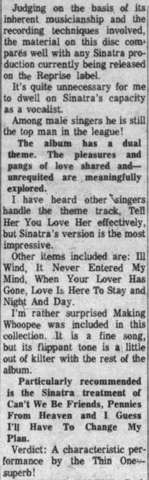
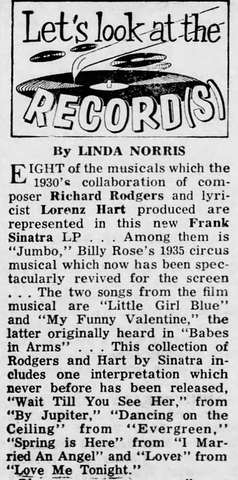
Re: [sinatraphiles] July 29 - THIS DATE IN SINATRA HISTORY
Undated materialFrom: 'Ed O'Brien' via Sinatraphiles <sinatraphiles@googlegroups.com> | Received: 2025-07-29
Lincolnshire News
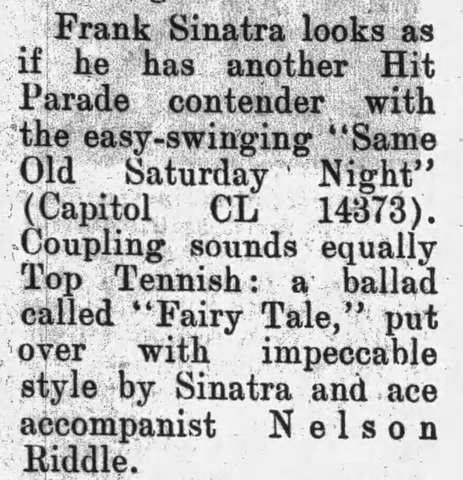
Re: [sinatraphiles] July 29 - THIS DATE IN SINATRA HISTORY
Undated materialFrom: 'Ed O'Brien' via Sinatraphiles <sinatraphiles@googlegroups.com> | Received: 2025-07-29
Surrey Mirror and County Post

Re: [sinatraphiles] July 29 - THIS DATE IN SINATRA HISTORY
Undated materialFrom: 'Ed O'Brien' via Sinatraphiles <sinatraphiles@googlegroups.com> | Received: 2025-07-29

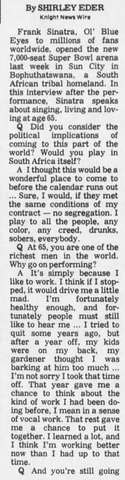
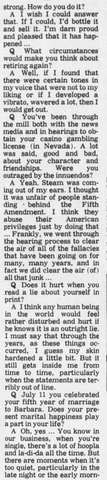
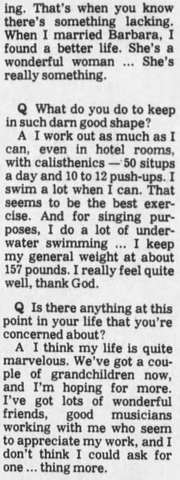
Re: [sinatraphiles] July 29 - THIS DATE IN SINATRA HISTORY
Undated materialFrom: "'John K. George' via Sinatraphiles" <sinatraphiles@googlegroups.com> | Received: 2025-07-29
Lincolnshire News
Re: [sinatraphiles] July 29 - THIS DATE IN SINATRA HISTORY
Undated materialFrom: "'John K. George' via Sinatraphiles" <sinatraphiles@googlegroups.com> | Received: 2025-07-29
Surrey Mirror and County Post
Re: [sinatraphiles] July 29 - THIS DATE IN SINATRA HISTORY
Undated materialFrom: "'John K. George' via Sinatraphiles" <sinatraphiles@googlegroups.com> | Received: 2025-07-29
July 30 - THIS DATE IN SINATRA HISTORY
Undated materialFrom: scott@falseducks.com | Received: 2025-07-30
Universal Amphitheater, Los Angeles, California (July 30-August 7) Opening Benefit for Jules Stein Eye Institute and other charities - "A Legendary Evening with Frank Sinatra" - "A Legendary Evening with Frank Sinatra"
Nancy Sinatra and Charlie Callas
Orchestra Conducted By: Vincent Falcone Jr.
Other Performers: Cary Grant, Charlton Heston, Dorothy Lamour, James Stewart, Ernest Borgnine, Angie Dickinson
1. I've Got The World On A String
2. I Get A Kick Out Of You
3. Come Rain Or Come Shine
4. When Joanna Loved Me
5. The Lady Is A Tramp
6. When Your Lover Has Gone
7. I've Got You Under My Skin
8. The House I Live In
9. monologue
10. My Kind Of Town
11. Searching
12. It Had To Be You
13. Gershwin medley: Summertime / It Ain't Necessarily So / Bess, Oh Where's My Bess?
14. The Best Is Yet To Come
15. Guess I'll Hang My Tears Out To Dry
16. New York, New York
Notes: TT 79mins. Raised over one million dollars.
July 30 - THIS DATE IN SINATRA HISTORY
Undated materialFrom: 'Ed O'Brien' via Sinatraphiles <sinatraphiles@googlegroups.com> | Received: 2025-07-31
Ledger Star
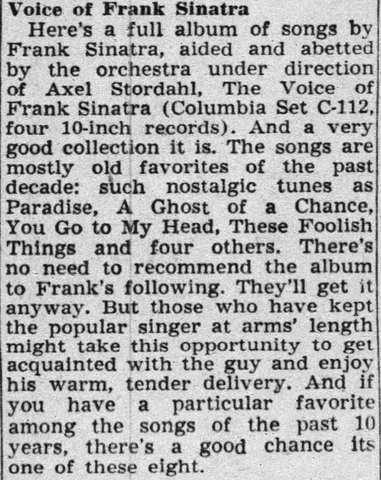
Fw: Chairman of the Boardwalk: My Chance Teenage Encounter with Frank Sinatra | New Jersey Monthly
Undated materialFrom: 'Ed O'Brien' via Sinatraphiles <sinatraphiles@googlegroups.com> | Received: 2025-08-02
https://njmonthly.com/articles/jersey-living/jersey-celebrities/chairman-of-the-boardwalk-my-chance-teenage-encounter-with-frank-sinatra/
Chairman of the Boardwalk: My Chance Teenage Encounter with Frank SinatraWhile my parents played the slots in 1980s Atlantic City, I crossed paths with their idol.
📬 Get our editors' essential reads sent weekly to your inbox with The Gist newsletter.
Illustration: Steve Wacksman
My parents would occasionally wax nostalgic about catching Frank Sinatra perform at the 500 Club during Atlantic City’s glory days. My mother beamed when reminiscing about the Chairman of the Board performing on Missouri Avenue in 1959. “If you only saw Frank Sinatra up close,” my mother would say. I’d roll my prepubescent eyes, since, at the time, my world was all about the Rolling Stones and the Who.
When my parents hit the slots at Resorts Casino during the late 1970s and early ’80s, they would often leave me to my own devices on the Boardwalk. During Memorial Day weekend of 1981, I checked out a commotion outside Resorts and was transfixed as I witnessed my parents’ hero getting the ultimate tribute while they were feeding one-armed bandits.
I happened upon New Jersey’s favorite son, the lionized Sinatra, sinking his hands into cement. The charismatic singer/actor smiled while flanked by his coterie of approving pals. At one point, Ol’ Blue Eyes stared straight at me, a 15-year-old kid sporting a T-shirt that read, “And on the seventh day God created Van Halen,” since I was the only youngster enjoying the festivities.
Wow, this is kinda cool, I thought. The Kinks classic “Celluloid Heroes,” a clever song about legendary celebrities immortalized in cement on Hollywood Boulevard, played in my head. Hollywood Boulevard was impossibly distant to a Jersey kid who had yet to visit California, but Resorts added some glamour to a fading Atlantic City that lacked the electricity of the halcyon days of the 500 Club.
I never attended another handprint ceremony, but I checked out the plaques at Resorts during the 1980s—everyone from Steve Martin to Stevie Wonder. Prints continued to be collected until 1988, when Merv Griffin bought the property. A hiatus continued throughout Griffin’s run, which ended in 1997. After the talk-show host sold Resorts, the prints came back. Martin Short was the final inductee in 2010.
The concrete autographs resided in the recesses of my mind throughout the ’90s and aughts. I didn’t think about the prints again until I noticed they were no longer in front of Resorts in 2013 due to the construction of Margaritaville. They were placed in the casino’s basement for the next dozen years.
I once asked Don Rickles where his prints were, and the insult comic laughed. “Who knows?” Rickles said. “I don’t go out to the Boardwalk when I go to Atlantic City. I’m afraid I’ll get rolled.”
Now, the prints are back where the public can enjoy them: outside the casino’s Superstar Theater. Some prints didn’t survive the extraction, but many live on, including Sinatra’s. Whenever I see that tribute, I flash back to the look of disbelief on my parents’ faces when I told them what I’d witnessed while they were tossing my college fund into the slot machines.
Ed Condran is a veteran journalist who contributes to AARP and has a cross-generational travel vlog, “The Kids and Travel are Alright,” with his two sons.
Best of the Best These six record stores are a vinyl lover’s delight
Undated materialFrom: 'Ed O'Brien' via Sinatraphiles <sinatraphiles@googlegroups.com> | Received: 2025-08-03
Best of the Best
These six record stores are a vinyl lover’s delight
\\\\
If you’re new to the vinyl revival, you may have questions: Why’s that original pressing so expensive? Does mono sound better than stereo? Am I going to be silently judged for my picks? The good news is the Boston area is home to top-notch record stores, where the selection is diverse and staff are happy to put that record you’ve been coveting in your hands, whether you’re a newbie or a seasoned audiophile. These six spots on Boston Globe’s Best of the Best list are the cream of the crop. (If you’re in the mood to search for more gems, check out the best bookstores and thrift shops.)
Big Dig Records
This relative newcomer to the vinyl scene is aptly named: Big Dig is loaded with underground music — including an impressive amount of local punk — alongside the standard rock and jazz. Its owners seem happiest rummaging through long-forgotten collections for gems (they gladly make house calls). Looking for cassettes or CDs? The stock at Big Dig is growing faster than a Boston tunnel project’s budget.Address:2325 Massachusetts Avenue, CambridgePhone:617-864-2583Find online:bigdigrecords.com
Cheapo Records
Mona Miri for the Boston GlobeWith music, sometimes only a classic will do. That’s Cheapo, a Central Square mainstay since 1954. The rarities behind the counter are the stuff of any collector’s dreams (including plenty of original pressings) and the stock of new and used records is continuously being refreshed. Sellers can trust their pre-loved vinyl to the capable hands of curators paying fair prices for the good stuff. Just like it’s always been.Address:538 Massachusetts Avenue, CambridgePhone:617-354-4455Find online:cheaporecords.com
Good Taste Records
Good Taste isn’t the biggest record store — nor does it need to be. From rare grooves to the latest drops, the selection here focuses on quality over quantity. Offerings range from hip-hop to metal to nostalgia, and include a growing collection of used records. Always-friendly husband-and-wife owners Coty and Lindsey Smith are a draw themselves: Since opening shop in the North End in 2022, they have created a welcoming atmosphere for audiophiles and newbies alike.Address:4 Thacher Street, North EndPhone:617-209-9953Find online:goodtasterecords.com
Music Research Library
Zachary WarfThis Beacon Hill spot is on Joy Street — and for vinyl collectors, there may be no happier place. Music Research Library has become a destination for its deep — and deeply varied — collection of clean, used vinyl. There are plenty of classics, but it’s the rare and obscure selections, including many international artists, that have disc diggers coming back for more. With a staff that’s eager to help, the experience is well worth the hike up the hill.Address:24 Joy Street, Beacon HillPhone:617-390-0575Find online:instagram.com/yungvinyl
Stereo Jack’s
Mona Miri for The Boston GlobeStereo Jack’s was a Cambridge stalwart before packing up — with longtime employee Chris Anzalone newly at the helm — for Somerville’s Ball Square in 2022. Now the reins have been passed to manager Wayne Rogers, who will own and operate the beloved store for years to come (we hope). With one wall dedicated to new offerings from pop stars such as Sabrina Carpenter and another to rare used editions, the store embodies the quirky diversity of the vinyl renaissance.Address:736 Broadway, SomervillePhone:617-764-0284Find online:stereojacks.com
Village Vinyl & Hi Fi
This Coolidge Corner spot is the place to find that record you never knew you needed until you got there. Congolese jazz? A Disney animated movie soundtrack? A throwback compilation of Soul Train hits? Check. Check. Check. The store is intimate and the staff are helpful — the type of people who care about music and sound quality. Speaking of which, there’s plenty of vintage stereo equipment for sale, too.Address:307 Harvard Street, BrooklinePhone:617-396-8958Find online:villagevinylhifi.com
FRANK AND NIGHTCLUBS IN 1959
Undated materialFrom: 'Ed O'Brien' via Sinatraphiles <sinatraphiles@googlegroups.com> | Received: 2025-08-03
WINSTON SALEM JOURNAL
7-5-59
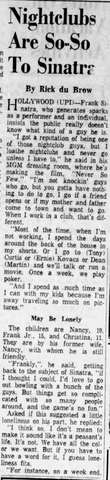
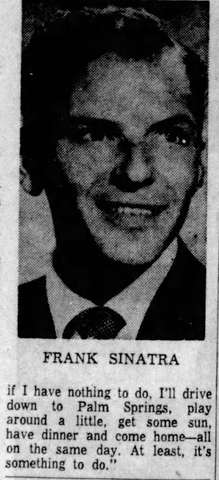
August 2 - THIS DATE IN SINATRA HISTORY
Undated materialFrom: 'Ed O'Brien' via Sinatraphiles <sinatraphiles@googlegroups.com> | Received: 2025-08-04
Buffalo Courier
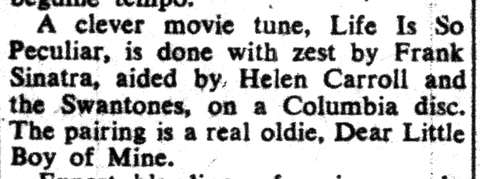
August 5 - THIS DATE IN SINATRA HISTORY
Undated materialFrom: 'Ed O'Brien' via Sinatraphiles <sinatraphiles@googlegroups.com> | Received: 2025-08-07
Baltimore Sun
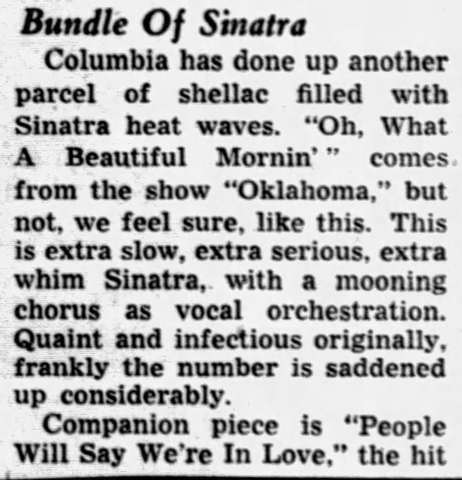
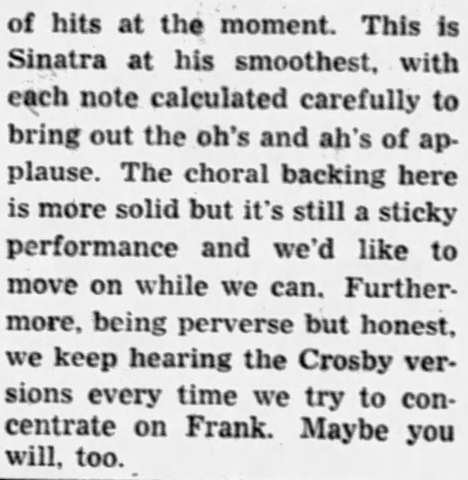
August 7 - THIS DATE IN SINATRA HISTORY
Undated materialFrom: Scott Henderson <scott@falseducks.com> | Received: 2025-08-07
UMe To Release New Frank Sinatra Double Vinyl Set 'The Giants Of Jazz' - Frank Sinatra
Undated materialFrom: 'Ed O'Brien' via Sinatraphiles <sinatraphiles@googlegroups.com> | Received: 2025-08-08
https://www.sinatra.com/ume-to-release-new-frank-sinatra-double-vinyl-set-the-giants-of-jazz/
UMe To Release New Frank Sinatra Double Vinyl Set ‘The Giants Of Jazz’
FEATURES THE CHAIRMAN OF THE BOARD’S HISTORIC COLLABORATIONS WITH COUNT BASIE AND DUKE ELLINGTON BOTH NEWLY REMASTERED
INCLUDES RARE PHOTOS & ORIGINAL ARTWORK
PRE-ORDER HERE
(Los Angeles, CA) August 08, 2025: UMe in conjunction with Frank Sinatra Enterprises announces a new exclusive double-vinyl collection from Frank Sinatra, featuring his historic collaborations with Count Basie and Duke Ellington, entitled The Giants Of Jazz, out September 26, 2025.
This special release includes a pair of timeless albums—It Might As Well Be Swing with Count Basie and His Orchestra and Francis A. & Edward K. with Duke Ellington—newly remastered from the archival recordings. The package includes a new gatefold jacket design that incorporates rare photographs as well as the original artwork.
It is now available for pre-order HERE via the Official Store.
Comprising seminal performances from Sinatra, Basie, and Ellington, the title The Giants Of Jazz couldn’t be more apropos.
It Might As Well Be Swing initially arrived in August 1964. It saw Sinatraaccompanied by Basie in tandem with his orchestra on ten tracks for the second time following 1962’s Sinatra-Basie, and it was Sinatra’s first studio album arranged by Quincy Jones. It housed some of his most celebrated material, ranging from “The Best Is Yet To Come” to the definitive recording of “Fly Me To The Moon (In Other Words).” The latter has eclipsed 766 million Spotify streams, which speak to its enduring influence and impact for the last 61 years. During 1964, the LP peaked at #13 on the Billboard 200.Retrospectively, Jazz Music Archives rated it “5-out-of-5 stars” and raved, “Absolutely wonderful album by Frank Sinatra as the title states It Might As Well Be Swing and that precisely is what it is with lashing of it from the arrangements of Quincy Jones and as usual the outstanding interpretations of each tune sung by Frank Sinatra.” Of Jones’ contribution, The Guardian applauded, “He arranged Sinatra’s voice in such a way that it made him sound like an instrument in the band and not just another singer taking the lead.”
Famously, the original cover of It Might As Well Be Swing also bears the phrase “A Meeting Of Giants.”
Then, there’s Francis A. & Edward K, first released inJanuary 1968, united Sinatra with Ellington and his big band. Among a bevy of highlights, it features an iconic rendition of “All I Need Is The Girl” and “Indian Summer” that includes a wonderful solo by saxophonist Johnny Hodges. Jazz legends Cootie Williams, Cat Anderson, Paul Gonsalves, Russell Procope, and others are also part of the Ellington orchestra. Long time Sinatra arranger, Billy May, did the arrangements for the album.
Check out the tracklisting for The Giants Of Jazz below.
The release continues a series of sought-after reissues of Sinatra’s most-celebrated music. First up, a special 4-inchTiny Vinyl Edition of “Jingle Bells/Silent Night” hits shelves well in advance of the holidays on September 12. Pre-order HERE.
Experience The Giants Of Jazz this fall.
It Might As Well Be Swing Tracklisting:
A1. Fly Me To The Moon (In Other Words)
A2. I Wish You Love
A3. I Believe In You
A4. More (Theme From Mondo Cane)
A5. I Can’t Stop Loving You
B1. Hello, Dolly! (From Hello, Dolly!)
B2. I Wanna Be Around
B3. The Best Is Yet To Come
B4. The Good Life
B5. Wives And Lovers
Francis A. & Edward K. Tracklisting:
A1. Follow Me
A2. Sunny
A3. All I Need Is The Girl
A4. Indian Summer
B1. I Like The Sunrise
B2. Yellow Days
B3. Poor Butterfly
B4. Come Back To Me
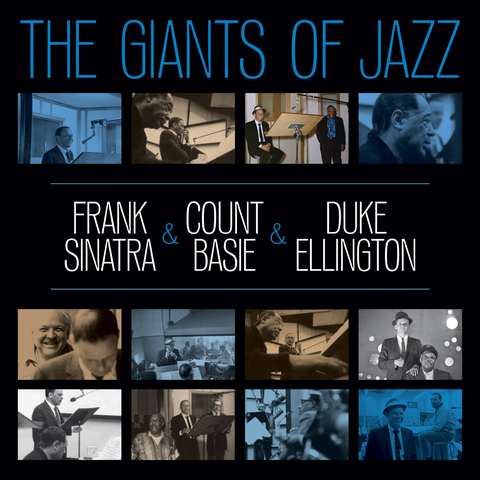
August 13 - THIS DATE IN SINATRA HISTORY
Undated materialFrom: scott@falseducks.com | Received: 2025-08-13
Capitol Studio A, Hollywood
E17468 I Could Write A Book
(Richard Rodgers/Lorenz Hart)
Arranged & Conducted by Nelson Riddle
CD: CDP 7-91249-2 Pal Joey
LP: SM912 Pal Joey
E17469 Bewitched
(Richard Rodgers/Lorenz Hart)
Arranged & Conducted by Nelson Riddle
CD: CDP 7-91249-2 Pal Joey
LP: SM912 Pal Joey
E17470 All The Way
(from the film "The Joker Is Wild"
(J. Van Heusen/S. Cahn)
Maraville Music Corp. (ASCAP)
Arranged & Conducted by Nelson Riddle
-5 (2:52) CD: CDP 724383595228 Sinatra 80th "All The Best"
CD: C2 724383808922 The Complete Capitol Singles
CD: C2-94777 The Capitol Years
CD: CDP 7-92160-2 Frank Sinatra Collectorâ's Series
CD: CDP 7-91150-2 All The Way
LP: SW1538 All The Way
45: 3793
E17471 There's A Small Hotel
(Richard Rodgers/Lorenz Hart)
Arranged & Conducted by Nelson Riddle
CD: CDP 7-91249-2 Pal Joey
LP: SM912 Pal Joey
E17472 Chicago
From the film "The Joker Is Wild"
(Fred Fisher)
Fisher Music Corp. (ASCAP)
Arranged & Conducted by Nelson Riddle
-4 (2:12) CD: CDP 724383595228 Sinatra 80th "All The Best"
CD: C2 724383808922 The Complete Capitol Singles
CD: C2-94777 The Capitol Years
CD: CDP 7-92160-2 Frank Sinatra Collector's Series
CD: CDP 7-48469-2 Come Fly With Me
LP: SW1729 Sinatra Sings Of Love And Things
45: 3793
Musician - Reeds: Arthur "Sketts" Herfurt, Harry Klee, Joseph Koch, Ted Nash, Warren Webb; Trumpets: Pete Candoli, Harry "Sweets" Edison, Conrad Gozzo, George Sanders; Trombones: Russell Brown, Tommy Pederson, James Priddy, Juan Tizol; Violins: Vitor Bay, Alex Beller, Harry Bluestone, Jacques Gasselin, Dan Lube, Paul Nero, Erno Neufeld, Mischa Russell, Marshall Sosson; Violas: Maxine Johnson, Barbara Simon; Cellos: Cy Bernard, Armand Kaproff, Edgar Lustgarten; Piano: Bill Miller; Bass: Joe Comfort; Drums: Alvin Stoller; Guitar: Al Viola; Harp: Kathryn Julye
Session Producer: Voyle Gilmore
NOTE: Sinatra Scholar Ed O'Brien remembers when the records came out from this session. The 45 rpm recordings of "All the Way" and "Chicago" were so great! He says he listened to both sides over and over again for weeks. What a singer! When the "Pal Joey" soundtrack was issued, O'Brien says he played the Sinatra tracks and ignored the rest of the album.
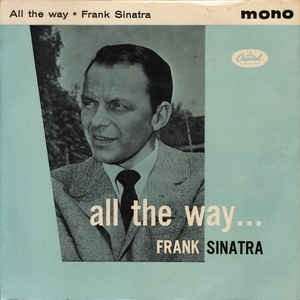
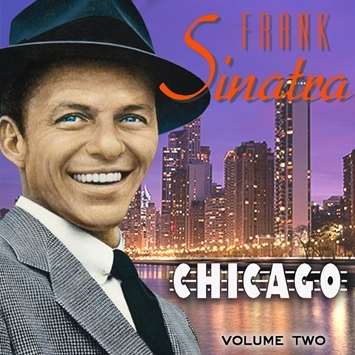
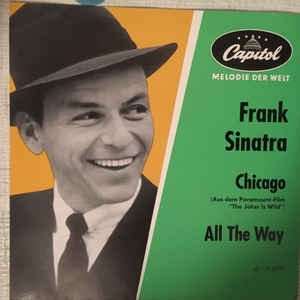
August 13 - THIS DATE IN SINATRA HISTORY
Undated materialFrom: 'Ed O'Brien' via Sinatraphiles <sinatraphiles@googlegroups.com> | Received: 2025-08-15
note: Trudy Erwin dubbed in her singing voice for Kim Novak and Jo Ann Greer
sang for Rita Hayworth
E17470 All The Way
(from the film "The Joker Is Wild"
(J. Van Heusen/S. Cahn)
Maraville Music Corp. (ASCAP)
Arranged & Conducted by Nelson Riddle
-5 (2:52) CD: CDP 724383595228 Sinatra 80th "All The Best"
CD: C2 724383808922 The Complete Capitol Singles
CD: C2-94777 The Capitol Years
CD: CDP 7-92160-2 Frank Sinatra Collectorâ's Series
CD: CDP 7-91150-2 All The Way
LP: SW1538 All The Way
45: 3793
E17471 There's A Small Hotel
(Richard Rodgers/Lorenz Hart)
Arranged & Conducted by Nelson Riddle
CD: CDP 7-91249-2 Pal Joey
LP: SM912 Pal Joey
E17472 Chicago
From the film "The Joker Is Wild"
(Fred Fisher)
Fisher Music Corp. (ASCAP)
Arranged & Conducted by Nelson Riddle
-4 (2:12) CD: CDP 724383595228 Sinatra 80th "All The Best"
CD: C2 724383808922 The Complete Capitol Singles
CD: C2-94777 The Capitol Years
CD: CDP 7-92160-2 Frank Sinatra Collector's Series
CD: CDP 7-48469-2 Come Fly With Me
LP: SW1729 Sinatra Sings Of Love And Things
45: 3793
note: "Chicago" actually charted before "All The Way" in
Billboard. But once it hit the charts, the Cahn-Van
Heusen song would become Sinatra's longest
charting hit at 30 weeks.
Tyrone Daily Herald
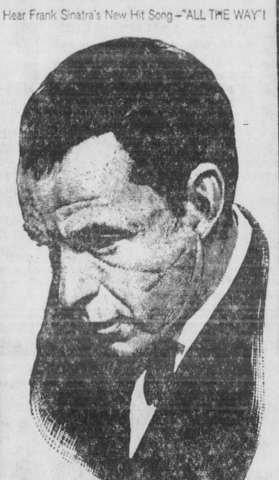
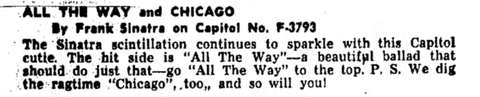
Re: June 19 - THIS DATE IN SINATRA HISTORY
Undated materialFrom: 'Ed O'Brien' via Sinatraphiles <sinatraphiles@googlegroups.com> | Received: 2025-08-15
Frank and Elvis
Undated materialFrom: 'Ed O'Brien' via Sinatraphiles <sinatraphiles@googlegroups.com> | Received: 2025-08-17
10-30-57
Frank , Elvis and Fred attending Gala at Caesars Palace, on 8-8-70
8-6-70
8-6-70
note: Sinatra bash took place on 8-8-70
In a 1980 radio interview, Frank claimed Elvis was the only rock 'n' roll artist
to become a friend. It was a long time coming. Sinatra hated 'rock' in the
1950s. During an interview, in 1958, Frank felt that Elvis, if he really wanted to
prove himself a worthy entertainer, needed to do an album of Rodgers & Hart
songs with a full orchestra. Mr. Sinatra just didn't get Mr. Presley -- not at all.
The "Welcome Home Elvis" special, taped in late March of 1960, definitely im-
proved the relationship. A decade later things had changed dramatically. Frank
was urging Elvis to move to Vegas and get quality songsmiths to write signature
songs for him. Shortly before Elvis died, Frank made a desperate attempt to save
him.
In August 1977, Frank Sinatra made a phone call to Elvis Presley, reportedly to urge him to quit using drugs. Sinatra expressed concern about Elvis's health and well-being, stating, "He's too young to die". Elvis passed away on August 16, 1977, just before his scheduled flight from Memphis.
Sinatra's call took place shortly before Elvis's death, and he is quoted as saying, "When I called the hospital in Memphis, the girl on the switchboard asked, 'Who's calling?' and when I replied, 'Frank Sinatra' I fully expected her to say, 'Oh, yeah, and I'm the Queen of England' or some such dumb line. But she must have recognized my voice because, a few seconds later, Elvis came on the line". Sinatra then reportedly told Elvis to take care of himself and stop "fooling around".
Ed
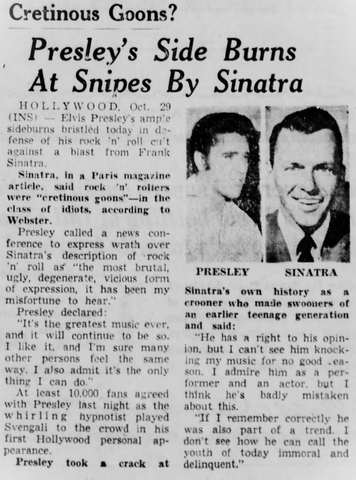
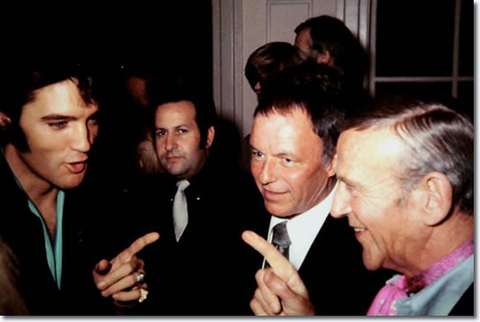
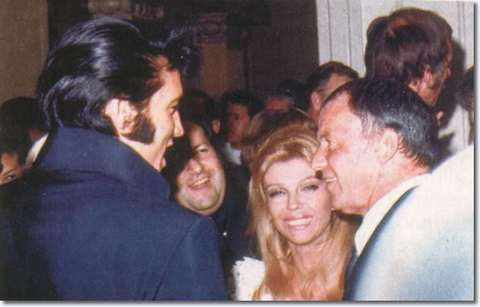
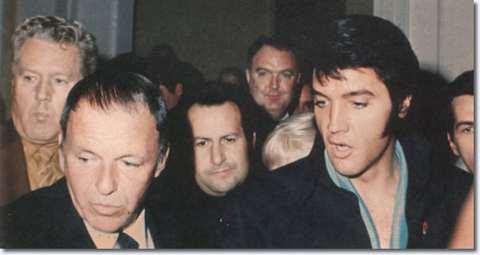
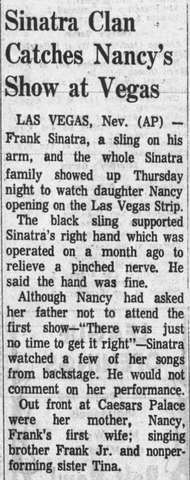
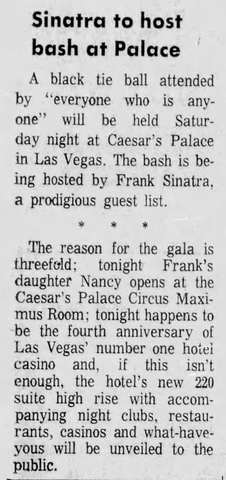
Re: Frank and Elvis
Undated materialFrom: Iván Fructuoso <ivestis75@gmail.com> | Received: 2025-08-17
Aren’t these photos from Nancy’s opening night at the international in 1969? After Elvis triumphant return to Vegas in July 1969 and his month long stint, he, his wife and dad and entourage, went to Nancy show. Streisand had opened the hotel showroom, then came Elvis (he refused to be the first in order to avoid sound issues and other opening problems, that actually happened), and then Nancy.
And, yes, he’s Vernon Presley
Love your books, your knowledge and your persona Mr . Friedwald
Best,
Ivan
El El dom, 17 ago 2025 a las 21:39, Will Friedwald <wfriedwald@gmail.com> escribió:
> In the three 1970 shots, there are Sinatra & Elvis with: > 1 - Astaire
> 2 - Nancy
> 3 - isn't that Elvis's father, Vernon Presley, hovering over Elvis's left > side?
>
> w
>
> --
>
SINATRA IN LATIN AMERICA AUGUST 1981
Undated materialFrom: 'Ed O'Brien' via Sinatraphiles <sinatraphiles@googlegroups.com> | Received: 2025-08-18
“The Voice” triumphed,but left losses
Frank Sinatra said goodbye to theArgentine public on Monday and was again applauded by about 20,000people who witnessed his performance at the Luna Park stadium.
There was a warm ovation lasting threeminutes, during which the famous North American singer responded tothe applause and cheers by alluding to those who had clung to thehope that "The Voice" would break with his old andunbending habit of not agreeing to sing one more song.
Despite the applause, the screams, thearms up, the handkerchiefs waving high, Sinatra left without pleasinghis admirers.
He left the stage with one hand up andthe other holding bouquets of flowers thrown to him from the stands.It was the last of Sinatra’s six performances in Buenos Aires.
Monday’s show was televised live inthe interior of the country, as well as about ten other LatinAmerican countries, as reported by Chango Producciones, the companypromoting the Sinatra show here.
The tickets for the Sinatra show at theSheraton Hotel cost $600. The price includes dinner, while at LunaPark the price of the seats ranged from $15 to $100. The productionof the show ran between $3-4 Million, according to sources affiliatedwith the organization.
Against all odds, some 20,000enthusiastic fans filled the stadium on Sunday, but the promotersadmitted that they lost money with the cycle of appearances.
Until last week, when Sinatra arrived,it was reported in various media that the crowd would not fill theLuna Park stadium.
But six hours before the first show,there were already long lines to buy tickets.
Although the exact amount of money thatwas paid to the singer for coming to Argentina is not known, it isestimated to be between $2-3 million, an amount that in the UnitesStates would be considered a world record for a popular singer.
Ortega hired Sinatra six months agowhen the dollar was quoted at 1900 pesos. The current exchange rateexceeds 7500 pesos. The price of admission, originally $1000 for theshows he performed at the hotel, was reduced to $600.
At Luna Park, tickets were alsodiscounted. The stadium, with a capacity of 22,000, typically holdsboxing matches.
In addition, the singer disappointedthe public and Jockey Club officials by not attending the PalermoRacetrack for a race that bore his name. His wife, Barbara Marx,represented him and presented the prize to the winner.
The newspaper “La Razon” of BuenosAires, said on Monday that in Sunday’s show, Sinatra demonstratedthat he is “contemporary, enduring, and still moves like 30 yearsago” The evening newspaper added that withhis performance, the famous singer '’shook’' Luna Park. note: Lynnie translated this from the original review in a Spanish newspaper.
Trini Lopez Documentary
Undated materialFrom: scott@falseducks.com | Received: 2025-08-18
I just watched a Trini Lopez documentary from 2022 that was very fascinating. Trini died in 2020 due to complications of Covid but he contributed greatly to this documentary before he died. Lots of stories about Sinatra and how he influenced Trini's career. Well worth a watch and it's available on Youtube:
My Name is Lopez:
https://www.youtube.com/watch?v=Y8TOHtaNcPQ
Scott
Previously Unreleased Frank Sinatra Recordings Confirmed for October 3 from SING
Undated materialFrom: 'Ed O'Brien' via Sinatraphiles <sinatraphiles@googlegroups.com> | Received: 2025-08-20
|
|
|
Click to Download 300dpi
|
|
|
PREVIOUSLY UNRELEASED FRANK SINATRA PERFORMANCES OF RARE RADIO BROADCASTS FROM SING COMING OCTOBER 3
Multi-Release Physical And Digital Packages Confirmed for 2025 And 2026
First Up is At The Hollywood Bowl 1943-1948 on October 3rd Followed by Christmas on The Air with 5xLP- vinyl exclusive Box Set Long Ago, Far Away, scheduled for Fall/Holiday releases of 2025.
SING Spared No Expense on Extensive Audio Restoration Campaign from Original Broadcast Sources to Give Fans the Best Fidelity Possible
FOR IMMEDIATE RELEASE
LOS ANGELES, CA. & SEATTLE, WA. (WEDNESDAY AUGUST 20, 2025) – SING, a blockchain tech company and rightsholder, selling music from major artists and catalogs as vinyl/digital hybrid releases to super-fans, announced today that a treasure trove of previously unreleased live radio performances by “The Voice” - Frank Sinatra - are scheduled for release in 2025 and 2026 on digital, compact disc and vinyl formats.
The first title, At The Hollywood Bowl 1943-1948 is scheduled for release October 3 on Vinyl and CD. The album is available for pre-order through SING MARKET or directly on LP here and CD here. SING spared no expense on extensive audio restoration campaign for these projects from original broadcast sources to give fans the best fidelity possible. Take a listen here.
SING plans to release two other additional titles in the coming months, including Christmas on the Air and the 5xLP deluxe box set, Long Ago, Far Away, consisting of live recordings and radio broadcasts recorded between 1943 and 1951. Full details on these releases will be announced shortly.
“Frank Sinatra was one of America’s first multi-media superstars,” said Charles ‘Chuck’ Granata: a world-renowned Sinatra historian, author and producer. “As prolific as he was in the recording studio, his work on radio was even more extensive – and equally important in the overarching scheme of his sixty-plus year career. What makes it essential is that on the radio – and during early concert performances of the 1940s – Frank Sinatra sang tunes that he never otherwise recorded. Many are top-tier songs by Cole Porter, Johnny Mercer, Irving Berlin, Jerome Kern, the Gershwins, Cahn and Styne and others. He also relied on contemporary pop tunes of the day that also went unrecorded. Thus, the radio years offer us a plethora of great songs by Sinatra that we’d otherwise never hear if not for these recorded broadcasts and stage performances.”
Granata, who produced Nancy Sinatra’s weekly Nancy for Frank radio program on SiriusXM from 2007 to 2021 and currently hosts Sinatra Standard Time on KSDS-FM in San Diego contributed the extensive, detailed liner notes that accompany the releases. “These recordings have circulated for decades, with inferior sonic quality,” Granata adds. “I’m amazed that SING has been able to locate and compile their collections from some very high quality sources. These are historically essential recordings, and deserve to be preserved and shared with anyone who values the ‘Golden Age’ of traditional American pop music. They really help round out and offer a fuller view of Sinatra’s contributions to American pop music, culture and style.”
Track Listing as follows for At The Hollywood Bowl 1943-1948:
Compact Disc
Academy of Motion Picture Arts & Sciences Academy Night - August 4, 1945
1. Long Ago and Far Away *
2. I Should Care *
3. What Makes the Sunset
4. If I Loved You
5. Ol’ Man River
The Musicians Association of Los Angeles
Music for the Wounded Benefit Concert - August 8, 1948
6. Jack Haley Introduction & Time After Time
7. The Girl That I Marry
8. Soliloquy
Frank Sinatra in Concert - August 14, 1943
9. Ol’ Man River
10. Night and Day
11. You’ll Never Know
12. Embraceable You
13. She’s Funny That Way
14. All or Nothing at All
15. The Song is You
16. Frank Sinatra Closing Remarks
BONUS TRACKS
NBC Your Hit Parade - August 14, 1943
17. Sunday, Monday or Always
18. In the Blue of Evening
Vinyl
SIDE 1
Academy of Motion Picture Arts & Sciences Academy Night - August 4, 1945
1. Long Ago and Far Away
2. I Should Care
3. What Makes the Sunset
4. If I Loved You
5. Ol’ Man River
Frank Sinatra in Concert - August 14, 1943
6. The Song is You (Jerome Kern-Oscar Hammerstein II)
SIDE 2
Music for the Wounded Benefit Concert - August 8, 1948 (AFRS)
1. Jack Haley Introduction & Time After Time (Sammy Cahn-Jule Styne)
2. The Girl That I Marry (Irving Berlin)
3. Soliloquy (Richard Rodgers-Oscar Hammerstein II)
Frank Sinatra in Concert - August 14, 1943
4. All or Nothing at All (Arthur Altman-Jack Lawrence)
5. She’s Funny That Way (Richard Whiting-Neil Moret)
All performances previously unreleased except *
In 1943, the world-renowned Los Angeles Philharmonic welcomed the first pop singer in its history – teen idol Frank Sinatra – to appear at the Hollywood Bowl. This auspicious moment was a turning point for the orchestra, singer and venue, and began a rich series of collaborations between the crooner and the Bowl: one that would last into the final phases of his storied career in the 1990s. For the first time, these historic performances – documenting Sinatra’s three major Hollywood Bowl appearances in the 1940s – have been remastered from the primary recording sources to put you front-and-center for a rare, fascinating glimpse into his earliest success as a legitimate concert artist. Meticulously restored and remastered – and enhanced with detailed, historic liner notes by renowned Sinatra authority Charles “Chuck” Granata - this important collection represents a defining moment in 20th century American popular music.
ABOUT SING
SING is a blockchain IP tech company and rightsholder, selling music from major artists and catalogs as vinyl/digital hybrid releases to mass-market super-fans. SING is leading the return to music ownership.
For More Information, Please Contact Joshua Mills, It’s Alive! Media, josh@itsalivemedia.com, 323-464-6314, www.itsalivemedia.com |
|
|
|
Click to Download 300dpi
|
|
|
| |
|
|
|
|
|
|
|
Josh Mills
It's Alive! Media & Management
11333 Moorpark St. Suite 451, Studio City, CA 91602
323-464-6314 (O)
323-819-0913 (M)
josh@itsalivemedia.com
http://www.facebook.com/itsalivemedia
http://www.twitter.com/itsalivemedia
http://www.instagram.com/iamprmgt
https://www.linkedin.com/in/josh-mills-963751
http://www.itsalivemedia.com
|
| | | |
|
|
|
|
|
|
|
Change email address / Leave mailing list
Straighten Up & Fly Right!
W
Will Friedwald is the 2024 winner of the Jazz Journalists Association Lifetime Achievement Award for excellence in Jazz Journalism. He writes about music and popular culture for The Wall Street Journal, The New York Sun, The New York Stage Review, Vanity Fair, Playboy magazine and other publications. He is also the host of the radio show Sing! Sing! Sing! on San Diego KSDS on Saturday mornings. He also is the author of ten books including the award-winning A Biographical Guide To The Great Jazz And Pop Singers, Sinatra: The Song Is You, Stardust Melodies, Tony Bennett: The Good Life, Looney Tunes & Merrie Melodies, and Jazz Singing. He has written over 600 liner notes for compact discs, received eleven Grammy nominations, and appears frequently on television and other documentaries. He is also a consultant and curator for Apple Music. Current books : The Great Jazz And Pop Vocal Albums (Pantheon Books / Random House, November 2017), Sinatra: The Song Is You! - New Revised Edition (Chicago Review Press, May 2018) and Straighten Up and Fly Right: The Life and Music of Nat King Cole (Oxford University Press, July 2020). He studied elocution with Prof. Henry Higgins and musicology with Prof. Harold Hill.
Word up. Peace Out. Go forth and sin no more! (John 8:11)
| | Virus-free.www.avast.com |
AUG 20 THIS DATE IN SINATRA HISTORY
Undated materialFrom: 'Ed O'Brien' via Sinatraphiles <sinatraphiles@googlegroups.com> | Received: 2025-08-21
XNY2104 Summer Me, Winter Me
(Marilyn Bergman/Alan Bergman/Michel Legrand)
WB Music Corp. (ASCAP)
Arranged & Conducted by Don Costa
(4:04) CD: 46013-2 The Complete Reprise Studio Recordings Disc 18
CD: 2300-2 Trilogy
LP: 3FS2300 Trilogy
note: There is an alternate floating around from this session. Arguably a better vocal than the release version. Problem is: Frank left out a word.Ed
SINATRA PROVIDED THE SOUND TRACK TO THE 20TH CENTURY
Undated materialFrom: 'Ed O'Brien' via Sinatraphiles <sinatraphiles@googlegroups.com> | Received: 2025-08-22
The Day
12-10-95
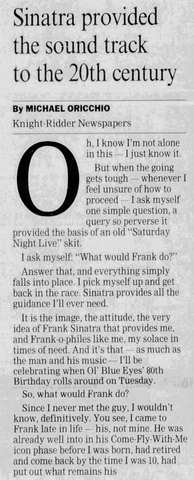
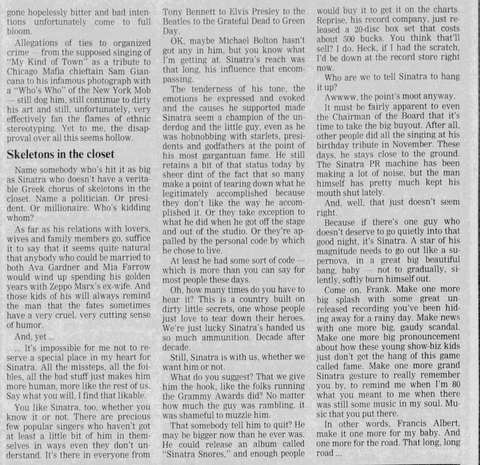
August 23 - THIS DATE IN SINATRA HISTORY
Undated materialFrom: Scott Henderson <scott@falseducks.com> | Received: 2025-08-23
KHJ Studios. Hollywood
12937 When I Stop Loving You
w/Vocal Chorus
(Cates/Copeland/ Greene)
Arranged & Conducted by Nelson Riddle
CD: C2 724383808922 The Complete Capitol Singles
LP: W1164 Look To Your Heart
45: 2922
12938 White Christmas
w/Vocal Chorus
(Irving Berlin)
Arranged & Conducted by Nelson Riddle
CD: C2 724383808922 The Complete Capitol Singles
CD: CDP 7-48329-2 The Sinatra Christmas Album
45: 2954
12644 The Christmas Waltz
w/Vocal Chorus
(J. Styne/S. Cahn)
Arranged & Conducted by Nelson Riddle
CD: C2 724383808922 The Complete Capitol Singles
CD: CDP 7-48329-2 The Sinatra Christmas Album
45: 2954
Musicans - Reeds: John Hacker, Dominic Mumolo, Warren Webb, James
Williamson; Trombones: Simon Zenther; Bass Trombone: George Roberts;
French Horns: John Cave, Vincent De Rosa; Violins: Victor Bay, Alex
Beller, Harry Bluestone, Walter Edelstein, Henry Hill, Mischa Russell, Paul Shure, Felix Slatkin; Violas: Staney Harris, David Sterkin; Cellos: Cy Bernard, Edgar Lustgarten, Eleanor Slatkin; Piano: Bill Miller; Bass: Joe Comfort; Guitar: Allan Reuss; Drums: Lou Singer, Alvin Stoller
Session Producer: Voyle Gilmore
Fw: TASTING TABLE: The One Soda Frank Sinatra Would Request By Name For His Dressing Room
Undated materialFrom: 'Ed O'Brien' via Sinatraphiles <sinatraphiles@googlegroups.com> | Received: 2025-08-24
The One Soda Frank Sinatra Would Request By Name For His Dressing Room This legendary entertainer had very specific beverage demands in his dressing room rider, including several bottles of one particular fizzy drink.
Read in Tasting Table: https://apple.news/AOinI9LM2TPqD3E09RZNamQ
Shared from Apple News
August 22 - THIS DATE IN SINATRA HISTORY
Undated materialFrom: 'Ed O'Brien' via Sinatraphiles <sinatraphiles@googlegroups.com> | Received: 2025-08-25
Philadelphia Inquirer
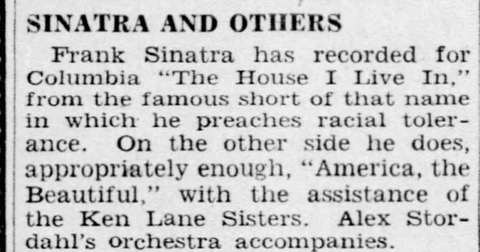
AUGUST 22 THIS DATE IN SINATRA HISTORY
Undated materialFrom: 'Ed O'Brien' via Sinatraphiles <sinatraphiles@googlegroups.com> | Received: 2025-08-28
New York City
XNY2106 For The Good Time w/Eileen Farrell & Vocal Chorus
(Kris Kristofferson)
Careers BMG Music (BMI)
Arranged & Conducted by Don Costa
(4:43) CD: 46013-2 The Complete Reprise Studio Recordings Disc 18
CD: 2300-2 Trilogy
LP: 3FS2300 Trilogy
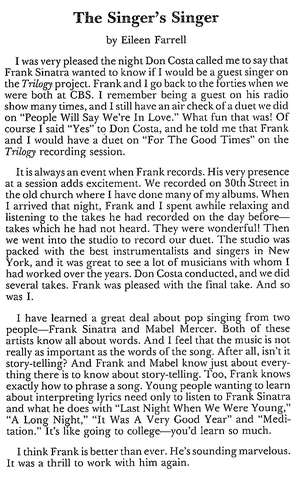
August 23 - THIS DATE IN SINATRA HISTORY
Undated materialFrom: 'Ed O'Brien' via Sinatraphiles <sinatraphiles@googlegroups.com> | Received: 2025-08-28
Caspar Morning Star
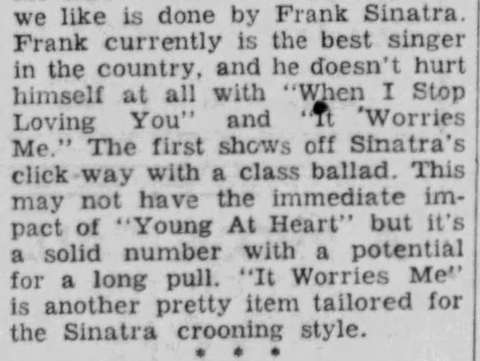
August 23 - THIS DATE IN SINATRA HISTORY
Undated materialFrom: 'Ed O'Brien' via Sinatraphiles <sinatraphiles@googlegroups.com> | Received: 2025-08-28
HX3707 Golden Moment
(Kenny Jacobson/Rhoda Roberts)
Quartet Music Inc./Range Road Music Inc. (ASCAP)
Arranged by Nelson Riddle
Conducted by Torrie Zito
-3 (2:57) CD: 46013-2 The Complete Reprise Studio Recordings Disc 9
CD: 1015-2My Kind Of Broadway
LP: FS1015My Kind Of Broadway
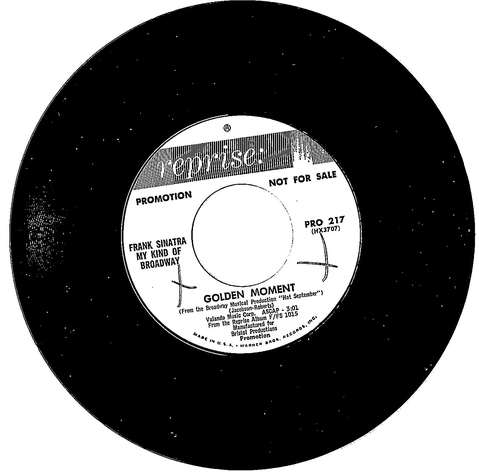
August 27 - THIS DATE IN SINATRA HISTORY
Undated materialFrom: 'Ed O'Brien' via Sinatraphiles <sinatraphiles@googlegroups.com> | Received: 2025-08-28
August 24 - THIS DATE IN SINATRA HISTORY
Undated materialFrom: 'Ed O'Brien' via Sinatraphiles <sinatraphiles@googlegroups.com> | Received: 2025-08-29
The News Journal
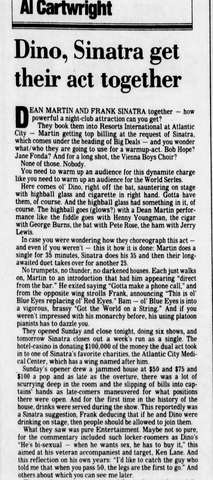
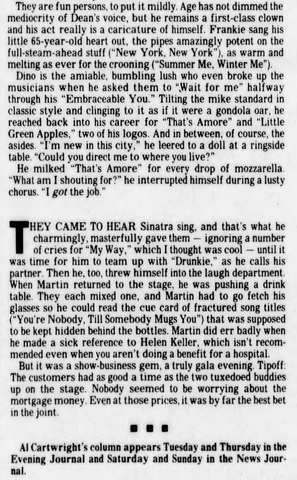
August 24 - THIS DATE IN SINATRA HISTORY
Undated materialFrom: 'Ed O'Brien' via Sinatraphiles <sinatraphiles@googlegroups.com> | Received: 2025-08-29
The News Journal
Fw: August 25 - THIS DATE IN SINATRA HISTORY
Undated materialFrom: 'Ed O'Brien' via Sinatraphiles <sinatraphiles@googlegroups.com> | Received: 2025-08-30
Press Of Atlantic City
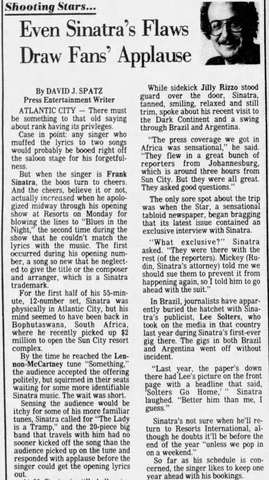
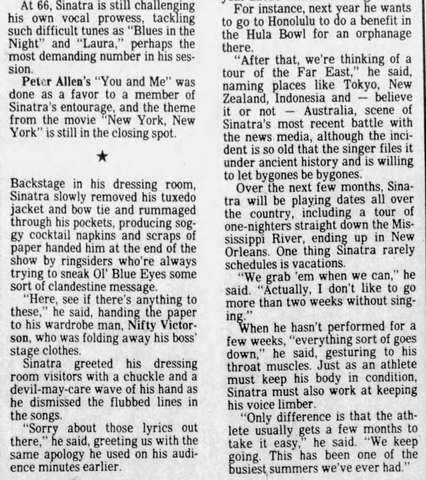
Fw: August 25 - THIS DATE IN SINATRA HISTORY
Undated materialFrom: 'Ed O'Brien' via Sinatraphiles <sinatraphiles@googlegroups.com> | Received: 2025-08-30
Fw: August 25 - THIS DATE IN SINATRA HISTORY
Undated materialFrom: 'Ed O'Brien' via Sinatraphiles <sinatraphiles@googlegroups.com> | Received: 2025-08-30
Press Of Atlantic City
Fw: August 25 - THIS DATE IN SINATRA HISTORY
Undated materialFrom: 'Ed O'Brien' via Sinatraphiles <sinatraphiles@googlegroups.com> | Received: 2025-08-30
WHAT MIGHT HAVE BEEN
Undated materialFrom: 'Ed O'Brien' via Sinatraphiles <sinatraphiles@googlegroups.com> | Received: 2025-08-30
12-16-45
10-5-53
12-15-54
12-23-54
7-13-61
1-8-69
2-1-69
2-12-69
6-8-70
8-31-70
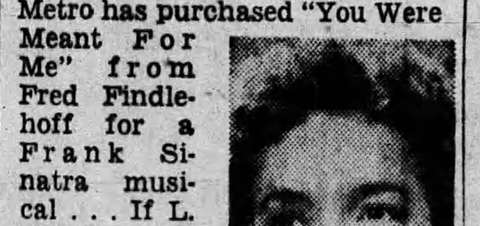
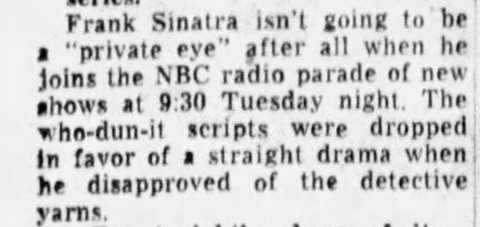

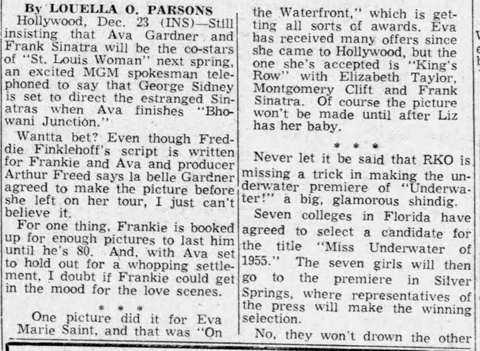
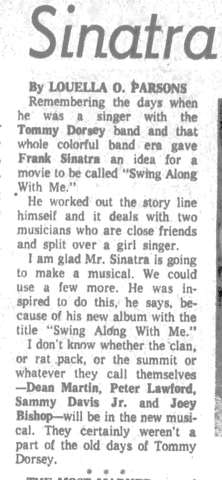
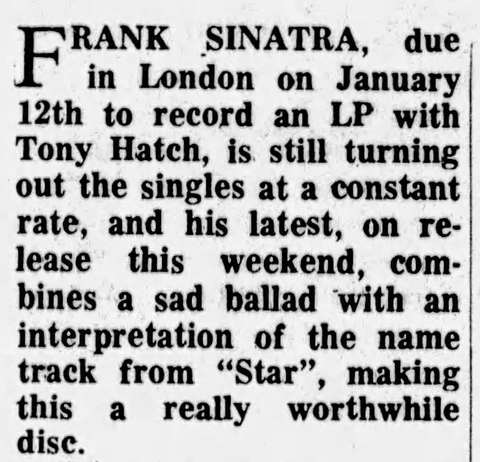
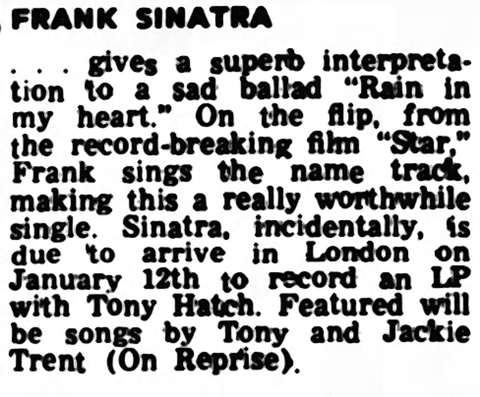
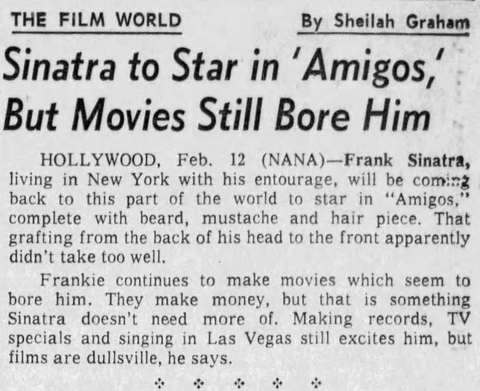
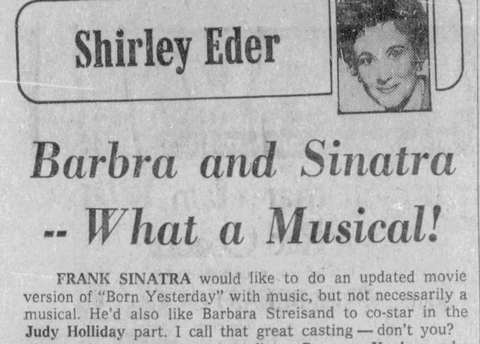
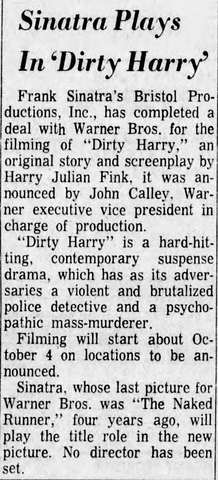
August 31 - THIS DATE IN SINATRA HISTORY
Undated materialFrom: Scott Henderson <scott@falseducks.com> | Received: 2025-08-31
. Film credits studio recording from that date.
It is actually the live track from the N.Y. World's Fair
from that evening. I know the collector who supplied
the tape for the film.
Re: Jerry Lewis MDA Labor Day Telethon
Undated materialFrom: Larry Crawford <argyle52@hotmail.com> | Received: 2025-09-01
Me too
Get Outlook for Android<https://aka.ms/AAb9ysg>
________________________________
From: 'Dave Garrett' via Sinatraphiles <sinatraphiles@googlegroups.com>
Sent: Monday, September 1, 2025 4:02:47 AM
To: Sinatraphile Google Groups <sinatraphiles@googlegroups.com>
Subject: Re: Jerry Lewis MDA Labor Day Telethon
When I was growing up, it was always on in our household every Labor Day. It was definitely "must-see TV". There are a few relatively complete shows out there on YouTube - one channel is live-streaming the 1983 show right now:
https://www.youtube.com/@thetelethonchannel
MDA Telethon has their own YouTube channel, but it's mainly just individual videos of entertainers. They almost certainly have an archive of complete shows, and it's unfortunate they don't publish them on YouTube or elsewhere.
There's a wonderful 2014 documentary that covers the behind-the-scenes preparations for one of the telethons. I always recommend it to anyone that has even a slight interest in Jerry Lewis or the MDA telethons:
TELETHON<https://www.youtube.com/watch?v=tYrjtEvmLA0>
<https://www.youtube.com/watch?v=tYrjtEvmLA0>
TELETHON
Dave
On Sunday, August 31, 2025 at 06:54:27 PM CDT, 'James Johnson' via Sinatraphiles <sinatraphiles@googlegroups.com> wrote:
Am I the only one who misses this annual event? No matter how schmaltzy it got, I couldn’t turn away. _____________
Jim Johnson
Rehoboth Beach, DE
[image not recovered — source caption: “https://s.yimg.com/nq/storm/assets/enhancrV2/23/logos/youtube.png”]
Re: Jerry Lewis MDA Labor Day Telethon
Undated materialFrom: 'Dave Garrett' via Sinatraphiles <sinatraphiles@googlegroups.com> | Received: 2025-09-01
When I was growing up, it was always on in our household every Labor Day. It was definitely "must-see TV". There are a few relatively complete shows out there on YouTube - one channel is live-streaming the 1983 show right now: https://www.youtube.com/@thetelethonchannel
MDA Telethon has their own YouTube channel, but it's mainly just individual videos of entertainers. They almost certainly have an archive of complete shows, and it's unfortunate they don't publish them on YouTube or elsewhere. There's a wonderful 2014 documentary that covers the behind-the-scenes preparations for one of the telethons. I always recommend it to anyone that has even a slight interest in Jerry Lewis or the MDA telethons: TELETHON
|
|
|
| | |
|
|
|
| |
TELETHON
|
|
|
--Dave
On Sunday, August 31, 2025 at 06:54:27 PM CDT, 'James Johnson' via Sinatraphiles <sinatraphiles@googlegroups.com> wrote:
Am I the only one who misses this annual event? No matter how schmaltzy it got, I couldn’t turn away. _____________
Jim Johnson
Rehoboth Beach, DE
Fw: September 1 - THIS DATE IN SINATRA HISTORY
Undated materialFrom: 'Ed O'Brien' via Sinatraphiles <sinatraphiles@googlegroups.com> | Received: 2025-09-02
Capitol Studio A, Hollywood
E33349 Montmart
w/Maurice Chevalier & Chorus
Arranged & Conducted by Nelson Riddle
CD: CDP 7-91248-2 Can Can
LP: SW1301 Can Can
Tampa Bay Times
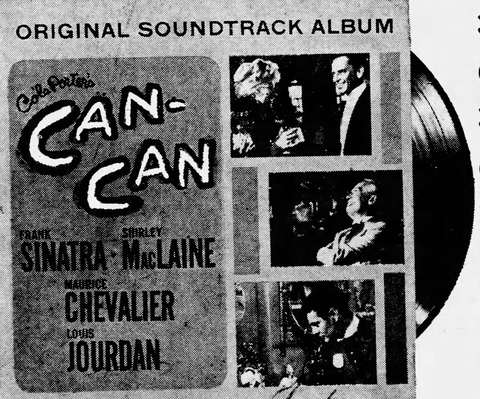
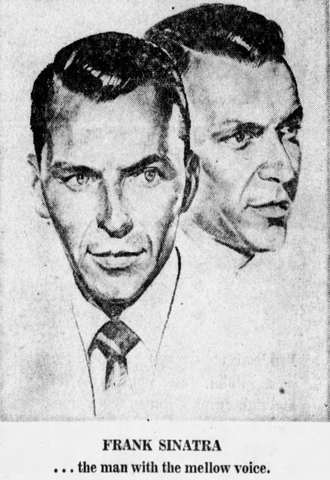

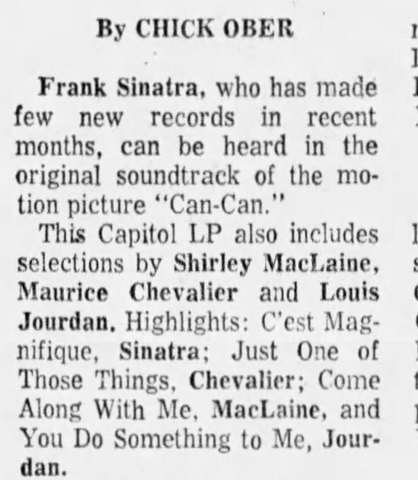
Fw: September 1 - THIS DATE IN SINATRA HISTORY
Undated materialFrom: 'Ed O'Brien' via Sinatraphiles <sinatraphiles@googlegroups.com> | Received: 2025-09-02
Buffalo News
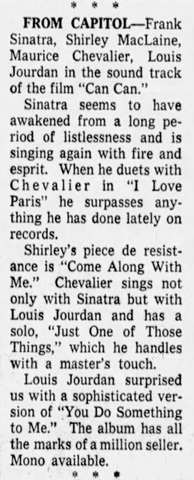
NELSON RIDDLE DISCUSSES HIS CAPITOL YEARS WITH SINATRA AND OTHERS
Undated materialFrom: 'Ed O'Brien' via Sinatraphiles <sinatraphiles@googlegroups.com> | Received: 2025-09-03
April 4, 1960
Home's bio on Sinatra 1962
8-17-61
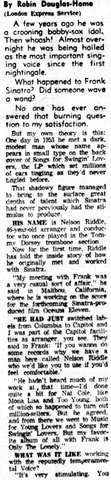
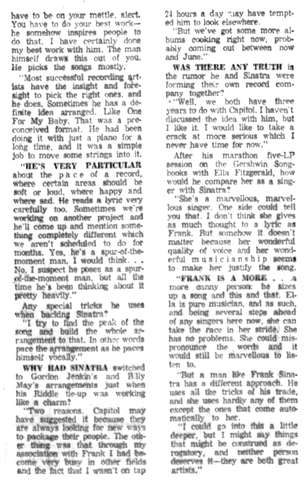
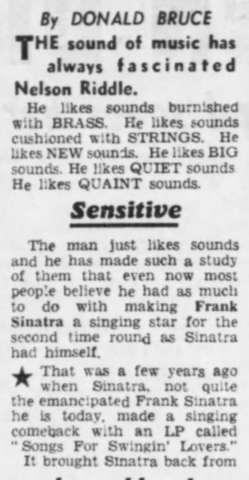
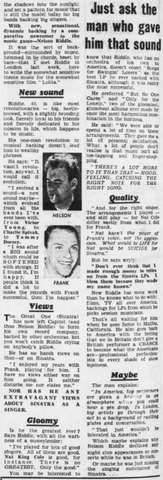
Fw: A YOUNG FRANK WITH THE ROYAL CANADIANS
Undated materialFrom: 'Ed O'Brien' via Sinatraphiles <sinatraphiles@googlegroups.com> | Received: 2025-09-04
Scott Sayers sent this photo my way.
I believe that is Guy Lombardo on Frank's
left and members of his orchestra are also
in the picture. Looks like the early 1940s
. Pretty interesting old photo…..
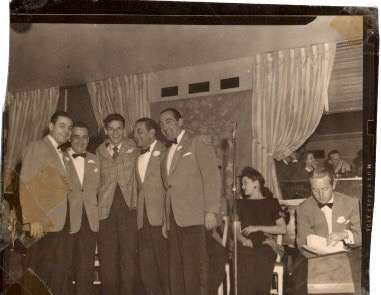
Re: August 29 - THIS DATE IN SINATRA HISTORY
Undated materialFrom: 'Ed O'Brien' via Sinatraphiles <sinatraphiles@googlegroups.com> | Received: 2025-09-05
Press Of Atlantic City
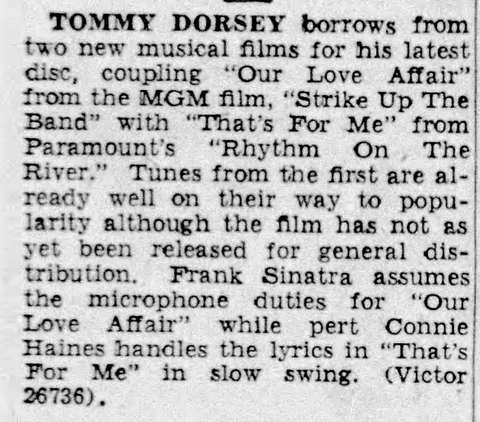
September 3- THIS DATE IN SINATRA HISTORY
Undated materialFrom: 'Ed O'Brien' via Sinatraphiles <sinatraphiles@googlegroups.com> | Received: 2025-09-05
Caesars Palace, Las Vegas , Nevada (September 3-5)
partial list of songs:
Close To You ( uptempo version of Carpenters' hit )
I Get A Kick Out Of You
That's Life
One For My Baby
This Love Of Mine with Bill Miller
Just One Of Those Things with Al Viola
My Kind Of Town
My Way
L.A. Times
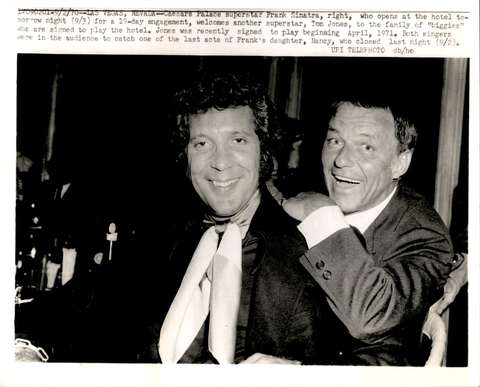

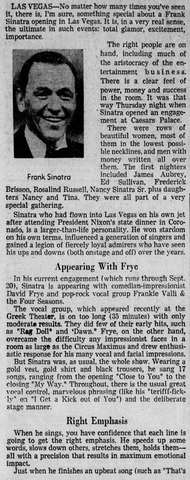
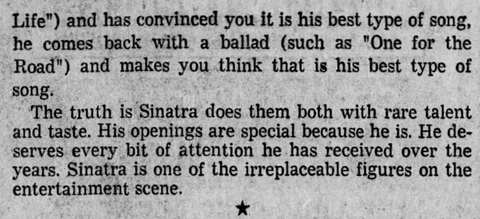
September 9 - THIS DATE IN SINATRA HISTORY
Undated materialFrom: 'Ed O'Brien' via Sinatraphiles <sinatraphiles@googlegroups.com> | Received: 2025-09-09
New York City
BS055961 Anything
(P. Napoleon/F.. Signorelli/E. DeLange)
Southern Music Publishing Co. Inc./Scarsdale Music Corp. (ASCAP) Arranged by Deane Kincaide
-1 (3:04) CD: 07863 66353-2 "The Song Is You" 5CD set Vol 2
LP: SD 1000
78: 27208
The ASCAP Ban was a 1941 boycott of the American Society of Composers, Authors and Publishers (ASCAP) by radio broadcasters, due to license fees. Dorsey's theme song "I'm Getting Sentimental Over You" was a casualty. T.D. picked "Anything" as the temporary replacement. Ban began
on 1-1-41.
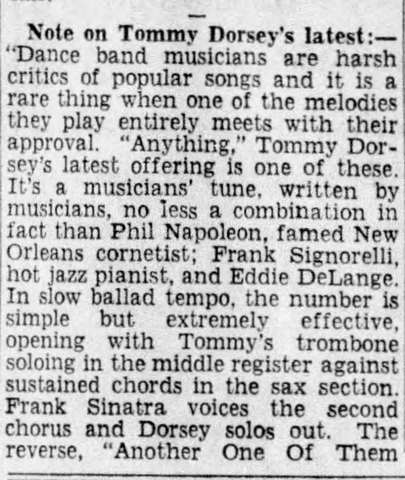
September 9 - THIS DATE IN SINATRA HISTORY
Undated materialFrom: 'Ed O'Brien' via Sinatraphiles <sinatraphiles@googlegroups.com> | Received: 2025-09-09
Dinah's Place (NBC)
Guest: Frank Sinatra, Cooking segment.
1. Fly Me To The Moon
2. They Can't Take That Away From Me w/Dina
Notes: 30 min.
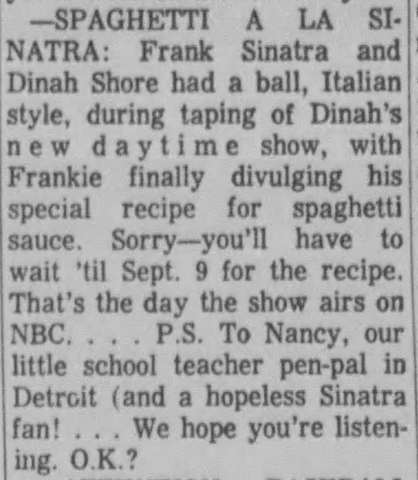
September 9 - THIS DATE IN SINATRA HISTORY
Undated materialFrom: 'Ed O'Brien' via Sinatraphiles <sinatraphiles@googlegroups.com> | Received: 2025-09-09
This contradicts numerous articles from September 53 claiming Sinatra played
to half a house in September 52 at the Riviera.
September 9 - THIS DATE IN SINATRA HISTORY
Undated materialFrom: 'Ed O'Brien' via Sinatraphiles <sinatraphiles@googlegroups.com> | Received: 2025-09-09
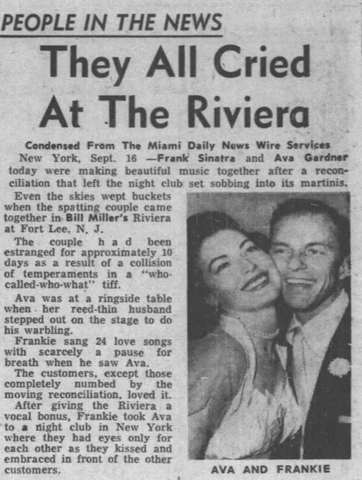
September 9 - THIS DATE IN SINATRA HISTORY
Undated materialFrom: 'Ed O'Brien' via Sinatraphiles <sinatraphiles@googlegroups.com> | Received: 2025-09-09
The Daily News
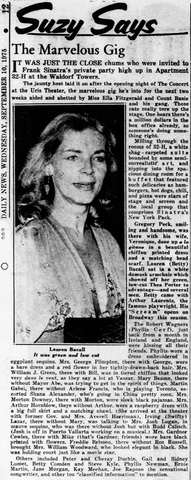
September 9 - THIS DATE IN SINATRA HISTORY
Undated materialFrom: scott@falseducks.com | Received: 2025-09-09
Madison Square Gardens, New York, NY
19th Annual Harvest Moon Ball
Host: Ed Sullivan
Frank Sinatra, Ava Gardner, Dean martin, Jerry Lewis, Red Buttons, Carmen Miranada, Julius La Rosa and others
Fw: Sings For Only The Lonely
Undated materialFrom: 'Ed O'Brien' via Sinatraphiles <sinatraphiles@googlegroups.com> | Received: 2025-09-10
Michel Macaire sent this to me.
Have not been able to find any
additional information.
There is no indication it is an official release.
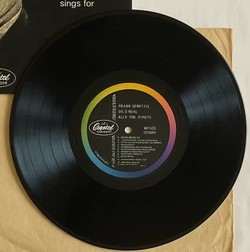
September 10 - THIS DATE IN SINATRA HISTORY
Undated materialFrom: 'Ed O'Brien' via Sinatraphiles <sinatraphiles@googlegroups.com> | Received: 2025-09-10
Huddersfield Daily Examiner
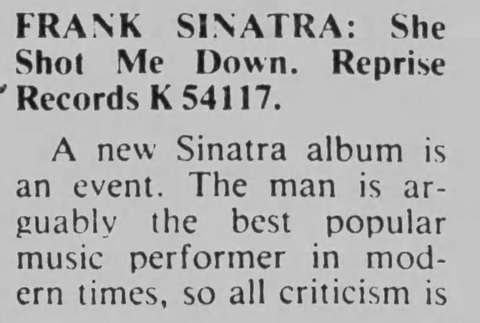
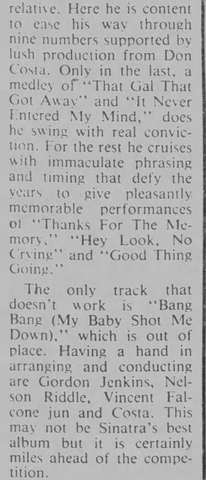
September 9 - THIS DATE IN SINATRA HISTORY
Undated materialFrom: 'Ed O'Brien' via Sinatraphiles <sinatraphiles@googlegroups.com> | Received: 2025-09-10
The News Journal
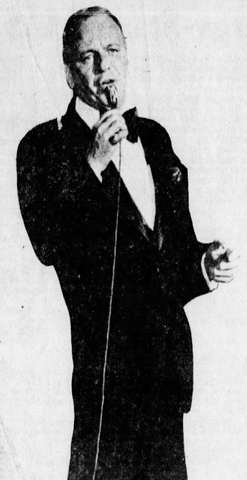
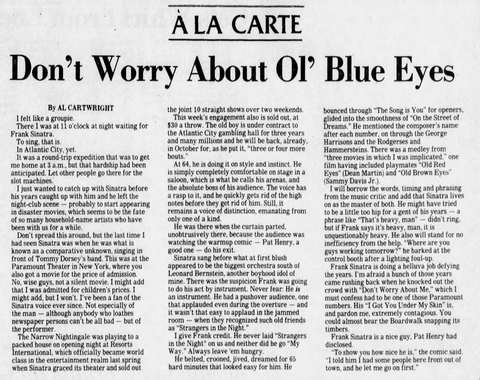
September 12 - THIS DATE IN SINATRA HISTORY
Undated materialFrom: scott@falseducks.com | Received: 2025-09-12
Panther Room, Hotel Sherman, Chicago, Illinois
Harry James and his Orchestra w/Frank Sinatra
WMAQ(NBC)
11:00 P.M.-11:30 P.M.
September 11 - THIS DATE IN SINATRA HISTORY
Undated materialFrom: 'Ed O'Brien' via Sinatraphiles <sinatraphiles@googlegroups.com> | Received: 2025-09-13
Coventry Evening Telegraph
Re: September 13 - THIS DATE IN SINATRA HISTORY
Undated materialFrom: 'Ed O'Brien' via Sinatraphiles <sinatraphiles@googlegroups.com> | Received: 2025-09-14
Casino Gardens Ballroom, Ocean Park, California
Tommy & Jimmy Dorsey band, Frank Sinatra
1. I Don't Know Why - Frank Sinatra
Opening wasconsidered light, but in view of being post-Labor Day, and J.D.'sband having been in for four weeks already, the event was not aslight as surface appearances. Frank Sinatra, a T.D. erstwhiler, hitthe boards for a guesting, tonsilling "I Don't Know 'Why"over the airwaves. Singer worked first , with T.D. and thenre-chorused with Jimmy, and also helped in announcing titles of someothers. Billboard9-18-46
September 13 THIS DATE IN SINATRA HISTORY
Undated materialFrom: 'Ed O'Brien' via Sinatraphiles <sinatraphiles@googlegroups.com> | Received: 2025-09-14
The fine character actor John Ireland is directly behind Cole Porter.
Mary Livingston, wife of Jack Benny, is sitting next to him and Gracie
Allen is next to her. Although blocked, I would assume George Burns
is next to Gracie. W. Somerset Maughan is sitting across from K. Novak.
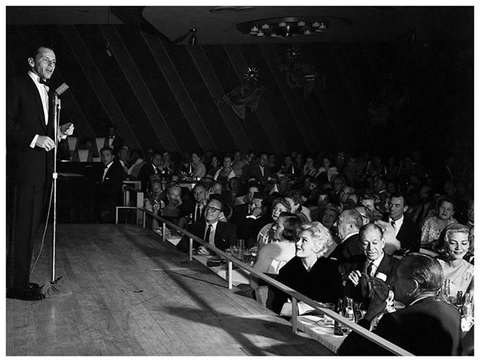
September 13 - THIS DATE IN SINATRA HISTORY
Undated materialFrom: 'Ed O'Brien' via Sinatraphiles <sinatraphiles@googlegroups.com> | Received: 2025-09-14
Evening Star
September 13 - THIS DATE IN SINATRA HISTORY
Undated materialFrom: 'Ed O'Brien' via Sinatraphiles <sinatraphiles@googlegroups.com> | Received: 2025-09-14
Casino Gardens Ballroom, Ocean Park, California
Tommy & Jimmy Dorsey band, Frank Sinatra
1. I Don't Know Why - Frank Sinatra
Opening was considered light, but in view of being post-Labor Day, and J.D.'s band having been in for four weeks already, the event was not as light as surface appearances. Frank Sinatra, a T.D. erstwhiler, hit the boards for a guesting, tonsilling "I Don't Know 'Why" over the airwaves. Singer worked first , with T.D. and then re-chorused with Jimmy, and also helped in announcing titles of some others. Billboard
9-18-46
The First 40 Years
Undated materialFrom: Pedro Matos <pedrojotamatos@gmail.com> | Received: 2025-09-14
Hi Philers,
A couple of years ago during one of my visits to NYC, I was able to get a guided tour of Paley’s Center - I mentioned to the main curator about my interest in Sinatra, and he was able to provide to me a private screening of the Egypt show, complete with the 20/20 ABC report - and with a little clip of Orson Welles speaking at Caesars, during the “First 40 Years” taping on 12/12/79.
I’ve been trying to find the whole thing since then - my question to you guys is, what else was cut from the final airing? And is the full show something that’s circulating in collectors’ circles? (Pardon the alliteration)
Thanks in advance?
PJM
Fw: Frank Sinatra “In The Wee Small Hours” | Tone Poet Vinyl Edition Out 11/14
Undated materialFrom: 'Ed O'Brien' via Sinatraphiles <sinatraphiles@googlegroups.com> | Received: 2025-09-15
AAA 180g gatefold vinyl reissue of legend’s seminal 1955 album
View online<https://us.umusic-online.com/cr/AQi-kw4QqPcwGMDZ6zJPwmmMQNy_Nom-bbJF89AkORkHBEHsTx1dZzAtKIeloQ>
[Blue Note Logo (linked to website)]<https://us.umusic-online.com/c/AQi-kw4QqPcwGMDZ6zIg97KODPvefO90BPtjDsTd19M_yGkFM7gD1LjbdYZ1sdGNXruK>
FOLLOW US & ENJOY THE FINEST IN JAZZ SINCE 1939
FOLLOW US & ENJOY
THE FINEST IN JAZZ SINCE 1939
[Spotify]<https://us.umusic-online.com/c/AQi-kw4QqPcwGMDZ6zIg-LKODIkoSPh0-kb-1bbNxuyaafTiXhKBJnlUvU0ZYPodqtpF> [Apple Music]<https://us.umusic-online.com/c/AQi-kw4QqPcwGMDZ6zIg-bKODJWwfdMicANOS0-R6yyTsHmJXfG874hpt5nx-gPhmqJL> [Twitter]<https://us.umusic-online.com/c/AQi-kw4QqPcwGMDZ6zIg-rKODChBEUmyaKpYT_ZR1KohKCIFCH67_DGKNSsb8zf89fKq> [Facebook]<https://us.umusic-online.com/c/AQi-kw4QqPcwGMDZ6zIg-7KODGQQPNvyTcuFgIA6U2g36dgQppgu47EQfjVpJC7Zhcpe> [Instagram]<https://us.umusic-online.com/c/AQi-kw4QqPcwGMDZ6zIg_LKODPQ098IU2QfNsUepyUCVAyX_sR2HfURxY--s8DWxiOrt> [Youtube]<https://us.umusic-online.com/c/AQi-kw4QqPcwGMDZ6zIg_bKODF5BmRNmFk84hcCuhhBv3GKLAUn3dj4TQxrusTrOoiQ5> [Threads]<https://us.umusic-online.com/c/AQi-kw4QqPcwGMDZ6zIg_rKODAzMbGKt2RcxmOba_BNSxZA6Yb7fbGBll1gqmZWui52m> [Bluesky]<https://us.umusic-online.com/c/AQi-kw4QqPcwGMDZ6zIg_7KODPuMSsHA9IrHw-iZMPmY9XQiqMlIiG33vUUCVw2QnWo->
FRANK SINATRA
IN THE WEE SMALL HOURS<https://us.umusic-online.com/c/AQi-kw4QqPcwGMDZ6zIghLOODA_P5S-HDrR7S-5RwpNbdWQHOOXrTp3ieJMiyWjqOQCZ>
TONE POET VINYL EDITION OUT NOV. 14!
[Frank Sinatra 'In The Wee Small Hours']<https://us.umusic-online.com/c/AQi-kw4QqPcwGMDZ6zIghbOODJj22sflR3erPGBGxKG2QZOToGxFSR_H_I0DqjMIc-2E>
PRE-ORDER ><https://us.umusic-online.com/c/AQi-kw4QqPcwGMDZ6zIghrOODADRIo7zTvG4uzYyHy_q95k1jkJSFWb-6OeWXWuBLbtp>
Frank Sinatra’s seminal 1955 Capitol Records album In The Wee Small Hours<https://us.umusic-online.com/c/AQi-kw4QqPcwGMDZ6zIgh7OODB4qdATlYZmK8XhDLho_k1IgsPPafgMvtpSX-osomscd> will be reissued in the Tone Poet Audiophile Vinyl Series on Nov. 14 marking it’s 70th anniversary! A melancholy masterpiece of lost love & heartbreak, it was a pivotal album in the legendary vocalist’s career embodying his artistic growth into a more mature singing style with stunning renditions of Great American Songbook standards given sublime arrangements by Nelson Riddle, creating one of the first-ever concept albums.
Produced for release by Joe Harley, the new Tone Poet Vinyl Edition was mastered by Kevin Gray from the original analog master tapes, pressed on 180g vinyl at RTI & comes packaged in a deluxe gatefold tip-on jacket featuring session photos by William Claxton & Ken Veeder, as well as an essay by Rita Kirwan.
[Frank Sinatra Album]<https://us.umusic-online.com/c/AQi-kw4QqPcwGMDZ6zIgiLOODD_GI69UiNdxmfOQkm8zTeb3gQw_O9o79GDTlhUewSS9>
PRE-ORDER ><https://us.umusic-online.com/c/AQi-kw4QqPcwGMDZ6zIgibOODL1ikjApWIUHCt_2T2jItZJAdfMihabYxz8xRiMjer4U>
[Blue Note Store 'Shop Now' Banner]<https://us.umusic-online.com/c/AQi-kw4QqPcwGMDZ6zIggbOODLMmqSzCc9IaRN0kJSZsokLbLKv5eWbOUWgN56aEW163> [Blue Note Store 'Shop Now' Banner]<https://us.umusic-online.com/c/AQi-kw4QqPcwGMDZ6zIggrOODEgeIvAOW5vWvmw-9bogXgBiEunlncfthnLtY1Dt8oec>
You have received this email because you provided your email address to a UMG artist or label mailing list
This email was sent to kolstads@gmail.com<mailto:kolstads@gmail.com> by 2220 Colorado Ave, Santa Monica, CA 90404
Unsubscribe<https://us.umusic-online.com/uns/AQi-kw4QqPcwGMDZ6zJPwmmMQNy_Nom-bbJF89AkORkHBEHsTx1dZzAtKIeloQ> | View Privacy Policy<https://us.umusic-online.com/c/AQi-kw4QqPcwGMDZ6zIgg7OODDLKW61ZHRAv7r2PREeEDsg80UzosTix4d9_9BdISHAh>
Fw: Frank Sinatra “In The Wee Small Hours” | Tone Poet Vinyl Edition Out 11/14
Undated materialFrom: 'Ed O'Brien' via Sinatraphiles <sinatraphiles@googlegroups.com> | Received: 2025-09-15
|
|
|
|
|
AAA 180g gatefold vinyl reissue of legend’s seminal 1955 album |
|
View online
|
|
|
|
|
|
|
| |
|
FOLLOW US & ENJOY THE FINEST IN JAZZ SINCE 1939
|
|
FOLLOW US & ENJOY
THE FINEST IN JAZZ SINCE 1939
|
|
|
| |
|
|
|
|
| |
|
|
| |
|
|
| |
|
|
| |
|
|
| |
|
|
| |
|
|
| |
|
|
| |
|
|
|
|
| |
|
|
|
|
|
|
|
|
| |
|
FRANK SINATRA
IN THE WEE SMALL HOURS
TONE POET VINYL EDITION OUT NOV. 14!
|
|
|
| |
|
|
PRE-ORDER >
|
|
|
Frank Sinatra’s seminal 1955 Capitol Records album In The Wee Small Hours will be reissued in the Tone Poet Audiophile Vinyl Series on Nov. 14 marking it’s 70th anniversary! A melancholy masterpiece of lost love & heartbreak, it was a pivotal album in the legendary vocalist’s career embodying his artistic growth into a more mature singing style with stunning renditions of Great American Songbook standards given sublime arrangements by Nelson Riddle, creating one of the first-ever concept albums.
Produced for release by Joe Harley, the new Tone Poet Vinyl Edition was mastered by Kevin Gray from the original analog master tapes, pressed on 180g vinyl at RTI & comes packaged in a deluxe gatefold tip-on jacket featuring session photos by William Claxton & Ken Veeder, as well as an essay by Rita Kirwan. |
| |
|
|
PRE-ORDER >
|
|
|
|
|
|
|
|
|
|
|
|
|
|
|
|
|
|
|
|
|
|
|
|
|
|
|
|
|
|
|
|
|
|
|
|
|
|
|
|
|
|
|
|
|
|
|
|
|
|
|
|
|
|
|
|
|
|
|
|
|
|
|
|
|
|
|
|
|
|
| |
| |
| |
|
|
| |
|
|
|
|
|
|
|
|
| |
|
You have received this email because you provided your email address to a UMG artist or label mailing list
This email was sent to kolstads@gmail.com by 2220 Colorado Ave, Santa Monica, CA 90404
Unsubscribe | View Privacy Policy
|
| |
|
|
|
|
September 14 - THIS DATE IN SINATRA HISTORY
Undated materialFrom: 'Ed O'Brien' via Sinatraphiles <sinatraphiles@googlegroups.com> | Received: 2025-09-16
Person To Person
Host: Edward R. Morrow
CBS-TV
Friday Evening
10:30 p.m. - 11:00 p.m.
Guests: Frank Sinatra and Joseph Welch
Los Angeles Mirror
9-14- 56
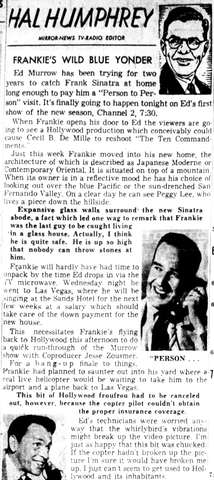
September 15 - THIS DATE IN SINATRA HISTORY
Undated materialFrom: 'Ed O'Brien' via Sinatraphiles <sinatraphiles@googlegroups.com> | Received: 2025-09-16
Hartford Courant
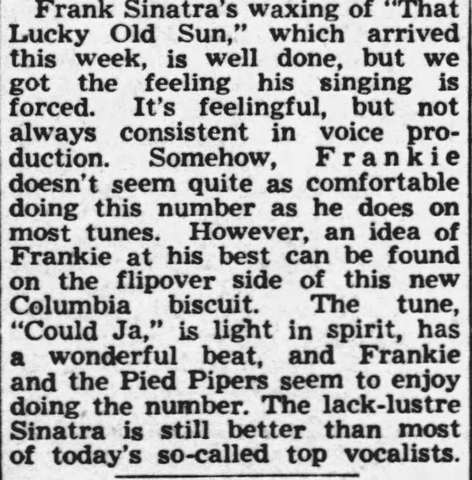
September 15 - THIS DATE IN SINATRA HISTORY
Undated materialFrom: 'Ed O'Brien' via Sinatraphiles <sinatraphiles@googlegroups.com> | Received: 2025-09-16
Quad City Times
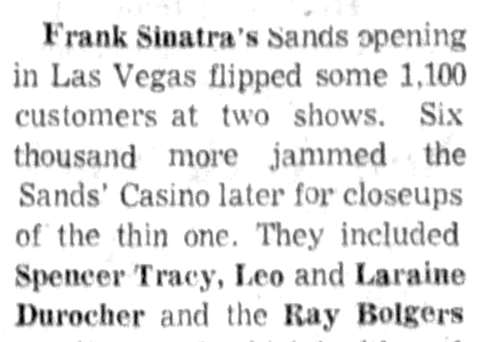
September 16 - THIS DATE IN SINATRA HISTORY
Undated materialFrom: "scott@falseducks.com" <scott@falseducks.com> | Received: 2025-09-16
Fw: CHRISTMAS CD+LP
Undated materialFrom: 'Ed O'Brien' via Sinatraphiles <sinatraphiles@googlegroups.com> | Received: 2025-09-17
Subject: CD+LP
Street date: November 14, 2025
Formats: CD & LP
Frank Sinatra - Christmas On The Air (Sing Records)
As America's first teen idol 'The Voice' - Frank Sinatra - was omnipresent on radio and TV throughout the 1940s and early '50s. Although he enjoyed spectacular success as a recording and live performance artist, it was radio that introduced Sinatra to the masses, allowing people in the most remote areas to enjoy the finest songs from Broadway and Hollywood in the comfort of their homes. Among the singer's most treasured performances were his Christmas offerings, which included fun, lively seasonal tunes and time-honored sacred classics. This album - carefully restored and remastered from the original broadcast master recordings - presents the best of Sinatra's Christmas performances from this era, in true high-fidelity sound. So authentic you can close your eyes, imagine your family around the old standup radio, and almost smell the fragrance of the tree - and dad's pipe - as you listen!
1. KNX-CBS Station Identification ; Program Introduction White Christmas
2. Jingle Bells
3. Let It snow! Let It Snow! Let It Snow!
4. Baby It's Cold Outside
5. I've Got My Love to Keep Me Warm
6. Have Yourself a Merry Little Christmas
7. FS Introduction ; Going Home
8. Christmas Shopping Sketch ; Medley
9. Button Up Your Overcoat
10. Medley - O Come All Ye Faithful ; Silent Night
11. Parade of Wooden Soldiers
12. All I Want for Christmas is My Two Front Teeth
13. FS "Message to Santa" ; Santa Claus is Coming to Town (Parody)
14. Put Your Dreams Away ; Songs By Sinatra Show Closing
September 19 - THIS DATE IN SINATRA HISTORY
Undated materialFrom: 'Ed O'Brien' via Sinatraphiles <sinatraphiles@googlegroups.com> | Received: 2025-09-19
Des Moines Register
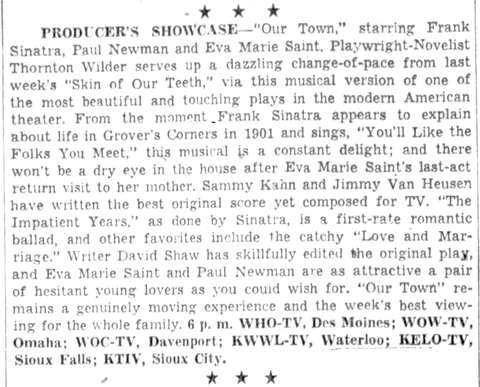
September 20 - THIS DATE IN SINATRA HISTORY
Undated materialFrom: 'Ed O'Brien' via Sinatraphiles <sinatraphiles@googlegroups.com> | Received: 2025-09-21
Royal Albert Hall, London, England ( September 8-20 )
First show
Tony Mottola (Guitar), Charles Turner (Trumpet), Gene Cherico (Bass),
Irv Cottler (Drums), Vincent Falcone conductor (piano).
note: Frank opened at the Royal Festival Hall
on 9-8-80 and closed on 9-13.
He opened at the Royal Albert Hall on
9-16 and closed on 9-20.
Evening Standard
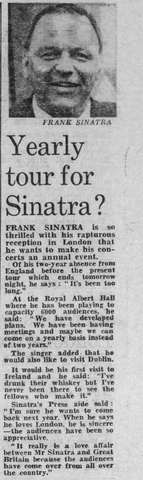
September 20 - THIS DATE IN SINATRA HISTORY
Undated materialFrom: 'Ed O'Brien' via Sinatraphiles <sinatraphiles@googlegroups.com> | Received: 2025-09-21
Royal Albert Hall, London, England ( September 8-20 )
First show
Tony Mottola (Guitar), Charles Turner (Trumpet), Gene Cherico (Bass),
Irv Cottler (Drums), Vincent Falcone conductor (piano).
note: Frank opened at the Royal Festival Hall
on 9-8-80 and closed on 9-13.
He opened at the Royal Albert Hall on
9-16 and closed on 9-20.
Evening Standard
September 20 - THIS DATE IN SINATRA HISTORY
Undated materialFrom: 'Ed O'Brien' via Sinatraphiles <sinatraphiles@googlegroups.com> | Received: 2025-09-21
W
aldorf Astoria, New York
Benefit Fundraiser For Retinitis Pigmentosa Foundation
with Dean Martin
Daily Nrws
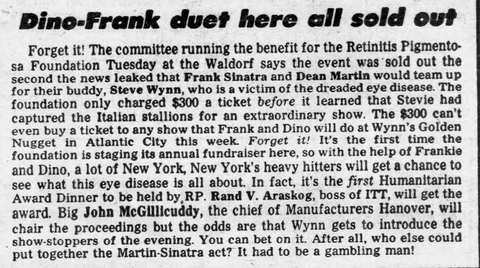
Fw: SEPTEMBER 18 - THIS DATE IN SINATRA HISTORY
Undated materialFrom: 'Ed O'Brien' via Sinatraphiles <sinatraphiles@googlegroups.com> | Received: 2025-09-22
Fw: SEPTEMBER 18 - THIS DATE IN SINATRA HISTORY
Undated materialFrom: 'Ed O'Brien' via Sinatraphiles <sinatraphiles@googlegroups.com> | Received: 2025-09-22
St Louis Globe Democrat
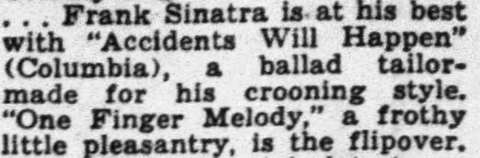
September 22 - THIS DATE IN SINATRA HISTORY
Undated materialFrom: 'Ed O'Brien' via Sinatraphiles <sinatraphiles@googlegroups.com> | Received: 2025-09-22
The Song Is You: SING Premieres Previously Unreleased Live Sinatra on "At The Hollywood Bowl"
Undated materialFrom: 'ALFRED MASCIOCCHI' via Sinatraphiles <sinatraphiles@googlegroups.com> | Received: 2025-09-23
https://theseconddisc.com/2025/09/23/frank-sinatra-live-hollywood-bowl/
September 21 - THIS DATE IN SINATRA HISTORY
Undated materialFrom: 'Ed O'Brien' via Sinatraphiles <sinatraphiles@googlegroups.com> | Received: 2025-09-24
New York City
CO44377 If Only She'd Look My Way
(I. Novello/A. Melville)
Chappell & Co., Inc. (ASCAP) 1950
Arranged & Conducted by Axel Stordahl
-1 (2:47) CD: Columbia Years 43-52 Vol. 13
LP: CL-953 Adventures Of The Heart
78 RPM special version released in England Columbia L.B. 104 with
introduction by H.R.H. The Duke of Edinburgh (fund raiser for National
Playing Fields Association)
CO44378 London By Night
(C. Coates)
Barton Music Corp. (ASCAP) 1950
Arranged & Conducted by Axel Stordahl
-1 (3:08) CD: Columbia Years 43-52 Vol. 13
CD: 44236 Sinatra Rarities
78: 39592
Lincolnshire Echo
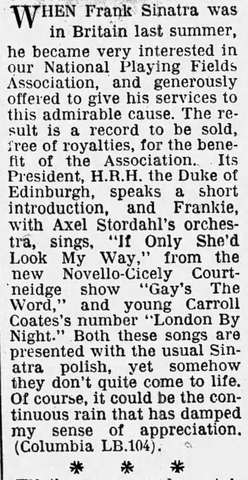
September 24 - THIS DATE IN SINATRA HISTORY
Undated materialFrom: "scott@falseducks.com" <scott@falseducks.com> | Received: 2025-09-24
note: TD & Band took in an additional $3,000 for final
two days of the seven day run. Made a grand total of
$28,000 for the week
--Ed
FRANK SINGS FOR AN AIRLINE SUMMER 1955
Undated materialFrom: 'Ed O'Brien' via Sinatraphiles <sinatraphiles@googlegroups.com> | Received: 2025-09-25
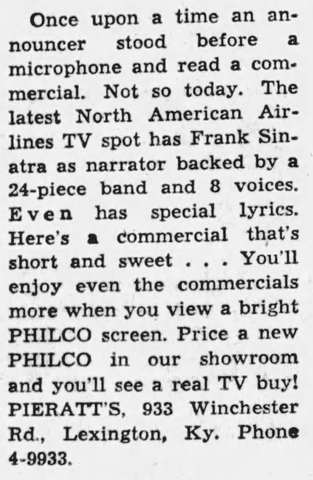
September 25 - THIS DATE IN SINATRA HISTORY
Undated materialFrom: scott@falseducks.com | Received: 2025-09-25
Songs By Sinatra (CBS)
Sponsor: Old Gold Cigarettes
Announcer: Marvin Miller
Orchestra Conducted By: Axel Stordahl
Performers: Frank Sinatra, The Pied Pipers
Guests: Sandra Gould, Ken Christy, Andre Previn
1. Night And Day
2. Blue Skies
3. Doin' What Comes Naturally Pied Pipers
4.Medley with Andre Previn: And The Band Played On/I Wonder What's Become Of Sally. After The Ball/ I Wonder Who's Kissing Her Now
5. On The Boardwalk In Atlantic City Frank & The Pipers
6, The Things We Did Last Summer Frank, Pipers Sandra Gould, Ken Christy
7. September Song.
8. Put Your Dreams Away
NOTE: Ed O'Brien gives us a little fact here: Sinatra sang "And the Band Played On" during a medley on the Old Gold Show.
Thirty years later to the day, he sang it again during the second show at the Premier Theater. The latter performance was done with just the backing of Bill Miller on piano.
September 25 - THIS DATE IN SINATRA HISTORY
Undated materialFrom: "scott@falseducks.com" <scott@falseducks.com> | Received: 2025-09-25
Songs By Sinatra (CBS)
Sponsor: Old Gold Cigarettes
Announcer: Marvin Miller
Orchestra Conducted By: Axel Stordahl
Performers: Frank Sinatra, The Pied Pipers
Guests: Sandra Gould, Ken Christy, Andre Previn
1. Night And Day
2. Blue Skies
3. Doin' What Comes Naturally Pied Pipers
4.Medley with Andre Previn: And The Band Played On/I Wonder What's Become Of Sally. After The Ball/ I Wonder Who's Kissing Her Now
5. On The Boardwalk In Atlantic City Frank & The Pipers
6, The Things We Did Last Summer Frank, Pipers Sandra Gould, Ken Christy
7. September Song.
8. Put Your Dreams Away
NOTE: Ed O'Brien gives us a little fact here: Sinatra sang "And the Band Played On" during a medley on the Old Gold Show.
Thirty years later to the day, he sang it again during the second show at the Premier Theater. The latter performance was done with just the backing of Bill Miller on piano.
SEPTEMBER 26 THIS DATE IN SINATRA HISORY
Undated materialFrom: 'Ed O'Brien' via Sinatraphiles <sinatraphiles@googlegroups.com> | Received: 2025-09-26
Let's talk Hollywood
NBC
Time 7:00 p.m. - 7:30 p.m.
Sponsor:Lucky Strike
Master of Ceremonies: George Murphy
Panelists: : Edith Gwynn; Eddie Bracken
Guests : Frank Sinatra; Jack Benny
Announcer: Hy Averback
Commercials: Basel Ruysdael
Director: Hilliard Marks
Writers: Saul Stein and Martin Wark
note: Questions were submitted to the four panelists by listeners via U.S. Mail.
If they stumped the panel ( most did ), they could choose between an RCA
21 inch TV ( $1,000 value ) or an RCA Phonograph and $100 in records.
Frank imitated a trained seal during one segment of the show. There was
no rehearsal prior to the show.
Ed
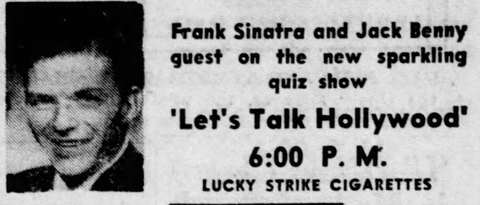
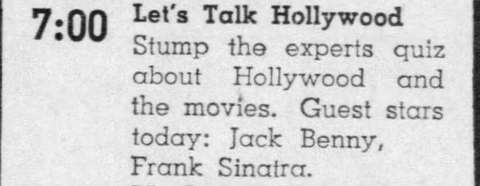
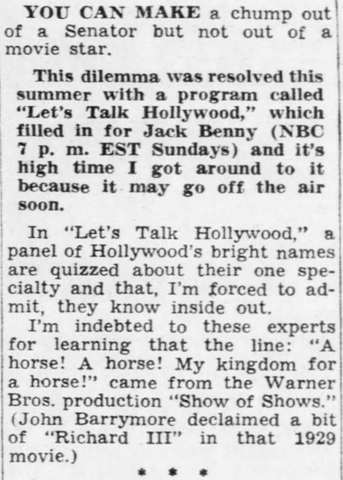
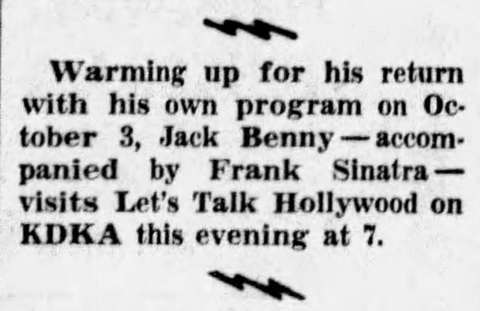
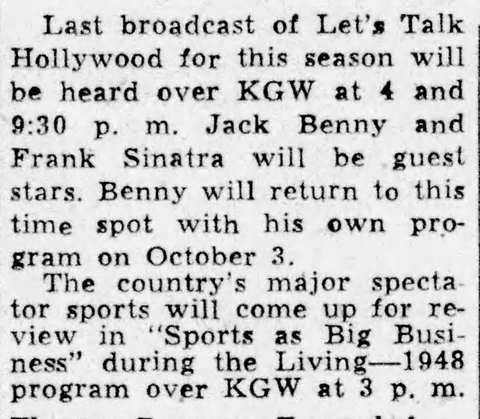
September 26 - THIS DATE IN SINATRA HISTORY
Undated materialFrom: 'Ed O'Brien' via Sinatraphiles <sinatraphiles@googlegroups.com> | Received: 2025-09-27
Tampa Bay Times
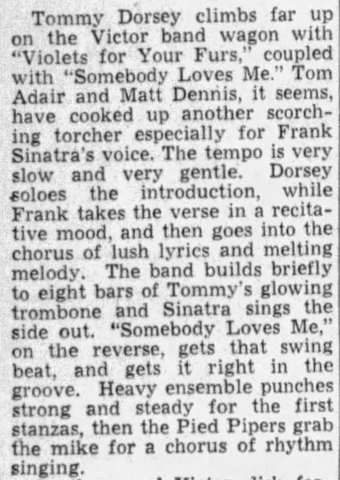
September 28 - THIS DATE IN SINATRA HISTORY
Undated materialFrom: Scott Henderson <scott@falseducks.com> | Received: 2025-09-28
September 29 - THIS DATE IN SINATRA HISTORY
Undated materialFrom: "scott@falseducks.com" <scott@falseducks.com> | Received: 2025-09-29
Re: HARRY JAMES 1939
Undated materialFrom: 'Ed O'Brien' via Sinatraphiles <sinatraphiles@googlegroups.com> | Received: 2025-09-30
I searched for any mention of Elizabeth Miller other than this Chicago Tribune from
9-17-39. The post announcing the band's one nighter, in Mark Twain's home town
of Hannibal, Missouri, on 11-4-39, has no mention of a femme vocalist. And Miller
is even more obscure than Margie Carroll.
I also found the radio dates for the band, from the Panther Room, of the Sherman
Hotel, in October 1939. And the date of the radio broadcast, in England, of Roseland
taping 7-19-39.
Ed
onday, September 29, 2025 at 12:06:43 AM EDT, Ed O'Brien <eob101@aol.com> wrote:
10-6-39
Broadcast in England
4-24-40
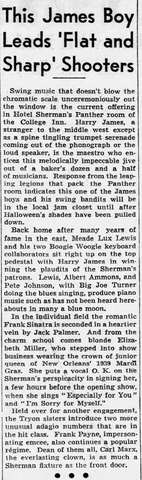
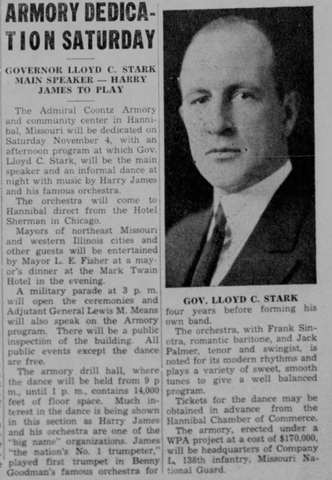
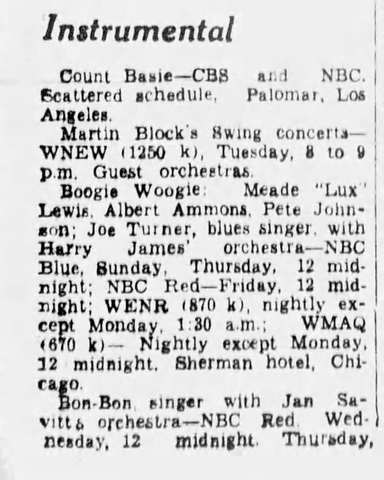

Fw: Margie Carroll.
Undated materialFrom: 'Ed O'Brien' via Sinatraphiles <sinatraphiles@googlegroups.com> | Received: 2025-10-01
.
Will Friedwald responded to my Harry James post. He had some comments about Elizabeth Miller and we went back and forth. Here is what Will shared with me: regarding the mystery of Margie, after her brief time with the James band. Margie Carroll, did you ever research her? Her grandson contacted Jim Kaplan & I exactly ten years ago. I may do a post on her. no recordings, as far anyone knows.
I'll dig it out, but Margie wasn't really a full on professional, she only sang with HJ very briefly before getting married & leaving the biz, had kids and grandkids -lived until almost 2015, but suffered from dementia for a long time before that. Her grandchildren were desperate to find any kind of audio recording or her, an aircheck or private acetate or something, but as you know, nothing has turned up. Margie had the looks of a girl singer and the right kind of showbiz name (ha!) but apparently not the chops or the tenacity ..
w
Will plans on doing a follow up on her and will share his findings with us.. Ed
Re: Fw: Margie Carroll.
Undated materialFrom: scott@falseducks.com | Received: 2025-10-01
Hi Ed,
I wrote a blog about Margie Carroll and followed her activity up to 1947 when she was crowned Miss Regina Hassock of 1947:
http://falseducks.com/theblahg/?p=6084
I did a follow-up blog after I received a CD with some of her recordings:
http://falseducks.com/theblahg/?p=6118
She toured a lot with Bob Strong and His Orchestra and the second blog featured some recordings she did with Bob Strong. These were from the Lang-Worth Recordings the band did on August 13th, 1945. Here's a look at the Bob Strong CD that features those recordings:
Scott
.
Will Friedwald responded to my Harry James post. He had some comments about Elizabeth Miller and we went back and forth.
Here is what Will shared with me: regarding the mystery of Margie, after her brief time with the James band.
Margie Carroll, did you ever research her? Her grandson contacted Jim Kaplan & I exactly ten years ago. I may do a post on her.
no recordings, as far anyone knows.
I'll dig it out, but Margie wasn't really a full on professional, she only sang with HJ very briefly before getting married & leaving the biz, had kids and grandkids -lived until almost 2015, but suffered from dementia for a long time before that. Her grandchildren were desperate to find any kind of audio recording or her, an aircheck or private acetate or something, but as you know, nothing has turned up. Margie had the looks of a girl singer and the right kind of showbiz name (ha!) but apparently not the chops or the tenacity ..
w
Will plans on doing a follow up on her and will share his findings with us..
Ed
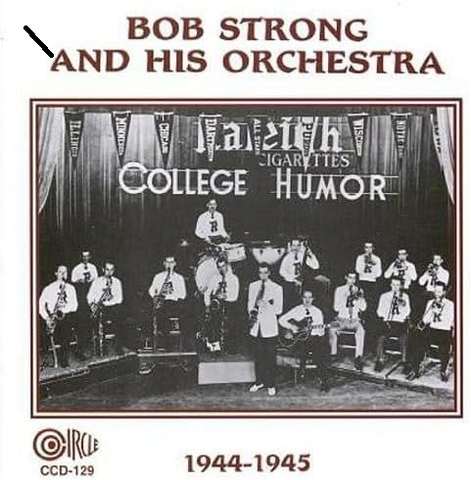
re: [sinatraphiles] September 30 - THIS DATE IN SINATRA HISTORY
Undated materialFrom: "scott@falseducks.com" <scott@falseducks.com> | Received: 2025-10-01
My apologies. I missed sending out yesterday's post. It's usually part of my morning routine. Work stuff and then Mother stuff and then forgot completely. I will send it out shortly and then will send out today's post.
Scott
re: [sinatraphiles] September 30 - THIS DATE IN SINATRA HISTORY
Undated materialFrom: scott@falseducks.com | Received: 2025-10-01
My apologies. I missed sending out yesterday's post. It's usually part of my morning routine. Work stuff and then Mother stuff and then forgot completely. I will send it out shortly and then will send out today's post.
Scott
October 3 - THIS DATE IN SINATRA HISTORY
Undated materialFrom: 'Ed O'Brien' via Sinatraphiles <sinatraphiles@googlegroups.com> | Received: 2025-10-03
The Morning Call
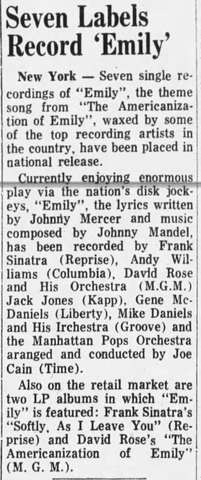
October 2 - THIS DATE IN SINATRA HISTORY
Undated materialFrom: Scott Henderson <scott@falseducks.com> | Received: 2025-10-04
Variety of 10-8-41 had different ticket
prices and stated that Dorsey was almost capacity.
Tickets, according to them were $1.00, purchased
in advance and $1.25 at the door.
Headline reads "Shaw, Tommy Dorsey hit capacity,
New Haven good to Basie, Fitzgerald.
Ed
TD still holds the dollar record for Brookline Country
Club, Phila, for his October 2nd(41) gig.
Billboard
October 5 - THIS DATE IN SINATRA HISTORY
Undated materialFrom: Scott Henderson <scott@falseducks.com> | Received: 2025-10-05
"THERE ARE SUCH THINGS"
Undated materialFrom: 'Ed O'Brien' via Sinatraphiles <sinatraphiles@googlegroups.com> | Received: 2025-10-08
Sinatra recorded "There Are Such Things," with the Tommy Dorsey Orchestra, 7-1-42.
An RCA 78 single was issued in early October, and by mid-November the song was
a smash hit, and would be number one in Billboard for six consecutive weeks. There
would be engagements at the Central Theatre in Passaic, N.J., in October and
December, and he would share the bill at the State Theater, in Hartford, with the Ellington band, also in December. Sinatramania would be very much in evidence throughout.The
legendary 10 week run at the Paramount only added to the frenzy, and "There Are Such Things" would remain on the charts for six months and sell more than a million copies,. In late January of 43, RCA would issue a second single of the song with a Dorsey instru- mental on the B-side.
Ed
The Cleveland Press
10-16-42
The Daily News
10-17-42
The Daily News
10-11-42
Knoxville Journal
10-4-42
The Tampa Tribune
10-25-42
The Virginian Pilot
10-11-42
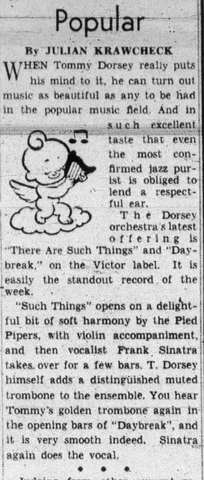
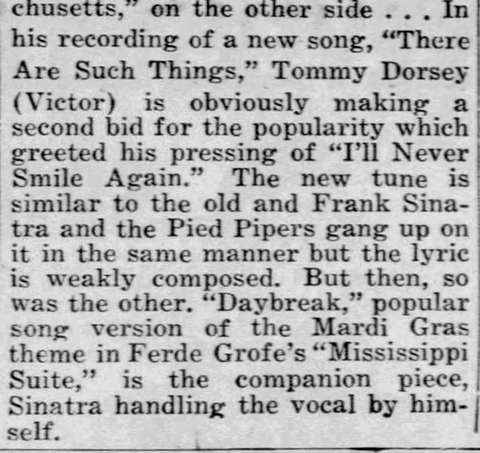
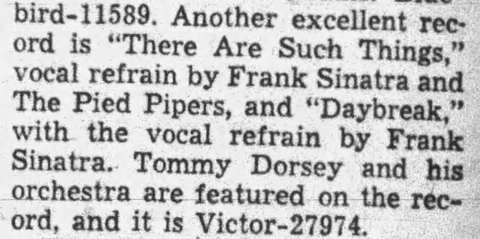
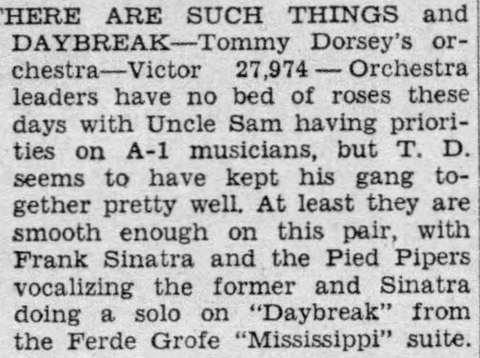
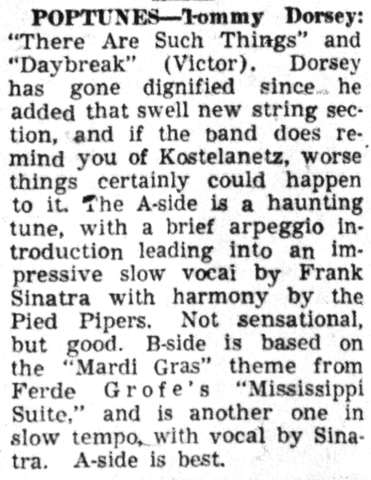
October 4 - THIS DATE IN SINATRA HISTORY
Undated materialFrom: 'Ed O'Brien' via Sinatraphiles <sinatraphiles@googlegroups.com> | Received: 2025-10-08
The Toronto Star
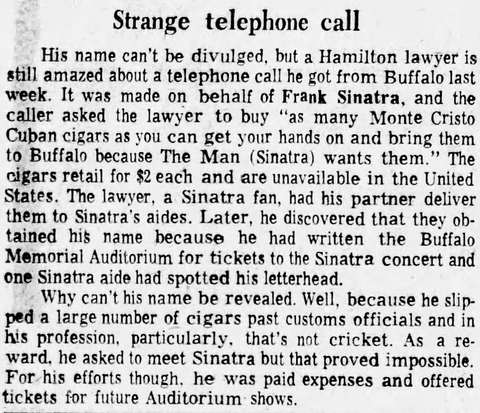
re: October 8 This Date In History
Undated materialFrom: scott@falseducks.com | Received: 2025-10-08
Hello everyone,
Can someone let me know if the images came through on all 5 posts today. I was getting an error on my end but when I received them I could see the images.
Weird.
Scott
October 8 - THIS DATE IN SINATRA HISTORY
Undated materialFrom: 'Ed O'Brien' via Sinatraphiles <sinatraphiles@googlegroups.com> | Received: 2025-10-09
October 8 - THIS DATE IN SINATRA HISTORY
Undated materialFrom: 'Ed O'Brien' via Sinatraphiles <sinatraphiles@googlegroups.com> | Received: 2025-10-09
Central Theatre, Passaic, New Jersey (October 8-14)
On Screen: "Foreign Agent"
note: Johnny Long was the headliner during this engagement. I have enclosed
the ad for Frank's opening night at the Chase Hotel, 10-4-52. Take a look
at who was closing prior to Frank's engagement and his billing.
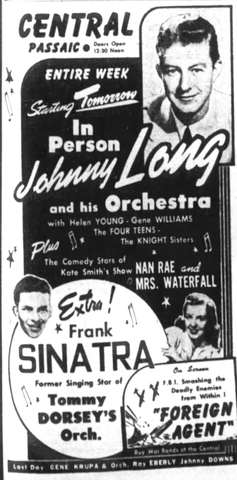
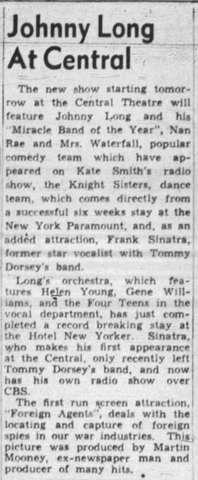
October 8 - THIS DATE IN SINATRA HISTORY
Undated materialFrom: 'Ed O'Brien' via Sinatraphiles <sinatraphiles@googlegroups.com> | Received: 2025-10-09
note: Frank closed on the 9th, not the 10th.
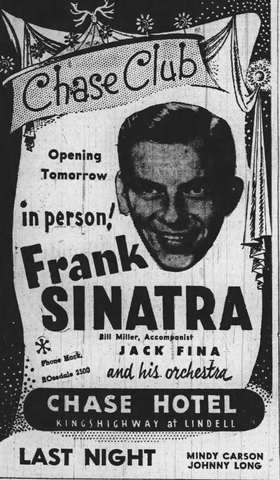
October 9 - THIS DATE IN SINATRA HISTORY
Undated materialFrom: scott@falseducks.com | Received: 2025-10-09
Meadowbrook, Cedar Grove, New Jersey (October 9 - November 1) Tommy Dorsey and his Orchestra w/Frank Sinatra
Thursday evening
Ed O'Brien:
T.D. & Orch open at Frank Dailey's Meadowbrook Ballroom until the 1st of November. A number of radio shows would be broadcast from there during the band's two and a half week engagement. There are airchecks of Sinatra singing "Blue Skies," "I Guess I'll Have To Dream The Rest," "Violets For Your Furs" and "I Think Of You." .
Fw: FS and russian actress Victoria Fyodorova
Undated materialFrom: 'Ed O'Brien' via Sinatraphiles <sinatraphiles@googlegroups.com> | Received: 2025-10-10
Michel sent this my way
Prenier Theater
May 23, 1977
The closing night of Frank Sinatra and Dean Martin’s sold-out run at the Westchester Premier Theater, Frank was introduced to Russian actress Victoria Fyodorova. She told him, with a smile, that she regularly sent his records to her mother back in Moscow.
Frank grinned and said, “Well, sweetheart, if my voice can make it past the Iron Curtain, maybe I should’ve tried diplomacy instead of singing.”
Dean, standing nearby, chimed in, “Yeah, but then who’d keep the martini business alive?”
The room erupted in laughter — two weeks of packed shows ending just the way they began: with Sinatra’s charm, Martin’s timing, and a toast to international good humor.
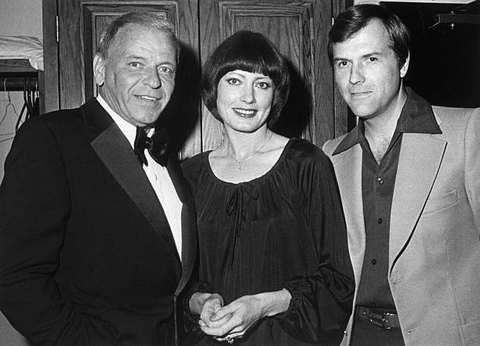
October 9 - THIS DATE IN SINATRA HISTORY
Undated materialFrom: 'Ed O'Brien' via Sinatraphiles <sinatraphiles@googlegroups.com> | Received: 2025-10-11
October 11 Sinatra day in history
Undated materialFrom: Scott Henderson <scott@falseducks.com> | Received: 2025-10-12
Sorry everyone,
I posted yesterday's Day In History but only sent it to myself. I have reposted it.
scott
October 11 - THIS DATE IN SINATRA HISTORY
Undated materialFrom: Scott Henderson <scott@falseducks.com> | Received: 2025-10-12
version is the real gem.
"There's No You" was published by Barton Music -- Sinatra and Ben Barton
were co-owners. Sinatra would record the song at a Columbia session, 11-14-44.
By late November the song had racked up over 300,000 sales. And yet, it was
not on the Hit Parade. An attorney for Barton Music initiated a hearing demanding
an explanation. Something was happening that was definitely not kosher.
October 13 - THIS DATE IN SINATRA HISTORY
Undated materialFrom: Scott Henderson <scott@falseducks.com> | Received: 2025-10-13
with the title track being the Sinatra vocal from 10-13-63.
The other Christmas songs on the album were sung by Reprise
artists. Album had a very limited release.
Fw: October 13 - THIS DATE IN SINATRA HISTORY
Undated materialFrom: 'Ed O'Brien' via Sinatraphiles <sinatraphiles@googlegroups.com> | Received: 2025-10-14
The Republican
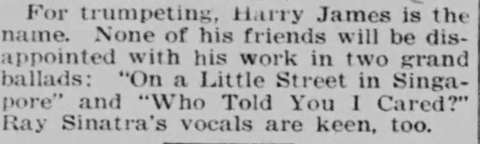
Fw: October 13 - THIS DATE IN SINATRA HISTORY
Undated materialFrom: 'Ed O'Brien' via Sinatraphiles <sinatraphiles@googlegroups.com> | Received: 2025-10-14
The Surrey Mirror and County Post
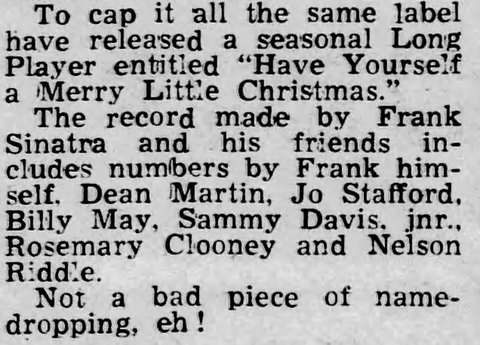
JUDY, FRANK, DEAN
Undated materialFrom: 'Ed O'Brien' via Sinatraphiles <sinatraphiles@googlegroups.com> | Received: 2025-10-14
Hi Scott,
The Mike Connolly column you posted was referring to the first weekend,
not opening night. I found a number of articles stating it was the weekend. Judy opened
on Wednesday. So the weekend would have been the 4th and 5th. I would bet on
Saturday night. Frank had a swollen jaw due to a tooth extraction.
Mike Connolly column
10-11-58
Judy was unable to complete the two weeks. Due to illness, Dean and Sammy
did the second weekend for her.
10-6-58 (Monday )
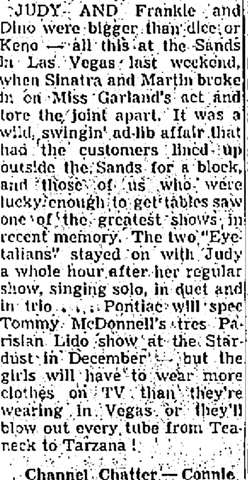
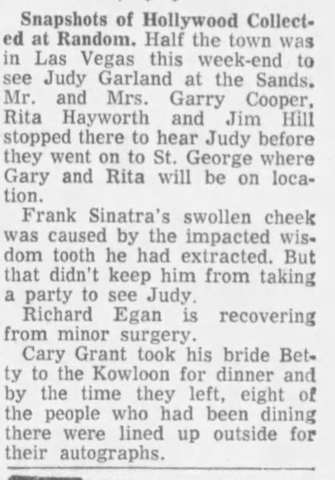
OCTOBER 12 THIS DATE IN SINATRA HISTORY
Undated materialFrom: 'Ed O'Brien' via Sinatraphiles <sinatraphiles@googlegroups.com> | Received: 2025-10-14
The Manhatters with Frank Sinatra, Tenor
WOR 9:45 AM
note: I was looking today at the number of radio appearances the Harry James
band made, while playing at in the Panther Room of the Hotel Sherman,
in 1939. Sinatra was certainly ready for the Dorsey years when TD hired
him.
Ed


October 14 - THIS DATE IN SINATRA HISTORY
Undated materialFrom: 'Ed O'Brien' via Sinatraphiles <sinatraphiles@googlegroups.com> | Received: 2025-10-14
Newsday
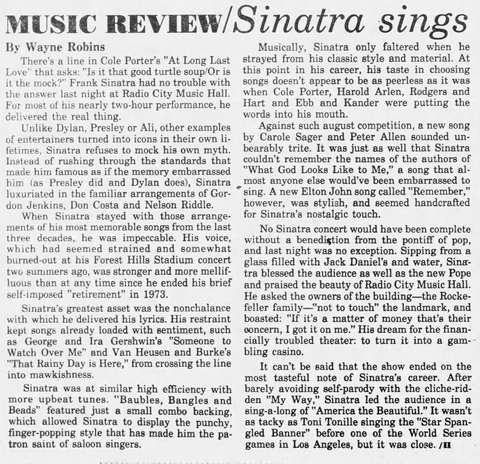
Sinatra, Martin & Kovacs?
Undated materialFrom: scott@falseducks.com | Received: 2025-10-14
Here's an interesting one. Had to happen the first week of October 1958, because Judy Garland opened on October 1, 1958 at the Sands, Las Vegas:
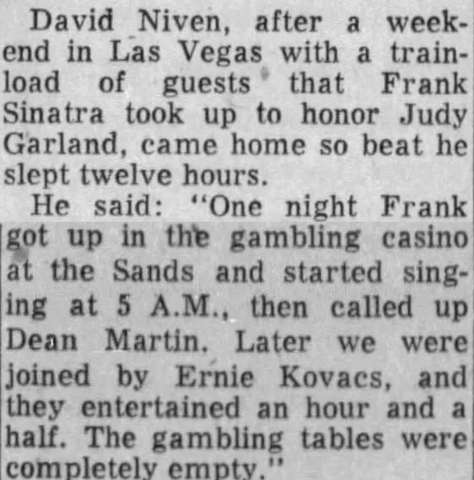
re: Images
Undated materialFrom: scott@falseducks.com | Received: 2025-10-17
Can someone let me know if images came through on all 3 posts today.
Thanks,
scott
October 15 - THIS DATE IN SINATRA HISTORY
Undated materialFrom: 'Ed O'Brien' via Sinatraphiles <sinatraphiles@googlegroups.com> | Received: 2025-10-18
Hollywood
HCO2091 Poinciana (Song Of The Tree)
(N. Simon/B. Bernier)
E.B. Marks Music Corp. (ASCAP) 1936
Arranged & Conducted by Axel Stordahl
-1 (3:19) CD: Columbia Years 43-52 Vol. 5
78: DB2357 ( England )
note: I found afew ads in U.K. newspapers
but no reviews.
HCO2093 Why Shouldn't It Happen To Us?
(M. Holiner/A. Nichols)
Sinatra Songs, Inc. (ASCAP) 1945
Arranged & Conducted by Axel Stordahl
-1 (3:11) CD: Columbia Years 43-52 Vol. 5
LP: CL-2740 The Essential Frank Sinatra, Vol. 2
78: 37251
Kingsport Times News
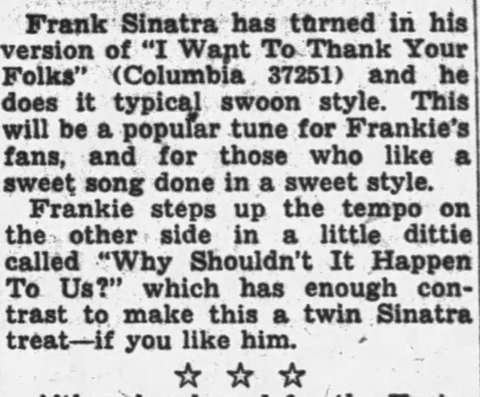
Re: hollywood palace
Undated materialFrom: 'Ed O'Brien' via Sinatraphiles <sinatraphiles@googlegroups.com> | Received: 2025-10-18
1940 Hollywood
PBS055110 Do You Know Why?
(from Paramount Picture Love Thy Neighbor)
(J. Burke/J. Van Heusen)
Famous Music Co. (ASCAP)
Arranged by Deane Kincaide
-1 (3:10) CD: 07863 66353-2 "The Song Is You" 5CD set Vol 2
CD: RCA 9679-2-R
LP: SD 1000
78: 26798
Saxes: Fred Stulce, Johnny Mince, Paul Mason, Heinie Beau, Don Lodice; Trumpets: Ziggy Elman, Ray Linn, Chuck Peterson; Piano: Joe Bushkin; Trombones: Les Jenkins, George Arus, Lowell Martin; Guitar: Clark Yocum; Bass: Sid Weiss; Drums: Buddy Rich
Houston Chronicle
11-17-40
1965 The Hollywood Palace (ABC)
Taped: September 26, 1965
Host: Frank Sinatra
Guests: The Count Basie Orchestra, Jackie Leonard
1. I've Got The World On A String
2. Fly Me To The Moon
3. Please Be Kind
4. Too Marvelous For Words
5. Everybody's Got The Right To Be Wrong
6. The Gal That Got Away
Notes: 60 min.
Birmingham Post
10-16-65
Boston Globe
10-18-65
note: Sinatra was in New York, late September, early October. A very good
chance the 20 minute segment with Basie was taped then.
The Macon News
10-16-65
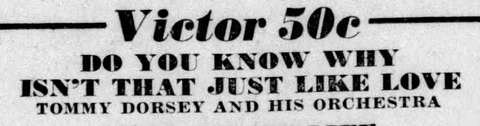
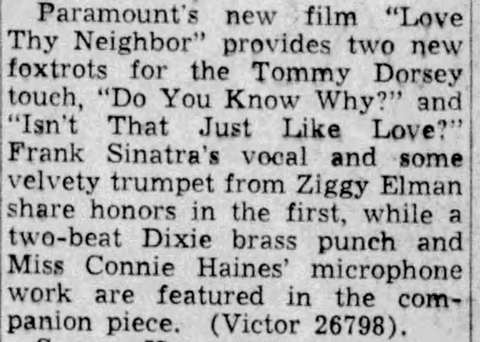
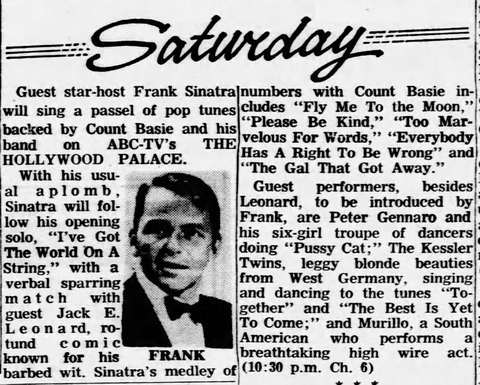

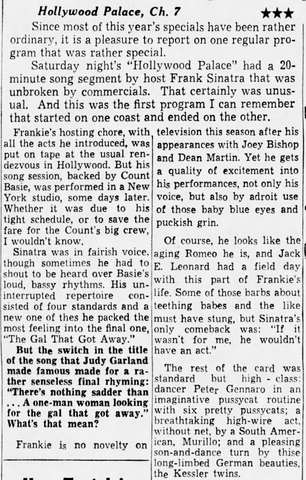
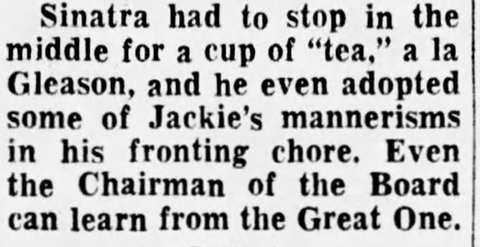
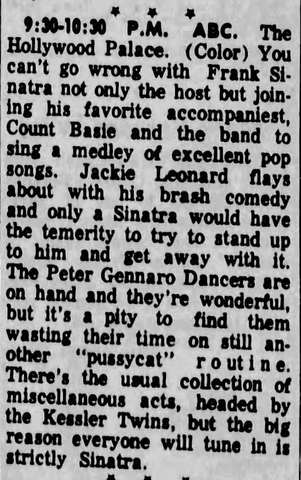
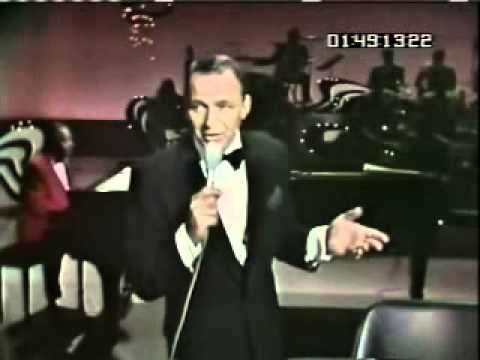
October 19 - THIS DATE IN SINATRA HISTORY
Undated materialFrom: Scott Henderson <scott@falseducks.com> | Received: 2025-10-19
Memorial Auditorium, Buffalo , New York
October 18 - THIS DATE IN SINATRA HISTORY
Undated materialFrom: 'Ed O'Brien' via Sinatraphiles <sinatraphiles@googlegroups.com> | Received: 2025-10-20
c
Colorado Springs Gazette Telegraph
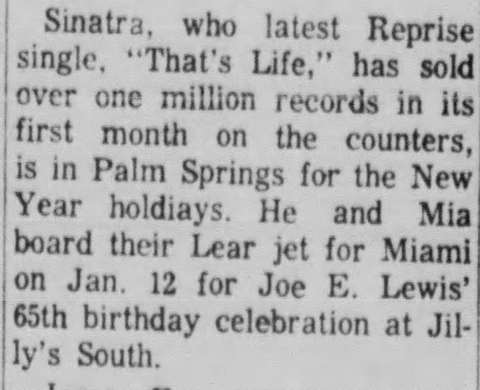
October 19 - THIS DATE IN SINATRA HISTORY
Undated materialFrom: 'Ed O'Brien' via Sinatraphiles <sinatraphiles@googlegroups.com> | Received: 2025-10-21
Capital Times
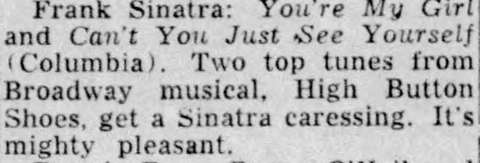
October 21 - THIS DATE IN SINATRA HISTORY
Undated materialFrom: scott@falseducks.com | Received: 2025-10-21
Meyers Hotel, Hoboken, NJ
Annual Banquet of the Hoboken Lions Club
Frank Sinatra accompanied by Doris Estelle Beck
Re: Sinatra Estate Carve-up
Undated materialFrom: Richard Cook <cook879@hotmail.co.uk> | Received: 2025-10-22
Probably not...
Given it's only talking about name, image and likeness rights, I guess it'll just be more restaurants and the like - they mention a Vegas 'Rat Pack' venue. I imagine maybe more merchandise things as well.
Both of which they've already been trying - there is already a Sinatra restaurant they launched in Nashville a few years back, and they just did some clothing with the Sinatra name on with Sportiqe and the New York Yankees. And there was that advert featuring AI Sinatra and Sammy Davis earlier this year.
So I imagine more of that kind of thing and no impact on actual music releases.
Richard
________________________________
From: sinatraphiles@googlegroups.com <sinatraphiles@googlegroups.com> on behalf of Vance Adair <dr.vanceadair@gmail.com>
Sent: 22 October 2025 10:24
To: sinatraphiles@googlegroups.com <Sinatraphiles@googlegroups.com>
Subject: Sinatra Estate Carve-up
https://www.musicbusinessworldwide.com/frank-sinatra-name-image-and-likeness-rights-acquired-by-irving-azoffs-iconic-artists-group-report/
Should we be optimistic?
-Vance
Sinatra Estate Carve-up
Undated materialFrom: Vance Adair <dr.vanceadair@gmail.com> | Received: 2025-10-22
https://www.musicbusinessworldwide.com/frank-sinatra-name-image-and-likeness-rights-acquired-by-irving-azoffs-iconic-artists-group-report/
Should we be optimistic?
-Vance
Resorts 10/79
Undated materialFrom: 'Ed O'Brien' via Sinatraphiles <sinatraphiles@googlegroups.com> | Received: 2025-10-23
1979 Resorts International, Atlantic City, New Jersey (21-27)
Hi Scott,
Frank was there for three nights. He also was the host for a
tribute to great Olympic champions on 10/24. But he didn't sing. I
have reviews of opening night and the Olympic tribute. Will post.
Ed
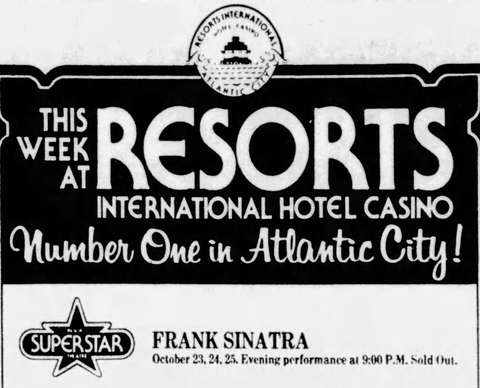
OCTOBER 24 THIS DATE IN SINATRA HISTORY
Undated materialFrom: 'Ed O'Brien' via Sinatraphiles <sinatraphiles@googlegroups.com> | Received: 2025-10-24
note: Sinatra was master of ceremonies on 10-24.

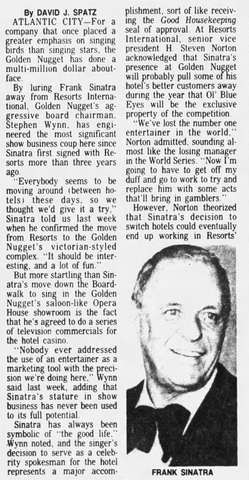
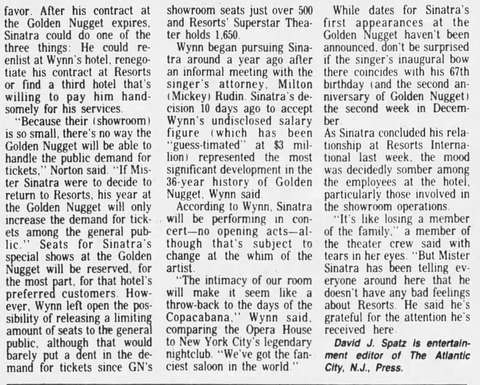
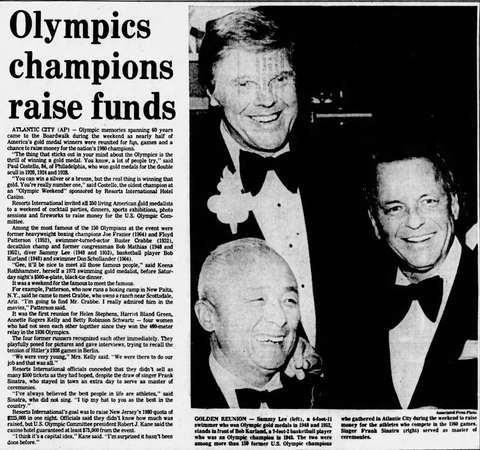
New electronic duet with Pentatonix
Undated materialFrom: Richard Cook <cook879@hotmail.co.uk> | Received: 2025-10-25
I've Got My Love To Keep Me Warm<https://www.youtube.com/watch?v=gbc1VxjKzFw&list=OLAK5uy_kCnLqJhhp_tAv9DZp4Rroi1xm7o6NjBOY>
I see an article says<https://www.broadwayworld.com/bwwmusic/article/Listen-Pentatonix-Release-New-Studio-Album-Christmas-in-the-City-20251024> "the group has collaborated with Sinatra on a never-before-heard recording of this staple", but from my quick side by side listen, for the Sinatra side it is the exact vocal from "Ring-a-Ding Ding".
Richard
October 25 - THIS DATE IN SINATRA HISTORY
Undated materialFrom: Scott Henderson <scott@falseducks.com> | Received: 2025-10-25
Light Up Time. It follows "If I Ever Love Again" on
the 10-25 show.
October 25 - THIS DATE IN SINATRA HISTORY
Undated materialFrom: Scott Henderson <scott@falseducks.com> | Received: 2025-10-25
October 26 - THIS DATE IN SINATRA HISTORY
Undated materialFrom: Scott Henderson <scott@falseducks.com> | Received: 2025-10-26
Re: Fw: Please respond to this test
Undated materialFrom: "Ted Pastuszak Jr." <dmarc-noreply@freelists.org> | Received: 2025-10-28
I"m seeing this email.
On Tue, Oct 28, 2025 at 2:28 PM Peter Paulson <dmarc-noreply@freelists.org> wrote:
> PIease reset my membership as I've not received any posts the > past few days - thank you Peter
>
> On Thursday, March 6, 2025 at 11:50:25 PM EST, <smashiah@netvision.net.il> > wrote:
>
>
> I am getting it
>
> shemmy
>
>
>
> *From:* sinatraphiles-bounce@freelists.org <
> sinatraphiles-bounce@freelists.org> *On Behalf Of *Stephanie Pennington > *Sent:* Friday, March 7, 2025 4:10 AM
> *To:* sinatraphiles@freelists.org
> *Subject:* [sinatraphiles] Re: Fw: Please respond to this test >
>
>
> I have read it
>
>
>
> Thank you,
>
>
>
> Stephanie Pennington
>
> recordcollector728@gmail.com
> ------------------------------
>
> *From:* sinatraphiles-bounce@freelists.org <
> sinatraphiles-bounce@freelists.org> on behalf of David Barrios < > dbarrios15@hotmail.com>
> *Sent:* Thursday, March 6, 2025 8:08:30 PM
> *To:* sinatraphiles@freelists.org <sinatraphiles@freelists.org> > *Cc:* sinatraphiles@freelists.org <sinatraphiles@freelists.org> > *Subject:* [sinatraphiles] Re: Fw: Please respond to this test >
>
>
> I’ve seen it
>
> Sent from my iPhone
>
>
>
> On Mar 6, 2025, at 6:50 PM, Scott Sibley <dmarc-noreply@freelists.org> > wrote:
>
>
>
> I can see it as well. Thank you!
>
>
>
> On Mar 6, 2025, at 4:44 PM, Dave Vallee <dmarc-noreply@freelists.org> > wrote:
>
>
>
> I've also seen it.
>
>
>
> On Thu, Mar 6, 2025, 5:02 PM Joaquim Sousa <dmarc-noreply@freelists.org> > wrote:
>
> Hi,
>
> I’ve seen this email.
>
>
>
> Thanks
>
>
>
> Enviado a partir do Outlook para iOS <https://aka.ms/o0ukef> > ------------------------------
>
> *De:* sinatraphiles-bounce@freelists.org <
> sinatraphiles-bounce@freelists.org> em nome de scott@falseducks.com < > scott@falseducks.com>
> *Enviado:* quinta-feira, março 6, 2025 18:48
> *Para:* sinatraphiles freelists <sinatraphiles@freelists.org> > *Assunto:* [sinatraphiles] Please respond to this test >
>
>
> Hello everyone,
>
>
>
> Apparently the transition to Google Groups may not be going as smoothly as > I hoped. Ed said he's not seeing posts from others and something he posted > last night didn't show up.
>
>
>
> Can everyone just reply to this post and let me know you're seeing this. > Remember your reply should go to sinatraphiles@freelists.org.
>
>
>
>
>
> Thanks,
>
>
>
>
>
> Scott
>
>
Re: Fw: Please respond to this test
Undated materialFrom: Peter Paulson <dmarc-noreply@freelists.org> | Received: 2025-10-28
PIease reset my membership as I've not received any posts thepast few days - thank you Peter On Thursday, March 6, 2025 at 11:50:25 PM EST, <smashiah@netvision.net.il> wrote:
I am getting it
shemmy
From: sinatraphiles-bounce@freelists.org <sinatraphiles-bounce@freelists.org> On Behalf Of Stephanie Pennington
Sent: Friday, March 7, 2025 4:10 AM
To: sinatraphiles@freelists.org
Subject: [sinatraphiles] Re: Fw: Please respond to this test
I have read it
Thank you,
Stephanie Pennington
recordcollector728@gmail.com
From: sinatraphiles-bounce@freelists.org <sinatraphiles-bounce@freelists.org> on behalf of David Barrios <dbarrios15@hotmail.com>
Sent: Thursday, March 6, 2025 8:08:30 PM
To: sinatraphiles@freelists.org <sinatraphiles@freelists.org>
Cc: sinatraphiles@freelists.org <sinatraphiles@freelists.org>
Subject: [sinatraphiles] Re: Fw: Please respond to this test
I’ve seen it
Sent from my iPhone
On Mar 6, 2025, at 6:50 PM, Scott Sibley <dmarc-noreply@freelists.org> wrote:
I can see it as well. Thank you!
On Mar 6, 2025, at 4:44 PM, Dave Vallee <dmarc-noreply@freelists.org> wrote:
I've also seen it.
On Thu, Mar 6, 2025, 5:02 PM Joaquim Sousa <dmarc-noreply@freelists.org> wrote:
Hi,
I’ve seen this email.
Thanks
Enviado a partir do Outlook para iOS
De: sinatraphiles-bounce@freelists.org <sinatraphiles-bounce@freelists.org> em nome de scott@falseducks.com <scott@falseducks.com>
Enviado: quinta-feira, março 6, 2025 18:48
Para: sinatraphiles freelists <sinatraphiles@freelists.org>
Assunto: [sinatraphiles] Please respond to this test
Hello everyone,
Apparently the transition to Google Groups may not be going as smoothly as I hoped. Ed said he's not seeing posts from others and something he posted last night didn't show up.
Can everyone just reply to this post and let me know you're seeing this. Remember your reply should go to sinatraphiles@freelists.org.
Thanks,
Scott
October 28 - THIS DATE IN SINATRA HISTORY
Undated materialFrom: 'Ed O'Brien' via Sinatraphiles <sinatraphiles@googlegroups.com> | Received: 2025-10-29
Hollywood
N19268 Something
(George Harrison)
Zero Productions (BMI)
Arranged & Conducted by Lennie Hayton
(3:30) CD: 46013-2 The Complete Reprise Studio Recordings Disc 15
CD: 2275-2Frank Sinatra's Greatest Hits Vol.2
LP: FS1034 Frank Sinatra's Greatest Hits Vol.3
45: 0981
Frank Sinatra called The Beatles' song "Something" "the greatest love song of the past 50 years" and "one of the best love songs I believe to be written in 50 or 100 years". He performed and recorded the song, and even told George Harrison that it was the best song on the Abbey Road album.
High praise:
Sinatra considered the song a classic, often performing it and even calling it his favorite Lennon-McCartney song, despite it being written by George Harrison.
A different kind of love song:
He specifically praised how the song didn't use the words "I love you" but still conveyed deep emotion.
Performance and recording:
Sinatra recorded two versions of the song: one in 1970 and another for his 1980 album Trilogy.
Harrison's reaction:
While Sinatra's praise was significant, George Harrison was not initially thrilled with Sinatra's performance, though he later appreciated the song's broad appeal from the cover versions.
October 28 - THIS DATE IN SINATRA HISTORY
Undated materialFrom: 'Ed O'Brien' via Sinatraphiles <sinatraphiles@googlegroups.com> | Received: 2025-10-29
October 28 - THIS DATE IN SINATRA HISTORY
Undated materialFrom: 'Ed O'Brien' via Sinatraphiles <sinatraphiles@googlegroups.com> | Received: 2025-10-29
Re: Fw: Please respond to this test
Undated materialFrom: Peter Paulson <dmarc-noreply@freelists.org> | Received: 2025-10-30
Thank you but I'm not getting any posts the last few days On Tuesday, October 28, 2025 at 11:38:48 AM PDT, Ted Pastuszak Jr. <dmarc-noreply@freelists.org> wrote:
I"m seeing this email.
On Tue, Oct 28, 2025 at 2:28 PM Peter Paulson <dmarc-noreply@freelists.org> wrote:
PIease reset my membership as I've not received any posts thepast few days - thank you Peter On Thursday, March 6, 2025 at 11:50:25 PM EST, <smashiah@netvision.net.il> wrote:
I am getting it
shemmy
From: sinatraphiles-bounce@freelists.org <sinatraphiles-bounce@freelists.org> On Behalf Of Stephanie Pennington
Sent: Friday, March 7, 2025 4:10 AM
To: sinatraphiles@freelists.org
Subject: [sinatraphiles] Re: Fw: Please respond to this test
I have read it
Thank you,
Stephanie Pennington
recordcollector728@gmail.com
From: sinatraphiles-bounce@freelists.org <sinatraphiles-bounce@freelists.org> on behalf of David Barrios <dbarrios15@hotmail.com>
Sent: Thursday, March 6, 2025 8:08:30 PM
To: sinatraphiles@freelists.org <sinatraphiles@freelists.org>
Cc: sinatraphiles@freelists.org <sinatraphiles@freelists.org>
Subject: [sinatraphiles] Re: Fw: Please respond to this test
I’ve seen it
Sent from my iPhone
On Mar 6, 2025, at 6:50 PM, Scott Sibley <dmarc-noreply@freelists.org> wrote:
I can see it as well. Thank you!
On Mar 6, 2025, at 4:44 PM, Dave Vallee <dmarc-noreply@freelists.org> wrote:
I've also seen it.
On Thu, Mar 6, 2025, 5:02 PM Joaquim Sousa <dmarc-noreply@freelists.org> wrote:
Hi,
I’ve seen this email.
Thanks
Enviado a partir do Outlook para iOS
De: sinatraphiles-bounce@freelists.org <sinatraphiles-bounce@freelists.org> em nome de scott@falseducks.com <scott@falseducks.com>
Enviado: quinta-feira, março 6, 2025 18:48
Para: sinatraphiles freelists <sinatraphiles@freelists.org>
Assunto: [sinatraphiles] Please respond to this test
Hello everyone,
Apparently the transition to Google Groups may not be going as smoothly as I hoped. Ed said he's not seeing posts from others and something he posted last night didn't show up.
Can everyone just reply to this post and let me know you're seeing this. Remember your reply should go to sinatraphiles@freelists.org.
Thanks,
Scott
Re: Fw: Please respond to this test
Undated materialFrom: scott <dmarc-noreply@freelists.org> | Received: 2025-10-30
What is your email address so I can check it on Google Groups. Your email address isn't popping up here
Scott
> Thank you but I'm not getting any posts the last few days >
> On Tuesday, October 28, 2025 at 11:38:48 AM PDT, Ted Pastuszak Jr. <dmarc-noreply@freelists.org> wrote: >
> I"m seeing this email.
>
> On Tue, Oct 28, 2025 at 2:28 PM Peter Paulson <dmarc-noreply@freelists.org> wrote: >
> PIease reset my membership as I've not received any posts the > past few days - thank you Peter
>
> On Thursday, March 6, 2025 at 11:50:25 PM EST, <smashiah@netvision.net.il> wrote: >
> I am getting it
>
> shemmy
>
> From: sinatraphiles-bounce@freelists.org <sinatraphiles-bounce@freelists.org> On Behalf Of Stephanie Pennington > Sent: Friday, March 7, 2025 4:10 AM
> To: sinatraphiles@freelists.org
> Subject: [sinatraphiles] Re: Fw: Please respond to this test >
> I have read it
>
> Thank you,
>
> Stephanie Pennington
>
> recordcollector728@gmail.com [1]
>
> -------------------------
>
> From: sinatraphiles-bounce@freelists.org <sinatraphiles-bounce@freelists.org> on behalf of David Barrios <dbarrios15@hotmail.com> > Sent: Thursday, March 6, 2025 8:08:30 PM
> To: sinatraphiles@freelists.org <sinatraphiles@freelists.org> > Cc: sinatraphiles@freelists.org <sinatraphiles@freelists.org> > Subject: [sinatraphiles] Re: Fw: Please respond to this test >
> I've seen it
>
> Sent from my iPhone
>
> On Mar 6, 2025, at 6:50 PM, Scott Sibley <dmarc-noreply@freelists.org> wrote: >
> I can see it as well. Thank you!
>
> On Mar 6, 2025, at 4:44 PM, Dave Vallee <dmarc-noreply@freelists.org> wrote: >
> I've also seen it.
>
> On Thu, Mar 6, 2025, 5:02 PM Joaquim Sousa <dmarc-noreply@freelists.org> wrote: >
> Hi,
>
> I've seen this email.
>
> Thanks
>
> Enviado a partir do Outlook para iOS [2]
>
> -------------------------
>
> De: sinatraphiles-bounce@freelists.org <sinatraphiles-bounce@freelists.org> em nome de scott@falseducks.com <scott@falseducks.com> > Enviado: quinta-feira, março 6, 2025 18:48
> Para: sinatraphiles freelists <sinatraphiles@freelists.org> > Assunto: [sinatraphiles] Please respond to this test
>
> Hello everyone,
>
> Apparently the transition to Google Groups may not be going as smoothly as I hoped. Ed said he's not seeing posts from others and something he posted last night didn't show up. >
> Can everyone just reply to this post and let me know you're seeing this. Remember your reply should go to sinatraphiles@freelists.org. >
> Thanks,
>
> Scott
Links:
[1] https://recordcollector728@gmail.com
[2] https://aka.ms/o0ukef
Re: Fw: Please respond to this test
Undated materialFrom: Peter Paulson <dmarc-noreply@freelists.org> | Received: 2025-10-31
ppaulson1@yahoo.com
Thank you
On Thursday, October 30, 2025 at 10:40:03 AM PDT, scott <dmarc-noreply@freelists.org> wrote:
What is your email address so I can check it on Google Groups. Your email address isn't popping up here
Scott
Thank you but I'm not getting any posts the last few days On Tuesday, October 28, 2025 at 11:38:48 AM PDT, Ted Pastuszak Jr. <dmarc-noreply@freelists.org> wrote: I"m seeing this email. On Tue, Oct 28, 2025 at 2:28 PM Peter Paulson <dmarc-noreply@freelists.org> wrote: PIease reset my membership as I've not received any posts thepast few days - thank you Peter On Thursday, March 6, 2025 at 11:50:25 PM EST, <smashiah@netvision.net.il> wrote: I am getting it
shemmy
From: sinatraphiles-bounce@freelists.org <sinatraphiles-bounce@freelists.org> On Behalf Of Stephanie Pennington
Sent: Friday, March 7, 2025 4:10 AM
To: sinatraphiles@freelists.org
Subject: [sinatraphiles] Re: Fw: Please respond to this test
I have read it
Thank you,
Stephanie Pennington
recordcollector728@gmail.com
From: sinatraphiles-bounce@freelists.org <sinatraphiles-bounce@freelists.org> on behalf of David Barrios <dbarrios15@hotmail.com>
Sent: Thursday, March 6, 2025 8:08:30 PM
To: sinatraphiles@freelists.org <sinatraphiles@freelists.org>
Cc: sinatraphiles@freelists.org <sinatraphiles@freelists.org>
Subject: [sinatraphiles] Re: Fw: Please respond to this test
I've seen it
Sent from my iPhone
On Mar 6, 2025, at 6:50 PM, Scott Sibley <dmarc-noreply@freelists.org> wrote:
I can see it as well. Thank you!
On Mar 6, 2025, at 4:44 PM, Dave Vallee <dmarc-noreply@freelists.org> wrote:
I've also seen it.
On Thu, Mar 6, 2025, 5:02 PM Joaquim Sousa <dmarc-noreply@freelists.org> wrote:
Hi,
I've seen this email.
Thanks
Enviado a partir do Outlook para iOS
De: sinatraphiles-bounce@freelists.org <sinatraphiles-bounce@freelists.org> em nome de scott@falseducks.com <scott@falseducks.com>
Enviado: quinta-feira, março 6, 2025 18:48
Para: sinatraphiles freelists <sinatraphiles@freelists.org>
Assunto: [sinatraphiles] Please respond to this test
Hello everyone,
Apparently the transition to Google Groups may not be going as smoothly as I hoped. Ed said he's not seeing posts from others and something he posted last night didn't show up.
Can everyone just reply to this post and let me know you're seeing this. Remember your reply should go to sinatraphiles@freelists.org.
Thanks,
Scott
Re: sinatraphiles Digest V6 #94
Undated materialFrom: Bill Jones <dmarc-noreply@freelists.org> | Received: 2025-10-31
Received
On Oct 30, 2025 9:05 PM, FreeLists List Manager <ecartis@freelists.org> wrote:
sinatraphiles Digest Thu, 30 Oct 2025 Volume: 06 Issue: 094
In This Issue:
[sinatraphiles] Re: Fw: Please respond to this test
[sinatraphiles] Re: Fw: Please respond to this test
Date: Thu, 30 Oct 2025 16:42:07 +0000 (UTC)
From: Peter Paulson <ppaulson1@yahoo.com>
Subject: [sinatraphiles] Re: Fw: Please respond to this test
On Tue, Oct 28, 2025 at 2:28���PM Peter Paulson <dmarc-noreply@freelists.org> wrote:
PIease reset my membership as I've not received any posts thepast few days - thank you Peter
On Thursday, March 6, 2025 at 11:50:25 PM EST, <smashiah@netvision.net.il> wrote:
I am getting it
shemmy
��
From: sinatraphiles-bounce@freelists.org <sinatraphiles-bounce@freelists.org> On Behalf Of Stephanie Pennington
Sent: Friday, March 7, 2025 4:10 AM
To: sinatraphiles@freelists.org
Subject: [sinatraphiles] Re: Fw: Please respond to this test
��
I have read it
��
Thank you,
��
Stephanie Pennington
recordcollector728@gmail.com
From: sinatraphiles-bounce@freelists.org <sinatraphiles-bounce@freelists.org> on behalf of David Barrios <dbarrios15@hotmail.com>
Sent: Thursday, March 6, 2025 8:08:30 PM
To: sinatraphiles@freelists.org <sinatraphiles@freelists.org>
Cc: sinatraphiles@freelists.org <sinatraphiles@freelists.org>
Subject: [sinatraphiles] Re: Fw: Please respond to this test
��
I���ve seen it
Sent from my iPhone
On Mar 6, 2025, at 6:50���PM, Scott Sibley <dmarc-noreply@freelists.org> wrote:
���
I can see it as well. Thank you!
On Mar 6, 2025, at 4:44���PM, Dave Vallee <dmarc-noreply@freelists.org> wrote:
���
I've also seen it.
��
On Thu, Mar 6, 2025, 5:02���PM Joaquim Sousa <dmarc-noreply@freelists.org> wrote:
Hi,
I���ve seen this email.
��
Thanks
��
Enviado a partir do Outlook para iOS
De:��sinatraphiles-bounce@freelists.org <sinatraphiles-bounce@freelists.org> em nome de scott@falseducks.com <scott@falseducks.com>
Enviado:��quinta-feira, mar��o 6, 2025 18:48
Para:��sinatraphiles freelists <sinatraphiles@freelists.org>
Assunto:��[sinatraphiles] Please respond to this test
��
Hello everyone,��
��
Apparently the transition to Google Groups may not be going as smoothly as I hoped.�� Ed said he's not seeing posts from others and something he posted last night didn't show up.
��
Can everyone just reply to this post and let me know you're seeing this.�� Remember your reply should go to sinatraphiles@freelists.org.
��
��
Thanks,
��
��
Scott
Date: Thu, 30 Oct 2025 13:39:38 -0400
From: scott@falseducks.com
Subject: [sinatraphiles] Re: Fw: Please respond to this test
What is your email address so I can check it on Google Groups. Your
email address isn't popping up here
Scott
> Thank you but I'm not getting any posts the last few days
>
> On Tuesday, October 28, 2025 at 11:38:48 AM PDT, Ted Pastuszak Jr. <dmarc-noreply@freelists.org> wrote:
>
> I"m seeing this email.
>
> On Tue, Oct 28, 2025 at 2:28���PM Peter Paulson <dmarc-noreply@freelists.org> wrote:
>
> PIease reset my membership as I've not received any posts the
> past few days - thank you Peter
>
> On Thursday, March 6, 2025 at 11:50:25 PM EST, <smashiah@netvision.net.il> wrote:
>
> I am getting it
>
> shemmy
>
> From: sinatraphiles-bounce@freelists.org <sinatraphiles-bounce@freelists.org> On Behalf Of Stephanie Pennington
> Sent: Friday, March 7, 2025 4:10 AM
> To: sinatraphiles@freelists.org
> Subject: [sinatraphiles] Re: Fw: Please respond to this test
>
> I have read it
>
> Thank you,
>
> Stephanie Pennington
>
> recordcollector728@gmail.com [1]
>
> -------------------------
>
> From: sinatraphiles-bounce@freelists.org <sinatraphiles-bounce@freelists.org> on behalf of David Barrios <dbarrios15@hotmail.com>
> Sent: Thursday, March 6, 2025 8:08:30 PM
> To: sinatraphiles@freelists.org <sinatraphiles@freelists.org>
> Cc: sinatraphiles@freelists.org <sinatraphiles@freelists.org>
> Subject: [sinatraphiles] Re: Fw: Please respond to this test
>
> I've seen it
>
> Sent from my iPhone
>
> On Mar 6, 2025, at 6:50���PM, Scott Sibley <dmarc-noreply@freelists.org> wrote:
>
> I can see it as well. Thank you!
>
> On Mar 6, 2025, at 4:44���PM, Dave Vallee <dmarc-noreply@freelists.org> wrote:
>
> I've also seen it.
>
> On Thu, Mar 6, 2025, 5:02���PM Joaquim Sousa <dmarc-noreply@freelists.org> wrote:
>
> Hi,
>
> I've seen this email.
>
> Thanks
>
> Enviado a partir do Outlook para iOS [2]
>
> -------------------------
>
> De: sinatraphiles-bounce@freelists.org <sinatraphiles-bounce@freelists.org> em nome de scott@falseducks.com <scott@falseducks.com>
> Enviado: quinta-feira, mar��o 6, 2025 18:48
> Para: sinatraphiles freelists <sinatraphiles@freelists.org>
> Assunto: [sinatraphiles] Please respond to this test
>
> Hello everyone,
>
> Apparently the transition to Google Groups may not be going as smoothly as I hoped. Ed said he's not seeing posts from others and something he posted last night didn't show up.
>
> Can everyone just reply to this post and let me know you're seeing this. Remember your reply should go to sinatraphiles@freelists.org.
>
> Thanks,
>
> Scott
Links:
[1] https://recordcollector728@gmail.com
[2] https://aka.ms/o0ukef
End of sinatraphiles Digest V6 #94
**********************************
Re: sinatraphiles Digest V6 #94
Undated materialFrom: Larry Crawford <dmarc-noreply@freelists.org> | Received: 2025-10-31
Received
Get Outlook for Android<https://aka.ms/AAb9ysg>
________________________________
From: sinatraphiles-bounce@freelists.org <sinatraphiles-bounce@freelists.org> on behalf of Bill Jones <dmarc-noreply@freelists.org>
Sent: Friday, October 31, 2025 6:59:11 AM
To: sinatraphiles@freelists.org <sinatraphiles@freelists.org>
Subject: [sinatraphiles] Re: sinatraphiles Digest V6 #94
Received
On Oct 30, 2025 9:05 PM, FreeLists List Manager <ecartis@freelists.org> wrote:
sinatraphiles Digest Thu, 30 Oct 2025 Volume: 06 Issue: 094
In This Issue:
[sinatraphiles] Re: Fw: Please respond to this test
[sinatraphiles] Re: Fw: Please respond to this test
Date: Thu, 30 Oct 2025 16:42:07 +0000 (UTC)
From: Peter Paulson <ppaulson1@yahoo.com>
Subject: [sinatraphiles] Re: Fw: Please respond to this test
On Tue, Oct 28, 2025 at 2:28���PM Peter Paulson <dmarc-noreply@freelists.org> wrote: PIease reset my membership as I've not received any posts thepast few days - thank you Peter On Thursday, March 6, 2025 at 11:50:25 PM EST, <smashiah@netvision.net.il> wrote:
I am getting it
shemmy
��
From: sinatraphiles-bounce@freelists.org <sinatraphiles-bounce@freelists.org> On Behalf Of Stephanie Pennington
Sent: Friday, March 7, 2025 4:10 AM
To: sinatraphiles@freelists.org
Subject: [sinatraphiles] Re: Fw: Please respond to this test
��
I have read it
��
Thank you,
��
Stephanie Pennington
recordcollector728@gmail.com
From: sinatraphiles-bounce@freelists.org <sinatraphiles-bounce@freelists.org> on behalf of David Barrios <dbarrios15@hotmail.com>
Sent: Thursday, March 6, 2025 8:08:30 PM
To: sinatraphiles@freelists.org <sinatraphiles@freelists.org>
Cc: sinatraphiles@freelists.org <sinatraphiles@freelists.org>
Subject: [sinatraphiles] Re: Fw: Please respond to this test
��
I���ve seen it
Sent from my iPhone
On Mar 6, 2025, at 6:50���PM, Scott Sibley <dmarc-noreply@freelists.org> wrote:
���
I can see it as well. Thank you!
On Mar 6, 2025, at 4:44���PM, Dave Vallee <dmarc-noreply@freelists.org> wrote:
���
I've also seen it.
��
On Thu, Mar 6, 2025, 5:02���PM Joaquim Sousa <dmarc-noreply@freelists.org> wrote:
Hi,
I���ve seen this email.
��
Thanks
��
Enviado a partir do Outlook para iOS
De:��sinatraphiles-bounce@freelists.org <sinatraphiles-bounce@freelists.org> em nome de scott@falseducks.com <scott@falseducks.com>
Enviado:��quinta-feira, mar��o 6, 2025 18:48
Para:��sinatraphiles freelists <sinatraphiles@freelists.org>
Assunto:��[sinatraphiles] Please respond to this test
��
Hello everyone,��
��
Apparently the transition to Google Groups may not be going as smoothly as I hoped.�� Ed said he's not seeing posts from others and something he posted last night didn't show up.
��
Can everyone just reply to this post and let me know you're seeing this.�� Remember your reply should go to sinatraphiles@freelists.org.
��
��
Thanks,
��
��
Scott
Date: Thu, 30 Oct 2025 13:39:38 -0400
From: scott@falseducks.com
Subject: [sinatraphiles] Re: Fw: Please respond to this test
What is your email address so I can check it on Google Groups. Your email address isn't popping up here
Scott
> Thank you but I'm not getting any posts the last few days >
> On Tuesday, October 28, 2025 at 11:38:48 AM PDT, Ted Pastuszak Jr. <dmarc-noreply@freelists.org> wrote: >
> I"m seeing this email.
>
> On Tue, Oct 28, 2025 at 2:28���PM Peter Paulson <dmarc-noreply@freelists.org> wrote: >
> PIease reset my membership as I've not received any posts the > past few days - thank you Peter
>
> On Thursday, March 6, 2025 at 11:50:25 PM EST, <smashiah@netvision.net.il> wrote: >
> I am getting it
>
> shemmy
>
> From: sinatraphiles-bounce@freelists.org <sinatraphiles-bounce@freelists.org> On Behalf Of Stephanie Pennington > Sent: Friday, March 7, 2025 4:10 AM
> To: sinatraphiles@freelists.org
> Subject: [sinatraphiles] Re: Fw: Please respond to this test >
> I have read it
>
> Thank you,
>
> Stephanie Pennington
>
> recordcollector728@gmail.com [1]
>
> -------------------------
>
> From: sinatraphiles-bounce@freelists.org <sinatraphiles-bounce@freelists.org> on behalf of David Barrios <dbarrios15@hotmail.com> > Sent: Thursday, March 6, 2025 8:08:30 PM
> To: sinatraphiles@freelists.org <sinatraphiles@freelists.org> > Cc: sinatraphiles@freelists.org <sinatraphiles@freelists.org> > Subject: [sinatraphiles] Re: Fw: Please respond to this test >
> I've seen it
>
> Sent from my iPhone
>
> On Mar 6, 2025, at 6:50���PM, Scott Sibley <dmarc-noreply@freelists.org> wrote: >
> I can see it as well. Thank you!
>
> On Mar 6, 2025, at 4:44���PM, Dave Vallee <dmarc-noreply@freelists.org> wrote: >
> I've also seen it.
>
> On Thu, Mar 6, 2025, 5:02���PM Joaquim Sousa <dmarc-noreply@freelists.org> wrote: >
> Hi,
>
> I've seen this email.
>
> Thanks
>
> Enviado a partir do Outlook para iOS [2]
>
> -------------------------
>
> De: sinatraphiles-bounce@freelists.org <sinatraphiles-bounce@freelists.org> em nome de scott@falseducks.com <scott@falseducks.com> > Enviado: quinta-feira, mar��o 6, 2025 18:48
> Para: sinatraphiles freelists <sinatraphiles@freelists.org> > Assunto: [sinatraphiles] Please respond to this test
>
> Hello everyone,
>
> Apparently the transition to Google Groups may not be going as smoothly as I hoped. Ed said he's not seeing posts from others and something he posted last night didn't show up. >
> Can everyone just reply to this post and let me know you're seeing this. Remember your reply should go to sinatraphiles@freelists.org. >
> Thanks,
>
> Scott
Links:
[1] https://recordcollector728@gmail.com
[2] https://aka.ms/o0ukef
End of sinatraphiles Digest V6 #94
**********************************
Happy Halloween
Undated materialFrom: "'John K. George' via Sinatraphiles" <sinatraphiles@googlegroups.com> | Received: 2025-11-01
Sent from the all new AOL app for iOS
Please send me updates
Undated materialFrom: Peter Paulson <dmarc-noreply@freelists.org> | Received: 2025-11-01
I've haven't received any posts in several days
Thank you
Peter
OCTOBER 31 THIS DATE IN SINATRA HISTORY
Undated materialFrom: 'Ed O'Brien' via Sinatraphiles <sinatraphiles@googlegroups.com> | Received: 2025-11-02
HCO2123 I Got A Gal I Love (In North And South
Dakota )
(J. Styne/S. Cahn)
(from Ladies Man)
Famous Music Crop. (ASCAP) 1947
Arranged & Conducted by Axel Stordahl
-1 (2:42) CD: Columbia Years 43-52 Vol. 5
78: 37231

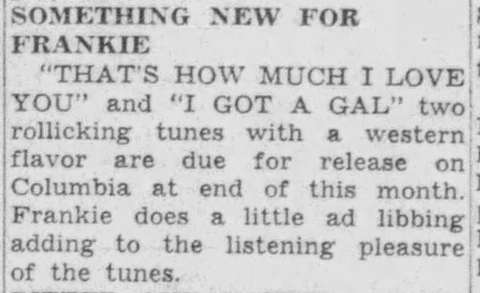
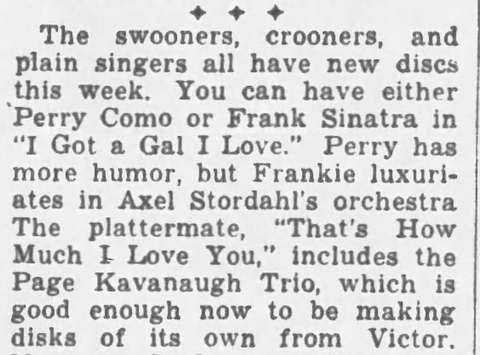
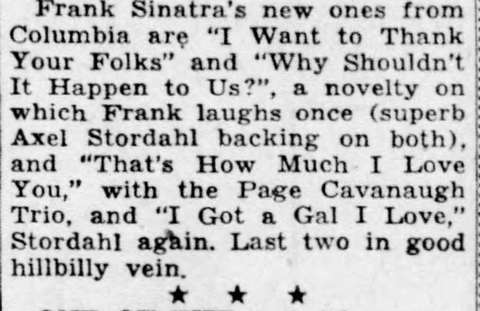
November 2 - THIS DATE IN SINATRA HISTORY
Undated materialFrom: Scott Henderson <scott@falseducks.com> | Received: 2025-11-02
Light Up Time.
Fw: November 3 - THIS DATE IN SINATRA HISTORY
Undated materialFrom: 'Ed O'Brien' via Sinatraphiles <sinatraphiles@googlegroups.com> | Received: 2025-11-03
Marlon and Frank doing the cheesecake scene.
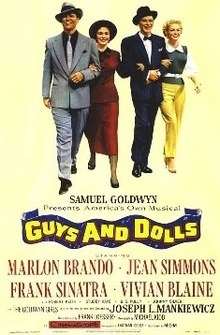
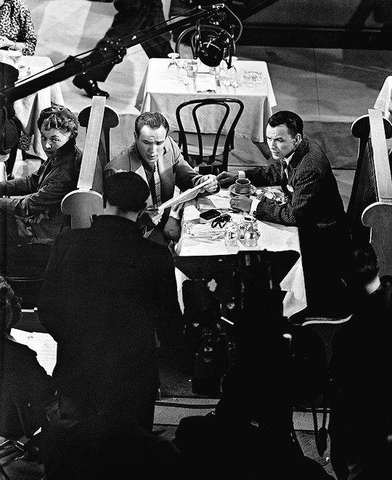
NOVEMBER 3 THIS DATE IN SINATRA HISTORY
Undated materialFrom: 'Ed O'Brien' via Sinatraphiles <sinatraphiles@googlegroups.com> | Received: 2025-11-03
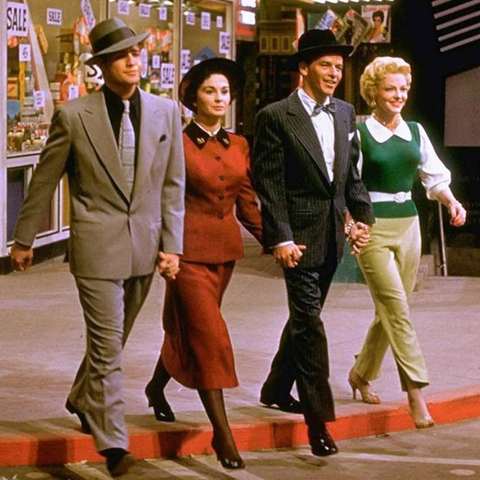
November 3 - THIS DATE IN SINATRA HISTORY
Undated materialFrom: Scott Henderson <scott@falseducks.com> | Received: 2025-11-03
Perfectly Frank
NBC-Radio
Tuesday
Re: November 3 - THIS DATE IN SINATRA HISTORY
Undated materialFrom: 'Ed O'Brien' via Sinatraphiles <sinatraphiles@googlegroups.com> | Received: 2025-11-04
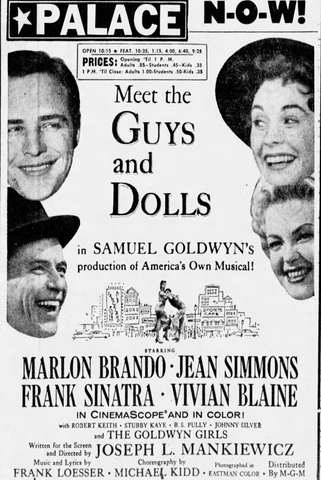
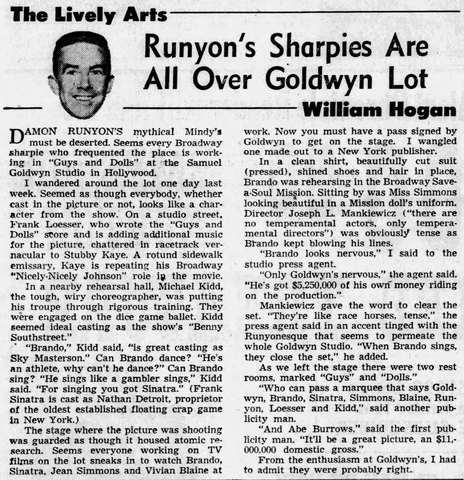
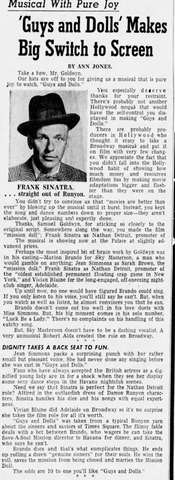
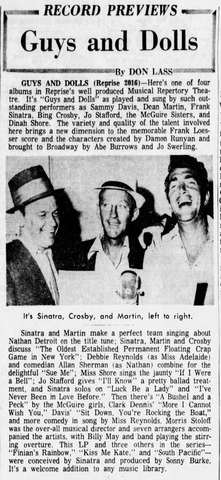
November 5 - THIS DATE IN SINATRA HISTORY
Undated materialFrom: 'Ed O'Brien' via Sinatraphiles <sinatraphiles@googlegroups.com> | Received: 2025-11-05
November 9 - THIS DATE IN SINATRA HISTORY
Undated materialFrom: Scott Henderson <scott@falseducks.com> | Received: 2025-11-09
November 9 - THIS DATE IN SINATRA HISTORY
Undated materialFrom: Scott Henderson <scott@falseducks.com> | Received: 2025-11-09
( it was a very good year for Frank ), "Summer Wind." You could feel the heat rise as
he evoked that windy, summery feeling of love, especially as he flicked the mounting sweat
from his brow.
"I didn't come up here to sing," he stated, again lapsing into his big kidder role. "I came
here to sell my sauce." With this, he took the jar handed to him by his conductor, one of
three on display in the orchestra pit. It was indeed Sinatra's brand new pasta sauce! He
then introduced his longtime companion, Barbara, who was sitting in the first row. To this
"a wonderful wife and a great pal," he crooned the song of the same name.
After the lengthy "Soliloquy" from "Carousel" ( which included the exclamation, "No
sissies in my family! Never!"), Frank spoke to his drink. "You killed my old man," he said,
holding up a glass, " but I'll get even with you, you rat fink."
By way of revenge came "Mack The Knife," "Strangers In The Night," "My Way" and
then the showstopper " introduced by Liza Minnelli and stolen by me," "New York, New
York." The crowd leapt to its feet, the house lights went up and singer left the auditorium
surrounded by more bodyguards. There was no encore on this first show of a four-night,
five-performance run. Ol' Blue Eyes never did come back.
Barry Walters
Examiner Pop Music Critic
Re: New electronic duet with Pentatonix
Undated materialFrom: 'ALFRED MASCIOCCHI' via Sinatraphiles <sinatraphiles@googlegroups.com> | Received: 2025-11-10
Thanks for sending this Richard. I fought the urge to listen for a couple of weeks but finally gave in.
It's pleasant enough which I know is damning with faint praise. I can see it being played a lot on those stations that play Christmas tunes the last two months of the year.
But it shows, again, the difference between Frank and everyone else. This type of a cappella/chorus group singing is inevitably about the voices more than the song. Frank, of course, is the exact opposite, always about the song, never his voice.
Having said that, Pentatonic does a good job and they don't get overly in the way. Me, I'll stick with Ring-a-Ding Ding.
Al
On 10/25/2025 2:46 PM EDT Richard Cook <cook879@hotmail.co.uk> wrote:
I've Got My Love To Keep Me Warm<https://www.youtube.com/watch?v=gbc1VxjKzFw&list=OLAK5uy_kCnLqJhhp_tAv9DZp4Rroi1xm7o6NjBOY>
I see an article says<https://www.broadwayworld.com/bwwmusic/article/Listen-Pentatonix-Release-New-Studio-Album-Christmas-in-the-City-20251024> "the group has collaborated with Sinatra on a never-before-heard recording of this staple", but from my quick side by side listen, for the Sinatra side it is the exact vocal from "Ring-a-Ding Ding".
Richard
Re: New electronic duet with Pentatonix
Undated materialFrom: 'ALFRED MASCIOCCHI' via Sinatraphiles <sinatraphiles@googlegroups.com> | Received: 2025-11-10
Thanks for sending this Richard. I fought the urge to listen for a couple of weeks but finally gave in.
It's pleasant enough which I know is damning with faint praise. I can see it being played a lot on those stations that play Christmas tunes the last two months of the year.
But it shows, again, the difference between Frank and everyone else. This type of a cappella/chorus group singing is inevitably about the voices more than the song. Frank, of course, is the exact opposite, always about the song, never his voice.
Having said that, Pentatonic does a good job and they don't get overly in the way. Me, I'll stick with Ring-a-Ding Ding.
Al
> On 10/25/2025 2:46 PM EDT Richard Cook <cook879@hotmail.co.uk> wrote: >
>
> I've Got My Love To Keep Me Warm https://www.youtube.com/watch?v=gbc1VxjKzFw&list=OLAK5uy_kCnLqJhhp_tAv9DZp4Rroi1xm7o6NjBOY >
> I see an article says https://www.broadwayworld.com/bwwmusic/article/Listen-Pentatonix-Release-New-Studio-Album-Christmas-in-the-City-20251024 "the group has collaborated with Sinatra on a never-before-heard recording of this staple", but from my quick side by side listen, for the Sinatra side it is the exact vocal from "Ring-a-Ding Ding". >
> Richard
>
>
>
>
>
> --
>
THIS DATE IN SINATRA HISTORY NOVEMBER 10
Undated materialFrom: "scott@falseducks.com" <scott@falseducks.com> | Received: 2025-11-10
THIS DATE IN SINATRA HISTORY NOVEMBER 10
Undated materialFrom: "scott@falseducks.com" <scott@falseducks.com> | Received: 2025-11-10
"
Re: Fw: Please respond to this test
Undated materialFrom: Peter Paulson <dmarc-noreply@freelists.org> | Received: 2025-11-10
Please add me back to the group; thank you
On Thursday, March 6, 2025 at 08:50:25 PM PST, <smashiah@netvision.net.il> wrote:
I am getting it
shemmy
From: sinatraphiles-bounce@freelists.org <sinatraphiles-bounce@freelists.org> On Behalf Of Stephanie Pennington
Sent: Friday, March 7, 2025 4:10 AM
To: sinatraphiles@freelists.org
Subject: [sinatraphiles] Re: Fw: Please respond to this test
I have read it
Thank you,
Stephanie Pennington
recordcollector728@gmail.com<https://recordcollector728@gmail.com>
________________________________
From: sinatraphiles-bounce@freelists.org<mailto:sinatraphiles-bounce@freelists.org> <sinatraphiles-bounce@freelists.org<mailto:sinatraphiles-bounce@freelists.org>> on behalf of David Barrios <dbarrios15@hotmail.com<mailto:dbarrios15@hotmail.com>>
Sent: Thursday, March 6, 2025 8:08:30 PM
To: sinatraphiles@freelists.org<mailto:sinatraphiles@freelists.org> <sinatraphiles@freelists.org<mailto:sinatraphiles@freelists.org>>
Cc: sinatraphiles@freelists.org<mailto:sinatraphiles@freelists.org> <sinatraphiles@freelists.org<mailto:sinatraphiles@freelists.org>>
Subject: [sinatraphiles] Re: Fw: Please respond to this test
I’ve seen it
Sent from my iPhone
On Mar 6, 2025, at 6:50 PM, Scott Sibley <dmarc-noreply@freelists.org<mailto:dmarc-noreply@freelists.org>> wrote:
I can see it as well. Thank you!
On Mar 6, 2025, at 4:44 PM, Dave Vallee <dmarc-noreply@freelists.org<mailto:dmarc-noreply@freelists.org>> wrote:
I've also seen it.
On Thu, Mar 6, 2025, 5:02 PM Joaquim Sousa <dmarc-noreply@freelists.org<mailto:dmarc-noreply@freelists.org>> wrote:
Hi,
I’ve seen this email.
Thanks
Enviado a partir do Outlook para iOS<https://aka.ms/o0ukef>
________________________________
De: sinatraphiles-bounce@freelists.org<mailto:sinatraphiles-bounce@freelists.org> <sinatraphiles-bounce@freelists.org<mailto:sinatraphiles-bounce@freelists.org>> em nome de scott@falseducks.com<mailto:scott@falseducks.com> <scott@falseducks.com<mailto:scott@falseducks.com>>
Enviado: quinta-feira, março 6, 2025 18:48
Para: sinatraphiles freelists <sinatraphiles@freelists.org<mailto:sinatraphiles@freelists.org>>
Assunto: [sinatraphiles] Please respond to this test
Hello everyone,
Apparently the transition to Google Groups may not be going as smoothly as I hoped. Ed said he's not seeing posts from others and something he posted last night didn't show up.
Can everyone just reply to this post and let me know you're seeing this. Remember your reply should go to sinatraphiles@freelists.org<mailto:sinatraphiles@freelists.org>.
Thanks,
Scott
Re: Fw: Please respond to this test
Undated materialFrom: Peter Paulson <dmarc-noreply@freelists.org> | Received: 2025-11-10
Please add me back to the group; thank you
On Thursday, March 6, 2025 at 08:50:25 PM PST, <smashiah@netvision.net.il> wrote:
I am getting it
shemmy
From: sinatraphiles-bounce@freelists.org <sinatraphiles-bounce@freelists.org> On Behalf Of Stephanie Pennington
Sent: Friday, March 7, 2025 4:10 AM
To: sinatraphiles@freelists.org
Subject: [sinatraphiles] Re: Fw: Please respond to this test
I have read it
Thank you,
Stephanie Pennington
recordcollector728@gmail.com
From: sinatraphiles-bounce@freelists.org <sinatraphiles-bounce@freelists.org> on behalf of David Barrios <dbarrios15@hotmail.com>
Sent: Thursday, March 6, 2025 8:08:30 PM
To: sinatraphiles@freelists.org <sinatraphiles@freelists.org>
Cc: sinatraphiles@freelists.org <sinatraphiles@freelists.org>
Subject: [sinatraphiles] Re: Fw: Please respond to this test
I’ve seen it
Sent from my iPhone
On Mar 6, 2025, at 6:50 PM, Scott Sibley <dmarc-noreply@freelists.org> wrote:
I can see it as well. Thank you!
On Mar 6, 2025, at 4:44 PM, Dave Vallee <dmarc-noreply@freelists.org> wrote:
I've also seen it.
On Thu, Mar 6, 2025, 5:02 PM Joaquim Sousa <dmarc-noreply@freelists.org> wrote:
Hi,
I’ve seen this email.
Thanks
Enviado a partir do Outlook para iOS
De: sinatraphiles-bounce@freelists.org <sinatraphiles-bounce@freelists.org> em nome de scott@falseducks.com <scott@falseducks.com>
Enviado: quinta-feira, março 6, 2025 18:48
Para: sinatraphiles freelists <sinatraphiles@freelists.org>
Assunto: [sinatraphiles] Please respond to this test
Hello everyone,
Apparently the transition to Google Groups may not be going as smoothly as I hoped. Ed said he's not seeing posts from others and something he posted last night didn't show up.
Can everyone just reply to this post and let me know you're seeing this. Remember your reply should go to sinatraphiles@freelists.org.
Thanks,
Scott
THIS DATE IN SINATRA HISTORY NOVEMBER 10
Undated materialFrom: 'Ed O'Brien' via Sinatraphiles <sinatraphiles@googlegroups.com> | Received: 2025-11-11
Caesars Palace, Las Vegas, Nevada (9-15)
Houston Chronicle
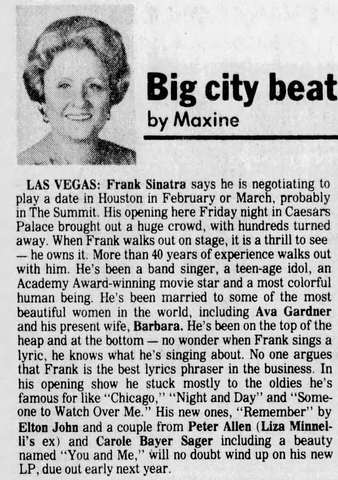
THIS DATE IN SINATRA HISTORY NOVEMBER 10
Undated materialFrom: 'Ed O'Brien' via Sinatraphiles <sinatraphiles@googlegroups.com> | Received: 2025-11-11
Caesars Palace, Las Vegas, Nevada (9-15)
Houston Chronicle
Re: Fw: Please respond to this test
Undated materialFrom: scott <dmarc-noreply@freelists.org> | Received: 2025-11-11
I continue to receive requests from Peter Paulson to be added back to the group. If someone is in touch with him, please let him know that I have sent a request to him to rejoin the Google Group and to reach out to me if he hasn't received it.
Scott
On 2025-11-10 14:59, Peter Paulson wrote:
Please add me back to the group; thank you
On Thursday, March 6, 2025 at 08:50:25 PM PST, <smashiah@netvision.net.il> wrote:
I am getting it
shemmy
From: sinatraphiles-bounce@freelists.org <sinatraphiles-bounce@freelists.org> On Behalf Of Stephanie Pennington
Sent: Friday, March 7, 2025 4:10 AM
To: sinatraphiles@freelists.org
Subject: [sinatraphiles] Re: Fw: Please respond to this test
I have read it
Thank you,
Stephanie Pennington
recordcollector728@gmail.com<https://recordcollector728@gmail.com>
________________________________
From: sinatraphiles-bounce@freelists.org<mailto:sinatraphiles-bounce@freelists.org> <sinatraphiles-bounce@freelists.org<mailto:sinatraphiles-bounce@freelists.org>> on behalf of David Barrios <dbarrios15@hotmail.com<mailto:dbarrios15@hotmail.com>>
Sent: Thursday, March 6, 2025 8:08:30 PM
To: sinatraphiles@freelists.org<mailto:sinatraphiles@freelists.org> <sinatraphiles@freelists.org<mailto:sinatraphiles@freelists.org>>
Cc: sinatraphiles@freelists.org<mailto:sinatraphiles@freelists.org> <sinatraphiles@freelists.org<mailto:sinatraphiles@freelists.org>>
Subject: [sinatraphiles] Re: Fw: Please respond to this test
I've seen it
Sent from my iPhone
On Mar 6, 2025, at 6:50 PM, Scott Sibley <dmarc-noreply@freelists.org<mailto:dmarc-noreply@freelists.org>> wrote:
I can see it as well. Thank you!
On Mar 6, 2025, at 4:44 PM, Dave Vallee <dmarc-noreply@freelists.org<mailto:dmarc-noreply@freelists.org>> wrote:
I've also seen it.
On Thu, Mar 6, 2025, 5:02 PM Joaquim Sousa <dmarc-noreply@freelists.org<mailto:dmarc-noreply@freelists.org>> wrote:
Hi,
I've seen this email.
Thanks
Enviado a partir do Outlook para iOS<https://aka.ms/o0ukef>
________________________________
De: sinatraphiles-bounce@freelists.org<mailto:sinatraphiles-bounce@freelists.org> <sinatraphiles-bounce@freelists.org<mailto:sinatraphiles-bounce@freelists.org>> em nome de scott@falseducks.com<mailto:scott@falseducks.com> <scott@falseducks.com<mailto:scott@falseducks.com>>
Enviado: quinta-feira, março 6, 2025 18:48
Para: sinatraphiles freelists <sinatraphiles@freelists.org<mailto:sinatraphiles@freelists.org>>
Assunto: [sinatraphiles] Please respond to this test
Hello everyone,
Apparently the transition to Google Groups may not be going as smoothly as I hoped. Ed said he's not seeing posts from others and something he posted last night didn't show up.
Can everyone just reply to this post and let me know you're seeing this. Remember your reply should go to sinatraphiles@freelists.org<mailto:sinatraphiles@freelists.org>.
Thanks,
Scott
Re: Fw: Please respond to this test
Undated materialFrom: scott <dmarc-noreply@freelists.org> | Received: 2025-11-11
I continue to receive requests from Peter Paulson to be added back to the group. If someone is in touch with him, please let him know that I have sent a request to him to rejoin the Google Group and to reach out to me if he hasn't received it.
Scott
On 2025-11-10 14:59, Peter Paulson wrote:
> Please add me back to the group; thank you
>
> On Thursday, March 6, 2025 at 08:50:25 PM PST, <smashiah@netvision.net.il> wrote: >
> I am getting it
>
> shemmy
>
> From: sinatraphiles-bounce@freelists.org <sinatraphiles-bounce@freelists.org> On Behalf Of Stephanie Pennington > Sent: Friday, March 7, 2025 4:10 AM
> To: sinatraphiles@freelists.org
> Subject: [sinatraphiles] Re: Fw: Please respond to this test >
> I have read it
>
> Thank you,
>
> Stephanie Pennington
>
> recordcollector728@gmail.com [1]
>
> -------------------------
>
> From: sinatraphiles-bounce@freelists.org <sinatraphiles-bounce@freelists.org> on behalf of David Barrios <dbarrios15@hotmail.com> > Sent: Thursday, March 6, 2025 8:08:30 PM
> To: sinatraphiles@freelists.org <sinatraphiles@freelists.org> > Cc: sinatraphiles@freelists.org <sinatraphiles@freelists.org> > Subject: [sinatraphiles] Re: Fw: Please respond to this test >
> I've seen it
>
> Sent from my iPhone
>
>> On Mar 6, 2025, at 6:50 PM, Scott Sibley <dmarc-noreply@freelists.org> wrote: >
> I can see it as well. Thank you!
>
> On Mar 6, 2025, at 4:44 PM, Dave Vallee <dmarc-noreply@freelists.org> wrote: >
> I've also seen it.
>
> On Thu, Mar 6, 2025, 5:02 PM Joaquim Sousa <dmarc-noreply@freelists.org> wrote: >
> Hi,
>
> I've seen this email.
>
> Thanks
>
> Enviado a partir do Outlook para iOS [2]
>
> -------------------------
>
> De: sinatraphiles-bounce@freelists.org <sinatraphiles-bounce@freelists.org> em nome de scott@falseducks.com <scott@falseducks.com> > Enviado: quinta-feira, março 6, 2025 18:48
> Para: sinatraphiles freelists <sinatraphiles@freelists.org> > Assunto: [sinatraphiles] Please respond to this test
>
> Hello everyone,
>
> Apparently the transition to Google Groups may not be going as smoothly as I hoped. Ed said he's not seeing posts from others and something he posted last night didn't show up. >
> Can everyone just reply to this post and let me know you're seeing this. Remember your reply should go to sinatraphiles@freelists.org. >
> Thanks,
>
> Scott
Links:
[1] https://recordcollector728@gmail.com
[2] https://aka.ms/o0ukef
November 12 - THIS DATE IN SINATRA HISTORY
Undated materialFrom: "scott@falseducks.com" <scott@falseducks.com> | Received: 2025-11-12
Re: [sinatraphiles] November 12 - THIS DATE IN SINATRA HISTORY
Undated materialFrom: 'Ed O'Brien' via Sinatraphiles <sinatraphiles@googlegroups.com> | Received: 2025-11-13
Hollywood
UCA6590 I Love My Wife
(Cy Coleman/Michael Stewart)
WB Music Corp. (ASCAP)
Arranged & Conducted by Nelson Riddle
(3:09) CD: 46013-2 The Complete Reprise Studio Recordings Disc 17
CD: 9-26340-2 The Reprise Collection
45: S1382
“Maria: Frank added the song ‘I Love My Wife’ from a show of the same name that opened in New York that summer. I never heard anyone sing it but Sinatra, the song had beautiful lyrics that meshed perfectly with Frank’s musical arrangement, artfully penned by Nelson Riddle. The sweeping violins from that lush, full orchestra Sinatra had at his fingertips filled my heart with emotion. The song took on a life all its own since Barbara was present for some of the tour. They were practically still newlyweds after all. I’m sure she appreciated Frank’s sentimental nod to her, a tribute to their love for each other.”
Maria Alberici of The Golddiggers
note: Hank Cattaneo told me Barbara liked this song
but loved "Barbara."She asked Hank to give her
any concert tape that had Frank singing it.
Ed
UCA6591 Evergreen N/R
Arranged & Conducted by Nelson Riddle
When Reprise was putting together the 20 CD "Suitcase," in 1995,
this song was set for release. With a little electronic sleight of hand.
a complete recording was planned. Maybe someday, it will be.
November 13 - THIS DATE IN SINATRA HISTORY
Undated materialFrom: "scott@falseducks.com" <scott@falseducks.com> | Received: 2025-11-13
November 13 - THIS DATE IN SINATRA HISTORY
Undated materialFrom: "scott@falseducks.com" <scott@falseducks.com> | Received: 2025-11-13
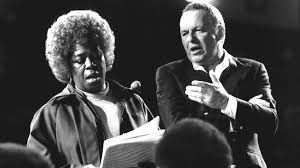
Re: Fw: Please respond to this test
Undated materialFrom: Tito Montoya <dmarc-noreply@freelists.org> | Received: 2025-11-13
Sorry for the long delay, I think I'm receiving all the posts.
Thank you
El vie, 31 oct 2025 a las 11:48, Peter Paulson (<dmarc-noreply@freelists.org<mailto:dmarc-noreply@freelists.org>>) escribió: ppaulson1@yahoo.com<mailto:ppaulson1@yahoo.com>
Thank you
On Thursday, October 30, 2025 at 10:40:03 AM PDT, scott <dmarc-noreply@freelists.org<mailto:dmarc-noreply@freelists.org>> wrote:
What is your email address so I can check it on Google Groups. Your email address isn't popping up here
Scott
Thank you but I'm not getting any posts the last few days
On Tuesday, October 28, 2025 at 11:38:48 AM PDT, Ted Pastuszak Jr. <dmarc-noreply@freelists.org<mailto:dmarc-noreply@freelists.org>> wrote:
I"m seeing this email.
On Tue, Oct 28, 2025 at 2:28 PM Peter Paulson <dmarc-noreply@freelists.org<mailto:dmarc-noreply@freelists.org>> wrote:
PIease reset my membership as I've not received any posts the past few days - thank you Peter
On Thursday, March 6, 2025 at 11:50:25 PM EST, <smashiah@netvision.net.il<mailto:smashiah@netvision.net.il>> wrote:
I am getting it
shemmy
From: sinatraphiles-bounce@freelists.org<mailto:sinatraphiles-bounce@freelists.org> <sinatraphiles-bounce@freelists.org<mailto:sinatraphiles-bounce@freelists.org>> On Behalf Of Stephanie Pennington
Sent: Friday, March 7, 2025 4:10 AM
To: sinatraphiles@freelists.org<mailto:sinatraphiles@freelists.org>
Subject: [sinatraphiles] Re: Fw: Please respond to this test
I have read it
Thank you,
Stephanie Pennington
recordcollector728@gmail.com<https://recordcollector728@gmail.com>
________________________________
From: sinatraphiles-bounce@freelists.org<mailto:sinatraphiles-bounce@freelists.org> <sinatraphiles-bounce@freelists.org<mailto:sinatraphiles-bounce@freelists.org>> on behalf of David Barrios <dbarrios15@hotmail.com<mailto:dbarrios15@hotmail.com>>
Sent: Thursday, March 6, 2025 8:08:30 PM
To: sinatraphiles@freelists.org<mailto:sinatraphiles@freelists.org> <sinatraphiles@freelists.org<mailto:sinatraphiles@freelists.org>>
Cc: sinatraphiles@freelists.org<mailto:sinatraphiles@freelists.org> <sinatraphiles@freelists.org<mailto:sinatraphiles@freelists.org>>
Subject: [sinatraphiles] Re: Fw: Please respond to this test
I've seen it
Sent from my iPhone
On Mar 6, 2025, at 6:50 PM, Scott Sibley <dmarc-noreply@freelists.org<mailto:dmarc-noreply@freelists.org>> wrote:
I can see it as well. Thank you!
On Mar 6, 2025, at 4:44 PM, Dave Vallee <dmarc-noreply@freelists.org<mailto:dmarc-noreply@freelists.org>> wrote:
I've also seen it.
On Thu, Mar 6, 2025, 5:02 PM Joaquim Sousa <dmarc-noreply@freelists.org<mailto:dmarc-noreply@freelists.org>> wrote:
Hi,
I've seen this email.
Thanks
Enviado a partir do Outlook para iOS<https://aka.ms/o0ukef>
________________________________
De: sinatraphiles-bounce@freelists.org<mailto:sinatraphiles-bounce@freelists.org> <sinatraphiles-bounce@freelists.org<mailto:sinatraphiles-bounce@freelists.org>> em nome de scott@falseducks.com<mailto:scott@falseducks.com> <scott@falseducks.com<mailto:scott@falseducks.com>>
Enviado: quinta-feira, março 6, 2025 18:48
Para: sinatraphiles freelists <sinatraphiles@freelists.org<mailto:sinatraphiles@freelists.org>>
Assunto: [sinatraphiles] Please respond to this test
Hello everyone,
Apparently the transition to Google Groups may not be going as smoothly as I hoped. Ed said he's not seeing posts from others and something he posted last night didn't show up.
Can everyone just reply to this post and let me know you're seeing this. Remember your reply should go to sinatraphiles@freelists.org<mailto:sinatraphiles@freelists.org>.
Thanks,
Scott
Re: Fw: Please respond to this test
Undated materialFrom: Tito Montoya <dmarc-noreply@freelists.org> | Received: 2025-11-13
Sorry for the long delay, I think I'm receiving all the posts.
Thank you
El vie, 31 oct 2025 a las 11:48, Peter Paulson (<dmarc-noreply@freelists.org>) escribió:
> ppaulson1@yahoo.com
>
> Thank you
>
> On Thursday, October 30, 2025 at 10:40:03 AM PDT, scott < > dmarc-noreply@freelists.org> wrote:
>
>
> What is your email address so I can check it on Google Groups. Your email > address isn't popping up here
>
>
>
> Scott
>
>
> Thank you but I'm not getting any posts the last few days >
> On Tuesday, October 28, 2025 at 11:38:48 AM PDT, Ted Pastuszak Jr. < > dmarc-noreply@freelists.org> wrote:
>
>
> I"m seeing this email.
>
> On Tue, Oct 28, 2025 at 2:28 PM Peter Paulson <dmarc-noreply@freelists.org> > wrote:
>
>
> PIease reset my membership as I've not received any posts the > past few days - thank you Peter
>
> On Thursday, March 6, 2025 at 11:50:25 PM EST, <smashiah@netvision.net.il> > wrote:
>
>
>
> I am getting it
>
> shemmy
>
>
>
> *From:* sinatraphiles-bounce@freelists.org <
> sinatraphiles-bounce@freelists.org> *On Behalf Of *Stephanie Pennington > *Sent:* Friday, March 7, 2025 4:10 AM
> *To:* sinatraphiles@freelists.org
> *Subject:* [sinatraphiles] Re: Fw: Please respond to this test >
>
> I have read it
>
>
> Thank you,
>
>
> Stephanie Pennington
>
> recordcollector728@gmail.com
> ------------------------------
>
> *From:* sinatraphiles-bounce@freelists.org <
> sinatraphiles-bounce@freelists.org> on behalf of David Barrios < > dbarrios15@hotmail.com>
> *Sent:* Thursday, March 6, 2025 8:08:30 PM
> *To:* sinatraphiles@freelists.org <sinatraphiles@freelists.org> > *Cc:* sinatraphiles@freelists.org <sinatraphiles@freelists.org> > *Subject:* [sinatraphiles] Re: Fw: Please respond to this test >
>
> I've seen it
>
> Sent from my iPhone
>
>
>
> On Mar 6, 2025, at 6:50 PM, Scott Sibley <dmarc-noreply@freelists.org> > wrote:
>
> I can see it as well. Thank you!
>
>
>
> On Mar 6, 2025, at 4:44 PM, Dave Vallee <dmarc-noreply@freelists.org> > wrote:
>
> I've also seen it.
>
>
> On Thu, Mar 6, 2025, 5:02 PM Joaquim Sousa <dmarc-noreply@freelists.org> > wrote:
>
> Hi,
>
> I've seen this email.
>
>
> Thanks
>
>
> Enviado a partir do Outlook para iOS <https://aka.ms/o0ukef> > ------------------------------
>
> *De:* sinatraphiles-bounce@freelists.org <
> sinatraphiles-bounce@freelists.org> em nome de scott@falseducks.com < > scott@falseducks.com>
> *Enviado:* quinta-feira, março 6, 2025 18:48
> *Para:* sinatraphiles freelists <sinatraphiles@freelists.org> > *Assunto:* [sinatraphiles] Please respond to this test >
>
>
> Hello everyone,
>
>
> Apparently the transition to Google Groups may not be going as smoothly as > I hoped. Ed said he's not seeing posts from others and something he posted > last night didn't show up.
>
>
> Can everyone just reply to this post and let me know you're seeing this. > Remember your reply should go to sinatraphiles@freelists.org.
>
>
>
> Thanks,
>
>
>
> Scott
>
>
>
Re: sinatraphiles Digest V6 #94
Undated materialFrom: Tito Montoya <dmarc-noreply@freelists.org> | Received: 2025-11-13
Receivied too.
El vie, 31 oct 2025 a las 6:50, Larry Crawford (<dmarc-noreply@freelists.org<mailto:dmarc-noreply@freelists.org>>) escribió: Received
Get Outlook for Android<https://aka.ms/AAb9ysg>
________________________________
From: sinatraphiles-bounce@freelists.org<mailto:sinatraphiles-bounce@freelists.org> <sinatraphiles-bounce@freelists.org<mailto:sinatraphiles-bounce@freelists.org>> on behalf of Bill Jones <dmarc-noreply@freelists.org<mailto:dmarc-noreply@freelists.org>>
Sent: Friday, October 31, 2025 6:59:11 AM
To: sinatraphiles@freelists.org<mailto:sinatraphiles@freelists.org> <sinatraphiles@freelists.org<mailto:sinatraphiles@freelists.org>>
Subject: [sinatraphiles] Re: sinatraphiles Digest V6 #94
Received
On Oct 30, 2025 9:05 PM, FreeLists List Manager <ecartis@freelists.org<mailto:ecartis@freelists.org>> wrote:
sinatraphiles Digest Thu, 30 Oct 2025 Volume: 06 Issue: 094
In This Issue:
[sinatraphiles] Re: Fw: Please respond to this test
[sinatraphiles] Re: Fw: Please respond to this test
Date: Thu, 30 Oct 2025 16:42:07 +0000 (UTC)
From: Peter Paulson <ppaulson1@yahoo.com<mailto:ppaulson1@yahoo.com>>
Subject: [sinatraphiles] Re: Fw: Please respond to this test
On Tue, Oct 28, 2025 at 2:28���PM Peter Paulson <dmarc-noreply@freelists.org<mailto:dmarc-noreply@freelists.org>> wrote: PIease reset my membership as I've not received any posts thepast few days - thank you Peter On Thursday, March 6, 2025 at 11:50:25 PM EST, <smashiah@netvision.net.il<mailto:smashiah@netvision.net.il>> wrote:
I am getting it
shemmy
��
From: sinatraphiles-bounce@freelists.org<mailto:sinatraphiles-bounce@freelists.org> <sinatraphiles-bounce@freelists.org<mailto:sinatraphiles-bounce@freelists.org>> On Behalf Of Stephanie Pennington
Sent: Friday, March 7, 2025 4:10 AM
To: sinatraphiles@freelists.org<mailto:sinatraphiles@freelists.org>
Subject: [sinatraphiles] Re: Fw: Please respond to this test
��
I have read it
��
Thank you,
��
Stephanie Pennington
recordcollector728@gmail.com<mailto:recordcollector728@gmail.com>
From: sinatraphiles-bounce@freelists.org<mailto:sinatraphiles-bounce@freelists.org> <sinatraphiles-bounce@freelists.org<mailto:sinatraphiles-bounce@freelists.org>> on behalf of David Barrios <dbarrios15@hotmail.com<mailto:dbarrios15@hotmail.com>>
Sent: Thursday, March 6, 2025 8:08:30 PM
To: sinatraphiles@freelists.org<mailto:sinatraphiles@freelists.org> <sinatraphiles@freelists.org<mailto:sinatraphiles@freelists.org>>
Cc: sinatraphiles@freelists.org<mailto:sinatraphiles@freelists.org> <sinatraphiles@freelists.org<mailto:sinatraphiles@freelists.org>>
Subject: [sinatraphiles] Re: Fw: Please respond to this test
��
I���ve seen it
Sent from my iPhone
On Mar 6, 2025, at 6:50���PM, Scott Sibley <dmarc-noreply@freelists.org<mailto:dmarc-noreply@freelists.org>> wrote:
���
I can see it as well. Thank you!
On Mar 6, 2025, at 4:44���PM, Dave Vallee <dmarc-noreply@freelists.org<mailto:dmarc-noreply@freelists.org>> wrote:
���
I've also seen it.
��
On Thu, Mar 6, 2025, 5:02���PM Joaquim Sousa <dmarc-noreply@freelists.org<mailto:dmarc-noreply@freelists.org>> wrote:
Hi,
I���ve seen this email.
��
Thanks
��
Enviado a partir do Outlook para iOS
De:��sinatraphiles-bounce@freelists.org<mailto:sinatraphiles-bounce@freelists.org> <sinatraphiles-bounce@freelists.org<mailto:sinatraphiles-bounce@freelists.org>> em nome de scott@falseducks.com<mailto:scott@falseducks.com> <scott@falseducks.com<mailto:scott@falseducks.com>>
Enviado:��quinta-feira, mar��o 6, 2025 18:48
Para:��sinatraphiles freelists <sinatraphiles@freelists.org<mailto:sinatraphiles@freelists.org>>
Assunto:��[sinatraphiles] Please respond to this test
��
Hello everyone,��
��
Apparently the transition to Google Groups may not be going as smoothly as I hoped.�� Ed said he's not seeing posts from others and something he posted last night didn't show up.
��
Can everyone just reply to this post and let me know you're seeing this.�� Remember your reply should go to sinatraphiles@freelists.org<mailto:sinatraphiles@freelists.org>.
��
��
Thanks,
��
��
Scott
Date: Thu, 30 Oct 2025 13:39:38 -0400
From: scott@falseducks.com<mailto:scott@falseducks.com>
Subject: [sinatraphiles] Re: Fw: Please respond to this test
What is your email address so I can check it on Google Groups. Your email address isn't popping up here
Scott
> Thank you but I'm not getting any posts the last few days >
> On Tuesday, October 28, 2025 at 11:38:48 AM PDT, Ted Pastuszak Jr. <dmarc-noreply@freelists.org<mailto:dmarc-noreply@freelists.org>> wrote: >
> I"m seeing this email.
>
> On Tue, Oct 28, 2025 at 2:28���PM Peter Paulson <dmarc-noreply@freelists.org<mailto:dmarc-noreply@freelists.org>> wrote: >
> PIease reset my membership as I've not received any posts the > past few days - thank you Peter
>
> On Thursday, March 6, 2025 at 11:50:25 PM EST, <smashiah@netvision.net.il<mailto:smashiah@netvision.net.il>> wrote: >
> I am getting it
>
> shemmy
>
> From: sinatraphiles-bounce@freelists.org<mailto:sinatraphiles-bounce@freelists.org> <sinatraphiles-bounce@freelists.org<mailto:sinatraphiles-bounce@freelists.org>> On Behalf Of Stephanie Pennington > Sent: Friday, March 7, 2025 4:10 AM
> To: sinatraphiles@freelists.org<mailto:sinatraphiles@freelists.org> > Subject: [sinatraphiles] Re: Fw: Please respond to this test >
> I have read it
>
> Thank you,
>
> Stephanie Pennington
>
> recordcollector728@gmail.com<mailto:recordcollector728@gmail.com> [1] >
> -------------------------
>
> From: sinatraphiles-bounce@freelists.org<mailto:sinatraphiles-bounce@freelists.org> <sinatraphiles-bounce@freelists.org<mailto:sinatraphiles-bounce@freelists.org>> on behalf of David Barrios <dbarrios15@hotmail.com<mailto:dbarrios15@hotmail.com>> > Sent: Thursday, March 6, 2025 8:08:30 PM
> To: sinatraphiles@freelists.org<mailto:sinatraphiles@freelists.org> <sinatraphiles@freelists.org<mailto:sinatraphiles@freelists.org>> > Cc: sinatraphiles@freelists.org<mailto:sinatraphiles@freelists.org> <sinatraphiles@freelists.org<mailto:sinatraphiles@freelists.org>> > Subject: [sinatraphiles] Re: Fw: Please respond to this test >
> I've seen it
>
> Sent from my iPhone
>
> On Mar 6, 2025, at 6:50���PM, Scott Sibley <dmarc-noreply@freelists.org<mailto:dmarc-noreply@freelists.org>> wrote: >
> I can see it as well. Thank you!
>
> On Mar 6, 2025, at 4:44���PM, Dave Vallee <dmarc-noreply@freelists.org<mailto:dmarc-noreply@freelists.org>> wrote: >
> I've also seen it.
>
> On Thu, Mar 6, 2025, 5:02���PM Joaquim Sousa <dmarc-noreply@freelists.org<mailto:dmarc-noreply@freelists.org>> wrote: >
> Hi,
>
> I've seen this email.
>
> Thanks
>
> Enviado a partir do Outlook para iOS [2]
>
> -------------------------
>
> De: sinatraphiles-bounce@freelists.org<mailto:sinatraphiles-bounce@freelists.org> <sinatraphiles-bounce@freelists.org<mailto:sinatraphiles-bounce@freelists.org>> em nome de scott@falseducks.com<mailto:scott@falseducks.com> <scott@falseducks.com<mailto:scott@falseducks.com>> > Enviado: quinta-feira, mar��o 6, 2025 18:48
> Para: sinatraphiles freelists <sinatraphiles@freelists.org<mailto:sinatraphiles@freelists.org>> > Assunto: [sinatraphiles] Please respond to this test
>
> Hello everyone,
>
> Apparently the transition to Google Groups may not be going as smoothly as I hoped. Ed said he's not seeing posts from others and something he posted last night didn't show up. >
> Can everyone just reply to this post and let me know you're seeing this. Remember your reply should go to sinatraphiles@freelists.org<mailto:sinatraphiles@freelists.org>. >
> Thanks,
>
> Scott
Links:
[1] https://recordcollector728@gmail.com
[2] https://aka.ms/o0ukef
End of sinatraphiles Digest V6 #94
**********************************
Re: sinatraphiles Digest V6 #94
Undated materialFrom: Tito Montoya <dmarc-noreply@freelists.org> | Received: 2025-11-13
Receivied too.
El vie, 31 oct 2025 a las 6:50, Larry Crawford (<dmarc-noreply@freelists.org>) escribió:
> Received
>
> Get Outlook for Android <https://aka.ms/AAb9ysg>
> ------------------------------
> *From:* sinatraphiles-bounce@freelists.org <
> sinatraphiles-bounce@freelists.org> on behalf of Bill Jones < > dmarc-noreply@freelists.org>
> *Sent:* Friday, October 31, 2025 6:59:11 AM
> *To:* sinatraphiles@freelists.org <sinatraphiles@freelists.org> > *Subject:* [sinatraphiles] Re: sinatraphiles Digest V6 #94 >
> Received
>
> On Oct 30, 2025 9:05 PM, FreeLists List Manager <ecartis@freelists.org> > wrote:
>
> sinatraphiles Digest Thu, 30 Oct 2025 Volume: 06 Issue: 094 >
> In This Issue:
> [sinatraphiles] Re: Fw: Please respond to this test
> [sinatraphiles] Re: Fw: Please respond to this test
>
> ---------------------------------------------------------------------- >
> Date: Thu, 30 Oct 2025 16:42:07 +0000 (UTC)
> From: Peter Paulson <ppaulson1@yahoo.com>
> Subject: [sinatraphiles] Re: Fw: Please respond to this test >
> On Tue, Oct 28, 2025 at 2:28���PM Peter Paulson <
> dmarc-noreply@freelists.org> wrote:
> PIease reset my membership as I've not received any posts thepast few days > - thank you Peter
> On Thursday, March 6, 2025 at 11:50:25 PM EST, <
> smashiah@netvision.net.il> wrote:
>
>
> I am getting it
>
> shemmy
>
> ��
>
> From: sinatraphiles-bounce@freelists.org <
> sinatraphiles-bounce@freelists.org> On Behalf Of Stephanie Pennington > Sent: Friday, March 7, 2025 4:10 AM
> To: sinatraphiles@freelists.org
> Subject: [sinatraphiles] Re: Fw: Please respond to this test >
> ��
>
> I have read it
>
> ��
>
> Thank you,
>
> ��
>
> Stephanie Pennington
>
> recordcollector728@gmail.com
>
> From: sinatraphiles-bounce@freelists.org <
> sinatraphiles-bounce@freelists.org> on behalf of David Barrios < > dbarrios15@hotmail.com>
> Sent: Thursday, March 6, 2025 8:08:30 PM
> To: sinatraphiles@freelists.org <sinatraphiles@freelists.org> > Cc: sinatraphiles@freelists.org <sinatraphiles@freelists.org> > Subject: [sinatraphiles] Re: Fw: Please respond to this test >
> ��
>
> I���ve seen it
>
> Sent from my iPhone
>
>
>
>
>
>
> On Mar 6, 2025, at 6:50���PM, Scott Sibley <dmarc-noreply@freelists.org> > wrote:
>
>
>
> ���
>
> I can see it as well. Thank you!
>
>
>
>
>
>
> On Mar 6, 2025, at 4:44���PM, Dave Vallee <dmarc-noreply@freelists.org> > wrote:
>
>
>
> ���
>
> I've also seen it.
>
> ��
>
> On Thu, Mar 6, 2025, 5:02���PM Joaquim Sousa <dmarc-noreply@freelists.org> > wrote:
>
>
> Hi,
>
> I���ve seen this email.
>
> ��
>
> Thanks
>
> ��
>
> Enviado a partir do Outlook para iOS
>
> De:��sinatraphiles-bounce@freelists.org <
> sinatraphiles-bounce@freelists.org> em nome de scott@falseducks.com < > scott@falseducks.com>
> Enviado:��quinta-feira, mar��o 6, 2025 18:48
> Para:��sinatraphiles freelists <sinatraphiles@freelists.org> > Assunto:��[sinatraphiles] Please respond to this test >
> ��
>
> Hello everyone,��
>
> ��
>
> Apparently the transition to Google Groups may not be going as smoothly as > I hoped.�� Ed said he's not seeing posts from others and something he > posted last night didn't show up.
>
> ��
>
> Can everyone just reply to this post and let me know you're seeing this.�� > Remember your reply should go to sinatraphiles@freelists.org.
>
> ��
>
> ��
>
> Thanks,
>
> ��
>
> ��
>
> Scott
>
>
>
>
>
>
> ------------------------------
>
> Date: Thu, 30 Oct 2025 13:39:38 -0400
> From: scott@falseducks.com
> Subject: [sinatraphiles] Re: Fw: Please respond to this test >
> What is your email address so I can check it on Google Groups. Your > email address isn't popping up here
> Scott
>
> > Thank you but I'm not getting any posts the last few days > >
> > On Tuesday, October 28, 2025 at 11:38:48 AM PDT, Ted Pastuszak Jr. < > dmarc-noreply@freelists.org> wrote:
> >
> > I"m seeing this email.
> >
> > On Tue, Oct 28, 2025 at 2:28���PM Peter Paulson <
> dmarc-noreply@freelists.org> wrote:
> >
> > PIease reset my membership as I've not received any posts the > > past few days - thank you Peter
> >
> > On Thursday, March 6, 2025 at 11:50:25 PM EST, <
> smashiah@netvision.net.il> wrote:
> >
> > I am getting it
> >
> > shemmy
> >
> > From: sinatraphiles-bounce@freelists.org <
> sinatraphiles-bounce@freelists.org> On Behalf Of Stephanie Pennington > > Sent: Friday, March 7, 2025 4:10 AM
> > To: sinatraphiles@freelists.org
> > Subject: [sinatraphiles] Re: Fw: Please respond to this test > >
> > I have read it
> >
> > Thank you,
> >
> > Stephanie Pennington
> >
> > recordcollector728@gmail.com [1]
> >
> > -------------------------
> >
> > From: sinatraphiles-bounce@freelists.org <
> sinatraphiles-bounce@freelists.org> on behalf of David Barrios < > dbarrios15@hotmail.com>
> > Sent: Thursday, March 6, 2025 8:08:30 PM
> > To: sinatraphiles@freelists.org <sinatraphiles@freelists.org> > > Cc: sinatraphiles@freelists.org <sinatraphiles@freelists.org> > > Subject: [sinatraphiles] Re: Fw: Please respond to this test > >
> > I've seen it
> >
> > Sent from my iPhone
> >
> > On Mar 6, 2025, at 6:50���PM, Scott Sibley <dmarc-noreply@freelists.org> > wrote:
> >
> > I can see it as well. Thank you!
> >
> > On Mar 6, 2025, at 4:44���PM, Dave Vallee <dmarc-noreply@freelists.org> > wrote:
> >
> > I've also seen it.
> >
> > On Thu, Mar 6, 2025, 5:02���PM Joaquim Sousa <
> dmarc-noreply@freelists.org> wrote:
> >
> > Hi,
> >
> > I've seen this email.
> >
> > Thanks
> >
> > Enviado a partir do Outlook para iOS [2]
> >
> > -------------------------
> >
> > De: sinatraphiles-bounce@freelists.org <
> sinatraphiles-bounce@freelists.org> em nome de scott@falseducks.com < > scott@falseducks.com>
> > Enviado: quinta-feira, mar��o 6, 2025 18:48
> > Para: sinatraphiles freelists <sinatraphiles@freelists.org> > > Assunto: [sinatraphiles] Please respond to this test > >
> > Hello everyone,
> >
> > Apparently the transition to Google Groups may not be going as smoothly > as I hoped. Ed said he's not seeing posts from others and something he > posted last night didn't show up.
> >
> > Can everyone just reply to this post and let me know you're seeing > this. Remember your reply should go to sinatraphiles@freelists.org. > >
> > Thanks,
> >
> > Scott
>
>
>
> Links:
> ------
> [1] https://recordcollector728@gmail.com
> [2] https://aka.ms/o0ukef
>
>
> ------------------------------
>
> End of sinatraphiles Digest V6 #94
> **********************************
>
>
>
November 13 - THIS DATE IN SINATRA HISTORY
Undated materialFrom: 'Ed O'Brien' via Sinatraphiles <sinatraphiles@googlegroups.com> | Received: 2025-11-14
Los Angeles
ROBIN AND THE 7 HOODS WARNER BROS.
Wednesday
Arranged and conducted by Nelson Riddle
My Kind Of Town
(4:57) CD: 46013-2 The Complete Reprise Studio Recordings Disc 13
CD: 1027-2Cycles
LP: FS1027Cycles
L6932 Moody River
w/Chorus
(Gary D. Bruce)
Gary Bruce Music/Gil Music (BMI)
Arranged by Don Costa
Orchestra Conducted by Bill Miller
(2:31) CD: 46013-2 The Complete Reprise Studio Recordings Disc 13
CD: 1027-2Cycles
LP: FS1027Cycles
L6933 Pretty Colors
w/Chorus
(Al Gorgoni/Chip Taylor)
EMI Blackwood Music Inc. (BMI)
Arranged by Don Costa
Orchestra Conducted by Bill Miller
(2:34) CD: 46013-2 The Complete Reprise Studio Recordings Disc 13
CD: 1027-2Cycles
LP: FS1027Cycles
The Daily Breeze
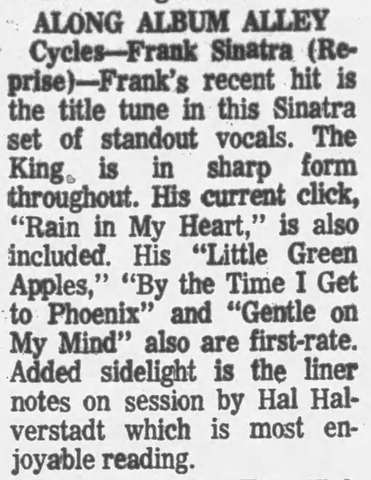
November 13 - THIS DATE IN SINATRA HISTORY
Undated materialFrom: 'Ed O'Brien' via Sinatraphiles <sinatraphiles@googlegroups.com> | Received: 2025-11-14
November 13 - THIS DATE IN SINATRA HISTORY
Undated materialFrom: 'Ed O'Brien' via Sinatraphiles <sinatraphiles@googlegroups.com> | Received: 2025-11-14
Palladium, London, England (13-20)
Sarah Vaughan, Count Basie Orchestra Conducted By: Bill Miller
Birmingham Evening Mail
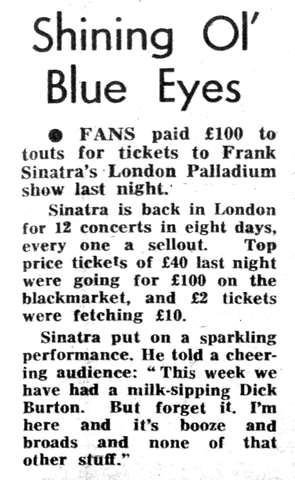
Fw: Frank and Keely
Undated materialFrom: 'Ed O'Brien' via Sinatraphiles <sinatraphiles@googlegroups.com> | Received: 2025-11-15
Michel Macaire sebt this photo to me.
I would say the photo was taken in 1958
I've got that nice photo of Frank and Keely that I didn't know. Best MM
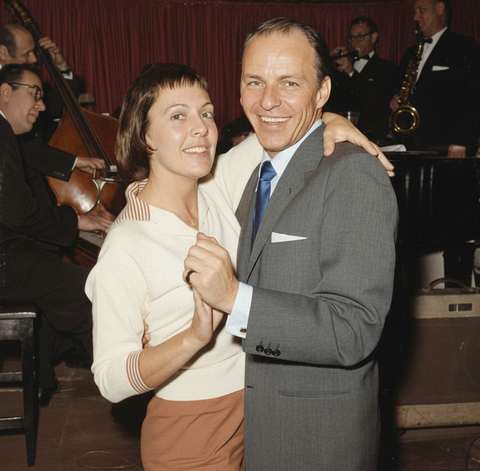
Re: Fw: Frank and Keely
Undated materialFrom: Vance Adair <dr.vanceadair@gmail.com> | Received: 2025-11-15
What a fantastic photo.
-Vance
On Sat, 15 Nov 2025 at 04:21, 'Ed O'Brien' via Sinatraphiles <sinatraphiles@googlegroups.com> wrote:
Michel Macaire sebt this photo to me.
I would say the photo was taken in 1958
I've got that nice photo of Frank and Keely that I didn't know. Best MM
November 15 - THIS DATE IN SINATRA HISTORY
Undated materialFrom: Scott Henderson <scott@falseducks.com> | Received: 2025-11-15
November 15 - THIS DATE IN SINATRA HISTORY
Undated materialFrom: Scott Henderson <scott@falseducks.com> | Received: 2025-11-15
note: A serendipitous moment. I was searching for a review of the
Capitol Theater engagement and stumbled upon this announcement.
I did find the review from the Capitol. Will try and post later today.
November 15 - THIS DATE IN SINATRA HISTORY
Undated materialFrom: Scott Henderson <scott@falseducks.com> | Received: 2025-11-15
November 13 - THIS DATE IN SINATRA HISTORY
Undated materialFrom: Scott Henderson <scott@falseducks.com> | Received: 2025-11-16
November 13 - THIS DATE IN SINATRA HISTORY
Undated materialFrom: Scott Henderson <scott@falseducks.com> | Received: 2025-11-16
Re: Fw: Frank and Keely
Undated materialFrom: "'John K. George' via Sinatraphiles" <sinatraphiles@googlegroups.com> | Received: 2025-11-17
Great photo, I’ve never seen before
Sent from the all new AOL app for iOS
On Saturday, November 15, 2025, 6:37 AM, Vance Adair <dr.vanceadair@gmail.com> wrote:
What a fantastic photo.
-Vance
On Sat, 15 Nov 2025 at 04:21, 'Ed O'Brien' via Sinatraphiles <sinatraphiles@googlegroups.com> wrote:
Michel Macaire sebt this photo to me.
I would say the photo was taken in 1958
I've got that nice photo of Frank and Keely that I didn't know. Best MM
Re: Fw: Frank Sinatra “In The Wee Small Hours” | Tone Poet Vinyl Edition Out 11/14
Undated materialFrom: 'ALFRED MASCIOCCHI' via Sinatraphiles <sinatraphiles@googlegroups.com> | Received: 2025-11-18
I received this yesterday. To my admittedly untrained ears, it sounds magnificent. If I turn around, I think Frank is in back of me, singing live.
Al
On 09/15/2025 12:30 PM EDT 'Ed O'Brien' via Sinatraphiles <sinatraphiles@googlegroups.com> wrote:
AAA 180g gatefold vinyl reissue of legend’s seminal 1955 album
View online<https://us.umusic-online.com/cr/AQi-kw4QqPcwGMDZ6zJPwmmMQNy_Nom-bbJF89AkORkHBEHsTx1dZzAtKIeloQ>
[Blue Note Logo (linked to website)]<https://us.umusic-online.com/c/AQi-kw4QqPcwGMDZ6zIg97KODPvefO90BPtjDsTd19M_yGkFM7gD1LjbdYZ1sdGNXruK>
FOLLOW US & ENJOY THE FINEST IN JAZZ SINCE 1939
FOLLOW US & ENJOY
THE FINEST IN JAZZ SINCE 1939
[Spotify]<https://us.umusic-online.com/c/AQi-kw4QqPcwGMDZ6zIg-LKODIkoSPh0-kb-1bbNxuyaafTiXhKBJnlUvU0ZYPodqtpF> [Apple Music]<https://us.umusic-online.com/c/AQi-kw4QqPcwGMDZ6zIg-bKODJWwfdMicANOS0-R6yyTsHmJXfG874hpt5nx-gPhmqJL> [Twitter]<https://us.umusic-online.com/c/AQi-kw4QqPcwGMDZ6zIg-rKODChBEUmyaKpYT_ZR1KohKCIFCH67_DGKNSsb8zf89fKq> [Facebook]<https://us.umusic-online.com/c/AQi-kw4QqPcwGMDZ6zIg-7KODGQQPNvyTcuFgIA6U2g36dgQppgu47EQfjVpJC7Zhcpe> [Instagram]<https://us.umusic-online.com/c/AQi-kw4QqPcwGMDZ6zIg_LKODPQ098IU2QfNsUepyUCVAyX_sR2HfURxY--s8DWxiOrt> [Youtube]<https://us.umusic-online.com/c/AQi-kw4QqPcwGMDZ6zIg_bKODF5BmRNmFk84hcCuhhBv3GKLAUn3dj4TQxrusTrOoiQ5> [Threads]<https://us.umusic-online.com/c/AQi-kw4QqPcwGMDZ6zIg_rKODAzMbGKt2RcxmOba_BNSxZA6Yb7fbGBll1gqmZWui52m> [Bluesky]<https://us.umusic-online.com/c/AQi-kw4QqPcwGMDZ6zIg_7KODPuMSsHA9IrHw-iZMPmY9XQiqMlIiG33vUUCVw2QnWo->
FRANK SINATRA
IN THE WEE SMALL HOURS<https://us.umusic-online.com/c/AQi-kw4QqPcwGMDZ6zIghLOODA_P5S-HDrR7S-5RwpNbdWQHOOXrTp3ieJMiyWjqOQCZ>
TONE POET VINYL EDITION OUT NOV. 14!
[Frank Sinatra 'In The Wee Small Hours']<https://us.umusic-online.com/c/AQi-kw4QqPcwGMDZ6zIghbOODJj22sflR3erPGBGxKG2QZOToGxFSR_H_I0DqjMIc-2E>
PRE-ORDER ><https://us.umusic-online.com/c/AQi-kw4QqPcwGMDZ6zIghrOODADRIo7zTvG4uzYyHy_q95k1jkJSFWb-6OeWXWuBLbtp>
Frank Sinatra’s seminal 1955 Capitol Records album In The Wee Small Hours<https://us.umusic-online.com/c/AQi-kw4QqPcwGMDZ6zIgh7OODB4qdATlYZmK8XhDLho_k1IgsPPafgMvtpSX-osomscd> will be reissued in the Tone Poet Audiophile Vinyl Series on Nov. 14 marking it’s 70th anniversary! A melancholy masterpiece of lost love & heartbreak, it was a pivotal album in the legendary vocalist’s career embodying his artistic growth into a more mature singing style with stunning renditions of Great American Songbook standards given sublime arrangements by Nelson Riddle, creating one of the first-ever concept albums.
Produced for release by Joe Harley, the new Tone Poet Vinyl Edition was mastered by Kevin Gray from the original analog master tapes, pressed on 180g vinyl at RTI & comes packaged in a deluxe gatefold tip-on jacket featuring session photos by William Claxton & Ken Veeder, as well as an essay by Rita Kirwan.
[Frank Sinatra Album]<https://us.umusic-online.com/c/AQi-kw4QqPcwGMDZ6zIgiLOODD_GI69UiNdxmfOQkm8zTeb3gQw_O9o79GDTlhUewSS9>
PRE-ORDER ><https://us.umusic-online.com/c/AQi-kw4QqPcwGMDZ6zIgibOODL1ikjApWIUHCt_2T2jItZJAdfMihabYxz8xRiMjer4U>
[Blue Note Store 'Shop Now' Banner]<https://us.umusic-online.com/c/AQi-kw4QqPcwGMDZ6zIggbOODLMmqSzCc9IaRN0kJSZsokLbLKv5eWbOUWgN56aEW163> [Blue Note Store 'Shop Now' Banner]<https://us.umusic-online.com/c/AQi-kw4QqPcwGMDZ6zIggrOODEgeIvAOW5vWvmw-9bogXgBiEunlncfthnLtY1Dt8oec>
You have received this email because you provided your email address to a UMG artist or label mailing list
This email was sent to kolstads@gmail.com<mailto:kolstads@gmail.com> by 2220 Colorado Ave, Santa Monica, CA 90404
Unsubscribe<https://us.umusic-online.com/uns/AQi-kw4QqPcwGMDZ6zJPwmmMQNy_Nom-bbJF89AkORkHBEHsTx1dZzAtKIeloQ> | View Privacy Policy<https://us.umusic-online.com/c/AQi-kw4QqPcwGMDZ6zIgg7OODDLKW61ZHRAv7r2PREeEDsg80UzosTix4d9_9BdISHAh>
Re: Fw: Frank Sinatra “In The Wee Small Hours” | Tone Poet Vinyl Edition Out 11/14
Undated materialFrom: 'ALFRED MASCIOCCHI' via Sinatraphiles <sinatraphiles@googlegroups.com> | Received: 2025-11-18
I received this yesterday. To my admittedly untrained ears, it sounds magnificent. If I turn around, I think Frank is in back of me, singing live.
Al
> On 09/15/2025 12:30 PM EDT 'Ed O'Brien' via Sinatraphiles <sinatraphiles@googlegroups.com> wrote: >
>
>
>
>
>
>
>
> AAA 180g gatefold vinyl reissue of legend’s seminal 1955 album > View online https://us.umusic-online.com/cr/AQi-kw4QqPcwGMDZ6zJPwmmMQNy_Nom-bbJF89AkORkHBEHsTx1dZzAtKIeloQ >
> [Blue Note Logo (linked to website)] https://us.umusic-online.com/c/AQi-kw4QqPcwGMDZ6zIg97KODPvefO90BPtjDsTd19M_yGkFM7gD1LjbdYZ1sdGNXruK >
> FOLLOW US & ENJOY THE FINEST IN JAZZ SINCE 1939
> FOLLOW US & ENJOY
> THE FINEST IN JAZZ SINCE 1939
>
> [Spotify] https://us.umusic-online.com/c/AQi-kw4QqPcwGMDZ6zIg-LKODIkoSPh0-kb-1bbNxuyaafTiXhKBJnlUvU0ZYPodqtpF >
> [Apple Music] https://us.umusic-online.com/c/AQi-kw4QqPcwGMDZ6zIg-bKODJWwfdMicANOS0-R6yyTsHmJXfG874hpt5nx-gPhmqJL >
> [Twitter] https://us.umusic-online.com/c/AQi-kw4QqPcwGMDZ6zIg-rKODChBEUmyaKpYT_ZR1KohKCIFCH67_DGKNSsb8zf89fKq >
> [Facebook] https://us.umusic-online.com/c/AQi-kw4QqPcwGMDZ6zIg-7KODGQQPNvyTcuFgIA6U2g36dgQppgu47EQfjVpJC7Zhcpe >
> [Instagram] https://us.umusic-online.com/c/AQi-kw4QqPcwGMDZ6zIg_LKODPQ098IU2QfNsUepyUCVAyX_sR2HfURxY--s8DWxiOrt >
> [Youtube] https://us.umusic-online.com/c/AQi-kw4QqPcwGMDZ6zIg_bKODF5BmRNmFk84hcCuhhBv3GKLAUn3dj4TQxrusTrOoiQ5 >
> [Threads] https://us.umusic-online.com/c/AQi-kw4QqPcwGMDZ6zIg_rKODAzMbGKt2RcxmOba_BNSxZA6Yb7fbGBll1gqmZWui52m >
> [Bluesky] https://us.umusic-online.com/c/AQi-kw4QqPcwGMDZ6zIg_7KODPuMSsHA9IrHw-iZMPmY9XQiqMlIiG33vUUCVw2QnWo- >
> FRANK SINATRA
> IN THE WEE SMALL HOURS https://us.umusic-online.com/c/AQi-kw4QqPcwGMDZ6zIghLOODA_P5S-HDrR7S-5RwpNbdWQHOOXrTp3ieJMiyWjqOQCZ > TONE POET VINYL EDITION OUT NOV. 14!
>
> [Frank Sinatra 'In The Wee Small Hours'] https://us.umusic-online.com/c/AQi-kw4QqPcwGMDZ6zIghbOODJj22sflR3erPGBGxKG2QZOToGxFSR_H_I0DqjMIc-2E >
> PRE-ORDER > https://us.umusic-online.com/c/AQi-kw4QqPcwGMDZ6zIghrOODADRIo7zTvG4uzYyHy_q95k1jkJSFWb-6OeWXWuBLbtp > Frank Sinatra’s seminal 1955 Capitol Records album In The Wee Small Hours https://us.umusic-online.com/c/AQi-kw4QqPcwGMDZ6zIgh7OODB4qdATlYZmK8XhDLho_k1IgsPPafgMvtpSX-osomscd will be reissued in the Tone Poet Audiophile Vinyl Series on Nov. 14 marking it’s 70th anniversary! A melancholy masterpiece of lost love & heartbreak, it was a pivotal album in the legendary vocalist’s career embodying his artistic growth into a more mature singing style with stunning renditions of Great American Songbook standards given sublime arrangements by Nelson Riddle, creating one of the first-ever concept albums. >
>
> Produced for release by Joe Harley, the new Tone Poet Vinyl Edition was mastered by Kevin Gray from the original analog master tapes, pressed on 180g vinyl at RTI & comes packaged in a deluxe gatefold tip-on jacket featuring session photos by William Claxton & Ken Veeder, as well as an essay by Rita Kirwan. >
> [Frank Sinatra Album] https://us.umusic-online.com/c/AQi-kw4QqPcwGMDZ6zIgiLOODD_GI69UiNdxmfOQkm8zTeb3gQw_O9o79GDTlhUewSS9 >
> PRE-ORDER > https://us.umusic-online.com/c/AQi-kw4QqPcwGMDZ6zIgibOODL1ikjApWIUHCt_2T2jItZJAdfMihabYxz8xRiMjer4U >
>
>
>
>
>
>
>
>
>
>
> [Blue Note Store 'Shop Now' Banner] https://us.umusic-online.com/c/AQi-kw4QqPcwGMDZ6zIggbOODLMmqSzCc9IaRN0kJSZsokLbLKv5eWbOUWgN56aEW163 >
> [Blue Note Store 'Shop Now' Banner] https://us.umusic-online.com/c/AQi-kw4QqPcwGMDZ6zIggrOODEgeIvAOW5vWvmw-9bogXgBiEunlncfthnLtY1Dt8oec >
> You have received this email because you provided your email address to a UMG artist or label mailing list >
> This email was sent to kolstads@gmail.com mailto:kolstads@gmail.com by 2220 Colorado Ave, Santa Monica, CA 90404 >
> Unsubscribe https://us.umusic-online.com/uns/AQi-kw4QqPcwGMDZ6zJPwmmMQNy_Nom-bbJF89AkORkHBEHsTx1dZzAtKIeloQ | View Privacy Policy https://us.umusic-online.com/c/AQi-kw4QqPcwGMDZ6zIgg7OODDLKW61ZHRAv7r2PREeEDsg80UzosTix4d9_9BdISHAh >
>
>
> --
>
Interview With George Schlatter About Frank's 80th
Undated materialFrom: 'ALFRED MASCIOCCHI' via Sinatraphiles <sinatraphiles@googlegroups.com> | Received: 2025-11-19
https://www.flaggingdown.com/p/producer-george-schlatter-remembers?utm_source=post-email-title&publication_id=24981&post_id=178804191&utm_campaign=email-post-title&isFreemail=false&r=pa6e7&triedRedirect=true&utm_medium=email
This actually comes from a blog whose focus is Bob Dylan but the interview is mainly about Sinatra.
Hopefully that link will work as there are some nice pictures; if not I have pasted the interview in below.
Al
******************
Producer George Schlatter Remembers Bob Dylan Performing for Frank Sinatra
“You cannot describe anybody today that could walk in the room and create that kind of electricity.”
RAY PADGETT https://substack.com/@raypadgett
NOV 19, 2025
Flagging Down the Double E’s is an email newsletter exploring Bob Dylan performances throughout history. Some installments are free, some are for paid subscribers only. Sign up here:
Springsteen, Sinatra, Dylan (w/ Tom Selleck in background). via BruceBase http://brucebase.wikidot.com/gig:1995-11-19-shrine-auditorium-los-angeles-ca George Schlatter is a veteran of television production. He created Laugh-In in the ’60s, founded ABC’s American Comedy Awards in the ’80s, and produced decades of shows and specials for stars like Judy Garland, Richard Pryor, Cher, Muhammad Ali, and more.
One such special was done to celebrate the 80th birthday of Schlatter’s friend Frank Sinatra. It was taped 30 years ago today. Titled Sinatra: 80 Years My Way, it featured musicians like Ray Charles, Bruce Springsteen, Tony Bennett, Little Richard, and, of course, Bob Dylan. Most stars did Sinatra songs, but Dylan performed his own “Restless Farewell,” reportedly at Frank’s request.
I called up Schlatter a while back to talk about this special. Schlatter is now 95 years old and didn’t have a ton of Dylan-specific memories, but he had no shortage of stories from working with Sinatra for so many years. This conversation has been edited and condensed.
Schlatter and Sinatra backstage at the 80th birthday celebration. Photo via New York Post https://nypost.com/2023/07/06/comedy-legend-george-schlatter-on-pal-judy-garland-dangerous-and-fun/. Before we get into that particular special, when was your first time working with Frank?
The first time I worked with him was terrifying. He walked into MCA [talent agency]. He was there to sign the contract. At that point, Sinatra never paid commission. They made so much money by representing Sinatra that he didn’t have to pay commission.
As he walked down the hall, all of the agents in the building followed him. He was so big, I expected him to be about eight feet tall, and he wasn’t; he was a small man. I was the only guy in the building in a gray gabardine suit. The rest of them were all black. He looked at me and he said, “I have ties older than this guy.”
You had done other television specials with him before this one in 1995 right?
Probably with him as a guest star, but the eightieth birthday was the big one. Everybody in the world wanted to be there.
Frank showed up an hour early. You can imagine what kind of tension that created. His wife Barbara called and said, “George, he just left the house.” I said, “Barbara, it’s five o’clock.” She said, “Yeah, he was nervous.”
You want to see something that’ll throw you off? Having all these people there getting in makeup and dressed, and have Sinatra, who the evening is all built around, walk in early. Everybody was off balance. He just walked in and said, “How late are you going to be, Crazy?” He called me Crazy. I said, “Well, Frank, we’re going to do this at seven thirty.” He said, “Let’s go now.”
Geez, can you imagine what that would be, with a whole cast and a crew and six cameras and an auditorium full of people and singers and musicians and orchestra?
So what did you do?
Well, fortunately I’d worked with him enough that, in the preparation of a Sinatra taping, you anticipated everything. He was totally unpredictable, in a predictable way. You knew he was going to do something. So what you did was you anticipated everything. You had to have plan A, B, C, and D and hope for the best.
He had a twinkle in his eye. He knew that he cast this umbrella of suspense and anticipation, and he enjoyed that. He was relaxed, but the world around him was tense.
Whether it was Steve and Eydie or Tony Bennett or Bono or any of those people, they had such reverence for Sinatra that it created an atmosphere of excitement and adventure. You cannot describe anybody today that could walk in the room and create that kind of electricity. You never knew what was going to happen with him.
Dylan backstage w/ Steve & Eydie + Stig Caldeborn. via The Bob Dylan Fan Club https://www.facebook.com/groups/49613667977/?multi_permalinks=10156869252267978&hoisted_section_header_type=recently_seen. Where did the idea for the 80th birthday special come from?
I called him up and said, “Mr. Sinatra, it’s going to be your eightieth birthday and I would like to do a celebration.” And he said, “Why?”
Now, the secret with Sinatra was, make him laugh. I learned early on that if I could make him laugh, I could get away with anything. But you had to be careful. If he didn’t laugh, then you were in trouble.
He said, “Why?” And I for some reason said, “Because nobody thought you’d live this long.” He said, “Well, I fooled ‘em.”
So we went on and put together this special. Everybody we called said they would be there.
How did you decide which artists to ask?
You ask people that meant something to him, because he meant something to everybody. Like Steve and Eydie were part of his life, and Tony Bennett and Ray Charles and a lot of those people. And they all wanted to do it. It started out a one-hour show and it wound up like three hours. I sent it to the network and I said, “Here, you cut it.” They said, “We can’t cut it.” I said, “Good.”
Ray Charles showed up and did “Old Man River.” He said, “This song has been done by so many white people, I thought one time you ought to hear what it sounds like sung by a Black person.” For a Black man to be singing “Old Man River” to Sinatra, the anticipation of that was electric.
Rickles being there added some electricity to it as well, because everybody wondered what would Rickles say.
via Rolling Stone
What did Rickles say?
He did what he always did. Rickles loved him and respected him, but said outrageous things to him. That’s one of the reasons Frank liked Rickles so much. Everybody else kind of backed off. They had such respect, admiration, and affection for Sinatra that they were careful. Rickles was not careful.
What about Bob Dylan? How did he get involved?
I think Dylan called and told us he wanted to do the show.
Dylan sang his own song. A song called “Restless Farewell,” not a Sinatra song, which was unusual that night.
Everybody wanted to do something that would get his attention. The shots of Frank listening to those lyrics are part of what made the show an adventure.
Can you take me through how the day went, other than Frank showing up two hours early?
As with everything involving Sinatra, you had to anticipate surprise. You had to anticipate it would not go normally. I think Stevie Wonder showed up with like a thirty-voice choir, which we had not anticipated. I said, “Stevie, I wish you could see what this looked like. We don’t have room for a thirty-voice choir.”
One time we did a thing for Sammy Davis, and everybody in the world wanted to do the show. They all arrived with entourages—twenty people, thirty people, drivers, bodyguards, whatever. Frank showed up with a suit. [laughs]
Did you see the show?
I just watched it on YouTube. I was only eight when it aired, so I missed it the first time.
When you watched the show, did you feel the electricity? Did you feel the hope and anticipation and danger that it generated?
I think Gregory Peck probably had the aura of superstar-to-superstar that generated a lot of excitement. We forget how big some of those people were, you know?
One thing I was surprised by watching it is the mix. You have these titans like Tony Bennett, Ray Charles, but you also have the current pop stars. Paula Abdul, Hootie and the Blowfish.
The secret was to put some people in there who you did not expect. Because you would expect Steve & Eydie and Ray Charles and Stevie Wonder, but you did not expect Hootie and the Blowfish.
One other performance I love is Bruce Springsteen’s.
When we announced we were going to do the show, a lot of those people called us and wanted to be on. And those audience shots are in themselves a bit awesome, because there were as many stars in the audience as we had on stage. We could have put that thing in the Coliseum.
Frank sat there and enjoyed it. He laughed when he was supposed to laugh. The only thing that was worrying us was if he was going to leave early. Because he had a minimal attention span. You had to find ways to hold his attention.
Do you remember any other stories related to Bob Dylan being there?
Bob Dylan brought a song we’d never heard of. Everybody was, “What’s Bob Dylan gonna do?” Because he was not a balladeer like Sinatra. He didn’t sing familiar songs, and he showed up with a song that nobody knew, but it was magic.
Again, do we have anybody today that has the aura of anticipation and suspense and danger and anxiety that some of those people did? Ray Charles and Bob Dylan and those people were not doing guest shots, you know? So when they arrived, it gave the feeling of an event.
As you say, Dylan is not someone who shows up to this sort of thing that often. I think it speaks to how he revered Frank that he did it.
That’s it. They all had such respect for Sinatra and affection. They were all kind of afraid of him a little bit. He wasn’t dangerous, but there was always the possibility he would screw us up. We were kind of ready for it.
After the show, everybody went over to Sinatra’s house. That caused a traffic jam in Beverly Hills not to be believed.
Yeah, I saw a nice photo of him with Barbara and Bob Dylan at his house.
via Barbara Sinatra’s book ‘Lady Blue Eyes: My Life with Frank’ I think the party went on until dawn. Frank never wanted to go to bed. So if you were going to Frank’s house, you knew you were going to be up late. I’d say, “Frank, I’m working tomorrow, I’ve got to leave now.” He’d said, “That does it, Crazy. I’ve gotta get younger friends.”
That also was the anticipation of a hangover because he never went to bed. He slept late, but he never went to bed. He loved Jack Daniels. I saw him drink, and I was aware of the fact he was drinking a lot, but I never saw him even partially drunk. So I don’t think he really swallowed as much as we thought he did. When you were with him, youdid. That was the thing. He absolutely was obsessed with getting you loaded.
When he was in Vegas, the whole town lit up. One of the great events was when Sinatra, Sammy, and Dean played in Vegas. You couldn’t get near the hotel. Dean, who’d been a dealer and had huge hands, could do anything with cards. Between shows, they’d go out and play blackjack. Dean would deal cards you couldn’t believe. He said, “Twenty seven, that’s a winner!”
The owners of the hotel said, “You can’t do that. We’re giving away a lot of money.” I said, “Do you know how many people are in this town because he’s doing that?” Frank would say, “Deal it again.” “Thirty five, there’s a winner!” They drove the entire town crazy.
I had such fun with him. I’m sitting here looking at the office, and the office has all kinds of pictures of Sinatra. Every one of them brings back great, warm, wonderful, funny memories.
Why did he call you Crazy?
I just did funny things to him. I’d call him up on the phone and tell him, “Hey Frank, hold on a minute.” And I would get in my car and drive over to the house. While he was on the phone waiting for me, I’d walk in the front door. He thought that was funny.
He was such a star and such a monument as far as a singer is concerned. Then as far as the person is concerned, nobody ever sent a request to Sinatra for a donation that didn’t get a check. So we tried to keep all of those requests away from him, because anybody that asked for money, he would send him a check. He contributed more money to more charities than any other personality that I knew. He just could never say no.
Did you remember if you had any interaction with Bob Dylan yourself at that event?
No. Bob Dylan was not a great communicator. Just that he was there and wanted to sing a song I never heard of, but to have him there. He showed up because of Frank. Frank appreciated the fact that it was a rare appearance.
Frank liked Bob Dylan. Frank liked performers that were respectful, but also unusual. He related to them.
I look back at my relationship with Sinatra as a treasured, treasured collection of experiences. Because every time I was with him, professionally or socially, it was an adventure.
Thanks George! Buy his book ‘Still Laughing: A Life in Comedy’ at Unnamed Press https://www.unnamedpress.com/all-books/p/still-laughing or any bookseller. Here are some other performances on the program (I love the Little Richard one):
PS. Nothing to do with Dylan, but how can I not include the photo of Barbara Bush giving Schlatter bunny years while Sinatra tries to intervene:
via George Schlatter https://www.georgeschlatter.com/photo-gallery/comedy-variety-shows/
Interview With George Schlatter About Frank's 80th
Undated materialFrom: 'ALFRED MASCIOCCHI' via Sinatraphiles <sinatraphiles@googlegroups.com> | Received: 2025-11-19
https://www.flaggingdown.com/p/producer-george-schlatter-remembers?utm_source=post-email-title&publication_id=24981&post_id=178804191&utm_campaign=email-post-title&isFreemail=false&r=pa6e7&triedRedirect=true&utm_medium=email
This actually comes from a blog whose focus is Bob Dylan but the interview is mainly about Sinatra.
Hopefully that link will work as there are some nice pictures; if not I have pasted the interview in below.
Al
******************
Producer George Schlatter Remembers Bob Dylan Performing for Frank Sinatra “You cannot describe anybody today that could walk in the room and create that kind of electricity.” RAY PADGETT<https://substack.com/@raypadgett>
NOV 19, 2025
Flagging Down the Double E’s is an email newsletter exploring Bob Dylan performances throughout history. Some installments are free, some are for paid subscribers only. Sign up here:
Springsteen, Sinatra, Dylan (w/ Tom Selleck in background). via BruceBase<http://brucebase.wikidot.com/gig:1995-11-19-shrine-auditorium-los-angeles-ca> George Schlatter is a veteran of television production. He created Laugh-In in the ’60s, founded ABC’s American Comedy Awards in the ’80s, and produced decades of shows and specials for stars like Judy Garland, Richard Pryor, Cher, Muhammad Ali, and more.
One such special was done to celebrate the 80th birthday of Schlatter’s friend Frank Sinatra. It was taped 30 years ago today. Titled Sinatra: 80 Years My Way, it featured musicians like Ray Charles, Bruce Springsteen, Tony Bennett, Little Richard, and, of course, Bob Dylan. Most stars did Sinatra songs, but Dylan performed his own “Restless Farewell,” reportedly at Frank’s request.
I called up Schlatter a while back to talk about this special. Schlatter is now 95 years old and didn’t have a ton of Dylan-specific memories, but he had no shortage of stories from working with Sinatra for so many years. This conversation has been edited and condensed.
Schlatter and Sinatra backstage at the 80th birthday celebration. Photo via New York Post<https://nypost.com/2023/07/06/comedy-legend-george-schlatter-on-pal-judy-garland-dangerous-and-fun/>. Before we get into that particular special, when was your first time working with Frank?
The first time I worked with him was terrifying. He walked into MCA [talent agency]. He was there to sign the contract. At that point, Sinatra never paid commission. They made so much money by representing Sinatra that he didn’t have to pay commission.
As he walked down the hall, all of the agents in the building followed him. He was so big, I expected him to be about eight feet tall, and he wasn’t; he was a small man. I was the only guy in the building in a gray gabardine suit. The rest of them were all black. He looked at me and he said, “I have ties older than this guy.”
You had done other television specials with him before this one in 1995 right?
Probably with him as a guest star, but the eightieth birthday was the big one. Everybody in the world wanted to be there.
Frank showed up an hour early. You can imagine what kind of tension that created. His wife Barbara called and said, “George, he just left the house.” I said, “Barbara, it’s five o’clock.” She said, “Yeah, he was nervous.”
You want to see something that’ll throw you off? Having all these people there getting in makeup and dressed, and have Sinatra, who the evening is all built around, walk in early. Everybody was off balance. He just walked in and said, “How late are you going to be, Crazy?” He called me Crazy. I said, “Well, Frank, we’re going to do this at seven thirty.” He said, “Let’s go now.”
Geez, can you imagine what that would be, with a whole cast and a crew and six cameras and an auditorium full of people and singers and musicians and orchestra?
So what did you do?
Well, fortunately I’d worked with him enough that, in the preparation of a Sinatra taping, you anticipated everything. He was totally unpredictable, in a predictable way. You knew he was going to do something. So what you did was you anticipated everything. You had to have plan A, B, C, and D and hope for the best.
He had a twinkle in his eye. He knew that he cast this umbrella of suspense and anticipation, and he enjoyed that. He was relaxed, but the world around him was tense.
Whether it was Steve and Eydie or Tony Bennett or Bono or any of those people, they had such reverence for Sinatra that it created an atmosphere of excitement and adventure. You cannot describe anybody today that could walk in the room and create that kind of electricity. You never knew what was going to happen with him.
Dylan backstage w/ Steve & Eydie + Stig Caldeborn. via The Bob Dylan Fan Club<https://www.facebook.com/groups/49613667977/?multi_permalinks=10156869252267978&hoisted_section_header_type=recently_seen>. Where did the idea for the 80th birthday special come from?
I called him up and said, “Mr. Sinatra, it’s going to be your eightieth birthday and I would like to do a celebration.” And he said, “Why?”
Now, the secret with Sinatra was, make him laugh. I learned early on that if I could make him laugh, I could get away with anything. But you had to be careful. If he didn’t laugh, then you were in trouble.
He said, “Why?” And I for some reason said, “Because nobody thought you’d live this long.” He said, “Well, I fooled ‘em.”
So we went on and put together this special. Everybody we called said they would be there.
How did you decide which artists to ask?
You ask people that meant something to him, because he meant something to everybody. Like Steve and Eydie were part of his life, and Tony Bennett and Ray Charles and a lot of those people. And they all wanted to do it. It started out a one-hour show and it wound up like three hours. I sent it to the network and I said, “Here, you cut it.” They said, “We can’t cut it.” I said, “Good.”
Ray Charles showed up and did “Old Man River.” He said, “This song has been done by so many white people, I thought one time you ought to hear what it sounds like sung by a Black person.” For a Black man to be singing “Old Man River” to Sinatra, the anticipation of that was electric.
Rickles being there added some electricity to it as well, because everybody wondered what would Rickles say.
via Rolling Stone
What did Rickles say?
He did what he always did. Rickles loved him and respected him, but said outrageous things to him. That’s one of the reasons Frank liked Rickles so much. Everybody else kind of backed off. They had such respect, admiration, and affection for Sinatra that they were careful. Rickles was not careful.
What about Bob Dylan? How did he get involved?
I think Dylan called and told us he wanted to do the show.
Dylan sang his own song. A song called “Restless Farewell,” not a Sinatra song, which was unusual that night.
Everybody wanted to do something that would get his attention. The shots of Frank listening to those lyrics are part of what made the show an adventure.
Can you take me through how the day went, other than Frank showing up two hours early?
As with everything involving Sinatra, you had to anticipate surprise. You had to anticipate it would not go normally. I think Stevie Wonder showed up with like a thirty-voice choir, which we had not anticipated. I said, “Stevie, I wish you could see what this looked like. We don’t have room for a thirty-voice choir.”
One time we did a thing for Sammy Davis, and everybody in the world wanted to do the show. They all arrived with entourages—twenty people, thirty people, drivers, bodyguards, whatever. Frank showed up with a suit. [laughs]
Did you see the show?
I just watched it on YouTube. I was only eight when it aired, so I missed it the first time.
When you watched the show, did you feel the electricity? Did you feel the hope and anticipation and danger that it generated?
I think Gregory Peck probably had the aura of superstar-to-superstar that generated a lot of excitement. We forget how big some of those people were, you know?
One thing I was surprised by watching it is the mix. You have these titans like Tony Bennett, Ray Charles, but you also have the current pop stars. Paula Abdul, Hootie and the Blowfish.
The secret was to put some people in there who you did not expect. Because you would expect Steve & Eydie and Ray Charles and Stevie Wonder, but you did not expect Hootie and the Blowfish.
One other performance I love is Bruce Springsteen’s.
When we announced we were going to do the show, a lot of those people called us and wanted to be on. And those audience shots are in themselves a bit awesome, because there were as many stars in the audience as we had on stage. We could have put that thing in the Coliseum.
Frank sat there and enjoyed it. He laughed when he was supposed to laugh. The only thing that was worrying us was if he was going to leave early. Because he had a minimal attention span. You had to find ways to hold his attention.
Do you remember any other stories related to Bob Dylan being there?
Bob Dylan brought a song we’d never heard of. Everybody was, “What’s Bob Dylan gonna do?” Because he was not a balladeer like Sinatra. He didn’t sing familiar songs, and he showed up with a song that nobody knew, but it was magic.
Again, do we have anybody today that has the aura of anticipation and suspense and danger and anxiety that some of those people did? Ray Charles and Bob Dylan and those people were not doing guest shots, you know? So when they arrived, it gave the feeling of an event.
As you say, Dylan is not someone who shows up to this sort of thing that often. I think it speaks to how he revered Frank that he did it.
That’s it. They all had such respect for Sinatra and affection. They were all kind of afraid of him a little bit. He wasn’t dangerous, but there was always the possibility he would screw us up. We were kind of ready for it.
After the show, everybody went over to Sinatra’s house. That caused a traffic jam in Beverly Hills not to be believed.
Yeah, I saw a nice photo of him with Barbara and Bob Dylan at his house.
via Barbara Sinatra’s book ‘Lady Blue Eyes: My Life with Frank’ I think the party went on until dawn. Frank never wanted to go to bed. So if you were going to Frank’s house, you knew you were going to be up late. I’d say, “Frank, I’m working tomorrow, I’ve got to leave now.” He’d said, “That does it, Crazy. I’ve gotta get younger friends.”
That also was the anticipation of a hangover because he never went to bed. He slept late, but he never went to bed. He loved Jack Daniels. I saw him drink, and I was aware of the fact he was drinking a lot, but I never saw him even partially drunk. So I don’t think he really swallowed as much as we thought he did. When you were with him, youdid. That was the thing. He absolutely was obsessed with getting you loaded.
When he was in Vegas, the whole town lit up. One of the great events was when Sinatra, Sammy, and Dean played in Vegas. You couldn’t get near the hotel. Dean, who’d been a dealer and had huge hands, could do anything with cards. Between shows, they’d go out and play blackjack. Dean would deal cards you couldn’t believe. He said, “Twenty seven, that’s a winner!”
The owners of the hotel said, “You can’t do that. We’re giving away a lot of money.” I said, “Do you know how many people are in this town because he’s doing that?” Frank would say, “Deal it again.” “Thirty five, there’s a winner!” They drove the entire town crazy.
I had such fun with him. I’m sitting here looking at the office, and the office has all kinds of pictures of Sinatra. Every one of them brings back great, warm, wonderful, funny memories.
Why did he call you Crazy?
I just did funny things to him. I’d call him up on the phone and tell him, “Hey Frank, hold on a minute.” And I would get in my car and drive over to the house. While he was on the phone waiting for me, I’d walk in the front door. He thought that was funny.
He was such a star and such a monument as far as a singer is concerned. Then as far as the person is concerned, nobody ever sent a request to Sinatra for a donation that didn’t get a check. So we tried to keep all of those requests away from him, because anybody that asked for money, he would send him a check. He contributed more money to more charities than any other personality that I knew. He just could never say no.
Did you remember if you had any interaction with Bob Dylan yourself at that event?
No. Bob Dylan was not a great communicator. Just that he was there and wanted to sing a song I never heard of, but to have him there. He showed up because of Frank. Frank appreciated the fact that it was a rare appearance.
Frank liked Bob Dylan. Frank liked performers that were respectful, but also unusual. He related to them.
I look back at my relationship with Sinatra as a treasured, treasured collection of experiences. Because every time I was with him, professionally or socially, it was an adventure.
________________________________
Thanks George! Buy his book ‘Still Laughing: A Life in Comedy’ at Unnamed Press<https://www.unnamedpress.com/all-books/p/still-laughing> or any bookseller. Here are some other performances on the program (I love the Little Richard one):
________________________________
PS. Nothing to do with Dylan, but how can I not include the photo of Barbara Bush giving Schlatter bunny years while Sinatra tries to intervene:
via George Schlatter<https://www.georgeschlatter.com/photo-gallery/comedy-variety-shows/>
________________________________
Mood Ellington
Undated materialFrom: 'ALFRED MASCIOCCHI' via Sinatraphiles <sinatraphiles@googlegroups.com> | Received: 2025-11-22
Yesterday afternoon I am listening to a jazz program on a local college radio station (WWUH, University Of Hartford in Connecticut) and a song comes on with a voice that sounds familiar. The song was "I'm Beginning To See The Light" from a just released album called Mood Ellington. The artist is Paul Marinaro, a member of our little group here.
That song was followed by two more from the album,"Love You Madly" and "I Ain't Got Nothin' But The Blues". All three songs are excellent.
Back about ten years ago I bought Paul's album Without A Song when he mentioned it on here (or, I guess, a predecessor of this list) and it is also excellent.
I was about to order it immediately but decided to instead put it on our little family Christmas gift list. I'll have to wait a bit but I can be guaranteed of opening something on Christmas morning that I will want.
Here are some links:
http://www.paulmarinaro.com/index.htm
https://www.discogs.com/artist/4988032-Paul-Marinaro
https://www.deepdiscount.com/mood-ellington/805558293726?atw=805558293726
Congrats Paul!
Al
Fw: Rare photo ?
Undated materialFrom: 'Ed O'Brien' via Sinatraphiles <sinatraphiles@googlegroups.com> | Received: 2025-11-23
Another terrific photo from Michel.
----- Forwarded Message -----
From: michel macaire <michelmacaire@hotmail.com>
To: Ed O'Brien <eob101@aol.com>
Sent: Thursday, November 20, 2025 at 12:00:08 PM EST
Subject: Rare photo ?
Hi Ed
I don't think to have ever seen that photo (possibly in recording studio) with some bobby soxers behind MM
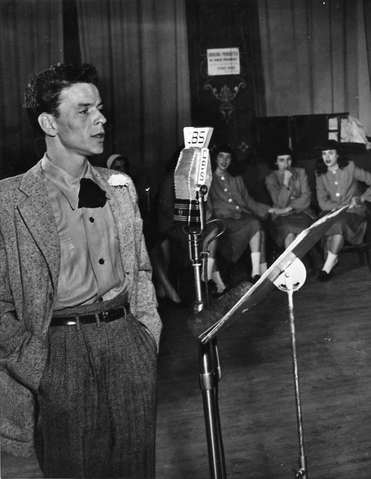
November 22 - THIS DATE IN SINATRA HISTORY
Undated materialFrom: 'Ed O'Brien' via Sinatraphiles <sinatraphiles@googlegroups.com> | Received: 2025-11-23
Philadelphia Daily News
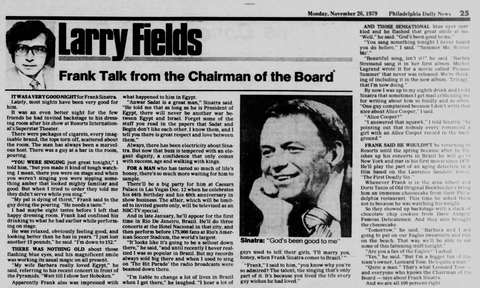
NOVEMBER 25 THIS DATE IN SINATRA HISTORY
Undated materialFrom: 'Ed O'Brien' via Sinatraphiles <sinatraphiles@googlegroups.com> | Received: 2025-11-26
Capitol Studio A, Hollywood
E17977 Time After Time
(J. Styne/S. Cahn)
Arranged & Conducted by Nelson Riddle
CD: CDP 724383595228 Sinatra 80th "All The Best"
CD: C2 724383808922 The Complete Capitol Singles
LP: W982 This Is Sinatra Vol.2
45: 4155
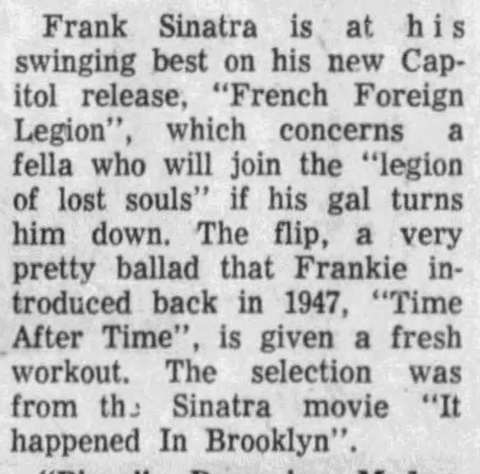
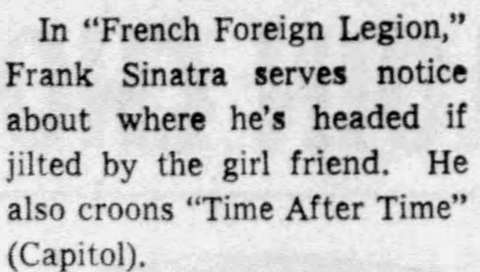
Fw: FRENCH CASINO 1952
Undated materialFrom: 'Ed O'Brien' via Sinatraphiles <sinatraphiles@googlegroups.com> | Received: 2025-11-27
1952 French Casino, New York City (11-26 TO 12-8 1952)
Frank closed on the 9th. Mentioned in a number of columns.
Daily News
12-7-52
The Bayonne Times
11-29-52
The Tribune
12-4-52
note: Earlier that year, Ava had demanded Frank travel with her
as she filmed in exotic spots around the world. Frank re-
fused, fearing it would be fatal to his career. They finally
reached a compromise with Frank agreeing to follow her
to Africa for the location work on "Mogambo"
12-10-52
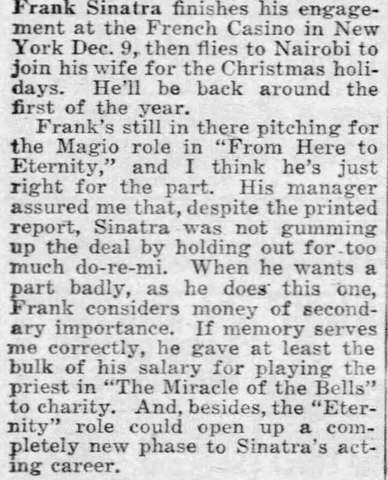
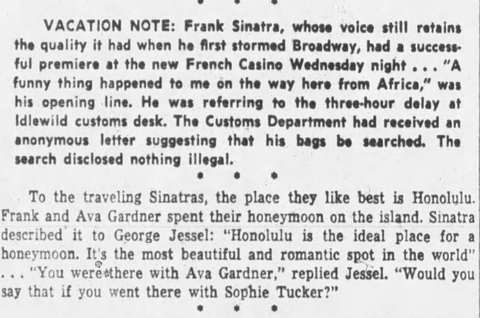
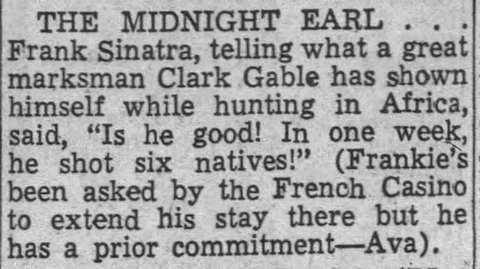
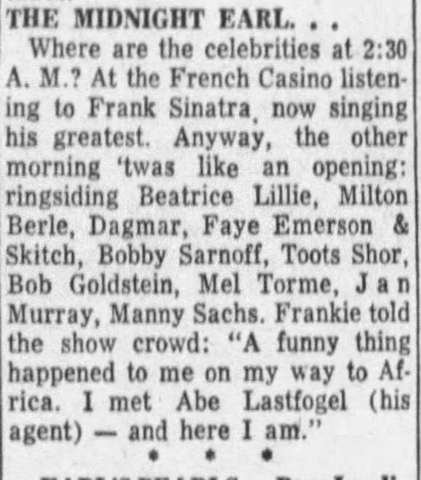
HAPPY THANKSGIVING
Undated materialFrom: 'Ed O'Brien' via Sinatraphiles <sinatraphiles@googlegroups.com> | Received: 2025-11-27
Lynnie and I wish all of you a wonderful holiday;Ed
HAPPY THANKSGIVING
Undated materialFrom: 'Ed O'Brien' via Sinatraphiles <sinatraphiles@googlegroups.com> | Received: 2025-11-27
Lynnie and I wish all of you a wonderful holiday;
Ed
Re: HAPPY THANKSGIVING
Undated materialFrom: "'John K. George' via Sinatraphiles" <sinatraphiles@googlegroups.com> | Received: 2025-11-27
Happy Thanksgiving 🦃 Everyone!!!
Sent from the all new AOL app for iOS
On Thursday, November 27, 2025, 10:12 AM, 'Ed O'Brien' via Sinatraphiles <sinatraphiles@googlegroups.com> wrote:
Lynnie and I wish all of you a wonderful holiday;
Ed
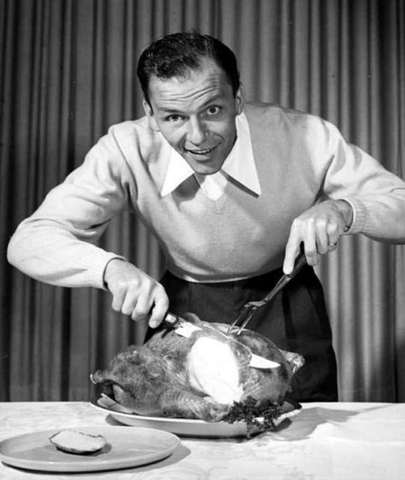
Re: french casino
Undated materialFrom: 'Ed O'Brien' via Sinatraphiles <sinatraphiles@googlegroups.com> | Received: 2025-11-27
Variety
12-10-52
full page ad
NIGHT CLUB
'Voice' Rocks 'Em as of Yore, in NY; Bow With New Tie, New Personality
Bill Smith
Frank Sinatra's preem at New York's French Casino brought out what was possibly the biggest showbiz mob seen in local cafe opening in a long time. The ringside looked like • "Who's Who" of showbiz names plus the usual Broadway mob. Sinatra's personal troubles didn't dampen the wild-eyed enthusiasm of the back -of -the-room customers. The squeals, shrieks and yells made it sound like Sinatra opening at the Paramount when he was on top. Girls were huddled around the stage and one girl managed to get on and plant a kiss on his neck --and it wasn't a plant either .As a singer and performer Sinatra seldom did a better job. Coning out in ribbon tie. he started it off with timely chatter about his hassle with customs officials, Africa and similar topical subjects, handling them with ease and a keen sense of comedy timing for maximum of friendly laughs. But if he did a fine talking job, it was his singing that really rocked them. Using a well•balance series of items, veering from pops to productions like the "Soliloquy" with a couple of novelties thrown in for extra bounce, Sinatra sang his heart out. His voice was superb as he sold the opener. When You're Smiling" and then into "You Belong to Me." After those two he had them eating out of his hand_ When he followed with his latest Columbia recording. "Birth of the Blues" and the flip, "Why Try to Change Me Now” even those customers who sat on their hands, applauded and applauded like crazy. Sinatra was on for more than 40 minutes singing with heart and grace. When he finished he was the old master again. If the crowd had its way he could have stayed on another hour and not worn out his welcome. The fact that he gave an impression of boyish humbleness, instead of his former irritating aggressiveness, also helped out. Bill Miller, Sinatra's accompanist, did fine backing job. Vincent Travers, house leader, gave the Sinatra arrangements a superb interpretation. Incidentally there were no strings, outside of bass, in the Travers band. It was all brass. Incidentally Sinatra's lighting was handled by Monte Proser. It put the singer in the best possible colors. The rest of the show has been reviewed previously. It's still the same long, dull piled on production that started off when the room opened last July.
Billboard
12-6-52
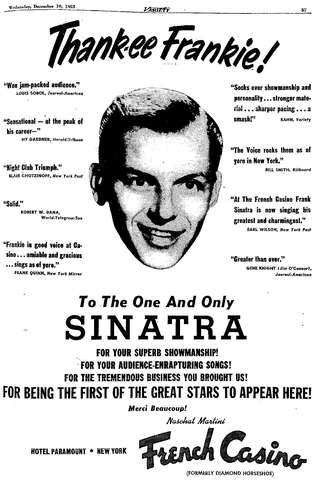
November 29 - THIS DATE IN SINATRA HISTORY
Undated materialFrom: Scott Henderson <scott@falseducks.com> | Received: 2025-11-29
WDGY 11:30PM to 12:00AM
Harry James with Frank Sinatra
Star Tribune
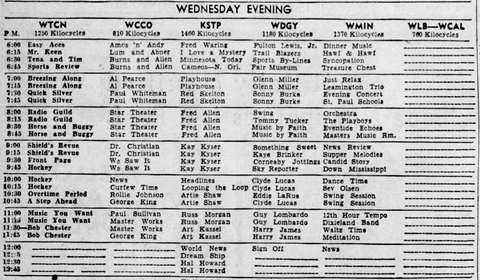
December 3 - THIS DATE IN SINATRA HISTORY
Undated materialFrom: "scott@falseducks.com" <scott@falseducks.com> | Received: 2025-12-03
WARNER BROS
ROBIN AND THE 7 HOODS
Tuesday afternoon
Arranged and conducted by Nelson Riddle
"Style"
with Bing Crosby and Dean Martin
Warner Bros session info supplied by Ed O'Brien who also added the following:
The final session for Frank's farewell to film musicals
Although he would perform for another 30 years,
"Robin And The 7 Hoods" would be his film musical
swan song. I am so tempted to note that he certainly
went out in "style," but I'll refrain from something so
terribly obvious.
Ed O'Brien:
Seventy years have passed since Frank laid down his last musical number on a
Hollywood soundstage. His last was one of his best recordings done expressly for a film. The
session was done in the afternoon. Sinatra would then lay down the Johnny Mercer and
and Carolyn Leigh tunes at Reprise from 8 to 11 that evening. A 45 piece orchestra backed him
Costa arranged and conducted. I have interviewed five of the players from the session. They
remembered it as being a rather somber occasion. Frank had been devastated by the death
of JFK, and you can hear that sadness in "Stay With Me." When the single was issued in
early 1964, it became the unofficial anthem of late night radio for quite some time. I remember
hearing it all over the dial between 3 and 6, night after night.The song was not a hit for Frank
but it certainly appealed to the wee small hours listeners of AM radio.
December 3 - THIS DATE IN SINATRA HISTORY
Undated materialFrom: scott@falseducks.com | Received: 2025-12-03
WARNER BROS
ROBIN AND THE 7 HOODS
Tuesday afternoon
Arranged and conducted by Nelson Riddle
"Style" with Bing Crosby and Dean Martin
Warner Bros session info supplied by Ed O'Brien who also added the following: The final session for Frank's farewell to film musicals Although he would perform for another 30 years,
"Robin And The 7 Hoods" would be his film musical swan song. I am so tempted to note that he certainly went out in "style," but I'll refrain from something so terribly obvious.
Ed O'Brien:
Seventy years have passed since Frank laid down his last musical number on a Hollywood soundstage. His last was one of his best recordings done expressly for a film. The session was done in the afternoon. Sinatra would then lay down the Johnny Mercer and and Carolyn Leigh tunes at Reprise from 8 to 11 that evening. A 45 piece orchestra backed him Costa arranged and conducted. I have interviewed five of the players from the session. They remembered it as being a rather somber occasion. Frank had been devastated by the death of JFK, and you can hear that sadness in "Stay With Me." When the single was issued in early 1964, it became the unofficial anthem of late night radio for quite some time. I remember hearing it all over the dial between 3 and 6, night after night.The song was not a hit for Frank but it certainly appealed to the wee small hours listeners of AM radio.
December 3 - THIS DATE IN SINATRA HISTORY
Undated materialFrom: 'Ed O'Brien' via Sinatraphiles <sinatraphiles@googlegroups.com> | Received: 2025-12-05
2449 Stay With Me (Main Theme From "The Cardinal")
(Jerome Moross/Carolyn Leigh)
Chappell & Co. Inc. (ASCAP)
Arranged & Conducted by Don Costa
(3:03) CD: 46013-2 The Complete Reprise Studio Recordings Disc 7
LP: FS6167Sinatra 65
45: 0249
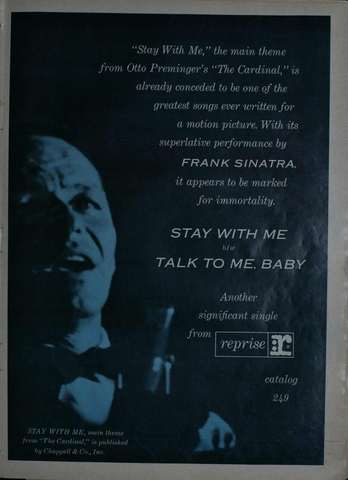
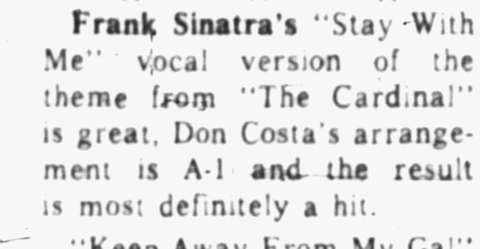
Re: [sinatraphiles] December 5 - THIS DATE IN SINATRA HISTORY
Undated materialFrom: 'Ed O'Brien' via Sinatraphiles <sinatraphiles@googlegroups.com> | Received: 2025-12-08
December 8 - THIS DATE IN SINATRA HISTORY
Undated materialFrom: "scott@falseducks.com" <scott@falseducks.com> | Received: 2025-12-08
Re: [sinatraphiles] December 10 - THIS DATE IN SINATRA HISTORY
Undated materialFrom: Kenny Lucas <kennylucas589@gmail.com> | Received: 2025-12-10
. The songwriter Jimmy McHugh
produced the midnight extravaganza with
Orson Welles, Tony Curtis, Janet Leigh, Rhonda
Fleming, Ava Gardner and many other stars.
Sinatra rehearsed with the 50-man orchestra
on the morning of the ninth. The band was
sadly inadequate. Sinatra asked them what they
playing They answered, "Your music." Frank
told them to go home. He then asked his great
friend Jimmy Van Heusen to be his sole accom-
panist on piano. According to McHugh both
men gave magnificent performances. At the
conclusion of Frank's segment of the show,
Ava joined him on stage and the crowd roared
their approval. Frank flew back to the states
on Monday morning and rehearsed for his
Tuesday evening CBS-TV show.
Note: Jimmy Van Heusen was a guest on "Meet
Frank Sinatra," 11-26-50. Content of show is not
known ,but I'll bet he backed Frank on a medley
of songs written by him through the years.
Brian Chearno added:
I haven't found what song(s) Sinatra sang for this benefit, but Sinatra and Dorothy Kirsten closed the
show with "The Star Spengled Banner" then the cast and audience joined them in "God Save The King"
Ed Added:
What a wonderful show it must have been. Van Heusen
was quite an accomplished pianist and Frank certainly had great
confidence in him. Been thinking about other piano only
performances.
Skitch Henderson, in my interviews with him, remembered backing
Frank at the Waldorf and Copa in the wee hours for a very
select crowd. Skitch never saw them because they sat in the dark
incognito.
December 10 - THIS DATE IN SINATRA HISTORY
Undated materialFrom: "scott@falseducks.com" <scott@falseducks.com> | Received: 2025-12-10
. The songwriter Jimmy McHugh
produced the midnight extravaganza with
Orson Welles, Tony Curtis, Janet Leigh, Rhonda
Fleming, Ava Gardner and many other stars.
Sinatra rehearsed with the 50-man orchestra
on the morning of the ninth. The band was
sadly inadequate. Sinatra asked them what they
playing They answered, "Your music." Frank
told them to go home. He then asked his great
friend Jimmy Van Heusen to be his sole accom-
panist on piano. According to McHugh both
men gave magnificent performances. At the
conclusion of Frank's segment of the show,
Ava joined him on stage and the crowd roared
their approval. Frank flew back to the states
on Monday morning and rehearsed for his
Tuesday evening CBS-TV show.
Note: Jimmy Van Heusen was a guest on "Meet
Frank Sinatra," 11-26-50. Content of show is not
known ,but I'll bet he backed Frank on a medley
of songs written by him through the years.
Brian Chearno added:
I haven't found what song(s) Sinatra sang for this benefit, but Sinatra and Dorothy Kirsten closed the
show with "The Star Spengled Banner" then the cast and audience joined them in "God Save The King"
Ed Added:
What a wonderful show it must have been. Van Heusen
was quite an accomplished pianist and Frank certainly had great
confidence in him. Been thinking about other piano only
performances.
Skitch Henderson, in my interviews with him, remembered backing
Frank at the Waldorf and Copa in the wee hours for a very
select crowd. Skitch never saw them because they sat in the dark
incognito.
December 10 - THIS DATE IN SINATRA HISTORY
Undated materialFrom: 'Ed O'Brien' via Sinatraphiles <sinatraphiles@googlegroups.com> | Received: 2025-12-11
Columbia Recording Studio - New York City
Monday from 1 to 4:AM
Frank Sinatra Conducts Alec Wilder
Slow Dance*
Theme And Variations*
Air For English Horn**
.
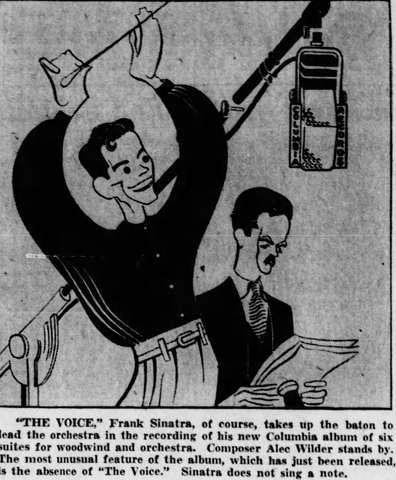
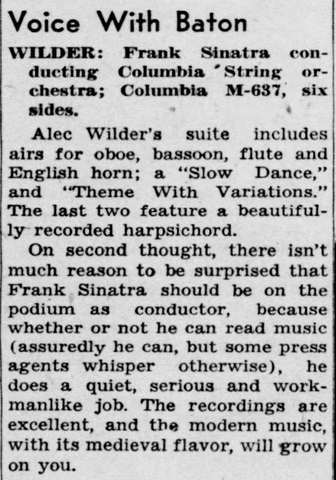
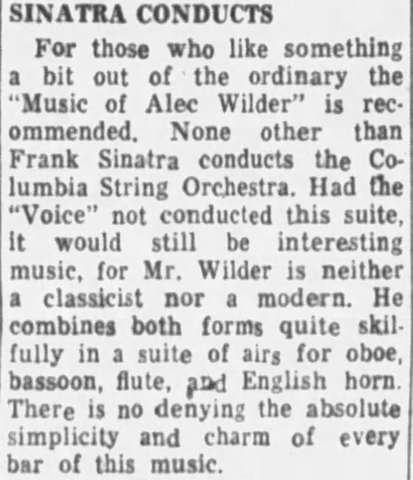
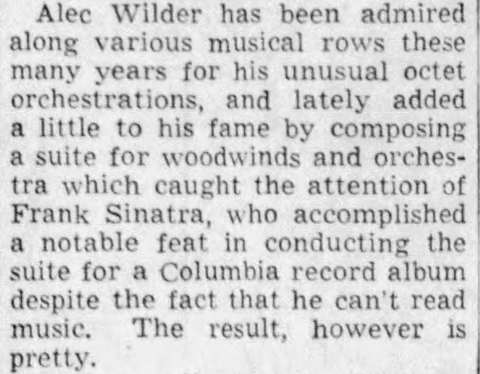
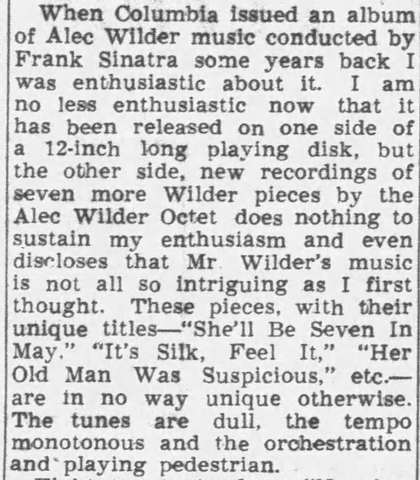
New Christmas & Hollywood Bowl releases
Undated materialFrom: Paul Dalessandro <pauldalessandro4@gmail.com> | Received: 2025-12-11
Listening to these today. I’m really enjoying the Christmas disc. Sound quality is really nice, and the arrangements and performances are top notch.
Paul D'Alessandro
Huntington Beach, CA
[image not recovered — source caption: “image0.jpegimage1.jpeg”]
December 11 - THIS DATE IN SINATRA HISTORY
Undated materialFrom: "scott@falseducks.com" <scott@falseducks.com> | Received: 2025-12-11
Duke EllingtonFrank Sinatra FRANCIS A. & EDWARD K.Reprise FS FS1024:
Follow Me; Sunny; All 1 Need Is the Girl; Indian Summer; I Like the Sunrise; Yellow Days; Poor Butterfly; Come Back to Me.
Personnel: Sinatra, vocals; Cat Anderson, Mercer Ellington, Cootie Williams. Herbie Jones. Sweets Edison, Al Porcino, trumpets; Lawrence Brown. Chuck Connors, Buster Cooper, trombones; Russell Procopc, Johnny Hodges, Jimmy Hamilton, Paul Gonsalves, Harry Carney, reeds; Ellington, piano; John Lamb, bass; Sani Woodyard, drums; Billy May, arranger.
Rating: ****
At first hearing, this much heralded summit meeting is a bit disappointing, but it grows on youat least it did on me. To begin with the negatives: it seems odd indeed that only one Ellington piece (Sunrise) was included, and perhaps even odder that the album was not arranged by Ellington himself. Let me hasten to add, however, that Billy May has done a great job. Always an Ellington admirer (older listeners may recall his many Dukish charts for Charlie Barnet in the '40s), he must have relished this assignment, and at times (especially on Yellow Days) his touch is uncannily close to the master's. Two ringers were brought in to beef up the trumpet section, currently the band's weakest link. Everybody was on best behavior, it seemsthe band sounds tight and together at all times. The superb recording brings out the full flavor of the magnificent Ellington sound; the reeds, in particular, are opulent. To put it bluntly, this would have been a great album if Sinatra had been in top voice. On a few tracks, he is; at other times, one can sense that he is holding back. But he is nothing if not an old pro. and his mastery of phrasing overcomes all potential pitfalls. Relaxed tempi predominate to the point that the final selection, a way-up romp, comes as a positive relief. Why was it saved for that particular spot? Don't ask me. Quite a bit of space has been granted the band and its key soloists, and the tracks are thus longer than is customary on vocal albums. Cootie Williams, Gonsalves, and Hodges are most frequently .spotlighted, and make their impact felt. Indian Summer is the album's masterpiece, and one of Sinatra's most impressive efforts in recent years. The mood is bittersweet, the reeds add lovely touches, Ellington makes the most of his keyboard presence, and Hodges' touching solo is a perfect extension of the mood set by the singer. This one makes Ihe whole venture worlh the effort. Come Back, the aforementioned swinger, also finds Sinatra in peak form. Few singers could sustain such a tempo, but he never loses his firm grip on the melody and the lyric. The band shouts and romps, with brilliant work from the trumpets, a glimpse of Gonsalves, and superb Woodyard. (The drummer, consistently low rated by critics, does a sterling job throughout.) Sunrise, though well sung and scored, and enhanced by comments from Cootie and Gonsalves, does not measure up to the Al Hibbler original. The song's range, it appears, is more suitable for a voice deeper than Sinatra's, though it was his own choice. Butterfly and Girl are set in a mold that recalls the Sinatra-Basie collaborations, and the former could have stood a few solo comments. The final chorus, however, is top-drawer singing. The cover, featuring photographs of the Iwo protagonists at a tender age, is a cute touch. Young Edward Kennedy already had that regal air, while young Francis Albert (with bangs) hadn't yet found his groove. But then, he seems to be about 5 or so, while Duke must have been at least 8. Dan Morgensternn DOWNBEAT April 18, 1968
note: I was not familiar with his review. I must say it was a pleasant surprise. Morgenstern gives the album a very fair review and
much of what he has to say rings true to what I know about the album.
Ed
December 11 - THIS DATE IN SINATRA HISTORY
Undated materialFrom: 'Ed O'Brien' via Sinatraphiles <sinatraphiles@googlegroups.com> | Received: 2025-12-12
State Theatre, Hartford, Connecticut (11-13)
Friday thru Sunday
All Star Stage Revue and Frank Sinatra.
with Duke Ellington
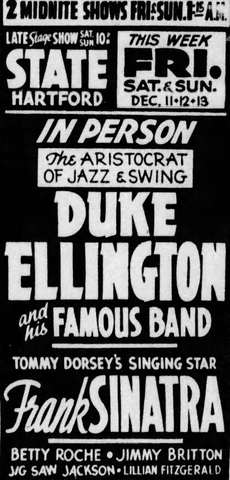
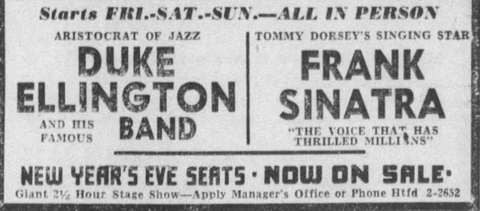
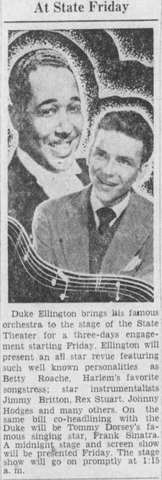
December 12 - THIS DATE IN SINATRA HISTORY
Undated materialFrom: "scott@falseducks.com" <scott@falseducks.com> | Received: 2025-12-12
Bally's Grand, Atlantic City, New Jersey (11 -13)
Orchestra Conducted By: Bill Miller
w/Liza Minnelli
Early Show
1. You Are the Sunshine of My Life
2. Where or When
3. Come Fly With Me
4. For Once in My Life
5. Summer Wind
6. The September of My Years
7. You Make Me Feel So Young
8. You Will Be My Music
9. The Gal That Got Away/It Never Entered My Mind
10. One for My Baby (And One More for the Road)
11. All of Me
12. Lonely Town
13. My Way
14. Mack the Knife
15. Medley : New York, New York (On the Town), East Side, West Side, The Bowery, Forty-Second Street (all with Liza Minnelli)
16. Autumn in New York
17. How About You (with Liza Minnelli)
18. Theme From New York, New York (with Liza Minnelli)
FDR TRIBUTE SONG
Undated materialFrom: 'Ed O'Brien' via Sinatraphiles <sinatraphiles@googlegroups.com> | Received: 2025-12-13
THE JOURNAL TIMES
4-25-45
note: Frank was set to sing the song on his 4-25 Max Factor show. For whatever
reason he passed and failed to sing the song on his final three M. Factor
shows.
Ed
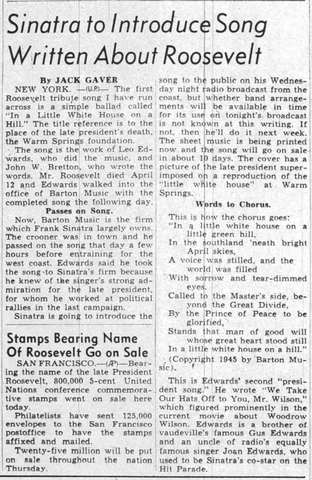
Sinatra & Ellington
Undated materialFrom: Larry Crawford <argyle52@hotmail.com> | Received: 2025-12-13
I enjoyed the recent posts on the Sinatra/Ellington album, " Francis A & Edward K ", it's a favorite of mine, and one of my most played Sinatra albums. Oddly enough, at the time, I didn't much care for this album, I had started my Sinatra music journey in the Winter of 1967, when I was a high school student, when on a trip to town one cold Saturday morning with my mother, I went into a local drug store, and started flipping thru the record rack. I bought a mono copy of " That's Life " that morning for I believe $ 3.98, and it was the best money I ever spent in my life. After playing this album, I was hooked. I loved the sound. I had heard of Frank Sinatra, but was not familiar with his music. I loved this record, and played it so much I eventually wore it out. my next Sinatra purchase came later that Spring when I bought a copy of " Strangers In the Night ", and again I was hooked. I loved the sound that Jimmy Bowen & Ernie Freeman gave Frank Sinatra. Whatever opinion Sinatraphiles members may have of that period of Sinatra's music, it was my start into a lifelong love of Frank Sinatra's music. When this record album came out I immediately bought it, since at the time I was a huge Sinatra fan. I was still in high school then, and when my contemporaries were all listening to the Beatles, I was listening to Frank Sinatra. But on first lisren, I didn't care for the Sinatra/Ellington record, I thought it sounded ' old fashioned '. ( Remember, I was a highschool student at the time). But now, I love this album, and play it often. I think it's very well done. I have read reviews of it, where music reviewers have written that they think the Ellinton band is sloopy on this one, that they hadn't learned & practiced the arrangements, but my ears don't hear it. I think this album is done at a very high level on both the Ellington orchestra, Billy May, and Frank Sinatra. I have grown in my appreciation of this album. And to me, that's the interesting quality of Frank Sinatra's music, you can grow with it, you learn from it. It can expand your horizons.
December 15 - THIS DATE IN SINATRA HISTORY
Undated materialFrom: scott@falseducks.com | Received: 2025-12-15
New York City
CO37161 Always
(I. Berlin )
Irving Berlin, Inc. (ASCAP) 1925
Arranged & Conducted by Axel Stordahl
-1 (3:08) CD: Columbia Years 43-52 Vol. 6
78: DO3009 ( Australia )
CO37162 I Want To Thank Your Folks
(B. Benjamin/G. Weiss)
Oxford Music Corp. (ASCAP) 1946
Arranged & Conducted by Axel Stordahl
-1 (3:10) CD: Columbia Years 43-52 Vol. 6
78: 37251
CO37163 That's How Much I Love You w/The Page Cavanaugh Trio
(E. Arnold/W. Fowler/J.G. Hall)
Vogue Music Corp. (ASCAP) 1946
Arranged by Page Cavanaugh
-1 (3:09) CD: Columbia Years 43-52 Vol. 6
LP: C6X-40343 The Voice- The Columbia Years, 43-52
78: 37231
CO37164 You Can Take My Word For It Baby w/The Page Cavanaugh Trio
(T. Freeman/I. Taylor )
E.H. Morris & Co., Inc. (ASCAP) 1947
Arranged by Page Cavanaugh
-1 (2:31) CD: Columbia Years 43-52 Vol. 6
LP: C6X-40343 The Voice- The Columbia Years, 43-52
LP: CL-2740 The Essential Frank Sinatra, Vol. 2
78: 40343
CO3761 & 37162 Violins: B. Altman, N. Brusiloff, P. Frank, M. Hershaft, E. Magaziner, J. Margolies, A. Micci, S. Miroff, G. Ockner, M. Pitt, M. Schwartz, B. Sheppard; Violas: J. Reilich, S. Rumberg, W. Schoen; Cellos: M. Bialkin, B. Geenhouse, D. Soyer; Saxes: V. Abato, A. Baker, J. Fulton, W. Taninbaum, G. Tudor; Horns: J. Singer; Trumpets: A. Ferretti, J. Maxwell, N. Solomon; Trombones: W. Covington, W. Heins, A.. Russo; Piano: S. Freeman; Guitar: M. Golizio; Bass: H. Alpert; Drums: J. Blowers; Harp: E. Vito Ricci
CO37163 & 37164 The Page Cavanaugh Trio: Piano: Page Cavanaugh; Guitar: Al Viola; Bass: Lloyd Pratt
December 15 - THIS DATE IN SINATRA HISTORY
Undated materialFrom: "scott@falseducks.com" <scott@falseducks.com> | Received: 2025-12-15
New York City
CO37161 Always
(I. Berlin )
Irving Berlin, Inc. (ASCAP) 1925
Arranged & Conducted by Axel Stordahl
-1 (3:08) CD: Columbia Years 43-52 Vol. 6
78: DO3009 ( Australia )
CO37162 I Want To Thank Your Folks
(B. Benjamin/G. Weiss)
Oxford Music Corp. (ASCAP) 1946
Arranged & Conducted by Axel Stordahl
-1 (3:10) CD: Columbia Years 43-52 Vol. 6
78: 37251
CO37163 That's How Much I Love You w/The Page Cavanaugh Trio
(E. Arnold/W. Fowler/J.G. Hall)
Vogue Music Corp. (ASCAP) 1946
Arranged by Page Cavanaugh
-1 (3:09) CD: Columbia Years 43-52 Vol. 6
LP: C6X-40343 The Voice- The Columbia Years, 43-52
78: 37231
CO37164 You Can Take My Word For It Baby w/The Page Cavanaugh Trio
(T. Freeman/I. Taylor )
E.H. Morris & Co., Inc. (ASCAP) 1947
Arranged by Page Cavanaugh
-1 (2:31) CD: Columbia Years 43-52 Vol. 6
LP: C6X-40343 The Voice- The Columbia Years, 43-52
LP: CL-2740 The Essential Frank Sinatra, Vol. 2
78: 40343
CO3761 & 37162 Violins: B. Altman, N. Brusiloff, P. Frank, M. Hershaft, E. Magaziner, J. Margolies, A. Micci, S. Miroff, G. Ockner, M. Pitt, M. Schwartz, B. Sheppard; Violas: J. Reilich, S. Rumberg, W. Schoen; Cellos: M. Bialkin, B. Geenhouse, D. Soyer; Saxes: V. Abato, A. Baker, J. Fulton, W. Taninbaum, G. Tudor; Horns: J. Singer; Trumpets: A. Ferretti, J. Maxwell, N. Solomon; Trombones: W. Covington, W. Heins, A.. Russo; Piano: S. Freeman; Guitar: M. Golizio; Bass: H. Alpert; Drums: J. Blowers; Harp: E. Vito Ricci
CO37163 & 37164 The Page Cavanaugh Trio: Piano: Page Cavanaugh; Guitar: Al Viola; Bass: Lloyd Pratt
December 15 - THIS DATE IN SINATRA HISTORY
Undated materialFrom: scott@falseducks.com | Received: 2025-12-15
New York City
CO37161 Always
(I. Berlin )
Irving Berlin, Inc. (ASCAP) 1925
Arranged & Conducted by Axel Stordahl
-1 (3:08) CD: Columbia Years 43-52 Vol. 6
78: DO3009 ( Australia )
CO37162 I Want To Thank Your Folks
(B. Benjamin/G. Weiss)
Oxford Music Corp. (ASCAP) 1946
Arranged & Conducted by Axel Stordahl
-1 (3:10) CD: Columbia Years 43-52 Vol. 6
78: 37251
CO37163 That's How Much I Love You w/The Page Cavanaugh Trio
(E. Arnold/W. Fowler/J.G. Hall)
Vogue Music Corp. (ASCAP) 1946
Arranged by Page Cavanaugh
-1 (3:09) CD: Columbia Years 43-52 Vol. 6
LP: C6X-40343 The Voice- The Columbia Years, 43-52
78: 37231
CO37164 You Can Take My Word For It Baby w/The Page Cavanaugh Trio
(T. Freeman/I. Taylor )
E.H. Morris & Co., Inc. (ASCAP) 1947
Arranged by Page Cavanaugh
-1 (2:31) CD: Columbia Years 43-52 Vol. 6
LP: C6X-40343 The Voice- The Columbia Years, 43-52
LP: CL-2740 The Essential Frank Sinatra, Vol. 2
78: 40343
CO3761 & 37162 Violins: B. Altman, N. Brusiloff, P. Frank, M. Hershaft, E. Magaziner, J. Margolies, A. Micci, S. Miroff, G. Ockner, M. Pitt, M. Schwartz, B. Sheppard; Violas: J. Reilich, S. Rumberg, W. Schoen; Cellos: M. Bialkin, B. Geenhouse, D. Soyer; Saxes: V. Abato, A. Baker, J. Fulton, W. Taninbaum, G. Tudor; Horns: J. Singer; Trumpets: A. Ferretti, J. Maxwell, N. Solomon; Trombones: W. Covington, W. Heins, A.. Russo; Piano: S. Freeman; Guitar: M. Golizio; Bass: H. Alpert; Drums: J. Blowers; Harp: E. Vito Ricci
CO37163 & 37164 The Page Cavanaugh Trio: Piano: Page Cavanaugh; Guitar: Al Viola; Bass: Lloyd Pratt
December 15 - THIS DATE IN SINATRA HISTORY
Undated materialFrom: "scott@falseducks.com" <scott@falseducks.com> | Received: 2025-12-15
New York City
CO37161 Always
(I. Berlin )
Irving Berlin, Inc. (ASCAP) 1925
Arranged & Conducted by Axel Stordahl
-1 (3:08) CD: Columbia Years 43-52 Vol. 6
78: DO3009 ( Australia )
CO37162 I Want To Thank Your Folks
(B. Benjamin/G. Weiss)
Oxford Music Corp. (ASCAP) 1946
Arranged & Conducted by Axel Stordahl
-1 (3:10) CD: Columbia Years 43-52 Vol. 6
78: 37251
CO37163 That's How Much I Love You w/The Page Cavanaugh Trio
(E. Arnold/W. Fowler/J.G. Hall)
Vogue Music Corp. (ASCAP) 1946
Arranged by Page Cavanaugh
-1 (3:09) CD: Columbia Years 43-52 Vol. 6
LP: C6X-40343 The Voice- The Columbia Years, 43-52
78: 37231
CO37164 You Can Take My Word For It Baby w/The Page Cavanaugh Trio
(T. Freeman/I. Taylor )
E.H. Morris & Co., Inc. (ASCAP) 1947
Arranged by Page Cavanaugh
-1 (2:31) CD: Columbia Years 43-52 Vol. 6
LP: C6X-40343 The Voice- The Columbia Years, 43-52
LP: CL-2740 The Essential Frank Sinatra, Vol. 2
78: 40343
CO3761 & 37162 Violins: B. Altman, N. Brusiloff, P. Frank, M. Hershaft, E. Magaziner, J. Margolies, A. Micci, S. Miroff, G. Ockner, M. Pitt, M. Schwartz, B. Sheppard; Violas: J. Reilich, S. Rumberg, W. Schoen; Cellos: M. Bialkin, B. Geenhouse, D. Soyer; Saxes: V. Abato, A. Baker, J. Fulton, W. Taninbaum, G. Tudor; Horns: J. Singer; Trumpets: A. Ferretti, J. Maxwell, N. Solomon; Trombones: W. Covington, W. Heins, A.. Russo; Piano: S. Freeman; Guitar: M. Golizio; Bass: H. Alpert; Drums: J. Blowers; Harp: E. Vito Ricci
CO37163 & 37164 The Page Cavanaugh Trio: Piano: Page Cavanaugh; Guitar: Al Viola; Bass: Lloyd Pratt
Long Ago, Far Away (was Re: New Christmas & Hollywood Bowl releases)
Undated materialFrom: 'ALFRED MASCIOCCHI' via Sinatraphiles <sinatraphiles@googlegroups.com> | Received: 2025-12-18
Looks like SING has added another release, this one five LPs including all of the Hollywood Bowl disc and part of the Christmas On The Air disc.
https://theseconddisc.com/2025/12/18/holiday-gift-guide-review-frank-sinatra-long-ago-far-away-1943-1951/
And going to the SING site it appears the Christmas disc is sold out. And the five LP set comes to about $280 with shipping and fees (ouch!)
Al
> On 12/11/2025 1:05 PM EST Paul Dalessandro <pauldalessandro4@gmail.com> wrote: >
>
> [image0.jpeg] [image1.jpeg]
>
> Listening to these today. I’m really enjoying the Christmas disc. Sound quality is really nice, and the arrangements and performances are top notch. >
>
> --
> Paul D'Alessandro
> Huntington Beach, CA
>
>
>
> --
>
Re: Long Ago, Far Away (was Re: New Christmas & Hollywood Bowl releases)
Undated materialFrom: David Barrios <dbarrios15@hotmail.com> | Received: 2025-12-18
You can find a code online to bring the price down to $150. I have the box. It’s pretty great, not gonna lie.
On Thu, Dec 18, 2025 at 4:48 PM 'ALFRED MASCIOCCHI' via Sinatraphiles < sinatraphiles@googlegroups.com> wrote:
> Looks like SING has added another release, this one five LPs including all > of the Hollywood Bowl disc and part of the Christmas On The Air disc. >
>
> https://theseconddisc.com/2025/12/18/holiday-gift-guide-review-frank-sinatra-long-ago-far-away-1943-1951/ > <https://theseconddisc.com/2025/12/18/holiday-gift-guide-review-frank-sinatra-long-ago-far-away-1943-1951/> >
> And going to the SING site it appears the Christmas disc is sold out. And > the five LP set comes to about $280 with shipping and fees (ouch!) >
> Al
>
> On 12/11/2025 1:05 PM EST Paul Dalessandro <pauldalessandro4@gmail.com> > wrote:
>
>
> [image: image0.jpeg] [image: image1.jpeg]
>
> Listening to these today. I’m really enjoying the Christmas disc. Sound > quality is really nice, and the arrangements and performances are top > notch.
>
>
> --
> Paul D'Alessandro
> Huntington Beach, CA
>
>
>
> --
>
Re: Long Ago, Far Away (was Re: New Christmas & Hollywood Bowl releases)
Undated materialFrom: Kenny Lucas <kennylucas589@gmail.com> | Received: 2025-12-19
I bought the Christmas disc & the Hollywood bowl disc. They are a delight. I am saving up for the LP box set. I hope they put it out on CD by next year.
On Thu, Dec 18, 2025, 8:44 PM 'Dave Garrett' via Sinatraphiles < sinatraphiles@googlegroups.com> wrote:
> Having read a lot of very positive comments on this set, I've been dying > to hear it, but unfortunately I haven't had a vinyl rig set up in a long > time. Those who are in the same boat may want to keep an eye on SING's > website, as they recently hinted on social media that a CD version might be > forthcoming. I say "might be" because the way their post was worded didn't > explicitly confirm that one was in the works.
>
> Dave
>
> On Thursday, December 18, 2025 at 04:04:38 PM CST, David Barrios < > dbarrios15@hotmail.com> wrote:
>
>
> You can find a code online to bring the price down to $150. I have the > box. It’s pretty great, not gonna lie.
>
> On Thu, Dec 18, 2025 at 4:48 PM 'ALFRED MASCIOCCHI' via Sinatraphiles < > sinatraphiles@googlegroups.com> wrote:
>
> Looks like SING has added another release, this one five LPs including all > of the Hollywood Bowl disc and part of the Christmas On The Air disc. >
>
> https://theseconddisc.com/2025/12/18/holiday-gift-guide-review-frank-sinatra-long-ago-far-away-1943-1951/ >
> And going to the SING site it appears the Christmas disc is sold out. And > the five LP set comes to about $280 with shipping and fees (ouch!) >
> Al
>
> On 12/11/2025 1:05 PM EST Paul Dalessandro <pauldalessandro4@gmail.com> > wrote:
>
>
> [image: image0.jpeg] [image: image1.jpeg]
>
> Listening to these today. I’m really enjoying the Christmas disc. Sound > quality is really nice, and the arrangements and performances are top > notch.
>
>
> --
> Paul D'Alessandro
> Huntington Beach, CA
>
>
>
> --
>
Re: Long Ago, Far Away (was Re: New Christmas & Hollywood Bowl releases)
Undated materialFrom: 'Dave Garrett' via Sinatraphiles <sinatraphiles@googlegroups.com> | Received: 2025-12-19
Having read a lot of very positive comments on this set, I've been dying to hear it, but unfortunately I haven't had a vinyl rig set up in a long time. Those who are in the same boat may want to keep an eye on SING's website, as they recently hinted on social media that a CD version might be forthcoming. I say "might be" because the way their post was worded didn't explicitly confirm that one was in the works. Dave
On Thursday, December 18, 2025 at 04:04:38 PM CST, David Barrios <dbarrios15@hotmail.com> wrote:
You can find a code online to bring the price down to $150. I have the box. It’s pretty great, not gonna lie. On Thu, Dec 18, 2025 at 4:48 PM 'ALFRED MASCIOCCHI' via Sinatraphiles <sinatraphiles@googlegroups.com> wrote:
Looks like SING has added another release, this one five LPs including all of the Hollywood Bowl disc and part of the Christmas On The Air disc. https://theseconddisc.com/2025/12/18/holiday-gift-guide-review-frank-sinatra-long-ago-far-away-1943-1951/ And going to the SING site it appears the Christmas disc is sold out. And the five LP set comes to about $280 with shipping and fees (ouch!)
Al
On 12/11/2025 1:05 PM EST Paul Dalessandro <pauldalessandro4@gmail.com> wrote: Listening to these today. I’m really enjoying the Christmas disc. Sound quality is really nice, and the arrangements and performances are top notch. -- Paul D'Alessandro Huntington Beach, CA
Re: SINATRA CONCERTS:
Undated materialFrom: Fred Wadsworth <dmarc-noreply@freelists.org> | Received: 2025-12-29
________________________________
From: Fred Wadsworth <frw2@hotmail.co.uk>
Sent: 27 December 2025 23:24
To: kennylucas589@gmal.com <kennylucas589@gmal.com>
Subject: SINATRA CONCERTS:
Hi Kenny, can i have a list of the 21 concerts you got and i can send you a list of some i my have to trade is the sound good? BEST FRED
Re: SINATRA CONCERTS:
Undated materialFrom: Pedro Matos <dmarc-noreply@freelists.org> | Received: 2025-12-29
Hi Kenny, don't forget about me as well please ;)
PJM
Fred Wadsworth <dmarc-noreply@freelists.org> escreveu (segunda, 29/12/2025 à(s) 15:47):
>
> ------------------------------
> *From:* Fred Wadsworth <frw2@hotmail.co.uk>
> *Sent:* 27 December 2025 23:24
> *To:* kennylucas589@gmal.com <kennylucas589@gmal.com> > *Subject:* SINATRA CONCERTS:
>
> Hi Kenny, can i have a list of the 21 concerts you got and i can send you > a list of some i my have to trade is the sound good? BEST FRED >
Re: SINATRA CONCERTS:
Undated materialFrom: shemmy Mashiah <dmarc-noreply@freelists.org> | Received: 2025-12-29
Fred
Good to hear from you!!!!
I thought you retired from the group.
Glad you are well.
Shemmy
נשלח מה-iPhone שלי
> ב-29 בדצמ׳ 2025, בשעה 17:47, Fred Wadsworth <dmarc-noreply@freelists.org> כתב/ה: >
>
>
> From: Fred Wadsworth <frw2@hotmail.co.uk>
> Sent: 27 December 2025 23:24
> To: kennylucas589@gmal.com <kennylucas589@gmal.com>
> Subject: SINATRA CONCERTS:
>
> Hi Kenny, can i have a list of the 21 concerts you got and i can send you a list of some i my have to trade is the sound good? BEST FRED
Fw: SINATRA CONCERTS:
Undated materialFrom: Fred Wadsworth <dmarc-noreply@freelists.org> | Received: 2025-12-30
________________________________
Hi Kenny, can you list the 21 concerts please. BEST FRED
Re: Fw: SINATRA CONCERTS:
Undated materialFrom: michel macaire <dmarc-noreply@freelists.org> | Received: 2025-12-30
Merci Kenny
Interesting There are 9 I don't have...Best regards Michel ________________________________
De : sinatraphiles-bounce@freelists.org <sinatraphiles-bounce@freelists.org> de la part de JIm Donohue <dmarc-noreply@freelists.org> Envoyé : mardi 30 décembre 2025 17:14
À : sinatraphiles@freelists.org <sinatraphiles@freelists.org> Objet : [sinatraphiles] Re: Fw: SINATRA CONCERTS:
Thanks, Kenny! A few I have, a few I don't. Nice haul! Thanks for sharing!
On Tue, Dec 30, 2025 at 11:07 AM kenny lucas <dmarc-noreply@freelists.org<mailto:dmarc-noreply@freelists.org>> wrote:
Hello Fred: here is a list of the concerts.
1. Circle Star Theater, San Carlos, CA April 9, 1986
2. Greek Theater LA Aug 20, 1987
3. Bally's Casino Reno, NV July 6, 1988
4. Greek Theater LA Aug 21, 1987
5. Bally's Casino Nov 3, 1987
6.Rat Pack Concert Oakland Coliseum March 13, 1988
7. Bally's Casino Reno, NV April 28, 1988
8. Bally's Casino Reno, NV April 29, 1988
9.Bally's Casino Reno, NV April 28, & 29, 1988 (this CD also has 2 partial shows May 25, 1990 & July 14, 1989) 10.Bally's Casino Reno NV July 7, 1988
11.Bally's Casino Reno, NV Oct 26, 1988
12.Circle Star Theater, San Carlos, CA Nov 12, 1988
13.Same-Nov 13, 1988
14.Bally's Casino Reno, NV June 15, 1989
15. Same- June 16, 1989
16. Bally's July 13, 1989
17. Bally's May 24, 1990
18.Bally's May 25, 1990
19.Circle Star Theater, San Carlos, CA April 27, 1991
20. Concord Pavillion, Concord, CA Aug 19, 1990
21. Circle Star Theater April 26, 1991
I haven't listened to all the concerts Yet. I have listened to about 3 or 4 the sound is excellent & there is talking I assume from the people who made the recordings. But, it really doesn't interfere. On Tuesday, December 30, 2025 at 10:22:16 AM EST, Fred Wadsworth <dmarc-noreply@freelists.org<mailto:dmarc-noreply@freelists.org>> wrote:
just as a email please best fred
________________________________
From: sinatraphiles-bounce@freelists.org<mailto:sinatraphiles-bounce@freelists.org> <sinatraphiles-bounce@freelists.org<mailto:sinatraphiles-bounce@freelists.org>> on behalf of kenny lucas <dmarc-noreply@freelists.org<mailto:dmarc-noreply@freelists.org>>
Sent: 30 December 2025 03:00
To: sinatraphiles@freelists.org<mailto:sinatraphiles@freelists.org> <sinatraphiles@freelists.org<mailto:sinatraphiles@freelists.org>>
Subject: [sinatraphiles] Re: Fw: SINATRA CONCERTS:
Hello Fred: would be happy to list them for you. Should I just complete it as a E-mail or list it on SINATRphiles
Yahoo Mail: Search, Organize, Conquer<https://mail.onelink.me/107872968?pid=nativeplacement&c=US_Acquisition_YMktg_315_SearchOrgConquer_EmailSignature&af_sub1=Acquisition&af_sub2=US_YMktg&af_sub3=&af_sub4=100002039&af_sub5=C01_Email_Static_&af_ios_store_cpp=0c38e4b0-a27e-40f9-a211-f4e2de32ab91&af_android_url=https://play.google.com/store/apps/details?id=com.yahoo.mobile.client.android.mail&listing=search_organize_conquer>
On Tue, Dec 30, 2025 at 9:33 AM, Fred Wadsworth
<dmarc-noreply@freelists.org<mailto:dmarc-noreply@freelists.org>> wrote:
________________________________
Hi Kenny, can you list the 21 concerts please. BEST FRED
Re: Fw: SINATRA CONCERTS:
Undated materialFrom: Fred Wadsworth <dmarc-noreply@freelists.org> | Received: 2025-12-30
Hi Kenny, just as a email THANKS FRED
________________________________
From: sinatraphiles-bounce@freelists.org <sinatraphiles-bounce@freelists.org> on behalf of kenny lucas <dmarc-noreply@freelists.org>
Sent: 30 December 2025 03:00
To: sinatraphiles@freelists.org <sinatraphiles@freelists.org>
Subject: [sinatraphiles] Re: Fw: SINATRA CONCERTS:
Hello Fred: would be happy to list them for you. Should I just complete it as a E-mail or list it on SINATRphiles
Yahoo Mail: Search, Organize, Conquer<https://mail.onelink.me/107872968?pid=nativeplacement&c=US_Acquisition_YMktg_315_SearchOrgConquer_EmailSignature&af_sub1=Acquisition&af_sub2=US_YMktg&af_sub3=&af_sub4=100002039&af_sub5=C01_Email_Static_&af_ios_store_cpp=0c38e4b0-a27e-40f9-a211-f4e2de32ab91&af_android_url=https://play.google.com/store/apps/details?id=com.yahoo.mobile.client.android.mail&listing=search_organize_conquer>
On Tue, Dec 30, 2025 at 9:33 AM, Fred Wadsworth
<dmarc-noreply@freelists.org> wrote:
________________________________
Hi Kenny, can you list the 21 concerts please. BEST FRED
Re: Fw: SINATRA CONCERTS:
Undated materialFrom: Fred Wadsworth <dmarc-noreply@freelists.org> | Received: 2025-12-30
just as a email please best fred
________________________________
From: sinatraphiles-bounce@freelists.org <sinatraphiles-bounce@freelists.org> on behalf of kenny lucas <dmarc-noreply@freelists.org>
Sent: 30 December 2025 03:00
To: sinatraphiles@freelists.org <sinatraphiles@freelists.org>
Subject: [sinatraphiles] Re: Fw: SINATRA CONCERTS:
Hello Fred: would be happy to list them for you. Should I just complete it as a E-mail or list it on SINATRphiles
Yahoo Mail: Search, Organize, Conquer<https://mail.onelink.me/107872968?pid=nativeplacement&c=US_Acquisition_YMktg_315_SearchOrgConquer_EmailSignature&af_sub1=Acquisition&af_sub2=US_YMktg&af_sub3=&af_sub4=100002039&af_sub5=C01_Email_Static_&af_ios_store_cpp=0c38e4b0-a27e-40f9-a211-f4e2de32ab91&af_android_url=https://play.google.com/store/apps/details?id=com.yahoo.mobile.client.android.mail&listing=search_organize_conquer>
On Tue, Dec 30, 2025 at 9:33 AM, Fred Wadsworth
<dmarc-noreply@freelists.org> wrote:
________________________________
Hi Kenny, can you list the 21 concerts please. BEST FRED
Re: Fw: SINATRA CONCERTS:
Undated materialFrom: Fred Wadsworth <dmarc-noreply@freelists.org> | Received: 2025-12-30
________________________________
From: Fred Wadsworth <frw2@hotmail.co.uk>
Sent: 30 December 2025 03:22
To: sinatraphiles@freelists.org <sinatraphiles@freelists.org>
Subject: Re: [sinatraphiles] Re: Fw: SINATRA CONCERTS:
just as a email please best FRED
________________________________
Re: Fw: SINATRA CONCERTS:
Undated materialFrom: kenny lucas <dmarc-noreply@freelists.org> | Received: 2025-12-30
Hello Fred: here is a list of the concerts.1. Circle Star Theater, San Carlos, CA April 9, 19862. Greek Theater LA Aug 20, 19873. Bally's Casino Reno, NV July 6, 19884. Greek Theater LA Aug 21, 19875. Bally's Casino Nov 3, 19876.Rat Pack Concert Oakland Coliseum March 13, 19887. Bally's Casino Reno, NV April 28, 19888. Bally's Casino Reno, NV April 29, 19889.Bally's Casino Reno, NV April 28, & 29, 1988 (this CD also has 2 partial shows May 25, 1990 & July 14, 1989)10.Bally's Casino Reno NV July 7, 198811.Bally's Casino Reno, NV Oct 26, 198812.Circle Star Theater, San Carlos, CA Nov 12, 198813.Same-Nov 13, 198814.Bally's Casino Reno, NV June 15, 1989 15. Same- June 16, 198916. Bally's July 13, 198917. Bally's May 24, 199018.Bally's May 25, 199019.Circle Star Theater, San Carlos, CA April 27, 199120. Concord Pavillion, Concord, CA Aug 19, 199021. Circle Star Theater April 26, 1991I haven't listened to all the concerts Yet. I have listened to about 3 or 4 the sound is excellent & there is talking I assume from the people who made the recordings. But, it really doesn't interfere. On Tuesday, December 30, 2025 at 10:22:16 AM EST, Fred Wadsworth <dmarc-noreply@freelists.org> wrote:
#yiv8832689763 P {margin-top:0;margin-bottom:0;}just as a email please best fredFrom: sinatraphiles-bounce@freelists.org <sinatraphiles-bounce@freelists.org> on behalf of kenny lucas <dmarc-noreply@freelists.org>
Sent: 30 December 2025 03:00
To: sinatraphiles@freelists.org <sinatraphiles@freelists.org>
Subject: [sinatraphiles] Re: Fw: SINATRA CONCERTS: Hello Fred: would be happy to list them for you. Should I just complete it as a E-mail or list it on SINATRphiles
Yahoo Mail: Search, Organize, Conquer
On Tue, Dec 30, 2025 at 9:33 AM, Fred Wadsworth<dmarc-noreply@freelists.org> wrote:<!--#yiv8832689763 #yiv8832689763x_yiv1465287730 p {margin-top:0;margin-bottom:0;}-->
Hi Kenny, can you list the 21 concerts please. BEST FRED
Re: Fw: SINATRA CONCERTS:
Undated materialFrom: JIm Donohue <dmarc-noreply@freelists.org> | Received: 2025-12-30
Thanks, Kenny! A few I have, a few I don't. Nice haul! Thanks for sharing!
On Tue, Dec 30, 2025 at 11:07 AM kenny lucas <dmarc-noreply@freelists.org> wrote:
> Hello Fred: here is a list of the concerts.
> 1. Circle Star Theater, San Carlos, CA April 9, 1986
> 2. Greek Theater LA Aug 20, 1987
> 3. Bally's Casino Reno, NV July 6, 1988
> 4. Greek Theater LA Aug 21, 1987
> 5. Bally's Casino Nov 3, 1987
> 6.Rat Pack Concert Oakland Coliseum March 13, 1988
> 7. Bally's Casino Reno, NV April 28, 1988
> 8. Bally's Casino Reno, NV April 29, 1988
> 9.Bally's Casino Reno, NV April 28, & 29, 1988 (this CD also has 2 partial > shows May 25, 1990 & July 14, 1989)
> 10.Bally's Casino Reno NV July 7, 1988
> 11.Bally's Casino Reno, NV Oct 26, 1988
> 12.Circle Star Theater, San Carlos, CA Nov 12, 1988
> 13.Same-Nov 13, 1988
> 14.Bally's Casino Reno, NV June 15, 1989
> 15. Same- June 16, 1989
> 16. Bally's July 13, 1989
> 17. Bally's May 24, 1990
> 18.Bally's May 25, 1990
> 19.Circle Star Theater, San Carlos, CA April 27, 1991 > 20. Concord Pavillion, Concord, CA Aug 19, 1990
> 21. Circle Star Theater April 26, 1991
> I haven't listened to all the concerts Yet. I have listened to about 3 or > 4 the sound is excellent & there is talking I assume from the people who > made the recordings. But, it really doesn't interfere.
> On Tuesday, December 30, 2025 at 10:22:16 AM EST, Fred Wadsworth < > dmarc-noreply@freelists.org> wrote:
>
>
> just as a email please best fred
> ------------------------------
> *From:* sinatraphiles-bounce@freelists.org <
> sinatraphiles-bounce@freelists.org> on behalf of kenny lucas < > dmarc-noreply@freelists.org>
> *Sent:* 30 December 2025 03:00
> *To:* sinatraphiles@freelists.org <sinatraphiles@freelists.org> > *Subject:* [sinatraphiles] Re: Fw: SINATRA CONCERTS:
>
> Hello Fred: would be happy to list them for you. Should I just complete > it as a E-mail or list it on SINATRphiles
>
> Yahoo Mail: Search, Organize, Conquer
> <https://mail.onelink.me/107872968?pid=nativeplacement&c=US_Acquisition_YMktg_315_SearchOrgConquer_EmailSignature&af_sub1=Acquisition&af_sub2=US_YMktg&af_sub3=&af_sub4=100002039&af_sub5=C01_Email_Static_&af_ios_store_cpp=0c38e4b0-a27e-40f9-a211-f4e2de32ab91&af_android_url=https://play.google.com/store/apps/details?id=com.yahoo.mobile.client.android.mail&listing=search_organize_conquer> >
> On Tue, Dec 30, 2025 at 9:33 AM, Fred Wadsworth
> <dmarc-noreply@freelists.org> wrote:
>
> ------------------------------
>
>
> Hi Kenny, can you list the 21 concerts please. BEST FRED >
>
Re: Fw: SINATRA CONCERTS:
Undated materialFrom: kenny lucas <dmarc-noreply@freelists.org> | Received: 2025-12-30
Hello Fred: would be happy to list them for you. Should I just complete it as a E-mail or list it on SINATRphiles
Yahoo Mail: Search, Organize, Conquer
On Tue, Dec 30, 2025 at 9:33 AM, Fred Wadsworth<dmarc-noreply@freelists.org> wrote: #yiv1465287730 P {margin-top:0;margin-bottom:0;}
Hi Kenny, can you list the 21 concerts please. BEST FRED
Re: Fw: SINATRA CONCERTS:
Undated materialFrom: JIm Donohue <dmarc-noreply@freelists.org> | Received: 2025-12-30
Honestly, I think a few of us have expressed interest. If you could post it here, that would be awesome.
On Tue, Dec 30, 2025 at 10:01 AM kenny lucas <dmarc-noreply@freelists.org> wrote:
> Hello Fred: would be happy to list them for you. Should I just complete > it as a E-mail or list it on SINATRphiles
>
> Yahoo Mail: Search, Organize, Conquer
> <https://mail.onelink.me/107872968?pid=nativeplacement&c=US_Acquisition_YMktg_315_SearchOrgConquer_EmailSignature&af_sub1=Acquisition&af_sub2=US_YMktg&af_sub3=&af_sub4=100002039&af_sub5=C01_Email_Static_&af_ios_store_cpp=0c38e4b0-a27e-40f9-a211-f4e2de32ab91&af_android_url=https://play.google.com/store/apps/details?id=com.yahoo.mobile.client.android.mail&listing=search_organize_conquer> >
> On Tue, Dec 30, 2025 at 9:33 AM, Fred Wadsworth
> <dmarc-noreply@freelists.org> wrote:
>
> ------------------------------
>
>
> Hi Kenny, can you list the 21 concerts please. BEST FRED >
>
Re: Fw: SINATRA CONCERTS:
Undated materialFrom: Fred Wadsworth <dmarc-noreply@freelists.org> | Received: 2026-01-01
Hi Kenny, HAPPY NEW YEAR. I HAVE OVER 1450 SINATRA TAPES THAT I AM PUTTING ON TO CD WOULD YOU LIKE A LIST AND OVER 200 CONCERT CDS AND OVER 250 DVDS WOULD YOU LIKE ME TO SEND YOU A LIST AND MAYBE WE CAN TRADE? BEST FRED
________________________________
From: sinatraphiles-bounce@freelists.org <sinatraphiles-bounce@freelists.org> on behalf of kenny lucas <dmarc-noreply@freelists.org>
Sent: 30 December 2025 04:07
To: sinatraphiles@freelists.org <sinatraphiles@freelists.org>
Subject: [sinatraphiles] Re: Fw: SINATRA CONCERTS:
Hello Fred: here is a list of the concerts.
1. Circle Star Theater, San Carlos, CA April 9, 1986
2. Greek Theater LA Aug 20, 1987
3. Bally's Casino Reno, NV July 6, 1988
4. Greek Theater LA Aug 21, 1987
5. Bally's Casino Nov 3, 1987
6.Rat Pack Concert Oakland Coliseum March 13, 1988
7. Bally's Casino Reno, NV April 28, 1988
8. Bally's Casino Reno, NV April 29, 1988
9.Bally's Casino Reno, NV April 28, & 29, 1988 (this CD also has 2 partial shows May 25, 1990 & July 14, 1989) 10.Bally's Casino Reno NV July 7, 1988
11.Bally's Casino Reno, NV Oct 26, 1988
12.Circle Star Theater, San Carlos, CA Nov 12, 1988
13.Same-Nov 13, 1988
14.Bally's Casino Reno, NV June 15, 1989
15. Same- June 16, 1989
16. Bally's July 13, 1989
17. Bally's May 24, 1990
18.Bally's May 25, 1990
19.Circle Star Theater, San Carlos, CA April 27, 1991
20. Concord Pavillion, Concord, CA Aug 19, 1990
21. Circle Star Theater April 26, 1991
I haven't listened to all the concerts Yet. I have listened to about 3 or 4 the sound is excellent & there is talking I assume from the people who made the recordings. But, it really doesn't interfere. On Tuesday, December 30, 2025 at 10:22:16 AM EST, Fred Wadsworth <dmarc-noreply@freelists.org> wrote:
Re: Fw: SINATRA CONCERTS:
Undated materialFrom: kenny lucas <dmarc-noreply@freelists.org> | Received: 2026-01-01
Yes
Yahoo Mail: Search, Organize, Conquer
On Thu, Jan 1, 2026 at 7:24 AM, Fred Wadsworth<dmarc-noreply@freelists.org> wrote: #yiv0421121327 P {margin-top:0;margin-bottom:0;}Hi Kenny, HAPPY NEW YEAR. I HAVE OVER 1450 SINATRA TAPES THAT I AM PUTTING ON TO CD WOULD YOU LIKE A LIST AND OVER 200 CONCERT CDS AND OVER 250 DVDS WOULD YOU LIKE ME TO SEND YOU A LIST AND MAYBE WE CAN TRADE? BEST FRED
From: sinatraphiles-bounce@freelists.org <sinatraphiles-bounce@freelists.org> on behalf of kenny lucas <dmarc-noreply@freelists.org>
Sent: 30 December 2025 04:07
To: sinatraphiles@freelists.org <sinatraphiles@freelists.org>
Subject: [sinatraphiles] Re: Fw: SINATRA CONCERTS: Hello Fred: here is a list of the concerts.1. Circle Star Theater, San Carlos, CA April 9, 19862. Greek Theater LA Aug 20, 19873. Bally's Casino Reno, NV July 6, 19884. Greek Theater LA Aug 21, 19875. Bally's Casino Nov 3, 19876.Rat Pack Concert Oakland Coliseum March 13, 19887. Bally's Casino Reno, NV April 28, 19888. Bally's Casino Reno, NV April 29, 19889.Bally's Casino Reno, NV April 28, & 29, 1988 (this CD also has 2 partial shows May 25, 1990 & July 14, 1989)10.Bally's Casino Reno NV July 7, 198811.Bally's Casino Reno, NV Oct 26, 198812.Circle Star Theater, San Carlos, CA Nov 12, 198813.Same-Nov 13, 198814.Bally's Casino Reno, NV June 15, 1989 15. Same- June 16, 198916. Bally's July 13, 198917. Bally's May 24, 199018.Bally's May 25, 199019.Circle Star Theater, San Carlos, CA April 27, 199120. Concord Pavillion, Concord, CA Aug 19, 199021. Circle Star Theater April 26, 1991I haven't listened to all the concerts Yet. I have listened to about 3 or 4 the sound is excellent & there is talking I assume from the people who made the recordings. But, it really doesn't interfere.On Tuesday, December 30, 2025 at 10:22:16 AM EST, Fred Wadsworth <dmarc-noreply@freelists.org> wrote:
Fw: Fw: Re: Re: Fw: SINATRA CONCERTS:
Undated materialFrom: Fred Wadsworth <dmarc-noreply@freelists.org> | Received: 2026-01-03
________________________________
From: sinatraphiles-bounce@freelists.org <sinatraphiles-bounce@freelists.org> on behalf of Fred Wadsworth <dmarc-noreply@freelists.org>
Sent: 03 January 2026 01:21
To: Sinatraphiles Freelists <sinatraphiles@freelists.org>; Scott Henderson <scott@falseducks.com>
Subject: [sinatraphiles] Fw: Re: Re: Fw: SINATRA CONCERTS:
________________________________
From: postmaster@outlook.com <postmaster@outlook.com>
Sent: 03 January 2026 00:52
To: kennylucas589@gmal.com <kennylucas589@gmal.com>
Subject: Undeliverable: Re: [sinatraphiles] Re: Fw: SINATRA CONCERTS:
Delivery has failed to these recipients or groups:
kennylucas589@gmal.com<mailto:kennylucas589@gmal.com>
A problem occurred during the delivery of this message. Please try to resend the message later.
Diagnostic information for administrators:
Generating server: AS8P250MB0314.EURP250.PROD.OUTLOOK.COM
kennylucas589@gmal.com
Remote server returned '554 5.4.0 < #5.4.312 smtp;550 5.4.312 Message expired, DNS query failed>'
Original message headers:
Received: from DU7PPFDF7D9BB8A.EURP250.PROD.OUTLOOK.COM (2603:10a6:18:3::b64) by AS8P250MB0314.EURP250.PROD.OUTLOOK.COM (2603:10a6:20b:37d::11) with Microsoft SMTP Server (version=TLS1_2, cipher=TLS_ECDHE_RSA_WITH_AES_256_GCM_SHA384) id 15.20.9478.4; Sat, 3 Jan 2026 10:58:30 +0000
Received: from DU2P250MB0064.EURP250.PROD.OUTLOOK.COM (2603:10a6:10:23b::19) by DU7PPFDF7D9BB8A.EURP250.PROD.OUTLOOK.COM (2603:10a6:18:3::b64) with Microsoft SMTP Server (version=TLS1_2, cipher=TLS_ECDHE_RSA_WITH_AES_256_GCM_SHA384) id 15.20.9478.4; Fri, 2 Jan 2026 23:58:05 +0000
ARC-Seal: i=1; a=rsa-sha256; s=arcselector10001; d=microsoft.com; cv=none; b=mIDxEOBERU5OHCZlOJU9IC6bKB59nvQw6EbJ8jmjv3AmeOsZ5oYo1RooztpBqt6Hv88UlkJECzAMeyYLTvUleifQs6xgQ+av2qOUDhm4ImnfxXcaSA6EzevJeRc0LNLsYIn4lTMpjcTDbYxRMan6L0pPBOZ0bQt4pXLzuAN0myh0IqN/kovf+qblN1zPJOThMtsZxfYr22VVzkn0hKA+lVYNuDo1Xvzbe011hnZreWQjTOcEzxwSH16DwyqyWUtf+HvFnOEfxM3O1RfJLssbwGxCjEZo9OSdqZXZlBp115aA4THd+zcMNsOHJUWmMZI0VqYLnTHq9ugospy7+1eHGw==
ARC-Message-Signature: i=1; a=rsa-sha256; c=relaxed/relaxed; d=microsoft.com; s=arcselector10001; h=From:Date:Subject:Message-ID:Content-Type:MIME-Version:X-MS-Exchange-AntiSpam-MessageData-ChunkCount:X-MS-Exchange-AntiSpam-MessageData-0:X-MS-Exchange-AntiSpam-MessageData-1; bh=qJfnO9Ha65ZwpnVgFC1atTf1zehVq6XYN13ZePyuNW0=; b=U/xYKIvxarMOJ8sBTr7cmt6N5pfqnyplFHtcGdiyKvsZ9i+Zn6a7AspCCPtDku8g8gsKM4g6ahGzxGkRW5Ul5RUxluxdNw1QH6uOVDegqY3iAPtlZ8tqWBtZRp17TXzz5hPXUwD++rLMsDj5HyNf6K/QmFH5P25oO+L6zKMvSCJ/vGiKgdQIOGgBJ0jCyFj8hdV9Fig5DG//vHC4eXix/SlMS6lmdeLS28uxhCcJKXSEfzu++nXgir9oMW0xi7DnK0zryFBIASlfpkqA01hMowB0EMvneVBPijgMghCI5PA2qVxgo/ny4qR/OhS/2iS1FBApsPFz0g7bElB9czmUkA==
ARC-Authentication-Results: i=1; mx.microsoft.com 1; spf=none; dmarc=none; dkim=none; arc=none
DKIM-Signature: v=1; a=rsa-sha256; c=relaxed/relaxed; d=HOTMAIL.CO.UK; s=selector1; h=From:Date:Subject:Message-ID:Content-Type:MIME-Version:X-MS-Exchange-SenderADCheck; bh=qJfnO9Ha65ZwpnVgFC1atTf1zehVq6XYN13ZePyuNW0=; b=Uff9PBRuKtIyBqTnQm0iLjmUAvmsbfabV/00fjPdliLdiEPviGmKVYTWBChDUkdTf+/2kV2oA49VFQskNkYK8JQCJFuGiv/vLBYWMnZZ3pU9tZTlAycNsGlDTpJ8LBHmcYdQ/CbFVIKRPSQnicc5GBqKBuIo4PkAXdoGzlb5kNhvSwZDYLPO6h7v1UccNXaO9QHWUOn7DGcip1+xGb0erVPD7OwOky6l+7ZvRgl61dEFOtOjyCYo5U/2CBngtffwWmwLm/s5CwmJ3L0HR+LKrSmWQ9iVxx+FWxIEtuVL+2fBn37x2aEUSNTVpKz6njAt8fLn9hTCfgzGpLIm/Pvi0g==
Received: from VI0P250MB1399.EURP250.PROD.OUTLOOK.COM (2603:10a6:800:2ca::7) by DU2P250MB0064.EURP250.PROD.OUTLOOK.COM (2603:10a6:10:23b::19) with Microsoft SMTP Server (version=TLS1_2, cipher=TLS_ECDHE_RSA_WITH_AES_256_GCM_SHA384) id 15.20.9478.4; Fri, 2 Jan 2026 12:50:00 +0000
Received: from VI0P250MB1399.EURP250.PROD.OUTLOOK.COM
([fe80::2c78:214b:daa1:3b14]) by VI0P250MB1399.EURP250.PROD.OUTLOOK.COM ([fe80::2c78:214b:daa1:3b14%4]) with mapi id 15.20.9478.004; Fri, 2 Jan 2026 12:50:00 +0000
From: Fred Wadsworth <frw2@hotmail.co.uk>
To: "kennylucas589@gmal.com" <kennylucas589@gmal.com>
Subject: Re: [sinatraphiles] Re: Fw: SINATRA CONCERTS:
Thread-Topic: [sinatraphiles] Re: Fw: SINATRA CONCERTS:
Thread-Index: AQHcd+wERdEQcJtCW0a4L9ysWPutI7U4lVy9gAAto5WAAAJuMYABhOOAgAAFxk+AAAz2AIAC4mUQgAAEoHGAAZaNfYAAAhAX
Date: Fri, 2 Jan 2026 12:50:00 +0000
Message-ID: <VI0P250MB13995FFAD63CC223C4D7557AC3BBA@VI0P250MB1399.EURP250.PROD.OUTLOOK.COM>
References: <VI0P250MB13991F1542D110594A6DAE74C3BEA@VI0P250MB1399.EURP250.PROD.OUTLOOK.COM>
<VI0P250MB1399CEE2CF59FB8D1818C0C8C3BFA@VI0P250MB1399.EURP250.PROD.OUTLOOK.COM> <VI0P250MB139983E248DAD07193FDCFB1C3BFA@VI0P250MB1399.EURP250.PROD.OUTLOOK.COM> <VI0P250MB1399E89BF0FBD366EFD2206CC3BFA@VI0P250MB1399.EURP250.PROD.OUTLOOK.COM> <554138198.5432588.1767106847758@mail.yahoo.com>
<VI0P250MB139916534B591EA37D017B5BC3BCA@VI0P250MB1399.EURP250.PROD.OUTLOOK.COM> <601112935.5454691.1767110870381@mail.yahoo.com>
<VI0P250MB13995AA1F4CB41959F68236FC3BAA@VI0P250MB1399.EURP250.PROD.OUTLOOK.COM> <VI0P250MB139911D8335BB251266D904BC3BAA@VI0P250MB1399.EURP250.PROD.OUTLOOK.COM> <VI0P250MB1399D7E52E6ED4F2C44719D0C3BBA@VI0P250MB1399.EURP250.PROD.OUTLOOK.COM>
In-Reply-To: <VI0P250MB1399D7E52E6ED4F2C44719D0C3BBA@VI0P250MB1399.EURP250.PROD.OUTLOOK.COM>
Accept-Language: en-GB, en-US
Content-Language: en-GB
X-MS-Has-Attach:
X-MS-TNEF-Correlator: msip_labels: x-ms-exchange-messagesentrepresentingtype: 1 x-ms-publictraffictype: Email x-ms-traffictypediagnostic:
VI0P250MB1399:EE_|DU2P250MB0064:EE_|DU7PPFDF7D9BB8A:EE_|AS8P250MB0314:EE_ x-ms-office365-filtering-correlation-id: 50e07eff-c348-4c3a-7f67-08de49fd70f2 x-microsoft-antispam: BCL:0;ARA:14566002|51005399006|19110799012|15080799012|15030799006|8060799015|8062599012|31061999003|461199028|40105399003|440099028|3412199025|102099032; x-microsoft-antispam-message-info: =?iso-8859-1?Q?DsMHlZSZ6kr42RPlzRBI+zT3p1lwV7LnRK7B/lIRkfLfkYeiCozDI7Ux4z?= =?iso-8859-1?Q?5YU7sgm8yFsZJtSOwWFBSsv7EKu5h9wqpuM1XOBPMNDVB6fVGOA/N1+vSR?= =?iso-8859-1?Q?H7B8/vQ+iPdqDrSKsuVRZgNj7/yocWUGaaRDArZOfihSuaUmw10LP3P1QP?= =?iso-8859-1?Q?CTvHI0aEotsnQvtmb48mKSJSobzhkcs2t5GCd1l8BWrj44nfhXu4b5Y+nU?= =?iso-8859-1?Q?KJk4/hKpRq0mWi2uiaV3CjQI7GXvpOqda6LckTy2r0l6iYMdwTppWYSOnh?= =?iso-8859-1?Q?uCal45NVyayhv53UMHczuWxal0CcclOdi497BGpvXEVgnuIPzaF0jSX06L?= =?iso-8859-1?Q?QUjbbd345gkPQCinTmy0nE1/pG7ycBwuIJXQjawGgusmOgkm63MVIYWm/O?= =?iso-8859-1?Q?jDlTH1bWhuRvKwVQmXA7QmptlcJD1gUBZ0aYQaBtHxChTmUIZUmEBd3xJ1?= =?iso-8859-1?Q?FQcpKs2xJWednMZy7fYGlu0TCjHK1NnOQriKd2cHisaN8bLbFB5j082pAm?= =?iso-8859-1?Q?R34mQ9zO2aBtOKkpJNwSRu9gZQ03BirwEvSLrtkcnC+a8DKwAZs+IWvupa?= =?iso-8859-1?Q?KnYGS+DA9zSxIKW11RYrWSYlVWovtLNaWUZ833vGiHyAopOnmD6RzUayo/?= =?iso-8859-1?Q?MeB6k4LrdgT4mp3xZTXADOLxMRnjOBj0ueGj4hxVdXruZxS6WKd5S6gRU6?= =?iso-8859-1?Q?/SQF92QIJdvT5Nt3B9KB74XZkiJhy6IsFnBGjHx5rWXua9VRTj4pSQZF64?= =?iso-8859-1?Q?bNJxc3sBS9bGq1IXlPYGE4sMbngxKV9R+ohcTXgnsJXF6GPLe36RJV5NeW?= =?iso-8859-1?Q?JKbKb+LIyAqZpFGDgi4feBtQS/Ct0aIy5qBtTK1dWzI6aX3bGemwm6BGD6?= =?iso-8859-1?Q?RetAzJ5vY+3kBVQzsjT1HT3ir+bo1NZm4mhgew7/XNeauBmsB03pQdaThz?= =?iso-8859-1?Q?G2BsiAu0yFcYiAdTkza5qpWN0RzZx4dafv40HGnyyeYkwO3luq4jWFu5p3?= =?iso-8859-1?Q?4w+fQaEy1C/vZYMhFyLCOpabj1Cl9+vEaBTk6YQuOreyTF6sObz+bjy6O+?= =?iso-8859-1?Q?fkcn1JEwXWWJfnxHqmiMMQYKiJhQnbdSI+O7cNQ/SkFUuOQCBPpSaobF1S?= =?iso-8859-1?Q?jUT6cBneDnBsxUP+qumIXW3ArrhRPtspra7Aro/N0V9E83BLRh2K81Qsj9?= =?iso-8859-1?Q?2zkHXAi0k5SSM7Tsu751u/Mi4WRuyO0SzNeIYnf4n9O27nlhAH4Datg0zH?= =?iso-8859-1?Q?Pc4S/40MLnWMz5HcIh7A=3D=3D?= x-ms-exchange-antispam-messagedata-chunkcount: 1 x-ms-exchange-antispam-messagedata-0: =?iso-8859-1?Q?02t1yYTCUfl9pT5bMnq8EDOu4DjqogY08T+KjbUy0wq60adOvN7dxyVKyX?= =?iso-8859-1?Q?/+8kds79oSSInT1B/4O8/hGXMvvkN7wOIkRPtyZ8BC29G3DpcA0ErRPqpw?= =?iso-8859-1?Q?eYqq9Kw7Ou7MC/VGV8dx3UytZJ/Y73wDpOZBZrSjmxkaTHj5b6GdETd4Fk?= =?iso-8859-1?Q?w+dp5MNFVMim1KxqEua2Fgrm2cKTE2YA22rcbgIJrFBOMDQxupXSnplFns?= =?iso-8859-1?Q?Y9XVM1cLu9LjhbZXUt5us8CQdSL9StGO386UMF9TT/FICm76OB0Xao6Drb?= =?iso-8859-1?Q?hShCbsnrr1XSuQczwmCsbu2q+xW003Er3xfStIW2tmPXroKdgmlE0ulAL5?= =?iso-8859-1?Q?wY4ol8/M2ktUSyxp0/t0xwmJQ12yZpdvDD7HF7jhNHyK9m4rOXbJNuqvyT?= =?iso-8859-1?Q?ZUYxcHytnRyXtBCownlgopGfnetnZDcYuUEUvnGRBclzD9BXvgJD3i9yky?= =?iso-8859-1?Q?dVrhg+AISPPeykdRsvlfP3arbP0FygEvTQi/UugAYrL9d2AJwJK/Zf6Z+8?= =?iso-8859-1?Q?j7ECSY67ZO+m8j6ko2Ocd/qf/wTlSWLWDKhewJQ9KovJAPd6vxePzgeQ/I?= =?iso-8859-1?Q?gnpF2YwUiYKp7LZ04+iqzWczij9h4EIxO3eH6fVt9CFeshg765yiVvAw33?= =?iso-8859-1?Q?4AduRPJG3EflQ9XmODsmGPIvOyUhpkfJcIOTImatgAc6HQu+tppMk5gA1r?= =?iso-8859-1?Q?4wHBVae1lZTKb3B48EK4cEPJQKiy4FEu2aMVCmEznCJLpEM45J5bBbB0eh?= =?iso-8859-1?Q?+TOaRf8g1ytEH+4Vu4XdYMm3pB3VXNGxmRcFMx+pWnHRAnx9+TmI5r/4VL?= =?iso-8859-1?Q?Ok8ZL2pheB7AerXJrfiLF5sDo0/0IdJuCiqxi5x6hKVJllAnSTBeD7f9e4?= =?iso-8859-1?Q?PRMQSEPSb1r2QELv7X4zQZAdFQBJSv+baaffFWFlw+dhEoM9sjquslHXI7?= =?iso-8859-1?Q?ROcL8O9U+Q8UxEaT778uROpfZvdP9HOze3xkpNOf107KpH6fwiZNdmKi5L?= =?iso-8859-1?Q?a6pJi+gOW0GBZ6hf14B4LZm3URvuTIwyDfnbecPMMrehzciDf2/q4Yd5/N?= =?iso-8859-1?Q?7x03lEDGYn7/TcQ8hLUdRcRG78dPlQ8brs+0ZoXgXlKp4DTMfhJkamLbsu?= =?iso-8859-1?Q?EA55iJtF651t5HRltmnenbNKE51ZocKtInkNTtyDE+fQwofZlL0pVwj4lh?= =?iso-8859-1?Q?ZmezsssWpQvB8wpQ9DAwHCbLY5ZkNqxuPM5vtaYAwOwp12CckIcktLmtq3?= =?iso-8859-1?Q?5nqQ11vrN/PTmC3BsijCYGJy8sVFrEUkxvvRoo1gC/KCQ0PHWMUGfiPOUK?= =?iso-8859-1?Q?jVdW0hDMGc3e3mLp85ZOpbCV7Rxxt9F5s+xchXv5panCwfjjvj8mDPL5dP?= =?iso-8859-1?Q?tc5gAaPYLQZN5ryc6mRGgbivmdKCC0ydx8RHeJ2FMOpIZkujldHu0=3D?=
Content-Type: multipart/alternative; boundary="_000_VI0P250MB13995FFAD63CC223C4D7557AC3BBAVI0P250MB1399EURP_"
MIME-Version: 1.0
X-MS-Exchange-CrossTenant-AuthAs: Internal
X-MS-Exchange-CrossTenant-AuthSource: VI0P250MB1399.EURP250.PROD.OUTLOOK.COM X-MS-Exchange-CrossTenant-RMS-PersistedConsumerOrg: 00000000-0000-0000-0000-000000000000 X-MS-Exchange-CrossTenant-Network-Message-Id: 50e07eff-c348-4c3a-7f67-08de49fd70f2 X-MS-Exchange-CrossTenant-originalarrivaltime: 02 Jan 2026 12:50:00.3254 (UTC)
X-MS-Exchange-CrossTenant-fromentityheader: Hosted
X-MS-Exchange-CrossTenant-id: 84df9e7f-e9f6-40af-b435-aaaaaaaaaaaa X-MS-Exchange-CrossTenant-rms-persistedconsumerorg: 00000000-0000-0000-0000-000000000000 X-MS-Exchange-Transport-CrossTenantHeadersStamped: DU2P250MB0064
Return-Path: frw2@hotmail.co.uk
X-OriginatorOrg: sct-15-20-9412-4-msonline-outlook-eee9a.templateTenant
Fw: Re: Re: Fw: SINATRA CONCERTS:
Undated materialFrom: Fred Wadsworth <dmarc-noreply@freelists.org> | Received: 2026-01-03
________________________________
From: postmaster@outlook.com <postmaster@outlook.com>
Sent: 03 January 2026 00:52
To: kennylucas589@gmal.com <kennylucas589@gmal.com>
Subject: Undeliverable: Re: [sinatraphiles] Re: Fw: SINATRA CONCERTS:
Delivery has failed to these recipients or groups:
kennylucas589@gmal.com<mailto:kennylucas589@gmal.com>
A problem occurred during the delivery of this message. Please try to resend the message later.
Diagnostic information for administrators:
Generating server: AS8P250MB0314.EURP250.PROD.OUTLOOK.COM
kennylucas589@gmal.com
Remote server returned '554 5.4.0 < #5.4.312 smtp;550 5.4.312 Message expired, DNS query failed>'
Original message headers:
Received: from DU7PPFDF7D9BB8A.EURP250.PROD.OUTLOOK.COM (2603:10a6:18:3::b64) by AS8P250MB0314.EURP250.PROD.OUTLOOK.COM (2603:10a6:20b:37d::11) with Microsoft SMTP Server (version=TLS1_2, cipher=TLS_ECDHE_RSA_WITH_AES_256_GCM_SHA384) id 15.20.9478.4; Sat, 3 Jan 2026 10:58:30 +0000
Received: from DU2P250MB0064.EURP250.PROD.OUTLOOK.COM (2603:10a6:10:23b::19) by DU7PPFDF7D9BB8A.EURP250.PROD.OUTLOOK.COM (2603:10a6:18:3::b64) with Microsoft SMTP Server (version=TLS1_2, cipher=TLS_ECDHE_RSA_WITH_AES_256_GCM_SHA384) id 15.20.9478.4; Fri, 2 Jan 2026 23:58:05 +0000
ARC-Seal: i=1; a=rsa-sha256; s=arcselector10001; d=microsoft.com; cv=none; b=mIDxEOBERU5OHCZlOJU9IC6bKB59nvQw6EbJ8jmjv3AmeOsZ5oYo1RooztpBqt6Hv88UlkJECzAMeyYLTvUleifQs6xgQ+av2qOUDhm4ImnfxXcaSA6EzevJeRc0LNLsYIn4lTMpjcTDbYxRMan6L0pPBOZ0bQt4pXLzuAN0myh0IqN/kovf+qblN1zPJOThMtsZxfYr22VVzkn0hKA+lVYNuDo1Xvzbe011hnZreWQjTOcEzxwSH16DwyqyWUtf+HvFnOEfxM3O1RfJLssbwGxCjEZo9OSdqZXZlBp115aA4THd+zcMNsOHJUWmMZI0VqYLnTHq9ugospy7+1eHGw==
ARC-Message-Signature: i=1; a=rsa-sha256; c=relaxed/relaxed; d=microsoft.com; s=arcselector10001; h=From:Date:Subject:Message-ID:Content-Type:MIME-Version:X-MS-Exchange-AntiSpam-MessageData-ChunkCount:X-MS-Exchange-AntiSpam-MessageData-0:X-MS-Exchange-AntiSpam-MessageData-1; bh=qJfnO9Ha65ZwpnVgFC1atTf1zehVq6XYN13ZePyuNW0=; b=U/xYKIvxarMOJ8sBTr7cmt6N5pfqnyplFHtcGdiyKvsZ9i+Zn6a7AspCCPtDku8g8gsKM4g6ahGzxGkRW5Ul5RUxluxdNw1QH6uOVDegqY3iAPtlZ8tqWBtZRp17TXzz5hPXUwD++rLMsDj5HyNf6K/QmFH5P25oO+L6zKMvSCJ/vGiKgdQIOGgBJ0jCyFj8hdV9Fig5DG//vHC4eXix/SlMS6lmdeLS28uxhCcJKXSEfzu++nXgir9oMW0xi7DnK0zryFBIASlfpkqA01hMowB0EMvneVBPijgMghCI5PA2qVxgo/ny4qR/OhS/2iS1FBApsPFz0g7bElB9czmUkA==
ARC-Authentication-Results: i=1; mx.microsoft.com 1; spf=none; dmarc=none; dkim=none; arc=none
DKIM-Signature: v=1; a=rsa-sha256; c=relaxed/relaxed; d=HOTMAIL.CO.UK; s=selector1; h=From:Date:Subject:Message-ID:Content-Type:MIME-Version:X-MS-Exchange-SenderADCheck; bh=qJfnO9Ha65ZwpnVgFC1atTf1zehVq6XYN13ZePyuNW0=; b=Uff9PBRuKtIyBqTnQm0iLjmUAvmsbfabV/00fjPdliLdiEPviGmKVYTWBChDUkdTf+/2kV2oA49VFQskNkYK8JQCJFuGiv/vLBYWMnZZ3pU9tZTlAycNsGlDTpJ8LBHmcYdQ/CbFVIKRPSQnicc5GBqKBuIo4PkAXdoGzlb5kNhvSwZDYLPO6h7v1UccNXaO9QHWUOn7DGcip1+xGb0erVPD7OwOky6l+7ZvRgl61dEFOtOjyCYo5U/2CBngtffwWmwLm/s5CwmJ3L0HR+LKrSmWQ9iVxx+FWxIEtuVL+2fBn37x2aEUSNTVpKz6njAt8fLn9hTCfgzGpLIm/Pvi0g==
Received: from VI0P250MB1399.EURP250.PROD.OUTLOOK.COM (2603:10a6:800:2ca::7) by DU2P250MB0064.EURP250.PROD.OUTLOOK.COM (2603:10a6:10:23b::19) with Microsoft SMTP Server (version=TLS1_2, cipher=TLS_ECDHE_RSA_WITH_AES_256_GCM_SHA384) id 15.20.9478.4; Fri, 2 Jan 2026 12:50:00 +0000
Received: from VI0P250MB1399.EURP250.PROD.OUTLOOK.COM
([fe80::2c78:214b:daa1:3b14]) by VI0P250MB1399.EURP250.PROD.OUTLOOK.COM ([fe80::2c78:214b:daa1:3b14%4]) with mapi id 15.20.9478.004; Fri, 2 Jan 2026 12:50:00 +0000
From: Fred Wadsworth <frw2@hotmail.co.uk>
To: "kennylucas589@gmal.com" <kennylucas589@gmal.com>
Subject: Re: [sinatraphiles] Re: Fw: SINATRA CONCERTS:
Thread-Topic: [sinatraphiles] Re: Fw: SINATRA CONCERTS:
Thread-Index: AQHcd+wERdEQcJtCW0a4L9ysWPutI7U4lVy9gAAto5WAAAJuMYABhOOAgAAFxk+AAAz2AIAC4mUQgAAEoHGAAZaNfYAAAhAX
Date: Fri, 2 Jan 2026 12:50:00 +0000
Message-ID: <VI0P250MB13995FFAD63CC223C4D7557AC3BBA@VI0P250MB1399.EURP250.PROD.OUTLOOK.COM>
References: <VI0P250MB13991F1542D110594A6DAE74C3BEA@VI0P250MB1399.EURP250.PROD.OUTLOOK.COM>
<VI0P250MB1399CEE2CF59FB8D1818C0C8C3BFA@VI0P250MB1399.EURP250.PROD.OUTLOOK.COM> <VI0P250MB139983E248DAD07193FDCFB1C3BFA@VI0P250MB1399.EURP250.PROD.OUTLOOK.COM> <VI0P250MB1399E89BF0FBD366EFD2206CC3BFA@VI0P250MB1399.EURP250.PROD.OUTLOOK.COM> <554138198.5432588.1767106847758@mail.yahoo.com>
<VI0P250MB139916534B591EA37D017B5BC3BCA@VI0P250MB1399.EURP250.PROD.OUTLOOK.COM> <601112935.5454691.1767110870381@mail.yahoo.com>
<VI0P250MB13995AA1F4CB41959F68236FC3BAA@VI0P250MB1399.EURP250.PROD.OUTLOOK.COM> <VI0P250MB139911D8335BB251266D904BC3BAA@VI0P250MB1399.EURP250.PROD.OUTLOOK.COM> <VI0P250MB1399D7E52E6ED4F2C44719D0C3BBA@VI0P250MB1399.EURP250.PROD.OUTLOOK.COM>
In-Reply-To: <VI0P250MB1399D7E52E6ED4F2C44719D0C3BBA@VI0P250MB1399.EURP250.PROD.OUTLOOK.COM>
Accept-Language: en-GB, en-US
Content-Language: en-GB
X-MS-Has-Attach:
X-MS-TNEF-Correlator: msip_labels: x-ms-exchange-messagesentrepresentingtype: 1 x-ms-publictraffictype: Email x-ms-traffictypediagnostic:
VI0P250MB1399:EE_|DU2P250MB0064:EE_|DU7PPFDF7D9BB8A:EE_|AS8P250MB0314:EE_ x-ms-office365-filtering-correlation-id: 50e07eff-c348-4c3a-7f67-08de49fd70f2 x-microsoft-antispam: BCL:0;ARA:14566002|51005399006|19110799012|15080799012|15030799006|8060799015|8062599012|31061999003|461199028|40105399003|440099028|3412199025|102099032; x-microsoft-antispam-message-info: =?iso-8859-1?Q?DsMHlZSZ6kr42RPlzRBI+zT3p1lwV7LnRK7B/lIRkfLfkYeiCozDI7Ux4z?= =?iso-8859-1?Q?5YU7sgm8yFsZJtSOwWFBSsv7EKu5h9wqpuM1XOBPMNDVB6fVGOA/N1+vSR?= =?iso-8859-1?Q?H7B8/vQ+iPdqDrSKsuVRZgNj7/yocWUGaaRDArZOfihSuaUmw10LP3P1QP?= =?iso-8859-1?Q?CTvHI0aEotsnQvtmb48mKSJSobzhkcs2t5GCd1l8BWrj44nfhXu4b5Y+nU?= =?iso-8859-1?Q?KJk4/hKpRq0mWi2uiaV3CjQI7GXvpOqda6LckTy2r0l6iYMdwTppWYSOnh?= =?iso-8859-1?Q?uCal45NVyayhv53UMHczuWxal0CcclOdi497BGpvXEVgnuIPzaF0jSX06L?= =?iso-8859-1?Q?QUjbbd345gkPQCinTmy0nE1/pG7ycBwuIJXQjawGgusmOgkm63MVIYWm/O?= =?iso-8859-1?Q?jDlTH1bWhuRvKwVQmXA7QmptlcJD1gUBZ0aYQaBtHxChTmUIZUmEBd3xJ1?= =?iso-8859-1?Q?FQcpKs2xJWednMZy7fYGlu0TCjHK1NnOQriKd2cHisaN8bLbFB5j082pAm?= =?iso-8859-1?Q?R34mQ9zO2aBtOKkpJNwSRu9gZQ03BirwEvSLrtkcnC+a8DKwAZs+IWvupa?= =?iso-8859-1?Q?KnYGS+DA9zSxIKW11RYrWSYlVWovtLNaWUZ833vGiHyAopOnmD6RzUayo/?= =?iso-8859-1?Q?MeB6k4LrdgT4mp3xZTXADOLxMRnjOBj0ueGj4hxVdXruZxS6WKd5S6gRU6?= =?iso-8859-1?Q?/SQF92QIJdvT5Nt3B9KB74XZkiJhy6IsFnBGjHx5rWXua9VRTj4pSQZF64?= =?iso-8859-1?Q?bNJxc3sBS9bGq1IXlPYGE4sMbngxKV9R+ohcTXgnsJXF6GPLe36RJV5NeW?= =?iso-8859-1?Q?JKbKb+LIyAqZpFGDgi4feBtQS/Ct0aIy5qBtTK1dWzI6aX3bGemwm6BGD6?= =?iso-8859-1?Q?RetAzJ5vY+3kBVQzsjT1HT3ir+bo1NZm4mhgew7/XNeauBmsB03pQdaThz?= =?iso-8859-1?Q?G2BsiAu0yFcYiAdTkza5qpWN0RzZx4dafv40HGnyyeYkwO3luq4jWFu5p3?= =?iso-8859-1?Q?4w+fQaEy1C/vZYMhFyLCOpabj1Cl9+vEaBTk6YQuOreyTF6sObz+bjy6O+?= =?iso-8859-1?Q?fkcn1JEwXWWJfnxHqmiMMQYKiJhQnbdSI+O7cNQ/SkFUuOQCBPpSaobF1S?= =?iso-8859-1?Q?jUT6cBneDnBsxUP+qumIXW3ArrhRPtspra7Aro/N0V9E83BLRh2K81Qsj9?= =?iso-8859-1?Q?2zkHXAi0k5SSM7Tsu751u/Mi4WRuyO0SzNeIYnf4n9O27nlhAH4Datg0zH?= =?iso-8859-1?Q?Pc4S/40MLnWMz5HcIh7A=3D=3D?= x-ms-exchange-antispam-messagedata-chunkcount: 1 x-ms-exchange-antispam-messagedata-0: =?iso-8859-1?Q?02t1yYTCUfl9pT5bMnq8EDOu4DjqogY08T+KjbUy0wq60adOvN7dxyVKyX?= =?iso-8859-1?Q?/+8kds79oSSInT1B/4O8/hGXMvvkN7wOIkRPtyZ8BC29G3DpcA0ErRPqpw?= =?iso-8859-1?Q?eYqq9Kw7Ou7MC/VGV8dx3UytZJ/Y73wDpOZBZrSjmxkaTHj5b6GdETd4Fk?= =?iso-8859-1?Q?w+dp5MNFVMim1KxqEua2Fgrm2cKTE2YA22rcbgIJrFBOMDQxupXSnplFns?= =?iso-8859-1?Q?Y9XVM1cLu9LjhbZXUt5us8CQdSL9StGO386UMF9TT/FICm76OB0Xao6Drb?= =?iso-8859-1?Q?hShCbsnrr1XSuQczwmCsbu2q+xW003Er3xfStIW2tmPXroKdgmlE0ulAL5?= =?iso-8859-1?Q?wY4ol8/M2ktUSyxp0/t0xwmJQ12yZpdvDD7HF7jhNHyK9m4rOXbJNuqvyT?= =?iso-8859-1?Q?ZUYxcHytnRyXtBCownlgopGfnetnZDcYuUEUvnGRBclzD9BXvgJD3i9yky?= =?iso-8859-1?Q?dVrhg+AISPPeykdRsvlfP3arbP0FygEvTQi/UugAYrL9d2AJwJK/Zf6Z+8?= =?iso-8859-1?Q?j7ECSY67ZO+m8j6ko2Ocd/qf/wTlSWLWDKhewJQ9KovJAPd6vxePzgeQ/I?= =?iso-8859-1?Q?gnpF2YwUiYKp7LZ04+iqzWczij9h4EIxO3eH6fVt9CFeshg765yiVvAw33?= =?iso-8859-1?Q?4AduRPJG3EflQ9XmODsmGPIvOyUhpkfJcIOTImatgAc6HQu+tppMk5gA1r?= =?iso-8859-1?Q?4wHBVae1lZTKb3B48EK4cEPJQKiy4FEu2aMVCmEznCJLpEM45J5bBbB0eh?= =?iso-8859-1?Q?+TOaRf8g1ytEH+4Vu4XdYMm3pB3VXNGxmRcFMx+pWnHRAnx9+TmI5r/4VL?= =?iso-8859-1?Q?Ok8ZL2pheB7AerXJrfiLF5sDo0/0IdJuCiqxi5x6hKVJllAnSTBeD7f9e4?= =?iso-8859-1?Q?PRMQSEPSb1r2QELv7X4zQZAdFQBJSv+baaffFWFlw+dhEoM9sjquslHXI7?= =?iso-8859-1?Q?ROcL8O9U+Q8UxEaT778uROpfZvdP9HOze3xkpNOf107KpH6fwiZNdmKi5L?= =?iso-8859-1?Q?a6pJi+gOW0GBZ6hf14B4LZm3URvuTIwyDfnbecPMMrehzciDf2/q4Yd5/N?= =?iso-8859-1?Q?7x03lEDGYn7/TcQ8hLUdRcRG78dPlQ8brs+0ZoXgXlKp4DTMfhJkamLbsu?= =?iso-8859-1?Q?EA55iJtF651t5HRltmnenbNKE51ZocKtInkNTtyDE+fQwofZlL0pVwj4lh?= =?iso-8859-1?Q?ZmezsssWpQvB8wpQ9DAwHCbLY5ZkNqxuPM5vtaYAwOwp12CckIcktLmtq3?= =?iso-8859-1?Q?5nqQ11vrN/PTmC3BsijCYGJy8sVFrEUkxvvRoo1gC/KCQ0PHWMUGfiPOUK?= =?iso-8859-1?Q?jVdW0hDMGc3e3mLp85ZOpbCV7Rxxt9F5s+xchXv5panCwfjjvj8mDPL5dP?= =?iso-8859-1?Q?tc5gAaPYLQZN5ryc6mRGgbivmdKCC0ydx8RHeJ2FMOpIZkujldHu0=3D?=
Content-Type: multipart/alternative; boundary="_000_VI0P250MB13995FFAD63CC223C4D7557AC3BBAVI0P250MB1399EURP_"
MIME-Version: 1.0
X-MS-Exchange-CrossTenant-AuthAs: Internal
X-MS-Exchange-CrossTenant-AuthSource: VI0P250MB1399.EURP250.PROD.OUTLOOK.COM X-MS-Exchange-CrossTenant-RMS-PersistedConsumerOrg: 00000000-0000-0000-0000-000000000000 X-MS-Exchange-CrossTenant-Network-Message-Id: 50e07eff-c348-4c3a-7f67-08de49fd70f2 X-MS-Exchange-CrossTenant-originalarrivaltime: 02 Jan 2026 12:50:00.3254 (UTC)
X-MS-Exchange-CrossTenant-fromentityheader: Hosted
X-MS-Exchange-CrossTenant-id: 84df9e7f-e9f6-40af-b435-aaaaaaaaaaaa X-MS-Exchange-CrossTenant-rms-persistedconsumerorg: 00000000-0000-0000-0000-000000000000 X-MS-Exchange-Transport-CrossTenantHeadersStamped: DU2P250MB0064
Return-Path: frw2@hotmail.co.uk
X-OriginatorOrg: sct-15-20-9412-4-msonline-outlook-eee9a.templateTenant
email i cant send to KENNY LUCAS
Undated materialFrom: Fred Wadsworth <dmarc-noreply@freelists.org> | Received: 2026-01-03
Hi Scott, my emails to KENNY LUCAS HE IS NOT GETTING PLEASE HELP ME BEST FRED
Re: SINATRA CONCERTS:
Undated materialFrom: kenny lucas <dmarc-noreply@freelists.org> | Received: 2026-01-06
Hello Fred .. I am trying to make sense of your e-mails On Monday, December 29, 2025 at 01:07:14 PM EST, shemmy Mashiah <dmarc-noreply@freelists.org> wrote:
FredGood to hear from you!!!!I thought you retired from the group.Glad you are well.Shemmy נשלח מה-iPhone שלי
ב-29 בדצמ׳ 2025, בשעה 17:47, Fred Wadsworth <dmarc-noreply@freelists.org> כתב/ה:
From: Fred Wadsworth <frw2@hotmail.co.uk>
Sent: 27 December 2025 23:24
To: kennylucas589@gmal.com <kennylucas589@gmal.com>
Subject: SINATRA CONCERTS: Hi Kenny, can i have a list of the 21 concerts you got and i can send you a list of some i my have to trade is the sound good? BEST FRED
Re: email i cant send to KENNY LUCAS
Undated materialFrom: kenny lucas <dmarc-noreply@freelists.org> | Received: 2026-01-06
I received this e-mail
On Saturday, January 3, 2026 at 10:03:39 AM EST, Fred Wadsworth <dmarc-noreply@freelists.org> wrote:
#yiv4647178533 P {margin-top:0;margin-bottom:0;}Hi Scott, my emails to KENNY LUCAS HE IS NOT GETTING PLEASE HELP ME BEST FRED
Fw: January 4 - THIS DATE IN SINATRA HISTORY
Undated materialFrom: 'Ed O'Brien' via Sinatraphiles <sinatraphiles@googlegroups.com> | Received: 2026-01-09
Songs By Sinatra
CBS
Monday evening
11:15 - 11:30 P.M EWT sustaining
Hill’s Objections CancelSinatra's CBS Sustainer
Frank Sinatra failed tobegin a new series of sustaining programs nightly on CBS
last week because of anobjection by George Washington Hill, head of American
Tobacco. Sinatra wasrecently signed to replace Barry Wood on the Lucky Strike
Hit Parade, while Wood shifts to the new Lucky backed program on the Blue
Network Friday night.Since Nill had bought Sinatra for a commercial on CBS
he couldn’t see thesinger doing nightly sustainings.
Variety
January 4 - THIS DATE IN SINATRA HISTORY
Undated materialFrom: 'Ed O'Brien' via Sinatraphiles <sinatraphiles@googlegroups.com> | Received: 2026-01-09
Songs By Sinatra
CBS
Monday evening
11:15 - 11:30 P.M EWT sustaining
Hill’s Objections CancelSinatra's CBS Sustainer
Frank Sinatra failed tobegin a new series of sustaining programs nightly on CBS
last week because of anobjection by George Washington Hill, head of American
Tobacco. Sinatra wasrecently signed to replace Barry Wood on the Lucky Strike
Hit Parade, while Wood shifts to the new Lucky backed program on the Blue
Network Friday night.Since Nill had bought Sinatra for a commercial on CBS
he couldn’t see thesinger doing nightly sustainings.
Variety
FRANK DOUBLE ROLE AS GODFATHER II
Undated materialFrom: 'Ed O'Brien' via Sinatraphiles <sinatraphiles@googlegroups.com> | Received: 2026-01-14
Happened at end of 1956/57 Sands engagement. Hank Henry was a good
friend.
[image referenced in source but could not be recovered]
January 12 - THIS DATE IN SINATRA HISTORY
Undated materialFrom: 'Ed O'Brien' via Sinatraphiles <sinatraphiles@googlegroups.com> | Received: 2026-01-14
January 12 - THIS DATE IN SINATRA HISTORY
Undated materialFrom: 'Ed O'Brien' via Sinatraphiles <sinatraphiles@googlegroups.com> | Received: 2026-01-14
January 15 - THIS DATE IN SINATRA HISTORY
Undated materialFrom: 'Ed O'Brien' via Sinatraphiles <sinatraphiles@googlegroups.com> | Received: 2026-01-15
Rites Set For Kovacs
HOLLYWOOD (AP) - Ernie Kovacs, the mustachioed comedian who once said
every moment of life should be enjoyed, lived and treasured, will be
buried today with simple Presbyterian rites.
Ernie often said he didn't want to leave with the usual fanfare of
Hollywood funerals, so his widow, singer Edie Adams, arranged the brief
church rites and private burial at Forest Lawn's Hollywood Hills
Cemetery. There will be no eulogy.
The 42-year-old comedian was killed early Saturday when his compact
station wagon skidded into a telephone pole.
Jack Lemmon, Frank Sinatra, Dean Martin, Billy Wilder, Dick Quine and
Joe Mikalos will be active pallbearers. Kavacs' father, Andrew Kovacs,
and the comedian's brother, Tom Kovacs, will be honorary pallbearers.
Miss Adams, badly shaken by the accident and under heavy sedation, was
able to leave her bed yesterday. She spent some time with the Kovacs'
three children and with her mother, who flew here Saturday from Englewood, N. J.
The two older girls, Betty, 15, and Kippie, 13 - Kovacs' daughters by a
previous marriage - were taking their father's death very hard, a friend
said. Mia Susan, 2, is the only child of Kovacs' nine-year marriage with Miss Adams.
Stacks of telegrams from friends and fans piled up at the comedian's
$600,000 home. Actress Kim Novak, director Quine and actor Lemmon headed the
1st of screenland visitors who tried to console Miss Adams.
Note: Above extra contributed by Richard Cook
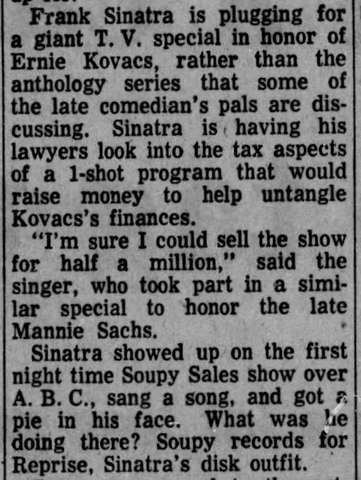
January 18 - THIS DATE IN SINATRA HISTORY
Undated materialFrom: Scott Henderson <scott@falseducks.com> | Received: 2026-01-18
Following Super Bowl X from Miami
1.. Chicago
2. Where Or When
3. The Lady Is A Tramp
4. But Beautiful "Written for Crosby when he was six" " arrangement by Don Costa"
5. Didn't We "Young man, Jimmy Webb, I believe to be the best of all the young writers."
6. They Can't Take That Away From Me "This song was introduced by Astaire."
monologue
7. Send In The Clowns w/Bill Miller "I'd like to sing what I think is the classiest song of the last 30 years."
8. If w/ Al Viola
9. Let Me Try Again "New chart by Billy Byers."
10. I Sing The Songs " New song with an arrangement by Don
Costa
11. My Way
introduces Buddy Greco "Did you ever notice how many singers were from Philly?"
Frank starts naming them. "Bobby Darin, may he rest in peace."
12. My Kind Of Town
Ed O'Brien:
Frank bet Dallas in the Super Bowl. Pittsburgh beat them 21-17.Roy Gerela
kicked two FGs for the Steelers. Frank expresses his frustration at him in a
very kidding manner. Opening number he sings, "Bet your bottom dollar, you'll
find some booze in Chicago." Typical Vegas performance from 1976.
Sinatra Audio/ Video Trading
Undated materialFrom: Scott Sibley <dmarc-noreply@freelists.org> | Received: 2026-01-19
Hey yall!
I love collecting Sinatra audio and video recordings and wanted to reach out and see if anyone would be interested in swapping some recordings! Check out my list at the email below.
http://etreedb.org/socool135
P.S. Ive been an audio/ video engineer for 20 years. I have acess to some professional equipment and have and have been trying to capture as many Sinatra vhs and cassette tapes as possible in lossless quality!
Sinatra The Musical West End
Undated materialFrom: Richard Cook <cook879@hotmail.co.uk> | Received: 2026-01-20
Looks like Sinatra The Musical is back this Summer in the West End, after the run in Birmingham a few years back.
Running at the Aldwych Theatre, starting previews June 3rd, opening night June 24th, set to close April 10, 2027.
Sinatra The Musical is coming to the West End! 🇬🇧
Undated materialFrom: 'Ed O'Brien' via Sinatraphiles <sinatraphiles@googlegroups.com> | Received: 2026-01-21
|
|
|
|
| Start spreading the news! 🗞️✨ ͏ ͏ ͏ ͏ ͏ ͏ ͏ ͏ ͏ ͏ ͏ ͏ ͏ ͏ ͏ ͏ ͏ ͏ ͏ ͏ ͏ ͏ ͏ ͏ ͏ ͏ ͏ ͏ ͏ ͏ ͏ ͏ ͏ ͏ ͏ ͏ ͏ ͏ ͏ ͏ ͏ ͏ ͏ ͏ ͏ ͏ ͏ ͏ ͏ ͏ ͏ ͏ ͏ ͏ ͏ ͏ ͏ ͏ ͏ ͏ ͏ ͏ ͏ ͏ ͏ ͏ ͏ ͏ ͏ ͏ ͏ ͏ ͏ ͏ ͏ ͏ ͏ ͏ ͏ ͏ ͏ ͏ ͏ ͏ ͏ ͏ ͏ ͏ ͏ ͏ ͏ ͏ ͏ ͏ ͏ ͏ ͏ ͏ ͏ ͏ ͏ ͏ ͏ ͏ ͏ ͏ ͏ ͏ ͏ ͏ ͏ ͏ ͏ ͏ ͏ ͏ ͏ ͏ ͏ ͏ ͏ ͏ ͏ ͏ ͏ ͏ ͏ ͏ ͏ ͏ ͏ ͏ ͏ ͏ ͏ ͏ ͏ ͏ ͏ ͏ ͏ ͏ ͏ ͏ ͏ ͏ ͏ ͏ ͏ ͏ ͏ ͏ ͏ ͏ ͏͏ ͏ ͏ ͏ ͏ ͏ ͏ ͏ ͏ ͏ ͏ ͏ ͏ ͏ ͏ ͏ ͏ ͏ ͏ ͏ ͏ ͏ ͏ ͏ ͏ ͏ ͏ ͏ ͏ ͏ ͏ ͏ ͏ ͏ ͏ ͏ ͏ ͏ ͏ ͏ ͏ ͏ ͏ ͏ ͏ ͏ ͏ ͏ ͏ ͏ ͏ ͏ ͏ ͏ ͏ ͏ ͏ ͏ ͏ ͏ ͏ ͏ ͏ ͏ ͏ ͏ ͏ ͏ ͏ ͏ ͏ ͏ ͏ ͏ ͏ ͏ ͏ ͏ ͏ ͏ ͏ ͏ ͏ ͏ ͏ ͏ ͏ ͏ ͏ ͏ ͏ ͏ ͏ ͏ ͏ ͏ ͏ ͏ ͏ ͏ ͏ ͏ ͏ ͏ ͏ ͏ ͏ ͏ ͏ ͏ ͏ ͏ ͏ ͏ ͏ ͏ ͏ ͏ ͏ ͏ ͏ ͏ ͏ ͏ ͏ ͏ ͏ ͏ ͏ ͏ ͏ ͏ ͏ ͏ ͏ ͏ ͏ ͏ ͏ ͏ ͏ ͏ ͏ ͏ ͏ ͏ ͏ ͏ ͏ ͏ ͏ ͏ ͏ ͏ ͏ ͏ ͏ ͏ ͏ ͏ ͏ ͏ ͏ ͏ ͏ ͏ ͏ ͏ ͏ ͏ ͏ ͏ ͏ ͏ ͏ ͏ ͏ ͏ ͏ ͏ ͏ ͏ ͏ ͏ ͏ ͏ ͏ ͏ ͏ ͏ ͏ ͏ ͏ ͏ ͏ ͏ ͏ ͏ ͏ ͏ ͏ ͏ ͏ ͏ ͏ ͏ ͏ ͏ ͏ ͏ ͏ ͏ ͏ ͏ ͏ ͏ ͏ ͏ ͏ ͏ ͏ ͏ ͏ ͏ ͏ ͏ ͏ ͏ ͏ ͏ ͏ ͏ ͏ ͏ ͏ ͏ ͏ ͏ ͏ ͏ ͏ ͏ ͏ ͏ ͏ ͏ ͏ ͏ ͏ ͏ ͏ ͏ ͏ ͏ ͏ ͏ ͏ ͏ ͏ ͏ ͏ ͏ ͏ ͏ ͏ ͏ ͏ ͏ ͏ ͏ ͏ ͏ ͏ ͏ ͏ ͏ ͏ ͏ ͏ ͏ ͏ ͏ ͏ ͏ ͏ ͏ ͏ ͏ ͏ ͏ ͏ ͏ ͏ ͏ ͏ ͏ ͏ ͏ ͏ ͏ ͏ ͏ ͏ ͏ ͏ ͏ ͏ ͏ ͏ ͏ ͏ ͏ ͏ ͏ ͏ ͏ ͏ |
|
|
| |
|
VIEW IN BROWSER
|
|
|
| |
|
|
| |
|
| |
|
|
Sinatra The Musical to Make Its West End Premiere in Summer 2026 |
|
| |
|
| |
|
|
SIGN UP FOR PRIORITY TICKETS
|
|
|
Sinatra The Musical—a new musical based on the life and career of the legendary artist and cultural icon—is opening in London in June 2026, featuring over 20 timeless hits including “That’s Life,” “One For My Baby,” “The Best Is Yet To Come” & “Come Fly With Me.”
It is New Year’s Eve, 1942, and a skinny 27-year-old Italian American singer is about to step onto the stage of New York’s Paramount Theatre and give a performance that will change music history. As Frank Sinatra’s career suddenly skyrockets, he struggles with balancing the love of his wife, Nancy, against the demands and temptations of being the most popular singer in America. But when he begins a torrid affair with movie goddess Ava Gardner, his records stop selling and the press turns against him, sending his career into a tailspin. Driven by his devotion to his family, Sinatra employs his peerless artistry and dogged determination to stage the greatest comeback in showbiz history.
“My dad used to always say, ‘If I can’t feel it, I can’t sing it.’ As a result, he wasn’t just singing songs, he was recording an emotional diary of his life. And it’s these classic songs that form the heart of ‘Sinatra The Musical.’ Set against the backdrop of my father’s meteoric rise, the show reveals a more intimate portrait of the man than any interview or headline ever could. And just like my dad, it’s full of music and passion and humor. I am so proud to share his story—our story—at long last.” –Tina Sinatra
Sinatra The Musical is written by the two-time Tony award-winning writer Joe DiPietro (Memphis the Musical, What’s New Pussycat?), directed and choreographed by three-time Tony Award-winning Kathleen Marshall (Top Hat, Anything Goes), and the set is designed by Olivier Award-winning Peter McKintosh (Crazy for You, Orlando). The orchestra of 17 musicians will be supervised by Gareth Valentine (My Fair Lady, 42nd Street). They are joined by Jon Morrell (Costume Designer), Jonathan Deans (Sound Designer), Akhila Krishnan (Video Designer), Larry Blank & John Clayton (Orchestrators), Ian Eisendrath (Arranger), David Chase (Dance Arrangements), David Grindrod, CDG for Grindrod Burton Casting (Casting Director), Jim Carnahan (US Casting Director), Jason Thinger (US Casting (Carnahan)), and Carol Lee Meadows (Associate Choreographer).
Performances begin Wednesday, 3 June 2026 at the Aldwych Theatre, London. You’ll want to be a part of it. |
|
|
SIGN UP FOR PRIORITY TICKETS
|
|
| |
|
|
|
|
| |
|
Listen to Frank Sinatra!
|
|
Go ahead and dive into hours of Frank Sinatra’s legendary music, curated just for you on whichever streaming service you prefer.
One thing’s for sure: You’re in for a treat.
|
|
|
| |
|
|
LISTEN ON APPLE MUSIC
|
|
|
|
| |
|
|
LISTEN ON SPOTIFY
|
|
|
|
| |
|
|
|
|
| |
|
|
| |
|
|
| |
|
|
| |
|
|
| |
|
|
| |
|
|
| |
|
|
|
|
| |
|
You have received this email because you provided your email address to a UMG artist or label mailing list
This email was sent to hgranfield@gmail.com by 2220 Colorado Ave, Santa Monica, CA 90404 |
|
UNSUBSCRIBE | VIEW PRIVACY POLICY
|
| |
|
|
|
|
|
|
|
| |
|
|
|
January 21 - THIS DATE IN SINATRA HISTORY
Undated materialFrom: scott@falseducks.com | Received: 2026-01-21
(Monday) Frank Sinatra did his first session under his own name.; for RCA Victor (Issued on 35 cent Bluebird label). Four titles with orchestra led by Axel Stordahl
JANUARY 21 THIS DATE IN SINATRA HISTORY
Undated materialFrom: 'Ed O'Brien' via Sinatraphiles <sinatraphiles@googlegroups.com> | Received: 2026-01-26
Los Angeles
1672 Call Me Irresponsible
(Jimmy Van Heusen/Sammy Cahn)
Paramount Music Corp. (ASCAP)
Arranged & Conducted by Nelson Riddle
-16 (2:54) CD: 46013-2 The Complete Reprise Studio Recordings Disc 5
CD: 9-26723-2Sings The Songs Of Van Heusen & Cahn
CD: 1010-2Sinatra's Sinatra
CD: 1016-2 A Man And His Music (Edited)
LP: FS1010 Sinatra's Sinatra
45: 20,151
note: Reprise would issue this single with "Tina" as the flip side and then
quickly reissue - same 20,151, - with "Come Blow Your Horn" as B
side. "Come Blow . . . would also have a second life with "I Have
Dreamed."
Ed
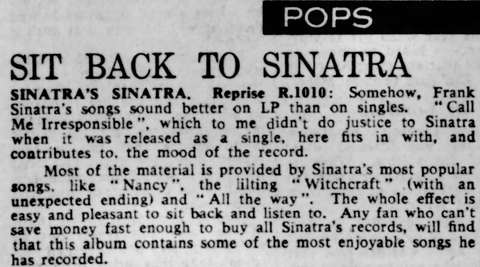
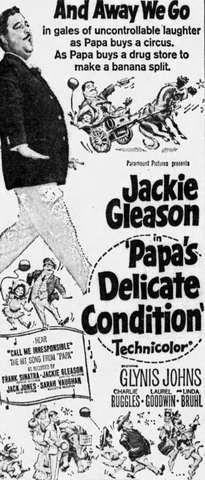
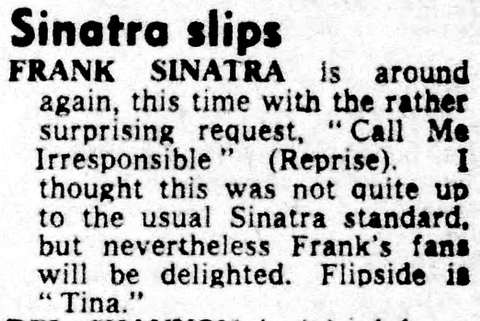
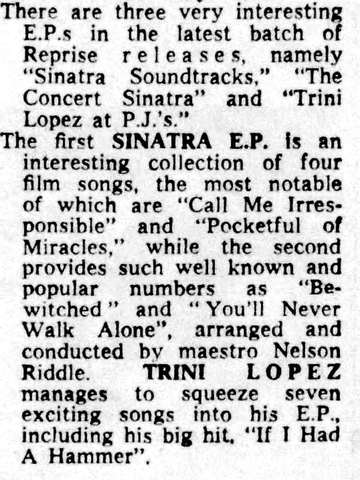
Frank & Nelson
Undated materialFrom: 'ALFRED MASCIOCCHI' via Sinatraphiles <sinatraphiles@googlegroups.com> | Received: 2026-01-27
A friend sent me this article about Sinatra & Riddle -
https://www.newsbreak.com/share/4454707191580-nelson-riddle-made-frank-sinatra-an-icon-but-at-the-height-of-his-power-an-angry-and-jealous-sinatra-erased-him-from-the-story?_f=app_share&pd=051DWPG7&lang=en_US&send_time=1769100007&trans_data=%7B%22platform%22%3A0%2C%22cv%22%3A%2226.2.1.11%22%2C%22languages%22%3A%22en%22%7D&s=i3
You can tell the slant from the title - "Nelson Riddle made Frank Sinatra an icon, but at the height of his power, an angry and jealous Sinatra erased him from the story." - but I don' think the article reads as harshly as the title. Given Frank's personality it has a ring of truth but I can't say I ever felt that this was the case.
Wondering what people think?
Al
Re: Frank & Nelson
Undated materialFrom: Kenny Lucas <kennylucas589@gmail.com> | Received: 2026-01-27
In concert Sinatra always praised Nelson.
On Tue, Jan 27, 2026, 8:38 AM Robert Waldman <robwaldman34@gmail.com> wrote:
> The article lost me as soon as it referred to Riddle as “a man almost no > one remembers.” What BS.
>
> Sent from my iPad
>
> On Jan 27, 2026, at 7:53 AM, 'ALFRED MASCIOCCHI' via Sinatraphiles < > sinatraphiles@googlegroups.com> wrote:
>
>
> A friend sent me this article about Sinatra & Riddle - >
>
> https://www.newsbreak.com/share/4454707191580-nelson-riddle-made-frank-sinatra-an-icon-but-at-the-height-of-his-power-an-angry-and-jealous-sinatra-erased-him-from-the-story?_f=app_share&pd=051DWPG7&lang=en_US&send_time=1769100007&trans_data=%7B%22platform%22%3A0%2C%22cv%22%3A%2226.2.1.11%22%2C%22languages%22%3A%22en%22%7D&s=i3 >
> You can tell the slant from the title - "Nelson Riddle made Frank Sinatra > an icon, but at the height of his power, an angry and jealous Sinatra > erased him from the story." - but I don' think the article reads as harshly > as the title. Given Frank's personality it has a ring of truth but I can't > say I ever felt that this was the case.
>
> Wondering what people think?
>
> Al
>
> --
>
Re: [sinatraphiles] January 25 - THIS DATE IN SINATRA HISTORY
Undated materialFrom: Kenny Lucas <kennylucas589@gmail.com> | Received: 2026-01-27
Eydie Gorme performed on the bill with Sinatra at the Click Club 1951.
On Tue, Jan 27, 2026, 4:39 PM Scott Henderson <scott@falseducks.com> wrote:
> Apparently I posted the original 25th posts to the Freelists group and not > the Google Group. I blame auto correct.
>
>
> Scott
>
> At 10:21 AM 1/27/2026, you wrote:
>
> I'm not sure what happened to the posts from January 25th. I know I > posted them but they apparently didn't go through. Thanks to Ed, for > letting me know. I posted them again today. Hopefully they go through to > the group.
>
>
>
> scott
>
> --
>
re: [sinatraphiles] January 25 - THIS DATE IN SINATRA HISTORY
Undated materialFrom: scott@falseducks.com | Received: 2026-01-27
I'm not sure what happened to the posts from January 25th. I know I posted them but they apparently didn't go through. Thanks to Ed, for letting me know. I posted them again today. Hopefully they go through to the group.
scott
re: [sinatraphiles] January 25 - THIS DATE IN SINATRA HISTORY
Undated materialFrom: Scott Henderson <scott@falseducks.com> | Received: 2026-01-27
Apparently I posted the original 25th posts to the Freelists group and not the Google Group. I blame auto correct.
Scott
At 10:21 AM 1/27/2026, you wrote:
>I'm not sure what happened to the posts from January 25th. I know I >posted them but they apparently didn't go through. Thanks to Ed, >for letting me know. I posted them again today. Hopefully they go >through to the group.
>
>
>
>scott
>
>--
>
SINATRA IN AUSTRALIA JANUARY 1955
Undated materialFrom: 'Ed O'Brien' via Sinatraphiles <sinatraphiles@googlegroups.com> | Received: 2026-01-30
1-24-55
1-27-55
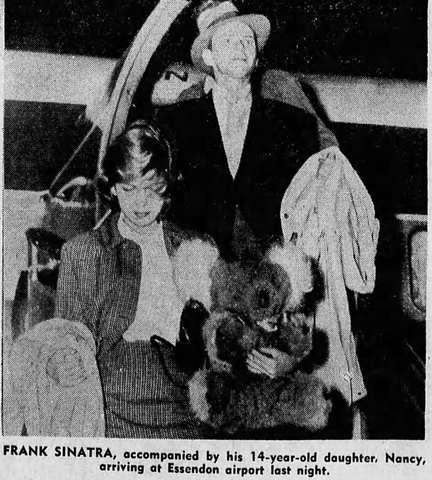
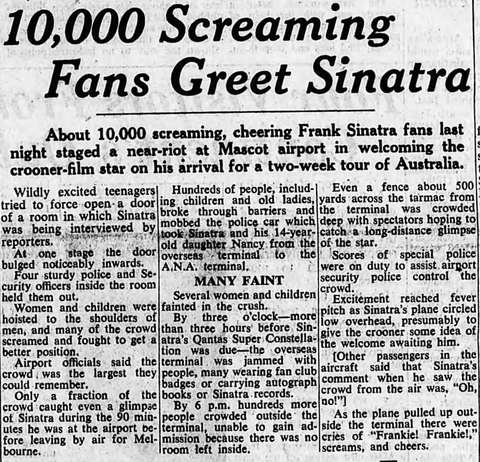
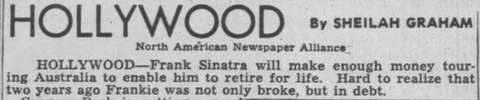
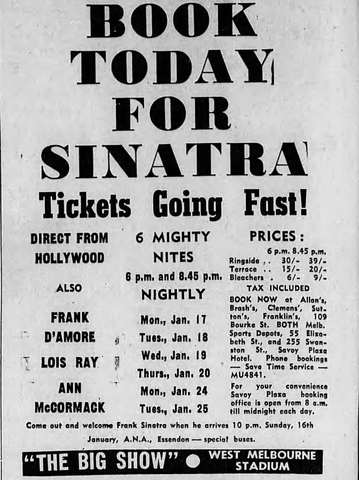
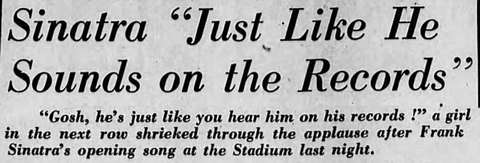
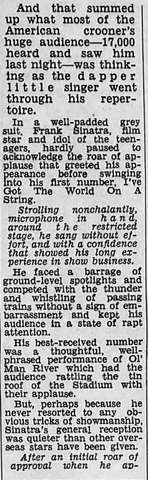
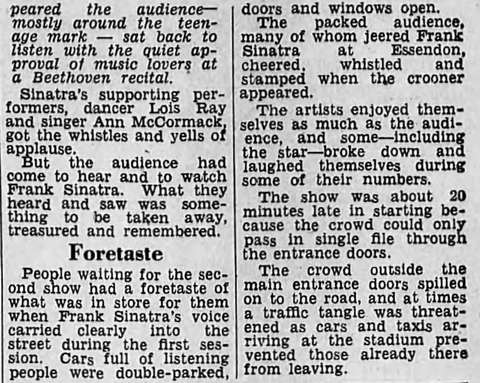
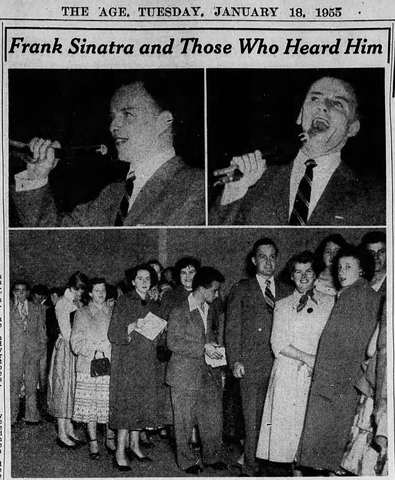
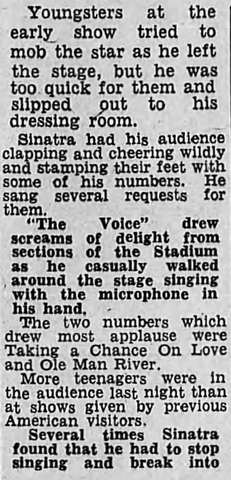
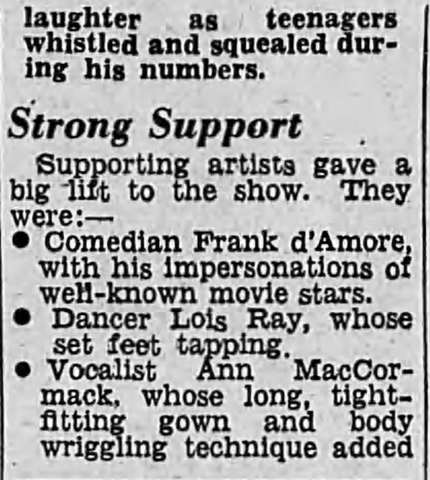
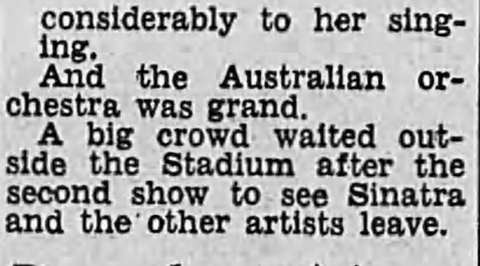
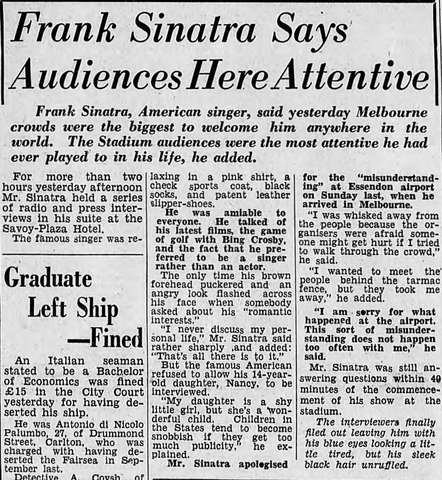
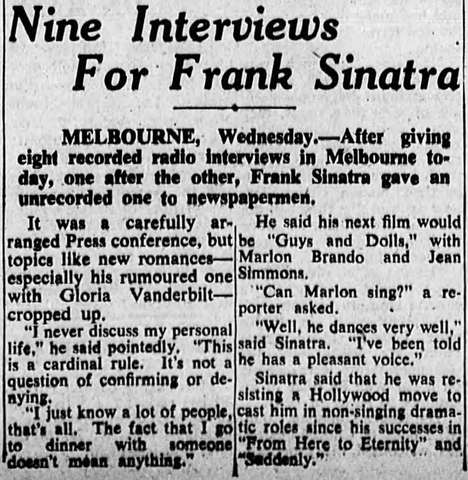
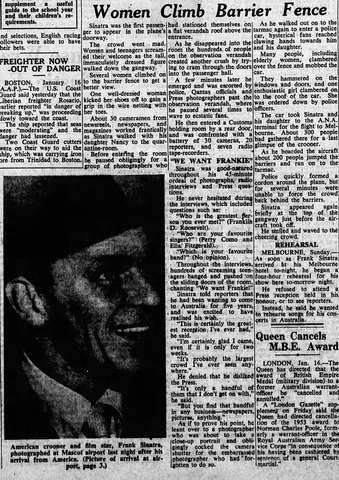
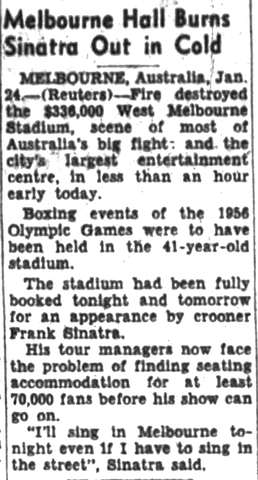
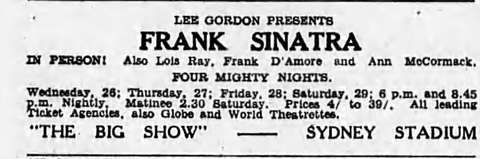
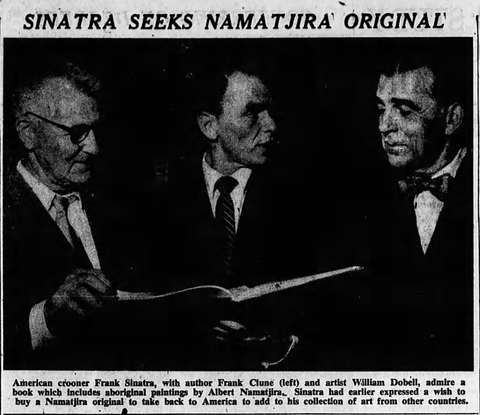
BING and FRANK
Undated materialFrom: 'Ed O'Brien' via Sinatraphiles <sinatraphiles@googlegroups.com> | Received: 2026-02-03
San Francisco Examiner
4-1-45
note: I don't image Paramount was willing to loan Bing out in 1945.
He was the #1 B.O. draw. MGM would have been just as reluctant
to surrender the star of "Anchors Aweigh."
Ed
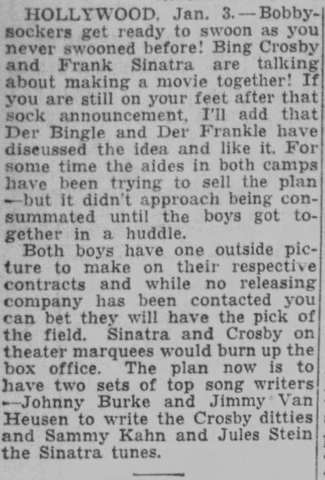
THROUGH THE YEARS WITH FRANK
Undated materialFrom: 'Ed O'Brien' via Sinatraphiles <sinatraphiles@googlegroups.com> | Received: 2026-02-03
1-1-43
7-14-46
10-13-46
1-27-47
4-15-47
Billy Rose was a major force in the entertainment world for many years.
He was an impresario, theatrical showman, lyricist and columnist. Frank
recorded a number of his songs.
1-25-48
1-12-55
note: Hitchcock directed the film "The Wrong Man" in 1957, with Henry Fonda
playing Manny.
1-27-55
1-30-57
note: Frank never played the Copa again
10-20-75
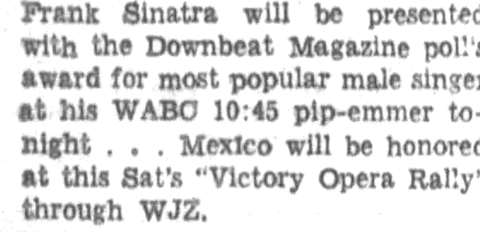
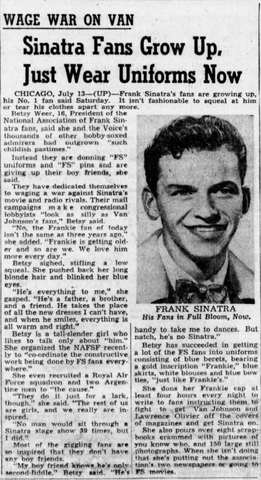
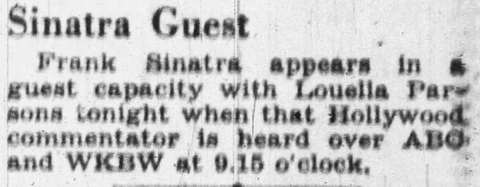
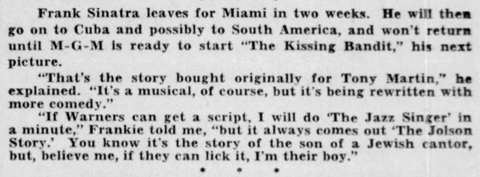
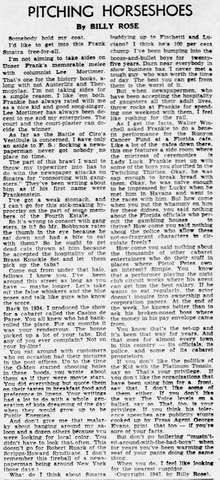
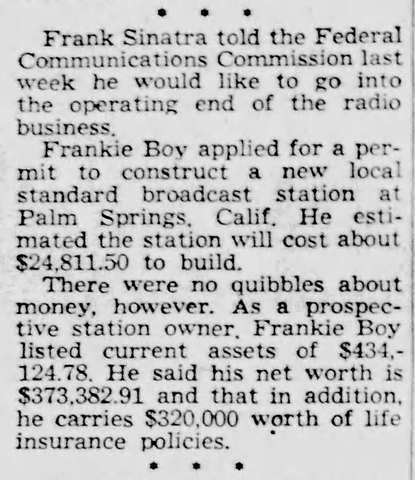
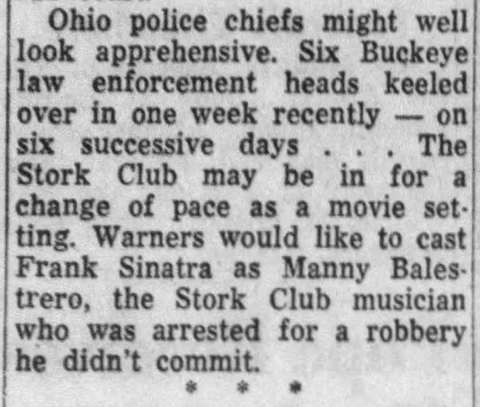
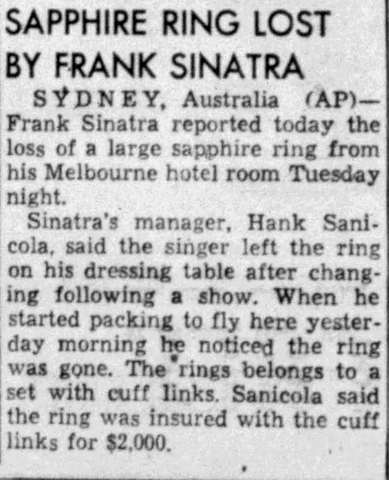
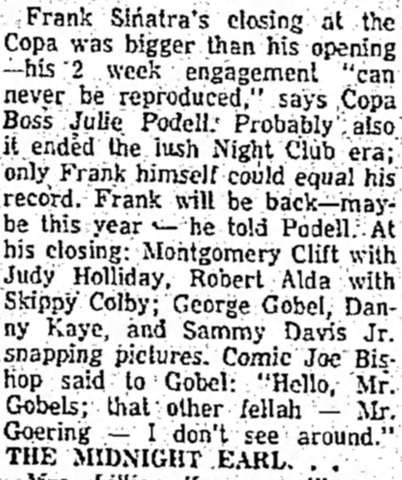
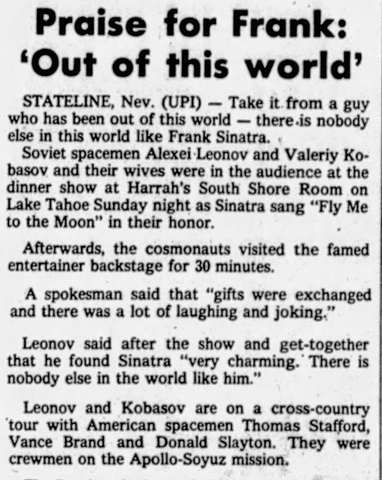
February 2 - THIS DATE IN SINATRA HISTORY
Undated materialFrom: 'Ed O'Brien' via Sinatraphiles <sinatraphiles@googlegroups.com> | Received: 2026-02-08
Re: [sinatraphiles] February 6 - THIS DATE IN SINATRA HISTORY
Undated materialFrom: Kenny Lucas <kennylucas589@gmail.com> | Received: 2026-02-08
I don't know if anyone else follows the Ric Ross you tube channel. They have released so many rare Sinatra item's that no one else has. Just released rare " Meet Danny Wilson " promos. Great channel, great Sinatra item's.
On Fri, Feb 6, 2026, 2:18 PM <scott@falseducks.com> wrote:
>
>
>
> *Studio *
>
> *1952 Hollywood *RHCO10110
> *My Girl *(C. Freed)
> Ludlow Music, Inc. (BMI) 1952
> Arranged & Conducted by Axel Stordahl
> -1 (2:24) CD: Columbia Years 43-52 Vol. 12
> 78: 39726
>
>
> RHCO10114
> *Feet Of Clay *(J. Whitney/A. Kramer/H. Zaret)
> Bourne, Inc. (ASCAP) 1952
> Arranged & Conducted by Axel Stordahl
> -1 (2:56) CD: Columbia Years 43-52 Vol. 12
> 78: 39687
>
>
>
>
> *NOTE: Sinatra Scholar Ed O'Brien remarks that he'd take "Mama Will Bark" > anytime over this "little beauty." *RHCO10115
> *Don't Ever Be Afraid To Go Home *(B. Hillard/C. Sigman) > Remick Music Corp. (ASCAP) 1952
> Arranged & Conducted by Axel Stordahl
> -1 (2:28) CD: Columbia Years 43-52 Vol. 12
> 78: 39687
>
> Violins: J. Augustine, D. Lube, N. Pisani, I. Prager, M. Russell, M. > Sosson; Violas: S. Harris, D. Sterkin; Cello: E. Slatkin; Harp: A. > Stockton; Saxes: E. Callen, E. Gershman, L. Hartman, B. Russin, F. Stulce; > Trumpet: R. Zarchy; Trombones: G. Arus, J. Piddy; Piano: W. Miller; Guitar: > A. Reuss; Bass: J. Ryan; Drums: R. Hagan
>
>
>
>
>
>
> *Radio *
> *1941 Fame And Fortune - Tommy Dorsey Orchestra *Network: NBC - Blue > Network
> Location: New York City
> Show #19
> Sponsor: Nature's Remedy
> Time: 8:30PM - 9:00PM (EST) Thursdays
> Orchestra Conducted By: Tommy Dorsey
> Arrangements By: Axel Stordahl (Sinatra)
> Announcer: Fred Beutel
> Musicians: Ziggy Elman, Bob Alexy, Lee Castle, Jimmy Blake (trumpet); > George Arus, Les Jenkins, Dave Jacobs (trombone); Johnny Mince (clarinet, > alto sax); Fred Stulce, Heinie Beau (alto sax); Don Lodice, Paul Mason > (tenor sax); Joe Bushkin (piano); Clark Youcum (guitar); Sid Weiss (bass); > Buddy Rich (drums).
> Vocals: Frank Sinatra, Connie Haines, Pied Pipers
> 1. opening theme: Anything - TD & Orchestra
> 2. Ida, Sweet As Apple Cider - Frank Sinatra
> 3. May I Never Love Again - Connie Haines
> 4. commercial
> 5. I Love It So - Jo Stafford & Pied Pipers
> 6. Oh, Look At Me Now - Frank Sinatra, Connie Haines & Pied Pipers > 7. commercial
> 8. Old Black Joe - Tommy Dorsey & orchestra
> 9. Believe Me If All Those Endearing Young Charms - Tommy Dorsey > 10. commercial
> 11. If You Would Only Change Your Mind - Jo Stafford > 12. closing theme: Anything - TD & Orchestra
> Notes: Confirmed airing on WJZ
>
>
>
>
> *("Ida, Sweet As Apple Cider" appears on CD: Buddha 74321 69173 2 'Learn > To Croon') *
> *1946 Songs By Sinatra *Network: CBS
> Location: Hollywood
> Show #22
> Sponsor: Old Gold Cigarettes
> Time: 9:00PM - 9:30PM (EST) Wednesday
> Orchestra Conducted By: Axel Stordahl
> Arrangements By: Axel Stordahl
> Announcer: Marvin Miller
> Writer: Glenn Wheaton
> Directed By: Mann Holiner
> Performers: The Pied Pipers
> Guest: Bob Hope
> CBS Broadcast:
> 1. opening theme: Night And Day
> 2. Don't Forget Tonight Tomorrow - Frank Sinatra & Pied Pipers > 3. That Old Black Magic - Frank Sinatra
> 4. commercial 1
> 5. Doctor, Lawyer And Indian Chief - Pied Pipers
> 6. comedy - Bob Hope & Frank Sinatra
> 7. These Foolish Things (parody) - Frank Sinatra & Bob Hope > 8. commercial 2
> 9. Tin Pan Alley "Race Track" Medley: Symphony /
> I Can't Begin To Tell You / Let It Snow, Let It Snow, > Let It Snow / I'm Always Chasing Rainbow / It's Been
> A Long Long Time / Bell Bottom Trousers - Frank Sinatra > 10. Day By Day - Frank Sinatra
> 11. closing theme: Put Your Dreams "screams" Away - w/Bob Hope >
>
>
>
>
> *Notes: Confirmed airing on WABC. Ed O'Brien reports that there is a > rehearsal tape of this radio show in circulation. It is great fun, he says. > Bob Hope did not attend the rehearsal but Frank had a good time with the > cast. *
> *1950 Light Up Time *Taped: January 16, 1950
> Sponsor: Lucky Strike Cigarettes
> Network: NBC
> Show #111
> Broadcast: 4:00-4:15 PM PST (Repeat: 8:00-8:15 PM PST) > Starring: Frank Sinatra & Dorothy Kirsten
> Jeff Alexander And The Orchestra
> 1. opening
> 2. A Foggy Day - Frank Sinatra
> 3. commercial
> 4. More Than You Know - Dorothy Kirsten
> 5. Without A Song - Frank Sinatra
> 6. commercial
> 7. The Way You Look Tonight - Frank Sinatra & Dorothy Kirsten > 8. closing
>
>
>
>
>
> *Television *
>
>
>
>
>
> *NONE FILM 1952 "Meet Danny Wilson" *Portland Oregan Premiere February > 6, 1952) (Regular release: April 1st, 1952)
> Starring: Frank Sinatra, Shelley Winters, Alex Nicol, Raymond Burr > Produced by: Leonard Goldstein
> Directed by: Joseph Pevney
>
>
>
>
> *Danny Wilson (Sinatra) and partner Mike (Nicol) make a meager living > singing in dives and hustling pool. One night they meet entertainer Joy > Carroll (Winters), who gets them a job at racketeer Nick Driscoll's (Burr) > posh nightclub. But Nick wants a high price: half of Danny's future income. > Danny's career skyrockets, but his position at the top of the heap, and his > one-sided romance with Joy, prove extremely unstable.* >
SINATRA SAYS GOODBYE TO T.D.
Undated materialFrom: 'Ed O'Brien' via Sinatraphiles <sinatraphiles@googlegroups.com> | Received: 2026-02-10
Daily News
February 1978

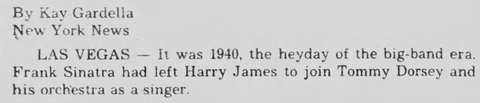
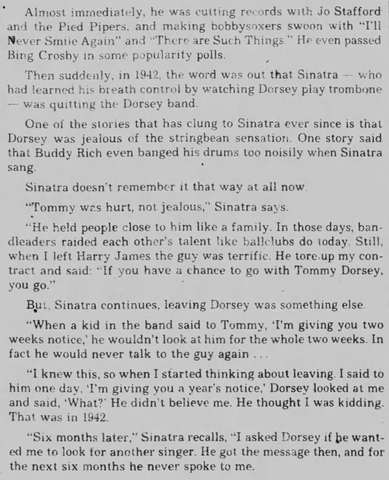
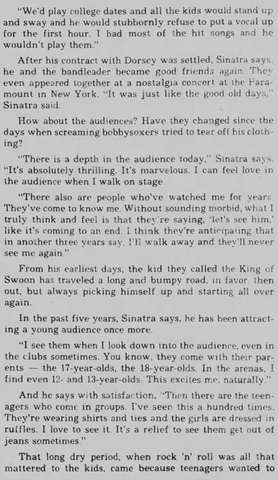
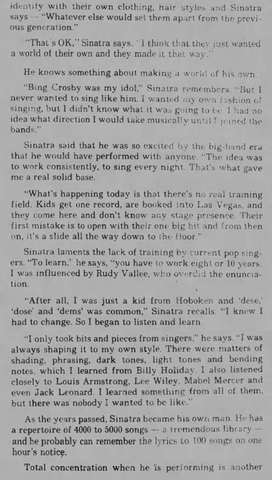
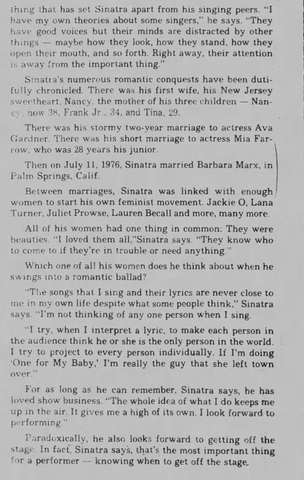
WHAT MIGHT HAVE BEEN
Undated materialFrom: 'Ed O'Brien' via Sinatraphiles <sinatraphiles@googlegroups.com> | Received: 2026-02-10
Miami News
4-15-55 ( day "Wee Small Hours" was issued )
1-9-63
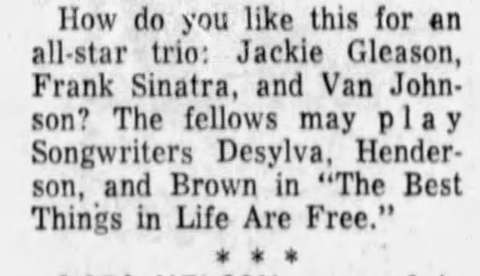
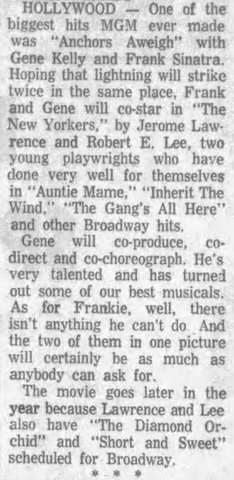
frank's war on intolerance and the price he paid
Undated materialFrom: 'Ed O'Brien' via Sinatraphiles <sinatraphiles@googlegroups.com> | Received: 2026-02-10
10-24-45
10-24-45
12-15-45
12-11-45
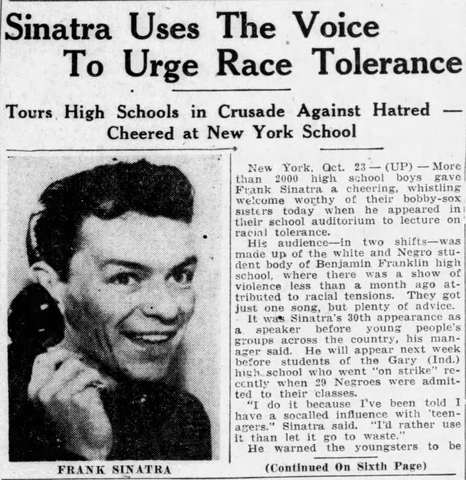
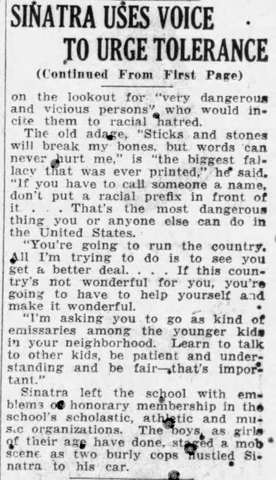
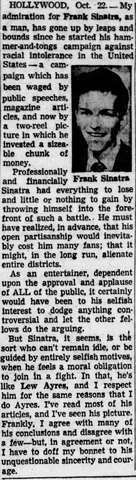
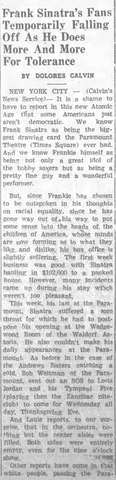
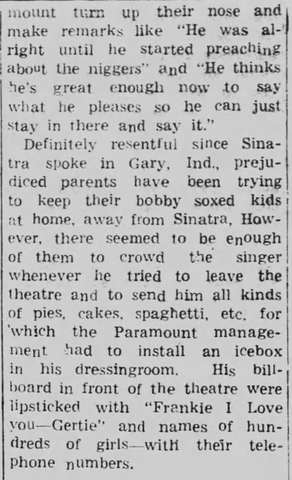
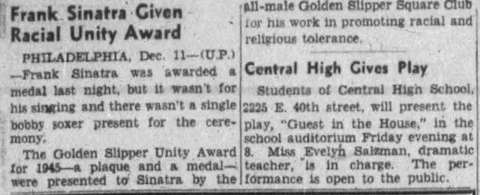
OOPS !
Undated materialFrom: 'Ed O'Brien' via Sinatraphiles <sinatraphiles@googlegroups.com> | Received: 2026-02-13
I apologize for the post regarding George Evans.My computer is a little screwy today. I sent the post to the intended recipient, but, for some reason,it went to the list. Ed
Voice later years
Undated materialFrom: Larry Crawford <argyle52@hotmail.com> | Received: 2026-02-16
One of the things I most enjoy about being a serious Sinatra listener is the changes in his voice thru the years. The vocal sound he made and the quality of his voice through the Columbia,Capitol, and Reprise years. I like to notice the changes in his voice. Sinatra comes under much criticism for his voice in his later years, but I also enjoy his voice later in his career. His voice was deeper and more mellow, you could hear the smoke and alcohol, and the wisdom of the years .
I loved the sound he had in 1973 on his comeback album, and in the early 1980's, I believe he was singing wonderfully, with passion.
Get Outlook for Android<https://aka.ms/AAb9ysg>
February 16 - THIS DATE IN SINATRA HISTORY
Undated materialFrom: Scott Henderson <scott@falseducks.com> | Received: 2026-02-16
Note: WOR carried two-hours from the Meadowbrook. Dorsey band was only on the last 30 minutes
of the broadcast.
FEBRUARY 19 THIS DATE IN SINATRA HISTORY
Undated materialFrom: 'Ed O'Brien' via Sinatraphiles <sinatraphiles@googlegroups.com> | Received: 2026-02-19
FEBRUARY 19, 1942
Undated materialFrom: 'Ed O'Brien' via Sinatraphiles <sinatraphiles@googlegroups.com> | Received: 2026-02-21
Afro-American
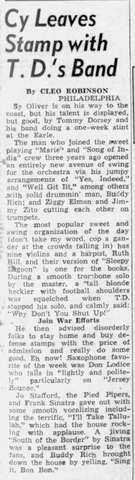
February 21 - THIS DATE IN SINATRA HISTORY
Undated materialFrom: Scott Henderson <scott@falseducks.com> | Received: 2026-02-21
NBC broadcast. AFRS used the wrong opening on
this show. Don Wilson, announcer, has Dorothy missing
in action and a special guest star replacing her. As you can
see, the lady was very much in attendance.
Frank Sinatra’s L.A. Mansion for sale
Undated materialFrom: 'Ed O'Brien' via Sinatraphiles <sinatraphiles@googlegroups.com> | Received: 2026-02-26
According to my friend, who sent me this email, this is the first time it's been on the market in 53 years. Asking price is $7.5 million.

February 27 - THIS DATE IN SINATRA HISTORY
Undated materialFrom: 'Ed O'Brien' via Sinatraphiles <sinatraphiles@googlegroups.com> | Received: 2026-02-28
Los Angeles
924 Everybody's Twistin'
(Ted Koehler/Rube Bloom)
WB Music Corp. (ASCAP)
Arranged & Conducted by Neal Hefti
-11 (2:30) CD: 46013-2 The Complete Reprise Studio Recordings Disc 3
LP: FS5238 (Italy)
45: 20,063
925 Nothing But The Best
(Johhny Rotella)
Jay Music (ASCAP)
Arranged by Skip Martin
Conducted by Neal Hefti
-3 (3:00) CD: 46013-2 The Complete Reprise Studio Recordings Disc 3
LP: FS5238 (Italy)
45: 20,063
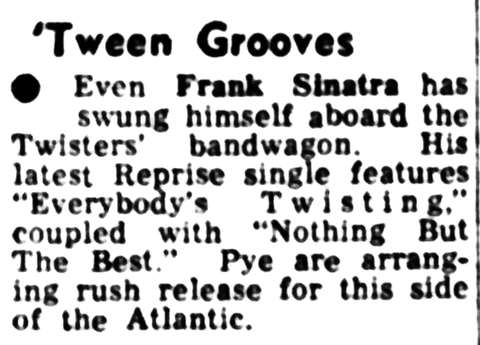
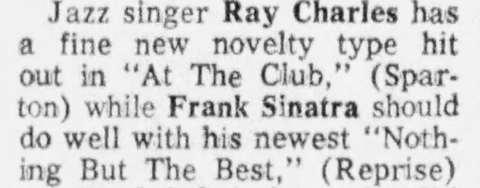
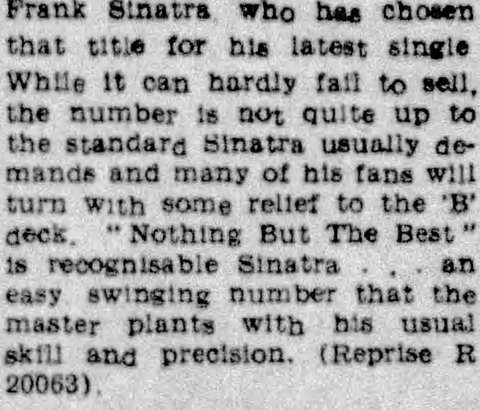
February 28 - THIS DATE IN SINATRA HISTORY
Undated materialFrom: Scott Henderson <scott@falseducks.com> | Received: 2026-02-28
Burbank, California
BNY3127 It's Sunday
Warner Brothers Studio
Burbank, California
March 4 - THIS DATE IN SINATRA HISTORY
Undated materialFrom: "scott@falseducks.com" <scott@falseducks.com> | Received: 2026-03-04
. Frank was supposed to open on 2-11-68, but he developed a very
serious case of pneumonia. So serious that Mia and later Ava flew down
to be by his side. The film got underway on 2-26 with Frank's first big scene
shot on 3-5. Movie was a six week production. Frank did one show a night
at the hotel. The average gross per night was between 90 and 100 thousand
dollars. It would be Sinatra's last major engagement at the hotel. Opening
night he barred Earl Wilson from seeing the show. Wilson's wife got in to
see him accompanied by Joe E. Lewis. Frank picked up there tab.
March 4 - THIS DATE IN SINATRA HISTORY
Undated materialFrom: 'Ed O'Brien' via Sinatraphiles <sinatraphiles@googlegroups.com> | Received: 2026-03-05
Miami Herald
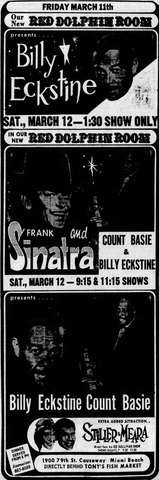
March 5 - THIS DATE IN SINATRA HISTORY
Undated materialFrom: "scott@falseducks.com" <scott@falseducks.com> | Received: 2026-03-05
evolved from eight sessions including orchestral and choral
dates. The Sinatra vocals from 2-10 and 2-20-75 have never been
released.
VANCE ADAIR added:
Goodness. What a tortuous process it was, and utterly counter intuitive to the way that FS usually recorded a song.
He must have been phased by this. Matters are compounded by the fact that these tunes really did not merit the expenditure of his efforts.
John "Rochester" Brown responded:
The efforts were great, but the songs, quite forgettable.
Paul Anka's work has always been, at best, convoluted.
"Havin' my baby..." Barf.
Vance Adair:
Although FS dabbled with C&W tunes throughout his career, they never quite worked. Como and Chet Atkins, on the other hand, produced some successful recordings that were largely pleasing to the ear. ‚
For me, the unsuitability of Frank's voice to C&W is moot and goes to the heart of his success as our finest interpreter of popular music. Interestingly, all of it hearkens back to some old fashioned Greek principles regarding 'showing' (diegesis) and 'telling' (exegesis).
The largely corn-proof lyrics of Gershwin, Porter, Hart et al requires the singer to 'show' the emotional register of a song through the subtle and inventive interpretation of a lyric. C&W, on the other hand, 'tells' the listener so much it requires the singer merely to be a cipher rather than a distinctive interpreter of the story.
Can one imagine a singer less suited to this task than FS?
March 7 - THIS DATE IN SINATRA HISTORY
Undated materialFrom: Scott Henderson <scott@falseducks.com> | Received: 2026-03-07
note: Capitol was big on this single. It was in the record stores
a week after the recording. There were other d.js. who
refused to play it. Single did not chart. Capitol was un-
deterred. Three weeks later they would release "Learnin
The Blues." It has the distinction of being Frank's only
# 1 single at Capitol.
Ed
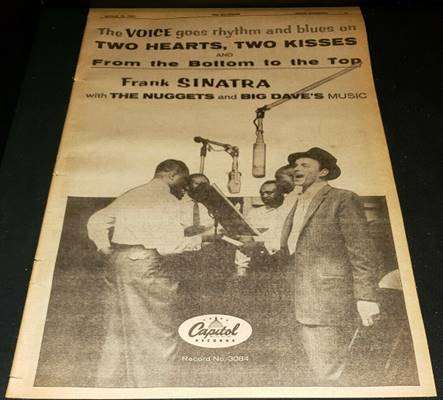
MARCH 8 - THIS DATE IN SINATRA HISTORY
Undated materialFrom: Scott Henderson <scott@falseducks.com> | Received: 2026-03-08
Ed
March 7 - THIS DATE IN SINATRA HISTORY
Undated materialFrom: 'Ed O'Brien' via Sinatraphiles <sinatraphiles@googlegroups.com> | Received: 2026-03-09
KHJ Studios. Hollywood
13594 If I Had Three Wishes
(C. Baum/L. Spence)
Arranged & Conducted by Nelson Riddle
CD: C2 724383808922 The Complete Capitol Singles
LP: W1164 Look To Your Heart
45: 3102
"
13595 How Could You Do A Thing Like That To Me?
(T. Gleen/A. Roberts)
Arranged & Conducted by Nelson Riddle
CD: C2 724383808922 The Complete Capitol Singles
CD: CDP 7-94520-2 Come Swing From Me
LP: W1429 Swingin' Easy
45: 3130
13596 Two Hearts, Two Kisses (Make One Love)
w/The Nuggets
(H. Stone/O. Williams)
Arranged by Dave Cavanaugh
Conducted by Nelson Riddle
CD: C2 724383808922 The Complete Capitol Singles
LP: T2602 Forever Frank
45: 3084
Sinatra absolutely hated rock and roll in 1955.
13597 From The Bottom To The Top
w/The Nuggets
(Gee Wilson )
Arranged by Dave Cavanaugh
Conducted by Nelson Riddle
CD: C2 724383808922 The Complete Capitol Singles
LP: T2602 Forever Frank
45: 3084
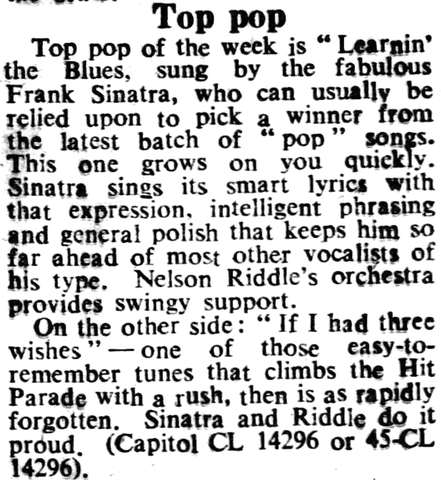

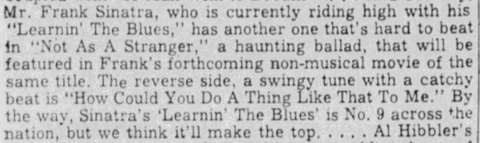
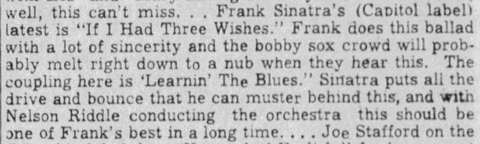
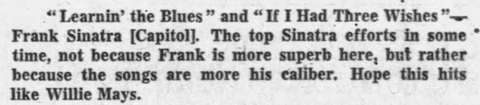
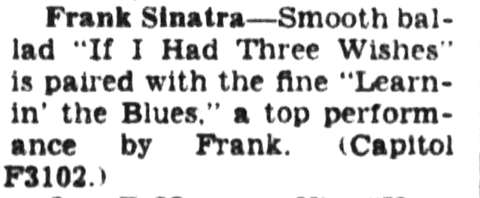
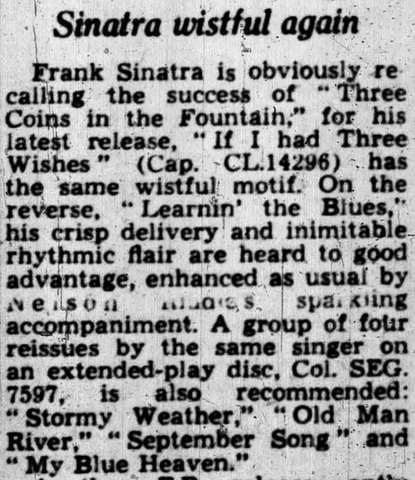
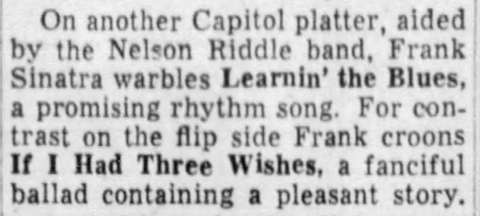
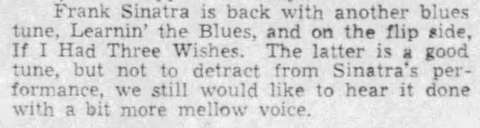
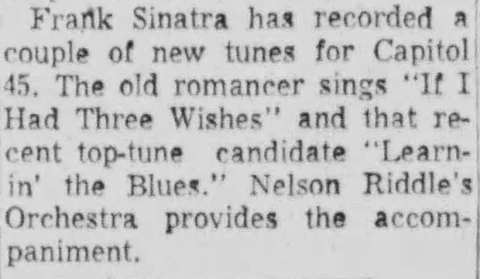
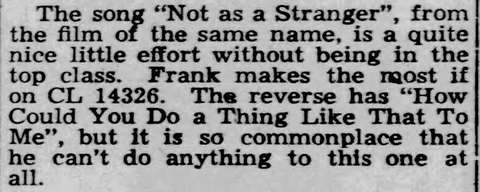

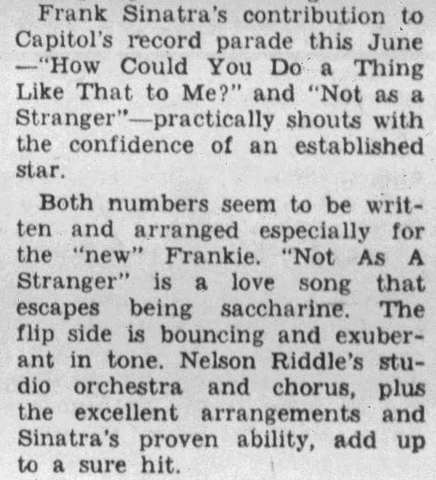
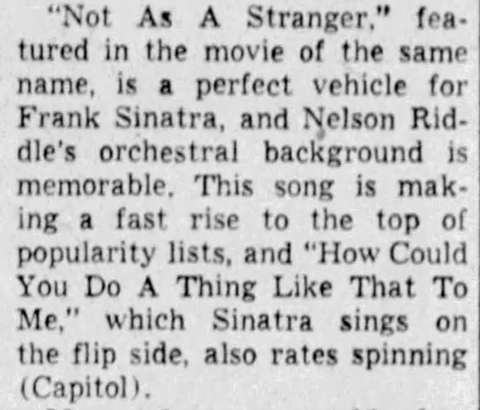
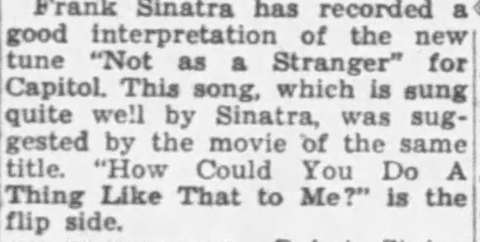
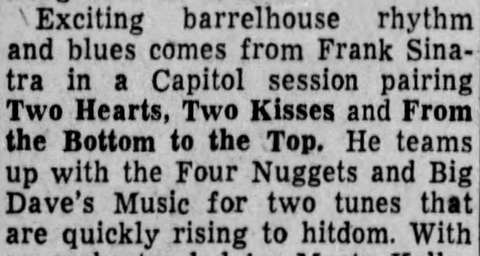
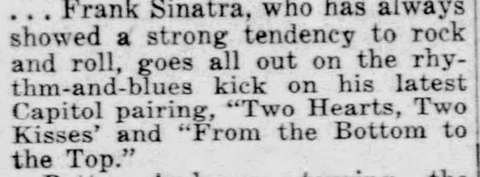
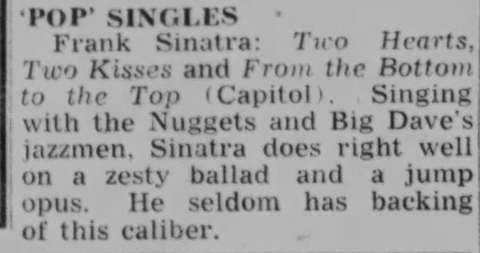
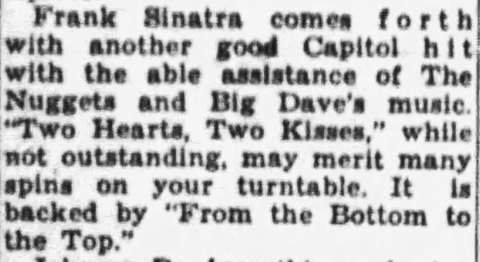
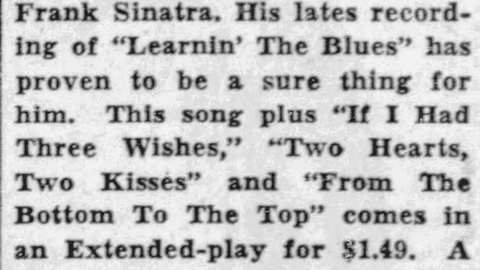
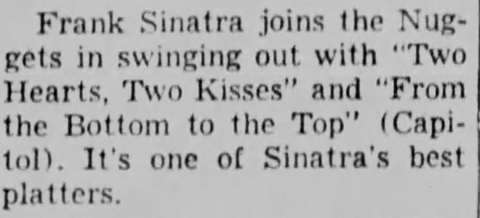
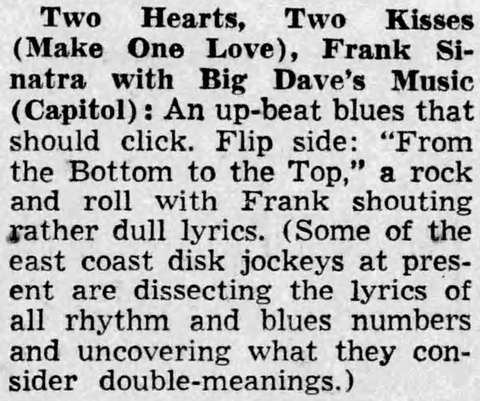
Re: March 7 - THIS DATE IN SINATRA HISTORY
Undated materialFrom: 'GUY STEELE' via Sinatraphiles <sinatraphiles@googlegroups.com> | Received: 2026-03-09
Hi Ed,
I’m curious what the objectionable lyrics were on “From The Bottom To The Top.”
Guy
> On Mar 9, 2026, at 1:33 AM, 'Ed O'Brien' via Sinatraphiles <sinatraphiles@googlegroups.com> wrote: >
>
>
>
> Studio
>
> 1955 KHJ Studios. Hollywood
>
> 13594 If I Had Three Wishes
> (C. Baum/L. Spence)
> Arranged & Conducted by Nelson Riddle
> CD: C2 724383808922 The Complete Capitol Singles
> LP: W1164 Look To Your Heart
> 45: 3102
>
> <1773030618842blob.jpg>
>
>
> <1773034063555blob.jpg>
>
> <1773034146305blob.jpg>
>
> <1773033985237blob.jpg>
>
>
> <1773030351261blob.jpg>
>
> <1773030748645blob.jpg>
> <1773032196225blob.jpg>
>
>
> "<1773030118044blob.jpg>
>
> <1773030184926blob.jpg>
>
>
> <1773032642323blob.jpg>
>
>
> 13595 How Could You Do A Thing Like That To Me?
> (T. Gleen/A. Roberts)
> Arranged & Conducted by Nelson Riddle
> CD: C2 724383808922 The Complete Capitol Singles
> CD: CDP 7-94520-2 Come Swing From Me
> LP: W1429 Swingin' Easy
> 45: 3130
>
> <1773030954394blob.jpg>
>
> <1773029832095blob.jpg>
>
> <1773034312197blob.jpg>
>
> <1773029699112blob.jpg>
>
> <1773031440383blob.jpg>
>
>
>
> 13596 Two Hearts, Two Kisses (Make One Love)
> w/The Nuggets
> (H. Stone/O. Williams)
> Arranged by Dave Cavanaugh
> Conducted by Nelson Riddle
> CD: C2 724383808922 The Complete Capitol Singles
> LP: T2602 Forever Frank
> 45: 3084
>
> <1773030049276blob.jpg>
> <1773030453022blob.jpg>
> Sinatra absolutely hated rock and roll in 1955.
>
>
> 13597 From The Bottom To The Top
> w/The Nuggets
> (Gee Wilson )
> Arranged by Dave Cavanaugh
> Conducted by Nelson Riddle
> CD: C2 724383808922 The Complete Capitol Singles
> LP: T2602 Forever Frank
> 45: 3084
> <1773032445306blob.jpg>
>
> <1773031298256blob.jpg>
>
> <1773031631898blob.jpg>
> <1773032841228blob.jpg>
>
> <1773033883940blob.jpg>
>
>
>
>
>
> --
>
Re: March 7 - THIS DATE IN SINATRA HISTORY
Undated materialFrom: 'GUY STEELE' via Sinatraphiles <sinatraphiles@googlegroups.com> | Received: 2026-03-09
KHJ Studios. Hollywood
13594 If I Had Three Wishes
(C. Baum/L. Spence)
Arranged & Conducted by Nelson Riddle
CD: C2 724383808922 The Complete Capitol Singles
LP: W1164 Look To Your Heart
45: 3102
<1773030618842blob.jpg>
<1773034063555blob.jpg>
<1773034146305blob.jpg>
<1773033985237blob.jpg>
<1773030351261blob.jpg>
<1773030748645blob.jpg>
<1773032196225blob.jpg>
"<1773030118044blob.jpg>
<1773030184926blob.jpg>
<1773032642323blob.jpg>
13595 How Could You Do A Thing Like That To Me?
(T. Gleen/A. Roberts)
Arranged & Conducted by Nelson Riddle
CD: C2 724383808922 The Complete Capitol Singles
CD: CDP 7-94520-2 Come Swing From Me
LP: W1429 Swingin' Easy
45: 3130
<1773030954394blob.jpg>
<1773029832095blob.jpg>
<1773034312197blob.jpg>
<1773029699112blob.jpg>
<1773031440383blob.jpg>
13596 Two Hearts, Two Kisses (Make One Love) w/The Nuggets
(H. Stone/O. Williams)
Arranged by Dave Cavanaugh
Conducted by Nelson Riddle
CD: C2 724383808922 The Complete Capitol Singles
LP: T2602 Forever Frank
45: 3084
<1773030049276blob.jpg>
<1773030453022blob.jpg>
Sinatra absolutely hated rock and roll in 1955.
13597 From The Bottom To The Top w/The Nuggets
(Gee Wilson )
Arranged by Dave Cavanaugh
Conducted by Nelson Riddle
CD: C2 724383808922 The Complete Capitol Singles
LP: T2602 Forever Frank
45: 3084
<1773032445306blob.jpg>
<1773031298256blob.jpg>
<1773031631898blob.jpg>
<1773032841228blob.jpg>
<1773033883940blob.jpg>
MARCH 11 - THIS DATE IN SINATRA HISTORY
Undated materialFrom: "scott@falseducks.com" <scott@falseducks.com> | Received: 2026-03-11
Fountainebleau Hotel, Miami Beach, Florida (9-30?)
26 piece orchestra conducted by: Morty Stevens
Bill Miller (piano)
among the songs:
I Love Paris
I Thought About You
I've Got A Crush On You
Road To Mandalay
River Stay Away From My Door
All The Way
High Hopes
medley: A Foggy Day, I've Got You Under My Skin, Angel Eyes
Come Fly With Me.
MARCH 11 - THIS DATE IN SINATRA HISTORY
Undated materialFrom: "scott@falseducks.com" <scott@falseducks.com> | Received: 2026-03-11
. I was in the fifth row. Half-way through the Kander-Ebb song the entire audience was on its collective feet.. His singing that night was magnificent. . Best I ever saw and heard.
March 14 - THIS DATE IN SINATRA HISTORY
Undated materialFrom: Scott Henderson <scott@falseducks.com> | Received: 2026-03-14
Capitol Studio A, Hollywood
E16731 So Long, My Love
(S. Cahn/L. Spence)
Arranged & Conducted by Nelson Riddle
CD: C2 724383808922 The Complete Capitol Singles
LP: W982 This Is Sinatra Vol.2
45: 3703
E16732 Crazy Love
(S. Cahn/P. Tuminello)
Arranged & Conducted by Nelson Riddle
CD: C2 724383808922 The Complete Capitol Singles
LP: W982 This Is Sinatra Vol.2
45: 3703
Musicians - Reeds: Harry Klee, Joseph Koch, Babe Russin, Willie Schwartz,
William Skalak; Trumpets: Harry Sweets ¯ Edison, Conrad Gozzo, zo, Vito Mickey ¯ Mangano, Rubin bin Zeke ¯ Zarchy; Trombones: Milton ton Bernhart, Francis Howard, George Roberts, Juan Tizol; Violins: Victor Bay, Alex Beller, Kurt Dieterle, Jacques Gasselin, Henry Hill, Alex Murray, Paul Nero, Gerald Vinci; Violas: Barbara Simon, David Sterkin;
Cellos: Ennio Bologini, Victor Gottlieb; Piano: Bill Miller; Bass: Joe
Comfort; Guitar: Nick Bonney; Drums: Frank DiVito; Harp: Kathryn Julye
Session Producer: Voyle Gilmore
Ed O'Brien:
Frank DeVito, drummer on this session, is still with us. Sinatra asked him to be the drummer for the June 1957 tour that included Seattle, Vancouver, San Francisco, Portland and Sacramento. Frank sent me some fascinating rehearsal sheets from other sessions and concert work done with Sinatra in the 1950s and 1960s.
MARCH 11 THIS DATE IN SINATRA HISTORY
Undated materialFrom: 'Ed O'Brien' via Sinatraphiles <sinatraphiles@googlegroups.com> | Received: 2026-03-16
note: I will never forget hearing this recording for the first time.
What was Frankie trying to do with hid pronunciation of "Stella ?"
Whoa ! Fortunately an alternate was issued many years later.
The "ar" was, thankfully, missing. It is available on Columbia
CK 52871 -- CK 64684 -- CK65623
Ed
March 10 - THIS DATE IN SINATRA HISTORY
Undated materialFrom: 'Ed O'Brien' via Sinatraphiles <sinatraphiles@googlegroups.com> | Received: 2026-03-16
HCO1749 That Old Black Magic
(H.. Arlen/J. Mercer)
(from Star Spangled Rhythm)
Famous Music Corp. (ASCAP) 1942
Arranged & Conducted by Axel Stordahl
-1 (2:32) CD: Columbia Years 43-52 Vol. 4
LP: C2X 40897 Hello Young Lovers
LP: CL-743 The Voice
78: 37257
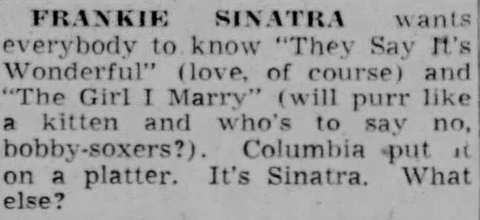
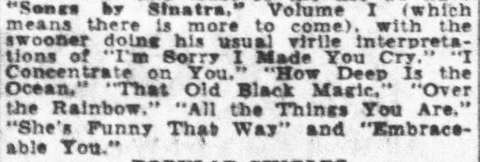
March 10 - THIS DATE IN SINATRA HISTORY
Undated materialFrom: 'Ed O'Brien' via Sinatraphiles <sinatraphiles@googlegroups.com> | Received: 2026-03-16
1-22-50
HCO1750 The Girl That I Marry
(I. Berlin )
(from Annie Get Your Gun)
Berlin Music, Inc. (ASCAP) 1946
Arranged & Conducted by Axel Stordahl
-1 (3:02) CD: Columbia Years 43-52 Vol. 4
CD: 09274 Greatest Hits-The Early Years, Vol. 1
CD: 44236 Sinatra Rarities
LP: CL-2474 Greatest Hits, The Early Years, Vol. 1
78: 50053
78: 36975
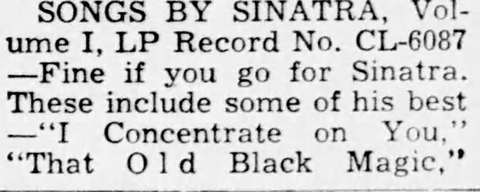
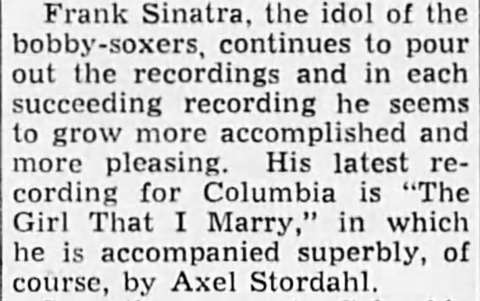
MARCH 12 THIS DATE IN SINATRA HISTORY
Undated materialFrom: 'Ed O'Brien' via Sinatraphiles <sinatraphiles@googlegroups.com> | Received: 2026-03-19
MARCH 14 THIS DATE IN SINATRA HISTORY
Undated materialFrom: 'Ed O'Brien' via Sinatraphiles <sinatraphiles@googlegroups.com> | Received: 2026-03-19
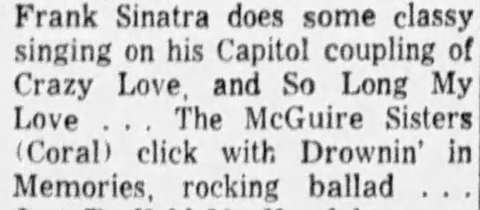
MARCH 16 THIS YEAR IN SINATRA HISTORY
Undated materialFrom: 'Ed O'Brien' via Sinatraphiles <sinatraphiles@googlegroups.com> | Received: 2026-03-19
HCO3225 A Fella With An Umbrella
(I. Berlin )
(from Easter Parade)
Irving Berlin Music (ASCAP) 1948
Arranged & Conducted by Axel Stordahl
-1 (2:31) CD: Columbia Years 43-52 Vol. 9
78: 38192
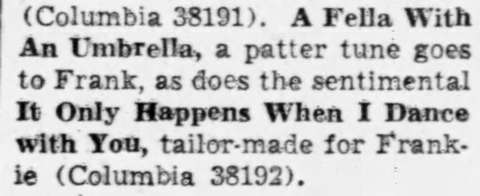
MARCH 20 - THIS DATE IN SINATRA HISTORY
Undated materialFrom: "scott@falseducks.com" <scott@falseducks.com> | Received: 2026-03-20
Re: MARCH 20 - THIS DATE IN SINATRA HISTORY
Undated materialFrom: 'Ed O'Brien' via Sinatraphiles <sinatraphiles@googlegroups.com> | Received: 2026-03-21
Veterans Memorial Coliseum, New Haven, Conn.
Orchestra Conducted By: Joe Parnello
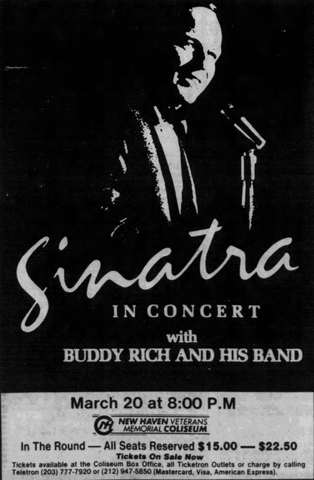
March 21 - THIS DATE IN SINATRA HISTORY
Undated materialFrom: Scott Henderson <scott@falseducks.com> | Received: 2026-03-21
Capitol Studio A, Hollywood
E35592 Yes Indeed
(Sy Oliver)
Arranged & Conducted by Billy May
CD: CDP 7-94520-2 Come Swing With Me
LP: SW1594 Come Swing With Me
E35593 American Beauty Rose
(David/Evans/ Altman)
Arranged by Heinie Beau
Conducted by Billy May
CD: C2 724383808922 The Complete Capitol Singles
CD: CDP 7-94520-2 Come Swing With Me
LP: SW1594 Come Swing With Me
45: 4615
E35594 I've Heard That Song Before
(J. Styne/S. Cahn)
Morley Music Co., Inc./Cahn Music Company (ASCAP)
Arranged & Conducted by Billy May
-5 (2:30) CD: C2 724383808922 The Complete Capitol Singles
CD: CDP 7-94520-2 Come Swing With Me (alt. take)
CD: C2-94777 The Capitol Years
LP: SW1594 Come Swing With Me
45: 4677
E35595 That Old Black Magic
(Harold Arlen/Johnny Mercer)
Arranged by Heinie Beau
Conducted by Billy May
CD: CDP 7-94520-2 Come Swing With Me
LP: SW1594 Come Swing With Me
Musicians - Trumpets: John Best, Conrad Gozzo, Emanuel Klein, Vito Mickey Mangano, Clarence Shorty Sherock, Ray Triscari, Stuart Williamson; Trombones: C.E. Carpenter, James Henderson, Lewis McCreary, Frank Rosolino, Thomas Shepard, Kenneth Shroyer, Kenneth
Trimble; Tuba: Phil Stephens; French Horns: James Decker, Wally Linder, Arthur Maebe, Claude Sherry; Piano: Bill Miller; Bass: Joe Comfort; Drums: Irv Cottler; Guitar: Bobby Gibbons; Harp: Veryle Brilhart
Session Producer: Dave Cavanaugh
March 21 - THIS DATE IN SINATRA HISTORY
Undated materialFrom: Scott Henderson <scott@falseducks.com> | Received: 2026-03-21
MARCH 21 THIS DATE IN SINATRA HISTORY
Undated materialFrom: 'Ed O'Brien' via Sinatraphiles <sinatraphiles@googlegroups.com> | Received: 2026-03-22
Capitol Studio A, Hollywood
E35592 Yes Indeed
(Sy Oliver)
Arranged & Conducted by Billy May
CD: CDP 7-94520-2 Come Swing With Me
LP: SW1594 Come Swing With Me
E35593 American Beauty Rose
(David/Evans/ Altman)
Arranged by Heinie Beau
Conducted by Billy May
CD: C2 724383808922 The Complete Capitol Singles
CD: CDP 7-94520-2 Come Swing With Me
LP: SW1594 Come Swing With Me
45: 4615
E35594 I've Heard That Song Before
(J. Styne/S. Cahn)
Morley Music Co., Inc./Cahn Music Company (ASCAP)
Arranged & Conducted by Billy May
-5 (2:30) CD: C2 724383808922 The Complete Capitol Singles
CD: CDP 7-94520-2 Come Swing With Me (alt. take)
CD: C2-94777 The Capitol Years
LP: SW1594 Come Swing With Me
45: 4677
E35595 That Old Black Magic
(Harold Arlen/Johnny Mercer)
Arranged by Heinie Beau
Conducted by Billy May
CD: CDP 7-94520-2 Come Swing With Me
LP: SW1594 Come Swing With Me
11-30-61
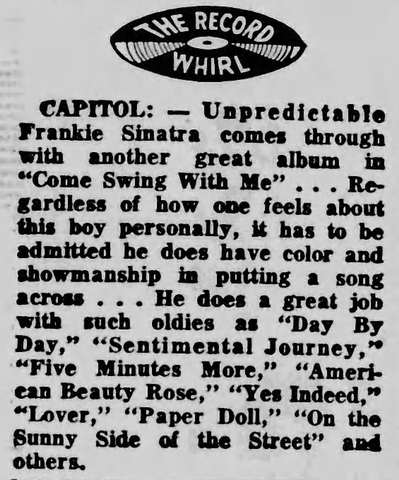
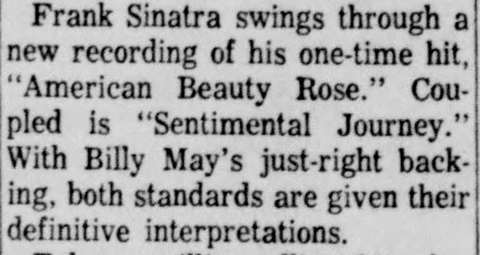
MARCH 21 THIS DATE IN SINATRA HISTORY
Undated materialFrom: 'Ed O'Brien' via Sinatraphiles <sinatraphiles@googlegroups.com> | Received: 2026-03-22
9-19-61
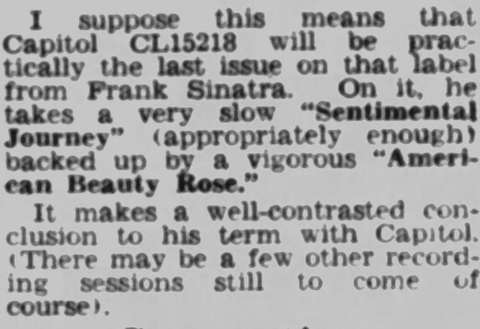
MARCH 21 THIS DATE IN SINATRA HISTORY
Undated materialFrom: 'Ed O'Brien' via Sinatraphiles <sinatraphiles@googlegroups.com> | Received: 2026-03-22
MARCH 21 THIS DATE IN SINATRA HISTORY
Undated materialFrom: 'Ed O'Brien' via Sinatraphiles <sinatraphiles@googlegroups.com> | Received: 2026-03-22
REXALL PRESENTS: DURANTE-MOORE SHOW
Network: CBSFriday evening
Time: 9:30 PM - 10:00 PM
Roy Bargy OrchestraCast: Suzanne Ellers - Candy CandidoAnnouncer: Howard Petrie
Guest: Frank SinatraFrank sings "Time After Time"Does a skit with Moore and Durante on the origin of the Mason-Dixon Line, culminating in a memorial version of "Anything You CanDo ( I Can Do Better* ) "* commercial release "Frank Sinatra Voice On The Air 1935-1955"
MARCH 21 THIS DATE IN SINATRA HISTORY
Undated materialFrom: 'Ed O'Brien' via Sinatraphiles <sinatraphiles@googlegroups.com> | Received: 2026-03-22
REXALL PRESENTS: DURANTE-MOORE SHOW
Network: CBS
Friday evening
Time: 9:30 PM - 10:00 PM
Roy Bargy Orchestra
Cast: Suzanne Ellers - Candy Candido
Announcer: Howard Petrie
Guest: Frank Sinatra
Frank sings "Time After Time"
Does a skit with Moore and Durante on the origin of the Mason-Dixon Line, culminating in a memorial version of "Anything You Can
Do ( I Can Do Better* ) "
* commercial release "Frank Sinatra Voice On The Air 1935-1955"
March 22 - THIS DATE IN SINATRA HISTORY
Undated materialFrom: Scott Henderson <scott@falseducks.com> | Received: 2026-03-22
Broward Center for the Performing Arts, FT. Lauderdale, Florida
Orchestra Conducted By: Frank Sinatra, Jr.
March 24 - THIS DATE IN SINATRA HISTORY
Undated materialFrom: 'Ed O'Brien' via Sinatraphiles <sinatraphiles@googlegroups.com> | Received: 2026-03-25
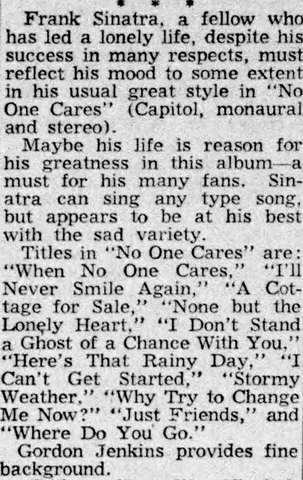
MARCH 25 - THIS DATE IN SINATRA HISTORY
Undated materialFrom: 'Ed O'Brien' via Sinatraphiles <sinatraphiles@googlegroups.com> | Received: 2026-03-26
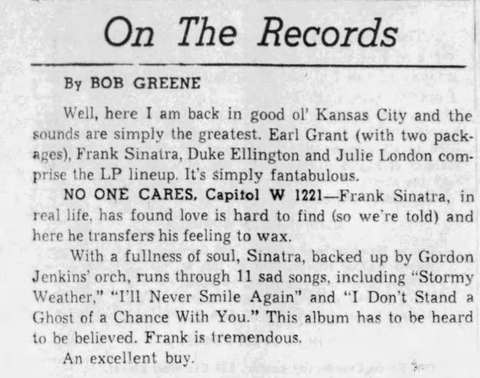
March 26 - THIS DATE IN SINATRA HISTORY
Undated materialFrom: 'Ed O'Brien' via Sinatraphiles <sinatraphiles@googlegroups.com> | Received: 2026-03-26
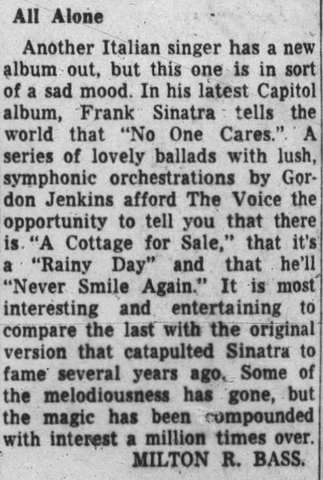
MARCH 27 THIS DATE IN SINATRA HISTORY
Undated materialFrom: 'Ed O'Brien' via Sinatraphiles <sinatraphiles@googlegroups.com> | Received: 2026-03-28
7-1-51
CO45186 Love Me
(V. Young/N. Washington)
Words & Music, Inc. (ASCAP) 1934
Arranged & Counducted by Axel Stordahl
-1 (3:08) CD: Columbia Years 43-52 Vol. 12
LP: C6X-40343 The Voice
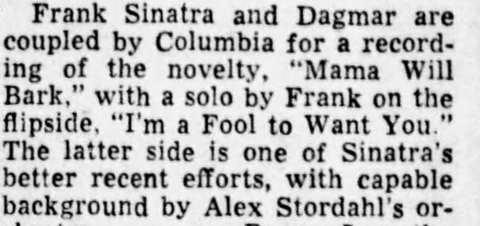

MARCH 29 - THIS DATE IN SINATRA HISTORY
Undated materialFrom: Scott Henderson <scott@falseducks.com> | Received: 2026-03-29
Frank Sinatra and Lauritz Melchoir, his guest last Wednesday (29) on the former's CBS show,
squared off. The Voice giving out with pop versions of tunes and the Metopera star holding the fort for
his forte. Good singing, good dialog, good show on program's ice-off in switch to New York.
MARCH 29 - THIS DATE IN SINATRA HISTORY
Undated materialFrom: 'Ed O'Brien' via Sinatraphiles <sinatraphiles@googlegroups.com> | Received: 2026-04-01
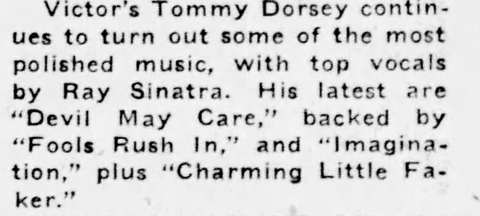
MARCH 31 THIS DATE IN SINATRA HISTORY
Undated materialFrom: 'Ed O'Brien' via Sinatraphiles <sinatraphiles@googlegroups.com> | Received: 2026-04-01
20TH CENTURY FOX
THREE COINS IN THE FOUNTAIN
Arranged and conducted by Victor Young
Wednesday
5 to 6:15 PM
Three Coins In The Fountain
DEMO RECORDING
20TH CENTURY HAS THE FILM'S ORIGINAL TITLE ON THE DISC
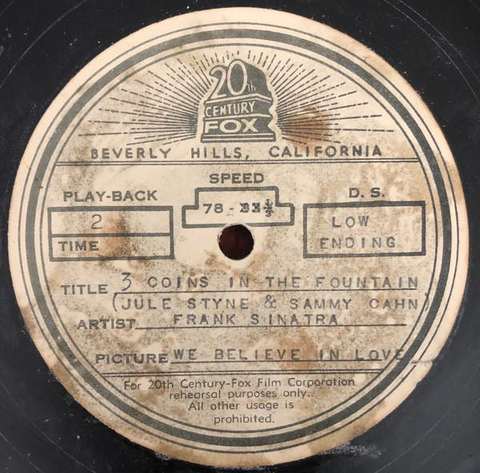
APRIL 2 THIS DATE IN SINATRA HISTORY
Undated materialFrom: 'Ed O'Brien' via Sinatraphiles <sinatraphiles@googlegroups.com> | Received: 2026-04-05
11395 I'm Walking Behind You
(Billy Reid)
Arranged & Conducted by Axel Stordahl
-5 (2:57) CD: CDP 7-48334-2 The Point of No Return
CD: C2 724383808922 The Complete Capitol Singles
45: 2450
5-17-53
5-3-53
5-9-53
7-4-53
5-4-53
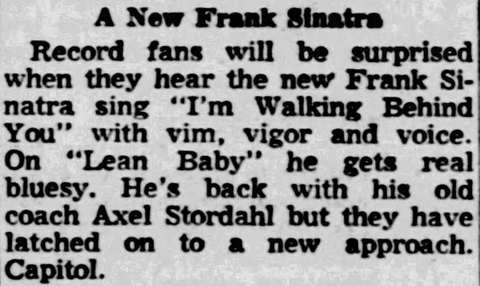
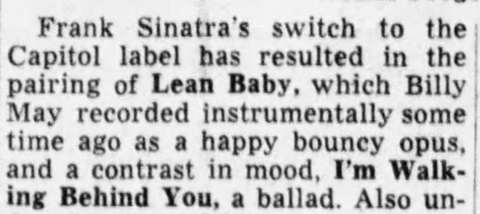
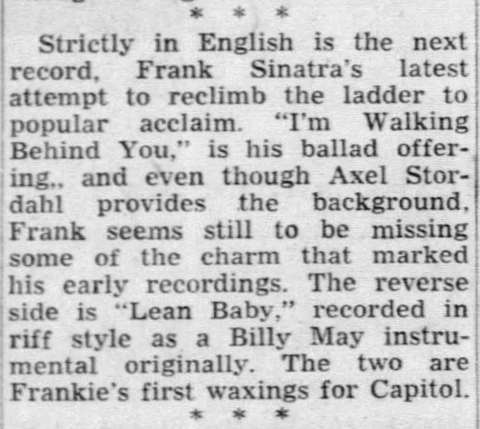
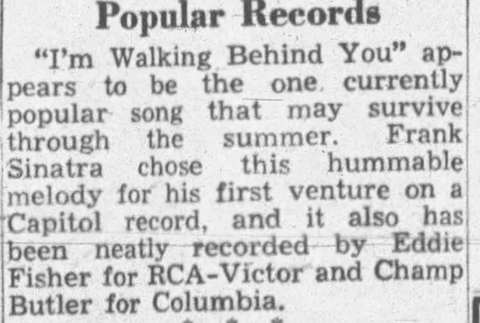
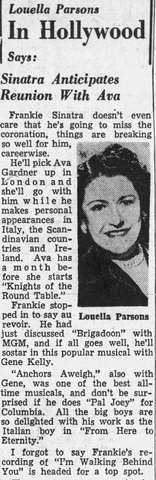
[Sinatra] [sinatraphiles] APRIL 9 - THIS DATE IN SINATRA HISTORY
Undated materialFrom: Scott Henderson <scott@falseducks.com> | Received: 2026-04-09
Sands, Las Vegas, Nevada (April 9-27)
Opening Act: Bennett & Patterson
Two shows a night
Frank did a big production number with the Copa Girls (11),
built around his hit recording
"Witchcraft."
Opening night, Frank was clad in a black suit and shirt with a
pink tie.
He invited to his opening night shows the great Sugar Ray
Robinson. Later they discussed possible roles for the Sugar
Man in Frank's forthcoming films.
Frank had heard Joe Bushkin's new song
"Tell Me Your Troubles."
he loved it and rehearsed it at the Sands.
There was a date set
aside for a recording at Capitol. For whatever reason, it was not
recorded.
Frank had laryngitis. He missed six shows from 4/13 to 15.
APRIL 9 THIS DATE IN SINATRA HISTORY
Undated materialFrom: 'Ed O'Brien' via Sinatraphiles <sinatraphiles@googlegroups.com> | Received: 2026-04-10
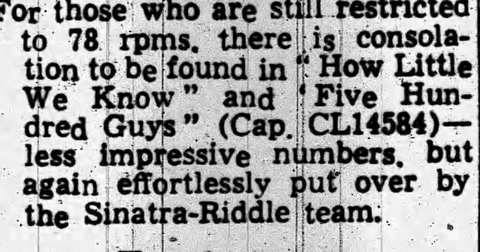
PROJECTS NEVER REALIZED
Undated materialFrom: 'Ed O'Brien' via Sinatraphiles <sinatraphiles@googlegroups.com> | Received: 2026-04-10
7-27-46
8-2-48
2-5-50
4-13-53
7-4-59
note: Frank had planned to do a live two album at set the Sands with Louis Armstrong and then the Christmas. His problems with Capitol that year killed both projects
Ed
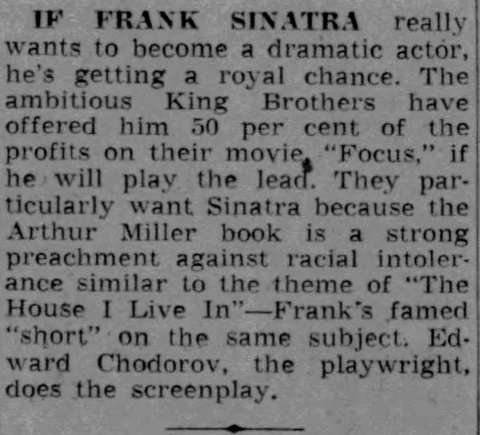
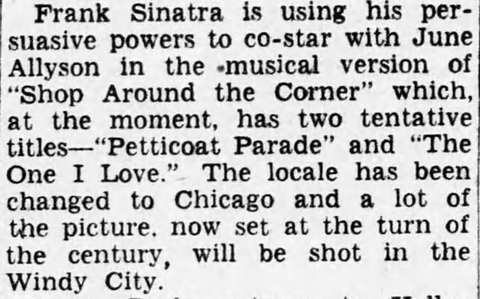
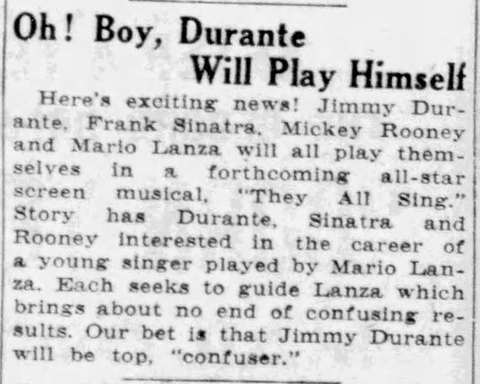
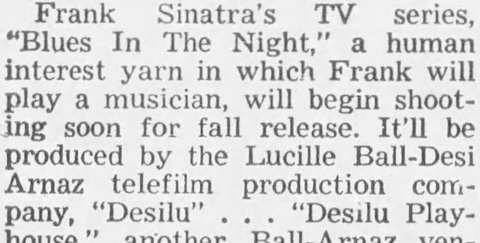
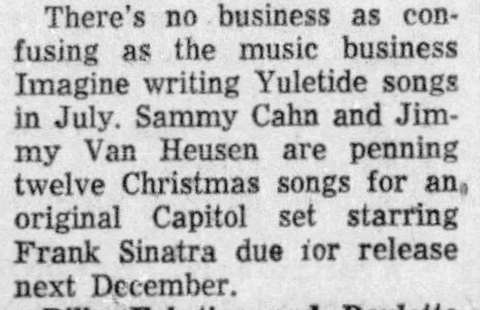
APRIL 11 - THIS DATE IN SINATRA HISTORY
Undated materialFrom: Scott Henderson <scott@falseducks.com> | Received: 2026-04-11
.
The LP peaked at #18 and was only on the charts for 16 weeks. Only
three previous Sinatra albums had failed to crack the Top 10 Billboard
charts, going back to 1946.(Christmas album from Capitol, two LP
compilation set from Columbia and "PONR") But time has been
very good to this great work. Musicians who worked on many Sinatra
projects in the 50's and 60's consider "Swingin' Brass" to be one
of his very best efforts.
GUY STEELE:
I interviewed Neal Hefti a few years ago and he talked about arranging
"Swingin' Brass"...he said after the tunes on the first night were
completed, Sinatra said, "Let's finish it tomorrow night."
Because of this,
Hefti had to work all night and most of the following day to get all of the
charts completed in time for the session..and, and everyone knows, they
turned out magnificently! I'm amazed at the talent of the arrangers who've
worked with Sinatra that they could complete such high quality work in such
a short time!
Ed added:
I have managed to obtain information from a number of sources
concerning the two sessions for this album. Pete Levinson was at both
sessions. He told me Hefti had all but three arrangements done when
it was decided that Frank would eliminate the third night. The work was
done the day of the second session at Neal's copyist's office. As soon
as he finished a chart the parts for each individual instrument were
taken and copied to separate sheets. Arnold Shaw wrote that Hefti
then rented a hotel room so he could freshen up before the evening's
work got underway. Pete told me it would have been, in his opinion,
an even better album if Frank had laid down four tracks each session
over the course of three evenings.
You make a great point regarding the genius of the
marvelous arrangers Frank worked with through the years. Alan
Livingston was in awe of Billy May's ability to pen brilliant charts
as they rode into L.A. for sessions at Capitol. Livingston could
not recall one chart that wasn't of a very high order. Vinnie Falcone
and John Brady both remembered Costa running out into the hall
and quickly revising or doing a complete rewrite during a session.
Nelson Riddle was convinced "Lush Life" would have been recorded
if he had been at the famous 5-29-58 session. He would have
quickly corrected the "clydes" that Frank discovered.
Amazingly
talented men.
Danny Faux:
" The Thin One and Hefti ".....Great allbum title!
Ed O'Brien:
The cover photo was great but Hefti was not exactly well-known outside the jazz world of 1962.
Later he insisted on equal billing for the Sinatra-Basie album. When Reprise refused, he
insisted that no mention of his contribution be acknowledged on the album. Hefti never worked
with Frank again. In "101," I refer to him as Frank's secret weapon in the early 1960s. A great
many of his charts would remain in the Sinatra book for the next 30 years. When I interviewed
Hefti, he told me he gave away his copies of both albums. Best part of our discussion was
Hefti's admiration of Nelson Riddle. Referred to him as his "hero."
APRIL 13 THIS DATE IN SINATRA HISTORY
Undated materialFrom: 'Ed O'Brien' via Sinatraphiles <sinatraphiles@googlegroups.com> | Received: 2026-04-13
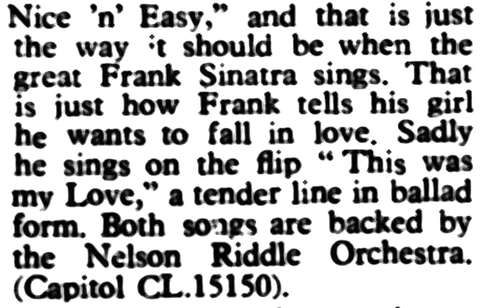
APRIL 14 - THIS DATE IN SINATRA HISTORY
Undated materialFrom: 'Ed O'Brien' via Sinatraphiles <sinatraphiles@googlegroups.com> | Received: 2026-04-16
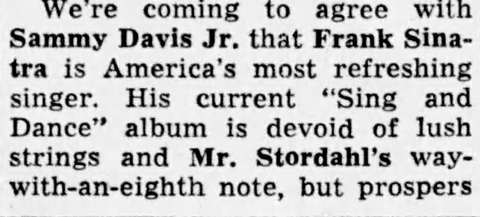
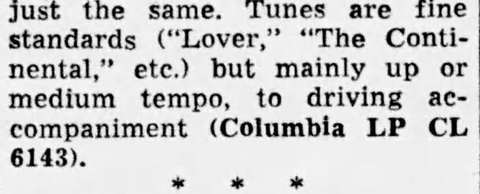
APRIL 14 - THIS DATE IN SINATRA HISTORY
Undated materialFrom: 'Ed O'Brien' via Sinatraphiles <sinatraphiles@googlegroups.com> | Received: 2026-04-16
HX3320 Tell Her (You Love Her Each Day) w/Chorus
(Gil Ward/Charles Watkins)
Unichappell Music/Oracle Music (BMI)
Arranged by Ernie Freeman
Conducted by Gordon Jenkins
(2:41) CD: 46013-2 The Complete Reprise Studio Recordings Disc 9
LP: FS1025 Frank Sinatra's Greatest Hits
45: 0373
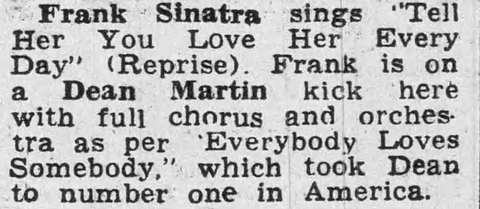
APRIL 14 - THIS DATE IN SINATRA HISTORY
Undated materialFrom: 'Ed O'Brien' via Sinatraphiles <sinatraphiles@googlegroups.com> | Received: 2026-04-16
Hi Carl,
Wonderful photos. I've seen one of the group shots with Mansfield, Marx and Skelton. But the others are new to me. Behind Frank you see Ralph Pena on bass. Al Viola and Bill Miller are in some of the other shots. Frank would fly out the following day( Sunday) to Japan. It was the first stop on his extensive world tour. Bob Hope saw Frank off at the L.A. airport. Ed
Re: APRIL 14 - THIS DATE IN SINATRA HISTORY
Undated materialFrom: Kenny Lucas <kennylucas589@gmail.com> | Received: 2026-04-18
Re: APRIL 14 - THIS DATE IN SINATRA HISTORY
Undated materialFrom: Kenny Lucas <kennylucas589@gmail.com> | Received: 2026-04-18
HX3320 Tell Her (You Love Her Each Day) w/Chorus
(Gil Ward/Charles Watkins)
Unichappell Music/Oracle Music (BMI)
Arranged by Ernie Freeman
Conducted by Gordon Jenkins
(2:41) CD: 46013-2 The Complete Reprise Studio Recordings Disc 9
LP: FS1025 Frank Sinatra's Greatest Hits
45: 0373
Re: APRIL 14 - THIS DATE IN SINATRA HISTORY
Undated materialFrom: Kenny Lucas <kennylucas589@gmail.com> | Received: 2026-04-18
Hi Carl,
Wonderful photos. I've seen one of the group shots with Mansfield, Marx and Skelton. But the others are new to me. Behind Frank you see Ralph Pena on bass. Al Viola and Bill Miller are in some of the other shots. Frank would fly out the following day( Sunday) to Japan. It was the first stop on his extensive world tour. Bob Hope saw Frank off at the L.A. airport. Ed
APRIL 18 THIS DATE IN SINATRA HISTORY
Undated materialFrom: Scott Henderson <scott@falseducks.com> | Received: 2026-04-18
Phila, May 3rd. Tommy Dorsey proved to be box-office dynamite April 18th at
the third annual dance, sponsored by the Philly Press Photographers Association,
at the Bellevue-Stafford Hotel. While only 1,700 tickets were taken in at the door,
a total of 2,100 were sold at the $2.50 figure per single admission, hit a heavy
gross of $3,195.
Billboard
APRIL 19 - THIS DATE IN SINATRA HISTORY
Undated materialFrom: 'Ed O'Brien' via Sinatraphiles <sinatraphiles@googlegroups.com> | Received: 2026-04-20
Fw: REVIEW: SEPTEMBER OF MY YEARS STEREO REVIEW NOVEMBER 1965
Undated materialFrom: 'Ed O'Brien' via Sinatraphiles <sinatraphiles@googlegroups.com> | Received: 2026-04-23
1965 Hollywood
H3352 It Was A Very Good Year
(Ervin Drake)
The Songwriters Guild (ASCAP)
Arranged & Conducted by Gordon Jenkins
-7 (4:26) CD: 46013-2 The Complete Reprise Studio Recordings Disc 9
CD: 9-26340-2The Reprise Collection
CD: 1014-2 September Of My Years
LP: FS1014 September Of My Years
45: 0429
H3353 The Man In The Looking Glass
(Bart Howard)
WB Music Corp. (ASCAP)
Arranged & Conducted by Gordon Jenkins
-2 (3:26) CD: 46013-2 The Complete Reprise Studio Recordings Disc 9
CD: 1014-2 September Of My Years
LP: FS1014 September Of My Years
H3354 This Is All I Ask
(Gordon Jenkins)
Ann-Rachel Music Corp./EMI Robbins Catalog Inc. (ASCAP) Arranged & Conducted by Gordon Jenkins
-5 (3:03) CD: 46013-2 The Complete Reprise Studio Recordings Disc 9
CD: 9-26340-2The Reprise Collection
CD: 1014-2 September Of My Years
LP: 1014 September Of My Years
H3355 It Gets Lonely Early
(Jimmy Van Heusen/Sammy Cahn)
WB Music Corp./The Songwriters Guild (ASCAP)
Arranged & Conducted by Gordon Jenkins
-12 (3:19) CD: 46013-2 The Complete Reprise Studio Recordings Disc 9
CD: 1014-2 September Of My Years
LP: FS1014 September Of My Years
H3302 How Old Am I?
(Gordon Jenkins)
WB Music Corp. (ASCAP)
Arranged & Conducted by Gordon Jenkins
(3:34) CD: 46013-2 The Complete Reprise Studio Recordings Disc 9
CD: 1014-2 September Of My Years
LP: FS1014 September Of My Years
HI-FI STEREO REVIEW
NOVEMBER 1965
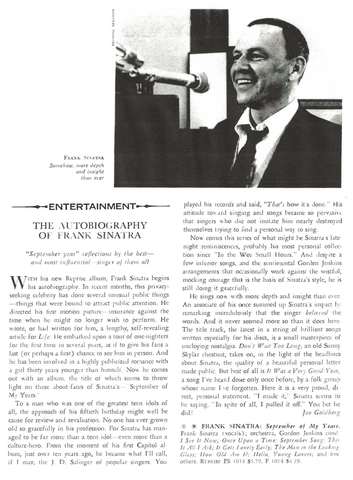
[image referenced in source but could not be recovered]
APRIL 23 THIS DATE IN SINATRA HISTORY
Undated materialFrom: 'Ed O'Brien' via Sinatraphiles <sinatraphiles@googlegroups.com> | Received: 2026-04-25
BS048941 It's A Lovely Day Tomorrow
(from the musical production Louisiana Purchase)
(Irving Berlin)
Irving Berlin Music Co. (ASCAP)
Arranged by Axel Stordahl
-1 (2:27) CD: 07863 66353-2 "The Song Is You" 5CD set Vol 1.
CD: RCA 9679-2-R
LP: SD 1000
78: 26596
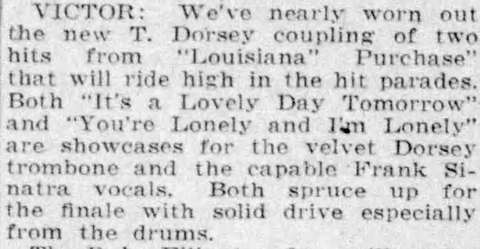
April 25 - THIS DATE IN SINATRA HISTORY
Undated materialFrom: Scott Henderson <scott@falseducks.com> | Received: 2026-04-25
show. Ken Lane Singers joined him on
that version.
The additional songs from the AFRS version
were lifted from the 5-9-45 show. Lou Crosby was
the announcer for most of the shows. The series
ran from 1-3-45 to 5-30-45. Frank appeared on 19
of them. He missed the 2/7, 5/23 and 5/30 episodes.
Dinah Shore subbed on the 2/7 and 5/23. Ginny Simms
concluded the series run on 5/30.
Note: I was wrong about the Max Factor version
not being in circulation. There is a mint copy.
I also guessed wrong on the added song AFRS
put in their version of the broadcast. They lifted
"Lulu's Back In Town" from the 5-9-45 show.
Frank sang "Candy" on the 3-28 and 4-25 shows.
Lou Crosby was the announcer and Bill Goodwin
provided comedy relief.
Ed
APRIL 25 THIS DATE IN SINATRA HISTORY
Undated materialFrom: 'Ed O'Brien' via Sinatraphiles <sinatraphiles@googlegroups.com> | Received: 2026-04-26
8-3-47
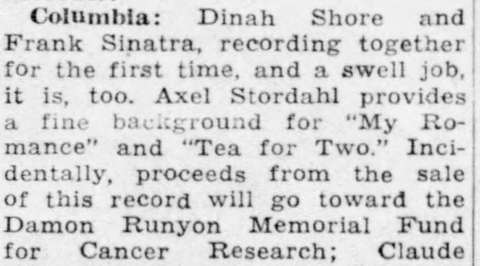
SINATRA SOUVENIR SONG FOLIO PUBLISHED IN AUSTRALIA DECEMBER 1946
Undated materialFrom: 'Ed O'Brien' via Sinatraphiles <sinatraphiles@googlegroups.com> | Received: 2026-04-27

SOME BUMPS IN THE ROAD FOR A COUPLE OF VERY CLOSE FRIENDSHIPS
Undated materialFrom: 'Ed O'Brien' via Sinatraphiles <sinatraphiles@googlegroups.com> | Received: 2026-04-27
Session in question took place 3./10-11/46. Seven songs were laid down.
2-5-50
Recently read some private musings regarding Evans' tendency to exaggerate
Frank's accomplishments. Did not sit well with Sinatra and it strained the long time friendship.
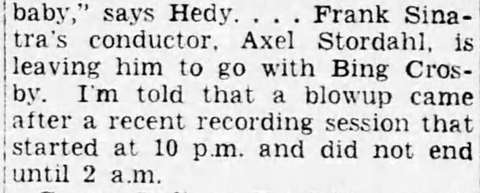
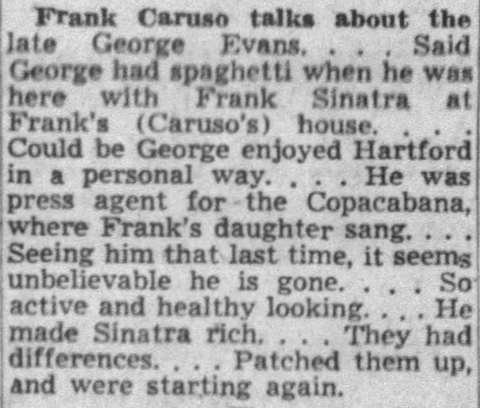
frank vs bing
Undated materialFrom: 'Ed O'Brien' via Sinatraphiles <sinatraphiles@googlegroups.com> | Received: 2026-04-27
2-2-44
9-13-59
note: Sinatra would remain one of the truly
great mega stars in the 1960s. Bing
would go into semi-retirement.
Ed
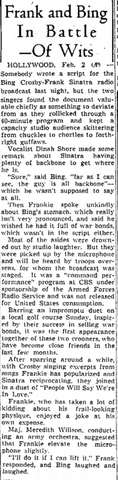

]April 29 - THIS DATE IN SINATRA HISTORY
Undated materialFrom: 'Ed O'Brien' via Sinatraphiles <sinatraphiles@googlegroups.com> | Received: 2026-04-30
10-11-57
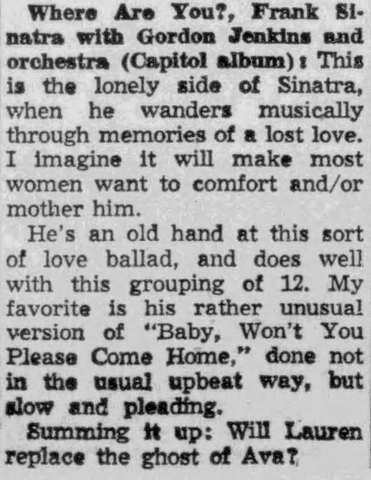
]April 29 - THIS DATE IN SINATRA HISTORY
Undated materialFrom: 'Ed O'Brien' via Sinatraphiles <sinatraphiles@googlegroups.com> | Received: 2026-04-30
10-13-63

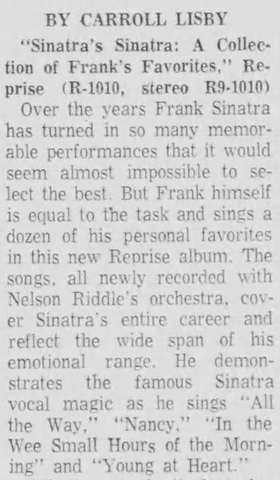
problems with my mail
Undated materialFrom: smashiah@netvision.net.il | Received: 2026-05-06
Hi Scott
I had some problems starting monday with the group mails to my above address.
I had to change my password yesterday.
Pls open this address
smashiah@netvision.net.il <mailto:smashiah@netvision.net.il>
to mails from the group.
Regards
shemmy
שמי משיח
ש.משיח - יועצים לאקוסטיקה בע"מ
היוזמה 3, בניין כרמלים, טירת כרמל 3903203
נייד: 052-3336063
טל: 04-8580044
פקס: 04-8580546
אתר: <http://s-mashiah.co.il> http://s-mashiah.co.il
Re: [sinatraphiles] MAY 1 - THIS DATE IN SINATRA HISTORY
Undated materialFrom: 'Ed O'Brien' via Sinatraphiles <sinatraphiles@googlegroups.com> | Received: 2026-05-08
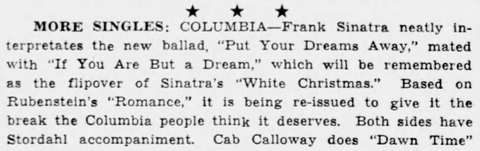
Sinatra in cinema Tamar
Undated materialFrom: shemmy Mashiah <smashiah@netvision.net.il> | Received: 2026-05-08
A clean picture
נשלח מה-iPhone שלי
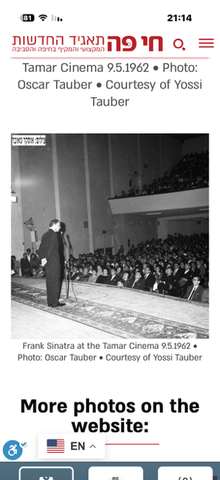
Re: [sinatraphiles] MAY 6 - THIS DATE IN SINATRA HISTORY
Undated materialFrom: 'Ed O'Brien' via Sinatraphiles <sinatraphiles@googlegroups.com> | Received: 2026-05-09
7-7-49
HCO3749 (Just One Way To Say) I Love You
(I Berlin )
(from Miss Liberty)
Irving Berlin Music (ASCAP) 1949
Arranged & Conducted by Axel Stordahl
-1 (2:30) CD: Columbia Years 43-52 Vol. 11
78: 38513
Violins: W. Callies, S. Cytron, D. Frisina, G. Kast, M. Kellner, S. Middleman, R. Polikian, M. Russel, G. Vinci; Violas: M. Perlmutter, G. White; Cellos: C. Bernard, J. Sewell; Saxes: D. Bonnee, M. Cohan, A. Gershunoff, B. Russin, F. Stulce; Horns: V. De Rosa; Piano: M. Mclntyre; Guitar: A. Reuss; Bass: P. Stephens; Drums: R. Hagan; Harp: A. Mason
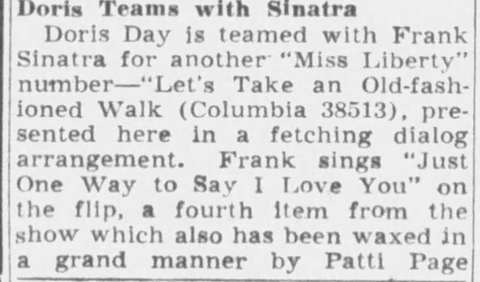
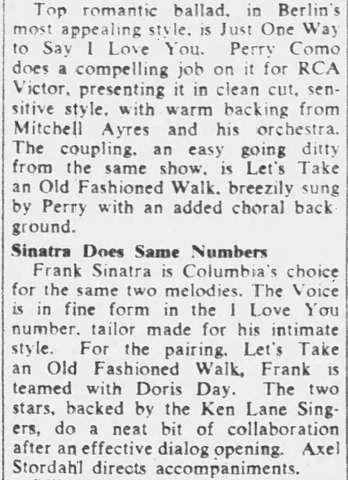
May 9 - THIS DATE IN SINATRA HISTORY
Undated materialFrom: Scott Henderson <scott@falseducks.com> | Received: 2026-05-09
Ford Station Wagon with an elaborate
exterior wood design. His week at the Chicago Theatre
(May 17 thru 23) grossed $90,000. He missed
two shows opening night because of delayed
plane flight, but made up for it by doing seven
shows a day for the rest of the week. His
Old Gold show originated from the two cities
on May 15 and 22.
MAY 10 THIS DATE IN SINATRA HISTORY
Undated materialFrom: 'Ed O'Brien' via Sinatraphiles <sinatraphiles@googlegroups.com> | Received: 2026-05-10
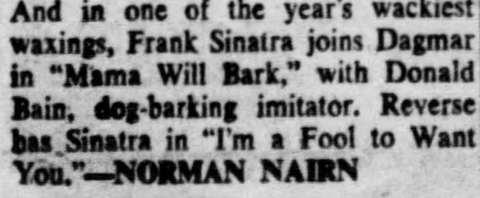
MAY 10 THIS DATE IN SINATRA HISTORY
Undated materialFrom: 'Ed O'Brien' via Sinatraphiles <sinatraphiles@googlegroups.com> | Received: 2026-05-10
note: Song was not done on the show.
MAY 9 THIS DATE IN SINATRA HISTORY
Undated materialFrom: 'Ed O'Brien' via Sinatraphiles <sinatraphiles@googlegroups.com> | Received: 2026-05-10
Frank Sinatra Show
Network: ABC
Show #28
Sponsors: Chesterfield Cigarettes, Bulova Watch Company
Guests: Ella Fitzgerald
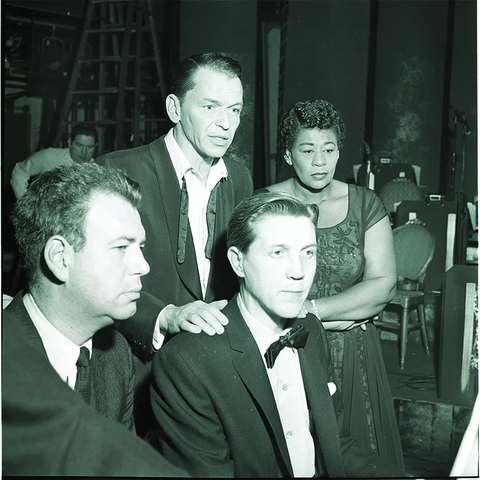
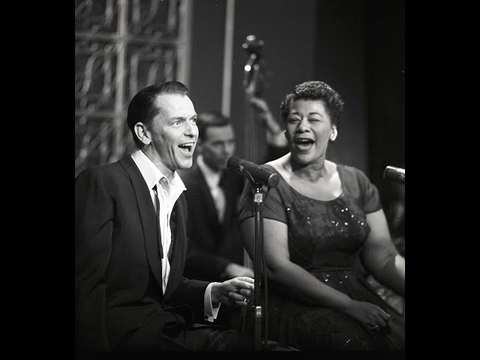
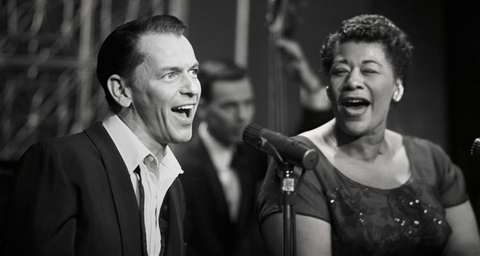
Re: Something from 9th September 1981 Carnegie Concert?
Undated materialFrom: Scott Henderson <dmarc-noreply@freelists.org> | Received: 2026-05-10
Hi Terence,
This Freelist group closed down about a year ago. It was migrated over to Google Groups. I can send you an invitation to that group. As for your question, I don't have the September 9, 1981 concert.
Scott
At 03:25 AM 5/10/2026, you wrote:
>Would someone be willing to share Frank's
>*introduction* to the song "Something" on his
>9th September Carnegie Hall concert?
>
>I'm trying to track down the source of the
>infamous quote that "Something" was his "favorite Lennon-McCartney song." >
>As far as I can see, he always credited it to
>George Harrison in concerts. Nevertheless, three
>newspapers report that he introduced it as "my
>personal tribute to Mr Lennon and Mr McCartney" at that concert. >
>I have clippings from:
>
>* New York Times. 10 Sep 1981
>*Â Daily Express. 14 September 1981
>* Anchorage Daily Times 15 Sep 1981
>
>But I'd really like to hear his introduction myself.
>
>I have a copy of the concert from the 10th where
>he describes it as "A beautiful song by George Harrison."
>
>Thanks for any help you can provide.
>
>T
Something from 9th September 1981 Carnegie Concert?
Undated materialFrom: Terence Eden <dmarc-noreply@freelists.org> | Received: 2026-05-10
Would someone be willing to share Frank's *introduction* to the song "Something" on his 9th September Carnegie Hall concert?
I'm trying to track down the source of the infamous quote that "Something" was his "favorite Lennon-McCartney song."
As far as I can see, he always credited it to George Harrison in concerts. Nevertheless, three newspapers report that he introduced it as "my personal tribute to Mr Lennon and Mr McCartney" at that concert.
I have clippings from:
* New York Times. 10 Sep 1981
* Daily Express. 14 September 1981
* Anchorage Daily Times 15 Sep 1981
But I'd really like to hear his introduction myself.
I have a copy of the concert from the 10th where he describes it as "A beautiful song by George Harrison."
Thanks for any help you can provide.
T
Something from 9th September 1981 Carnegie Concert?
Undated materialFrom: "terence.eden" <terence.eden@shkspr.mobi> | Received: 2026-05-11
Would someone be willing to share Frank's *introduction* to the song "Something" on his 9th September Carnegie Hall concert?
I'm trying to track down the source of the infamous quote that "Something" was his "favorite Lennon-McCartney song."
As far as I can see, he always credited it to George Harrison in concerts. Nevertheless, three newspapers report that he introduced it as "my personal tribute to Mr Lennon and Mr McCartney" at that concert.
I have read reports from:
* New York Times. 10 Sep 1981
* Daily Express. 14 September 1981
* Anchorage Daily Times 15 Sep 1981
But I'd really like to hear his introduction myself.
I have a copy of the concert from the 10th where he describes it as "A beautiful song by George Harrison."
Thanks for any help you can provide. Let me know if you'd like to see the newspaper clippings.
Terence
MAY 11 THIS DATE IN SINATRA HISTORY
Undated materialFrom: 'Ed O'Brien' via Sinatraphiles <sinatraphiles@googlegroups.com> | Received: 2026-05-12
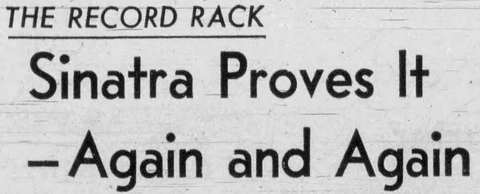
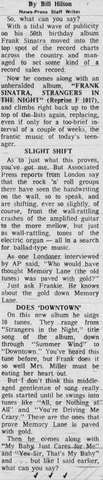
MAY 13 THIS DATE IN SINATRA HISTORY
Undated materialFrom: 'Ed O'Brien' via Sinatraphiles <sinatraphiles@googlegroups.com> | Received: 2026-05-14
5-13-51
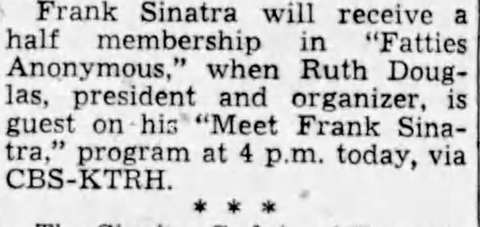
Fw: COME SWING WITH ME ALTERNATE COVER
Undated materialFrom: 'Ed O'Brien' via Sinatraphiles <sinatraphiles@googlegroups.com> | Received: 2026-05-18
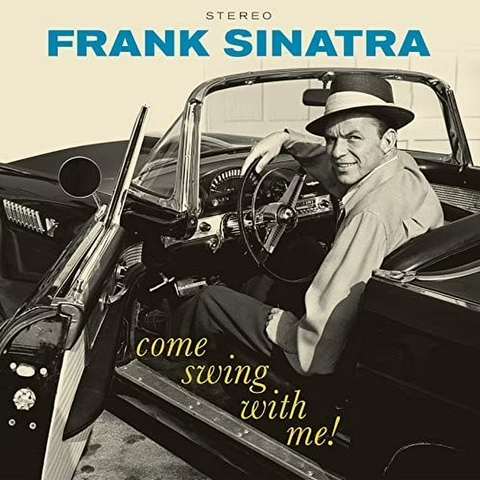
Fw: PHOTOS FROM SWING ALONG WITH ME SESSION
Undated materialFrom: 'Ed O'Brien' via Sinatraphiles <sinatraphiles@googlegroups.com> | Received: 2026-05-18
Alternate cover
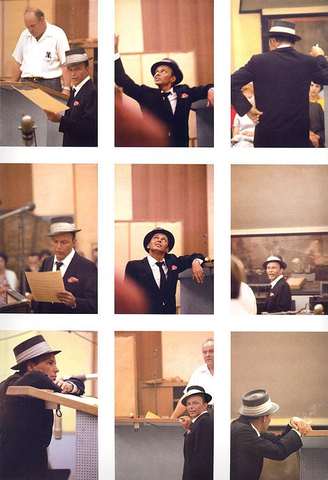
Re: COME SWING WITH ME ALTERNATE COVER
Undated materialFrom: "'jharrin769@aol.com' via Sinatraphiles" <sinatraphiles@googlegroups.com> | Received: 2026-05-19
Ed
For some reason I’ve been denied permission to remain a member of the group. Could you help me return as a member. Tyvm.
John Harrington
Sent from the all new AOL app for iOS
On Monday, May 18, 2026, 3:12 PM, 'Ed O'Brien' via Sinatraphiles <sinatraphiles@googlegroups.com> wrote:
Blame it on my youth
Undated materialFrom: shemmy Mashiah <smashiah@netvision.net.il> | Received: 2026-05-21
“ Blame it on my youth” is a great sinatra intimate ballad and one of my favorites . Am listening now to Chris Connor’s version from”This is Chris”
Very similiar and superb version.
I love Chris Connor’s.
Any comments?
Shemmy
נשלח מה-iPhone שלי
May 22 - THIS DATE IN SINATRA HISTORY
Undated materialFrom: "scott@falseducks.com" <scott@falseducks.com> | Received: 2026-05-22
Golden Nugget, Las Vegas , Nevada
Bill Miller conducting
1. Just The Way You Are
2. Witchcraft
3. Summer Wind
4. Maybe This Time
5. Bewitched
6. Something
7. What Are You Doing The Rest Of Your Life
8. Street Of Dreams
9. When Joanna Loved Me B. May arg.
10. How Do You Keep The Music Playing
F.S. did not perform "Rest Of Your Life" or "Music Playing."
May 22 - THIS DATE IN SINATRA HISTORY
Undated materialFrom: "scott@falseducks.com" <scott@falseducks.com> | Received: 2026-05-22
Golden Nugget, Las Vegas , Nevada
Bill Miller conducting
1. Just The Way You Are
2. Witchcraft
3. Summer Wind
4. Maybe This Time
5. Bewitched
6. Something
7. What Are You Doing The Rest Of Your Life
8. Street Of Dreams
9. When Joanna Loved Me B. May arg.
10. How Do You Keep The Music Playing
F.S. did not perform "Rest Of Your Life" or "Music Playing."
Frank through the years
Undated materialFrom: 'Ed O'Brien' via Sinatraphiles <sinatraphiles@googlegroups.com> | Received: 2026-05-23
10-22-39
12-26-43
Posted this info before, but this column offers more details
2-9-44
This is nonsense. Song was a moderate hit.
10-12-44
5-27-50
2-5-52
5-15-61
Date of dinner was changed to 5-27-61. Jerry Lewis did 30 minutes of his
Vegas act. Venue was switched to N.Y.C. According to Daily News, Frank
was at the dinner.
10-15-65
3-18-84
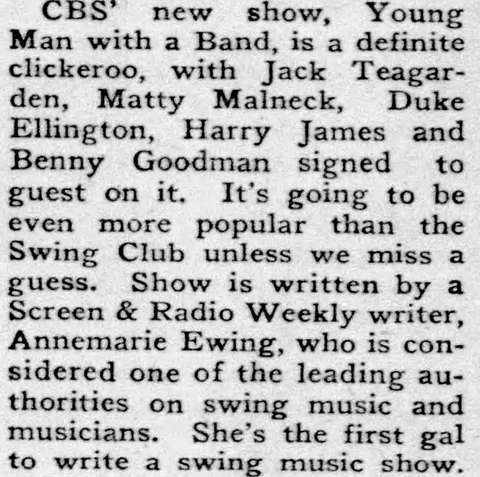
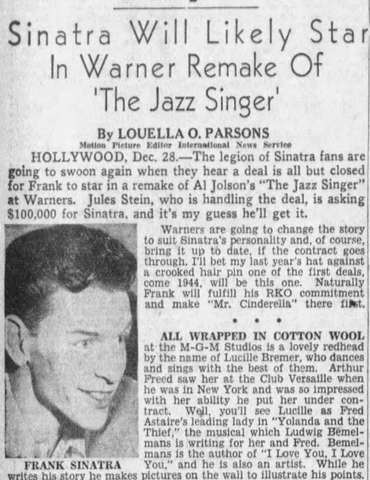
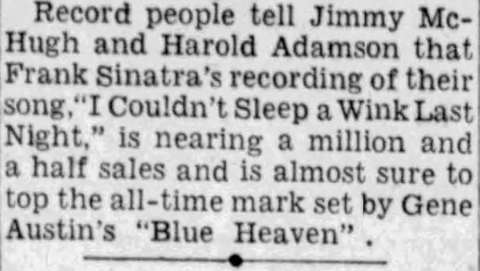
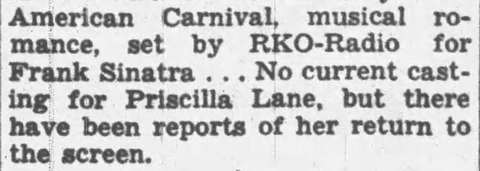
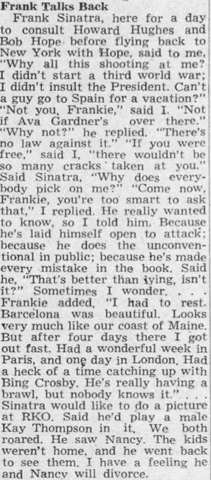
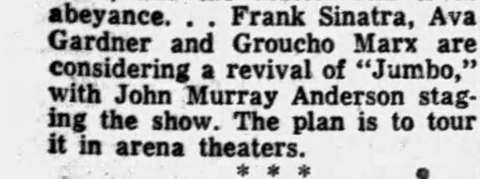
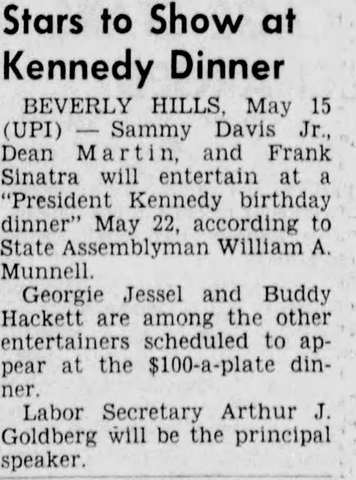
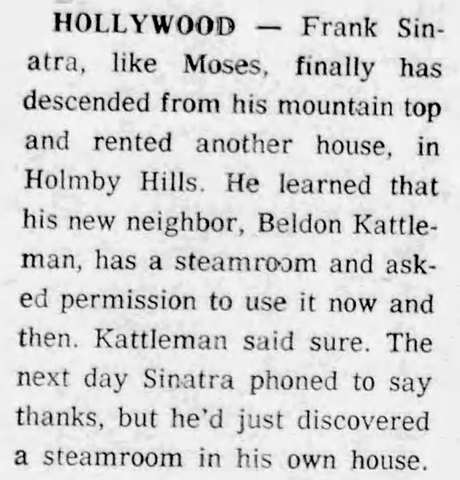
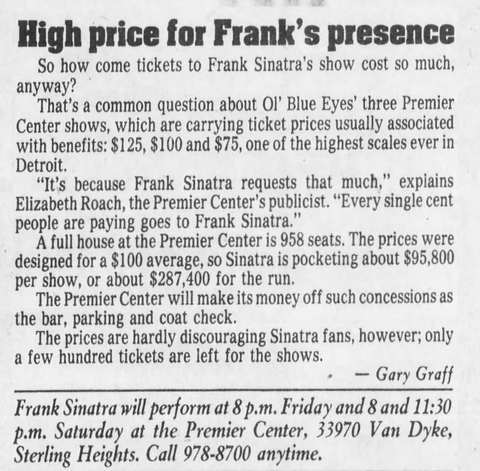
MAY 23 THIS DATE IN SINATRA HISTORY
Undated materialFrom: 'Ed O'Brien' via Sinatraphiles <sinatraphiles@googlegroups.com> | Received: 2026-05-25
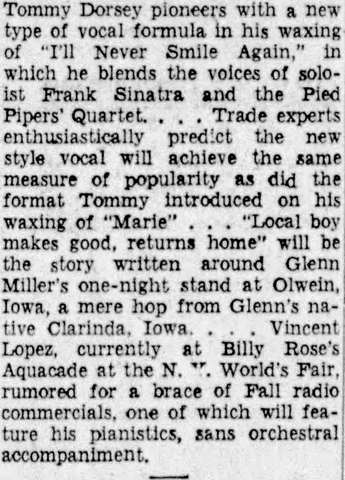
test
Undated materialFrom: "smashiah@netvision.net.il" <smashiah@netvision.net.il> | Received: 2026-05-25
שמי משיח
ש.משיח - יועצים לאקוסטיקה בע"מ
היוזמה 3, בניין כרמלים, טירת כרמל 3903203
נייד: 052-3336063
טל: 04-8580044
פקס: 04-8580546
אתר: http://s-mashiah.co.il
test
Undated materialFrom: smashiah@netvision.net.il | Received: 2026-05-25
שמי משיח
ש.משיח - יועצים לאקוסטיקה בע"מ
היוזמה 3, בניין כרמלים, טירת כרמל 3903203
נייד: 052-3336063
טל: 04-8580044
פקס: 04-8580546
אתר: <http://s-mashiah.co.il> http://s-mashiah.co.il
Re: interesting photo of 1939 Sinatra
Undated materialFrom: scott@falseducks.com | Received: 2026-06-01
I found this:
Above left: Pick-A-Rib restaurant – 119 West 52nd St. in Manhattan. This was Harry Goodman’s restaurant, a gathering place for musicians, named for a recording Benny made on December 29, 1938.)
Came across this photo. Obviously from 1939 but not sure of the location. Any thoughts?
One comment to the photo said
Taken at Harry Goodman's PICK A RIB 1939
Scott
[image referenced in source but could not be recovered]
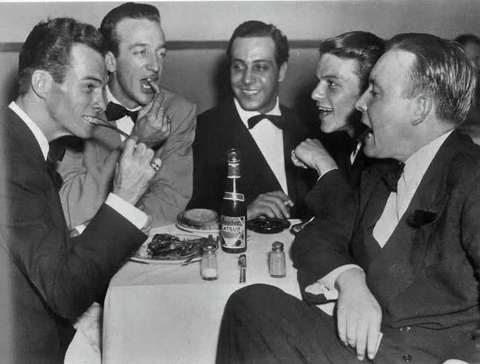
interesting photo of 1939 Sinatra
Undated materialFrom: scott@falseducks.com | Received: 2026-06-01
Came across this photo. Obviously from 1939 but not sure of the location. Any thoughts?
One comment to the photo said
Taken at Harry Goodman's PICK A RIB 1939
Scott
Sinatra the Musical London
Undated materialFrom: Richard Cook <cook879@hotmail.co.uk> | Received: 2026-06-04
Three years ago I sent along my notes about the first preview of Sinatra the Musical in Birmingham.
Yesterday, I caught the first preview of the new West End production. Despite the sense from the marketing that this is a brand new show, it is essentially the same production I wrote about in detail back then (I think I maybe sent the full breakdown of plot and songs).
Obviously the plot is the same, the script seemed largely the same, the sets all looked the same, the music and orchestrations the same, the crew largely the same, and a lot of the cast, including the two leading ladies, are the same. That being said, looking at my notes they have re-worked the first 15 minutes or so of the show, and dropped some scenes.
What has changed:
A New Frank
Joel Harper-Jackson takes on the Frank character, and I think he does a great job with it. (and I say character, as I think he is wisely avoiding doing too much of a 'Frank Sinatra impersonation')
A New Dolly
Jenna Russell takes on Dolly Sinatra. An interesting choice, and coincidentally it was announced while I was watching Jenna give a fantastic performance in "The Unlikely Pilgrimage of Harold Fry", for which she received a Olivier nomination. She has comparatively very little to do in the Dolly role besides some witty remarks, and Dolly actually sings less now than in Birmingham.
Song changes
"Oh Look At Me Now" is basically dropped (they used it in a scene transition, but not Frank singing it - Frank now sings "All of Me" a lot more instead of this song).
"Love and Marriage" is dropped.
"The Hucklebuck" is added - Frank interrupts a Mitch Miller recording session of the song and says something about "what are you making these poor people sing?"
"My Way" is added (I suppose a better way to start the second half than Frankie Laine's "Mule Train", but not really adding anything story-wise - he sings a bit of "My Way", and then the show goes on - I guess they just realised they needed to slot it in somewhere!)
Scene changes
Comparing to my notes (of course, some of the changes to songs/scenes may have occurred during the Birmingham run):
The opening has been re-framed, now starting with the Tommy Dorsey band and Frank announcing he's quitting after a song ("All of Me"). Then goes onto a revised Benny Goodman-Paramount scene.
The scene at the Sinatra family home now starts with Lee Mortimer interviewing them ("Love and Marriage" scene is gone). They have dropped the extended "That's All" flashback sequences (in the Birmingham preview, they flashed back to 1935, then Harry James, then Dorsey - the Dorsey flashback is basically the new start of the show).
They cut the Sammy Davis Jr role, dance and mention - instead Lee Mortimer's attacks on Frank's racial tolerance speech is just generic, and not about a specific incident involving Sammy.
Second act now starts with Frank singing a little of "My Way".
Cut a scene of a soldier thanking Frank for "From Here to Eternity".
Merchandise
Lots of merchandise on offer.
In terms of music, they did a new digital release which is just a playlist of songs used in the show.
Physically, they are just selling Ultimate Sinatra on CD and Vinyl at the show - I only got a glance at the front cover of the CD, but it looks to be the normal 1 CD edition with a sticker on the front saying "Sinatra the Musical".
SINATRA AT THE COCONUT GROVE MAY/JUNE 1952
Undated materialFrom: 'Ed O'Brien' via Sinatraphiles <sinatraphiles@googlegroups.com> | Received: 2026-06-06
1952 Coconut Grove, Ambassador Hotel, Los Angeles, California (May 15-June 4)
Time: 9:45 P.M.
Eddie Bergman band, Allen Reuss (Guitar)
:
I've Got The World On A String (arr. George Siravo)
When You're Smilin g(Siravo)
Lover (Siravo)
That Old Black Magic*
Birth Of The Blues
All Of Me
Wild Goose / Mule Train parody
Medley:I'll Never Smile Again/ I've Got A Crush On You /Someone To Watch Over Me
You Made Me Lovw You ( parody tribute to Judy Garland )
I'll Never Smile Again
September Song
I'll Walk Alone
Come Rain Or Come Shine
You'll Never Walk Alone
* Neal Hefti told me his first arrangement for Frank was "That Old
Black Magic" done for "Danny Wilson," in June 1951. I'll bet Frank
used it at The Gtove
5-15-52
5-19-52
5-18-52
5-28-52
5-20-52
5-27-52
5-19-52
.
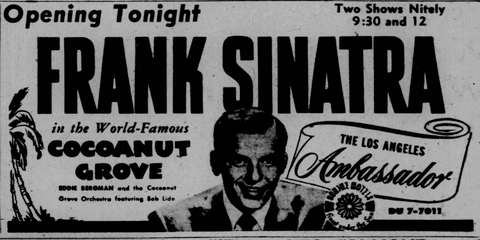
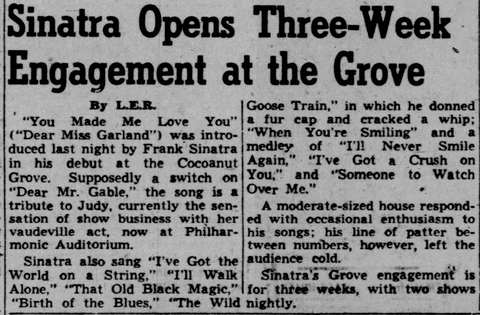
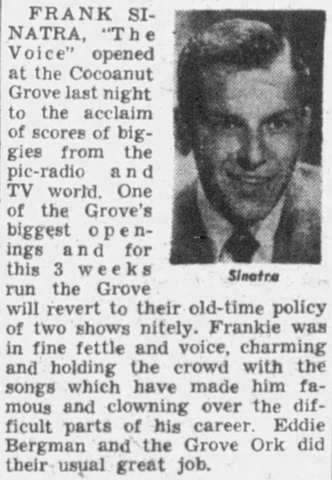
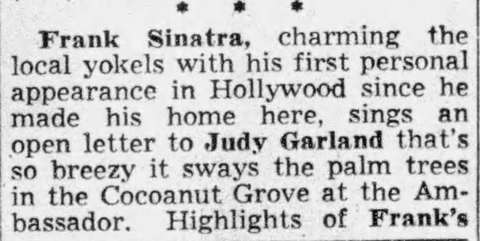
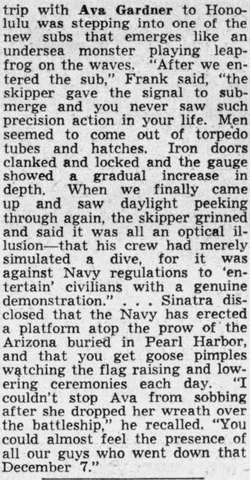
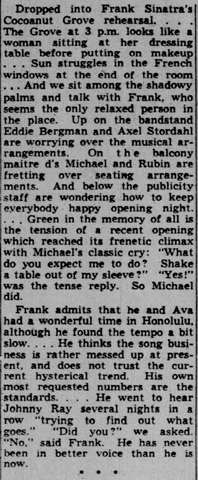
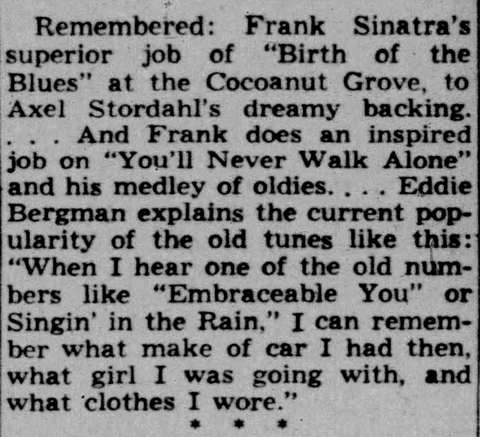
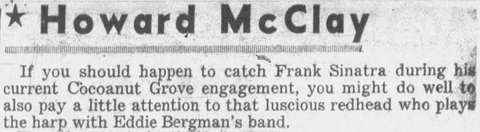
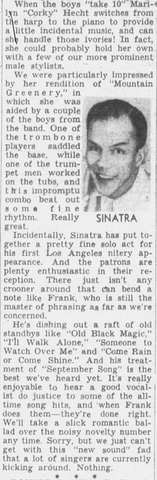
FRANK AND AVA 1952 SPRING 1952
Undated materialFrom: 'Ed O'Brien' via Sinatraphiles <sinatraphiles@googlegroups.com> | Received: 2026-06-07
5-11-52
5-13-52
Hawaii
5-3-52
5-7-52
5-26-52
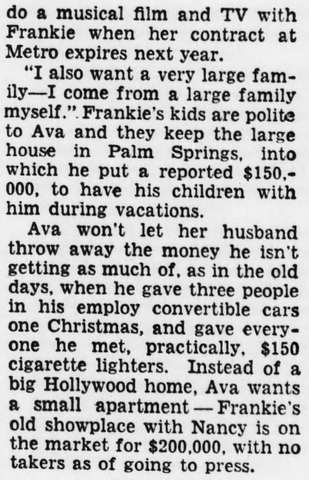
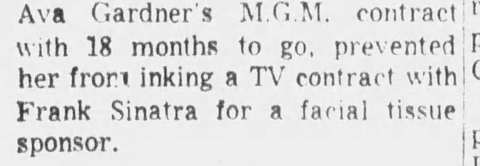
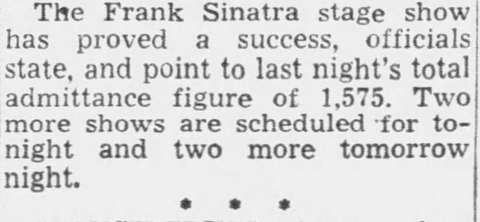
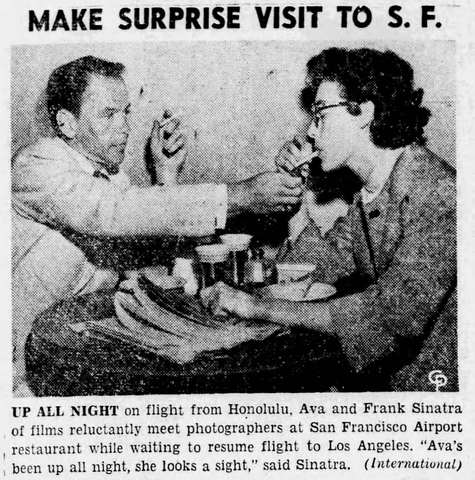
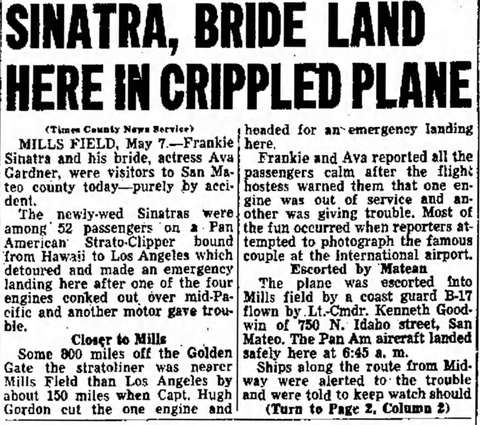
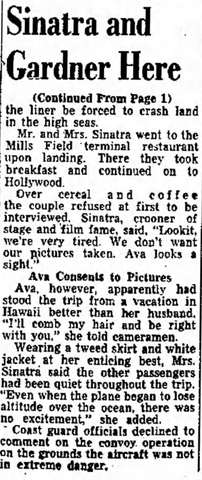
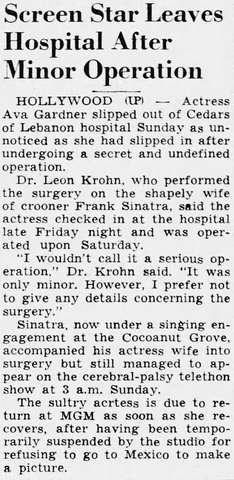
June 5 - 14 - 1952
Undated materialFrom: 'Ed O'Brien' via Sinatraphiles <sinatraphiles@googlegroups.com> | Received: 2026-06-09
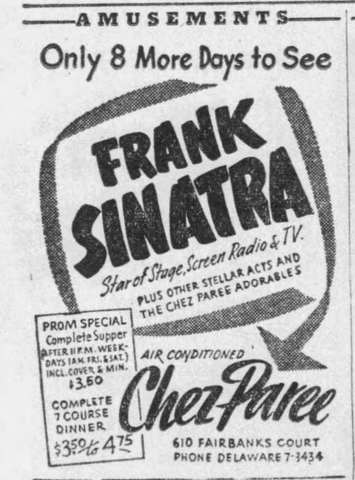
Re: SINATRA AT THE COCONUT GROVE MAY/JUNE 1952
Undated materialFrom: 'Ed O'Brien' via Sinatraphiles <sinatraphiles@googlegroups.com> | Received: 2026-06-09
I forgot ro include "Night and Day" in the song list.
Gives us 16 tunes for his three week run.
Ed
1952 Coconut Grove, Ambassador Hotel, Los Angeles, California (May 15-June 4)
Time: 9:45 P.M.
Eddie Bergman band, Allen Reuss (Guitar)
:
I've Got The World On A String (arr. George Siravo)
When You're Smilin g(Siravo)
Lover (Siravo)
That Old Black Magic*
Birth Of The Blues
All Of Me
Wild Goose / Mule Train parody
Medley:I'll Never Smile Again/ I've Got A Crush On You /Someone To Watch Over Me
You Made Me Lovw You ( parody tribute to Judy Garland )
I'll Never Smile Again
September Song
I'll Walk Alone
Come Rain Or Come Shine
You'll Never Walk Alone
* Neal Hefti told me his first arrangement for Frank was "That Old
Black Magic" done for "Danny Wilson," in June 1951. I'll bet Frank
used it at The Gtove
5-15-52
5-19-52
5-18-52
5-28-52
5-20-52
5-27-52
5-19-52
.
NICE PHOTO
Undated materialFrom: 'Ed O'Brien' via Sinatraphiles <sinatraphiles@googlegroups.com> | Received: 2026-06-11
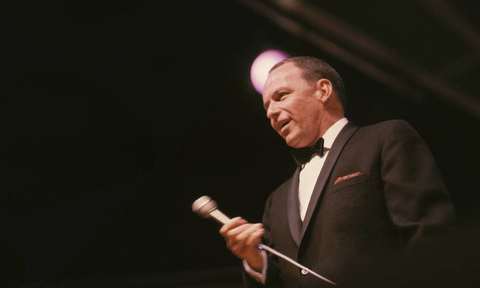
June 13 - THIS DATE IN SINATRA HISTORY
Undated materialFrom: Scott Henderson <scott@falseducks.com> | Received: 2026-06-13
JUNE 15 THIS DATE IN SINATRA HISTORY
Undated materialFrom: 'Ed O'Brien' via Sinatraphiles <sinatraphiles@googlegroups.com> | Received: 2026-06-15
note: Both NBC and CBS broadcast the full two hour show.
I knew Frank was filmed in London -- had no idea a
camera crew was flown to Paris on the last weekend - before
the air date - to film Mr Crosby singing "White Christmas." Can't
imagine the show without the most popular entertainer of the
first half of the 20th Century.
Ed
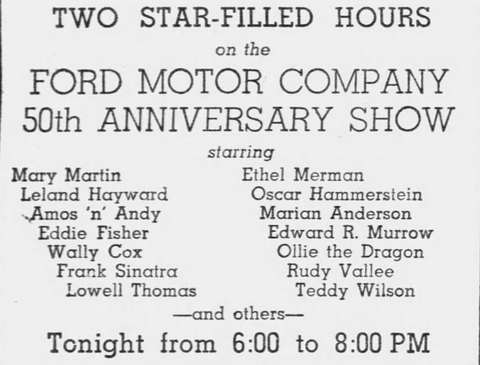
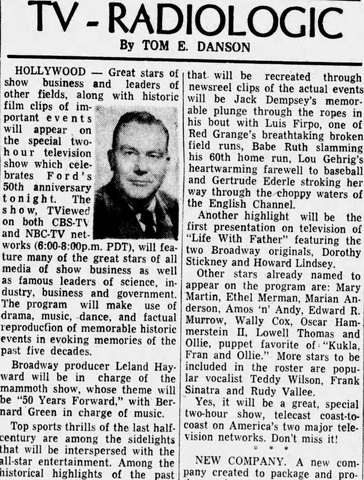
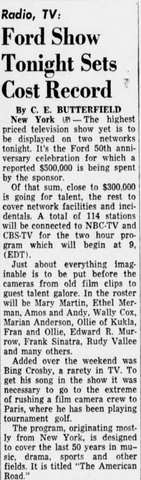
Fw: JUNE 15 THIS DATE IN SINATRA HISTORY
Undated materialFrom: 'Ed O'Brien' via Sinatraphiles <sinatraphiles@googlegroups.com> | Received: 2026-06-16
note: Both NBC and CBS broadcast the full two hour show.
I knew Frank was filmed in London -- had no idea a
camera crew was flown to Paris on the last weekend - before
the air date - to film Mr Crosby singing "White Christmas." Can't
imagine the show without the most popular entertainer of the
first half of the 20th Century.
Ed
Belosinved Chicago comedian Tom Dreesen, best known for opening for Frank Sinatra, has died, family says - ABC7 Chicago
Undated materialFrom: 'Ed O'Brien' via Sinatraphiles <sinatraphiles@googlegroups.com> | Received: 2026-06-18
https://abc7chicago.com/post/beloved-chicago-comedian-tom-dreesen-dies/19317281/
FRANK SINATRA JUNE 1943
Undated materialFrom: 'Ed O'Brien' via Sinatraphiles <sinatraphiles@googlegroups.com> | Received: 2026-06-19
6-5-43
6-5-43
6-8-43
6-11-43
6-12-43
6-13-43
6-13-43
6-22-43
6-24-43
6-27-43
6-29-43
6-30-43
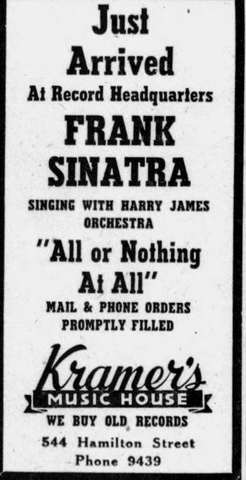
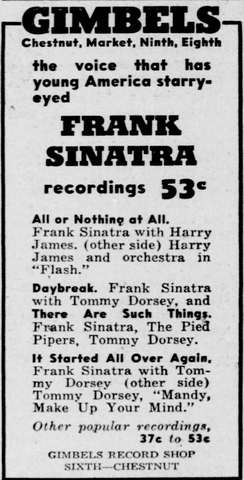
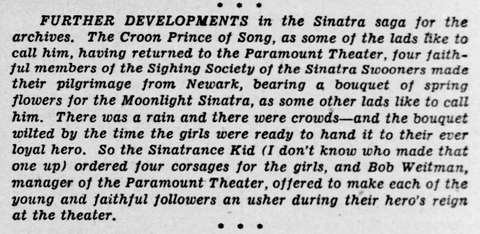
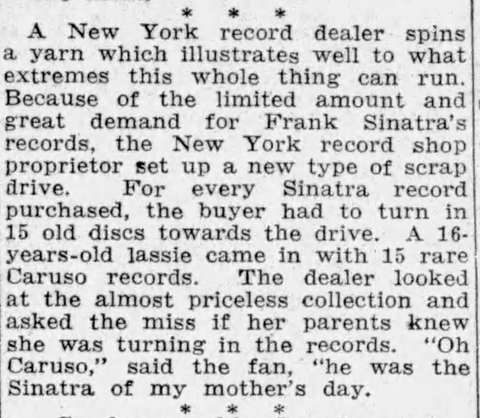
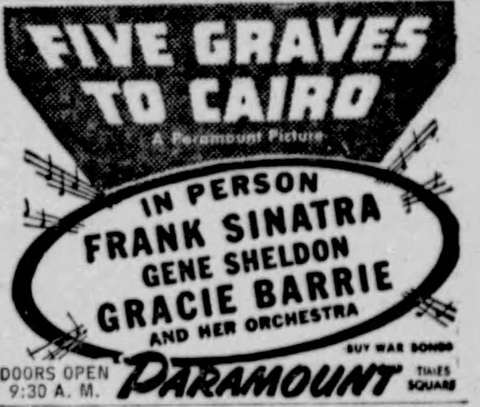
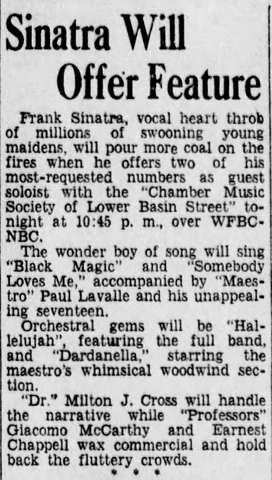
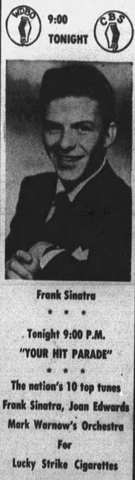
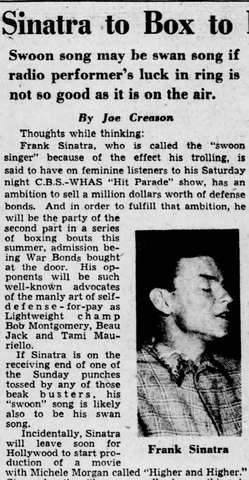
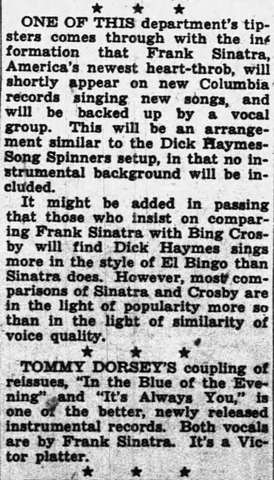
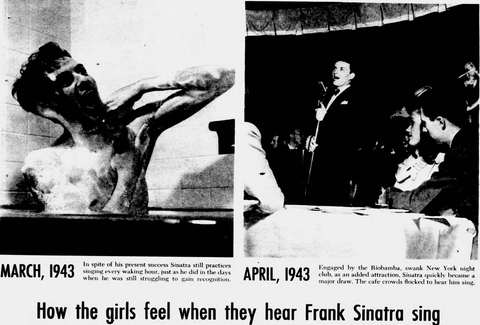
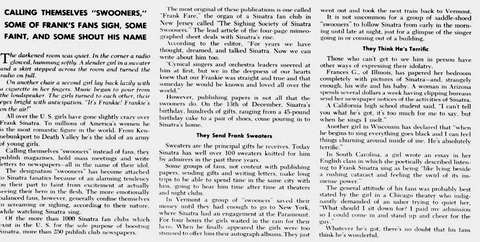
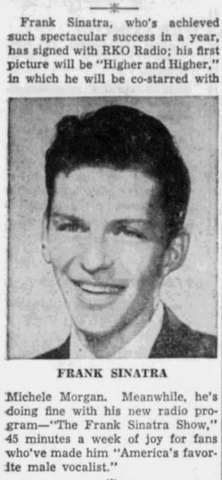
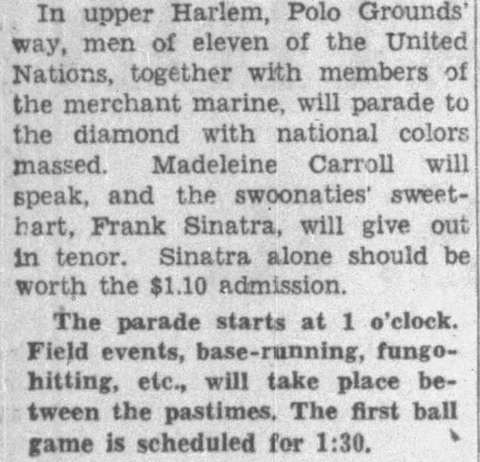
Re: FRANK SINATRA JUNE 1943
Undated materialFrom: scott@falseducks.com | Received: 2026-06-19
Hi Ed,
Thanks for sending over the 1943 articles. I was intrigued by this one:
I confirmed that this event happened on June 30, 1943 and it appears that Sinatra sang the National Anthem and may have performed other songs:
From the New York Times:
THE Western clubs of the National League switch the scene of their operations to the Atlantic seaboard today and the Eastern clubs of the American League swing out where the West begins. But that is not the big news at the moment. This is the day when the two major leagues contribute all of their receipts to the National War Fund, the all-embracing agency which handles every form of relief except the Red Cross. It should be a banner occasion. If Judge Landis had not dawdled and hesitated until the eleventh hour before setting the plans in motion, it is reasonable to assume that the two circuits would have been well on their way to topping their half-million-dollar contributoin of a year ago. As it is now they will need all the help they can get to go over the top. Here in town the fans have the choice of at- tending-at no advance in prices-either the Giant-Cardinal double-header at the Polo Grounds or the novel twilight twin bill at Ebbets Field between the Brooks and the Reds. Each de- serves the whole-hearted support of the baseball public because it never would do to have the sport falter in its obligations at a time like this. If the club owners had had their way it would not have been week-day dates at all for the charity shows, but sure-fire Sunday sessions. However, the Judge, for some mysterious reason, chose today for the first of them and July 28, another Wednesday, for the second. When the Judge makes a ruling there is no higher court of appeal. His word is final. Carnival Flourishes Messrs. Horace Stoneham and Branch Rickey have done the best they could, considering the fact that they were given little notice, to dress up their presentations with the proper carnival flourishes. The Deacon of the Dodgers, among other things, will have the joint spectacle of Dixie Walker singing and Al Schacht performing. The impression in this corner is that Horace is ahead of Branch in the entertainment depart- ment. His singer is Frank Sinatra, who warbles a much sweeter note than the “peepul's cherce," and he more than matches the Clown Prince of Baseball with Miss Madeleine Carroll, who is a great deal more restful to the eyes than is Mr. Schacht.
Yet, there was another article that said Sinatra and Madeleine Carroll were no shows:
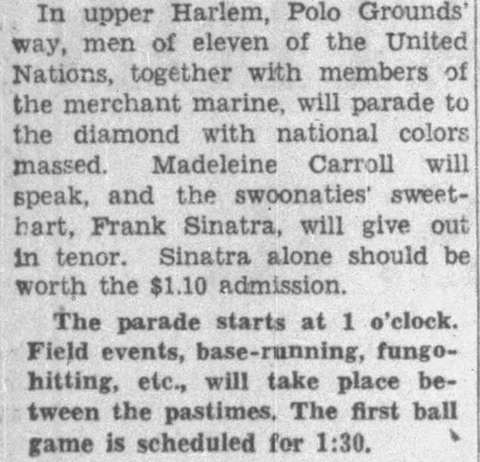
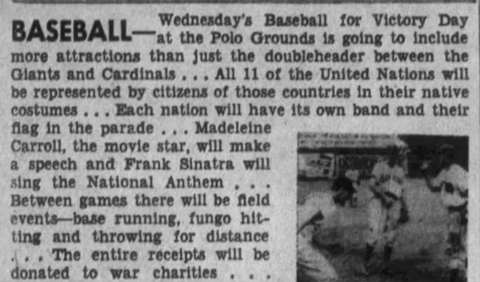
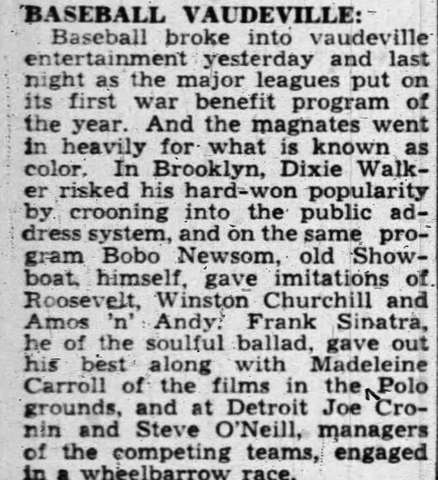
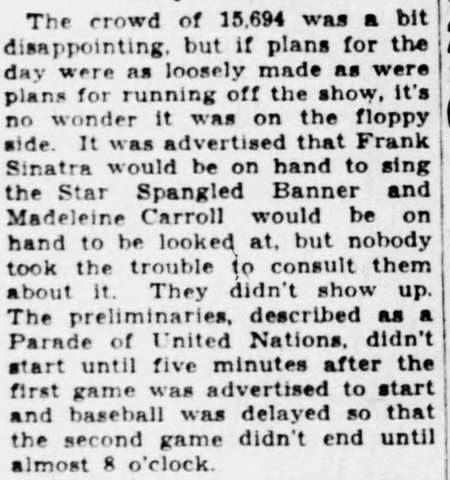
Re: FRANK SINATRA JUNE 1943
Undated materialFrom: 'Ed O'Brien' via Sinatraphiles <sinatraphiles@googlegroups.com> | Received: 2026-06-19
Hi Scott,
Here is AI confirming Frank's appearance:
To determine if Frank Sinatra sang at the Polo Grounds on June 30, 1943, consider the following points:
Frank Sinatra performed at the Polo Grounds on that date.The event was part of a benefit concert for the USO.Sinatra was a popular figure during the 1940s, attracting large crowds.The concert featured other artists alongside Sinatra.This performance contributed to his rising fame during World War II
But I believe the information is wrong.
Checked the NYT on 6-30 and 7-1-43
My favorite columnist back in the 50s was Arthur Daley.
First sportswriter to win the coveted Pulitzer.
He had colimns in both papers. In the 6/30, he mentioned
that the Dodgers had Dixie Walker singing the anthem that
day at Ebbets Field, so the Giants had a huge advantage
with Sinatra at the Polo Grounds. Times also mentions
M. Carroll and Frank in another column. There is no mention
of either in Daley's 7/1 which describes the festivities prior to
the first game of the doubleheader There is also a photo and
I do not see Sinatra. Also, AI states the day is for the USO. Actually,
it was for the War Fund effort.
Question: Did both my June 43 and Blue of Evening post in
Sinatraphiles? One appears to have been rejected. Can't tell
which one.
Ed
Hi Ed,
Thanks for sending over the 1943 articles. I was intrigued by this one:
I confirmed that this event happened on June 30, 1943 and it appears that Sinatra sang the National Anthem and may have performed other songs:
From the New York Times:
THE Western clubs of the National League switch the scene of their operations to the Atlantic seaboard today and the Eastern clubs of the American League swing out where the West begins. But that is not the big news at the moment. This is the day when the two major leagues contribute all of their receipts to the National War Fund, the all-embracing agency which handles every form of relief except the Red Cross. It should be a banner occasion. If Judge Landis had not dawdled and hesitated until the eleventh hour before setting the plans in motion, it is reasonable to assume that the two circuits would have been well on their way to topping their half-million-dollar contributoin of a year ago. As it is now they will need all the help they can get to go over the top. Here in town the fans have the choice of at- tending-at no advance in prices-either the Giant-Cardinal double-header at the Polo Grounds or the novel twilight twin bill at Ebbets Field between the Brooks and the Reds. Each de- serves the whole-hearted support of the baseball public because it never would do to have the sport falter in its obligations at a time like this. If the club owners had had their way it would not have been week-day dates at all for the charity shows, but sure-fire Sunday sessions. However, the Judge, for some mysterious reason, chose today for the first of them and July 28, another Wednesday, for the second. When the Judge makes a ruling there is no higher court of appeal. His word is final. Carnival Flourishes Messrs. Horace Stoneham and Branch Rickey have done the best they could, considering the fact that they were given little notice, to dress up their presentations with the proper carnival flourishes. The Deacon of the Dodgers, among other things, will have the joint spectacle of Dixie Walker singing and Al Schacht performing. The impression in this corner is that Horace is ahead of Branch in the entertainment depart- ment. His singer is Frank Sinatra, who warbles a much sweeter note than the “peepul's cherce," and he more than matches the Clown Prince of Baseball with Miss Madeleine Carroll, who is a great deal more restful to the eyes than is Mr. Schacht.
Yet, there was another article that said Sinatra and Madeleine Carroll were no shows:
Re: FRANK SINATRA JUNE 1943
Undated materialFrom: "scott@falseducks.com" <scott@falseducks.com> | Received: 2026-06-19
Hi Ed,
Thanks for sending over the 1943 articles. I was intrigued by this one:
I confirmed that this event happened on June 30, 1943 and it appears that Sinatra sang the National Anthem and may have performed other songs:
From the New York Times:
THE Western clubs of the National League switch the scene of their operations to the Atlantic seaboard today and the Eastern clubs of the American League swing out where the West begins. But that is not the big news at the moment. This is the day when the two major leagues contribute all of their receipts to the National War Fund, the all-embracing agency which handles every form of relief except the Red Cross. It should be a banner occasion. If Judge Landis had not dawdled and hesitated until the eleventh hour before setting the plans in motion, it is reasonable to assume that the two circuits would have been well on their way to topping their half-million-dollar contributoin of a year ago. As it is now they will need all the help they can get to go over the top. Here in town the fans have the choice of at- tending-at no advance in prices-either the Giant-Cardinal double-header at the Polo Grounds or the novel twilight twin bill at Ebbets Field between the Brooks and the Reds. Each de- serves the whole-hearted support of the baseball public because it never would do to have the sport falter in its obligations at a time like this. If the club owners had had their way it would not have been week-day dates at all for the charity shows, but sure-fire Sunday sessions. However, the Judge, for some mysterious reason, chose today for the first of them and July 28, another Wednesday, for the second. When the Judge makes a ruling there is no higher court of appeal. His word is final. Carnival Flourishes Messrs. Horace Stoneham and Branch Rickey have done the best they could, considering the fact that they were given little notice, to dress up their presentations with the proper carnival flourishes. The Deacon of the Dodgers, among other things, will have the joint spectacle of Dixie Walker singing and Al Schacht performing. The impression in this corner is that Horace is ahead of Branch in the entertainment depart- ment. His singer is Frank Sinatra, who warbles a much sweeter note than the “peepul's cherce," and he more than matches the Clown Prince of Baseball with Miss Madeleine Carroll, who is a great deal more restful to the eyes than is Mr. Schacht.
Yet, there was another article that said Sinatra and Madeleine Carroll were no shows:
Re: FRANK SINATRA JUNE 1943
Undated materialFrom: 'Ed O'Brien' via Sinatraphiles <sinatraphiles@googlegroups.com> | Received: 2026-06-19
Hi Scott,
Here is AI confirming Frank's appearance:
To determine if Frank Sinatra sang at the Polo Grounds on June 30, 1943, consider the following points:
Frank Sinatra performed at the Polo Grounds on that date.
The event was part of a benefit concert for the USO.
Sinatra was a popular figure during the 1940s, attracting large crowds. The concert featured other artists alongside Sinatra.
This performance contributed to his rising fame during World War II
But I believe the information is wrong.
Checked the NYT on 6-30 and 7-1-43
My favorite columnist back in the 50s was Arthur Daley.
First sportswriter to win the coveted Pulitzer.
He had colimns in both papers. In the 6/30, he mentioned
that the Dodgers had Dixie Walker singing the anthem that
day at Ebbets Field, so the Giants had a huge advantage
with Sinatra at the Polo Grounds. Times also mentions
M. Carroll and Frank in another column. There is no mention
of either in Daley's 7/1 which describes the festivities prior to
the first game of the doubleheader There is also a photo and
I do not see Sinatra. Also, AI states the day is for the USO. Actually,
it was for the War Fund effort.
Question: Did both my June 43 and Blue of Evening post in
Sinatraphiles? One appears to have been rejected. Can't tell
which one.
Ed
Hi Ed,
Thanks for sending over the 1943 articles. I was intrigued by this one:
I confirmed that this event happened on June 30, 1943 and it appears that Sinatra sang the National Anthem and may have performed other songs:
From the New York Times:
THE Western clubs of the National League switch the scene of their operations to the Atlantic seaboard today and the Eastern clubs of the American League swing out where the West begins. But that is not the big news at the moment. This is the day when the two major leagues contribute all of their receipts to the National War Fund, the all-embracing agency which handles every form of relief except the Red Cross. It should be a banner occasion. If Judge Landis had not dawdled and hesitated until the eleventh hour before setting the plans in motion, it is reasonable to assume that the two circuits would have been well on their way to topping their half-million-dollar contributoin of a year ago. As it is now they will need all the help they can get to go over the top. Here in town the fans have the choice of at- tending-at no advance in prices-either the Giant-Cardinal double-header at the Polo Grounds or the novel twilight twin bill at Ebbets Field between the Brooks and the Reds. Each de- serves the whole-hearted support of the baseball public because it never would do to have the sport falter in its obligations at a time like this. If the club owners had had their way it would not have been week-day dates at all for the charity shows, but sure-fire Sunday sessions. However, the Judge, for some mysterious reason, chose today for the first of them and July 28, another Wednesday, for the second. When the Judge makes a ruling there is no higher court of appeal. His word is final. Carnival Flourishes Messrs. Horace Stoneham and Branch Rickey have done the best they could, considering the fact that they were given little notice, to dress up their presentations with the proper carnival flourishes. The Deacon of the Dodgers, among other things, will have the joint spectacle of Dixie Walker singing and Al Schacht performing. The impression in this corner is that Horace is ahead of Branch in the entertainment depart- ment. His singer is Frank Sinatra, who warbles a much sweeter note than the “peepul's cherce," and he more than matches the Clown Prince of Baseball with Miss Madeleine Carroll, who is a great deal more restful to the eyes than is Mr. Schacht.
Yet, there was another article that said Sinatra and Madeleine Carroll were no shows:
Re: FRANK SINATRA JUNE 1943
Undated materialFrom: Scott Henderson <scott@falseducks.com> | Received: 2026-06-20
Ed,
I'm inclined to agree that Sinatra and Carroll were now shows.
Here's another article that mentions they weren't there:
Scott
At 12:16 PM 6/19/2026, you wrote:
Hi Scott,
Here is AI confirming Frank's appearance:
To determine if Frank Sinatra sang at the Polo Grounds on June 30, 1943, consider the following points:
Frank Sinatra performed at the Polo Grounds on that date.
The event was part of a benefit concert for the USO.
Sinatra was a popular figure during the 1940s, attracting large crowds.
The concert featured other artists alongside Sinatra.
This performance contributed to his rising fame during World War II But I believe the information is wrong.
Checked the NYT on 6-30 and 7-1-43
My favorite columnist back in the 50s was Arthur Daley.
First sportswriter to win the coveted Pulitzer.
He had colimns in both papers. In the 6/30, he mentioned
that the Dodgers had Dixie Walker singing the anthem that
day at Ebbets Field, so the Giants had a huge advantage
with Sinatra at the Polo Grounds. Times also mentions
M. Carroll and Frank in another column. There is no mention
of either in Daley's 7/1 which describes the festivities prior to
the first game of the doubleheader There is also a photo and
I do not see Sinatra. Also, AI states the day is for the USO.
Actually,
it was for the War Fund effort.
Question: Did both my June 43 and Blue of Evening post in
Sinatraphiles? One appears to have been rejected. Can't tell
which one.
Ed
Hi Ed,
Thanks for sending over the 1943 articles. I was intrigued by this one:
I confirmed that this event happened on June 30, 1943 and it appears that Sinatra sang the National Anthem and may have performed other songs:
From the New York Times:
THE Western clubs of the National League switch the scene of their operations to the Atlantic seaboard today and the Eastern clubs of the American League swing out where the West begins. But that is not the big news at the moment. This is the day when the two major leagues contribute all of their receipts to the National War Fund, the all-embracing agency which handles every form of relief except the Red Cross. It should be a banner occasion. If Judge Landis had not dawdled and hesitated until the eleventh hour before setting the plans in motion, it is reasonable to assume that the two circuits would have been well on their way to topping their half-million-dollar contributoin of a year ago. As it is now they will need all the help they can get to go over the top. Here in town the fans have the choice of at- tending-at no advance in prices-either the Giant-Cardinal double-header at the Polo Grounds or the novel twilight twin bill at Ebbets Field between the Brooks and the Reds. Each de- serves the whole-hearted support of the baseball public because it never would do to have the sport falter in its obligations at a time like this. If the club owners had had their way it would not have been week-day dates at all for the charity shows, but sure-fire Sunday sessions. However, the Judge, for some mysterious reason, chose today for the first of them and July 28, another Wednesday, for the second. When the Judge makes a ruling there is no higher court of appeal. His word is final. Carnival Flourishes Messrs. Horace Stoneham and Branch Rickey have done the best they could, considering the fact that they were given little notice, to dress up their presentations with the proper carnival flourishes. The Deacon of the Dodgers, among other things, will have the joint spectacle of Dixie Walker singing and Al Schacht performing. The impression in this corner is that Horace is ahead of Branch in the entertainment depart- ment. His singer is Frank Sinatra, who warbles a much sweeter note than the “peepul's cherce," and he more than matches the Clown Prince of Baseball with Miss Madeleine Carroll, who is a great deal more restful to the eyes than is Mr. Schacht.
Yet, there was another article that said Sinatra and Madeleine Carroll were no shows:
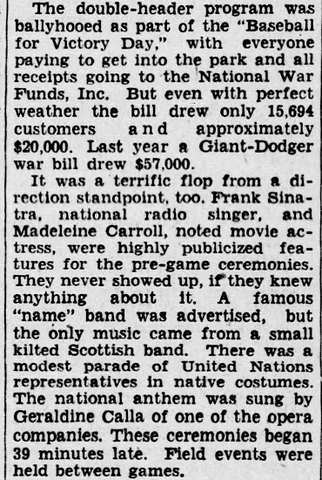
[image referenced in source but could not be recovered]
[image referenced in source but could not be recovered]
[image referenced in source but could not be recovered]
[image referenced in source but could not be recovered]
Tom Dreesen, comic who kept Sinatra’s crowds laughing, dies at 86 ByRichard SandomirNew York Times
Undated materialFrom: 'Ed O'Brien' via Sinatraphiles <sinatraphiles@googlegroups.com> | Received: 2026-06-26
Tom Dreesen, comic who kept Sinatra’s crowds laughing, dies at 86 By Richard Sandomir New York Times,Updated June 23, 2026, 11:59 a.m.Mr. Dreesen, shown in 2011, performed dozens of times on "The Tonight Show" and with David Letterman.Chris Carlson/AP Photo/Chris Carlson Tom Dreesen, a comic whose nearly 60-year career began as the white half of a rare interracial stand-up duo with Tim Reid and who later became a reliably funny staple of late-night television and Frank Sinatra’s longtime opening act, died June 17 at his home in Sherman Oaks, Calif. He was 86.
His daughters, Amy Barbuscia and Jennifer Garber, announced the death but did not provide a cause. He had been successfully treated for appendiceal cancer in 2019.
Mr. Dreesen was a smooth, clean performer whose self-effacing routines revolved around subjects like family (he was one of eight children who grew up in poverty), religion (he was Roman Catholic), sports (he was a Chicago Cubs and Bears fan), and Irish and Italian culture (he was a mixture of both).
“He was a total craftsman and professional, which is undervalued in comedy,” Robert Wuhl, a comedian and actor, said in an interview.
David Letterman, a close friend, said that Mr. Dreesen’s comedy grew out of his upbringing in Harvey, Ill., a struggling, low-income suburb of Chicago. Watch Mor
“He once talked about how poor he was, and how five siblings slept in one bed,” Letterman said in a phone interview. “Four of the five wet the bed and the fifth became a great swimmer. If you put a microscope on the joke, it’s unpleasant -- a puddle of urine in the bed -- but it’s sweet. That was Tom.”
Mr. Dreesen appeared dozens of times on Letterman’s shows and on “The Tonight Show,” with Johnny Carson and then Jay Leno. In 1975, after being bumped three times before his first “Tonight Show” appearance, he delivered a routine that ended with Carson giving him his signature “OK” hand gesture of approval that comedians dreamed of getting. Keep scrolling down
He did so well that night, Mr. Dreesen said, that the next day, CBS signed him to a development deal; sent him a check for $10,000; and guaranteed him $1,850 a month for a year, which eased his family’s financial burden. No programming came of the CBS deal but he soon became one of the busiest comedians in the country, working in clubs, arenas, and on television.
In 1983, while he was opening for Smokey Robinson, Mr. Dreesen met Sinatra’s lawyer, Mickey Rudin, and impressed him with his glibness. Soon after, Mr. Dreesen got an offer to open for Sinatra in Atlantic City.
“I thought, ‘Wow, this is great. I’ll work with him for a week, and I’ll get a picture taken with him, which I can hang inside every tavern in Harvey and that’ll be that,’” he recalled in “Still Standing … My Journey From Streets and Saloons to the Stage, and Sinatra” (2020), written with Darren Grubb and Johnny Russo.
That week turned into 13 years with Sinatra, performing in 45 to 50 cities annually. “This was truly the life I wanted,” he wrote, reflecting on idolizing Sinatra since he was a boy. “From my vantage point, every night, there was no TV series, no radio show, no movie deal that compared to what I was experiencing.”
After Sinatra’s death in 1998, Mr. Dreesen was a pallbearer and the emcee at his funeral.
Sinatra is one of many subjects that Mr. Dreesen discusses in a podcast -- “Who’s Tom Dreesen?” -- that he started earlier this year with Joe Goal, a friend and actor. “He wanted to get his life out there,” Goal said in an interview.
Mr. Dreesen was also renowned for his philanthropic work, often as the host of fund-raising events for charities, including those supported by pro-am golf tournaments; he was an ardent golfer.
In 1997, Jim Murray, the Pulitzer Prize-winning sports columnist of The Los Angeles Times, wrote that Mr. Dreesen was as “necessary to the well-being of the game’s essential pro-ams as the ropes, the marshals, the scorekeepers, the army of other volunteers.”
In 1982, he began organizing A Day for Darlene, an annual event in the Chicago area that raised money for multiple sclerosis research. It was named for Mr. Dreesen’s sister Darlene Bethman, who had been diagnosed with the disease and died in 1989.
Thomas Eugene Dreesen was born on Sept. 11, 1939, in Harvey. His father, Walter, played trumpet in a band before taking factory jobs, and his mother, Glenore (Algoe) Dreesen, was a bartender. Life was difficult for the family of 10, as Tom’s father sank into alcoholism.
“I often joked that Daddy would rather hear that he had six months to live than to hear we were out of Schlitz,” Mr. Dreesen wrote in his memoir.
In the book, he recalled a nagging feeling that he looked less like his siblings than two of his male cousins. When he was a teenager, he confronted their father, who admitted that he was his biological father.
“I was grateful my uncle had shared the truth, painful as it was,” Mr. Dreesen wrote.
Growing up, Tom shined shoes in a tavern, sold newspapers, and caddied. After dropping out of high school, he served in the Navy for four years, worked in construction, and sold life insurance.
In 1968, while volunteering with the US Junior Chamber of Commerce, a civic group, he met Reid. Together they worked on a drug prevention program, making students laugh while encouraging them to think about their life choices. An eighth grader thought they were funny enough to be a comedy team, so Mr. Dreesen and Reid decided to give it a try as Tim and Tom.
Billing themselves as the nation’s only Black and white comedy team, they performed on the chitlin’ circuit of Black-owned venues, Playboy Clubs, prisons, and schools for about five years until Reid left to be a solo comic and actor. In 1978, he was cast as the hip disc jockey Venus Flytrap on the CBS sitcom “WKRP in Cincinnati.”
Mr. Dreesen and Tim Reid, at a Seminole Hard Rock Hotel and Casino event in Tampa in 2009.Shea Walsh/AP Images for Seminole Hard Rock Hotel & Casino Tampa Mr. Dreesen moved to Los Angeles, where he gradually built his stand-up reputation at the Comedy Store, a club that also nurtured the rise of Letterman, Leno, Robin Williams, and Elayne Boosler.
But they were performing for nothing.
“Tom and George Miller” -- another comedian -- “started doing the math on how much money the Comedy Store was generating for itself and how much money was not being paid to the comics,” Letterman said. “They decided, ‘Wait a minute, the reason people are coming to the Comedy Store is the comics, not the watered-down drinks.’”
Mr. Dreesen led a two-month strike of about 100 comics against the comedy club in 1979. It ended with an agreement that included the club paying the comics $25 for each 20-minute set performed at its locations in West Hollywood and Westwood, according to The Los Angeles Times.
“Tom was the spearhead,” Letterman said, adding, “Now, by God, if you work at the Comedy Store, you’re not working for free, you can make a living working there.”
In addition to his daughters, Mr. Dreesen leaves four grandchildren, three great-grandchildren; his sisters Margie Brooke, Judi Austell, and Alice Dreesen; and his brothers Glenn, Wally, and Dennis Dreesen. His marriage to Maryellen Sebock ended in divorce. His son, Tom, died in 2022.
Mr. Dreesen’s final TV appearance came earlier this month on “Comics Unleashed with Byron Allen,” which replaced Stephen Colbert’s canceled CBS late-night show.
Mr. Dreesen had previously said his time with Sinatra was special, for many reasons.
“If he loved you, he worshipped the ground you walked on,” he told The Desert Sun newspaper in 2014. ”In a lot of ways, he was like a father to me. I didn’t have a father that really cared that much where I was and what I did. But Frank would give me advice and counsel, and then he was a buddy in a lot of ways. I thought the world of him."
Material from the Associated Press was used in this obituary.
This article originally appeared in The New York Times.
Fwd: The Jackie Mason / Raoul Felder Talk Show on SINATRA
Undated materialFrom: scott@falseducks.com | Received: 2026-06-28
Original Message --------
SUBJECT:
Fwd: The Jackie Mason / Raoul Felder Talk Show on SINATRA
DATE:
2026-06-28 11:46
FROM:
Will Friedwald <wfriedwald@gmail.com>
TO:
Scott Henderson <scott@falseducks.com>, "Ed O'Brien" <eob101@aol.com>
_Can you guys post this to the list? Possibly one of the Sinatraphiles might have recorded it?_
Not long after Sinatra's death, Jackie Mason & Raoul Felder co-hosted a talk / panel show for PBS. I remember that the four of us (Bill Boggs, Mark Simone, Jonathan Schwartz, and myself) were on it. We were talking about Sinatra (of course)! And I remember Jackie had some very interesting, highly prescient things to say.
According to what I can find, Mason & Felder hosted a show called CROSSING THE LINE in 1997, but the Sinatra show was (as I remember it) after FS's death in 1998.
So I sent this to all the participants (who are all alive!) but none of them had a copy or even a concrete memory of the show. I also wrote to Jackie's daughter, Sheba, and she doesn't have it either. (It would help to get Mr. Felder's contact info. He'd probably charge me $500 an hour just to answer the phone!)
Does anyone else remember this?
And more importantly, does anybody happen to have a copy of this? I would love to see it. (I don't think I ever watched it at all.)
Hoping that somebody can help! (and, if anybody is in town at the end of July, don't miss Sheba Mason starring in a new biographical musical about her Father. Write to me for details!)
Straighten Up & Fly Right!
W
Will Friedwald is the 2024 winner of the Jazz Journalists Association Lifetime Achievement Award for excellence in Jazz Journalism. He writes about music and popular culture for _The Wall Street Journal, The New York Sun, The New York Stage Review, Vanity Fair, Playboy_ magazine and other publications. He is also the host of the radio show Sing! Sing! Sing! [1] on San Diego KSDS [2] on Saturday mornings. He also is the author of ten books including the award-winning _A Biographical Guide To The Great Jazz And Pop Singers, Sinatra: The Song Is You, Stardust Melodies, Tony Bennett: The Good Life, Looney Tunes & Merrie Melodies, and Jazz Singing._ He has written over 600 liner notes for compact discs, received eleven Grammy nominations, and appears frequently on television and other documentaries. He is also a consultant and curator for Apple Music. Current books : _The Great Jazz And Pop Vocal Albums_ (Pantheon Books / Random House, November 2017), _Sinatra: The Song Is You!_ - New Revised Edition (Chicago Review Press, May 2018) and _Straighten Up and Fly Right: The Life and Music of __Nat King Cole _ (Oxford University Press, July 2020). He studied elocution with Prof. Henry Higgins and musicology with Prof. Harold Hill.
Word up. Peace Out. Go forth and sin no more! (John 8:11)
_"Will Friedwald knows more about the American Songbook than anyone I can think of." _
(John McWhorter, THE NEW YORK TIMES February 19, 2026)
_"Will Friedwald is perhaps today's finest writer and historian of jazz and pop vocalists." _
(Charles Isherwood, THE WALL STREET JOURNAL, February 8, 2026)
_"To have no talent is not enough."_ - Mazeppa
Links:
[1] http://jazz88.us/programs/Sing!_Sing!_Sing!/
[2] http://jazz88.us/
Interesting 1943 article on Sinatra
Undated materialFrom: scott@falseducks.com | Received: 2026-07-02
[image referenced in source but could not be recovered]
“Over the Land”
Undated materialFrom: Gilbert Gigliotti <gilbertgigliotti@gmail.com> | Received: 2026-07-04
Happy 4th to those who may celebrate!
Question: has anyone ever heard Frank Sinatra’s, Jr.’s patriotic musical composition, “Over the Land”?
If so, where?
And is it available anywhere (other than the Library of Congress)?
Thanks,
Gil Gigliotti
FRANK AND MARILYN JULY 1962
Undated materialFrom: 'Ed O'Brien' via Sinatraphiles <sinatraphiles@googlegroups.com> | Received: 2026-07-06
Frank Sinatra and Marilyn Monroe Lake Tahoe July 1962
Re: [sinatraphiles] July 9 - THIS DATE IN SINATRA HISTORY
Undated materialFrom: shemmy mashiah <smashiah@gmail.com> | Received: 2026-07-10
Recieved yesterday a very good copy of the July 9 Forrest hill concert. Gee!!!!!!!!
What a concert and in an improved audio.
I share Ed’s feeling this is maybe sinatra greatest concert.
Much better than sinatra at the sands in 1966
“Sinatra at the sands”
Shemmy
נשלח מה-iPhone שלי
> ב-9 ביולי 2026, בשעה 17:28, scott@falseducks.com כתב/ה: >
> instead
> of the four usually presented by Standard bills, except on Saturdays and > holidays, grossed a near-record $35,000 at the Stanley last week. Only > stanza to surpass the Dorsey show in the theater's history was the layout
FRANK WASHING HIS CAR AT HOME IN HASBROUCK HEIGHTS SUMMER 1943
Undated materialFrom: 'Ed O'Brien' via Sinatraphiles <sinatraphiles@googlegroups.com> | Received: 2026-07-11
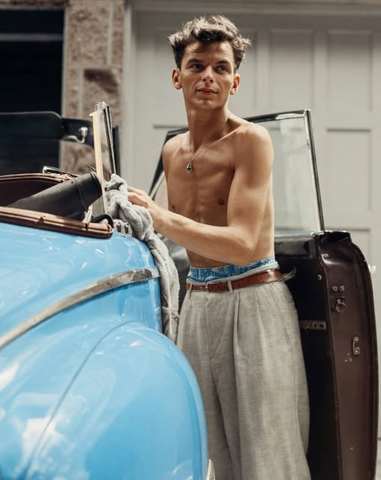
July 9 - THIS DATE IN SINATRA HISTORY
Undated materialFrom: 'Ed O'Brien' via Sinatraphiles <sinatraphiles@googlegroups.com> | Received: 2026-07-11
Hi Shemmy, The great concert is 7/8.His energy level is phenomenal.The tape in circulation is not complete, but what there is -- 11 or 12songs - is incredible. The 7/9 is very good but the previous night isthe best.Ed On Friday, July 10, 2026 at 10:21:08 AM EDT, shemmy mashiah <smashiah@gmail.com> wrote:
Recieved yesterday a very good copy of the July 9 Forrest hill concert.Gee!!!!!!!!What a concert and in an improved audio.I share Ed’s feeling this is maybe sinatra greatest concert.Much better than sinatra at the sands in 1966“Sinatra at the sands”Shemmy נשלח מה-iPhone שלי
ב-9 ביולי 2026, בשעה 17:28, scott@falseducks.com כתב/ה:
instead of the four usually presented by Standard bills, except on Saturdays and holidays, grossed a near-record $35,000 at the Stanley last week. Only stanza to surpass the Dorsey show in the theater's history was the layout
FRANKIE STRIKES OIL AND REGRETS IT
Undated materialFrom: 'Ed O'Brien' via Sinatraphiles <sinatraphiles@googlegroups.com> | Received: 2026-07-13
4-21-50
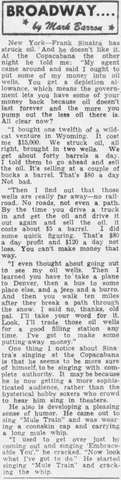
July 17 - THIS DATE IN SINATRA HISTORY
Undated materialFrom: 'Ed O'Brien' via Sinatraphiles <sinatraphiles@googlegroups.com> | Received: 2026-07-17
.
July 18 - THIS DATE IN SINATRA HISTORY
Undated materialFrom: Scott Henderson <scott@falseducks.com> | Received: 2026-07-18
Los Angeles
2161 Old Devil Moon
(E.Y. Harburg/Burton Lane)
Chappell & Co. Inc. (ASCAP)
Arranged by Bill Loose
Orchestra Conducted by Morris Stoloff
(2:56) CD: 46013-2 The Complete Reprise Studio Recordings Disc 6
LP: W54100 (Italy)
LP: FS2015Finian's Rainbow
2166 When I'm Not Near The Girl I Love
(E.Y. Harburg/Burton Lane)
Chappell & Co. Inc. (ASCAP)
Arranged by Nelson Riddle
Orchestra Conducted by Morris Stoloff
(3:24) CD: 46013-2 The Complete Reprise Studio Recordings Disc 6
LP: W5100 (Italy)
LP: FS6167Sinatra 65
LP: FS2015Finian's Rainbow
45: 0398
2166 When I'm Not Near The Girl I Loved
(Burton Lane/Yip Harburg)
Chappell & Co. Inc (ASCAP)
Arranged by Nelson Riddle
Conducted by Morris Stoloff
(3.24) CD 46013-2 Complete Reprise Studio Recordings Disc 6
45 Single Rep. 0398
LP W54100 (Italy)
LP FS6167 Sinatra 65
LP FS2016 Guys And Dolls
Burton Lane told me he loved Sinatra's recording of this song. --ED
2190 I've Never Been In Love Before
(Frank Loesser)
Frank Music Corp. (ASCAP)
Arranged by Nelson Riddle
Orchestra Conducted by Morris Stoloff
(2:54) CD: 46013-2 The Complete Reprise Studio Recordings Disc 6
LP: W54100 (Italy)
LP: FS6167Sinatra 65
LP: FS2016Guys And Dolls
2188 Guys And Dolls
w/Dean Martin
(Frank Loesser)
Frank Music Corp. (ASCAP)
Arranged by Bill Loose
Orchestra Conducted by Morris Stoloff
(2:48) CD: 46013-2 The Complete Reprise Studio Recordings Disc 6
LP: W54100 (Italy)
LP: FS2016Guys And Dolls
NOTE: Ed O'Brien points out that this session is mostly remembered for the "Guys and Dolls" duet with Frank and Dean. The three tunes recorded with Riddle that night are at a remarkably high level of artistry. Truly a shame that they were lost in the Reprise Repertory Theatre debate. All three deserved to be heard on an album of great Broadway songs by Sinatra. Riddle's charts are at his usual high standard and Sinatra is sensational. Great listening experience!
O'Brien then emphasizes that the four LP Reprise Repertory Theatre project was conceived and produced by Sinatra. Stan Cornyn, in his book EXPLODING, called it Reprise's biggest gamble and biggest disaster.
Sinatra's vocals, on this date, were of an extraordinarily high order but not heard by many people back then. O'Brien says he bought all of his records at a store called Dauber's. The store stocked up on the set and then couldn't give them away and finally sold them in a bargain bin for $1.00 each.
Sinatra's recordings for the Repertory series are remarkable, O'Brien emphasizes. They deserve a separate release. A single Sinatra would have been a terrific package.
Sinatraphile Jim White points out that, in 2000, Reprise issued all four Broadway shows in the Reprise Repertory Theatre series in a very nice boxed set of four cds. The four shows are "Guys and
Dolls," "Finian's Rainbow," "Kiss Me Kate," and
"South Pacific." The boxed set is Reprise
2-47775.
REPRISE REPERTORY PROMOTION, AVAILABILITY AND SALES:
Release date:November 1963
Reprise tried a new selling concept with the Repertory Theatre set.
They offered the four albums with fold-out covers exclusively through
a mail order house, Curtis Publishing. Reprise received over a million
dollars of free ads in the Curtis catalog. A cut out coupon was advertised
in major magazines including Look and Saturday Evening Post. The individual
albums were sold for $4.00 each and the boxed set went for $20.00 The sales
were a huge disappointment. Mo Ostin ( president of Reprise) had predicted
sales of a million units during the Christmas season.. In October of 1964,
the set was finally made available to record stores. The retailers were none
too thrilled to be an after thought. The retail price per LP was $4.98 and the
set was $19.95.
The project had cost $150,000 to complete. A huge sum in 1963 for a small,
independent record label. Done before Warners incorporated Reprise, it was a
big gamble. There had been recordings done in New York, Hollywood and Japan.
The problem with the project was twofold: many of the artists Sinatra had signed
at Reprise were past their prime with record buyers in 1963-64 and the mail order
concept alienated many retailers. They made a minimal effort to sell the LPs and
then failed to reorder.
Sinatra had produced the set and brought in Morris
Stoloff to conduct the sessions.
The combined sales of 17,700 records was an unmitigated disaster. After this debacle,
Sinatra ceded more power to Mo Ostin and rock 'n' roll groups became a mainstay
of Reprise Records.
July 21 - THIS DATE IN SINATRA HISTORY
Undated materialFrom: 'Ed O'Brien' via Sinatraphiles <sinatraphiles@googlegroups.com> | Received: 2026-07-21
FRANK WITH THE DORSEY BAND
Undated materialFrom: 'Ed O'Brien' via Sinatraphiles <sinatraphiles@googlegroups.com> | Received: 2026-07-22
Hollywood Palladium 1940
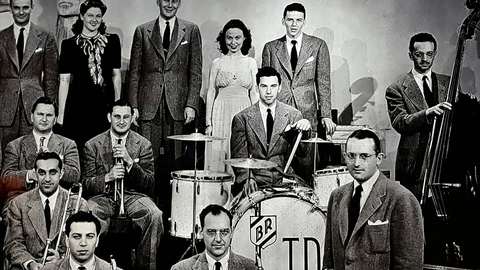
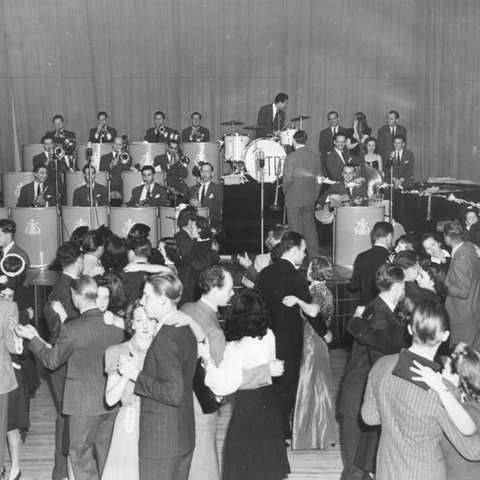
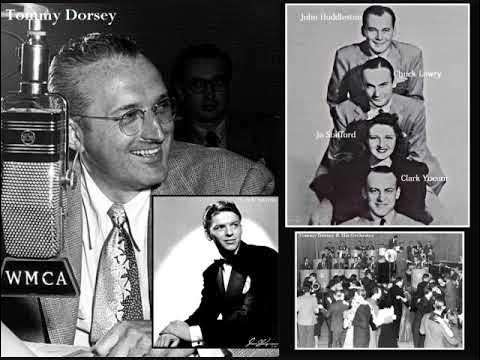
July 22 - THIS DATE IN SINATRA HISTORY
Undated materialFrom: scott@falseducks.com | Received: 2026-07-22
500 Club, Atlantic City, New Jersey (July 22-30)
Three shows each night
Bill Miller Sextet: Joe Comfort (bass), Al Viola (guitar), Emil Richards (vibraharp), Sol Gubin (drums) Paul Horn (sax and flute),
Bill Miller (piano and conductor)
Pete Miller Orch.
Emcee: Jack Curtis
O.A. Buddy Lester
1. Too Marvelous for Words
2. Day In, Day Out
3.Willow Weep For Me
4.It's Over, It's Over, It's Over
5. I Could Have Danced All Night
6. The Lady Is A Tramp
7. You Go To My Head
8. I Love Paris
9.River Stay Away From The Door
10. My Funny Valentine 1
11. Come Fly With Me
Ed O'Brien:
Buddy Lester opened for Sinatra. On the weekends, Sinatra did three shows and, if the demand was great enough, a fourth show was added. Frank performed for nine days. The three or four shows a night is a tad misleading. Frank did about 35 minutes per show. A four-show night usually involved roughly two hours and 15 minutes of onstage performing. This was the wonderful era of small group backings and exciting swing numbers every show. "I Love Paris" was a fun parody. There was not a lot of patter, just a lot of remarkable singing. The 500 Club was SRO every show.
REMEMBERING FRANK FROM "ETERNITY"
Undated materialFrom: 'Ed O'Brien' via Sinatraphiles <sinatraphiles@googlegroups.com> | Received: 2026-07-23
7-22-86
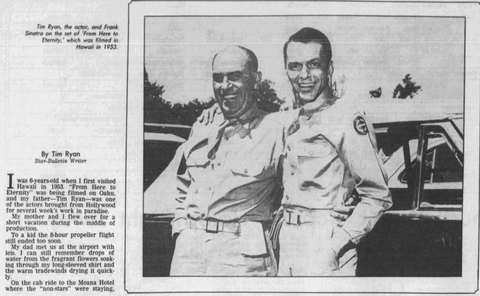
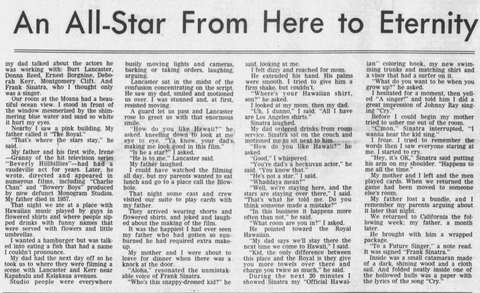
SINATRA AND HIS MUSIC
Undated materialFrom: 'Ed O'Brien' via Sinatraphiles <sinatraphiles@googlegroups.com> | Received: 2026-07-23
7-22-98
SINATRA'S 20 BEST SELLING SINGLES
Undated materialFrom: 'Ed O'Brien' via Sinatraphiles <sinatraphiles@googlegroups.com> | Received: 2026-07-23
7-22-24
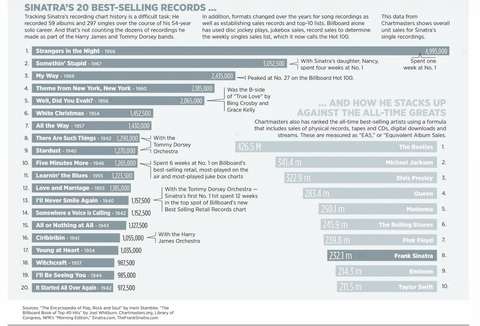
PLAS JOHNSON OBIT. WORKED WITH FRANK FROM 1955 TO 1988 NUMEROUS SESSIONS, CONCERTS, TV
Undated materialFrom: 'Ed O'Brien' via Sinatraphiles <sinatraphiles@googlegroups.com> | Received: 2026-07-24
Plas Johnson, saxophonist behind ‘The Pink Panther,’ dies at 94 By Matt Schudel New York Times,Updated July 23, 2026, 4:41 p.m.
Plas Johnson, a Hollywood studio musician whose loping tenor saxophone in the opening credits of the 1963 film “The Pink Panther” brought a playful bounce to one of the most recognizable movie themes of all time, died July 15 at his home in Los Angeles. He was 94.
His children Eric Johnson and Stephanie Oliver confirmed the death, and said their father had performed at his retirement community as recently as a month earlier.
Plas Johnson had an ample list of credits as varied as 1950s rock ‘n’ roll hits, TV theme songs, and recording dates with superstars. But the work that stood out was the theme of “The Pink Panther,” written by Henry Mancini for the slapstick detective comedy directed by Blake Edwards and starring Peter Sellers as the pompous and bumbling French police inspector Jacques Clouseau.
Thirty seconds into the animated credit sequence, featuring a monocled pink panther, Mr. Johnson’s saxophone plays a 16-bar theme that is, all at once, slinky, seductive, and mysterious, with a mischievous touch of humor. Later in the piece, he kicks into a swinging solo -- improvised in the studio -- before the playful opening theme returns.
Mancini and Mr. Johnson had worked together on Mancini’s gritty theme for “Peter Gunn,” a noirish TV detective drama that premiered in 1958. The full album, “The Music From ‘Peter Gunn,’” won the first-ever Grammy Award for album of the year.
As he was composing the music for “The Pink Panther,” Mancini wrote the piece with Mr. Johnson in mind. “I nearly always precast my players and write for them and around them, and Plas had the sound and the style I wanted,” he recalled in his 1989 book “Did They Mention the Music?” written with jazz journalist Gene Lees.
The recording session took place at 8 a.m. on a cold winter’s day. “We only did two takes, I think,” Mr. Johnson told The Modesto Bee in 2007. “When we finished, everyone applauded, even the string players. And that’s saying something.”
He added, “They never applaud for anything.”
Released as a single, the “Pink Panther” theme became a Top 10 hit in the adult contemporary category and won three Grammys, including for best instrumental arrangement. Years later, Mr. Johnson began to play the tune in his nightclub appearances.
“I sometimes get people coming up and telling me that I sound just like the original version,” he told The Long Beach Press-Telegram in 2005, “and their eyes get real big when I tell them that was me on the original.”
Plas John Johnson Jr. was born in Donaldsonville, La., west of New Orleans, on July 21, 1931. His first name, which rhymes with “jazz,” derives from the French word “plaisant,” meaning pleasant or agreeable. Plas was the middle of three children in a musical family.
“My mother, Grace, played piano and sang,” he told The Bee. “My dad, Plas Sr., played alto sax. They hustled work everywhere we lived. We would travel up and down the bayou on weekends. They would play wherever they could, in bars and restaurants, dances.”
Plas was 12 when his father bought him a soprano saxophone and gave him rudimentary lessons. He soon progressed to the larger alto, tenor, and baritone saxophones, later adding the clarinet and flute. He and his older brother, Ray, a pianist, and their younger sister, Gwen, a singer, often performed together.
As a teenager, he performed in New Orleans, where he played blues, Dixieland, and jazz, and excelled at the intricate, fast-paced bebop style pioneered by Charlie Parker in the 1940s. In 1951, he joined the touring band of Charles Brown, a popular R&B singer, before being drafted into the Army, for which he played in a military band in California.
He settled in Los Angeles in the mid-1950s and became one of the first Black musicians to establish a foothold in the busy West Coast film- and recording-studio scene.
On any given day he was called on to play rhythm-and-blues, support the silky strings of an orchestra, or knock out a hard-hitting solo for a rock tune. He became a mainstay of the Wrecking Crew, an ad hoc group of musicians known for their ability to adapt to any style of music.
Mr. Johnson was part of studio ensembles that recorded theme songs of such TV shows as “The Monkees,” “Mannix,” and “The Odd Couple.” He backed singers as diverse as Barbra Streisand, Frank Sinatra, Frank Zappa, Dr. John, Elton John, Ella Fitzgerald, and Marvin Gaye.
A versatile reed player, he supplied the piccolo solo on the 1958 hit by Bobby Day, “Rockin’ Robin”; appeared on “Pet Sounds,” the Beach Boys’ classic album from 1966; and added a flute solo to Nicolette Larson’s Top 10 hit in 1979, “Lotta Love.” At night, he played with small groups in jazz clubs and released more than a dozen albums under his own name.
He also spent 15 years in the band of TV talk-show host Merv Griffin and was a member of jazz bands led by Frank Capp and Gene Harris. In 2006, he recorded a new version of the theme for a film remake starring Steve Martin as Clouseau.
Mr. Johnson was featured in the 2008 documentary “The Wrecking Crew,” about the acclaimed but largely anonymous Los Angeles studio musicians. In later years, he focused on jazz, applying “his warm and furry tone to a set of variations combining fast-fingered ornamentation with driving swing phrases,” critic Don Heckman wrote in a review of one of his performances for the Los Angeles Times.
Mr. Johnson’s first marriage, to Elizabeth (Blinkenberg) Johnson, ended in divorce. In addition to his son Eric and daughter Stephanie, he leaves Philip Nunn, another child with his wife of 60 years, Carol Johnson, who also survives him; three children from his first marriage, Cheryl Johnson, David Johnson, and Denise Hurley; eight grandchildren; and 12 great-grandchildren.
In his years in the studios, Mr. Johnson became known for his ability to punch up a tune with a sparkling solo that might last for only a few seconds. It was the product, he told the San Francisco Chronicle in 2007, of “years on the road in clubs, learning about 5,000 tunes, playing behind singers and stripteasers, and for dancers. People got up and danced, or rocked in their chairs. That was your applause.”
This article originally appeared in The New York Times
Jean Gabin
Undated materialFrom: michel macaire <michelmacaire@hotmail.com> | Received: 2026-07-25
In addition to Ed’s note, we can also mention that Jean Gabin had as a partner in the film Port of Shadows the actress Michele Morgan who is seen alongside Frank in Higher And Higher. Gabin and Morgan are a legendary couple in French cinema, especially with the cult phrase when Gabin addresses Morgan saying: "You have beautiful eyes, you know." And it is true that she indeed had very beautiful eyes which made all her charm.
Michel
a couple of photos
Undated materialFrom: 'Ed O'Brien' via Sinatraphiles <sinatraphiles@googlegroups.com> | Received: 2026-07-25
Frank Sinatra Danny Kaye Jean Arthur
There are Legends and then there are . . .
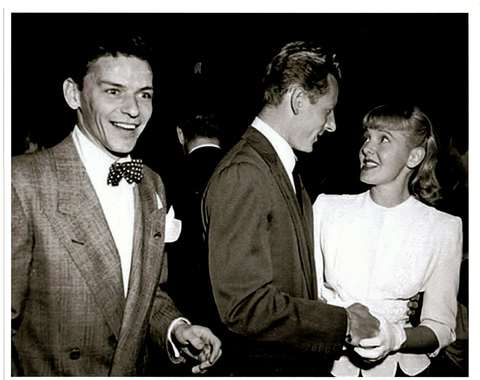
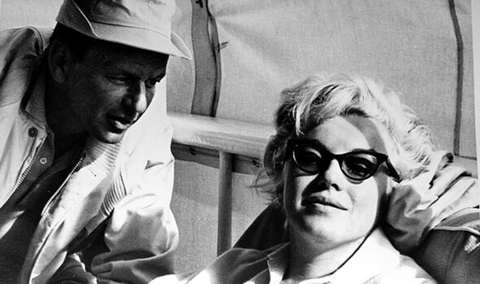
Re: September 1943 Cosmopolitan magazine
Undated materialFrom: scott@falseducks.com | Received: 2026-07-27
Whoops, missed the bottom half.
Here's a nice article about Frank Sinatra from the September 1943 Cosmopolitan magazine
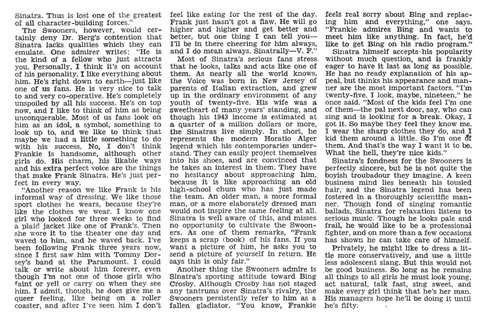
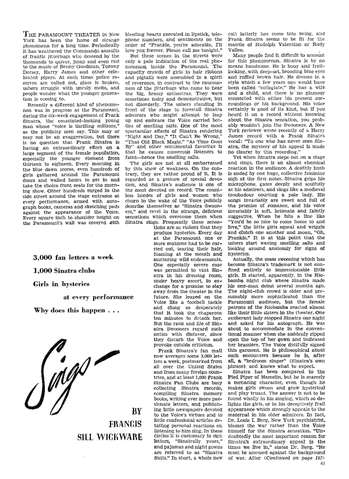
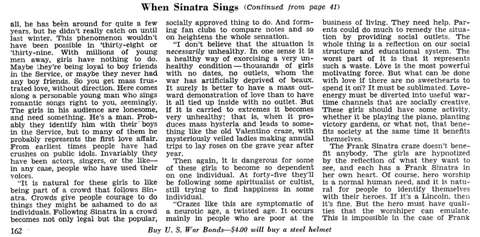
September 1943 Cosmopolitan magazine
Undated materialFrom: scott@falseducks.com | Received: 2026-07-27
Here's a nice article about Frank Sinatra from the September 1943 Cosmopolitan magazine
another missed opportunity
Undated materialFrom: scott@falseducks.com | Received: 2026-07-27
I came across this article from the fall of 1957. It was advertising the "Crescendo" show on the Dupont network. The October 13th episode would have had Bing, Frank Sinatra, and Rosemary Clooney in a musical version of Junior Miss. I check newspaper listings for the 13th but couldn't find anything.
Scott
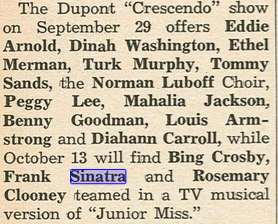
July 27 Frank and Mia
Undated materialFrom: michel macaire <michelmacaire@hotmail.com> | Received: 2026-07-28
Newly weds Frank and Mia were the guests of honor at a party tonight at the 21 Club in NYC. The gathering was hosted by publisher Bennett Cerf and Leland Howard
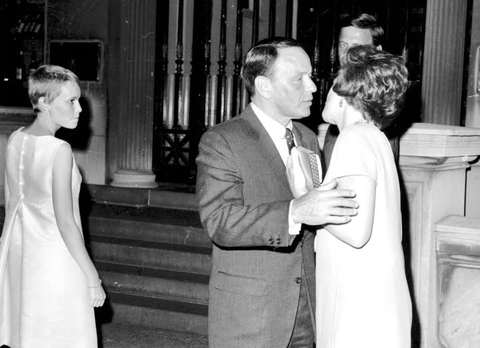
July 30 - THIS DATE IN SINATRA HISTORY
Undated materialFrom: scott@falseducks.com | Received: 2026-07-30
Universal Amphitheater, Los Angeles, California (July 30-August 7) Opening Benefit for Jules Stein Eye Institute and other charities - "A Legendary Evening with Frank Sinatra" - "A Legendary Evening with Frank Sinatra"
Nancy Sinatra and Charlie Callas
Orchestra Conducted By: Vincent Falcone Jr.
Other Performers: Cary Grant, Charlton Heston, Dorothy Lamour, James Stewart, Ernest Borgnine, Angie Dickinson
1. I've Got The World On A String
2. I Get A Kick Out Of You
3. Come Rain Or Come Shine
4. When Joanna Loved Me
5. The Lady Is A Tramp
6. When Your Lover Has Gone
7. I've Got You Under My Skin
8. The House I Live In
9. monologue
10. My Kind Of Town
11. Searching
12. It Had To Be You
13. Gershwin medley: Summertime / It Ain't Necessarily So / Bess, Oh Where's My Bess?
14. The Best Is Yet To Come
15. Guess I'll Hang My Tears Out To Dry
16. New York, New York
Notes: TT 79mins. Raised over one million dollars.
TONY B. WOULD HAVE BEEN 100 TODAY
Undated materialFrom: 'Ed O'Brien' via Sinatraphiles <sinatraphiles@googlegroups.com> | Received: 2026-08-03
Remembering Tony Bennett: Celebrating What Would Have Been His 100th BirthdayEmma KershawMon, August 3, 2026 at 5:15 AM EDT.
Remembering Tony Bennett: Celebrating What Would Have Been His 100th Birthday.
- Tony Bennett, a legendary singer and artist, was born on August 3, 1926, and had a profound impact on the music industry throughout his career. See moreOn Aug. 3, 1926, legendary singer Tony Bennett was born in Long Island City, N.Y., and his lasting impact on music is greatly remembered by many."I come from a wonderful Italian-American family. My father died when I was 10 and my family would make a circle around us to help my mom out," the musician, born Anthony Dominick Benedetto, previously recalled to Parade of his upbringing. Every Sunday, Bennett's family would visit, when Bennett and his siblings would entertain his relatives. "They would encourage us and they would say, 'Look at how Tony is singing' and 'Look at how he paints,' and it really created a passion in me for the rest of my life. I remember very clearly as a young boy saying, 'This is who I am. My family is telling me that I sing well and I paint well, so I'm going to keep doing that.' To this day, I still have a strong desire to get better and better as I get older."Bennett would sing while waiting tables as a teenager and with military bands when he was enlisted in the army during World War II. One of his earliest recordings, "St. James Infirmary Blues," was recorded in Germany just after the war ended, and it held a special place in the singer's heart. He told Parade in 2013, "I loved it. Even today, I consider it one of my favorite records that I ever made." Upon returning home to the United States in 1949, Bennett went on to study music at the American Theatre Wing. The same year, TV entertainer Bob Hope saw the singer performing at a nightclub in Greenwich Village. Impressed with Bennett's talent — "We'll call you Tony," he said, — Hope asked him to join him on his national tour.In 1950, Bennett signed to Columbia Records after sharing a demo of his now hit single, "The Boulevard of Broken Dreams," which was released on May 22 of the same year. His career took off following the release of his cover of Larry Clinton & His Orchestra's "Because of You" in 1951. Just over a decade later, Bennett won his first two Grammy Awards for "I Left My Heart in San Francisco." Over the course of his celebrated career, the hitmaker won 20 Grammys, along with a Lifetime Achievement Award in 2001.In addition to singing, the musician had a deep love for painting, something that he did "every day". He owned his own art studio in Manhattan, located just a few blocks from Central Park, which was one of Bennett's favorite places to go to sketch and paint. Bennett died on July 21, 2023, at age 96. Two years before his death, he revealed that he had been living with Alzheimer's disease for several years. Today, Aug. 3, 2026, the legendary singer and artist would have turned 100, but his memory lives on through his beloved music and his admiration from millions.Related: Founding Member of Influential '80s Rock Band Turns 68This story was originally published by Parade on Aug 3, 2026, where it first appeared in the Entertainment section. Add Parade as a Preferred Source by clicking here.
August 8 - THIS DATE IN SINATRA HISTORY
Undated materialFrom: Scott Henderson <scott@falseducks.com> | Received: 2026-08-08
Cal-Neva Lodge, Nevada (August 8 - 17)
Frank Sinatra
Matty Malneck and His Orchestra
AUGUST 13 THIS DATE IN SINATRA HISTORY
Undated materialFrom: 'Ed O'Brien' via Sinatraphiles <sinatraphiles@googlegroups.com> | Received: 2026-08-13
100th Anniversary Of American Flag Raising Over Los Angeles
Time: 10:30-11PM
Network: WJZ
Performers: Tyrone Powers, Frank Sinatra, others
[image referenced in source but could not be recovered]
Re: [sinatraphiles] August 13 - THIS DATE IN SINATRA HISTORY
Undated materialFrom: scott@falseducks.com | Received: 2026-08-13
>
Re: [sinatraphiles] August 13 - THIS DATE IN SINATRA HISTORY
Undated materialFrom: scott@falseducks.com | Received: 2026-08-13
Came across this program in a newspaper for the Convention. Note 8pm on Monday, they have "Songs (Frank Sinatra). I wonder if he sang other songs.
>>
>
> --
>
August 13 - THIS DATE IN SINATRA HISTORY
Undated materialFrom: scott@falseducks.com | Received: 2026-08-13
Capitol Studio A, Hollywood
E17468 I Could Write A Book
(Richard Rodgers/Lorenz Hart)
Arranged & Conducted by Nelson Riddle
CD: CDP 7-91249-2 Pal Joey
LP: SM912 Pal Joey
E17469 Bewitched
(Richard Rodgers/Lorenz Hart)
Arranged & Conducted by Nelson Riddle
CD: CDP 7-91249-2 Pal Joey
LP: SM912 Pal Joey
E17470 All The Way
(from the film "The Joker Is Wild"
(J. Van Heusen/S. Cahn)
Maraville Music Corp. (ASCAP)
Arranged & Conducted by Nelson Riddle
-5 (2:52) CD: CDP 724383595228 Sinatra 80th "All The Best"
CD: C2 724383808922 The Complete Capitol Singles
CD: C2-94777 The Capitol Years
CD: CDP 7-92160-2 Frank Sinatra Collectorâ's Series
CD: CDP 7-91150-2 All The Way
LP: SW1538 All The Way
45: 3793
E17471 There's A Small Hotel
(Richard Rodgers/Lorenz Hart)
Arranged & Conducted by Nelson Riddle
CD: CDP 7-91249-2 Pal Joey
LP: SM912 Pal Joey
E17472 Chicago
From the film "The Joker Is Wild"
(Fred Fisher)
Fisher Music Corp. (ASCAP)
Arranged & Conducted by Nelson Riddle
-4 (2:12) CD: CDP 724383595228 Sinatra 80th "All The Best"
CD: C2 724383808922 The Complete Capitol Singles
CD: C2-94777 The Capitol Years
CD: CDP 7-92160-2 Frank Sinatra Collector's Series
CD: CDP 7-48469-2 Come Fly With Me
LP: SW1729 Sinatra Sings Of Love And Things
45: 3793
Musician - Reeds: Arthur "Sketts" Herfurt, Harry Klee, Joseph Koch, Ted Nash, Warren Webb; Trumpets: Pete Candoli, Harry "Sweets" Edison, Conrad Gozzo, George Sanders; Trombones: Russell Brown, Tommy Pederson, James Priddy, Juan Tizol; Violins: Vitor Bay, Alex Beller, Harry Bluestone, Jacques Gasselin, Dan Lube, Paul Nero, Erno Neufeld, Mischa Russell, Marshall Sosson; Violas: Maxine Johnson, Barbara Simon; Cellos: Cy Bernard, Armand Kaproff, Edgar Lustgarten; Piano: Bill Miller; Bass: Joe Comfort; Drums: Alvin Stoller; Guitar: Al Viola; Harp: Kathryn Julye
Session Producer: Voyle Gilmore
NOTE: Sinatra Scholar Ed O'Brien remembers when the records came out from this session. The 45 rpm recordings of "All the Way" and "Chicago" were so great! He says he listened to both sides over and over again for weeks. What a singer! When the "Pal Joey" soundtrack was issued, O'Brien says he played the Sinatra tracks and ignored the rest of the album.
[image referenced in source but could not be recovered]
[image referenced in source but could not be recovered]
[image referenced in source but could not be recovered]
August 18 - THIS DATE IN SINATRA HISTORY
Undated materialFrom: scott@falseducks.com | Received: 2026-08-18
Mayer’s Tavern, Rumson, NJ
Frank Sinatra accompanied by Bert Gaul on the Hammond Novachord
(this had previous been reported as the 11th)
AUGUST 19 THIS DATE IN SINATRA HISTORY
Undated materialFrom: 'Ed O'Brien' via Sinatraphiles <sinatraphiles@googlegroups.com> | Received: 2026-08-20
1948 opens with no Sinatra record on the charts
Undated materialFrom: Richard Havers, "Sinatra" (Dorling Kindersley, 2007).
For the first time in four years, 1948 began with no Frank Sinatra record on the Billboard charts, and prospects were further dimmed by the looming musicians' strike.
Context: 1948 opens with no Sinatra record on the charts
Date as given in source: For the first time in four years, a new year began without a Sinatra record on the charts
Date as given in source could not be resolved to a specific calendar day for the main chronology; routed to Appendix as undated material.
1948 recording drought blamed on musicians' strike, not bad luck
Undated materialFrom: Richard Havers, "Sinatra" (Dorling Kindersley, 2007).
Frank's poor 1948 record sales, with only six weeks on the Billboard charts, were driven largely by the Musicians' Union strike that shut down recording industry-wide; Havers stresses it would be wrong to read this as simple bad luck unique to Frank, since the whole industry suffered a coast-to-coast slump.
Context: 1948 recording drought blamed on musicians' strike, not bad luck
Date as given in source: as Downbeat put it, 'there was a coast to coast slump for everyone'
Date as given in source could not be resolved to a specific calendar day for the main chronology; routed to Appendix as undated material.
26-year-old Trini Lopez meets Sinatra on set
Undated materialFrom: Richard Havers, "Sinatra" (Dorling Kindersley, 2007).
Tommy Dorsey's former road manager George "Bullets" Durgom introduced newly signed Reprise artist Trini Lopez, then 26, to Sinatra during filming. Lopez later said he was struck that Sinatra wasn't at all affected by being Mr. Frank Sinatra.
Context: 26-year-old Trini Lopez meets Sinatra on set
Date as given in source: During the filming (of 4 for Texas)
Date as given in source could not be resolved to a specific calendar day for the main chronology; routed to Appendix as undated material.
A dead microphone incident during Duets sessions
Undated materialFrom: Richard Havers, "Sinatra" (Dorling Kindersley, 2007).
During an early Duets session a microphone failed mid-performance; Sinatra silently dropped the mic and walked offstage, leaving a hushed, anxious crew scrambling before he calmly returned with a new microphone and continued without comment.
Context: A dead microphone incident during Duets sessions
Date as given in source: None
Date as given in source could not be resolved to a specific calendar day for the main chronology; routed to Appendix as undated material.
A fan compares the reunion tour opener to the Super Bowl
Undated materialFrom: Richard Havers, "Sinatra" (Dorling Kindersley, 2007).
An audience member at the reunited trio's tour opener reportedly exclaimed that the show felt "like the super bowl," reflecting the huge anticipation for the Sinatra-Martin-Davis reunion.
Context: A fan compares the reunion tour opener to the Super Bowl
Date as given in source: None
Date as given in source could not be resolved to a specific calendar day for the main chronology; routed to Appendix as undated material.
A fan doctor secretly tapes the Blackpool concert
Undated materialFrom: Richard Havers, "Sinatra" (Dorling Kindersley, 2007).
A visiting doctor from Leeds smuggled a heavy reel-to-reel recorder and a hidden microphone into the Blackpool Opera House to capture Frank's show, unbeknownst to Frank. The recording later became prized as a rare, unguarded document of Frank mid-transition.
Context: A fan doctor secretly tapes the Blackpool concert
Date as given in source: undated
Date as given in source could not be resolved to a specific calendar day for the main chronology; routed to Appendix as undated material.
A London clergyman denounces Ava Gardner from the pulpit
Undated materialFrom: Richard Havers, "Sinatra" (Dorling Kindersley, 2007).
Ava's open presence in London during her affair with the married Frank drew criticism even from the clergy, with one minister denouncing what he called women who worship at the shrine of "Saint Ava Gardner."
Context: A London clergyman denounces Ava Gardner from the pulpit
Date as given in source: One minister used his sermon to address declining moral standards
Date as given in source could not be resolved to a specific calendar day for the main chronology; routed to Appendix as undated material.
A sailor's memories of the Hollywood Palladium
Undated materialFrom: Richard Havers, "Sinatra" (Dorling Kindersley, 2007).
Navy serviceman Bert Moore recalled visiting the Hollywood Palladium in uniform, unable to afford eating there, buying only a single 40-cent drink because he had virtually no money to spare.
Context: A sailor's memories of the Hollywood Palladium
Date as given in source: Bert Moore, a Palladium regular while serving in the US Navy, recalled
Date as given in source could not be resolved to a specific calendar day for the main chronology; routed to Appendix as undated material.
A serviceman's account of Frank's Italy performance
Undated materialFrom: Richard Havers, "Sinatra" (Dorling Kindersley, 2007).
GI Stanley Phippard recalled watching a painfully thin Frank walk on stage in Italy to sing for an hour, calling it the best performance he ever witnessed, despite Frank barely casting a shadow.
Context: A serviceman's account of Frank's Italy performance
Date as given in source: None
Date as given in source could not be resolved to a specific calendar day for the main chronology; routed to Appendix as undated material.
A televised debate on whether the 'Clan' was finished
Undated materialFrom: Richard Havers, "Sinatra" (Dorling Kindersley, 2007).
As press speculation grew about the Rat Pack's demise, a televised discussion on the topic featured figures including restaurateur Toots Shor, Jackie Gleason, and Ernie Kovacs, reflecting how much public fascination the group still generated even as Frank grew tired of the coverage.
Context: A televised debate on whether the 'Clan' was finished
Date as given in source: None
Date as given in source could not be resolved to a specific calendar day for the main chronology; routed to Appendix as undated material.
A young couple's night out at the Palladium
Undated materialFrom: Richard Havers, "Sinatra" (Dorling Kindersley, 2007).
Marion Wallien recalled driving to the Hollywood Palladium in her date's father's distinctive two-tone Studebaker, describing the roped-off bar, the swaying couples, and the thrill of listening to Frankie, the Pied Pipers, and Tommy Dorsey's band even though she barely danced.
Context: A young couple's night out at the Palladium
Date as given in source: Marion Wallien also remembered
Date as given in source could not be resolved to a specific calendar day for the main chronology; routed to Appendix as undated material.
Al Martino on entertainers' entanglement with mob-run clubs
Undated materialFrom: Richard Havers, "Sinatra" (Dorling Kindersley, 2007).
Reflecting on why so many singers and musicians of the era knew organized-crime figures, singer Al Martino later observed that performers routinely worked for and befriended the men who owned the nightclubs they played. The book uses this to argue Frank's underworld acquaintances were unremarkable for a performer of his generation.
Context: Al Martino on entertainers' entanglement with mob-run clubs
Date as given in source: None
Date as given in source could not be resolved to a specific calendar day for the main chronology; routed to Appendix as undated material.
Alan Livingston on what made Frank a great interpreter of songs
Undated materialFrom: Richard Havers, "Sinatra" (Dorling Kindersley, 2007).
Livingston recalled that, unlike most singers he recorded, Frank paid intense attention to a song's lyric and meaning, privately rehearsing it repeatedly before ever bringing it into the studio with the orchestra.
Context: Alan Livingston on what made Frank a great interpreter of songs
Date as given in source: undated
Date as given in source could not be resolved to a specific calendar day for the main chronology; routed to Appendix as undated material.
Alan Livingston's diagnosis of Mitch Miller's mistake with Frank
Undated materialFrom: Richard Havers, "Sinatra" (Dorling Kindersley, 2007).
Alan Livingston, who later signed Frank to Capitol, assessed that Mitch Miller's error was trying to force Frank into a conventional pop-music mold that never suited him. This framing is offered as context for why Frank's Columbia output during this period felt so mismatched to his talent.
Context: Alan Livingston's diagnosis of Mitch Miller's mistake with Frank
Date as given in source: None
Date as given in source could not be resolved to a specific calendar day for the main chronology; routed to Appendix as undated material.
'All or Nothing at All' becomes a hit years later
Undated materialFrom: Richard Havers, "Sinatra" (Dorling Kindersley, 2007).
Frank's 1939 recording of 'All or Nothing at All,' a modest seller when first released with Harry James, was re-released during a Musicians' Union recording strike and became a genuine hit, reaching No. 2 on Billboard.
Context: 'All or Nothing at All' becomes a hit years later
Date as given in source: when it got to No 2 on the Billboard chart in September 1943
Date as given in source could not be resolved to a specific calendar day for the main chronology; routed to Appendix as undated material.
An unimpressed early assessment of the unknown Sinatra
Undated materialFrom: Richard Havers, "Sinatra" (Dorling Kindersley, 2007).
A musician who met Frank around 1939 while playing trumpet in Charlie Barnet's band, which crossed paths with Harry James's, recalled that Frank was at the time 'just another guy,' not outstanding in any way -- a telling contrast to what he would become.
Context: An unimpressed early assessment of the unknown Sinatra
Date as given in source: recalled by an unnamed trumpeter who played with Charlie Barnet's band
Date as given in source could not be resolved to a specific calendar day for the main chronology; routed to Appendix as undated material.
Andre Previn ghost-plays piano for Sinatra on screen
Undated materialFrom: Richard Havers, "Sinatra" (Dorling Kindersley, 2007).
In It Happened in Brooklyn, Frank was required to appear to play piano and was synced to the actual playing of 17-year-old Andre Previn, marking the first time their paths crossed professionally, though not the last.
Context: Andre Previn ghost-plays piano for Sinatra on screen
Date as given in source: None
Date as given in source could not be resolved to a specific calendar day for the main chronology; routed to Appendix as undated material.
Angry outbursts at Harrah's family show over press treatment
Undated materialFrom: Richard Havers, "Sinatra" (Dorling Kindersley, 2007).
Booked into Harrah's South Shore Room with Nancy and Frank Jr for a family show, Frank instead used the stage to continue lambasting the press over the Australian controversy. Variety reported the audience responding with hisses, catcalls, and boos.
Context: Angry outbursts at Harrah's family show over press treatment
Date as given in source: the same summer (after Australia)
Date as given in source could not be resolved to a specific calendar day for the main chronology; routed to Appendix as undated material.
Army denies Frank clearance to entertain troops in Korea
Undated materialFrom: Richard Havers, "Sinatra" (Dorling Kindersley, 2007).
Frank met Adjutant General Major General John A. Klein in Washington to challenge the Army's denial of his request to entertain troops in Korea. FBI files reportedly cited lingering doubts about his political sympathies; Frank shot back that he was "just as communistic as the Pope," but the Army wouldn't budge and he never made the trip.
Context: Army denies Frank clearance to entertain troops in Korea
Date as given in source: Two weeks later
Date as given in source could not be resolved to a specific calendar day for the main chronology; routed to Appendix as undated material.
Arnold Shaw observes Sinatra never removes his hat in session
Undated materialFrom: Richard Havers, "Sinatra" (Dorling Kindersley, 2007).
Writing in Rogue magazine, journalist Arnold Shaw noted that during two recording sessions Sinatra kept his hat on throughout, only occasionally tilting it back to reveal thinning hair.
Context: Arnold Shaw observes Sinatra never removes his hat in session
Date as given in source: OCTOBER (Rogue magazine)
Date as given in source could not be resolved to a specific calendar day for the main chronology; routed to Appendix as undated material.
Arranger Sy Oliver recalls Frank's early self-belief
Undated materialFrom: Richard Havers, "Sinatra" (Dorling Kindersley, 2007).
Tommy Dorsey's arranger Sy Oliver later recalled that even in his Dorsey years, Sinatra already carried himself with an unmistakable spark and total belief in himself, such that audiences knew immediately he was going to be a major star.
Context: Arranger Sy Oliver recalls Frank's early self-belief
Date as given in source: None
Date as given in source could not be resolved to a specific calendar day for the main chronology; routed to Appendix as undated material.
Ava allegedly calls Frank 'a has been' during a low point
Undated materialFrom: Richard Havers, "Sinatra" (Dorling Kindersley, 2007).
Amid the volatile early period of their relationship, with tensions between Frank and Ava frequently reported in the press, Ava is said to have cruelly remarked that Frank was "a has been." The book notes that while not literally true yet, he was well on his way there.
Context: Ava allegedly calls Frank 'a has been' during a low point
Date as given in source: None
Date as given in source could not be resolved to a specific calendar day for the main chronology; routed to Appendix as undated material.
Ava downplays her rumored Spanish fling
Undated materialFrom: Richard Havers, "Sinatra" (Dorling Kindersley, 2007).
Ava Gardner maintained that her rumored affair with actor Mario Cabre during filming in Spain amounted to sleeping together only once, though the gossip was hardly likely to placate a jealous Frank.
Context: Ava downplays her rumored Spanish fling
Date as given in source: According to Ava, they only went to bed once
Date as given in source could not be resolved to a specific calendar day for the main chronology; routed to Appendix as undated material.
Ava gets the upper hand in an early exchange with Frank
Undated materialFrom: Richard Havers, "Sinatra" (Dorling Kindersley, 2007).
In an early exchange after reconnecting in Palm Springs, Frank suggested they'd been rushing things; Ava turned the line back on him, and Havers notes she seemed to retain the emotional upper hand throughout their relationship.
Context: Ava gets the upper hand in an early exchange with Frank
Date as given in source: "I suppose we were rushing things a little the last time we met"
Date as given in source could not be resolved to a specific calendar day for the main chronology; routed to Appendix as undated material.
Ava's autobiography recalls Frank's compulsive cleanliness
Undated materialFrom: Richard Havers, "Sinatra" (Dorling Kindersley, 2007).
In her memoirs, Ava Gardner described Frank as the cleanest man she ever knew, constantly changing clothes and underwear and showering, joking she wouldn't have been surprised to catch him washing the soap itself. The book connects this trait to his mother Dolly's own notable fastidiousness.
Context: Ava's autobiography recalls Frank's compulsive cleanliness
Date as given in source: None
Date as given in source could not be resolved to a specific calendar day for the main chronology; routed to Appendix as undated material.
Bacall hosts Frank's Vegas dinner parties as romance goes public
Undated materialFrom: Richard Havers, "Sinatra" (Dorling Kindersley, 2007).
Frank and Lauren Bacall were together in Las Vegas for the late-August opening of The Joker Is Wild, with Bacall acting as hostess at his dinner parties. She later wrote that friends doubted the relationship would last, but insisted the two were genuinely smitten with each other.
Context: Bacall hosts Frank's Vegas dinner parties as romance goes public
Date as given in source: the opening of The Joker Is Wild at the end of August
Date as given in source could not be resolved to a specific calendar day for the main chronology; routed to Appendix as undated material.
Backing singers surprised to learn they were recording for Sinatra
Undated materialFrom: Richard Havers, "Sinatra" (Dorling Kindersley, 2007).
VerPlanck, contracted to hire 16 backing vocalists for a Trilogy session, didn't reveal the client's identity until the singers saw Frank's name on the music stand. She recalled having to sneak up and personally ask Frank if the group could get a photo with him afterward.
Context: Backing singers surprised to learn they were recording for Sinatra
Date as given in source: Session singer Marlene VerPlanck recalls
Date as given in source could not be resolved to a specific calendar day for the main chronology; routed to Appendix as undated material.
Bad-taste jokes at Caesars offend Ella Fitzgerald and Count Basie
Undated materialFrom: Richard Havers, "Sinatra" (Dorling Kindersley, 2007).
Back at Caesars for his second run of the year as a new grandfather, Frank shocked Variety critic Bill Willard with racially offensive jokes that reportedly upset fellow performers Ella Fitzgerald and Count Basie. Bob Hope's own jokes about Frank that week, by contrast, drew praise for being in better taste.
Context: Bad-taste jokes at Caesars offend Ella Fitzgerald and Count Basie
Date as given in source: Two weeks later (after May 24)
Date as given in source could not be resolved to a specific calendar day for the main chronology; routed to Appendix as undated material.
Bandleader Billy Ternent's hesitation to back Frank's UK tour
Undated materialFrom: Richard Havers, "Sinatra" (Dorling Kindersley, 2007).
British bandleader Billy Ternent, who ultimately backed Frank on his UK tour, was reportedly initially unsure whether to accept the job, according to a Melody Maker item—an indicator, Havers writes, of how far Frank's stock had fallen.
Context: Bandleader Billy Ternent's hesitation to back Frank's UK tour
Date as given in source: undated
Date as given in source could not be resolved to a specific calendar day for the main chronology; routed to Appendix as undated material.
Bandleader Ray Anthony on the public's reaction to Frank
Undated materialFrom: Richard Havers, "Sinatra" (Dorling Kindersley, 2007).
Bandleader Ray Anthony recalled walking with Frank between the Sands' main room and lounge and being struck by how fans wanted to touch him or address him by his first name as if they knew him personally, and how good-naturedly Frank tolerated it. Pianist Bill Miller offered a different take, suggesting Frank actually relished the adulation.
Context: Bandleader Ray Anthony on the public's reaction to Frank
Date as given in source: None
Date as given in source could not be resolved to a specific calendar day for the main chronology; routed to Appendix as undated material.
Bandmate recalls Frank's magnetism with women
Undated materialFrom: Richard Havers, "Sinatra" (Dorling Kindersley, 2007).
A fellow musician at the Rustic Cabin, Harry Schumann, remembered being baffled by how many women were drawn to Frank until he heard him sing, at which point the appeal became obvious -- Frank had a charisma that reached every woman in the room.
Context: Bandmate recalls Frank's magnetism with women
Date as given in source: recalled by Harry Schumann, one of Bill Henri's Headliners
Date as given in source could not be resolved to a specific calendar day for the main chronology; routed to Appendix as undated material.
Bar scuffle at Lucey's after Frank's first Capitol session
Undated materialFrom: Richard Havers, "Sinatra" (Dorling Kindersley, 2007).
After Frank's first Capitol session, he and Alan Livingston went for a late drink at Lucey's, one of the few times they socialized. A stranger at the bar needled Frank about "buying a drink for your leech friend," and Frank's bodyguard ended up throwing the man out.
Context: Bar scuffle at Lucey's after Frank's first Capitol session
Date as given in source: undated
Date as given in source could not be resolved to a specific calendar day for the main chronology; routed to Appendix as undated material.
BB King recalls first meeting Sinatra in Las Vegas
Undated materialFrom: Richard Havers, "Sinatra" (Dorling Kindersley, 2007).
Blues musician BB King recalled needing Frank's approval to play the lounge at Caesars Palace while Frank headlined, and being surprised to get back a telegram simply reading "Hell yes." King later attended a party in Frank's suite where he was the only Black guest, and Frank greeted him warmly and offered him a drink.
Context: BB King recalls first meeting Sinatra in Las Vegas
Date as given in source: In a recent interview with the New York Times
Date as given in source could not be resolved to a specific calendar day for the main chronology; routed to Appendix as undated material.
Bill Miller confirms the band knew about the Riddle/May switch
Undated materialFrom: Richard Havers, "Sinatra" (Dorling Kindersley, 2007).
Pianist Bill Miller later said the band actually did know about Capitol's Billy May ruse, recalling that Nelson Riddle himself announced before a segment, "Now we'll make like Billy May."
Context: Bill Miller confirms the band knew about the Riddle/May switch
Date as given in source: undated
Date as given in source could not be resolved to a specific calendar day for the main chronology; routed to Appendix as undated material.
Bill Miller on his years-long rift and reunion with Sinatra
Undated materialFrom: Richard Havers, "Sinatra" (Dorling Kindersley, 2007).
Longtime accompanist Bill Miller described an unexplained falling-out with Frank around 1978, saying only that "we probably got tired of looking at each other." Years later Frank had Mickey Rudin call Miller to invite him back, and Miller said things were simply forgotten by then.
Context: Bill Miller on his years-long rift and reunion with Sinatra
Date as given in source: According to Bill Miller
Date as given in source could not be resolved to a specific calendar day for the main chronology; routed to Appendix as undated material.
Bill Miller recalls Sinatra's last reflective conversation
Undated materialFrom: Richard Havers, "Sinatra" (Dorling Kindersley, 2007).
After what became his final performance, pianist Bill Miller recalled Sinatra watching TV and admiring a song he heard, saying he'd like to include it if he ever performed again — but when Miller said fans were waiting for him, Sinatra replied it was "too late, too late," feeling he'd already done enough work.
Context: Bill Miller recalls Sinatra's last reflective conversation
Date as given in source: None
Date as given in source could not be resolved to a specific calendar day for the main chronology; routed to Appendix as undated material.
Billie Holiday's modest take on helping Frank
Undated materialFrom: Richard Havers, "Sinatra" (Dorling Kindersley, 2007).
For her part, Billie Holiday downplayed her influence on Frank, saying all she really taught him was how to bend notes.
Context: Billie Holiday's modest take on helping Frank
Date as given in source: Billie Holiday's own recollection
Date as given in source could not be resolved to a specific calendar day for the main chronology; routed to Appendix as undated material.
Billy May credits his longevity with Sinatra to social distance
Undated materialFrom: Richard Havers, "Sinatra" (Dorling Kindersley, 2007).
Arranger Billy May suggested that his long working relationship with Frank lasted because the two didn't socialize much outside the studio, in contrast to more personally entangled collaborators. May summed up his approach simply: "you simply did the job."
Context: Billy May credits his longevity with Sinatra to social distance
Date as given in source: Many, including Billy May himself, have proffered the opinion
Date as given in source could not be resolved to a specific calendar day for the main chronology; routed to Appendix as undated material.
Billy May's uncanny speed impresses jazz pianist George Shearing
Undated materialFrom: Richard Havers, "Sinatra" (Dorling Kindersley, 2007).
While working with pianist George Shearing, May's ear was so fast that when Shearing started replaying a tune a second time so he could catch details for an arrangement, May cut him off, saying he'd already finished orchestrating everything through the bridge.
Context: Billy May's uncanny speed impresses jazz pianist George Shearing
Date as given in source: None
Date as given in source could not be resolved to a specific calendar day for the main chronology; routed to Appendix as undated material.
Bob Gaudio on Frank's confidence releasing Watertown without a TV tie-in
Undated materialFrom: Richard Havers, "Sinatra" (Dorling Kindersley, 2007).
Producer Bob Gaudio recalled that Frank, though not feeling his best after finishing the sessions, decided against holding Watertown until a planned TV special could accompany it, declaring simply that he was proud of the record and wanted it released.
Context: Bob Gaudio on Frank's confidence releasing Watertown without a TV tie-in
Date as given in source: None
Date as given in source could not be resolved to a specific calendar day for the main chronology; routed to Appendix as undated material.
Bob Gaudio's frantic backyard-pool story
Undated materialFrom: Richard Havers, "Sinatra" (Dorling Kindersley, 2007).
Songwriter Bob Gaudio invited Frank to his new New Jersey house for a relaxing day, then realized on the way down in an elevator that he'd sold the house that actually had a pool. He scrambled to have a pool built from scratch in days through a police-chief friend, finishing just before a torrential downpour washed the new grass into it; Frank reportedly found the whole mishap hilarious.
Context: Bob Gaudio's frantic backyard-pool story
Date as given in source: during the Watertown orchestral sessions
Date as given in source could not be resolved to a specific calendar day for the main chronology; routed to Appendix as undated material.
Bob Wells recalls Frank's insecurity turning to confidence
Undated materialFrom: Richard Havers, "Sinatra" (Dorling Kindersley, 2007).
Songwriter Bob Wells recalled Frank anxiously asking after a rough early-1953 session whether his performance had been all right; by the time Frank's fortunes had turned, their greeting had shifted to a casual, confident "Hi Kid."
Context: Bob Wells recalls Frank's insecurity turning to confidence
Date as given in source: undated
Date as given in source could not be resolved to a specific calendar day for the main chronology; routed to Appendix as undated material.
Brando's 135 takes push Sinatra to the brink on Guys and Dolls
Undated materialFrom: Richard Havers, "Sinatra" (Dorling Kindersley, 2007).
Marlon Brando's habit of demanding endless retakes reportedly reached 135 takes on one scene, straining budgets and Sinatra's patience. When he and Vivian Blaine were asked to stay late once too often, Sinatra simply took her hand and walked off set, leaving director Joseph Mankiewicz speechless.
Context: Brando's 135 takes push Sinatra to the brink on Guys and Dolls
Date as given in source: None
Date as given in source could not be resolved to a specific calendar day for the main chronology; routed to Appendix as undated material.
British fans crown Sinatra top singer over Johnnie Ray
Undated materialFrom: Richard Havers, "Sinatra" (Dorling Kindersley, 2007).
New Musical Express readers voted Sinatra the World's Outstanding Popular Singer with 8,340 votes, comfortably ahead of Johnnie Ray's 5,963.
Context: British fans crown Sinatra top singer over Johnnie Ray
Date as given in source: None
Date as given in source could not be resolved to a specific calendar day for the main chronology; routed to Appendix as undated material.
British press notes Frank beat Bing in Down Beat poll
Undated materialFrom: Richard Havers, "Sinatra" (Dorling Kindersley, 2007).
The UK's Melody Maker reported with some surprise that Down Beat readers had voted Frank their favorite male vocalist over Bing Crosby, by a margin of 4,099 votes to 3,942.
Context: British press notes Frank beat Bing in Down Beat poll
Date as given in source: In early March
Date as given in source could not be resolved to a specific calendar day for the main chronology; routed to Appendix as undated material.
Budweiser sponsors A Man and His Music special for $500,000
Undated materialFrom: Richard Havers, "Sinatra" (Dorling Kindersley, 2007).
Budweiser paid $500,000 to sponsor Sinatra's NBC television special "A Man and His Music," broadcast over Thanksgiving weekend 1965 to widespread critical acclaim; the show featured mostly songs from his Capitol years.
Context: Budweiser sponsors A Man and His Music special for $500,000
Date as given in source: Thanksgiving weekend
Date as given in source could not be resolved to a specific calendar day for the main chronology; routed to Appendix as undated material.
Building a following at Hoboken's small clubs
Undated materialFrom: Richard Havers, "Sinatra" (Dorling Kindersley, 2007).
Before landing steadier work, Frank built local recognition singing at small Hoboken venues including the Cat's Meow, the Continental Bar, and the Oval Bar, slowly getting himself known around town.
Context: Building a following at Hoboken's small clubs
Date as given in source: mid-1930s, before regular gigs
Date as given in source could not be resolved to a specific calendar day for the main chronology; routed to Appendix as undated material.
Caesars show cancelled after Reagan assassination attempt
Undated materialFrom: Richard Havers, "Sinatra" (Dorling Kindersley, 2007).
During a March residency at Caesars Palace, Frank cancelled his final show following the attempted assassination of President Reagan.
Context: Caesars show cancelled after Reagan assassination attempt
Date as given in source: for most of March...cancelled his last show
Date as given in source could not be resolved to a specific calendar day for the main chronology; routed to Appendix as undated material.
Can-Can filming begins
Undated materialFrom: Richard Havers, "Sinatra" (Dorling Kindersley, 2007).
Principal photography began in September 1959 on Frank's next movie, Can-Can, with Nelson Riddle handling the studio recordings for the soundtrack alongside filming.
Context: Can-Can filming begins
Date as given in source: shooting proper started in September
Date as given in source could not be resolved to a specific calendar day for the main chronology; routed to Appendix as undated material.
Capitol counter-programs Reprise's All Alone with its own reissues
Undated materialFrom: Richard Havers, "Sinatra" (Dorling Kindersley, 2007).
Capitol released two albums, including the three-record set "The Great Years," timed to coincide with Sinatra's new Reprise album "All Alone." The tactic implied Sinatra's best days were behind him, and "All Alone" reached only No. 25 on Billboard, his worst-performing album in a decade.
Context: Capitol counter-programs Reprise's All Alone with its own reissues
Date as given in source: In October
Date as given in source could not be resolved to a specific calendar day for the main chronology; routed to Appendix as undated material.
Capitol's secret ruse crediting Nelson Riddle songs to Billy May
Undated materialFrom: Richard Havers, "Sinatra" (Dorling Kindersley, 2007).
To bridge the gap while Billy May was on tour, Capitol had Nelson Riddle secretly arrange two songs in May's style; studio players and even the record label were told they were genuine Billy May arrangements. The impersonation was so convincing that most musicians, and later record buyers, were fooled.
Context: Capitol's secret ruse crediting Nelson Riddle songs to Billy May
Date as given in source: undated
Date as given in source could not be resolved to a specific calendar day for the main chronology; routed to Appendix as undated material.
Carnegie Hall gala for the Southern Christian Leadership Conference
Undated materialFrom: Richard Havers, "Sinatra" (Dorling Kindersley, 2007).
A week after JFK's inauguration, Frank appeared at a Carnegie Hall gala for the Southern Christian Leadership Conference, with the second half of the show given to Frank, Sammy, and Dean. The evening closed with Harry Belafonte introducing Dr Martin Luther King Jr, recently freed from jail by presidential decree.
Context: Carnegie Hall gala for the Southern Christian Leadership Conference
Date as given in source: A week after the President was sworn in
Date as given in source could not be resolved to a specific calendar day for the main chronology; routed to Appendix as undated material.
Charity dates in Mexico City
Undated materialFrom: Richard Havers, "Sinatra" (Dorling Kindersley, 2007).
In April 1961 Frank went to Mexico City for a week of charity concerts for hospitals, bringing Nelson Riddle's band and personally covering all the musicians' expenses, according to saxophonist Ted Nash.
Context: Charity dates in Mexico City
Date as given in source: In April
Date as given in source could not be resolved to a specific calendar day for the main chronology; routed to Appendix as undated material.
Chasen's press conference announces Rat Pack reunion
Undated materialFrom: Richard Havers, "Sinatra" (Dorling Kindersley, 2007).
Shortly before his 72nd birthday, Sinatra held a press conference with Sammy Davis Jr and Dean Martin at Chasen's in Los Angeles announcing that the trio would tour together for the first time in twenty years, reviving the old Rat Pack "Summit."
Context: Chasen's press conference announces Rat Pack reunion
Date as given in source: Shortly before Frank's 72nd birthday
Date as given in source could not be resolved to a specific calendar day for the main chronology; routed to Appendix as undated material.
Claim that Mob pressure helped Frank land the Eternity role
Undated materialFrom: Richard Havers, "Sinatra" (Dorling Kindersley, 2007).
In his 2001 memoir, producer Martin Jurow recounted that after Harry Cohn initially refused to consider Sinatra, agent George Wood enlisted mobster Meyer Lansky's associate "Jimmy Blue Eyes," who reportedly told Cohn simply that he "owes us"—implying underworld leverage helped secure Frank the part.
Context: Claim that Mob pressure helped Frank land the Eternity role
Date as given in source: undated
Date as given in source could not be resolved to a specific calendar day for the main chronology; routed to Appendix as undated material.
Close to You becomes Frank's first Capitol flop
Undated materialFrom: Richard Havers, "Sinatra" (Dorling Kindersley, 2007).
Released about a week after Bogart died, Close to You, recorded with the Hollywood String Quartet, became the first Frank Sinatra Capitol album not to meet expectations commercially; its unusually intimate sound may have unsettled some fans.
Context: Close to You becomes Frank's first Capitol flop
Date as given in source: Just a week after Bogie's death
Date as given in source could not be resolved to a specific calendar day for the main chronology; routed to Appendix as undated material.
Cohn intervenes on the Maggio arrest scene
Undated materialFrom: Richard Havers, "Sinatra" (Dorling Kindersley, 2007).
During the filming of Maggio's arrest scene in Hawaii, Frank wanted to physically fight the arresting military policeman, and Zinnemann agreed to shoot it that way—until Cohn arrived on set, having been tipped off, and insisted Frank remain seated throughout, leaving Frank with a bitter taste.
Context: Cohn intervenes on the Maggio arrest scene
Date as given in source: undated
Date as given in source could not be resolved to a specific calendar day for the main chronology; routed to Appendix as undated material.
Come Fly with Me becomes Frank's first Capitol No. 1
Undated materialFrom: Richard Havers, "Sinatra" (Dorling Kindersley, 2007).
Come Fly with Me became Frank's first Capitol album to reach number one, cementing him as the label's flagship artist, though Alan Livingston, the executive whose foresight had signed Frank to Capitol, had by then left for NBC.
Context: Come Fly with Me becomes Frank's first Capitol No. 1
Date as given in source: Two days later... a week later it became his first Capitol album to top the charts
Date as given in source could not be resolved to a specific calendar day for the main chronology; routed to Appendix as undated material.
Comparing the parallel but divergent fates of Frank and Billie Holiday
Undated materialFrom: Richard Havers, "Sinatra" (Dorling Kindersley, 2007).
The book draws a contrast between Frank and Billie Holiday: both were brought low partly by their own self-destructive tendencies, but while Frank fought his way back, Holiday, as a Black woman in a deeply prejudiced era, was not so fortunate and succumbed. Holiday reportedly complained she couldn't get her police card to work in New York, forcing her to seek work in England instead.
Context: Comparing the parallel but divergent fates of Frank and Billie Holiday
Date as given in source: None
Date as given in source could not be resolved to a specific calendar day for the main chronology; routed to Appendix as undated material.
Contradictory memories of young Frank's character
Undated materialFrom: Richard Havers, "Sinatra" (Dorling Kindersley, 2007).
Accounts of Frank's temperament as a boy vary widely. One cousin recalled that his parents had little time for him and he was "always underfoot," but also that he was warm and wanted friendship, calling him "a soft, kind boy." A different childhood friend pushed back on the sympathetic portrayal, insisting Frank "was tough as nails."
Context: Contradictory memories of young Frank's character
Date as given in source: childhood, conflicting accounts
Date as given in source could not be resolved to a specific calendar day for the main chronology; routed to Appendix as undated material.
Critic Ralph Gleason attacks Sinatra's entourage culture
Undated materialFrom: Richard Havers, "Sinatra" (Dorling Kindersley, 2007).
Rolling Stone critic Ralph J Gleason, who had written liner notes for Frank's 1959 album No One Cares, wrote critically that the Ol' Blue Eyes persona was a drag on the singer Frank once was. Much of his complaint targeted Frank's bodyguards and hangers-on rather than the singing itself.
Context: Critic Ralph Gleason attacks Sinatra's entourage culture
Date as given in source: Ralph J Gleason, writing in Rolling Stone
Date as given in source could not be resolved to a specific calendar day for the main chronology; routed to Appendix as undated material.
Critics split on Frank's suitability for the new medium of television
Undated materialFrom: Richard Havers, "Sinatra" (Dorling Kindersley, 2007).
Critical reaction to Frank's early television work was mixed: Variety suggested he hadn't broken out of his shell on TV, while the New York Times said he had walked off the high dive only to land in the shallow end.
Context: Critics split on Frank's suitability for the new medium of television
Date as given in source: Not everyone thought that Frank was right for television
Date as given in source could not be resolved to a specific calendar day for the main chronology; routed to Appendix as undated material.
Crowds line up for Sinatra's Paramount return
Undated materialFrom: Richard Havers, "Sinatra" (Dorling Kindersley, 2007).
Fans queued from Forty-Third Street to Eighth Avenue for Sinatra's Paramount opening, some carrying placards reading "We love Frankie" and "Sinatra for President." He sang 26 songs that first night, with 'I've Got You Under My Skin' the biggest audience hit.
Context: Crowds line up for Sinatra's Paramount return
Date as given in source: when the Paramount opened at 9:50 a.m.
Date as given in source could not be resolved to a specific calendar day for the main chronology; routed to Appendix as undated material.
David Bowie's rejected English lyric for the future "My Way"
Undated materialFrom: Richard Havers, "Sinatra" (Dorling Kindersley, 2007).
Before Paul Anka wrote the English lyrics that became 'My Way,' David Bowie had attempted his own English version of the French original, titled 'Even a Fool Learns to Love,' but the publisher rejected his demo.
Context: David Bowie's rejected English lyric for the future "My Way"
Date as given in source: a few months earlier (than Anka's version)
Date as given in source could not be resolved to a specific calendar day for the main chronology; routed to Appendix as undated material.
David Jacobs backstage with Frank before the Festival Hall show
Undated materialFrom: Richard Havers, "Sinatra" (Dorling Kindersley, 2007).
BBC DJ David Jacobs, tasked with introducing Frank, described finding him getting dressed backstage with his valet's help, struggling to walk in stiff new trousers. When Jacobs asked why he bothered, Frank quietly said he didn't want to look sloppy once he got on stage, then appeared completely relaxed once the show began.
Context: David Jacobs backstage with Frank before the Festival Hall show
Date as given in source: Later we shared the same Sackville Street tailor
Date as given in source could not be resolved to a specific calendar day for the main chronology; routed to Appendix as undated material.
David Jacobs's late, golf-delayed Sinatra interview
Undated materialFrom: Richard Havers, "Sinatra" (Dorling Kindersley, 2007).
Broadcaster David Jacobs recalled hosting Frank on a Radio Luxembourg interview show, "Portrait of a Star"; Frank arrived roughly ninety minutes late, apparently from playing golf, but warned beforehand that mentioning Ava Gardner would get the microphone "pushed down" his throat.
Context: David Jacobs's late, golf-delayed Sinatra interview
Date as given in source: undated
Date as given in source could not be resolved to a specific calendar day for the main chronology; routed to Appendix as undated material.
Dean Martin opens 1956 chart year at No. 1
Undated materialFrom: Richard Havers, "Sinatra" (Dorling Kindersley, 2007).
Dean Martin's 'Memories Are Made of This' was the first Billboard No. 1 of 1956, a sign that traditional pop still seemed dominant before Elvis Presley's rise upended the charts by May.
Context: Dean Martin opens 1956 chart year at No. 1
Date as given in source: Dean Martin had the first No 1 of the year
Date as given in source could not be resolved to a specific calendar day for the main chronology; routed to Appendix as undated material.
Dean Martin's first Billboard chart appearance
Undated materialFrom: Richard Havers, "Sinatra" (Dorling Kindersley, 2007).
1948 closed out with the first Billboard chart appearance of a 31-year-old named Dean Martin, whose Capitol recording of 'That Certain Party' with partner Jerry Lewis crept in at No. 22 for one week.
Context: Dean Martin's first Billboard chart appearance
Date as given in source: in December
Date as given in source could not be resolved to a specific calendar day for the main chronology; routed to Appendix as undated material.
Death of Trilogy producer Sonny Burke
Undated materialFrom: Richard Havers, "Sinatra" (Dorling Kindersley, 2007).
While filming The First Deadly Sin in New York, Frank spoke by phone with producer Sonny Burke, who mentioned he was in hospital for tests; a week later Burke was dead of cancer. Frank later praised him warmly, recalling how hard he'd worked mixing Trilogy.
Context: Death of Trilogy producer Sonny Burke
Date as given in source: in May
Date as given in source could not be resolved to a specific calendar day for the main chronology; routed to Appendix as undated material.
Debate over the comeback album's title
Undated materialFrom: Richard Havers, "Sinatra" (Dorling Kindersley, 2007).
Nancy Sinatra recalled family debate over what to call Frank's comeback album; her suggestion, Let Me Try Again, was dismissed by her father. Frank instead favored Ol' Blue Eyes Is Back, a title that became inseparable from his public image, though the nickname itself was reportedly coined by his publicist Lee Solters.
Context: Debate over the comeback album's title
Date as given in source: According to Nancy Sinatra
Date as given in source could not be resolved to a specific calendar day for the main chronology; routed to Appendix as undated material.
Director Stanley Kramer laments Frank's lack of preparation
Undated materialFrom: Richard Havers, "Sinatra" (Dorling Kindersley, 2007).
Director Stanley Kramer said that if Frank had genuinely wanted to work hard and prepare for a role, he could have been the best actor in the world, but on The Pride and the Passion he reportedly didn't put in that effort.
Context: Director Stanley Kramer laments Frank's lack of preparation
Date as given in source: None
Date as given in source could not be resolved to a specific calendar day for the main chronology; routed to Appendix as undated material.
DJ Murray the K's brief Vegas meeting with Sinatra
Undated materialFrom: Richard Havers, "Sinatra" (Dorling Kindersley, 2007).
The son of famed New York DJ Murray the K recounted that although his father opened every radio show with a Sinatra tune for years, the only time the two men actually met was a brief chance encounter in a Las Vegas hotel, where Frank warmly greeted him.
Context: DJ Murray the K's brief Vegas meeting with Sinatra
Date as given in source: According to Peter Altschuler
Date as given in source could not be resolved to a specific calendar day for the main chronology; routed to Appendix as undated material.
Dolly also worked as a midwife and abortionist
Undated materialFrom: Richard Havers, "Sinatra" (Dorling Kindersley, 2007).
Beyond her political work, Dolly performed work as a midwife and, illegally, as an abortionist -- likely a more common trade at the time than later accounts acknowledge, given the era predated the contraceptive pill. Many who knew her described her as doing more good than harm despite the controversy.
Context: Dolly also worked as a midwife and abortionist
Date as given in source: undated
Date as given in source could not be resolved to a specific calendar day for the main chronology; routed to Appendix as undated material.
Dolly and Frank correct the birth-certificate confusion
Undated materialFrom: Richard Havers, "Sinatra" (Dorling Kindersley, 2007).
After the war, Dolly and Frank had new papers drawn up to clean up the errors on his original birth certificate: "Frank Sinestro" officially became "Francis A. Sinatra," "Dollie" Garavanti became "Natalie," and Anthony gained the middle initial "M" for Marty. Even then, no version used the name "Albert."
Context: Dolly and Frank correct the birth-certificate confusion
Date as given in source: at the end of World War II
Date as given in source could not be resolved to a specific calendar day for the main chronology; routed to Appendix as undated material.
Dolly becomes a Democratic ward power broker
Undated materialFrom: Richard Havers, "Sinatra" (Dorling Kindersley, 2007).
Dolly worked in a candy factory dipping and marking chocolates before becoming the Democratic Party organizer for the Sinatras' Hoboken ward. She grew especially close to Mayor Bernard McFeely, whose brothers held the posts of Superintendent of Schools and Chief of Police -- useful connections in a tightly networked city. Some accounts claim she even considered running for mayor herself, though Havers is skeptical of that story.
Context: Dolly becomes a Democratic ward power broker
Date as given in source: undated
Date as given in source could not be resolved to a specific calendar day for the main chronology; routed to Appendix as undated material.
Dolly Sinatra's distinctive appearance and "passing" as Irish
Undated materialFrom: Richard Havers, "Sinatra" (Dorling Kindersley, 2007).
Dolly was tiny, just 90 lb and under 5 feet tall, but had blonde hair and blue eyes -- unusual for the neighborhood -- which let her pass herself off as Irish, calling herself "Mrs. O'Brien," for social advantage. She also spoke multiple Italian dialects fluently, a further edge in Hoboken's class-conscious Italian community.
Context: Dolly Sinatra's distinctive appearance and "passing" as Irish
Date as given in source: undated
Date as given in source could not be resolved to a specific calendar day for the main chronology; routed to Appendix as undated material.
Dolly starts a baseball team for Frank
Undated materialFrom: Richard Havers, "Sinatra" (Dorling Kindersley, 2007).
Dolly is said to have founded a baseball team for Frank called "The Turks Palace," with a surviving photo showing him in a "Turks" jersey. Some accounts claim the same name doubled as that of his street gang, though Havers suspects this detail may be later embellishment.
Context: Dolly starts a baseball team for Frank
Date as given in source: childhood
Date as given in source could not be resolved to a specific calendar day for the main chronology; routed to Appendix as undated material.
Dolly's famously foul mouth
Undated materialFrom: Richard Havers, "Sinatra" (Dorling Kindersley, 2007).
Everyone who knew Dolly agreed on one trait: her constant, colorful profanity, remarkable even by the standards of a rough neighborhood like Hoboken. Havers suggests this was one clear influence she passed on to Frank.
Context: Dolly's famously foul mouth
Date as given in source: undated
Date as given in source could not be resolved to a specific calendar day for the main chronology; routed to Appendix as undated material.
Dominic Dunne recalls Sinatra's difficult Our Town behavior
Undated materialFrom: Richard Havers, "Sinatra" (Dorling Kindersley, 2007).
Writer Dominic Dunne claimed Sinatra was inexcusably difficult with the director and cast during Our Town, including refusing to do the dress rehearsal for the live telecast, forcing the crew to use a stand-in.
Context: Dominic Dunne recalls Sinatra's difficult Our Town behavior
Date as given in source: None
Date as given in source could not be resolved to a specific calendar day for the main chronology; routed to Appendix as undated material.
Don Lusher on rehearsing with Sinatra and the Basie band in Europe
Undated materialFrom: Richard Havers, "Sinatra" (Dorling Kindersley, 2007).
Trombonist Don Lusher described a strict routine of four three-hour rehearsals before European Sinatra/Basie dates, with Frank picking apart tempo variations and insisting on sharp dynamic contrasts. When one trombonist improvised during a Basie number, Frank growled at him to stop the bebop.
Context: Don Lusher on rehearsing with Sinatra and the Basie band in Europe
Date as given in source: None
Date as given in source could not be resolved to a specific calendar day for the main chronology; routed to Appendix as undated material.
Don Rickles jokes Sinatra 'declared war on Australia'
Undated materialFrom: Richard Havers, "Sinatra" (Dorling Kindersley, 2007).
In the wake of Frank's contentious 1974 Australian tour, comedian Don Rickles quipped that Frank had called him to say he'd "declared war on Australia," a line that captured the media circus surrounding the incident.
Context: Don Rickles jokes Sinatra 'declared war on Australia'
Date as given in source: undated anecdote
Date as given in source could not be resolved to a specific calendar day for the main chronology; routed to Appendix as undated material.
Dorothy Kilgallen's running feud with Frank
Undated materialFrom: Richard Havers, "Sinatra" (Dorling Kindersley, 2007).
Columnist Dorothy Kilgallen continually needled Frank in print while he attacked her from the stage. She tried to undercut his ties to JFK by attributing a quote to the Senator dismissing Frank as merely "a friend of Pat and Peter Lawford."
Context: Dorothy Kilgallen's running feud with Frank
Date as given in source: None
Date as given in source could not be resolved to a specific calendar day for the main chronology; routed to Appendix as undated material.
Double Dynamite filmed with Jane Russell and Groucho Marx
Undated materialFrom: Richard Havers, "Sinatra" (Dorling Kindersley, 2007).
In late 1948 Frank filmed Double Dynamite for RKO with Jane Russell and Groucho Marx over November and December; Havers calls it another lamentable movie that not even Russell's star power could save.
Context: Double Dynamite filmed with Jane Russell and Groucho Marx
Date as given in source: In late autumn... Filming Double Dynamite took up most of November and December
Date as given in source could not be resolved to a specific calendar day for the main chronology; routed to Appendix as undated material.
Downbeat headline teases a brass-band film that never happened
Undated materialFrom: Richard Havers, "Sinatra" (Dorling Kindersley, 2007).
As Sinatra returned from Australia, Downbeat reported he had landed the lead in a planned Jesse Lasky production about military-style school and college marching bands. The project was ultimately never made, likely because Carousel offered better money.
Context: Downbeat headline teases a brass-band film that never happened
Date as given in source: None
Date as given in source could not be resolved to a specific calendar day for the main chronology; routed to Appendix as undated material.
Downbeat's harsh verdict on late Columbia-era Frank recordings
Undated materialFrom: Richard Havers, "Sinatra" (Dorling Kindersley, 2007).
Reviewing Frank's recordings of "London by Night" and "April in Paris," Downbeat magazine judged them poorly sung and described Frank as sounding tired, bored, and in poor voice. It was one of several signs that critical opinion, not just commercial fortune, had turned against him by this point.
Context: Downbeat's harsh verdict on late Columbia-era Frank recordings
Date as given in source: None
Date as given in source could not be resolved to a specific calendar day for the main chronology; routed to Appendix as undated material.
Draft board clerk denies pre-induction physical rumor
Undated materialFrom: Richard Havers, "Sinatra" (Dorling Kindersley, 2007).
Hudson County Draft Board chief clerk Mae Jones denied press reports that Frank had been given a secret pre-induction physical that tipped him off to his eventual 4-F status, suggesting instead that his own doctor had simply examined him beforehand.
Context: Draft board clerk denies pre-induction physical rumor
Date as given in source: None
Date as given in source could not be resolved to a specific calendar day for the main chronology; routed to Appendix as undated material.
Draft board reclassifies Frank 2-A
Undated materialFrom: Richard Havers, "Sinatra" (Dorling Kindersley, 2007).
The New York Daily News announced Frank had been placed in category 2-A, deemed to hold a job "necessary to the national health, safety, and interest" as well as still being physically unfit.
Context: Draft board reclassifies Frank 2-A
Date as given in source: A few days later
Date as given in source could not be resolved to a specific calendar day for the main chronology; routed to Appendix as undated material.
Drunk patron uses ethnic slur to Frank's face at a nightclub
Undated materialFrom: Richard Havers, "Sinatra" (Dorling Kindersley, 2007).
At a nightclub near Carmel, California, a woman who had had too much to drink sat at Frank's table and told him her family used a derogatory ethnic term for Italians to refer to him; the book links such incidents to Frank's later strong feelings about prejudice toward minorities.
Context: Drunk patron uses ethnic slur to Frank's face at a nightclub
Date as given in source: None
Date as given in source could not be resolved to a specific calendar day for the main chronology; routed to Appendix as undated material.
Duet partners' emotional reactions to singing with Sinatra
Undated materialFrom: Richard Havers, "Sinatra" (Dorling Kindersley, 2007).
Ramone recalled that virtually all the guest vocalists on Duets, including Luther Vandross, Natalie Cole, and a notably nervous Aretha Franklin, were visibly moved and almost childlike hearing Sinatra's voice in their headphones as they recorded their parts.
Context: Duet partners' emotional reactions to singing with Sinatra
Date as given in source: None
Date as given in source could not be resolved to a specific calendar day for the main chronology; routed to Appendix as undated material.
Duets recorded without partners present in studio
Undated materialFrom: Richard Havers, "Sinatra" (Dorling Kindersley, 2007).
For the Duets albums, none of Sinatra's celebrity duet partners actually sang with him live in the studio; his vocals were recorded separately from all of theirs, a technique producer Phil Ramone had refined from earlier collaborative albums like Julio Iglesias's 1984 project.
Context: Duets recorded without partners present in studio
Date as given in source: None
Date as given in source could not be resolved to a specific calendar day for the main chronology; routed to Appendix as undated material.
E.J. Kahn writes the first Sinatra biography
Undated materialFrom: Richard Havers, "Sinatra" (Dorling Kindersley, 2007).
Journalist E.J. Kahn Jr. wrote what is described as the first biography of Sinatra, presciently identifying the singer's enormous cultural impact early in his solo career.
Context: E.J. Kahn writes the first Sinatra biography
Date as given in source: None
Date as given in source could not be resolved to a specific calendar day for the main chronology; routed to Appendix as undated material.
Earl Wilson jokes about Sinatra and Farrow's sleep habits
Undated materialFrom: Richard Havers, "Sinatra" (Dorling Kindersley, 2007).
Sinatra's press friend Earl Wilson joked about the odd match between the two, describing Farrow as needing little sleep and Sinatra as someone who could barely sleep at all, calling it the perfect scenario.
Context: Earl Wilson jokes about Sinatra and Farrow's sleep habits
Date as given in source: None
Date as given in source could not be resolved to a specific calendar day for the main chronology; routed to Appendix as undated material.
Early crooner idols before Bing Crosby
Undated materialFrom: Richard Havers, "Sinatra" (Dorling Kindersley, 2007).
Before Bing Crosby became his primary influence, teenage Frank was first captivated by radio crooners Rudy Vallee and Russ Columbo, spending much of his time impersonating singers he heard on the radio and talking about wanting to become one himself.
Context: Early crooner idols before Bing Crosby
Date as given in source: teen years
Date as given in source could not be resolved to a specific calendar day for the main chronology; routed to Appendix as undated material.
Eddie Fisher incident adds to Rat Pack fatigue
Undated materialFrom: Richard Havers, "Sinatra" (Dorling Kindersley, 2007).
Frank and the other Summit members reportedly crashed one of Eddie Fisher's shows and joined him on stage, drawing press criticism even though Fisher said he had invited them up. The episode is presented as a sign the group's antics were wearing thin and it was time to move on.
Context: Eddie Fisher incident adds to Rat Pack fatigue
Date as given in source: None
Date as given in source could not be resolved to a specific calendar day for the main chronology; routed to Appendix as undated material.
Elaine Stritch's disastrous dinner-party joke about Frank
Undated materialFrom: Richard Havers, "Sinatra" (Dorling Kindersley, 2007).
Comedienne Elaine Stritch recalled a Palm Springs dinner where she blurted out enthusiastic praise while Frank sang on TV, then compounded the misstep by needling him about his own career trajectory. Frank had her removed from the table to eat with his chauffeur instead -- though decades later, running into her again on Broadway, he greeted her warmly and they had a friendly dinner.
Context: Elaine Stritch's disastrous dinner-party joke about Frank
Date as given in source: None
Date as given in source could not be resolved to a specific calendar day for the main chronology; routed to Appendix as undated material.
Elvis filmed from the waist up, unlike Frank
Undated materialFrom: Richard Havers, "Sinatra" (Dorling Kindersley, 2007).
As rock and roll rose through the 1950s, early Elvis Presley TV appearances were famously filmed only from the waist up to spare viewers' sensibilities, in contrast to Frank, who was always shown head to toe.
Context: Elvis filmed from the waist up, unlike Frank
Date as given in source: As the decade wore on, Frank's TV appearances represented the music of an older generation
Date as given in source could not be resolved to a specific calendar day for the main chronology; routed to Appendix as undated material.
Emerald necklace for Ava, cheaper charm bracelet for Nancy
Undated materialFrom: Richard Havers, "Sinatra" (Dorling Kindersley, 2007).
During a trip to Spain, Frank bought Ava a $10,000 emerald necklace so valuable that Spanish customs briefly impounded it; on the way home via Paris he bought Nancy a much cheaper gold charm bracelet. The book reads this contrast as revealing Frank's complicated guilt and lingering need for Nancy's approval even as he pursued Ava.
Context: Emerald necklace for Ava, cheaper charm bracelet for Nancy
Date as given in source: None
Date as given in source could not be resolved to a specific calendar day for the main chronology; routed to Appendix as undated material.
EMI rush-releases London by Night to capitalize on Sinatra press
Undated materialFrom: Richard Havers, "Sinatra" (Dorling Kindersley, 2007).
Capitol's parent company EMI moved quickly to profit from press interest generated by Sinatra's London sessions, rush-releasing its own album titled "London by Night" that July.
Context: EMI rush-releases London by Night to capitalize on Sinatra press
Date as given in source: in July
Date as given in source could not be resolved to a specific calendar day for the main chronology; routed to Appendix as undated material.
Engineer recalls Frank as one of the meanest men at Columbia
Undated materialFrom: Richard Havers, "Sinatra" (Dorling Kindersley, 2007).
Columbia engineer Harold Chapman recalled Frank being one of the most difficult people he ever worked for during this fallow period, saying staff simply sat back and let him struggle rather than intervene. The book suggests this account may be somewhat exaggerated but reflects real friction Frank's frustration caused for those around him.
Context: Engineer recalls Frank as one of the meanest men at Columbia
Date as given in source: None
Date as given in source could not be resolved to a specific calendar day for the main chronology; routed to Appendix as undated material.
Ethel Barrymore visits Young at Heart set
Undated materialFrom: Richard Havers, "Sinatra" (Dorling Kindersley, 2007).
Veteran stage and screen actress Ethel Barrymore visited Sinatra on the Young at Heart set together with Lauren Bacall.
Context: Ethel Barrymore visits Young at Heart set
Date as given in source: None
Date as given in source could not be resolved to a specific calendar day for the main chronology; routed to Appendix as undated material.
Eyewitness recalls Frank's spellbinding Copacabana performance
Undated materialFrom: Richard Havers, "Sinatra" (Dorling Kindersley, 2007).
A young New Yorker who saw Frank at the Copacabana decades later recalled him in superb voice and utterly at ease with the crowd, at one point having a drink poured for him from a nearby table's bottle, apparently a routine he repeated often while always picking up the tab. He recalled total silence from the audience during songs and a roar afterward.
Context: Eyewitness recalls Frank's spellbinding Copacabana performance
Date as given in source: None
Date as given in source could not be resolved to a specific calendar day for the main chronology; routed to Appendix as undated material.
Falcone in awe of Sinatra's lung capacity during 1980s rehearsals
Undated materialFrom: Richard Havers, "Sinatra" (Dorling Kindersley, 2007).
Longtime musical director Vinnie Falcone was reportedly in awe of Frank's lung capacity during rehearsals in the early 1980s, describing it as powerful enough to make the piano itself vibrate.
Context: Falcone in awe of Sinatra's lung capacity during 1980s rehearsals
Date as given in source: Vincent (Vinnie) Falcone recalled
Date as given in source could not be resolved to a specific calendar day for the main chronology; routed to Appendix as undated material.
Fan Ginny Gates recalls a late-night call from Frank himself
Undated materialFrom: Richard Havers, "Sinatra" (Dorling Kindersley, 2007).
After Your Hit Parade announced that Sinatra would personally call any listener who bought a war bond, nine-year-old fan Ginny Gates and her sister got a real phone call from him at one in the morning, an encounter she remembered as the most thrilling memory of her childhood.
Context: Fan Ginny Gates recalls a late-night call from Frank himself
Date as given in source: None
Date as given in source could not be resolved to a specific calendar day for the main chronology; routed to Appendix as undated material.
Fan Hilda Kubernik recalls trekking from Chicago to see Frank
Undated materialFrom: Richard Havers, "Sinatra" (Dorling Kindersley, 2007).
Fan Hilda Kubernik recounted, decades later, taking an overnight train from Chicago to New York just to watch Sinatra perform repeatedly at the Paramount, staying through show after show until being ejected around 10:30 or 11 at night, then heading straight home the next day.
Context: Fan Hilda Kubernik recalls trekking from Chicago to see Frank
Date as given in source: None
Date as given in source could not be resolved to a specific calendar day for the main chronology; routed to Appendix as undated material.
Fan keeps Frank's handkerchief as a treasured souvenir
Undated materialFrom: Richard Havers, "Sinatra" (Dorling Kindersley, 2007).
During the Waldorf-Astoria run, a 17-year-old fan named Marion DePlasco obtained Sinatra's cologne-scented handkerchief from his pocket, one night after his show ended around 2 a.m., and declared she intended to frame it and keep it close forever.
Context: Fan keeps Frank's handkerchief as a treasured souvenir
Date as given in source: None
Date as given in source could not be resolved to a specific calendar day for the main chronology; routed to Appendix as undated material.
Fan once broke into the old Hasbrouck Heights house
Undated materialFrom: Richard Havers, "Sinatra" (Dorling Kindersley, 2007).
The Sinatras' previous New Jersey home had been so accessible to fans that bobby-soxers would scrawl on the garage, and on one occasion someone broke in and stole fan mail and other family items.
Context: Fan once broke into the old Hasbrouck Heights house
Date as given in source: None
Date as given in source could not be resolved to a specific calendar day for the main chronology; routed to Appendix as undated material.
Fan reminiscence: hearing The Voice of Frank Sinatra as a teenager
Undated materialFrom: Richard Havers, "Sinatra" (Dorling Kindersley, 2007).
A fan named Harry Agoratus recalled that hearing Frank's debut album as a teenager felt like nothing else on the radio at the time, distinguishing him from other crooners and cementing lifelong fandom, even though listeners couldn't articulate exactly why his singing felt different.
Context: Fan reminiscence: hearing The Voice of Frank Sinatra as a teenager
Date as given in source: None
Date as given in source could not be resolved to a specific calendar day for the main chronology; routed to Appendix as undated material.
Fan's wife says Sinatra 'should retire' after a rough Radio City show
Undated materialFrom: Richard Havers, "Sinatra" (Dorling Kindersley, 2007).
Longtime fan Harry Agoratus recounted a quiet, sober car ride home after a lackluster Radio City Music Hall performance, during which his wife finally said Sinatra should retire, and no one spoke the rest of the trip.
Context: Fan's wife says Sinatra 'should retire' after a rough Radio City show
Date as given in source: None
Date as given in source could not be resolved to a specific calendar day for the main chronology; routed to Appendix as undated material.
FBI opens file that would grow to thousands of pages
Undated materialFrom: Richard Havers, "Sinatra" (Dorling Kindersley, 2007).
The Winchell letter and subsequent draft investigation produced the first documents in what became a massive, ongoing FBI file on Frank under J Edgar Hoover, who had a well-known appetite for investigating celebrities.
Context: FBI opens file that would grow to thousands of pages
Date as given in source: None
Date as given in source could not be resolved to a specific calendar day for the main chronology; routed to Appendix as undated material.
FBI tapes Frank's dinner with Joe Fischetti
Undated materialFrom: Richard Havers, "Sinatra" (Dorling Kindersley, 2007).
Later in March 1962, Frank had dinner with longtime friend Joe Fischetti at Puccini's Restaurant in Miami; the conversation was captured on tape by the FBI as part of its ongoing anti-racketeering investigations into Frank.
Context: FBI tapes Frank's dinner with Joe Fischetti
Date as given in source: Later in the month
Date as given in source could not be resolved to a specific calendar day for the main chronology; routed to Appendix as undated material.
Fiasco at Victor Hugo's restaurant in Los Angeles
Undated materialFrom: Richard Havers, "Sinatra" (Dorling Kindersley, 2007).
With the Palomar Ballroom destroyed by fire, Harry James's band took a hasty booking at a Sunset Boulevard restaurant more accustomed to 'sweet' dance bands. The mismatch was so bad the owner fired the band mid-performance, shouting for them to stop while Frank was singing 'All or Nothing at All.'
Context: Fiasco at Victor Hugo's restaurant in Los Angeles
Date as given in source: 1939, after the Palomar Ballroom burned down
Date as given in source could not be resolved to a specific calendar day for the main chronology; routed to Appendix as undated material.
Filming begins on The Miracle of the Bells
Undated materialFrom: Richard Havers, "Sinatra" (Dorling Kindersley, 2007).
Frank began shooting his RKO picture in mid-August 1947, playing an idealistic priest, a role that drew press mockery given his tabloid reputation at the time.
Context: Filming begins on The Miracle of the Bells
Date as given in source: began filming his new movie in mid-August
Date as given in source could not be resolved to a specific calendar day for the main chronology; routed to Appendix as undated material.
First Playboy issue debuts with Marilyn Monroe centerfold
Undated materialFrom: Richard Havers, "Sinatra" (Dorling Kindersley, 2007).
Hugh Hefner launched the first issue of Playboy in December 1953, a 44-page magazine featuring a nude Marilyn Monroe centerfold. Havers calls the timing oddly fitting for Frank's comeback year.
Context: First Playboy issue debuts with Marilyn Monroe centerfold
Date as given in source: The first issue of Playboy came out in December
Date as given in source could not be resolved to a specific calendar day for the main chronology; routed to Appendix as undated material.
Fischetti brothers' friendship with Sinatra
Undated materialFrom: Richard Havers, "Sinatra" (Dorling Kindersley, 2007).
Frank became friendly with the Fischetti brothers, reputed cousins of Al Capone, sometime around late 1945 or early 1946, visiting their mother in Brooklyn and helping them get New York hotel reservations. They sent him boxes of handmade shirts in thanks, a relationship the book frames as Frank encountering more glamorous versions of the gangsters he'd known growing up in Hoboken.
Context: Fischetti brothers' friendship with Sinatra
Date as given in source: None
Date as given in source could not be resolved to a specific calendar day for the main chronology; routed to Appendix as undated material.
Frank accuses Mitch Miller of bribery in telegram to senator
Undated materialFrom: Richard Havers, "Sinatra" (Dorling Kindersley, 2007).
Frank sent a telegram to Senator George A. Smathers accusing former Columbia Records executive Mitch Miller of accepting bribes, reviving a dispute from Frank's earlier Congressional testimony that Miller had pushed inferior BMI songs on him. Miller maintained the money was payment for legitimate services like editing songs and reworking lyrics.
Context: Frank accuses Mitch Miller of bribery in telegram to senator
Date as given in source: an old wound was reopened with Mitch Miller in late August
Date as given in source could not be resolved to a specific calendar day for the main chronology; routed to Appendix as undated material.
Frank and Ava fire a revolver from their car in Palm Springs
Undated materialFrom: Richard Havers, "Sinatra" (Dorling Kindersley, 2007).
In an incident of uncertain date, Frank and Ava reportedly drove around Palm Springs firing a .38 revolver from their car, an early sign of the volatile, reckless dynamic that defined their relationship.
Context: Frank and Ava fire a revolver from their car in Palm Springs
Date as given in source: Frank and Ava drove around Palm Springs firing a .38 revolver from their car
Date as given in source could not be resolved to a specific calendar day for the main chronology; routed to Appendix as undated material.
Frank and Lauren Bacall's closeness becomes public
Undated materialFrom: Richard Havers, "Sinatra" (Dorling Kindersley, 2007).
Roughly three and a half months after Humphrey Bogart's death, Frank's close friendship with his widow, Lauren Bacall, became publicly known, fueling speculation the relationship had begun during Bogart's final illness.
Context: Frank and Lauren Bacall's closeness becomes public
Date as given in source: about three and half months after Bogie's death
Date as given in source could not be resolved to a specific calendar day for the main chronology; routed to Appendix as undated material.
Frank and Sammy Davis Jr. play an Italian American League benefit
Undated materialFrom: Richard Havers, "Sinatra" (Dorling Kindersley, 2007).
While in New York filming The Detective, Frank performed a benefit for the Italian American League at Madison Square Garden alongside Sammy Davis Jr. Both men were dealing with marital troubles at the time, Frank's with Mia and Sammy's with wife Mai Britt.
Context: Frank and Sammy Davis Jr. play an Italian American League benefit
Date as given in source: mid-October
Date as given in source could not be resolved to a specific calendar day for the main chronology; routed to Appendix as undated material.
Frank approved as a 2% Sands Hotel shareholder
Undated materialFrom: Richard Havers, "Sinatra" (Dorling Kindersley, 2007).
Shortly after his October 1953 Sands engagement, Frank appeared before the Nevada Tax Commission seeking a 2% ownership stake in the hotel. After proving he was current on back taxes, he was approved for what Havers calls probably his best-ever investment at $54,000, though it deepened his ties to organized-crime figures.
Context: Frank approved as a 2% Sands Hotel shareholder
Date as given in source: Soon after finishing at the Sands
Date as given in source could not be resolved to a specific calendar day for the main chronology; routed to Appendix as undated material.
Frank buys radio stations, then plays a police benefit
Undated materialFrom: Richard Havers, "Sinatra" (Dorling Kindersley, 2007).
Through his company Essex Corporation, Frank purchased three radio stations in the Northwest. About ten days later he played a benefit concert for the Palm Springs Police Department, possibly, the book suggests, to smooth relations after the prior year's "wrong door" subpoena incident.
Context: Frank buys radio stations, then plays a police benefit
Date as given in source: Frank was looking to build his business portfolio... Ten days later
Date as given in source could not be resolved to a specific calendar day for the main chronology; routed to Appendix as undated material.
Frank conducts orchestra for Peggy Lee's The Man I Love
Undated materialFrom: Richard Havers, "Sinatra" (Dorling Kindersley, 2007).
About a year after conducting Tone Poems of Color, Frank again took the podium, leading three sessions for Peggy Lee's album The Man I Love, arranged by Nelson Riddle. The two had first met in 1942 when Peggy was singing with Benny Goodman's band.
Context: Frank conducts orchestra for Peggy Lee's The Man I Love
Date as given in source: A year after conducting Tone Poems of Color
Date as given in source could not be resolved to a specific calendar day for the main chronology; routed to Appendix as undated material.
Frank credits Billie Holiday's influence on pop singing
Undated materialFrom: Richard Havers, "Sinatra" (Dorling Kindersley, 2007).
Frank later said that, with few exceptions, nearly every major American pop singer of his generation had been influenced in some way by Billie Holiday's artistry.
Context: Frank credits Billie Holiday's influence on pop singing
Date as given in source: undated tribute quote
Date as given in source could not be resolved to a specific calendar day for the main chronology; routed to Appendix as undated material.
Frank crowned 'Tobacco Festival King' in Richmond
Undated materialFrom: Richard Havers, "Sinatra" (Dorling Kindersley, 2007).
During a promotional trip to Richmond, Virginia, 6,500 people turned out to see Frank crowned "The Tobacco Festival King," an episode Havers frames as one of the low points of his 1940s career.
Context: Frank crowned 'Tobacco Festival King' in Richmond
Date as given in source: in early November
Date as given in source could not be resolved to a specific calendar day for the main chronology; routed to Appendix as undated material.
Frank debuts at Caesars Palace
Undated materialFrom: Richard Havers, "Sinatra" (Dorling Kindersley, 2007).
The day after his Thanksgiving special aired, Frank made his debut at the newly opened Caesars Palace in Las Vegas, playing the 1,200-seat Circus Maximus room following the venue's first show, Rome Swings, which had featured Andy Williams.
Context: Frank debuts at Caesars Palace
Date as given in source: The day after the show aired
Date as given in source could not be resolved to a specific calendar day for the main chronology; routed to Appendix as undated material.
Frank describes himself as a loner rooming with Buddy Rich
Undated materialFrom: Richard Havers, "Sinatra" (Dorling Kindersley, 2007).
Frank later said that for his first several months with Tommy Dorsey's band he missed Harry James's outfit and kept to himself, eventually rooming with fellow loner and drummer Buddy Rich, even though the two men frequently clashed.
Context: Frank describes himself as a loner rooming with Buddy Rich
Date as given in source: Frank later recalled
Date as given in source could not be resolved to a specific calendar day for the main chronology; routed to Appendix as undated material.
Frank describes melody as a "back-drop" for lyrics
Undated materialFrom: Richard Havers, "Sinatra" (Dorling Kindersley, 2007).
Frank explained his musical philosophy in his own words: that a melody should function like a backdrop for the lyric, comparable to poetry read aloud over background music, provided the words themselves were special.
Context: Frank describes melody as a "back-drop" for lyrics
Date as given in source: undated
Date as given in source could not be resolved to a specific calendar day for the main chronology; routed to Appendix as undated material.
Frank drops to No. 5 on Downbeat's 1949 poll
Undated materialFrom: Richard Havers, "Sinatra" (Dorling Kindersley, 2007).
Professionally, 1949 ended badly for Frank when he fell to No. 5 on the Downbeat male vocalist poll, beaten by Billy Eckstine, Frankie Laine, Bing Crosby, and Mel Torme.
Context: Frank drops to No. 5 on Downbeat's 1949 poll
Date as given in source: when Frank fell to No 5 on the Downbeat male vocalist poll
Date as given in source could not be resolved to a specific calendar day for the main chronology; routed to Appendix as undated material.
Frank enjoys greater freedom for nightlife in LA
Undated materialFrom: Richard Havers, "Sinatra" (Dorling Kindersley, 2007).
Once settled into Hollywood life, Frank found he could dine and socialize with far less scrutiny than in New York, where he'd frequented the Stork Club and Copacabana. Publicist George Evans worked hard to keep Frank's "family man" image intact despite his active nightlife.
Context: Frank enjoys greater freedom for nightlife in LA
Date as given in source: None
Date as given in source could not be resolved to a specific calendar day for the main chronology; routed to Appendix as undated material.
Frank explains his intimate, restrained singing style
Undated materialFrom: Richard Havers, "Sinatra" (Dorling Kindersley, 2007).
Speaking to Metronome, Frank described his approach to a live audience as trying to create a mood as though performing together "in a small room," rather than belting songs over listeners' heads.
Context: Frank explains his intimate, restrained singing style
Date as given in source: undated
Date as given in source could not be resolved to a specific calendar day for the main chronology; routed to Appendix as undated material.
Frank explains his relentless work drive to a reporter
Undated materialFrom: Richard Havers, "Sinatra" (Dorling Kindersley, 2007).
Talking to a Los Angeles reporter, Frank said that after only a few days of vacation he grew restless and needed to stay busy, an insight the book treats as central to understanding his nonstop schedule.
Context: Frank explains his relentless work drive to a reporter
Date as given in source: None
Date as given in source could not be resolved to a specific calendar day for the main chronology; routed to Appendix as undated material.
Frank explains why he really went solo
Undated materialFrom: Richard Havers, "Sinatra" (Dorling Kindersley, 2007).
In an interview years later, Sinatra revealed a surprisingly personal motive for leaving Dorsey when he did: he wanted to establish himself as a solo act before rival vocalist Bob Eberly could, confessing that Eberly's rich, pure voice frightened him as competition.
Context: Frank explains why he really went solo
Date as given in source: None
Date as given in source could not be resolved to a specific calendar day for the main chronology; routed to Appendix as undated material.
Frank feared hostile reception from GIs overseas
Undated materialFrom: Richard Havers, "Sinatra" (Dorling Kindersley, 2007).
According to Jo-Carroll Dennison, Frank was frightened before the USO tour, having heard rumors that troops planned to throw eggs and mock him over his 4-F status.
Context: Frank feared hostile reception from GIs overseas
Date as given in source: None
Date as given in source could not be resolved to a specific calendar day for the main chronology; routed to Appendix as undated material.
Frank films The House I Live In
Undated materialFrom: Richard Havers, "Sinatra" (Dorling Kindersley, 2007).
Frank spent two days mid-May filming the ten-minute short, developed with producer-director Mervyn LeRoy. Manager Jack Keller later said he and George Evans had pushed Frank toward the socially conscious project, which would later win a special Oscar even as it fed "red menace" suspicions about Frank in the press.
Context: Frank films The House I Live In
Date as given in source: He spent two days filming this ten-minute short in the middle of the month
Date as given in source could not be resolved to a specific calendar day for the main chronology; routed to Appendix as undated material.
Frank finally gets to shake hands with Winston Churchill
Undated materialFrom: Richard Havers, "Sinatra" (Dorling Kindersley, 2007).
While in Monte Carlo filming Kings Go Forth, Frank got to shake hands with Winston Churchill, telling him he'd wanted to do that for twenty years.
Context: Frank finally gets to shake hands with Winston Churchill
Date as given in source: While Frank was in Monte Carlo during filming
Date as given in source could not be resolved to a specific calendar day for the main chronology; routed to Appendix as undated material.
Frank finishes recording Cycles
Undated materialFrom: Richard Havers, "Sinatra" (Dorling Kindersley, 2007).
After months away from the studio, Frank spent three days in November completing the remaining tracks for his Cycles album with Don Costa, along with a couple of songs with Nelson Riddle intended as single b-sides.
Context: Frank finishes recording Cycles
Date as given in source: didn't work again until November
Date as given in source could not be resolved to a specific calendar day for the main chronology; routed to Appendix as undated material.
Frank fires Maltz under political pressure
Undated materialFrom: Richard Havers, "Sinatra" (Dorling Kindersley, 2007).
FBI files show JFK asked Frank, via Peter Lawford, to delay announcing the Maltz deal until after the New Hampshire primary. Under pressure from the press, the film's sponsors, Joe Kennedy, and the Church, Frank ultimately paid Maltz his full fee and fired him; the film was eventually made as a 1974 TV movie starring Martin Sheen.
Context: Frank fires Maltz under political pressure
Date as given in source: 1960 (during the Maltz controversy)
Date as given in source could not be resolved to a specific calendar day for the main chronology; routed to Appendix as undated material.
Frank first calls out to Ava Gardner from his window
Undated materialFrom: Richard Havers, "Sinatra" (Dorling Kindersley, 2007).
Frank made his initial approach to neighbor Ava Gardner by calling out to her from his window, with almost teenage enthusiasm, before working up to asking her out directly a few weeks later.
Context: Frank first calls out to Ava Gardner from his window
Date as given in source: "Ava, can you hear me Ava?"
Date as given in source could not be resolved to a specific calendar day for the main chronology; routed to Appendix as undated material.
Frank forces his way on Sammy Cahn for Anchors Aweigh
Undated materialFrom: Richard Havers, "Sinatra" (Dorling Kindersley, 2007).
Producer Joe Pasternak objected to using songwriter Sammy Cahn on Anchors Aweigh and asked Frank to drop him. Cahn was ready to step aside, but Frank overruled the producer with a simple "Be there Monday," and the film got made his way.
Context: Frank forces his way on Sammy Cahn for Anchors Aweigh
Date as given in source: None
Date as given in source could not be resolved to a specific calendar day for the main chronology; routed to Appendix as undated material.
Frank forms Barton Music Corporation
Undated materialFrom: Richard Havers, "Sinatra" (Dorling Kindersley, 2007).
During his October 1944 Paramount run, Frank went into business with Hank Sanicola and Ben Barton, forming the Barton Music Corporation. Barton had earlier gotten to know Frank after bringing him the song 'Close to You' in early 1943.
Context: Frank forms Barton Music Corporation
Date as given in source: While Frank was at the Paramount
Date as given in source could not be resolved to a specific calendar day for the main chronology; routed to Appendix as undated material.
Frank gives daughter Nancy away to Tommy Sands
Undated materialFrom: Richard Havers, "Sinatra" (Dorling Kindersley, 2007).
Ten days after wrapping the Sinatra's Swingin' Sessions recordings, Frank walked daughter Nancy down the aisle to marry singer Tommy Sands, who had scored hits since 'Teen-Age Crush' hit No 2 in 1957.
Context: Frank gives daughter Nancy away to Tommy Sands
Date as given in source: Ten days after the last session for the new album
Date as given in source could not be resolved to a specific calendar day for the main chronology; routed to Appendix as undated material.
Frank gives Dean Martin a career-boosting role
Undated materialFrom: Richard Havers, "Sinatra" (Dorling Kindersley, 2007).
Frank cast Dean Martin, recently split from Jerry Lewis, in a substantial part in Some Came Running, helping relaunch his solo career; filming took the cast, including Martin and Shirley MacLaine, to Madison, Indiana.
Context: Frank gives Dean Martin a career-boosting role
Date as given in source: A little under a month later, shooting began
Date as given in source could not be resolved to a specific calendar day for the main chronology; routed to Appendix as undated material.
Frank heads to New Jersey for possible reclassification
Undated materialFrom: Richard Havers, "Sinatra" (Dorling Kindersley, 2007).
Frank traveled east by train for another appointment with his draft board, prompting headlines about his possible reclassification.
Context: Frank heads to New Jersey for possible reclassification
Date as given in source: In early February
Date as given in source could not be resolved to a specific calendar day for the main chronology; routed to Appendix as undated material.
Frank helps polish 'This Love of Mine' into a hit
Undated materialFrom: Richard Havers, "Sinatra" (Dorling Kindersley, 2007).
Songwriter Sol Parker recalled bringing an early version of what became 'This Love of Mine' to Frank, who listened, stroked his chin, and suggested making it more commercial; the reworked song became a hit and, per its royalty split, eventually earned Parker around $300,000.
Context: Frank helps polish 'This Love of Mine' into a hit
Date as given in source: Sol Parker recalled
Date as given in source could not be resolved to a specific calendar day for the main chronology; routed to Appendix as undated material.
Frank ingratiates himself with the Three Flashes
Undated materialFrom: Richard Havers, "Sinatra" (Dorling Kindersley, 2007).
Frank Tamburro, a member of the vocal group the Three Flashes, recalled that young Frank "hung around us like we were gods." Frank made himself useful to the group by driving them in his car to their gig at the Rustic Cabin in Englewood Cliffs.
Context: Frank ingratiates himself with the Three Flashes
Date as given in source: undated, Rustic Cabin days
Date as given in source could not be resolved to a specific calendar day for the main chronology; routed to Appendix as undated material.
Frank invests in his own PA system and sheet music
Undated materialFrom: Richard Havers, "Sinatra" (Dorling Kindersley, 2007).
Frank borrowed $65 from his parents -- possibly funded in part by Dolly's abortion earnings -- to buy a portable PA system and to invest in sheet music of popular songs. Owning his own arrangements gave him leverage with local bands, since, in his own words, if an orchestra wanted to use his charts, they had to hire him as their singer too.
Context: Frank invests in his own PA system and sheet music
Date as given in source: undated, early career
Date as given in source could not be resolved to a specific calendar day for the main chronology; routed to Appendix as undated material.
Frank invites Jule Styne to move into his Wilshire apartment
Undated materialFrom: Richard Havers, "Sinatra" (Dorling Kindersley, 2007).
Living alone in the five-bedroom Wilshire Boulevard apartment he'd kept from his divorce settlement with Nancy, and surrounded by pictures of Ava, Frank invited songwriter Jule Styne to move in. The arrangement ended after eight months when Frank felt Styne had betrayed his trust by discussing his depression with the press.
Context: Frank invites Jule Styne to move into his Wilshire apartment
Date as given in source: undated
Date as given in source could not be resolved to a specific calendar day for the main chronology; routed to Appendix as undated material.
Frank is best man at Dean Martin's wedding
Undated materialFrom: Richard Havers, "Sinatra" (Dorling Kindersley, 2007).
After hosting Princess Grace and Prince Rainier at his Palm Springs home, Frank served as best man at Dean Martin's wedding.
Context: Frank is best man at Dean Martin's wedding
Date as given in source: Five days later
Date as given in source could not be resolved to a specific calendar day for the main chronology; routed to Appendix as undated material.
Frank is best man at Sammy Davis Jr's wedding to Mai Britt
Undated materialFrom: Richard Havers, "Sinatra" (Dorling Kindersley, 2007).
A few days after the election, Sammy Davis Jr married Mai Britt with Frank as best man. The interracial couple had deliberately delayed the wedding until after the vote, at Joe Kennedy's urging, to avoid a public backlash that might hurt JFK; Frank was reportedly upset that it was even seen as an issue.
Context: Frank is best man at Sammy Davis Jr's wedding to Mai Britt
Date as given in source: A few days after this (the election)
Date as given in source could not be resolved to a specific calendar day for the main chronology; routed to Appendix as undated material.
Frank jokes about his sailor role in Anchors Aweigh
Undated materialFrom: Richard Havers, "Sinatra" (Dorling Kindersley, 2007).
Frank took good-natured ribbing over his sailor part in Anchors Aweigh, joking that he made "a perfect sailor" since he could get out of his jeans without unlacing them.
Context: Frank jokes about his sailor role in Anchors Aweigh
Date as given in source: None
Date as given in source could not be resolved to a specific calendar day for the main chronology; routed to Appendix as undated material.
Frank jokes about vocal strain during a long tour day
Undated materialFrom: Richard Havers, "Sinatra" (Dorling Kindersley, 2007).
After an afternoon show in Portland and two evening shows in Seattle on the same tour swing, Frank's voice was audibly tired; he joked about having a shot glass stuck in his throat and fumbled some lyrics, though the performance was still judged excellent overall.
Context: Frank jokes about vocal strain during a long tour day
Date as given in source: Frank played two shows at Seattle's old Civic Auditorium, having already played an afternoon show in Portland
Date as given in source could not be resolved to a specific calendar day for the main chronology; routed to Appendix as undated material.
Frank keeps a Hollywood apartment at Sunset Towers
Undated materialFrom: Richard Havers, "Sinatra" (Dorling Kindersley, 2007).
During this period Frank spent increasing time away from home at an apartment he kept in Hollywood's Sunset Towers building (now the Argyle Hotel), where he had taken a keen interest in one of his neighbors, Ava Gardner.
Context: Frank keeps a Hollywood apartment at Sunset Towers
Date as given in source: Frank's apartment in this Hollywood landmark
Date as given in source could not be resolved to a specific calendar day for the main chronology; routed to Appendix as undated material.
Frank later claims he didn't speak for forty days after losing his voice
Undated materialFrom: Richard Havers, "Sinatra" (Dorling Kindersley, 2007).
Years afterward, Frank told interviewer Arlene Francis that he did not speak a single word for forty days following his vocal cord hemorrhage, a claim Havers treats with some skepticism as possible myth-making.
Context: Frank later claims he didn't speak for forty days after losing his voice
Date as given in source: Many years later, Frank told interviewer Arlene Francis
Date as given in source could not be resolved to a specific calendar day for the main chronology; routed to Appendix as undated material.
Frank learns he has won the role of Maggio
Undated materialFrom: Richard Havers, "Sinatra" (Dorling Kindersley, 2007).
In early December 1952, Frank learned he had been cast as Angelo Maggio in From Here to Eternity, edging out Eli Wallach for reasons that remain disputed (including rumors, later fueled by The Godfather, of Mafia pressure). Cohn's own biographer concluded more prosaically that Frank simply won the role by default.
Context: Frank learns he has won the role of Maggio
Date as given in source: Sometime in early December [1952]
Date as given in source could not be resolved to a specific calendar day for the main chronology; routed to Appendix as undated material.
Frank Loesser unhappy with Sinatra's song interpretations
Undated materialFrom: Richard Havers, "Sinatra" (Dorling Kindersley, 2007).
Composer Frank Loesser was reportedly displeased with how Sinatra reworked his songs during Guys and Dolls rehearsals, but Sinatra was characteristically unmoved and performed the numbers his own way.
Context: Frank Loesser unhappy with Sinatra's song interpretations
Date as given in source: None
Date as given in source could not be resolved to a specific calendar day for the main chronology; routed to Appendix as undated material.
Frank makes British TV debut via imported Dinah Shore special
Undated materialFrom: Richard Havers, "Sinatra" (Dorling Kindersley, 2007).
Frank appeared as a guest on The Dinah Shore Show, a program the BBC had acquired after its earlier American broadcast, giving British audiences a rare look at Frank on television.
Context: Frank makes British TV debut via imported Dinah Shore special
Date as given in source: At the end of March, Frank appeared on British television
Date as given in source could not be resolved to a specific calendar day for the main chronology; routed to Appendix as undated material.
Frank meets Peter Lawford at an MGM party
Undated materialFrom: Richard Havers, "Sinatra" (Dorling Kindersley, 2007).
Frank met fellow MGM contract player Peter Lawford at a Hollywood party; the two were among the youngest people there. Lawford later recalled Frank as "a tough little Italian son of a bitch" whose brash manner appealed to him, though the author suggests Lawford's later talk of Frank's Mafia friends was likely colored by hindsight.
Context: Frank meets Peter Lawford at an MGM party
Date as given in source: None
Date as given in source could not be resolved to a specific calendar day for the main chronology; routed to Appendix as undated material.
Frank on discovering Billie Holiday
Undated materialFrom: Richard Havers, "Sinatra" (Dorling Kindersley, 2007).
Frank later described first hearing Billie Holiday performing under a spotlight in a 52nd Street jazz club, saying he was dazzled by her soft, breathtaking presence, and separately praised Ethel Waters's warmth and blues feeling as unforgettable.
Context: Frank on discovering Billie Holiday
Date as given in source: Frank told the Melody Maker
Date as given in source could not be resolved to a specific calendar day for the main chronology; routed to Appendix as undated material.
Frank on his future as a businessman, at the Fontainebleau
Undated materialFrom: Richard Havers, "Sinatra" (Dorling Kindersley, 2007).
Interviewed by Joe Hyams at the Fontainebleau, Frank predicted that by the time he turned 50, entertainment would take a back seat to his business interests, since acting and recording were earning him steadily less relative to his other ventures.
Context: Frank on his future as a businessman, at the Fontainebleau
Date as given in source: None
Date as given in source could not be resolved to a specific calendar day for the main chronology; routed to Appendix as undated material.
Frank performs a Sammy Cahn parody for Agnew at a Nixon rally
Undated materialFrom: Richard Havers, "Sinatra" (Dorling Kindersley, 2007).
At a Young Voters for Nixon rally in Chicago, Frank sang 'My Kind of Town' along with a Sammy Cahn parody of 'The Lady Is a Tramp,' retitled 'The Gentleman Is a Champ,' written for Vice President Spiro Agnew.
Context: Frank performs a Sammy Cahn parody for Agnew at a Nixon rally
Date as given in source: in October
Date as given in source could not be resolved to a specific calendar day for the main chronology; routed to Appendix as undated material.
Frank performs for free at a Stevenson campaign fundraiser
Undated materialFrom: Richard Havers, "Sinatra" (Dorling Kindersley, 2007).
About a month after leaving Columbia, Frank appeared on old friend Jimmy Durante's television show, then a week later sang "The Birth of the Blues" and "The House I Live In" at the Hollywood Palladium without pay, as a fundraiser for Democratic presidential candidate Adlai Stevenson. The book suggests it looked like an attempt to simply stay visible during his slump.
Context: Frank performs for free at a Stevenson campaign fundraiser
Date as given in source: A month after that final session [c. October 1952]
Date as given in source could not be resolved to a specific calendar day for the main chronology; routed to Appendix as undated material.
Frank performs for the Apollo 11 astronauts
Undated materialFrom: Richard Havers, "Sinatra" (Dorling Kindersley, 2007).
Frank appeared at the Houston Astrodome in an all-star tribute to the Apollo 11 astronauts. His recording of 'Fly Me to the Moon' had reportedly been played to the astronauts en route to the moon.
Context: Frank performs for the Apollo 11 astronauts
Date as given in source: during the summer of '69
Date as given in source could not be resolved to a specific calendar day for the main chronology; routed to Appendix as undated material.
Frank personally arranges director Kirk Browning's loan from NBC
Undated materialFrom: Richard Havers, "Sinatra" (Dorling Kindersley, 2007).
Wanting TV director Kirk Browning, who was under exclusive contract to NBC, Frank simply called network chief David Sarnoff and negotiated Browning's temporary release himself. Browning recalled being flown out to meet Frank at his Coldwater Canyon estate, where Frank personally showed off landscaping he said he'd designed, seemingly trying to find common ground.
Context: Frank personally arranges director Kirk Browning's loan from NBC
Date as given in source: None
Date as given in source could not be resolved to a specific calendar day for the main chronology; routed to Appendix as undated material.
Frank personally conceived the sad-clown Only the Lonely cover
Undated materialFrom: Richard Havers, "Sinatra" (Dorling Kindersley, 2007).
The melancholy cover art for Only the Lonely originated from Frank's own design idea, later realized by artist Nick Volpe; Frank publicly credited the concept when the album won its sole Grammy, for Best Album Cover.
Context: Frank personally conceived the sad-clown Only the Lonely cover
Date as given in source: None
Date as given in source could not be resolved to a specific calendar day for the main chronology; routed to Appendix as undated material.
Frank personally pairs Cahn with Van Heusen
Undated materialFrom: Richard Havers, "Sinatra" (Dorling Kindersley, 2007).
After Jule Styne stayed in New York for theater work, Frank arranged for Sammy Cahn to start writing with Jimmy Van Heusen instead, reportedly via a terse phone call: "Sam, Frank... I want you to write a song with Van Heusen."
Context: Frank personally pairs Cahn with Van Heusen
Date as given in source: None
Date as given in source could not be resolved to a specific calendar day for the main chronology; routed to Appendix as undated material.
Frank persuades Dolly to move to Palm Springs
Undated materialFrom: Richard Havers, "Sinatra" (Dorling Kindersley, 2007).
Following Marty's death, Frank lobbied his reluctant mother Dolly to leave New Jersey for Palm Springs, countering her objections by offering to fly her friends out to visit and eventually building her a five-bedroom house there.
Context: Frank persuades Dolly to move to Palm Springs
Date as given in source: soon after Marty died
Date as given in source could not be resolved to a specific calendar day for the main chronology; routed to Appendix as undated material.
Frank plays Blackpool Opera House for $5,000
Undated materialFrom: Richard Havers, "Sinatra" (Dorling Kindersley, 2007).
The night after struggling through his London performance, Frank flew to play the Blackpool Opera House for a fee of $5,000.
Context: Frank plays Blackpool Opera House for $5,000
Date as given in source: The following night Frank flew to Blackpool
Date as given in source could not be resolved to a specific calendar day for the main chronology; routed to Appendix as undated material.
Frank plays Skinny D'Amato's Club 500 in Atlantic City
Undated materialFrom: Richard Havers, "Sinatra" (Dorling Kindersley, 2007).
Soon after returning from Europe, Frank played a week's engagement at Skinny D'Amato's Club 500 in Atlantic City, part of his gathering professional resurgence following disappointing club dates the previous autumn.
Context: Frank plays Skinny D'Amato's Club 500 in Atlantic City
Date as given in source: in early September
Date as given in source could not be resolved to a specific calendar day for the main chronology; routed to Appendix as undated material.
Frank privately courts Columbia Records
Undated materialFrom: Richard Havers, "Sinatra" (Dorling Kindersley, 2007).
Before his new Bluebird sides even reached stores, Frank sent them to Manie Sacks, the head of A&R at Columbia Records, who was impressed enough to agree to sign Frank once he was free of his Tommy Dorsey contract.
Context: Frank privately courts Columbia Records
Date as given in source: Even before any of the Bluebird recordings were released
Date as given in source could not be resolved to a specific calendar day for the main chronology; routed to Appendix as undated material.
Frank proposes marriage to Lauren Bacall
Undated materialFrom: Richard Havers, "Sinatra" (Dorling Kindersley, 2007).
Shortly before a Miami Beach engagement, Frank proposed to Lauren Bacall. Their relationship had deepened through the second half of 1957, with Bacall going so far as to sell the house she'd shared with Bogart to ease the transition for Frank.
Context: Frank proposes marriage to Lauren Bacall
Date as given in source: A few weeks later, shortly before he left for an engagement at the Fontainebleau Hotel
Date as given in source could not be resolved to a specific calendar day for the main chronology; routed to Appendix as undated material.
Frank publicly declares independence from Dorsey's control
Undated materialFrom: Richard Havers, "Sinatra" (Dorling Kindersley, 2007).
In the midst of the contract fight, Sinatra told reporters he believed it was wrong for anyone to 'own a piece of him' and profit while doing nothing for him. Once the settlement was finalized, he summed up his feelings succinctly, declaring he now owned himself.
Context: Frank publicly declares independence from Dorsey's control
Date as given in source: None
Date as given in source could not be resolved to a specific calendar day for the main chronology; routed to Appendix as undated material.
Frank pulls Suddenly from circulation after the JFK assassination
Undated materialFrom: Richard Havers, "Sinatra" (Dorling Kindersley, 2007).
After learning that Lee Harvey Oswald had reportedly watched Suddenly, in which Frank plays a would-be presidential assassin, before shooting President Kennedy, Frank had the film withdrawn from circulation and banned from television. The ban lasted until 1994.
Context: Frank pulls Suddenly from circulation after the JFK assassination
Date as given in source: undated
Date as given in source could not be resolved to a specific calendar day for the main chronology; routed to Appendix as undated material.
Frank questioned again over a Mafia-linked racetrack investment
Undated materialFrom: Richard Havers, "Sinatra" (Dorling Kindersley, 2007).
Frank was again scrutinized over his 1963 investment in the Berkshire Downs racetrack in Massachusetts, which was partly owned by known Mafia figures, an issue first raised in the 1968 Wall Street Journal article.
Context: Frank questioned again over a Mafia-linked racetrack investment
Date as given in source: In July 1972
Date as given in source could not be resolved to a specific calendar day for the main chronology; routed to Appendix as undated material.
Frank quits the Hoboken Four after a beating
Undated materialFrom: Richard Havers, "Sinatra" (Dorling Kindersley, 2007).
Tensions within the Hoboken Four boiled over in Spokane, Washington, when Frank was beaten by fellow member Fred Tamburro after frequent arguments. That was the final straw for Frank, who left the tour and headed home to Hoboken.
Context: Frank quits the Hoboken Four after a beating
Date as given in source: after playing Bing's hometown of Spokane
Date as given in source could not be resolved to a specific calendar day for the main chronology; routed to Appendix as undated material.
Frank re-records 'I'm a Fool to Want You' with Jenkins
Undated materialFrom: Richard Havers, "Sinatra" (Dorling Kindersley, 2007).
Frank rerecorded "I'm a Fool to Want You" in 1957 with Gordon Jenkins for the Where Are You? album. Despite a lovely arrangement, the book judges this later version to lack the raw emotional authenticity of the 1951 original, which was fueled by his real feelings for Ava.
Context: Frank re-records 'I'm a Fool to Want You' with Jenkins
Date as given in source: He recorded the song again in 1957
Date as given in source could not be resolved to a specific calendar day for the main chronology; routed to Appendix as undated material.
Frank recalls his nerves at the Riobamba's tiny stage
Undated materialFrom: Richard Havers, "Sinatra" (Dorling Kindersley, 2007).
Sinatra later described how unfamiliar the intimate nightclub format felt after years fronting a big band: he had to open the show by walking among the tables and singing, with a dance floor no bigger than a postage stamp and no real stage at all.
Context: Frank recalls his nerves at the Riobamba's tiny stage
Date as given in source: None
Date as given in source could not be resolved to a specific calendar day for the main chronology; routed to Appendix as undated material.
Frank recalls life as a singing waiter
Undated materialFrom: Richard Havers, "Sinatra" (Dorling Kindersley, 2007).
Years later Frank fondly described his Rustic Cabin days, recounting how he would push the pianist's small piano between tables, sing between sets, and never stop moving, all while insisting he never minded because he was learning his craft.
Context: Frank recalls life as a singing waiter
Date as given in source: recalling his Rustic Cabin days
Date as given in source could not be resolved to a specific calendar day for the main chronology; routed to Appendix as undated material.
Frank records 'High Hopes,' a future Oscar winner
Undated materialFrom: Richard Havers, "Sinatra" (Dorling Kindersley, 2007).
Days after being shut out at the Grammys, Frank recorded 'High Hopes' with Nelson Riddle for A Hole in the Head; the song failed to win a Grammy but took the Best Song Oscar the following year.
Context: Frank records 'High Hopes,' a future Oscar winner
Date as given in source: Four days after the Grammy ceremony
Date as given in source could not be resolved to a specific calendar day for the main chronology; routed to Appendix as undated material.
Frank reportedly owned 1,000 pairs of cufflinks
Undated materialFrom: Richard Havers, "Sinatra" (Dorling Kindersley, 2007).
A widely repeated bit of Sinatra trivia held that he owned around a thousand pairs of cufflinks, a detail the book notes alongside coverage of his "Wrong Door" court appearance.
Context: Frank reportedly owned 1,000 pairs of cufflinks
Date as given in source: None
Date as given in source could not be resolved to a specific calendar day for the main chronology; routed to Appendix as undated material.
Frank runs up a spiteful hotel bill after a resented premiere
Undated materialFrom: Richard Havers, "Sinatra" (Dorling Kindersley, 2007).
Resenting a contractual obligation to attend the San Francisco premiere of The Miracle of the Bells, Frank took revenge on studio RKO by running up an enormous hotel bill, reportedly ordering 88 Manhattans and leaving them untouched when he checked out days later.
Context: Frank runs up a spiteful hotel bill after a resented premiere
Date as given in source: no more so than when he went to the premiere of The Miracle of the Bells
Date as given in source could not be resolved to a specific calendar day for the main chronology; routed to Appendix as undated material.
Frank scrapes by singing locally after leaving the tour
Undated materialFrom: Richard Havers, "Sinatra" (Dorling Kindersley, 2007).
Back in Hoboken, Frank sang at Italian weddings, clubs, and bars, and even performed in blackface as part of a minstrel show at a New Jersey fire station. The book calls 1936 likely a frustrating year for him after his taste of the road.
Context: Frank scrapes by singing locally after leaving the tour
Date as given in source: 1936
Date as given in source could not be resolved to a specific calendar day for the main chronology; routed to Appendix as undated material.
Frank seeks an NBC staff-singer job and is turned down
Undated materialFrom: Richard Havers, "Sinatra" (Dorling Kindersley, 2007).
While in Los Angeles on 17-18 September 1942 to record 'Night and Day' with Axel Stordahl for Reveille with Beverly, Sinatra approached NBC Radio hoping to become a network staff singer. The network turned him down, choosing to stick with its resident vocalist Johnny Johnstone instead.
Context: Frank seeks an NBC staff-singer job and is turned down
Date as given in source: on 17 and 18 September
Date as given in source could not be resolved to a specific calendar day for the main chronology; routed to Appendix as undated material.
Frank shaves off his Never So Few goatee for the Sands
Undated materialFrom: Richard Havers, "Sinatra" (Dorling Kindersley, 2007).
Frank had grown a goatee to match his look for Never So Few, but shaved it off when a hastily arranged Sands engagement pulled him away from filming.
Context: Frank shaves off his Never So Few goatee for the Sands
Date as given in source: He'd grown a goatee in December, as dictated by the script
Date as given in source could not be resolved to a specific calendar day for the main chronology; routed to Appendix as undated material.
Frank signs five-year, $1.5 million MGM contract
Undated materialFrom: Richard Havers, "Sinatra" (Dorling Kindersley, 2007).
As filming began on Step Lively, Frank signed a five-year MGM deal negotiated by MCA and worth $1.5 million. George Evans used the news to have some fun with the press, publicly branding Frank the highest-paid entertainer in the world.
Context: Frank signs five-year, $1.5 million MGM contract
Date as given in source: end of January ... soon after
Date as given in source could not be resolved to a specific calendar day for the main chronology; routed to Appendix as undated material.
Frank signs new five-year Columbia contract
Undated materialFrom: Richard Havers, "Sinatra" (Dorling Kindersley, 2007).
Frank signed a new five-year recording contract with Columbia in July 1947, a deal that at the time looked like a guaranteed success for the label.
Context: Frank signs new five-year Columbia contract
Date as given in source: in July
Date as given in source could not be resolved to a specific calendar day for the main chronology; routed to Appendix as undated material.
Frank signs off testy letter to Hedda Hopper
Undated materialFrom: Richard Havers, "Sinatra" (Dorling Kindersley, 2007).
After columnist Hedda Hopper admonished him in print, Frank wrote back and signed off calling her a "nice old broad," a mix of affection and needling typical of their relationship.
Context: Frank signs off testy letter to Hedda Hopper
Date as given in source: None
Date as given in source could not be resolved to a specific calendar day for the main chronology; routed to Appendix as undated material.
Frank Sinatra Jr described as a skilled, underappreciated musician
Undated materialFrom: Richard Havers, "Sinatra" (Dorling Kindersley, 2007).
The book notes that as Frank Sinatra Jr began conducting for his father at age 44, many people failed to recognize he was a trained musician and accomplished pianist in his own right, a common fate for the sons of famous fathers.
Context: Frank Sinatra Jr described as a skilled, underappreciated musician
Date as given in source: None
Date as given in source could not be resolved to a specific calendar day for the main chronology; routed to Appendix as undated material.
Frank sings in the St Francis Church choir
Undated materialFrom: Richard Havers, "Sinatra" (Dorling Kindersley, 2007).
Frank had been part of the choir at St Francis Church since around age 11, though how devoted a chorister he actually was remains unclear.
Context: Frank sings in the St Francis Church choir
Date as given in source: from around age 11
Date as given in source could not be resolved to a specific calendar day for the main chronology; routed to Appendix as undated material.
Frank spends days phoning soldiers' families
Undated materialFrom: Richard Havers, "Sinatra" (Dorling Kindersley, 2007).
After the USO tour, Frank spent three days calling the families of soldiers he'd met overseas from his Waldorf-Astoria suite, often needing extra time to convince skeptical recipients it really was him on the line.
Context: Frank spends days phoning soldiers' families
Date as given in source: None
Date as given in source could not be resolved to a specific calendar day for the main chronology; routed to Appendix as undated material.
Frank starts at David E. Rue Junior High
Undated materialFrom: Richard Havers, "Sinatra" (Dorling Kindersley, 2007).
After elementary school, Frank enrolled at David E. Rue Junior High School in 1928. His diploma was later issued in the name Francis Albert Sinatra.
Context: Frank starts at David E. Rue Junior High
Date as given in source: 1928
Date as given in source could not be resolved to a specific calendar day for the main chronology; routed to Appendix as undated material.
Frank stops recording in New York for over a decade
Undated materialFrom: Richard Havers, "Sinatra" (Dorling Kindersley, 2007).
After his final Columbia session, Frank did not record in New York again for more than ten years, recording almost exclusively in Hollywood from that point forward. The break marked a symbolic as well as practical shift away from his Columbia-era working methods.
Context: Frank stops recording in New York for over a decade
Date as given in source: None
Date as given in source could not be resolved to a specific calendar day for the main chronology; routed to Appendix as undated material.
Frank studies singers at New York nightclubs
Undated materialFrom: Richard Havers, "Sinatra" (Dorling Kindersley, 2007).
On his nights off, Frank would visit New York clubs like the Uptown House to study performers such as Billie Holiday and Mabel Mercer, particularly admiring Mercer's diction and her clever way of reshaping song lyrics.
Context: Frank studies singers at New York nightclubs
Date as given in source: on nights off from the Rustic Cabin
Date as given in source could not be resolved to a specific calendar day for the main chronology; routed to Appendix as undated material.
Frank sues over losing a role in On the Waterfront
Undated materialFrom: Richard Havers, "Sinatra" (Dorling Kindersley, 2007).
After being passed over for the lead in On the Waterfront (which went to Marlon Brando), Frank also lost out on a supporting priest role that was instead given to Karl Malden. Frank sued and eventually settled out of court five years later.
Context: Frank sues over losing a role in On the Waterfront
Date as given in source: undated
Date as given in source could not be resolved to a specific calendar day for the main chronology; routed to Appendix as undated material.
Frank suffers his vocal haemorrhage
Undated materialFrom: Richard Havers, "Sinatra" (Dorling Kindersley, 2007).
Just two days after finishing the April 1950 recording sessions for Sing and Dance with Sinatra, Frank suffered a vocal hemorrhage. Careful listening to the album reveals strain in his voice in a few places from this period.
Context: Frank suffers his vocal haemorrhage
Date as given in source: two days after the second [April] session
Date as given in source could not be resolved to a specific calendar day for the main chronology; routed to Appendix as undated material.
Frank tells Sammy and Liza a line was before everyone's time
Undated materialFrom: Richard Havers, "Sinatra" (Dorling Kindersley, 2007).
During a performance of "All Or Nothing At All," when Sammy Davis Jr remarked to Liza Minnelli that a reference predated their time, Sinatra quipped that it was "before everybody's time."
Context: Frank tells Sammy and Liza a line was before everyone's time
Date as given in source: None
Date as given in source could not be resolved to a specific calendar day for the main chronology; routed to Appendix as undated material.
Frank trounces Elvis in a British readers' poll
Undated materialFrom: Richard Havers, "Sinatra" (Dorling Kindersley, 2007).
Britain's Melody Maker poll named Frank World's Best Male Singer with 71.7 percent of the vote, far ahead of runner-up Jimmy Rushing at 10.2 percent; Elvis Presley managed only 0.4 percent.
Context: Frank trounces Elvis in a British readers' poll
Date as given in source: Frank's transatlantic dominance continued when Melody Maker announced
Date as given in source could not be resolved to a specific calendar day for the main chronology; routed to Appendix as undated material.
Frank turned down 'The Tennessee Waltz' before it became a smash
Undated materialFrom: Richard Havers, "Sinatra" (Dorling Kindersley, 2007).
Patti Page's recording of "The Tennessee Waltz," signed by Mitch Miller at his former label Mercury, became the biggest hit of 1950, topping the charts for nine weeks. The book notes this was another song Frank had previously turned down.
Context: Frank turned down 'The Tennessee Waltz' before it became a smash
Date as given in source: None
Date as given in source could not be resolved to a specific calendar day for the main chronology; routed to Appendix as undated material.
Frank undergoes hand surgery for Dupuytren's contracture
Undated materialFrom: Richard Havers, "Sinatra" (Dorling Kindersley, 2007).
Around this period Frank had surgery for Dupuytren's contracture, a condition affecting the muscular tissue of his hand that had been causing him pain while holding the microphone on stage.
Context: Frank undergoes hand surgery for Dupuytren's contracture
Date as given in source: around this time
Date as given in source could not be resolved to a specific calendar day for the main chronology; routed to Appendix as undated material.
Frank voted No. 1 vocalist in Metronome poll
Undated materialFrom: Richard Havers, "Sinatra" (Dorling Kindersley, 2007).
Frank was voted the top male vocalist in Metronome magazine's annual poll, with Helen Forrest, Harry James's singer, voted the top female band singer of the year.
Context: Frank voted No. 1 vocalist in Metronome poll
Date as given in source: None
Date as given in source could not be resolved to a specific calendar day for the main chronology; routed to Appendix as undated material.
Frank walks off stage in Naples over an Ava-billing mix-up
Undated materialFrom: Richard Havers, "Sinatra" (Dorling Kindersley, 2007).
In Naples, Frank walked off stage because the audience was chanting for Ava Gardner, unaware that an overeager local promoter had advertised the concert—without authorization—as a joint "Frank AND Ava" show.
Context: Frank walks off stage in Naples over an Ava-billing mix-up
Date as given in source: undated
Date as given in source could not be resolved to a specific calendar day for the main chronology; routed to Appendix as undated material.
Frank wins a Hollywood press award for Maggio
Undated materialFrom: Richard Havers, "Sinatra" (Dorling Kindersley, 2007).
In early February 1954, Frank received an award for his portrayal of Maggio from the International Press in Hollywood, an early sign of the accolades that would culminate in his Oscar win.
Context: Frank wins a Hollywood press award for Maggio
Date as given in source: In early February
Date as given in source could not be resolved to a specific calendar day for the main chronology; routed to Appendix as undated material.
Frank wins Best Supporting Actor for From Here to Eternity
Undated materialFrom: Richard Havers, "Sinatra" (Dorling Kindersley, 2007).
At the 26th Academy Awards, Frank won Best Supporting Actor for playing Maggio, drawing the night's loudest ovation from a Hollywood crowd that had written him off a year earlier. Before the ceremony his children had given him a medal joking about the film's title; his brief acceptance speech was visibly emotional.
Context: Frank wins Best Supporting Actor for From Here to Eternity
Date as given in source: on the night of the Oscars
Date as given in source could not be resolved to a specific calendar day for the main chronology; routed to Appendix as undated material.
Frank wins Billboard DJ poll for fourth straight year
Undated materialFrom: Richard Havers, "Sinatra" (Dorling Kindersley, 2007).
For the fourth year running, Frank was voted favourite male singer in Billboard's 13th annual disk jockey poll, well ahead of runners-up Bobby Darin and Johnny Mathis.
Context: Frank wins Billboard DJ poll for fourth straight year
Date as given in source: In mid-December
Date as given in source could not be resolved to a specific calendar day for the main chronology; routed to Appendix as undated material.
Frank's charity benefit shows around 1961
Undated materialFrom: Richard Havers, "Sinatra" (Dorling Kindersley, 2007).
Around this period Frank performed a run of benefit shows, including one for the American Cancer Society, another for the LA County Sheriff's Rodeo, and later one for Cedars of Lebanon Hospital.
Context: Frank's charity benefit shows around 1961
Date as given in source: None
Date as given in source could not be resolved to a specific calendar day for the main chronology; routed to Appendix as undated material.
Frank's claimed petty theft as a boy
Undated materialFrom: Richard Havers, "Sinatra" (Dorling Kindersley, 2007).
Frank himself said years later that he and friends progressed from stealing candy at the corner store to shoplifting at Five and Dime stores, then pocketing change from cash registers, and eventually stealing bicycles. Havers notes it's unclear whether the stories are true, since if they happened Frank apparently never got caught.
Context: Frank's claimed petty theft as a boy
Date as given in source: childhood, per Frank's later recollection
Date as given in source could not be resolved to a specific calendar day for the main chronology; routed to Appendix as undated material.
Frank's clashes with the press over his Kennedy ties
Undated materialFrom: Richard Havers, "Sinatra" (Dorling Kindersley, 2007).
Frank's growing closeness to the Kennedys drew persistent criticism from the right-wing press, who saw the loosely-organized "Clan"/"Summit"/Rat Pack world of gambling and playboy culture as wildly at odds with Kennedy's polished Camelot image.
Context: Frank's clashes with the press over his Kennedy ties
Date as given in source: None
Date as given in source could not be resolved to a specific calendar day for the main chronology; routed to Appendix as undated material.
Frank's directorial debut poorly retitled but scored by a young John Williams
Undated materialFrom: Richard Havers, "Sinatra" (Dorling Kindersley, 2007).
Sinatra's directorial debut, released in Japan under a different title, received mixed but not damning reviews. Its original score was credited to a then little-known composer, Johnny Williams, later famous as John Williams of Star Wars and Jaws fame.
Context: Frank's directorial debut poorly retitled but scored by a young John Williams
Date as given in source: None
Date as given in source could not be resolved to a specific calendar day for the main chronology; routed to Appendix as undated material.
Frank's excitement over hearing his first Bluebird solo sides
Undated materialFrom: Richard Havers, "Sinatra" (Dorling Kindersley, 2007).
Arranger Axel Stordahl remembered sitting with Frank all afternoon in his room at the Hollywood Plaza Hotel, playing the advance discs of his first solo recordings over and over on a portable machine, with Frank almost unable to believe what he was hearing.
Context: Frank's excitement over hearing his first Bluebird solo sides
Date as given in source: Axel Stordahl related
Date as given in source could not be resolved to a specific calendar day for the main chronology; routed to Appendix as undated material.
Frank's expensive clothes habit strained the household budget
Undated materialFrom: Richard Havers, "Sinatra" (Dorling Kindersley, 2007).
Spoiled as a child by his mother and grandmother's taste for fancy suits, Frank developed an enduring fixation on clothes that consumed much of his wages even while newly married, at one point leading him to bounce a check at a neighborhood clothing store.
Context: Frank's expensive clothes habit strained the household budget
Date as given in source: in his early married days
Date as given in source could not be resolved to a specific calendar day for the main chronology; routed to Appendix as undated material.
Frank's falling-out with his godfather Frank Garrick
Undated materialFrom: Richard Havers, "Sinatra" (Dorling Kindersley, 2007).
Frank's godfather, Frank Garrick, got him a day job in the dispatch department of the Jersey Observer, which reportedly turned into work as a copy boy rather than a reporter. Frank was let go, and family lore holds that no Sinatra ever spoke to Garrick again afterward.
Context: Frank's falling-out with his godfather Frank Garrick
Date as given in source: undated
Date as given in source could not be resolved to a specific calendar day for the main chronology; routed to Appendix as undated material.
Frank's fastidious personal habits on the road
Undated materialFrom: Richard Havers, "Sinatra" (Dorling Kindersley, 2007).
Band mates described Frank as fanatically clean while touring, changing his shirt daily, sometimes bathing two or three times a day, and refusing to eat off a dirty plate.
Context: Frank's fastidious personal habits on the road
Date as given in source: according to band mates
Date as given in source could not be resolved to a specific calendar day for the main chronology; routed to Appendix as undated material.
Frank's first non-singing film role draws Hedda Hopper's scorn
Undated materialFrom: Richard Havers, "Sinatra" (Dorling Kindersley, 2007).
Frank took his first non-singing role, as the priest Father Paul in The Miracle of the Bells, a film Hedda Hopper dismissed. Producer Jesse Lasky had sought Catholic Church approval before casting Frank, who separately donated his entire $100,000 salary to the Church.
Context: Frank's first non-singing film role draws Hedda Hopper's scorn
Date as given in source: in a movie that was a little too trite to be true
Date as given in source could not be resolved to a specific calendar day for the main chronology; routed to Appendix as undated material.
Frank's first serious press notice
Undated materialFrom: Richard Havers, "Sinatra" (Dorling Kindersley, 2007).
Metronome editor George T. Simon gave Frank his first significant favorable mention in print, praising his 'easy phrasing,' after Harry James's manager pointedly asked Simon for a good write-up to keep the ambitious young singer happy.
Context: Frank's first serious press notice
Date as given in source: in the September Metronome
Date as given in source could not be resolved to a specific calendar day for the main chronology; routed to Appendix as undated material.
Frank's loneliness as an only child
Undated materialFrom: Richard Havers, "Sinatra" (Dorling Kindersley, 2007).
Unusually for an Italian family of the era, Frank was an only child. Years later, after his daughter Nancy had her first baby, Frank told her he hoped she'd consider having another, admitting his own childhood had been "very lonely."
Context: Frank's loneliness as an only child
Date as given in source: childhood
Date as given in source could not be resolved to a specific calendar day for the main chronology; routed to Appendix as undated material.
Frank's most successful Grammy night
Undated materialFrom: Richard Havers, "Sinatra" (Dorling Kindersley, 2007).
The night he wrapped a two-week Fontainebleau run, Frank had his best-ever showing at the Grammy Awards, winning Record of the Year and Best Male Vocal Performance for 'Strangers in the Night' plus Album of the Year for A Man and His Music. Arranger Ernie Freeman and the album's engineers and liner-note writer also won awards that night.
Context: Frank's most successful Grammy night
Date as given in source: the night after finishing at the Fontainebleau
Date as given in source could not be resolved to a specific calendar day for the main chronology; routed to Appendix as undated material.
Frank's on-record admiration for Ella Fitzgerald
Undated materialFrom: Richard Havers, "Sinatra" (Dorling Kindersley, 2007).
Frank once said that the best way to start any musical evening was with Ella Fitzgerald, declaring simply that it doesn't get any better than her singing. The remark reflects the deep mutual respect between the two vocalists.
Context: Frank's on-record admiration for Ella Fitzgerald
Date as given in source: None
Date as given in source could not be resolved to a specific calendar day for the main chronology; routed to Appendix as undated material.
Frank's one-take film philosophy, bent for Clift
Undated materialFrom: Richard Havers, "Sinatra" (Dorling Kindersley, 2007).
Frank's usual preference on set was to do one take, two at most, but he made an exception in deference to Montgomery Clift's persistence in getting scenes exactly right, reflecting Frank's respect for him.
Context: Frank's one-take film philosophy, bent for Clift
Date as given in source: undated
Date as given in source could not be resolved to a specific calendar day for the main chronology; routed to Appendix as undated material.
Frank's Pal Joey paycheck dwarfs his Eternity salary
Undated materialFrom: Richard Havers, "Sinatra" (Dorling Kindersley, 2007).
For Pal Joey, Frank was paid $125,000 plus 25 percent of residuals, a striking contrast to the modest fee he had famously accepted for From Here to Eternity, reflecting his status by then as one of Hollywood's hottest properties alongside Marlon Brando.
Context: Frank's Pal Joey paycheck dwarfs his Eternity salary
Date as given in source: None
Date as given in source could not be resolved to a specific calendar day for the main chronology; routed to Appendix as undated material.
Frank's perfectionism at Harry James playback sessions
Undated materialFrom: Richard Havers, "Sinatra" (Dorling Kindersley, 2007).
According to drummer Mickey Scrima, Frank was visibly anxious during playbacks of his early recordings with Harry James, sitting and second-guessing himself over lines he felt he had missed or should have sung differently.
Context: Frank's perfectionism at Harry James playback sessions
Date as given in source: Frank recalled of playbacks
Date as given in source could not be resolved to a specific calendar day for the main chronology; routed to Appendix as undated material.
Frank's punishing, poorly-paid radio schedule
Undated materialFrom: Richard Havers, "Sinatra" (Dorling Kindersley, 2007).
Recalling his days appearing on multiple local radio stations, Frank described a relentless routine of being on air every few hours throughout the day for a total of 18 unpaid 'sustainer' slots a week, netting him only 70 cents in carfare for his trouble.
Context: Frank's punishing, poorly-paid radio schedule
Date as given in source: Frank recalled of his early WNEW schedule
Date as given in source could not be resolved to a specific calendar day for the main chronology; routed to Appendix as undated material.
Frank's quip to reporters on the train to their wedding
Undated materialFrom: Richard Havers, "Sinatra" (Dorling Kindersley, 2007).
Frank and Ava traveled by train from Philadelphia to New York after obtaining their marriage license, with reporters waiting at every stop. When a reporter offered to help with their luggage, Frank quipped that the only thing he'd let them do for him was press his pants.
Context: Frank's quip to reporters on the train to their wedding
Date as given in source: [shortly before the 7 November wedding]
Date as given in source could not be resolved to a specific calendar day for the main chronology; routed to Appendix as undated material.
Frank's Scandinavian tour leg was a near-disaster
Undated materialFrom: Richard Havers, "Sinatra" (Dorling Kindersley, 2007).
The Scandinavian leg of Frank's European tour went badly: New Musical Express reported him "a flop" in Denmark and Sweden, and at a Malmö, Sweden venue holding 10,000, only about 4,000 people showed and Frank walked off after just thirty minutes of a scheduled ninety-minute set.
Context: Frank's Scandinavian tour leg was a near-disaster
Date as given in source: undated
Date as given in source could not be resolved to a specific calendar day for the main chronology; routed to Appendix as undated material.
Frank's screen test for Maggio impresses Fred Zinnemann
Undated materialFrom: Richard Havers, "Sinatra" (Dorling Kindersley, 2007).
Summoned back to Hollywood by telegram to screen-test for the role of Maggio in From Here to Eternity, Frank flew from Africa via London and New York and shot two test scenes. One, depicting Maggio drunk and AWOL, so impressed director Fred Zinnemann that he urgently called producer Buddy Adler to come see something "unbelievable."
Context: Frank's screen test for Maggio impresses Fred Zinnemann
Date as given in source: After a week or so in Uganda [November 1952]
Date as given in source could not be resolved to a specific calendar day for the main chronology; routed to Appendix as undated material.
Frank's suicide attempt at Jimmy Van Heusen's apartment
Undated materialFrom: Richard Havers, "Sinatra" (Dorling Kindersley, 2007).
Distraught over Ava, Frank apparently cut his wrists and collapsed at Jimmy Van Heusen's New York apartment. He was hospitalized for three days; the press attributed it to a case of "Gardneritis."
Context: Frank's suicide attempt at Jimmy Van Heusen's apartment
Date as given in source: Within a week [of the Nov 5-6 session]
Date as given in source could not be resolved to a specific calendar day for the main chronology; routed to Appendix as undated material.
Frank's suits made by tailor Sy Devore
Undated materialFrom: Richard Havers, "Sinatra" (Dorling Kindersley, 2007).
Beverly Hills tailor Sy Devore, who ran men's shops in Hollywood, Las Vegas, Palm Springs, and at the Cal-Neva Lodge, created the suits worn in Ocean's Eleven and also dressed stars including Liberace, David Niven, Nat King Cole, and Perry Como.
Context: Frank's suits made by tailor Sy Devore
Date as given in source: None
Date as given in source could not be resolved to a specific calendar day for the main chronology; routed to Appendix as undated material.
Frank's touring plane misidentified by the press
Undated materialFrom: Richard Havers, "Sinatra" (Dorling Kindersley, 2007).
Frank used his own aircraft, named the Christina, throughout his 1962 world tour, though the New Musical Express mistakenly reported its name as the "El Dago."
Context: Frank's touring plane misidentified by the press
Date as given in source: None
Date as given in source could not be resolved to a specific calendar day for the main chronology; routed to Appendix as undated material.
Fred Deller describes Sinatra's studio sessions as concert-like events
Undated materialFrom: Richard Havers, "Sinatra" (Dorling Kindersley, 2007).
Fred Deller, who ran the Frank Sinatra Appreciation Society in the 1960s, recalled sessions with up to 100 onlookers treating them like concerts, with Sinatra visibly appreciative of the musicians he worked with.
Context: Fred Deller describes Sinatra's studio sessions as concert-like events
Date as given in source: None
Date as given in source could not be resolved to a specific calendar day for the main chronology; routed to Appendix as undated material.
Gay Talese on Sinatra's cold derailing A Man and His Music
Undated materialFrom: Richard Havers, "Sinatra" (Dorling Kindersley, 2007).
Writer Gay Talese, profiling Sinatra for Esquire around the time of the "A Man and His Music" special, observed that Sinatra suffering from a common cold before an eighteen-song taping could send him into a state of real anguish and rage, since it threatened his voice.
Context: Gay Talese on Sinatra's cold derailing A Man and His Music
Date as given in source: None
Date as given in source could not be resolved to a specific calendar day for the main chronology; routed to Appendix as undated material.
Gene Kelly coaches Frank through demanding dance routines
Undated materialFrom: Richard Havers, "Sinatra" (Dorling Kindersley, 2007).
Gene Kelly worked patiently with Frank on Anchors Aweigh's choreography, simplifying routines to fit his limited dancing ability; Frank lost significant weight during rehearsals. Kelly joked that Frank "set dancing back twenty years," and one bed-jumping scene required 72 takes across several weeks.
Context: Gene Kelly coaches Frank through demanding dance routines
Date as given in source: None
Date as given in source could not be resolved to a specific calendar day for the main chronology; routed to Appendix as undated material.
Genealogical confusion over the Sinatra and Garavente names
Undated materialFrom: Richard Havers, "Sinatra" (Dorling Kindersley, 2007).
Multiple sources give conflicting versions of Frank's family names and origins -- Sinestro versus Sinatra, Garaventi versus Garavente versus Garavanti, even conflicting stories about which grandparent was named Rose/Rosa. Havers attributes much of this to the way immigration and municipal clerks routinely mangled immigrant names.
Context: Genealogical confusion over the Sinatra and Garavente names
Date as given in source: undated, family lore
Date as given in source could not be resolved to a specific calendar day for the main chronology; routed to Appendix as undated material.
George Evans engineers the 'Sinatra swoon'
Undated materialFrom: Richard Havers, "Sinatra" (Dorling Kindersley, 2007).
Press agent George B. Evans, hired amid Frank's Paramount run, is credited with coaching young women to scream and swoon on cue, coining terms like 'Sinatratics' and 'Swoonatra,' and orchestrating much of the mythology around Frank's overnight stardom. He even offered $1,000 to charity to anyone who could prove he paid fans to demonstrate.
Context: George Evans engineers the 'Sinatra swoon'
Date as given in source: None
Date as given in source could not be resolved to a specific calendar day for the main chronology; routed to Appendix as undated material.
George Evans pushes Sinatra beyond 'just a singer'
Undated materialFrom: Richard Havers, "Sinatra" (Dorling Kindersley, 2007).
Publicist George Evans is credited with encouraging Frank to be seen as more than an entertainer, supporting his outspoken stands on race and religion even though it created professional headaches and drew fire from conservative press, especially Hearst-owned outlets.
Context: George Evans pushes Sinatra beyond 'just a singer'
Date as given in source: None
Date as given in source could not be resolved to a specific calendar day for the main chronology; routed to Appendix as undated material.
Glen Campbell says hearing Sinatra's session deepened his appreciation
Undated materialFrom: Richard Havers, "Sinatra" (Dorling Kindersley, 2007).
Guitarist Glen Campbell recalled that after playing on a Sinatra session, he started paying much closer attention to Sinatra's singing, having previously focused mainly on musicianship rather than vocals.
Context: Glen Campbell says hearing Sinatra's session deepened his appreciation
Date as given in source: None
Date as given in source could not be resolved to a specific calendar day for the main chronology; routed to Appendix as undated material.
Golden Arm earns Sinatra a Best Actor nomination
Undated materialFrom: Richard Havers, "Sinatra" (Dorling Kindersley, 2007).
Sinatra's performance as heroin addict Frankie Machine in The Man with the Golden Arm brought him a Best Actor Oscar nomination, though he lost to Ernest Borgnine for Marty. He attended the ceremony with actress Peggy Connelly.
Context: Golden Arm earns Sinatra a Best Actor nomination
Date as given in source: the 1956 Academy award
Date as given in source could not be resolved to a specific calendar day for the main chronology; routed to Appendix as undated material.
Good Housekeeping profile describes Sinatra's simple pleasures
Undated materialFrom: Richard Havers, "Sinatra" (Dorling Kindersley, 2007).
A Good Housekeeping profile portrayed a domesticated Sinatra with a Chrysler, two English corgis, a taste for golf, and Sundays spent lounging by a friend's pool in Palm Springs.
Context: Good Housekeeping profile describes Sinatra's simple pleasures
Date as given in source: None
Date as given in source could not be resolved to a specific calendar day for the main chronology; routed to Appendix as undated material.
Good Housekeeping profiles Frank's comeback
Undated materialFrom: Richard Havers, "Sinatra" (Dorling Kindersley, 2007).
Good Housekeeping ran a feature titled "The Rise and Fall and Rise Again of Frank Sinatra," concluding that "the Crown Prince of Swoon" had finally grown up—a statement Havers notes would soon be tested by further personal turmoil.
Context: Good Housekeeping profiles Frank's comeback
Date as given in source: In August
Date as given in source could not be resolved to a specific calendar day for the main chronology; routed to Appendix as undated material.
'Goodnight Irene' reaches No. 5 for Frank
Undated materialFrom: Richard Havers, "Sinatra" (Dorling Kindersley, 2007).
As Frank arrived home from Britain, his cover of 'Goodnight Irene,' a Lead Belly song popularized by the Weavers, entered the charts and reached No. 5, though the Weavers' own version held No. 1 for 13 weeks.
Context: 'Goodnight Irene' reaches No. 5 for Frank
Date as given in source: In August
Date as given in source could not be resolved to a specific calendar day for the main chronology; routed to Appendix as undated material.
Gossip columnists notice Frank's Hollywood socializing
Undated materialFrom: Richard Havers, "Sinatra" (Dorling Kindersley, 2007).
Despite being married, Frank spent considerable time with Lana Turner and Marilyn Maxwell, drawing pointed jabs from Hollywood gossip columnists who questioned whether his wife knew where he went after dark.
Context: Gossip columnists notice Frank's Hollywood socializing
Date as given in source: None
Date as given in source could not be resolved to a specific calendar day for the main chronology; routed to Appendix as undated material.
Gregg Field on Sinatra's aging but still-powerful voice
Undated materialFrom: Richard Havers, "Sinatra" (Dorling Kindersley, 2007).
Drummer Gregg Field, who joined Sinatra's band in 1991, observed that although Sinatra's voice had changed, his rhythmic sense and phrasing remained undiminished, and that he pushed through even on hoarse nights rather than giving less than his best.
Context: Gregg Field on Sinatra's aging but still-powerful voice
Date as given in source: None
Date as given in source could not be resolved to a specific calendar day for the main chronology; routed to Appendix as undated material.
Harry Agoratus notices Sinatra 'wasn't there' at Radio City
Undated materialFrom: Richard Havers, "Sinatra" (Dorling Kindersley, 2007).
Longtime fan Harry Agoratus, who had followed Sinatra since the 1940s, recalled a Radio City Music Hall show where Sinatra seemed absent despite the still-fine orchestra, and where fellow performer Shirley MacLaine had to point him toward the teleprompter monitors.
Context: Harry Agoratus notices Sinatra 'wasn't there' at Radio City
Date as given in source: [performance around this time]
Date as given in source could not be resolved to a specific calendar day for the main chronology; routed to Appendix as undated material.
Harry James band opens at Chicago's Panther Room
Undated materialFrom: Richard Havers, "Sinatra" (Dorling Kindersley, 2007).
The band began a four-week booking at the Sherman Hotel's Panther Room in Chicago, sharing the bill with pioneering boogie-woogie pianists Meade Lux Lewis, Albert Ammons, and Pete Johnson, helping popularize the boogie-woogie craze with white audiences.
Context: Harry James band opens at Chicago's Panther Room
Date as given in source: a week after Germany's blitzkrieg on Poland
Date as given in source could not be resolved to a specific calendar day for the main chronology; routed to Appendix as undated material.
Harry James on Frank's outsized confidence
Undated materialFrom: Richard Havers, "Sinatra" (Dorling Kindersley, 2007).
Bandleader Harry James told Downbeat that his new, still-unknown singer already considered himself the greatest vocalist in the business despite never having had a hit record, joking that Frank looked like 'a wet rag' but acted otherwise.
Context: Harry James on Frank's outsized confidence
Date as given in source: Harry James told Downbeat magazine
Date as given in source could not be resolved to a specific calendar day for the main chronology; routed to Appendix as undated material.
Harry James wants to rename Frank 'Frankie Satin'
Undated materialFrom: Richard Havers, "Sinatra" (Dorling Kindersley, 2007).
Soon after they met, Harry James suggested Frank change his surname to the less obviously Italian 'Frankie Satin.' Frank flatly refused, and later joked that if he had agreed, he would have ended up singing on cruise ships instead of becoming a star.
Context: Harry James wants to rename Frank 'Frankie Satin'
Date as given in source: Harry James felt
Date as given in source could not be resolved to a specific calendar day for the main chronology; routed to Appendix as undated material.
Havers' assessment of the Wall Street Journal/Watergate fallout as a lesson about celebrity and politics
Undated materialFrom: Richard Havers, "Sinatra" (Dorling Kindersley, 2007).
Reflecting on Frank's entanglement in Senate hearings over his Mafia associations and political ties, Havers argues the episode illustrates a broader truth: celebrity and politics don't mix well, and combining them with Frank's outsized persona was bound to be volatile.
Context: Havers' assessment of the Wall Street Journal/Watergate fallout as a lesson about celebrity and politics
Date as given in source: None
Date as given in source could not be resolved to a specific calendar day for the main chronology; routed to Appendix as undated material.
'Here's to the Ladies' Timex special with Eleanor Roosevelt
Undated materialFrom: Richard Havers, "Sinatra" (Dorling Kindersley, 2007).
A week after JFK's Sands visit, Frank taped another Timex television special, Here's to the Ladies, featuring Lena Horne, Juliet Prowse, Mary Costa, Barbara Heller, and Eleanor Roosevelt. Frank sat and sang the lyrics of 'High Hopes' to Roosevelt in a special Nelson Riddle arrangement, signaling his renewed involvement in Democratic politics.
Context: 'Here's to the Ladies' Timex special with Eleanor Roosevelt
Date as given in source: A week later
Date as given in source could not be resolved to a specific calendar day for the main chronology; routed to Appendix as undated material.
Hoboken Four reach Vancouver, Canada
Undated materialFrom: Richard Havers, "Sinatra" (Dorling Kindersley, 2007).
By early November 1935 the touring group had reached Vancouver, Canada. Photos Frank sent home to his mother Dolly from the road show him affecting a trilby hat and pipe in imitation of Bing Crosby.
Context: Hoboken Four reach Vancouver, Canada
Date as given in source: early November
Date as given in source could not be resolved to a specific calendar day for the main chronology; routed to Appendix as undated material.
Hoover's private life shadows his pursuit of Sinatra
Undated materialFrom: Richard Havers, "Sinatra" (Dorling Kindersley, 2007).
The narrative notes the irony that FBI director J. Edgar Hoover publicly despised communists and gay people while privately being rumored to be gay himself, a contradiction that colored the bureau's aggressive interest in Frank's associations.
Context: Hoover's private life shadows his pursuit of Sinatra
Date as given in source: None
Date as given in source could not be resolved to a specific calendar day for the main chronology; routed to Appendix as undated material.
How Sinatra came to record 'I Write the Songs'
Undated materialFrom: Richard Havers, "Sinatra" (Dorling Kindersley, 2007).
Songwriter Bruce Johnston recalled that Frank heard 'I Write the Songs' on the radio with Dean Martin's daughter Gail, who happened to be an old school friend of Johnston's, and asked her whether Johnston would mind Frank recording it. Johnston and his wife were later invited to Frank's Caesars opening night and seated at the front.
Context: How Sinatra came to record 'I Write the Songs'
Date as given in source: Bruce Johnston later recalled
Date as given in source could not be resolved to a specific calendar day for the main chronology; routed to Appendix as undated material.
How the Rat Pack got its various nicknames
Undated materialFrom: Richard Havers, "Sinatra" (Dorling Kindersley, 2007).
Sammy Davis Jr is generally credited with coining the name "Clan" for the group, though Sammy Cahn suggested Davis just wanted to belong to any clan not spelled with a K. The group itself preferred calling their get-togethers a "Summit" meeting, a name that stuck for the Ocean's Eleven era.
Context: How the Rat Pack got its various nicknames
Date as given in source: None
Date as given in source could not be resolved to a specific calendar day for the main chronology; routed to Appendix as undated material.
Humphrey Bogart diagnosed with cancer
Undated materialFrom: Richard Havers, "Sinatra" (Dorling Kindersley, 2007).
Bogart's cancer diagnosis came about six weeks after the Swingin' Lovers sessions, a period some believe marked the start of Sinatra's affair with Lauren Bacall, though he was also seeing Judy Garland and Kim Novak at the same time. Bogart's illness scuttled a planned film with Sinatra about the Brinks robbery.
Context: Humphrey Bogart diagnosed with cancer
Date as given in source: Six weeks after the Swingin' Lovers sessions
Date as given in source could not be resolved to a specific calendar day for the main chronology; routed to Appendix as undated material.
I Remember Tommy reaches No 3
Undated materialFrom: Richard Havers, "Sinatra" (Dorling Kindersley, 2007).
Frank's Tommy Dorsey tribute album, I Remember Tommy, was released in October 1961 and reached No 3 on the album charts.
Context: I Remember Tommy reaches No 3
Date as given in source: came out in October
Date as given in source could not be resolved to a specific calendar day for the main chronology; routed to Appendix as undated material.
Ironic film pairing during Frank's Capitol Theatre slump
Undated materialFrom: Richard Havers, "Sinatra" (Dorling Kindersley, 2007).
During a disappointing Capitol Theatre run, the featured film accompanying Frank's stage act was the lightweight Her Husband's Affairs starring Lucille Ball. The New York Times suggested the weak pairing reflected how little box-office draw Frank still had.
Context: Ironic film pairing during Frank's Capitol Theatre slump
Date as given in source: Given Frank's personal problems, it was ironic that the featured film during his Capitol Theatre run
Date as given in source could not be resolved to a specific calendar day for the main chronology; routed to Appendix as undated material.
"Is Frank a commie?" rumor begins circulating
Undated materialFrom: Richard Havers, "Sinatra" (Dorling Kindersley, 2007).
Some sections of the press began floating the notion that Frank might be a communist sympathizer, a baseless taunt that would dog him for years to come.
Context: "Is Frank a commie?" rumor begins circulating
Date as given in source: None
Date as given in source could not be resolved to a specific calendar day for the main chronology; routed to Appendix as undated material.
Jack Keller hired to manage Frank's West Coast image
Undated materialFrom: Richard Havers, "Sinatra" (Dorling Kindersley, 2007).
With George Evans based in New York, a man named Jack Keller was hired to look after Frank's publicity on the West Coast. Keller was quickly put to work smoothing over Frank's remark to a reporter that "most pictures stink," drafting an apologetic letter for Frank to sign.
Context: Jack Keller hired to manage Frank's West Coast image
Date as given in source: None
Date as given in source could not be resolved to a specific calendar day for the main chronology; routed to Appendix as undated material.
Jake Holmes on the real inspiration behind Watertown
Undated materialFrom: Richard Havers, "Sinatra" (Dorling Kindersley, 2007).
Co-writer Jake Holmes said some people assumed Watertown was a veiled metaphor for Frank's breakup with Mia Farrow, but he intended it more generally as a story about a restless young woman and a man who had settled into domestic life; Frank reportedly waved off any attempt to frame it as autobiographical.
Context: Jake Holmes on the real inspiration behind Watertown
Date as given in source: None
Date as given in source could not be resolved to a specific calendar day for the main chronology; routed to Appendix as undated material.
Janet Leigh praises Sinatra's work ethic on The Manchurian Candidate
Undated materialFrom: Richard Havers, "Sinatra" (Dorling Kindersley, 2007).
Co-star Janet Leigh said she was amazed at how conscientious and hardworking Sinatra was during rehearsals for "The Manchurian Candidate," noting he seemed to thrive when given an acting challenge.
Context: Janet Leigh praises Sinatra's work ethic on The Manchurian Candidate
Date as given in source: None
Date as given in source could not be resolved to a specific calendar day for the main chronology; routed to Appendix as undated material.
JFK narrowly wins the presidency
Undated materialFrom: Richard Havers, "Sinatra" (Dorling Kindersley, 2007).
John Fitzgerald Kennedy narrowly won the presidential election, becoming both the 35th American president and the youngest ever elected.
Context: JFK narrowly wins the presidency
Date as given in source: The following Sunday
Date as given in source could not be resolved to a specific calendar day for the main chronology; routed to Appendix as undated material.
Jimmy Webb's unfinished 'four seasons' project for Sinatra
Undated materialFrom: Richard Havers, "Sinatra" (Dorling Kindersley, 2007).
Songwriter Jimmy Webb recalled Frank commissioning a concept album styled as a musical 'opera,' with a song for each month of the year. Webb finished about half before Frank, reportedly struggling to absorb new material at that stage of his career, lost momentum and the project stalled, with arranger Joe Raposo separately warning Webb he'd faced the same fate with his own unused Sinatra songs.
Context: Jimmy Webb's unfinished 'four seasons' project for Sinatra
Date as given in source: Frank himself asked Jimmy Webb to compose an 'opera'
Date as given in source could not be resolved to a specific calendar day for the main chronology; routed to Appendix as undated material.
Jo Stafford on the exhausting reality of touring
Undated materialFrom: Richard Havers, "Sinatra" (Dorling Kindersley, 2007).
Jo Stafford remembered rarely seeing a real bed while touring with Dorsey's band, sleeping and dressing on the bus instead, and once arriving in a new town with her hair still in curlers to a crowd of eager college students.
Context: Jo Stafford on the exhausting reality of touring
Date as given in source: Jo Stafford recalled
Date as given in source could not be resolved to a specific calendar day for the main chronology; routed to Appendix as undated material.
Jo Stafford's final public performance honors Sinatra
Undated materialFrom: Richard Havers, "Sinatra" (Dorling Kindersley, 2007).
Jo Stafford's very last public appearance came in December 1990, singing with the Hi-Lo's at the Society of Singers' Salute to Frank Sinatra, alongside Tony Bennett, Peggy Lee, Ella Fitzgerald, and Connie Haines.
Context: Jo Stafford's final public performance honors Sinatra
Date as given in source: in December 1990, she appeared with the Hi-Lo's
Date as given in source could not be resolved to a specific calendar day for the main chronology; routed to Appendix as undated material.
Joe Bushkin on Frank's musicality within the band
Undated materialFrom: Richard Havers, "Sinatra" (Dorling Kindersley, 2007).
Pianist Joe Bushkin recalled that one of Frank's charms was that he never sang like a typical band vocalist, but rather like an instrumental soloist woven into the band's sound, which the musicians loved playing behind.
Context: Joe Bushkin on Frank's musicality within the band
Date as given in source: Joe Bushkin recalled
Date as given in source could not be resolved to a specific calendar day for the main chronology; routed to Appendix as undated material.
Joe Smith on Dean Martin's last-minute recording habits
Undated materialFrom: Richard Havers, "Sinatra" (Dorling Kindersley, 2007).
Warner/Reprise executive Joe Smith recalled that Dean Martin hated learning new songs and would call out of the blue demanding studio time the same day, once forcing Smith to buy out the Beach Boys' already-booked studio session to accommodate him.
Context: Joe Smith on Dean Martin's last-minute recording habits
Date as given in source: undated
Date as given in source could not be resolved to a specific calendar day for the main chronology; routed to Appendix as undated material.
John Hammond's signing of Bob Dylan contributes to Mitch Miller's downfall
Undated materialFrom: Richard Havers, "Sinatra" (Dorling Kindersley, 2007).
As Columbia's fortunes shifted, producer John Hammond's signing of a young Bob Dylan is credited with helping bring about Mitch Miller's eventual departure from the label.
Context: John Hammond's signing of Bob Dylan contributes to Mitch Miller's downfall
Date as given in source: it was a jazz and blues producer named John Hammond who helped with Miller's eventual demise
Date as given in source could not be resolved to a specific calendar day for the main chronology; routed to Appendix as undated material.
John Leyton describes Sinatra's on-set demeanor
Undated materialFrom: Richard Havers, "Sinatra" (Dorling Kindersley, 2007).
Leyton said that while Sinatra could be unexpectedly nice, there was always an underlying sense he might explode, though Leyton never witnessed it happen. He described Sinatra walking onto a set and everyone falling quiet.
Context: John Leyton describes Sinatra's on-set demeanor
Date as given in source: None
Date as given in source could not be resolved to a specific calendar day for the main chronology; routed to Appendix as undated material.
John Leyton introduces Mia Farrow to Sinatra
Undated materialFrom: Richard Havers, "Sinatra" (Dorling Kindersley, 2007).
According to John Leyton, Mia Farrow came to visit him on set and Sinatra took an immediate interest. Farrow later called Leyton, nervous about being invited to Palm Springs by Sinatra, asking his advice; Leyton told her it was her decision, and she went.
Context: John Leyton introduces Mia Farrow to Sinatra
Date as given in source: None
Date as given in source could not be resolved to a specific calendar day for the main chronology; routed to Appendix as undated material.
John Leyton on meeting Sinatra despite mocking his Old MacDonald record
Undated materialFrom: Richard Havers, "Sinatra" (Dorling Kindersley, 2007).
Actor John Leyton recalled being nervous to meet Sinatra on the set of "Von Ryan's Express" because he'd once criticized Sinatra's recording of "Old MacDonald" on British TV's Juke Box Jury. Sinatra never mentioned it, and Leyton described him as having an extraordinary aura, with piercing blue eyes.
Context: John Leyton on meeting Sinatra despite mocking his Old MacDonald record
Date as given in source: None
Date as given in source could not be resolved to a specific calendar day for the main chronology; routed to Appendix as undated material.
John Leyton recalls an extravagant, star-studded Sinatra evening at the Sands
Undated materialFrom: Richard Havers, "Sinatra" (Dorling Kindersley, 2007).
Leyton described attending a Sinatra opening night at the Sands where he and his future wife were seated at a prominent table, their entire meal was paid for without their knowledge, and Sinatra later had him publicly declare in front of the crowd that he owns Chicago.
Context: John Leyton recalls an extravagant, star-studded Sinatra evening at the Sands
Date as given in source: None
Date as given in source could not be resolved to a specific calendar day for the main chronology; routed to Appendix as undated material.
Johnny Concho premieres in London before its US release
Undated materialFrom: Richard Havers, "Sinatra" (Dorling Kindersley, 2007).
Sinatra's first film from his own production company premiered in London nearly four months before its US debut. Reviews split sharply: the New Musical Express called Sinatra excellent, while Variety deemed it merely a fair western and the New York Times suggested producer Sinatra owed actor Sinatra better writing and direction.
Context: Johnny Concho premieres in London before its US release
Date as given in source: None
Date as given in source could not be resolved to a specific calendar day for the main chronology; routed to Appendix as undated material.
Johnny Mandel on making Ring-A-Ding Ding! with Frank
Undated materialFrom: Richard Havers, "Sinatra" (Dorling Kindersley, 2007).
Arranger Johnny Mandel recalled that Frank, who detested rehearsals and was very much a one-take performer, liked to have a live audience in the studio to draw energy from; Mandel described trying to arrange harmonically in ways that stayed out of Frank's way rather than drawing attention to the band.
Context: Johnny Mandel on making Ring-A-Ding Ding! with Frank
Date as given in source: None
Date as given in source could not be resolved to a specific calendar day for the main chronology; routed to Appendix as undated material.
Journalist Rita Kirwen observes Wee Small Hours session
Undated materialFrom: Richard Havers, "Sinatra" (Dorling Kindersley, 2007).
Writer Rita Kirwen attended the session where Sinatra cut the title track for In the Wee Small Hours and later described him listening intently to playbacks with his head resting on his arms. She recorded his wry banter with the night janitor as the studio emptied, including his joke that they both should have become plumbers.
Context: Journalist Rita Kirwen observes Wee Small Hours session
Date as given in source: At Frank's second session in February
Date as given in source could not be resolved to a specific calendar day for the main chronology; routed to Appendix as undated material.
Judy Garland and Bob Hope tease Frank about his weight
Undated materialFrom: Richard Havers, "Sinatra" (Dorling Kindersley, 2007).
On radio broadcasts, Judy Garland and Bob Hope repeatedly ribbed Frank about his thin frame, with Hope quipping about choosing between "flesh or fantasy" when comparing him to Bing Crosby.
Context: Judy Garland and Bob Hope tease Frank about his weight
Date as given in source: None
Date as given in source could not be resolved to a specific calendar day for the main chronology; routed to Appendix as undated material.
Khrushchev lunch on the Can-Can set
Undated materialFrom: Richard Havers, "Sinatra" (Dorling Kindersley, 2007).
Soon after Can-Can began filming, Frank joined roughly four hundred other Hollywood figures at a luncheon for Soviet Premier Nikita Khrushchev following his visit to the set. Khrushchev was reportedly unimpressed, dismissing what he saw as "decadent western culture."
Context: Khrushchev lunch on the Can-Can set
Date as given in source: Not long after filming began
Date as given in source could not be resolved to a specific calendar day for the main chronology; routed to Appendix as undated material.
Kim Fowley recalls Sinatra's perfectionist ear in the studio
Undated materialFrom: Richard Havers, "Sinatra" (Dorling Kindersley, 2007).
Producer Kim Fowley described a Sinatra session where the singer stopped recording twice over subtle issues: a drummer's bandaged foot altering the bass drum sound, and a horn player's chapped lips affecting his tone. Fowley concluded Sinatra didn't need a producer given his ears.
Context: Kim Fowley recalls Sinatra's perfectionist ear in the studio
Date as given in source: None
Date as given in source could not be resolved to a specific calendar day for the main chronology; routed to Appendix as undated material.
Kim Novak's inexperience challenges Golden Arm filming
Undated materialFrom: Richard Havers, "Sinatra" (Dorling Kindersley, 2007).
Kim Novak, a Harry Cohn discovery cast opposite Sinatra in The Man with the Golden Arm, was so inexperienced and visibly terrified that it made filming genuinely difficult, though the finished film satisfied most involved despite an occasionally cumbersome script.
Context: Kim Novak's inexperience challenges Golden Arm filming
Date as given in source: None
Date as given in source could not be resolved to a specific calendar day for the main chronology; routed to Appendix as undated material.
Lana Turner affair overlaps with her romance with Tyrone Power
Undated materialFrom: Richard Havers, "Sinatra" (Dorling Kindersley, 2007).
During his relationship with the 26-year-old, recently divorced Lana Turner, Frank reportedly talked openly about marrying her, even though he was still married to Nancy. Turner was simultaneously involved with actor Tyrone Power, and afterward deflected criticism by claiming she hadn't broken up a home.
Context: Lana Turner affair overlaps with her romance with Tyrone Power
Date as given in source: None
Date as given in source could not be resolved to a specific calendar day for the main chronology; routed to Appendix as undated material.
Laryngitis cuts short Paramount run
Undated materialFrom: Richard Havers, "Sinatra" (Dorling Kindersley, 2007).
A bout of laryngitis forced cancellation of the remainder of Sinatra's Paramount engagement after only three nights, though the week still grossed $147,000, well above the $62,000 he'd taken in for a similar 1952 booking alongside Meet Danny Wilson.
Context: Laryngitis cuts short Paramount run
Date as given in source: Frank lasted only three nights at the Paramount
Date as given in source could not be resolved to a specific calendar day for the main chronology; routed to Appendix as undated material.
Lauren Bacall coins the name "Rat Pack"
Undated materialFrom: Richard Havers, "Sinatra" (Dorling Kindersley, 2007).
The Rat Pack name originated from a boozy four-day Vegas trip with Humphrey Bogart, Frank, Judy Garland and Sid Luft, Angie Dickinson, David Niven, Ernie Kovacs, and the Romanoffs. Looking at the wrecked group afterward, Lauren Bacall remarked they resembled a "goddamn rat pack"; Bogart headed the group and Frank was later named president.
Context: Lauren Bacall coins the name "Rat Pack"
Date as given in source: undated
Date as given in source could not be resolved to a specific calendar day for the main chronology; routed to Appendix as undated material.
Lauren Bacall delivers an ignored coconut cake to Ava in Rome
Undated materialFrom: Richard Havers, "Sinatra" (Dorling Kindersley, 2007).
Frank asked Lauren Bacall to bring a coconut cake to Ava, who was filming in Rome. Ava left it untouched in Humphrey Bogart's suite for two days until Bacall delivered it herself, and Ava reportedly never bothered to thank her.
Context: Lauren Bacall delivers an ignored coconut cake to Ava in Rome
Date as given in source: undated
Date as given in source could not be resolved to a specific calendar day for the main chronology; routed to Appendix as undated material.
Lauren Bacall denies early romance with Sinatra despite Bogart's jealousy
Undated materialFrom: Richard Havers, "Sinatra" (Dorling Kindersley, 2007).
In her autobiography, Lauren Bacall acknowledged that Humphrey Bogart was somewhat jealous of her friendship with Sinatra but insisted there was nothing romantic between them at this stage, saying only that she loved being with him. Sinatra had a birthday cake made for her reading "Happy Birthday Den Mother."
Context: Lauren Bacall denies early romance with Sinatra despite Bogart's jealousy
Date as given in source: None
Date as given in source could not be resolved to a specific calendar day for the main chronology; routed to Appendix as undated material.
Leaked engagement news abruptly ends Frank and Bacall's romance
Undated materialFrom: Richard Havers, "Sinatra" (Dorling Kindersley, 2007).
The couple kept their engagement secret except from mutual friend Swifty Lazar, who leaked it to columnist Louella Parsons; the Herald Examiner ran a "Sinatra to marry Bacall" story. Furious, Frank blamed Bacall and went silent for days, then ignored her completely at a dinner party soon after, effectively ending things without ever confronting her directly.
Context: Leaked engagement news abruptly ends Frank and Bacall's romance
Date as given in source: The next days Herald Examiner carried the story
Date as given in source could not be resolved to a specific calendar day for the main chronology; routed to Appendix as undated material.
Liverpool Empire heckler exchange over a b-side record
Undated materialFrom: Richard Havers, "Sinatra" (Dorling Kindersley, 2007).
At the Liverpool Empire, a fan shouted a request for "Bim Bam Baby," and Frank shot back that Columbia's only mistake with that record was putting "a hole" in it.
Context: Liverpool Empire heckler exchange over a b-side record
Date as given in source: undated
Date as given in source could not be resolved to a specific calendar day for the main chronology; routed to Appendix as undated material.
London audience laughs at Sinatra's 'Ol' Man River' scene
Undated materialFrom: Richard Havers, "Sinatra" (Dorling Kindersley, 2007).
A British viewer, Mrs Peggy MacLennan, recalled that when she saw Till the Clouds Roll By in a London cinema, the whole audience burst out laughing at the sight of Frank, dressed all in white with an all-white orchestra, performing the song, finding the staging absurd.
Context: London audience laughs at Sinatra's 'Ol' Man River' scene
Date as given in source: None
Date as given in source could not be resolved to a specific calendar day for the main chronology; routed to Appendix as undated material.
London charity shows raise funds for United World Colleges
Undated materialFrom: Richard Havers, "Sinatra" (Dorling Kindersley, 2007).
Frank's November 1970 Festival Hall shows, though less commercially successful than his May concerts, raised over £100,000 for the United World Colleges Fund. During one show he sang 'This Love of Mine,' a song he'd co-written decades earlier, but forgot the words and dropped it from the second performance.
Context: London charity shows raise funds for United World Colleges
Date as given in source: the shows raised over £100,000
Date as given in source could not be resolved to a specific calendar day for the main chronology; routed to Appendix as undated material.
Longtime fan compares intimate Copa shows to arena concerts
Undated materialFrom: Richard Havers, "Sinatra" (Dorling Kindersley, 2007).
A fan who had seen Frank perform at the Copacabana in the 1950s remarked that despite playing much larger venues later in his career, Frank retained the ability to make it feel like he was singing directly to each individual audience member.
Context: Longtime fan compares intimate Copa shows to arena concerts
Date as given in source: Harry Agoratus, who had seen Frank at the Copacabana in the 1950s
Date as given in source could not be resolved to a specific calendar day for the main chronology; routed to Appendix as undated material.
Louella Parsons' complicated relationship with Sinatra
Undated materialFrom: Richard Havers, "Sinatra" (Dorling Kindersley, 2007).
Despite frequently sparring with Frank, gossip columnist Louella Parsons once remarked that even when she hadn't always believed in him professionally, she'd always believed in his sincerity, reflecting the mixed but not wholly hostile coverage he got from some columnists.
Context: Louella Parsons' complicated relationship with Sinatra
Date as given in source: None
Date as given in source could not be resolved to a specific calendar day for the main chronology; routed to Appendix as undated material.
LP pricing and Philco turntable bundle launch
Undated materialFrom: Richard Havers, "Sinatra" (Dorling Kindersley, 2007).
New LPs sold for $4.95 each, and to encourage adoption a Philco turntable was offered for $29.25 bundled with three free LPs. Frank's own LP, The Voice of Frank Sinatra, was released under the new format as Columbia CL6001.
Context: LP pricing and Philco turntable bundle launch
Date as given in source: LPs were being sold at $4.95 each
Date as given in source could not be resolved to a specific calendar day for the main chronology; routed to Appendix as undated material.
'Mam'selle' becomes a five-version hit song
Undated materialFrom: Richard Havers, "Sinatra" (Dorling Kindersley, 2007).
Frank's 'Mam'selle,' drawn from the 1946 film of The Razor's Edge, became a huge success in May 1947, with no fewer than five different versions charting simultaneously; Art Lund's rendition proved most successful of all.
Context: 'Mam'selle' becomes a five-version hit song
Date as given in source: during the month of May
Date as given in source could not be resolved to a specific calendar day for the main chronology; routed to Appendix as undated material.
'Mam'selle' becomes Sinatra's first No. 1 in nearly a year
Undated materialFrom: Richard Havers, "Sinatra" (Dorling Kindersley, 2007).
Frank's recording of 'Mam'selle' reached the top of the charts, his first chart-topper in almost a year, though the book notes it would also prove to be his last chart-topping single for a very long time.
Context: 'Mam'selle' becomes Sinatra's first No. 1 in nearly a year
Date as given in source: Then in May
Date as given in source could not be resolved to a specific calendar day for the main chronology; routed to Appendix as undated material.
'Mama Will Bark' recorded, called career's nadir
Undated materialFrom: Richard Havers, "Sinatra" (Dorling Kindersley, 2007).
Between his Paramount and Latin Quarter club bookings, Frank recorded what is widely considered the low point of his recording career, "Mama Will Bark," featuring dog impersonations by Donald Bain and a guest vocal from Dagmar. Frank himself later joked that the record's only good business was with dogs.
Context: 'Mama Will Bark' recorded, called career's nadir
Date as given in source: Between the two bookings [1951]
Date as given in source could not be resolved to a specific calendar day for the main chronology; routed to Appendix as undated material.
Manie Sacks becomes Frank's mentor at Columbia
Undated materialFrom: Richard Havers, "Sinatra" (Dorling Kindersley, 2007).
Columbia Records executive Manie Sacks became an important mentor to Sinatra and was instrumental in signing him to the label once he left Dorsey. Sacks later personally vouched for Frank to CBS chief William Paley, predicting he'd be 'the hottest thing that ever hit.'
Context: Manie Sacks becomes Frank's mentor at Columbia
Date as given in source: None
Date as given in source could not be resolved to a specific calendar day for the main chronology; routed to Appendix as undated material.
Manie Sacks has to tell Frank RCA won't sign him
Undated materialFrom: Richard Havers, "Sinatra" (Dorling Kindersley, 2007).
After moving from Columbia to RCA Victor, one of Manie Sacks's first acts was to gather colleagues to discuss signing Frank, but no one at RCA felt there was anything commercially viable to do with him. Sacks, Frank's old friend, was left with the uncomfortable task of delivering that news personally.
Context: Manie Sacks has to tell Frank RCA won't sign him
Date as given in source: None
Date as given in source could not be resolved to a specific calendar day for the main chronology; routed to Appendix as undated material.
Marilyn Monroe's no-show sinks Frank's Pink Tights
Undated materialFrom: Richard Havers, "Sinatra" (Dorling Kindersley, 2007).
Frank was set to begin shooting the Fox musical Pink Tights when his co-star Marilyn Monroe failed to show up—she had eloped to marry Joe DiMaggio and left for their Japan honeymoon. Fox ultimately shelved the project rather than recast the role.
Context: Marilyn Monroe's no-show sinks Frank's Pink Tights
Date as given in source: By mid-December
Date as given in source could not be resolved to a specific calendar day for the main chronology; routed to Appendix as undated material.
Marlene Dietrich on the realities of USO touring
Undated materialFrom: Richard Havers, "Sinatra" (Dorling Kindersley, 2007).
Veteran USO performer Marlene Dietrich summed up the gap between wartime touring and Frank's usual crowds, noting you couldn't expect a European war zone to resemble the Paramount.
Context: Marlene Dietrich on the realities of USO touring
Date as given in source: None
Date as given in source could not be resolved to a specific calendar day for the main chronology; routed to Appendix as undated material.
Marty fights under the name "Marty O'Brien"
Undated materialFrom: Richard Havers, "Sinatra" (Dorling Kindersley, 2007).
Marty took up prizefighting and, because being Irish carried more social status than being Italian in Hoboken at the time, fought under the pseudonym Marty O'Brien, borrowed from his manager's name. Marty and Frank both reportedly hated being called "a WOP," a slur Havers traces to immigration paperwork shorthand or an Italian dialect word for a braggart.
Context: Marty fights under the name "Marty O'Brien"
Date as given in source: undated, boxing years
Date as given in source could not be resolved to a specific calendar day for the main chronology; routed to Appendix as undated material.
Marty's boxing rivalry with Dolly's brother
Undated materialFrom: Richard Havers, "Sinatra" (Dorling Kindersley, 2007).
Marty reportedly fought Dolly's brother Dominic Garavente, nicknamed "Champ," in the ring at some point before their courtship. Both men apparently claimed to have won the bout for the rest of their lives, and no one was ever sure who actually did. Nancy Sinatra described her grandfather Marty as "quiet and gentle" -- not typical prizefighter traits.
Context: Marty's boxing rivalry with Dolly's brother
Date as given in source: undated, family anecdote
Date as given in source could not be resolved to a specific calendar day for the main chronology; routed to Appendix as undated material.
Marty's disapproval of a music career
Undated materialFrom: Richard Havers, "Sinatra" (Dorling Kindersley, 2007).
Despite his own lack of formal education, Marty wanted his son to pursue a respectable career and reportedly told Frank he needed "a real job -- no music business." Frank later told writer Robin Douglas-Home in 1962 that his father believed anyone who wanted to go into music "must be a bum."
Context: Marty's disapproval of a music career
Date as given in source: undated
Date as given in source could not be resolved to a specific calendar day for the main chronology; routed to Appendix as undated material.
Marty's work for bootleggers
Undated materialFrom: Richard Havers, "Sinatra" (Dorling Kindersley, 2007).
During Prohibition, in addition to boilermaking and dock work, Marty reportedly did jobs for bootleggers. Frank recalled in 1986 that his father's job was to follow liquor trucks so they wouldn't be hijacked, though Frank's own claim that he was three or four at the time doesn't line up with when Prohibition actually began.
Context: Marty's work for bootleggers
Date as given in source: Prohibition era
Date as given in source could not be resolved to a specific calendar day for the main chronology; routed to Appendix as undated material.
Meet Danny Wilson's plot uncomfortably mirrors Frank's real career
Undated materialFrom: Richard Havers, "Sinatra" (Dorling Kindersley, 2007).
Meet Danny Wilson cast Frank as a quick-tempered crooner who signs away 50 percent of his future earnings to a nightclub owner with underworld ties, played by Raymond Burr (later famous as Perry Mason). In a promotional spot Frank publicly denied any resemblance to his own life, joking that he wished his life were as exciting as Danny Wilson's.
Context: Meet Danny Wilson's plot uncomfortably mirrors Frank's real career
Date as given in source: None
Date as given in source could not be resolved to a specific calendar day for the main chronology; routed to Appendix as undated material.
Melody Maker suggests Sinatra is past his peak
Undated materialFrom: Richard Havers, "Sinatra" (Dorling Kindersley, 2007).
Amid the competing Reprise/Capitol releases, the British press grew skeptical of Sinatra's output. The Melody Maker remarked that it seemed he was simply recording to keep his name in circulation.
Context: Melody Maker suggests Sinatra is past his peak
Date as given in source: In August
Date as given in source could not be resolved to a specific calendar day for the main chronology; routed to Appendix as undated material.
MGM pressures Sinatra into a costly settlement with Mortimer
Undated materialFrom: Richard Havers, "Sinatra" (Dorling Kindersley, 2007).
Worried about antagonizing the powerful Hearst press, MGM chief Louis B. Mayer pushed Frank to settle with Lee Mortimer for $9,000 and issue a court-ordered public apology, acknowledging regret for striking him without provocation.
Context: MGM pressures Sinatra into a costly settlement with Mortimer
Date as given in source: It cost Frank $9,000
Date as given in source could not be resolved to a specific calendar day for the main chronology; routed to Appendix as undated material.
Mia served divorce papers on the set of Rosemary's Baby
Undated materialFrom: Richard Havers, "Sinatra" (Dorling Kindersley, 2007).
Shortly after Frank's TV special aired, Mia was served with divorce papers while filming Rosemary's Baby with Roman Polanski. Havers suggests Frank had effectively come to terms with the end of a marriage that had been mismatched from the start.
Context: Mia served divorce papers on the set of Rosemary's Baby
Date as given in source: a week or so after A Man and His Music aired
Date as given in source could not be resolved to a specific calendar day for the main chronology; routed to Appendix as undated material.
Mia's dislike of Frank's nightlife lifestyle
Undated materialFrom: Richard Havers, "Sinatra" (Dorling Kindersley, 2007).
According to Tina Sinatra, Mia loved Frank but disliked the kind of nightlife he favored, sitting for hours in restaurants with friends drinking and telling stories. She preferred the club scene on Sunset Strip, dancing to Motown records instead.
Context: Mia's dislike of Frank's nightlife lifestyle
Date as given in source: None
Date as given in source could not be resolved to a specific calendar day for the main chronology; routed to Appendix as undated material.
Mitch Miller turned down Buddy Holly
Undated materialFrom: Richard Havers, "Sinatra" (Dorling Kindersley, 2007).
As head of A&R at Columbia, Mitch Miller championed an old-fashioned sound that ultimately became a liability as rock and roll rose; among his notable misses, he turned down Buddy Holly for a recording contract.
Context: Mitch Miller turned down Buddy Holly
Date as given in source: Miller also had a recording career of his own
Date as given in source could not be resolved to a specific calendar day for the main chronology; routed to Appendix as undated material.
Mitch Miller's parting shot: Frank would be 'slicing salami'
Undated materialFrom: Richard Havers, "Sinatra" (Dorling Kindersley, 2007).
Reflecting later on their feud, Frank admitted he simply couldn't get along with Mitch Miller, recalling Miller's unwelcome suggestion they record a song using a washboard, which Frank refused outright. Miller was equally blunt in return, remarking dismissively that without a microphone Frank would be back slicing salami in a delicatessen.
Context: Mitch Miller's parting shot: Frank would be 'slicing salami'
Date as given in source: None
Date as given in source could not be resolved to a specific calendar day for the main chronology; routed to Appendix as undated material.
Mitchum and Crawford trash Frank's dressing room
Undated materialFrom: Richard Havers, "Sinatra" (Dorling Kindersley, 2007).
While filming Not as a Stranger, Frank, Robert Mitchum, and Broderick Crawford got so drunk they destroyed Frank's dressing room, later describing the damage to director Stanley Kramer as "a spot of DIY."
Context: Mitchum and Crawford trash Frank's dressing room
Date as given in source: undated
Date as given in source could not be resolved to a specific calendar day for the main chronology; routed to Appendix as undated material.
Mixed British reviews of Frank's 1962 concerts
Undated materialFrom: Richard Havers, "Sinatra" (Dorling Kindersley, 2007).
Reaction to Frank's British shows was not universally positive: pianist Russ Conway felt Frank lacked dynamism on stage, and an NME executive thought he struggled to sustain his voice through a full show, even as other reviewers called the tour the musical highlight of the year.
Context: Mixed British reviews of Frank's 1962 concerts
Date as given in source: None
Date as given in source could not be resolved to a specific calendar day for the main chronology; routed to Appendix as undated material.
Mixed reactions from WACs during Italy tour
Undated materialFrom: Richard Havers, "Sinatra" (Dorling Kindersley, 2007).
Yank magazine reported that while Italian girlfriends of GIs found Frank just another tenor, servicewomen in the audience were unimpressed too, with one WAC remarking it "took him a long time getting here."
Context: Mixed reactions from WACs during Italy tour
Date as given in source: None
Date as given in source could not be resolved to a specific calendar day for the main chronology; routed to Appendix as undated material.
MLK benefit with Count Basie cancelled after JFK assassination
Undated materialFrom: Richard Havers, "Sinatra" (Dorling Kindersley, 2007).
A Martin Luther King Jr. benefit concert that Sinatra and Count Basie were scheduled to play in Santa Monica, planned for four days after Kennedy's assassination, was cancelled.
Context: MLK benefit with Count Basie cancelled after JFK assassination
Date as given in source: four days after the assassination
Date as given in source could not be resolved to a specific calendar day for the main chronology; routed to Appendix as undated material.
Moonlight Sinatra released to weak sales despite good reviews
Undated materialFrom: Richard Havers, "Sinatra" (Dorling Kindersley, 2007).
Moonlight Sinatra came out in March 1966 and only cracked the top 40 briefly in June, despite Downbeat praising its sensitivity and calling it never sticky or mushy. Havers argues it was a genuinely strong album that simply lacked a hit single to drive sales.
Context: Moonlight Sinatra released to weak sales despite good reviews
Date as given in source: released in March
Date as given in source could not be resolved to a specific calendar day for the main chronology; routed to Appendix as undated material.
Musician Vic Ash on touring life with Sinatra in the UK
Undated materialFrom: Richard Havers, "Sinatra" (Dorling Kindersley, 2007).
Regular UK sideman Vic Ash recalled that Frank eventually recognized his touring musicians by sight, though he often got names wrong when introducing them onstage. Ash described rehearsals as full of charisma and professionalism, saying the band "saw none of his supposed bad side."
Context: Musician Vic Ash on touring life with Sinatra in the UK
Date as given in source: British Sax player Vic Ash recalled
Date as given in source could not be resolved to a specific calendar day for the main chronology; routed to Appendix as undated material.
NAACP president defends Sinatra award
Undated materialFrom: Richard Havers, "Sinatra" (Dorling Kindersley, 2007).
Responding to criticism of Sinatra's NAACP Life Time Achievement Award over his Sun City performance, the NAACP president defended the choice, citing Sinatra's history of speaking out against segregation and bigotry.
Context: NAACP president defends Sinatra award
Date as given in source: None
Date as given in source could not be resolved to a specific calendar day for the main chronology; routed to Appendix as undated material.
Naked Runner production falls apart amid Frank's absences
Undated materialFrom: Richard Havers, "Sinatra" (Dorling Kindersley, 2007).
After honeymooning, Frank and Mia detoured to Jack Warner's house in Cap d'Antibes rather than resuming filming, then returned to London to stay at singer Marion Ryan's flat. Frank clashed with producer Brad Dexter over finishing the picture in Europe and eventually abandoned the shoot entirely to host a fundraiser for California Governor Pat Brown; Dexter delivered the film without him and never worked with Frank again.
Context: Naked Runner production falls apart amid Frank's absences
Date as given in source: around the end of July
Date as given in source could not be resolved to a specific calendar day for the main chronology; routed to Appendix as undated material.
Nancy discovers Frank's bracelet gift to Marilyn Maxwell
Undated materialFrom: Richard Havers, "Sinatra" (Dorling Kindersley, 2007).
At a party at the Sinatras' Toluca Lake home, Nancy recognized a diamond bracelet worn by Marilyn Maxwell as one she had earlier found in the family car and assumed was meant for her as a New Year's gift. She confronted Maxwell, who left, souring the evening and undercutting the couple's recent reconciliation.
Context: Nancy discovers Frank's bracelet gift to Marilyn Maxwell
Date as given in source: Three days later
Date as given in source could not be resolved to a specific calendar day for the main chronology; routed to Appendix as undated material.
Nancy on the difficulty of getting her father to record pop songs
Undated materialFrom: Richard Havers, "Sinatra" (Dorling Kindersley, 2007).
Nancy Sinatra pushed back on the idea she easily steered her father toward commercial material, comparing the effort to pulling teeth. She recalled the first takes of 'Somethin' Stupid' being ruined because they couldn't stop laughing while trying to follow both his idiosyncratic phrasing and the orchestra.
Context: Nancy on the difficulty of getting her father to record pop songs
Date as given in source: None
Date as given in source could not be resolved to a specific calendar day for the main chronology; routed to Appendix as undated material.
Nancy Sinatra makes TV singing debut on father's show
Undated materialFrom: Richard Havers, "Sinatra" (Dorling Kindersley, 2007).
Frank's teenage daughter Nancy appeared on his ABC show with two school friends, performing together as a trio called the Tri-Tones on two numbers, with Frank joining in on both.
Context: Nancy Sinatra makes TV singing debut on father's show
Date as given in source: Two weeks later, daughter Nancy appeared on the show
Date as given in source could not be resolved to a specific calendar day for the main chronology; routed to Appendix as undated material.
Nancy Sinatra reflects on her father's private, harder-edged side
Undated materialFrom: Richard Havers, "Sinatra" (Dorling Kindersley, 2007).
In footage shot for the CBS special "An American Original," daughter Nancy remarked that sometimes she wished her father could just be a dad, noting that when he was with his friends they behaved like a bunch of kids.
Context: Nancy Sinatra reflects on her father's private, harder-edged side
Date as given in source: None
Date as given in source could not be resolved to a specific calendar day for the main chronology; routed to Appendix as undated material.
NBC Red Network picks up Amateur Hour
Undated materialFrom: Richard Havers, "Sinatra" (Dorling Kindersley, 2007).
The year after its local New York debut, the Amateur Hour was picked up by the NBC Red Network, greatly expanding its reach nationwide.
Context: NBC Red Network picks up Amateur Hour
Date as given in source: the following year
Date as given in source could not be resolved to a specific calendar day for the main chronology; routed to Appendix as undated material.
Neighbor recalls fan chaos outside the Sinatra home
Undated materialFrom: Richard Havers, "Sinatra" (Dorling Kindersley, 2007).
Nancy Latona, wife of the Sinatra family doctor and next-door neighbor in Hasbrouck Heights, recalled that fans constantly gathered outside the house, sometimes writing love notes in lipstick on Frank's garage door, and blocked the whole intersection with traffic.
Context: Neighbor recalls fan chaos outside the Sinatra home
Date as given in source: None
Date as given in source could not be resolved to a specific calendar day for the main chronology; routed to Appendix as undated material.
Neil Hefti called Nelson Riddle his 'musical hero'
Undated materialFrom: Richard Havers, "Sinatra" (Dorling Kindersley, 2007).
Arranger Neil Hefti, who had previously worked with Woody Herman and Count Basie, acknowledged Nelson Riddle as his musical hero even as he brought his own less brassy, rhythm-driven style to Sinatra's Reprise recordings.
Context: Neil Hefti called Nelson Riddle his 'musical hero'
Date as given in source: None
Date as given in source could not be resolved to a specific calendar day for the main chronology; routed to Appendix as undated material.
Nelson Riddle first plays in Frank's orchestra
Undated materialFrom: Richard Havers, "Sinatra" (Dorling Kindersley, 2007).
While starring on Your Hit Parade, Frank's studio orchestra included a young trombone player named Nelson Riddle. It was the first time the two worked together, years before their landmark collaborations began.
Context: Nelson Riddle first plays in Frank's orchestra
Date as given in source: A month after the first airing of Frank Sinatra in Person
Date as given in source could not be resolved to a specific calendar day for the main chronology; routed to Appendix as undated material.
Nelson Riddle happened to be touring England at the same time
Undated materialFrom: Richard Havers, "Sinatra" (Dorling Kindersley, 2007).
While Frank performed his Royal Festival Hall dates, his longtime arranger Nelson Riddle was coincidentally in England touring with singer Shirley Bassey, and was able to attend Frank's show.
Context: Nelson Riddle happened to be touring England at the same time
Date as given in source: None
Date as given in source could not be resolved to a specific calendar day for the main chronology; routed to Appendix as undated material.
Nelson Riddle on Sinatra's evolving voice
Undated materialFrom: Richard Havers, "Sinatra" (Dorling Kindersley, 2007).
Describing how Sinatra's sound had matured, Nelson Riddle remarked that where he once sounded like a muted violin, he now sounded like a fine cello.
Context: Nelson Riddle on Sinatra's evolving voice
Date as given in source: None
Date as given in source could not be resolved to a specific calendar day for the main chronology; routed to Appendix as undated material.
Nelson Riddle recalls Frank's habit of planning songs for months
Undated materialFrom: Richard Havers, "Sinatra" (Dorling Kindersley, 2007).
Arranger Nelson Riddle recalled that Frank would think about songs for days and would remember direction he'd given months earlier without fail; Riddle joked that Frank called him "the best secretary he ever had" for the notes he kept during their conversations.
Context: Nelson Riddle recalls Frank's habit of planning songs for months
Date as given in source: None
Date as given in source could not be resolved to a specific calendar day for the main chronology; routed to Appendix as undated material.
Nelson Riddle's austere temperament and upbringing
Undated materialFrom: Richard Havers, "Sinatra" (Dorling Kindersley, 2007).
Colleagues and friends recalled Nelson Riddle as someone who rarely smiled or laughed, even when amused, a demeanor he himself linked to the hard-times mentality instilled by his father well before the Great Depression officially arrived. This severe temperament stood in contrast to the warmth of the music he became famous for arranging.
Context: Nelson Riddle's austere temperament and upbringing
Date as given in source: None
Date as given in source could not be resolved to a specific calendar day for the main chronology; routed to Appendix as undated material.
Nelson Riddle's early-morning call from Sinatra for the 1985 Inaugural
Undated materialFrom: Richard Havers, "Sinatra" (Dorling Kindersley, 2007).
Nelson Riddle's son recalled Frank calling from Washington DC to ask his father to music-direct Reagan's second inaugural, not realizing it was 6:15am in Los Angeles. When Frank apologized for the early hour, Riddle dryly replied he'd had to get up to answer the phone anyway.
Context: Nelson Riddle's early-morning call from Sinatra for the 1985 Inaugural
Date as given in source: According to Chris Riddle, in an interview with Spencer Leigh
Date as given in source could not be resolved to a specific calendar day for the main chronology; routed to Appendix as undated material.
Nelson Riddle's late-career revival through Linda Ronstadt
Undated materialFrom: Richard Havers, "Sinatra" (Dorling Kindersley, 2007).
After years of decline that included recording anonymous background "lift music" for elevators, Nelson Riddle's career and reputation were revived when pop-rock singer Linda Ronstadt sought him out to arrange an album of standards. Their collaboration, What's New, sold three and a half million copies and led to two further albums together.
Context: Nelson Riddle's late-career revival through Linda Ronstadt
Date as given in source: None
Date as given in source could not be resolved to a specific calendar day for the main chronology; routed to Appendix as undated material.
Nevada official says entertainers likely didn't know about illegal casino
Undated materialFrom: Richard Havers, "Sinatra" (Dorling Kindersley, 2007).
After investigators raided an illegal gambling operation near the Villa Venice club where Sinatra, Martin, and Davis had performed, the state's attorney general told Variety he did not believe the entertainers were aware of the crap game taking place nearby.
Context: Nevada official says entertainers likely didn't know about illegal casino
Date as given in source: None
Date as given in source could not be resolved to a specific calendar day for the main chronology; routed to Appendix as undated material.
'New Masses' dinner honors Sinatra in absentia
Undated materialFrom: Richard Havers, "Sinatra" (Dorling Kindersley, 2007).
Frank won another award, this time from the left-leaning "New Masses" dinner, for his fight on behalf of minorities. As with some other honors of this kind, he wasn't present to receive it and may not even have been asked whether he wanted it.
Context: 'New Masses' dinner honors Sinatra in absentia
Date as given in source: Now in January
Date as given in source could not be resolved to a specific calendar day for the main chronology; routed to Appendix as undated material.
New York Times headline: "Charm Outlives Voice"
Undated materialFrom: Richard Havers, "Sinatra" (Dorling Kindersley, 2007).
A TV special aired to a pointed New York Times review by George Gent, who wrote that Frank's famous voice was largely gone but that his phrasing and technique still convinced every listener he was singing just to them.
Context: New York Times headline: "Charm Outlives Voice"
Date as given in source: Two days before the 'Lady Day' session
Date as given in source could not be resolved to a specific calendar day for the main chronology; routed to Appendix as undated material.
'New York, New York' becomes the city's unofficial anthem
Undated materialFrom: Richard Havers, "Sinatra" (Dorling Kindersley, 2007).
Although Martin Scorsese's 1977 film New York, New York flopped at the box office, the John Kander and Fred Ebb title song caught on independently across the city, especially at ballgames, eventually becoming an unofficial civic anthem that Frank made his own closing number for the rest of his career.
Context: 'New York, New York' becomes the city's unofficial anthem
Date as given in source: undated commentary on 'New York, New York'
Date as given in source could not be resolved to a specific calendar day for the main chronology; routed to Appendix as undated material.
New Yorker calls Sinatra's voice a precious, uninsured asset
Undated materialFrom: Richard Havers, "Sinatra" (Dorling Kindersley, 2007).
A New Yorker item described Frank's singing voice as one of the world's most precious uninsured properties, underscoring how central his instrument was seen as being to his commercial value even during a rocky period for his public image.
Context: New Yorker calls Sinatra's voice a precious, uninsured asset
Date as given in source: None
Date as given in source could not be resolved to a specific calendar day for the main chronology; routed to Appendix as undated material.
Nice 'n' Easy becomes Frank's longest-running No. 1 album
Undated materialFrom: Richard Havers, "Sinatra" (Dorling Kindersley, 2007).
Frank's Nice 'n' Easy album entered the charts on 22 August 1960 and hit No 1 on 24 October, staying there for nine weeks -- his longest run atop the album charts, whether from pent-up demand, Kennedy-related publicity, or the music itself.
Context: Nice 'n' Easy becomes Frank's longest-running No. 1 album
Date as given in source: entered the charts on 22 August and reached No I on 24 October
Date as given in source could not be resolved to a specific calendar day for the main chronology; routed to Appendix as undated material.
'No One Cares' single stalls at No 2
Undated materialFrom: Richard Havers, "Sinatra" (Dorling Kindersley, 2007).
Frank's single 'No One Cares' entered the charts by the end of August but, like its predecessor, could only reach No 2, kept from the top by the Kingston Trio, who were themselves displaced in November by Johnny Mathis.
Context: 'No One Cares' single stalls at No 2
Date as given in source: By the end of August
Date as given in source could not be resolved to a specific calendar day for the main chronology; routed to Appendix as undated material.
None But the Brave opens to generally favorable reviews
Undated materialFrom: Richard Havers, "Sinatra" (Dorling Kindersley, 2007).
Sinatra's directorial debut "None But the Brave" opened in late January 1965 and was generally well received by critics.
Context: None But the Brave opens to generally favorable reviews
Date as given in source: opened in late January
Date as given in source could not be resolved to a specific calendar day for the main chronology; routed to Appendix as undated material.
Ocean's Eleven filming schedule was famously loose
Undated materialFrom: Richard Havers, "Sinatra" (Dorling Kindersley, 2007).
According to Shawn Levy's Rat Pack Confidential, filming on Ocean's Eleven rarely started before 3:00 pm and often had only one or two of the principal cast on set; the popular image of the cast filming all day and partying all night was mostly myth. The Sands reportedly turned away 18,000 hotel bookings during production.
Context: Ocean's Eleven filming schedule was famously loose
Date as given in source: None
Date as given in source could not be resolved to a specific calendar day for the main chronology; routed to Appendix as undated material.
Only the Lonely knocks rival Mitch Miller off the top spot
Undated materialFrom: Richard Havers, "Sinatra" (Dorling Kindersley, 2007).
Only the Lonely reached number one within two weeks of entering the chart, displacing Mitch Miller's Sing Along with Mitch — a satisfying twist given Frank's ongoing feud with Miller over song royalties.
Context: Only the Lonely knocks rival Mitch Miller off the top spot
Date as given in source: As shooting finished... reached the top two weeks later
Date as given in source could not be resolved to a specific calendar day for the main chronology; routed to Appendix as undated material.
"Opportunity Knocks" bans contestants from singing "My Way"
Undated materialFrom: Richard Havers, "Sinatra" (Dorling Kindersley, 2007).
The song became such a karaoke and talent-show staple that producers of the British TV talent show Opportunity Knocks reportedly had to specifically tell hopefuls not to bring sheet music for 'My Way' anymore.
Context: "Opportunity Knocks" bans contestants from singing "My Way"
Date as given in source: None
Date as given in source could not be resolved to a specific calendar day for the main chronology; routed to Appendix as undated material.
Otto Preminger acquires Golden Arm rights after Garfield's death
Undated materialFrom: Richard Havers, "Sinatra" (Dorling Kindersley, 2007).
Otto Preminger bought the film rights to The Man with the Golden Arm from the estate of actor John Garfield, who had developed a script but died at 39 before the project could begin production. Sinatra reportedly told friends the role was the first written for him since Maggio.
Context: Otto Preminger acquires Golden Arm rights after Garfield's death
Date as given in source: None
Date as given in source could not be resolved to a specific calendar day for the main chronology; routed to Appendix as undated material.
Overwhelming demand for London Palladium week with Vaughan and Basie
Undated materialFrom: Richard Havers, "Sinatra" (Dorling Kindersley, 2007).
Frank returned to London for a week-long booking at the Palladium alongside Sarah Vaughan and Count Basie, the same venue as his first British shows a quarter-century earlier. Over 350,000 people applied for just 15,000 available seats.
Context: Overwhelming demand for London Palladium week with Vaughan and Basie
Date as given in source: in November
Date as given in source could not be resolved to a specific calendar day for the main chronology; routed to Appendix as undated material.
Pal Joey almost had a very different cast
Undated materialFrom: Richard Havers, "Sinatra" (Dorling Kindersley, 2007).
Columbia had held the film rights to Pal Joey since the 1940s, when studio boss Harry Cohn once considered casting Gene Kelly, Marlene Dietrich, and Rita Hayworth; by the time the film was finally made, Hayworth was judged too old for the role of Linda, opening the door for Kim Novak.
Context: Pal Joey almost had a very different cast
Date as given in source: None
Date as given in source could not be resolved to a specific calendar day for the main chronology; routed to Appendix as undated material.
Paul McCartney's rejected song submission to Sinatra
Undated materialFrom: Richard Havers, "Sinatra" (Dorling Kindersley, 2007).
Before marrying Linda Eastman, Paul McCartney sent Frank a song called 'Suicide' for consideration, hoping to repeat earlier Lennon-McCartney songs Frank had recorded. McCartney said Frank apparently thought he was mocking him and rejected it.
Context: Paul McCartney's rejected song submission to Sinatra
Date as given in source: Paul McCartney quote referenced in book
Date as given in source could not be resolved to a specific calendar day for the main chronology; routed to Appendix as undated material.
Peggy Lee recalls Frank's kindness during her illness
Undated materialFrom: Richard Havers, "Sinatra" (Dorling Kindersley, 2007).
Singer Peggy Lee, performing alongside Sinatra at the Paramount, recalled that when she came down with the flu during her run there, Frank went out of his way to show her kindness despite being at the peak of his own triumph and having every excuse to be too busy.
Context: Peggy Lee recalls Frank's kindness during her illness
Date as given in source: None
Date as given in source could not be resolved to a specific calendar day for the main chronology; routed to Appendix as undated material.
Pegler mocks Sinatra's press rehabilitation efforts
Undated materialFrom: Richard Havers, "Sinatra" (Dorling Kindersley, 2007).
Columnist Westbrook Pegler wrote a column accusing Frank of letting publicists "repolish" his image, rehashing the Havana affair and criticizing his gun permit given his lack of overseas military service.
Context: Pegler mocks Sinatra's press rehabilitation efforts
Date as given in source: In early September
Date as given in source could not be resolved to a specific calendar day for the main chronology; routed to Appendix as undated material.
Perry Como quietly outsold Sinatra through the era
Undated materialFrom: Richard Havers, "Sinatra" (Dorling Kindersley, 2007).
The book highlights that Perry Como, often forgotten today, actually outperformed both Sinatra and Bing Crosby in total Billboard chart hits between the mid-1940s and mid-1950s, with far more No. 1 records than Frank in the same period, complicating the popular narrative of Sinatra's dominance.
Context: Perry Como quietly outsold Sinatra through the era
Date as given in source: None
Date as given in source could not be resolved to a specific calendar day for the main chronology; routed to Appendix as undated material.
Peter Lawford's minor, later-significant role in Brooklyn film
Undated materialFrom: Richard Havers, "Sinatra" (Dorling Kindersley, 2007).
English MGM contract player Peter Lawford, whom Frank had already befriended, appeared in a small, weak role in It Happened in Brooklyn. The book notes his real significance lies in his much later involvement in Sinatra's inner circle.
Context: Peter Lawford's minor, later-significant role in Brooklyn film
Date as given in source: None
Date as given in source could not be resolved to a specific calendar day for the main chronology; routed to Appendix as undated material.
Phil Ramone's simple technique for capturing Sinatra live
Undated materialFrom: Richard Havers, "Sinatra" (Dorling Kindersley, 2007).
Producer Phil Ramone described his method for the Duets sessions as simply keeping the tape rolling continuously from the moment Sinatra started walking toward the studio until he left, to capture him as naturally as possible.
Context: Phil Ramone's simple technique for capturing Sinatra live
Date as given in source: None
Date as given in source could not be resolved to a specific calendar day for the main chronology; routed to Appendix as undated material.
Phil Silvers agrees to USO tour on his honeymoon
Undated materialFrom: Richard Havers, "Sinatra" (Dorling Kindersley, 2007).
Comedian Phil Silvers had just married former Miss America Jo-Carroll Dennison when Frank asked him to help with the USO tour. Silvers went anyway, saying Frank was a pal who needed him.
Context: Phil Silvers agrees to USO tour on his honeymoon
Date as given in source: None
Date as given in source could not be resolved to a specific calendar day for the main chronology; routed to Appendix as undated material.
President Roosevelt dies
Undated materialFrom: Richard Havers, "Sinatra" (Dorling Kindersley, 2007).
Three weeks after the Carnegie Hall rally, President Roosevelt died, a loss that came not long after Frank's donation to his re-election campaign had drawn him closer to the Democratic Party machine.
Context: President Roosevelt dies
Date as given in source: three weeks after the World Youth Rally
Date as given in source could not be resolved to a specific calendar day for the main chronology; routed to Appendix as undated material.
Press mocks Frank as 'Bugle-deaf Frankie Boy'
Undated materialFrom: Richard Havers, "Sinatra" (Dorling Kindersley, 2007).
Newspapers piled on after Frank's 4-F classification, with the Army's own Stars and Stripes calling him a "coward" and another paper dubbing him "Bugle-deaf Frankie Boy Sinatra."
Context: Press mocks Frank as 'Bugle-deaf Frankie Boy'
Date as given in source: None
Date as given in source could not be resolved to a specific calendar day for the main chronology; routed to Appendix as undated material.
Press touts Frank's 'million-dollar' CBS deal
Undated materialFrom: Richard Havers, "Sinatra" (Dorling Kindersley, 2007).
Around the time of his UK arrival, press reports touted a new US television and radio deal that supposedly made Frank the world's highest-paid singer, though the actual terms were a potential five-year contract worth $200,000 a year, not the flat $1 million figure reported.
Context: Press touts Frank's 'million-dollar' CBS deal
Date as given in source: a $1 million contract with the Columbia Broadcasting Company of America
Date as given in source could not be resolved to a specific calendar day for the main chronology; routed to Appendix as undated material.
Promoter books three restaurants for Sinatra's unpredictable moods
Undated materialFrom: Richard Havers, "Sinatra" (Dorling Kindersley, 2007).
For the after-show meal following his Seattle concert, Frank's management had a local promoter reserve tables simultaneously at a Chinese restaurant, an Italian restaurant, and a steakhouse, since no one could predict which cuisine would suit Frank's mood that night.
Context: Promoter books three restaurants for Sinatra's unpredictable moods
Date as given in source: One of the show's promoters, Zollie Volchok
Date as given in source could not be resolved to a specific calendar day for the main chronology; routed to Appendix as undated material.
Radio show guests during five-month run
Undated materialFrom: Richard Havers, "Sinatra" (Dorling Kindersley, 2007).
During the roughly five months The Frank Sinatra Show aired before its summer break, guest stars who "dropped by" included WC Fields, Ida Lupino, Alan Ladd, Judy Garland, Lana Turner, and Gene Kelly, evidence of Frank's rising stature.
Context: Radio show guests during five-month run
Date as given in source: None
Date as given in source could not be resolved to a specific calendar day for the main chronology; routed to Appendix as undated material.
Ramone on choosing Duets songs from Sinatra's stage repertoire
Undated materialFrom: Richard Havers, "Sinatra" (Dorling Kindersley, 2007).
Phil Ramone explained that song selection for Duets was straightforward: he drew mainly from numbers already in Sinatra's live show rather than introducing new material, though Sinatra wanted to attempt "South of the Border" again, a song he ultimately never re-recorded despite rehearsing it.
Context: Ramone on choosing Duets songs from Sinatra's stage repertoire
Date as given in source: None
Date as given in source could not be resolved to a specific calendar day for the main chronology; routed to Appendix as undated material.
Randy Newman's early break on the Tony Rome soundtrack
Undated materialFrom: Richard Havers, "Sinatra" (Dorling Kindersley, 2007).
A then-unknown songwriter named Randy Newman wrote lyrics for 'Hard Times,' a Billy May-composed song on the Tony Rome soundtrack. Newman would go on to write fourteen Oscar-nominated songs and pen Three Dog Night's 1970 No. 1 hit 'Mama Told Me Not to Come.'
Context: Randy Newman's early break on the Tony Rome soundtrack
Date as given in source: None
Date as given in source could not be resolved to a specific calendar day for the main chronology; routed to Appendix as undated material.
Reagan thanks Sinatra for the Inaugural Gala
Undated materialFrom: Richard Havers, "Sinatra" (Dorling Kindersley, 2007).
After producing Reagan's Inaugural Gala, Frank received a personal thank-you note from the President praising the show as sheer magic.
Context: Reagan thanks Sinatra for the Inaugural Gala
Date as given in source: A few days later he received a nice note
Date as given in source could not be resolved to a specific calendar day for the main chronology; routed to Appendix as undated material.
"Retired" Frank plays a benefit anyway
Undated materialFrom: Richard Havers, "Sinatra" (Dorling Kindersley, 2007).
Just five months after his farewell concert, Frank performed a benefit show at Madison Square Garden for the Italian American Civil Rights League, an early sign his retirement wouldn't stick. At the earlier farewell dinner, Sammy Davis Jr. had joked Frank would soon be doing a whole series of comebacks.
Context: "Retired" Frank plays a benefit anyway
Date as given in source: five months later
Date as given in source could not be resolved to a specific calendar day for the main chronology; routed to Appendix as undated material.
Rich Little recalls Sinatra trashing Guys and Dolls at MGM bar
Undated materialFrom: Richard Havers, "Sinatra" (Dorling Kindersley, 2007).
Comedian Rich Little recalled Sinatra holding court at the old MGM bar, mocking Guys and Dolls and Brando's casting in front of Tony Bennett, Vic Damone, and Steve Lawrence. When Bennett dared to say he'd liked the film, Sinatra snapped at him, though Bennett later admitted to Little he'd actually agreed with Sinatra all along and had just been trying to ingratiate himself.
Context: Rich Little recalls Sinatra trashing Guys and Dolls at MGM bar
Date as given in source: None
Date as given in source could not be resolved to a specific calendar day for the main chronology; routed to Appendix as undated material.
Rift between Frank and Axel Stordahl over the Eddie Fisher TV job
Undated materialFrom: Richard Havers, "Sinatra" (Dorling Kindersley, 2007).
Frank reportedly felt betrayed when longtime arranger Axel Stordahl took a job conducting for rival singer Eddie Fisher's new television series. The falling-out created a rift between the two old friends that lasted many years.
Context: Rift between Frank and Axel Stordahl over the Eddie Fisher TV job
Date as given in source: undated
Date as given in source could not be resolved to a specific calendar day for the main chronology; routed to Appendix as undated material.
Riobamba nightclub engagement, run by a mobster's wife
Undated materialFrom: Richard Havers, "Sinatra" (Dorling Kindersley, 2007).
In spring 1943, Sinatra played a sellout engagement at Manhattan's Riobamba Club for $750 a week, before a more sophisticated, less screaming crowd than the Paramount bobby-soxers. The club, then in financial trouble, was being run by the wife of its owner Louis Lepke, a Mob hit man in prison awaiting execution; a few months after Frank's run, the club gave a young singer named Dean Martin his break.
Context: Riobamba nightclub engagement, run by a mobster's wife
Date as given in source: three weeks after the Paramount run finished
Date as given in source could not be resolved to a specific calendar day for the main chronology; routed to Appendix as undated material.
Robert Farnon on arranging for Great Songs from Great Britain
Undated materialFrom: Richard Havers, "Sinatra" (Dorling Kindersley, 2007).
Arranger Robert Farnon recalled that during recording, Sinatra would point out details in the arrangement to Nelson Riddle, who was present at most sessions, almost as if Riddle were a student rather than a fellow arranger.
Context: Robert Farnon on arranging for Great Songs from Great Britain
Date as given in source: None
Date as given in source could not be resolved to a specific calendar day for the main chronology; routed to Appendix as undated material.
Robert Kennedy assassinated; Frank's mixed feelings
Undated materialFrom: Richard Havers, "Sinatra" (Dorling Kindersley, 2007).
Robert Kennedy, having just won the California primary, was shot at the Ambassador Hotel in Los Angeles and died the next day. Although Frank was publicly backing Humphrey, Havers notes he likely felt conflicted given RFK's earlier help during the kidnapping of Frank Sinatra Jr.
Context: Robert Kennedy assassinated; Frank's mixed feelings
Date as given in source: two weeks later
Date as given in source could not be resolved to a specific calendar day for the main chronology; routed to Appendix as undated material.
Saddam Hussein used "My Way" as a birthday theme
Undated materialFrom: Richard Havers, "Sinatra" (Dorling Kindersley, 2007).
Havers notes, as an example of the song's strange global reach, that Saddam Hussein reportedly chose Frank's recording of 'My Way' as the theme song for one of his birthdays.
Context: Saddam Hussein used "My Way" as a birthday theme
Date as given in source: None
Date as given in source could not be resolved to a specific calendar day for the main chronology; routed to Appendix as undated material.
Salvador Dali reacts to Mia Farrow's short haircut
Undated materialFrom: Richard Havers, "Sinatra" (Dorling Kindersley, 2007).
Artist Salvador Dali described Mia Farrow's decision to cut her long blonde hair short as a mythical suicide, a change some speculate was connected to her exclusion from Sinatra's 50th birthday party.
Context: Salvador Dali reacts to Mia Farrow's short haircut
Date as given in source: None
Date as given in source could not be resolved to a specific calendar day for the main chronology; routed to Appendix as undated material.
Sammy Cahn and Jule Styne's backgrounds
Undated materialFrom: Richard Havers, "Sinatra" (Dorling Kindersley, 2007).
Sidebar note: Sammy Cahn grew up poor on New York's East Side to Jewish immigrant parents and started writing songs as a teenager; Jule Styne, born in London, was a child prodigy who played piano with the Chicago Symphony Orchestra at age nine before turning to songwriting.
Context: Sammy Cahn and Jule Styne's backgrounds
Date as given in source: None
Date as given in source could not be resolved to a specific calendar day for the main chronology; routed to Appendix as undated material.
Sammy Cahn on Van Heusen's colorful vocabulary
Undated materialFrom: Richard Havers, "Sinatra" (Dorling Kindersley, 2007).
Songwriting partner Sammy Cahn recalled that Van Heusen liked to punctuate praise with profanity inserted mid-word, a habit Cahn cited as evidence of his colorful personality.
Context: Sammy Cahn on Van Heusen's colorful vocabulary
Date as given in source: undated
Date as given in source could not be resolved to a specific calendar day for the main chronology; routed to Appendix as undated material.
Sammy Davis Jr describes plans for Jazz Train and Harold Arlen projects
Undated materialFrom: Richard Havers, "Sinatra" (Dorling Kindersley, 2007).
In a Downbeat cover story, Sammy Davis Jr discussed a Kent Productions film called The Jazz Train that Sinatra had helped finance, giving him a large fee plus 25 percent of the picture, as well as a planned biopic about Harold Arlen in which Davis would play a composite character based on Cab Calloway and Bill "Bojangles" Robinson.
Context: Sammy Davis Jr describes plans for Jazz Train and Harold Arlen projects
Date as given in source: None
Date as given in source could not be resolved to a specific calendar day for the main chronology; routed to Appendix as undated material.
Sammy Davis Jr first meets Frank Sinatra opening for Tommy Dorsey
Undated materialFrom: Richard Havers, "Sinatra" (Dorling Kindersley, 2007).
Sammy Davis Jr, who received some coaching from Bill "Bojangles" Robinson, first met Frank Sinatra when his vaudeville troupe opened for Tommy Dorsey's band.
Context: Sammy Davis Jr first meets Frank Sinatra opening for Tommy Dorsey
Date as given in source: on one occasion the Gang opened for Tommy Dorsey
Date as given in source could not be resolved to a specific calendar day for the main chronology; routed to Appendix as undated material.
Sammy Davis Jr loses an eye in car crash
Undated materialFrom: Richard Havers, "Sinatra" (Dorling Kindersley, 2007).
Driving back to Los Angeles from a Las Vegas engagement with the Will Mastin Trio, Sammy Davis Jr crashed his Cadillac while listening to his own hit 'Hey There' on the radio, smashing his face into the steering wheel's center cone and losing his left eye. A tabloid soon ran a fabricated story linking Ava Gardner romantically to Davis while he lay in the hospital.
Context: Sammy Davis Jr loses an eye in car crash
Date as given in source: Nearly two weeks later (following an earlier TV appearance)
Date as given in source could not be resolved to a specific calendar day for the main chronology; routed to Appendix as undated material.
Sammy Davis Jr loses eye in car crash
Undated materialFrom: Richard Havers, "Sinatra" (Dorling Kindersley, 2007).
While driving back to Los Angeles from a Las Vegas engagement with the Will Mastin Trio, Sammy Davis Jr was in a serious car accident that cost him an eye and nearly his will to perform. Frank Sinatra helped him through the recovery.
Context: Sammy Davis Jr loses eye in car crash
Date as given in source: with 'Hey There' still on the charts
Date as given in source could not be resolved to a specific calendar day for the main chronology; routed to Appendix as undated material.
Sammy Davis Jr makes Broadway debut in Mr Wonderful
Undated materialFrom: Richard Havers, "Sinatra" (Dorling Kindersley, 2007).
Following three Top 20 US singles in 1955, Sammy Davis Jr made his Broadway debut in the musical Mr Wonderful, further cementing his stardom.
Context: Sammy Davis Jr makes Broadway debut in Mr Wonderful
Date as given in source: the following year
Date as given in source could not be resolved to a specific calendar day for the main chronology; routed to Appendix as undated material.
Sammy Davis Jr's comeback show at Giro's
Undated materialFrom: Richard Havers, "Sinatra" (Dorling Kindersley, 2007).
Sammy Davis Jr made his first public appearance since his car accident, performing at Giro's before a crowd including Bogart, Bacall, Gary Cooper, Cary Grant, Spencer Tracy, and Sinatra, who had pushed him to return quickly. Davis wore an eye patch despite having an artificial eye because it made him feel less nervous.
Context: Sammy Davis Jr's comeback show at Giro's
Date as given in source: The next night [after the second Wee Small Hours session]
Date as given in source could not be resolved to a specific calendar day for the main chronology; routed to Appendix as undated material.
Sammy Davis Jr. written out of Never So Few after a feud
Undated materialFrom: Richard Havers, "Sinatra" (Dorling Kindersley, 2007).
Filming finally began on Never So Few, with a cast including Steve McQueen and Peter Lawford traveling to Burma, Ceylon, and Thailand. Frank had insisted on a role for Sammy Davis Jr. over objections that there were no Black soldiers in the Burma theater, but Sammy's part was cut after he told a journalist "Talent is not an excuse for bad manners" and claimed to have overtaken Frank as America's top singer.
Context: Sammy Davis Jr. written out of Never So Few after a feud
Date as given in source: headed to Burma, Ceylon, and Thailand in late June
Date as given in source could not be resolved to a specific calendar day for the main chronology; routed to Appendix as undated material.
Sammy Davis Jr.'s comeback joke at Frank's retirement dinner
Undated materialFrom: Richard Havers, "Sinatra" (Dorling Kindersley, 2007).
At the dinner following Frank's 1971 farewell concert, Sammy Davis Jr. couldn't resist joking that Frank would soon be doing an entire series of comebacks, a prediction that proved accurate.
Context: Sammy Davis Jr.'s comeback joke at Frank's retirement dinner
Date as given in source: None
Date as given in source could not be resolved to a specific calendar day for the main chronology; routed to Appendix as undated material.
Saul Bass's design career, from Golden Arm poster to Psycho
Undated materialFrom: Richard Havers, "Sinatra" (Dorling Kindersley, 2007).
Poster designer Saul Bass, who created the iconic artwork for The Man with the Golden Arm, had a long relationship with both Otto Preminger and Alfred Hitchcock, later directing the famous shower-scene sequence in Psycho and designing corporate identities for United Airlines, AT&T, and Exxon.
Context: Saul Bass's design career, from Golden Arm poster to Psycho
Date as given in source: None
Date as given in source could not be resolved to a specific calendar day for the main chronology; routed to Appendix as undated material.
Scott Walker slams Sinatra's cover of "Downtown" in the NME
Undated materialFrom: Richard Havers, "Sinatra" (Dorling Kindersley, 2007).
Singer Scott Walker, interviewed in the NME in July 1966, criticized Frank for recording contemporary pop covers, comparing his performance of 'Downtown' to watching an old man try to jive.
Context: Scott Walker slams Sinatra's cover of "Downtown" in the NME
Date as given in source: None
Date as given in source could not be resolved to a specific calendar day for the main chronology; routed to Appendix as undated material.
Seating dispute at the Royal Festival Hall show
Undated materialFrom: Richard Havers, "Sinatra" (Dorling Kindersley, 2007).
Before Frank's Royal Festival Hall performance, a dispute arose when he wanted extra rows added in front for his guests after the original front rows had already been sold to the public, creating friction with the venue and ticket holders.
Context: Seating dispute at the Royal Festival Hall show
Date as given in source: None
Date as given in source could not be resolved to a specific calendar day for the main chronology; routed to Appendix as undated material.
Second Capitol greatest-hits compilation reaches No. 8
Undated materialFrom: Richard Havers, "Sinatra" (Dorling Kindersley, 2007).
Capitol released This Is Sinatra Volume 2 in April 1958, a second greatest-hits package that climbed to No. 8 and stayed on the chart for seven weeks, earning everyone involved a nice bonus.
Context: Second Capitol greatest-hits compilation reaches No. 8
Date as given in source: In April, Capitol released a second greatest hits album
Date as given in source could not be resolved to a specific calendar day for the main chronology; routed to Appendix as undated material.
Sergeants Three begins filming
Undated materialFrom: Richard Havers, "Sinatra" (Dorling Kindersley, 2007).
Sergeants Three, a co-production between Frank's Essex Productions and Dean Martin's Claude company, began filming in Kanab, Utah in May 1961, described as essentially Ocean's Eleven meeting Gunga Din in the 19th-century US Cavalry.
Context: Sergeants Three begins filming
Date as given in source: began filming in May in Utah
Date as given in source could not be resolved to a specific calendar day for the main chronology; routed to Appendix as undated material.
Sessions begin for Sinatra and Swingin' Brass
Undated materialFrom: Richard Havers, "Sinatra" (Dorling Kindersley, 2007).
Four weeks after the Van Heusen walkout, Frank returned to United Recorders with arranger Neil Hefti to record Sinatra and Swingin' Brass, his seventh and final album with "swing" in the title -- and his least commercially successful, reaching only No 18.
Context: Sessions begin for Sinatra and Swingin' Brass
Date as given in source: Four weeks after his late night walk-out
Date as given in source could not be resolved to a specific calendar day for the main chronology; routed to Appendix as undated material.
Sgt. Tony Janak describes recording V-Discs in unusual venues
Undated materialFrom: Richard Havers, "Sinatra" (Dorling Kindersley, 2007).
Former Columbia recording engineer Sgt. Tony Janak, tasked with producing V-Discs for the troops, described drawing on commercial broadcasts and record-company files before moving on to original live sessions recorded at Columbia, RCA Victor, NBC, Carnegie Hall, and even the Metropolitan Opera House and West Point.
Context: Sgt. Tony Janak describes recording V-Discs in unusual venues
Date as given in source: None
Date as given in source could not be resolved to a specific calendar day for the main chronology; routed to Appendix as undated material.
Shelley Winters punches Frank during Meet Danny Wilson filming
Undated materialFrom: Richard Havers, "Sinatra" (Dorling Kindersley, 2007).
Frank clashed repeatedly with co-star Shelley Winters while filming Meet Danny Wilson, and on one particularly heated take she became so angry she punched him in the face. Winters walked off the production at one point, and Nancy reportedly phoned to beg her to return, since without the film's completion Frank couldn't cover the mortgage on the Holmby Hills house.
Context: Shelley Winters punches Frank during Meet Danny Wilson filming
Date as given in source: None
Date as given in source could not be resolved to a specific calendar day for the main chronology; routed to Appendix as undated material.
Sinatra addresses Veterans' rally at Madison Square Garden
Undated materialFrom: Richard Havers, "Sinatra" (Dorling Kindersley, 2007).
Frank spoke at a Veterans' American Rally at Madison Square Garden, another event the FBI flagged as a communist-front gathering, and soon after publicly denied delivering his bobby-soxer fans to communism.
Context: Sinatra addresses Veterans' rally at Madison Square Garden
Date as given in source: A week later
Date as given in source could not be resolved to a specific calendar day for the main chronology; routed to Appendix as undated material.
Sinatra adopts teleprompters in later years
Undated materialFrom: Richard Havers, "Sinatra" (Dorling Kindersley, 2007).
In his later touring years Sinatra relied on teleprompters after retiring his old handwritten lyric and running-order books; the book notes some critics disapproved, but observes many younger singers also struggle to remember lyrics.
Context: Sinatra adopts teleprompters in later years
Date as given in source: None
Date as given in source could not be resolved to a specific calendar day for the main chronology; routed to Appendix as undated material.
Sinatra and Basie record It Might as Well Be Swing
Undated materialFrom: Richard Havers, "Sinatra" (Dorling Kindersley, 2007).
Sinatra recorded a second Count Basie collaboration, "It Might as Well Be Swing," completed over four days in early June 1964.
Context: Sinatra and Basie record It Might as Well Be Swing
Date as given in source: in early June
Date as given in source could not be resolved to a specific calendar day for the main chronology; routed to Appendix as undated material.
Sinatra and Davis's 'Me and My Shadow' charts higher in UK than US
Undated materialFrom: Richard Havers, "Sinatra" (Dorling Kindersley, 2007).
The studio version of "Me and My Shadow" by Sinatra and Sammy Davis Jr. cracked Britain's Top 20 in December, doing about 40 chart places better there than it managed in the United States.
Context: Sinatra and Davis's 'Me and My Shadow' charts higher in UK than US
Date as given in source: in December
Date as given in source could not be resolved to a specific calendar day for the main chronology; routed to Appendix as undated material.
Sinatra and DiMaggio face grand jury over "Wrong Door" raid
Undated materialFrom: Richard Havers, "Sinatra" (Dorling Kindersley, 2007).
The subpoena stemmed from the earlier Wrong Door Raid on Marilyn Monroe's apartment. Los Angeles Times headlines announced a grand jury might summon Marilyn, Joe DiMaggio, and Frank, and the next day accused Frank's testimony of being untruthful; he denied ever leaving his car, while the private detective involved said Frank had likely turned on the apartment light before the group fled.
Context: Sinatra and DiMaggio face grand jury over "Wrong Door" raid
Date as given in source: A little over a week later
Date as given in source could not be resolved to a specific calendar day for the main chronology; routed to Appendix as undated material.
Sinatra and John Denver pair up at Harrah's
Undated materialFrom: Richard Havers, "Sinatra" (Dorling Kindersley, 2007).
Frank played a week at Harrah's alongside a red-hot John Denver, with 672,412 people trying to get tickets. The pairing proved a savvy bridge between old and new audiences, coming just before Denver's 'I'm Sorry' hit No 1.
Context: Sinatra and John Denver pair up at Harrah's
Date as given in source: During August
Date as given in source could not be resolved to a specific calendar day for the main chronology; routed to Appendix as undated material.
Sinatra and longtime partner Hank Sanicola part ways
Undated materialFrom: Richard Havers, "Sinatra" (Dorling Kindersley, 2007).
One of Sinatra's longest business relationships ended when he and manager Hank Sanicola split, officially over disagreements about running the Cal-Neva Lodge. Sinatra took Sanicola's Cal-Neva shares while Sanicola kept control of Barton Music; restaurateur Jilly Rizzo soon moved into the role Sanicola had occupied in Sinatra's life.
Context: Sinatra and longtime partner Hank Sanicola part ways
Date as given in source: In October
Date as given in source could not be resolved to a specific calendar day for the main chronology; routed to Appendix as undated material.
Sinatra and Nelson Riddle fall out after missed tribute dinner
Undated materialFrom: Richard Havers, "Sinatra" (Dorling Kindersley, 2007).
Nelson Riddle and Frank stopped speaking after Frank failed to attend a dinner arranged specifically to honor Riddle, scheduled around Frank's own availability. Riddle was reportedly so bitter that he refused a later request to write a chart for Frank even while otherwise not busy.
Context: Sinatra and Nelson Riddle fall out after missed tribute dinner
Date as given in source: undated, Riddle-Sinatra dispute
Date as given in source could not be resolved to a specific calendar day for the main chronology; routed to Appendix as undated material.
Sinatra bans producer Marty Melcher from Young at Heart set
Undated materialFrom: Richard Havers, "Sinatra" (Dorling Kindersley, 2007).
During Young at Heart, Sinatra behaved badly enough on set that he refused to work if producer Marty Melcher was present, an awkward situation since Melcher was married to Sinatra's co-star Doris Day. Their prior working relationship on Your Hit Parade likely kept things from falling apart entirely.
Context: Sinatra bans producer Marty Melcher from Young at Heart set
Date as given in source: None
Date as given in source could not be resolved to a specific calendar day for the main chronology; routed to Appendix as undated material.
Sinatra begins filming The Man with the Golden Arm
Undated materialFrom: Richard Havers, "Sinatra" (Dorling Kindersley, 2007).
Sinatra began what may be his greatest film role, playing a Chicago poker dealer with a heroin habit, winning the part for a third time over Marlon Brando. Midway through the month he also cut the Gershwins' 'Love Is Here to Stay' for a new album project.
Context: Sinatra begins filming The Man with the Golden Arm
Date as given in source: In October
Date as given in source could not be resolved to a specific calendar day for the main chronology; routed to Appendix as undated material.
Sinatra begins recording Moonlight Sinatra
Undated materialFrom: Richard Havers, "Sinatra" (Dorling Kindersley, 2007).
Just days after his acclaimed TV special aired, Sinatra began work on a new thematic album, "Moonlight Sinatra," starting with the song "Moon Song."
Context: Sinatra begins recording Moonlight Sinatra
Date as given in source: Five days after A Man and His Music aired
Date as given in source could not be resolved to a specific calendar day for the main chronology; routed to Appendix as undated material.
Sinatra calls Nat King Cole after Birmingham attack
Undated materialFrom: Richard Havers, "Sinatra" (Dorling Kindersley, 2007).
While filming in Spain, Sinatra learned that racists in Birmingham, Alabama had attacked Nat King Cole and immediately called him to offer support.
Context: Sinatra calls Nat King Cole after Birmingham attack
Date as given in source: an event back home [while Sinatra was in Spain]
Date as given in source could not be resolved to a specific calendar day for the main chronology; routed to Appendix as undated material.
Sinatra children's memories of their parents' separation
Undated materialFrom: Richard Havers, "Sinatra" (Dorling Kindersley, 2007).
Daughter Nancy recalled crying herself to sleep as a child after her mother explained Frank's absence by saying he was simply on the road again. Tina, too young at the time to fully understand, later remembered Frank as a kind stranger passing in and out of their lives, while Frank Jr. had no idea yet what expectations he would eventually face.
Context: Sinatra children's memories of their parents' separation
Date as given in source: None
Date as given in source could not be resolved to a specific calendar day for the main chronology; routed to Appendix as undated material.
Sinatra conducts an orchestra during 1980 London shows
Undated materialFrom: Richard Havers, "Sinatra" (Dorling Kindersley, 2007).
During a run of London shows at the Albert Hall and Festival Hall, Frank took the unusual step of conducting the orchestra himself on 'Bosa Nova for C.' Trombonist Don Lusher recalled the ritual of Frank's entrances: a seven-minute overture, then Frank simply walking on to sing with no announcement.
Context: Sinatra conducts an orchestra during 1980 London shows
Date as given in source: In September
Date as given in source could not be resolved to a specific calendar day for the main chronology; routed to Appendix as undated material.
Sinatra defends playing apartheid-era South Africa
Undated materialFrom: Richard Havers, "Sinatra" (Dorling Kindersley, 2007).
Asked about criticism for playing Sun City in South Africa while most entertainers boycotted the apartheid regime, Frank was quoted by his daughter Nancy as saying he'd play to people of any color or creed.
Context: Sinatra defends playing apartheid-era South Africa
Date as given in source: according to daughter Nancy
Date as given in source could not be resolved to a specific calendar day for the main chronology; routed to Appendix as undated material.
Sinatra directs and stars in None But the Brave in Hawaii
Undated materialFrom: Richard Havers, "Sinatra" (Dorling Kindersley, 2007).
Shooting began in Hawaii on "None But the Brave," Sinatra's directorial debut, which also starred him. The production was something of a family affair, including Nancy Sinatra's husband Tommy Sands and Sinatra's second cousin Dick Sinatra.
Context: Sinatra directs and stars in None But the Brave in Hawaii
Date as given in source: end of April
Date as given in source could not be resolved to a specific calendar day for the main chronology; routed to Appendix as undated material.
Sinatra earns reported $2 million for Buenos Aires concert
Undated materialFrom: Richard Havers, "Sinatra" (Dorling Kindersley, 2007).
After South Africa, Frank flew to Buenos Aires's Luna Park Stadium, reportedly earning around $2 million for the shows, before continuing on to three concerts in São Paulo.
Context: Sinatra earns reported $2 million for Buenos Aires concert
Date as given in source: From South Africa
Date as given in source could not be resolved to a specific calendar day for the main chronology; routed to Appendix as undated material.
Sinatra elected Vice Chairman of the ICCASP
Undated materialFrom: Richard Havers, "Sinatra" (Dorling Kindersley, 2007).
Frank was elected Vice Chairman of the Board of the Independent Citizens Committee of Arts, Sciences, and Professions, an organization the FBI labeled pro-communist. Unlike some other honors, his involvement here was described as genuine, driven by friendships and shared beliefs.
Context: Sinatra elected Vice Chairman of the ICCASP
Date as given in source: A month later
Date as given in source could not be resolved to a specific calendar day for the main chronology; routed to Appendix as undated material.
Sinatra family relocates to California
Undated materialFrom: Richard Havers, "Sinatra" (Dorling Kindersley, 2007).
Just before Rome's liberation, the Sinatras moved to California, staying temporarily at Castle Argyle in Hollywood while their new home in Toluca Lake was made ready. It marked the start of a new chapter for the family, moving from an accessible New Jersey house to a walled, secure Los Angeles property.
Context: Sinatra family relocates to California
Date as given in source: A few days before the Allies liberated Rome
Date as given in source could not be resolved to a specific calendar day for the main chronology; routed to Appendix as undated material.
Sinatra fan clubs and Sinatramania culture
Undated materialFrom: Richard Havers, "Sinatra" (Dorling Kindersley, 2007).
Frank had numerous fan clubs around the country, including one called "The Sigh Guy," and fans traditionally showered him with gifts at performances, a habit the book notes would later evolve into fans giving him bottles of liquor.
Context: Sinatra fan clubs and Sinatramania culture
Date as given in source: None
Date as given in source could not be resolved to a specific calendar day for the main chronology; routed to Appendix as undated material.
Sinatra given 'Sour Apple Award' after disastrous Australia tour
Undated materialFrom: Richard Havers, "Sinatra" (Dorling Kindersley, 2007).
As an aftermath of the acrimonious Australian tour, the Hollywood Women's Press Club awarded Frank the satirical Sour Apple Award in recognition of his conduct that year. It would be 15 years before Frank returned to Australia.
Context: Sinatra given 'Sour Apple Award' after disastrous Australia tour
Date as given in source: at Christmas
Date as given in source could not be resolved to a specific calendar day for the main chronology; routed to Appendix as undated material.
Sinatra grosses over $270,000 for three Forest Hills shows
Undated materialFrom: Richard Havers, "Sinatra" (Dorling Kindersley, 2007).
Following Newport, Sinatra played three sell-out shows at Forest Hills Tennis Stadium in Queens, grossing over $270,000, of which he personally earned $125,000.
Context: Sinatra grosses over $270,000 for three Forest Hills shows
Date as given in source: next week (after Newport)
Date as given in source could not be resolved to a specific calendar day for the main chronology; routed to Appendix as undated material.
Sinatra hosts segment of That's Entertainment
Undated materialFrom: Richard Havers, "Sinatra" (Dorling Kindersley, 2007).
Frank served as one of several hosts for the MGM retrospective film That's Entertainment, alongside Bing Crosby, Fred Astaire, Gene Kelly, Elizabeth Taylor, and Liza Minnelli, appearing in the opening segment in front of the old MGM lot.
Context: Sinatra hosts segment of That's Entertainment
Date as given in source: undated, MGM tribute film
Date as given in source could not be resolved to a specific calendar day for the main chronology; routed to Appendix as undated material.
Sinatra insists a comeback narrative doesn't apply to him
Undated materialFrom: Richard Havers, "Sinatra" (Dorling Kindersley, 2007).
Despite widespread praise framing his career resurgence as a comeback, Sinatra rejected the label, insisting he'd never really been away. The author suggests this reflected his fear of acknowledging past failure.
Context: Sinatra insists a comeback narrative doesn't apply to him
Date as given in source: None
Date as given in source could not be resolved to a specific calendar day for the main chronology; routed to Appendix as undated material.
Sinatra jokes about his relentless touring schedule
Undated materialFrom: Richard Havers, "Sinatra" (Dorling Kindersley, 2007).
Reflecting his prolific early-1980s touring pace, Frank took to joking onstage that if audiences hadn't seen him perform before, they must have been living under a rock, since he'd been everywhere.
Context: Sinatra jokes about his relentless touring schedule
Date as given in source: Frank had taken to joking
Date as given in source could not be resolved to a specific calendar day for the main chronology; routed to Appendix as undated material.
Sinatra lends Palm Springs home to recovering Sammy Davis Jr
Undated materialFrom: Richard Havers, "Sinatra" (Dorling Kindersley, 2007).
After visiting Sammy Davis Jr in the hospital, Sinatra arranged for him to convalesce for two weeks at his own Palm Springs home. Meanwhile Sinatra was in Hollywood recording songs for an abandoned animated version of Finian's Rainbow, including duets with Louis Armstrong and Ella Fitzgerald.
Context: Sinatra lends Palm Springs home to recovering Sammy Davis Jr
Date as given in source: while Sammy Davis was in Palm Springs recovering
Date as given in source could not be resolved to a specific calendar day for the main chronology; routed to Appendix as undated material.
Sinatra nearly drowns during a Hawaii production break
Undated materialFrom: Richard Havers, "Sinatra" (Dorling Kindersley, 2007).
While relaxing on a Sunday off from filming "None But the Brave," Sinatra was swimming with producer Howard Koch and his wife when heavy surf swept him about 200 yards out to sea. He was rescued after nearly 20 minutes in the water by local residents and co-star Brad Dexter; a fire department officer said another five minutes might have been fatal.
Context: Sinatra nearly drowns during a Hawaii production break
Date as given in source: during filming (None But the Brave)
Date as given in source could not be resolved to a specific calendar day for the main chronology; routed to Appendix as undated material.
Sinatra paid $75,000 for a brief disguised cameo in a Huston film
Undated materialFrom: Richard Havers, "Sinatra" (Dorling Kindersley, 2007).
In a John Huston film built around a gimmick of heavily disguised stars, Sinatra played a masked gypsy character, unmasked at the end, for a reported $75,000 fee covering only a couple hours' work.
Context: Sinatra paid $75,000 for a brief disguised cameo in a Huston film
Date as given in source: None
Date as given in source could not be resolved to a specific calendar day for the main chronology; routed to Appendix as undated material.
Sinatra pencils in Ottawa benefit five months ahead using a Miss Piggy diary
Undated materialFrom: Richard Havers, "Sinatra" (Dorling Kindersley, 2007).
Rich Little recalled asking Frank to headline a hometown hospital benefit; Frank agreed on the spot and wrote the date into a novelty diary featuring a different Miss Piggy picture on every page. Frank arrived just in time for the pre-show dinner and insisted Little close the show instead of himself.
Context: Sinatra pencils in Ottawa benefit five months ahead using a Miss Piggy diary
Date as given in source: Rich Little recalled (Ottawa benefit)
Date as given in source could not be resolved to a specific calendar day for the main chronology; routed to Appendix as undated material.
Sinatra performs benefit for Texas City disaster victims
Undated materialFrom: Richard Havers, "Sinatra" (Dorling Kindersley, 2007).
A week after a Carnegie Hall appearance, Frank made his first professional solo trip to Texas, performing in Galveston alongside Jack Benny, Phil Silvers, Alice Faye, and Gene Autry to benefit victims of the Texas City disaster, in which a freighter explosion killed over 500 people.
Context: Sinatra performs benefit for Texas City disaster victims
Date as given in source: In April, Frank appeared at Carnegie Hall...A week later
Date as given in source could not be resolved to a specific calendar day for the main chronology; routed to Appendix as undated material.
Sinatra personally coaches Rich Little on his impression
Undated materialFrom: Richard Havers, "Sinatra" (Dorling Kindersley, 2007).
Impressionist Rich Little recalled Frank stopping his rehearsal to correct his Sinatra impression, personally demonstrating the mannerisms and signature pointing gestures with visible amusement. Falcone described Frank onstage as "a furniture mover" who was always repositioning something.
Context: Sinatra personally coaches Rich Little on his impression
Date as given in source: Rich Little recalled
Date as given in source could not be resolved to a specific calendar day for the main chronology; routed to Appendix as undated material.
Sinatra plays record-breaking Maracanã Stadium concert in Rio
Undated materialFrom: Richard Havers, "Sinatra" (Dorling Kindersley, 2007).
Following shows at the Rio Palace, Frank played the biggest concert of his career at Rio's 180,000-capacity Maracanã Stadium, performing in the round and opening with 'The Coffee Song.' Brazilian press criticized the show for draining money from the local economy, to which Frank retorted that footballer Pelé did the same in America.
Context: Sinatra plays record-breaking Maracanã Stadium concert in Rio
Date as given in source: The 1980s for Frank began...
Date as given in source could not be resolved to a specific calendar day for the main chronology; routed to Appendix as undated material.
Sinatra presents Eva Marie Saint her Oscar
Undated materialFrom: Richard Havers, "Sinatra" (Dorling Kindersley, 2007).
Sinatra appeared at the Pantages Theatre to present Eva Marie Saint her Best Supporting Actress Oscar for On the Waterfront, the film for which his rival Marlon Brando won Best Actor. Losing out to Brando on both his own Hoboken homecoming role and now on Guys and Dolls fueled Sinatra's irritation during filming.
Context: Sinatra presents Eva Marie Saint her Oscar
Date as given in source: A week after recording 'Learnin' the Blues'
Date as given in source could not be resolved to a specific calendar day for the main chronology; routed to Appendix as undated material.
Sinatra records 'Softly, As I Leave You' with new conductor Ernie Freeman
Undated materialFrom: Richard Havers, "Sinatra" (Dorling Kindersley, 2007).
Working with conductor Ernie Freeman for the first time, Sinatra cut "Softly as I Leave You" and "Then Suddenly Love," released as a single that August. The song eventually climbed to No. 1 on a chart by late October, becoming his biggest hit single in four years.
Context: Sinatra records 'Softly, As I Leave You' with new conductor Ernie Freeman
Date as given in source: At the end of July
Date as given in source could not be resolved to a specific calendar day for the main chronology; routed to Appendix as undated material.
Sinatra records 'The House I Live In'
Undated materialFrom: Richard Havers, "Sinatra" (Dorling Kindersley, 2007).
As the war in Europe wound down, Frank recorded 'The House I Live In' for a film he made about racial tolerance, asking in the song what America meant to him -- a question Havers frames as central to understanding Sinatra's entire career.
Context: Sinatra records 'The House I Live In'
Date as given in source: as World War II in Europe was ending
Date as given in source could not be resolved to a specific calendar day for the main chronology; routed to Appendix as undated material.
Sinatra records 'Time After Time' after reconciling with Nancy
Undated materialFrom: Richard Havers, "Sinatra" (Dorling Kindersley, 2007).
Days after his public reunion with Nancy, Frank recorded the romantic Sammy Cahn/Jule Styne ballad 'Time After Time' from It Happened in Brooklyn with Axel Stordahl.
Context: Sinatra records 'Time After Time' after reconciling with Nancy
Date as given in source: Four days later
Date as given in source could not be resolved to a specific calendar day for the main chronology; routed to Appendix as undated material.
Sinatra records disco versions of old standards
Undated materialFrom: Richard Havers, "Sinatra" (Dorling Kindersley, 2007).
Frank recorded updated, disco-influenced versions of 'Night and Day' and 'All or Nothing at All,' with Don Costa apparently pushing to modernize his sound in response to the era's disco boom. Frank himself avoided the word 'disco' onstage, calling the arrangement 'a hustle' instead.
Context: Sinatra records disco versions of old standards
Date as given in source: Two weeks later (after Fort Lauderdale)
Date as given in source could not be resolved to a specific calendar day for the main chronology; routed to Appendix as undated material.
Sinatra refuses to promote Guys and Dolls on Ed Sullivan's show
Undated materialFrom: Richard Havers, "Sinatra" (Dorling Kindersley, 2007).
Sinatra declined to appear on Ed Sullivan's Toast of the Town to promote Guys and Dolls unless he was paid, arguing television was as much a business as film. MGM disputed the demand and lawyers got involved, but Sinatra never appeared on the show.
Context: Sinatra refuses to promote Guys and Dolls on Ed Sullivan's show
Date as given in source: None
Date as given in source could not be resolved to a specific calendar day for the main chronology; routed to Appendix as undated material.
Sinatra reportedly sued a comedian over a joke
Undated materialFrom: Richard Havers, "Sinatra" (Dorling Kindersley, 2007).
Amid the wave of Sinatra jokes that followed his public outbursts over press coverage, it was reported that Frank sued a comedian for $10,000 over a joke made at his expense.
Context: Sinatra reportedly sued a comedian over a joke
Date as given in source: It has been reported
Date as given in source could not be resolved to a specific calendar day for the main chronology; routed to Appendix as undated material.
Sinatra scrambles to pay $240,000 ransom for his son
Undated materialFrom: Richard Havers, "Sinatra" (Dorling Kindersley, 2007).
After frantic calls and a flight to Reno to meet the FBI, Sinatra received ransom demands for $240,000 in small used bills. Following a series of relayed phone calls and drop-off points across Los Angeles, an FBI agent posing as courier ultimately left the money between two parked school buses at LA's airport.
Context: Sinatra scrambles to pay $240,000 ransom for his son
Date as given in source: over the next 24 hours
Date as given in source could not be resolved to a specific calendar day for the main chronology; routed to Appendix as undated material.
Sinatra sends care package to hospitalized Bela Lugosi
Undated materialFrom: Richard Havers, "Sinatra" (Dorling Kindersley, 2007).
When actor Bela Lugosi, a heroin addict Sinatra barely knew personally, committed himself to hospital, Sinatra sent him a large box of delicacies. Lugosi called it a wonderful surprise and said Sinatra was the only star who reached out.
Context: Sinatra sends care package to hospitalized Bela Lugosi
Date as given in source: None
Date as given in source could not be resolved to a specific calendar day for the main chronology; routed to Appendix as undated material.
Sinatra spends days in Havana around Lucky Luciano
Undated materialFrom: Richard Havers, "Sinatra" (Dorling Kindersley, 2007).
After a week at the Fischettis' Florida home, the group flew to Havana, where exiled Mafia boss Lucky Luciano had convened a major meeting of organized crime figures. Frank attended dinners, gambling outings, and late-night sessions during the stay; Luciano later claimed the gathering was partly held in Frank's honor.
Context: Sinatra spends days in Havana around Lucky Luciano
Date as given in source: they all flew to Havana
Date as given in source could not be resolved to a specific calendar day for the main chronology; routed to Appendix as undated material.
Sinatra spends four days in Hawaii with Sam Giancana
Undated materialFrom: Richard Havers, "Sinatra" (Dorling Kindersley, 2007).
Shortly after the FBI's failed bugging request, Sinatra spent four days at the Surfrider Hotel in Hawaii with Mafia boss Sam Giancana before beginning work on his film "4 for Texas."
Context: Sinatra spends four days in Hawaii with Sam Giancana
Date as given in source: Three weeks later
Date as given in source could not be resolved to a specific calendar day for the main chronology; routed to Appendix as undated material.
Sinatra stays cordial with Capitol producer even while angry at the label
Undated materialFrom: Richard Havers, "Sinatra" (Dorling Kindersley, 2007).
Even during his very last Capitol session, when he was frustrated with the label, Sinatra reportedly remained polite and cordial toward Capitol producer Dave Cavanaugh.
Context: Sinatra stays cordial with Capitol producer even while angry at the label
Date as given in source: None
Date as given in source could not be resolved to a specific calendar day for the main chronology; routed to Appendix as undated material.
Sinatra talks tolerance to integrated Harlem classroom
Undated materialFrom: Richard Havers, "Sinatra" (Dorling Kindersley, 2007).
As part of a campaign encouraged by publicist George Evans to build on the positive press from The House I Live In, Frank spoke about tolerance to an integrated class at a school in Harlem, New York City, ahead of the more explosive Gary, Indiana visit days later.
Context: Sinatra talks tolerance to integrated Harlem classroom
Date as given in source: in late October
Date as given in source could not be resolved to a specific calendar day for the main chronology; routed to Appendix as undated material.
Sinatra thanks every musician personally after a London session
Undated materialFrom: Richard Havers, "Sinatra" (Dorling Kindersley, 2007).
On the final night of recording "Great Songs from Great Britain," Sinatra told the orchestra it was almost a shame they had to be paid for how well they'd treated him, and afterward went around thanking each musician individually.
Context: Sinatra thanks every musician personally after a London session
Date as given in source: None
Date as given in source could not be resolved to a specific calendar day for the main chronology; routed to Appendix as undated material.
Sinatra tours Europe and collapses from 'overstrain' in Stockholm
Undated materialFrom: Richard Havers, "Sinatra" (Dorling Kindersley, 2007).
Sinatra spent much of late summer 1964 traveling to Sweden, Tel Aviv, Paris, and the French Riviera. In Stockholm he planned to attend a boxing world title fight but reportedly collapsed from what was described as overstrain and missed it.
Context: Sinatra tours Europe and collapses from 'overstrain' in Stockholm
Date as given in source: late July, August and September
Date as given in source could not be resolved to a specific calendar day for the main chronology; routed to Appendix as undated material.
Sinatra wanted Churchill on the Great Songs from Great Britain cover
Undated materialFrom: Richard Havers, "Sinatra" (Dorling Kindersley, 2007).
Sinatra's one disappointment with "Great Songs from Great Britain" was that he wanted a picture of his hero Winston Churchill on the album cover, but permission was refused.
Context: Sinatra wanted Churchill on the Great Songs from Great Britain cover
Date as given in source: None
Date as given in source could not be resolved to a specific calendar day for the main chronology; routed to Appendix as undated material.
Sinatra's 1978 session was secretly a test of his new pianist
Undated materialFrom: Richard Havers, "Sinatra" (Dorling Kindersley, 2007).
Falcone recounted that Frank later admitted a July 1978 recording session had been a setup meant to test Falcone's abilities rather than to produce usable material.
Context: Sinatra's 1978 session was secretly a test of his new pianist
Date as given in source: According to Falcone in Will Friedwald's book The Song Is You
Date as given in source could not be resolved to a specific calendar day for the main chronology; routed to Appendix as undated material.
Sinatra's difficult relationship with Von Ryan's Express director
Undated materialFrom: Richard Havers, "Sinatra" (Dorling Kindersley, 2007).
During filming of "Von Ryan's Express" in Italy, Sinatra's relationship with director Mark Robson was reportedly among the worst of his career, marked by his refusal to stay in Rome (opting for the Villa Aria outside the city, requiring helicopter transport) and general friction on set.
Context: Sinatra's difficult relationship with Von Ryan's Express director
Date as given in source: soon after this tour
Date as given in source could not be resolved to a specific calendar day for the main chronology; routed to Appendix as undated material.
Sinatra's Downbeat poll dominance over Nat King Cole
Undated materialFrom: Richard Havers, "Sinatra" (Dorling Kindersley, 2007).
Sinatra topped the Downbeat male singer poll with 2,155 votes to runner-up Nat King Cole's 670, and also won the magazine's popular music personality award, with Sammy Davis Jr as runner-up, reflecting his continued dominance with the more sophisticated end of the music press even as rock 'n' roll gained ground.
Context: Sinatra's Downbeat poll dominance over Nat King Cole
Date as given in source: None
Date as given in source could not be resolved to a specific calendar day for the main chronology; routed to Appendix as undated material.
Sinatra's extravagant wardrobe and gift-giving habit
Undated materialFrom: Richard Havers, "Sinatra" (Dorling Kindersley, 2007).
Press reports described Frank giving away roughly 300 gold cigarette lighters worth about $45,000 total in a single year, alongside a personal wardrobe reported to include 50 suits, 25 sports jackets, 100 pairs of trousers, and 60 pairs of shoes, habits traced back to childhood indulgence.
Context: Sinatra's extravagant wardrobe and gift-giving habit
Date as given in source: None
Date as given in source could not be resolved to a specific calendar day for the main chronology; routed to Appendix as undated material.
Sinatra's famous toast about living to 102
Undated materialFrom: Richard Havers, "Sinatra" (Dorling Kindersley, 2007).
The book quotes Sinatra's well-known stage toast wishing the audience a long life and hoping his would be "the last voice you hear," alongside his oft-repeated sentiment that he only lived once, and that was enough.
Context: Sinatra's famous toast about living to 102
Date as given in source: None
Date as given in source could not be resolved to a specific calendar day for the main chronology; routed to Appendix as undated material.
Sinatra's homemade picture-frame invention
Undated materialFrom: Richard Havers, "Sinatra" (Dorling Kindersley, 2007).
At a club called Paul's Marquis, Frank reportedly told the owner he had invented a picture frame fitted with a small level bubble to make sure hanging pictures were always perfectly straight, an odd bit of trivia amid his career troubles.
Context: Sinatra's homemade picture-frame invention
Date as given in source: None
Date as given in source could not be resolved to a specific calendar day for the main chronology; routed to Appendix as undated material.
Sinatra's kindness seen as flip side of his temper
Undated materialFrom: Richard Havers, "Sinatra" (Dorling Kindersley, 2007).
The author frames Sinatra's generosity toward struggling friends like Lee J. Cobb and Bela Lugosi as a kind of counterbalance to his notorious temper, suggesting his compassion may have functioned as a private form of atonement.
Context: Sinatra's kindness seen as flip side of his temper
Date as given in source: None
Date as given in source could not be resolved to a specific calendar day for the main chronology; routed to Appendix as undated material.
Sinatra's parents came from opposite ends of Italy
Undated materialFrom: Richard Havers, "Sinatra" (Dorling Kindersley, 2007).
Frank's father Marty's family reportedly came from Sicily, one of Italy's poorest and most turbulent regions, while his mother Dolly's family were from Genoa, at the heart of Italy's industrializing north. In Hoboken's Little Italy, Genoese and Sicilians were seen as far apart in social standing, which is partly why Dolly's parents opposed her marrying Marty.
Context: Sinatra's parents came from opposite ends of Italy
Date as given in source: family background
Date as given in source could not be resolved to a specific calendar day for the main chronology; routed to Appendix as undated material.
Sinatra's single dinner date with Jackie Kennedy Onassis
Undated materialFrom: Richard Havers, "Sinatra" (Dorling Kindersley, 2007).
Jackie Kennedy Onassis, then working for publisher Viking, contacted Frank about writing his memoirs and attended one of his Uris Theatre shows. Afterward Frank, Jackie, and Jilly Rizzo dined at Club 21, and Jackie stayed the night at the Waldorf, but the two never spoke again or pursued the book project.
Context: Sinatra's single dinner date with Jackie Kennedy Onassis
Date as given in source: While Frank was in New York with Ella and the Count
Date as given in source could not be resolved to a specific calendar day for the main chronology; routed to Appendix as undated material.
Six-week Waldorf-Astoria engagement draws Cole Porter
Undated materialFrom: Richard Havers, "Sinatra" (Dorling Kindersley, 2007).
Frank began a six-week run at the Wedgwood Rooms of the Waldorf-Astoria backed by Dick Stable's 22-piece band, closing nightly with 'Ol' Man River.' One evening Cole Porter came to hear him sing 'Night and Day,' and the run drew New York society and celebrities.
Context: Six-week Waldorf-Astoria engagement draws Cole Porter
Date as given in source: A week after the Gary High School debacle
Date as given in source could not be resolved to a specific calendar day for the main chronology; routed to Appendix as undated material.
"Slacksey O'Brien" and his fine clothes
Undated materialFrom: Richard Havers, "Sinatra" (Dorling Kindersley, 2007).
As the Sinatras' fortunes improved, Dolly reportedly dressed young Frank in elaborate "Little Lord Fauntleroy" suits and gave him his own charge account at a local menswear shop. His extensive trouser collection earned him the nickname "Slacksey O'Brien" among other kids, who also taunted him for being better dressed than his Little Italy neighbors.
Context: "Slacksey O'Brien" and his fine clothes
Date as given in source: childhood
Date as given in source could not be resolved to a specific calendar day for the main chronology; routed to Appendix as undated material.
Slight build behind the 'idol' image
Undated materialFrom: Richard Havers, "Sinatra" (Dorling Kindersley, 2007).
The book points out that at around 120 pounds, Frank hardly matched an idealized image of masculinity, arguing that stardom has always been a manufactured persona disconnected from ordinary reality.
Context: Slight build behind the 'idol' image
Date as given in source: None
Date as given in source could not be resolved to a specific calendar day for the main chronology; routed to Appendix as undated material.
Songs by Sinatra Vol. I released as a leftover-tracks compilation
Undated materialFrom: Richard Havers, "Sinatra" (Dorling Kindersley, 2007).
Frank's second Columbia album gathered previously unreleased tracks recorded over more than two years rather than a planned concept, and performed less well than his debut, though it still included strong material like 'I Concentrate on You.'
Context: Songs by Sinatra Vol. I released as a leftover-tracks compilation
Date as given in source: Columbia issued Franks second 78-rpm album in April
Date as given in source could not be resolved to a specific calendar day for the main chronology; routed to Appendix as undated material.
Songs For Young Lovers passes 150,000 in sales
Undated materialFrom: Richard Havers, "Sinatra" (Dorling Kindersley, 2007).
By the end of June 1954, sales of Songs for Young Lovers had passed 150,000 copies, a strong showing for an LP at the time and further evidence that Frank's Capitol comeback was paying off commercially.
Context: Songs For Young Lovers passes 150,000 in sales
Date as given in source: by the end of June
Date as given in source could not be resolved to a specific calendar day for the main chronology; routed to Appendix as undated material.
Songs For Young Lovers, Frank's first Capitol album, released
Undated materialFrom: Richard Havers, "Sinatra" (Dorling Kindersley, 2007).
Frank's first Capitol album, Songs for Young Lovers, was released in January, well timed to ride pre-Oscar publicity. Sales proved strong, passing 150,000 copies by the end of June—a big number for an LP at the time.
Context: Songs For Young Lovers, Frank's first Capitol album, released
Date as given in source: in January
Date as given in source could not be resolved to a specific calendar day for the main chronology; routed to Appendix as undated material.
Songwriter Jimmy Webb recalls Sinatra's charisma on early TV
Undated materialFrom: Richard Havers, "Sinatra" (Dorling Kindersley, 2007).
Songwriter Jimmy Webb later reminisced about seeing black-and-white images of Frank performing with Judy Garland and Ella Fitzgerald on early television, saying Frank represented more than singing, he embodied a whole nation's sense of style and elegance.
Context: Songwriter Jimmy Webb recalls Sinatra's charisma on early TV
Date as given in source: None
Date as given in source could not be resolved to a specific calendar day for the main chronology; routed to Appendix as undated material.
Spiro Agnew resigns as Vice President
Undated materialFrom: Richard Havers, "Sinatra" (Dorling Kindersley, 2007).
Six months after Frank sang at the White House, Vice President Spiro Agnew resigned after receiving three months' probation for income tax evasion; Frank remained loyal to his friend despite the scandal.
Context: Spiro Agnew resigns as Vice President
Date as given in source: six months after Frank's appearance at the White House
Date as given in source could not be resolved to a specific calendar day for the main chronology; routed to Appendix as undated material.
Stage manager fetches lemons nightly for Frank's tea
Undated materialFrom: Richard Havers, "Sinatra" (Dorling Kindersley, 2007).
Dorothy Webster, assistant stage manager at the Liverpool Empire, recalled that Frank asked for tea with lemon after his opening show, and since none was on hand, she went out and bought lemons so he could have it that way for the rest of the week's run.
Context: Stage manager fetches lemons nightly for Frank's tea
Date as given in source: undated
Date as given in source could not be resolved to a specific calendar day for the main chronology; routed to Appendix as undated material.
Structure of a typical Sinatra Capitol recording session
Undated materialFrom: Richard Havers, "Sinatra" (Dorling Kindersley, 2007).
A standard Frank session ran roughly four hours in the evening, from around 8 pm to midnight, during which four songs would typically be recorded with little to no formal rehearsal—the musicians simply sight-read the charts.
Context: Structure of a typical Sinatra Capitol recording session
Date as given in source: undated
Date as given in source could not be resolved to a specific calendar day for the main chronology; routed to Appendix as undated material.
T-Bone Walker name-checks Sinatra in a hit blues record
Undated materialFrom: Richard Havers, "Sinatra" (Dorling Kindersley, 2007).
Blues guitarist T-Bone Walker scored his first hit record, 'Bobby Sox Blues,' which included a lyric about a girl choosing Frank Sinatra over her boyfriend, evidence of how deeply Sinatra's fame had permeated popular culture.
Context: T-Bone Walker name-checks Sinatra in a hit blues record
Date as given in source: In mid-January
Date as given in source could not be resolved to a specific calendar day for the main chronology; routed to Appendix as undated material.
Take Me Out to the Ball Game filming amid musicians' strike
Undated materialFrom: Richard Havers, "Sinatra" (Dorling Kindersley, 2007).
A month after Tina's birth, Frank returned to work on the MGM film Take Me Out to the Ball Game with Gene Kelly, which occupied him from July through October 1948 while the Musicians' Union strike halted nearly all recording.
Context: Take Me Out to the Ball Game filming amid musicians' strike
Date as given in source: between July and October
Date as given in source could not be resolved to a specific calendar day for the main chronology; routed to Appendix as undated material.
Tarantino borrows a line from Suddenly for Reservoir Dogs
Undated materialFrom: Richard Havers, "Sinatra" (Dorling Kindersley, 2007).
The phrase "Let's go to work," spoken in Suddenly just before the attempted assassination, was later echoed by Quentin Tarantino before the heist sequence in Reservoir Dogs.
Context: Tarantino borrows a line from Suddenly for Reservoir Dogs
Date as given in source: undated
Date as given in source could not be resolved to a specific calendar day for the main chronology; routed to Appendix as undated material.
Ted Nash on what Axel Stordahl meant to Frank's early sound
Undated materialFrom: Richard Havers, "Sinatra" (Dorling Kindersley, 2007).
Looking back decades later, saxophonist Ted Nash credited arranger Axel Stordahl with having set Frank up for stardom in his early years, calling him "a great strong writer" who launched Frank's career.
Context: Ted Nash on what Axel Stordahl meant to Frank's early sound
Date as given in source: None
Date as given in source could not be resolved to a specific calendar day for the main chronology; routed to Appendix as undated material.
Ten-day Universal Amphitheatre stint draws praise
Undated materialFrom: Richard Havers, "Sinatra" (Dorling Kindersley, 2007).
Frank's ten-day run at the Universal Amphitheatre drew a glowing review from the Herald Examiner and a detailed Billboard notice praising his physical performance during songs like 'Something' and 'All of Me.'
Context: Ten-day Universal Amphitheatre stint draws praise
Date as given in source: In August
Date as given in source could not be resolved to a specific calendar day for the main chronology; routed to Appendix as undated material.
The 500 Club's legacy in Atlantic City
Undated materialFrom: Richard Havers, "Sinatra" (Dorling Kindersley, 2007).
The 500 Club, along with most of Atlantic City's small supper and nightclubs, has long since vanished, but is commemorated by a small street renamed 500 Club Lane near the Atlantic City Expressway. Its last nightly show reportedly started at 5:00 am, and its clientele read like a who's-who of the rich, famous, and connected -- including the Mob.
Context: The 500 Club's legacy in Atlantic City
Date as given in source: None
Date as given in source could not be resolved to a specific calendar day for the main chronology; routed to Appendix as undated material.
'The House I Live In' theme enters the charts
Undated materialFrom: Richard Havers, "Sinatra" (Dorling Kindersley, 2007).
Sinatra's recording of the film's theme song entered the charts in mid-January 1946, meaning the tolerance message was reaching listeners commercially even as Frank's political associations were drawing FBI scrutiny.
Context: 'The House I Live In' theme enters the charts
Date as given in source: entered the charts in mid-January
Date as given in source could not be resolved to a specific calendar day for the main chronology; routed to Appendix as undated material.
The House I Live In's simple anti-prejudice message
Undated materialFrom: Richard Havers, "Sinatra" (Dorling Kindersley, 2007).
The short film's plot has Frank interrupting a radio rehearsal to talk to a group of kids about the dangers of prejudice and antisemitism, arguing that religious differences shouldn't matter to anyone but a bigot, since everyone worships the same God in different ways.
Context: The House I Live In's simple anti-prejudice message
Date as given in source: None
Date as given in source could not be resolved to a specific calendar day for the main chronology; routed to Appendix as undated material.
The Pope thought Frank sang opera
Undated materialFrom: Richard Havers, "Sinatra" (Dorling Kindersley, 2007).
During his Vatican audience, arranged through the American Envoy, Frank reportedly intended to raise some pointed views about the Church, though the Pope himself seemed unaware of Frank's fame and believed he was an opera singer.
Context: The Pope thought Frank sang opera
Date as given in source: None
Date as given in source could not be resolved to a specific calendar day for the main chronology; routed to Appendix as undated material.
The Pride and the Passion opens to mixed reviews
Undated materialFrom: Richard Havers, "Sinatra" (Dorling Kindersley, 2007).
As Frank's summer concert tour wrapped, his film The Pride and the Passion opened in New York; the New York Times found him possessed of an inner fire that showed only rarely, and judged the film visually impressive but lacking human depth.
Context: The Pride and the Passion opens to mixed reviews
Date as given in source: As Frank's tour finished
Date as given in source could not be resolved to a specific calendar day for the main chronology; routed to Appendix as undated material.
The ritual staging of Sinatra's concert entrances
Undated materialFrom: Richard Havers, "Sinatra" (Dorling Kindersley, 2007).
Trombonist Don Lusher described the fixed structure of Frank's shows: a seven-minute orchestral overture drawing applause, then a brief silence before Frank simply walked out and began singing with no formal announcement, an entrance Lusher called magical in its impact.
Context: The ritual staging of Sinatra's concert entrances
Date as given in source: Don Lusher recalled
Date as given in source could not be resolved to a specific calendar day for the main chronology; routed to Appendix as undated material.
The Rolling Stones as Sinatra's "total antithesis"
Undated materialFrom: Richard Havers, "Sinatra" (Dorling Kindersley, 2007).
Havers frames the Rolling Stones as everything Frank was not, suggesting Frank disliked their music and was probably no fonder of their dress sense either.
Context: The Rolling Stones as Sinatra's "total antithesis"
Date as given in source: None
Date as given in source could not be resolved to a specific calendar day for the main chronology; routed to Appendix as undated material.
The Sinatras open a bar named for Marty's ring name
Undated materialFrom: Richard Havers, "Sinatra" (Dorling Kindersley, 2007).
At some point during the 1920s, Marty opened a bar called "Marty O'Brien's," possibly connected to his earlier bootlegging work. Dolly used the bar as her political "office" for organizing and other activities, and it helped raise the family's standing in the neighborhood.
Context: The Sinatras open a bar named for Marty's ring name
Date as given in source: undated, 1920s
Date as given in source could not be resolved to a specific calendar day for the main chronology; routed to Appendix as undated material.
Three Coins in the Fountain tops the UK charts
Undated materialFrom: Richard Havers, "Sinatra" (Dorling Kindersley, 2007).
"Three Coins in the Fountain" reached No. 1 on the UK charts in mid-September 1954, around the time Frank was in Hollywood filming Not as a Stranger and telling the New Musical Express about his upcoming Christmas Copa engagement and his Sands Hotel stake.
Context: Three Coins in the Fountain tops the UK charts
Date as given in source: In mid-September
Date as given in source could not be resolved to a specific calendar day for the main chronology; routed to Appendix as undated material.
Tommy Dorsey arranges to meet Frank in Chicago
Undated materialFrom: Richard Havers, "Sinatra" (Dorling Kindersley, 2007).
Both Tommy Dorsey's and Harry James's bands happened to be in Chicago at Christmas 1939 to play a benefit for the city's mayor. Dorsey's manager slipped Frank a note asking him to meet Tommy in his hotel suite the next afternoon.
Context: Tommy Dorsey arranges to meet Frank in Chicago
Date as given in source: at Christmas
Date as given in source could not be resolved to a specific calendar day for the main chronology; routed to Appendix as undated material.
Tommy Dorsey tells Frank to study Bing Crosby
Undated materialFrom: Richard Havers, "Sinatra" (Dorling Kindersley, 2007).
Tommy Dorsey advised Frank to listen closely to Bing Crosby, insisting that all that mattered to Crosby was the meaning of the words -- advice Frank said he carried with him for the rest of his career.
Context: Tommy Dorsey tells Frank to study Bing Crosby
Date as given in source: Tommy's advice to Frank
Date as given in source could not be resolved to a specific calendar day for the main chronology; routed to Appendix as undated material.
Tommy Dorsey's bitter parting words
Undated materialFrom: Richard Havers, "Sinatra" (Dorling Kindersley, 2007).
According to some accounts, Tommy Dorsey told Frank as he left the band, 'I hope you fall on your ass,' reflecting real animosity on both sides despite Sinatra's later, more generous public comments crediting Dorsey for his musical education.
Context: Tommy Dorsey's bitter parting words
Date as given in source: None
Date as given in source could not be resolved to a specific calendar day for the main chronology; routed to Appendix as undated material.
Tommy Dorsey's blunt introduction of Frank to Buddy Rich
Undated materialFrom: Richard Havers, "Sinatra" (Dorling Kindersley, 2007).
When Tommy Dorsey introduced his new singer to his volatile drummer, he reportedly quipped that he wanted Buddy to meet another pain in the neck, foreshadowing the rivalry to come.
Context: Tommy Dorsey's blunt introduction of Frank to Buddy Rich
Date as given in source: Dorsey reportedly said when introducing them
Date as given in source could not be resolved to a specific calendar day for the main chronology; routed to Appendix as undated material.
Tommy Dorsey's dismissive reaction to Frank's departure
Undated materialFrom: Richard Havers, "Sinatra" (Dorling Kindersley, 2007).
Tommy Dorsey reportedly shrugged off losing his star singer, suggesting he might simply find another crooner in Dick Haymes. Many musicians of the era did in fact view Haymes as Frank's vocal equal, though most agreed Sinatra had superior phrasing and lyric interpretation.
Context: Tommy Dorsey's dismissive reaction to Frank's departure
Date as given in source: None
Date as given in source could not be resolved to a specific calendar day for the main chronology; routed to Appendix as undated material.
Tony Hatch recalls Sinatra as easy to work with in the studio
Undated materialFrom: Richard Havers, "Sinatra" (Dorling Kindersley, 2007).
British composer Tony Hatch, who helped supervise Sinatra's London sessions, said he found Sinatra, despite his stature, an unusually easy artist to work with, and that Sinatra welcomed being stopped mid-take if something was wrong.
Context: Tony Hatch recalls Sinatra as easy to work with in the studio
Date as given in source: None
Date as given in source could not be resolved to a specific calendar day for the main chronology; routed to Appendix as undated material.
Toots Shor's was a men-only kind of saloon
Undated materialFrom: Richard Havers, "Sinatra" (Dorling Kindersley, 2007).
Frank was a regular at Toots Shor's restaurant near Madison Square Garden, a place more like a saloon than a restaurant where women were tolerated but not encouraged, and men who brought dates too often risked being put on a "not wanted" list.
Context: Toots Shor's was a men-only kind of saloon
Date as given in source: None
Date as given in source could not be resolved to a specific calendar day for the main chronology; routed to Appendix as undated material.
Tribute quotes collected on Sinatra's legacy
Undated materialFrom: Richard Havers, "Sinatra" (Dorling Kindersley, 2007).
The book collects brief tribute quotes from fellow artists praising Sinatra's artistry and influence, including remarks attributed to Luther Vandross, Bruce Springsteen, Tony Bennett, Peter Bogdanovich, Shirley MacLaine, Bing Crosby, Barbra Streisand, Alan Livingston, Sammy Davis Jr, Nelson Riddle, and Frank Sinatra Jr, each reflecting on different aspects of his voice, phrasing, and cultural stature.
Context: Tribute quotes collected on Sinatra's legacy
Date as given in source: None
Date as given in source could not be resolved to a specific calendar day for the main chronology; routed to Appendix as undated material.
Trudeau recalls the Doonesbury legal threat
Undated materialFrom: Richard Havers, "Sinatra" (Dorling Kindersley, 2007).
Cartoonist Gary Trudeau later recounted that after Sinatra's lawyers complained about a Doonesbury strip referencing his Mafia ties, Trudeau admitted to his editor that he had simply invented the anecdote, joking it would have made for "a very short trial."
Context: Trudeau recalls the Doonesbury legal threat
Date as given in source: None
Date as given in source could not be resolved to a specific calendar day for the main chronology; routed to Appendix as undated material.
Two 'British' songs on the album turned out not to be British
Undated materialFrom: Richard Havers, "Sinatra" (Dorling Kindersley, 2007).
Shortly before recording "Great Songs from Great Britain," it was discovered that two planned songs weren't actually written by British composers: "White Cliffs of Dover" was by an American, and "Now Is the Hour" was written by a New Zealander.
Context: Two 'British' songs on the album turned out not to be British
Date as given in source: None
Date as given in source could not be resolved to a specific calendar day for the main chronology; routed to Appendix as undated material.
UK reissue of old Columbia recordings confuses fans
Undated materialFrom: Richard Havers, "Sinatra" (Dorling Kindersley, 2007).
British label Phillips issued Sing and Dance with Frank Sinatra, actually a five-year-old Columbia album, without disclosing its age in reviews. It marked the start of a confusing decade of overlapping Sinatra reissues for British buyers.
Context: UK reissue of old Columbia recordings confuses fans
Date as given in source: None
Date as given in source could not be resolved to a specific calendar day for the main chronology; routed to Appendix as undated material.
US Navy bans From Here to Eternity as disparaging
Undated materialFrom: Richard Havers, "Sinatra" (Dorling Kindersley, 2007).
While the US Army permitted screenings of From Here to Eternity for troops, the US Navy banned it as "derogatory to a sister service."
Context: US Navy bans From Here to Eternity as disparaging
Date as given in source: undated
Date as given in source could not be resolved to a specific calendar day for the main chronology; routed to Appendix as undated material.
Variety Club honors Sinatra; 16-LP Capitol box set released
Undated materialFrom: Richard Havers, "Sinatra" (Dorling Kindersley, 2007).
The Variety Club threw an all-star tribute party for Frank filmed by NBC at Burbank Studios, with Vic Damone and Steve Lawrence performing a Sinatra medley under Nelson Riddle's baton. Around the same time a 16-LP boxed set of Frank's Capitol classics was released at a cost of $350 but failed to chart.
Context: Variety Club honors Sinatra; 16-LP Capitol box set released
Date as given in source: In November
Date as given in source could not be resolved to a specific calendar day for the main chronology; routed to Appendix as undated material.
Vic Damone's army-era pianist was young Burt Bacharach
Undated materialFrom: Richard Havers, "Sinatra" (Dorling Kindersley, 2007).
After his military service, Vic Damone performed in cabaret accompanied on piano by a young musician he had met during the army: Burt Bacharach.
Context: Vic Damone's army-era pianist was young Burt Bacharach
Date as given in source: On leaving the army
Date as given in source could not be resolved to a specific calendar day for the main chronology; routed to Appendix as undated material.
Vinnie Falcone's path from retail to Sinatra's regular pianist
Undated materialFrom: Richard Havers, "Sinatra" (Dorling Kindersley, 2007).
Vinnie Falcone had given up a successful career in retailing to pursue music, and was 'discovered' playing the lounge at the Dunes before becoming Frank's regular live pianist starting in 1973.
Context: Vinnie Falcone's path from retail to Sinatra's regular pianist
Date as given in source: undated background
Date as given in source could not be resolved to a specific calendar day for the main chronology; routed to Appendix as undated material.
Vocal coach's advice sticks with Frank for years
Undated materialFrom: Richard Havers, "Sinatra" (Dorling Kindersley, 2007).
John Quinlan, the Australian ex-opera singer who coached Frank's diction, gave him a piece of advice that took years to fully sink in but which Frank came to treasure: that you can't sing what you don't understand.
Context: Vocal coach's advice sticks with Frank for years
Date as given in source: as a boy / early coaching sessions
Date as given in source could not be resolved to a specific calendar day for the main chronology; routed to Appendix as undated material.
Wall Street Journal article helped spur Sinatra's Trilogy project
Undated materialFrom: Richard Havers, "Sinatra" (Dorling Kindersley, 2007).
Writer David McClintock published a Wall Street Journal piece urging Frank to stop worrying about competing with younger acts and simply record worthy songs for his enormous audience. The article influenced Frank and his circle, feeding into producer Sonny Burke's pitch for what became the Trilogy album; McClintock was later commissioned to write the album's Grammy-winning liner notes.
Context: Wall Street Journal article helped spur Sinatra's Trilogy project
Date as given in source: undated, article referenced pre-Trilogy
Date as given in source could not be resolved to a specific calendar day for the main chronology; routed to Appendix as undated material.
Wall Street Journal runs a pointed piece on Frank's Mafia ties
Undated materialFrom: Richard Havers, "Sinatra" (Dorling Kindersley, 2007).
Reporter Nicholas Gage published a front-page Wall Street Journal article opening with a jab about Frank's sensitivity over his baldness before naming Mafia figures said to be close friends. The piece tied Frank to concerns within JFK's circle about his mob associations, and Havers suggests it may explain why Frank abandoned the earlier TV taping.
Context: Wall Street Journal runs a pointed piece on Frank's Mafia ties
Date as given in source: Three days after taping the show
Date as given in source could not be resolved to a specific calendar day for the main chronology; routed to Appendix as undated material.
Walter Winchell coins 'Sinatra'd' as slang for financial fleecing
Undated materialFrom: Richard Havers, "Sinatra" (Dorling Kindersley, 2007).
Columnist Walter Winchell reportedly popularized the term 'Sinatra'd' as slang meaning to have been cut up into several financial pieces, a wry nod to the various parties who took cuts of Frank's early earnings.
Context: Walter Winchell coins 'Sinatra'd' as slang for financial fleecing
Date as given in source: None
Date as given in source could not be resolved to a specific calendar day for the main chronology; routed to Appendix as undated material.
Watertown conceived originally as a TV special about an average man
Undated materialFrom: Richard Havers, "Sinatra" (Dorling Kindersley, 2007).
Songwriter Bob Gaudio recalled that Watertown began as an idea for a one-man TV special about an average small-town man whose wife leaves him, a concept far removed from Frank's usual glamorous image. Frank, contacted through his friendship with Frankie Valli, simply asked Gaudio to send him some songs and ended up wanting to record them all.
Context: Watertown conceived originally as a TV special about an average man
Date as given in source: None
Date as given in source could not be resolved to a specific calendar day for the main chronology; routed to Appendix as undated material.
Westbrook Pegler described as a Dickensian villain of a columnist
Undated materialFrom: Richard Havers, "Sinatra" (Dorling Kindersley, 2007).
The book characterizes Hearst columnist Westbrook Pegler, one of Sinatra's most persistent tabloid antagonists, as seeming almost like a caricature villain rather than a real 1940s newspaperman, foreshadowing his recurring attacks throughout this period.
Context: Westbrook Pegler described as a Dickensian villain of a columnist
Date as given in source: None
Date as given in source could not be resolved to a specific calendar day for the main chronology; routed to Appendix as undated material.
William Manchester calls Frank the most hated man of WWII
Undated materialFrom: Richard Havers, "Sinatra" (Dorling Kindersley, 2007).
Historian William Manchester later wrote that he believed Frank was "the most hated man" of the Second World War, a judgment the author suggests should really be qualified as being true mainly among servicemen.
Context: William Manchester calls Frank the most hated man of WWII
Date as given in source: None
Date as given in source could not be resolved to a specific calendar day for the main chronology; routed to Appendix as undated material.
'Witchcraft' becomes a modest UK hit amid critical grumbling
Undated materialFrom: Richard Havers, "Sinatra" (Dorling Kindersley, 2007).
'Witchcraft' reached No. 12 on the British singles chart, while UK critics were divided over a Fontana compilation of older Columbia-era recordings, with one reviewer complaining the British market was oversaturated with Sinatra reissues.
Context: 'Witchcraft' becomes a modest UK hit amid critical grumbling
Date as given in source: In February, 'Witchcraft' entered the UK charts and reached No 12
Date as given in source could not be resolved to a specific calendar day for the main chronology; routed to Appendix as undated material.
WNEW gave Frank airtime because he sang for free
Undated materialFrom: Richard Havers, "Sinatra" (Dorling Kindersley, 2007).
Jimmy Rich, station director at WNEW, recalled that whenever there was an open slot on air, they would put young Frank in, since he was willing to sing without pay.
Context: WNEW gave Frank airtime because he sang for free
Date as given in source: recalled by Jimmy Rich, WNEW Station Director
Date as given in source could not be resolved to a specific calendar day for the main chronology; routed to Appendix as undated material.
Yacht cruise with Mia Farrow ends in tragedy off Hyannis Port
Undated materialFrom: Richard Havers, "Sinatra" (Dorling Kindersley, 2007).
Sinatra chartered the 168-foot yacht Southern Breeze for a New England cruise with Mia Farrow, fueling marriage speculation. On the second night anchored off Hyannis Port, a dinghy carrying two crewmen and two women capsized in rough seas, drowning one sailor and cutting the cruise short.
Context: Yacht cruise with Mia Farrow ends in tragedy off Hyannis Port
Date as given in source: after his tour
Date as given in source could not be resolved to a specific calendar day for the main chronology; routed to Appendix as undated material.
Young at Heart originally a 1938 film, retitled for the song
Undated materialFrom: Richard Havers, "Sinatra" (Dorling Kindersley, 2007).
Young at Heart was originally the 1938 film Four Daughters; after Sinatra's massive chart success with the title song, the studio renamed the movie to capitalize on it, even though the lyrics bear little connection to the plot.
Context: Young at Heart originally a 1938 film, retitled for the song
Date as given in source: None
Date as given in source could not be resolved to a specific calendar day for the main chronology; routed to Appendix as undated material.
Young at Heart premieres to acclaim
Undated materialFrom: Richard Havers, "Sinatra" (Dorling Kindersley, 2007).
A week after the Jim Byron altercation, Young at Heart premiered and the controversy was quickly forgotten amid renewed praise for Sinatra's acting. Downbeat wrote that his From Here to Eternity role hadn't just been lucky casting, calling him a genuinely capable dramatic actor.
Context: Young at Heart premieres to acclaim
Date as given in source: Exactly a week after [the Byron incident]
Date as given in source could not be resolved to a specific calendar day for the main chronology; routed to Appendix as undated material.
Your Hit Parade ratings slump for Frank
Undated materialFrom: Richard Havers, "Sinatra" (Dorling Kindersley, 2007).
By early 1948, Frank's Your Hit Parade radio show had sunk to No. 18 in the Nielsen ratings for January, slipping further as the year went on.
Context: Your Hit Parade ratings slump for Frank
Date as given in source: for January
Date as given in source could not be resolved to a specific calendar day for the main chronology; routed to Appendix as undated material.
'Mam'selle' becomes Sinatra's first No. 1 in nearly a year
Undated materialFrom: Richard Havers, "Sinatra" (Dorling Kindersley, 2007).
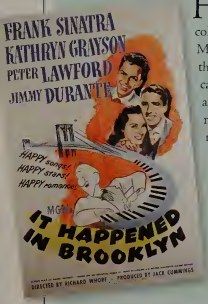
Photograph related to the above entry, from Richard Havers, "Sinatra" (Dorling Kindersley, 2007), p.126.
'Mama Will Bark' recorded, called career's nadir
Undated materialFrom: Richard Havers, "Sinatra" (Dorling Kindersley, 2007).
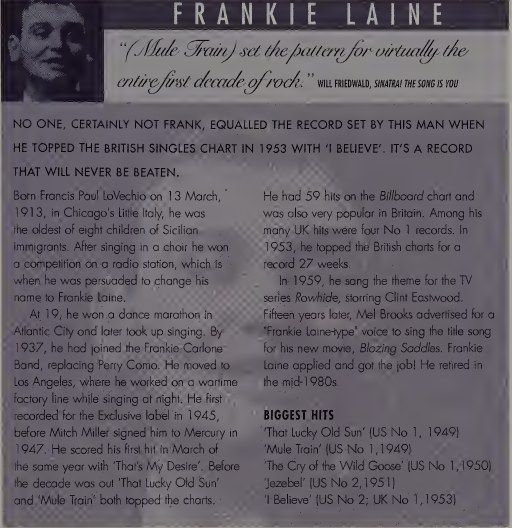
Photograph related to the above entry, from Richard Havers, "Sinatra" (Dorling Kindersley, 2007), p.155.
'Witchcraft' becomes a modest UK hit amid critical grumbling
Undated materialFrom: Richard Havers, "Sinatra" (Dorling Kindersley, 2007).
Photograph related to the above entry, from Richard Havers, "Sinatra" (Dorling Kindersley, 2007), p.242.
A fan doctor secretly tapes the Blackpool concert
Undated materialFrom: Richard Havers, "Sinatra" (Dorling Kindersley, 2007).
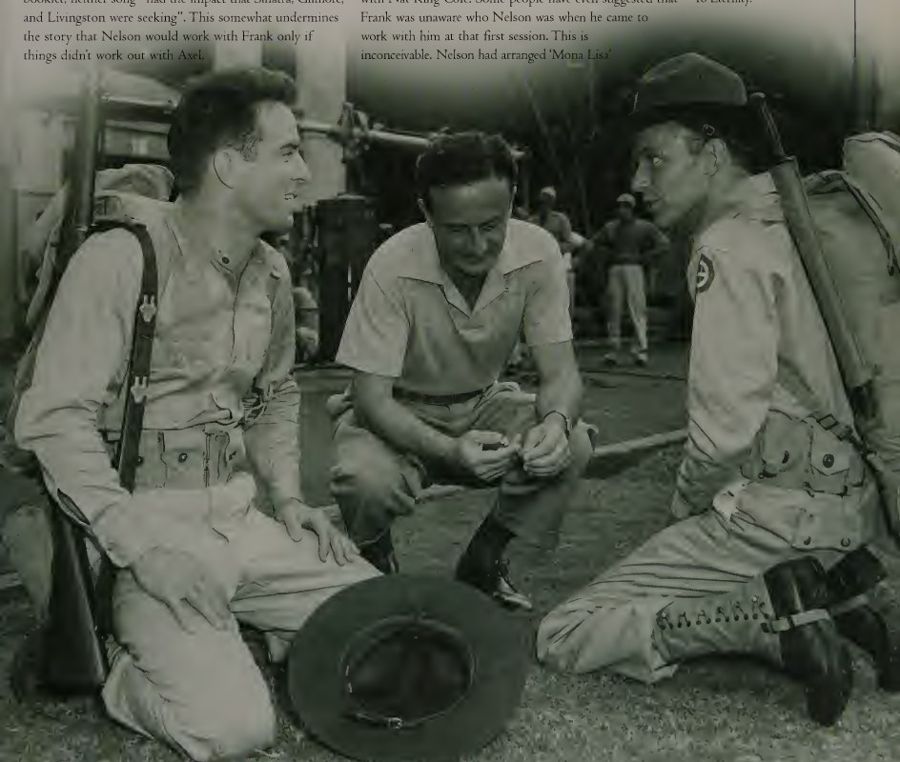
Photograph related to the above entry, from Richard Havers, "Sinatra" (Dorling Kindersley, 2007), p.179.
A fan doctor secretly tapes the Blackpool concert
Undated materialFrom: Richard Havers, "Sinatra" (Dorling Kindersley, 2007).
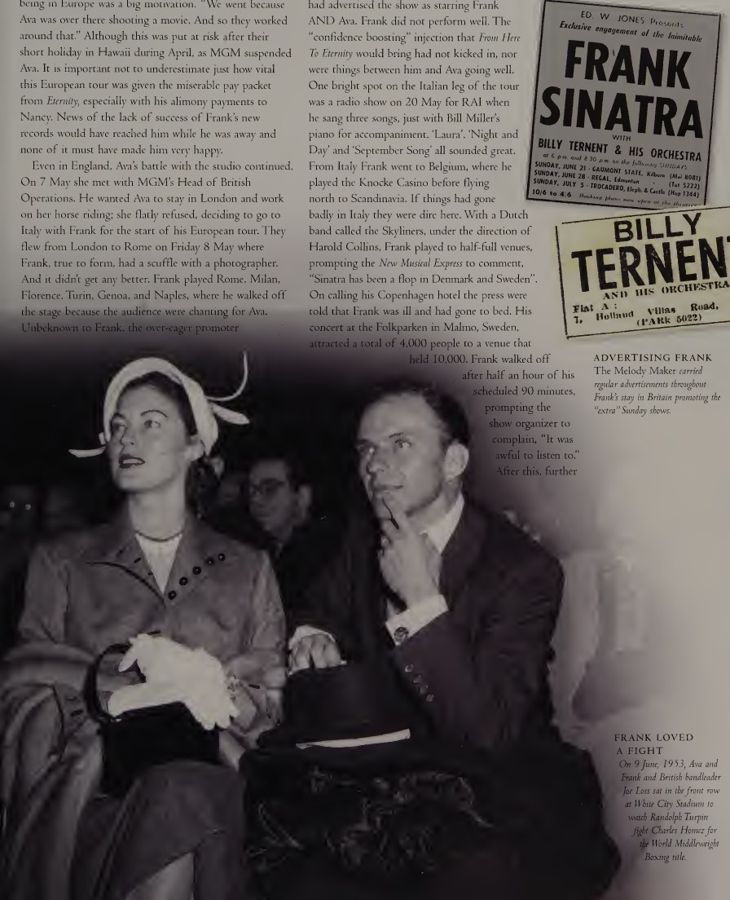
Photograph related to the above entry, from Richard Havers, "Sinatra" (Dorling Kindersley, 2007), p.181.
An unimpressed early assessment of the unknown Sinatra
Undated materialFrom: Richard Havers, "Sinatra" (Dorling Kindersley, 2007).
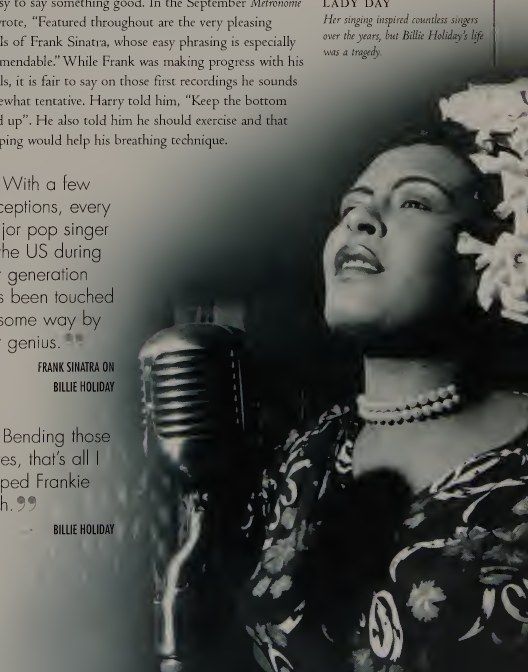
Photograph related to the above entry, from Richard Havers, "Sinatra" (Dorling Kindersley, 2007), p.49.
An unimpressed early assessment of the unknown Sinatra
Undated materialFrom: Richard Havers, "Sinatra" (Dorling Kindersley, 2007).
Photograph related to the above entry, from Richard Havers, "Sinatra" (Dorling Kindersley, 2007), p.49.
Arnold Shaw observes Sinatra never removes his hat in session
Undated materialFrom: Richard Havers, "Sinatra" (Dorling Kindersley, 2007).
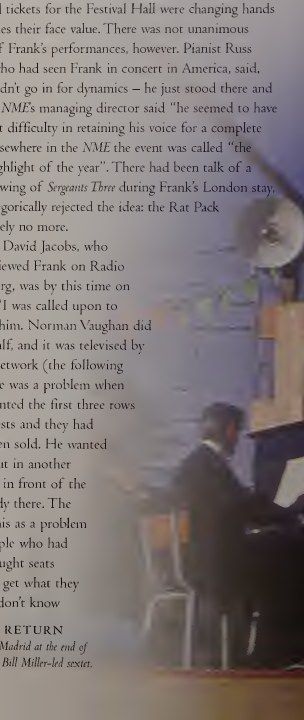
Photograph related to the above entry, from Richard Havers, "Sinatra" (Dorling Kindersley, 2007), p.272.
Ava allegedly calls Frank 'a has been' during a low point
Undated materialFrom: Richard Havers, "Sinatra" (Dorling Kindersley, 2007).
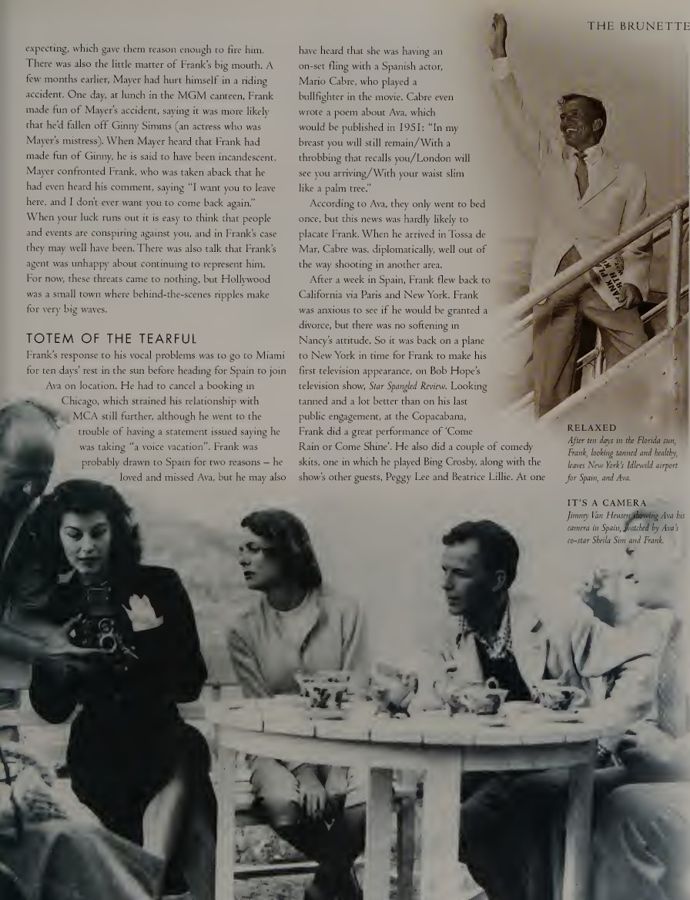
Photograph related to the above entry, from Richard Havers, "Sinatra" (Dorling Kindersley, 2007), p.151.
Ava's famous retort to director John Ford in Nairobi
Undated materialFrom: Richard Havers, "Sinatra" (Dorling Kindersley, 2007).
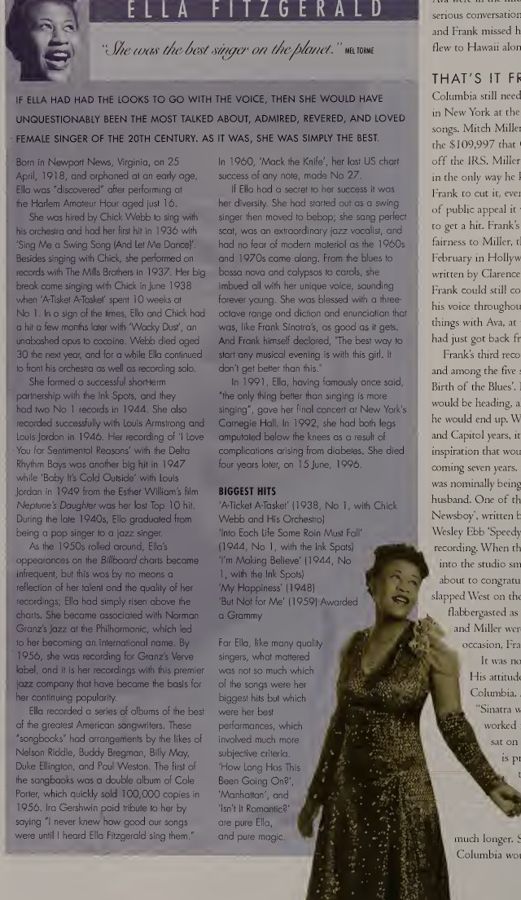
Photograph related to the above entry, from Richard Havers, "Sinatra" (Dorling Kindersley, 2007), p.166.
Ava's famous retort to director John Ford in Nairobi
Undated materialFrom: Richard Havers, "Sinatra" (Dorling Kindersley, 2007).
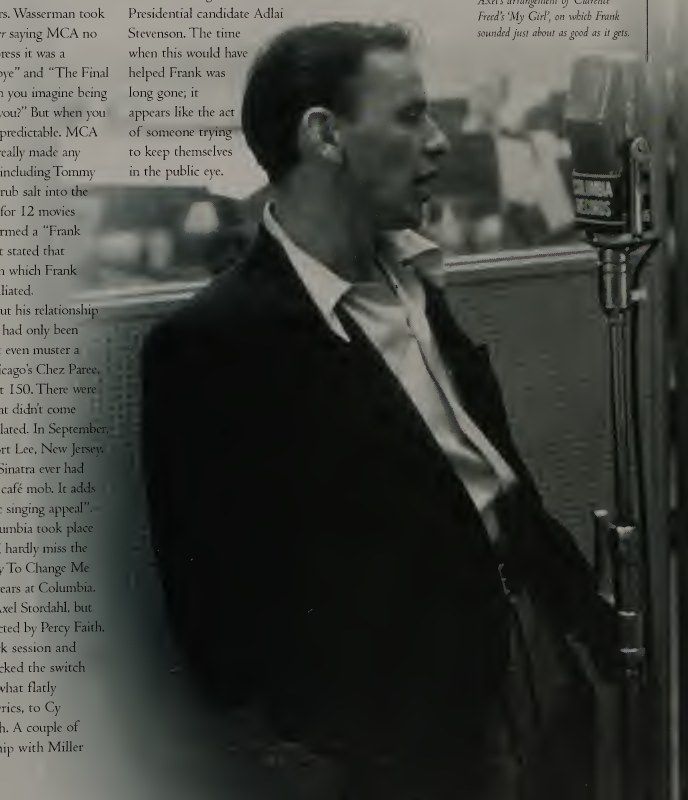
Photograph related to the above entry, from Richard Havers, "Sinatra" (Dorling Kindersley, 2007), p.167.
Ava's rumored Spanish fling with bullfighter-actor Mario Cabre
Undated materialFrom: Richard Havers, "Sinatra" (Dorling Kindersley, 2007).
Photograph related to the above entry, from Richard Havers, "Sinatra" (Dorling Kindersley, 2007), p.146.
Ava's rumored Spanish fling with bullfighter-actor Mario Cabre
Undated materialFrom: Richard Havers, "Sinatra" (Dorling Kindersley, 2007).
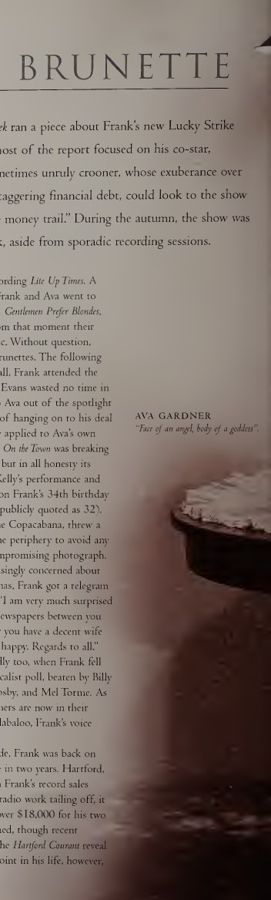
Photograph related to the above entry, from Richard Havers, "Sinatra" (Dorling Kindersley, 2007), p.146.
Bar scuffle at Lucey's after Frank's first Capitol session
Undated materialFrom: Richard Havers, "Sinatra" (Dorling Kindersley, 2007).
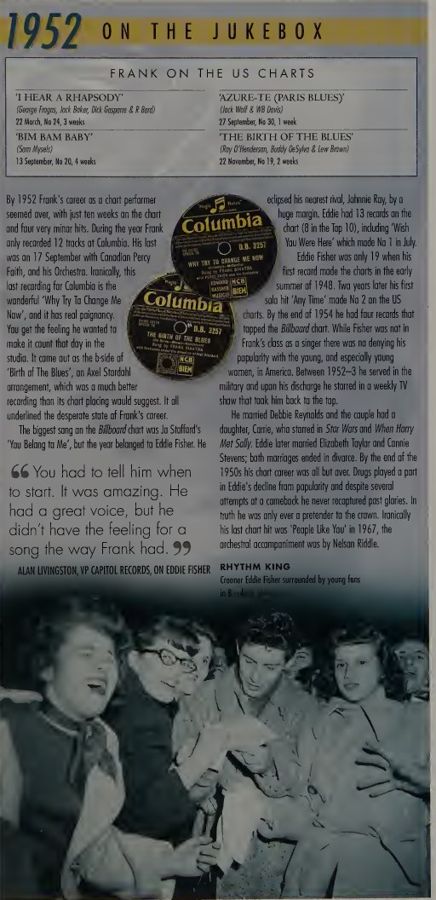
Photograph related to the above entry, from Richard Havers, "Sinatra" (Dorling Kindersley, 2007), p.173.
Bar scuffle at Lucey's after Frank's first Capitol session
Undated materialFrom: Richard Havers, "Sinatra" (Dorling Kindersley, 2007).
Photograph related to the above entry, from Richard Havers, "Sinatra" (Dorling Kindersley, 2007), p.173.
BB King recalls first meeting Sinatra in Las Vegas
Undated materialFrom: Richard Havers, "Sinatra" (Dorling Kindersley, 2007).
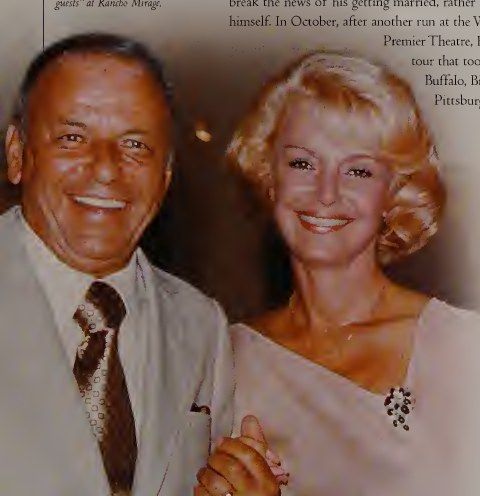
Photograph related to the above entry, from Richard Havers, "Sinatra" (Dorling Kindersley, 2007), p.334.
BB King recalls first meeting Sinatra in Las Vegas
Undated materialFrom: Richard Havers, "Sinatra" (Dorling Kindersley, 2007).
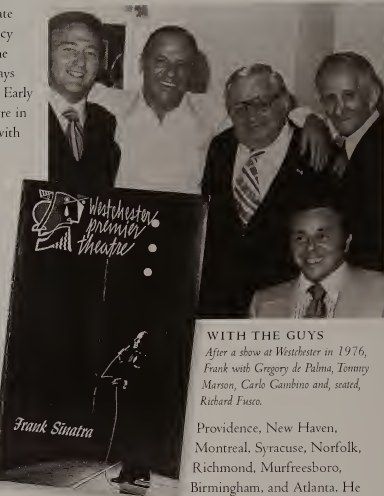
Photograph related to the above entry, from Richard Havers, "Sinatra" (Dorling Kindersley, 2007), p.334.
BB King recalls first meeting Sinatra in Las Vegas
Undated materialFrom: Richard Havers, "Sinatra" (Dorling Kindersley, 2007).
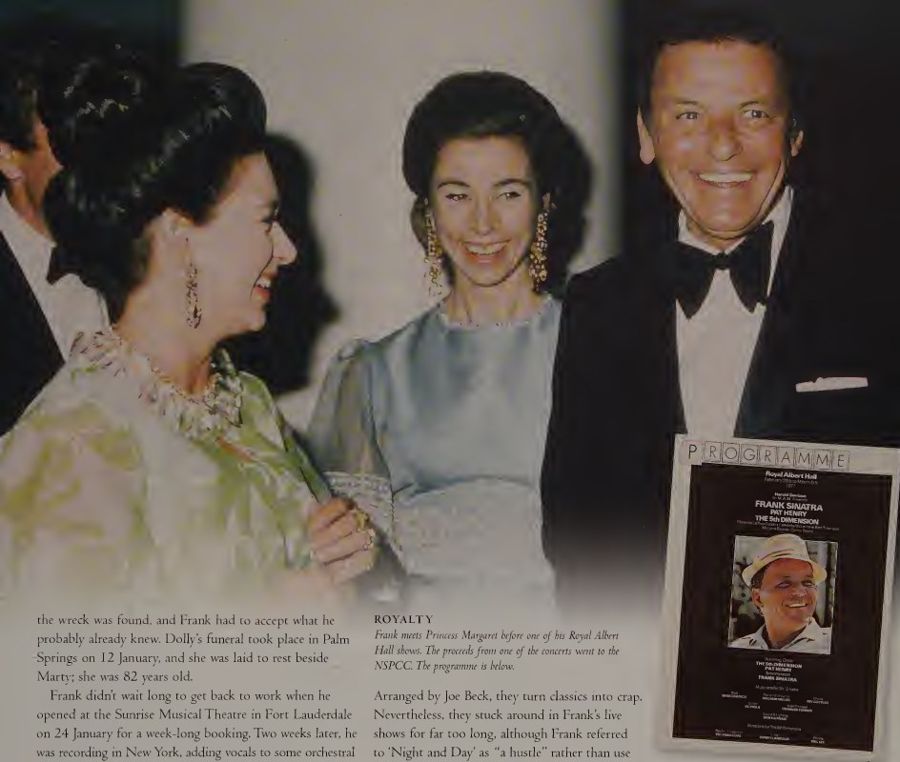
Photograph related to the above entry, from Richard Havers, "Sinatra" (Dorling Kindersley, 2007), p.335.
BB King recalls first meeting Sinatra in Las Vegas
Undated materialFrom: Richard Havers, "Sinatra" (Dorling Kindersley, 2007).
Photograph related to the above entry, from Richard Havers, "Sinatra" (Dorling Kindersley, 2007), p.335.
Brief stint at Drake Business School, then the shipyard
Undated materialFrom: Richard Havers, "Sinatra" (Dorling Kindersley, 2007).
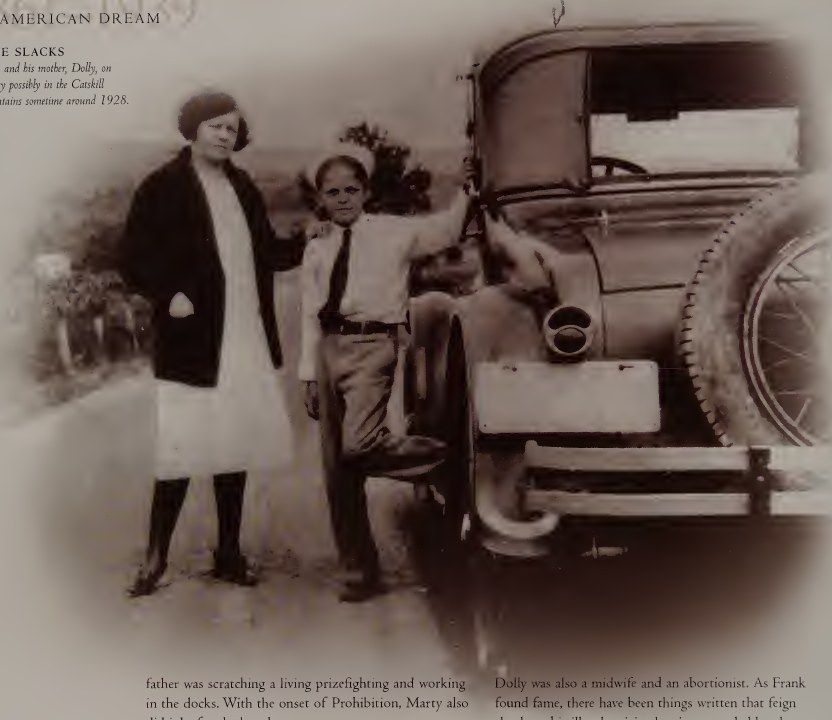
Photograph related to the above entry, from Richard Havers, "Sinatra" (Dorling Kindersley, 2007), p.30.
Budweiser sponsors A Man and His Music special for $500,000
Undated materialFrom: Richard Havers, "Sinatra" (Dorling Kindersley, 2007).
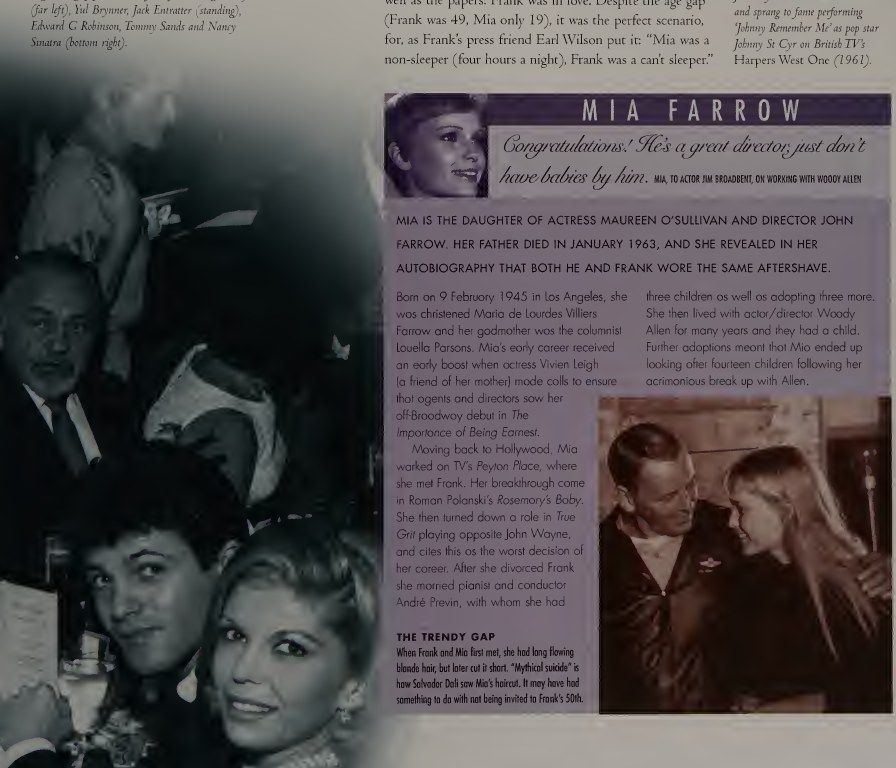
Photograph related to the above entry, from Richard Havers, "Sinatra" (Dorling Kindersley, 2007), p.293.
Budweiser sponsors A Man and His Music special for $500,000
Undated materialFrom: Richard Havers, "Sinatra" (Dorling Kindersley, 2007).
Photograph related to the above entry, from Richard Havers, "Sinatra" (Dorling Kindersley, 2007), p.293.
Bugsy Siegel tries to recruit Sinatra for a Vegas party
Undated materialFrom: Richard Havers, "Sinatra" (Dorling Kindersley, 2007).
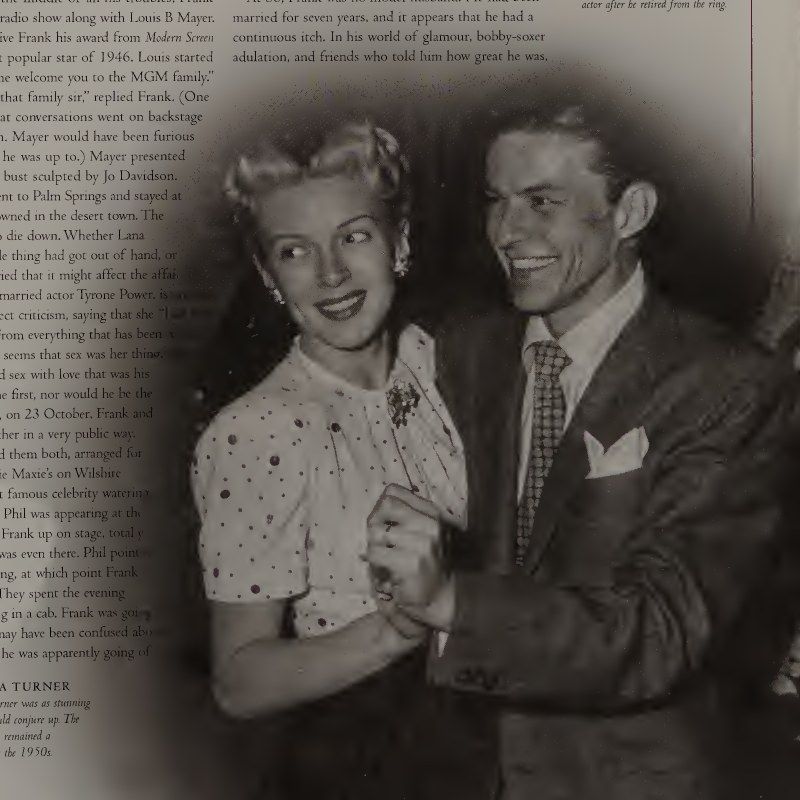
Photograph related to the above entry, from Richard Havers, "Sinatra" (Dorling Kindersley, 2007), p.119.
Bugsy Siegel tries to recruit Sinatra for a Vegas party
Undated materialFrom: Richard Havers, "Sinatra" (Dorling Kindersley, 2007).
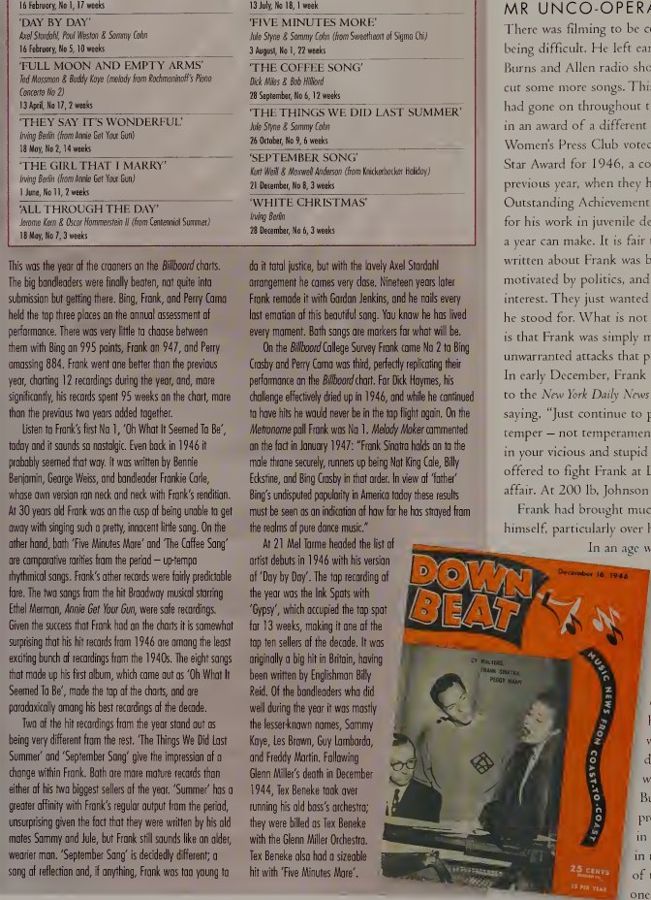
Photograph related to the above entry, from Richard Havers, "Sinatra" (Dorling Kindersley, 2007), p.120.
Come Fly with Me becomes Frank's first Capitol No. 1
Undated materialFrom: Richard Havers, "Sinatra" (Dorling Kindersley, 2007).
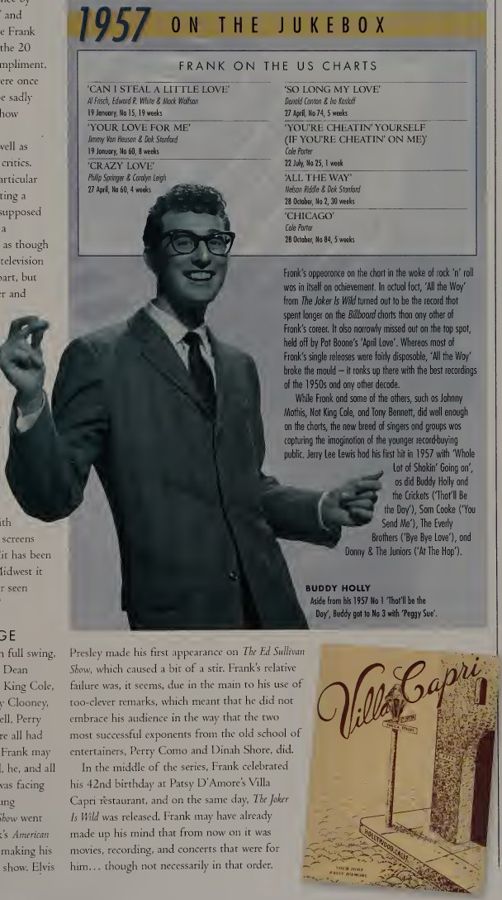
Photograph related to the above entry, from Richard Havers, "Sinatra" (Dorling Kindersley, 2007), p.239.
Crowds line up for Sinatra's Paramount return
Undated materialFrom: Richard Havers, "Sinatra" (Dorling Kindersley, 2007).
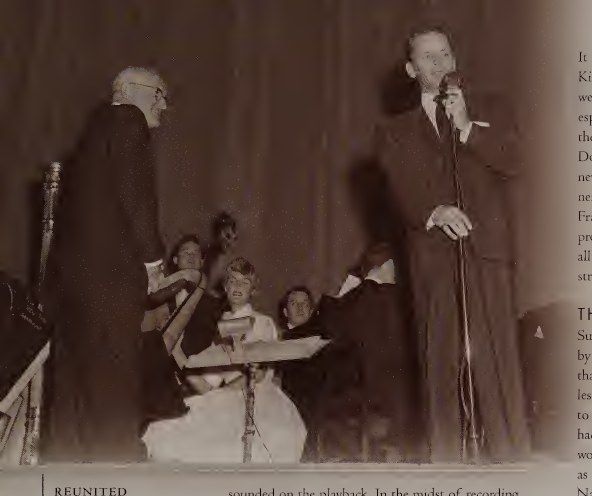
Photograph related to the above entry, from Richard Havers, "Sinatra" (Dorling Kindersley, 2007), p.218.
Crowds line up for Sinatra's Paramount return
Undated materialFrom: Richard Havers, "Sinatra" (Dorling Kindersley, 2007).
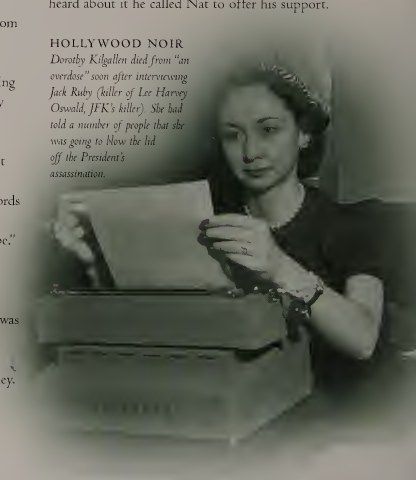
Photograph related to the above entry, from Richard Havers, "Sinatra" (Dorling Kindersley, 2007), p.218.
Dean Martin born in Steubenville, Ohio
Undated materialFrom: Richard Havers, "Sinatra" (Dorling Kindersley, 2007).
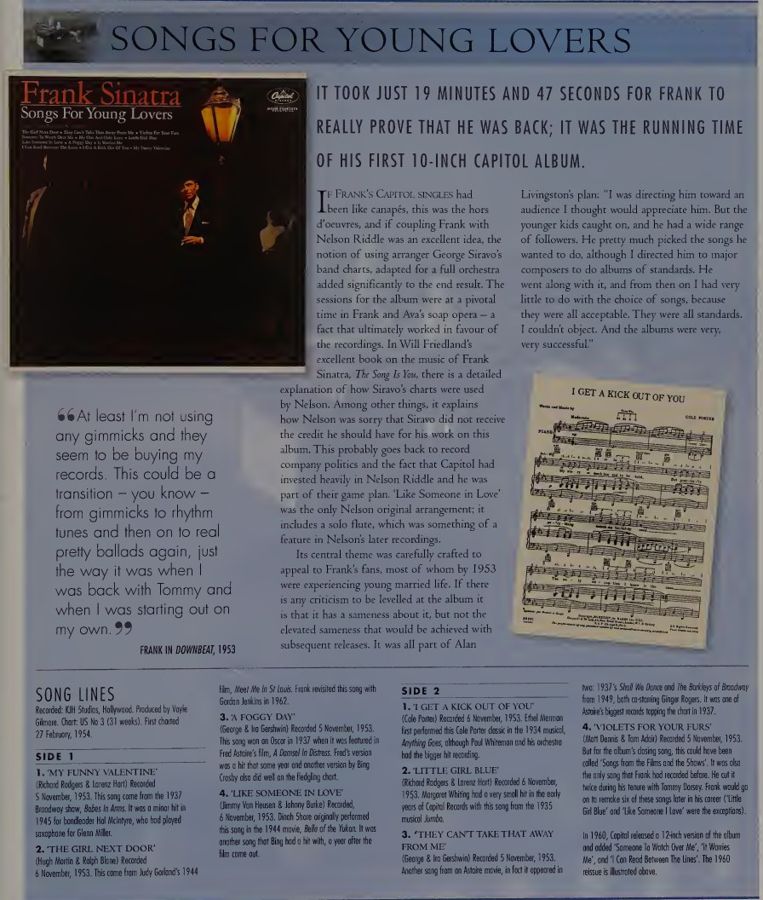
Photograph related to the above entry, from Richard Havers, "Sinatra" (Dorling Kindersley, 2007), p.195.
Debate over the comeback album's title
Undated materialFrom: Richard Havers, "Sinatra" (Dorling Kindersley, 2007).
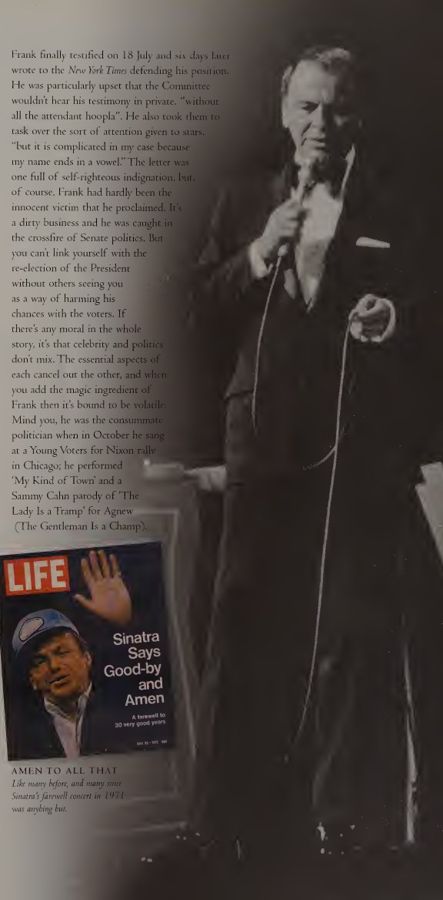
Photograph related to the above entry, from Richard Havers, "Sinatra" (Dorling Kindersley, 2007), p.321.
Debate over the comeback album's title
Undated materialFrom: Richard Havers, "Sinatra" (Dorling Kindersley, 2007).
Photograph related to the above entry, from Richard Havers, "Sinatra" (Dorling Kindersley, 2007), p.322.
Debate over the comeback album's title
Undated materialFrom: Richard Havers, "Sinatra" (Dorling Kindersley, 2007).
Photograph related to the above entry, from Richard Havers, "Sinatra" (Dorling Kindersley, 2007), p.322.
Double Dynamite released; Hughes suspected of campaign against Frank
Undated materialFrom: Richard Havers, "Sinatra" (Dorling Kindersley, 2007).
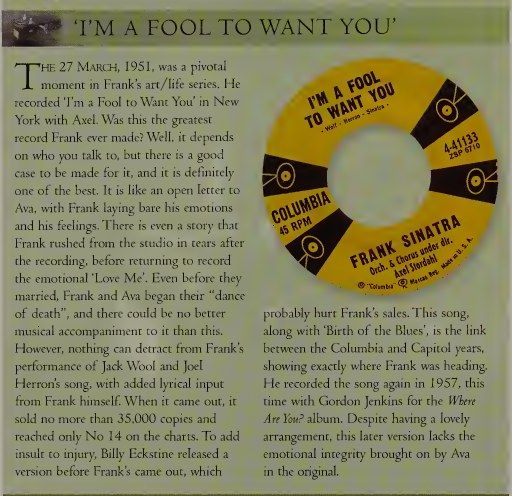
Photograph related to the above entry, from Richard Havers, "Sinatra" (Dorling Kindersley, 2007), p.160.
Fan Ginny Gates recalls a late-night call from Frank himself
Undated materialFrom: Richard Havers, "Sinatra" (Dorling Kindersley, 2007).
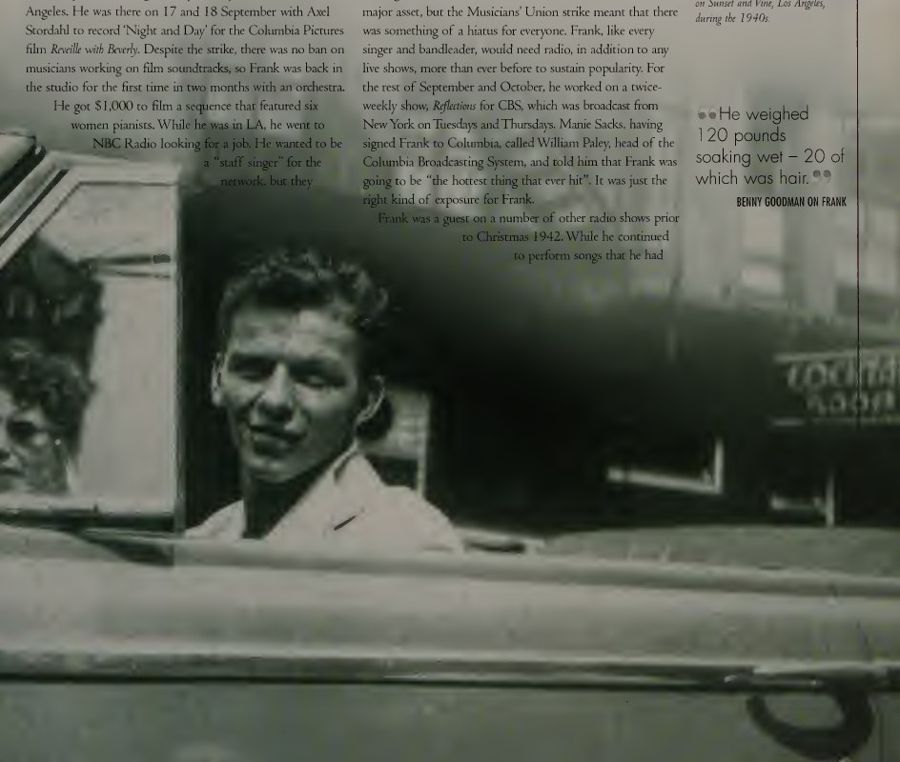
Photograph related to the above entry, from Richard Havers, "Sinatra" (Dorling Kindersley, 2007), p.75.
Fan Ginny Gates recalls a late-night call from Frank himself
Undated materialFrom: Richard Havers, "Sinatra" (Dorling Kindersley, 2007).
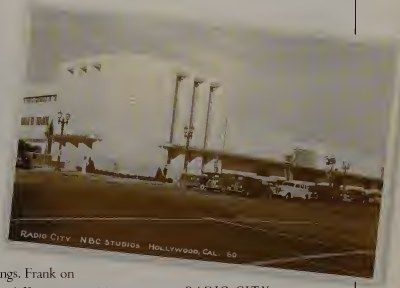
Photograph related to the above entry, from Richard Havers, "Sinatra" (Dorling Kindersley, 2007), p.75.
Fiasco at Victor Hugo's restaurant in Los Angeles
Undated materialFrom: Richard Havers, "Sinatra" (Dorling Kindersley, 2007).
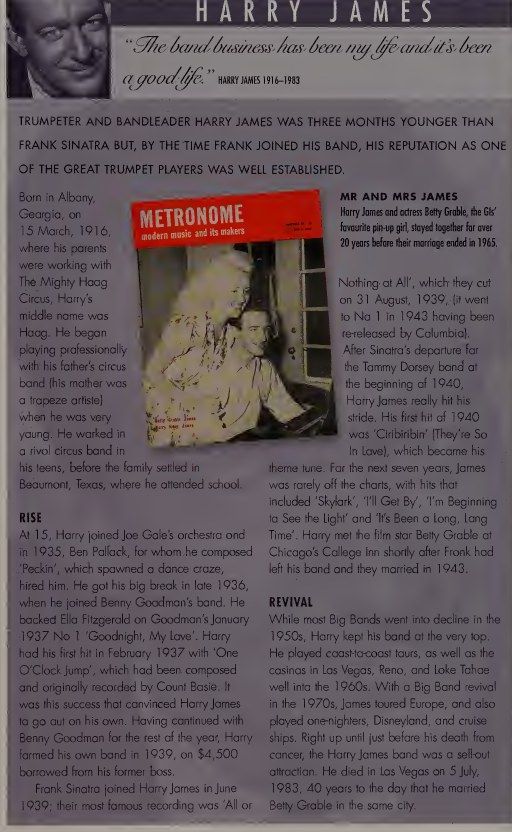
Photograph related to the above entry, from Richard Havers, "Sinatra" (Dorling Kindersley, 2007), p.47.
Final proper concerts, Fukuoka Dome with Natalie Cole
Undated materialFrom: Richard Havers, "Sinatra" (Dorling Kindersley, 2007).
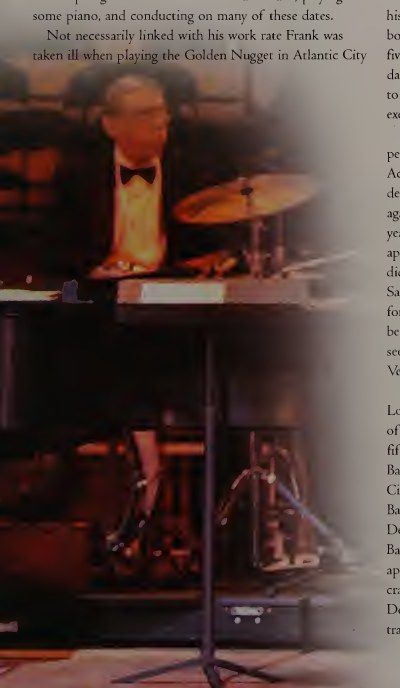
Photograph related to the above entry, from Richard Havers, "Sinatra" (Dorling Kindersley, 2007), p.349.
Final proper concerts, Fukuoka Dome with Natalie Cole
Undated materialFrom: Richard Havers, "Sinatra" (Dorling Kindersley, 2007).
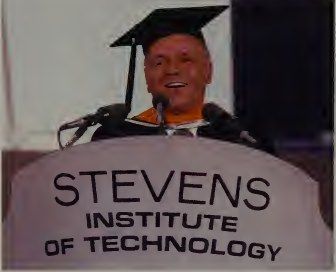
Photograph related to the above entry, from Richard Havers, "Sinatra" (Dorling Kindersley, 2007), p.349.
Frank appears subdued on The Dinah Shore Show
Undated materialFrom: Richard Havers, "Sinatra" (Dorling Kindersley, 2007).
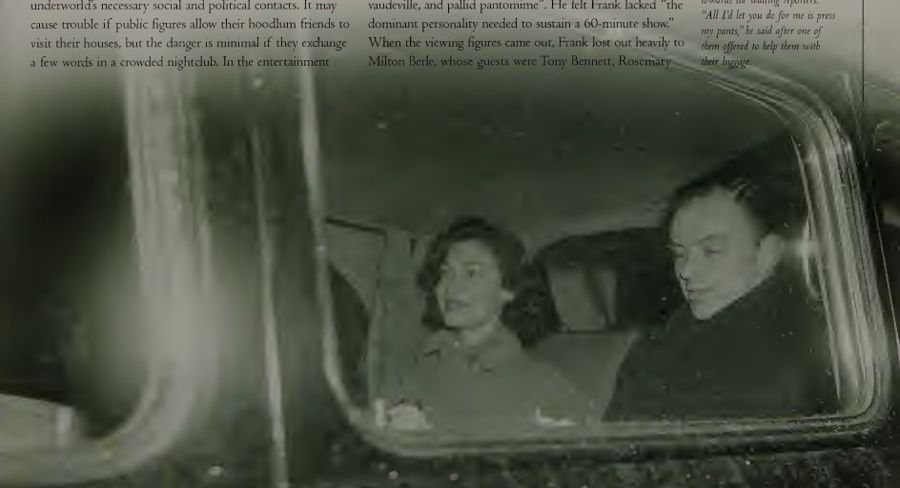
Photograph related to the above entry, from Richard Havers, "Sinatra" (Dorling Kindersley, 2007), p.161.
Frank appears subdued on The Dinah Shore Show
Undated materialFrom: Richard Havers, "Sinatra" (Dorling Kindersley, 2007).
Photograph related to the above entry, from Richard Havers, "Sinatra" (Dorling Kindersley, 2007), p.161.
Frank campaigns for Reagan's re-election
Undated materialFrom: Richard Havers, "Sinatra" (Dorling Kindersley, 2007).
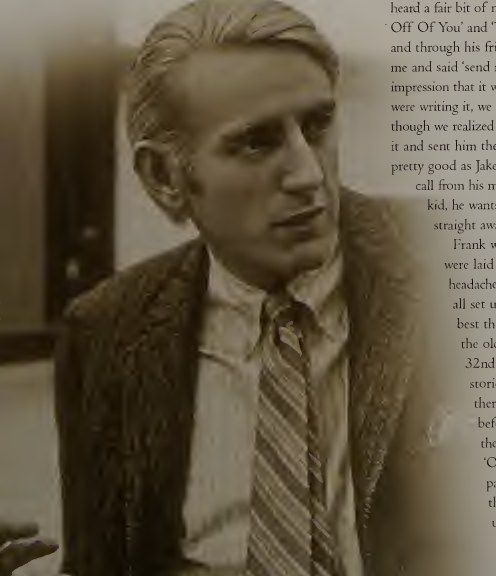
Photograph related to the above entry, from Richard Havers, "Sinatra" (Dorling Kindersley, 2007), p.315.
Frank campaigns for Reagan's re-election
Undated materialFrom: Richard Havers, "Sinatra" (Dorling Kindersley, 2007).
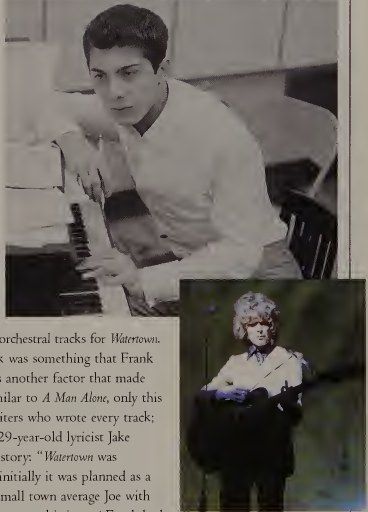
Photograph related to the above entry, from Richard Havers, "Sinatra" (Dorling Kindersley, 2007), p.315.
Frank campaigns for Reagan's re-election
Undated materialFrom: Richard Havers, "Sinatra" (Dorling Kindersley, 2007).
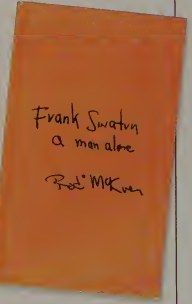
Photograph related to the above entry, from Richard Havers, "Sinatra" (Dorling Kindersley, 2007), p.315.
Frank co-writes 'Tips on Popular Singing'
Undated materialFrom: Richard Havers, "Sinatra" (Dorling Kindersley, 2007).
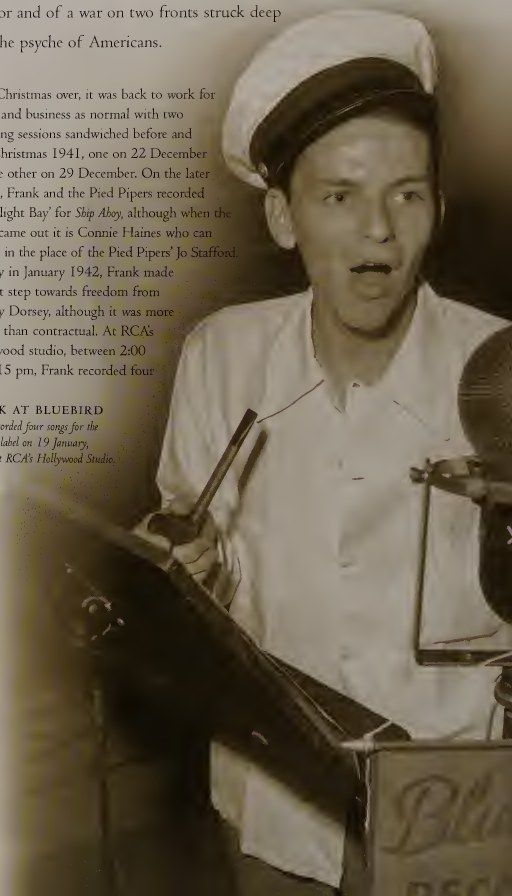
Photograph related to the above entry, from Richard Havers, "Sinatra" (Dorling Kindersley, 2007), p.64.
Frank co-writes 'Tips on Popular Singing'
Undated materialFrom: Richard Havers, "Sinatra" (Dorling Kindersley, 2007).
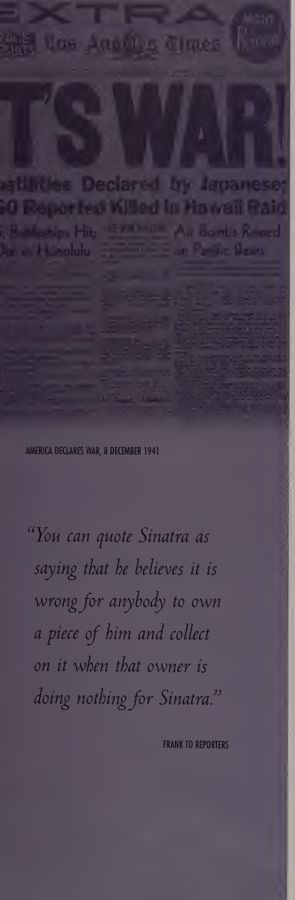
Photograph related to the above entry, from Richard Havers, "Sinatra" (Dorling Kindersley, 2007), p.64.
Frank crowned 'Tobacco Festival King' in Richmond
Undated materialFrom: Richard Havers, "Sinatra" (Dorling Kindersley, 2007).
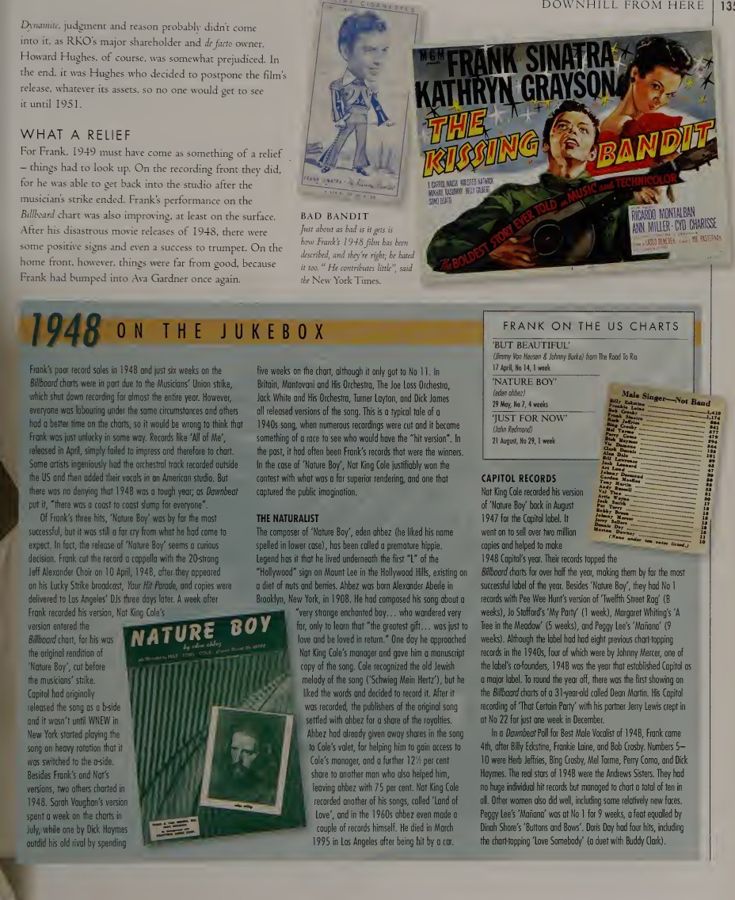
Photograph related to the above entry, from Richard Havers, "Sinatra" (Dorling Kindersley, 2007), p.139.
Frank crowned 'Tobacco Festival King' in Richmond
Undated materialFrom: Richard Havers, "Sinatra" (Dorling Kindersley, 2007).
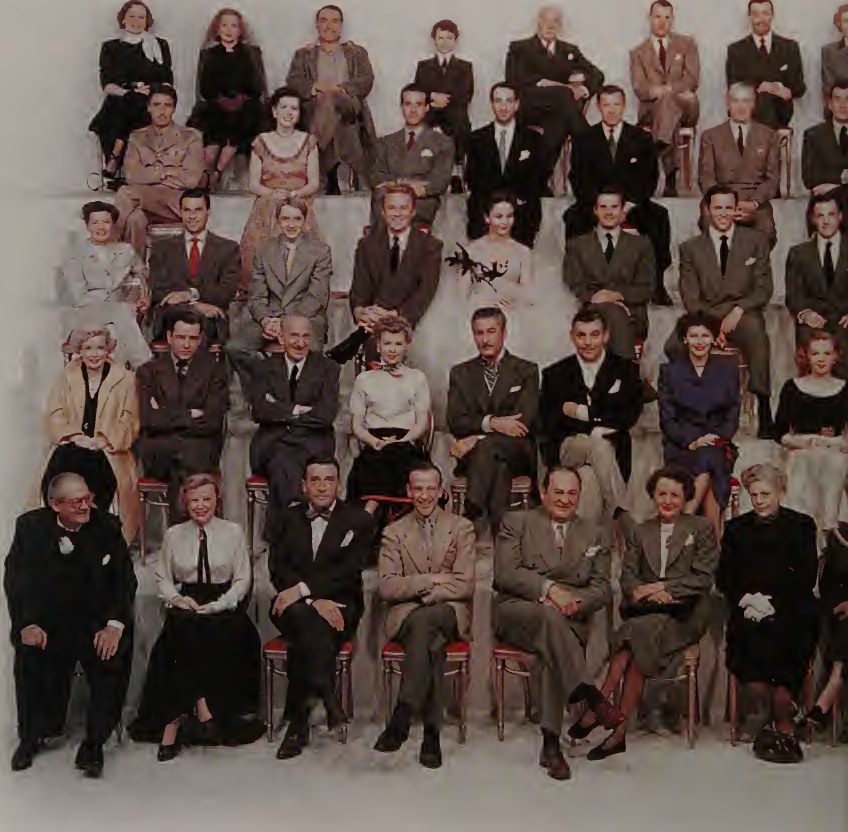
Photograph related to the above entry, from Richard Havers, "Sinatra" (Dorling Kindersley, 2007), p.140.
Frank enrolls at, and is effectively expelled from, Demarest High
Undated materialFrom: Richard Havers, "Sinatra" (Dorling Kindersley, 2007).
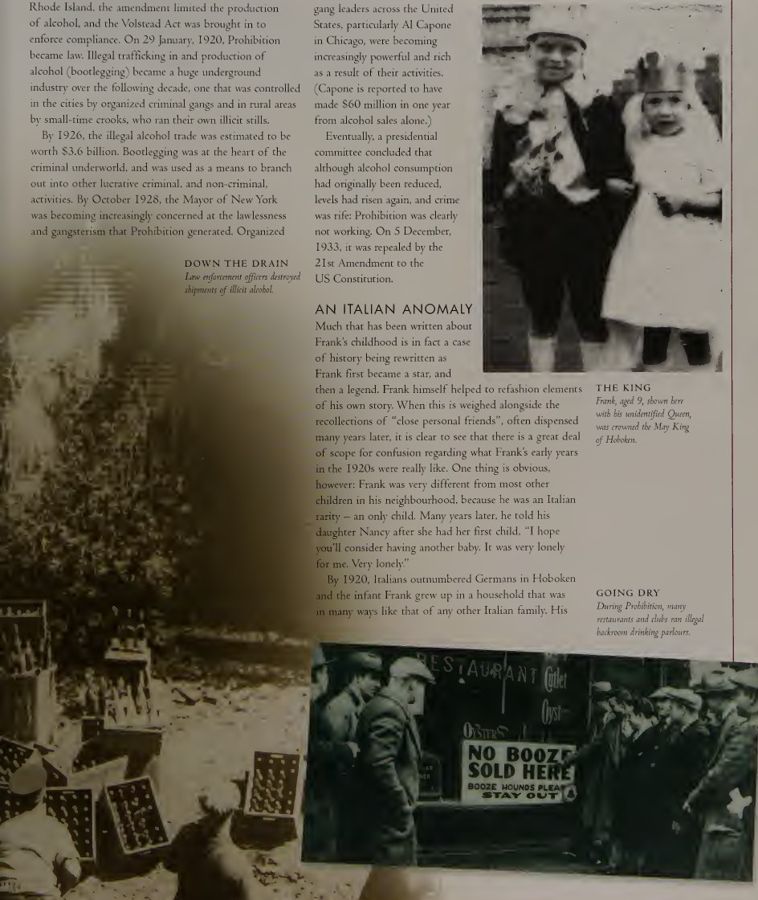
Photograph related to the above entry, from Richard Havers, "Sinatra" (Dorling Kindersley, 2007), p.29.
Frank invites Jule Styne to move into his Wilshire apartment
Undated materialFrom: Richard Havers, "Sinatra" (Dorling Kindersley, 2007).
Photograph related to the above entry, from Richard Havers, "Sinatra" (Dorling Kindersley, 2007), p.187.
Frank invites Jule Styne to move into his Wilshire apartment
Undated materialFrom: Richard Havers, "Sinatra" (Dorling Kindersley, 2007).
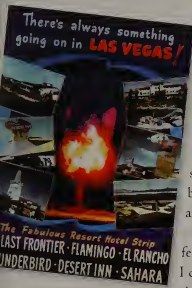
Photograph related to the above entry, from Richard Havers, "Sinatra" (Dorling Kindersley, 2007), p.187.
Frank is best man at Dean Martin's wedding
Undated materialFrom: Richard Havers, "Sinatra" (Dorling Kindersley, 2007).
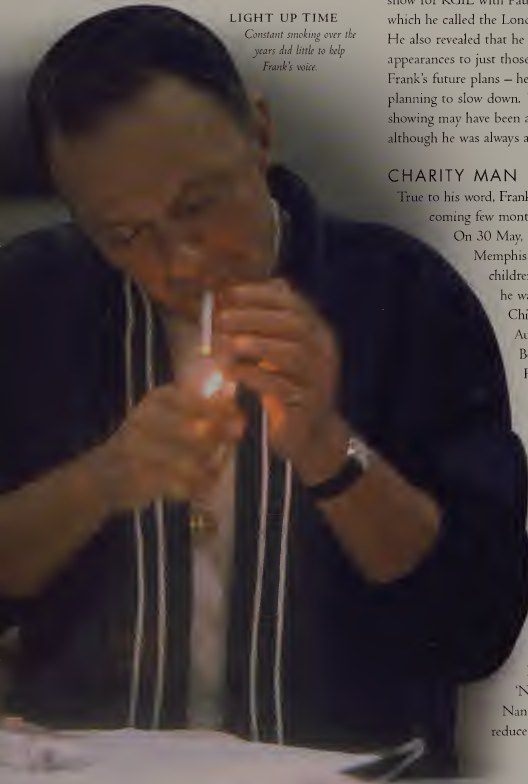
Photograph related to the above entry, from Richard Havers, "Sinatra" (Dorling Kindersley, 2007), p.319.
Frank is best man at Dean Martin's wedding
Undated materialFrom: Richard Havers, "Sinatra" (Dorling Kindersley, 2007).
Photograph related to the above entry, from Richard Havers, "Sinatra" (Dorling Kindersley, 2007), p.319.
Frank is best man at Dean Martin's wedding
Undated materialFrom: Richard Havers, "Sinatra" (Dorling Kindersley, 2007).
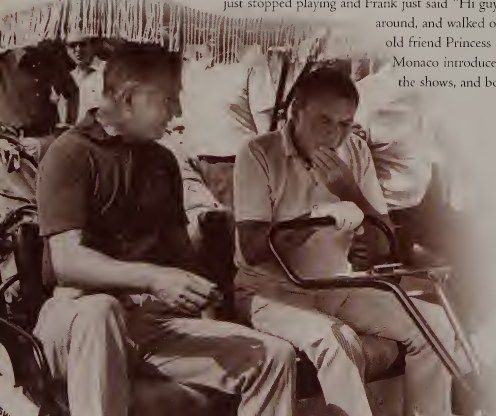
Photograph related to the above entry, from Richard Havers, "Sinatra" (Dorling Kindersley, 2007), p.320.
Frank is best man at Dean Martin's wedding
Undated materialFrom: Richard Havers, "Sinatra" (Dorling Kindersley, 2007).
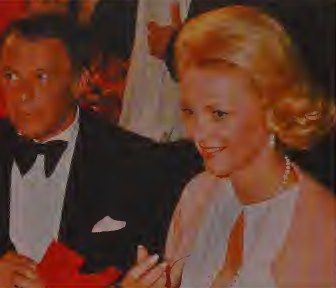
Photograph related to the above entry, from Richard Havers, "Sinatra" (Dorling Kindersley, 2007), p.320.
Frank is best man at Dean Martin's wedding
Undated materialFrom: Richard Havers, "Sinatra" (Dorling Kindersley, 2007).
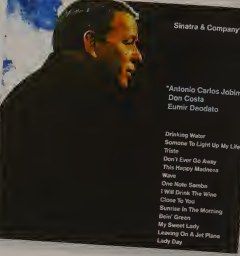
Photograph related to the above entry, from Richard Havers, "Sinatra" (Dorling Kindersley, 2007), p.320.
Frank later reveals his real early solo earnings
Undated materialFrom: Richard Havers, "Sinatra" (Dorling Kindersley, 2007).
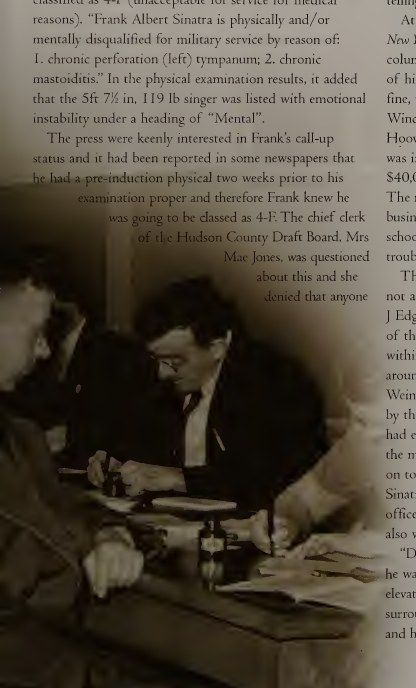
Photograph related to the above entry, from Richard Havers, "Sinatra" (Dorling Kindersley, 2007), p.91.
Frank later reveals his real early solo earnings
Undated materialFrom: Richard Havers, "Sinatra" (Dorling Kindersley, 2007).
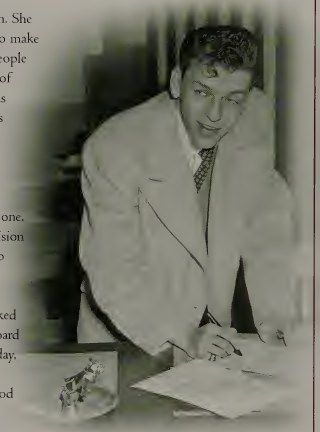
Photograph related to the above entry, from Richard Havers, "Sinatra" (Dorling Kindersley, 2007), p.91.
Frank personally arranges director Kirk Browning's loan from NBC
Undated materialFrom: Richard Havers, "Sinatra" (Dorling Kindersley, 2007).
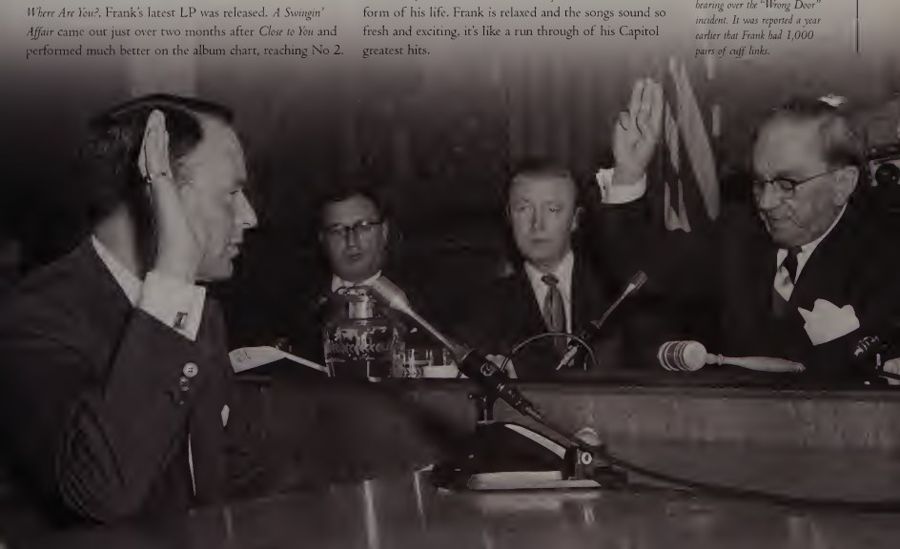
Photograph related to the above entry, from Richard Havers, "Sinatra" (Dorling Kindersley, 2007), p.231.
Frank personally arranges director Kirk Browning's loan from NBC
Undated materialFrom: Richard Havers, "Sinatra" (Dorling Kindersley, 2007).
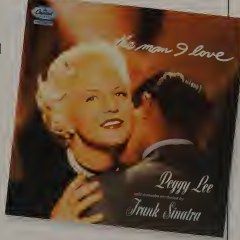
Photograph related to the above entry, from Richard Havers, "Sinatra" (Dorling Kindersley, 2007), p.231.
Frank plays Skinny D'Amato's Club 500 in Atlantic City
Undated materialFrom: Richard Havers, "Sinatra" (Dorling Kindersley, 2007).
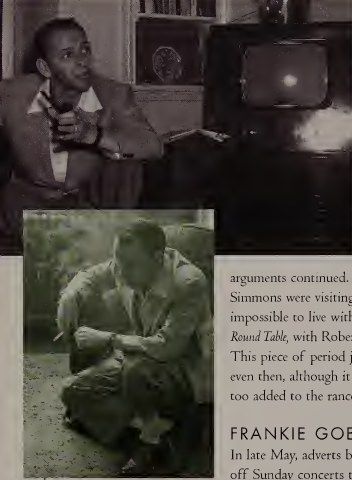
Photograph related to the above entry, from Richard Havers, "Sinatra" (Dorling Kindersley, 2007), p.182.
Frank privately courts Columbia Records
Undated materialFrom: Richard Havers, "Sinatra" (Dorling Kindersley, 2007).
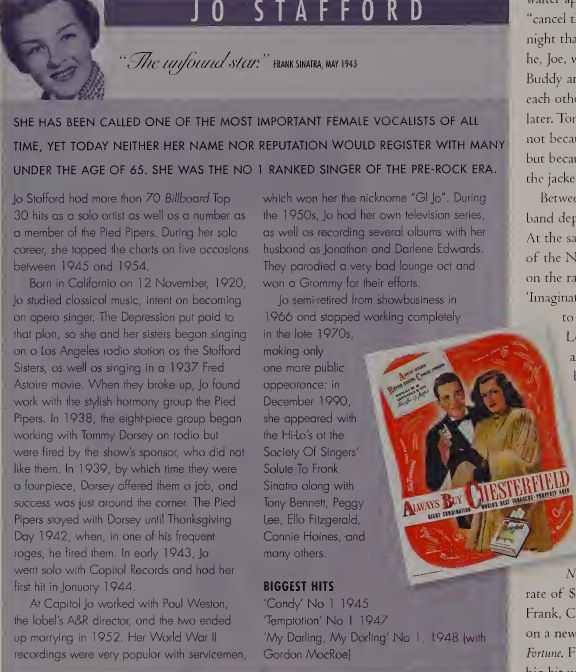
Photograph related to the above entry, from Richard Havers, "Sinatra" (Dorling Kindersley, 2007), p.60.
Frank recalls his nerves at the Riobamba's tiny stage
Undated materialFrom: Richard Havers, "Sinatra" (Dorling Kindersley, 2007).
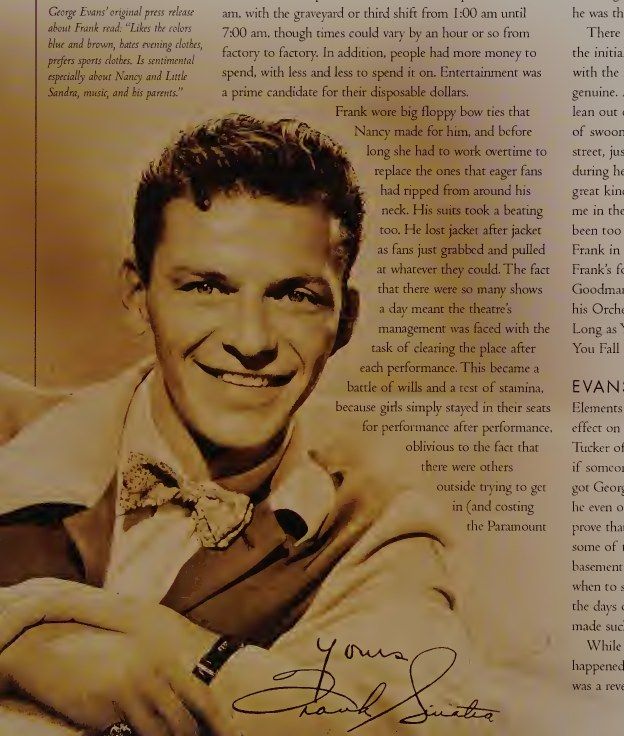
Photograph related to the above entry, from Richard Havers, "Sinatra" (Dorling Kindersley, 2007), p.78.
Frank seeks an NBC staff-singer job and is turned down
Undated materialFrom: Richard Havers, "Sinatra" (Dorling Kindersley, 2007).
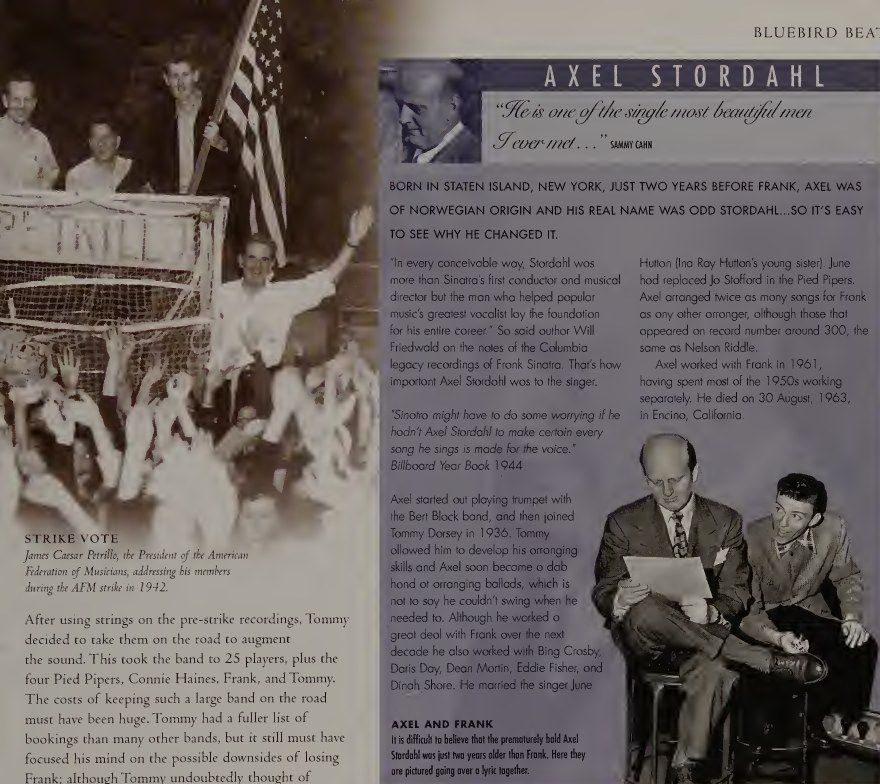
Photograph related to the above entry, from Richard Havers, "Sinatra" (Dorling Kindersley, 2007), p.69.
Frank seeks an NBC staff-singer job and is turned down
Undated materialFrom: Richard Havers, "Sinatra" (Dorling Kindersley, 2007).
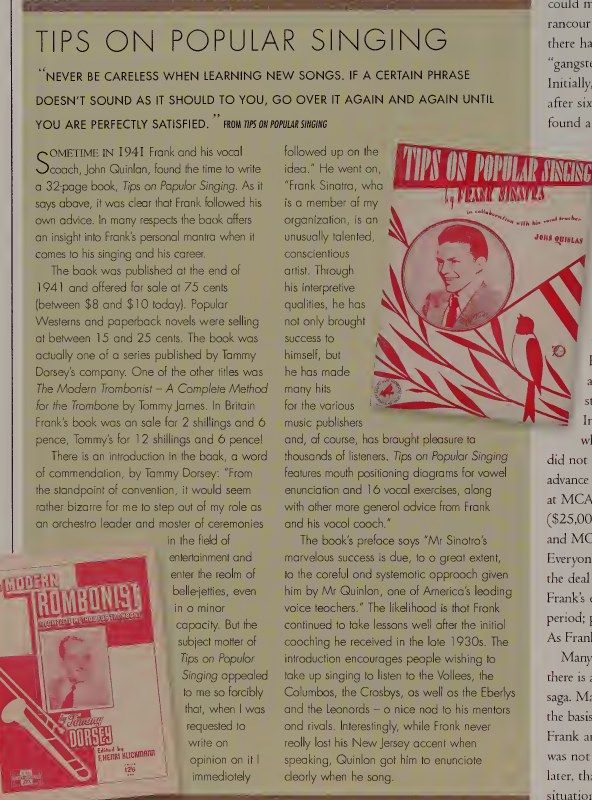
Photograph related to the above entry, from Richard Havers, "Sinatra" (Dorling Kindersley, 2007), p.70.
Frank seeks an NBC staff-singer job and is turned down
Undated materialFrom: Richard Havers, "Sinatra" (Dorling Kindersley, 2007).
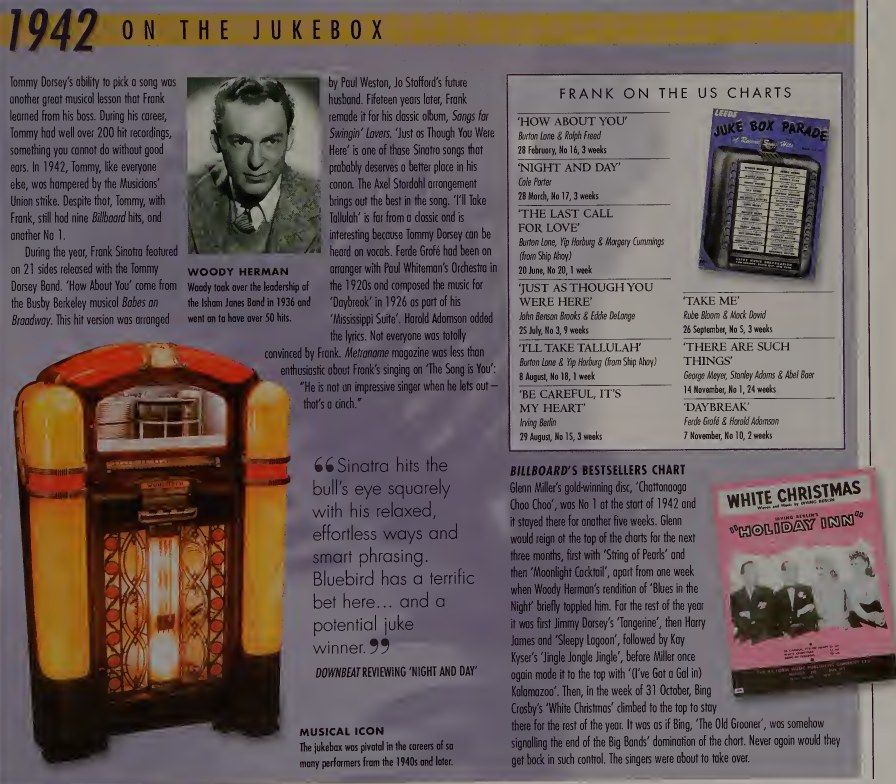
Photograph related to the above entry, from Richard Havers, "Sinatra" (Dorling Kindersley, 2007), p.71.
Frank thrown out of the house; starts singing for tips
Undated materialFrom: Richard Havers, "Sinatra" (Dorling Kindersley, 2007).
Photograph related to the above entry, from Richard Havers, "Sinatra" (Dorling Kindersley, 2007), p.31.
Frank's Cadillac later resold to the officer who once stopped him
Undated materialFrom: Richard Havers, "Sinatra" (Dorling Kindersley, 2007).
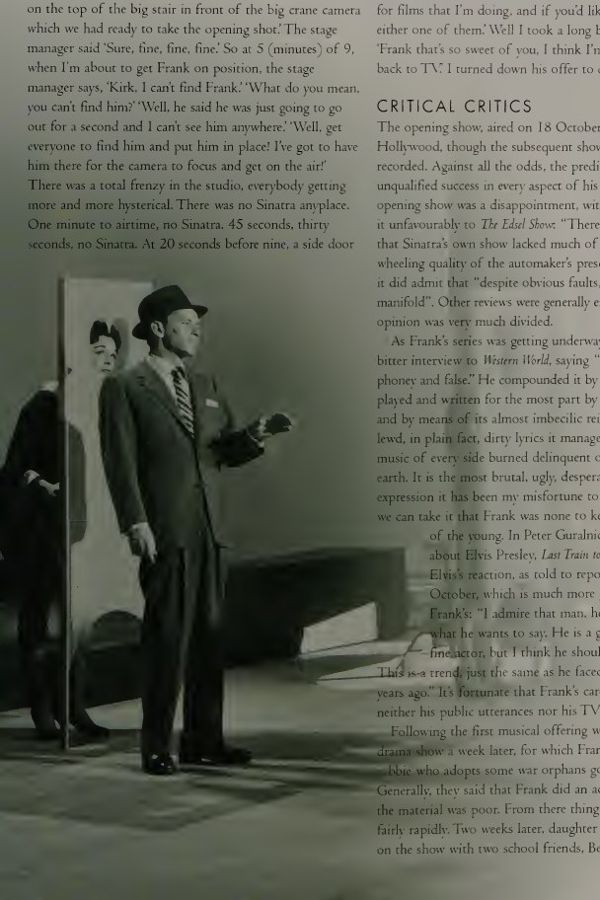
Photograph related to the above entry, from Richard Havers, "Sinatra" (Dorling Kindersley, 2007), p.237.
Frank's Cadillac later resold to the officer who once stopped him
Undated materialFrom: Richard Havers, "Sinatra" (Dorling Kindersley, 2007).
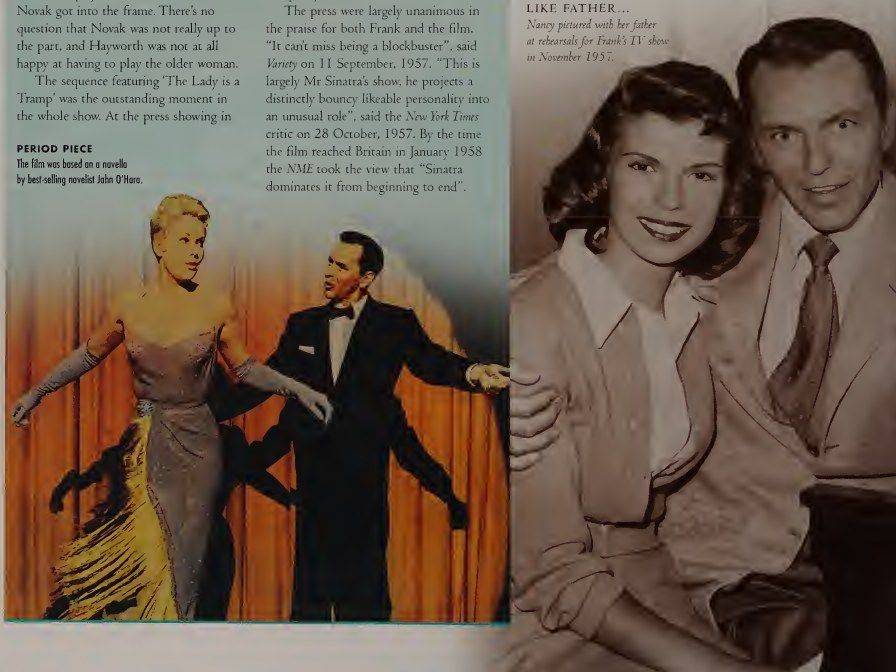
Photograph related to the above entry, from Richard Havers, "Sinatra" (Dorling Kindersley, 2007), p.238.
Frank's Cadillac later resold to the officer who once stopped him
Undated materialFrom: Richard Havers, "Sinatra" (Dorling Kindersley, 2007).
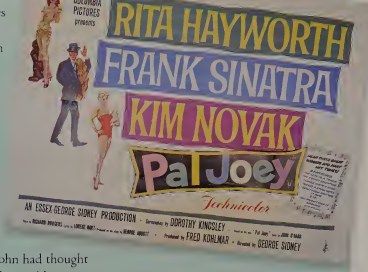
Photograph related to the above entry, from Richard Havers, "Sinatra" (Dorling Kindersley, 2007), p.238.
Frank's first non-singing film role draws Hedda Hopper's scorn
Undated materialFrom: Richard Havers, "Sinatra" (Dorling Kindersley, 2007).
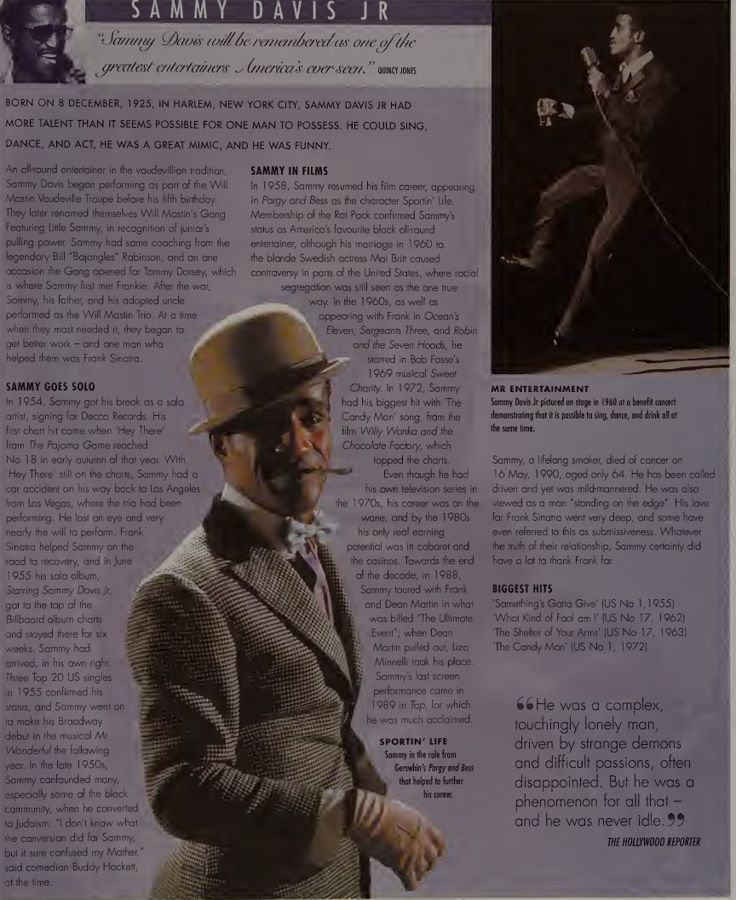
Photograph related to the above entry, from Richard Havers, "Sinatra" (Dorling Kindersley, 2007), p.133.
George Evans engineers the 'Sinatra swoon'
Undated materialFrom: Richard Havers, "Sinatra" (Dorling Kindersley, 2007).
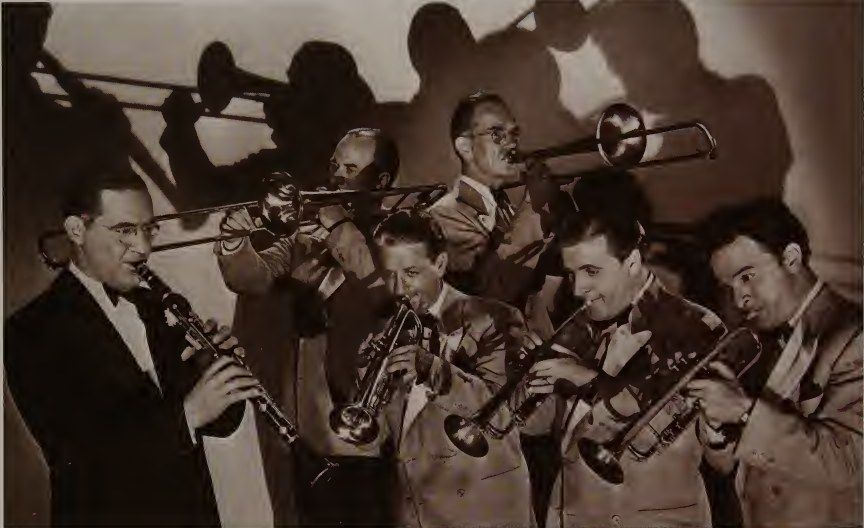
Photograph related to the above entry, from Richard Havers, "Sinatra" (Dorling Kindersley, 2007), p.76.
James Jones publishes From Here to Eternity
Undated materialFrom: Richard Havers, "Sinatra" (Dorling Kindersley, 2007).
Photograph related to the above entry, from Richard Havers, "Sinatra" (Dorling Kindersley, 2007), p.180.
James Jones publishes From Here to Eternity
Undated materialFrom: Richard Havers, "Sinatra" (Dorling Kindersley, 2007).
Photograph related to the above entry, from Richard Havers, "Sinatra" (Dorling Kindersley, 2007), p.180.
Jimmy Webb's unfinished 'four seasons' project for Sinatra
Undated materialFrom: Richard Havers, "Sinatra" (Dorling Kindersley, 2007).
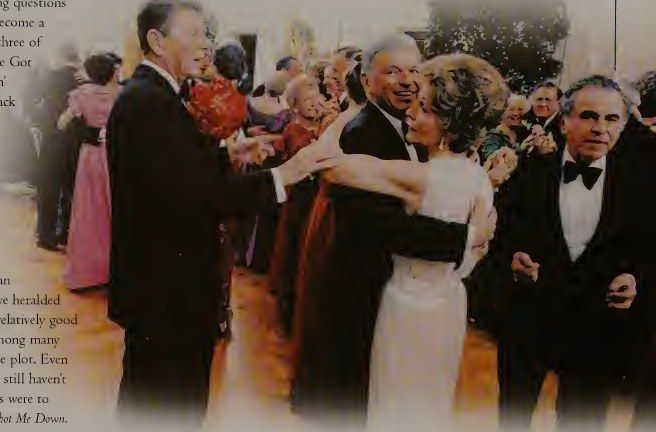
Photograph related to the above entry, from Richard Havers, "Sinatra" (Dorling Kindersley, 2007), p.343.
John Leyton introduces Mia Farrow to Sinatra
Undated materialFrom: Richard Havers, "Sinatra" (Dorling Kindersley, 2007).
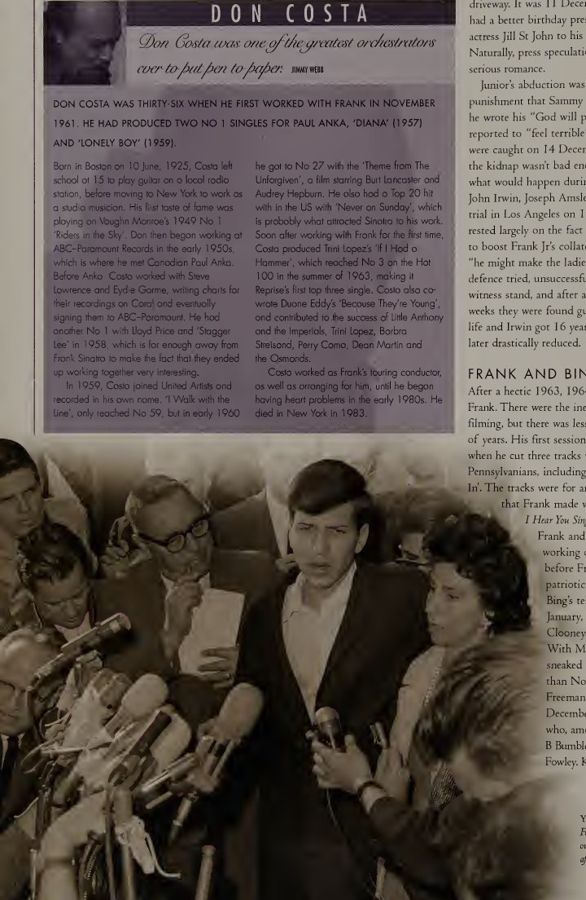
Photograph related to the above entry, from Richard Havers, "Sinatra" (Dorling Kindersley, 2007), p.288.
John Leyton on meeting Sinatra despite mocking his Old MacDonald record
Undated materialFrom: Richard Havers, "Sinatra" (Dorling Kindersley, 2007).
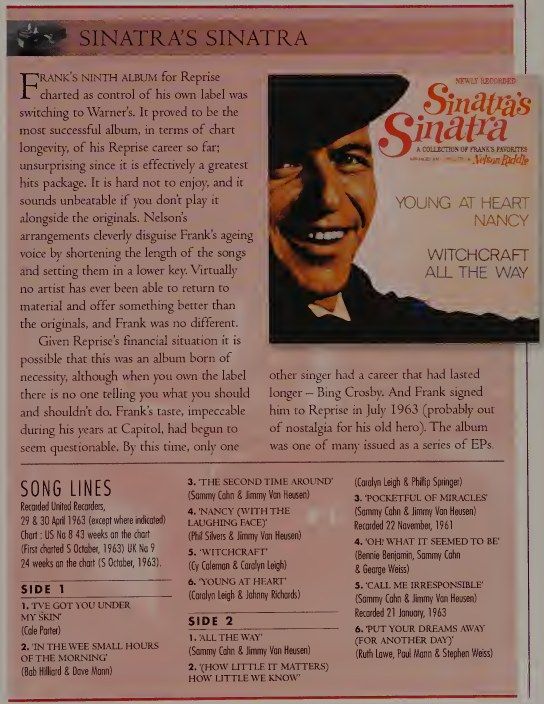
Photograph related to the above entry, from Richard Havers, "Sinatra" (Dorling Kindersley, 2007), p.287.
Kefauver crime committee formed, hears Mafia testimony
Undated materialFrom: Richard Havers, "Sinatra" (Dorling Kindersley, 2007).
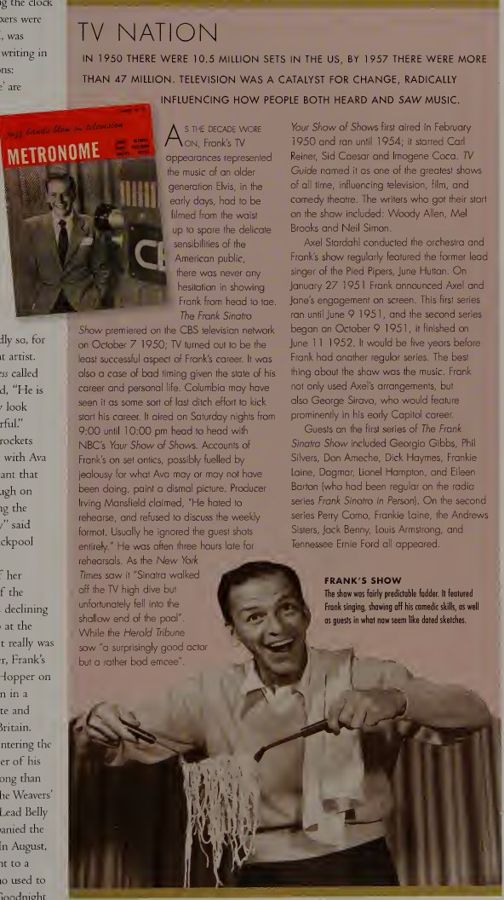
Photograph related to the above entry, from Richard Havers, "Sinatra" (Dorling Kindersley, 2007), p.153.
LA Times reports churchmen calling Frank a bigamist
Undated materialFrom: Richard Havers, "Sinatra" (Dorling Kindersley, 2007).
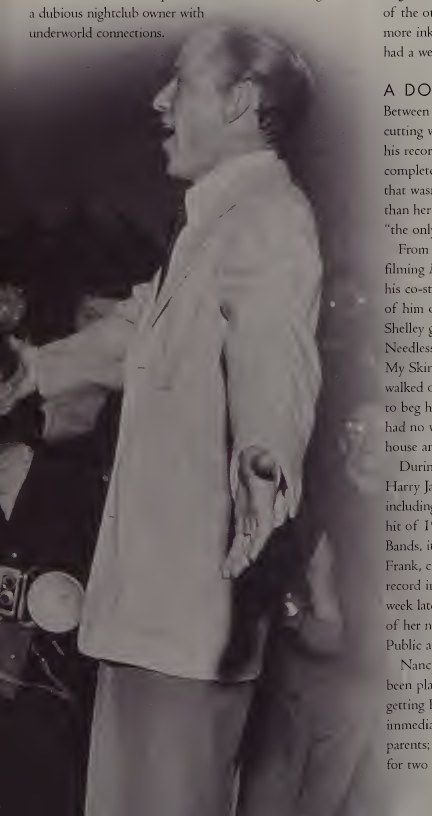
Photograph related to the above entry, from Richard Havers, "Sinatra" (Dorling Kindersley, 2007), p.159.
Lana Turner affair overlaps with her romance with Tyrone Power
Undated materialFrom: Richard Havers, "Sinatra" (Dorling Kindersley, 2007).
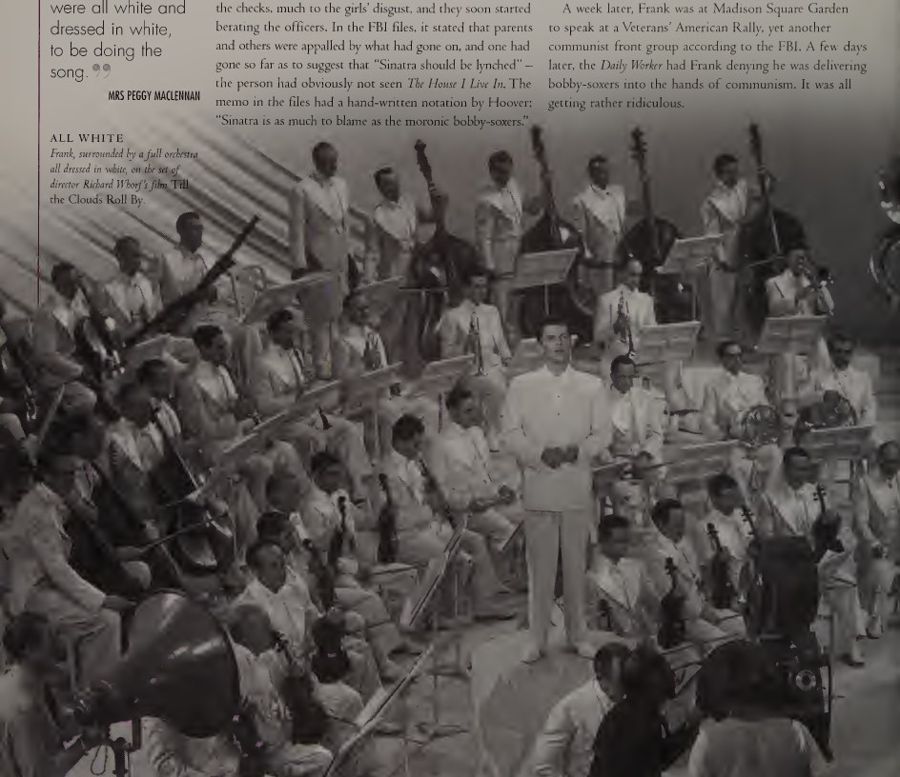
Photograph related to the above entry, from Richard Havers, "Sinatra" (Dorling Kindersley, 2007), p.116.
Life magazine calls Sinatra 'a happening'
Undated materialFrom: Richard Havers, "Sinatra" (Dorling Kindersley, 2007).
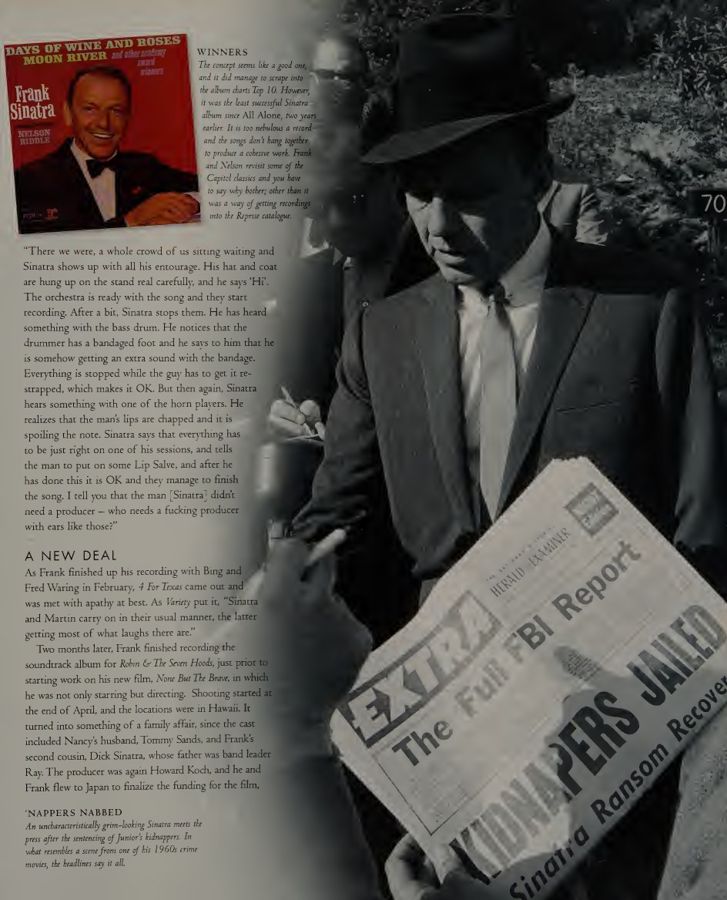
Photograph related to the above entry, from Richard Havers, "Sinatra" (Dorling Kindersley, 2007), p.289.
Marty fights under the name "Marty O'Brien"
Undated materialFrom: Richard Havers, "Sinatra" (Dorling Kindersley, 2007).
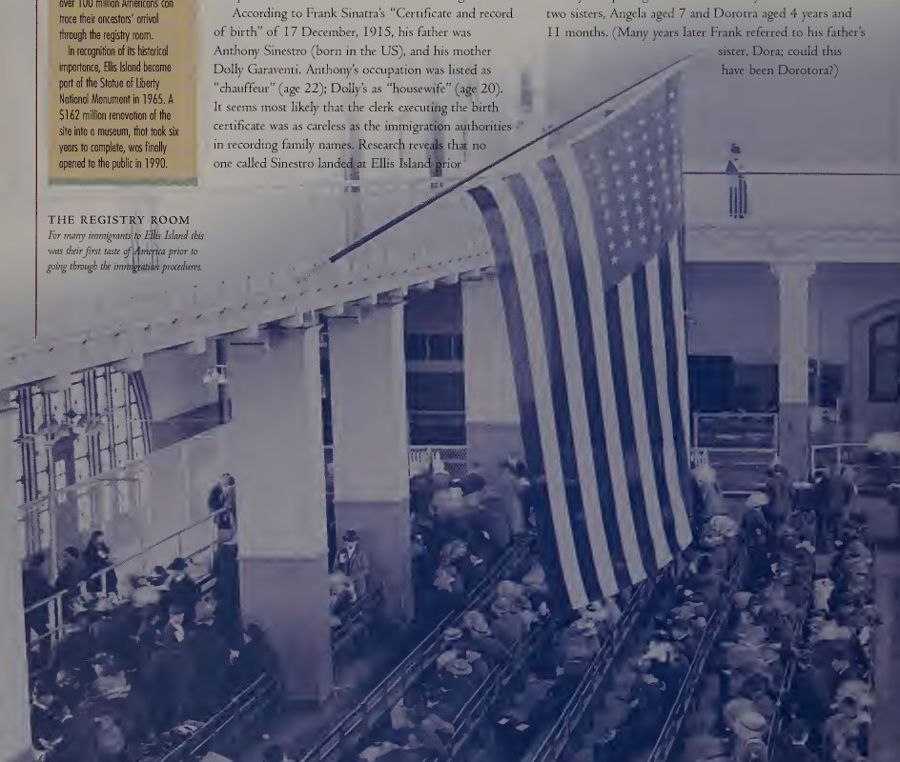
Photograph related to the above entry, from Richard Havers, "Sinatra" (Dorling Kindersley, 2007), p.18.
Marty joins the Hoboken Fire Department
Undated materialFrom: Richard Havers, "Sinatra" (Dorling Kindersley, 2007).
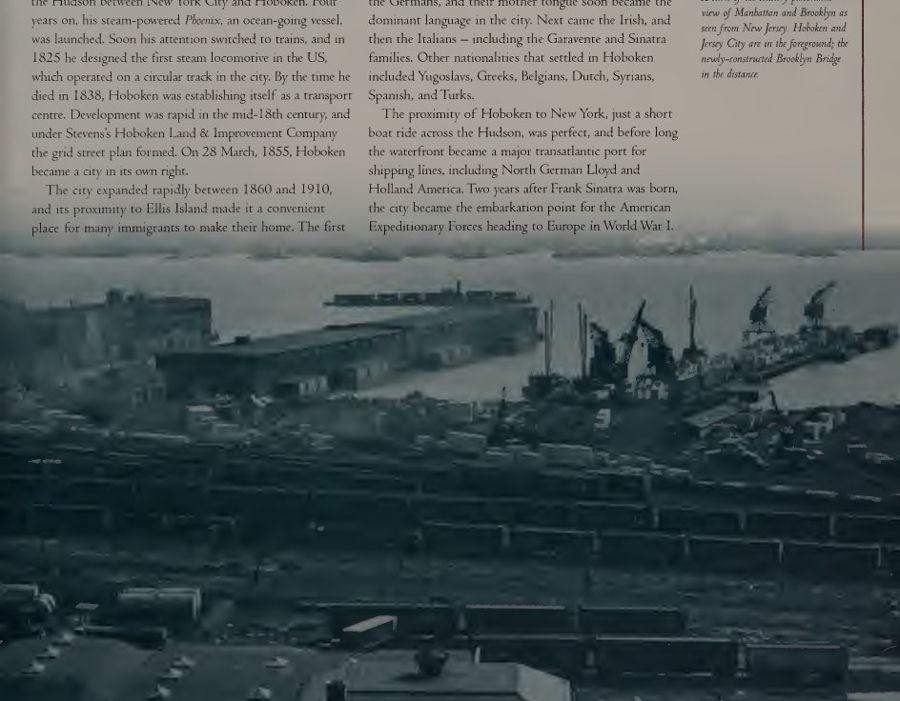
Photograph related to the above entry, from Richard Havers, "Sinatra" (Dorling Kindersley, 2007), p.21.
Marty joins the Hoboken Fire Department
Undated materialFrom: Richard Havers, "Sinatra" (Dorling Kindersley, 2007).
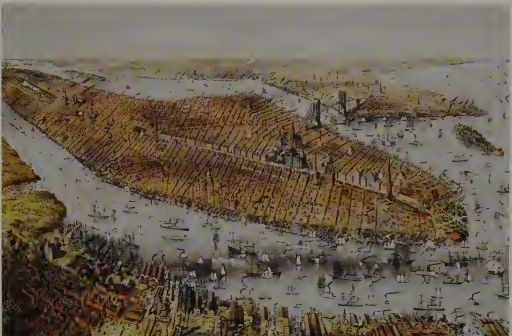
Photograph related to the above entry, from Richard Havers, "Sinatra" (Dorling Kindersley, 2007), p.21.
Marty joins the Hoboken Fire Department
Undated materialFrom: Richard Havers, "Sinatra" (Dorling Kindersley, 2007).
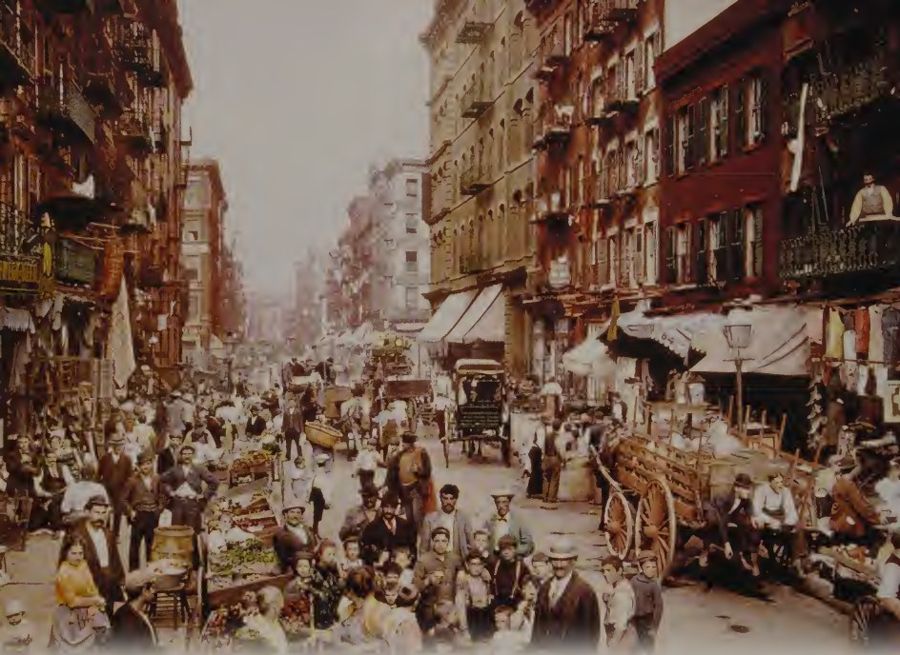
Photograph related to the above entry, from Richard Havers, "Sinatra" (Dorling Kindersley, 2007), p.22.
Marty's boxing career reportedly ends
Undated materialFrom: Richard Havers, "Sinatra" (Dorling Kindersley, 2007).
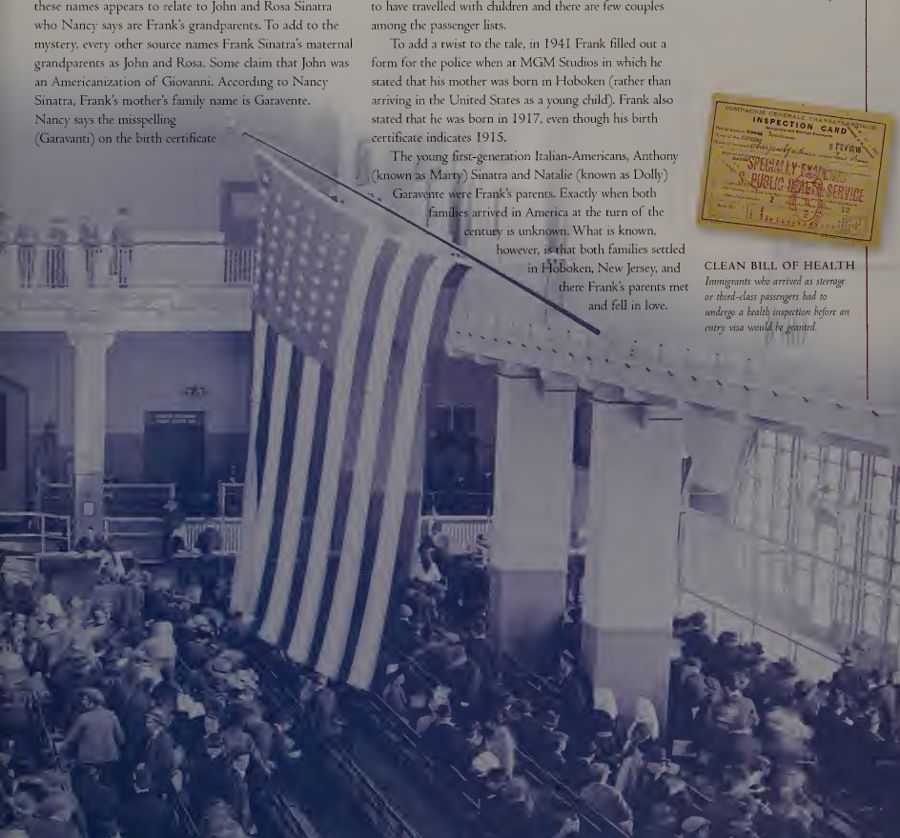
Photograph related to the above entry, from Richard Havers, "Sinatra" (Dorling Kindersley, 2007), p.19.
Marty's work for bootleggers
Undated materialFrom: Richard Havers, "Sinatra" (Dorling Kindersley, 2007).
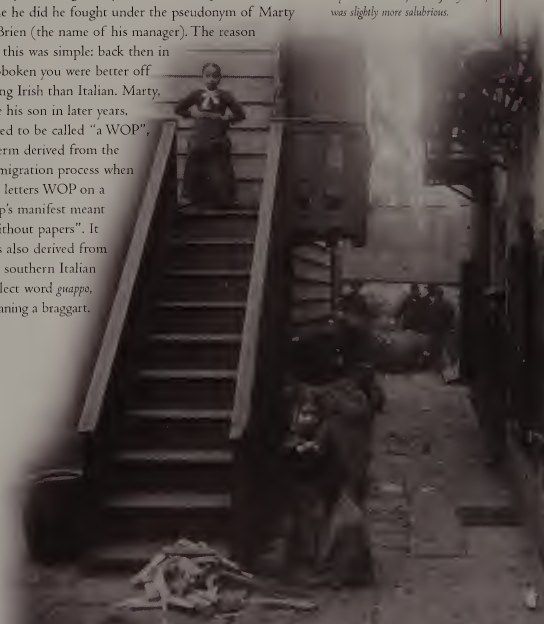
Photograph related to the above entry, from Richard Havers, "Sinatra" (Dorling Kindersley, 2007), p.23.
Marty's work for bootleggers
Undated materialFrom: Richard Havers, "Sinatra" (Dorling Kindersley, 2007).
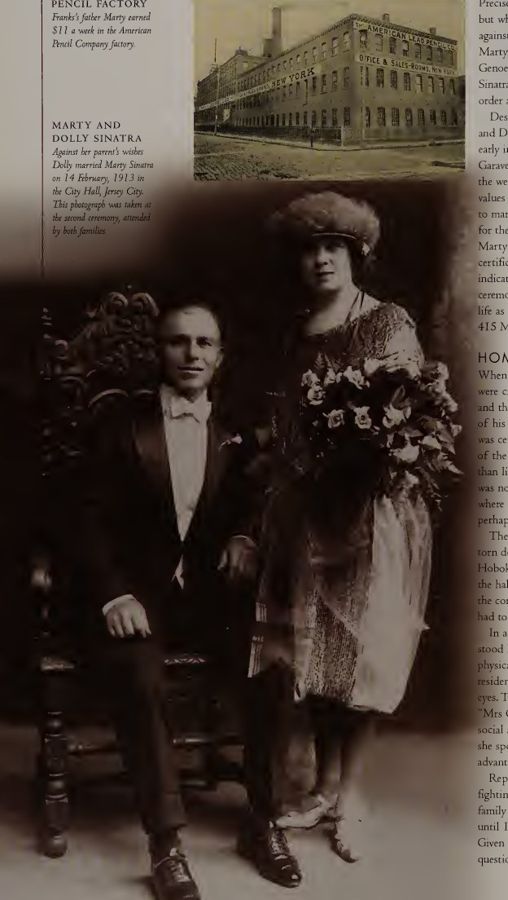
Photograph related to the above entry, from Richard Havers, "Sinatra" (Dorling Kindersley, 2007), p.24.
Marty's work for bootleggers
Undated materialFrom: Richard Havers, "Sinatra" (Dorling Kindersley, 2007).
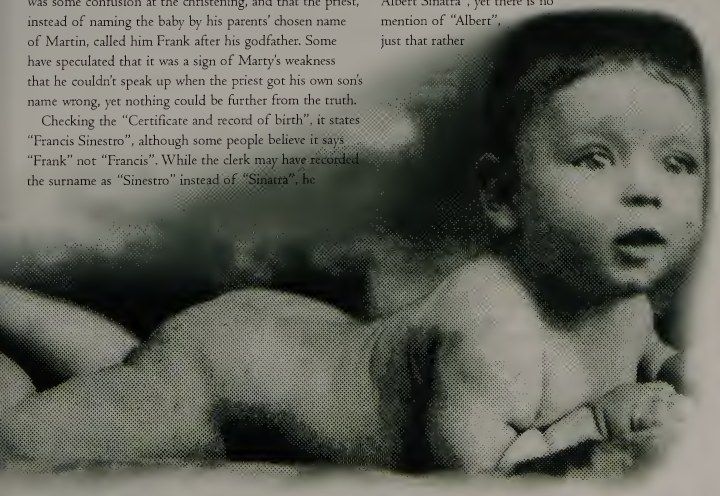
Photograph related to the above entry, from Richard Havers, "Sinatra" (Dorling Kindersley, 2007), p.25.
Marty's work for bootleggers
Undated materialFrom: Richard Havers, "Sinatra" (Dorling Kindersley, 2007).
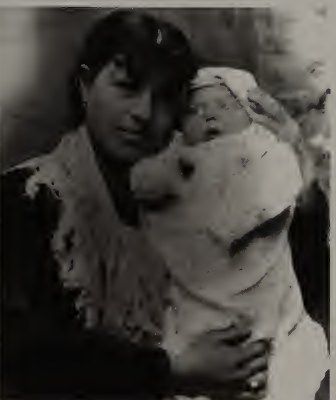
Photograph related to the above entry, from Richard Havers, "Sinatra" (Dorling Kindersley, 2007), p.25.
Marty's work for bootleggers
Undated materialFrom: Richard Havers, "Sinatra" (Dorling Kindersley, 2007).
Photograph related to the above entry, from Richard Havers, "Sinatra" (Dorling Kindersley, 2007), p.26.
MCA's Lew Wasserman drops Frank as a client
Undated materialFrom: Richard Havers, "Sinatra" (Dorling Kindersley, 2007).
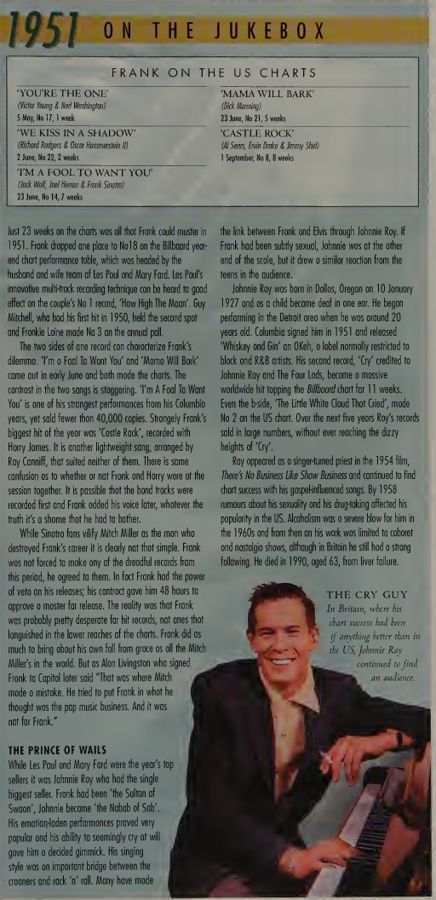
Photograph related to the above entry, from Richard Havers, "Sinatra" (Dorling Kindersley, 2007), p.163.
MCA's Lew Wasserman drops Frank as a client
Undated materialFrom: Richard Havers, "Sinatra" (Dorling Kindersley, 2007).
Photograph related to the above entry, from Richard Havers, "Sinatra" (Dorling Kindersley, 2007), p.163.
MCA's Lew Wasserman drops Frank as a client
Undated materialFrom: Richard Havers, "Sinatra" (Dorling Kindersley, 2007).
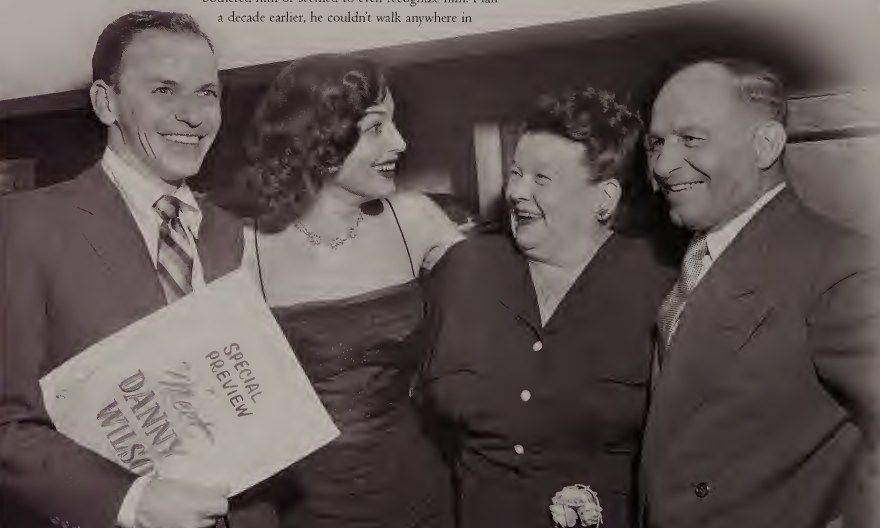
Photograph related to the above entry, from Richard Havers, "Sinatra" (Dorling Kindersley, 2007), p.164.
MCA's Lew Wasserman drops Frank as a client
Undated materialFrom: Richard Havers, "Sinatra" (Dorling Kindersley, 2007).
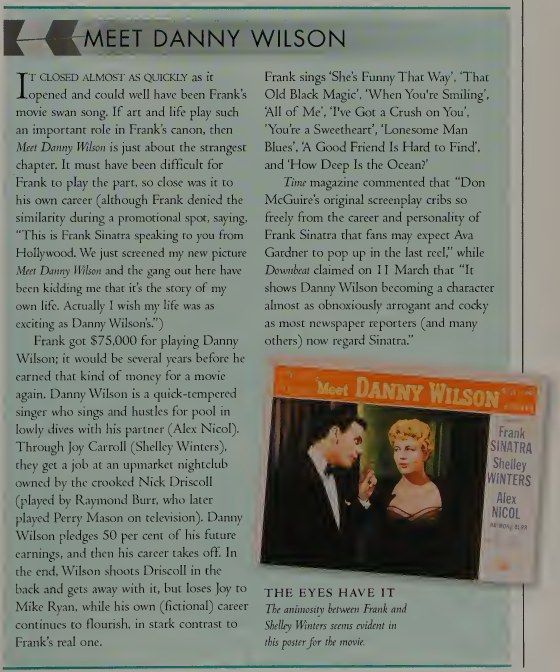
Photograph related to the above entry, from Richard Havers, "Sinatra" (Dorling Kindersley, 2007), p.165.
Mia served divorce papers on the set of Rosemary's Baby
Undated materialFrom: Richard Havers, "Sinatra" (Dorling Kindersley, 2007).
Photograph related to the above entry, from Richard Havers, "Sinatra" (Dorling Kindersley, 2007), p.306.
Mixed reactions from WACs during Italy tour
Undated materialFrom: Richard Havers, "Sinatra" (Dorling Kindersley, 2007).
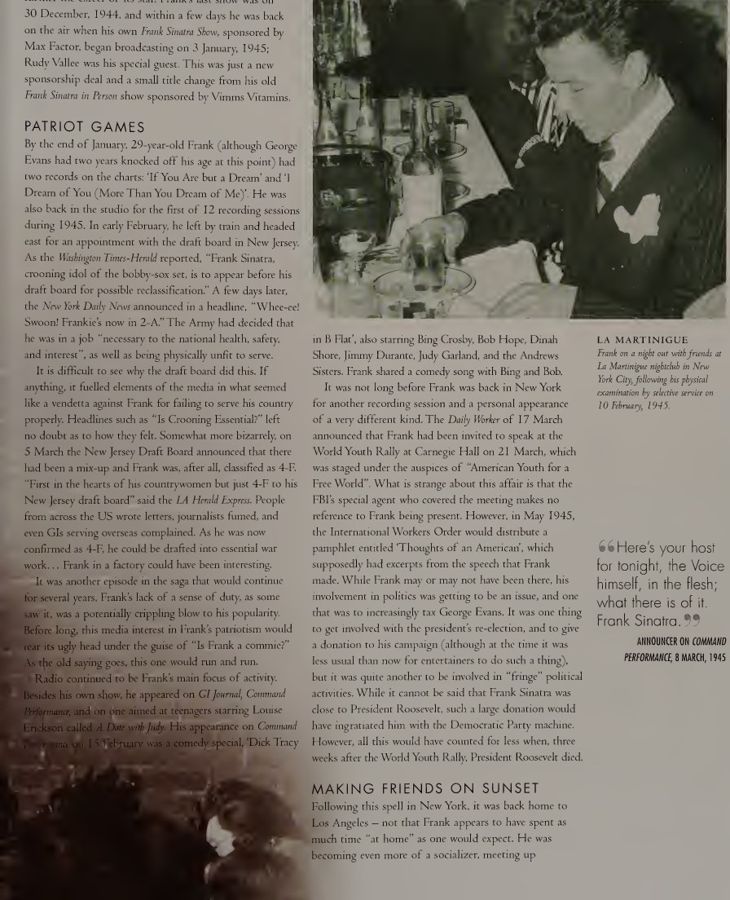
Photograph related to the above entry, from Richard Havers, "Sinatra" (Dorling Kindersley, 2007), p.105.
MLK benefit with Count Basie cancelled after JFK assassination
Undated materialFrom: Richard Havers, "Sinatra" (Dorling Kindersley, 2007).
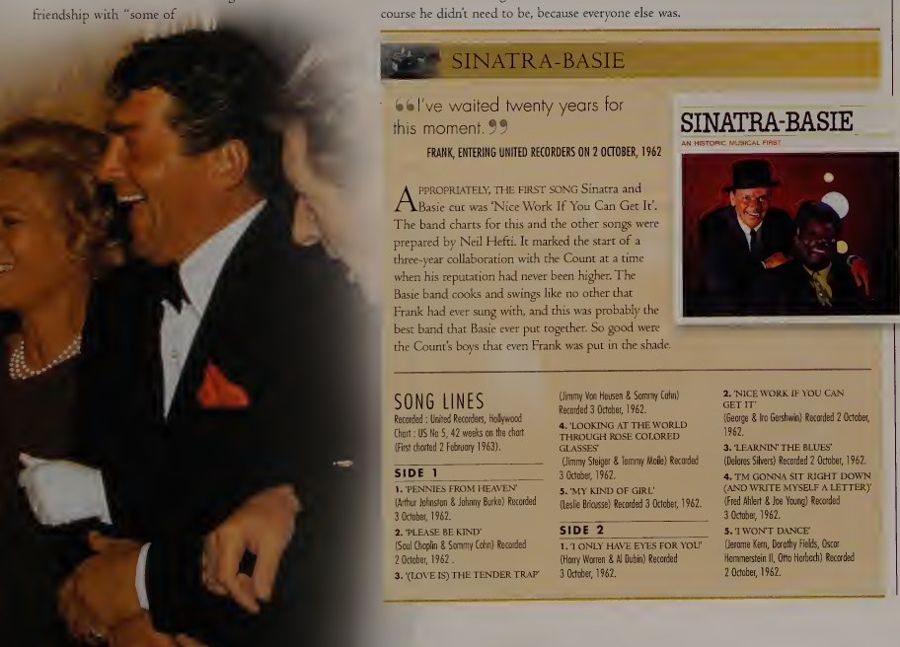
Photograph related to the above entry, from Richard Havers, "Sinatra" (Dorling Kindersley, 2007), p.283.
MLK benefit with Count Basie cancelled after JFK assassination
Undated materialFrom: Richard Havers, "Sinatra" (Dorling Kindersley, 2007).
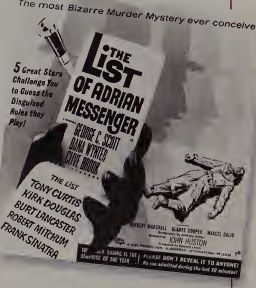
Photograph related to the above entry, from Richard Havers, "Sinatra" (Dorling Kindersley, 2007), p.283.
Moonlight Sinatra released to weak sales despite good reviews
Undated materialFrom: Richard Havers, "Sinatra" (Dorling Kindersley, 2007).
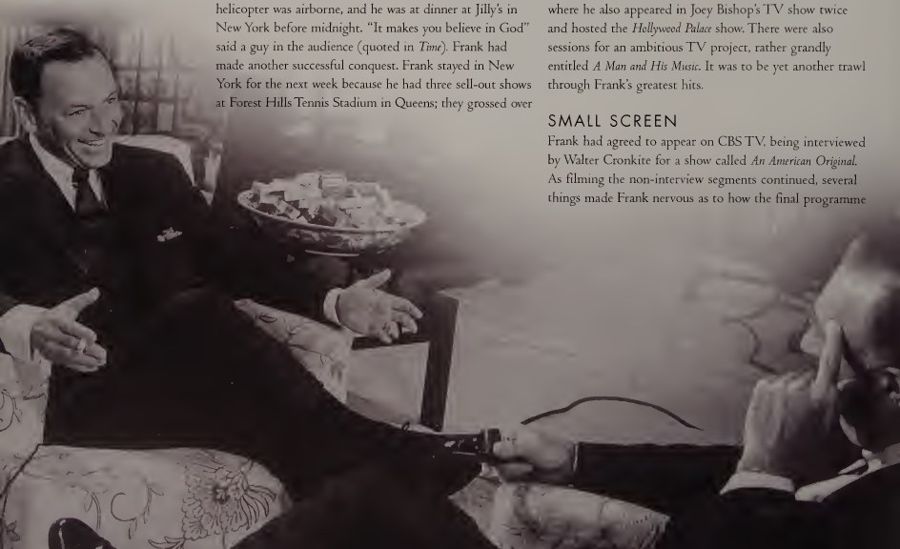
Photograph related to the above entry, from Richard Havers, "Sinatra" (Dorling Kindersley, 2007), p.296.
Moonlight Sinatra released to weak sales despite good reviews
Undated materialFrom: Richard Havers, "Sinatra" (Dorling Kindersley, 2007).
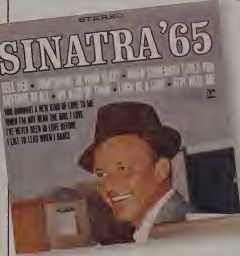
Photograph related to the above entry, from Richard Havers, "Sinatra" (Dorling Kindersley, 2007), p.296.
Nancy on the difficulty of getting her father to record pop songs
Undated materialFrom: Richard Havers, "Sinatra" (Dorling Kindersley, 2007).
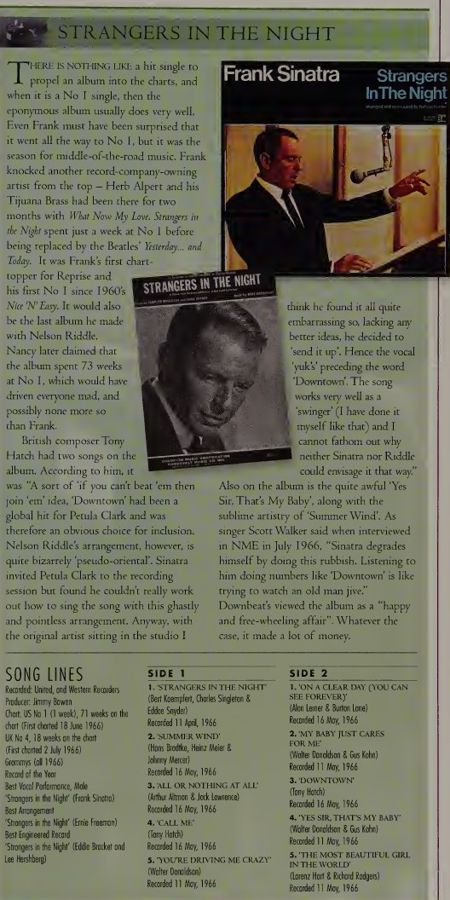
Photograph related to the above entry, from Richard Havers, "Sinatra" (Dorling Kindersley, 2007), p.301.
Nancy on the difficulty of getting her father to record pop songs
Undated materialFrom: Richard Havers, "Sinatra" (Dorling Kindersley, 2007).
Photograph related to the above entry, from Richard Havers, "Sinatra" (Dorling Kindersley, 2007), p.301.
Nancy on the difficulty of getting her father to record pop songs
Undated materialFrom: Richard Havers, "Sinatra" (Dorling Kindersley, 2007).
Photograph related to the above entry, from Richard Havers, "Sinatra" (Dorling Kindersley, 2007), p.302.
Nature Boy composer eden ahbez dies after being hit by a car
Undated materialFrom: Richard Havers, "Sinatra" (Dorling Kindersley, 2007).
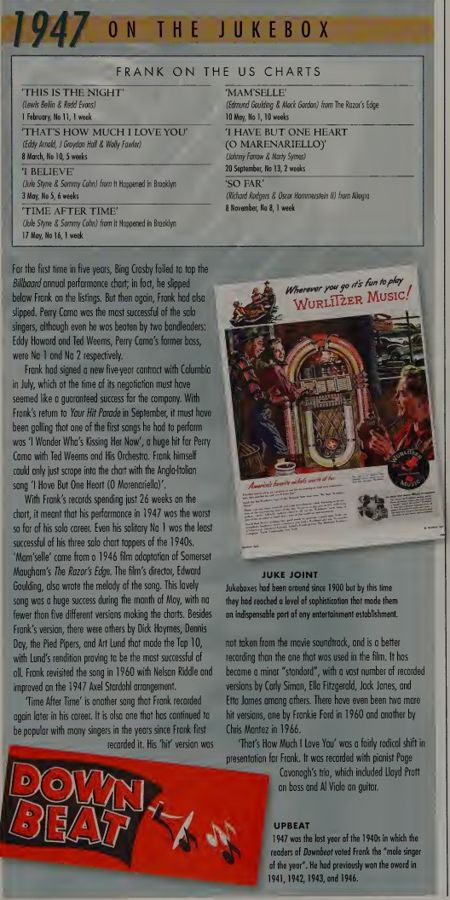
Photograph related to the above entry, from Richard Havers, "Sinatra" (Dorling Kindersley, 2007), p.135.
Noel Coward's "pitiful youth" quip to Frank
Undated materialFrom: Richard Havers, "Sinatra" (Dorling Kindersley, 2007).
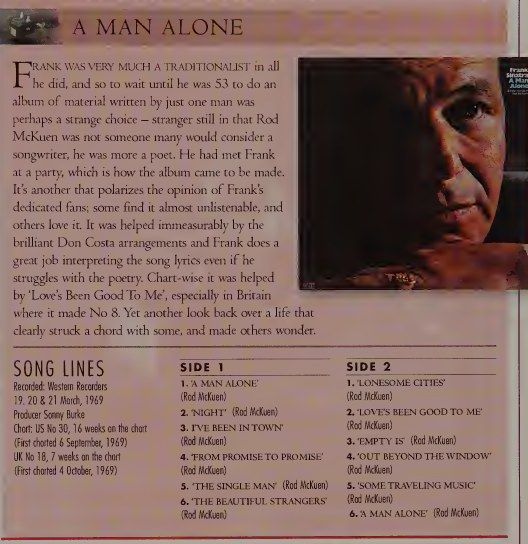
Photograph related to the above entry, from Richard Havers, "Sinatra" (Dorling Kindersley, 2007), p.317.
Noel Coward's "pitiful youth" quip to Frank
Undated materialFrom: Richard Havers, "Sinatra" (Dorling Kindersley, 2007).
Photograph related to the above entry, from Richard Havers, "Sinatra" (Dorling Kindersley, 2007), p.317.
Otto Preminger acquires Golden Arm rights after Garfield's death
Undated materialFrom: Richard Havers, "Sinatra" (Dorling Kindersley, 2007).
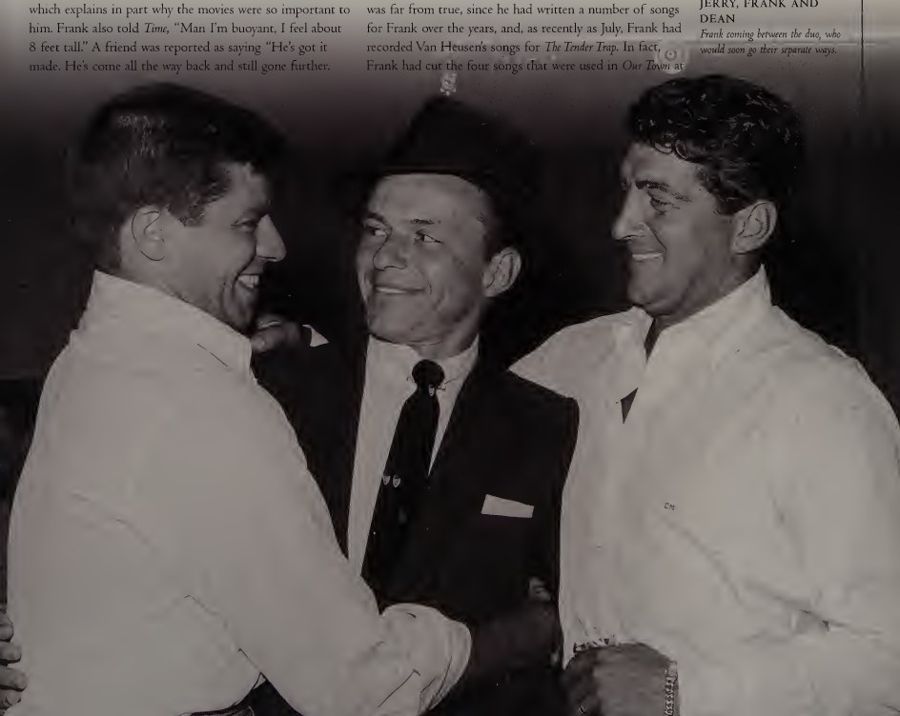
Photograph related to the above entry, from Richard Havers, "Sinatra" (Dorling Kindersley, 2007), p.207.
Petula Clark sits in on Sinatra's awkward 'Downtown' session
Undated materialFrom: Richard Havers, "Sinatra" (Dorling Kindersley, 2007).
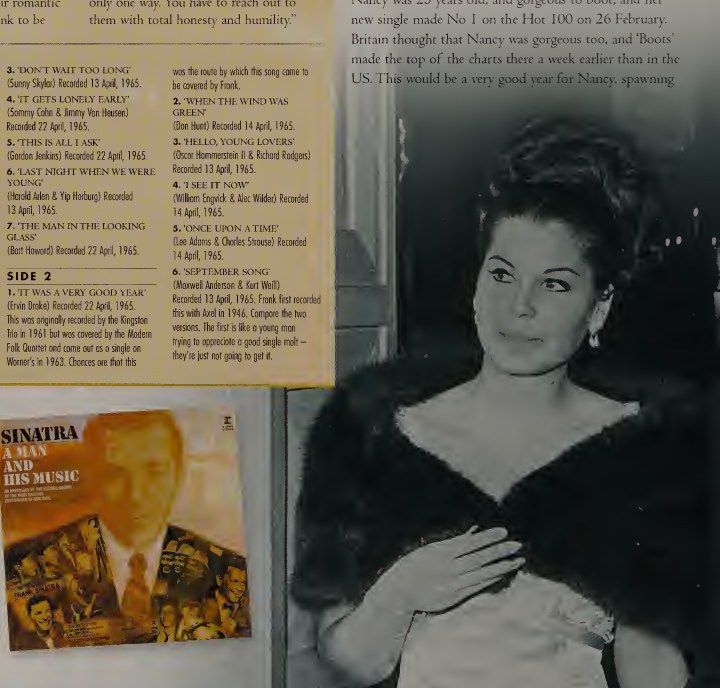
Photograph related to the above entry, from Richard Havers, "Sinatra" (Dorling Kindersley, 2007), p.298.
Petula Clark sits in on Sinatra's awkward 'Downtown' session
Undated materialFrom: Richard Havers, "Sinatra" (Dorling Kindersley, 2007).
Photograph related to the above entry, from Richard Havers, "Sinatra" (Dorling Kindersley, 2007), p.298.
Possible second suicide attempt at Cal-Neva Lodge
Undated materialFrom: Richard Havers, "Sinatra" (Dorling Kindersley, 2007).
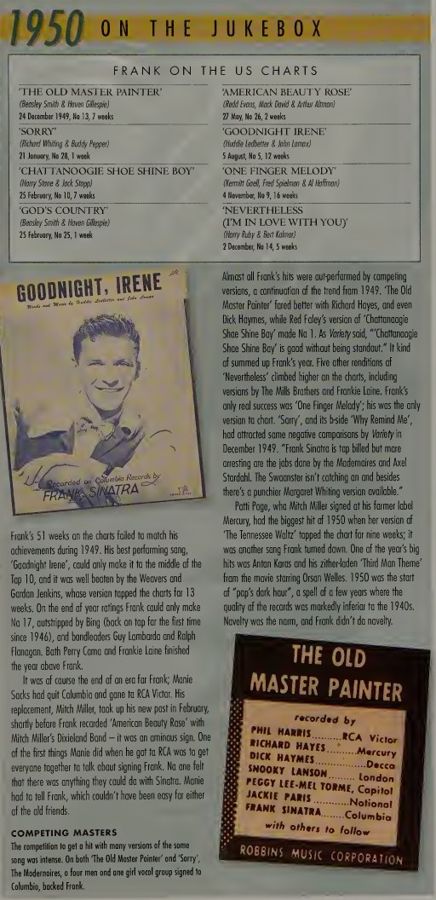
Photograph related to the above entry, from Richard Havers, "Sinatra" (Dorling Kindersley, 2007), p.157.
Promoter books three restaurants for Sinatra's unpredictable moods
Undated materialFrom: Richard Havers, "Sinatra" (Dorling Kindersley, 2007).
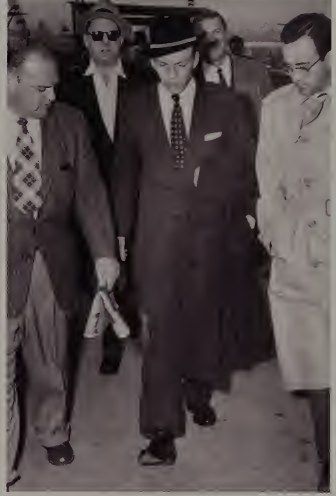
Photograph related to the above entry, from Richard Havers, "Sinatra" (Dorling Kindersley, 2007), p.229.
RKO signs Frank to escalating seven-picture film deal
Undated materialFrom: Richard Havers, "Sinatra" (Dorling Kindersley, 2007).
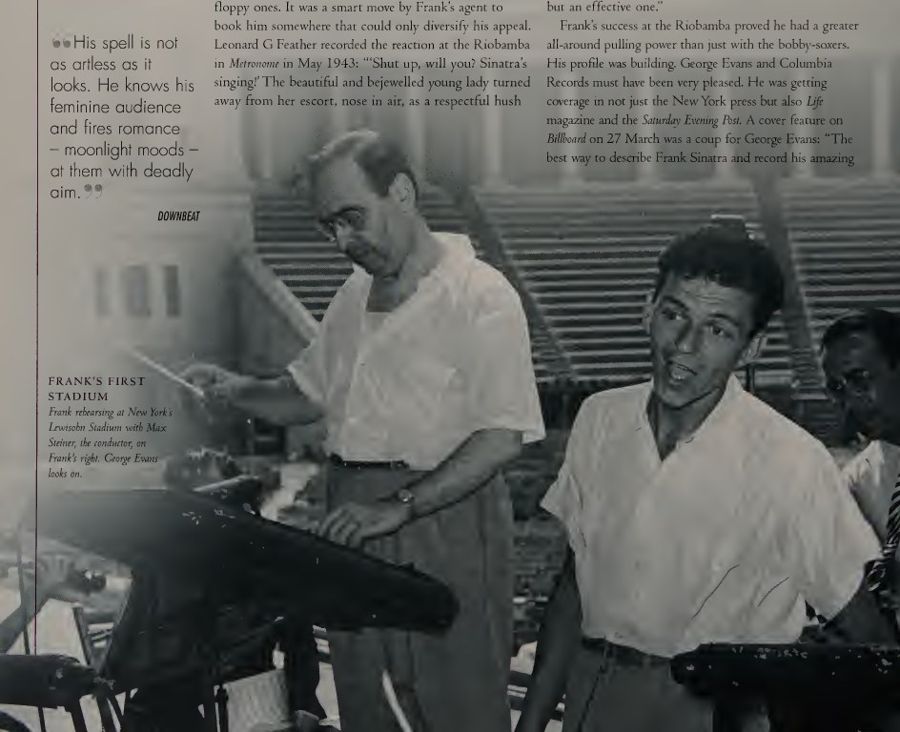
Photograph related to the above entry, from Richard Havers, "Sinatra" (Dorling Kindersley, 2007), p.82.
RKO signs Frank to escalating seven-picture film deal
Undated materialFrom: Richard Havers, "Sinatra" (Dorling Kindersley, 2007).
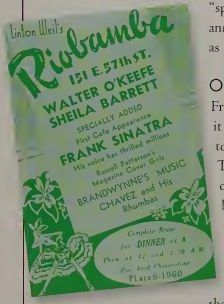
Photograph related to the above entry, from Richard Havers, "Sinatra" (Dorling Kindersley, 2007), p.82.
RKO signs Frank to escalating seven-picture film deal
Undated materialFrom: Richard Havers, "Sinatra" (Dorling Kindersley, 2007).
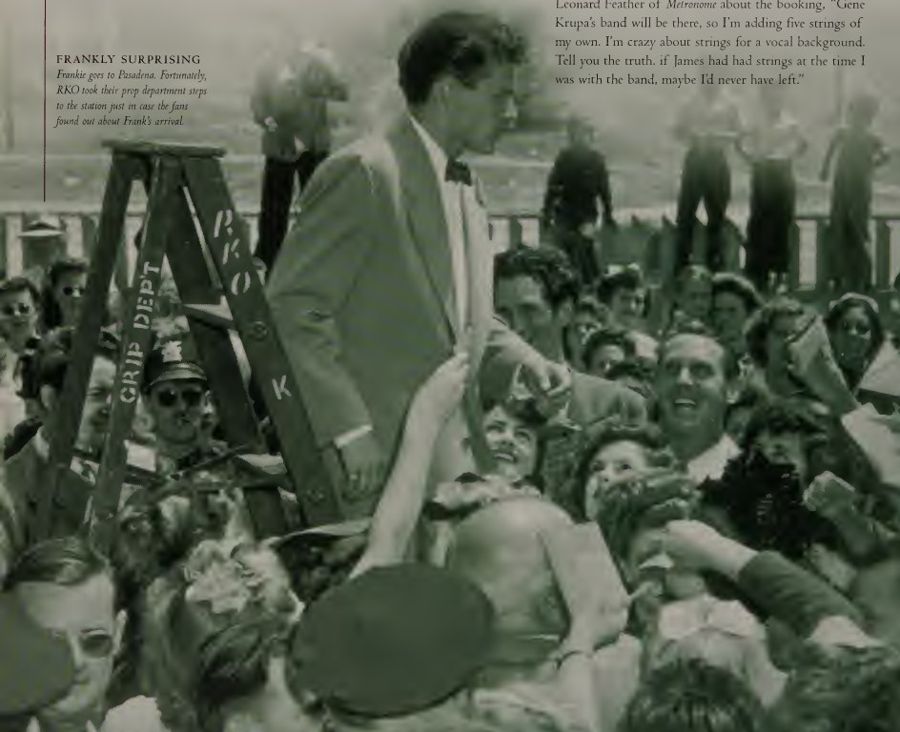
Photograph related to the above entry, from Richard Havers, "Sinatra" (Dorling Kindersley, 2007), p.84.
Rustic Cabin manager nearly costs Frank the Harry James job
Undated materialFrom: Richard Havers, "Sinatra" (Dorling Kindersley, 2007).
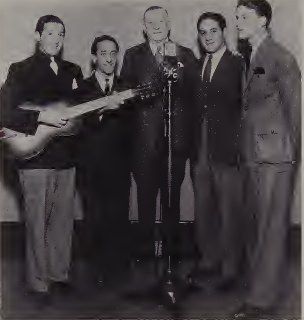
Photograph related to the above entry, from Richard Havers, "Sinatra" (Dorling Kindersley, 2007), p.42.
Sammy Cahn and Jule Styne's backgrounds
Undated materialFrom: Richard Havers, "Sinatra" (Dorling Kindersley, 2007).
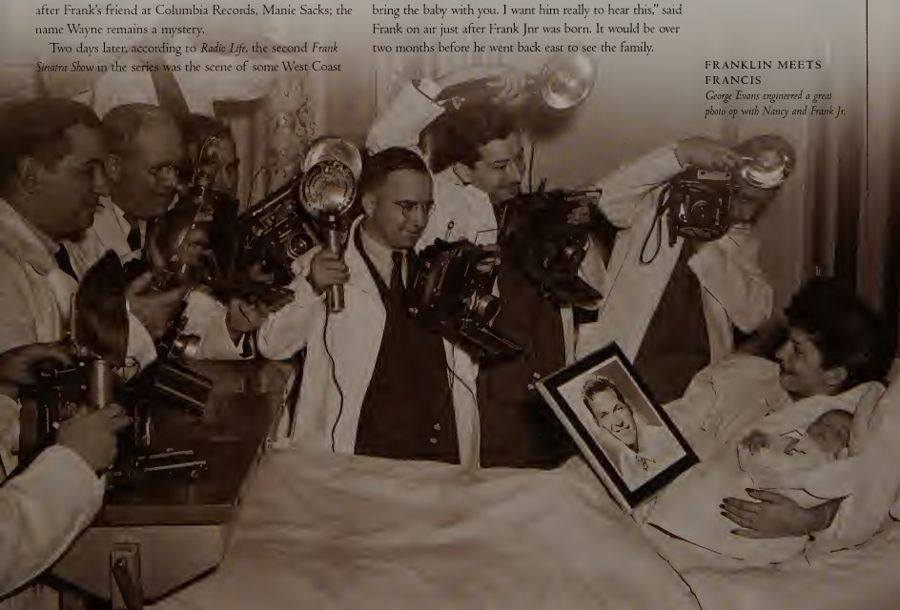
Photograph related to the above entry, from Richard Havers, "Sinatra" (Dorling Kindersley, 2007), p.93.
Sammy Cahn and Jule Styne's backgrounds
Undated materialFrom: Richard Havers, "Sinatra" (Dorling Kindersley, 2007).
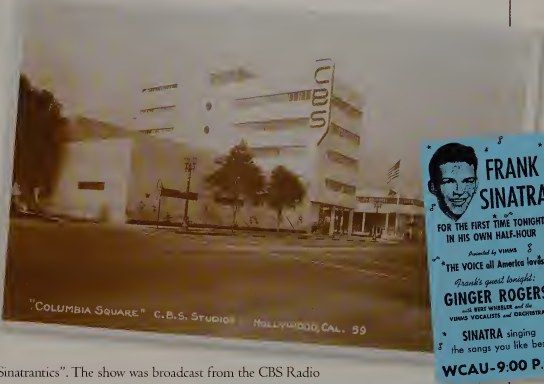
Photograph related to the above entry, from Richard Havers, "Sinatra" (Dorling Kindersley, 2007), p.93.
Sammy Davis Jr signs solo deal with Decca
Undated materialFrom: Richard Havers, "Sinatra" (Dorling Kindersley, 2007).
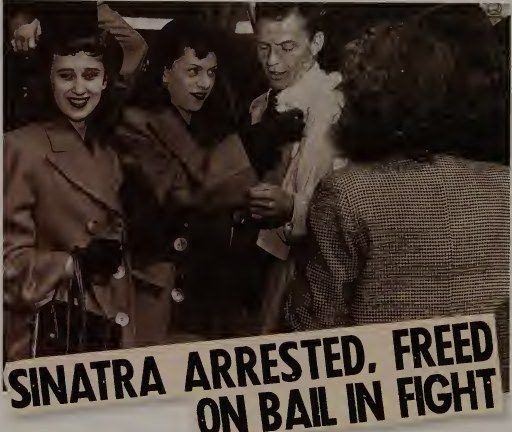
Photograph related to the above entry, from Richard Havers, "Sinatra" (Dorling Kindersley, 2007), p.129.
Sammy Davis Jr. written out of Never So Few after a feud
Undated materialFrom: Richard Havers, "Sinatra" (Dorling Kindersley, 2007).
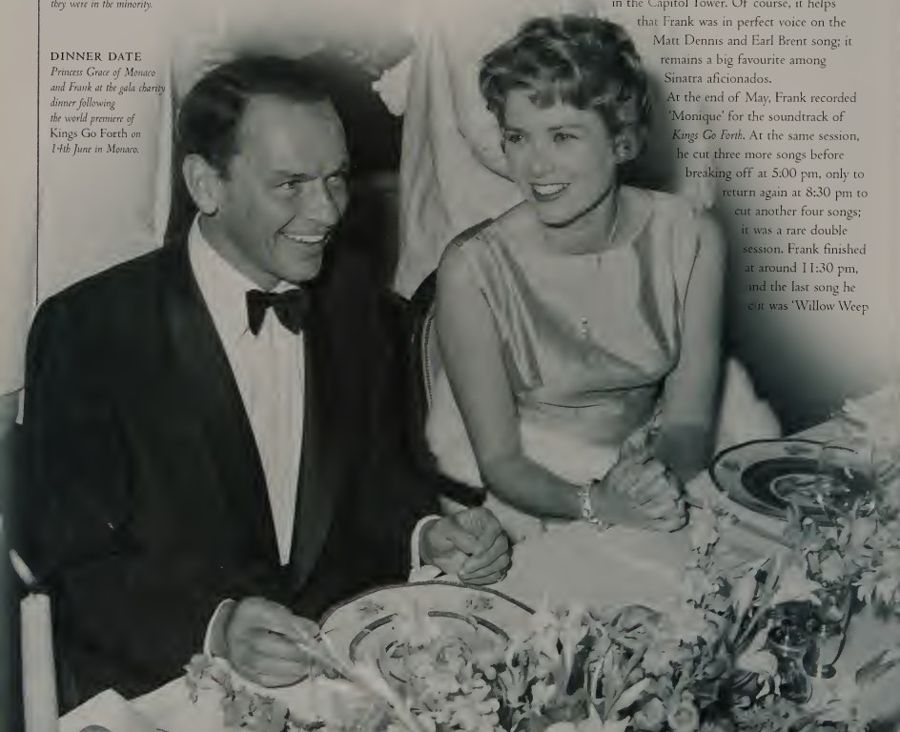
Photograph related to the above entry, from Richard Havers, "Sinatra" (Dorling Kindersley, 2007), p.246.
Shelved 'Here's to the Ladies' sessions with Nelson Riddle
Undated materialFrom: Richard Havers, "Sinatra" (Dorling Kindersley, 2007).
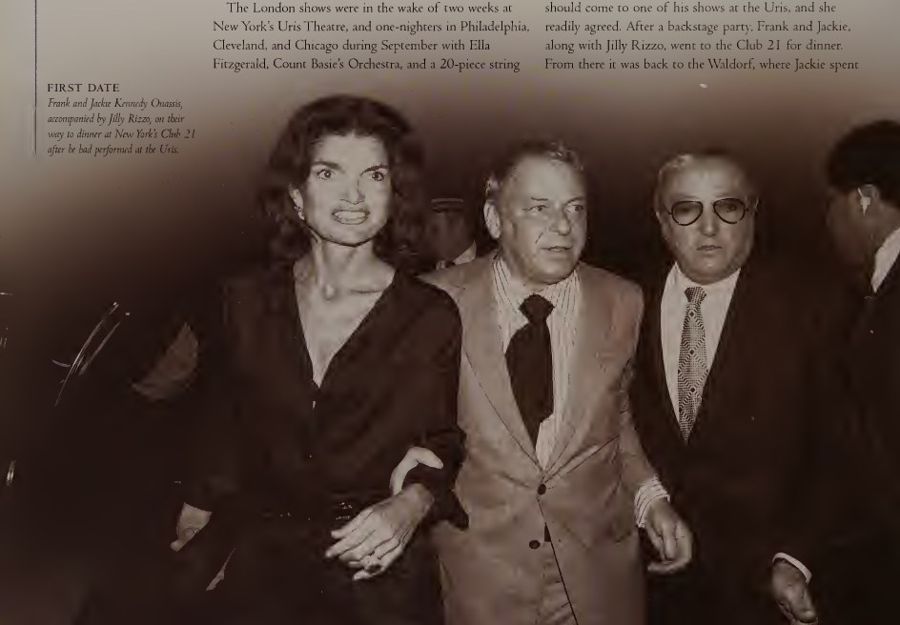
Photograph related to the above entry, from Richard Havers, "Sinatra" (Dorling Kindersley, 2007), p.332.
Shelved 'Here's to the Ladies' sessions with Nelson Riddle
Undated materialFrom: Richard Havers, "Sinatra" (Dorling Kindersley, 2007).
Photograph related to the above entry, from Richard Havers, "Sinatra" (Dorling Kindersley, 2007), p.332.
Sinatra addresses Veterans' rally at Madison Square Garden
Undated materialFrom: Richard Havers, "Sinatra" (Dorling Kindersley, 2007).
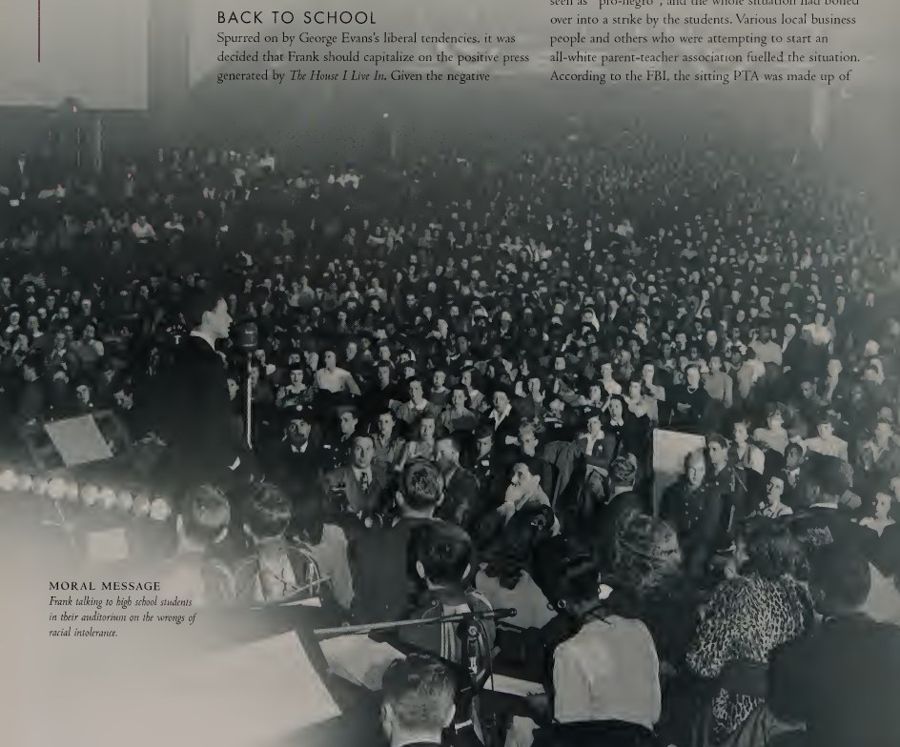
Photograph related to the above entry, from Richard Havers, "Sinatra" (Dorling Kindersley, 2007), p.112.
Sinatra addresses Veterans' rally at Madison Square Garden
Undated materialFrom: Richard Havers, "Sinatra" (Dorling Kindersley, 2007).
Photograph related to the above entry, from Richard Havers, "Sinatra" (Dorling Kindersley, 2007), p.112.
Sinatra and Davis's 'Me and My Shadow' charts higher in UK than US
Undated materialFrom: Richard Havers, "Sinatra" (Dorling Kindersley, 2007).
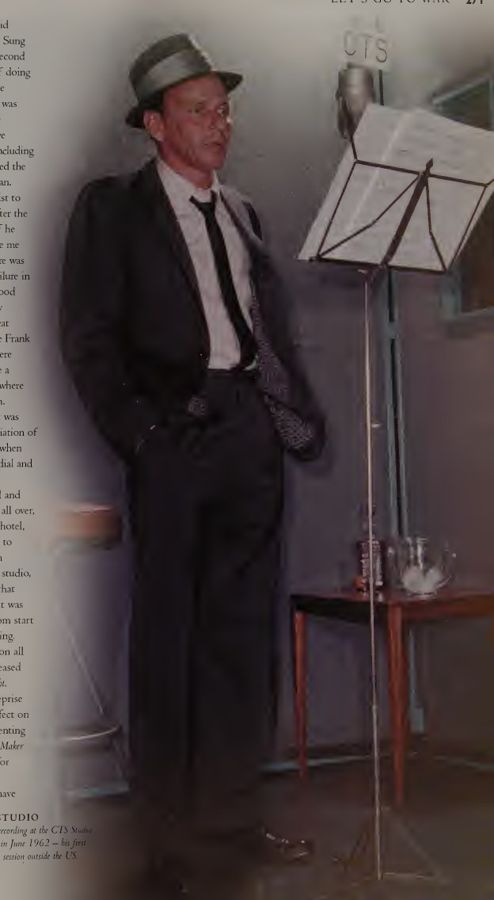
Photograph related to the above entry, from Richard Havers, "Sinatra" (Dorling Kindersley, 2007), p.275.
Sinatra and Davis's 'Me and My Shadow' charts higher in UK than US
Undated materialFrom: Richard Havers, "Sinatra" (Dorling Kindersley, 2007).
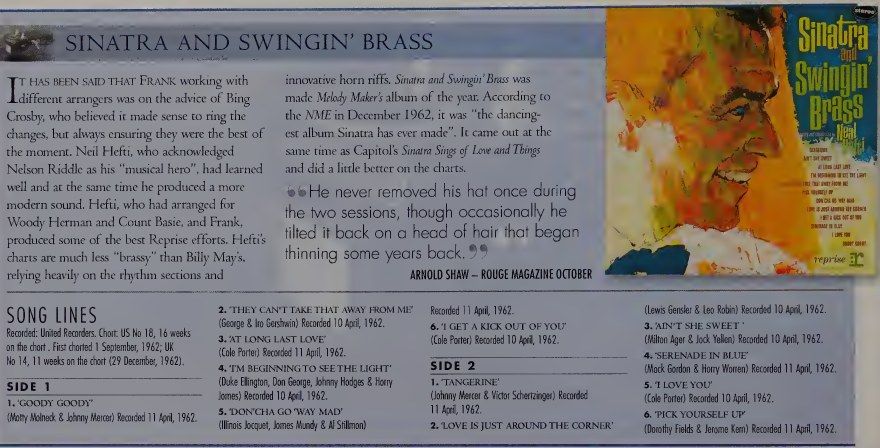
Photograph related to the above entry, from Richard Havers, "Sinatra" (Dorling Kindersley, 2007), p.276.
Sinatra and Davis's 'Me and My Shadow' charts higher in UK than US
Undated materialFrom: Richard Havers, "Sinatra" (Dorling Kindersley, 2007).
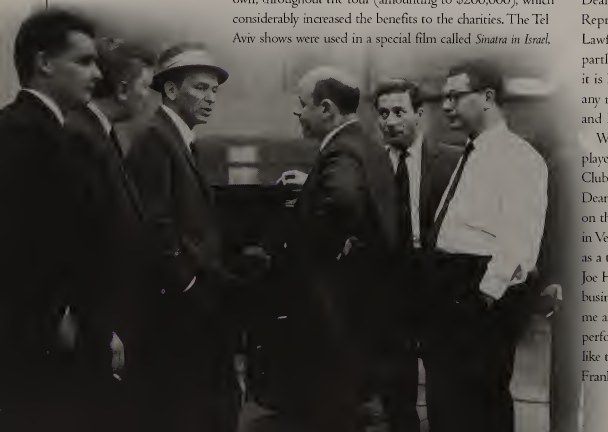
Photograph related to the above entry, from Richard Havers, "Sinatra" (Dorling Kindersley, 2007), p.276.
Sinatra and Davis's 'Me and My Shadow' charts higher in UK than US
Undated materialFrom: Richard Havers, "Sinatra" (Dorling Kindersley, 2007).
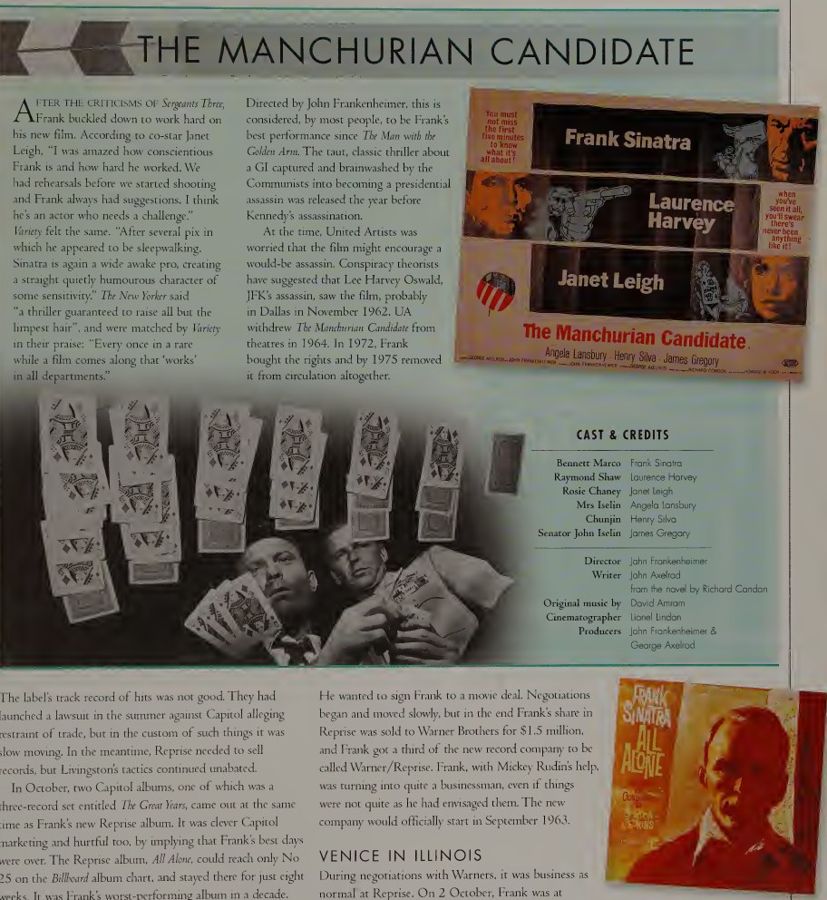
Photograph related to the above entry, from Richard Havers, "Sinatra" (Dorling Kindersley, 2007), p.277.
Sinatra conducts an orchestra during 1980 London shows
Undated materialFrom: Richard Havers, "Sinatra" (Dorling Kindersley, 2007).
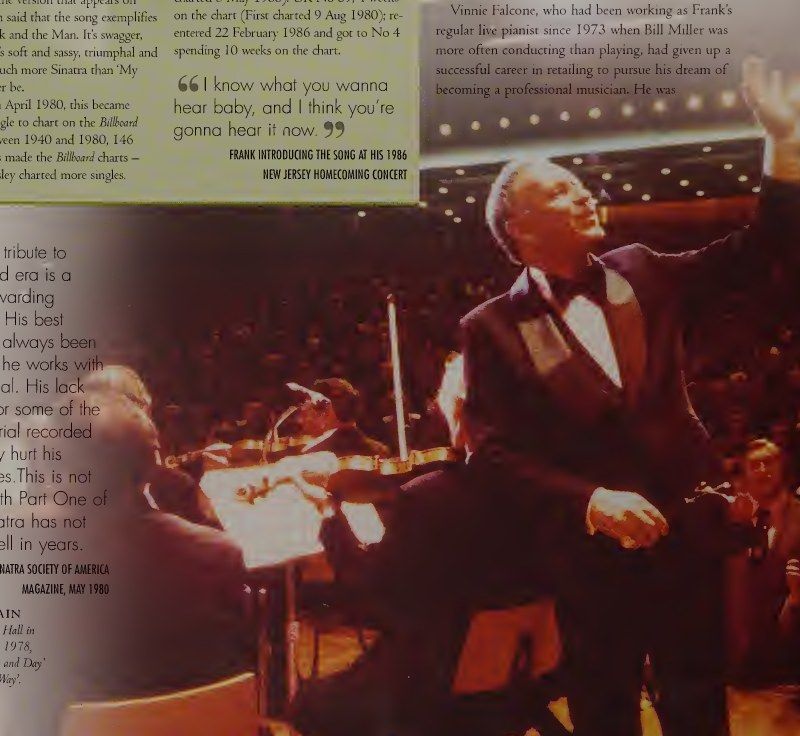
Photograph related to the above entry, from Richard Havers, "Sinatra" (Dorling Kindersley, 2007), p.338.
Sinatra conducts an orchestra during 1980 London shows
Undated materialFrom: Richard Havers, "Sinatra" (Dorling Kindersley, 2007).
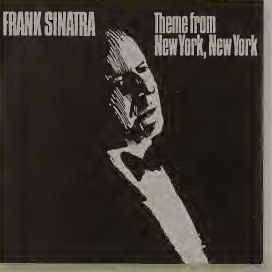
Photograph related to the above entry, from Richard Havers, "Sinatra" (Dorling Kindersley, 2007), p.338.
Sinatra family relocates to California
Undated materialFrom: Richard Havers, "Sinatra" (Dorling Kindersley, 2007).
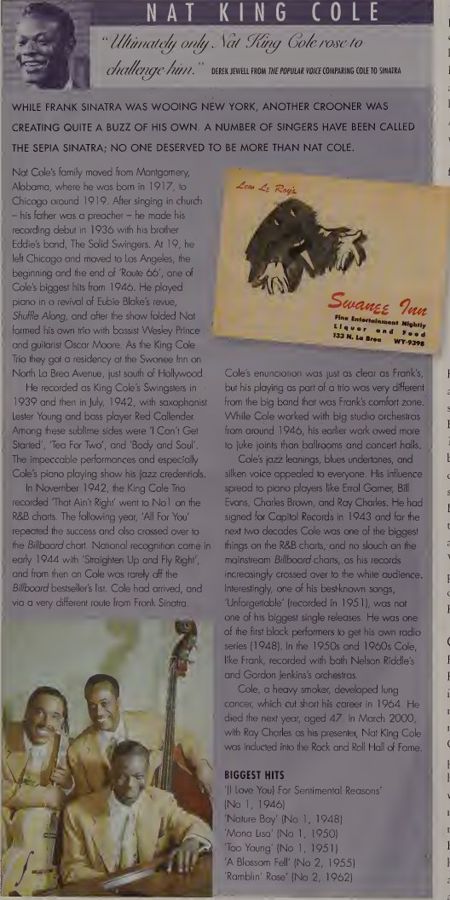
Photograph related to the above entry, from Richard Havers, "Sinatra" (Dorling Kindersley, 2007), p.94.
Sinatra fan clubs and Sinatramania culture
Undated materialFrom: Richard Havers, "Sinatra" (Dorling Kindersley, 2007).
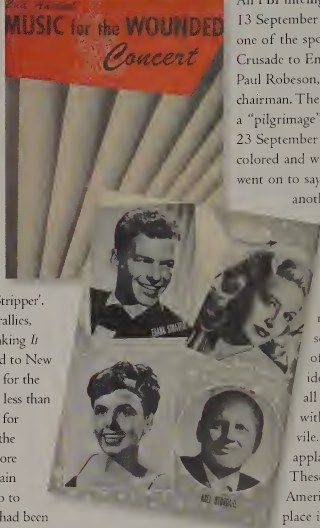
Photograph related to the above entry, from Richard Havers, "Sinatra" (Dorling Kindersley, 2007), p.118.
Sinatra jokingly introduces himself as 'Nancy's father'
Undated materialFrom: Richard Havers, "Sinatra" (Dorling Kindersley, 2007).
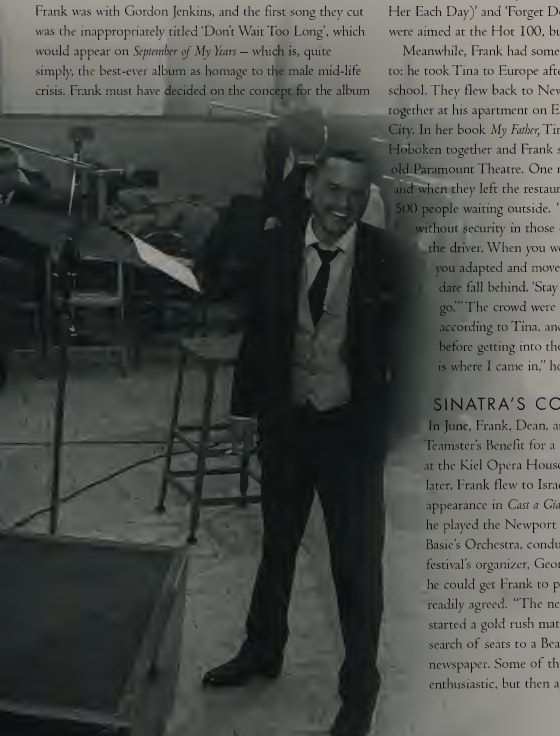
Photograph related to the above entry, from Richard Havers, "Sinatra" (Dorling Kindersley, 2007), p.295.
Sinatra plays record-breaking Maracanã Stadium concert in Rio
Undated materialFrom: Richard Havers, "Sinatra" (Dorling Kindersley, 2007).
Photograph related to the above entry, from Richard Havers, "Sinatra" (Dorling Kindersley, 2007), p.337.
Sinatra plays record-breaking Maracanã Stadium concert in Rio
Undated materialFrom: Richard Havers, "Sinatra" (Dorling Kindersley, 2007).
Photograph related to the above entry, from Richard Havers, "Sinatra" (Dorling Kindersley, 2007), p.337.
Sinatra plays record-breaking Maracanã Stadium concert in Rio
Undated materialFrom: Richard Havers, "Sinatra" (Dorling Kindersley, 2007).
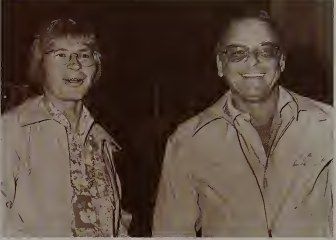
Photograph related to the above entry, from Richard Havers, "Sinatra" (Dorling Kindersley, 2007), p.337.
Sinatra presents Eva Marie Saint her Oscar
Undated materialFrom: Richard Havers, "Sinatra" (Dorling Kindersley, 2007).
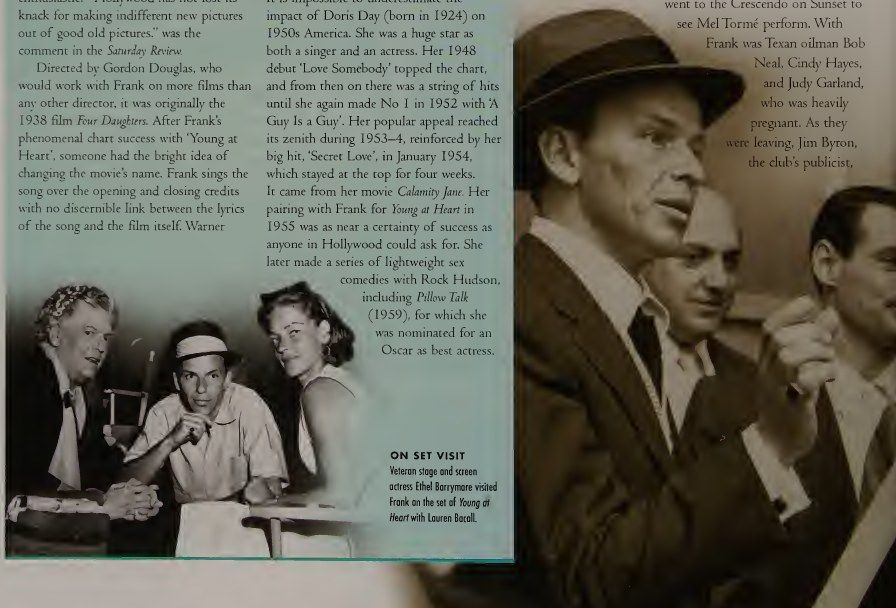
Photograph related to the above entry, from Richard Havers, "Sinatra" (Dorling Kindersley, 2007), p.200.
Sinatra records 'Softly, As I Leave You' with new conductor Ernie Freeman
Undated materialFrom: Richard Havers, "Sinatra" (Dorling Kindersley, 2007).
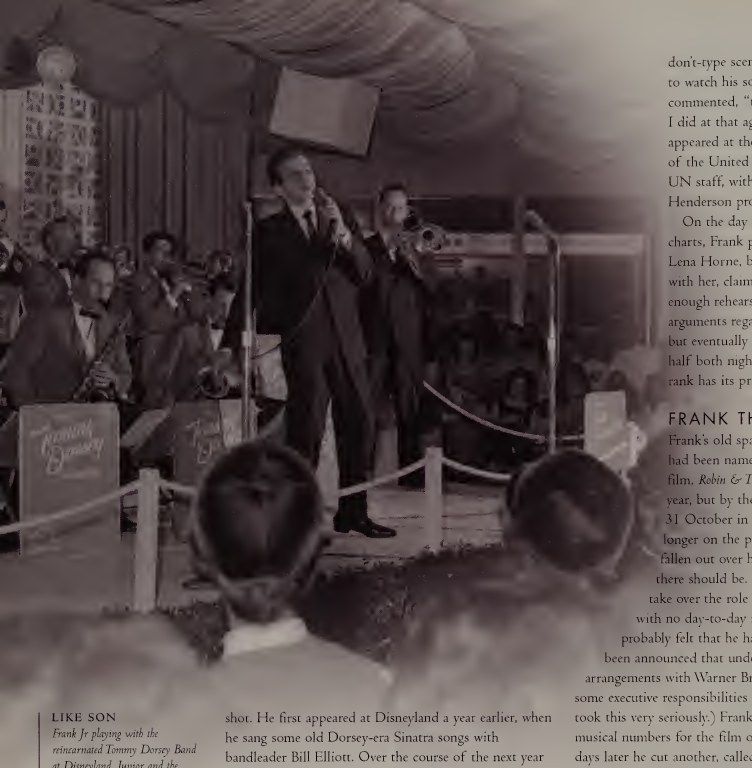
Photograph related to the above entry, from Richard Havers, "Sinatra" (Dorling Kindersley, 2007), p.286.
Sinatra records 'Softly, As I Leave You' with new conductor Ernie Freeman
Undated materialFrom: Richard Havers, "Sinatra" (Dorling Kindersley, 2007).
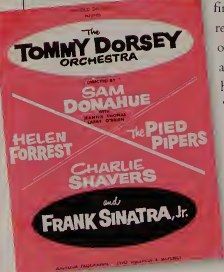
Photograph related to the above entry, from Richard Havers, "Sinatra" (Dorling Kindersley, 2007), p.286.
Sinatra records disco versions of old standards
Undated materialFrom: Richard Havers, "Sinatra" (Dorling Kindersley, 2007).
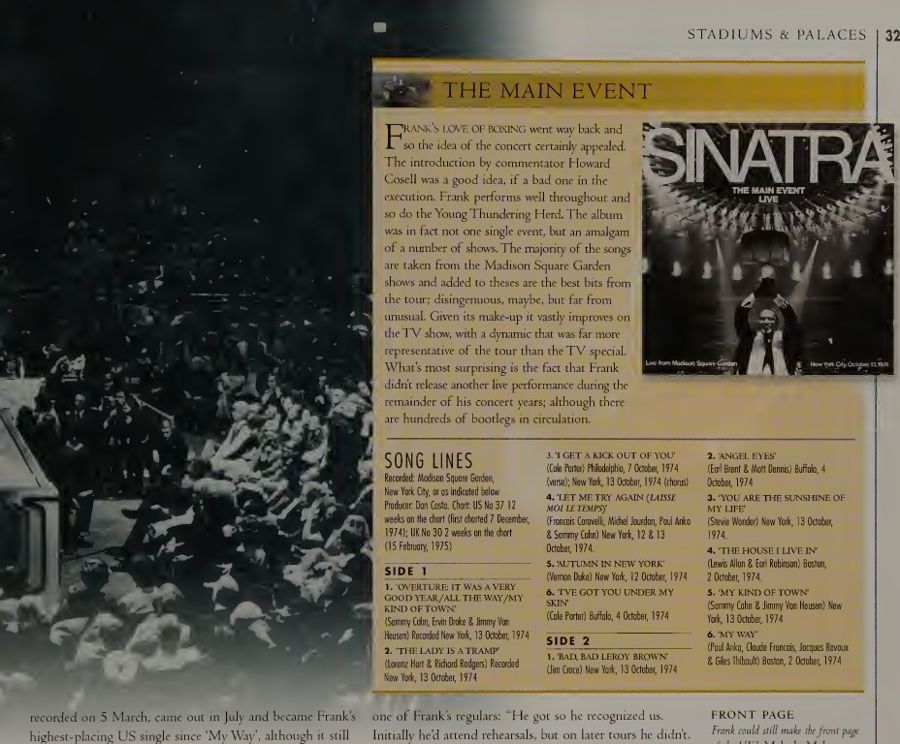
Photograph related to the above entry, from Richard Havers, "Sinatra" (Dorling Kindersley, 2007), p.331.
Sinatra records disco versions of old standards
Undated materialFrom: Richard Havers, "Sinatra" (Dorling Kindersley, 2007).
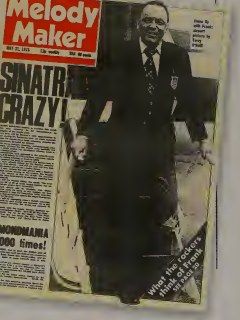
Photograph related to the above entry, from Richard Havers, "Sinatra" (Dorling Kindersley, 2007), p.331.
Sinatra spends four days in Hawaii with Sam Giancana
Undated materialFrom: Richard Havers, "Sinatra" (Dorling Kindersley, 2007).
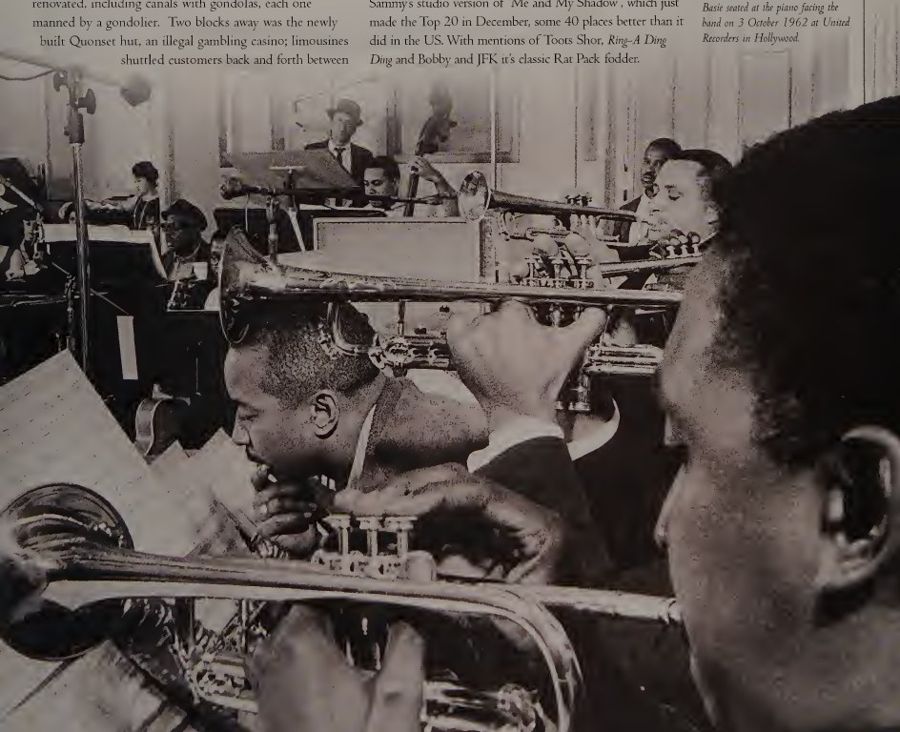
Photograph related to the above entry, from Richard Havers, "Sinatra" (Dorling Kindersley, 2007), p.279.
Sinatra's 'bunch of fags' remark sparks Australian union standoff
Undated materialFrom: Richard Havers, "Sinatra" (Dorling Kindersley, 2007).
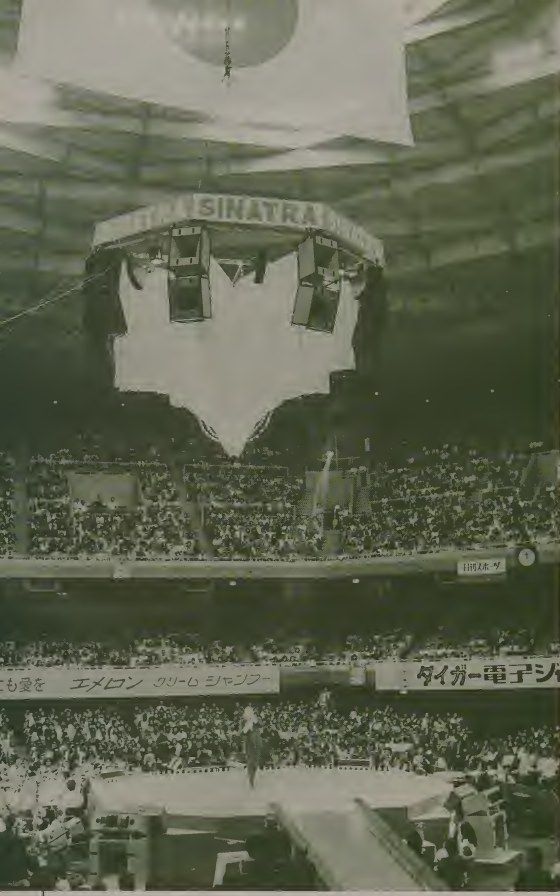
Photograph related to the above entry, from Richard Havers, "Sinatra" (Dorling Kindersley, 2007), p.328.
Sinatra's 'bunch of fags' remark sparks Australian union standoff
Undated materialFrom: Richard Havers, "Sinatra" (Dorling Kindersley, 2007).
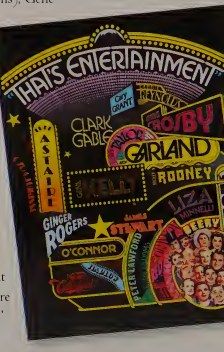
Photograph related to the above entry, from Richard Havers, "Sinatra" (Dorling Kindersley, 2007), p.328.
Sinatra's famous toast about living to 102
Undated materialFrom: Richard Havers, "Sinatra" (Dorling Kindersley, 2007).
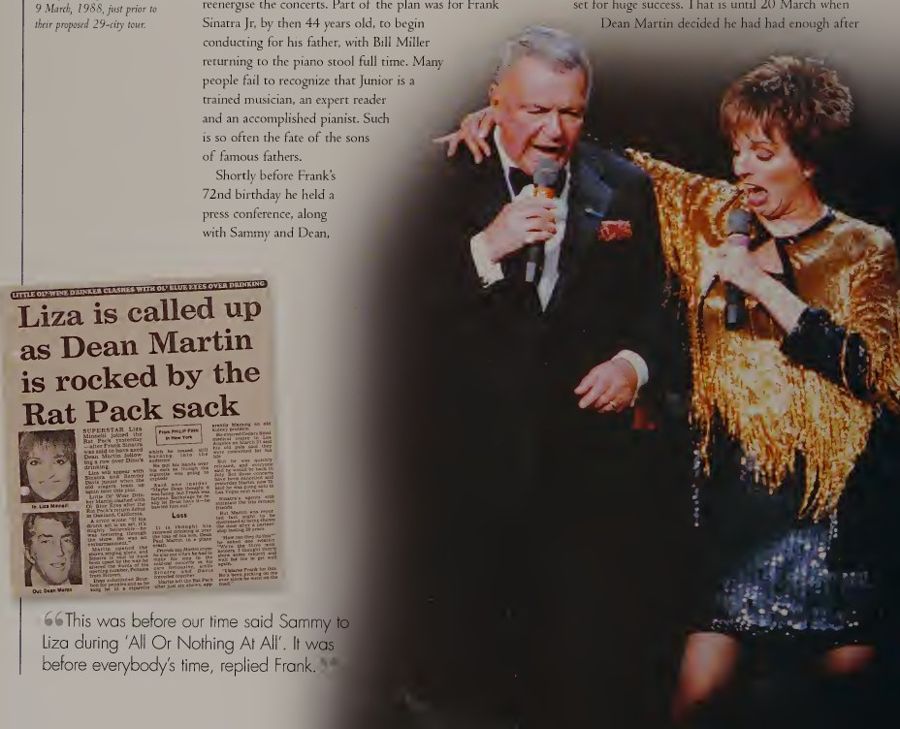
Photograph related to the above entry, from Richard Havers, "Sinatra" (Dorling Kindersley, 2007), p.350.
Sinatra's famous toast about living to 102
Undated materialFrom: Richard Havers, "Sinatra" (Dorling Kindersley, 2007).
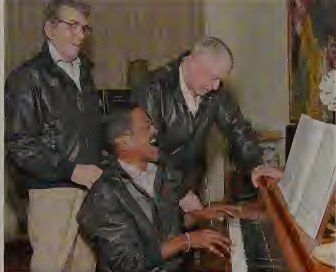
Photograph related to the above entry, from Richard Havers, "Sinatra" (Dorling Kindersley, 2007), p.350.
Sinatra's famous toast about living to 102
Undated materialFrom: Richard Havers, "Sinatra" (Dorling Kindersley, 2007).
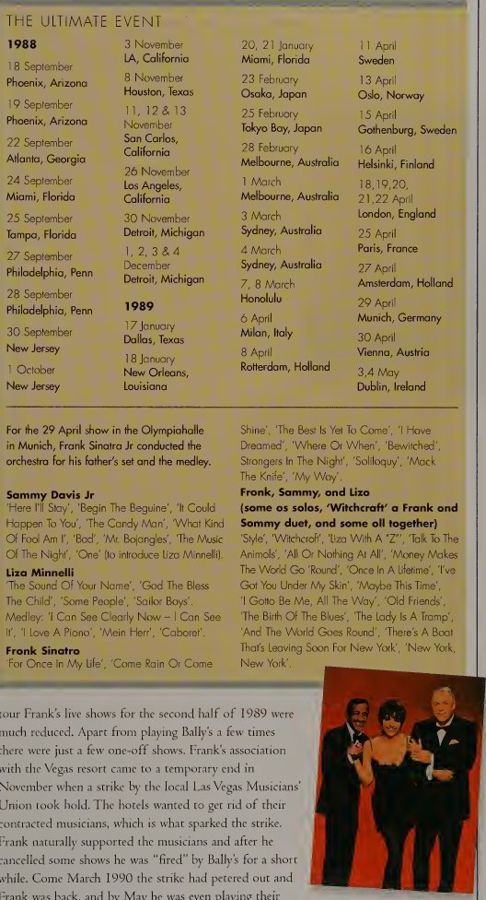
Photograph related to the above entry, from Richard Havers, "Sinatra" (Dorling Kindersley, 2007), p.351.
Sinatra's famous toast about living to 102
Undated materialFrom: Richard Havers, "Sinatra" (Dorling Kindersley, 2007).
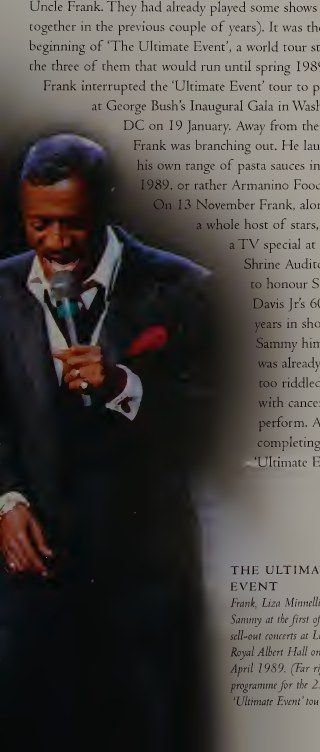
Photograph related to the above entry, from Richard Havers, "Sinatra" (Dorling Kindersley, 2007), p.351.
Sinatra's famous toast about living to 102
Undated materialFrom: Richard Havers, "Sinatra" (Dorling Kindersley, 2007).
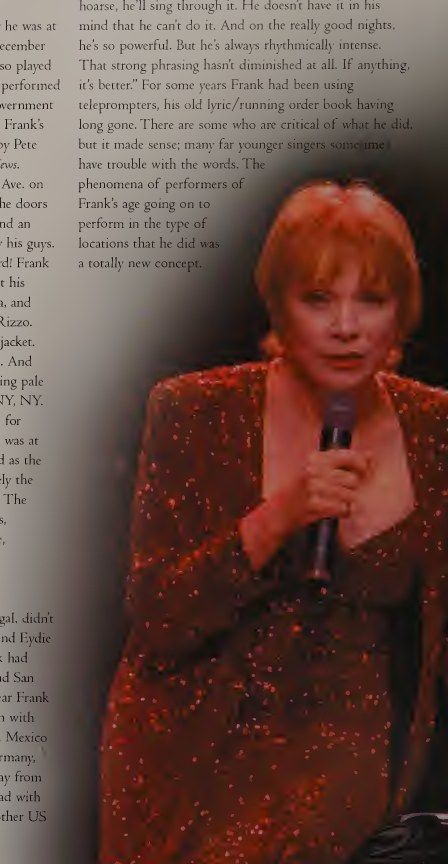
Photograph related to the above entry, from Richard Havers, "Sinatra" (Dorling Kindersley, 2007), p.352.
Sinatra's famous toast about living to 102
Undated materialFrom: Richard Havers, "Sinatra" (Dorling Kindersley, 2007).
Photograph related to the above entry, from Richard Havers, "Sinatra" (Dorling Kindersley, 2007), p.352.
Sinatra's famous toast about living to 102
Undated materialFrom: Richard Havers, "Sinatra" (Dorling Kindersley, 2007).
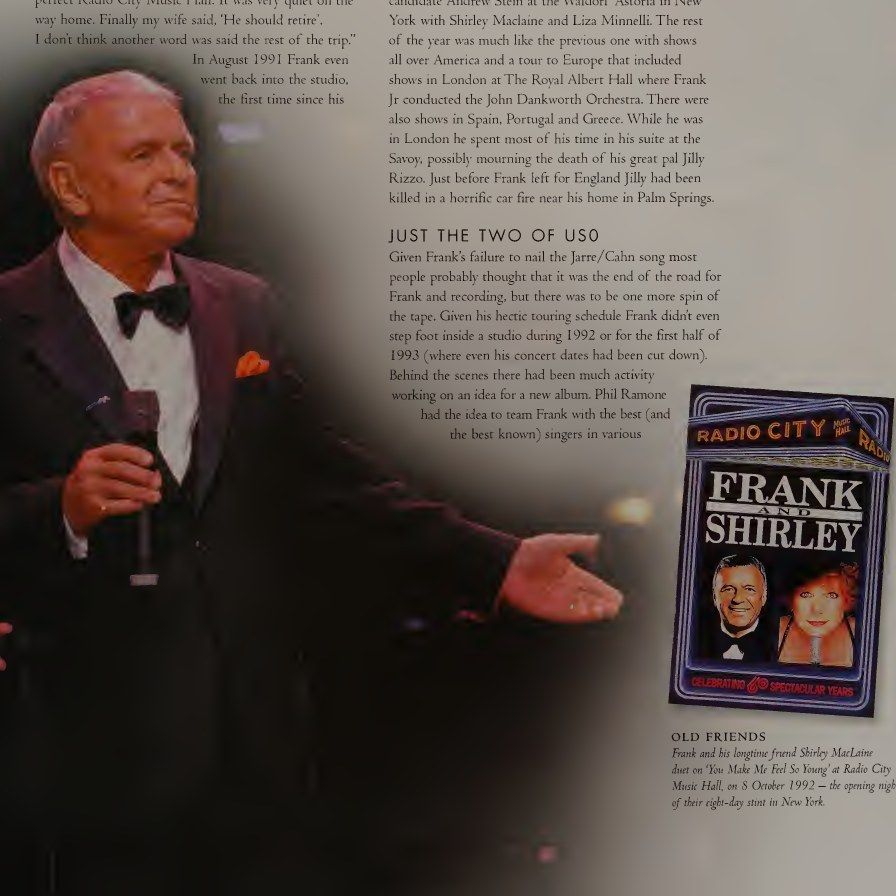
Photograph related to the above entry, from Richard Havers, "Sinatra" (Dorling Kindersley, 2007), p.353.
Sinatra's parents came from opposite ends of Italy
Undated materialFrom: Richard Havers, "Sinatra" (Dorling Kindersley, 2007).
Photograph related to the above entry, from Richard Havers, "Sinatra" (Dorling Kindersley, 2007), p.10.
Songs For Young Lovers, Frank's first Capitol album, released
Undated materialFrom: Richard Havers, "Sinatra" (Dorling Kindersley, 2007).
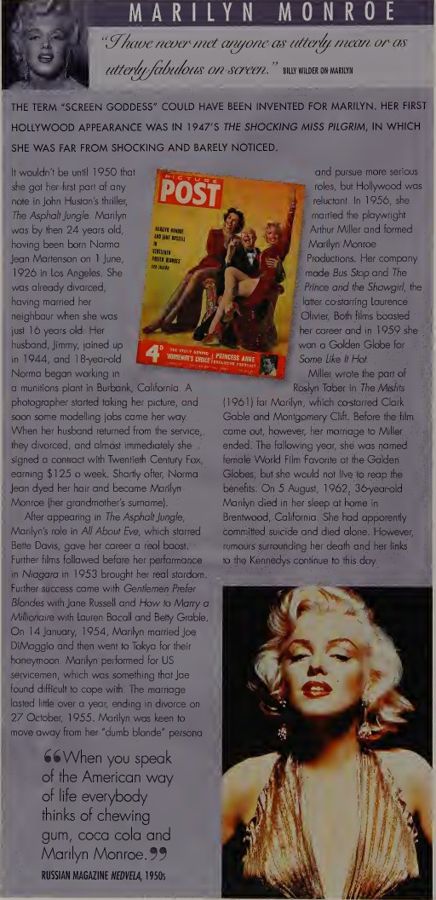
Photograph related to the above entry, from Richard Havers, "Sinatra" (Dorling Kindersley, 2007), p.190.
Songwriter Jimmy Webb recalls Sinatra's charisma on early TV
Undated materialFrom: Richard Havers, "Sinatra" (Dorling Kindersley, 2007).
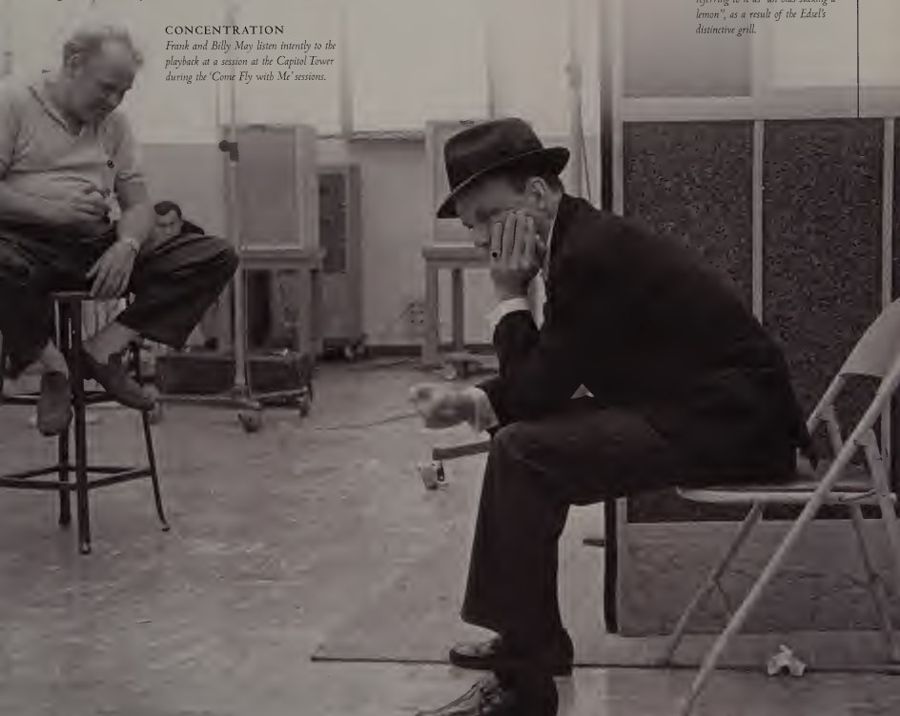
Photograph related to the above entry, from Richard Havers, "Sinatra" (Dorling Kindersley, 2007), p.235.
Songwriter Jimmy Webb recalls Sinatra's charisma on early TV
Undated materialFrom: Richard Havers, "Sinatra" (Dorling Kindersley, 2007).

Photograph related to the above entry, from Richard Havers, "Sinatra" (Dorling Kindersley, 2007), p.235.
Songwriter Jimmy Webb recalls Sinatra's charisma on early TV
Undated materialFrom: Richard Havers, "Sinatra" (Dorling Kindersley, 2007).
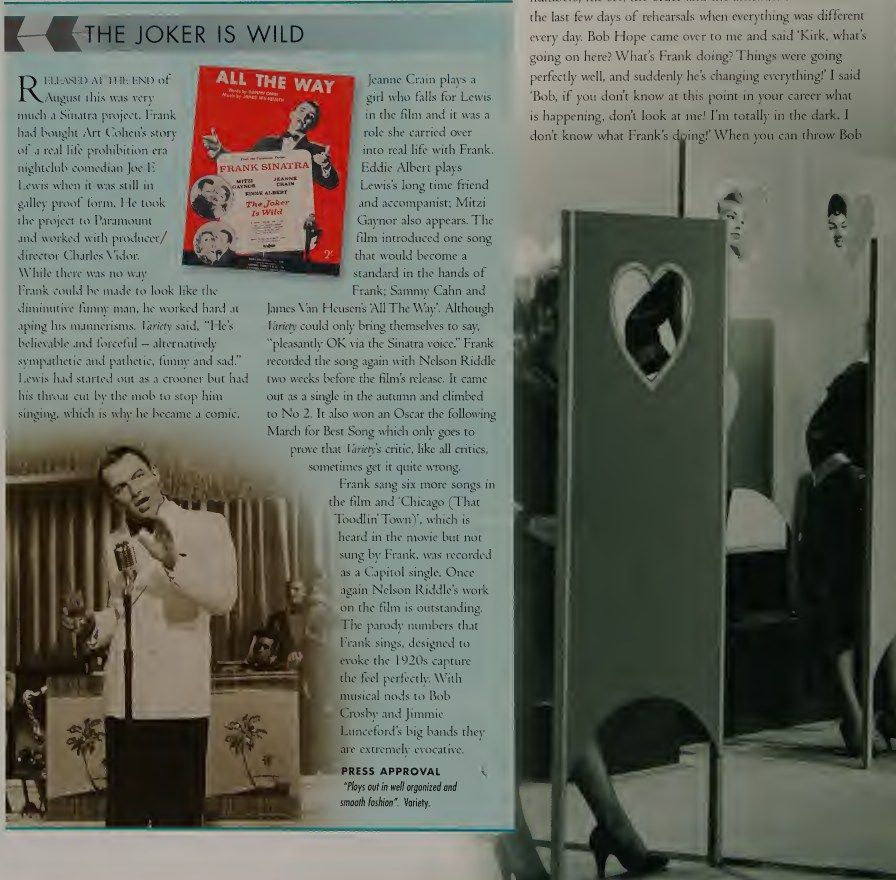
Photograph related to the above entry, from Richard Havers, "Sinatra" (Dorling Kindersley, 2007), p.236.
Tense exchange with Ava precedes her solo flight to Hawaii
Undated materialFrom: Richard Havers, "Sinatra" (Dorling Kindersley, 2007).
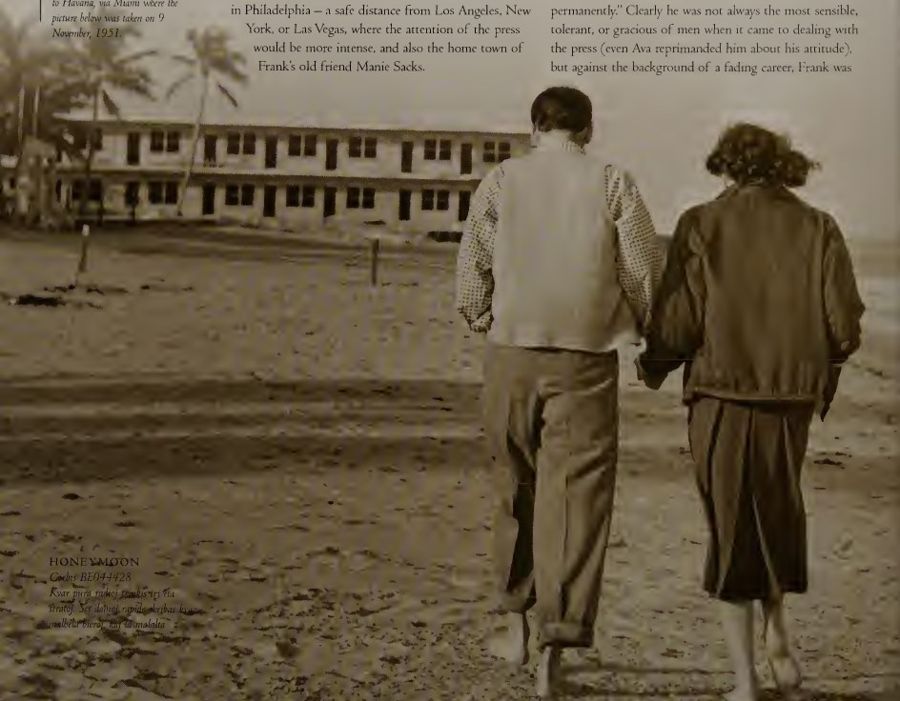
Photograph related to the above entry, from Richard Havers, "Sinatra" (Dorling Kindersley, 2007), p.162.
Tense exchange with Ava precedes her solo flight to Hawaii
Undated materialFrom: Richard Havers, "Sinatra" (Dorling Kindersley, 2007).
Photograph related to the above entry, from Richard Havers, "Sinatra" (Dorling Kindersley, 2007), p.162.
This Is Sinatra greatest hits album released
Undated materialFrom: Richard Havers, "Sinatra" (Dorling Kindersley, 2007).
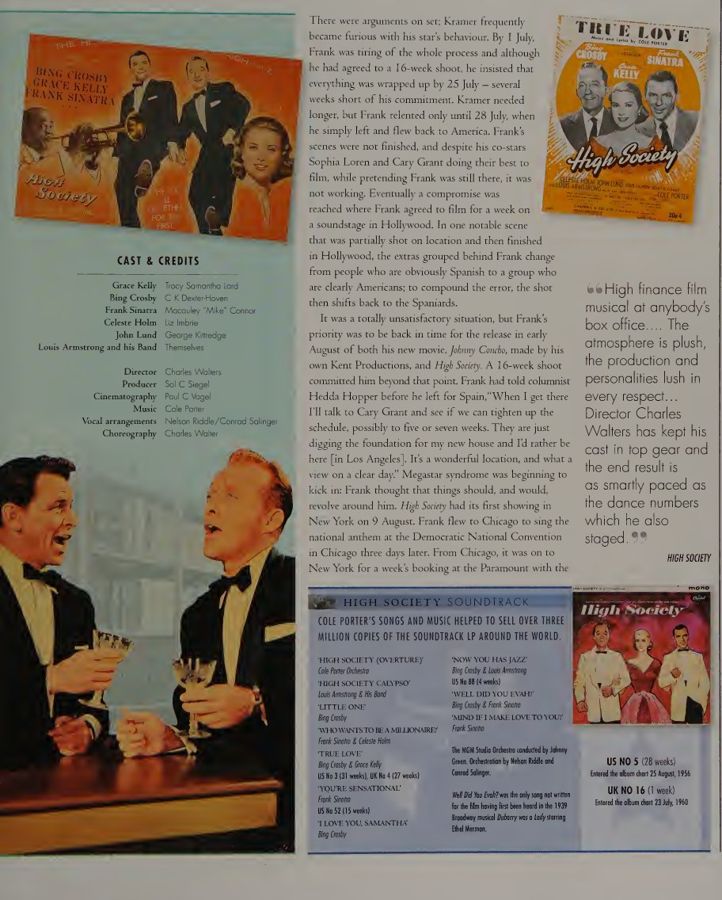
Photograph related to the above entry, from Richard Havers, "Sinatra" (Dorling Kindersley, 2007), p.221.
Tommy Dorsey arranges to meet Frank in Chicago
Undated materialFrom: Richard Havers, "Sinatra" (Dorling Kindersley, 2007).
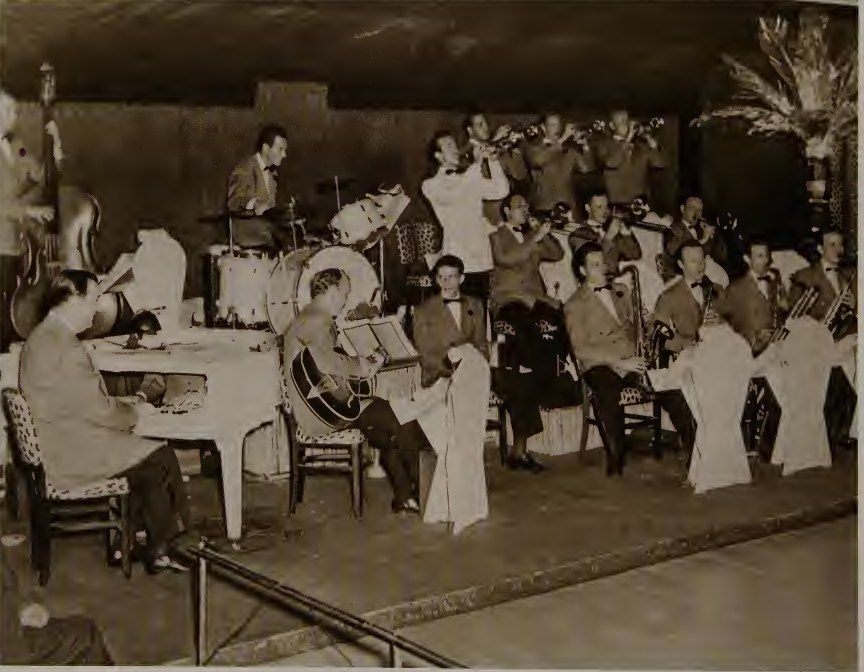
Photograph related to the above entry, from Richard Havers, "Sinatra" (Dorling Kindersley, 2007), p.50.
Tommy Dorsey arranges to meet Frank in Chicago
Undated materialFrom: Richard Havers, "Sinatra" (Dorling Kindersley, 2007).

Photograph related to the above entry, from Richard Havers, "Sinatra" (Dorling Kindersley, 2007), p.50.
Tony Hatch's aborted "Sinatra Sings Tony Hatch" album
Undated materialFrom: Richard Havers, "Sinatra" (Dorling Kindersley, 2007).
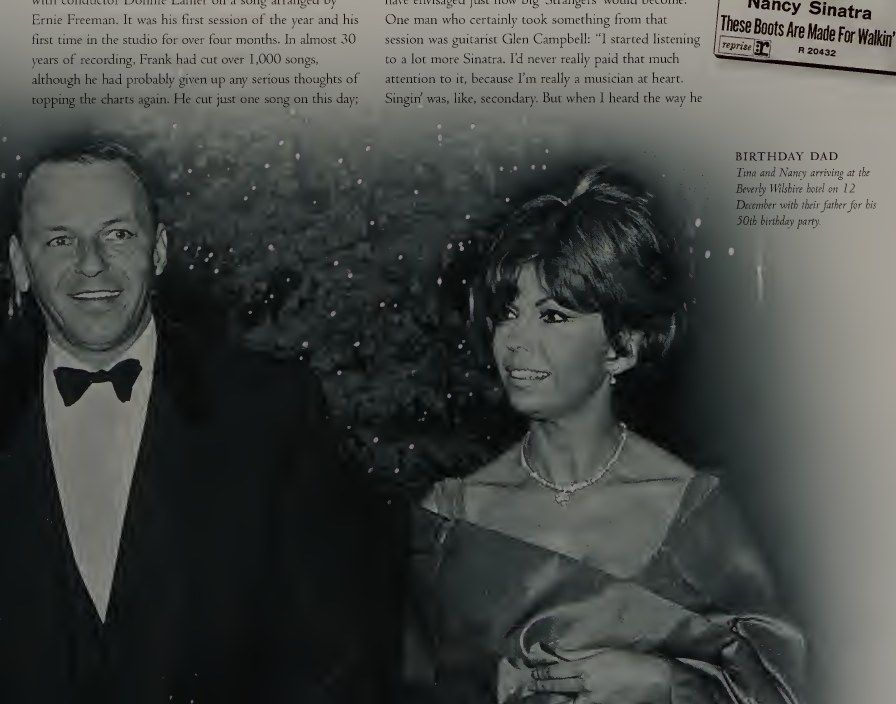
Photograph related to the above entry, from Richard Havers, "Sinatra" (Dorling Kindersley, 2007), p.299.
Tony Hatch's aborted "Sinatra Sings Tony Hatch" album
Undated materialFrom: Richard Havers, "Sinatra" (Dorling Kindersley, 2007).
Photograph related to the above entry, from Richard Havers, "Sinatra" (Dorling Kindersley, 2007), p.299.
Tony Hatch's aborted "Sinatra Sings Tony Hatch" album
Undated materialFrom: Richard Havers, "Sinatra" (Dorling Kindersley, 2007).
Photograph related to the above entry, from Richard Havers, "Sinatra" (Dorling Kindersley, 2007), p.300.
Tony Hatch's aborted "Sinatra Sings Tony Hatch" album
Undated materialFrom: Richard Havers, "Sinatra" (Dorling Kindersley, 2007).
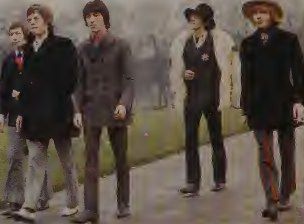
Photograph related to the above entry, from Richard Havers, "Sinatra" (Dorling Kindersley, 2007), p.300.
V-Disc program winds down
Undated materialFrom: Richard Havers, "Sinatra" (Dorling Kindersley, 2007).
Photograph related to the above entry, from Richard Havers, "Sinatra" (Dorling Kindersley, 2007), p.85.
V-Disc program winds down
Undated materialFrom: Richard Havers, "Sinatra" (Dorling Kindersley, 2007).
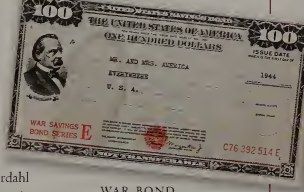
Photograph related to the above entry, from Richard Havers, "Sinatra" (Dorling Kindersley, 2007), p.85.
V-Disc program winds down
Undated materialFrom: Richard Havers, "Sinatra" (Dorling Kindersley, 2007).
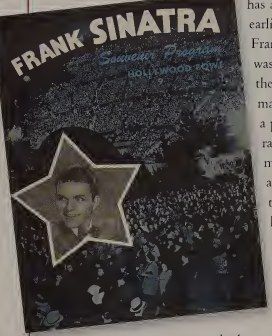
Photograph related to the above entry, from Richard Havers, "Sinatra" (Dorling Kindersley, 2007), p.86.
Variety Club honors Sinatra; 16-LP Capitol box set released
Undated materialFrom: Richard Havers, "Sinatra" (Dorling Kindersley, 2007).
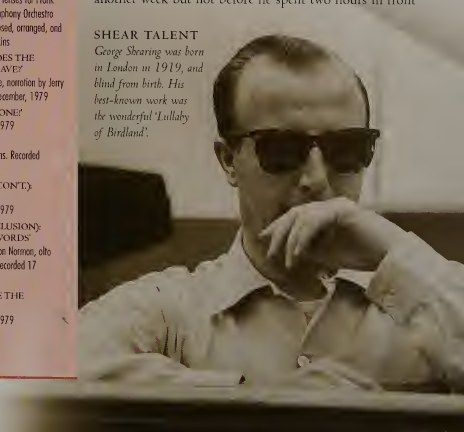
Photograph related to the above entry, from Richard Havers, "Sinatra" (Dorling Kindersley, 2007), p.342.
Variety Club honors Sinatra; 16-LP Capitol box set released
Undated materialFrom: Richard Havers, "Sinatra" (Dorling Kindersley, 2007).
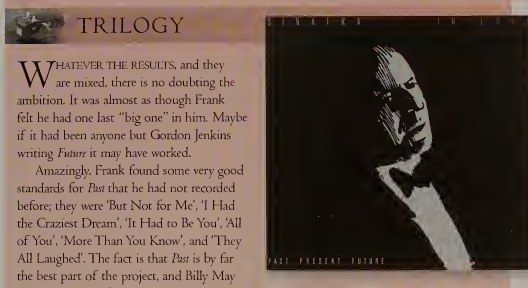
Photograph related to the above entry, from Richard Havers, "Sinatra" (Dorling Kindersley, 2007), p.342.
Young Frank sees Bing Crosby at Loew's Theatre
Undated materialFrom: Richard Havers, "Sinatra" (Dorling Kindersley, 2007).
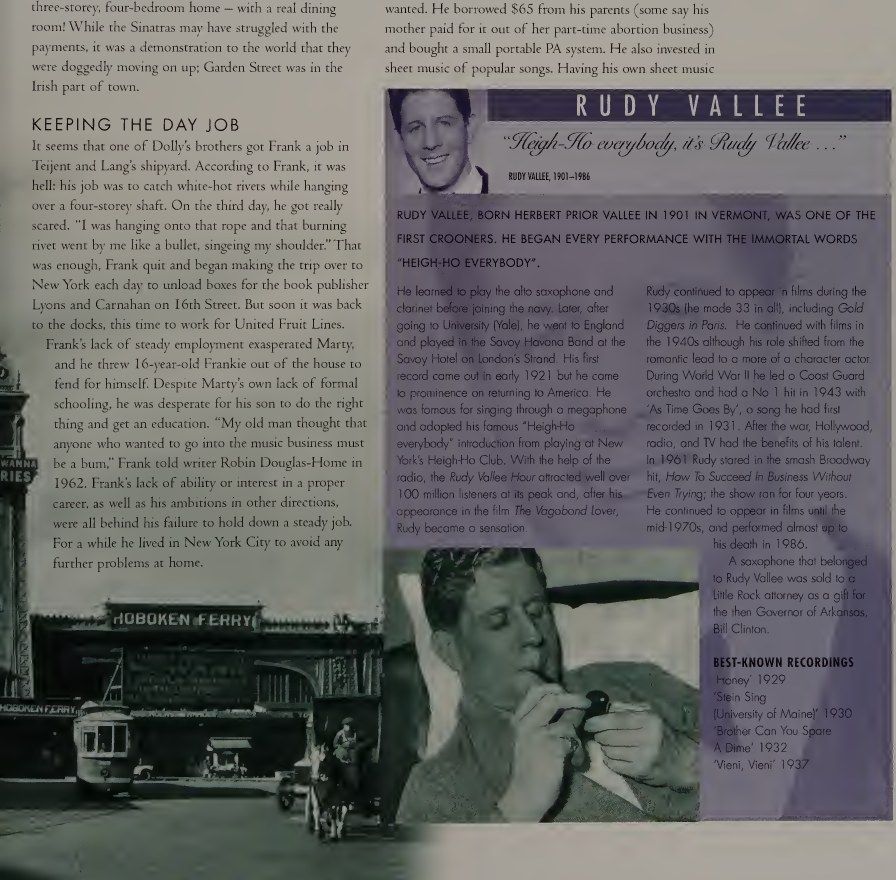
Photograph related to the above entry, from Richard Havers, "Sinatra" (Dorling Kindersley, 2007), p.35.
Your Hit Parade ratings slump for Frank
Undated materialFrom: Richard Havers, "Sinatra" (Dorling Kindersley, 2007).
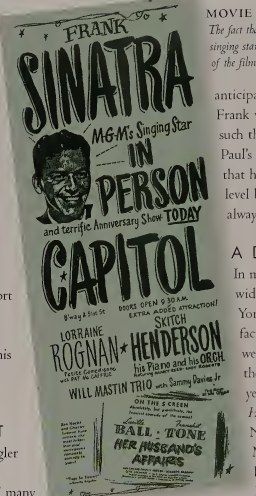
Photograph related to the above entry, from Richard Havers, "Sinatra" (Dorling Kindersley, 2007), p.132.
Photograph from Havers' Sinatra, p.5
Undated materialFrom: Richard Havers, "Sinatra" (Dorling Kindersley, 2007).
Photograph from Richard Havers, "Sinatra" (Dorling Kindersley, 2007), p.5. No specific caption or date could be matched from the surrounding text.
Photograph from Havers' Sinatra, p.251
Undated materialFrom: Richard Havers, "Sinatra" (Dorling Kindersley, 2007).
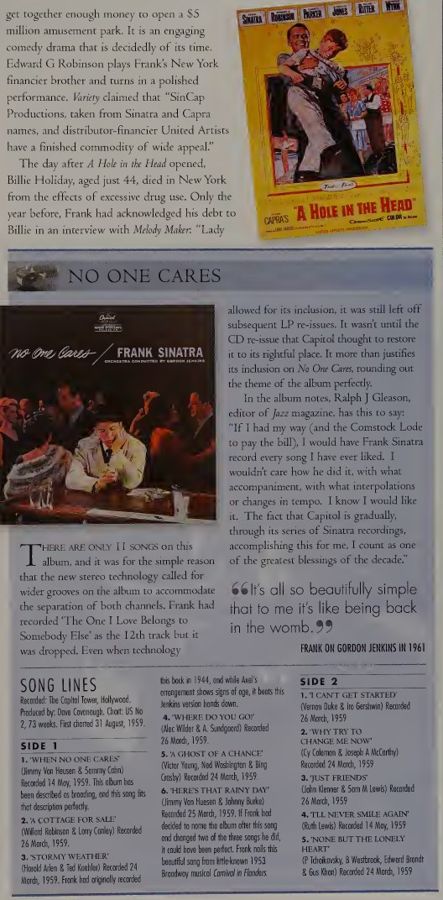
Photograph from Richard Havers, "Sinatra" (Dorling Kindersley, 2007), p.251. No specific caption or date could be matched from the surrounding text.
Photograph from Havers' Sinatra, p.253
Undated materialFrom: Richard Havers, "Sinatra" (Dorling Kindersley, 2007).
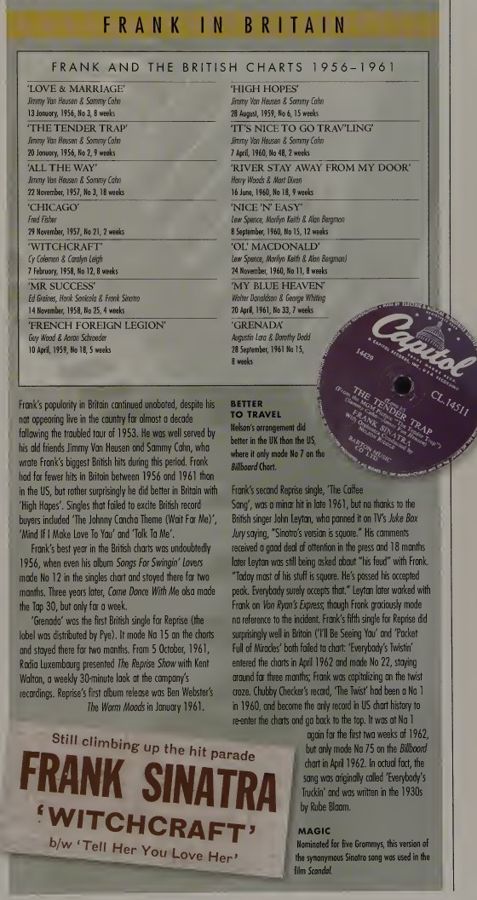
Photograph from Richard Havers, "Sinatra" (Dorling Kindersley, 2007), p.253. No specific caption or date could be matched from the surrounding text.
Photograph from Havers' Sinatra, p.255
Undated materialFrom: Richard Havers, "Sinatra" (Dorling Kindersley, 2007).
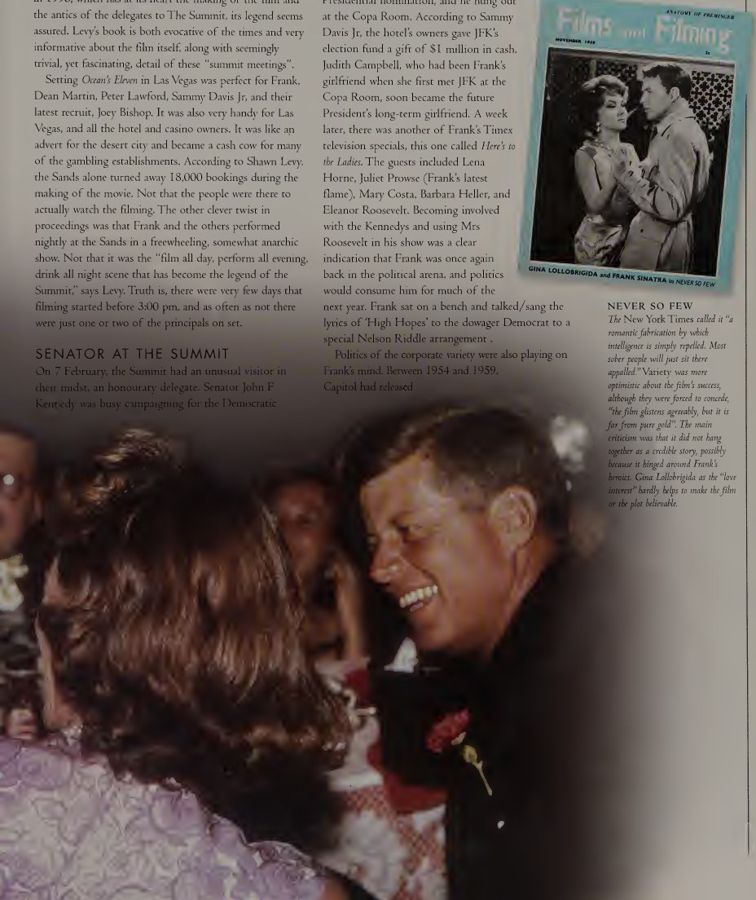
Photograph from Richard Havers, "Sinatra" (Dorling Kindersley, 2007), p.255. No specific caption or date could be matched from the surrounding text.
Photograph from Havers' Sinatra, p.257
Undated materialFrom: Richard Havers, "Sinatra" (Dorling Kindersley, 2007).
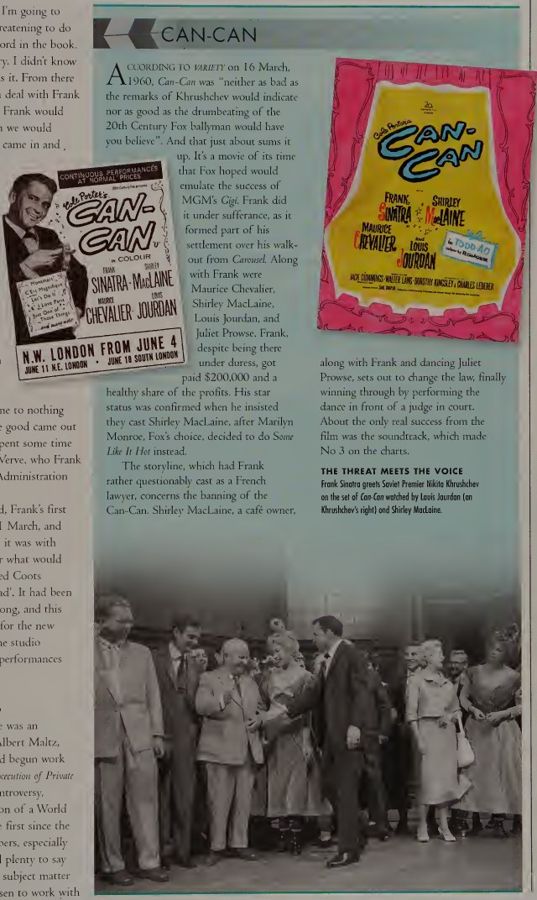
Photograph from Richard Havers, "Sinatra" (Dorling Kindersley, 2007), p.257. No specific caption or date could be matched from the surrounding text.
Photograph from Havers' Sinatra, p.258
Undated materialFrom: Richard Havers, "Sinatra" (Dorling Kindersley, 2007).
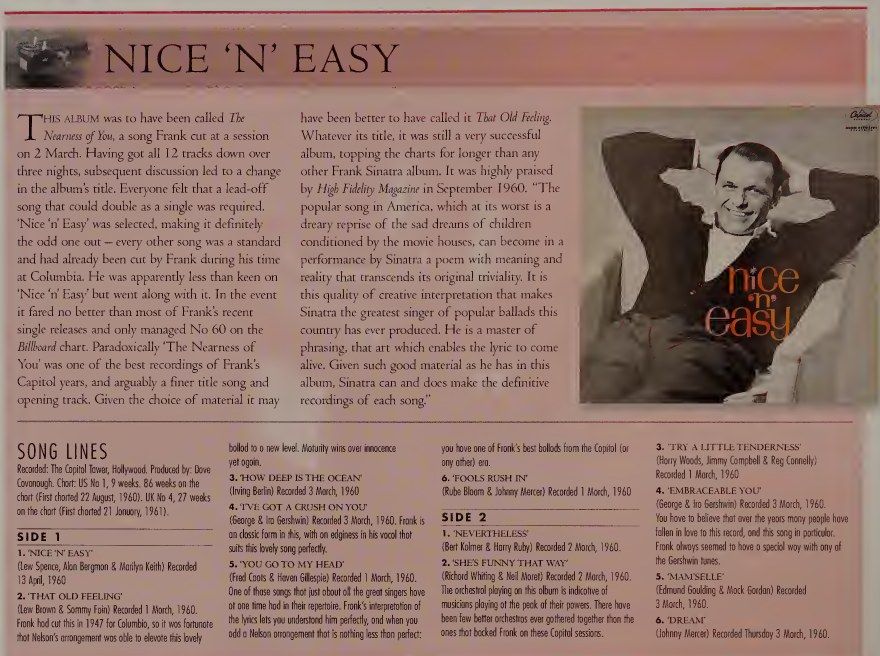
Photograph from Richard Havers, "Sinatra" (Dorling Kindersley, 2007), p.258. No specific caption or date could be matched from the surrounding text.
Photograph from Havers' Sinatra, p.259
Undated materialFrom: Richard Havers, "Sinatra" (Dorling Kindersley, 2007).
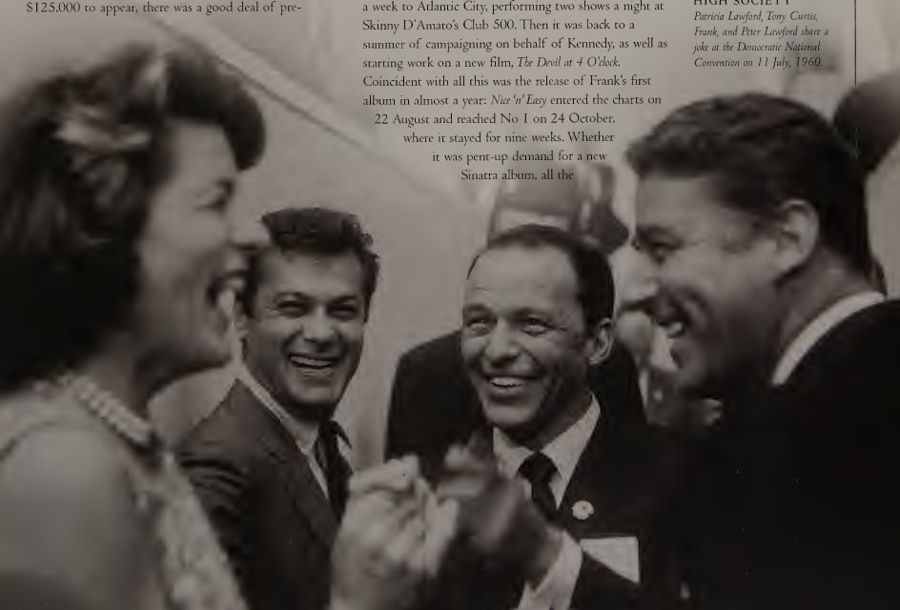
Photograph from Richard Havers, "Sinatra" (Dorling Kindersley, 2007), p.259. No specific caption or date could be matched from the surrounding text.
Photograph from Havers' Sinatra, p.261
Undated materialFrom: Richard Havers, "Sinatra" (Dorling Kindersley, 2007).
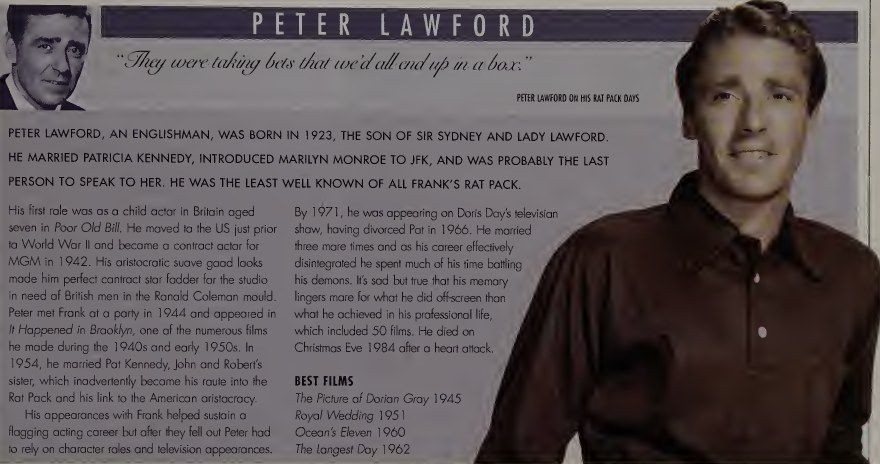
Photograph from Richard Havers, "Sinatra" (Dorling Kindersley, 2007), p.261. No specific caption or date could be matched from the surrounding text.
Photograph from Havers' Sinatra, p.263
Undated materialFrom: Richard Havers, "Sinatra" (Dorling Kindersley, 2007).
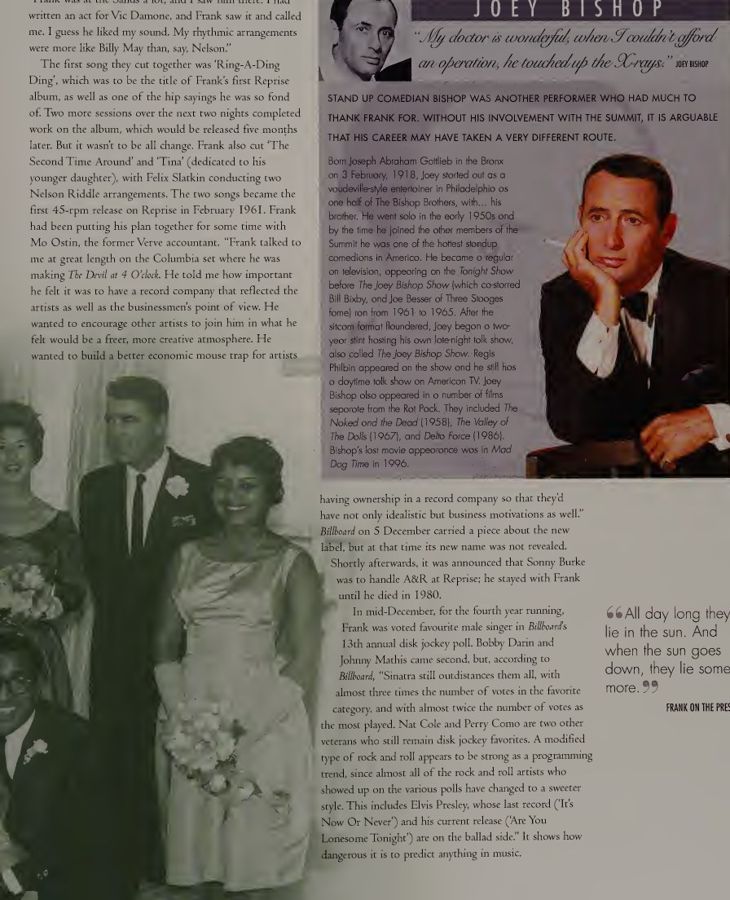
Photograph from Richard Havers, "Sinatra" (Dorling Kindersley, 2007), p.263. No specific caption or date could be matched from the surrounding text.
Photograph from Havers' Sinatra, p.267
Undated materialFrom: Richard Havers, "Sinatra" (Dorling Kindersley, 2007).
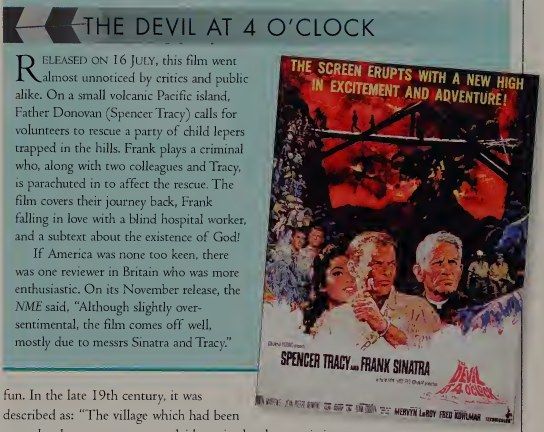
Photograph from Richard Havers, "Sinatra" (Dorling Kindersley, 2007), p.267. No specific caption or date could be matched from the surrounding text.
Photograph from Havers' Sinatra, p.267
Undated materialFrom: Richard Havers, "Sinatra" (Dorling Kindersley, 2007).
Photograph from Richard Havers, "Sinatra" (Dorling Kindersley, 2007), p.267. No specific caption or date could be matched from the surrounding text.
Photograph from Havers' Sinatra, p.267
Undated materialFrom: Richard Havers, "Sinatra" (Dorling Kindersley, 2007).
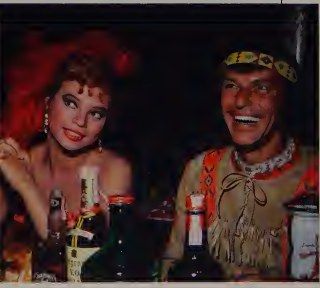
Photograph from Richard Havers, "Sinatra" (Dorling Kindersley, 2007), p.267. No specific caption or date could be matched from the surrounding text.
Photograph from Havers' Sinatra, p.355
Undated materialFrom: Richard Havers, "Sinatra" (Dorling Kindersley, 2007).
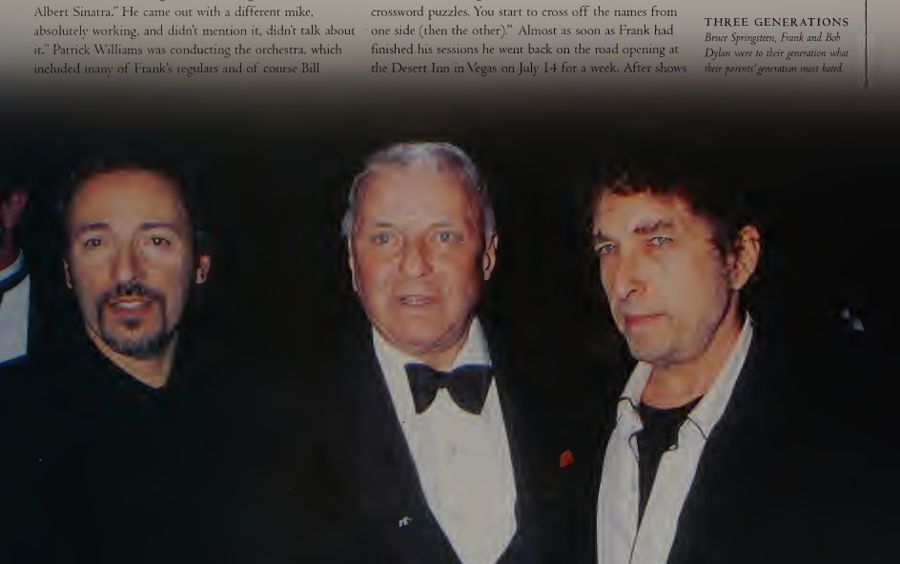
Photograph from Richard Havers, "Sinatra" (Dorling Kindersley, 2007), p.355. No specific caption or date could be matched from the surrounding text.
Photograph from Havers' Sinatra, p.356
Undated materialFrom: Richard Havers, "Sinatra" (Dorling Kindersley, 2007).
Photograph from Richard Havers, "Sinatra" (Dorling Kindersley, 2007), p.356. No specific caption or date could be matched from the surrounding text.
Loan to Toots Shor
Undated materialFrom: George Carpozi Jr., Frank Sinatra: Is This Man Mafia? (New York: Manor Books, 1979).
Sinatra loaned restaurateur Toots Shor roughly $100,000, borrowed elsewhere, to help bail out his struggling restaurant.
Context: Loan to Toots Shor
Date as given in source: Early 1950s
Date as given in source could not be resolved to a specific calendar day for the main chronology; routed to Appendix as undated material.
Buddy Rich Fist-Fight at the Hotel Astor
Undated materialFrom: Rough Guide to Frank Sinatra (Rough guide 7.pdf), chapter "The Inner Circle."
Simmering tension between Sinatra and Tommy Dorsey's drummer Buddy Rich erupted into a backstage fist-fight at the Hotel Astor in New York, resulting in Sinatra being suspended by Dorsey; a few days later Rich was beaten up in the street by two men he suspected were hired by Sinatra.
Context: Buddy Rich Fist-Fight at the Hotel Astor
Date as given in source: August 1940 (no specific day given)
Date as given in source could not be resolved to a specific calendar day for the main chronology; routed to Appendix as undated material.
Dean Martin Walks Out of the 1988 Reunion Tour
Undated materialFrom: Rough Guide to Frank Sinatra (Rough guide 7.pdf), chapter "The Inner Circle."
Still shaken by the loss of his son in a 1987 plane crash, a 70-year-old Dean Martin felt uneasy touring alongside Sinatra and, after being told off for flicking a lit cigarette into the audience, walked out of the Rat Pack's "Together Again" reunion tour after only about a week.
Context: Dean Martin Walks Out of the 1988 Reunion Tour
Date as given in source: March 1988 (no specific day given)
Date as given in source could not be resolved to a specific calendar day for the main chronology; routed to Appendix as undated material.
The 1940-41 ASCAP Radio Ban and the "Fame and Fortune" Amateur Song Contest
Undated materialFrom: Will Friedwald, liner notes to "It's All So New!" — Frank Sinatra & Tommy Dorsey and His Orchestra (Buddha Records, 1999).
During the 1940-41 ASCAP radio ban, Tommy Dorsey turned the restriction into an opportunity with a new Thursday-night NBC series sponsored by Nature's Remedy, built around a "Fame and Fortune" amateur songwriters' contest. Non-ASCAP amateur submissions such as "Why Am I Still Dreaming" and "At Least a Little in Love" were performed on the air in round-robin fashion by Sinatra, Connie Haines, and the Pied Pipers, alongside other contest entries including "Here's to Love," "My First Edition," "My Memoirs," "Sunrise Over Taxco," "I Saw Your Face in a Cloud," and "Fill the Bill." None of the 26 winning songs became a hit on the level of "I'll Never Smile Again," though a couple, including "Everything Happens to Me," proved to be genuine finds. The Fame and Fortune series ran for six months, ending April 10, 1941; the ASCAP ban itself lasted until the end of October.
Context: The 1940-41 ASCAP Radio Ban and the "Fame and Fortune" Amateur Song Contest
Date as given in source: 1940-1941 (ASCAP ban period)
Date as given in source could not be resolved to a specific calendar day for the main chronology; routed to Appendix as undated material.
"Ol' Man River" and Sinatra's Path to MGM
Undated materialFrom: CS 035 -- Columbia 96692, "Frank Sinatra: A Voice In Time 1939-1952" liner notes (foreword by Nancy Sinatra)
In her foreword to this box set, Nancy Sinatra recalls that her father's recording of "Ol' Man River" was the song that caught the ear of MGM studio chief Louis B. Mayer, and that it was this performance that led to Sinatra being brought to M-G-M.
Context: Frank Sinatra: A Voice In Time 1939-1952 (Columbia/Legacy box set)
Date as given in source: not specified (Nancy Sinatra's foreword, undated recollection)
Date as given in source could not be resolved to a specific calendar day for the main chronology; routed to Appendix as undated material.